

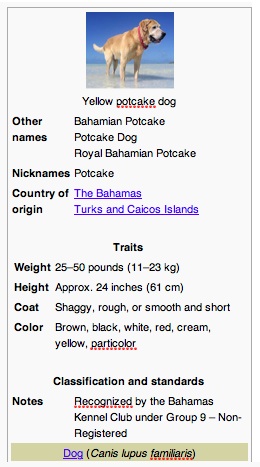

Factoids above distilled from a variety of sources (mostly overlapping) – danke – in particular good old wiki. I’ve done the leg-work for you, but there is other material out there. In particular, put ‘Potcake’ into YouTube & there are plenty of videos of Potcakes. Below are 4 web-links that might interest or amuse
SOME POTCAKE-CENTRIC LINKS
POTCAKE PLACE functions to rescue, foster and assist adoption of potcakes of the Turks and Caicos Islands
ROYAL POTCAKE RESCUE site Video of spay/neuter clinic in Abaco, August 2010
POTCAKE FOUNDATION TCI-based site, with numberless souvenirs available – get your loved one a potcake apron or nightshirt…
AMIGO THE POTCAKE 5***** cartoon ‘book’ named for the most famous potcake of all. Engagingly barking
ARTICLE IN ABACO LIFE: COMMEMORATIVE STAMPS & FAMOUS DOGS CLICK LINK===>>> Abaco Life Potcake Article


This might be entertaining. Possibly. I’ve stumbled into a way to make and embed a customisable Abaco map. The bright idea is to record sightings of hummingbirds on the main island and the Cays – both Cuban Emeralds and especiallyBahama Woodstars. See SIDEBAR, right-hand side, down at the bottom for the map, which is enlargeable and moveable.
Data entry I am the only person who can do this, because I had to make the map using my own G**gle account. So if you’ve got sightings to add, that would be excellent. The most helpful thing would be to add a comment to this page or else to email me at rollingharbour.delphi@gmail.com and I’ll do the pin-sticking.
 A useful format would be ‘BW (or CE) – Location (as precisely as possible, for sticking in the pin) – Date (MM/YY) – Initials – Comment (if any)’
The western spindalis (or stripe-headed tanager) is my favourite bird on Abaco. These 3 birds were all at Bahama Palm Shores. Although this species has featured in at least one earlier post, it’s time for another showing, this time with added sound (credit Xeno-canto.org) 


THE ABACO ISLAND BOA (or NORTHERN BAHAMAS BOA)
[Epicrates exsul] RENAMED 2013 Chilabothrus exsul
Kingdom: Animalia * Phylum: Chordata * Subphylum: Vertebrata * Class: Reptilia * Order: Squamata * Suborder: Serpentes * Family: Boidae * Subfamily: Boinae * Genus: Epicrates * Species: Epicrates exsul
COMMON NAMES: Abaco Island boa, Northern Bahamas boa 
EPICRATES CHILABOTHRUS EXSUL is a non-venomous species of boa, the only one of its species and genus. These snakes are grey with a reddish sheen. They grow to a maximum of 80 cm / 2ft 6″ in length [now see end of post] and feed on small mammals, birds and lizards. They are found throughout the Abacos, including Elbow Cay; and on Grand Bahama; but not elsewhere in the Bahamas (wiki-aided inc. image)

And if you can’t get to Abaco, there’s one in Oklahoma City Zoo: OKCZ ABACO ISLAND BOA
LATEST NEWS DEC 2011 a surprising visitor to the Friends of the Environment offices on 7 Dec 2011, posted on their Facebook page
|
A visitor at the FRIENDS office this afternoon, a Bahama Boa! This snake flattened itself pretty thin to try sneak out under the door frame! The door is open now so it can leave easily
  |
STOP PRESS: a convincing refutation of the general consensus that the maximum length of these snakes is around 2′ 6″, with thanks to Brigitte Bowyer Carey. This specimen was photographed on Tilloo Cay in 2008, held at arms length by Don Allen

ABACO ISLAND BOA, TILLOO CAY 2008
 Time for the Island-hopping part of our day with Abaco Above and Below. There’ll be some links to other aspects of the day as we go along. Apologies for the gloomy photos – the weather was distinctly adverse for much of the day, as this photo taken from Kay’s catamaran shows.
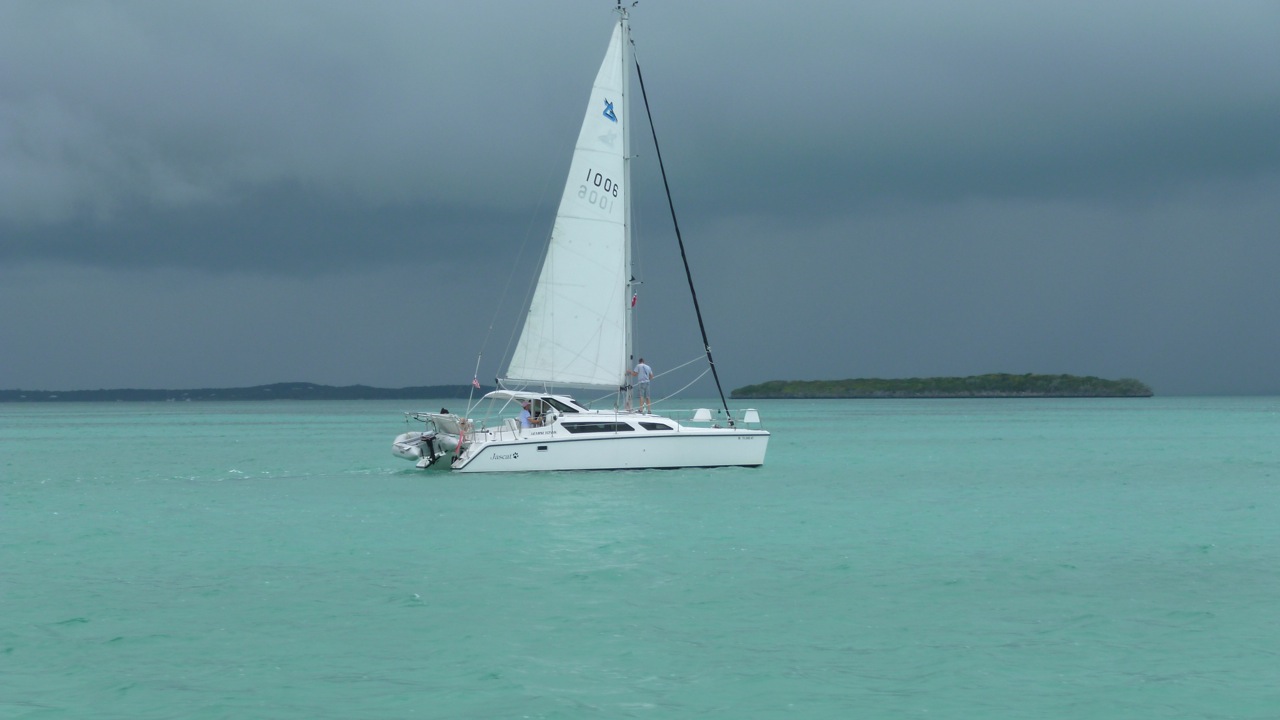
Straight boat, squint horizon
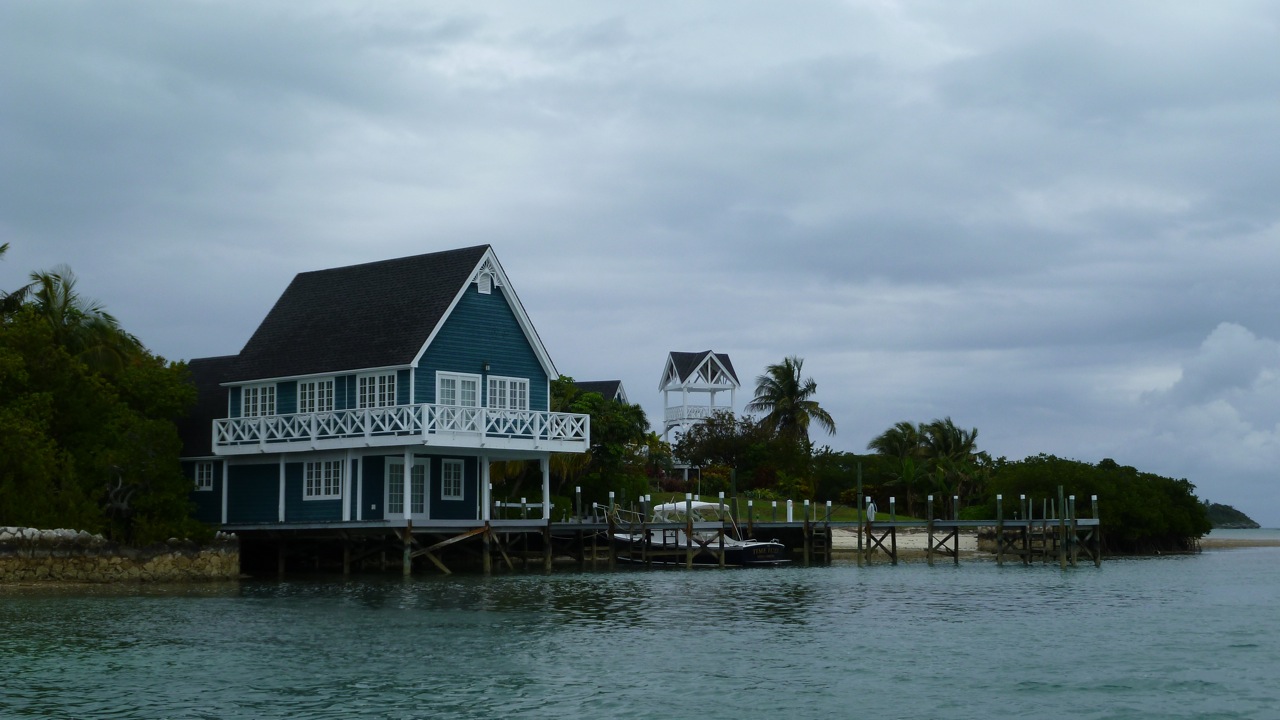
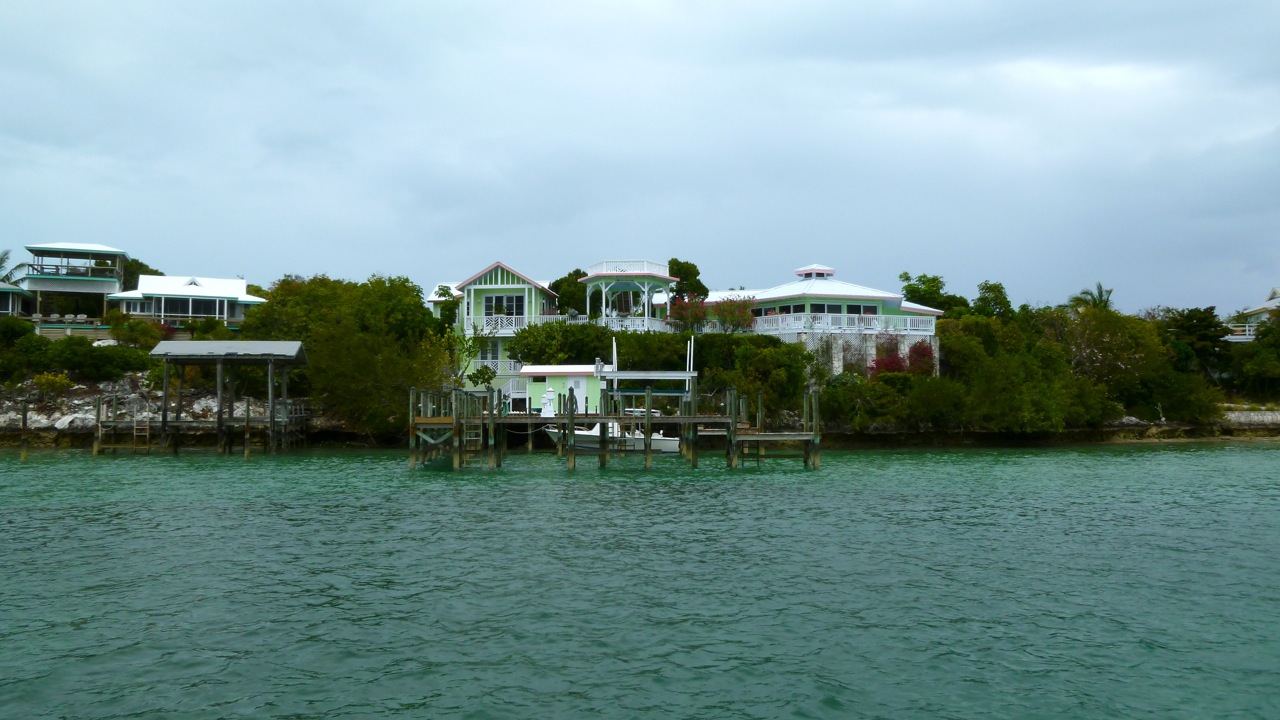
SCOTLAND CAY We saw this cay in passing but didn’t land here. We wouldn’t have been welcome on this rather stern-sounding island. It’s private. And exclusive. In case are you are making plans to drop by, this is how private and exclusive according to the island’s website: “Only property owners and their guests are allowed on the island. This exclusively private island is accessible by private aircraft, private vessel, or ferry service from nearby Marsh Harbour, Abaco. Please be advised that there are no commercial services on the island. No restaurants, bars, stores, public marinas, etc. Do not travel to the island unless you are a guest of a current property owner. You will be asked to leave immediately.” (S C website) To which one can only say “Fair Play”, and pass on by. But you are allowed to take photos from afar. Even gloomy ones. And non-exclusively.


LUBBERS CAY Our first stop was at Lubbers Cay and lunch for 14 at Cracker P’s after our snorkelling excitements at FOWL CAY.
The landing-stage looked promisingly welcoming…

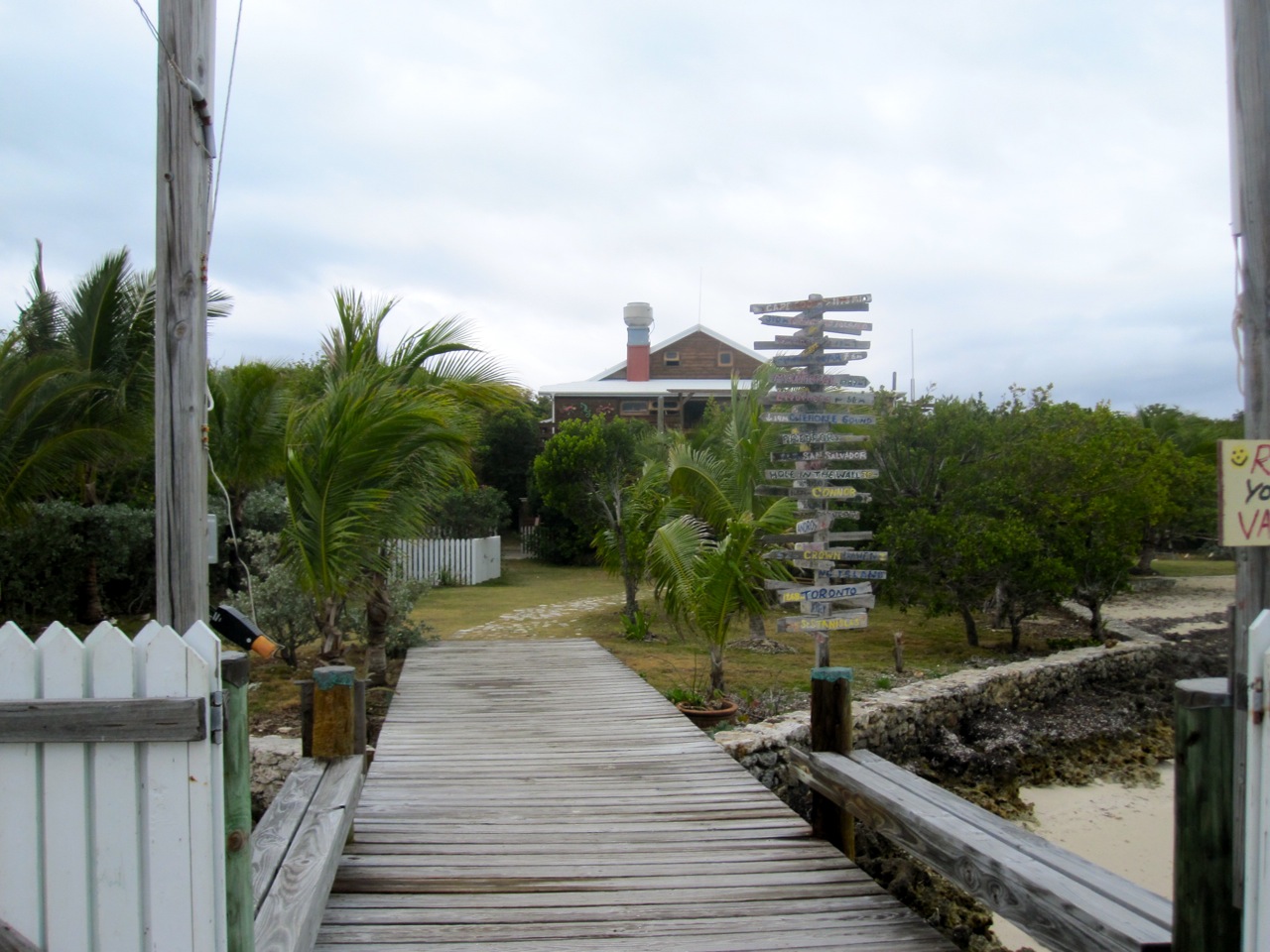
…as did Cracker P’s itself
Lunch for 14 passengers and crew: excellent local food, cheerfully provided
Cuban Emeralds feeding on sugar water by our table
RH waits anxiously as his dollar bills are scrutinised for authenticity
HOPE TOWN: After lunch our next stop was Hope Town. Here are a couple of direct links to other Hope Town posts / pages from this and previous trips: HOPE TOWN ART; THE LIGHTHOUSE The plan is to add some more Hope Town photos in due course of an earlier trip when it was sunny…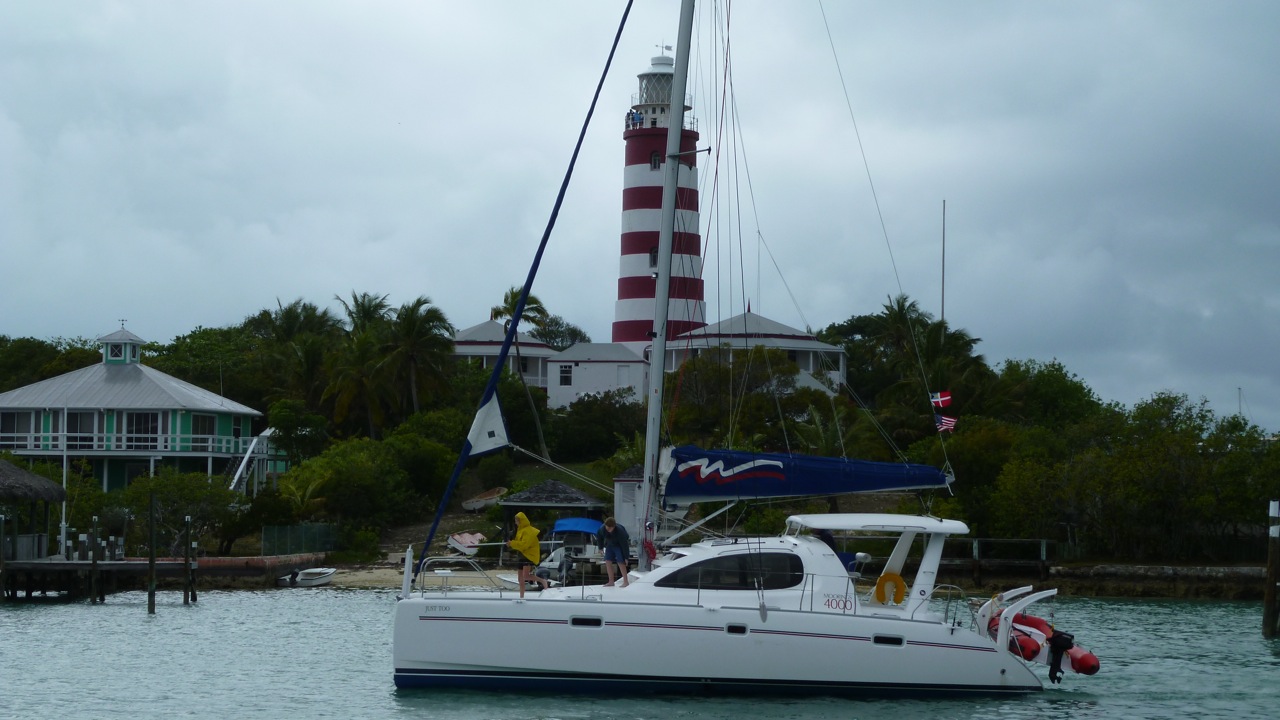

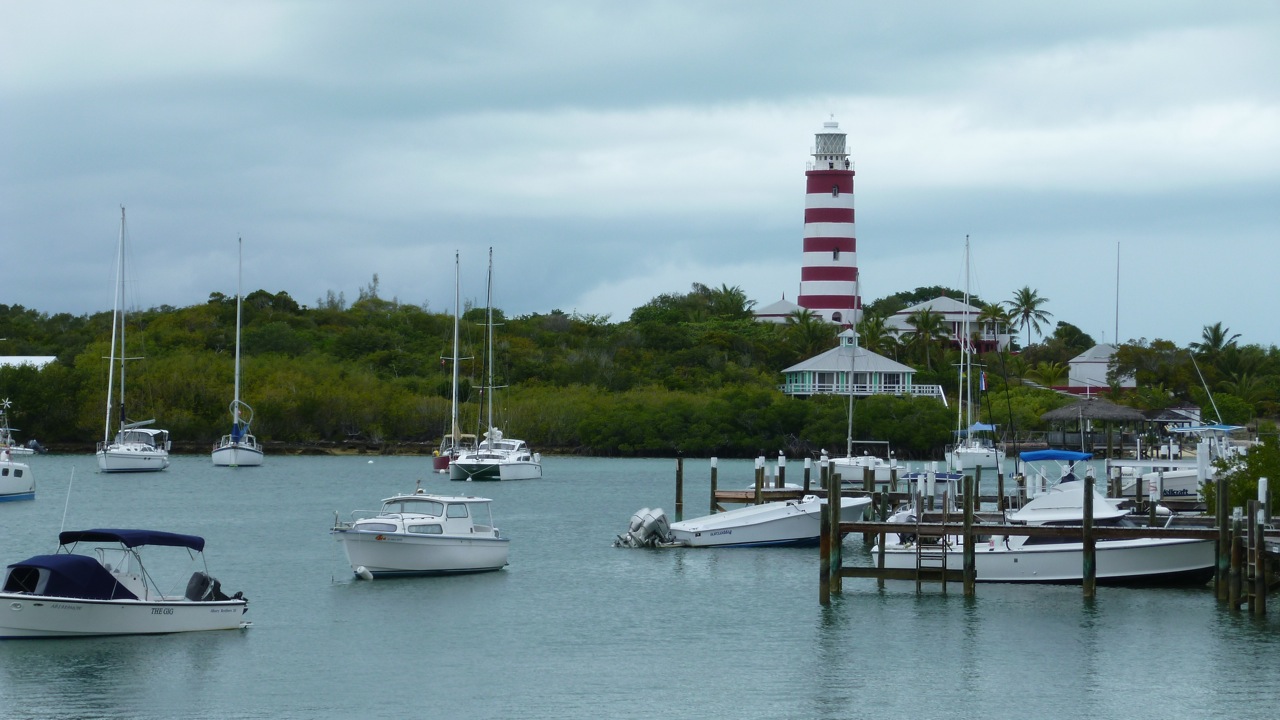
MAN-O-WAR: We had quite a brief stop here, a quick wander round and a look at the boat yards. There was a Bahama Woodstar feeding on flowers near the jetty. The weather was still pretty vile, not conducive to photography. A place to return to on a sunny day…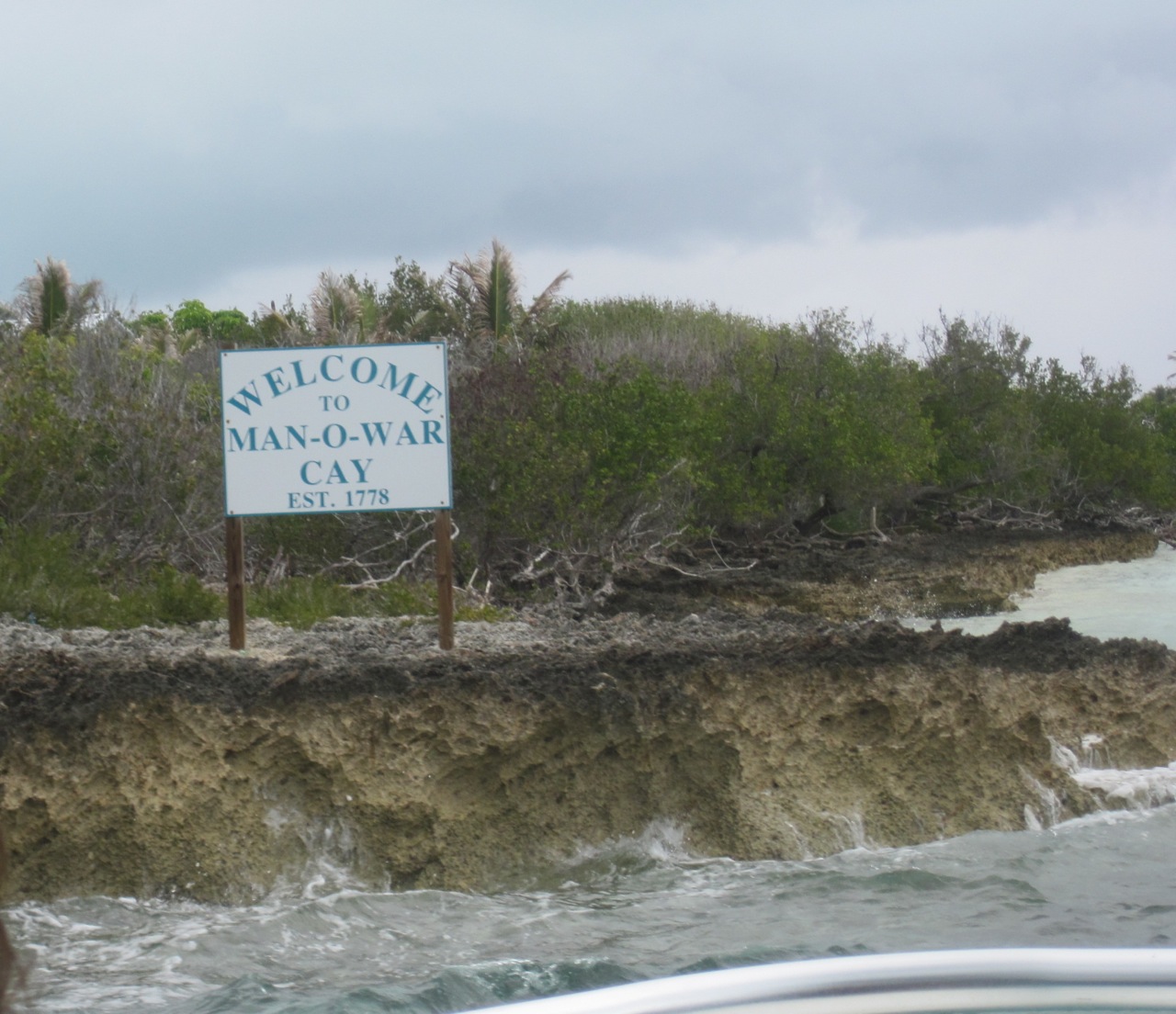

AND FINALLY to some dolphins, the cetacean finale to the day, which appeared as we approached Marsh Harbour and made a very good day excellent: DOLPHINS
THE DELPHI CLUB DRIVE CIRCUIT
This very pleasant walk somehow seems more satisfactory taken clockwise, turning left at the front gateway and wandering along the guest drive. The straight service drive is less interesting and feels less ‘in the coppice’. The distance is about 2 miles. You can walk the circuit briskly in about half an hour. The birds will see you, but you won’t see them… So preferably take it easy. Here is a fantastic aerial view of the drives (courtesy of DCB)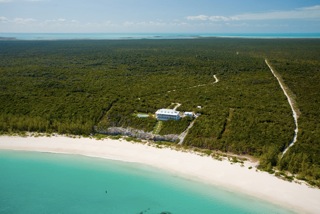
The start of the route – trees as far as the eye can see
From a birding point of view, as you walk down to the gateway, keep an eye out on both sides. There are plenty of birds in the bushes and trees, though they are not always easy to see. You might see a western spindalis, bananaquits, black-faced grassquits, warblers, northern parulas, loggerhead kingbirds, vireos, cuban emerald hummingbirds or a bahama woodstar if you are lucky, amongst many others. When you get to the main drives, have a look straight ahead into the coppice – in fact anywhere along the guest drive is worth pausing to investigate.
 This cuban emerald was just opposite the drive gateway (credit Xeno-canto.org)
The gumbo limbo trees are very popular with many birds, including the Abaco Parrots, so it’s good to check them out as you pass by (and if you have unfortunately touched a poison-wood tree, they provide the antidote – conveniently the two trees tend to grow next to each other). Here are a couple of Thick-billed Vireos proving the point. And their song, which you will hear a lot around the Club itself. (credit Xeno-canto.org)


Hairy Woodpeckers seem to favour dead trees for drilling practice – and perhaps for feeding on the sort of bugs attracted to dead wood. Here’s what they sound like (a call and response with 2 birds) (credit Xeno-canto.org) 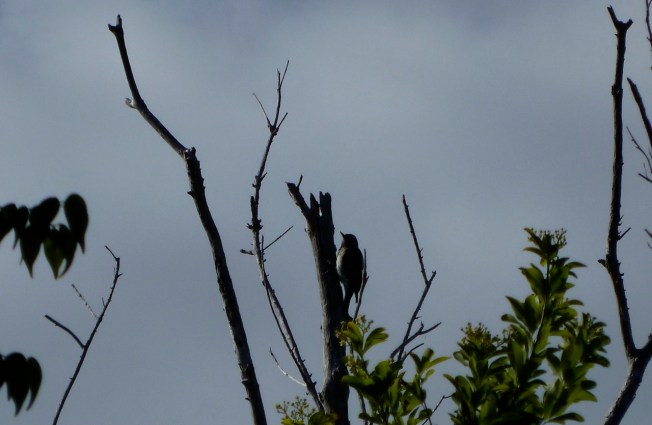
There are plenty of small birds all along the way, some more vivid than others… Black-faced grassquit (not a warbler, as earlier suggested. Thanks CN)
 Prairie Warbler
 Antillean Bullfinch (not, as previously alleged, an American Redstart. Thanks CN)
If you look at the base of the trees in certain places, especially on the the left hand side of the guest drive (facing the highway), there are some small but deep holes in the limestone. If you drop a stone in, you can hear it splash in water – and the ferns growing inside them suggest a continuously moist environment.
As you progress, you move from the hardwood coppice to the pine forest. This photograph was taken just as the forest fires in March were petering out. The theory was that the fires that raged through the pine forest would stop where the coppice began, and not sweep on to engulf Delphi… and so this photo shows. The thick pine forest with its flammable vegetation and undergrowth gives way here to damper and less combustible coppice-wood which has halted the progress of the flames. The pines you can see are the last few outliers of the pine forest.
Here is an example of the drive having acted as a partial firebreak.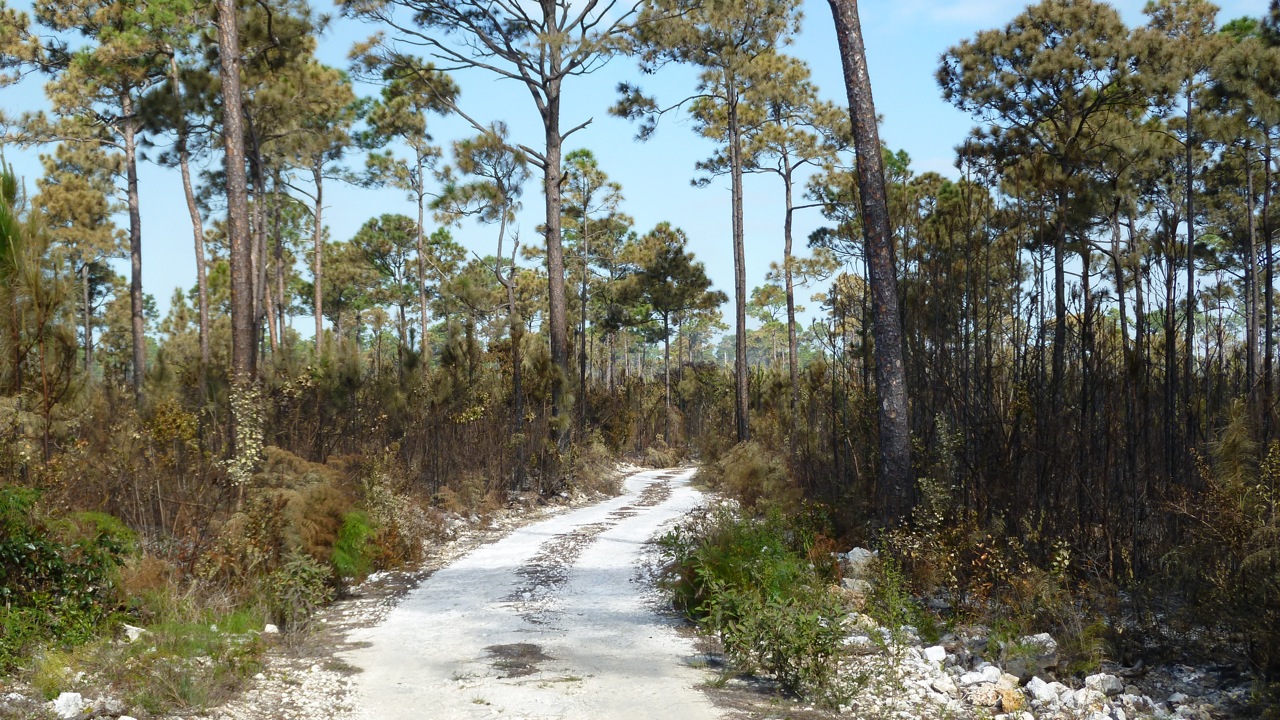
The pines, even burnt ones, are a good place to see West Indian Woodpeckers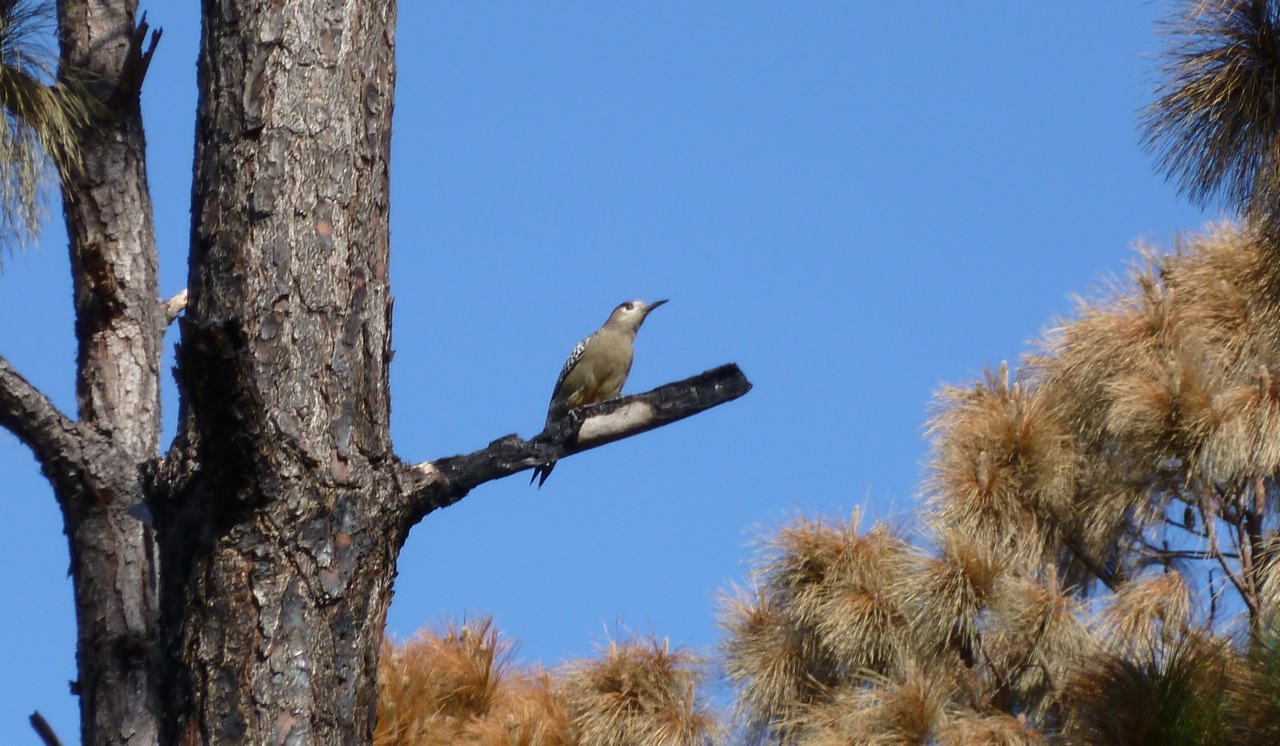
When you reach the top of the guest drive it is worth carrying on to the highway. For a start you can admire Sandy’s gardening effort on the south side of the ‘white rock’, and maybe do some weeding.  You are quite likely to see Turkey Vultures on the telegraph posts and wires, as here. You may also see Bahama Swallows on the wires, and perhaps an American Kestrel on a post.
 Smooth-Billed Ani (wiki-ani)
I have seen a raucous flock of Smooth-billed Anis in this area, but it is hard to get close to them. Listen out for this unmistakable noise (credit Xeno-canto.org)
Returning from the road to the fork, to your right is the way you have come – seen here as the fires burnt out. There had been thick, indeed impenetrable, bright green undergrowth all along only 3 or 4 days earlier.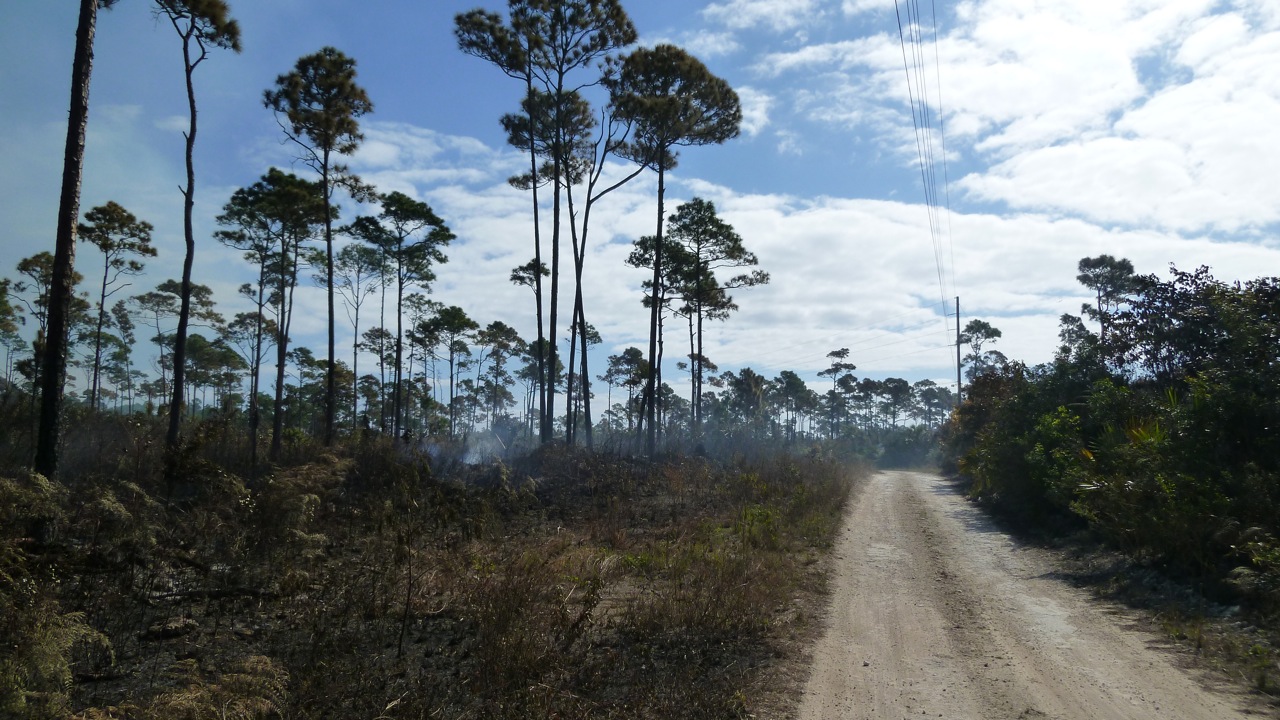
To the left is the service drive and your route home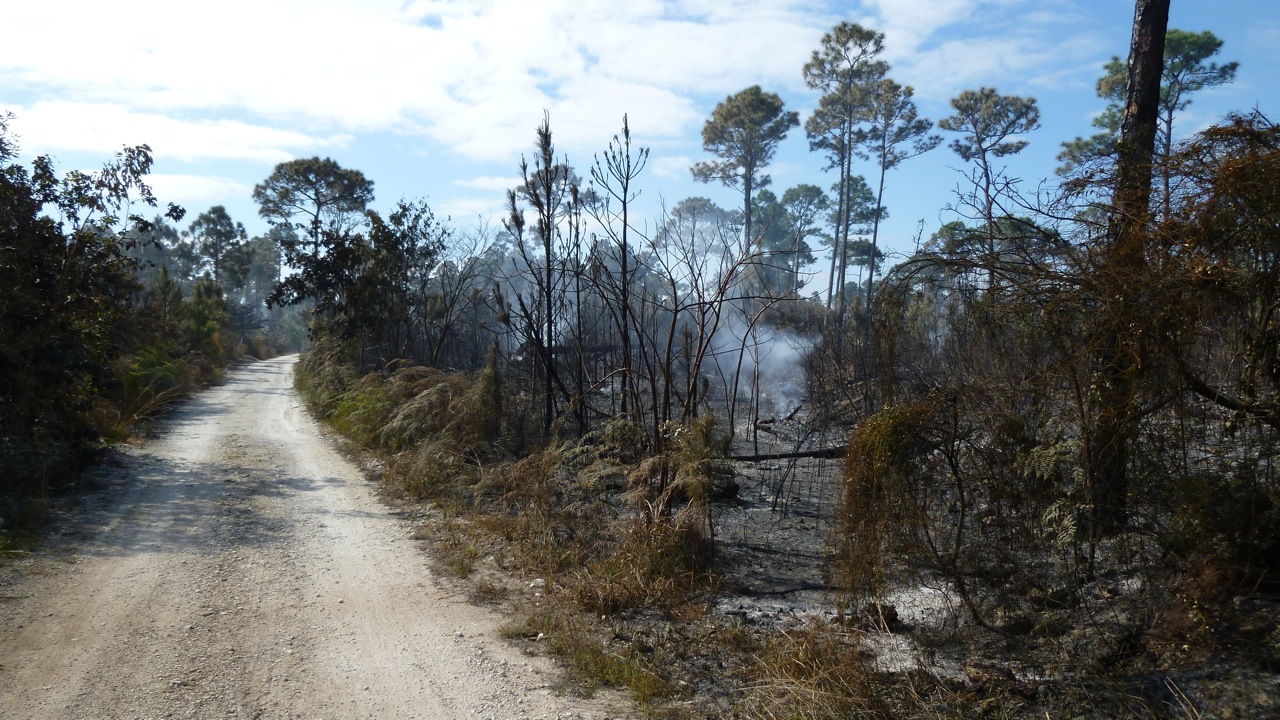
Because this route is more open, there seem to be fewer birds. Again, you may see kestrels on the posts. Halfway along we heard the loud and very melodious singing of a Northern Mockingbird some distance away. CLICK on image (as you can with all, or most, of these photos) and you can see it singing!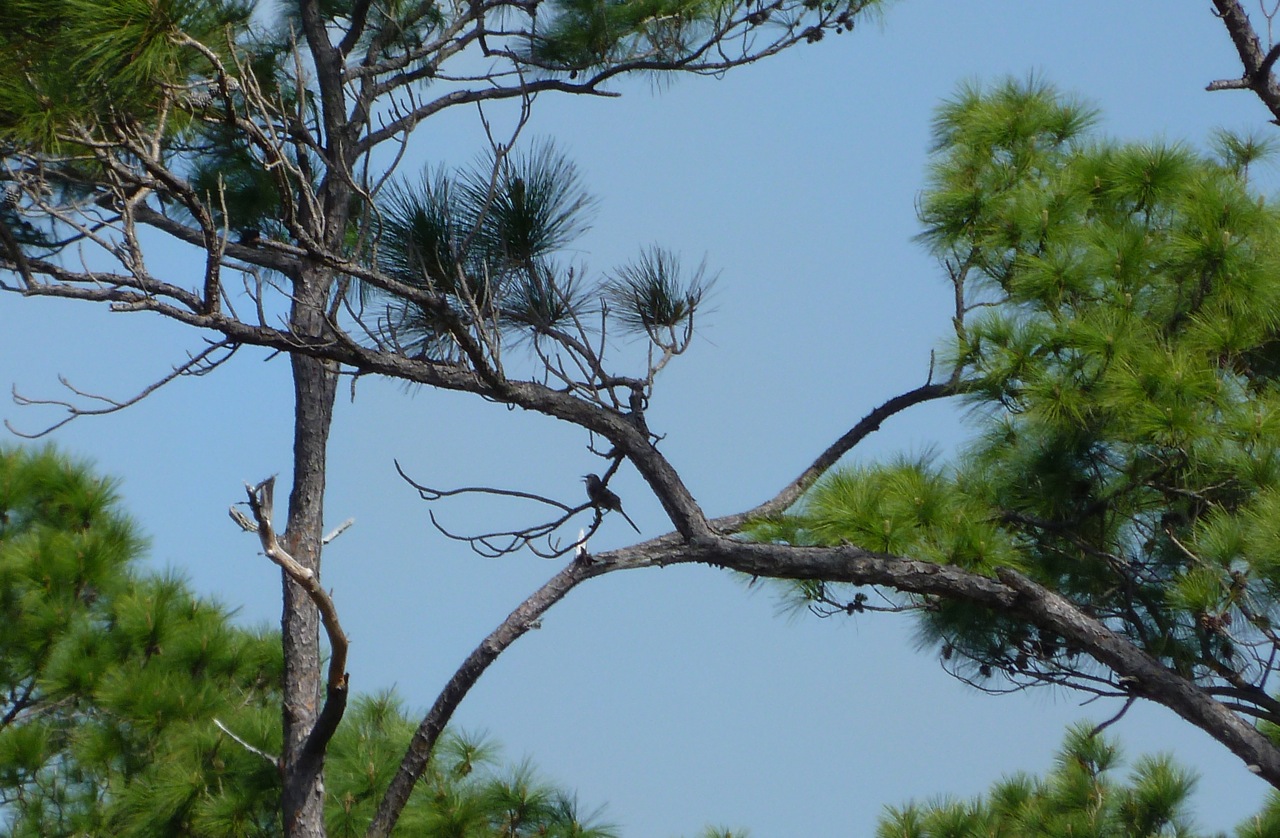 CLICK BUTTON to hear song of a Northern Mockingbird (credit http://www.bird-friends.com)
On either drive you will see butterflies. They seem to like the vegetation around the piles of stone and rubble.
 GULF FRITILLARY Agraulis vanillae
It is also worth looking out on either drive for epiphytes, or air-plants, growing on their host trees. They are so-called because unlike say, mistletoe, they are non-parasitic and do not feed off their hosts.
 And so back to Delphi, a well-earned swim… and an ice-cold Kalik in the hammock…

 Click me!
ABACO PARROTS AND THEIR UNDERGROUND NEST
Exceptional and rare video footage of Abaco Parrots entering their underground nest, very kindly provided by Caroline Stahala for use in this blog. I don’t imagine many people have been lucky enough to see this sort of parrot activity in the wild, so it is great to be able to see it captured on video…
If the video above doesn’t work you can reach it another way: CLICK LINK—–>>>ABACO PARROTS NESTING
[At the moment the video is reachable by the link above. I’m working on embedding it, but there’s a technical hitch to sort out. It’s all geek to me. So I’m using something I’d never heard of until this morning called Dropshot, which at least lets you see the video… though I’ve got a feeling it entails having to have ‘friends’ and to end up involuntarily ‘following’ people like Britney Spears and some crazy guy called ‘iruletheworld’]
Many thanks for this great video, Caroline
 Click me!
CAROLINE STAHALA was introduced in an early parrot post on this blog – see DELPHI CLUB ABACO – PARROT RESEARCH & CONSERVATION. That post will route you to her thesis and to an article in The Abaconian about her work. She has just sent a report about her current researches (and there will be future updates):
At the moment we are in full chick mode. All the parrot nests (45 nests!) that we have been finding and monitoring since the end of May have hatched. Next week I will begin banding these chicks so that we can recognize them as individuals and learn more about their behavior. Here is a picture of a chick banding from last year: In addition to banding chicks, I am going to be attempting to catch 3 mated adult pairs and place radio transmitters on these parrots. This will give us information about what pairs do during the nonbreeding season, how frequently they interact, and whether the amount of interaction during the nonbreeding season influences how well they do during the breeding season.

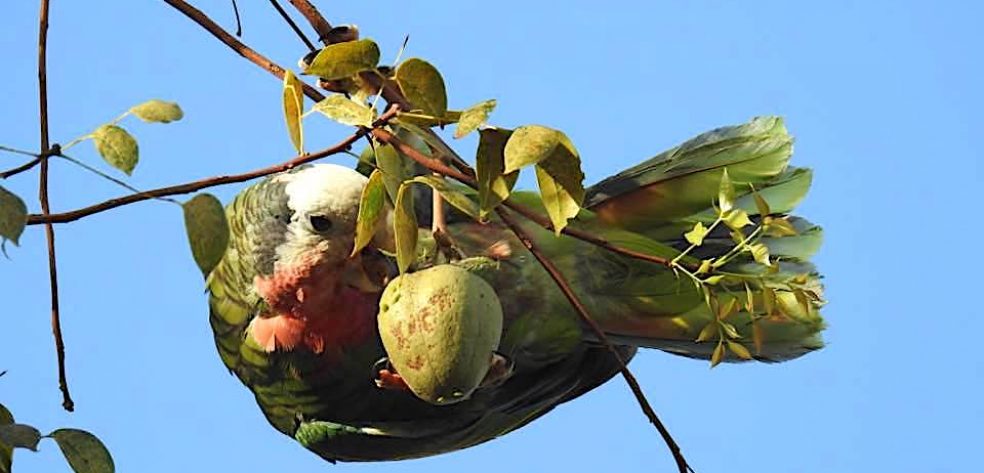
Finally, I sent Caroline an image of a particular Parrot taken by me earlier this year. Ricky Johnson said he had never seen one with so much red on its front – almost reaching its tail. And he should know…
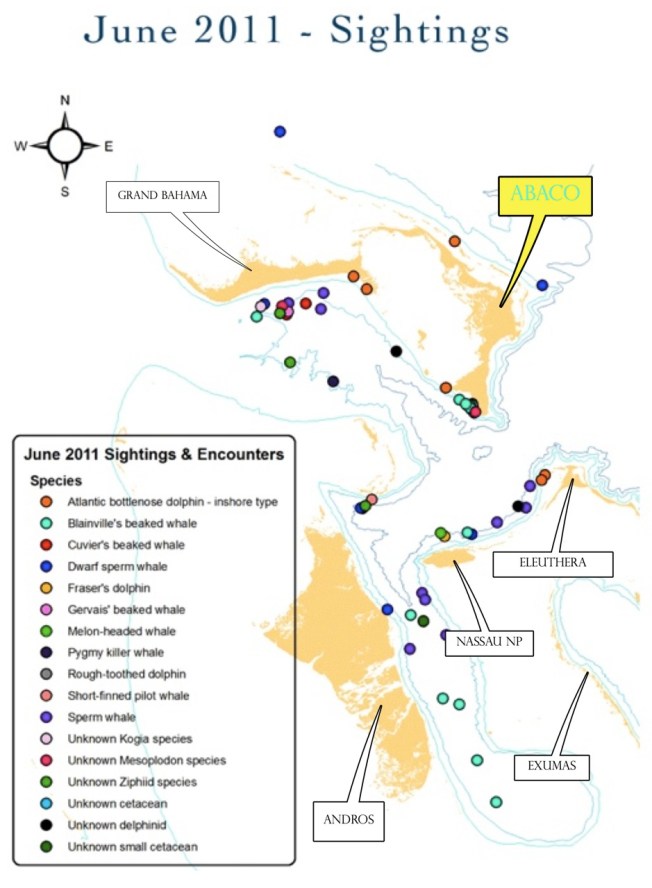 It’s worth commenting on the cluster of sightings on the south-west coast of Abaco between Sandy Point and Hole-in-the-Wall. This is the site of the Great Bahama Canyon, one of several extremely deep rifts that divide the generally shallow sea-floor of the Bahamas Islands. This deep trough provides a habitat and feeding ground for a huge variety of inshore and oceanic species, with an abundant supply of food. How convenient that the BMMRO HQ should be so close to this area…
Chart courtesy of  Click logo!
 ROLLING HARBOUR ABACO


You must be logged in to post a comment.