Unknown's avatar

MUREX & TRITON SHELL COLLECTING ON ABACO WITH KASIA


PAGE REWRITE IN PROGRESS

MUREX (MURICIDAE) & TRITONS (RANELLIDAE) 

1. MUREX SHELLS (Muricidae)

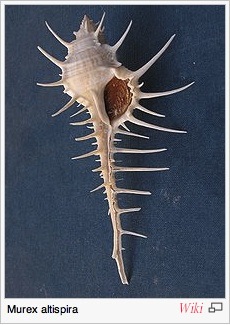
This is a vast family of shells worldwide, with many subspecies, each of which has many regional variations. Or even variations of the same subspecies on the same beach. Many have beautiful delicate spines or intricate shapes and elaborate patterns, like the pacific one shown
These molluscs are described as ‘voracious rock scavengers’ and exhibit uninhibited psychopathic tendencies. If you have a nervous disposition, stop reading here; Sam Peckinpah missed a great film collaboration with Jacques Cousteau with these vicious little creatures

10 ESSENTIAL YET GRISLY MUREX FACTS

  • Murex are highly carnivorous with rasping teeth, and drilling equipment for boring into the shells of their prey
  • A determined Murex may take up to 5 days to drill into its prey
  • Murex also use their foot to smother prey, or to crush it by using suction power
  • They eat clams by hoovering them up with their foot and smashing them on rocks to get at the occupant
  • They happily eat sea-floor carrion and sea-kill
  • Murex act in packs to carry out raids on unsuspecting beds of clams, which they feast on avidly
  • They are sexually wanton. Females store sperm from different males for many months, eventually producing embryos with different dads (I’m not making this up. I would like to have done so)
  • Cannibalism occurs. The kids are equally prone to extreme delinquency and are happy to eat each other when peckish
  • Some species of murex secrete a fluid that is believed to be used to drug their prey into paralysis
  • That same fluid (Murex / Mucus) is also used as a dye, ‘Tyrian’ or ‘Royal’ Purple, which can be ‘milked’ from a living murex (the Aztecs & Phoenicians did this). I’ll pass on that

NEW: VIDEO of how to obtain dye from a Murex

 KASIA’S BEACHCOMBED ABACO MUREX SKELETON

TWO MUREX SHELLS OF MINE (NOT FROM ABACO) FOR COMPARISON  DETAIL OF COLOUR & SHINE

2. TRITON SHELLS (RANELLIDAE)

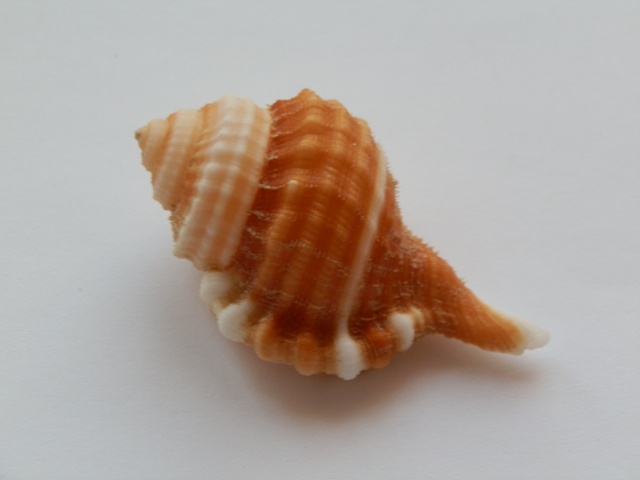
KASIA’S TRITON TROPHY FROM CASUARINA, ABACO

Here is another shell from Kasia’s beachcombing in the Casuarina Point area on Abaco. I’ve never seen one like this. I thought it was a TROPHON, a variety of the huge MUREX family. As I wrote, there are more than 30 types of trophon world-wide, many with a similar configuration, though I hadn’t managed to find one with a similar colouring and shell growth-pattern yet. I invited  confirmation or correction, which Colin Redfern kindly provided. It is in fact a fine example of a…


DOG-HEAD TRITON Cymatium cynocephalum
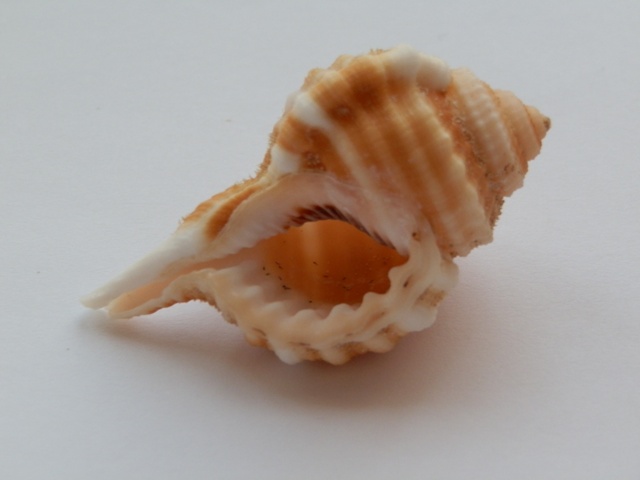
ANGULAR TRITON Cymatium femorale                                                                                A different sort of triton found by Kasia


Unknown's avatar

“SIZE MATTERS” – ABACO CRAWFISH CONSERVATION CAMPAIGN


Abaco Island, Bahamas

CAMPAIGN FOR SUSTAINABLE FISHERIES MANAGEMENT

Here’s a report I’ve turned up, which may well be of interest from a crawfish conservation viewpoint. And it’s also an excuse to post the excellent campaign song, which needs no added comment from me – see video below. The campaign slogan is… a delight. The Rare Planet website is well worth a rootle round – click the link below

Campaign manager: D’Shan Maycock
Partner:  Friends of the Environment

“When D’Shan Maycock launched a Pride campaign to rally her community around protecting marine life off of Abaco Island, she didn’t necessarily imagine her slogan becoming part of the daily lexicon for fishers, students, international conservation organizations, and even the Prime Minister. But thanks to a catchy phrase – Size Matters – and the idea of the locally-treasured crawfish shrinking due to overfishing, her campaign has caught on everywhere.

Crawfish are an important species for the biodiversity of Abaco Island, providing 60% of the total commercial fish catch and sustenance for other marine life in the region. However, due to unsustainable fishing practices and lack of local awareness, each year’s crawfish yield declines in numbers, total poundage, and average size. D’Shan discovered a heavy incidence of illegal fishing of juvenile crawfish, as well as a dearth of the formerly large crawfish that lay many times more eggs. There are 5 national land and sea parks around the island, yet it is a challenge for law enforcement to manage every landing dock. Community support is critical.  So D’Shan has gotten creative.
Progress on the campaign…
  • • Secured pledges from local fishers not to catch juvenile crawfish under 5.5 inches – their yield monitored through a new certification process
  • • Built awareness among key influencers and the general public about the importance of protecting juvenile crawfish
  • • Garnered the attention and support of high profile players in the region, including The Nature Conservancy, which is interested in taking the certification process to other islands in the Bahamas, and the Bahamian Prime Minister, who at a recent All-Abaco Expo on Food Security, called out the slogan of the campaign and pledged ongoing support for fisheries protection

To further explore this campaign, please visit our conservation community at RarePlanet.org.

(To whom thanks for this… but, hey guys, your ‘CONTACT’ page only gives long-distance phone numbers (wot no email?) Are you ok with me using this? If not please ring +44 763549390 between 19.00 and  21.00 and ask for ‘Tarquin’)

STOP PRESS: here is a news clip about the new campaign mural in M H, posted by campaign manager d”Shan on The Abaco Scientist 

Unknown's avatar

BEACHCOMBING AT CASUARINA, ABACO, WITH KASIA – COWRIE / PHALIUM / CONCH


 BEACHCOMBING AT CASUARINA WITH KASIA                    COWRIE / PHALIUM & CONCH

I recently posted some photos of starfish taken by Kasia at low tide near Casuarina point – see KASIAS’S STARFISH. Now it’s time for some beachcombing news from there. The sandbanks and bars in the Casuarina / Cherokee Sound area are a rich source of conchs, sand dollar tests and shells of many varieties when the tide is out. The sandy areas revealed as the water slowly recedes are extensive, and it is a great place to hunt for specimens (and for a lunchtime break from bonefishing…)

COWRIES / PHALIUM

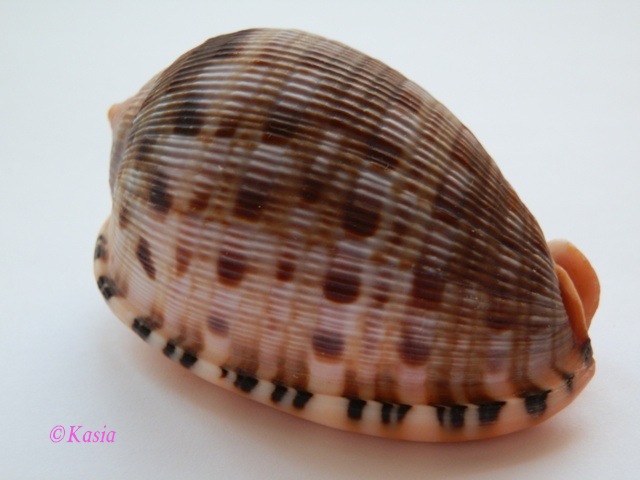
1. RETICULATED COWRIE-HELMET Cypraecassis testiculus Here is a pretty example of this shell, a relative of the large phalium family and originally misidentified by me as a Phalium granulatum

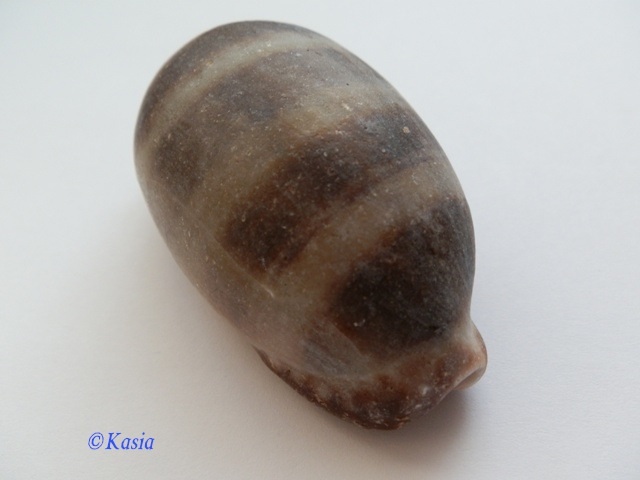
2. MEASLED COWRIE  Macrocypraea zebra / Cypraea zebra Colin Redfern says of this example “Immature shells have transverse stripes that are later covered by a spotted layer (hence “measled”). It looks as if it’s beachworn rather than immature, so the outer layer has probably been worn away. You can see remnants of the spotted layer adjacent to the aperture.” 

STOP PRESS: by coincidence, while looking for a completely different type of shell online I have just happened upon this early 1800s engraving of a Cypraea Vespa, which is very similar to Kasia’s one

CONCH I’m trying not to overdo Conchs, which are probably everyone’s favourite shell to collect. But this one is a wonderful pink, and came with a surprise inhabitant… Is anyone at home?

Oh! A hermit crab seems to have moved in…

It’s shyer than this one (from an unnamed online source)

Finally, a useful method to transport one’s shell collection, maybe?

Unknown's avatar

DELPHI CLUB ABACO & DELPHI THE RESCUE POTCAKE


Harvey Dog 
Special ‘Harvey the Potcake’ Logo

RESCUING RESCUE DOGS ON ABACO

Jane Mantle has emailed me about the plight of dogs and puppies on Abaco, her involvement in their rescue, and the urgent need for funding for care and medicine:
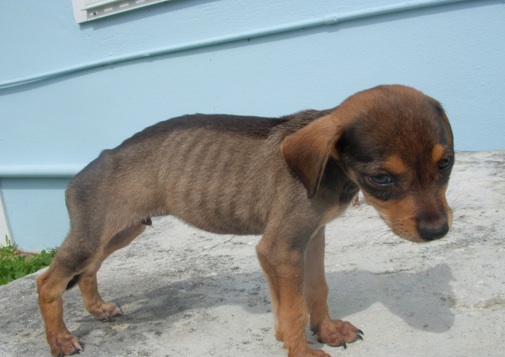
“Since living here for the past couple of months I have  been helping to rescue the rescue dogs.  Abaco Animal Rescue recently rescued 9 pups (see attached picture of Delphi) from the roadside” 
DELPHI 
Found with 8 other puppies by the roadside next to the body of their mother
“They were sitting next to the body of their decomposing mother with traffic and people passing by. Unfortunately even when rescued some of the pups have died due to lack of medication for them. There is a shelter of sorts built on the old municipal dump outside Marsh Harbour. It is OK but alive with rats that are as big as the pups! Abaco Animal Rescue consists of one english lady who basically funds everything herself”
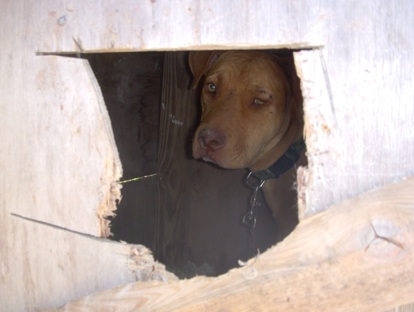
BORIS 
Found chained in a box, exposed to the hot sun without any water, and beaten daily to make him become an aggressive fighting dog
“Is there anything that can be put up on your site? (RH: yes indeed!) The enclosed is a flyer that I have put up in the Great Room next to an empty glass collection jar. There is no money at all for food or basic medication, I have asked both Millie and Lucy to do some fund raising at school etc but that won’t happen until next term. I will also see if I can get hold of medication from vet friends that I have but would be grateful for any publicity that you can give it” 
Certainly. By all means. Here goes:

CLICK mini-Harvey ===>>>  

STOP PRESS An up-to-date (as at spring 2014) list of contacts and links can now be found at “A DOG’S LIFE”. Scroll to the end of the post. If you have time, maybe read a bit on the way…
HARVEY found abandoned by the side of the road

APPEAL  by Jane Mantle, Boris & Delphi          

POTTY ABOUT POTCAKES? Please support Abaco Animal Rescue by donating your unwanted Bahamian currency – notes or coins. All contributions go directly to buy food and veterinary supplies for the many abandoned and mistreated potcake dogs of Abaco

602197_10151320508105308_626676659_n

Unknown's avatar

MARINE BROCHURE, ABACO, BAHAMAS: CONSERVATION


MARINE BROCHURE, ABACO, BAHAMAS                             A basic blueprint for environmental protection on Abaco

The various interested organisations have produced a simple 2-page brochure designed to promote responsible preservation of the island’s natural resources. If you click on a page below it will enlarge. If you want to go to the webpage to download the pdf for yourself (or pass it on)  CLICK==> MARINE BROCHURE 

“Take only pictures, leave only bubbles…” 

PAGE 1

PAGE 2

Unknown's avatar

STARFISH AT CASUARINA POINT, ABACO


STARFISH AT CASUARINA POINT, ABACO

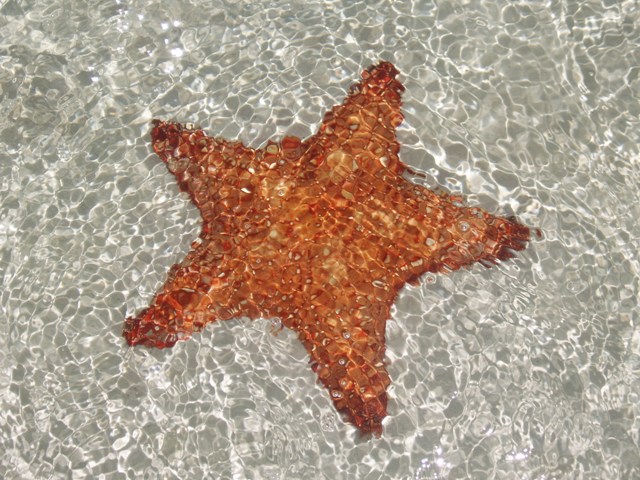
Kasia, a vital contributor to this blog, has supplied a number of images taken at low tide in the Casuarina Point / Cherokee Sound area on Abaco, including these excellent starfish. I’m posting them right away because starfish haven’t so far featured at all in this enterprise. Whenever I have seen them from a skiff I have been otherwise (and mostly ineffectually) engaged at the sharp end of the boat… 

All images ©Kasia (c/o rollingharbour) 

BAHAMAS STARFISH – 10 ESSENTIAL FACTS 

  • Other names include Cushioned Star and Red Cushion Sea Star
  • Its  invertebrate body is covered by a hard shell with raised knobbly spines 
  • The color of adults may be brown, orange, red, or yellow. Juveniles are mottled green (for camouflage in seagrass beds) 
  • Found in calm shallow waters (depths 1m – 37m), most commonly on sandy bottoms. Juveniles are usually found in seagrass beds
  • Individuals can grow to 50 cm / 20″ diameter
  • Adults live in dense aggregations called ‘fronts’ of 200 to 4000 individuals
  • When food is scarce they can reabsorb body tissue to prevent weight loss / size decrease
  • They are omnivores, feeding on micro organisms, urchins, sea cucumbers, small invertebrates, crab larvae, and sponges 
  • They use their ‘arms’ to rake piles of sediment and then evert the stomach, enveloping the food in its folds (don’t try this at home).
  • The cushioned star is over-harvested for souvenirs and the aquarium trade, and is no longer common in areas of high human population
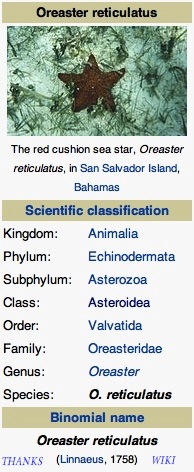
Sources: various (not Wiki except for chart). You are all stars. Sea stars, in fact


Unknown's avatar

MARINE LIFE OF THE CARIBBEAN – ABACO BOOK REVIEW


MARINE LIFE OF THE CARIBBEAN 

Macmillan Natural History Series Alick Jones & Nancy Sefton – 2nd Ed 2002 rollingharbour rating ****

Another excellent volume in this series of slim books – see other book reviews for Birds, Reef Fish etc. The book is carefully structured. Opening with an overview of the region, it moves gradually from shoreline to open sea via mangrove swamps, sandy areas, seagrass beds, rocky areas, and coral reefs. The sections are informative without being overwhelmed by detail, and the many illustrations are useful. It’s possible to skim-read and still feel you have learnt something worthwhile. It is definitely a help with identification queries.

The marine life covered includes plants, fish, starfish etc, shell-dwellers of all makes, crabs etc, and corals – all sufficiently to be educational without being dull. Towards the end there’s an equally handy chapter on turtles, birds and marine mammals. Finally, there’s a good section on ecology and conservation (depressingly, the problems are now worse 10 years later)

A 6-page glossary, a bibliography and index round off a very helpful tome. Definitely worth getting if you want a working grasp of the subject in an easily assimilable format.

I got my copy for £5 on Amazon, but check out ABE as well, which is also very good for this sort of book – but watch the postage rates there…

Unknown's avatar

BAHAMA YELLOWTHROAT: ABACO’S ENDEMIC WARBLER


BAHAMA YELLOWTHROAT: AN ENDEMIC WARBLER

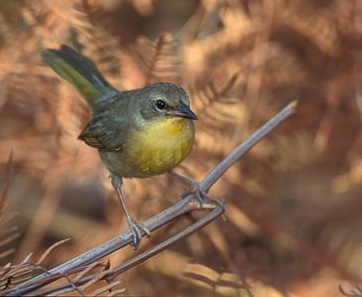
The Bahama Yellowthroat (Geothlypis rostrata) is a resident breeder species of warbler endemic to the Bahamas, closely related to the migratory Common Yellowthroat. The other birds endemic to Abaco / Bahamas are the Bahama Swallow, BAHAMA WOODSTAR and ABACO PARROT

HABITAT Dense low scrub, usually in drier areas than used by wintering Common Yellowthroats. It builds a cup nest low in dense vegetation and lays two eggs. Like other yellowthroats it feeds on insects and other small invertebrates in low vegetation

THE 3 VARIETIES The adult Bahama Yellowthroat is 15 cm long with a large bill. There are 3 subspecies: G. r. rostrata on Andros and New Providence islands (uncommon to rare);  G. r. tanneri on Grand Bahama, Great Abaco and associated islands (common); and G. r. coryi on Eleuthera and Cat islands (common). The noticeable distinction between these 3 types seems to be in the forecrown colour (not one I myself would readily spot…)

DIFFERENCES FROM COMMON YELLOWTHROAT The Bahama Yellowthroat is slightly larger than wintering Common Yellowthroat and has a heavier bill and ‘slower, more deliberate movements’. Males have ‘more extensively yellow underparts, a larger facemask extending onto the nape, and in the case of coryi the distinctive yellow forecrown. Females have a grey wash to the head not shown by Common Yellowthroat’.

Bahama Yellowthroat (Adult female), Little Abaco                                    Photo credit ©Mike Danzenbaker  http://www.avesphoto.com

SONG Described as a loud wichety wichety wichety wich, similar to that of Common Yellowthroat, with the call a softer jip than that of Common Yellowthroat. This is meaningless to me – lots of warblery birds sound like that as far as I can make out. Here is a very short recording of a BY on Abaco courtesy of Xeno-Canto, but it’s not saying wichety to me – more like whee-hew 

Below is a short self-crediting video to illustrate the song of a Bahama Yellowthroat on Grand Cayman. There’s a hint of wichety there.

CONSERVATION The Bahama Yellowthroat population overall is quite small and is outnumbered in winter by migrant Common Yellowthroats. It appears not to be endangered. Its conservation is currently listed as ‘Least Concern’ (see Wiki-Box above). The population may be decreasing slightly due to habitat destruction, but not yet sufficiently to bring the species within the ‘vulnerable’ classification.

Here is an excellent clear image of an adult male by Craig Nash who has taken many wonderful photos around Delphi and further afield – see the 4 ‘Peregrine’s Blog’ links under the Blogroll in the SIDEBAR Highly recommended.                        [I am also clearing copyright permission to add a few other photos – I haven’t taken my own BY photo yet…]Photo credit: Craig Nash

Sources: various, including relevant books (see reviews in BOOKS BirdLife International and good old Wiki 

Unknown's avatar

MANTA RAYS ON IUCN RED SPECIES LIST


MANTA RAYS THREATENED

Here is a clip from a report taken from the Guardian (UK) website, which lists threatened species world-wide. These include rhinos, various types of tuna, and (of particular interest to Abaco and the Bahamas generally) Manta Rays. Click on the image to enlarge it and make the caption legible…                                               You’ll find the full article and species slideshow at  The Guardian home

 Here is an excellent short video showing a large Bahamas manta making its majestic way through the ocean

Unknown's avatar

ABACO BEACHCOMBING WITH KASIA: MYSTERY OBJECT


MYSTERY OBJECT FROM AN ABACO BEACH


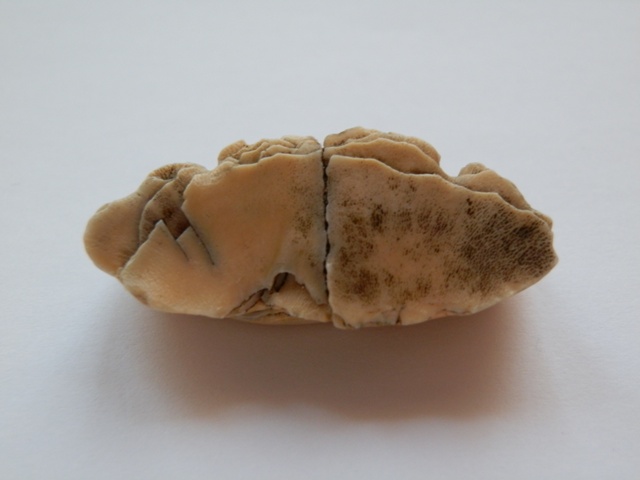
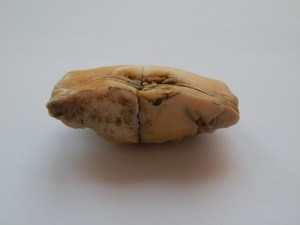
Here’s a strange item found by Kasia when she was beachcombing with Caroline Stahala
Their preliminary thought was that it formed some part of a turtle’s shell or skeletal anatomy

It is quite small (the coin above is 1 Euro) but amazingly intricate – developed in 2 symmetrical halves, with both delicate ridged surfaces and also distinctively layered bone plates 


I sent the images to Charlotte Dunn and Diane Claridge of the BMMRO in case the object might have something to do with a dolphin or even a whale. In their opinion it is very probably part of a ray’s mouth plate. It would be very interesting to know if anyone else has found an object like this. If so please respond in the comment box. Many thanks to Charlotte and Diane for sparing the time to help with ID

STOP PRESS I have some done further investigations into the dental arrangements of rays. I turned to the really excellent website of the Florida Museum of Natural History. On the FLMNH page for SPOTTED EAGLE RAYS is a very interesting photo by Cathy Bester which she has kindly given me permission to use. It is captioned Spotted eagle ray dentition: open mouth showing tooth bands and floor and roof of mouth  This photo seems to go a good way to confirming the ID of Kasia’s object, although obviously it might be a fragment from a different type of ray 

For the FLMNH site CLICK LOGO 

GO PRESS (or whatever an extra stop press may be): see comments  from Black River Fossils for further confirmation as a ray palate


Unknown's avatar

ABACO BEACHCOMBING FOR SEA GLASS WITH KASIA


BEACHCOMBING FOR SEA GLASS 

IMG_1426

Kasia is an avid beachcomber on the sandy beaches of Abaco. Her collections include not only shells but also other marine debris such as sea glass. She has sent me some images with the comment You can find a lot of sea glass in many different colours and shapes, from the most common green, brown and white through fairly hard to find colours like jadeite (one of the 2 forms of jade), citron, light blue, light green, honey and amber colored browns, to quite rare colors like cobalt, teal, periwinkle, aqua, amethyst & black” Here are some examples of Abaco sea glass from her collection. Shells and other items will follow as and when… 

SEA GLASS COLOURS: THE VITREOUS STATISTICS

Sea glass sources are many and varied. In general, these include old clear plates, glasses, windows etc; coloured drinks bottles – wine, spirits, beer, fruit, cola etc; soda bottles; medicine bottles (e.g. milk of magnesia / Vick’s blue); fruit jars; ink bottles; household goods (bleach, soda). The rarest colours (see below) come from very specific origins: teal / Mateus Rose bottles; red /  car or nautical lights or Schlitz bottles; black / c18 gin, beer and wine bottles
GENERAL CLASSIFICATION OF SEA GLASS COLOUR OCCURRENCE

Most common (1 in every 1 – 25 pieces found): clear, Kelly (‘Irish’) green, brown, blue, purple

Less common (1 in every 25 – 100 pieces found): jade, amber, lime green, forest green, ice / soft blue

Uncommon (1 in every 50 – 100 pieces found): other green shades

Very uncommon 1 in every 200 – 1000 pieces found): citron, opaque white, cobalt, cornflower blue and aqua

Extremely rare (1 in every 1000 – 10,000 pieces found): grey, pink, teal, black, yellow, turquoise, red

Rarest of all (1 in every 10,000+ pieces found): orange

Info credit: Magpies, for collection of bright shiny glass data. Omni-thanks

This is a helpful chart for the main colours, courtesy and © of  West Coast Sea Glass starting top left with orange as the rarest. The direct link is www.westcoastseaglass.com/rarity_chart_poster.html

You’ll find a great deal of other useful info on sea glass on Mary Beth’s  linked blog at http:// seaglassblog.blogspot.com/

There’s also a worthwhile Abaco Life article (2006) on sea glass at http://www.abacolife.com/2008/07/14/sea-gass-reveals-muted-tales-in-red-green-blue-white/ 

JAN 2012 I’ve noticed that there are several easily obtainable (eg from *M*Z*N) books on sea glass. I won’t be buying any to test-drive for you (as with birds, shells etc) – sorry – but they seem to be divided into the ‘pretty but uninformative and fairly cheap’ to the more instructive, more detailed and therefore more expensive books. It’s worth browsing online to find one that meets your interest level, whether passing or something more serious. The reviews are very useful here. The best – and it’s quite pricey – seems to be 

Unknown's avatar

ABACO DOLPHIN SIGHTINGS (OCT 2011) + GREAT IMAGES


                   ABACO DOLPHIN & WHALE SIGHTINGS OCTOBER 2011               TWO YOUNG DOLPHINS SEEN DURING RESEARCH TRIPS

The BMMRO has just published the Bahamas whale and dolphin map of reported sightings for last month, showing a significant amount of bottlenose dolphin activity in the Marsh Harbour area, extending north and south. Also new on the BMMRO website are details of recent research into the Abaco dolphin population. Here are two great dolphin images taking during the trips

A sub-adult dolphin during social interaction ©BMMRO

A young calf on Tilloo Bank ©BMMRO

To view the BMMRO site CLICK LOGO===>>> 


Unknown's avatar

ABACO BIRD I.D: A SMALL GALLERY


ABACO BIRD I.D: A SMALL GALLERY

At an early stage of this blog I set out one of its aims – to help answer the question “What the heck is that small yellow bird over there…?” Since then, images have been posted. Lists and links have been given. Bird books have been reviewed. Every little prompt with ID helps the interested amateur (e.g. rh) and not just with the little yellow birds… I have seen all these birds at or very close to Delphi except the common yellowthroat (which I may well have seen but not “seen” as in recognised); and the red-tailed hawk, which we have spotted in the National Park (see TO THE LIGHTHOUSE , a rugged (ha!) account of the frankly unnerving trip through the National Park to Hole-in-the-Wall Lighthouse)

Here is a small gallery posted with permission of Friends of the Environment, Abaco (thanks Olivia), taken from their website, where you will find these images and a great deal more excellent material besides. Click anywhere on the gallery to get a better view. All images © A.C. Hepburn 

Friends of the Environment website CLICK LOGO=>  

Unknown's avatar

ABACO BEACHCOMBING: TWO CONCH SHELL SKELETONS


ABACO SHELL SKELETONS

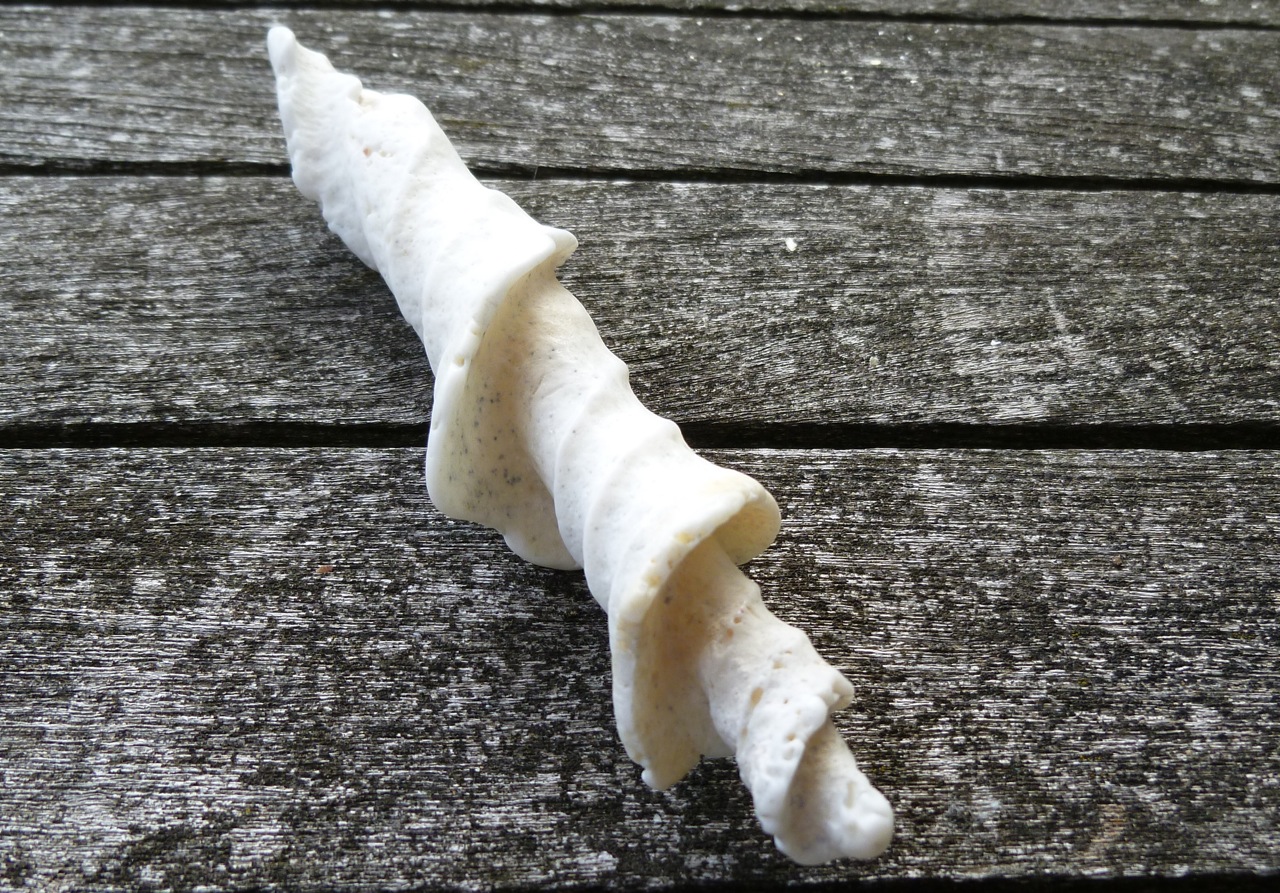
Besides ‘living shells’ with occupants in residence and shiny recently-vacated shells, there is a third category of shell: the skeleton. I am sure there’s a better or more technical word for these. They aren’t fossils in the strict sense of remnants from a past geological age, but merely worn by the waves and bleached by the sun over time. Here are two examples (from different beaches) which show the intricacy of the part of the shell you don’t normally see: the interior

A shell skeleton from Little Harbour, in situ on the beach on a cloudy day

The same shell washed, with a wonderful pink tinge in sunlight

A strange corkscrew skeleton shell from Sandy Point. I’ve no idea what it is, nor how any creature can have lived in or around it, nor what it must have looked like when complete. Any ideas? Please use the comment box… Thanks, Kasia, for your ID of both as conch skeletons. The first obviously is, but the second puzzled me… until she pointed out that conchs build their own shells round themselves to their own designs rather than go to the one-stop conch shell shop. So if a conch starts wrapping itself comfortably round its own corkscrew, this is what you get

(Mrs rh quite rightly points out that my shell photos are unhelpful without a ruler to give an idea of size. Point taken. Too late. These are medium size…)