
CHRISTMAS TREE WORMS: SEASONAL SPIROBRANCHES
 “Deck the Reefs with Worms Like Christmas Trees… Fal-La-La-etc-etc ” is a traditional Carol familiar to all. Well, most. Ok, some, then. Oh right – maybe with different words? Anyway, now is the perfect time to take a look at these remarkable subsurface symbols of seasonal good cheer (nb they are wonderful animals not gorgeous plants).


10 CHRISTMAS TREE WORM FACTS TO PONDER
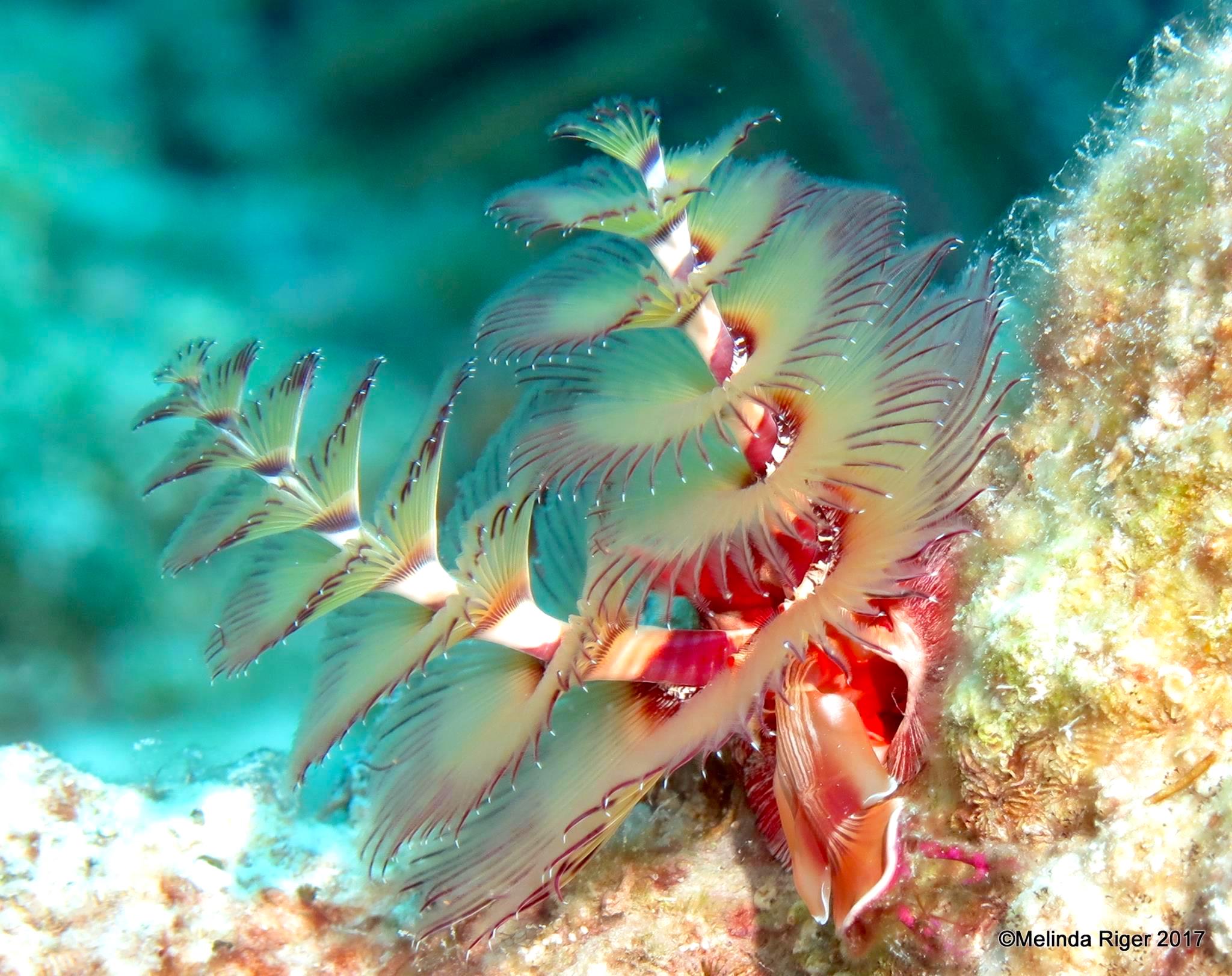
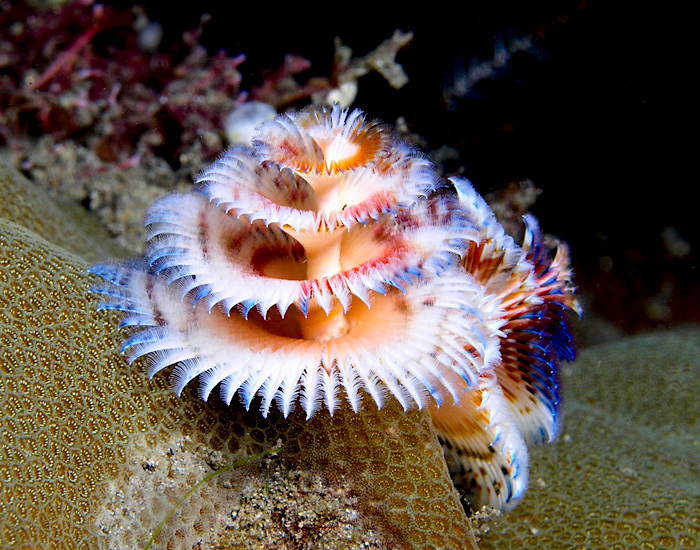
- The 2 colourful spirals are not the worm, but complex structures for feeding & respiration
- The spirals act as specialised mouth extensions for ‘filter-feeding’
- Prey is trapped by the feathery tentacles & guided by cilia (microscopic hairs) to the mouth
- The tentacle things are radioles and act as gills for breathing as well as prey traps
- There is little evidence that prey slide down the spiral to their doom, like on a helter-skelter
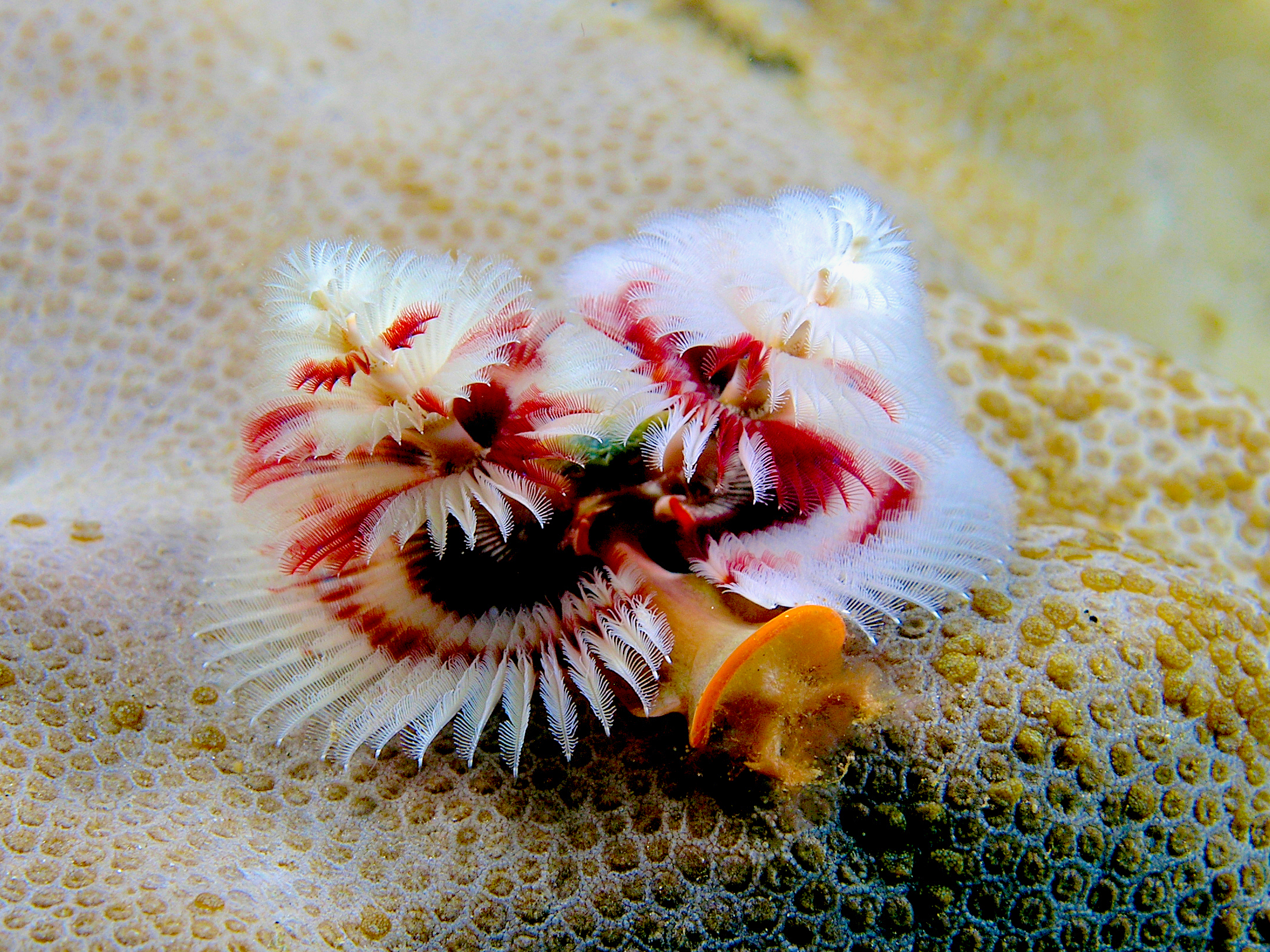

- The actual worm lives in a sort of segmented tube, with extremely limited mobility skills
- It contains digestive, circulatory & nervous systems – and a brain in the middle of it all
- The worm also has a tiny drainage tube (I think I have this right) for excretion etc
- They embed themselves into heads of coral such as brain coral. And stay there
- And yes, the Christmas trees are retractable… (see below for some action)

HOW DO THE WORMS… YOU KNOW… ERM… REPRODUCE?
This is a delicate area. They are very discreet, but as far as I can make out they eject gametes from their what-I-said-above. There are mummy and daddy worms, and their respective gametes (eggs and spermatozoa) drift in the current and into each other to complete the union. The fertilised eggs develop into larvae, which settle onto coral and burrow into it as their parents did, build their protective tubes, and the process begins again.

YOU DON’T REALLY UNDERSTAND THESE CREATURES, DO YOU?
I won’t lie. I found it hard to work out how the CTWs function in practice. There are plenty of resources showing them in their full glory, but that only takes one so far. Then I came across a short video that shows it all brilliantly simply (except for the reproduction part).
The worms, in their coral burrows, hoist their pairs of ‘trees’. You can easily see small particles – zooplankton – drifting in the water, and the radioles swaying to catch potential food. Suddenly it all makes sense (except the repro bit – I haven’t found footage of that). Next: the New Year Worm (there is no Easter worm).
A WHOLE FESTIVAL OF CHRISTMAS TREE WORMS
Credits: Melinda Riger (Grand Bahama Scuba); Nick Hobgood; Betty Wills; Video by ‘Super Sea Monkey’; Reef Collage by RH; MarineBio; Wikibits & Magpie Pickings
Happy Christmas to all those who put up with RH with such fortitude over many years

 ROLLING HARBOUR ABACO
Absolutely beautiful!!!
LikeLiked by 1 person
Pingback: CHRISTMAS TREE WORMS: SEASONAL SPIROBRANCHES | "OUR WORLD"
What a delight to see and learn about these amazing creatures!
LikeLiked by 1 person
Thank you v much – and season’s greetings!
LikeLiked by 1 person
And a very Happy Christmas to you! It has been my pleasure, for many years, to thoroughly enjoy RH! It is something I look forward reading every single time. A few years back my husband and were able to spend a few months in the Bahamas (mainly Abaco) and your publication never ceases to bring back memories and the absolute beauty of the Bahamas. And I actually have learned a few things – go figure…. All the very best to you and your loved ones! Thank you again for a marvellous publication! Gail & Randy Stroschein Vancouver, BC Canada
LikeLiked by 1 person
I’m so pleased to have this lovely message, thank you so much. Over the 10+ years of this blog, I’ve had a few nice things said (and zero un-nice luckily), but you have effortlessly gone straight in at Number 1 (like Taylor Swift?). I am touched by the pleasure you have had from my efforts, and the memories they have made. A comment like yours makes it all worthwhile! Happy Christmas! RH
LikeLike