Unknown's avatar

WAVE CHASERS: SANDERLING POOL TIME ON ABACO


Sanderling, Delphi Beach Abaco Bahamas (Keith Salvesen / Rolling Harbour)

WAVE CHASERS: SANDERLING POOL TIME ON ABACO

It’s often a hard decision whether to include a short piece of video footage in a post. By short, I mean less than a minute. On the one hand, there is usually a good reason for inclusion, even if only aesthetic. On the other, it simply takes up more time for busy people who may prefer to flick through an article and enjoy some nice images along the way. Today, you can have the best of both worlds.

Sanderling, Delphi Beach Abaco Bahamas (Keith Salvesen / Rolling Harbour)

Sanderlings are definitively ‘peeps’, a group name that embraces the smallest and squeakiest sandpiper species. They are the wave chasers, the tiny birds that scuttle along the beach, into the retreating tide for a snack from the sand, and back to the beach again as the waves creep in. Their little legs and feet move in a blur, and many people immediately think of wind-up clockwork toys as they watch the birds in action. But these charmers never wind down while there is shoreline foraging to be done.

Sanderling, Delphi Beach Abaco Bahamas (Keith Salvesen / Rolling Harbour)

One of the joys of being a sanderling is that rock pools fill and empty diurnally. At some time during daylight, there’s the certainty of a quick dip. I was lying on the beach when I took this short video, so that I didn’t spook the birds. I was equipped with a smallish camera (I drowned it the following day. By mistake I mean) so I kept my distance rather than try to get closer and spoil their joyful bathing.

I caught these little birds at a critical moment. You can tell that the tide is coming in fast. The peeps are becoming edgy, and weighing up the joys of immersion in a pool with the less enjoyable prospect of being washed out of the pool by the next wave. Within a minute or so, they had all flocked down the shoreline for a foraging session in new territory.

Waves and incoming tide getting a little too close for comfort on the edge of the pool…Sanderling, Delphi Beach Abaco Bahamas (Keith Salvesen / Rolling Harbour)

Next to the migratory PIPING PLOVERS that favour Abaco as their winter home, the wave chasers are my favourite shorebirds. It was my keenness on them that killed my camera. I went out into the incoming waves to get shots back at the beach with the sun behind me. Great idea until I lost my balance with, as they say, hilarious consequences. Lesson learnt – never turn your back on waves.

Sanderling, Delphi Beach Abaco Bahamas (Keith Salvesen / Rolling Harbour)

All photos © Keith Salvesen / Rolling Harbour taken on the beach at Delphi, Abaco, Bahamas

Sanderling, Delphi Beach Abaco Bahamas (Keith Salvesen / Rolling Harbour)

Unknown's avatar

GREAT EGRETS: NOBLE (YET MISNAMED) HERONS


Great Egret, Bahamas (Nina Henry)


GREAT EGRETS: NOBLE (YET MISNAMED) HERONS

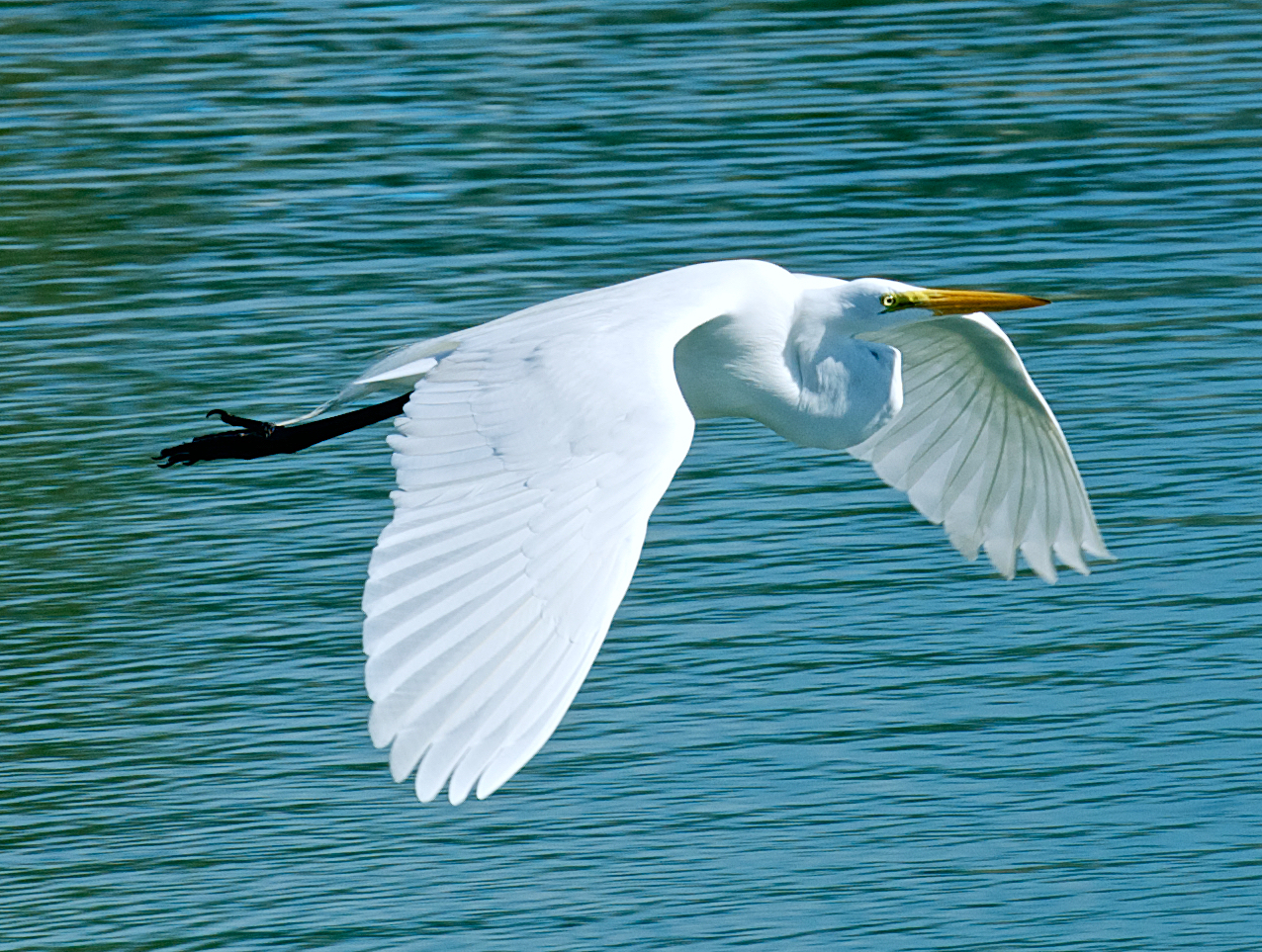
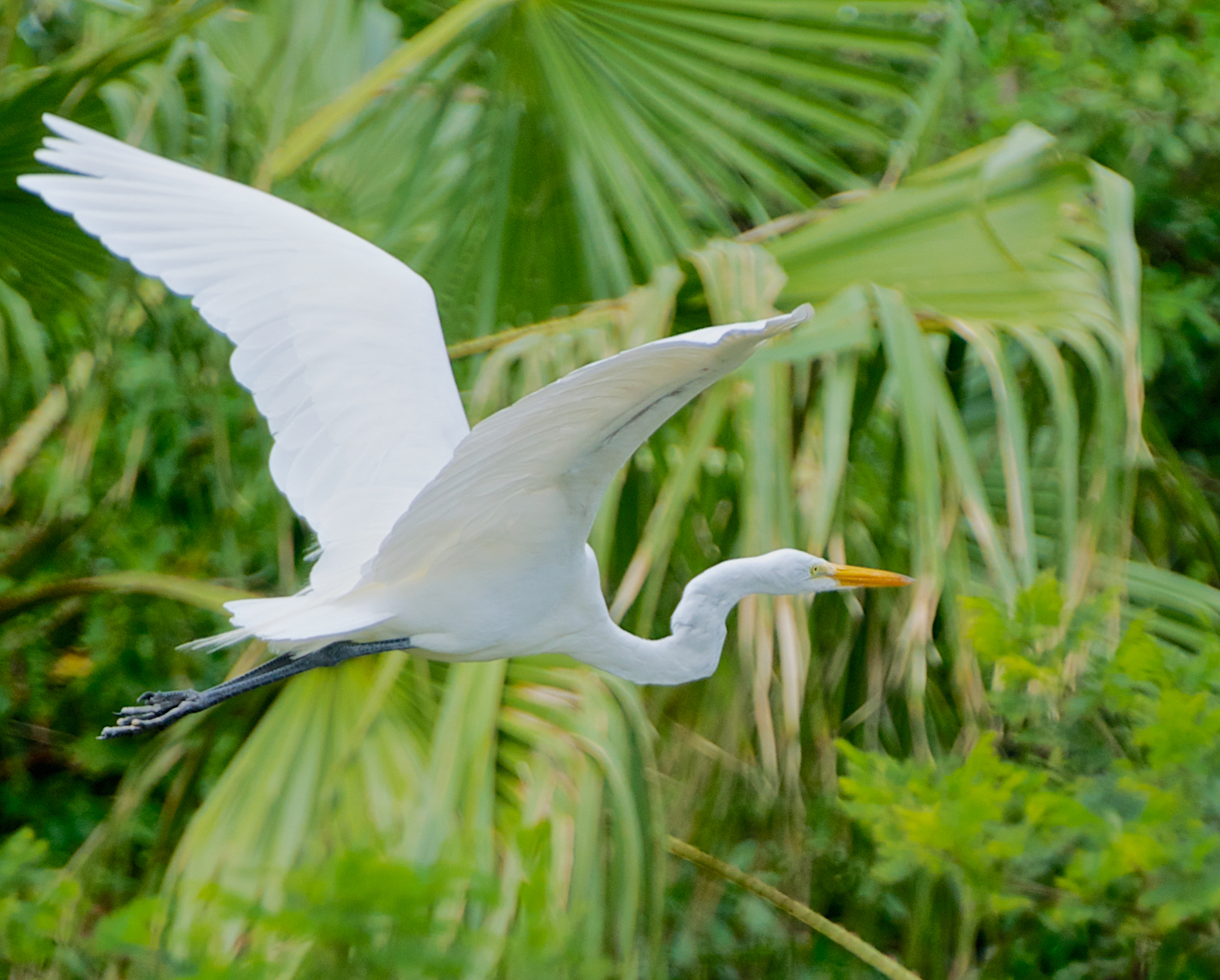
The Great Egret is actually a heron rather than an egret. It’s a Great Heron. All egrets are members of the heron family Ardeidae, but the converse is not true. As long ago as 1758, Linnaeus awarded the bird the binomial name Ardea alba i.e. ‘Heron white‘. Why it should later have been so hard to stick to that authoritative nomenclature, I can’t imagine. Perhaps in time all heron and egret species became so hopelessly confusing for people that it ceased to matter much what they were called.

Great Egret, Bahamas (Nina Henry)

Maybe it was that type of carelessness that led to people from the mid-c19 onwards eyeing up GREGs as a source of hat feathers and other decorative necessities. As with flamingos and many other beautiful avian species, mankind’s millinery and other fashion needs were satisfied at the expense of gorgeous plumage. Actually, at the cost of the birds’ lives: they were simply shot in huge numbers. 

Great Egret, Bahamas (Nina Henry)

Healthy populations were decimated; for some species they never recovered. For others, the great egret among them, the passage of time and the passing of fashions – backed in many cases with conservation programs – have successfully restored the populations. In 1953 the National Audubon Society, which was formed at least in part to discourage the killing of birds for their feathers, took a decisive step in the cause of the great egret by making the bird the emblem of the organisation.

Great Egret, Bahamas (Nina Henry)

Photo Credit: Nina Henry photographed all the egrets in this post. Her wonderful images of this magnificent egret heron made a significant contribution to the original “BIRDS OF ABACO” project.

Great Egret, Bahamas (Nina Henry)

Unknown's avatar

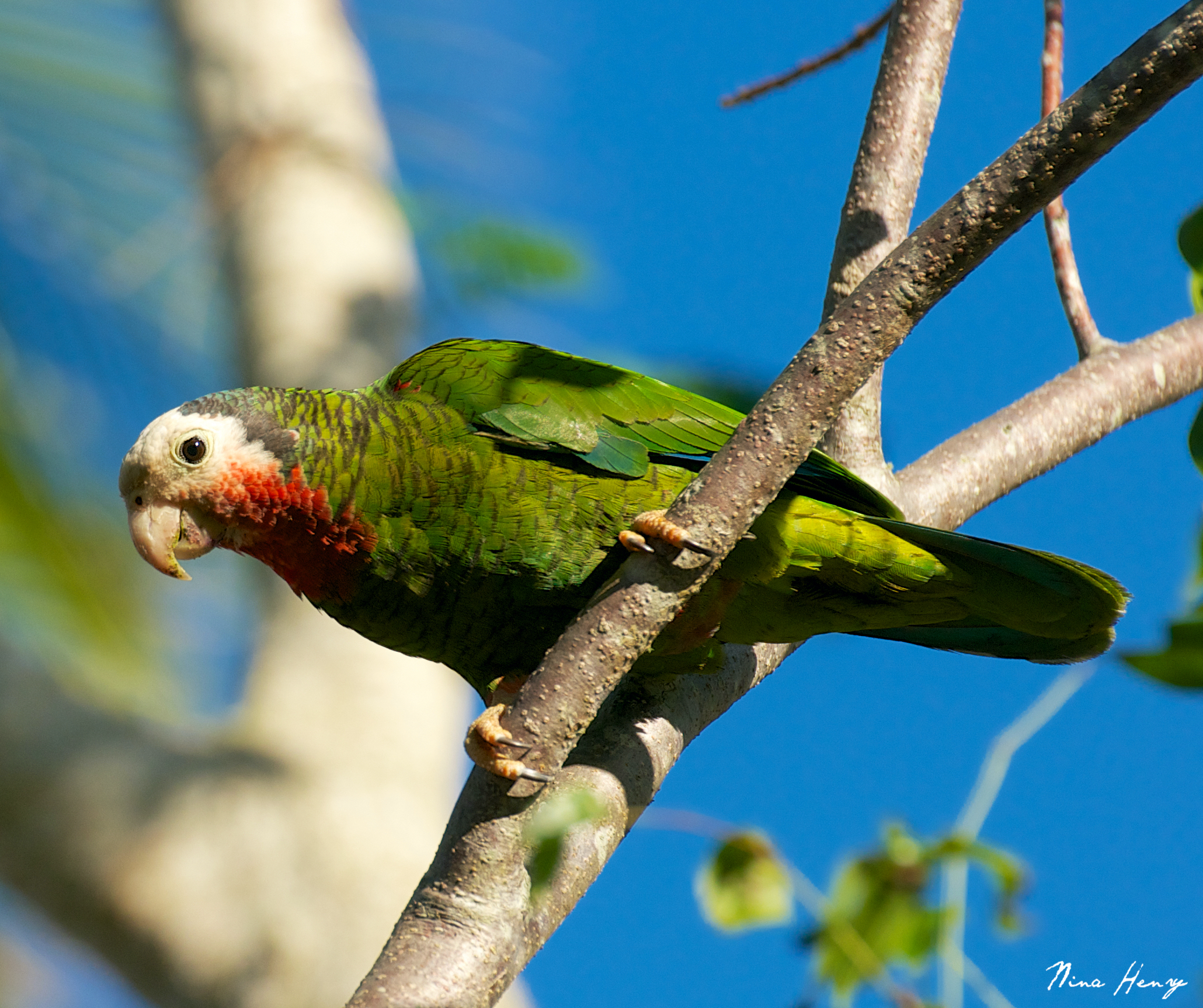
ABACO [CUBAN] PARROT. Amazona leucocephala bahamensis


This fantastic photograph of one of Abaco’s unique ground-nesting parrots was taken by ace photographer Nina Henry during the preparation and compilation of BIRDS OF ABACO. It’s the most special of the many we studied. The bird clearly displays the full fanning of its tail; and the image captures the bright colours perfectly. NH/RH/KS

Unknown's avatar

RED-WINGED BLACKBIRDS . ABACO . BAHAMAS


Red-winged Blackbird, Abaco (Tom Sheley)


RED-WINGED BLACKBIRDS ON ABACO

The sounds are unmistakeable – a discordant chorus of soft chuckling noises like tongue-clicks as the RWTs flock into a bush, interrupted by harsh, metallic calls like rusty metal gate-hinges being forced open. Or maybe a lone bird mournfully repeating its eerie call from the mangroves far out on the Marls as the bonefishing skiffs slip silently along the shoreline. No other species sound quite like Agelaius phoeniceus.

Red-winged Blackbird, Abaco (Tom Sheley)


The handsome males sport flashy epaulets, most clearly visible in flight or in display – for example to impress a prospective mate. Again, they are unlikely to be confused with another species.

Red-winged Blackbird, Abaco Bahamas (Alex Hughes)


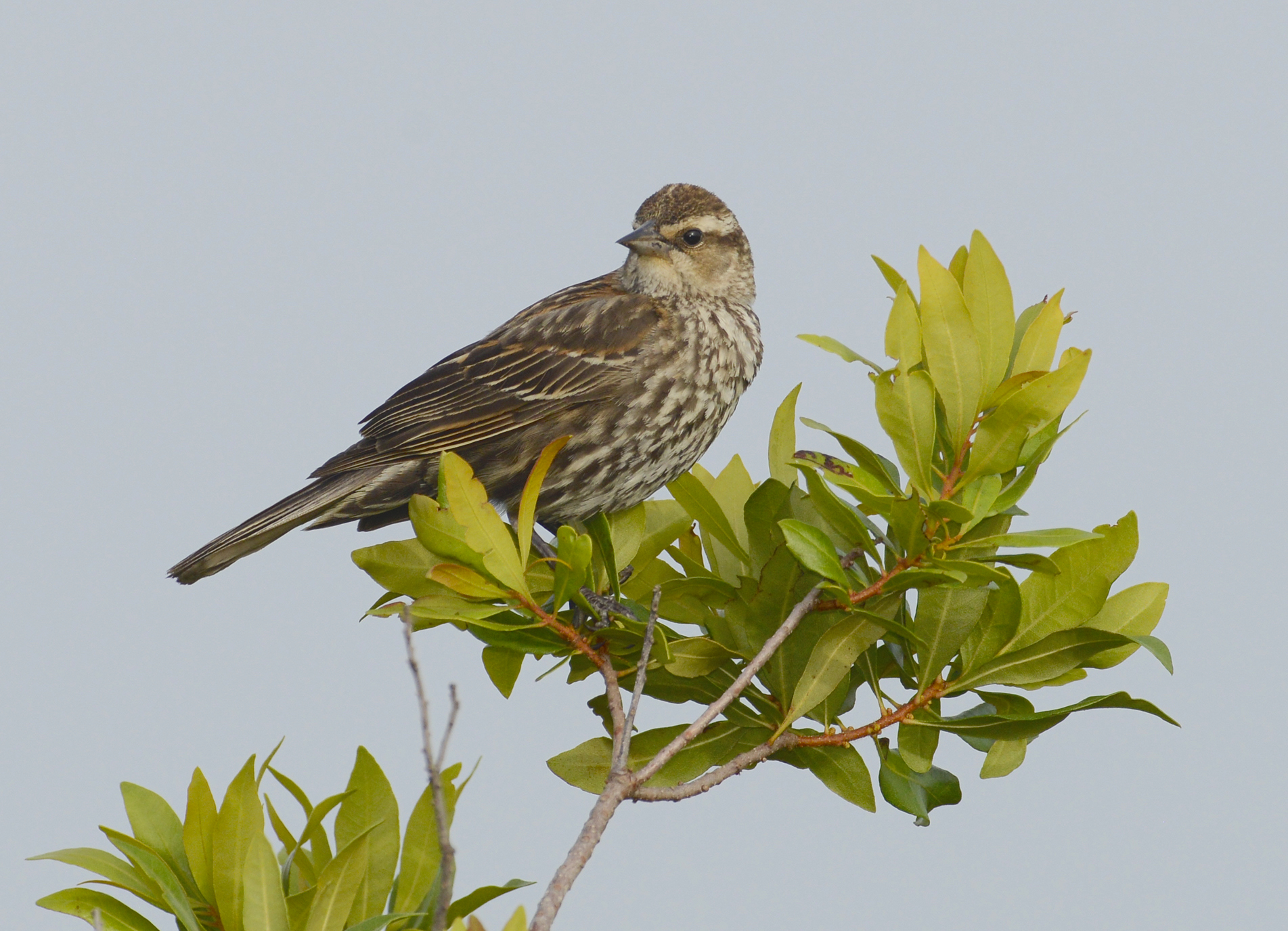
The females, as is often the way, are less showy. I have read that they are ‘nondescript’ or ‘dull’, which is unnecessarily harsh, I reckon. Here are a couple of examples.


And the darker brown ones that are clearly not handsome black males? These are young males in their first season, before they move on to the full adult male plumage. Originally I had designated them as females (as I had assumed). I was very gently corrected by the legendary bird expert Bruce Hallett. I took the first male juvenile at Casuarina, when I also made the sound recording (below). The second was at Delphi (with some ‘light’ issues, I notice…).

Red-winged Blackbird, Abaco (Keith Salvesen / Rolling Harbour)

Red-winged Blackbird, Abaco (Keith Salvesen / Rolling Harbour)

Fledglings are kind of cute…Red-winged Blackbird, Abaco (Tom Sheley))


SO WHAT DO THEY SOUND LIKE?

You may need to turn up the volume a bit. You will also here a lot of dove noise and, in the background, the sound of waves lapping onto the shore.

Red-winged Blackbird, Abaco (Keith Salvesen / Rolling Harbour)

Photo Credits: Tom Sheley (1, 2, 4, 5, 8); Alex Hughes (3); Keith Salvesen (6, 7, 9 & audio)

Unknown's avatar

TERN TERN TERN: THE 12 SPECIES RECORDED FOR ABACO, BAHAMAS


Royal Terns on the Marls, Abaco

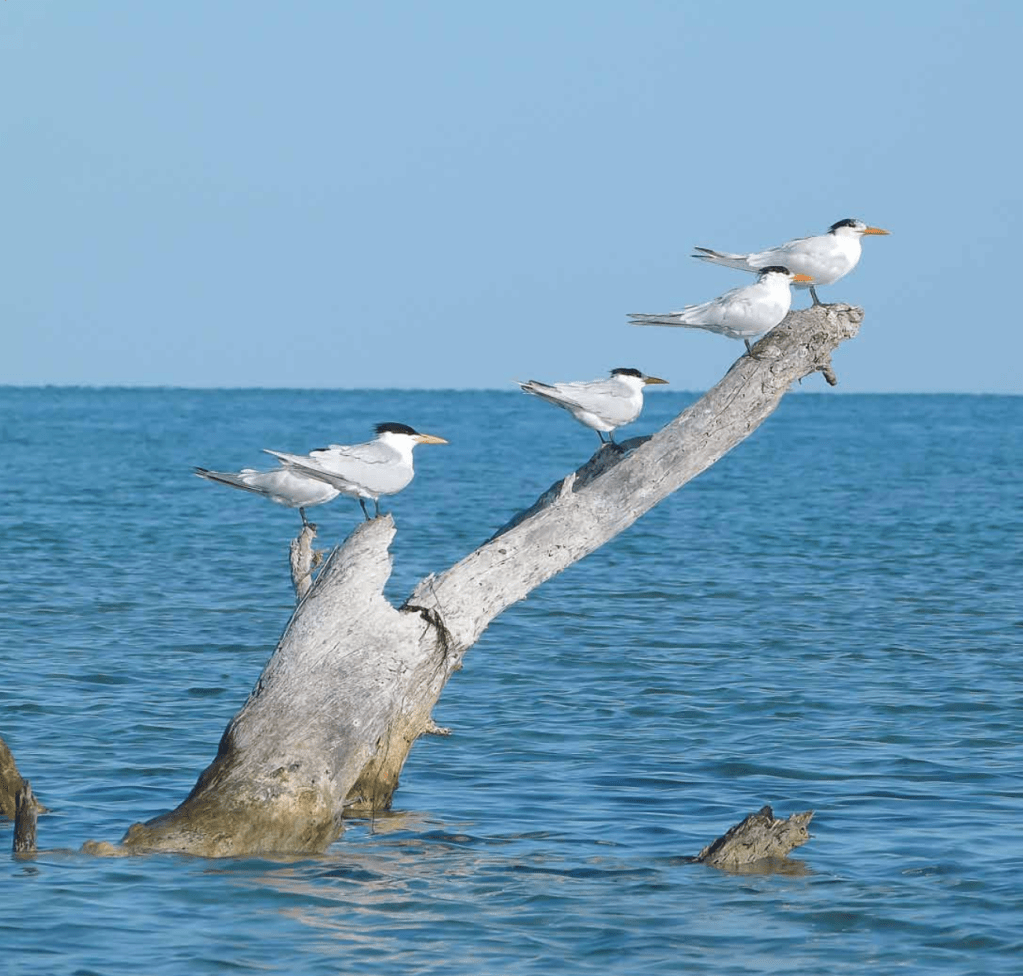
There are twelve species of tern – ‘swallows of the sea’ – that to a greater or lesser extent may be found on Abaco. Whether they will actually  be visible at any given time is less certain, though. For a start, the only resident species is the lovely Royal Tern, available at many locations on Abaco and the cays throughout the year. Others are migratory, transitory or – rarest of all – vagrant birds blown off-course by wind or storm.

ROYAL TERNS Thalasseus maximus PR1

Royal Tern, Abaco Bahamas (Keith Salvesen)

In the slightly less commonly-found category are the summer migrant terns that, by definition, are only in residence for around half the year. Four of these are fairly common in certain areas, and actually breed on Abaco; these include arguably the prettiest of all, the bridled tern. The other two tern species (gull-billed and sandwich) are more rare and do not generally breed locally.

LEAST TERN Sternula antillarum SR B 1

LeastTern, Abaco Bahamas (Tony Hepburn)

BRIDLED TERN Onychoprion anaethetus SR B 2

BridledTern, Abaco Bahamas (Bruce Hallett)

ROSEATE TERN Sterna Dougallii SR B 2

Roseate Tern, Abaco Bahamas (Woody Bracey)

SOOTY TERN Onychoprion anaethetus SR B 2

Sooty Tern, Duncan Wright wiki

GULL-BILLED TERN Gelochelidon nilotica SR 3 

Gull-billed Tern, Abaco Bahamas (Alex Hughes)

SANDWICH TERN Thalasseus sandvicensis SR 4

Sandwich Tern, Abaco Bahamas (Bruce Hallett)
Sandwich Tern, Abaco Bahamas (Woody Bracey)

There is one rare winter resident migratory tern species. I had to check when the last one was recorded for Abaco. It was of course only in January this year, when ace birder-photographer Sally Chisholm saw one at Treasure Cay and managed to photograph it for posterity.

FORSTER’S TERN Sterna forsteri  WR 4

Forster's Tern (Dick Daniels)
Forster's Tern, Abaco Bahamas (Sally Chisholm)

The final four ‘Abaco’ terns are very much the occasional visitors. Three of them pass over the Bahamas on their longer migration, but may make a pit-stop around Abaco to take on fuel. Likelihood of sighting one? Slender but not impossible… The fourth, the Arctic Tern, is a very rare vagrant, a bird well away from its usual home or migration route as the result of storms or faulty satnav or sheer happenstance. Don’t travel to the Bahamas intent on seeing one.

CASPIAN TERN Hydroprogne caspia TR 4

Caspian Tern Abaco Bahamas (Woody Bracey)
Caspian Tern Abaco Bahamas (Keith Kemp)

As for the remaining three species, they are the transient black tern and common tern; and the vanishingly rare vagrant  Arctic tern (the clue is in the name). No photos of any of these I’m afraid, so here’s a handy checklist instead. 


ELECTIVE MUSICAL DIGRESSION

Written by Peter Seeger a few years earlier, Turn x 3 was released in 1965, the title track on the second album from the Byrds. At a rather febrile time in US history (Vietnam, draft riots, black civil rightists v cops and so on), this unusually palliative and thoughtful song with its religious connotations to some extent stood for peace and hope in a time of turmoil.

Photo credits: Keith Salvesen (1, 2, 3, 5, 18); Tony Hepburn (4); Alex Hughes (10, 11); Bruce Hallett (6, 7, 12); Woody Bracey (8, 13, 16); Duncan Wright (9); Dick Daniels (14); Sally Chisholm (15); Keith Kemp (17)

Unknown's avatar

LIKE THE CLAPPERS: LEARN THE RAILS ON ABACO


Clapper Rail preening, Abaco Bahamas (Tom Sheley)


LIKE THE CLAPPERS: LEARN THE RAILS ON ABACO

Note: You may find ads in this post. This is because WordPress / AI has now decided that you (dear reader) and I (angry author) are presumed to be up for car insurance deals, slimming advice, and incontinence apparatus. I’m probably going to have to buy my way into a new contract, as they presumably intend.

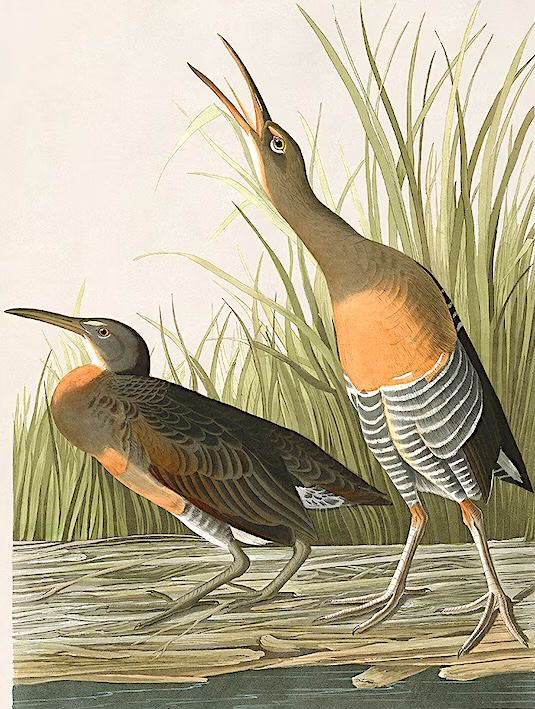
CLAPPER RAILS Rallus crepitans are elusive birds of mangrove swamp and marsh, more frequently heard than seen. They tend to lurk around in foliage and are easy to overlook – creatures of the margins rather than of open ground. If lucky, you may come across one foraging secretively, beak-deep in the mud.

Clapper Rail stretching.Abaco Bahamas - Tom Sheley ("The Birds of Abaco" by Keith Salvesen, p80)

Tom Sheley’s wonderful photos featured here of a preening clapper rail were taken during backcountry explorations to locate and photograph species for BIRDS OF ABACO.  By being an early riser and a patient cameraman, Tom managed to capture this fine bird engaging in some quality grooming. The one below is also ‘vocalising’ – also known in rails as ‘rousing’.

Clapper Rail rousing.Abaco Bahamas.Tom Sheley

CALL

AGGRESSIVE CALL

Clapper rails are capable of swimming and even of flying if they choose to (which isn’t often). However the most likely activity you will observe is skulking, picking their way quite delicately through marginal  vegetation, or (if you are lucky) doing some serious beak-deep foraging in the mud. Their foraging is made easier by the fact that they are omniverous.

Clapper Rail (Audubon)

Occasionally they run, a process that looks endearingly comical and which possibly gives rise to their name (see below).

Clapper Rail running, Abaco Bahamas (Erik Gauger))

Clapper Rail running, Abaco Bahamas (Sandy Walker)

It almost goes without saying nowadays, but the biggest threat to these rather charming inoffensive birds is habitat loss. Which is to say, mankind either directly or indirectly. Drive bulldozers through the mangroves and marshland of sub-tropical coastal areas, chuck down a few acres of concrete and tarmac… and the clappers will very soon be clapped out. As they will if the climate we have unarguably changed irrevocably ruins their unobtrusive lives.

ADVISORY LINGUISTIC STUDY

When I first wrote about this species, its binomial name was Rallus longirostris ie simply ‘long-beaked rail‘. Which it is. Then came an annual official AOU shuffling of species and revision of names. The clapper rail was re-designated Rallus crepitans or ‘rattling / rustling rail‘. Which it does, but it also has other vocalisations (try the sound-files above). So maybe less clear-cut for ID purposes (there were other rail name innovations that, reading about them, made me crack open a beer instead of wanting to tell you about them. I’m old-school. 

OPTIONAL LINGUISTIC DIVERSION

TO RUN LIKE THE CLAPPERS“. This phrase seems to be fairly recent, most likely originating as military (?Air Force) slang early in WW2 or possibly from earlier conflicts. Some suggest it is a rhyming slang bowdlerisation of ‘run like hell’ with ‘clapper(s)’ standing for ‘bell’, along the lines of the Cockney “I’ve bought a new whistle” (whistle and flute = suit). Almost all plausible explanations relate to bells: the speed of the clapper of a vigorously rung handbell. One stand-out meaning relates to the historical era of City prostitution and the high risk of syphilis (‘pox’) or gonnorrhea (‘clap’). You can probably make the link.

Photo credits:Tom Sheley, Sandy Walker, Erik Gauger, University of Amsterdam (print), OS / CC

Clapper Rail preening.Abaco Bahamas.3.12.Tom Sheley copy

Unknown's avatar

DOVE & PIGEON SPECIES OF ABACO


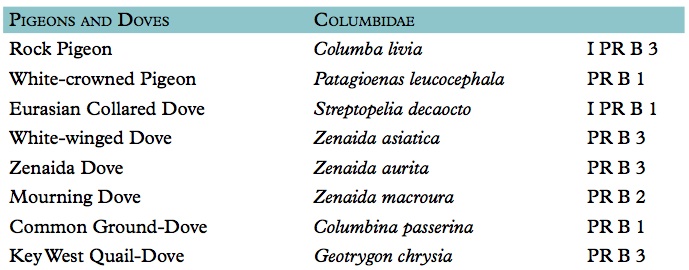
Pigeons : Doves Abaco

COLUMBIDAE OF ABACO

ALL ARE PERMANANT BREEDING SPECIES*

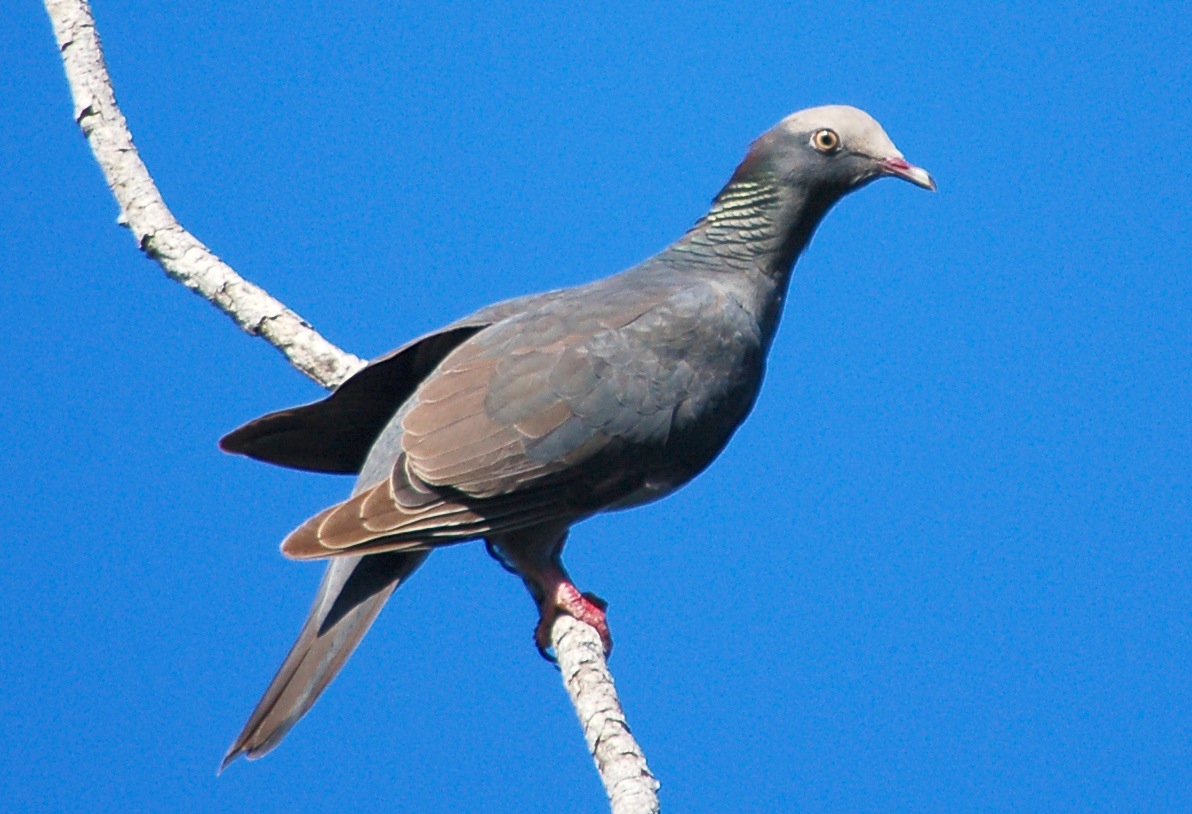
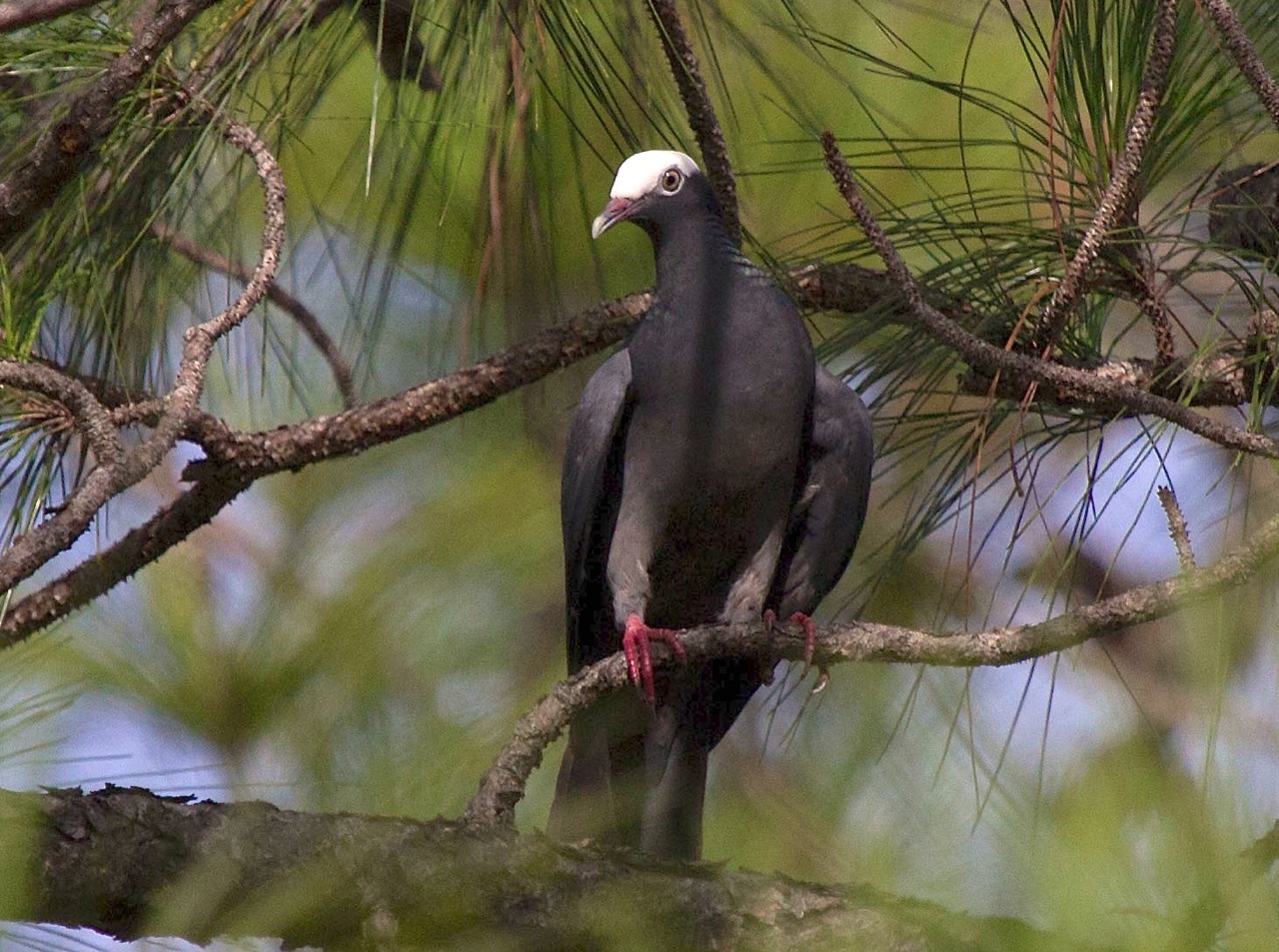
White-crowned PigeonWhite-crowned Pigeon, Abaco, Bahamas (Gerlinde Taurer)White-crowned Pigeon, Abaco (Alex Hughes)

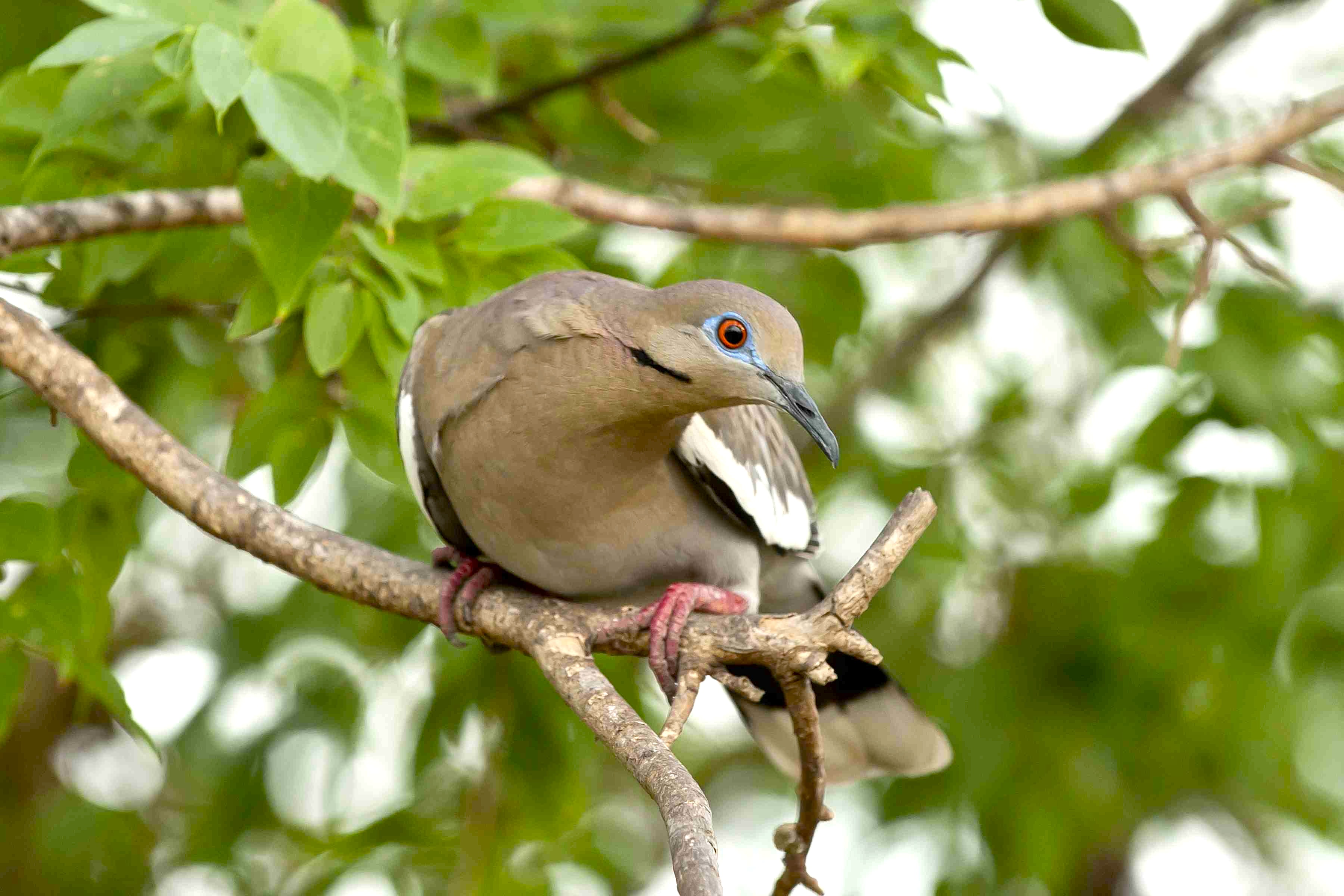
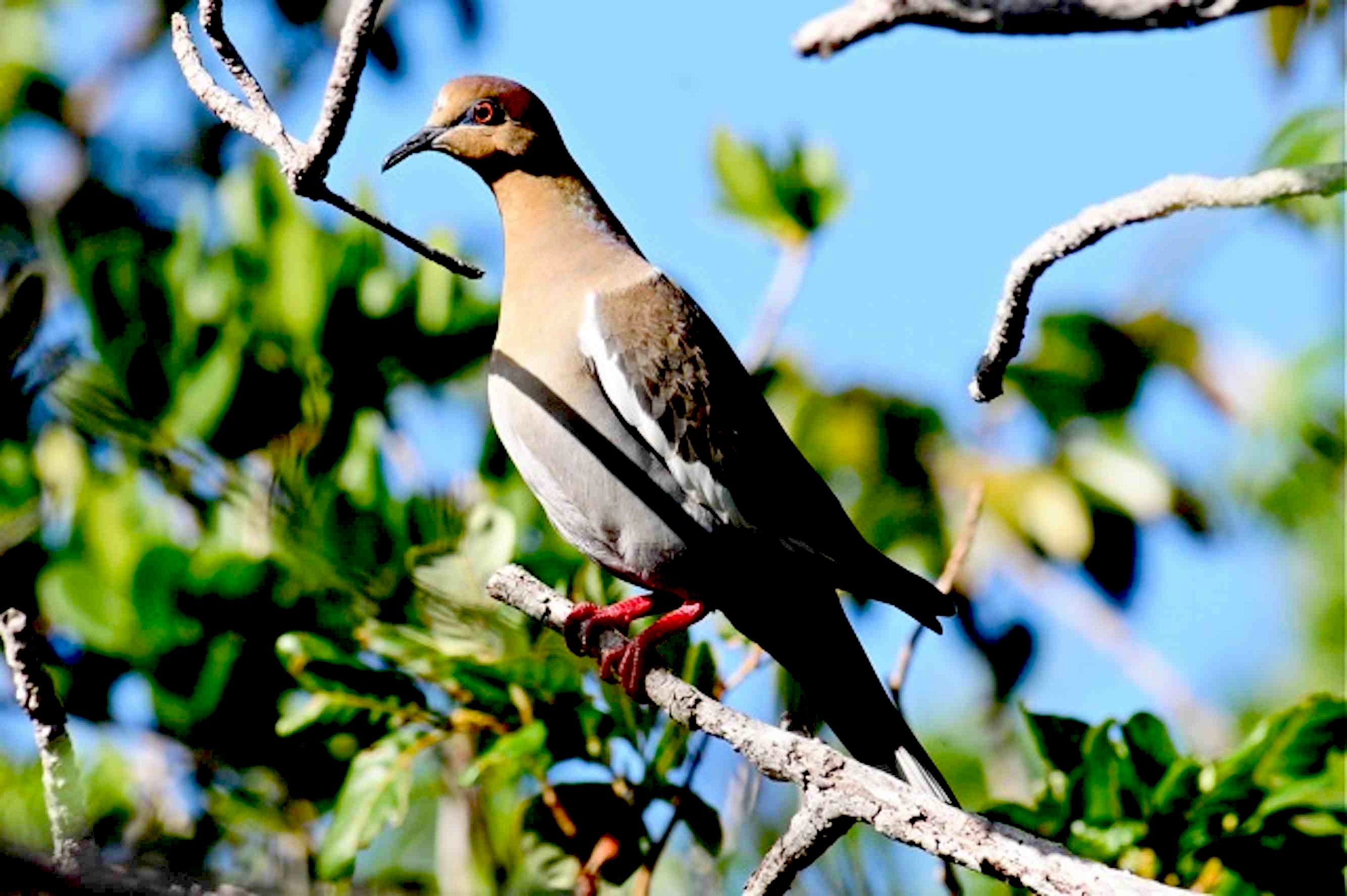
White-winged doveWhite-winged Dove, Abaco Bahamas - Tom SheleyWhite-winged Dove, Abaco - Tony Hepburn

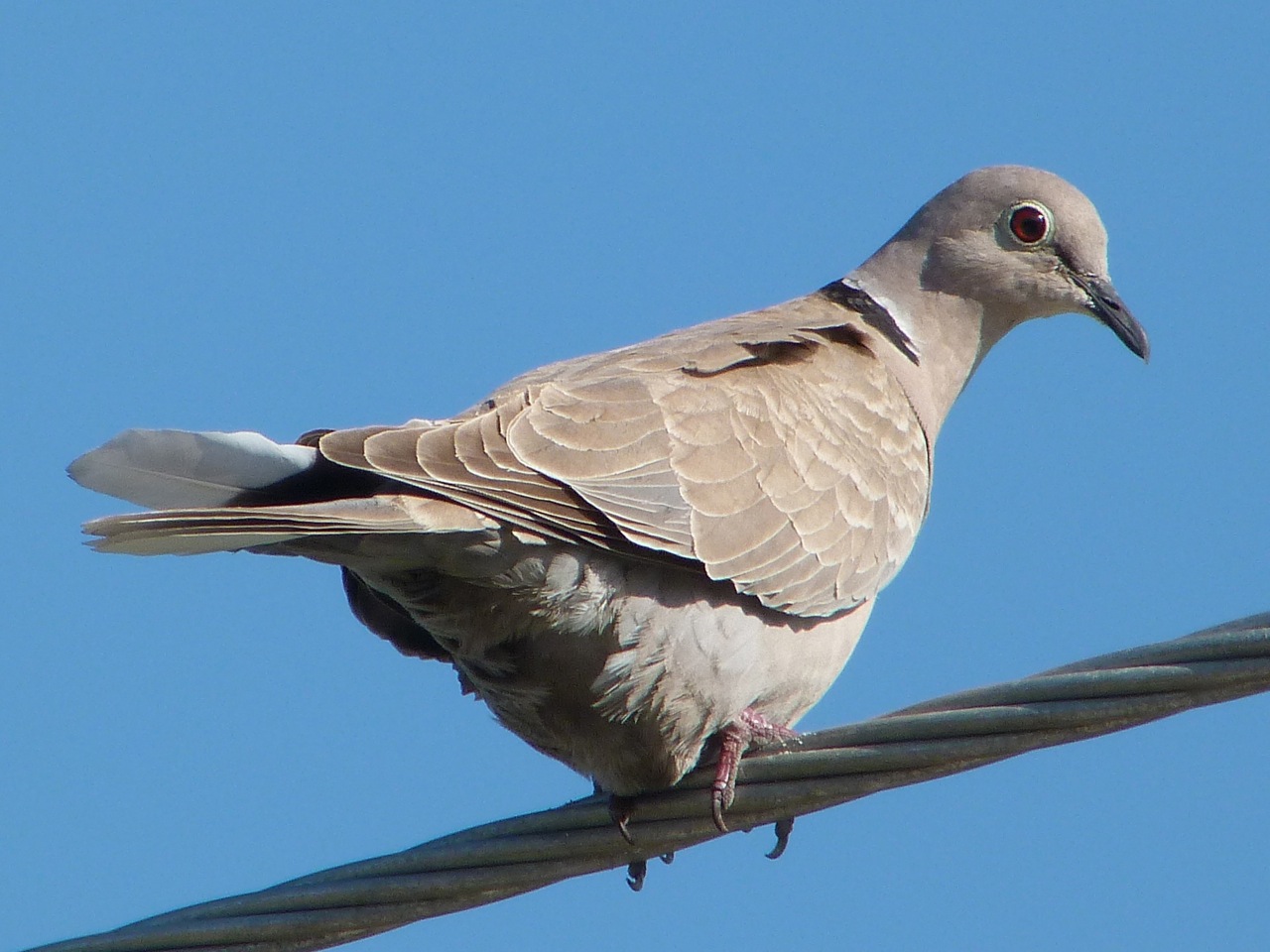
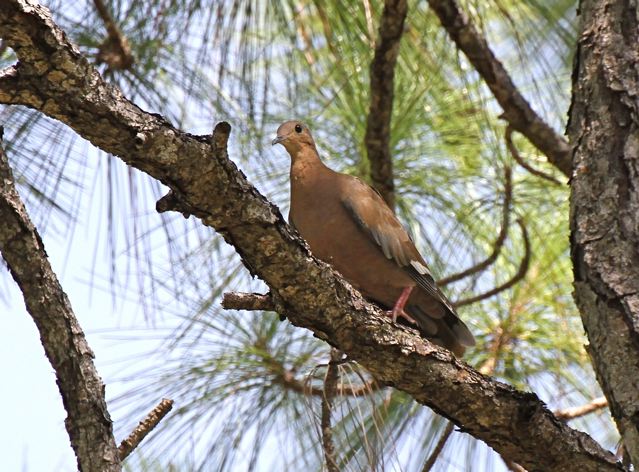
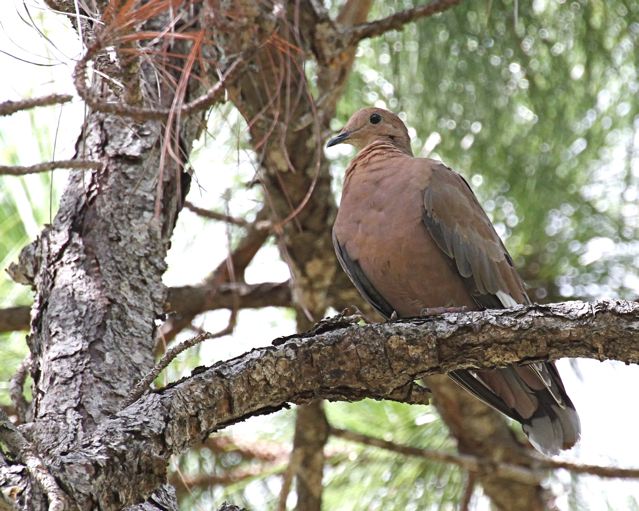
Eurasian Collared DoveCollared Dove, Abaco - Keith Salvesen / Rolling Harbour

Eurasian Collared Dove, Abaco (Bruce Hallett)

Common Ground Dove (Tobacco Dove)Common Ground Dove, Abaco 1 (Tom Sheley)Common Ground Dove, Abaco (Keith Salvesen)

Zenaida DoveZenaida Dove, Abaco (Bruce Hallett)

Zenaida Dove, Abaco (Bruce Hallett)

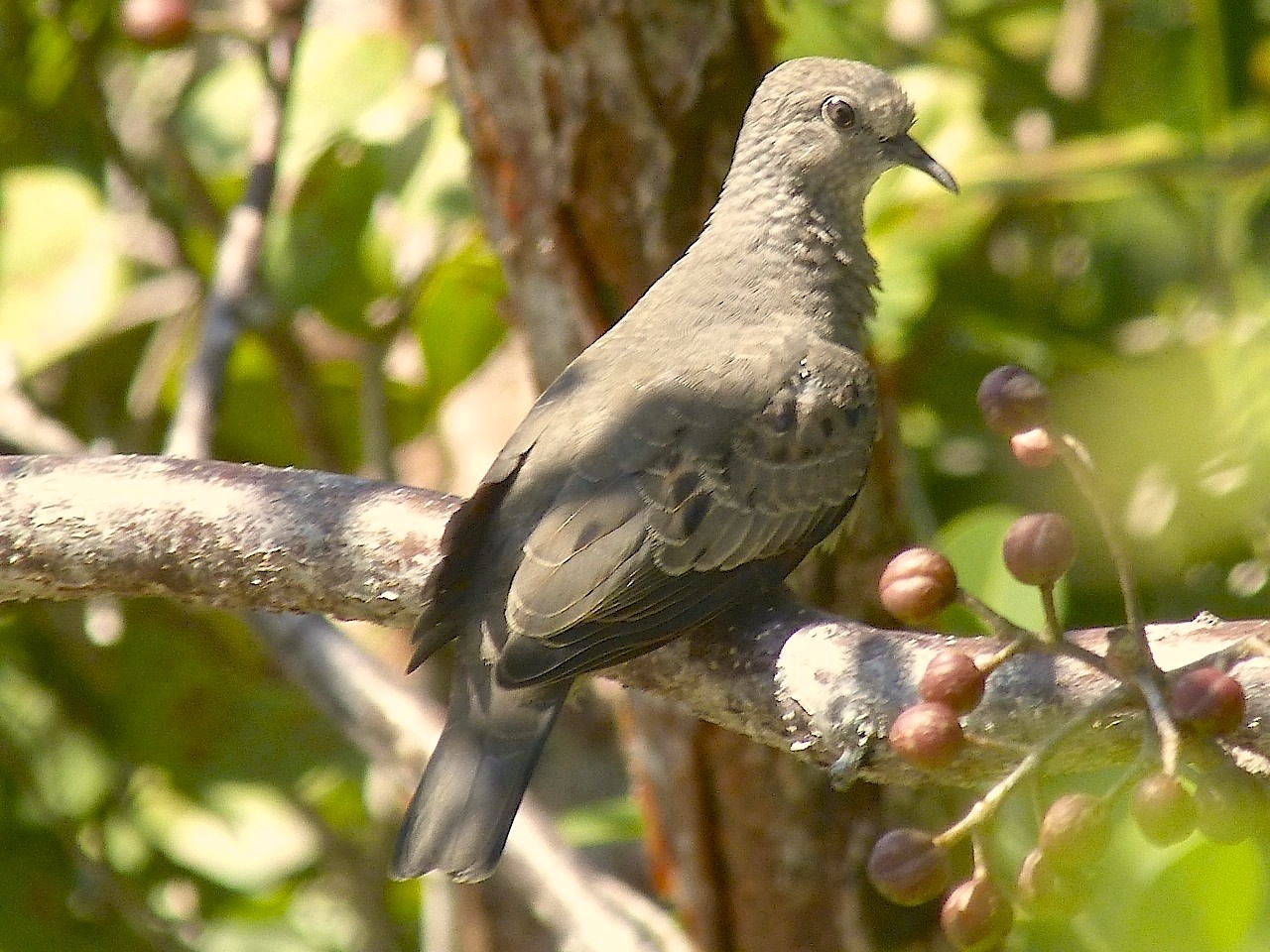
Key West Quail-DoveKey West Quail-Dove, Elbow Cay, Abaco (Milton Harris) 1a

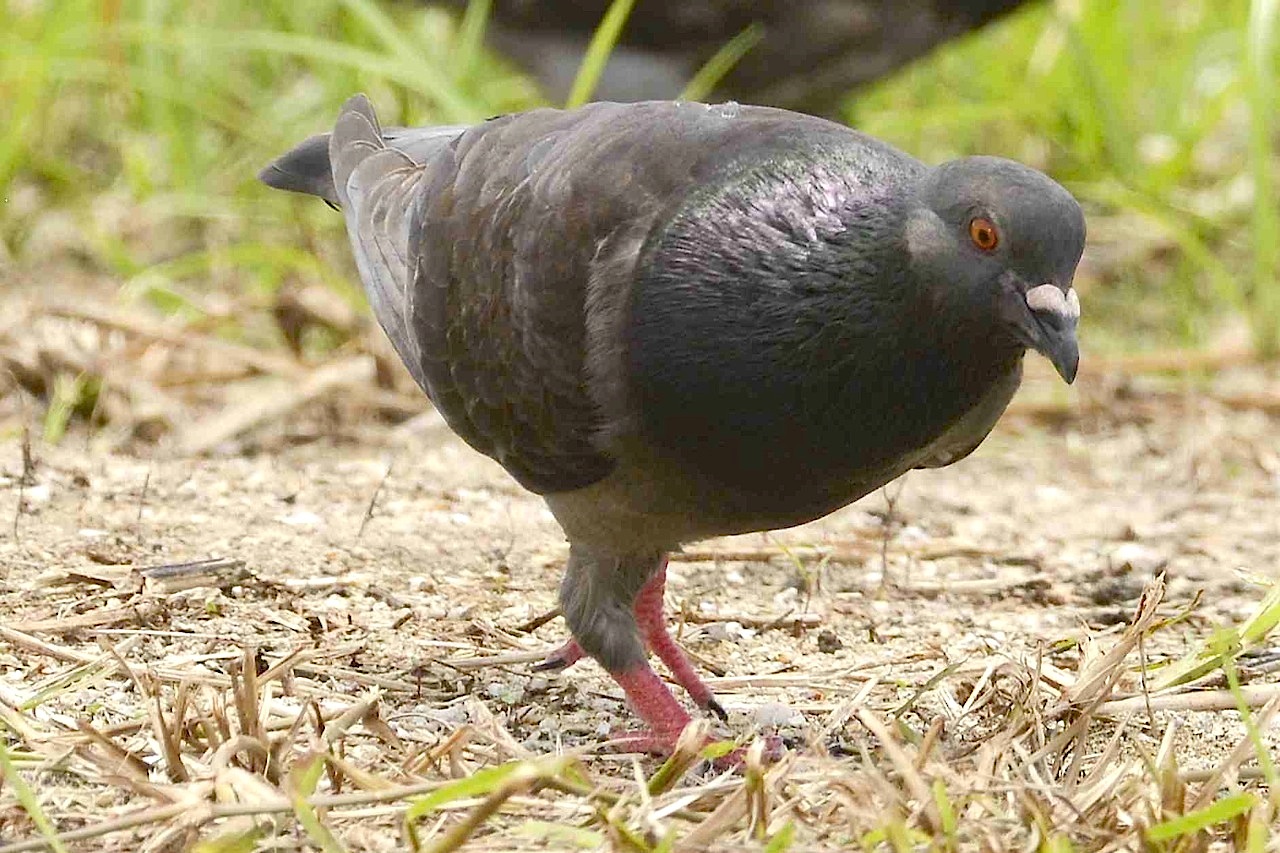
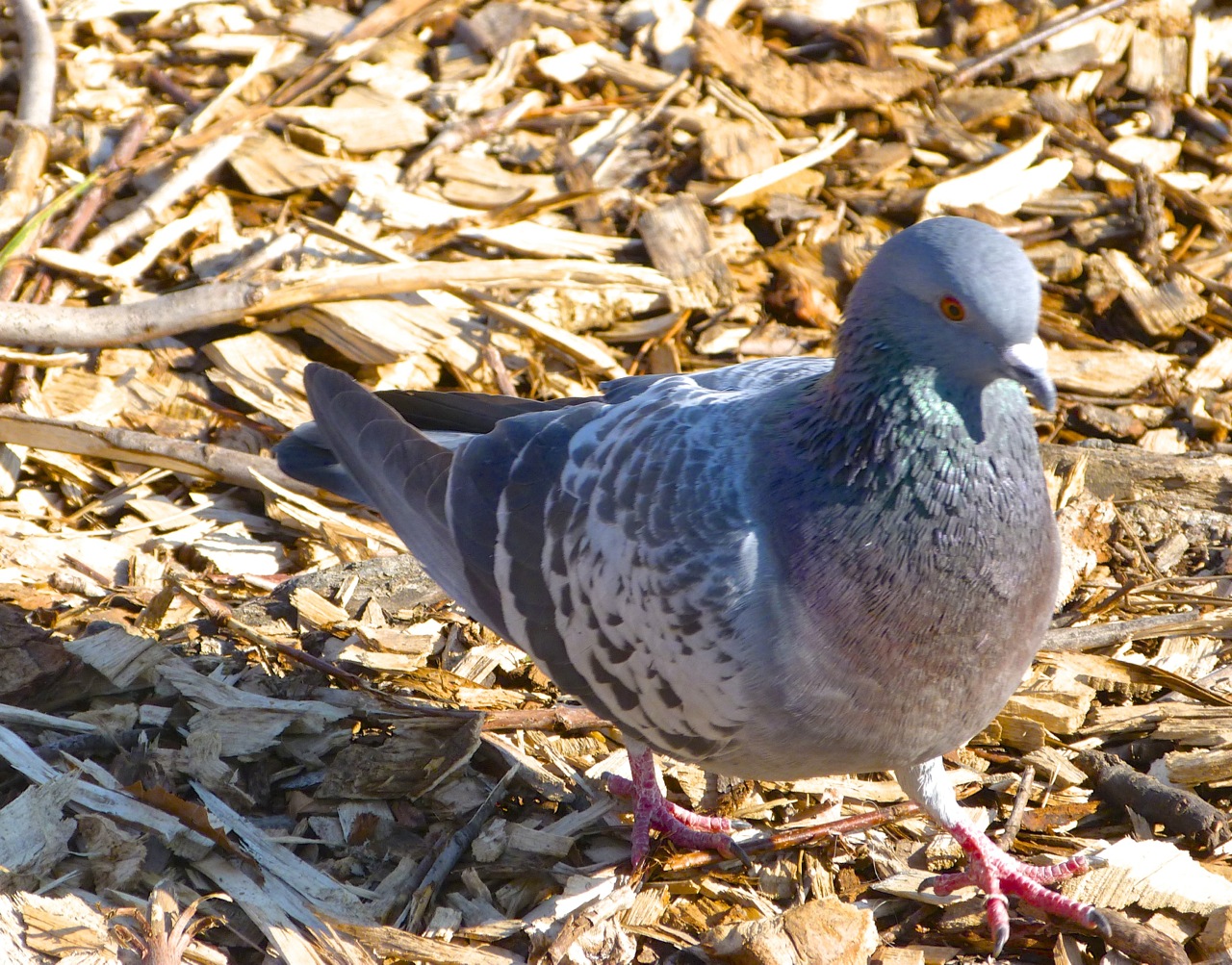
Rock PigeonRock Pigeon, Sandy Point, Abaco Bahamas.Tom Sheley 2bRock Pigeon NYC (keith Salvesen)

Mourning DoveMourning Dove, Abaco (Charles Skinner)

The birds shown above represent the 8 species found on Abaco. However, in New Providence, there is a beautiful pigeon that, as of a few years ago, had not made its way over to Abaco and had yet to be introduced there. Possibly the situation is different nowadays. Info would be welcome.

Pied Imperial Pigeon (Nassau)

Pied Imperial Pigeon 1, Nassau (Woody Bracey)

Pied Imperial Pigeon 2, Nassau (Woody Bracey).JPG

Species checklist taken from the complete checklist in ‘Birds of Abaco by Keith Salvesen’ (aka Rolling Harbour

*For some, there is a shooting season

Photo credits: Gerlinde Taurer (1); Alex Hughes (2); Tom Sheley (3, 7, 13); Tony Hepburn (4); Keith Salvesen (5, 8, 14); Bruce Hallett (6, 9, 10); Woody Bracey (11, 16, 17); Milton Harris (12); Charles Skinner (15)

Unknown's avatar

OUT STANDING IN THE WATER: YELLOWLEGS (LESSER) ON ABACO


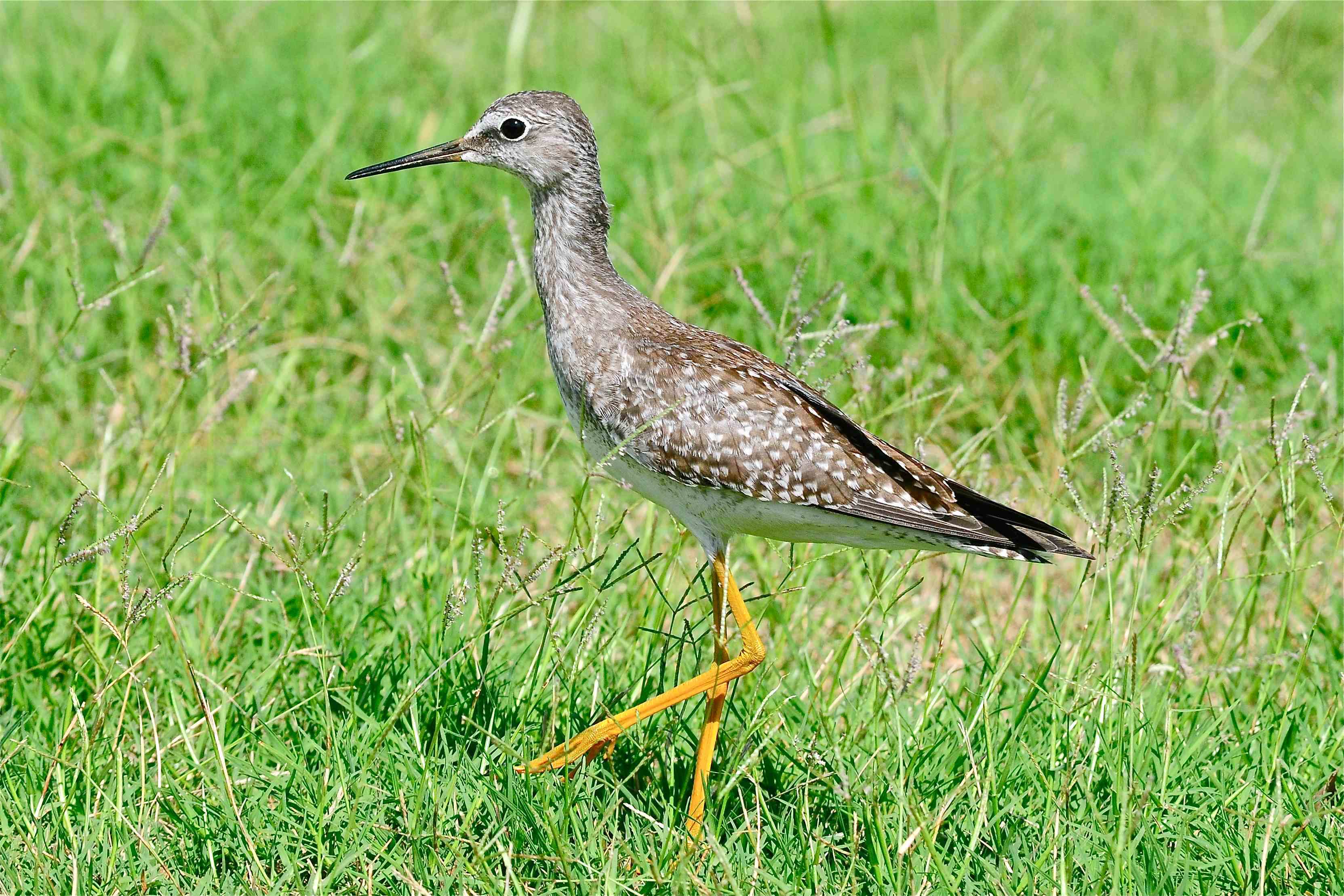
Lesser Yellowlegs Tringa flavipes, Abaco Bahamas (Tom Sheley)


YELLOWLEGS (LESSER) ON ABACO: OUT STANDING IN THE WATER

It’s always helpful when a bird ends up with a descriptive name (after translation from the Latin binomial) that actually matches the creature. Burrowing owl, Roseate Spoonbill, White-crowned pigeon, Red-legged Thrush, Black-and-white Warbler – you know where you are at once. So it is with the Yellowlegs.

Lesser Yellowlegs Tringa flavipes, Abaco Bahamas (Tom Sheley)


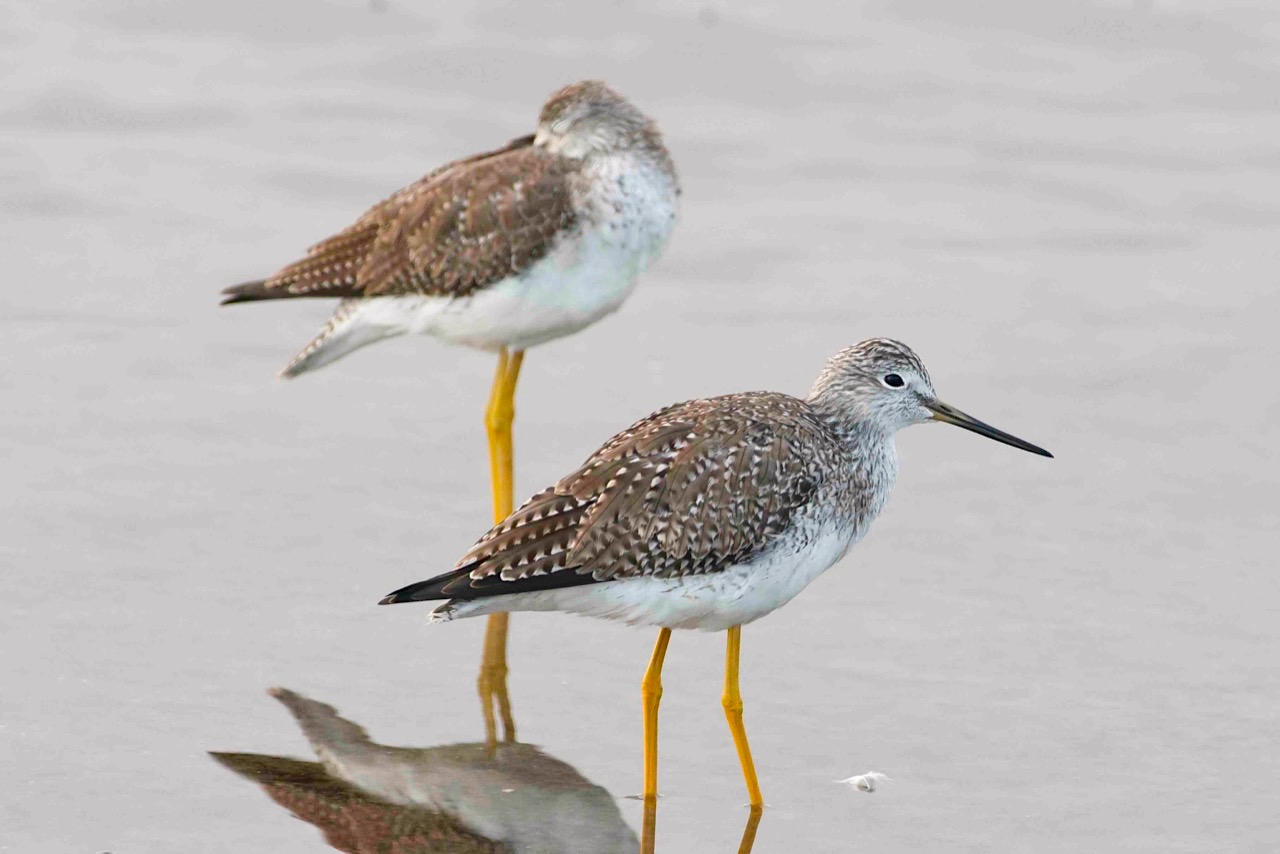
The only question is whether the Yellowlegs  you are looking at is ‘greater’ (Tringa melanoleuca) or ‘lesser’ (Tringa flavipes). Both are winter visitors on Abaco, and a single bird on its own – with no size comparison – can be a potential source of confusion.  

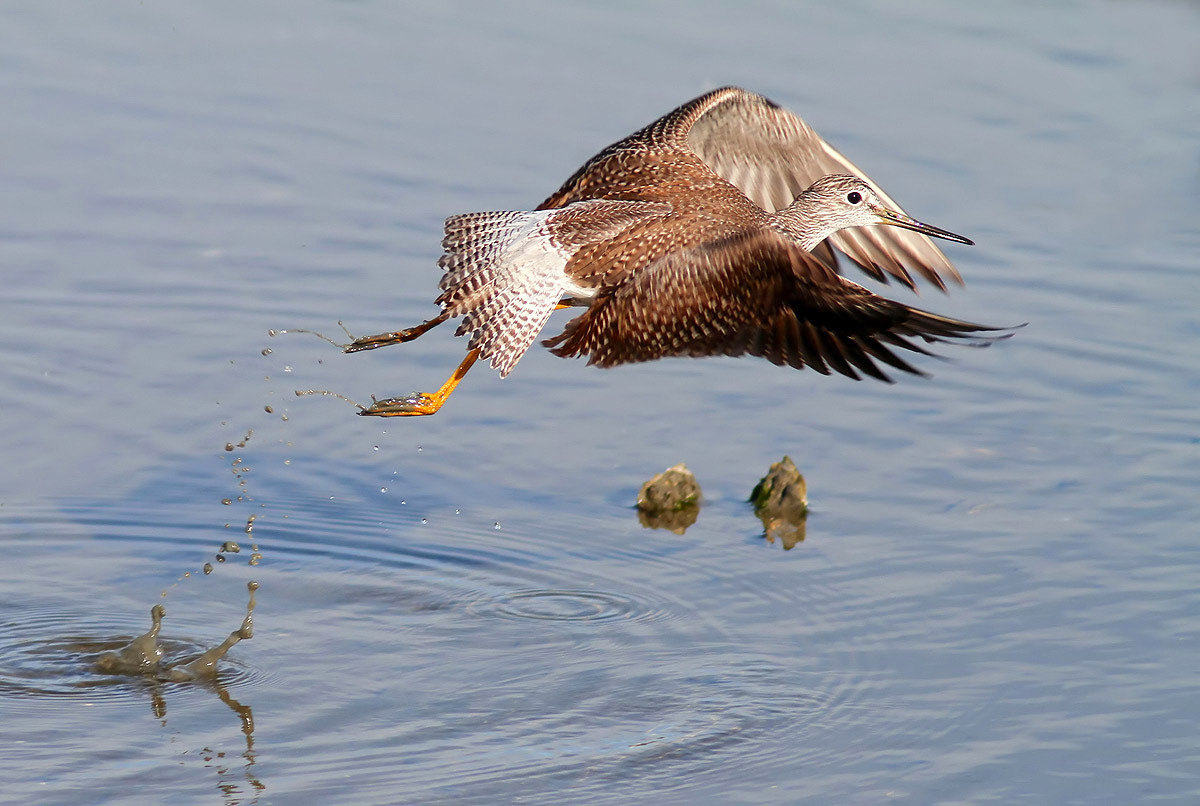
Taking flight… we have lift-offLesser Yellowlegs Tringa flavipes (Phil Lanoue)

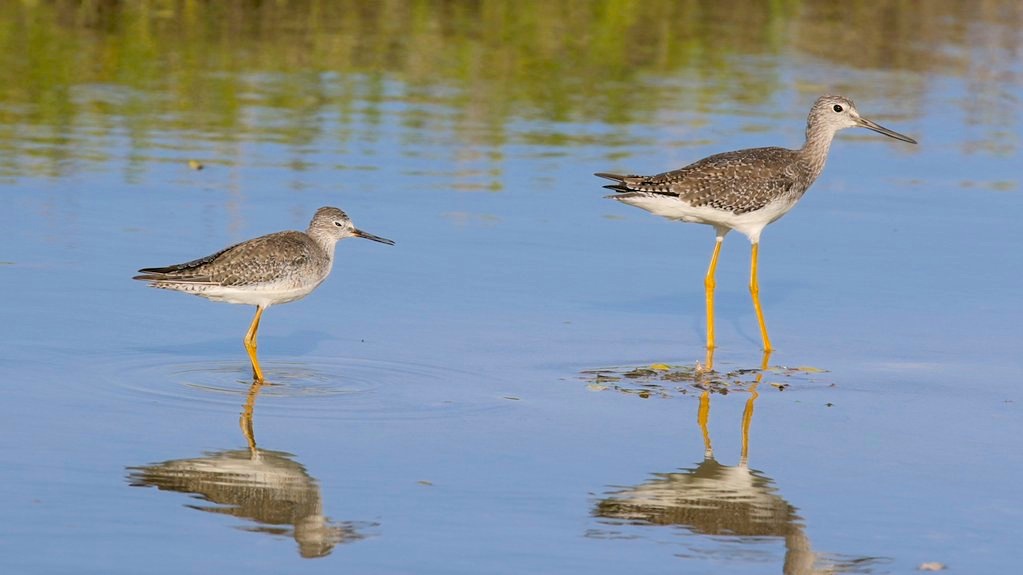
Apart from size, the greater and lesser yellowlegs have some not-necessarily-very-noticeable differences in bill length (in comparison with head-size), plumage and vocalisation. Here is an excellent example of the yellowlegs cousins together, to give you a comparison.

Little and LargeGreater & Lesser Yellowlegs Comparison (Matt Scott)

DO THESE SHOREBIRDS EVER GO ON LAND?

A: YESLesser Yellowlegs Tringa flavipes, Abaco Bahamas (Tony Hepburn)


*ALERT* AMATEUR PHOTOGRAPHY CORNER *ALERT*

DO YOU HAPPEN TO HAVE A PHOTO OF THE LEYE WING UNDERSIDES?

Yup. This bird was at Gilpin Pond. There aren’t many ‘wing underside’ photos out there. They are delicately complex and very pretty. (Will this do?)Lesser Yellowlegs Tringa flavipes, Abaco Bahamas (Keith Salvesen)


Q: DO THEY EVER DO PHOTOBOMBS?

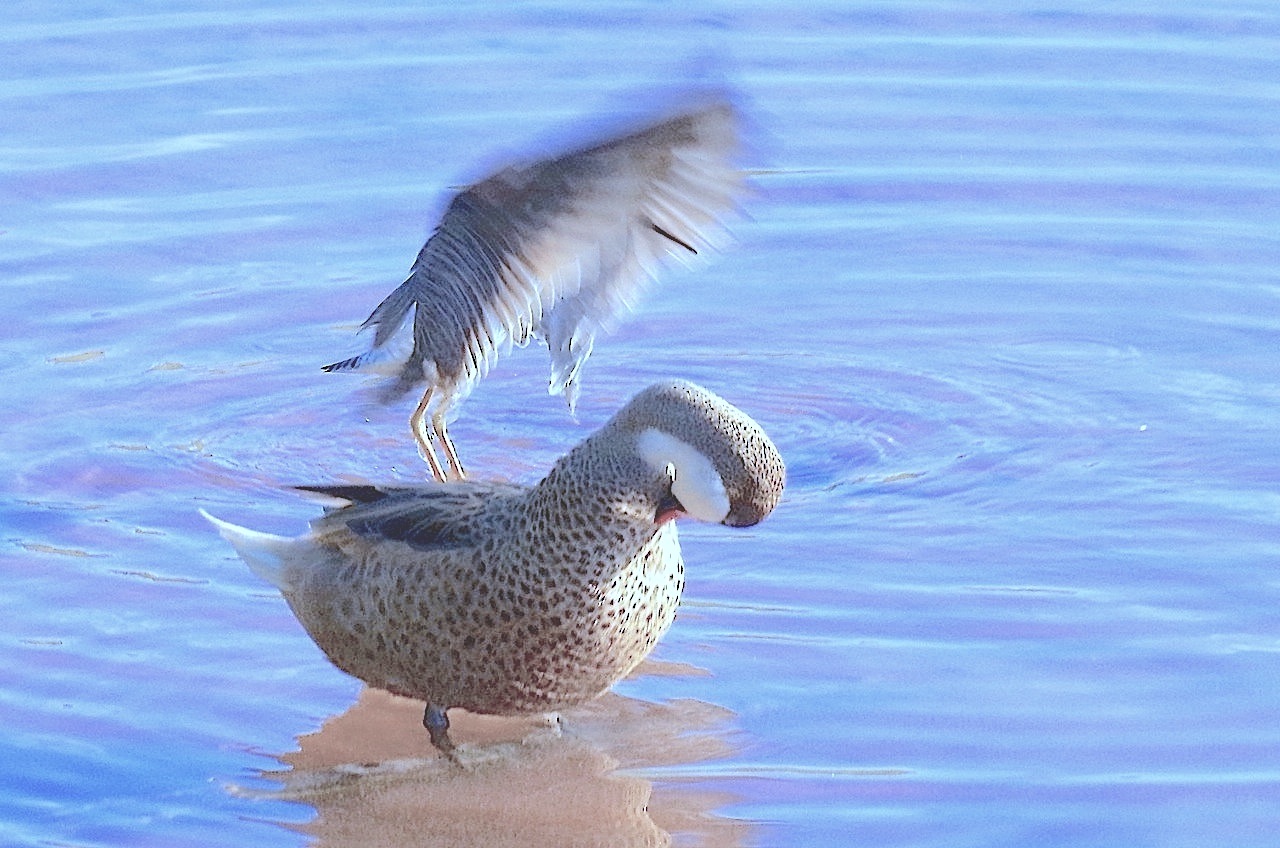
A: INDEED! (BOMBING A BAHAMA DUCK)Lesser Yellowlegs Tringa flavipes, Abaco Bahamas (Keith Salvesen)Weird blue tint due to radical colour correction for the bad red algal bloom on the pond

Credits: Tom Sheley (1, 2, 9); Phil Lanoue (3); Matt Scott (4); Tony Hepburn (6); ID concealed to protect me the bad photographer (7, 8)

Lesser Yellowlegs Tringa flavipes, Abaco Bahamas (Tom Sheley)

Unknown's avatar

‘CASTING ABOUT’: A TRICOLORED HERON HUNTING


Tri-colored heron fishing (Phil Lanoue)

‘CASTING ABOUT’: A TRICOLORED HERON HUNTING

‘Casting’ is one of those words with multiple meanings, some archaic but most in use today. You can probably think of half-a-dozen straight off. Metallurgy, for example, or even a type of couch. ‘Casting about’ is one of the specific usages and derives from hunting, eg hounds casting about for a scent. By extension, it has come to mean something like searching intently or thoroughly for something you need, or want, or are having difficulty in finding. Which is where this tricolored heron comes into the picture.

Tri-colored heron fishing (Phil Lanoue)

It’s always entertaining to watch a heron or egret fishing. Their methods range from standing stock still and suddenly stabbing downwards to slowly wading to the crazy dash that reddish egrets sometimes do on the edge of the mangroves. This one is hooding its wings, sometimes called ‘canopy feeding‘. The theory is that this attracts small fish by providing shade. I also wonder if this method is used to reduce glare from the surface of the water.

Tri-colored heron fishing (Phil Lanoue)

The bird in this sequence is a juvenile, and not yet the  lethal hunter that it will soon become. It has seen a fish moving but has temporarily lost it (fishermen will be familiar with the mild feeling of annoyance when this happens). So it is casting about, slowly zig-zagging through the water, looking from a height, crouching down, trying to get a good view of its elusive snack. This little episode didn’t end in success. Sometimes, the fish you sight and then lose has gone for good. But as fishermen often say when they lose one (and by extension the phrase is now applied to other areas of human life), there are always plenty more fish in the sea.

Tri-colored heron fishing (Phil Lanoue)

Photo credit: Phil Lanoue, a photographer who specialises in patiently taking wonderful sequences of bird activity, with many thanks for use permission

Unknown's avatar

‘TERN, TERN, TERN’: THE UN-NOTORIOUS BIRD COUSINS


Royal Tern, Abaco Bahamas (Keith Salvesen)

‘TERN, TERN, TERN’: THE UN-NOTORIOUS BIRD COUSINS

There are twelve species of tern – ‘swallows of the sea’ – that to a greater or lesser extent may be found on Abaco. Whether they will actually  be visible at any given time is less certain, though. For a start, the only resident species is the lovely Royal Tern, available at many locations on Abaco and the cays throughout the year. The rest are migratory or just passing through.

PERMANENT RESIDENTS

ROYAL TERNS Thalasseus maximus PR1

Royal Tern, Abaco Bahamas (Keith Salvesen)Royal Tern, Abaco Bahamas (Keith Salvesen)

MIGRATORY TERNS: SUMMER

In the slightly less commonly-found category are the summer migrant terns that, by definition, are only in residence for around half the year. Four of these are fairly common in certain areas, and actually breed on Abaco; these include arguably the prettiest of all, the bridled tern. The other two tern species (gull-billed and sandwich) are more rare and as far as I can make out do not breed locally; or perhaps only rarely. 

LEAST TERN Sternula antillarum SR B 1

LeastTern, Abaco Bahamas (Tony Hepburn)

BRIDLED TERN Onychoprion anaethetus SR B 2

BridledTern, Abaco Bahamas (Bruce Hallett)BridledTern, Abaco Bahamas (Bruce Hallett)

ROSEATE TERN Sterna Dougallii SR B 2

Roseate Tern, Abaco Bahamas (Woody Bracey)

SOOTY TERN Onychoprion anaethetus SR B 2

Sooty Tern, Duncan Wright wiki

GULL-BILLED TERN Gelochelidon nilotica SR 3 

Gull-billed Tern, Abaco Bahamas (Alex Hughes)Gull-billed Tern, Abaco Bahamas (Alex Hughes)

SANDWICH TERN Thalasseus sandvicensis SR 4

Sandwich Tern, Abaco Bahamas (Bruce Hallett)Sandwich Tern, Abaco Bahamas (Woody Bracey)

MIGRATORY TERNS: WINTER

There is one very rare winter resident migratory tern species, with few records of sightings for Bahamas and until early 2019, no photographic record for Abaco until Sally Chisholm saw one at Treasure Cay and managed to capture it for posterity.

FORSTER’S TERN Sterna forsteri  WR 4

Forster's Tern (Dick Daniels)Forster's Tern, Abaco Bahamas (Sally Chisholm)

OCCASIONAL & RARE VISITORS

A further four tern species are very much occasionals that drop by. Three of them pass over the Bahamas on their longer migration, but may make a pit-stop around Abaco to take on fuel. Likelihood of sighting one? Slender but not impossible… the Caspian tern below was photographed on Abaco. The fourth, the Arctic Tern, is a very rare vagrant, a bird well away from its usual home or migration route as the result of storms or faulty satnav or sheer happenstance. Don’t travel to the Bahamas intent on seeing one.

CASPIAN TERN Hydroprogne caspia TR 4

Caspian Tern Abaco Bahamas (Woody Bracey)Caspian Tern Abaco Bahamas (Keith Kemp)

The remaining species are the transient black tern and common tern; and the vanishingly rare vagrant  Arctic tern. No photos of any of these I’m afraid. Here’s a handy checklist of all the tern species.

     ELECTIVE MUSICAL DIGRESSION

Written by Pete Seeger, Turn x 3 was released in 1965, the title track on the second album by The Byrds. At a rather febrile time in US history (Vietnam, draft riots, civil rightists v cops and so on), this unusually palliative and thoughtful song with its religious connotations to some extent stood for peace and hope in a time of turmoil.

PS the somewhat laboured title of this post shoehorns in the name of another Byrds album, ‘The Notorious Byrd Brothers’

Photo credits: Keith Salvesen (1, 2, 3, 5, 18); Tony Hepburn (4); Alex Hughes (10, 11); Bruce Hallett (6, 7, 12); Woody Bracey (8, 13, 16); Duncan Wright (9); Dick Daniels (14); Sally Chisholm (15); Keith Kemp (17)

Royal Tern, Abaco Bahamas (Keith Salvesen)

Unknown's avatar

BIRDS OF ABACO . TENTH ANNIVERSARY


THE DOWNLOAD OF THE BOOK OF THE BIRDS

NOTES

  1. This download is of the entire book
  2. Reduced to 18mb for 10 – 15 second loading; no noticeable loss of definition
  3. Below the screen BIRDS OF ABACO enlarges the screen, DOWNLOAD will do just that
  4. The top bar contains all the usual ways to make adjustments to the contents
  5. This is the penultimate version before printing, with a few crop marks etc
  6. Please let me know if there are any problems with the download

As mentioned in previous posts, I am asking those who choose to download the book to make a modest charitable donation to a local wildlife-related cause or to a local school or an organisation that inspires kids to get involved in the natural world around them.

KEITH SALVESEN

March 2024

Thanks to all the many people who contributed to the book including 30 photographers who took brilliant photos; 3 Bahamas bird experts who contributed greatly to the composition and accuracy of the book; the superb printers Conti in Italy; Peter Mantle the inspiration and eminence grise; and my wife Sally whose publishing and editorial skills are second to none, and her patience limitless.

Unknown's avatar

BIRDS OF ABACO . 10th ANNIVERSARY UPDATE


It is exactly 10 years since The Delphi Club Guide to the Birds of Abaco was launched in the Great Room at the Delphi Club, Abaco, Bahamas. Availability of the book had run its course by 2020. A decade after publication, preparations to compress the entire book into a downloadable e-book are now complete.

Cuban Emerald (M) – Keith Salvesen

FREE AS A BIRD

It would be slightly disenchanting to find that the whole book is being printed out without checking first. This can be simply done using rollingharbour.delphi@gmail.com

Painted Bunting – Tom Sheley

I am asking those who choose to download the book to make a charitable donation of $10 (‘a dollar a year’ since publication) to a local wildlife-related cause or to a local school or an organisation that inspires kids to get involved in the natural world around them. Or more than $10 by all means. There’s plenty of choice on Abaco, as I am sure there is for kind followers of Rolling Harbour who live beyond the island’s shores.

Great Egret – Tom Sheley

A ‘SNACKING’ OF SANDERLINGS

Sanderling Partytime – Keith Salvesen

BAHAMAS BIRDING ROYALTY . DELPHI LODGE MARCH 2014

Tony White . Bruce Hallett . Woody Bracey

. Un-Royal Author

Unknown's avatar

BIRDS OF ABACO


THE BIRDS OF ABACO: SEARCHABLE INDEX

FROM ABACO PARROT TO ZENAIDA DOVE HERE

When, in 2014, Birds of Abaco had safely been hatched and was beginning to fledge, I started a companion site that was designed to add an additional dimension to the project. It was a bird-specific accessory to the main Rolling Harbour site that has always featured a far greater range of topics than birds.

The book exhibited Abaco birds in a deliberately perverse way (alphabetically, not by species grouping or other conventional methods). The loosely termed ‘Index’ was meant to be a quick alternative way to delve into the various species.

It was a side project and I did very little to promote it. Once put together (with a linked FB page) I pretty much left it to grow ‘organically’ (aka indolently and neglectfully). I’m bringing the site out of semi-retirement while I get on with my efforts to put the book online. Reach it HERE

A to Z

CAPE MAY WARBLER (Char Albury): as it turned out, an unpromising name. The first one was recorded on Cape May, NJ in the early nineteenth century. They were not recorded there again for more than a hundred years.

Unknown's avatar

BLACK-FACED GRASSQUITS ON ABACO, BAHAMAS: status report


Black-faced Grassquit male, Abaco (Alex Hughes)

BLACK-FACED GRASSQUITS ON ABACO, BAHAMAS

Quite a while back (in the Pre-Covid Era), Black-faced Grassquits Tiaris bicolor were honoured by the American Ornithological Union with a classification change from emberizid to tanager. For the reasons that follow, the species regarded this both as scientific promotion and as merited status elevation. I invited an authoritative Spokesquit to explain why.

*******************

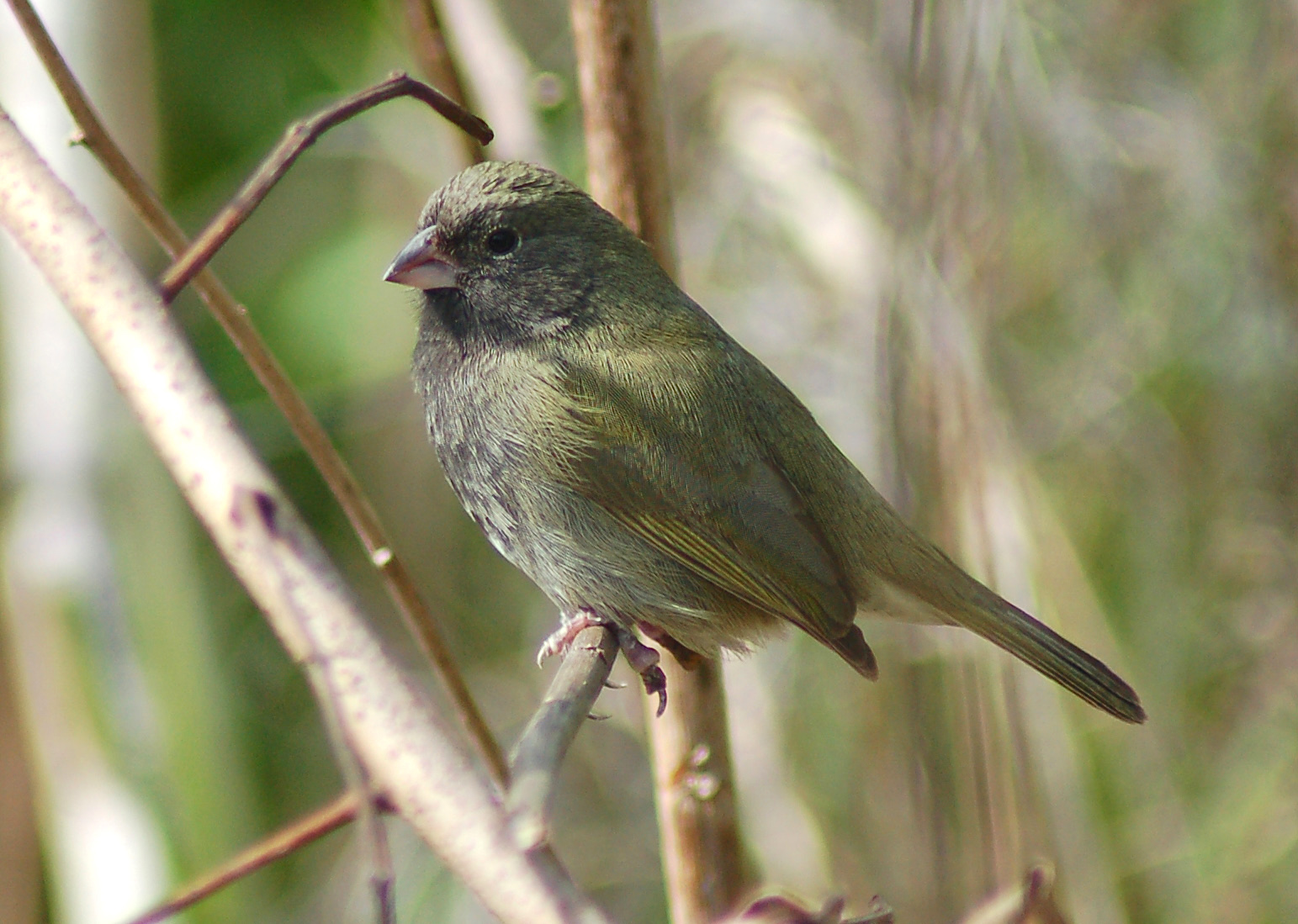
Hi, human friends, I’m a black-faced grassquit  and I have a couple of observations to make on behalf of BFGs, if I may. First, we seem to be universally described by you as ‘common’, whereas we are actually quite refined in our behaviour. Secondly, the words most used to portray us are ‘dull’ and ‘drab’. And ‘stubby’. Well, excuse me… I – we – ask you to give us a second look. Maybe check out these images for a start.

black-faced-grassquit-adult-male-eating-berry-abaco-bahamas-tom-sheleyblack-faced-grassquit-foraging-berry-2-abaco-bahamas-tom-sheley

Unsurprisingly we were very excited when the perceptive classifications committee of the American Ornithological Union gave us an upgrade. That’s the way we saw it anyway. For many years we were classified under the heading emberizidae. 

Black-faced Grassquit male, Abaco (Bruce Hallett)Black-faced Grassquit, Abaco (Tom Reed)

We kept company with some buddies like the handsome Greater Antillean Bullfinches, but also with a lot of New World sparrows. Frankly, we never felt entirely comfortable with them. Annoyingly chirpy, for a start. And in truth, more drab than us (I’m told).

Black-faced Grassquit - Treasure Cay, Abaco (Becky Marvil)Black-faced Grassquit male, Abaco (Peter Mantle)

And so we officially became a type of tanager. Scientists even reckon (rather late in the day, in my view) that we are closely related to Darwin’s finches.  Posh relations suddenly. And now we get to be with other birds that are dome-nesters like us. And how about this – we are now in the same category as some really cool birds…

Black-faced Grassquit male, Abaco (Gerlinde Taurer)

How’s this for a colourful gang to be joining: scarlet tanager, summer tanager, rose-breasted grosbeak, indigo bunting, painted bunting – these are our new cousins. It’s like being related to an avian rainbow that can fly. BFGs “dull” and “drab”? I don’t think so.

Black-faced Grassquit female, Abaco (Bruce Hallett)

6 UNDULL FACTS ABOUT BFGS

  • Make grassy dome-nests (like Bananaquits) and line them with soft grasses
  • Both sexes build the nest together
  • Both share egg-sitting duties and later chick-feeding & maintenance
  • Though quite gregarious by day, for some reason they tend to roost alone
  • They have a short ‘display’ flight with vibrating wings and a strange buzzing call
  • Otherwise, their flight is ‘weak, bouncy & fluttering’ (Whatbird assessment)

Black-faced Grassquit male, Abaco (Alex Hughes)

THE EVERYDAY TWITTERING SONG 

THE DISPLAY BUZZING SONG 

Black-faced Grassquit male, Abaco (Tom Reed)Black-faced Grassquit male, Abaco (Keith Salvesen)

Photo Credits: Alex Hughes (1, 10); Tom Sheley (2, 3); Bruce Hallett (4, 9); Tom Reed (5, 11); Becky Marvil (6); Peter Mantle (7); Gerlinde Taurer (8); Keith Salvesen (12); Larry Towning (13). Other Credits: ABA, AOU, Whatbird? (sound files)

Black-faced Grassquit (m) Lubbers Quarters, Abaco (Larry Towning).jpg

Unknown's avatar

PINE WARBLERS ON ABACO: ‘PINUS ENVY’


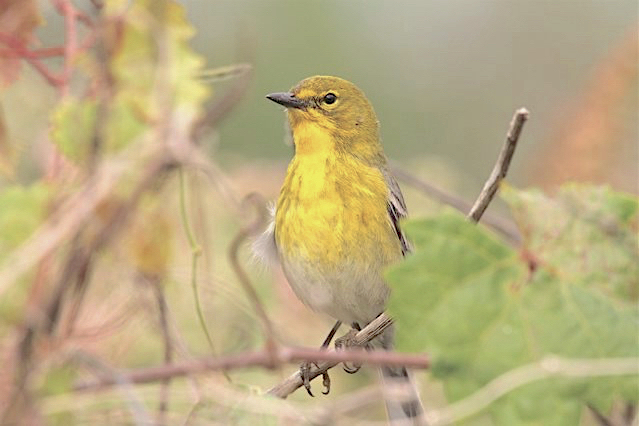
Pine Warbler, Abaco Bahamas (Bruce Hallett)


PINE WARBLERS ON ABACO: ‘PINUS ENVY’

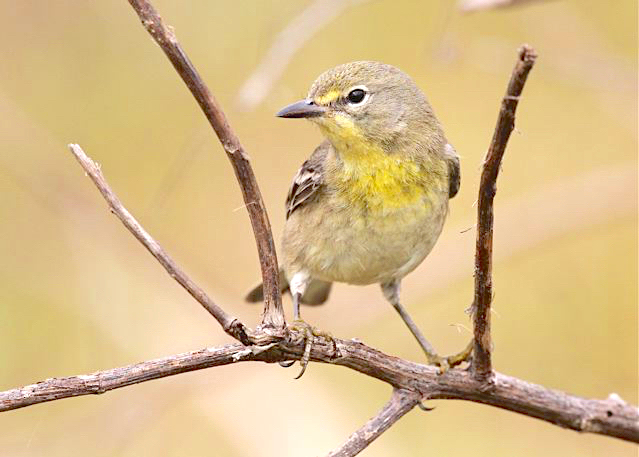
The Pine Warbler Setophaga pinus is one of 5 year-round resident warblers (endemics) on Abaco. All are to be admired, of course. The others are Bahama yellowthroat; Bahama warbler; olive-capped warbler; and yellow warbler. 

The pine warbler is also to be envied for several reasons:

  • Like most Setophagae, they are bright, lively and attractive birds
  • Bahamas residents all year round – no long exhausting migration flights twice a year
  • Abaco has vast areas of their preferred pine forest habitat
  • They are plentiful – the population is largely untroubled by usual habitat concerns
  • They are one of the few seed-eating warbler species, so feeders are a bonus


Pine Warbler, Abaco Bahamas (Alex Hughes)

As the name strongly hints, the pine warbler is primarily a bird of the pine forests, of which Abaco has an abundance. The tall, straight trees of Abaco were once a vital local source of timber (SAWMILL SINK q.v.). As a historical note, felled pines were also exported to the UK to be made into the strong pit-props needed for coal-mines. 

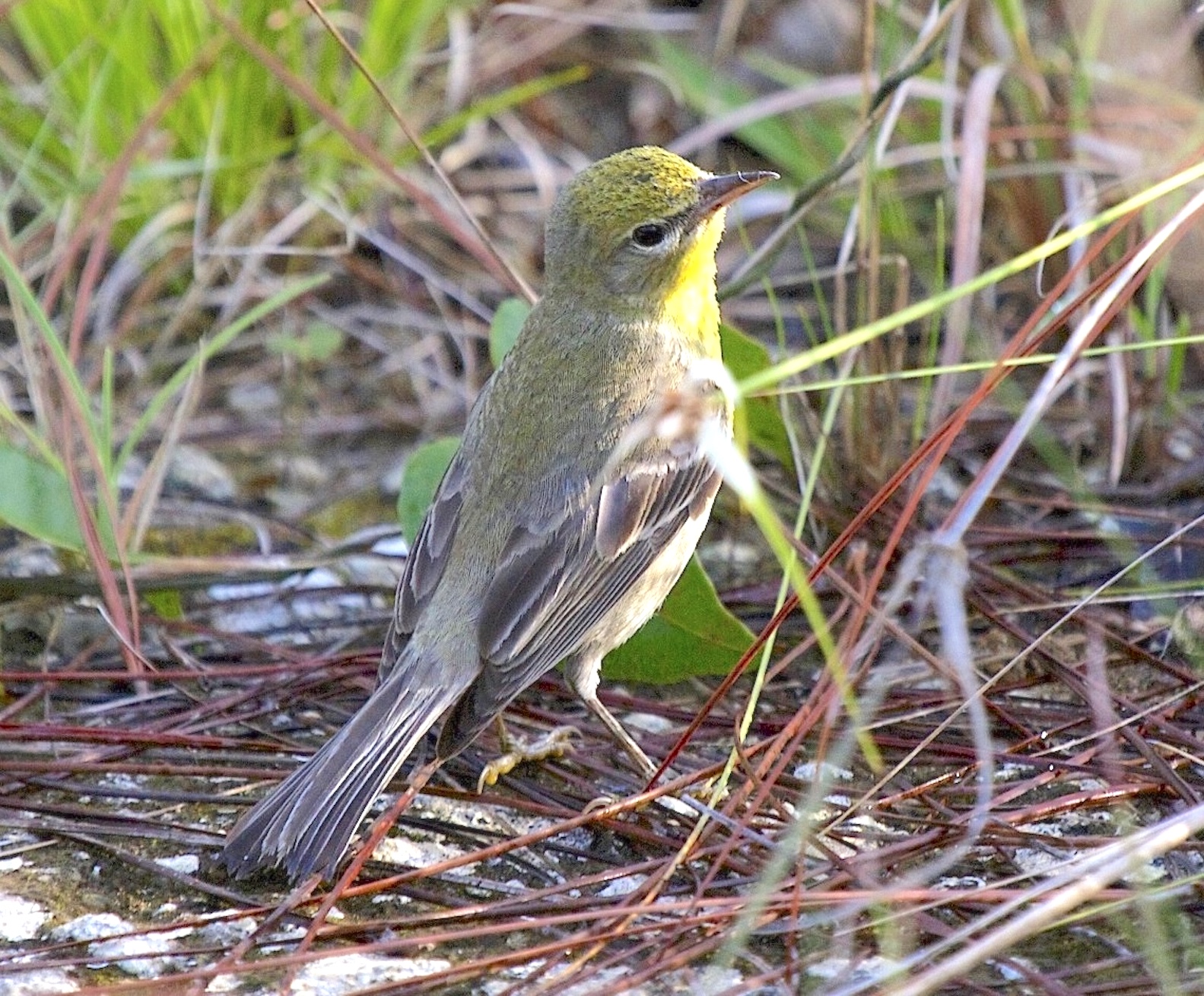
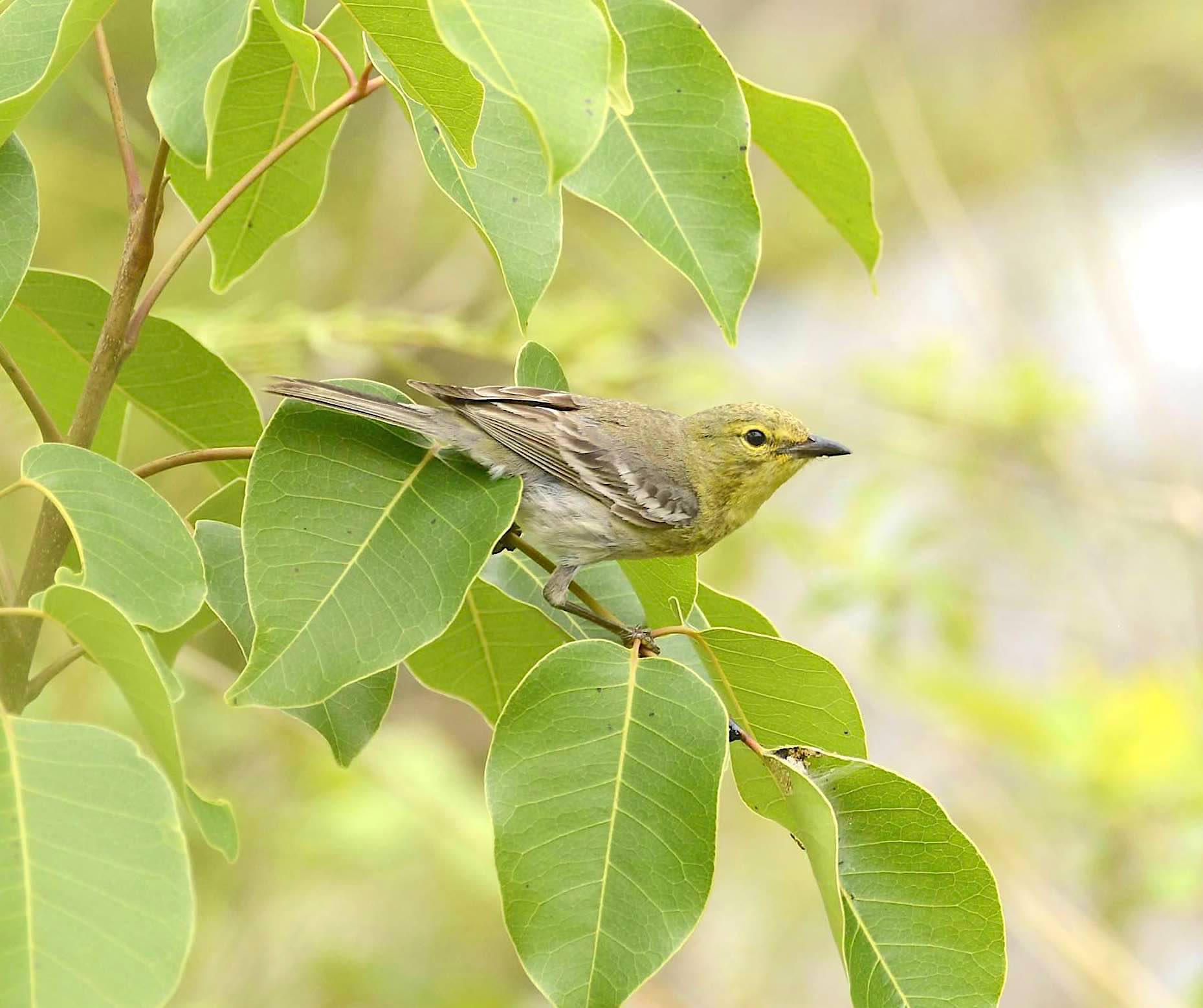
Pine Warbler (immature), Abaco Bahamas (Bruce Hallett)

Immature

Q. WHAT IS THE NORMAL YEAR-ROUND RANGE OF THIS BIRD? A. THIS IS!


Pine Warbler, Abaco Bahamas (Tom Reed)

Pine warblers have a broad diet and forage methodically. Pine cones are a fertile source for food,  and those robust, stabby, slightly down-curved beaks are ideal for getting the seeds out of the cones. Equally, these warblers use their beaks to prise / pry out insects from the rough pine trunks and branches.


Pine Warbler, Abaco Bahamas (Tom Sheley)


WHAT OF THEIR NIDIFICATION?

The pine forest is obviously the preferred nesting habitat for these birds. The warblers also nest in the smaller groups of pines found (for example) in or near some of the settlements; or in backcountry around the edges of former sugar cane fields and the like. One nesting habit is slightly unusual – pine warblers tend to build their nests near the end of branches rather than near the trunk, a position that seems far less secure. One theory on pine warbler nest location is that they feel safer from predators by building at the end of a small branch*. 


Pine Warbler (immature), Abaco Bahamas (Bruce Hallett)


WHAT DO THEY SOUND LIKE?

One source states that “The song of this bird is a musical trill. Their calls are slurred chips. I think we’ve all been there at some time, possibly when lunching at Pete’s Pub.

MUSICAL TRILL Paul Driver / Xeno Canto

SLURRED CHIP Don Jones / Xeno-Canto

Photo Credits: Bruce Hallett (1, 3, 6); Alex Hughes (2); Tom Reed (4); Tom Sheley (5); Dick Daniels (7); Wiki (range map); Nat Geo (species drawings); Paul Driver / Xeno Canto – call; Don Jones / Xeno Canto – chips; Milton Harris – nesting theory 

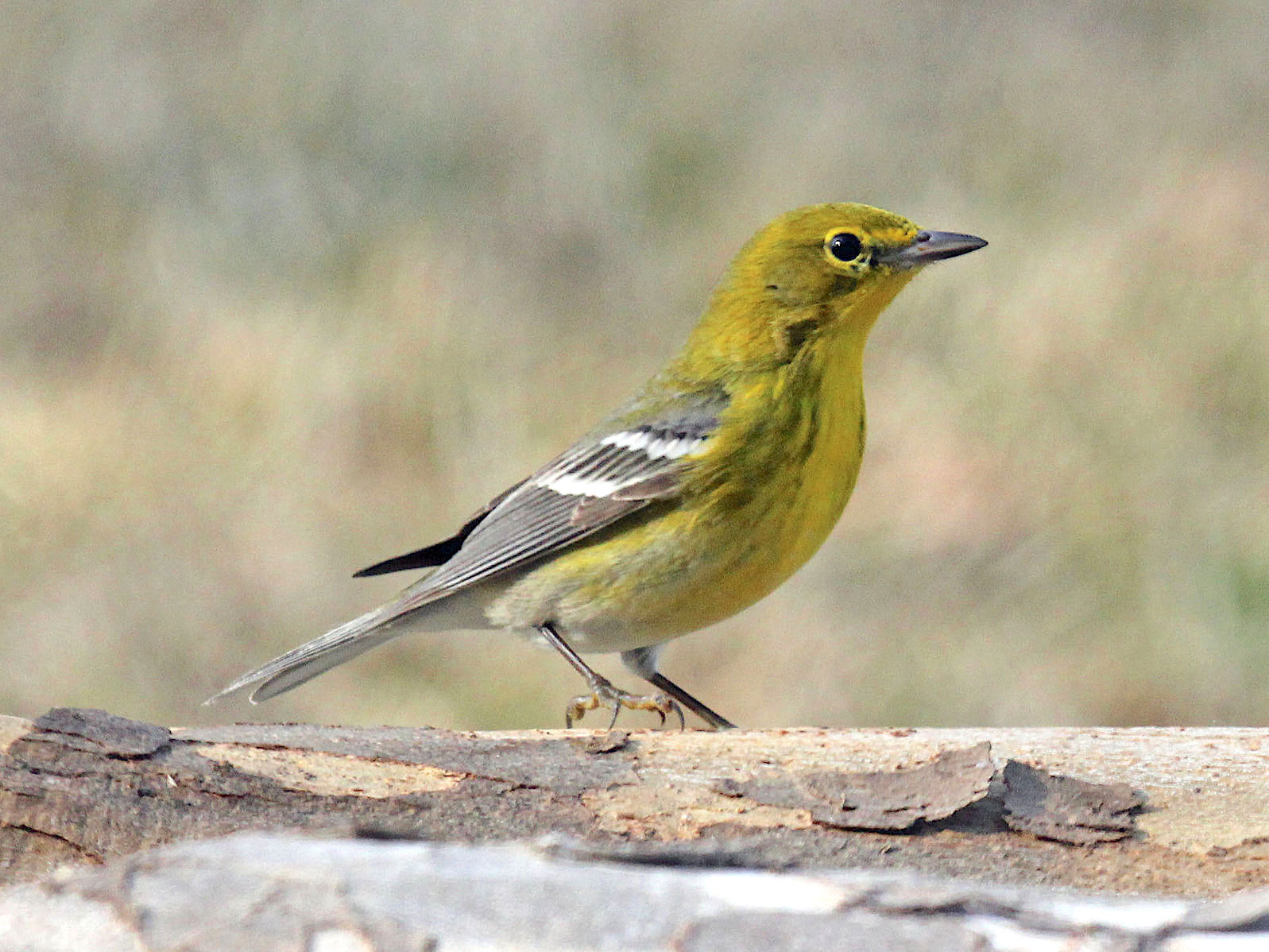
Pine Warbler (Dick Daniels wiki)

Unknown's avatar

GREAT EGRETS: NOBLE (YET MISNAMED) HERONS


Great Egret, Bahamas (Nina Henry)

GREAT EGRETS: NOBLE (YET MISNAMED) HERONS

The Great Egret is actually a heron rather than an egret. It’s a Great Heron. All egrets are members of the heron family Ardeidae, but the converse is not true. As long ago as 1758, Linnaeus awarded the bird the binomial name Ardea alba i.e. ‘Heron white‘. Why it should have been so hard to stick to that authoritative nomenclature, I can’t imagine. Perhaps in time all heron and egret species became so hopelessly confusing for people that it ceased to matter much what they were called.

Great Egret, Bahamas (Nina Henry)

Maybe it was that type of carelessness that led to people from the mid-c19 onwards eyeing up GREGs as a source of hat feathers and other decorative necessities. As with flamingos and many other beautiful avian species, mankind’s millinery and other fashion needs were satisfied at the expense of gorgeous plumage. Actually, at the cost of the birds’ lives: they were simply shot in huge numbers. 

Great Egret, Bahamas (Nina Henry)

Healthy populations were decimated; for some species they never recovered. For others, the great egret among them, the passage of time and the passing of fashions – backed in many cases with conservation programs – have successfully restored the populations. In 1953 the National Audubon Society, which was formed at least in part to discourage the killing of birds for their feathers, took a decisive step in the cause of the great egret by making the bird the emblem of the organisation.

Great Egret, Bahamas (Nina Henry)

Photo Credit: Nina Henry photographed all the egrets in this post. Her wonderful images of this magnificent egret heron made a significant contribution to the “BIRDS OF ABACO” project.

Great Egret, Bahamas (Nina Henry)

Unknown's avatar

‘STAR ANIS’ ON ABACO, BAHAMAS


Smooth-billed Ani, TCGC Hole 11 - Becky Marvil

‘PRESENTING… A LARGE BILL’

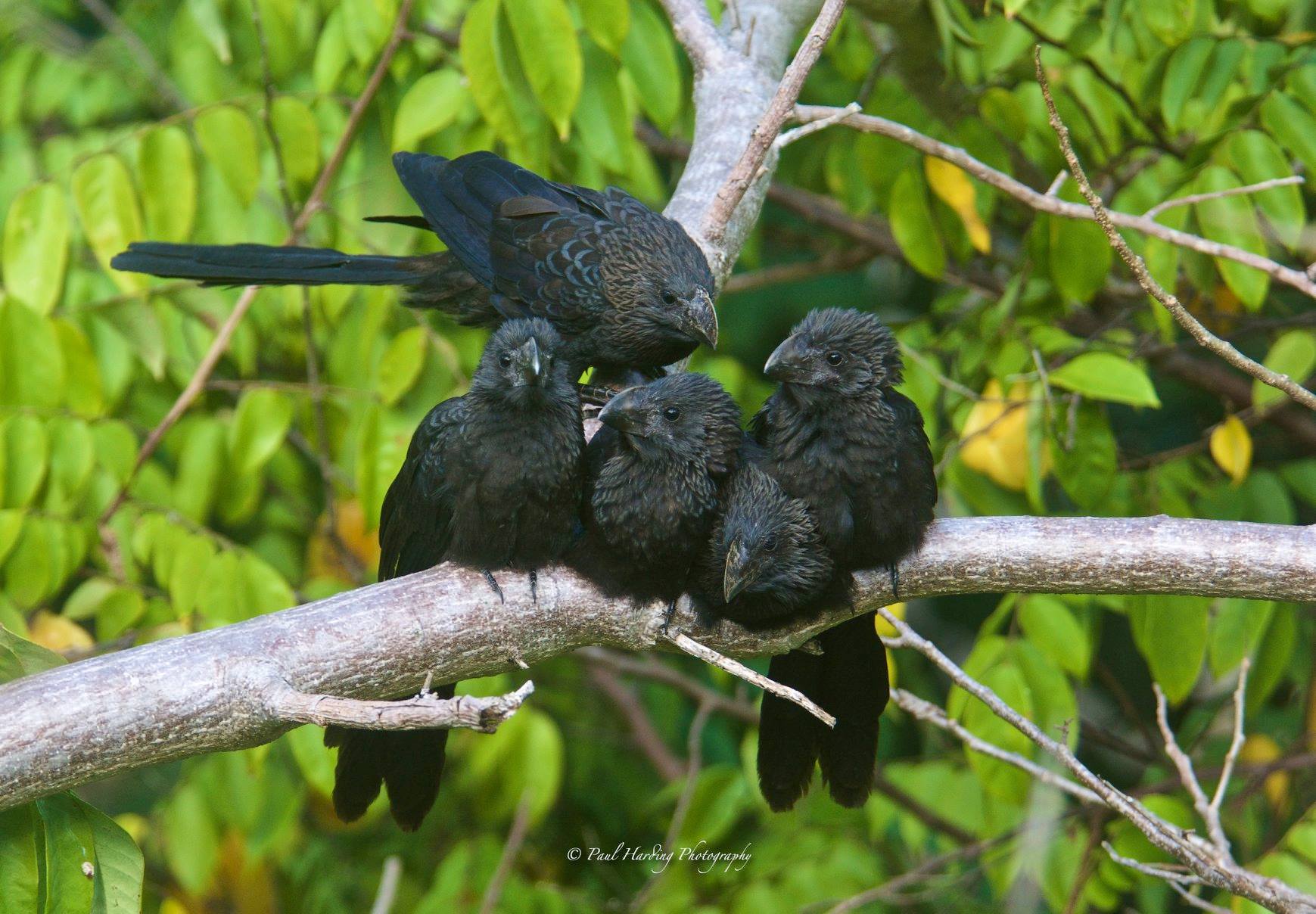
The Smooth-billed Ani (Crotophaga ani) is one of three members of the cuckoo family found on Abaco, the others being the MANGROVE CUCKOO and the YELLOW-BILLED CUCKOO. Anis range from Florida and the Bahamas in the north down through the Caribbean to South America, where they are widespread.

Smooth Billed Ani, Abaco - Nina Henry 2a

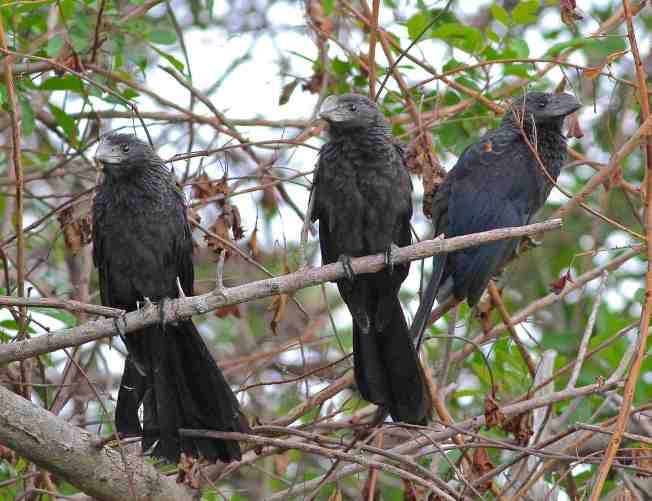
Unlike their shy and retiring cuckoo cousins, anis are extrovert shouty birds that like to hang out in noisy gangs and family groups. They can often be found in low scrub, bickering, squawking, and generally fluttering around in a disorderly way. You’ll probably hear them from some way off, sounding like this:

Anis have advanced social, parenting and chick-rearing skills. They build a communal nest for the group, and all share in egg incubation and chick-feeding duties They may raise up to three broods in a season, which keeps the numbers up. Rather touchingly, the young of earlier broods help to feed more recent chicks.

It follows from this that unlike many other cuckoo species, the ani is not a brood parasite. So the species does not lay its eggs in the nests of other, smaller birds which then unwittingly rear the interloper(s), who in turn push the legitimate hatchlings out of the nest and get all the food and attention.

Smooth-billed Anis Abaco - Gerlinde Taurer d

 
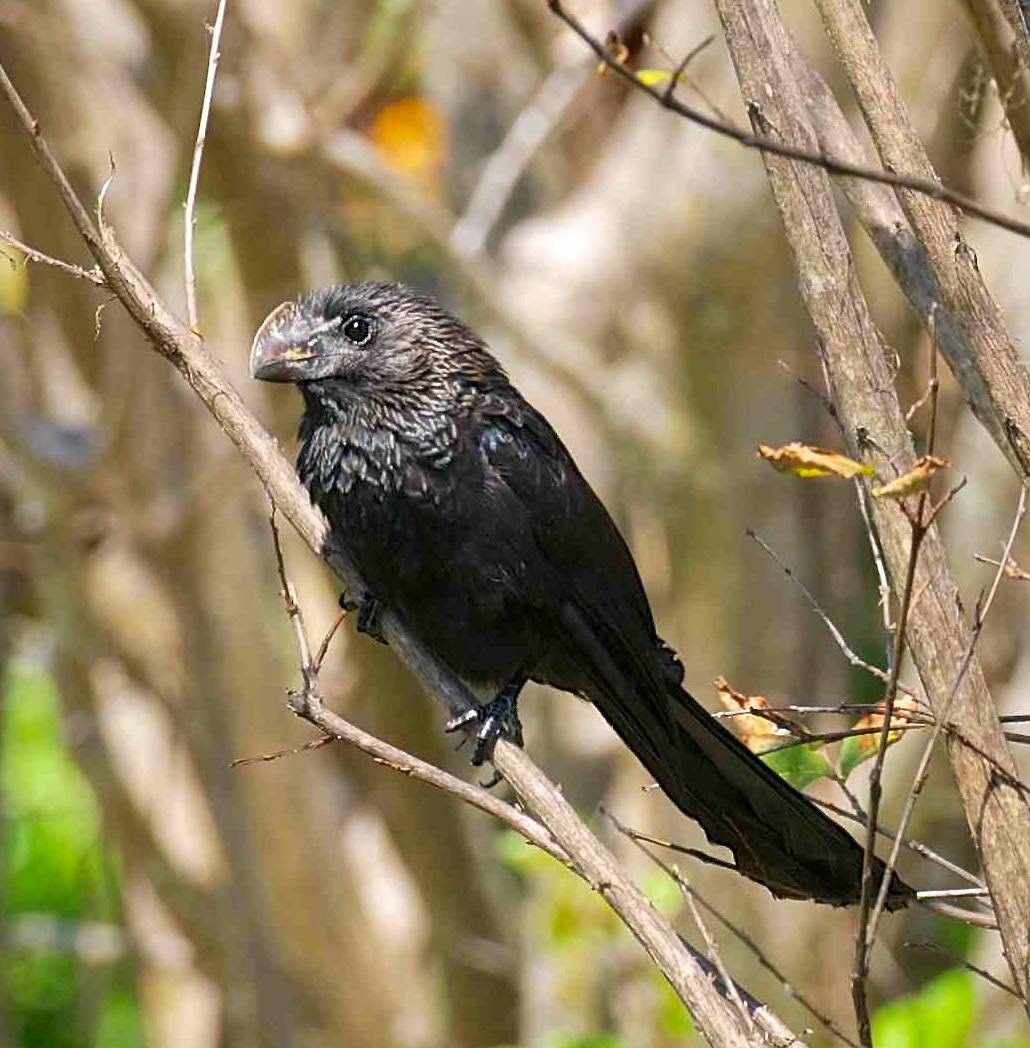
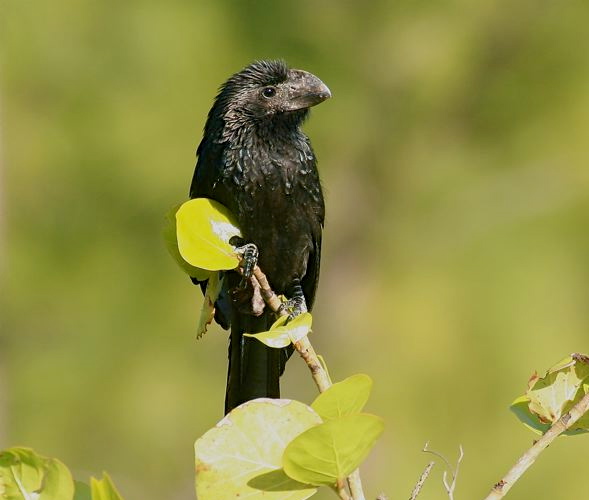
I have tried to discover why an ani’s beak is as it is, without much success. Very often beak shape relates directly to the feeding habits and preferences of a species, but it is hard to see how a diet consisting mainly of insects and small reptiles such as lizards would account for such a prominently protuberant proboscis. Here is a close-up of the item in question.
 

Smooth-billed Ani, Abaco_Roselyn Pierce
 
 
On Abaco (and indeed elsewhere) Anis are sometimes known as ‘Cemetery Birds’, no doubt because of their all-black appearance (though their raucous tendencies would be quite inappropriate for a graveyard). However although at a distance these birds may look completely black, catch one in the sun at the right angle, and you’ll find that the plumage is far more varied, and with some intricate patterning.
 

Smooth-billed Ani. Abaco Bahamas Tom Sheley

Look for Anis in low scrubland and coppice, cultivated areas, perched in unsteady noisy rows on utility lines, or foraging on the ground.

Smooth-billed Ani, Abaco. Gerlinde Taurer c

The appearance and flying abilities of Anis are wonders to behold. As I wrote in The Birds of Abaco, “Their curious heavy beaks, their clumsy flight and their untidy take-off and landing routines suggest a design fault”.

Smooth Billed Ani, Abaco - Nina Henry 1a

AIMEE MANN INTERLUDE **

“One… is the loneliest number…” Oh, hang on a moment…Smooth-billed Ani Abaco - Gerlinde Taurer a

…”two of us…standing solo in the sun…”Smooth-billed Ani, Abaco (Gerlinde Taurer) b

The Philatelic Bureau of the Bahamas Postal Service is commendably committed to featuring the natural history of the Bahamas. Although probably not in the top-ten of anyone’s bird list, the ani nevertheless got its own stamp in a 1991 bird issue.

As far as I know, there is not yet a collective noun for a group of anis. There should be. I put forward A Commotion of Anis” 

Smooth-biled Ani, Abaco - Bruce Hallett

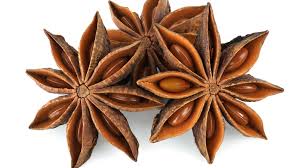
DO NOT CONFUSE WITH STAR ANISE

images

Credits (all photos taken on Abaco): Becky Marvil, Nina Henry, Paul Harding, Gerlinde Taurer, Roselyn Pierce, Tom Sheley, Bruce Hallett, Keith Salvesen; sound files from Xeno Canto and FMNH; range map from IUCN; hat tip to the always excellent Aimee Mann. ** yes yes I know these aren’t her original songs but I like the AM versions as much

Smooth-biled Ani, Abaco (Keith Salvesen)

Unknown's avatar

OSPREYS: ID GUIDE TO THE BAHAMAS SUBSPECIES


Osprey, Abaco Bahamas (Tom Sheley)

OSPREYS: ID GUIDE TO THE BAHAMAS SUBSPECIES

I have featured bird comparatives from time to time, not least because scope for confusion meant that I needed to investigate for my own peace of mind. These included the tyrant flycatchers; a number of superficially similar warbler species (mostly with yellow bits); varied vireos; all those heron-y / egret-y types and their disconcerting morphs (hello, white reddish egret).

Osprey P.h.carolinensis (CWFNJ)

And so to the magnificent osprey Pandion haliaetus. This time, the comparison is between two subspecies, broadly the North American P. h. carolinensis and the Caribbean P.h. ridgwayi. There is some overlap in Florida, and some evidence of interbreeding. In the northern Bahamas in particular there is also an overlap, so an osprey seen on Abaco could be either variety. You’ll probably be too excited watching it to care much which type it is, but this article will help you if you do…

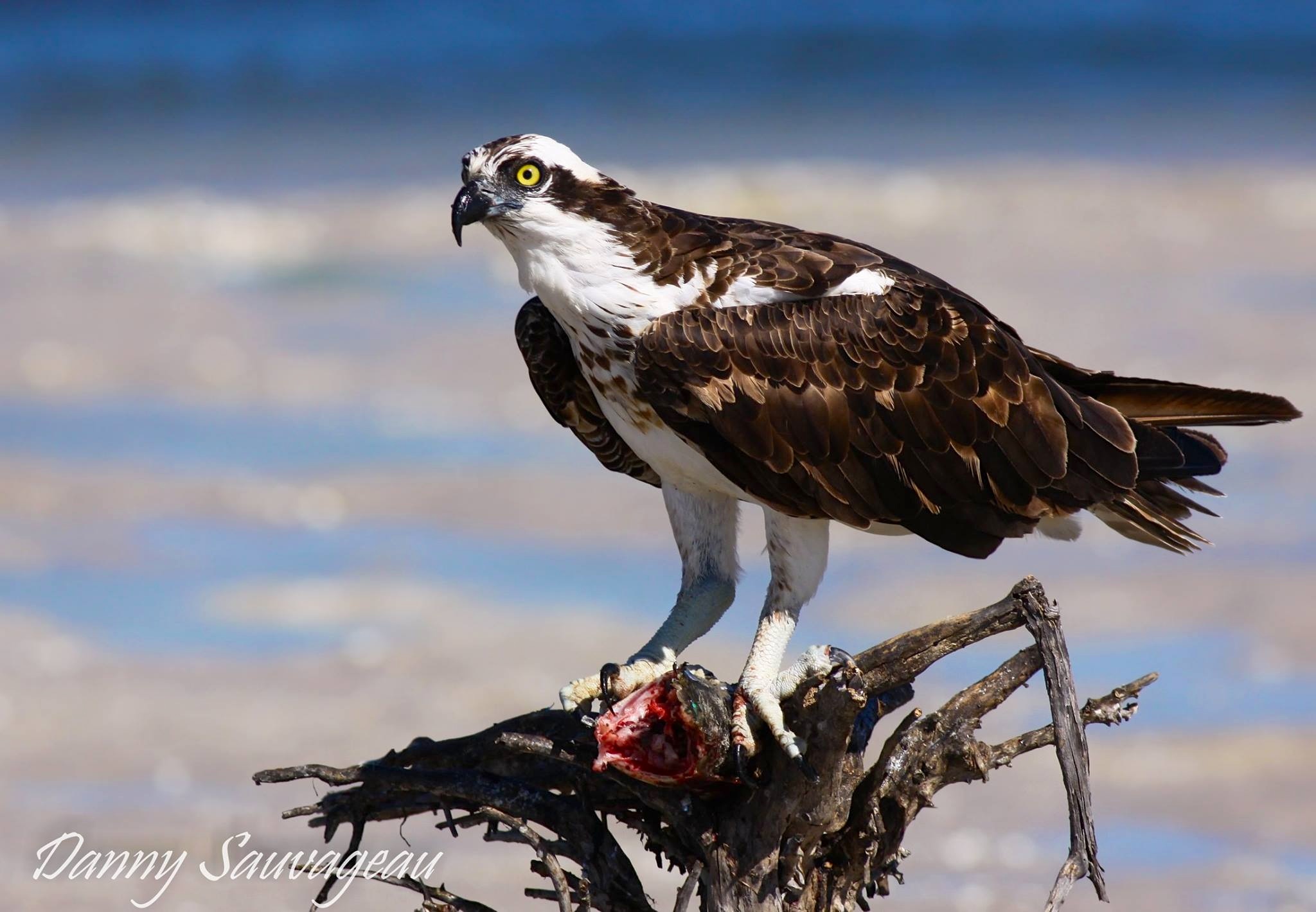
The two ospreys shown below were photographed at Spanish Wells, Eleuthera by Barbara Crouchley. This is a ‘bingo’ photographic scoop, because each type of bird was found in the same region; now we can check out the differences between the two birds. 

The first is a North American bird. Note in particular its distinctive eye mask, and the clearly marked upper breast – more so in the female than the male (which may even be white). The overall impression of the upper-parts is dark brown. They are slightly larger than their cousins in the south.

Osprey P.h. Carolinensis, Eleuthera Bahama (Barbara Crouchley)

Osprey P.h. carolinensis

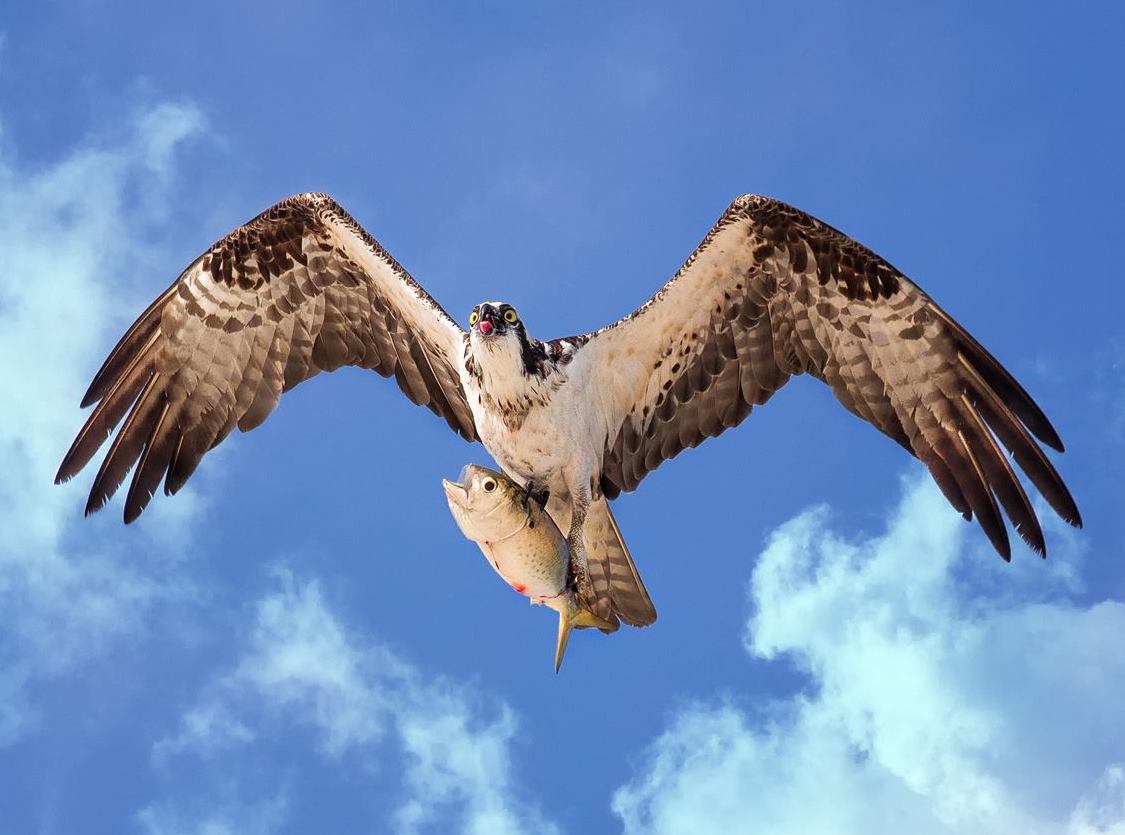
In this Caribbean bird, below, with its trophy fish, the eye-mask is absent and the facial / nape markings are less pronounced. Furthermore, the breast and under-parts are white in both sexes (though slight marking may be apparent in some birds). And  the impression is of lighter upper-parts, even allowing for variable lighting and distance when the photos were taken. Conveniently, there’s not much detectable difference between male and females in the respective populations.

Osprey P.h. Ridgwayi, Eleuthera Bahama (Barbara Crouchley)

Osprey P.h. ridgwayi

EXAMPLES OF P. h. carolinensis

Osprey P.h. Carolinensis, Florida (Danny Sauvageau)Osprey P.h. Carolinensis, Florida (Danny Sauvageau)Osprey P.h. Carolinensis, Florida (Danny Sauvageau)

EXAMPLES OF P. h. ridgwayi

Osprey P.h. ridgwayi, Grand Bahama (Linda Barry Cooper)

Osprey P.h. ridgwayi, Abaco (Woody Bracey)

THE EYES HAVE IT?

After I had looked into the noted distinctions I wrote “I’m going to stick my neck out here – I’ve not seen this mentioned anywhere, and I need to do some more comparative research”. When I saw Barbara’s pair of photos, I noticed that the eyes of the P.h.r were much paler compared with the bright orangey-yellow of P.h.c. This distinction is found in all the comparative photos above. The P.h.cs were photographed in Florida and further north and have the strikingly vivid eyes. The P.h.rs were photographed on Abaco and Grand Bahama at different times by different people. All have noticeably paler irises, more a light greeny-yellow.  

I haven’t seen this commented on since my original piece, but if anyone has a view it would be welcome.

UNDERWING DIFFERENCES

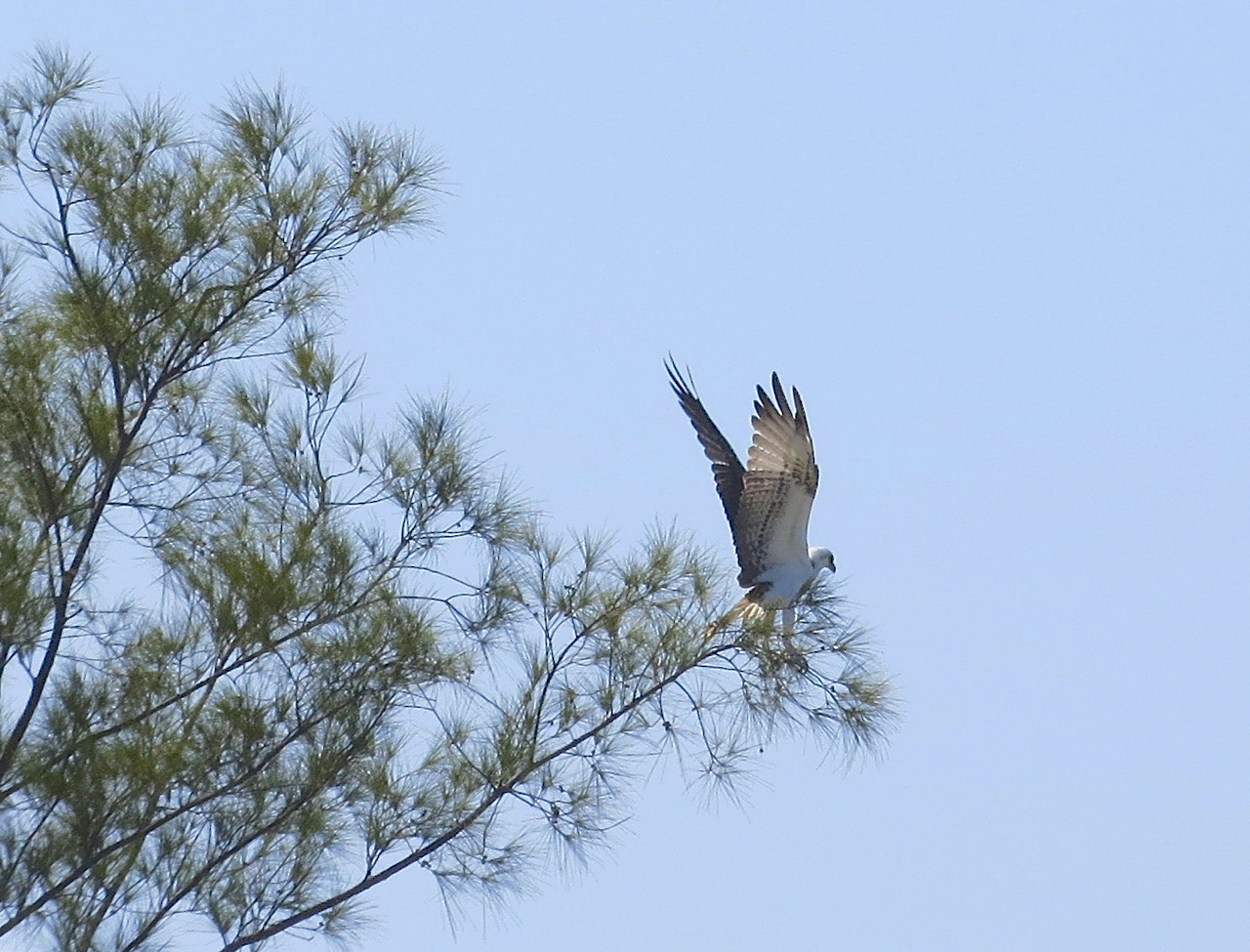
There’s a further comparison that can be made with the two subspecies in flight. Without going into technical and linguistic detail, the underwings of the P.h.cs are much darker than the Bahamas birds, whereas P.h.rs are notably paler and in some cases mostly white.  As an example, below is a distance shot I took when bonefishing out on the Abaco Marls, with a small pocket camera in one hand and a rod in the other. This is definitely a local bird! Compare with the dramatic image below it, where the strong darker markings are all too evident. It’s a great shot with which to bring the lesson to an end.

ADDENDUM: Thanks to LSulikM for pointing out that female carolinensis  (besides being larger than males) have frontal freckling, sometimes called a necklace, that is a prominent ID marker (see bottom image). Males may also have  freckling but it is much less conspicuous. For ridgwayi the freckling is absent or (see the bird on the utility pole above) very sparse.

Osprey P.h. ridgwayi, Abaco Marls (Keith Salvesen)

Osprey in flight with fish (Northside Jim)

Photo credits: Tom Sheley (1); CWFNJ (2); Barbara Crouchley (3, 4); Danny Sauvageau (5, 6, 7); Jim Todd (8); Linda Barry Cooper (9); Woody Bracey (10); Keith Salvesen (11); the inimitable Northside Jim (12). Thanks for all use permissions – also to Steve Connett for the idea! Original post in 2020.

Unknown's avatar

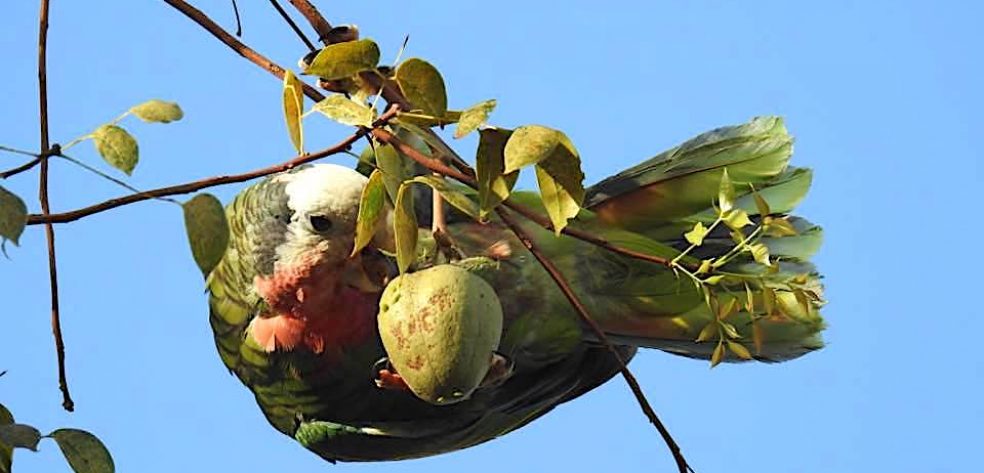
ABACO PARROTS: CHRISTMAS-COLOURED BIRDS


🎼 …and a parrot in a gumbo limbo tree…🎶 🎵

 ABACO PARROTS: CHRISTMAS-COLOURED BIRDS

A VERY HAPPY FESTIVAL OF FESTIVITY TO ALL FOLLOWERS OF ROLLING HARBOUR…

…AND TO EACH AND EVERY RANDOM DROP-BY TOO…

…AND HOPE, HEALTH & HAPPINESS &  FOR 2022

Abaco Parrot, Bahamas (Nina Henry)

Credits: Gerlinde Taurer & Nina Henry: photographed on Abaco, Bahamas for “The Birds of Abaco”