Unknown's avatar

“CLINGING TO THE WRECKAGE”: BAHAMAS CLINGING CRABS


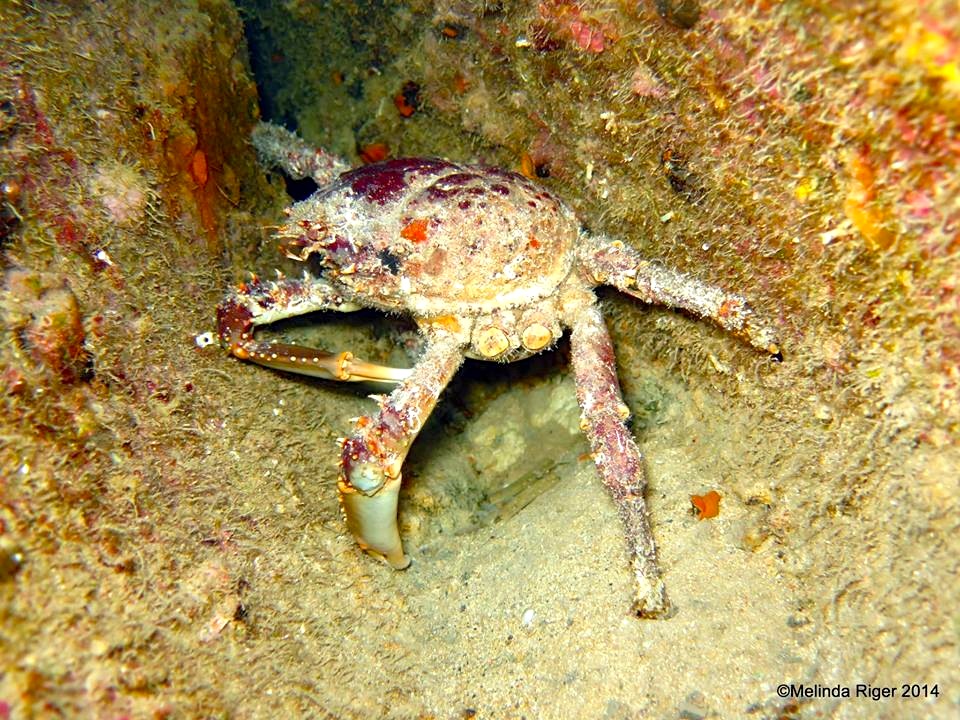
Clinging crab in smoke stack on Theo's Wreck ©Melinda Riger @ G B Scuba

“CLINGING TO THE WRECKAGE”: BAHAMAS CLINGING CRABS

The Clinging Crab Mithrax spinosissimus answers to a number of names: West Indian spider crab; channel clinging crab; reef or spiny spider crab; or coral crab. It is found throughout the waters of South Florida and the Caribbean.
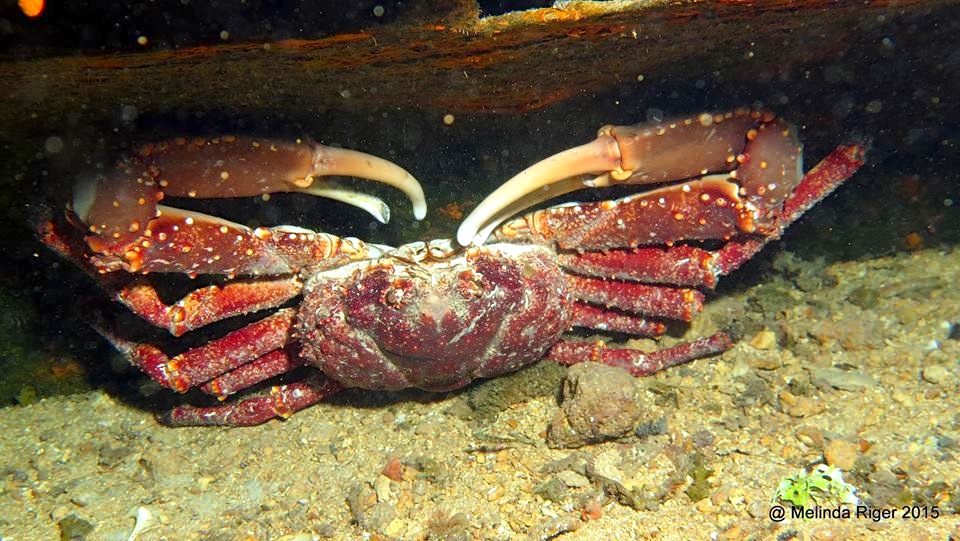
Clinging Crab ©Melinda Riger @ G B Scuba copy

These are crabs of the reefs, or indeed of the wrecks that may be found around reefs. Some of the crabs in this post have chosen wrecks as their home – in the header image the crab is living inside the smoke stack of ‘Theo’s Wreck’, Grand Bahama.
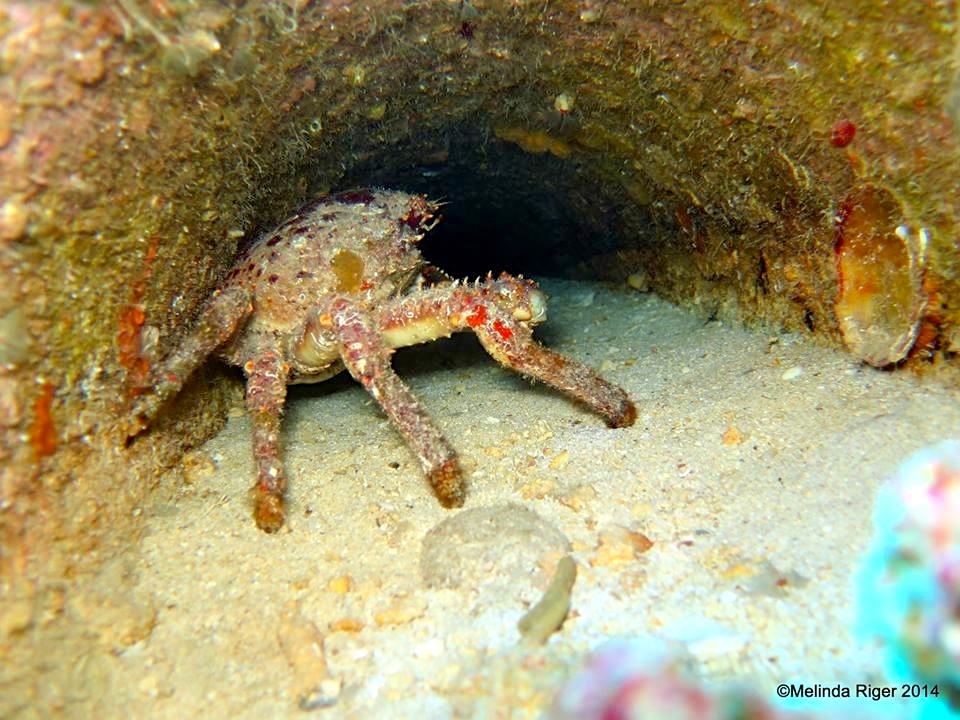
Clinging Crab ©Melinda Riger @ GB Scuba

The clinging crab is believed to be omniverous, its main diet being algae and carrion. They can grow to 2 kg, and it is the largest species of reef crab found in the Caribbean.

Clinging Crab © Melinda Riger @ G B Scuba

Clinging Crab ©Melinda Riger @ G B Scuba

Clinging Crab (legs missing) ©Melinda Riger @ G B Scuba

LAID BACK

Clinging Crab, Bahamas (Melinda Riger, G B Scuba)

Credits: Melinda Riger of Grand Bahama Scuba (all photos), with thanks as always for use permission

Unknown's avatar

HERMIT CRABS: SHELL-DWELLERS WITH MOBILE HOMES


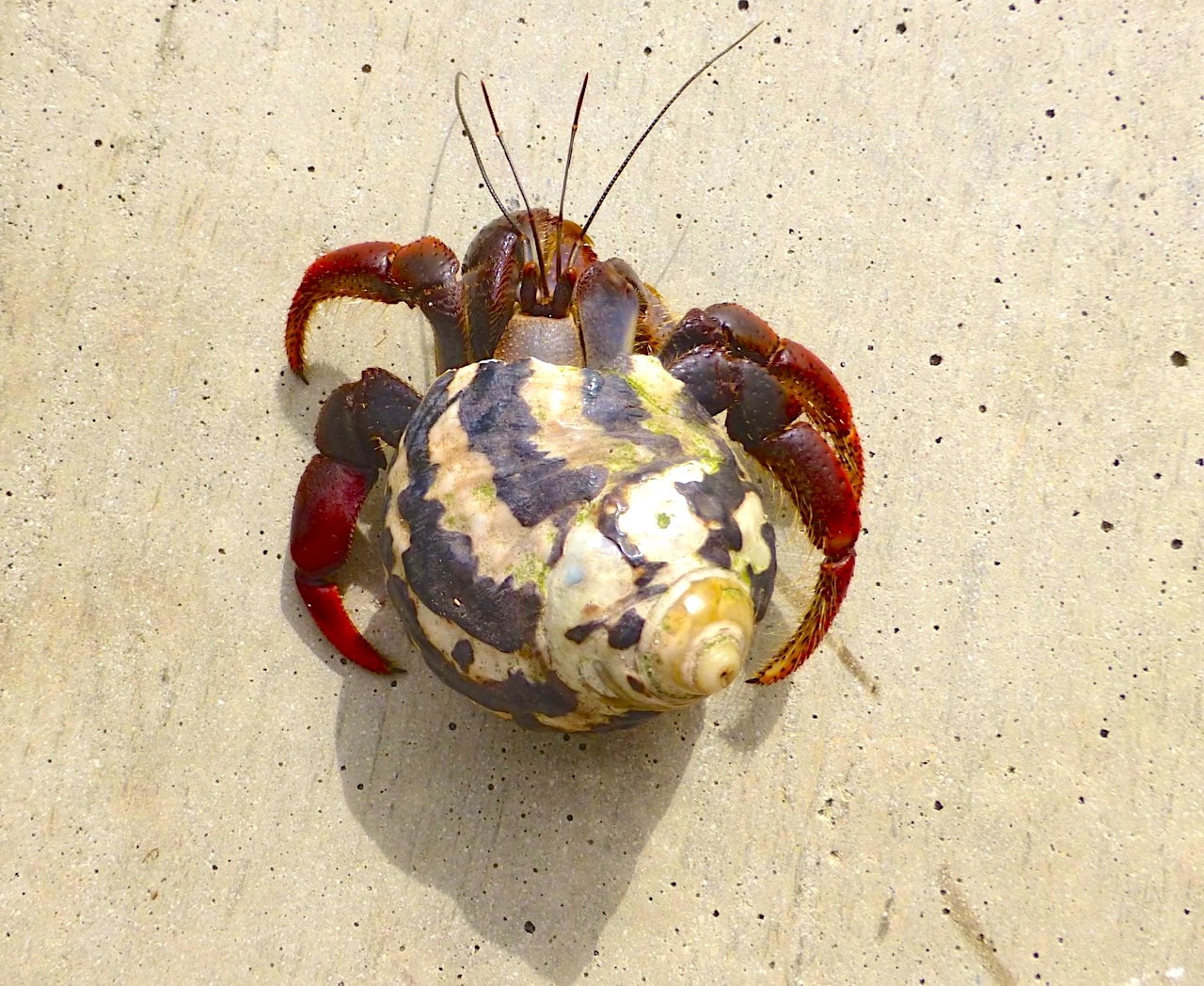
Hermit Crab, Abaco Bahamas (Keith Salvesen / Rolling Harbour)Keith Salvesen / Rolling Harbour


HERMIT CRABS: SHELL-DWELLERS WITH MOBILE HOMES

As everyone knows, Hermit Crabs get their name from the fact that from an early age they borrow empty seashells to live in. As they grow they trade up to a bigger one, leaving their previous home for a smaller crab to move into. It’s a benign* chain of recycling that the original gastropod occupant would no doubt approve of, were it still alive… The crabs are able to adapt their flexible bodies to their chosen shell. Mostly they are to be found in weathered (‘heritage’) shells rather than newly-empty shells. [*except for fighting over shells] 

Hermit Crab, Abaco Bahamas (Keith Salvesen / Rolling Harbour)


HERMIT CRAB FACTS TO ENLIVEN YOUR CONVERSATION

  • The crabs are mainly terrestrial, and make their homes in empty gastropod shells
  • Their bodies are soft, making them vulnerable to predation and heat.
  • They are basically naked – the shells protect their bodies & conceal them from predators
  • In that way they differ from other crab species that have hard ‘calcified’ shells / carapaces
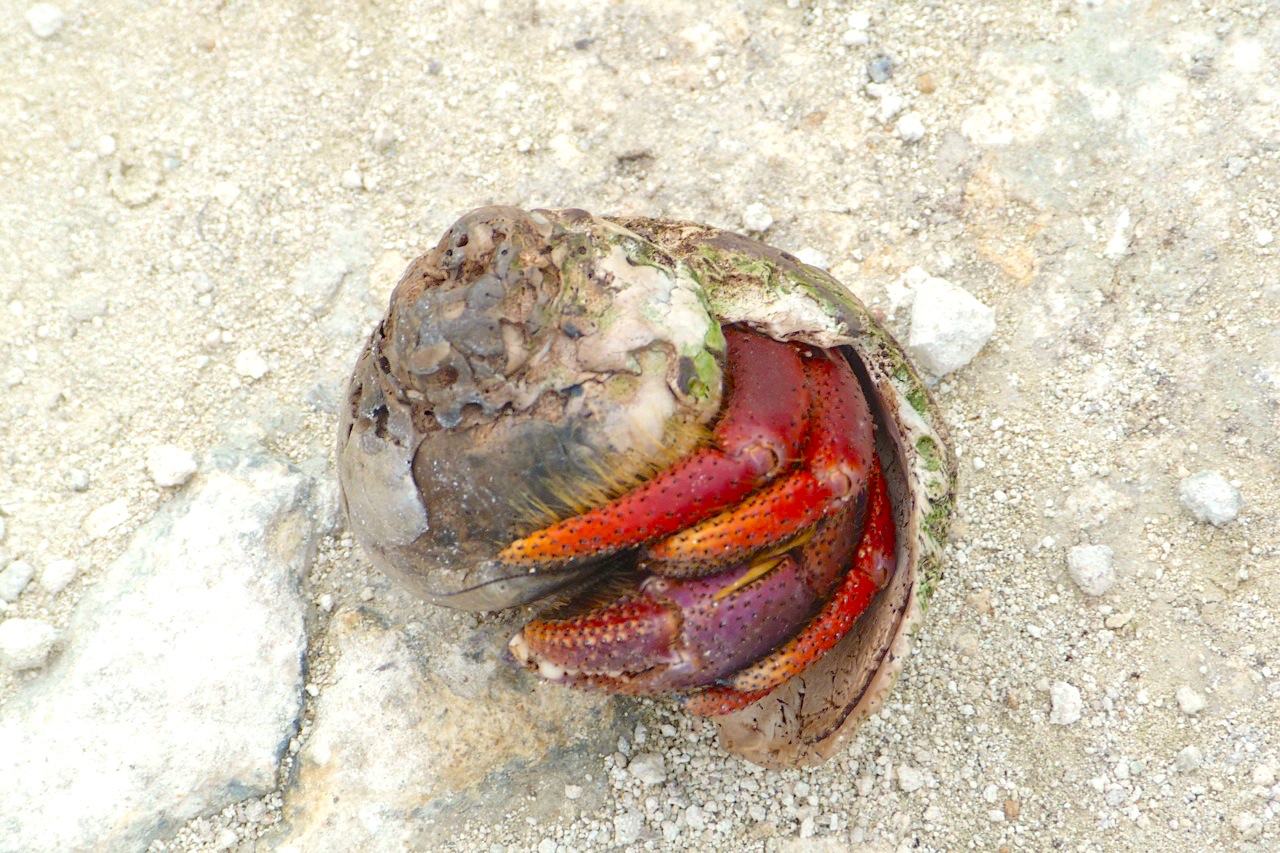
  • Ideally the shell should be the right size to retract into completely, with no bits on display

Hermit Crab, Abaco Bahamas (Keith Salvesen / Rolling Harbour)

  • As they grow larger, they have to move into larger and larger shells to hide in
  • As the video below shows wonderfully, they may form queues and upsize in turns
  • Occasionally they make a housing mistake and chose a different home, eg a small tin


Hermit Crab, Abaco Bahamas (Keith Salvesen / Rolling Harbour)Keith Salvesen / Rolling Harbour


  • The crabs may congregate in large groups which scatter rapidly when they sense danger
  • The demand for suitable shells can be competitive and the cause of inter-crab battles
  • Sometimes two or more will gang up on a rival to prevent its move to a particular shell


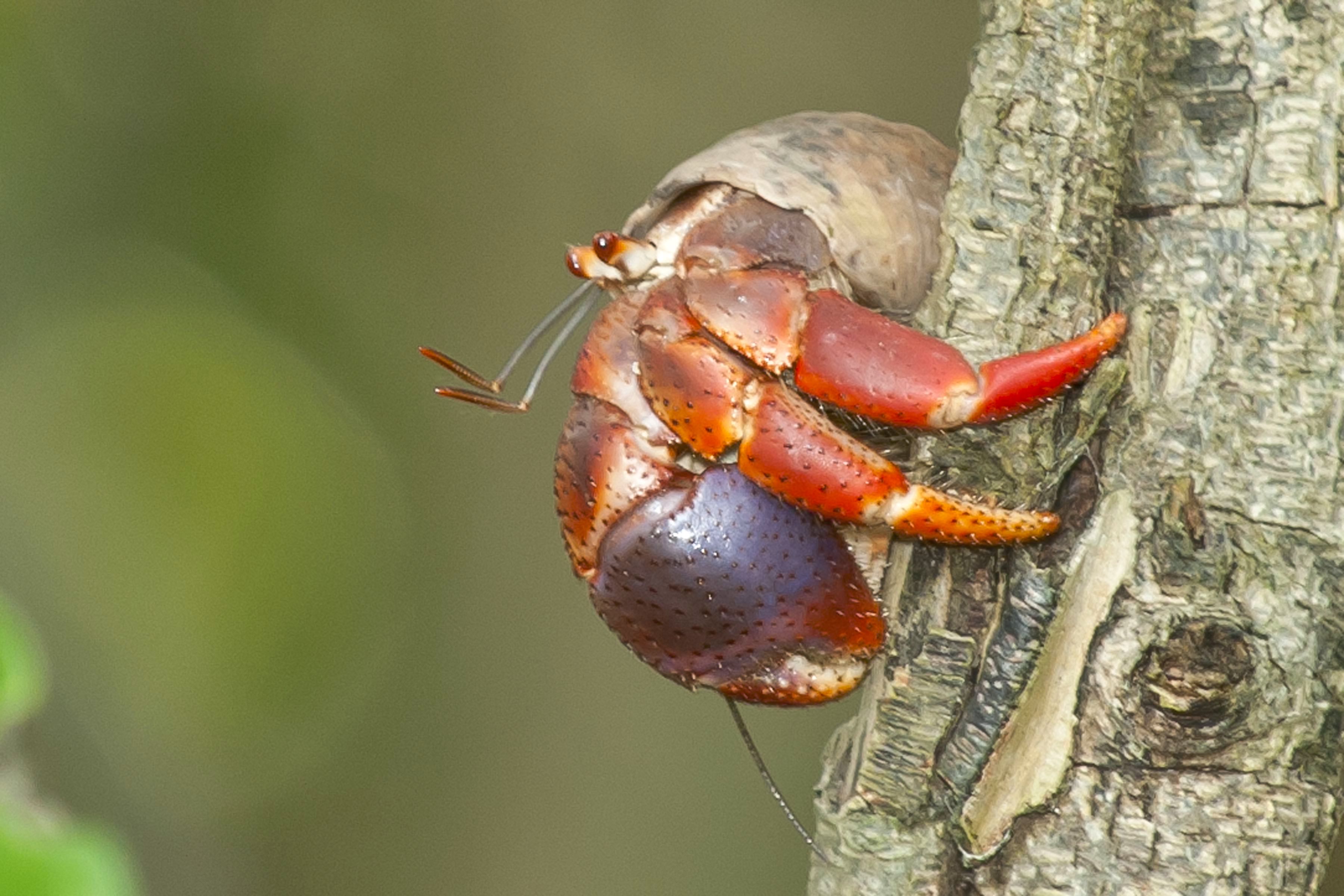
HERMIT CRABS CAN EVEN CLIMB TREES – WITH THEIR SHELLS ON TOO

Tom SheleyHermit Crab, Abaco Bahamas (Tom Sheley)


HERMIT CRABS EXCHANGING HOMES with DAVID ATTENBOROUGH

This is a short (c 4 mins) extract from BBC Earth, with David Attenborough explaining about the lives and habits of these little crabs with his usual authoritative care and precision . If you have the time I highly recommend taking a look.


Credits: All photos taken on Abaco by Keith Salvesen except for the tree-climber crab photographed by Tom Sheley; video from BBC Earth

Hermit Crab, Abaco Bahamas (Keith Salvesen / Rolling Harbour)

Unknown's avatar

HERMIT CRABS: SHELL-DWELLERS WITH MOBILE HOMES


Hermit Crab, Abaco Bahamas (Keith Salvesen / Rolling Harbour)

HERMIT CRABS: SHELL-DWELLERS WITH MOBILE HOMES

As everyone knows, Hermit Crabs get their name from the fact that from an early age they borrow empty seashells to live in. As they grow they trade up to a bigger one, leaving their previous home for a smaller crab to move into. It’s a benign** chain of recycling that the original gastropod occupant would no doubt approve of, were it still alive… The crabs are able to adapt their flexible bodies to their chosen shell. Mostly they are to be found in weathered (‘heritage’) rather than newly-empty shells for their home. [**except for fighting over shells] 

Hermit Crab, Abaco Bahamas (Keith Salvesen / Rolling Harbour)

 HERMIT CRAB FACTS TO ENLIVEN YOUR CONVERSATION

  • The crabs are mainly terrestrial, and make their homes in empty gastropod shells
  • Their bodies are soft, making them vulnerable to predation and heat.
  • They are basically naked – the shells protect their bodies & conceal them from predators
  • In that way they differ from other crab species that have hard ‘calcified’ shells / carapaces
  • Ideally the shell should be the right size to retract into completely, with no bits on display

Hermit Crab, Abaco Bahamas (Keith Salvesen / Rolling Harbour)

  • As they grow larger, they have to move into larger and larger shells to hide in
  • As the video below shows wonderfully, they may form queues and upsize in turns
  • Occasionally they make a housing mistake and chose a different home, eg a small tin

Hermit Crab, Abaco Bahamas (Keith Salvesen / Rolling Harbour)

  • The crabs may congregate in large groups which scatter rapidly when they sense danger
  • The demand for suitable shells can be competitive and the cause of inter-crab battles
  • Sometimes two or more will gang up on a rival to prevent its move to a particular shell

HERMIT CRABS CAN EVEN CLIMB TREES – WITH THEIR SHELLS ON TOO

Hermit Crab, Abaco Bahamas (Tom Sheley)

HERMIT CRABS EXCHANGING HOMES with DAVID ATTENBOROUGH

This is a short (c 4 mins) extract from BBC Earth, with David Attenborough explaining about the lives and habits of these little crabs with his usual authoritative care and precision . If you have the time I highly recommend taking a look.

Credits: All photos taken on Abaco by Keith Salvesen except for the tree-climber crab photographed by Tom Sheley; video from BBC Earth

Hermit Crab, Abaco Bahamas (Keith Salvesen / Rolling Harbour)

Unknown's avatar

HERMIT CRABS: SHELL-DWELLERS WITH MOBILE HOMES


Hermit Crab, Abaco Bahamas (Keith Salvesen / Rolling Harbour)

HERMIT CRABS: SHELL-DWELLERS WITH MOBILE HOMES

As everyone knows, Hermit Crabs get their name from the fact that from an early age they borrow empty seashells to live in. As they grow they trade up to a bigger one, leaving their previous home for a smaller crab to move into. It’s a benign** chain of recycling that the original gastropod occupant would no doubt approve of, were it still alive… The crabs are able to adapt their flexible bodies to their chosen shell. Mostly they are to be found in weathered (‘heritage’) rather than newly-empty shells for their home. [**except for fighting over shells] 

Hermit Crab, Abaco Bahamas (Keith Salvesen / Rolling Harbour)

 HERMIT CRAB FACTS TO ENLIVEN YOUR CONVERSATION

  • The crabs are mainly terrestrial, and make their homes in empty gastropod shells
  • Their bodies are soft, making them vulnerable to predation and heat.
  • They are basically naked – the shells protect their bodies & conceal them from predators
  • In that way they differ from other crab species that have hard ‘calcified’ shells / carapaces
  • Ideally the shell should be the right size to retract into completely, with no bits on display

Hermit Crab, Abaco Bahamas (Keith Salvesen / Rolling Harbour)

  • As they grow larger, they have to move into larger and larger shells to hide in
  • As the video below shows wonderfully, they may form queues and upsize in turns
  • Occasionally they make a housing mistake and chose a different home, eg a small tin

Hermit Crab, Abaco Bahamas (Keith Salvesen / Rolling Harbour)

  • The crabs may congregate in large groups which scatter rapidly when they sense danger
  • The demand for suitable shells can be competitive and the cause of inter-crab battles
  • Sometimes two or more will gang up on a rival to prevent its move to a particular shell

HERMIT CRABS CAN EVEN CLIMB TREES – WITH THEIR SHELLS ON TOO

Hermit Crab, Abaco Bahamas (Tom Sheley)

HERMIT CRABS EXCHANGING HOMES with DAVID ATTENBOROUGH

This is a short (c 4 mins) extract from BBC Earth, with David Attenborough explaining about the lives and habits of these little crabs with his usual authoritative care and precision . If you have the time I highly recommend taking a look.

Credits: All photos taken on Abaco by Keith Salvesen except for the tree-climber crab photographed by Tom Sheley; video from BBC Earth

Hermit Crab, Abaco Bahamas (Keith Salvesen / Rolling Harbour)