Unknown's avatar

‘SEXING THE HUMMER’: A GENDER GUIDE TO ABACO’S HUMMINGBIRDS


Keith Salvesen / Rolling Harbour / Abaco Bahamas

‘SEXING THE HUMMER’

A GENDER GUIDE TO ABACO’S HUMMINGBIRDS

Cuban Emerald (m) Abaco (Charlie Skinner)

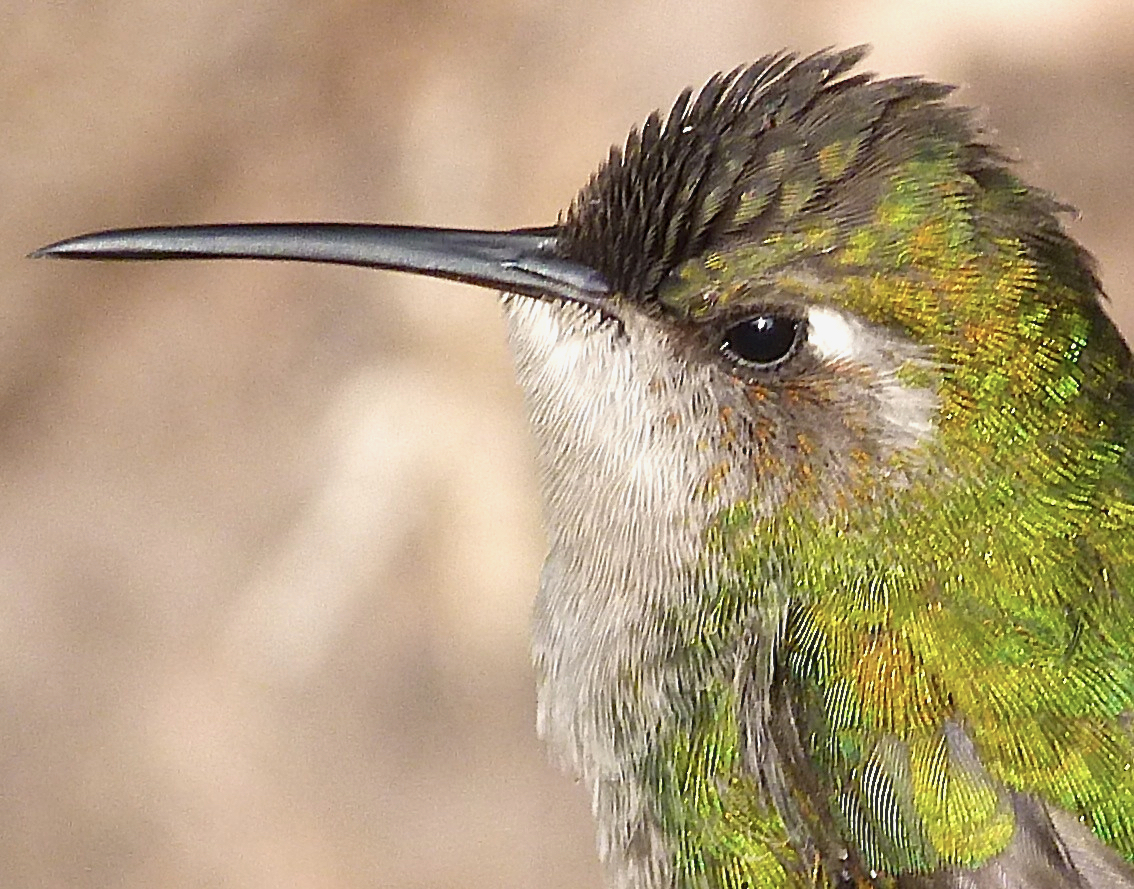
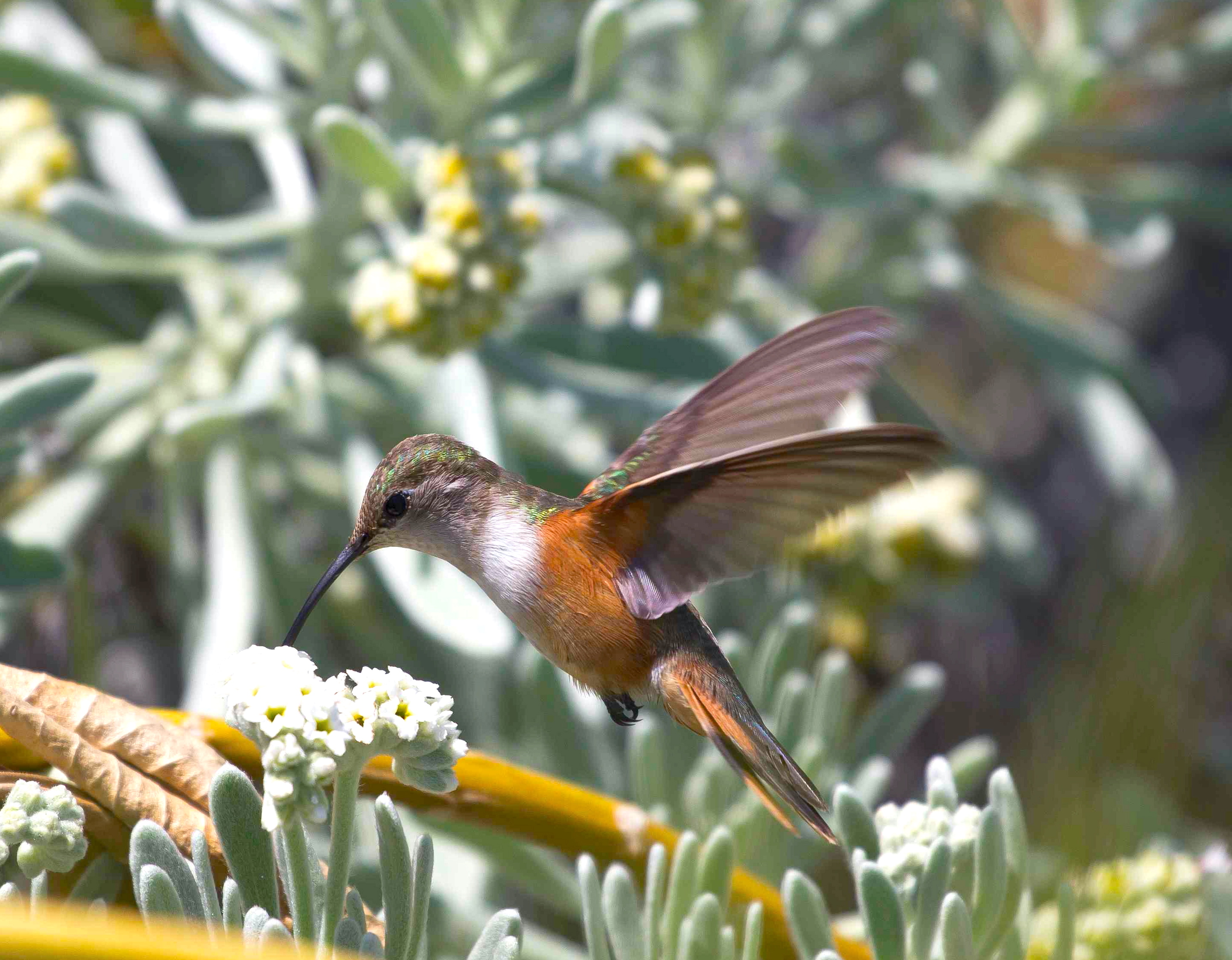
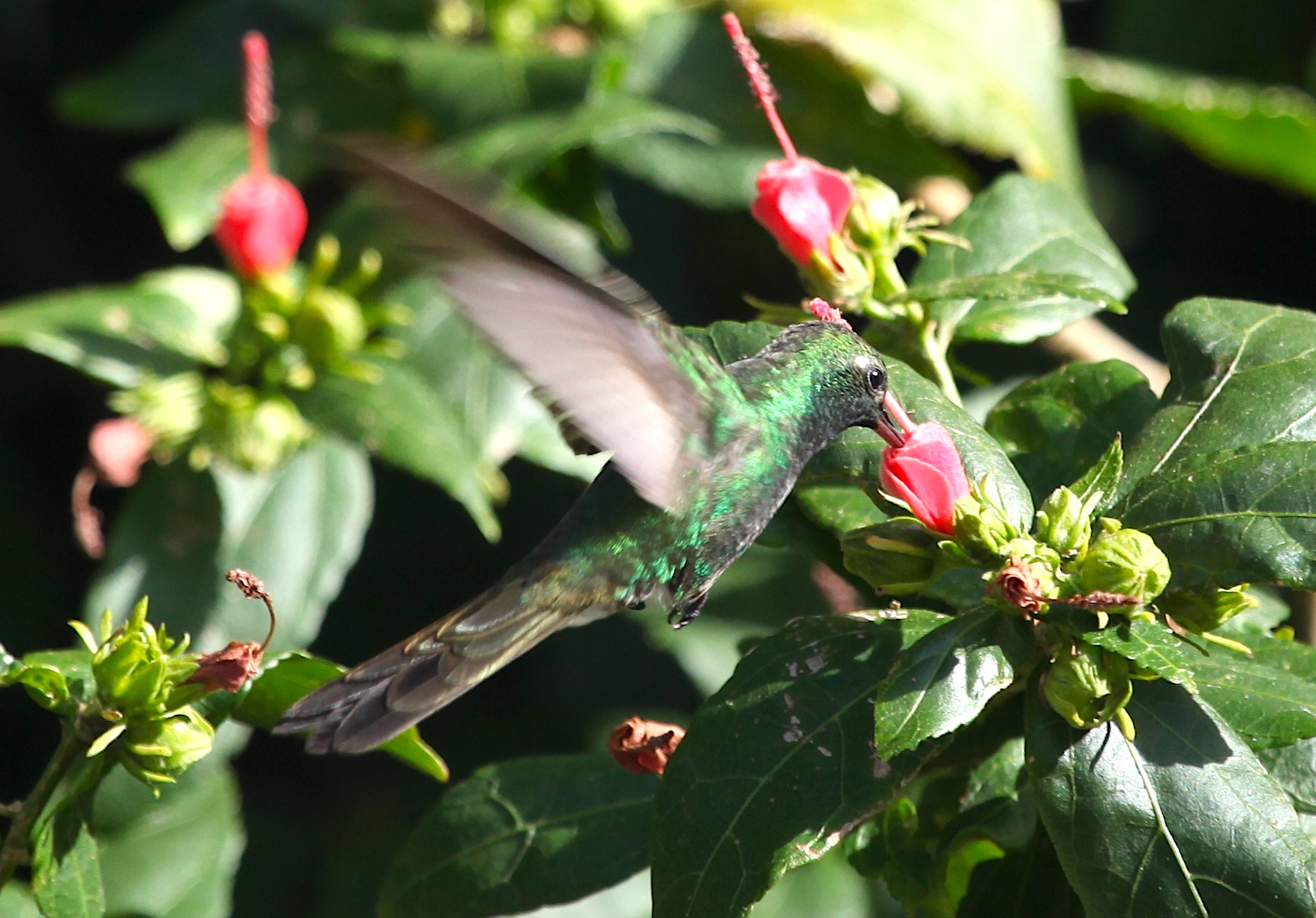
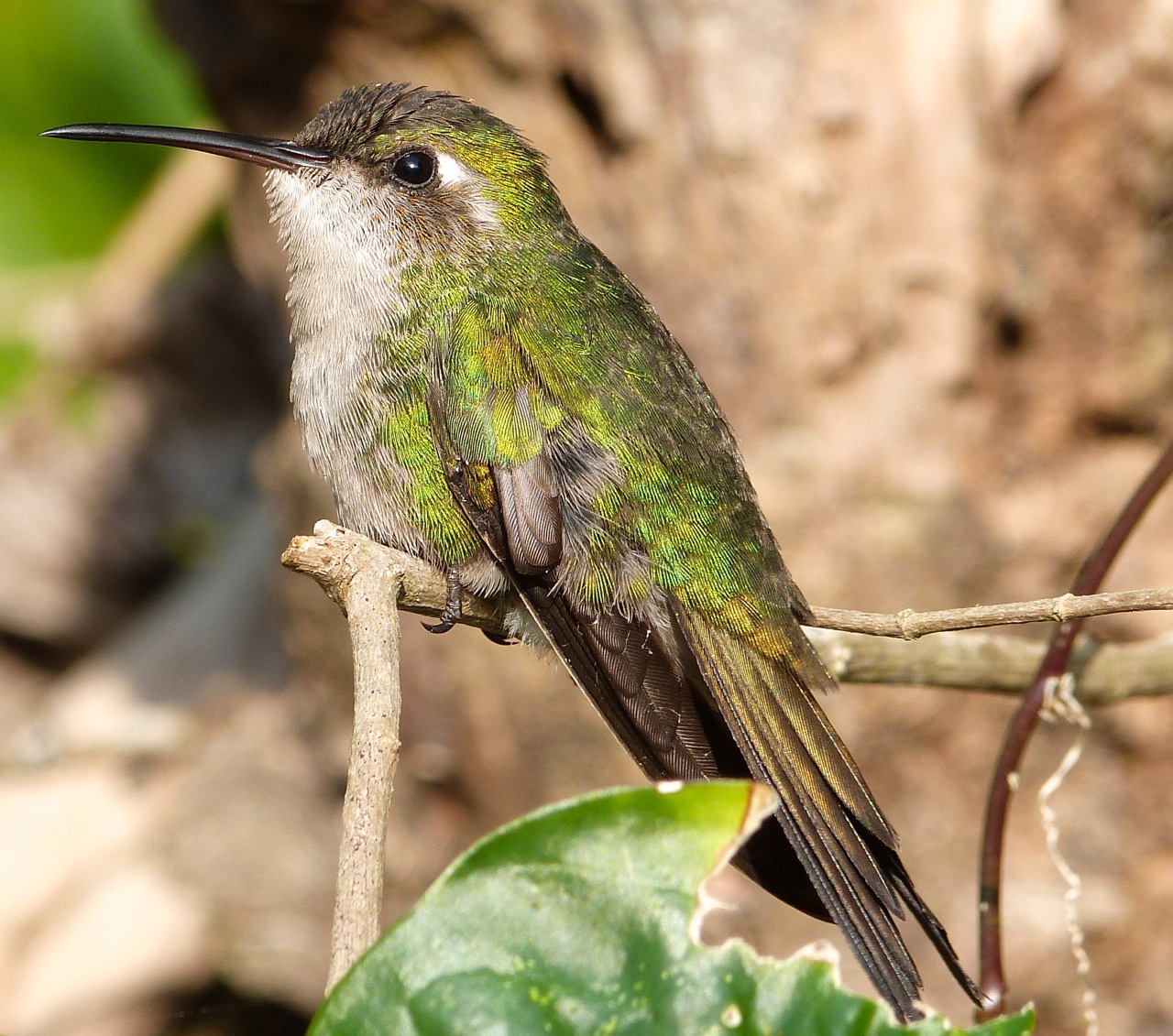
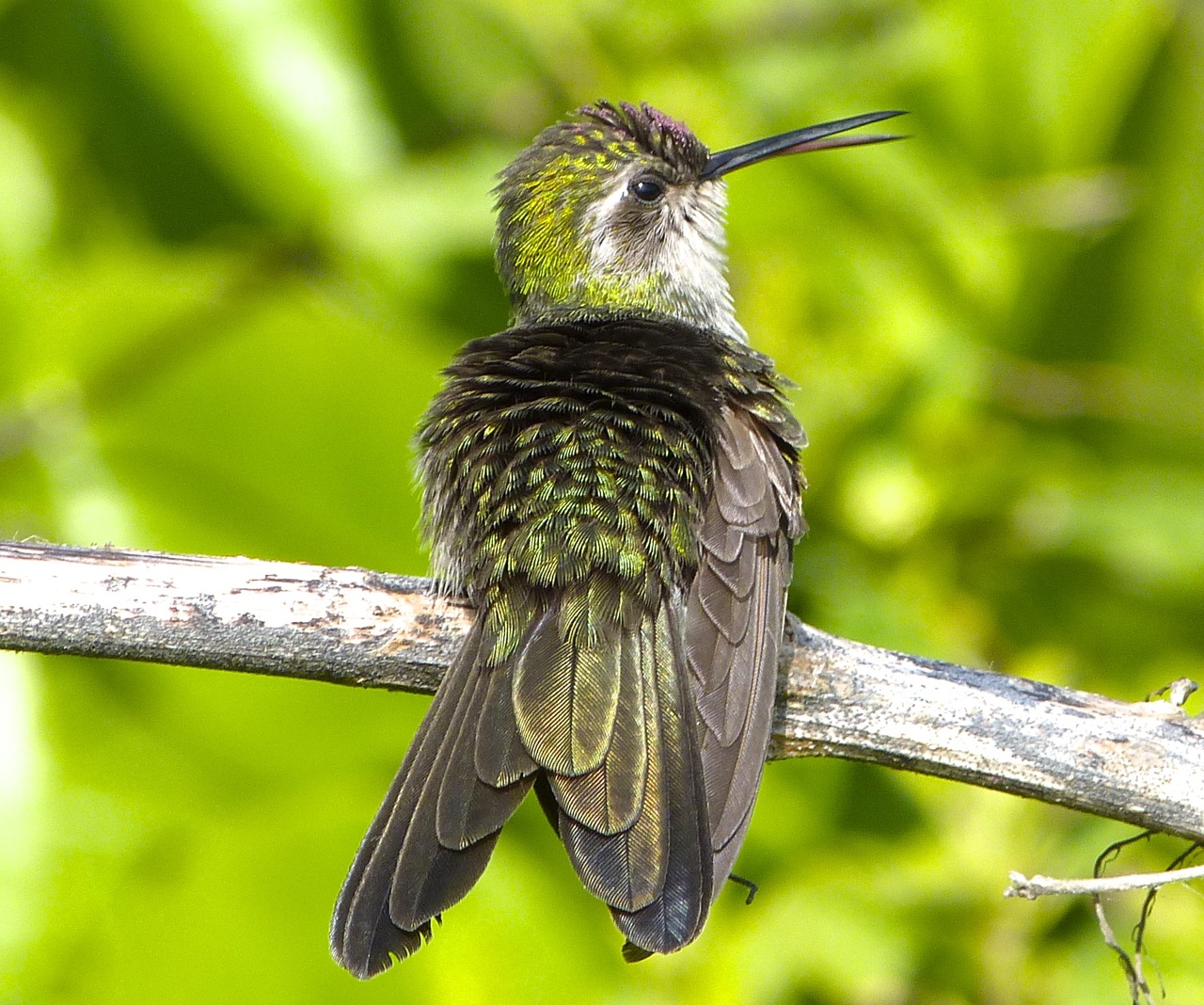
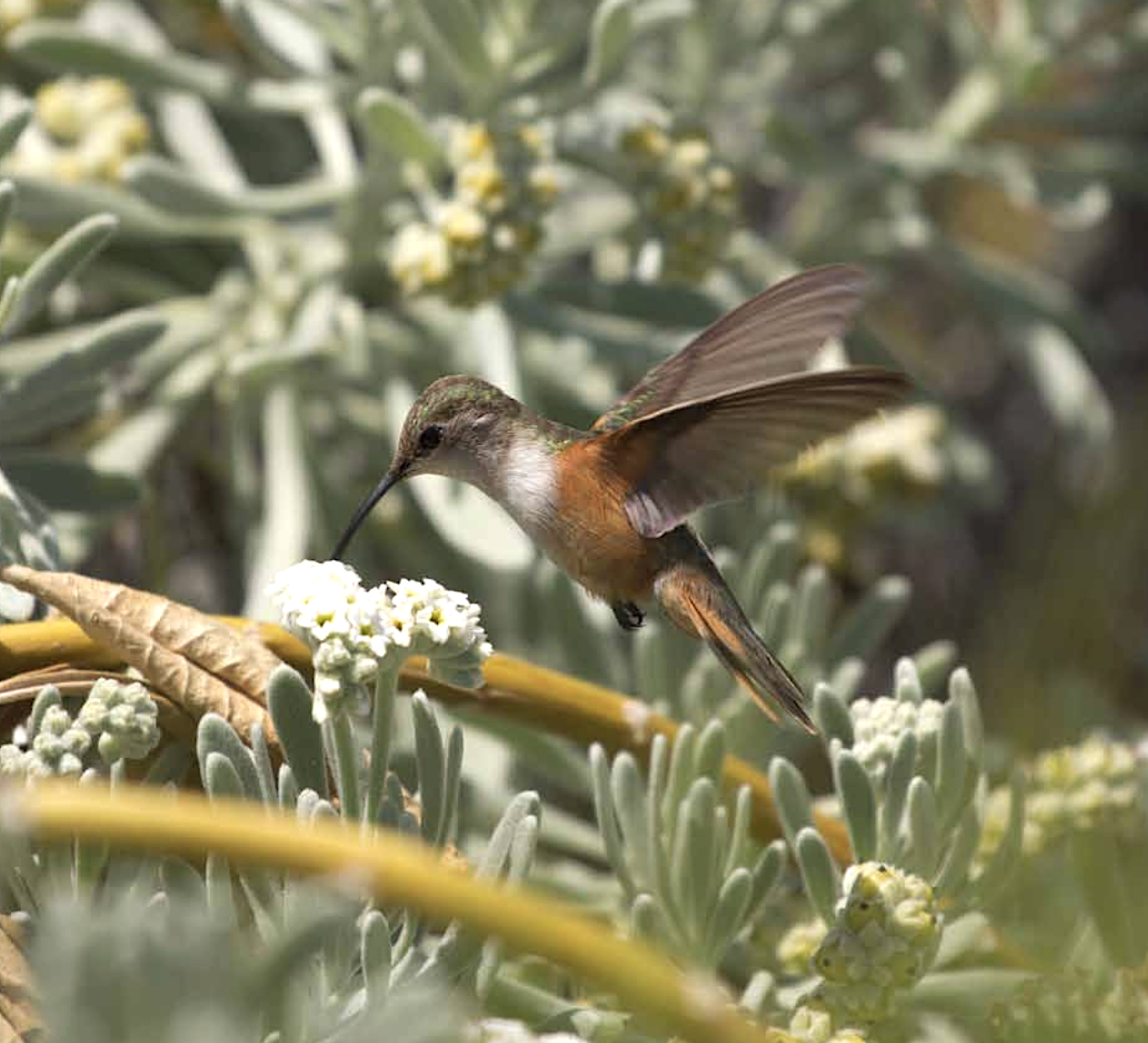
This post is not as indelicate as the title might imply. It is not a practical guide for intimate examinations of tiny birds. Nor does refer to some louche activity involving large motor vehicles. It’s all about plumage and recognition. And there are only two species – and two genders for each one – to wrestle with*. So here are the adult male and female Bahama Woodstars and Cuban Emeralds in all their glory…

BAHAMA WOODSTAR (Calliphlox evelynae)

Bahama Woodstar (m), Abaco (Bruce Hallett)
Bahama Woodstar (m), Abaco Bahamas (Tom Sheley)

Bahama Woodstar (f), Bahama Palm Shores, Abaco (Tara Lavallee)
Bahama Woodstar (f), Abaco (Tom Sheley)


CUBAN EMERALD (Chlorostilbon ricordii)

Cuban Emerald (male), Delphi Club, Abaco (Keith Salvesen)
Cuban Emerald (m) Delphi, Abaco (Keith Salvesen)
Cuban Emerald (m), Delphi, Abaco (Peter Mantle)

Cuban Emerald (female), Delphi Club, Abaco (Keith Salvesen)
Cuban Emerald (f), Delphi, Abaco (Keith Salvesen)
Cuban Emerald (female) Gilpin Point, Abaco (Keith Salvesen)
Cuban Emerald (f) Gilpin Point, Abaco (Keith Salvesen)

And finally, a brilliant Woodstar photo taken by Tom Sheley, birdman and generous fishing partner, that spans the boundary between wildlife photography and art. 

Bahama Woodstar female. Abaco Bahamas . Tom Sheley

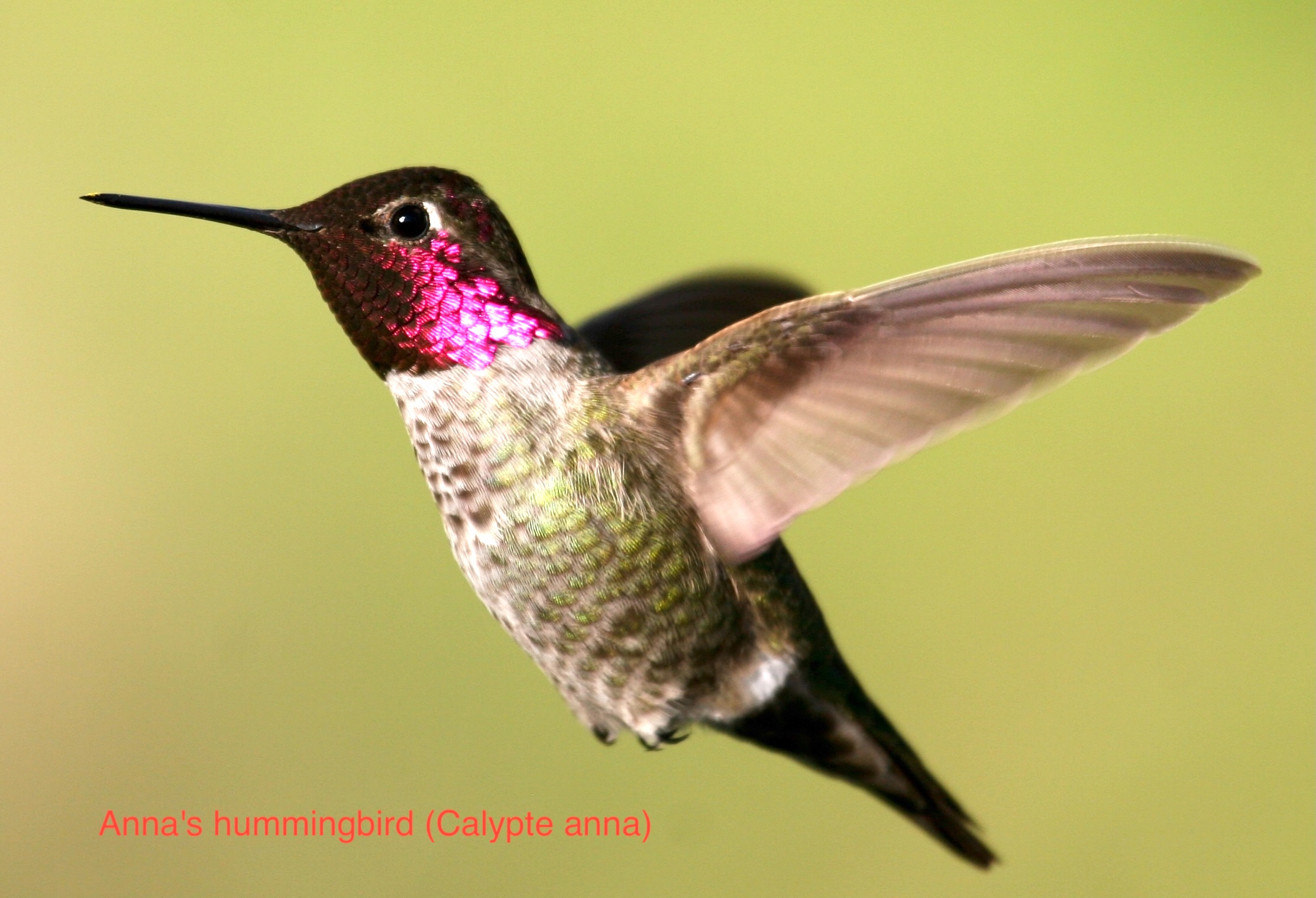
There have been very rare reports of vagrant sightings, in particular Anna’s Hummingbird

Unknown's avatar

WAVE CHASERS: SANDERLING POOL TIME ON ABACO


Sanderling, Delphi Beach Abaco Bahamas (Keith Salvesen / Rolling Harbour)

WAVE CHASERS: SANDERLING POOL TIME ON ABACO

It’s often a hard decision whether to include a short piece of video footage in a post. By short, I mean less than a minute. On the one hand, there is usually a good reason for inclusion, even if only aesthetic. On the other, it simply takes up more time for busy people who may prefer to flick through an article and enjoy some nice images along the way. Today, you can have the best of both worlds.

Sanderling, Delphi Beach Abaco Bahamas (Keith Salvesen / Rolling Harbour)

Sanderlings are definitively ‘peeps’, a group name that embraces the smallest and squeakiest sandpiper species. They are the wave chasers, the tiny birds that scuttle along the beach, into the retreating tide for a snack from the sand, and back to the beach again as the waves creep in. Their little legs and feet move in a blur, and many people immediately think of wind-up clockwork toys as they watch the birds in action. But these charmers never wind down while there is shoreline foraging to be done.

Sanderling, Delphi Beach Abaco Bahamas (Keith Salvesen / Rolling Harbour)

One of the joys of being a sanderling is that rock pools fill and empty diurnally. At some time during daylight, there’s the certainty of a quick dip. I was lying on the beach when I took this short video, so that I didn’t spook the birds. I was equipped with a smallish camera (I drowned it the following day. By mistake I mean) so I kept my distance rather than try to get closer and spoil their joyful bathing.

I caught these little birds at a critical moment. You can tell that the tide is coming in fast. The peeps are becoming edgy, and weighing up the joys of immersion in a pool with the less enjoyable prospect of being washed out of the pool by the next wave. Within a minute or so, they had all flocked down the shoreline for a foraging session in new territory.

Waves and incoming tide getting a little too close for comfort on the edge of the pool…Sanderling, Delphi Beach Abaco Bahamas (Keith Salvesen / Rolling Harbour)

Next to the migratory PIPING PLOVERS that favour Abaco as their winter home, the wave chasers are my favourite shorebirds. It was my keenness on them that killed my camera. I went out into the incoming waves to get shots back at the beach with the sun behind me. Great idea until I lost my balance with, as they say, hilarious consequences. Lesson learnt – never turn your back on waves.

Sanderling, Delphi Beach Abaco Bahamas (Keith Salvesen / Rolling Harbour)

All photos © Keith Salvesen / Rolling Harbour taken on the beach at Delphi, Abaco, Bahamas

Sanderling, Delphi Beach Abaco Bahamas (Keith Salvesen / Rolling Harbour)

Unknown's avatar

GREAT EGRETS: NOBLE (YET MISNAMED) HERONS


Great Egret, Bahamas (Nina Henry)


GREAT EGRETS: NOBLE (YET MISNAMED) HERONS

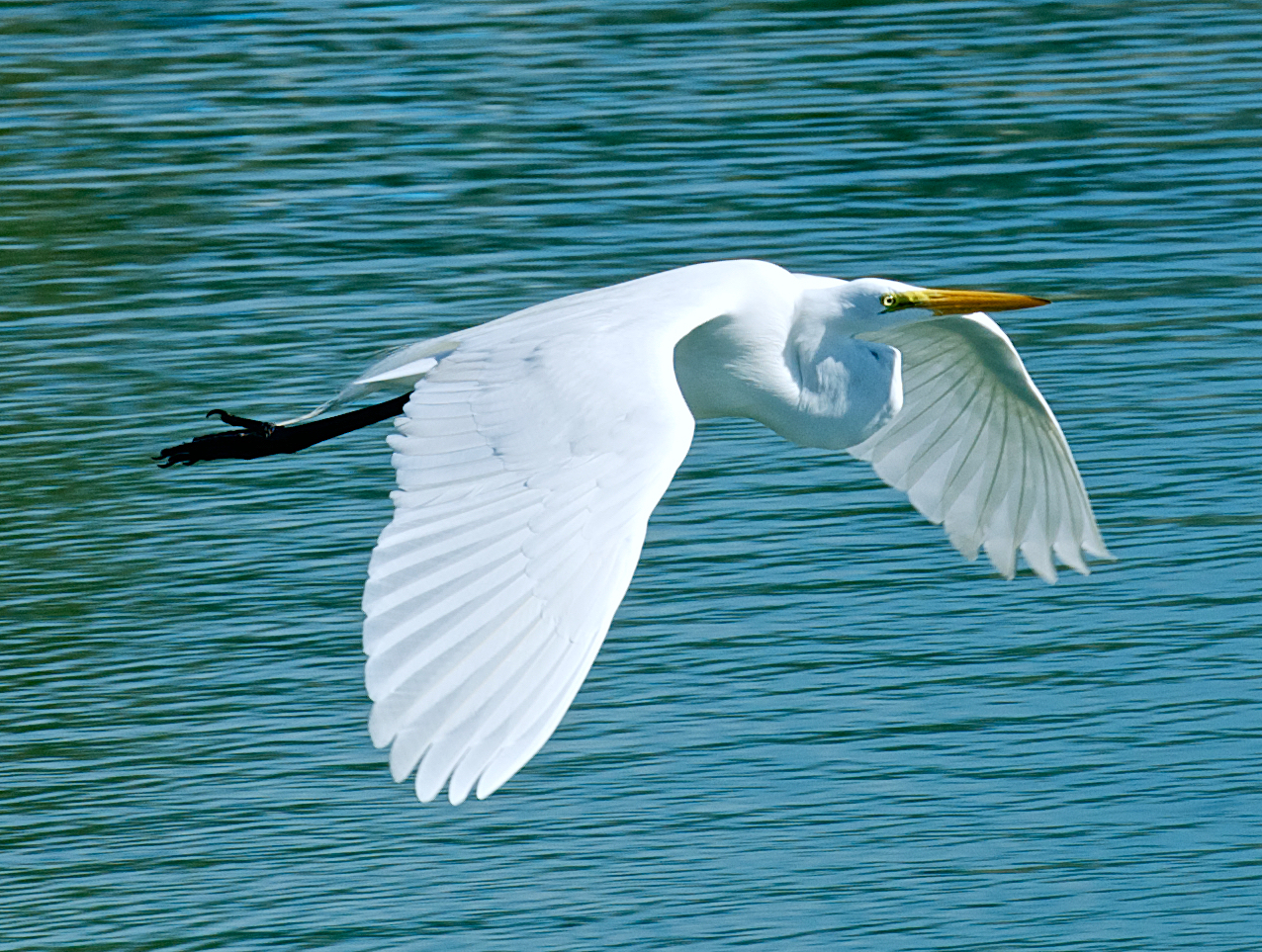
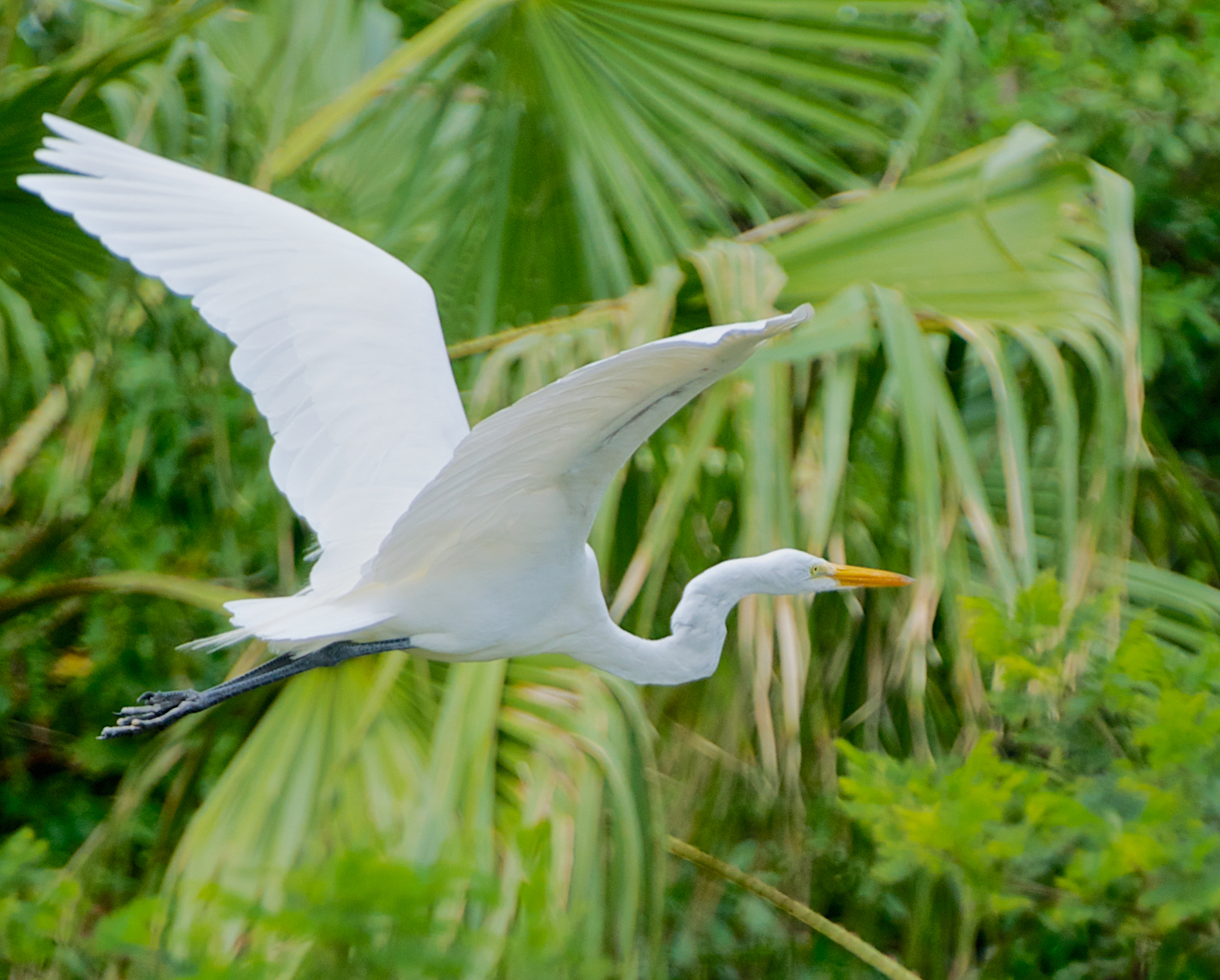
The Great Egret is actually a heron rather than an egret. It’s a Great Heron. All egrets are members of the heron family Ardeidae, but the converse is not true. As long ago as 1758, Linnaeus awarded the bird the binomial name Ardea alba i.e. ‘Heron white‘. Why it should later have been so hard to stick to that authoritative nomenclature, I can’t imagine. Perhaps in time all heron and egret species became so hopelessly confusing for people that it ceased to matter much what they were called.

Great Egret, Bahamas (Nina Henry)

Maybe it was that type of carelessness that led to people from the mid-c19 onwards eyeing up GREGs as a source of hat feathers and other decorative necessities. As with flamingos and many other beautiful avian species, mankind’s millinery and other fashion needs were satisfied at the expense of gorgeous plumage. Actually, at the cost of the birds’ lives: they were simply shot in huge numbers. 

Great Egret, Bahamas (Nina Henry)

Healthy populations were decimated; for some species they never recovered. For others, the great egret among them, the passage of time and the passing of fashions – backed in many cases with conservation programs – have successfully restored the populations. In 1953 the National Audubon Society, which was formed at least in part to discourage the killing of birds for their feathers, took a decisive step in the cause of the great egret by making the bird the emblem of the organisation.

Great Egret, Bahamas (Nina Henry)

Photo Credit: Nina Henry photographed all the egrets in this post. Her wonderful images of this magnificent egret heron made a significant contribution to the original “BIRDS OF ABACO” project.

Great Egret, Bahamas (Nina Henry)

Unknown's avatar

ABACO [CUBAN] PARROT. Amazona leucocephala bahamensis


This fantastic photograph of one of Abaco’s unique ground-nesting parrots was taken by ace photographer Nina Henry during the preparation and compilation of BIRDS OF ABACO. It’s the most special of the many we studied. The bird clearly displays the full fanning of its tail; and the image captures the bright colours perfectly. NH/RH/KS

Unknown's avatar

RED-WINGED BLACKBIRDS . ABACO . BAHAMAS


Red-winged Blackbird, Abaco (Tom Sheley)


RED-WINGED BLACKBIRDS ON ABACO

The sounds are unmistakeable – a discordant chorus of soft chuckling noises like tongue-clicks as the RWTs flock into a bush, interrupted by harsh, metallic calls like rusty metal gate-hinges being forced open. Or maybe a lone bird mournfully repeating its eerie call from the mangroves far out on the Marls as the bonefishing skiffs slip silently along the shoreline. No other species sound quite like Agelaius phoeniceus.

Red-winged Blackbird, Abaco (Tom Sheley)


The handsome males sport flashy epaulets, most clearly visible in flight or in display – for example to impress a prospective mate. Again, they are unlikely to be confused with another species.

Red-winged Blackbird, Abaco Bahamas (Alex Hughes)


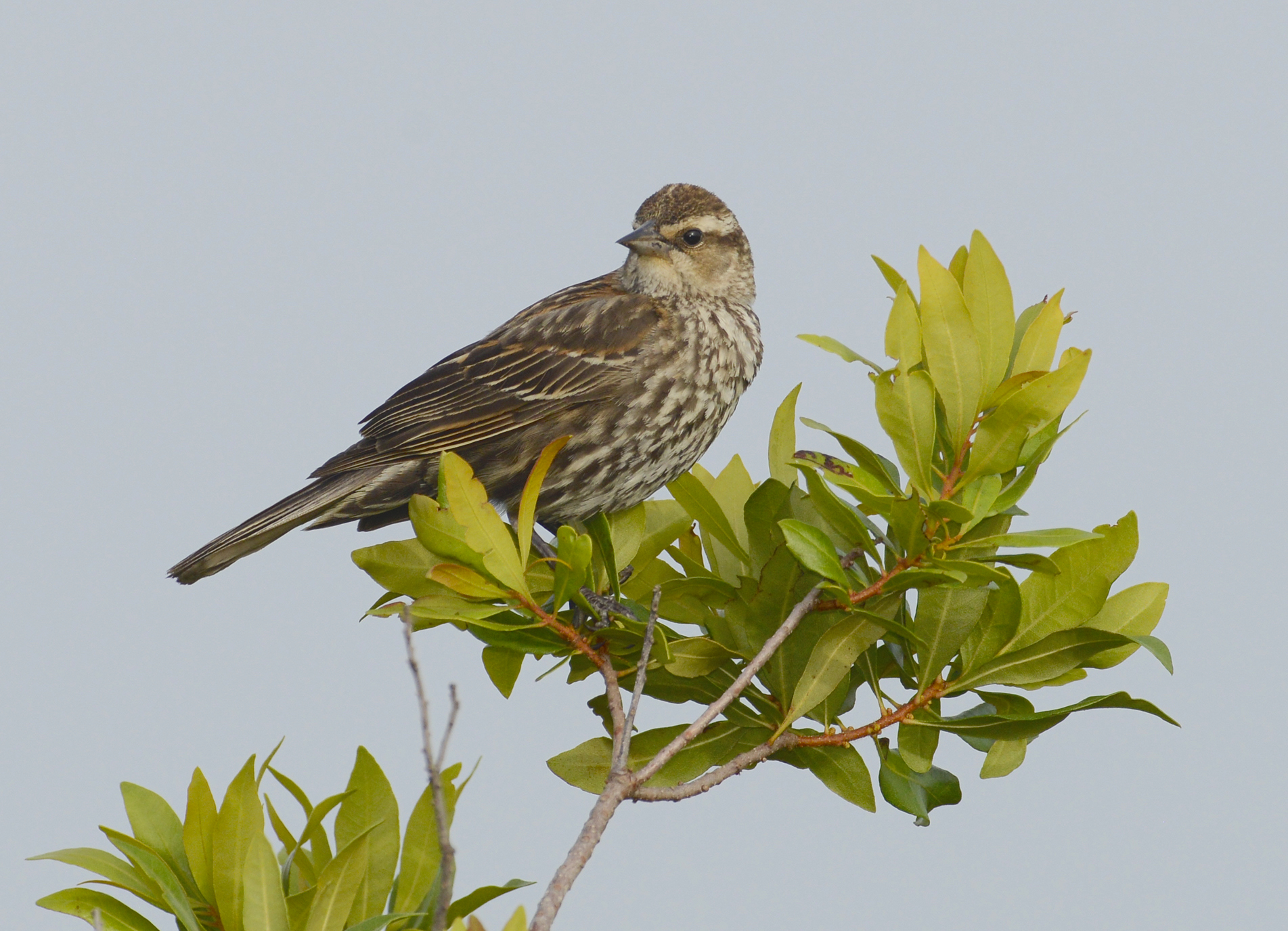
The females, as is often the way, are less showy. I have read that they are ‘nondescript’ or ‘dull’, which is unnecessarily harsh, I reckon. Here are a couple of examples.


And the darker brown ones that are clearly not handsome black males? These are young males in their first season, before they move on to the full adult male plumage. Originally I had designated them as females (as I had assumed). I was very gently corrected by the legendary bird expert Bruce Hallett. I took the first male juvenile at Casuarina, when I also made the sound recording (below). The second was at Delphi (with some ‘light’ issues, I notice…).

Red-winged Blackbird, Abaco (Keith Salvesen / Rolling Harbour)

Red-winged Blackbird, Abaco (Keith Salvesen / Rolling Harbour)

Fledglings are kind of cute…Red-winged Blackbird, Abaco (Tom Sheley))


SO WHAT DO THEY SOUND LIKE?

You may need to turn up the volume a bit. You will also here a lot of dove noise and, in the background, the sound of waves lapping onto the shore.

Red-winged Blackbird, Abaco (Keith Salvesen / Rolling Harbour)

Photo Credits: Tom Sheley (1, 2, 4, 5, 8); Alex Hughes (3); Keith Salvesen (6, 7, 9 & audio)

Unknown's avatar

TERN TERN TERN: THE 12 SPECIES RECORDED FOR ABACO, BAHAMAS


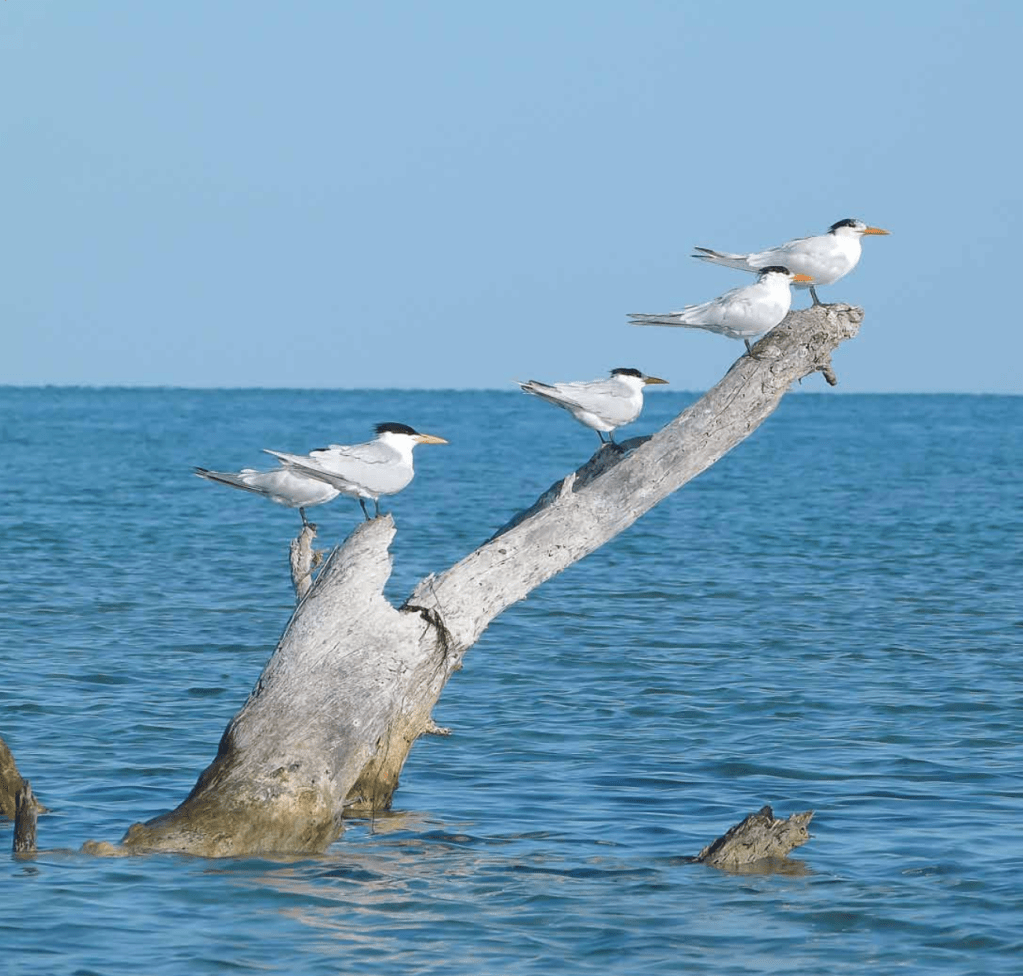
Royal Terns on the Marls, Abaco

There are twelve species of tern – ‘swallows of the sea’ – that to a greater or lesser extent may be found on Abaco. Whether they will actually  be visible at any given time is less certain, though. For a start, the only resident species is the lovely Royal Tern, available at many locations on Abaco and the cays throughout the year. Others are migratory, transitory or – rarest of all – vagrant birds blown off-course by wind or storm.

ROYAL TERNS Thalasseus maximus PR1

Royal Tern, Abaco Bahamas (Keith Salvesen)

In the slightly less commonly-found category are the summer migrant terns that, by definition, are only in residence for around half the year. Four of these are fairly common in certain areas, and actually breed on Abaco; these include arguably the prettiest of all, the bridled tern. The other two tern species (gull-billed and sandwich) are more rare and do not generally breed locally.

LEAST TERN Sternula antillarum SR B 1

LeastTern, Abaco Bahamas (Tony Hepburn)

BRIDLED TERN Onychoprion anaethetus SR B 2

BridledTern, Abaco Bahamas (Bruce Hallett)

ROSEATE TERN Sterna Dougallii SR B 2

Roseate Tern, Abaco Bahamas (Woody Bracey)

SOOTY TERN Onychoprion anaethetus SR B 2

Sooty Tern, Duncan Wright wiki

GULL-BILLED TERN Gelochelidon nilotica SR 3 

Gull-billed Tern, Abaco Bahamas (Alex Hughes)

SANDWICH TERN Thalasseus sandvicensis SR 4

Sandwich Tern, Abaco Bahamas (Bruce Hallett)
Sandwich Tern, Abaco Bahamas (Woody Bracey)

There is one rare winter resident migratory tern species. I had to check when the last one was recorded for Abaco. It was of course only in January this year, when ace birder-photographer Sally Chisholm saw one at Treasure Cay and managed to photograph it for posterity.

FORSTER’S TERN Sterna forsteri  WR 4

Forster's Tern (Dick Daniels)
Forster's Tern, Abaco Bahamas (Sally Chisholm)

The final four ‘Abaco’ terns are very much the occasional visitors. Three of them pass over the Bahamas on their longer migration, but may make a pit-stop around Abaco to take on fuel. Likelihood of sighting one? Slender but not impossible… The fourth, the Arctic Tern, is a very rare vagrant, a bird well away from its usual home or migration route as the result of storms or faulty satnav or sheer happenstance. Don’t travel to the Bahamas intent on seeing one.
CASPIAN TERN Hydroprogne caspia TR 4

Caspian Tern Abaco Bahamas (Woody Bracey)
Caspian Tern Abaco Bahamas (Keith Kemp)

As for the remaining three species, they are the transient black tern and common tern; and the vanishingly rare vagrant  Arctic tern (the clue is in the name). No photos of any of these I’m afraid, so here’s a handy checklist instead. 


ELECTIVE MUSICAL DIGRESSION

Written by Peter Seeger a few years earlier, Turn x 3 was released in 1965, the title track on the second album from the Byrds. At a rather febrile time in US history (Vietnam, draft riots, black civil rightists v cops and so on), this unusually palliative and thoughtful song with its religious connotations to some extent stood for peace and hope in a time of turmoil.

Photo credits: Keith Salvesen (1, 2, 3, 5, 18); Tony Hepburn (4); Alex Hughes (10, 11); Bruce Hallett (6, 7, 12); Woody Bracey (8, 13, 16); Duncan Wright (9); Dick Daniels (14); Sally Chisholm (15); Keith Kemp (17)

Unknown's avatar

LIKE THE CLAPPERS: LEARN THE RAILS ON ABACO


Clapper Rail preening, Abaco Bahamas (Tom Sheley)


LIKE THE CLAPPERS: LEARN THE RAILS ON ABACO

Note: You may find ads in this post. This is because WordPress / AI has now decided that you (dear reader) and I (angry author) are presumed to be up for car insurance deals, slimming advice, and incontinence apparatus. I’m probably going to have to buy my way into a new contract, as they presumably intend.

CLAPPER RAILS Rallus crepitans are elusive birds of mangrove swamp and marsh, more frequently heard than seen. They tend to lurk around in foliage and are easy to overlook – creatures of the margins rather than of open ground. If lucky, you may come across one foraging secretively, beak-deep in the mud.

Clapper Rail stretching.Abaco Bahamas - Tom Sheley ("The Birds of Abaco" by Keith Salvesen, p80)

Tom Sheley’s wonderful photos featured here of a preening clapper rail were taken during backcountry explorations to locate and photograph species for BIRDS OF ABACO.  By being an early riser and a patient cameraman, Tom managed to capture this fine bird engaging in some quality grooming. The one below is also ‘vocalising’ – also known in rails as ‘rousing’.

Clapper Rail rousing.Abaco Bahamas.Tom Sheley

CALL

AGGRESSIVE CALL

Clapper rails are capable of swimming and even of flying if they choose to (which isn’t often). However the most likely activity you will observe is skulking, picking their way quite delicately through marginal  vegetation, or (if you are lucky) doing some serious beak-deep foraging in the mud. Their foraging is made easier by the fact that they are omniverous.
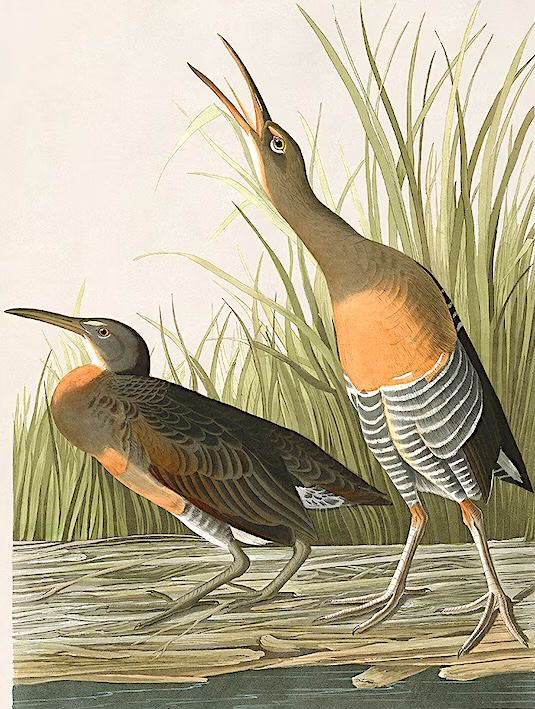
Clapper Rail (Audubon)

Occasionally they run, a process that looks endearingly comical and which possibly gives rise to their name (see below).

Clapper Rail running, Abaco Bahamas (Erik Gauger))

Clapper Rail running, Abaco Bahamas (Sandy Walker)

It almost goes without saying nowadays, but the biggest threat to these rather charming inoffensive birds is habitat loss. Which is to say, mankind either directly or indirectly. Drive bulldozers through the mangroves and marshland of sub-tropical coastal areas, chuck down a few acres of concrete and tarmac… and the clappers will very soon be clapped out. As they will if the climate we have unarguably changed irrevocably ruins their unobtrusive lives.

ADVISORY LINGUISTIC STUDY

When I first wrote about this species, its binomial name was Rallus longirostris ie simply ‘long-beaked rail‘. Which it is. Then came an annual official AOU shuffling of species and revision of names. The clapper rail was re-designated Rallus crepitans or ‘rattling / rustling rail‘. Which it does, but it also has other vocalisations (try the sound-files above). So maybe less clear-cut for ID purposes (there were other rail name innovations that, reading about them, made me crack open a beer instead of wanting to tell you about them. I’m old-school. 

OPTIONAL LINGUISTIC DIVERSION

TO RUN LIKE THE CLAPPERS“. This phrase seems to be fairly recent, most likely originating as military (?Air Force) slang early in WW2 or possibly from earlier conflicts. Some suggest it is a rhyming slang bowdlerisation of ‘run like hell’ with ‘clapper(s)’ standing for ‘bell’, along the lines of the Cockney “I’ve bought a new whistle” (whistle and flute = suit). Almost all plausible explanations relate to bells: the speed of the clapper of a vigorously rung handbell. One stand-out meaning relates to the historical era of City prostitution and the high risk of syphilis (‘pox’) or gonnorrhea (‘clap’). You can probably make the link.

Photo credits:Tom Sheley, Sandy Walker, Erik Gauger, University of Amsterdam (print), OS / CC

Clapper Rail preening.Abaco Bahamas.3.12.Tom Sheley copy

Unknown's avatar

WEST INDIAN WOODPECKER (Melanerpes supercilliaris)


TREE HUGGER

West Indian Woodpecker Melanerpes supercilliaris

Delphi . Abaco . Bahamas – Keith Salvesen

In January I will be returning to Abaco for a few happy days, for the BMMRO biennial Retreat. I haven’t been back since before Dorian and Covid. I am pretty excited by the prospect, having really missed the island, the friendships, the birdlife, and a whole lot more. During the long interval I have kept in close touch – most days, it seems – and continued with this blog.

Birds and marine mammals have always been the main theme, but there’s a great deal more to investigate in the MENUS. Between now and my visit, I plan to post some wonderful bird photos from my book BIRDS OF ABACO. Mostly they will by contributors; a few may by me.

BIRDS OF ABACO: THE DOWNLOAD

The whole edition was sold out ages ago, so unfortunately I wasn’t even able to replace lost / damaged copies. However I recently compressed the entire book into an 18mb file. Do pass it round; please don’t monetize it!

1

Unknown's avatar

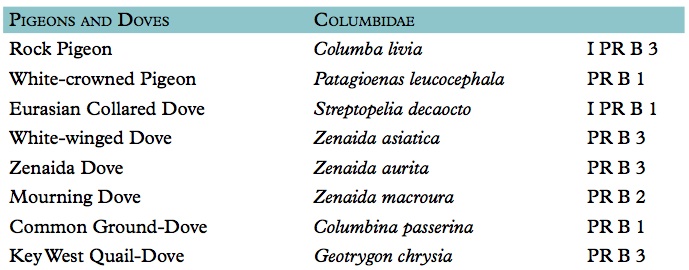
DOVE & PIGEON SPECIES OF ABACO


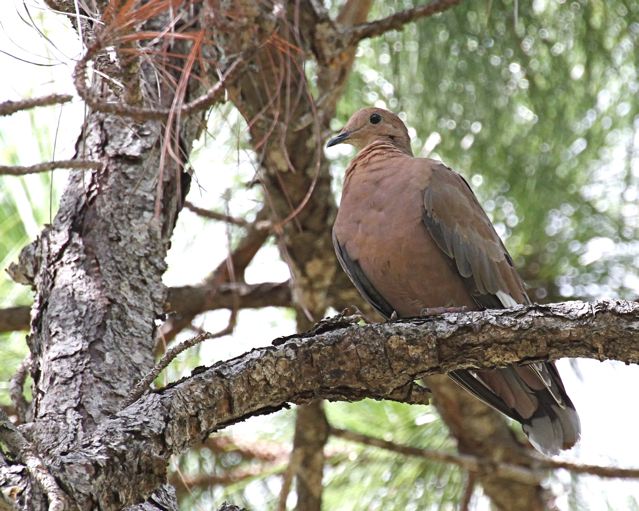
Pigeons : Doves Abaco

COLUMBIDAE OF ABACO

ALL ARE PERMANANT BREEDING SPECIES*

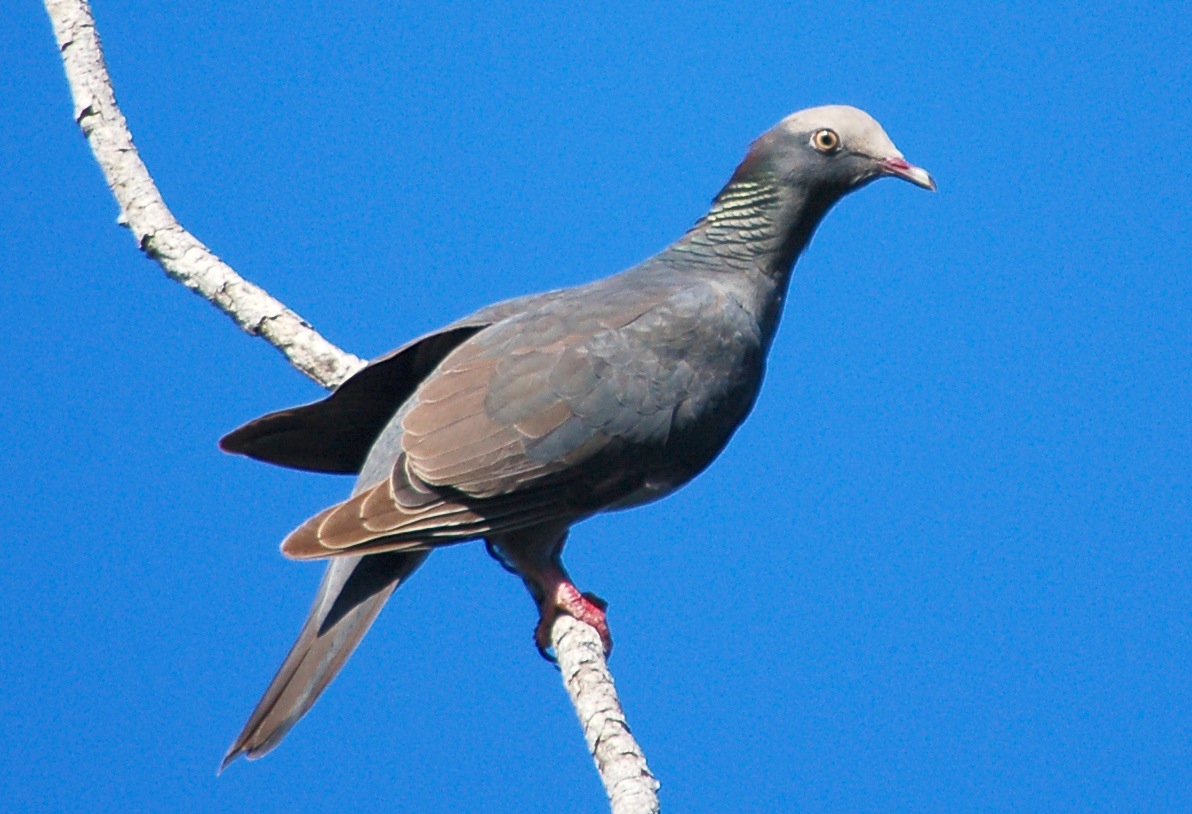
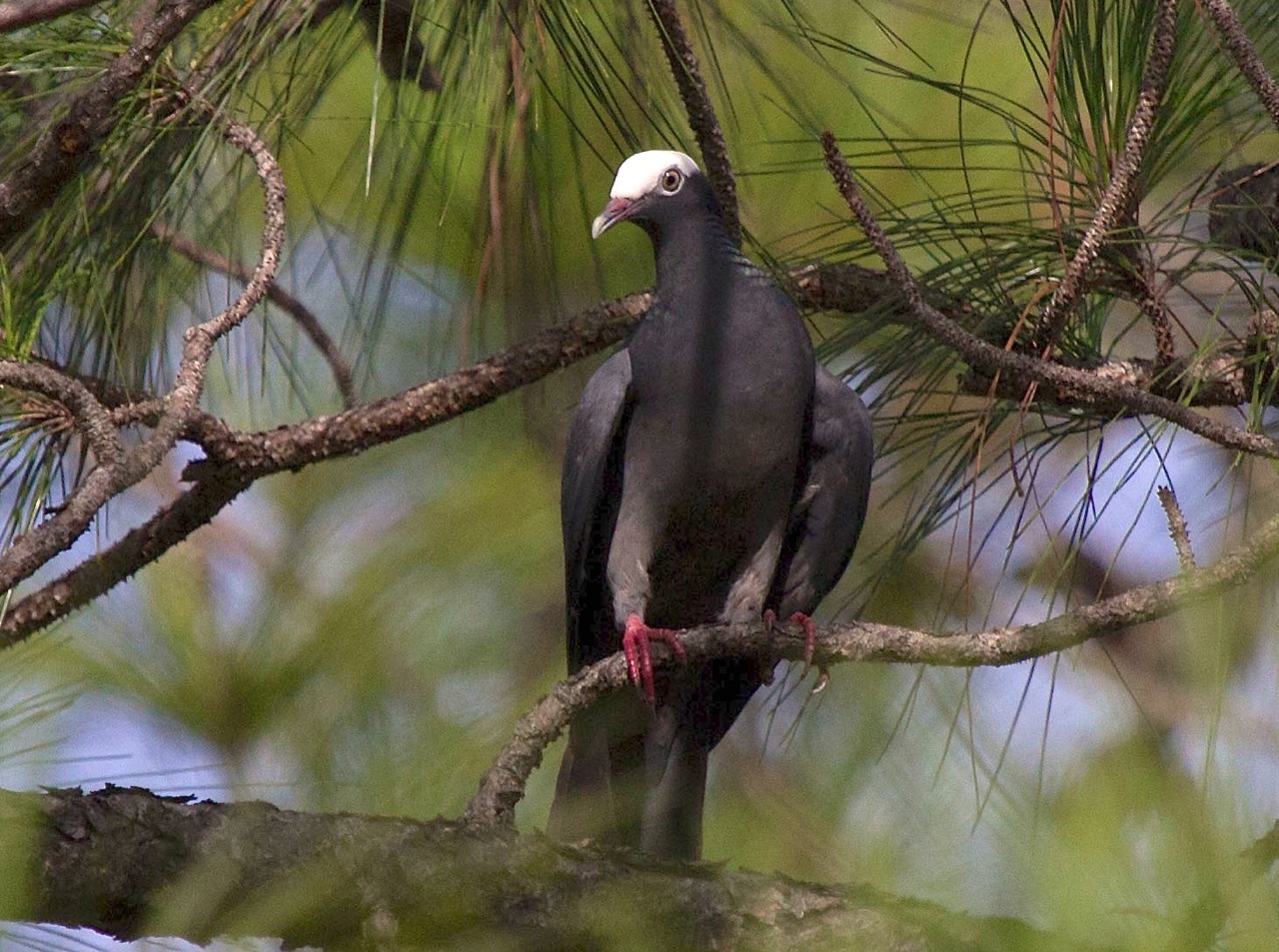
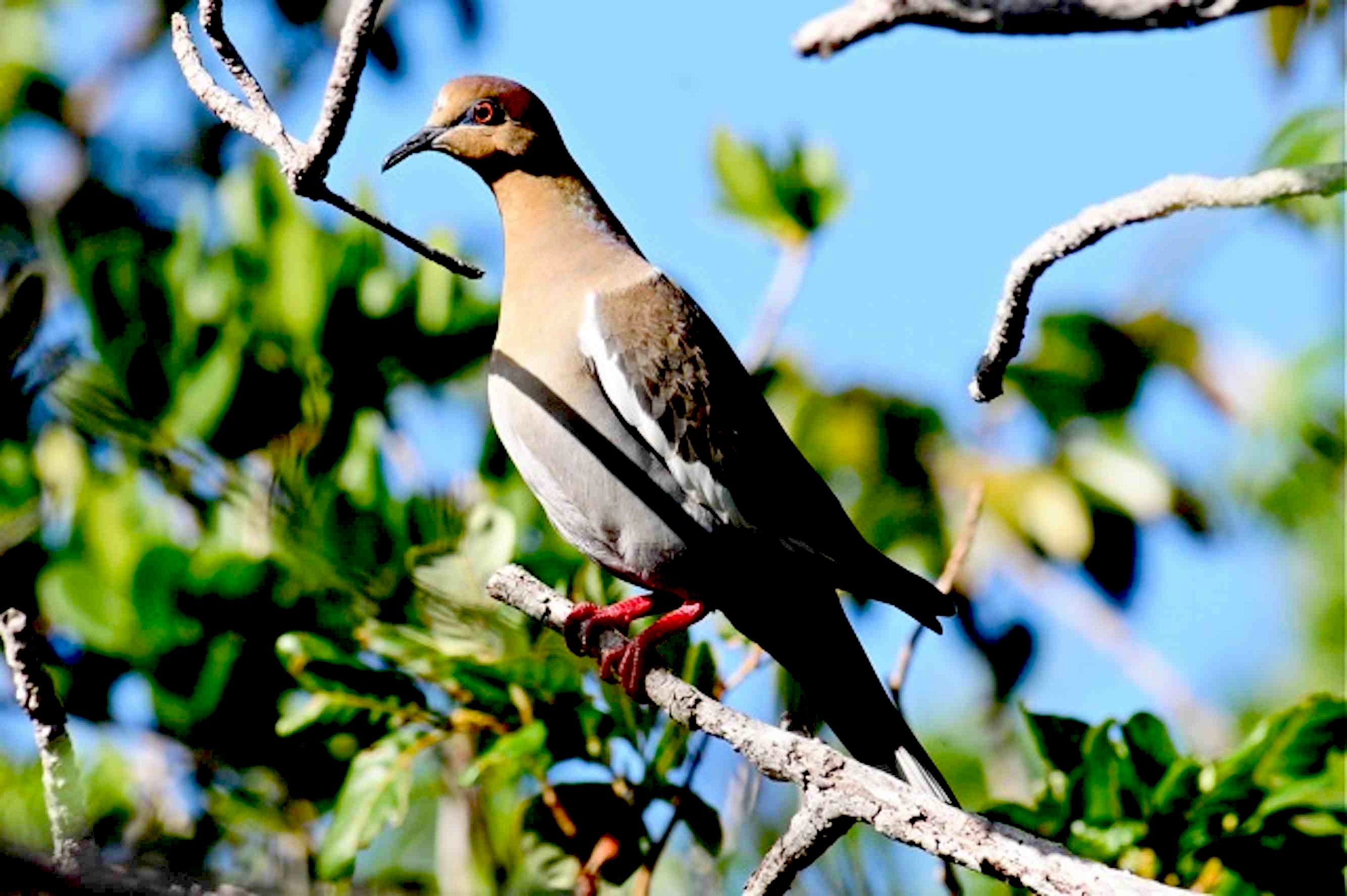
White-crowned PigeonWhite-crowned Pigeon, Abaco, Bahamas (Gerlinde Taurer)White-crowned Pigeon, Abaco (Alex Hughes)

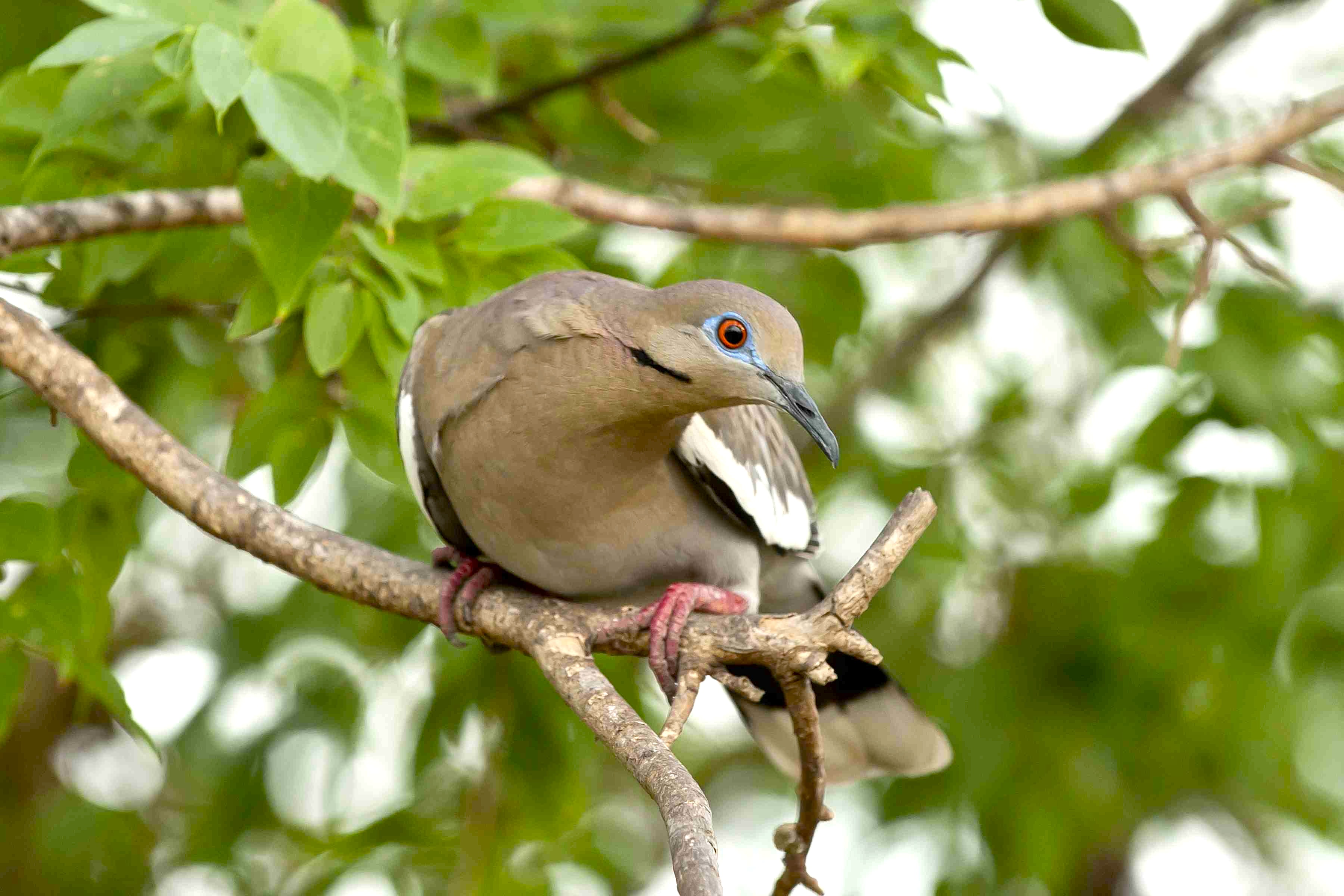
White-winged doveWhite-winged Dove, Abaco Bahamas - Tom SheleyWhite-winged Dove, Abaco - Tony Hepburn

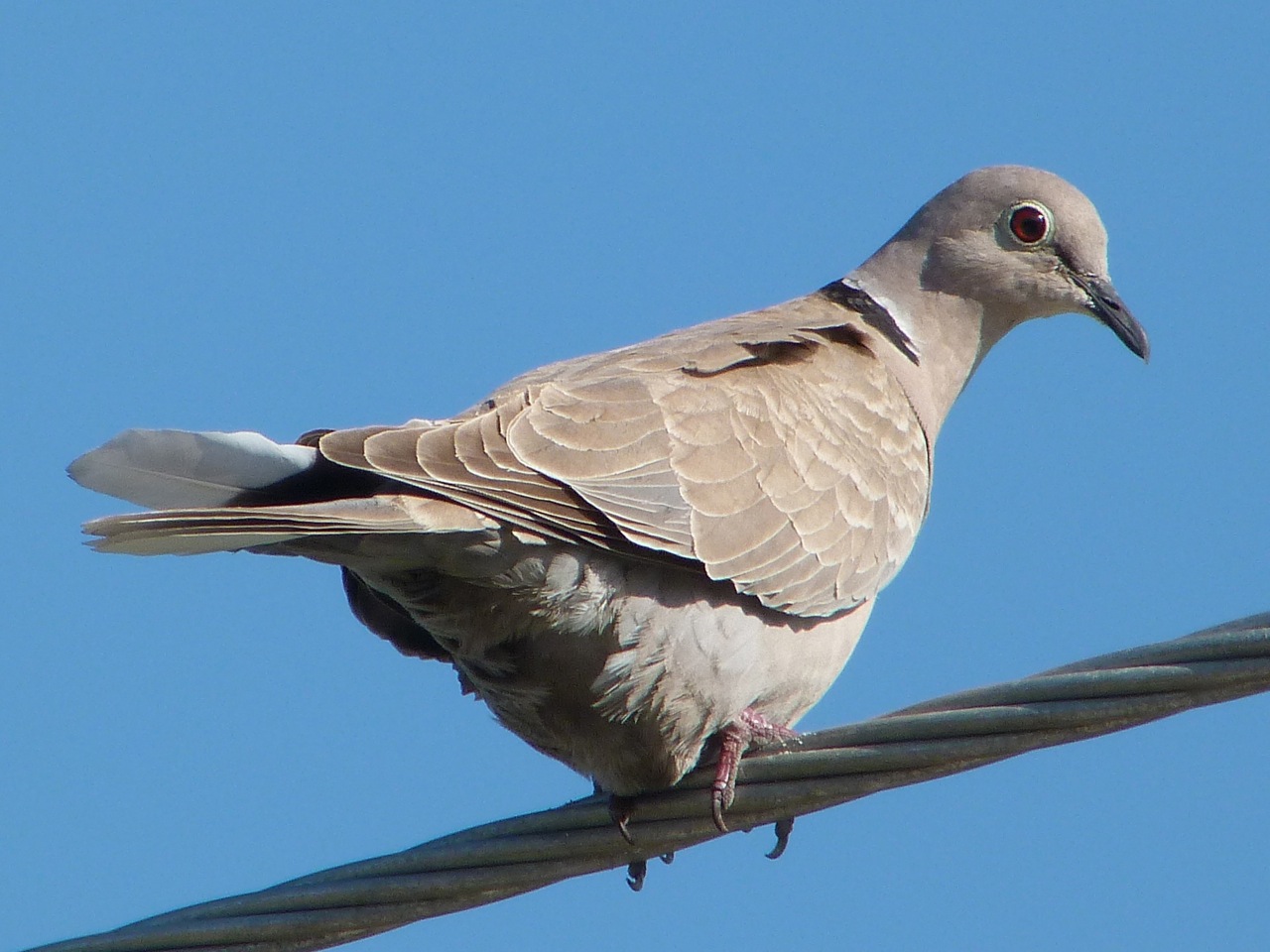
Eurasian Collared DoveCollared Dove, Abaco - Keith Salvesen / Rolling Harbour

Eurasian Collared Dove, Abaco (Bruce Hallett)

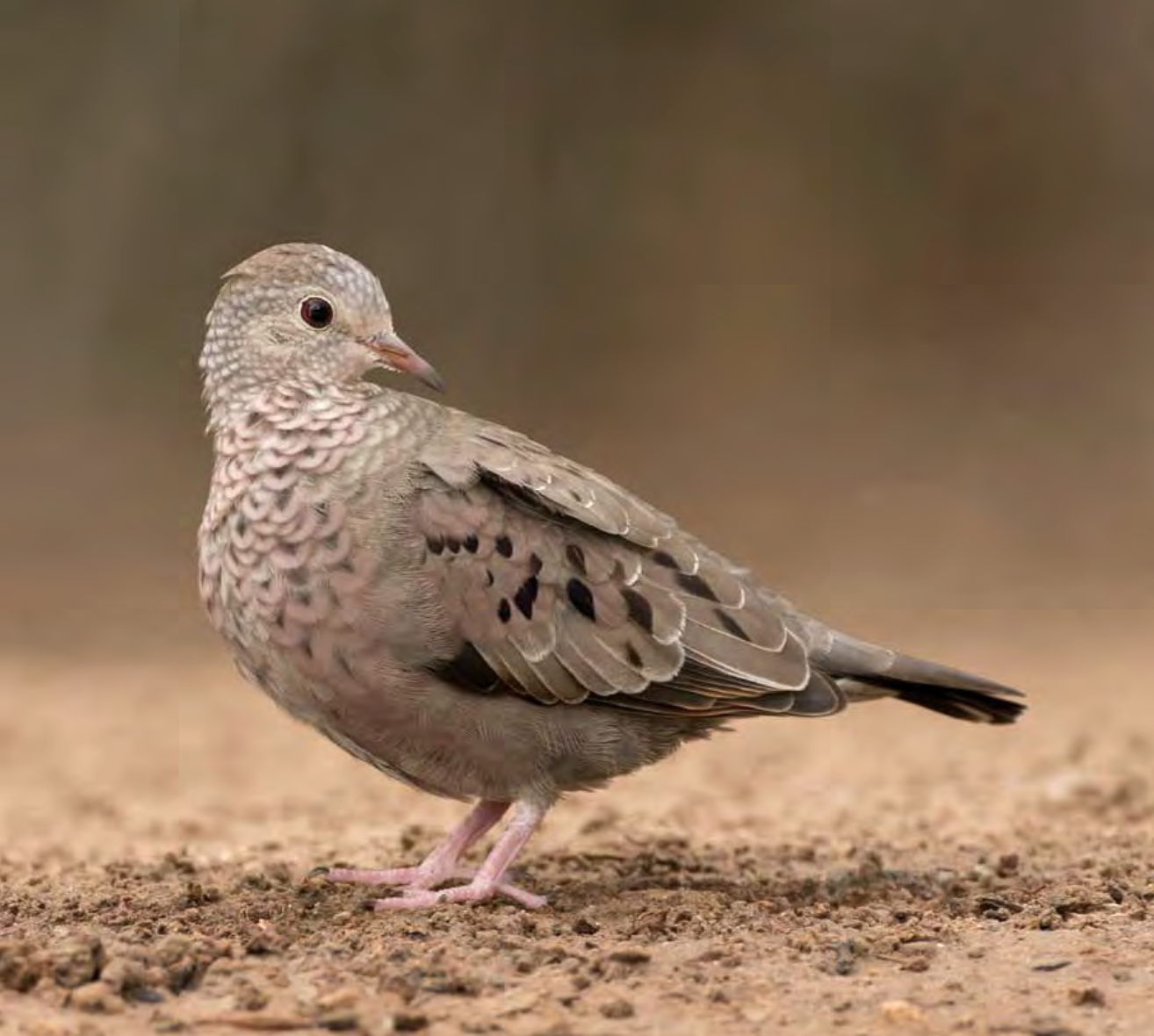
Common Ground Dove (Tobacco Dove)Common Ground Dove, Abaco 1 (Tom Sheley)Common Ground Dove, Abaco (Keith Salvesen)

Zenaida DoveZenaida Dove, Abaco (Bruce Hallett)

Zenaida Dove, Abaco (Bruce Hallett)

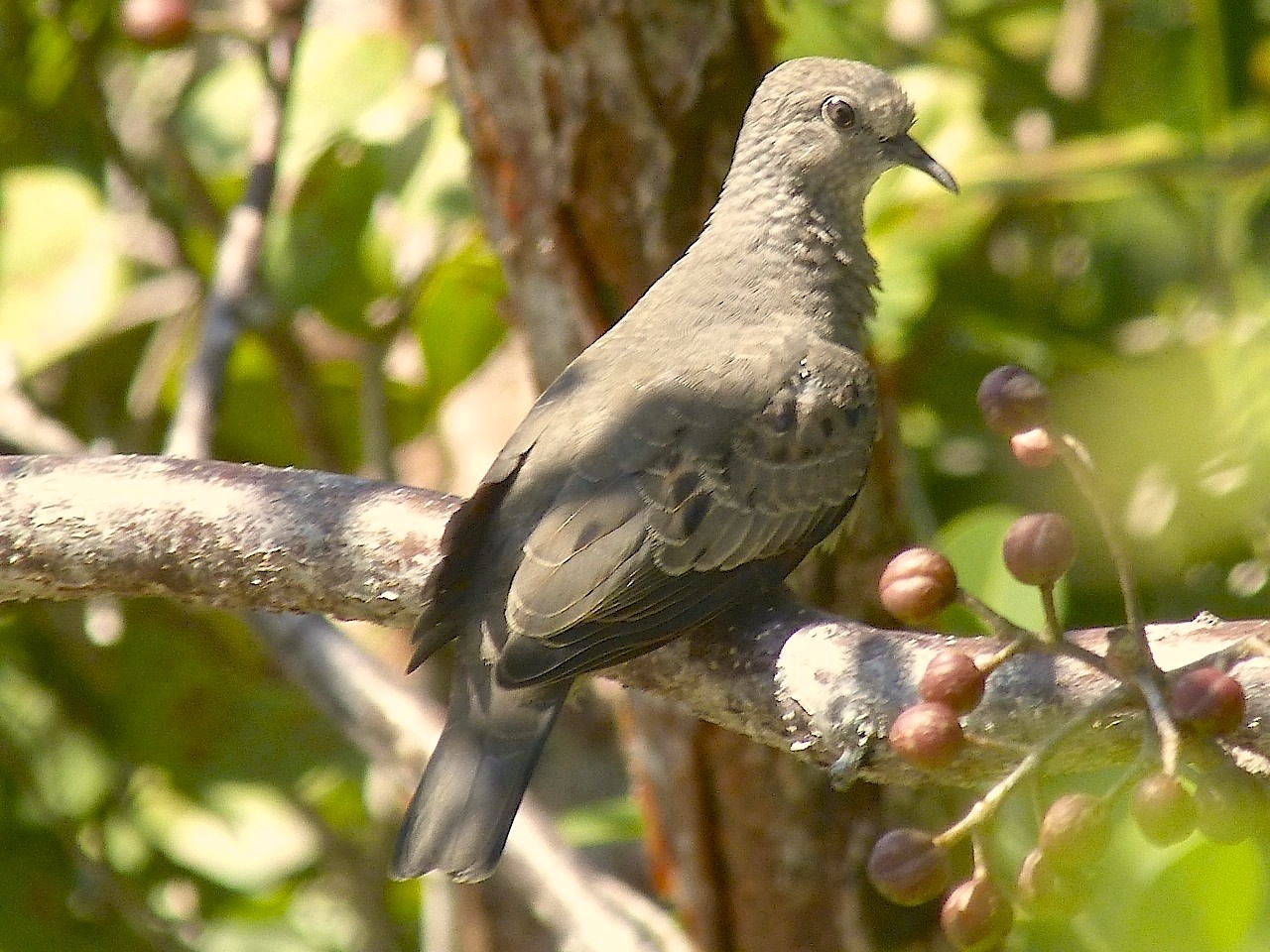
Key West Quail-DoveKey West Quail-Dove, Elbow Cay, Abaco (Milton Harris) 1a

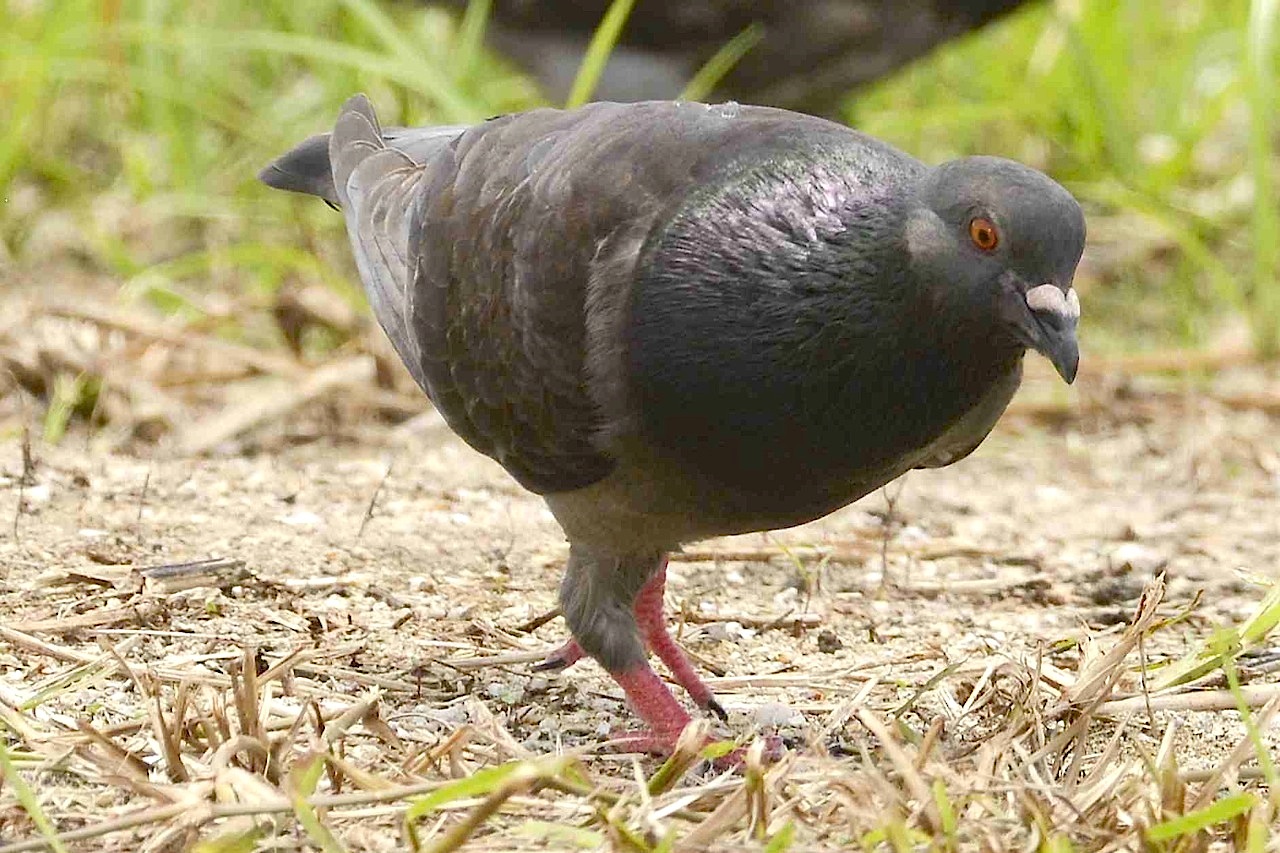
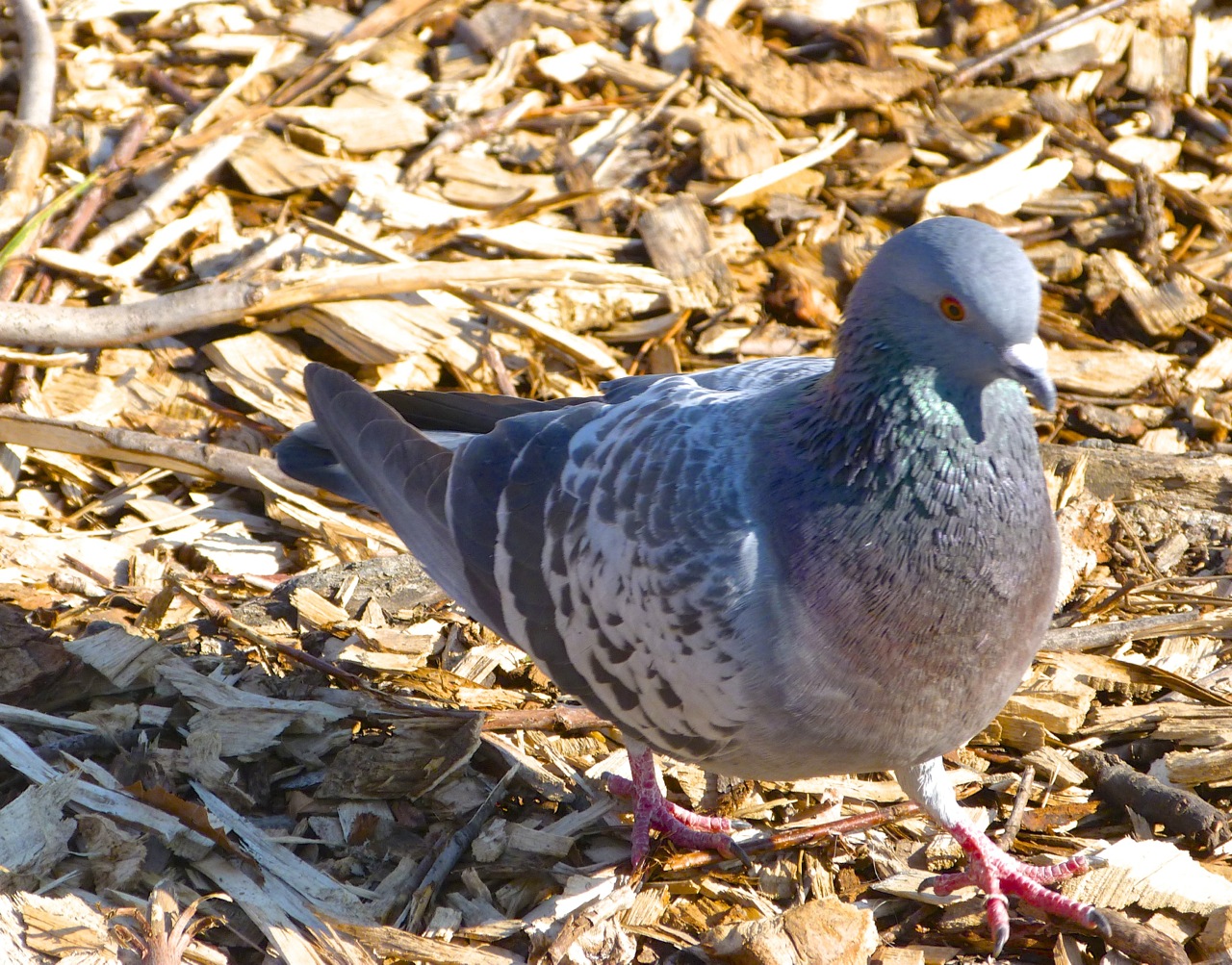
Rock PigeonRock Pigeon, Sandy Point, Abaco Bahamas.Tom Sheley 2bRock Pigeon NYC (keith Salvesen)

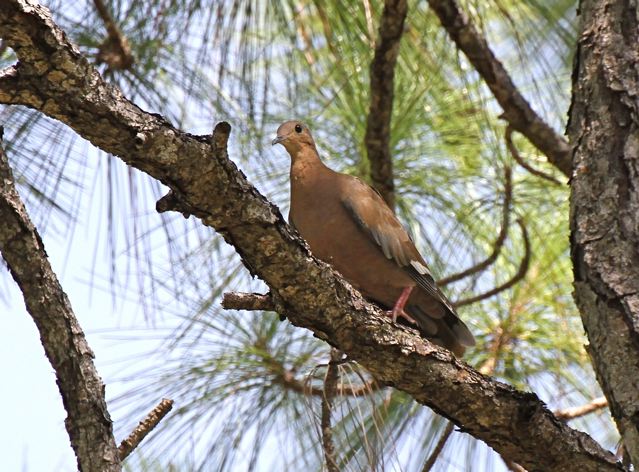
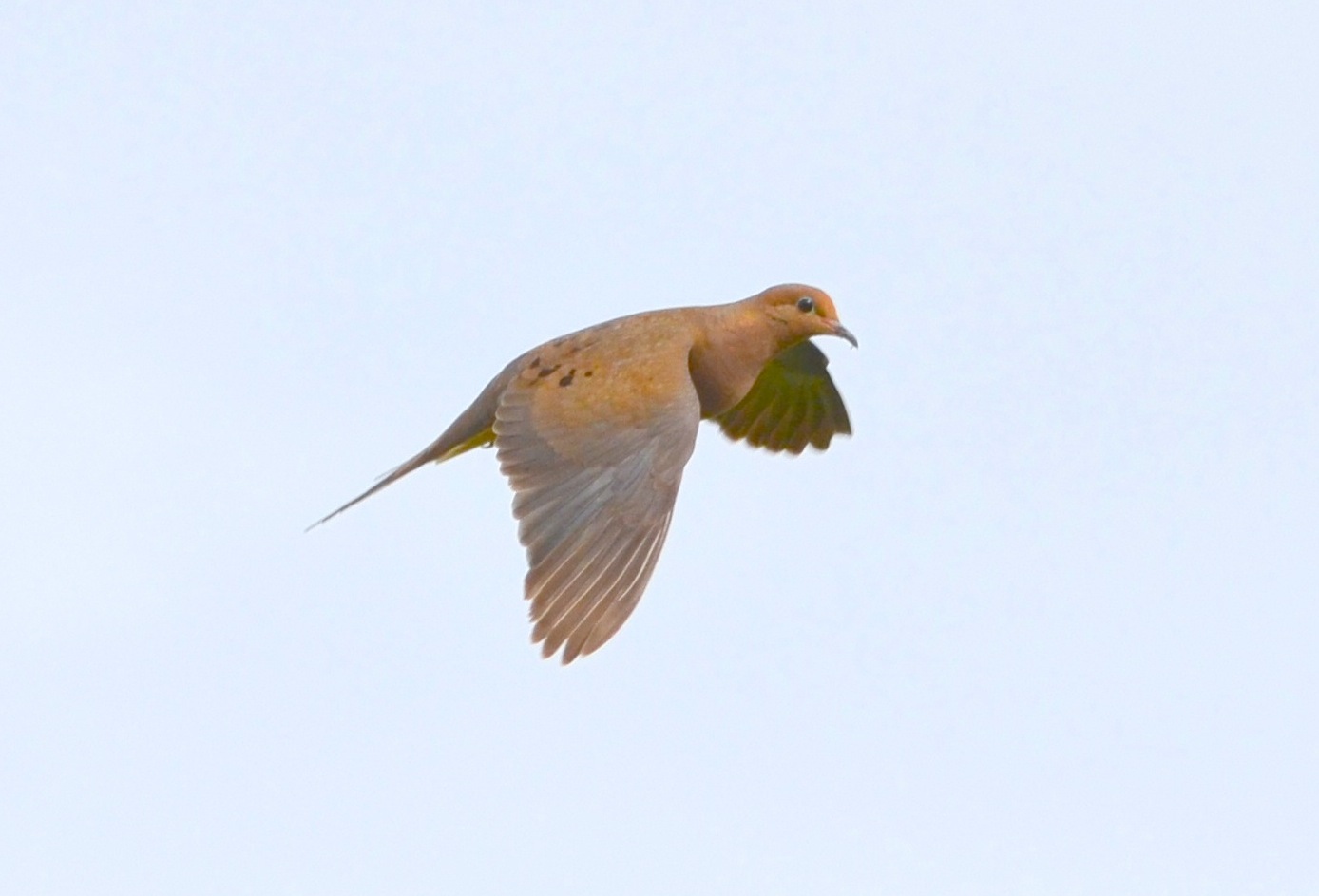
Mourning DoveMourning Dove, Abaco (Charles Skinner)

The birds shown above represent the 8 species found on Abaco. However, in New Providence, there is a beautiful pigeon that, as of a few years ago, had not made its way over to Abaco and had yet to be introduced there. Possibly the situation is different nowadays. Info would be welcome.

Pied Imperial Pigeon (Nassau)

Pied Imperial Pigeon 1, Nassau (Woody Bracey)

Pied Imperial Pigeon 2, Nassau (Woody Bracey).JPG

Species checklist taken from the complete checklist in ‘Birds of Abaco by Keith Salvesen’ (aka Rolling Harbour

*For some, there is a shooting season

Photo credits: Gerlinde Taurer (1); Alex Hughes (2); Tom Sheley (3, 7, 13); Tony Hepburn (4); Keith Salvesen (5, 8, 14); Bruce Hallett (6, 9, 10); Woody Bracey (11, 16, 17); Milton Harris (12); Charles Skinner (15)

Unknown's avatar

SHOREBIRDS, WADERS & SEABIRDS: 30 WAYS TO DISTINGUISH THEM


Sanderling Trio, Delphi Beach, Abaco (Keith Salvesen) 5


SHOREBIRDS WADERS & SEABIRDS: 30 WAYS TO DISTINGUISH THEM 

Today, September 6th, is World Shorebirds Day. Every year I look forward to scrolling back through the archives of ‘Birds of Abaco‘ for the occasion. It reminds me of the wonderful and plentiful varieties of birds that lead semi-aquatic or aquatic lives on and around the shores of Abaco. Some are permanent, others are migratory visitors.

.They can be broadly categorised as shorebirds, wading birds, and seabirds. With some bird species there may be doubt as to which category applies. In different parts of the world, the categories themselves may be named differently. 

There is the strict Linnaean ordering of course, but in practice there is a degree of informal category overlap and some variation in the various bird guides. This is especially so between shorebirds and the smaller wading birds. Shorebirds may wade, and wading birds may be found on shores.  Even if you have no problem distinguishing birds in the 3 categories, there are avian characteristics within each list that are interesting observations in themselves. 


10 CHARACTERISTICS OF SHOREBIRDS 

American Oystercatcher, Delphi, Abaco (Tom Sheley)

(Examples include avocet, black skimmer, oystercatcher, plover, sandpiper, and stilt)

1. Shorebirds have long legs, pointed beaks, and long pointed wings.

2. Most are migratory. Some shorebirds fly non-stop for 3-4 days to reach base.

3. Shorebirds are small to medium size birds. The shoreline is their main foraging ground.

4. They often feed close to the waterline and poke their bills into the ground in search of food.

5. Shorebirds also frequent wetlands and marshes and are biological indicators of these environmentally sensitive lands.

6. They are of the order Charadriiformes.

7. Shorebirds are very well camouflaged for their environment and their appearance may vary from place to place as plumage (feather colors) are gained or lost during breeding.

8. Shorebirds typically range in weight from 0.06 to 4.4 pounds.

9. Oystercatchers have a unique triangular bill that is a cross between a knife and a chisel.

10. The black skimmer is the only native bird in North America with its lower mandible larger than the upper mandible, which helps the bird gather fish as it skims the ocean surface.


10 CHARACTERISTICS OF WADING BIRDS 

Great Egret, Abaco - Tom Sheley

(Examples include crane, egret, flamingo, herons, ibis, rail, spoonbill, and stork)

1. Wading birds are found in freshwater or saltwater on every continent except Antarctica.

2. They have long, skinny legs and toes which help them keep their balance in wet areas where water currents may be present or muddy ground is unstable. Also, longer legs make it easier for them to search for food (forage) in deeper waters.

3. Wading birds have long bills with pointed or rounded tips (depending on what is more efficient for the types of food the bird consumes).

4. Wading birds have long, flexible necks that can change shape drastically in seconds, an adaptation for proficient hunting.

5. Herons have sophisticated and beautiful plumes during the breeding season, while smaller waders such as rails are much more camouflaged.

6. Wading birds may stand motionless for long periods of time waiting for prey to come within reach.

7. When moving, their steps may be slow and deliberate to not scare prey, and freeze postures are common when these birds feel threatened.

8. Adult wading birds are quiet as an essential tool for hunting. Wading birds may be vocal while nestling or while in flocks together.

9. Many wading birds form communal roosts and breeding rookeries, even mixing flocks of different species of wading birds or waterfowl.

10. Wading birds fully extend their legs to the rear when flying. The neck may be extended or not while in flight, depending on the species.


10 CHARACTERISTICS OF SEABIRDS 

Magnificent Frigatebird (inflated-throat) (Michael Vaughan)

(Examples include albatross, auk, booby, frigatebird, fulmar, gannet, petrel, shearwater, and tropicbirds)

1. Seabirds are pelagic, spending most of their lives far out at sea.

2. Seabirds move toward to coastal areas to breed or raise young for a minimal amount of time.

3. Seabirds are light on their undersides and dark on top (an adaptation known as countershading).

4. Seabirds have more feathers than other types of birds for more insulation and waterproofing.

5. Seabirds have flexible webbed feet to help gain traction as they take off for flight from the sea.

6. Some seabirds have unusually sharp claws used to help grasp fish under the water.

7. Some larger seabirds (e.g. albatross) have long, slim wings allowing them to soar for long distances without getting tired.

8. Some smaller seabirds have short wings for maneuvering at the surface of the water.

9. Seabirds have specialised glands to be able to drink the saltwater and excrete salts.

10. Some seabirds (e.g. gannets) have a head shape that is usually tapered for more efficiency in plunge diving.

These lists were put together in useful chart form by the excellent Beach Chair Scientist

seabird shorebird wading bird chart ©beachchairscientistTable ©Beach Chair Scientist, with thanks for use permission;

Image Credits: Keith Salvesen, Michael Vaughn, Tom Sheley

Unknown's avatar

‘CASTING ABOUT’: A TRICOLORED HERON HUNTING


Tri-colored heron fishing (Phil Lanoue)

‘CASTING ABOUT’: A TRICOLORED HERON HUNTING

‘Casting’ is one of those words with multiple meanings, some archaic but most in use today. You can probably think of half-a-dozen straight off. Metallurgy, for example, or even a type of couch. ‘Casting about’ is one of the specific usages and derives from hunting, eg hounds casting about for a scent. By extension, it has come to mean something like searching intently or thoroughly for something you need, or want, or are having difficulty in finding. Which is where this tricolored heron comes into the picture.

Tri-colored heron fishing (Phil Lanoue)

It’s always entertaining to watch a heron or egret fishing. Their methods range from standing stock still and suddenly stabbing downwards to slowly wading to the crazy dash that reddish egrets sometimes do on the edge of the mangroves. This one is hooding its wings, sometimes called ‘canopy feeding‘. The theory is that this attracts small fish by providing shade. I also wonder if this method is used to reduce glare from the surface of the water.

Tri-colored heron fishing (Phil Lanoue)

The bird in this sequence is a juvenile, and not yet the  lethal hunter that it will soon become. It has seen a fish moving but has temporarily lost it (fishermen will be familiar with the mild feeling of annoyance when this happens). So it is casting about, slowly zig-zagging through the water, looking from a height, crouching down, trying to get a good view of its elusive snack. This little episode didn’t end in success. Sometimes, the fish you sight and then lose has gone for good. But as fishermen often say when they lose one (and by extension the phrase is now applied to other areas of human life), there are always plenty more fish in the sea.

Tri-colored heron fishing (Phil Lanoue)

Photo credit: Phil Lanoue, a photographer who specialises in patiently taking wonderful sequences of bird activity, with many thanks for use permission

Unknown's avatar

‘TERN, TERN, TERN’: THE UN-NOTORIOUS BIRD COUSINS


Royal Tern, Abaco Bahamas (Keith Salvesen)

‘TERN, TERN, TERN’: THE UN-NOTORIOUS BIRD COUSINS

There are twelve species of tern – ‘swallows of the sea’ – that to a greater or lesser extent may be found on Abaco. Whether they will actually  be visible at any given time is less certain, though. For a start, the only resident species is the lovely Royal Tern, available at many locations on Abaco and the cays throughout the year. The rest are migratory or just passing through.

PERMANENT RESIDENTS

ROYAL TERNS Thalasseus maximus PR1

Royal Tern, Abaco Bahamas (Keith Salvesen)Royal Tern, Abaco Bahamas (Keith Salvesen)

MIGRATORY TERNS: SUMMER

In the slightly less commonly-found category are the summer migrant terns that, by definition, are only in residence for around half the year. Four of these are fairly common in certain areas, and actually breed on Abaco; these include arguably the prettiest of all, the bridled tern. The other two tern species (gull-billed and sandwich) are more rare and as far as I can make out do not breed locally; or perhaps only rarely. 

LEAST TERN Sternula antillarum SR B 1

LeastTern, Abaco Bahamas (Tony Hepburn)

BRIDLED TERN Onychoprion anaethetus SR B 2

BridledTern, Abaco Bahamas (Bruce Hallett)BridledTern, Abaco Bahamas (Bruce Hallett)

ROSEATE TERN Sterna Dougallii SR B 2

Roseate Tern, Abaco Bahamas (Woody Bracey)

SOOTY TERN Onychoprion anaethetus SR B 2

Sooty Tern, Duncan Wright wiki

GULL-BILLED TERN Gelochelidon nilotica SR 3 

Gull-billed Tern, Abaco Bahamas (Alex Hughes)Gull-billed Tern, Abaco Bahamas (Alex Hughes)

SANDWICH TERN Thalasseus sandvicensis SR 4

Sandwich Tern, Abaco Bahamas (Bruce Hallett)Sandwich Tern, Abaco Bahamas (Woody Bracey)

MIGRATORY TERNS: WINTER

There is one very rare winter resident migratory tern species, with few records of sightings for Bahamas and until early 2019, no photographic record for Abaco until Sally Chisholm saw one at Treasure Cay and managed to capture it for posterity.

FORSTER’S TERN Sterna forsteri  WR 4

Forster's Tern (Dick Daniels)Forster's Tern, Abaco Bahamas (Sally Chisholm)

OCCASIONAL & RARE VISITORS

A further four tern species are very much occasionals that drop by. Three of them pass over the Bahamas on their longer migration, but may make a pit-stop around Abaco to take on fuel. Likelihood of sighting one? Slender but not impossible… the Caspian tern below was photographed on Abaco. The fourth, the Arctic Tern, is a very rare vagrant, a bird well away from its usual home or migration route as the result of storms or faulty satnav or sheer happenstance. Don’t travel to the Bahamas intent on seeing one.

CASPIAN TERN Hydroprogne caspia TR 4

Caspian Tern Abaco Bahamas (Woody Bracey)Caspian Tern Abaco Bahamas (Keith Kemp)

The remaining species are the transient black tern and common tern; and the vanishingly rare vagrant  Arctic tern. No photos of any of these I’m afraid. Here’s a handy checklist of all the tern species.

     ELECTIVE MUSICAL DIGRESSION

Written by Pete Seeger, Turn x 3 was released in 1965, the title track on the second album by The Byrds. At a rather febrile time in US history (Vietnam, draft riots, civil rightists v cops and so on), this unusually palliative and thoughtful song with its religious connotations to some extent stood for peace and hope in a time of turmoil.

PS the somewhat laboured title of this post shoehorns in the name of another Byrds album, ‘The Notorious Byrd Brothers’

Photo credits: Keith Salvesen (1, 2, 3, 5, 18); Tony Hepburn (4); Alex Hughes (10, 11); Bruce Hallett (6, 7, 12); Woody Bracey (8, 13, 16); Duncan Wright (9); Dick Daniels (14); Sally Chisholm (15); Keith Kemp (17)

Royal Tern, Abaco Bahamas (Keith Salvesen)

Unknown's avatar

FAST FOOD ON THE WING . ANTILLEAN NIGHTHAWKS


Antillean Nighthawk, Abaco (Sandy Walker)

ANTILLEAN NIGHTHAWKS

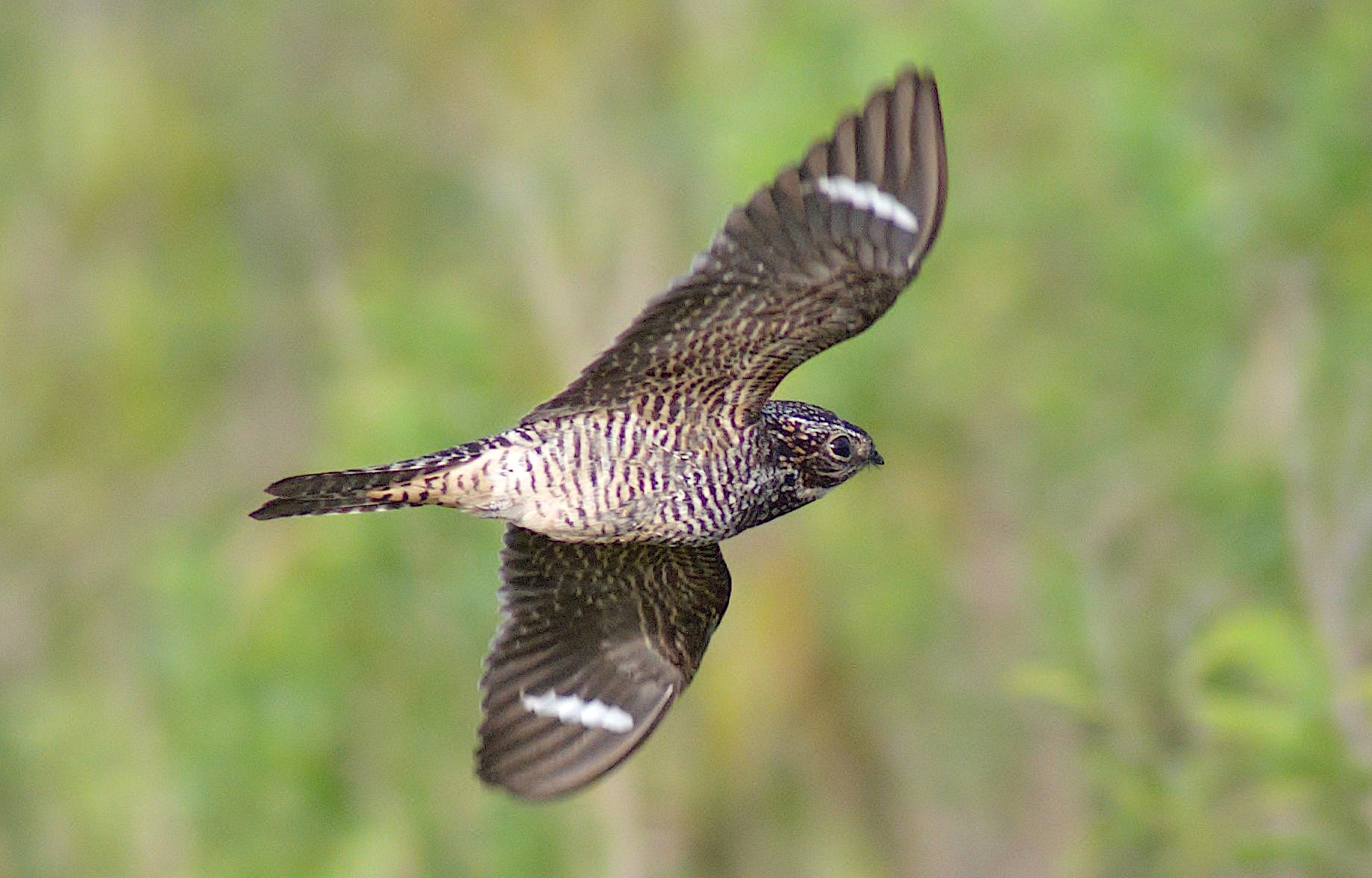
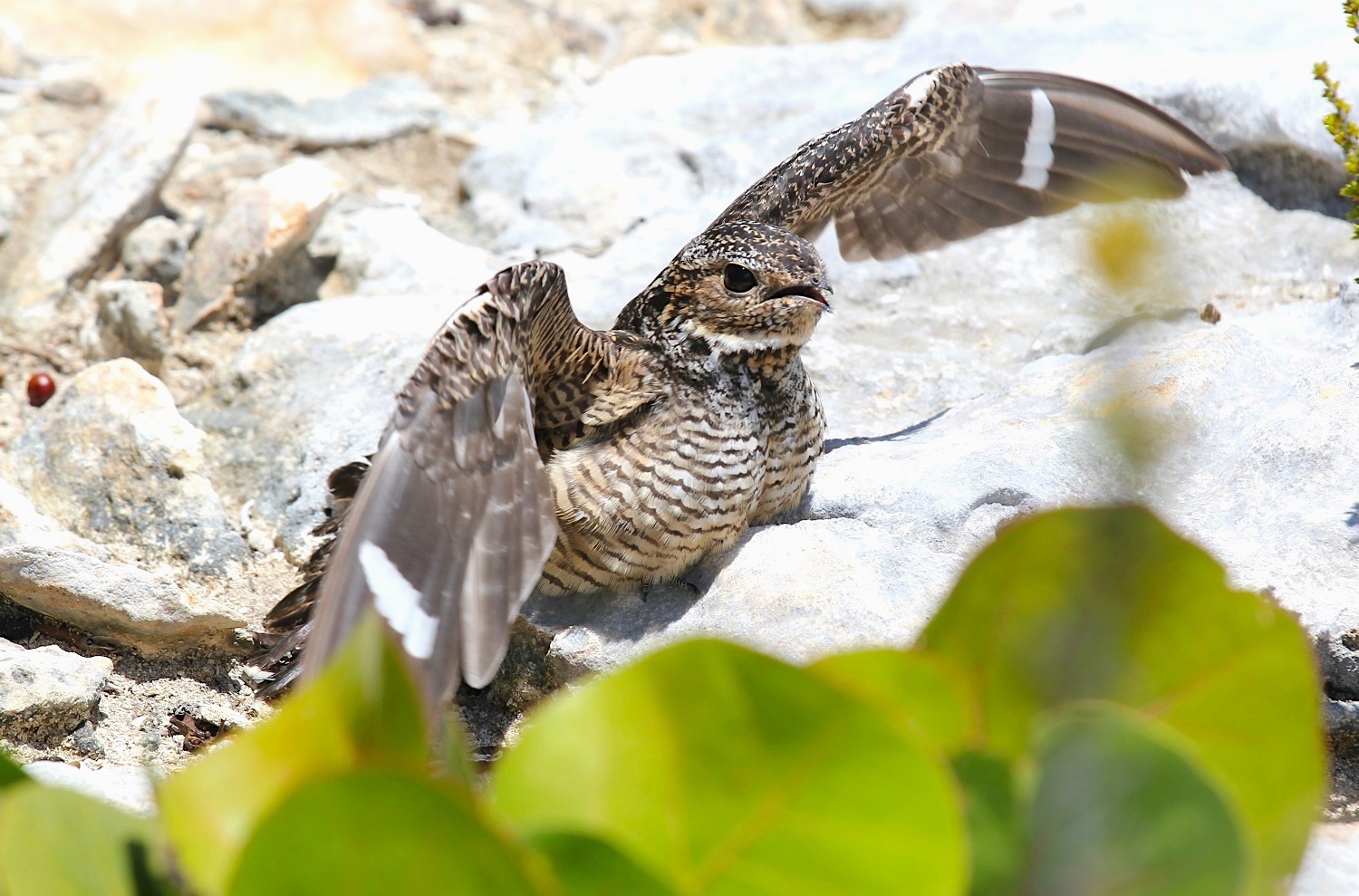
Some years ago we went ‘backcountry birding’ for Birds of Abaco with photographer Tom Sheley. We drove the truck through forest, then into (former) sugar cane territory, then into scrubland. Red-winged blackbirds were enthusiastic with their rusty gate-hinge calling. Soon after Tom had set up his tripod with its baffling and weighty apparatus, we were in the midst of dozens of nighthawks as they swooped and dived (dove?) while hawking for flies. “The birds were completely unperturbed by our presence, and from time to time would zoom past within inches of our heads, making a swooshing noise as they did so”. Thanks to Robin Helweg-Larsen for the  reminder that males may also make a distinctive ‘booming’ noise as they dive.  Antillean Nighthawk, Abaco (Stephen Connett) Nighthawks catch flying insects on the wing, and are capable of great speed and manoeuvrabilty in flight. They generally forage at dawn and dusk – or (more romantically) at night in a full moon.  Antillean Nighthawk (Stephen Connett) Besides aerial feeding displays, nighthawks may also be seen on the ground, where they nest. I say ‘nest’, but actually they hardy bother to make an actual nest, but just lay their eggs on bare ground. And, more riskily, this may well be out in the open rather than concealed. The eggs – usually 2 – hatch after 3 weeks or so, and after another 3 weeks the chicks fledge.   Antillean Nighthawk Egg (Stephen Connett)Antillean Nighthawk Egg (Stephen Connett) Fortunately their colouring enables them to blend in with the landscape – a good example of bird camouflage in natural surroundings. Antillean Nighthawk, Abaco (Bruce Hallett) Antillean Nighthawk Chordeiles gundlachii, is a species of nightjar. These birds have local names such as ‘killa-ka-dick’, ‘pi-di-mi-dix’, ‘pity-pat-pit’, or variations on the theme, presumably onomatopoeic. Pikadik-(dik) will do for me. See what you reckon from these recordings (excuse the thick-billed vireo – I think – in the background): Andrew Spencer / Xeno-Canto

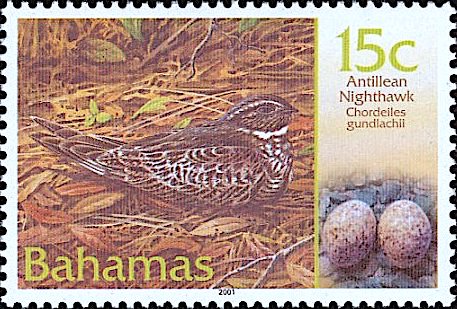
As so often, the Bahamas Philatelic Bureau leads the way with natural history stamps. The 15c Antillean Nighthawk above featured in a 2001 bird set. You can see dozens more very excellent Bahamas bird, butterfly, fish, flower and other wildlife stamps HERE.

Find out about Juan Gundlach, Cuban Natural Historian (he of the Antillean Nighthawk and the Bahama Mockingbird for example) HERE Credits: Sandy Walker (1);  Stephen Connett (2, 3, 4, 5); Bruce Hallett (6); Andrew Spencer / Xeno-Canto (audio files); Audubon (7); Sibley / Audubon (8)
Unknown's avatar

BIRDS OF ABACO . TENTH ANNIVERSARY


THE DOWNLOAD OF THE BOOK OF THE BIRDS

NOTES

  1. This download is of the entire book
  2. Reduced to 18mb for 10 – 15 second loading; no noticeable loss of definition
  3. Below the screen BIRDS OF ABACO enlarges the screen, DOWNLOAD will do just that
  4. The top bar contains all the usual ways to make adjustments to the contents
  5. This is the penultimate version before printing, with a few crop marks etc
  6. Please let me know if there are any problems with the download

As mentioned in previous posts, I am asking those who choose to download the book to make a modest charitable donation to a local wildlife-related cause or to a local school or an organisation that inspires kids to get involved in the natural world around them.

KEITH SALVESEN

March 2024

Thanks to all the many people who contributed to the book including 30 photographers who took brilliant photos; 3 Bahamas bird experts who contributed greatly to the composition and accuracy of the book; the superb printers Conti in Italy; Peter Mantle the inspiration and eminence grise; and my wife Sally whose publishing and editorial skills are second to none, and her patience limitless.

Unknown's avatar

BIRDS OF ABACO . 10th ANNIVERSARY UPDATE


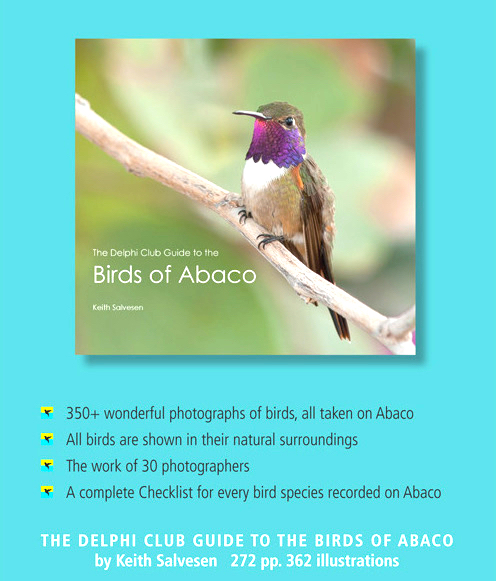
It is exactly 10 years since The Delphi Club Guide to the Birds of Abaco was launched in the Great Room at the Delphi Club, Abaco, Bahamas. Availability of the book had run its course by 2020. A decade after publication, preparations to compress the entire book into a downloadable e-book are now complete.

Cuban Emerald (M) – Keith Salvesen

FREE AS A BIRD

It would be slightly disenchanting to find that the whole book is being printed out without checking first. This can be simply done using rollingharbour.delphi@gmail.com

Painted Bunting – Tom Sheley

I am asking those who choose to download the book to make a charitable donation of $10 (‘a dollar a year’ since publication) to a local wildlife-related cause or to a local school or an organisation that inspires kids to get involved in the natural world around them. Or more than $10 by all means. There’s plenty of choice on Abaco, as I am sure there is for kind followers of Rolling Harbour who live beyond the island’s shores.

Great Egret – Tom Sheley

A ‘SNACKING’ OF SANDERLINGS

Sanderling Partytime – Keith Salvesen

BAHAMAS BIRDING ROYALTY . DELPHI LODGE MARCH 2014

Tony White . Bruce Hallett . Woody Bracey

. Un-Royal Author

Unknown's avatar

BIRDS OF ABACO: Frequent Fliers (1)


American Redstart (m)

ARE WE NEARLY THERE YET?

We birds want to know what’s going on please. The rest of the ‘Abaco Bird Book Club’ have nominated us to find out. So:

Q. How likely is it that we ‘guys’ will somehow be getting inside a machine and turning up in people’s homes / on their phones (whatever those are). A. Very

Q. How long must we wait before being admired on a screen by humans – we all quite fancy that. A. A week or so

Q. Are we birds going to get any seeds / insects / berries / fish in return. A. No. You will be free. And free as a bird as well.

Photo Credits: Gerlinde Taurer; Tom Sheley; Tara Lavallee; Craig Nash; Bruce Hallett

Unknown's avatar

BIRDS OF ABACO


THE BIRDS OF ABACO: SEARCHABLE INDEX

FROM ABACO PARROT TO ZENAIDA DOVE HERE

When, in 2014, Birds of Abaco had safely been hatched and was beginning to fledge, I started a companion site that was designed to add an additional dimension to the project. It was a bird-specific accessory to the main Rolling Harbour site that has always featured a far greater range of topics than birds.

The book exhibited Abaco birds in a deliberately perverse way (alphabetically, not by species grouping or other conventional methods). The loosely termed ‘Index’ was meant to be a quick alternative way to delve into the various species.

It was a side project and I did very little to promote it. Once put together (with a linked FB page) I pretty much left it to grow ‘organically’ (aka indolently and neglectfully). I’m bringing the site out of semi-retirement while I get on with my efforts to put the book online. Reach it HERE

A to Z

CAPE MAY WARBLER (Char Albury): as it turned out, an unpromising name. The first one was recorded on Cape May, NJ in the early nineteenth century. They were not recorded there again for more than a hundred years.

Unknown's avatar

THE DELPHI CLUB GUIDE TO THE BIRDS OF ABACO (1) – 10th Anniversary Flyers


FIRST FLYER

It is February 2014, and two pallets carrying 500+ heavy books in boxes have just arrived in Nassau. Printed in Italy at the end of January, the cargo had made its way from specialist printers in Florence via Bologna, Leipzig, Brussels, Cincinnati, Miami to Nassau. They spent an unexpectedly long sojourn in Nassau while formalities were unhurriedly dealt with, then made their way safely to the Delphi Club. In early March, the book was launched in the Great Room at Delphi.

Delphi Lodge 2014

The book was generously received. The Delphi years rolled by: happy years of amateur birding, incompetent bonefishing (me), adventures, companionship, conviviality, Kalik. Then a change of ownership at Delphi; the destructive power of Dorian; and the tentacles of Covid spreading round the world.

10 years on at Rolling Harbour Towers HQ, a plan is hatching like an Abaco parrot’s precious egg. Might there be an audience ready for some kind of e-Edition of the whole book, checklists and all? Technology has moved on since 2014. Even I have now read an eBook. There’ll be some tech-stuff involved to get the most practical way to proceed. I’ll need to check with the birds first, and we will get back to you.

SECOND FLYER

Sanderlings on the beach at Delphi – more interested in snacking than eBook stardom

Unknown's avatar

A WHITER SHADE OF TAIL? LEUCISM IN BIRDS


Leucistic Turkey Vulture, Florida Keys 2 (Amy at PoweredbyBirds

Leucistic Turkey Vulture (Amy Evenstad, PoweredByBirds.com)

A WHITER SHADE OF TAIL? LEUCISM IN BIRDS

And not just the tail*. Other parts of a bird. Sometimes most of a bird. More rarely, an entire bird. Whichever, a bird affected by leucism stands out from the crowd – out of the ordinary and therefore startling to the eye. I’d be very surprised if the fine turkey vulture in the header image didn’t make you look twice – maybe even to check if some devious photoshop trickery had been at work. Yet it’s just a normal TUVU in the Florida Keys, living a normal vulturine life.

kcac TUVU JPG

LEUCISTIC DISCOVERY ON ABACO

A leucistic Western Spindalis discovered on Abaco by birder Keith KempWestern Spindalis (leucistic) Abaco 2 (Keith Kemp)Western Spindalis (leucistic) Abaco 1 (Keith Kemp)

For comparison – the real dealWestern Spindalis BH IMG_1711 copy

LEUCISM? EXCUSE ME, AND THAT IS?

First, what it is not. It is not albinism, which results from diminished or lost melanin production that affects pigmentation. One characteristic of the condition is the tendency to pink eyes, which of course is seen in humans as well as animals and birds. Meet the perfect example…

Albino Rabbit (pinterest)

WELL, WHAT IS IT THEN?

Put simply(ish), melanin is only one of many ingredients of pigmentation. Leucism is caused through pigment loss involving many types of pigment, not just melanin. In birds this results in unnaturally light or white colouring of feathers that may be partial or entire. The eyes of a bird with leucism are unaffected. At one extreme, if all pigment cells fail, a white bird will result; at the other extreme, pigment defects cause patches and blotches of pale or white on the bird, often called a ‘pied’ effect. The condition can be inherited.

A mallard on Abaco. The species is known for its wide colour variations in both sexes. Sometimes the variations go beyond the usual range: this is a leucistic bird

Leucistic Mallard, Abaco (Nina Henry)

A leucistic common gallinule (moorhen) on AbacoLeucistic Common Gallinule (Moorhen) Abaco (Tony Hepburn)

Leucistic rock pigeon800px-Leucistic_Rock_Pigeon

BAHAMA (WHITE-CHEEKED) PINTAIL: A PIGMENT PUZZLE

I have found more examples of leucism in the ‘Bahama Duck’ than any other local species on Abaco. But there is also scope for confusion. First, here’s a pintail that is undoubtedly leucistic – note that the eyes and beak are unaffected by pigmentation deficiency:

Leucistic Bahama Pintail (Jim Edmonson)

But not all pale variants can be so confidently labelled. In the first picture, bottom right, there is an obviously an ‘odd’ pintail, silvery rather than ruddy brown like the rest of them (and yes, I do see the coot in the pack as well…). The second photo shows the same bird on dry land.

White-cheeked (Bahama) Pintail, Abaco 1 (Keith Salvesen) White-cheeked (Bahama) Pintail, Abaco 2 (Keith Salvesen)

This is known as a ‘silver pintail’. These are said to be a leuchistic variant, and they are stocked by poultry dealers as ornamental ducks at a higher price than the much-loved standard brown version. However this bird clearly retains the essential markings of a normal pintail that you might expect to be absent (at least in patches) in the ‘true’ leucistic bird. I’ve seen it described as a ‘gray morph’. I wonder where the line is drawn between a noticeable colour variant or morph in a bird; and an obviously pigment-abnormal, leucistic bird where the incidence and extent of the condition seems to be random. I’d go with the morph idea.

A fine example of a ‘pied’ American Robin, an occasional visiting species on Abaco

Leucistic American Robin (Amy @ PoweredbyBirds)

Leucistic American Robin (Amy Evenstad, PoweredByBirds.com)

PIPING PLOVERS CAN BE LEUCISTIC TOO

PIPL are one of my bird species preoccupations, but until I checked them out I hadn’t imagined what a leucistic one would look like, or whether they had ever been recorded. I now have the answer… Leucistic Piping Plover (Audubon Alliance)leucistic plover 2leucistic plover 3

These photos of a leucistic female were featured by Audubon Alliance for Coastal Waterbirds, Audubon Connecticut. They were taken by Jim Panaccione, a Biological Science Technician at Parker River National Wildlife Refuge, Newburyport, Massachusetts. I hope he won’t mind their illustrative use here… Despite the theory that leucistic birds may find it hard to find a mate – and might even be attacked by its own species – this pair successfully nested.

OPTIONAL MUSICAL & CULTURAL DIGRESSION

A WHITER SHADE OF PALE

* Obviously, it had to be ‘tail’ in the title to justify one of my clunky ‘jokes’ and an accompanying musical diversion. That’s just the way it is, I’m afraid. Bach’s well-known descending chord sequence of was of course shamelessly ripped off by ingeniously adapted by Procol Harum for ‘A Whiter Shade of Pale’, their first single in 1967. Relive a Summer of Love right here and now. And at 2.57 does he really sing  ‘….might as well’ve been toast…’?

Any fret-tweakers might like to see the sheet music of Bach’s Air for guitar. You could even play it on Air Guitar – which is relatively easy, being in C major and having no strings. 

Air on a G String - J S Bach - Guitar Tab JPG

‘BACH IN A MINUET’

The best known commercial use of the tune was in the famed series of adverts that equated a mild cigar called Hamlet with happiness, accompanied by an excerpt from a jazzy version of Bach’s ‘Air on the G String’. Here is one of the best – and possibly the only advert to my knowledge to feature not one, but two excellent Sir Walter Raleigh jokes.

Credits: thanks to Amy Evenstad (PoweredByBirds.com) for use permission for her wonderful TUVU & AMRO photos; other photos by Keith Kemp & Bruce Hallett (Spindalis); Pinterest (rabbit); Nina Henry (mallard); Tony Hepburn (moorhen); Wiki (pigeon); Jim Edmonson (leucistic pintail); Keith Salvesen (silver pintail); Jim Panaccione / Audubon (piping plovers); Procol Harum, esp. Robin Trower for building a great career round being ‘reminiscent of Jimi Hendrix’; J.S. Bach for a nagging tune; Hamlet cigars for ingenuity & making me laugh

Unknown's avatar

“THE DIET OF WORMS”: WORM-EATING WARBLERS ON ABACO


worm-eating-warbler-bahama-palm-shores-abaco-bahamas-3-12-tom-sheley-small-copy

“THE DIET OF WORMS”: WORM-EATING WARBLERS ON ABACO

The little worm-eating warbler (Helmitheros vermivorum) is unique. Not because of its worm-eating propensities or its warbler-ishness (or the combination), but because it is the only species currently classified in the genus Helmitheros. The Swainson’s warbler was once in the same genus, but the WEWA saw off the competition.

Worm-eating Warbler, Man-o-War Cay Abaco (Charmaine Albury)

SO WHAT IS A HELMITHEROS THEN, IF IT’S SO SPECIAL?

The word is Greek, meaning something like ‘grub-hunter’. And the Latin-derived vermivorum reflects the diet of a VERMIVORE – an eater of worms. But this description is, like a worm, somewhat elastic. It includes caterpillars, larvae, grubs, spiders and similar creatures. But whereas there are other warbler vermivores there is only one Helmitheros.

worm-eating_warbler_Andy Reago & Chrissy McClarren wiki

SOME WORM-EATING FACTS TO DIGEST

  • WEWAs are sexually monomorphic. Males & females are indistinguishable for most of the year
  • They can only be reliably sexed at the height of the breeding season…
  • …don’t ask. OK, a magnifying glass may be needed
  • They are believed to eat actual earthworms quite rarely. Moth larvae are their best treat
  • They are ground-nesting birds, one of only 5 new-world warblers to do this
  • Like some shore-birds, adults may feign injury to lure predators away from the nest
  • They are vulnerable to nest parasitism by brown-headed cowbirds & feral cats
  • Fires, deforestation, habitat change & diminished food resources are all threats to the species
  • As are pesticides, which destroy the primary food source and are in any case potentially toxic

Worm-eating Warbler, Man-o-War Cay Abaco (Charmaine Albury)

DISTRIBUTION & CONSERVATION STATUS

The breeding range of the worm-eating warbler covers much of the eastern half of the US as far south as the Gulf Coast. It winters in the West Indies, Central America and southeastern Mexico. There is no overlap between summer and winter habitat. Because of the vulnerability of this ground-nesting species to a number of threats (see FACTS above), they are now IUCN listed as ‘Special Concern’ in New Jersey.389px-helmitheros_vermivorum_map-svg

worm-eating_warbler-tom-friedel-birdphotos-com-wiki

WHAT DO THEY SOUND LIKE?

In this case the song and call, as transposed into human, really does sound like the bird itself. The song is a rapid squeaky trill; and the calls for once do actually sound like ‘chip’ or ‘tseet’. See what you think (turn up the volume a bit).

Paul Marvin / Xeno-Canto

14352552_10209292869212511_2005172973387868491_o

THE (ORIGINAL) DIET OF WORMS – A DIGRESSION

Studied European history? Had a laugh over The Diet of Worms in 1521? This was an assembly (or ‘Diet’) of the Holy Roman Empire that took place in the City of Worms in Germany. There had already been several of them. This one resulted in an edict concerning Martin Luther and protestant reformation, with the consequence that… [sorry, I’ll spare you the details. I’ve started yawning already, just as I did at school I expect] 

worm-eating_warbler

It is always instructive to look at Audubon’s fine depictions from the early c19. Here is his WEWA. Notice that it is here called Sylvia vermivora. So he had the worm-eating part, but the first part of the name – referencing woods –  rather strangely relates to a group of old-world warblers. No, I’ve no idea why.

worm_eating_warbler_audubon-copy

Credits: Photos – Tom Sheley (1); Charmaine Albury (2, 4, 6); Andy Reago & Chrissy McClarren (3, 7); Tom Friedel (5). Research material – CWFNJ / Michael J Davenport; Tom Fegely / The Morning Call; assorted magpie pickings & open source