Unknown's avatar

BLACKPOLL WARBLERS ON ABACO: UNCOMMON TRANSIENTS


Blackpoll Walbler dendroica_striata_mn-cephas-wiki

BLACKPOLL WARBLERS ON ABACO: UNCOMMON TRANSIENTS

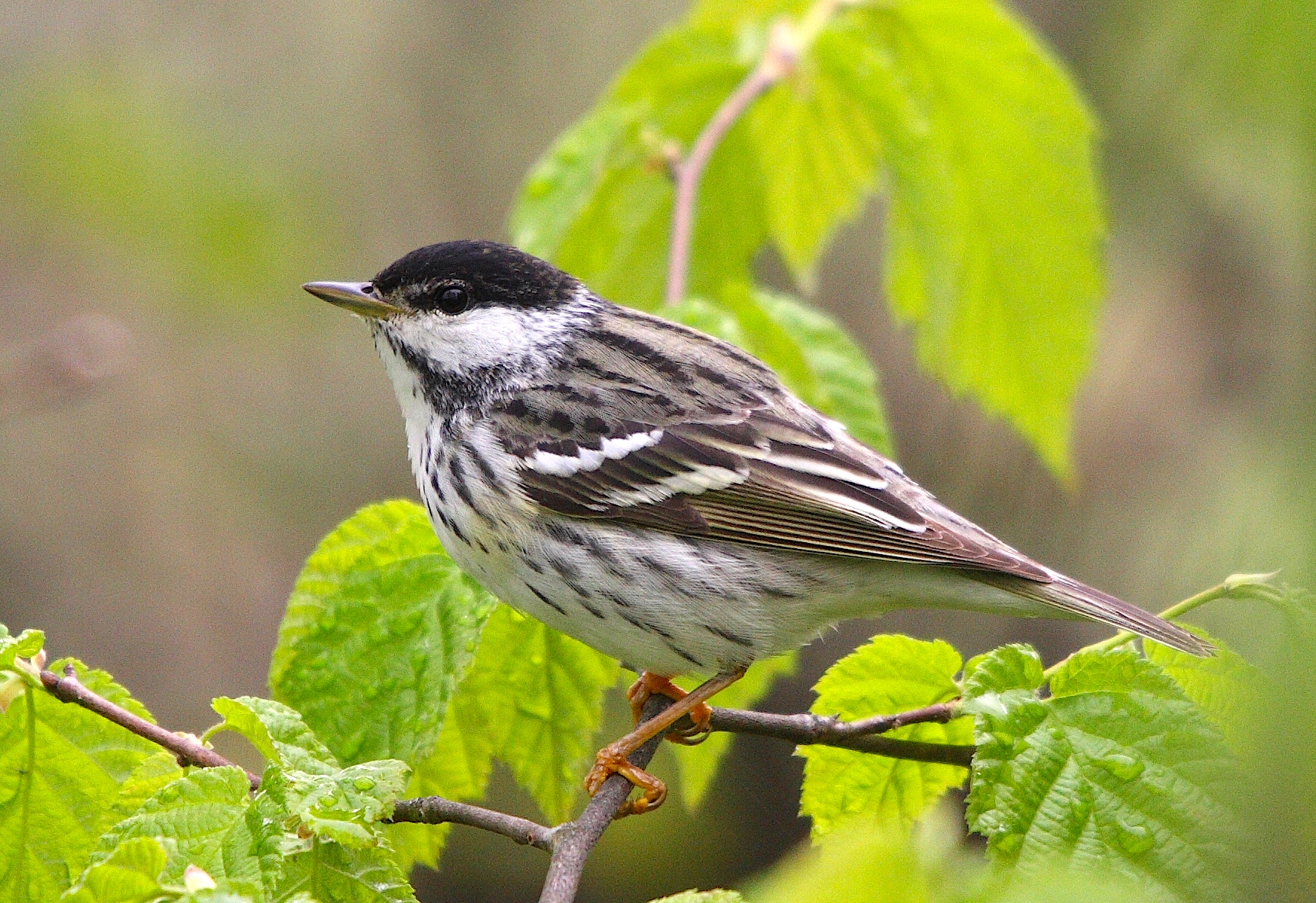
The Blackpoll Warbler Setophaga striata is a “TR3” on Abaco. Which is to say, the species is classified as an uncommon transient in its migration, and as such it is rarely seen on Abaco. Apart from anything else the window of opportunity of seeing one in the Fall or in Spring is limited by the length of time they pause on Abaco to catch their breath. Also, they are small birds that do not draw attention to themselves. They hang around in the coppice foliage rather than parading out in the open; and their call is a tiny ‘tsip‘ sound (as with so many other small birds…). 

Blackpoll Warbler, Man-o-War Cay, Abaco (Charmaine Albury)

Fortunately, on Abaco’s warbler magnet Man-o-War Cay, alert birder Charmaine Albury was out and about with her camera to record a sighting. I should say that during the writing of THE BIRDS OF ABACO, I never managed to obtain a single image – however poor – of a Blackpoll Warbler actually taken on Abaco (a qualification for inclusion) from any of the many sources I used. So sadly, this pretty warbler does not feature in the book.
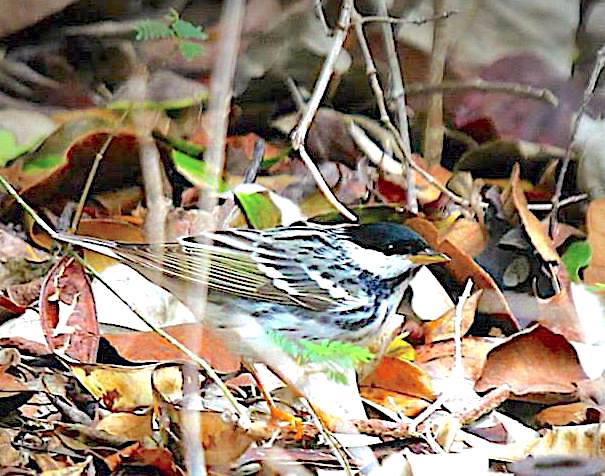
Blackpoll Warbler, Man-o-War Cay, Abaco (Charmaine Albury)

The summer breeding area for blackpolls covers northern North America from Alaska through most of Canada, the Great Lakes region and New England. In the fall, they fly South to the Greater Antilles and the northeastern coasts of South America. The summer and winter areas are very distinct, as the distribution map shows:

dendroica_striata_map-svg

Despite their diminutive size**, blackpoll warblers generally undertake their  long-distance migration – often over open water – non-stop or with a single stopover.  Their migration has been the subject of many scientific studies. One of the longest distance non-stop overwater flights ever recorded for a migratory songbird was made by a BLWA. Which all goes to explain why the species is so rarely seen along the migration route: unlike many migrating birds, they make few, if any, stops along the way.

Blackpoll Warbler, Man-o-War Cay, Abaco (Charmaine Albury)

Of the many stats I have read through, I chose one to demonstrate the stamina of these little birds. In one study, an number were fitted with tiny geolocators. These revealed an average migration journey of around 1600 miles, with the non-stop trip being completed in 3 days by at least one bird.

f1-medium

“Transoceanic migration by a 12 g songbird”

The maps above show blackpoll warbler migrations recorded for 5 birds in a study that indicates that, while a direct overwater route is preferred in the fall migration, the return journey in spring is more leisurely, and overland (it looks as though only 3 birds made it home).

The study quoted is by William V. DeLuca, Bradley K. Woodworth, Christopher C. Rimmer, Peter P. Marra, Philip D. Taylor, Kent P. McFarland, Stuart A. Mackenzie, D. Ryan Norris (

Blackpoll Warbler, Man-o-War Cay, Abaco (Charmaine Albury)

** I came across the statement that “The blackpoll warbler… attains the weight of a ball point pen”. I find this an unhelpful comparison. I know what is meant, but I find it hard to think of a ball of feathers in terms of a writing instrument. Maybe it’s just me? [Astute Reader: I’m afraid so…]

YOU MENTIONED THAT THEY GO ‘TSIP’. WHAT DOES THAT EVEN SOUND LIKE?

Credits: header image of a summer bird, Cephas; all other photos by Charmaine Albury, taken on Man-o-War Cay Abaco; birdsong Xeno-Canto / wikimedia commons

Unknown's avatar

CASPIAN TERNS: A RARE TREAT FOR ABACO


caspian-terns-winding-bay-abaco-keith-kemp1

CASPIAN TERNS: A RARE TREAT FOR ABACO

The magnificent Caspian Tern Hydroprogne caspia is the world’s largest tern species, with an adult wingspan of about 5 feet. These birds are widely distributed throughout the world, though on Abaco and in the Bahamas generally they are classed as a very uncommon transient species, classified as T4 signifying a mere handful of reports. Ever. 

caspian-terns-winding-bay-abaco-keith-kemp2

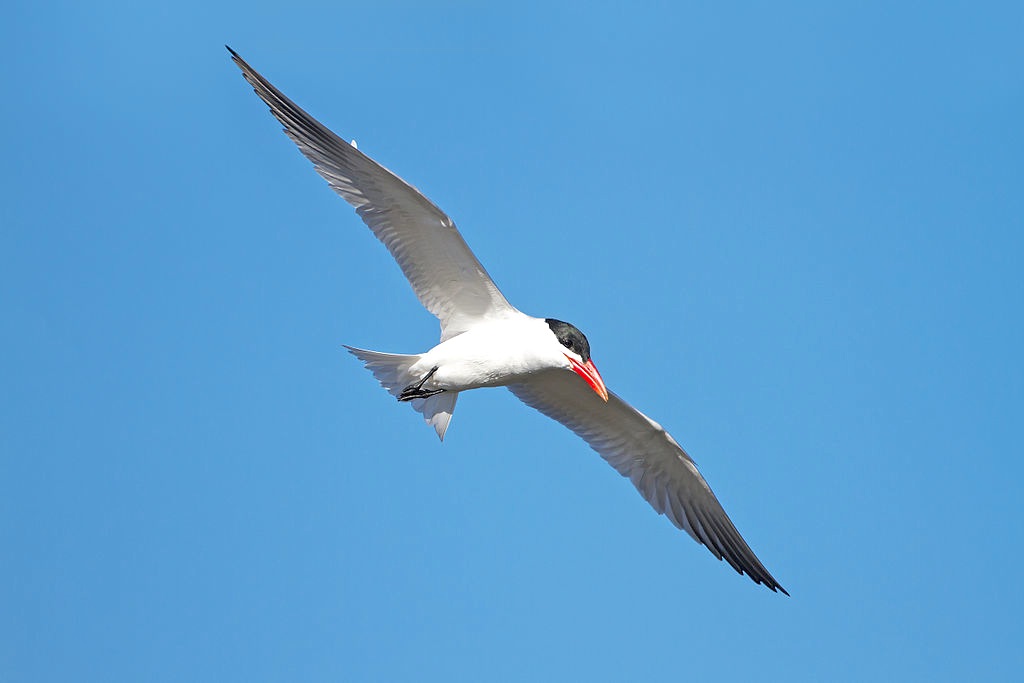
However Keith Kemp, redoubtable beach monitor for piping plovers, recently saw 2 on Winding Bay beach, Abaco. Moreover he managed to photograph them in flight (see header and above image).

caspian-terns-in-flight-dmitry-mikhirev-wiki

Keith’s are not the first Caspians to be photographed on Abaco. Bird wizard Woody Bracey managed to take one (below), which duly found its way into the ‘The Birds of Abaco‘.  Sadly it could only be included in the single-bird supplement: we needed at least two images of a species for it to qualify for a spread in the main part.

caspian-tern-wb-dsc_1587-copy-2

Caspians have black legs, which usefully distinguish them from the tern species with orange or yellow legs. Note the heavy red / orange bill, which has a dark tip that is more noticeable in the breeding season. These large birds feed mainly on fish, and use their spectacular bills to good effect, hovering and then plunge-diving onto their prey.

caspian_tern_takeoff-dick-daniels-wiki

Caspian terns are found on 5 continents. The transient birds that pause in the Bahamas are on their migration to the West Indies and Gulf. Or on their way back, of course.

caspian-tern-planetofbirds

WHY ‘CASPIAN’?

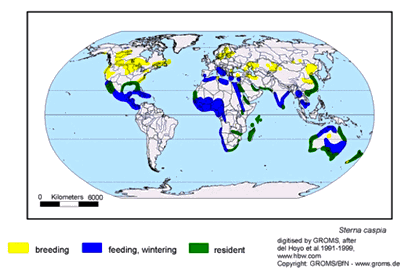
In the late c18, a specimen bird was found on, in or beside the Caspian Sea and was promptly named after it. The distribution map above suggests they still breed in the area. How fortunate it wasn’t found by the Dead Sea…

caspian-tern-in-flight-j-j-harrison-wiki

WORRYING WIKI FACT OF THE DAY

In 2016, a nest of the Caspian tern was found in the Cape Krusenstern National Monument in northwestern Alaska, 1,000 miles further north than any previous sighting. This development was part of a general trend in Alaska of species moving to the north, a tendency ascribed to global warming.

caspian-tern-wb-dsc_1584-copy-2

Credits: Keith Kemp (1, 2); Dmitry Mikhirev (3); Woody Bracey (4, 7); Dick Daniels (5); J J Harrison (6); planetofbirds (range map)

Unknown's avatar

HUDSONIAN GODWITS ON ABACO: VANISHINGLY RARE


Hudsonian Godwit, Abaco (Roger Neilson)

HUDSONIAN GODWITS ON ABACO: VANISHINGLY RARE

MEET ‘HUGO’

Abaco continues to enhance its reputation as a prime birding destination. New species. Rare species. Unusual species. Endangered species. Surprising species. Every year they turn up, whatever the season. And those, of course, are only the ones that get seen by someone who knows what they are or anyway what they might be. This is where the digital camera – or even a modern phone camera – trumps (oops… stepping into a political minefield) the old-fashioned method of collecting and identifying specialist birds. Which was, shoot them…

Hudsonian Godwit, Abaco (Roger Neilson)

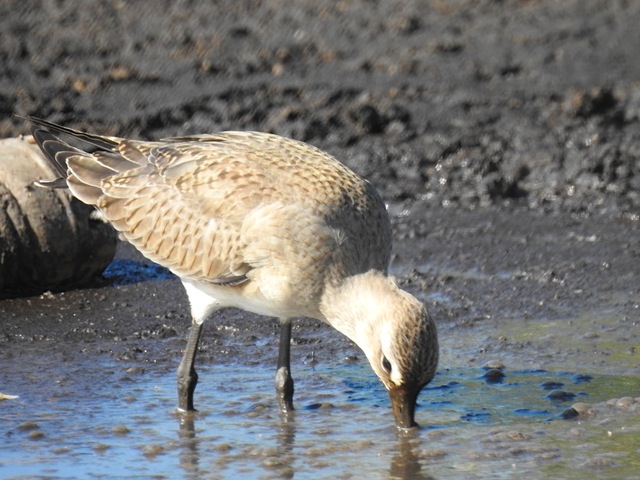
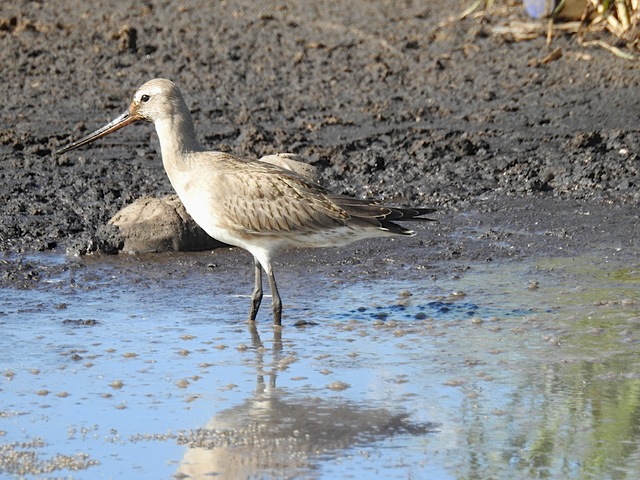
Woody Bracey, Abaco’s ornithological eminence grise, is currently hosting a party of birders on Abaco. On a visit to one of the excellent birding hotspots of South Abaco, the group of 5 came across an totally unexpected wading species mixed in with a group of yellowlegs. At first, they were thought to be Marbled Godwits. Further consideration confirmed the 2 birds to be equally rare Hudsonian Godwits Limosa haemastica (HUGOs for short). Since then, at least one of the birds has been seen in the same location by birder Keith Kemp.

hudsonian-godwit-abaco-stewart-neilson-2

SO JUST HOW EXCITING IS THIS SIGHTING?

Extremely! Both species of godwit are exceptionally rare on Abaco and indeed in the Bahamas. They are officially classified as V5, which is to say vagrant / accidental visitors outside their normal range, with fewer than five records since… records began. In practical terms, the baseline is considered to be 1950. There must have been at least one previous sighting of a HUGO on Abaco, but Woody has never seen one before, nor does he know when the report was made. And he knows his godwits – he is the person who, some years ago, saw the MAGO on Abaco that accounts for its existence as a V5 in the complete checklist for Abaco.

hudsonian-godwit-abaco-stewart-neilson-1

WHERE DOES HUGO LIVE?

These large shorebirds – a species of sandpiper – with their long, upturned bills, breed in Arctic or tundra regions, and winter in southern South America. Note in the photo above the contrast in size, bill and leg colouring compared to the yellowlegs they were mixing with. The Cornell range map below shows how remote the HUGO summer (red) and winter (blue) habitats are. And you can see clearly the two main migration routes – in the simplest terms, the central flyway and the eastern flyway. Neither route takes the birds directly over the Bahamas, although one can see how the occasional one might be blown off course and need a rest during its journey.

limo_haem_allam_mapHudsonian Godwit in flight, Abaco (Roger Neilson)

HOW OFTEN HAVE THEY BEEN SEEN IN OR AROUND THE BAHAMAS?

I checked the invaluable database EBIRD for HUGO reports over the last 10 years. The only previous report for the entire Bahamas was made by Bruce Purdy, who saw one one Grand Bahama (Reef Golf Course)… in 2007. Sightings in Florida over the period are scant. The most notable feature of the map clip below is that Bermuda has had a couple of HUGO visits, perhaps suggesting off-course birds finding an area of land to rest on in a vast expanse of open sea. Further afield, the birds are rare vagrants to Europe, and even to Australia and South Africa.

Hudsonian Godwit 10-year eBird sighting map

WHY ‘GODWIT’? OR HUDSONIAN? OR Limosa haemastica?

‘Godwit’ is said to derive from the bird’s call, in the same way as ‘Bobwhite’ and ‘Killdeer’ – so, these are birds that say their own name… The Hudson Bay area is one of the summer breeding grounds, and a place where the birds congregate for migration. ‘Limosa‘ derives from the Latin for mud (see header image); and ‘haemastica’ relates to their red breeding plumage, from the Ancient Greek for ‘bloody’. Bloody muddy. It’s not a great name, in truth. Let’s move swiftly on to what they sound like…

Doug Hynes / Xeno-Canto

Hudsonian Godwit, Abaco (Roger Neilson)

STOP PRESS As mentioned earlier, Keith Kemp found one of the HUGOs at the same location a couple of days later – a “lifer” for him and everyone else! Here are three images he posted on eBird.

Hudsonian Godwit, Abaco (Keith Kemp) Hudsonian Godwit, Abaco (Keith Kemp)Hudsonian Godwit, Abaco (Keith Kemp)

I always check a new species to see if it was depicted by Audubon. I didn’t expect him to have included the HUGO but I was wrong. He did, and with his characteristic slightly exaggerated elegance.

_57

This post is rather special, because these are almost certainly the first photographs of a Hudsonian Godwit taken on Abaco – or indeed in the entire Bahamas. And very good they are, too.  So even if a lone HUGO was noted on Abaco 40 years ago pausing briefly on a rock before continuing its journey to Argentina, I consider this qualifies as a new sighting. It certainly does for the c21.

Hudsonian Godwit (Crossley ID Guide, Eastern Birds)  463px-hudsonian_godwit_from_the_crossley_id_guide_eastern_birds

Credits: special thanks to Woody Bracey, Roger Neilson, and Keith Kemp (Stop Press) for photos, information and use permissions; Cornell Lab – Range Map; open source Audubon; Doug Hynes / Xeno-Canto; Crossley ID Guides; wiki and sundry standard sources for snippets


Unknown's avatar

A NEW BIRD FOR ABACO: BUFF-BREASTED SANDPIPER


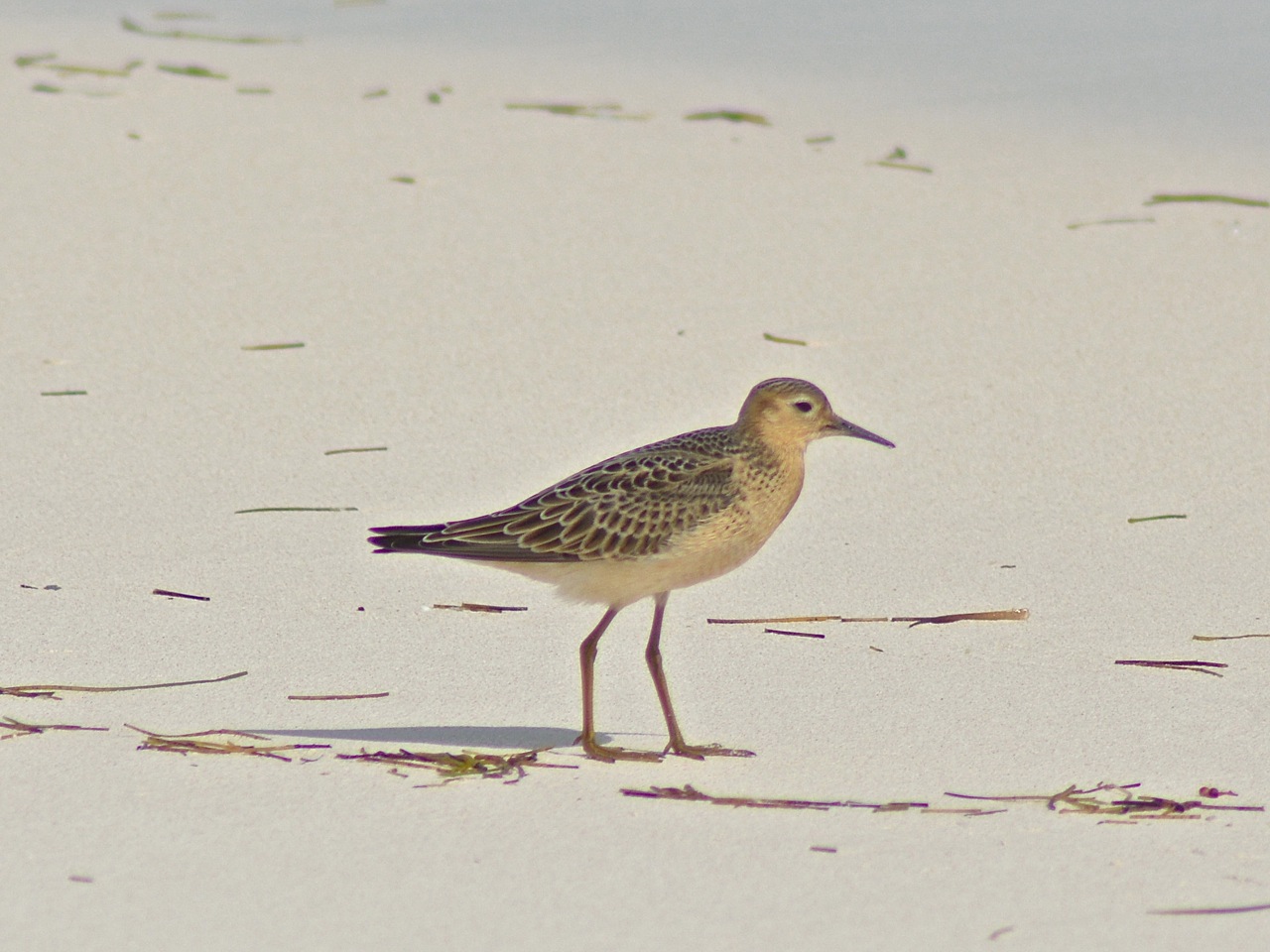
tryngites_subruficollis_-tim-lenz-wiki-sm

A NEW BIRD FOR ABACO: BUFF-BREASTED SANDPIPER

I’d best make it clear at the outset that, in the very narrowest sense, the buff-breasted sandpiper (Calidris subruficollis) is not strictly a new bird on Abaco. Tony White’s authoritative official checklist for Abaco, valid back to 1950 or so, does actually include the species. It is classified as a ‘V5’, which is to say a vagrant that is vanishingly rare – indeed may only have been sighted on Abaco once or perhaps twice before. Ever. The only category rarer than V5 is H for hypothetical, which essentially means that there is some unconfirmed report of a bird that it might not be outrageous to suppose might be blown onto Abaco. A penguin, therefore, would not qualify even for an H. 

buff-breasted-sandpiper-abaco-keith-kemp-1

A few days ago, beyond a shadow of a doubt this small shorebird was seen on Abaco by Keith Kemp, and photographed by him too. He is having an excellent year with his birding: this may well be the jewel in the crown for him. So even if one of these little guys was once spotted on an Abaco twig in 1961, Keith is definitely the first person to get a photo!

UPDATE (next day!) Abaco birder-in-Chief Woody Bracey has solved the mystery of the previous sighting – it was he himself who saw a BBSP “years ago” at the less-than-glamorous yet excellent-for-birding Marsh Harbour ‘Dump’.

buff-breasted-sandpiper-abaco-keith-kemp-2

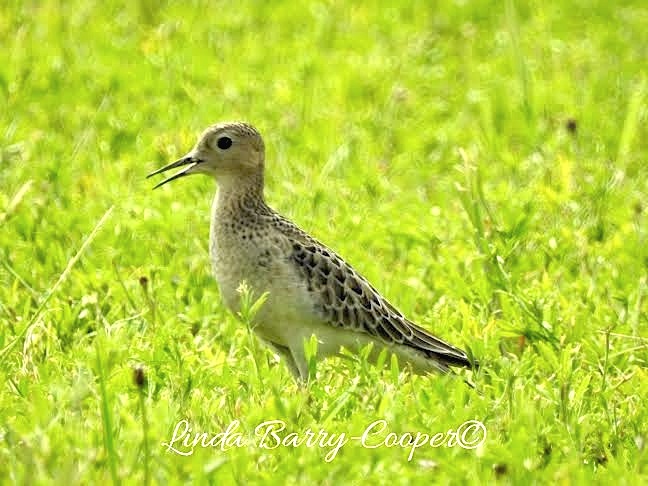
As it happens, some weeks ago a BBSP was also spotted at West End, Grand Bahama by Linda Barry-Cooper. I featured a guest post from her about the fall birds in that region HERE. Woody Bracey also says that he and Bruce Hallett saw 2 BBSPs at West End early this season. Erika Gates and Martha Cartwright saw one on the GB Reef golf course at the end of August. So these birds are around in the northern Bahamas, and perhaps it’s not such a surprise after all that one should have gone on a little expedition to Abaco to check out the undeniable joys of Winding Bay.

Buff-breasted Sandpiper, West End Grand Bahama (Linda Barry-Cooper)

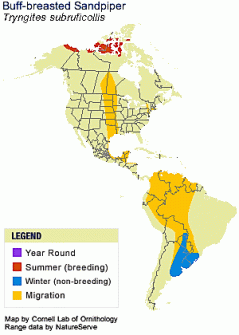
The buff-breasted sandpiper is a long-distance migrant, breeding mainly in the open arctic tundra of North America, and overwintering mostly in South America, especially Argentina. Its route takes it overland – the central flyway – rather than over coasts, but as it happens, as a species it is a bit of a wanderer. These birds a regularly found in Europe – including the UK – and although I am sure a sighting there must generate a great deal of excitement, they are not considered extremely rare. They have even been found, very occasionally, in South Asia and Australasia. 

tryn_subr_allam_map

So maybe it’s no surprise that the odd one turns up on Abaco. Maybe they do so every year, but only the keenest eye will spot one. And after all, there are many remote beaches on Abaco that are only very occasionally – if ever – visited by humans. Perhaps that’s where the BBSPs congregate…

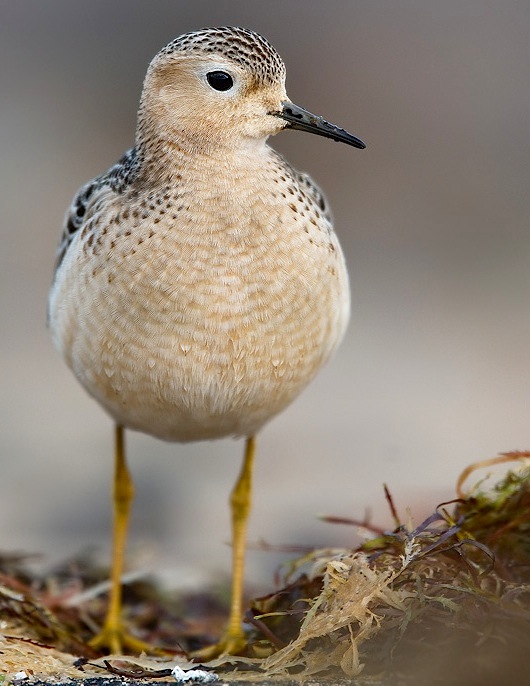
buff-breasted_sandpiper_tryngites_subruficollis_magnus-manski-wiki-sm

In the breeding season, males collect on display grounds, or “leks,” to attract females. This helpful description comes from Audubon: “The leks are spread out, each male defending an area of up to several acres. The male displays by raising one wing, showing off the white underside. If females approach, the male spreads both wings wide, points its bill up, and shakes its body. One male may mate with several females; the male takes no part in caring for the eggs or young.” Typical, huh?

buff-breasted-sandpiper-mario-suarez-porras-wiki-sm

CONSERVATION STATUS

The BBSP is another bird that has been hit badly by the passage of time. By which I mean, of course, by mankind. At one time they were deemed ‘abundant’. Around 100 years ago a serious decline set in, not least because people were shooting them during their migration. Nonetheless, in 1988 the IUCN assessment was ‘lower Risk/least concern’. Then another slide began. By 2000 it was  ‘lower Risk/near threatened’. Since 2004 it has been ‘near threatened’. Why? Largely because the habitat for migrating and wintering birds has been destroyed or degraded. 

WHAT DO I LISTEN OUT FOR?

Xeno-Canto / Bernabe Lopez-Lanus

The BBSP page from the excellent Crossley ID guides (available via WikiMedia Commons)618px-buff_breasted_sandpiper_from_the_crossley_id_guide_eastern_birds

Credits: Tim Lenz, Keith Kemp, Magnus Manski, Linda Barry-Cooper, Cornell Lab (range map), Mario Porras, Crossley Guides, Bernabe Lopez-Lanus @ Xeno-Canto, Audubon, Wiki.

Unknown's avatar

A WILD-GOOSE CHASE: IN PURSUIT OF FOUR SPECIES ON ABACO


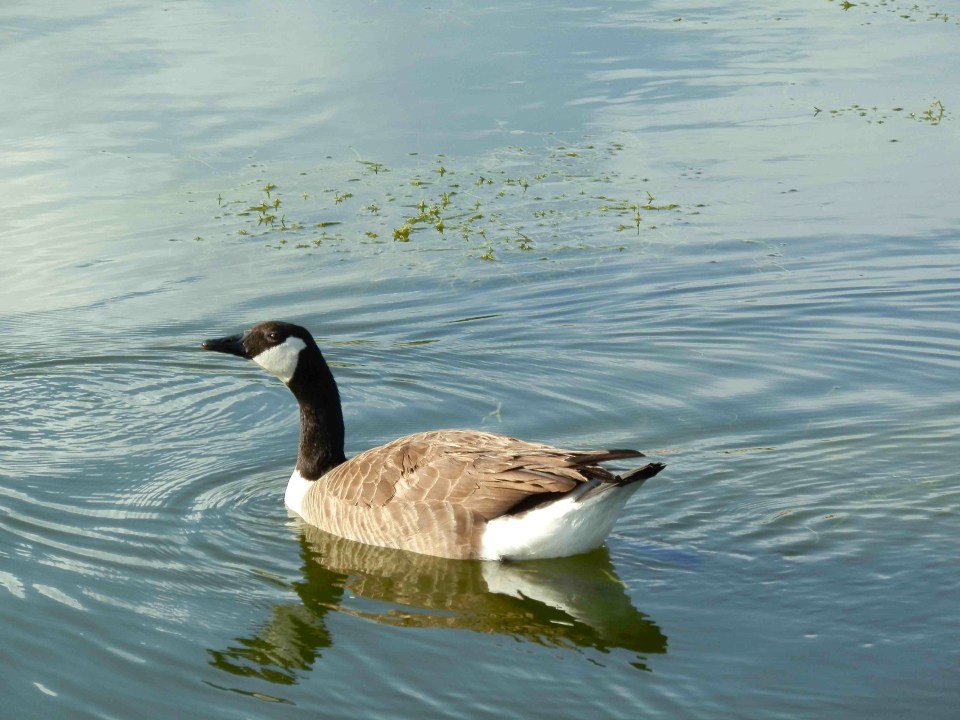
Canada Goose, Abaco (Peter Mantle)

A WILD-GOOSE CHASE: IN PURSUIT OF FOUR SPECIES ON ABACO

In normal parlance a ‘wild-goose chase’ is of course a futile search or a useless pursuit**. However, I bring you news of a successful chase after wild geese on Abaco – indeed the bagging of all four of the goose species recorded for Abaco. All are classed as winter residents, with rarity rated from ‘uncommon’ to ‘good grief, that’s a first’.  So I present them in the order of relative excitingness…

GREATER WHITE-FRONTED GOOSE

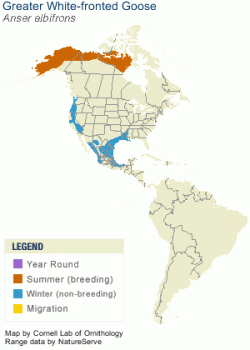
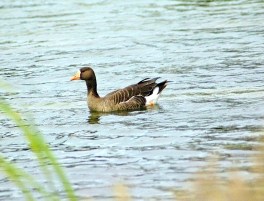
Greater White-fronted goose Abaco (Erik Gauger) smThis fine bird caused a bit of a stir. Not only was it a first for Abaco, the species had never before been recorded in the Bahamas. In February 2012, the goose was found at the pond at hole #11 on the Treasure Cay golf course, presumably having been blown off its normal migration route. This range map shows just how far. 

anse_albi_AllAm_map

Erik Gauger managed to get the close shot above; Uli Nowlan got a few from further away, including a swimming view. I know of no other photographers of the bird (though Woody Bracey published a report about it). If there are any, I’d be pleased to hear about their photos – indeed to add them!

   White-fronted Goose, Abaco 2 (Uli Nowlan  White-fronted Goose, Abaco 1 (Uli Nowlan)

ROSS’S GOOSE

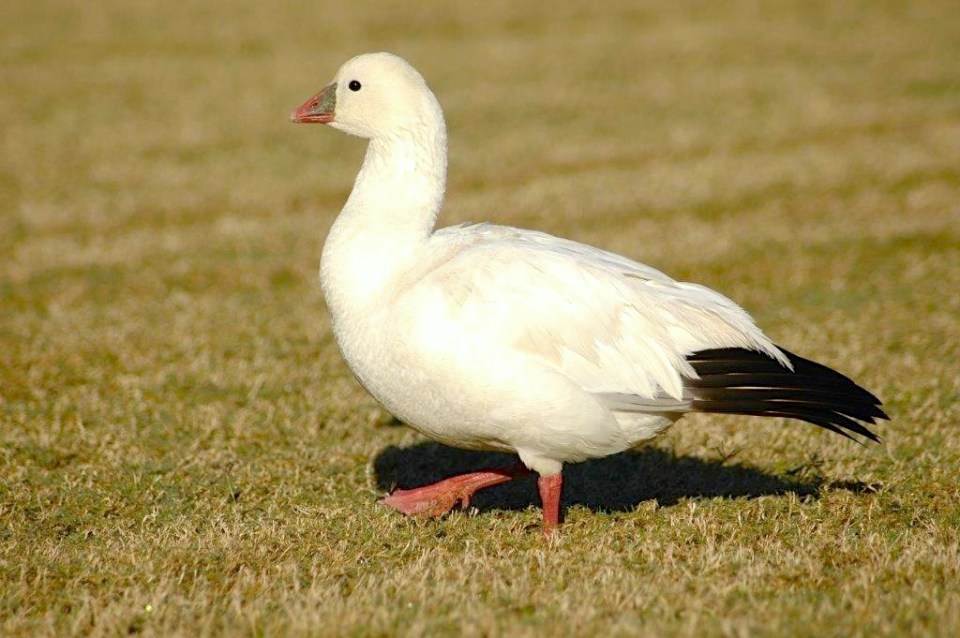
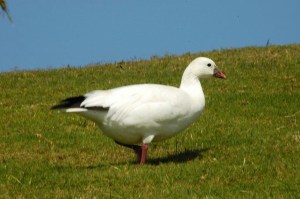
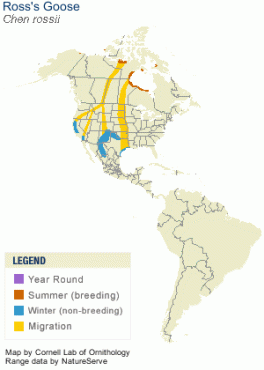
Equally rare on Abaco is the Ross’s Goose. Far to the east of its normal migration route,  one found its way to the Goose Magnet of Treasure Cay. The range map shows the very clear routes this species chooses for its migration.Ross's Goose, Abaco 1 (Uli Nowlan) Ross's Goose, Abaco 4 (Uli Nowlan)ross_goose_migration_map Ross's Goose, Abaco 2 (Uli Nowlan)

CANADA GOOSE

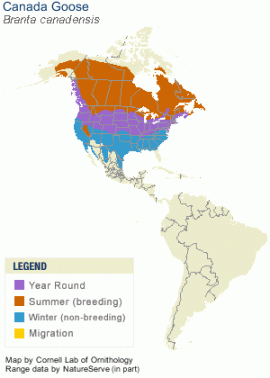
Another anserine visitor to Abaco – slightly more frequent than the two species above – is the Canada Goose. Again, Treasure Cay golf course exerted its powerful pull to drag this one from its usual route, where it happily took up residence. As you can see from the range map below, these geese have a widespread habitat and spend at least some of the year not that far from northern Bahamas, so it is less surprising that they turn up on Abaco from time to time.

CANADA GOOSE, Abaco (Kasia Reid)

Canada Goose, Abaco (Bruce Hallett)bran_cana_AllAm_map_new

SNOW GOOSE 

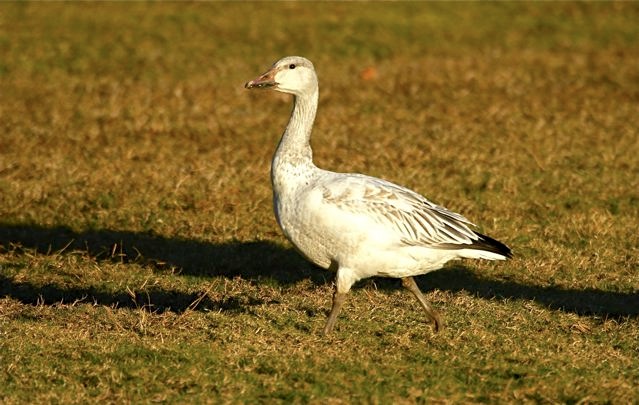
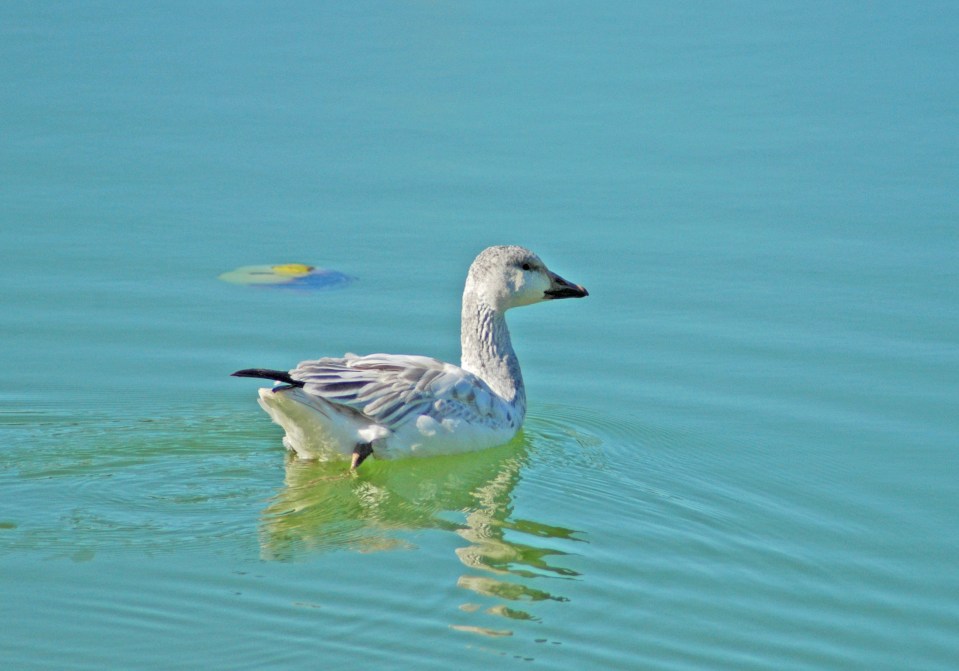
Although a relatively unusual winter visitor to Abaco, and a good ‘get’ for any birder’s checklist, I was surprised to find that the snow goose is classed as more common than the Canada goose. Its usual habitat is further away; and its summer breeding territory is very far north. Again, when a snow goose drifts eastwards, Treasure Cay is its spiritual home… 

Snow Goose (imm), Abaco (Bruce Hallett) Snow Goose, Abaco (Tony Hepburn) sm2 Snow Goose, Treasure Cay, Abaco (Uli Nowlan)chen_caer_AllAm_map

Why geese are not found elsewhere on Abaco other than Treasure Cay is a mystery. The TC golf course water is presumably fresh, whereas other locations – Gilpin Pond on South Abaco for example, or the neglected ponds of the defunct ‘Different of Abaco’ – are distinctly brackish. Perhaps that makes all the difference.
Abaco’s Four Geese SpeciesAbaco's 4 goose species jpg

**WILD-GOOSE CHASE The etymology of the phrase is medieval, referring to a horse race in which pursuers try to follow an erratic ‘wild goose’ leader. Shakespeare used the term in Romeo and Juliet, with Mercutio saying “Nay, if our wits run the wild-goose chase, I am done; for thou hast more of the wild goose in one of thy wits than, I am sure, I have in my whole five.” Which was quite a good, if cumbersome, insult.

Credits: Photos – Peter Mantle, Erik Gauger, Uli Nowlan, Kasia Reid, Bruce Hallett, Tony Hepburn; Range maps – Cornell Lab for Ornithology

Unknown's avatar

AUDUBON’S ‘PRIORITY BIRDS’ ON ABACO: 21 SPECIES TO TREASURE


Black-necked stilt AH IMG_1462 copy - Version 2

AUDUBON’S ‘PRIORITY BIRDS’

PRIORITY BIRDS ON ABACO

Of the total of 49 species listed by Audubon, an astonishing 31 are recorded for Abaco. Such a statistic underlines the importance of the island and its cays as a major birding location with habitat suitable for these ‘Priority Birds’ . Some of them birds may be rare ‘vagrants’, or occasional ‘transient’ visitors but all are considered threatened or vulnerable. I have marked in red the ones that may easily or with reasonable diligence and luck be found on Abaco. These are either Permanent Resident (PR) species; or Migratory species resident in Winter (WR) or Summer (SR); or TRansients that are seen annually or at least are regularly reported. For all practical bird-spotting purposes, the remainder can be set aside, and with no disrespect to them I have reduced their image & entry sizes… That leaves 21 species selected by Audubon for special protection that may be quite readily found on Abaco – and that will be adversely affected by significant habitat change. Birds to treasure, in fact.

 PR

Arctic Tern Sterna paradisaea

Bald Eagle Haliaeetus leucocephalus

Black Skimmer Rynchops niger

Black-capped Petrel Pterodroma hasitata

Hudsonian Godwit Limosa haemastica

Redhead Aythya americana

Roseate Spoonbill Platalea ajaja

Sooty Shearwater Puffinus griseus

Swainson’s Hawk Buteo swainsoni

Swallow-tailed Kite Elanoides forficatus

PR

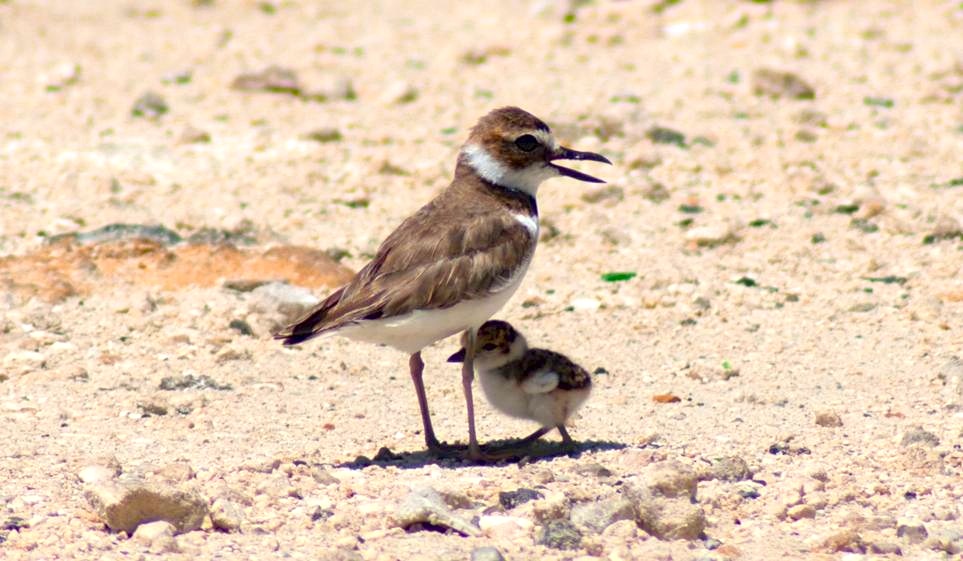
Wilson’s Plover Charadrius wilsonia


WHO WAS THIS AUDUBON GUY, ANYWAY?

FIND OUT HERE including drawings by Audubon of birds he might have seen had he ever visited Abaco (which he didn’t…)

Wilson's Plover & Chick jpg

Credits: Alex Hughes (header), Sandy Walker (above), Audubon Birds