
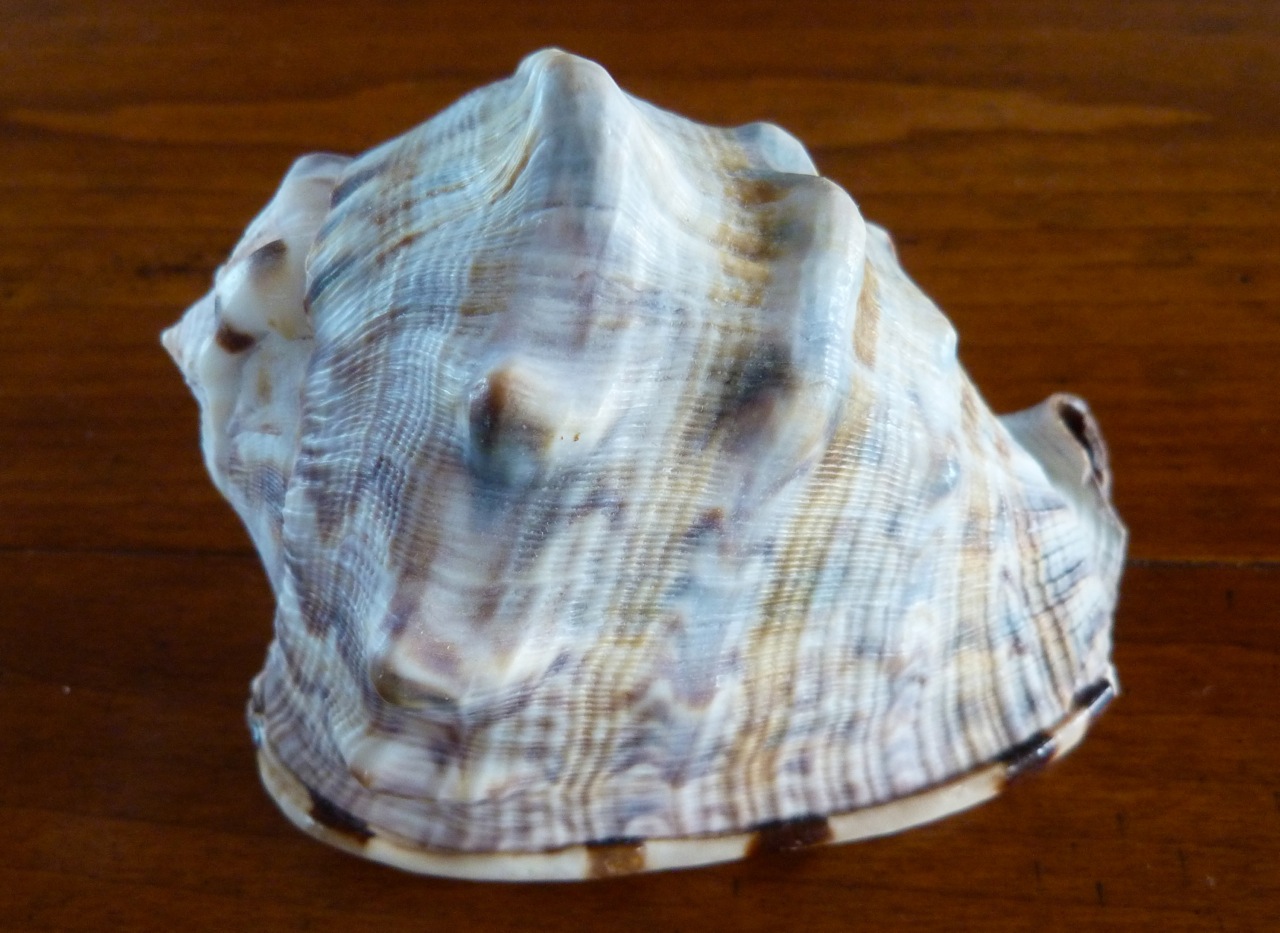
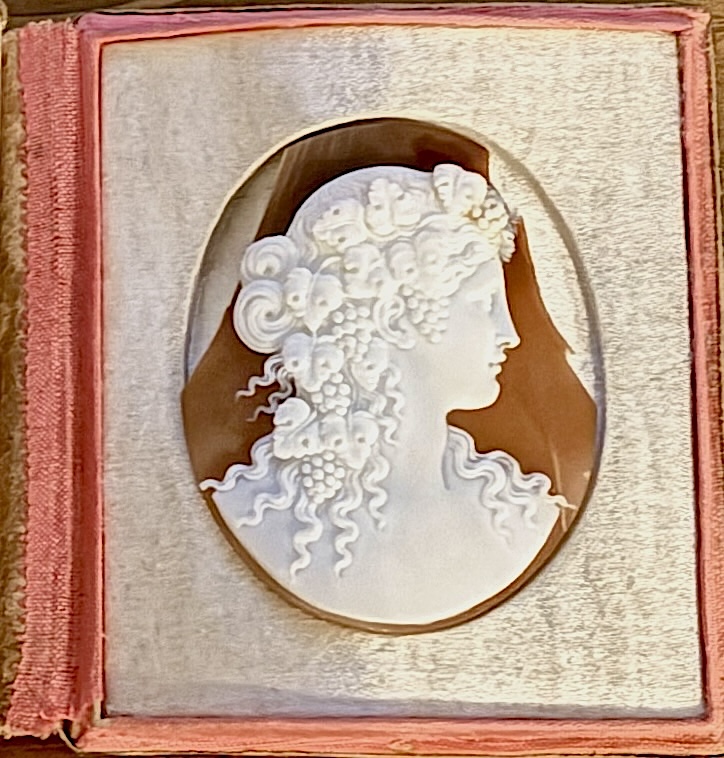
The King Helmet shell is the largest of the shells in the family Cassidae. They are found from North Carolina through the Caribbean and the gulf of Mexico down to Brazil. The species lives in shallow coastal waters, in reef environments, seagrass beds, and in sandy areas. They tend to bury themselves during the day, becoming active and feeding at night.

The most highly prized shells are the Emperor and the Queen Cassis madagascariensis. These have white and brown layers that are similar to an agate known as sardonyx; and to onyx. From these, Cameos can be carved, as first done by the Ancient Greeks many years BC.

King Helmets prey mainly on sea urchins and other echinoderms, using their foot to grip their meal. The dining arrangements are somewhat protracted. The snail makes a hole in the urchin through the combined action of a glandular secretion which is rich in sulphuric acid, while using its RADULA to rasp and dig through the shell to get at the trapped occupant, which it gradually consumes… That’s enough about that.
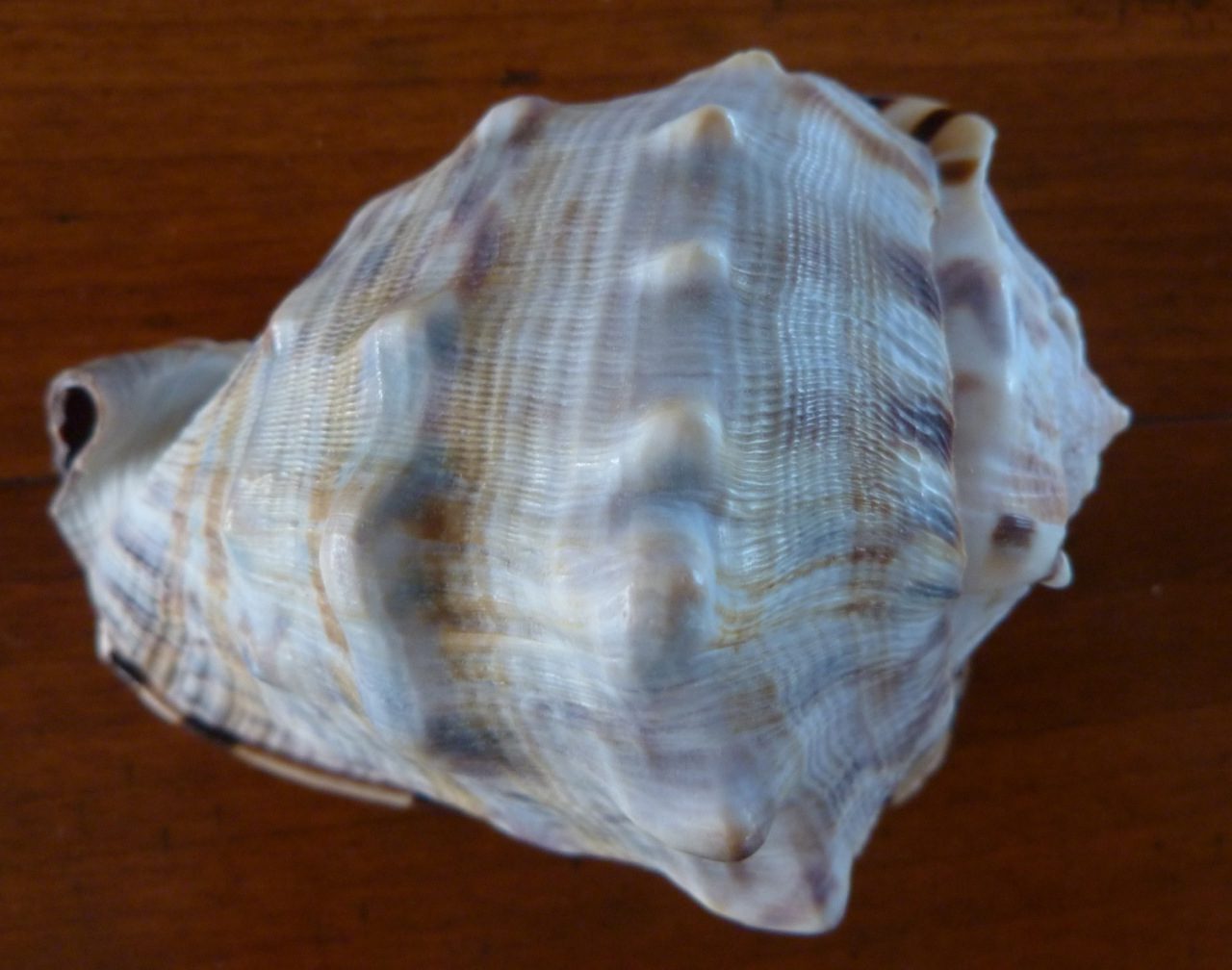
Source: Delphi Club Abaco; Keith Salvesen @rollingharbour. The cameo shown belonged to my Great Grandmother. Damaged, but showing the incredible intricacy of the detail to be found on an ornament just 1.5 inches long

