Unknown's avatar

GRAND BAHAMA CORAL REEF DAMAGE: CRUISE SHIP POESIA GROUNDING (3 VIDEOS)


On 7 January 2012 the enormous Panama-registered cruise ship MSC Poesia – 100 foot long, 100,000 tons, 6000 + 1000 crew capacity – ran aground on the coral reef off Lucaya Beach, Grand Bahama. She was refloated by tugs on the evening high tide, leaving a trail of destruction to the reef behind her.

Video footage posted by FREDGBSCUBA shows the predicament of this huge vessel above the surface; his subsequent underwater footage graphically shows the extent of damage and explains the longer-term consequences of the incident, including the toxic effects of the anti-fouling paint scraped off the hull (video 3).

STOP PRESS Jan 18 The first video has now been blacked out, with the message that it has been “removed by the user”. Hmmmmm. No comment.

http://youtu.be/-ZQKpFHbZ04

But through the magic of techo-wizardary it has been restored to life and can be now be seen again by clicking===>>>VIDEO 1 HERE

Video 2 has survived intact

http://youtu.be/SM_JYVlyqtc

Whoops! Video 3, a scientific analysis of the toxic anti-fouling paint, has now ‘gone’ too. Let’s see if we can… Good, here it is again

http://youtu.be/TpIJ6ONrgB
I’m no mariner, but wouldn’t a ship of that size and weight in known shallow water and reef territory have (a) navigators (b) detailed nautical charts (c) depth gauges or sounders and (d) one or more pairs of eyes keeping a look out? Or does this sort of thing happen all the time?

This is not Poesia’s first brush with misfortune. I see from Wiki that in her first year of operation, 2008, “…MSC Poesia and Costa Classica collided in the Adriatic Sea near Dubrovnik. No one was hurt, and the damage was minimal. The cause of it was that MSC Poesia’s anchor loosened and precipitated (sic) her to hit Costa Classica. Both continued their scheduled itinerary with no delays”. The coral has not escaped so lightly…

I see that this ship also plies the Venice lagoon. I hope she knows not to stray from the deepwater channels: the average depth elsewhere is ± 1 metre…

The website of MSC Cruises sets out an encouragingly positive environmental mission statement (below), so let’s hope the company swiftly applies these principles and comes up with proposals for redressing the adverse environmental consequences of this episode…
The vessel’s name means ‘Poetry’ – so, an inspiration for some hot doggerel: It really is beyond belief / That she should ground upon a reef / For ‘Poetry’, once set in motion / Upon a pristine turquoise ocean / Should avoid such Eco-griefs / And steer well clear of coral reefs…

Credits: Thanks to Fred Riger of Freeport for approval for using his 3 videos

STOP PRESS For a report of the incident in the Freeport News 14 January 2012 CLICK LOGO===>>>


Unknown's avatar

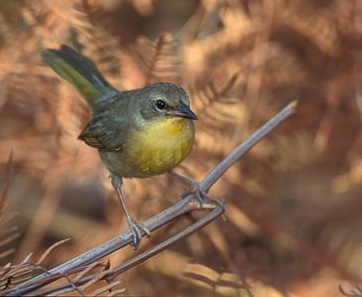
BAHAMA YELLOWTHROAT: ABACO’S ENDEMIC WARBLER


BAHAMA YELLOWTHROAT: AN ENDEMIC WARBLER

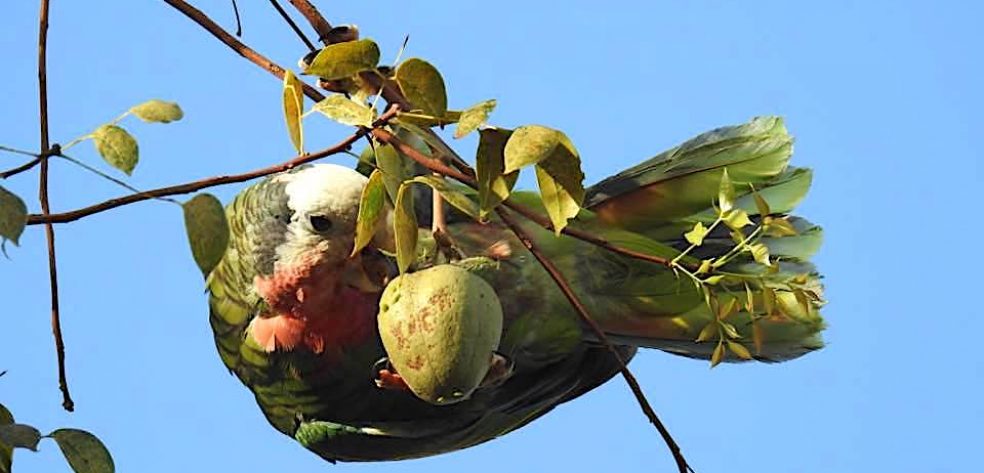
The Bahama Yellowthroat (Geothlypis rostrata) is a resident breeder species of warbler endemic to the Bahamas, closely related to the migratory Common Yellowthroat. The other birds endemic to Abaco / Bahamas are the Bahama Swallow, BAHAMA WOODSTAR and ABACO PARROT

HABITAT Dense low scrub, usually in drier areas than used by wintering Common Yellowthroats. It builds a cup nest low in dense vegetation and lays two eggs. Like other yellowthroats it feeds on insects and other small invertebrates in low vegetation

THE 3 VARIETIES The adult Bahama Yellowthroat is 15 cm long with a large bill. There are 3 subspecies: G. r. rostrata on Andros and New Providence islands (uncommon to rare);  G. r. tanneri on Grand Bahama, Great Abaco and associated islands (common); and G. r. coryi on Eleuthera and Cat islands (common). The noticeable distinction between these 3 types seems to be in the forecrown colour (not one I myself would readily spot…)

DIFFERENCES FROM COMMON YELLOWTHROAT The Bahama Yellowthroat is slightly larger than wintering Common Yellowthroat and has a heavier bill and ‘slower, more deliberate movements’. Males have ‘more extensively yellow underparts, a larger facemask extending onto the nape, and in the case of coryi the distinctive yellow forecrown. Females have a grey wash to the head not shown by Common Yellowthroat’.

Bahama Yellowthroat (Adult female), Little Abaco                                    Photo credit ©Mike Danzenbaker  http://www.avesphoto.com

SONG Described as a loud wichety wichety wichety wich, similar to that of Common Yellowthroat, with the call a softer jip than that of Common Yellowthroat. This is meaningless to me – lots of warblery birds sound like that as far as I can make out. Here is a very short recording of a BY on Abaco courtesy of Xeno-Canto, but it’s not saying wichety to me – more like whee-hew 

Below is a short self-crediting video to illustrate the song of a Bahama Yellowthroat on Grand Cayman. There’s a hint of wichety there.

CONSERVATION The Bahama Yellowthroat population overall is quite small and is outnumbered in winter by migrant Common Yellowthroats. It appears not to be endangered. Its conservation is currently listed as ‘Least Concern’ (see Wiki-Box above). The population may be decreasing slightly due to habitat destruction, but not yet sufficiently to bring the species within the ‘vulnerable’ classification.

Here is an excellent clear image of an adult male by Craig Nash who has taken many wonderful photos around Delphi and further afield – see the 4 ‘Peregrine’s Blog’ links under the Blogroll in the SIDEBAR Highly recommended.                        [I am also clearing copyright permission to add a few other photos – I haven’t taken my own BY photo yet…]Photo credit: Craig Nash

Sources: various, including relevant books (see reviews in BOOKS BirdLife International and good old Wiki 

http://www.youtube.com/watch?v=5-KxKQbjvkY

Unknown's avatar

ABACO PARROTS IN THE PINE FOREST


This is one of a number of sequential images posted by cfinke3856 on the website Webshots. It seems to have been taken in 2004, and shows 4 Abaco parrots in a pine tree (location unspecified – the National Park, maybe?). They look pleasingly convivial, and they provide a chance to roll out the newly created  rh parrot logo

Normally I would have cleared permission for use (and slight cropping) and given a click-through link so you could see the rest of the (similar) images. However, the website is a nightmare. A pop-up offered me the chance – apparently a near-certainty – of winning $10,000, and froze my cursor when I tried to delete it. Twice. Other untempting offers were made in a rage-inducing way. So I’ll spare you all that, warn you briskly off the site, and apologise to Mr or Ms Finke for ‘borrowing’ the image, duly credited but in tiny writing…

Unknown's avatar

STINGRAY AT FOWL CAY MARINE PRESERVE ABACO


A while ago, I posted stills from a reef-snorkelling video – my first ever underwater video attempt, and indeed my first snorkel for about 40 years CLICK===>>> REEF FISH   I started with a stingray, producing some rather… ok, very… modest results, but it was at least identifiable if you looked carefully and felt benign.

I’ve learned a few tricks since then. Here is the whole clip, still hopeless in most respects but there’s something quite cute about the creature. Mercifully it is only 37 seconds long. I reserve the right to delete this post when I realise no one has actually watched it! [LATER: Oh! I find a few hardy souls have done so. It’s a democratic vote for the ray to stay, as I see it]

[Belated credit to the fairly litigious Joe Satriani (see JS v Coldplay 2009) for borrowing the intro to one of his  songs. It’s a non-commercial tribute, Joe]

Unknown's avatar

BAHAMA (WHITE-CHEEKED) PINTAIL


THE BAHAMA(S) PINTAIL aka WHITE-CHEEKED PINTAIL  Anas Bahamensis

This very pretty duck species is getting a mention not because I have ever seen one on Abaco, but because I have seen them at WWT Barnes in London. [Later note: see end of post – turns out it was at Pensthorpe Nature Reserve Norfolk]. We went there last weekend to photograph one for your (plural, not single reader I hope) exclusive pleasure, but sadly they haven’t got any at the moment – they have been moved to WWT Slimbridge. I’ve decided to post about them anyway. As ever, thanks to wiki for its handy conservation and classification label, plus basic species details which always get things off to a scientific-looking start before the nose-dive into amateurism…

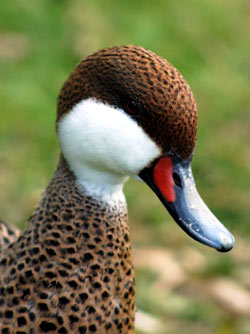
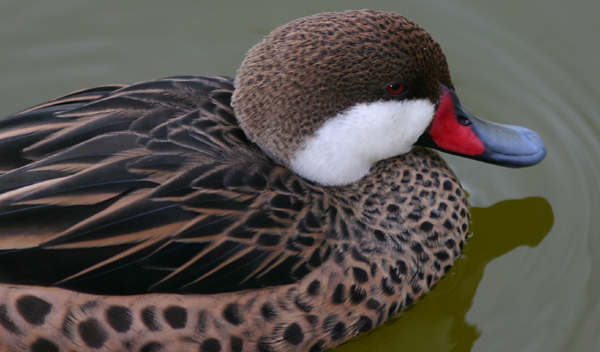
There follow 2 open-use non-© images, with a dip of the beak to the anon photographers

           BAHAMA PINTAILS                                                  

The White cheeked Pintail or Bahama Pintail (Anas bahamensis) is a dabbling duck first listed by LINNAEUS in his Systema naturae in 1758, under its current scientific name.

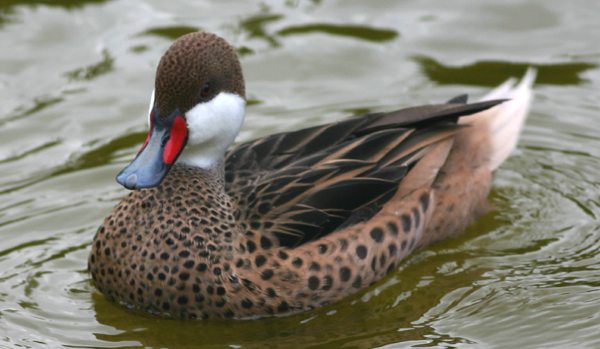
There are three subspecies: A. b. bahamensis in the Caribbean (and vagrant in south Florida); A. b. galapagensis on the Galapagos; and the slightly larger A. b. rubirostris in South America.  The sexes are similar. It is mainly brown with white cheeks and a red-based grey bill (young birds lack the pink). Conveniently for amateurs, it “cannot be confused with any other duck in its range” – though I’ll believe that when I have first-hand experience of personal non-muddle.

These ducks are found on saline waters such as brackish lakes, estuaries and mangrove swamps. They feed on aquatic plants and small creatures rootled out by dabbling. The nest is on the ground under vegetation and near water.

Mike Bergin, a naturalist, has very kindly let me use 2 of his wonderful images for this post. There are others to be found at CLICK==>>  http://10000birds.com/white-cheeked-pintails.htm Indeed the whole site is well worth a good rummage around

Photo Credits Mike Bergin 1000 Birds

Here’s what they sound like (credit Xeno-Canto / George Armistead)

SPECIES LISTING (Jan 2012): This duck is on the threatened species list – not actually endangered but experiencing “moderate decline or facing imminent threats which warrant specific conservation measures”. Sadly, there are 3 separate causes of decline, each of which may be difficult to combat: habitat loss; hunting; and predation by introduced species.

Finally, here are links to more material about and images of these pretty ducks:

OISEAUX-BIRDS (an excellent resource for many other birds – merci Nicole for link approval)

BAHAMAS NATIONAL TRUST  2-page article on Pintails / Endangered birds

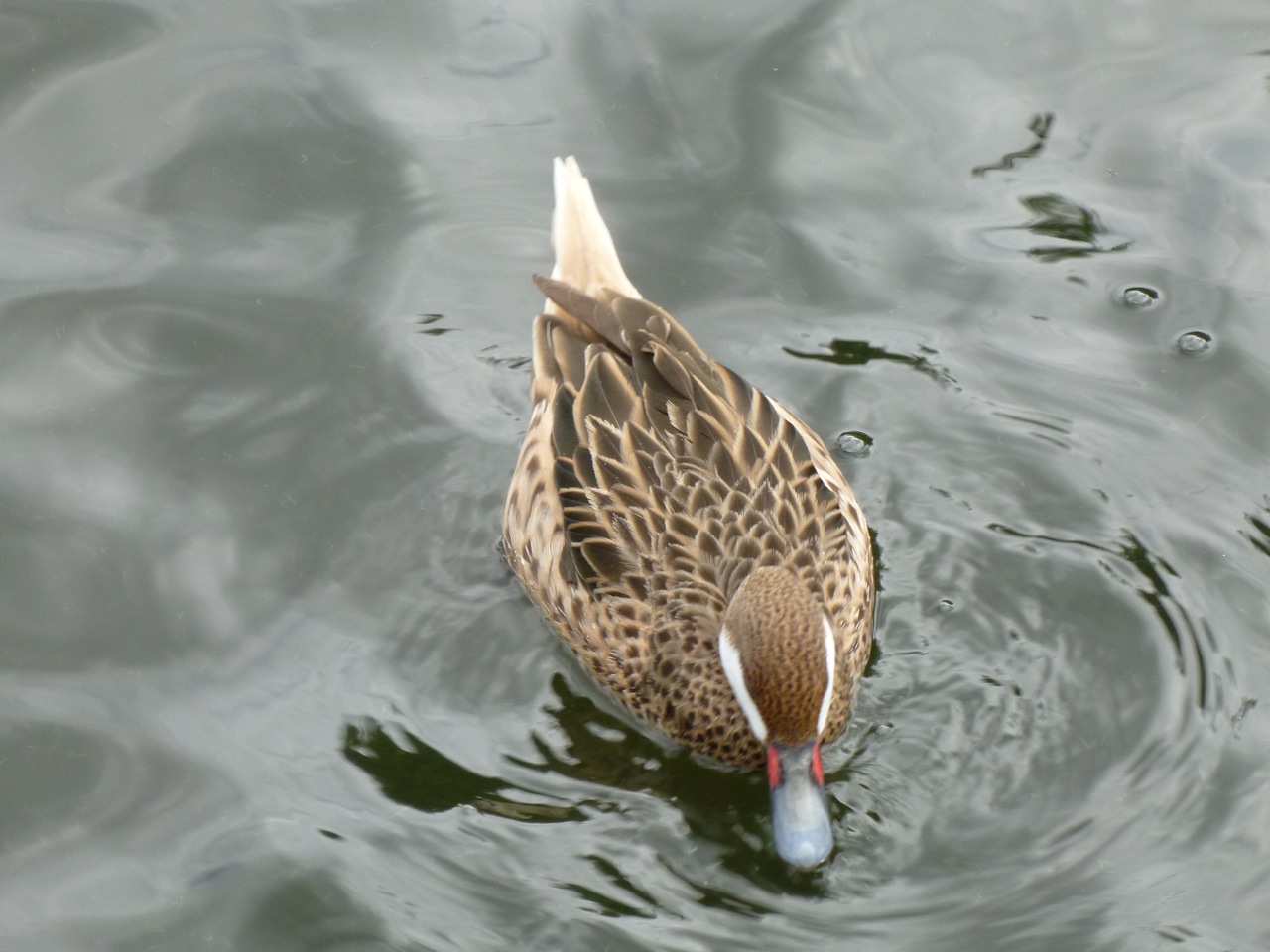
STOP PRESS To my complete surprise, I now discover that I have got my very own quite respectable picture of a Bahama Pintail, taken in July 2010 at the Pensthorpe Nature Reserve, Norfolk. So here it is…

STOP PRESS Feb 2012 Ricky Johnson, Abaco’s renowned bird expedition leader, has posted a fine example of a Bahama Pintail on his Facebook page, taken near his home. And, with permission (thanks, Ricky) here it is 

Unknown's avatar

BAHAMA WOODSTARS & CUBAN EMERALDS: THE HUMMINGBIRDS OF ABACO


THE HUMMINGBIRDS OF ABACO

At last I have got round to the hummingbirds. It’s quite simple. There are only two species of hummingbird on Abaco. The endemic variety is the Bahama Woodstar, one of only 3 endemic bird species on Abaco (the others are the Bahama Yellowthroat and the Bahama Swallow). The settled migrant is the Cuban Emerald.

               BAHAMA WOODSTAR                                    

 Calliphlox evelynae

Male and female Bahama Woodstars  (Photo Credit: Phil Brown – and VG too)

These hummingbirds are found throughout the Bahamas. They do not migrate, although are occasional vagrants in SE Florida. They breed all year round, the main season being in April. The female lays 2 elliptical white eggs, which she incubates for 15-18 days. As with humans, the female is mainly responsible for childcare while males go drinking at the nectar bar and hang out with their mates.

This BW was one of a small group at Hole-in-the-Wall. They were completely unconcerned by our presence, and we could get within arm’s length of them. Woodstars, though tame in human terms, can be aggressive and territorial. They are plentiful throughout the Bahamas except on Grand Bahama, Abaco and Andros. Significantly those are the only islands where the Cuban Emerald is found in any numbers. As with the native red and import grey squirrel problem in the UK, the migrant emerald is aggressive towards the woodstar, which is consequently rare where emeralds are abundant.

Here is their call (credit Jesse Fagan Xeno-canto)

Addition April 2012 Here is a seriously cute female Woodstar photographed by Ann Capling at Bahama Palm Shores, close to Ocean Drive – a really pretty little bird

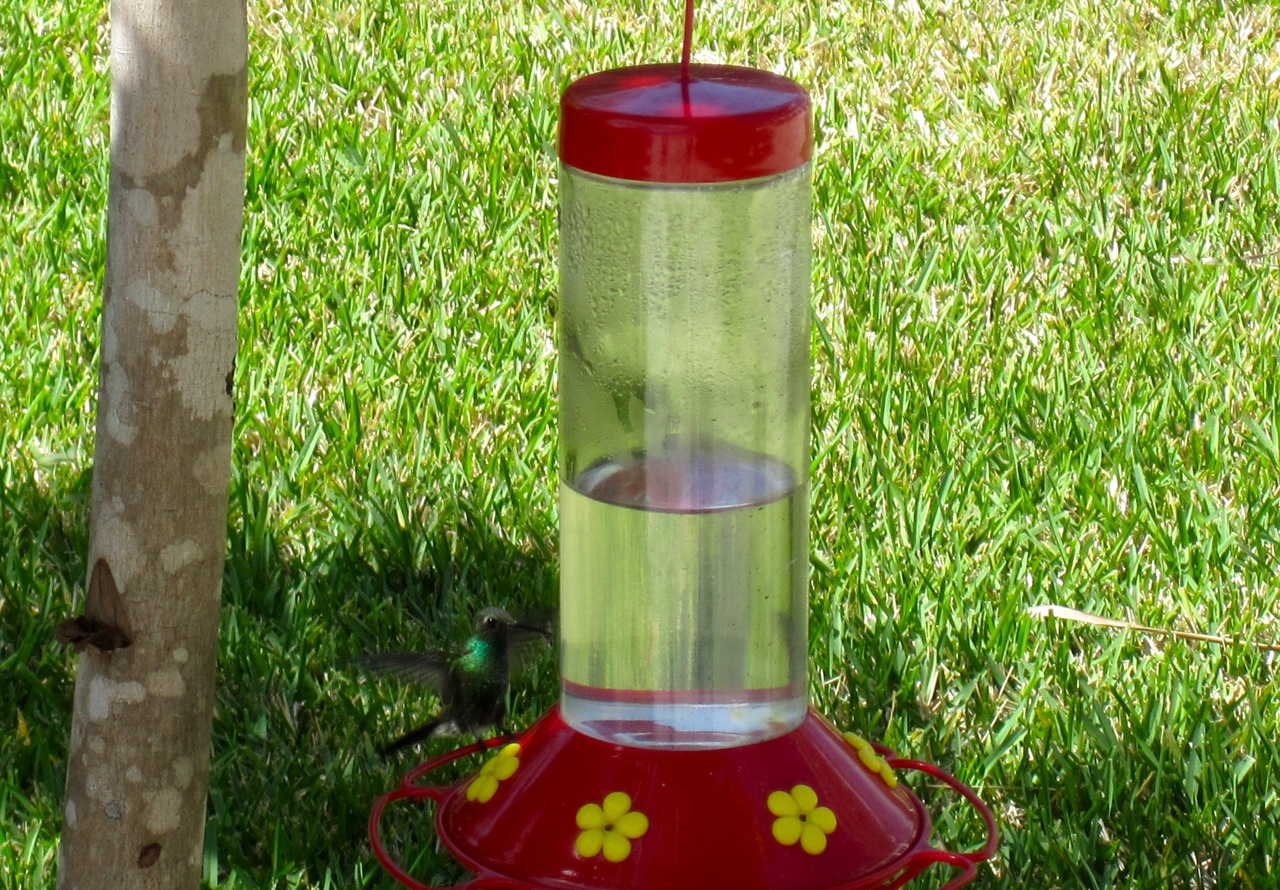
At Delphi, you’ll frequently see emeralds, especially now that feeders with sugar water have been hung up for them. The pool area is a very good place to watch them. But there are occasional woodstars to be seen as well – in the coppice on the drives for example, and even on the feeders. The vague blur to the left of the feeder below is a woodstar in the millisecond between me pointing the camera and it flying away… Don’t bother to click to enlarge it – it’s a useless photo, I know, but it is evidence even at the lowest level

CUBAN EMERALD Chlorostilbon ricordii


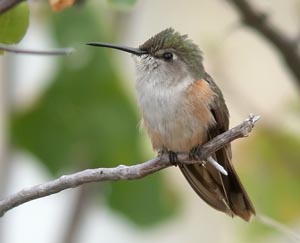
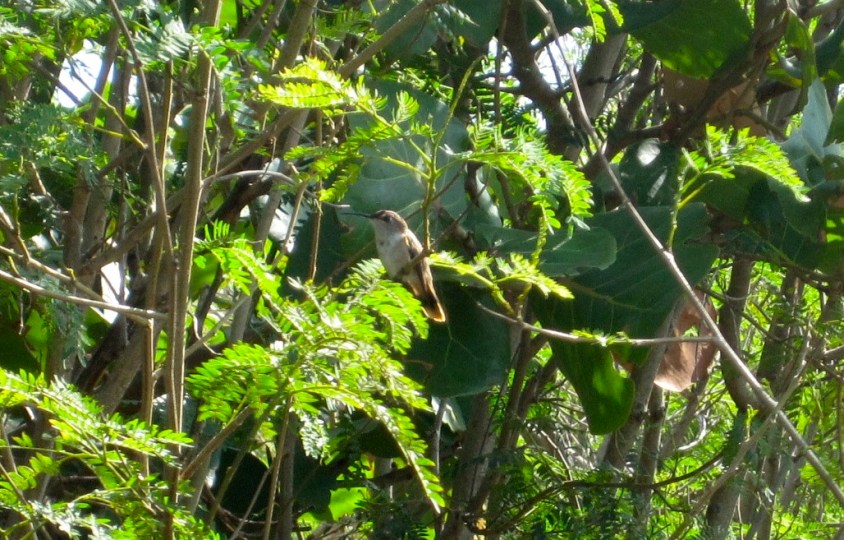
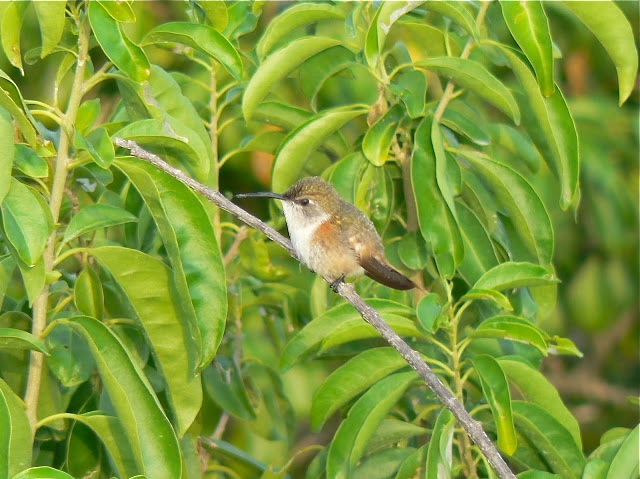
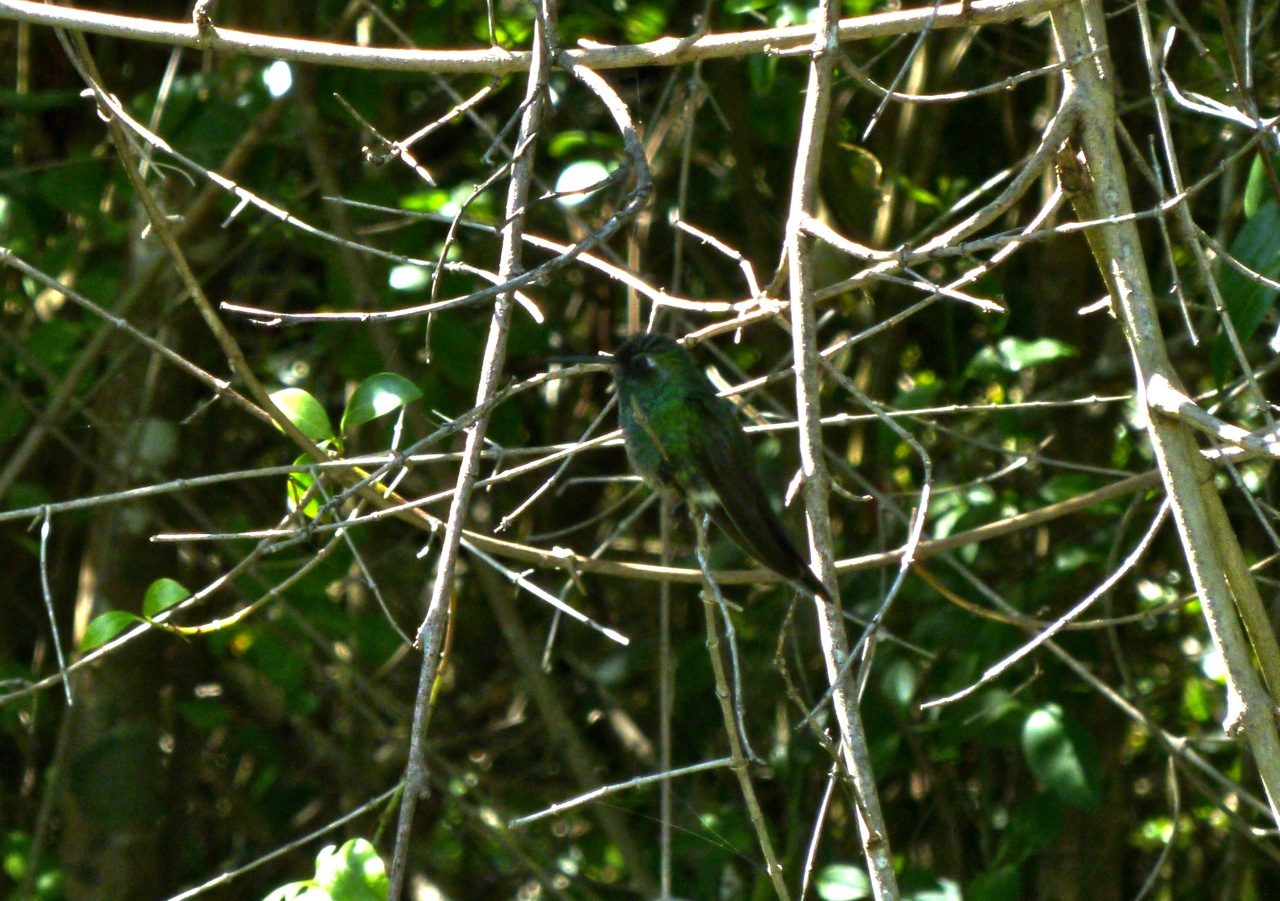
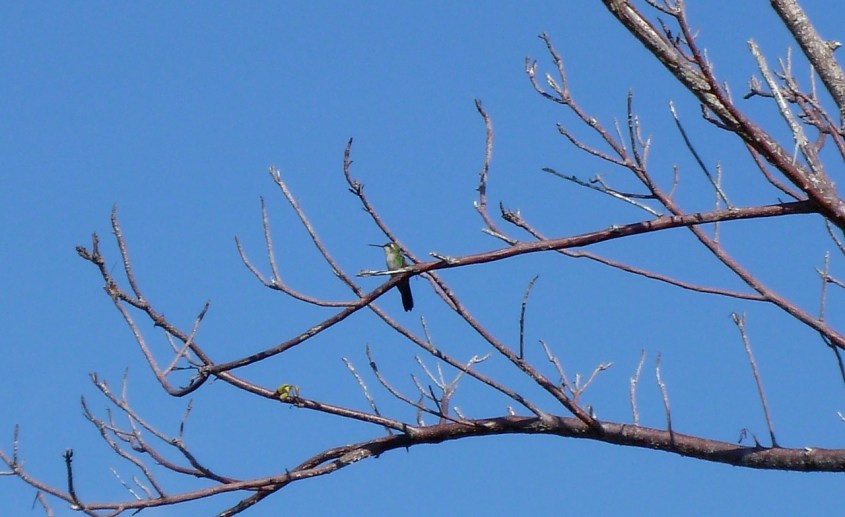
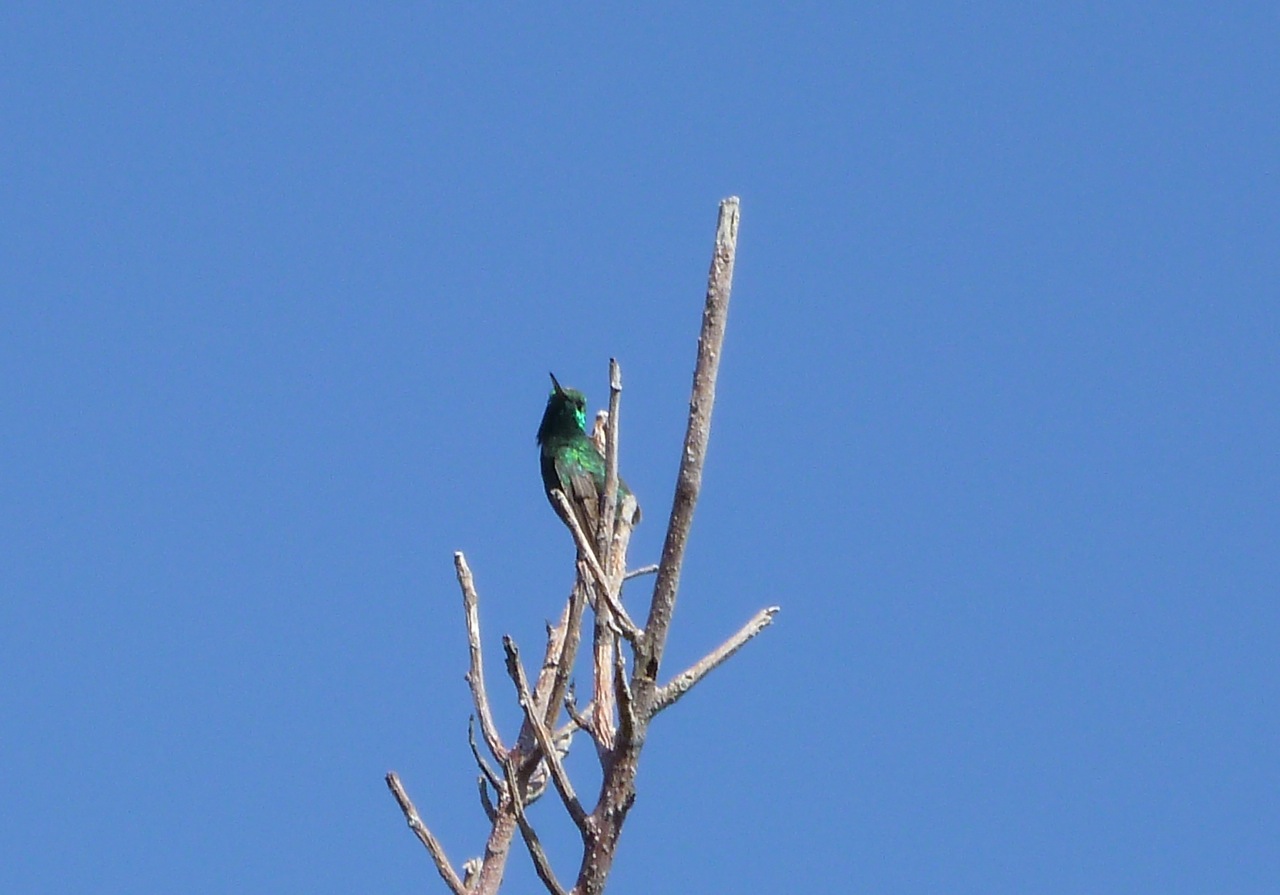
There’s probably a great deal to be written about the emeralds, but not by me. Or not now, anyway.  The little you need to know from me is already covered above, and I haven’t yet discovered whether their childcare arrangements differ significantly from the woodstars. Probably not. So I’ll put in a selection of photos, and remark that it is strange how quickly they can change from sleek and slender birds to small rather cold and dispirited looking bundles of feathers. Both states are depicted below. Here’s what to listen for (credit Xeno-canto.org) 


Delphi – pool feeder

Delphi – pool feeder

Delphi – pool feeder

Delphi – far side of pool

Delphi – near pool

Delphi – front drive

Delphi – front drive

All the above birds were photographed at Delphi. We saw emeralds elsewhere, of course – in the pine forest, flicking across the logging tracks; on other Cays. The best sighting was during our day trip reef-snorkelling and island-hopping with Kay Politano, when we had an excellent lunch for 14 at Cracker P’s on Lubbers Cay (see future post about this and the island-hops). There was a bird feeder by our table, to which emeralds came and went throughout the meal. Here are some photos – I wanted to get them hovering, and kind of succeeded. More or less.


This link may or may not result in you hearing an emerald’s call. Let’s see if I can make it work…
http://www.xeno-canto.org/sounds/uploaded/LNEEOOWCQR/Emerald_Cuban_feedingcall_10122010_0831_0075.mp3

HUMMER FACTS
  • The colourful throat of a (male) bird is known as a ‘gorget’
  • Hummingbirds are the only birds that can fly backwards
  • There are 320 species of hummingbird worldwide
  • The smallest is the bee hummingbird of Cuba, at 2″ for an adult
  • John Gould, the c19 ornithologist and artist, invented many of the names to reflect the varied and iridescent colours of the birds.
  • Hummingbird wings beat as much as 75 times per second
  • Hummingbirds have the highest metabolic rate of any warm-blooded creature; also the largest hearts (proportionately, obviously…)
  • On TCI, the Bahama Woodstar is known as ‘The God Bird
  • There are many collective nouns, including a “bouquet”, “glittering”, “hover”, “shimmer”, and “tune” of hummingbirds 

Unknown's avatar

REEF SNORKELLING AT FOWL CAY MARINE PRESERVE, ABACO


You will need: swimming kit; sweatshirt (it can be cold on the boat after snorkelling); stuff for Island Hopping later on, inc. camera, money etc; snorkel practice in the pool if you haven’t used one for (say) 20+ years – use the Club gear; Ian Took’s slim ‘Fishes of the Caribbean Reefs’. NB there is limited room on the boat, so you’ll need a bit of a nifty towel work to preserve modesty when changing…

Kay Politano of Abaco Above and Below in Marsh Harbour pencils in an unspecified number of places for a day’s island-hopping and reef-snorkelling while I find out how many non-fishing-that-day Delphi guests might be interested. Seven sign up, and one morning we all set off to Marsh Harbour. In Kay’s shop we try on our flippers, marvel at the scuba possibilities (a completely implausible proposition for most of us…), then we troop off to the marina and Kay’s reassuringly powerful and safe-looking catamaran. It takes 12 passengers; the other 5 are already aboard. We set off towards a threatening-looking weather front; rain later is a certainty…

Kay and rh at the controls

Passing by several Cays, we arrive at Fowl Cay Marine Preserve and drop anchor. We don our flippers, wrestle with our masks and snorkels, and in turn drop off the back of the boat (ok, stern, is it?) into warmish water, under thick grey cloud. My practice in the Delphi pool has paid off, and soon I am wheezing and gurgling my way towards the reef with my head (mostly) under water, a situation I generally avoid.

I am completely unprepared for what I find when I get to the reef. David Attenborough’s favourite production team has kindly arranged for a wide variety of bright fish, some electrically charged, to come up close and inspect me, an intruder in their world. I’ll spare you the colour-supp superlatives and graphic intensifiers – you’re probably blasé and have seen it all before – but I am totally gobsmacked, even with my mouthpiece in place. It’s all real! It’s even better than TV! And don’t get me started on the coral…

Sergeant Major

Parrot Fish

Blue Tang / Ocean Surgeonfish

Blue Chromis

Sting Ray

While I gasp and bubble my way around, I keep a small waterproof video camera running (see GADGETS review). My swimming is feeble at the best of times, but somehow it all seems to be coming together – my flailing limbs, the laboured breathing, the reef, the fish and the footage. We circle round the reef – occasional pale figures appear in my lateral vision – for about 25 minutes, then return to the boat and the struggle to remove our flippers…
 Everyone is excited about what they have seen (some saw barracudas). Who cares that it’s started drizzling… we are wet already and it’s off to Lubbers Cay for lunch; see forthcoming Island-Hopping Post. And see MARINE LIFE page for more reef fish photos taken on this expedition.

ADDITION April 2012 I notice there have been a few specific searches ‘what is the plural of Sergeant Major?’ Good question. The strict grammatically correct answer is, I suspect (as with the military rank), ‘sergeants major’ because it’s the sergeants who are plural and the ‘major’ is a qualifier to distinguish from other degrees of sergeant (were there sergeants minor, for example). It’s the same with courts martial – not ‘court martials’. BUT it sounds all wrong and pernickety. I reckon the whole fish is a sergeant major. If there are 2 or more, you’ve got some sergeant majors to play with.

Unknown's avatar

THE NATIONAL PARKS OF ABACO


The National Parks of Abaco

Abaco National Park Created in 1994, it encompasses over 20,500 acres of pine forest / coppice and is the principal habitat for the endangered Bahama Parrot and other important species of Bahamian wildlife. The tract covers a large area of the Great Abaco water table and has significant recreational value for the people of Abaco. 

Black Sound Cay Nature Reserve This two acre mangrove reserve is nestled in the harbour of Abaco’s historic Green Turtle Cay. The reserve was established in 1988 to protect a vital waterfront ecosystem and wildlife.

Pelican Cays Land & Sea Park A 2,100 acre area just north of Cherokee Sound in Great Abaco that contains stunning undersea caves, extensive coral reefs and is noted for its fish, plant and bird life.

Tilloo Cay National Park Acquired by the Trust through private donation, this 11 acre area encompasses a tropical wilderness shoreline of outstanding beauty. Exposed to the Atlantic Ocean, the area is an important sea bird nesting site.

Fowl Cay Land and Sea Park Recently created in 2009, an excellent place for reef snorkelling [I will be posting about this in due course…] 

CLICK LINK for Article (Abaconian March 3 2011): The Two Abaco Sea Parks, Fowl Cay & Pelican Cay (BNT)

(Info mostly courtesy of Bahamas National Trust; Article “The Abaconian”)

Unknown's avatar

ABACO BUTTERFLIES AT DELPHI / CONTRIBUTIONS / BLOG FORMAT CHANGES


As a change from birds, here are some other flying items, mostly from around Delphi itself, with a redesigned logo in their honour.

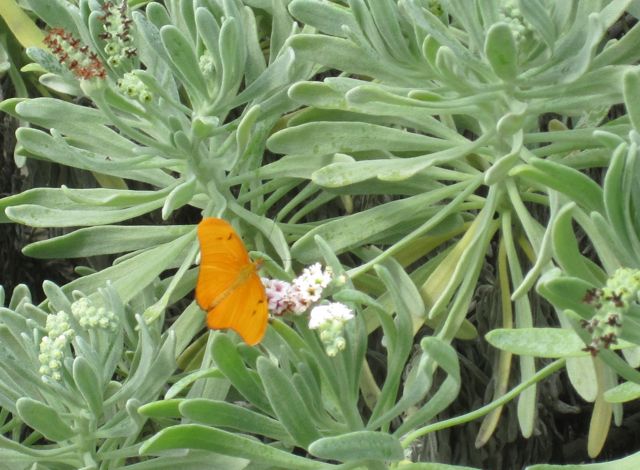
JULIA LONGWING Dryas Julia (Delphi Beach – plant now ID’d as a Bay Cedar Suriana maritima, much enjoyed by butterflies and bees)

HAMMOCK SKIPPER Polygonus Leo (Delphi Service Drive)


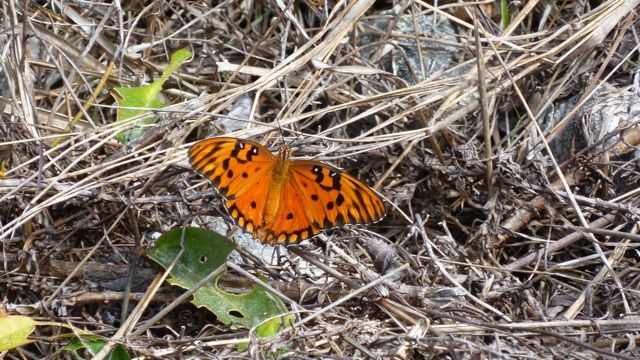
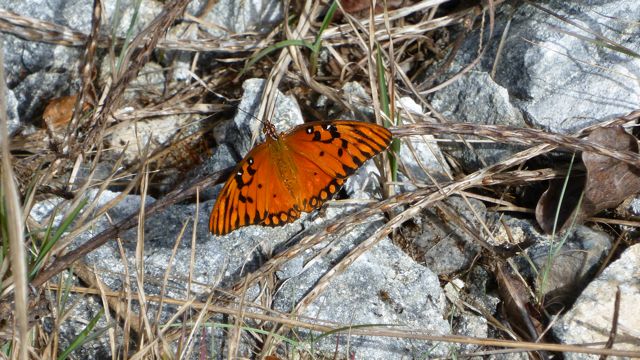
GULF FRITILLARY Agraulis vanillae (Delphi Guest Drive)


I haven’t nailed the ID of this one yet. Any ideas appreciated. [See later post for ID as GOLD RIM SWALLOWTAIL / POLYDAMUS SWALLOWTAIL     (Battus Polydamus Lucaeus) ]
Seen all round Delphi this March. These are on the move the whole time, and are surprisingly hard to pin down (not a very sensitive way to put it for a butterfly…) The bottom photo looks like a rubbish picture, I know, but in fact the butterfly is at rest (the body / legs / feelers aren’t blurred) while the wings beat fast and constantly while it feeds

AND FINALLY… Pride of place goes to this Atala Hairstreak, photographed during a Delphi outing with Ricky Johnson to one of the Blue Holes in the pine forest. It’s the only place I have seen these small butterflies, and there were only four or five. This one stayed still for just long enough

ATALA HAIRSTREAK Eumaeus Atala

===========================================

BLOG NEWS UPDATE 

23.04.11

  • Email Share added to the main pages
  • Pages Menu added to sidebar
  • Contributions received now posted on the appropriate page…

Note I am trying to reorganise this blog to increase accessibility of categories and sub-categories. Struggling a bit… one major accidental deletion so far… proposed pages under construction or at least under contemplation… please bear with me!  

============================================