“I MUST FLY”: GONE TO ABACO. BACK SOMETIME.
UPDATES AS & WHEN
HIS ‘N’ HERS RODS ON THE BEACH AT DELPHI
Photos: Tom Sheley, RH, Charlie Skinner, Melinda, Kaitlyn Blair on FB, RH

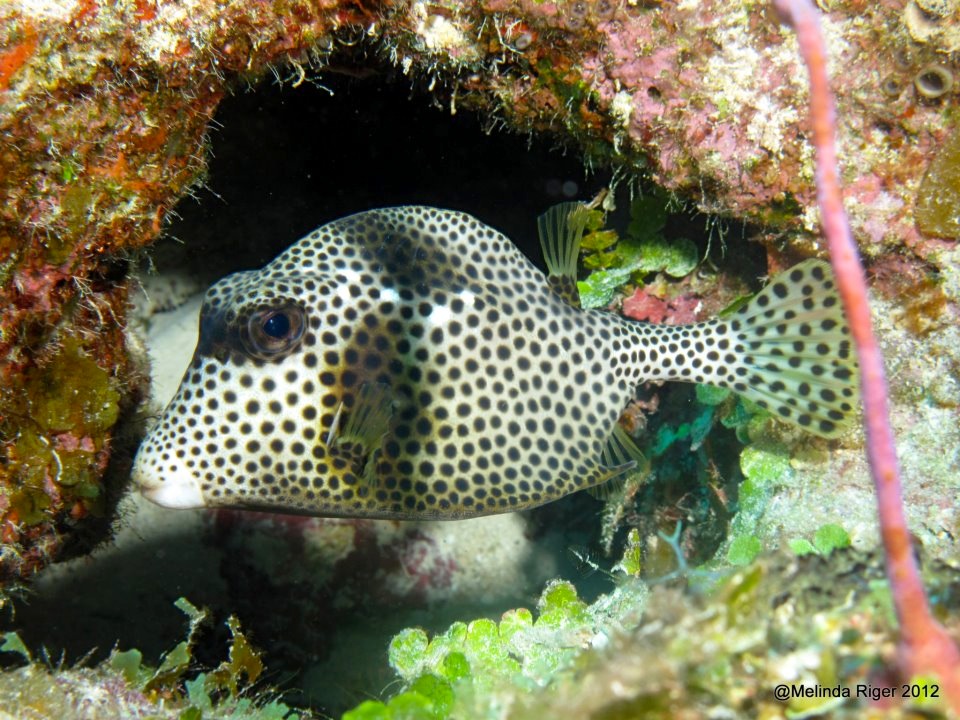
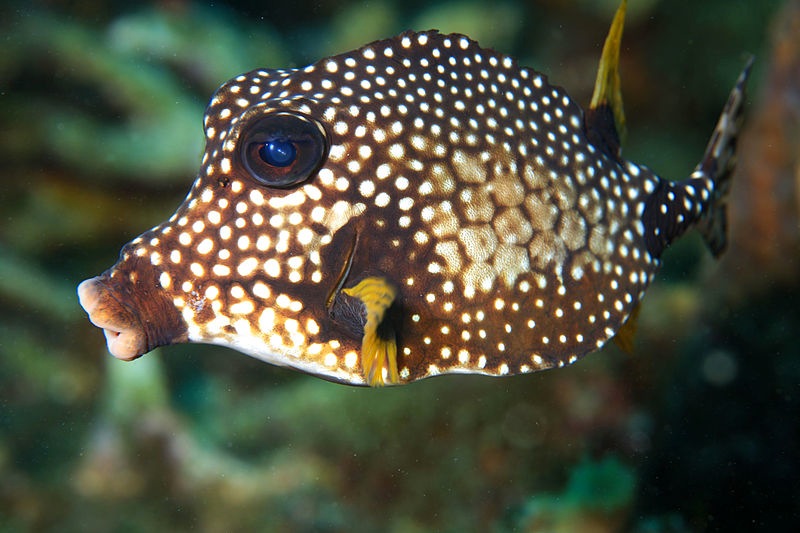
THE SPOTTED TRUNKFISH is a reef fish distinctive for its dark spots on a silvery-white background. It’s very wrong of me to comment, I know, but arguably its appearance is amusing. It probably feels the same about divers with all their gear…

However the trunkfish deserves to be treated with due respect. When touched, they secrete a colourless toxin from glands on their skin. The toxin is only dangerous when ingested, so divers are unlikely to be harmed by the it. Predators however are at risk, and creatures as large as nurse sharks are known to have died as a result of eating a trunkfish.
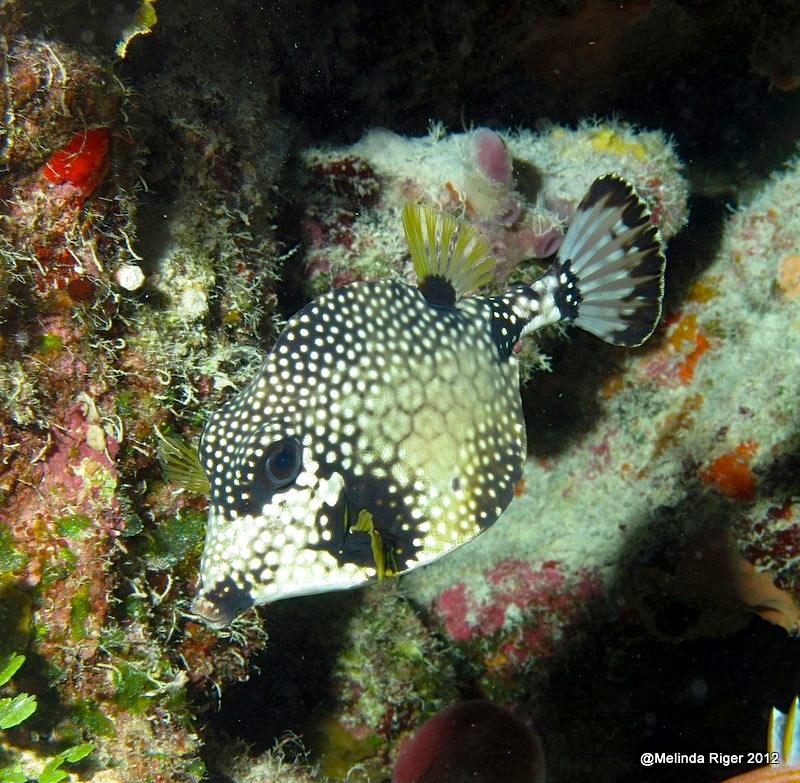
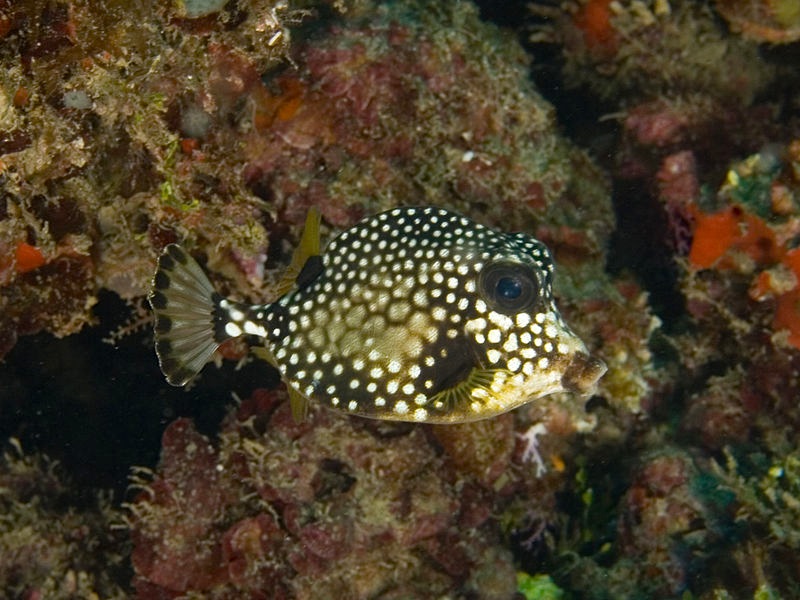
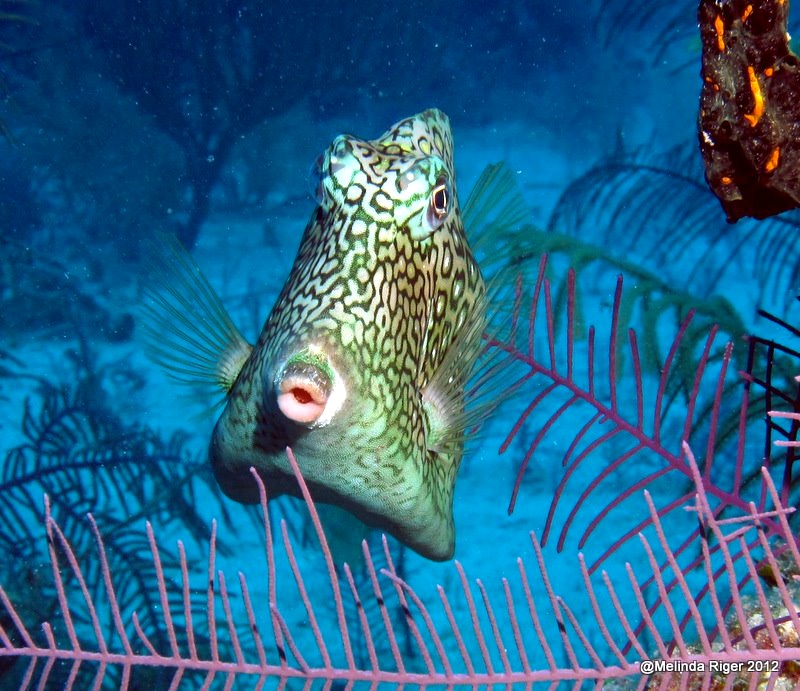
THE SMOOTH TRUNKFISH is almost a negative of the spotted trunkfish, with white spots on a dark background rather than vice versa. Adults develop hexagonal patterning on their sides. They also secrete toxins and are best left untouched. Their ability to pucker up is impressive…


“Coming at you…” Here is the extraordinary pouting triangular creature you will see
Photo Credits: Melinda Riger @ Grand Bahama Scuba; additional props to Wiki

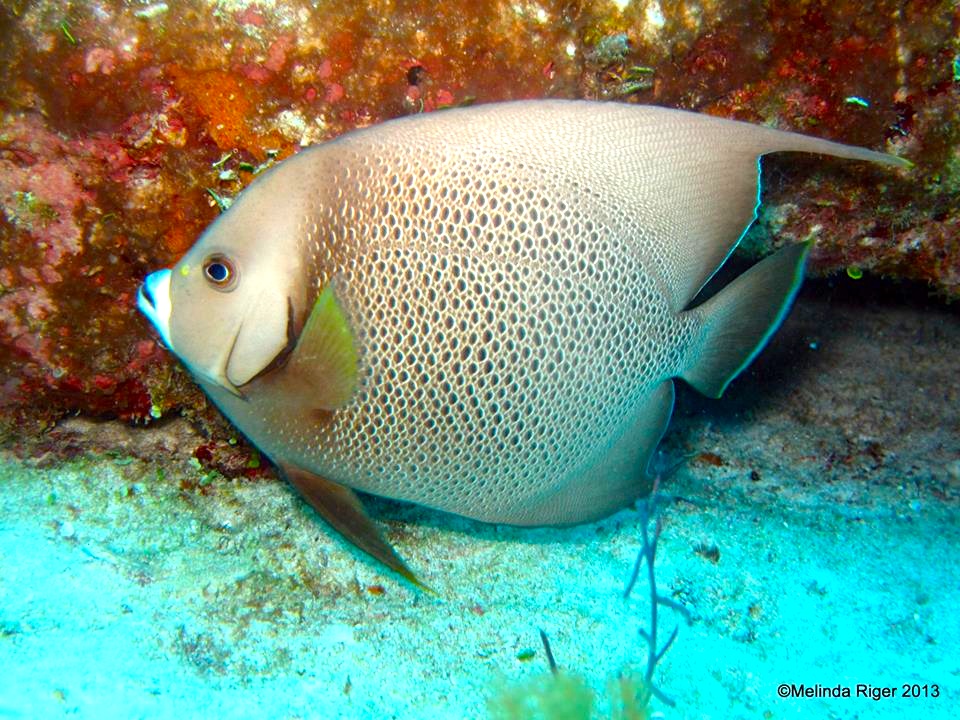
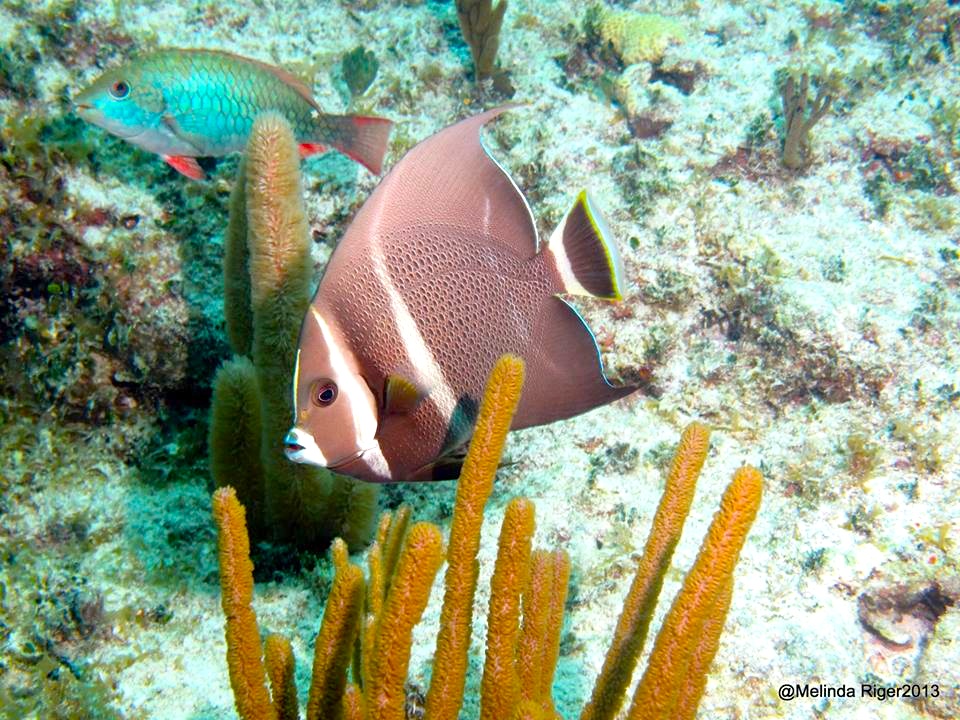
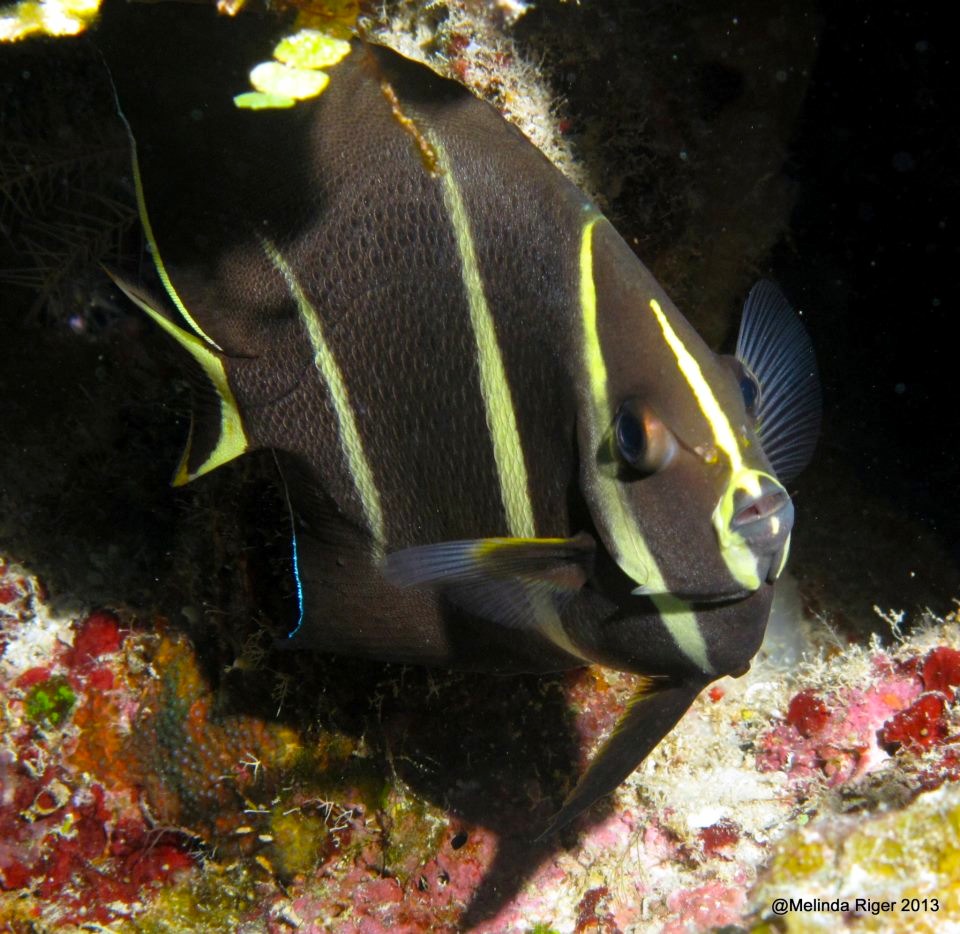
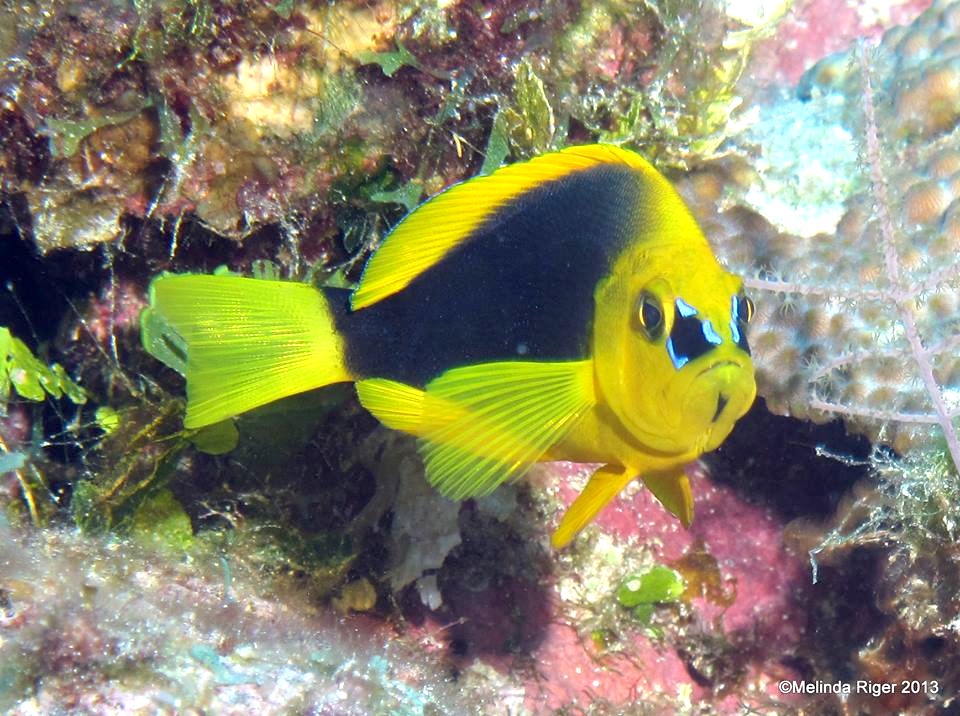
JUVENILE FRENCH ANGELFISH – BLACK WITH YELLOW BANDS
The French angelfish Pomacanthus paru is found in the western Atlantic and in parts of the eastern Atlantic. They are mainly seen around shallow reefs, often in pairs. They feed on sponges, algae, soft corals and small invertebrates.
Juveniles are extremely useful members of the reef fish community, providing cleaning stations. They service many species including jacks, snappers, morays, grunts, surgeonfishes, and wrasses, removing parasites.
Angelfish are monogamous, and defend their territory robustly. They swim around the reef during the day but at night they shelter in so-called ‘hiding spots’, which they return to each evening.

Credits: Melinda Riger (Grand Bahama Scuba); Wiki
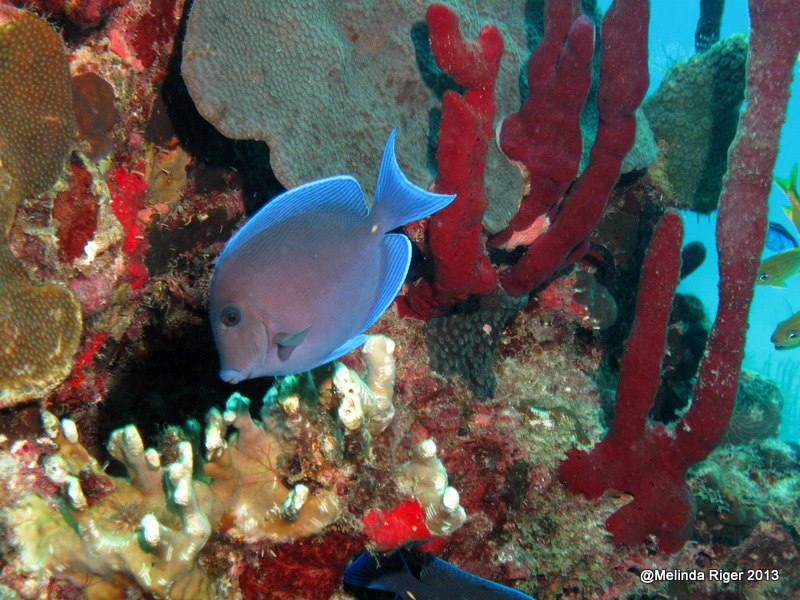
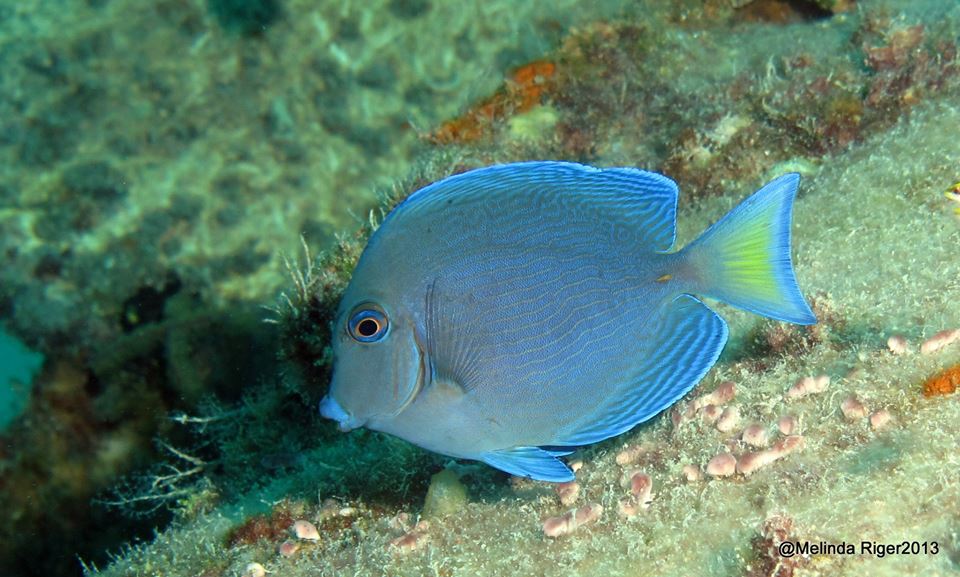
The Blue Tang Acanthurus coeruleus is a species of Atlantic surgeonfish mostly found on coral reefs. They are known as surgeonfish because they can slice you with their sharp, spiny caudal fins. Adults are blue, ranging from a deep blue or even purplish to much paler blue.

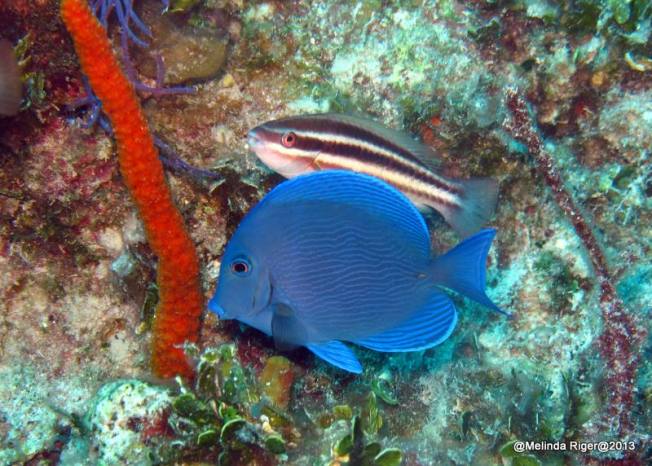
Surprisingly, as juveniles, Blue Tang are bright yellow.
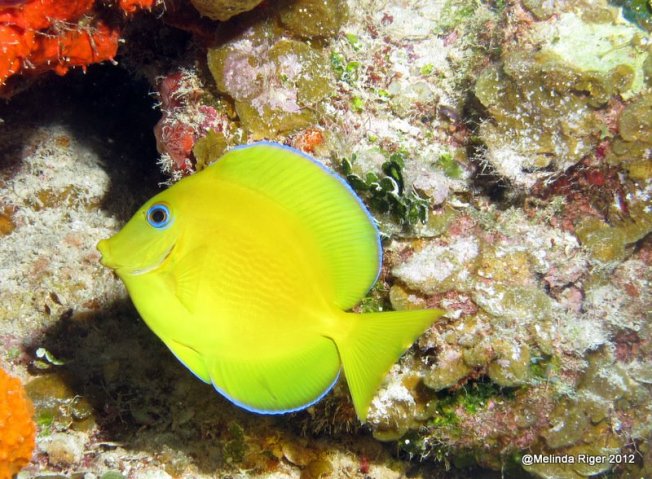
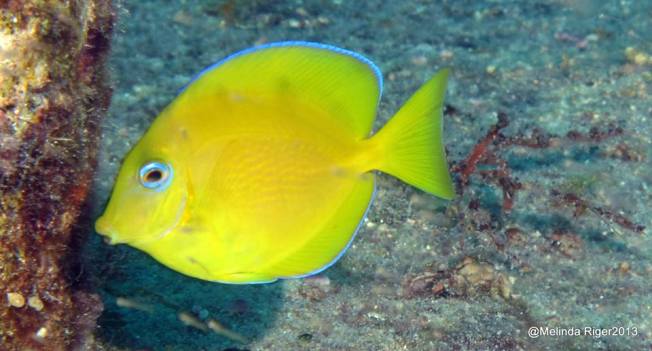
As they grow, they become blue, with the tail being the last part to lose the yellow.
Blue Tang are herbivores, cruising constantly round reefs feeding on algae. They also act as cleaners of other fish species, removing parasites. They themselves may be cleaned by gobies by visiting so-called ‘cleaning stations’. These piscine beauty parlours have a medicinal purpose as well, since cleaning helps to cure minor wounds.
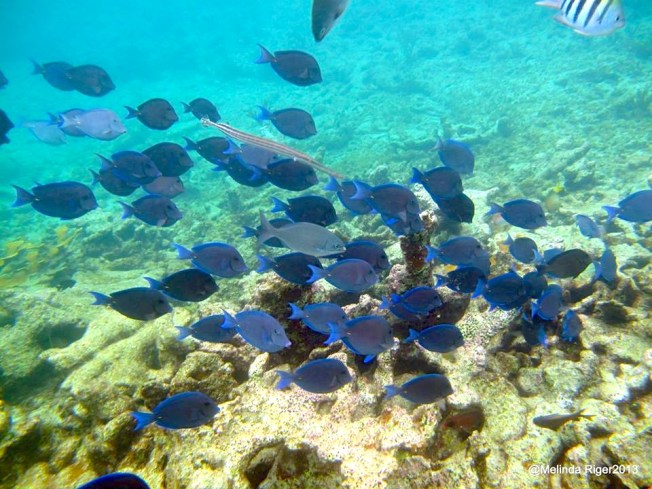
These fish often move around reefs in large schools, as shown in the header image. Apart from having some value as an aquarium fish, they are not generally of use to humans. Their spiny caudal fins can cause a nasty wound. They have an unpleasant smell. Their flesh supposedly contains toxins, and they carrying a risk of the disease CIGUATERA. I can’t even find a recipe for them online – now, that is a bad sign, there are some people who will try anything. I guess best to boil them for an hour or two, drain the water, allow to cool, and throw away the fish.
FUN FACT In the Disney/Pixar film Finding Nemo, the character Dory (voiced by Ellen DeGeneres) is a blue tang.
“RECIPE Take one incompetent swimmer who hasn’t snorkelled in, oh, nearly 40 years. Place him over a coral reef for his first time ever. Add a small underwater camera totally alien to him. Immerse for 30 minutes in warm briny water. Lessons have been learnt for next time. Mainly, don’t keep waving the camera about; let the fish move round you rather than vice versa; and most important of all, remember to keep breathing or else…
Here is BLUE TANG: THE MOVIE (music by Adrian Legg), 45 secs of advanced camera-shake with some beautiful fish more or less in shot for most of the time. If you are prone to sea-sickness, do not enlarge the video. If you are allergic to poor photography… well, thanks for visiting.”
[vimeo https://vimeo.com/44794952]Credits: Good pictures, Melinda; bad pictures and execrable movie, not Melinda
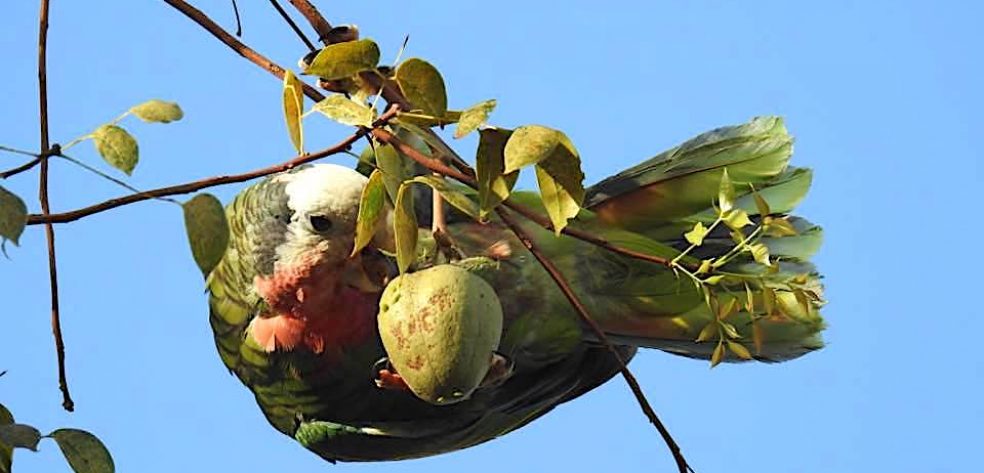
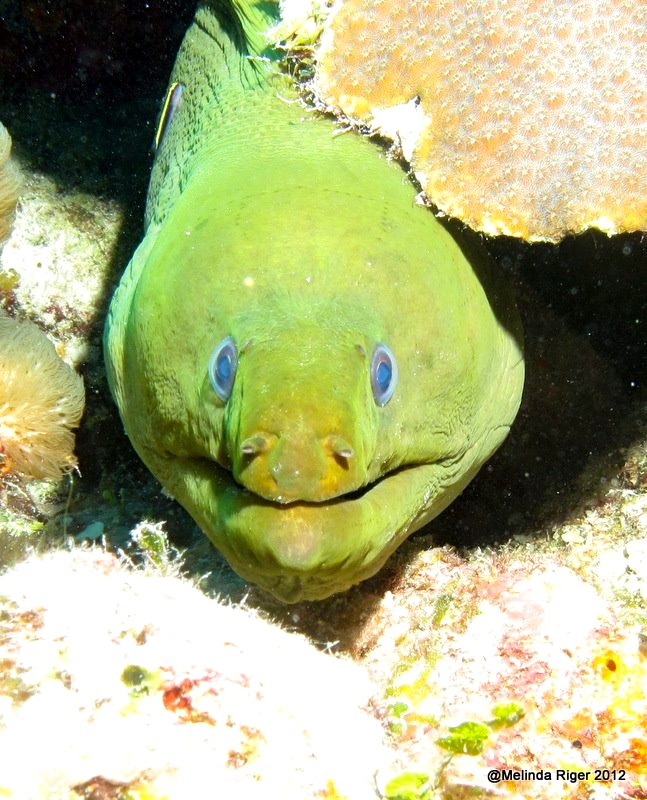
I have been idly filing away some stunning close-up reef denizen images by Melinda Riger. A Monday morning is the perfect time to showcase some pouts, poses and glad eyes from the ‘catfish walk’, starting with my absolute favourite…
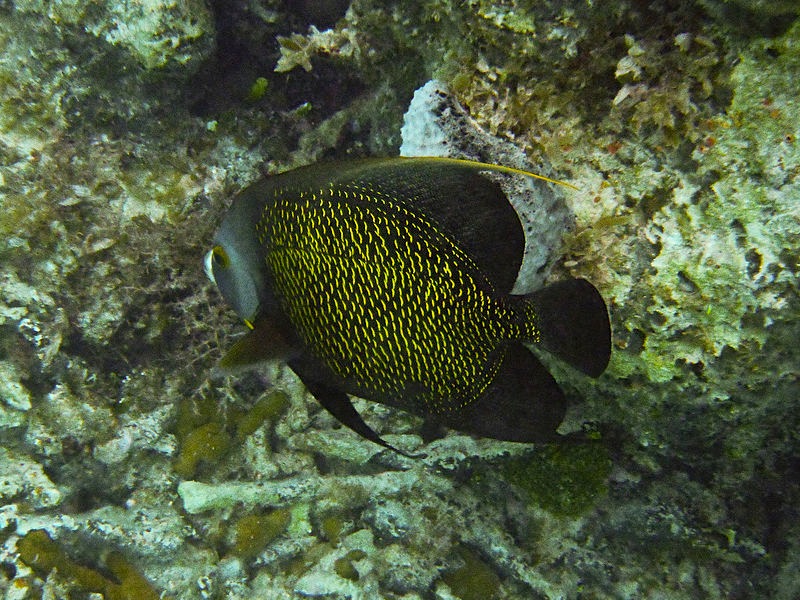
A GREEN MORAY EEL SMILES STRAIGHT TO CAMERA
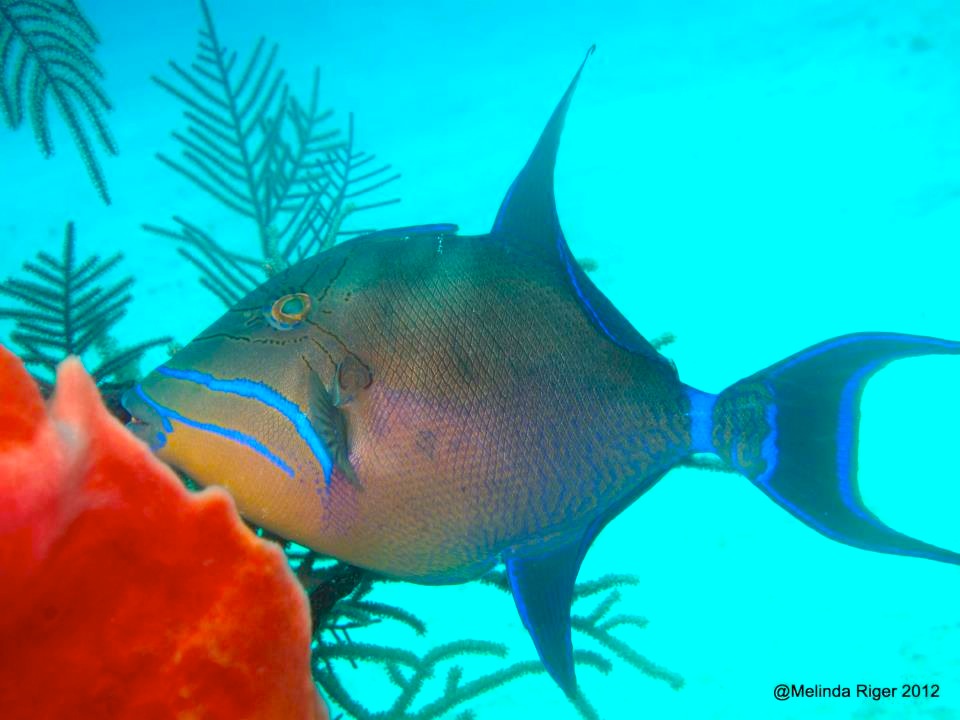
THE QUEEN ANGELFISH ‘LOVES’ THE LENS
A GROUPER DOES THE ‘OPEN-MOUTH’ GAPE
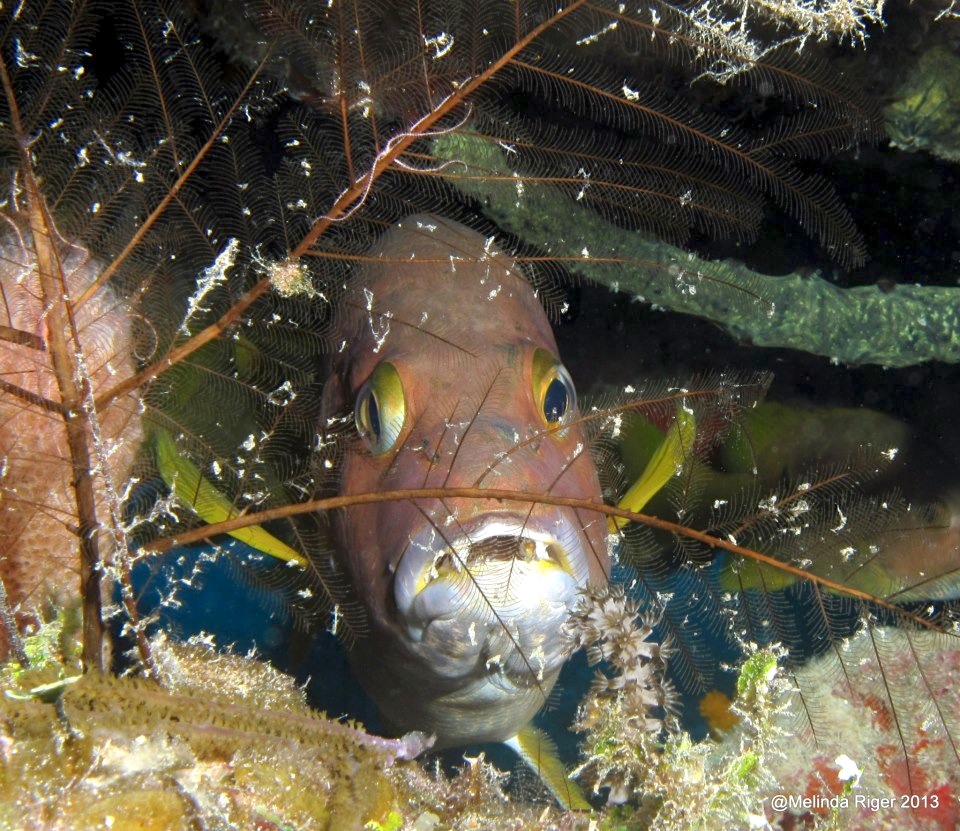
THIS SCHOOLMASTER SNAPPER MAY NOT HAVE GOT QUITE WHAT IT TAKES
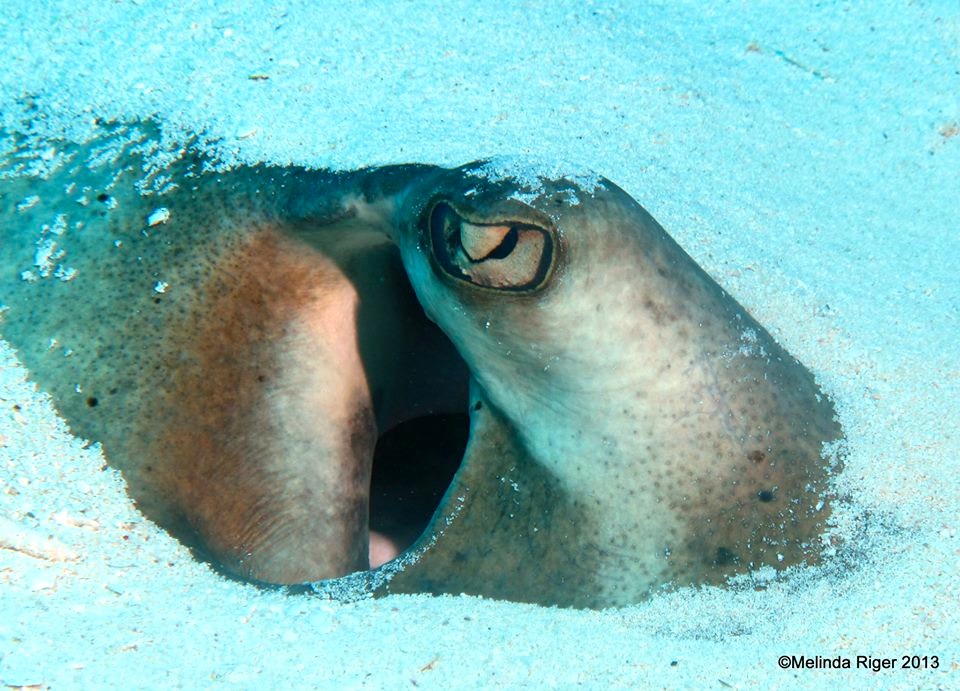
NICE EYES, BUT THE PETITE SAND-DIVER NEEDS TO BE A LITTLE MORE OUTGOING
HOWEVER THE PEACOCK FLOUNDER IS ROCKING THE MAKE-UP BOX
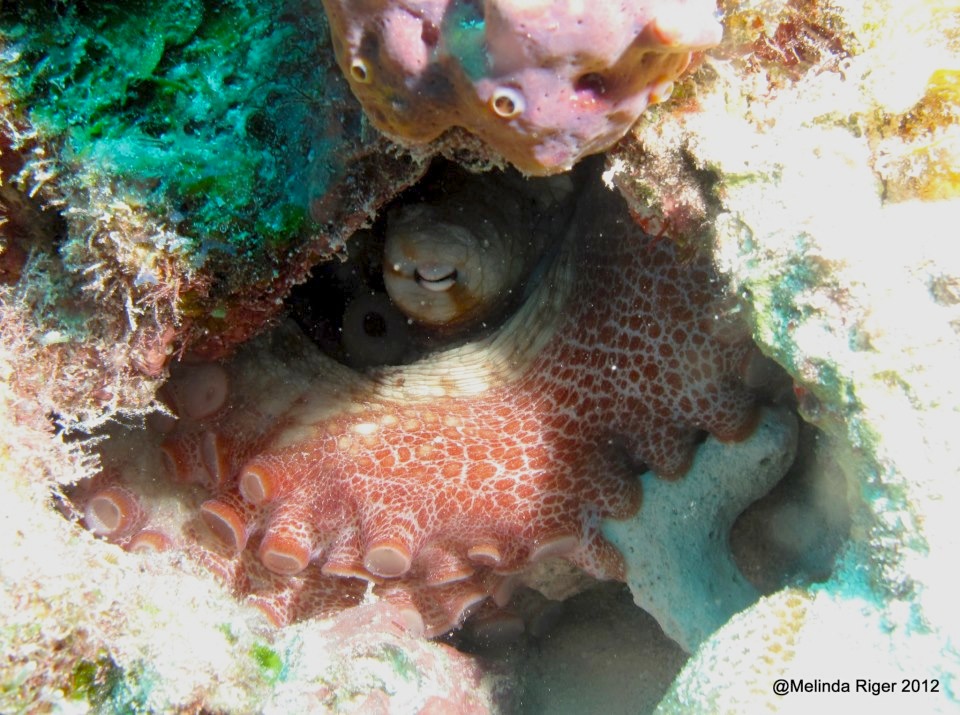
THE OCTOPUS IS MOODY & WON’T GET OUT OF BED FOR LESS THAN 20 MOLLUSCS
AND REGRETTABLY THE POOR CONCH HAS A BAD STAGE FRIGHT
For more octopus information and a discussion of the correct plural (choice of 3) CLICK HERE
For a post about underwater species camouflage CLICK HERE
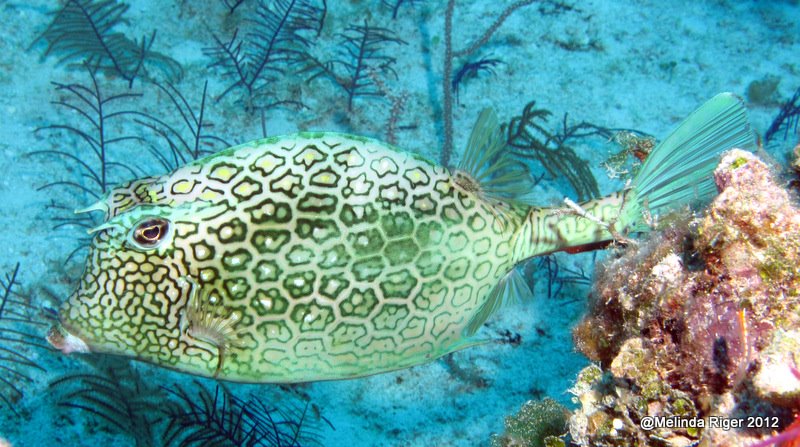
**Since I posted this earlier today, I have been asked (re photo 1) what the… the… heck a Cowfish looks like, when it’s not puckering up while facing you. The answer is: stunningly glamorous…
Thanks as ever to Melinda Riger of Grand Bahama Scuba for use permission for her fab photos; tip of the dorsal fin to Wiki for the shark eye header pic

“Oh, that this too too solid flesh would melt, thaw and…” Ah! Sorry. I’m soliloquising again. Must be Thursday. And the merest mention of Hamlet is enough to set anyone off. But I speak not of noble yet gloomy Danes of Elsinore and of discernibly introspective aspect. These ones are pretty reef fish of the Caribbean seas, mainly in the Bahamas and along the Florida coast. There are a number of different types of hamlet, of which the 4 featured below in Melinda’s amazing underwater images were were encountered in one dive.
Hamlets have outstandingly interesting reproductive skills, being ‘synchronous hermaphrodites’. They have the unusual benefit of having both male and female sexual organs as adults, permitting imaginative combinations of pairings (though not including self-fertilization). When they find a mate, “the pair takes turns between which one acts as the male and which acts as the female through multiple matings, usually over the course of several nights”. I don’t dare check whether there are websites that cater for this sort of energetic coupling. The wonder is that Hamlets preferentially mate with individuals of their same colour pattern, and that they are not more wanton with their attentions and sexual flexibility.
OPTIONAL CULTURAL, HISTORICAL & MUSICAL DIVERSION INSPIRED BY HAMLET
The other notable Hamlet is, of course, the mild cigar equated in the famed commercials with happiness, accompanied by an excerpt from a jazzy version of Bach’s ‘Air on the G String’. Here is one of the best – and possibly the only advert to my knowledge to feature not one, but two excellent Sir Walter Raleigh jokes.
Bach’s well-known descending chord sequence of was of course shamelessly ripped off by ingeniously adapted by Procol Harum for ‘A Whiter Shade of Pale’, their first single in 1967. Relive the Summer of Love right here and now. Is this the music that might even put those versatile hamlets in the mood…
Any fret-tweakers might like to see the sheet music of the Air for guitar – you could even play it on air guitar – which is relatively easy, being in C major.
Credits: All fish pics Melinda Riger of Grand Bahama Scuba, except wiki-header; open-source online material; my mp3, dammit – I can’t get the wretched tune out of my mind…
You must be logged in to post a comment.