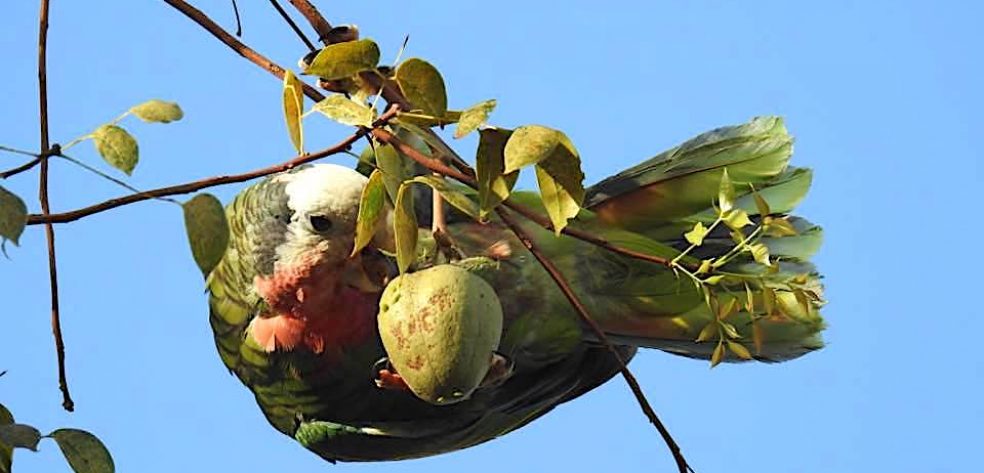


“ONE OF A KIND”: LIMPKINS ON ABACO
It’s 07.50 and we are trundling up the one-mile Delphi drive towards the highway in a truck towing the skiff for a day of fishing out on the Marls. We are ‘first boat out’, so the driveway has been peaceful for a while. Suddenly, some way ahead, a dark shape detaches itself from the margin of the coppice and steps into the roadway. Large. Dark brown. Kind of awkward looking. Long legs. Long decurved bill. And the bird I’ve been waiting to see for a long time. A limpkin.
My first sighting of one of the Delphi limpkins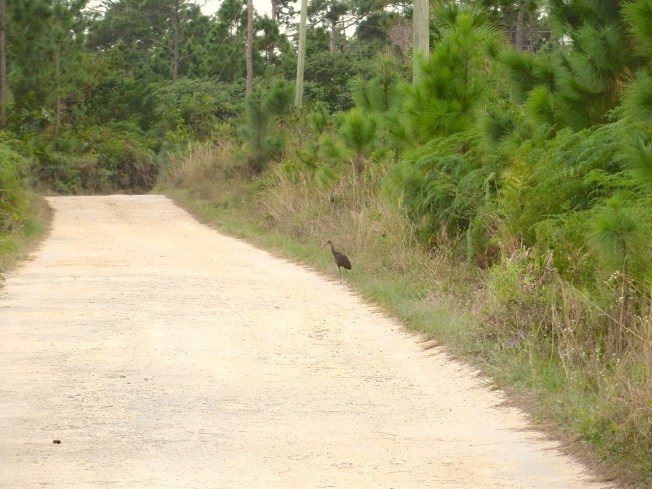
Grabbing the small point ‘n’ shoot I take fishing (far cheaper to drown than an iPh@ne), I leaned out of the open window and fired off some optimistic shoots at the bird, on full (yet feeble) zoom. For what they are worth**, here are a few – and will you look at the toes on the creature!


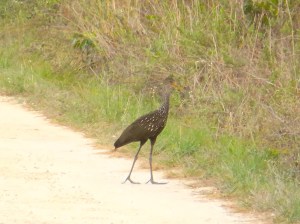
Limpkins (Aramus guarauna) have lived near the top end of the Delphi drive for several seasons, but they and I have never coincided. I haven’t even heard their weird screaming call. The guides sometimes see them when they first arrive each day, but limpkins are very shy, unsociable birds that keep themselves to themselves. Unless you see them cross a track, you might never notice them. To make matters more difficult, they are mainly “nocturnally and crepuscular”, so they are not generally active during the day.
Limpkin at Gilpin Point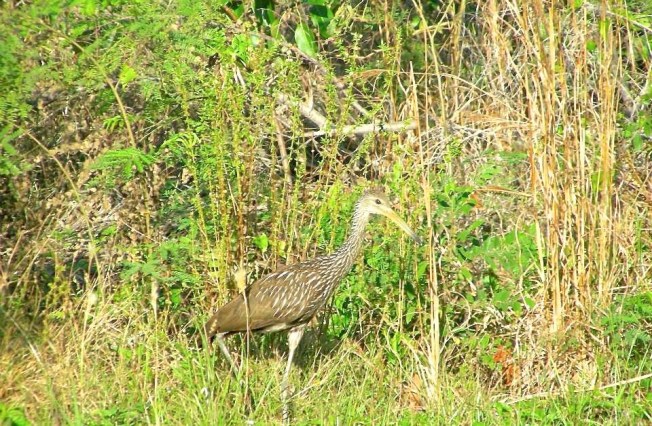
ONE OF A KIND
The limpkin is a species of long-billed, long-legged wading bird, and is unrelated to herons, cranes and rails despite appearances. In fact, it has the honour to be the sole member of its taxonomic family. They may be found near ponds, in mangroves, in dense coppice or on the edge of pinewoods. They move jerkily, with a flickering tail and, as with any ID-cooperative bird, to see one is to know one.
Juvenile limpkin
TEN LIMPID LIMPKIN FACTS TO ENTHRAL PUNTERS AT PETE’S PUB
- The Limpkin has its own ‘monotypic’ family – a one-off species of bird
- They eat snails and molluscs (also insects, worms & frogs), using their beaks to snatch them
- They may leave piles of discarded shells in their favourite feeding sites
- The birds are ungainly and awkward: “limpkin” probably derives from their limping gait
- Males and females have the same plumage (males being slightly larger)
- The beak acts like tweezers – slightly open and closing at the tip – for tweaking snails etc
- Territory is defended aggressively, with ‘ritualized charging and wing-flapping’ at intruders
- Sex lives: they are monogamous; or polyandrous (a male and more than one female. Tsk.)
- They use ‘courtship feeding’ – males will catch and shell a snail and then feed it to a female
- They are also known as the ‘Crying Bird’ for their bizarre shrieking call, as used in films (below)
Range map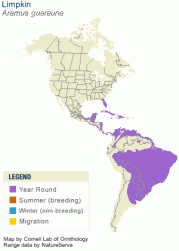
Olivia Patterson of Friends of the Environment kindly sent me this video that she posted on their FB page a while back with the comment: “Do you know what a limpkin sounds like? There are a pair of them which live around the FRIENDS office. Check out this video to hear them calling out for each other. See if you can spot the limpkin! (hint… look at the pine tree on the left). Limpkins typically live near wetlands and eat snails”.
Favourite food – the apple snail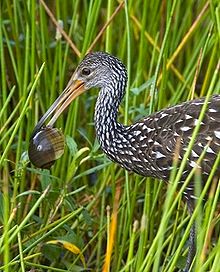
** I’m not ashamed to use my more pathetic photos when context permits…
Credits: Header, Tony Hepburn; 5 rubbish photos from a moving truck, RH; Gilpin Point, Troy Maillis; 3 other images wiki (uncredited); range map, Cornell; video, Olivia Patterson / FOTE; general long-billed rootling around for info, with a nod to wiki.
A good wing-shake

 ROLLING HARBOUR ABACO
You must be logged in to post a comment.