Unknown's avatar

ABACO PARROTS: NEST CAMERAS AND PREDATOR CONTROL


♦ NEW ABACO PARROT LOGO 

[Note: this post replaces the preliminary, typo-ridden and imageless draft that subscribers may have received, for which I stupidly pressed the ‘publish’ button rather than ‘save draft’… Not the 1st time, either… Sorry] 

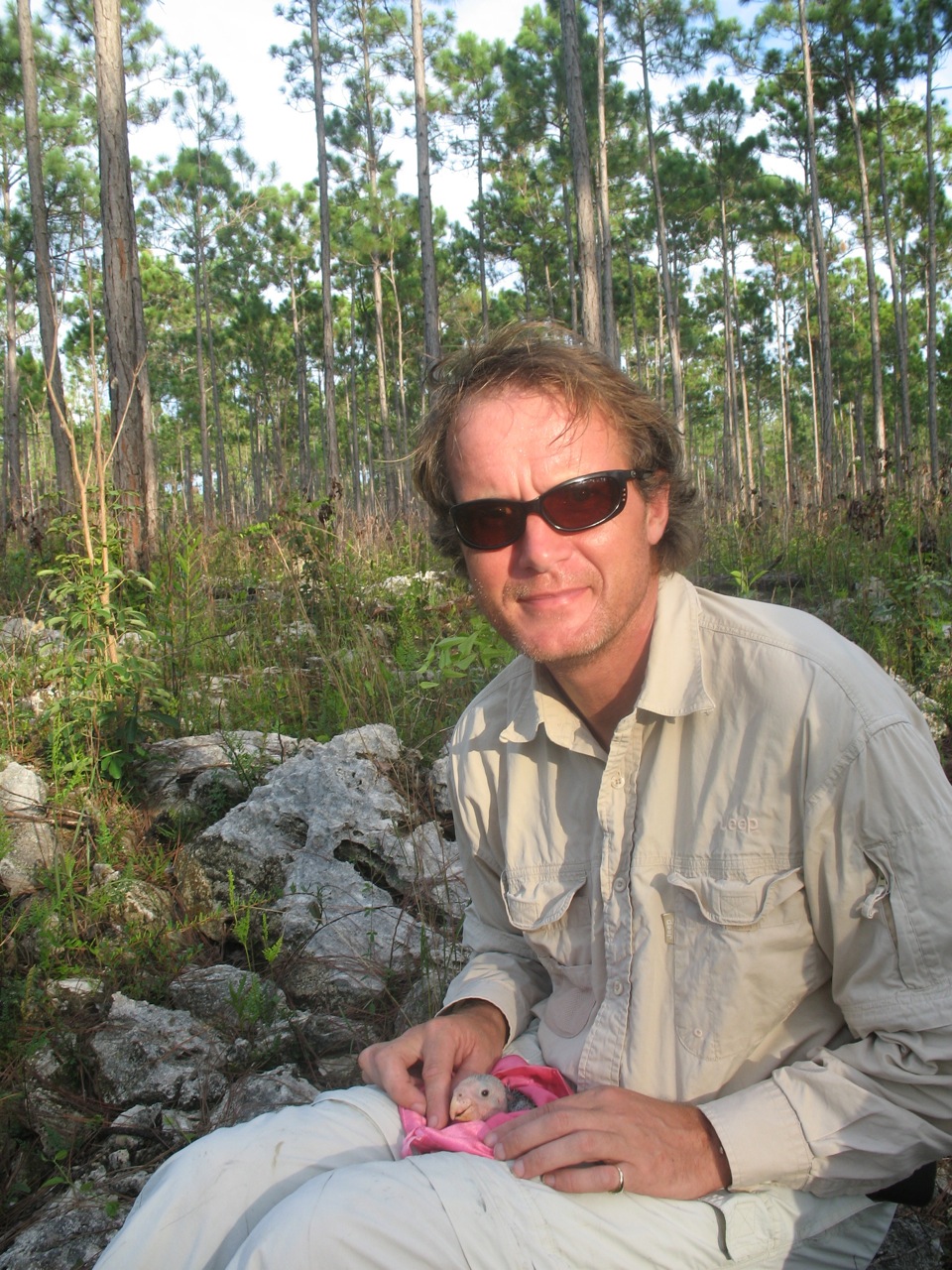
Scientist Caroline Stahala has spent 10 years researching the Abaco population of the Bahama parrot. Her aim is to develop understanding of their behaviour so that conservation and management strategies for this rare sub-species can be optimised. Particular protection problems arise because Abaco parrots, uniquely, nest underground. Their main vulnerability is to predation by feral cats, racoons and rodents which kill adults, chicks and fledglings in the nest

Predator monitoring and control programs have been in place for several years, removing surprising numbers of feral cats prior to and during the breeding season. Prevention techniques have been refined as predation data has accumulated. In 2011 for the first time motion-sensitive cameras were used, positioned near the openings of vulnerable active nests (shallow or with large openings), monitored 24/7 with infra-red night-time flash. Constant technical adjustments were needed to determine optimum filming distance and memory card size, and to avoid ‘false triggers’ (eg wind)

A great deal of vital data was collected, particularly at night when predation can’t otherwise be effectively monitored. Feral cats were the most frequent visitors, followed by rodents. No racoons were recorded, so these may be less of a threat than expected. One northern mockingbird (above) was caught on film up to no good. It it seems that the camera flash itself may act as a deterrent, something that bears further study. There is also new evidence that some predators approach a nest and ‘case the joint’ for later use. All this data will make it possible to target predator control preventatively, rather than in the sad aftermath of predation – a great step forward. 

Overall, during the 2011 breeding season none of 55 nests monitored was lost due to predation. In previous years, the attrition rates have been around 25%. The use of cameras avoids any disturbance of the parrots and chicks and provides round-the-clock monitoring. If the cameras / flash are in themselves deterrents, that is a simple method of predation control. The new banding project means that it is now possible to be certain whether same parrot (or pair) is using the same nest cavity each year – and of course individuals can more readily be identified

Finally, Caroline confirms that the parrots weathered Hurricane Irene well.  She was still monitoring the breeding territory then, and when she returned to check active nests after the storm, she found the chicks and fledglings safe in their nest cavities 

Abaco Parrot chick safe and sound - the first post-Irene image

Unknown's avatar

BIRD NEWS UPDATE FROM DELPHI CLUB ABACO


Peter Mantle reports that a recent ferocious 4-day storm caused further havoc in the gardens, which had just about recovered from the depredations of Hurricane Irene. Even fishing was impossible. Yes, it really was that bad. However, the birds seem remarkably resilient to everything the weather gods throw at them. Parrots are plentiful around the club and are seen and / or heard almost daily. Peter also says  “We had a spectacular exhibition yesterday of a peregrine repeatedly dive-bombing (for fun, we think) several turkey vultures in high wind, with another peregrine cruising nearby.”

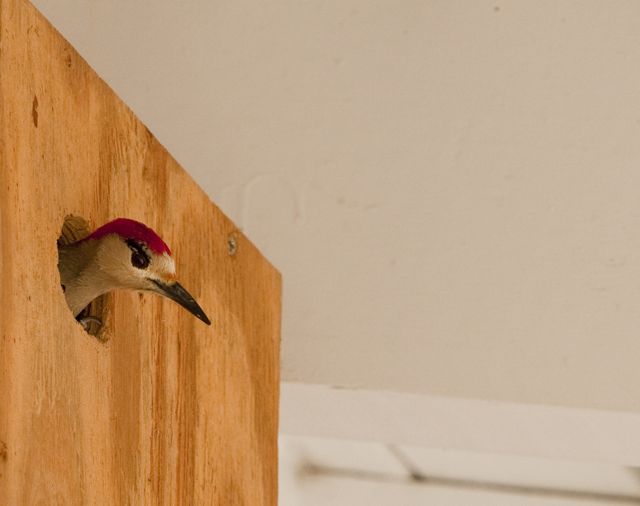
Caroline Stahala has given me a West Indian Woodpecker update. These charming if noisy birds have been a bit of a leitmotif of this blog. We met their early reluctance to use the perfectly nice nesting box provided for them; their eventual moving in; their use of the club vehicles’ wing-mirrors for vanity purposes; their attempts to raise 2 broods of chicks with varied success (that’s a deliberate euphemism); and stoutly resisting the force of Irene. The male woodpecker is still using the nesting box for roosting. The breeding season is long over, but perhaps next season his home in the eaves of the verandah will be tempting for a mate… And finally, the hummingbirds are plentiful – so as Caroline says, “now is a good time to be birdwatching…” 

Photo credit: Peter Wesley Brown

Unknown's avatar

ABACO PARROTS POST-IRENE: CAROLINE STAHALA’S FIRST REPORT


ABACO PARROTS EXCELLENT POST-IRENE NEWS

The past week has been rightly dominated by concerns for family and friends, for homes and property, for the swift restoration of communications, and for many other human interests. The consequences of Irene for Abaco’s wildlife has taken its appropriate place lower down in the priorities, but there are obvious concerns for the loss of habitat through destruction and defoliation, consequent problems with food supply and so on. 

The Abaco parrots are a potent symbol of recovery from near-disaster, with the conservation programme annually leading to breeding success in the wild and numbers on the increase. Recently – it seems a while ago now – I posted about the progress of this year’s chicks and fledglings: see ABACO PARROT CHICKS   Caroline Stahala, who heads the conservation project, has now sent the first report on how the chicks have fared through the hurricane:

“…I have been out checking on the unfledged chicks and I am finding that most of the nests that should have been active still are.  This means chicks are still in the nest.  I am attaching a photo of one of the chicks that I found post hurricane.  It seems that the parrots did well through the hurricane now I hope they are able to find enough food until spring…”  

In my earlier post today – see ABACO 31 AUG POST-IRENE – I mention at the end that I feel my unexpected transformation into a storm commentator and information provider is coming to its natural end. I can’t think of a more appropriate image for taking my leave from hurricane duties than this little parrot fledgling. It’s an emblem of Abaco, and a symbol for the future after the storm. Thanks for reading the blog, following it and for all contributions and encouragement over the past week.               rollingharbour 

Abaco Parrot chick safe and sound - the first post-Irene image
Unknown's avatar

ABACO PARROT PROJECT: CHICK & FLEDGLING BANDING – AMAZING PHOTOS


CAROLINE STAHALA has provided some truly outstanding photos derived from her scientific research work during the summer into the breeding of Abaco Parrots in the National Park. By their very nature, these pictures of direct human contact with these lovely birds must be exceptionally rare, and I am really grateful to Caroline for allowing me to showcase them in this blog.

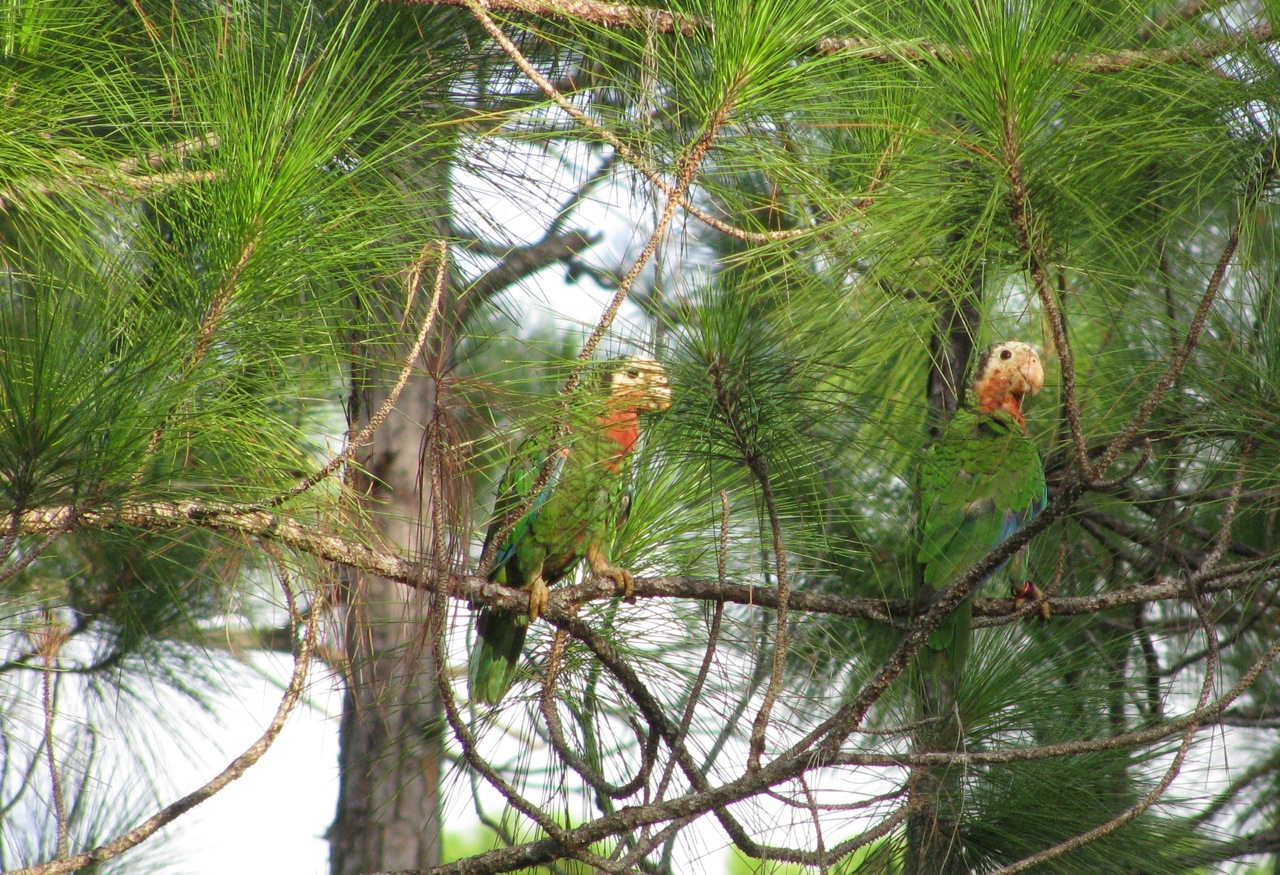
1. Adult Abaco parrots in the National Park pine forest.  One is wearing a band on its leg from last year’s ringing programme (CLICK images to enlarge)

2. A bag of 3 parrot chicks, at different stages of maturity, in the process of banding. You can see the band on the leg of the little bald unfeathered one

3. Two timed shots of adult Abaco parrots, one of which is going down the inside of their burrow into the nest while the other keeps a lookout

4. Caroline is assisted with writing up her data records by one of her protégés

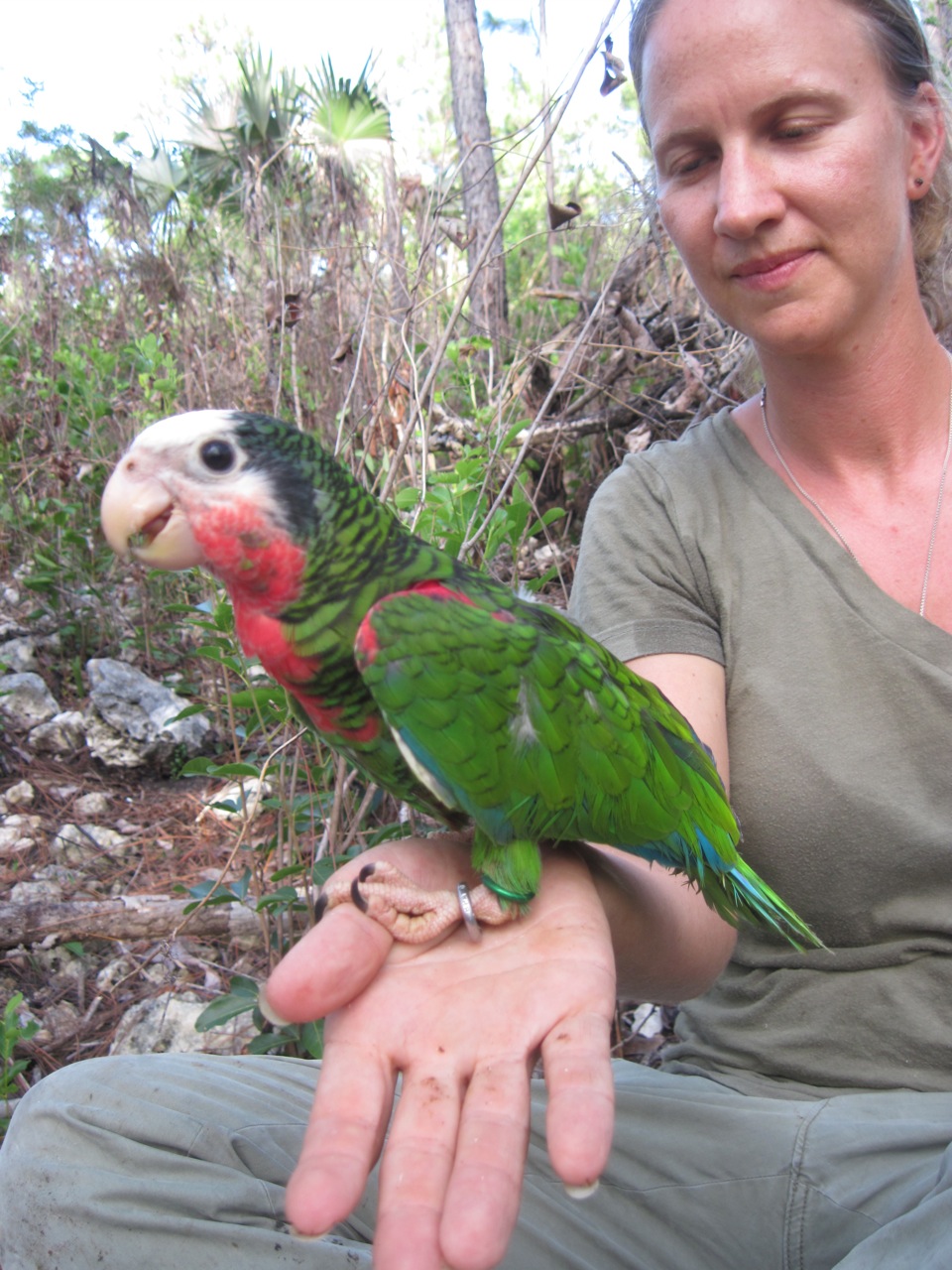
5. A unique photograph (I haven’t been able to locate another similar image) of a newly-banded Abaco parrot fledgling contentedly perched on a human hand

6. This photograph of Sandy Walker (Delphi Club) is captioned ‘Sandy and Chick’, and I really don’t think I can improve on that!Thanks Caroline for these amazing images – it’s a privilege to be able to post them

IF YOU ARE INTERESTED IN SUBSCRIBING OR DONATING TO SUPPORT THE CONSERVATION PROJECT TO SAVE THE ABACO POPULATION OF THE BAHAMA PARROT, THE DIRECT LINK TO THE SUBSCRIPTION / DONATION PAGE IS   HTTP://WWW.PARROTSINTERNATIONAL.ORG/MAIN-JOIN.HTML


Unknown's avatar

ABACO PARROT POST – FLEDGING UPDATE


 Click me! 

CAROLINE STAHALA  has sent a quick update on the progress of the Abaco Parrots and chicks as the breeding season (and the associated project) nears its end. The chicks are growing up fast, and will very soon be fledging. CLICK==>>> HERE to admire their cute appearance in their earlier stages.        Caroline says “they are currently, literally, climbing the walls to make their first flight with their parents”. She hopes to provide some photos – perhaps there may be video – in due course. She hasn’t mentioned problems with feral cats, racoons or other predators, so with luck nest raids and chick losses through predation have been low. And if you want to know how to build an Abaco Parrot out of Lego™ (CLICK ‘Lego™ Logo’ above) you’ll have to buy my book “A Spare Week and a Bucket of Lego™” (rh Press $15 / £10)

Unknown's avatar

ABACO PARROTS – CAROLINE STAHALA’S REPORT


                                                                        Click me!

CAROLINE STAHALA was introduced in an early parrot post on this blog – see  DELPHI CLUB ABACO – PARROT RESEARCH & CONSERVATION. That post will route you to her thesis and to an article in The Abaconian about her work. She has just sent a report about her current researches (and there will be future updates):

At the moment we are in full chick mode.  All the parrot nests (45 nests!) that we have been finding and monitoring since the end of May have hatched.  Next week I will begin banding these chicks so that we can recognize them as individuals and learn more about their behavior. Here is a picture of a chick banding from last year:In addition to banding chicks, I am going to be attempting to catch 3 mated adult pairs and place radio transmitters on these parrots.  This will give us information about what pairs do during the nonbreeding season, how frequently they interact, and whether the amount of interaction during the nonbreeding season influences how well they do during the  breeding season.  

This year, for the first time, I have set up cameras at nest sites to find out how frequently nests are being visited by potential predators and, also, who these predators might be. We have already detected cats, rats and mice at the nest sites using the cameras.  Here is a picture of a feral cat at one of the nest sites:
Caroline has asked me to mention that the project is in desperate need of a new field vehicle – the old one is dying a slow painful death.  She is working with a nonprofit organization Parrots International (www.parrotsinternational.orgto raise funds for the new truck (see BLOGROLL for their direct link to Caroline’s research). If  anyone would like to support this cause, it would be greatly appreciated:

If you are interested in subscribing or donating to support the conservation project to save the Abaco population of the Bahama Parrot, the direct link to the subscription / donation page is          http://www.parrotsinternational.org/main-join.html

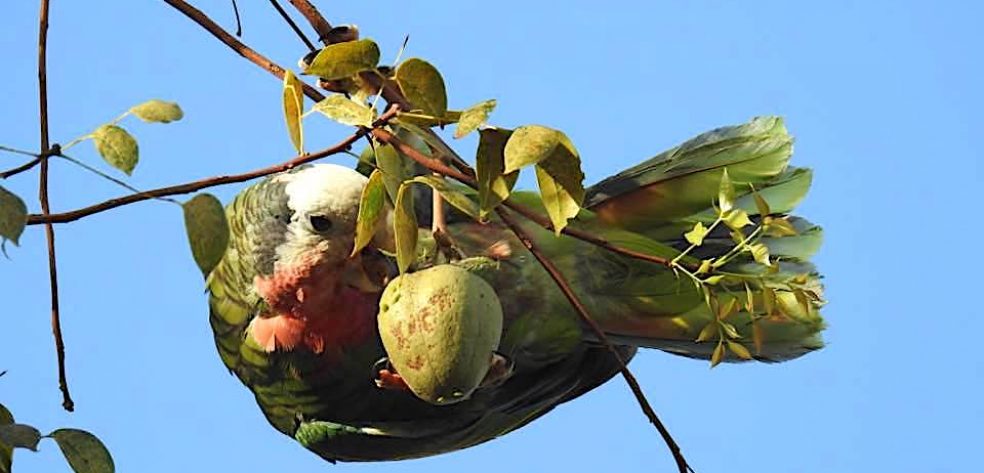
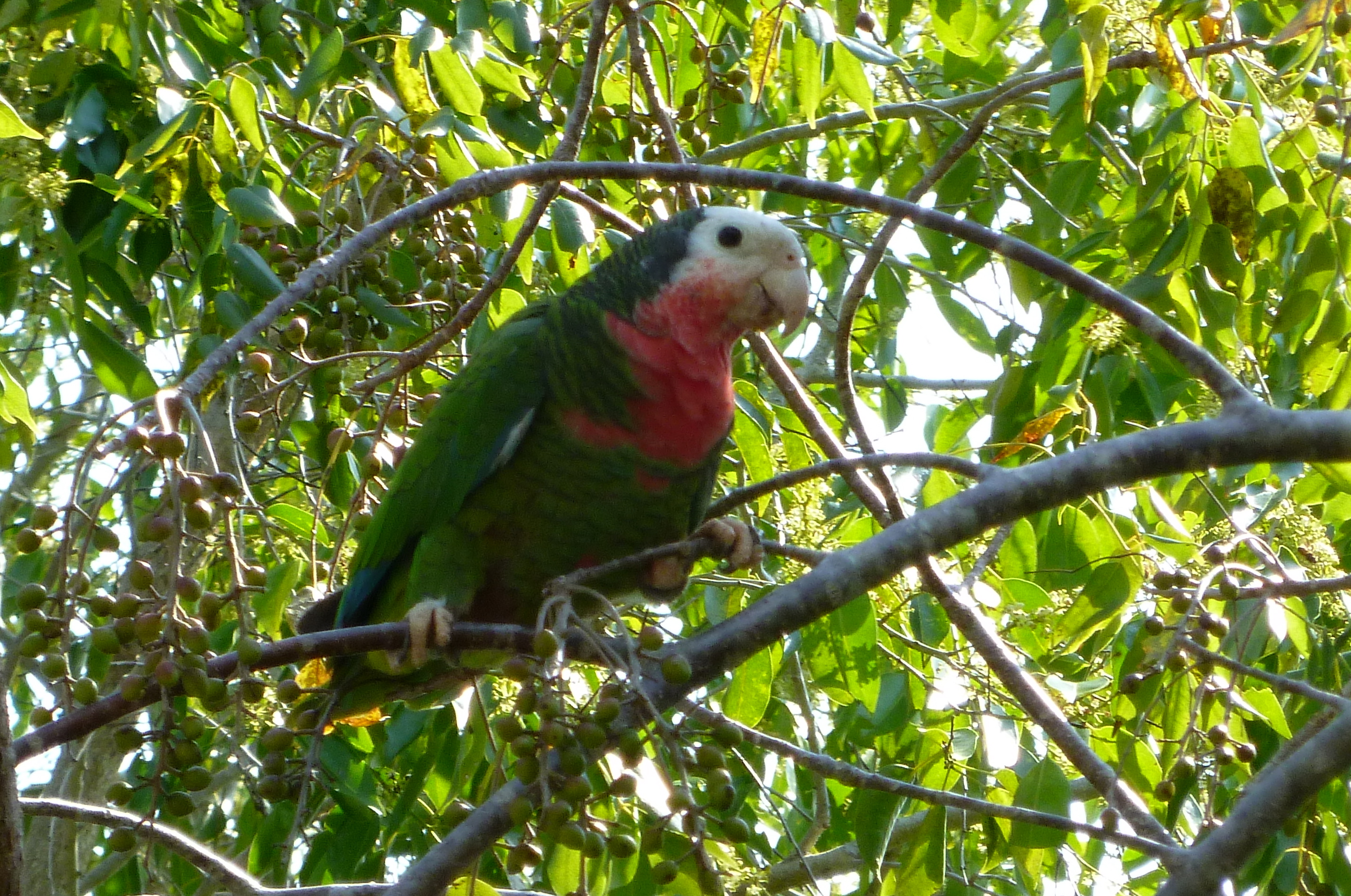
Finally, I sent Caroline an image of a particular Parrot taken by me earlier this year. Ricky Johnson said he had never seen one with so much red on its front – almost reaching its tail. And he should know…

Caroline’s reply  “I have not seen a parrot with quite that much red on its belly, however it is not completely surprising.  One of the features of the Abaco parrot is more red on the chest and belly than other Cuban Amazon populations. Even within a population there is quite a bit of variation of the red. Some Abaco parrots may just have the red throat with a few red feathers, but they do go to the extreme found in your picture.  Usually though you have a small red patch on the belly or what looks like spotty red areas on the belly.  Very neat picture!” (rh note – thanks, but in fairness I should add that the whole group of about 12 of us took pretty much the same photo of this parrot…)