Unknown's avatar

SAW A SORA? SURE? RAIL TRACK ON ABACO


BAHAMAS - Sora 2 - Oct 2010 copy 2

SAW A SORA? SURE? RAIL TRACK ON ABACO

‘Furtive’. ‘Secretive’. ‘Skulking’. These are harsh epithets to chuck at a small inoffensive bird that just goes about its daily routine in watery places. And look at it from the Sora’s point of view: ‘intrusive’; ‘prying’; invasive’; ‘nosy’… That’s you with your camera, disturbing its quiet life in the reeds and on the margins of marsh and lake. And for that matter your careful attempts to get close to the shy sora without startling it could also be described as furtive, secretive and skulking. See how it feels?

Sora.Marsh Harbour.Abaco Bahamas.6.13.Tom Sheley copy

The Sora Porzana carolina is a species of rail, a winter resident on Abaco. The island also has the CLAPPER RAIL, Virginia Rail and the Black Rail. There are no recorded sightings of this last one, and certainly no photographs. But their distinctive call has been heard in several locations over the last few years –  for example, by two people in different places last June when we were in full bird mode for “THE BIRDS OF ABACO”.

Sora, Gilpin Point Abaco RH 1

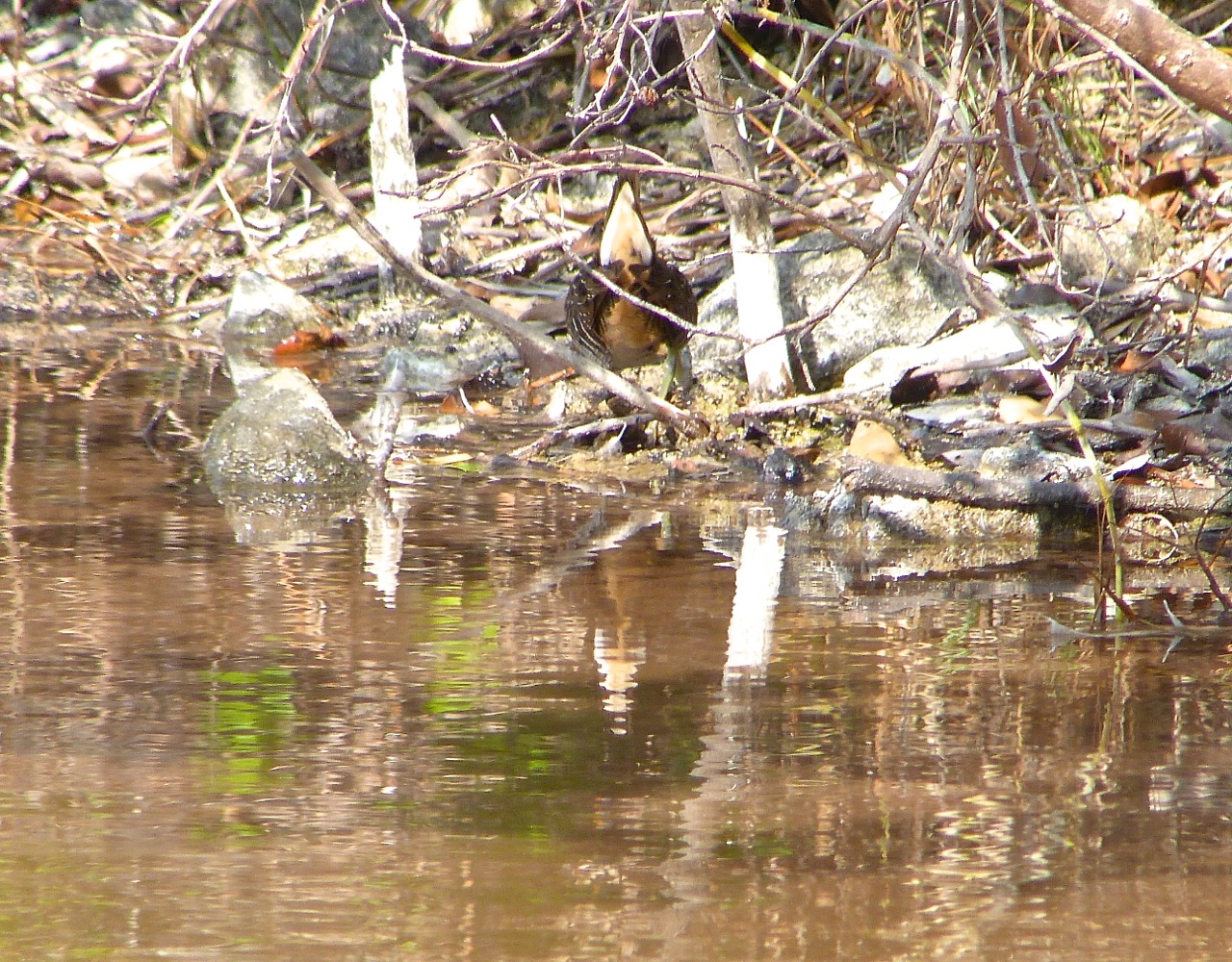
Although not uncommon, the sora is relatively hard to find; and if found, to photograph. As I wrote in the book, ‘these are most inconspicuous birds, so it is quite a coup if you manage to locate one. Their creamy beak and upturned tail may give their presence away as they work their way along the water’s edge, feeding intently’. Tom Sheley took the magnificent photo above of a sora peering out from cover – he’s a very patient man. Often, the best sight you’ll get is of the bird half-hidden in the reeds at a distance, as in my feeble effort above. Spot the Sora… I tracked the same bird, and later got a more open shot as the sora picked its way along the edge of a pond before disappearing again into the reeds. The bird was moving away from me. I was crouched on a small jetty, with a little blue heron nearby looking at me in puzzlement. Or sympathy. My best (ha!) shot below (beak and tail both visible? Check!) is followed by much the most usual view of a sora in my experience, the less photogenic end with the white… stern.

Sora, Gilpin Point Abaco RH 3Sora, Gilpin Point Abaco RH 4

I can’t improve on good old Wiki in summarising the diet of this little rail: “Soras are omnivores, eating seeds, insects and snails. Animals that are commonly reported as sora food items include snails, crustaceans, spiders, and insects – mainly beetles, grasshoppers, flies, and dragonflies. Soras often eat plant seeds. Plants in the sora’s diet include duckweed, pondweeds, and grasses.” Wiki’s own image is shown next.

Sora, Birding Center, Port Aransas, Texas

We were with our friend the ornithological scientist Caroline Stahala* when we – I should say she – saw my first sora at the pond at Gilpin Point near Crossing Rocks. She grabbed my camera and plunged into the rather thick undergrowth at the water’s edge. Actually, she had to plunge into the water itself at one stage. Here are 2 shots that further demonstrate how hard it can be to photograph these wretched creatures. They don’t pose prettily on a branch in the sunshine like a Spindalis, for example. They forage about in places where low light and thick vegetation combine to make focus and clarity difficult to achieve. *’The Parrot Lady’  Sora, Gilpin Point Abaco - Caroline Stahala 1 Sora, Gilpin Point Abaco - Caroline Stahala 2 The remarkable calls of the sora can be heard in the very short clips below, from the invaluable Xeno-Canto archive. They make three distinct types of sound, one described as “a descending whinny”. Apparently the use of ‘call broadcasts’ greatly increases the chances of hearing a sora. They also increase the chances of seeing a sora, as the bird will often investigate the source of the call. The propriety of using a recording to attract a bird is open to debate, but there’s no doubt that it can be far more effective than simply going ‘pish-wish’ repeatedly… CALL Ted Floyd ‘WHINNY’ CALL   Micah Riegner ‘WEEP CALL’  Todd Wilson This is a second Wiki image of a sora foraging in water. I like the fact that, as with Tom’s photo, you can see the feet.1024px-Porzana_carolina “SORA”. Where does the word come from? What does it mean? It sounds like some uninviting butter-style spread. Or is that ‘Flora’? I did some research and for a start it means ‘Sky’ in Japanese and ‘Seashell’ in Korean – both used as names. Six countries worldwide have places called Sora. There are various obscure usages (e.g. a little-known video game). Disappointingly, however, the best etymology I can find in a birding context is that the origin is ‘unknown’. I was too disheartened to explore the derivation of ‘Porzana’. Could so easily be a second-tier female character in a Shakespeare comedy: “Haply, Porzana, hast seen the Sora of the Prince, withal?”. Having started this post with a header shot by Becky Marvil, I’ll end with the etymological mystery and another photo by Becky of the same bird going for some underwater delicacy. Sora, Abaco - Becky Marvil 2.1

STOP PRESS Uli Nowlan has kindly sent a photo of a Sora taken at ponds north of Treasure Cay (below). It’s a timely reminder to me that this blog is somewhat South Abaco oriented. More than somewhat, in fact. That’s inevitable I’m afraid, owing to my base camp being south of MH. Also, I think it’s generally accepted that South Abaco is the place to find the best birding. I do include birds from the TC area – the golf course ponds and the creeks – but perhaps not enough. Contributions welcome!

Sora, Abaco (Treasure Cay area) - Uli Nowlan

Credits: Header and last image – Becky Marvil; Tom Sheley, RH, Wiki, Caroline Stahala; Uli Nowlan. Wiki-nod for some info also.

Unknown's avatar

ABACO BIRDS… THAT RUN LIKE THE CLAPPERS


Clapper Rail on Abaco by Sandy Walker

ABACO BIRDS… THAT RUN LIKE THE CLAPPERS

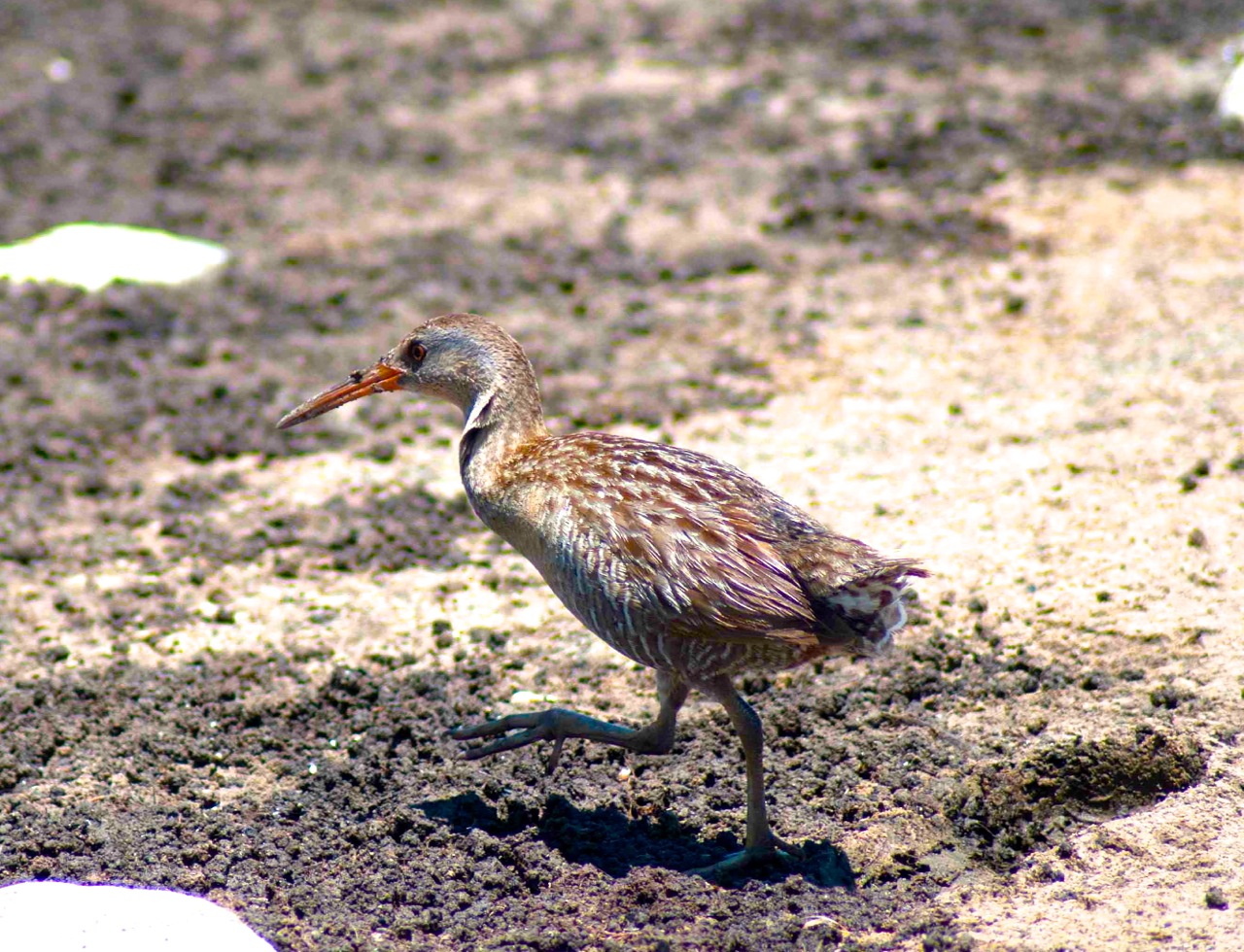
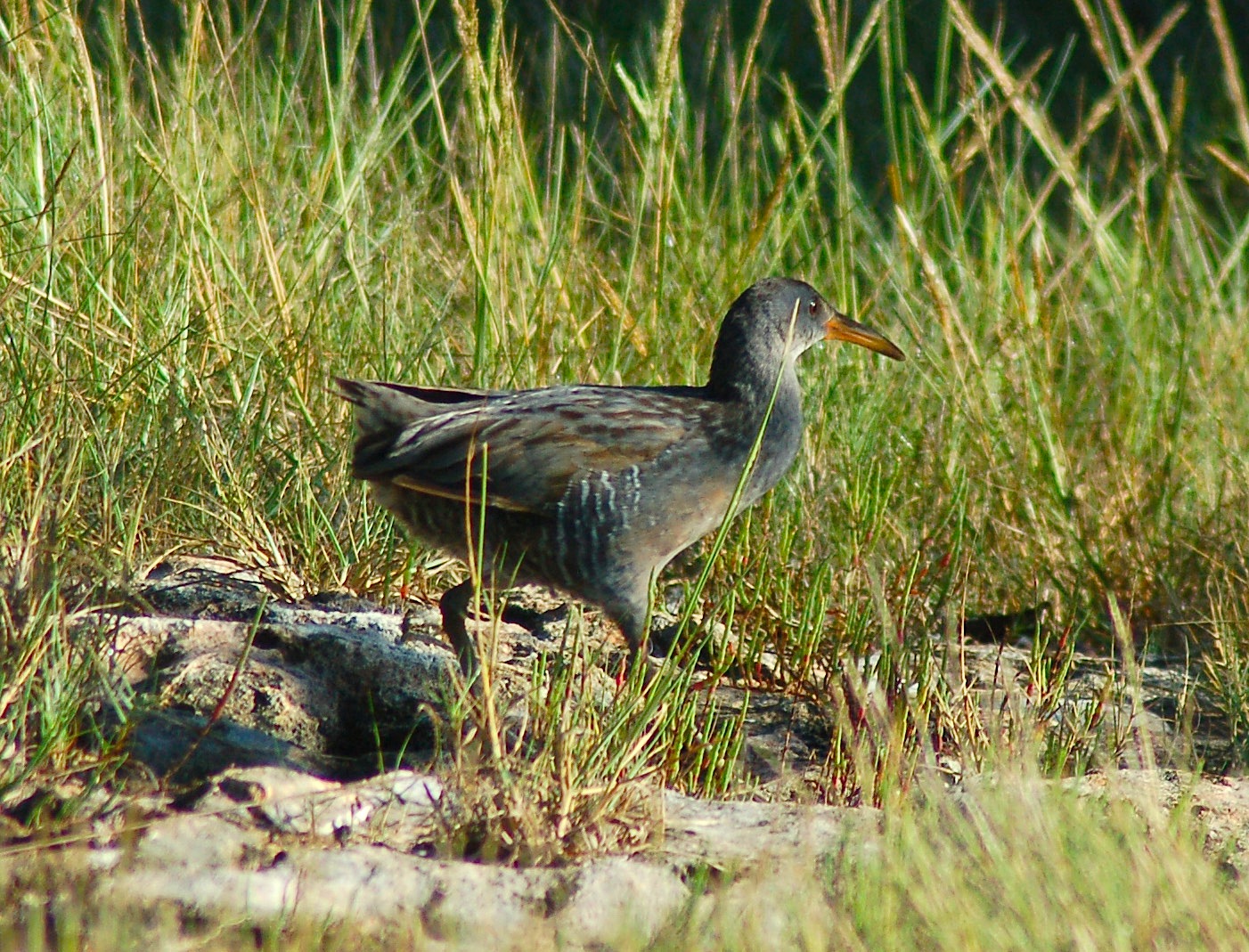
That is, essentially, because they are indeed Clappers. Rallus longirostris to be precise, or Clapper Rails. There are 4  rail species on Abaco, the Clapper being a permanent resident and not particularly uncommon. The others are the Virginia Rail and the Sora, both winter residents and less common (or in the Sora’s case, perhaps more furtive and less easy to find); and the Black Rail, which is generally agreed to be a ‘hypothetical’ for Abaco. That means they are believed to exist on Abaco but there are no confirmed sightings let alone any photos of one. However, last summer while we were taking a truck into the backcountry of South Abaco to locate hard-to-find birds for “The Birds of Abaco” book, the distinctive call of a Black Rail call was heard independently by two people on two different days in two different locations. I’ve heard another report since then. So they are out there somewhere, but keeping their heads down. The first to find one will have a considerable avian scoop!
Let’s start with some fabulous photographs by Tom Sheley. We used the first one in the book. By being patient, Tom managed to capture this bird having a quality preening session. Here are 4 shots from the sequence, including a rare one of the bird calling. To get the full glory of the detail, click on each image twice.Clapper Rail stretching.Abaco Bahamas - Tom Sheley ("The Birds of Abaco" by Keith Salvesen, p80)Clapper Rail rousing.Abaco Bahamas.Tom SheleyClapper Rail preening 2.Abaco Bahamas.3.12.Tom Sheley copyClapper Rail preening.Abaco Bahamas.3.12.Tom Sheley copy

Clapper Rails are elusive birds of mangrove swamp and marsh, more frequently heard than seen. They tend to lurk around in foliage and are easy to overlook. You may come across one foraging secretively in the mud. Although they can both swim and fly, they prefer to keep both feet on the ground.When running, these rails look endearingly comical. 

Clapper Rail, Abaco Erik Gauger V2Clapper Rail Sandy Walker 1 - V2Clapper Rail, Abaco Bahamas - Becky Marvil

It almost goes without saying nowadays, but the biggest threat to these rather charming inoffensive birds is habitat loss. That is to say, mankind. Drive the bulldozers through the mangroves and marshland of sub-tropical coastal areas, chuck down a few acres of concrete… and the clappers will very soon become clapped out.
Clapper Rail Abaco, Bahamas - Becky Marvil

“TO RUN LIKE THE CLAPPERS”. This phrase seems to be fairly recent, probably dating from early in WW2. Some suggest it is a rhyming slam bowdlerisation of ‘run like hell’ with ‘clapper(s)’ standing for ‘bell’, along the lines of the Cockney “I bought a brand new whistle” (whistle and flute = suit). Almost all plausible explanations relate to bells, and some argue that it simply reflects the rapid speed of the clapper of a vigorously rung handbell.

STOP PRESS Uli Nowlan has sent her photo of a Clapper Rail, taken at the ponds north of Treasure Cay – a reminder that there is good birding to be done in that area of North Abaco – the bird action is not confined to South Abaco below MH…

Clapper Rail, Abaco (TC ponds) - Uli Nowlan

Photo credits:Tom Sheley, Sandy Walker, Erik Gauger and Becky Marvil – plus Uli Nowlan

The Clapper Rail features in “The Delphi Club Guide to the Birds of Abaco” by Keith Salvesen pp 80 – 81

Unknown's avatar

BLACK-AND-WHITE WARBLERS ON ABACO


B & W Warbler (f) BH IMG_0482 copy

The Black-and-White Warbler Mniotilta varia is a fairly common winter resident on Abaco. They are the only birds of the genus Mniotilta (“moss-picker” gr.). Unlike most warblers these birds behave rather like nuthatches, creeping along the trunks and branches of trees grubbing insects out of the bark. Pine trees are ideal for this. I remain rather dim about the 37 species of warbler on Abaco. A lot of them are small and yellow. But as soon as I saw one of these for the first time, I was very relieved. I knew exactly what it was – the bird that has been described as ‘a flying humbug’. 

Black & White Warbler.Cross Harbor.Abaco Bahamas.Tom SheleyB & W Warbler BH IMG_9587 copyBlack & White Warbler TR jpg

SUMMER     WINTER
220px-Mniotilta_varia_map.svg

Finally, this is a great short video of this little bird in action. Even if you only watch the first 30 seconds, you will be enchanted…

Image Credits: Bruce Hallett, Tom Shelley, Tom Reed (my own were too feeble to use…). All are contributors to “The Delphi Club Guide to the Birds of Abaco” (Publ. March 2014)

Unknown's avatar

“I MUST FLY”: GONE TO ABACO. BACK SOMETIME.


“I MUST FLY”: GONE TO ABACO. BACK SOMETIME.

UPDATES AS & WHEN

BLUE-GRAY GNATCATCHERBlue-gray Gnatcatcher Delphi Club Abaco Bahamas.Tom Sheley

HIS ‘N’ HERS RODS ON THE BEACH AT DELPHIOn the beach... Delphi Club, Abaco

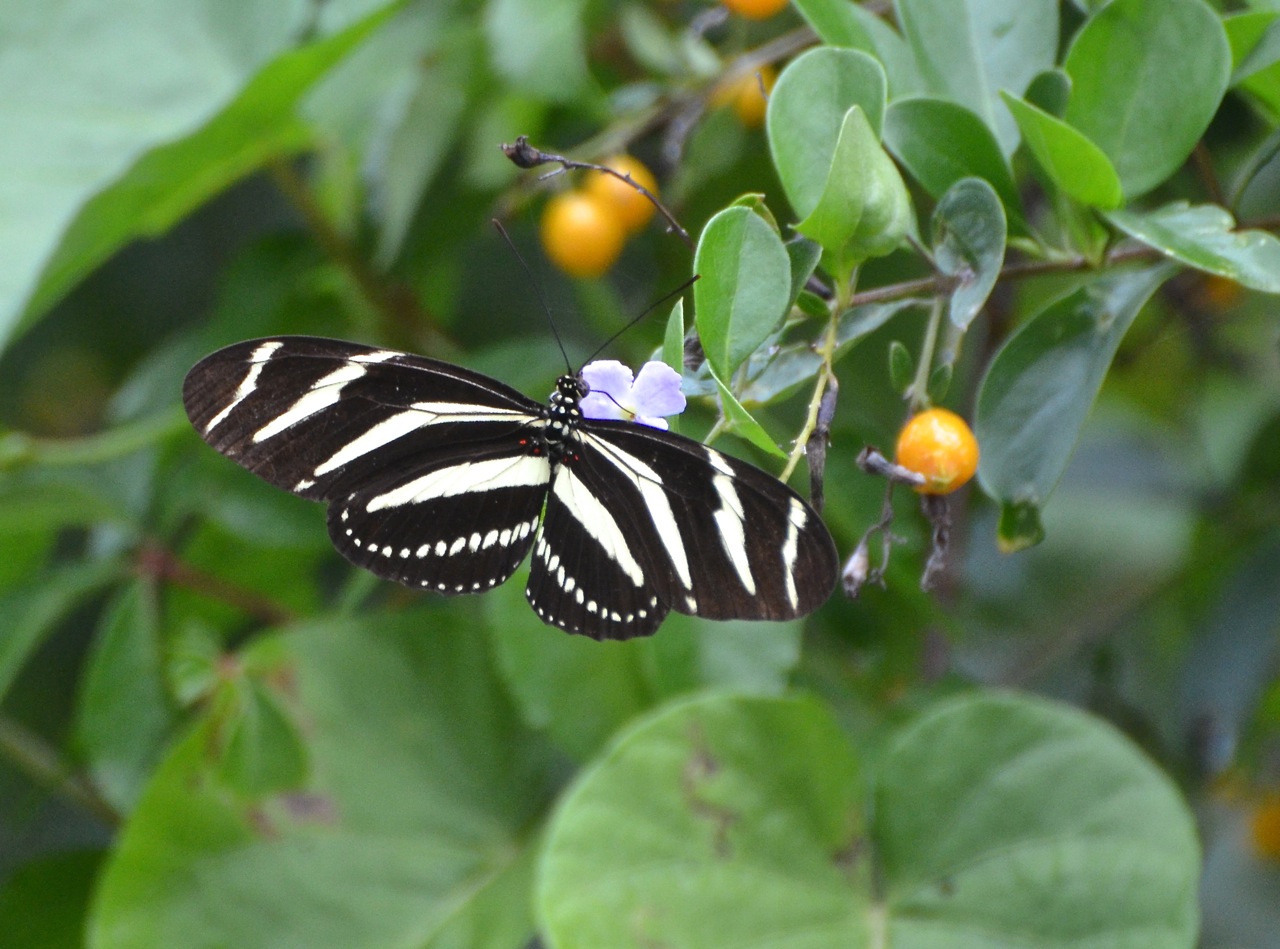
ZEBRA HELICONIAN BUTTERFLYZebra Heliconian Abaco Charlie Skinner

QUEEN ANGELFISHQueen Angelfish © Melinda Riger @ G B Scuba

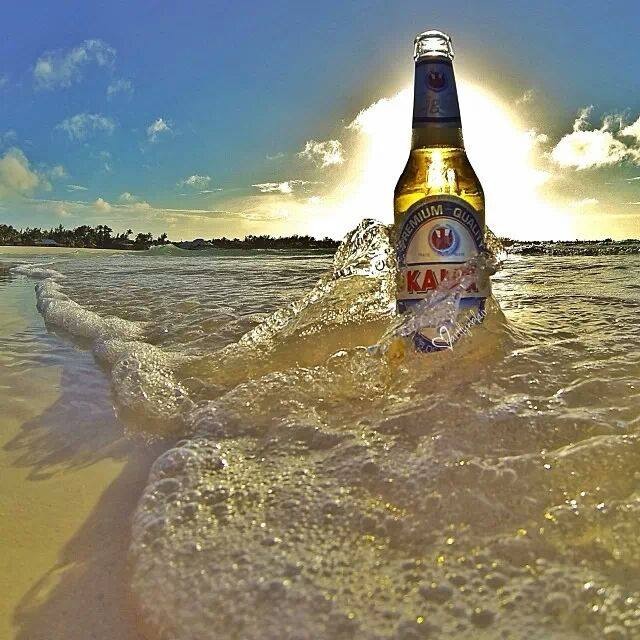
REFRESHMENT OF CHOICE…Kalik by Kaitlyn Blair (F:B)Relax Notice, Lubbers CayShark Cartoon

Photos: Tom Sheley, RH, Charlie Skinner, Melinda, Kaitlyn Blair on FB, RH

Unknown's avatar

‘IN THE PINK’: ROSEATE SPOONBILLS IN THE BAHAMAS


Roseate Spoonbill (Myakka River State) Park - Wiki

‘IN THE PINK’: ROSEATE SPOONBILLS IN THE BAHAMAS

ROSEATE SPOONBILLS (Platalea ajaja) are rare visitors to the Northern Bahamas. For Abaco they are classified with the undignified term ‘vagrant’, meaning essentially (a) that you will be very lucky indeed to encounter one, so therefore (b) it is highly unlikely to be worth making a special trip based on the likelihood of seeing one. Try Florida instead.

Roseate Spoonbill WB 60

We saw one once when bonefishing far out on the Marls. It was unmistakeable, but well beyond the effective range of the puny ‘don’t-really-mind-if-it-takes-a-dive’ camera I had with me. The spoonbills in this post were photographed elsewhere in the Bahamas or in two cases, Florida. The wonderful one below of a spoonbill ‘flipping’ a fish was taken there by Ohio bird expert and photographer Tom Sheley.

SPOONBILL ‘FISH-FLIPPING’Roseate Spoonbill flipping fish LR.Wildcat Run FL.Tom Sheley

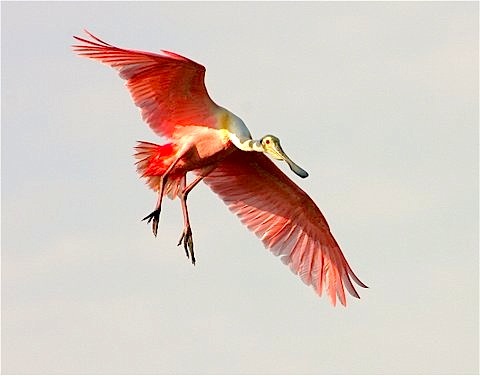
SPOONBILLS LOOK VERY DRAMATIC IN FLIGHTRoseate Spoonbill WB

Unlike herons, spoonbills keep their necks outstretched in flight. They are most likely to be found in marshes, salt-water lagoons and on mudflats. They are gregarious and mix in happily with herons and egrets, though there is some competition for food. Spoonbills nest in shrubs or trees, often mangroves.Roseate Spoonbill WB 59_IMG_6302 copy 3

Spoonbills tend to get pinker as they get older. As with American Flamingos, the pink colouring derives from their diet, which contains carotenoid pigments.  The colouring ranges from pale pink to loud pinks and reds, depending on age and location. 

Roseate Spoonbill WB 61Roseate Spoonbill BH (from WB)

Spoonbills feed in shallow fresh or coastal waters by swinging their bill from side to side while steadily walking through the water, often in groups. The spoon-shaped bill allows it to sift easily through mud for the edible contents – crustaceans, aquatic insects, frogs, newts and  small fish ignored by larger waders. This  excellent 1 minute Audubon video shows exactly how they feed, with some white ibises for company.

NEW ADDITION (props to Roselyn Pierce) 1743441_10202241639500028_1766433566_n

And a short non-roseate spoonbill feeding video from the Netherlands June 2014, showing the technique

Photo Credits: Header, Wiki; 1,3,4,5 Woody Bracey; 2 Tom Sheley, 6 Bruce Hallett (RH: nil)

Unknown's avatar

SCRAPES, CHICKS & BROKEN WINGS: WILSON’S PLOVERS ON ABACO (3)


Wilson's Plover Delphi BeachSCRAPES, CHICKS & BROKEN WINGS: WILSON’S PLOVERS ON ABACO (3)

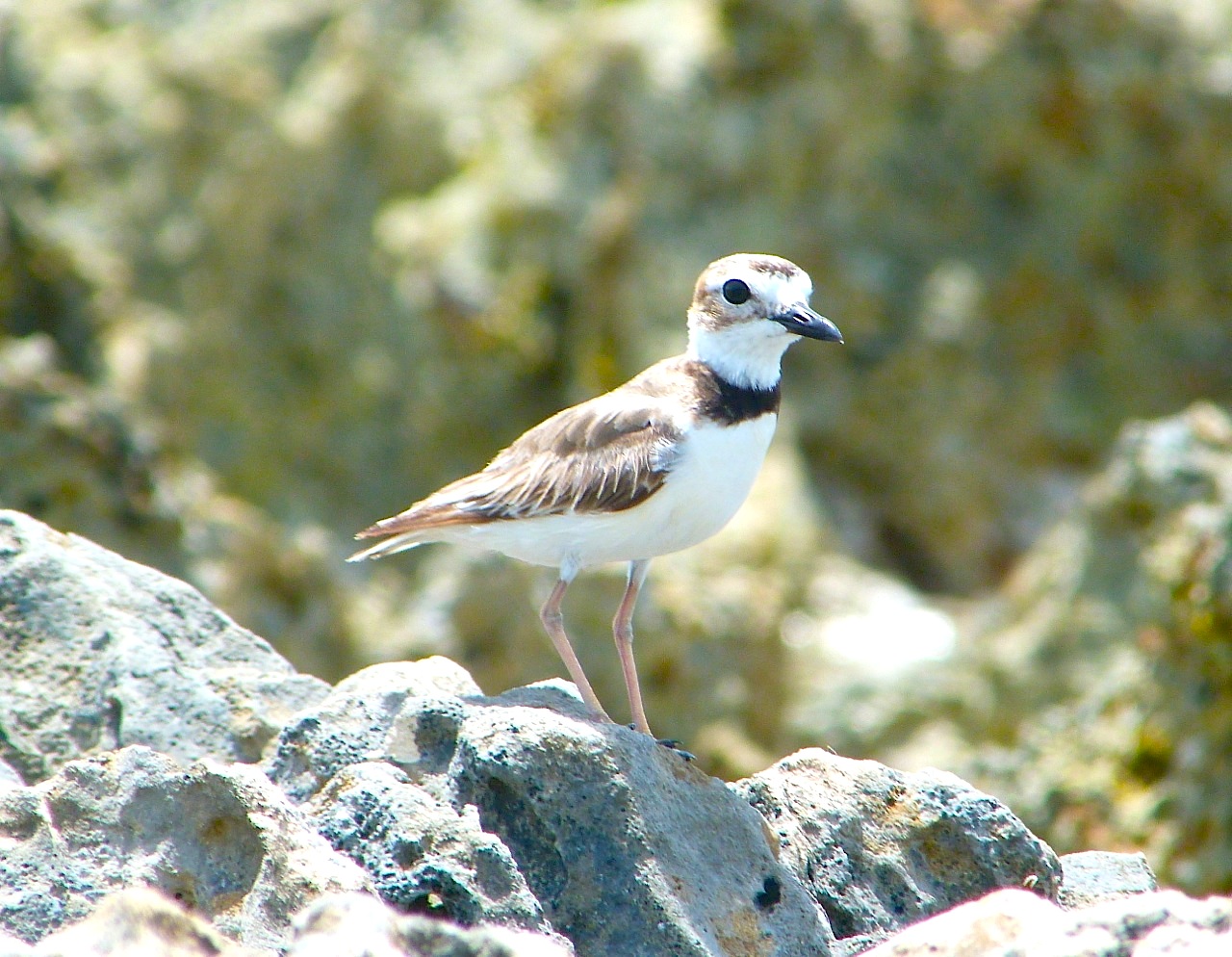
The male plover above is keeping watch from a rocky vantage point over an area at the north end of the beach at Delphi. And with good reason. It’s the summer breeding season, and on the sand are some nests. One of them is his.

This is a ‘scrape’ – not the carefully constructed nest that most birds make, but a shore bird’s collection of sticks and twigs – sometimes stones or shells – clumped together on the sand to provide a comfortable place for the mother to sit until the eggs have hatched.Wilson's Plover Scrape CL JPG

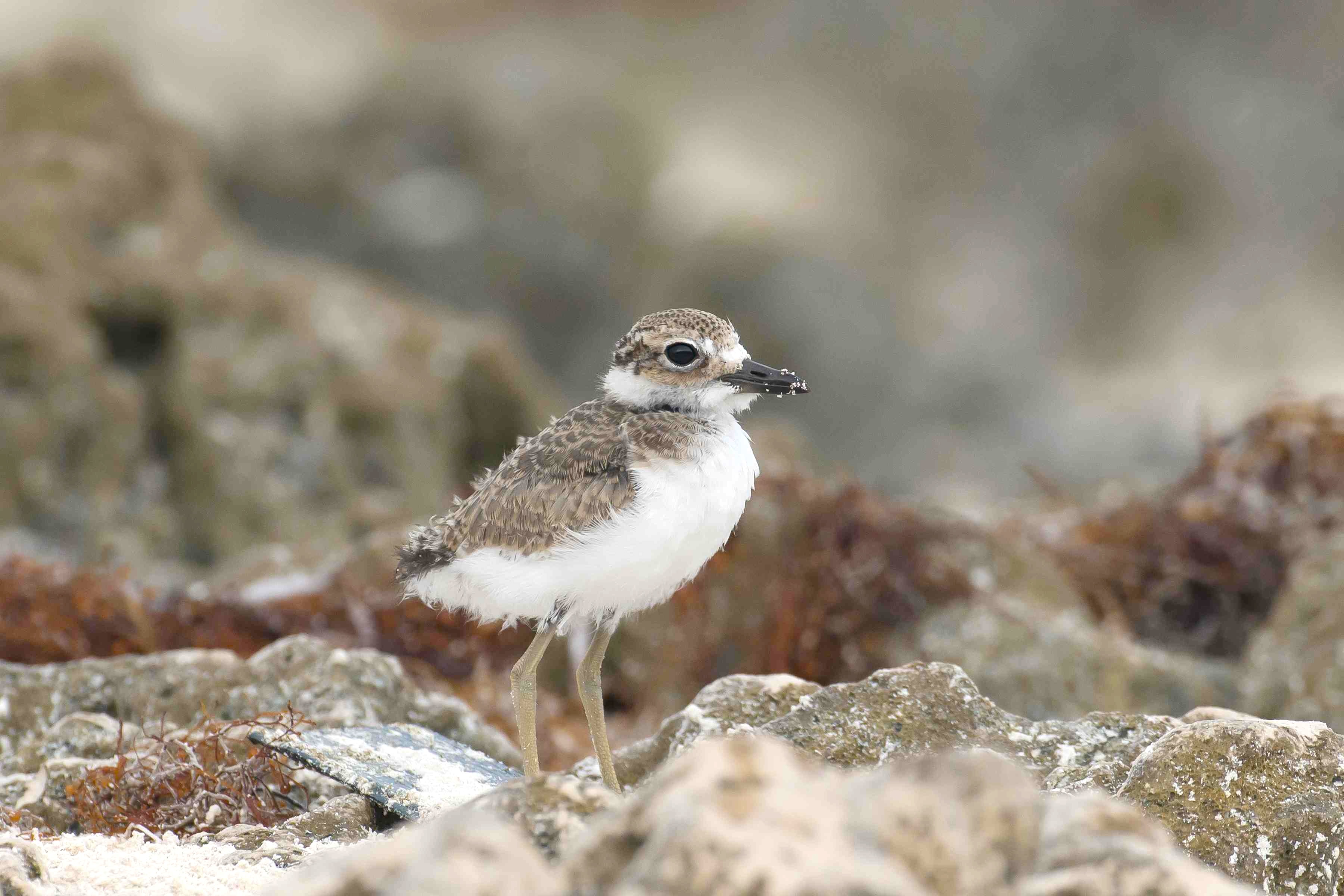
Though tiny at first, the chicks soon become independent enough to explore their surroundingsWilson's Plover Chick, Delphi Beach, Abaco

Usually, there will be a pair of chicks, maybe more. The two in the photo below have scuttled to the back of the beach for safety because the adults thought I was getting a bit close, and sent them to hide in the pine needlesWilson's Plover Chicks Delphi Beach

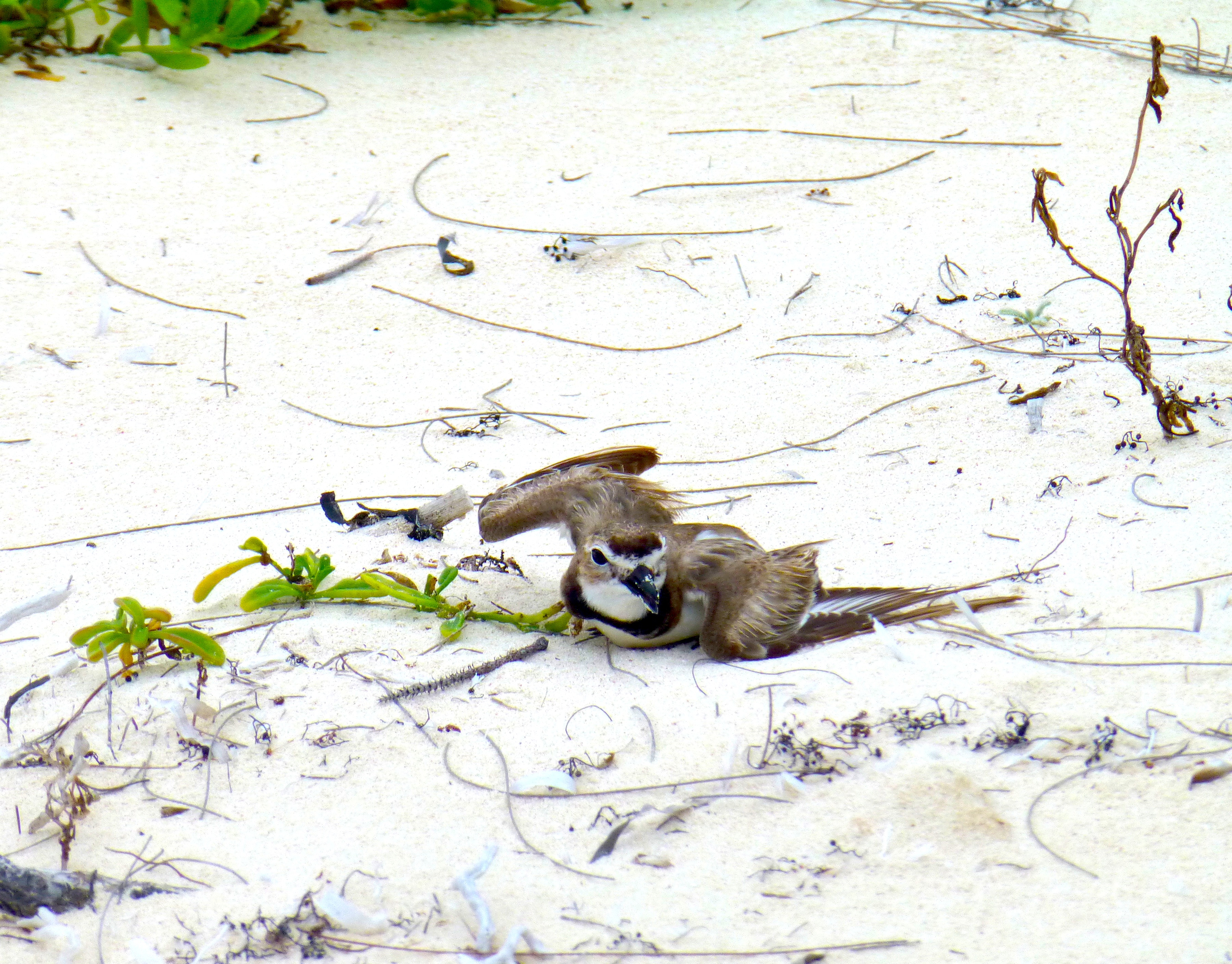
When a nest is threatened by a predator, Wilson’s plovers have a defensive technique that is remarkable to watch. Other shore birds, for example Killdeer, resort to this method as well. A parent will flutter about pathetically on the sand, apparently with one or both wings broken, attracting the predator by its faked vulnerability. The plover will gradually draw the threat away from the nest area, protecting the eggs or allowing chicks to make themselves scarce. Here are some examples of the ‘broken wing display’, all photographed on the beach at Delphi. The first 2 images show a female; the third, a male.Wilson's Plover - broken wing display CL1 Wilson's Plover - broken wing display CL4 Wilson's Plover - broken wing display CL6

Athough the little chicks are vulnerable, they grow quicklyWilson's Plover Chicks x 2 RH Delphi

Before very long, they are able to get onto the same rocky vantage point as their parents to practise surveying the scene. Next summer, they will be keeping watch over nests and chicks of their own.Wilson's Plover chick.Delphi Club.Abaco Bahamas.Tom Sheley JPG

The previous posts in the series are WILSON’S PLOVERS (1) showing the adults;  and WILSON’S PLOVERS (2) that shows how plovers nesting on the shore at Nettie’s Point were protected from human activity in the boat-launching area.

“I’m off now. See you next year”Wilson's Plover Delphi Beach AbacoCredits: scrape & broken wing display, Clare Latimer; last (and best) chick image, Tom Sheley; the rest, RH

Unknown's avatar

THE CROSS LITTLE WOODPECKER: A TRUE HAIRY TALE FROM ABACO


Hairy Woodpecker, Delphi Abaco Header

THE CROSS LITTLE WOODPECKER: A TRUE HAIRY TALE FROM ABACO

ONCE UPON A TIME, on a magical far away island called Abaco, where the sun always shone and the people were always friendly and smiling, there lived a little woodpecker. It was a beautiful little woodpecker with long shiny golden locks and its name was Hairy… oh look, I can’t go on with this drivel and neither can you, I’m sure. Sorry about that. Let’s take it from the top…

    ♦      ♦      ♦      ♦

I have mentioned before the excellent birding opportunities that a wander round the Delphi drive circuit has to offer. It’s the best part of 2 miles. I am working on a list of all species encountered on the route from the Lodge, along the guest drive to the white rock on the road, and back down the service drive. It is turning out to be a gratifyingly long one.

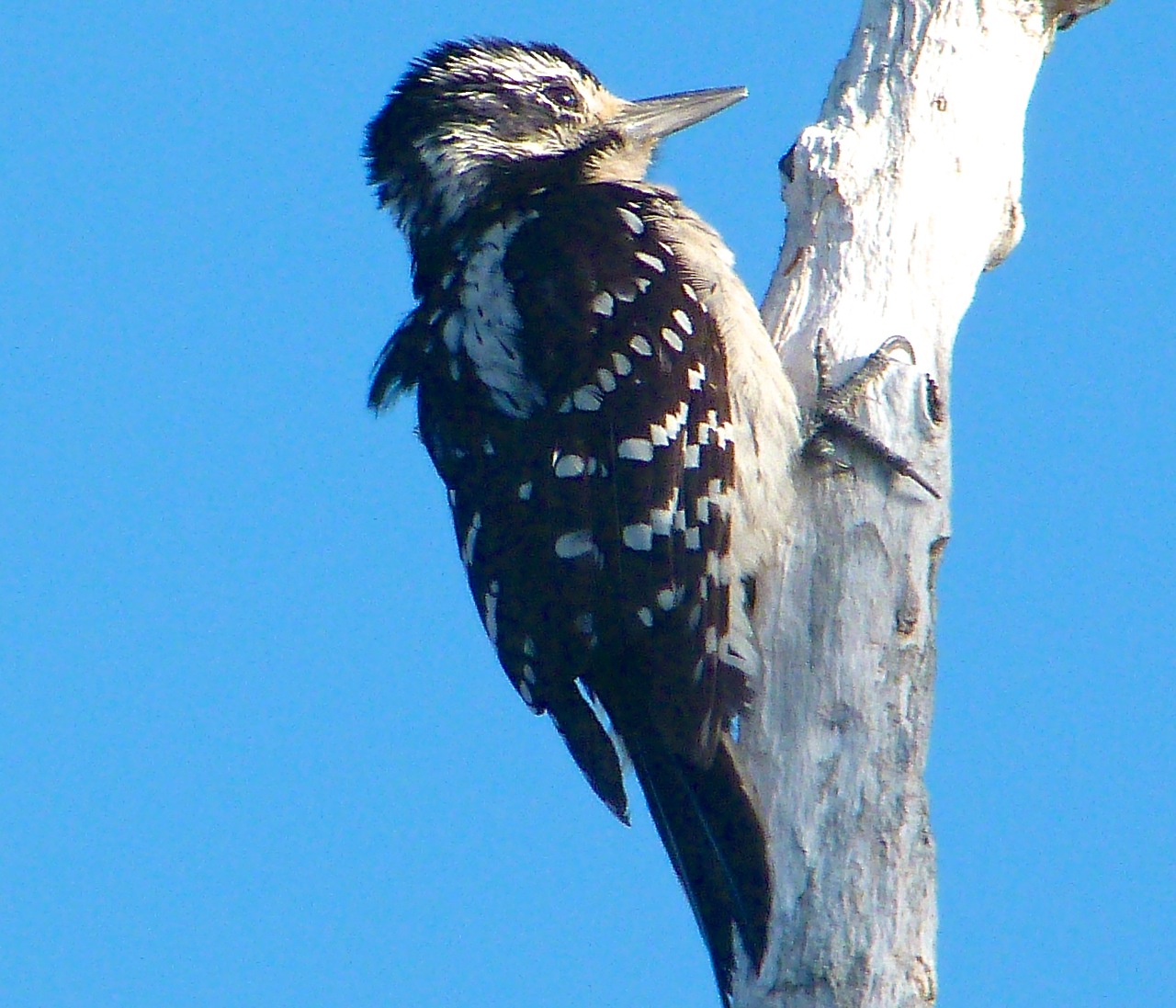
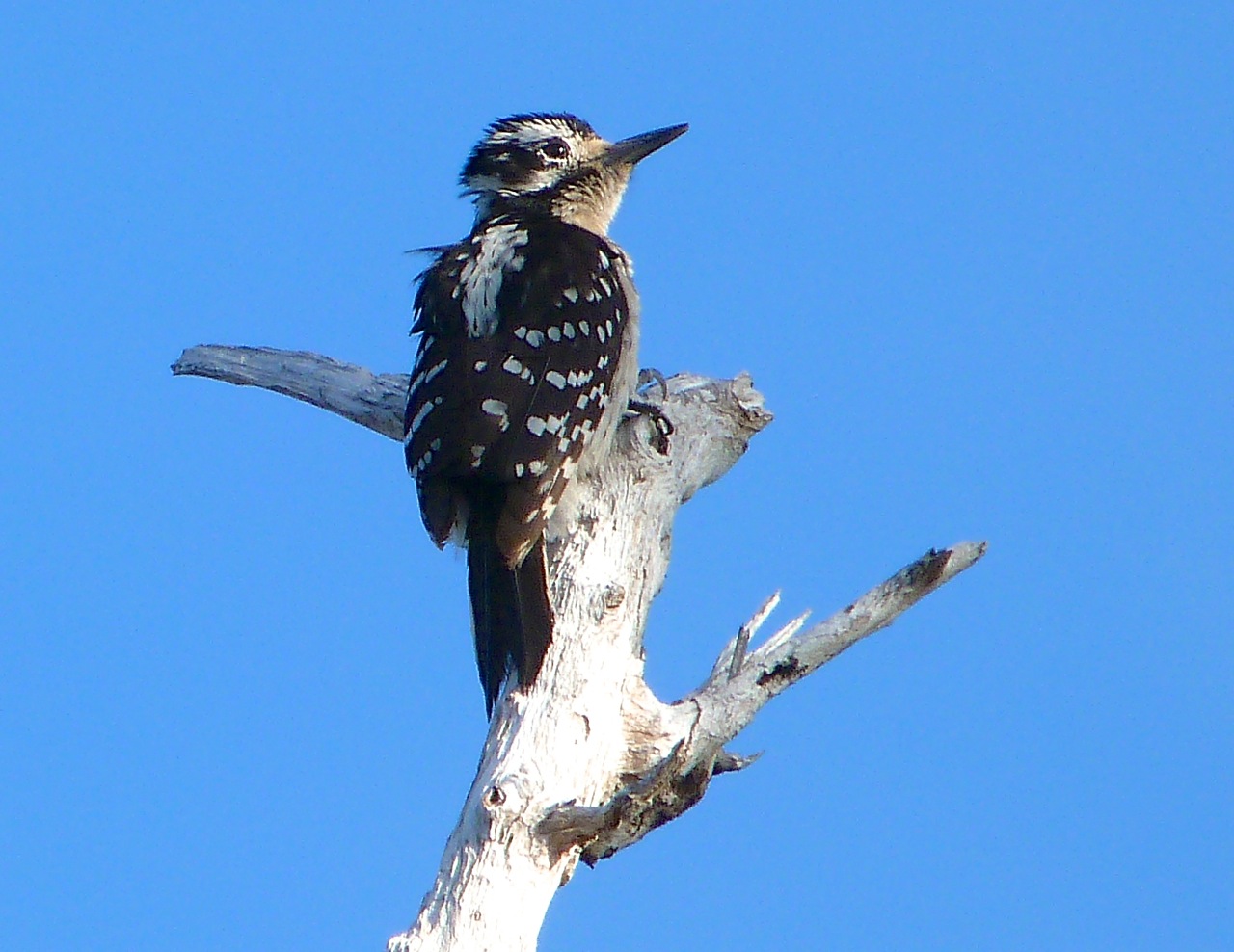
During your stroll, it’s worth checking out the dead trees, especially the upper trunk and branches, as you go. For a start, these provide excellent places for birds to pause and scope out the territory below. They also have a good chance of finding insects there. And for some species, like the Hairy Woodpecker Picoides villosus, it is home. Hairy Woodpecker, Delphi Abaco 16

The Hairy Woodpecker is very similar to the Downy Woodpecker Picoides pubescens, the smallest woodpecker of North America. Male HWs have a prominent red patch on the back of the head.  You can find an earlier post about a male HW and its nest in the Delphi coppice, with some HW species facts, HERE

220px-Picoides-villosus-001

Last June Tom Sheley, a birding expert and photographer from Ohio with serious (by which I mean huge camo-covered camera and tripod) equipment, was staying at Delphi. He tipped me off about a woodpecker nest he’d found 1/3 of the way along the guest drive, just before the first bend. So I grabbed a camera –  the wrong one, as it turned out, but my main camera battery was charging – and headed out. I found the nest at the top of a dead tree near the edge of the drive (shown above) and a female HW close to it. Hairy Woodpecker, Delphi Abaco 1

She watched my approach carefully, and as soon as I paused close to the nest tree, she went into a fascinating ‘diversionary tactic’ routine to distract me from the nest. She flew across the track close in front of me, and settled on a tree on the other side of the drive, about 1/3 of the way up its trunk. There, she proceeded to scold me loudly as I fiddled about with the camera… Hairy Woodpecker, Delphi Abaco 3

Still scolding, she then started to climb the tree quite slowly, pausing occasionally to fire off some more angry woodpecker abuse at me. Hairy Woodpecker, Delphi Abaco 6

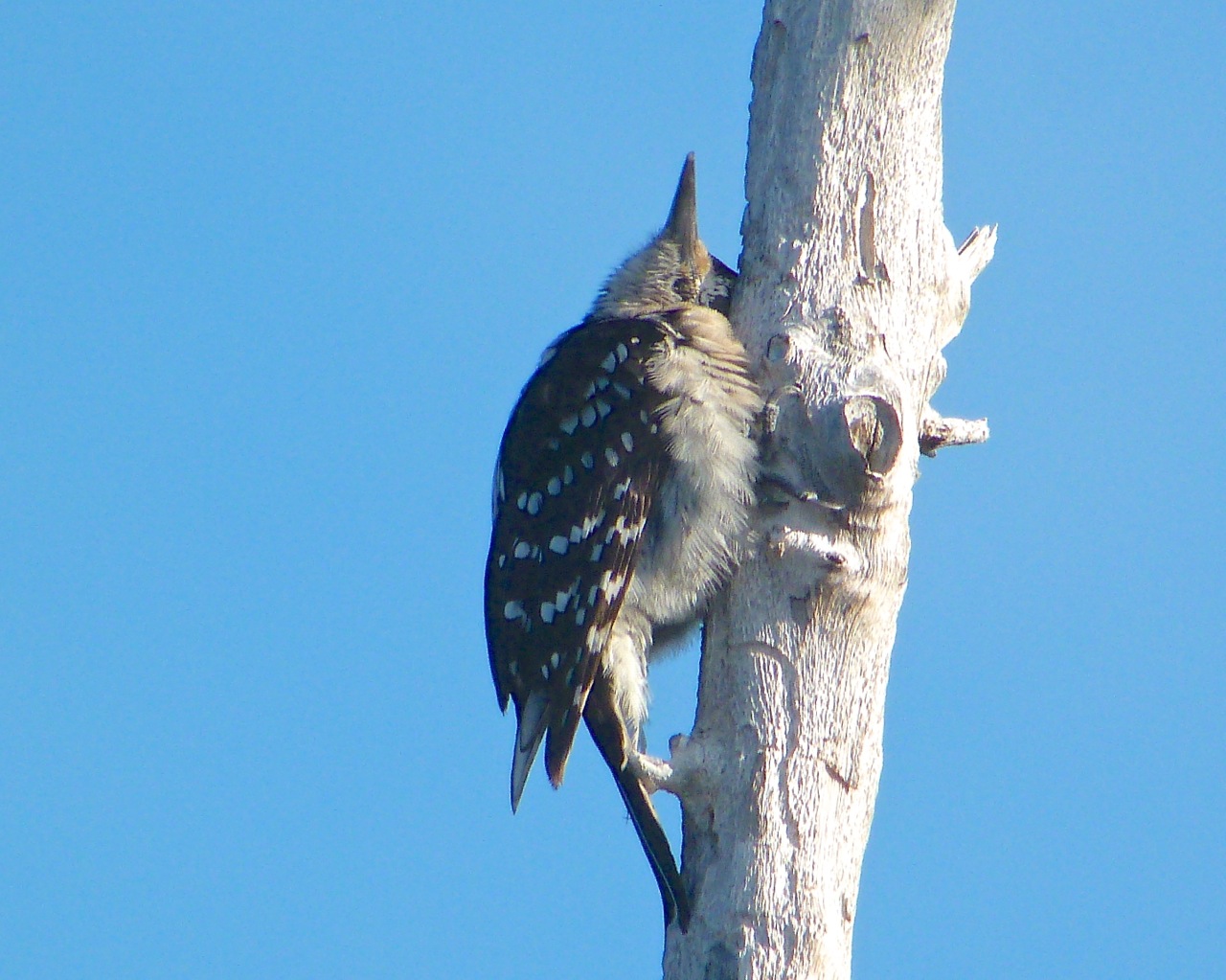
From time to time, she would change tack, closing her eyes gradually and hugging the trunk. This was presumably to make herself appear vulnerable to a predator (me), and therefore retain its (my) interest. If anyone is familiar with this behaviour, please leave a comment.Hairy Woodpecker, Delphi Abaco 5

The woodpecker carried on up the tree, chattering as she went…Hairy Woodpecker, Delphi Abaco 7

…before performing the closed eye / sleepy routine againHairy Woodpecker, Delphi Abaco 11Hairy Woodpecker, Delphi Abaco 12

By now she was nearing the top of the tree, and I was thinking of giving in… Hairy Woodpecker, Delphi Abaco 13 Hairy Woodpecker, Delphi Abaco 14 Hairy Woodpecker, Delphi Abaco 15

Once she had reached the very top, I made the decision to move on, marvelling at her persistence in taking on a two-legged predator 6ft 5″ high and… not exactly a bantam-weight. Then I realised that, in all of this, I hadn’t thought of the nest behind me a single time. She and her distraction technique had won, and so I made my apologies for disturbing her and left. HW 1, Human 0. At least I knew that on a hot cloudless day I had something to look forward to back at the ranch… 

coasters

Unknown's avatar

IT’S ALL WHITE – IT’S A REDDISH EGRET ON ABACO


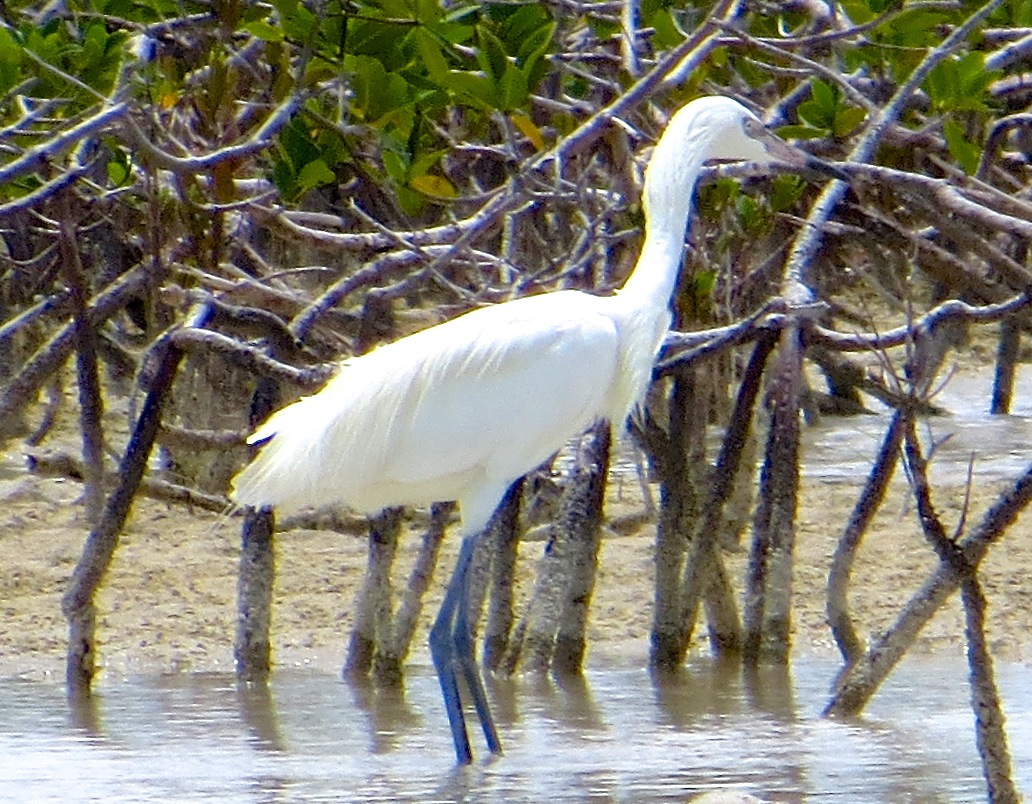
Reddish Egret (White Morph) Abaco 5

IT’S ALL WHITE – IT’S A REDDISH EGRET ON ABACO

Contrary to appearances from the header image and the one below, Reddish Egrets (Egretta rufescens) do not yet use cellphones to communicate. Nevertheless, the trick of having a good ear-scratch while standing in water on one leg is a good posey accomplishment.Reddish Egret (White Morph) Abaco 4

All these photos were taken while we were bonefishing from a skiff far out on the Marls in the mangroves. Ishi poled us closer so that boat-partner Tom – a real photographer – could get some shots. Meanwhile, I did my best with my little camera that I take out on the boat – the one that won’t matter too much when it slips from my hand or pocket into the drink. These things happen: I lost a good pair of Costas that a gust of wind unkindly whisked away when I took them off to change a fly.Reddish Egret (White Morph) Abaco 3Reddish Egret (White Morph) Abaco 2

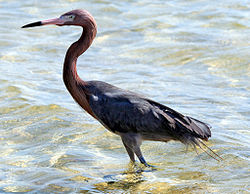
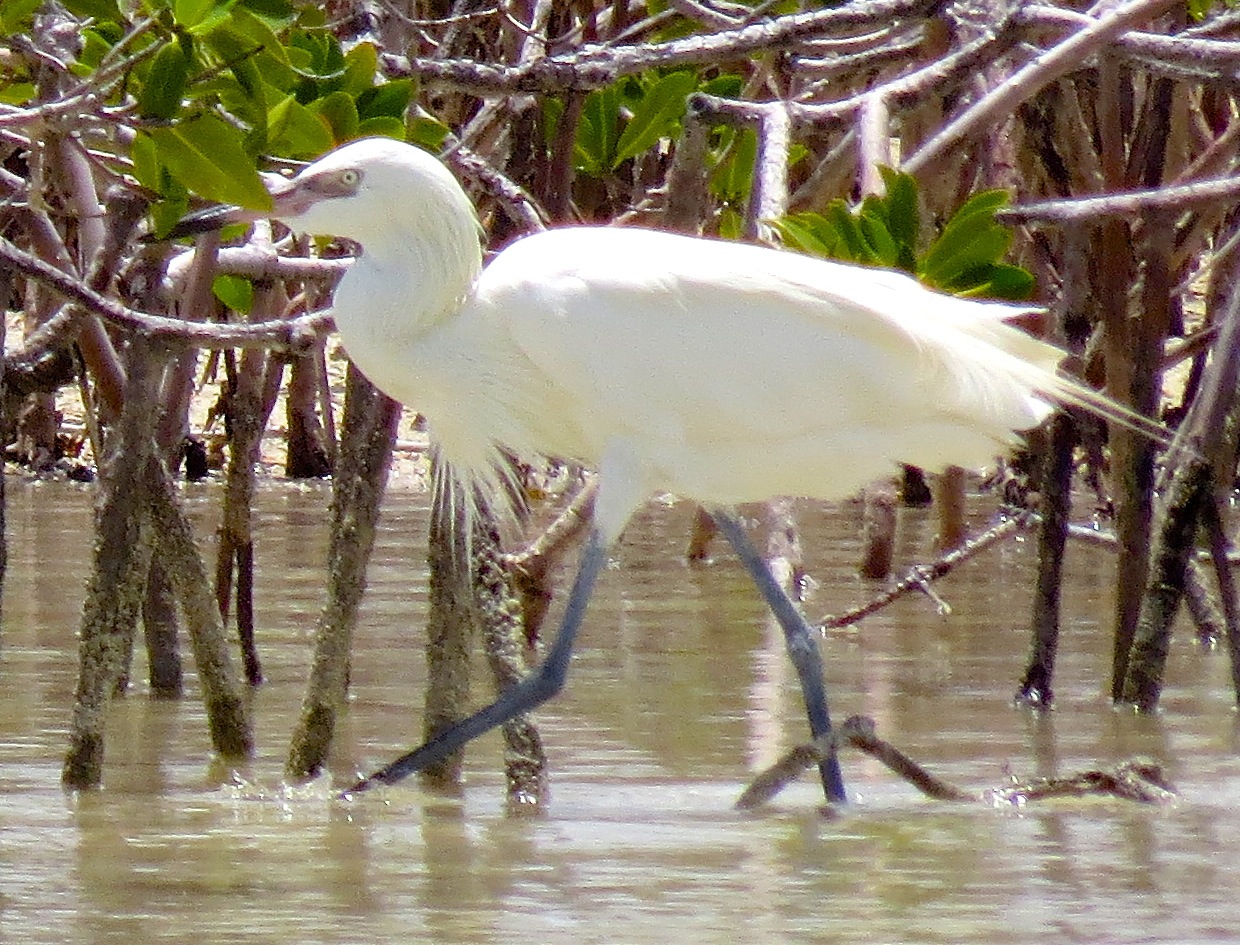
This egret comes in two very different ‘colourways’. The classic version has a slatey-blue body and a reddish head and plumes. The white morph is pure white. The only similarities between the two are the two-tone bills with the black tip; and the blue-grey legs and feet.

True Reddish Egret, as you might expect it to lookReddish_Egret Wiki

The white morphReddish Egret (White Morph) Abaco 9

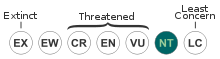
I’m not certain of the proportions of each type on Abaco, but I have certainly seen twice as many white ones as true reddish ones. There seem to be quite a few around – there are plenty of fish for them and dozens of square miles of human-free space in which to stalk them. However as with many (most?) of the bird species, there is a declining population for all the usual man-related reasons, and these fine birds have now had to be put on the IUCN ‘near-threatened’ list.220px-Status_iucn3.1_NT.svg

The bird kept an eye on us as we drifted closer, but was unperturbed. It continued to poke around in the mud, and occasionally it moved delicately but quite quickly to a different patch.Reddish Egret (White Morph) Abaco 8 Reddish Egret (White Morph) Abaco 7 Reddish Egret (White Morph) Abaco 6

We watched the bird for about 10 minutes. Then we returned to what we were really there for – Tom to catch bones with practised skill, and me to wave the rod incompetently around until some passing fish took pity on me and grabbed my fly, knowing it would soon be released once all the fuss was over…Reddish Egret (White Morph) Abaco 1

Unknown's avatar

MAKING A GOOD IMPRESSION: BAHAMA MOCKINGBIRDS ON ABACO


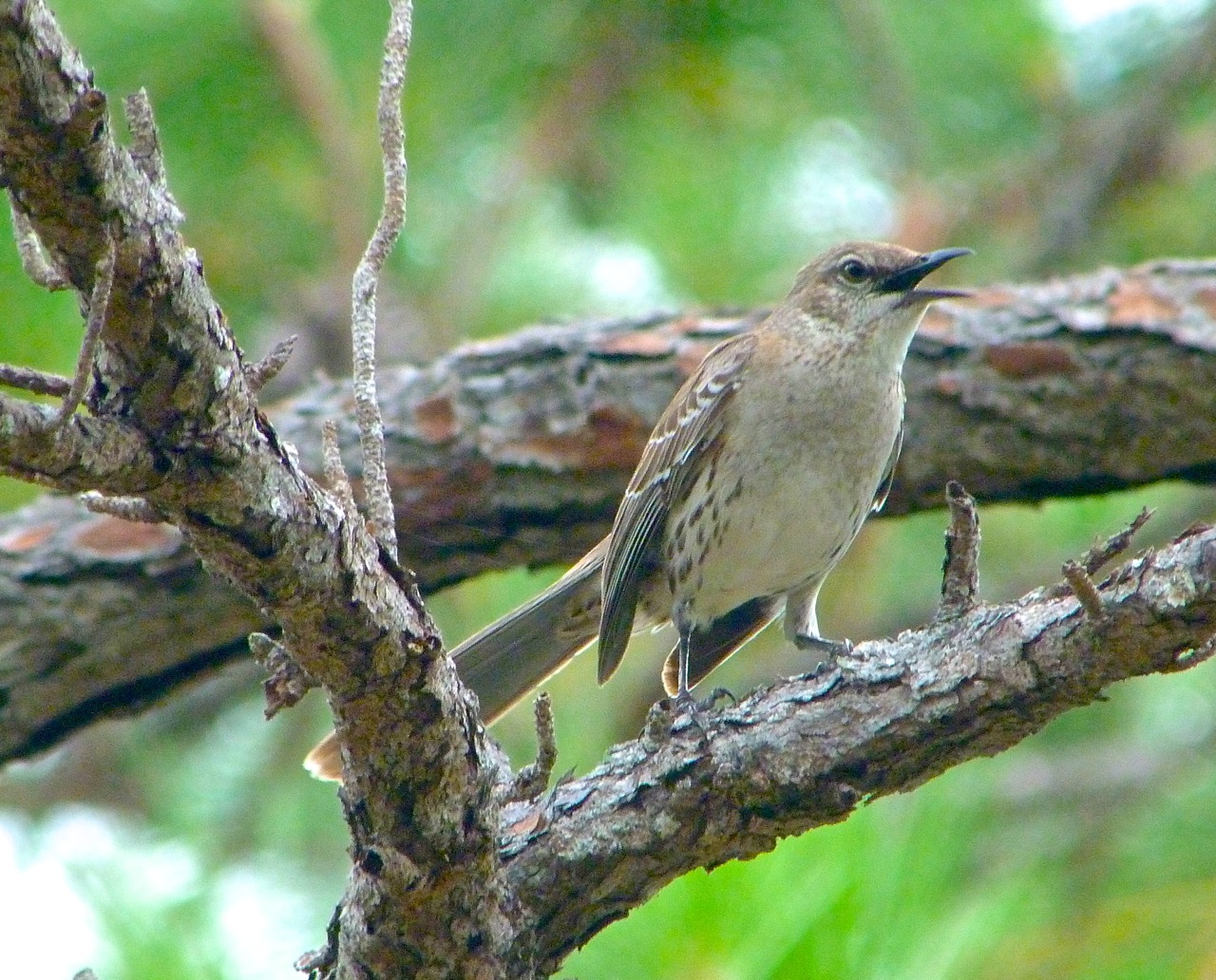
MAKING A GOOD IMPRESSION: BAHAMA MOCKINGBIRDS ON ABACOBahama Mockingbird, Abaco 1

The Bahama Mockingbird Mimus gundlachii is similar to its slightly smaller cousin, the widespread Northern Mockingbird Mimus polyglottis. The range of Bahama Mockingbirds is slightly wider than the Bahamas themselves, and includes areas of  Cuba, Jamaica and TCI.  It is also a vagrant to the United States, especially southeastern Florida.

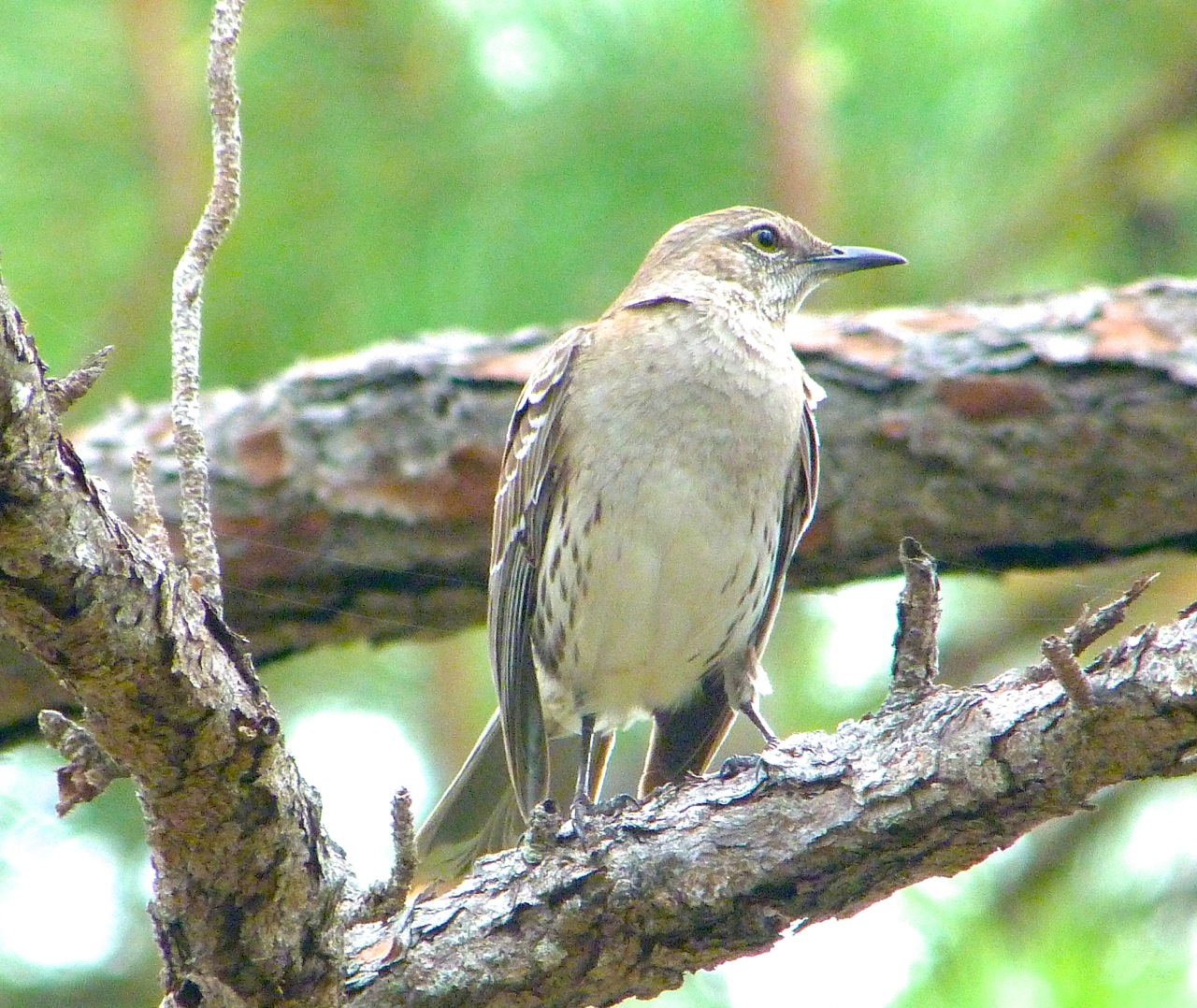
Bahama MockingbirdBahama Mockingbird, Abaco 4

The Bahama Mockingbird is browner than the Northern Mockingbird, and has distinctive streaking and spotting to its breast and undercarriage.Bahama Mockingbird, Abaco 6

Both species are found on Abaco. The NMs are ubiquitous in towns, settlements, gardens, coppice and pine forest, whereas BMs are shyer and tend to be found in the pine forest and well away from humans and their operations.Bahama Mockingbird 5We took a truck into the pine forest south of Delphi with well-known Abaco birder Woody Bracey and Ohio bird photographer Tom Sheley. They were quick to locate a bird, in part because one was sitting prettily on a branch singing lustily. It was well within range of Tom’s massive lens; more of a struggle for my modest Lumix (as you may detect). I was astounded by the beauty and variety of the song. It consisted of very varied notes and phrases, each repeated 3 or 4 times before moving on to the next sounds in the repertoire. Here is a short 18 second example I recorded, using my unpatented iPhone method, for which see HERE.

Bahama Mockingbird, Abaco 3

For those with interest in birdsong, here is a longer 1:13 minute song from the same bird, with largely different sounds from the first recording made minutes earlier. There’s even a decent stab at imitation of a 1960s Trimphone™. Had we not had to move on to Sandy Point for an appointment with some cattle egrets and American kestrels, I could have stayed listening for far longer.

Bahama Mockingbird, Abaco 2

Finally, the Northern Mockingbird below was photographed in a garden at Casuarina – far tamer and clearly very different from its cousin. The range map  shows the stark contrast with the very limited range of the Bahama Mockingbird.Northern Mockingbird, Abaco 1220px-Northern_Mockingbird-rangemap