ABACO WHALES & DOLPHINS, BMMRO SIGHTINGS & NEWSLETTER


Dolphin Leap copy

ABACO WHALES & DOLPHINS: BMMRO SIGHTINGS & NEWSLETTER

I haven’t posted Abaco whale, dolphin & manatee news for a while. Time for a catch-up. Georgie the young manatee that left her mother Rita and came to Abaco from the Berry Is. alone, is no longer here. She survived a very long journey, and investigated various coastal areas of Abaco – all the while being tracked. In the end she settled down in the Cherokee area. There were anxious times during Hurricane Sandy when she went missing (having by now shed her tracking device) but she eventually reappeared at Cherokee having found a safe haven from the storm. Sadly, however, her condition deteriorated and in the New Year she was relocated to Atlantis Dolphin Cay Marine Mammal Rescue Center. Some weeks ago a healthy Georgie was moved to a sea-pen to acclimatise her for release back into the wild.

Read more about Georgie the Manatee’s epic trip HERE and about the operation to relocate her HERE

ABACO DOLPHINS – A MOTHER & HER CALF 428475_595355517150345_807197303_n-1

The Bahamas Marines Mammal Research Organisation (BMMRO) is based at Sandy Point, Abaco. A number of research projects are underway, and recently these have involved work on Andros. The team are now back, and encountering Abaco’s own dolphins and whales. The main photos on the page have all been taken in the last week or so. [The header is by Norwegian artist Roll Inge Haaver]

BOTTLENOSE DOLPHIN, ABACO971695_596998516986045_1649965583_n

SPERM WHALE ‘TAILING’, ABACO (1 of 3 found yesterday using acoustic tracking)374338_596998896986007_1736456956_n

DCB GBG Cover Logo dolphin

BMMRO CHART OF CETACEAN SIGHTINGS FOR MARCH 2013

Of special note are the big whales – 3 sperm whales, and a humpback whale reported close to Cherokee.
BMMRO SIGHTINGS March 2013

Sperm whales. Humpbacks. How big are they? This useful chart shows the average lengths of various whales. I grabbed it off the internet a while ago, but regrettably forgot to mark the source. So, apologies to the originator for using it uncredited, a cyber-sin I try to avoid.what-largest-whale-cetacea-size-comparison-chart-590x338

Finally, the BMMRO’s latest 4-page Newsletter contains a wealth of information about their current activities, some great pictures, and even a quiz – check out BMMRO NEWSLETTER_Apr13

Click logo to linkbmmro_logo

BLOOMING MARVELLOUS: FLOWERS OF ABACO


Hibiscus : Polydamus Swallowtail, Delphi Abaco

BLOOMING MARVELLOUS: FLOWERS OF ABACO

The flowers and plants below were mostly photographed in the grounds of The Delphi Club, Abaco or nearby. I expect most or many are already securely on the SD chips or hard drives of every visitor to an agreeably floral place like the Bahamas. Who can resist a pretty flower? I have confessed in earlier plant-based posts (links below) to a certain lack of aptitude around flowers. They just… are. Let’s see how this pans out – corrections and (for the last two) IDs welcome.

HIBISCUSHibiscus Delphi Abaco 2Hibiscus Delphi Abaco 1 Hibiscus Delphi Abaco 5Hibiscus Delphi Abaco 4

BOUGAINVILLEABougainvillea Delphi Abaco Bougainvillea AbacoBougainvillea Abaco 2Bougainvillea : Polydamus Swallowtail, Delphi AbacoThe butterfly is a Polydamus Swallowtail (also in the header image)

DATURA (ANGEL’S TRUMPET)Datura (Angel's Trumpet), Delphi Abaco Datura : Cuban Emerald Delphi AbacoThis one has a cuban emerald hummingbird feeding from it – a lucky, but frankly not very good, shot

FIRECRACKER PLANT RusseliaFirecracker Plant BPSMARSH FLEABANE (WITH HONEY BEE) PlucheaMarsh Fleabane, AbacoHORSERADISH TREE (WITH CUBAN EMERALD HUMMINGBIRD)  Moringa oleiferaHorseradish Tree : Cuban Emerald Abaco BahamasBISMARCK PALMBismarck Palm, Delphi AbacoBANANASBananas, Delphi AbacoThese were growing just outside our bedroom. Pity they weren’t quite ripe…

I’m beginning to struggle now. The next two plants are probably completely obvious, but I am losing my floral grip. Suggestions welcome via the comment box or email (Bridget on Tilloo, that means you…)

STOP PRESS ID within 24 hours, thanks to Nick Kenworthy who says via the comment box that this bright pink one “is loosely referred to as the Orchid tree (or Hong Kong Orchid Tree) as the blooms are very like an orchid but it comes on a tree rather than a plant”. I’ve checked my cheat books, where it is named Bauhinia pupurea, aka Orchid Tree, Butterfly Tree or (from the leaf shape) Bull Hoof Tree. The tree originates from India and Southeast Asia. Nick has undoubtedly nailed it, for which many thanks. One more to go…

ORCHID TREE Bauhinia pupureaP1050168 - Version 2

STOP PRESS 2 Nick has solved the second ID as well. His interesting information about this striking waxy plant can be seen in detail in the comments below. The answer, in a word, is ‘Jatropha’, of which there are a great many varieties – and quite a number of informal names, most of which (‘Firecracker’; ‘Star of Bethlehem’) are confusingly assigned to other plant species as well. It doesn’t feature in either of my Caribbean plant /tree reference books, so my amateur eyes didn’t actually let me down this time… This plant (there was were two of three) was in a small park area by the beach at Treasure Cay. I haven’t seen it elsewhere on Abaco.

JATROPHAP1050172 P1050171

Here are the links to a couple of my previous Abaco flower / plant posts:

A BUNCH OF FLOWERS (the most recent)

FLOWERING ON ABACO (an expedition with Ricky Johnson)

There’s a larger collection on the dedicated FLORA page, including some of the above, but also featuring articles on LIGNUM VITAE, YELLOW ELDER, Bird of Paradise flowers STRELITZIA and more

LEAST, BUT NOT LAST: THE SMALLEST SANDPIPER


Least Sandpiper Abaco 5

LEAST, BUT NOT LAST: THE SMALLEST SANDPIPER

220px-Status_iucn3.1_LC.svg

The LEAST SANDPIPER (Calidris minutilla) is the smallest shorebird, the definitive “peep”. An adult is only about 6″ long. They are to be found in pairs or groups, busily foraging in the sand and seaweed. Often they will mix in with other shorebirds. These birds nest in scrapes close to the water, with both parents involved in incubating the eggs. The female will usually leave the nest before the young birds fledge - perhaps (bizarrely?) sometimes even before the eggs hatch. Deal with it, male Least Sandpipers. Fortunately the hatchlings can feed themselves very soon, and are able to fly within two weeks of birth.

Least Sandpiper Abaco 10 Least Sandpiper Abaco 9 Least Sandpiper Abaco 8 Least Sandpiper Abaco 7The “peep” call will no doubt be instantly familiar, although how to differentiate between the various types of sandpiper may be more of a problem… Here’s a short recording via Xeno-Canto (credit: Mike Nelson) 


Least Sandpiper Abaco 6 Least Sandpiper Abaco 4

Least Sandpiper Abaco 3They may burrow deep into the seaweed near the shoreline to reach an especially good feeding patchLeast Sandpiper Abaco 1Least Sandpiper Abaco 2

CUBAN PEWEE: NATURE’S LEAST SCARY TYRANT


Cuban Pewee Abaco 8

CUBAN PEWEE: NATURE’S LEAST SCARY TYRANT

Pasted Graphic
image.aspxThe CUBAN PEWEE Contopus caribaeus bahamensis, also known as the Crescent-eyed Pewee (see photos for details), is a tyrant. At 6″ long , the smallest tyrant you are likely to encounter in the Bahamas, but undoubtedly a member of the family Tyrranidae. These are the flycatchers, and include the larger LA SAGRA’S FLYCATCHER and the still larger Loggerhead and Gray Kingbirds. The Cuban Pewee is permanently resident on Abaco, and can be found in both pine woods and coppice. When returning to its perch after a flycatching sortie, this bird gives a characteristic flick of the tail.

The little bird below was in the edge of the coppice bordering the long sandy beach at Casuarina. Bruce Hallett, in his essential book  ’Birds of the West Indies…’ notes that Cuban Pewees are ‘usually approachable’, so I decided to test this out. I was about 20 feet from the bird when I first saw it. By sliding one foot forward in the sand and pausing before moving the other foot, I got to within 5 feet of the bird, while it watched my approach with apparent indifference. Unlike some creatures, it did not seem discomfited by eye-contact. It responded when I made a faint clicking sound by rather sweetly putting its head on one side.  Then it began to fidget slightly – possibly feeling camera-shy. So I shuffled slowly back so as not to disturb it in its own territory.

The close-ups at the end clearly show the tiny hooked tip at the end of the upper beak – I imagine this somehow relates to the business of catching flies. Like other flycatchers, the Cuban Pewee has very distinctive whiskers around the base of the beak – again I presume this assists with feeding in some way, perhaps helping to sense the approach of an insect. Any expert views welcome via the comment box.

Cuban Pewee Abaco 1Cuban Pewee Abaco 7Cuban Pewee Abaco 6 Cuban Pewee Abaco 5 Cuban Pewee Abaco 4Cuban Pewee Abaco 9 Cuban Pewee Abaco 10It’s occasionally tempting to anthropomorphise such close encounters in terms of imputed human / creature empathy. Much best to resist that. But as I withdrew, leaving this little  bird undisturbed on its branch, I did experience a strange feeling of… [I must interrupt myself here. I'm a lawyer, so that's quite enough of that sort of nonsense]

ABACO’S UNIQUE PARROTS IN PICTURES, VIDEO & SOUND


Abaco (Cuban) Parrot 2013 4a

ABACO’S UNIQUE PARROTS IN PICTURES, VIDEO & SOUND

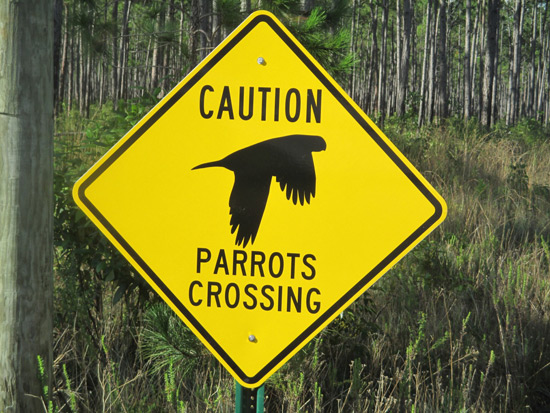
Abaco parrots. The only ground-nesting parrot species in the Bahamas. In the world, in fact. I’ve posted quite often about them – indeed they have their own page HERE – because, frankly, they are special and their story is one of encouraging success for intensive research and conservation programs. In 1492, Christopher Columbus was amazed by the vast number of parrots he saw in the Bahamas (not that the islands were called that then). In his journal he noted: “flocks of parrots darken the sun…”  Not many years ago, parrot numbers on Abaco had dwindled to fewer than 1000 – below the critical point for sustaining a viable population. Extinction of the Abaco parrot loomed, accelerated by increasing habitat change, predation, and (*euphemistically*) ‘human intervention’.  Thanks to the campaign of conservation, habitat preservation, anti-predation measures and vigilance, numbers have been restored to a sustainable level, perhaps as many as 4000. They are now a fairly common sight – and sound – in South Abaco. But not everyone who looks for them finds them, or even hears them. Especially not if they take pot luck in the vast areas of pine forest in the National Park, where they breed…

I’ve covered much of this ground before, but there is a slightly wider audience these days, so a few newcomers may be interested to learn about these lovely birds. The best thing is to have a look. All photos were taken by me during two early evenings in March.

Abaco (Cuban) Parrot 2013 1Abaco (Cuban) Parrot 2013 2 Abaco (Cuban) Parrot 2013 4aAbaco (Cuban) Parrot 2013 5

The parrots are extremely agile, and have very strong feet and claws that enable them to move around in the tree-tops – or to hang upside down if they choose to. The next photo is a close-up a foot; below that is short video showing a parrot manoeuvring itself in a tree. You’ll also see how the birds use their beaks as an extra limb, so to speak. The uninspiring title shown is only because I forgot to label it ‘Abaco Parrot’ in the first place, and can’t find how to edit it…Abaco (Cuban) Parrot 2013 6

In this image you can clearly see how their ‘opposable’ claws wrap round a branchAbaco (Cuban) Parrot 2013 8

If you suspect that this one has had some ‘work’ done, you’d be right. I normally leave my photos largely alone, apart from cropping and maybe basic light balancing where needed. Sometimes an image is nearly there, but needs a bit of extra cosmetic business – but one can usually tell. The left wing? Hmmmmm (users of ‘noise reduction’ will know what I am talking about!).Abaco (Cuban) Parrot 2013 9 Abaco (Cuban) Parrot 2013 10 Abaco (Cuban) Parrot 2013 11 Abaco (Cuban) Parrot 2013 12

The flocks of parrots are incredibly noisy. Sometimes they split into two or three groups, close together, and seem to compete in raucousness. Around 5.00 pm seemed to be the noisiest time. I took recordings of the racket, using the voice memo app on an iPh*ne, simply holding the phone with the speaker / mike end towards the parrots. Some come out pretty well – good enough to post on the excellent XENO-CANTO bird sound site. Here is a recording, with the first few seconds transcribed into a sonogram. I made a ring tone from this recording for Caroline Stahala, the scientist who, with her team, looks after the birds. She’s been too polite to say whether she uses it or (more likely) not!

Abaco (Cuban) Parrot 2013 13Abaco (Cuban) Parrot 2013 14Abaco (Cuban) Parrot 2013 15I find the parrots very hard to nail in flight (see above), possibly because of a shutter-speed issue (mine, not the camera’s). I nearly junked the picture below, but I liked the clash of the parrot colours with the purple bougainvillea, so I spared it.Abaco (Cuban) Parrot 2013 16B

If anyone is interested in making a small contribution towards the continuing research into and protection of these birds, please have a look at my ABACO WILDLIFE CHARITIES  page, where the relevant link to Parrots International can be found. Or visit doudoubirds, where you will find endearing Abaco Parrot prints by dou dou herself for sale in aid of the parrots. Or contact me at rollingharbour.delphi@gmail.comAbaco (Cuban) Parrot 2013 7

If anyone had a problem with the Xeno-Canto sound file above, here is a simplified version of the recording


BEAUTIFUL DAMSELS: BAHAMAS REEF FISH (9)


Cocoa_damselfish

BEAUTIFUL DAMSELS: BAHAMAS REEF FISH (9)

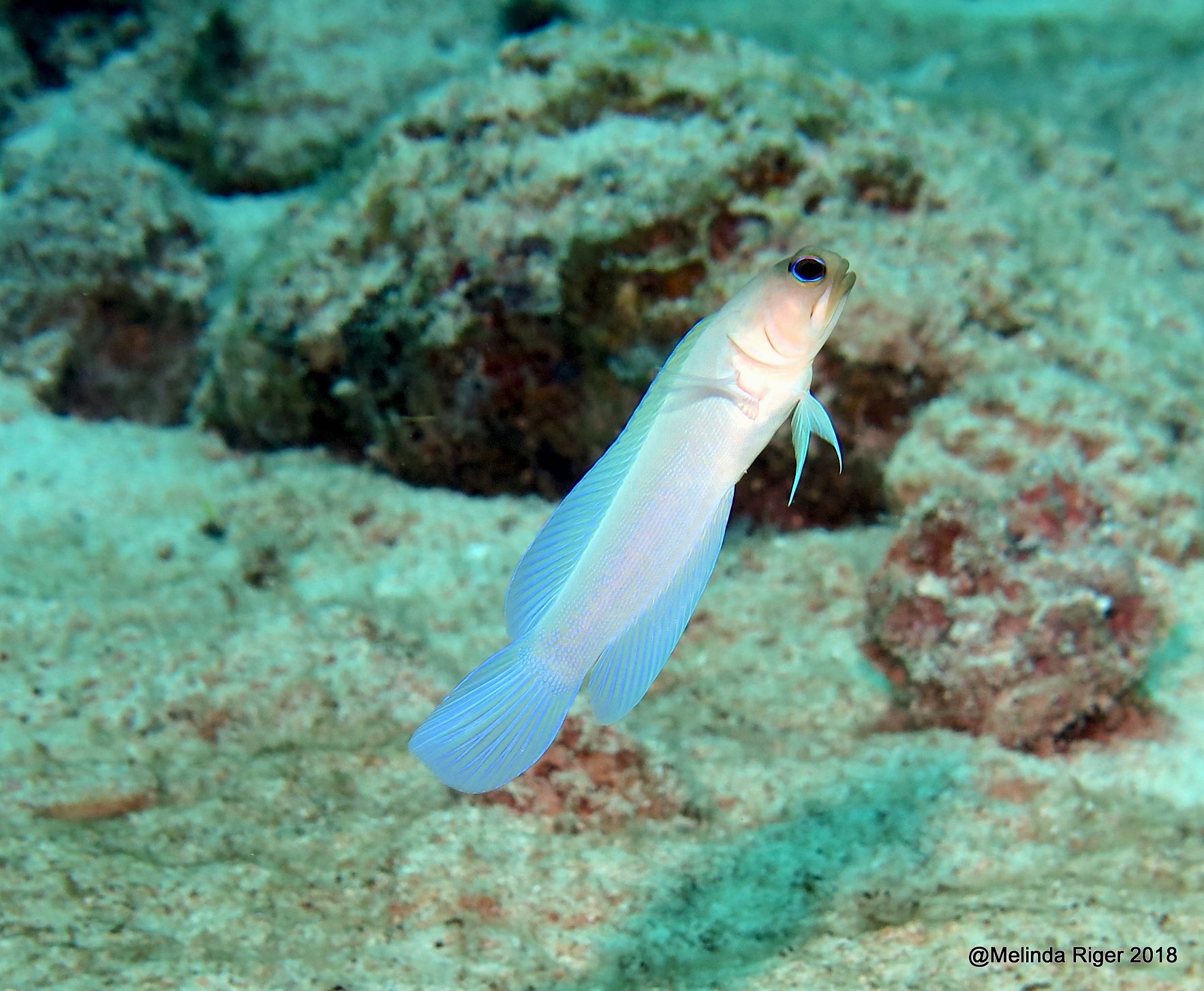
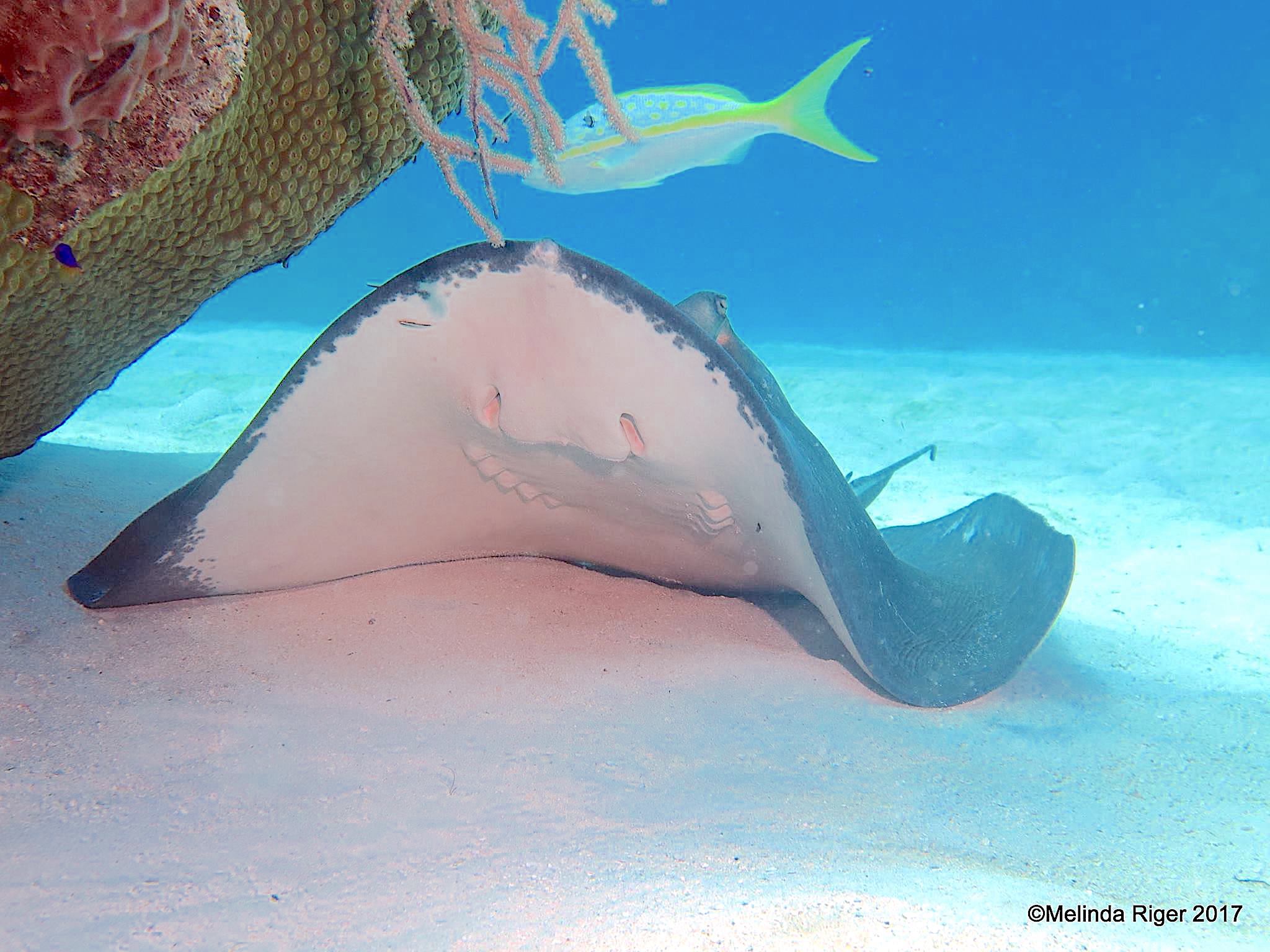
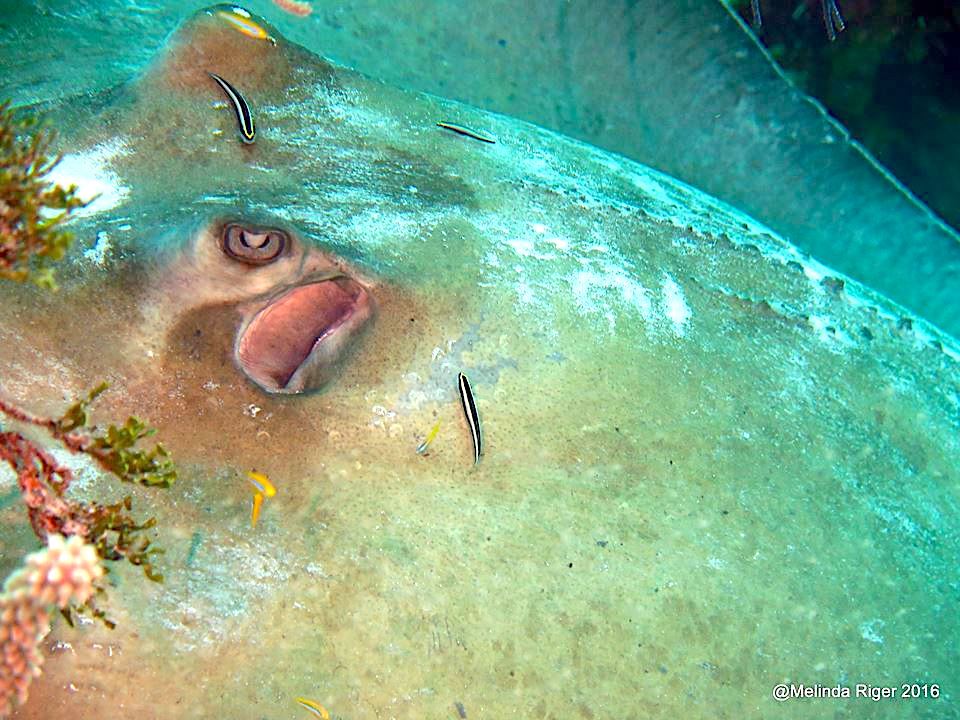
YELLOWTAIL DAMSELFISHBICOLOR DAMSELFISHBicolor Damsel ©Melinda Riger @ G B ScubaCOCOA DAMSELFISHJuvenile Cocoa DamelfishTHREE-SPOT DAMSELFISH (JUV)

THREE-SPOT DAMSELFISHPhoto credits: Melinda Riger @ Grand Bahama Scuba (except header image – Wiki-cheers)

BURNING SENSATIONS: FOREST FIRES ON ABACO


Forest Fires, Abaco 11

BURNING SENSATIONS: FOREST FIRES ON ABACO 

My last post was about SAWMILL SINK – not the famous Blue Hole itself, but the detritus of past logging activity in that part of the Abaco pine forests revealed by last month’s forest fires. I mentioned that this destructive burning of the shrubby understorey is (allegedly) the work of  hunters making it easier for their dogs to pursue the hog denizens of the forest. The evidence suggests that nature alone could not cause so many separate seats of fire to appear in a matter of days over such a wide area – and in springtime at that.

This year, the fires came uncomfortably close to several small communities and outlying residences – and to the Delphi Club itself. Many people spent nights hosing down undergrowth and building on the edge of settlements, with neighbours all joining in. Electricity poles are vulnerable, with obvious consequences for the supply should they burn through at the bottom, as often happens. One pole a short way south of Delphi on the highway has the burnt remains of 3 utility posts beside the current (ha!) one. At Delphi itself, the vegetation from around all the poles along the mile of drive had to be cleared.

This iPhone photo was taken from the Delphi balcony. The fire is in fact on the far side of the highway, with the pall of smoke – and therefore the fire’s direction – heading south. The question is, when and where will it jump the highway, and what will be the wind direction then…Forest Fires, Abaco 12

This picture shows the extraordinary effect of the smoke-laden atmosphere on the sunset. The header picture is another example. The fire is now into the pine woods between the Club and the highway, and the theory that the damp coppice nearer the Club will act as a barrier to prevent its spread is about to be put to the test overnight…Forest Fires, Abaco 9

It soon became clear that the fires were not going to be discouraged by the coppice.  Sandy is always eager to find volunteers to go out in a truck to feel the heat, so to speak. He is apt to dismiss concerns that one is sitting on top of a large tank of inflammable liquid by pointing out that diesel is less combustible than petrol. This is invariably comforting to all occupants of the vehicle. So with the fire burning bright, and with tree-tops suddenly bursting into flame like torches, off we go…Forest Fires, Abaco 3Forest Fires, Abaco 5Forest Fires, Abaco 7Forest Fires, Abaco 1Forest Fires, Abaco 2

In the morning, a smokey mist lies over the trees and the bay to the northForest Fires, Abaco 14

An uncomfortably short distance along the guest drive, it is clear that the coppice has burnt quite easily, though not devastatingly. In fact there are still flames to be seen…Forest Fires Abaco 19Forest Fires Abaco 18

Later, out on the Marls, a plume of smoke is visible, with several more in either directionForest Fires, Abaco 4

Despite the widespread damage caused by the fires, the capacity for regeneration is amazing. New growth is visible very quickly, and within the year the burnt-out areas are mostly back to normal. I’ll end on that optimistic note, and with another dramatic sunset above the haze of smoke over the tree canopy.Forest Fires, Abaco 8