

THE DELPHI CLUB DRIVE CIRCUIT
This very pleasant walk somehow seems more satisfactory taken clockwise, turning left at the front gateway and wandering along the guest drive. The straight service drive is less interesting and feels less ‘in the coppice’. The distance is about 2 miles. You can walk the circuit briskly in about half an hour. The birds will see you, but you won’t see them… So preferably take it easy. Here is a fantastic aerial view of the drives (courtesy of DCB)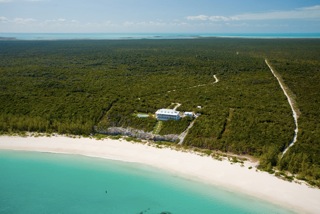
The start of the route – trees as far as the eye can see
From a birding point of view, as you walk down to the gateway, keep an eye out on both sides. There are plenty of birds in the bushes and trees, though they are not always easy to see. You might see a western spindalis, bananaquits, black-faced grassquits, warblers, northern parulas, loggerhead kingbirds, vireos, cuban emerald hummingbirds or a bahama woodstar if you are lucky, amongst many others. When you get to the main drives, have a look straight ahead into the coppice – in fact anywhere along the guest drive is worth pausing to investigate.
 This cuban emerald was just opposite the drive gateway (credit Xeno-canto.org)
The gumbo limbo trees are very popular with many birds, including the Abaco Parrots, so it’s good to check them out as you pass by (and if you have unfortunately touched a poison-wood tree, they provide the antidote – conveniently the two trees tend to grow next to each other). Here are a couple of Thick-billed Vireos proving the point. And their song, which you will hear a lot around the Club itself. (credit Xeno-canto.org)


Hairy Woodpeckers seem to favour dead trees for drilling practice – and perhaps for feeding on the sort of bugs attracted to dead wood. Here’s what they sound like (a call and response with 2 birds) (credit Xeno-canto.org) 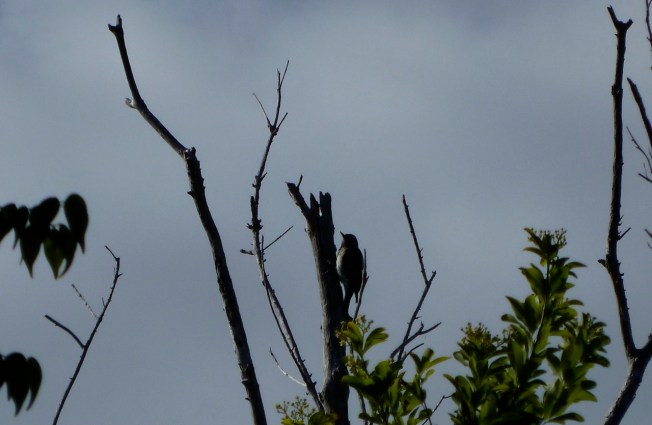
There are plenty of small birds all along the way, some more vivid than others… Black-faced grassquit (not a warbler, as earlier suggested. Thanks CN)
 Prairie Warbler
 Antillean Bullfinch (not, as previously alleged, an American Redstart. Thanks CN)
If you look at the base of the trees in certain places, especially on the the left hand side of the guest drive (facing the highway), there are some small but deep holes in the limestone. If you drop a stone in, you can hear it splash in water – and the ferns growing inside them suggest a continuously moist environment.
As you progress, you move from the hardwood coppice to the pine forest. This photograph was taken just as the forest fires in March were petering out. The theory was that the fires that raged through the pine forest would stop where the coppice began, and not sweep on to engulf Delphi… and so this photo shows. The thick pine forest with its flammable vegetation and undergrowth gives way here to damper and less combustible coppice-wood which has halted the progress of the flames. The pines you can see are the last few outliers of the pine forest.
Here is an example of the drive having acted as a partial firebreak.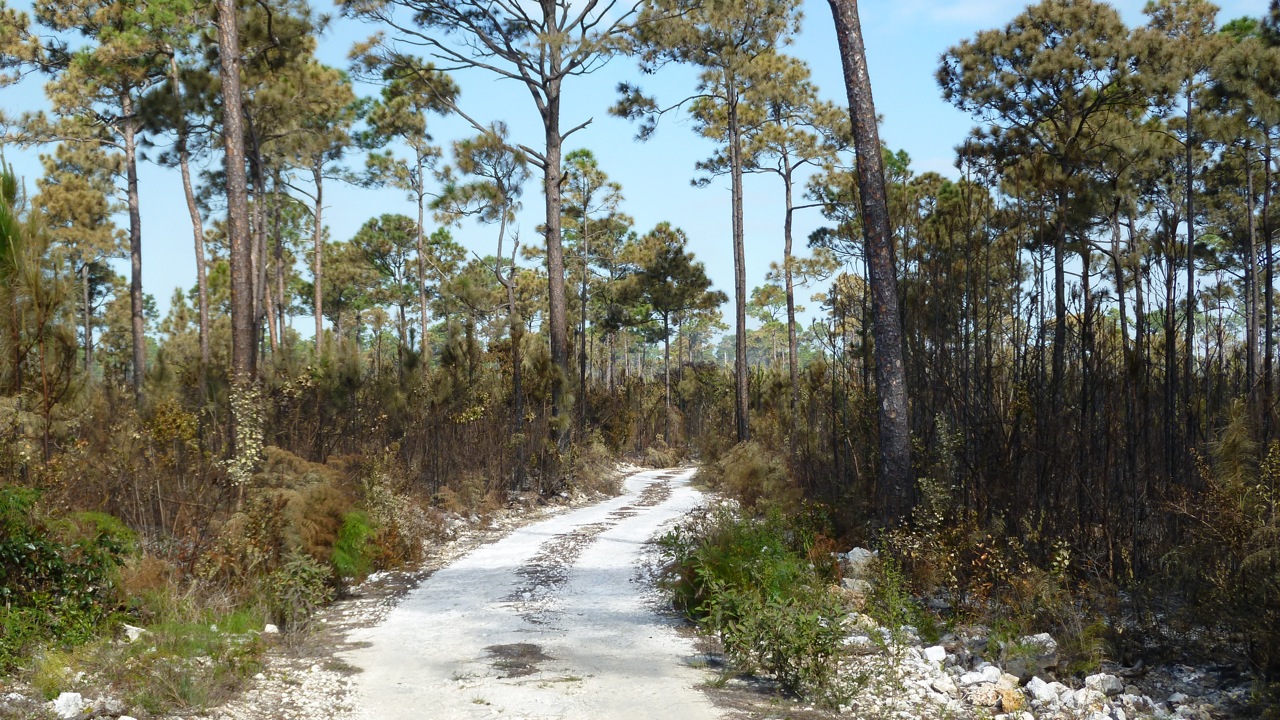
The pines, even burnt ones, are a good place to see West Indian Woodpeckers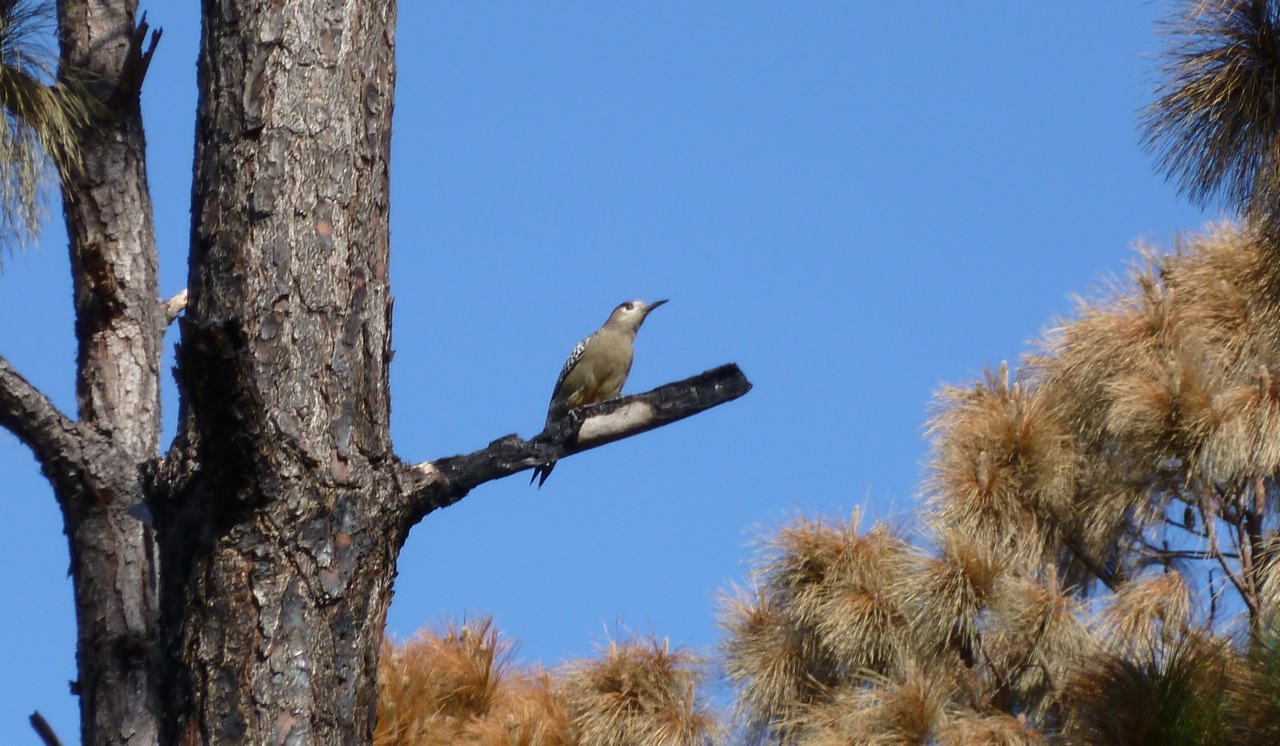
When you reach the top of the guest drive it is worth carrying on to the highway. For a start you can admire Sandy’s gardening effort on the south side of the ‘white rock’, and maybe do some weeding.  You are quite likely to see Turkey Vultures on the telegraph posts and wires, as here. You may also see Bahama Swallows on the wires, and perhaps an American Kestrel on a post.
 Smooth-Billed Ani (wiki-ani)
I have seen a raucous flock of Smooth-billed Anis in this area, but it is hard to get close to them. Listen out for this unmistakable noise (credit Xeno-canto.org)
Returning from the road to the fork, to your right is the way you have come – seen here as the fires burnt out. There had been thick, indeed impenetrable, bright green undergrowth all along only 3 or 4 days earlier.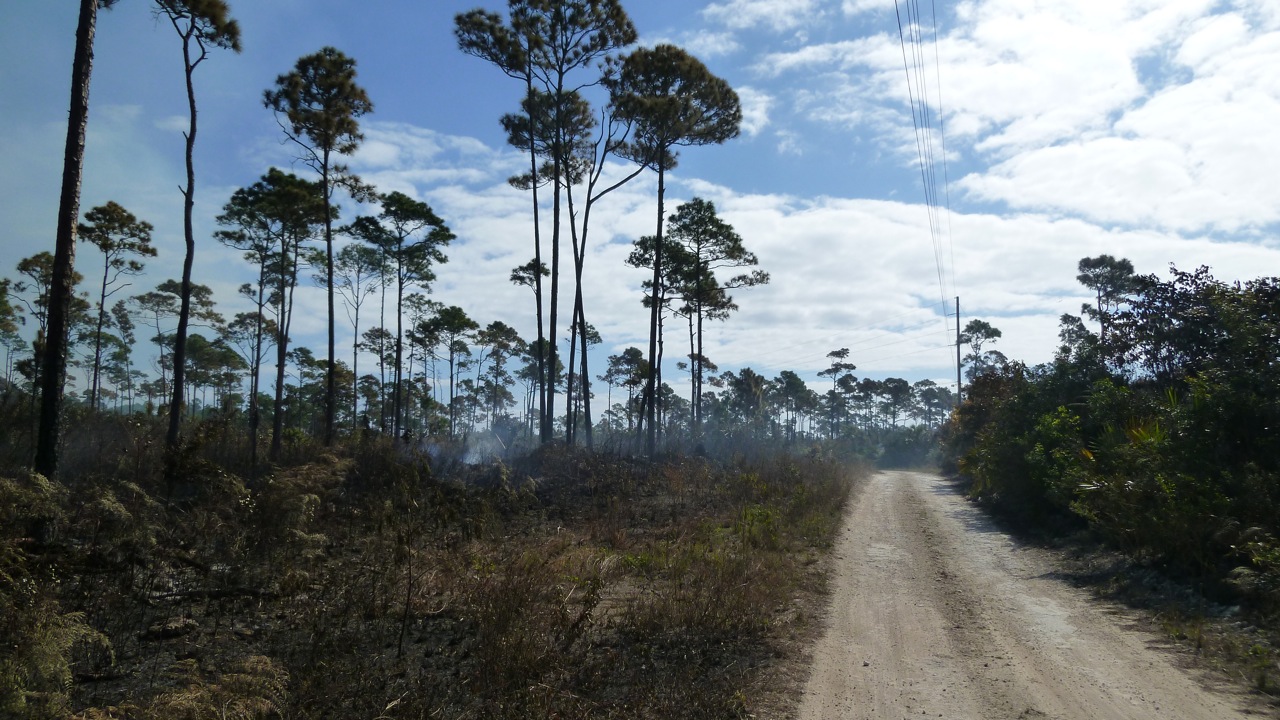
To the left is the service drive and your route home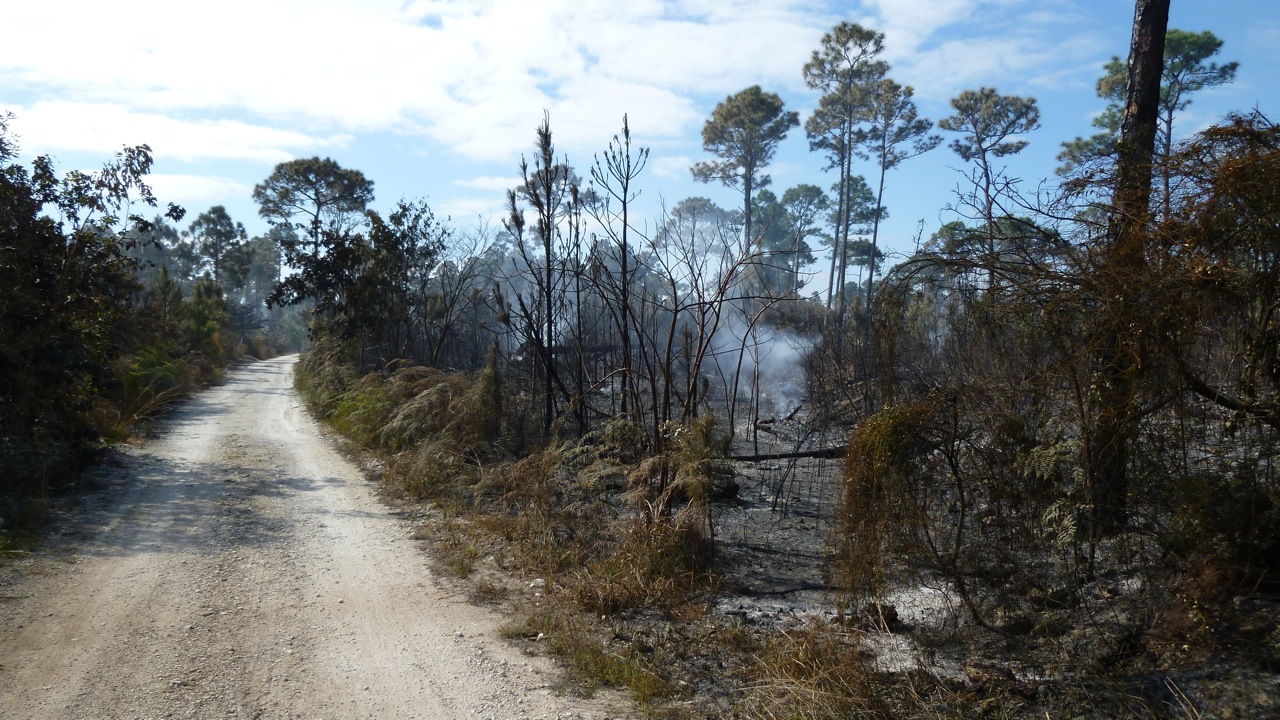
Because this route is more open, there seem to be fewer birds. Again, you may see kestrels on the posts. Halfway along we heard the loud and very melodious singing of a Northern Mockingbird some distance away. CLICK on image (as you can with all, or most, of these photos) and you can see it singing!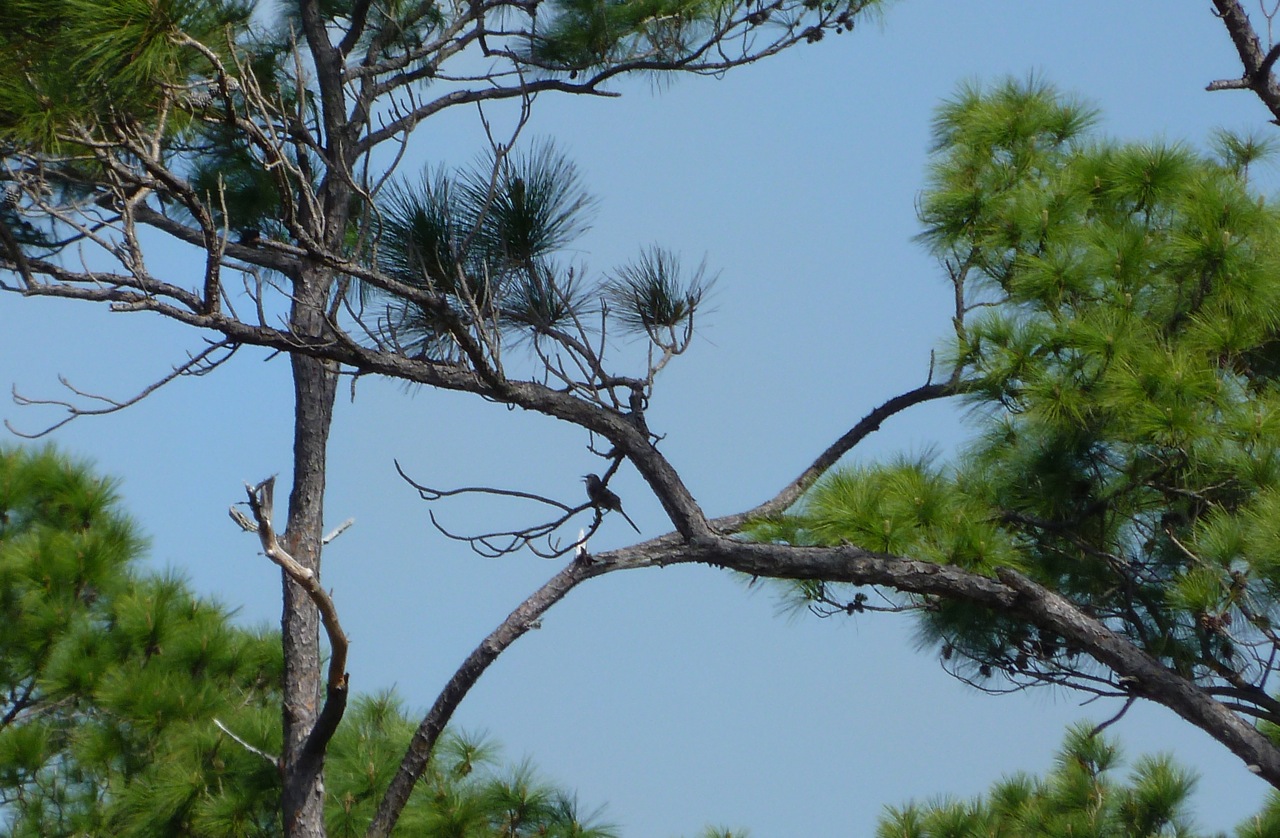 CLICK BUTTON to hear song of a Northern Mockingbird (credit http://www.bird-friends.com)
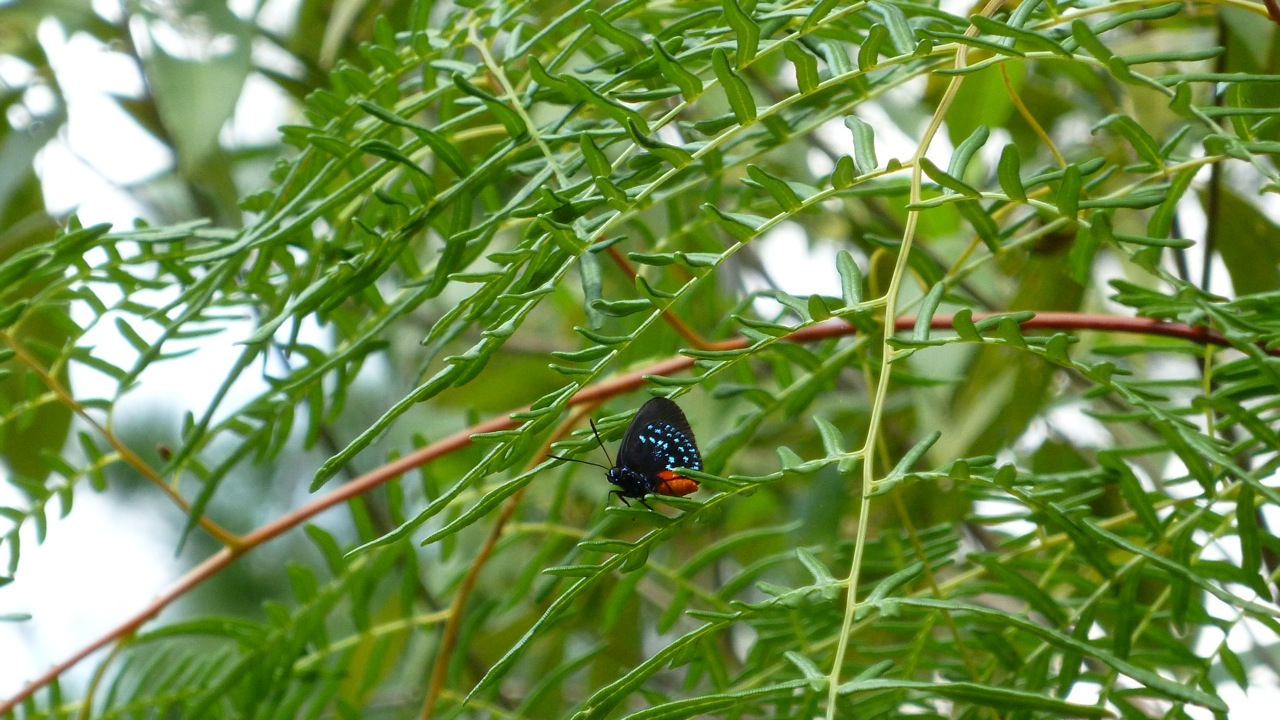
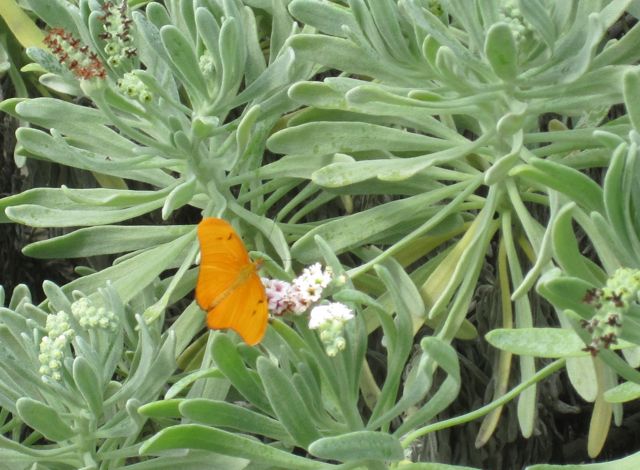
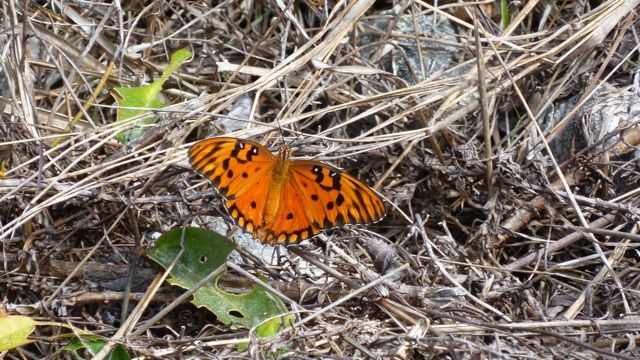
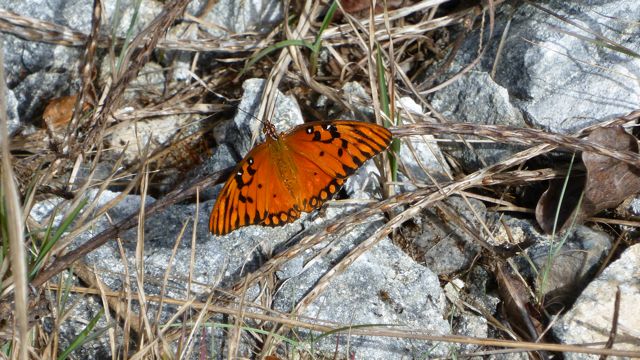
On either drive you will see butterflies. They seem to like the vegetation around the piles of stone and rubble.
 GULF FRITILLARY Agraulis vanillae
It is also worth looking out on either drive for epiphytes, or air-plants, growing on their host trees. They are so-called because unlike say, mistletoe, they are non-parasitic and do not feed off their hosts.
 And so back to Delphi, a well-earned swim… and an ice-cold Kalik in the hammock…














 ROLLING HARBOUR ABACO

You must be logged in to post a comment.