 SUPPORT ABACO WILDLIFE CONSERVATION AND THE WORK OF THE BNT
LOCAL ARTISTS & ARTISANS; LECTURES; ENVIRONMENTAL GAMES; FRESH MARKET
(Help to make sure that the creatures pictured below stay off the IUCN ‘threatened species’ list)


SUPPORT ABACO WILDLIFE CONSERVATION AND THE WORK OF THE BNT
LOCAL ARTISTS & ARTISANS; LECTURES; ENVIRONMENTAL GAMES; FRESH MARKET
(Help to make sure that the creatures pictured below stay off the IUCN ‘threatened species’ list)

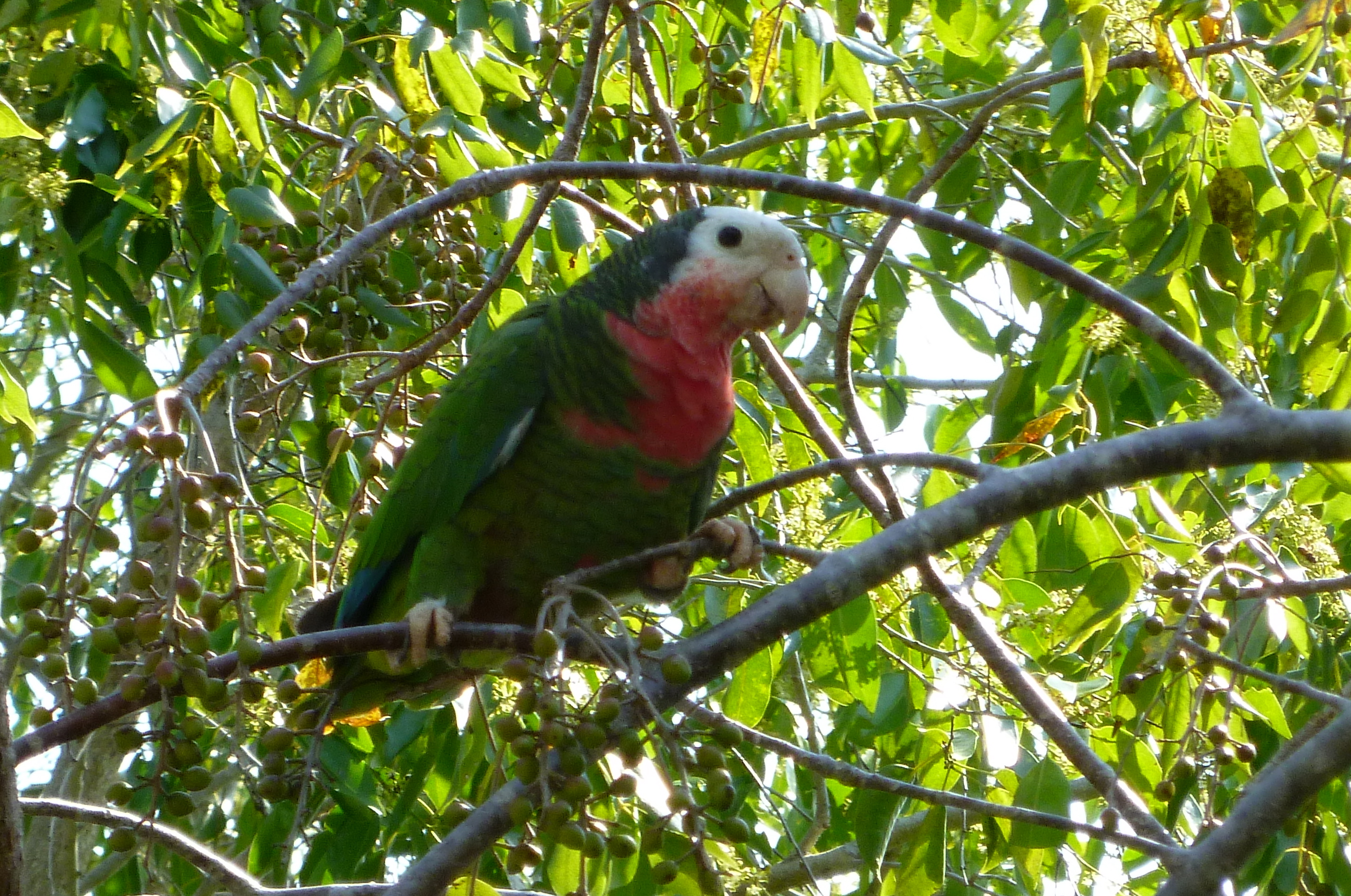
Time to write some more about Abaco’s most famous bird, the unique ground-nesting Amazon / Cuban parrot sub-species that makes Abaco its home, and breeds in the pine forests of the Abaco National Park in the south of the island. You’ll find lots of information and photos on the dedicated page ABACO PARROTS.
This post covers the 2012 breeding season, and highlights the success of scientist Caroline Stahala and her team in helping to secure the future of these rare endangered birds. The population had shrunk to around 2500 (or fewer) some years ago. More recently it had risen to 3000. An intensive conservation program, including anti-predation measures, has proved effective; and a systematic ringing program has enabled the team to keep a close eye on recovering parrot numbers. Caroline says that the population is now in the region of 4000, confirming an encouraging reversal of a dismal decline towards extinction for these beautiful birds.
ABACO PARROTS IN THE PINE FOREST
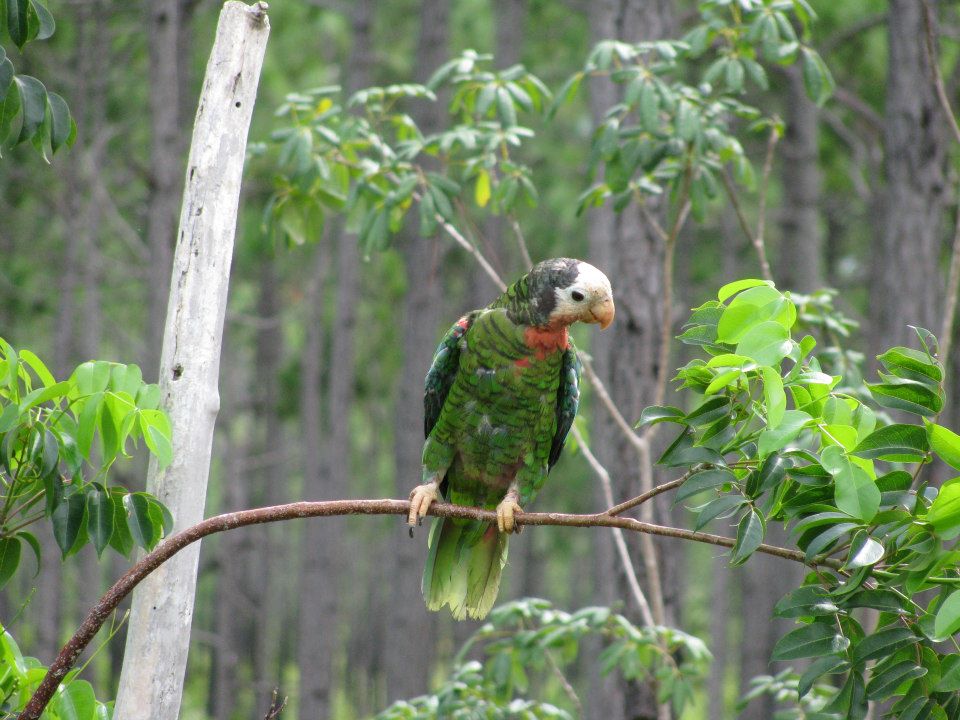
The parrots breed only in the pine forest, where they nest in quite deep holes in the limestone rock. This makes the nests and the areas round them vulnerable to predation from feral cats and rodents etc; but conversely it offers protection from the forest fires that would destroy tree nests. 
The holes are often well concealed in the undergrowth and take some searching for…


Both parents are involved in the nesting and later chick care. The female lays 2 – 4 eggs.
The chicks hatch after an incubation period of around 26 days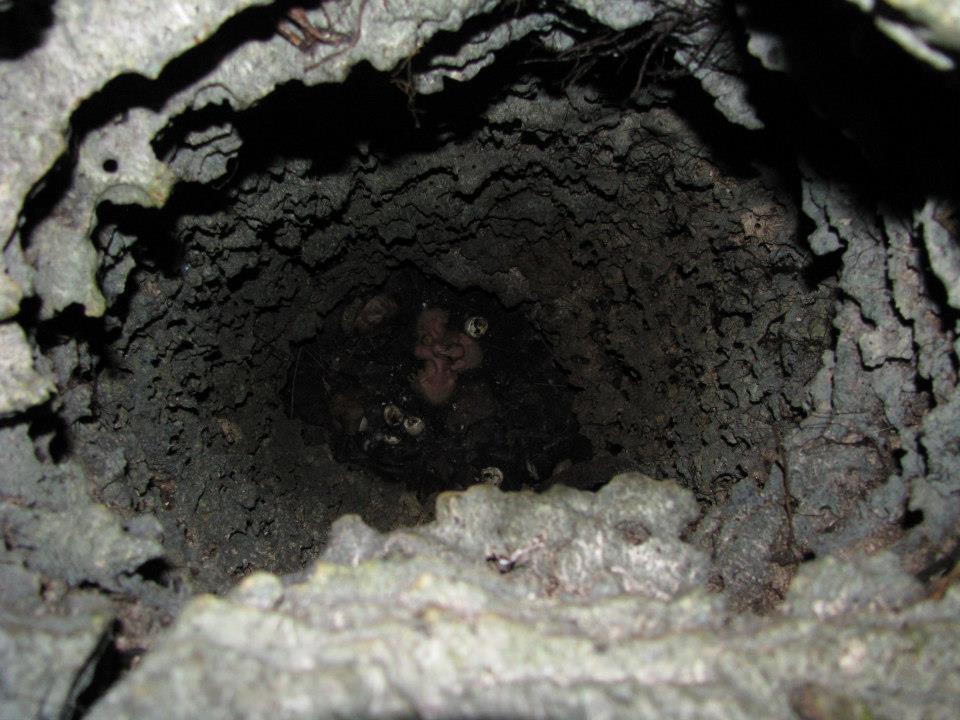
Some of the nest holes are remarkably deep: the parent parrots clamber up and down the sides

The chicks grow the beginnings of feathers, remaining quite unattractive except to their parents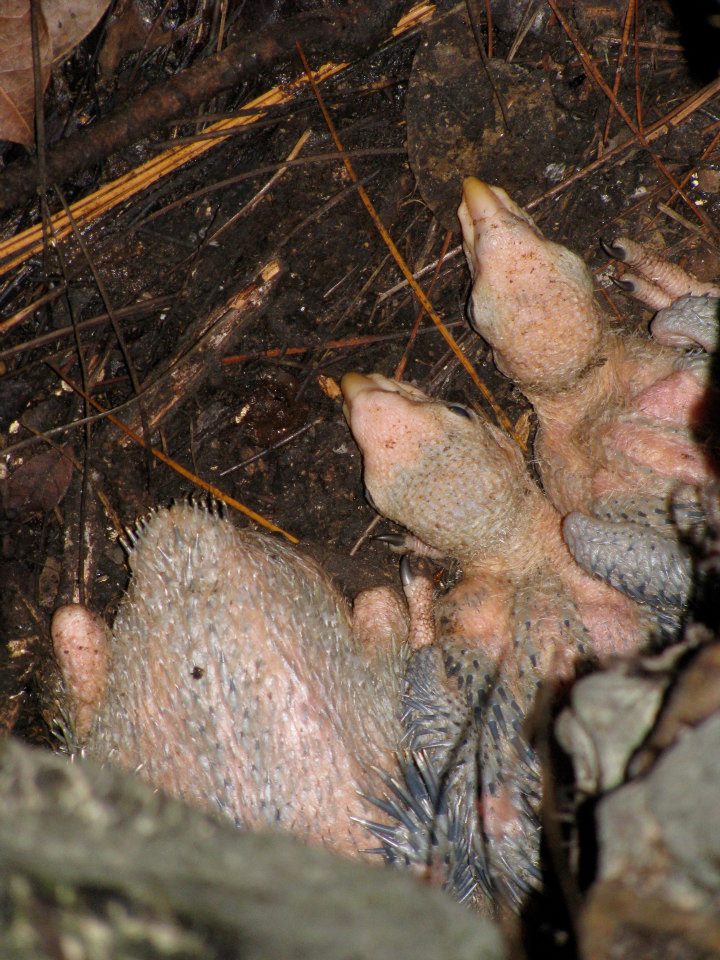
The parent parrots share feeding and care duties
The chicks / fledglings stage are ringed so they can be identified – see ABACO PARROT CHICKS


By coincidence, as I was producing the post above, Craig Layman at THE ABACO SCIENTIST was also ruminating on the topic of Abaco parrot breeding. He posted the comments below, which raise the very interesting question whether the Abaco parrots, with their increased population, may be starting to breed outside the National park. Caroline can probably answer this (see COMMENTS), but does anyone have any direct evidence to suggest a wider breeding habitat? I guess there would need to be a suitably pitted rock structure for the nests, and an absence of the usual cat- and rat-type predators that one might find nearer human populations. Answers welcomed via the comment box…
Posted by laymanc 26 Nov 2012

It isn’t really much of a study, but the only “science” I have been able to do over the last week with the continued turbidity of nearshore waters.

The Bahama parrot (more information HERE and HERE) is one of the iconic Bahamas animals, and the main factor behind the establishment of the ABACO NATIONAL PARK in southern Abaco. But my study has been conducted instead from my desk in Little Harbour. My main finding is simple: the range of the parrot has clearly expanded; it has now been a full calendar in which parrots have been in the area. Just a few days ago two dozen were squawking around the harbour. The key will be whether they begin nesting here as well – I havent heard reports of that yet. But if they do, the expanding nesting range will substantially increase long term viability of the parrot on Abaco. That ends my first ever Bahama parrot study (I really need more time in the water when I come back).

A SERIES OF ABACO PARROT PAINTINGS BY ANTONIUS ROBERTS
The wonderful parrots of Abaco are often featured hereabouts, and with good reason. They are the only subspecies of cuban parrot to nest underground, a unique species adaptation that protects them from fires in the pine forest of the ABACO NATIONAL PARK where they breed. However this in turn makes them vulnerable to predation. An intensive long-term conservation and predation-reduction program headed by scientist Caroline Stahala has reversed the decline of this iconic bird. Numbers have increased from fewer than 2500 some years ago to an estimated 4000.
There are places on Abaco – south Abaco in particular – where the parrots congregate in noisy groups during the day. Many people manage to take photographs of them. Good photographers with a decent lens can get outstanding results. Even the camera-incompetent (I hear my name!) can manage the occasional first-class photo, given time and plenty of spare space on the camera card… But very few can do justice to these colourful birds in paint.
The spectacular series of paintings below are by well-known Bahamian artist and sculptor Antonius Roberts. Caroline has already posted about these on the ABACO PARROT RESEARCH F/B page. The originals of these paintings have (unsurprisingly) been sold, but they are available as limited-edition prints. Antonius will generously be donating proceeds of sale from the series to support the on-going parrot research. The images are ©Antonius Roberts – thanks to him and to Caroline for use permission


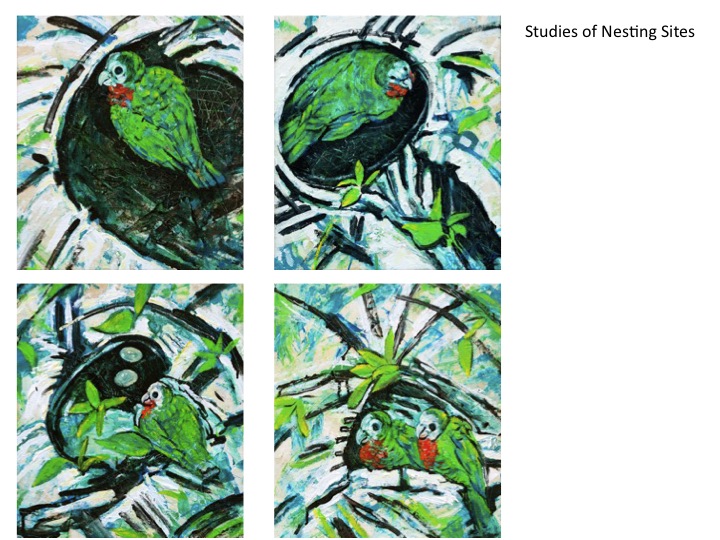
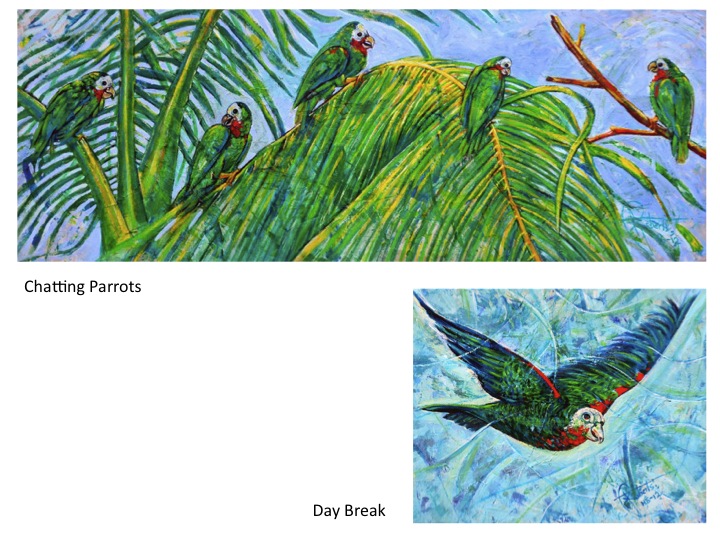
 A recent reception was held in Nassau to showcase this series of paintings. You will find more about them by clicking the link to open a pdf of the reception brochure ABACO PARROT PAINTINGS Caroline Stahala contributed an excellent one-page article about the Abaco Parrots and their conservation – click on it to enlarge to legible size
Contact Antonius via email to hillsidehousebs@gmail.com or check out his website by clicking the parrot 

It’s a fine June day. Perfect for a morning out with Ricky Johnson, the omniscient leader of ABACO NATURE TOURS. Want parrots? He’ll take you to them. Want a Bahama Woodstar ‘pished’ from its deep cover into the open? He’s your man. And as for wrassling land crabs – see LANDCRAB and LANDCRAB: THE SEQUEL We set off from the Delphi Club in sunshine and hope…
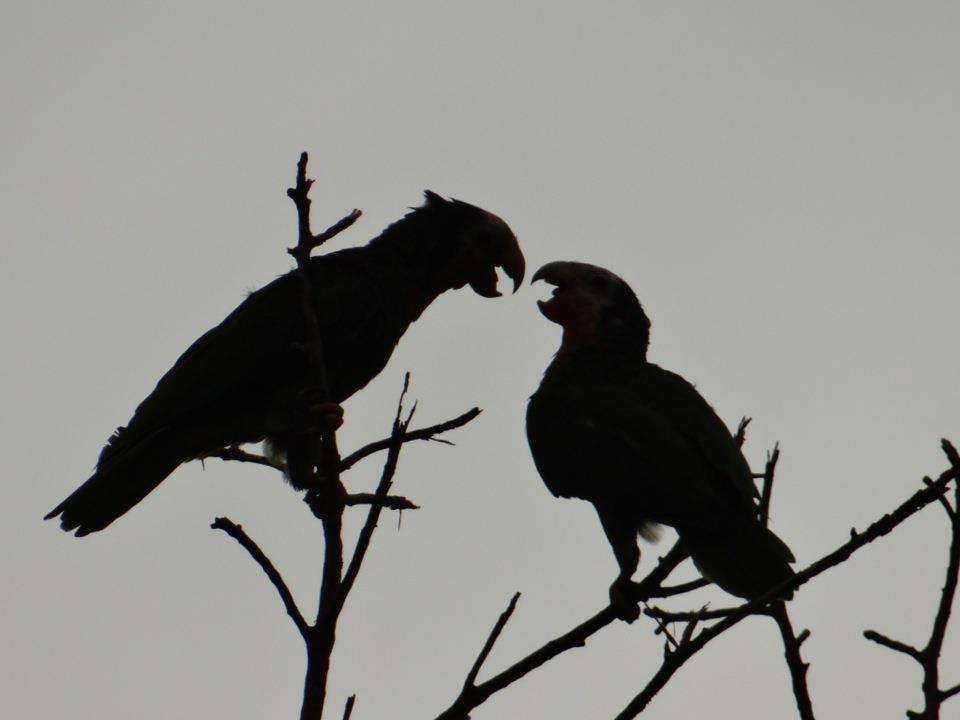
Sure enough, we found the parrots at Bahama Palm Shores, so often a good bet. This was (Ricky said) a non-breeding flock, the breeders all being otherwise detained in the National Park with their nests and eggs. Out of nowhere, a sudden short, sharp downpour arrived, and 5 minutes later, everything – everyone – was soaked. And so, of course, were the parrots. At first I discounted the resulting photos for use. These lovely, rare birds are made to be seen in their bright cheerful livery of green, red and blue. These wet ones looked… black. I usually try to avoid doing much (or any) ‘work’ on my photos, but for these I tried changing the contrast a bit and realised that they looked rather appealing with their dark, damp feathers and unkempt appearance. So I’ve decided to use a few images. Here they are, then: some sodden parrots!


While we were damply watching the parrots, Ricky spotted an American Kestrel near the top of a tree. Heads swivelled. It was some way away, but we could see it looking a bit dejected, huddled in the palm fronds. Then suddenly, just as I pressed the camera button, the kestrel stretched itself upright, raised its wings, and launched itself into the sky. The two photos below are frankly of marginal quality (on a high “blur setting”, as you might say) but the second one has caught the rain-drenched kestrel’s take-off about as well as a point ‘n’ shoot at that distance could… 

I have been planning a Parrot Post for a while, but I’d like to be able to include a report on the breeding season – the eggs, the chicks, the fledging, the ringing, and the overall picture. It will be interesting to see if the recent trend of improvement in the population of these rare ground-nesting parrots has continued this year. Parrot expert Caroline Stahala, who leads the research and field work, is completing the season’s review, so there will be news, photos and perhaps short videos soon.

In the meantime, I have had a request from the US for news of the parrots. This has fortunately coincided with my discovery of some wonderful parrot photos taken by Melissa Maura [©] of Nassau. Most were taken on Abaco at Bahama Palm Shores; some at Winding Bay. So here is a gallery of Melissa’s work, which needs no other comment from me than… superb pictures! Oh, and many thanks for use permission, of course. The next photo is worthy of a caption competition – all suggestions welcome via the ‘Comment’ link below…
 OVER THE MOON…


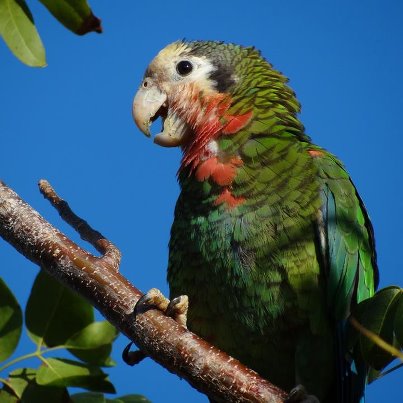
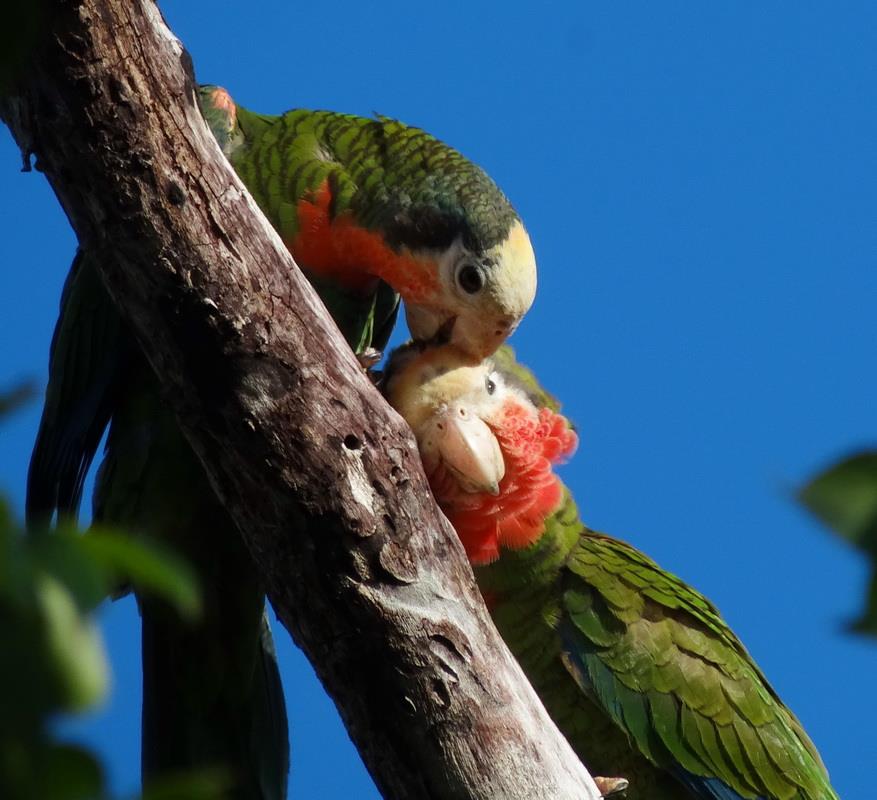
The wild parrots of Abaco are very special birds. Uniquely they nest underground in limestone holes which provides protection, not least from forest fires. Thanks to a program of intensive research over the last few years, far more is now known about these birds and their breeding habits. Investigations into predation have led to effective predator controls. The evidence this year is that the population numbers, having stabilised, are gradually rising to a sustainable level of some 4000 birds. The parrot below has been ringed as a chick as part of the continuing monitoring program.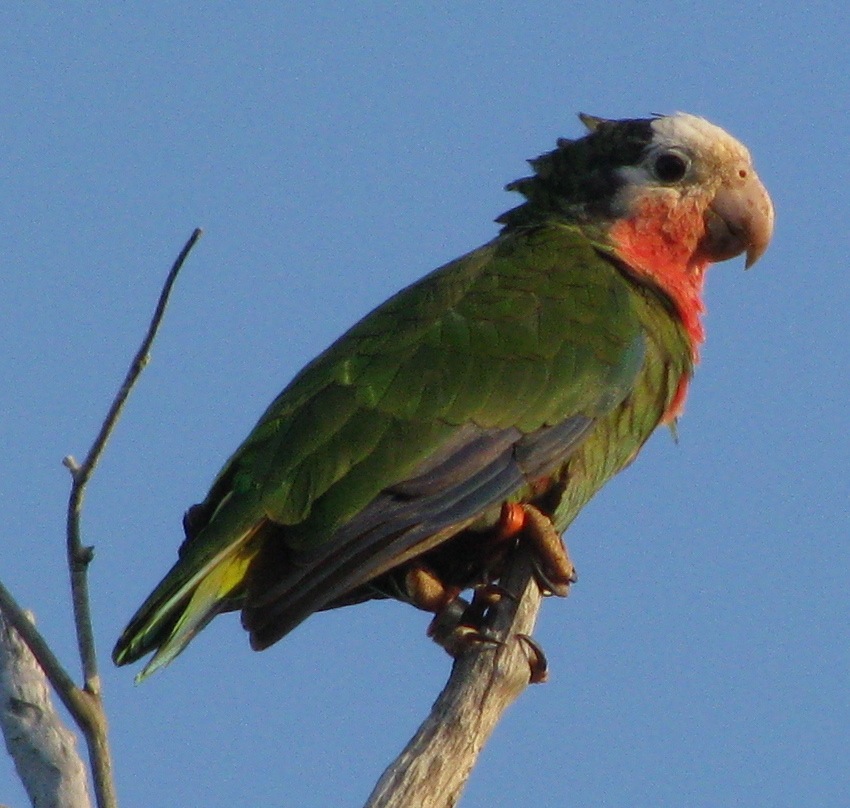
I will soon be posting about the current breeding season – the parrots are in their limestone cavity nests now, the eggs are laid, the chicks will soon be hatching. Caroline Stahala, the Abaco parrot expert familiar to those who follow this blog (see ABACO PARROTS), will soon be reporting on this years breeding and chick-ringing program. In the meantime, here are some of Caroline’s pictures taken during the past season of the parrots in all their glory…
The parrots mainly live and breed in the pine forest of the Abaco National Park
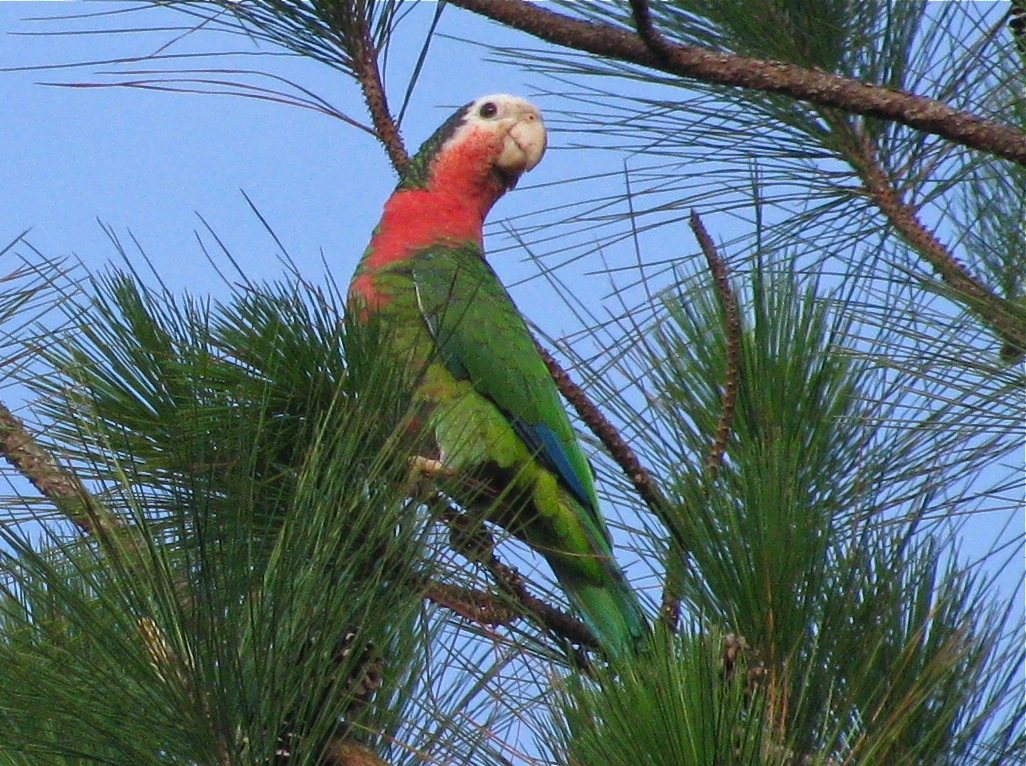

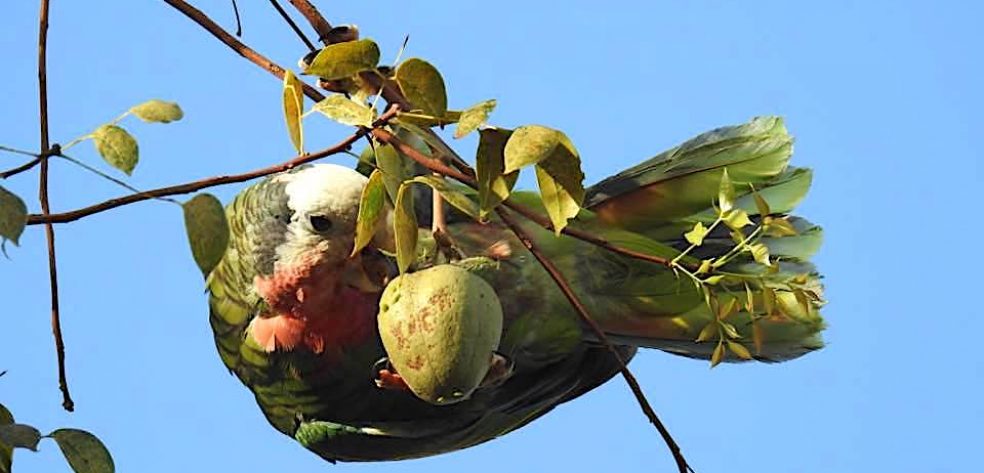
During the day they fly northwards, often in large noisy groups, where they feed. One of their favourite treats is the fruit of the Gumbo Limbo tree. This sometimes requires acrobatic skill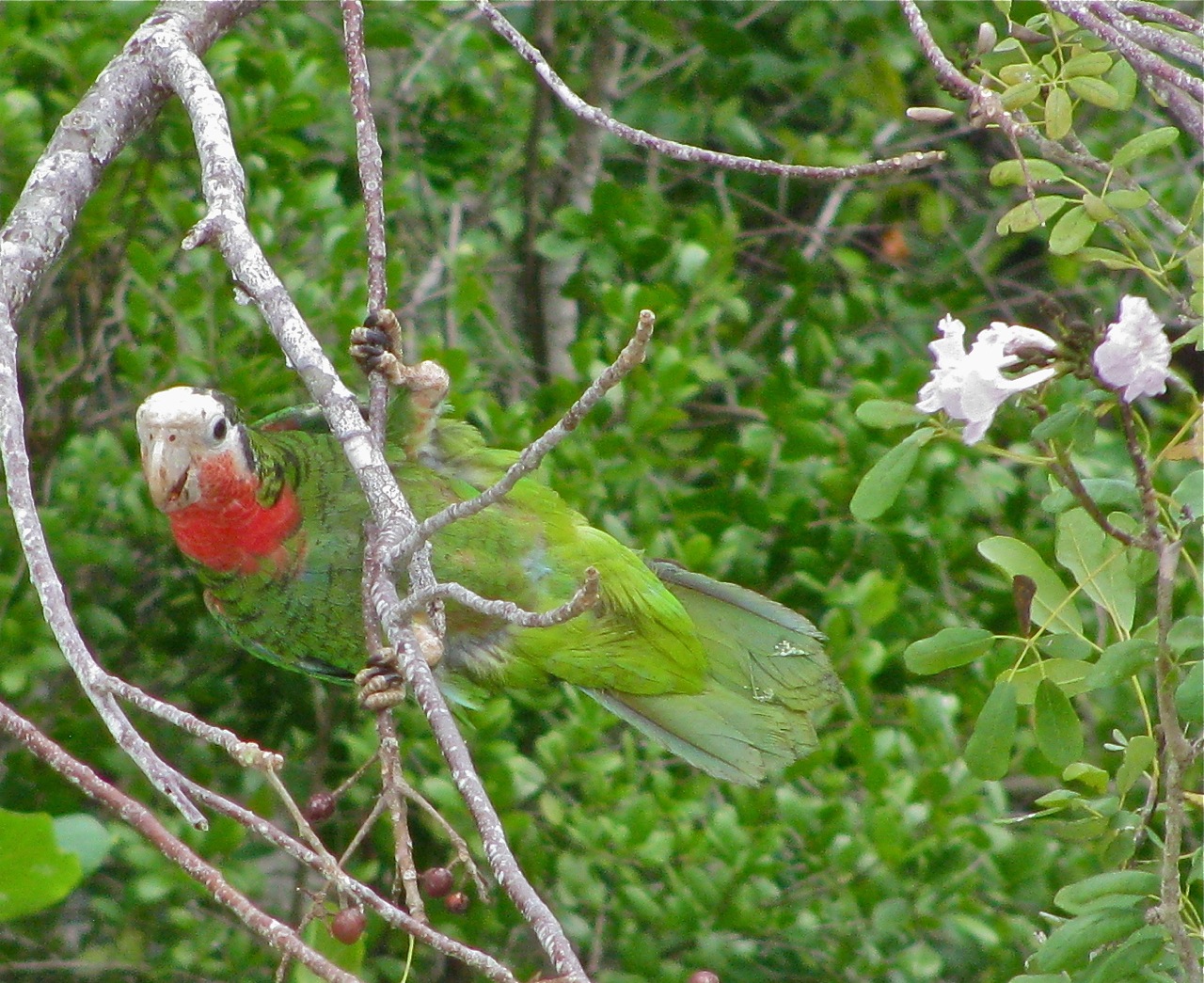


The sunshine brings out their bright colouring. When they fly, the blue on their wings is wonderful 

Besides Gumbo Limbo berries, the parrots enjoy feeding on seeds


A parrot takes flight near a nest cavity. There’ll be more photos of parrot nests later this month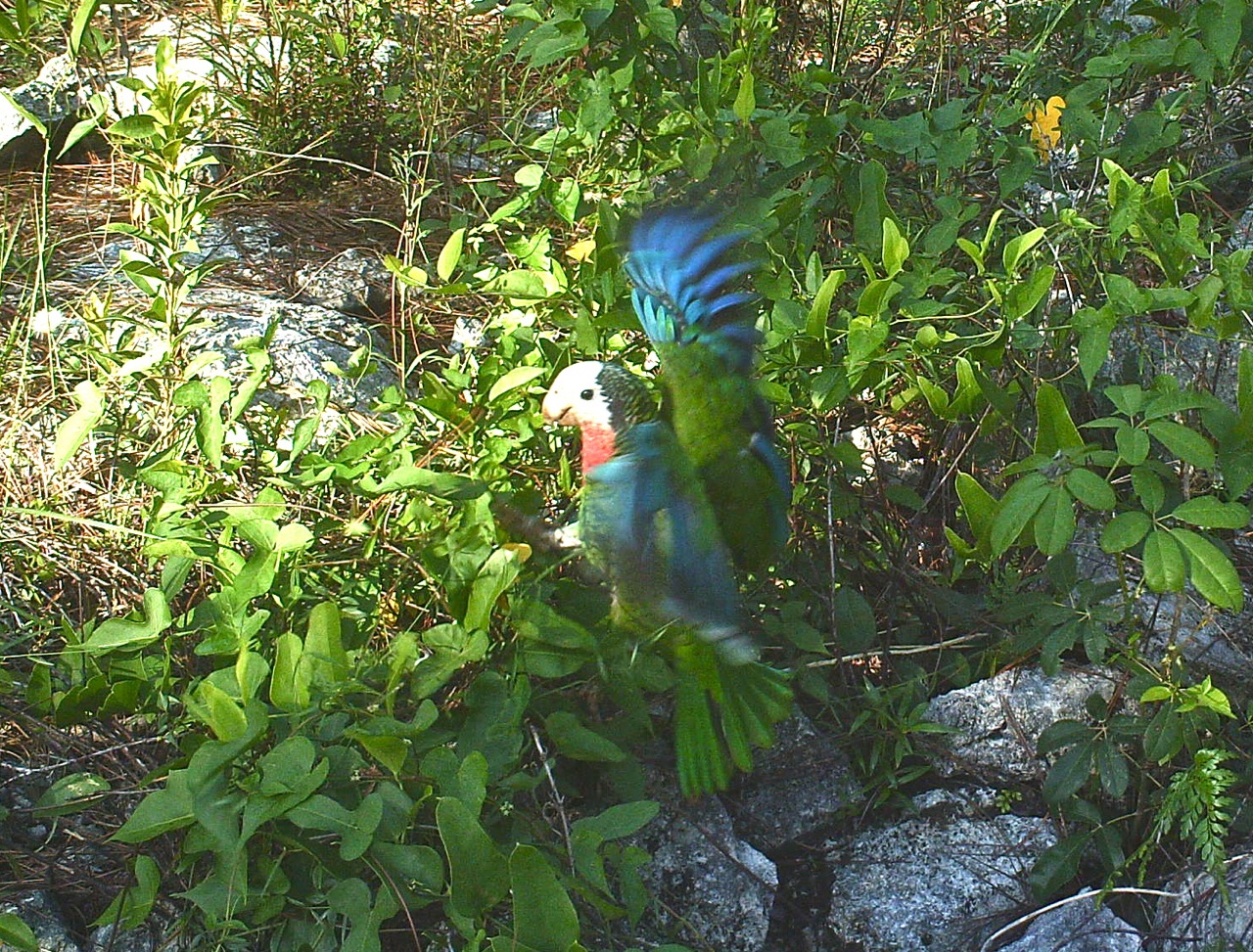
(All photos © C. Stahala / Rolling Harbour)

THE AUK
A Quarterly Journal of Ornithology
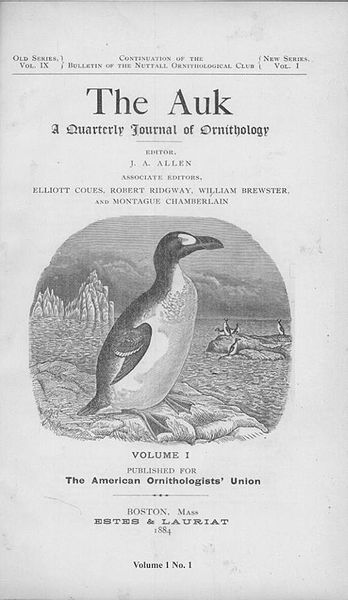
THE AUK is a quarterly journal published by the AOU specialising in promoting the scientific study of birds by means of original peer-reviewed reports. It has been in continuous publication since 1884, and can lay claim to be a (the?) foremost journal in its field. Here is the front page of the first volume of the journal
The 1905 Vol 22 No. 2 contains a 22 page study by Glover M Allen entitled SUMMER BIRDS IN THE BAHAMAS. If you aren’t a particularly dedicated birder, my advice is ‘look away now’ and move on to a page, post or other occupation that interests you more. For the remaining 2 of you, stay tuned in. I thank you both. It will be worth it…
The article was published at a time when ornithological survey of the Bahamas was in its infancy. Cory’s famous list of birds collected from the islands had been published a mere 15 years earlier. Allen details his time spent with 2 companions – much of it on Abaco – as they investigated birdlife and recorded their findings. That aspect comprises the first part of the article. The second part is equally fascinating: their list of bird species, with commentary, remarks and comparisons thrown in, together with some of the local names for the birds. Some of these are still in use, others perhaps long-forgotten. Is a Least Tern still known as a ‘Kill-’em-Polly’? Here are some highlights for busy people:
FLAMINGO / SPOONBILL Of particular interest is the recording of the apparently imminent loss of the flamingo (“fillymingo”) from the Northern Bahamas – a single colony only still surviving on the Abaco Marls by 1905. Allen and his group found only one roseate spoonbill, also on the Marls (we were also lucky enough to see a single spoonbill on the Marls in June)
BAHAMA PARROT Those who follow the fortunes of these fine birds on this blog or elsewhere will be especially interested in the following extract, which suggest that at the start of the c20, the species had all but died out on Abaco: “Amazona bahamensis (Bryant). We were interested to learn through the captain of our schooner, that a few parrots still exist on Great Abaco. He told us of having seen a flock near Marsh Harbor the year before (1903) and in previous years had some- times observed a flock in late summer at that part of the island. We learned that at Acklin’s Island about 14o miles south of Nassau, parrots still nest in numbers and the young birds are regularly taken from the nest when fledged,and bronght to Nassau to be sold as pets” I will be posting about the parrots later this month, but suffice to say here that the current estimate for Abaco parrots is now around 4000 birds, a significant increase since conservation measures and a predator control program were started some years ago.
BAHAMA WOODSTAR These endemic hummingbirds, now taking second place to the in-comer Cuban Emerald, were plainly everywhere then: “On all the islands and cays, wherever there was bush or tree growth, this humming- bird occurred”
“PARAKEETS” There seems to have been a significant population of these, known then as ‘Bahama Grassquits’. What species were – or are -these? The description doesn’t quite match the ‘quit family candidates we are familiar with today.
OTHER SPECIES Avian taxononomy, with its frequent official changes of classification, is a confusing area… but it seems that in 1905 there were then 2 distinct species of Spindalis (now, one); and 3 Mockingbird varieties (now, two). But of course there may simply have been a naming adjustment since the article was published…
For those who have stayed awake till now, your prize is the following link to the whole 22-page (small pages!) article


STOP PRESS January 2014
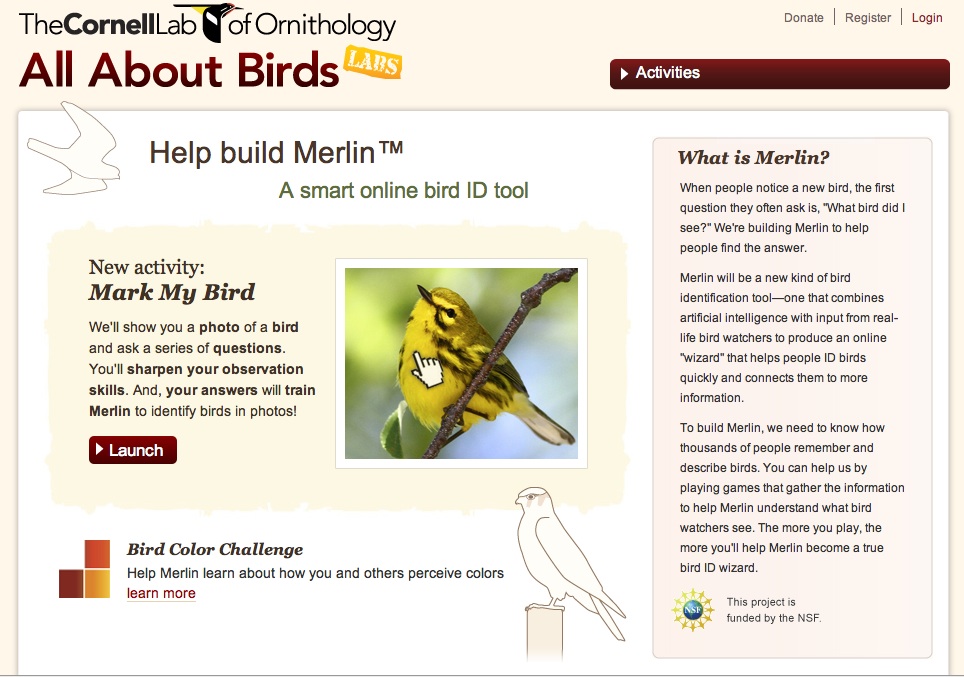
Cornell are now re-promoting ‘MERLIN’ with a free App and a video to go with it.
[youtube http://youtu.be/OkH11ZiIL9E] has produced a new proactive bird identification gizmo called MERLIN (CLICK for direct link). They are trying to build up a user-friendly ID ‘wizard’ using the sort of variable descriptions that people like me use to describe birds they don’t recognise. Perhaps we’ve all been there – “well, it was a medium-size greyish bird, but I think it had white under the wings. Or maybe a lighter grey. And a sort of white streak on its head. Actually the bird was more bluey-grey…”etc. Merlin seeks to iron out the variations using AI, by showing a bird and asking a number of questions to get users to describe the colouring they are looking at. I tried it with a teal, and it worked first time.
Gradually, the input of descriptions for each bird will be analysed, so that future users are more like to get a correct ID based on their description, even if others might describe the bird differently. With any luck it will also improve the chance to ID that pretty bird seen fleetingly at a distance. It’s worth trying this out even if you are a serious birder, because each ‘attempt’ adds to the picture. And anyway, there’s a very slight element of a game here – will the computer get it right?
VALENTINE’S DAY IN TWO WEEKS? LEAP DAY IN A MONTH? AN ABACO PARROT SAYS ‘I LOVE YOU’Or it would if it could talk. Here is a win -win -win. ‘Adopt’ this miniature Abaco Parrot sculpture (ok, buy it) by Dou Dou Birds and all proceeds will go towards the conservation of the Abaco Parrot population. Then give it to someone. It’s an investment in art; a philanthropic deed; and a gift from the heart. Here’s the direct link (there are many other cute birds for sale too) To save parrots CLICK THIS ONE===>>> 
Oh dear. Maybe someone else got there first. Never mind. How about making a donation to PARROTS INTERNATIONAL?
This organisation allocates funding for the research into the Abaco Parrots and their conservation. You can now pay direct by Paypal or Credit Card (with gift tax benefits depending where you live). Please remember use the “Note to Seller” box to specify ‘ABACO PARROTS / CAROLINE STAHALA’
MEMBERSHIP / DONATION PAGE CLICK LOGO===>>> 
Then go ahead and buy that big box of chocolates you were going to get anyway…
SATURDAY 28 JANUARY 2012 – A DATE FOR THE DIARY
CLICK  LOGO!
LOGO!
The images below tell you all you need to know about this excellent festival presented by the BNT in conjunction with the Abaco Beach Resort. From this blog’s point of view, the highlights are:
PRESENTATIONS by Nancy Albury on ‘The Blue Holes of Abaco’; by Ricky ‘Blue’ Jones on Bush Medicines / teas; and by Caroline Stahala on the Breeding & Behaviour of Abaco Parrots
ART The Art. Yes, all of it. Ok?
PRODUCE Something of everything, please.
OTHER Everything else on offer…
The very best of luck with this event and best wishes for successful fundraising from Rolling Harbour


BNT ABACO / INAGUA PARROT DOCUMENTARY
In August 2011 the Bahamas National Trust published a documentary about the resident Abaco and Inagua populations of this Cuban Parrot subspecies. It features research scientist Caroline Stahala, and contains plenty of information about these birds, their nesting and breeding habits, and the problems they face from predation. In places, some of the devastation caused by the extensive forest fires in March 2011 is still evident (see images in earlier POST). If you want to know more about these attractive (but noisy) birds, the documentary video below covers a great deal in 8 minutes…

A 5 minute PODCAST from ABC Radio’s ‘The Science Show’ featuring Caroline Stahala, research scientist and Abaco Parrot expert, and David Knowles of the Bahamas National Trust, Chief Park Warden for Abaco
The online report is headed by this: “Holiday homes and resorts are replacing the forests in which the Bahamian parrot of Great Abaco Island breeds. When Christopher Columbus discovered the beautiful Bahamian islands in 1492, he wrote in his journal ‘the flocks of parrots obscure the sun’. Now the Bahamian parrot is confined to just two islands and they’re a protected species. On Great Abaco Island Bahamian parrots breed in the pine forests of the south and, as Pauline Newman discovered, their nesting behaviour is quite extraordinary”
CLICK HERE==>> ABACO PARROTS PODCAST – THE ABC SCIENCE SHOW
For the relevant web page and a transcript of the talk CLICK LOGO===>>> 
Thanks to the ABC Science Show for use approval – click name for more Podcasts

ABACO PARROT SUPPORTER ‘DOU DOU BIRDS’ runs a monthly bird-centric writing contest. Not content with sculpting a cute miniature clay ABACO PARROT with all proceeds of sale going to the parrots, she has now showcased the AP for her New Year writing competition. To see her Post, & indeed if you want to take part CLICK LOGO==>> & to see the AP in her shop window CLICK LOGO==>>
The superb AVIBASE is a massive world-wide bird database – an essential reference point for birders, even the occasional enthusiast. Checklists, range maps, bird links, photos, bird sounds, and even the facility to make your own contribution, all in one place. AVIBASE has been a work in progress for 20 years and now contains over 5 million records of about 10,000 species and 22,000 subspecies of birds, including distribution information, taxonomy, synonyms in several languages, and much more
Here is the CHECKLIST FOR SOUTH ABACO, the area that I am most familiar with. It probably holds good for the whole of Abaco and the Cays. If you are staying at the Delphi Club, Rolling Harbour, you need this – and especially if you are planning a birding adventure with Ricky Johnson… Be prepared! The plan is that you can download it or print it out from here
Here is an illustrative clip of one of the 6 pages 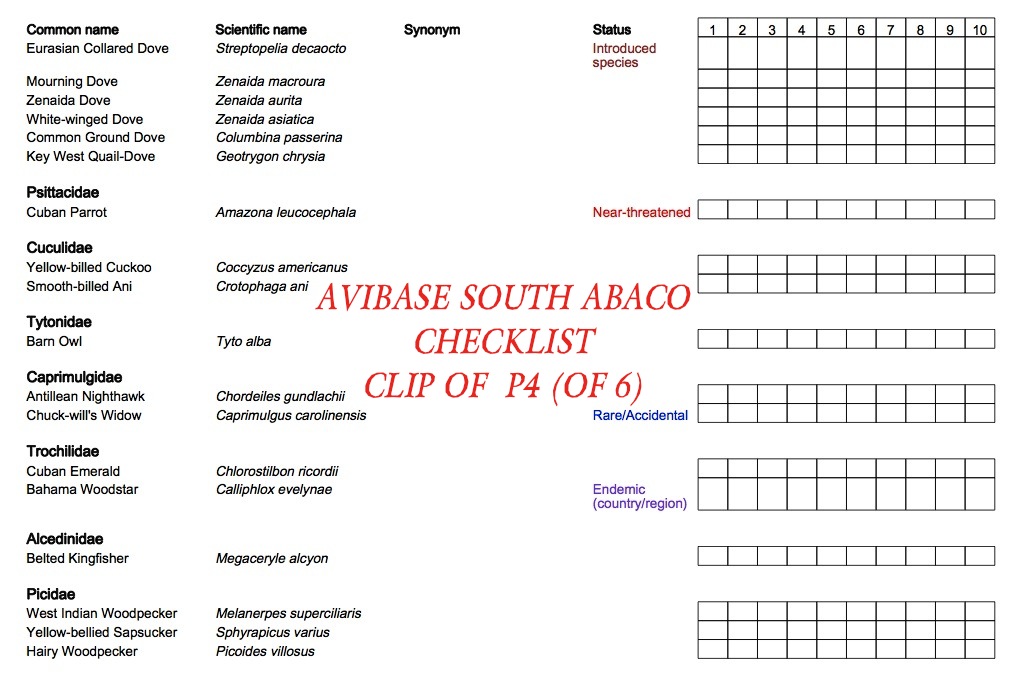
If you have a problem printing it from here – or for access to photos of a great many of the birds listed, with clips of their calls and songs – use this direct link CLICK LOGO===>>>
WELCOME BACK! Normal service is resumed after the family festivities of Christmas, with only the precious gift of a fractured wrist for rh to spoil an otherwise lovely few days. Immediately, I can report excellent parrot news…  DOU DOU, an avid birder and sculptor of most engaging miniature birds, has taken up the cause of the Abaco Parrot. We have been corresponding for a while about this, and I now reproduce her latest post, with the link to her site below
BIRD SCULPTURE – ABACO PARROT

This little parrot measures 3.5 x 1.5 x 1.5 inches. You can buy it HERE from me and I will send the money to Parrots International or you can use “Other” to check out, send me proof you donated at least $30 to Parrot’s International, and I will send you a code that gives you $30 discount on this parrot so you will just pay for shipping – I will verify that a donation was made.
We can save these parrots! Let’s do it!!!!!
Read about Caroline’s work to save the parrots: ABACO PARROT RESCUE
dou♥dou CLICK LOGO to visit website ===>>> 
More about this exciting development in due course – other ideas are afoot… Abaco Parrot conservation is strongly supported by the Delphi Club, Abaco; and the research scientist heading the project, Caroline Stahala, is delighted with dou dou’s initiative in helping to raise the profile of her conservation work and in contributing to the funding received through PARROTS INTERNATIONAL
This organisation allocates funding for the research into the Abaco Parrots and their conservation. You can now pay direct by Paypal or Credit Card (with gift tax benefits depending where you live). Please remember use the “Note to Seller” box to specify ‘ABACO PARROTS / CAROLINE STAHALA’
Membership and Donation page CLICK LOGO===>>>
Here is a clip taken from the excellent website THE ABACO SCIENTIST, with the kind permission of Dr Craig Layman of FIU. The brief summary of the South Abaco Bird Count 2011 by Elwood D. Bracey is of great interest, not least for the Delphi Club, from where guided Nature Tours take place and where there is a lot of enthusiasm for the birdlife of the island. 75 separate species were recorded this year, including all the known Abaconian endemics.
It is also a very fine photo of a male Bahama Woodstar courtesy of BIRD FORUM


ABACO NATURE TOURS with Ricky Johnson
Reluctant as I am to give Ricky even more publicity that he gets already – including passim in this blog – his Nature Tours are seriously good, and his knowledge and enthusiasm for the flora, fauna, geology and history of Abaco are unrivalled. If you want to see a parrot close-up, understand a blue hole or learn which trees and shrubs are poisonous (and which are the antidotes) he is undoubtedly your man. He will even show you birds where you have completely failed to see any & believe there are none
To reach Ricky’s A N T website CLICK LOGO===>>> 
Advert ends (that will be $50 please Ricky)
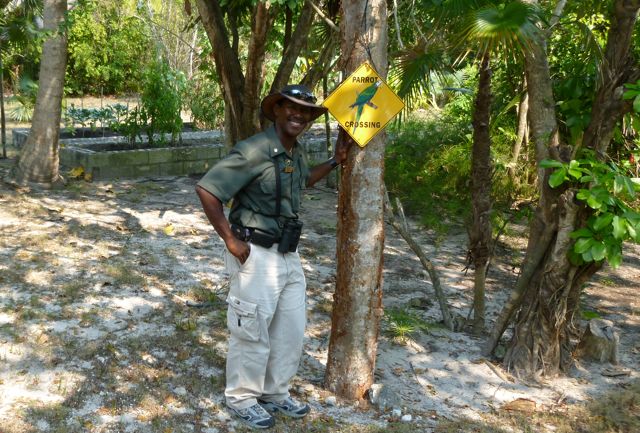
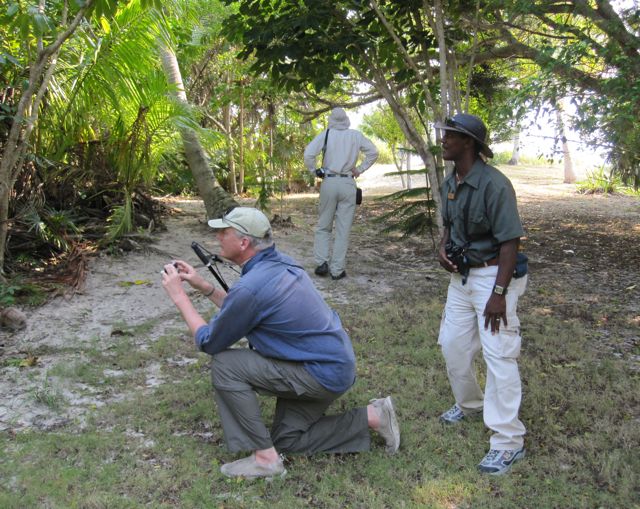
This is one of a number of sequential images posted by cfinke3856 on the website Webshots. It seems to have been taken in 2004, and shows 4 Abaco parrots in a pine tree (location unspecified – the National Park, maybe?). They look pleasingly convivial, and they provide a chance to roll out the newly created rh parrot logo
Normally I would have cleared permission for use (and slight cropping) and given a click-through link so you could see the rest of the (similar) images. However, the website is a nightmare. A pop-up offered me the chance – apparently a near-certainty – of winning $10,000, and froze my cursor when I tried to delete it. Twice. Other untempting offers were made in a rage-inducing way. So I’ll spare you all that, warn you briskly off the site, and apologise to Mr or Ms Finke for ‘borrowing’ the image, duly credited but in tiny writing…
♦ NEW ABACO PARROT LOGO ♦
[Note: this post replaces the preliminary, typo-ridden and imageless draft that subscribers may have received, for which I stupidly pressed the ‘publish’ button rather than ‘save draft’… Not the 1st time, either… Sorry]
Scientist Caroline Stahala has spent 10 years researching the Abaco population of the Bahama parrot. Her aim is to develop understanding of their behaviour so that conservation and management strategies for this rare sub-species can be optimised. Particular protection problems arise because Abaco parrots, uniquely, nest underground. Their main vulnerability is to predation by feral cats, racoons and rodents which kill adults, chicks and fledglings in the nest

Predator monitoring and control programs have been in place for several years, removing surprising numbers of feral cats prior to and during the breeding season. Prevention techniques have been refined as predation data has accumulated. In 2011 for the first time motion-sensitive cameras were used, positioned near the openings of vulnerable active nests (shallow or with large openings), monitored 24/7 with infra-red night-time flash. Constant technical adjustments were needed to determine optimum filming distance and memory card size, and to avoid ‘false triggers’ (eg wind)

A great deal of vital data was collected, particularly at night when predation can’t otherwise be effectively monitored. Feral cats were the most frequent visitors, followed by rodents. No racoons were recorded, so these may be less of a threat than expected. One northern mockingbird (above) was caught on film up to no good. It it seems that the camera flash itself may act as a deterrent, something that bears further study. There is also new evidence that some predators approach a nest and ‘case the joint’ for later use. All this data will make it possible to target predator control preventatively, rather than in the sad aftermath of predation – a great step forward.

Overall, during the 2011 breeding season none of 55 nests monitored was lost due to predation. In previous years, the attrition rates have been around 25%. The use of cameras avoids any disturbance of the parrots and chicks and provides round-the-clock monitoring. If the cameras / flash are in themselves deterrents, that is a simple method of predation control. The new banding project means that it is now possible to be certain whether same parrot (or pair) is using the same nest cavity each year – and of course individuals can more readily be identified

Finally, Caroline confirms that the parrots weathered Hurricane Irene well. She was still monitoring the breeding territory then, and when she returned to check active nests after the storm, she found the chicks and fledglings safe in their nest cavities

Abaco Parrot chick safe and sound - the first post-Irene image
Peter Mantle reports that a recent ferocious 4-day storm caused further havoc in the gardens, which had just about recovered from the depredations of Hurricane Irene. Even fishing was impossible. Yes, it really was that bad. However, the birds seem remarkably resilient to everything the weather gods throw at them. Parrots are plentiful around the club and are seen and / or heard almost daily. Peter also says “We had a spectacular exhibition yesterday of a peregrine repeatedly dive-bombing (for fun, we think) several turkey vultures in high wind, with another peregrine cruising nearby.”
Caroline Stahala has given me a West Indian Woodpecker update. These charming if noisy birds have been a bit of a leitmotif of this blog. We met their early reluctance to use the perfectly nice nesting box provided for them; their eventual moving in; their use of the club vehicles’ wing-mirrors for vanity purposes; their attempts to raise 2 broods of chicks with varied success (that’s a deliberate euphemism); and stoutly resisting the force of Irene. The male woodpecker is still using the nesting box for roosting. The breeding season is long over, but perhaps next season his home in the eaves of the verandah will be tempting for a mate… And finally, the hummingbirds are plentiful – so as Caroline says, “now is a good time to be birdwatching…”
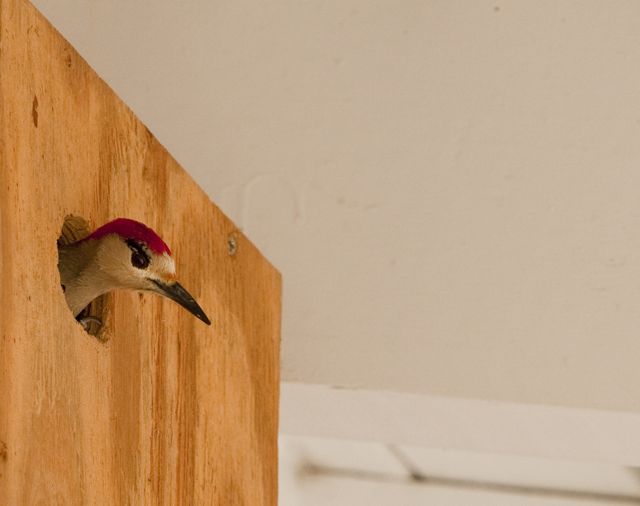 Photo credit: Peter Wesley Brown
 ROLLING HARBOUR ABACO
You must be logged in to post a comment.