Unknown's avatar

MAKE FRIENDS WITH ANEMONE (2): SPECTACULAR REEF LIFE


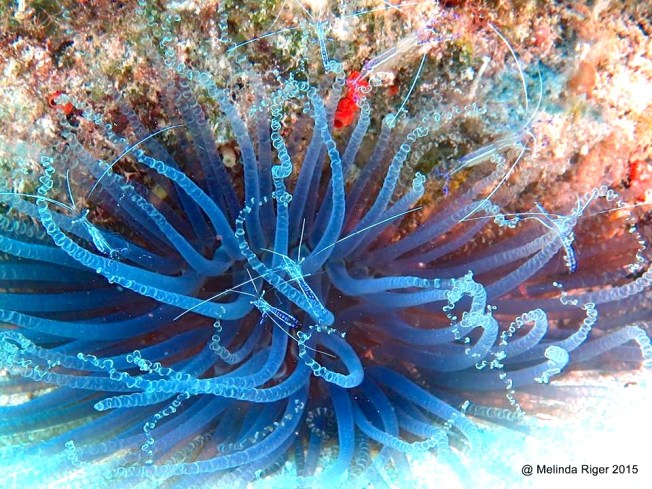
Corkscrew Anenome = Peterson Cleaner Shrimps ©Melinda Riger @G B Scuba copy

Corkscrew Anemone with Peterson Cleaner Shrimps

MAKE FRIENDS WITH ANEMONE (2):  SPECTACULAR REEF LIFE

Going snorkelling? Planning a scuba day on the reef? You’ll see wonderful fish and amazing coral for sure. But sometimes the beauty of other life on the reef can be overlooked. Check out the anemone in the header image, with the camouflaged cleaner shrimps playing around it. You wouldn’t want to miss a sight like that. The many and varied forms and colours of anemone on the reefs of the Bahamas make up a vital component of a spectacular underwater world.

Giant Anenome ©Melinda Riger @ G B Scuba copyGiant Anemone ©Melinda Riger @ G B Scuba copy 4Anemone Melinda Riger @ G B ScubaAnemone on Rope ©Melinda Riger @ G B ScubaAnemone ©Melinda Riger @ Grand Bahama ScubaAnemone (Giant) ©Melinda Riger @GBS copyAnemone ©Melinda Riger @ GB Scuba

ADDED NOV 2016 Capt. Rick Guest adds this interesting material (& thanks for correcting my erroneous reference to anemones as ‘plants’. My bad. They are of course animals!):

“Anemones are living animals of the invertebrate type. Basically living corals without skeletons. All have stinging cells of several varieties to sting or entangle their prey such as small fish, or various invertebrates. A few can even, painfully, penetrate human dermal layers. Most host varieties of cleaner shrimps,and snapping shrimps that can stun their own prey. Some Dromidia crabs even pull some species of anemone off the reef, and attach them to their carapace (their back) apparently for camouflage, and perhaps protection”.

All photos: Melinda Riger of Grand Bahama Scuba, with thanks

Unknown's avatar

BLUE CHROMIS: BAHAMAS REEF FISH (29)


Blue Chromis & Coral ©Melinda Riger @ GB Scuba

BLUE CHROMIS: BAHAMAS REEF FISH (29)

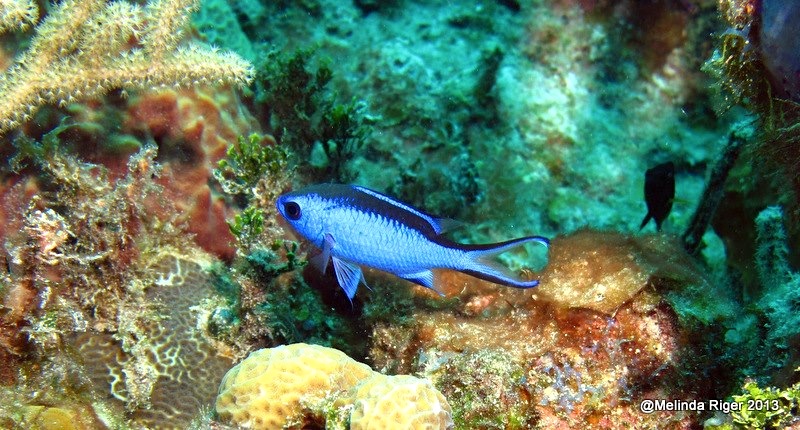
The little blue chromis Chromis cyanea will be instantly familiar to any snorkeler or scuba diver on the coral reefs of the Bahamas. These ever-present small fish – 6 inches long at most – are remarkable for their iridescent deep blue colour that flashes as they dart in and out of the coral and anemones of the reef.

Blue Chromis ©Melinda Riger @ G B Scuba

Although at first sight  this chromis species – one of many – looks blue all over, adults have a black dorsal stripe and black edging to their fins. They make colourful additions to aquariums, though to my mind they look far more attractive nosing about the reefs foraging for the zooplankton upon which they feed (see header image for details…)

Blue Chromis ©Melinda Riger @ GB Scuba

The blue chromis was the second fish species I encountered on my first ever reef dive, at Fowl Cay Marine Preserve with Kay Politano. The first fish was the endearingly inquisitive sergeant major with its smart black and yellow stripes which came right up to my googles to eyeball me. I loved that, even though my pitiful swimming technique meant that I had plenty of other distractions, not least remembering to breathe. Air, that is, rather than water.

Blue Chromis ©Melinda Riger @ GB Scuba

Chromis_cyanea_(blue_chromis)_(San_Salvador_Island,_Bahamas)

SO JUST HOW BIG ARE THESE FISH, COMPARED, SAY, TO A BLUE TANG?

Blue Tang with blue chromis in its wakeBlue Tang with Blue Chromis © Melinda Riger @GB Scuba copy

All photos Melinda Riger of Grand Bahama Scube, except the penultimate by James St John, taken in San Salvador


Unknown's avatar

WTF? (WHAT’S THAT FISH) (6): THE SAND DIVER


Sand Divers Bahamas ©Melinda Riger @ G B Scuba

WTF? (WHAT’S THAT FISH) (6): THE SAND DIVER

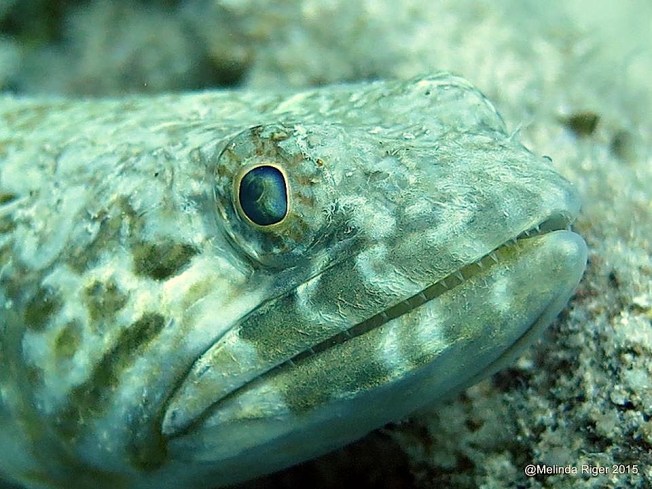
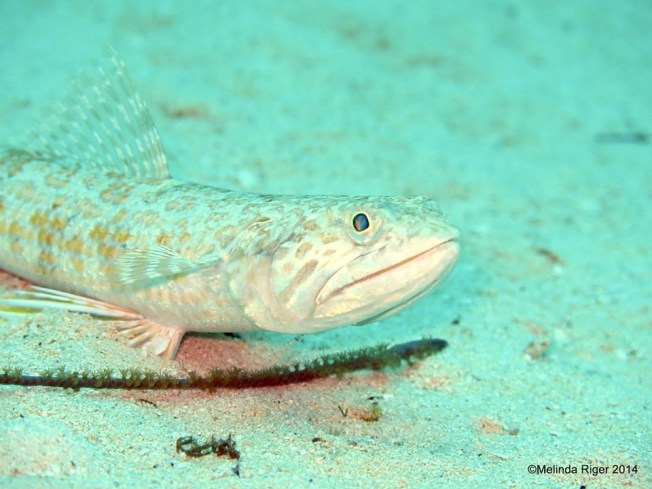
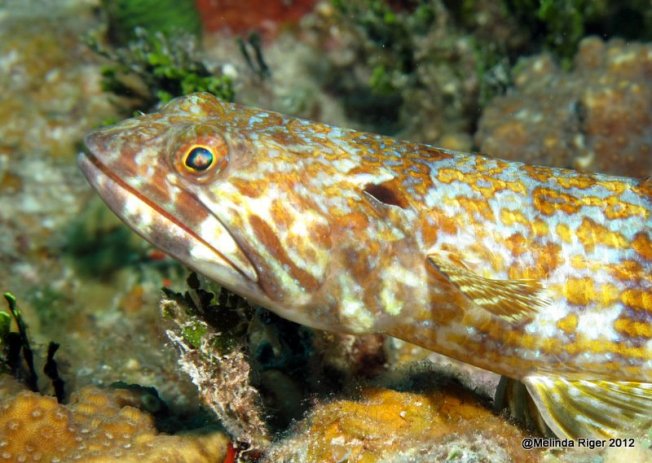
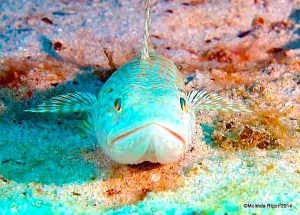
Time for another in the WTF? series, featuring weird (begging their pardons) or not very fish-like fish. The Sand Diver Synodus intermedius is a type of lizardfish found in subtropical waters and often around coral reefs. They can grow up to about 18 inches long and a prime specimen might weigh a couple of pounds. The markings are quite variable but one common characteristic seems to be a tendency to look somewhat down in the mouth; and to possess jaws full of tiny sharp teeth.

Sand Diver - ©Melinda Riger @ GB Scuba

Sand divers have two rows of teeth on their upper jaw and three rows on their lower jaw. Not content with that, they also have rows of teeth on the palate and tongue. Were they 50 times the size, they would be truly awesome.

Sand Diver ©Melinda Riger @ G B Scuba

The rather primitive appearance of the sand diver is explicable from fossils, which show that their forbears  were active in the Jurassic / Cretacean periods.

Sand Diver ©Melinda Riger @ GB Scuba

HOW DO THEY GET THEIR NAME?

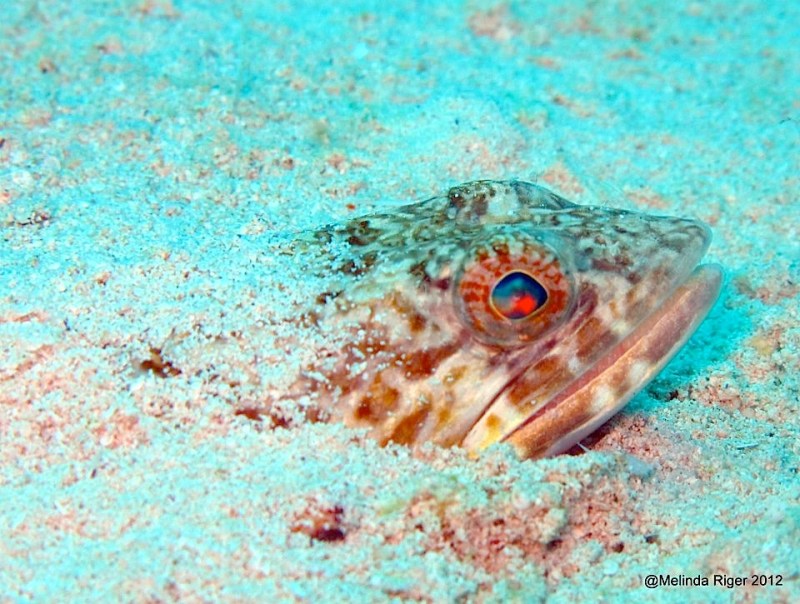
Sand divers often bury themselves in the sand with only their head showing. They are so-called ‘ambush predators’, and burial is one method they use. Another is simply to lie on the sandy bottom, or on reef surfaces and wait for passing prey. Their colouring provides very good camouflage.Sand Diver Fish

WHAT’S ON A SAND DIVER MENU?

A good mix of small reef fishes. Bar jacks, blue chromis, wrasses, fairy basslets, small grunts and so forth. At their own level they are quite fearsome predators.

Sand Diver © Melinda Riger @ Grand Bahama Scuba

ARE THEY ON THE HUMAN MENU?

Well, I knew someone would ask that, so I carried out a search. The answer seems to be no. I have found nothing to suggest that they are edible, or that anyone has tried (or if they have, survived to tell the tale). Incidentally, the best way to find out if something is edible by humans is to search for a recipe. There are no sand diver recipes.

STOP PRESS Jason Knight has drawn my attention to a comment in WhatsThatFish.com (no relation) by one ‘Jenny’, who commends Sand Divers as food (“they cook up just as good as hogfish!”). So yes, they are edible and there is one recipe… 

Sand Diver ©Fred Riger @ G B Scuba

All photos: Melinda Riger of Grand Bahama Scuba

Unknown's avatar

BAHAMAS REEF CORAL: A COLOURFUL GALLERY


Orange Cup Coral ©Melinda Riger @ G B Scuba copy

BAHAMAS REEF CORAL:  A COLOURFUL GALLERY

The reefs of the northern Bahamas, as elsewhere in the world, are affected by two significant factors: climate change and pollution. Stepping carefully over the sharp pointy rocks of controversy, I’ve avoided the term ‘global warming’ and any associated implication that humans (oh, and methane from cows) are largely to blame for the first factor; but on any view, ocean pollution is the responsibility of mankind (and not even the cows). 

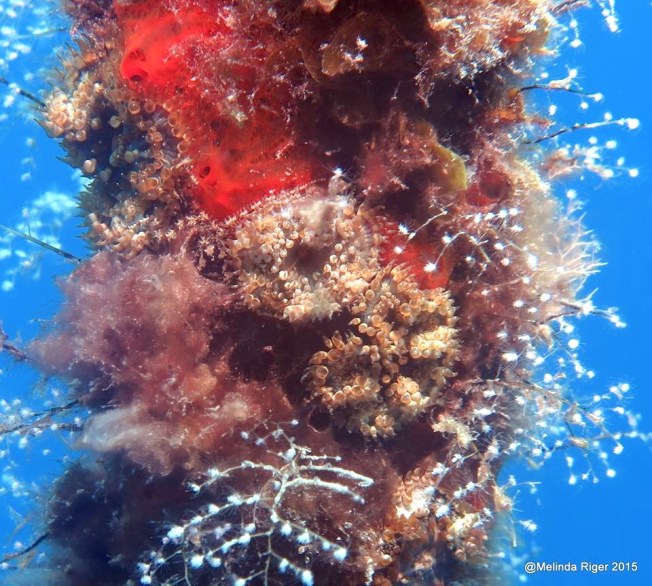
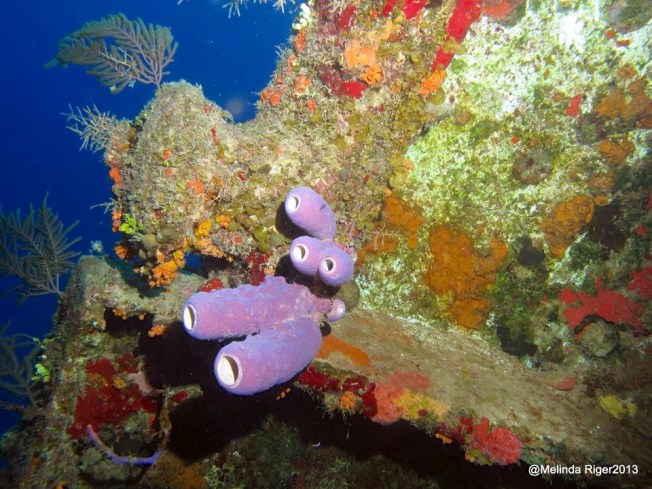
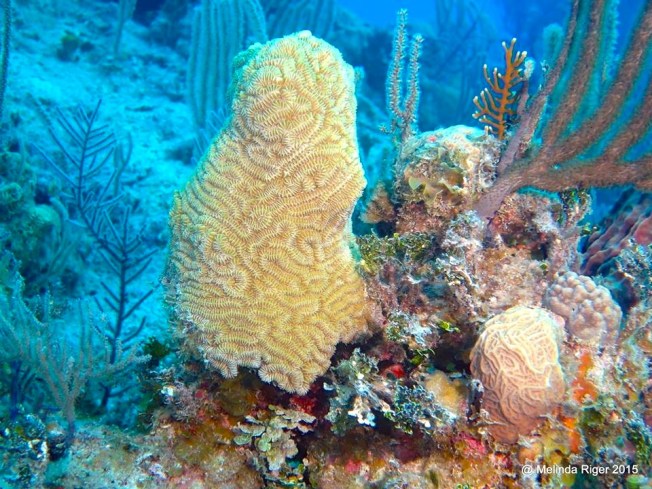
That said, an exploration of the reefs of Abaco or Grand Bahama will reveal not just the astounding variety of mobile marine life but also the plentiful and colourful static marine life – for example the beautiful and Christmassy orange cup coral in the header image. Here are some more corals from the reefs, with a mix of sponges added in. 

Giant Star Coral & Rope Sponge ©Melinda Riger @ GB Scuba copyCorals ©Melinda Riger @ G B Scuba copy 2Corals ©Melinda Riger @ GB Scuba copySea Fans & other corals ©Melinda Riger @ Grand Bahama Scuba copy

This rather intriguing photo shows a hermit crab’s conch home that presumably the occupant grew out of and left behind in the delicate coral branches as it went search of a more spacious shell dwelling.Coral & conch ex crab home 1380179_645156602172399_300806994_n copy

Credits: All these wonderful photos are by Melinda Riger of Grand Bahama Scuba; tendentious reef health observations are mine own…

Unknown's avatar

MAKE FRIENDS WITH ANEMONE: BAHAMAS REEF LIFE


Anemone (Giant) ©Melinda Riger @GBS copy

MAKE FRIENDS WITH ANEMONE: BAHAMAS REEF LIFE

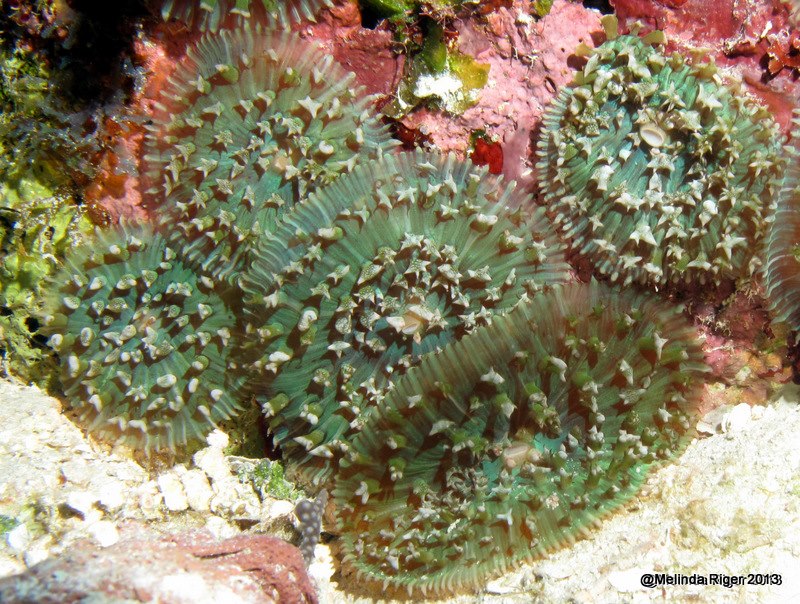
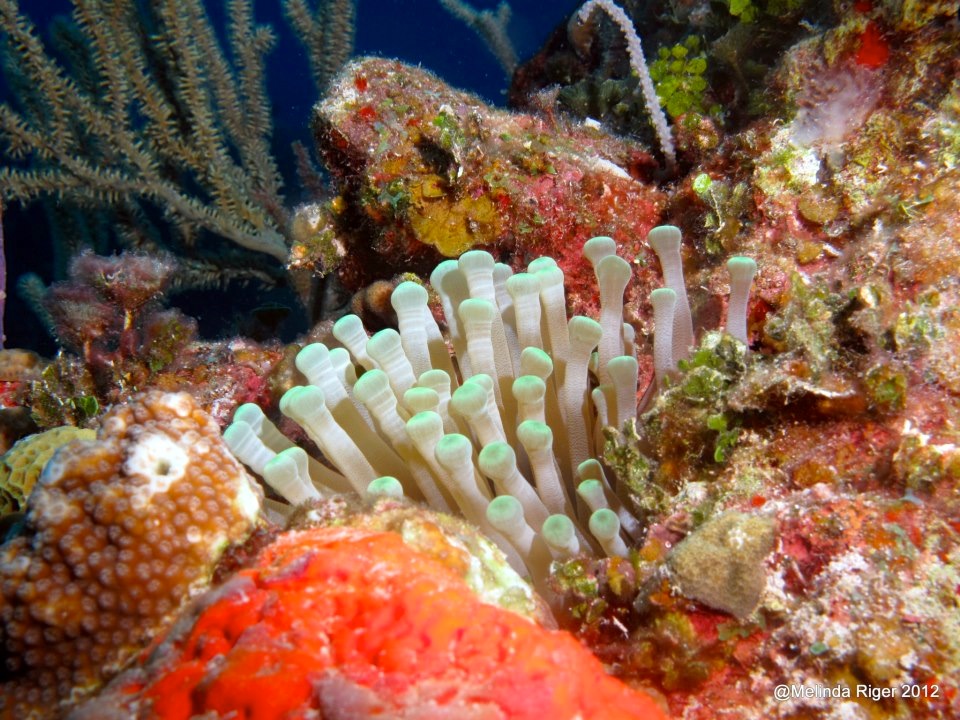
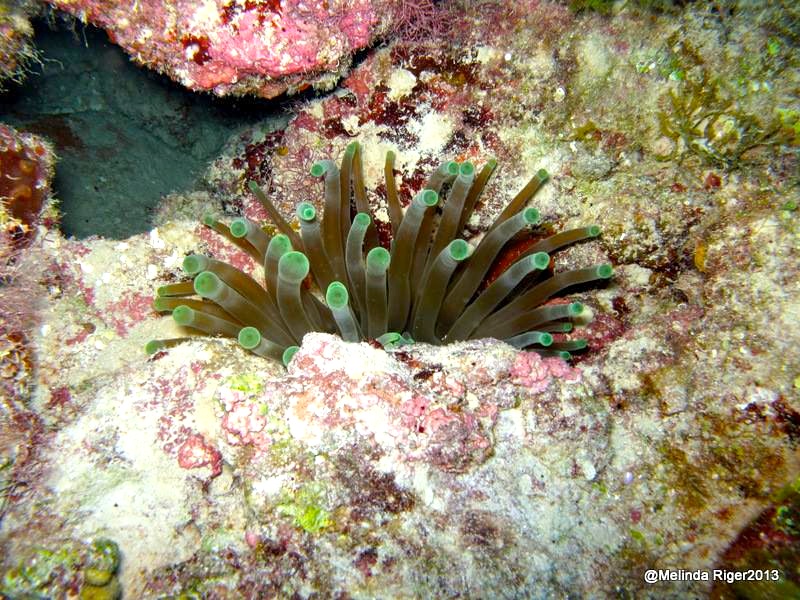
The giant anemone is found in the shallow reefs and lagoons of the Caribbean and western Atlantic. These are, of course, animals and not plants, with many tentacles that surround their mouth. They attach themselves to rock or in rock crevices, mooring themselves securely against the swell of the waves.  

Giant anemone with ‘Speckles’, a spotted moray eelGiant Anemone & Speckles ©Melinda Riger @ G B Scuba copy

ARE THEY USEFUL?

One important feature of a healthy anemone population is the shelter they give to certain small fish and cleaner shrimp species. They act as bases for FISH CLEANING activities, a vital role in the undersea community.

Giant Anemone ©Melinda Riger @ G B Scuba copy

HOW DO THEY HAVE… ERM… SEX?

The sex lives of anemones seems particularly complicated (as they would doubtless think about humans). Cutting to the chase, reproduction involves the synchronous spawning of eggs and sperm, with fertilisation occurring in the surrounding water. The fertilised eggs become larval and spread in the water column, which increases their chances of survival. They settle on the BENTHOS, where they develop a “pedal leg” (rather in the manner of a gastropod) which in due course they will use to move from A to… A plus a very short distance.

Giant Anemone ©Melinda Riger @ G B Scuba copy 4

These anemones come in many colours. The tentacles often have tips of various hues, and are the only free-floating part of the animal. The body is safely attached to the rock. 

The giant anemone has primitive defensive mechanisms. It needs them, because it crawls so slowly that successful escape by moving is unlikely. Instead they reduce their size by drawing their tentacles into, or as close as possible to, their gastric cavity. They make room for this by forcing most of the water out. This reduces their overall size and of course removes – or at least diminishes – the ”50 colourful tentacles waving around” predator-magnet problem. But also…
Giant Anemone ©Melinda Riger @ G B Scuba copy 7
…they have a trump card. The tips of the giant anemones’ tentacles are packed with cells that contain a toxin. When stimulated, the cells (‘nemocysts’) “explode out of the capsule, impaling the attacker”. The toxin is then discharged, causing extreme pain and paralysis. How cool is that? It’s the superpower we’d all like to have! Or is that just me?
This is also how an anemone feeds, by quickly paralyzing its prey with the ‘toxic tentacles of doom’. The prey is moved to the mouth and swallowed whole…
Giant Anemone ©Melinda Riger @ G B Scuba copy 6
Credits: Melinda Riger of Grand Bahama Scuba, with thanks as always
Unknown's avatar

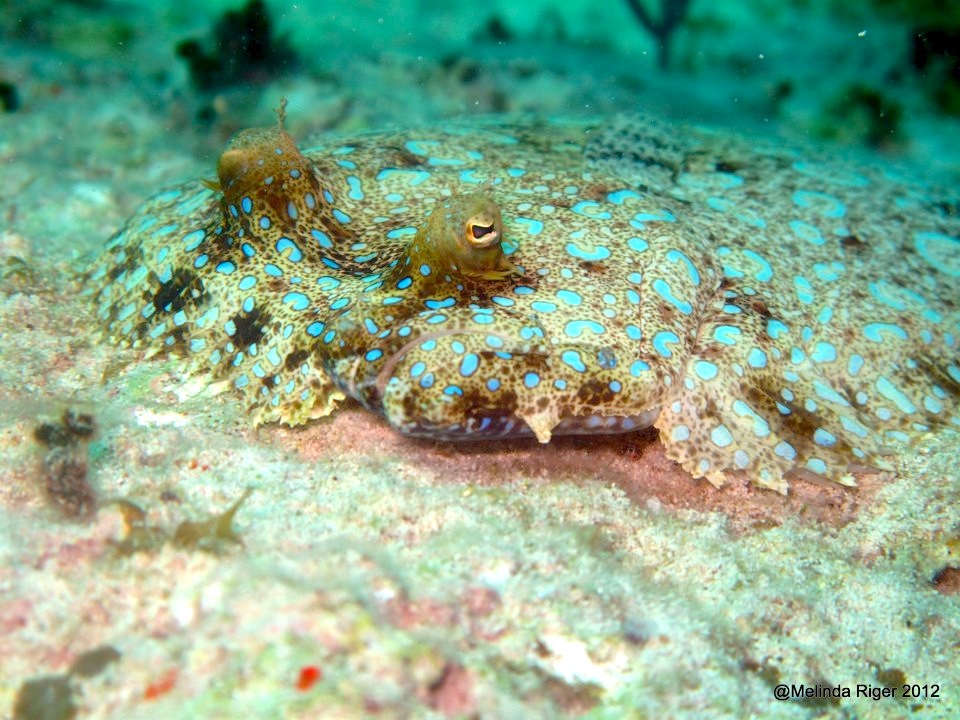
PEACOCK FLOUNDER: BAHAMAS REEF FISH (21)


  Peacock Flounder ©Melinda Riger @ GB Scuba

PEACOCK FLOUNDER: BAHAMAS REEF FISH (21)

PEACOCK FLOUNDER or PLATE FISH Bothus lunatus

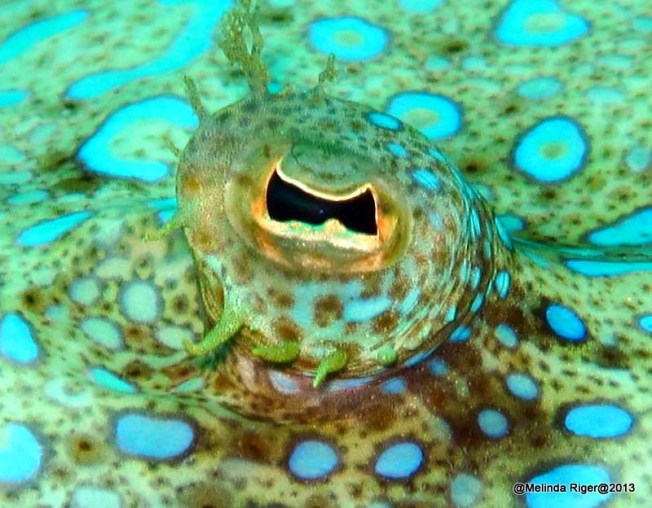
I have briefly featured this fish before in the context of its extraordinary camouflage abilities; and also its interesting ocular arrangements. Time to give it another swim around, I think, with some additional photos that I have collected.

Peacock Flounder

Bothus lunatus is the Atlantic / Caribbean version of a species also found in the Pacific and Indian oceans. Adults may grow up to 18 inches long. The species is a ‘lefteye’ flounder, with both eyes on its left (top) side & its right side underneath.  However a baby flounder looks & swims like normal fish, with bilateral eyes. As it grows, the right eye gradually ‘moves’ round to the topside, and it becomes a flatfish.

Peacock Flounder

A flounder’s eyes can move independently of each other. One may look forwards, the other backwardsPeacock Flounder Eye ©Melinda Riger @ G B Scuba

‘NOW YOU SEE IT…’ CAMO-FISH

The Peacock Flounder has extraordinary  colour-changing powers, and can rapidly vary its background colour to make it closely resemble that of its surroundings. This enables it camouflage itself as it lies on the seabed. It can change coloration completely in between two to eight seconds.  

Four frames of the same fish taken a few minutes apart showing the ability of flounders to change colors to match the surroundings (Wiki)Peacock Flounder Brocken Inaglory

Check out these imitative patterns in Bahamas waters…Peacock Flounder (f) ©Melinda Riger @ Grand Bahama Scuba

Flower_flounder_in_Kona_wiki

There are two advantages to the ability to camouflage (‘cryptic coloration). One is obviously to avoid detection by predators. The other is to enable the flounder to ambush its meals. They feed primarily on small fishes, crabs and shrimps, lying concealed on the seabed and grabbing any unwary prey that ventures too close. They will even partially bury themselves in the sand, leaving just their eye-stalks keeping watch…Peacock Flounder ©Melinda Riger @ Grand Bahama Scuba

HOW CAN THEY POSSIBLY CHANGE COLOUR SO QUICKLY?

Scientists are still puzzling this out. In a conch shell, it seems the flounder can coordinate its amazing all-round vision with its hormones, instantly releasing certain pigments to its skin cells and suppressing other pigments to make the colour match. Not convinced? Then watch this short video and prepare to be impressed. 

Fred Riger of Grand Bahama Scuba, who kindly keeps a benign eye on my reef fish posts (he’s the expert), adds a third excellent reason for coloration changes: sex… “the male peacock flounder can, and does greatly intensify his colors, presumably to declare territory and attract females to his person. When doing this the males will also signal with the left pectoral fin, sticking it straight up and waving it around.” Maybe that is what is going on in the photo below – intensified, non-camouflage colours, and a raised fin…Peacock Flounder ©Melinda Riger@ G B Scuba

Peacock Flounder on a plate – Kim Rody Art983829_10154948988290716_6633206689277673329_n

Credits: Melinda Riger of Grand Bahama Scuba for almost all photos; wiki for 2 illustrative images