We birds want to know what’s going on please. The rest of the ‘Abaco Bird Book Club’ have nominated us to find out. So:
Q. How likely is it that we ‘guys’ will somehow be getting inside a machine and turning up in people’s homes / on their phones (whatever those are). A. Very
Q. How long must we wait before being admired on a screen by humans – we all quite fancy that. A. A week or so
Q. Are we birds going to get any seeds / insects / berries / fish in return. A. No. You will be free. And free as a bird as well.
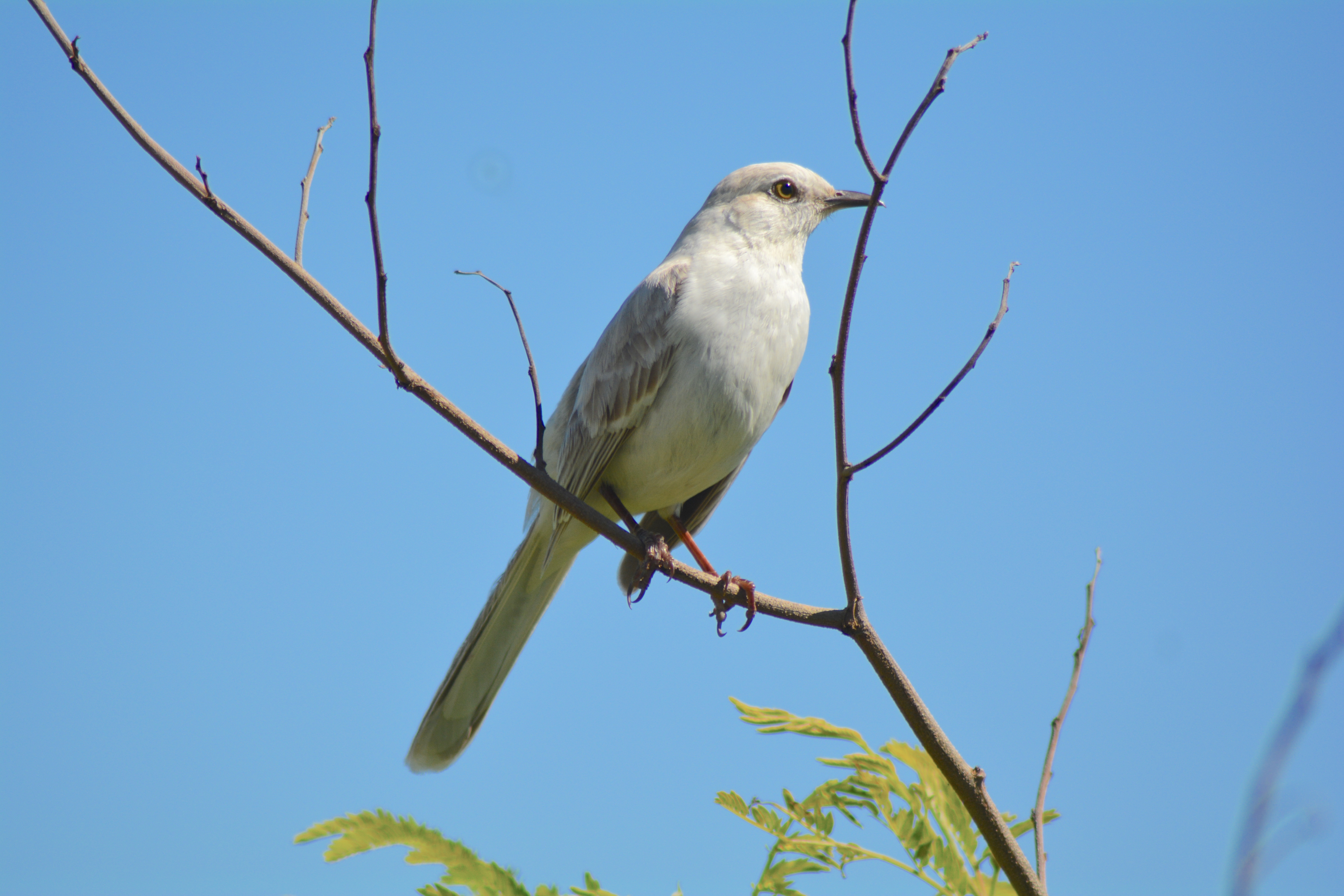
The header image is of a Bahama mockingbird recently photographed by keen-eyed Abaco birder Keith Kemp. It is a thing of wonder and beauty, exceptionally rare and possibly unique. I can find no other example of a leucistic bird of this species online.
This is not Keith’s first leucistic bird discovery on Abaco either – a while back he found a leucistic Western spindalis. You can read more about leucism and its distinction from albinism, and see a number of other examples of leucism including a white turkey vultureHERE
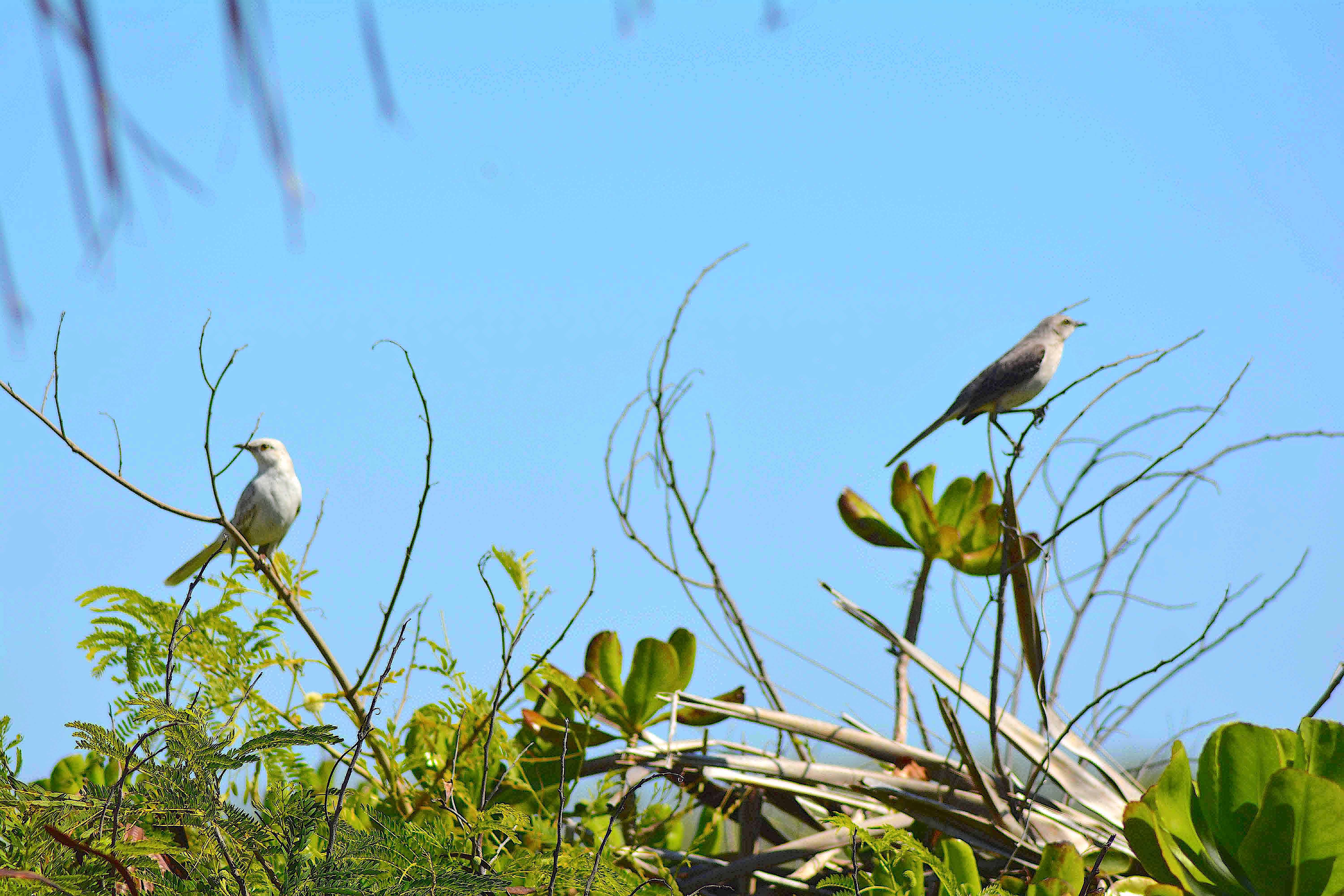
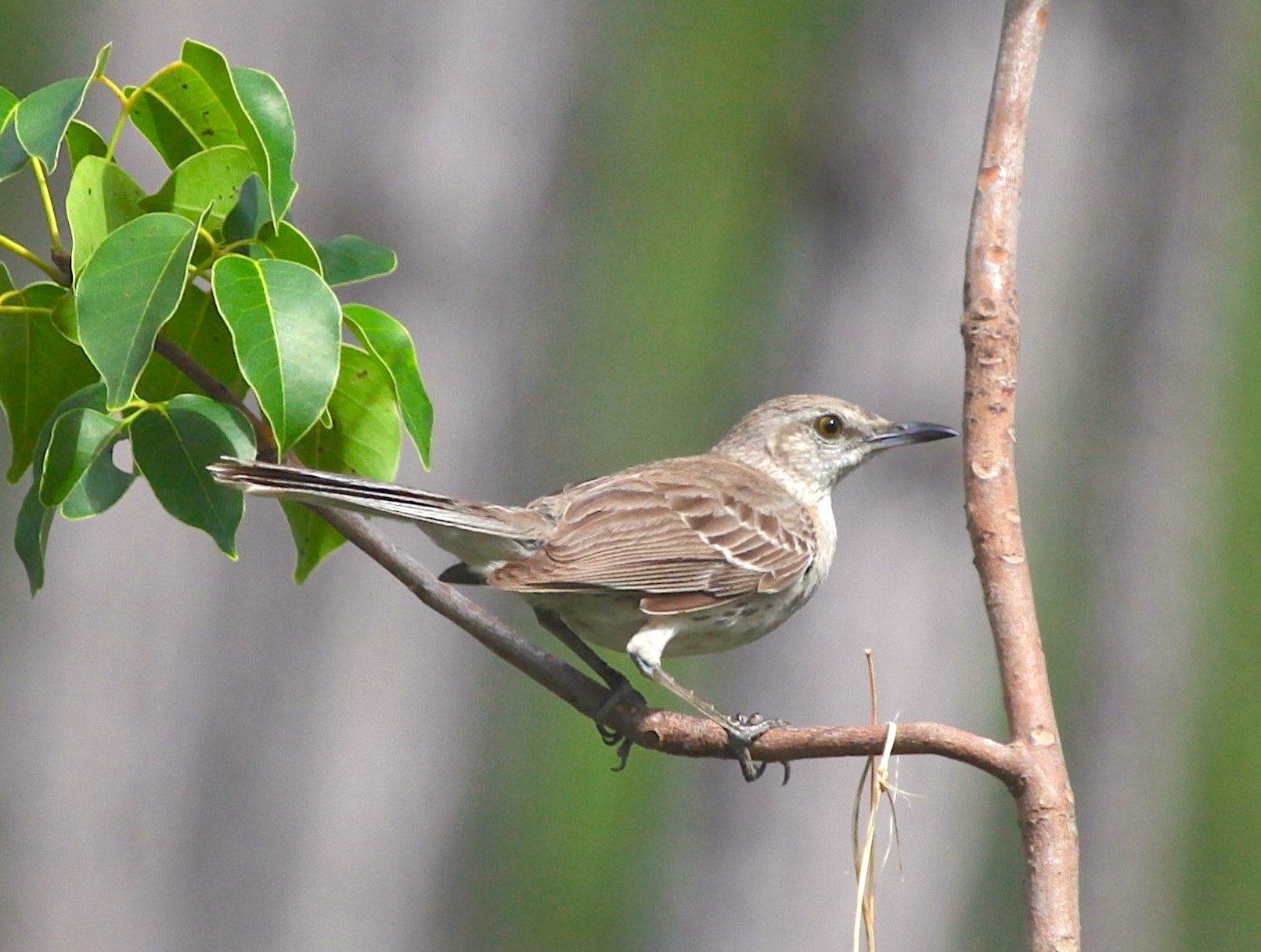
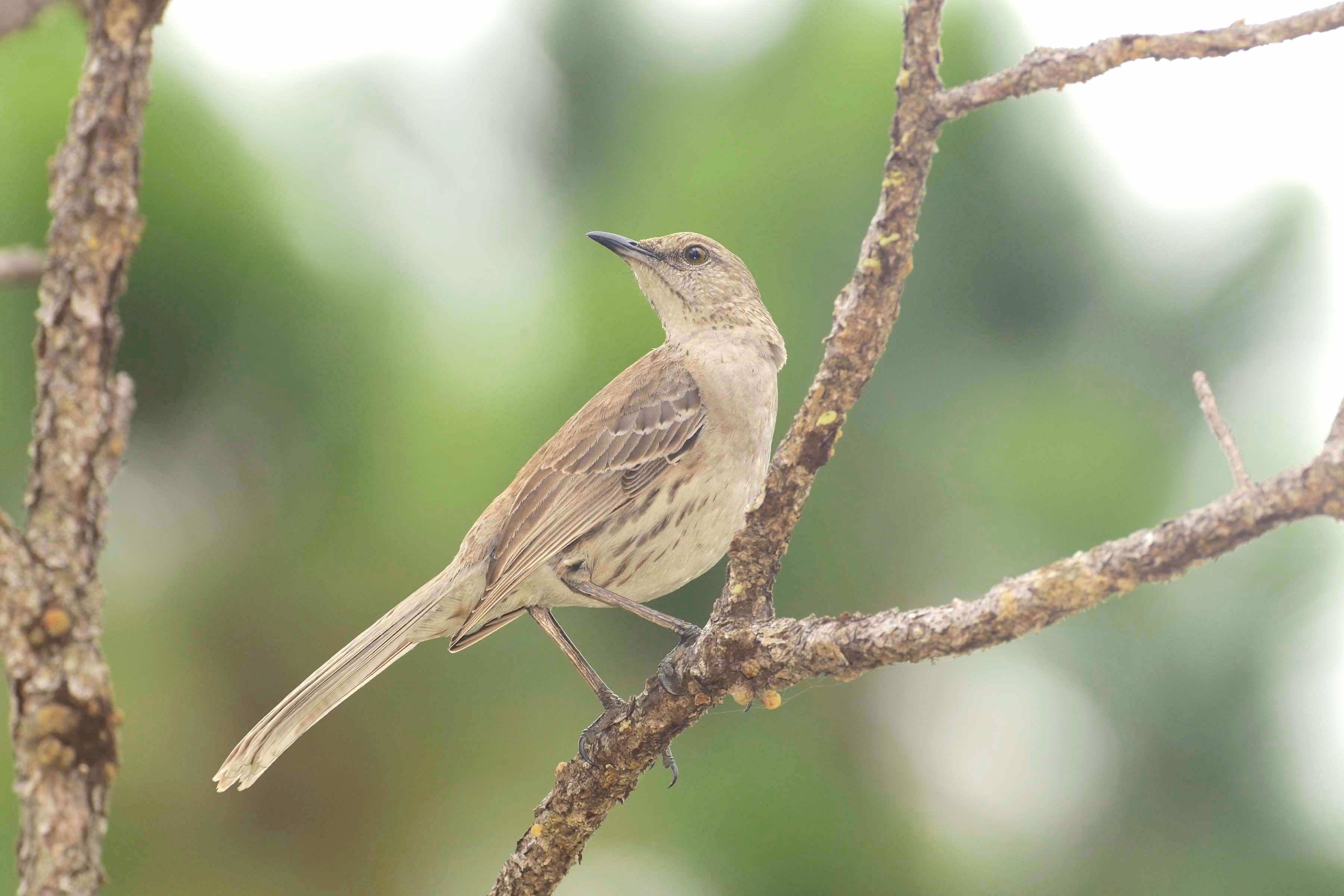
Even more astonishingly, Keith managed to get a photo of the ‘white’ bird and a ‘normal’ bird together (above). The difference is startling. Below is a fine photo by Peter Mantle of a Bahama mockingbird, as you would expect to see one – basically brown with a pale, flecked front / underside.
LEUCISM? EXCUSE ME, AND THAT IS?
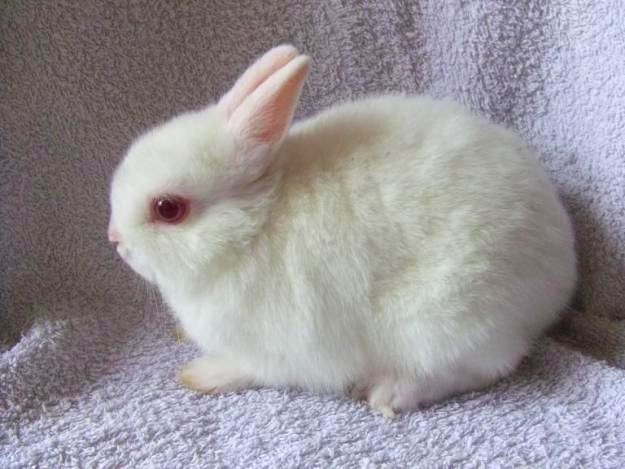
I’ll recap what I wrote in the earlier post linked above. First, what it is not. It is not albinism, which results from diminished or lost melanin production that affects pigmentation. One characteristic of the condition is the tendency to pink eyes, which of course is seen in humans as well as animals and birds. For example:
Albino Fwuffy Bwunny Wabbit
WELL, WHAT IS IT THEN?
Put simply, melanin is only one of many ingredients of pigmentation. Leucism is caused by pigment loss involving many types of pigment, not just melanin. In birds this results in unnaturally pale or white colouring of feathers that may be partial or entire. The eyes of a bird with leucism are unaffected – so, not pink. At one extreme, if all pigment cells fail, a white bird will result; at the other extreme, pigment defects cause patches and blotches of pale or white on the bird, often called a ‘pied’ effect. The condition can be inherited.
KK’s leucistic Western spindalis, an example of partial or ‘pied’ leucism
So there you have it: another extreme rarity for Abaco, and a further example of how rewarding – and surprising – birding on Abaco can be. To repeat the link to the more detailed article on leucism in birds, you can find with (*distraction alert*) some music and inappositely comedic material thrown inHERE
All photos Keith Kemp except the ‘normal’ bird, Peter Mantle
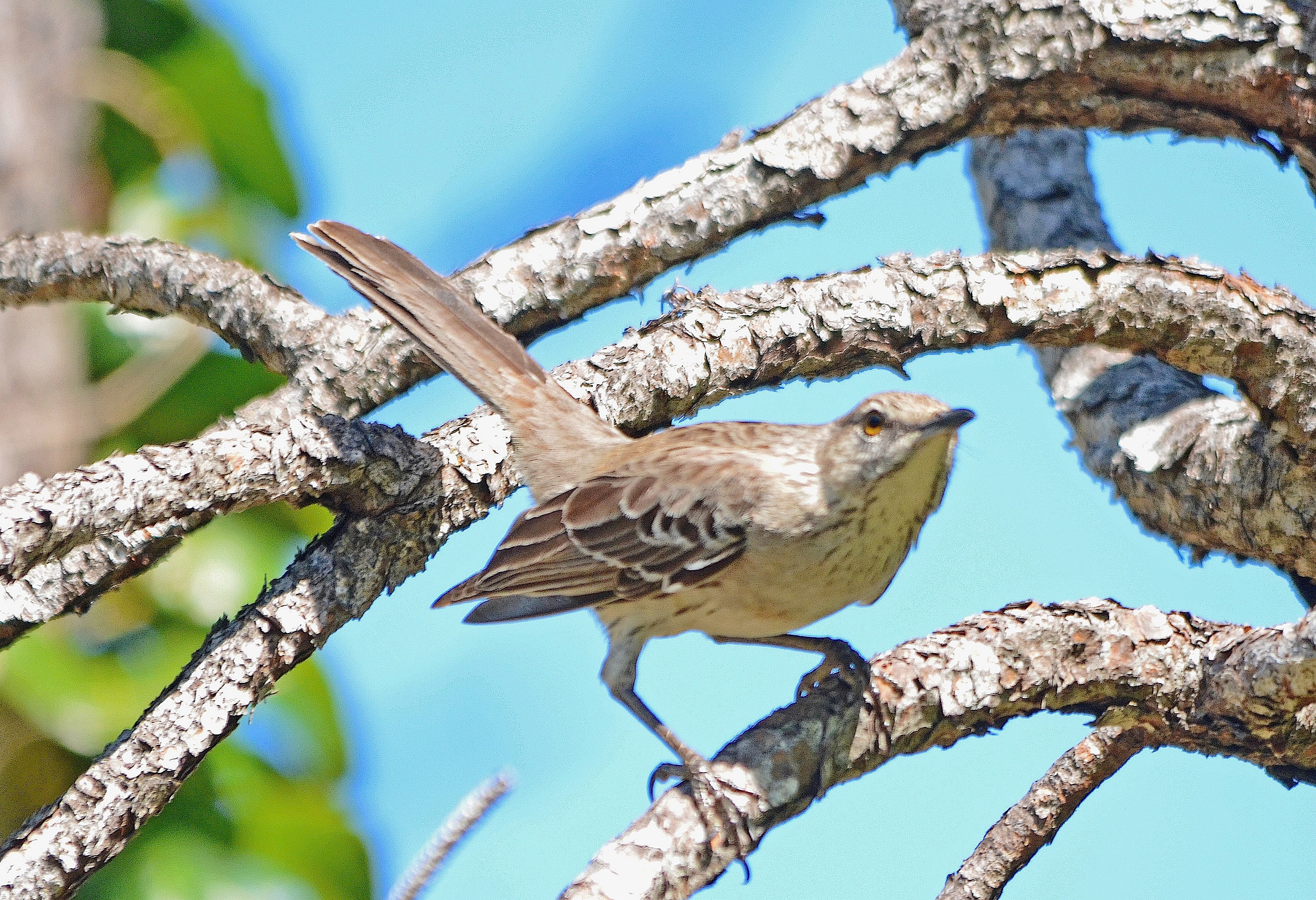
The Bahama Mockingbird Mimus gundlachii is similar to its slightly smaller cousin, the widespread Northern Mockingbird Mimus polyglottis. The range of Bahama Mockingbirds is not restricted to the Bahamas themselves, and includes areas of Cuba, Jamaica and TCI, so despite the name they are not an endemic species to the Bahamas. They are also occasional vagrants to the United States, especially – for reasons of proximity – southeastern Florida.
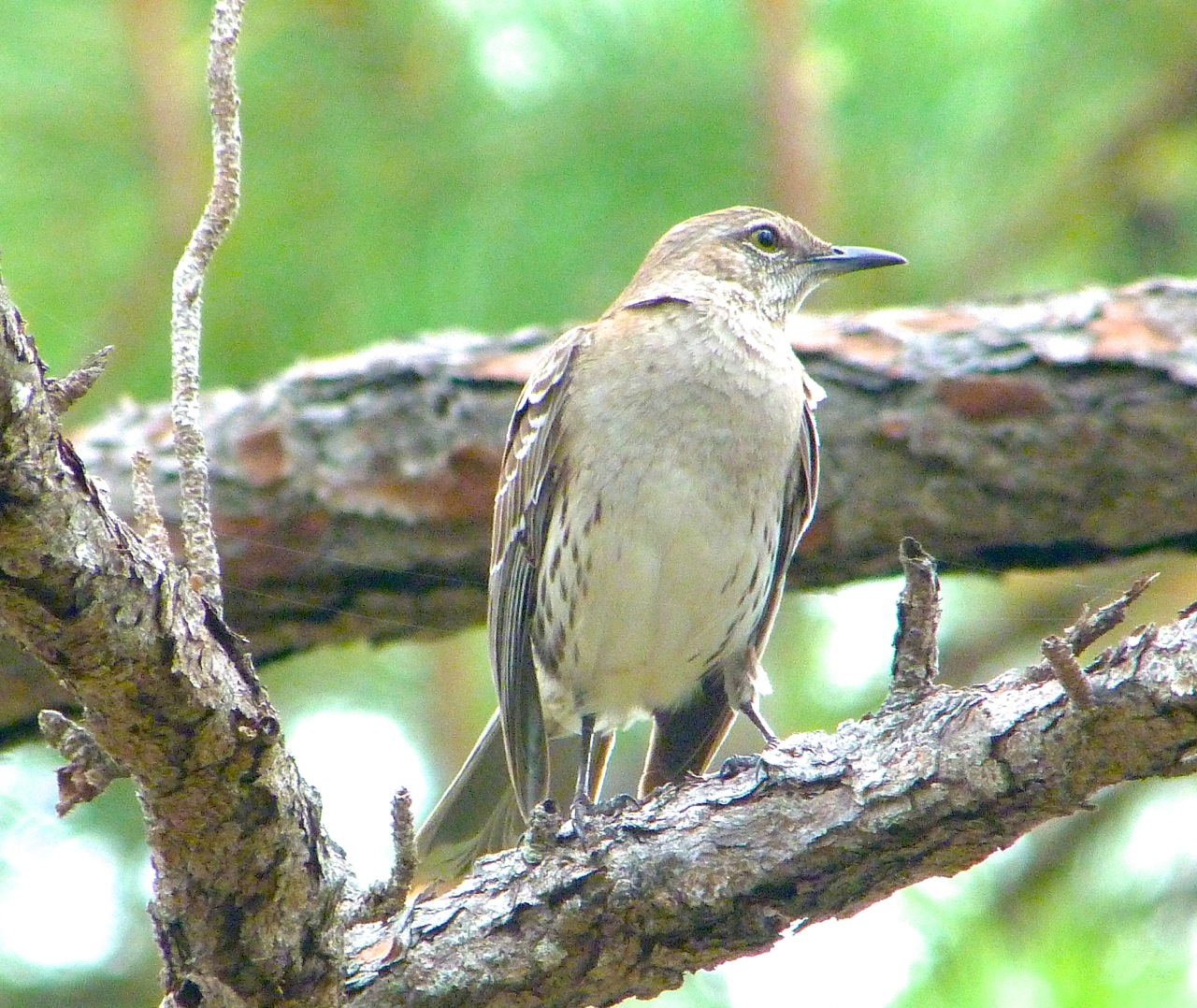
The Bahama Mockingbird is browner than the greyish Northern Mockingbird, and has distinctive streaking and spotting to its breast and undercarriage. This may extend to what you might describe as the bird’s ‘trouser legs’, though I’m sure there’s a more technically correct term.
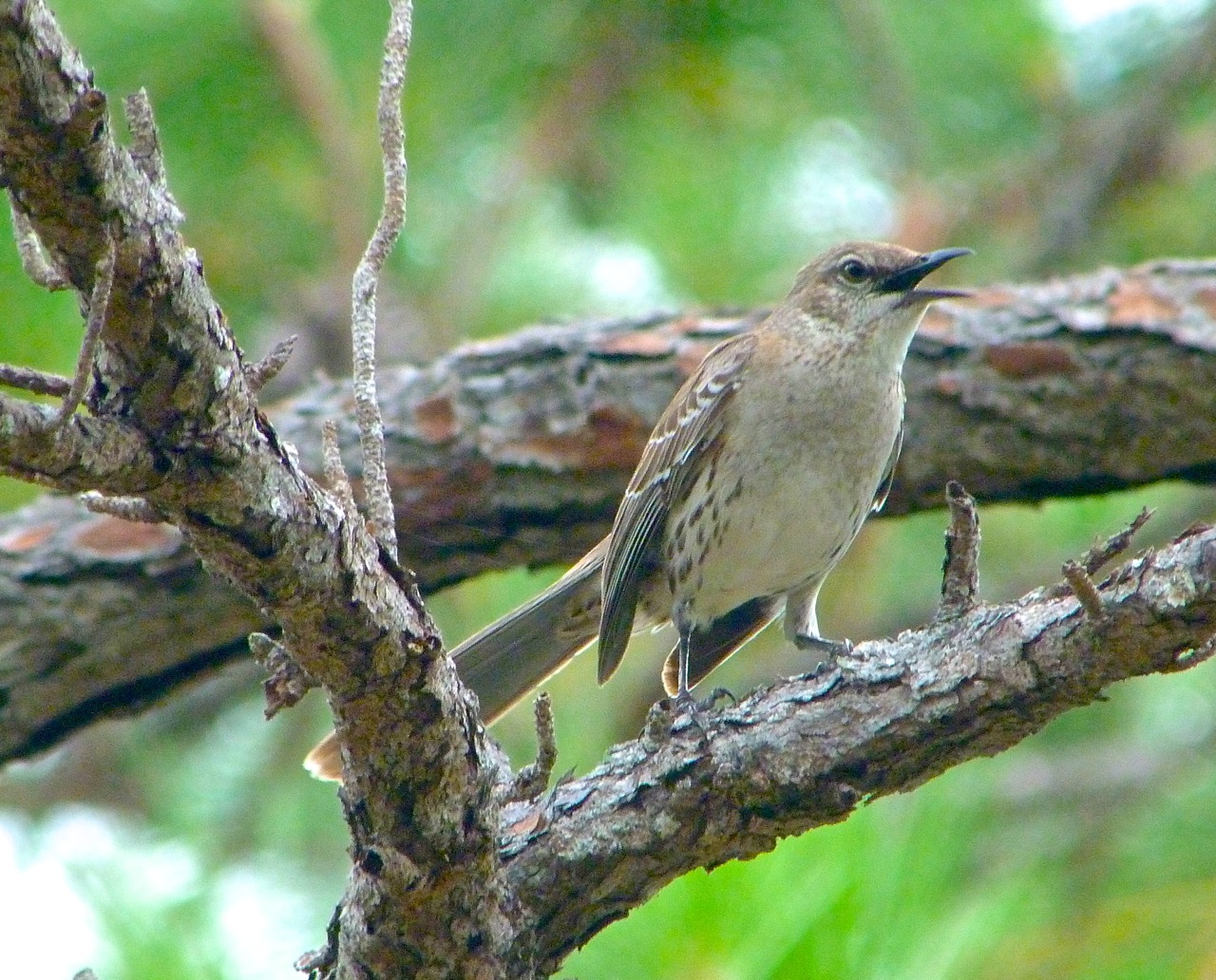
Both mockingbird species are found on Abaco. The NMs are ubiquitous in towns, settlements, gardens, coppice and pine forest, whereas BMs are shyer and tend to be found in the pine forest and well away from humans and their operations. When we were putting together The Birds of Abaco, I went on a birding trip with Abaco birding legend Woody Bracey and Ohio bird photographer Tom Sheley. We took a truck into the pine forest down a logging track south of Delphi, and they were quick to locate a bird, not least because one was sitting prettily on a branch singing lustily and unmistakably. It was well within range of Tom’s massive lens; more of a struggle for my modest camera (below). Caught the cobwebs, though…
I was astounded by the beauty and variety of the song. It consisted of very varied notes and phrases, each repeated 3 or 4 times before moving on to the next sounds in the repertoire. Here is a short 18 second example I recorded, using my unpatented iPhone method, for which seeHERE.
For those with interest in birdsong, here is a longer 1:13 minute song from the same bird, with largely different sounds from the first recording made minutes earlier. There’s even a decent stab at imitation of a 1960s Trimphone™. Had we not had to move on to Sandy Point for an appointment with some cattle egrets and American kestrels, I could have stayed listening for far longer.
THE ‘SUBSPECIES’ THAT WASN’T…
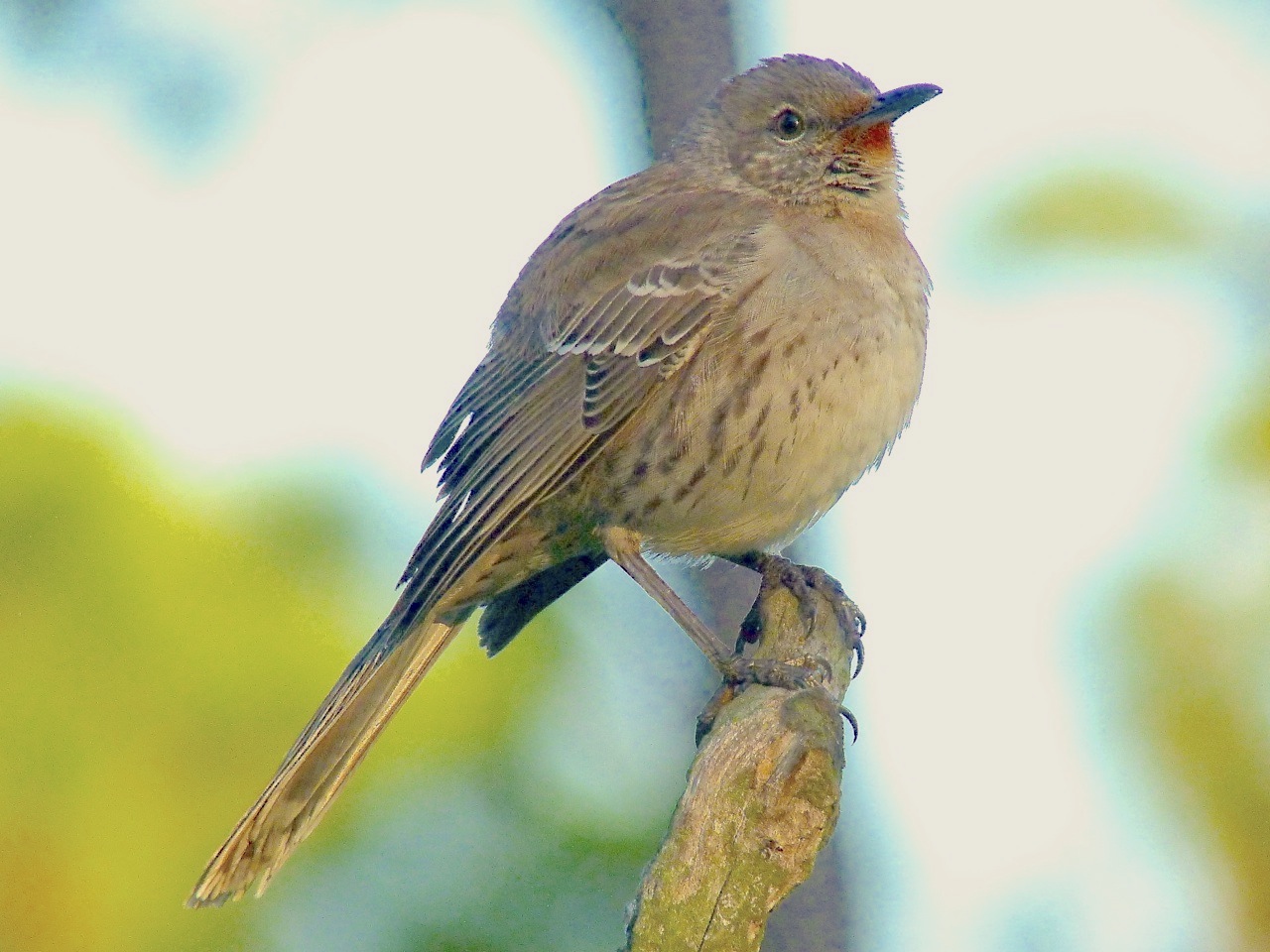
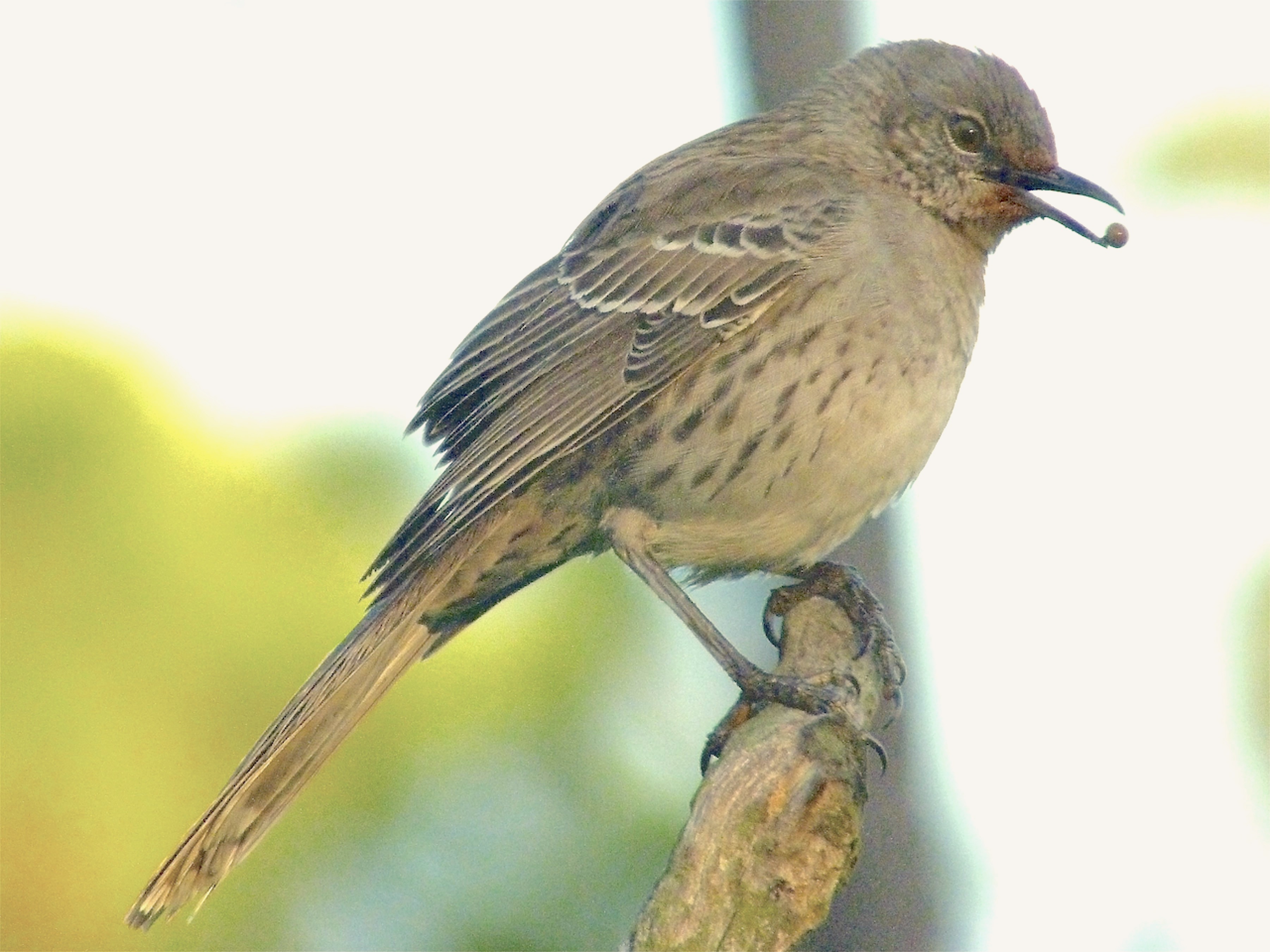
More recently, on a trip in backcountry to find Kirtland’s warblers – we saw 4 – the slow-moving truck jolted to halt in the middle of nowhere. This was because a Bahama Mockingbird was right by the track. I fired off some quick shots out of the window into a rather difficult light, to find that we appeared to have found a new subspecies, the scarlet-faced mockingbird.
The reason was clear, however. The bird had been pigging out on some red berries, and had managed to collect plenty of the juice round the base of its beak.
SO WHAT DOES A NORTHERN MOCKINGBIRD LOOK LIKE, THEN?
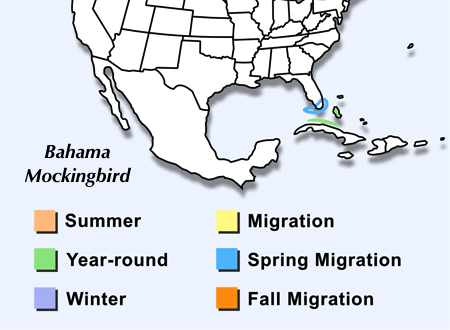
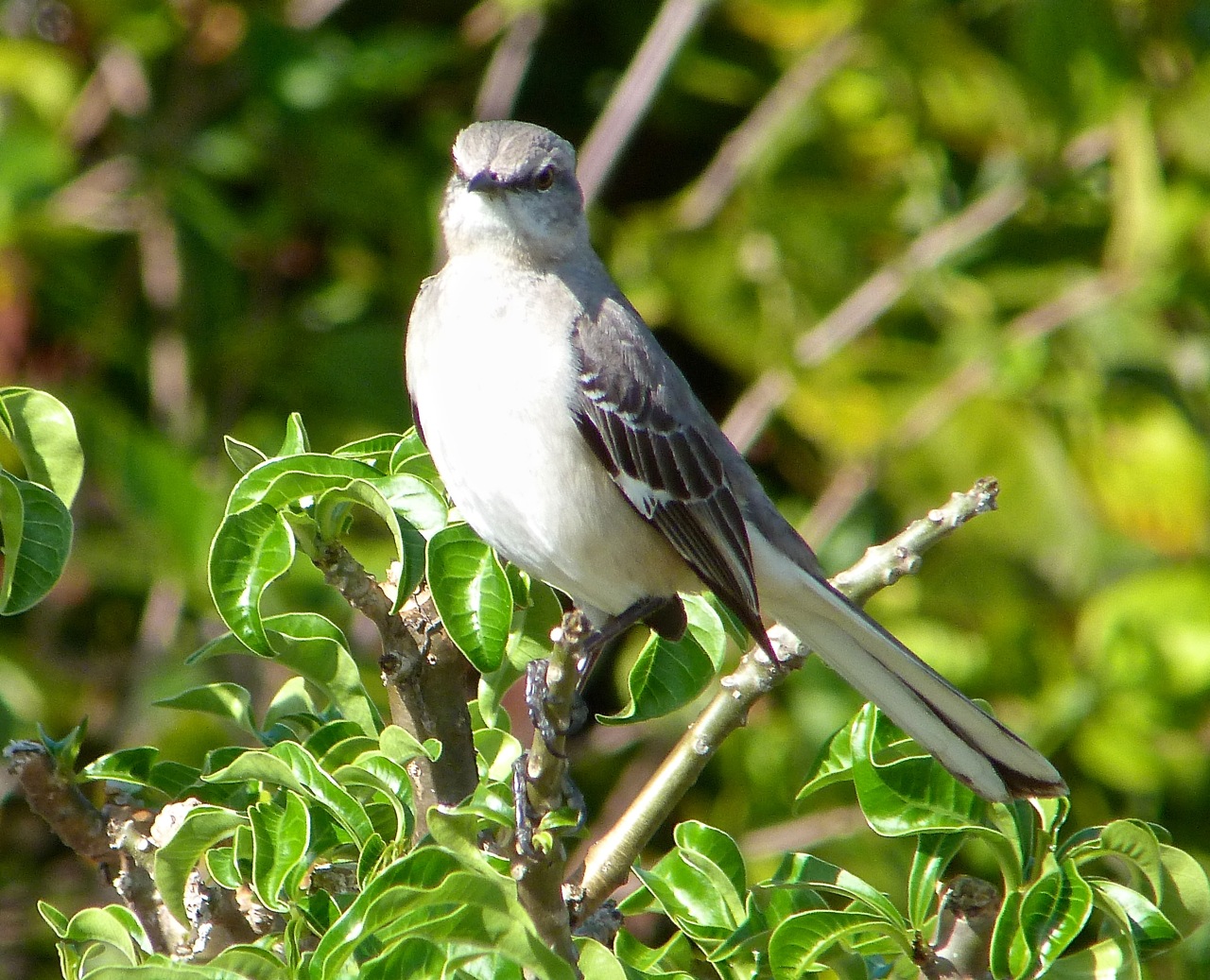
I photographed the Northern Mockingbird below in a garden at Casuarina. The species is far tamer than its cousin, and seen side-by-side they are clearly very different. The range maps show the stark contrast between the very limited range of the Bahama Mockingbird and the vast distribution of the Northern Mockingbird.
Photos Credits: Tom Sheley (1, 6); Peter Mantle (2); Charlie Skinner (3); Keith Salvesen (4, 7, 8, 9); Alex Hughes (5); Susan Daughtrey (10). Range maps eBird & wiki.
‘TAKING OFF’ ON ABACO: NORTHERN MOCKINGBIRDS & MIMICRY
The Northern Mockingbird (Mimus polyglottos) is commonly found in North America, but also has a wide range further afield. The species is plentiful on Abaco and in the northern Bahamas generally. I recently posted about Abaco’s other mocker, the local Bahama Mockingbird,HERE.
A DOZEN MEMORABLE MOCKINGBIRD FACTS TO ENLIVEN YOUR CONVERSATION
Only male mockingbirds sing
The Latin name means ‘many-tongued mimic’
They are omniverous and eat fruits, seeds, insects and even small lizards
They been shown in experiments to be capable of recognising individual humans
They are the State Bird of Florida, Arkansas, Mississippi, South Carolina, Tennessee, & Texas
Thomas Jefferson had a pet mockingbird named “Dick” [wish I’d invented this one…]
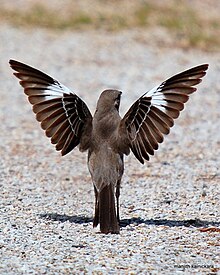
Courting males fly around females to impress them with their splendid wing patterns
Mockingbirds are monogamous & mate for life (though known to play away on occasion…)
Both the male and female are involved in the nest building
Cowbirds are inclined to lay their eggs in mockingbird nests
Both male and female feed their chicks, in the modern way
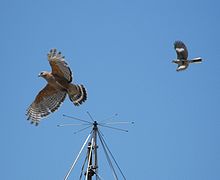
Mockers will confront larger birds including hawks; also cats and dogs; & even humans
IMITATIONAL SKILLS
Besides having a particularly wide song repertoire, the mockingbird will mimic other birds, other natural sounds (including dogs) and even man-made / mechanical sounds – car alarms, sirens and a whole lot more besides. Good old Wiki has this to say:
“There are four recognized calls for the Mockingbird: the nest relief call, hew call, chat or chatburst, and the begging call. The Hew call is mainly used by both sexes for potential nest predators, conspecific chasing, and various interactions between mates. The differences between chats and chatbursts are frequency of use, as chats are year-round, and chatbursts occur in the fall. Another difference is that chatbursts appear to be used in territorial defense in the fall, and the chats are used by either sex when disturbed. The nest relief and begging calls are only used by the males.”
IMITATIVE MEMORY?
Remarkably, it seems that Northern Mockingbirds can inherit and store the imitations of their ancestors. We listened to a young one in the Abaco National Park with Caroline Stahala, the scientist i/c Abaco Parrot conservation. The bird was accurately mimicking a tufted titmouse, a bird it will never have heard and so cannot have learned from directly (and no other bird on Abaco sounds like the titmouse).
NEW! Another remarkable nugget, gleaned from Bahamas bird authority and author Tony White, is that in early Spring you may hear the calls of Grey Kingbirds starting to arrive for their summer vacations. Do not be fooled; Northern Mockingbirds begin imitate the calls of this species about 2 weeks before they begin to arrive…
By way of comparison, here is a Northern Mockingbird I photographed at the beginning of the year in New York while walking the High Line (if you get the opportunity to do this, take it. The perfect solution for a defunct high-level railway track is to turn it into a walkway-cum-park-cum-viewing platform). There are detectable differences, not least the brown frontal flecking.
THE INFLUENCE OF MOCKINGBIRDS ON THE ARTS
“To Kill a Mockingbird”, Harper Lee, (1960); Film version (1962) starring, by amazing coincidence, Gregory Peck
“Listen to the Mocking Bird” (1855) An American folk song popular in the mid-19th century
“Mockingbird” (1974) Carly Simon duets with James Taylor, her (then) husband, one of several (though not simultaneous)
“Mockin’ Bird Hill” (1951) Les Paul & Mary Ford, later massacred in 1964 by ‘The Migill 5’
Star of the Lullaby that starts “Hush, little baby, don’t say a word, Mama’s gonna buy you a mockingbird…” That’s quite enough of that to be going on with
It turns out Mr Eminem has rapped up a ‘parental advisory’ and ‘explicit warning’ “Mockingbird” for our delectation. I was going to post the mp3 in a vaguely satirical way, but it is so numbingly dire that even his mum Mrs Mathers can’t bear to listen to it. So just enjoy the cover, then move on quickly to the birdsong video below…
MAKING A GOOD IMPRESSION: BAHAMA MOCKINGBIRDS ON ABACO
The Bahama Mockingbird Mimus gundlachii is similar to its slightly smaller cousin, the widespread Northern Mockingbird Mimus polyglottis. The range of Bahama Mockingbirds is slightly wider than the Bahamas themselves, and includes areas of Cuba, Jamaica and TCI. It is also a vagrant to the United States, especially southeastern Florida.
The Bahama Mockingbird is browner than the Northern Mockingbird, and has distinctive streaking and spotting to its breast and undercarriage.
Both species are found on Abaco. The NMs are ubiquitous in towns, settlements, gardens, coppice and pine forest, whereas BMs are shyer and tend to be found in the pine forest and well away from humans and their operations.We took a truck into the pine forest south of Delphi with well-known Abaco birder Woody Bracey and Ohio bird photographer Tom Sheley. They were quick to locate a bird, in part because one was sitting prettily on a branch singing lustily. It was well within range of Tom’s massive lens; more of a struggle for my modest Lumix (as you may detect). I was astounded by the beauty and variety of the song. It consisted of very varied notes and phrases, each repeated 3 or 4 times before moving on to the next sounds in the repertoire. Here is a short 18 second example I recorded, using my unpatented iPhone method, for which seeHERE.
For those with interest in birdsong, here is a longer 1:13 minute song from the same bird, with largely different sounds from the first recording made minutes earlier. There’s even a decent stab at imitation of a 1960s Trimphone™. Had we not had to move on to Sandy Point for an appointment with some cattle egrets and American kestrels, I could have stayed listening for far longer.
Finally, the Northern Mockingbird below was photographed in a garden at Casuarina – far tamer and clearly very different from its cousin. The range map shows the stark contrast with the very limited range of the Bahama Mockingbird.










.jpg)


 ROLLING HARBOUR ABACO
You must be logged in to post a comment.