The sounds are unmistakeable – a discordant chorus of soft chuckling noises like tongue-clicks as the RWTs flock into a bush, interrupted by harsh, metallic calls like rusty metal gate-hinges being forced open. Or maybe a lone bird mournfully repeating its eerie call from the mangroves far out on the Marls as the bonefishing skiffs slip silently along the shoreline. No other species sound quite like Agelaius phoeniceus.
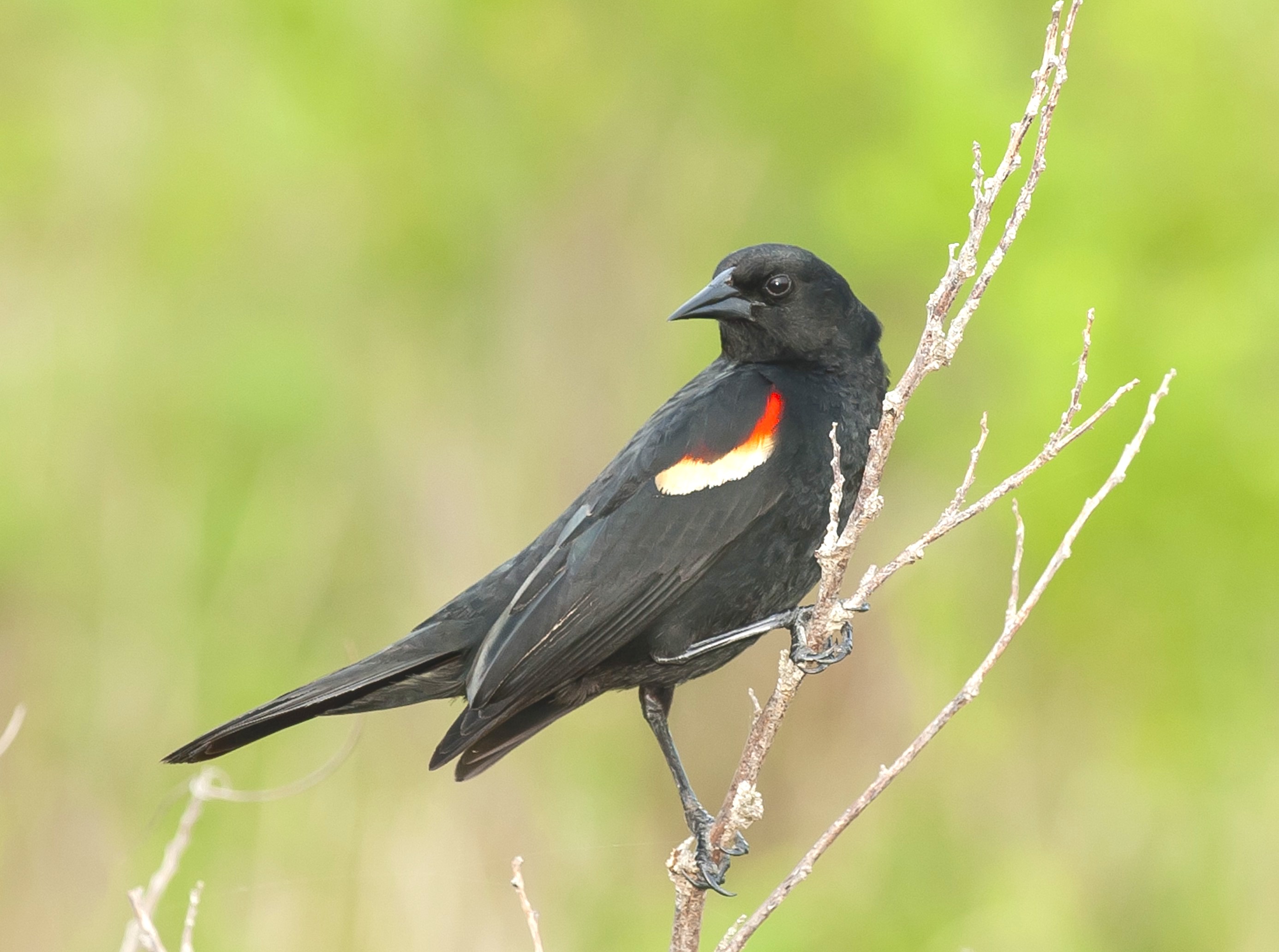
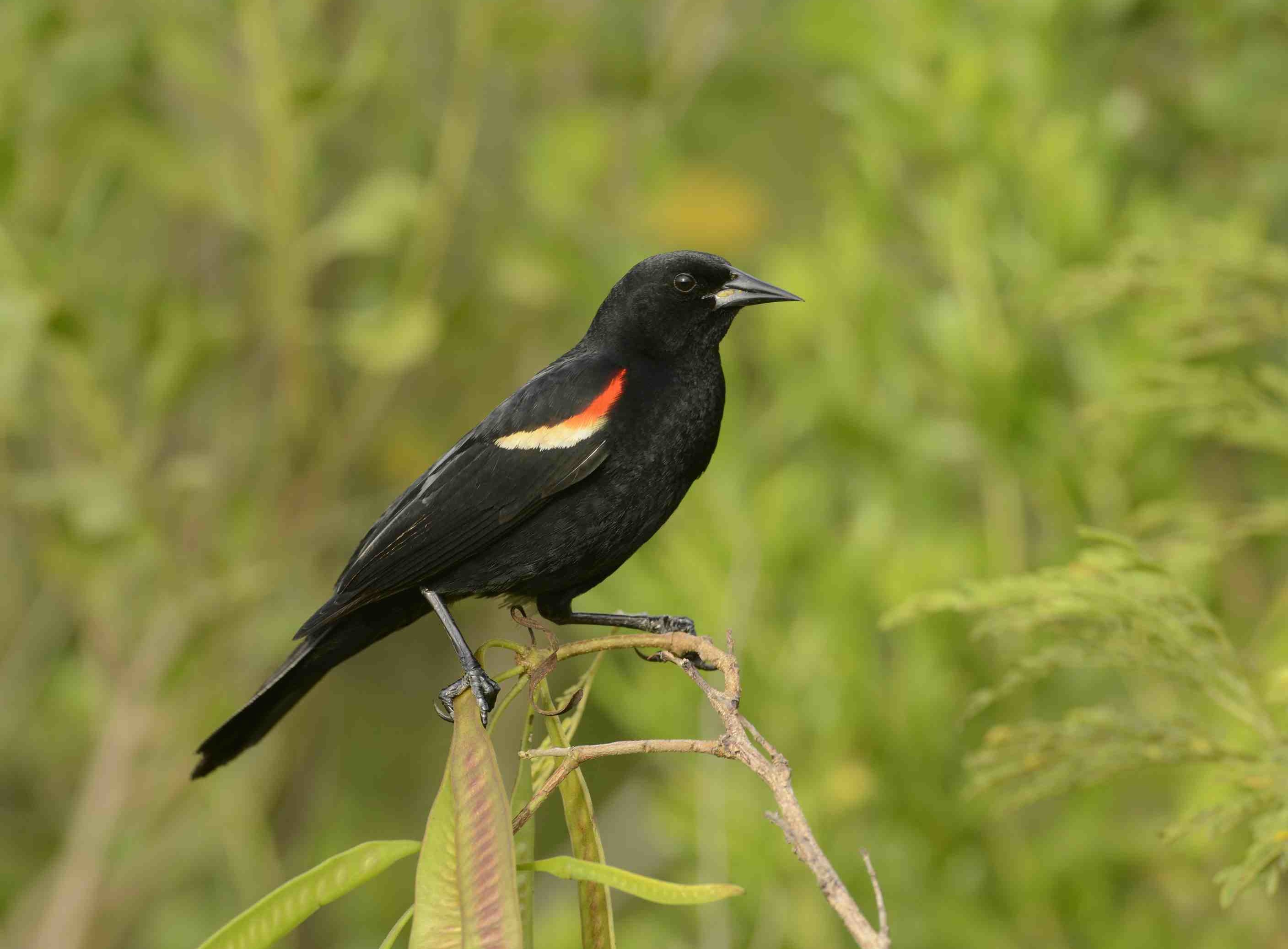
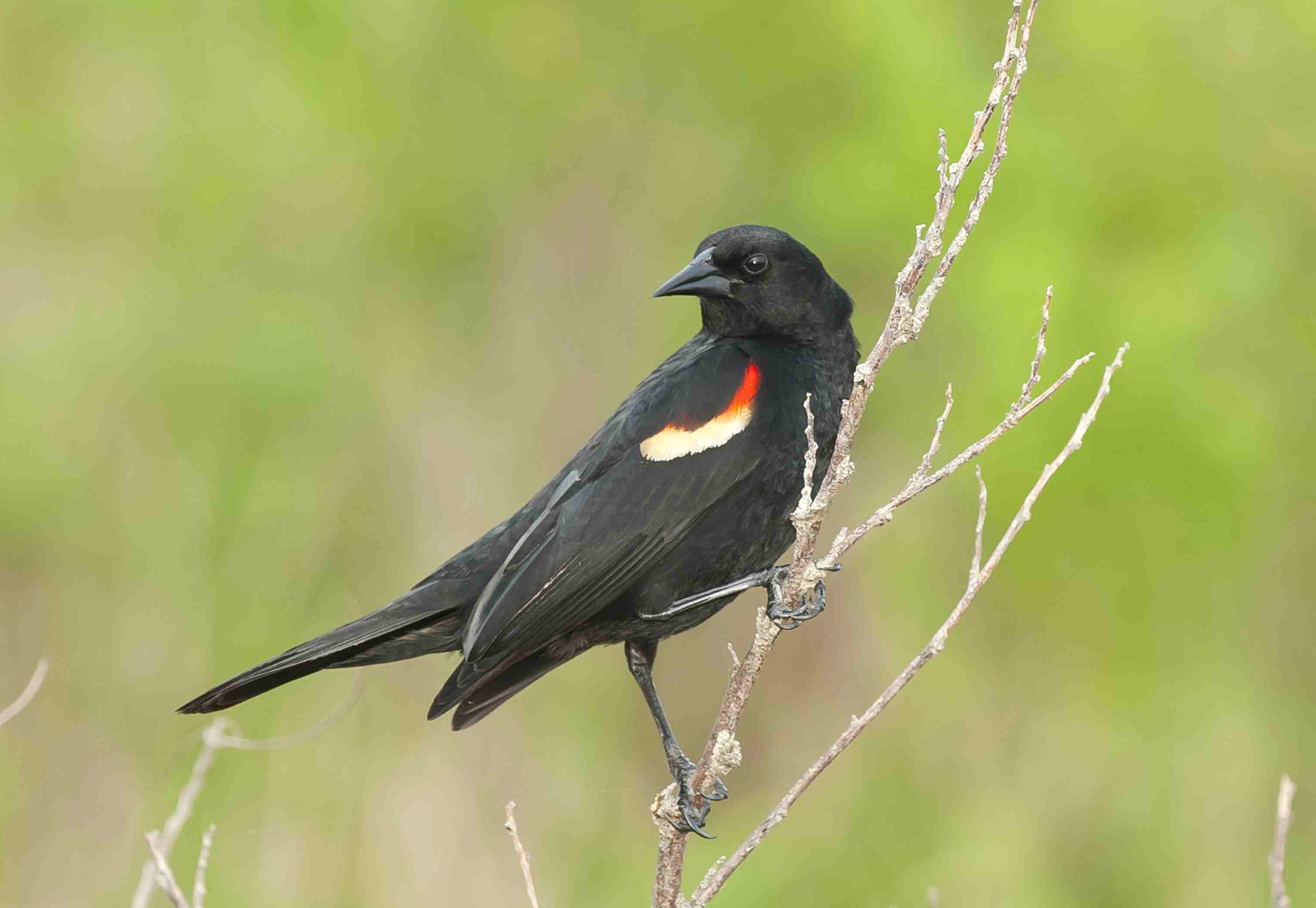
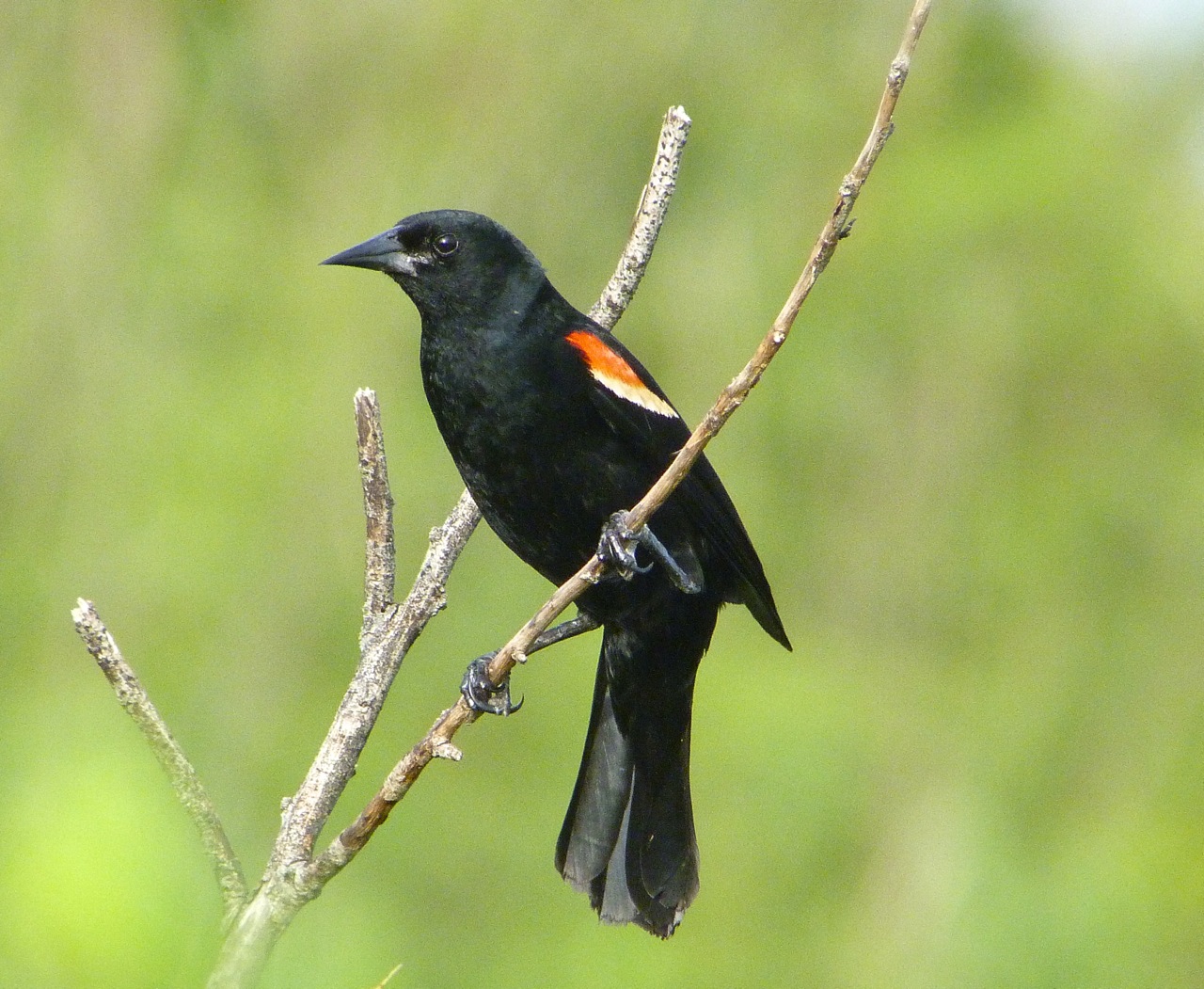
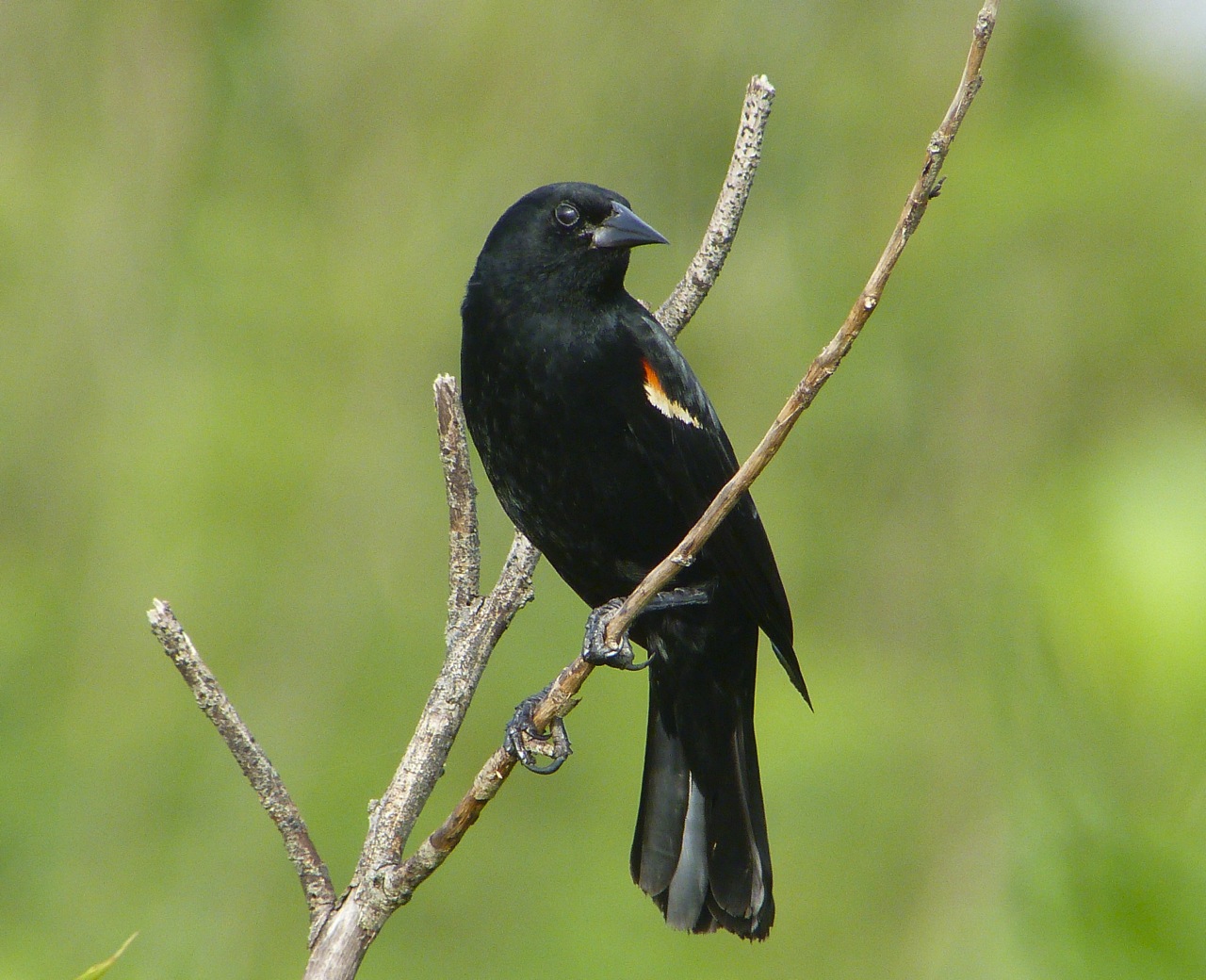
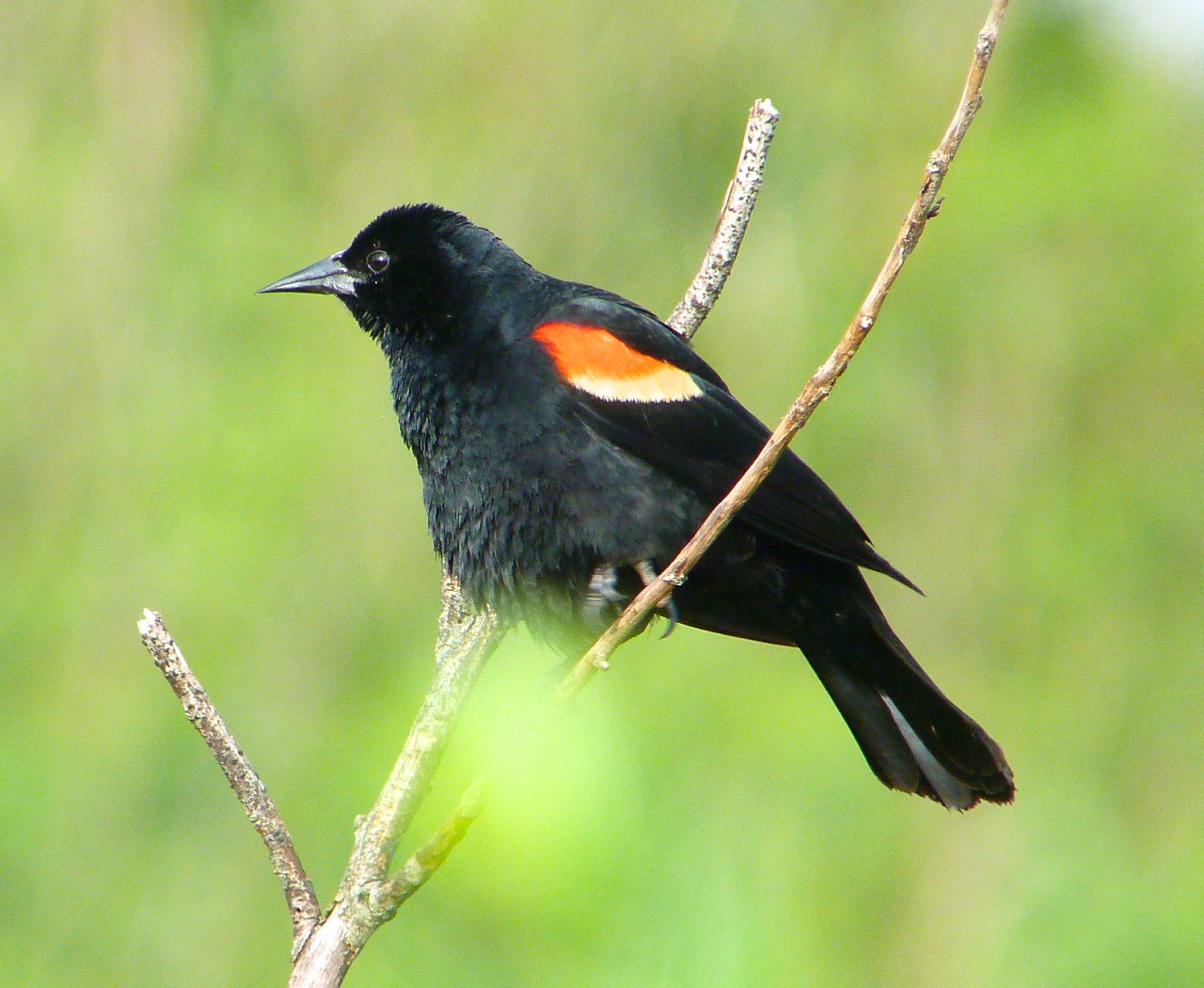
The handsome males sport flashy epaulets, most clearly visible in flight or in display – for example to impress a prospective mate. Again, they are unlikely to be confused with another species.
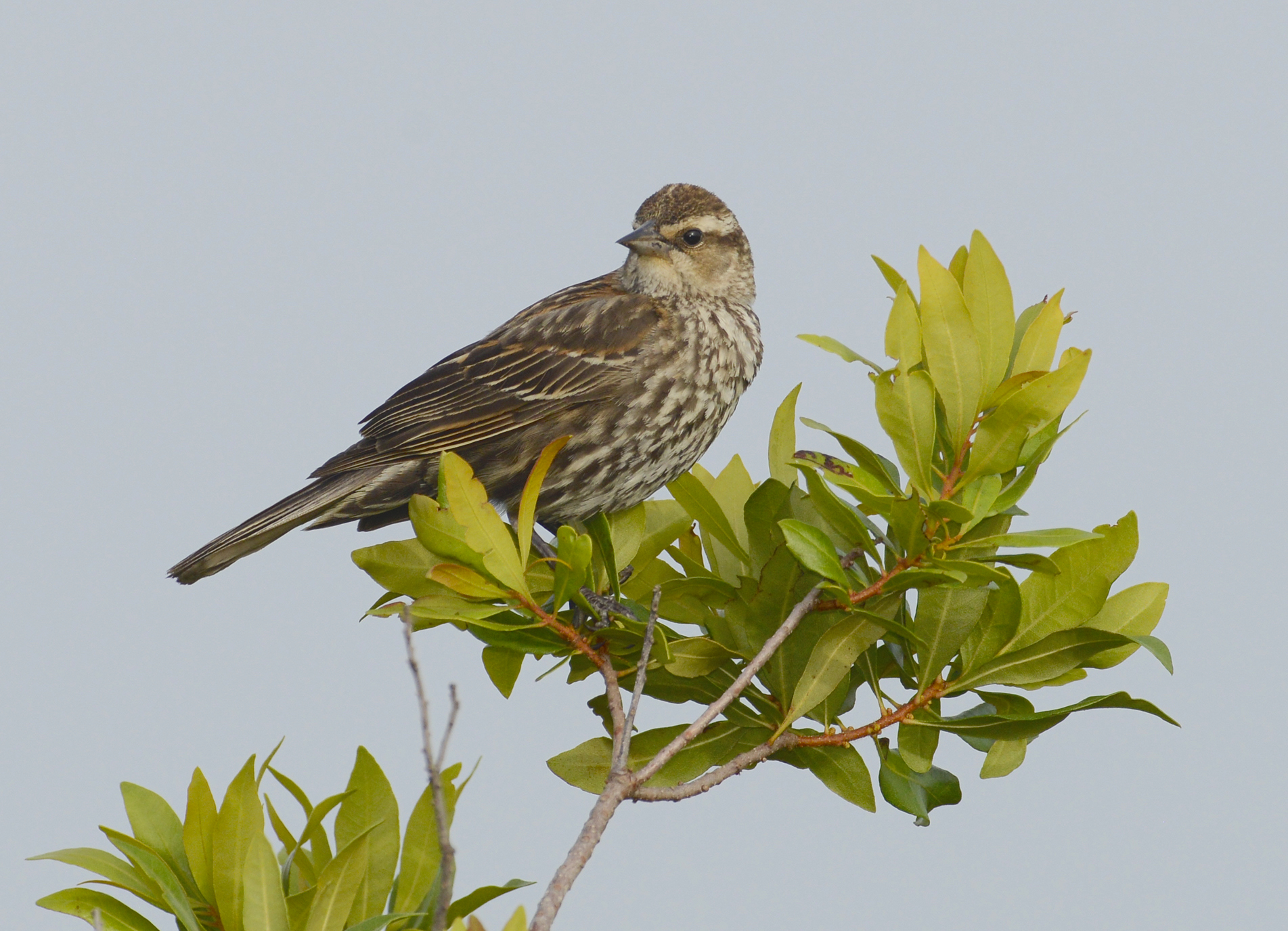
The females, as is often the way, are less showy. I have read that they are ‘nondescript’ or ‘dull’, which is unnecessarily harsh, I reckon. Here are a couple of examples.
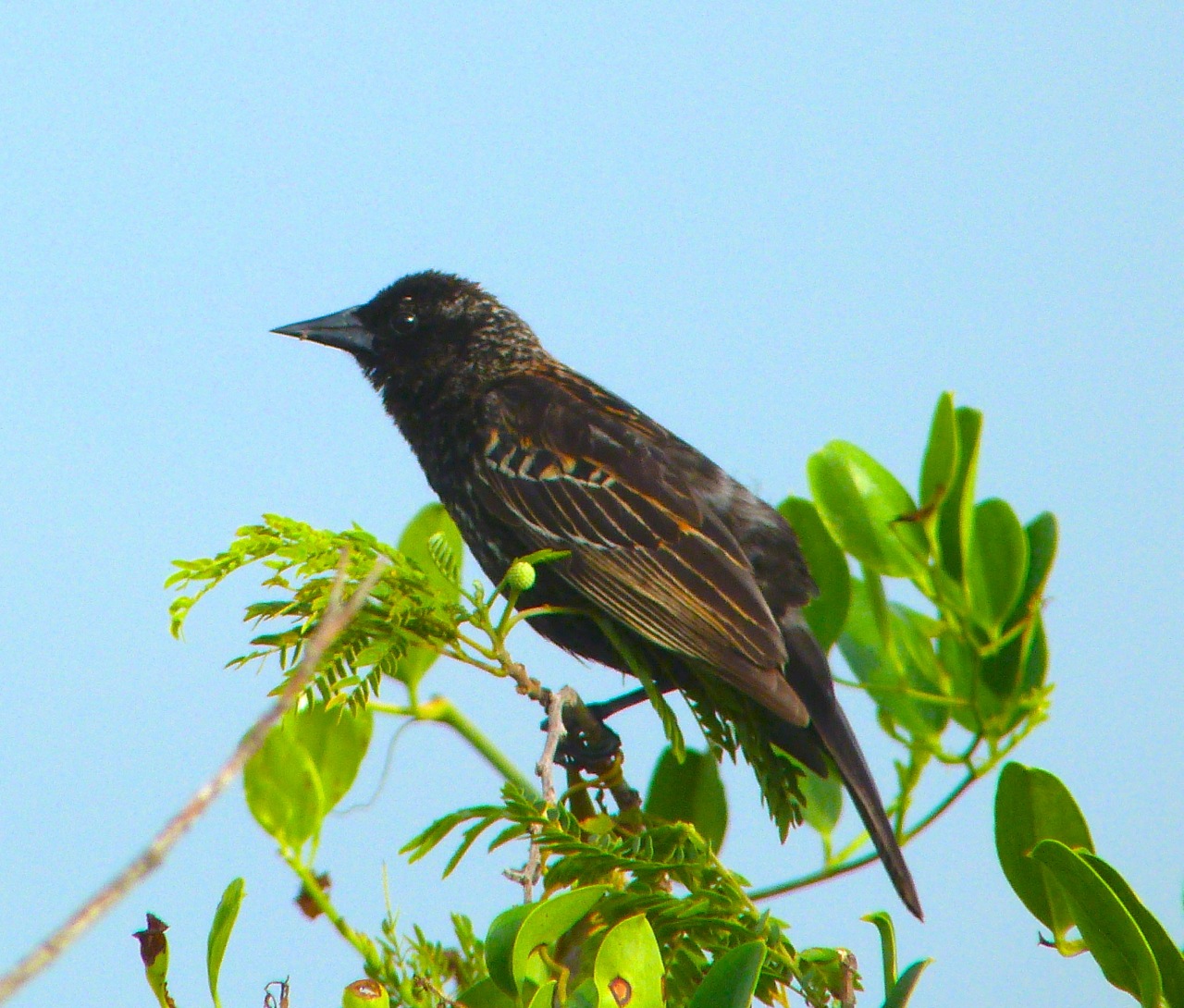
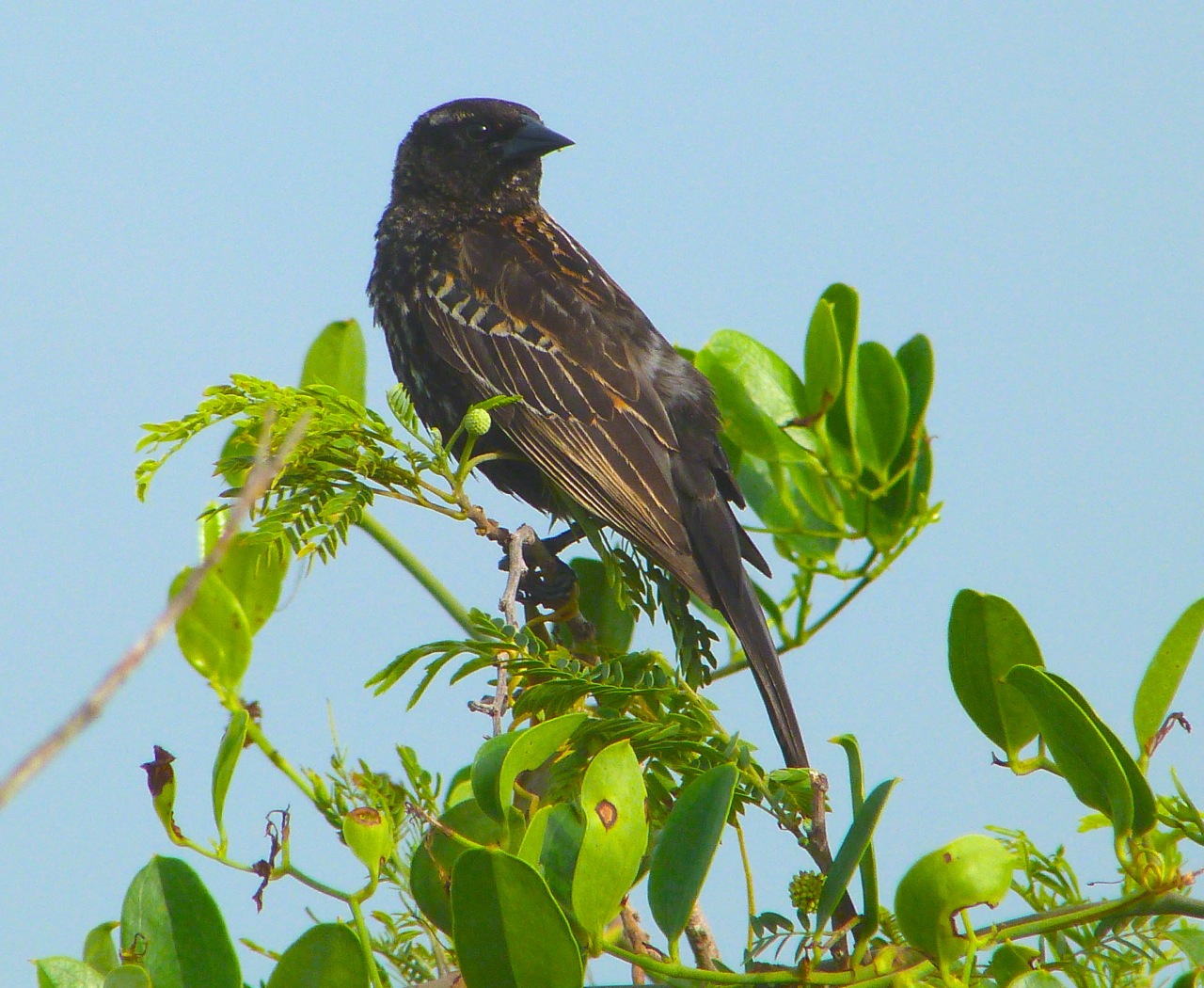
And the darker brown ones that are clearly not handsome black males? These are young males in their first season, before they move on to the full adult male plumage. Originally I had designated them as females (as I had assumed). I was very gently corrected by the legendary bird expert Bruce Hallett. I took the first male juvenile at Casuarina, when I also made the sound recording (below). The second was at Delphi (with some ‘light’ issues, I notice…).
Fledglings are kind of cute…
SO WHAT DO THEY SOUND LIKE?
You may need to turn up the volume a bit. You will also here a lot of dove noise and, in the background, the sound of waves lapping onto the shore.
Photo Credits: Tom Sheley (1, 2, 4, 5, 8); Alex Hughes (3); Keith Salvesen (6, 7, 9 & audio)
YELLOW-HEADED BLACKBIRD: A NEW SPECIES FOR ABACO, BAHAMAS
In the aftermath of the awesome (in its original meaning) power of the hurricane, Abaco is slowly rising from the remnants of its peaceful slow-paced beauty. The loss of human life, and the damage to survivors, to animals, to property and to precious possessions is unimaginable. By way of contrast, in the UK a flood that inconveniences a SUV owner in an affluent area may well make the local paper*; and possibly local TV news if the wait for a tow-truck takes an hour or so.
BIRDS are providing some cheer and a welcome diversion for many islanders. On SocMed there are plenty of chats** going on daily about the parrots, emerging winter warblers, occasional shorebirds and so on. Feeders are back in use with seeds and nuts (nb please no peanuts). Photos are being taken, shared and enjoyed.
Over the last few days, red-winged blackbirds have been a visible and indeed audible presence in various settlements. Their characteristic ‘rusty gate-hinge’ call is unmistakeable, whether in the coppice or heard deep in the mangroves 4 miles off-shore from a skiff in the Marls. Let’s progress to a great discovery and a most perfect example of ‘birds of a feather’ literally ‘flocking together’.
YELLOW-HEADED BLACKBIRD
THE FIRST EVER SIGHTING & PHOTO ON ABACO
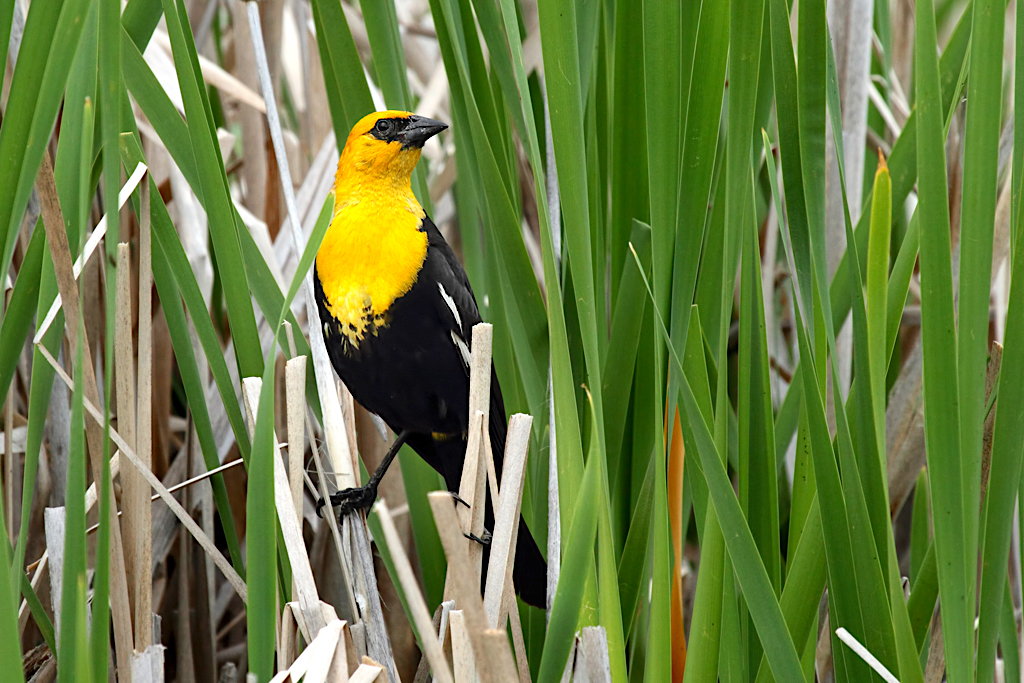
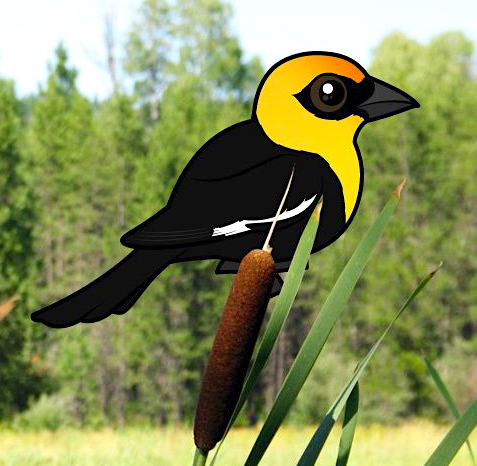
The photograph above was taken on October 20 in Little Harbour, Abaco by Bernard Albury. A pair of red-winged blackbirds, male and female, were on the feeder in his garden. With them was a rather more colourful blackbirdy-type bird – a juvenile yellow-headed blackbird Xanthocephalus xanthocephalus. Bernard’s photo is the perfect example of how a quick shot with a phone can make all the difference between a vague description of a bird for ID (oriole? bobolink? weird warbler?), and having clear visual clues to work with.
A NEW SPECIES REPORTED, YOU SAY? HOW CAN YOU POSSIBLY TELL?
The news of this exciting sighting quickly reached bird scientist Ancilleno Davis of (among many organisations) Birds Caribbean. ID was established, and the news soon spread via FB shares. This bird was a very long way east of its normal range, and I thought that it might possibly be a first for the entire Bahamas; probably a first for Abaco itself; and almost certainly the first photo of a YHBL. Then it was a question of cross-checking data in books such as Tony White’s comprehensive guide; online in specialist bird websites; and with the Bahamas bird experts such as Woody Bracey and author Bruce Hallett.
Tony White, [random], Bruce Hallett, Woody Bracey
SO WHAT’S THE ANSWER?
Simple. Bernard Albury has, in his own garden in Little Harbour, discovered the first Yellow-headed Blackbird ever recorded for Abaco. Furthermore, his photo is very probably the first-ever image (by which I mean only image) of a YHBL for the entire Bahamas.
BUT HOW CAN YOU TELL THERE HAVEN’T BEEN LOTS OF OTHERS?
The first step is to check an authoritative range map of the species in question. Audubon and Cornell are the go-to authorities for this purpose, though tbh there’s a great deal to be said for using Wiki as a first port of call for a new bird and its details. People rarely bother to mess with the avian articles on Wiki, there’s not a lot of fun it it. For the Yellow-headed Blackbird, the sheer distance to Abaco makes a visit from one highly unlikely. The second step is to check online sightings reports uploaded to eBird by birders ranging from the enthusiastic amateur to the vastly experienced professional. For an unusual bird, the reports are invaluable in establishing relative rarity. The previous online reports for YHBL in the Bahamas were of a couple of sightings of single birds in the Freeport / West End area of Grand Bahama. These were in 2006 by bird expert Woody Bracey; and in 2012.
Finally, cross-check in the most thorough bird guides of the area. In this case, Tony White included GB sightings YHBLs in his meticulous chart but none for Abaco. No other authority – Bruce Hallett for example – has noted a sighting report for Abaco; Woody also believes this to be a first, and he should know, having found the first ever Bahamas one in 2006.
I KNOW WHAT TO LOOK FOR NOW, WHAT DO THEY SOUND LIKE?
First, here’s the familiar call of a red-winged blackbird
Here are two examples of the much harsher call of the YHBL, described variously as “the worst song of any North American bird, a hoarse, harsh scraping”; and “an awful sounding raspy whine”.
Sample Headline* – ‘Deluge Ordeal “intolerable” says Local Financier’
Chats** – where the standard disclaimer ‘no pun intended’ would be wrong
CREDITS: First and foremost to Bernard Albury, but for whom… and Ancilleno Davis for his ID and initial shares; generally: Audubon, Cornell, eBird, Merlin, Xeno-Canto, Bird guys.
Images: R. Welker, Alan Vernon, Birdorable (cartoon), Bernard Albury, Tom Kerner, Sibley’s Guide online; Dan Hackley / Cornell / eBird, JJ Audubon, Brian Sullivan / Cornell / Macaulay Library
Sounds: Jim Berry, Xeno-Canto; Ted Floyd, Xeno-Canto
I’m away for a few days on the Emerald Isle, leaving my trusty computer many miles away (on purpose, I mean). I’ve just got my iPhone, but writing posts and inserting images on such a small screen / keyboard is a fool’s errand. So I’ve pre-loaded a couple of beautiful bird images to post this week. Here is a wonderful red-winged blackbird male taken by photographer Tom Sheley while we were getting together some images forThe Birds of Abacodeep in Abaco backcountry.
The sounds are unmistakeable – a discordant chorus of soft chuckling noises like tongue-clicks as the RWTs flock into a bush, interrupted by harsh, metallic calls like rusty metal gate-hinges being forced open. Or maybe a lone bird mournfully repeating its eerie call from the mangroves far out on the Marls as the bonefishing skiffs slip silently along the shoreline. No other species sound quite like Agelaius phoeniceus.
The handsome males sport flashy epaulets, most clearly visible in flight or in display – for example to impress a prospective mate. Again, they are unlikely to be confused with another species.
The females, as is often the way, are less showy. I have just read that they are ‘nondescript’, which is unnecessarily harsh I reckon. Here are a couple of examples.
And the darker brown ones that are clearly not handsome black males? These are young males in their first season, before they move on to the full adult male plumage. Previously I had designated them females (as I had assumed) until very gently corrected by the legendary Bruce Hallett. Not only was Bruce an essential part in the production of the Birds of Abaco, he also keeps a benign eye on my posts and occasionally steps in to clarify IDs etc. I took the first male juvenile at Casuarina, when I also made the sound recording (below). The second was at Delphi – and with some ‘light’ issues, I notice…
Fledglings are kind of cute…
SO WHAT DO THEY SOUND LIKE?
You may need to turn up the volume a bit. You will also here a lot of dove noise and, in the background, the sound of waves lapping onto the shore.
Photo Credits: Tom Sheley (1, 2, 4, 5, 8); Alex Hughes (3); Keith Salvesen (6, 7, 9 & audio)
The Winter Solstice arrives today. The shortest day followed by the longest night of the year… then the serious business of Christmas. And some quality frivolity with it. So this will probably be my last post before then and possibly until next year, depending on available time, relative sobriety and other seasonal variables too numerous to mention…
CALLING BIRDS? WHAT ARE THEY, EXACTLY?
“The Twelve Days of Christmas “is an old, old song, supposedly written in 1780, and popular ever since. Over time, the words have altered somewhat from the original. The ‘Calling Birds’ were originally ‘Colly (or Collie) Birds’, meaning, black birds. The word derives from the word ‘coal’. The change to ‘calling birds’ wasn’t noted until the early c20. One version I learnt as a child a few years decades later used ‘colly birds’. However the quaint usage quickly died out during the pernicious excesses of the 1960s which I obviously don’t remember because I wasn’t there…
European Blackbird
Colly birds were – are – European blackbirds, song birds that bring joy. There are other black birds of course, but crows, ravens and the like have from medieval times been viewed as birds of ill-omen (lots of examples in Shakespeare). Hardly a Christmassy gesture to give one of them to your True Love, far less four.
WHAT ABACO BIRD SHOULD I GIVE MY TRUE LOVE AFTER 5 GOLD RINGS?
Undoubtedly red-winged blackbirds. They are undeniably black birds. They have festively flashy markings. True, their ‘metal-gate-with-very-rusty-hinges’ grating call is not exactly melodious (and 4 red-legged thrushes on vocals would suit the occasion much better). But what a handsome present to give someone already trying to cope with the burden and general commotion of sundry Lords a’Leaping, Maids a’Milking, Drummers Drumming and so on. Much easier to deal with.
HOW MANY GIFTS WILL MY TRUE LOVE EXPECT FROM ME?
I’m afraid it will be 364 in total, with some items on the list becoming increasingly difficult to source. The breakdown (note in passing the mathematical symmetry of the increasing and correspondingly diminishing numbers) is as follows:
12 partridges in pear trees
22 turtle doves
30 french hens
36 calling birds
40 golden rings
42 geese a laying
42 swans a swimming
40 maids a milking
36 ladies dancing
30 lords a leaping
22 pipers piping
12 drummers drumming
But with any luck your TL would be happy to share a Kalik in the sunset instead of having all that palaver…
Happy Christmas** to all people kind enough to follow this blog or read it from time to time, and – why not – all the people who don’t and / or have no idea of its existence… Time to let Kermit & Elmo to take over.
Photo credits, Tom Sheley (2, 3), Keith Salvesen / RH (1, 4), Wiki for the Eurasian blackbird
**The term ‘Christmas’ is used as a broad term to cover the midwinter holiday period – or indeed non-holidays for many – and is intended to include in a benign way those of any faith or none. I don’t ‘do’ Winterval, sorry…
GILPIN POINT, ABACO: A ‘2 HOURS, 40 SPECIES’ BIRDING HOTSPOT
Got a spare couple of hours? Reluctant to go birding on the bird-reliable yet ambience-lite town dumps, where careful cropping will be needed to avoid including post-apocalyptic scenery in your hard-won photos of a Little Mulligatawny Owl? Then read on. I have mentioned Gilpin Point before as a great place for birding, and listed many of the species to be found there. It benefits from a large pond, a pristine shoreline, and a coppice environment with some pine forest thrown in. All the makings of an excellent birding location, with suitable habitat for a wide variety of species.
On November 21st Reg Patterson, well-known Abaco birder and guide, was up early, and by 07.00 he was at Gilpin Pond where he spent a couple of hours . He recorded 40 species in that time, from very large to very small. His checklist reveals a great cross-section of the birdlife to be found on Abaco. There might easily have been parrots there too, since Gilpin has become one of their daily chattering spots for a frank exchange of news and views. Sadly it seems that the beautiful and (now) rare SPOONBILL recorded there in early October has moved on.
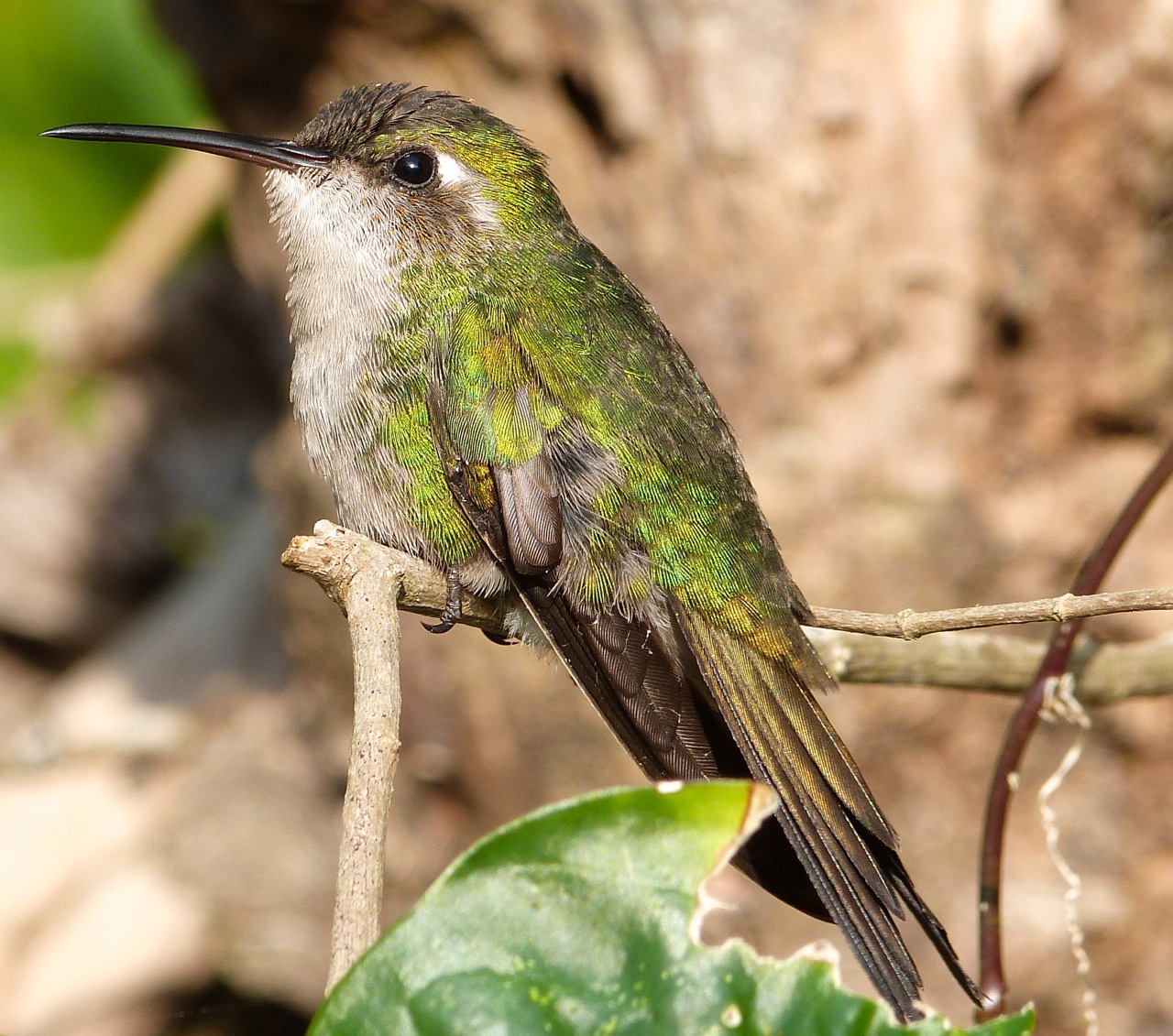
Here is Reg’s checklist, which I have illustrated with a variety of photos of the species he found, all taken on Abaco and many actually taken at Gilpin Point. There are plenty of other species that might easily have been seen there then – or perhaps later in the day (e.g. snowy egret, yellowlegs, kestrel, turkey vulture, red-legged thrush, cuban emerald, not to mention shorebirds and seabirds if some time was spent on the shore).
CHECKLIST
Blue-winged Teal (16) (see above)
White-cheeked Pintail (20)
Green-winged Teal (1)
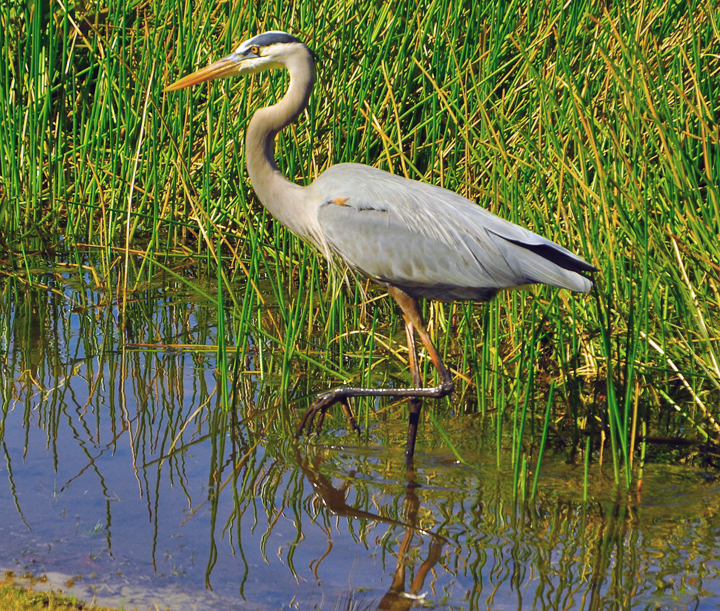
Great Blue Heron (1)
Great Egret (1)
Little Blue Heron (2)
Tricolored Heron (2)
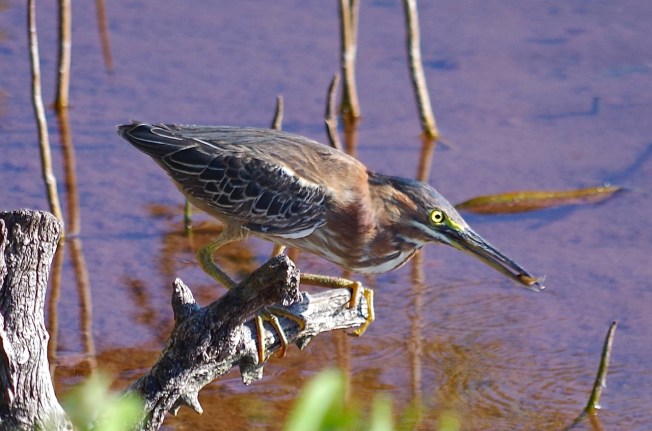
Green Heron (2)
Yellow-crowned Night-Heron (1)
Turkey Vulture (7)
Common Gallinule (1)
Black-necked Stilt (1) (and header)
Spotted Sandpiper (1)
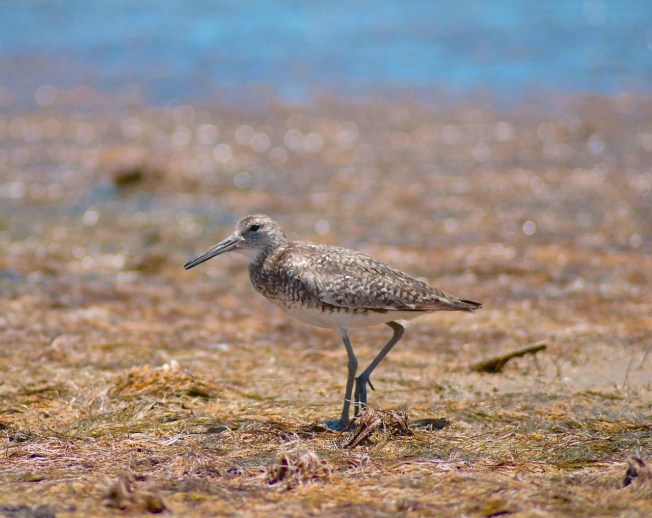
Willett (1) (see above)
Common Ground-Dove (1)
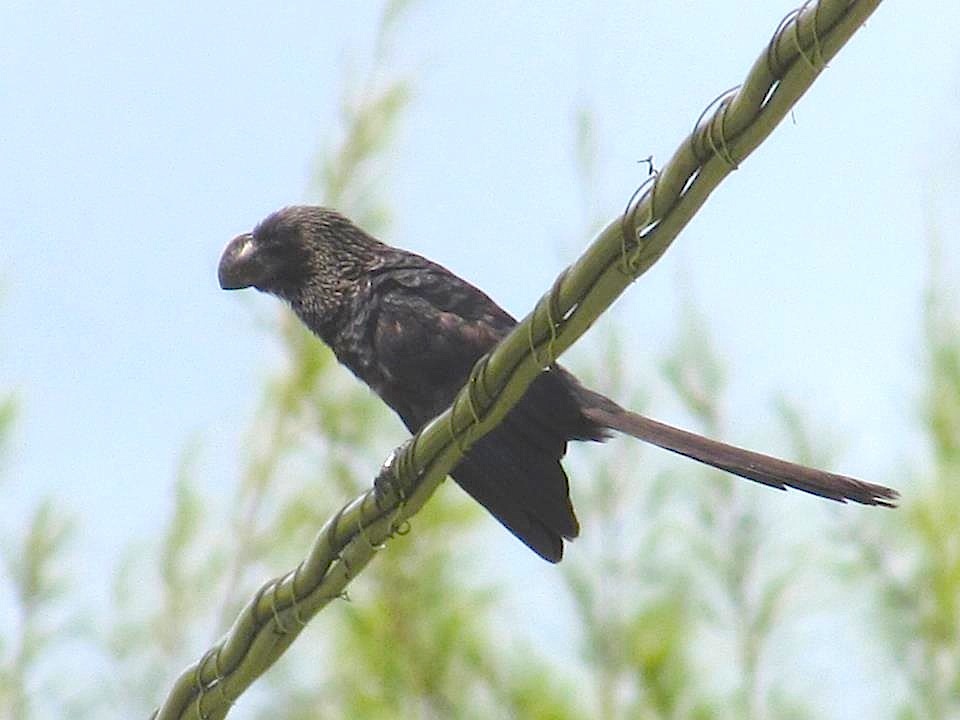
Smooth-billed Ani (8)
Bahama Woodstar (1)
Belted Kingfisher (1)
West Indian Woodpecker (7)
Hairy Woodpecker (1)
Peregrine Falcon (1)
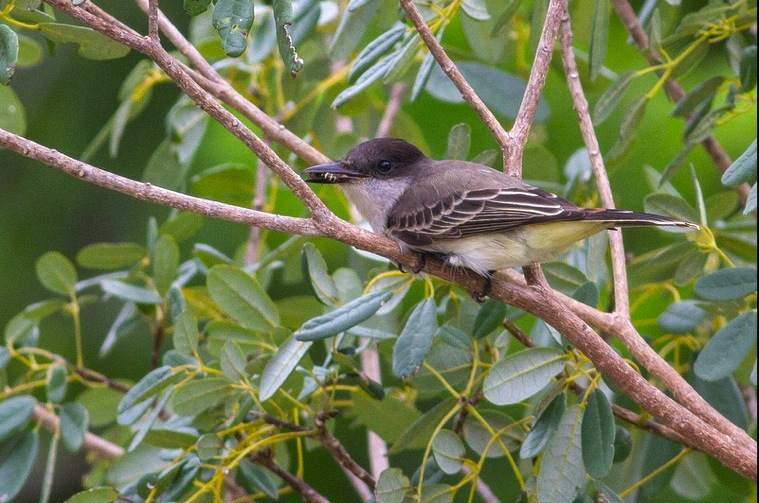
Loggerhead Kingbird (4)
Thick-billed Vireo (7)
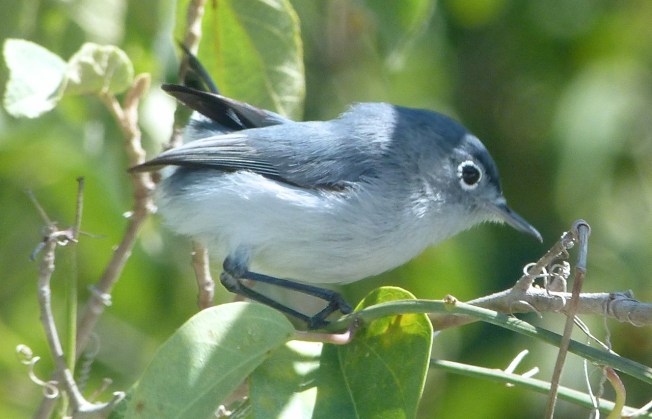
Blue-gray Gnatcatcher (1)
Red-legged Thrush (1)
Gray Catbird (4)
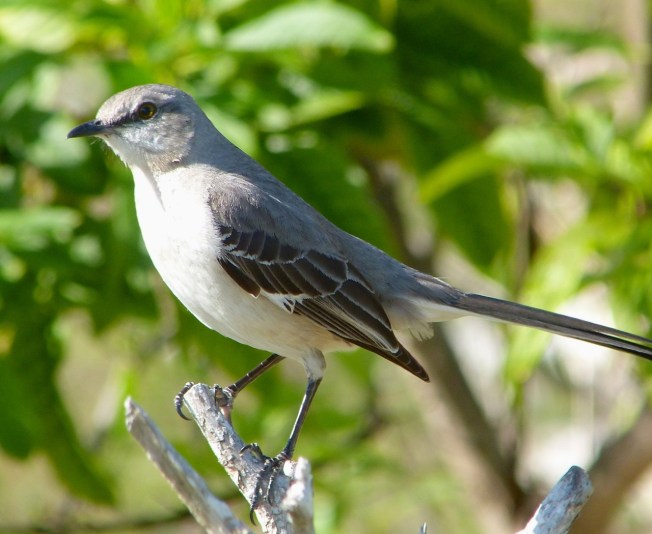
Northern Mockingbird (2)
Ovenbird (1)
Northern Waterthrush (6)
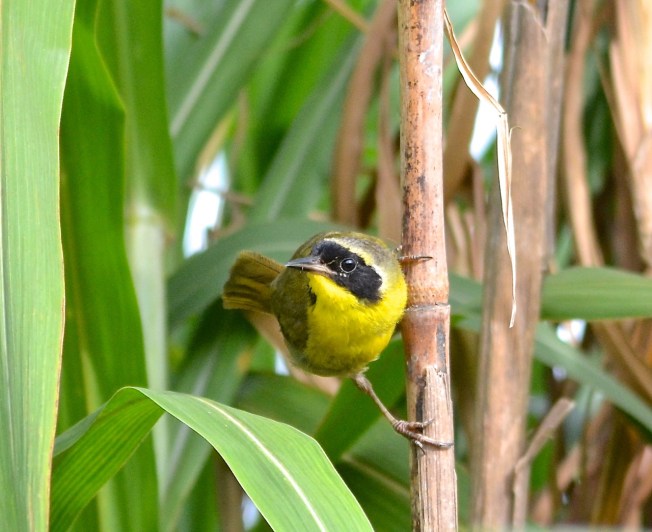
Bahama Yellowthroat (1)
Common Yellowthroat (1)
Cape May Warbler (3)
Black-throated Blue Warbler (1)
Palm Warbler (2)
Prairie Warbler (2)
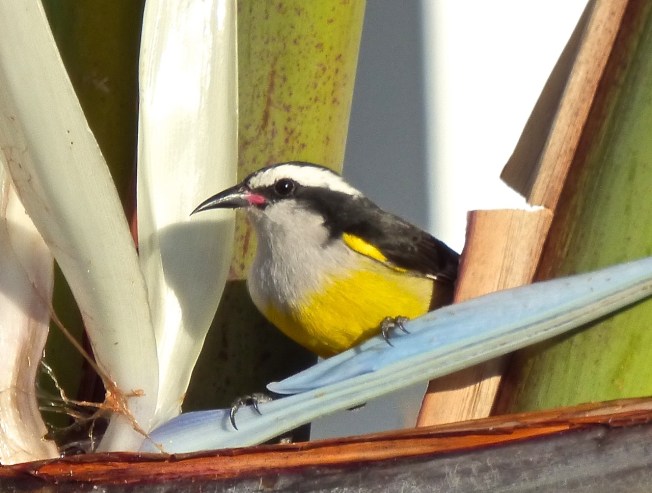
Bananaquit (1)
Black-faced Grassquit (6)
Greater Antillean Bullfinch (4)
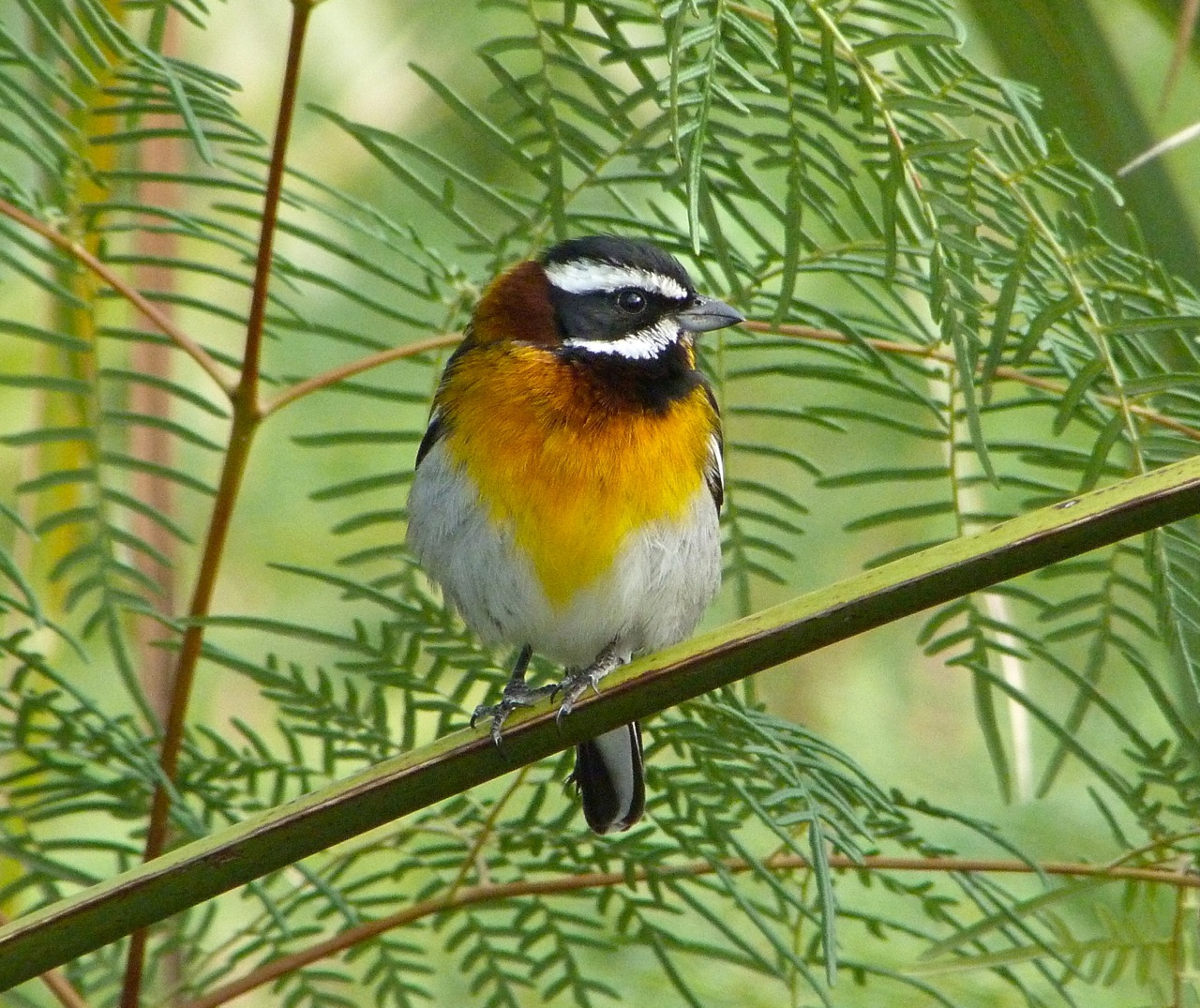
Western Spindalis (7)
Red-winged Blackbird (X)
Credits: Alex Hughes (1 / header); Keith Salvesen (2, 4, 6, 7, 11, 12, 15 , 16); TBC (3, 5); Bruce Hallett (8, 14); Tony Hepburn (9); Tom Reed (10); Charles Skinner (13)
Well here’s a rum do. About four years ago, this somewhat minority interest blog emerged ‘mewling and puking’¹ into the world, guided by an incompetent male midwife whose basic training had been about 4 weeks of exposure to Abaco, its fishing, its wildlife, its geography and its history. ‘Bananaquit’ might as well have meant taking up a plantain-free diet. ‘Grassquit’ might have been the local word for ‘keep off the lawn’. And that’s before all the flowers. And the reef fish. And everything else that turned up during the storm-wracked voyage of discovery via polydamus swallowtails, manatees, spider wasps and batfish that led slowly to the calmer waters of ‘rather better informed (if no wiser)’.
Anyway, at midnight last night some unknown person kindly made the 250,000th visit to the blog, a target that once seemed inconceivable. In the past month, the 1000th person also signed up as a follower, another source of amazement. The reality is that despite Abaco being a sparsely-populated microdot island in a huge world, there are a great many people on the island or associated with it who are passionate about it and its extraordinarily diverse natural history. That knowledge makes curating this blog both easy and pleasurable.
I checked my stats for the last year to find out where hits from the top 10 countries – and for fun the bottom 1o – came from. Here’s the answer. Rather shamefully there was also a country I had never knowingly heard of, Palau (Micronesia). There follows a selection of a few photographs that have been popular over the years, mostly my own but the underwater ones are from Melinda Riger and Virginia Cooper of Grand Bahama Scuba.
Top 10 Bottom 10
SEARCH TERMS
The most popular searches – omitting posts about hurricanes, which always generate a lot of traffic – have concerned Abaco Parrots, Lignum Vitae, Sea Glass, the Loxahatchee poster series, Tarantula Hawk Wasps, Sea Biscuits / Urchins, Yellow Elder, Parrotfish, Shipwrecks, Hutias, Hole-in-the-Wall, Lionfish, Remora, and Abaco Maps. The most leftfield search of all was‘How dispose of dead bodies?’, by someone who had clearly strayed into the wrong category of website…
It would be strange to end this little celebration without a tip of the hat to Peter Mantle, old friend and genial doyen of the Delphi Club, for his wholehearted encouragement and support for the production and publication of THE DELPHI CLUB GUIDE TO THE BIRDS OF ABACO. This hefty tome, published in March 2014, showcases the wonderful and varied avian life on Abaco and has proved very popular – indeed well beyond our expectations. Although I appear nominally as author on the cover, it is in fact an extraordinary collaborative effort by some 30 people. The book’s success further demonstrates the commitment of Abaconians and other who love the island to Abaco’s rich natural heritage in an age of rapid change; and provides another good incentive for me to continue with the blog. Next stop: 500,000!
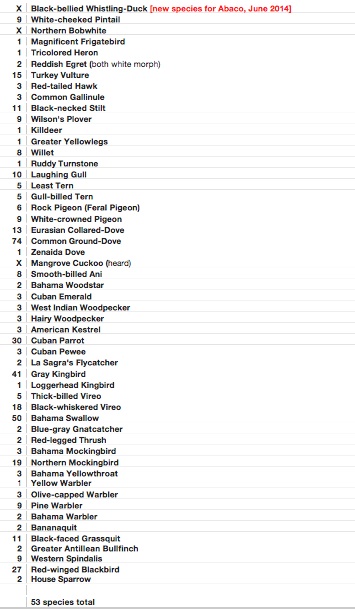
I’ve fairly very often mentioned the remarkable diversity of the bird species on Abaco. This small island has a wide variety of permanent resident species and the advantage of being on a primary migration route so that it has both winter and summer migratory visitors. Here’s an example of some of the species a visitor might reasonably expect to find during a day’s birding. This isn’t an ‘invented inventory’, easy though that would be to compile. It records a birding outing by Abaco visitor Susan Daughtrey, guided by the legendary Woody Bracey, with sightings of 53 species from A (baco Parrot) to Z (enaida Dove). Here are some of Susan’s photos of the birds she encountered. At the end is the full list of the 34 species she photographed.There’s nothing very rare – most of those shown are permanent residents (PR), breed on Abaco (B) and are commonly found (1). Hence the code* PR B 1. SR is for the 2 summer residents, I is for the introduced collared dove. The best ‘get’ is the Bahama Mockingbird (PR B 3), a bird mainly of the pine forests and not so easy to find.
ADDENDUM Susan has now sent me her complete record for a great day out in which 53 species were seen. The list shows the numbers seen for each species. I have had to reformat the list from the original to make it work in this blog. I have added links for the first bird, the Black-bellied Whistling Duck, which was recorded on Abaco for the first time in early June. Of the six seen at any one time to begin with (including at Delphi), the reported numbers dropped to 2, then 1. The latest news is an unconfirmed sighting of a single bird at Treasure Cay Golf Course.
ABACO (CUBAN) PARROT Amazona leucocephala PR B 1
ANTILLEAN NIGHTHAWK Chordeiles gundlachii SR 1
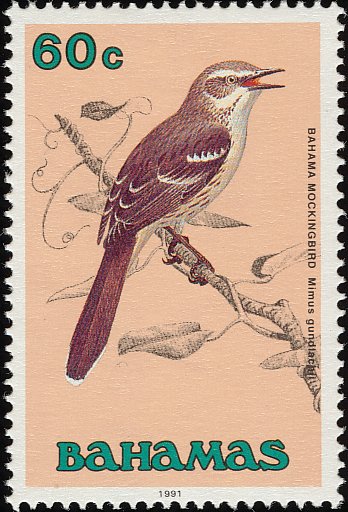
BAHAMA MOCKINGBIRD (ENDEMIC) Mimus gundlachii PR B 3
BAHAMA SWALLOW (ENDEMIC) Tachycineta cyaneoviridis PR B 1
BAHAMA PINTAIL (WHITE-CHEEKED PINTAIL) Anas bahamensis PR B 1
BLUE-GRAY GNATCATCHER Polioptera caerulea PR B 1
CUBAN PEWEE Contopus caribaeus PR B 1
EURASIAN COLLARED DOVE Streptopelia decaocto I PR B 1
HAIRY WOODPECKER Picoides villosus PR B 1
LEAST TERN Sternula antillarum SR B 1
LOGGERHEAD KINGBIRD Tyrannus caudifasciatus PR B 1
MAGNIFICENT FRIGATEBIRD (female) Fregata magnificens PR B 1
OLIVE-CAPPED WARBLER Setophaga pityophila PR B 1
RED-LEGGED THRUSH Turdus plumbeus PR B 1
RED-WINGED BLACKBIRD Agelaius phoeniceus PR B 1
SMOOTH-BILLED ANI Crotophaga ani PR B 1
THICK-BILLED VIREO Vireo crassirostris PR B 1
WESTERN SPINDALIS Spindalis zena PR B 1
WHITE-CROWNED PIGEON Patagioenas leucocephala PR B 1
SUSAN’S LIST OF BIRDS PHOTOGRAPHED
SUSAN’S COMPLETE LIST FOR THE DAY – 53 SPECIES
To learn about Abaco’s latest new species the Black-bellied Whistling Duck click HERE & HERE
Credits: all photos, Susan Daughtrey; *the excellent birding code was devised by ornithologist Tony White with Woody Bracey
BAHAMAS STAMPS & ABACO BIRDS: ‘IMITATION IS THE SINCEREST FORM OF PHILATELY’
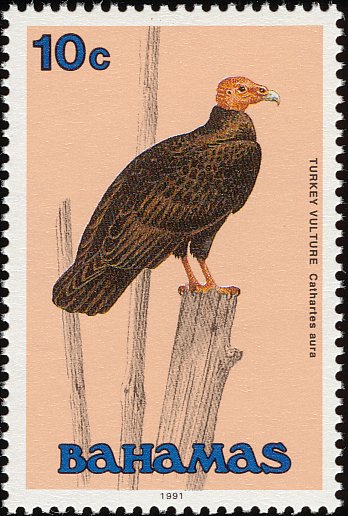
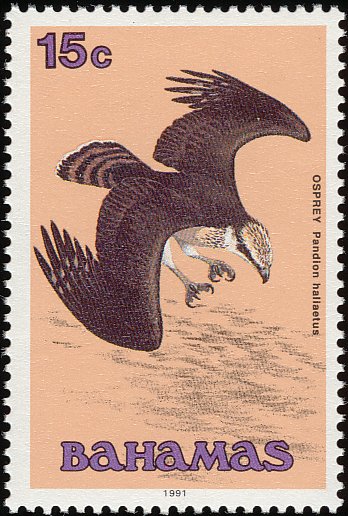
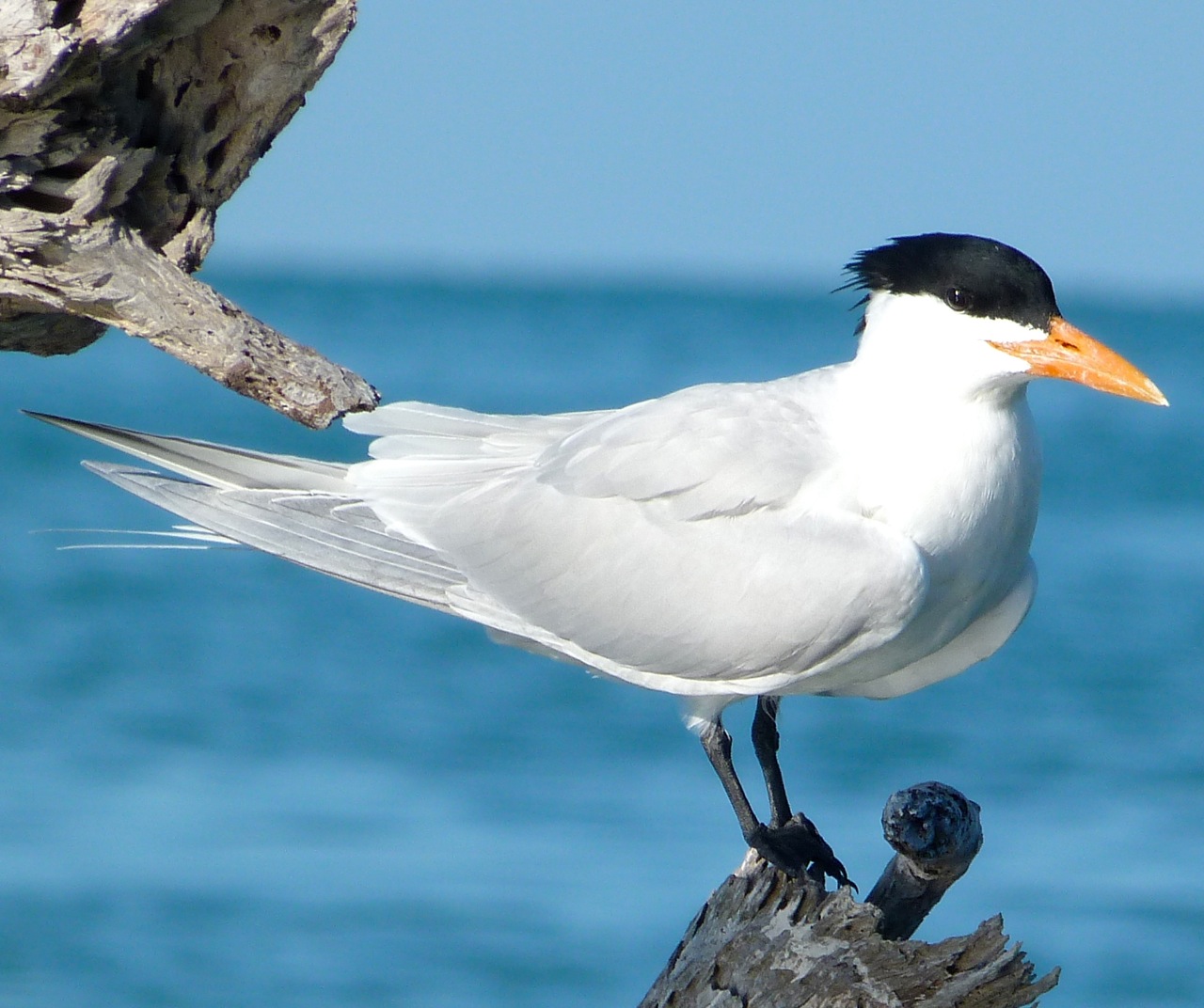
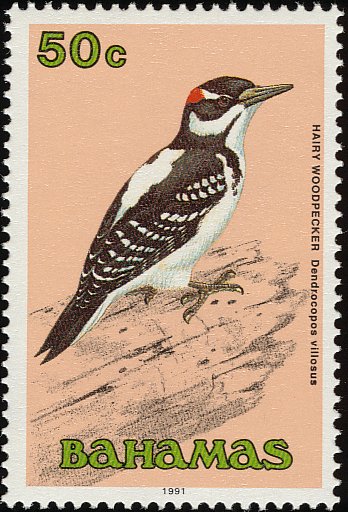
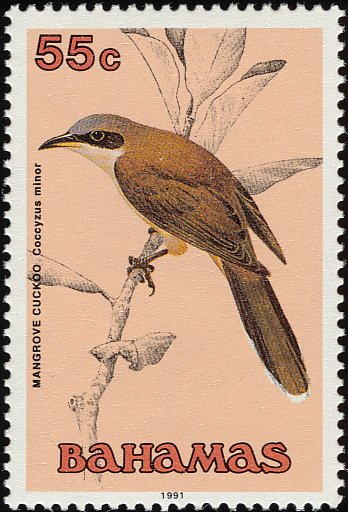
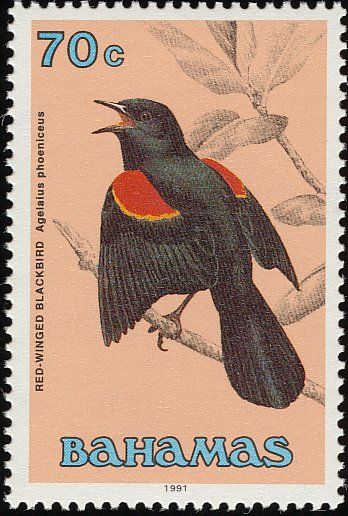
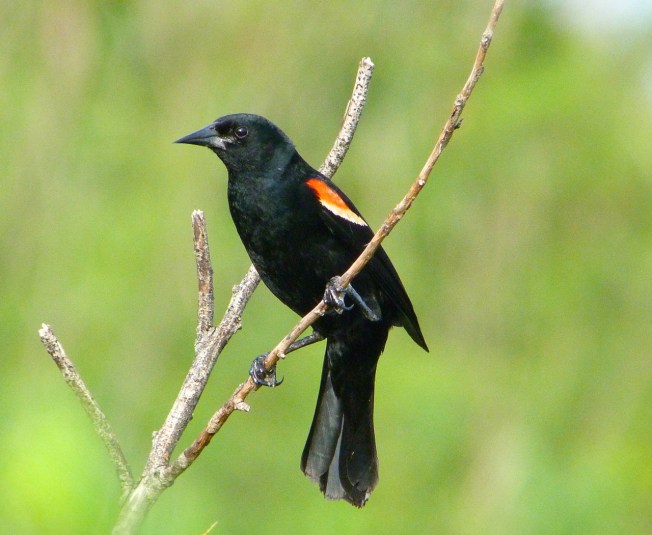
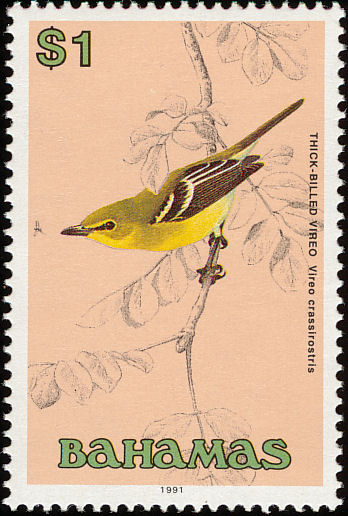
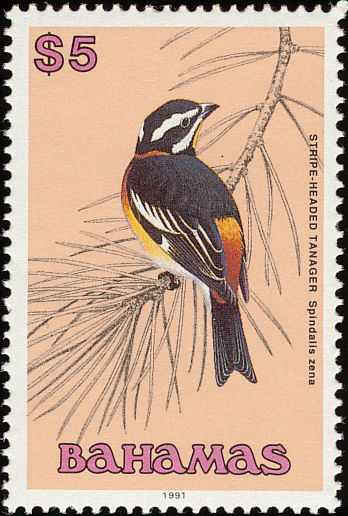
The Bahamas produces frequent issues of wildlife stamps. Mostly birds, but also reef fish and sea creatures, animals, butterflies and flowers. I am gradually collecting an album of Bahamas wildlife stamps on aPHILATELYpage. I’ve been having a look at a 16-bird issue from 1991 which reflects the wide diversity of species extremely well. Here is the set, with comparative photos of each bird. All but one were taken on Abaco, the rare Burrowing Owl being the exception. All the other 15 birds may be found on Abaco as permanent residents, either easily or with a bit of a look and some luck. I personally have not seen the Clapper Rail (though I saw aSORA) or the rarer Key West Quail-Dove.
The bird list and image credits
Green Heron Butorides virescens Nina Henry
Turkey Vulture Cathartes aura Keith Salvesen / RH (Delphi)
Western Osprey Pandion haliaetus Keith Salvesen / RH (Marls)
Clapper Rail Rallus longirostris Erik Gauger
Royal Tern Thalasseus maximus Keith Salvesen / RH (Marls)
Key West Quail-Dove Geotrygon chrysia Becky Marvil
Smooth-billed Ani Crotophaga ani Bruce Hallett
Burrowing Owl Athene cunicularia Keith Salvesen / RH (UK)
Hairy Woodpecker Picoides villosus Tony Hepburn
Mangrove Cuckoo Coccyzus minor Tony Hepburn
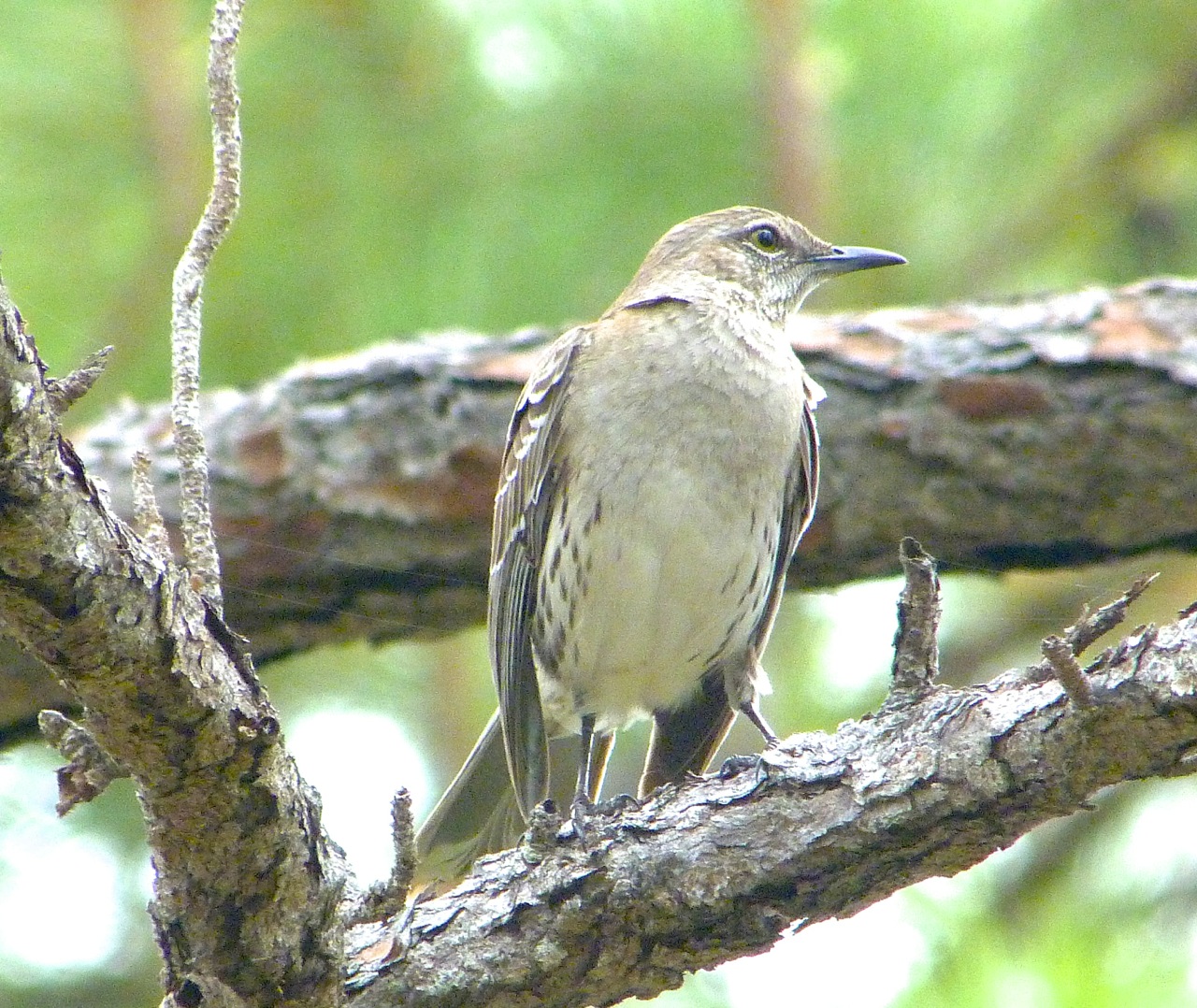
*Bahama Mockingbird Mimus gundlachii Keith Salvesen / RH (National Park)
Red-winged Blackbird Agelaius phoeniceus Keith Salvesen / RH (Backcountry Abaco)
Thick-billed Vireo Vireo crassirostris Susan Daughtrey
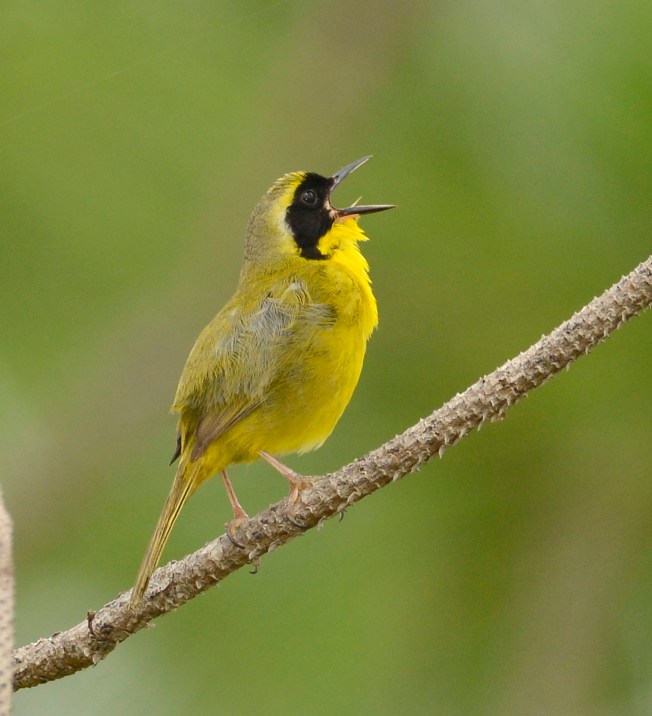
*Bahama Yellowthroat Geothlypis rostrata Tom Sheley
Western Spindalis Spindalis zena Janene Roessler
Greater Antillean Bullfinch Loxigilla violacea Bruce Hallett
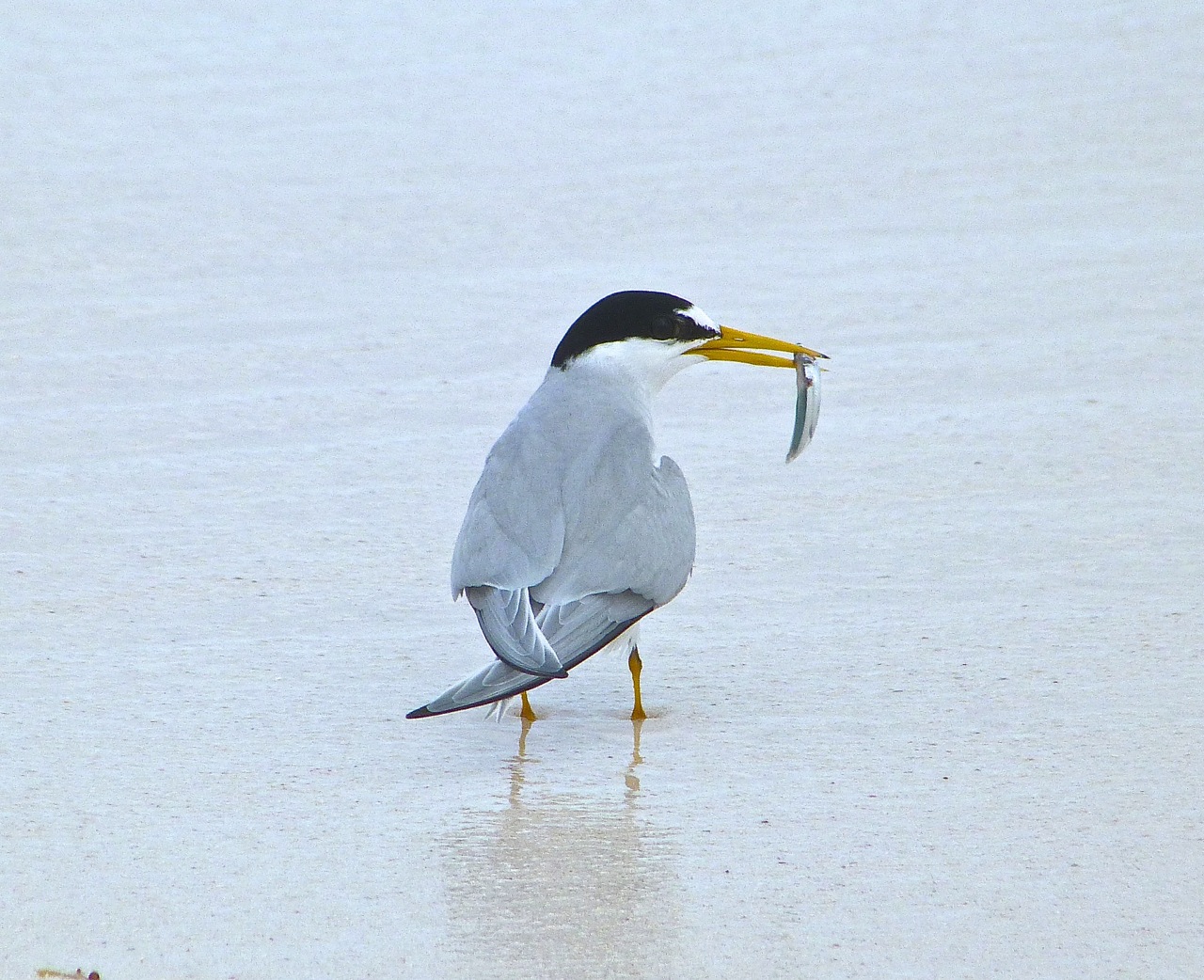
The Least Tern in the header image was a stroke of luck. I was watching plovers on the beach when it landed on the tideline with a small fish in its mouth. I just had time to point the camera and fire off 3 shots before it flew off again. This was the only usable image. I liked the fish, of course, and the way its little legs made a dent in the wet sand.
This Black-necked Stilt was attempting to distract me from a nearby nest, which I’d have known nothing about until it tried to distract me. It zig-zagged towards me, striding through the water while yelling, and then took off and flew at my head! Twice. I moved away…
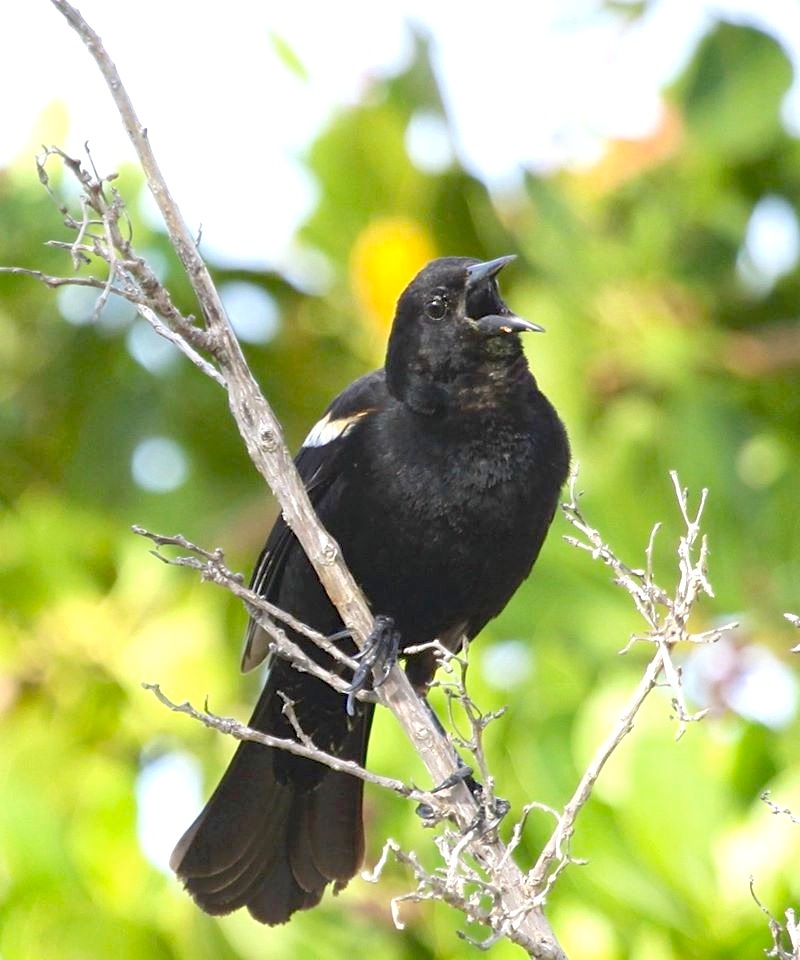
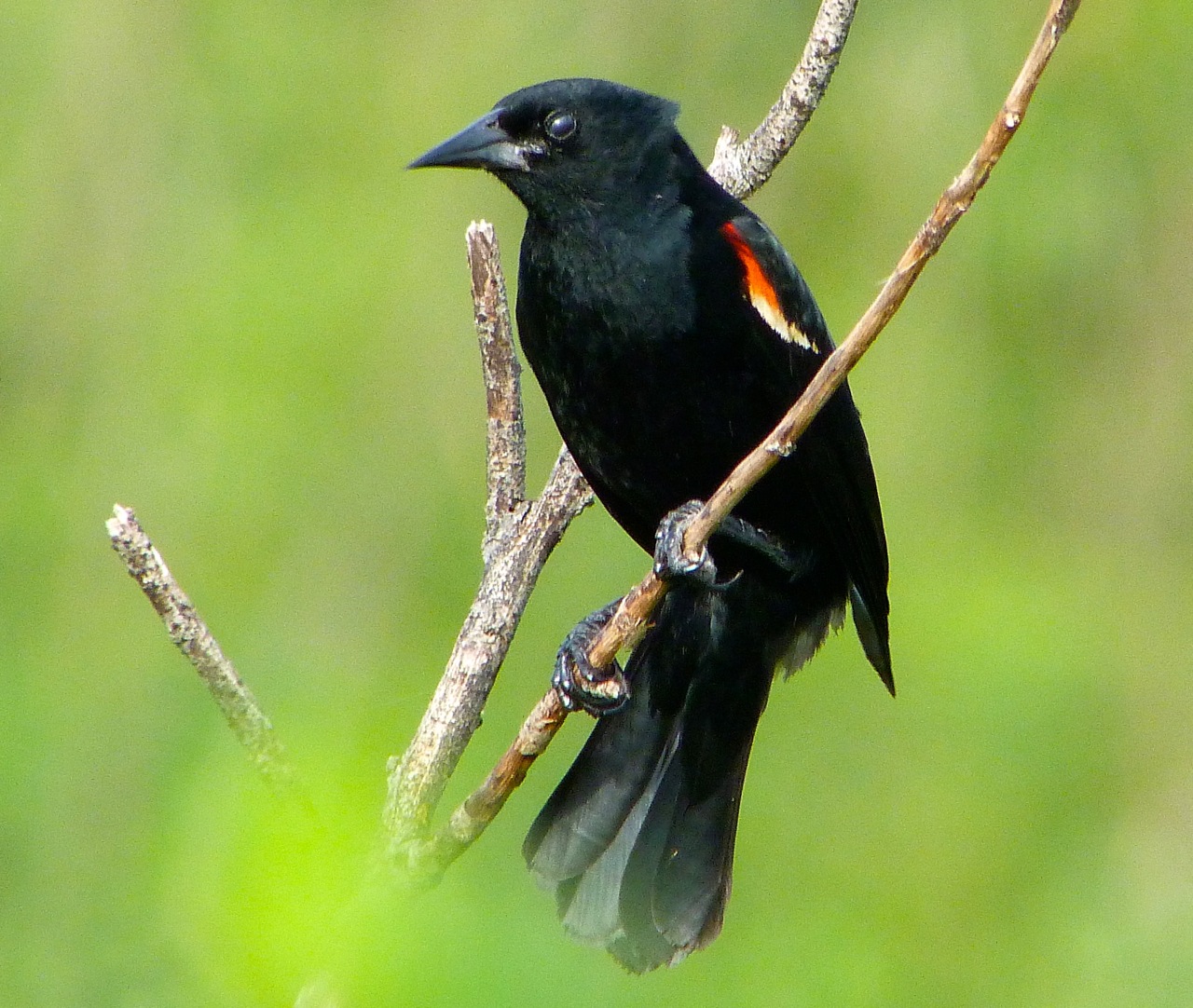
An effortlessly elegant Red-winged Blackbird
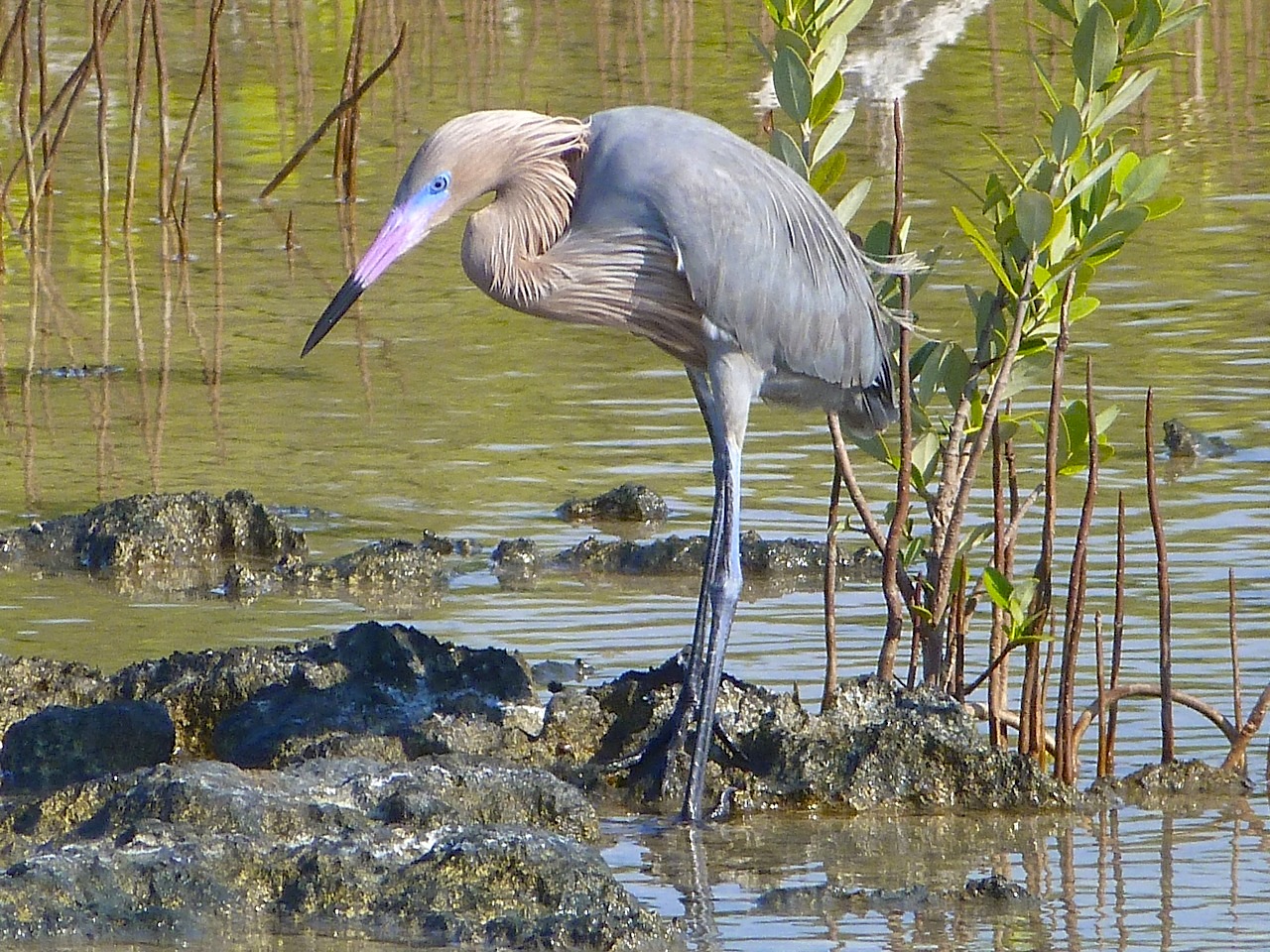
A Reddish Egret (white morph) in the mangroves out on the Marls takes a call on its cellphone
A Bahama Mockingbird deep in the pine forest of the Abaco National Park
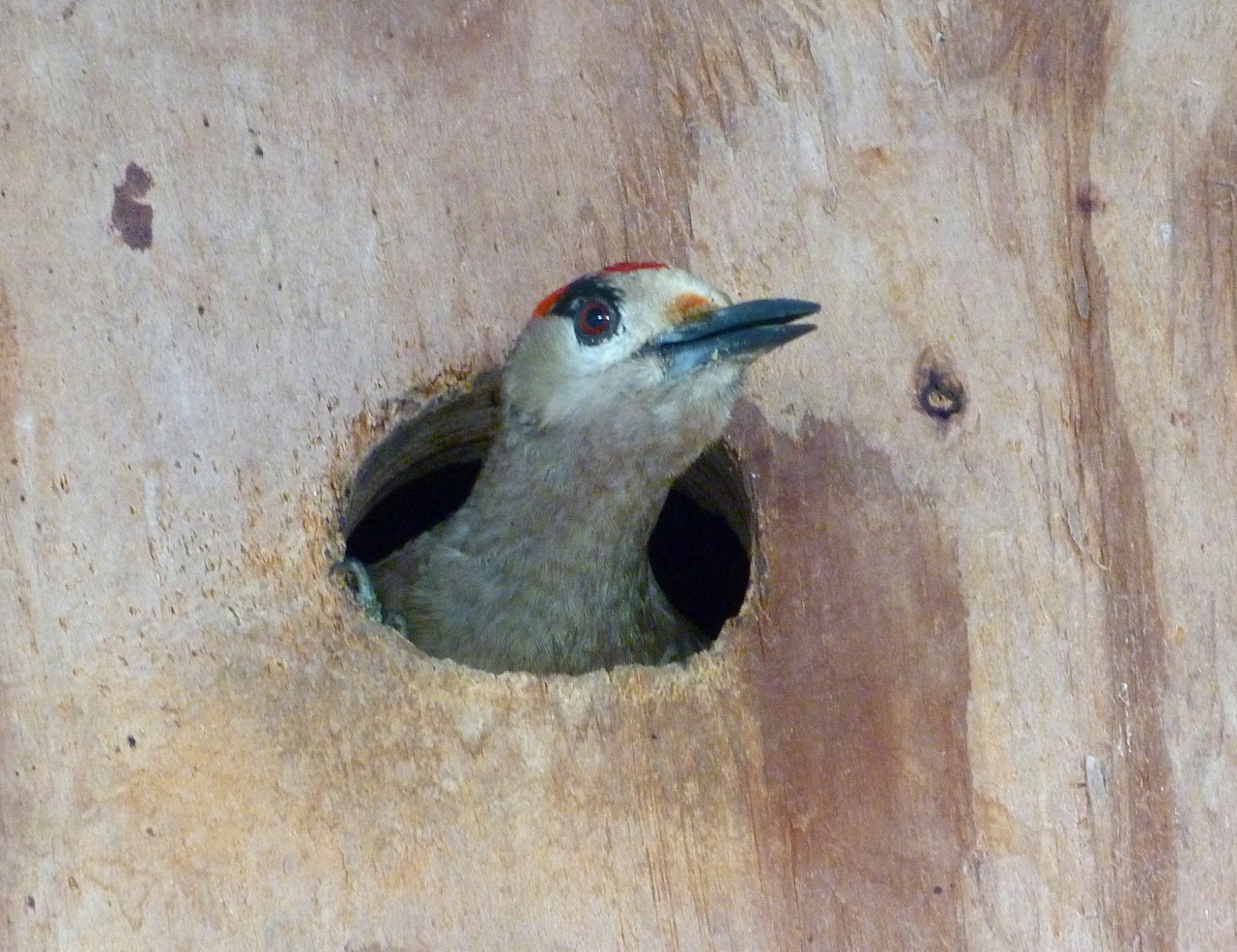
A baby West Indian Woodpecker takes a look at the wide world from its nest box. Within a week, it and 4 other chicks had flown.
A Red-legged Thrush in full song
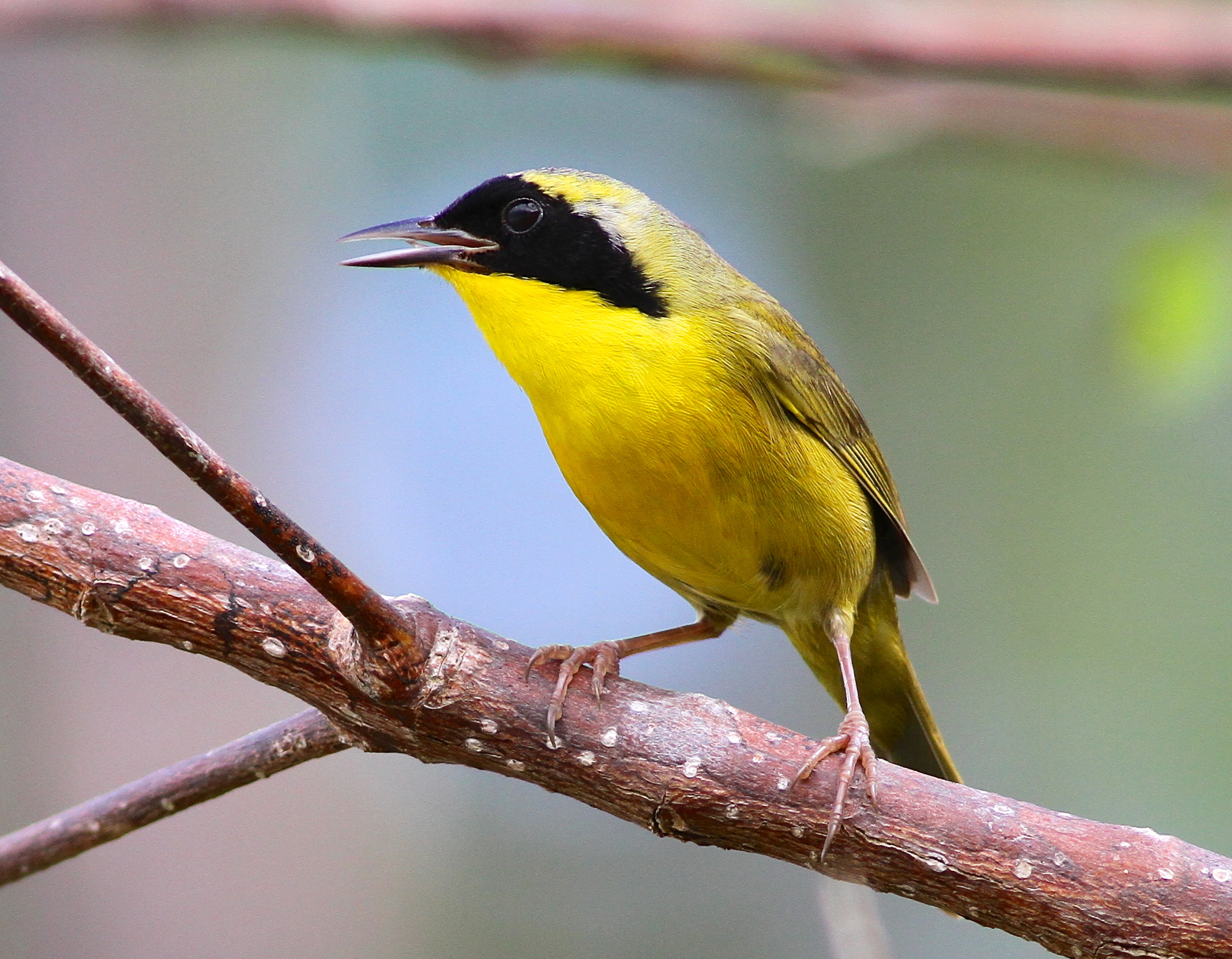
The Bahama Yellowthroat is one of 4 endemic species on Abaco. Only the males have the striking Zorro mask. They are shy birds, but also inquisitive. I learnt to imitate their call (not difficult) to bring them out of scrub and bushes. Once out, they liked to take a good look from a safe distance.
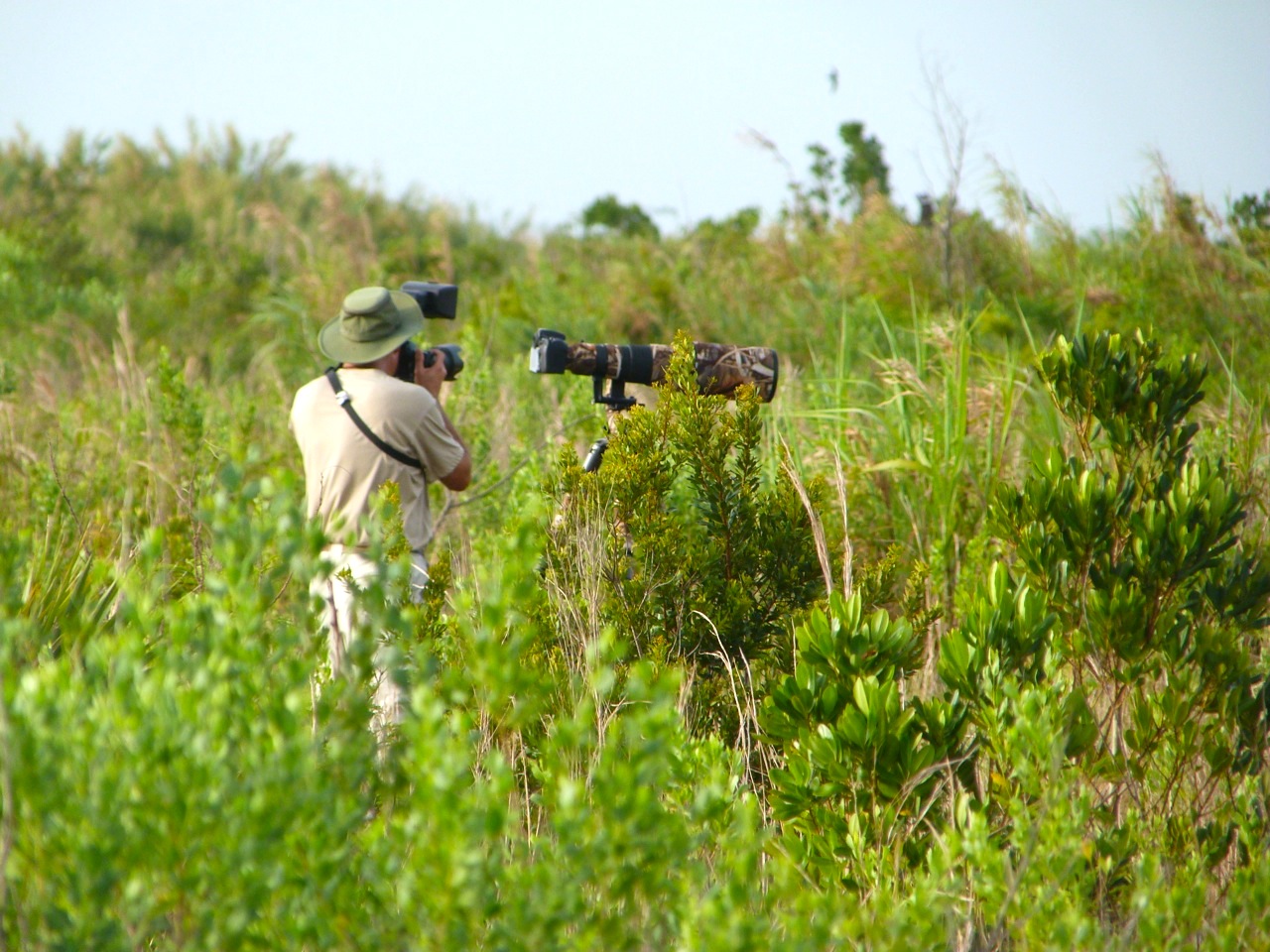
The red-winged blackbird (Agelaius phoeniceus) has previously hopped around these pages in the context of a (my!) simple way to RECORD BIRDS using a smart-phone, trim the result and convert it into an mp3 (or even a ring-tone – I have a great Abaco parrot one to startle friends, family and indeed complete strangers). Now we move on to a more important topic, namely courtship and so forth. And boy, don’t male RWBs fancy themselves when trying to impress the laydeez…We had taken a truck into backcountry between the pine forest and the Marls, with Tom and his impressive camo-camera with its 10 foot lens.
We found formerly cultivated fields – evidence of the defunct sugar cane industry – and then we came unexpectedly to a large expanse of open scrubland, with the track straggling through the middle.
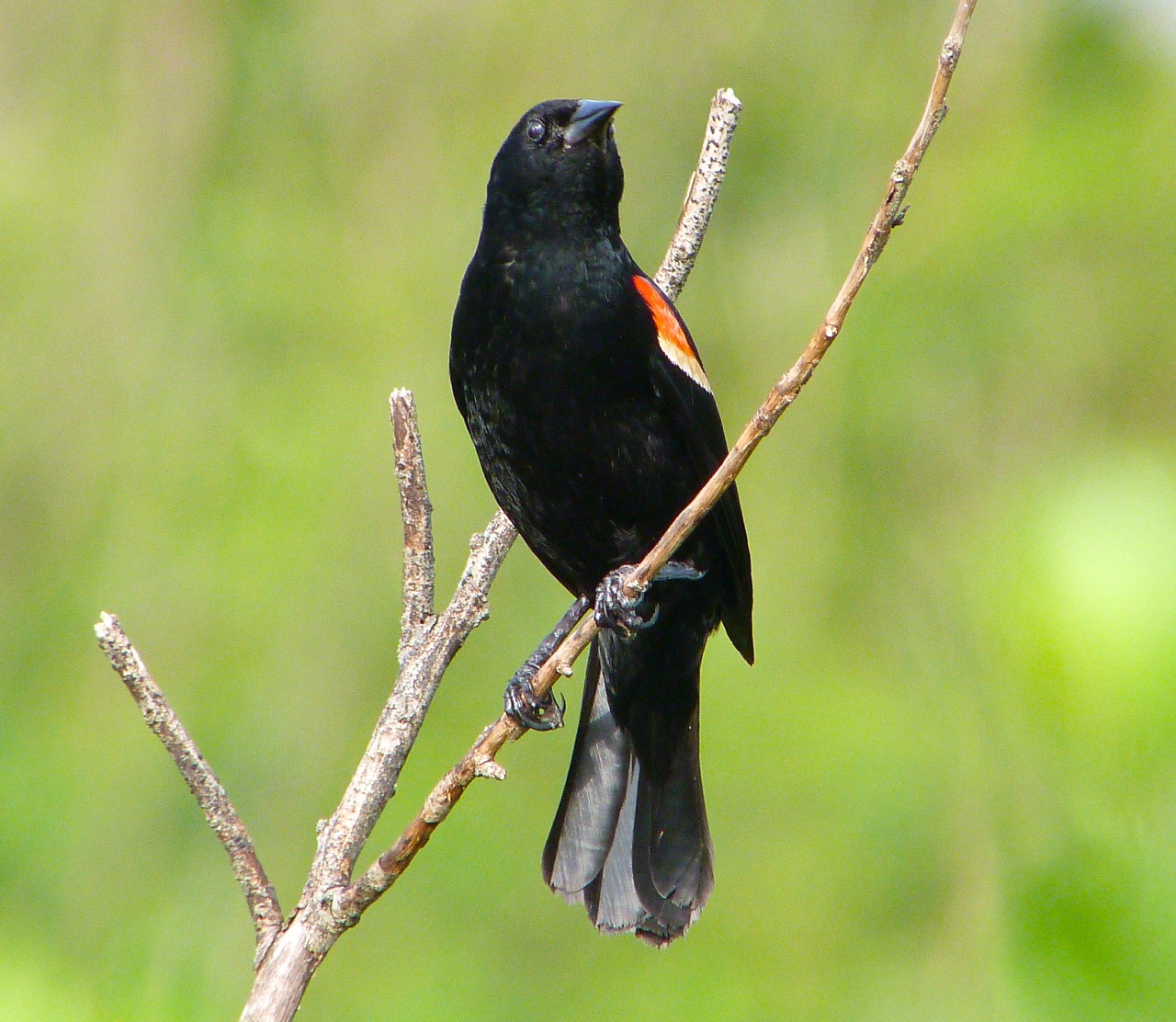
And there, on carefully chosen vantage points, was an array of RWBs.
This bird was within range of my comparatively puny camera, and I watched as it arranged itself into various elegant poses in the late afternoon sun. All around were their ‘rusty door hinge’ calls, of which this is an example (in fact a female, recorded at Casaurina, hence the background sound of lapping waves).
These acres of open land were not far inland, and there was a slight breeze to ease the heat. This caused the occasional ruffling of feathers, and the need to spruce up…
The purpose of all this was of course to impress the opposite sex (behaviour not confined to bird species). There were plenty of females around, also similarly perching on vantage points for similar display-with-view-to-dating-maybe-more reasons.
I didn’t see the phase in which the males may get quite worked-up, but luckily Y**T*b* has perfect example of a male RWB in full song. Credits as shown on the video.









 CALLING BIRDS? WHAT ARE THEY, EXACTLY?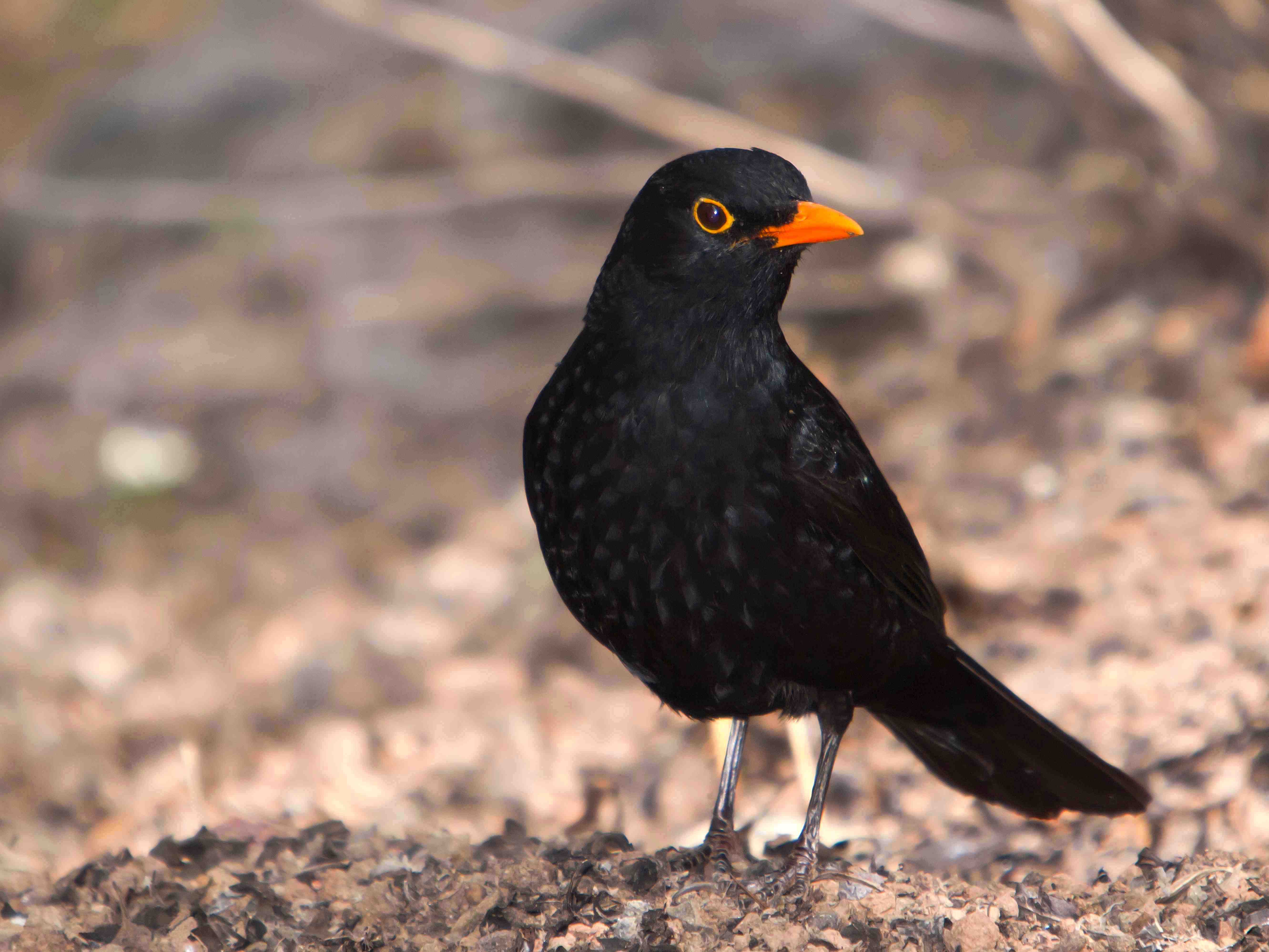

















 Author signing copies, with Bahamas birding gurus Tony White, Bruce Hallett & Woody Bracey




























 ROLLING HARBOUR ABACO
You must be logged in to post a comment.