Unknown's avatar

WHALE-WATCHING: THE APPLIANCE OF SCIENCE


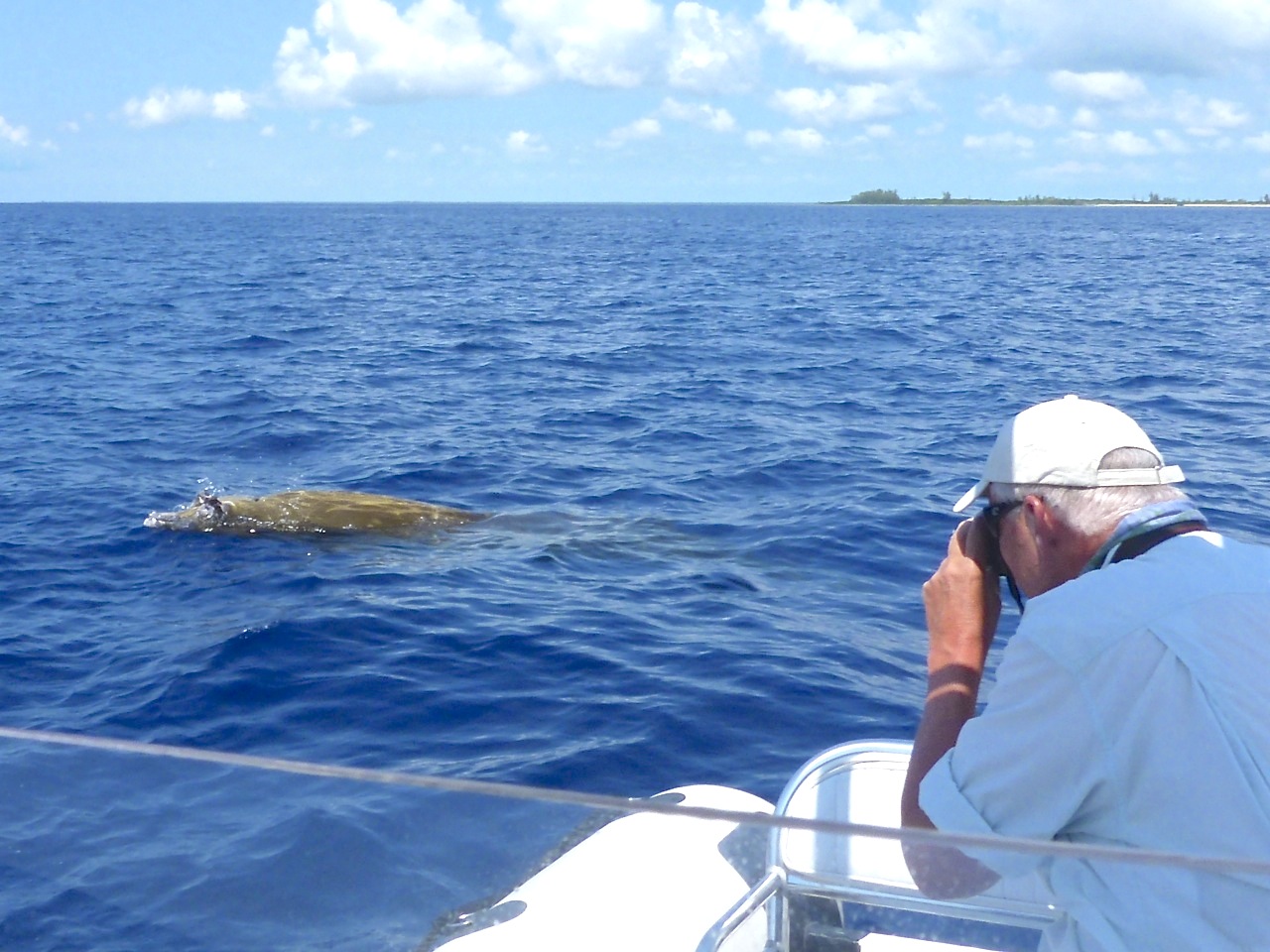
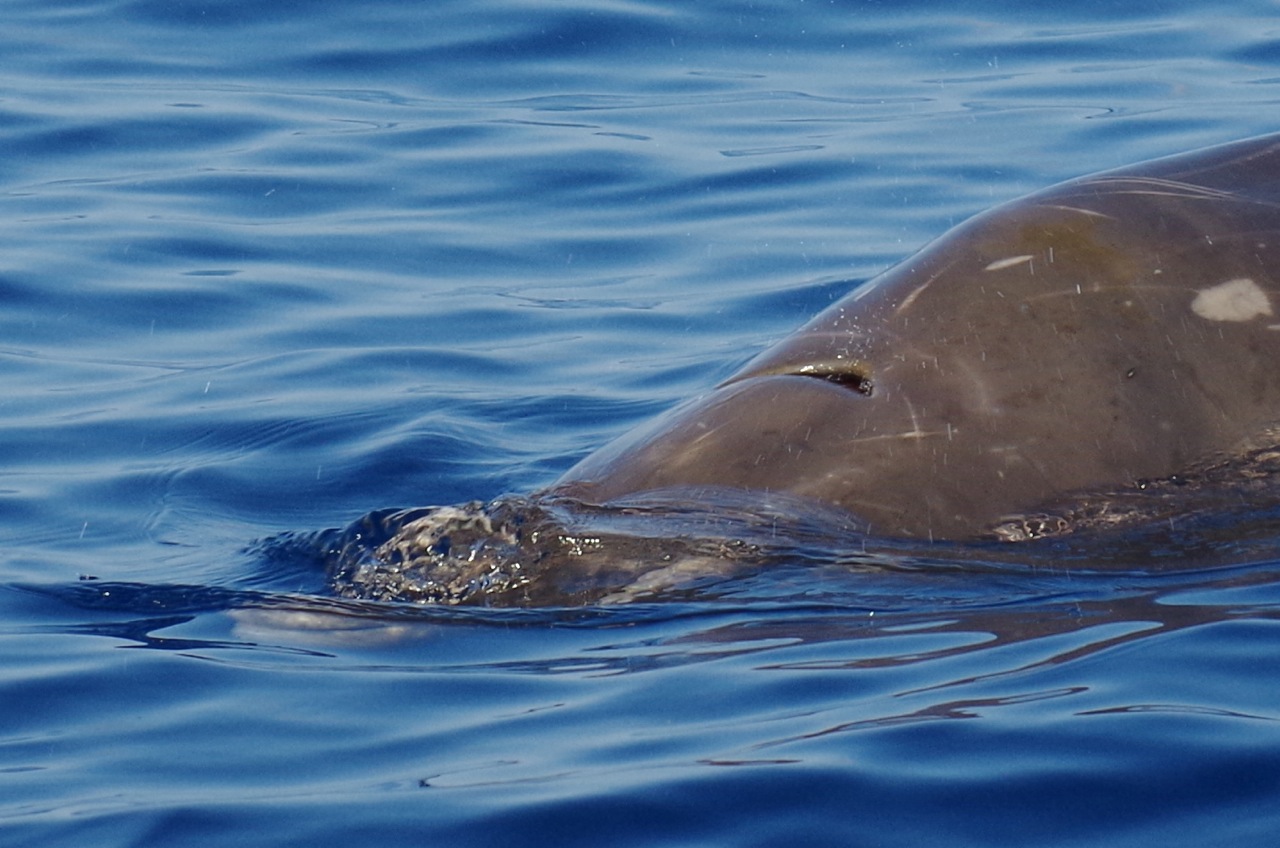
Blainville's Beaked Whale, Sandy Point, Abaco 14 (Keith Salvesen

WHALE-WATCHING: THE APPLIANCE OF SCIENCE

The Bahamas Marine Mammal Research Organisation has just celebrated its 25th year of existence. It was formed in 1991. The omnivorous leviathan Amazonus giganticus emerged in 1994 and the invasive species Megacorpus googleii not until 1998. A full 10 years later the first garbled recordings of Sarahpalinus illogicus were made. And all the while, a watchful eye was being kept on the cetaceans of the Bahamas – researching, counting, measuring, identifying, recording, poop-scooping, analysing samples, tagging, comparing, protecting and conserving. 

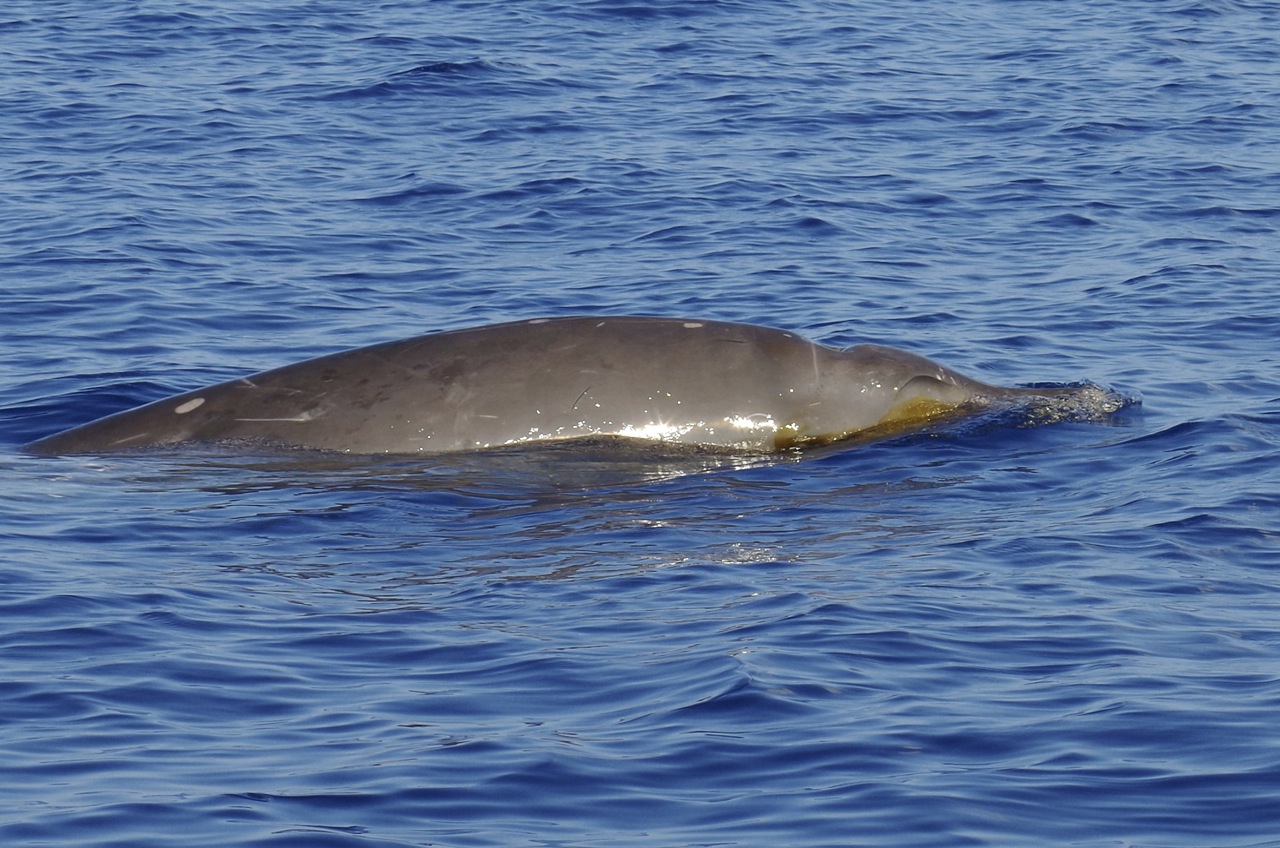
Blainville's Beaked Whale, Sandy Point, Abaco 20 (Keith Salvesen

As the years passed, so the science and technology evolved and became more sophisticated. Researching became at the same time easier, yet more complex as the organisation’s remit expanded to accommodate the vast increase in data collection now made possible by refined techniques. Here are two very recent examples – 25th anniversary projects, in fact – with thanks to Charlotte, Diane, their team and their colleagues in linked organisations.

TAGGING BLAINVILLE’S BEAKED WHALES

Last month, a tagging project started, involving suction cups being attached to the backs of BLAINVILLE’S BEAKED WHALES. The purpose of the research is to compare the foraging efficiency of the whales in Abaco waters with those of Andros, the second part of the project. I imagine this will provide valuable insights into the whale movements and behaviours in each location as well as such issues as the comparative availability of the food supply, and other factors that may affect expected foraging patterns. 

The tag is moved towards an adult male. Note the aerial (antenna?) at the back of itTagging a Blainville's beaked whale with a suction cup 1

Planting the tag on the whale’s backTagging a Blainville's beaked whale with a suction cup 2

Successful suction!Tagging a Blainville's beaked whale with a suction cup 3

The tag in placeTagging a Blainville's beaked whale with a suction cup 4

The tag is tracked for 18 hours, after which it is retrieved and the recordings can then be analysed back at BMMRO HQ in Sandy Point. So far, an adult male, a young male and two adult females have been tagged. Each female had a calf, but these were not tagged.

Female beaked whale with her calfBlainville's beaked whale female and calf
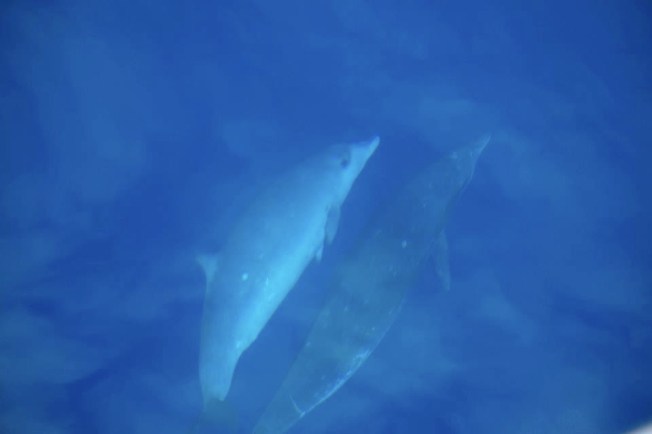
AERIAL PHOTOGRAMMETRY USING A HEXACOPTER

Drone technology is rapidly expanding as new uses for them are devised. BMMRO in conjunction with NOAA have used a sophisticated HEXACOPTER to take the first  PHOTOGRAMMETRY images of Blainville’s beaked whales. These aerial photographs were taken from approximately 100ft altitude. But note: not just anyone with a $50 drone can do this: the project required flight clearance from the Bahamas Department of Civil Aviation and a permit for research on marine mammals granted by the Bahamas Department of Marine Resources.

 Blainville’s beaked whale photogrammetry image – adult male (note ‘erupted’ teeth) Blainville's beaked whale photogrammetry image - adult male (note 'erupted' teeth) BMMRO

 Blainville’s beaked whale photogrammetry image – female and calf Blainville's beaked whale photogrammetry image - female and calf BMMRO

STOP PRESS Two additional images from the latest batch Blainville's beaked whales photogrammetry image - BMMRO  Blainville's beaked whales photogrammetry image - BMMRO

Photogrammetry: the science of making measurements from photographs. Applications include satellite tracking of the relative positioning and alterations in all Earth environments (e.g. tectonic motions etc), research on the swimming of fish, of bird or insect flight, and other relative motion processes. The results are used to guide and match the results of computational models of the natural systems. They help to invalidate or confirm new theories, to design novel vehicles or new methods for predicting or/and controlling the consequences of earthquakes, tsunamis etc, or to understand the flow of fluids next to solid structures, and many other processes. (Wiki-précis)

Hexacopter (6 rotors)Hexacopter_Multicopter_DJI-S800_on-air_credit_Alexander_Glinz

Tag Team: BMMRO, University of St Andrews (Scotland), Woods Hole Oceanographic Institution

Hexacopter: BMMRO, NOAA

Photo Credits: top two, moi (from BMMRO research vessel); remainder except for last, BMMRO; last, Wiki

Unknown's avatar

WHALE TALES FROM ABACO (2): MALE BLAINVILLE’S BEAKED WHALE


Blainville's Beaked Whale, Sandy Point, Abaco 14 (Keith Salvesen

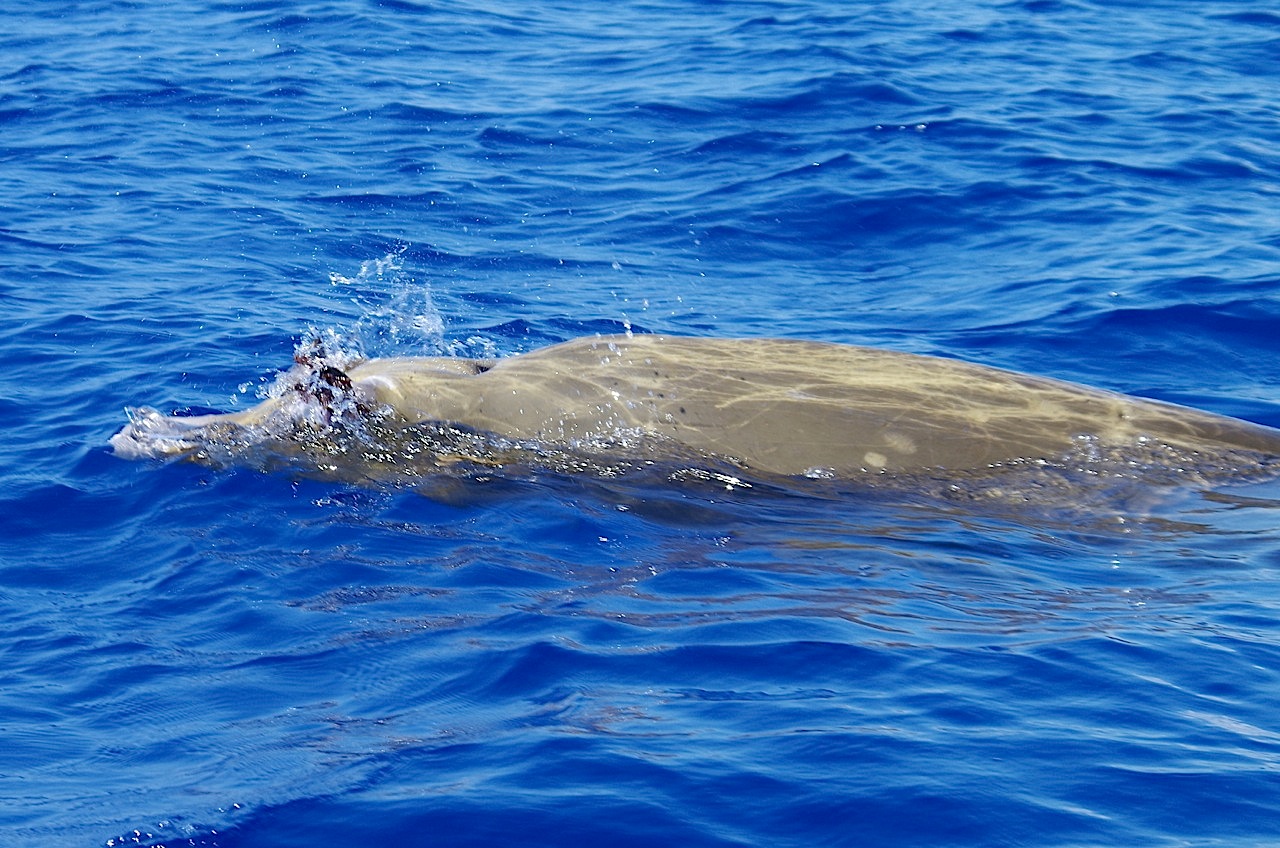
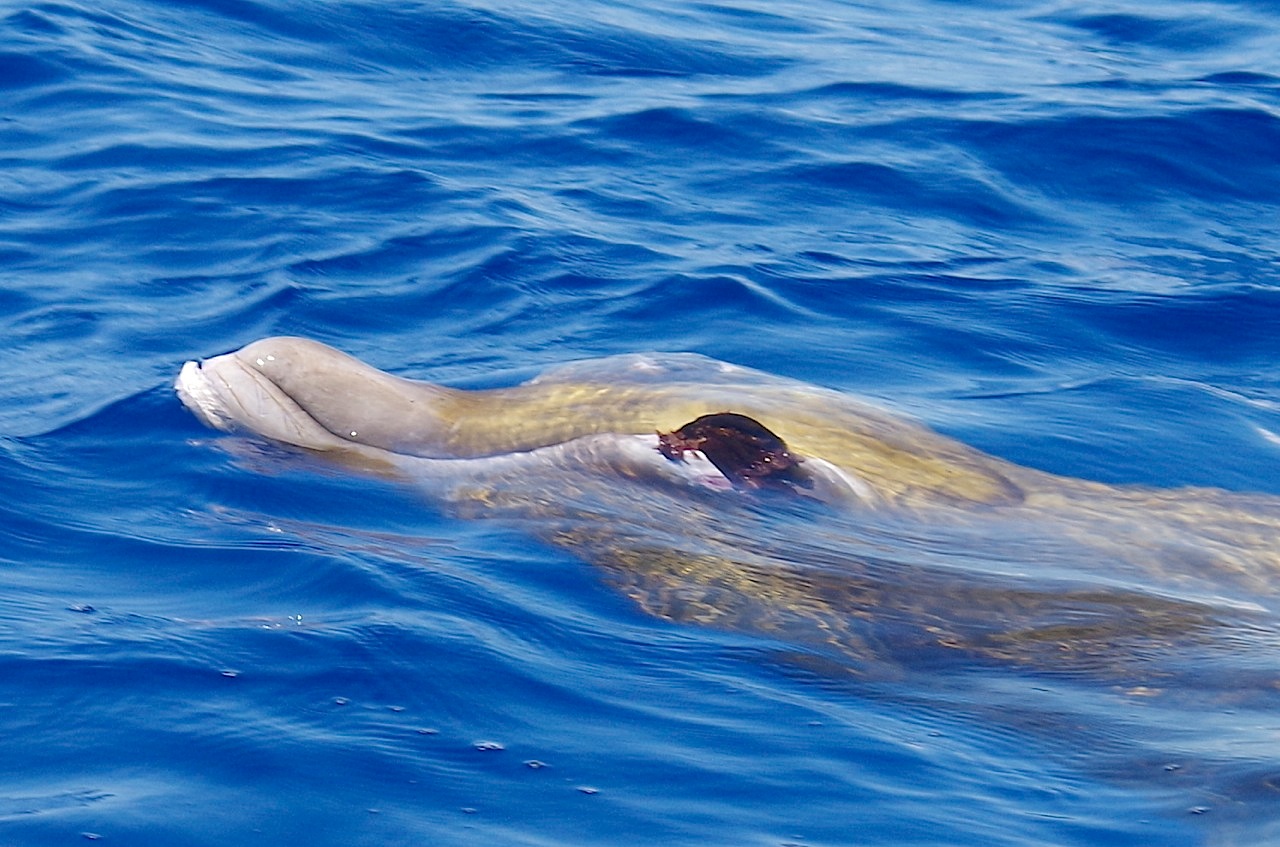
Adult male Blainville’s Beaked Whale with barnacle-encrusted teeth protruding from its lower jaw

WHALE TALES FROM ABACO (2): MALE BLAINVILLE’S BEAKED WHALE

This second post about the Blainville’s Beaked Whales of Abaco, Bahamas, relates to a prolonged encounter with a group of mothers, calves and a male. This was our second BBW sighting on the same day in March: the first is described HERE. Click the link to find out more details about these wonderful creatures, with plenty of close-up photos.

We had been invited by Charlotte and Diane of the Bahamas Marine Mammal Research Organisation BMMRO to spend a day with them on the research boat. This was our first chance to get close to whales, a chance made far more likely by (a) being with experts and (b) their specialist equipment…

Our first sighting was a short distance south of Rocky Point, as we moved into the deeper, darker ocean waters of the Bahama canyon, with the shoreline still clearly visible. We then visited HOLE-IN-THE-WALL in the RHIB and took a close look from the sea at the damage and destruction of the famous Hole caused by HURRICANE SANDY

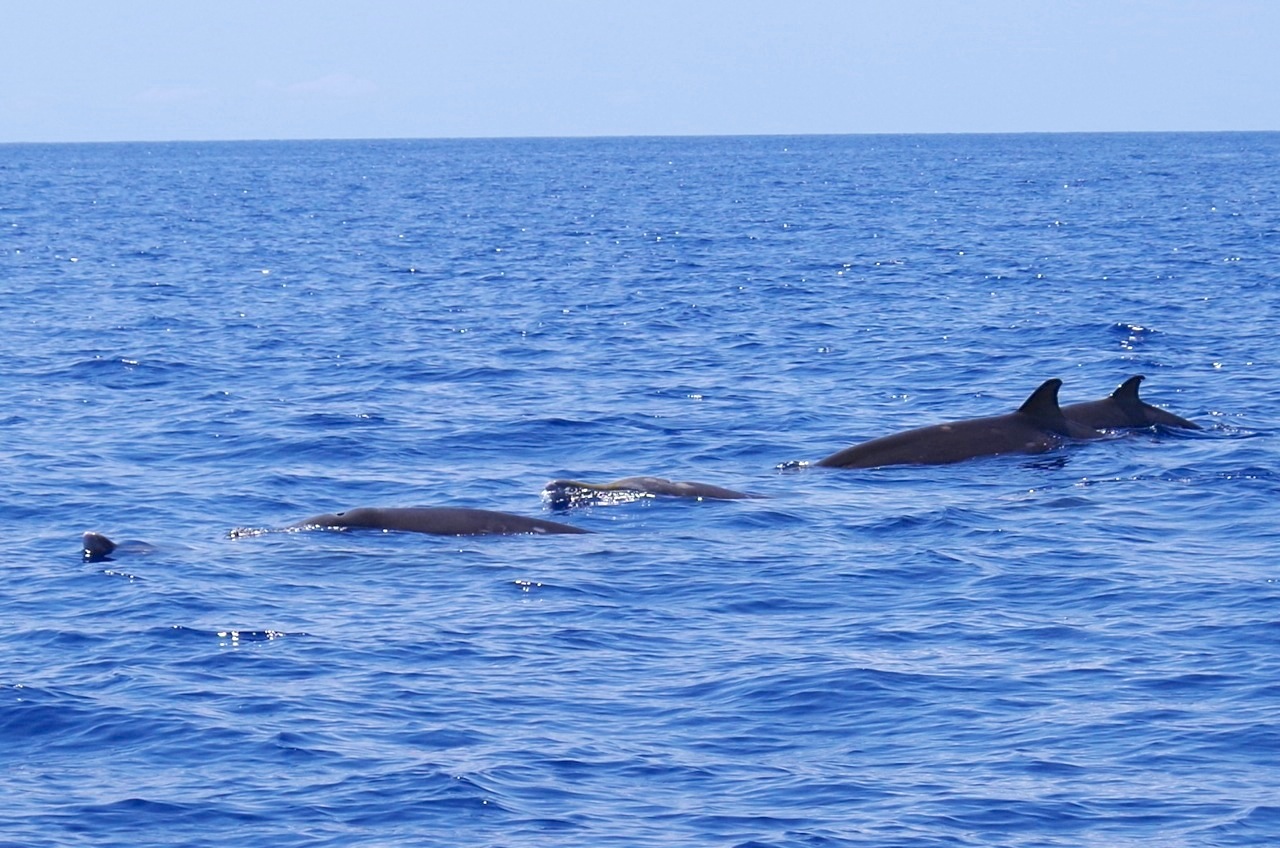
On the way back we paused as we got to the same area where we had seen the group earlier in the day. Within minutes, several whales came straight towards us. This photo shows 3 adults and, almost submerged, a calf.Blainville's Beaked Whale, Sandy Point, Abaco 8 (Keith Salvesen

For the next hour or so, they played around the boat like very large dolphins moving in slow motion. Usually these whales make a deep dive every 20 minutes or so and stay underwater for about the same time before resurfacing. These ones stayed with us throughout. 

3 adults with 2 calvesBlainville's Beaked Whale, Sandy Point, Abaco 7 (Keith Salvesen

Mostly they stayed quite – or very – close to the boat. Sometimes they swam across the bow or even under the boat. From time to time, they would move off some distance. Each time we thought they were moving on, and each time they soon returned.  After a while the females and calves were joined by another whale – the less common sighting of a male replete with barnacle-encrusted teeth  protruding upwards from his lower jaw.

Blainville's Beaked Whale, Sandy Point, Abaco 21 (Keith SalvesenBlainville's Beaked Whale, Sandy Point, Abaco 13 (Keith SalvesenBlainville's Beaked Whale, Sandy Point, Abaco 12 (Keith Salvesen

The male initially stayed slightly further away from the boat than the others, perhaps assessing the threat to the group. Then he too joined in, passing and repassing the boat, swimming away and returning, remaining on the surface and offering a wonderful view of his noble head (see header image and below).

Blainville's Beaked Whale, Sandy Point, Abaco 15 (Keith SalvesenBlainville's Beaked Whale, Sandy Point, Abaco 16 (Keith Salvesen

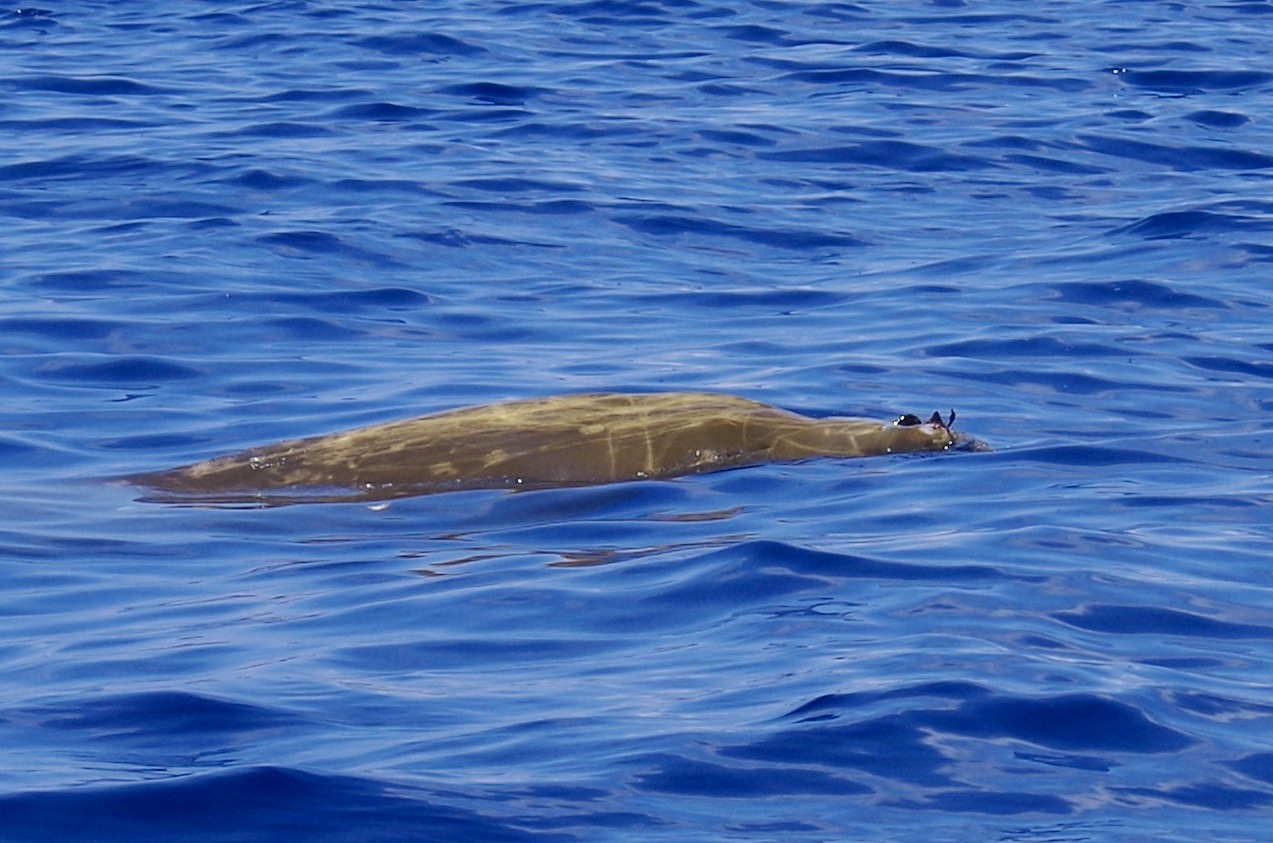
Looking at my photos later, I realised that a second male must have joined the group for a short time. The image below shows a male with far fewer barnacles – certainly not the male we had been watching.Blainville's Beaked Whale, Sandy Point, Abaco 20 (Keith Salvesen

It was remarkable to see these huge creatures behaving in much the same way as dolphins, swimming playfully around and under a boat, moving away, then returning for more. These whales are some 15 feet long and weigh about 2000 pounds. They were inquisitive, unafraid (even with calves in the group) and gentle. Maybe they sensed that they have been to subject of years of intricate research by Diane and Charlotte that will materially assist with the preservation their species. More likely, the group were simply enjoying themselves in the sun with a peaceful intruder in their territory.

You don’t have to go miles offshore to see whales in Abaco watersAdult male Blainville's Beaked Whale, Rocky Point, Abaco (Rolling Harbour)FullSizeRender

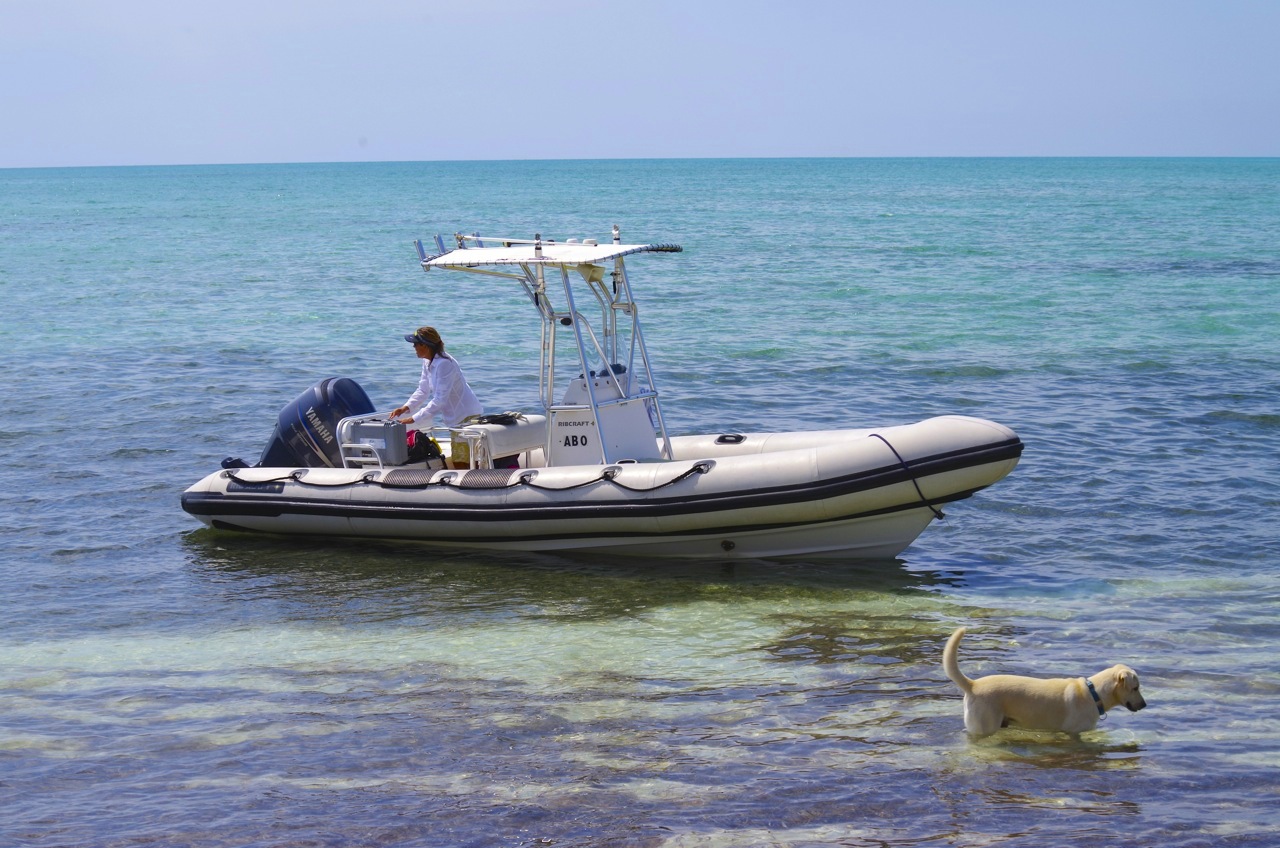
BMMRO research RHIB with Diane           BMMRO HQ, Sandy Point, AbacoBMMRO Research Boat, Sandy Point, Abaco (Keith Salvesen) BMMRO HQ, Sandy Point, Abaco (Keith Salvesen)

Credits: All photos RH except one; Charlotte & Diane for a brilliant day out; Mr Blainville for a brilliant whale; Mrs RH for snapping me snapping the whale – a photograph that was featured in a competition in the Guardian Newspaper. 

220px-Henri_Marie_Ducrotay_de_Blainville

Unknown's avatar

WHALE TALES FROM ABACO (1): BLAINVILLE’S BEAKED WHALES


Blainville's Beaked Whales, Abaco (1) (Keith Salvesen)

WHALE TALES FROM ABACO (1): BLAINVILLE’S BEAKED WHALES

Back in March we were invited by Charlotte and Diane of the Bahamas Marine Mammal Research Organisation BMMRO to spend a day out with them on the research boat, a chance we jumped at. I had been writing on and off about the organisation’s whale, dolphin and manatee research since the very early days of this blog. We’d seen bottlenose dolphins in Abaco waters, but never whales. This was the big day…

Our first sighting was a short distance south of Rocky Point, as we moved beyond the turquoise water of the low sandbanks into the deeper, darker ocean waters of the Bahama canyon beyond. Whale territory. The shoreline was plainly in view to the east; and to the north, on the horizon, was the massive bulk of the ‘fun ship’ parked at Castaway (Gorda) cay.

Beaked whale or fun ship for a day out? You decide…Blainville's Beaked Whales, Abaco (1) (Keith Salvesen)

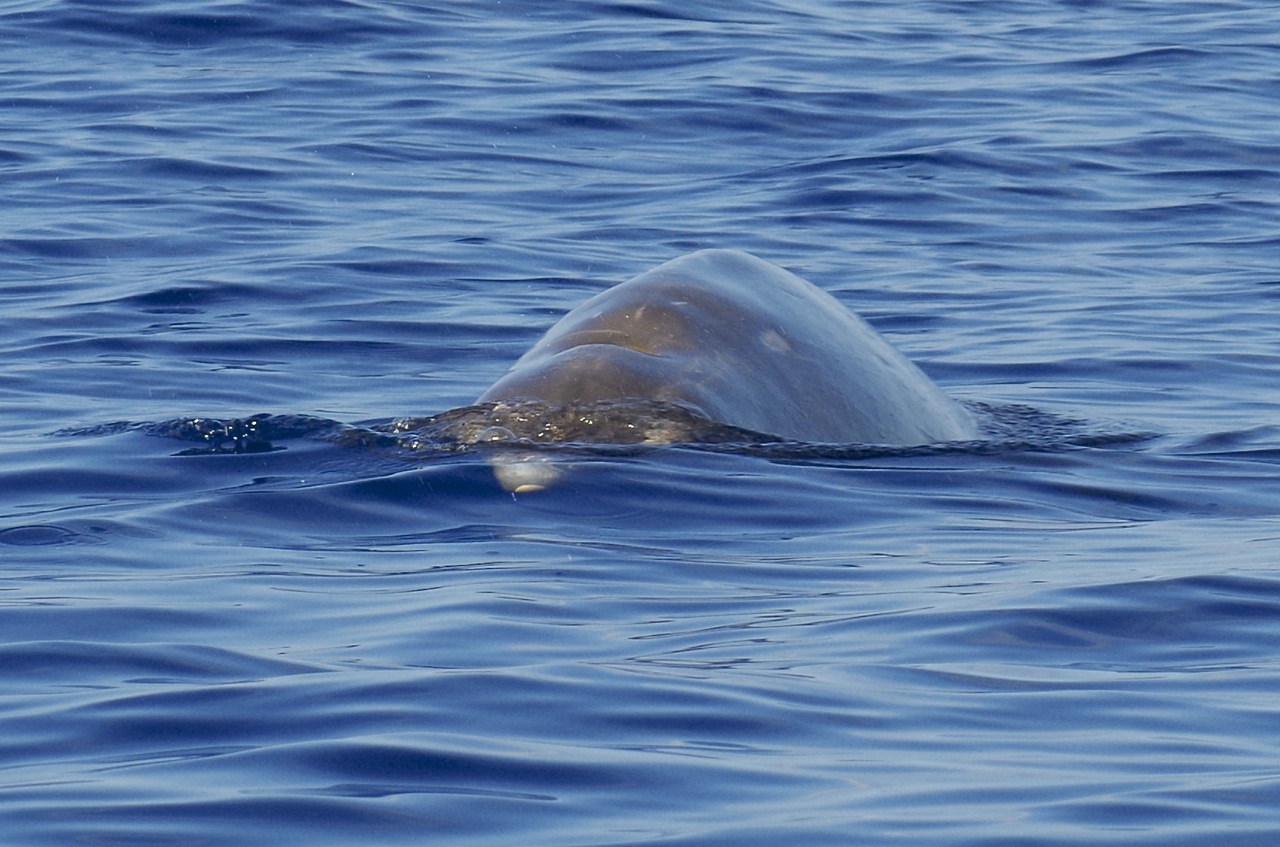
A Blainville’s beaked whale noses towards the research vesselBlainville's Beaked Whales, Abaco (1) (Keith Salvesen)

The Blainville’s beaked whale (Mesoplodon densirostris) is also known slightly less politely as the dense-beaked whale.  It is named for the French zoologist Henri de Blainville who first described the species in 1817 based on his examinations of a piece of jaw or ‘rostrum’ — the heaviest bone he had ever come across — which resulted in the name densirostris (Latin for “dense beak”).

The beak breaks the surfaceBlainville's Beaked Whales, Abaco (1) (Keith Salvesen)

The BMMRO has carried out intensive research on the species for a number of years in the northern Bahamas, with detailed documentation of sightings and photo identification of individual animals. More recently, these whales have been the subject of incredibly detailed research into their species intercommunication through vocalisations – mainly clicks and click patterns. To view Charlotte’s PhD thesis for St Andrew’s University click HERE (and many congratulations, Dr Dunn…). Just reading the contents table will give a good idea of the scope and complexity of the research. 

The blowhole, used for breathing, in close-up. You can hear this in the video below.Blainville's Beaked Whales, Abaco (1) (Keith Salvesen)

Our amazing first encounter with 6 whales lasted nearly an hour. Usually, they stay near the surface for 20 minutes or so, then they do a deep dive lasting roughly 20 minutes before resurfacing. But on this occasion they behaved more like huge dolphins, swimming towards the boat, around it, under it, then drifting away again before returning.

Blainville's Beaked Whales, Abaco (1) (Keith Salvesen)

Given their length of some 15 feet and weight of about 2000 pounds, it was a extraordinary experience to see them at such close quarters.

Whale showing healed circular wounds caused by COOKIECUTTER SHARKSBlainville's Beaked Whales, Abaco (1) (Keith Salvesen)

The Blainville’s range is extensive and in general terms they may be found in tropical and sub-tropical waters worldwide. They are by no means uncommon, but apart from the data collected by the BMMRO it seems that comparatively little is known about them. Their diet is thought to consist mainly of squid found at depth. They are protected by a variety of Agreements, Memoranda of Understanding, Protocols and so forth throughout the worldwide range.

Cetacea_range_map_Blainvilles_Beaked_WhaleBlainville's Beaked Whales, Abaco (1) (Keith Salvesen)

The research boat is equipped with sonar the can pick up the click and whistles of whales and dolphins from a considerable distance. It was remarkable to watch a group of cetaceans and to be able to hear them loudly and animatedly communicating with each other..Blainville's Beaked Whales, Abaco (1) (Keith Salvesen)

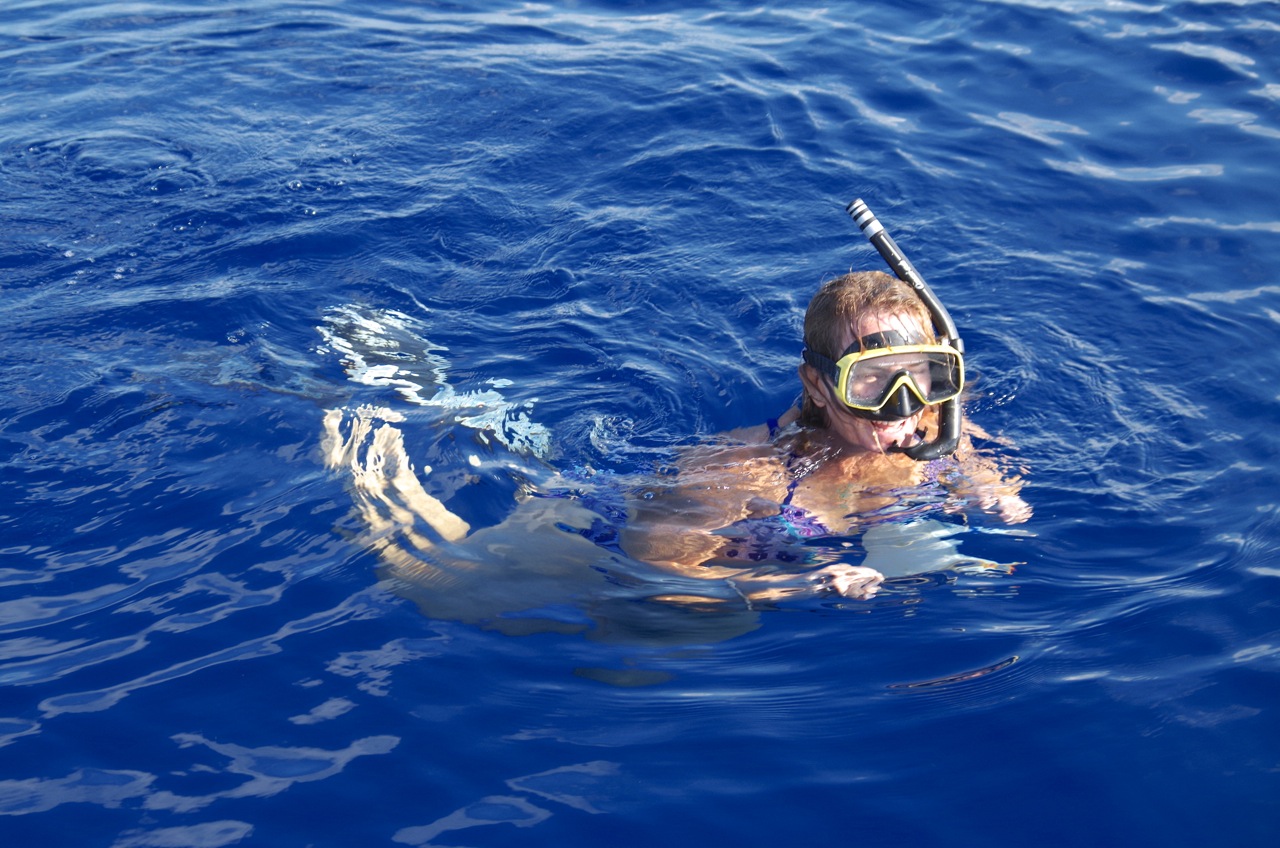
Another vital aspect of the research is poop scooping. As soon as the whales had gathered round the boat, Charlotte slid into the water with her scoop net… the cloudy poop yields a mass of information about an individual creature. I wrote about this interesting job, often tasked to interns (who practice with coffee grounds) in ‘FAMILIAR FECES’.

Charlotte expertly wields the poop scoopBlainville's Beaked Whales, Abaco (1) 11 16.46.13

Then, all too soon, it was deep dive time. The whales moved off from the boat and slowly, without show or splash, disappeared. And we went to investigate HOLE-IN-THE-WALL at close quarters. The next post will feature an adult male Blainville’s beaked whale, with his massive barnacle-encrusted teeth protruding upwards from his lower jaw.

The remains of a neat and undramatic deep diveBlainville's Beaked Whales, Abaco (1) (Keith Salvesen)

In this very short video of two whales right by the boat: you can actually hear their breathing.

BMMRO research RHIB with Diane           BMMRO HQ, Sandy Point, AbacoBMMRO Research Boat, Sandy Point, Abaco (Keith Salvesen) BMMRO HQ, Sandy Point, Abaco (Keith Salvesen)

Credits: All photos RH; Charlotte & Diane for a brilliant day out; Mr Blainville for a brilliant whale

220px-Henri_Marie_Ducrotay_de_Blainville

Unknown's avatar

BOTTLENOSE DOLPHINS IN ABACO WATERS (2): MOTHER & CALF


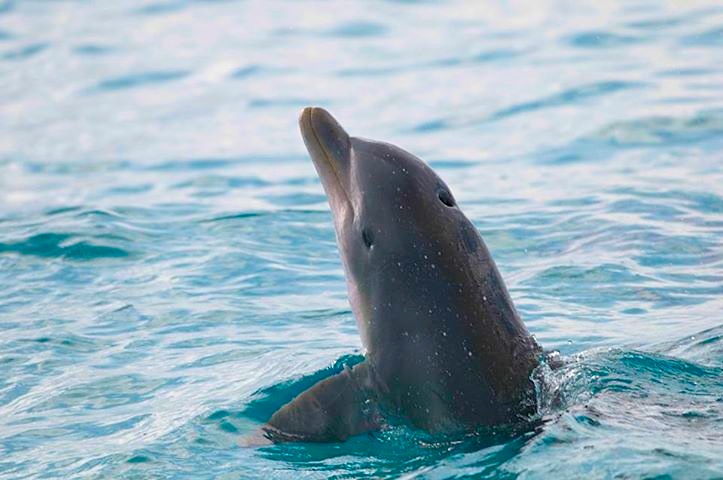
Dolphin Mother & Calf, Sandy Point, Abaco, Bahamas 12

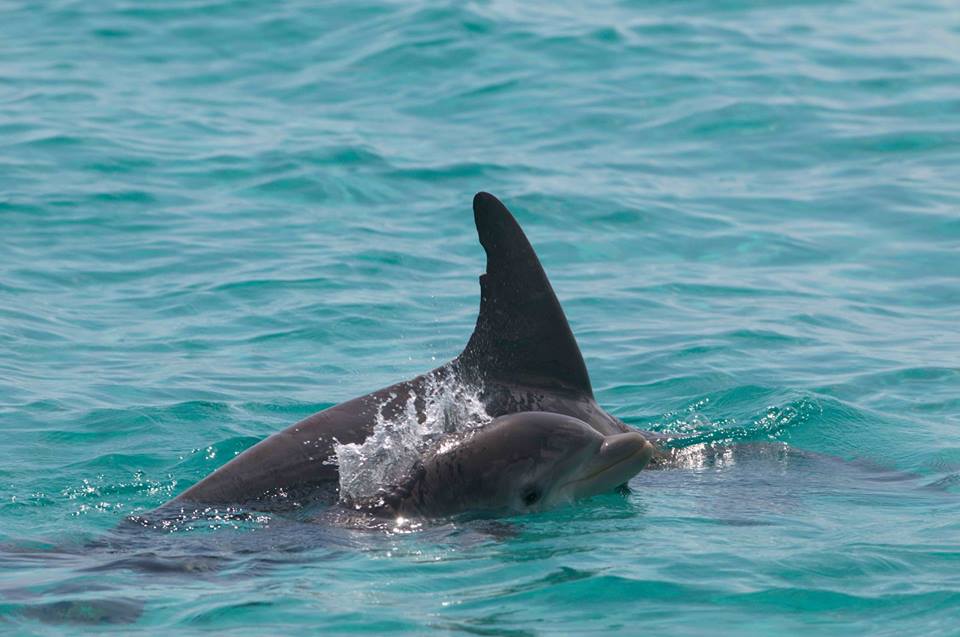
Sometimes things happen that completely take my breath away. Here is one of those moments, from our recent trip with Charlotte and Diane in the BMMRO research boat. As we returned from whale-watching to base in Sandy Point and moved from the deep dark ocean to the bright blue shallows, we encountered a group of bottlenose dolphins. You can see my recent post featuring some of the adults HERE. That was exciting enough, as they played around the boat. Then another participant appeared… 

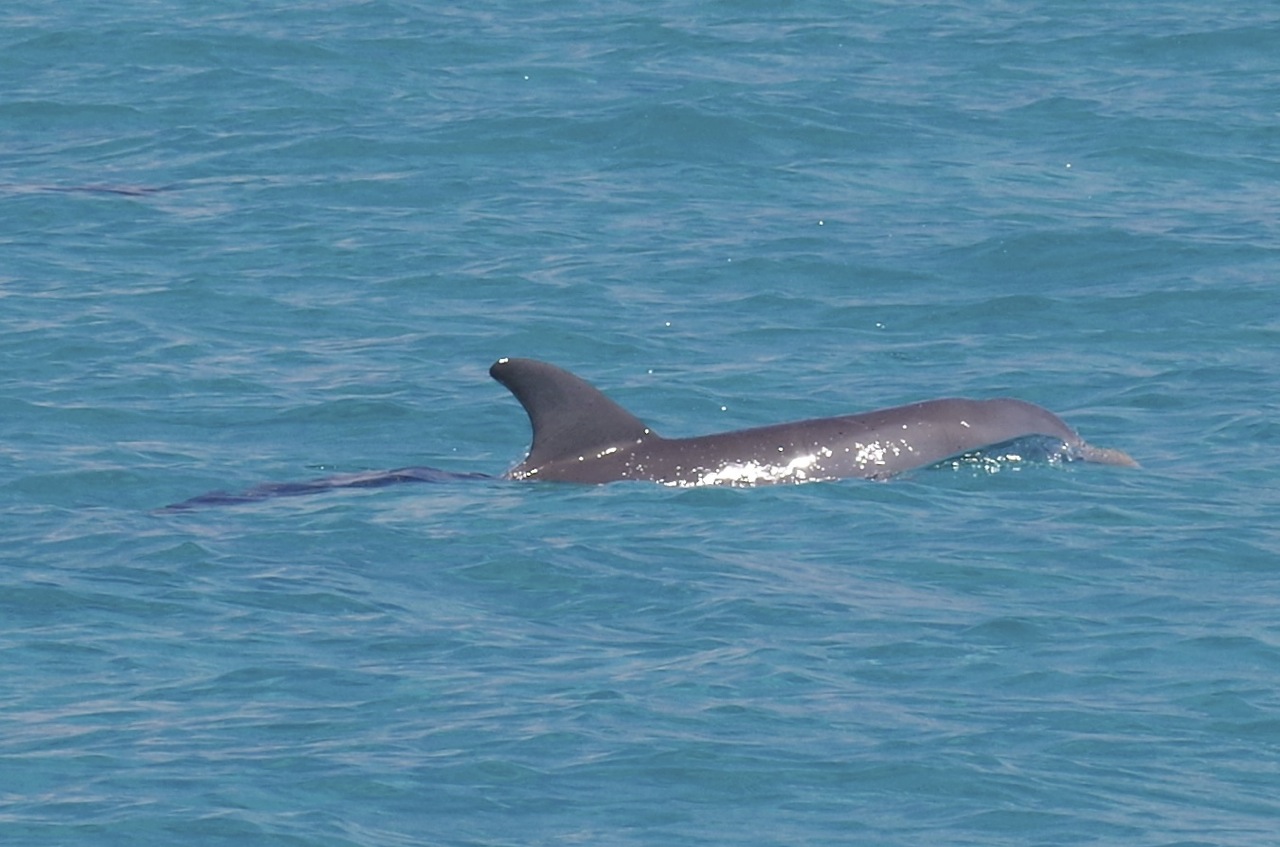
 Notice the dark area behind the adult dolphin… Dolphin Mother & Calf, Sandy Point, Abaco, Bahamas

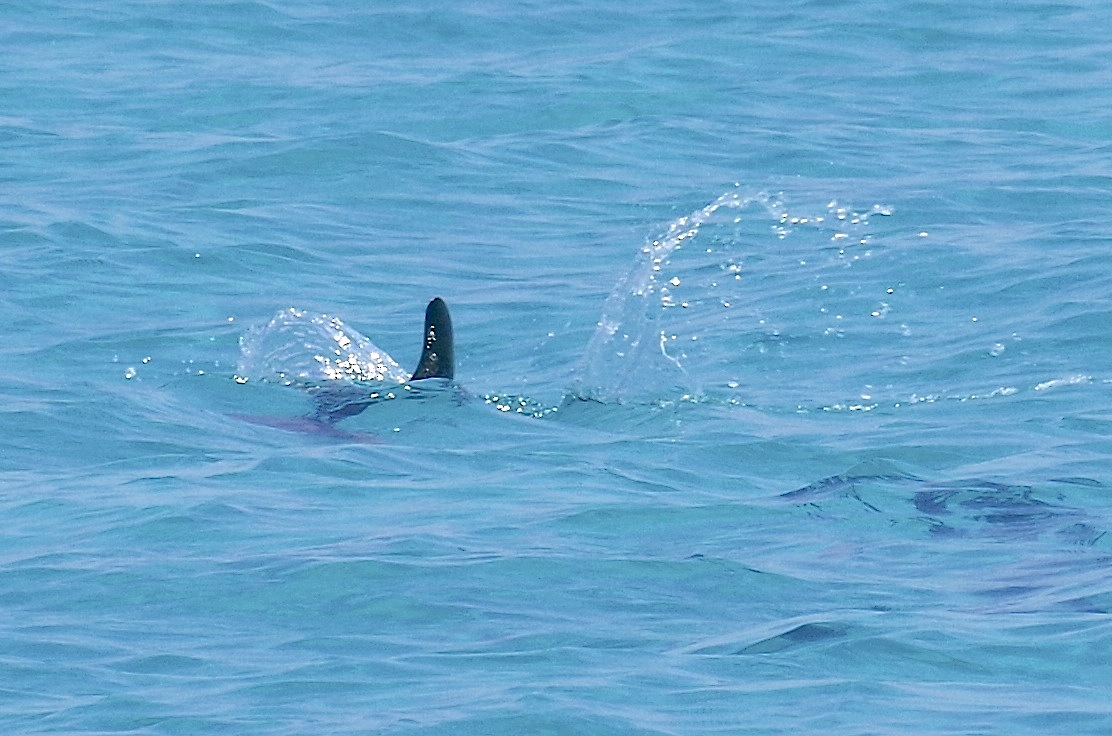
…which soon separated into a small dark splashing creature with its own fin cutting the waves…Dolphin Mother & Calf, Sandy Point, Abaco, Bahamas

…and next seen keeping pace with its parentDolphin Mother & Calf, Sandy Point, Abaco, Bahamas

The sharp line between the light and the dark sea is where the sandy shallows abruptly give way to the deep waters of the Grand Bahama Canyon, a massive trench up to 2.5 miles deep with almost vertical cliff walls to the depths in some places

Dolphin Mother & Calf, Sandy Point, Abaco, Bahamas

Dolphin Mother & Calf, Sandy Point, Abaco, Bahamas

There were less active and splashy moments as the pair swam around togetherDolphin Mother & Calf, Sandy Point, Abaco, BahamasDolphin Mother & Calf, Sandy Point, Abaco, Bahamas

Then it was back to doing what they like best…Dolphin Mother & Calf, Sandy Point, Abaco, BahamasDolphin Mother & Calf, Sandy Point, Abaco, Bahamas

Then some more restful moments…Dolphin Mother & Calf, Sandy Point, Abaco, Bahamas Dolphin Mother & Calf, Sandy Point, Abaco, Bahamas

And finally the pair moved away. On the far horizon, the Massive Mickey Mouse Cruise ship moored at ‘Disney’s Castaway Cay’ (formerly the sober-sounding Gorda Cay), where you can be a Pirate of the Caribbean. Or anyway a very happy Tourist. The choice is yours. Would you like fries with that?Dolphin Mother & Calf, Sandy Point, Abaco, Bahamas

And looking out to sea from the cheerful place that is Castaway Cay, I wonder if a small child was wondering “Ok, love Mickey and his Friends – but I’d also really love to see a wild dolphin swimming free… 

Disney Magic docked next to the Castaway Cay Family Beach copy

All photos RH (except Castaway, Wiki). Huge thanks to Charlotte, Diane and Bahamas Marine Mammal Research Organisation BMMRO for a truly wonderful day photo 2

bmmro_logo

Unknown's avatar

BOTTLENOSE DOLPHINS IN ABACO WATERS (PART 1)


Bottlenose Dolphins, Rocky Point, Abaco (Keith Salvesen : BMMRO) 7

BOTTLENOSE DOLPHINS IN ABACO WATERS (PART 1)

DCB GBG Cover Logo dolphin

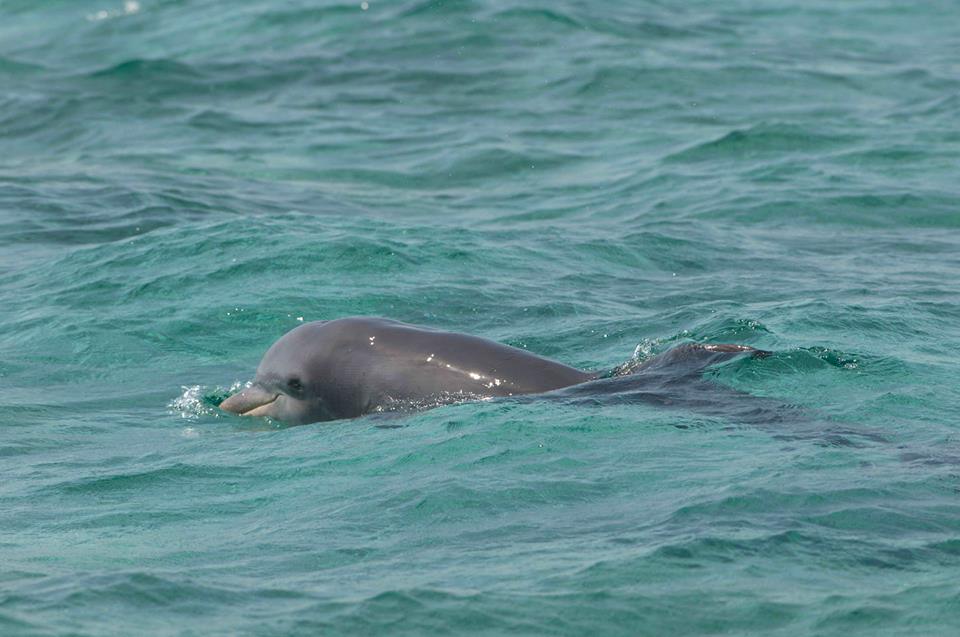
This seems to be a excellent early Spring for dolphin and whale sightings in Abaco waters. I’ve noticed that people have been posting dolphin sightings on FB recently. In our brief window of opportunity each March, I usually reckon to see 2 or 3 dolphins at most – maybe crossing over to Hope Town on the ferry, or more probably on a fishing trip. This year we saw 2 groups of about 6 off Cherokee while fishing, including calves. On another day, 4 adults made a leisurely progress the whole length of Rolling Harbour while we watched from the balcony of the Delphi Club. I don’t think they have ever been so close to the shore there before. The best was to come.Bottlenose Dolphins, Rocky Point, Abaco (Keith Salvesen : BMMRO) 3

Near the end of our trip Charlotte Dunn and Diane Claridge invited us to go out with them on the BMMRO research boat. This is equipped with a hydrophonic system that can detect the bleeps, whistles and clicks of cetaceans, and record them for comparison with previous data. This enables particular animals to be identified from their vocalisations. The other method is to note particular features of an animal – damage to a fin, markings on the flank and so on. During the day C & D happily conversed in code: “Is that 132 over there?” “No, it’s got a nick in the fluke, it must be 127…”BMMRO Research Boat, Sandy Point, Abaco

As we returned in the RHIB from an amazing day spent at close quarters with beaked whales [more on these soon], we moved from deep dark blue ocean to sandy turquoise shallows. There, just off Rocky Point (near BMMRO HQ at Sandy Point) were half a dozen bottlenose dolphins, including a mother and calf. This post contains a small batch of photos of adults – there’ll be another post shortly featuring the calf… Bottlenose Dolphins, Rocky Point, Abaco (Keith Salvesen : BMMRO) 4Bottlenose Dolphins, Rocky Point, Abaco (Keith Salvesen : BMMRO) 1Bottlenose Dolphins, Rocky Point, Abaco (Keith Salvesen : BMMRO) 5

Here’s a taster for the next post – the calf, just visible close alongside its mother, was being given leaping practice. Watch this blog…

Bottlenose Dolphins, Rocky Point, Abaco (Keith Salvesen : BMMRO) 6

All photos RH. Huge thanks to Charlotte, Diane and Bahamas Marine Mammal Research Organisation BMMRO for a truly wonderful day (and for my cool sweatshirt!) photo 2

bmmro_logo

Unknown's avatar

MAKING A SPLASH: SPERM WHALES & MANATEES IN ABACO WATERS


Sperm Whale, Abaco Bahamas (BMMRO)

MAKING A SPLASH: SPERM WHALES & MANATEES IN ABACO WATERS

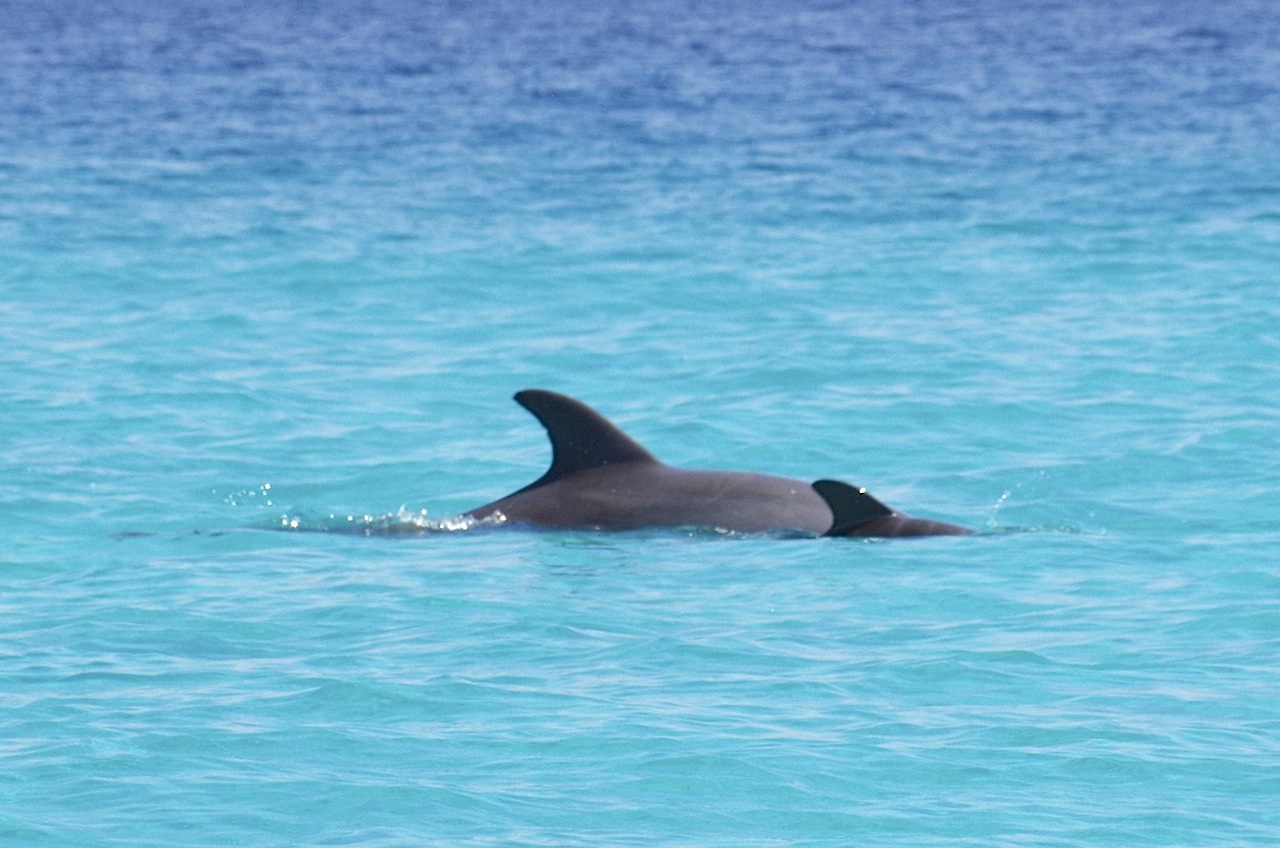
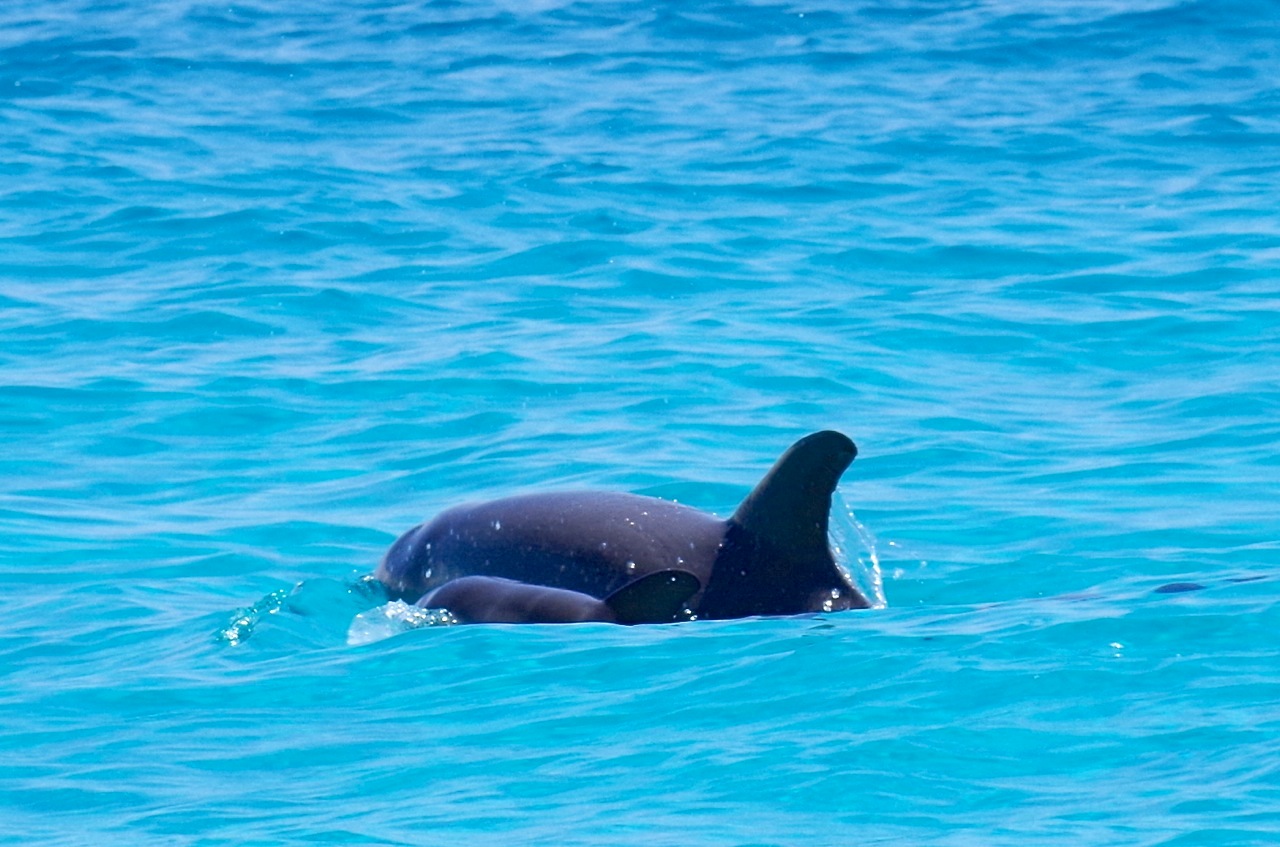
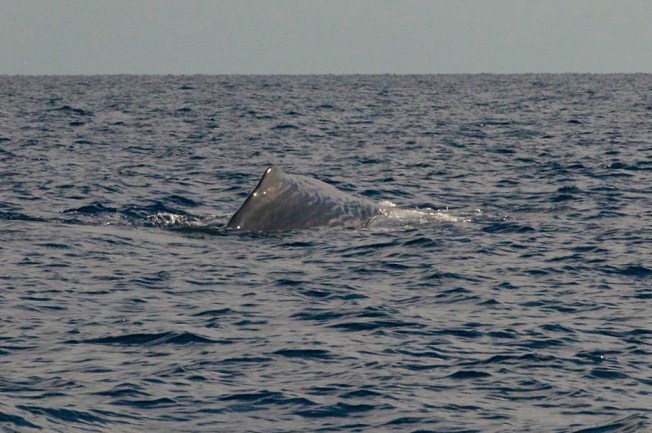
After a quiet spell on the cetacean and sirenian front, there is exciting news to report. First, the BMMRO encountered two sperm whales just off Sandy Point.  I don’t know how close to the shore they actually were, but it was very friendly of them to come so near to the BMMRO HQ.Sperm Whale, Sandy Point, Abaco BMMRO3

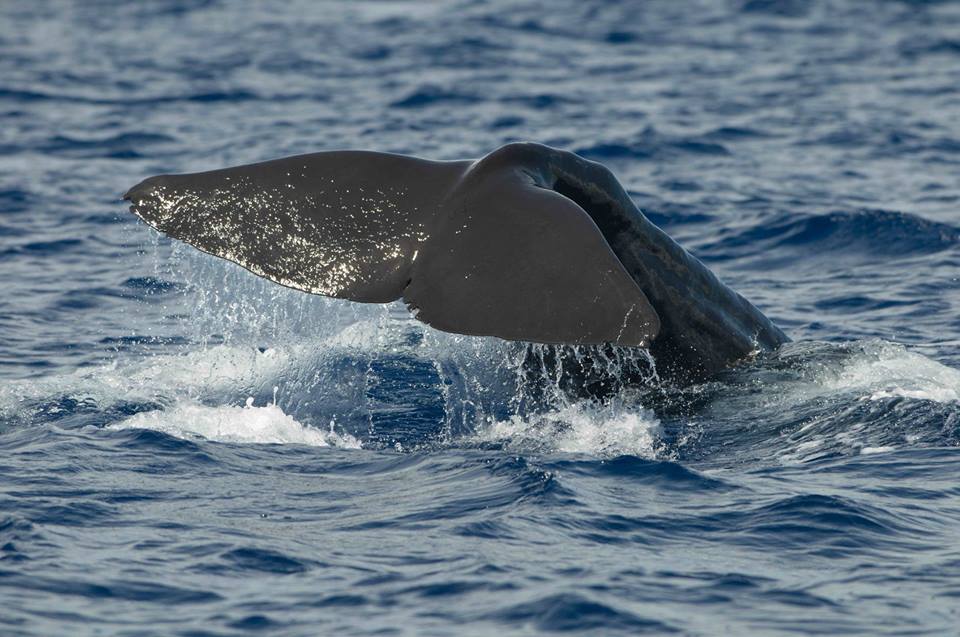
When whales are sighted from the research vessel, one of the tasks is to collect feces. This job is often undertaken by interns, and is a good way to learn that serious research may well involve unattractive work… They practise with… er… coffee grounds and a net. For more on this important yet unappealing aspect of whale research, CLICK NICE TO SEE FAMILIAR FECES. Another essential part of any sighting is to take fluke photos to enable ID.  Every whale has different and distinctive patterning to the fluke, including general wear and tear. As a photo archive is built up, the researchers are able to recognise a particular whale and cross-reference it with previous sightings.

Sperm Whale, Sandy Point, Abaco BMMRO2Sperm Whale, Sandy Point, Abaco BMMRO1

The third task of a sighting is to record clicks made by an individual whale. This enables an estimate of the whale’s size to be made, and again a sound archive is gradually built up from which comparisons can be made.

Sperm Whale, Sandy Point, Abaco BMMRO4

A NEW MANATEE VISITS MARSH HABOUR

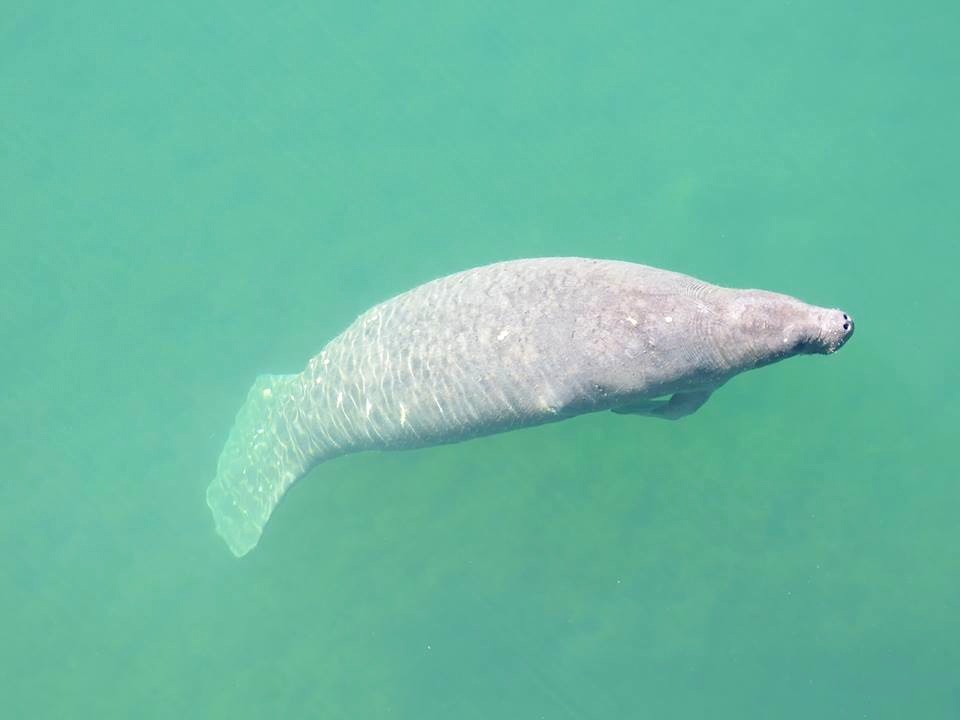
FRIENDS OF THE ENVIRONMENT has just reported the sighting of a new manatee at the head of Marsh Harbour harbour. I’m not aware of any other sightings in the last couple of days, but as they say,  “Please keep your eyes out and drive carefully! Contact Bahamas Marine Mammal Research Organization with any further sighting reports by calling 357-6666. You can also share photos with them on Facebook. Also, please do not feed the manatee. They are able to find their own food and anything else may make them unhealthy”.

This is Abaco’s third recent manatee. First there was GEORGIE, who as far as I know is still comfortably settled in the Cherokee area. Then RANDY arrived earlier this and got to within about a few miles of Georgie… High hopes of a meeting – and ‘friendship, maybe more’ – were dashed when Randy turned round and headed back to Castaway Cay. Let’s hope this newcomer stays around. I wonder what he – or she – will be named? My suggestion is Abby or Abi, which I think is unisex…

10846213_10152589661493178_5080839733543438859_n10849995_10152589661598178_1824081022417510310_n

Just as with the whale flukes, the tail of a manatee is an important means of identification. The new manatee’s tail has its own distinctive edge pattern, which will enable its future recognition. Here is an image of Randy’s tail, with its unique notch. 

Randy the Abaco Manatee - tail notch

Credits: BMMRO & FOTE with thanks as ever for use permissions

mantsw~1

Unknown's avatar

“ALIEN FROM THE DEEP”: ABACO’S SCALELESS BLACK DRAGONFISH


Scaleless Black Dragonfish - Header - BMMRO Abaco

“ALIEN FROM THE DEEP”: ABACO’S SCALELESS BLACK DRAGONFISH

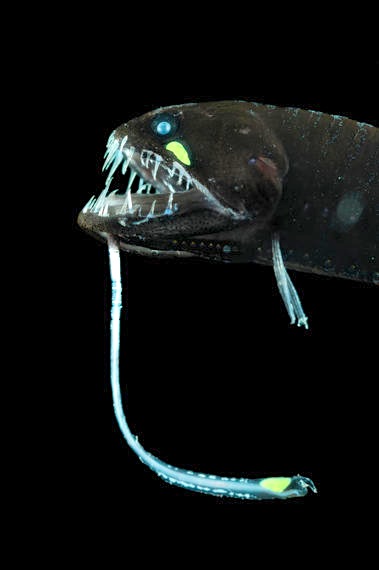
Prepared to be terrified. Beneath the placid turquoise waters of Abaco lurks a ruthless and implacable killer of hideous mien, armed with vicious teeth  … Yes, as the music from Jaws begins to throb round your temples I bring you… THE SCALELESS BLACK DRAGONFISH, aka the Deep Sea Dragonfish or Viperfish (of which it is one type). Oh, and it’s about 8 inches/ 20 cms long.

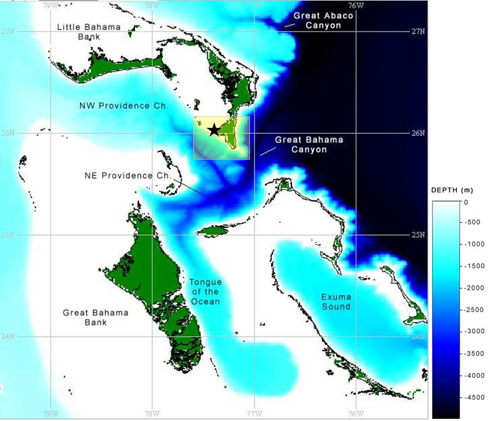
The specimen shown here was found off Rocky Point, Abaco during a whale and dolphin research trip by the BMMRO. This is an area where typical low waters give way to the far deeper waters of an arm of the Great Bahama Canyon. It is an excellent place for whale watching, since one effect of the canyon is to provide plentiful food of the sort that cetaceans thrive on. The chances of you ever meeting a dragonfish are very slim indeed, since they live at depths up to 1500 metres. 

MAP to be added after posting, to avoid FB’s deranged random ‘feature photo’ selection The black star at the south end of Abaco  (in the yellowish box) is where Rocky Point and Sandy Point are to be found.

BAHAMAS SEA DEPTH MAP (NEAQ)

Here is an account by BMMRO intern Luanettee Colebrooke who was lucky enough to be on the research vessel when this strange, vicious-looking creature was found. I have edited the material for present purposes, but I recommend reading the whole article which can be found on the BMMRO website HERE. You will get an excellent overview of a day’s research under the hot sun, and plenty about the collection of whale poop (a topic I have previously dwelt on HERE (“Familiar Feces“).

Scaleless Black Dragonfish - BMMRO Abaco
CREATURE by Luanettee’ Colebrooke, BMMRO intern, summer 2014
The crossing of this organism was by complete accident. It was something that none of us would have imagined finding floating along the surface of the water. For Dr Claridge, Jurique (another BMMRO summer intern from Cat Island) and I as Bahamians, who knew this creature even existed in our majestic waters? Who knew our waters were even that deep to hide this specimen? (I think Dr Claridge knew)
Our morning began as per the usual routine for a boat day. There are several research sites that we venture to regularly: Rocky Point for the coastal Bottlenose Dolphins, and an area about 2 miles south of Rocky Point for our very elusive and wary Blainville’s beaked whales, and the deep blue (a massive drop into waters that are 1500 metres deep) to listen for Sperm Whales.It is not that I do not believe that we have deep waters. The Tongue of the Ocean runs through the northern part of our country. My thought comes more from, ‘our waters are that deep’? To a point where light does not hit the bottom and organisms have to rely mainly on bioluminescence? It is a similar thought process I had when I saw a sperm whale for the first time. They are not small creatures of the sea. It is both an awe and scary thought that there are creatures out there we, as Bahamians, do not know exist in our waters.
Scaleless Black Dragonfish - BMMRO AbacoScaleless Black Dragonfish - BMMRO Abaco
“Our final activity of the day was tracking a sperm whale acoustically using a hydrophone…” There follows a graphic account of the technicalities of sperm whale poop collection and co-intern Jack’s “Faecal Dispersion Technique”. Then this: Jack stood up, Pringle in mouth and pointed to a black leather looking strap off of the port bow. “What is it?” Moving closer to the port, Jurique and I had our own thoughts. “It looks like a boxing glove strap,” he suggested. “More like an expensive underwater watch,” I mentioned. Dr. Claridge said, “It looks like a squid tentacle.” Jack added in, “More like the strap from a fin to me.” Our heads were turning with no closer answer. Taking it upon himself as the official sample collector, Jack popped back into the water to collect it. There were no sample pots large enough for it, so he had to use a large Ziplock bag to pick it up.
Scaleless Black Dragonfish - BMMRO AbacoLetting out a surprised chorus when he got back on the boat, we wondered what the heck it was. It had a mouth and a weird white patch that at first, I thought was its eye. The ventral abdominal section seemed swollen as if it had expanded from the decreasing pressure rising from the sea. As we looked at it and took photos, we determined several characteristics of the deceased specimen without having to autopsy it. The first was that it had three rows of needle like teeth that turned inward. There was what we assumed to be an angler under its ‘chin’ that had a murky transparent color. Another deduction we came to was the white dots that ran along the body all the way to its tail could be bioluminescent in nature like an angler. The pectoral fins were small and thin like a tooth pick. The final detail we took note of was the silver patch underneath its eyes.It was a type of angler fish we hypothesized. And it somehow ended up on the surface. There were several questions we voiced to each other: if it is a deep angler fish, how did it end up here? Where did it come from? Was it stunned by the sperm whale’s echolocation and pulled upwards as it surfaced? Later that night as we went through our faecal samples, photo IDs and data entry, the search began for what exactly this organism was. Jack did some image trickery and overlapped the photos with an alien from Alien. Scaleless Black Dragonfish c/w Alien - BMMRO AbacoI personally thought it looked more like Venom from Spiderman. As he did that, I took it upon myself to begin the search by looking up the most prominent feature: the angler on the anterior ventral side of the fish. By using this characteristic, I was able to narrow the organism down to a Scaleless Black Dragonfish by using several online scientific key identification guides and forums. The species we are still unsure about. The mystery continues…Scaleless Black Dragonfish - BMMRO Abaco
This creature is one of a number of dragonfish species found worldwide. This one might to be one of the genus Melanostomias (says he, hesitantly…). Like many deep sea creatures, its customary depths are pitch black, or nearly so; and so it is equipped with its own light source (bioluminescence), including the item dangling down from its lower jaw, called a barbel. The fish’s glow and no doubt the gleam of the barbel swaying around in the water act as a lure to attract prey that swim up to investigate and then.. snap! Those teeth start to do their work.
Scaleless black dragonfish (Melanostomias biseriatus) (imagesource.com)
I’ll end with an amazing short (2:28) video posted in early 2014 by ‘Indoona’. The accompanying description is the most authoritative account of the species and its little ways that I have  come across, complete with useful links. I include it before the video, noting only that the creature featured is a Pacific one from off the coast of California, and therefore not identical to the Abaco one.
                                                                       scaleless-black-dragonfish-mini-jpg          scaleless-black-dragonfish-mini-jpg          scaleless-black-dragonfish-mini-jpg

THE DEEP SEA DRAGONFISH OR VIPER FISH is an awesome looking creature from the middle depths of the ocean (this one comes from 600 metres or about 1000 feet deep). Also called the scaleless dragonfish, they are ferocious predators, with extremely large teeth compared to their body size. And they have one of nature’s most amazing tricks to give them the edge over their prey (more below).

There are several different species of dragonfish (one estimate is 67 species – all from the fish family known as Family Stomidae) and they are quite difficult to tell apart but this one is from the pacific depths of California and is likely Tactostoma macropus, the longfin dragonfish. Idiacanthus antrostomus is an Atlantic species that looks very similar – at least I think that’s the case correct me if I’m wrong.

They hunt with a bioluminescent barbel or lure. It is not glowing here but under the different lighting regimes I used – some of the darker images – you can see how much the lure stands out.

Sadly fish like this do not survive long on the surface, mainly because of temperature differences and mechanical damage in the net rather than pressure problems I think. It was caught in a cod-end trawl and filmed in a special tank (a kreisal aquarium). But is great to be able to share another wonder of the oceans on YouTube.

And their amazing trick? Unlike most other deep sea creatures which are sensitive to blue light – the dragonfish also produces a red light beam (see the organ to the rear of the eye) – it is also very sensitive to red light. Although red light does not travel very far underwater it allows them to see when other animals cannot and to sneak up on their prey – especially shrimps that glow in the red light. For more detail see: http://www.science-frontiers.com/sf10… and the work of Ron Douglas and Julian Partridge,http://blog.wellcomecollection.org/ta… (these images were filmed with the help of Julian and Ron). Oh and this dragon is not big – about 20 cm or just under a foot!

[youtube https://www.youtube.com/watch?v=i6cIoj7c2FI]

Credits: Luanettee Colebrooke, ‘Jack’ & BMMRO (to whom thanks as ever), imagesource.com, Indoona , and 2 sites I came across during my investigations – seasky.org & strangesounds.org

If you can’t get enough of dragonfish, check out this Tumblr site for dozens of images including photos, drawings, cartoons, and enough strange dragonfish-based characters to weird you out utterly… HERE

Unknown's avatar

‘SPOTTED IN ABACO WATERS’: PANTROPICAL SPOTTED DOLPHINS


 Spotted Dolphins Abaco Bahamas (BMMRO)

‘SPOTTED IN ABACO WATERS’: PANTROPICAL SPOTTED DOLPHINS

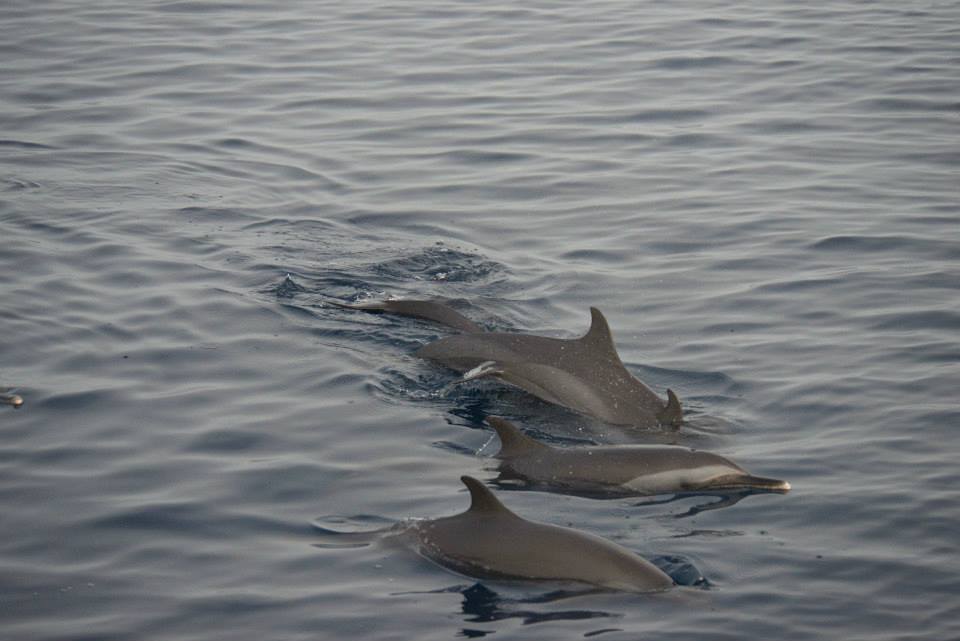
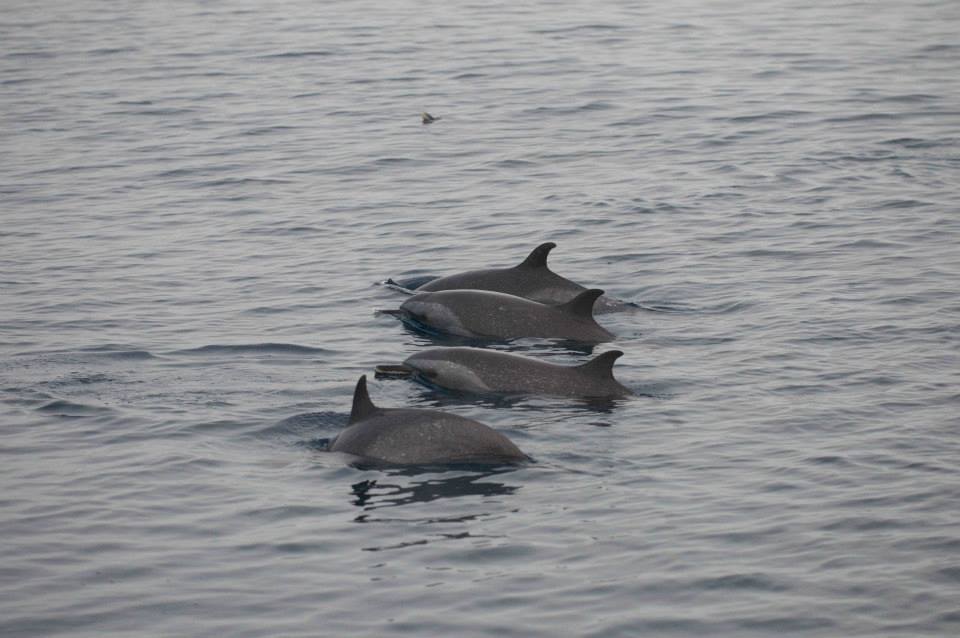
The BMMRO has posted several reports of dolphin and whale activity around the coast of Abaco during August, with some outstanding photos to accompany them. I had been going to post rather generally about this until a couple of days ago, when an unusual dolphin species for the region was… er… spotted and some memorable images taken.

Spotted Dolphins Abaco Bahamas (BMMRO)

These are PANTROPICAL SPOTTED DOLPHINS Stenella attenuata, whose range encircles the globe but at a lower latitude than the far more frequently encountered resident  ATLANTIC SPOTTED DOLPHINS Stenella frontalis. Here are comparative range maps. The rarity of the Pantropical species in the Bahamas is indicated in the BMMRO report of a stranding in 2011 – see below.

ATLANTIC SPOTTED DOLPHIN                                                                    PANTROPICAL SPOTTED DOLPHIN

Verbreitungsgebiet des Zügeldelfins Stenella frontalis.PNG                                                Cetacea range map Pantropical Spotted Dolphin.PNG

Spotted Dolphin Abaco, Bahamas (BMMRO) copy 2

Spotted Dolphins Abaco  Bahamas (BMMRO)Spotted Dolphins  Abaco Bahamas (BMMRO) copy

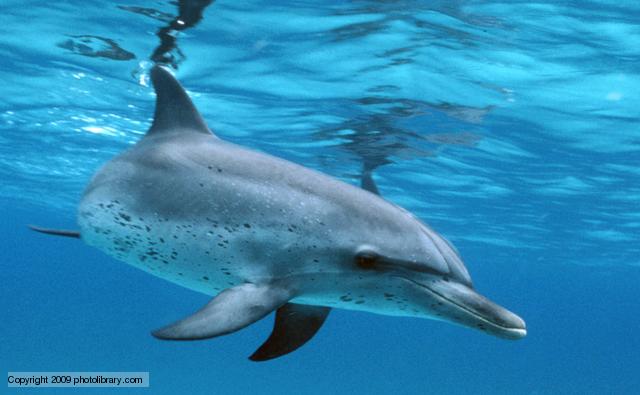
The pantropical image below is from the BBC archive and not taken in the Bahamas. I’ve included it for illustrative purposes due to the close-up underwater view of the dolphin.Pantropical spotted dolphin (BBC)

This wonderful underwater video of pantropicals is by Jake Levenson, shot from a polecam. Although it is 6 minutes long, I highly recommend it for (a) the stunning views of these creatures at very close quarters (b) the excellent audio quality – you can clearly hear the dolphins communicating with ‘sonar’ clicks and squeaks, and (c) the strange sense of peace you may feel when you have watched it. 

[youtube http://youtu.be/-hXTYe58g34]

PANTROPICAL SPOTTED DOLPHIN STRANDING 2011

In May 2011 a dead dolphin was found on the sandbank at Casaurina Point, Abaco. BMMRO’s scientists established that it was a sub-adult male pantropical spotted dolphin with a stomach full of squid beaks, a known prey for the species. A full necropsy was conducted on the animal and samples were taken for scientific testing to determine the cause of death. At the time the BMMRO reported the find in their quarterly Newsletter:

Pantropical spotted dolphins are commonly found in off-shore waters, although they can be found close to Abaco’s coastline due to the close proximity of deep waters. They can occur in large group sizes of up to 100 animals. Adult males and females reach up to 2.6 m (8.5 ft) and 2.4m (7.9 ft) in length, respectively. Since our efforts began in 1991, BMMRO has records of only 28 sightings of pantropical spotted dolphins in The Bahamas (my rubric), although their cousin species, Atlantic spotted dolphin, is a common resident. This is the first recorded stranding of this species in The Bahamas.”

Credits: BMMRO / Diane Claridge; BBC; Jake Leveneson (video); Wiki (range maps)

Unknown's avatar

AMAZING WHALE, DOLPHIN & MANATEE PHOTOS FROM ABACO


Whale Fluke (BMMRO Abaco Bahamas)AMAZING WHALE, DOLPHIN & MANATEE PHOTOS FROM ABACO

The BMMRO (Bahamas Marine Mammal Research Organisation) had a great June for sightings of cetaceans and sirenians. Here is a sample of their wonderful photos from recent research expeditions (with thanks as ever for use permission).

RANDY THE WEST INDIAN MANATEE

After the recent excitement of Abaco’s manatee GEORGIE having returned to Cherokee after another of her epic journeys, another West Indian manatee has arrived at Sandy Point (conveniently the location of the BMMRO HQ). Sirenians and cetaceans are generally recognised from particular patterns to flukes or fins. The second image shows the notch in Randy’s tail that confirms ID.

Randy the West Indian Manatee, Sandy Point, Abaco, Bahamas Randy the West Indian Manatee (tail), Sandy Point, Abaco, Bahamas

BOTTLENOSE DOLPHINSBottlenose Dolphins - BMMRO, Abaco, BahamasBottlenose Dolphins - BMMRO, Abaco, BahamasBottlenose Dolphins Abaco BMMRO FV

SPOTTED DOLPHINSSpotted Dolphins, BMMRO Abaco, Bahamas

BLAINVILLE’S BEAKED WHALESBlainville's Beaked Whales BMMRO Abaco, BahamasBlainville's Beaked Whales BMMRO Abaco, BahamasBlainville's Beaked Whales BMMRO Abaco, Bahamas

TWO COMPLETE FLUKES (THIS IMAGE & HEADER)

(note minor damage to the edges, from which ID of an individual can be made)Whale Fluke (BMMRO Abaco Bahamas)

SPERM WHALE & DIVER

Compare the diver’s fins in the foreground with the (partial) length of a huge sperm whale… Sperm Whale and Diver

RELATED LINKS:

DOLPHINS

WHALES

MANATEES

Unknown's avatar

DOLPHINS OF ABACO: WONDERFUL PHOTOS FROM THE BMMRO


Dolphin, Abaco - BMMRO

DOLPHINS OF ABACO: WONDERFUL PHOTOS FROM THE BMMRO

The BMMRO (Bahamas Marine Research Organisation) is based at Sandy Point, Abaco. It is dedicated to researching, monitoring, and protecting the marine mammals of a very large area. Not just cetaceans – the dolphins and whales. Recently, a small number of West Indian manatees (sirenians) have been making the northern Bahamas their home. I’ve written plenty about Georgie the adventurous manatee in the past – and in April she returned to her favourite place, Cherokee, after a bit of time away from Abaco.

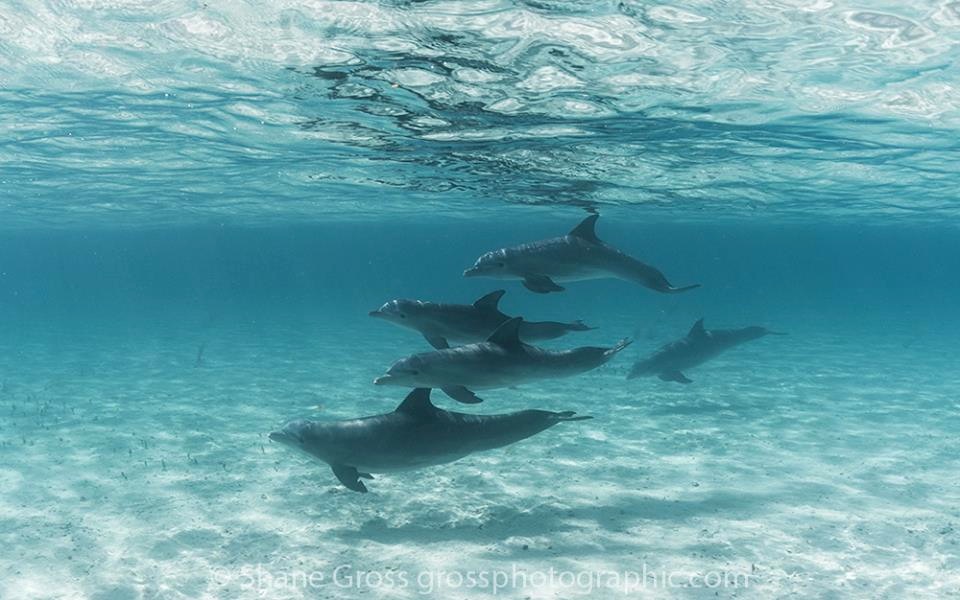
Recently, photographer Shane Gross spent some time with the BMMRO and took stunning photos of dolphins. It’s impossible to say, or think, anything unpleasant about these lovely, intelligent, playful creatures. Say you ‘don’t much care for dolphins’, and you’d be more than halfway to having a down on kittens. Here are some magnificent images that deserve a wide audience.

Dolphins, Abaco, Bahamas (BMMRO) - Shane GrossDolphins, Abaco, Bahamas (BMMRO) - Shane GrossDolphins, Abaco, Bahamas (BMMRO) - Shane GrossDolphins, Abaco, Bahamas (BMMRO) - Shane GrossDolphins, Abaco, Bahamas (BMMRO) - Shane Gross

WHALES & DOLPHINS  PAGE

MANATEES PAGE

BMMRO WEBSITE

BMMRO FACEBOOK

SHANE GROSS PHOTOGRAPHIC

Thanks as ever to Charlotte & Diane at the BMMRO for ongoing use permission of material including the header pic; and to Shane for his outstanding photos

Unknown's avatar

WHALES, DOLPHINS & MANATEES, ABACO: BMMRO NEWS


blue1

WHALES, DOLPHINS & MANATEES, ABACO: BMMRO NEWS

BMMRO COLLABORATES WITH NEW PARTNER, ATLANTIS BLUE PROJECT

The ATLANTIS BLUE PROJECT is managed by the Atlantis Blue Project Foundation, a private non-profit organization dedicated to the preservation and enhancement of global marine ecosystems through scientific research, education, and community outreach. BMMRO is excited to now be a part of this project and in turn has received two grants from the Atlantis Blue Project for 2014 

blue2

Stranding Response to Support Conservation of Marine Mammals in the Bahamas 

Increasing capacity and available funds to respond rapidly to strandings in The Bahamas will increase our ability to determine cause of death and/or successful rehabilitation of marine mammals. At the first stranding workshop held in the Bahamas in 2008, the Honourable Lawrence Cartwright, Minister of Agriculture and Marine Resources officially opened the workshop stating “I believe the establishment of a Marine Mammal Stranding Network in The Bahamas will serve to promote the conservation of marine mammal species and their habitat by improving the rescue and humane care of stranded marine mammals, advancing stranding science, and increasing public awareness through education.” This funding will provide the resources to train veterinarians on how to work with stranded marine mammals as well as provide the resources to respond to strandings.

blue3

Field Research & Outreach to Support Conservation of Bahamas Marine Mammals

Cetaceans are long-lived, highly specialised animals with delayed reproduction and low fecundity, which makes them incapable of rapid adaptation and thus particularly vulnerable to anthropogenic impacts. BMMRO has compiled an unprecedented long-term dataset for the region, which has become increasingly valuable to inform about the baseline ecology of some odontocete species. This research will ensure that this important work continues to fill key gaps in our knowledge about the ecology of marine mammals. Additionally, we will increase awareness and build capacity amongst Bahamians, both of which will contribute to local conservation needs.

blue4blue5

JANUARY SIGHTINGS

For Abaco, the excitement is the sperm whale seen just off the Rocky Point area. More generally for the northern Bahamas, in addition to the manatee Georgie (former temporary resident of Abaco) and others, there was a manatee reported on Eleuthera. It looks as though these gently creatures continue to find the area to their liking.

BMMRO Sightings Jan 2014

I must be going now – thanks for visiting Rolling Harbour…blue6

bmmro_logoClick me!

(Thanks as ever to Charlotte & co at BMMRO for permission to use and adapt their material!)

Unknown's avatar

‘JUMPING FOR JOY’: CHEERFUL DOLPHINS IN ABACO WATERS


Dolphin, one of a pod of 50

‘JUMPING FOR JOY’: CHEERFUL DOLPHINS IN ABACO WATERS 

To be totally accurate, one or two of these photographs may have be take from the BMMRO research vessel at some point during an expedition to Andros. But since the boat set off from and returned to Abaco, with an Abaconian team on board, I have stretched a point  with the title… 

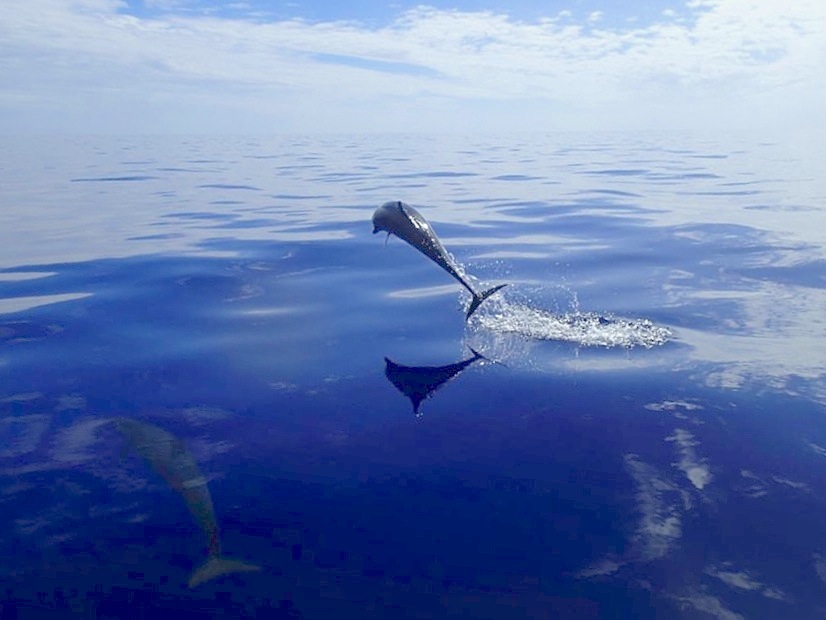
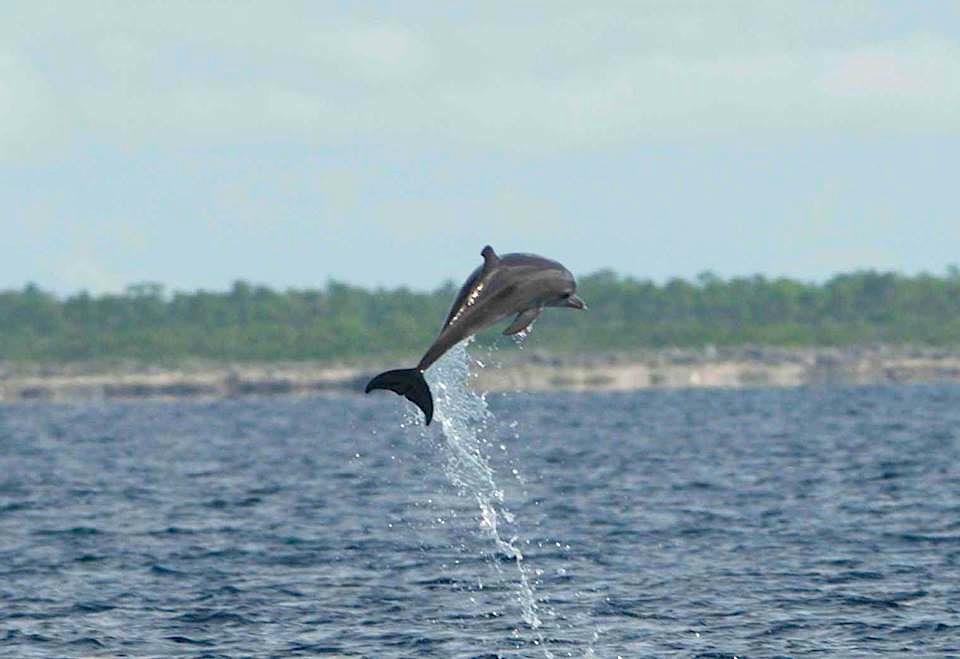
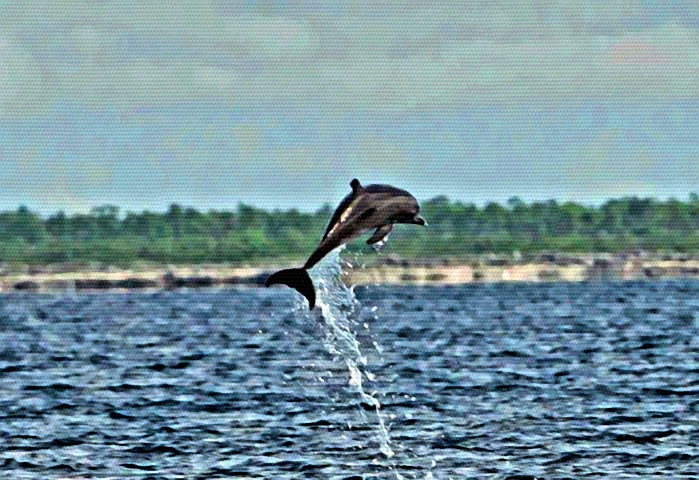
It would be hard to view a dolphin leap as high as this (top photo) as anything other than an expression of pure enjoyment. Difficult to tell the exact height, but it’s fairly spectacular. Dolphins always seem to be looking, or acting, happy. Here are a few more, a mix of bottlenose and spotted dolphins,  to spread some cheer… 

Dolphin Leap Abaco ©BMMROSpotted Dolphin, Abaco ©BMMROSpotted Dolphin Abaco ©BMMROHappy Dolphin Abaco ©BMMRO

This dolphin was one of a large pod of 28 seen on a recent BMMRO research tripOne of a large pod of 28 dolphins

Time to get my… erm… paintbox outLeaping DolphinPhoto credits: Bahamas  Marine Mammal Research Organisation BMMRO

In an earlier post I name-checked BMMRO intern Oscar Ward’s blog SeventyPercentBlue.  You can read Oscar’s account of his continuing adventures HERE

Unknown's avatar

WHALE & DOLPHIN RESEARCH, PHOTOS & SIGHTINGS REPORT


WHALE & DOLPHIN RESEARCH, PHOTOS & SIGHTINGS REPORT

The Bahamas Marine Mammal Research Organisation (BMMRO) has recently been involved in a major tagging and monitoring program  around Andros, in particular using sonar to test the responses of beaked whales. Being all at sea for a few weeks meant that many other marine mammals were encountered. Thanks to Charlotte and Diane for permission to use some of their photographs taken during the research trip – and also in Abaco waters – to illustrate the amazing diversity of cetacean life in the waters of the northern Bahamas.

Click me!

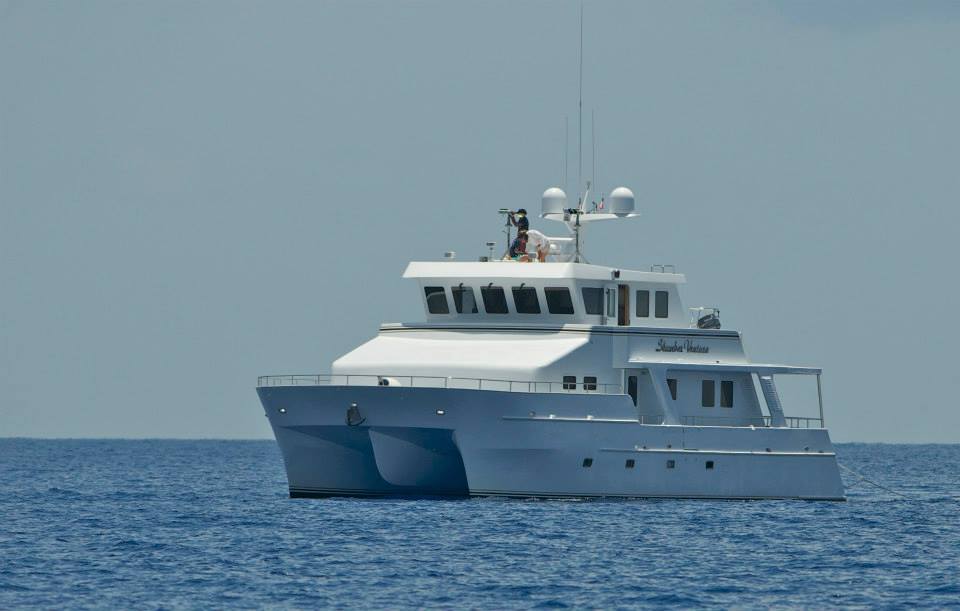
RESEARCH VESSEL “SLUMBER VENTURE”'Slumber Venture' survey vessel

WHALES

A Sperm Whale with unusual pigmentation

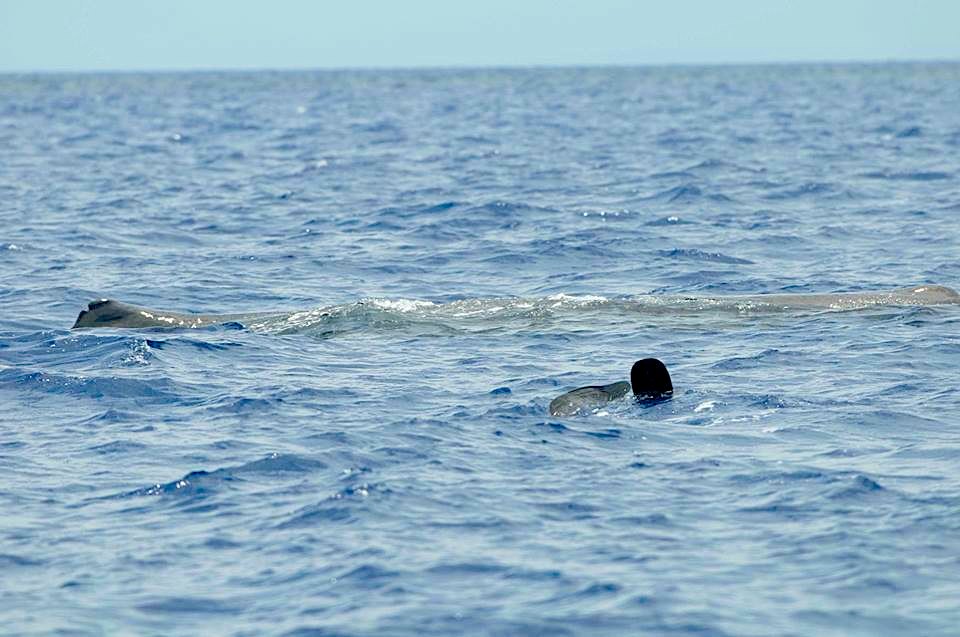
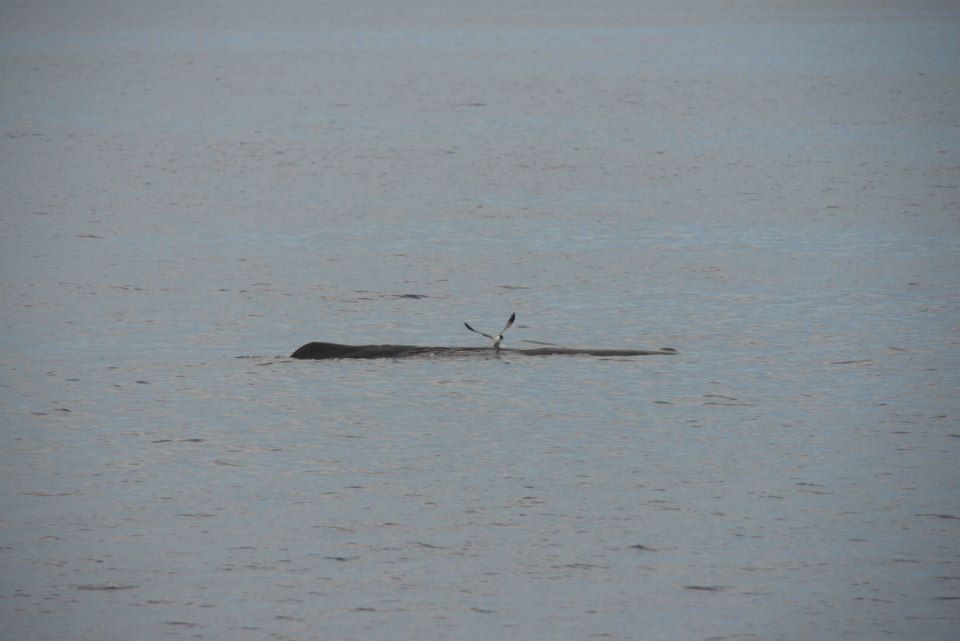
SPERM WHALES OFF ANDROSSperm WhalesSPERM WHALE TAILINGSperm Whale tailingTHAT GULL SURELY CAN’T BE CRAZY ENOUGH TO…Gull landing on Sperm WhaleWELL, IT JUST DID!Gull landed on Sperm Whale

MELON-HEADED WHALES – MOTHER & NEW-BORN CALF

Melon-headed Whale mother with new calf

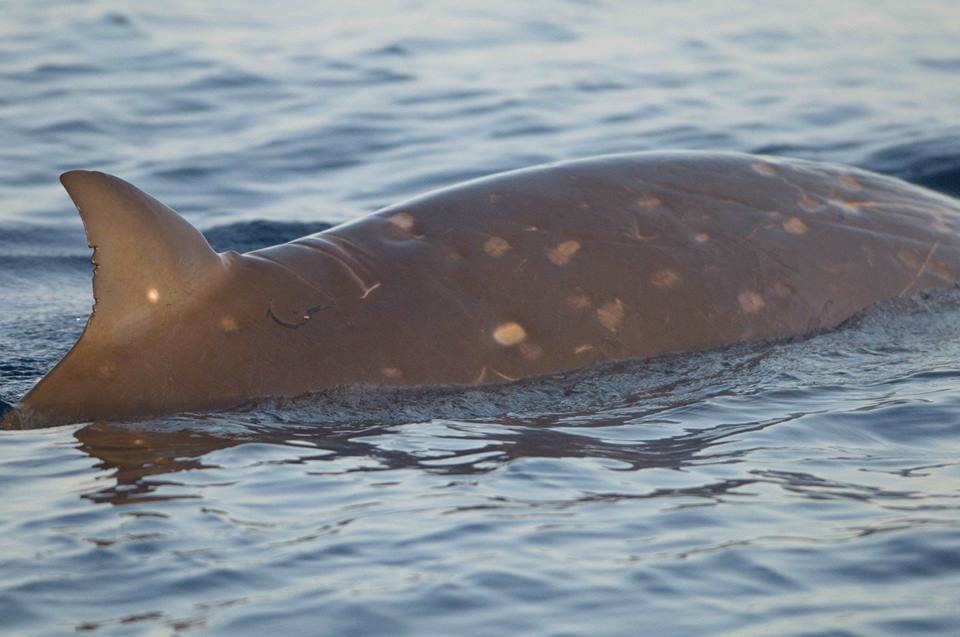
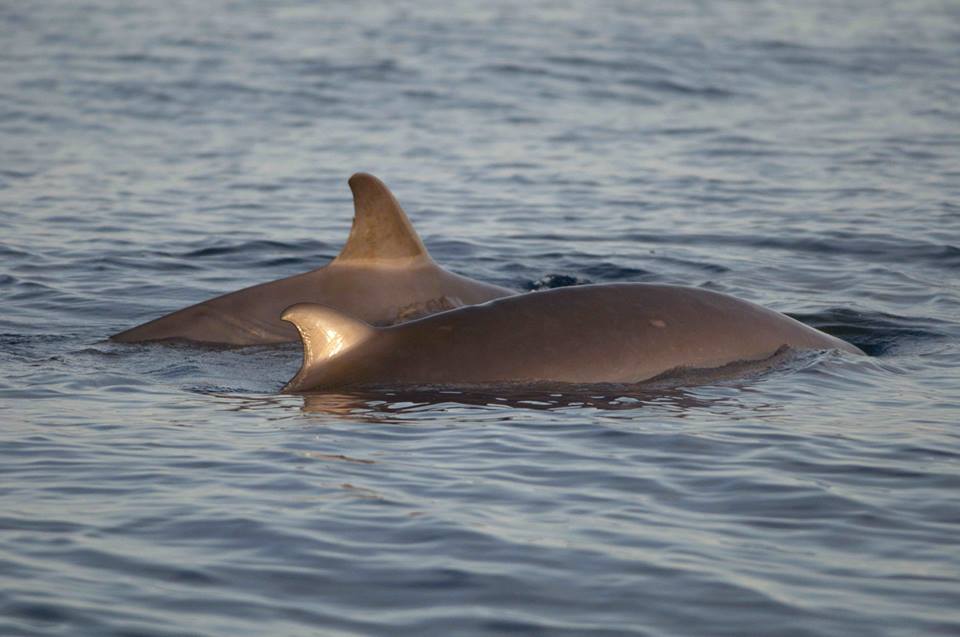
THE FIN OF A MALE BEAKED WHALEBeaked whales - the fin of a male

DOLPHINS

BOTTLENOSE DOPHIN & CALFBottlenose Dolphin & Calf, Abaco

BOTTLENOSE DOLPHINBottlenose Dolphin near Gorda Cay

DOLPHINS BOW-RIDINGDolphins bow-riding

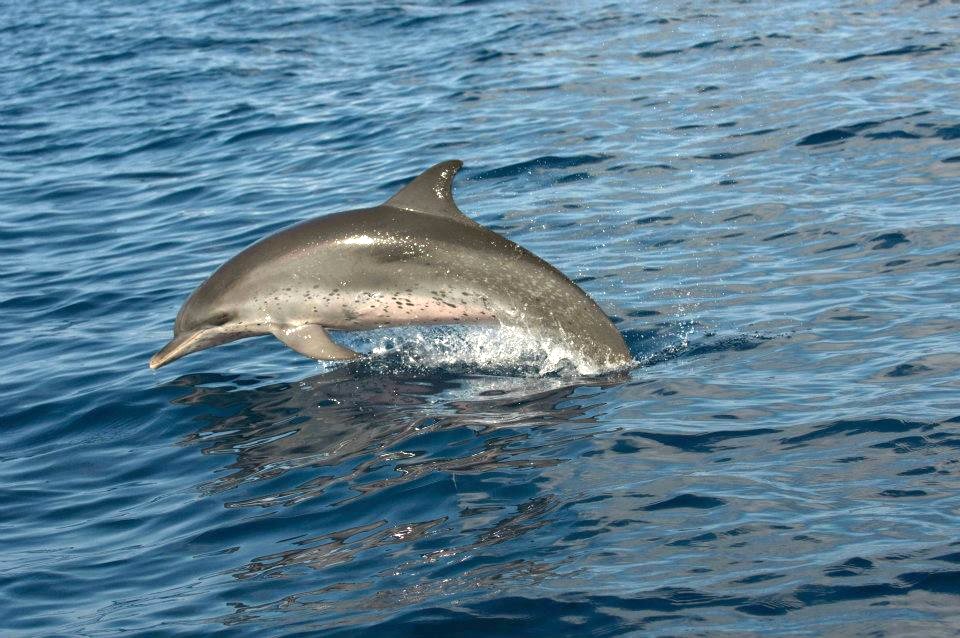
SPOTTED DOLPHINSSpotted Dolphins Spotted Dolphins x 4

ROUGH-TOOTHED DOLPHINS

The research, tagging and monitoring programs pay dividends in conservation and species preservation terms… but then along comes a brutal reminder, way out in the pristine ocean, of the far-reaching extent of man’s reckless damage of the planet and the creatures in it. This poor animal has become swathed in plastic.  The likelihood is that its stomach will have dozens of pieces of plastic in it, from microscopic to potentially damaging – or fatal. We made it all, and we chucked it away.Marine Mammals & plastic

Moving into less contentious areas, here is the BMMRO sightings list for the last month, with a great deal of activity recorded. For once there is even a sighting included of my very own, of 3 bottlenose dolphins in Hope Town harbour one lunchtime in mid-June. See HERE

BMMRO June Sightings

Finally, the latest news from the BMMRO is that Dr Diane Claridge, besides being awarded her PhD earlier this year for her research on beaked whales, has graduated from the ancient scottish university of St Andrews, founded in  1413. It is the third-oldest university in the english-speaking world (and the oldest in the scottish-speaking world…).Dr Diane Claridge, St Andrews Uni

Georgie Manatee BMMRO SUPPORT LOGO

Credit: savethemanatee.org

Unknown's avatar

ABACO WHALES & DOLPHINS, BMMRO SIGHTINGS & NEWSLETTER


Dolphin Leap copy

ABACO WHALES & DOLPHINS: BMMRO SIGHTINGS & NEWSLETTER

I haven’t posted Abaco whale, dolphin & manatee news for a while. Time for a catch-up. Georgie the young manatee that left her mother Rita and came to Abaco from the Berry Is. alone, is no longer here. She survived a very long journey, and investigated various coastal areas of Abaco – all the while being tracked. In the end she settled down in the Cherokee area. There were anxious times during Hurricane Sandy when she went missing (having by now shed her tracking device) but she eventually reappeared at Cherokee having found a safe haven from the storm. Sadly, however, her condition deteriorated and in the New Year she was relocated to Atlantis Dolphin Cay Marine Mammal Rescue Center. Some weeks ago a healthy Georgie was moved to a sea-pen to acclimatise her for release back into the wild.

Read more about Georgie the Manatee’s epic trip HERE and about the operation to relocate her HERE

ABACO DOLPHINS – A MOTHER & HER CALF 428475_595355517150345_807197303_n-1

The Bahamas Marines Mammal Research Organisation (BMMRO) is based at Sandy Point, Abaco. A number of research projects are underway, and recently these have involved work on Andros. The team are now back, and encountering Abaco’s own dolphins and whales. The main photos on the page have all been taken in the last week or so. [The header is by Norwegian artist Roll Inge Haaver]

BOTTLENOSE DOLPHIN, ABACO971695_596998516986045_1649965583_n

SPERM WHALE ‘TAILING’, ABACO (1 of 3 found yesterday using acoustic tracking)374338_596998896986007_1736456956_n

DCB GBG Cover Logo dolphin

BMMRO CHART OF CETACEAN SIGHTINGS FOR MARCH 2013

Of special note are the big whales – 3 sperm whales, and a humpback whale reported close to Cherokee.
BMMRO SIGHTINGS March 2013

Sperm whales. Humpbacks. How big are they? This useful chart shows the average lengths of various whales. I grabbed it off the internet a while ago, but regrettably forgot to mark the source. So, apologies to the originator for using it uncredited, a cyber-sin I try to avoid.what-largest-whale-cetacea-size-comparison-chart-590x338

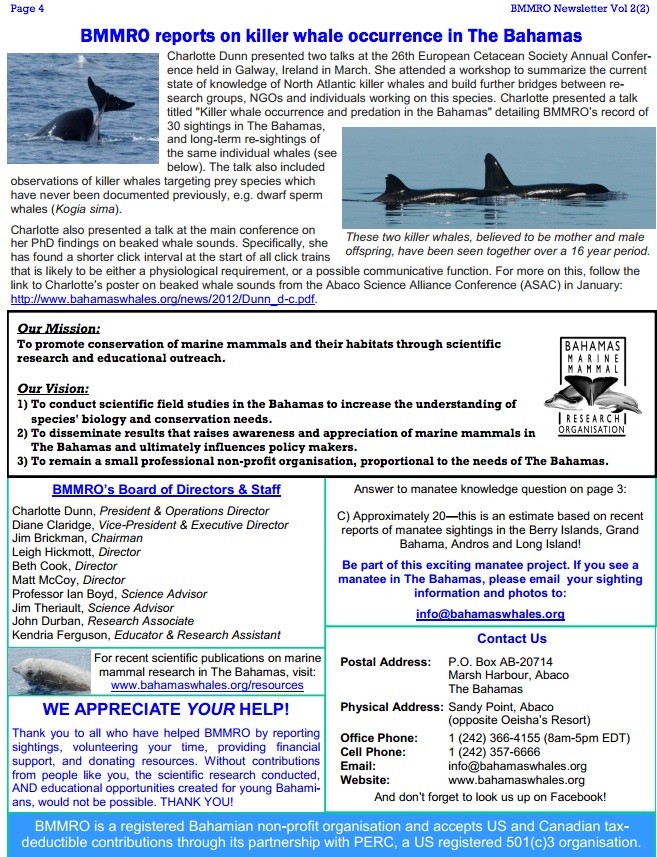
Finally, the BMMRO’s latest 4-page Newsletter contains a wealth of information about their current activities, some great pictures, and even a quiz – check out BMMRO NEWSLETTER_Apr13

Click logo to linkbmmro_logo

Unknown's avatar

“MANATEE MANIA IN THE ABACOS” BMMRO FALL 2012 NEWSLETTER


“MANATEE MANIA IN THE ABACOS” – BMMRO FALL 2012 NEWSLETTER

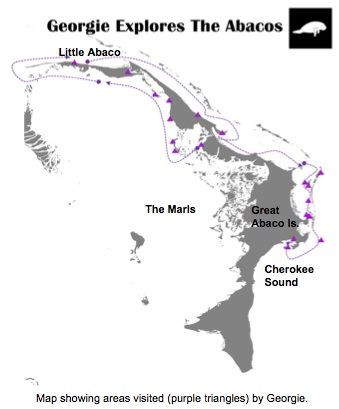
The BMMRO has just published the Fall 2012 newsletter, and it’s no surprise to find that the front page news is the arrival of young manatee Georgie on Abaco. After nosing and indeed grazing her way around Abaco and the Cays, she still appears to be contentedly moored in Cherokee after the best part of a month. Here’s the official map of her wanderings 

Besides the manatee there’s plenty more to read and look at including 

  • Charlotte Dunn’s ‘President’s Update’
  • Articles on whales, and a friendly bottlenose dolphin’s visit to Hope Town
  • Fall ‘cetacean sightings’ map
  • Students at ‘Whale Camp’
  • A quiz to make sure you have taken it all in…

To read the four-page document –  and admire the photos – CLICK BMMRO FALL 2012 NEWSLETTER

Unknown's avatar

“GEORGIE” THE MANATEE MOVIE: ON LOCATION AT CHEROKEE, ABACO


UPDATE 17 OCT I gather that Georgie is so pleased with her new home at Cherokee, she’s still there. Not sure if she is with or without her tag, but I suppose if she has decided to stay put in one area, tracking her is not a priority. Maybe the sea grass there is a particularly good kind – or perhaps she has found natural springs to her liking. Maybe it’s the folk who live there… yes, I think it must be that. I’m hoping to get some more specific news soon, and some more photos.

UPDATE 7 OCT Kendria says that Georgie has managed to lose her tag yet again. She’s still at Cherokee, but if she decides to make a move, she can now be tracked only from reported sightings. Maybe she just doesn’t like to accessorise…

UPDATE 6 OCT Georgie has taken to life in Cherokee. She is still there – the longest she has stayed on one place during her epic journey. She’s a very popular guest, of course, and  has generated a lot of local interest and affection. Here’s a BMMRO photo taken yesterday of Georgie enjoying some quality algae browsing on the pilings in the dock

“GEORGIE” THE MANATEE MOVIE: ON LOCATION AT CHEROKEE, ABACO

The story of Georgie, the young female manatee currently undertaking a round trip of Abaco, has further raised the profile of these unusual and fascinating creatures in the northern Bahamas. Like many others who have been enthused by this important conservation and research project, I’ve been following her story since her release with her mother Rita in the Berry Is. earlier this year. In June she was weaned. In September she decided to set off to sea grass pastures new –  see GEORGIE for details

Yesterday she was still in the Cherokee area, but had lost her tag. The task was to locate her, find the tag and reattach it, and check her wellbeing. All were accomplished in the course of the day and the BMMRO posted: “Today was another day in Georgie’s ‘world according to Georgie’!!! A special BMMRO thank you and Manatee high five to Andrew Lowe, Cindy & Buddy, and the community of Cherokee! Georgie is lucky to have such caring people around! She is still parked at Cherokee and BMMRO will do their best to continue to monitor her health and habitat use in the area!”

Things have moved on a bit since then, and I am really grateful to Kendria Ferguson for finding the time to email me; and to Cindy James Pinder  for permission to use her excellent photographic material from her time spent with Georgie. Her latest news is that Georgie is moving south towards Casuarina. There are blue holes in the area where she can find fresh water. Cindy adds “She may show up in the canal in Casuarina today. If you see her please offer her fresh water from a hose.”

It’s time to showcase a short video taken by Cindy at Cherokee yesterday. In order to post it here I have had to make a derivative movie from the original. It’s like an uncontentious bootleg, i.e. made with the artist’s approval (for which many thanks!). The quality isn’t as good of course, but you will clearly see what is endearing about these inquisitive, gentle and trusting creatures – and why this makes them so vulnerable and in need of protection. Only today, a woman has been detained in Florida for riding a manatee – a strictly unlawful act that has been strongly condemned.

Here are some stills also taken by Cindy yesterday, who says “…in case you are wondering . . . a manatee feels like leather!”. They depend on having some fresh water, and these great pictures show various methods of supplying it. The top one is my favourite.

HELP NEEDED If you would like to support manatee research and conservation in The Bahamas, please email info@bahamaswhales.org or rollingharbour.delphi@gmail.com 
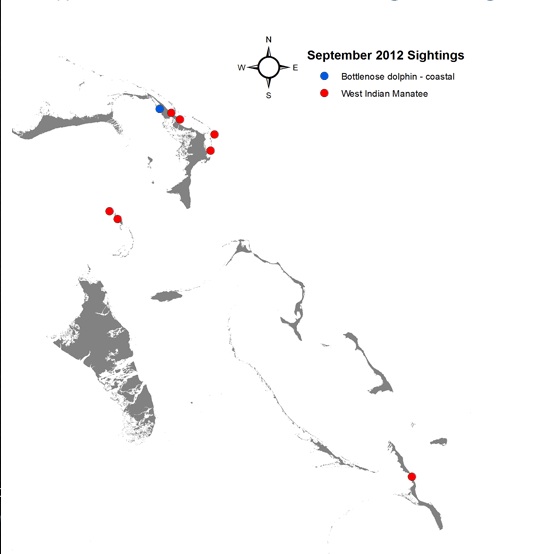
This is the perfect place and time to post the BMMRO September 2012 Whale, Dolphin and Manatee sightings map. Last month the cetacean count was very low – no whales at all, a solitary dolphin. However, manatees are starting to feature much more, and the Abaco sightings – presumably of Georgie as she progresses round the Islands  – are the first ones recorded there (I think) since manatee sightings began to be included towards the end of last year. A cause for breaking out the fresh water to celebrate.
*  *  *  *  *  *  *
MUSICAL AFTERNOTES The video music is Rizraklaru by Ralph McTell (before he arguably spoilt it all with the mawkish ‘Streets of London’) from ‘Spiral Staircase’ (credit / plug for RM). He wrote it in 1967 while living in an old caravan in deepest Cornwall. He and his mates had only mother nature’s ‘Rural Karzi’ to use, and the song title is an anagram. It’s a long story that ends, in RM’s words, “After he’d stopped laughing, Henry and I explained the title’s origin [to him] and he suggested an anagram, so we put the first letter last and spelt the whole thing backwards, and there you have it ! RIZRAKLARU !” 
Unknown's avatar

BMMRO WHALE, DOLPHIN & MANATEE SIGHTINGS ABACO / BAHAMAS JULY 2012


BMMRO WHALE & DOLPHIN SIGHTINGS ABACO JULY 2012

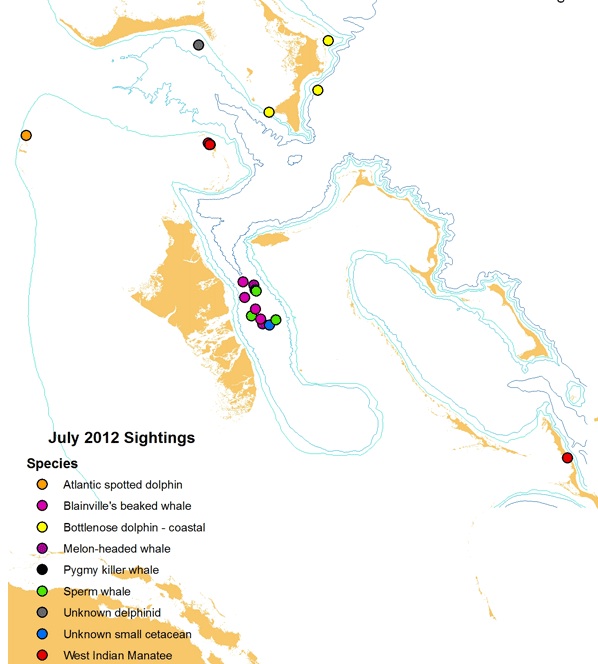
Last month there were bottlenose dolphins for Abaco; manatees for the Berry Is. [Hi, Rita & Georgie! – check out their progress on FACEBOOK BMMRO] with a first manatee sighting (I think) off the west coast of Long Island; and quite a few whale reports off the east coast of Andros. I wonder why the whales are all in that area at the moment? Maybe the reports are high for that area because that’s where the whale spotters congregated in July…

STOP PRESS Georgie the Manatee is now weaned – for details CLICK===>>> HERE

STOP PRESS 21 AUG As a sad coda to these sightings, the BMMRO has posted news of the stranding and death of  pygmy sperm whale on Eleuthera

Stranding Event: August 19th, 2012
A blackfish stranded in Eleuthera:

Photos confirmed the species to be a pygmy sperm whale. The animal stranded alive but later died. Many thanks to Tom Glucksman and his wife for their efforts in providing pictures and getting a skin sample, which will allow us to get even more information about this animal

For more information on how to report a stranding event, please visit  http://bahamaswhales.org/stranding

BMMRO (Website)

FACEBOOK BMMRO

Unknown's avatar

BMMRO WHALE & DOLPHIN SIGHTINGS ABACO JUNE 2012


BMMRO WHALE & DOLPHIN SIGHTINGS ABACO JUNE 2012

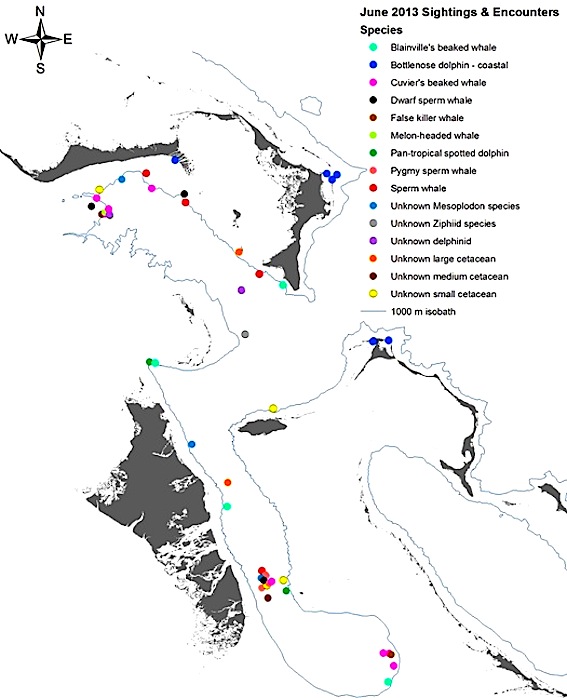
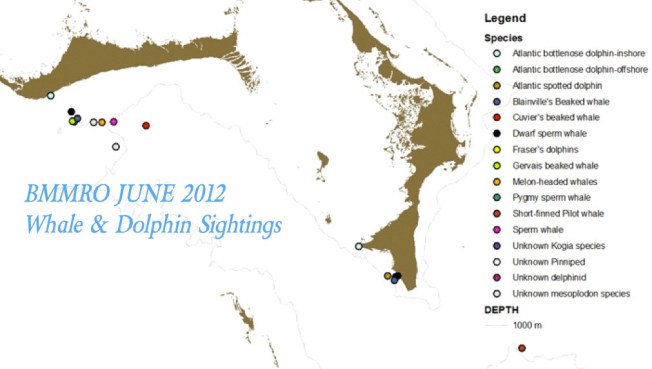
Actually, I say ‘Abaco’ but the most activity – and the most varied, species-wise – is off the southern coast of Grand Bahama. Abaco sightings are also confined to the south, with shows from a PIGMY SPERM WHALE and a BLAINVILLE’S BEAKED WHALE  and dolphins in the arc between Rocky Point and Hole-in-the-Wall. To see recent aerial photos of this section of coast CLICK===>>> HERE

The manatees of the Berry Is. are no longer shown on this map. Their happy story (and their fame) has spread and they now have their own entries on the BMMRO FACEBOOK PAGE, like any self-respecting stars. You can reach it anytime direct from the Sidebar if you you want to keep track of the story of Rita and her calf Georgie’s rehabilitation – and the other manatees they have encountered as they get used to their freedom. 

ADDED The latest BMMRO quarterly newsletter has just been published – highly recommended for anyone with an interest in active whale / dolphin research, or in the latest news of the manatees of Berry Is. To see it CLICK===>>> BMMRO NEWSLETTER JULY 2012

Unknown's avatar

BAHAMAS MANATEE & BMMRO SPRING 2012 CETACEAN REPORTS


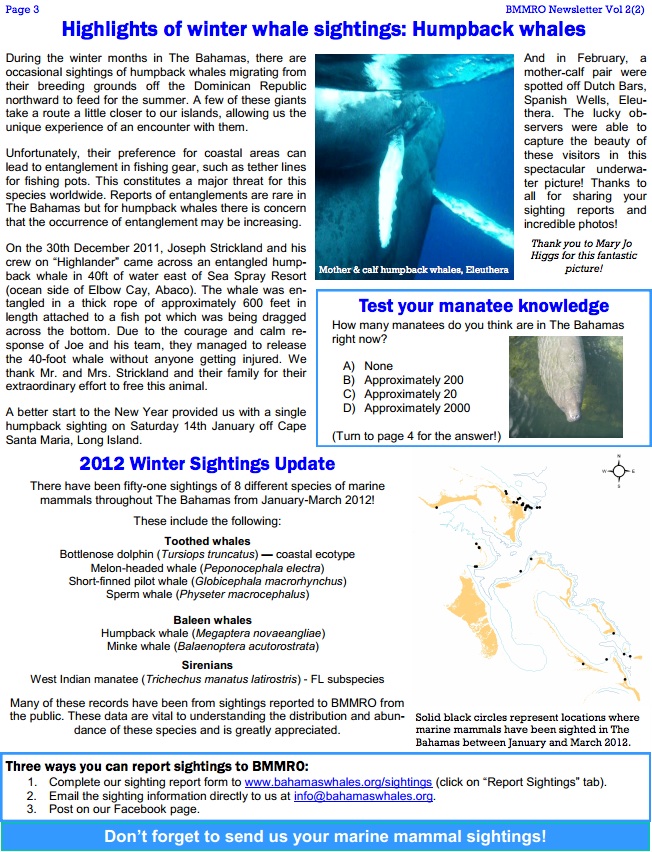
The BMMRO has just published two online reports that will interest anyone who follows the news about Whales, Dolphins and Manatees in the Bahamas.

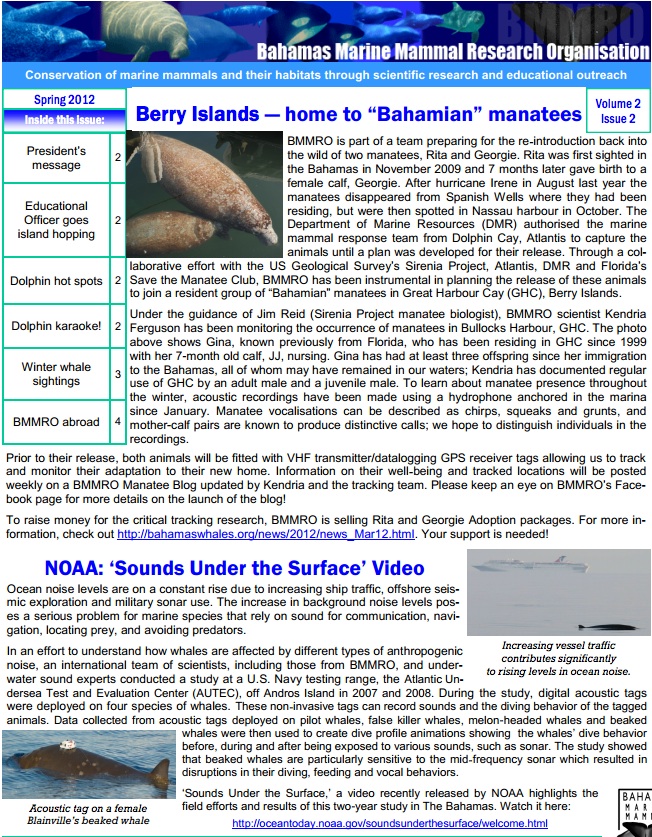
The first concerns the reintroduction of manatees to the wild – and offers the opportunity to adopt one of them in order to support the continuing work of the conservation of the small manatee population of the Bahamas. You could have a guess now at the number of recently recorded manatees: the answer is right at the bottom of the page. If you have followed this blog’s cetacean posts, you will have noticed my own interest in the continuing monthly sightings (mainly off the Berry Is.) I have had to reduce the size of the article, but if you click on it once – or twice – it enlarges to make it more legible.

To see the article on the BMMRO website CLICK==>> BMMRO MANATEES

To go directly to my manatee page CLICK==>> ROLLING HARBOUR MANATEES

Click article to enlarge it

BMMRO REPORT SPRING 2012

I have summarised past BMMRO quarterly reports, highlighting particular features and photos. This time I’ve put in the whole report in (I hope) legible format. To see it on the BMMRO site CLICK===>>> BMMRO SPRING 2012

Approximately 20

Unknown's avatar

BMMRO WHALE, DOLPHIN & MANATEE SIGHTINGS MARCH 2012


BMMRO WHALE, DOLPHIN & MANATEE SIGHTINGS MARCH 2012

Hard on the heels of the BMMRO’s Fisheries Report for 2011 – see previous posts – comes the map of last month’s sightings. First, let’s hear it for the manatees, featuring for the 4th consecutive month off the Berry Is. The 2 reports of an ‘unknown large cetacean’ off Elbow Cay are the puzzles of the month. There was a sperm whale in that area in January, but presumably it would have moved away in the meantime…. I wonder what the likely candidates are for ‘large’ besides sperm and humpbacks?