Unknown's avatar

ABACO BARBS – THE ISLAND’S ENDANGERED WILD HORSES

In the rollingharbour tradition of encouraging easy access to online material, here is a selection of 8 videos about Abaco Barbs, the near-extinct wild horses of Abaco. In due course I’ll add some links to the most informative websites and also some photos. The first 3 videos derive from the origins and subsequent conservation work by the charity Arkwild. There’s a link to the Arkwild site in the sidebar Blogroll. The struggle to try to preserve the breed is extremely well documented on the internet, and needs no repetition from me. It’s worth saying, however, that the situation is now worse than ever: in March 2011, there were only 5 horses left, of which only one is a stallion…

The remaining videos are mostly collections of stills, some accompanied by music that you may want to turn down. Or off, in one case. There’s a degree of repetition, but I have left them there in case there is an image that strikes you as special or a nugget of information that is of interest…

THE ARKWILD VIDEOS

      Thumbnail1:49

ABACO BARB TRAILER

Horses in the Pines, the story of the Abaco Barbs. Only 8 left on the planet, their story is both tragic and beautiful. by photogchic1 | 3 years ago |

A BRIEF HISTORY OF THE WILD HORSES OF ABACO

This compelling video is an introduction to the story of the Wild Horses Of Abaco. Only a few are left now, we’re fighting hard to save them from … by arkwild | 2 years ago |

THE ABACO WILD MARES GET SUPPLEMENTAL SNACKS

Because the forest is in a dry cycle, new grasses are not growing fast enough we decided to supplement each mare with a measure of mixed grain and … by arkwild | 1 year ago

>>>>>>>>>>>>>>>>>>>>>>>>>>>>>>>

SUPPLEMENTARY VIDEOS  

ABACO BARB HORSE

The Abaco Barb is one of the purest breeds left in the world. They live on an island in the Bahamas where they ship wrecked around the same time … by TheFluffyFan53 | 2 years ago |

HELP THE ABACO BARBS!

Once, they were a mighty herd, perhaps 200 strong: pinto, bay and roan horses rippling through thousands of acres of pine forest. They were as … by SabinoPaintMare369 | 2 years ago |

♥HELP THE ABACO BARBS

The abaco barb is so pretty! why would u want them 2 die out? Help them out and try 2 keep them on this planet! subscribe 2 me if you care … by EnglishCowgirl121 | 2 years ago |

ABACO BARB HORSE

This is a short clip of the beloved Abaco Barb Horse, I know that my name says puppylove, but i am making horse, videos. For more info go to this … by puppylove825 | 2 weeks ago |

ABACO BARB.WMV

Information about the world’s rarest and most endangered horse breed by Horsieperson | 2 weeks ago |
Unknown's avatar

POTCAKES – THE CANINE FACTS

POTCAKES – THE FACTS

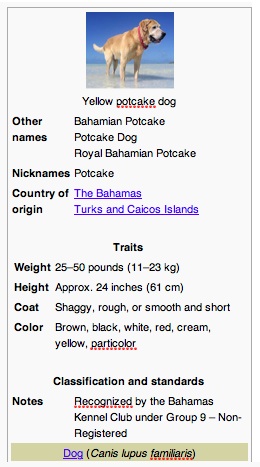
    • Potcakes are a mixed-breed dog of the Bahamas & TCI, named after the layer of dried rice and peas in  the bottom of cooking pots, traditionally fed to stray dogs
    • Appearance and colouring varies considerably from island to island. Mostly commonly they are (mainly) brown, have smooth coats, cocked ears, and long faces. Adults typically weigh from 45 to 50 pounds (20 to 23 kg)
    • Potcakes have a wandering tendency. There are many strays on every island – often considered a nuisance. Volunteer organizations re-home strays,  and offer free spaying and neutering
  • Potcakes are often used for hunting hogs. Some are even trained to locate fish through  scent on the water and the cries of feeding sea birds
  • Potcakes may originate from 3 canine types: (1) dogs brought by the Arawak  to the Bahamas; (2) terriers protecting supplies from rodents on ships to the Bahamas; (3) Dogs that arrived with Loyalists during the Revolutionary War
  • In the 1970s the potcake dog was officially recognized in The Bahamas as the “Royal Bahamian Potcake”. In February 2011, they were accepted by the Bahamas Kennel Club in the category ‘Group 9 Non-Registered’
  • A potcake dog named Amigo has been the mascot of the Humane Society of Grand Bahama. He ‘served as an Ambassador of Hope for homeless animals’ until his death in 2007, and appeared on TV
  • Potcakes have featured in a set of special-issue Bahamas stamps

Factoids above distilled from a variety of sources (mostly overlapping) – danke – in particular good old wiki. I’ve done the leg-work for you, but there is other material out there. In particular, put ‘Potcake’ into YouTube & there are plenty of videos of Potcakes. Below are 4 web-links that might interest or amuse

SOME POTCAKE-CENTRIC LINKS

POTCAKE PLACE functions to rescue, foster and assist adoption of potcakes of the Turks and Caicos Islands

ROYAL POTCAKE RESCUE site                                                                                        Video of spay/neuter clinic in Abaco, August 2010

POTCAKE FOUNDATION TCI-based site, with numberless souvenirs available – get your loved one a potcake apron or nightshirt…

AMIGO THE POTCAKE  5***** cartoon ‘book’ named for the most famous potcake of all. Engagingly barking

ARTICLE IN ABACO LIFE: COMMEMORATIVE STAMPS & FAMOUS DOGS CLICK LINK===>>> Abaco Life Potcake Article

POTCAKE VIDEO: CRAB-HUNTING ON THE BEACH


Unknown's avatar

ABACO ISLAND BOA: THE ONLY ABACO SNAKE


THE ABACO ISLAND BOA (or NORTHERN BAHAMAS BOA)

[Epicrates exsul] RENAMED 2013 Chilabothrus exsul

Kingdom: Animalia * Phylum: Chordata * Subphylum: Vertebrata * Class: Reptilia * Order: Squamata * Suborder: Serpentes * Family: Boidae * Subfamily: Boinae * Genus: Epicrates * Species: Epicrates exsul

COMMON NAMES: Abaco Island boa, Northern Bahamas boa Abaco Boa (BNT) Chilabothrus exsul

EPICRATES CHILABOTHRUS EXSUL is a non-venomous species of boa, the only one of its species and genus. These snakes are grey with a reddish sheen. They grow to a maximum of 80 cm / 2ft 6″ in length [now see end of post] and feed on small mammals, birds and lizards. They are found throughout the Abacos, including Elbow Cay; and on Grand Bahama; but not elsewhere in the Bahamas (wiki-aided inc. image)

And if you can’t get to Abaco, there’s one in Oklahoma City Zoo: OKCZ ABACO ISLAND BOA 

LATEST NEWS DEC 2011 a surprising visitor to the Friends of the Environment offices on 7 Dec 2011, posted on their Facebook page 

A visitor at the FRIENDS office this afternoon, a Bahama Boa! This snake flattened itself pretty thin to try sneak out under the door frame! The door is open now so it can leave easily 

STOP PRESS: a convincing refutation of the general consensus that the maximum length of these snakes is around 2′ 6″, with thanks to Brigitte Bowyer Carey. This specimen was photographed on Tilloo Cay in 2008, held at arms length by Don Allen 

ABACO ISLAND BOA, TILLOO CAY 2008

Unknown's avatar

SANDY VERNON’S DELPHI CLUB GALLERY


SANDY & BILL VERNON
have provided a number of wonderful photos from their stay at Delphi earlier this year. The images conveniently coincide with various categories already posted, to which the headings below link (supposedly – I will sort out any problems in due course, the general rh policy being to upload pictures first then worry about details later…)

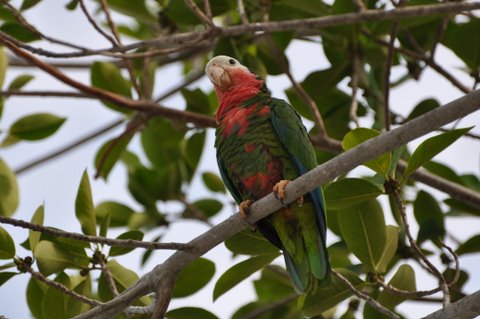
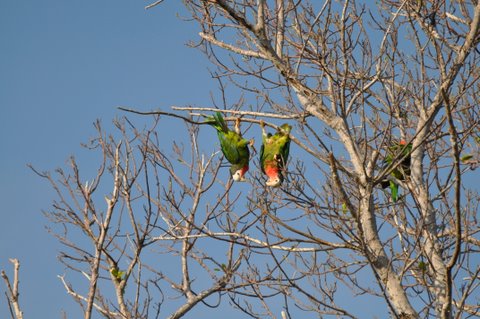
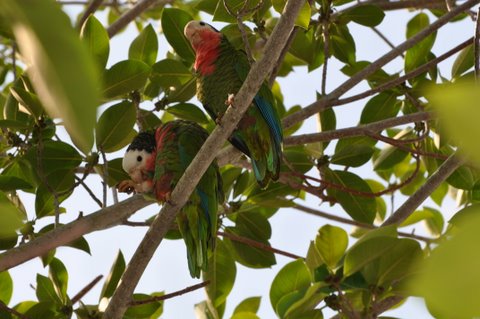
ABACO PARROTS  (including some extraordinary acrobatics)


FLOWERS

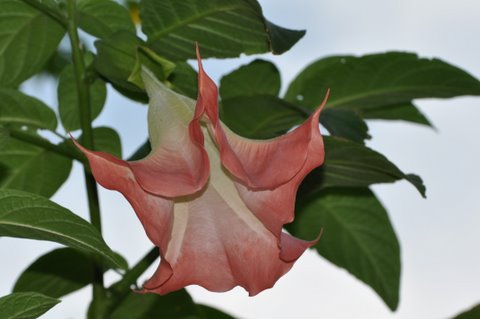
Angel’s Trumpet (Datura Candida)

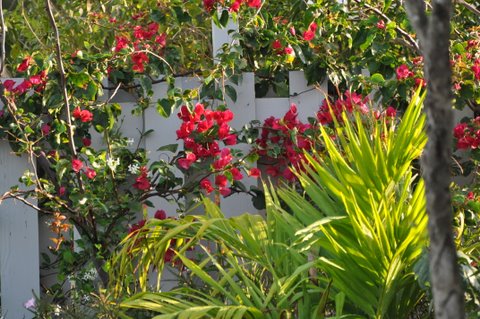
Bougainvillea

OLEANDER (Nerium Oleander)

BUTTERFLIES

POLYDAMUS SWALLOWTAIL

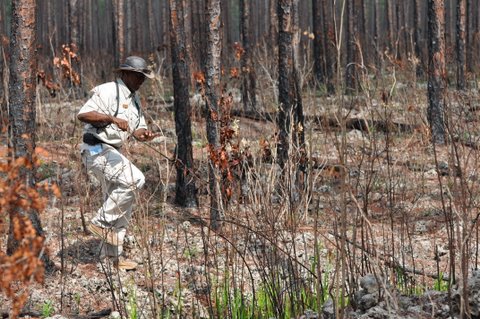
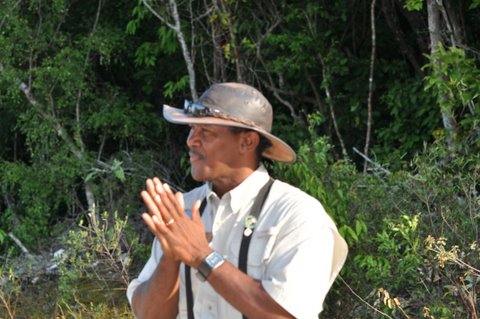
FOREST FIRE DAMAGE AT DELPHI (Ricky Johnson gets involved)


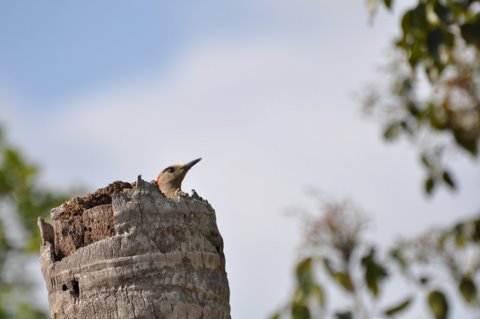
THOSE WEST INDIAN WOODPECKERS AGAIN

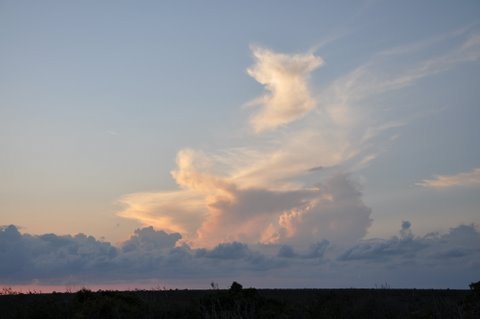
CLOUD FORMATIONS

SANDY, unable to contain himself at one of his own jokes, being comforted by a guest, while PM and other guests tactfully look away


Unknown's avatar

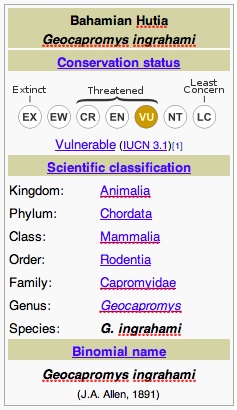
THE BAHAMIAN HUTIA: ABACO’S EXTINCT RODENT

THE BAHAMIAN HUTIA  (Geocapromys ingrahami)

HUTIAS are cavy-like rodents of the Caribbean Islands. They range in size from 20 to 60 cm (8 to 24 in), and can weigh up to 7 kg (15 lb). Twenty species of hutia have been identified, of which half may now be extinct. Their tails vary from vestigial to prehensile. They have stout bodies and large heads. Most species are herbivorous, though some eat small animals. Instead of burrowing underground, they nest in trees or rock crevices. Of extant species, only a few are common; most have become vulnerable or endangered. In Cuba they are hunted for food, and are often cooked in a large pot with wild nuts and honey. One of the recipes is hutia stew: sauté with green peppers, onions, tomato sauce and lots of garlic. (Source: Wiki)

         Photo WWF/ G. Clough

The Bahamian species of Hutia is endemic to the Bahamas. It is listed as a vulnerable species. Its natural habitats are moist forests, dry shrubland and rocky areas. Hutias are a nocturnal species, remaining underground during the day. Two subspecies became extinct in modern times. The Crooked Island Hutia (G. i. irrectus) and the Great Abaco Hutia (G. i. abaconis) were mentioned by early European voyagers, and are believed to have become extinct by 1600. This is thought to be due to land clearance rather than direct hunting. However, they are found elsewhere in the Bahamas – the Exumas, for example.

————————————————————–

IT’S OFFICIAL: the extinct species listing

Great Abaco Hutia  Geocapromys ingrahami abaconis West Indies, Bahamas, Great Abaco Extinct in 1600

For more details, check out Rod Attrill’s excellent website, for which this is the relevant link: http://www.motygido.co.uk/bahamas_hutia.html  

Tail of a Hutia (nb quite different from a rat)IMG_7500.jpeg

STOP PRESS: THIS SMALL POST HAS RECEIVED A SURPRISINGLY LARGE NUMBER OF HITS – CAN ANYONE EXPLAIN WHY? 

NEW: HUTIA VIDEO (added Dec 2011)

Image added April 2012 (credit as annotated)

Unknown's avatar

HOT SHOTS: WOODPECKER & BUTTERFLY UPDATE FROM DELPHI, ABACO

I have returned from “The Other Delphi” to find that Peter Wesley Brown has provided 3 excellent images, now uploaded to the CONTRIBUTIONS / PHOTOGRAPHS page. Two are excellent pictures of a Gold Rim / Polydamas Swallowtail, dramatically… no, badly photographed by me for the BUTTERFLIES post and later identified by PM; the third shows that THE RELUCTANT WOODPECKER has finally made herself / himself at home in the nesting box… 

Unknown's avatar

PERPETUAL MOTION BUTTERFLY IDENTIFIED AT DELPHI, ABACO

The (badly-photographed) dark butterfly in the earlier post has been identified as a GOLD RIM SWALLOWTAIL / POLYDAMAS SWALLOWTAIL     (Battus Polydamas Lucaeus)  Continue reading

Unknown's avatar

ABACO BUTTERFLIES AT DELPHI / CONTRIBUTIONS / BLOG FORMAT CHANGES

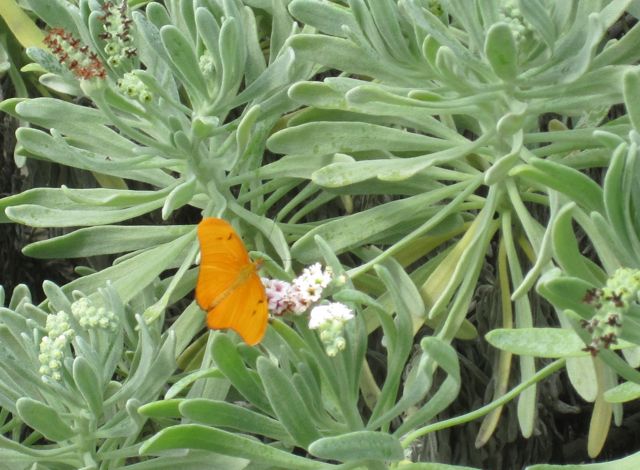
As a change from birds, here are some other flying items, mostly from around Delphi itself, with a redesigned logo in their honour.

JULIA LONGWING Dryas Julia (Delphi Beach – plant now ID’d as a Bay Cedar Suriana maritima, much enjoyed by butterflies and bees)

HAMMOCK SKIPPER Polygonus Leo (Delphi Service Drive)


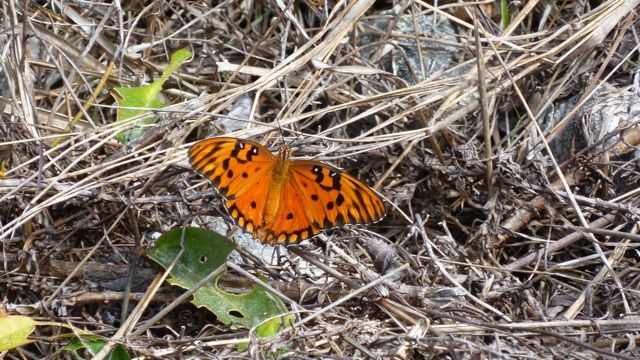
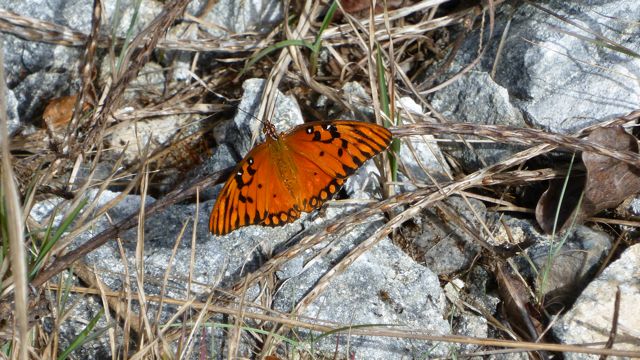
GULF FRITILLARY Agraulis vanillae (Delphi Guest Drive)


I haven’t nailed the ID of this one yet. Any ideas appreciated. [See later post for ID as GOLD RIM SWALLOWTAIL / POLYDAMUS SWALLOWTAIL     (Battus Polydamus Lucaeus) ]
Seen all round Delphi this March. These are on the move the whole time, and are surprisingly hard to pin down (not a very sensitive way to put it for a butterfly…) The bottom photo looks like a rubbish picture, I know, but in fact the butterfly is at rest (the body / legs / feelers aren’t blurred) while the wings beat fast and constantly while it feeds

AND FINALLY… Pride of place goes to this Atala Hairstreak, photographed during a Delphi outing with Ricky Johnson to one of the Blue Holes in the pine forest. It’s the only place I have seen these small butterflies, and there were only four or five. This one stayed still for just long enough

ATALA HAIRSTREAK Eumaeus Atala

===========================================

BLOG NEWS UPDATE 

23.04.11

  • Email Share added to the main pages
  • Pages Menu added to sidebar
  • Contributions received now posted on the appropriate page…

Note I am trying to reorganise this blog to increase accessibility of categories and sub-categories. Struggling a bit… one major accidental deletion so far… proposed pages under construction or at least under contemplation… please bear with me!  

============================================