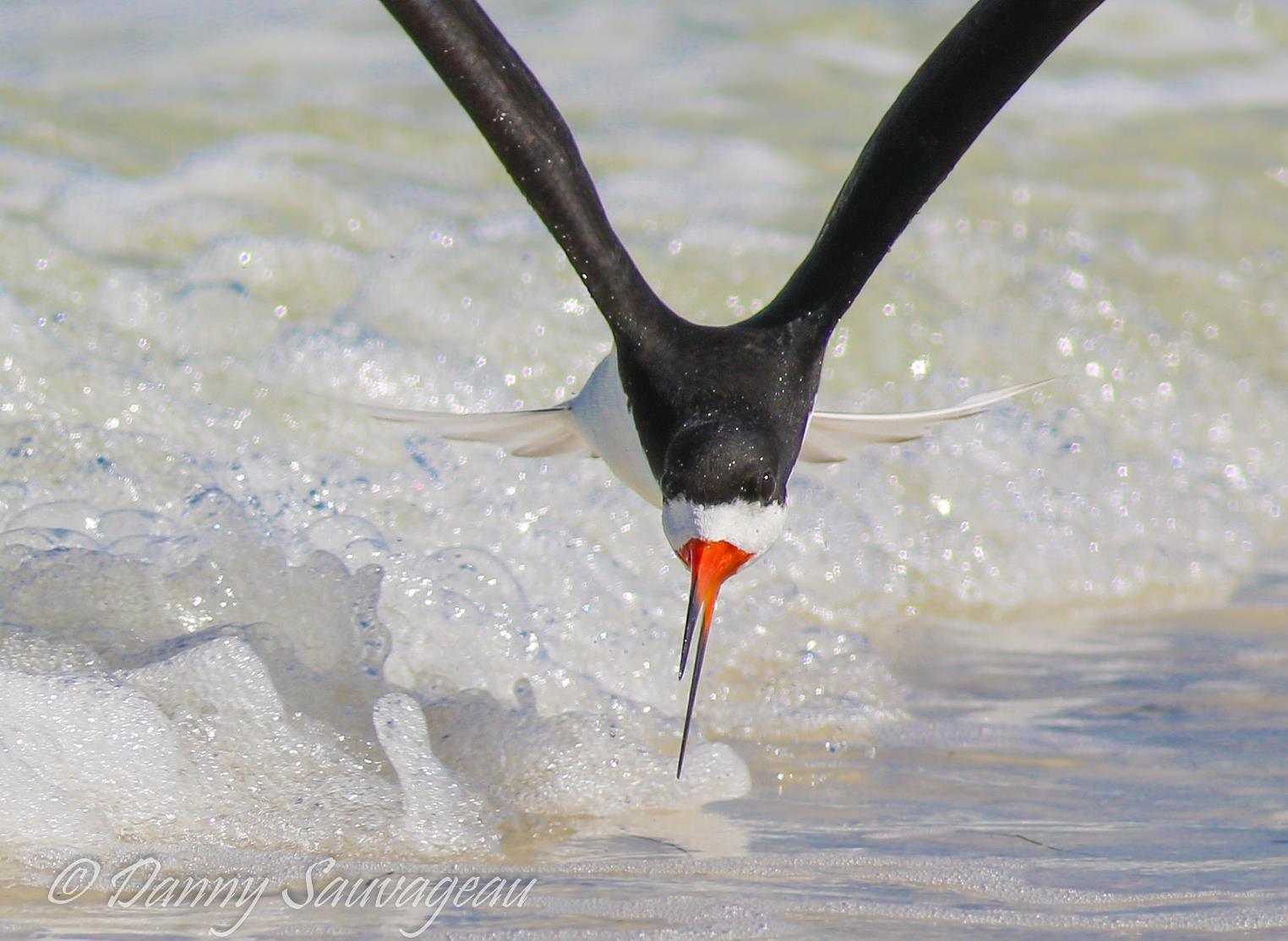
Last year I posted about an avian scoop, when black skimmers (Rynchops niger) were actually photographed on Abaco. These wonderful birds are classified WR 4 for Abaco, which means uncommon winter residents (ie roughly September until April). Now I look into it further on the indispensableeBird, there are actually quite a few reported sightings most years on Abaco – especially on the Cays. Furthermore the sightings cover most months except midsummer. So maybe they aren’t so rare after all. But I couldn’t track down any workable Abaco skimmer photographs until Charmaine Albury managed to take a few last Autumn, which led to the gift post title SCOOP. Because that is just how they feed.
Danny Sauvageau is a dedicated birder in Florida, and a brilliant photographer with it. From time to time I feature his work when his camera skills cover a species found on Abaco but for which Abaco images are scarce (or non-existent). All these photographs were recently taken in Pinellas County, Fl., and I’m really grateful to Danny for permission for occasional use of his exceptional photos.
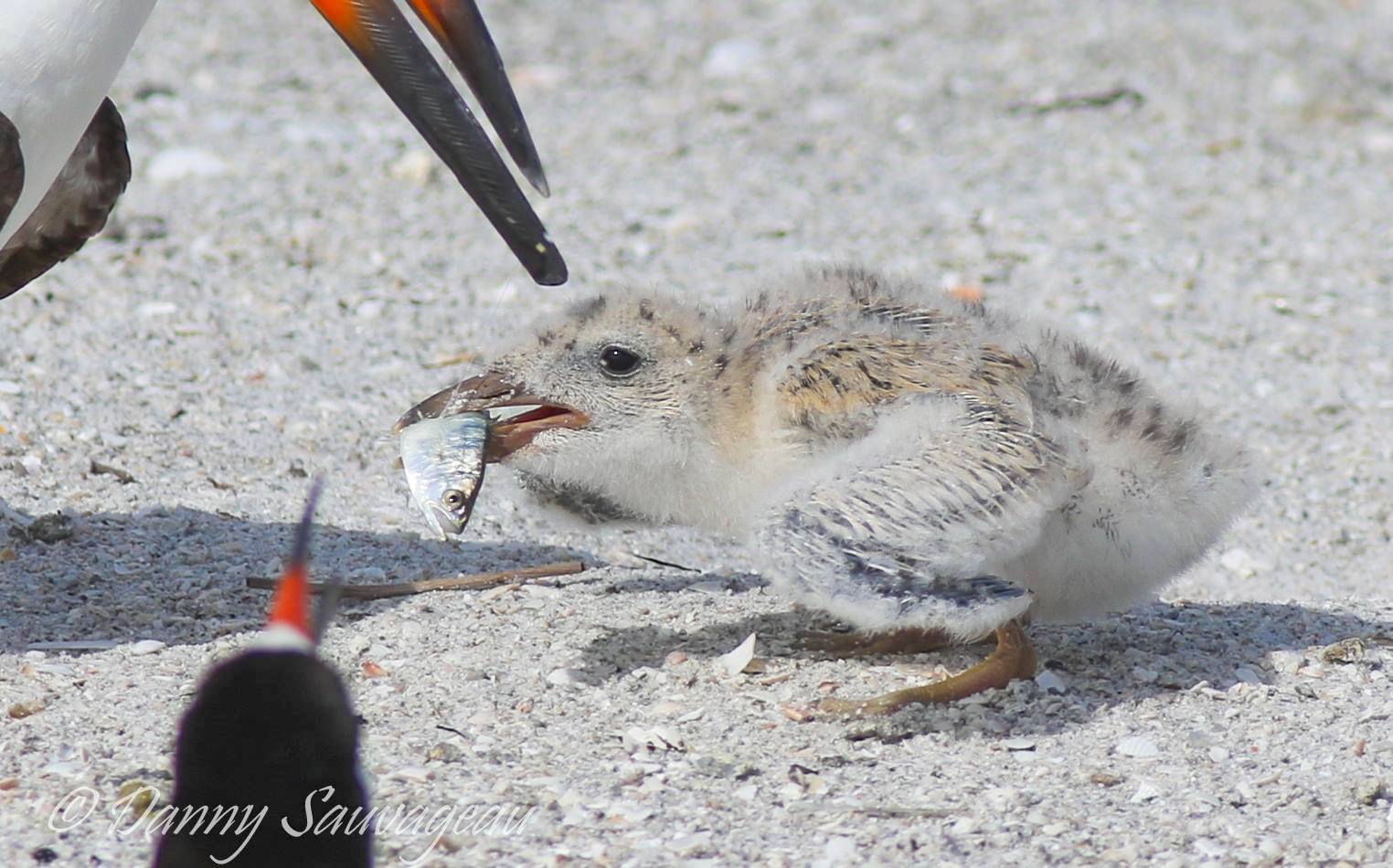
At the moment, the breeding season is well under way, with the hungry chicks being fed as fast as they can swallow. And this is how that looks, thanks to Danny and his immense talent.
And finally… I’d be really pleased to hear about any Abaco skimmer sightings (and I’ll keep an eye on eBird). Bonus points and a theoretical Kalik for photographs!
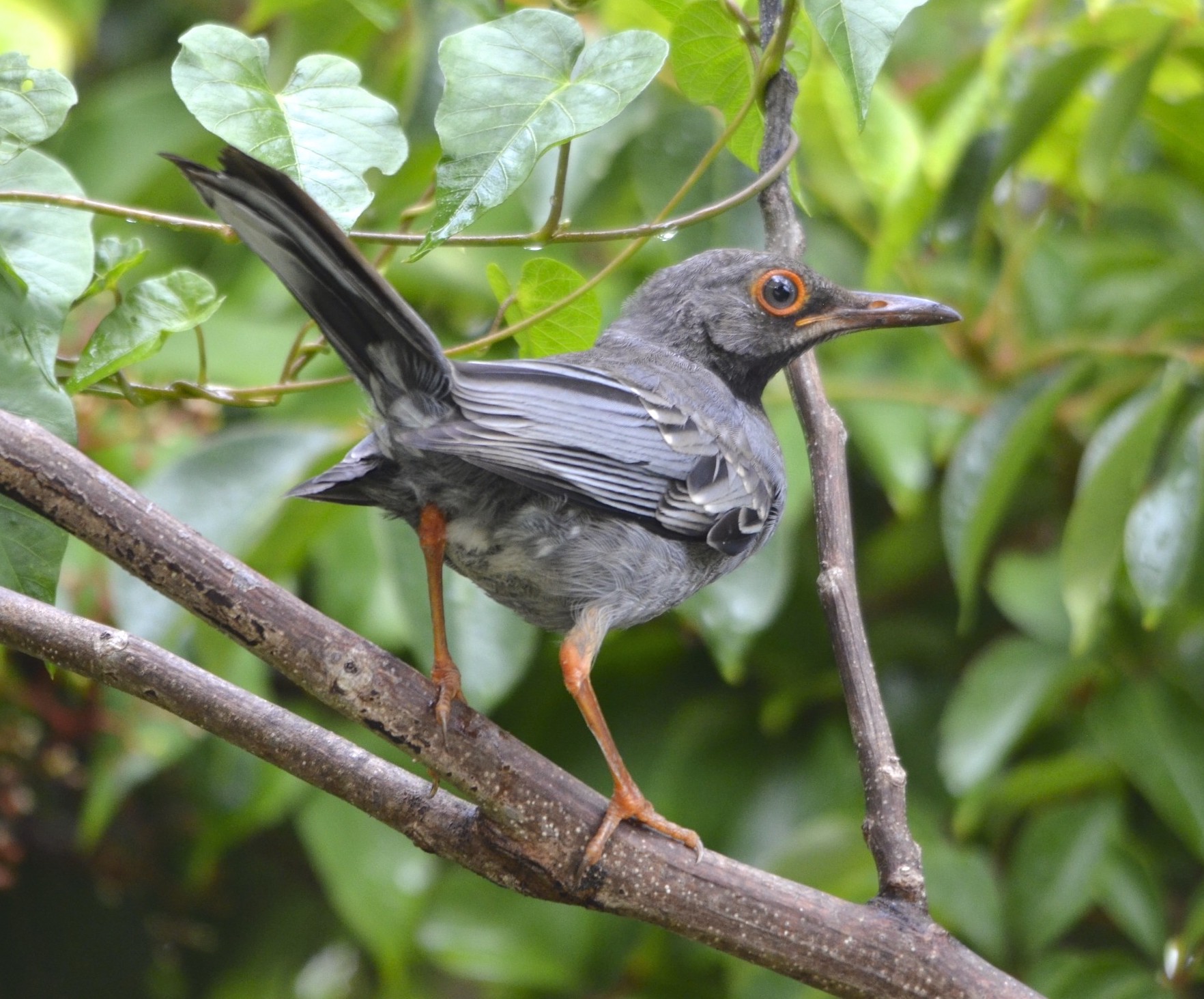
I see it is ‘literally’** years since I last wrote about these lovely, accessible birds, the only permanent resident breeding thrush species on Abaco (out of 8). The post –OL’ RED-EYES IS BACK– featured mainly my own photos, plus one by Mrs RH. With a whole lot of more recent photos, it’s time to revisit these cheery birds. I promised something brighter after two rather sombre shearwater die-off posts – (incidentally, a far wider problem than just in the Bahamas, including NC & Cape May). Here it is.
A RED-LEGGED, RED-EYED GALLERY
Many of the birds shown here were photographed in or around the grounds of Delphi. More recently, they have to an extent been displaced by red-winged blackbirds which are of course very fine birds but in large numbers sound (may I say this? Is this just me?) quite irritating after a while. Whereas the thrush of course has a sweet and melodious song, like this (my own recording – turn up the vol):
Mr & Mrs Harbour’s Handiwork at Delphi
As I may have mentioned before (impatient reader: ‘yes, yes, you did’), the eyes of the RLT are at least as prominent a feature as their legs. Lots of birds have red legs. Very few have such remarkable bright, fiery eye-rings, even in a youngster.
This photo from birdman Tom Sheley is my favourite – a perfect composition
**This means it really is literally years (4), not in the modern modified sense of ‘not actually literally’, as in “I am literally dying of hunger”. Unless you are exceptionally unfortunate, while you have the breath to say you are, you are literally not doing so…
FUN FACT
There is quite literally no song since 1950 with the word ‘thrush’ in the title. Hard to fathom why… One or two songs have a thrush buried away in the lyrics somewhere. Blackbirds have done rather better in this respect…
Photo Credits: Tom Sheley (1, 11); Peter Mantle (2, 4); Gerlinde Taurer (3); Mr & Mrs Harbour (5, 6, 7); Charles Skinner (8, 9); Erik Gauger (10). Lo-fi audio recording: RH
A week ago I posted about the reports of dead and dying Audubon’s shearwaters being washed up on various beaches on the Abaco mainland in and around Cherokee Sound and down to Bahama Palm Shores. I included some advice about how to deal with these poor birds. You can find the post HERE.
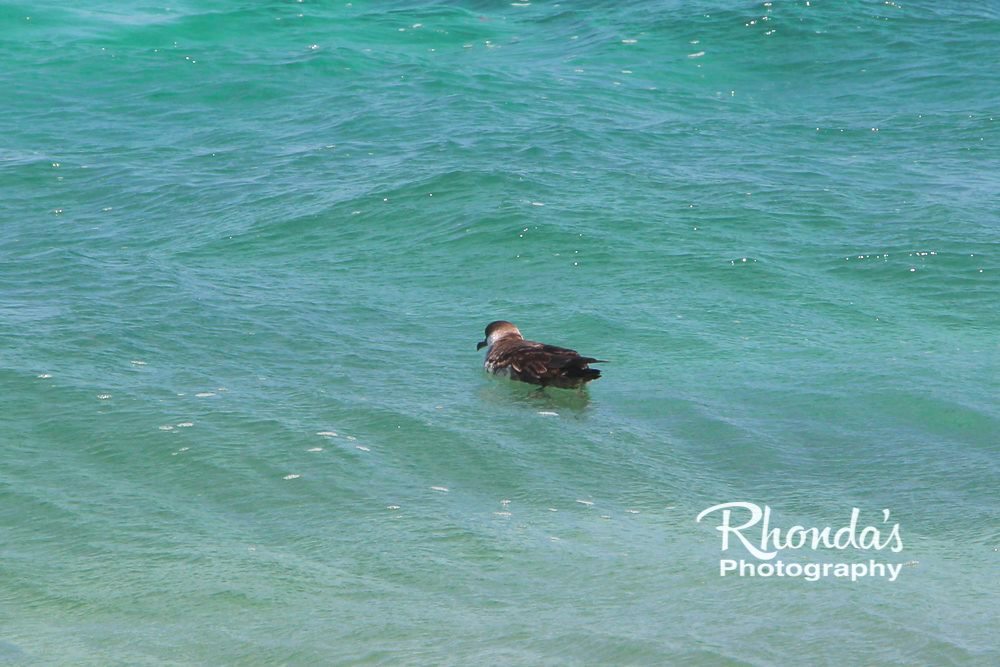
Piping plover monitor Rhonda Pearce found a couple of struggling shearwaters in the sea
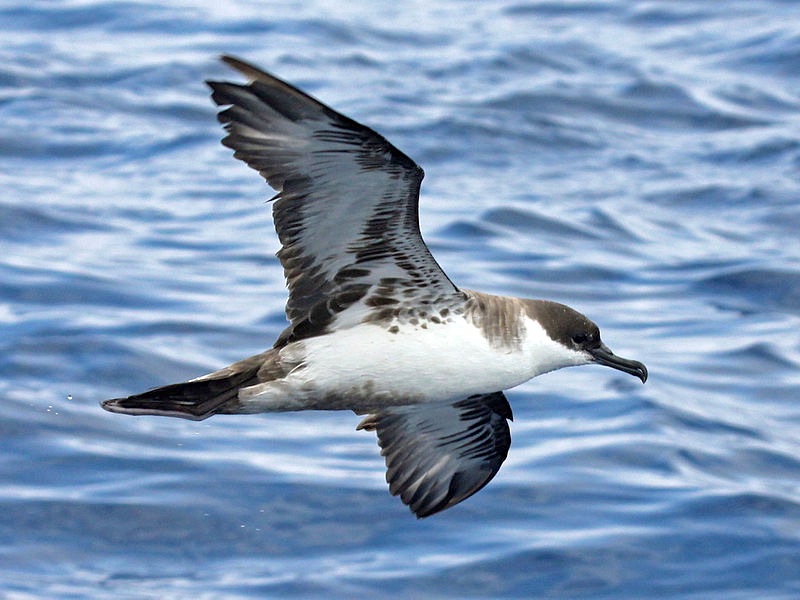
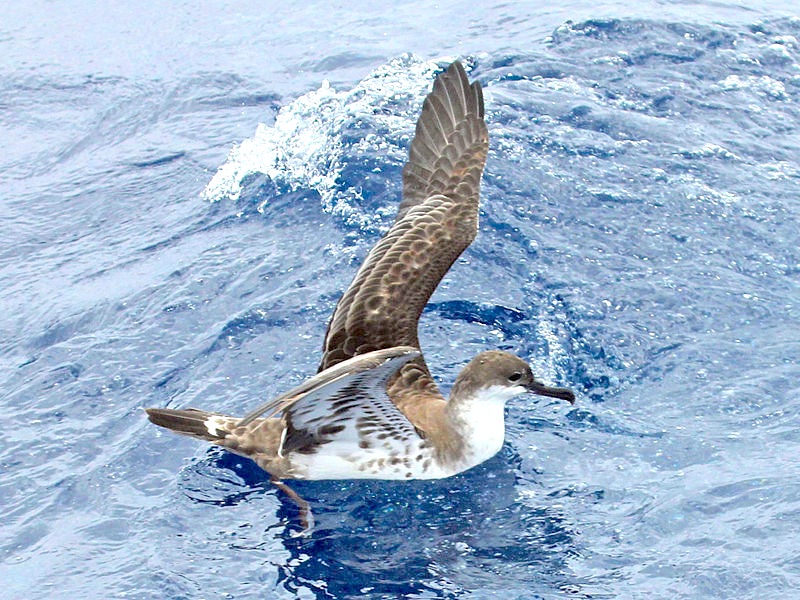
The very next day, reports began to emerge of another species, great shearwaters, being found dead or in a distressed state just off-shore or washed up on beaches. Reports were fewer, but covered a wider area, including a bird in a very poor condition at Delphi. Great shearwaters were the ones involved in the die-back event 2 years ago.
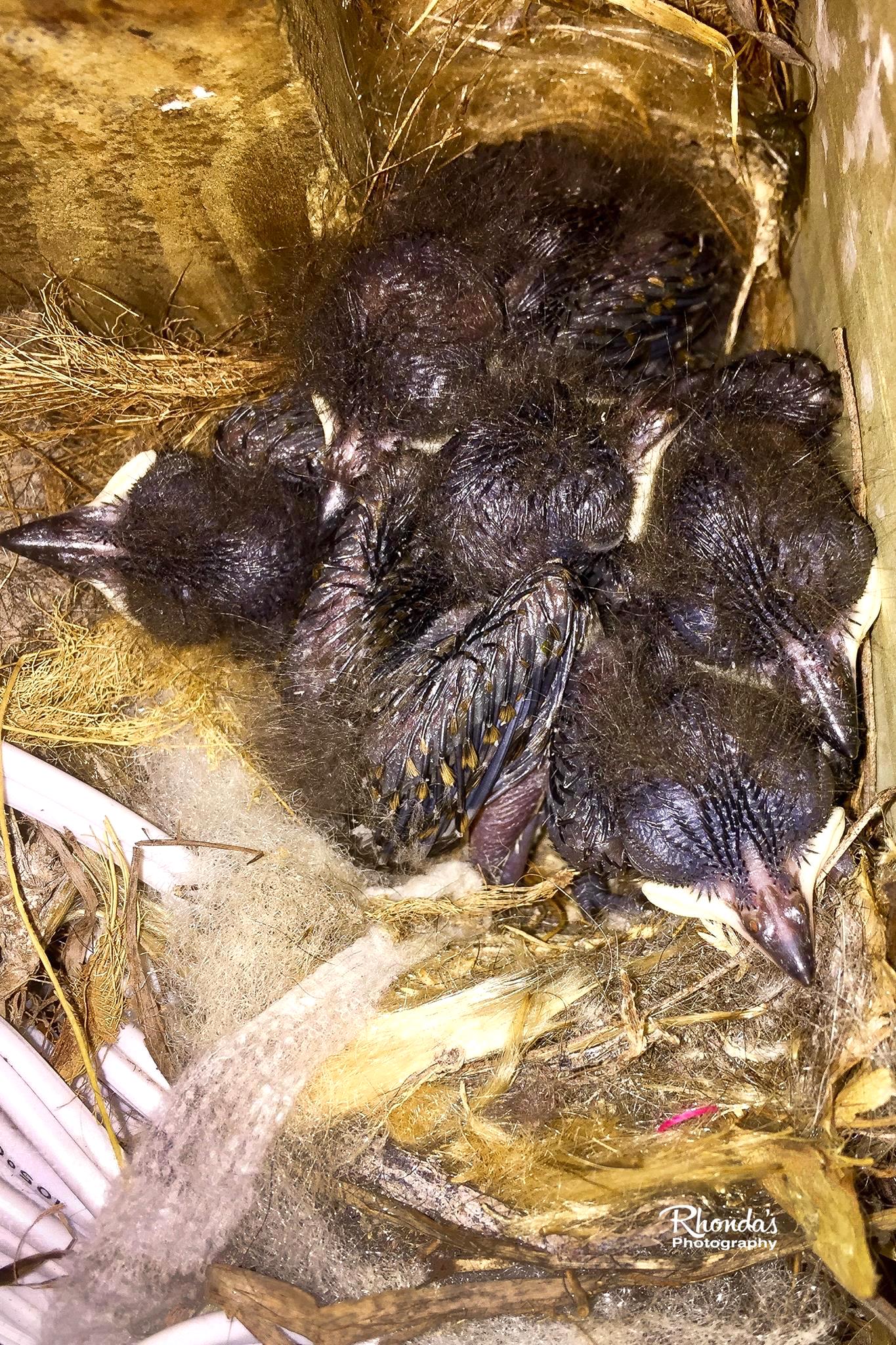
Keith Kemp, who made one of the earlier Audubon shearwater reports, found a young great shearwater in trouble in the sea while he was out in a kayak off Cherokee Point. He rescued it and took all sensible precautions to nourish it and make it comfortable but sadly it did not last the night. He has frozen the bird as a specimen in case analysis will help to explain this die-off event.
As I wrote before, these birds of the open ocean may become weakened and exhausted if fishing conditions become adverse. They will drift weakly with the tide, dying at sea or washing up in a very poor state in the tideline or on beaches. Their prospects of survival if rescued is sadly very slim – I have not yet heard of a success, though I would love to…
Thankfully, during the past week, reports have gradually diminished. I’ve not seen one for a couple of days. With any luck, the current die-off is now over and will not be repeated for several years. However, another one will certainly happen, I’m afraid – maybe in 5 to 10 years time, the usual gap. Twice in two years has made for very bleak, distressing news.
A more cheerful post will be next, I promise. Meanwhile, any further reports or comments would be welcome.
Photo credits: Dick Daniels (1, 5), Rhonda Pearce (2, 3); Keith Kemp (4)
AUDUBON’S SHEARWATER (DUSKY PETREL): SAD NEWS FROM ABACO
Just 2 short years ago, Abaco experienced a shearwater die-off event, when during a period of a week or so numerous dead and dying Great Shearwaters were washed up on many of Abaco’s beaches. You can read about itHEREand a follow-upHERE. This map shows the affected area in 2015.
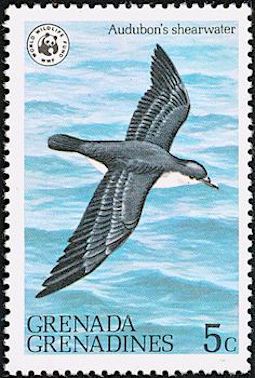
Now comes news of another such sad event, with a large number of Audubon’s shearwaters (Puffinus lherminieri) appearing in the tideline and on beaches at Bahama Palm Shores, Casuarina, Winding Bay and doubtless elsewhere. Many are already dead. Some are still alive, but in a very poor state.
SHEARWATER DIE-OFF
These upsetting beach finds seem to be a periodic phenomenon, and very likely result from climate conditions or shortage of food out in the ocean – or a combination. Although most will unavoidably have ingested plastics, that would not explain the simultaneous deaths. Poor fishing conditions – they eat fish and squid – will weaken and exhaust the birds as they try to find food. Woody Bracey thinks this the most likely cause, having noticed recent poor deep-sea fishing conditions and an unusual absence of the frigatebirds that are a sure sign of fish.
WHAT CAN BE DONE?
The dead birds will be quickly removed by the turkey vultures. If you do find one, you might want to bury it. The prognosis for sick birds, sadly, is not good. They may have been carried a long way from open sea and they will be exhausted and starved. Those that are strong enough may recover naturally; but most will sadly die, being too weak and emaciated to survive. There is no available facility able to deal with a large number of very poorly or dying birds.
The most practical advice I can give is:
(1) move the bird gently into the shade if in the sun
(2) provide water in a shallow dish
(3) offer finely chopped fish BUT no bread – it’s very bad for birds…
(4) if it seems to be working, then carry on until the bird is strong enough to fly (this may be quite a commitment).
(5) do not reproach yourself if a bird you try to help dies. Many will be in such bad shape by the time they are washed up that they are unlikely to survive whatever steps you take.
WHAT DO I LOOK OUT FOR?
This poor shearwater was one of a number of dead birds found by Keith Kemp at Casuarina yesterday. I realise such images can be upsetting, so I am confining photos of the birds to just two so you will recognise one if you see it.
AUDUBON’S SHEARWATERS IN AN EGGSHELL
Belong to the petrel family
Named ‘Puffinus lherminieri’ after French naturalist Felix Louis L’Herminier
Also known as the Dusky-backed Shearwater – or by Audubon as the Dusky Petrel
Forages by diving out of flight or from the surface; or by surface-feeding
Colony breeders, nesting in rock crevices, in burrows, or under thick vegetation
Mated pairs spend much time together at nest site. They like rubbing bills together
Their ‘twittering calls and mewing’ are usually only heard at night
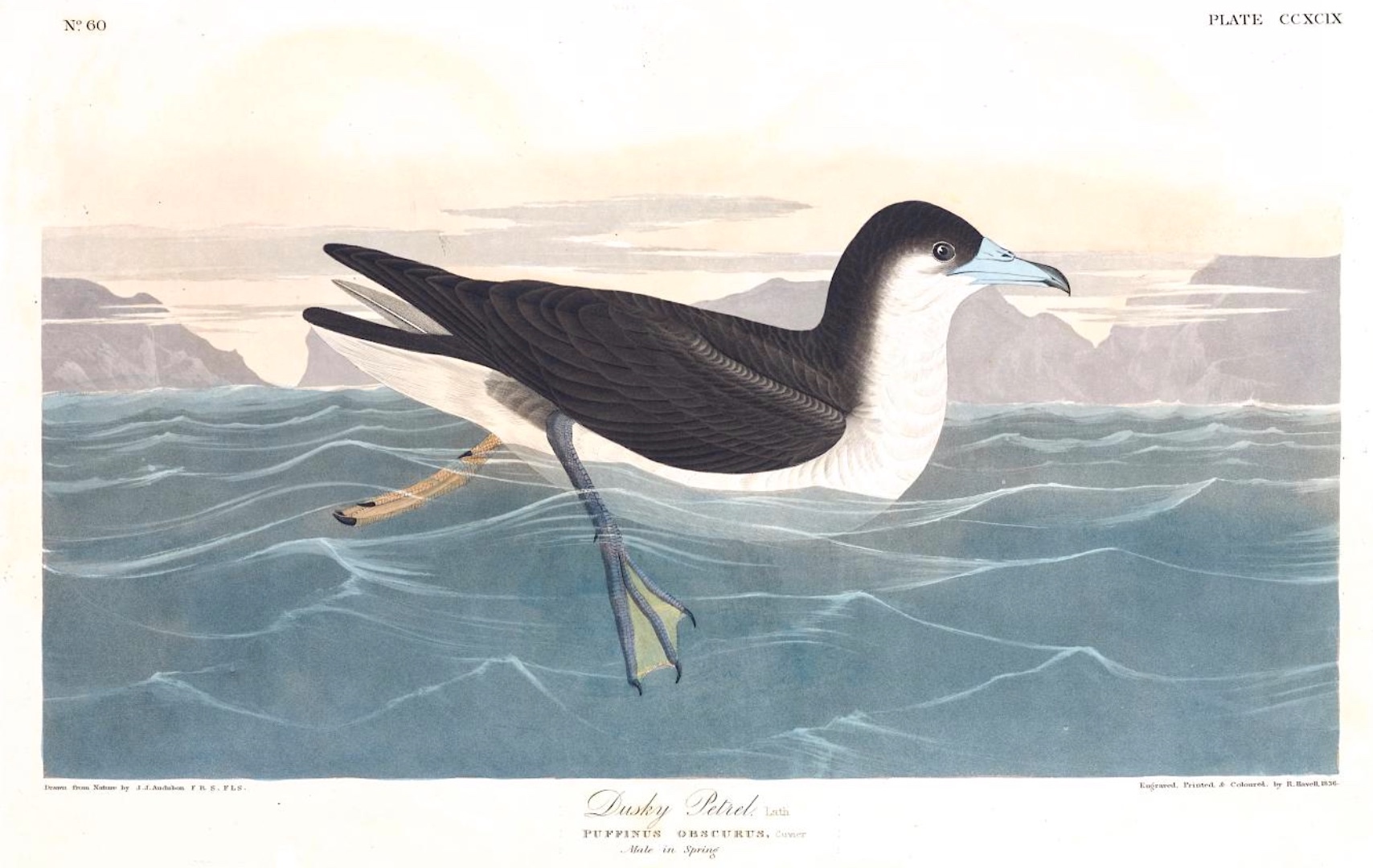
Audubon’s ‘Dusky Petrel’
I’d be interested to hear any other accounts of the current event, especially of any recovery stories. By all means do this as a comment, or email me / PM on FB
Finally, for those who wonder how pioneer naturalists went about their work observing a species, collecting specimens and recording their findings, here is Audubon’s own account for the ‘Dusky Petrel’, Plate 299 in his magisterial work.
Dusky Petrel (Plate 299)
On the 26th of June, 1826, while becalmed on the Gulf of Mexico, off the western shores of Florida, I observed that the birds of this species, of which some had been seen daily since we left the mouth of the Mississippi, had become very numerous. The mate of the vessel killed four at one shot, and, at my request, brought them on board. From one of them I drew the figure which has been engraved (see above). The notes made at the time are now before me, and afford me the means of presenting you with a short account of the habits of this bird.
They skim very low over the sea in search of the floating bunches of marine plants, usually called the gulf weed, so abundant here as sometimes to occupy a space of half an acre or more. In proceeding, they flap their wings six or seven times in succession, and then sail for three or four seconds with great ease, having their tail much spread, and their long wings extended at right angles with the body. On approaching a mass of weeds, they raise their wings obliquely, drop their legs and feet, run as it were on the water, and at length alight on the sea, where they swim with as much ease as Ducks, and dive freely, at times passing several feet under the surface in pursuit of the fishes, which, on perceiving their enemy, swim off, but are frequently seized with great agility. Four or five, sometimes fifteen or twenty of these birds, will thus alight, and, during their stay about the weeds, dive, flutter, and swim, with all the gaiety of a flock of Ducks newly alighted on a pond. Many Gulls of different kinds hover over the spot, vociferating their anger and disappointment at not being so well qualified for supplying themselves with the same delicate fare. No sooner have all the fishes disappeared than the Petrels rise, disperse, and extend their flight in search of more, returning perhaps in awhile to the same spot. I heard no sound or note from any of them, although many came within twenty yards of the ship and alighted there. Whenever an individual settled in a spot, many others flew up directly and joined it. At times, as if by way of resting themselves, they alighted, swam lightly, and dipped their bills frequently in the water, in the manner of Mergansers.
I preserved the skins of the four specimens procured. One of them I sent to the Academy of Natural Sciences of Philadelphia, by Captain JOHN R. BUTLER, of the ship Thalia, then bound from Havana to Minorca. Two others were presented to my excellent friend Dr. TRAILL, on my first becoming acquainted with him at Liverpool.
I found the wings of this species strong and muscular for its size, this structure being essentially requisite for birds that traverse such large expanses of water, and are liable to be overtaken by heavy squalls. The stomach resembles a leather purse, four inches in length, and was much distended with fishes of various kinds, partially digested or entire. The oesophagus is capable of being greatly expanded. Some of the fishes were two and a half inches in length, and one in depth. The flesh of this Petrel was fat, but tough, with a strong smell, and unfit for food; for, on tasting it, as is my practice, I found it to resemble that of the porpoises. No difference is perceptible in the sexes.
While on board the United States revenue cutter Marion, and in the waters of the Gulf Stream opposite Cape Florida, I saw a flock of these birds, which, on our sailing among them, would scarcely swim off from our bows, they being apparently gorged with food. As we were running at the rate of about ten knots, we procured none of them. I have also seen this species off Sandy Hook.
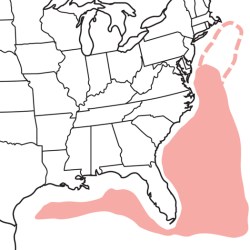
Audubon’s Range Map for the species
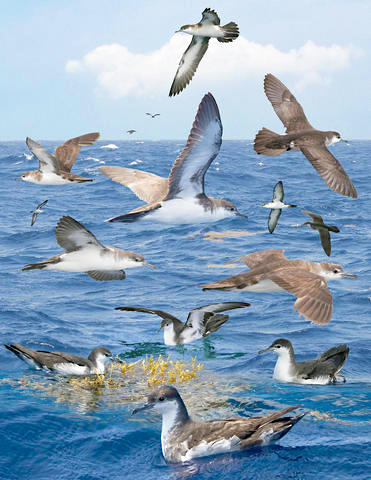
Credits: thanks to those on Abaco who have been reporting this sad event over the last few days, and to Woody Bracey for his views; Dominic Sherony (wiki) for the header image; Keith Kemp for photos from Casuarina; Audubon.org for images, quote & range map; Richard Crossley / Crossley Guides for the composite picture; Audubon, wiki and random pickings for info about these birds
THICK-BILLED VIREO ‘ON VOCALS’: A CHIRPY JUVENILE ON ABACO
I’m not sure that TBVs would rank as anyone’s all-time favourite bird. Probably not in the top 10. Or 20. But we have a particular affection for them. When we first arrive at Delphi, that cheerful call is invariably the first birdsong we hear. And when we leave, it’s often the last. These small birds inhabit the coppice on either side of the drive, and are often found right by the the Lodge.
The strange thing about them is that despite their ubiquity and their uninhibited advertising of their presence, they are surprisingly hard to see, let alone get a clear photograph of. A singing TBV often seems to be at least 2 rows of bush further back than it sounds, concealed by intervening branches, leaves, and twigs.
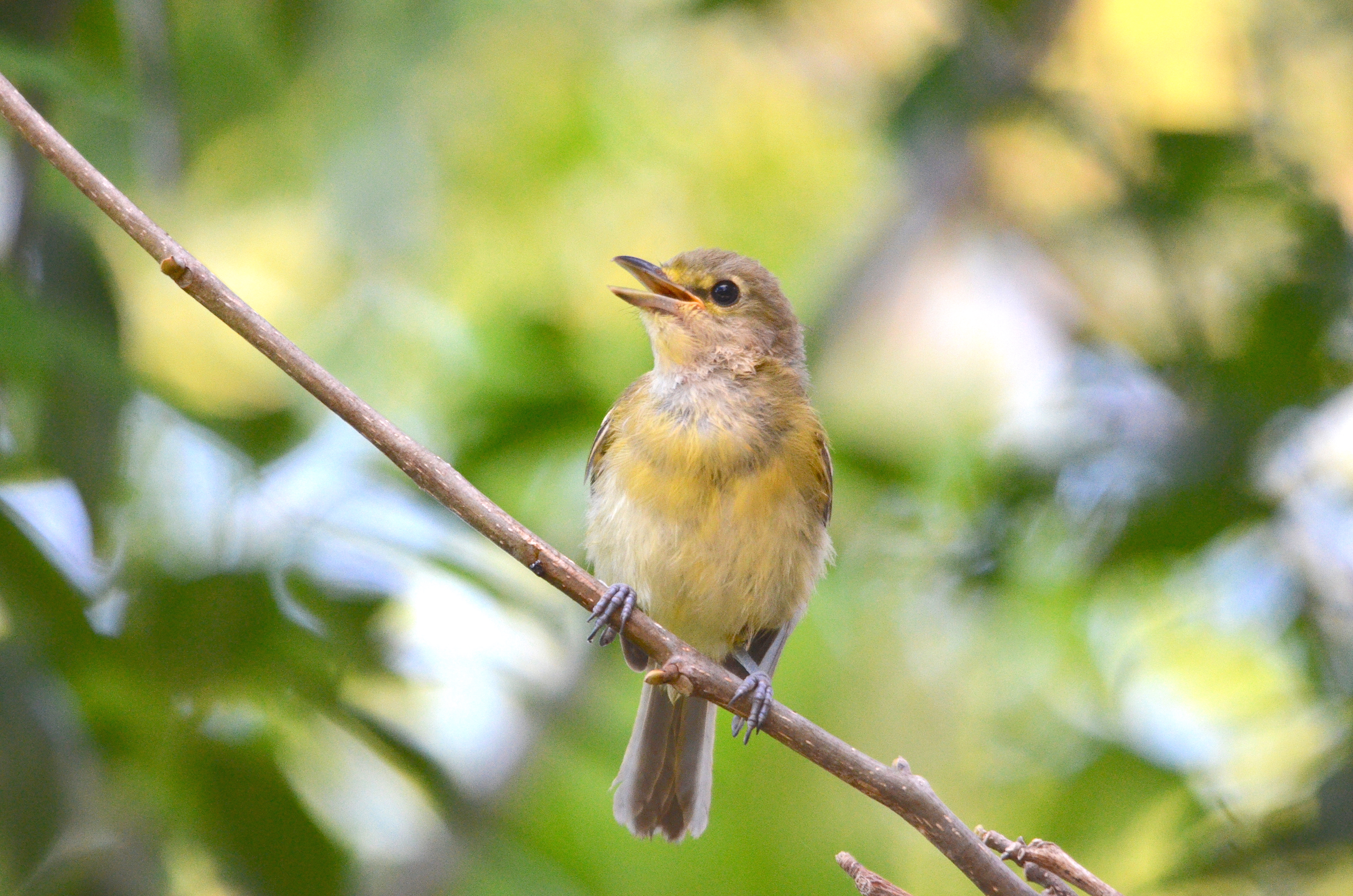
Maybe growing juveniles are less cautious. This little guy is right out in the open, and singing away happily. He’s still cutely fluffy, but his plumage already starting to turn yellow. He has the diagnostic yellow marking in front of and around the eyes. However at the base of his characteristically plump beak there’s still a hint of baby bird mouth.
Here’s a recording of an adult TBV I took from the Delphi drive (you may need to turn up the volume a bit). And no, I couldn’t actually see the bird, though I knew exactly where it was from the slight movements of foliage. All-in-all, the TBV is a most engaging little bird and well-deserving of affection if not perhaps a high placing in the Avian Popularity Charts…
All photos by Charles Skinner (a significant contributor to The Birds Of Abaco)
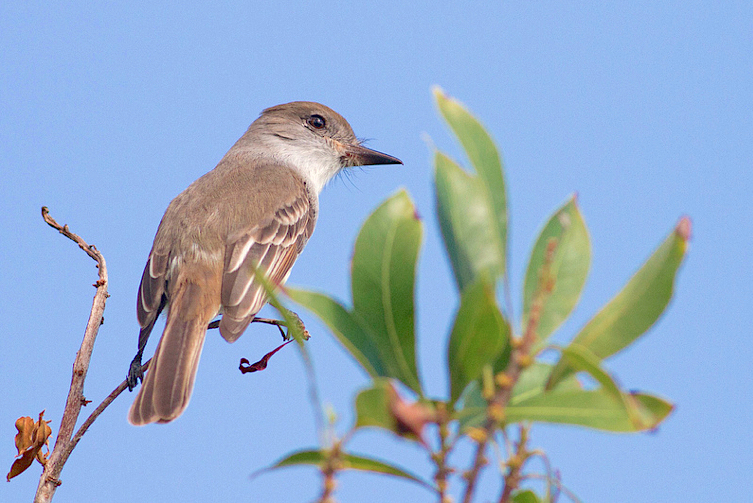
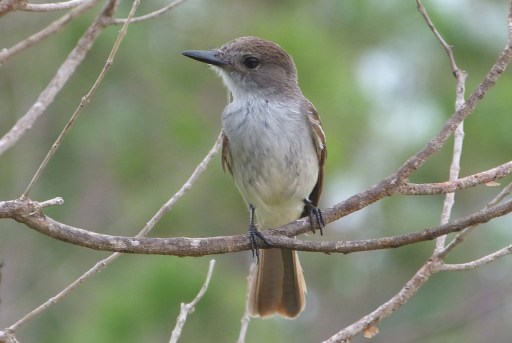
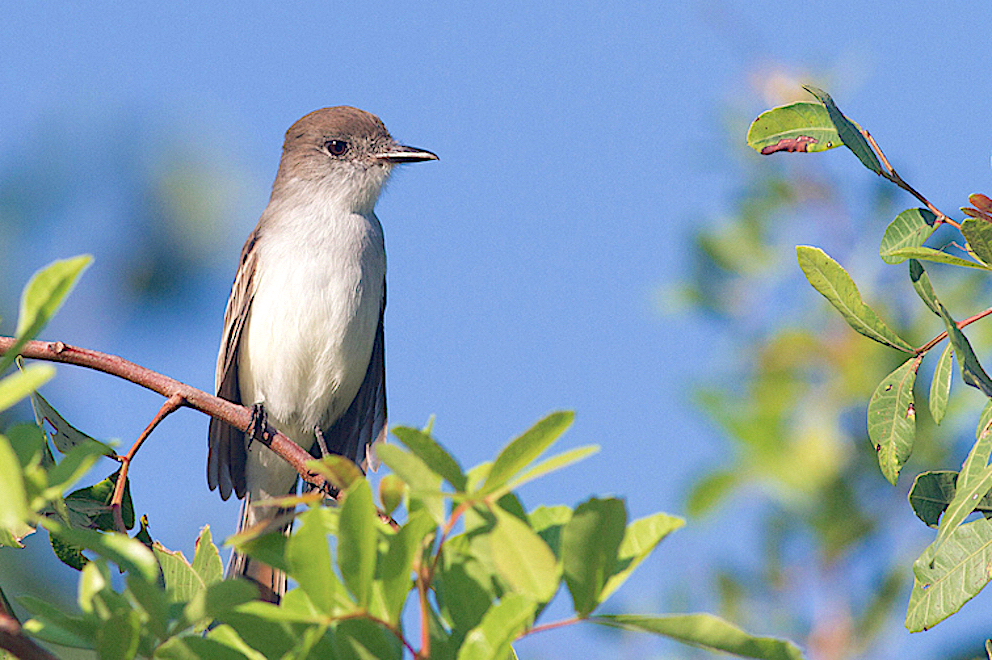
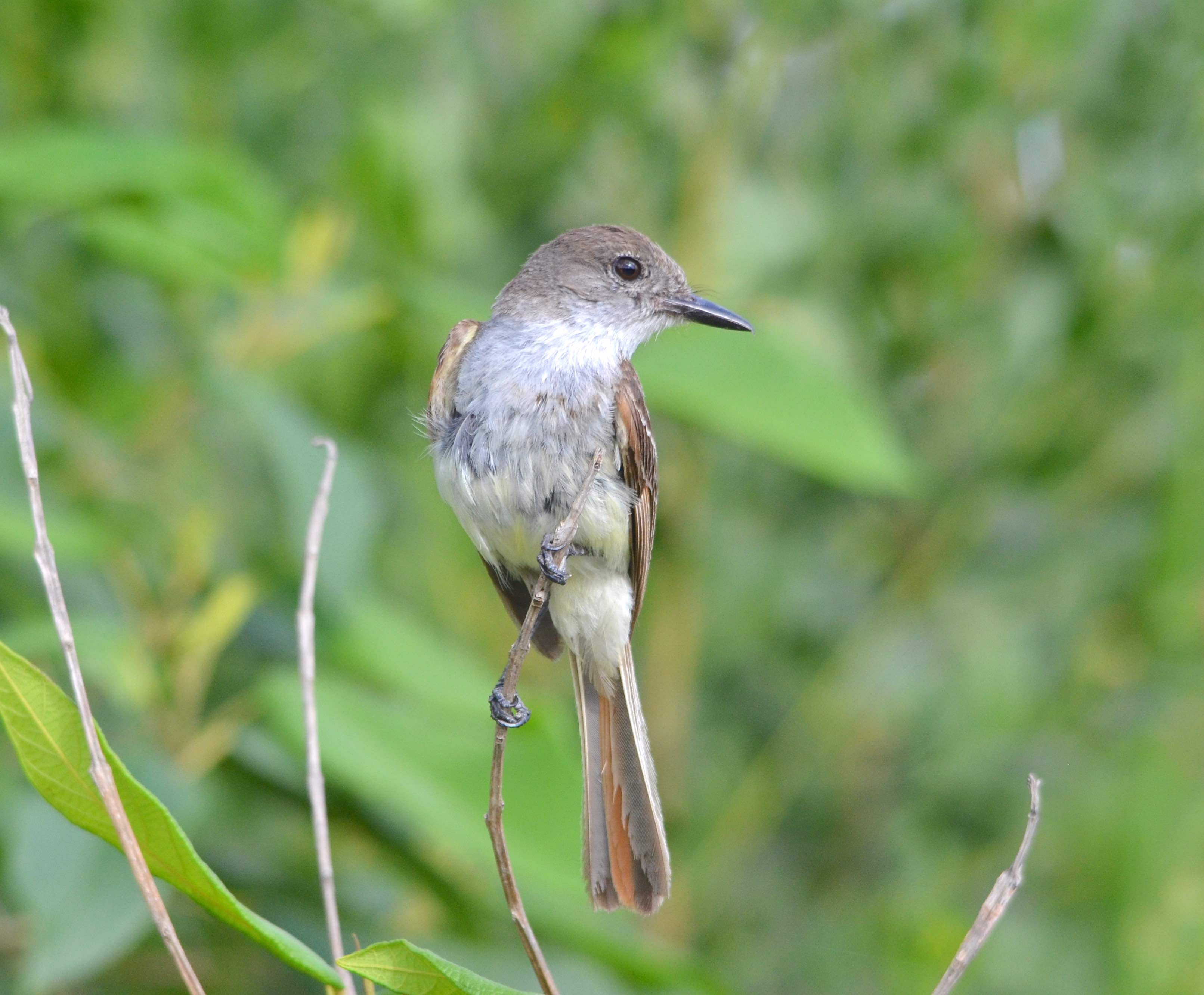
The LA SAGRA’S FLYCATCHER(Myiarchus sagrae) is a common resident breeding species of flycatcher on Abaco, and these very pretty small birds can be seen in many habitats – pine forest, scrubland, coppice and gardens, for example. They are insectivores, as the name suggests, but they also eat seeds and berries.
As a ‘tyrant flycatcher’, this little bird is a member of the large passerine order that includes kingbirds, pewees and phoebes, with which they are sometimes confused. I last wrote about LSFs in the infancy of this blog, illustrated with my own rather… ahem… ‘simple’** photos. Time to revisit them and to do them justice with some new, improved images.‘
‘Simple’ photo from a less complex era, taken with a 2mp ‘Cheepo’™ camera
Magnificent photo by Gelinde Taurer that you can actually enlarge (click pic– see?)
Unlike many bird species, adult LSFs are very similar in appearance in both sexes. Whatever the gender, they are sometimes confused with their cousins the Cuban Pewees, but those have a very distinctive eye-crescent.
Cuban Pewee – note eye-crescent, absent in the LSF
Both species have a tiny hook at the end of the (upper) beak – to help trap insects, I assume
Another thing to notice about LSFs is the amount of rufous brown in their plumage, particularly on the wings and tail – and even at the base of the beak. This coloration is absent from their larger cousin kingbirds, the loggerhead and the gray.
WHAT SHOULD I LISTEN OUT FOR?
“A high pitched single or double noted sound described as ‘wink’... ” Or it might be ‘bip‘. Or ‘weep‘. Or (on one recording I listened to, complete with sonograph) it sounded like ‘chi-chitty chew‘. But it may have been a misID.
Hans Matheve @ Xeno-Canto
A hint of a crest is visible in this photo
ANY IDEA WHAT LA SAGRA CHICKS LOOK LIKE?
Well, as it happens, yes. By good fortune Abaco photographer and piping plover monitor Rhonda Pearce happens to have had a nest at hand this very season. So, happy to oblige…
WHO OR WHAT IS A ‘LA SAGRA’ WHEN IT’S AT HOME?
Mr La Sagra was a multi-talented Spanish botanist. Ramón Dionisio José de la Sagra y Peris(1798–1871) was also a writer, economist, sociologist, politician, anarchist, and founder of the world’s first anarchist journal El Porvenir (‘The Future’). At one time he lived in Cuba and became director of Havana’s Botanical Garden. His name lives on more significantly in ornithological than in anarchist circles (actually, ‘anarchist circles’ must be a contradiction in terms… that should be ‘anarchist disorganised squiggles’)
I note in passing that La Sagra is a provincial area in Spain, an Italian festive celebration, a chocolatier, and a small comet… All these meanings may have to be negotiated online before you get to the flycatcher…
Ramón Dionisio José de la Sagra y Peris
Continuing this blog’s philatelic natural history theme, here are stamps from the Cayman Islands and Cuba featuring the La Sagra’s Flycatcher. The Cuban stamp commemorates the death of Juan Gundlach, the man who chose La Sagra’s name to bestow on this bird. And Gundlach’s name lives on in the Bahama Mockingbird Mimus gundlachii…
** ‘Simple’, as in ‘not completely disastrous for an amateur effort but frankly not the sort of standard we have come expect around here’.
Photo Credits: Gerlinde Taurer (1, 4); Tom Reed (2, 6); Keith Salvesen (3 [!], 5, 12); Charles Skinner (7, 8); Peter Mantle (9); Rhonda Pearce (chicks) 10; Tom Sheley (11); Ramon and stamps, open source
In March, I posted about a bald eagle spotted by a Delphi fisherman out on the Marls near Big Pine Point. He didn’t know it at the time, but it was a very rare sighting of this magnificent raptor. The bird is classified for Abaco as a V4, which is to say an extremely unusual vagrant (but not quite a ‘one-off’ V5).
You can read all the details HERE, but to summarise, the only previous Abaco sightings were 3 years running over 2000 – 2002, at the end of each year. The annual visits over such a short time-span suggest that this may have been the same bird each time. So this March’s report is possibly the second bald eagle ever seen on Abaco… and on any view, the fourth.
Now comes the news of another bald eagle sighting in the last couple of days on the Marls, this time by Danny Sawyer while out fishing. The bird was sighted approx 1.5 miles west of the airport / 2 miles south of Bustic Point. Danny’s FB post has unsurprisingly attracted quite a number of comments – and even some more sighting reports. Here’s the list so far…
BALD EAGLE SIGHTINGS REPORTED ON ABACO SINCE c1950 (= ‘ever’)
2000 December, location unknown – info from Woody Bracey
2001 December – Chicken Farm area – Betsy Bracey
2002 December – over Marls opposite Treasure Cay – Woody Bracey
2004 Autumn – south of Lynard Cay (after hurricane) – Cheryl Noice
2014 Date unknown – circling the power plant – LC
2017 March – Big Pine Point, Marls – James Cheesewright
2017 Early May – Power plant area – LC
2017 May – Marls – Danny Sawyer
2017 May – Lubbers / Tahiti Beach area – ‘Kelly’s mom’
2017 September – Cross Harbour – Carol Rivard Roberts (with photo)
Italics indicate a report in comments on Danny’s FB page; Blue = added reports
So far, however, there has been no photograph of an ‘Abaco’ bald eagle. It’s fair to say that the official verification of a sighting generally requires a photograph – more especially where there is a risk of confusion with a native bird (eg some warblers). But there really is no mistaking a bald eagle. For obvious reasons it is surely one of the most recognisable raptors of all. And the only Abaco candidates for confusion would be a turkey vulture or an osprey. A quick look shows very little scope for confusion with either:
Bald eagle in flight. Note: dark brown, head & tail bright white, huge yellow beak and feet
Turkey vulture & Osprey for comparison. No comparison, in fact
ABACO BALD EAGLE CHALLENGE
How about being the first person to capture an Abaco bald eagle on film digital media? The kudos! The traditional Rolling Harbour bottle of Kalik is already on ice in the expectation of a usable image, together with the accurate location… Failing that, all reports welcome anyway.
Credits: all brilliant eagle photos by very kind permission of Brian Lockwood, taken in his backyard in Poquoson, Va. except eagle in flight, Carol Robertson (wiki); TUVU (Bruce Hallett); Osprey (Craig Nash); Amusing Cartoon, Birdorable
The Delphi Club on Abaco has a number of permanent residents (or by now – let’s be realistic – maybe their descendants). There’s the huge curly tail lizard that lives under the large stones by the outside staircase. There are the West Indian Woodpeckers that noisily nest in a box under the eaves of the verandah and produce 2 batches of shouty chicks each summer. And there is the silent sentinel – a loggerhead kingbird that spends much of its time in the trees and bushes at the far side of the pool.
It’s a good place to chose. The bird uses the tree branches and shrubs to ‘hawk’ for passing insects, suddenly leaving its perch to pounce, before returning to just the same place to eat its snack – classic flycatcher behaviour. I call it the ‘watchful tyrant’ because the kingbird is nearly always there. Somewhere. If you look carefully and wait patiently. He stays in the shade, so he’s not bright with sunlight (or P/shop) in these photos. This is just the way he is.
Kingbirds are of the family Tyrannidae and the genus Tyrannus. The ‘tyrant’ group includes a number of flycatcher species commonly found on Abaco: the KINGBIRDS (loggerhead and gray), the CUBAN PEWEE and the LA SAGRA’S FLYCATCHER being the most familiar. Note the hook at the end of the beak; and the yellowish tinge to the undertail area.
With the exception of the gray kingbird, the flycatchers named above are very common permanent breeders on Abaco. There’s probably one of them within 20 feet of your house right now. The gray, however, is a summer breeding resident. This is most helpful of it: if you see a kingbird between October and April, it will be a loggerhead. This gives you a 6-month window for near-certain ID.
IT’S SUMMER – SO HOW DO I TELL A LOGGERHEAD FROM A GRAY?
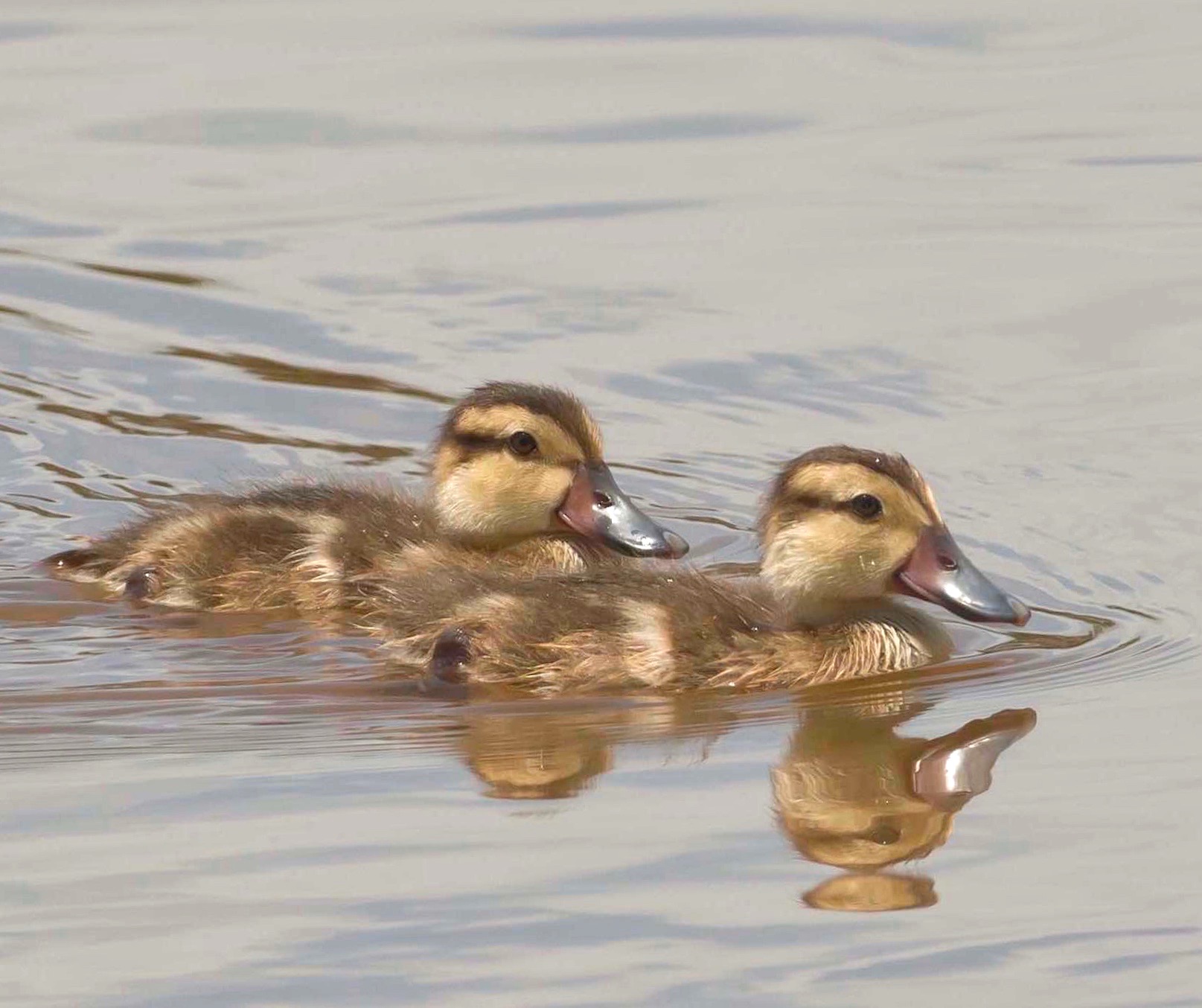
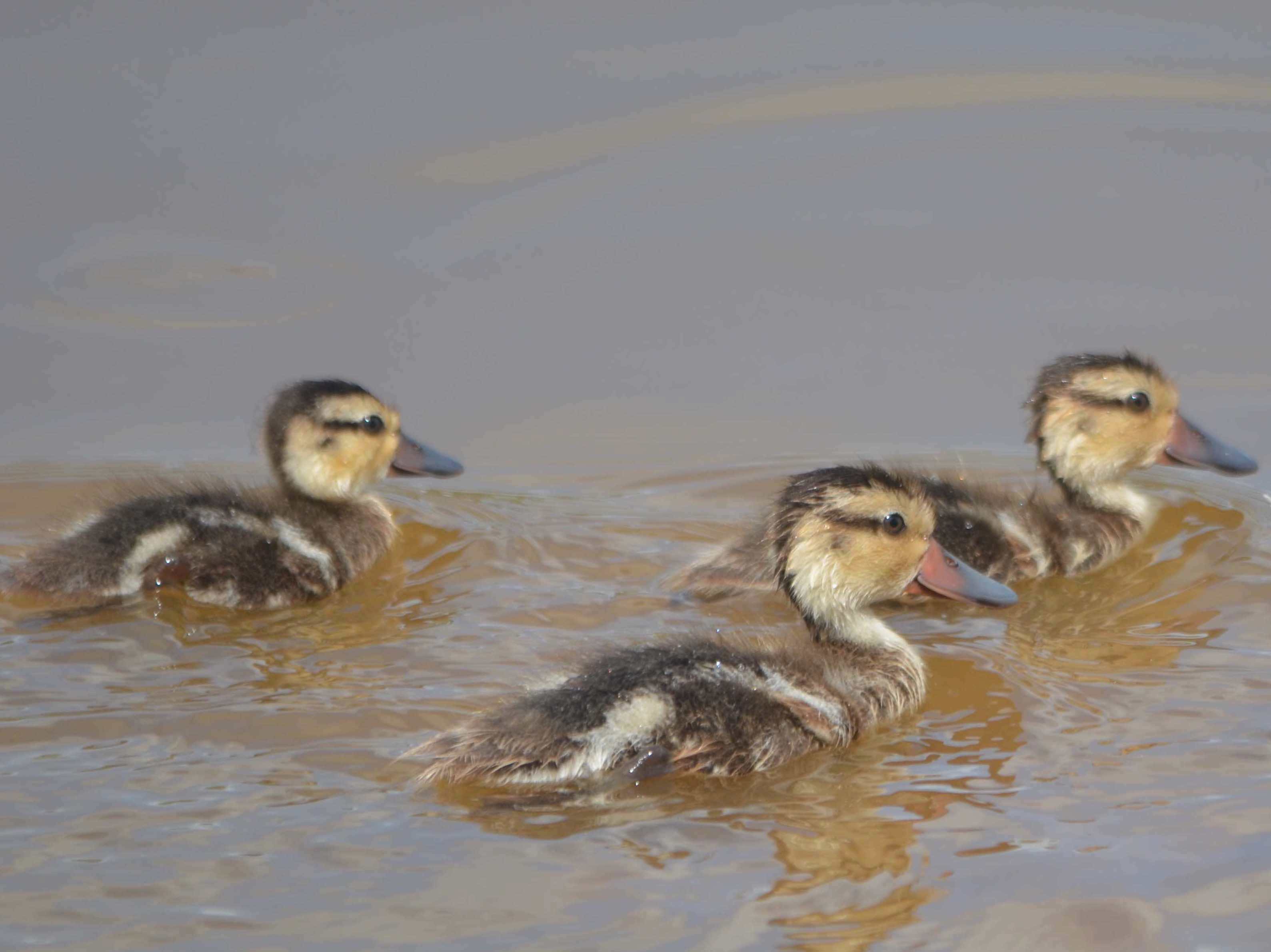
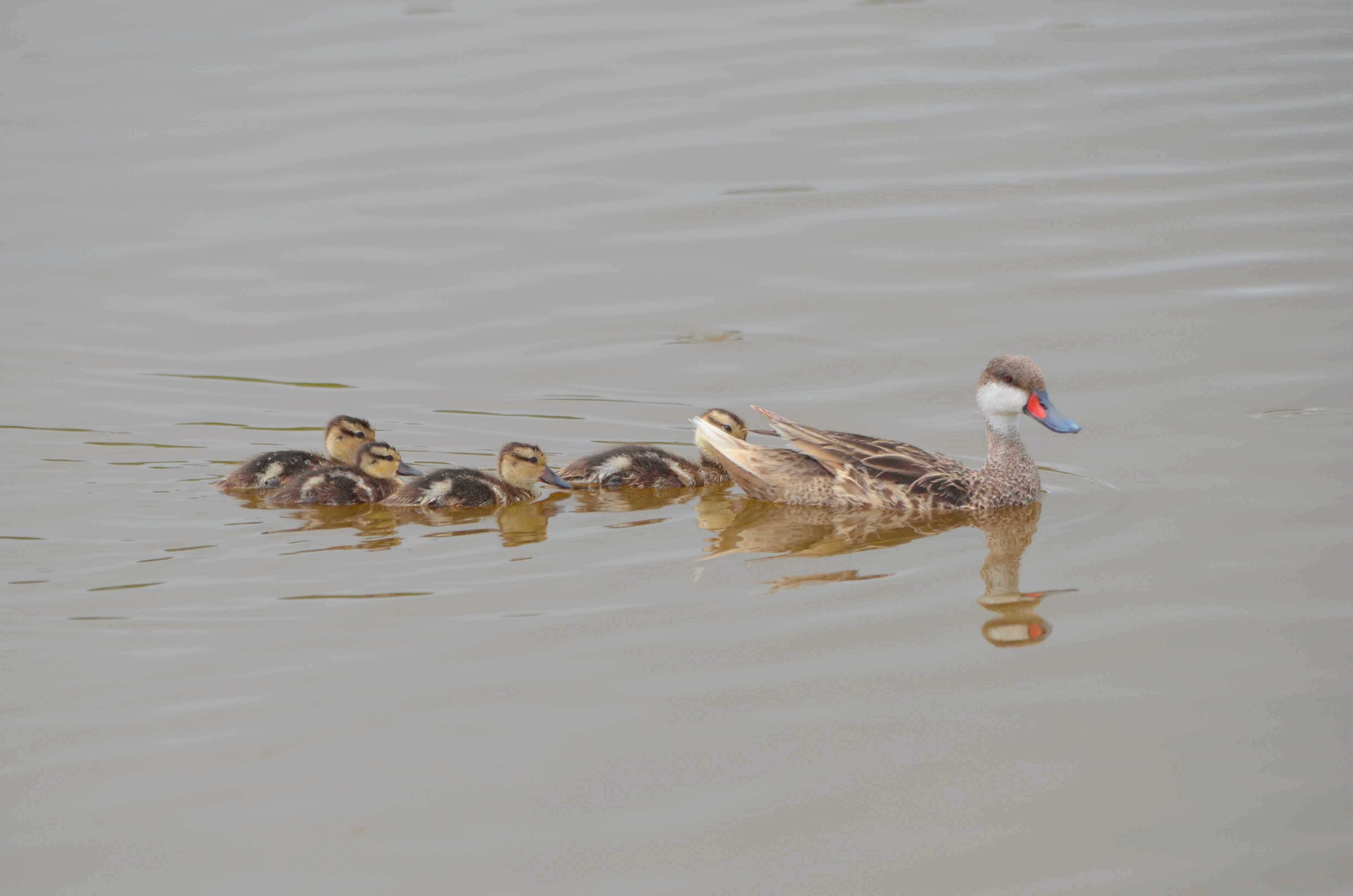
The white-cheeked (‘Bahama’) pintail is everyone’s favourite dabbling duck. You can see them in large numbers at Gilpin Pond, and in slightly lesser numbers in the pond on Treasure Cay golf course. You may come across the occasional pair or singleton way out on the Marls. Wherever they may be, spring means duck ahem… erm… sex. And that means… gorgeous ducklings. Like the ones below. You can see more Abaco pintails HEREbut this post showcases the delightful progeny of mama duck (not forgetting papa duck’s role, of course).
This means ‘get any closer to my darling ducky at your peril, back away now, you’ve been warned’.
A proud pair of parents. No, I can’t tell which is which – males and females are very similar. My guess is that the female is nearest.
Credits: all absolutely adorbs Anas bahamensis photos are by Tom Sheley & Charles Skinner
FREE BONUS FOR MAY! BAHAMA PINTAIL DRAWING LESSON!
SCISSOR-TAILED FLYCATCHER: AN “IF ONLY” BIRD FOR ABACO
About 3 years ago, there was great excitement when a new bird species was recorded on Abaco. Not just recorded, but actually photographed too – the best of evidence. This was a fork-tailed flycatcher, and to no one’s great surprise another one has never been seen since. So sadly the STFC must go down in the records as a V5, a one-off vagrant. Until another one turns up, anyway. But there will never be another ‘first STFC ever‘ on Abaco. You can read about the new species HERE.
The sighting came quite soon after the publication of The Birds of Abaco, and instantly rendered the comprehensive checklist in the book out of date. In all, 6 new bird species have now been sighted on Abaco and in due course I need to amend the checklist to reflect the changes. And add ‘wild turkey’ to the also-ran column ‘Exotics Seen on Abaco.’
The scissor-tailed flycatcher is another so-called ‘tyrant flycatcher’ with long streaming tail forks. I had a look at the checklist to see if the species was recorded for Abaco, and sure enough it is included as a V4, which is to say a very rare vagrant with maybe half-a-dozen sightings over the years. I’m not aware of any photos of one taken on Abaco. However, birding and photography authority Danny Sauvageau occasionally encounters these magnificent birds in Florida. His recent photos of the scissor-tailed flycatcher are so beautiful that you just have to see them. How wonderful if this exotic creature could find its way to the northern Bahamas more often. Until it does, it will remain what I term an ‘if only’ bird – one that is regretfully absent…
All fantastic flycatcher fotos: Danny Sauvageau with many thanks – check online, you won’t see a better collection than this…; cartoon, Bordorable
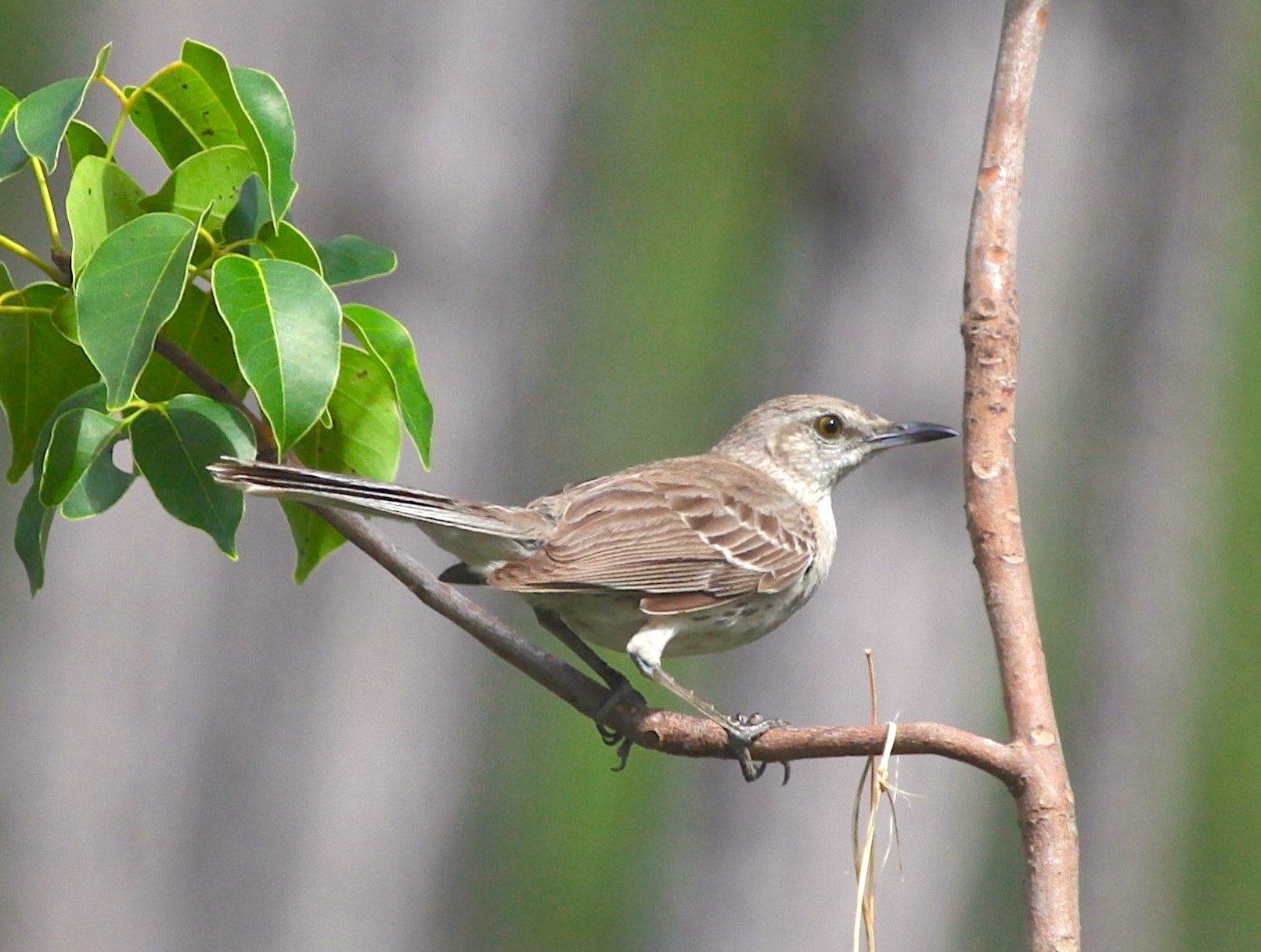
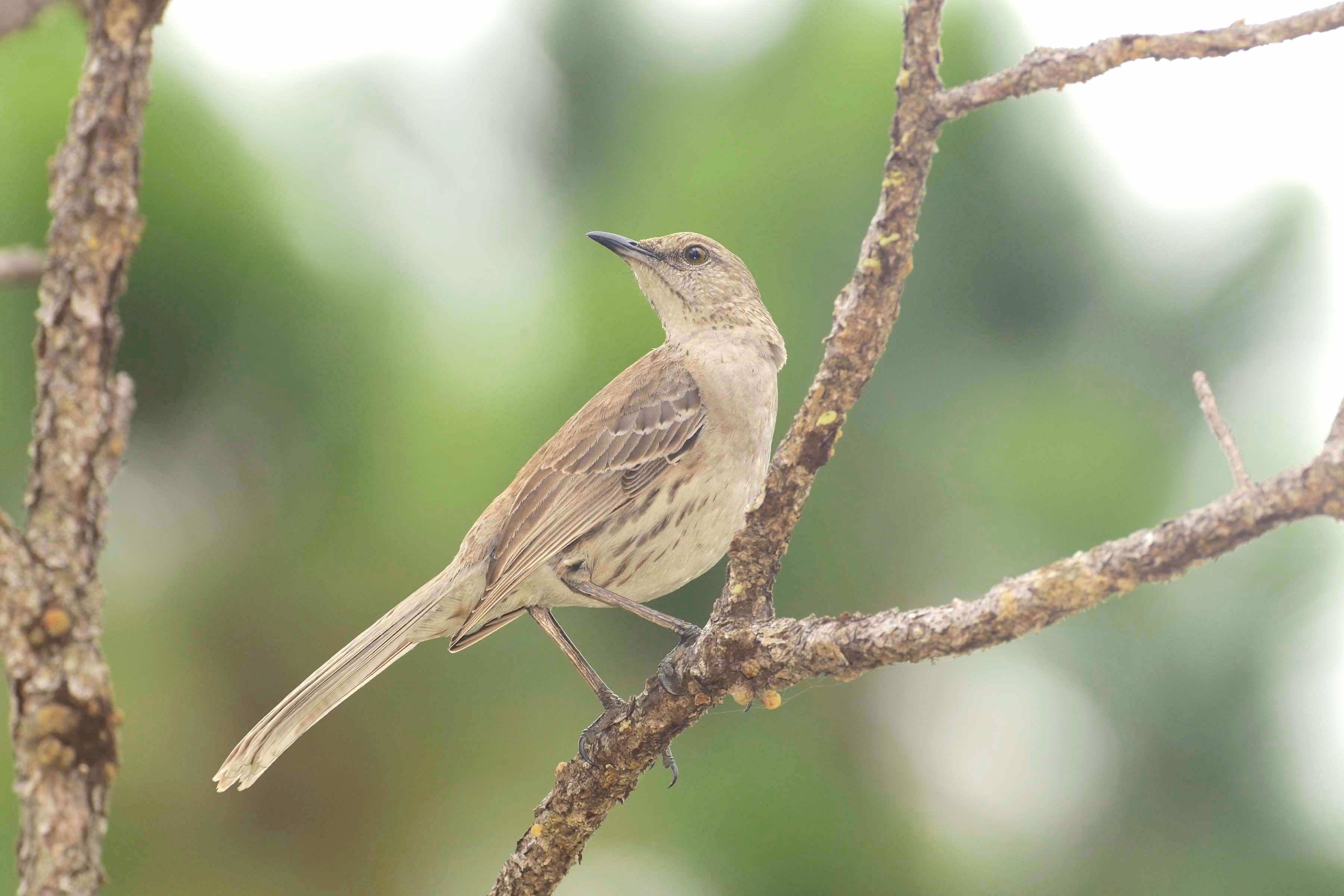
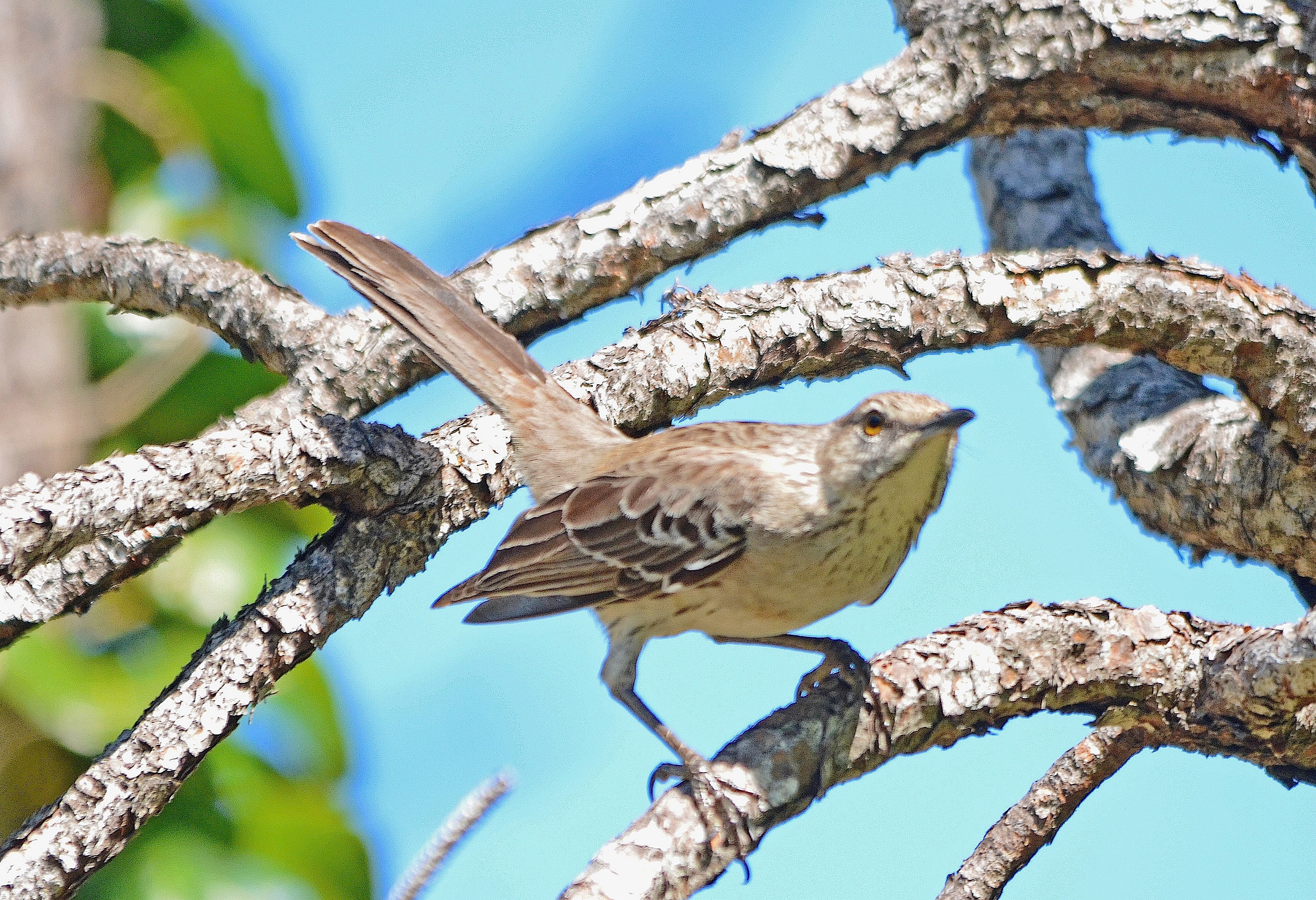
The Bahama Mockingbird Mimus gundlachii is similar to its slightly smaller cousin, the widespread Northern Mockingbird Mimus polyglottis. The range of Bahama Mockingbirds is not restricted to the Bahamas themselves, and includes areas of Cuba, Jamaica and TCI, so despite the name they are not an endemic species to the Bahamas. They are also occasional vagrants to the United States, especially – for reasons of proximity – southeastern Florida.
The Bahama Mockingbird is browner than the greyish Northern Mockingbird, and has distinctive streaking and spotting to its breast and undercarriage. This may extend to what you might describe as the bird’s ‘trouser legs’, though I’m sure there’s a more technically correct term.
Both mockingbird species are found on Abaco. The NMs are ubiquitous in towns, settlements, gardens, coppice and pine forest, whereas BMs are shyer and tend to be found in the pine forest and well away from humans and their operations. When we were putting together The Birds of Abaco, I went on a birding trip with Abaco birding legend Woody Bracey and Ohio bird photographer Tom Sheley. We took a truck into the pine forest down a logging track south of Delphi, and they were quick to locate a bird, not least because one was sitting prettily on a branch singing lustily and unmistakably. It was well within range of Tom’s massive lens; more of a struggle for my modest camera (below). Caught the cobwebs, though…
I was astounded by the beauty and variety of the song. It consisted of very varied notes and phrases, each repeated 3 or 4 times before moving on to the next sounds in the repertoire. Here is a short 18 second example I recorded, using my unpatented iPhone method, for which seeHERE.
For those with interest in birdsong, here is a longer 1:13 minute song from the same bird, with largely different sounds from the first recording made minutes earlier. There’s even a decent stab at imitation of a 1960s Trimphone™. Had we not had to move on to Sandy Point for an appointment with some cattle egrets and American kestrels, I could have stayed listening for far longer.
THE ‘SUBSPECIES’ THAT WASN’T…
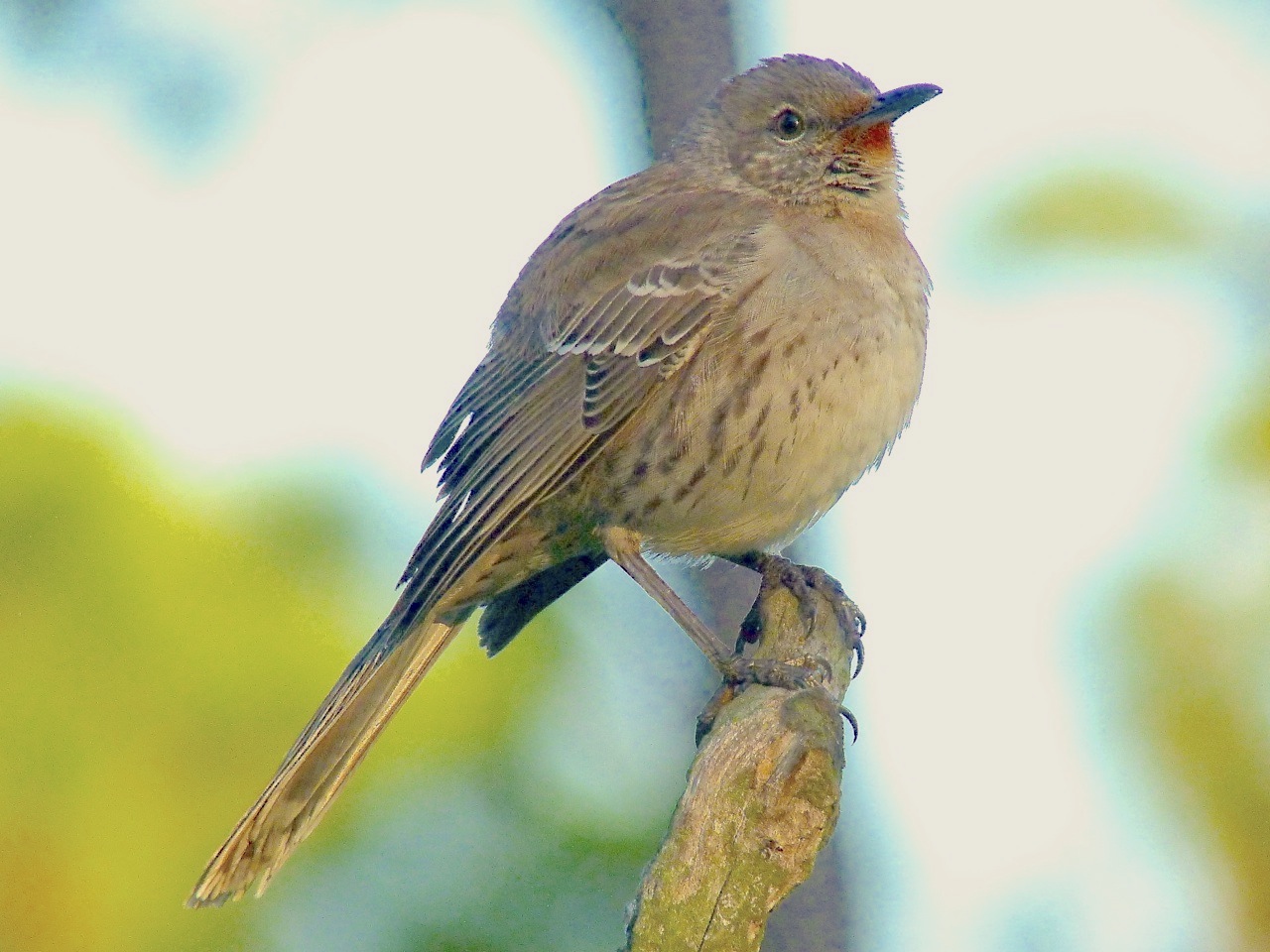
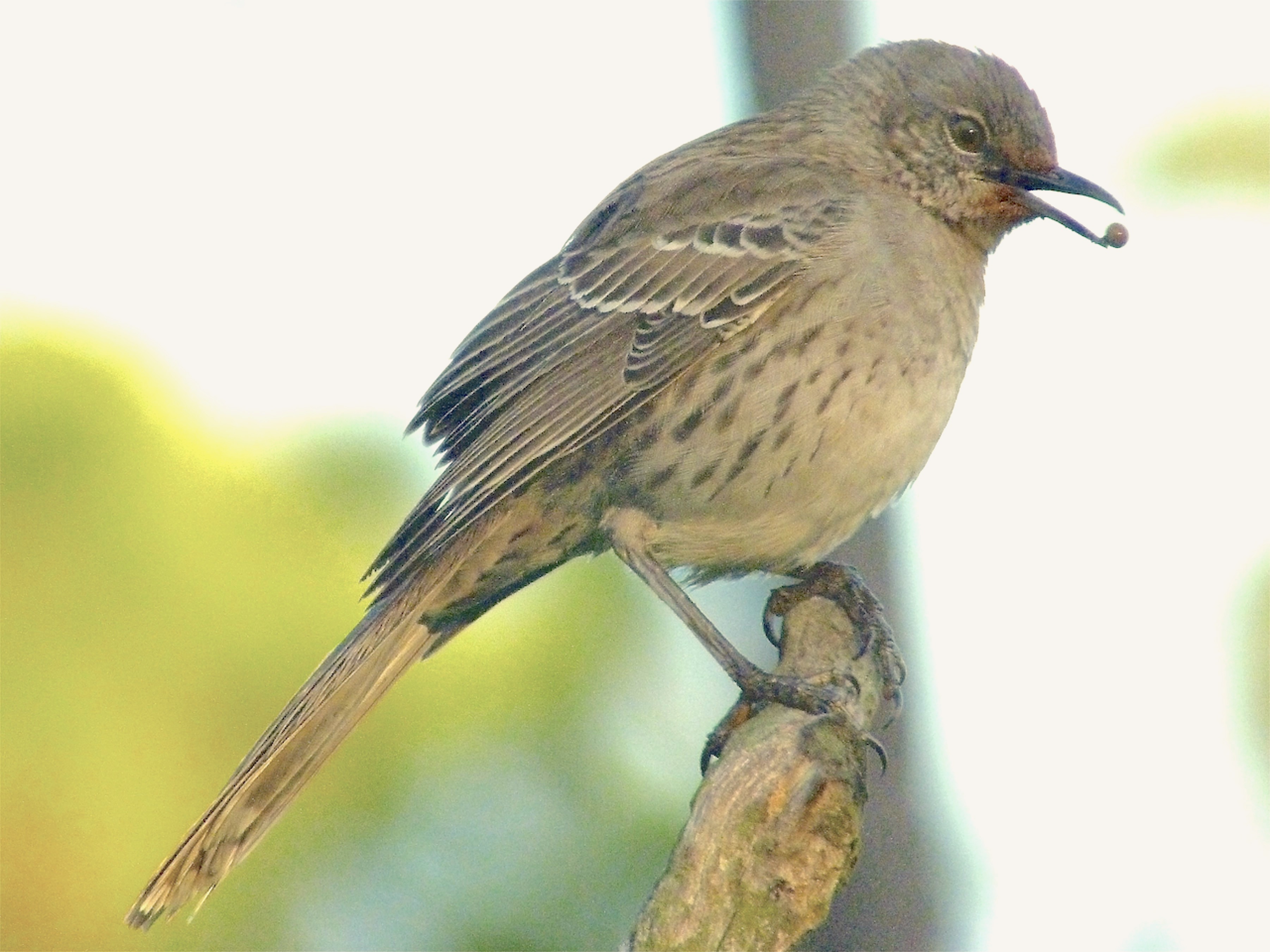
More recently, on a trip in backcountry to find Kirtland’s warblers – we saw 4 – the slow-moving truck jolted to halt in the middle of nowhere. This was because a Bahama Mockingbird was right by the track. I fired off some quick shots out of the window into a rather difficult light, to find that we appeared to have found a new subspecies, the scarlet-faced mockingbird.
The reason was clear, however. The bird had been pigging out on some red berries, and had managed to collect plenty of the juice round the base of its beak.
SO WHAT DOES A NORTHERN MOCKINGBIRD LOOK LIKE, THEN?
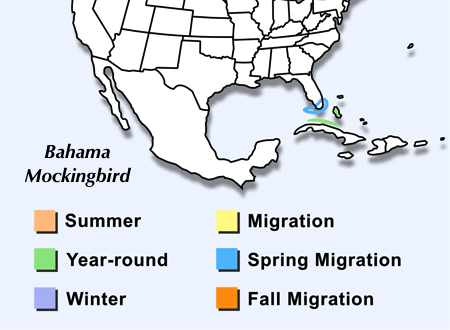
I photographed the Northern Mockingbird below in a garden at Casuarina. The species is far tamer than its cousin, and seen side-by-side they are clearly very different. The range maps show the stark contrast between the very limited range of the Bahama Mockingbird and the vast distribution of the Northern Mockingbird.
Photos Credits: Tom Sheley (1, 6); Peter Mantle (2); Charlie Skinner (3); Keith Salvesen (4, 7, 8, 9); Alex Hughes (5); Susan Daughtrey (10). Range maps eBird & wiki.
The national bird of the Bahamas, featured in the nation’s Coat of Arms, was once a familiar sight in the Bahamas, but sadly no more. On Abaco they are no longer seen, apart from occasional vagrant birds that stay for a few weeks and then disappear.
An attempt in the 1990s to reintroduce flamingos on Abaco and to establish a breeding population failed. You can read more about the history of the ‘fillymingo’ on Abaco HERE.
Nowadays, the flamingos breed only on Inagua, and to see these gorgeous birds you will have to go to theINAGUA NATIONAL PARK , where you will find the world’s largest West Indian flamingo colony.
The breeding season is now under way, with large numbers of fluffy gray chicks finding their legs in the lagoons. A team from the BAHAMAS NATIONAL TRUST is working with them at the moment.
The team have with them the distinguished wildlife photographer MELISSA GROO, whose wonderful award-winning work will be known to anyone with a keen interest in wildlife. If you want to see wild birds and wild animals as you may never have seen them portrayed before, do visit Melissa’s superb website by clicking her name link above.
Credits: Melissa Groo, with thanks as ever for use permission [please note that her images are subject to her professional copyright]; BNT, especeially Lynn Gape & Casper Burrows (header image)
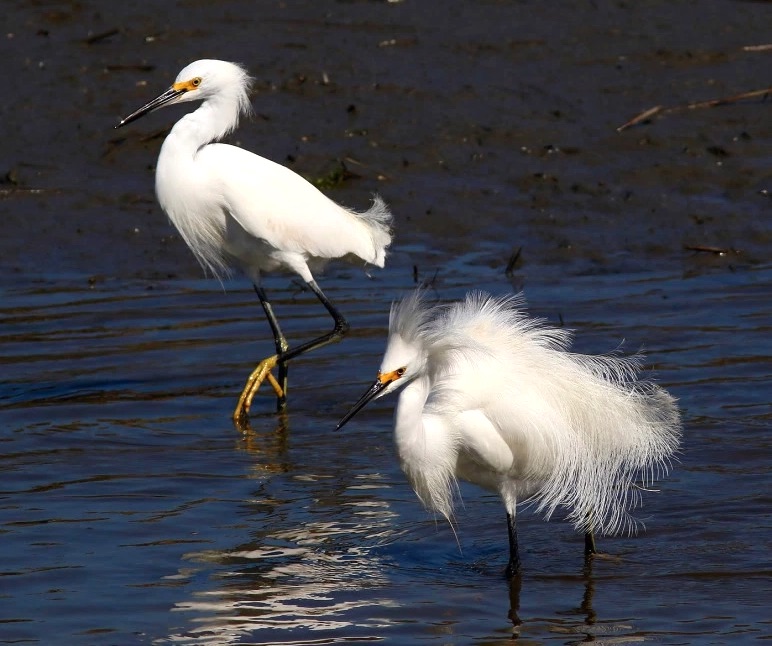
Well, what’s all the fuss about here? One snowy egret is striding confidently forward. The other has gone into full-scale feather-frenzy melt-down. Something is clearly up…
…something that seems on close inspection to be a very small fish
After pausing to check what’s going on, the cool, calm and collected snowy continues on his way. His friend however seems to have lost all sense of decorum as a result of a successful stalk and the catch of a light snack…
Sensible part: the dishevelled bird is displaying so-called ‘bridal plumage’. And for ID enthusiasts, note the diagnostic yellow feet (header image), black legs, and black beak with a yellow / orange ‘bit’ (*technical word alert*) at the blunt end.
Credits: these fantastic photos are the work of Phil Lanoue who specialises in sequential photography, to whom many thanks for use permission; cartoon, Birdorable
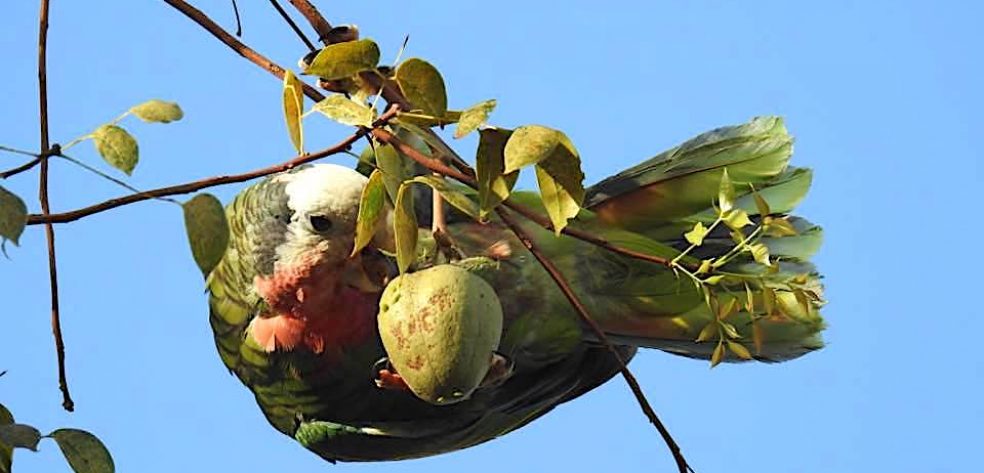
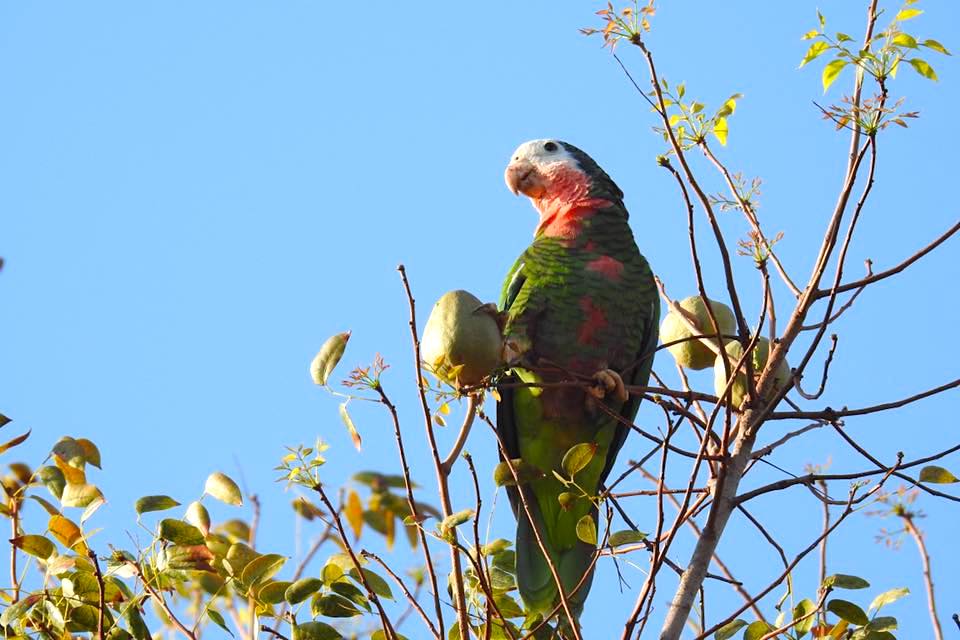
New Providence, Bahamas – specifically in Nassau itself – now has a small population (c.15) of Cuban parrots. Their origin is debated, since the only known Bahamas breeding populations of these birds are on Abaco (underground nesting in limestone caves) and Inagua (conventional nesting). There’s more on the (probable) provenance of the New Providence birds HERE and HERE.
Whatever the location, the nesting arrangements or the precise origin, one fact is certain: these beautiful birds are prodigious eaters of fruit. Here are a couple of the Nassau parrots tucking in with relish on a sunny day. Soon they will fly off to other fruit trees nearby, emitting their loud excited squawks, to continue their day of feeding…
Note the wide businesslike spread of the claws
All photos: Melissa Maura, with thanks as always – and for a great new parrot header image…
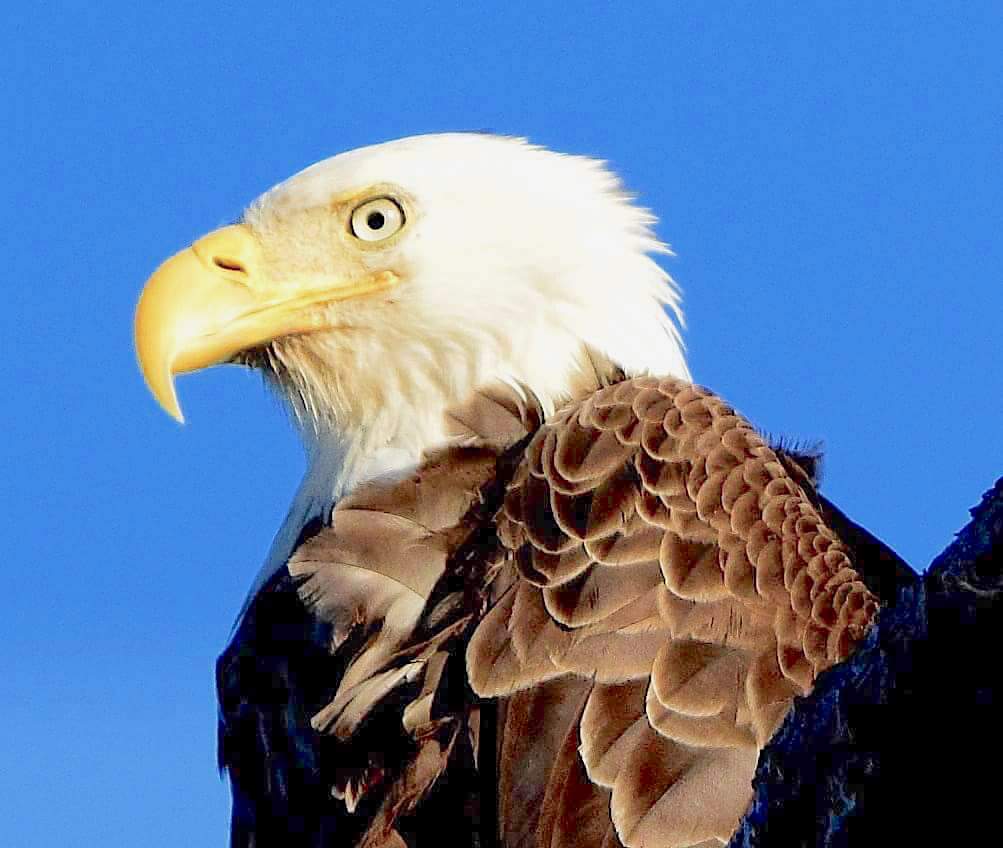
BALD EAGLE ON THE ABACO MARLS: EXTREMELY RARE SIGHTING
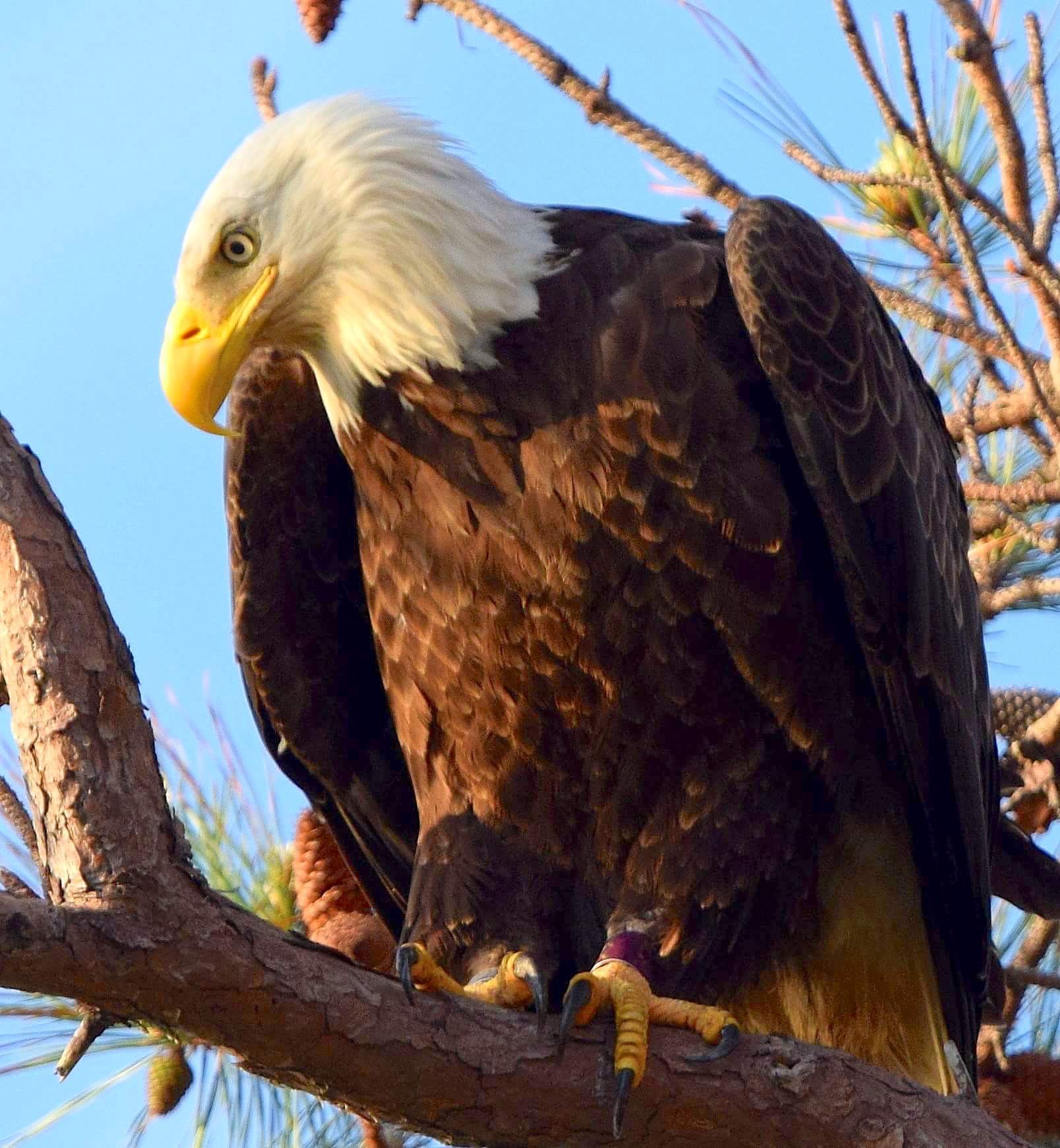
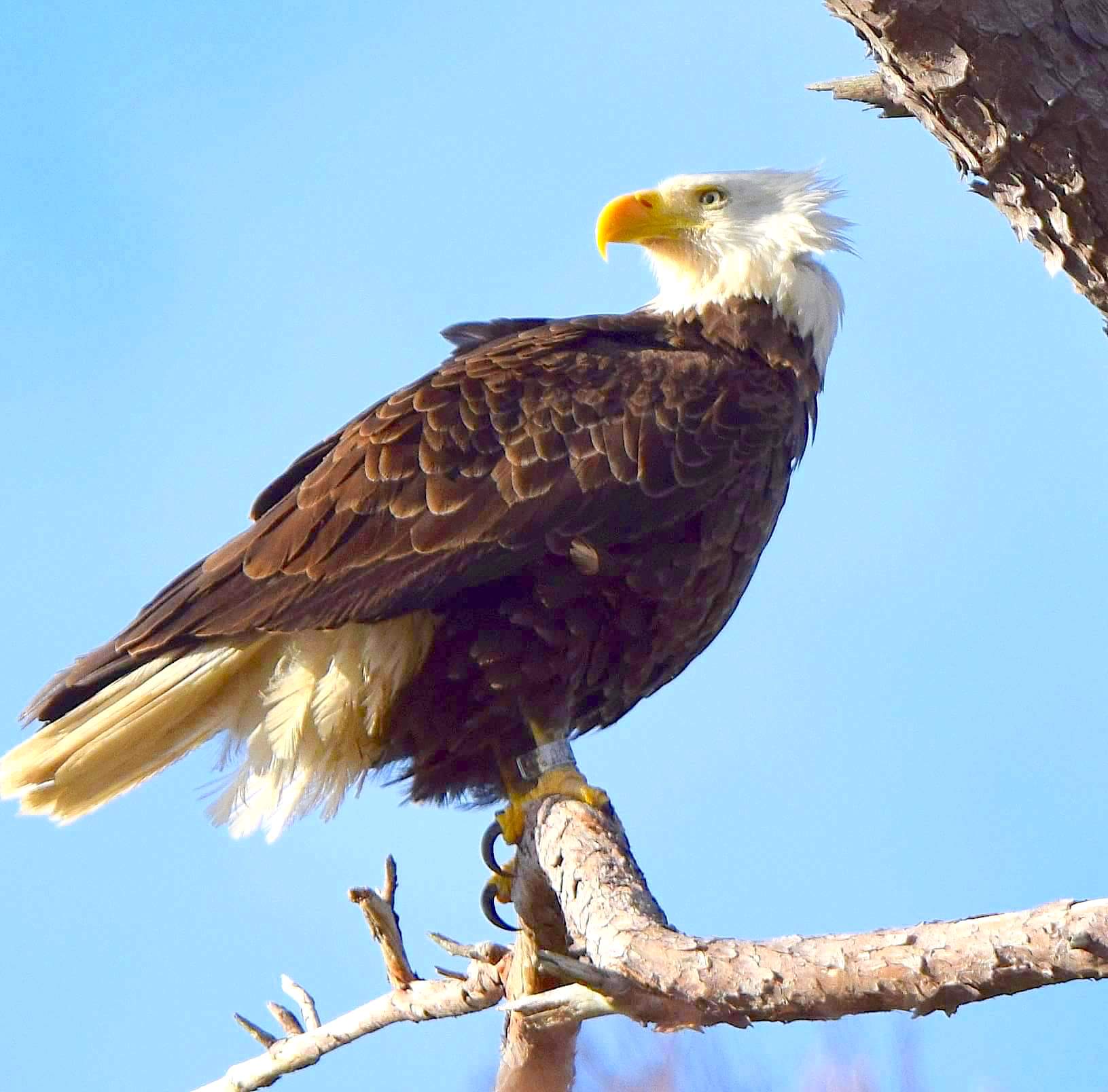
On March 22nd a friend of ours, James, was bonefishing far out on the Abaco Marls when he was astounded to see the unmistakable appearance of a bald eagle Haliaeetus leucocephalus flying above him. His boat partner and guide Joe also saw the bird. James is a very experienced birder, and has seen plenty of bald eagles over the years. He was not to know, at the time, what an exceptionally rare sighting this is. The location was in the area of Big Pine Point.
SIGHTING REPORTS
If you are out on the Marls and see this bird, please can you add a comment to this post or contact me at rollingharbour.delphi@gmail.com, giving the date, time, approximate location… and if possible attaching a photograph. Any reports will add important data to the archive for the birds of Abaco, and of the Bahamas generally.
PREVIOUS ABACO SIGHTINGS
I checked Tony White’s compendious checklist compiled for BIRDS OF ABACO that contains all species recorded for Abaco since 1950. He categorised the Bald Eagle as a ‘V4’, indicating a vagrant species with a handful of irregular sightings – ever. I then contacted Bahamas bird guru Woody Bracey to check the details of earlier sightings. The answer is:
“Bald Eagles were sighted on Abaco three years running 2000-2002. In each instance it was over the Christmas Holiday period (12-20-1-10). I saw one in 2002 from the overlook near Treasure Cay looking out over the marls. Betsy (Woody’s wife) saw one over the chicken farm fields in 2001 but I missed it”.
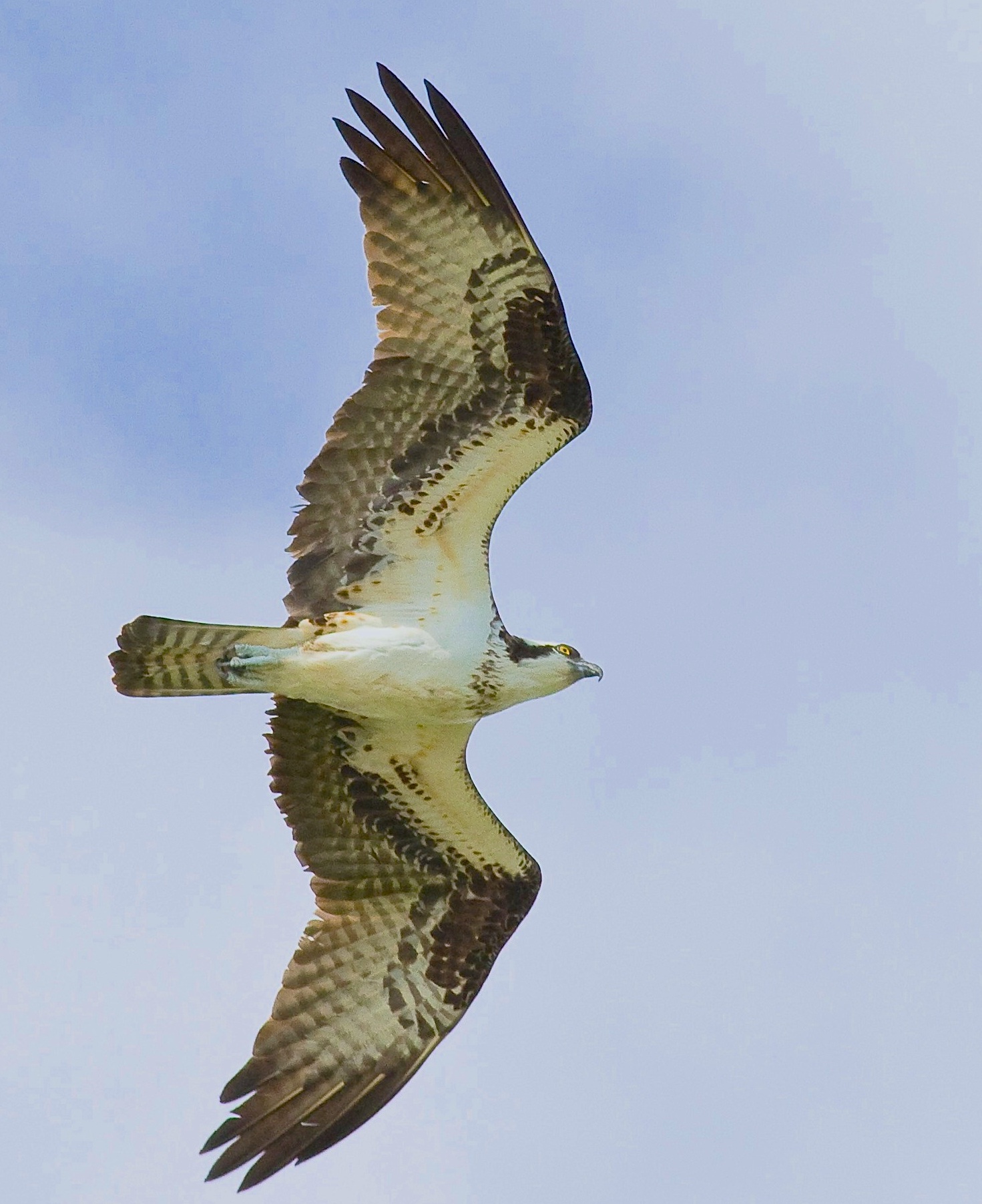
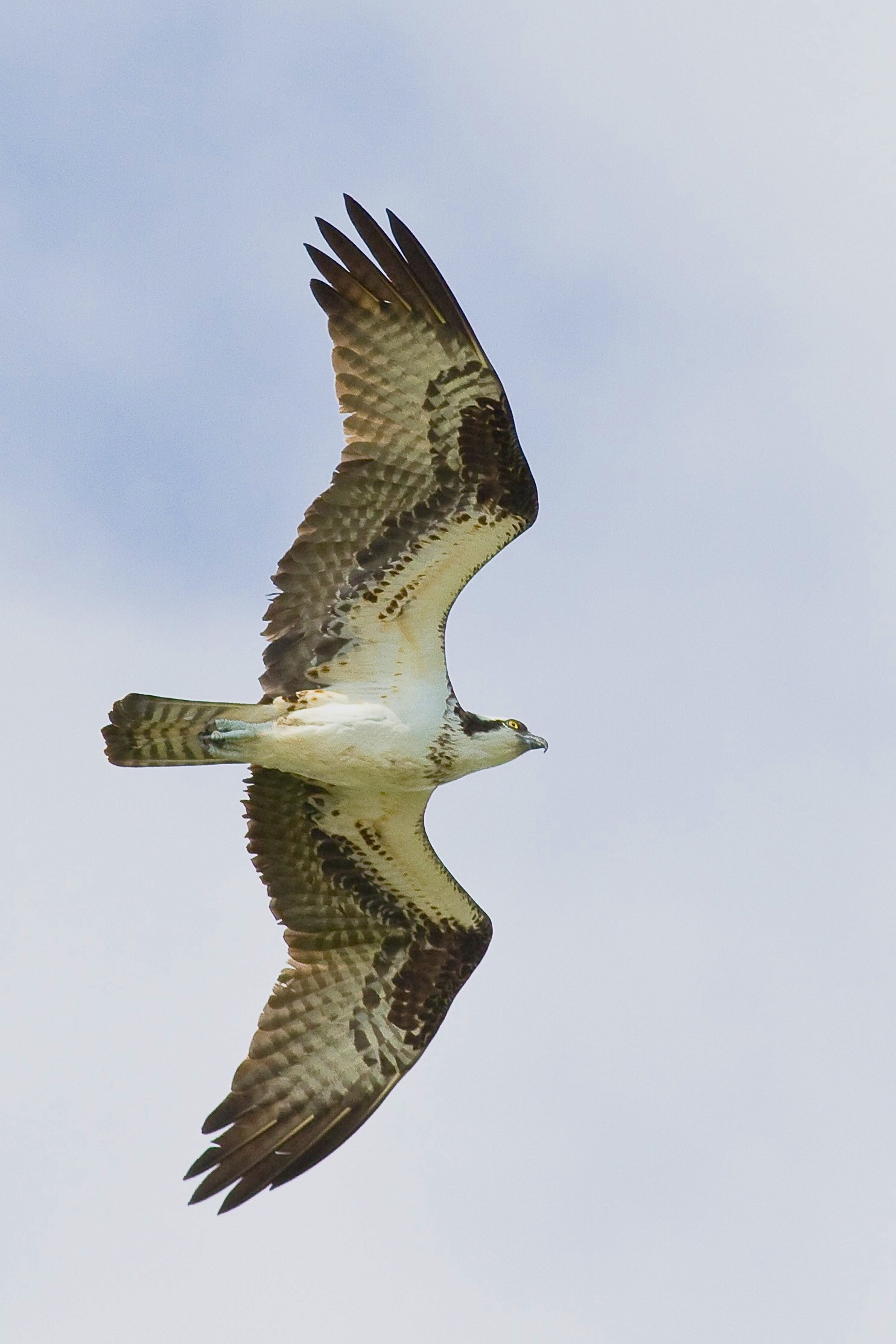
Some people might mistake the Caribbean subspecies of Osprey (an all-white head) for a Bald Eagle but as Woody points out, “their flight and shape are very different”.
WHAT DO I LOOK OUT FOR? A large raptor with a dark body and wings, and a distinctive white head and tail
HOW CAN I TELL IT FROM AN OSPREY? By comparison with this Abaco Osprey
WHAT DO I LISTEN OUT FOR?
Image / audio credits: open source / David R Tribble / Craig Nash (Osprey)
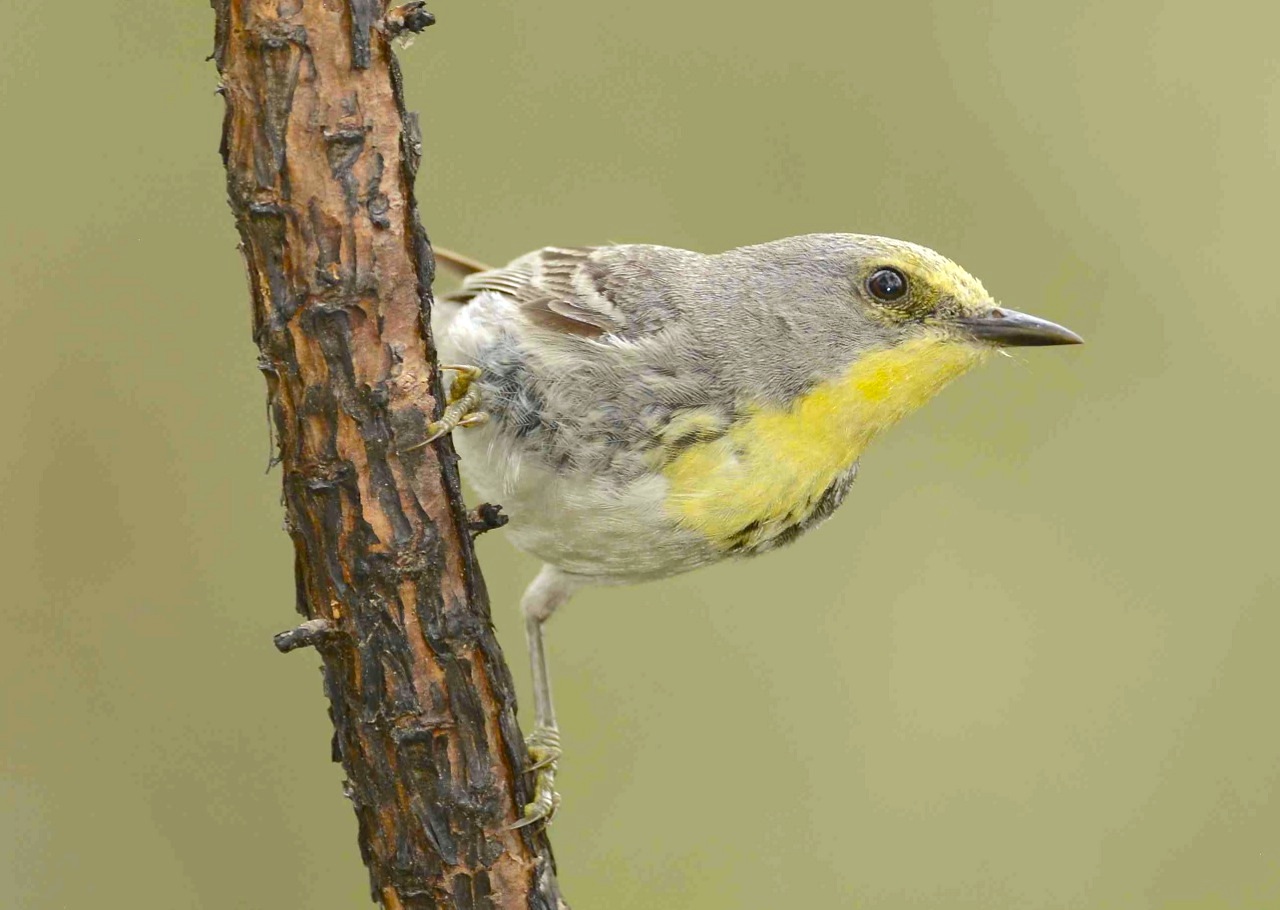
The olive-capped warbler is one of Abaco’s 5 permanent resident warblers, out of 37 warbler species recorded for Abaco. The other PRs are: Bahama Warbler, Bahama Yellowthroat, Pine Warbler and Yellow Warbler.(Photo: Tom Sheley)
Six more sleeps. That’s all. Suddenly, a trip that seemed ages away is rushing towards us. Or, to put it more plausibly science-wise, we are rushing towards it. Abaco beckons, with bonefish, rays, sharks, reef fishes, whales, dolphins, birds and butterflies to investigate. Plus Kaliks to consume.
Idly thinking along those lines and vaguely plotting the first few days, took me to Sandy Point, home of the BMMRO(Bahamas Marine Mammal Research Organisation) and of course the legendary Nancy’s, the restaurant at the end of the road. From where it is a short step to the dock on which the pelicans gather and use as a launch pad for their fishing dives.
I photographed this bird at the end of the SP dock, looking rather bedraggled after a dive
Note the significant plumage differences between the male (above) & this female
I recently read somewhere that the brown pelican is (or has become) quite uncommon in the Bahamas. On Abaco it is a permanent resident breeding species, so a drop in numbers equals fewer nests, fewer chicks and… fewer numbers. It’s a classic cycle towards serious population decline and all that is implied. Has anyone noticed an apparent reduction in numbers, I wonder? Comments welcome.
The pelicans above were all photographed on Abaco. The two below were not, but are both by exceptional photographers. One, Phil Lanoue, specialises in dramatic sequences, and his work features elsewhere in this blog. The final image was sportingly uploaded by Alan Schmierer from Flickr into the ‘public domain’.
Coming in to land…
While we are on Abaco, I plan to keep posting as and when, subject to connectivity (always a proviso in the Bahamas). My big hope is that the piping plovers that were on the beach last year and returned this season, will have resisted the increasingly insistent call to fly north to the breeding grounds. If they could just hang on for just a few more days…
Credits: Tom Sheley (1); Tony Hepburn (2); Keith Salvesen (3, 4, 6); Woody Bracey (5); Phil Lanoue (7); Alan Schmierer (8); Birdorable (cartoon)
A quick note to the malcontent (or maybe it’s a syndicate?) who has resumed trolling this blog after a lull. Yes, I’ve noticed your handiwork, and I couldn’t care less. Except about you. Bless! I’d have thought you’d have better things to do with your time. Clearly I’m an optimist.
If you don’t like this blog or what’s posted here, remember that you have chosen to visit it. If it’s not to your liking you very luckily have the choice never to visit again. More constructively, you could have some guts and attempt to leave a constructive comment such as: your facts are wrong; your photos are lousy; your jokes are unfunny; your are a foreigner sticking your nose into another country’s wildlife and history; sorry, I am sick in the head; all of the above.
Carry on if you want. Or bugger off. Entirely up to you. Cheers.
Credits: Tom Sheley, Alex Hughes. Discredits: Troll (there you are – your name in print!)
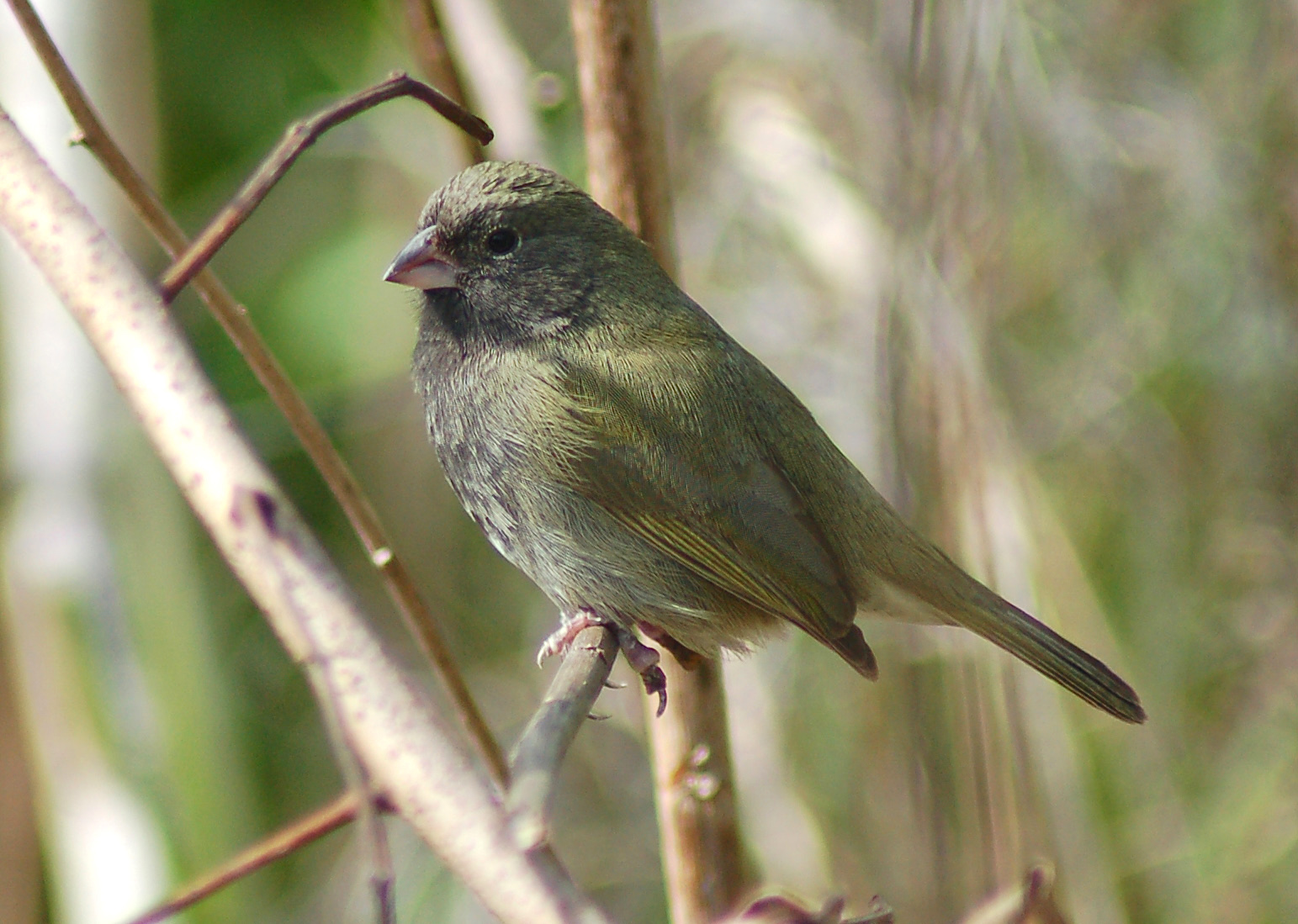
Hi, human friends, I’m a black-faced grassquit Tiaris bicolor and I have a couple of observations to make on behalf of BFGS, if I may. First, we seem to be universally described as ‘common’, whereas we are actually quite refined in our behaviour. Secondly, the words most used to portray us are ‘dull’ and ‘drab’. And ‘stubby’. Well, excuse me… I – we – ask you to give us a second look.
And I have some news for you. The perceptive classifications committee of the American Ornithological Union recently gave us an upgrade. That’s the way we see it anyway. For many years we have been classified under the heading Emberizidae.
We kept company with buddies like the Greater Antillean Bullfinches, but also with a lot of New World sparrows, with whom we (frankly) never felt entirely comfortable. Too chirpy, for a start.
Last year, it became official. We are really a type of Tanager. They reckon we are closely related toDarwin’s finches(so, we are “common”, huh?).Now we get to be with other birds that are dome-nesters like us. And how about this – we’ll be in the same list as some really cool birds…
How’s this for a colourful gang to be joining: scarlet tanager, summer tanager, rose-breasted grosbeak, indigo bunting, painted bunting – these are our new cousins. BFGs “dull” and “drab”? I don’t think so.
6 UNDULL FACTS ABOUT BFGS
Make grassy dome-nests (like Bananaquits) and line them with soft grasses
Both sexes build the nest together
Both share egg-sitting duties and later chick-feeding & maintenance
Though quite gregarious by day, for some reason they tend to roost alone
They have a short ‘display’ flight with vibrating wings and a strange buzzing call
Otherwise, their flight is ‘weak, bouncy & fluttering’ (Whatbird’s assessment)
THE EVERYDAY TWITTERING SONG
THE DISPLAY BUZZING SONG
STOP PRESS The day after I had pressed the ‘publish’ button on this post, I came across a great shot by Larry Towning of a BFG on Lubbers Quarters Cay, Abaco (think ‘Cracker P’s Restaurant’). An excellent addition of a bird from a small cay, showing its bright lower-wing flash.
Photo Credits: Alex Hughes (1, 10); Tom Sheley (2, 3); Bruce Hallett (4, 9); Tom Reed (5, 11); Becky Marvil (6); Peter Mantle (7); Gerlinde Taurer (8); Keith Salvesen (12) plus Larry Towning. Other Credits: ABA, AOU, Whatbird? (sound files)
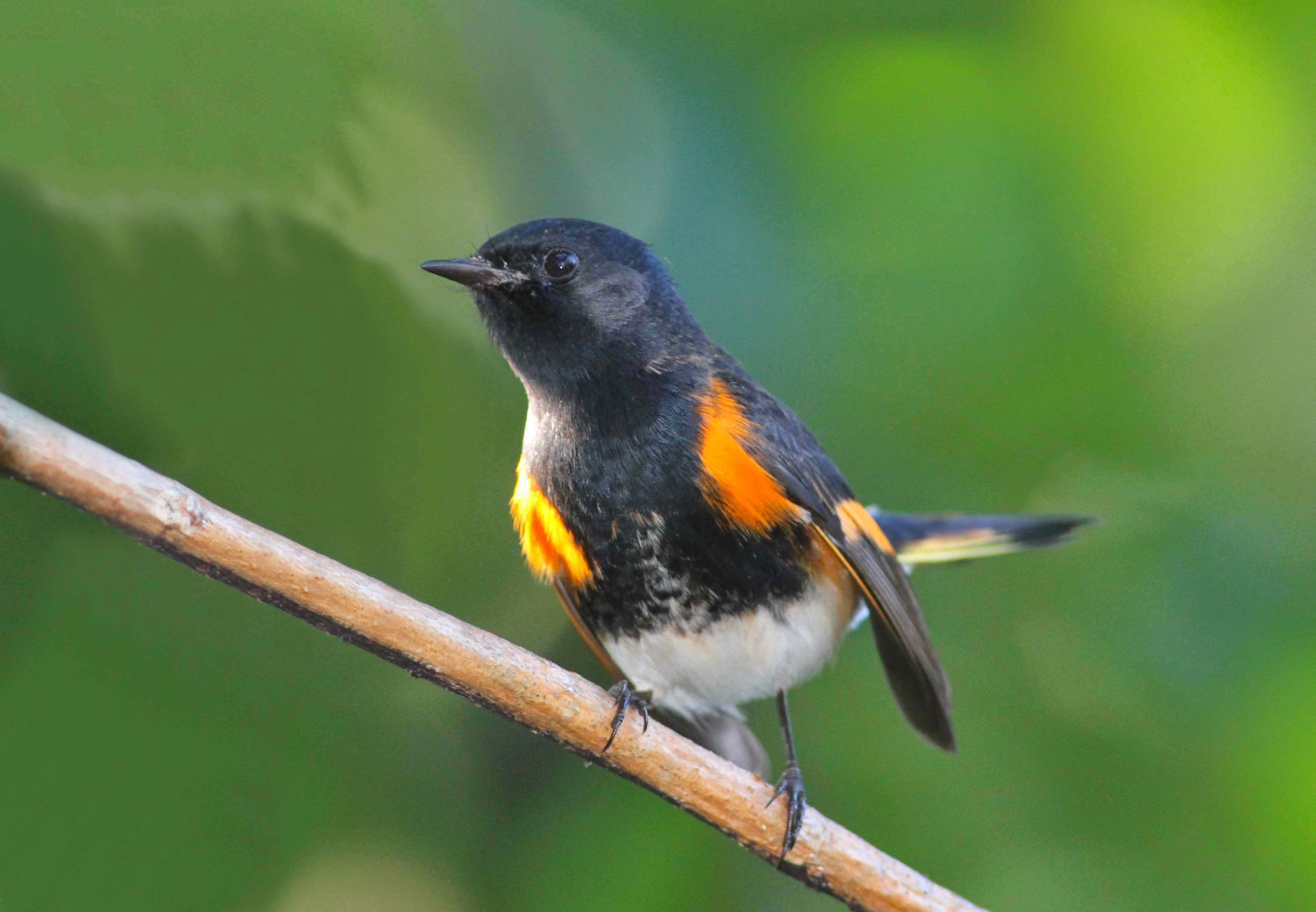
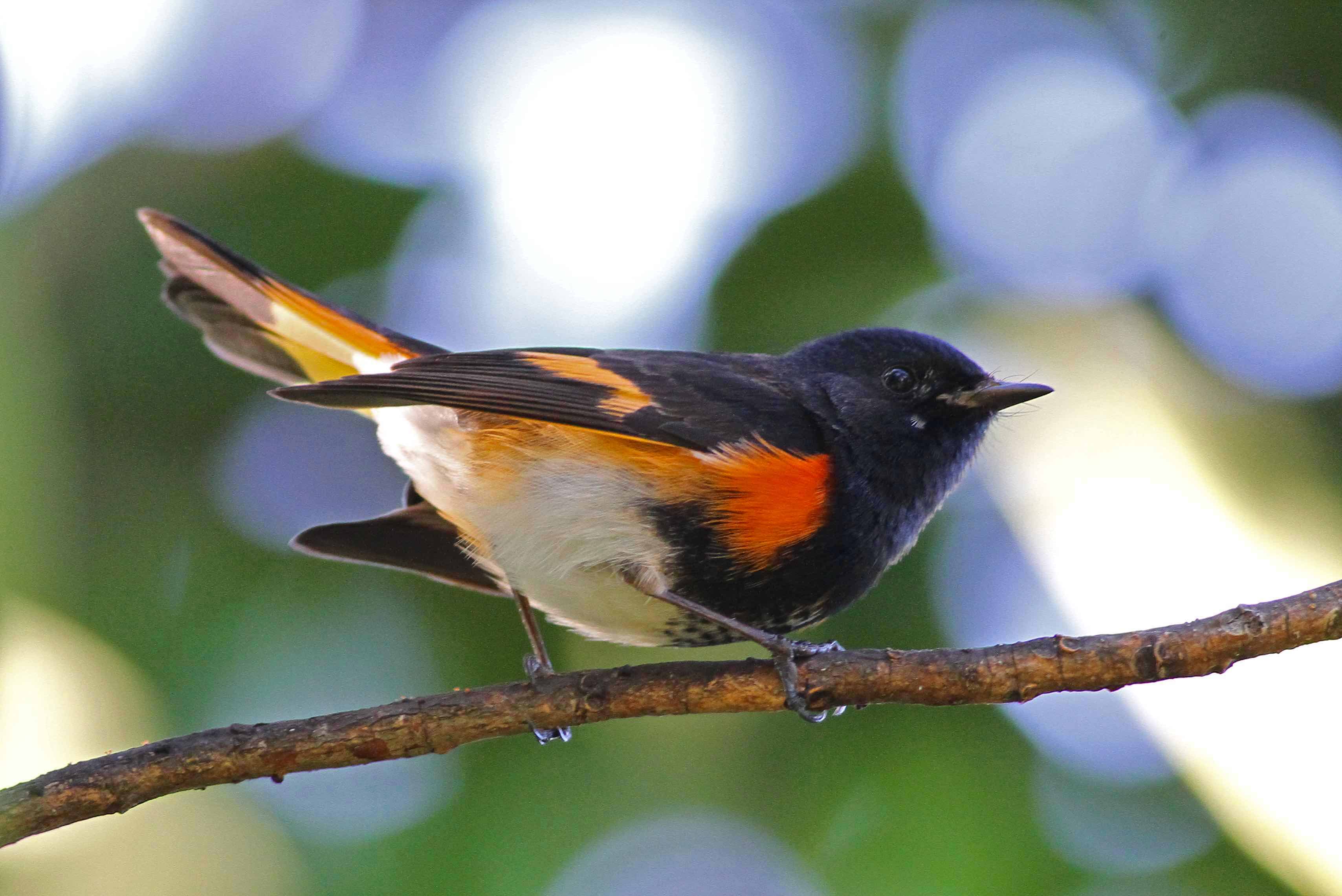
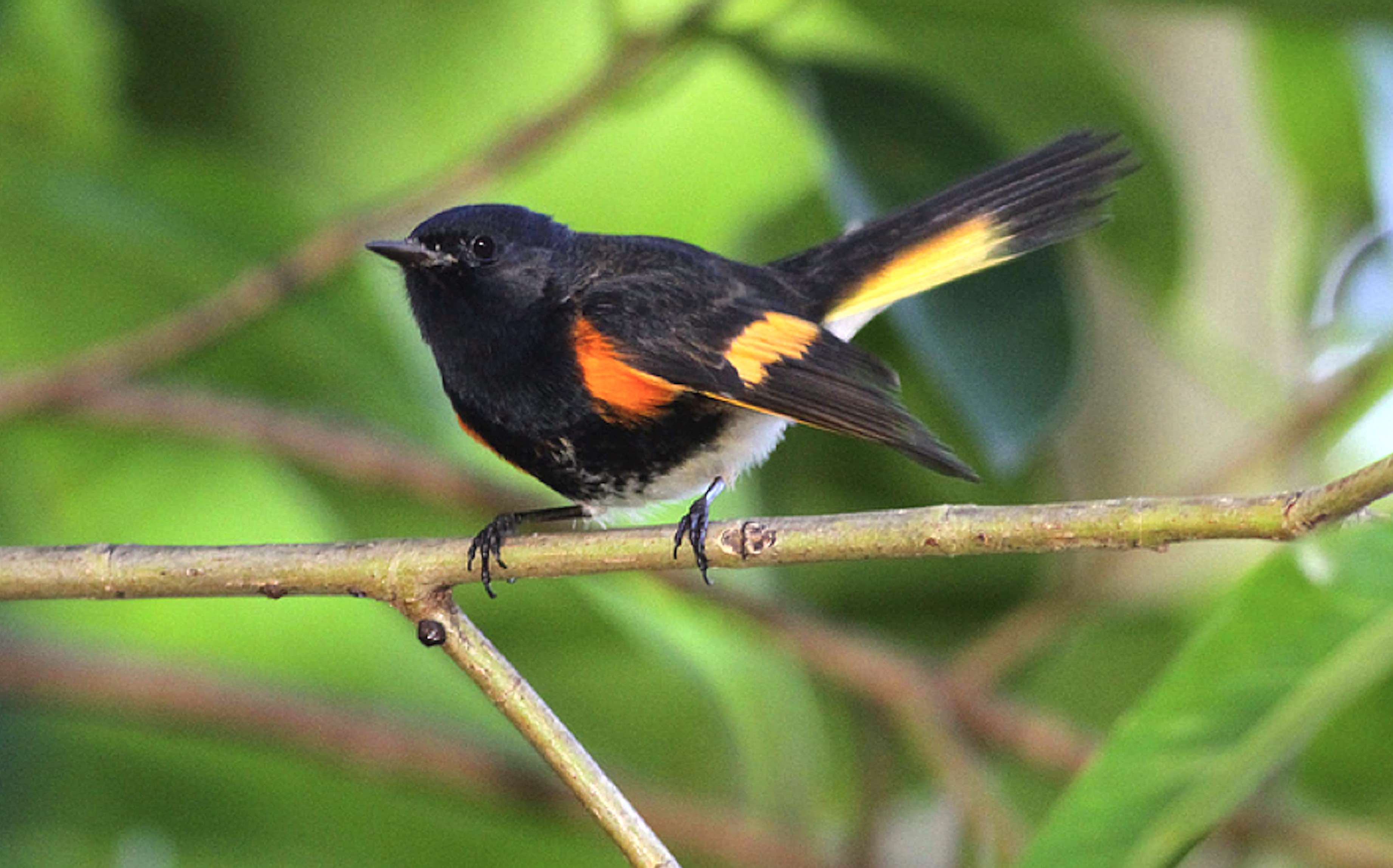
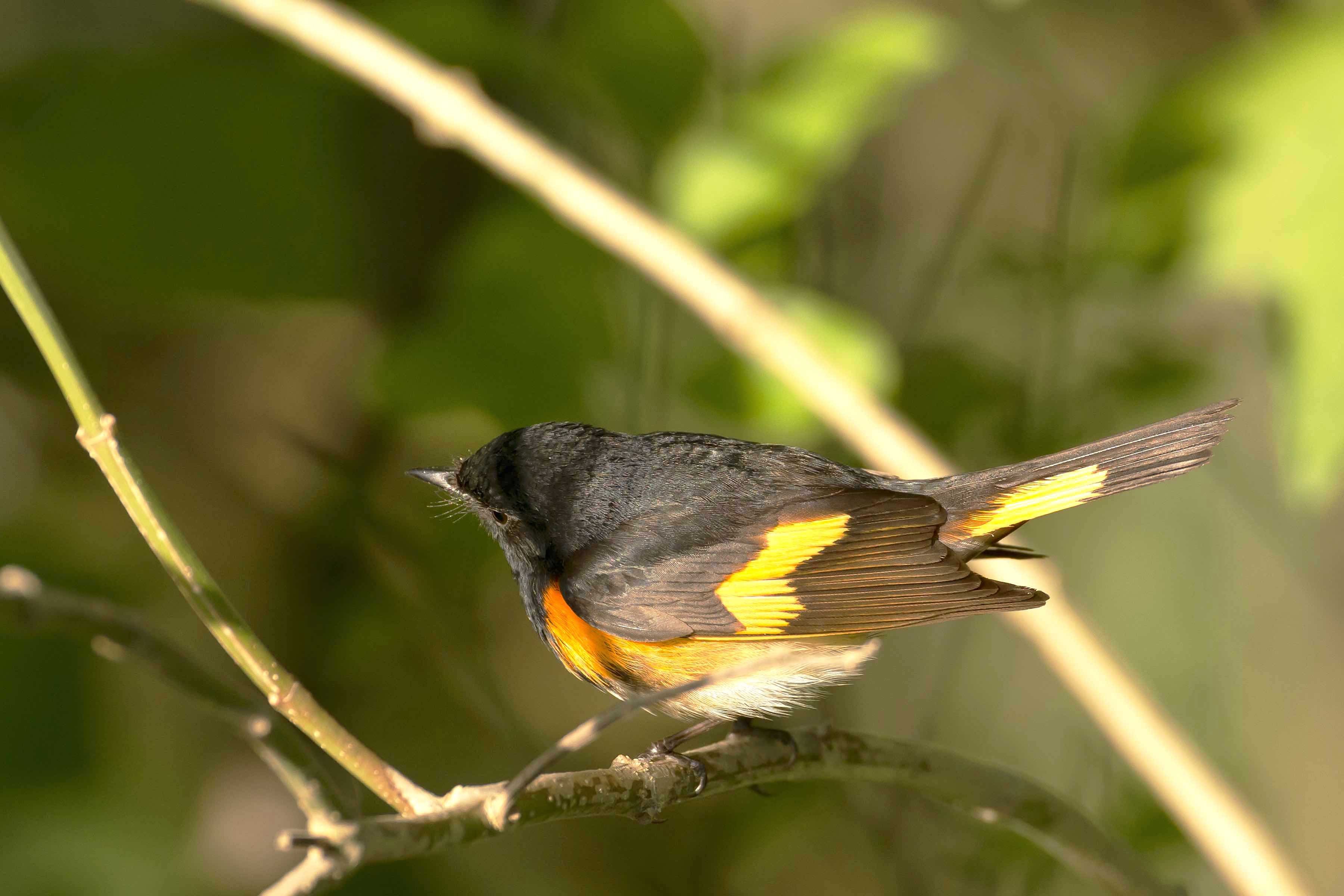
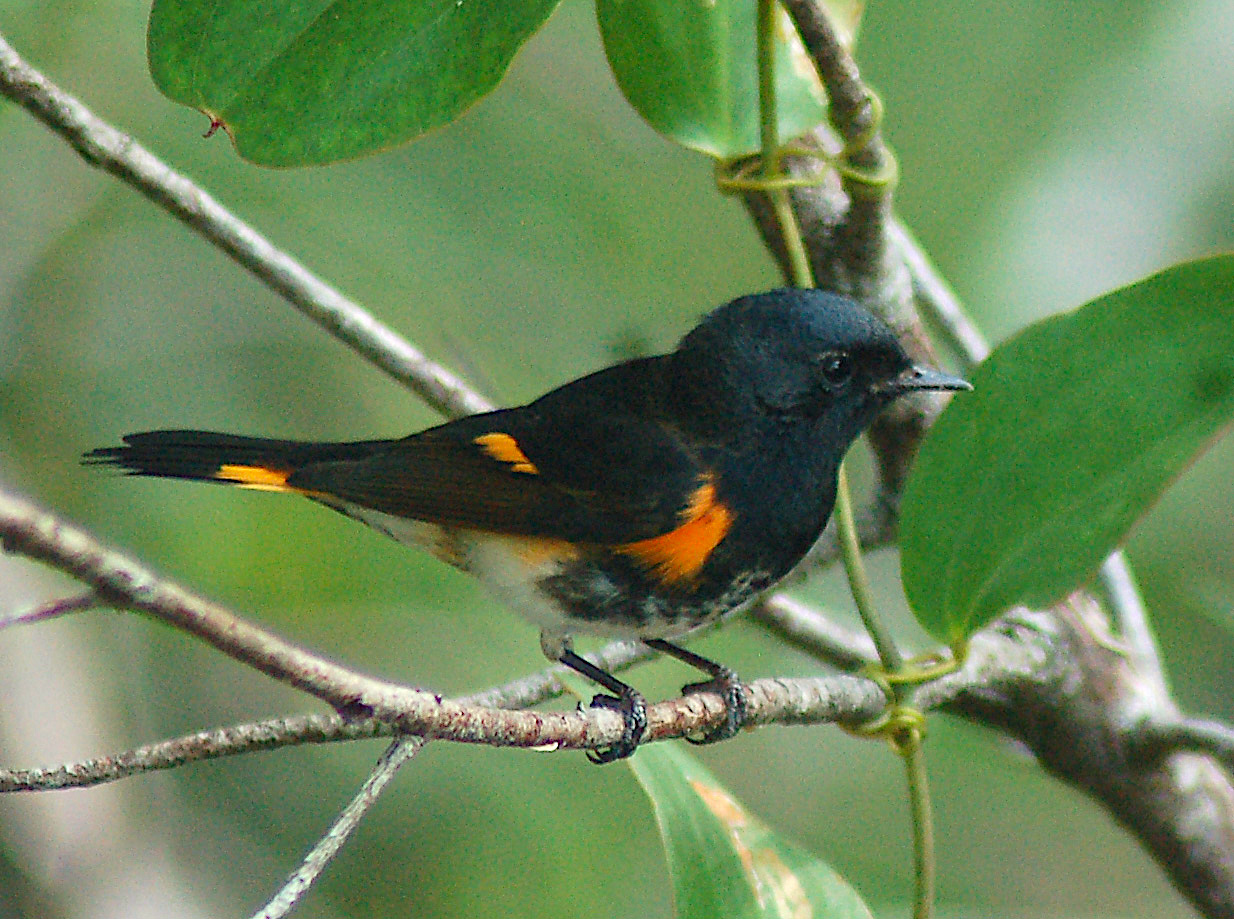
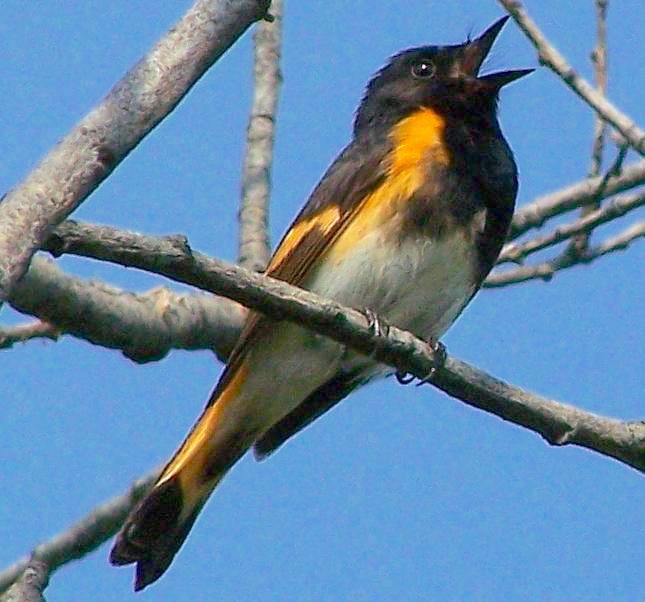
Time to rectify an omission and to feature the striking orange and black male American Redstart Setophaga ruticilla. A while ago I posted about the equally distinctive yellow and black females HERE(the dissimilar colouring between the sexes of these little warblers is due to differing carotin levels in each). These unmistakeable winter residents are common on Abaco. They are an easy warbler for new birders look out for, being unlike any other small warblerish-looking bird. All the birds here were photographed on Abaco.
TEN REDSTARTLING FACTS (& a comment)
The Latin name means moth-eating red-tail (‘start’ is an archaic word for tail)
AMRE are among the most common New World warblers
Occasionally they are found as far afield as Europe
They are almost entirely insect-eaters, with occasional berries or seeds for variety
Males are late developers, tending to skew the sex ratio: too many of them
They are inclined to monogamy, but only to an extent. Two-or-more-timing goes on
The most aggressive males get the pick of the habitats
This all begins to sound like human behaviour(not strictly a fact, so it doesn’t count)
Their fanned tails are for display, and maybe to surprise insects into breaking cover
Redstarts suffer badly from predators, especially in the breeding season
They are popular with coffee farmers for keeping insect numbers down
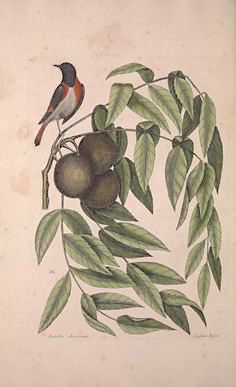
The American Redstart (f & m) as depicted by JJ Audubon










































![Bald Eagle [Abaco, Bahamas sighting - open source image]](https://rollingharbour.com/wp-content/uploads/2017/03/haliaeetus_leucocephalus_-skagit_valley-8-2c.jpg)
![Bald Eagle [Abaco, Bahamas sighting - David R Tribble / open source image]](https://rollingharbour.com/wp-content/uploads/2017/03/bald-eagle-9114-cropped.jpg)





 ROLLING HARBOUR ABACO
You must be logged in to post a comment.