Unknown's avatar

BUTTERFLIES ON ABACO (8): WHITE PEACOCK


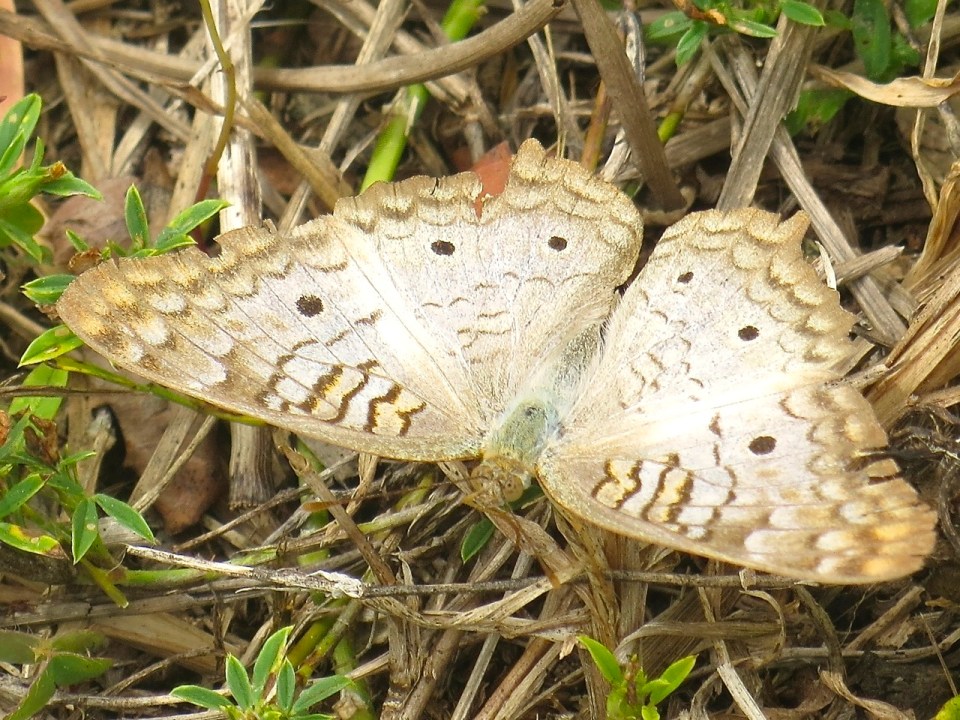
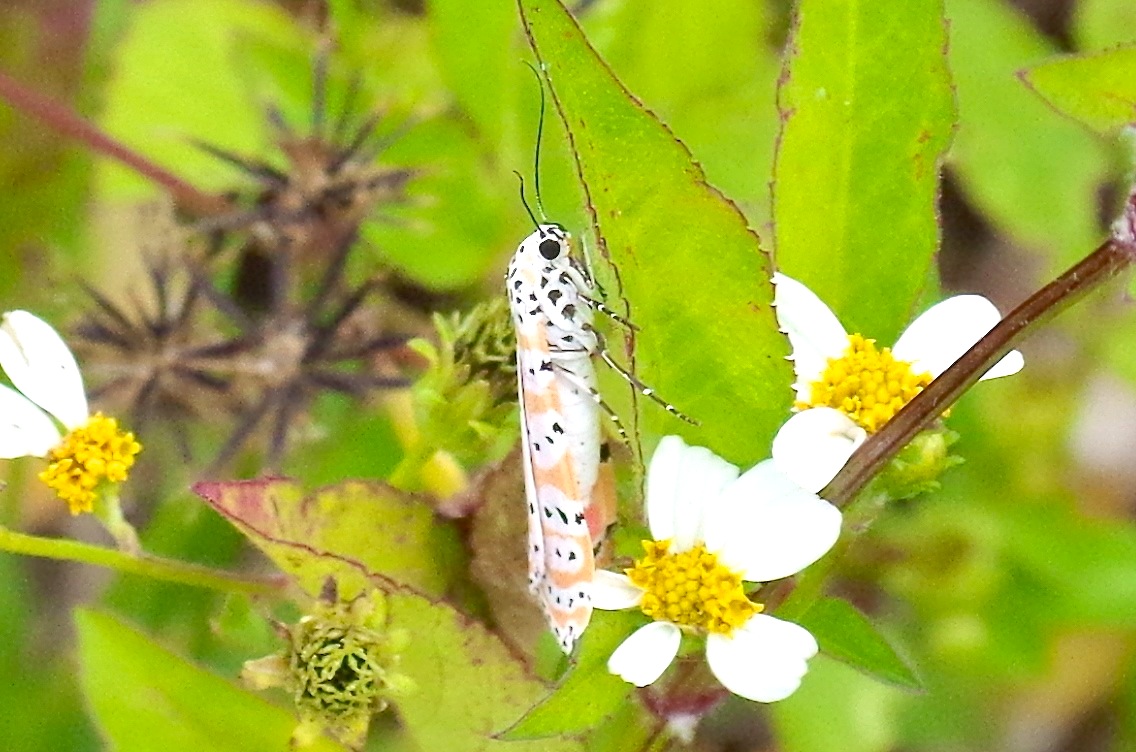
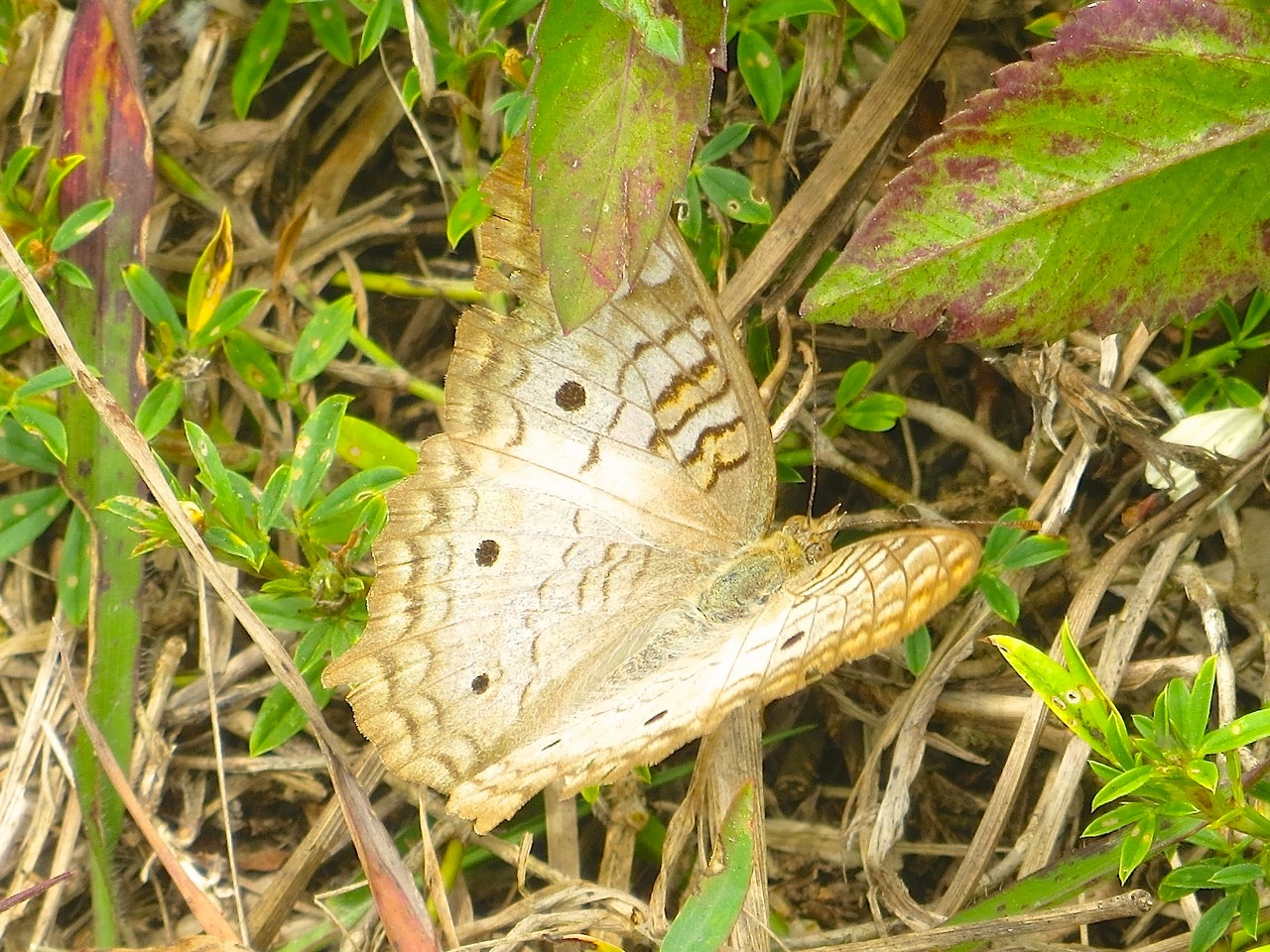
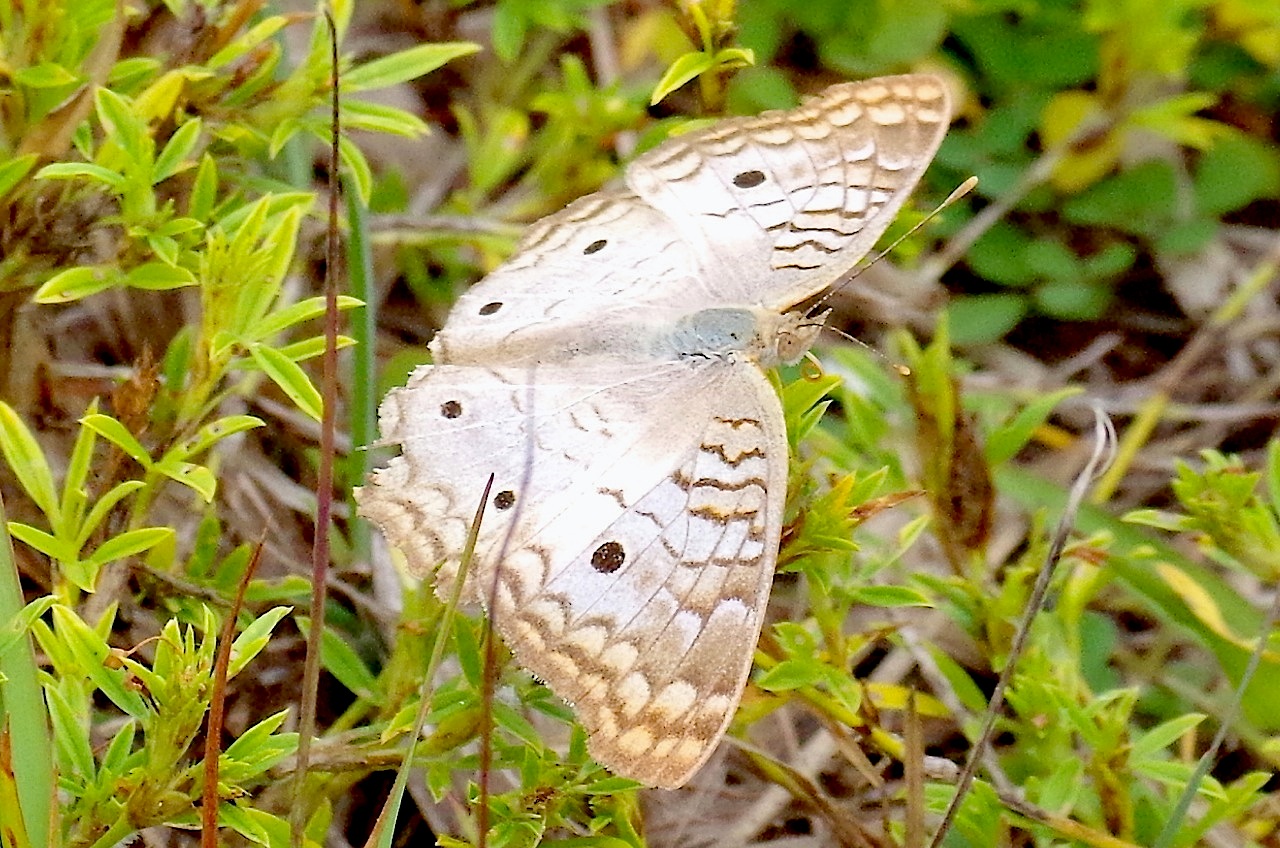
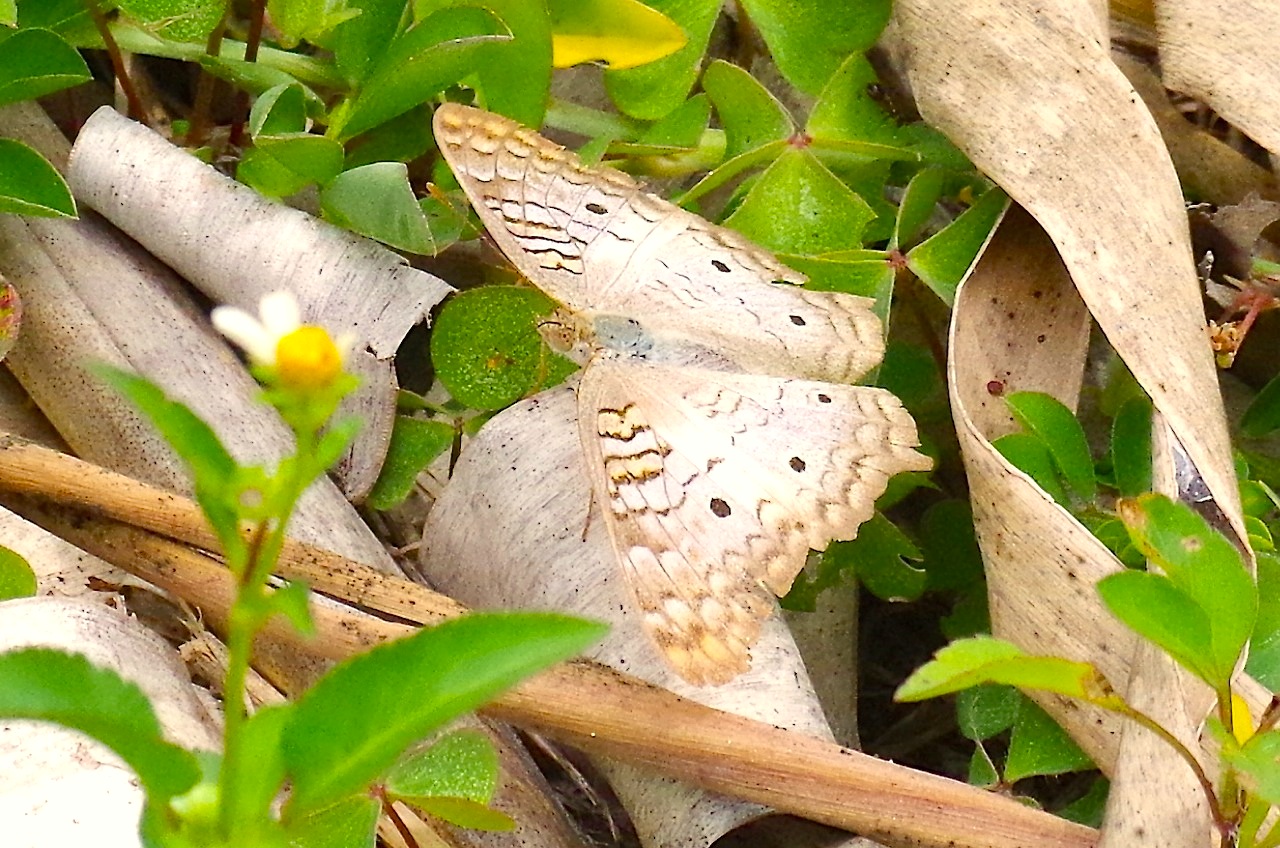
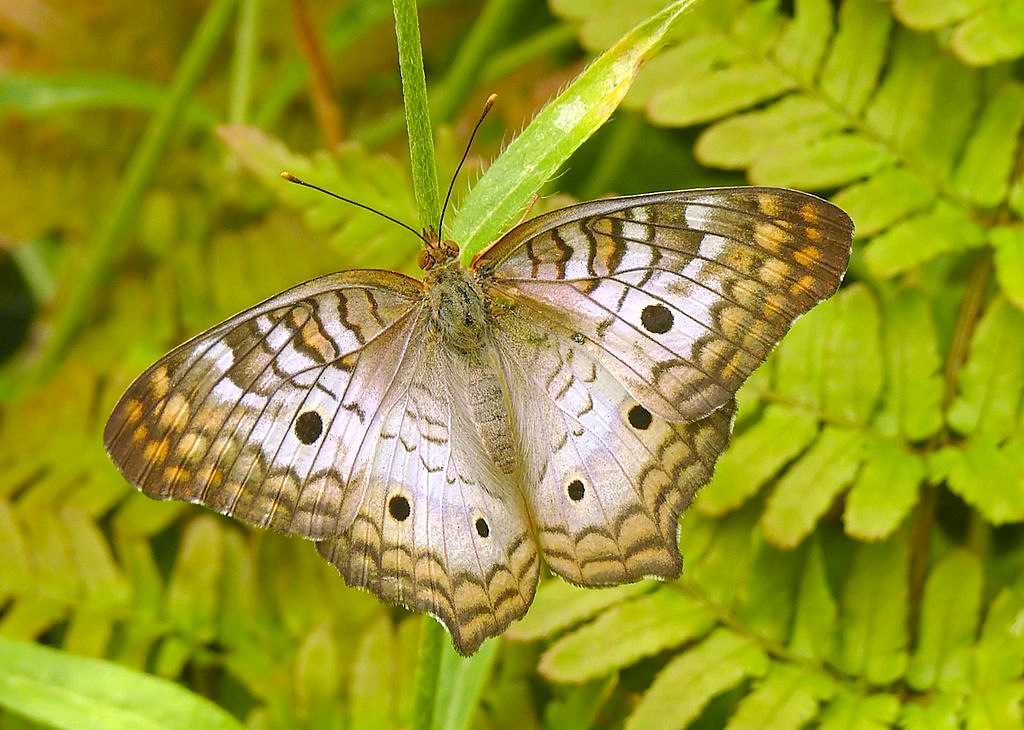
White Peacock Butterfly, Abaco (Keith Salvesen) 1

BUTTERFLIES ON ABACO (8): WHITE PEACOCK

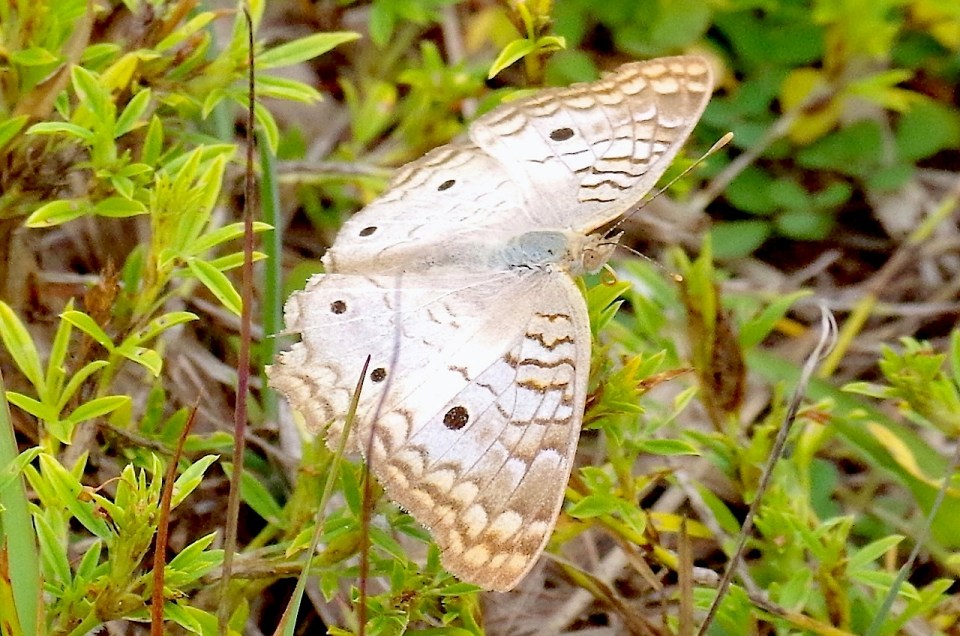
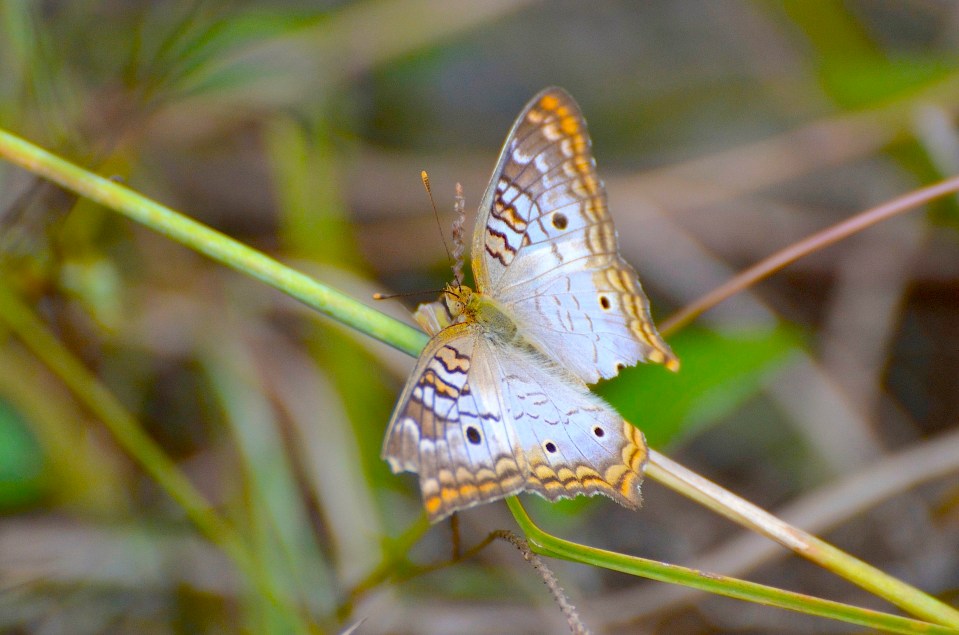
The white peacock (Anartia jatrophae) is not a rare butterfly in the northern Bahamas. However, until recently I had never – or never consciously – seen one before. Then we came across a few, all very frisky and mostly refusing to settle for more than 1/100 second. By the time I have remembered to remove my lens cap, they are 50 yards away.

White Peacock Butterfly, Abaco (Keith Salvesen) 2White Peacock Butterfly, Abaco (Keith Salvesen) 3White Peacock Butterfly, Abaco (Keith Salvesen) 4

I checked out these pretty but unassuming butterflies online because they seemed rather pale and anaemic. As far as I can make out this is because they were still in winter colouring; in summer they are more brightly marked. Here’s a photo of a dishevelled white peacock taken in June at Delphi by Charlie Skinner, which shows stronger colours.

White Peacock, Abaco DSC_4786 (Charlie Skinner)

ARE THEY EVER FOUND LOOKING BRIGHT AND NOT FALLING APART?

Yes, of course, but interestingly, never ever in the field. The one below, non-anaemic and intact, was thoughtfully uploaded to Wiki by Greg Hume. He took it at a butterfly show, where presumably tatty butterflies are excluded…

WhitePeacock (Greg Hume)

Photos: Keith Salvesen 1 – 4; Charlie Skinner 5; Greg Hume 6

Unknown's avatar

BUTTERFLIES ON ABACO (3): COMMON BUCKEYE


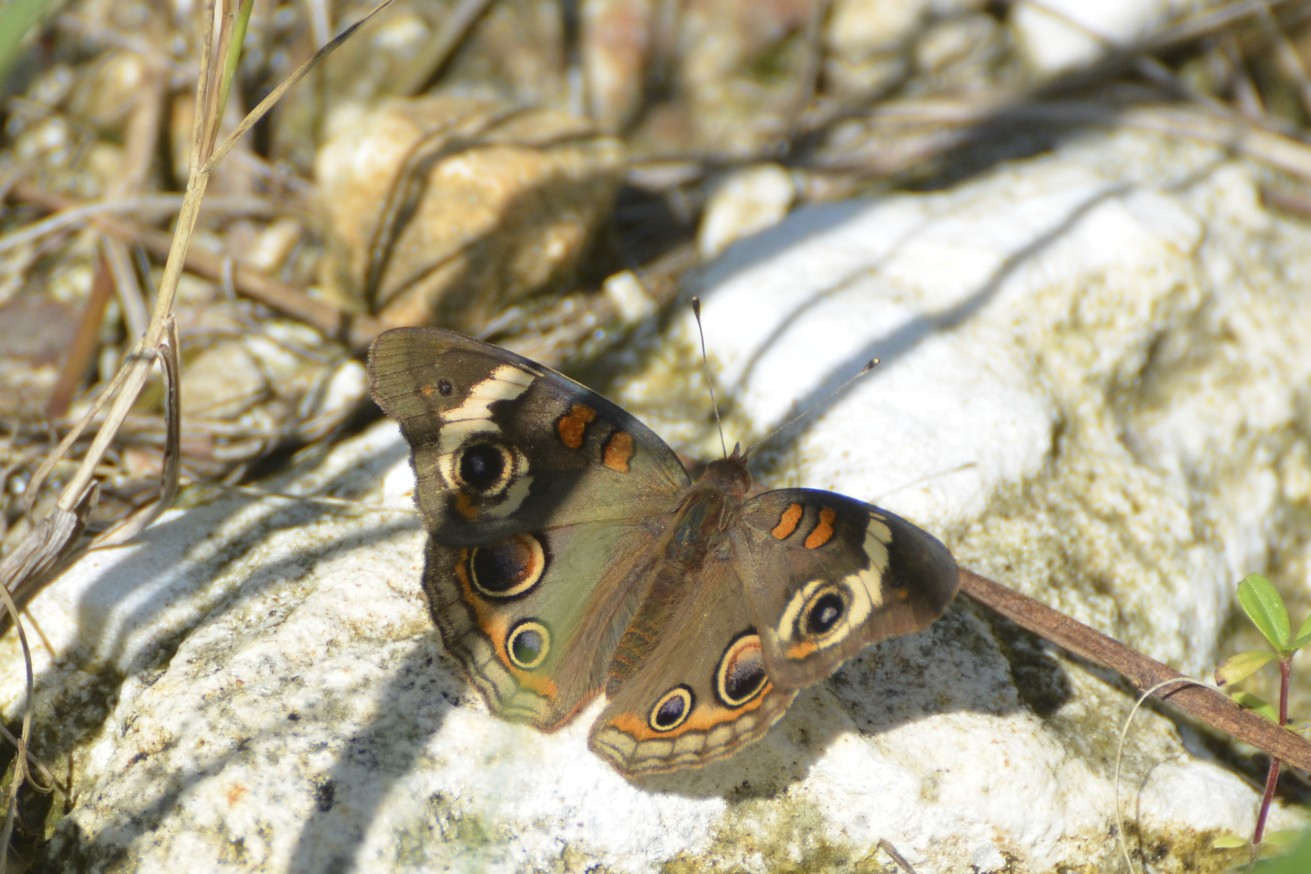
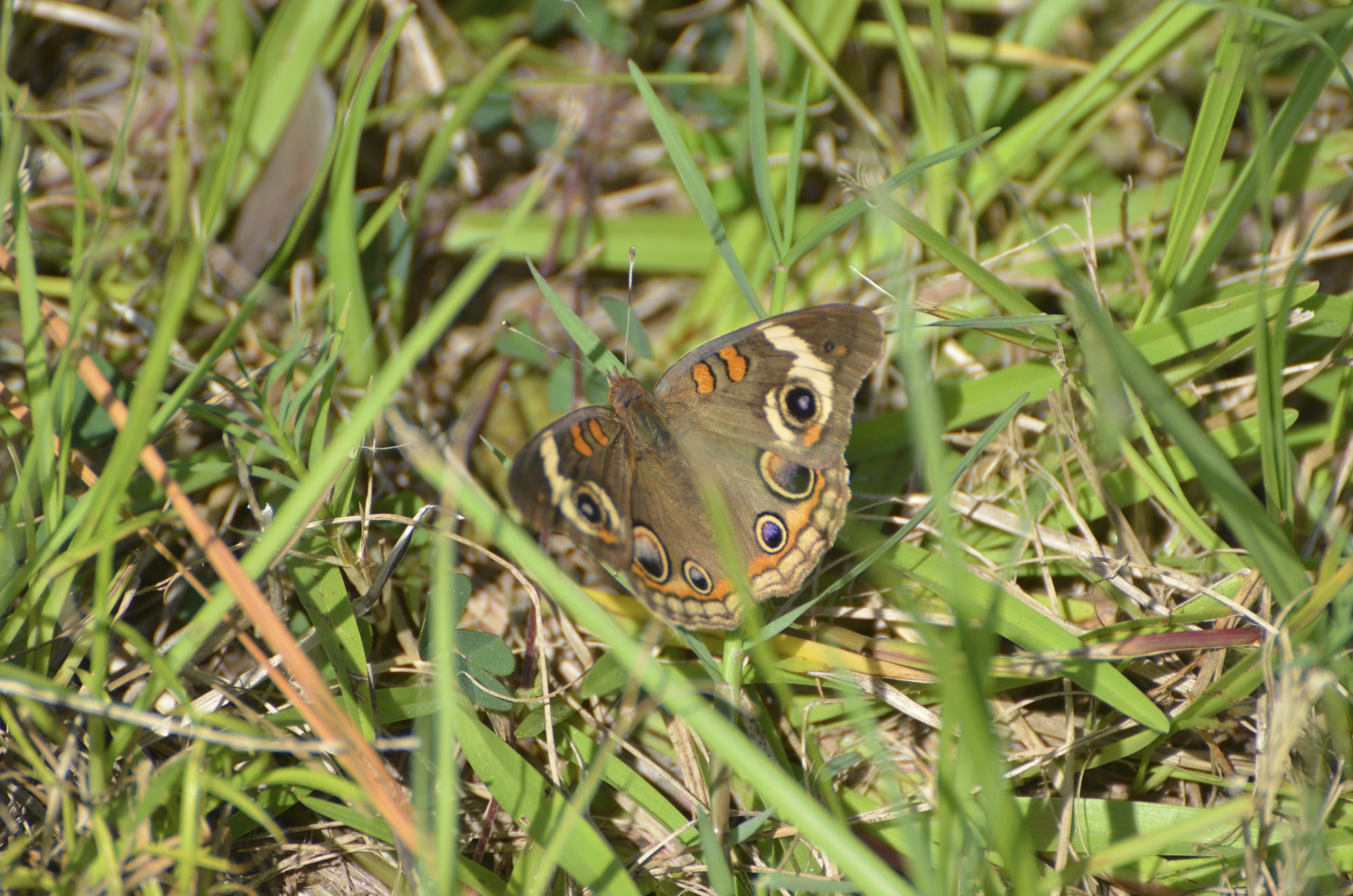
DSC_7830

BUTTERFLIES ON ABACO : COMMON BUCKEYE

At first glance the Common Buckeye Butterfly Junonia coenia looks unpromisingly drab. However, like many butterfly species, the outside appearance is only one side of the story, a facade to enable it to blend in with the scenery. As the header image suggests, this creature has a more more flamboyant and colourful side to it – a feature not confined to butterflies, and extending even to humans…

SEQUENCE OF SLOWLY OPENING WINGS

Charlie Skinner DSC_7818

As it feeds, or as the sun warms its wings, the buckeye will start to reveal itself DSC_7831DSC_7825DSC_7817 DSC_7823

The bright eye-spots of the buckeye, for which it is named, are designed to deter predators, as much as for decorative purposes. Birds, in particular, will be put off by a creature apparently possessing 3 pairs of eyes. This feature is known as aposematism: coloration or prominent markings that signal a warning to potential predators.

DSC_7829DSC_7822DSC_7832

The caterpillars and chrysalis of this species look like thisCommon_Buckeye_larva_variation,_Megan_McCarty42Common_Buckeye_chrysalis,_Megan_McCarty43

This rather charming illustration of the buckeye species is by Jacob Hübner from his Sammlung exotischer Schmetterlinge Vol. 2 ([1819] – [1827] (Plate32)442px-Hubner1821SammlExotSchmett2Plate32

Photo Credits: Butterflies by Charlie Skinner (except header, Wiki); Caterpillars & Chrysalis by Megan McCarty via Common Licence

Unknown's avatar

FLUTTER BY, BUTTERFLY: ATALA ENCHANTING


Atala Hairstreak Butterfly, Abaco 7

FLUTTER BY, BUTTERFLY: ATALA ENCHANTING

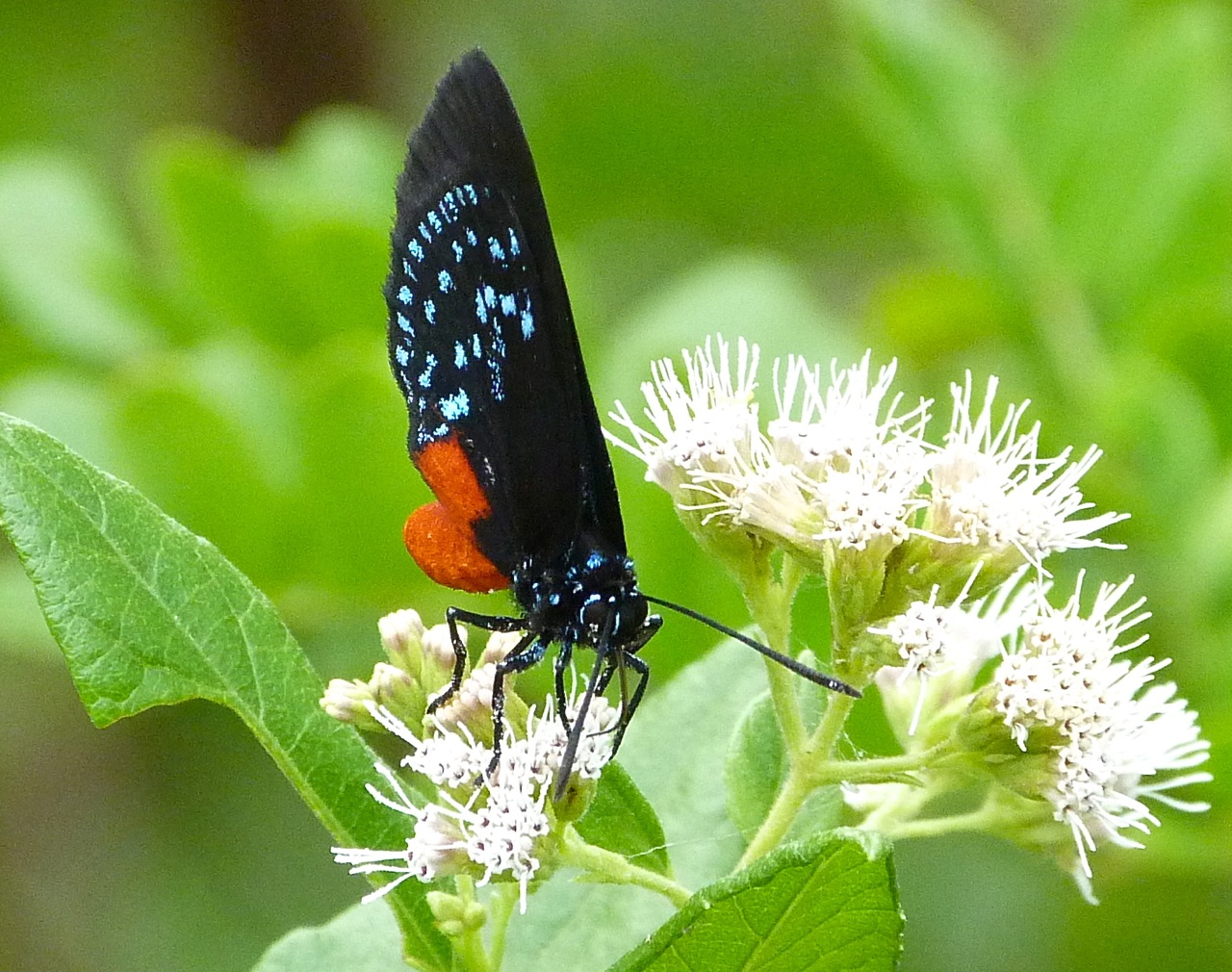
It’s hard to miss the fly-past of an Atala Hairstreak Butterfly Eumaeus Atala . Once seen, never forgotten. They are small wonders, with their plump orange abdomens and their striking blue-dotted motif; obvious candidates for a signature Rolling Harbour logo for insect posts.

Atala Hairstreak Logo

Atala Hairstreak Butterfly, Abaco 1

It is rare to see the inside of an Atala’s wings. In flight they tend just to look black; then they land with precision and immediately close their wings.

Atala Hairstreak Butterfly, Abaco 4

Atala Hairstreak Butterfly, Abaco 2

This close-up shows clearly that the vivid blue markings are not confined to the Atala’s wings. They are also on the body, the head, and surprisingly on the legs as well.

Atala Hairstreak Butterfly, Abaco 6

In sunshine the spots of the feeding Atala shine out like small LEDs. When they do open their wings, they reveal the velvety blue upper sides.

Once, I was watching a single Atala when a second one arrived and almost immediately ‘jumped’ the first. By which I mean that, for a few seconds, the new arrival ‘covered’ the feeding Atala in every sense of the word. Mere moments later, it was all over. I made my excuses and left.

Atala Hairstreak Butterfly, Abaco 3

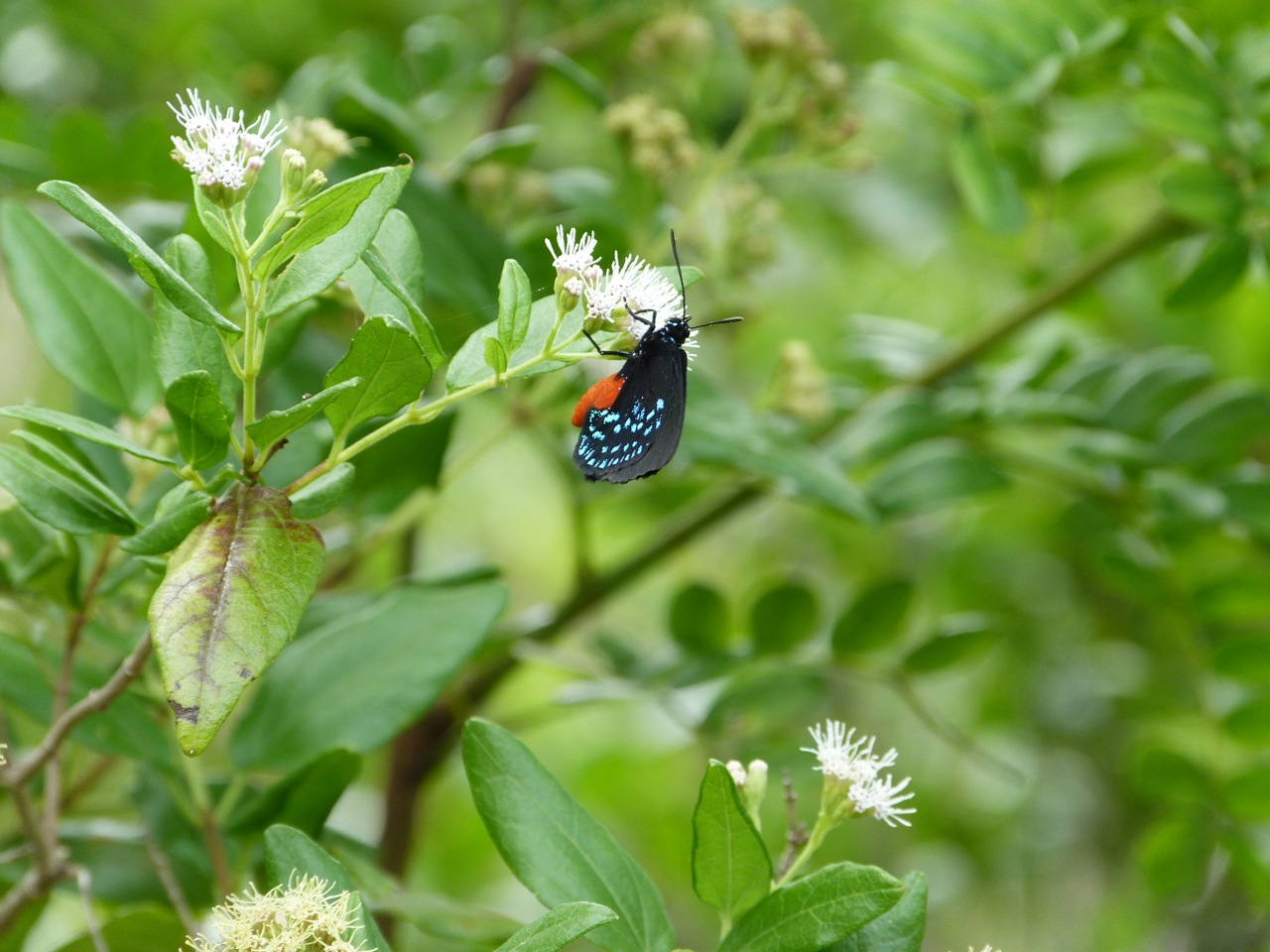
Finally, you may want to get a sense of size for this butterfly – crops and zooms can sometimes give a distorted impression. So here is a normal snap of the butterfly feeding.

Atala Hairstreak, Abaco 9

Unknown's avatar

BLACK WITCH MOTHS: HARBINGERS OF DEATH OR LOTTERY BANKERS?


Black Witch moths Ascalapha odorata (Charles J Sharp)

BLACK WITCH MOTHS

HARBINGERS OF DEATH OR LOTTERY BANKERS?

Black Witch moths Ascalapha odorata are seriously bad news. Or wonderfully good news, depending where you are and who you talk to. First, let’s look at some of the local names for the creature, from which you will get a pretty clear idea of its somewhat negative folklore status, as well as its area of distribution. I do this not to demonstrate how effortlessly I can ‘borrow’ from Wiki, but rather to show how a simple moth can give rise to widespread superstition and even fear. 

12 SCARY NAMES FOR ONE MOTH

  • Mariposa de la muerte (butterfly of death) – Mexico / Costa Rica
  • Pirpinto de la Yeta (something like ‘jinxing butterfly’) – Argentina
  • Tara Bruja (witch moth) – Venezuela)
  • Miquipapalotl (black death moth) – Mexico
  • Taparaco (something like ‘messenger in black’) – Peru
  • X-mahan-nah (‘invades your house’) – Mayan
  • Duppy Bat (lost soul / ghost /malevolent spirit) – Jamaica, Caribbean
  • Money Moth, Money Bat – Jamaica, Caribbean (including Bahamas)
  • Other names include Papillion-devil, La Sorcière Noire, Mourning moth, Sorrow moth.

WHICH MOTH? 

These very large moths (wingspan up to 7″) are nocturnal, with females larger than males. The diagnostic markings are a spot on each forewing shaped like a number nine or a comma. This spot is often green with orange highlights (seen in the header image). The hind wings are decorated with distinctive ‘eyes’. The overall effect is an example of aposematism – coloration or markings that act as signals to warn or repel predators. The link above will take you to an excellent Wiki article on the topic, including the debate on the topic between Alfred Russel Wallace and  Charles Darwin 

The stripy larval caterpillar can grow up to 7 cm in length.

Black Witch moth larva - Ascalapha odorata - wiki

‘BAD LUCK & TROUBLE’

The moth is a migratory species, flying from (roughly speaking) South America as far north as Florida and Texas. The worst luck is believed to come from having one flutter into your house. Once inside, it will either bring bad luck to the house – or if there is already misfortune there, it will make it even worse. There are variations on this belief – e.g. that the more corners of a room the moth visits, the more doomed the household.

Black Witch moths Ascalapha odorata (Julia Gotz)

ANY GOOD NEWS ABOUT THIS CREATURE, OR ALL GLOOM & DOOM?

Fortunately yes, and it’s high time to dispel the gloom hereabouts. In some places (e.g. Hawaii), it is believed that when a loved one has died and an Ascalapha odorata is seen soon after, it is the person’s soul returning to say farewell. 

More promisingly still, in the Bahamas and wider Caribbean a far more positive and practical attitude is shown. If a Money Moth (or Money Bat) lands on you, you will receive some money. Or so it is said. This at least is an optimistic approach to these moths. And Texas, thinking big, takes this several steps further to the prediction that you will win big in the Lottery (I have a feeling this is a very modern theory).

WHY ARE YOU SCARING US WITH THIS THING?

Because at one time I had never heard of these moths, let alone seen one. Then one balmy Bahamian evening, at dusk, someone pointed out a large dark smudge on a door-frame at Delphi. I only had a phone, and I had to use the flash. Here is the moth, with its evil little eyes shining in the bright light. Luckily, it was outside and not inside the building, which I hope diluted the malevolence radiation level. I didn’t realise the significance of the moth and the implications at the time of course, until I’d looked it up in Sibley’s indispensable ‘Compendium of Evil Moths‘**). It’s a poor photo, but it was useful for ID and I feel that taking a quick shot helped to ward off the worst of any unpleasantness. Though I remember that I fished very badly (even by my low standards and expectations) the following day…


CULTURAL SIGNIFICANCE IN LITERATURE

Remember Silence of the Lambs? Well in the book, pupae of the Black Witch moth were placed in the mouths of victims by serial killer ‘Buffalo Bill’ as his calling card – though for the film, the moth species was changed to a scarier Death’s-head Hawkmoth, as featured on the poster.

 For the film, the pupae were made from sweets (Gummi Bears ™) so as to be harmless if swallowed.

SO – BE HONEST – ARE THEY HARMFUL IN ANY WAY AND / OR WILL ONE MAKE ME RICH?

No. Honestly not.

Taking one’s life in one’s hands…? Black Witch moths Ascalapha odorata (Charles J Sharp)

Photo credits: Charles J Sharp (1, 5) OS; Wiki (2); Julia Gotz (‘juliatrees’) (3)*; Keith Salvesen (4)   Sources: Julia Gotz (‘juliatrees’), Terry Sovil, , Texasbutterflyranch.com, Wiki, Sibley’s ‘Compendium of Evil Moths‘**

*Julie closed her blog, from which photo 3 comes, in 2010. I’m hoping she won’t mind my resurrection of her image to illustrate the species… Black Witch moth photos are quite rare online

**Out of print. Actually, never in print. In fact, fictitious

Unknown's avatar

BELLA MOTHS: COLOURFUL, POISONOUS & PROMISCUOUS


Day-flying_Bella_Moth_(Utetheisa_ornatrix) on Rattlebox Blossom (Bob Peterson, Florida)


BELLA MOTHS: COLOURFUL, POISONOUS & PROMISCUOUS

The BELLA MOTH Utetheisa ornatrix is also known as the ‘ornate moth’ or ‘rattlebox moth’ (a tall spiky plant of the species Crotalaria). The italianate ‘bella’ signifies beauty and all the many synonyms for it. These moths come in colours ranging from pink to red or orange, and yellow to white. Some have vivid coloration, others are less bright. Their black dot markings are broadly similar. Moths are often thought of as creatures of the night, so daytime would not be an auspicious time for moth-hunting, you might think. In fact there are many moth species that are active during the day (‘diurnal’), and the Bella Moth is one of them. 

Bella Moth, Neem Farm, Abaco (Keith Salvesen) 1

Bella Moth, Neem Farm, Abaco (Keith Salvesen) 2

DEFENSIVE WARNINGS

The bright coloration is (as in many species) nature’s way of saying ‘leave me alone’ and in particular, ‘I am very unpleasant to eat’. It is called APOSEMATISM.  The unpleasantness derives from toxins of the plants they feed on. This starts at the larval stage. The larvae feed on plants that contain poisonous alkaloids – in particular the yellow rattlebox plant. This renders them extremely unpalatable, both as larvae and as adults. Bella adults in need of an alkaloid boost may cannibalise moth eggs, pupae or larvae to counter a deficiency. 

Ornate_moth_(Utetheisa_ornatrix) Charles J Sharp wiki

BELLA MOTH SEX LIVES: ‘IT’S COMPLICATED’

  • Sexual encounters are dictated by females, who compete with other females for males
  • Females seeking to mate always outnumber available males
  • A female bella will release powerful pheromones at dusk to lure males
  • Related females uniquely engage in collective pheromone release
  • This is termed “female pheromonal chorusing”, an irresistible draw for the males
  • Several males will give the female chemical ‘nuptial gifts’ of both poison and sperm
  • The female chooses the best of her various suitors and copulates with 4 or 5 of them
  • The whole process of multiple copulation may take up to 12 hours
  • In some way I don’t understand, madam is able to select her preferred sperm provider
  • The sperm of the other males is rejected, and they go away dejectedly to the pollen pub
  • Humans: do not try any of this, whether at home, in the office, in public, or when driving

Utetheisa_ornatrix (Dumi, Jamaica)

Credits: Bob Peterson (1, 6); Keith Salvesen (2, 3); Charles J Sharp (4); open wings by Dumi (5)

Bella Moth (π Bob Peterson)
Unknown's avatar

BLACK WITCH MOTHS: HARBINGERS OF DEATH OR LOTTERY BANKERS?


Black Witch moths Ascalapha odorata (Charles J Sharp)

BLACK WITCH MOTHS: HARBINGERS OF DEATH OR LOTTERY BANKERS?

Black Witch moths Ascalapha odorata are seriously bad news. Or wonderfully good news, depending where you are and who you talk to. First, let’s look at some of the local names for the creature, from which you will get a pretty clear idea of its somewhat negative folklore status, as well as its area of distribution. I do this not to demonstrate how effortlessly I can ‘borrow’ from Wiki, but rather to show how a simple moth can give rise to widespread superstition and even fear. 

12 SCARY NAMES FOR ONE MOTH

  • Mariposa de la muerte (butterfly of death) – Mexico / Costa Rica
  • Pirpinto de la Yeta (something like ‘jinxing butterfly’) – Argentina
  • Tara Bruja (witch moth) – Venezuela)
  • Miquipapalotl (black death moth) – Mexico
  • Taparaco (something like ‘messenger in black’) – Peru
  • X-mahan-nah (‘invades your house’) – Mayan
  • Duppy Bat (lost soul / ghost /malevolent spirit) – Jamaica, Caribbean
  • Money Moth, Money Bat – Jamaica, Caribbean (including Bahamas)
  • Other names include Papillion-devil, La Sorcière Noire, Mourning moth, Sorrow moth.

WHICH MOTH? 

These very large moths (wingspan up to 7″)  are nocturnal, with females larger than the males. The diagnostic markings are a spot on each forewing shaped like a number nine or a comma. This spot is often green with orange highlights (seen in the header image). The hind wings are decorated with distinctive ‘eyes’. The overall effect is an example of aposematism – coloration or markings that act as signals to warn or repel predators. The link above will take you to an excellent Wiki article on the topic, including the debate on the topic between Alfred Russel Wallace and  Charles Darwin 

The stripy larval caterpillar can grow up to 7 cm in length.

Black Witch moth larva - Ascalapha odorata - wiki

‘BAD LUCK & TROUBLE’

The moth is a migratory species, flying from (roughly speaking) South America as far north as Florida and Texas. The worst luck is believed to come from having one flutter into your house. Once inside, it will either bring bad luck to the house – or if there is already misfortune there, it will make it even worse. There are variations on this belief – e.g. that the more corners of a room the moth visits, the more doomed the household.

Black Witch moths Ascalapha odorata (Julia Gotz)

ANY GOOD NEWS ABOUT THIS CREATURE, OR ALL GLOOM & DOOM?

Fortunately yes, and it’s high time to dispel the gloom hereabouts. In some places (e.g. Hawaii), it is believed that when a loved one has died and an Ascalapha odorata is seen soon after, it is the person’s soul returning to say farewell. 

More promisingly still, in the Bahamas and wider Caribbean a far more positive and practical attitude is shown. If a Money Moth (or Money Bat) lands on you, you will receive some money. Or so it is said. I have never heard of this happening, but at least it is an optimistic approach to the moth. And Texas, thinking big, takes this several steps further to the prediction that you will win the lottery (I have a feeling this is a very modern theory).

WHY ARE YOU SCARING US WITH THIS THING?

Because at one time I had never heard of these moths, let alone seen one. Then one balmy Bahamian evening, at dusk, someone pointed out a large dark smudge on the door-frame. I only had a phone, and I had to use the flash. Here is the moth, with its evil little eyes shining in the bright light. Luckily, it was outside and not inside the building, which I hope diluted the malevolence radiation level. I didn’t realise the significance of the moth and the implications at the time of course, until I’d looked it up in Sibley’s indispensable ‘Compendium of Evil Moths‘**). It’s a poor photo, but it was useful for ID and I feel that taking a quick shot helped to ward off the worst of any unpleasantness. Though I remember that I fished very badly (even by my low standards and expectations) the following day…


CULTURAL SIGNIFICANCE IN LITERATURE

Remember Silence of the Lambs? Well in the book, pupae of the Black Witch moth were placed in the mouths of victims by serial killer ‘Buffalo Bill’ as his calling card – though for the film, the moth species was changed to a Death’s-head Hawkmoth, as featured on the poster.

You can read about Hannibal Lecter’s link to moths, and learn how for the film the pupae were made from sweets (Gummi Bears ™) so as to be harmless if swallowed, HERE

SO – BE HONEST – ARE THEY HARMFUL IN ANY WAY AND / OR WILL ONE MAKE ME RICH?

No

Taking one’s life in one’s hands…?Black Witch moths Ascalapha odorata (Charles J Sharp)

Photo credits: Charles J Sharp (1, 5) OS; Wiki (2); Julia Gotz (‘juliatrees’) (3)*; Keith Salvesen (4)   Sources: Julia Gotz (‘juliatrees’), Terry Sovil, , Texasbutterflyranch.com, Wiki, Sibley’s ‘Compendium of Evil Moths‘**

*Julie closed her blog, from which photo 3 comes, in 2010. I’m hoping she won’t mind my resurrection of her image to illustrate the species… Black Witch moth photos are quite rare online

**Out of print. Actually, never in print.
Unknown's avatar

BELLA MOTHS: COLOURFUL, POISONOUS & PROMISCUOUS


Day-flying_Bella_Moth_(Utetheisa_ornatrix) on Rattlebox Blossom (Bob Peterson, Florida)

BELLA MOTHS: COLOURFUL, POISONOUS & PROMISCUOUS

The BELLA MOTH Utetheisa ornatrix is also known as the ‘ornate moth’ or ‘rattlebox moth’ (a tall spiky plant of the species Crotalaria). The italianate ‘bella’ signifies beauty and all the many synonyms for it. These moths come in colours ranging from pink to red or orange, and yellow to white. Some have vivid coloration, others are less bright. Their black dot markings are broadly similar. Moths are often thought of as creatures of the night, so daytime would not be an auspicious time for moth-hunting. In fact there are many moth species that are active during the day (‘diurnal’), and the Bella Moth is one of them. 

Bella Moth, Neem Farm, Abaco (Keith Salvesen) 1

Bella Moth, Neem Farm, Abaco (Keith Salvesen) 2

DEFENSIVE WARNINGS

The bright coloration is (as in many species) nature’s way of saying ‘leave me alone’ and in particular, ‘I am very unpleasant to eat’. It is called APOSEMATISM.  The unpleasantness derives from toxins of the plants they feed on. This starts at the larval stage. The larvae feed on plants that contain poisonous alkaloids – in particular the yellow rattlebox plant – rendering them extremely unpalatable. both as larvae and adults. Bella adults in need of an alkaloid boost may cannibalise moth eggs, pupae or larvae to counter a deficiency. 

Ornate_moth_(Utetheisa_ornatrix) Charles J Sharp wiki

BELLA MOTH SEX LIVES: ‘IT’S COMPLICATED’

  • Sexual encounters are dictated by females, who compete with other females for males
  • Females seeking to mate always outnumber available males
  • A female bella will release powerful pheromones at dusk to lure males
  • Related females uniquely engage in collective pheromone release
  • This is termed “female pheromonal chorusing”, an irresistible draw for the males
  • Several males will give the female chemical ‘nuptial gifts’ of both poison and sperm
  • The female chooses the best of her various suitors and copulates with 4 or 5 of them
  • The whole process of multiple copulation may take up to 12 hours
  • In some way I don’t understand, she is then able to select her preferred sperm provider
  • The sperm of the other males is rejected and they go away disappointed
  • Humans: do not try any of this, whether at home, in the office, in public, or when driving

Utetheisa_ornatrix (Dumi, Jamaica)

Credits: Bob Peterson (1, 6); Keith Salvesen (2, 3); Charles J Sharp (4); open wings by Dumi (5)

Bella Moth (π Bob Peterson)
Unknown's avatar

A BOUQUET OF HIBISCUSES ON ABACO, BAHAMAS


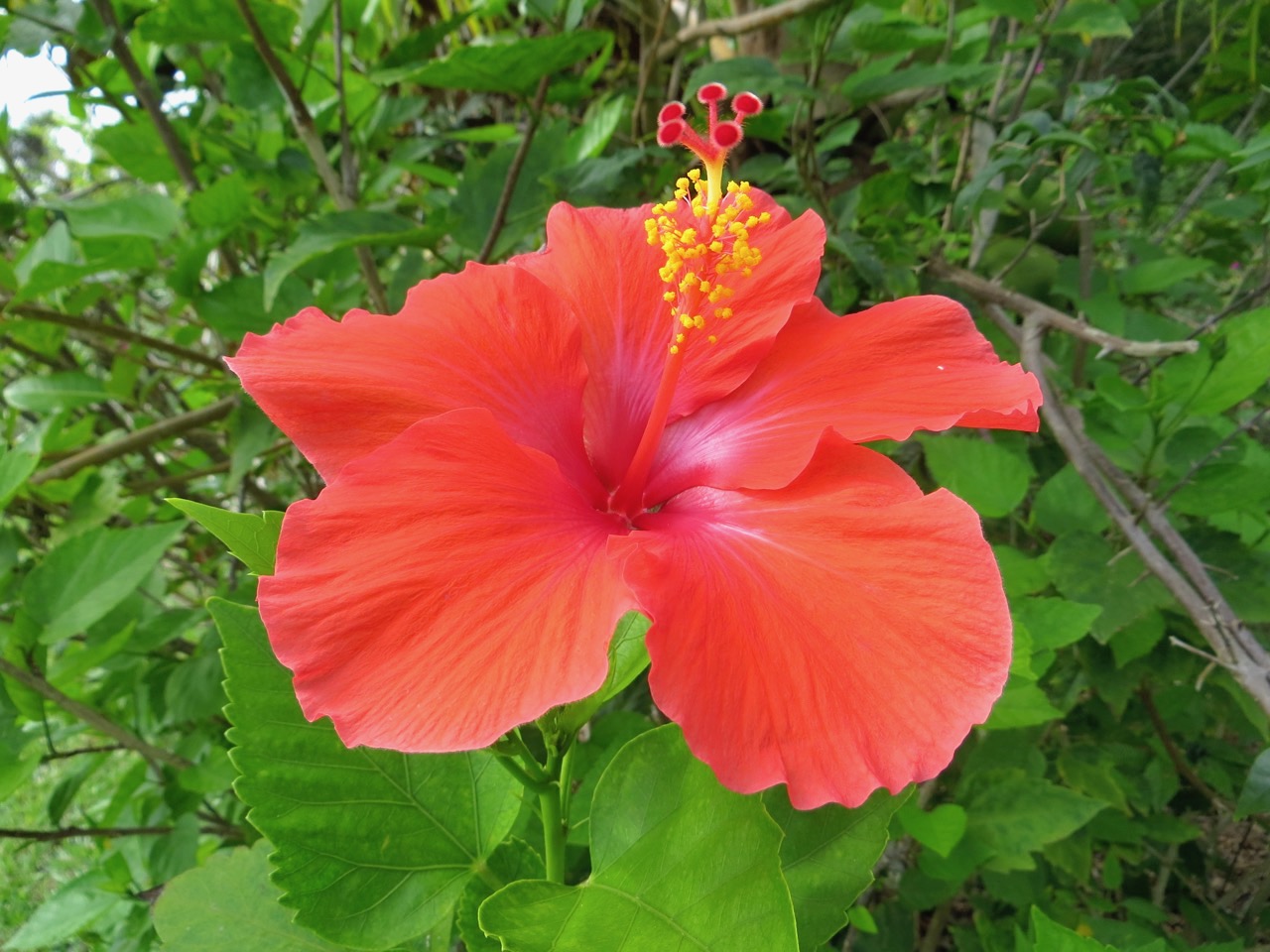
Red Hibiscus Abaco Bahamas (Keith Salvesen)

A BOUQUET OF HIBISCUSES ON ABACO, BAHAMAS

I haven’t featured flower species for a long time. There are a number of reasons why this webular location is low on flower power. Under duress, I’d probably say that, though gorgeous and a joy to all, flowers and plants are essentially one trick ponies. Or maybe peonies?

Pink Hibiscus Abaco Bahamas (Keith Salvesen)

Essentially the drawback with flowers is that they don’t fly and they can’t swim. There’s no motion to them that isn’t caused by an outside agency such as a breeze (unless you spend time actually watching them grow, I suppose). I feel more comfortable with more mobility around me.

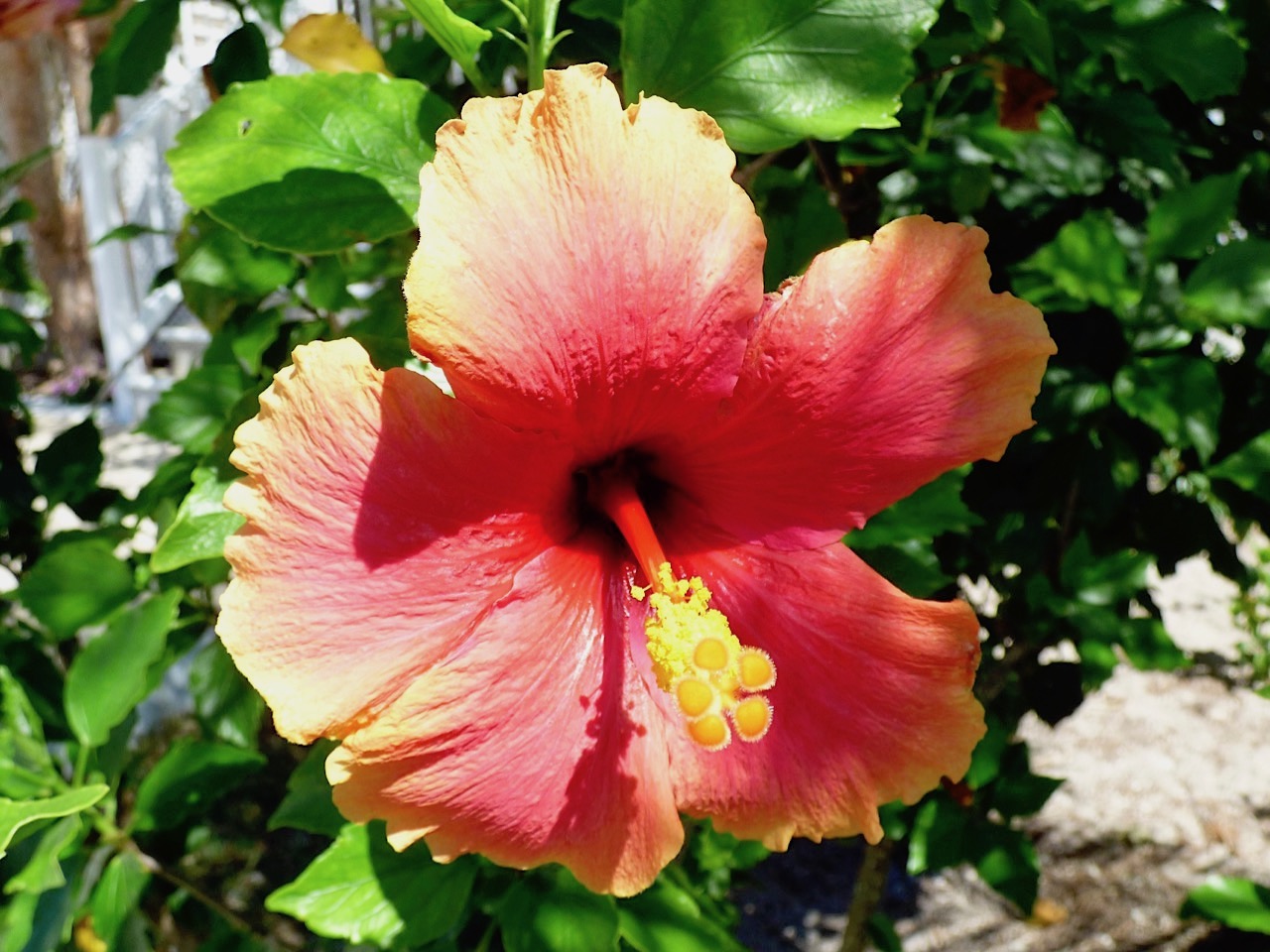
Reddish-yellow Hibiscus Cultivar Abaco Bahamas (Keith Salvesen)

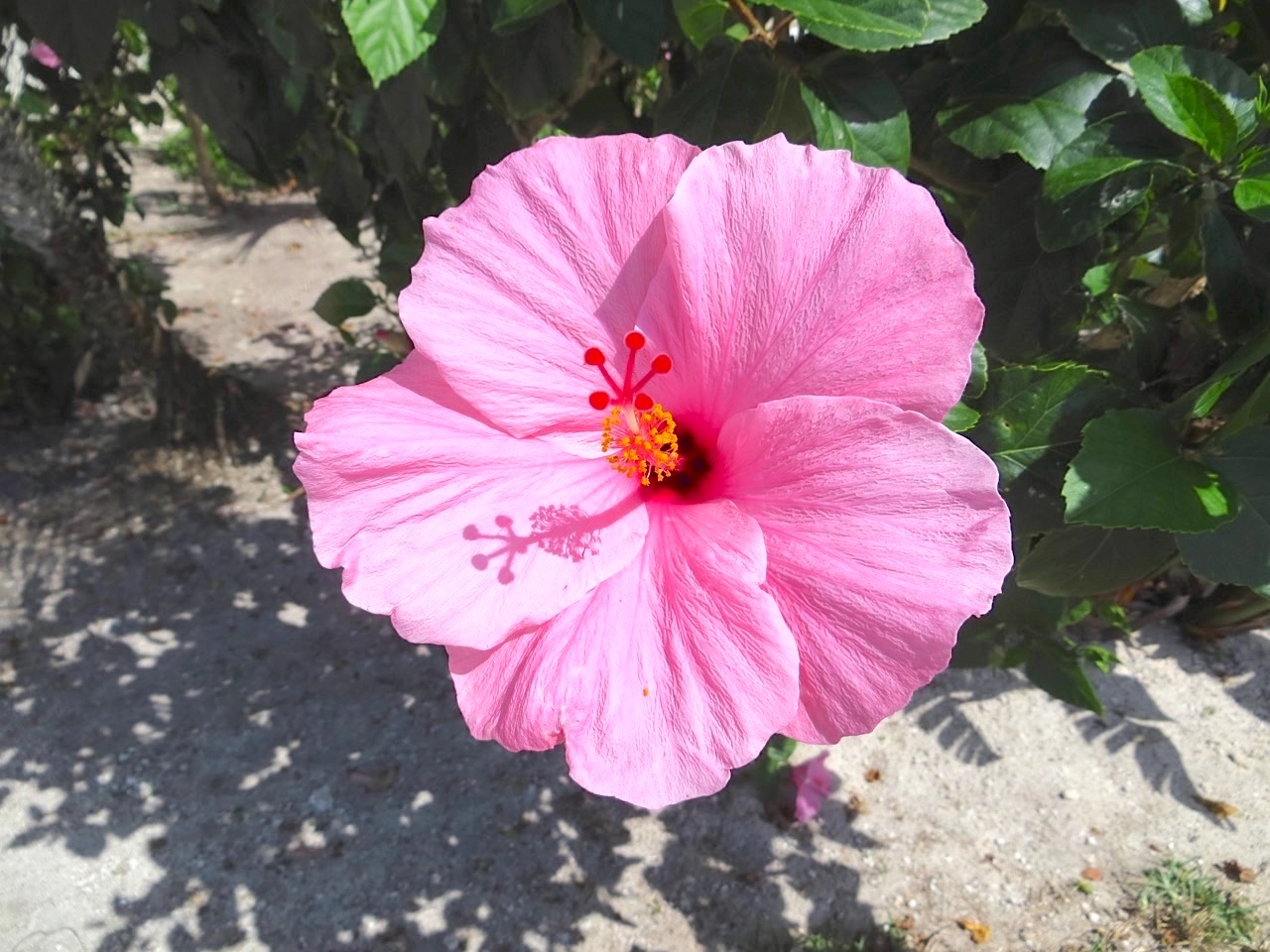
The hibiscus is surely one of the prettiest flowers on Abaco or indeed anywhere else. Mostly they are pentamerous, which is to say 5-petalled; and they have an unmistakeable central adornment that I’ve had to check the name of. Then I discovered that someone on Pinterest had done the heavy lifting for me with all the other parts of a hibiscus.

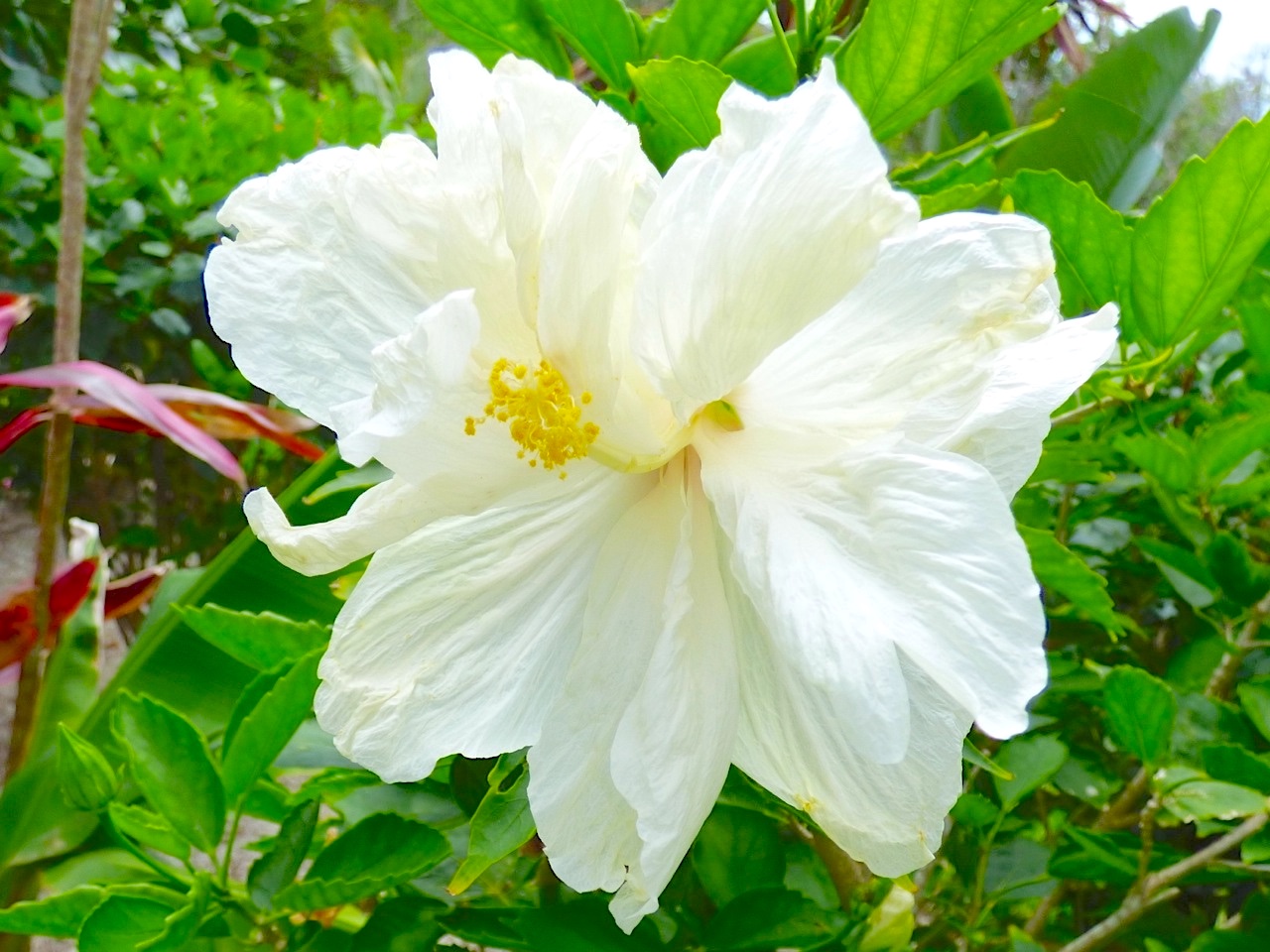
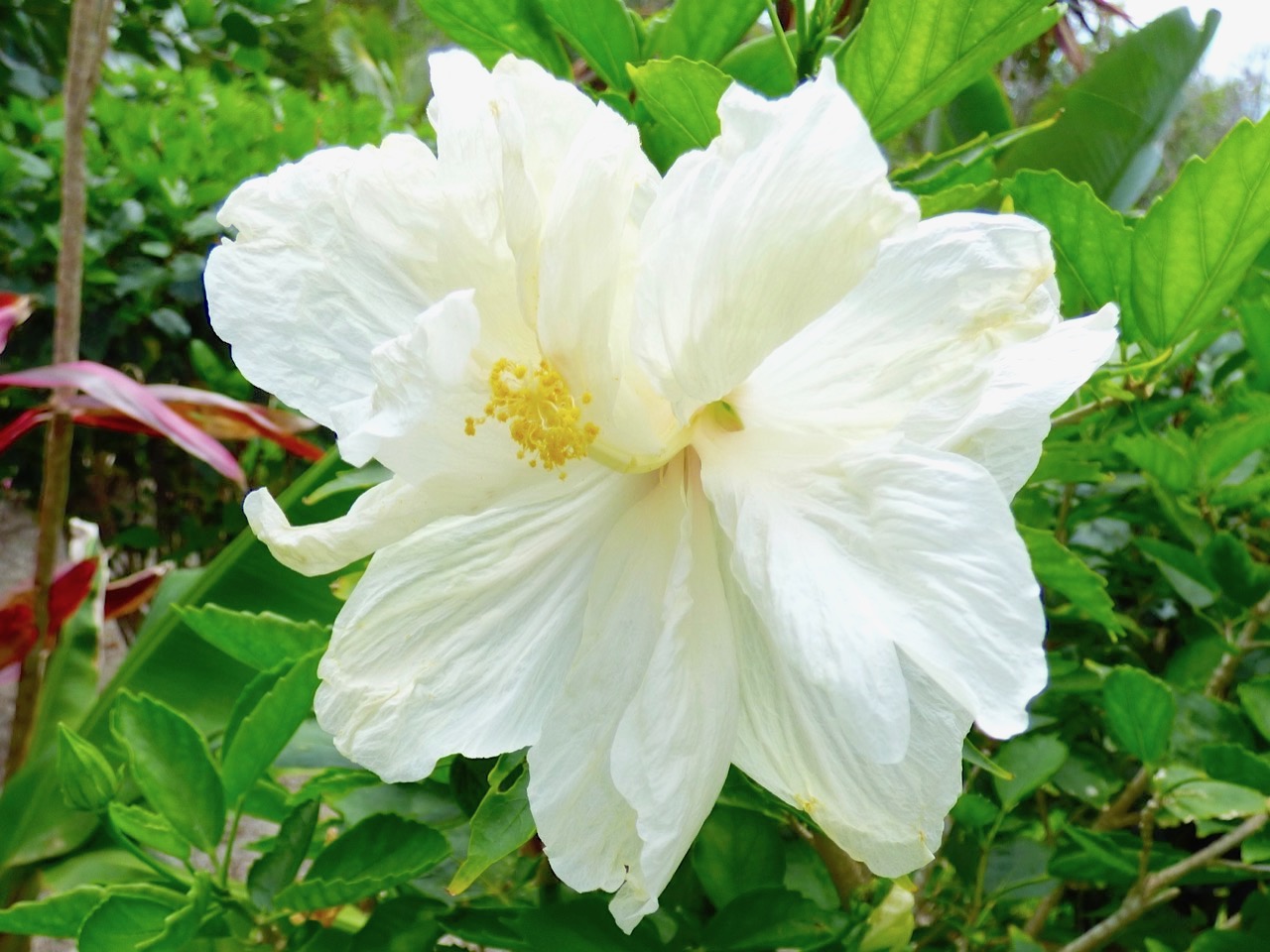
One exception to the usual pentamerous arrangement is the white hibiscus shown below.

White Hibiscus Abaco Bahamas (Keith Salvesen)

I have also remembered to check the correct plural of ‘Hibiscus’. Some while back, I examined the candidates for the correct plural form for more than one OCTOPUS. I thought I might now be back in that strange Greco-Roman arena where -uses or -usses compete with -i or -odi for primacy. Thankfully, it is simply ‘octopuses’ and ‘hibiscuses’. And even if, technically, a different form could be insisted on to be correct, it will still sound wrong.

Red Hibiscus Abaco Bahamas (Keith Salvesen)

Pink Hibiscus Abaco Bahamas (Keith Salvesen)

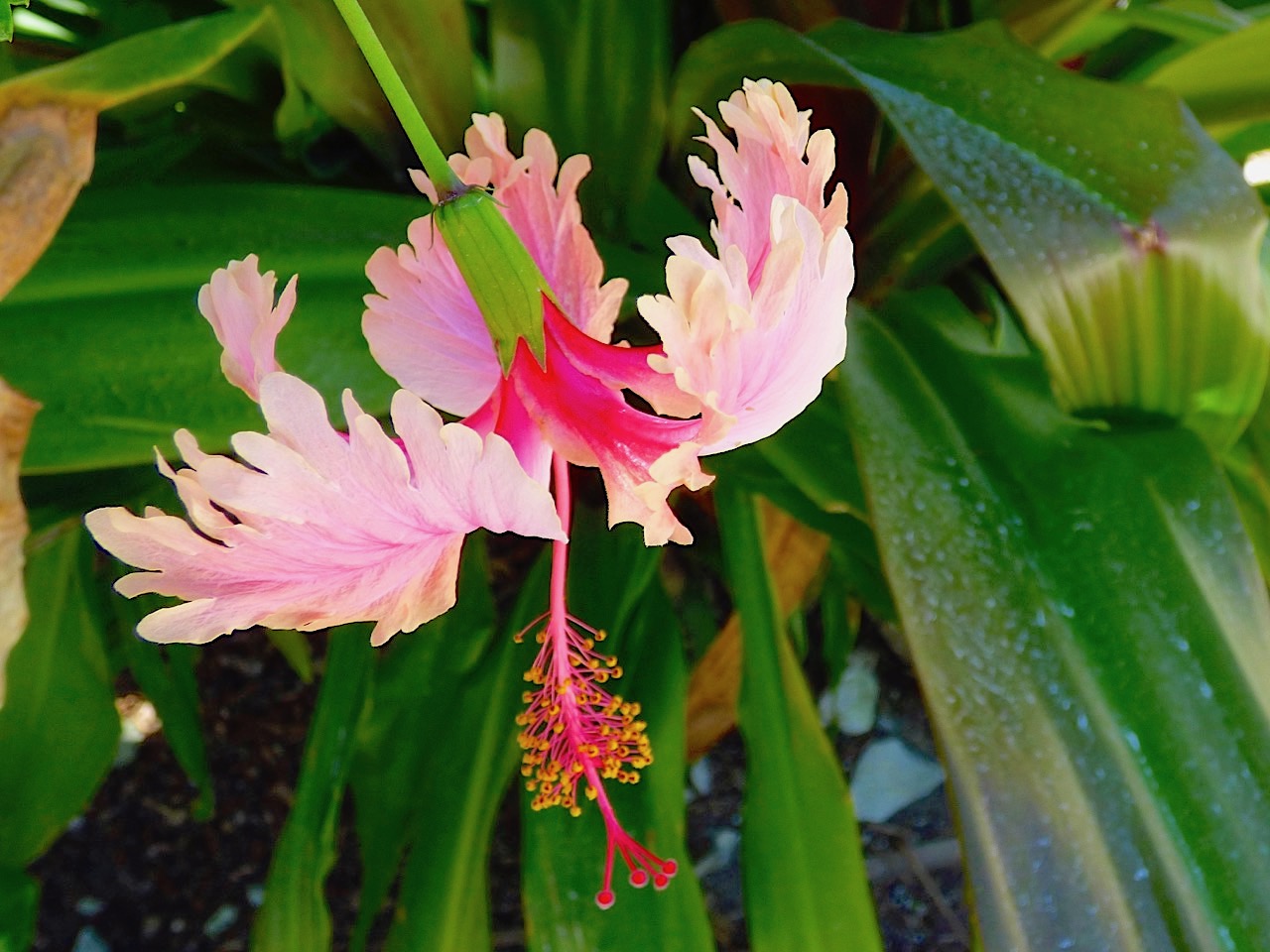
Another striking hibiscoid variant is the beautiful coral hibiscus, with its elegant construction and extravagantly fringed petals.

Coral Hibiscus Abaco Bahamas (Keith Salvesen)

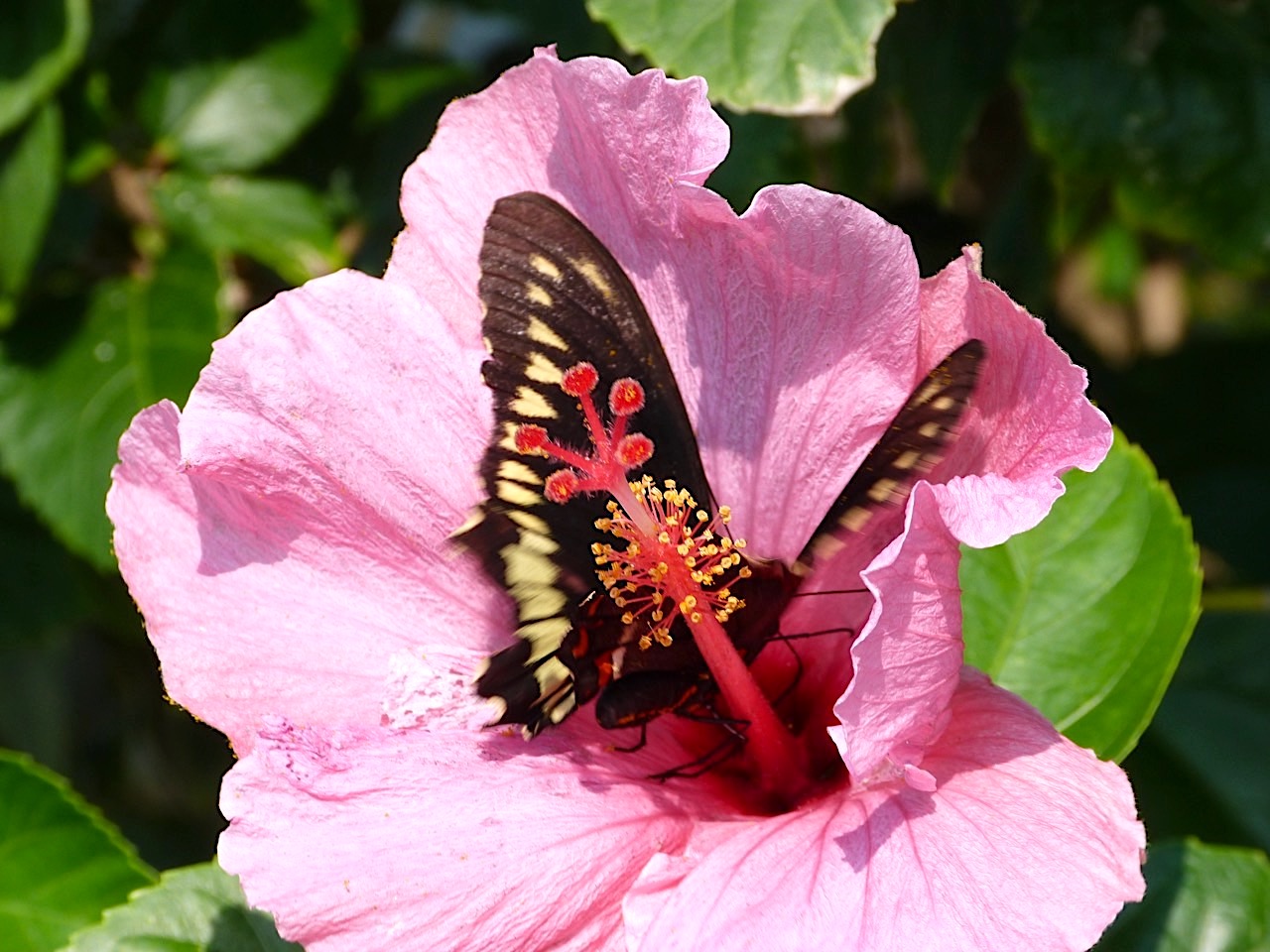
These flowers are powerful insect attractants, especially for the butterflies. One of the only partly successful photos I have ever taken of  the annoyingly perpetual motion Polydamus (Gold Rim) Swallowtail is below. There’s nearly half a wing at rest. And even that isn’t sharp.

Pink Hibiscus / Polydamus Swallowtail Abaco Bahamas (Keith Salvesen)

Readers who have stuck with this blog for a while (thank you both) may recall my enthusiasm for the excellent way in which the Bahamian Government honours the wildlife of the Bahamas with frequent special issues of stamps and coins. You can find out more with these links: BAHAMAS STAMPS and BAHAMAS CURRENCY. Even the hibiscus has been featured on the coinage, not once but twice. And on stamps several times over the years.

 Bahamas Stamp Hibiscus 123RF stock

Personal resolution: to try not to leave it for more than 2 years before the next floral feature

All photos Keith Salvesen / Rolling Harbour; thanks to anon Pinterester for the flower part pic; and to 123RF for the stock stamp photo 

Red Hibiscus Abaco Bahamas (Keith Salvesen)

Unknown's avatar

BOUQUET OF ABACO FLOWERS (1): HIBISCUSES


BOUQUET OF ABACO FLOWERS (1): HIBISCUSES

‘HIBISCUSES’ as the plural for more than one Hibiscus schizopetalus looks wrong somehow (hibisci?) but is in fact right. It’s similar to the problem with the correct PLURAL OF OCTOPUS, a name that is also of Greek and Latin origin. The ‘schizo’ part reflects the division of the petals (though this characteristic surely applies plenty of other species).

Pink Hibiscus (with Polydamus Swallowtail) Abaco Bahamas (Keith Salvesen)

The flower above is being visited by the familiar and lovely POLYDAMAS SWALLOWTAIL or Gold-rimmed butterfly. They are extraordinarily difficult to photograph when their wings are open – they flutter by, and carry on fluttering non-stop. I have always found it hard to get an entirely in-focus open wing shot. And when I say hard, on reflexion I don’t think I ever have…

Elegant coral hibiscus

The hibiscus is kind of mallow, a large and colourful family found throughout the world in warm-to-hot areas. Apart from the bright colours and pretty looks, the plant makes for a nice cup of tea (cf camomile tea) that some say may help to lower blood pressure.

There’s a lot of technical stuff to say about the petal construction and leaf forms, but I prefer to leave you to look it up if you want a deeper analysis than I am minded to give. I love flowers to look at and even to grow – who does not – but unlike the mechanics of birds, botanical intricacies seem *whisper* quite dull.

IS THERE A STIGMA ATTACHED TO THESE FLOWERS?

Yes indeed, but not in the more common usage for disgrace, disrepute or dishonour. In the botanical sense, it is the central part where the pollen of a flower is to be found. It’s the part that the bees are looking for.

A massive stigma

Besides the tea / blood-pressure reduction benefits of hibiscus mentioned earlier, the plant is used in many places round the world for folk medicine for a variety of ailments. I don’t actually know if it is used in the Bahamas, where bush medicine certainly has its place in the treatment of some conditions. Any comments on this would be welcome.

All photos: Keith Salvesen / Rolling Harbour

Unknown's avatar

THE GOLD-RIMMED LUCAYAN FLORIDA BATTUS POLYDAMAS SWALLOWTAIL


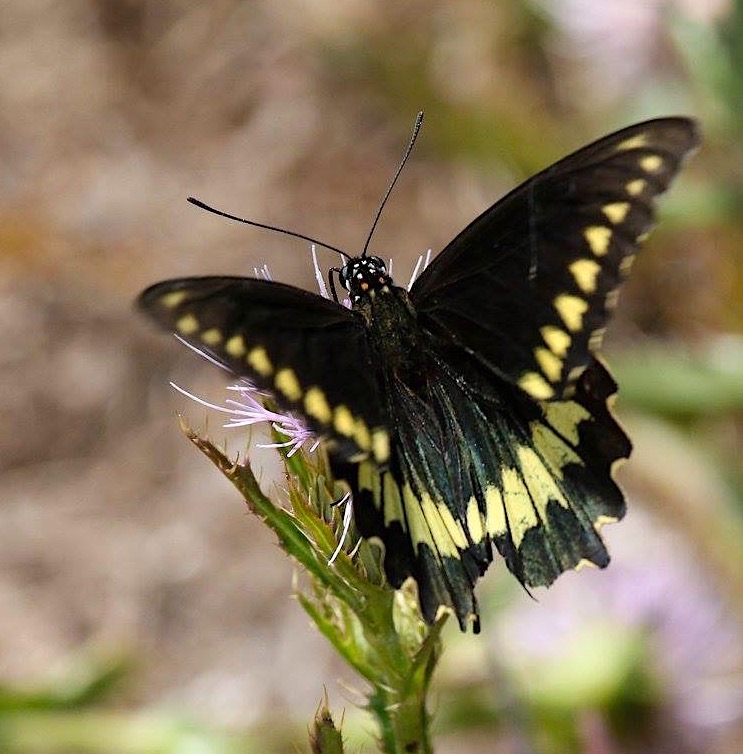
Polydamas (gold-rimmed) Swallowtail Battus Polydamas (Nina Henry)

THE GOLD-RIMMED LUCAYAN FLORIDA BATTUS POLYDAMAS SWALLOWTAIL

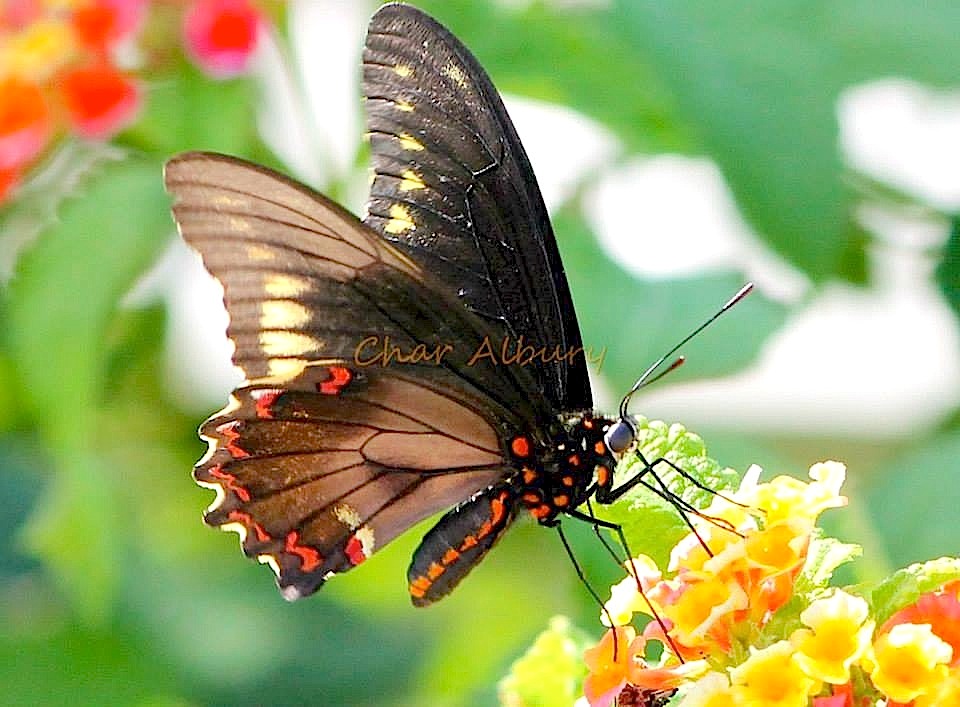
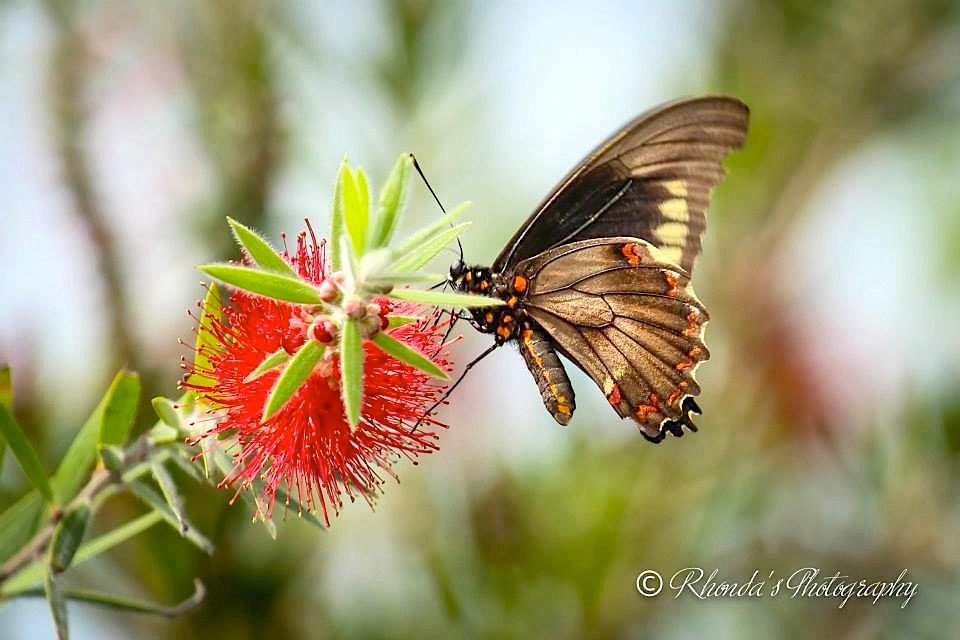
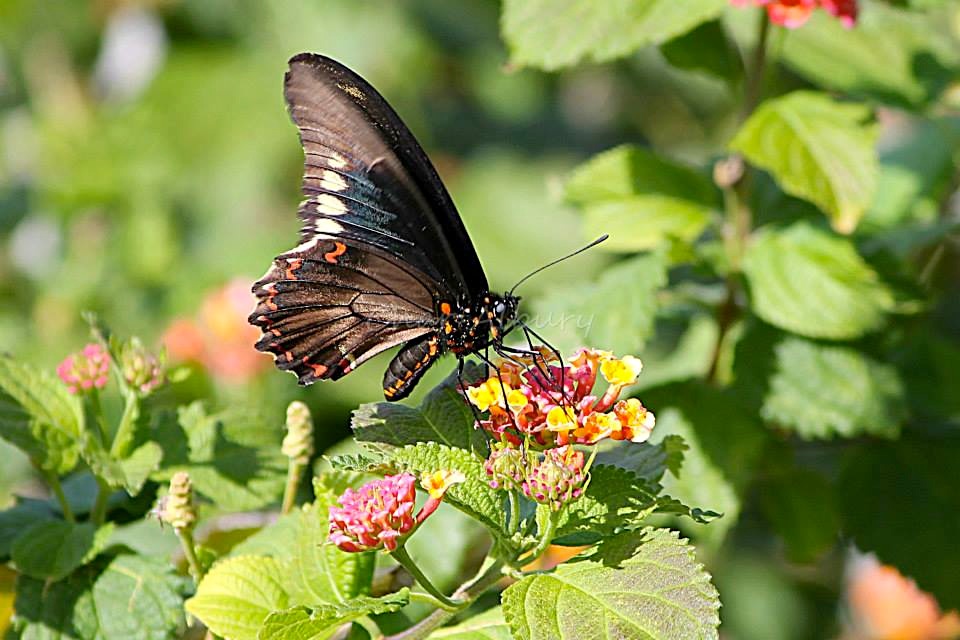
The Polydamus ‘Gold-rimmed’ Swallowtail Battus polydamas is a familiar sight in the Bahamas. It’s known by all the names above, though not all at once to be fair. This is the medium-sized black-brown butterfly with gold accessories and a tasteful selection of red ornamental jewellery. It’s one that hardly stays still for a moment. Its perpetual motion tendencies make it a right little… well, they are hard to photograph. I’ve never taken a totally still photo with no blurring from the creature’s rapid wingbeats.
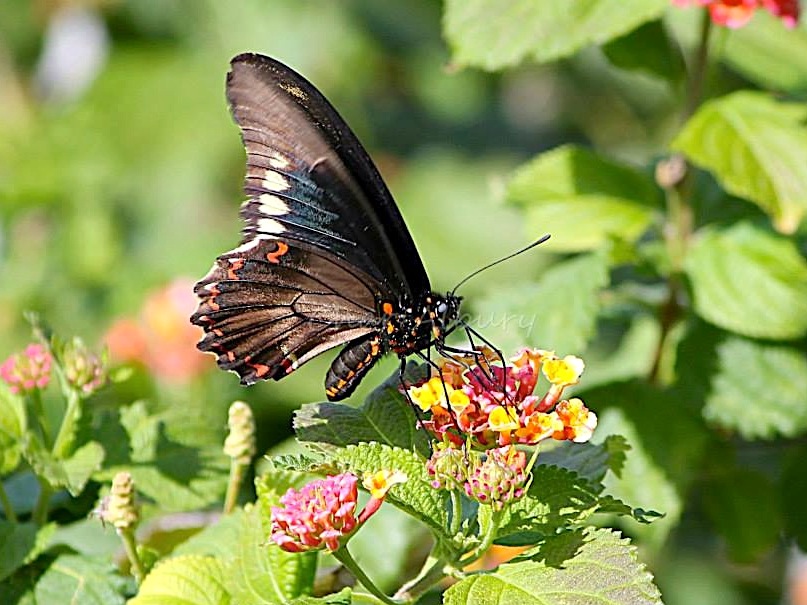
Polydamas (gold-rimmed) Swallowtail Battus Polydamas (Char Albury)

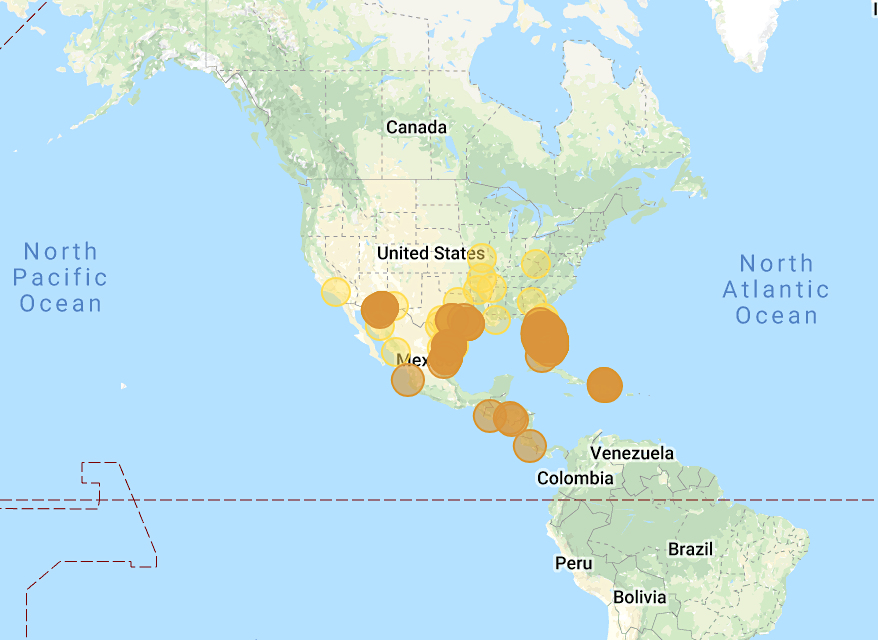
The  subspecies Lucaeus found on Abaco (where these photos were all taken)and elsewhere in the Bahamas is not confined to the archipelago, and is commonly found in Florida. There it seems to be called (slightly possessively?) the Florida swallowtail. The main species is found more widely. Here’s a helpful range map that shows the butterfly’s range – quite a wide band but latitudinally limited in global terms.

Polydamas (gold-rimmed) Swallowtail Battus Polydamas Range Map

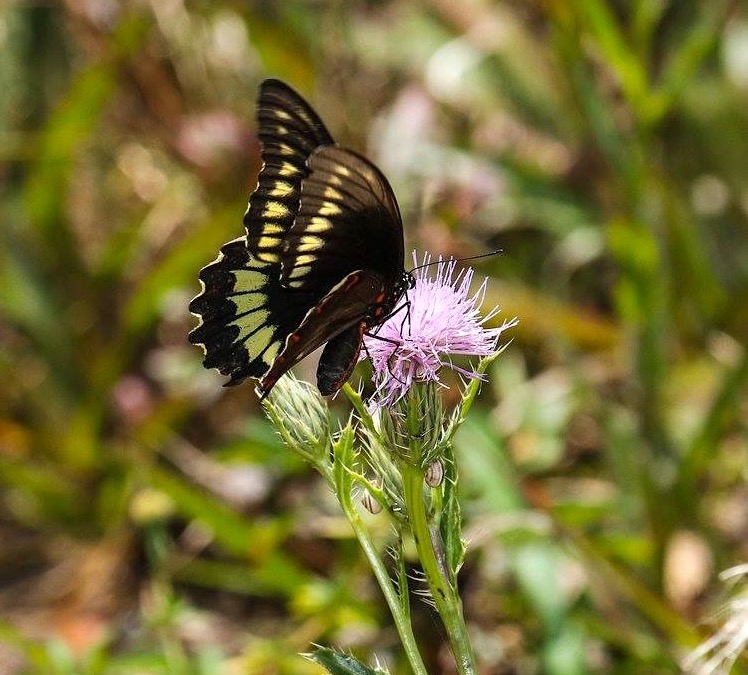
Polydamas (gold-rimmed) Swallowtail Battus Polydamas (Nina Henry)

Mostly, you will see the topside of these butterflies as they do the rounds of sweet-scented flowers, often pausing briefly while still frantically fluttering. Note the rather gorgeous red patterns on the underside of the creatures shown above. Now compare with the open-wing images below. 

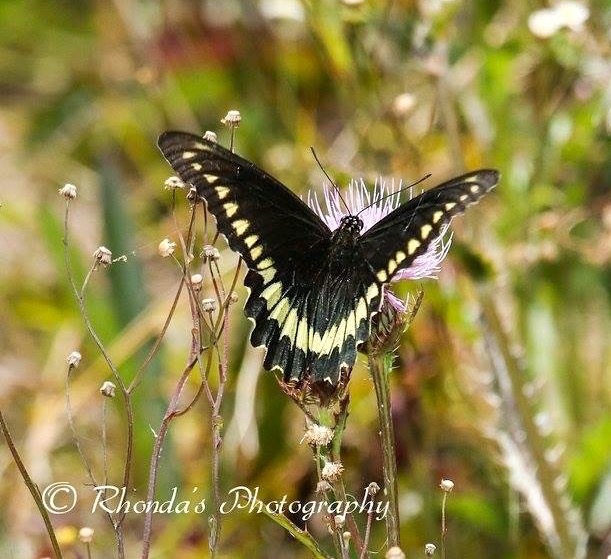
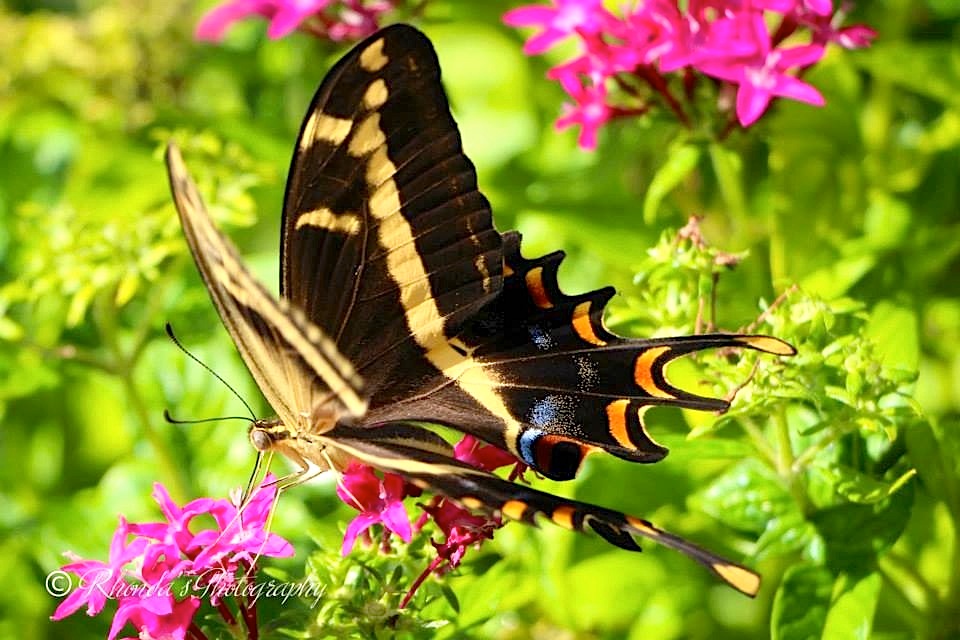
Polydamas (gold-rimmed) Swallowtail Battus Polydamas (Rhonda Pearce)

Polydamas (gold-rimmed) Swallowtail Battus Polydamas (Rhonda Pearce) Polydamas (gold-rimmed) Swallowtail Battus Polydamas (Rhonda Pearce)

This butterfly flies year round in the Bahamas (in contrast to its northern range). It breeds throughout most of the year (except on the fringes of its range), which is probably why it is relatively common.

Polydamas (gold-rimmed) Swallowtail Battus Polydamas (Rhonda Pearce)

CAN YOU SHOW US ONE THAT YOU HAVE TAKEN, PLEASE?

Certainly (with reservations). Nice coral hibiscus; it’s a shame that the stamen (if that is the correct term for the sticky-out bit) is in the way. Plus the wretched thing is still on the move. From this weekend, I get the chance to nail one on Abaco, but I’m not optimistic. I think they mistrust me.

Polydamas (gold-rimmed) Swallowtail Battus Polydamas (Keith Salvesen)

WHAT DOES ‘POLYDAMAS’ MEAN?

I anticipated that question, kind Reader. I had thought it was Graeco-Roman for ‘many’ something or other. Wingbeats, maybe. Not being able to consult Linnaeus who originally came up with the word, I did some research. It turns out that Polydamas was a Trojan warrior and friend of Hector. He features a lot in Homer’s Iliad as a kind of ‘Best Supporting Warrior’, though they seem to have differed about battle tactics. Of which digression, enough.

Polydamas tries to stop Hector from attacking the Greeks

Credits: Nina Henry; Charmaine Albury; Rhonda Pearce, Keith Salvesen

Polydamas (gold-rimmed) Swallowtail Battus Polydamas (Rhonda Pearce)


Unknown's avatar

BUTTERFLIES ON ABACO (11): LONG-TAILED SKIPPER & NORTHERN CLOUDYWING


Long-tailed Skipper Butterfly, Abaco Bahamas (Keith Salvesen)

BUTTERFLIES ON ABACO (11): LONG-TAILED SKIPPER                        & NORTHERN CLOUDYWING

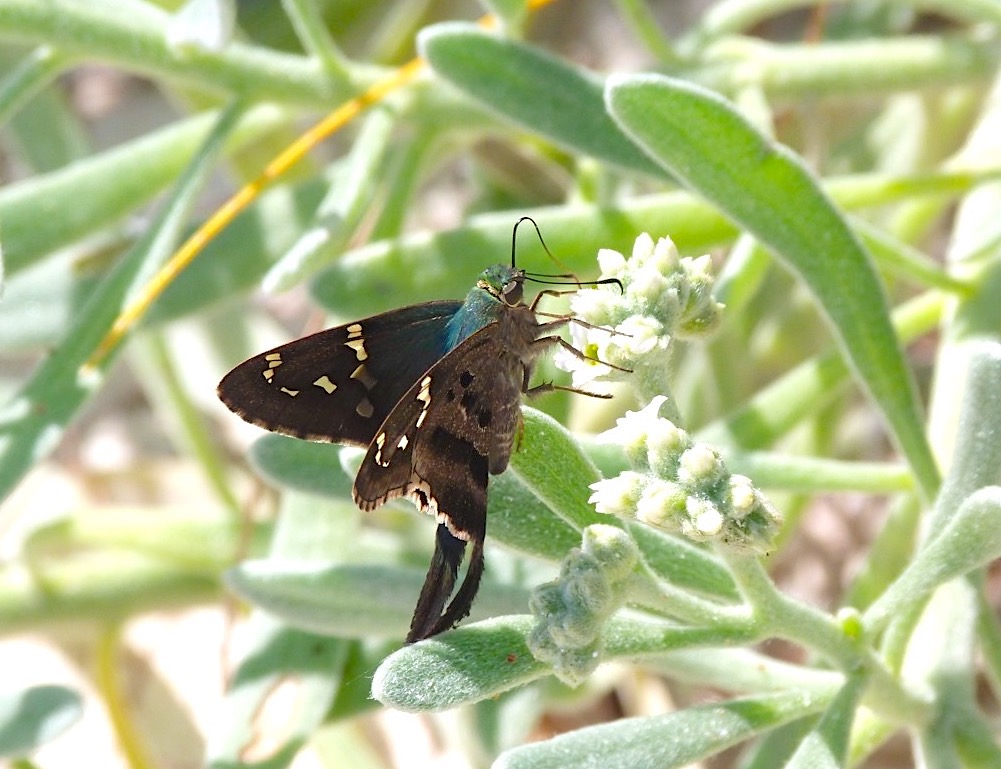
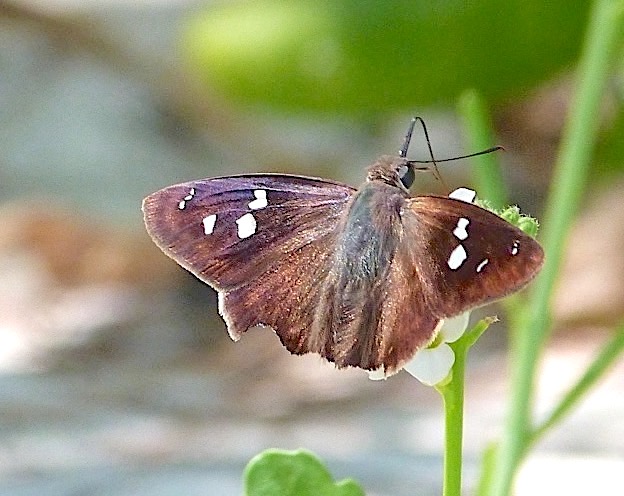
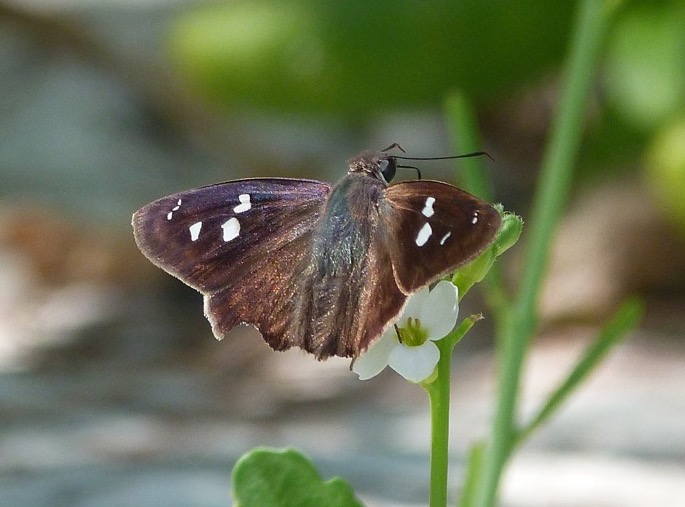
Two butterflies caught my attention on the same afternoon. The first was a Long-tailed Skipper Urbanus proteus, a species I have featured before. The other was new to me – the Northern Cloudywing Thorybes pylades. New to me in the sense that I have never managed to get near one that stayed still enough to photograph. You know how butterflies are – they use their antennae to detect when there’s a camera about, and redouble their skittishness and wing speed.

LONG-TAILED SKIPPER

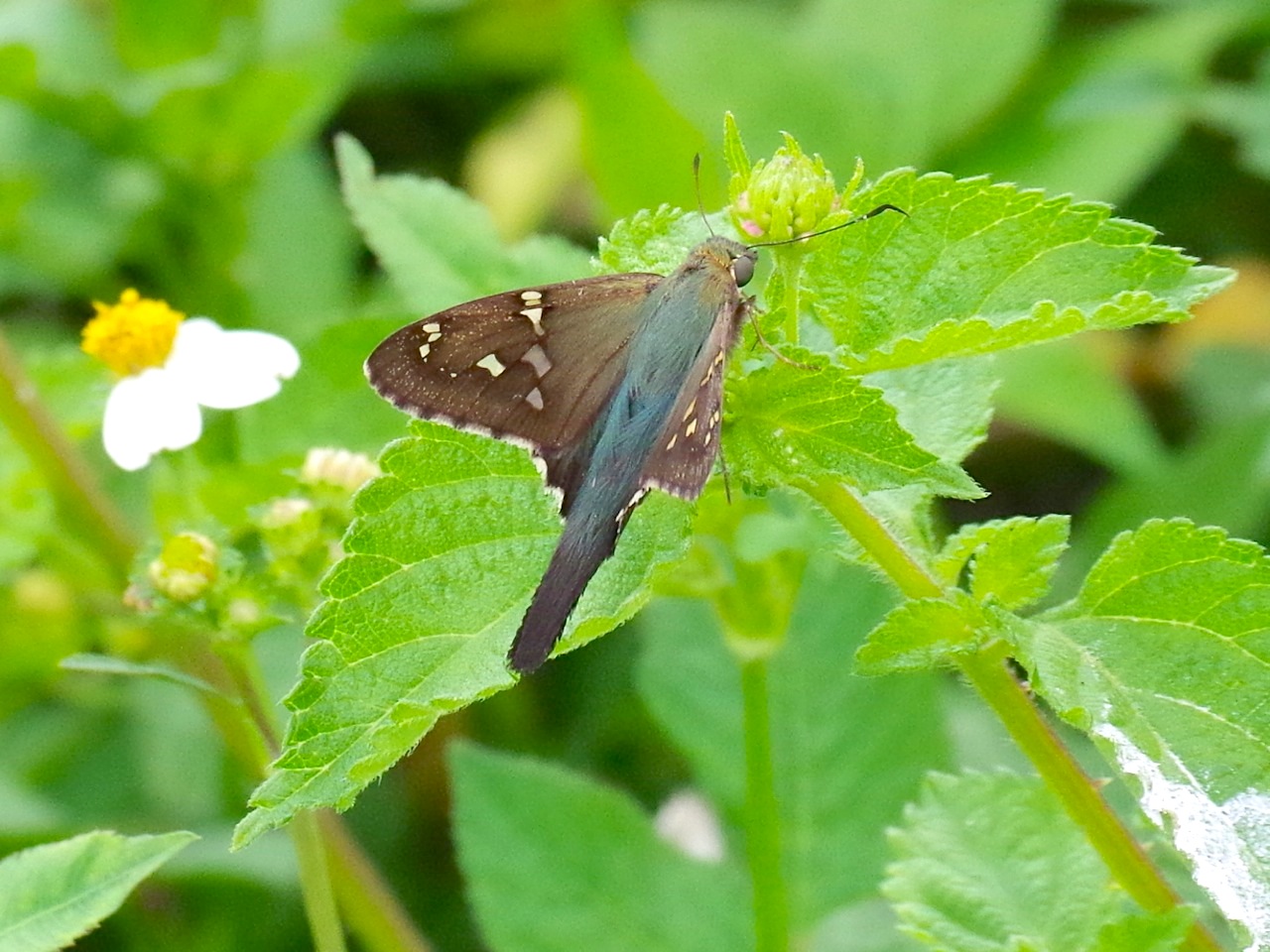
Long-tailed skipper have… long tails, and a pretty bluish bodyLong-tailed Skipper Butterfly, Abaco Bahamas (Keith Salvesen)Long-tailed Skipper Butterfly, Abaco Bahamas (Keith Salvesen)Long-tailed Skipper Butterfly, Abaco Bahamas (Keith Salvesen)

NORTHERN CLOUDYWING

Northern Cloudywing Butterfly, Abaco Bahamas (Keith Salvesen)Northern Cloudywing Butterfly, Abaco Bahamas (Keith Salvesen)Northern Cloudywing Butterfly, Abaco Bahamas (Keith Salvesen)Northern Cloudywing Butterfly, Abaco Bahamas (Keith Salvesen)

All photos: Keith Salvesen

Unknown's avatar

BUTTERFLIES ON ABACO (10) : HAMMOCK SKIPPER


Hammock Skipper - Polygonus leo, Abaco Bahamas (©Keith Salvesen)

BUTTERFLIES ON ABACO (10)

HAMMOCK SKIPPER

The Hammock Skipper Polygonus leo is quite a small butterfly. We found the ones shown here in the vegetation at the back of the Delphi beach. Having initially thought this was a Northern Cloudywing (and a ‘lifer’ for me), Colin Redfern has kindly corrected my (mis-)ID, and I have made the consequent changes.

Hammock Skipper - Polygonus leo, Abaco Bahamas (©Keith Salvesen)

Perhaps unusually for butterflies these skippers are sexually ‘monomorphic’, i.e. very similar in both sexes. Males and females both have completely dark brown wings except for the small white spots.

Hammock Skipper - Polygonus leo, Abaco Bahamas (©Keith Salvesen)

We noticed that the spots and patterns were (again, unusually?) not symmetrical as between the wings. [That should probably be ‘not reflectively symmetrical’, as with a Rorschach inkblot.]


Hammock Skipper - Polygonus leo, Abaco Bahamas (©Keith Salvesen)

All photos, Keith Salvesen; timely ID correction courtesy of Colin Redfern…

Unknown's avatar

BLACK WITCH MOTH: HARBINGER OF DEATH OR LOTTERY BANKER?


Black Witch moths Ascalapha odorata (Charles J Sharp)

BLACK WITCH MOTH: HARBINGER OF DEATH OR LOTTERY BANKER?

Black Witch moths Ascalapha odorata are seriously bad news. Or wonderfully good news, depending where you are and who you talk to. First, lets look at some of the local names for the creature, from which you will get a pretty clear idea of its somewhat negative folklore status, as well as its area of distribution. I do this not to demonstrate how effortlessly I can ‘borrow’ from Wiki, but rather to show how a simple moth can give rise to widespread superstition and even fear. 

12 SCARY NAMES FOR ONE MOTH

  • Mariposa de la muerte (butterfly of death) – Mexico / Costa Rica
  • Pirpinto de la Yeta (something like ‘jinxing butterfly’) – Argentina
  • Tara Bruja (witch moth) – Venezuela)
  • Miquipapalotl (black death moth) – Mexico
  • Taparaco (something like ‘messenger in black’) – Peru
  • X-mahan-nah (‘borrows your house’ [eh? Ed]) – Mayan
  • Duppy Bat (lost soul / ghost /malevolent spirit) – Jamaica, Caribbean
  • Money Moth, Money Bat – Jamaica, Caribbean (including Bahamas)
  • Other names include Papillion-devil, La Sorcière Noire, Mourning moth, Sorrow moth.

These large moths (wingspan up to 7″)  are nocturnal, with females larger than the males. The diagnostic marking is a spot on each forewing shaped like a number nine or a comma (or maybe even ying / yang symbols?). This spot is often green with orange highlights (seen in the header image). The stripey larval caterpillar can grow up to 7 cm in length.

Black Witch moth larva - Ascalapha odorata - wiki

The moth is a migratory species, flying from (roughly speaking) South America as far north as Florida and Texas. The worst luck is believed to come from having one flutter into your house. It will either bring bad luck to the house – or if there is already misfortune there, it will make it worse. There are variations on this belief – e.g. that the more corners of a room the moth visits, the more doomed the household.

Black Witch moths Ascalapha odorata (Julia Gotz)

IS THERE ANY GOOD NEWS ABOUT THIS CREATURE?

Fortunately yes, and it’s high time to dispel the gloom. In some places (e.g. Hawaii), it is believed than when a loved one has died and an Ascalapha odorata is seen soon after, it is the person’s soul returning to say farewell.

More promisingly still, in the Bahamas a far more positive and practical attitude is shown. If a Money Moth (or Money Bat) lands on you, you will receive some money. Or so it is said. Texas, thinking big, takes this several steps further to the prediction that you will win the lottery (I have a feeling this is a very modern theory).

WHY ARE YOU SCARING US WITH THIS THING?

Because until last month I had never heard of these moths, let alone seen one. Then one balmy Delphi evening, at dusk, someone pointed out a large dark smudge on the door-frame. I only had a cellphone, and I had to use the flash. Here is the moth, with its evil little eyes shining in the flash. Luckily, it was outside not inside the building, which I hope diluted the malevolence radiation level (though I didn’t realise that at the time of course, until I’d looked it up in Sibley’s indispensible ‘Compendium of Evil Moths‘). It’s a terrible photo, but it was useful for ID and I feel that taking a quick shot helped to ward off the worst of the unpleasantness. Though now I think of it I did fish badly (even for me) the following day…

        A poor photo but mine own… 

CULTURAL SIGNIFICANCE IN LITERATURE

Remember Silence of the Lambs? Well in the book, pupae of the Black Witch moth were placed in the mouths of victims by serial killer ‘Buffalo Bill’ as his calling card – though for the film, the moth species was changed to a Death’s-head Hawkmoth, as featured on the poster.

You can read about Hannibal Lecter’s link to moths, and learn how for the film the pupae were were made from sweets (Gummi Bears ™) so as to be harmless if swallowed, HERE

SO ARE THEY HARMFUL IN ANY WAY AND / OR WILL ONE MAKE ME RICH?

No

Taking one’s life in one’s hands…?Black Witch moths Ascalapha odorata (Charles J Sharp)

Photo credits: Charles J Sharp (1, 5); Wiki (2); Julia Gotz (‘juliatrees’) (3)*; Keith Salvesen (4)   Sources: Julia Gotz (‘juliatrees’), Terry Sovil, , Texasbutterflyranch.com, Wiki, Sibley’s ‘Compendium of Evil Moths

*Julie closed her blog, from which photo 3 comes, in 2010. I’m hoping she won’t mind my resurrection of her image to illustrate the species… Black Witch moth photos are quite rare online

Unknown's avatar

SPANISH MOTHS & CONVICT CATERPILLARS ON ABACO


xanthopastis-spanish-moth-abaco-bahamas-2

SPANISH MOTHS & CONVICT CATERPILLARS ON ABACO

I start confidently enough by using plurals in the headline, but in truth I have only ever seen one Spanish Moth on Abaco. It was sunning itself on the wooden stairs leading up to the Delphi Club verandah. I might have trodden on it, except that I usually check out the treads for insects or curly tails (and the surrounding foliage for small birds). They like the warmth of the wood, and also moisture from overnight rain or from plant watering. I took 3 quick photos, but I was on a mission. Breakfast beckoned…

xanthopastis-spanish-moth-abaco-bahamas-3

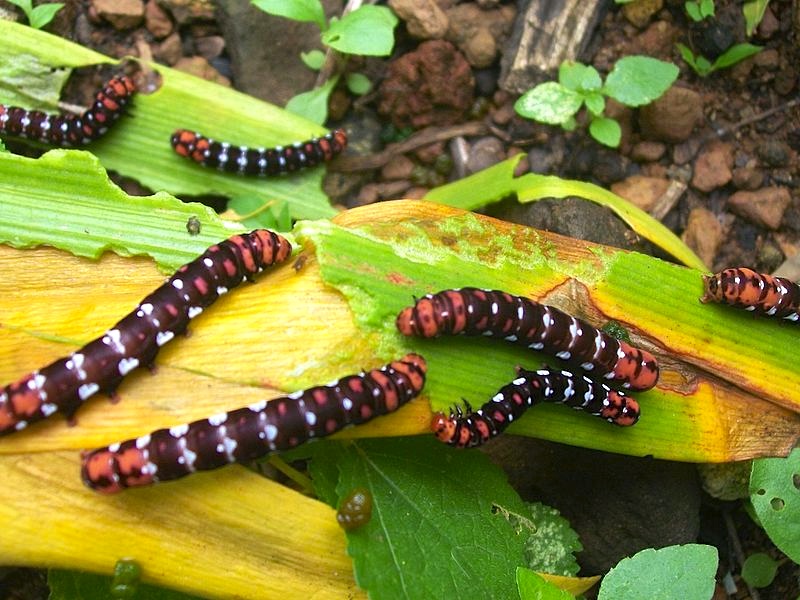
Spanish Moths (Xanthopastis timais) and their ‘Convict Caterpillars’, as they are known, are generally found in South and Central America, and in the Caribbean. There is a similar moth recorded for North America, but it is a different subspecies. However ‘our’ moth is apparently quite commonly found in Florida. 

xanthopastis_timais_cramer_feeding_on_amaryllis-shiras-wc

When I tried to ID this creature, I was surprised to find how few images of it are to be found online – and of those that are, most are either strictly © or are pinned into Pinterest.** So I’m grateful to the person who uploaded these cool convict caterpillars  above to a wiki-site. They are certainly worthy of admiration, and should be easy to identify. These colourful larvae feed on the leaves and bulbs of their host plants, mainly amaryllis, iris and lily species.

spanish-moth-robert-siegel-stanford-edu

I’d be really interested to hear from anyone who has seen these moths – or the caterpillars – on Abaco. Maybe they are everywhere, all the time, and I just haven’t noticed them. Or maybe it’s just that I am an occasional blow-in interloper, not a resident. Anyway, reports, observations and photos welcome (for the usual imaginary Kalik reward).

xanthopastis-spanish-moth-abaco-bahamas-1

**I’m never quite sure about the status of Pinterest images. Are they reusable with (where possible) an attribution, on the basis that they have been ‘put out there’ in the public domain, as on Facebook? Or does one risk a getting stroppy comments for recycling images that pinners have themselves borrowed in the first place? 

Credits: unknown Wiki benefactor (3); R. Siegel / Stanford.edu (4); moi (1, 2, 5)

Unknown's avatar

BUTTERFLIES ON ABACO (9): GULF FRITILLARIES


Gulf Fritillary, Abaco (Charles Skinner)

BUTTERFLIES ON ABACO (9): GULF FRITILLARIES

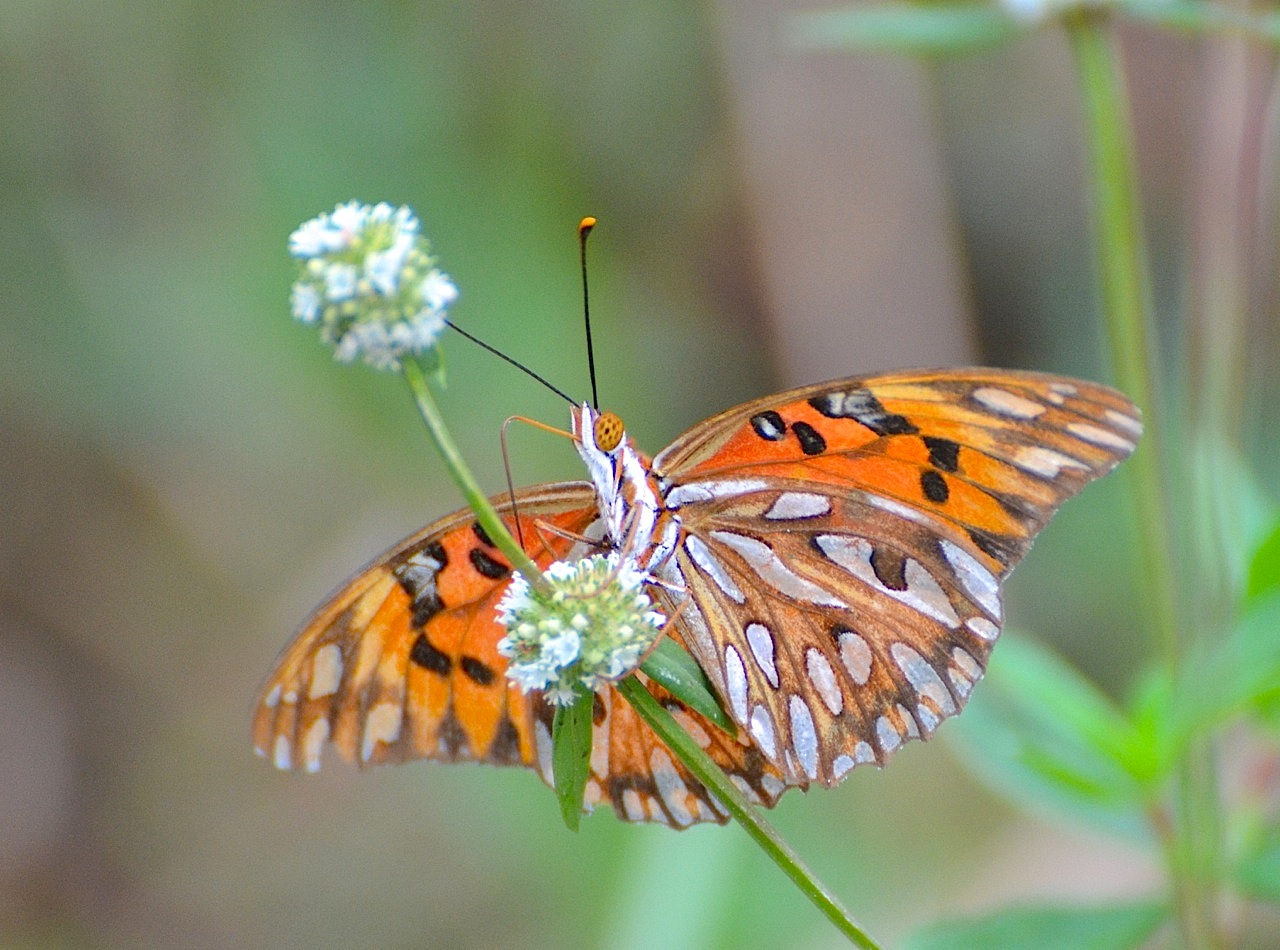
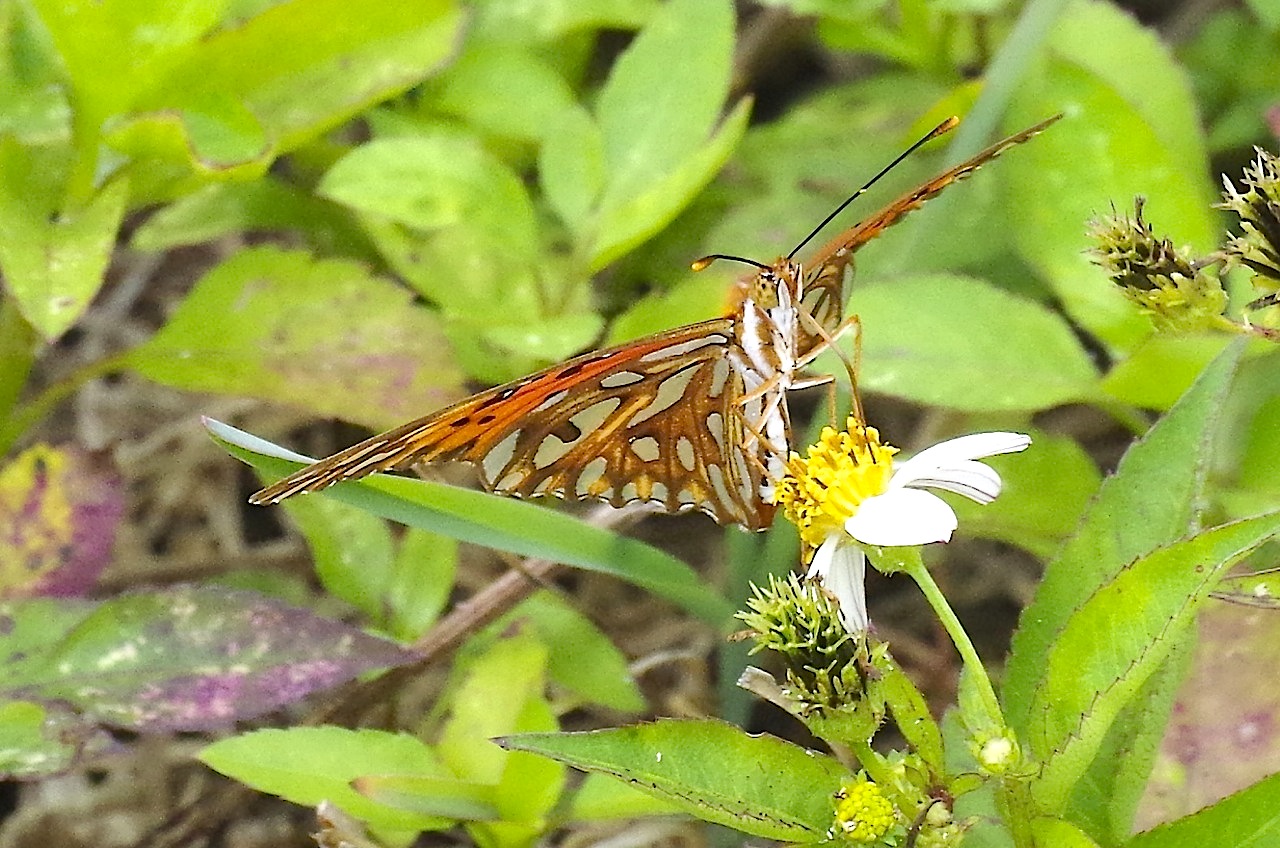
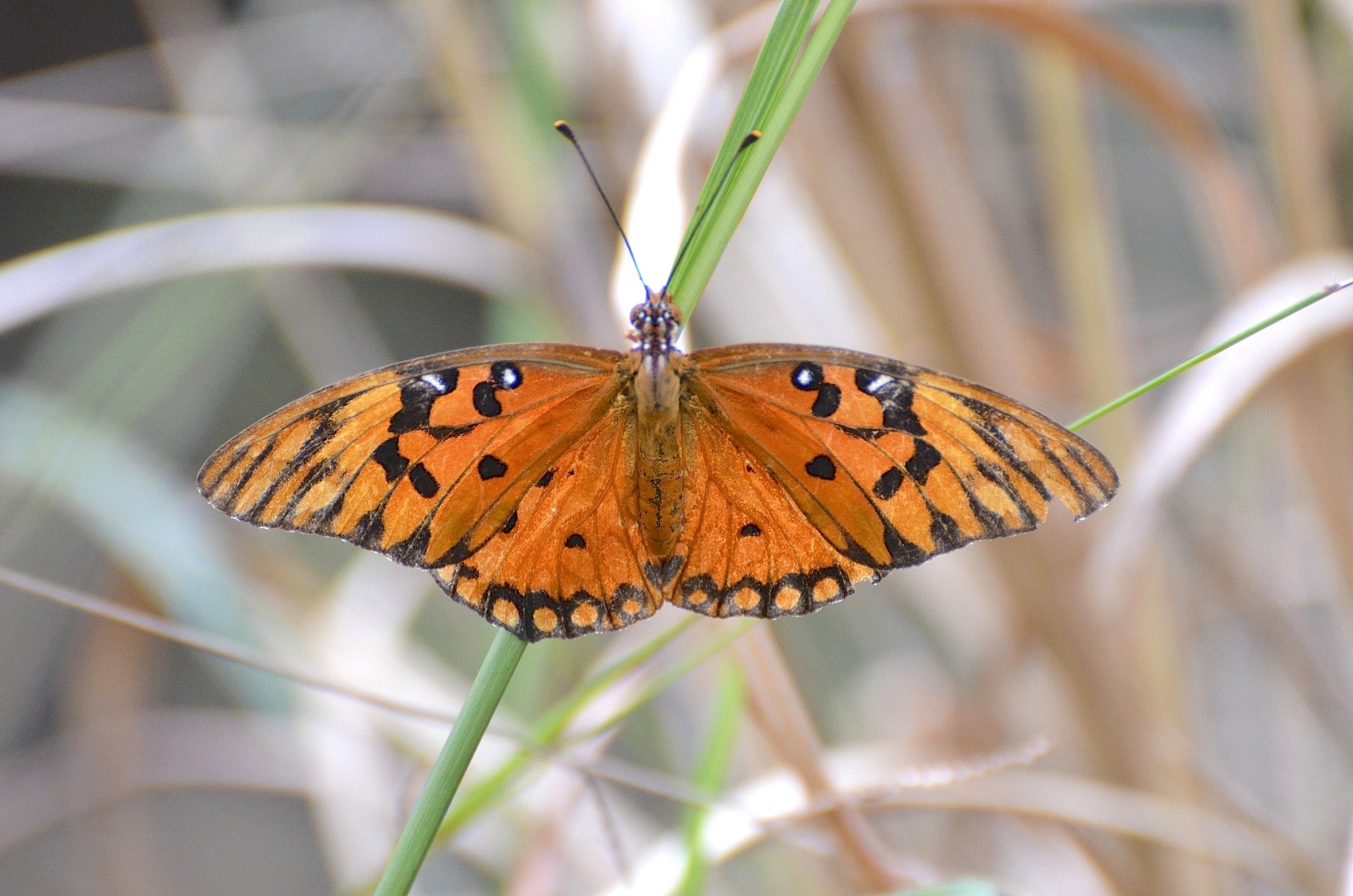
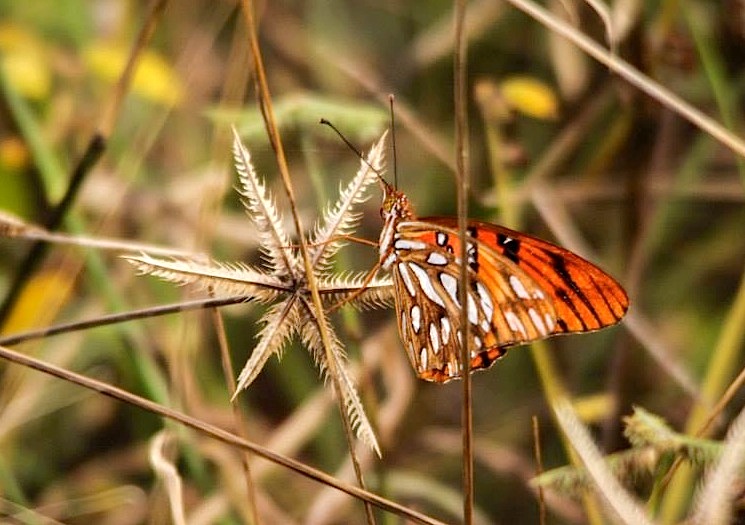
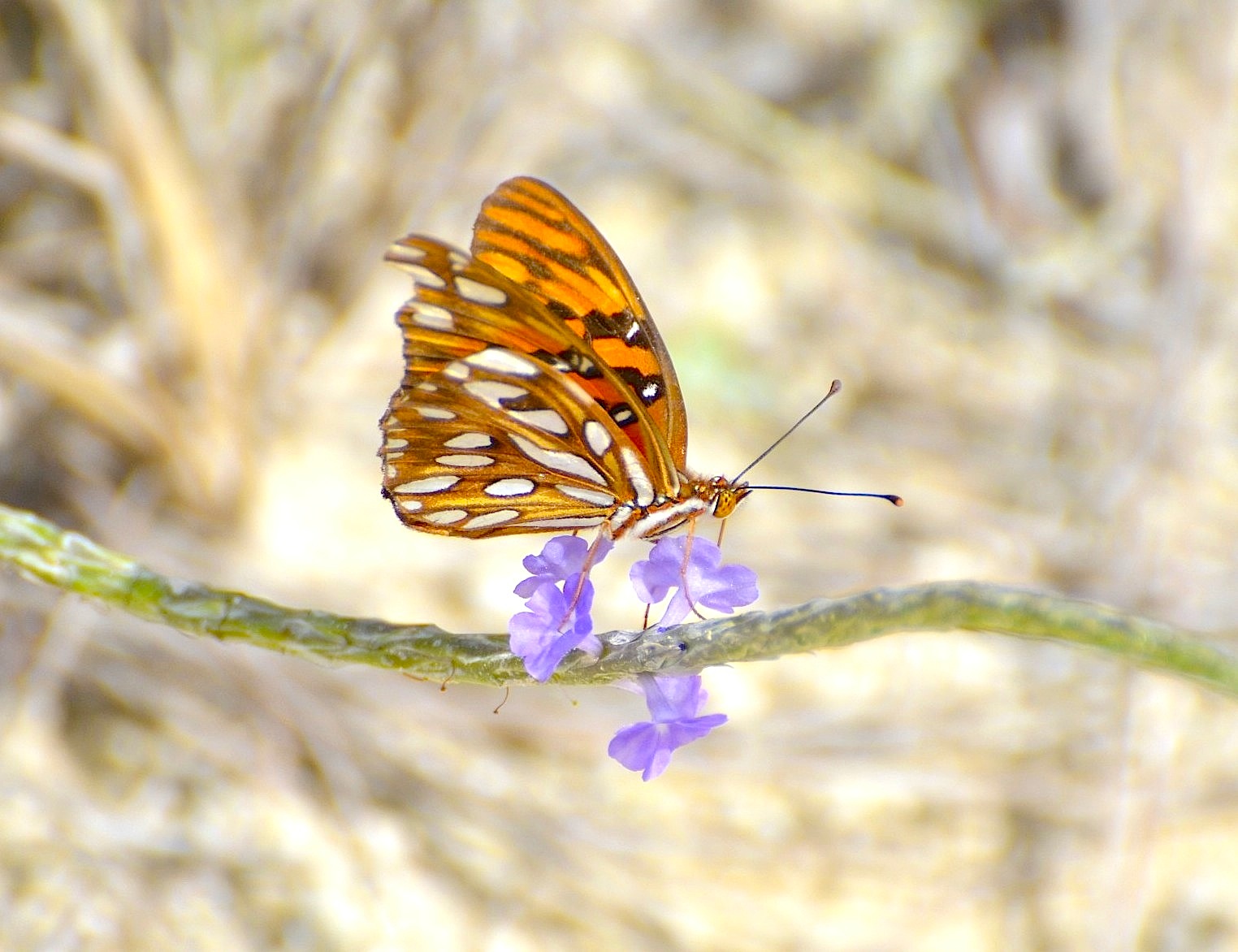
It’s been a while since any papilionidae made an appearance on these pages – and much longer since a Gulf fritillary  Agraulis vanillae flew in. These very pretty butterflies are far from rare, but like the ATALA hairstreak, they are always a pleasure to see. Here are a few to enjoy.

Gulf Fritillary, Abaco (Charles Skinner)Gulf Fritillary, Neem Farm, Abaco (Keith Salvesen)5Gulf Fritillary, Neem Farm, Abaco (Keith Salvesen)2Gulf Fritillary, Neem Farm, Abaco (Keith Salvesen)1Gulf Fritillary, Abaco (Charles Skinner)10386393_10152656788408720_3995568288186763659_nGulf Fritillary, Abaco (Charles Skinner)

Credits: Charles Skinner (1, 2, 6, 8), Rhonda Pearce (7), Keith Salvesen (3, 4, 5)

Unknown's avatar

BELLA MOTHS: COLOURFUL, POISONOUS & PROMISCUOUS


Day-flying_Bella_Moth_(Utetheisa_ornatrix) on Rattlebox Blossom (Bob Peterson, Florida)

BELLA MOTHS: COLOURFUL, POISONOUS & PROMISCUOUS

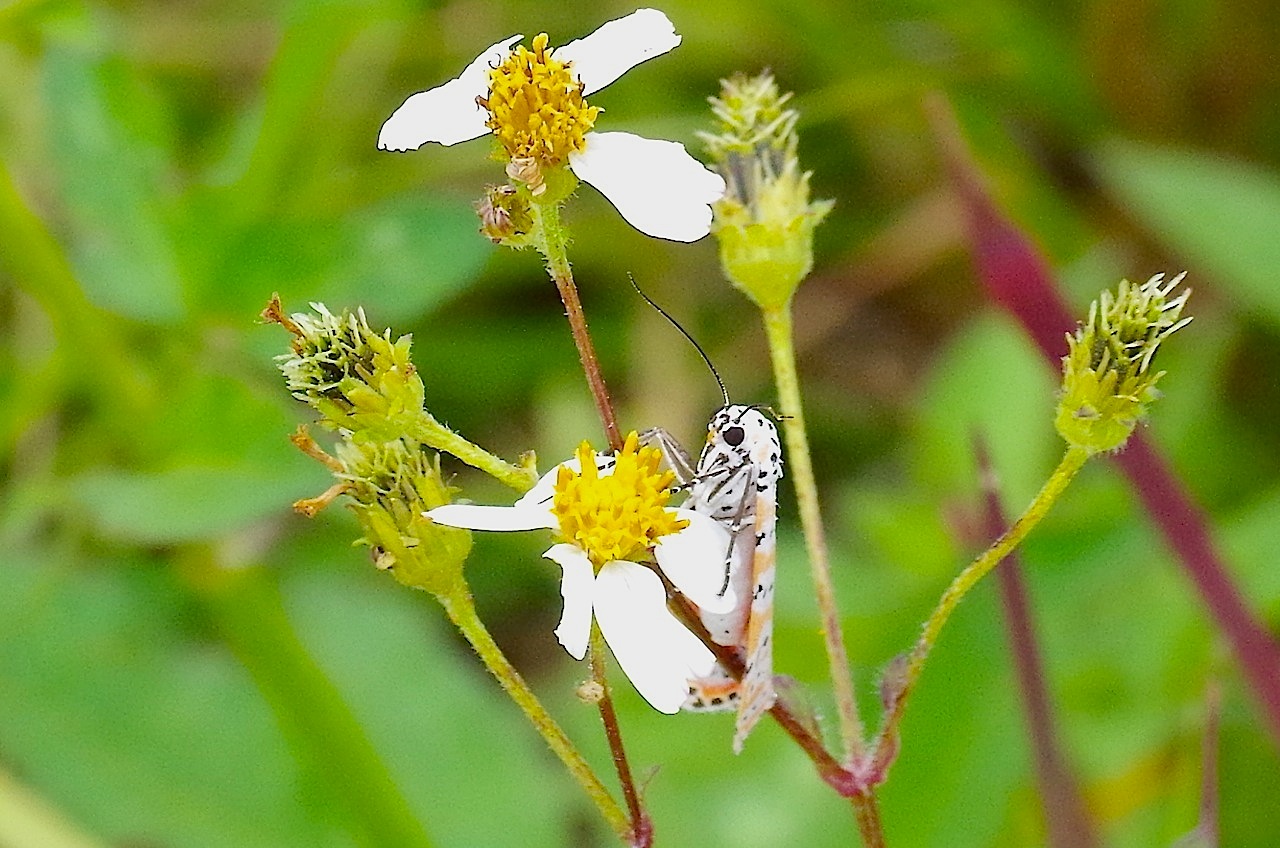
Today’s offering is a creature I have never seen before on Abaco, or anywhere else for that matter. We saw it at the Neem Farm when we were looking for birds, butterflies and Spring flowers. I didn’t have moths in mind at all until I saw this one. For a start, moths are considered creatures of the night, so midday would not be an auspicious time for moth-hunting. As it turns out, the moth we found is, most unusually, active in day-time (‘diurnal’). 

Bella Moth, Neem Farm, Abaco (Keith Salvesen) 1

The BELLA MOTH Utetheisa ornatrix is also known as the ‘ornate moth’ or ‘rattlebox moth’ (after its favourite plant Crotalaria  – me neither). The one we saw was pink, with bright pink showing on the wings in flight. However these moths come in other vivid colours ranging from pink to red or orange, and yellow to white. Their black wing markings have many patterns.

Bella Moth, Neem Farm, Abaco (Keith Salvesen) 2

The bright coloration is, as in many species, nature’s way of saying ‘leave me alone’ and in particular, ‘I am very unpleasant to eat’. It is called APOSEMATISM.  Quite simply, the larvae feed on plants that contain poisonous alkaloids – in particular the yellow rattlebox plant Crotalaria, rendering them, as adult moths, extremely unpalatable. Bella adults may cannibalise eggs, pupae or larvae to counter alkaloid deficiency. Bella Moth, Neem Farm, Abaco (Keith Salvesen) 4

BELLA MOTH SEX LIVES: “IT’S COMPLICATED”

  • Sexual encounters are dictated by females, who compete with other females for males
  • Females seeking to mate always outnumber available males
  • A female bella will release powerful pheromones at dusk to lure males
  • Related females uniquely engage in collective pheromone release
  • This is termed “female pheromonal chorusing”
  • Several males will give the female chemical ‘nuptial gifts’ of poison and sperm
  • The female chooses the best of her suitors, and copulates with 4 or 5 of them
  • The whole process of copulation may take up to 12 hours…
  • In some way I don’t understand, she is then able to select her preferred sperm
  • Humans: do not try any of this at home, in the office, in Maccy Ds or when driving

Ornate_moth_(Utetheisa_ornatrix) Charles J Sharp wiki

Utetheisa_ornatrix (Dumi, Jamaica)

Credits: Header (on rattlebox blossom Crotalaria), Bob Peterson; 3 frankly rather feeble photos RH & Mrs RH; sharp photo by Charles J Sharp; open wings by Dumi

Unknown's avatar

“HAPPY EARTH DAY TO YOU”: DO SOMETHING GREEN!


Abaco (Cuban) Parrot, Delphi, Abaco (Craig Nash)

“HAPPY EARTH DAY TO YOU”: DO SOMETHING GREEN!

Today is the 46th Earth Day, a global event to encourage ecology and conservation, and to discourage the spoiling of the planet by mankind. What becomes lost now may never be retrieved. Plant a tree. Grow some bee- or butterfly-friendly flowers. Clear a patch of beach of plastic trash. Recycle stuff. That sort of thing. 

Atala Hairstreak Eumaeus atala – DelphiAtala Hairstreak Butterfly, Abaco (Keith Salvesen)

Gulf Fritillary Agraulis vanillae – Neem FarmGulf Fritillary, Neem Farm, Abaco (Keith Salvesen)

I’d lined up some horror-images of plastic-filled birds, entangled turtles, damaged reefs and so forth, of which I have a depressingly large archive. Then, in a spirit of *vogue word alert* positivity I scrapped that miserable idea and decided instead to celebrate some of the natural wonders that can be found on Abaco. 

BAHAMA YELLOWTHROAT – one of Abaco’s 5 ENDEMIC BIRDSBahamas-Great Abaco_Bahama Yellowthroat_Gerlinde Taurer

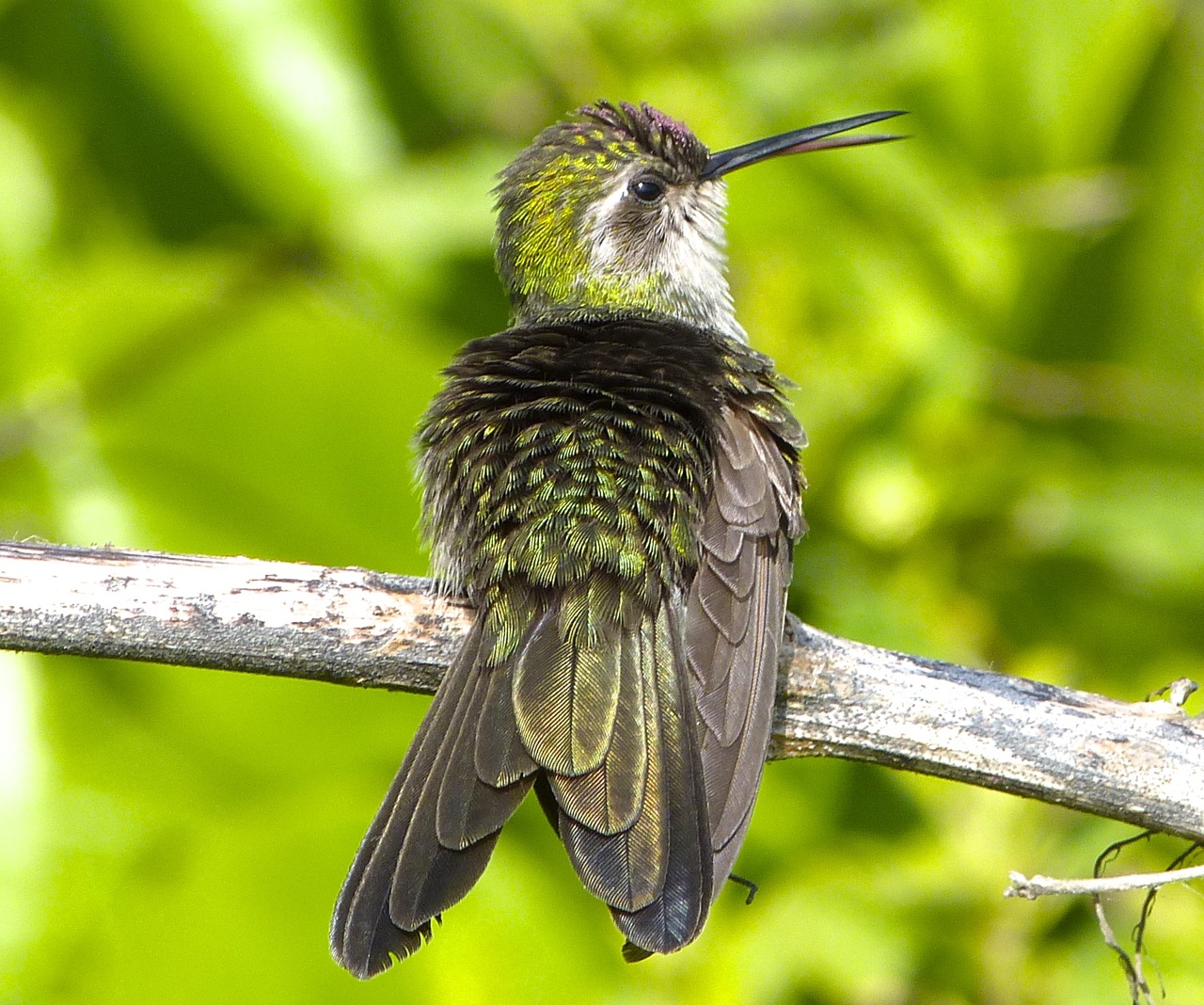
CUBAN EMERALD HUMMINGBIRD (f) preening – Gilpin PointCuban Emerald Hummingbird preening, Abaco (Keith Salvesen)

Some signal species serve as a continuing tribute to those who work to conserve them. The gorgeous ABACO PARROTS, now saved from the brink of extinction – and currently establishing a new colony on New Providence. The rare PIPING PLOVERS that find a safe home to spend their winters on Abaco’s beaches. The 5 ENDEMIC BIRD species. The WHALES & DOLPHINS that populate the waters. The west-indian MANATEES, until very recently almost unknown for Abaco yet now providing a curious addition to the scene as they visit their favourite haunts.

BLAINVILLE’S BEAKED WHALE (m) approaching the BMMRO research vesselBlainville's Beaked Whale, Sandy Point, Abaco 14 (Keith Salvesen

BOTTLENOSE DOLHIN, Sandy Point (about to dive under the boat)Bottlenose Dolphins, Rocky Point, Abaco (Keith Salvesen : BMMRO) 7

Habitat protection has been provided over substantial areas on both land and sea by the creation of natural parks and preserves. These have very recently been extended by the establishment of 4 large PROTECTED AREAS for East Abaco Creeks, Cross Harbour, the Marls and the South Abaco Blue Holes, a wonderful reward for a great deal of hard lobbying by conservation organisations and by many concerned individuals. 

QUEEN ANGELFISHQueen Angelfish ©Melinda Stevens Riger / G B Scuba

BANDED CORAL SHRIMPBanded Coral Shrimp ©Melinda Riger @ G B Scuba copy 2

Scientific research and conservation work is continuously carried out in Abaco waters. The CORAL REEFS that form the 3rd largest barrier reef in the world; the BLUE HOLES that lead to wonderful caves and cathedral caverns of crystal; the vast area of the MARLS and the species that rely on the mangrove swamps; the MANGROVES themselves: all these are watched over and monitored for ways to protect them best for future generations. 

PIPING PLOVER pair, Delphi (taken last month)Piping Plover pair, Delphi Beach, Abaco (Keith Salvesen)

PIPING PLOVER on AbacoPiping Plover, Abaco - Bruce Hallett

I’ve mentioned trees and plants. There are a variety of well-known sources for both on Abaco – on the mainland, anyway, and maybe some cays. Any will advise on bee and butterfly attractants. Thinking of which, bird seed feeders and hummer sugar water feeders are cheap and guarantee the interest of garden and coppice birds, and during the winter months some brightly coloured migrants such as buntings and grosbeaks. 

HIBISCUS – DelphiHibiscus, Delphi, Abaco (Keith Salvesen)

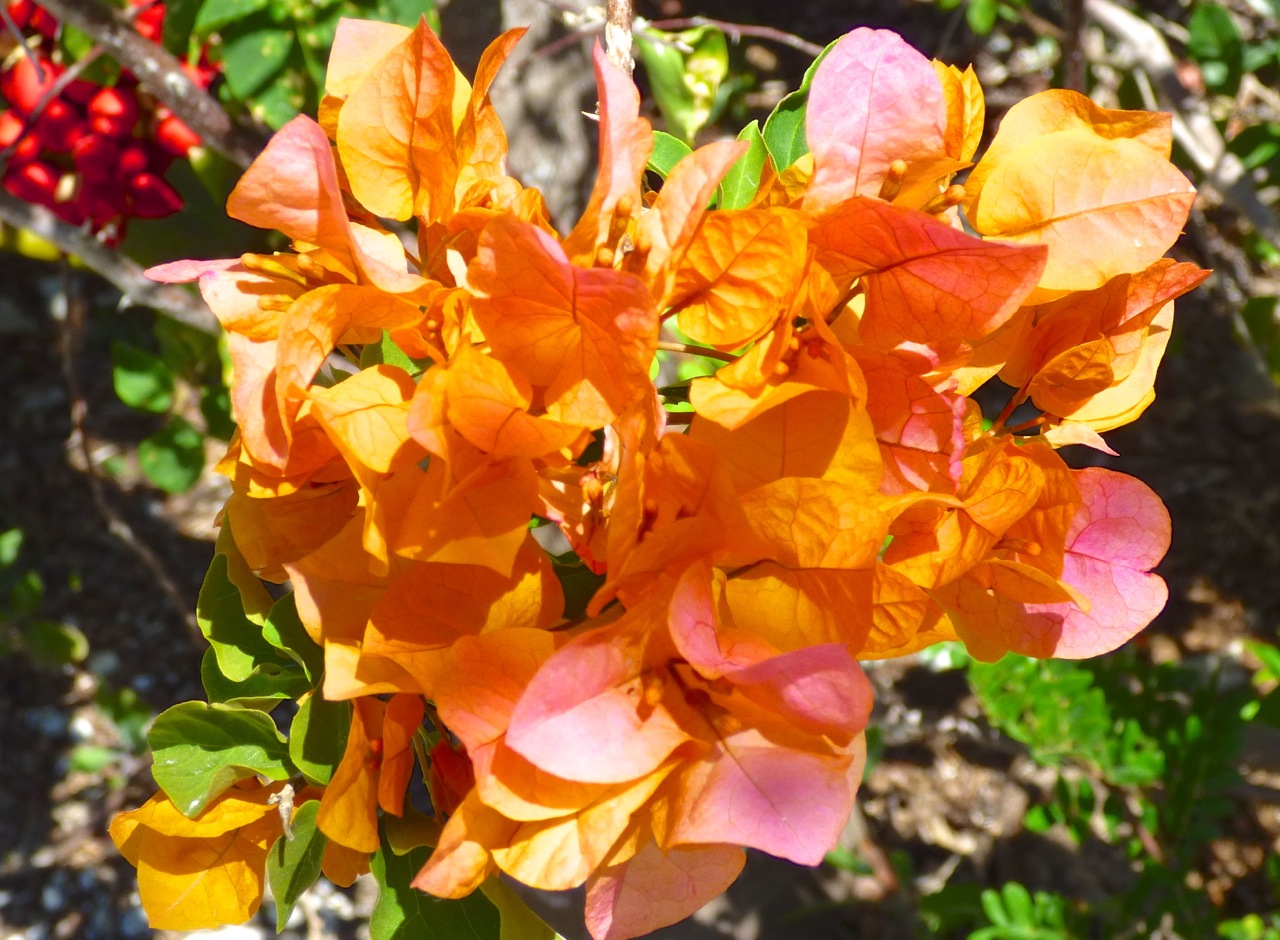
 BOUGAINVILLEA  – DelphiBougainvillea, Delphi, Abaco Bahamas (Keith Salvesen)

Bird of Paradise flower STRELITZIA – Marsh Harbour (seemingly on a steep slope!)Bird of Paradise Flower (Strelitzia) Abaco (Keith Salvesen)

HAPPY EARTH DAY TO YOU!

RALPH’S CAVE South AbacoRalph's Cave, Abaco (Brian Kakuk)

Credits: all images RH except: Abaco parrot, Craig Nash; Bahama yellowthroat, Gerlinde Taurer; Angelfish & Shrimp, Melinda Riger; single piping plover, Bruce Hallett; Ralph’s Cave, Brian Kakuk

Unknown's avatar

BUTTERFLIES ON ABACO (8): WHITE PEACOCK


White Peacock Butterfly, Abaco (Keith Salvesen) 1

BUTTERFLIES ON ABACO (8): WHITE PEACOCK

The white peacock (Anartia jatrophae) is not a rare butterfly in the northern Bahamas. However, until recently I had never – or never consciously – seen one before. Then we came across a few at the Neem Farm, all very frisky and mostly refusing to settle for more than 1/100 second. By the time I have remembered to remove my lens cap, they are 50 yards away.

White Peacock Butterfly, Abaco (Keith Salvesen) 2White Peacock Butterfly, Abaco (Keith Salvesen) 3White Peacock Butterfly, Abaco (Keith Salvesen) 4

I checked out these pretty but unassuming butterflies online because they seemed rather pale and anaemic. As far as I can make out this is because they were still in winter colouring; in summer they are more brightly marked. Here’s a photo of a dishevelled white peacock taken in June at Delphi by Charlie Skinner, which shows stronger colours.

White Peacock, Abaco DSC_4786 (Charlie Skinner)

ARE THEY EVER FOUND LOOKING BRIGHT AND NOT FALLING APART?

Yes, of course, but interestingly, never ever in the field. The one below, non-anaemic and intact, was thoughtfully uploaded to Wiki by Greg Hume. He took it at a butterfly show, where presumably tatty butterflies are excluded…

WhitePeacock (Greg Hume)

Photos: Keith Salvesen 1 – 4; Charlie Skinner 5; Greg Hume 6

Unknown's avatar

BUTTERFLIES ON ABACO (7): LONG-TAILED SKIPPER


Long-tailed Skipper Butterfly, Abaco (Keith Salvesen) 1

BUTTERFLIES ON ABACO (7): LONG-TAILED SKIPPER 

The Abaco Neem Farm is run by Nick Miaoulis with a passion and commitment to the environment matched by few. The farm products can be found in the excellent Abaco Neem shop in Marsh Harbour. This is wonderful place for birding. Besides fruit trees of many kinds, there is a perfect mix of coppice and pine-forest to satisfy the most habitat-pedantic species. 

Long-tailed Skipper Butterfly, Abaco (Keith Salvesen) 3

Around the fruit trees, wildflowers are encouraged to thrive. These attract bees (Nick also has hives) and of course butterflies – not forgetting moths. Amongst the fluttery creatures, we found a long-tailed skipper (Urbanus proteus), a butterfly found in tropical and subtropical areas. It is a striking creature, with iridescent blues on the body and two long tails extending from the hindwings. The caterpillar is said to be a crop and ornamental plant pest; the butterfly is described as uncommon (maybe for the Bahamas, anyway).

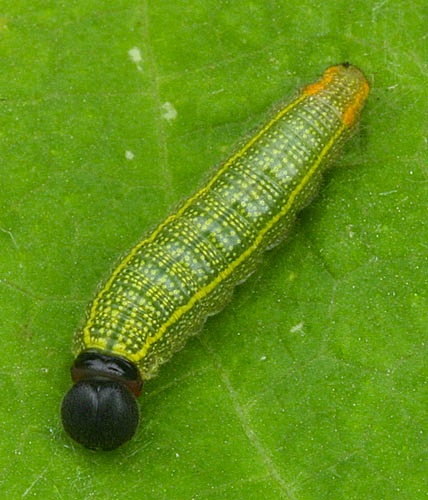
Urbanus proteus: the caterpillarUrbanus_proteus4 (Mike Boone Bug Guide)

Urbanus proteus on Man-o-War CayLong-tailed Skipper - Abaco Butterfly (Charmaine Albury)

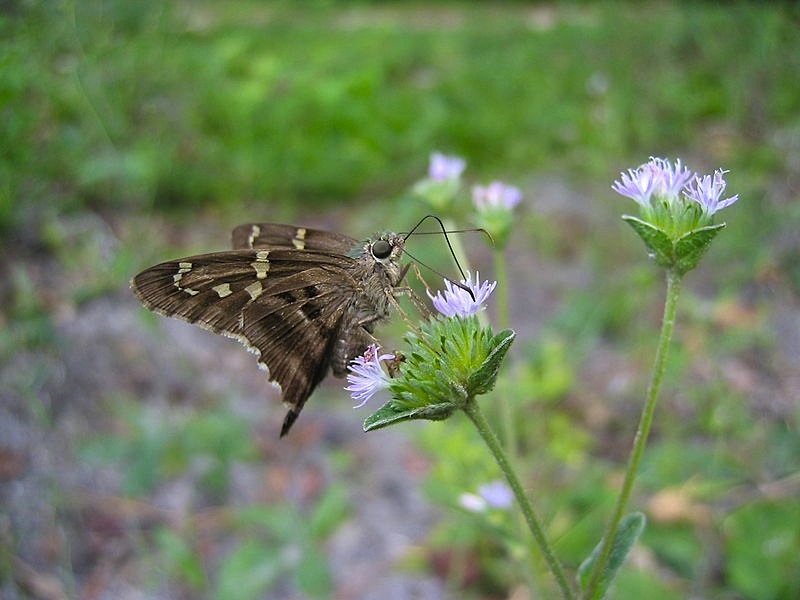
Two non-Abaco examplesLong-tailed_Skipper_Butterfly_(Urbanus_proteus)_1 (Jonathan Zander Wiki)Common_longtailed_skipper_(Urbanus_proteus_domingo)_female (Charles Sharp)

Abaco Neem Farm (with beehive)Bee Hive, Neem Farm, Abaco (Mrs RH)

Credits: Keith Salvesen (1, 2); Wiki-pillar (3); Charmaine Albury (4); Non-Abaco Wiki-Skippers Jonathan Zander (5) and Charles Sharp (6); Mrs RH (7)

Unknown's avatar

BUTTERFLIES ON ABACO (6): FOCUS ON SWALLOWTAILS


Bahama Swallowtail, Treasure Cay, Abaco (Uli Nowlan) copy

BUTTERFLIES ON ABACO (6): FOCUS ON SWALLOWTAILS

I’ve mentioned the swallowtail butterflies of Abaco before, but I have never shown the 3 main species together. They are such handsome creatures that’s it time to give them a place in the sun. These are my favourite butterflies. Ah yes – equally with the wonderful ATALA HAIRSTREAK

Bahama Swallowtail, Abaco (Rhonda Pearce) 2 copy

BAHAMA (BAHAMIAN) SWALLOWTAIL

This fine swallowtail Papilio andraemon has a range beyond the islands of the Bahamas. It is also found on Cuba and Jamaica. Occasionally they are found as strays on the Florida Keys or on the mainland in the Miami region. 

Bahama Swallowtail, Abaco (Rhonda Pearce) 1 copyBahama Swallowtail, Abaco (Uli Nowlan)

POLYDAMUS (‘GOLD-RIM’) SWALLOWTAIL

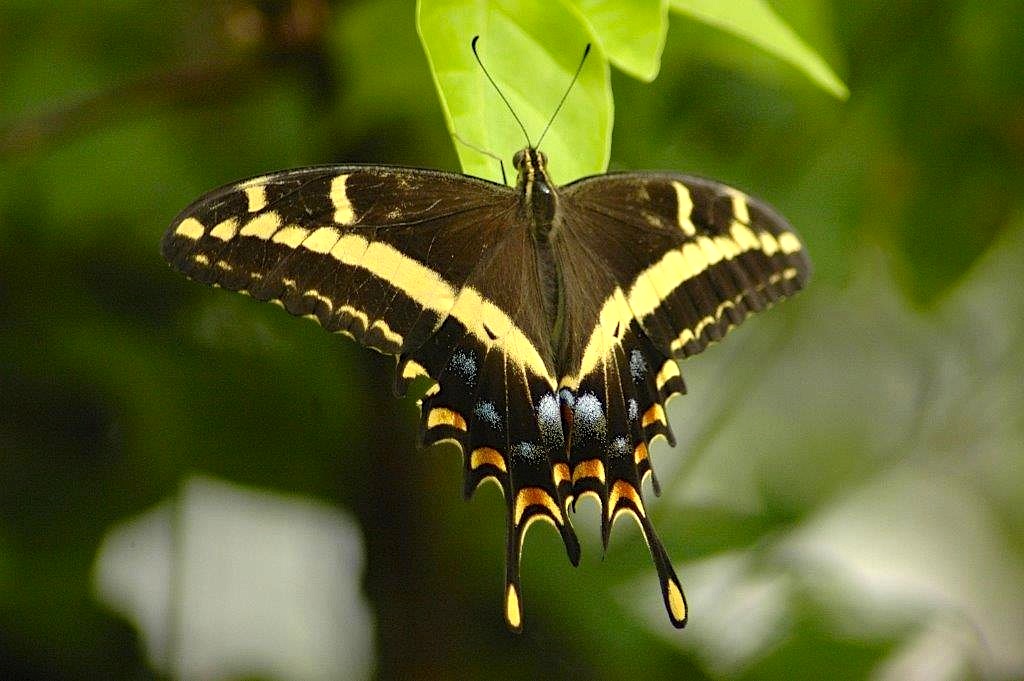
This is the species you are most likely to encounter as they cruise rapidly from flower to flower, constantly on the move, with wings fluttering even as they feed. Hard to get good photos of them, therefore. But some (though sadly not me) manage it somehow… Polydamus Swallowtail, Abaco (Nina Henry)Polydamus Swallowtail, Abaco (Char Albury) Polydamus Swallowtail, Abaco (Rhonda Pearce) copy

TIGER SWALLOWTAIL

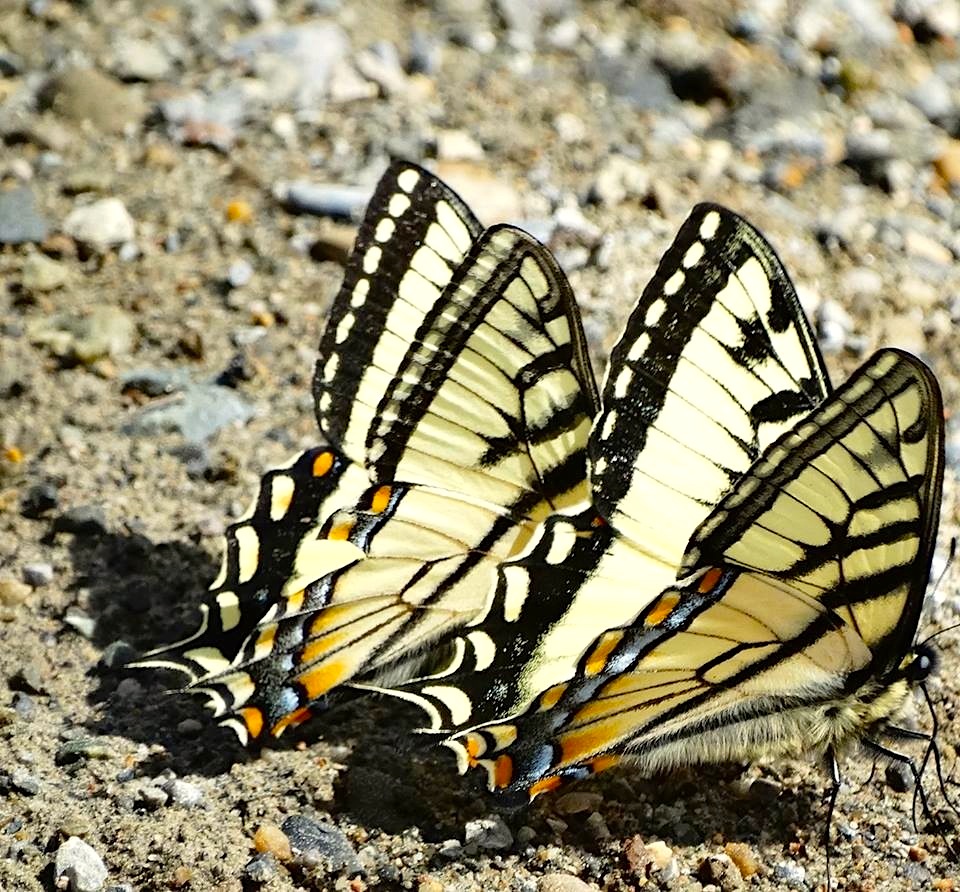
I suspect this species – common in the eastern USA – is quite rare on Abaco. I have never seen one, and these ones photographed by Uli Nowlan at Treasure Cay are the only pictures I have seen. And what lovely creatures they are. Tiger Swallowtail, Abaco (Uli Nowlan) Tiger Swallowtail, Abaco (Uli Nowlan)2

DISQUALIFIED ENTRIES

RIGHT SPECIES, WRONG CONTINENT – EUROPEAN SWALLOWTAILSwallowtail Butterfly (France)

RIGHT COUNTRY, WRONG CREATURE – BAHAMA SWALLOW TAIL, ABACO BS BH IMG_8038

WRONG CREATURE, WRONG CONTINENT – EUROPEAN SWALLOW TAILSwallow Dorset

RIGHT EVERYTHING, HOPELESS PHOTO (how they usually behave for me…)Polydamus (Gold Rim) Swallowtail Butterfly, Abaco (but6)

RELATED POSTS

COMMON BUCKEYE

ZEBRA HELICONIAN

GULF FRITILLARY

DRYAS JULIA

MARTIAL SCRUB-HAIRSTREAK

Polydamus Swallowtail abaco (Char Albury)

Credits: Uli Nowlan, Rhonda Pearce, Nina Henry, Charmaine Albury, plus disappointments for RH