Unknown's avatar

ABACO WARBLER CHALLENGE: CAPE MAY WARBLER IDENTIFIED


WARBLER IDENTIFICATION – A LIGHT-HEARTED CHALLENGE

SPECIES ID NOW SOLVED! CUT TO THE CHASE BENEATH THE PHOTOS FOR DETAILS. A LATE ENTRY NOW DISPUTES THE GENDER ID, SO THE SEX CHALLENGE IS REOPENED, SO TO SPEAK

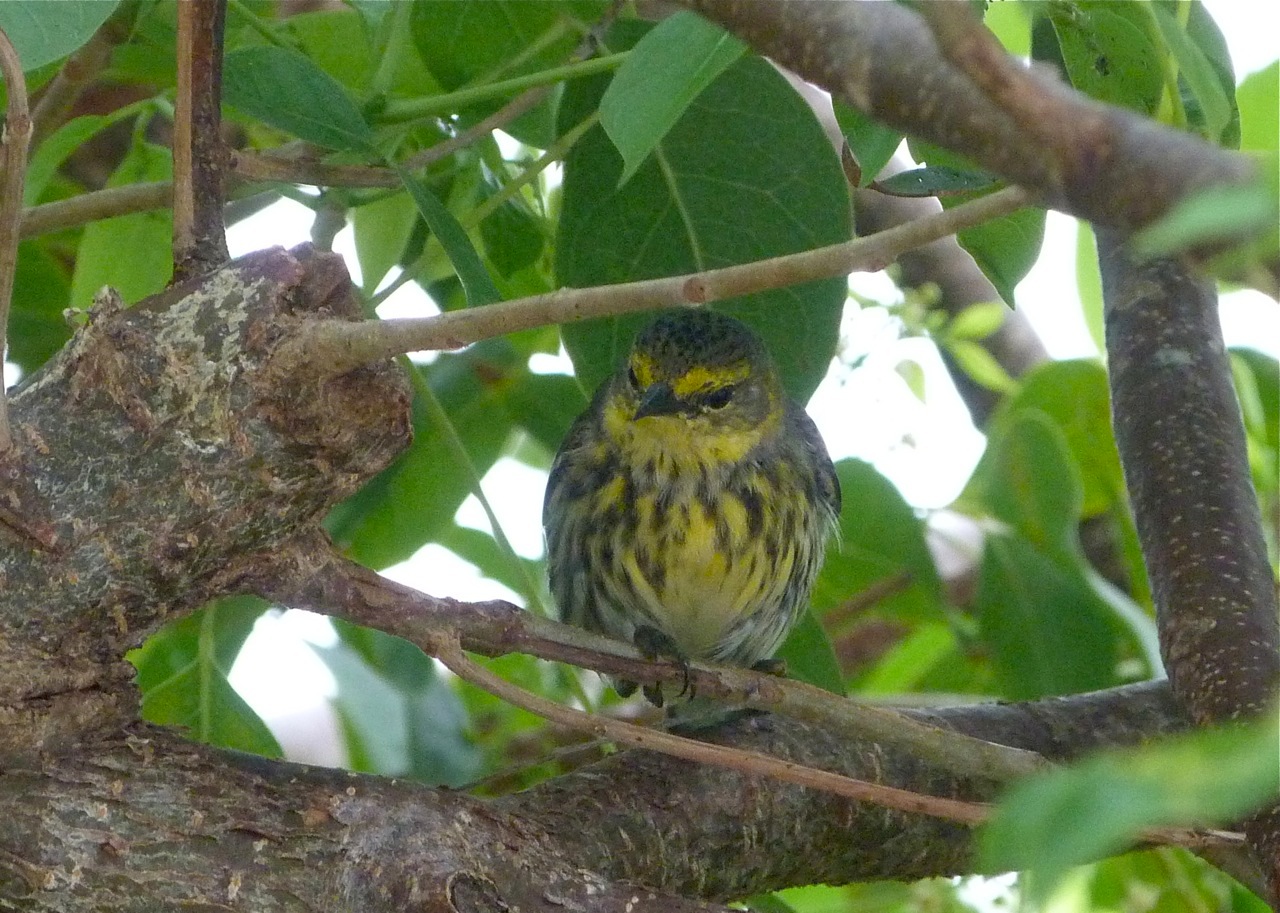
I have previously posted aids to WARBLER ID (1); WARBLER ID (2), a pitfall-fraught area that continues to baffle me despite books, online resources, futile stabs in the dark etc. For each species the male differs from the female, and both differ from juvenile / maturing birds. And this all depends to some extent on the season. Here’s a speckled warbler photographed recently at the Delphi Club, Abaco, for which there are various candidates ranging from the distinctly possible to the frankly completely-unlikely-but-astounding-if-it-turned-out-to-be-true Kirtland’s Warbler. These are seen and positively identified vanishingly rarely on Abaco – maybe one or two a year, and invariably in winter. But what if one decided to stay behind for the summer… And to those who say “Prairie, dimwit”, I reply “…but their speckles don’t cover their entire fronts”.

I’m throwing this open, because although I have a view I’d like to see what others come up with. Craig? Avian101? Avian3? Margaret H? Other birding followers? Are you out there? Leave a comment (see small-print blurb at the bottom of the post) or email me at rollingharbour.delphi@gmail.com The bird was a bit reluctant to be photographed, but I managed to get a side view, a ‘full-frontal’ and a head shot. Any ideas?
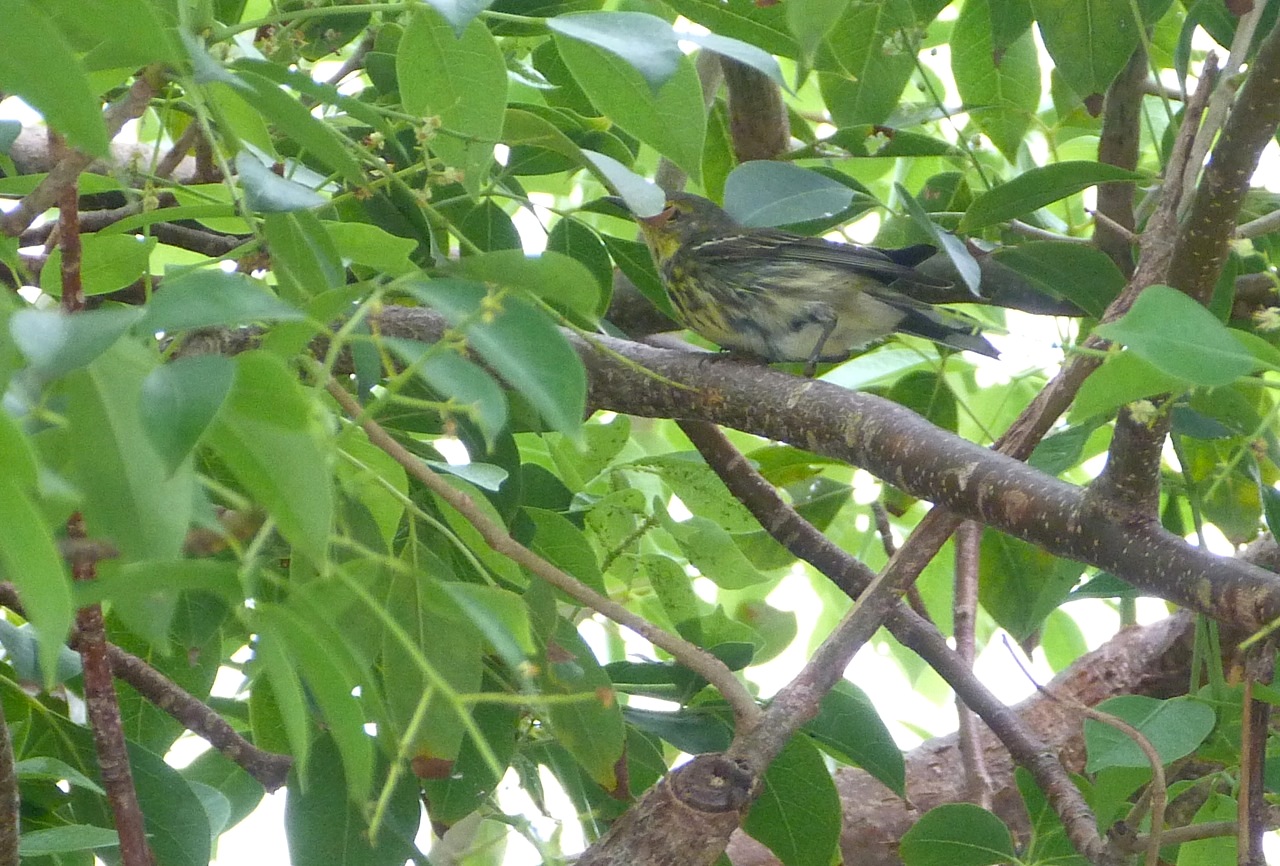
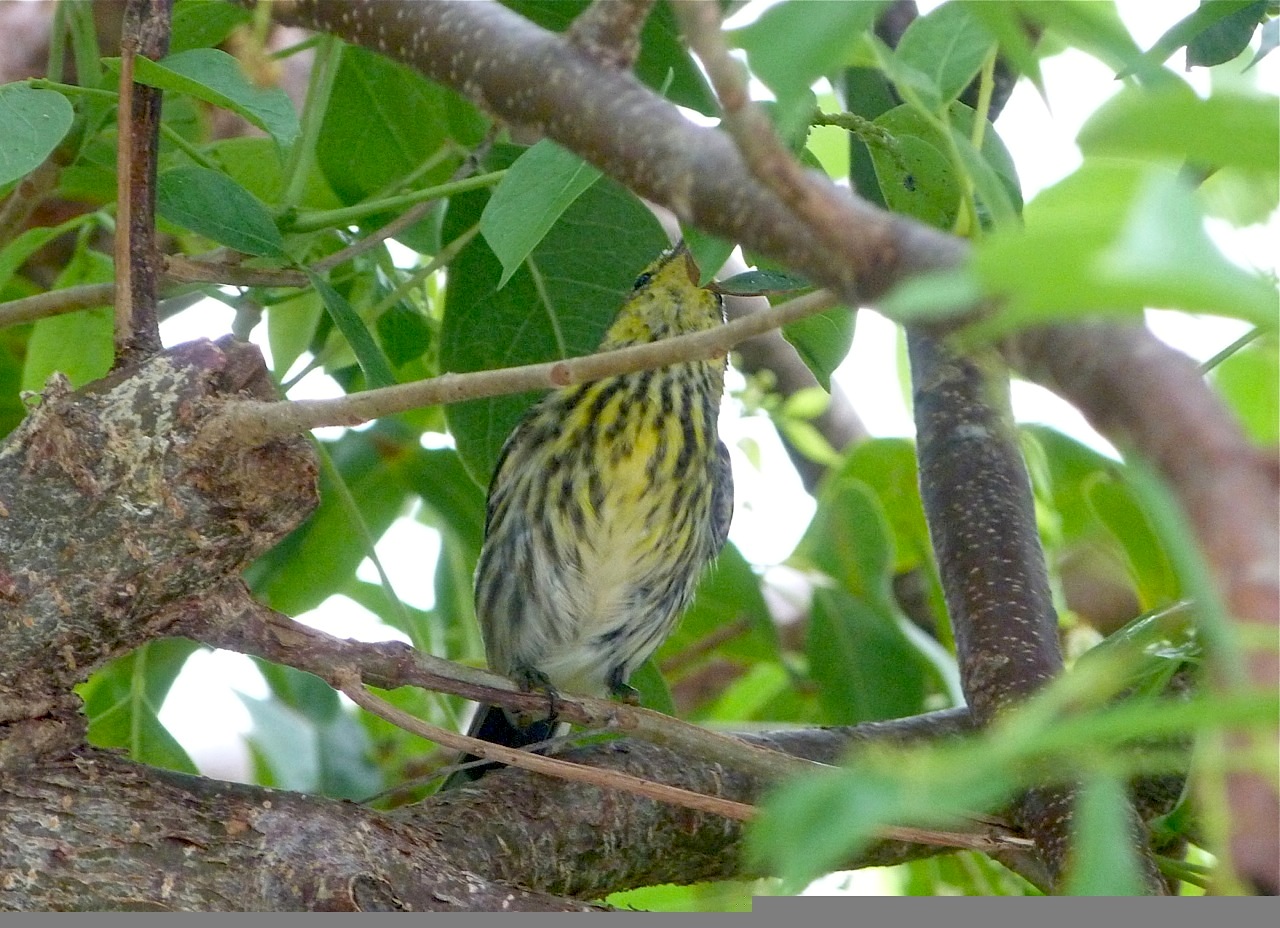
UPDATE Thanks to all who came up with suggestions – it’s interesting how opinion on warbler species varies, even with quite clear close-ups to judge from. The first past the post is… Dr Elwood D Bracey (Fl), to whom many thanks. It’s a female CAPE MAY WARBLER Dendroica tigrina. The runner-up is (amazingly) myself – I had it down for a Cape May juvenile, because I thought it looked a bit on the fluffy side… Also, its eye-patches (photo 3) are grey rather than brown, and I took their colouring to be a work in progress. There’ll be some more ID queries from our recent batch of Abaco photos – not just birds, but flowers & shells as well. All contributions will be welcome…

Oh no! What’s happening here? A late challenge has come in from Margaret H (see comments), who contends that the clearly shown patch on the bird’s cheek indicates that it is a male, not a female, Cape May. So the challenge was ended and the award given prematurely… The species is now definite, but the gender ID remains unresolved…

I’ve now heard from Alex Hughes, who writes “[I am] one of Caroline Stahala’s field techs on the parrot project this summer.  She forwarded me the photos of the warbler taken recently on Abaco.  The photos I saw are of a female Cape May Warbler, which is a great find in June!  She is certainly not going to make it to her breeding grounds, unfortunately, but still fascinating to see a boreal forest bird in the Bahamas during summer.

In a follow-up, Alex adds “I’d be very surprised if this was a male bird, due to the plumage lined up with the time of year.  This year’s juvenile birds are not big enough to make the flight south from breeding grounds yet, and wouldn’t anyways if they could.  Therefore, it would have to be adult non-breeding plumage if it were a male, also meaning this bird already molted from alternate plumage from spring, and flew south.  This seems far more unlikely to me than a female who simply didn’t make the flight, probably due to some handicap.  Either way, very cool!”

So I think that wraps it up. A female Cape May, in the right place at the wrong time. How lucky to have got close to one in the off-season. It just goes to show, eager Kirtland hunters, that any of the migratory warbler species might choose to stay behind for the summer…

CORNELL LAB OF ORNITHOLOGY IMAGE & BLURB

“The Cape May Warbler breeds across the boreal forest of Canada and the northern United States, where the fortunes of its populations are largely tied to the availability of spruce budworms, its preferred food. Striking in appearance but poorly understood, the species spends its winters in the West Indies, collecting nectar with its unique curled, semitubular tongue”.

It is presumably using its ‘unique… tongue’ in Photo 2, inconveniently concealed by foliage so we will never know

(RH COMMENT My one obviously liked the Delphi Club – and its feeders – so much that it decided to stay for the summer…)

(Credit: Steve Pelikan for Xeno-Canto)
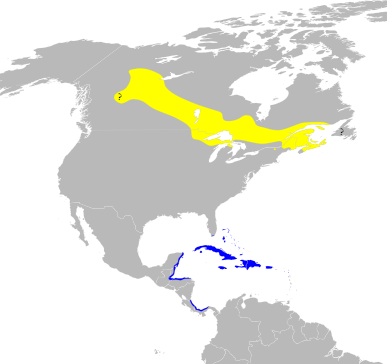
CAPE MAY WARBLER RANGE MAP (Wiki) (left)

As a warbler-muddler, I am interested to see how extremely selective this species is in its preferred summer and winter latitudes. The banding is very distinct. Are they never tempted by New York? Have they never tried Disneyland?

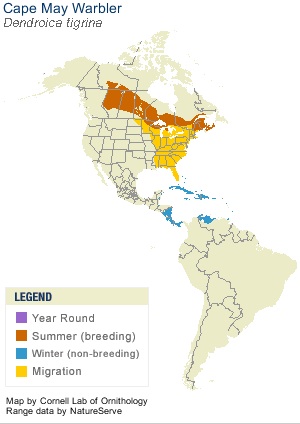
CORNELL LAB OF ORNITHOLOGY RANGE MAP (below)

The more sophisticated range map below shows the migration areas between the summer breeding and winter non-breeding areas. It looks as though a Cape May warbler on Abaco in June is an unexpected sighting.
Unknown's avatar

RED-LEGGED THRUSH – A WELCOME GUEST AT DELPHI, ABACO


THE RED-LEGGED THRUSH  A WELCOME GUEST AT THE DELPHI CLUB, ABACO

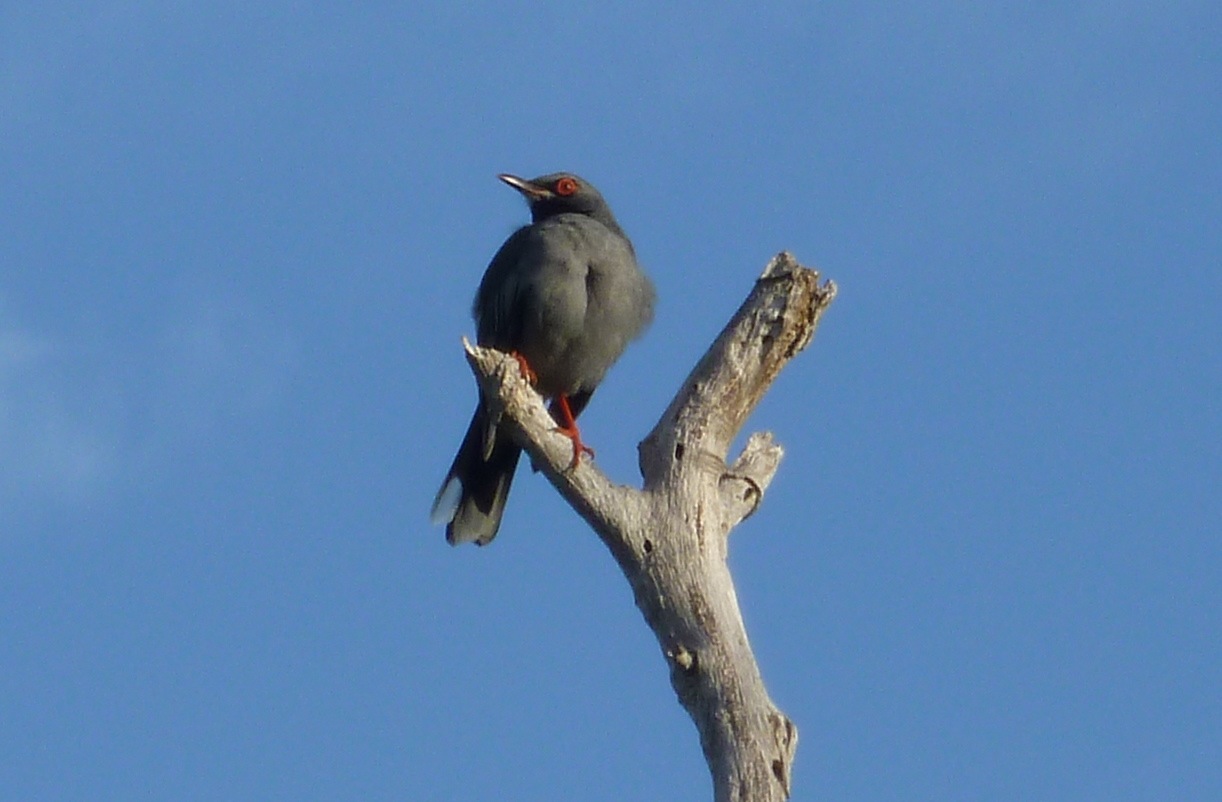
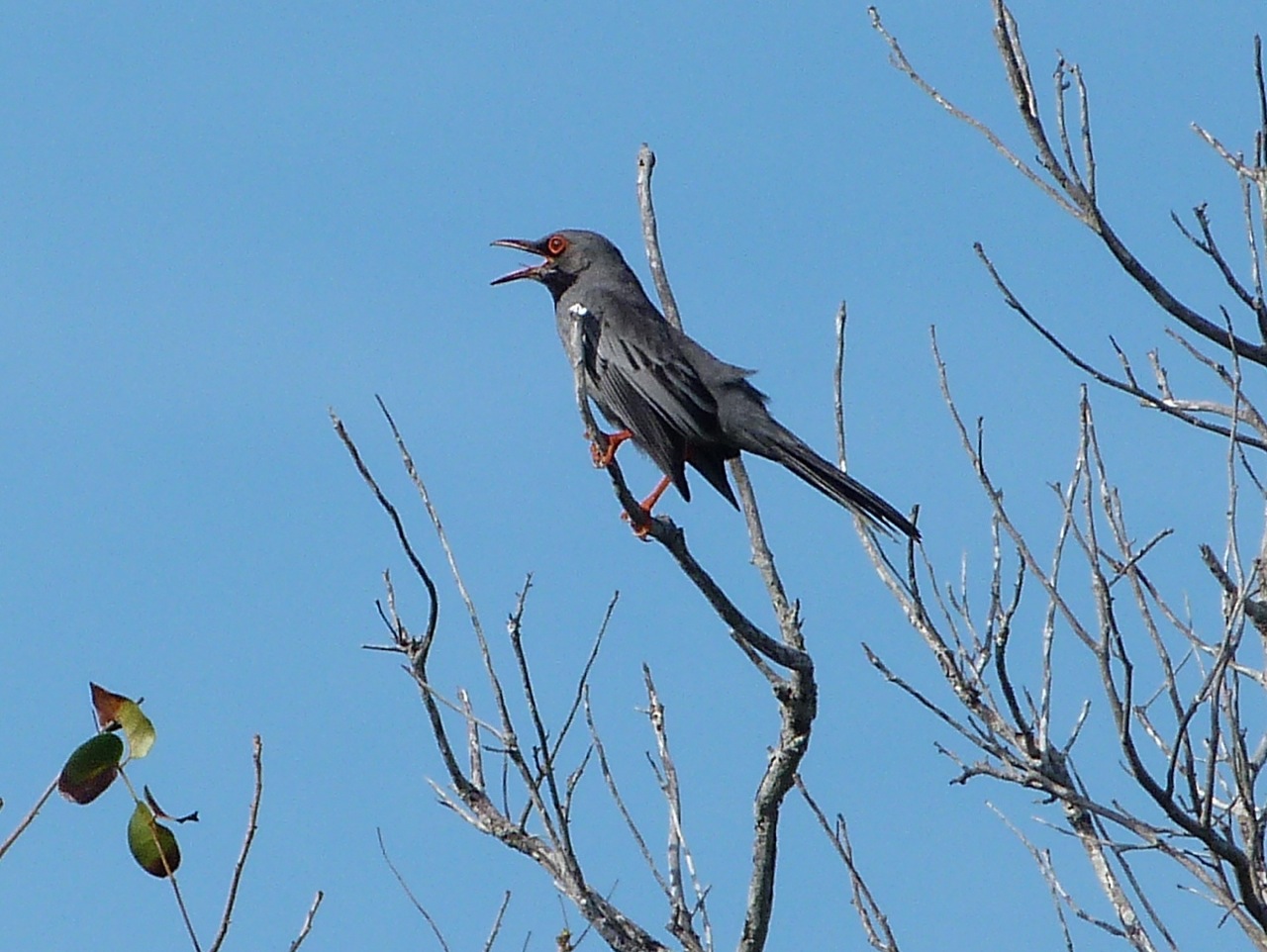
They are everywhere in May and June, with their eponymous limbs and their remarkable red eyes. In fact, ‘red-eyed thrush’ would be as apt a name, if somewhat lachrymose-sounding. This was our first Summer visit to Abaco and the difference in sightings was marked. Now, the thrushes tended to choose a high tree-perch to sing from, when not hopping around feeding on the ground. In March they seem more furtive, lurking in the coppice – presumably eyeing up the talent (or sizing up the opposition) with mating in mind.

There are 6 distinct regional variations on the species, which are found in the Bahamas, Caymans, Cuba, Dominica, Haiti and Puerto Rico. TURDUS PLUMBEUS is the subspecies specific to the Bahamas. Some view them as the Caribbean counterpart to the AMERICAN ROBIN. They eat fruit, insects and small creatures such as snails, lizards and caterpillars. Their song sounds like this (courtesy of Paul Driver at Xeno-Canto)

[audio http://www.xeno-canto.org/sounds/uploaded/FSCGENVPXK/RED-LEGGED%20THRUSH%201%20Andros%20%2042910.mp3]

LOGO BIRD

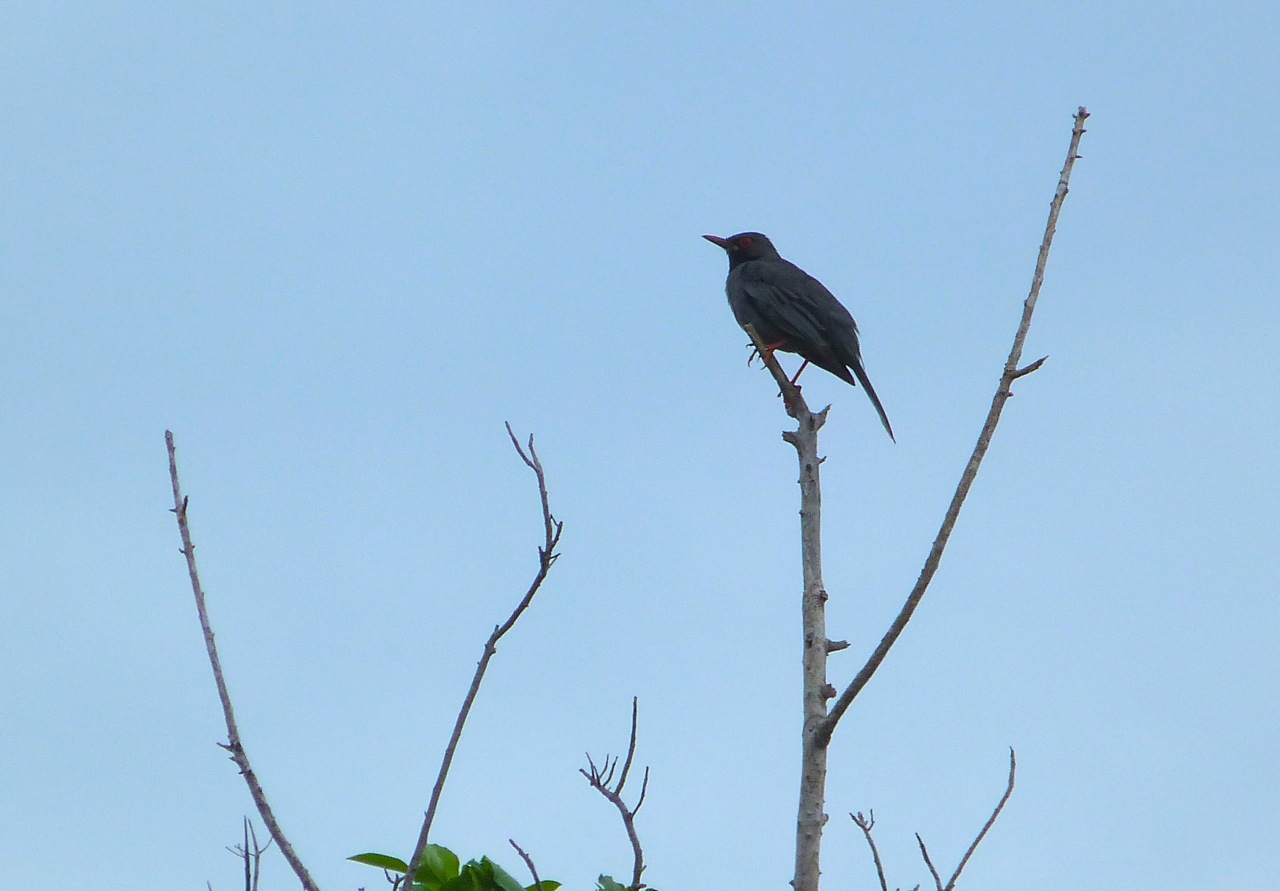
In a departure from the normal use of an ‘in-house’ logo, I’ve posted a silhouette of a Delphi RLT in the coppice close to the Club. The photo itself was dull, but I liked the pose and decided to turn it into logo-thrush

BIRDS IN THE DELPHI GOUNDS OR IN THE COPPICE NEARBY

1. This bird was at the top of a tree on the Delphi front drive close to the Club. It is singing cheerfully, and you can clearly see its tongue

2. This bird also chose a high vantage point near the front entrance gate. I managed to get gradually closer to it. Its feathers are quite fluffy and I wonder if it a juvenile / late teen?

3. Strike the pose! Two very characteristic poses by a bird on the guest drive. In the first image, you can also (just) see its tongue as it sings

4. Another high perch above the coppice alongside the drive

GROUND-FEEDING IN THE GARDEN ROUND THE POOL

Two very productive areas for thrush-fodder. The newly cut grass exposes insects, in particular ants. And the border beside the lawn has plenty of insect-life to feed on (Photo quality suspect – half-asleep  by pool, grabbed camera)

A PRETTY EXAMPLE OF THE THRUSH TAKEN AT BAHAMA PALM SHORES

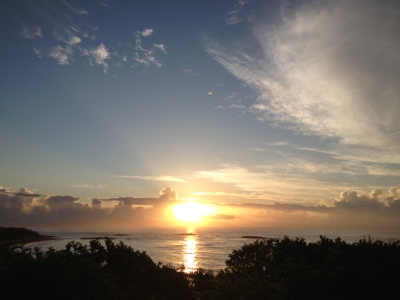
Checking out the precarious electricity infrastructure, Marsh Harbour, dusk                                                        

Unknown's avatar

ROLLING HARBOUR: THE ABACO VACATION SETTINGS ARE NOW ON


NORMAL SERVICE WILL BE RESUMED IN TWO WEEKS, IF YOU CAN EVER CALL IT ‘NORMAL’
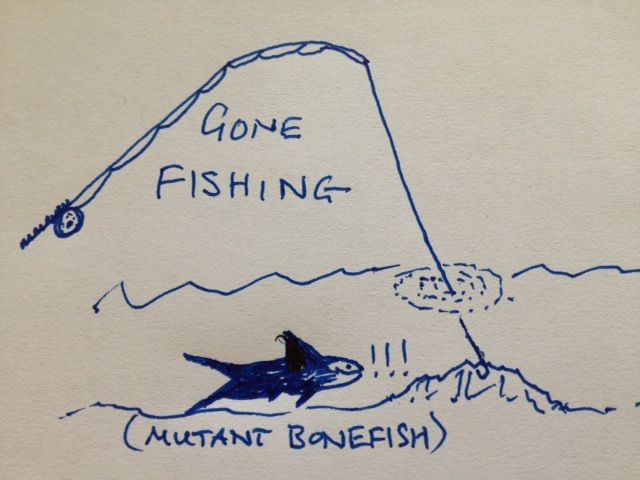
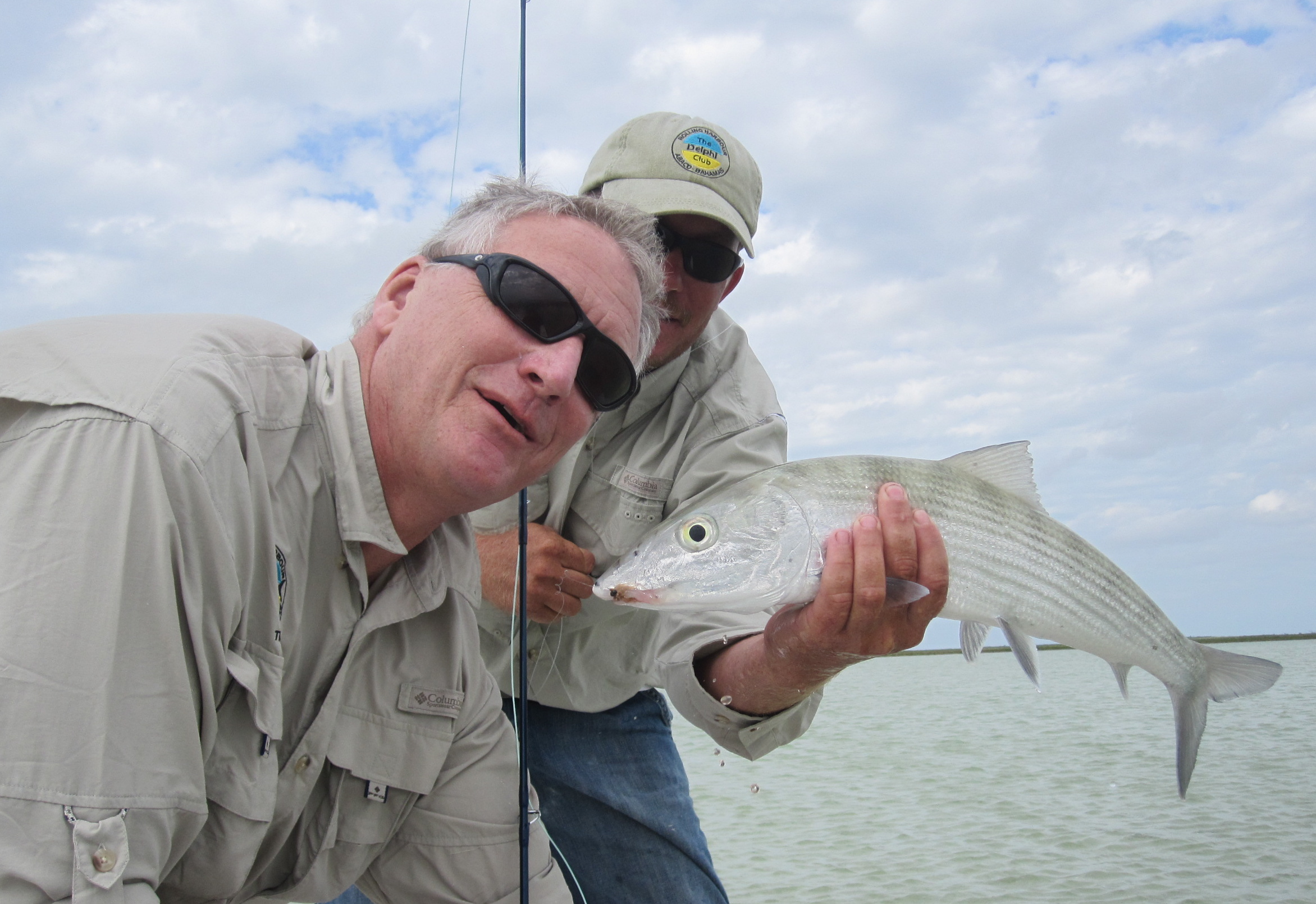
Actually, apologies for the drawing. No, really. At one time in this blog, I did say that I struggle to draw a stickman. And ain’t that the truth. Click on the Soundcloud thing below for suitable vacation music, composed and played by me (tip of the hat to an iPhone app). Oh good grief. It’s just as feeble as my drawing. Just as well I’m off to Abaco for R & R… Meanwhile, here’s what a bonefish really looks like – the weight / strength ratio makes it one of the world’s most powerful fishes. Hook one and prepare to have your reel stripped to the backing. All caught bones are quickly released to ensure stocks are not depleted.
Why thank you, nice Lubbers Quarters sign, I do believe we are…
Unknown's avatar

BONEFISHING (ABACO) v TROUT FISHING (DORSET)


BONEFISHING (ABACO) v TROUT FISHING (DORSET)

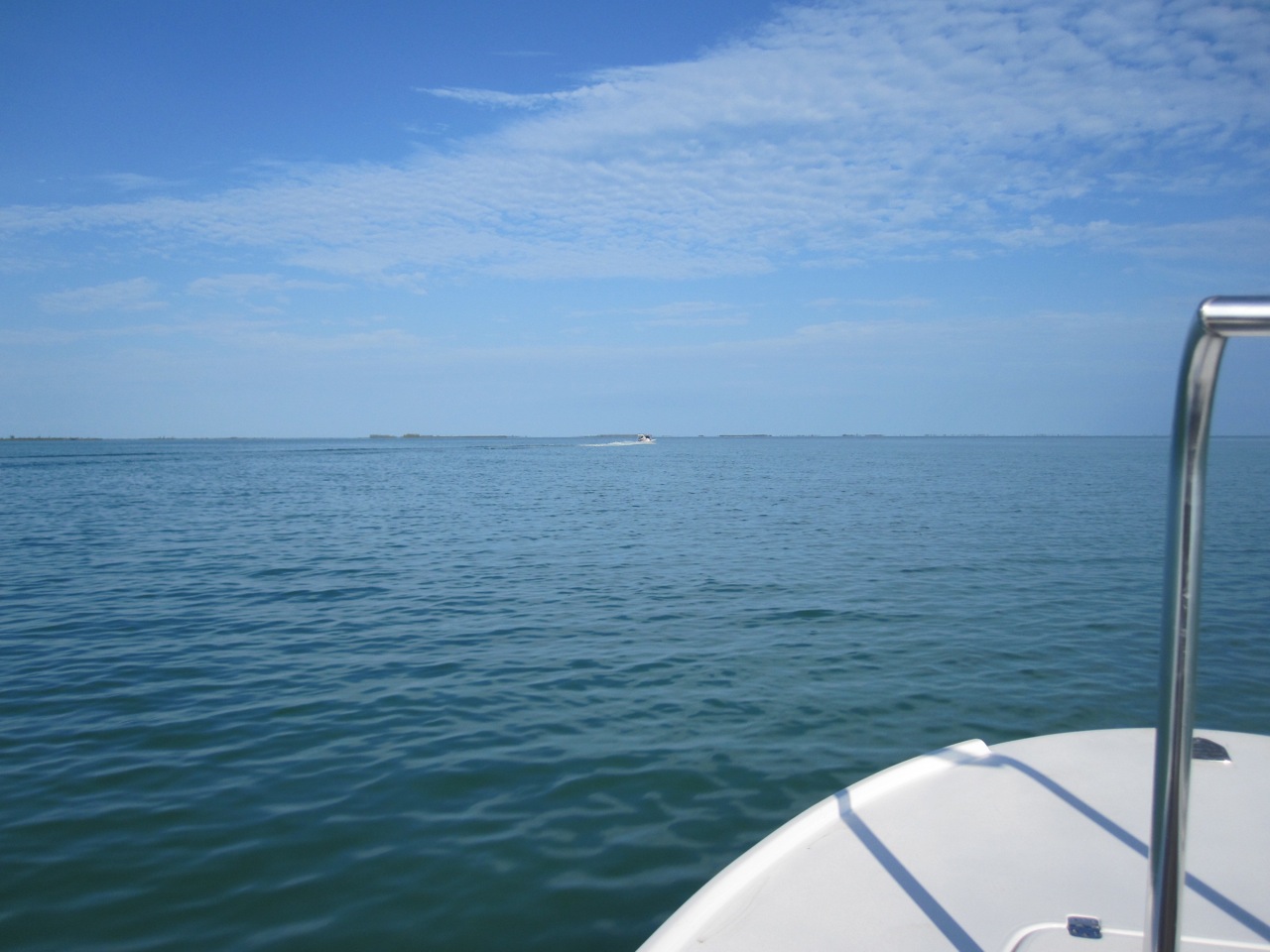
BONEFISHING! We will soon be back at the Delphi Club at last and out on the Marls in 10 days time. The slow-poled movement through the shallow waters. Keen eyes searching for moving shadows on the sand. The urgent half-whispered directions as bones are sighted. The swift confident raise of the arm and flick forward of the cast… and the tangled mass that lands 15 feet short and well behind the vanishing fish. I love it! The guides don’t, of course, but they are generally kind enough to keep their muttered imprecations barely audible. And occasionally there is a fortuitous hook-up. If exceedingly lucky, the obstacle of playing and bringing in the fish without it self-releasing prematurely is surmounted, and RH eventually boats a bone (see above).

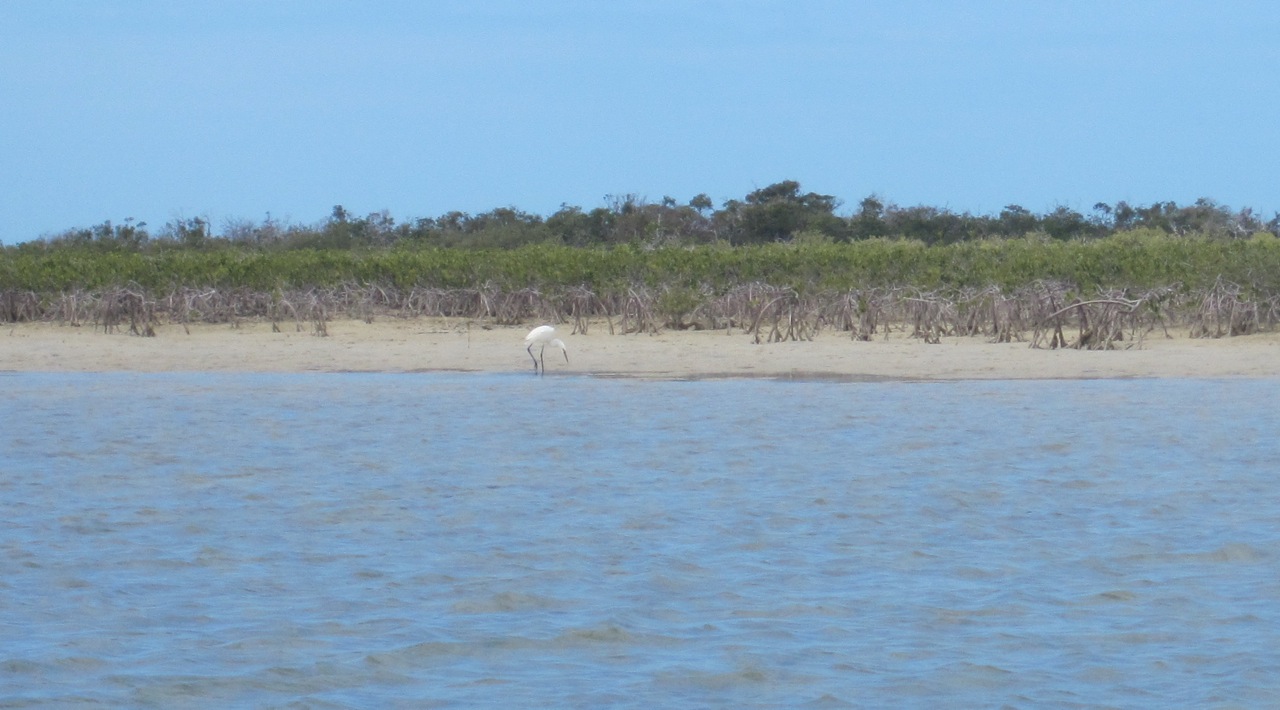
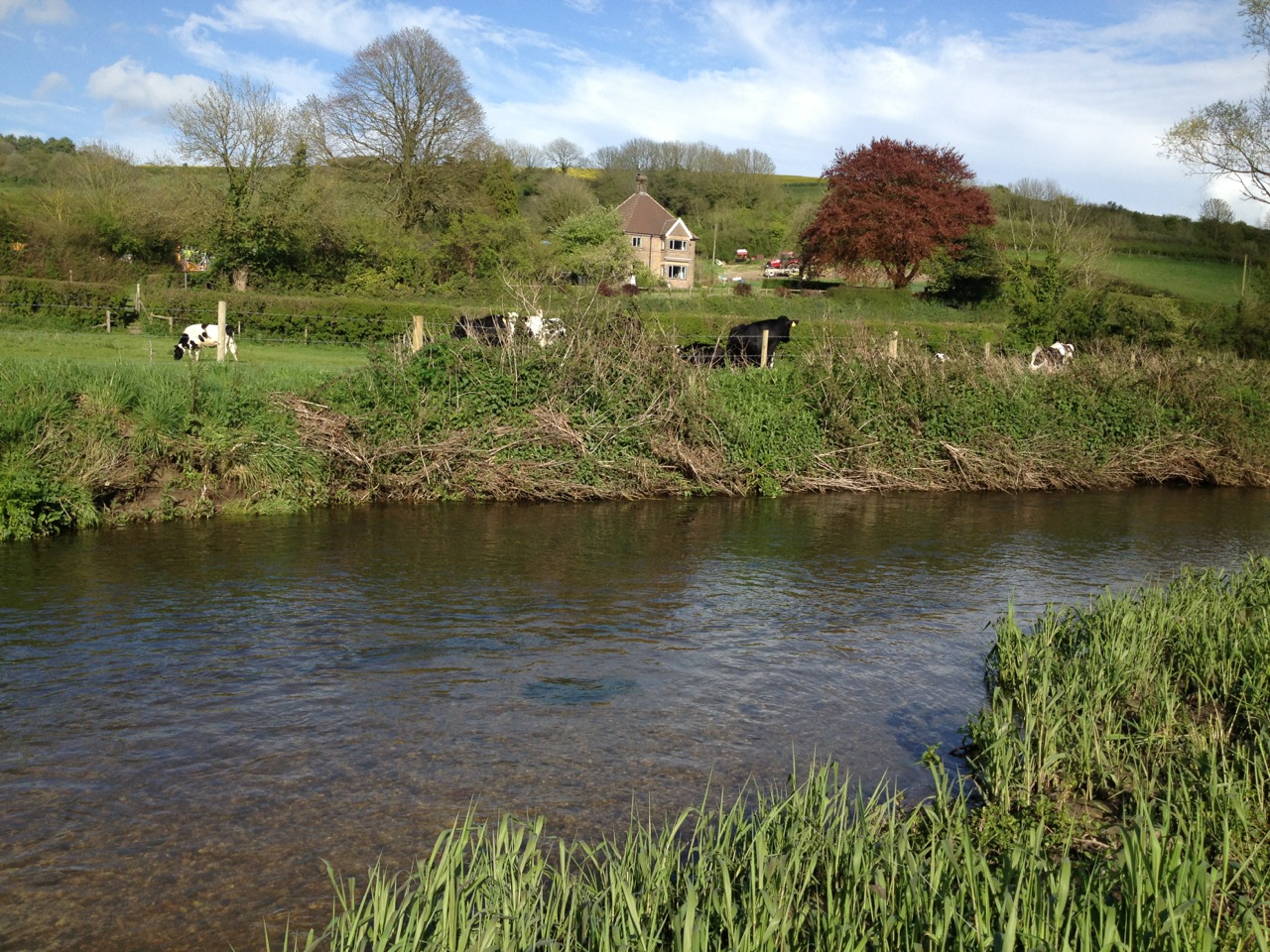
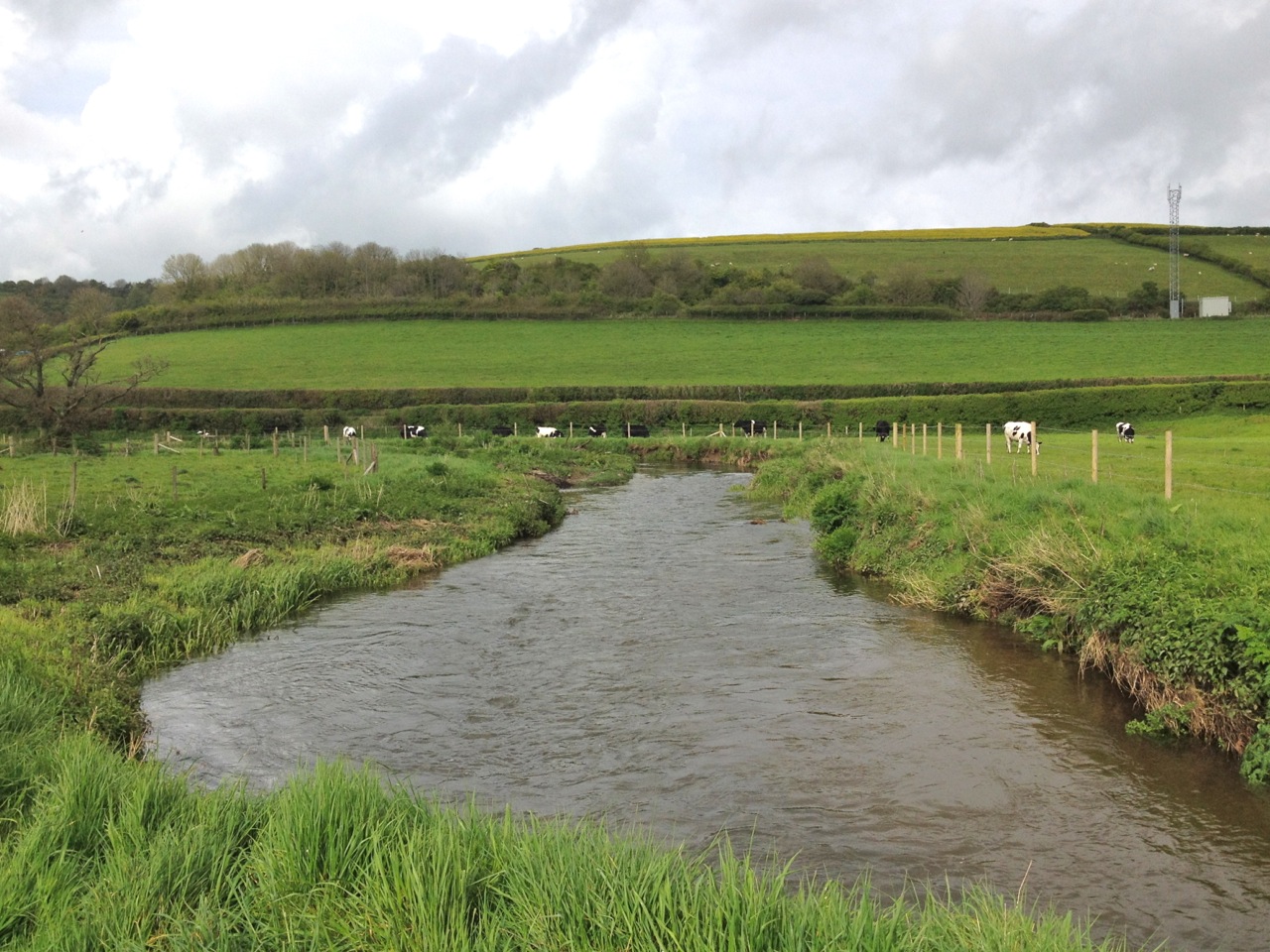
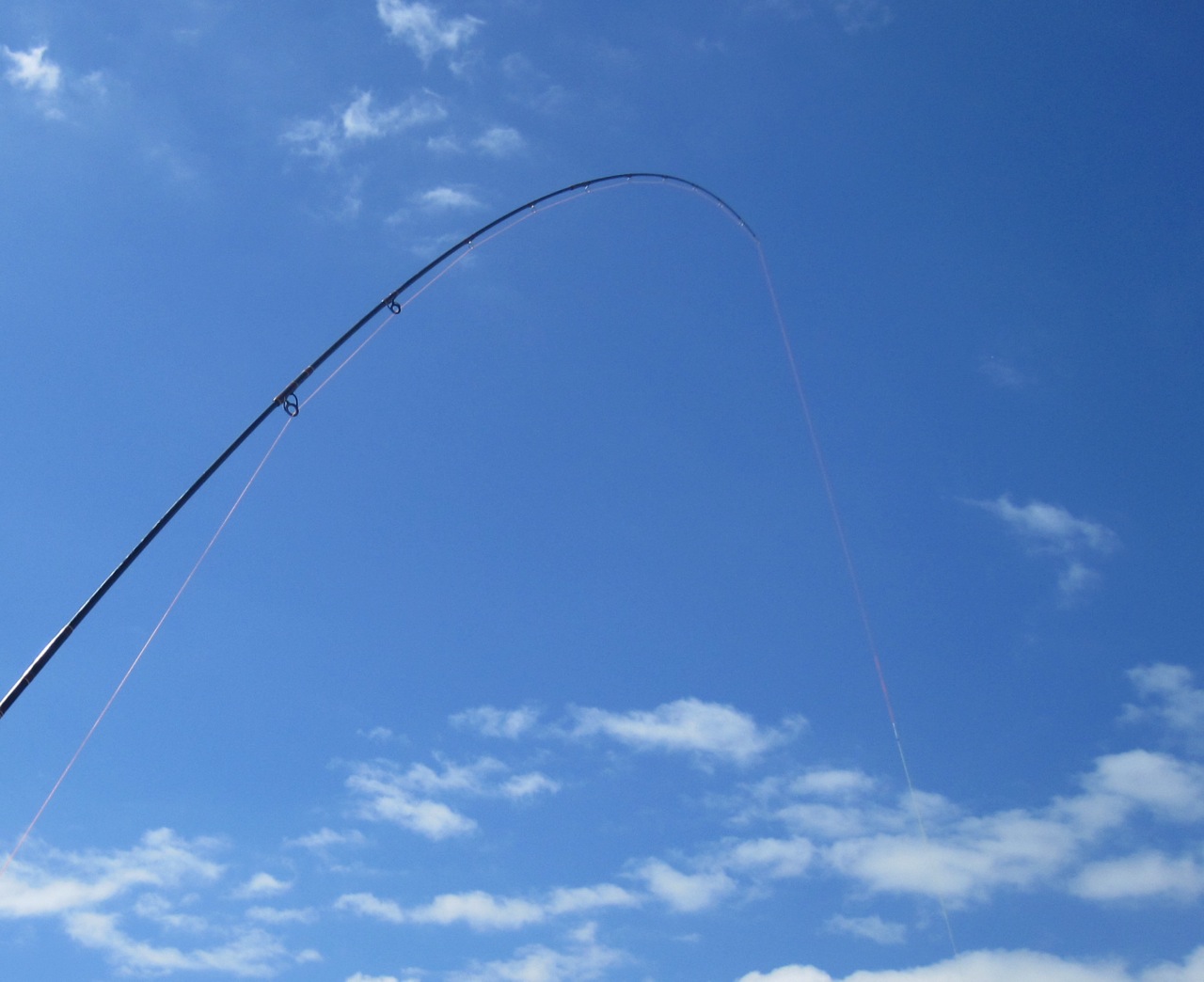
TROUTFISHING! At the moment I am sporadically fishing on the River Frome, the westernmost of the southern English chalk rivers. I’m after small wild brown trout, though the river also has sea trout and salmon. The weather has been cold, wet (hail!) and windy, and I have had roughly the same rate of success as with the bones. There have been experimental tugs at the fly. Times when, as I watch swallows skimming the water surface, a fish takes the fly and has spat it out by the time I have turned round to glimpse it dive below. And, as happened yesterday, it’s ‘Fish On’ – until it leaps clear of the water, effortlessly shakes out the (barbless) hook, and fins me a rude gesture as it plunges back. Plainly I need a brand new rod. And reel. And line. And jacket. And… It can’t possibly be operator error, can it? Anyway, this is all a world away (4,250 miles, in fact) from the Marls. It is pastoral fishing at its finest, even if  the fish come out on top. Practice makes perfect, as they say… out with the willows, bring on the mangroves

(All exaggerations are strictly for comic effect. Except, tragically, there aren’t really any…)

Unknown's avatar

BRIGHT & BEAUTIFUL: SUMMER BIRDS AT THE DELPHI CLUB, ABACO


BRIGHT & BEAUTIFUL: SUMMER BIRDS AT THE DELPHI CLUB, ABACO

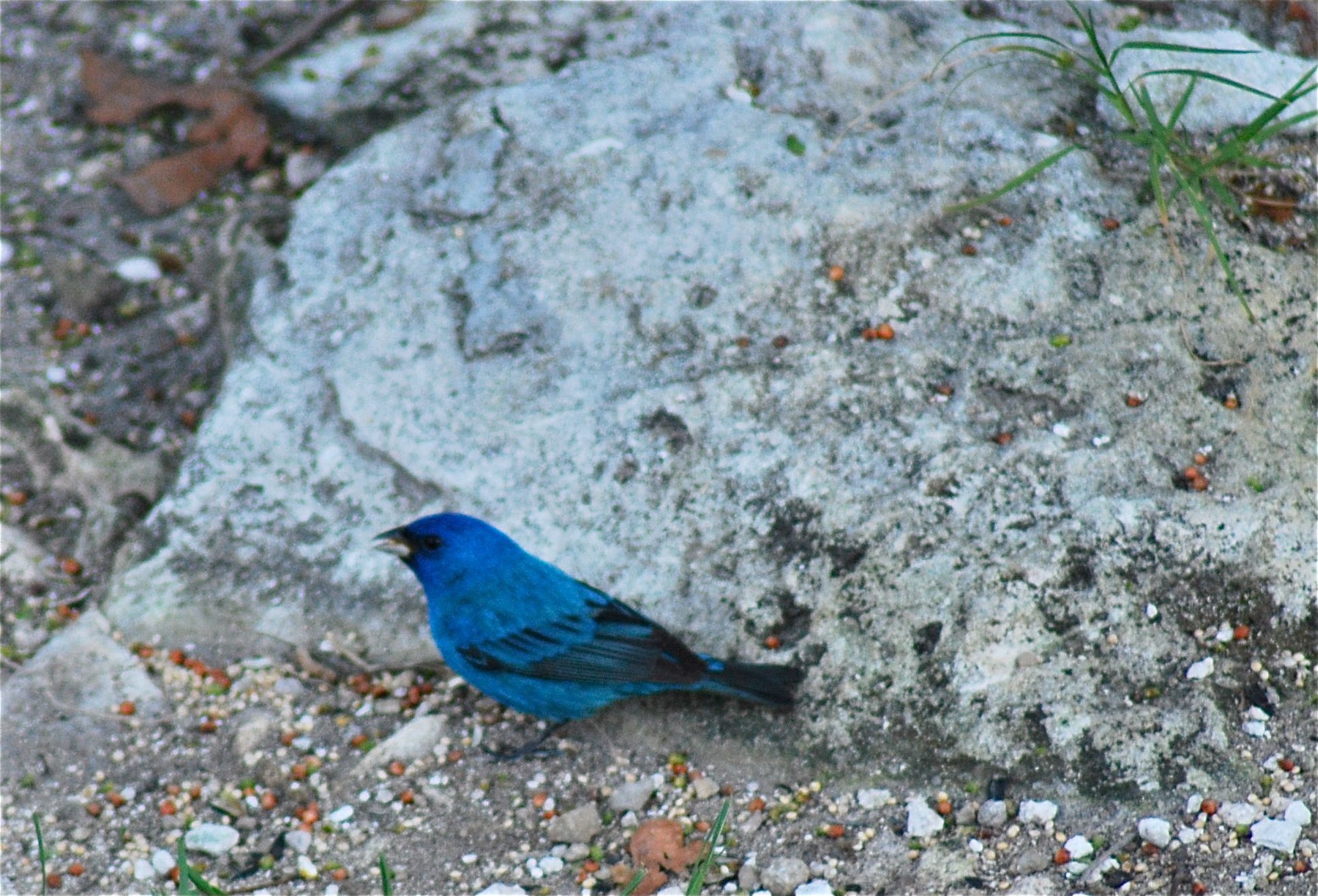
Peter Mantle reports that some colourful birds have arrived at Delphi to take advantage of the feeders and fresh water provided. Indigo Buntings have been around for a while, as they have been a little further north at BAHAMA PALM SHORES; and Rose-fronted / Red-breasted Grosbeaks (I’m not sure which is correct – the terms seem to be used interchangeably) have been seen all round the Club grounds for a week or more. They haven’t been recorded at Delphi before, so they have now been added to the ever-growing official list of the ‘Birds of Delphi’. How long before an elusive Kirtland’s Warbler puts in an appearance? And will anyone recognise it if it does..?

Unknown's avatar

HOOKED! A FANATICAL FISHERMAN’S WIFE TAKES TO THE BONEFISH FLATS


HOOKED! A FANATICAL FISHERMAN’S WIFE TAKES TO THE BONEFISH FLATS

I’m married to a Fanatical Fisherman. I have never shared his enthusiasm, though I have always loved the places where his fishing takes us. However the chance to spend two weeks at the Delphi Club Bahamas on Abaco every year has changed my perspective. This year I thought to myself (in non-fishing terminology, of course) ‘How about giving it a try?’

We waited for a day that was not windy and that would suit the FF’s own fishing convenience. One of the other guests was a kind and patient, not to say a highly eminent fisherperson and she gave me my first ever lesson on the lawn. With much encouragement I went forth. It was a lovely day with the sun beating down, so it was ‘sun block on and all parts covered’. 

Skiffs on their way to the bonefishing grounds

We set out in the skiff and after an exhilarating ride we glided to a stop in shallow water. I sat enchanted for a moment, taking in the incredible beauty of the place. Guide Tony provided suitable footwear for me (his son’s); and the relative merits of a ‘Crazy Charlie or a ‘Delphi Special’ were debated. Soon I was wading on the flats, rod in hand. This was my first-ever experience of my husband’s lifetime obsession…

Poling to a good place for wading

Within minutes Tony pointed to a shoal of bonefish… I cast (in a manner of speaking)! I struck! I hooked! I played! And… I lost!  

FISH ON!

But that was enough. From then on I was on a mission. I saw the ‘nervous water’ – great shoals of bonefish causing a subtle ripple 0n the surface of the water. When they turned and moved towards me I could hardly contain my excitement. I knew I had to tread carefully underfoot and to keep still as I cast. Silver flashes glinted in the sunlight as the fish started ‘tailing’.

Watch out for ‘Nervous Waters’

Meanwhile the sharks lazily circled us waiting for a chance to grab a prize before we could reel it in. I did hook another bone but it too managed to evade capture. And then suddenly the day was over. How did that happen? In the end I landed no fish but as the skiff sped back across the blue water I knew this was, for me, the start of something wholly absorbing. FF had better look to his laurels.

Lorna Jarman

(All illustrative photos by RH – Lorna was otherwise engaged!)

Unknown's avatar

PROTHONOTARY WARBLERS ON ABACO, BAHAMAS: WHAT’S IN A NAME?


PROTHONOTARY WARBLERS ON ABACO, BAHAMAS

Janene Roessler has kindly sent news of a sighting yesterday of a prothonotary warbler on a feeder at Bahama Palm Shores, Abaco [Later addition] Now, with thanks to Ann Capling, here is that very warbler on the feeder –  a fine photo considering it was taken indoors through glass.Apparently there hasn’t been one recorded there since 2007. I know of one seen further south on the island near the Delphi Club in April 2010 (see photo and caption below). I’ve never seen one myself. It seems fitting to celebrate the news with a post about these little birds…

This very pretty species of warbler Protonotaria citrea is the only member of its genus. The male birds are very colourful, with the females and juveniles being a bit duller. In flight, the underside of their tails are white at the base, and dark at the tip Photo Credit Craig Nash (Peregrine’s Blog) This fantastic photo was taken on the main drive of the Delphi Club, Abaco

STOP PRESS JULY 2018 this rather basic post was written in April 2012, in the earliest days of this blog when mistakes were (and undoubtedly still are) made. Tim Kalbach has just contacted me with the helpful observation “the Craig Nash photo is a Yellow Warbler, not a Prothonotary. Yellow – green tones in rump and tail don’t occur in Prothonotary; those areas would be blue-gray in color”. Which goes to show, I think, that after 6+ years I need to revisit this species in more detail and accuracy! Thanks for the comment, Tim.

These warblers are native to the eastern US where they breed, wintering further south in the West Indies and Central & South America. Their nesting arrangements are unusual: “It is the only eastern warbler that nests in natural or artificial cavities, sometimes using old downy woodpecker holes. The male often builds several incomplete, unused nests in his territory; the female builds the real nest” where she lays 3 – 7 eggs. So either the male is cleverly creating decoy nests away from the real nest; or maybe he is showing typically male behaviour in starting several home DIY projects at once and not getting round to finishing any of them…

Female Prothonotary Warbler (wiki)

I can never cope with those phonetic descriptions of bird calls… So many small birds are described as going ‘tseep’ or ‘tweep’ or ‘seeep’, yet in practice sound different from each other. So here, courtesy of the admirable Xeno-Canto and recordist Don Jones, is how they sound in real life

Listed as of ‘Least Concern’ (except in Canada, where they are ‘endangered’), the sad fact is that like so many species PNs are declining in numbers due to habitat loss. They are also bullied by other birds, in particular the brown-headed cowbird; and the house wren with which they compete for nest sites.

And the cumbersome name? Although at one time known by the helpful name ‘Golden Swamp Warbler’, the bird was renamed after senior Roman Catholic church officials called PROTONOTARII whose robes were (are?) supposedly golden. For full but quite dull details click on the green word back there. Bizarrely, the wiki-link doesn’t seem to confirm the goldenness of the robes at all. I think I’ll vote for a return to the simpler description…

Male Prothonotary Warbler (wiki)

POST SCRIPT: By complete coincidence, the National Audubon Society posted this lovely PN picture on its Facebook page this very day, with the caption Start your Monday morning off right with this cute Prothonotary Warbler peeking out of a heart shaped tree hole! Have you seen any of these birds yet? Photo by Mark Musselman” 
Unknown's avatar

WEST INDIAN WOODPECKERS: EXPERT ADVICE & DELPHI CLUB NEWS


WEST INDIAN WOODPECKERS: EXPERT ADVICE & DELPHI CLUB NEWS

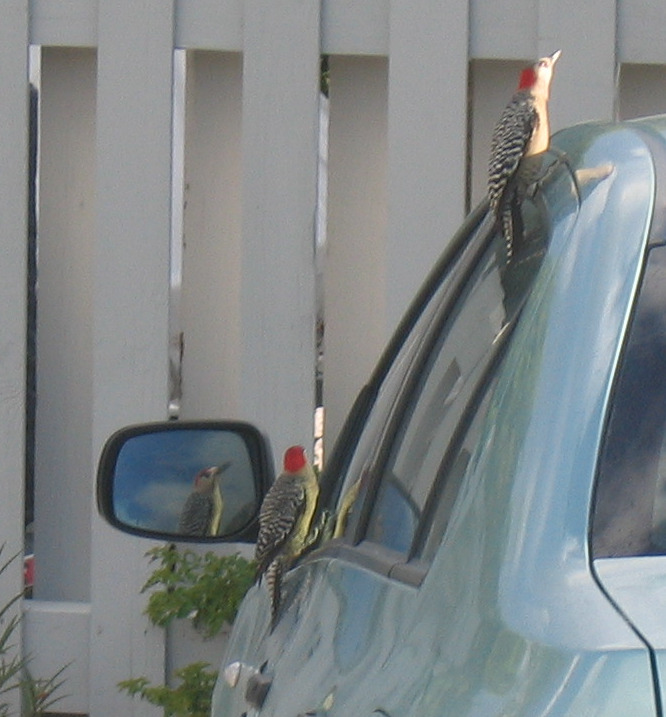
Here’s an article by Abaco Parrot expert Caroline Stahala. She also has in-depth knowledge of the habits of West Indian Woodpeckers, not least because her observations of the nesting in boxes provided for them last year at the DELPHI CLUB ABACO to discourage them from drilling into the building itself… See THE RELUCTANT WOODPECKER. Caroline’s article suggests helpful ways to co-exist with the ‘peckers. They are unlikely to change their endearing little, er, ‘pecker-dillos’, but there are ways and means to prevent them driving you crazy when they take a noisy liking to your eaves and guttering…

CLICK LINK===>>>LIVING WITH WEST INDIAN WOODPECKERS (Caroline Stahala) 

PETER MANTLE has just posted some news – including woodpecker and general wildlife news – from the DELPHI CLUB. After a detailed bonefishing report , he writes:

The best bonefish of recent weeks remains an 8-or-so-pounder. In a rare encounter with tarpon, 2 guests from England had several shots at a group of four fish in the twenty-to-thirty pound range, but had no time to switch over to proper tarpon flies and therefore, to use a cricketing expression, failed to trouble the scorer.

The gorgeous weather seems to have ennervated all the local wildlife, not just the parrots. Sightings of dolphins, turtles, eagle rays and ospreys in the Marls are now almost commonplace. Countless butterflies of different hues flit through the Club gardens. The woodpeckers are nesting again in the box just outside the office and the hummingbirds are constantly feeding just feet from my desk. It’s the time of year that dreams are made of.

The week was rounded off by your blogger-in-chief setting a new Club record – for the smallest ever bonefish, a brute of half a pound, taken off the Club beach on a Delphi Daddy after a titanic struggle lasting all of 30 seconds, with lemon shark looking on in expectation.

Unknown's avatar

1ST ANNIVERSARY “ESSENTIAL ABACO WILDLIFE FACTS” COLLECTION


Today is the 1st birthday of this blog, on the very day that the hit count passes 37,000. I started out last April, with faltering steps, into the mysterious world of the blog – setting it up, getting ‘stuff’ posted, finding out about birds, creatures, shells and much else from scratch. The learning curve has modified slightly and has a less vertiginous ascent. We are now mostly under control here at Rolling Harbour HQ… It’s been a year of Parrots, Whales, Hurricanes, Mars Probe Booster Rockets and other beachcombing mysteries. As year 2 begins, huge thanks to the many who have contributed so far, or generously given advice and (mainly) constructive criticism along the way, or simply taken the time to have a look. Especially if you came back for more…

Here to celebrate the day is the Official Rolling Harbour Collection of  some of the “Essential Facts” that have appeared in various posts over the previous year. It is, needless to say, essential reading. Amaze or alienate your friends with your esoteric knowledge of the length of an adult male manatee’s intestines…
ESSENTIAL HUMMINBIRD FACTS

  • The colourful throat of a (male) bird is known as a ‘gorget’
  • Hummingbirds are the only birds that can fly backwards
  • There are 320 species of hummingbird worldwide
  • The smallest is the bee hummingbird of Cuba, at 2″ for an adult
  • John Gould, the c19 ornithologist and artist, invented many of the names to reflect the varied and iridescent colours of the birds.
  • Hummingbird wings beat as much as 75 times per second
  • Hummingbirds have the highest metabolic rate of any warm-blooded creature; also the largest hearts (proportionately, obviously…)
  • There are many collective nouns, including a “bouquet”, “glittering”, “hover”, “shimmer”, and “tune” of hummingbirds
  • On the TCI, the Bahama Woodstar is known as ‘The God Bird’ 

10 MEMORABLE MORSELS OF MANATEE MINUTIAE

  • The 4 species of Sirenia are the West Indian, Amazonian and West African manatee; and the Asian / Pacific dugong. 
  • Fossil remains of Florida manatees date back 45 million years; their closest living relative is the elephant
  • Manatees are also known as Sea Cows. Some say sailors who’d been at sea for too long took them to be mermaids, a mistake I doubt they made twice…
  • They can weigh up to 1,300 lb and measure up to 13 feet. Females are larger than males. Baby manatees may weigh 65 lb. Adult intestines can reach 45 meters which would take Usain Bolt 4.31 seconds to run past (if straightened out, obviously)
  • Accurate population estimates seem to be impossible to obtain, varying by season and by year for no apparent reason. Overall,  the picture is of a declining population, with extinction likely without further protection
  • West Indian Manatees can move freely between extremes of salinity, and may be found in warm shallow coastal waters, in estuaries, or migrated into rivers to freshwater springs (as in Florida). They cannot survive below 15°C (60°F). They have a propensity to hang around the warm-water outflows of power stations
  • Manatees have some intelligence and demonstrate discrimination and task-learning similar to dolphins.Their eyelids close “in a circular manner”, though I can’t quite picture this. They have only 6 teeth in each jaw, which are replaced throughout their lives
  • They breed every other year. Gestation lasts 12 months, and it takes a further 12 to 18 months to wean the calf. A single calf is born. Apart from mothers with a calf or males showing off to females, manatees tend to be solitary creatures
  • They are herbivores, eating many plant species, such as mangrove leaves, turtle grass, and types of algae. An adult manatee can eat up to 10% of its body weight per day. They have been known to eat small amounts of fish from nets
  • Half a manatee’s day is spent sleeping in the water. The rest of the time they graze in shallow waters. They swim at 3 to 5 mph, faster in short bursts. They may live up to 60 years (surprisingly, given their punishing daily schedule)
  • The oldest manatee in captivity is Snooty, at the South Florida Museum. He was born at the Miami Seaquarium on July 21, 1948 and came to the South Florida Museum in Bradenton, Florida in 1949

10 ESSENTIAL YET GRISLY MUREX FACTS

  • Murex are highly carnivorous with rasping teeth, and drilling equipment for boring into the shells of their prey
  • A determined Murex may take up to 5 days to drill into its prey
  • Murex also use their foot to smother prey, or to crush it by using suction power
  • They eat clams by hoovering them up with their foot and smashing them on rocks to get at the occupant
  • They happily eat sea-floor carrion and sea-kill
  • Murex act in packs to carry out raids on unsuspecting beds of clams, which they feast on avidly
  • They are sexually wanton. Females store sperm from different males for many months, eventually producing embryos with different dads (I’m not making this up. I would like to have done so)
  • Cannibalism occurs. The kids are equally prone to extreme delinquency and are happy to eat each other when peckish
  • Some species of murex secrete a fluid that is believed to be used to drug their prey into paralysis
  • That same fluid (Murex / Mucus) is also used as a dye, ‘Tyrian’ or ‘Royal’ Purple, which can be ‘milked’ from a living murex (the Aztecs & Phoenicians did this). I’ll pass on that…
POTCAKE POT POURRI
  • Potcakes are a mixed-breed dog of the Bahamas & TCI, named after the layer of dried rice and peas in  the bottom of cooking pots, traditionally fed to stray dogs
  • Appearance and colouring varies considerably from island to island. Mostly commonly they are (mainly) brown, have smooth coats, cocked ears, and long faces. Adults typically weigh from 45 to 50 pounds (20 to 23 kg)
  • Potcakes have a wandering tendency. There are many strays on every island – often considered a nuisance. Volunteer organizations re-home strays,  and offer free spaying and neutering
  • Potcakes are often used for hunting hogs. Some are trained to locate fish through  scent on the water and the cries of feeding sea birds
  • Potcakes may originate from 3 canine types: (1) dogs brought by the Arawak  to the Bahamas; (2) terriers protecting supplies from rodents on ships to the Bahamas; (3) Dogs that arrived with Loyalists during the Revolutionary War
  • In the 1970s the potcake dog was officially recognized in The Bahamas as the “Royal Bahamian Potcake”. In February 2011, they were accepted by the Bahamas Kennel Club in the category ‘Group 9 Non-Registered’
  • A potcake dog named Amigo has been the mascot of the Humane Society of Grand Bahama. He ‘served as an Ambassador of Hope for homeless animals’ until his death in 2007, and appeared on TV
  • Potcakes have featured in a set of special-issue Bahamas stamps (as have Bahama Swallows)

10 MEMORABLE FACTS ABOUT LIGNUM VITAE

  • Traditionally, it was used for making British Police Truncheons (now made of soft fluffy pink fabric to reflect new caring policing methods)
  • Its physical qualities made it widely used in shipbuilding (though presumably not the whole ship, which would sink instantly)
  • Cabinet-makers, stone-carvers and gem-cutters all use the wood in their crafts
  • LV has many engineering uses. The wood is self-lubricating and is ideal for bearings. The 1st nuclear submarine had some of these
  • The world-renowned  UK fishing rod maker Hardy’s made a famous ‘Greenheart’ rod
  • LV has medical uses, including for arthritis; and its bark / shavings allegedly make a nice cup of “tea”… (Any evidence of this?)
  • A 1920’s calypso song “LignumVitae” was sensationally saucy for its allusions to the bark tea’s prophylactic quality in addition to exploiting the phallic connotations
  • Gabriel Garcia Márquez incorporates uses for the wood in two of his novels (neither of which I have read. Oh dear. The guilt)
  • Pete Seeger, singer / songwriter, made the neck of his banjo from LV
  • The wood is also connected to mauve tiling, vitamin glue, anti-evil gum and the ‘vigilant emu’ by anagrammatic chance

SCOTCH BONNET FACTS

  • It takes approximately six years for a Scotch bonnet to mature
  • The shells grows 2 – 4 ins long (5 – 10 cm), showing distinct growth stages
  • Scotch bonnets live on sand, usually in fairly shallow water (but see below)
  • The more a Scotch bonnet eats the more elaborate its shell, the glossier its sheen & the brighter its colours (research suggests this doesn’t work for humans)
  • Divers frequently find Scotch bonnets at depths of 50 – 150 feet (15 to 46 m). Specimens have been found in depths up to 308 ft (94 m)
  • Shipwrecks provide a good habitat for this species
  • Crabs are its main predators, crushing the shell to get at the occupant. Since the snails’ main defence mechanism is to withdraw into their shells, they urgently need to evolve a new tactic
  • The empty shell of this sea species is often used by hermit crabs
  • In 1965 the state of North Carolina made the Scotch bonnet its official state shell, in honor of the Scottish settlers who founded the state

GENERAL CLASSIFICATION OF SEA GLASS COLOUR OCCURRENCE

Most common (1 in every 1 – 25 pieces found): clear, Kelly (‘Irish’) green, brown, blue, purple

Less common (1 in every 25 – 100 pieces found): jade, amber, lime green, forest green, ice / soft blue

Uncommon (1 in every 50 – 100 pieces found): other green shades

Very uncommon 1 in every 200 – 1000 pieces found): citron, opaque white, cobalt, cornflower blue and aqua

Extremely rare (1 in every 1000 – 10,000 pieces found): grey, pink, teal, black, yellow, turquoise, red

Rarest of all (1 in every 10,000+ pieces found): orange

Unknown's avatar

HUMMINGBIRD MOTHS AT THE DELPHI CLUB, ABACO


HUMMINGBIRD MOTHS Hemaris Thysbe

Apart from the plentiful bird species to found all around the Delphi Club, there’s the strange half-way house between insect and bird that is the HUMMINGBIRD MOTH Hemaris Thysbe, also known as Hummingbird Clearwings. These can be seen – and heard – especially at dusk hovering around the flowers in the garden, sipping nectar. In the half-light they are sometimes confused for tiny birds. I have seen them most clearly when they are busy among the flowers in the beds on either side of the lit main staircase. So far I have not managed to get a reasonable photo of one – a situation I hope to put right in May. Meanwhile, I have found some wonderful pictures, not from Abaco, on a website related to a Research Program at Miami University . They were taken by Dr Hays Cummins, to whom thanks for use permission. These and other outstanding images can be found at his comprehensive website, for which CLICK===>>> HERE  

This slideshow requires JavaScript.

Unknown's avatar

ENDEMIC BAHAMA SWALLOW: FROM ‘THREATENED’ TO ‘ENDANGERED’ RED LISTING


THE BAHAMA SWALLOW: A SMALL ENDEMIC BIRD WITH BIG SURVIVAL PROBLEMS

The IUCN (International Union for Conservation of Nature) RED LIST status of the endemic Bahama Swallow Tachycineta cyaneoviridis has been upgraded from ‘Threatened’ to ‘Endangered’ because its small declining population faces a number of threats that are likely to worsen in the future. In particular, renewed logging activity and widespread property development could result in a further decline in breeding habitat.

The excellent photo above is the ‘Wikimedia poster bird’, but was in fact taken by prolific bird photographer Craig Nash in the main driveway of the Delphi Club, Abaco in 2010. He blogs as Peregrine’s Blog – see RECOMMENDED LINKS in right sidebar

This swallow species breeds only on 4 Bahamas islands: Grand Bahama, Abaco and Andros; and on New Providence, where a few birds are seen each breeding season, suggesting a ‘relict’ population there. The map below suggests that confirmed  numbers are so few that New Providence sadly no longer counts as an ‘official’ breeding island.

The Bahama Swallow winters throughout the Bahamas and has been recorded as far as eastern Cuba, but in general the full wintering range is little known. It is a rare vagrant elsewhere during migration, including Florida. The preferred habitat is in the pine forests, where they nest in old woodpecker holes in Caribbean Pines using pine needles, Casuarina twigs, and grass to make the nest which they line with feathers. They typically lay 3 eggs. Incubation is 15 days and the fledging period is around 22 days.

[audio http://www.xeno-canto.org/sounds/uploaded/MKUJNSTVEZ/Swallow_Bahama%20(calls)_JF_Abaco%20Island_Bahamas_April%202008.mp3]

Sound credit: Jesse Fagan / Xeno-Canto

Besides loss of habitat due to human intervention, other factors in population decline are thought to relate to hurricanes and forest fires. The Red List proposals for conservation of the Bahamas Swallow state: “Survey all suitable breeding habitat and assess the status of the species and its habitat; Gather empirical evidence to clarify population trends as a priority; Assess winter distribution and habitat requirements; Study the impacts of fire suppression on the species; Maintain natural nest-sites through a pine snag management programme, and potentially fire management; Assess and monitor the success of the nest box scheme; Protect remaining forest in the Bahamas and minimise the area lost to housing development and logging; Assess the impact of starling and house sparrows on the population and develop appropriate measures to reduce the threat”

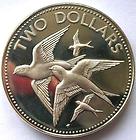
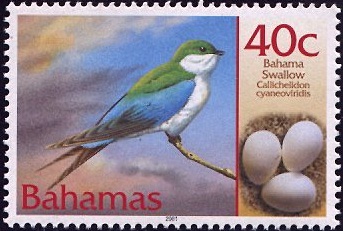
The Bahama Swallow has joined other notable bahamian wildlife species in receiving the accolade of a stamp and a coin:


Unknown's avatar

ABACO PARROT NEWS FROM THE DELPHI CLUB


ABACO PARROT NEWS FROM THE DELPHI CLUB, ABACO
Caroline Stahala has emailed me with some excellent parrot news of daily sightings around the Club and in the coppice along the drives. It sounds as though, if we are very lucky, Caroline might take us to the nest sites when we are at Delphi in May…
TWO ABACO PARROTS ON THE DEAD TREE BY THE DELPHI FRONT DRIVE
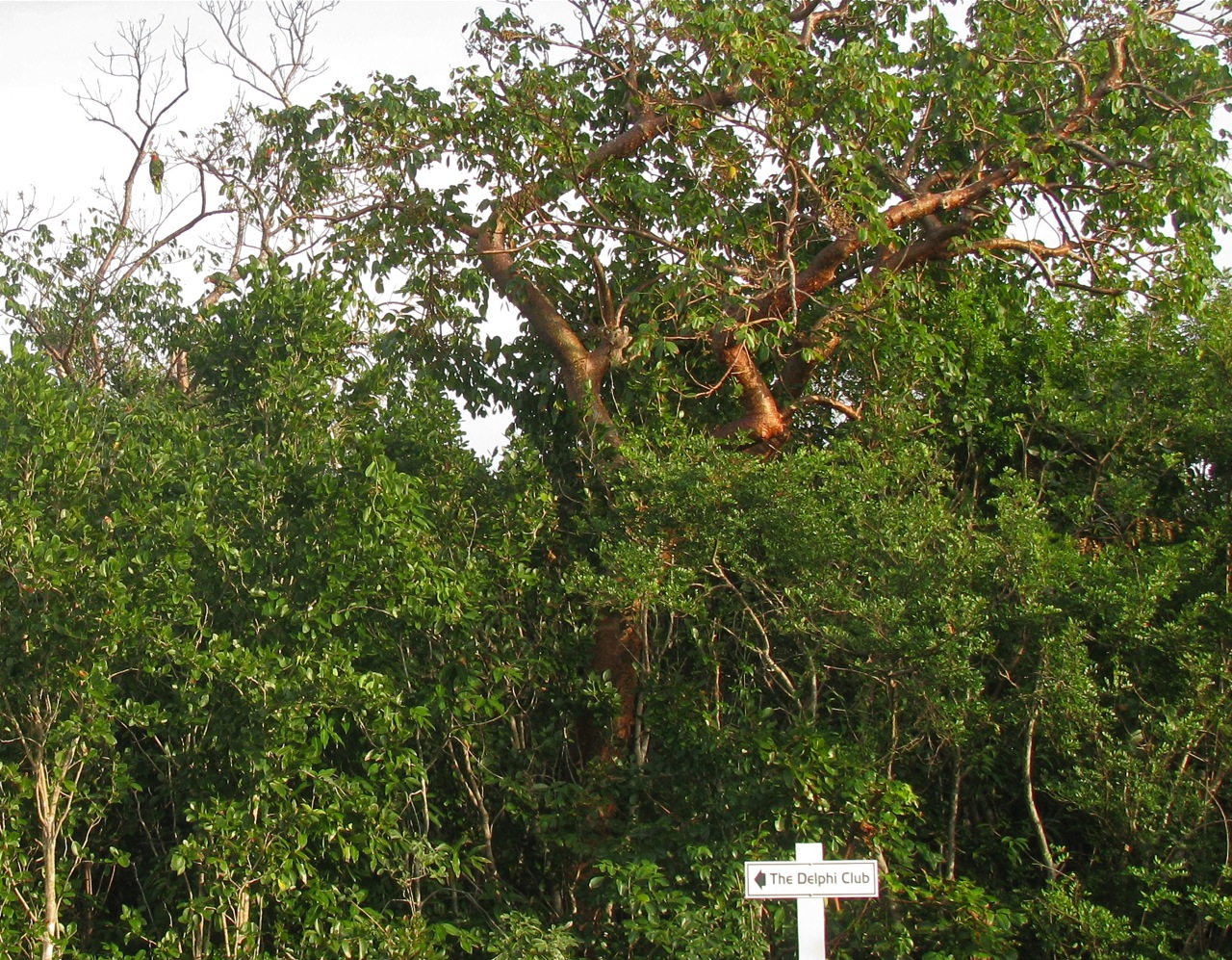
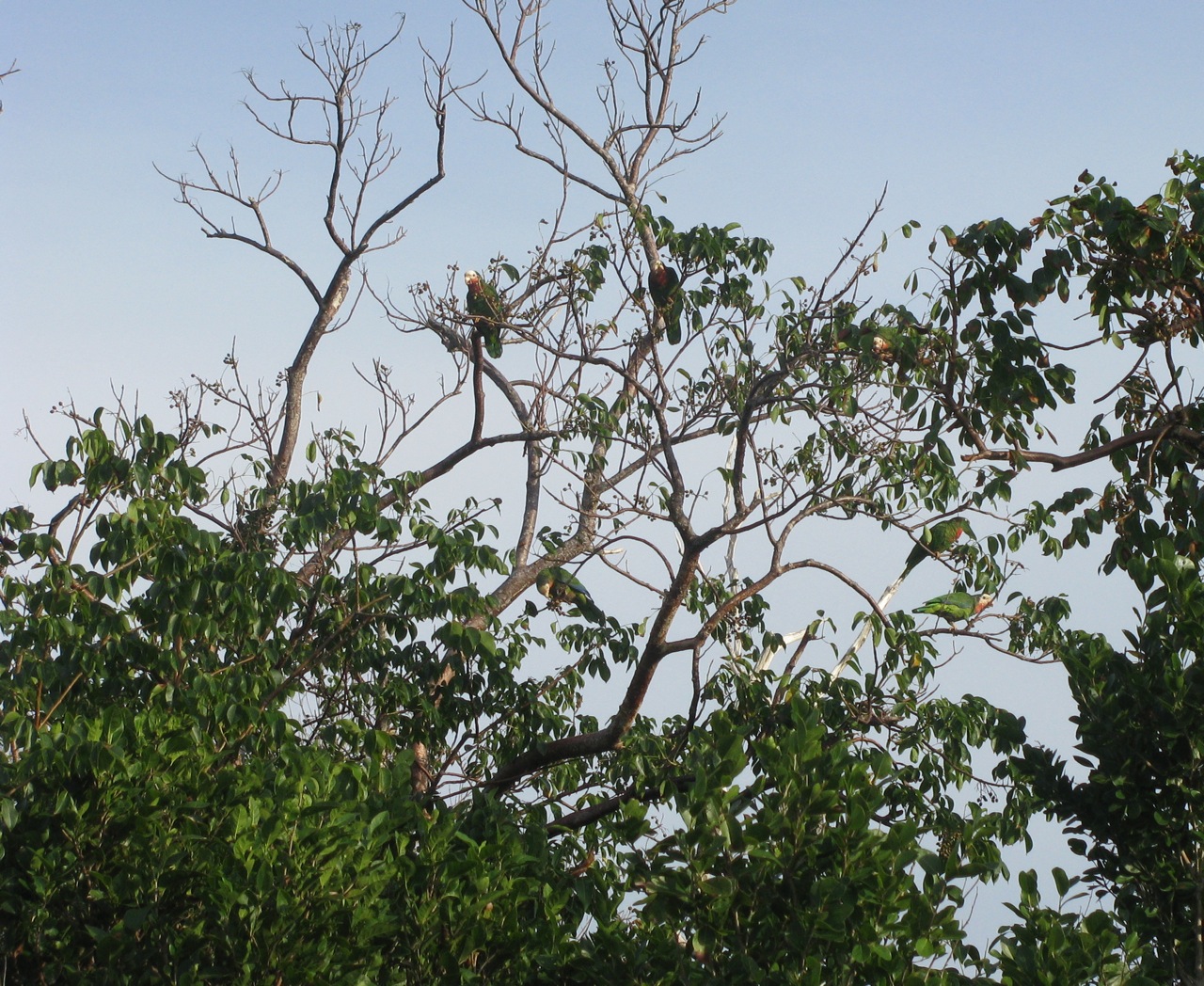
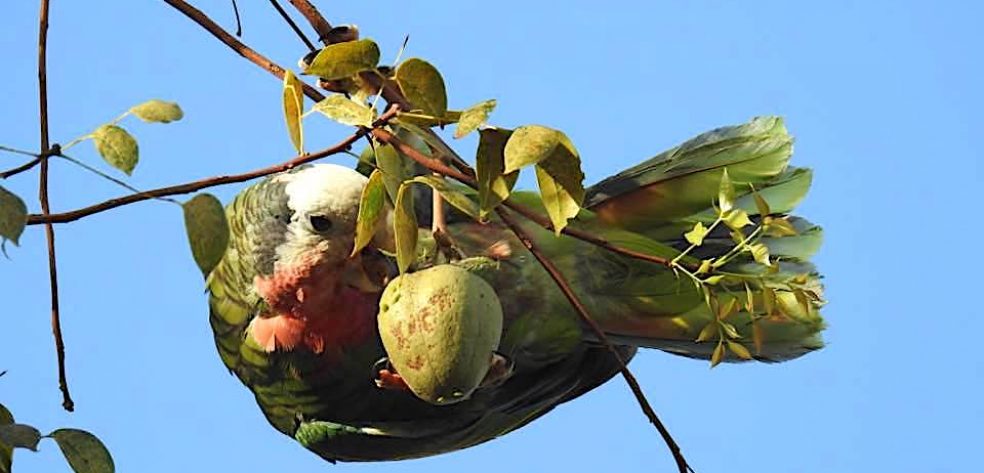
“As far as current parrot news.  Well, they are all around the lodge at the moment.  I can hear the parrots each day right on cue at 7:30 in the morning and then again just after 4pm.  They have been foraging in the fruiting hardwoods in the area, especially the Gumbo Limbo (Bursera simaruba).  I am attaching a picture of a small flock I saw right on the drive in front of the house. A couple of pictures are close up of the parrots and the ones with the Delphi signs do have parrots in them, see if you can find them. They have even been spotted just behind the pool.  Let’s hope they decide to make this a habit. I am currently working on getting the summer field season organized… writing reports and grant applications is the necessary evil in order to have a summer field season”
PARROTS IN THE COPPICE BY THE DELPHI DRIVE (TOP LEFT)
A CLOSE-UP OF THE FLOCK – THERE ARE 6 VISIBLE (ONE IS PEEPING)
A FLOCK OF ABACO PARROTS
[audio http://www.xeno-canto.org/sounds/uploaded/XUPTAZCQVD/LS100545-CubanParrot-110212_1503.mp3]
Credit: Laura Gooch @ Xeno-Canto
Unknown's avatar

WOODPECKER COUSINS FROM ABACO & ACROSS THE POND


WEST INDIAN AND GREAT SPOTTED – WOODPECKER COUSINS

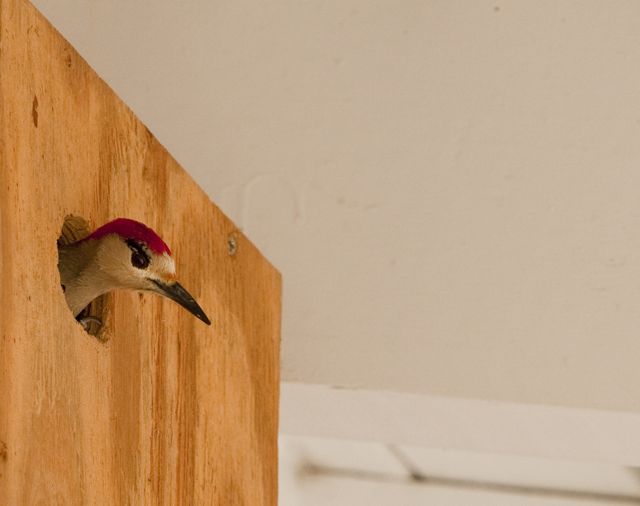
The starting point / excuse for this post is the nest box for West Indian woodpeckers under the eaves of the Delphi Club verandah. Put ‘woodpecker’ into the home page SEARCH box and you will find various posts about last season’s epic: the reluctance to use the box; the gradual acceptance; the summer nesting and breeding; the heroic stand of the male woodpecker who guarded the box throughout the rampage of Hurricane Irene

Happy to roost here – deeply suspicious of the new wooden structure over there

(Later) No place like Home(©Peter Wesley Brown)

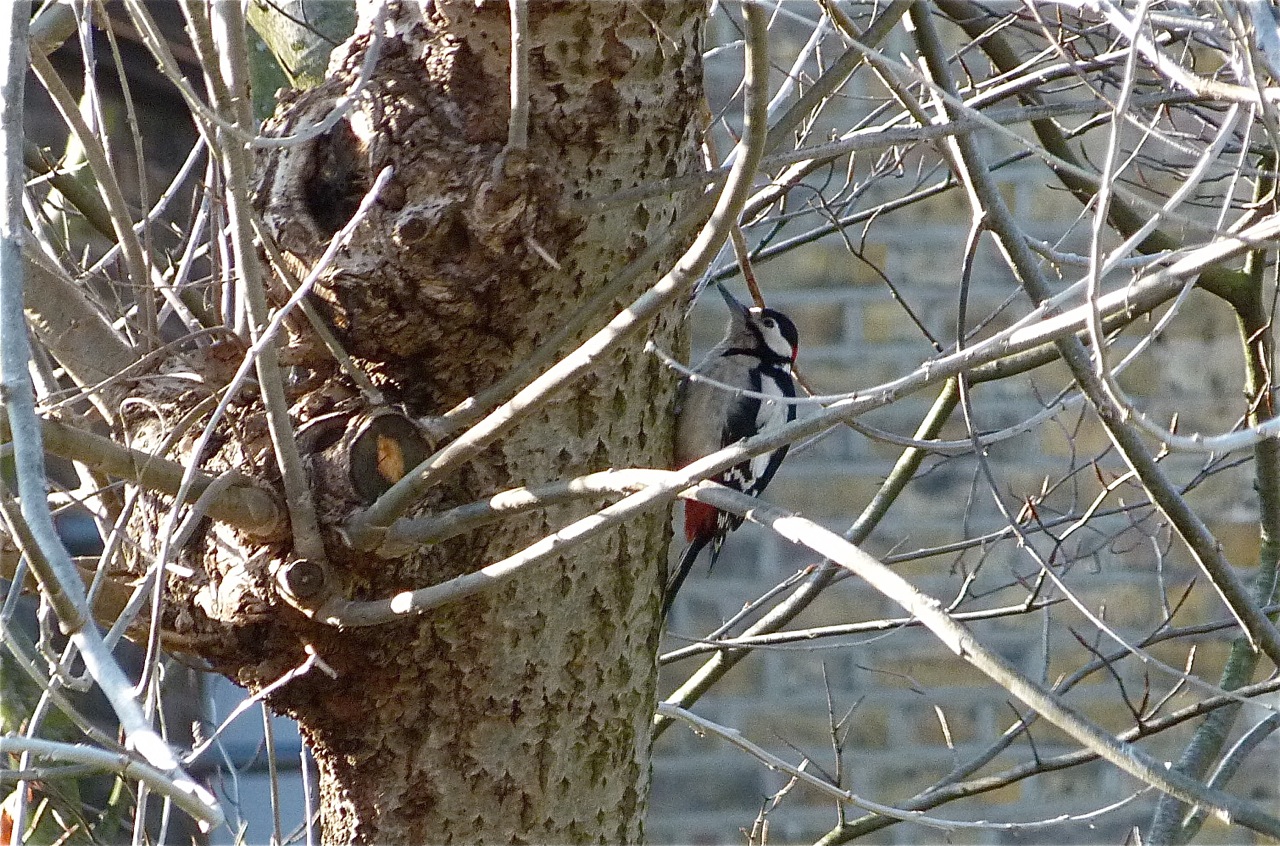
For some years, great spotted woodpeckers have drilled away at the grey poplar tree at the end of our small London garden. A male gouged out a number of exploratory holes near the top, strewing a carpet of wood chips onto the grass below. One year he attracted a mate, eggs were laid and hatched, a huge amount of chattering and scolding ensued – quite annoying at times in persistence and volume. One weekend we were away and returned to… silence. The fledgling woodpeckers had had their flying lessons and left for good. We missed them.

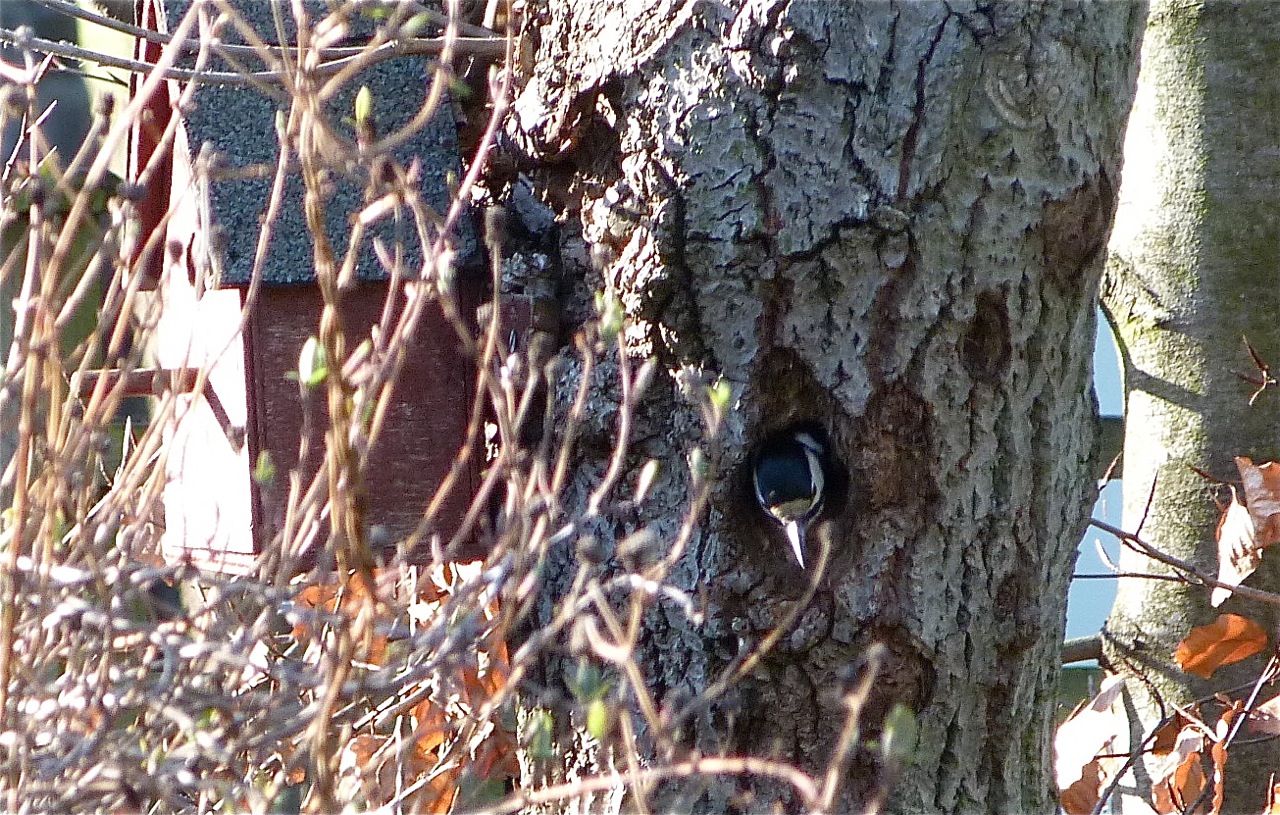
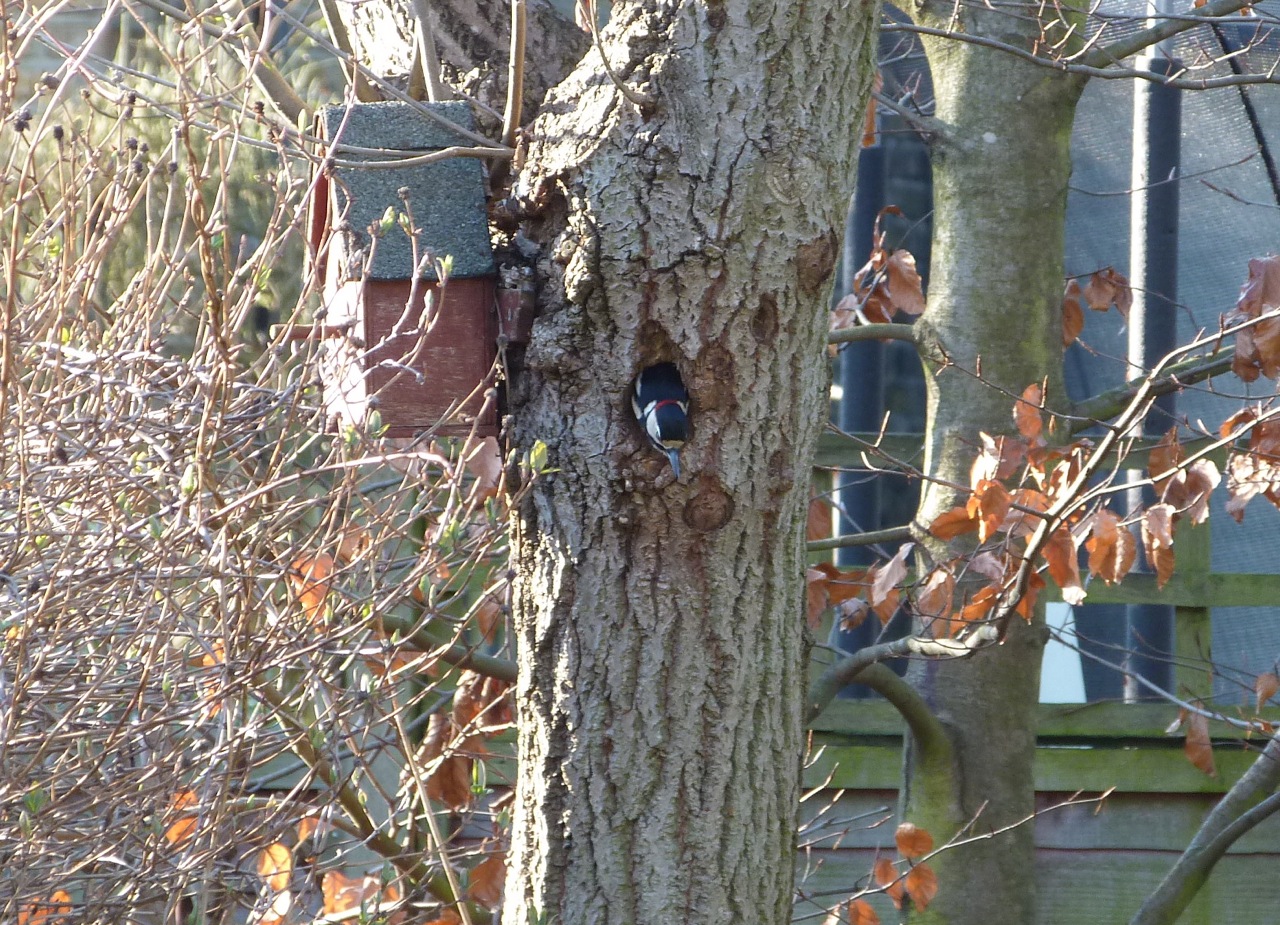
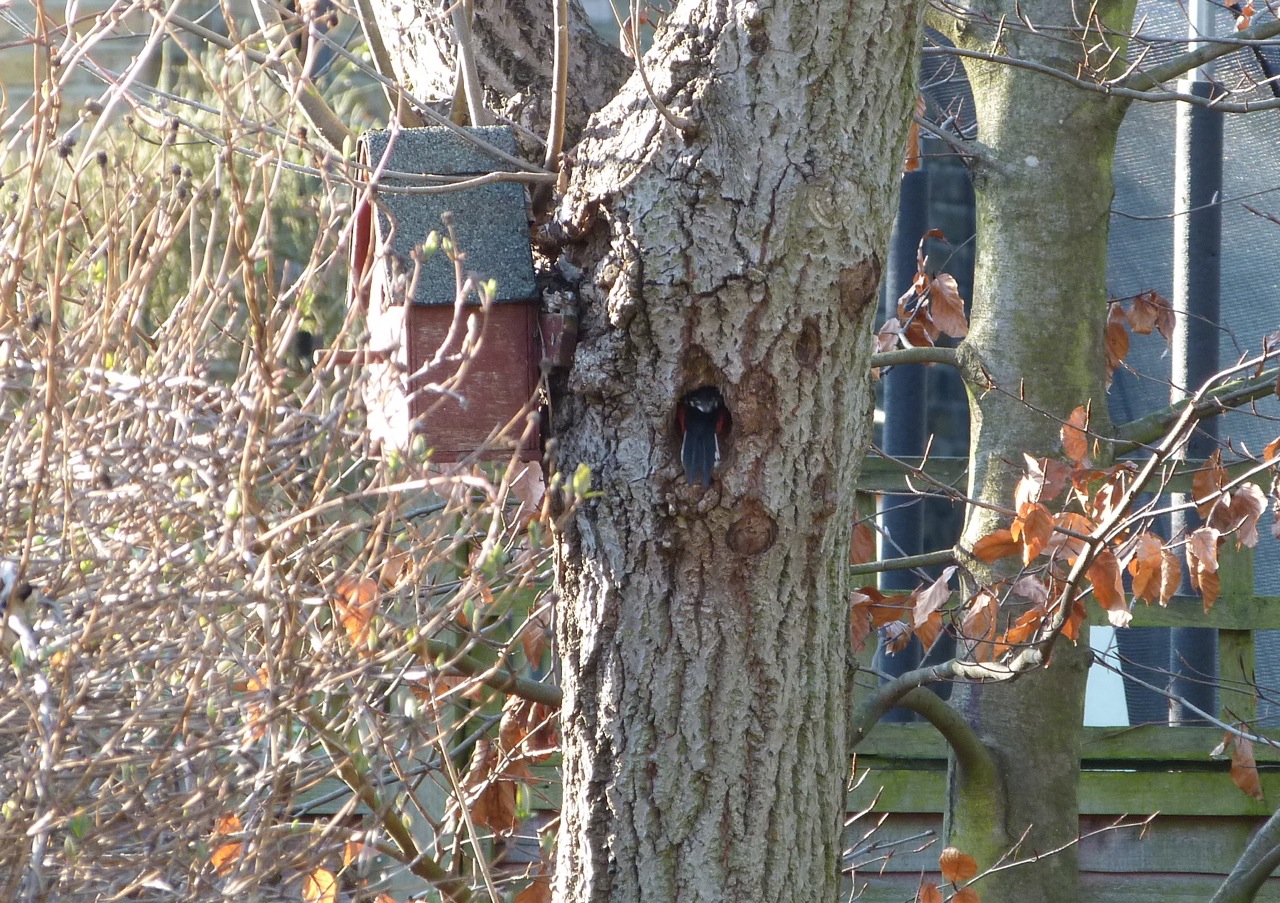
Since then, the male cleaned out the hole each Spring and drilled a few spare holes for practice, but despite his impressive real estate portfolio, he didn’t attract a mate. He made another, lower hole. No luck. Until this year. In January he brought a new bird home and together they mucked out the hole and settled in – about 2 months early, and with snow on the way. In the absence of current news of the West Indian woodpeckers and their nest at the Delphi Club, here are a few pictures of domestic bliss 4250 miles away… Click images to enlarge

A cosy home – hope the neighbours are nice 

Time to go and get a take-out…

…and bring it home for the wife

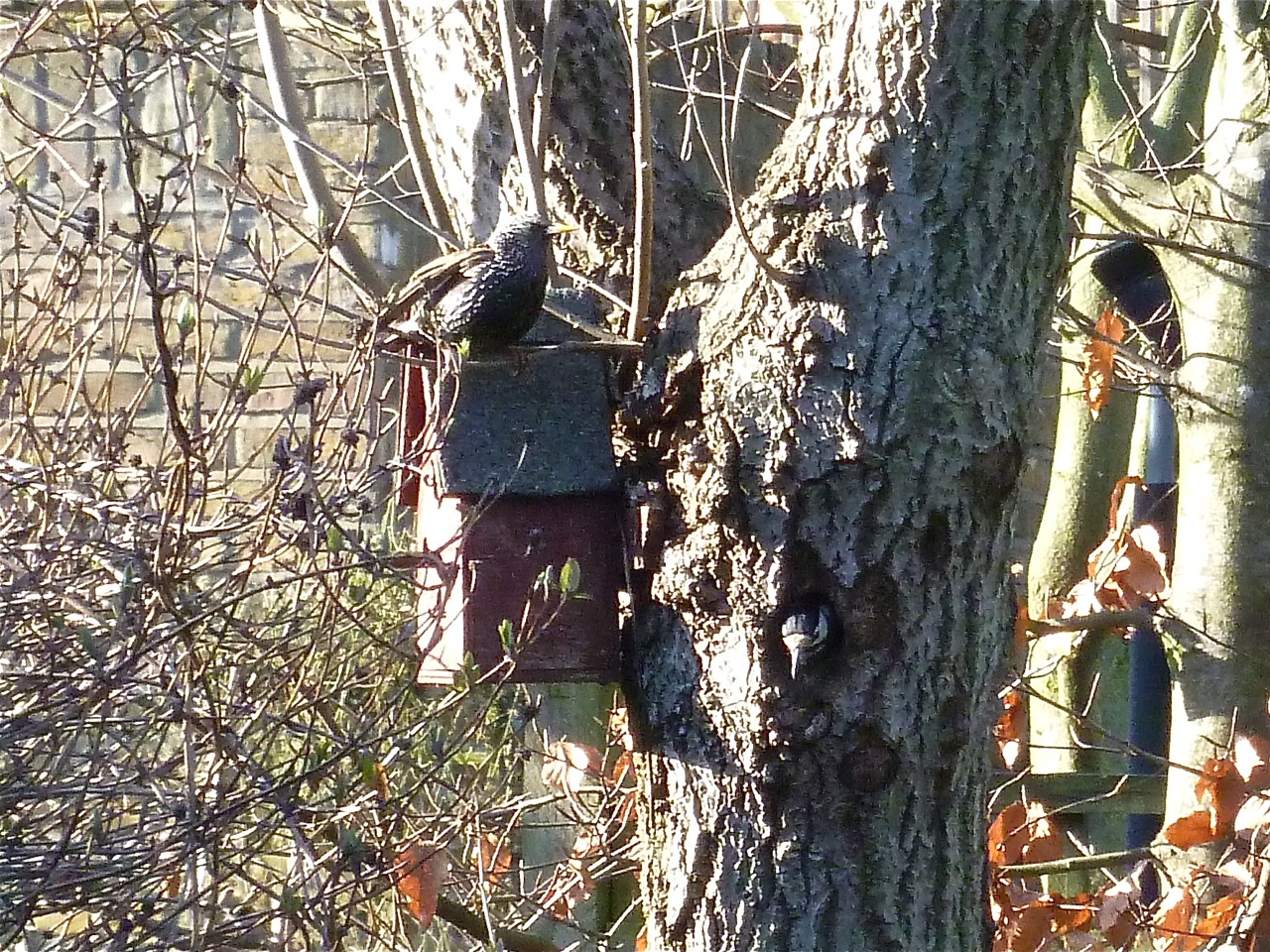
An act of gross provocation by a starling.  I predict trouble. News update soon

I can’t make out if the photo below is just a horrendously bad photo taken with a cheap camera, a fixed shutter speed, and cold shaking hands; or a powerful image of a beautiful bird artistically captured in full flight, the type of action shot that bird photographers strive for years to achieve (Mrs RH has a view on this). If the former, apologies. If the latter (highly unlikely), my professional tip is to use a tiny point ‘n’ shoot into the sun while moving around quite a bit. Whichever, I’ve awarded it a ‘cameo’ format to emphasise the essential artistry of the shot

Unknown's avatar

KING VENUS CLAMS & CRAB SHELLS (NO SPACE DEBRIS): ABACO BEACHCOMBING WITH KASIA


ANOTHER STROLL ALONG THE SHORE WITH KASIA

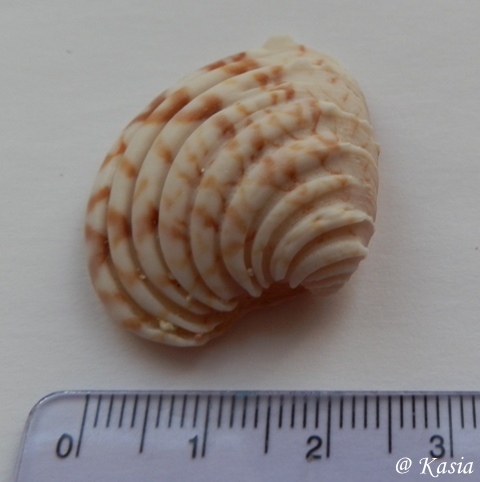
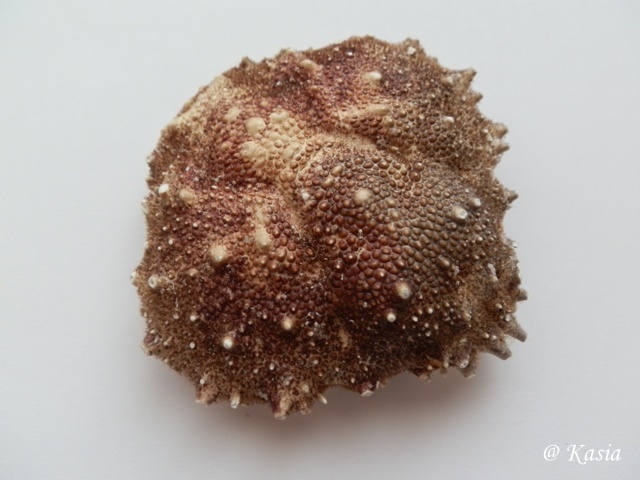
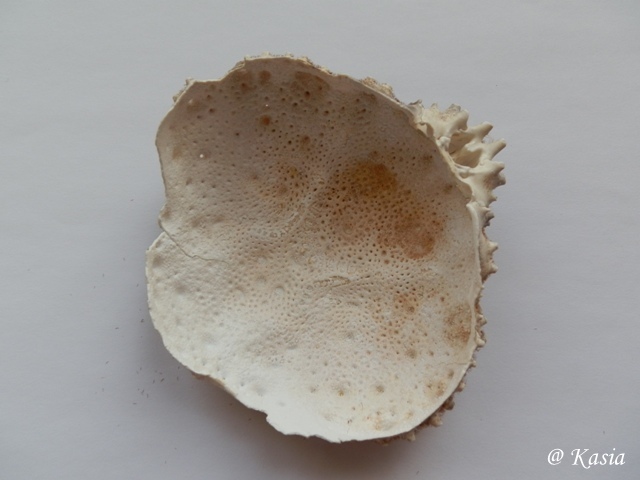
After all the recent excitement – well I was excited, anyway – involving Mars Mission space rocket debris washed up on the Delphi Club Beach CLICK MARS ROVER it’s a gentle touchdown back onto a sandy beach for some more of Kasia’s finds. First, a shell which I believe (tempting fate) I have correctly ID’d for once. Then a half crab shell, at a guess a spider crab’s roof. 

KING VENUS CLAM Verenidae – Chione Paphia

These bivalve molluscs seem to be inoffensive, and to lead rather dull lives: so far all I have discovered is that “they live buried in sand at depths of 1 – 20 fathoms” I shall investigate further & report back – there must be some small creature they molest or upset in some way…

CRAB SHELL, FORMER HOME TO A SPIDER CRAB
Unknown's avatar

BEACHCOMBING ‘CURIOSITY’ ON ABACO: OUT OF THIS WORLD TO THE RED PLANET


Sandy's Mystery Object

More news about the the space rocket debris washed up on the Delphi Club beach, Abaco. The booster rocket fairing found by Sandy fortunately had a serial number on it. Various inquiries have been made and a definitive explanation of the item has now been given by the NTSB. It turns out that the fairing was not, after all, from the Ariane 5 launch in French Guyana. More exciting than that – it comes from a Mars Program launch to put the Space Rover Curiosity on Mars. There’s an excellent Wikipedia article on the mission to be found at WIKIMARS

NTSB - An Independent Federal AgencyBob Swaim at the NTSB has emailed Sandy to say   “The serial number of the fairing fragment is from a part that was on a Delta V [sic – it was in fact an Atlas V, see comments] rocket launch of November 26, 2011. In August, a new car-sized rover will touch down on Mars and you’ll have something from the mission!”  He has kindly provided a link to the launch – see image below and direct link HERE  He has also given a direct link to the NASA MARS PROGRAM site from which I have taken the screen clip below. You will see an image of the Mars Rover Curiosity, and the time countdown until touch-down at the exact moment I took the shot…

I contacted Bill Ailor, Principal Scientist/Engineer, Center for Orbital and Reentry Debris Studies, The Aerospace Corporation AERO CORP thinking a booster fairing might be of interest for their rocket debris database. He writes

Thanks for the notification (and for your excellent web page – looks like a wonderful spot). On the website, we catalog debris that has reentered from orbit and don’t include payload fairings, solid and first stage rocket boosters, and other “range” debris, since these are suborbital and the launch is designed so that the debris impacts is in known safe areas.  That debris can sometimes float outside of the safe area and wash ashore.I should mention that we recently reentered a small device that might one day float to your beach.  I’ve attached a description.  Let us know if you see that one

Although the device he mentions may have in fact have landed a long distance away (the South Pacific even), best keep an eye out for this…REBR Fact Sheet   By a strange coincidence in a huge world, the Aerospace Database shows that in 1965 reentry debris was recovered from a beach on Abaco:

In early 1965 an object having the appearance of a space fragment was reported washed ashore on Abaco Island in the Bahamas Possibly from the Atlas-Mariner I booster which was destroyed by the range safety officer shortly after launch on 22 July 1962, and landed in the designated ocean impact area

Apologies if I have got sidetracked from normal beachcombing duties – shells and stuff – but wildlife blogging doesn’t get more exciting than this – well, unless they find a colony of Abaco parrots on Mars…

Unknown's avatar

‘SO LONG, ARIANE’: FROM ROCKS TO ROCKETS ON THE DELPHI CLUB BEACH, ABACO


STOP PRESS Rocket part now positively ID’d by serial number – and it’s not from Ariane 5. More exciting – it’s from the Mars Program launch of the the Mars Rover ‘Curiosity’. See latest post at  CLICK IMAGE

‘SO LONG, ARIANE’

52 meters / 170 feet, to be precise. The space rocket Ariane 5 is most likely source of Sandy’s mystery object washed up on the Delphi Club beach. See recent post ===>>> SANDY’S MYSTERY OBJECT  for a full explanation. And  here are 2 useful comparative pictures (plus apologies to Leonard Cohen for a feeble pun)


Unknown's avatar

ABACO BEACHCOMBING: MYSTERY OBJECT from the DELPHI CLUB BEACH


STOP PRESS Rocket part now positively ID’d by serial number – and it’s not from Ariane 5. More exciting – it’s from the Mars Program launch of the the Mars Rover ‘Curioisty’. See latest post at  CLICK IMAGE       

 Kasia’s mystery beachcombing item, posted yesterday, was solved within the day – basically a rock-like accretion of large tubular wormy molluscs of a somewhat unattractive sort. Sandy Walker has now sent me a photo of a baffling object he has found on the club beach to test your ingenuity, or patience. He’s sent it to the NTSB (air-crash investigation etc) for their view. For sure, it isn’t wildlife: however any nautical, aero-nautical, NASA-based or ‘strange white cone’ experts out there might like to contribute an opinion via the COMMENT box or email rollingharbour.delphiATgmail.com (spam guard: please convert AT to @)

My contenders, from most to least exciting (1) Rocket nose-cone. But no re-entry scorch marks – maybe it never got that far (2) Light aeroplane engine cowling or whatever the term is (3) Front end of a canoe-type vessel, with a standard Avery 5-slot for’ard rowlock stanchion clip (or maybe a bit of storm-tossed catamaran – Mrs rh)

STOP PRESS Jan 28 Peter Mantle’s latest bulletin from the Delphi Club… and I get to award myself the first prize of a Kalik beer for wild guess (1) above!

Fly me to the moon….

January 28th: Beachcombing at Rolling Harbour produces a great miscellany of shells, corals, beads, fishing floats and the occasional baseball. But a recent find by Sandy had everyone in a panic – a 12-foot chunk of superstructure that looked for all the world like a large piece of aeroplane. Sandy immediately contacted the US National Transportation Safety Board, who initially confirmed a strong resemblance to the tail section of an Airbus A320 passenger jet but wanted to run further investigations of the part numbers. All rather alarming.

But Sandy has just heard again from the NTSB, who now believe it may be part of the Ariane V space rocket, launched from French Guyana. Airbus say it’s not from one of their planes and suggest that it’s probably the nose fairing off an Ariane V booster. Looking at photos and drawings of the booster, this may be right and this would also fit for the eastern exposure of the beach where the part was found. You can see the booster here: http://esamultimedia.esa.int/docs/ATV/infokit/english/05_ATVLauncher.pdf

Ariane Space have been contacted and we will let you know what they say. We will also post a pic of the part. In the meantime, Sandy looks a bit, er, spaced out.

Comment: Since it appears to be made of cardboard, no wonder it fell off…

Unknown's avatar

ABACO BEACHCOMBING: KASIA IS BACK… WITH ANOTHER MYSTERY OBJECT


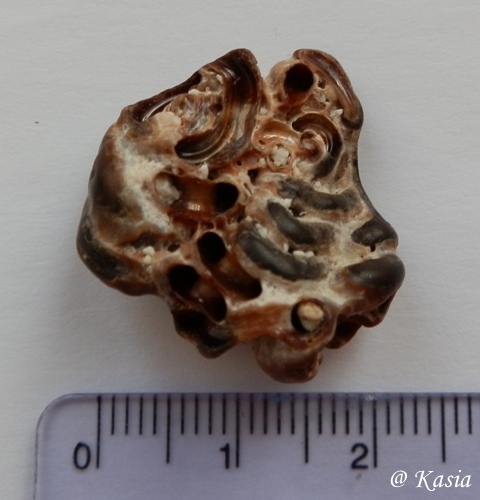
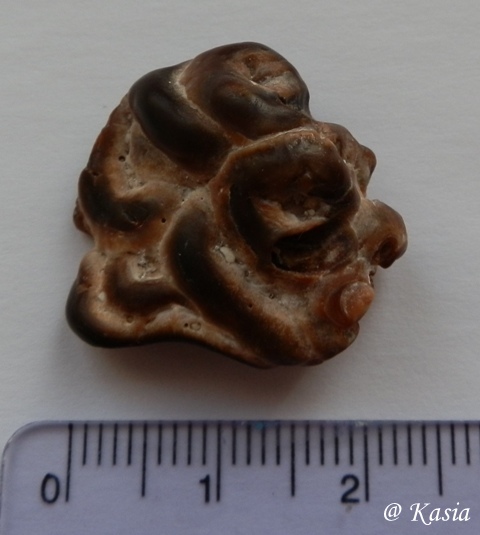
Kasia has returned to grace the blog with treasures from her Abaco beach-combing from the Delphi Club and further afield. Expect more shells, more sea glass… and more mystery objects. We have already had part of a RAY’S PALATE and a PACIFIC ANGARIA SHELL  that had somehow arrived on the shores of Abaco. There’s a long thin WHITE BONE, as yet unidentified (no suggestions yet). And now this extraordinary item… 

To which my answer is “not the faintest idea”. My guesses are (1) a fossilised vertebra of some medium-sized creature (2) a fossilised ‘soft’ rock that worms have been at (but why only on one side?) (3) a bread roll that went disastrously wrong in the baking…

All suggestions welcome, preferably via the COMMENT box (so others can view them); or to rollingharbour.delphiATgmail.com (spam guard: convert AT to @)

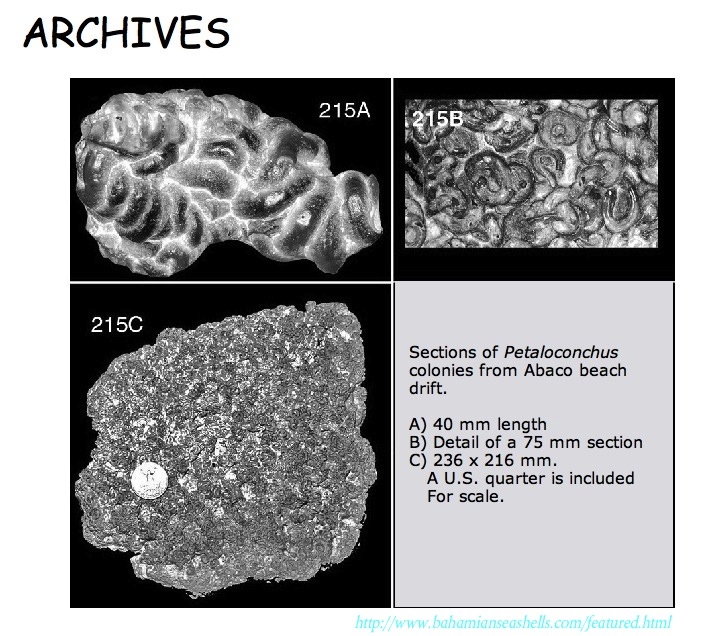
STOP PRESS Mystery quickly solved, thanks to Colin Redfern who says “This is part of the remains of a colony of Petaloconchus worm-shells (molluscs). They attach to rock or coral, and the colonies can be quite large.”  Colin’s website includes some examples from his archive, one chunk being very similar to Kasia’s 

And here’s another chunk, top and bottom view Photos courtesy of James St. John (Geology, Ohio State University at Newark)
…and here is the worm that makes the vermi-accretion or whatever the term is
Unknown's avatar

BAHAMAS CURLY TAILS ON ABACO: ENCHANTING LIZARDS


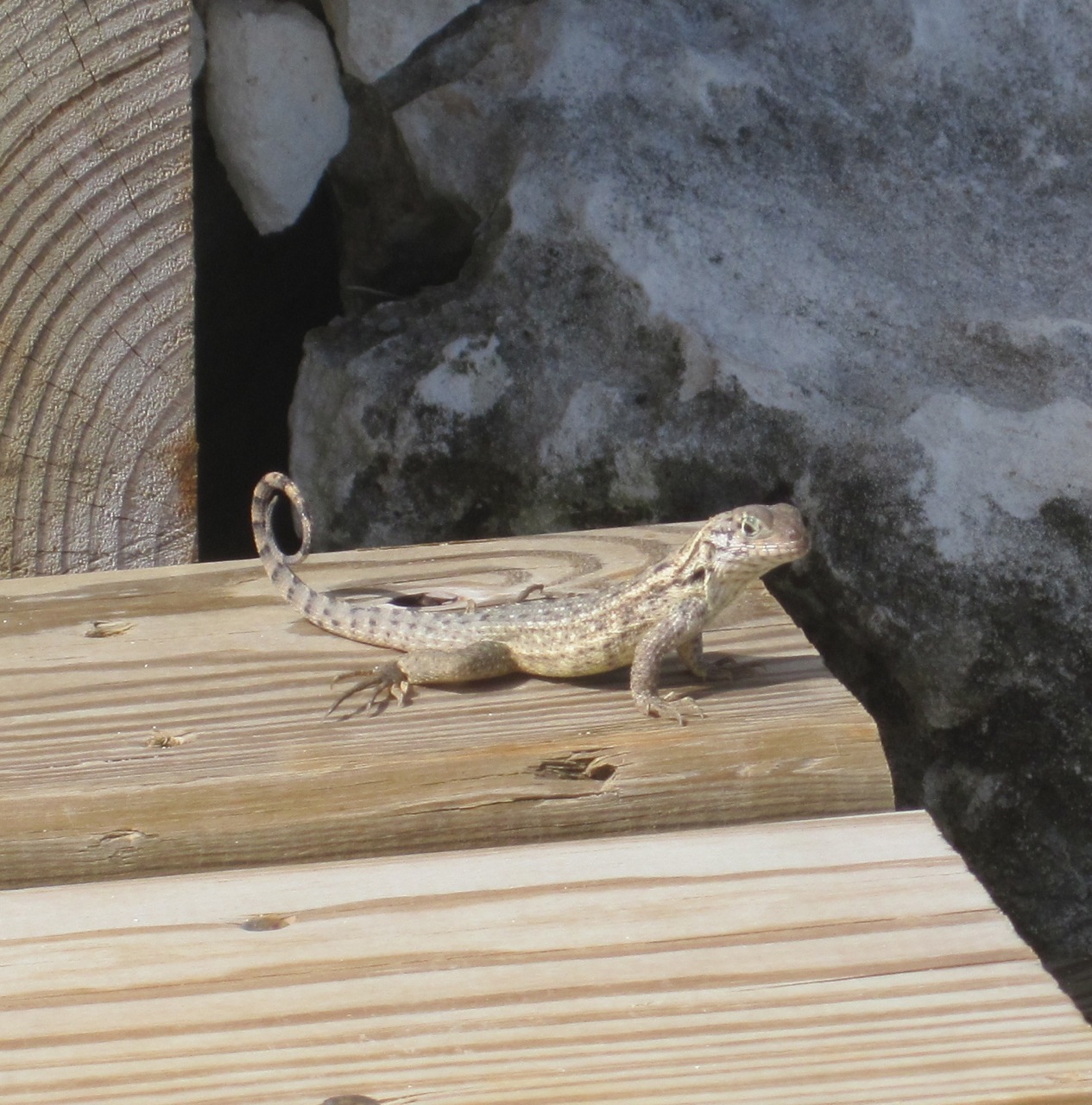
Curly Tail Lizard, Delphi, Abaco CS2

CURLY TAILS – ENCHANTING LIZARDS

This is an expanded and rejigged post based on  bits and pieces originally scattered around the MISC WILDLIFE page, written now partly because of various search queries recently – diet and so forth – which had not been covered.

First, the very dull scientific classification bit (wiki-debt): Kingdom – Animalia; Phylum – Chordata; Class – Sauropsida; Suborder – Iguania; Family – Leiocephalidae; Genus – Leiocephalus [Subspecies Carinatus?]

The ‘curly-tailed lizard’ family is widely found throughout the Caribbean but is apparently relatively unstudied (but why on earth not?). There are nearly 30 distinct varieties, many specific to individual islands. My completely uneducated guess is that the Abaco ones may be one of the several subspecies of ‘Cuban or Northern Curly-tailed Lizard’ carinatus, the ones found generally in the Bahamas. But who cares? By any standards they are totally cute! This photo was taken at the bottom of the steps down to the Delphi Club beach.

            (Photo credit: Mrs RH)

             (Photo credit: PM Himself)

NEW ADDITION April 2012 A fine Curly Tail from Brigitte Carey of Tilloo Cay 

DEPLHI CLUB: ‘OFF-DUTY’ CURLY TAIL, OR A DIFFERENT TYPE OF LIZARD?

The CT is described as an active, robust lizard that is mostly terrestrial and will retreat into a burrow or cavity when frightened. It prefers sunny areas with loose rubble and rock. Bahamas curly tails were apparently released intentionally in Palm Beach, Florida, in the 1940s in an attempt to control sugar cane pests.

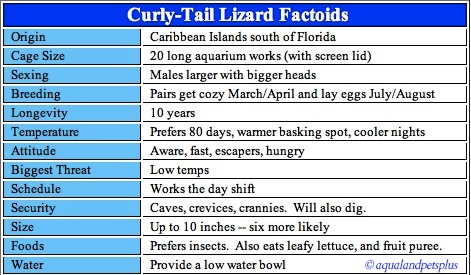
Jan 2012 update: Having had a number of hits over the last few months for ‘what do Curly Tails eat’ and other CT-related information, I checked out aqualandpetsplus.com of Des Moines, Iowa (the first Google hit, in fact). With kind permission (many thanks, Larry) here’s some more about these little lizards 

THE CURLY TAIL DIET: “Considered insectivores, curly-tails scamper right after crickets.  They’ll also learn to eat mealworms and superworms from your fingers.  You can give them other insects like wax worms which they love but tend to over-eat.  Roaches, houseflies, or any arthropods / bugs that accumulate around your porch light make a nice change of pace…OR…take a stroll down the baby food aisle.  Think twice about the bananas. Bananas are not good for some lizards.  Skip the bananas.  Anyway, apple sauce works great.  The best thing about baby food?  You can add a Calcium/Vitamin D supplement to it.  Much easier than dusting crickets (which start cleaning it off the second it gets on them).  Curly-tails will also eat bits of leafy lettuce.  Uneaten crickets in their cage  will also eat the fruits and vegetables you offer your lizards” Larry Arnold

So I can’t answer someone’s specific query ‘do they eat tomatoes?’, save to say ‘why not try tomato sauce’ (and I don’t mean a well-known proprietary brand, one of 57 varieties). Maybe have a few crickets handy in case it is politely declined

For further info on curly tails from theBahamas National Trust website CLICK LINK ===>>> http://www.bnt.bs/curlytaillizardinfo.php?catid=&subid=  where there is also a downloadable PDF version

Finally, an excellent CT photo from Gareth Reid, the Master Chef of Delphi

BIBLIOGRAPHY:  “101 Uses for a Curly Tail” Rolling Harbour Press (2011)     

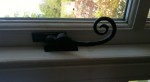
(1) The gate latch                                           (2) The window latch


(NB No Curly Tails were harmed in the creation of these images)