Unknown's avatar

MANATEES: ENJOY THEIR INTERNATIONAL DAY


West Indian Manatee, Bahamas (BMMRO / Charlotte Dunn / Keith Salvesen)

MANATEES : BAHAMAS? WE GOTTEM!

mantsw~1

Manatees are apex ‘gorgeous marine mammals’. Gentle, inquisitive, brave, long-distance-but-rather-slow-swimming, grass-grazing miracle ur-elephant descendants. They never made it out of the sea in the Miocene epoch.

West Indian Manatee, Bahamas (BMMRO / Charlotte Dunn / Keith Salvesen)

Incongruous in a world of fast sharks, snappy ‘cudas, large whales and leaping dolphins, they contentedly mooch around the seagrass beds. No one in the world has ever objected to or dissed a manatee. They bring only delight to the sea-world, and offer only charm to mankind. They thoroughly deserve a special day.

Manatee Awareness Graphic (Peppermint Narwhal)

West Indian Manatee, Bahamas (BMMRO / Charlotte Dunn / Keith Salvesen)

I’ve written before about the manatees that inhabit the turquoise inner waters of the Bahamas. They are carefully recorded with individual identifying features – usually nicks in the paddle, or scarring. They are named and, where possible, fitted with a tracker. Their friendships and amorous hook-ups are noted. Despite a 16-month birth cycle, manatee calves are born.

img_4120

West Indian Manatee, Bahamas (BMMRO / Charlotte Dunn / Keith Salvesen)
Gina and Calf, Bahamas (BMMRO)

IS THERE A DOWNSIDE FOR THESE APPARENTLY BLISSFUL AND PEACEFUL CREATURES?

Yes indeed. It’s mankind, I’m afraid. Among the threats to the survival of these unusual, endearing, and legally protected creatures are, in no particular order:

  • Pollution of inshore waters and canals
  • Degradation of the (formerly limitless) sea-grass beds where they feed
  • Reduction or tainting of the fresh water sources that they need to survive
  • Understandable over-enthusiasm by admirers – especially in harbours – in dousing them with water from hoses and feeding them lettuce…
  • …and similar behaviours that may lead to a trusting dependance on humans
  • Unthinking or speed-selfish boat behaviour in or near harbours resulting in collisions
  • Simply not caring at all and carving them up, leaving prop-scars, often deep. Few manatees escape at least a few of these. Some do not survive.
  • Probably I don’t need to mention man-caused Global Warming, but I just have.
West Indian Manatee, Bahamas (BMMRO / Charlotte Dunn / Keith Salvesen)

Let’s celebrate the special day for manatees. Let’s hope that they can survive and prosper in these increasingly difficult and dangerous times for almost all species. Look at any of these photos… can we agree that these wonderful animals deserve care and protection.

West Indian Manatee, Bahamas (BMMRO / Charlotte Dunn / Keith Salvesen)

All photos: Charlotte Dunn / BMMRO and research contributors; final image ‘Save the Manatee’

mantsw~1

PLEASE SUPPORT BMMRO RESEARCH OF MARINE MAMMALS

Unknown's avatar

SHOREBIRDS, WADERS & SEABIRDS: 30 WAYS TO DISTINGUISH THEM


Sanderling Trio, Delphi Beach, Abaco (Keith Salvesen) 5


SHOREBIRDS WADERS & SEABIRDS: 30 WAYS TO DISTINGUISH THEM 

Today, September 6th, is World Shorebirds Day. Every year I look forward to scrolling back through the archives of ‘Birds of Abaco‘ for the occasion. It reminds me of the wonderful and plentiful varieties of birds that lead semi-aquatic or aquatic lives on and around the shores of Abaco. Some are permanent, others are migratory visitors.

.They can be broadly categorised as shorebirds, wading birds, and seabirds. With some bird species there may be doubt as to which category applies. In different parts of the world, the categories themselves may be named differently. 

There is the strict Linnaean ordering of course, but in practice there is a degree of informal category overlap and some variation in the various bird guides. This is especially so between shorebirds and the smaller wading birds. Shorebirds may wade, and wading birds may be found on shores.  Even if you have no problem distinguishing birds in the 3 categories, there are avian characteristics within each list that are interesting observations in themselves. 


10 CHARACTERISTICS OF SHOREBIRDS 

American Oystercatcher, Delphi, Abaco (Tom Sheley)

(Examples include avocet, black skimmer, oystercatcher, plover, sandpiper, and stilt)

1. Shorebirds have long legs, pointed beaks, and long pointed wings.

2. Most are migratory. Some shorebirds fly non-stop for 3-4 days to reach base.

3. Shorebirds are small to medium size birds. The shoreline is their main foraging ground.

4. They often feed close to the waterline and poke their bills into the ground in search of food.

5. Shorebirds also frequent wetlands and marshes and are biological indicators of these environmentally sensitive lands.

6. They are of the order Charadriiformes.

7. Shorebirds are very well camouflaged for their environment and their appearance may vary from place to place as plumage (feather colors) are gained or lost during breeding.

8. Shorebirds typically range in weight from 0.06 to 4.4 pounds.

9. Oystercatchers have a unique triangular bill that is a cross between a knife and a chisel.

10. The black skimmer is the only native bird in North America with its lower mandible larger than the upper mandible, which helps the bird gather fish as it skims the ocean surface.


10 CHARACTERISTICS OF WADING BIRDS 

Great Egret, Abaco - Tom Sheley

(Examples include crane, egret, flamingo, herons, ibis, rail, spoonbill, and stork)

1. Wading birds are found in freshwater or saltwater on every continent except Antarctica.

2. They have long, skinny legs and toes which help them keep their balance in wet areas where water currents may be present or muddy ground is unstable. Also, longer legs make it easier for them to search for food (forage) in deeper waters.

3. Wading birds have long bills with pointed or rounded tips (depending on what is more efficient for the types of food the bird consumes).

4. Wading birds have long, flexible necks that can change shape drastically in seconds, an adaptation for proficient hunting.

5. Herons have sophisticated and beautiful plumes during the breeding season, while smaller waders such as rails are much more camouflaged.

6. Wading birds may stand motionless for long periods of time waiting for prey to come within reach.

7. When moving, their steps may be slow and deliberate to not scare prey, and freeze postures are common when these birds feel threatened.

8. Adult wading birds are quiet as an essential tool for hunting. Wading birds may be vocal while nestling or while in flocks together.

9. Many wading birds form communal roosts and breeding rookeries, even mixing flocks of different species of wading birds or waterfowl.

10. Wading birds fully extend their legs to the rear when flying. The neck may be extended or not while in flight, depending on the species.


10 CHARACTERISTICS OF SEABIRDS 
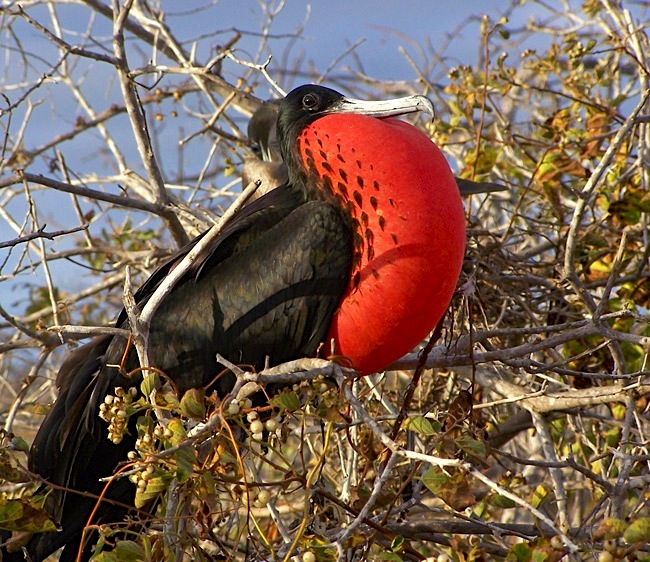
Magnificent Frigatebird (inflated-throat) (Michael Vaughan)

(Examples include albatross, auk, booby, frigatebird, fulmar, gannet, petrel, shearwater, and tropicbirds)

1. Seabirds are pelagic, spending most of their lives far out at sea.

2. Seabirds move toward to coastal areas to breed or raise young for a minimal amount of time.

3. Seabirds are light on their undersides and dark on top (an adaptation known as countershading).

4. Seabirds have more feathers than other types of birds for more insulation and waterproofing.

5. Seabirds have flexible webbed feet to help gain traction as they take off for flight from the sea.

6. Some seabirds have unusually sharp claws used to help grasp fish under the water.

7. Some larger seabirds (e.g. albatross) have long, slim wings allowing them to soar for long distances without getting tired.

8. Some smaller seabirds have short wings for maneuvering at the surface of the water.

9. Seabirds have specialised glands to be able to drink the saltwater and excrete salts.

10. Some seabirds (e.g. gannets) have a head shape that is usually tapered for more efficiency in plunge diving.

These lists were put together in useful chart form by the excellent Beach Chair Scientist
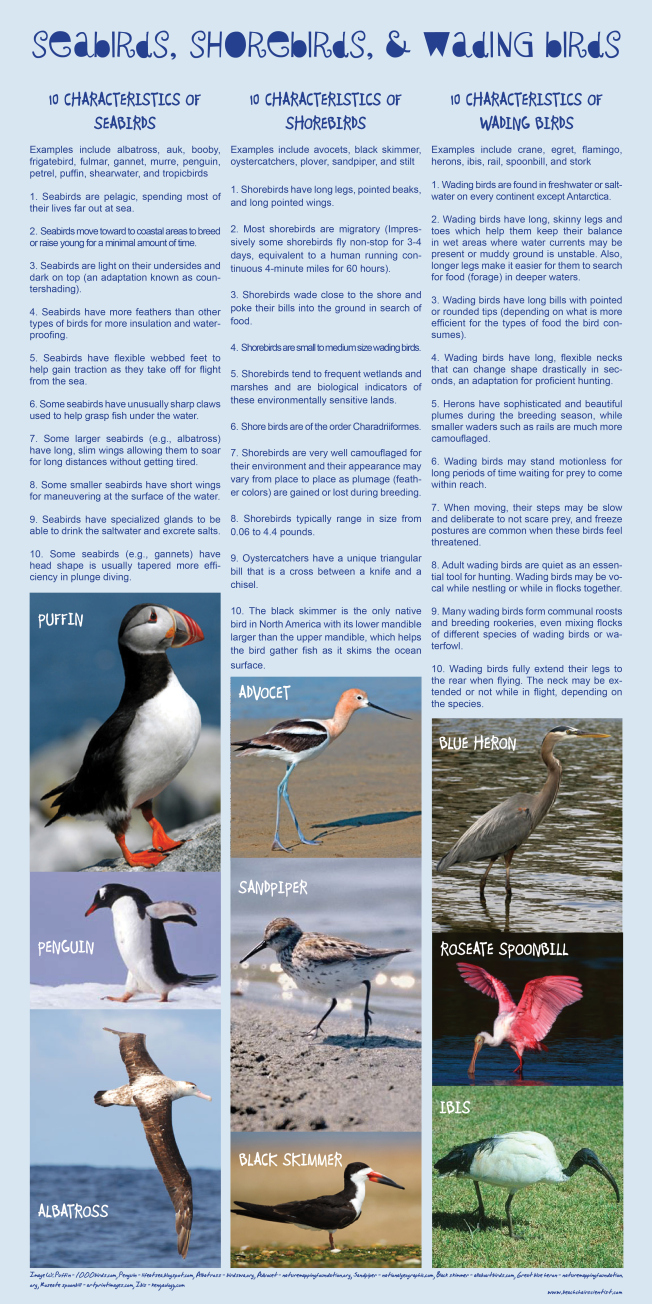
seabird shorebird wading bird chart ©beachchairscientistTable ©Beach Chair Scientist, with thanks for use permission;

Image Credits: Keith Salvesen, Michael Vaughn, Tom Sheley
Unknown's avatar

BUTTERFLIES ON ABACO (3): COMMON BUCKEYE


DSC_7830

BUTTERFLIES ON ABACO : COMMON BUCKEYE

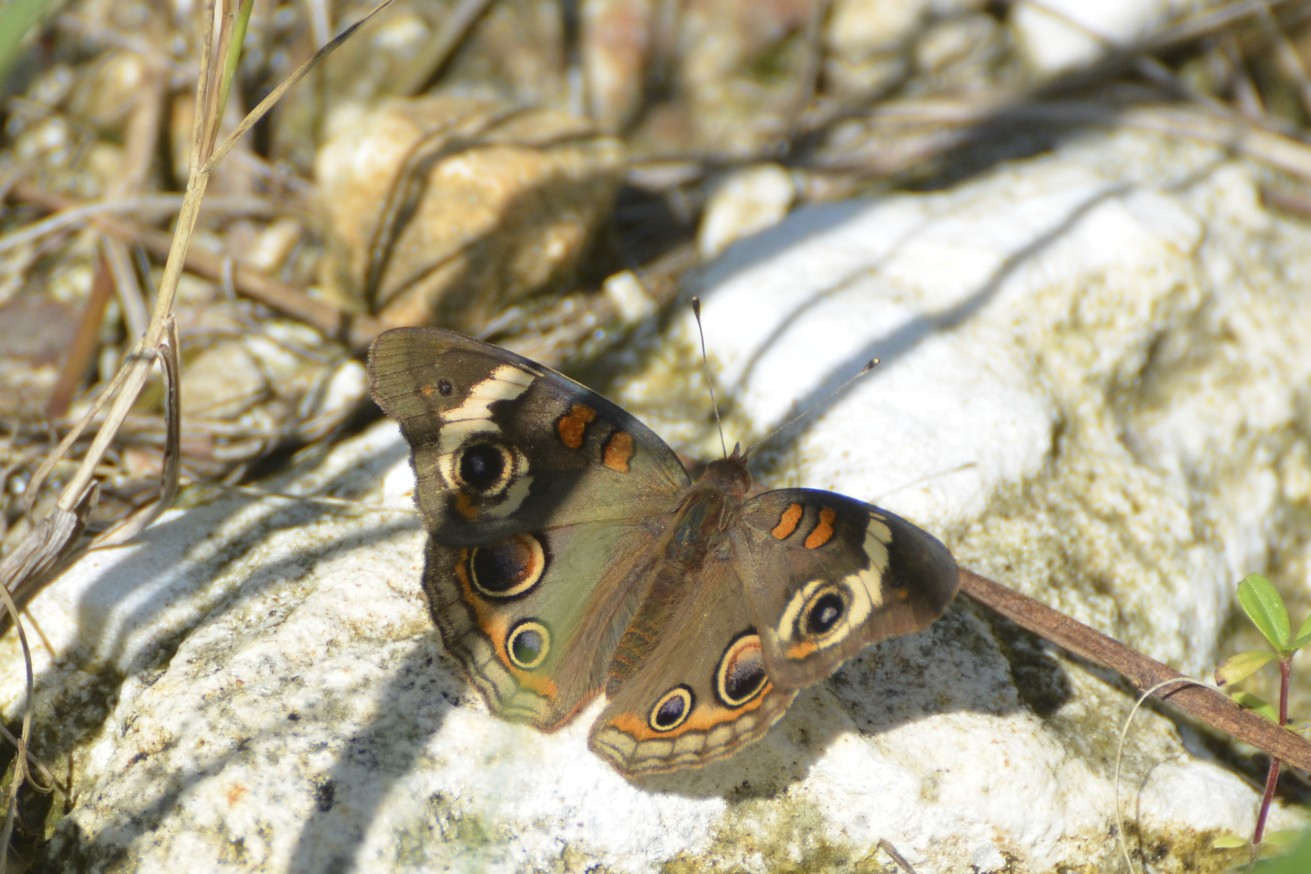
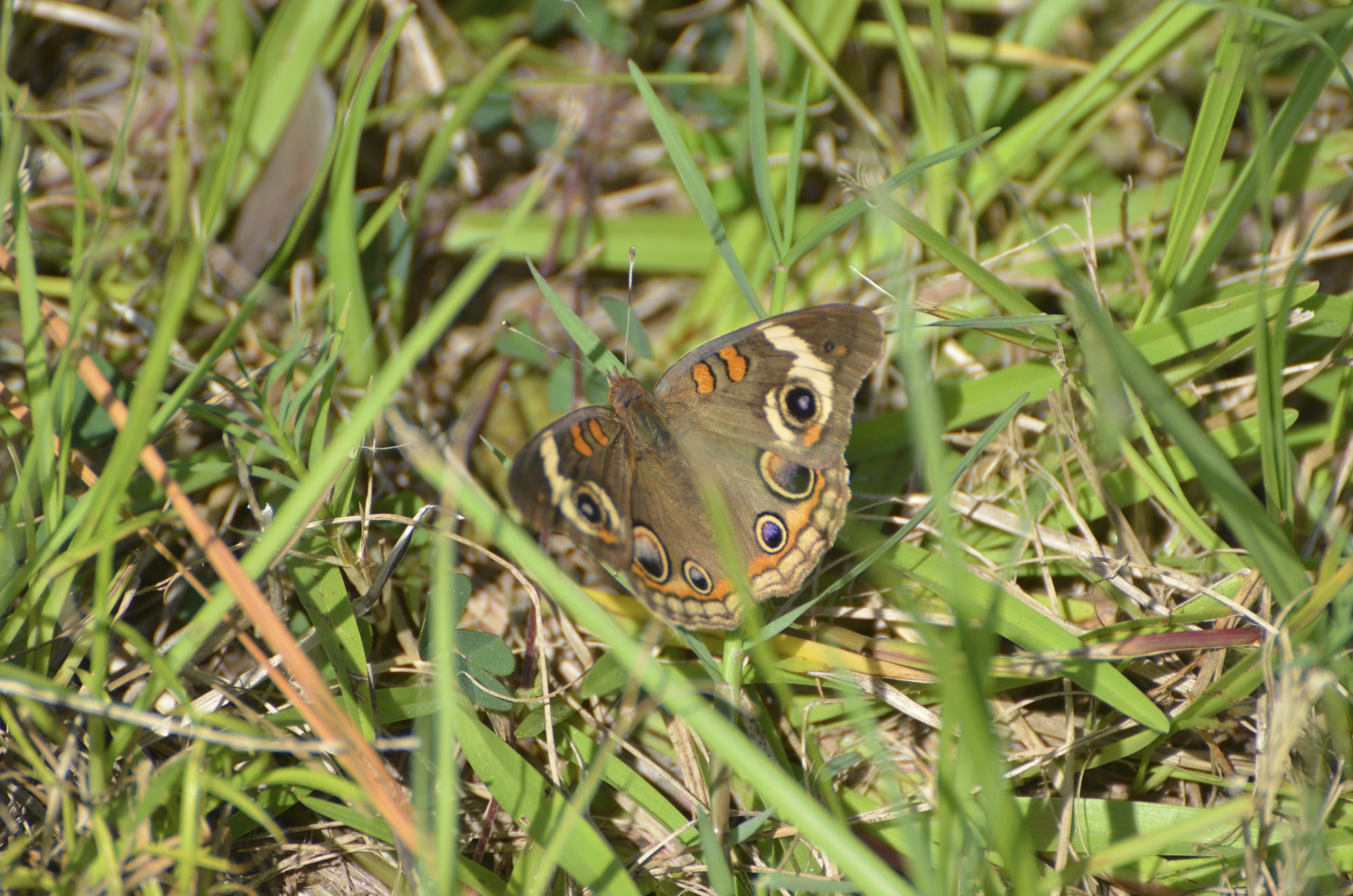
At first glance the Common Buckeye Butterfly Junonia coenia looks unpromisingly drab. However, like many butterfly species, the outside appearance is only one side of the story, a facade to enable it to blend in with the scenery. As the header image suggests, this creature has a more more flamboyant and colourful side to it – a feature not confined to butterflies, and extending even to humans…

SEQUENCE OF SLOWLY OPENING WINGS

Charlie Skinner DSC_7818

As it feeds, or as the sun warms its wings, the buckeye will start to reveal itself DSC_7831DSC_7825DSC_7817 DSC_7823

The bright eye-spots of the buckeye, for which it is named, are designed to deter predators, as much as for decorative purposes. Birds, in particular, will be put off by a creature apparently possessing 3 pairs of eyes. This feature is known as aposematism: coloration or prominent markings that signal a warning to potential predators.

DSC_7829DSC_7822DSC_7832

The caterpillars and chrysalis of this species look like thisCommon_Buckeye_larva_variation,_Megan_McCarty42Common_Buckeye_chrysalis,_Megan_McCarty43

This rather charming illustration of the buckeye species is by Jacob Hübner from his Sammlung exotischer Schmetterlinge Vol. 2 ([1819] – [1827] (Plate32)442px-Hubner1821SammlExotSchmett2Plate32

Photo Credits: Butterflies by Charlie Skinner (except header, Wiki); Caterpillars & Chrysalis by Megan McCarty via Common Licence

Unknown's avatar

OUT STANDING IN THE WATER: YELLOWLEGS (LESSER) ON ABACO


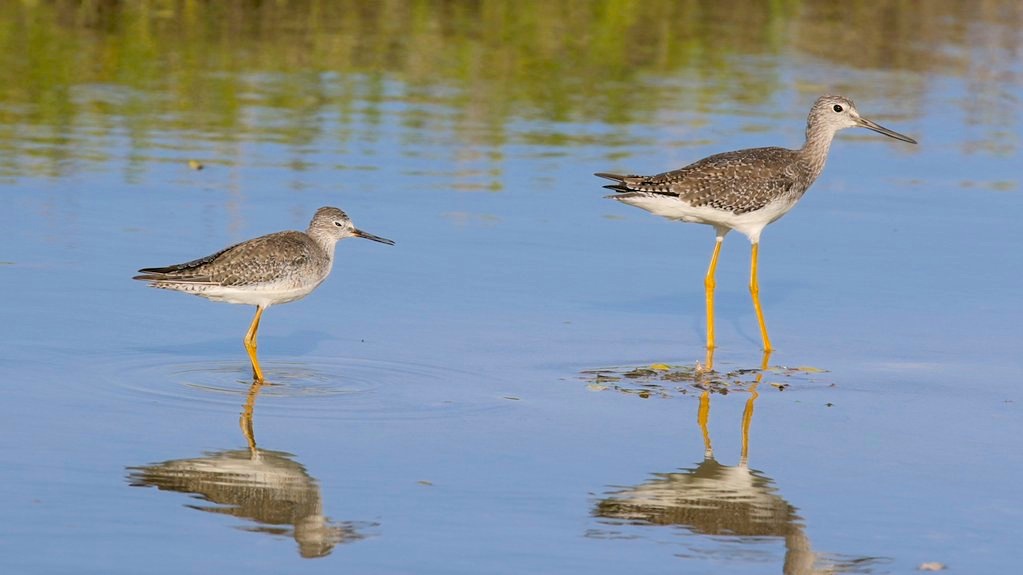
Lesser Yellowlegs Tringa flavipes, Abaco Bahamas (Tom Sheley)


YELLOWLEGS (LESSER) ON ABACO: OUT STANDING IN THE WATER

It’s always helpful when a bird ends up with a descriptive name (after translation from the Latin binomial) that actually matches the creature. Burrowing owl, Roseate Spoonbill, White-crowned pigeon, Red-legged Thrush, Black-and-white Warbler – you know where you are at once. So it is with the Yellowlegs.

Lesser Yellowlegs Tringa flavipes, Abaco Bahamas (Tom Sheley)


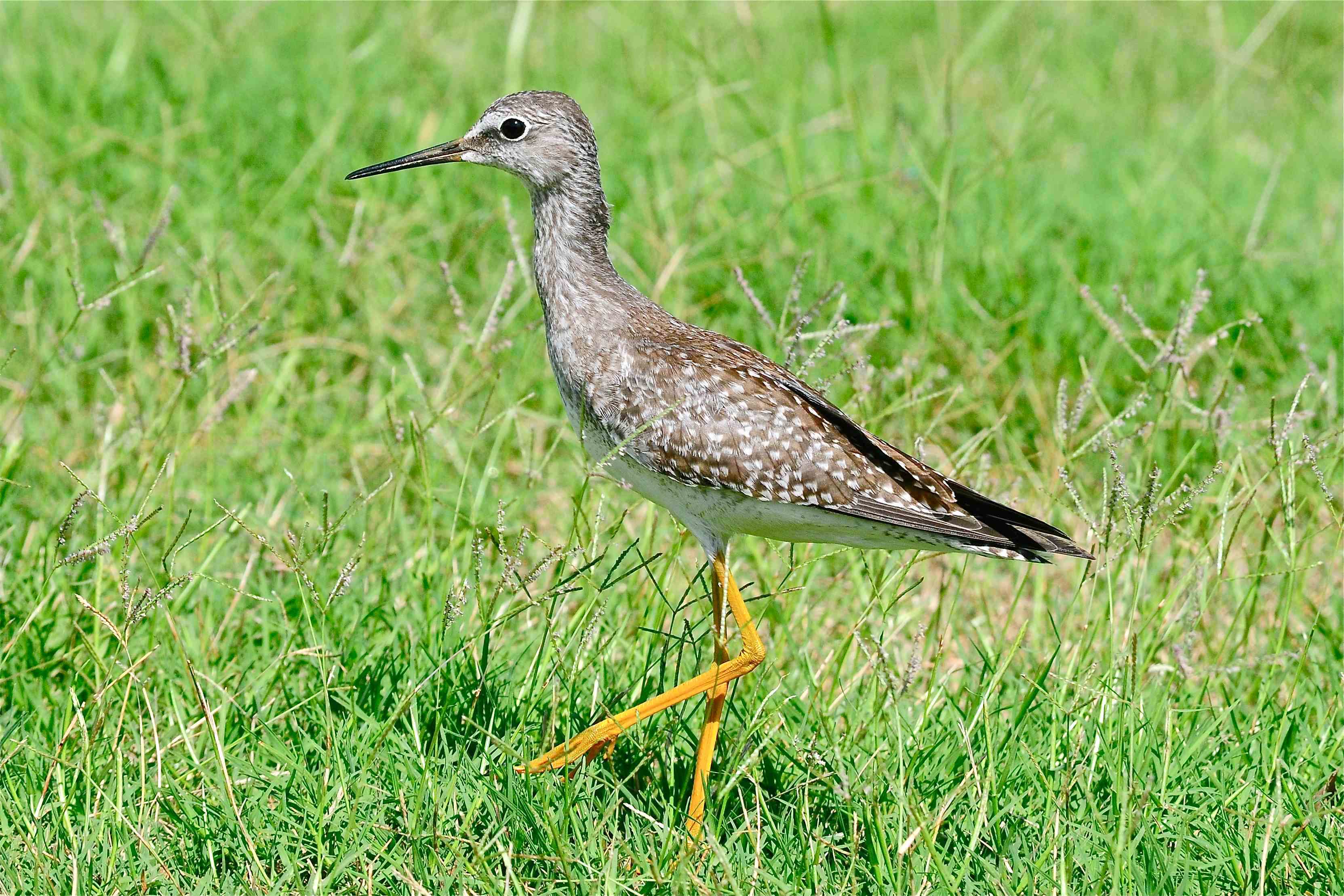
The only question is whether the Yellowlegs  you are looking at is ‘greater’ (Tringa melanoleuca) or ‘lesser’ (Tringa flavipes). Both are winter visitors on Abaco, and a single bird on its own – with no size comparison – can be a potential source of confusion.  

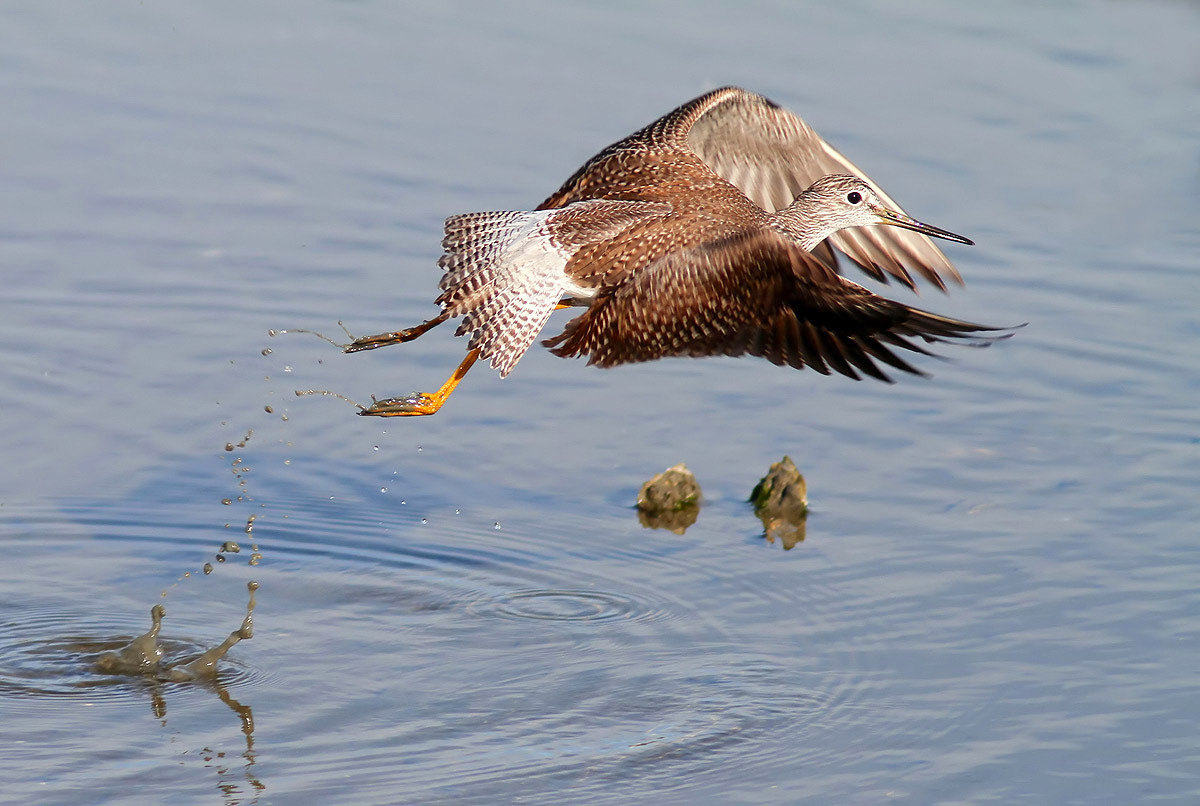
Taking flight… we have lift-offLesser Yellowlegs Tringa flavipes (Phil Lanoue)

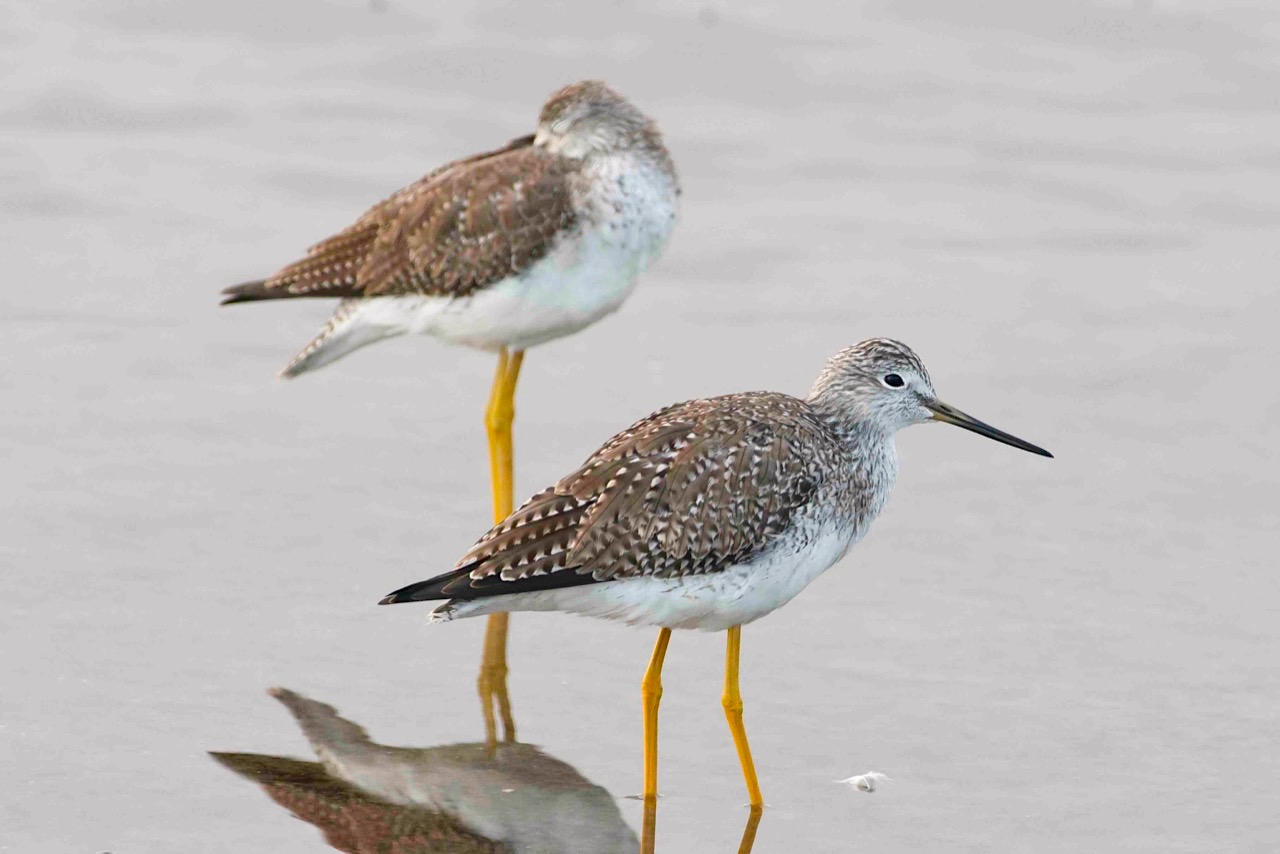
Apart from size, the greater and lesser yellowlegs have some not-necessarily-very-noticeable differences in bill length (in comparison with head-size), plumage and vocalisation. Here is an excellent example of the yellowlegs cousins together, to give you a comparison.

Little and LargeGreater & Lesser Yellowlegs Comparison (Matt Scott)

DO THESE SHOREBIRDS EVER GO ON LAND?

A: YESLesser Yellowlegs Tringa flavipes, Abaco Bahamas (Tony Hepburn)


*ALERT* AMATEUR PHOTOGRAPHY CORNER *ALERT*

DO YOU HAPPEN TO HAVE A PHOTO OF THE LEYE WING UNDERSIDES?

Yup. This bird was at Gilpin Pond. There aren’t many ‘wing underside’ photos out there. They are delicately complex and very pretty. (Will this do?)Lesser Yellowlegs Tringa flavipes, Abaco Bahamas (Keith Salvesen)


Q: DO THEY EVER DO PHOTOBOMBS?

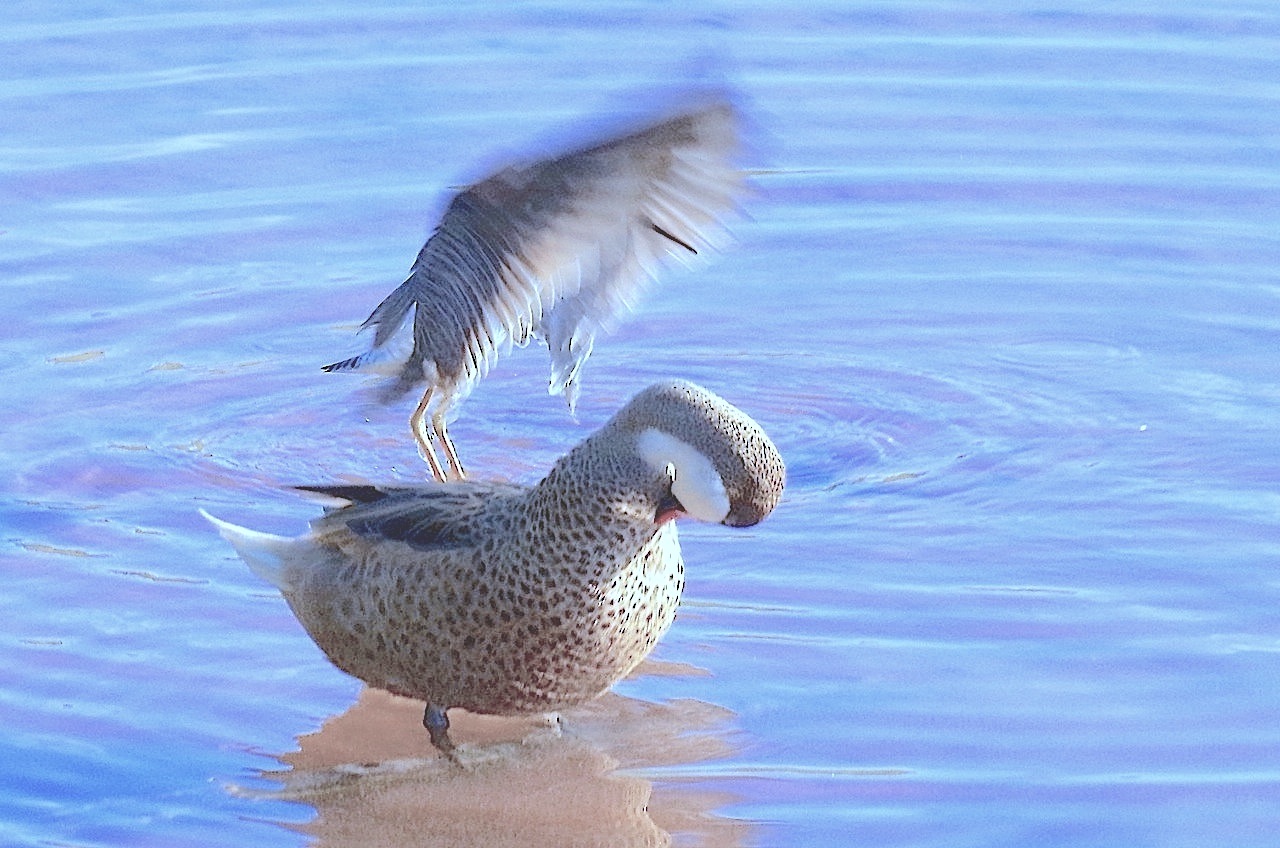
A: INDEED! (BOMBING A BAHAMA DUCK)Lesser Yellowlegs Tringa flavipes, Abaco Bahamas (Keith Salvesen)Weird blue tint due to radical colour correction for the bad red algal bloom on the pond

Credits: Tom Sheley (1, 2, 9); Phil Lanoue (3); Matt Scott (4); Tony Hepburn (6); ID concealed to protect me the bad photographer (7, 8)
Lesser Yellowlegs Tringa flavipes, Abaco Bahamas (Tom Sheley)

Unknown's avatar

YELLOWTAIL PARROTFISH: BAHAMAS REEF FISH (54)


Yellowtail (Redfin) Parrotfish (Melinda Rogers / Dive Abaco)

YELLOWTAIL (REDFIN) PARROTFISH: BAHAMAS REEF FISH (54)

The yellowtail parrotfish (sometimes known as a redfin) is one of around half-a-dozen kinds of parrotfish found among the coral reefs of the Bahamas, and sometimes in seagrass areas. There are many other related species worldwide (about 80). Parrotfish are among the most important fishes on the reef because they play a major role in BIOEROSION , a vital process for the health of the reef.

Yellowtail (Redfin) Parrotfish (Melinda Rogers / Dive Abaco)

A. FEEDING & BEACH BUILDING

  • Their dental arrangements – a mouthful of meshing teeth – form the characteristic ‘beak’
  • Primarily herbivores but also snack on small creatures, organisms, or even molluscs
  • As they feed on their favourite algae, their teeth grind up the coral which they ingest
  • They digest the coral & excrete it as sand, becoming a component of your favourite beach
  • The teeth grow continuously, replacing ones worn away by grinding coral as they graze
  • They are a vital species in preventing algae from choking coral: essential reef cleaners

Yellowtail (Redfin) Parrotfish (Melinda Rogers / Dive Abaco)

B. PARROTFISH: PERSONAL INFORMATION

  • Some secrete a protective mucous cocoon to sleep in or as concealment from predators
  • Mucous also helps to heal damage, repel parasites, & protect them from UV light
  • As they develop from the juvenile stage, most species change colour significantly
  • In some species, juveniles change colour temporarily for protective purposes
  • These are “sequential hermaphrodites”, turning from female to male (‘protogyny’)
  • Single males tend to have several lady friends, and aggressively defend their love rights
  • Parrotfish are PELAGIC SPAWNERS. Females release many tiny buoyant eggs into the water
  • The eggs float freely then eventually sink to the coral until they hatch
  • Unlike almost all other fishes, they use their pectoral fins to propel themselves
  • Feeding behaviour / dietary requirements make them (thankfully) unsuitable for aquariums (or aquaria, if you prefer)

Yellowtail (Redfin) Parrotfish (Melinda Rogers / Dive Abaco)

WHAT WAS THAT ABOUT CHANGING SEX?

  • Parrotfish may undergo sex reversal in which developing female fish become males
  • Parrotfish born male remain male throughout their lives (“primary males”)
  • Female-born fish may change sex & colour to become male (“secondary males”)
  • Secondary males are fertile and generally mate with a single female
  • Females that stay female live in harems protected by a dominant “supermale” BUT…
  • …if the supermale dies, the largest female in the group changes sex to become male…
  • …AND amazingly adopts the coloration of the supermale (best ‘astounding fact’ of all)

Yellowtail (Redfin) Parrotfish (Melinda Rogers / Dive Abaco)

ARE PARROTFISH EDIBLE? JUST ASKING…

  • Parrotfish skin is very tough but their flesh is soft and degenerates quickly
  • Some species (eg blue parrotfish) carry ciguatera toxins – to be avoided
  • They are not considered a fishing target in Bahamas, nor a food-fish
  • Parrotfish are eaten elsewhere in the world however, for example Jamaica (cooked)
  • In Hawaii they are eaten raw – at one time they were reserved for royalty

VIDEO LINK: PARROTFISH POOP

Credits: Melinda Rogers / Dive Abaco for her great illustrative images. All photographs were taken on the reefs of Abaco; Florida Museum to cross-check facts; VIDEO – Angari Foundation

Yellowtail (Redfin) Parrotfish (Melinda Rogers / Dive Abaco)

Unknown's avatar

‘CASTING ABOUT’: A TRICOLORED HERON HUNTING


Tri-colored heron fishing (Phil Lanoue)

‘CASTING ABOUT’: A TRICOLORED HERON HUNTING

‘Casting’ is one of those words with multiple meanings, some archaic but most in use today. You can probably think of half-a-dozen straight off. Metallurgy, for example, or even a type of couch. ‘Casting about’ is one of the specific usages and derives from hunting, eg hounds casting about for a scent. By extension, it has come to mean something like searching intently or thoroughly for something you need, or want, or are having difficulty in finding. Which is where this tricolored heron comes into the picture.

Tri-colored heron fishing (Phil Lanoue)

It’s always entertaining to watch a heron or egret fishing. Their methods range from standing stock still and suddenly stabbing downwards to slowly wading to the crazy dash that reddish egrets sometimes do on the edge of the mangroves. This one is hooding its wings, sometimes called ‘canopy feeding‘. The theory is that this attracts small fish by providing shade. I also wonder if this method is used to reduce glare from the surface of the water.

Tri-colored heron fishing (Phil Lanoue)

The bird in this sequence is a juvenile, and not yet the  lethal hunter that it will soon become. It has seen a fish moving but has temporarily lost it (fishermen will be familiar with the mild feeling of annoyance when this happens). So it is casting about, slowly zig-zagging through the water, looking from a height, crouching down, trying to get a good view of its elusive snack. This little episode didn’t end in success. Sometimes, the fish you sight and then lose has gone for good. But as fishermen often say when they lose one (and by extension the phrase is now applied to other areas of human life), there are always plenty more fish in the sea.

Tri-colored heron fishing (Phil Lanoue)

Photo credit: Phil Lanoue, a photographer who specialises in patiently taking wonderful sequences of bird activity, with many thanks for use permission

Unknown's avatar

FLUTTER BY, BUTTERFLY: ATALA ENCHANTING


Atala Hairstreak Butterfly, Abaco 7

FLUTTER BY, BUTTERFLY: ATALA ENCHANTING

It’s hard to miss the fly-past of an Atala Hairstreak Butterfly Eumaeus Atala . Once seen, never forgotten. They are small wonders, with their plump orange abdomens and their striking blue-dotted motif; obvious candidates for a signature Rolling Harbour logo for insect posts.

Atala Hairstreak Logo

Atala Hairstreak Butterfly, Abaco 1

It is rare to see the inside of an Atala’s wings. In flight they tend just to look black; then they land with precision and immediately close their wings.

Atala Hairstreak Butterfly, Abaco 4

Atala Hairstreak Butterfly, Abaco 2

This close-up shows clearly that the vivid blue markings are not confined to the Atala’s wings. They are also on the body, the head, and surprisingly on the legs as well.

Atala Hairstreak Butterfly, Abaco 6

In sunshine the spots of the feeding Atala shine out like small LEDs. When they do open their wings, they reveal the velvety blue upper sides.

Once, I was watching a single Atala when a second one arrived and almost immediately ‘jumped’ the first. By which I mean that, for a few seconds, the new arrival ‘covered’ the feeding Atala in every sense of the word. Mere moments later, it was all over. I made my excuses and left.

Atala Hairstreak Butterfly, Abaco 3

Finally, you may want to get a sense of size for this butterfly – crops and zooms can sometimes give a distorted impression. So here is a normal snap of the butterfly feeding.

Atala Hairstreak, Abaco 9

Unknown's avatar

CREOLE WRASSE: SHADES OF DEEP PURPLE


Creole Wrasse ©Melinda Riger @ G B Scuba copy 4

CREOLE WRASSE: SHADES OF DEEP PURPLE

The creole wrasse Clepticus parrae is a small wrasse species, with adult males reaching about 12 inches long. During its life, the fish will change colour significantly.  A juvenile is almost completely violet-purple. As it matures, it becomes paler and develops patches of yellow on the rear part of its body.

Creole Wrasse ©Melinda Riger @ G B Scuba copy 7

Creole wrasse are found throughout the tropical and subtropical waters of the western Atlantic, from Florida south to Brazil. The habitat includes Bermuda, the Caribbean Sea, and the Gulf of Mexico. Their conservation status is LC Least Concern.

Creole Wrasse ©Melinda Riger @ G B Scuba copy 5Creole Wrasse ©Melinda Riger @ G B Scuba copy 6

These are social fish that live in groups around coral reefs. They are usually found in shallow water, but – perhaps surprisingly for such small creatures – they have also been found as deep as 100m. 

Creole Wrasse at a cleaning station ©Melinda Riger @ G B Scuba copy

The groups of wrasse feed on plankton, small jellyfish, pelagic TUNICATES, and invertebrate larvae. They are active in groups by day, but at night they separate and each fish finds its own safe crevice in the reef to sleep.

Creole Wrasse School ©Melinda Riger @G B Scuba copy

ANYTHING ELSE WE NEED TO KNOW?

Yes indeed. Their intriguing breeding regime – how unlike our own dear species. The creole wrasse is a protogynous hermaphrodite.  The largest fish in a group is a dominant breeding male, while smaller fish remain female. If the dominant male dies, the largest female changes sex. Mature males congregate at leks to breed, at which they display and are approached by females before mating with them. These leks are reminiscent of certain clubs and bars in the less reputable parts of some towns and cities. Or so I am told.

Creole Wrasse Melinda Riger @ G B Scuba copy

It’s been a while since I included a Rolling Harbour musical diversion. However, the colour of this small fish nudged my memory back to 1968 and DP’s debut album (line-up Mk 1 of several hundred, or so it seems now). Hence the post title. Anyone who remembers this ‘wasn’t there’. Anyone who doesn’t remember it obviously wasn’t there either…

818A6udpP9L._SL1500_

FUN FACT: an early appraisal of the Purp’s music includes the description “a slow and pompous din, somewhere between bad Tchaikovsky and a B-52 taking off on a bombing run”

I don’t think this guy thinks much of that. And quite right tooCreole Wrasse ©Melinda Riger @GBS copy

All wrasse photos from Melinda’s archive; DP cover borrowed from Am@z@n; MP3 moi

Unknown's avatar

COOKIECUTTER SHARKS: BEASTLY LITTLE SUCKERS


Cookiecutter Shark mouth, jaws & teeth (BMMRO Bahamas)

COOKIECUTTER SHARKS

BEASTLY LITTLE SUCKERS

The Cookiecutter shark Isistius brasiliensis (aka the less scary, more genial sounding Cigar Shark), might be an ideal candidate for a Room 101 nemesis.** These little beasts – a species of dogfish shark – are found in several mainly island-based areas dotted around the globe, including in Bahamas waters.


HOW COME THE NAME?
These sharky little b@st@rds (*scientific term*) attack marine mammals and fishes, attaching themselves by suction and gouging out perfect round plugs of skin and flesh, leaving what are sometimes called ‘crater wounds’. Then they eat them. Imagine getting hold of a really sharp domestic cookie cutter with circular rows of razor-sharp teeth, and grinding it hard into your thigh. There! That! 
The size of an adult shark:16″ max
The term ‘cookiecutter’ is also a pejorative slang term, meaning mass-produced, lacking in originality, or boringly samey, as in cookiecutter cars or TV genres etc. Never apply that definition to these little critters… 
                                 .

HORRIFYING COOKIECUTTER FACTS

  • Live in the depths, rise vertically in the day & dive back down at dusk
  • Undersides have light-emitting ‘photophores’ which emphasise…
  • …the dark collar which acts as a lure, resembling a small innocent fish
  • Bioluminescence lures prey & confuses predators (more on this below)
  • The glow is so strong it may last for some time after removal from water

  • Their lips are ‘suctorial’ = they attach tightly to their target
  • The jaws then gouge out the victim’s flesh in a remarkably neat circle
  • Omni-vicious: any medium to large ocean creature is vulnerable to attack
  • There are even occasional reports of humans being targeted

WHERE IS YOUR EVIDENCE?

Here are two Blainville’s beaked whales that I photographed from the BMMRO research vessel. The top whale has a number of circular healed attack marks and a recent one. You can see how deep the gouged hole is. The other has plenty of well-healed scars.

Blainville's Beaked Whale - cookiecutter shark damage (Keith Salvesen)Blainville's Beaked Whale - cookiecutter shark damage (Keith Salvesen)

WHAT CUTTING EQUIPMENT ARE THEY BLESSED WITH?

  • Multi-toothed: top rows of small teeth, rows of larger teeth on the bottom
  • The lower teeth are the cutters, acting like a saw when locked on


HOW EXACTLY DO THEY DO WHAT THEY DO?
I can explain it no better than the renowned authority Prof. W. K. P. Dear:  “the suctorial lips ensure a tight seal. It then bites, using its narrow upper teeth as anchors while its razor sharp lower teeth slices into the prey. Finally, the shark twists and rotates its body to complete a circular cut, quite possibly aided by the initial forward momentum and subsequent struggles of its prey. The action of the lower teeth may also be assisted by back-and-forth vibrations of the jaw, a mechanism akin to that of an electric carving knife”.


ARE THESE SHARKS ‘PARASITES’, WOULD YOU SAY?

The behaviour of these sharks is an example of a symbiotic relationship between two species that is parasitic. This means essentially that one gains and the other suffers (eg humans & no-see-ums). This is distinct from commensalistic symbiosis, where one species gains and the other is unaffected (e.g. cattle egrets with cattle); and mutualistic symbiosis, where both gain (e.g. cleaner fish & groupers). So, in a word, yes.

AMBUSH PREDATOR

  • These little sharks ‘hover’ in the water column waiting for their opportunities
  • They are capable of rapid movement to catch up & latch onto prey
  • They will eat a passing small fish, crustacean or even squid as a snack
  • Sometimes they operate in schools; there is safety in numbers
  • The schools are thought to increase the ‘lure’ effect of the dark collar

A beached whale that’s been heavily targeted

FUN FACT TO COUNTERACT THE BAD STUFF

In the late c20, more than 30 U.S. Navy submarines were forced back to base to repair damage caused by cookiecutter shark bites, either to the neoprene footings of sonar domes or to rubber-sheathed cables. The problems were solved by using fibreglass. Oceanographic equipment and telecommunications cables are also recorded as being damaged by these sharks.

Cookiecutter Shark – the real deal

MONSTERS OF THE DEEP

These great cards from the weirdly spelled WIERD ‘N’ WILD CREATURES provide excellent factual info. Their CCS card is no exception. You’ll find more details here about the effect of the bioluminescence and so on, written as clearly as I might hope to. 

Cookiecutter Shark Facts (Monsters of the Deep)Cookiecutter Shark Facts (Monsters of the Deep)

** “The worst thing in the world varies from individual to individual. It may be burial alive or death by fire, or by drowning, or by impalement, or fifty other deaths. There are cases where it is some quite trivial thing, not even fatal.” (George Orwell, 1984). Being in a tank with some cookiecutters might count.

Alright now… the wounds eventually healBlainville's Beaked Whale - cookiecutter shark damage (Keith Salvesen)

Credits: BMMRO – header image; beaked whale photos – Keith Salvesen / BMMRO; Te Ara NZ for the main jaw image; all small images with thanks to Wiki and respective photographers who took the time to upload them for all to enjoy & learn from; ‘wierdnwonderful creatures’ for the monster card; range map from Wiki

Unknown's avatar

‘TERN, TERN, TERN’: THE UN-NOTORIOUS BIRD COUSINS


Royal Tern, Abaco Bahamas (Keith Salvesen)

‘TERN, TERN, TERN’: THE UN-NOTORIOUS BIRD COUSINS

There are twelve species of tern – ‘swallows of the sea’ – that to a greater or lesser extent may be found on Abaco. Whether they will actually  be visible at any given time is less certain, though. For a start, the only resident species is the lovely Royal Tern, available at many locations on Abaco and the cays throughout the year. The rest are migratory or just passing through.

PERMANENT RESIDENTS

ROYAL TERNS Thalasseus maximus PR1

Royal Tern, Abaco Bahamas (Keith Salvesen)Royal Tern, Abaco Bahamas (Keith Salvesen)

MIGRATORY TERNS: SUMMER

In the slightly less commonly-found category are the summer migrant terns that, by definition, are only in residence for around half the year. Four of these are fairly common in certain areas, and actually breed on Abaco; these include arguably the prettiest of all, the bridled tern. The other two tern species (gull-billed and sandwich) are more rare and as far as I can make out do not breed locally; or perhaps only rarely. 

LEAST TERN Sternula antillarum SR B 1

LeastTern, Abaco Bahamas (Tony Hepburn)

BRIDLED TERN Onychoprion anaethetus SR B 2

BridledTern, Abaco Bahamas (Bruce Hallett)BridledTern, Abaco Bahamas (Bruce Hallett)

ROSEATE TERN Sterna Dougallii SR B 2

Roseate Tern, Abaco Bahamas (Woody Bracey)

SOOTY TERN Onychoprion anaethetus SR B 2

Sooty Tern, Duncan Wright wiki

GULL-BILLED TERN Gelochelidon nilotica SR 3 

Gull-billed Tern, Abaco Bahamas (Alex Hughes)Gull-billed Tern, Abaco Bahamas (Alex Hughes)

SANDWICH TERN Thalasseus sandvicensis SR 4

Sandwich Tern, Abaco Bahamas (Bruce Hallett)Sandwich Tern, Abaco Bahamas (Woody Bracey)

MIGRATORY TERNS: WINTER

There is one very rare winter resident migratory tern species, with few records of sightings for Bahamas and until early 2019, no photographic record for Abaco until Sally Chisholm saw one at Treasure Cay and managed to capture it for posterity.

FORSTER’S TERN Sterna forsteri  WR 4

Forster's Tern (Dick Daniels)Forster's Tern, Abaco Bahamas (Sally Chisholm)

OCCASIONAL & RARE VISITORS

A further four tern species are very much occasionals that drop by. Three of them pass over the Bahamas on their longer migration, but may make a pit-stop around Abaco to take on fuel. Likelihood of sighting one? Slender but not impossible… the Caspian tern below was photographed on Abaco. The fourth, the Arctic Tern, is a very rare vagrant, a bird well away from its usual home or migration route as the result of storms or faulty satnav or sheer happenstance. Don’t travel to the Bahamas intent on seeing one.

CASPIAN TERN Hydroprogne caspia TR 4

Caspian Tern Abaco Bahamas (Woody Bracey)Caspian Tern Abaco Bahamas (Keith Kemp)

The remaining species are the transient black tern and common tern; and the vanishingly rare vagrant  Arctic tern. No photos of any of these I’m afraid. Here’s a handy checklist of all the tern species.

     ELECTIVE MUSICAL DIGRESSION

Written by Pete Seeger, Turn x 3 was released in 1965, the title track on the second album by The Byrds. At a rather febrile time in US history (Vietnam, draft riots, civil rightists v cops and so on), this unusually palliative and thoughtful song with its religious connotations to some extent stood for peace and hope in a time of turmoil.

PS the somewhat laboured title of this post shoehorns in the name of another Byrds album, ‘The Notorious Byrd Brothers’

Photo credits: Keith Salvesen (1, 2, 3, 5, 18); Tony Hepburn (4); Alex Hughes (10, 11); Bruce Hallett (6, 7, 12); Woody Bracey (8, 13, 16); Duncan Wright (9); Dick Daniels (14); Sally Chisholm (15); Keith Kemp (17)

Royal Tern, Abaco Bahamas (Keith Salvesen)

Unknown's avatar

WTF? (WHAT’S THAT FISH?): THE FROGFISH


Frogfish (Adam Rees, Scuba Works)


WTF? (WHAT’S THAT FISH?): THE FROGFISH

frogfish-anglerfisch

The ‘WTF?’ series started with relatively conventional species eg REMORAS and became progressively more bizarre. In due course, having covered the excellently strange BATFISH it was time to ramp up the stakes: with many thanks to scuba expert Adam Rees for use permission for his terrific photos, I present… the FROGFISH.

Frogfish (Adam Rees, Scuba Works)

The frogfish is a kind of anglerfish found in almost all tropical and subtropical oceans and seas. There are about 50 different species worldwide, covering an astonishing range of strange appearances. They generally live on the sea floor around coral or rock reefs. In size they vary from tiny to about 15 inches long – although ‘long’ is a flexible concept because they are to an extent shape-changers in height and width.

Frogfish (Adam Rees Scuba Works)

FROGFISH SUPERPOWERS YOU MAY WISH TO HAVE

  • INVISIBILITY CLOAK . Frogfish are masters of disguise and camouflage. This enables them to catch their prey with minimal effort and also to avoid predators. Their camouflage methods – broadly known as ‘aggressive mimicry’ – include
    • Ability to change colour for days or even weeks to mimic their surroundings
    • Getting covered in algae and other organic matter that matches their habitat or
    • Looking inherently like a plump rock or in some cases, plant

Fear for the life of the spider crabFrogfish (Adam Rees, Scuba Works)

  • IRRESISTIBLE ATTRACTION
    • A sort of frontal dorsal fin called an illicium to which is attached a
    • Lure called an esca which may mimic a worm, shrimp or small fish etc and which is
    • Retractable in many species and
    • Regenerates if it gets mislaid

The ‘dollop of cream’ thing is the esca. Note the characteristic large mouthFrogfish (Adam Rees, Scuba Works)


  • BUOYANCY CONTROL & SHAPE-SHIFTING
    • Most frogfish have a ‘gas bladder’ to control their buoyancy.
    • Some species can change shape or even inflate themselves by sucking in quantities of water in a so-called defensive ‘threat display’.

frogfish-black

Frogfish (Adam Rees Scuba Works) Frogfish (Adam Rees Scuba Works)

HOW DO FROGFISH REPRODUCE? 

Although not conventionally attractive creatures, frogfish clearly manage to reproduce. Little is known about the techniques in the wild, but one is probably ‘with care’, especially for a male frogfish who may not survive for long if he hangs around after fertilisation has taken place. It has been noted that females tend to select far smaller males to fertilise their huge numbers of eggs, perhaps for that very reason.


Spot the esca1280px-Antennarius_striatus2


FROGFISH FEEDING SKILLS – GOOD OR BAD?

When deploying the lure, potential prey that comes too close to that wide mouth stands no chance. A frogfish will strike in a fraction of a second. Frogfishes have voracious appetites for crustaceans, other fish, and even each other. I can do no better than borrow this vivid description of a feeding frogfish:

“When potential prey is first spotted, the frogfish follows it with its eyes. Then, when it approaches within roughly seven body-lengths, the frogfish begins to move its illicium in such a way that the esca mimics the motions of the animal it resembles. As the prey approaches, the frogfish slowly moves to prepare for its attack; sometimes this involves approaching the prey or “stalking” while sometimes it is simply adjusting its mouth angle. The catch itself is made by the sudden opening of the jaws, which enlarges the volume of the mouth cavity up to twelve-fold, pulling the prey into the mouth along with water. The attack can be as fast as 6 milliseconds. The water flows out through the gills, while the prey is swallowed and the oesophagus closed with a special muscle to keep the victim from escaping. In addition to expanding their mouths, frogfish can also expand their stomachs to swallow animals up to twice their size.

images

HOW DO FROGFISHES GET AROUND? SWIM? WALK? CRAWL?

Frogfishes do not in fact move around a great deal. Using their camo advantages, they prefer to lie on the sea floor and wait for prey to come to them. As mentioned in the quote above, they may slowly approach prey using their pectoral and pelvic fins to “walk” along the sea bottom. They can swim using their tail fin (or in some species by simple ‘jet propulsion’ by forcing water out of their gills) but rarely do so – they don’t feed on the move, and they are adapted to the sea floor environment where they food is readily available. However their “walking” ability is limited to short distances.

frogfish-anglerfisch

DO FROGFISH HAVE OTHER COLOUR SCHEMES?

Indeed they do. In stark contrast to the camo species, some frogfishes are hi-lighter bright. Here are two of my favourite photos by Adam that show this clearly. I’ve no idea if these are a male and female. I suspect they are different species. I think the brown one is a striated frogfish and the other is… a yellow frogfish. Some people keep these creatures in  aquaria, but apparently it is impossible to sex them, and they have to be kept on their own for everyone’s peace of mind…

Frogfish (Adam Rees Scuba Works) Frogfish (Adam Rees Scuba Works)

FROGFISH INFOGRAPHICS

frogfishFrogfish Infographic 'Monsters of the Deep'

FROGFISH VIDEOS

These two videos, from Lester Knutsen and Daan Van Wijk respectively, show some of the characteristics I have written about above. Both are short and both are fascinating.

Credits: All main photos, Adam Rees  of Scuba Works with many thanks; wiki for ‘spot the esca’, red quote & basic info; videos Lester Knutsen & Daan Van Wijk; Jens Petersen /wiki; Teresa Zubi for website & gifs; infographics, authors u/k  

Frogfish Tee Shirt

Unknown's avatar

BLACK WITCH MOTHS: HARBINGERS OF DEATH OR LOTTERY BANKERS?


Black Witch moths Ascalapha odorata (Charles J Sharp)

BLACK WITCH MOTHS

HARBINGERS OF DEATH OR LOTTERY BANKERS?

Black Witch moths Ascalapha odorata are seriously bad news. Or wonderfully good news, depending where you are and who you talk to. First, let’s look at some of the local names for the creature, from which you will get a pretty clear idea of its somewhat negative folklore status, as well as its area of distribution. I do this not to demonstrate how effortlessly I can ‘borrow’ from Wiki, but rather to show how a simple moth can give rise to widespread superstition and even fear. 

12 SCARY NAMES FOR ONE MOTH

  • Mariposa de la muerte (butterfly of death) – Mexico / Costa Rica
  • Pirpinto de la Yeta (something like ‘jinxing butterfly’) – Argentina
  • Tara Bruja (witch moth) – Venezuela)
  • Miquipapalotl (black death moth) – Mexico
  • Taparaco (something like ‘messenger in black’) – Peru
  • X-mahan-nah (‘invades your house’) – Mayan
  • Duppy Bat (lost soul / ghost /malevolent spirit) – Jamaica, Caribbean
  • Money Moth, Money Bat – Jamaica, Caribbean (including Bahamas)
  • Other names include Papillion-devil, La Sorcière Noire, Mourning moth, Sorrow moth.

WHICH MOTH? 

These very large moths (wingspan up to 7″) are nocturnal, with females larger than males. The diagnostic markings are a spot on each forewing shaped like a number nine or a comma. This spot is often green with orange highlights (seen in the header image). The hind wings are decorated with distinctive ‘eyes’. The overall effect is an example of aposematism – coloration or markings that act as signals to warn or repel predators. The link above will take you to an excellent Wiki article on the topic, including the debate on the topic between Alfred Russel Wallace and  Charles Darwin 

The stripy larval caterpillar can grow up to 7 cm in length.

Black Witch moth larva - Ascalapha odorata - wiki

‘BAD LUCK & TROUBLE’

The moth is a migratory species, flying from (roughly speaking) South America as far north as Florida and Texas. The worst luck is believed to come from having one flutter into your house. Once inside, it will either bring bad luck to the house – or if there is already misfortune there, it will make it even worse. There are variations on this belief – e.g. that the more corners of a room the moth visits, the more doomed the household.

Black Witch moths Ascalapha odorata (Julia Gotz)

ANY GOOD NEWS ABOUT THIS CREATURE, OR ALL GLOOM & DOOM?

Fortunately yes, and it’s high time to dispel the gloom hereabouts. In some places (e.g. Hawaii), it is believed that when a loved one has died and an Ascalapha odorata is seen soon after, it is the person’s soul returning to say farewell. 

More promisingly still, in the Bahamas and wider Caribbean a far more positive and practical attitude is shown. If a Money Moth (or Money Bat) lands on you, you will receive some money. Or so it is said. This at least is an optimistic approach to these moths. And Texas, thinking big, takes this several steps further to the prediction that you will win big in the Lottery (I have a feeling this is a very modern theory).

WHY ARE YOU SCARING US WITH THIS THING?

Because at one time I had never heard of these moths, let alone seen one. Then one balmy Bahamian evening, at dusk, someone pointed out a large dark smudge on a door-frame at Delphi. I only had a phone, and I had to use the flash. Here is the moth, with its evil little eyes shining in the bright light. Luckily, it was outside and not inside the building, which I hope diluted the malevolence radiation level. I didn’t realise the significance of the moth and the implications at the time of course, until I’d looked it up in Sibley’s indispensable ‘Compendium of Evil Moths‘**). It’s a poor photo, but it was useful for ID and I feel that taking a quick shot helped to ward off the worst of any unpleasantness. Though I remember that I fished very badly (even by my low standards and expectations) the following day…


CULTURAL SIGNIFICANCE IN LITERATURE

Remember Silence of the Lambs? Well in the book, pupae of the Black Witch moth were placed in the mouths of victims by serial killer ‘Buffalo Bill’ as his calling card – though for the film, the moth species was changed to a scarier Death’s-head Hawkmoth, as featured on the poster.

 For the film, the pupae were made from sweets (Gummi Bears ™) so as to be harmless if swallowed.

SO – BE HONEST – ARE THEY HARMFUL IN ANY WAY AND / OR WILL ONE MAKE ME RICH?

No. Honestly not.

Taking one’s life in one’s hands…? Black Witch moths Ascalapha odorata (Charles J Sharp)

Photo credits: Charles J Sharp (1, 5) OS; Wiki (2); Julia Gotz (‘juliatrees’) (3)*; Keith Salvesen (4)   Sources: Julia Gotz (‘juliatrees’), Terry Sovil, , Texasbutterflyranch.com, Wiki, Sibley’s ‘Compendium of Evil Moths‘**

*Julie closed her blog, from which photo 3 comes, in 2010. I’m hoping she won’t mind my resurrection of her image to illustrate the species… Black Witch moth photos are quite rare online

**Out of print. Actually, never in print. In fact, fictitious

Unknown's avatar

FAST FOOD ON THE WING . ANTILLEAN NIGHTHAWKS


Antillean Nighthawk, Abaco (Sandy Walker)

ANTILLEAN NIGHTHAWKS

Some years ago we went ‘backcountry birding’ for Birds of Abaco with photographer Tom Sheley. We drove the truck through forest, then into (former) sugar cane territory, then into scrubland. Red-winged blackbirds were enthusiastic with their rusty gate-hinge calling. Soon after Tom had set up his tripod with its baffling and weighty apparatus, we were in the midst of dozens of nighthawks as they swooped and dived (dove?) while hawking for flies. “The birds were completely unperturbed by our presence, and from time to time would zoom past within inches of our heads, making a swooshing noise as they did so”. Thanks to Robin Helweg-Larsen for the  reminder that males may also make a distinctive ‘booming’ noise as they dive.  Antillean Nighthawk, Abaco (Stephen Connett) Nighthawks catch flying insects on the wing, and are capable of great speed and manoeuvrabilty in flight. They generally forage at dawn and dusk – or (more romantically) at night in a full moon.  Antillean Nighthawk (Stephen Connett) Besides aerial feeding displays, nighthawks may also be seen on the ground, where they nest. I say ‘nest’, but actually they hardy bother to make an actual nest, but just lay their eggs on bare ground. And, more riskily, this may well be out in the open rather than concealed. The eggs – usually 2 – hatch after 3 weeks or so, and after another 3 weeks the chicks fledge.   Antillean Nighthawk Egg (Stephen Connett)Antillean Nighthawk Egg (Stephen Connett) Fortunately their colouring enables them to blend in with the landscape – a good example of bird camouflage in natural surroundings. Antillean Nighthawk, Abaco (Bruce Hallett) Antillean Nighthawk Chordeiles gundlachii, is a species of nightjar. These birds have local names such as ‘killa-ka-dick’, ‘pi-di-mi-dix’, ‘pity-pat-pit’, or variations on the theme, presumably onomatopoeic. Pikadik-(dik) will do for me. See what you reckon from these recordings (excuse the thick-billed vireo – I think – in the background): Andrew Spencer / Xeno-Canto

As so often, the Bahamas Philatelic Bureau leads the way with natural history stamps. The 15c Antillean Nighthawk above featured in a 2001 bird set. You can see dozens more very excellent Bahamas bird, butterfly, fish, flower and other wildlife stamps HERE.

Find out about Juan Gundlach, Cuban Natural Historian (he of the Antillean Nighthawk and the Bahama Mockingbird for example) HERE Credits: Sandy Walker (1);  Stephen Connett (2, 3, 4, 5); Bruce Hallett (6); Andrew Spencer / Xeno-Canto (audio files); Audubon (7); Sibley / Audubon (8)
Unknown's avatar

CARIBBEAN REEF SQUID: SUPERPOWERS & SQUID SEX


Caribbean Reef Squid, Bahamas (Melinda Riger / G B Scuba)

CARIBBEAN REEF SQUID: SUPERPOWERS & SQUID SEX  

The Caribbean reef squid Sepioteuthis sepioidea is a small squid species of (mainly) the Caribbean Sea and the Floridian coast, and the most common in its range. These squid tend to form small shoals in and around reefs. From now on, and through the summer, would be a good time to investigate.

Caribbean Reef Squid, Bahamas (Melinda Riger / G B Scuba)

Squid are voracious eaters, dragging their prey to their mouths with some or all of their 10 limbs and using their beak to cut it up. The target species are small fish, molluscs and crustaceans. The squid have a ‘raspy tongue’ known as a radula which further breaks up the food for easy consumption.

Caribbean Reef Squid, Bahamas (Melinda Riger / G B Scuba)

REEF SQUID SUPERPOWERS (SUPERCOOL)

  • Squid are capable of brief flight out of the water (a fairly recent discovery)
  • They can also hide from / confuse predators by ejecting a cloud of black ink
  • Squid can change colour, texture and shape, and can even match their surroundings
  • This enviable power is used defensively as camouflage or to appear larger if threatened
  • It is also used in courtship rituals (something that humans might find disconcerting)
  • Colour patterns are also used for routine squid-to-squid communication AND GET THIS:
  • A squid can send a message to another on one side, & a different message to a squid on its other side

Caribbean Reef Squid, Bahamas (Melinda Riger / G B Scuba)

SQUID SEX (1) “ROMANCING THE SQUID”

  • A male will gently stroke a female with his tentacles
  • The female will (most likely) flash an ‘alarm’ pattern. She’s playing hard to get.
  • The male soothes her (don’t try this at home, guys) by blowing and jetting water at her
  • If this doesn’t go well, he’ll move off, then repeat the routine until she sees his good points
  • However this on / off courtship can last for hours until at last he succeeds and then…
  • … he attaches a sticky packet of sperm onto the female’s body (romance is not dead on the reef)
  • She then reaches for it and moves it to her seminal receptacle
  • Meanwhile he stays close, emitting a pulsing pattern, as well he might after all that palaver
  • She then finds a safe place to lay her eggs. Job done. **

Caribbean Reef Squid, Bahamas (Melinda Riger / G B Scuba)

SQUID SEX (2) IT ALL ENDS BADLY. VERY BADLY.

  • As soon the female squid has laid her eggs, she usually dies soon after
  • Male squid live a bit longer and – erm – may have other packets to stick on other lady squid
  • But then in the end he dies too
  • It’s all horribly reminiscent of Romeo and Juliet. The lovers tragically die in the end (but there’s no romantic balcony scene first)

Caribbean Reef Squid, Bahamas (Melinda Riger / G B Scuba)

THE CORRECT PLURAL OF SQUID

I had an unwise look online, always a hotbed of conflicting opinions. Inserting an algorithm into the interstices of the internet proves conclusively that the plural of squid is… squid. One squid, ten squid, a group of squid, a plate of squid. Unless, that is, you are talking about more than one of the many squid species, when you could possibly say ‘I collect both reef and giant squids’. “Squidses” sounds fun but is sadly not permitted.

RELATED POST (from the past): THE PLURAL OF OCTOPUS

Caribbean Reef Squid, Bahamas (Melinda Riger / G B Scuba)

** For an excellent article about squid including the intricate details of courtship and reproduction (and an image of a squid penis) check out  SQUID WIKI 

Credits: Fabulous underwater pics – Melinda Riger of Grand Bahama Scuba; research sources include MarineBio; Animal Diversity Web (Michigan Uni); and Wiki, which comes into its own in some fields of natural history where experts write the entry)

Unknown's avatar

PURPLE VASE SPONGES: BAHAMAS REEF ORNAMENTS


Purple Vase Sponge, Bahamas (Melinda Riger / G B Scuba)

PURPLE VASE SPONGES: BAHAMAS REEF ORNAMENTS

The Purple Vase is an unmistakeable sponge, a colourful reef creature (for they are animals, of course) that stands even out amongst the bright corals that surround it. And like corals, sponges are vulnerable to all the usual threats (mainly human-generated).

Purple Vase Sponge, Bahamas (Melinda Riger / G B Scuba)

Catch them while you can in the clear waters of the Bahamas while stocks last. I say this because as study after study concludes, the prospects of reef-mageddon get closer each year. When the corals die off, so in all probability will the sponges and anemones…

Purple Vase Sponge, Bahamas (Melinda Riger / G B Scuba)

After such a depressing intro, let’s move on to take a positive look at the purple vase sponge. As with all sponges, once a newborn sponge is wafted by the current to a place on the reef, it takes root there throughout its life. There, these attractive sponges exist by filtering the water that surrounds them, separating out plankton to feed on. Static filter-feeders, if you will.

Purple Vase Sponge, Bahamas (Melinda Riger / G B Scuba)

You’ll notice that in some of the photographs, the sponges have guests. These are BRITTLE STARS, and they are often found on – and indeed in – purple vases. This is a form of symbiotic relationship known as commensalism, in which one species benefits and the other is neither benefitted nor harmed. The brittle star gains a shelter and a safe base for feeding; the vase gets a harmless companion. Small fishes benefit from the vases in a similar way.

Purple Vase Sponge, Bahamas (Melinda Riger / G B Scuba)

Besides the impact of damaging human interventions (which may be permanent), extreme weather events also affect reef life and the static inhabitants adversely. Storms and hurricanes can cause localised havoc, but the damage is not necessarily permanent. The reef can in time repopulate naturally and flourish again. Humans can even promote this recovery. The photograph above shows a purple vase sponge that was detached from the reef by Hurricane Matthew in October 2016. Melinda Riger in effect replanted it on the reef and it reattached itself and grew. In due course it even acquired its brittle star occupant. 

Purple Vase Sponge, Bahamas (Melinda Riger / G B Scuba)

*JIMI AND ‘PURPLE VASE’ – A VOLUNTARY MUSICAL DIGRESSION

In an interview with NME Hendrix is reported to have said that Purple Haze “was about a dream I had that I was walking under the sea.” Originally the song was intended to be ‘Purple Vase’, and reflect the psychedelic experience of life on a coral reef. Realising he was getting bogged down by sub-aquatic imagery (he was a non-swimmer), he toked for a while and then ‘Purple Haze’ emerged almost fully formed. Jimi was always far happier kissing the sky than wandering about under water. Most covers of the song are pale imitations of the original, but here’s a rather unusual take that succeeds by trying a different approach. 

Credits: Melinda Riger / Grand Bahama Scuba for all great photos; magpie pickings for bits and pieces, with a shout-out to ‘Critter Squad’ for its informative site aimed at kids. And amateur grown-ups can benefit too… commensalism in humans; Friend ‘n’ Fellow audio

Purple Vase Sponge, Bahamas (Melinda Riger / G B Scuba)

Unknown's avatar

BELLA MOTHS: COLOURFUL, POISONOUS & PROMISCUOUS


Day-flying_Bella_Moth_(Utetheisa_ornatrix) on Rattlebox Blossom (Bob Peterson, Florida)


BELLA MOTHS: COLOURFUL, POISONOUS & PROMISCUOUS

The BELLA MOTH Utetheisa ornatrix is also known as the ‘ornate moth’ or ‘rattlebox moth’ (a tall spiky plant of the species Crotalaria). The italianate ‘bella’ signifies beauty and all the many synonyms for it. These moths come in colours ranging from pink to red or orange, and yellow to white. Some have vivid coloration, others are less bright. Their black dot markings are broadly similar. Moths are often thought of as creatures of the night, so daytime would not be an auspicious time for moth-hunting, you might think. In fact there are many moth species that are active during the day (‘diurnal’), and the Bella Moth is one of them. 

Bella Moth, Neem Farm, Abaco (Keith Salvesen) 1

Bella Moth, Neem Farm, Abaco (Keith Salvesen) 2

DEFENSIVE WARNINGS

The bright coloration is (as in many species) nature’s way of saying ‘leave me alone’ and in particular, ‘I am very unpleasant to eat’. It is called APOSEMATISM.  The unpleasantness derives from toxins of the plants they feed on. This starts at the larval stage. The larvae feed on plants that contain poisonous alkaloids – in particular the yellow rattlebox plant. This renders them extremely unpalatable, both as larvae and as adults. Bella adults in need of an alkaloid boost may cannibalise moth eggs, pupae or larvae to counter a deficiency. 

Ornate_moth_(Utetheisa_ornatrix) Charles J Sharp wiki

BELLA MOTH SEX LIVES: ‘IT’S COMPLICATED’

  • Sexual encounters are dictated by females, who compete with other females for males
  • Females seeking to mate always outnumber available males
  • A female bella will release powerful pheromones at dusk to lure males
  • Related females uniquely engage in collective pheromone release
  • This is termed “female pheromonal chorusing”, an irresistible draw for the males
  • Several males will give the female chemical ‘nuptial gifts’ of both poison and sperm
  • The female chooses the best of her various suitors and copulates with 4 or 5 of them
  • The whole process of multiple copulation may take up to 12 hours
  • In some way I don’t understand, madam is able to select her preferred sperm provider
  • The sperm of the other males is rejected, and they go away dejectedly to the pollen pub
  • Humans: do not try any of this, whether at home, in the office, in public, or when driving

Utetheisa_ornatrix (Dumi, Jamaica)

Credits: Bob Peterson (1, 6); Keith Salvesen (2, 3); Charles J Sharp (4); open wings by Dumi (5)

Bella Moth (π Bob Peterson)
Unknown's avatar

WTF? (WHAT’S THAT FISH?) . YELLOWHEAD JAWFISH


Yellowhead Jawfish (Melinda Riger / Grand Bahama Scuba)

WTF? (WHAT’S THAT FISH?) . YELLOWHEAD JAWFISH

The WTF series is designed to bring some of the more outlandish reef denizens under close scrutiny. Jawfishes (Opistognathidae) come into this category, not least because of their interesting ways with their eggs. Also, they tend to stick upright out of the substrate, which is not especially fishy behaviour.

Yellowhead Jawfish (Melinda Riger / Grand Bahama Scuba)

More than 50 species of jawfish are found around the world. In the Bahamas, you are most likely to encounter the Yellowhead (or Yellow-headed) variety. And if you think they look slightly… primitive, that’s because they are. In fact, their forebears (forefishes?) originated in prehistoric times, specifically the Miocene era (a lot of million years ago, I didn’t count exactly).

Yellowhead Jawfish (Melinda Riger / Grand Bahama Scuba)

These rather extraordinary little fish superficially resemble certain types of BLENNY. Their modus operandi is to burrow down into sandy, gravelly or other loose substrate. They do so by cramming their mouths with sand and spitting it out to one side. By this means they form a tunnel of sorts in which they can live, and from which they can emerge, or half-emerge and take a look around them. As they do so, they hoover up passing food, mostly plankton and suchlike.

Yellowhead Jawfish (Virginia Cooper / Grand Bahama Scuba)

If something looks threatening while they are feeding or having a look around, they can simply duck down into their burrow for safety. They guard their patch against rivals, and behave ‘territorially’ in the jawfish community. One method is to ingest and then eject sand or gravel at a would-be intruder.

Yellowhead Jawfish (Michael Wolf Wiki))

YES, BUT WHERE IS THE REAL ‘WTF?’ FACTOR HERE?

Good question. With a good and original answer. These little creatures are so-called MOUTHBROODERS‘, meaning that they carry their eggs in their mouths. Depending on the species, females, males or even both parents (don’t try this at home) will do this at or after fertilisation. In effect the eggs are safely incubated until they hatch as fry. Then they are on their own.

Yellowhead Jawfish (Melinda Riger / Grand Bahama Scuba)

ARE THERE ANY DRAWBACKS TO THIS UNUSUAL GESTATION METHOD?

Apart from accidentally swallowing the occasional potential junior, the eggs need aeration from time to time. This is achieved by expelling the eggs from the mouth, and quickly sucking them back in again. Try this very short video to see this rather improbable behaviour in action. It’s only 8 seconds – blink and you’ll miss the action. The eggs hatch into fry in 8 – 10 days, after which both parents can relax. Until the next time.

Yellowhead Jawfish (Melinda Riger / Grand Bahama Scuba)
Photo Credits: all images from Melinda Riger / Grand Bahama Scuba except (4) Virginia Cooper / GBS; (5) Michael Wolf / Wikimedia; video, Alan Keller. Research: magpie picking, not excluding yet not limited to Wiki…
Yellowhead Jawfish (Melinda Riger / Grand Bahama Scuba)
Unknown's avatar

BIRDS OF ABACO . TENTH ANNIVERSARY


THE DOWNLOAD OF THE BOOK OF THE BIRDS

NOTES

  1. This download is of the entire book
  2. Reduced to 18mb for 10 – 15 second loading; no noticeable loss of definition
  3. Below the screen BIRDS OF ABACO enlarges the screen, DOWNLOAD will do just that
  4. The top bar contains all the usual ways to make adjustments to the contents
  5. This is the penultimate version before printing, with a few crop marks etc
  6. Please let me know if there are any problems with the download

As mentioned in previous posts, I am asking those who choose to download the book to make a modest charitable donation to a local wildlife-related cause or to a local school or an organisation that inspires kids to get involved in the natural world around them.

KEITH SALVESEN

March 2024

Thanks to all the many people who contributed to the book including 30 photographers who took brilliant photos; 3 Bahamas bird experts who contributed greatly to the composition and accuracy of the book; the superb printers Conti in Italy; Peter Mantle the inspiration and eminence grise; and my wife Sally whose publishing and editorial skills are second to none, and her patience limitless.

Unknown's avatar

BIRDS OF ABACO . 10th ANNIVERSARY UPDATE


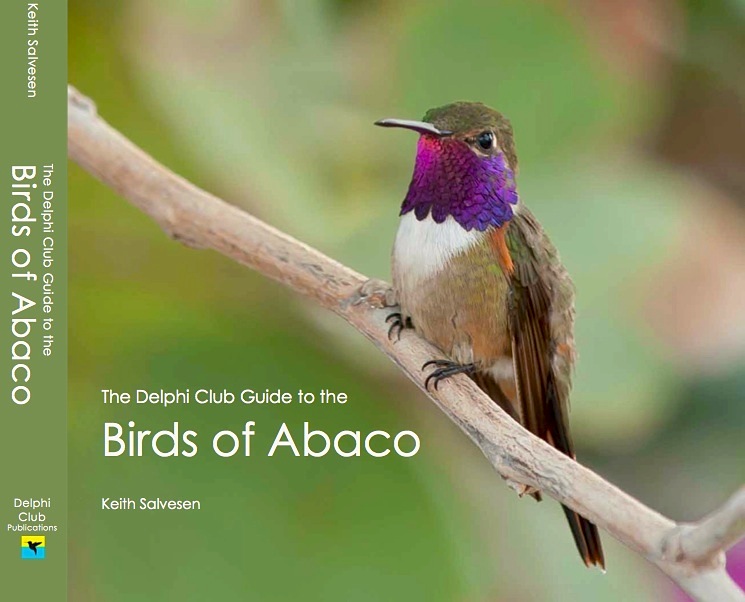
It is exactly 10 years since The Delphi Club Guide to the Birds of Abaco was launched in the Great Room at the Delphi Club, Abaco, Bahamas. Availability of the book had run its course by 2020. A decade after publication, preparations to compress the entire book into a downloadable e-book are now complete.

Cuban Emerald (M) – Keith Salvesen

FREE AS A BIRD

It would be slightly disenchanting to find that the whole book is being printed out without checking first. This can be simply done using rollingharbour.delphi@gmail.com

Painted Bunting – Tom Sheley
I am asking those who choose to download the book to make a charitable donation of $10 (‘a dollar a year’ since publication) to a local wildlife-related cause or to a local school or an organisation that inspires kids to get involved in the natural world around them. Or more than $10 by all means. There’s plenty of choice on Abaco, as I am sure there is for kind followers of Rolling Harbour who live beyond the island’s shores.

Great Egret – Tom Sheley

A ‘SNACKING’ OF SANDERLINGS

Sanderling Partytime – Keith Salvesen

BAHAMAS BIRDING ROYALTY . DELPHI LODGE MARCH 2014

Tony White . Bruce Hallett . Woody Bracey

. Un-Royal Author

Unknown's avatar

BIRDS OF ABACO: Frequent Fliers (1)


American Redstart (m)

ARE WE NEARLY THERE YET?

We birds want to know what’s going on please. The rest of the ‘Abaco Bird Book Club’ have nominated us to find out. So:

Q. How likely is it that we ‘guys’ will somehow be getting inside a machine and turning up in people’s homes / on their phones (whatever those are). A. Very

Q. How long must we wait before being admired on a screen by humans – we all quite fancy that. A. A week or so

Q. Are we birds going to get any seeds / insects / berries / fish in return. A. No. You will be free. And free as a bird as well.

Photo Credits: Gerlinde Taurer; Tom Sheley; Tara Lavallee; Craig Nash; Bruce Hallett