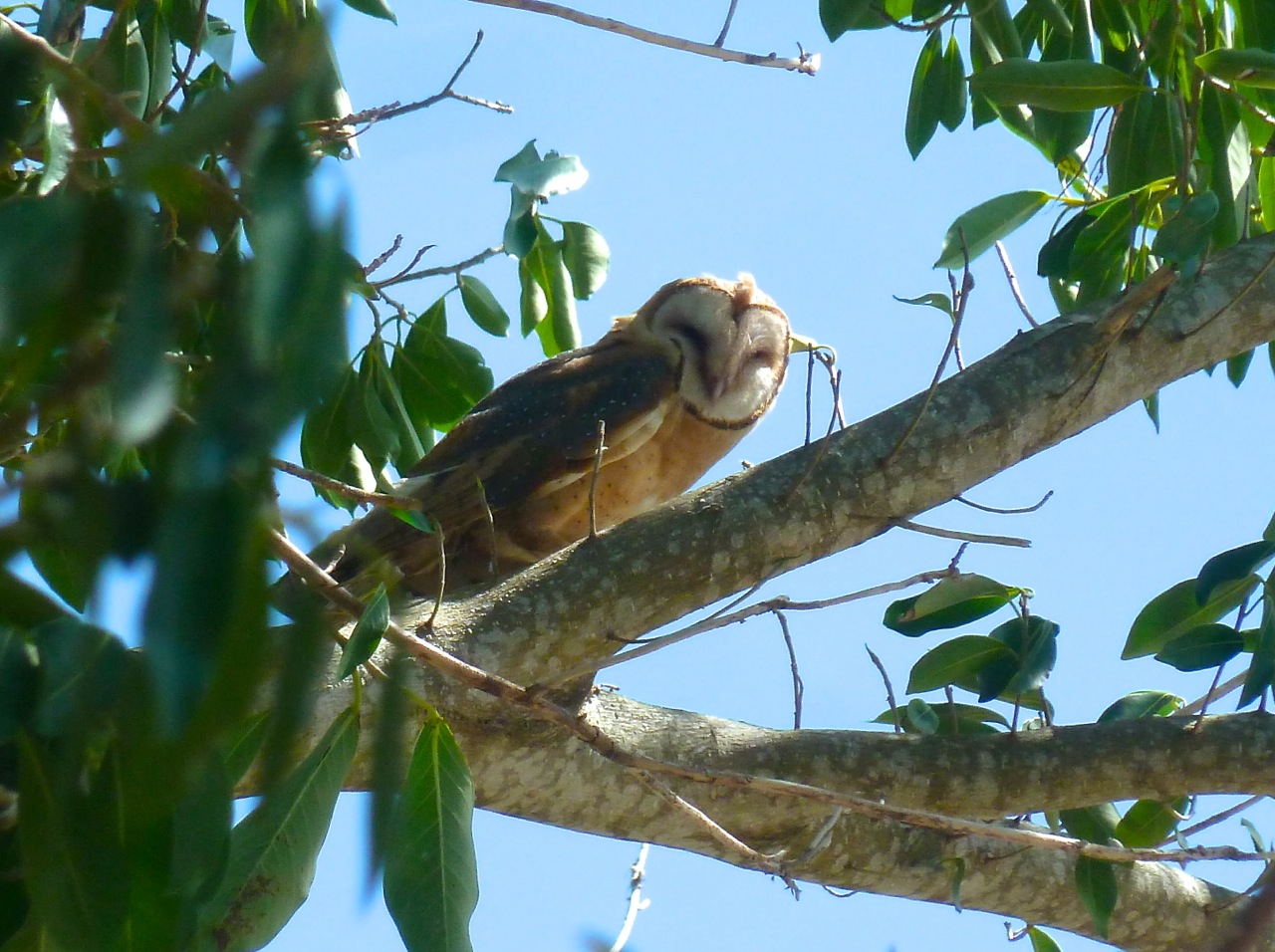
Realistically, the Barn Owl (Tyto alba) is the only owl you are likely to see – and hear – on Abaco. The species is permanently resident, which is a good start in that the opportunities for sighting one exist year-round. Although they are not at all common they can be found in particular locations, for example the Treasure Cay area. There are two other owl species recorded for Abaco: the Burrowing Owl, a rare vagrant (post coming soon); and the Northern Saw-whet Owl, a vanishingly rare vagrant recorded a handful of times that I don’t propose to feature unless and until it decides to visit Abaco more frequently…
Barn Owl, Treasure Cay, Abaco Bahamas (Becky Marvil)
The shrill banshee cry of the Barn Owl – known in many places as the ‘screech owl’ (which, strictly, is a different owl species) – is unmistakeable. Mainly nocturnal, they fly noiselessly like white ghosts in the night. If you are lucky enough to see one in daytime, you’ll be struck by the beautiful heart-shaped face and (if close enough) the delicate markings. We are lucky enough to live in barn owl country in the UK. In summer we often hear them at night as they hunt for rodents and other small mammals. Last night, for example, at 2.30 a.m. Barn owls also make an intimidating hissing noise.
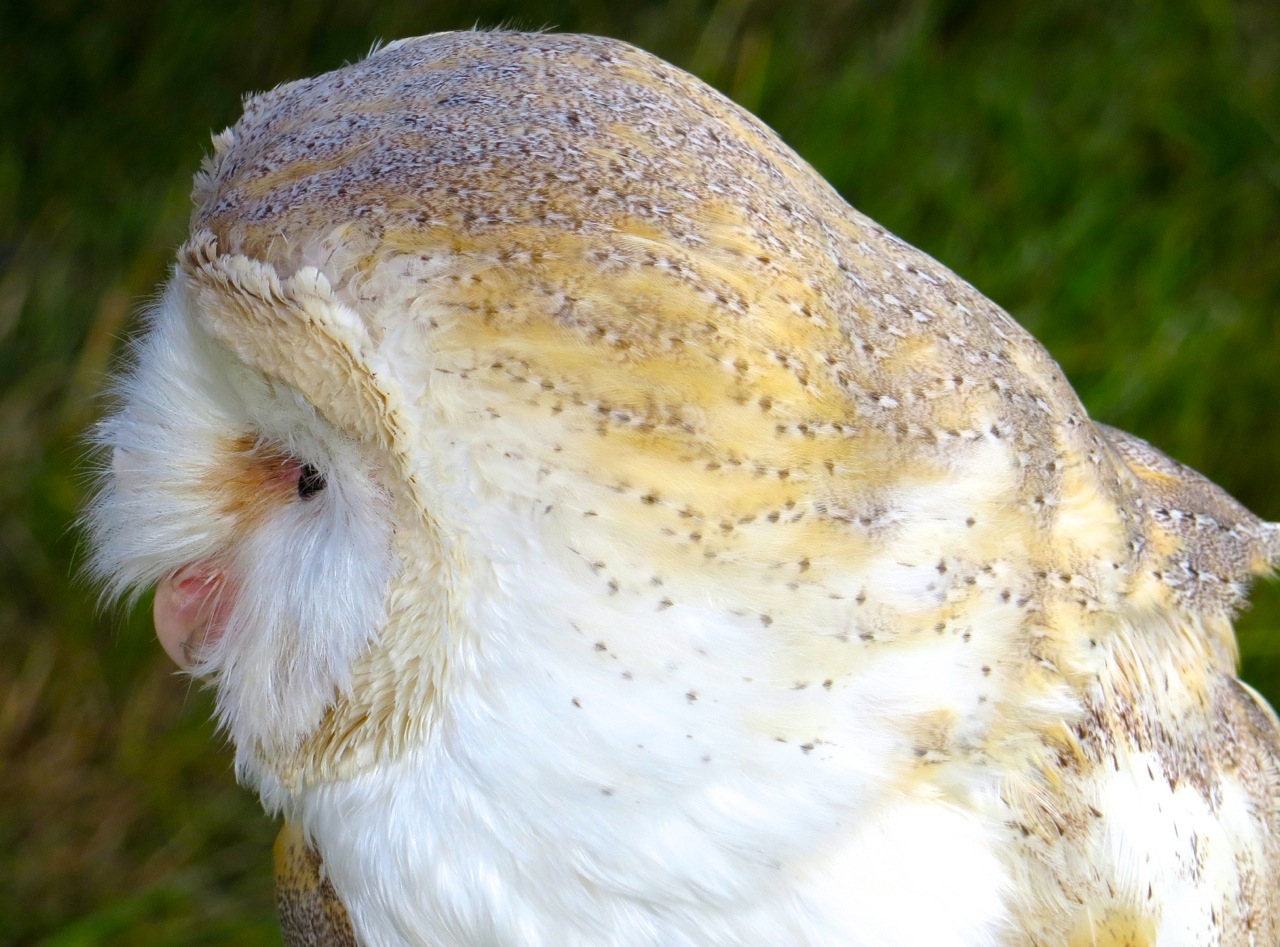
Both photos above were taken on Abaco. Woody Bracey’s header image is featured in “THE BIRDS OF ABACO“. Becky Marvil’s photo was taken near Treasure Cay. I’ve never seen a barn owl on Abaco, but I’ve been lucky enough to get close to a couple – last summer in Dorset, and last week in Cornwall. For those who have never seen one, here is a gallery of my own images that show what wonderful birds they are.
This close-up of a barn owl shows the typical speckling on its pure white front, and the wing patterns
This fluffy baby barn owl was recently rescued and is being cared for in a sanctuary before being returned to the wild. Whimsy is rarely permitted in this blog, but seriously, folks – cute overload!
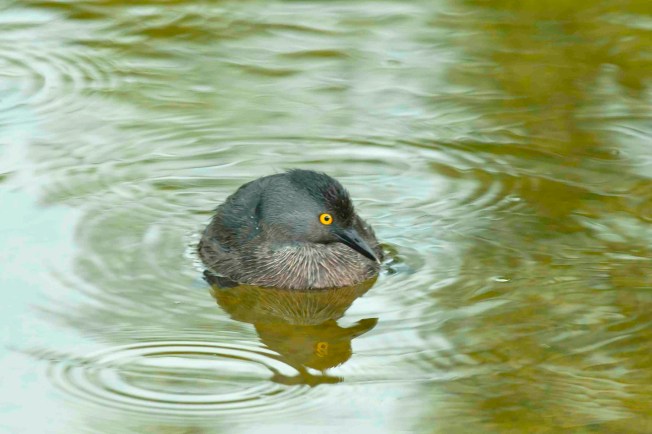
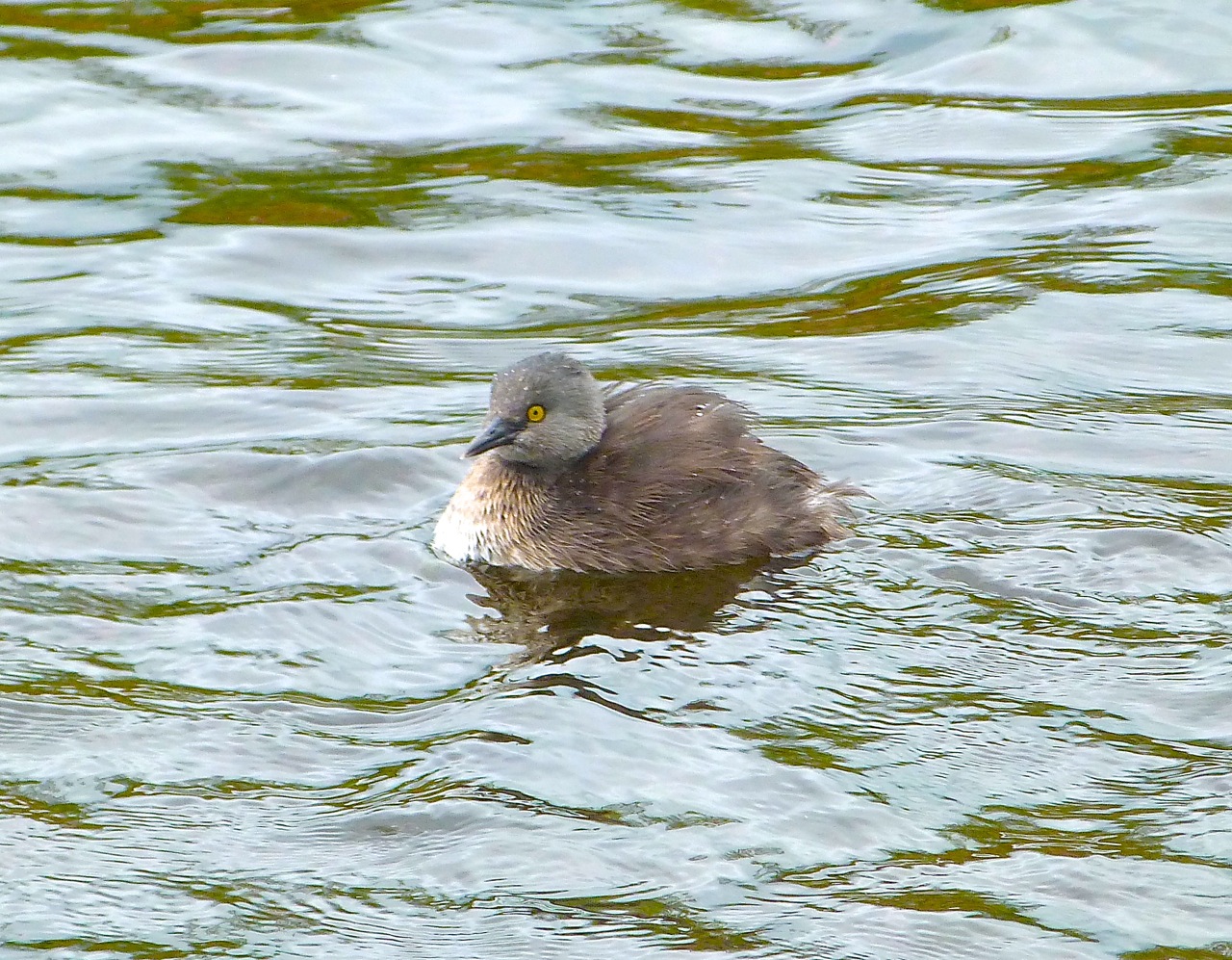
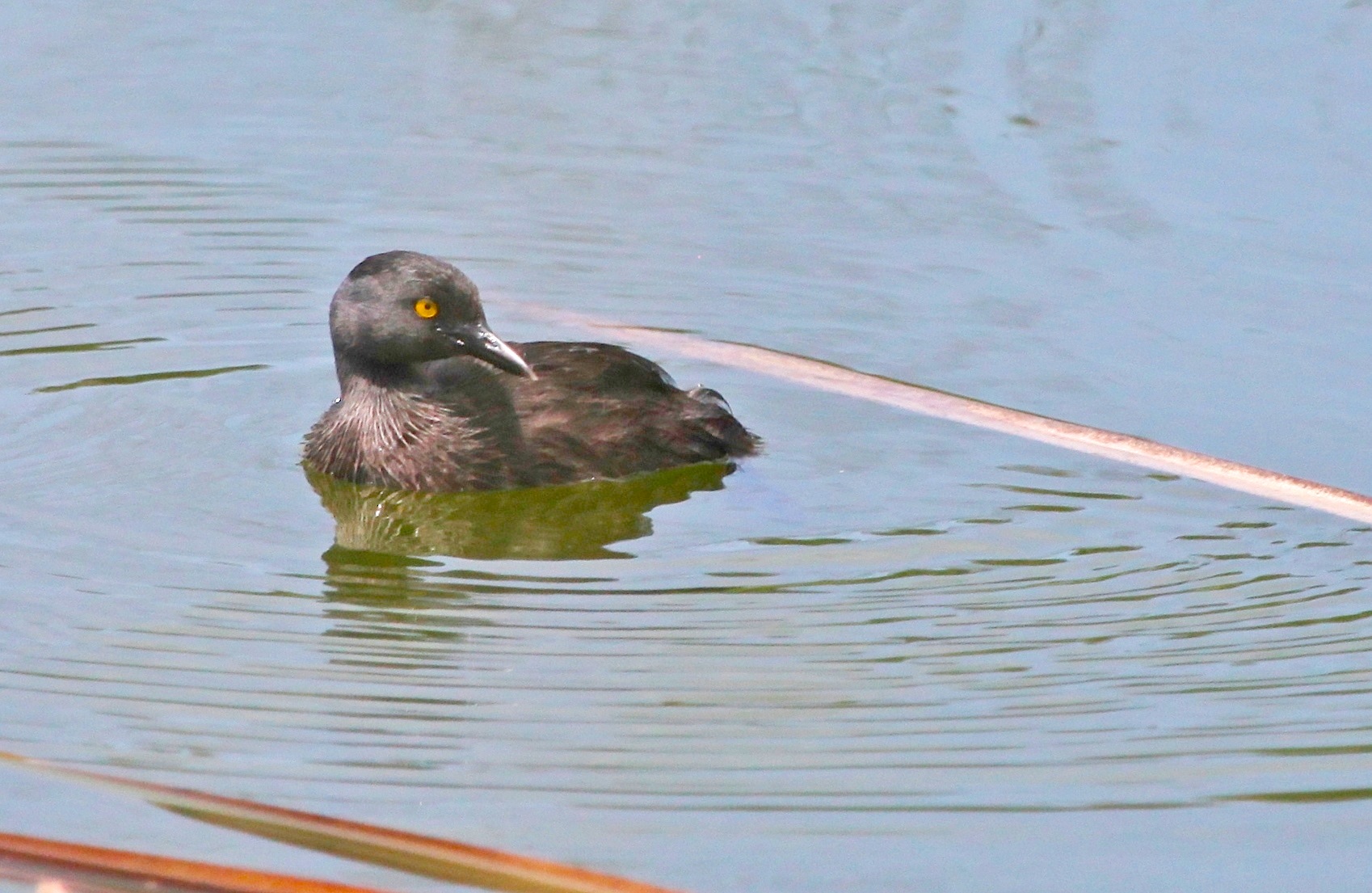
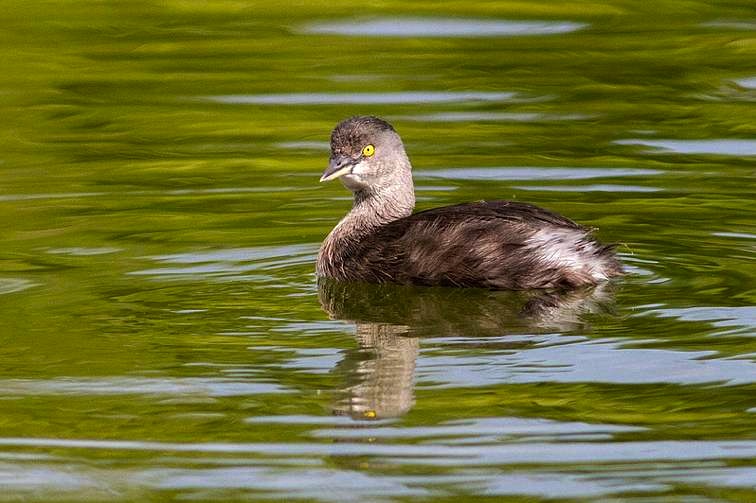
The Least Grebe Tachybaptus dominicus is an adorable little dabchick that can be very entertaining to watch. These small birds are able to stay underwater for long enough to ensure they always bob up further away from you than you expect. They can easily stay below the surface for 20 seconds, and may dive again only a few seconds after surfacing (their taxonomic name comes from a Greek compound meaning ‘fast diving’). While underwater, the grebe forages for tiny fish, crustaceans, frogs and aquatic insects. In the breeding season the striped chicks are sometimes carried on a parent’s back.
A GALLERY OF LEAST GREBES
For the sake of completeness, there is one other dabchick species found on Abaco, the closely related Pied-billed Grebe. Here’s how to tell them apart: the Least has a bright golden eye, while the Pied-billed is slightly the larger of the two species, and has a dark eye and a black beak-ring in the breeding season.
PIED-BILLED GREBE
Photo Credits: Tom Sheley (3); Peter Mantle (2); RH (2); Gelinde Taurer (1); Tom Reed (1); Wiki – PBG (1)
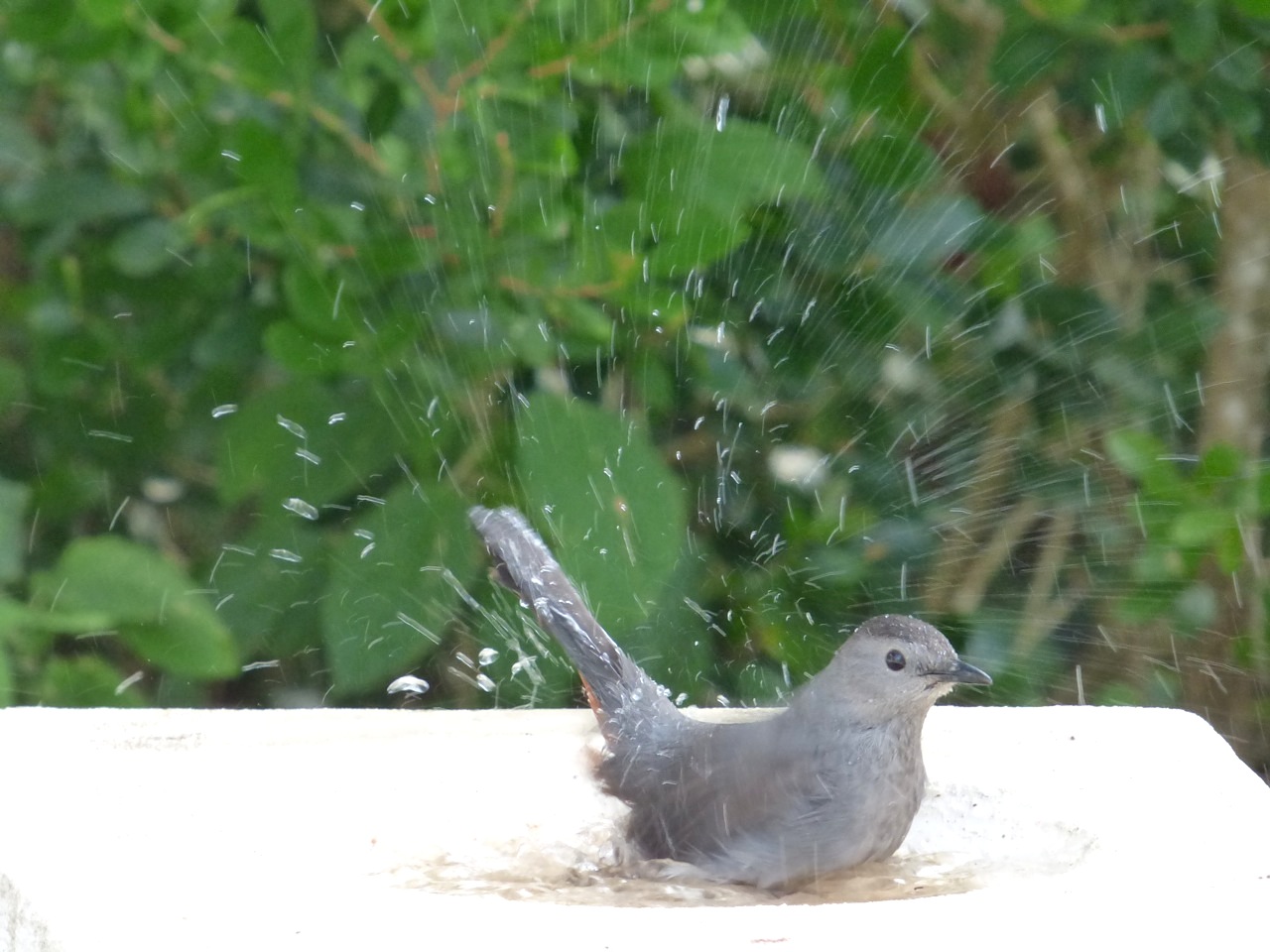
GRAY CATBIRDS & BIRDBATHS ON ABACO: HANDY FOR A DRINK OR A DIP
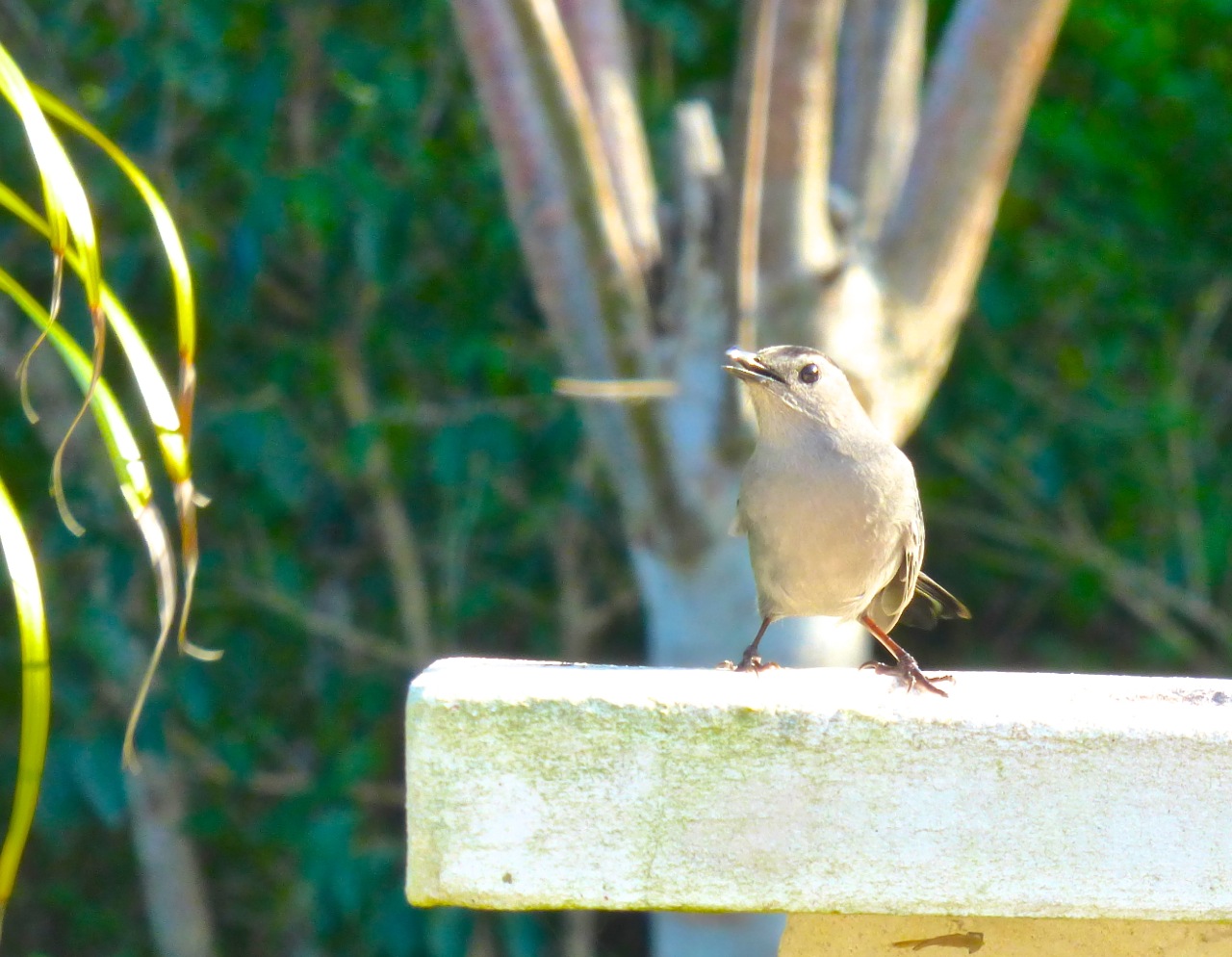
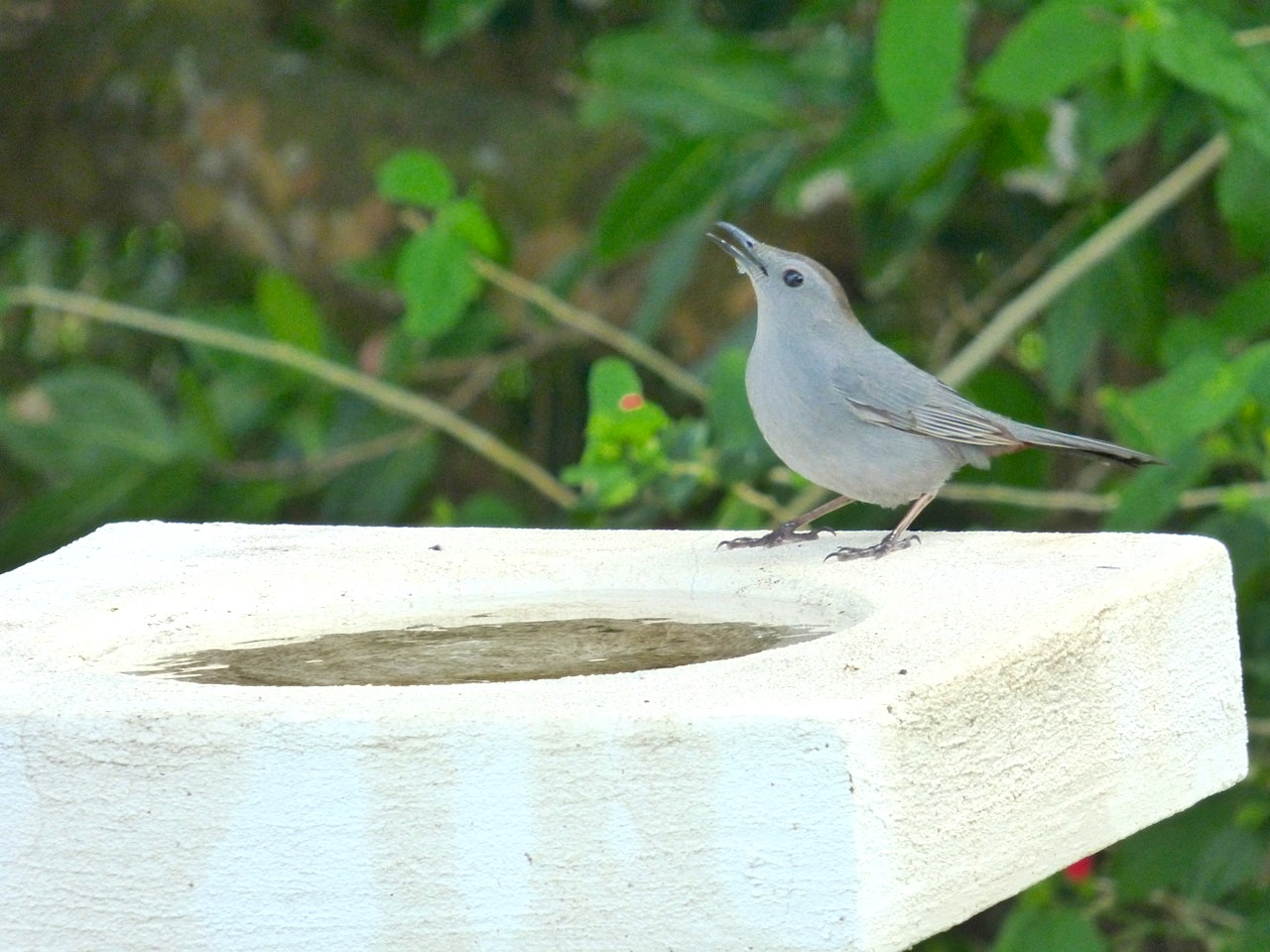
The birdbaths at Delphi are not as popular as the feeders, but certain species seem to make the most of them. Among the frequent users are Greater Antillean Bullfinches, Black-faced Grassquits and Gray Catbirds Dumetella carolinensis. The bird above and in the next 2 photos was one of several species using the poolside birdbath on a hot day. It seemed to pause after taking a drink, as if to enjoy the water trickling down their throats (or is that just me and Kalik?).
This Gray Catbird started the day with a good drink at the birdbath near The Shack. There seems to be a certain amount of gargling and dribbling going on, but clearly it is enjoying some fresh cool water.
This catbird was tempted to the birdbath at the far side of the pool on a very hot afternoon. Not just to drink from, but actually to get in for a dip. And then a major bout of splashing about… Note the characteristic russet undertail coverts of this bird, also visible on the header bird. And if you want to know how this species got its name and what it sounds like, this will explain all…
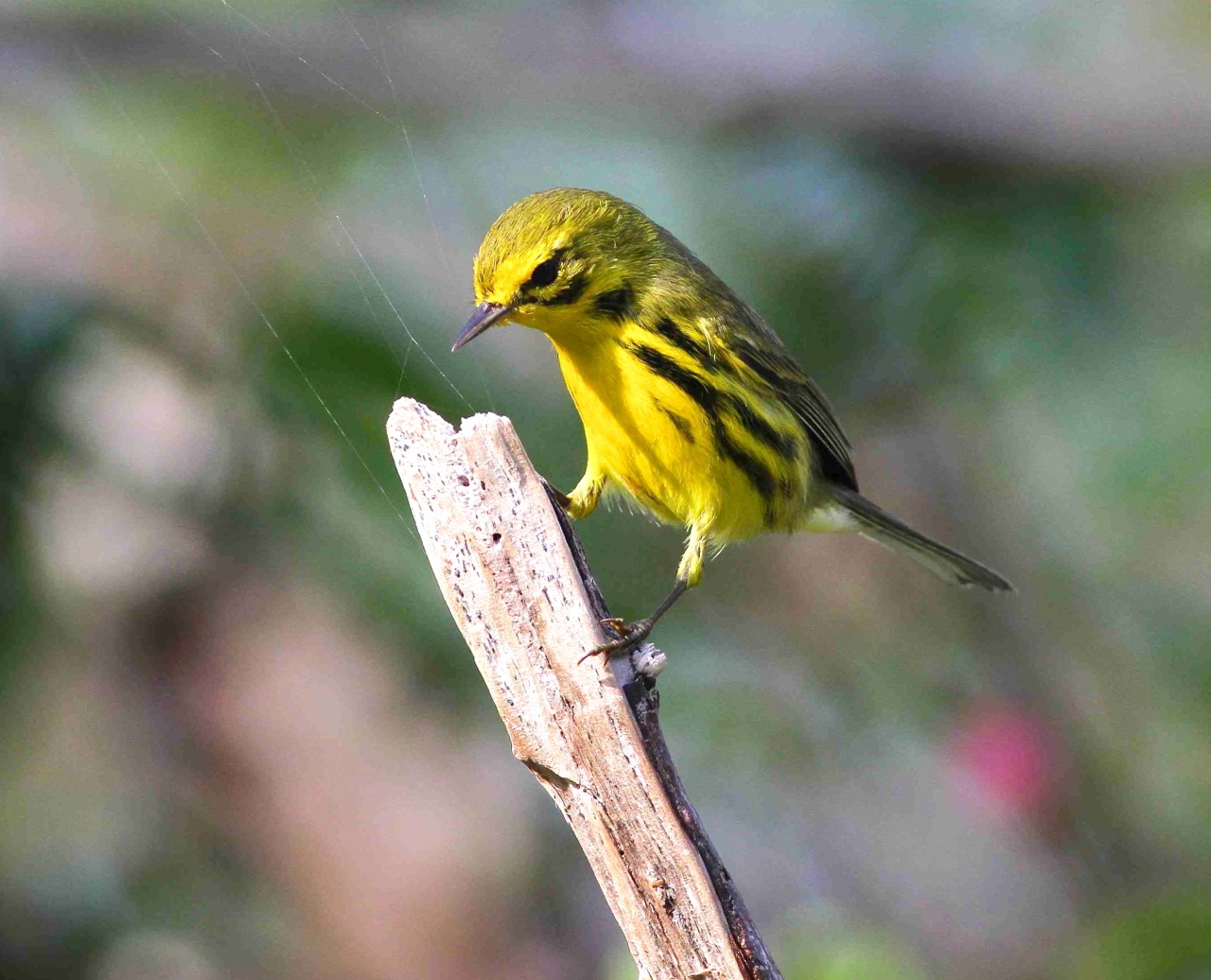
PRAIRIE WARBLERS ON ABACO: CHIRPY WINTER RESIDENTS
There are 32 warbler species that migrate south and joinABACO’S 5 PERMANENT RESIDENT WARBLERSfor their winter break. Some, like the Prairie Warbler Setophaga discolor, are common; a few are quite rare; and one, the endangered Kirtland’s Warbler, is a ‘bird of a lifetime’ if you manage to see one. Or even hear one.
The Prairie Warbler prefers open areas to coppice and pine forest, though despite its name it does not inhabit prairies in the summer months. Scrubland and backcountry wood margins are a favourite haunt. This is a tail-bobbing warbler species, and is often seen low down in foliage or actually on the ground.
The wonderful photographs below were all taken on Abaco by Gerlinde Taurer, whose collection of bird species photographed on the island was used extensively in the “THE BIRDS OF ABACO“, including one of the Prairie Warblers below (awarded a full page).
The overall impression is of a small yellow bird with darker wings and back, and conspicuous black streaking. However there are considerable variations in the colouring and patterning within the species depending on age, sex, season and so on. One indicator of the species is a dark line through the eye. Mostly, there will be a patch of yellow above and / or below the eye. However, all the birds on this page show differences from each other in their markings, and one can only generalise about their appearance.
Prairie Warblers forage for insects on tree branches or sometimes on the ground. You may also see them ‘hawking’ for insects. They have two types of songs, sung at different times – for example in the breeding season, or when territorial assertion is called for. Here is one example:
Mike Nelson Xeno-Canto
These warblers also use a simple chipping calls of the ‘tsip’ or ‘tsk’ kind.
Paul Marvin Xeno-Canto
Though currently IUCN listed as ‘Least Concern’, numbers of this species are declining. The two main threats to them are mankind (habitat loss); and nest parasitism by, in particular, theBrown-headed Cowbird, a bird which causes problems for many other species.
Credits: All photos Gerlinde Taurer except header Wolfgang Wander; Audio Clips Xeno-Canto; Range map Cornell Lab
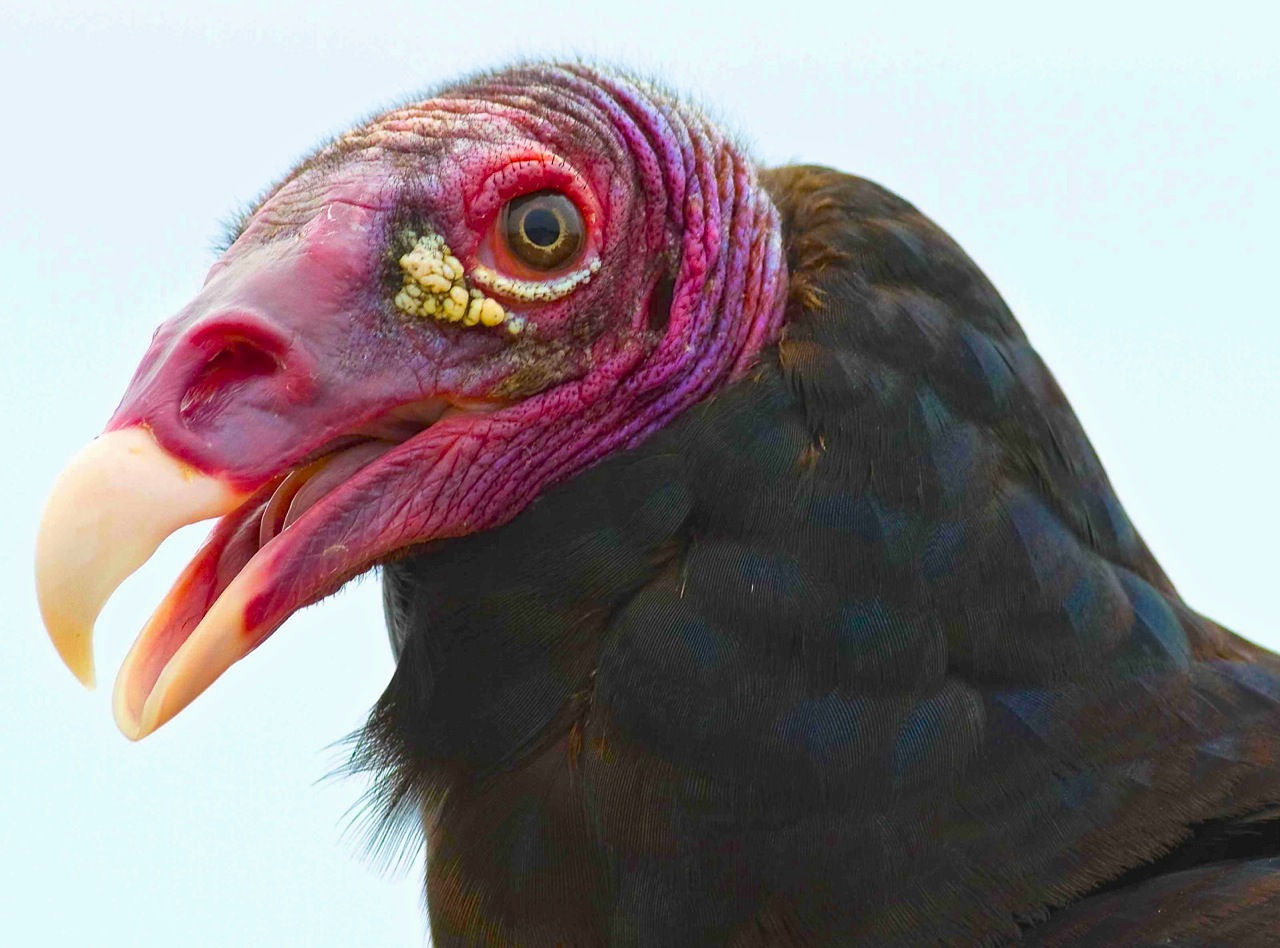
“WARTS & ALL”: THE TURKEY VULTURE IN ALL HIS GLORY
This wonderful picture taken by Irish photographer Craig Nash appears on page 215 of “The Birds of Abaco”. It was awarded a full page to itself, and a few people have asked about this authorial / editorial decision. The simple answer is that the book is full of lovely pictures of gorgeous birds. Too much perfection can become tedious, and an occasional corrective is called for. The Turkey Vulture Cathartes aura is often described in detail, but only a really good close-up will reveal a bird that only its mother could love unconditionally.
The text for the book is as follows: “Graceful in flight as they wheel overhead singly or in large groups catching the thermals, these large raptors are rather less attractive at close quarters. The head and neck are completely hairless. They lack a syrinx (the avian equivalent of a larynx) and can only grunt and hiss.These vultures are carrion feeders, with a sense of smell so keen that they can detect rotting flesh from afar.They usefully help to clear up road-kill on the Abaco Highway. Their defence mechanism – and what a good one – is to vomit foul-smelling semi-digested putrified meat onto a perceived threat”.
Double-click on the image and you will be able to count the hairs on his chin. Go on. Nothing to lose. You can find out plenty more about these fine birds and their somewhat revolting habits including 10 Essential Facts, what they sound like, the statistical percentage photographed from below, and a free yet horrible Metallica song at‘CARRION SCAVENGING’: TURKEY VULTURES ON ABACO
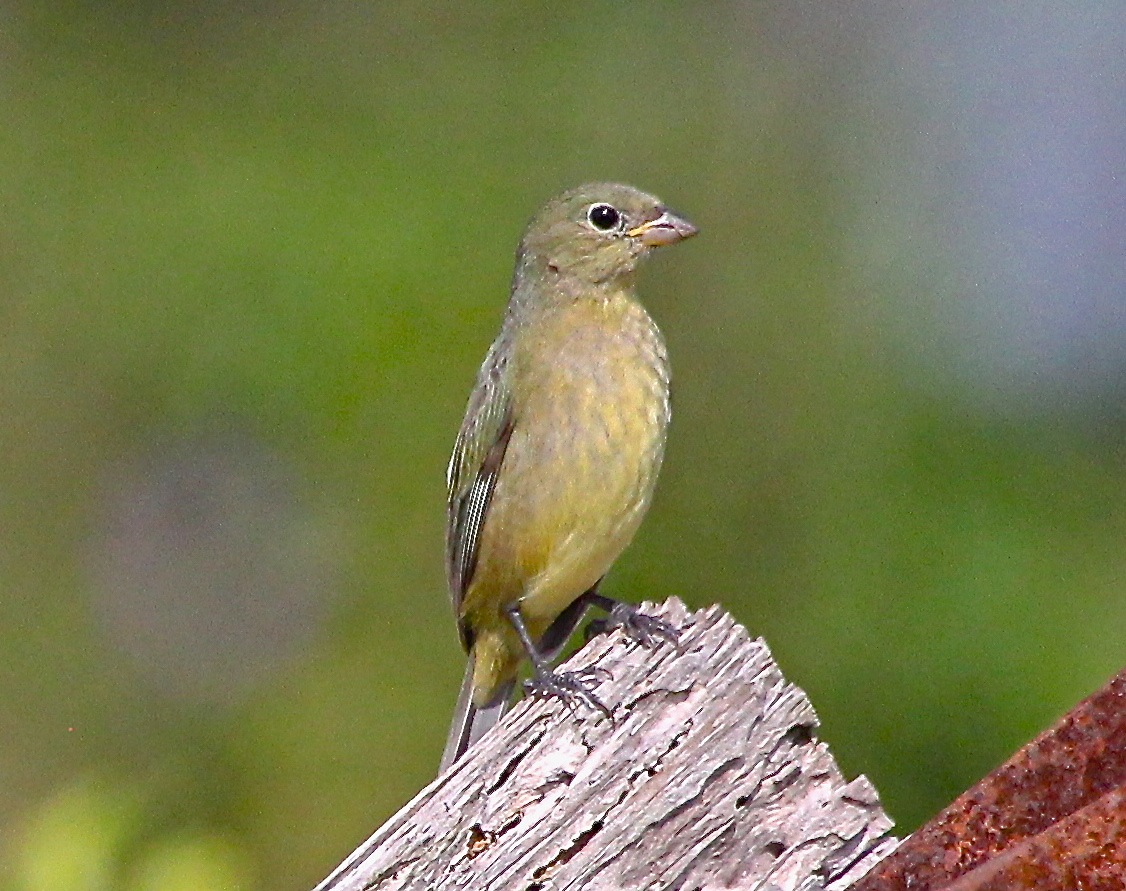
‘RAINBOW BIRDS’: GORGEOUS PAINTED BUNTINGS ON ABACO
The Mnemonic: that little aide memoire that helps you easily remember a fact. A suitable example hereabouts would be one for remembering the order of taxonomy: Kids Prefer Cheese Over Fried Green Spinach (Kingdom, Phylum, Class, Order, Family, Genus, Species). ‘ROY G BIV’ or ‘VIBGYOR’ were my childhood ones for the colours of the rainbow in order. Now I’d just look at a picture of a Painted Bunting. Who cares about the exact order? The colours are all there!
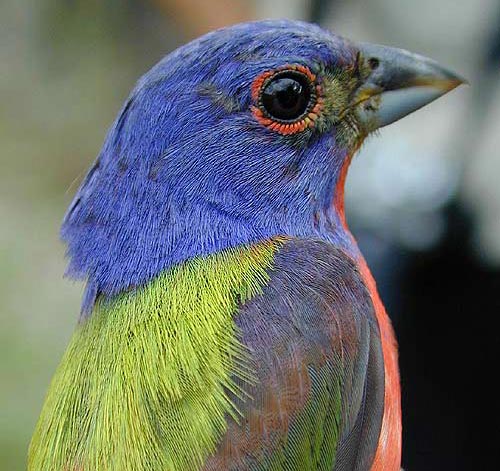
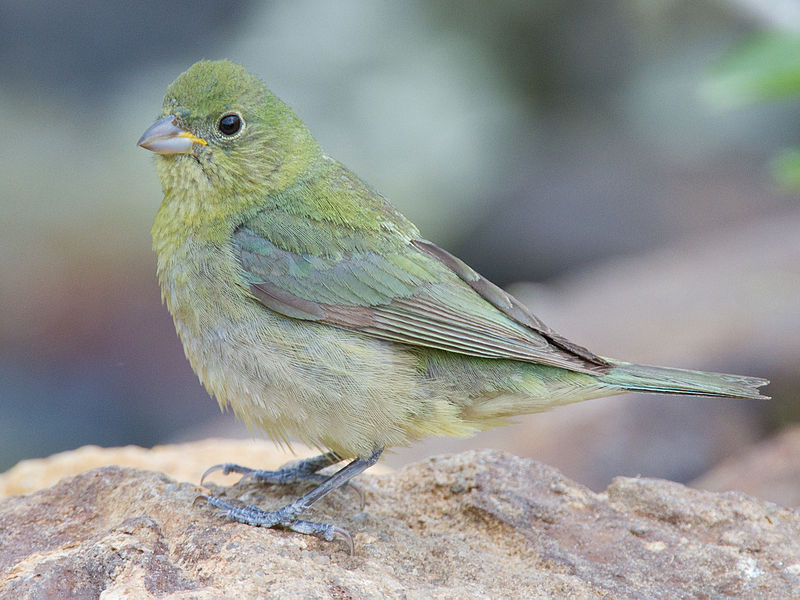
PAINTED BUNTINGS (Passerina ciris) belong to the Cardinal family (Cardinalidae) native to North America. Some would argue that the male Painted Bunting is one of the most beautiful birds. There are no ID problems with the male – once seen, never forgotten. However, these birds are inclined to skulk a bit, so despite their vivid colouring they aren’t always easy to see amid foliage. The plumage of female and juvenile Painted Buntings are green or greeny-yellow and may be even harder to see in coppice. The one below is an immature female.
These buntings are shy birds, but luckily their keenness for seeds outweighs their natural diffidence, and they enjoy feeders. They also eat small invertebrates such as spiders, snails, grasshoppers, and caterpillars, especially in the breeding season.
Male painted buntings are only too well aware how gorgeous they look (‘You’re so vain – I bet you think this post is about you…’). They may go in for ostentatious displays, including flying like a butterfly or all fluffed up or with quivering wings. Or all three. Sometimes this is to upstage another male; mostly it is to impress the laydeez.
Russ Wigh, Xeno-Canto
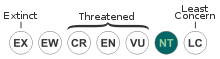
Unsurprisingly the painted bunting was at one time very popular as a caged bird. Now though, it is illegal to catch or keep one. They are IUCN listed as Near Threatened and are protected by the U.S. Migratory Bird Act.
The photos above all come from the photographic archive amassed for “The Birds of Abaco” project. Credits to Tom Sheley, Tara Lavallee, Bruce Hallett, and Erik Gauger. Below is an omnium gatherum consisting of a gallery of rather good painted bunting photos from Wiki; a good video of PABUs singing; and for light relief a largely irrelevant yet quite charming 10 minute cartoon ‘The Rainbow Bird’ based on a South American folktale.
BLACK-BELLIED WHISTLING DUCKS ON ABACO: MORE SIGHTINGS & IMAGES
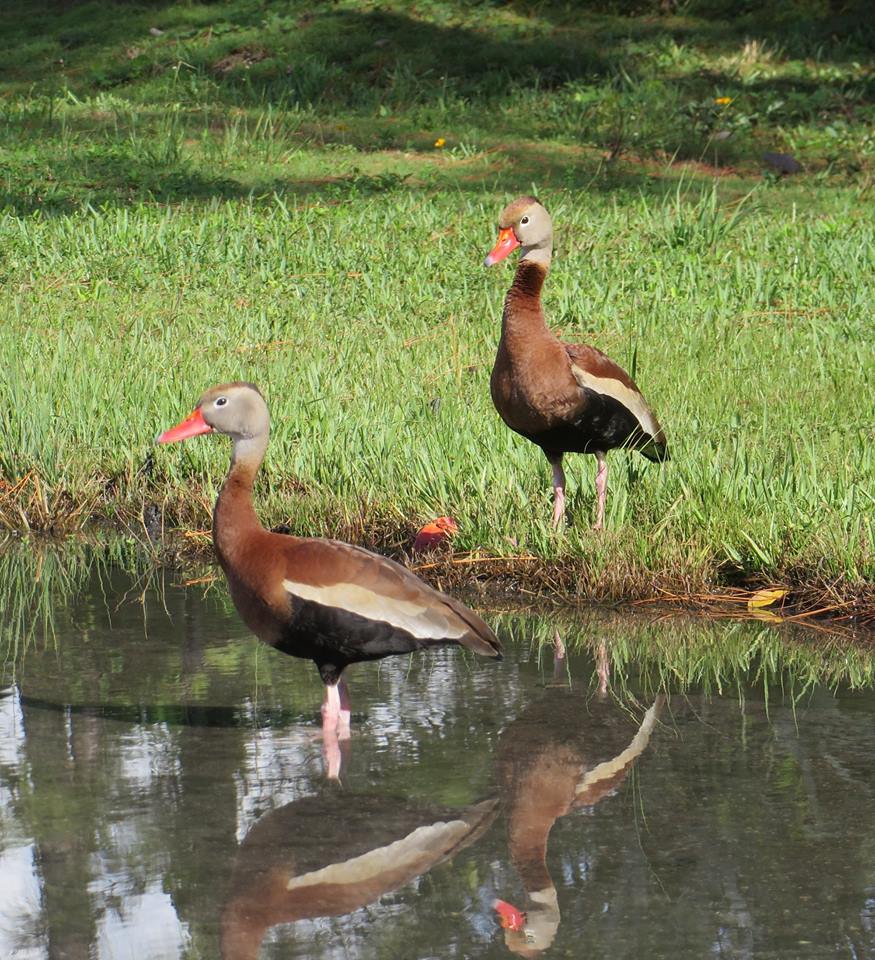
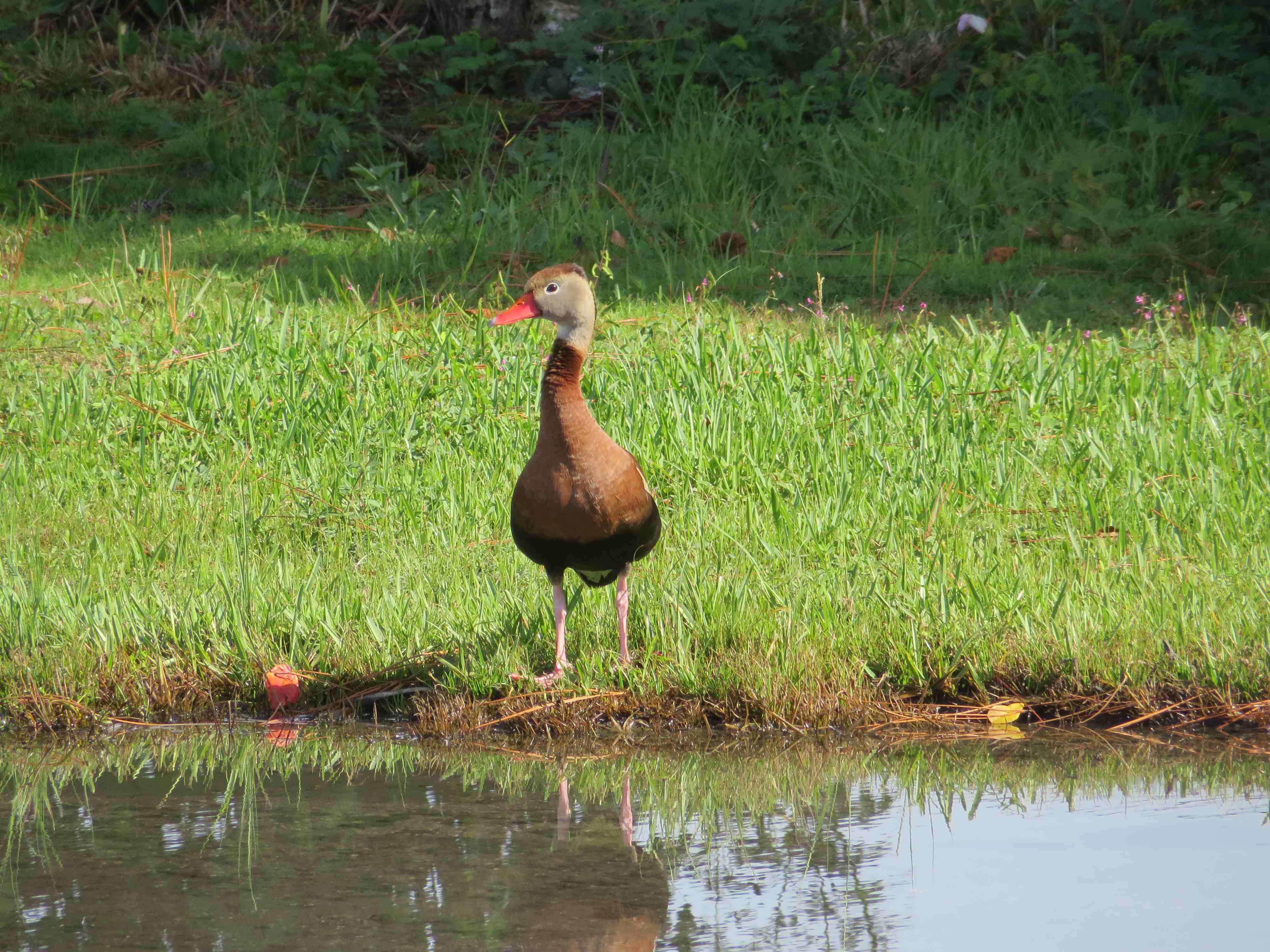
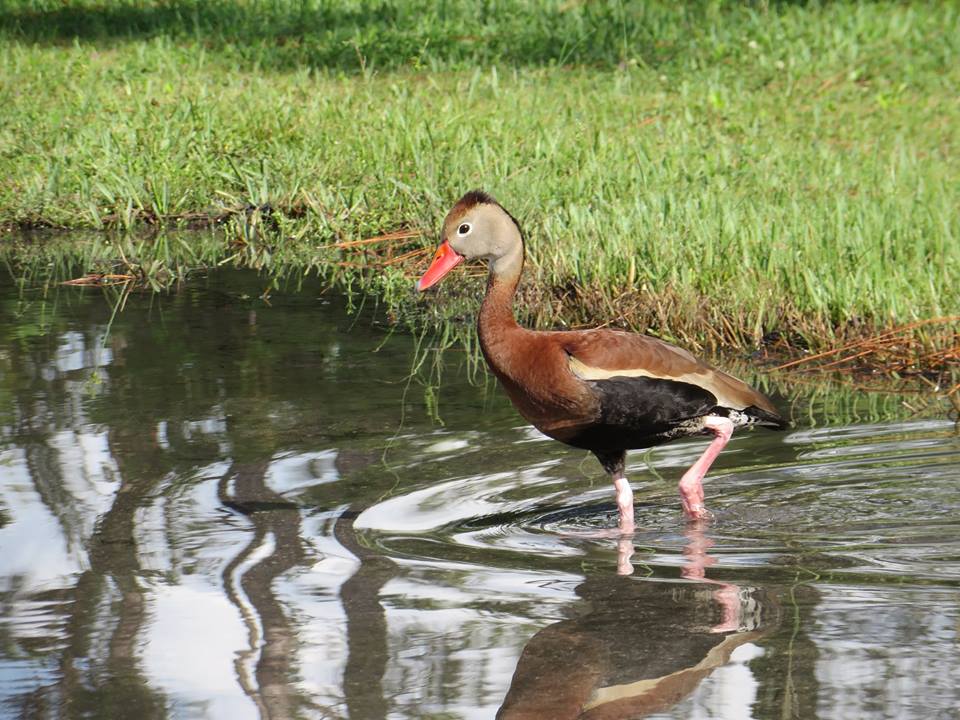
I have only just posted about this new duck species for Abaco HERE. Yesterday Liann Key Kaighin encountered a pair of these ducks at Marsh Harbour Airport. She took some great shots of them. They certainly look very appealing little birds. Her first report was “Thursday June 12, 2014, around 9am, this pair flew in together to hang out in the water puddle. They were very unafraid. At ZigZag Airways, MH Airfield, Abaco”.Since previous sightings have been of 6 birds together, either the original group has split up as they have travelled north over the week; or another pair have chosen to inaugurate the new airport with a new bird species by landing there. I asked Liann about the numbers and she says that this could be the case: “These two came in on the wing from south and I watched them for half an hour. No more showed up”.
There have been a few other reports from the same general area, and I expect there’ll be quite an archive of photos building up. Woody Bracey is the person to report sightings to. That way, he can build the picture of how many of these visitors there are, and how they are moving around the island. Contact him at edb64 [at] hotmail.com
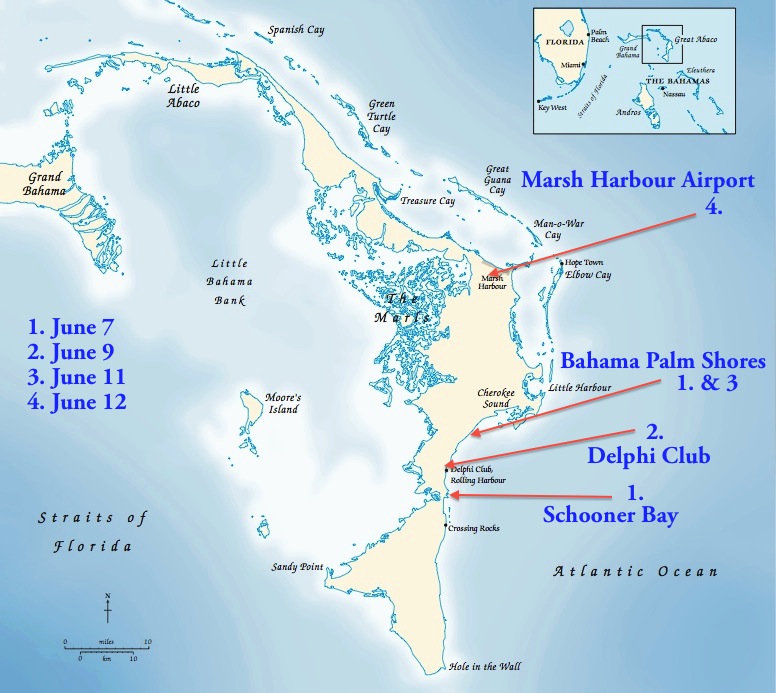
CHART OF REPORTS OVER THE WEEK SINCE THE DUCKS WERE FIRST SPOTTED
Photo Credit: Liann; Map by cartographer Martin Brown drawn specially for “The Birds of Abaco”
A STRANGE COINCIDENCE
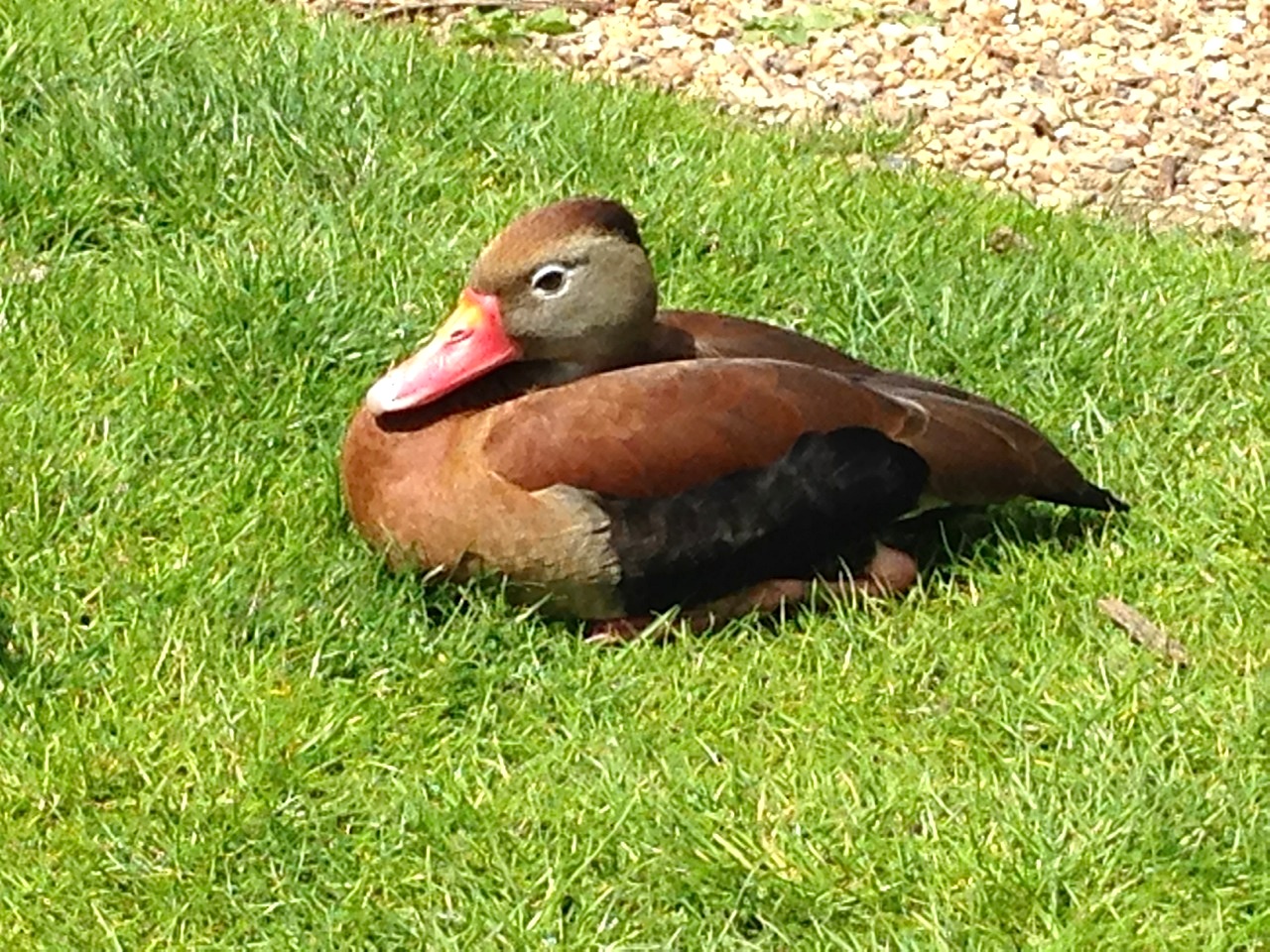
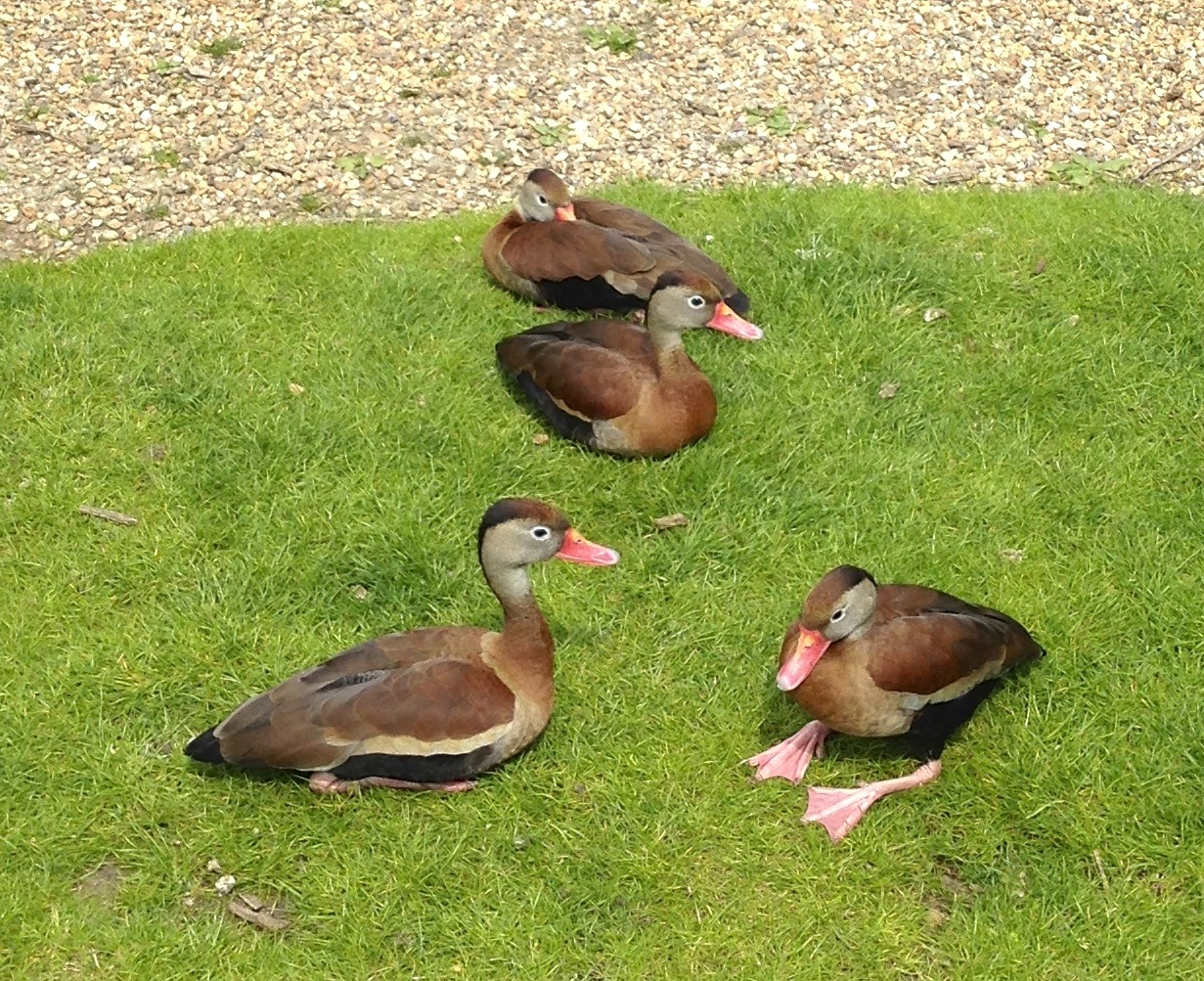
In my last BBWD post I added a photo from Wiki and saw it was actually taken at the WWT Wetland Centre, Barnes in West London UK. I am briefly back in London (quite close to Barnes), though without my camera. Any camera at all. Except on my phone. So today I paid a quick visit to see if the BBWDs were in residence. They were, and I took a few shots of them and various other species. Frankly the ones I took when the sun was behind the clouds are useless; the ones in the sun are OK. So here are a few. But they are NOT the Abaco ducks, just cousins. And I’ll definitely be going back at the end of the month, with a proper camera!
I made a couple of sound recordings but one is ruined by an emergency vehicle siren that started up; and the other by a low-flying aeroplane making its descent to Heathrow Airport. The Wetlands Centre is a rural oasis ingeniously built round huge disused gravel pits by the Thames; but it has the drawback of being right on the flight path… Not sure if they are usable, thought the whistles are clear!
NOTE EPONYMOUS BLACK BELLY…
I took a brief (20 secs of your time…) phone video of the pond with a number of different waterbirds in and around it. The BBWDs are in the foreground. The interaction between the species was quite amusing. The moorhen was clearly in charge of them all… You’ll hear a bit of whistling – more a feeble squeak, really (and an aeroplane passing overhead). You’ll see that when the moorhen starts its casual harassment, the underside of the wing of the startled duck is completely black.
BLACK-BELLIED WHISTLING DUCKS: A NEW BIRD SPECIES FOR ABACO
In March 2014“The Delphi Club Guide to the Birds of Abaco”was published. It contains a checklist of every species recorded for Abaco that was accurate on the day of publication. So it was with a mix of excitement (new species!) tinged slight disappointment (the book is already out of date by June!) that I heard reports of Black-bellied Whistling Ducks Dendrocygna autumnalis being seen on Abaco. Followed by photographs to prove it.
The first report came from Woody Bracey in his account of a day in the field on June 9th in which 40 bird species were seen. He concluded the report:“Most remarkable of these sighting were the 5 Black-bellied Whistling Ducks. This species has been reported before on Andros and Grand Bahama but never on Abaco. 5 were seen clearly in flight with their bright white central upper wing patches, dark underbelly, red legs and bill and long neck. A Yellow-crowned Night Heron spooked 8 Parrots feeding in a Gumbo Limbo Tree when this small flock of whistling ducks flew by affording a good look coming, overhead and going. Unfortunately I did not get a photo even with camera in hand. They have bred in Cuba but not in the Bahamas”.
So, a clear sighting but no photographic evidence. Until the following morning, yesterday June 10 around breakfast time, when at the Delphi Club Lucy Mantle happened to notice some strange ducks right in front of the Club. She grabbed a camera (possibly her phone?) and took a couple of quick shots. Peter Mantle checked Hallett, the go-to field guide, and saw at once that these were not West Indian Whistling Ducks (a species found on Abaco). So he put the word about, adding Lucy’s photos. Hers are almost certainly the first ever images of this species on Abaco.
STOP PRESS 12 JUNEI’ve had an email from Woody Bracey saying that he first photos documenting the Black-bellied Whistling Ducks were in fact taken Saturday June 7 on the Schooner Bay Dock by Glen Kelly. These photos are the ‘official documenting ones’ so I’m afraid that as things stand, Lucy moves to silver medal position and Tara to bronze…
Black-bellied Whistling Ducks, Delphi Club (Lucy Mantle) – first second species photo on Abaco?
Tony White, compiler of the checklist, responded to Peter:“Congratulations! you are the first to document a new species on Abaco since the book and checklist came out. These are Black-bellied Whistling-Ducks, casual visitors to the Bahamas. They are increasing rapidly in Florida and I think we can expect them to be breeding somewhere in the Bahamas in the next few years.There are two subspecies and they both have been seen in the Bahamas. I’ll let Woody try to figure out which these are. Thanks for being so alert and getting these photos”.
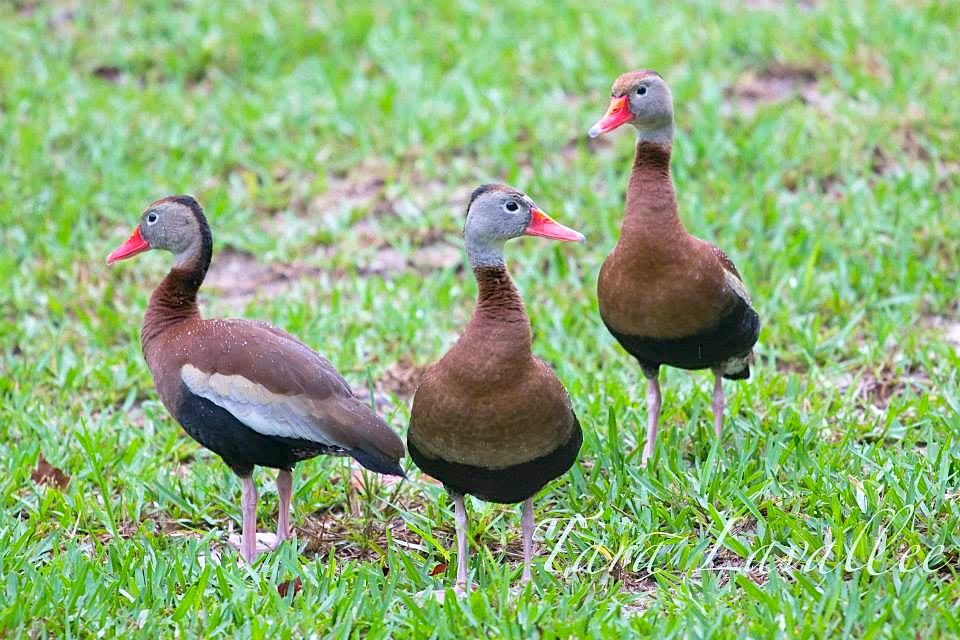
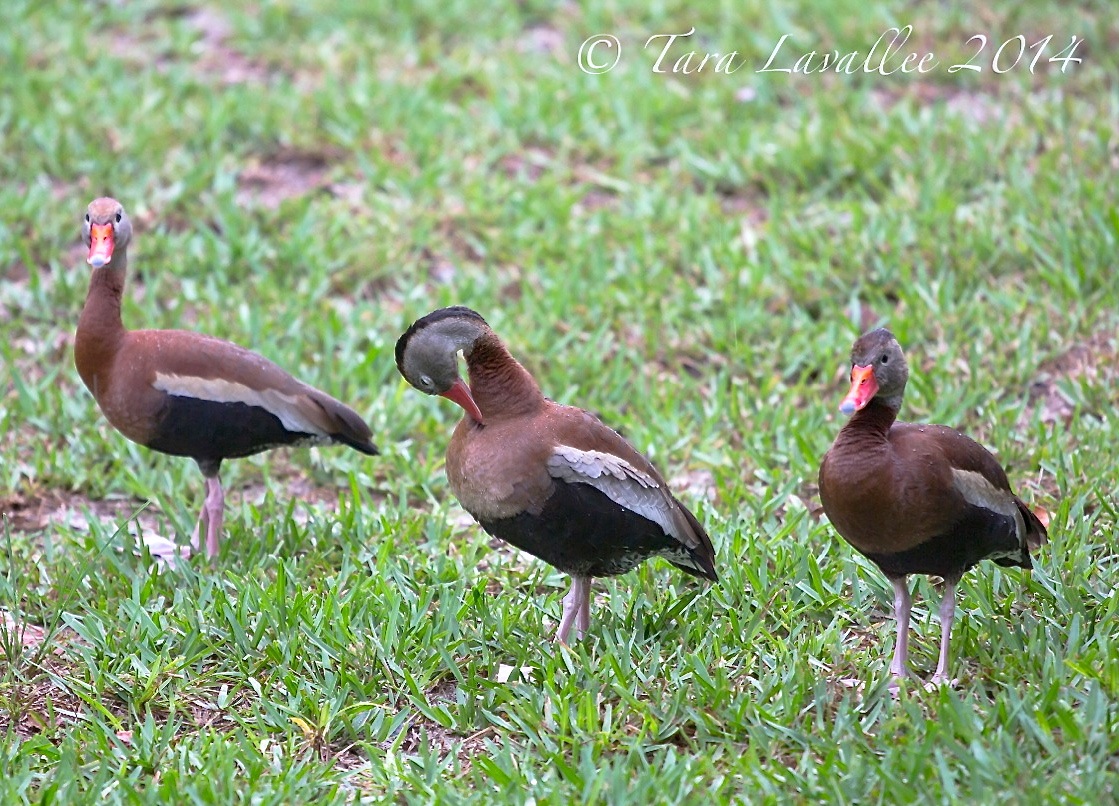
The birds must have moved gradually north during the day, and further sightings were reported online. Tara Lavallee took some photos of them in her yard a few miles north of Delphi and posted them on FB asking “Six of these beauties visiting my yard. Anyone know what they are?” 12-year old birder Chris Johnson was very quick off the mark with the correct ID as Black-bellied Whistling Ducks. Hector Morales had seen them flying over his house the previous day. I’ve seen no further reports, but I am really pleased to be able to feature Tara’s photos, which she kindly emailed earlier today. Her bird photography credentials are high – her wonderful photo of a Bahama Woodstar feeding from a flower takes up the whole of p43 of “The Birds of Abaco”.
This is what they sound like. If you hear this call – grab a camera!
Paul Marvin @ Xeno-Canto
The present range of this species is shown in the Cornell Lab graphic below.It seems that the range is starting to expand, and that these ones are most likely to be visitors from Florida. It remains to be seen whether these ducks will remain vagrant curiosities, or settle down and begin to breed on Abaco. There are plenty of them, and they are IUCN listed as ‘Least Concern’. It’s a gregarious species, so perhaps that increases the chances of having a breeding population on Abaco.
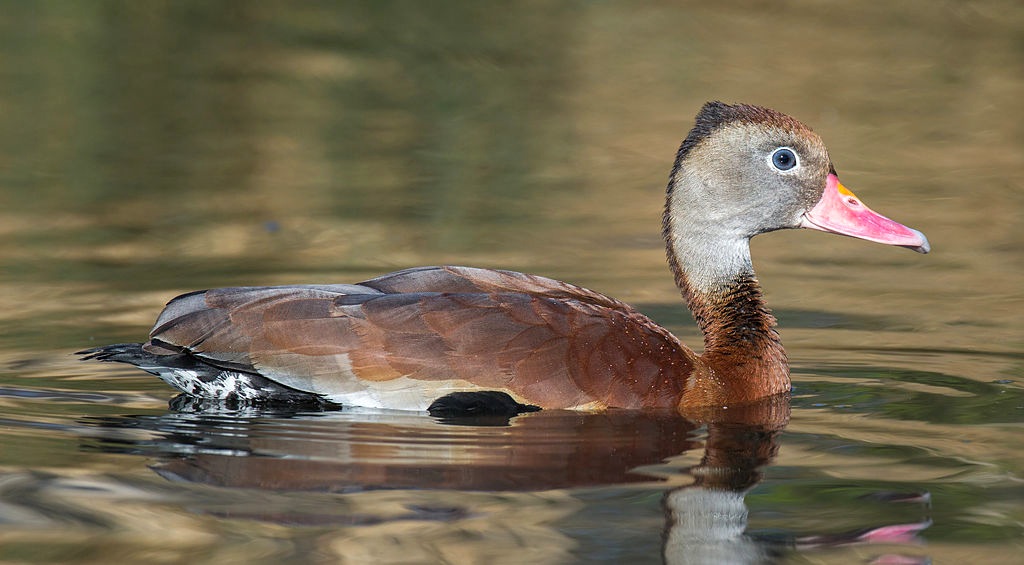
I’ll end with two excellent photos of the BBWD, taken by people who plainly had plenty of time to sort out and set up their equipment at their own pace, and not as the result of a totally unexpected and random arrival in the front yard!
Black-bellied Whistling Duck, London Wetland Centre, UK by Diliff (Wiki)
Photo credits as shown, with special thanks to Lucy Mantle for her exclusive ‘first’; to Tara for use permission and sending her originals; and an honourable mention to Chris Thomas for his powers of ID!
‘Furtive’. ‘Secretive’. ‘Skulking’. These are harsh epithets to chuck at a small inoffensive bird that just goes about its daily routine in watery places. And look at it from the Sora’s point of view: ‘intrusive’; ‘prying’; invasive’; ‘nosy’… That’s you with your camera, disturbing its quiet life in the reeds and on the margins of marsh and lake. And for that matter your careful attempts to get close to the shy sora without startling it could also be described as furtive, secretive and skulking. See how it feels?
The Sora Porzana carolina is a species of rail, a winter resident on Abaco. The island also has the CLAPPER RAIL, Virginia Rail and the Black Rail. There are no recorded sightings of this last one, and certainly no photographs. But their distinctive call has been heard in several locations over the last few years – for example, by two people in different places last June when we were in full bird mode for “THE BIRDS OF ABACO”.
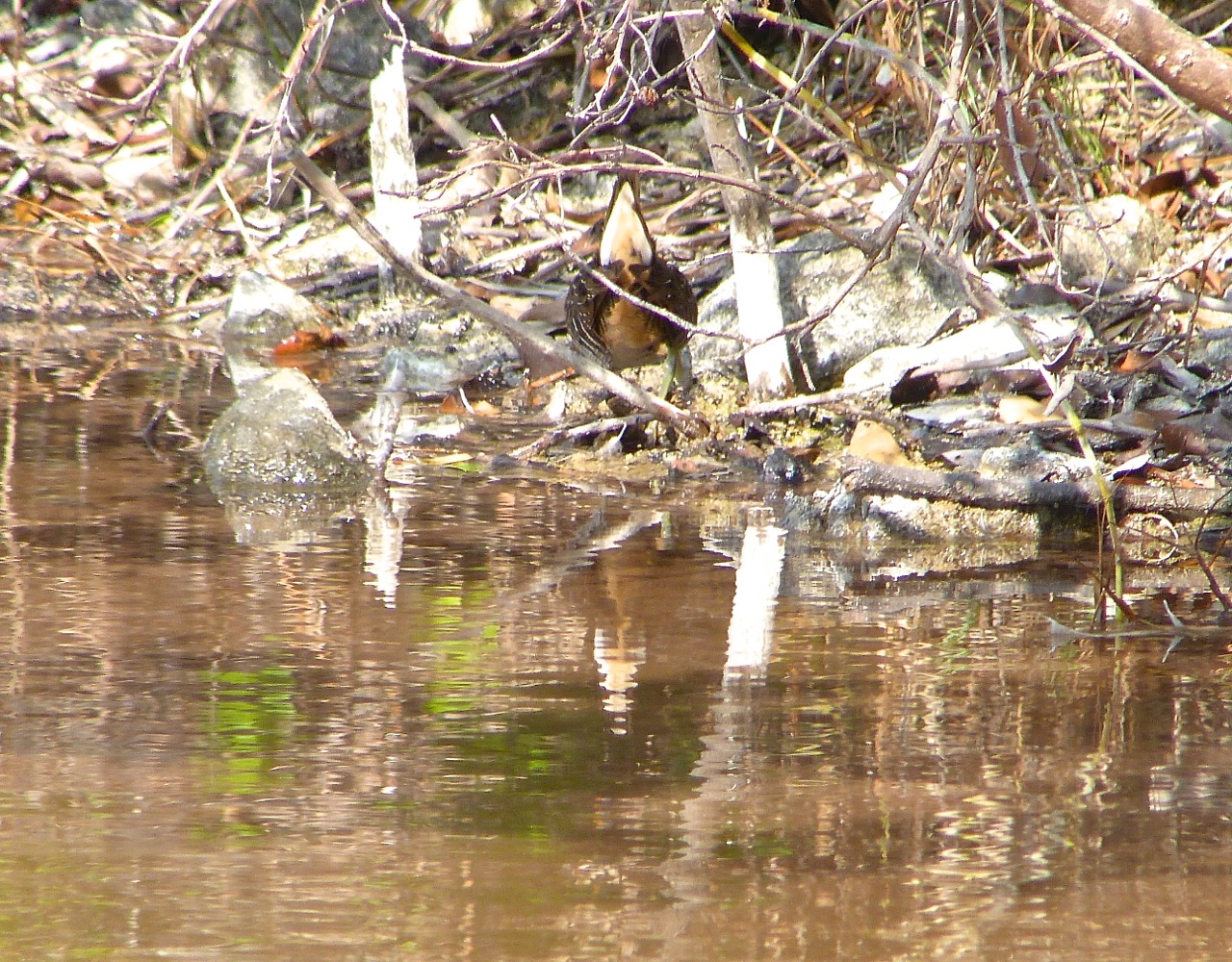
Although not uncommon, the sora is relatively hard to find; and if found, to photograph. As I wrote in the book, ‘these are most inconspicuous birds, so it is quite a coup if you manage to locate one. Their creamy beak and upturned tail may give their presence away as they work their way along the water’s edge, feeding intently’. Tom Sheley took the magnificent photo above of a sora peering out from cover – he’s a very patient man. Often, the best sight you’ll get is of the bird half-hidden in the reeds at a distance, as in my feeble effort above. Spot the Sora… I tracked the same bird, and later got a more open shot as the sora picked its way along the edge of a pond before disappearing again into the reeds. The bird was moving away from me. I was crouched on a small jetty, with a little blue heron nearby looking at me in puzzlement. Or sympathy. My best (ha!) shot below (beak and tail both visible? Check!) is followed by much the most usual view of a sora in my experience, the less photogenic end with the white… stern.
I can’t improve on good old Wiki in summarising the diet of this little rail: “Soras are omnivores, eating seeds, insects and snails. Animals that are commonly reported as sora food items include snails, crustaceans, spiders, and insects – mainly beetles, grasshoppers, flies, and dragonflies. Soras often eat plant seeds. Plants in the sora’s diet include duckweed, pondweeds, and grasses.” Wiki’s own image is shown next.
We were with our friend the ornithological scientist Caroline Stahala* when we – I should say she – saw my first sora at the pond at Gilpin Point near Crossing Rocks. She grabbed my camera and plunged into the rather thick undergrowth at the water’s edge. Actually, she had to plunge into the water itself at one stage. Here are 2 shots that further demonstrate how hard it can be to photograph these wretched creatures. They don’t pose prettily on a branch in the sunshine like a Spindalis, for example. They forage about in places where low light and thick vegetation combine to make focus and clarity difficult to achieve. *’The Parrot Lady’ The remarkable calls of the sora can be heard in the very short clips below, from the invaluable Xeno-Canto archive. They make three distinct types of sound, one described as “a descending whinny”. Apparently the use of ‘call broadcasts’ greatly increases the chances of hearing a sora. They also increase the chances of seeing a sora, as the bird will often investigate the source of the call. The propriety of using a recording to attract a bird is open to debate, but there’s no doubt that it can be far more effective than simply going ‘pish-wish’ repeatedly…CALL Ted Floyd ‘WHINNY’ CALL Micah Riegner ‘WEEP CALL’ Todd Wilson This is a second Wiki image of a sora foraging in water. I like the fact that, as with Tom’s photo, you can see the feet.“SORA”. Where does the word come from? What does it mean? It sounds like some uninviting butter-style spread. Or is that ‘Flora’? I did some research and for a start it means ‘Sky’ in Japanese and ‘Seashell’ in Korean – both used as names. Six countries worldwide have places called Sora. There are various obscure usages (e.g. a little-known video game). Disappointingly, however, the best etymology I can find in a birding context is that the origin is ‘unknown’. I was too disheartened to explore the derivation of ‘Porzana’. Could so easily be a second-tier female character in a Shakespeare comedy: “Haply, Porzana, hast seen the Sora of the Prince, withal?”. Having started this post with a header shot by Becky Marvil, I’ll end with the etymological mystery and another photo by Becky of the same bird going for some underwater delicacy.
STOP PRESS Uli Nowlan has kindly sent a photo of a Sora taken at ponds north of Treasure Cay (below). It’s a timely reminder to me that this blog is somewhat South Abaco oriented. More than somewhat, in fact. That’s inevitable I’m afraid, owing to my base camp being south of MH. Also, I think it’s generally accepted that South Abaco is the place to find the best birding. I do include birds from the TC area – the golf course ponds and the creeks – but perhaps not enough. Contributions welcome!
Credits: Header and last image – Becky Marvil; Tom Sheley, RH, Wiki, Caroline Stahala; Uli Nowlan. Wiki-nod for some info also.
ABACO’S 5 ‘PERMANENT RESIDENT’ WARBLERS & A NEW WARBLER ID GUIDE
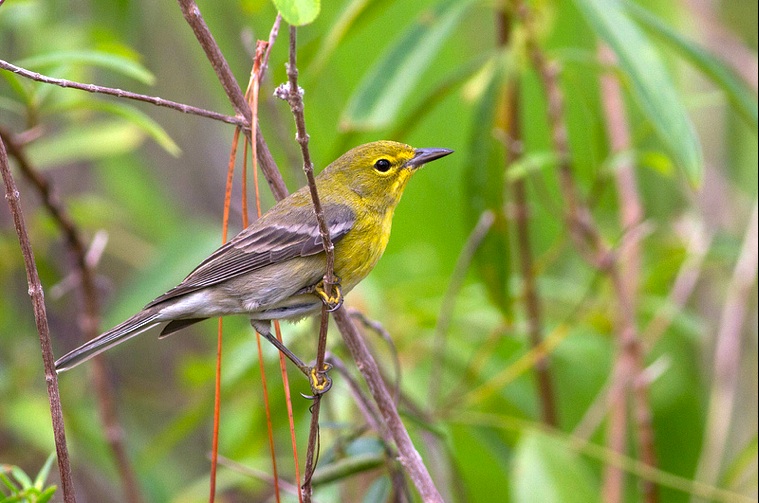
There are 37 Warbler species (Parulidae) recorded for Abaco. There is considerable scope for confusion between many of them. For a start, by no means all have the helpful word ‘warbler’ in their name. Secondly a great many of the species are to a greater or lesser extent yellow, with sub-variables for gender, age and season. It’s easy to get in muddle. A good place to start ID is with the warblers that are on Abaco all year round. Only 5 species are permanent residents on Abaco and the Cays: Bahama Warbler, Bahama Yellowthroat, Olive-capped Warbler, Pine warbler and Yellow Warbler. I have used images of these to illustrate this post.
Yellow Warbler (f) Abaco
The rest are mostly winter residents, with some being transient visitors passing through on their migration routes. Some are ‘everyday’ birds; some are unusual; and a few are extremely hard to find, the Kirtland’s warbler being the rarest and therefore the most prized sighting of all. I will be returning to the Kirtland’s in more detail in due course.
Pine Warbler, Abaco
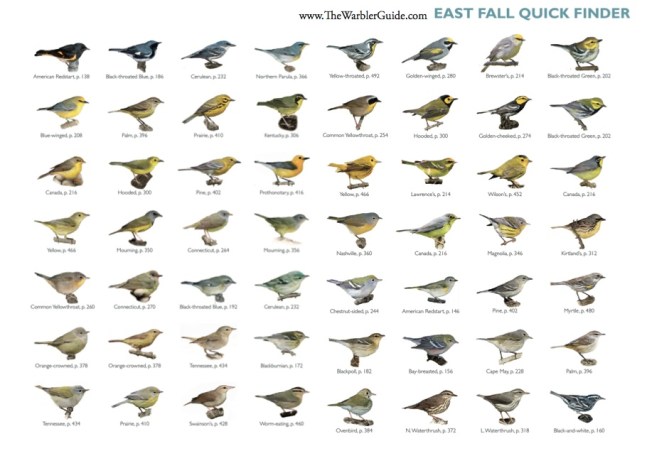
At the bottom of this post is a complete list of the Abaco warbler species, with Bahamas bird authority Tony White’s excellent codes indicating (a) when they may be seen; and (b) the likelihood of seeing a particular species (from 1 – 5). First however, news of a great resource for aiding warbler ID, produced by The Warbler Guide. Click on the blue link below to open a pdf with illustrative views of warbler species from several angles, spread of 8 pages. These are the warblers of North America, but you’ll find that almost all the Abaco warblers are featured.
ABACO’S ENDEMIC BIRDS: MAKING A CASE FOR PROTECTION
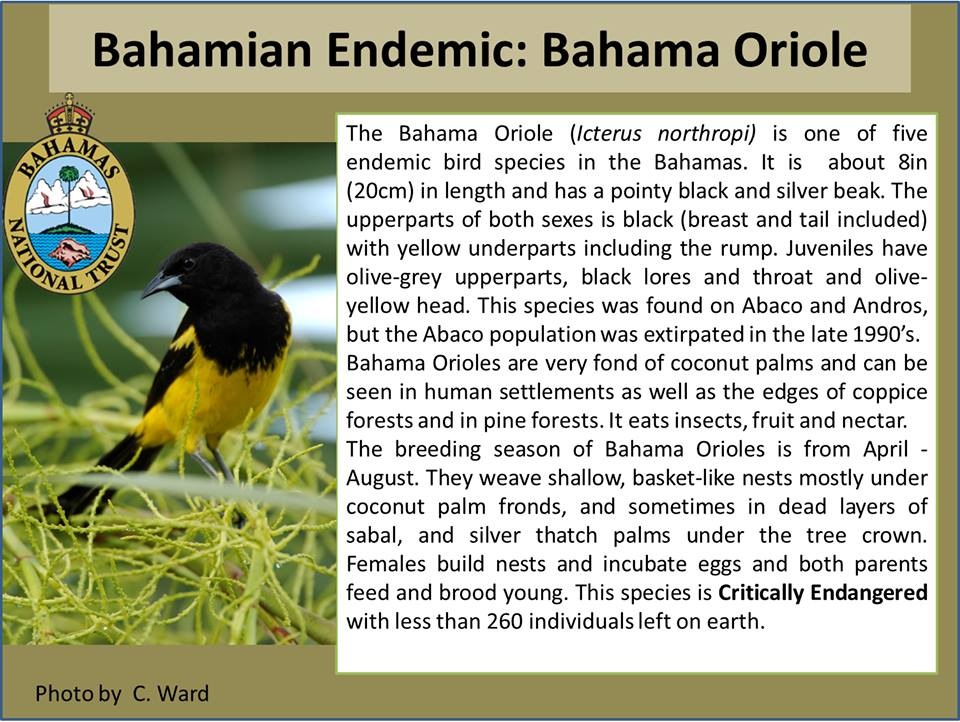
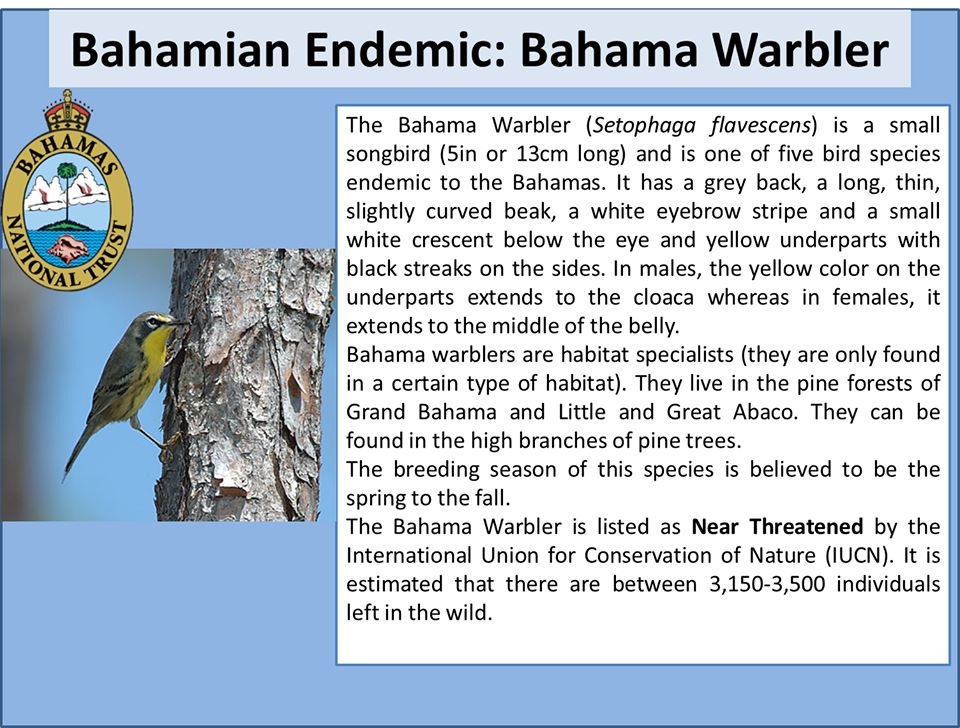
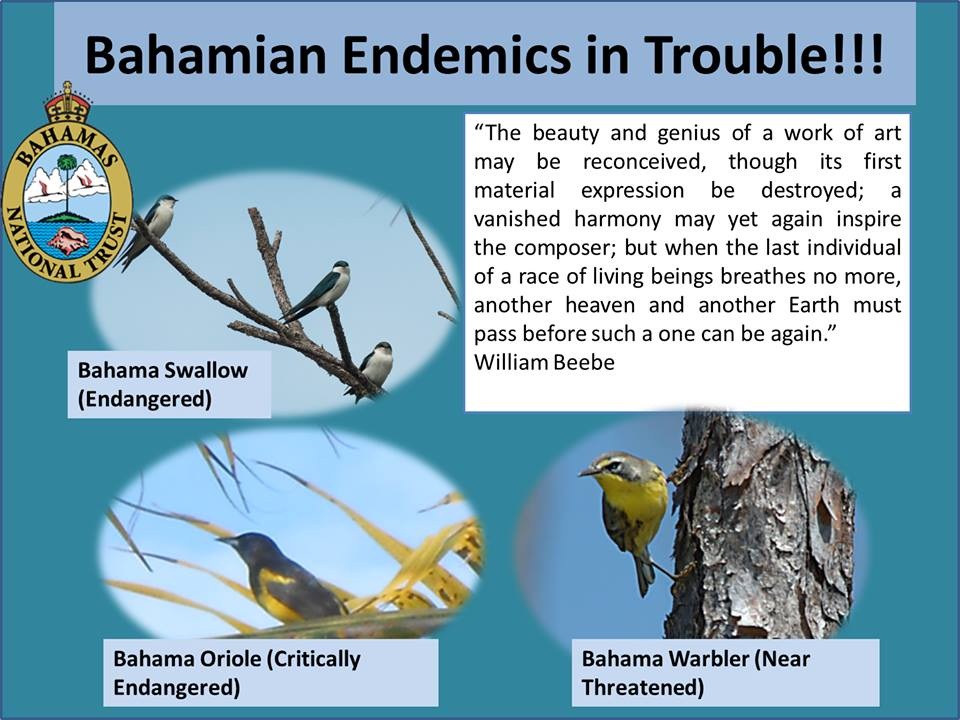
I recently wrote a post showcasing the 4 Bahamas endemic bird species found on Abaco: swallow, warbler, woodstar hummingbird, and yellowthroat. You can read it and see some great photosHERE. Sadly, the magnificent oriole, extant on Abaco for centuries, was extirpated in the 1990s. You can still see them but only on Andros; and the population there is barely sustainable – there are only 260 remaining. Still, on Abaco there remain four of the endemic species to conserve and care for.
The Bahamas National TrustBNThas produced 6 brief but informative illustrated ‘cards’ about the Bahamas endemics. They deserve a wide audience, especially in view of the threats to some species for reasons that include habitat loss and increasing development. New Providence lost its subspecies of Bahama Yellowthroat within the last 20 years. Let’s hope that Abaco can hold onto its speciality birds for the future.
BANANAQUITS ARE UBIQUITS ON ABACO – AND ÜBERCUTE TOO
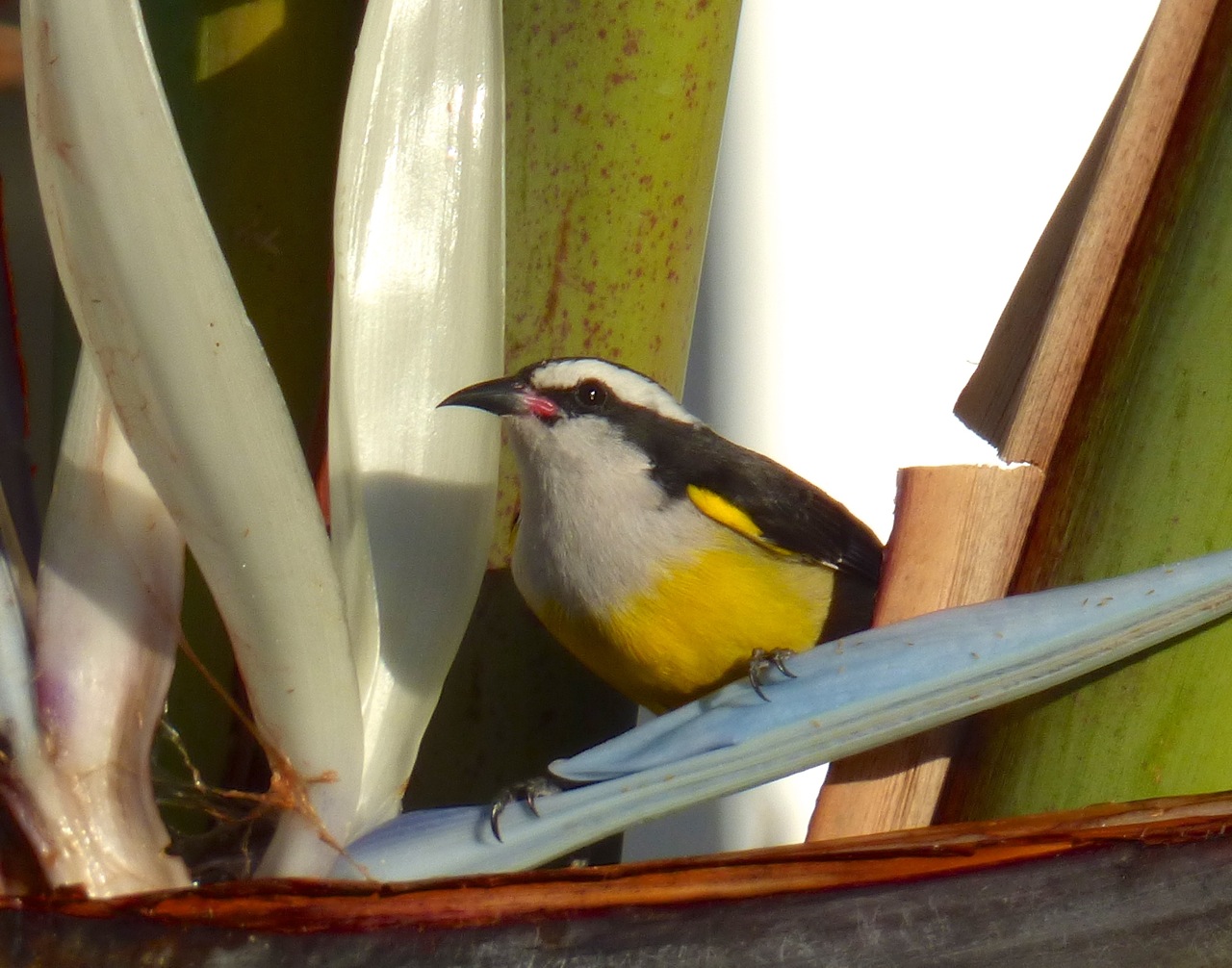
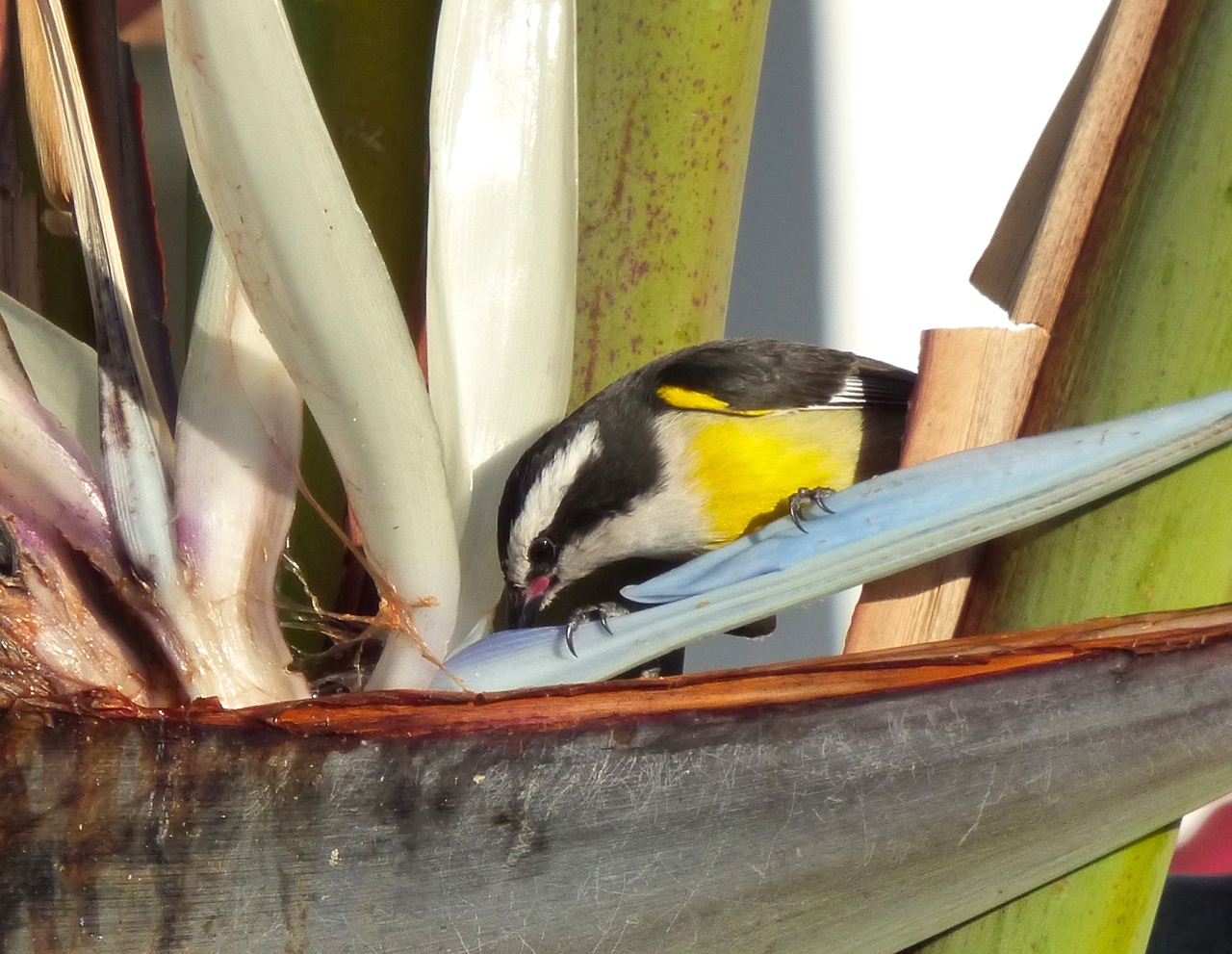
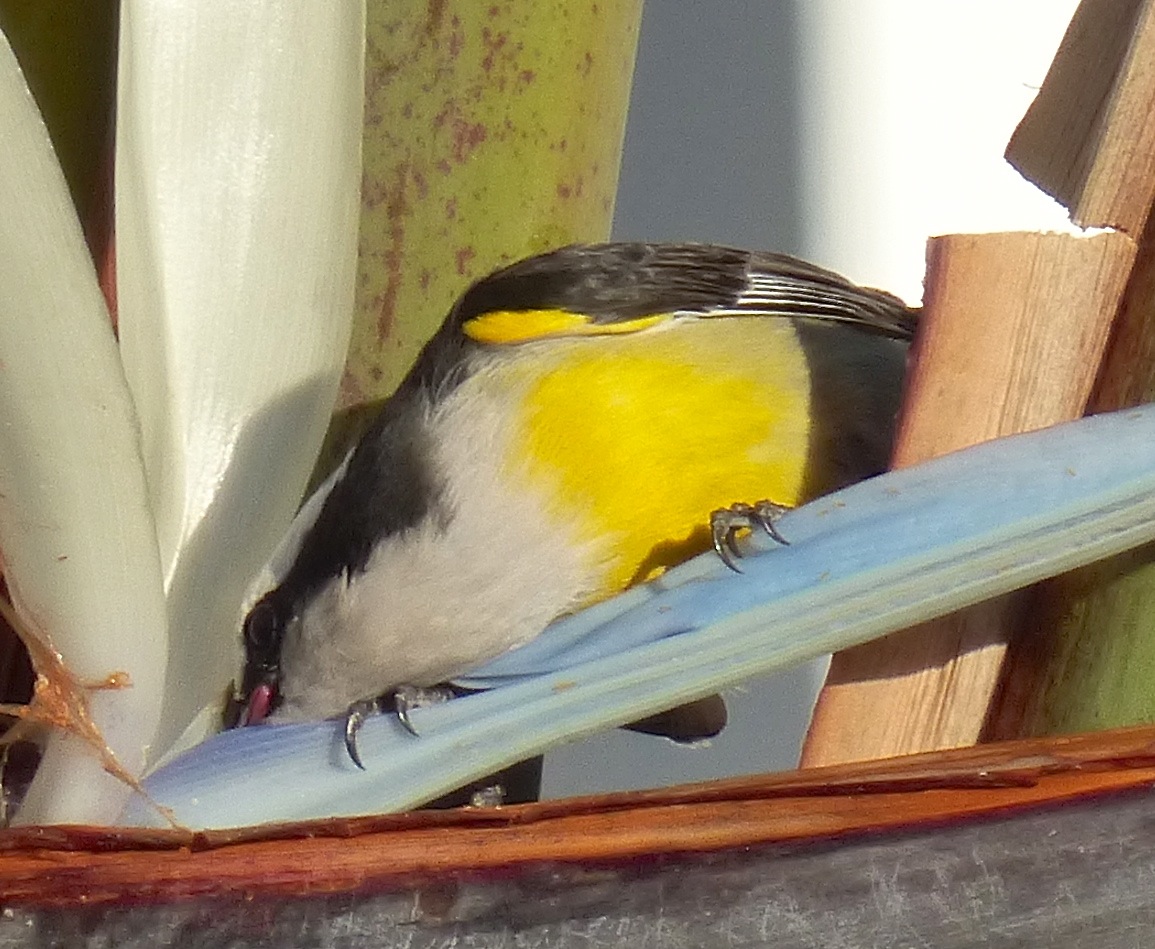
The Bananaquit Coereba flaveola. Permanently resident on Abaco, at the Delphi Club, and in my top ten favourite birds. And everyone else’s, I shouldn’t wonder. With their handsome livery and their cheeky chirping, they can be found almost anywhere. They could equally well be called ubiquits. I had been going to post some recent images of one feasting at a hummingbird feeder, but I found this thirsty palm-forager in my photo folder first, so here he is in all his glory…
Here’s the song of a bananaquit from Xeno-Canto (Paul Driver, Andros) (and there’s a thick-billed vireo in the background)
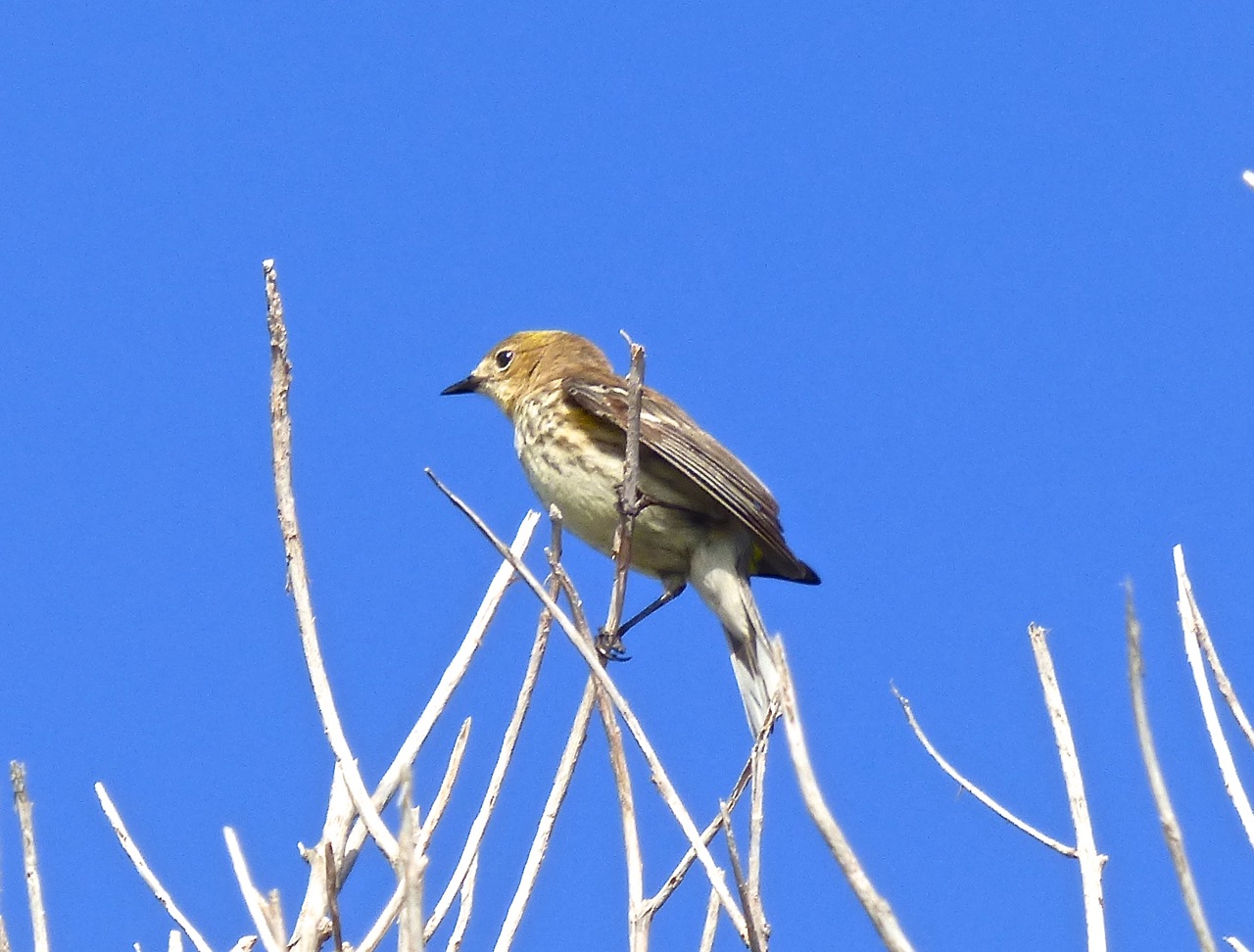
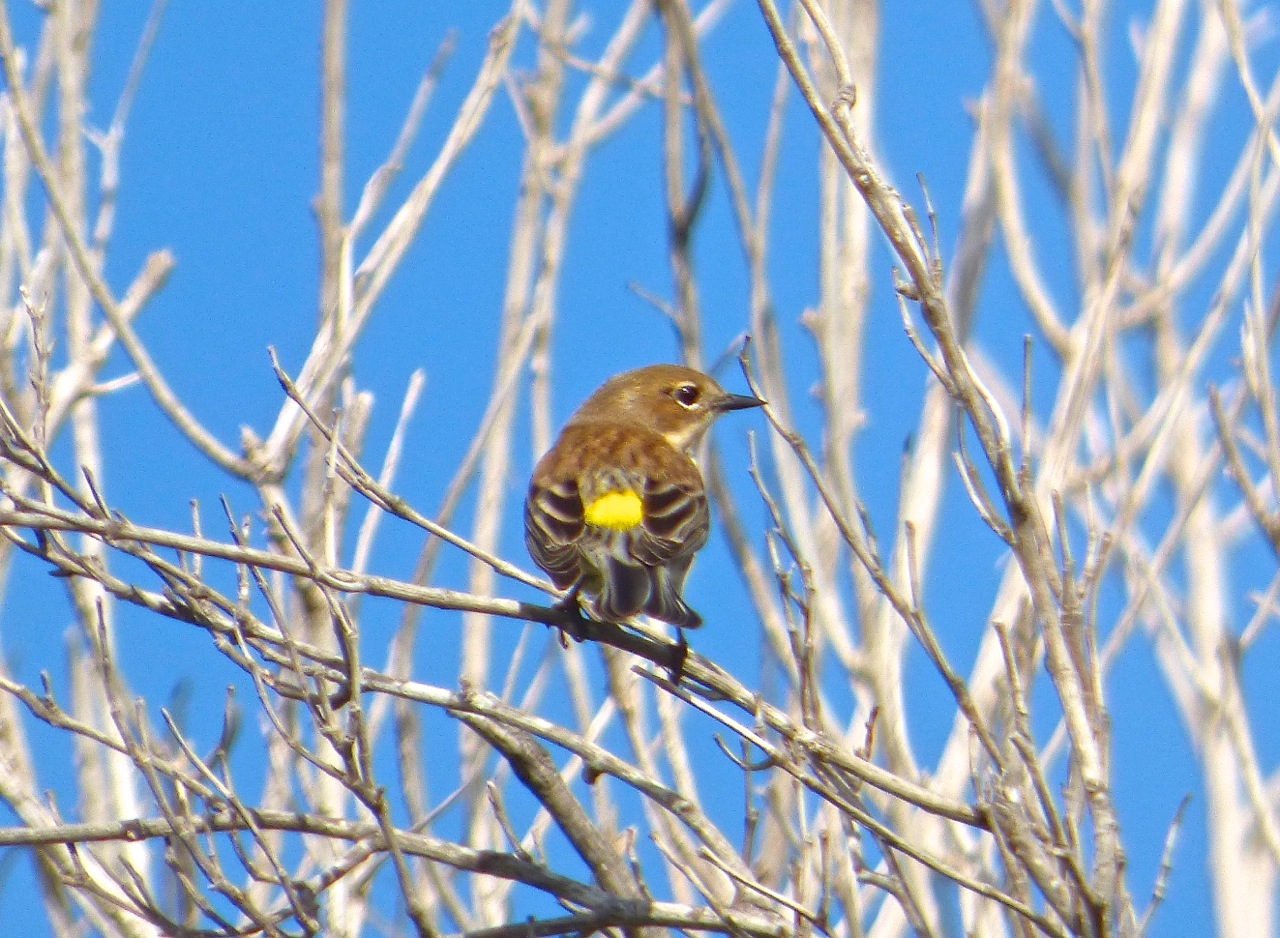
I haven’t been very lucky with yellow rumps in the past. This is not normally something one likes to talk about in a public forum… but to be honest I have been longing to get hold of a yellow rump of my own. The warbler Setophaga coronata, that is, a fairly common winter resident on Abaco. I’ve seen them of course. I’ve glimpsed a passing flash of yellow rump. But no YRW has stayed parked in tree with its backside towards me for long enough to permit me to photograph its posterior glory. Ideally I’d have liked a clear, attractive shot like the header image (Dan Pancamo, Wiki). But desperation leads to lowered expectations and plummeting standards. Frankly, this year I’d have been satisfied with any yellow rump. Abandoning my initial plan to apply a yellow highlighter pen to a compliant female grassquit, I bided my time. And suddenly there, at the very top of a tree near the swimming pool at Delphi, was my chance… A pair of YRWs were in evidence.
The tree wasn’t very close to me, and the birds stayed near the very top. My photos were never going to be great. Especially since each bird was meticulous in keeping its rear end out of sight. Then they flew away! However quite soon one was back. This time there were twigs in the way, one of the those little variables that makes camera focussing so enjoyable. But this time I managed to ‘pap’ its derrière… Feeble shots but mine own. As an avian ‘Holy Grail’, a mere yellow rump leaves quite a lot to be desired, I can quite see. It’s on no one’s ‘bucket list’ of birding musts. But now I can move on, release that poor female grassquit and chuck out the highlighter pen.
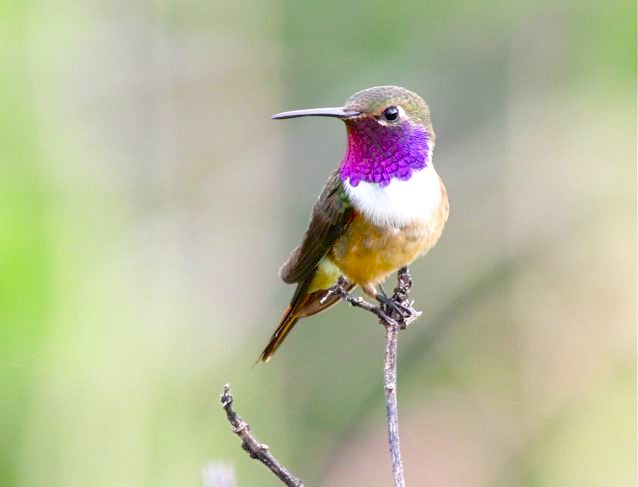
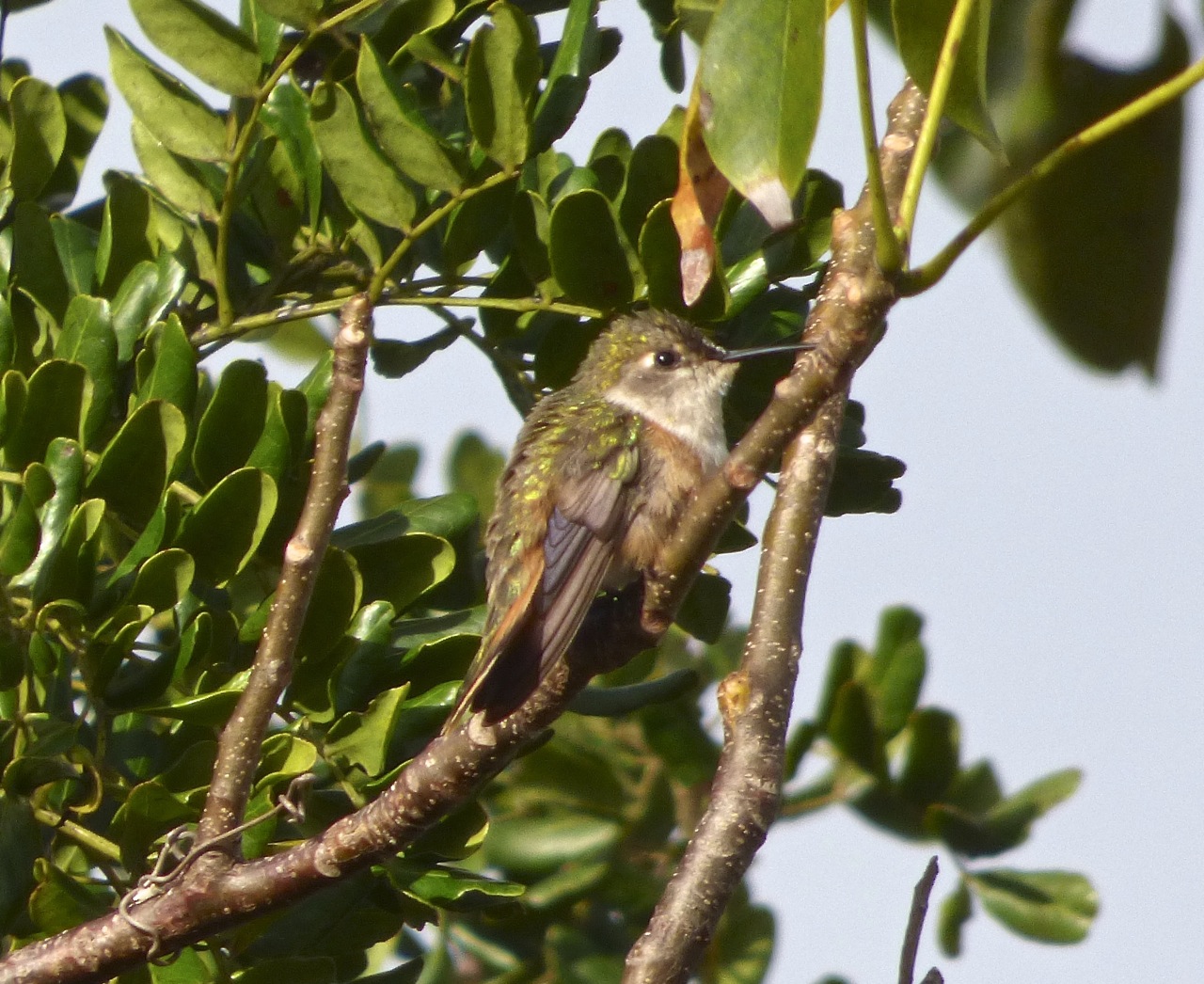
I’ve written before about the somewhat fraught relationship between the 2 hummingbird species of Abaco, the endemic Bahama Woodstar and the resident but non-indigenous Cuban Emerald. They tend not to mix, and the Woodstars tend to fade to areas where there are no Emeralds. Both are found at Delphi, but I suspect the sugar water feeders may play a part in that. Even there, the Emeralds predominate. This is my best recent shot of a female Woodstar on the Delphi drive. I had about 30 seconds to see it, whip out the camera, remove the lens cap and fire off some shots. Then it flicked away into the coppice. All images were useless bar one, which almost worked but won’t stand close scrutiny.
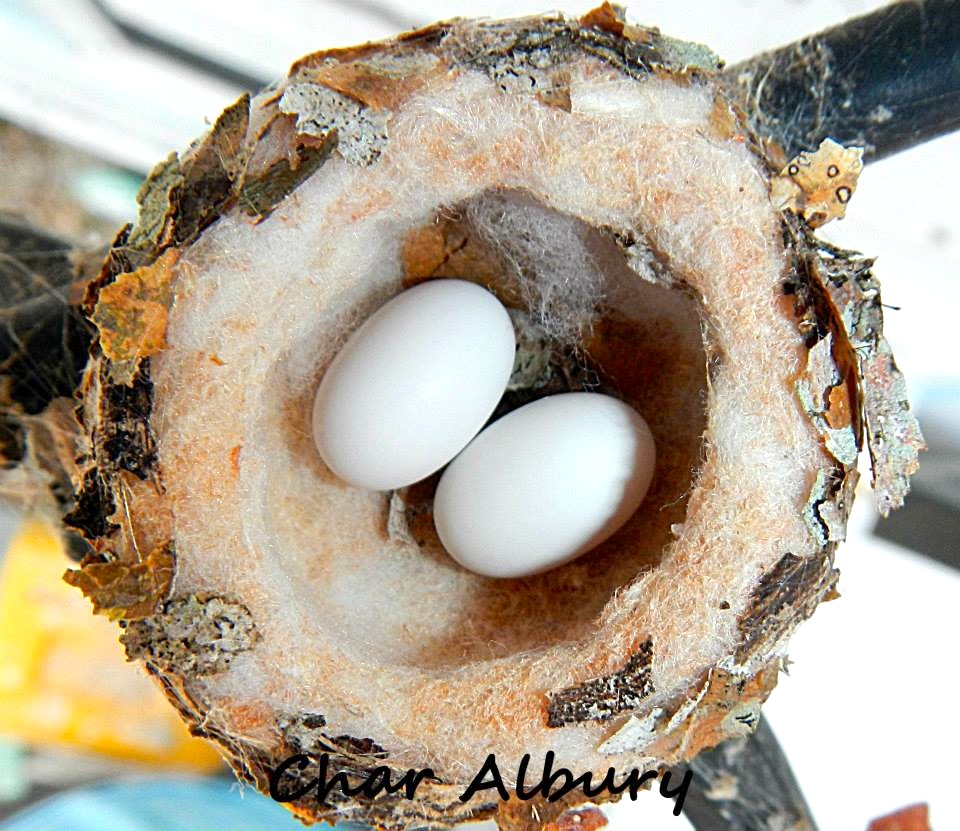
Man-o-War Cay may be quite small, but it seems to be blessed with plenty of Woodstars. They are often quite tame and Charmaine Albury has them nesting round her house annually. I posted about her baby Woodstars from last year HERE. This year they have returned, making their tiny cup nests rather precariously amid the domestic wiring. Here are a few of Charmaine’s nest photos (for which thanks!) for this season.
A female Woodstar on the nest. They lay 2 eggs, which are incubated for around 2 weeks
A fledgling takes flight for the first time, leaving more room for the remaining chick. Note the stumpy little tail
Two eggs that seem far too big for such a tiny nest
Within the last couple of days, the first egg hatched. This hatchling is a few hours old at most
Credits: Header pic of male BAWO Bruce Hallett; RH (Delphi); Charmaine Albury (nests); BNT info sheet
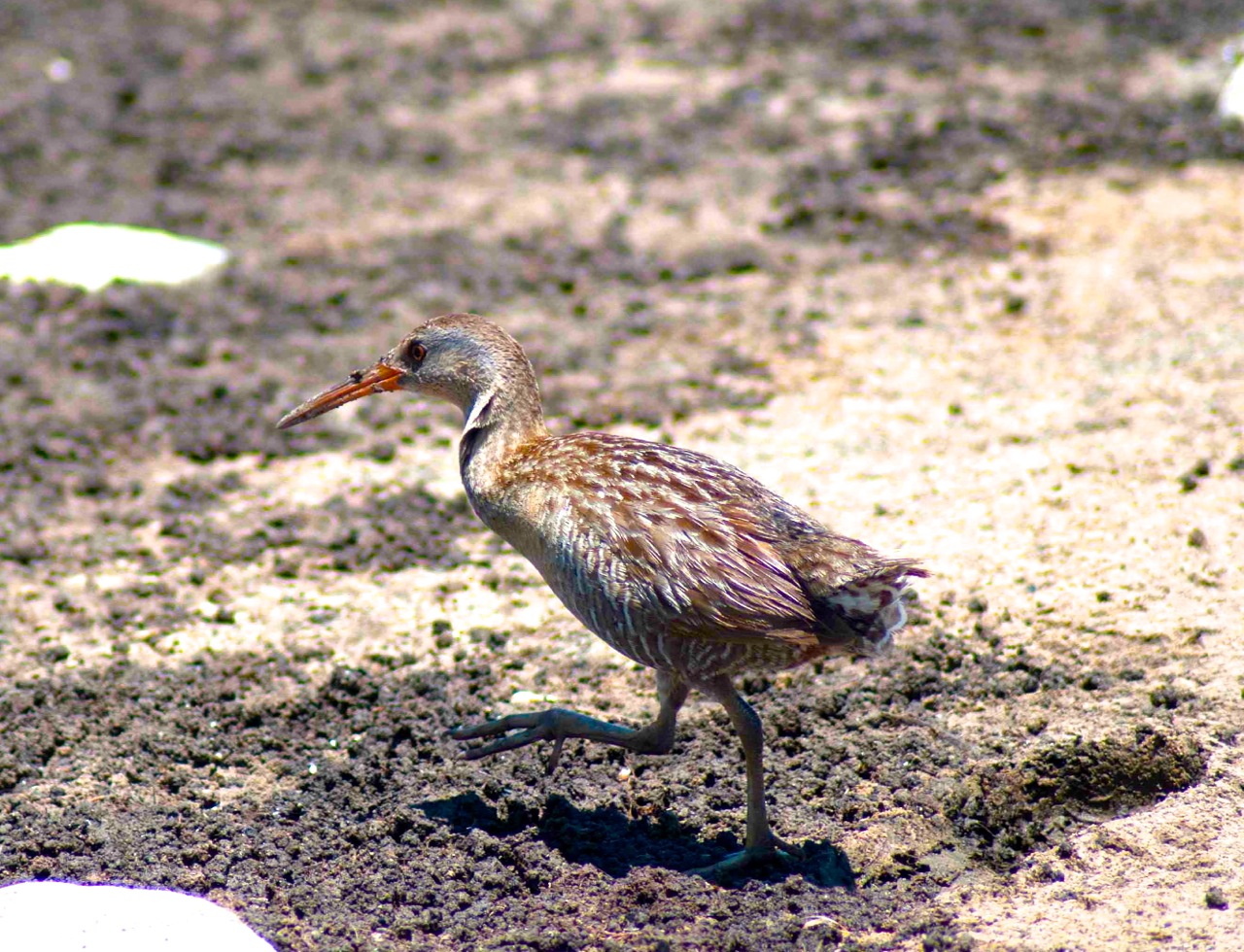
That is, essentially, because they are indeed Clappers. Rallus longirostris to be precise, or Clapper Rails. There are 4 rail species on Abaco, the Clapper being a permanent resident and not particularly uncommon. The others are the Virginia Rail and the Sora, both winter residents and less common (or in the Sora’s case, perhaps more furtive and less easy to find); and the Black Rail, which is generally agreed to be a ‘hypothetical’ for Abaco. That means they are believed to exist on Abaco but there are no confirmed sightings let alone any photos of one. However, last summer while we were taking a truck into the backcountry of South Abaco to locate hard-to-find birds for “The Birds of Abaco” book, the distinctive call of a Black Rail call was heard independently by two people on two different days in two different locations. I’ve heard another report since then. So they are out there somewhere, but keeping their heads down. The first to find one will have a considerable avian scoop!
Let’s start with some fabulous photographs by Tom Sheley. We used the first one in the book. By being patient, Tom managed to capture this bird having a quality preening session. Here are 4 shots from the sequence, including a rare one of the bird calling. To get the full glory of the detail, click on each image twice.
Clapper Rails are elusive birds of mangrove swamp and marsh, more frequently heard than seen. They tend to lurk around in foliage and are easy to overlook. You may come across one foraging secretively in the mud. Although they can both swim and fly, they prefer to keep both feet on the ground.When running, these rails look endearingly comical.
It almost goes without saying nowadays, but the biggest threat to these rather charming inoffensive birds is habitat loss. That is to say, mankind. Drive the bulldozers through the mangroves and marshland of sub-tropical coastal areas, chuck down a few acres of concrete… and the clappers will very soon become clapped out.
“TO RUN LIKE THE CLAPPERS”. This phrase seems to be fairly recent, probably dating from early in WW2. Some suggest it is a rhyming slam bowdlerisation of ‘run like hell’ with ‘clapper(s)’ standing for ‘bell’, along the lines of the Cockney “I bought a brand new whistle” (whistle and flute = suit). Almost all plausible explanations relate to bells, and some argue that it simply reflects the rapid speed of the clapper of a vigorously rung handbell.
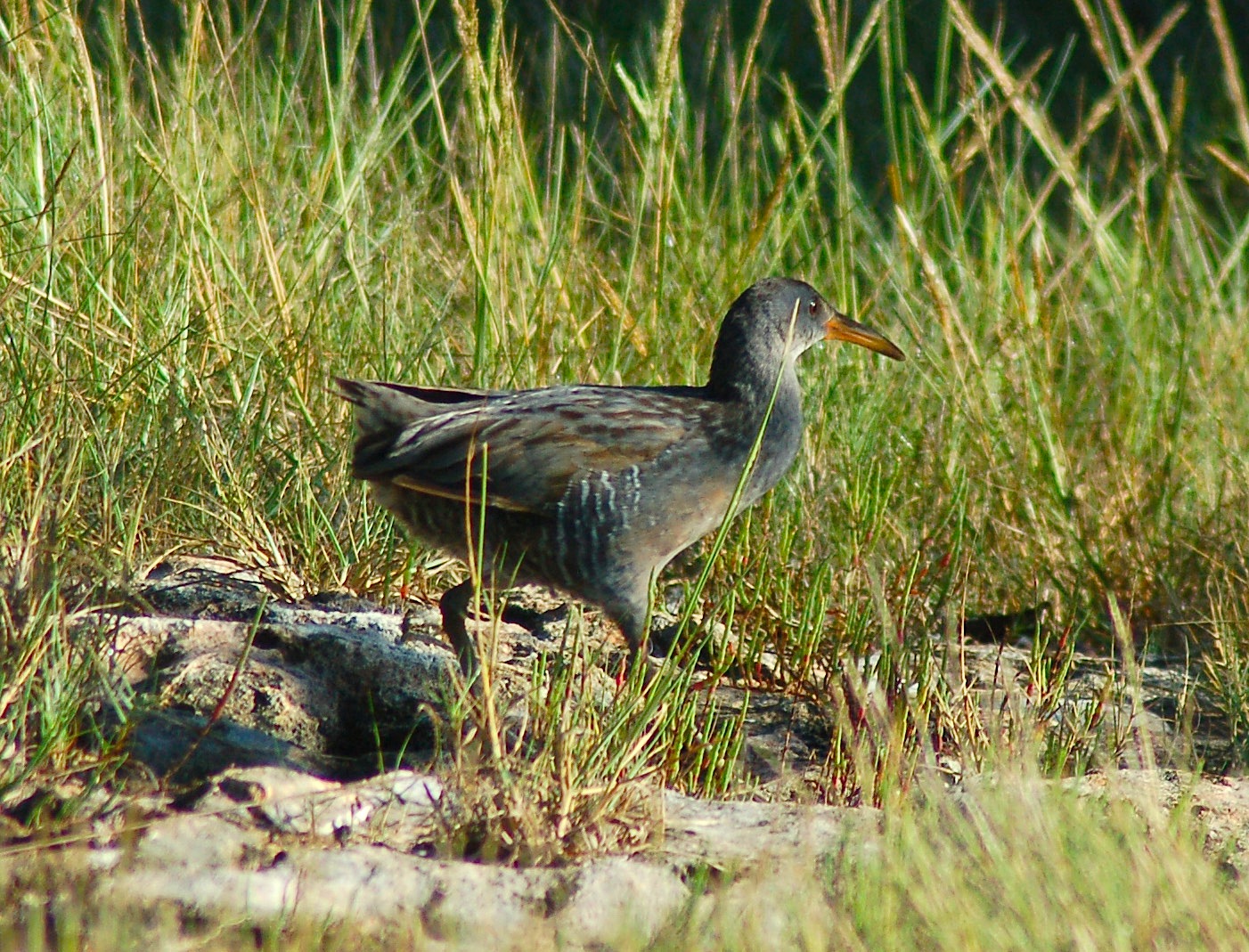
STOP PRESS Uli Nowlan has sent her photo of a Clapper Rail, taken at the ponds north of Treasure Cay – a reminder that there is good birding to be done in that area of North Abaco – the bird action is not confined to South Abaco below MH…
Photo credits:Tom Sheley, Sandy Walker, Erik Gauger and Becky Marvil – plus Uli Nowlan
The Clapper Rail features in “The Delphi Club Guide to the Birds of Abaco” by Keith Salvesen pp 80 – 81
FIVE STARS: BAHAMAS ENDEMIC BIRDS (FOUR FROM ABACO)
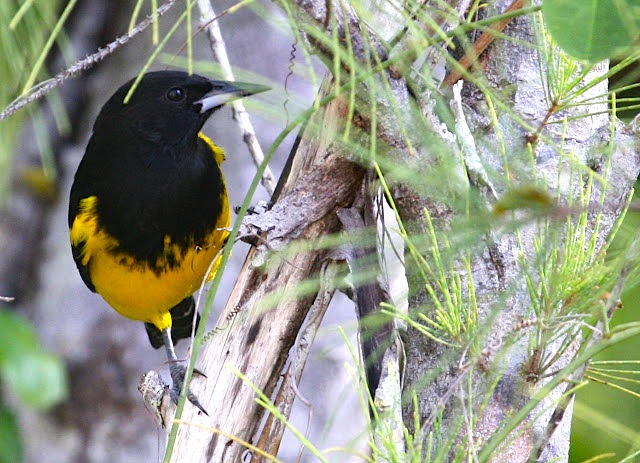
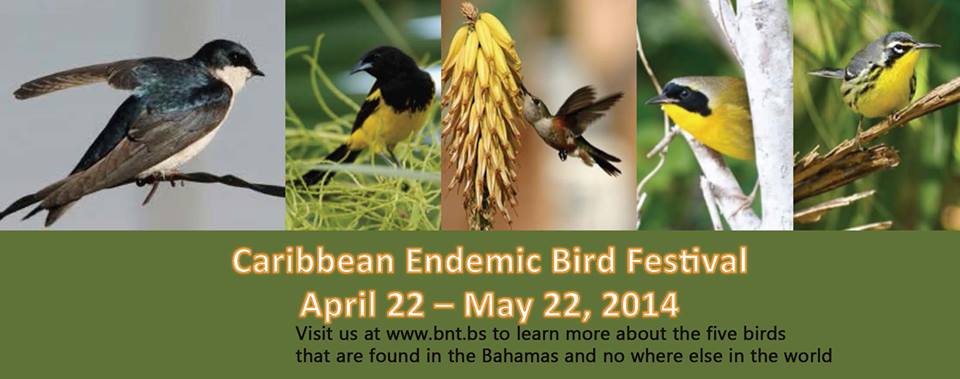
The Caribbean Endemic Bird Festival is underway. You can find out more on the CARIBBEAN BIRDS FESTIVALSFacebook page. Abaco is fortunate to be home to 4 of the 5 endemic Bahamas species. The fifth, the beautiful BAHAMA ORIOLE Icterus northropi, was found on both Abaco and Andros until the 1990s, when it sadly became extirpated from Abaco. Now found only on Andros, there are thought to be fewer than 300 Orioles left – a barely sustainable number. The species is unsurprisingly IUCN listed as critically endangered. Here’s a picture of one as a reminder of what Abaco is now missing…
Bahama Oriole
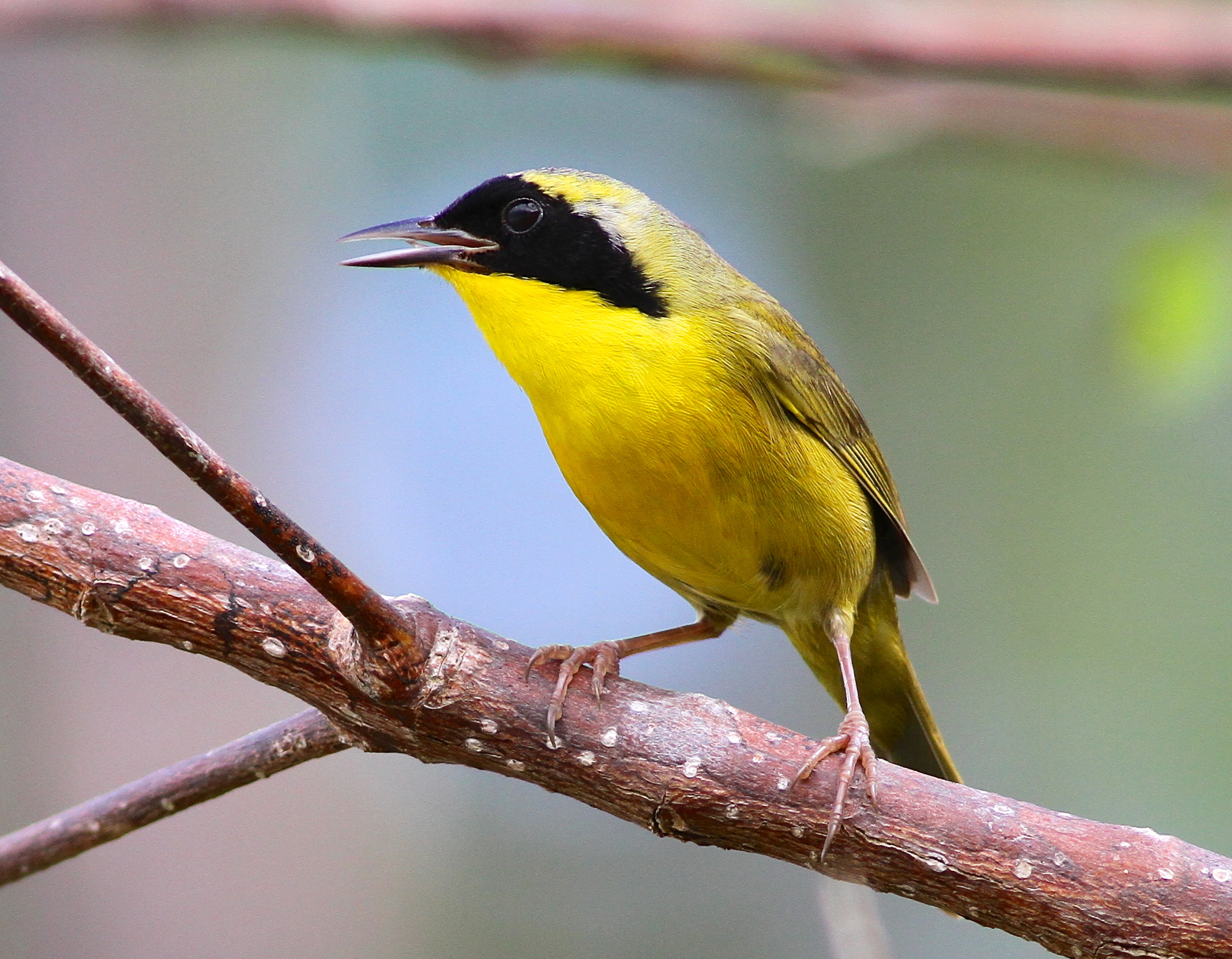
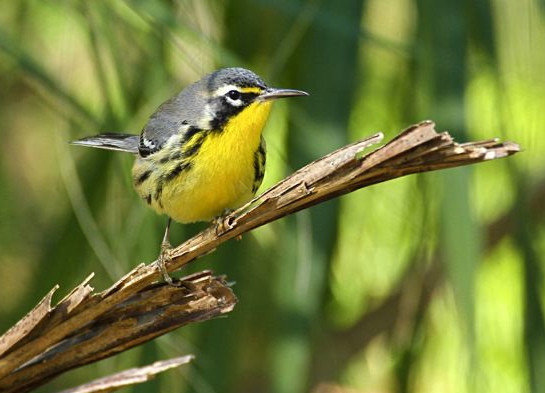
Abaco’s four endemic species are the tiny Bahama Woodstar hummingbird, the Bahama Yellowthroat, the Bahama Warbler (since 2011), and the Bahama Swallow. All are of course permanent breeding residents on Abaco and its outer Cays. None is exclusive to Abaco; all are relatively plentiful. The Woodstar is perhaps the hardest to find, not least because it competes territorially with the Cuban Emerald hummingbird. Even Woodstars can be found easily in some areas – Man-o-War Cay is a good place for them, for example. Here are some striking images of these four endemic bird species taken from the archives for “The Birds of Abaco” published last month.
BAHAMA WOODSTARCalliphlox evelynae
Bahama Woodstar (m) (Tom Sheley)
Bahama Woodstar (f) Tara Lavallee
BAHAMA YELLOWTHROAT Geothlypis rostrata
Bahama Yellowthroat (Tom Sheley)
Bahama Yellowthroat (Bruce Hallett)
BAHAMA WARBLERSetophaga flavescens
Bahama Warbler (Bruce Hallett)
Bahama Warbler (Woody Bracey)
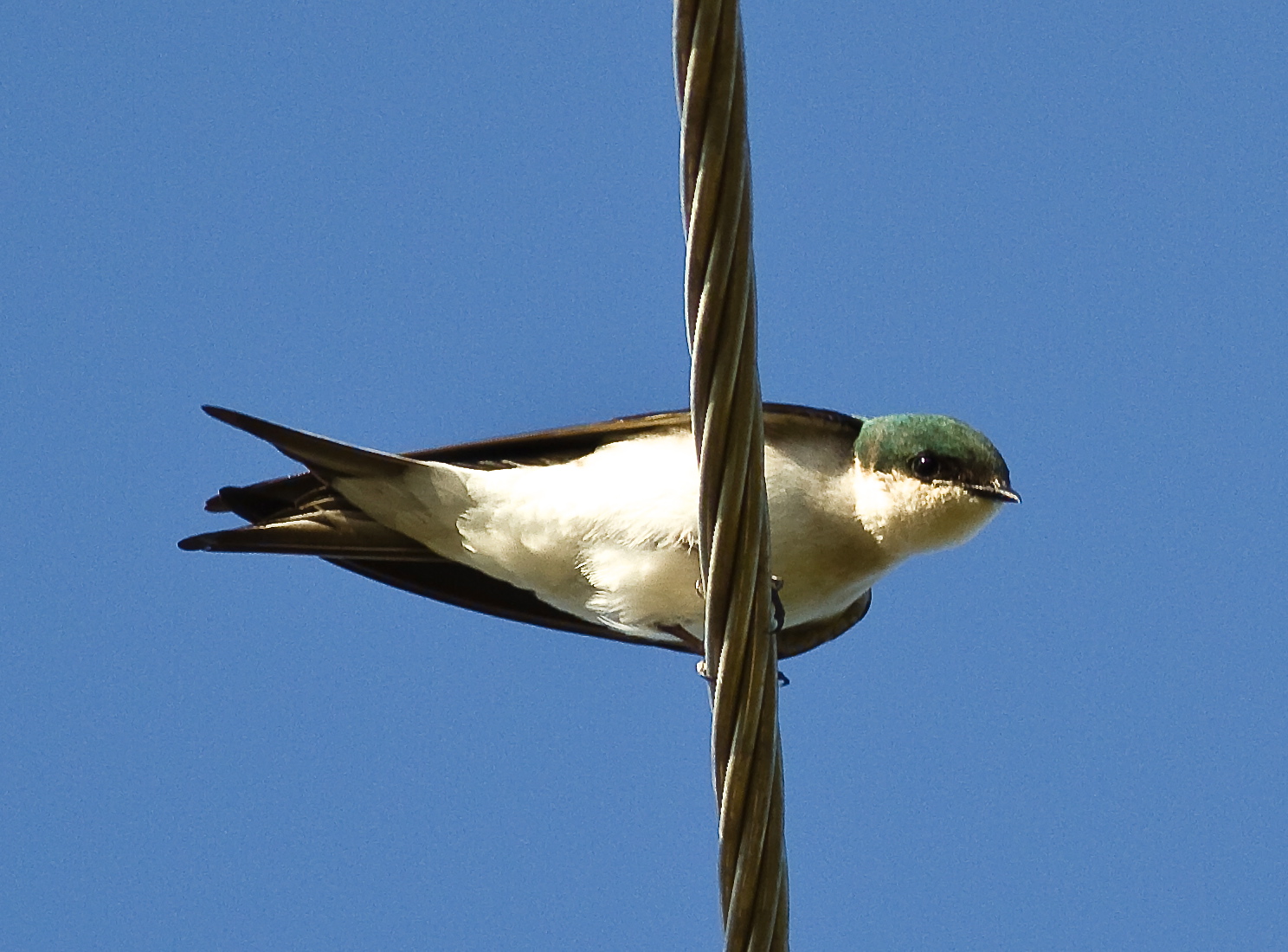
BAHAMA SWALLOW Tachycineta cyaneoviridis
Bahama Swallow (Craig Nash)
Bahama Swallow (Erik Gauger)
“The Delphi Club Guide to the Birds of Abaco” was published as limited edition of 500 and has only been for sale for 8 weeks or so exclusively through the Delphi Club. Yesterday, we passed a happy milestone in that short time as the 250th copy was sold. Complimentary copies have also been donated to every school and relevant education department on Abaco to tie in with the excellent policy of teaching children from an early age the value of the natural world around them, the importance of its ecology, and the need for its conservation. The cover bird for the book was easy to choose – it just had to be a male Woodstar in all his glory with his splendid purple ‘gorget’.
Bahama Woodstar (m) Bruce Hallett
Image credits as shown; otherwise, ‘cover bird’ by Tom Sheley, Bahama Oriole from Wiki and CEBF flyer from the Bahamas National Trust
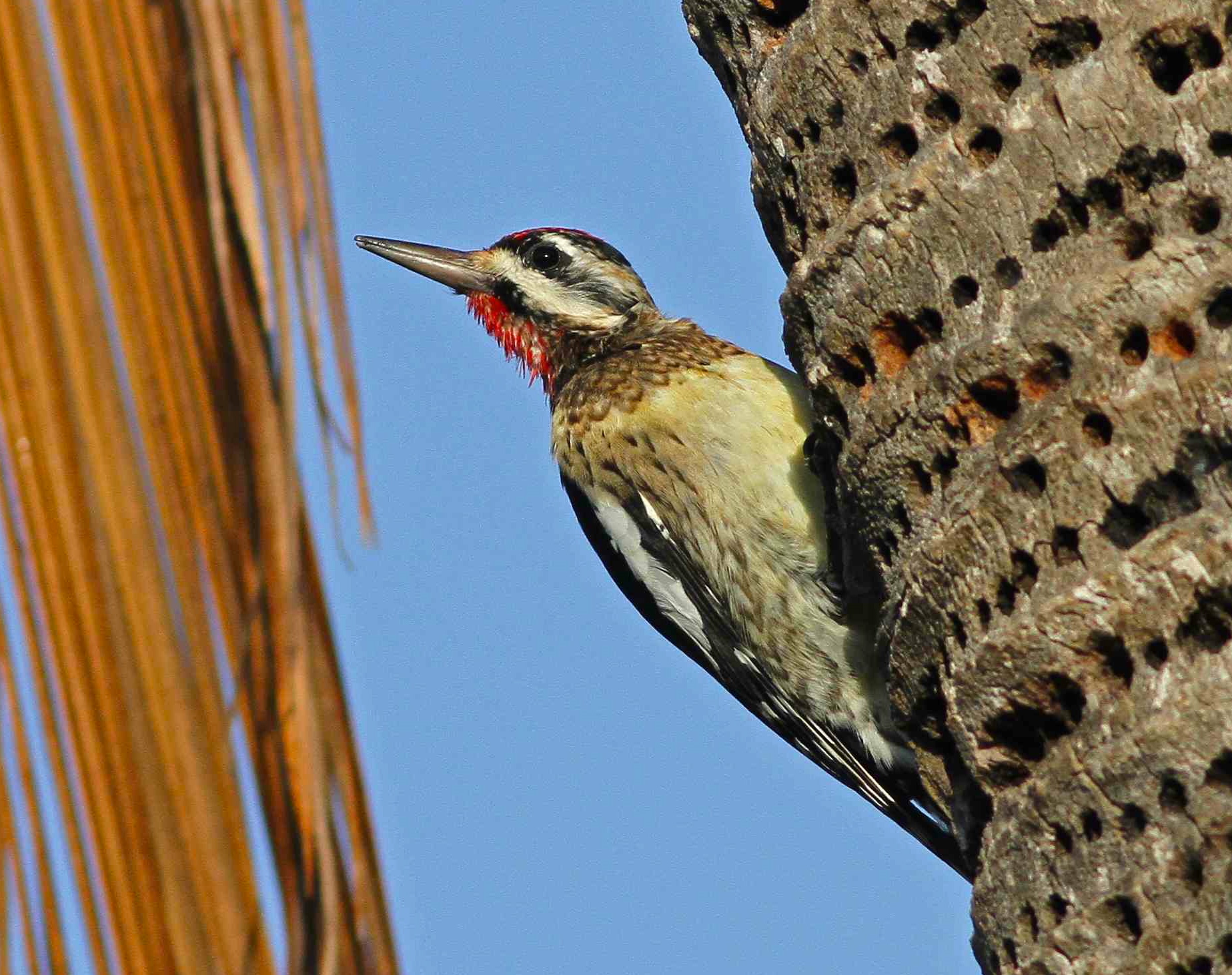
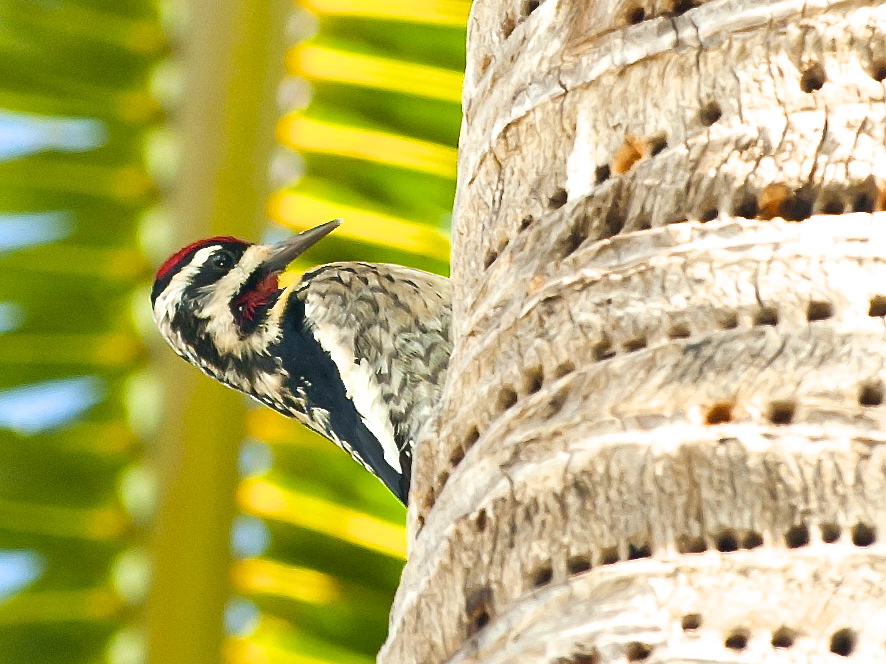
You’re ahead of me here, aren’t you? The answer of course is… Sphyrapicus varius. Abaco has two permanently resident woodpecker species, theWEST INDIAN WOODPECKERand the HAIRY WOODPECKER. There is a third, migratory woodpecker species that is a fairly common winter resident, the yellow-bellied sapsucker.Like its woodpecker cousins, the sapsucker drills holes in trees (see below). The dual purpose is to release the sap, which it eats, and to attract insects that it also eats. A two-course meal, if you like. They’ll also eat insects on an undrilled tree, and even ‘hawk’ for them in flight. They balance their diet with fruit and berries.
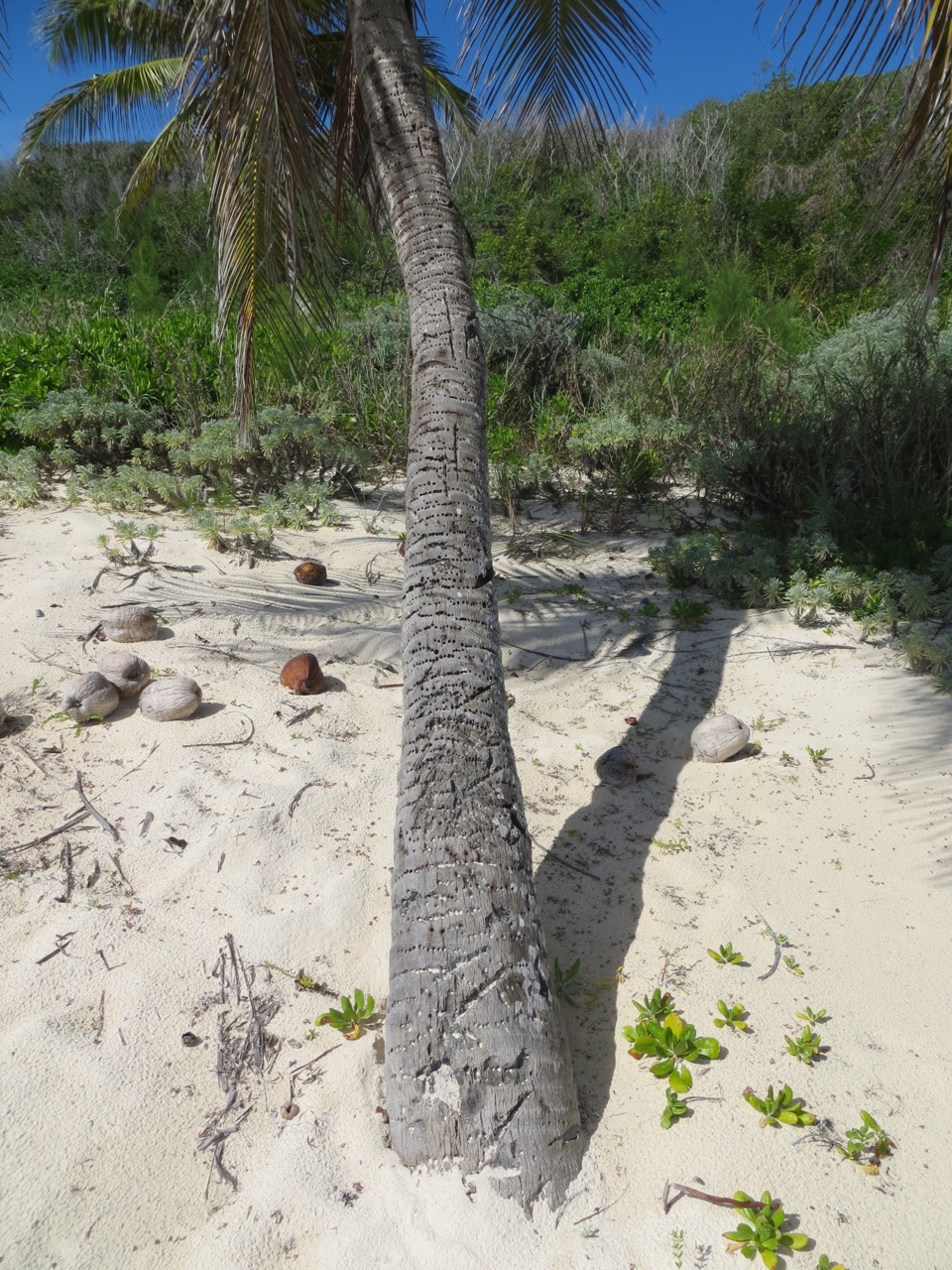
The distinctive patterns of sapsucker holes may completely encircle the trunk of a tree with almost mathematical precision. This is sometimes described as ‘girdling’ and may have a damaging effect on a tree, sometimes even killing it if the bark is severely harmed. This may require preventive measures in orchards for example, though note that in the US Yellow-bellied Sapsuckers are listed and protected under the Migratory Bird Treaty Act so radical action is prohibited.
YELLOW-BELLIED SAPSUCKER SOUNDS
DRUMMING(Xeno-Canto / Richard Hoyer)
CALL(Xeno-Canto / Jonathon Jogsma)
On Abaco, palms are a favourite tree for the sapsuckers. There are several palms along the Delphi beach, and this year I noted that one coconut palm in particular had seen plenty of sapsucker action, with the drill holes girdling the entire trunk from top to bottom.
In their breeding grounds yellow-bellied sapsuckers excavate a large cavity in a softwood tree as a nest. They mate for life, and often return to the same nest year every year, with the pair sharing nesting duties. I have no idea whether the pair migrate south for the winter together, or whether they agree to take a break from each other. I’d like to think it’s the former…
Credits: Photos Gerlinde Taurer, Tom Sheley, RH + John Harrison & Dominic Sherony (Wiki); Cornell Lab (Range Map) & Xeno-Canto (YBS recordings as credited above)
Species featured in ‘The Delphi Club Guide to the Birds of Abaco’ by Keith Salvesen, pp 242-3
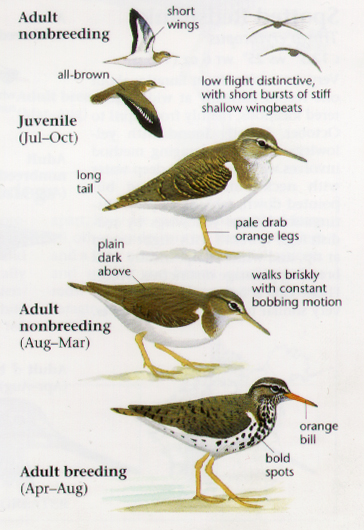
The Spotted Sandpiper Actitis macularia is a common winter resident on Abaco. These pretty shorebirds are only spotted part-time – in the breeding season – when they look like this…
Spotted Sandpiper (breeding plumage)
Spotted Sandpiper (breeding plumage)
The species sets a fine example for gender equality – role reversal, even. The female Spotted Sandpipers are the first to arrive in the breeding area, with males following on. Once a female has staked out her nesting territory, she is the one to defend it. A male will then arrive on the scene, and (if approved of) they mate. Once the eggs are laid the male takes on the egg incubating duties and the subsequent chick care once they hatch. While he is occupied with domestic concerns, the female may take the chance to play away from home and produce eggs with other males. Just imagine if humans of either sex behaved like that… Oh. Sometimes they do apparently (sources: The Daily Snooper; Celeb Shocker!)
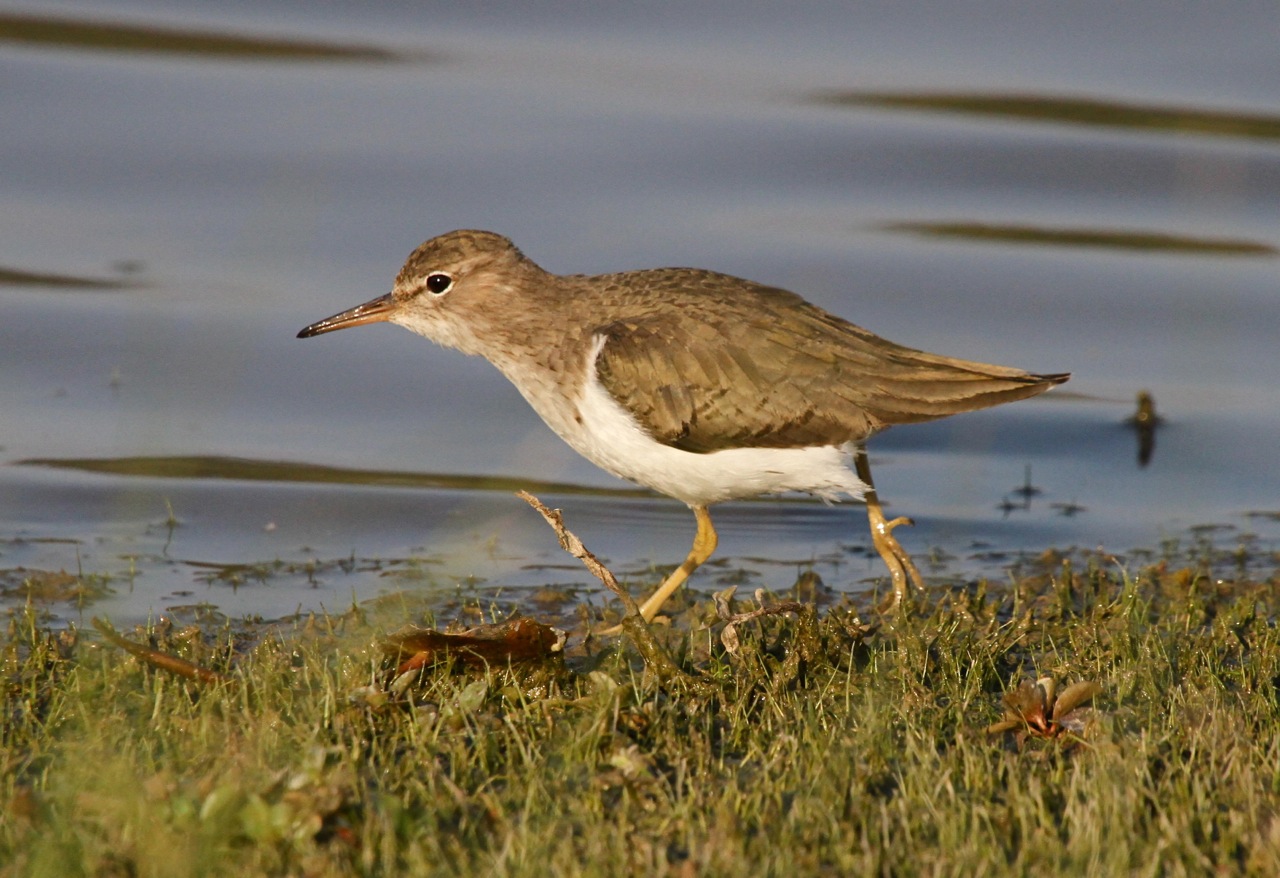
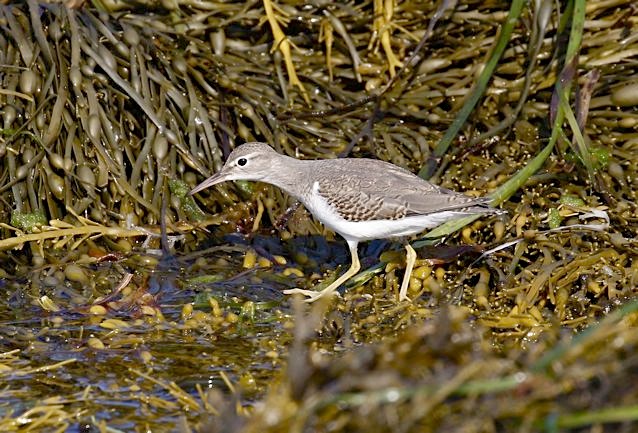
The Spotted Sandpiper in non-breeding plumage has no speckles, and looks like this
Spotted Sandpiper (non-breeding plumage)
This bird appears to be in an intermediate stage, just starting to acquire the spots
Spotted Sandpiper (intermediate stage)
At the immature stage, these birds look much more delicate
Image credits: Tom Reed, Bruce Hallett, Tom Sheley, Cornell Lab, Wiki, Sibley
The Black-and-White Warbler Mniotilta varia is a fairly common winter resident on Abaco. They are the only birds of the genus Mniotilta (“moss-picker” gr.). Unlike most warblers these birds behave rather like nuthatches, creeping along the trunks and branches of trees grubbing insects out of the bark. Pine trees are ideal for this. I remain rather dim about the 37 species of warbler on Abaco. A lot of them are small and yellow. But as soon as I saw one of these for the first time, I was very relieved. I knew exactly what it was – the bird that has been described as ‘a flying humbug’.
SUMMERWINTER
Finally, this is a great short video of this little bird in action. Even if you only watch the first 30 seconds, you will be enchanted…





























































 ROLLING HARBOUR ABACO
You must be logged in to post a comment.