

WRY ‘CUDA
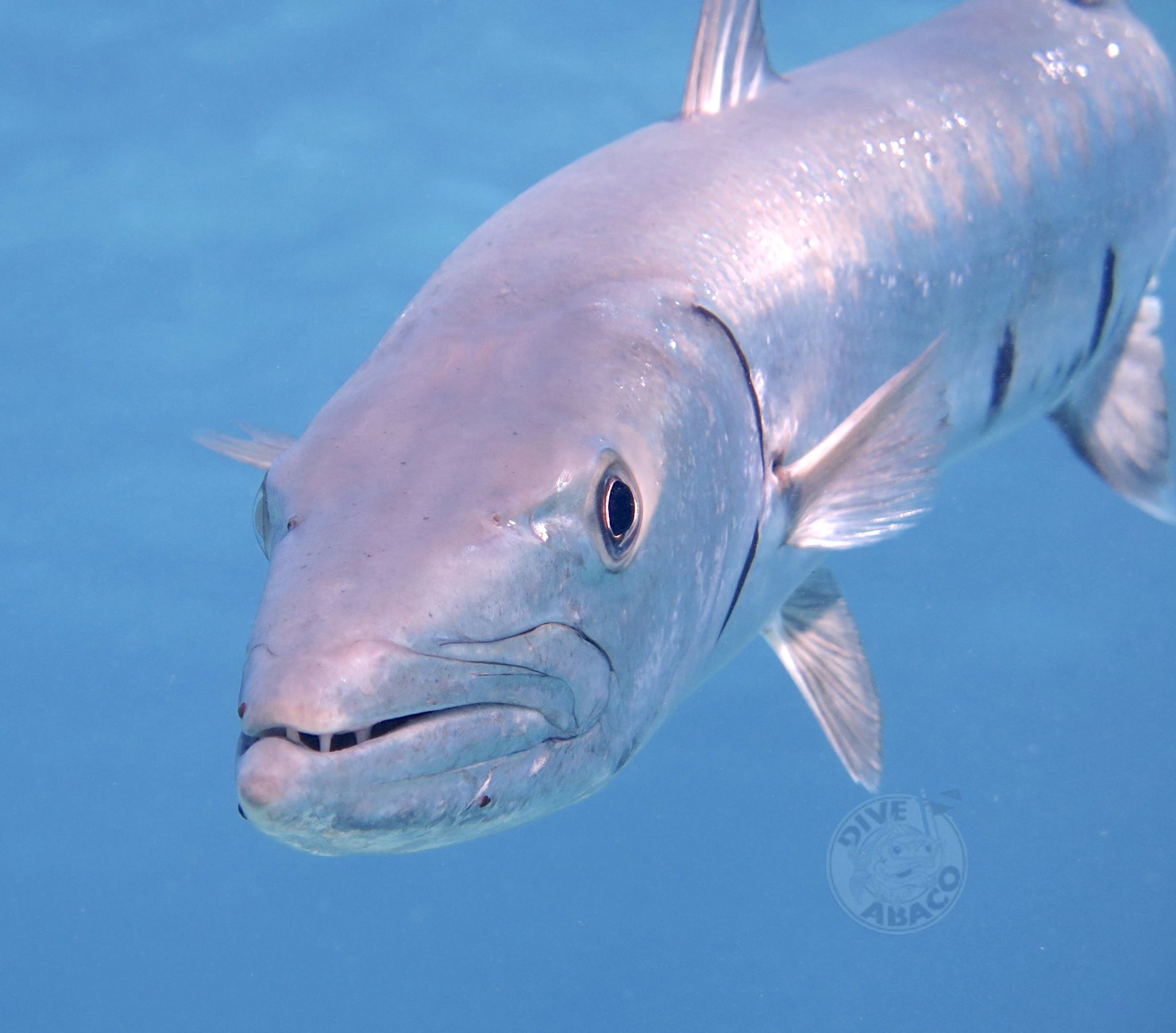
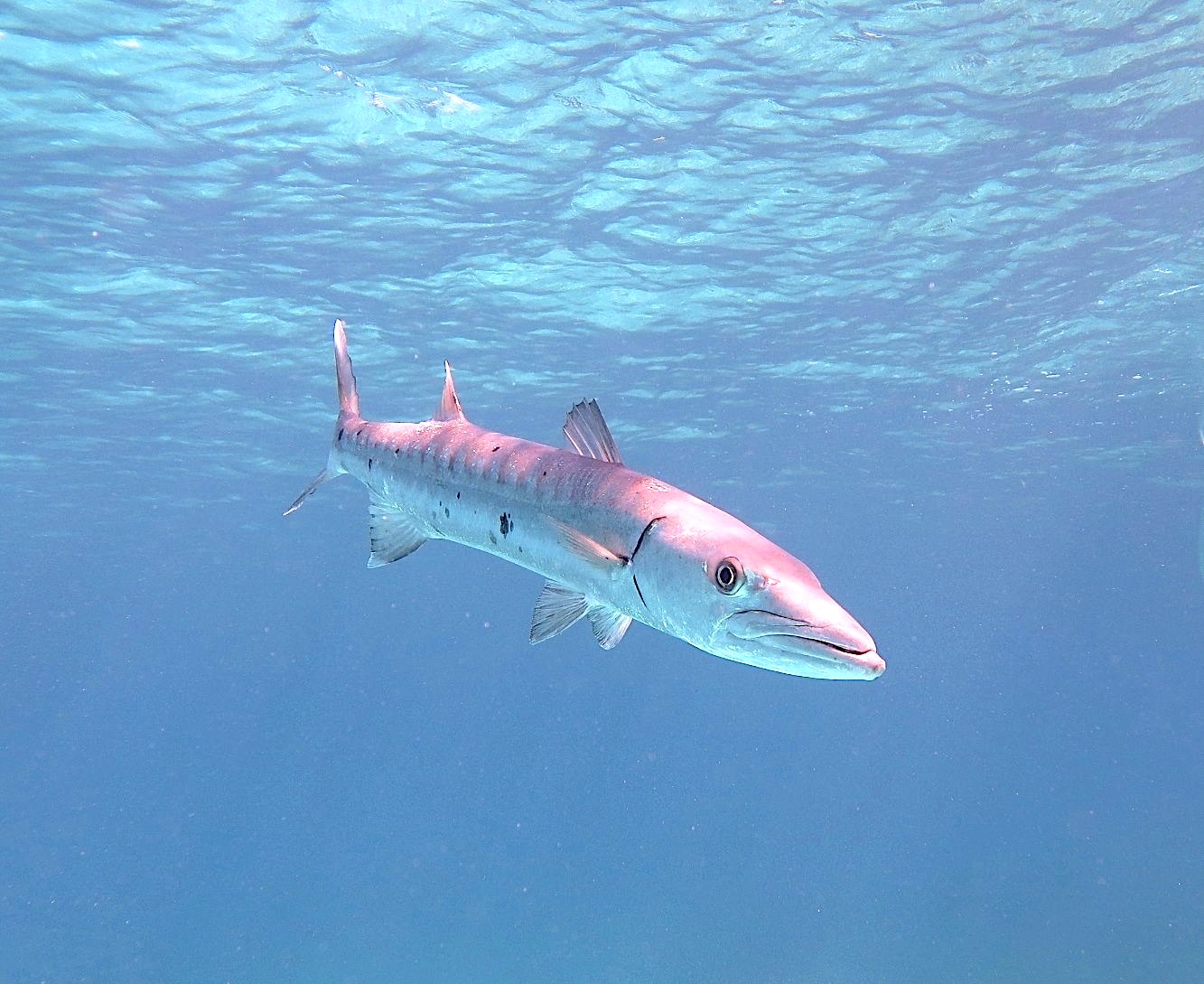
There’s no doubt about it, barracudas have a particularly unwelcoming look to them. They exude menace. There’s something about the torpedo shape, the primitive head, and the uncomfortably snaggle-toothed grin-with-underbite that suggests a creature not to be underestimated.

And that smiley mouth – rather scornful and derisive, is it not? A powerful creature in its element, where you are the intruder… and it sees it like that too. An adult barracuda may grow to nearly 6 foot long. You are only temporarily of its world, and (it observes) you are keeping your distance.

The dental arrangements of a ‘cuda are a wonder in themselves. The teeth are razor sharp; an orthodontist’s nightmare because they are all different sizes and grow at different angles. Some are conventionally set in the jaws, but some actually grow from the roof of the mouth. There are ‘normal’ sized teeth interspersed with wicked-looking fangs that randomly grow facing forwards, backwards and sideways.

WHY THE UNTIDY MOUTH FURNITURE?
The name Barracuda is thought to derive from the Spanish word barraco meaning (in one of its senses) “overlapping teeth”. The jaws that contain the teeth are strong, and the underbite adds to the effectiveness of ‘cuda predation. Prey is highly unlikely to escape once caught. When the jaws snap shut, the sharp angled teeth – particularly the back-facing ones (cf fishhook barbs) prevent the victim from pulling away. Then the munching and shredding can begin inside what is essentially a perfectly equipped multi-bladed mincing machine.

Credits: Melinda Rogers / Dive Abaco except #3 & #8 Melinda Riger / Grand Bahama Scuba
Here’s looking at you… 

































 ROLLING HARBOUR ABACO
You must be logged in to post a comment.