Unknown's avatar

SANDERLINGS ON DELPHI BEACH, ABACO BAHAMAS


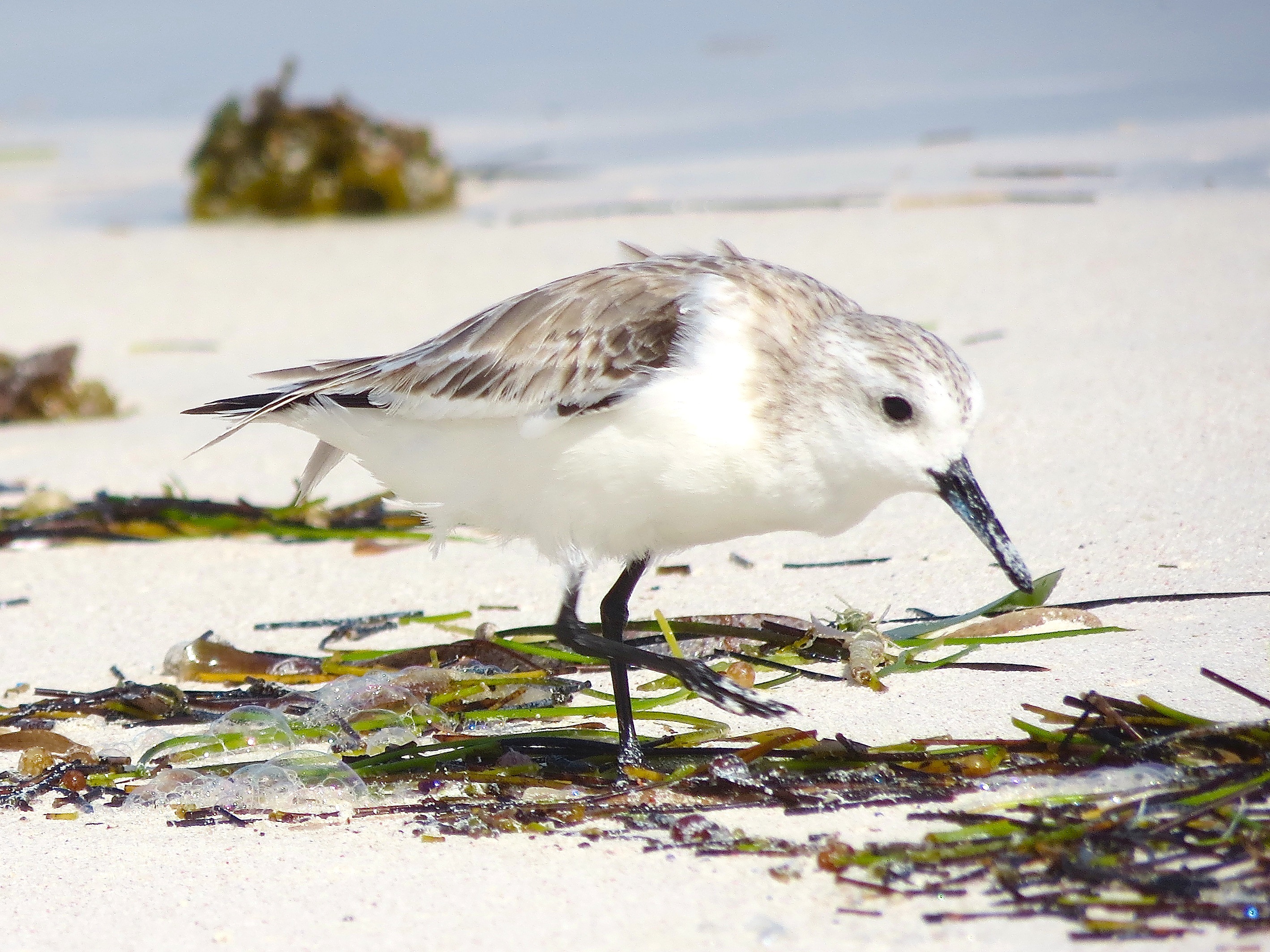
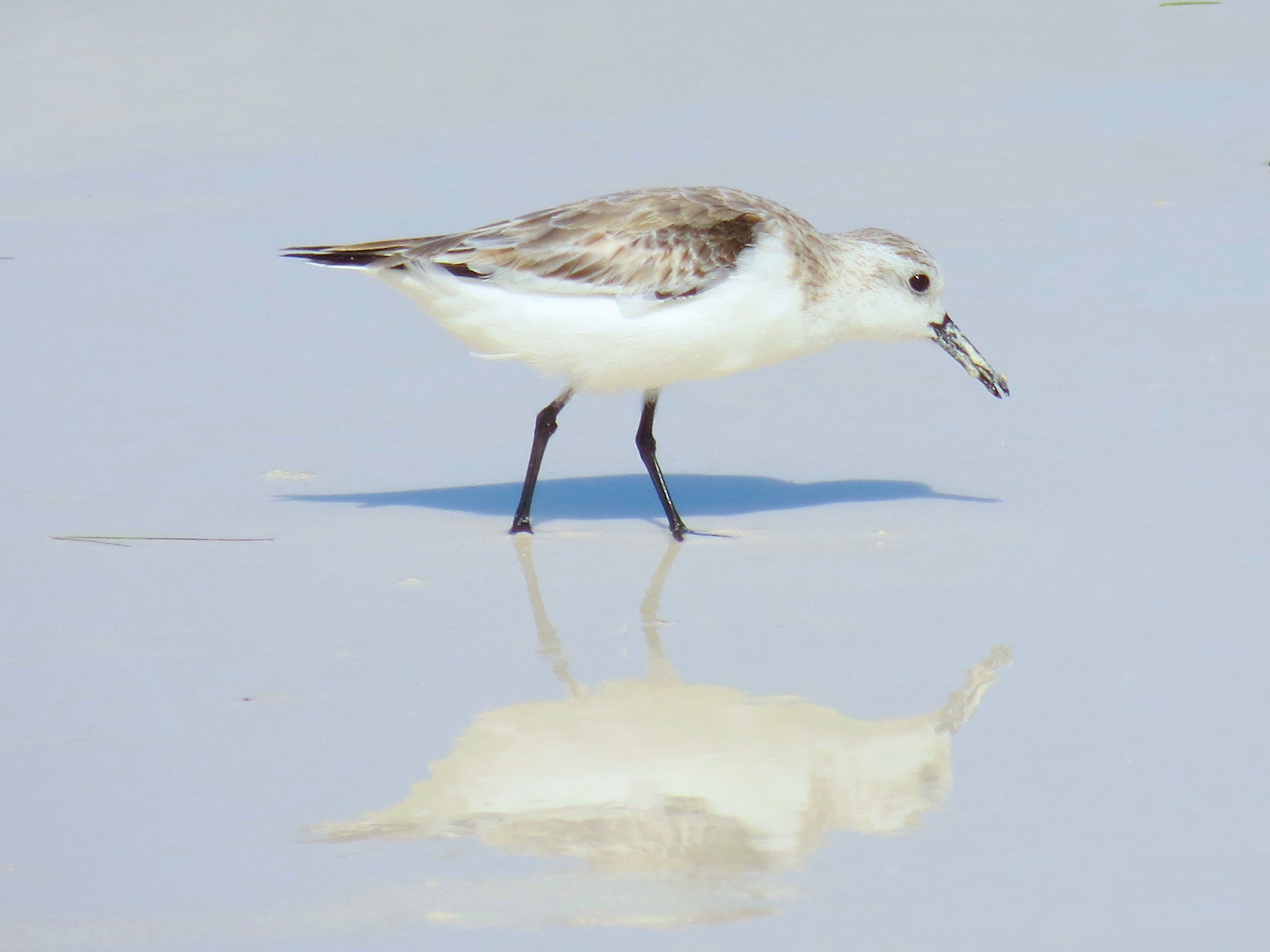
Sanderling, Delphi Beach Abaco Bahamas (Keith Salvesen)

SANDERLINGS ON DELPHI BEACH, ABACO BAHAMAS

Looking back through some bird photo folders from last year, I came across these sanderlings that I photographed on the beach at Delphi. These little birds are far from rare, but watching a flock of them scuttling back and forth on the sand, in and out of the tide, is always a treat. And as you will notice, when they are foraging in earnest they not only stick their bills into the sand right up to the base… they go for total immersion of the head!

Sanderling, Delphi Beach Abaco Bahamas (Keith Salvesen)Sanderling, Delphi Beach Abaco Bahamas (Keith Salvesen)Sanderling, Delphi Beach Abaco Bahamas (Keith Salvesen)Sanderling, Delphi Beach Abaco Bahamas (Keith Salvesen) Sanderling, Delphi Beach Abaco Bahamas (Keith Salvesen)

All photos: Keith Salvesen, Rolling Harbour Abaco

Unknown's avatar

PIED-BILLED GREBES: LESS COMMON THAN THE LEAST


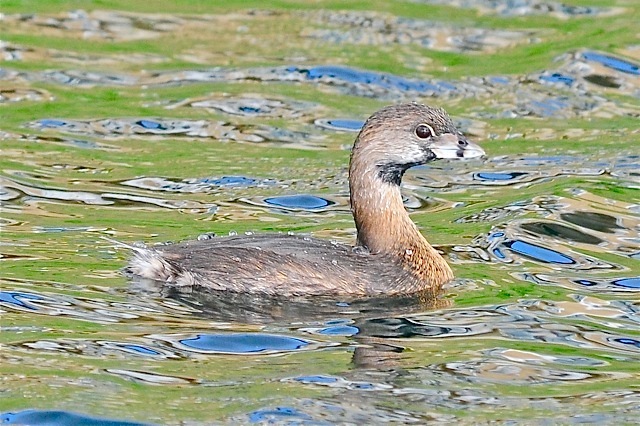
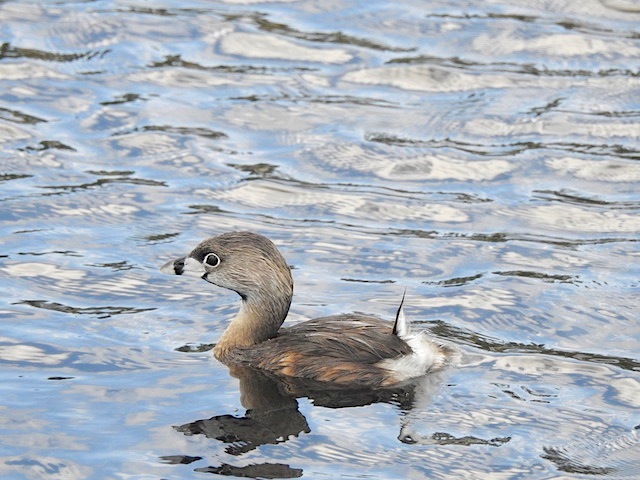
Pied-billed grebe, Abaco (Tom Sheley)

PIED-BILLED GREBES: LESS COMMON THAN THE LEAST

There are two grebe species recorded for Abaco. The LEAST GREBE is the most common; the pied-billed grebe (Podilymbus podiceps) is rarer. These small birds, often called dabchicks, are marsh and pond dwellers. They are sometimes found in brackish or even salt water.

Pied-billed grebe, Abaco (Tony Hepburn)

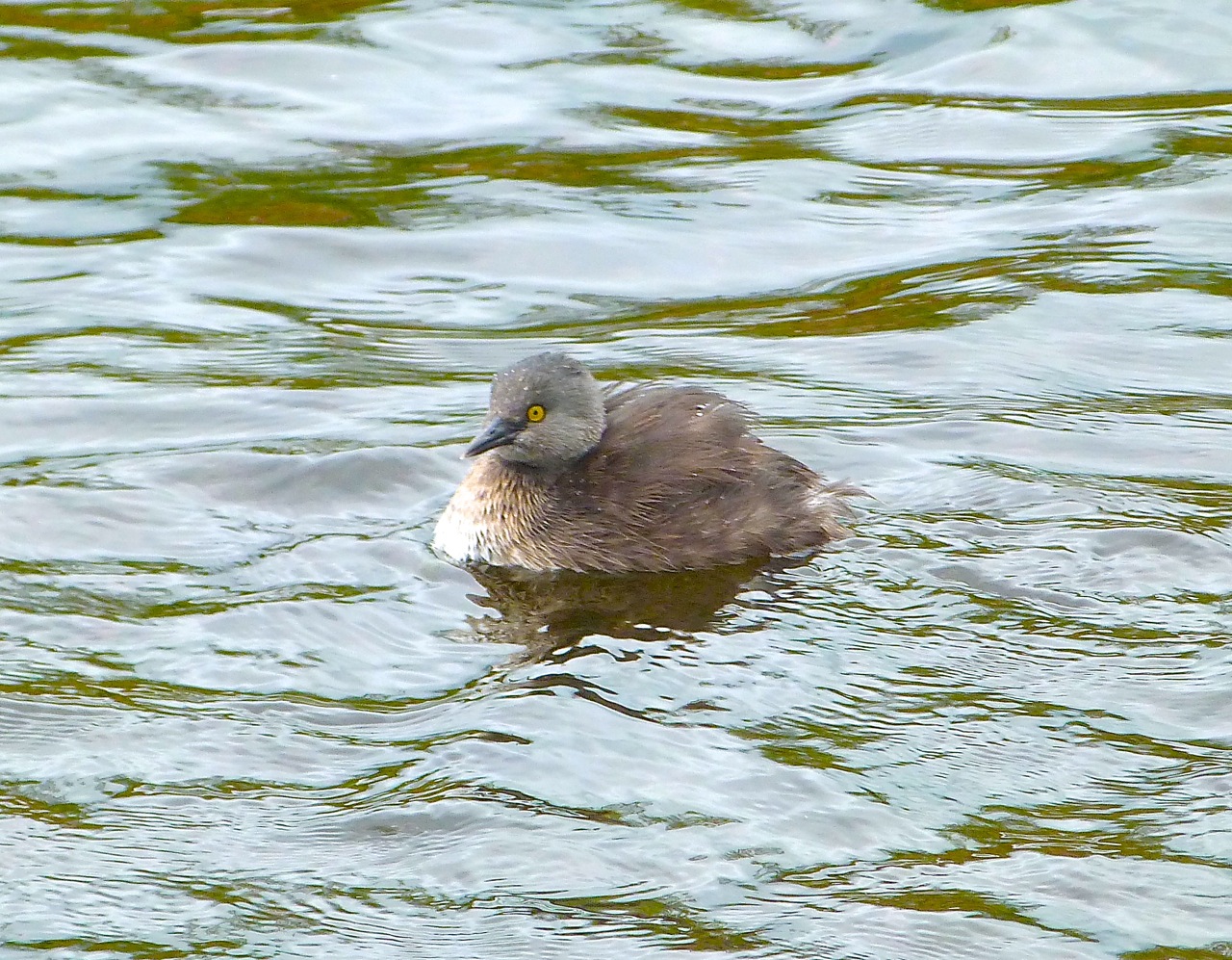
The pied-billed grebe is somewhat larger than the least grebe. In the breeding season, they have a distinctive black beak-ring. In the header image, the bird is just starting to acquire the ring. Their dark eyes also distinguish them from the golden-eyed least grebe; and their beaks are pale rather than dark.

Least grebe with golden eyes and dark beakLeast Grebe, Abaco (Keith Salvesen)

Pied-billed Grebe for comparisonPied-billed grebe, Abaco (Linda Barry Cooper)

These birds have lobes on each toe rather than webbed feet. This helps them to paddle and to dive – which is how they mainly forage. They can stay under water for up to half a minute, often surfacing some distance from the entry point. This is one method they use to avoid danger – especially as they don’t fly with much enthusiasm.

Pied-billed grebe, Abaco (MDF wiki)

Grebes rather endearingly carry their young on their backs until the chicks are old enough to fend for themselves. The main threat to the species is habitat loss, especially of wetlands. The decline in local populations of this once-prolific bird is such that in some places they classified as threatened or endangered.

Pied-billed grebe, Abaco (Dori / wiki)

The pied-billed grebes’ call has been rendered thus: a “whooping kuk-kuk-cow-cow-cow-cowp-cowp.” If that helps you at all. If not, try this clip:

Michel St Martin / Xeno-Canto

Credits: Tom Sheley, Tony Hepburn, Keith Salvesen (least grebe), Linda Barry-Cooper, MDF / wiki, Dori / wiki; Sound file, Xeno-Canto; Cartoon, Birdorable

Unknown's avatar

LEAST (BUT NOT LAST) SANDPIPERS ON ABACO


Least Sandpiper, Delphi Beach, Abaco (Charles Skinner)

LEAST (BUT NOT LAST) SANDPIPERS ON ABACO

There are 23 sandpiper species recorded for Abaco. Of those, 4 or 5 are vanishingly rare vagrants recorded once or twice in recent history (i.e. since about 1950).

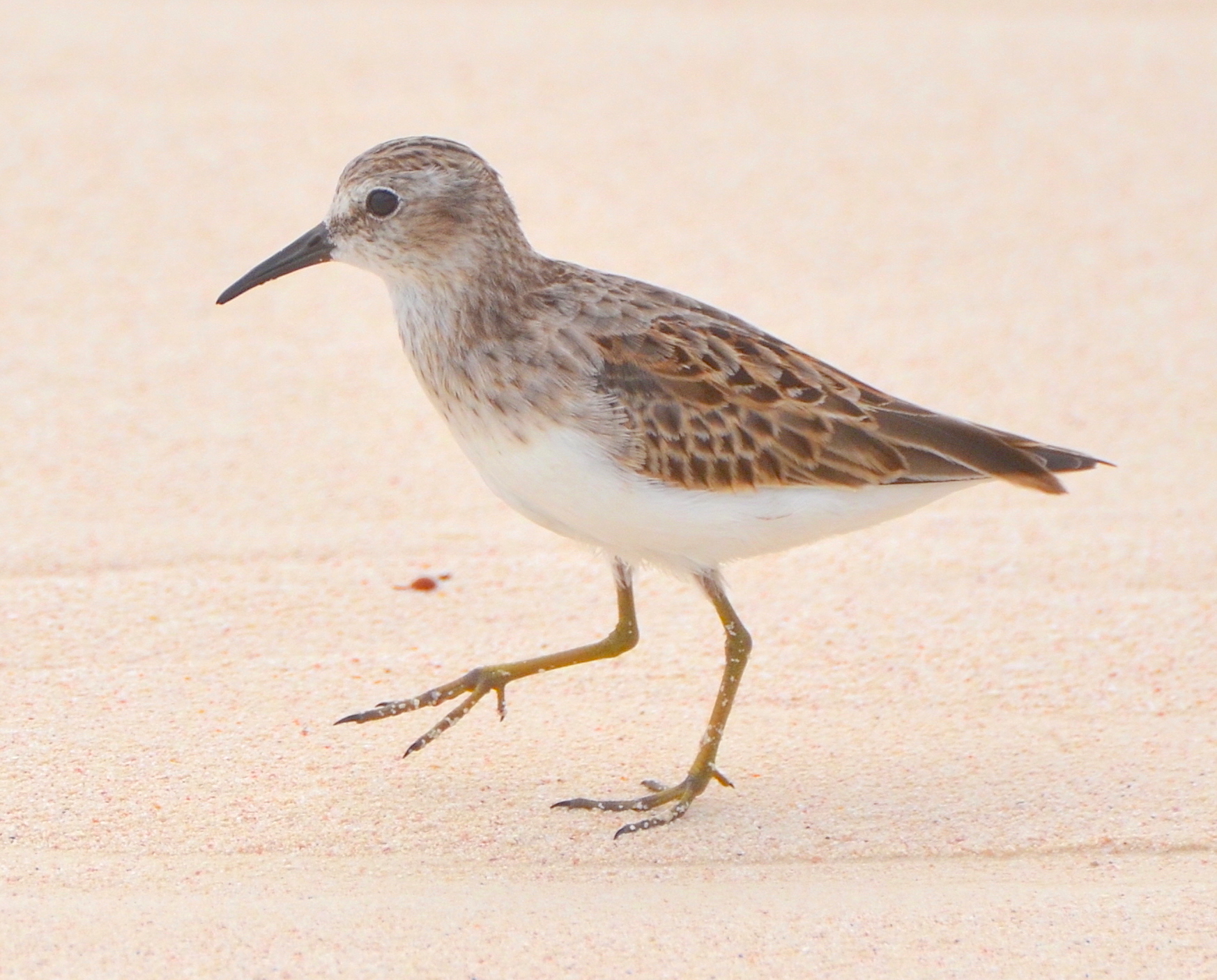
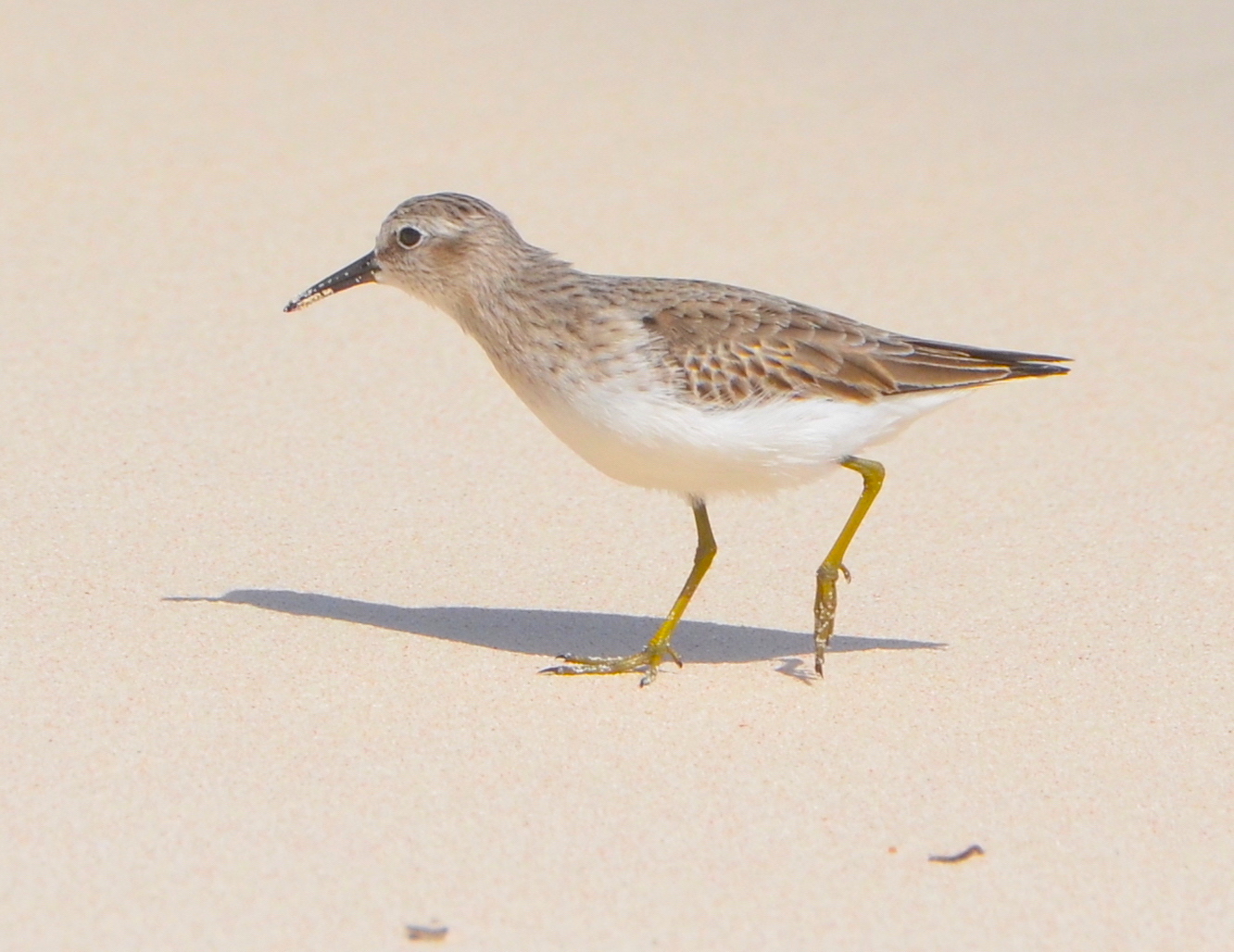
Discounting those, the ones you are likely to encounter range from the large  (whimbrel, yellowlegs, dowitchers, stilts) to the small. Or, in the case of the least sandpiper, the least big of all. They are bigly little. Least Sandpiper, Delphi Beach, Abaco (Charles Skinner)

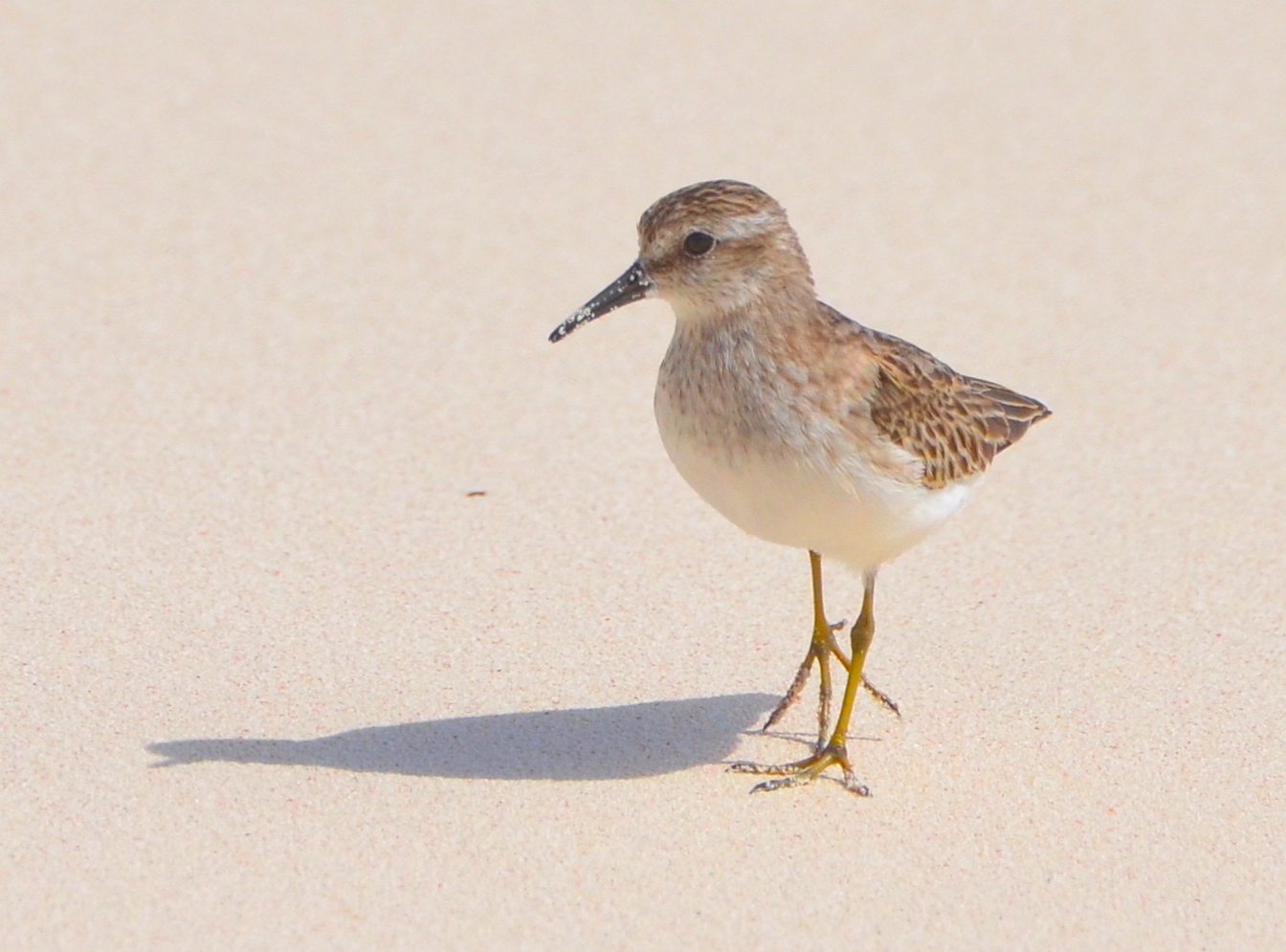
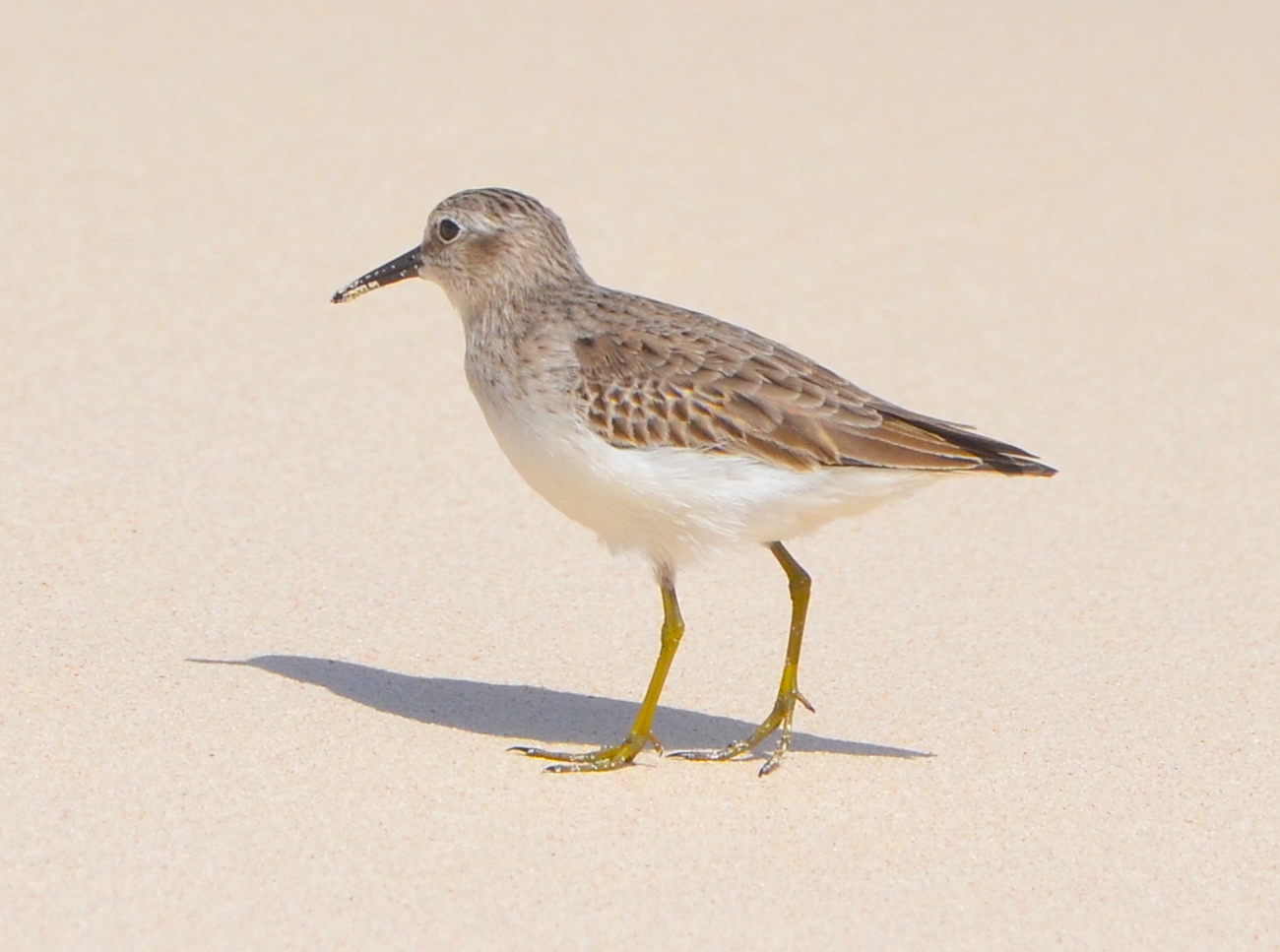
The binomial name of the least sandpiper – Calidris minutilla – is an apt clue to their size, the second part being Latin for “very small”. On Abaco, they are fairly common winter visitors, and each season a handful of them make their home on the beach at Delphi, where these photos were taken. Least Sandpiper, Delphi Beach, Abaco (Charles Skinner)

Along with their small sandpiper compadres such as SANDERLING, these busy, bustling birds of the shoreline are the ones known as “peeps” (also as stints). Least Sandpiper, Delphi Beach, Abaco (Charles Skinner)

Least Sandpipers breed in the northern tundra areas of North America. Like many or most shorebirds, newly hatched chicks are able to fend for themselves very quickly. It sounds unlikely I know, but within a couple of weeks or so they have fledged. Least Sandpiper, Delphi Beach, Abaco (Charles Skinner)

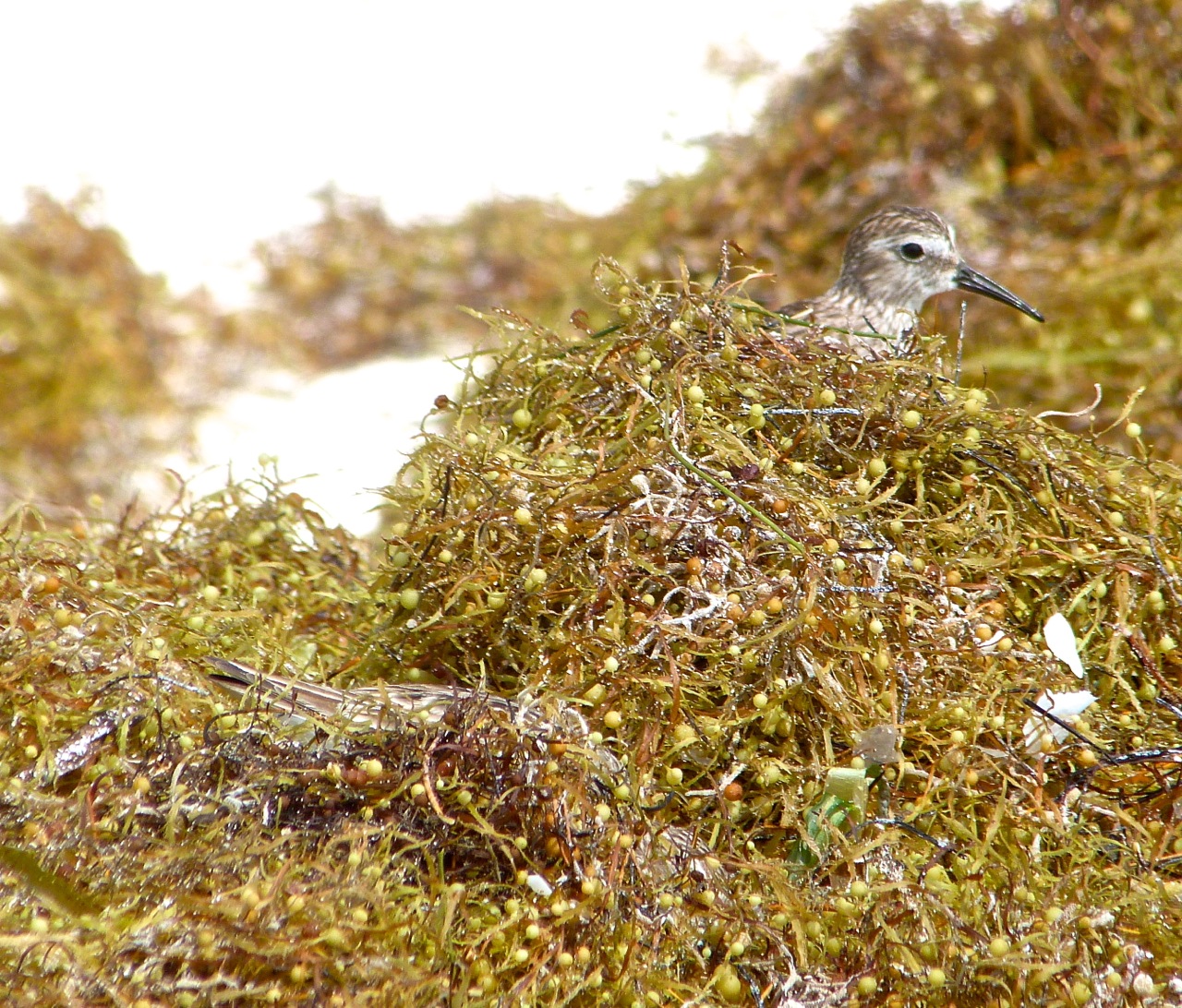
The birds forage on mudflats, in the tideline on beaches, and in wrack. They will probe into soft sand, sometimes the full length of their beak. They will even burrow right under weed to get at the concealed goodies. Their diet consists mainly of small crustaceans, insects, and snails.Least Sandpiper, Delphi Beach, Abaco (Keith Salvesen)

Credits: All photos by Charles Skinner (contributor to “The Birds of Abaco”) except the wrack-burrowers above, by Keith Salvesen (also on the Delphi Beach).

Least Sandpiper, Delphi Beach, Abaco (Charles Skinner)

Unknown's avatar

BLACK-FACED GRASSQUITS: FEEDING TIME


Black-faced Grassquits: feeding time (Charles Skinner)

BLACK-FACED GRASSQUITS: FEEDING TIME…

Not a feeding frenzy exactly, but persistence pays off. However, this little bird found that dad had eventually had enough of the nurturing bit…

URGENT – feed meeeeeeeeeeBlack-faced Grassquits: feeding time (Charles Skinner)

[*THINKS* can’t reply, I’ve got my mouth full…]

The good-thing hand-over

No! You’ve had quite enough for one snack…

Feeding sequence by Charlie Skinner.

*No birds were hurt -not even their pride or dignity – in the photographing of this heavily anthropomorphised sequence…*


Unknown's avatar

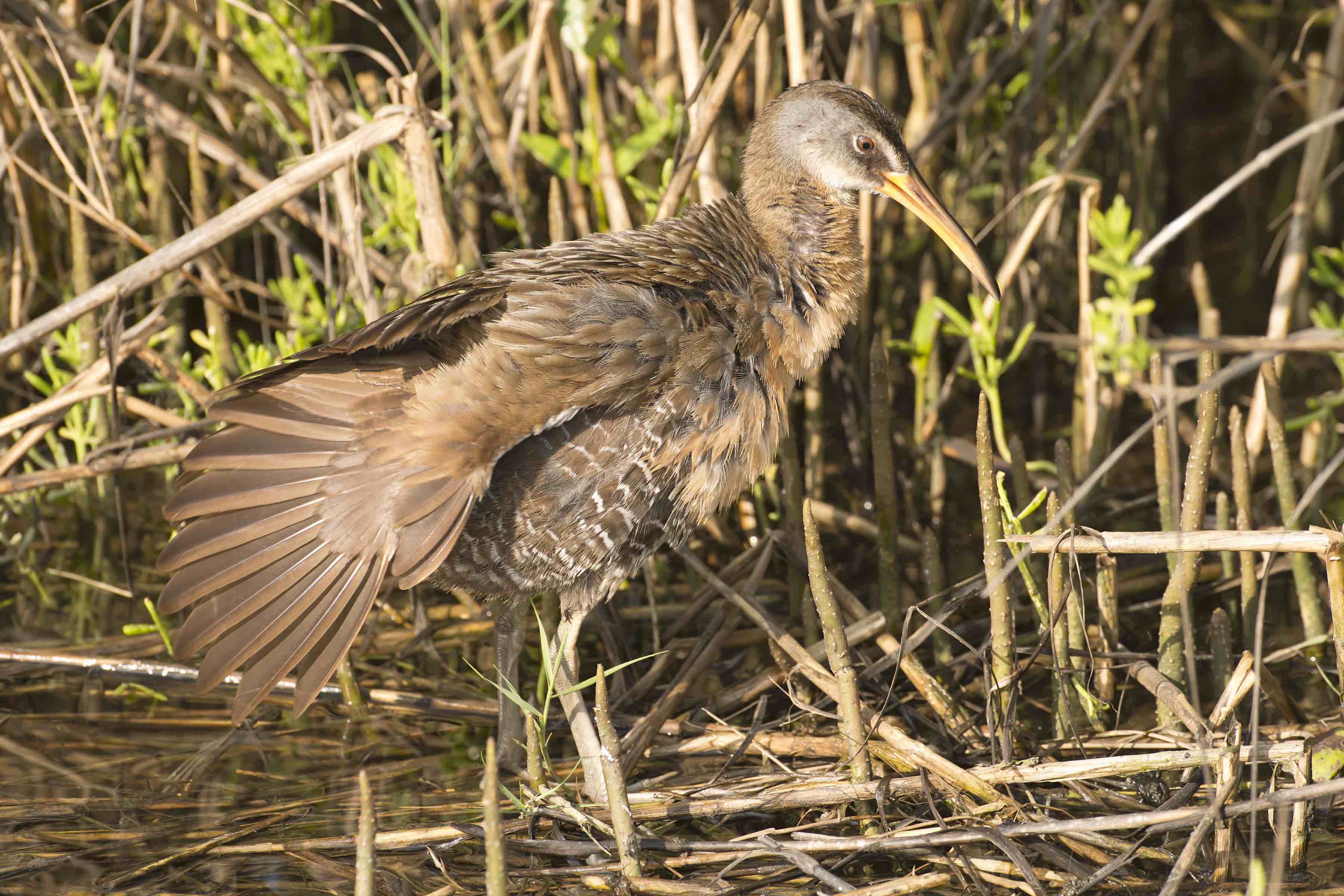
CLAPPER RAILS ON ABACO: A SMALL SHOWCASE


Clapper Rail, Abaco, Bahamas (Tom Sheley / Birds of Abaco)

CLAPPER RAILS ON ABACO: A SMALL SHOWCASE

Just over 3 years ago, THE BIRDS OF ABACO was published and launched at the Delphi Club. The book was intended to showcase the wonderful and varied bird life on Abaco – home to endemics, permanent residents, seasonal residents, and a wide variety of migrating transients. The book has been most generously received and supported – though I have to report that already its definitive checklist (dating from 1950) has become outdated with the recording of 6 additional species on Abaco, featured elsewhere in this blog.

Clapper Rail, Abaco, Bahamas (Tom Sheley / Birds of Abaco)

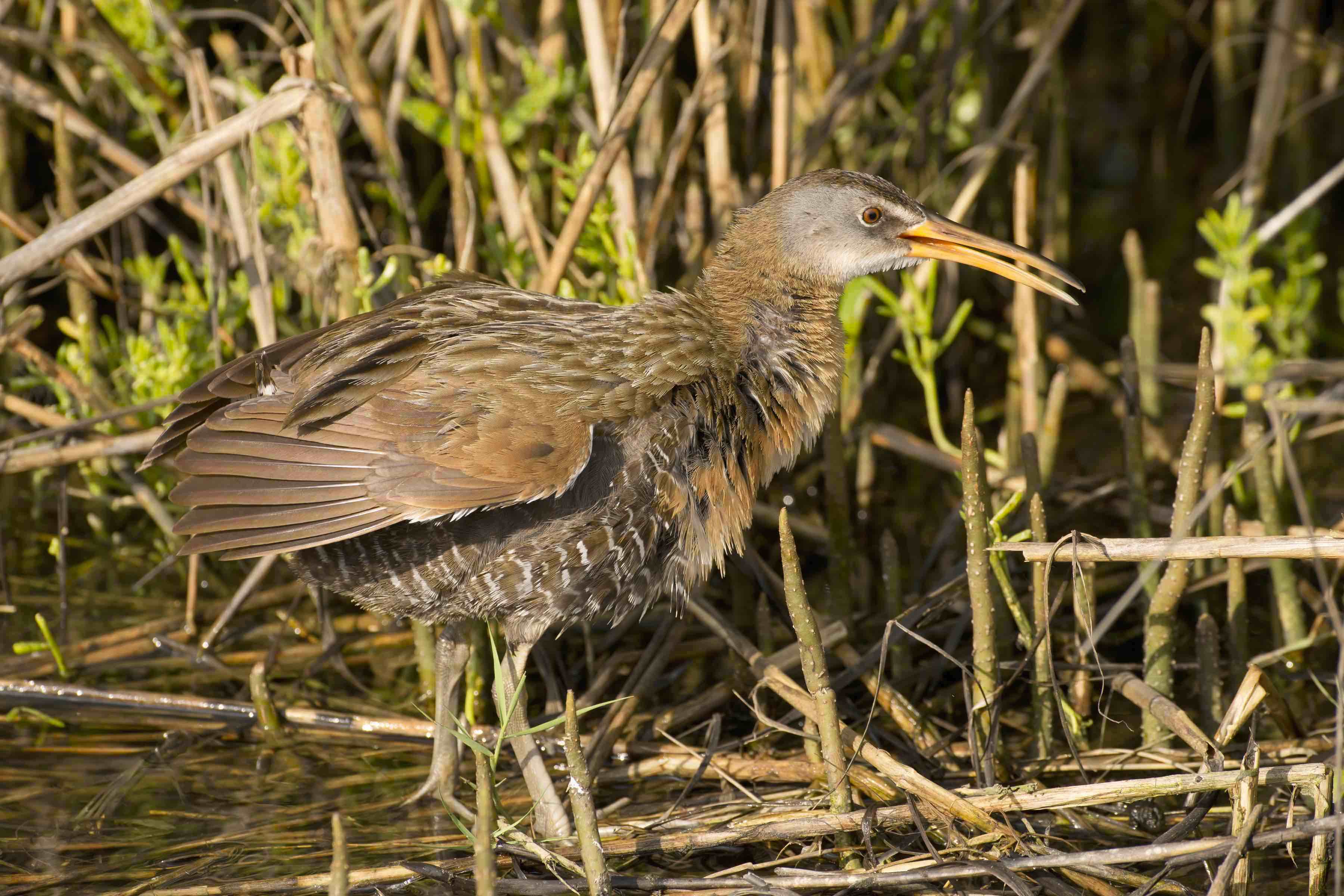
Tom Sheley was one of the main photographic contributors to the book, and I had the good fortune to coincide with one of his trips to Abaco, when he was armed with significant photographic weaponry; and to accompany him on some of his photographic day trips (not including the early morning ones, in my case). This clapper rail is one of my favourites of his photo sequences of a bird being a bird – preening, stretching, calling – in its own habitat.

Clapper Rail, Abaco, Bahamas (Tom Sheley / Birds of Abaco)

My one regret about my involvement  in producing the book (it took 16 months) and more generally in the wildlife of Abaco is that I have entirely failed to progress to sophisticated (expensive) photographic equipment capable of producing images the quality of Tom’s. Yes, I’ve moved on from compacts (ha!) to bridge cameras (Panasonic Lumix + lens extender), and some results ‘make the cut’. But my move up to a Canon SLR was mainly disastrous, and when eventually I inadvertently drowned it (I overbalanced while photographing shorebirds from breaking waves. Total immersion. Total stupidity.) I felt an unexpected sense of relief. A blessing really – I never understood it, nor in my heart of hearts (if I’m honest) really wanted to… But my feeble struggle made me realise and appreciate the enormous skill of those like Tom who take ‘National Geographic’ quality photographs. It’s not just the equipment – it’s knowing exactly how to use it, and often in a split second…

Clapper Rail, Abaco, Bahamas (Tom Sheley / Birds of Abaco)

Photos by Tom Sheley – with thanks for the adventures

Unknown's avatar

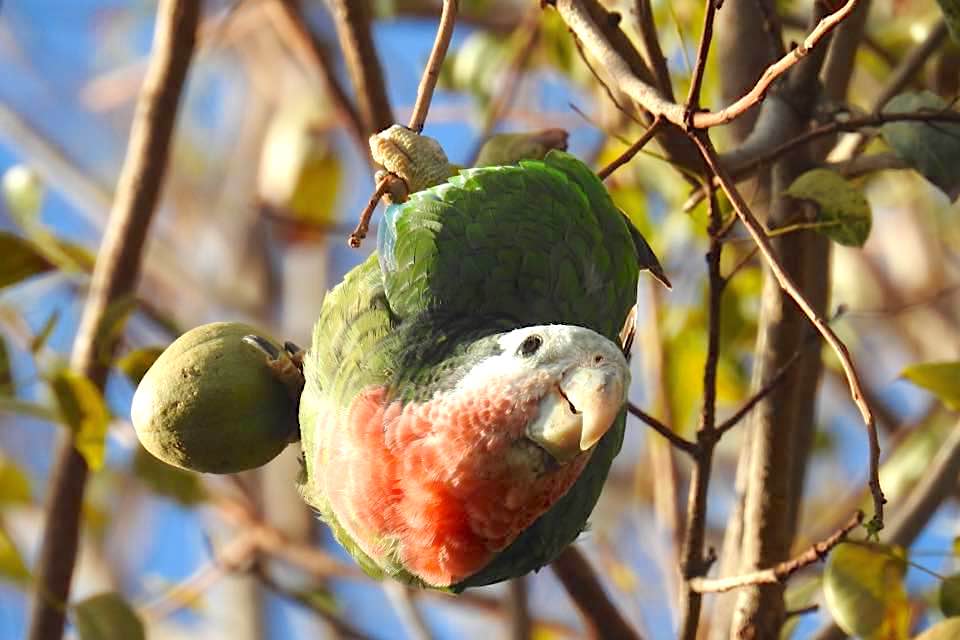
ABACO (CUBAN) PARROTS: GETTING FRUITY


Abaco (Cuban) Parrots, Bahamas (Melissa Maura)

ABACO (CUBAN) PARROTS: GETTING FRUITY

To be honest, the header image is not the sort of ‘fruity’ I had in mind, which was intended to have an entirely dietary connotation. I’m not quite sure what these two are up to – not procreation, I think, in that precarious situation. It looks non-aggressive… so maybe just having fun and… er… hanging out together.

Here are some Abaco parrots doing what they love to do in between group squawking sessions: gorge themselves on fruit, and getting at it any which way. 

Upside down is really just a different angle to get at fruitAbaco (Cuban) Parrots, Bahamas (Melissa Maura)

Noshing on berries

One in the beak, next one ready in the claw

Tackling something more substantial

More acrobatics

And eventually out on a limb…

All great parrot photos by Melissa Maura, with thanks as always for use permission

Unknown's avatar

CUBAN EMERALDS ON ABACO: JEWELS BEYOND PRICE


CUBAN EMERALDS ON ABACO: JEWELS BEYOND PRICE

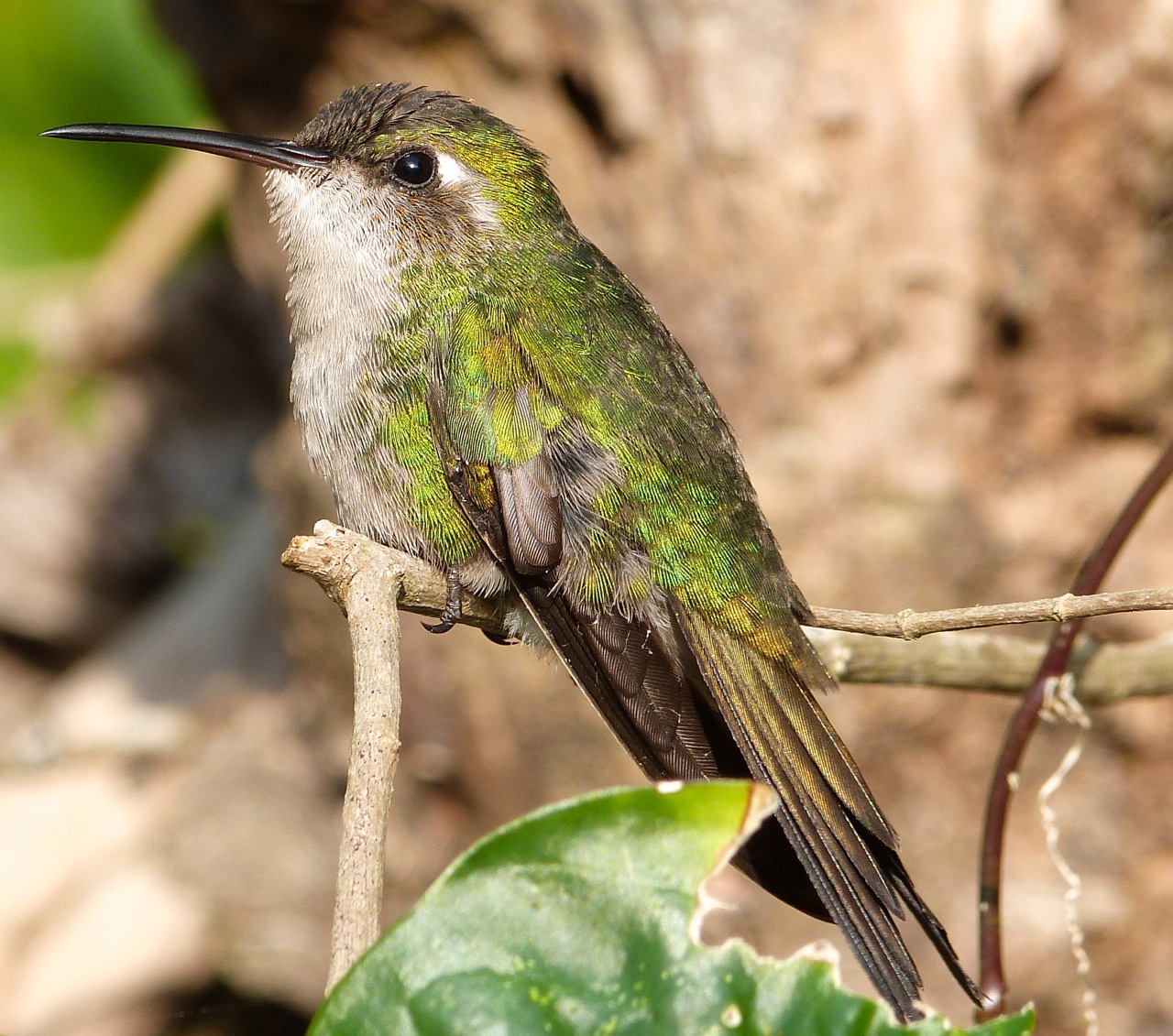
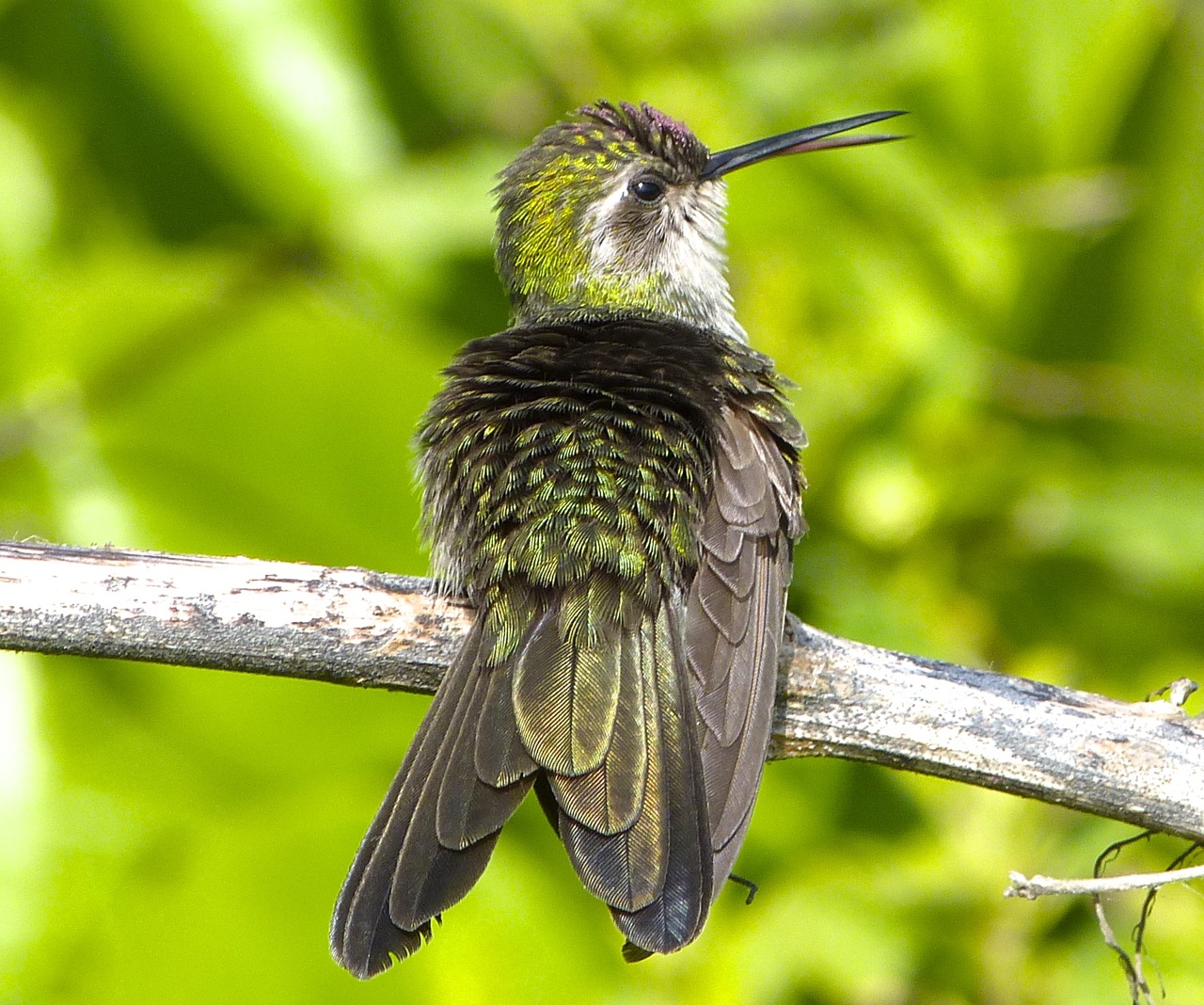
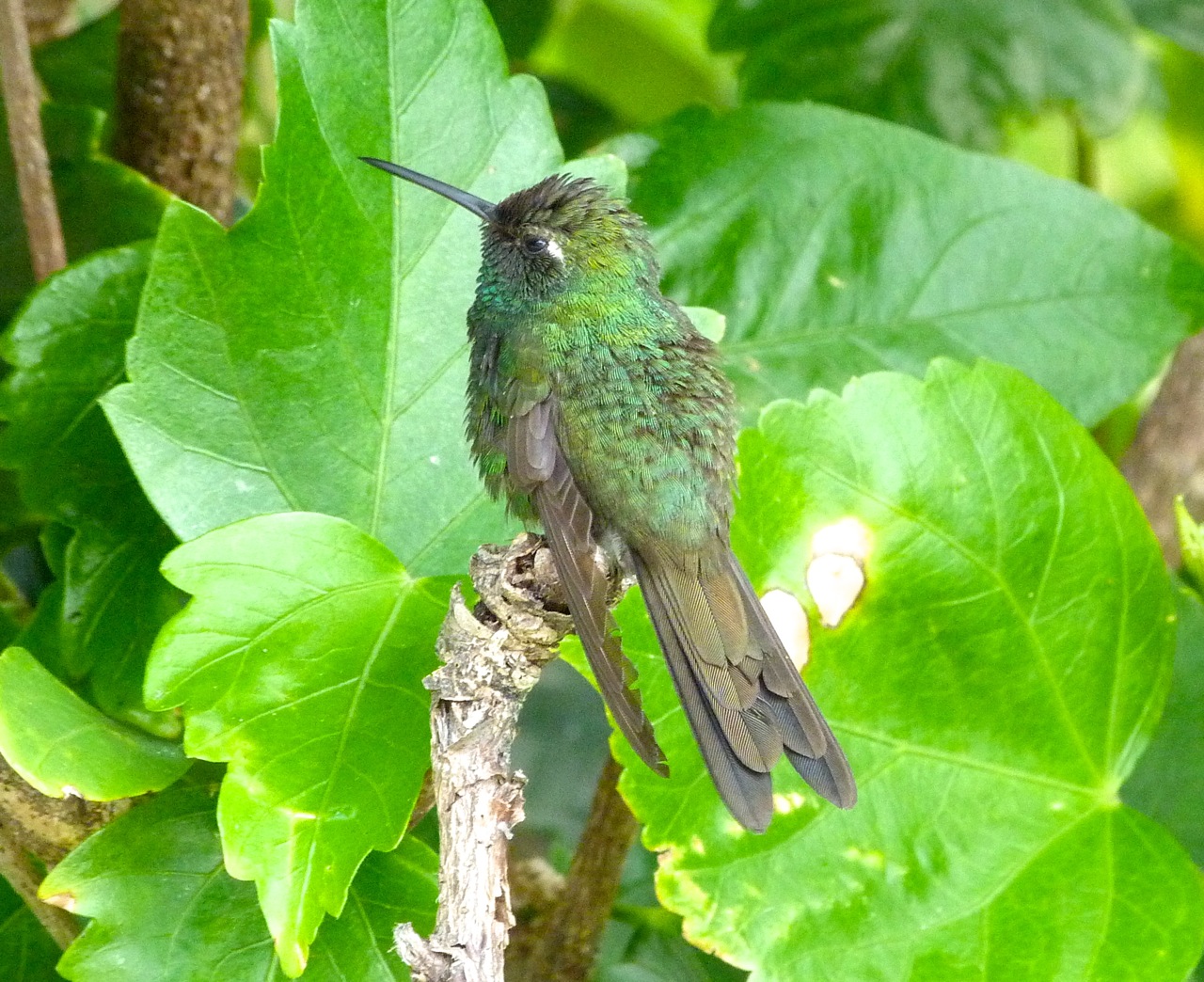
Well I don’t want to overstate it, but there cannot be anyone on the planet who has anything but love for hummingbirds. There’s no existing word for ‘fear of hummingbirds’ – ‘colibriphobia‘ is not a ‘thing’. There’s fear of almost everything else, from grass to clouds to plastic bags**… but, surely, not hummers. Here are a few to enjoy.

The females have a wonderful metallic sheen that makes them shimmer in the sunshine. Males are darker: a gorgeous, handsome green. The Emeralds are one of those bird species where it is hard to decide between the sexes which is the more beautiful…

All photos: Keith Salvesen / Rolling Harbour

** Plastybolsaphobia (nb despite the apparent Greek derivation of this word, the Ancient Greeks were strangers to the world of these handy carriers / vile polluters / dealing wildlife killers)


Unknown's avatar

ANTILLEAN NIGHTHAWKS REVISITED


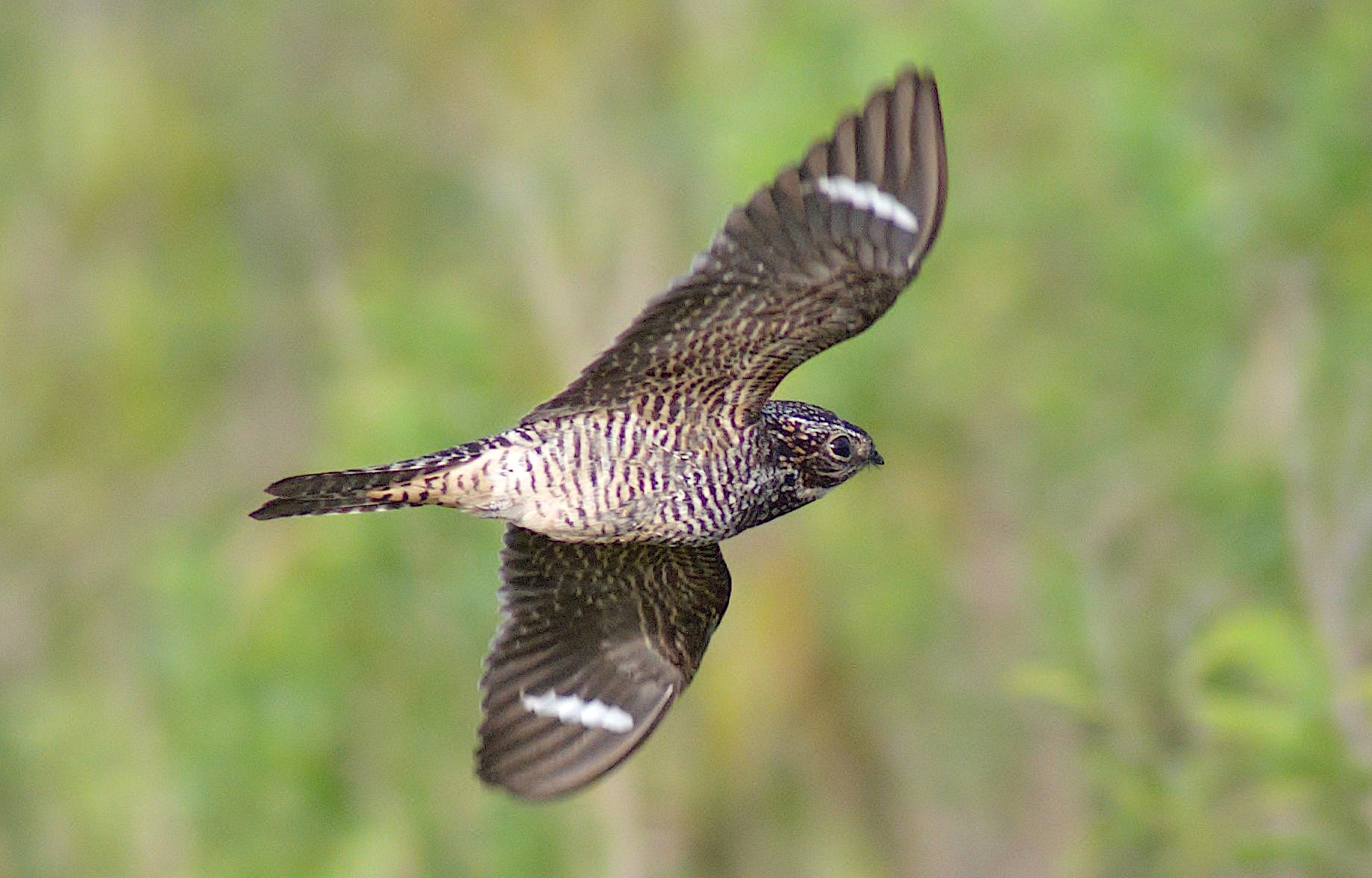
Antillean Nighthawk, Abaco (Sandy Walker)

ANTILLEAN NIGHTHAWKS REVISITED

In 2014 I wrote about finding myself – with others on a birding expedition – in the midst of dozens of nighthawks as they swooped and dived (dove?) while hawking for flies. “The birds were quite unperturbed by our presence, and from time to time would zoom past within inches of our heads, making a swooshing noise as they did so”. You can find the post at FAST FOOD ON THE WING.

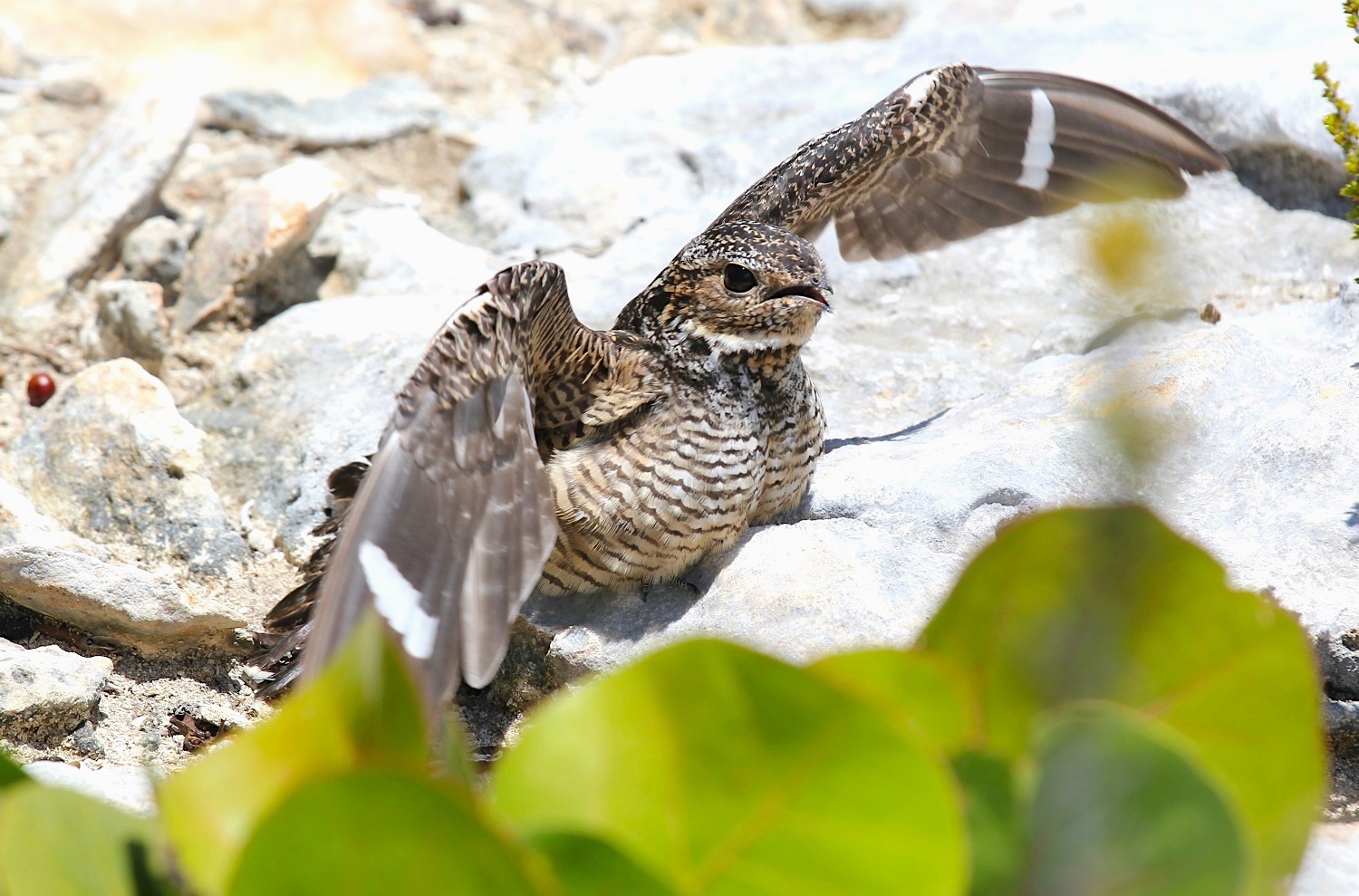
Antillean Nighthawk, Abaco (Stephen Connett)

Nighthawks catch flying insects on the wing, and mostly forage at dawn and dusk – or (more romantically) at night in a full moon. 

Antillean Nighthawk (Stephen Connett)

Besides aerial feeding displays, nighthawks may also be seen on the ground, where they nest. I say ‘nest’, but actually they hardy bother to make an actual nest, but just lay their eggs on bare ground. And, more riskily, this may well be out in the open rather than concealed. The eggs – usually 2 – hatch after 3 weeks or so, and after another 3 weeks the chicks fledge.

  Antillean Nighthawk Egg (Stephen Connett) Antillean Nighthawk Egg (Stephen Connett)

Fortunately their colouring enables them to blend in with the landscape – a good example of bird camouflage in natural surroundings.

Antillean Nighthawk, Abaco (Bruce Hallett)

The photos above are from Sandy Walker (header), Stephen Connett – to whom special thanks for use permission for his great nighthawk and egg images – and the last one by bird legend and author of the locus classicus The Birds of the Bahamas (without which no trip to the Bahamas is complete), Bruce Hallett.

Antillean Nighthawk Chordeiles gundlachii, is a species of nightjar. These birds have local names such as ‘killa-ka-dick’, ‘pi-di-mi-dix’, ‘pity-pat-pit’, or variations on the theme, presumably onomatopoeic. Pikadik-(dik) will do for me. See what you reckon from these recordings (excuse the thick-billed vireo – I think – in the background):

Andrew Spencer / Xeno-Canto

ODD FACT

I have read in several sources that no one knows where these migratory birds spend winter; or else that winter season data is ‘scarce’. So no sensible range maps exist, for example. If you read this, and have antillean nighthawks (as opposed to common nighthawks) all round you in winter, please tell someone – you may hold the key to an ornithological mystery…

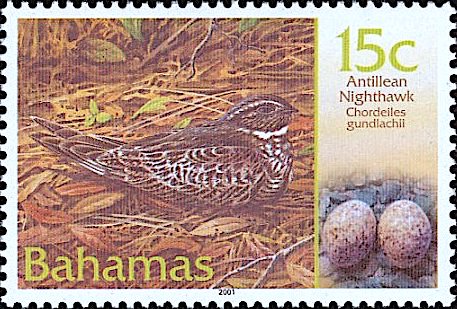
As so often, the Bahamas Philatelic Bureau leads the way with natural history stamps. The 15c Antillean Nighthawk above featured in a 2001 bird set. You can see dozens more very excellent Bahamas bird, butterfly, fish, flower and other wildlife stamps HERE.

Find out about Juan Gundlach, Cuban Natural Historian (he of the Antillean Nighthawk and the Bahama Mockingbird for example) HERE


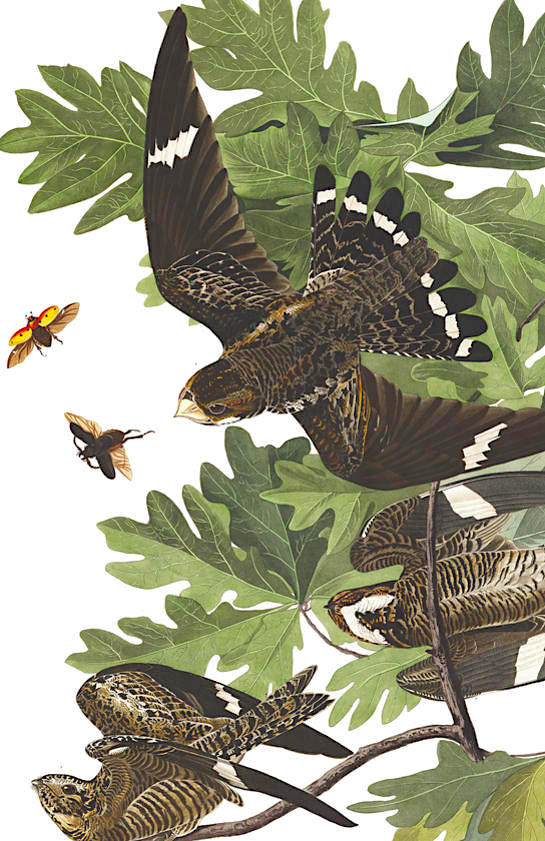
Credits: Sandy Walker (1);  Stephen Connett (2, 3, 4, 5); Bruce Hallett (6); Andrew Spencer / Xeno-Canto (audio files); Audubon (7); Sibley / Audubon (8)

Unknown's avatar

IN A CLASS OF ITS OWN: THE LIMPKIN


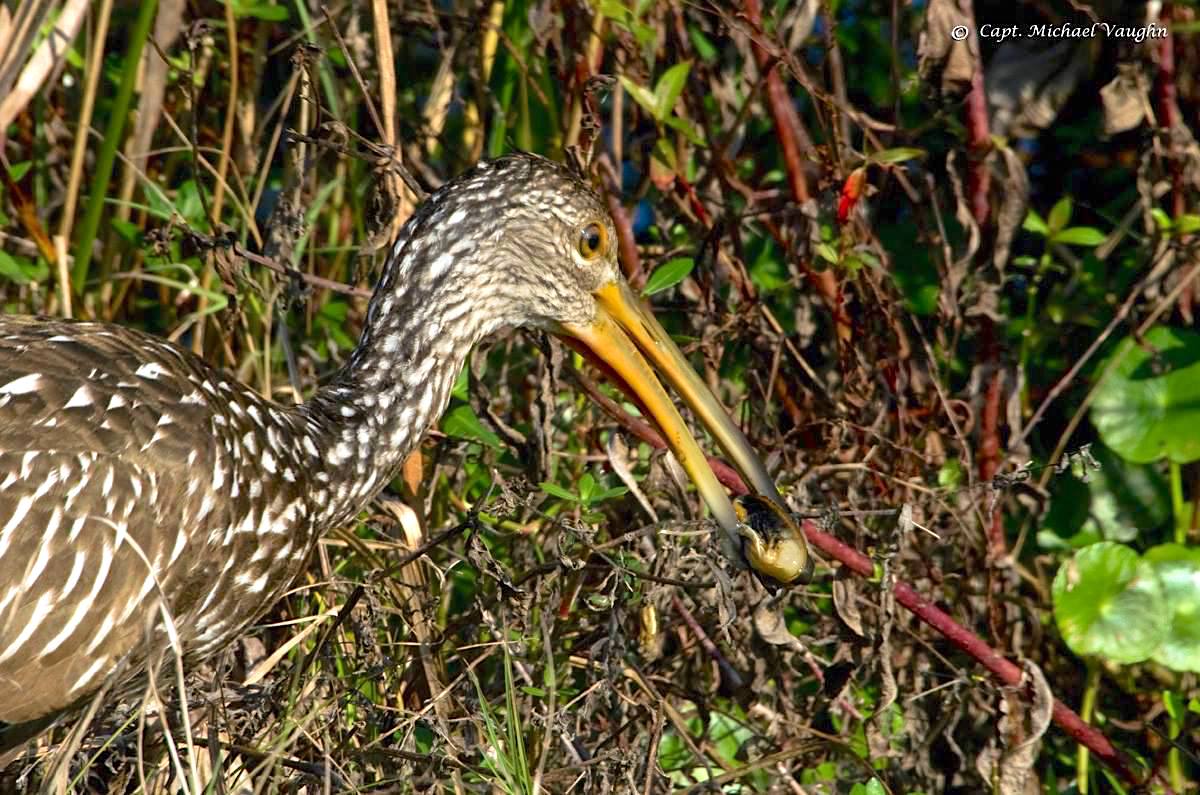
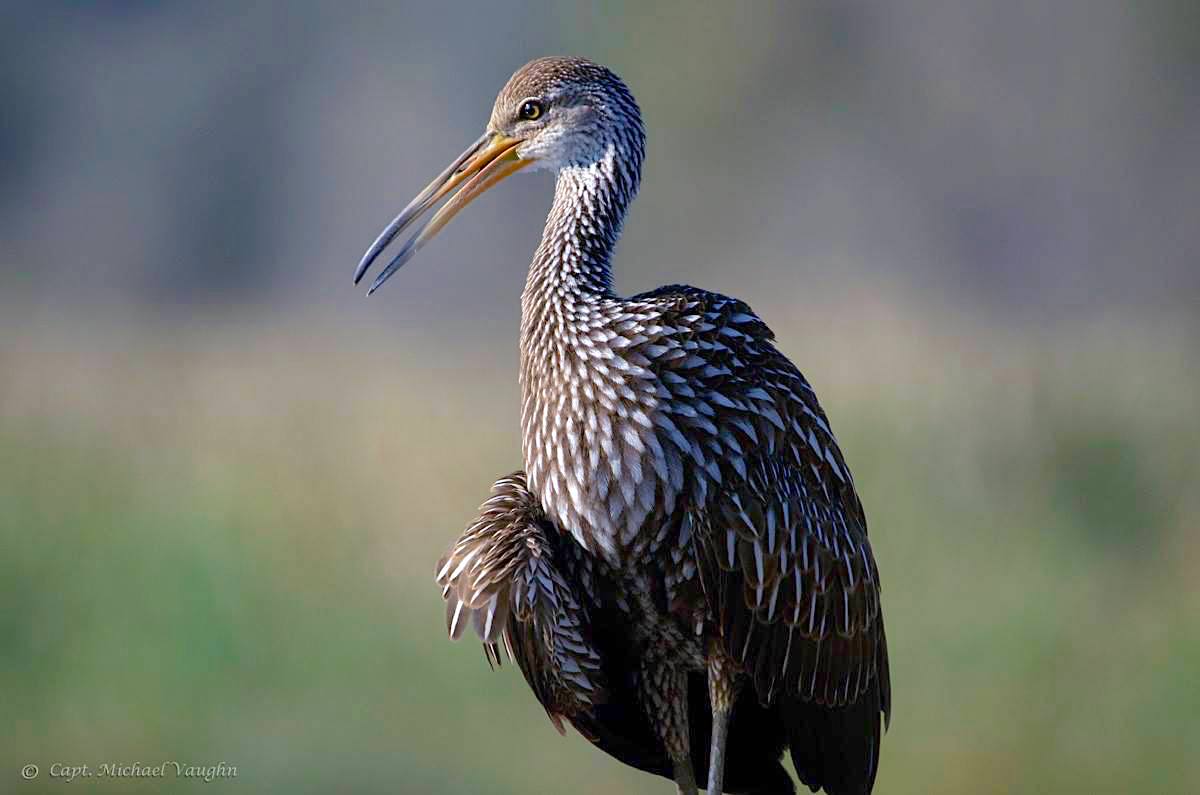
Limpkin wading (Michael Vaughn)

IN A CLASS OF ITS OWN: THE LIMPKIN

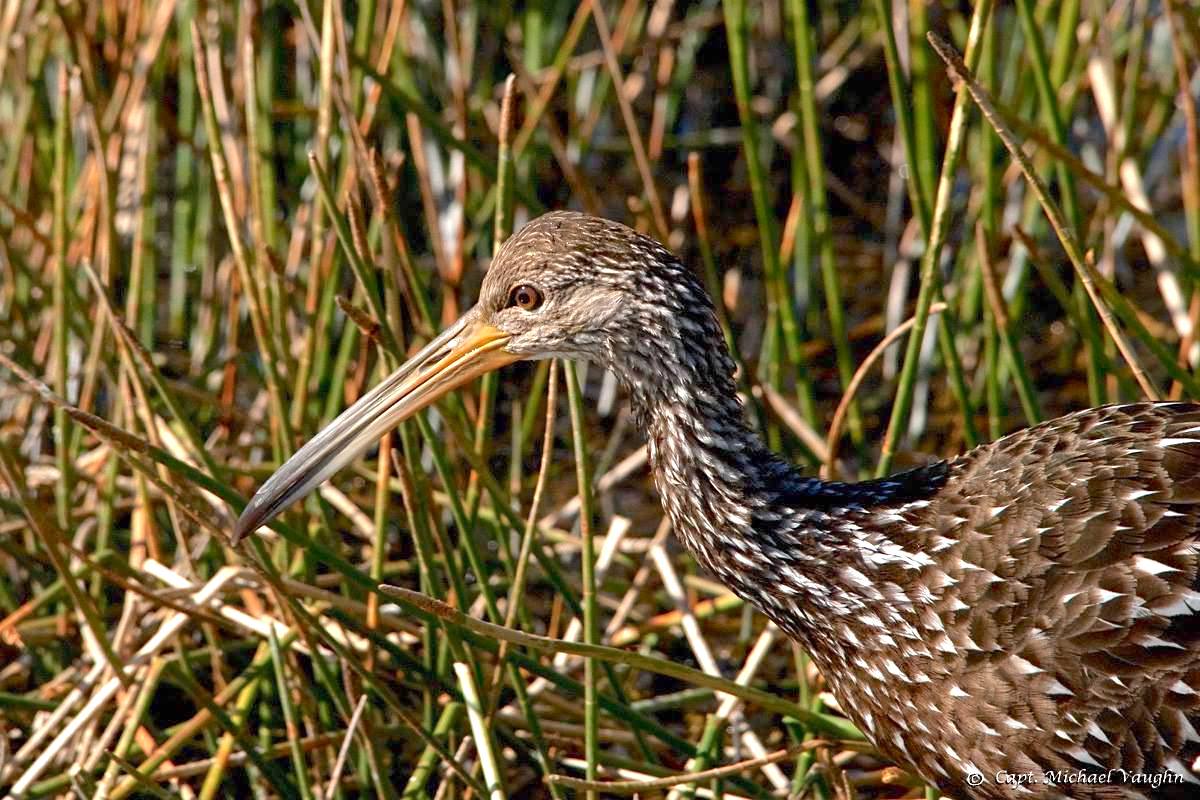
The Limpkin has a special status: it is in a Class of its own. Actually, it is in a Family of its own in terms of strict Linnean classification. It is in the Class ‘bird’ and the Order ‘crane and rail’. But there is no other creature in its Family or Genus. So it’s on its own, bird-wise. None like it anywhere. It is ‘monotypic’. 

Limpkin (Michael Vaughn)

These snail eaters are said to be named for their somewhat lame walking method on their long legs. Their long downcurved bills are shaped to act rather like tweezers when feeding on snails. I’ve never managed to get very close to one – they seem to be quite secretive. But boy, can you hear them when they decide to go for it. If you ever hear this sound – quite possibly at night – now you’ll know what creature is making it…

Jerome Fischer / Xeno-Canto

Limpkin wading (Michael Vaughn)

TEN LIMPID LIMPKIN FACTS TO ENTHRAL YOUR FRIENDS

  • The Limpkin has its own ‘monotypic’ family – a one-off species of bird
  • They eat snails and molluscs (also insects, worms & frogs), using their beaks to snatch them
  • They may leave piles of discarded shells in their favourite feeding sites
  • The birds are ungainly and awkward: ‘limpkin’ probably derives from their limping gait
  • Males and females have the same plumage (males being slightly larger)
  • The beak acts like tweezers – slightly open and closing at the tip – for tweaking snails etc
  • Territory is defended aggressively, with ‘ritualized charging and wing-flapping’ at intruders
  • Sex lives: they are monogamous; or polyandrous (a male and more than one female. Tsk.)
  • They use ‘courtship feeding’ – males will catch and shell a snail and then feed it to a female
  • They are also known as the ‘Crying Bird’ for their bizarre shrieking call, as used in films**

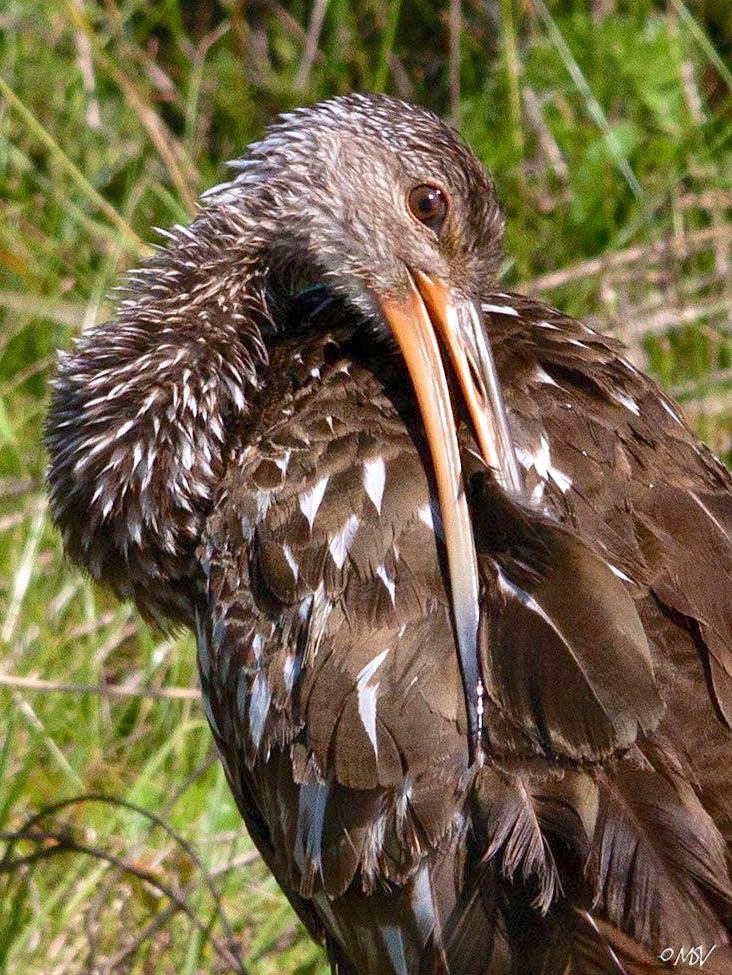
Limpkin (Michael Vaughn)

** Specifically, as a generic jungle noise in Tarzan films; and apparently for the hippogriff in one of the Harry Potter films.

 Credits: All main photos, Michael Vaughn taken in Florida – with thanks for use permission; teaching resource Schmoop for the Linnean infographic; audio file Jerome Fischer / Xeno-Canto
Limpkin (Michael Vaughn)
Unknown's avatar

HOOPOES: THE TARGET FOR THE WEEK (NOT ON ABACO!)


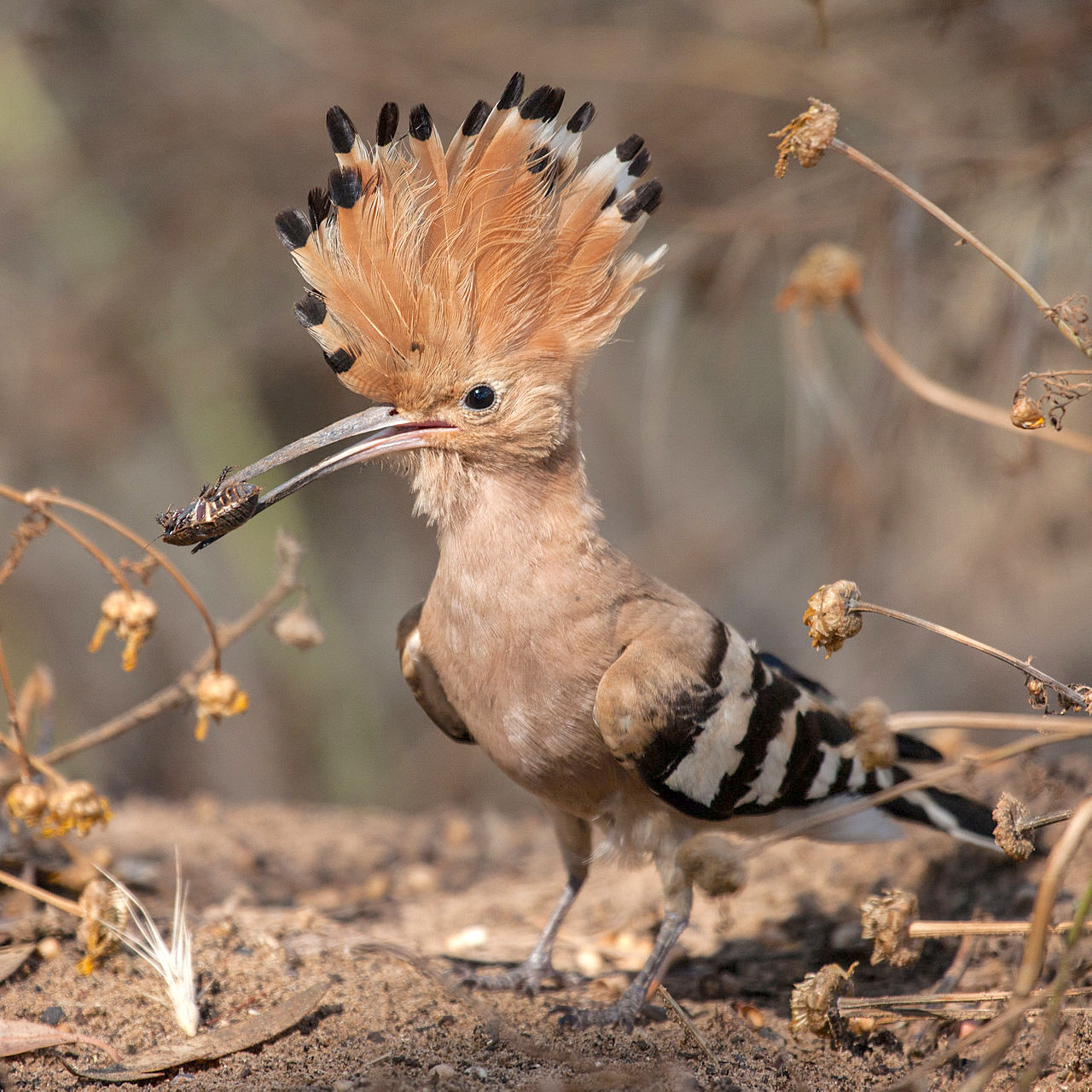
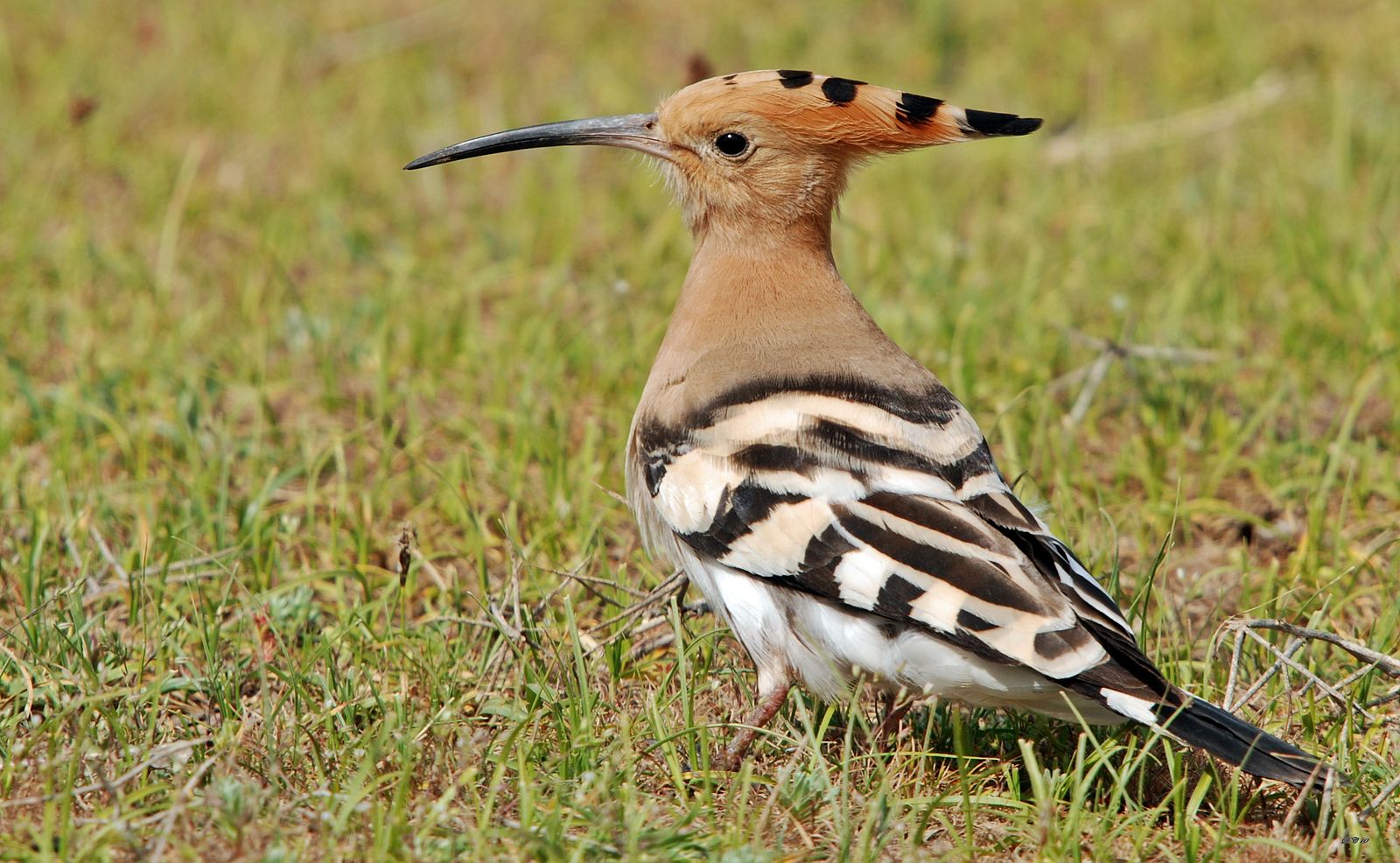
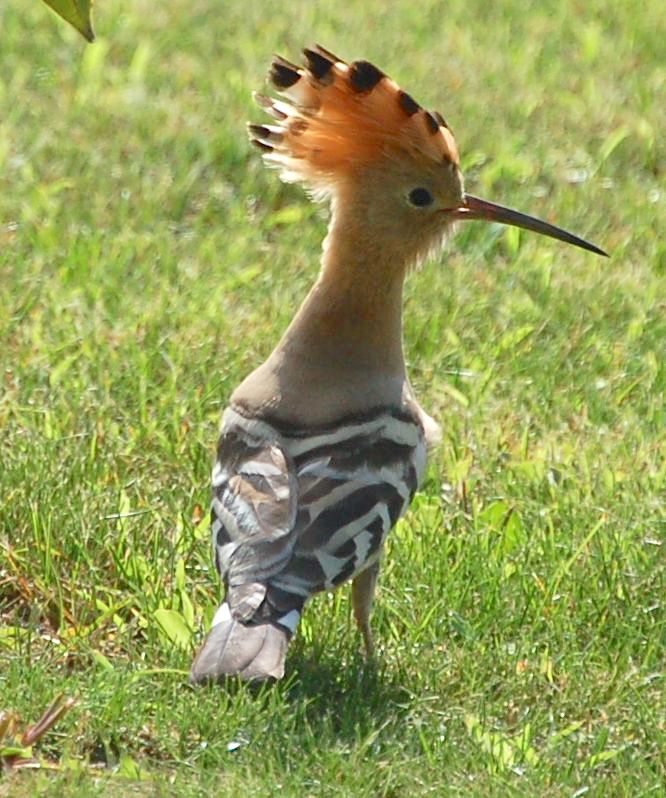
Hoopoe Upupa epops -

HOOPOES: THE TARGET FOR THE WEEK (NOT ON ABACO!)

From time to time, wildlife that is completely alien to Abaco, the Bahamas, or even the Americas will slip under the radar and find a place hereabouts. I’m hoping to find one such during the next few days. It is Upupa epops: the Eurasian hoopoe. This wonderful creature is a bird of the warmer areas of Europe and Asia (orange on the map below), and widespread (non-breeding) in areas further south including Africa.

Very occasionally they are found in the south of England, but we are travelling to the Balearics and the hoopoe is merely incidental to the expedition. I’ve seen them in France, Italy, and on Mallorca… and we are in with a good chance of finding one this coming week. So I’d better to remember to have more than iPhone with me…

Hoopoe Upupa epops -

The hoopoe’s most distinctive feature is its extraordinary erectile crest, which creates an impressive fan on top of its head. Then there’s attractive colour scheme. And that long, down-curved, insect-pecking beak. And that unmistakeable call, an onomatopoeic name that really fits the species (cf Whip Poor Will):

Xeno-Canto / Peter Boesman

There is a very real chance of finding and photographing this gorgeous bird, but I appreciate that it’s probably not of sufficient interest Abaco-wise to justify a second post so I’ll probably just put an image on Insta and FB. If any are good enough…

Credits: Artemy Voikhansky, Dûrzan cîrano, David Bottan for uploading the great hoopoe pics (CCL); Xeno-Canto / Peter Boesman; Wik for range map; open source stamp FDC

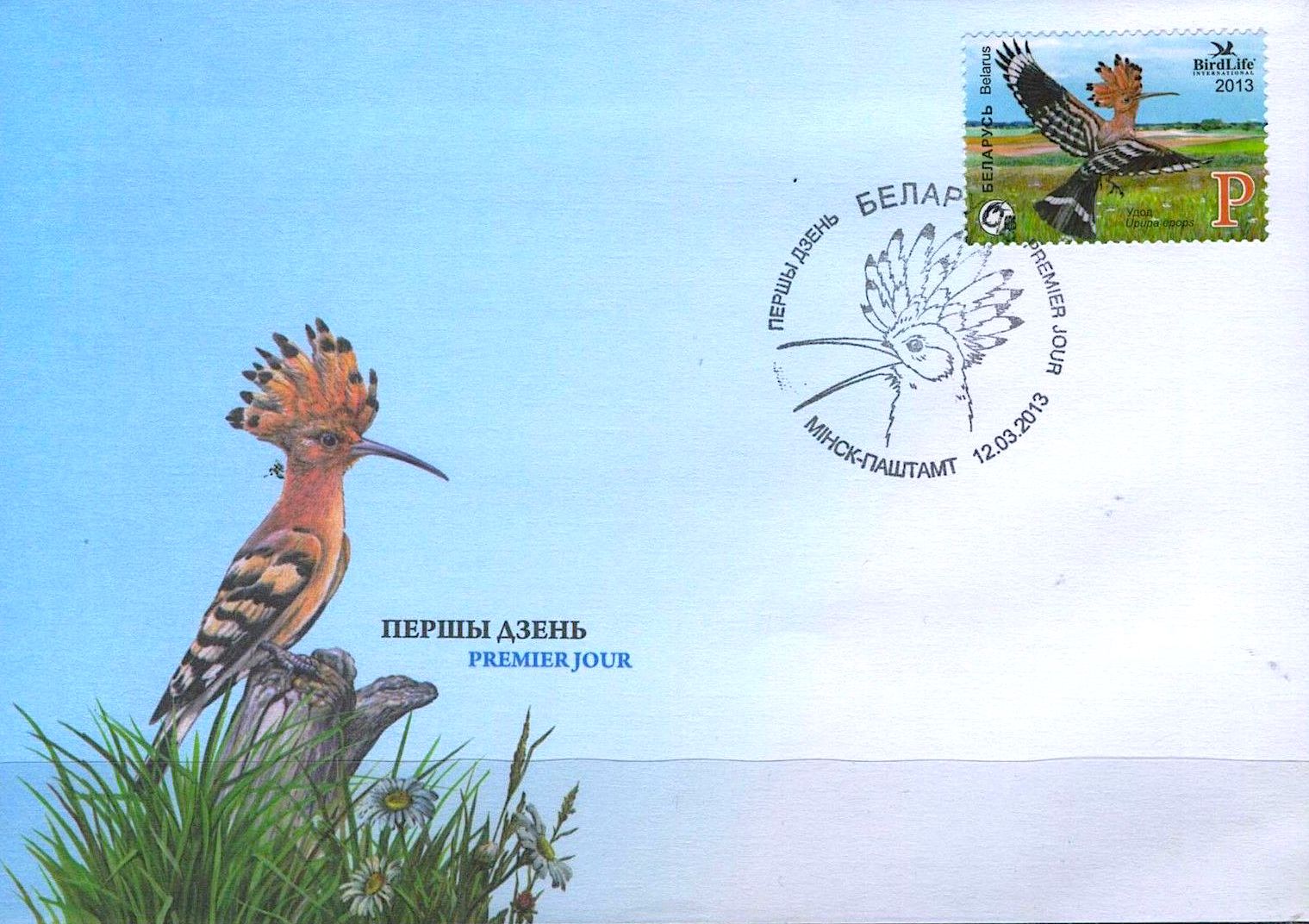
First day cover from Belarus (one of many countries to issue hoopoe stamps

Unknown's avatar

SCOOP (2): AMAZING BLACK SKIMMERS & CHICKS


Black Skimmers and chicks - Danny Sauvageau

SCOOP (2): AMAZING BLACK SKIMMERS & CHICKS

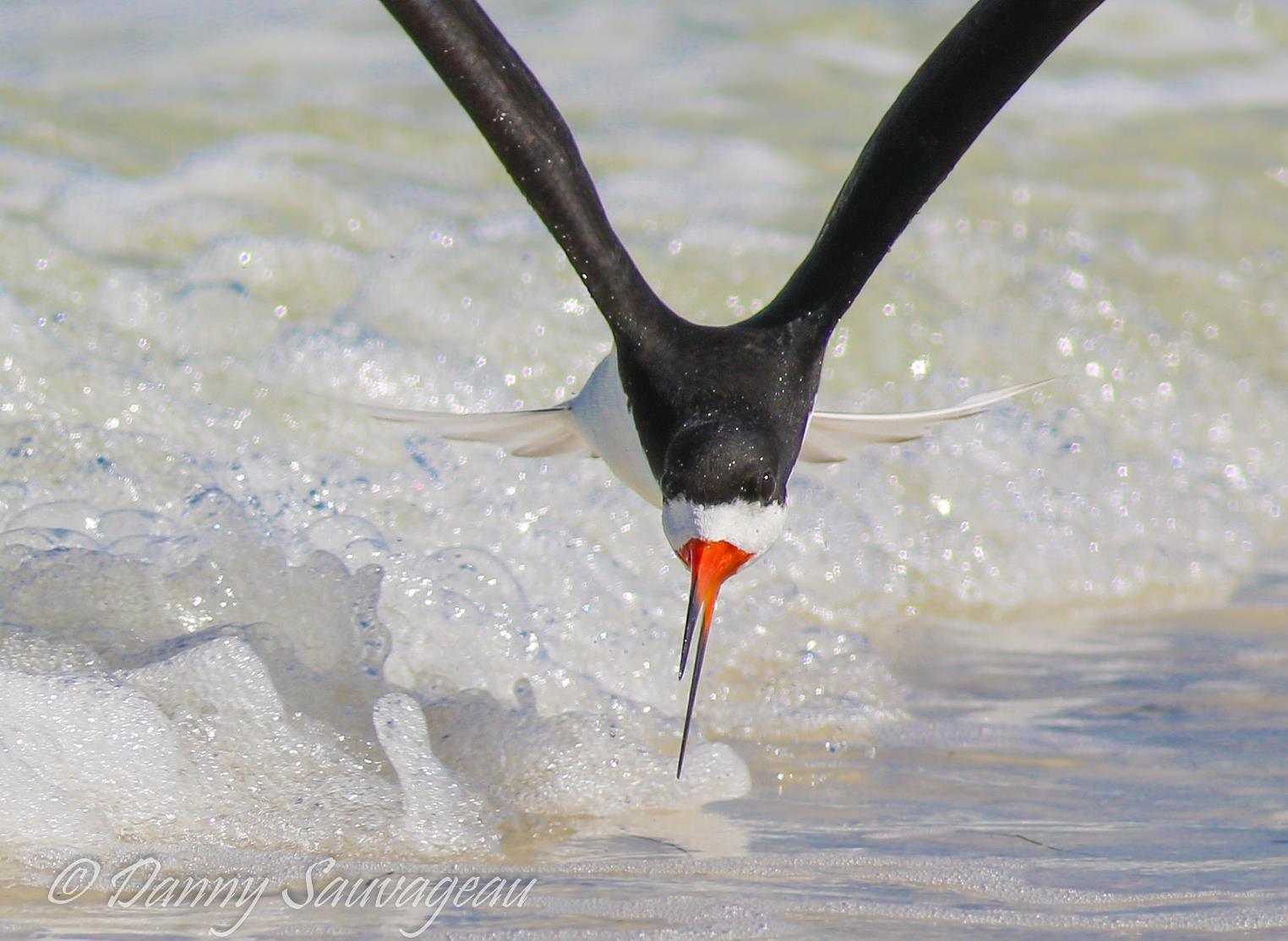
Last year I posted about an avian scoop, when black skimmers (Rynchops niger) were actually photographed on Abaco. These wonderful birds are classified WR 4 for Abaco, which means uncommon winter residents (ie roughly September until April). Now I look into it further on the indispensable eBird, there are actually quite a few reported sightings most years on Abaco – especially on the Cays. Furthermore the sightings cover most months except midsummer. So maybe they aren’t so rare after all. But I couldn’t track down any workable Abaco skimmer photographs until Charmaine Albury managed to take a few last Autumn, which led to the gift post title SCOOP. Because that is just how they feed. 

Black Skimmer feeding - Danny Sauvageau

Danny Sauvageau is a dedicated birder in Florida, and a brilliant photographer with it. From time to time I feature his work when his camera skills cover a species found on Abaco but for which Abaco images are scarce (or non-existent). All these photographs were recently taken in Pinellas County, Fl., and I’m really grateful to Danny for permission for occasional use of his exceptional photos. 

Black Skimmers - Danny Sauvageau

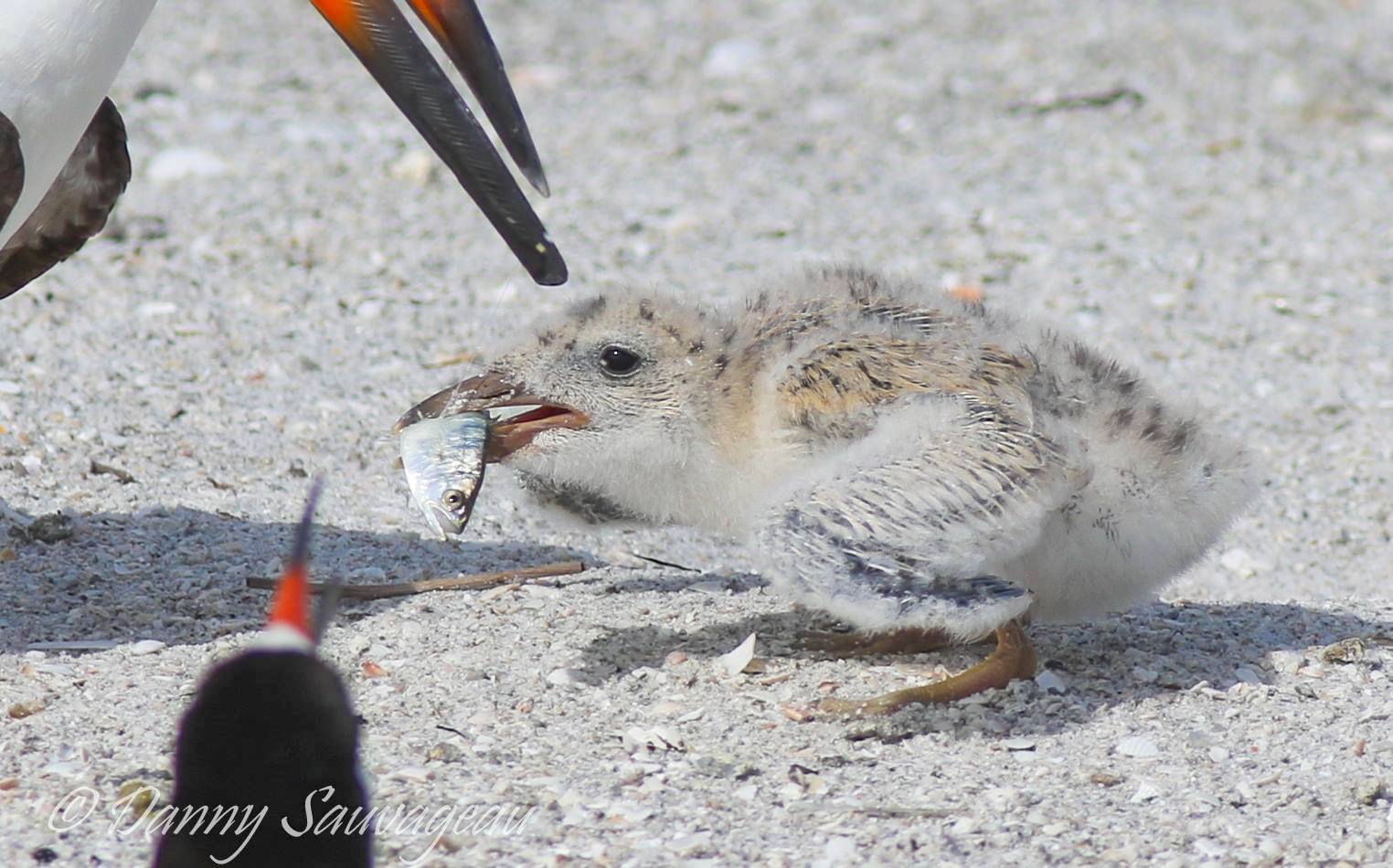
At the moment, the breeding season is well under way, with the hungry chicks being fed as fast as they can swallow. And this is how that looks, thanks to Danny and his immense talent. 

Black Skimmers and chicks - Danny SauvageauBlack Skimmers and chicks - Danny SauvageauBlack Skimmers and chicks - Danny SauvageauBlack Skimmers and chicks - Danny SauvageauBlack Skimmers and chicks - Danny SauvageauBlack Skimmers and chicks - Danny SauvageauBlack Skimmers and chicks - Danny Sauvageau

All photos by © Danny Sauvageau, with thanks

And finally… I’d be really pleased to hear about any Abaco skimmer sightings (and I’ll keep an eye on eBird). Bonus points and a theoretical Kalik for photographs!

Black Skimmers skimming - Danny Sauvageau

Unknown's avatar

RED-LEGGED THRUSHES: MAKING EYE-CONTACT ON ABACO


Red-legged Thrush, Abaco, Bahamas (Tom Sheley)

RED-LEGGED THRUSHES: MAKING EYE-CONTACT ON ABACO

I see it is ‘literally’** years since I last wrote about these lovely, accessible birds, the only permanent resident breeding thrush species on Abaco (out of 8). The post – OL’ RED-EYES IS BACK – featured mainly my own photos, plus one by Mrs RH. With a whole lot of more recent photos, it’s time to revisit these cheery birds. I promised something brighter after two rather sombre shearwater die-off posts – (incidentally, a far wider problem than just in the Bahamas, including NC & Cape May). Here it is.

A RED-LEGGED, RED-EYED GALLERY

Red-legged Thrush, Abaco, Bahamas (Peter Mantle)

Red-legged Thrush, Abaco, Bahamas (Gerlinde Taurer)

Red-legged Thrush, Abaco, Bahamas (Peter Mantle)

Many of the birds shown here were photographed in or around the grounds of Delphi. More recently, they have to an extent been displaced by red-winged blackbirds which are of course very fine birds but in large numbers sound (may I say this? Is this just me?) quite irritating after a while. Whereas the thrush of course has a sweet and melodious song, like this (my own recording – turn up the vol):

Mr & Mrs Harbour’s Handiwork at DelphiRed-legged Thrush, Abaco, Bahamas (Keith Salvesen)

Red-legged Thrush, Abaco, Bahamas (Keith Salvesen)

Red-legged Thrush, Abaco, Bahamas (S Salvesen)

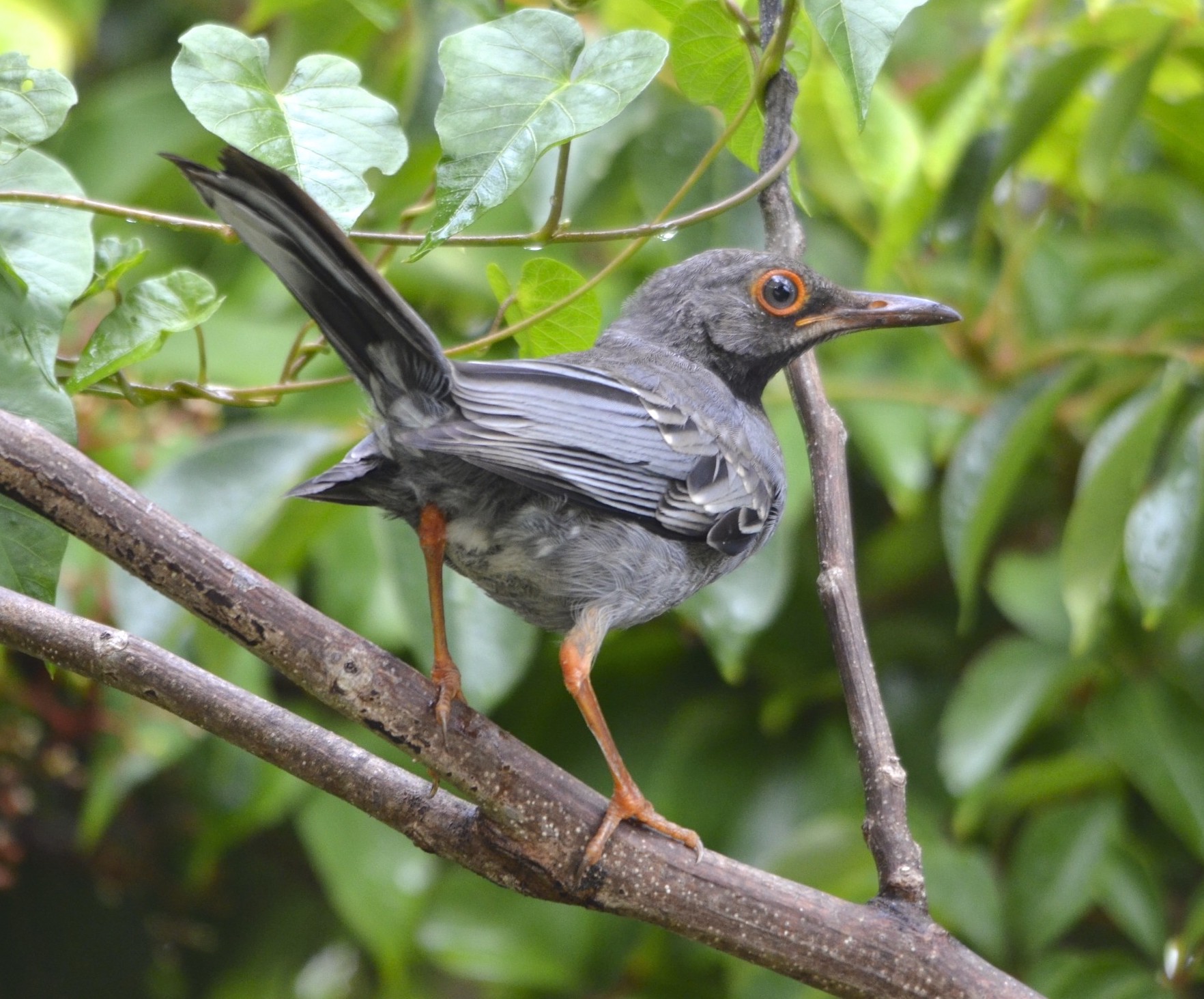
As I may have mentioned before (impatient reader: ‘yes, yes, you did’), the eyes of the RLT are at least as prominent a feature as their legs. Lots of birds have red legs. Very few have such remarkable bright, fiery eye-rings, even in a youngster.

Red-legged Thrush, Abaco, Bahamas (Charles Skinner)Red-legged Thrush, Abaco, Bahamas (Charles Skinner)

Red-legged Thrush, Abaco, Bahamas (Erik Gauger)

This photo from birdman Tom Sheley is my favourite – a perfect compositionRed-legged Thrush, Abaco, Bahamas (Tom Sheley)

** This means it really is literally years (4), not in the modern modified sense of ‘not actually literally’, as  in “I am literally dying of hunger”. Unless you are exceptionally unfortunate, while you have the breath to say you are, you are literally not doing so…

FUN FACT

There is quite literally no song since 1950 with the word ‘thrush’ in the title. Hard to fathom why… One or two songs have a thrush buried away in the lyrics somewhere. Blackbirds have done rather better in this respect… 

Photo Credits: Tom Sheley (1, 11); Peter Mantle (2, 4); Gerlinde Taurer (3); Mr & Mrs Harbour (5, 6, 7); Charles Skinner (8, 9); Erik Gauger (10). Lo-fi audio recording: RH

Unknown's avatar

SHEARWATER DIE-OFF ON ABACO: UPDATE


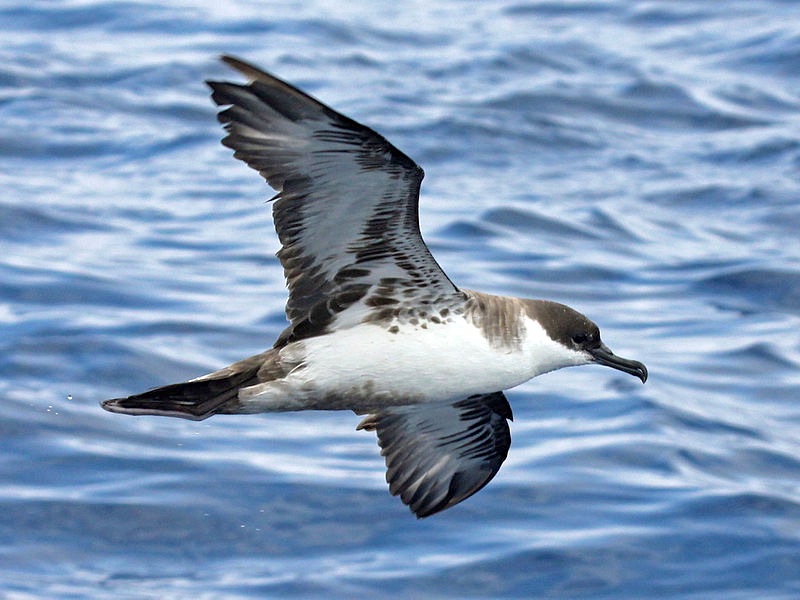
Great Shearwater (part of a die-back event on Abaco) - Dick Daniels

SHEARWATER DIE-OFF ON ABACO: UPDATE

A week ago I posted about the reports of dead and dying Audubon’s shearwaters being washed up on various beaches on the Abaco mainland in and around Cherokee Sound and down to Bahama Palm Shores. I included some advice about how to deal with these poor birds. You can find the post HERE.

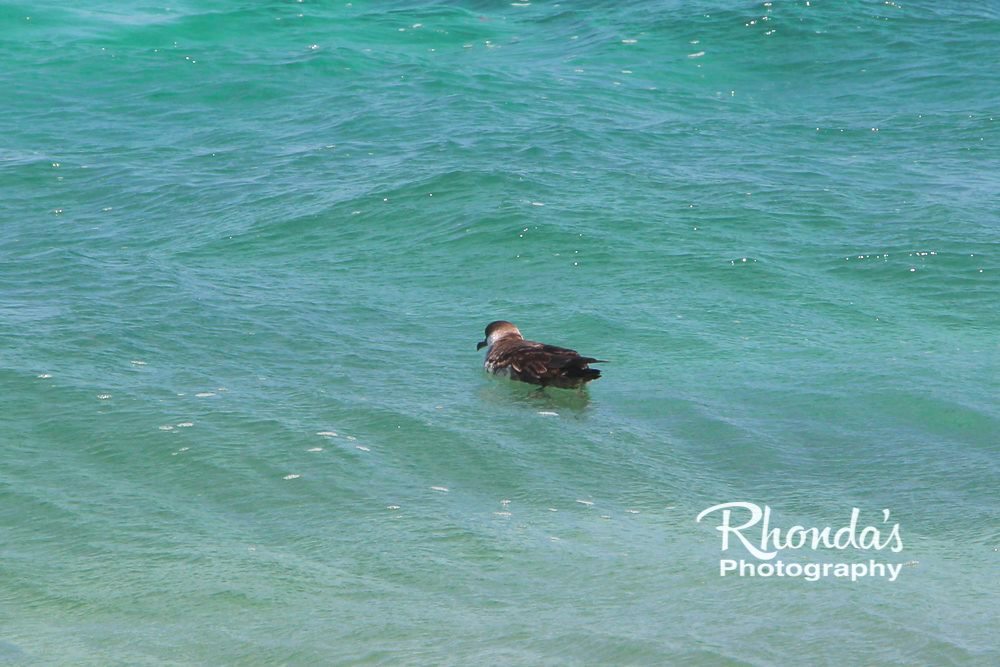
Piping plover monitor Rhonda Pearce found a couple of struggling shearwaters in the seaAudubon's Shearwater - part of a die-back event on Abaco (Rhonda Pearce)

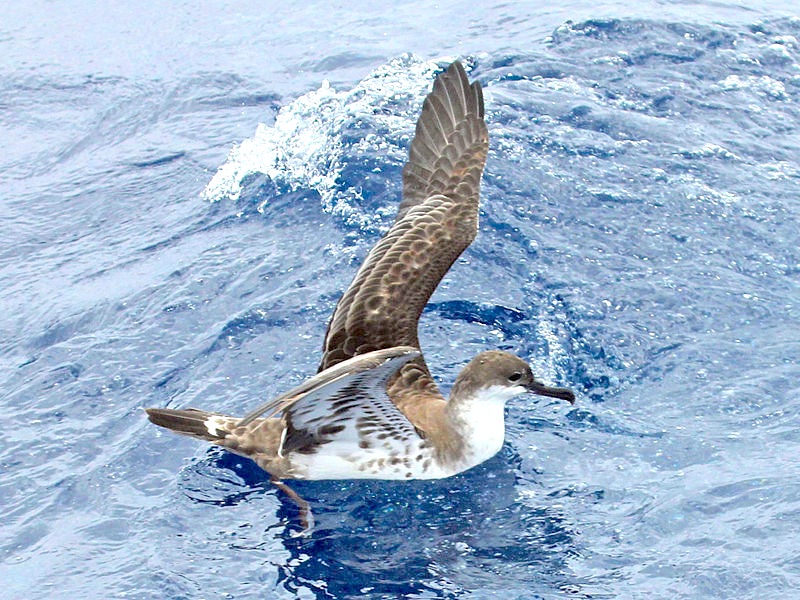
The very next day, reports began to emerge of another species, great shearwaters, being found dead or in a distressed state just off-shore or washed up on beaches. Reports were fewer, but covered a wider area, including a bird in a very poor condition at Delphi. Great shearwaters were the ones involved in the die-back event 2 years ago. 

Audubon's Shearwater - part of a die-back event on Abaco (Rhonda Pearce)

Keith Kemp, who made one of the earlier Audubon shearwater reports, found a young great shearwater in trouble in the sea while he was out in a kayak off Cherokee Point. He rescued it and took all sensible precautions to nourish it and make it comfortable but sadly it did not last the night. He has frozen the bird as a specimen in case analysis will help to explain this die-off event.

Great Shearwater - part of a die-back event on Abaco (Keith Kemp)

As I wrote before, these birds of the open ocean may become weakened and exhausted if fishing conditions become adverse. They will drift weakly with the tide, dying at sea or washing up in a very poor state in the tideline or on beaches.  Their prospects of survival if rescued is sadly very slim – I have not yet heard of a success, though I would love to…

Great Shearwater (part of a die-back event on Abaco) - Dick Daniels

Thankfully, during the past week, reports have gradually diminished. I’ve not seen one for a couple of days. With any luck, the current die-off is now over and will not be repeated for several years. However, another one will certainly happen, I’m afraid – maybe in 5 to 10 years time, the usual gap. Twice in two years has made for very bleak, distressing news.

A more cheerful post will be next, I promise. Meanwhile, any further reports or comments would be welcome.

Photo credits: Dick Daniels (1, 5), Rhonda Pearce (2, 3); Keith Kemp (4)

Unknown's avatar

AUDUBON’S SHEARWATER (DUSKY PETREL): SAD NEWS FROM ABACO


Audobon's_Shearwater - Dominic Sherony wiki

AUDUBON’S SHEARWATER (DUSKY PETREL): SAD NEWS FROM ABACO

Just 2 short years ago, Abaco experienced a shearwater die-off event, when during a period of a week or so numerous dead and dying Great Shearwaters were washed up on many of Abaco’s beaches. You can read about it HERE and a follow-up HERE. This map shows the affected area in 2015.

Now comes news of another such sad event, with a large number of Audubon’s shearwaters (Puffinus lherminieri) appearing in the tideline and on beaches at Bahama Palm Shores, Casuarina, Winding Bay and doubtless elsewhere. Many are already dead. Some are still alive, but in a very poor state. 

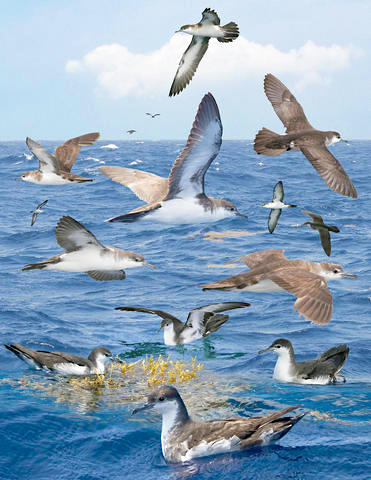
Audubons Shearwater from Crossley ID Guide (Eastern Birds) - Richard Crossley : Crossley Guides CCL

SHEARWATER DIE-OFF
These upsetting beach finds seem to be a periodic phenomenon, and very likely result from climate conditions or shortage of food out in the ocean – or a combination. Although most will unavoidably have ingested plastics, that would not explain the simultaneous deaths. Poor fishing conditions – they eat fish and squid – will weaken and exhaust the birds as they try to find food. Woody Bracey thinks this the most likely cause, having noticed recent poor deep-sea fishing conditions and an unusual absence of the frigatebirds that are a sure sign of fish.
Pétrel de Barau - wiki .jpg
WHAT CAN BE DONE?
The dead birds will be quickly removed by the turkey vultures. If you do find one, you might want to bury it. The prognosis for sick birds, sadly, is not good. They may have been carried a long way from open sea and they will be exhausted and starved. Those that are strong enough may recover naturally; but most will sadly die, being too weak and emaciated to survive. There is no available facility able to deal with a large number of very poorly or dying birds. 
The most practical advice I can give is:
(1) move the bird gently into the shade if in the sun
(2) provide water in a shallow dish
(3) offer finely chopped fish BUT no bread – it’s very bad for birds…
(4) if it seems to be working, then carry on until the bird is strong enough to fly (this may be quite a commitment).
(5) do not reproach yourself if a bird you try to help dies. Many will be in such bad shape by the time they are washed up that they are unlikely to survive whatever steps you take.
 
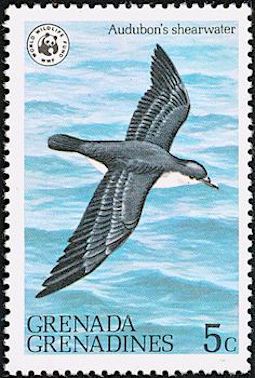
Audubon's Shearwater Stamp) OS
WHAT DO I LOOK OUT FOR?
This poor shearwater was one of a number of dead birds found by Keith Kemp at Casuarina yesterday. I realise such images can be upsetting, so I am confining photos of the birds to just two so you will recognise one if you see it.
Audubon's Shearwater, Abaco (Keith Kemp)Audubon's Shearwater, Abaco (Keith Kemp)
 AUDUBON’S SHEARWATERS IN AN EGGSHELL
  • Belong to the petrel family
  • Named ‘Puffinus lherminieri’ after French naturalist Felix Louis L’Herminier
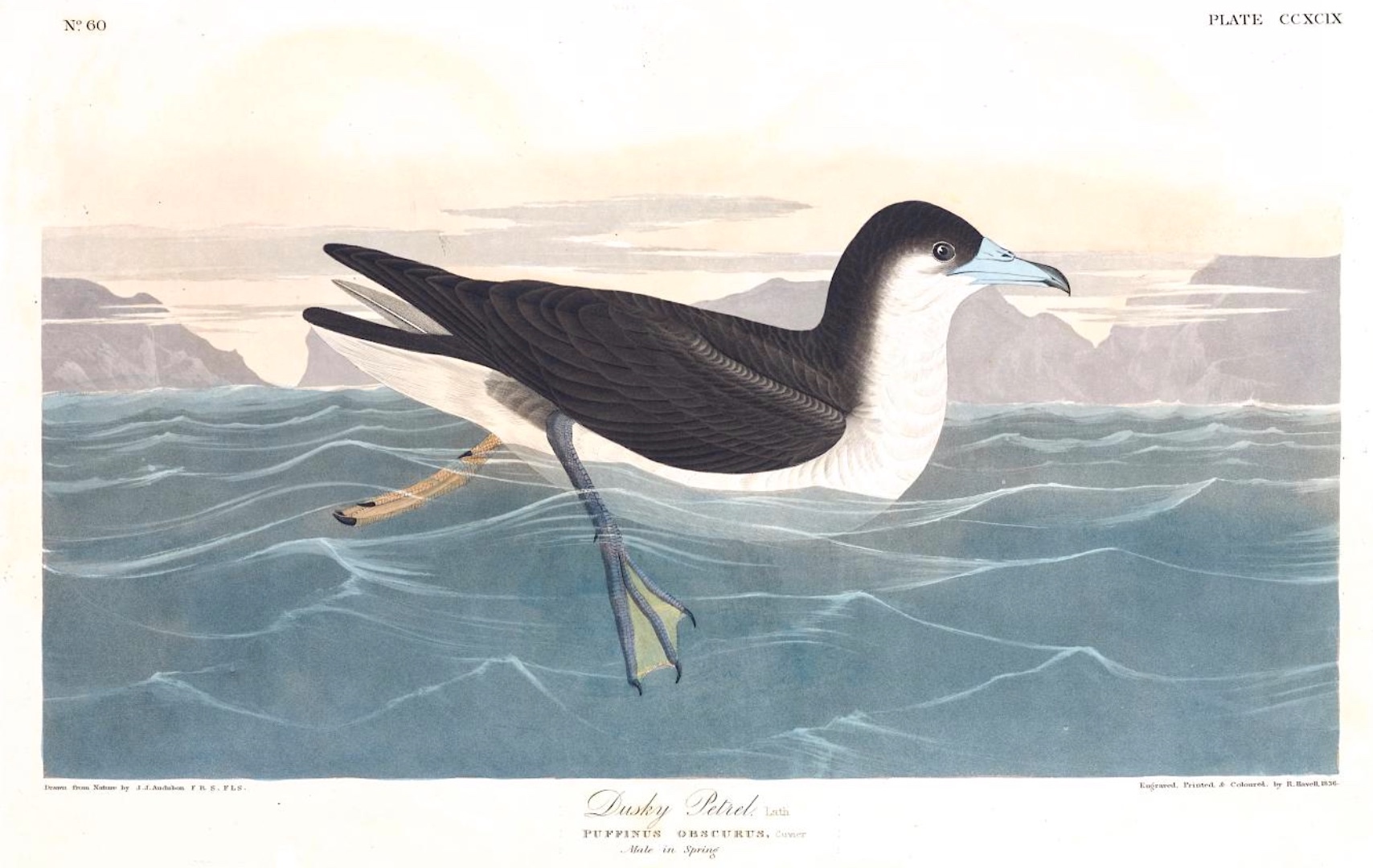
  • Also known as the Dusky-backed Shearwater – or by Audubon as the Dusky Petrel
  • Forages by diving out of flight or from the surface; or by surface-feeding
  • Colony breeders, nesting in rock crevices, in burrows, or under thick vegetation
  • Mated pairs spend much time together at nest site. They like rubbing bills together
  • Their ‘twittering calls and mewing’ are usually only heard at night 

Audubon’s ‘Dusky Petrel’

Audubon's Shearwater (Dusky Petrel) - Audubon.org

I’d be interested to hear any other accounts of the current event, especially of any recovery stories. By all means do this as a comment, or email me  / PM on FB

Finally, for those who wonder how pioneer naturalists went about their work observing a species, collecting specimens and recording their findings, here is Audubon’s own account for the ‘Dusky Petrel’, Plate 299 in his magisterial work.

Dusky Petrel (Plate 299)

On the 26th of June, 1826, while becalmed on the Gulf of Mexico, off the western shores of Florida, I observed that the birds of this species, of which some had been seen daily since we left the mouth of the Mississippi, had become very numerous. The mate of the vessel killed four at one shot, and, at my request, brought them on board. From one of them I drew the figure which has been engraved (see above). The notes made at the time are now before me, and afford me the means of presenting you with a short account of the habits of this bird.

They skim very low over the sea in search of the floating bunches of marine plants, usually called the gulf weed, so abundant here as sometimes to occupy a space of half an acre or more. In proceeding, they flap their wings six or seven times in succession, and then sail for three or four seconds with great ease, having their tail much spread, and their long wings extended at right angles with the body. On approaching a mass of weeds, they raise their wings obliquely, drop their legs and feet, run as it were on the water, and at length alight on the sea, where they swim with as much ease as Ducks, and dive freely, at times passing several feet under the surface in pursuit of the fishes, which, on perceiving their enemy, swim off, but are frequently seized with great agility. Four or five, sometimes fifteen or twenty of these birds, will thus alight, and, during their stay about the weeds, dive, flutter, and swim, with all the gaiety of a flock of Ducks newly alighted on a pond. Many Gulls of different kinds hover over the spot, vociferating their anger and disappointment at not being so well qualified for supplying themselves with the same delicate fare. No sooner have all the fishes disappeared than the Petrels rise, disperse, and extend their flight in search of more, returning perhaps in awhile to the same spot. I heard no sound or note from any of them, although many came within twenty yards of the ship and alighted there. Whenever an individual settled in a spot, many others flew up directly and joined it. At times, as if by way of resting themselves, they alighted, swam lightly, and dipped their bills frequently in the water, in the manner of Mergansers.

I preserved the skins of the four specimens procured. One of them I sent to the Academy of Natural Sciences of Philadelphia, by Captain JOHN R. BUTLER, of the ship Thalia, then bound from Havana to Minorca. Two others were presented to my excellent friend Dr. TRAILL, on my first becoming acquainted with him at Liverpool.

I found the wings of this species strong and muscular for its size, this structure being essentially requisite for birds that traverse such large expanses of water, and are liable to be overtaken by heavy squalls. The stomach resembles a leather purse, four inches in length, and was much distended with fishes of various kinds, partially digested or entire. The oesophagus is capable of being greatly expanded. Some of the fishes were two and a half inches in length, and one in depth. The flesh of this Petrel was fat, but tough, with a strong smell, and unfit for food; for, on tasting it, as is my practice, I found it to resemble that of the porpoises. No difference is perceptible in the sexes.

While on board the United States revenue cutter Marion, and in the waters of the Gulf Stream opposite Cape Florida, I saw a flock of these birds, which, on our sailing among them, would scarcely swim off from our bows, they being apparently gorged with food. As we were running at the rate of about ten knots, we procured none of them. I have also seen this species off Sandy Hook.

Audubon’s Range Map for the species
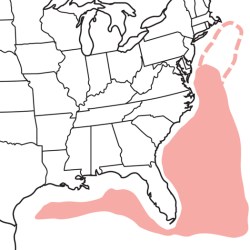
Audubon's-Shearwater_map (audubon.org)

Credits: thanks to those  on Abaco who have been reporting this sad event over the last few days, and to Woody Bracey for his views; Dominic Sherony (wiki) for the header image; Keith Kemp for photos from Casuarina; Audubon.org for images, quote & range map; Richard Crossley / Crossley Guides for the composite picture; Audubon, wiki and random pickings for info about these birds
Unknown's avatar

THICK-BILLED VIREO ‘ON VOCALS’: A CHIRPY JUVENILE ON ABACO


Thick-billed Vireo (juv), Abaco - Charles Skinner

THICK-BILLED VIREO ‘ON VOCALS’: A CHIRPY JUVENILE ON ABACO

I’m not sure that TBVs would rank as anyone’s all-time favourite bird. Probably not in the top 10. Or 20. But we have a particular affection for them. When we first arrive at Delphi, that cheerful call is invariably the first birdsong we hear. And when we leave, it’s often the last. These small birds inhabit the coppice on either side of the drive, and are often found right by the the Lodge.

Thick-billed Vireo (juv), Abaco - Charles Skinner

The strange thing about them is that despite their ubiquity and their uninhibited advertising of their presence, they are surprisingly hard to see, let alone get a clear photograph of. A singing TBV often seems to be at least 2 rows of bush further back than it sounds, concealed by intervening branches, leaves, and twigs.

Thick-billed Vireo (juv), Abaco - Charles Skinner

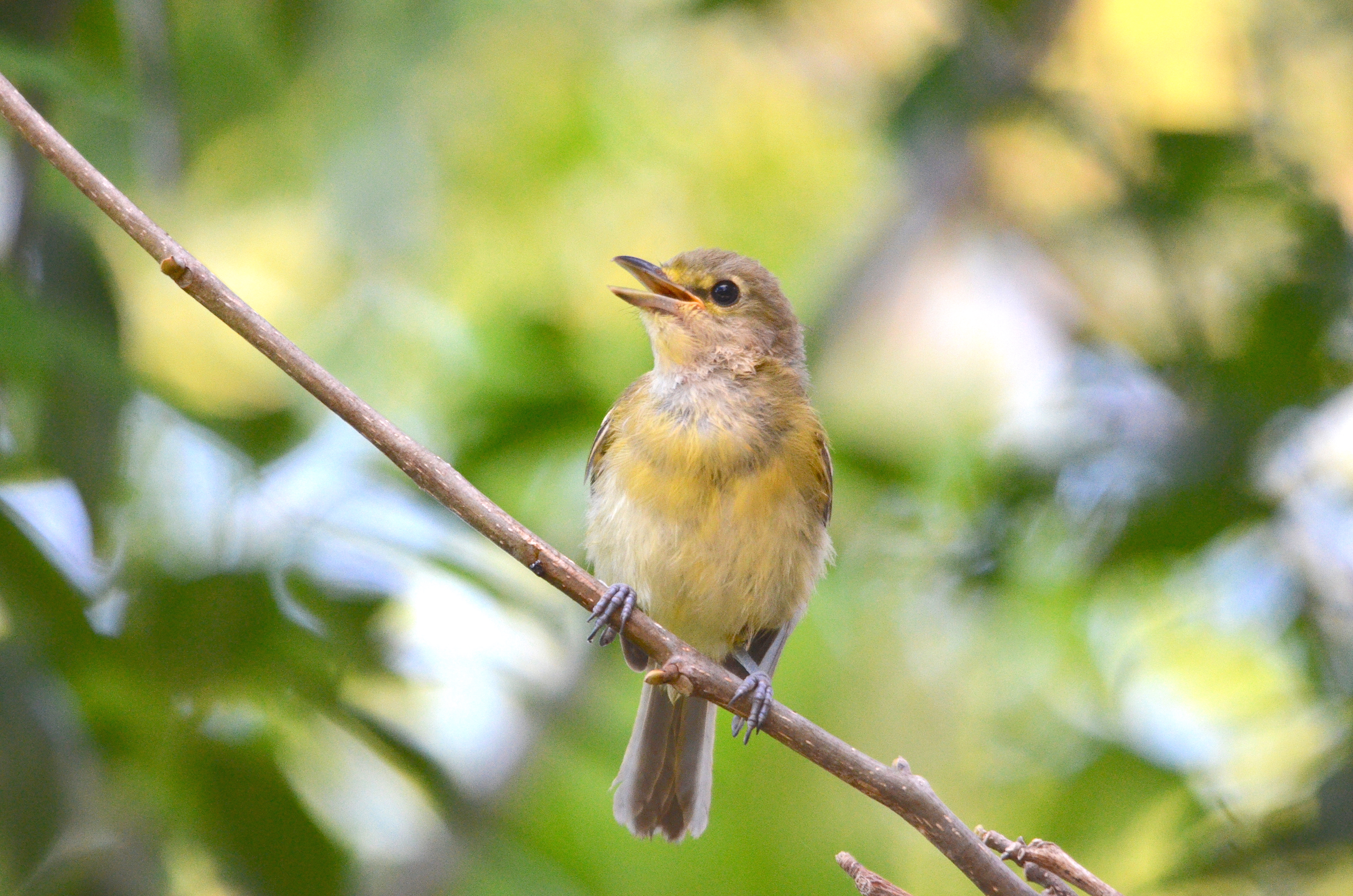
Maybe growing juveniles are less cautious. This little guy is right out in the open, and singing away happily. He’s still cutely fluffy, but his plumage already starting to turn yellow. He has the diagnostic yellow marking in front of and around the eyes. However at the base of his characteristically plump beak there’s still a hint of baby bird mouth.

Thick-billed Vireo (juv), Abaco - Charles Skinner

Here’s a recording of an adult TBV I took from the Delphi drive (you may need to turn up the volume a bit). And no, I couldn’t actually see the bird, though I knew exactly where it was from the slight movements of foliage. All-in-all, the TBV is a most engaging little bird and well-deserving of affection if not perhaps a high placing in the Avian Popularity Charts…  

Thick-billed Vireo (juv), Abaco - Charles Skinner

All photos by Charles Skinner (a significant contributor to The Birds Of Abaco)

Unknown's avatar

‘EAGLE EYES’: NEW BALD EAGLE SIGHTING(S) ON ABACO


Bald Eagle - Poquoson, Virginia - Brian Lockwood

‘EAGLE EYES’: NEW BALD EAGLE SIGHTING(S) ON ABACO

In March, I posted about a bald eagle spotted by a Delphi fisherman out on the Marls near Big Pine Point. He didn’t know it at the time, but it was a very rare sighting of this magnificent raptor. The bird is classified for Abaco as a V4, which is to say an extremely unusual vagrant (but not quite a ‘one-off’ V5). 

Bald Eagle - Poquoson, Virginia - Brian Lockwood

You can read all the details HERE, but to summarise, the only previous Abaco sightings were 3 years running over 2000 – 2002, at the end of each year. The annual visits over such a short time-span suggest that this may have been the same bird each time. So this March’s report is possibly the second bald eagle ever seen on Abaco… and on any view, the fourth.

Bald Eagle - Poquoson, Virginia - Brian Lockwood

Now comes the news of another bald eagle sighting in the last couple of days on the Marls, this time by Danny Sawyer while out fishing. The bird was sighted approx 1.5 miles west of the airport / 2 miles south of Bustic Point. Danny’s FB post has unsurprisingly attracted quite a number of comments – and even some more sighting reports. Here’s the list so far…

BALD EAGLE SIGHTINGS REPORTED ON ABACO SINCE c1950 (= ‘ever’)

  • 2000 December, location unknown – info from Woody Bracey
  • 2001  December – Chicken Farm area – Betsy Bracey
  • 2002 December – over Marls opposite Treasure Cay – Woody Bracey
  • 2004 Autumn – south of Lynard Cay (after hurricane) – Cheryl Noice
  • 2014  Date unknown – circling the power plant – LC
  • 2017  March – Big Pine Point, Marls – James Cheesewright
  • 2017  Early May – Power plant area – LC
  • 2017  May – Marls – Danny Sawyer
  • 2017  May  – Lubbers / Tahiti Beach area – ‘Kelly’s mom’
  • 2017  September – Cross Harbour – Carol Rivard Roberts (with photo)

Italics indicate a report in comments on Danny’s FB page; Blue = added reports

Bald Eagle - Poquoson, Virginia - Brian Lockwood

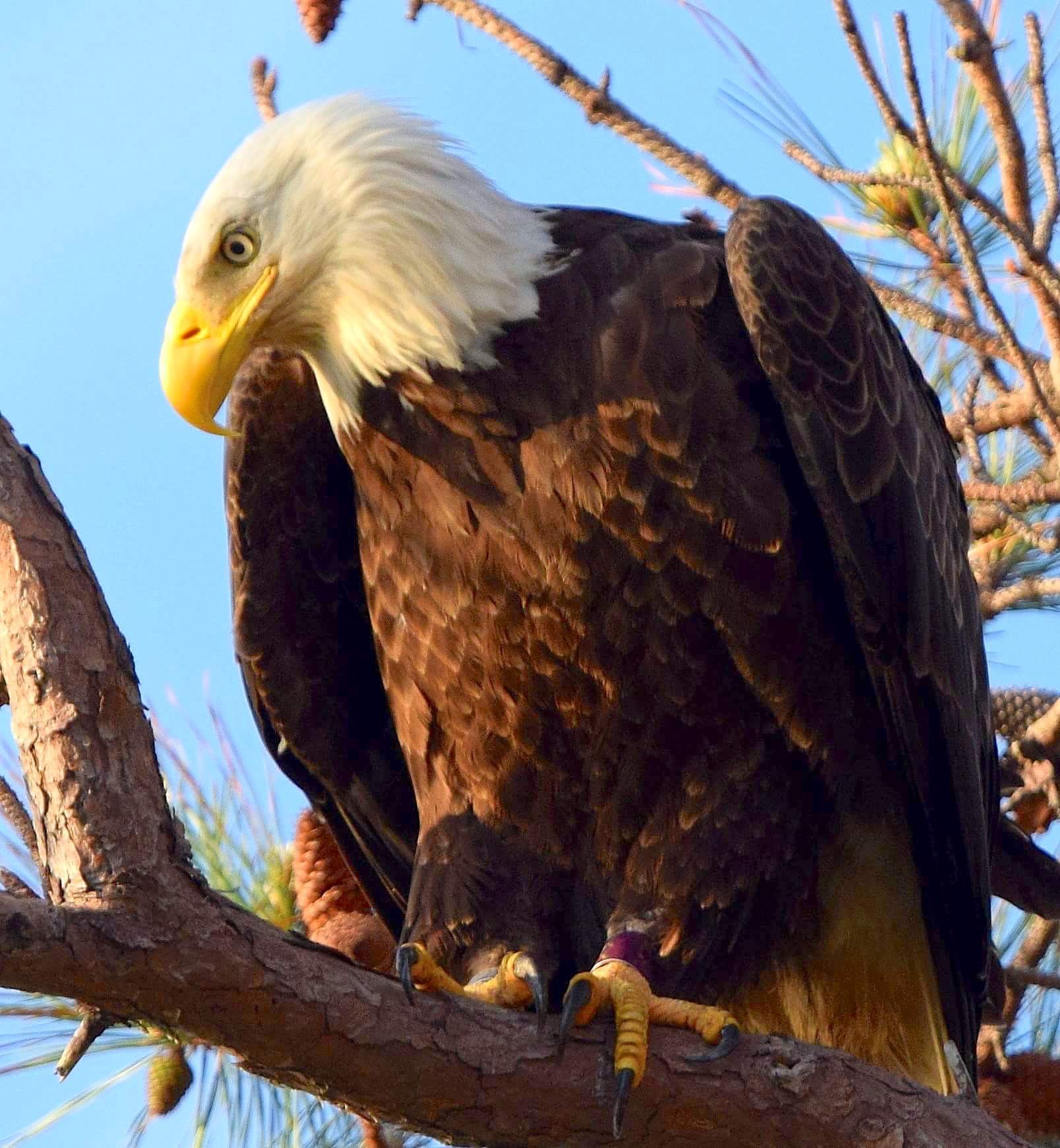
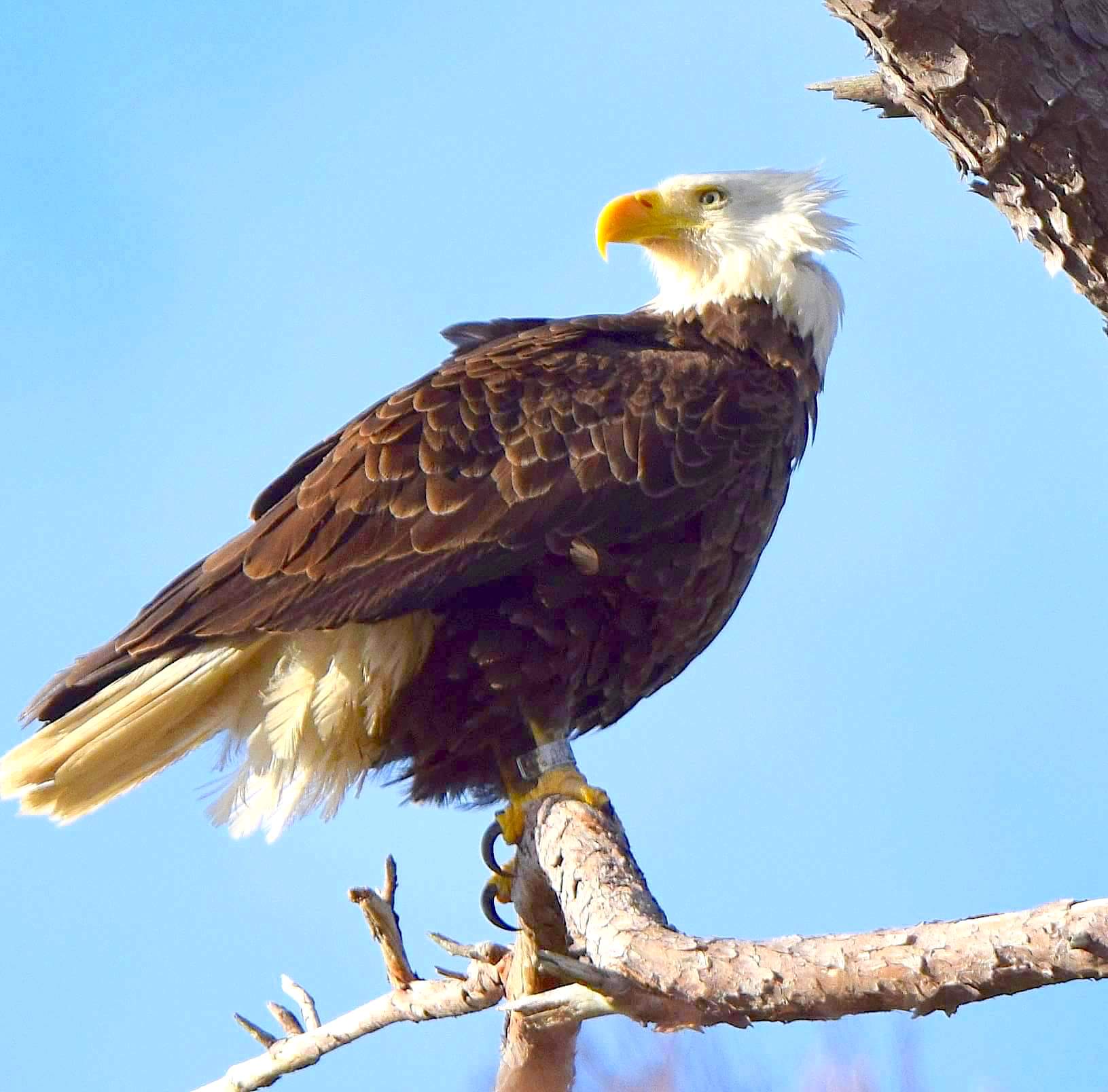
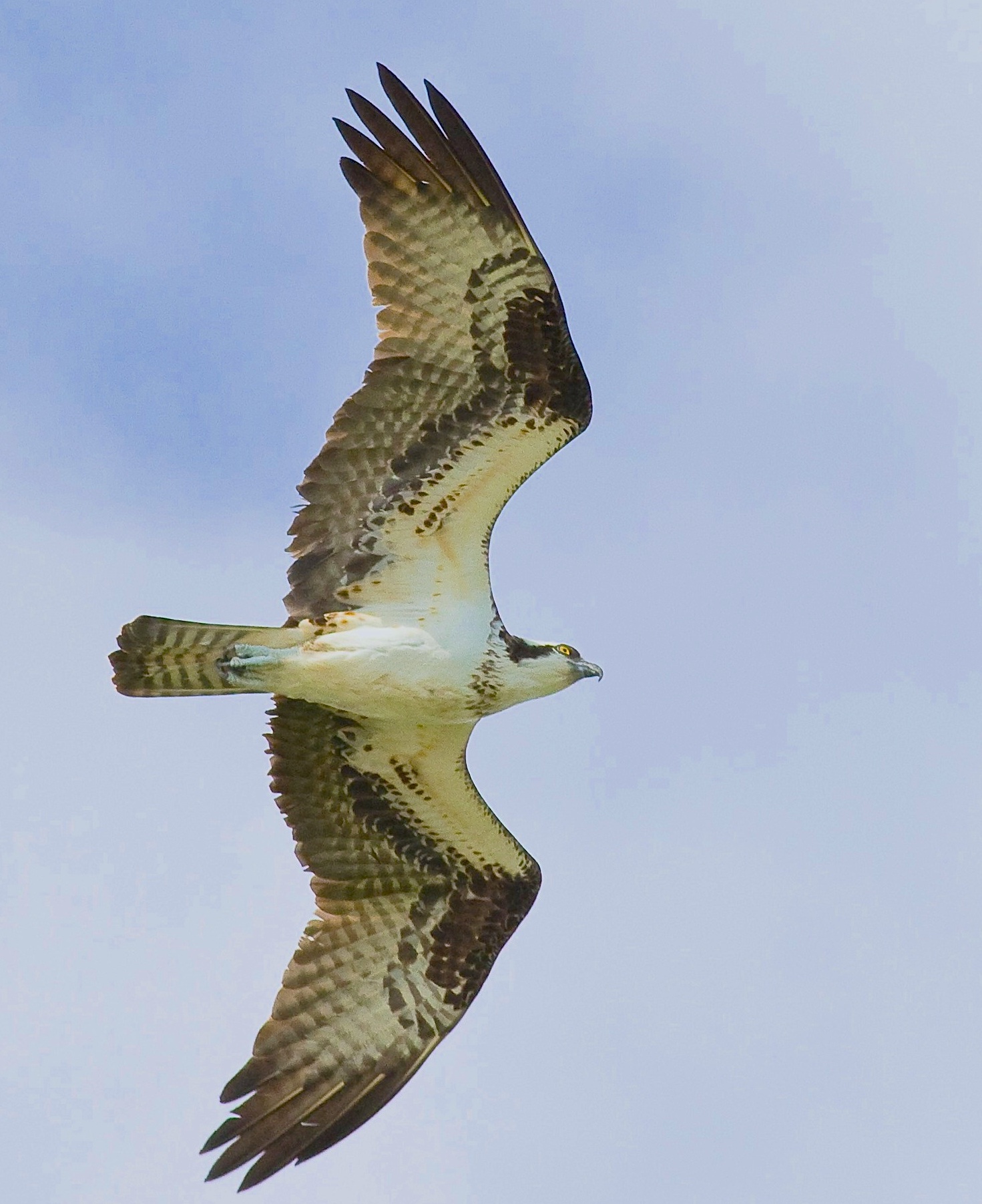
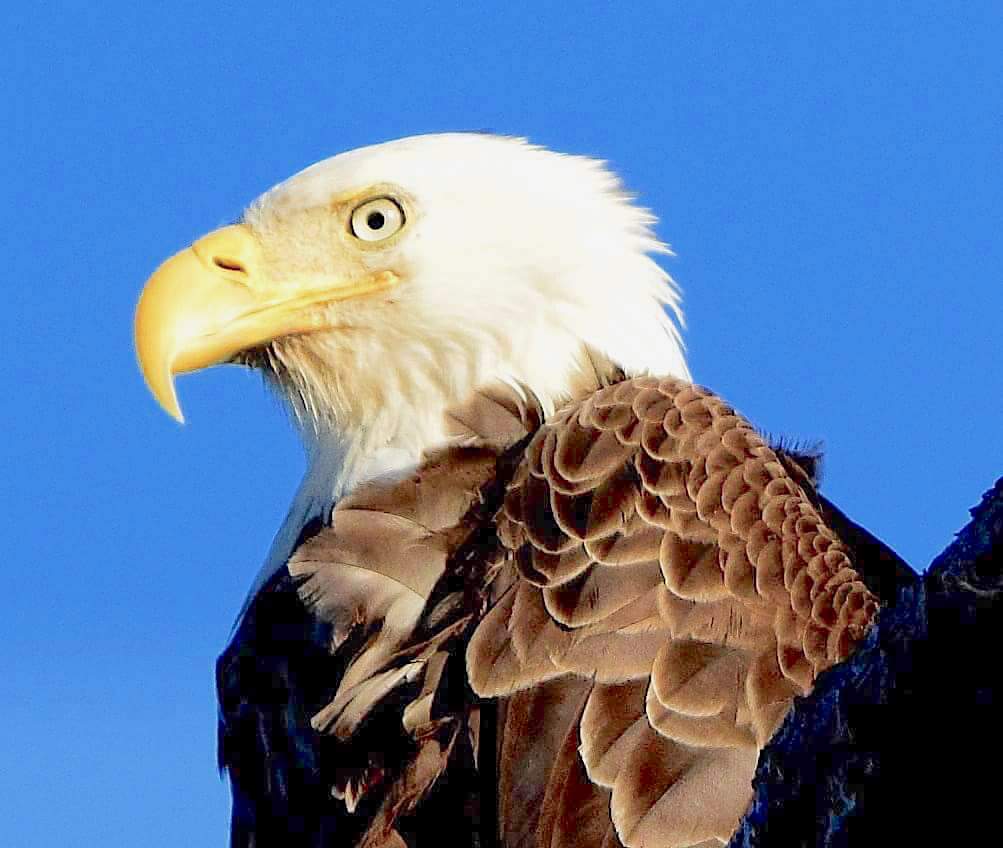
So far, however, there has been no photograph of an ‘Abaco’ bald eagle. It’s fair to say that the official verification of a sighting generally requires a photograph – more especially where there is a risk of confusion with a native bird (eg some warblers). But there really is no mistaking a bald eagle. For obvious reasons it is surely one of the most recognisable raptors of all. And the only Abaco candidates for confusion would be a turkey vulture or an osprey. A quick look shows very little scope for confusion with either:

Bald eagle in flight. Note: dark brown, head & tail bright white, huge yellow beak and feet Bald Eagle In Flight By Carole Robertson (Wiki)

Turkey vulture & Osprey for comparison. No comparison, in fact

Turkey Vulture, Abaco - Bruce Hallett  

 ABACO BALD EAGLE CHALLENGE

How about being the first person to capture an Abaco bald eagle on film digital media? The kudos! The traditional Rolling Harbour bottle of Kalik is already on ice in the expectation of a usable image, together with the accurate location… Failing that, all reports welcome anyway.

Bald Eagle - Poquoson, Virginia - Brian Lockwood

Credits: all brilliant eagle photos by very kind permission of Brian Lockwood, taken in his backyard in Poquoson, Va. except eagle in flight, Carol Robertson (wiki); TUVU (Bruce Hallett); Osprey (Craig Nash); Amusing Cartoon, Birdorable

Unknown's avatar

LIZARDS OF ABACO: ANOLES (AND DEWLAPS)


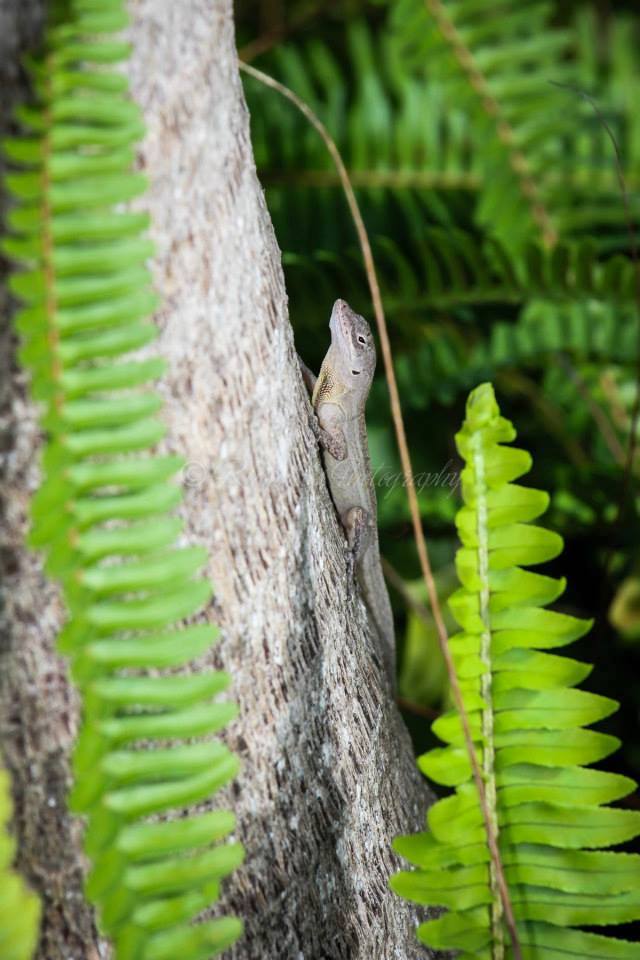
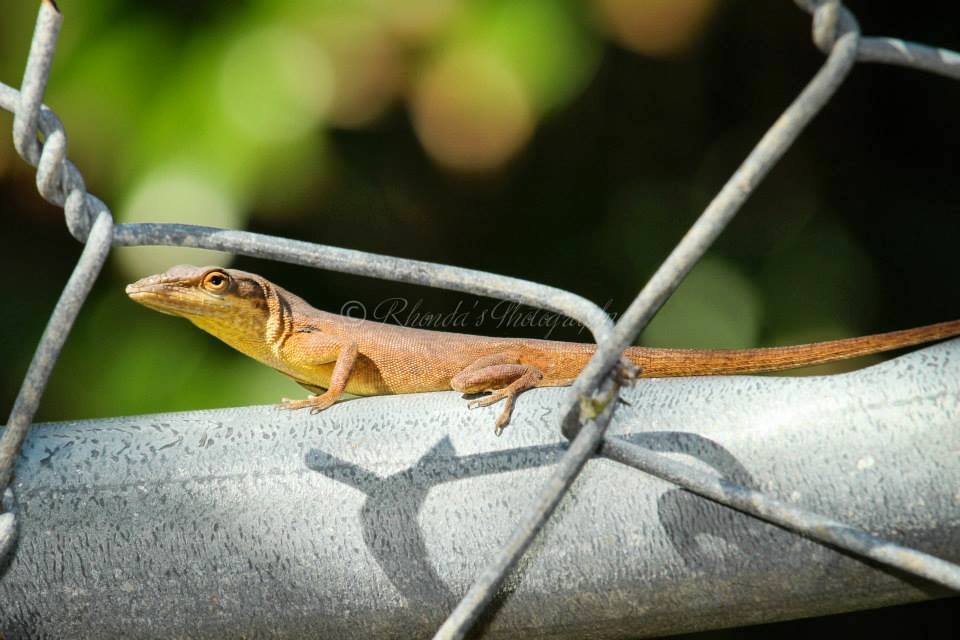
Anoles of Abaco, Bahamas (Rhonda Pearce)

LIZARDS OF ABACO: ANOLES (AND DEWLAPS)

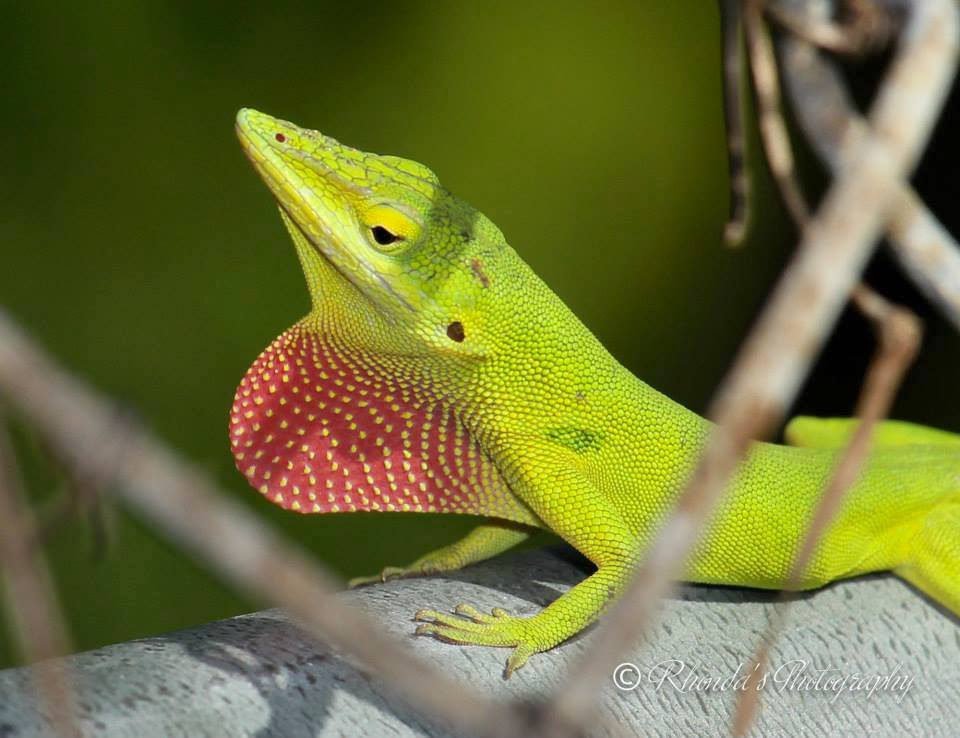
Everyone knows about CURLY TAIL LIZARDS. Everyone loves them and their little ways. The other lizards that may be found on Abaco – the anoles, green and brown – are easier to take for granted. Unless, maybe, you see one displaying its DEWLAP. These are essentially folds of neck skin that are seen in many creatures – even large ones like the moose – and which in some species are inflatable / retractable. 

Abaconian Rhonda Pearce has taken some excellent photos of anoles recently. By oversight I have never given anoles a day in the sun in this blog before, and it’s high time I did (see above re overlooking anoles in favour of curly tails…). First, here are some impressive dewlaps to admire.

Anoles of Abaco, Bahamas (Rhonda Pearce)Anoles of Abaco, Bahamas (Rhonda Pearce) Anoles of Abaco, Bahamas (Rhonda Pearce)

And here are a few green and brown anoles hanging out on trees and leaves in an anole-type way. In a couple of these images, you can see the dewlap in its non-display mode. They are all just… lizards. Non-scary, non-venomous, non-poisonous little guys that are probably a peripheral part of everyone’s experience, but which really deserve a closer look. 

Anoles of Abaco, Bahamas (Rhonda Pearce) Anoles of Abaco, Bahamas (Rhonda Pearce) Anoles of Abaco, Bahamas (Rhonda Pearce) Anoles of Abaco, Bahamas (Rhonda Pearce) Anoles of Abaco, Bahamas (Rhonda Pearce) Anoles of Abaco, Bahamas (Rhonda Pearce)

You can read more about anoles, including their sex lives, on the excellent Abaco Scientist’s site HERE

OPTIONAL MUSICAL DIGRESSION

The first time I heard the word ‘dewlap’ (misheard by the young me as ‘dewlat’) was in the mid-60s, in Georgie Fame’s excellent Ballad of Bonnie & Clyde. This song – and doubtless the film – was number 1 in the UK and maybe also the States. Famous too for such fine songs as ‘Yeh Yeh!’ and ‘Sitting in the Park’, Fame’s ‘Ballad’ is probably his best-loved song.

I assumed then that a ‘dewlat’ was some sort of valuable gold coin  – like a gold sovereign – that bank robbers put into a specially designed ‘dewlat bag’ to carry them away… Ah! The naivety of youth.

Bonnie and Clyde advanced their reputation

And made the graduation into the banking business

“Reach for the sky,” sweet-talking Clyde would holler

As Bonnie loaded dollars in the dewlap bag

Credits: all photos, Rhonda Pearce with thanks as ever; icecreammakesuhappy, youtube

Unknown's avatar

WATCHFUL TYRANT: A LOGGERHEAD KINGBIRD ON ABACO


Loggerhead Kingbird, Delphi, Abaco, Bahamas (Keith Salvesen)

WATCHFUL TYRANT: A LOGGERHEAD KINGBIRD ON ABACO

The Delphi Club on Abaco has a number of permanent residents (or by now – let’s be realistic – maybe their descendants). There’s the huge curly tail lizard that lives under the large stones by the outside staircase. There are the West Indian Woodpeckers that noisily nest in a box under the eaves of the verandah and produce 2 batches of shouty chicks each summer. And there is the silent sentinel – a loggerhead kingbird that spends much of its time in the trees and bushes at the far side of the pool.

Loggerhead Kingbird, Delphi, Abaco, Bahamas (Keith Salvesen)

It’s a good place to chose. The bird uses the tree branches and shrubs to ‘hawk’ for passing insects, suddenly leaving its perch to pounce, before returning to just the same place to eat its snack – classic flycatcher behaviour. I call it the ‘watchful tyrant’ because the kingbird is nearly always there. Somewhere. If you look carefully and wait patiently. He stays in the shade, so he’s not bright with sunlight (or P/shop) in these photos. This is just the way he is.

Loggerhead Kingbird, Delphi, Abaco, Bahamas (Keith Salvesen)

Kingbirds are of the family Tyrannidae and the genus Tyrannus. The ‘tyrant’ group includes a number of flycatcher species commonly found on Abaco: the KINGBIRDS (loggerhead and gray), the CUBAN PEWEE and the LA SAGRA’S FLYCATCHER being the most familiar. Note the hook at the end of the beak; and the yellowish tinge to the undertail area.

Loggerhead Kingbird, Delphi, Abaco, Bahamas (Keith Salvesen)

With the exception of the gray kingbird, the flycatchers named above are very common permanent breeders on Abaco. There’s probably one of them within 20 feet of your house right now. The gray, however, is a summer breeding resident. This is most helpful of it: if you see a kingbird between October and April, it will be a loggerhead. This gives you a 6-month window for near-certain ID.

Loggerhead Kingbird, Delphi, Abaco, Bahamas (Keith Salvesen)

IT’S SUMMER – SO HOW DO I TELL A LOGGERHEAD FROM A GRAY?

EASY. CLICK HERE

All photos: Keith Salvesen; Cartoon by the legendary Birdorable

Unknown's avatar

WHITE-CHEEKED PINTAILS & BAHAMA DUCKLINGS


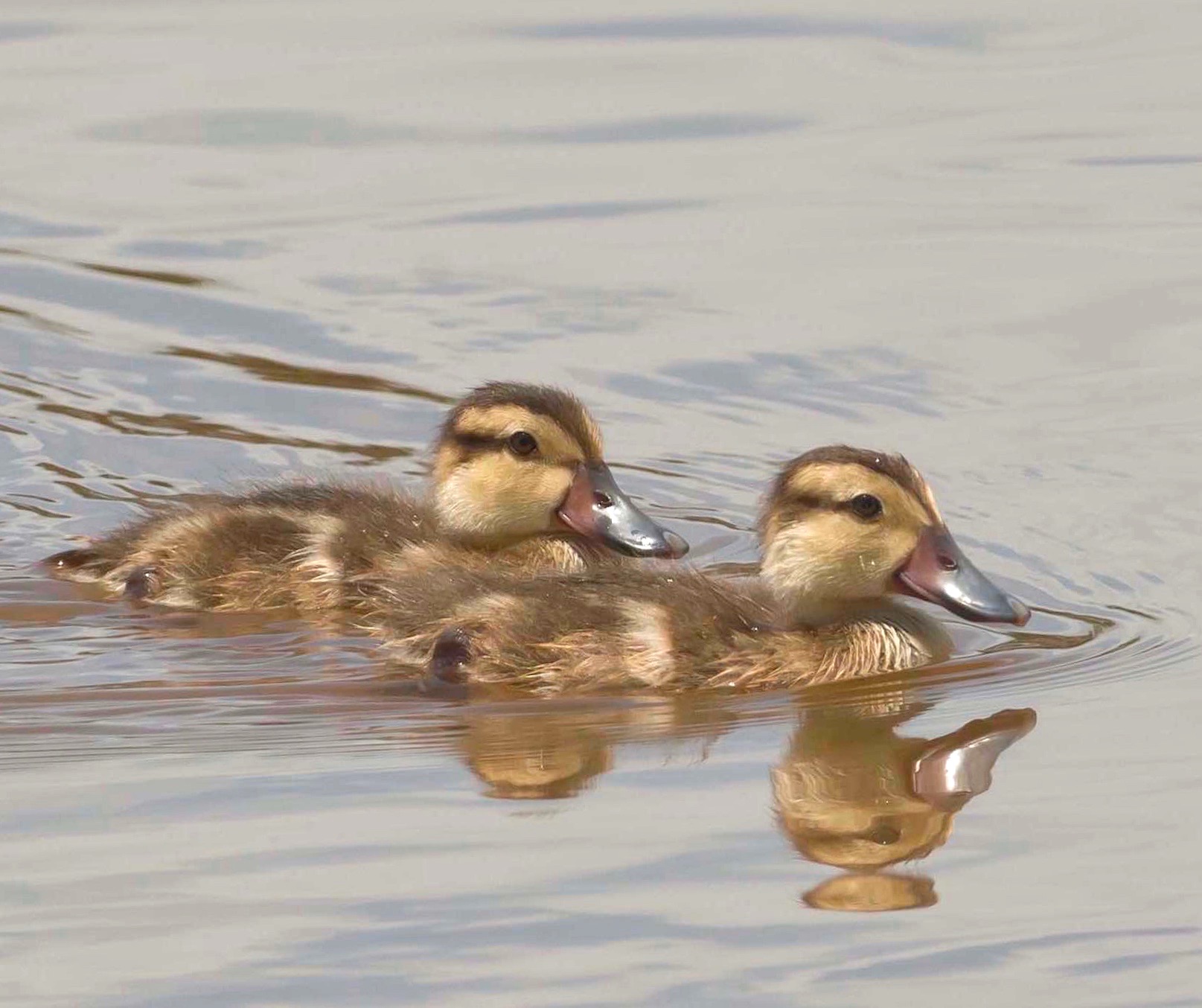
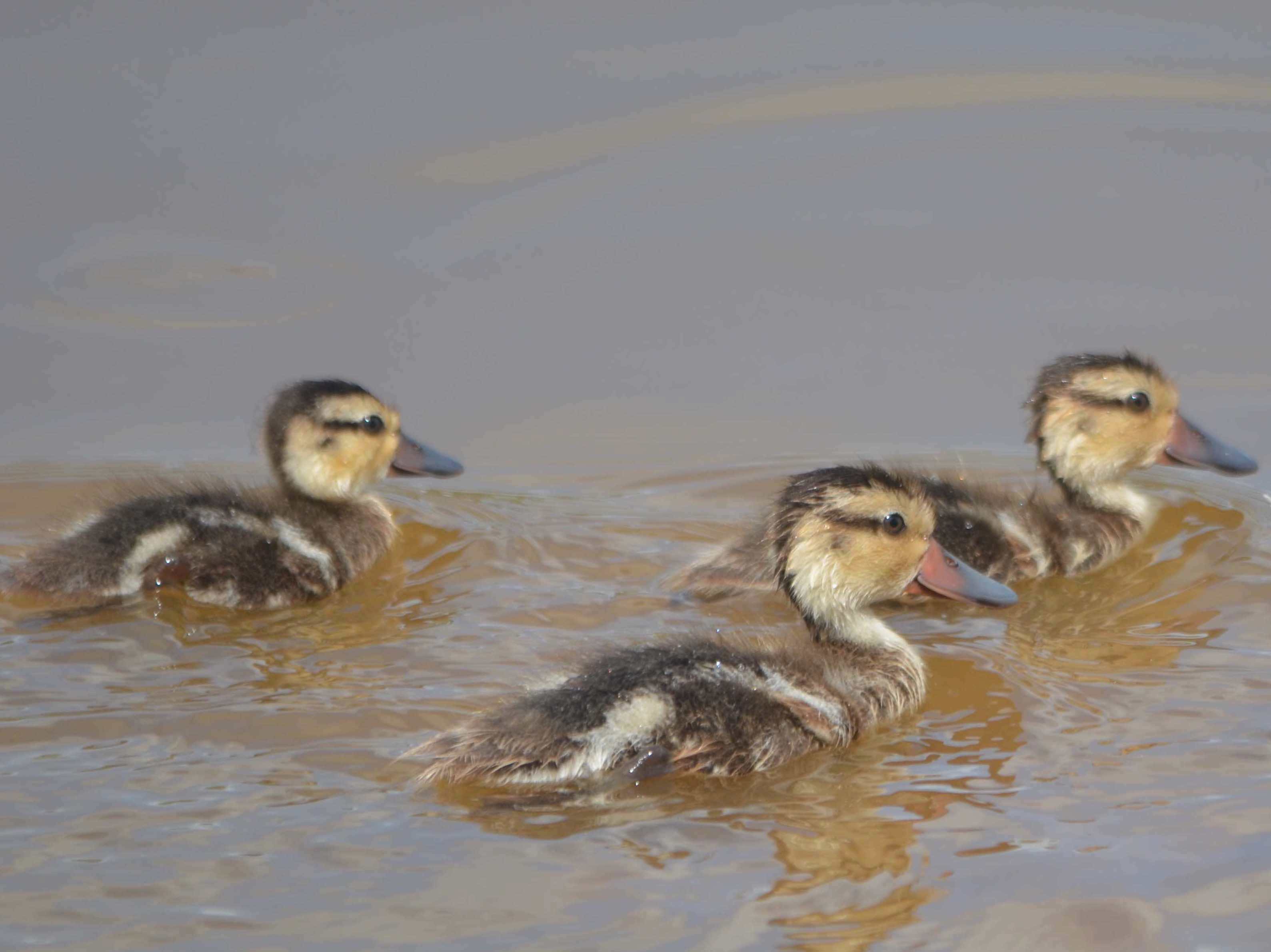
White-Cheeked Pintail Ducks & Bahama Ducklings on Abaco (Tom Sheley)

WHITE-CHEEKED PINTAILS & BAHAMA DUCKLINGS

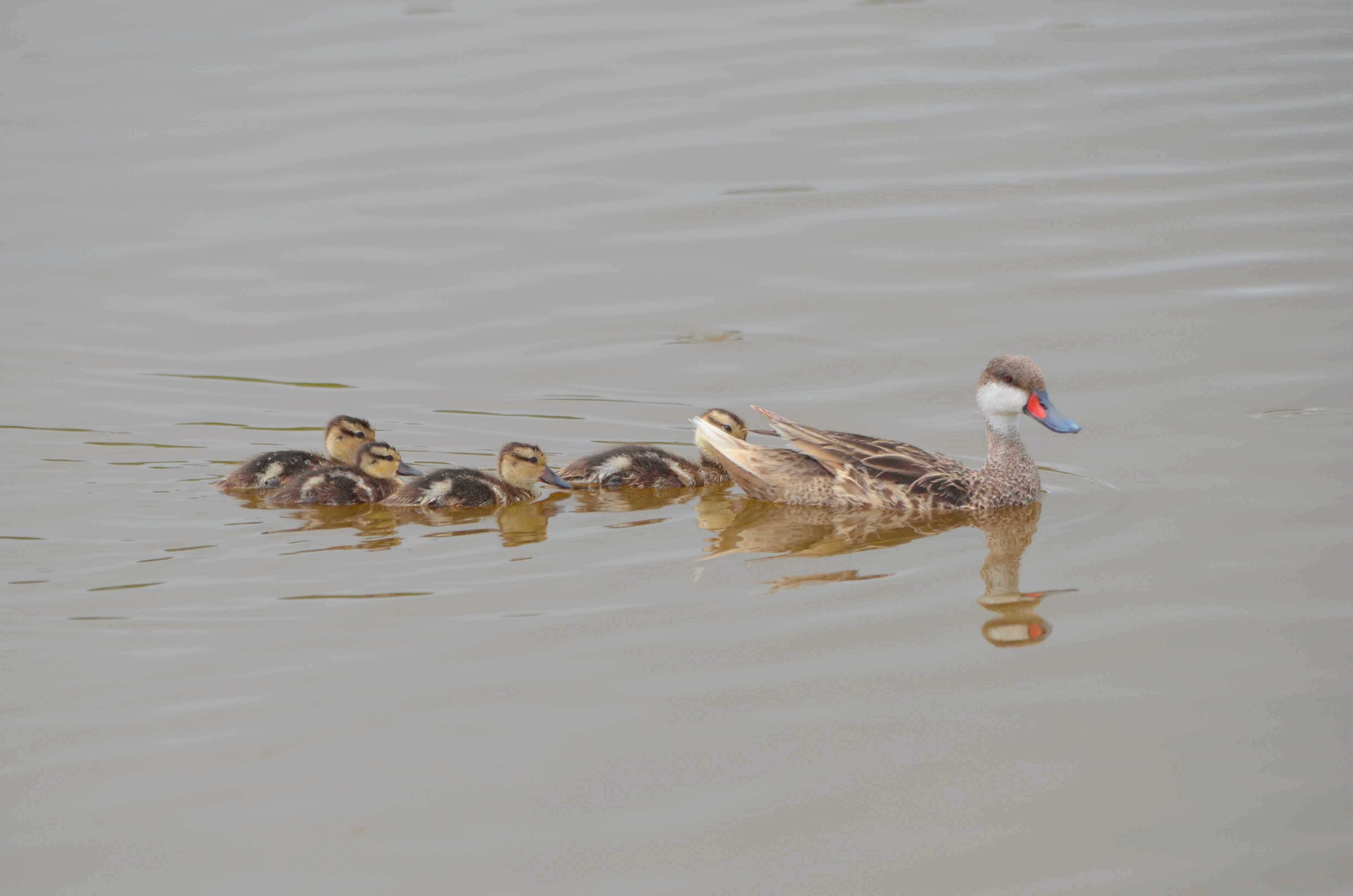
The white-cheeked (‘Bahama’) pintail is everyone’s favourite dabbling duck. You can see them in large numbers at Gilpin Pond, and in slightly lesser numbers in the pond on Treasure Cay golf course. You may come across the occasional pair or singleton way out on the Marls. Wherever they may be, spring means duck ahem… erm… sex. And that means… gorgeous ducklings. Like the ones below. You can see more Abaco pintails HERE but this post showcases the delightful progeny of mama duck (not forgetting papa duck’s role, of course). 

White-Cheeked Pintail Ducks & Bahama Ducklings on Abaco (Charles Skinner)White-Cheeked Pintail Ducks & Bahama Ducklings on Abaco (Charles Skinner)White-Cheeked Pintail Ducks & Bahama Ducklings on Abaco (Charles Skinner)White-Cheeked Pintail Ducks & Bahama Ducklings on Abaco (Charles Skinner)

This means ‘get any closer to my darling ducky at your peril, back away now, you’ve been warned’.White-Cheeked Pintail Ducks & Bahama Ducklings on Abaco (Tom Sheley)

A proud pair of parents. No, I can’t tell which is which – males and females are very similar. My guess is that the female is nearest.White-Cheeked Pintail Ducks & Bahama Ducklings on Abaco (Tom Sheley)

Credits: all absolutely adorbs Anas bahamensis photos are by Tom Sheley & Charles SkinnerWhite-Cheeked Pintail Ducks & Bahama Ducklings on Abaco (Tom Sheley)

FREE BONUS FOR MAY! BAHAMA PINTAIL DRAWING LESSON!

Unknown's avatar

SCISSOR-TAILED FLYCATCHER: AN “IF ONLY” BIRD FOR ABACO


Scissor-tailed Flycatcher - Danny Sauvageau

SCISSOR-TAILED FLYCATCHER: AN “IF ONLY” BIRD FOR ABACO

About 3 years ago, there was great excitement when a new bird species was recorded on Abaco. Not just recorded, but actually photographed too – the best of evidence. This was a fork-tailed flycatcher, and to no one’s great surprise another one has never been seen since. So sadly the STFC must go down in the records as a V5, a one-off vagrant. Until another one turns up, anyway. But there will never be another ‘first STFC ever‘ on Abaco. You can read about the new species HERE.

Scissor-tailed Flycatcher - Danny Sauvageau

The sighting came quite soon after the publication of The Birds of Abaco, and instantly rendered the comprehensive checklist in the book out of date. In all, 6 new bird species have now been sighted on Abaco and in due course I need to amend the checklist to reflect the changes. And add ‘wild turkey’ to the also-ran column ‘Exotics Seen on Abaco.’

Scissor-tailed Flycatcher - Danny Sauvageau

The scissor-tailed flycatcher is another so-called ‘tyrant flycatcher’ with long streaming tail forks. I had a look at the checklist to see if the species was recorded for Abaco, and sure enough it is included as a V4, which is to say a very rare vagrant with maybe half-a-dozen sightings over the years. I’m not aware of any photos of one taken on Abaco. However, birding and photography authority Danny Sauvageau occasionally encounters these magnificent birds in Florida. His recent photos of the scissor-tailed flycatcher are so beautiful that you just have to see them. How wonderful if this exotic creature could find its way to the northern Bahamas more often. Until it does, it will remain what I term an ‘if only’ bird – one that is regretfully absent…
Scissor-tailed Flycatcher - Danny Sauvageau

All fantastic flycatcher fotos: Danny Sauvageau with many thanks – check online, you won’t see a better collection than this…; cartoon, Bordorable