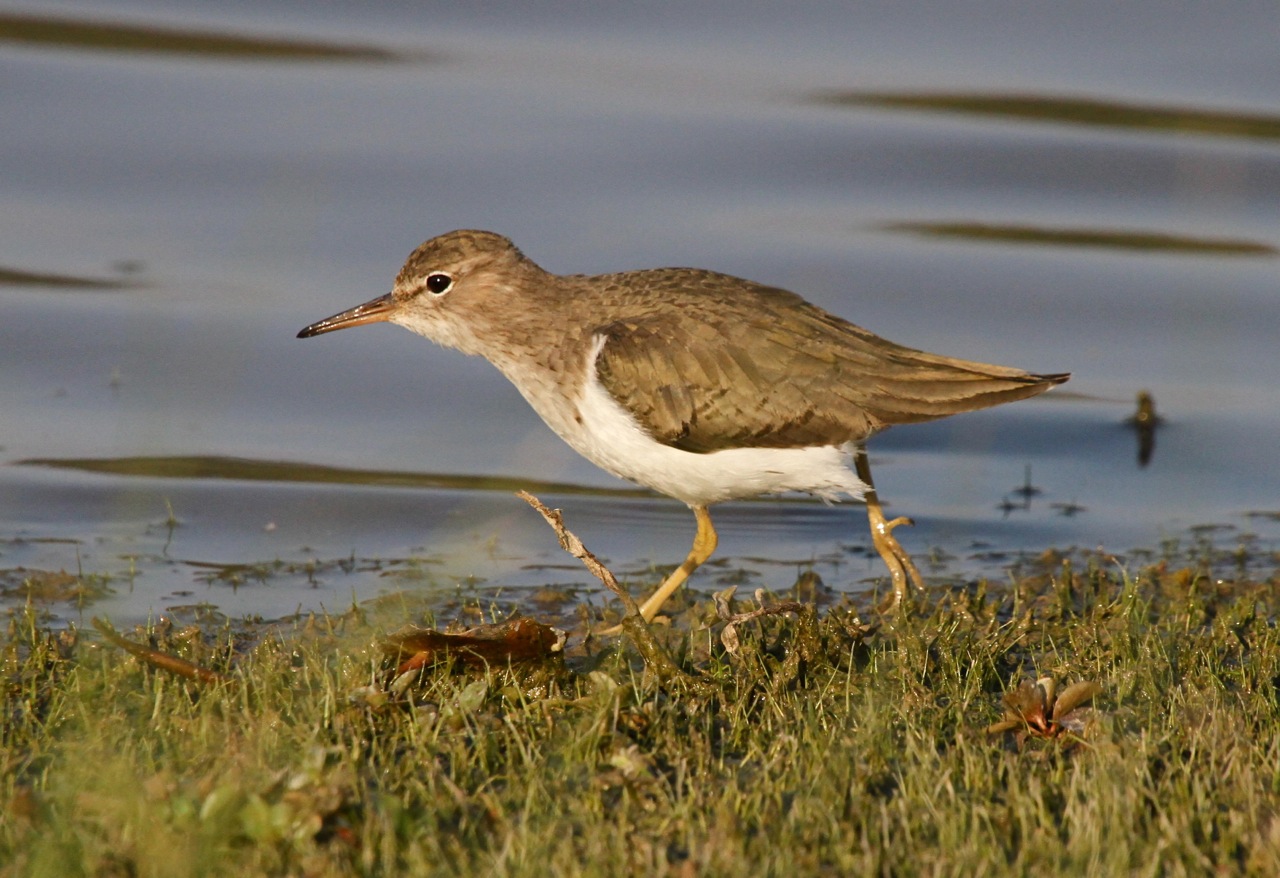
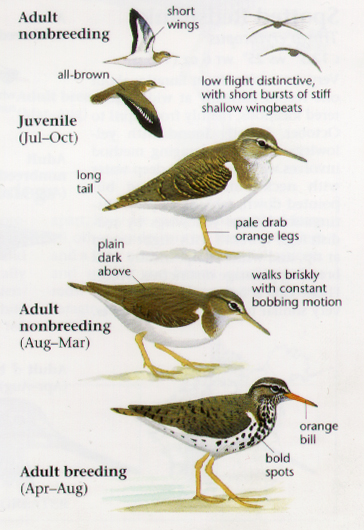
The Spotted Sandpiper Actitis macularia is a common winter resident on Abaco. These pretty shorebirds are only spotted part-time – in the breeding season – when they look like this…
Spotted Sandpiper (breeding plumage)
Spotted Sandpiper (breeding plumage)
The species sets a fine example for gender equality – role reversal, even. The female Spotted Sandpipers are the first to arrive in the breeding area, with males following on. Once a female has staked out her nesting territory, she is the one to defend it. A male will then arrive on the scene, and (if approved of) they mate. Once the eggs are laid the male takes on the egg incubating duties and the subsequent chick care once they hatch. While he is occupied with domestic concerns, the female may take the chance to play away from home and produce eggs with other males. Just imagine if humans of either sex behaved like that… Oh. Sometimes they do apparently (sources: The Daily Snooper; Celeb Shocker!)
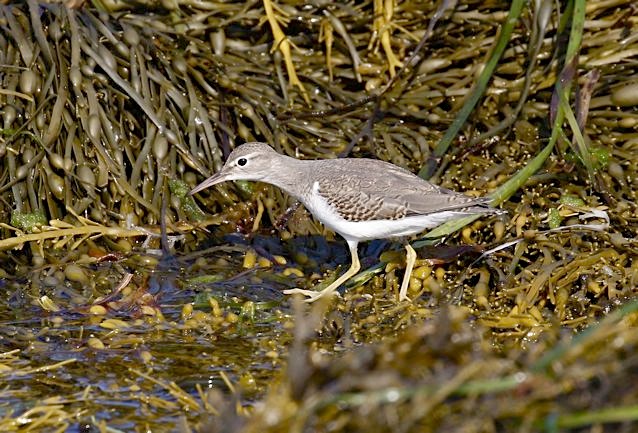
The Spotted Sandpiper in non-breeding plumage has no speckles, and looks like this
Spotted Sandpiper (non-breeding plumage)
This bird appears to be in an intermediate stage, just starting to acquire the spots
Spotted Sandpiper (intermediate stage)
At the immature stage, these birds look much more delicate
Image credits: Tom Reed, Bruce Hallett, Tom Sheley, Cornell Lab, Wiki, Sibley
The Black-and-White Warbler Mniotilta varia is a fairly common winter resident on Abaco. They are the only birds of the genus Mniotilta (“moss-picker” gr.). Unlike most warblers these birds behave rather like nuthatches, creeping along the trunks and branches of trees grubbing insects out of the bark. Pine trees are ideal for this. I remain rather dim about the 37 species of warbler on Abaco. A lot of them are small and yellow. But as soon as I saw one of these for the first time, I was very relieved. I knew exactly what it was – the bird that has been described as ‘a flying humbug’.
SUMMERWINTER
Finally, this is a great short video of this little bird in action. Even if you only watch the first 30 seconds, you will be enchanted…
There are plenty of cute little birds on Abaco, as almost anywhere else. The BGG would definitely be in my top 10, and probably shouldering its tiny way into the top 5. This one was in the coppice 20 yards from the Delphi Club. I made some of those irritating (to other humans) ‘pishing’ sounds and, gratifyingly, it popped into sight. Then it started singing.
If the colouring / name coincidence doesn’t help with ID, look for the characteristic full white eye-rings. Adults have a dark Frida Kahlo ‘monobrow’, visible in these pictures. They also have a tendency to cock the tail when perching. If you are lucky, you may see a BGG ‘hawking’ for small insects, fluttering off a branch to make the catch and returning to its perch to eat it.
The image below shows the same bird having flown a short distance. I wanted a cocked tail shot, but as I pressed the (what is it? button? knob? shutter? trigger?) pressy thing, the bird started the preliminaries for flying off. The top 3 photos are exactly as taken, with no ‘work’ done bar cropping. The one below had a bit of a sharpen. Not a good photo, but it shows the stance. Then, having seen a cocked tail, I returned to immerse myself in a cocktail – a ‘Delphi Punch’ is a knockout drink!
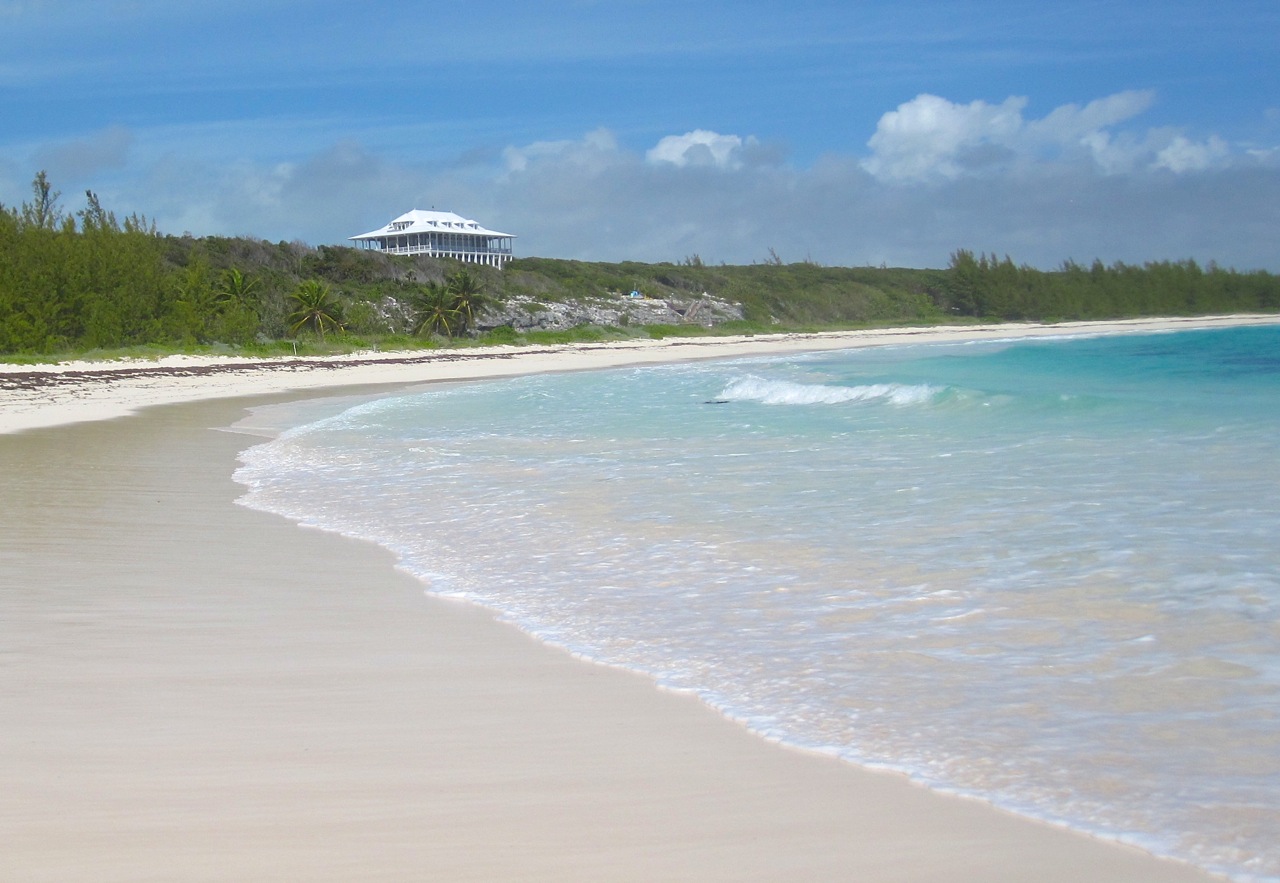
Rolling Harbour, location of the Delphi Club, is a mile-long curving sandy bay on the east side of South Abaco, half an hour’s drive south of Marsh Harbour. It is marked on a handful of old maps and a couple of more recent ones. Other than that, it keeps itself pretty much to itself. Here’s a 30-second, 180º panoramic movie from the beach. Blue skies. Blue water. Turquoise water. White sand. 4250 miles from where I am right now…
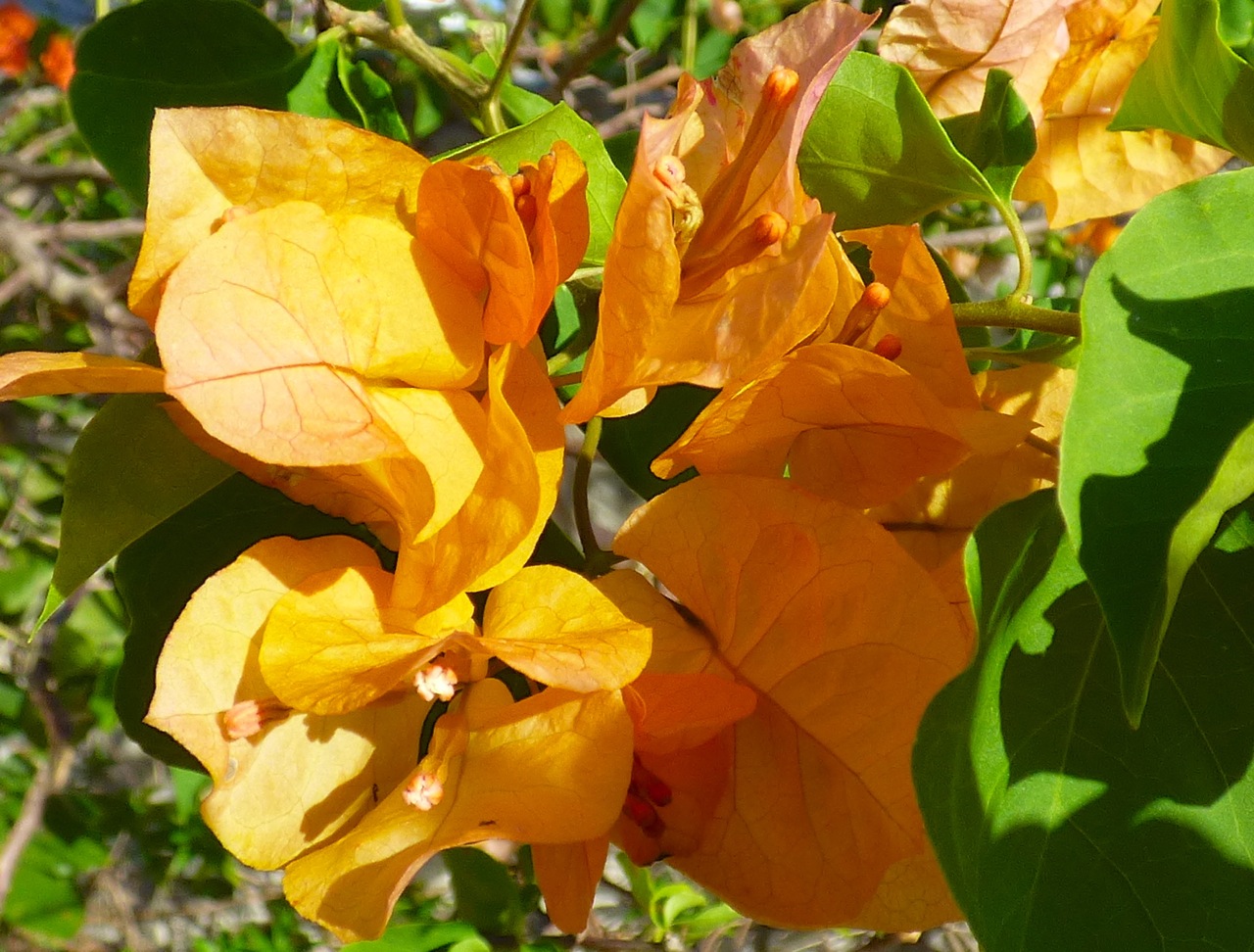
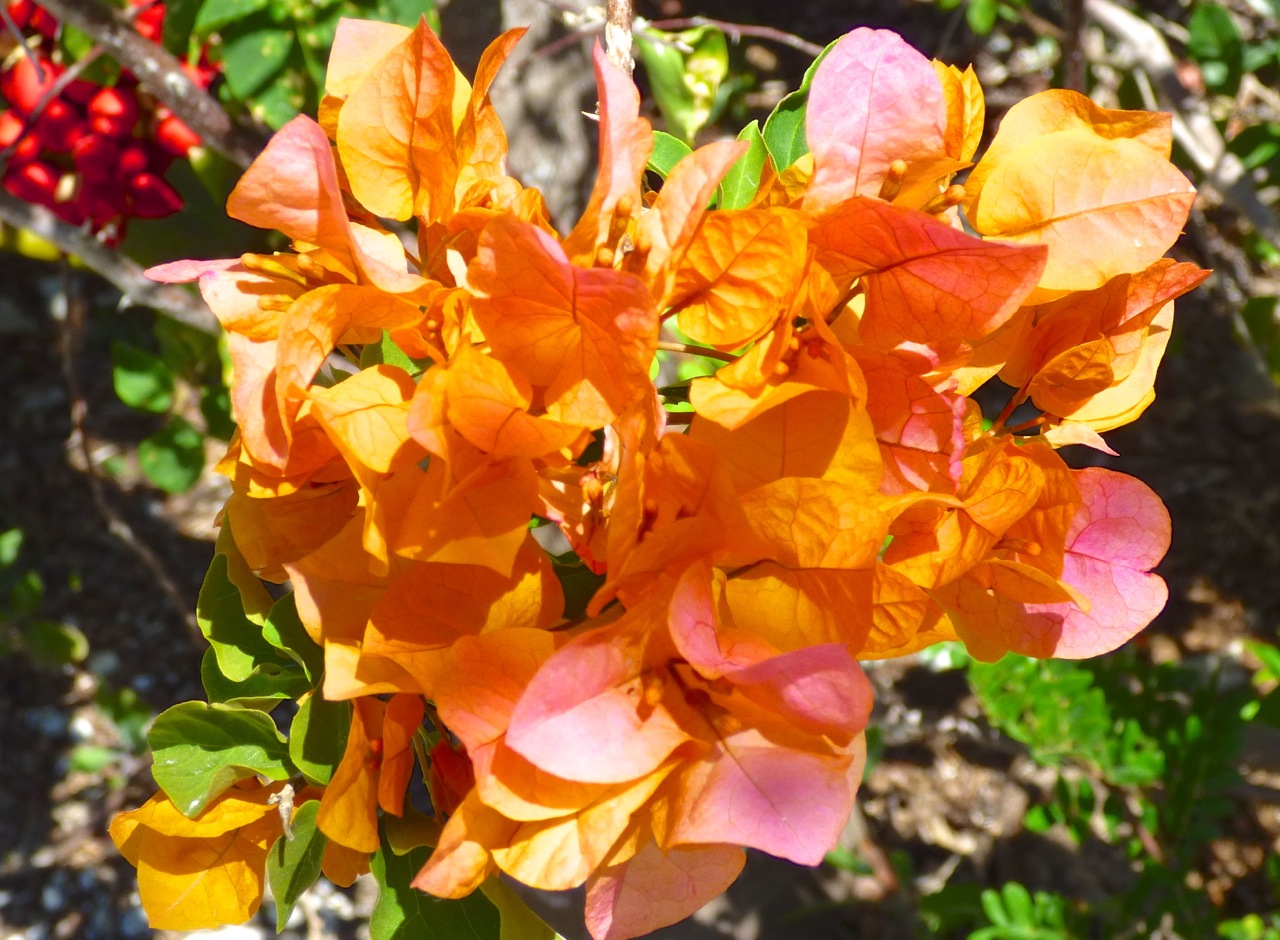
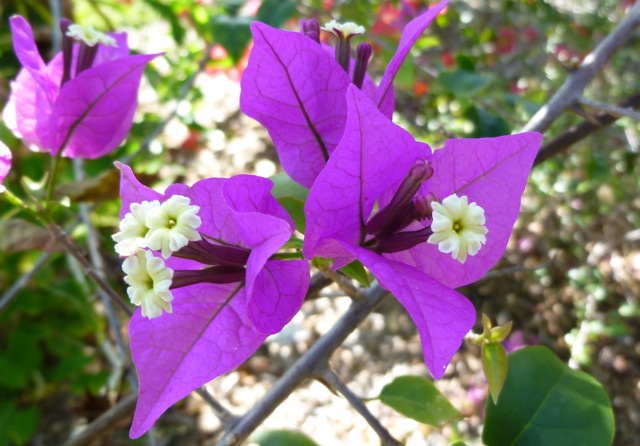
ADMIRABLE ADMIRAL BOUGAINVILLE & HIS EPONYMOUS FLOWERS ON ABACO
By the second half of the c18th, no respectable nautical expedition was complete without at least one naturalist or geologist on board. Within a few decades, that intentionally sweeping generalisation would include Charles Darwin himself. Louis Antoine, Comte de Bougainville (1729 – 1811) was a French admiral and explorer, and a contemporary of Captain James Cook. However the well-known ornamental vine to which Bougainville lent his name might more properly be called Commerconia… or indeed an even more obscure name.
When Bougainville set off on a voyage of circumnavigation in the 1760s, he took with him a botanist, Philibert Commerçon. He was the first European to examine and ‘write up’ these plants, his findings being published in France in 1789. One attractive theory is that the first European actually to observe these plants was a woman called Jeanne Baré who was Commerçon’s assistant, and indeed his lover. He is said to have sneaked her on board, despite regulations, disguised as a man. If this is right, this would make Jeanne Baré the first woman (let alone cross-dressing woman) to circumnavigate the globe. And perhaps make her entitled to be immortalised by having the plant ‘Bareia’ named after her. But I guess Admirals had more clout in plant-naming circles than female stowaways – or indeed botanists on board their ships.
As first printed in 1789, the plant was spelled ‘Buginvillæa’, an unexplained variation from the Admiral’s true name. The ‘correct’ spelling for this plant did not finally settle down until the 1930s, when a botanical consensus was reached. Nonetheless, many variations still persist (most usually with the addition of an e after the n). I myself spell it any-old-how and let the spell-checker take care of it…
STOP PRESSFurther research suggests that the name of the plant was ‘gifted’ by Commerçon to the Admiral, a self-effacing tribute or possibly a rampant piece of sycophancy – or (my own theory) to avoid being keelhauled when his ‘valet’s’ gender was apparently unmasked by the ship’s surgeon. In what precise circumstances, one longs to know…
Credits: Delphi plants courtesy of Willie the Gardener; photos RH; text-assists by ‘Magpie-Pickings’
The Marls of Abaco are prime bonefishing grounds, a vast area of labyrinthine mangrove swamps, sandy islets, channels and shallow flats on the west side of the main island. The fish are wily and powerful, the fly hooks are barbless, and each one caught, retained, boated and swiftly released is a prize. There’s plenty of other wildlife to be seen. Heron and egrets, ospreys, belted kingfishers, wading birds and many other bird species make the Marls their home. In the water, there are snappers, jacks, barracuda, and sharks of various kinds and sizes. These latter range from small black tip, lemon and hammerhead sharks to more substantial contenders, with the occasional massive bull shark to add a frisson for those on a suddenly fragile-seeming skiff…
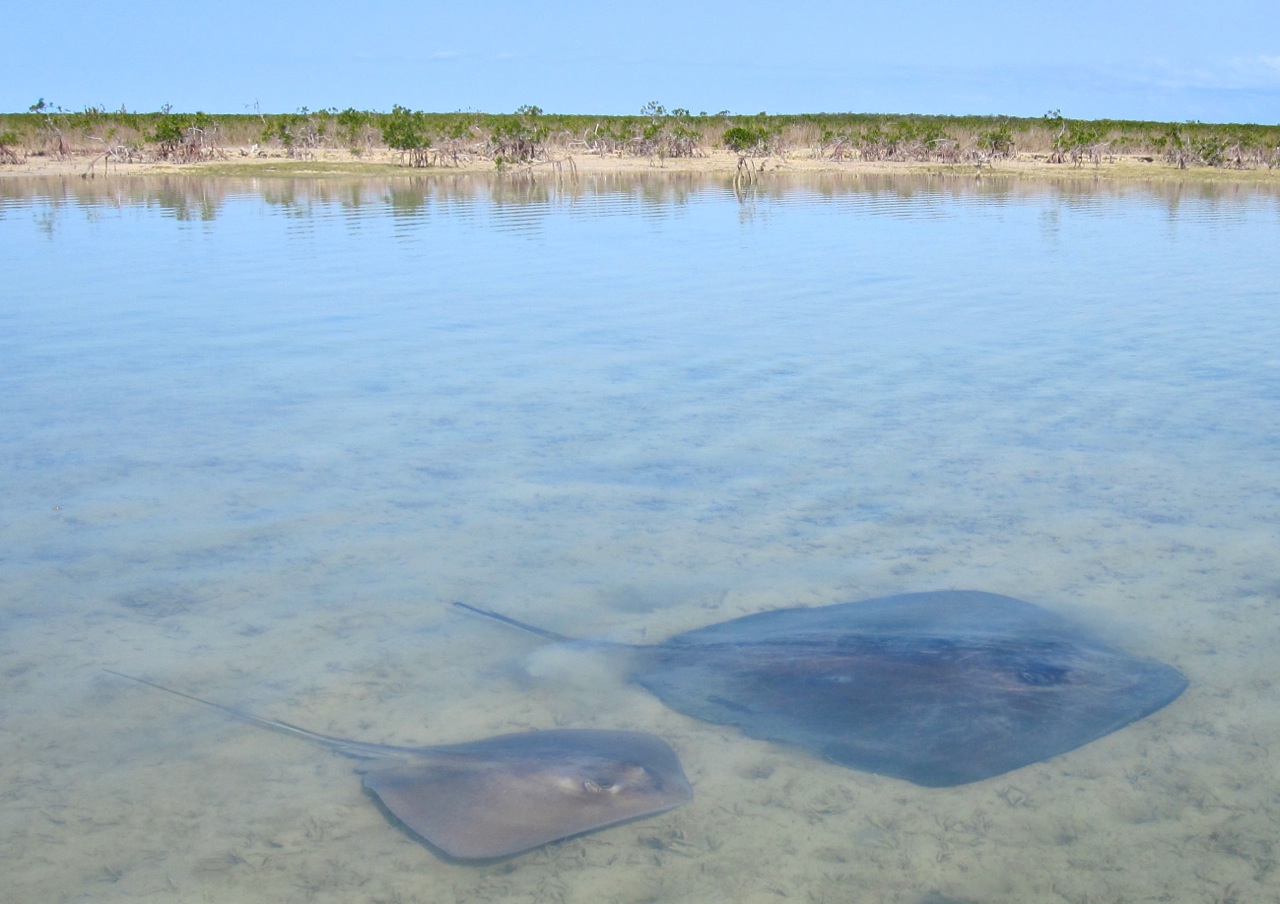
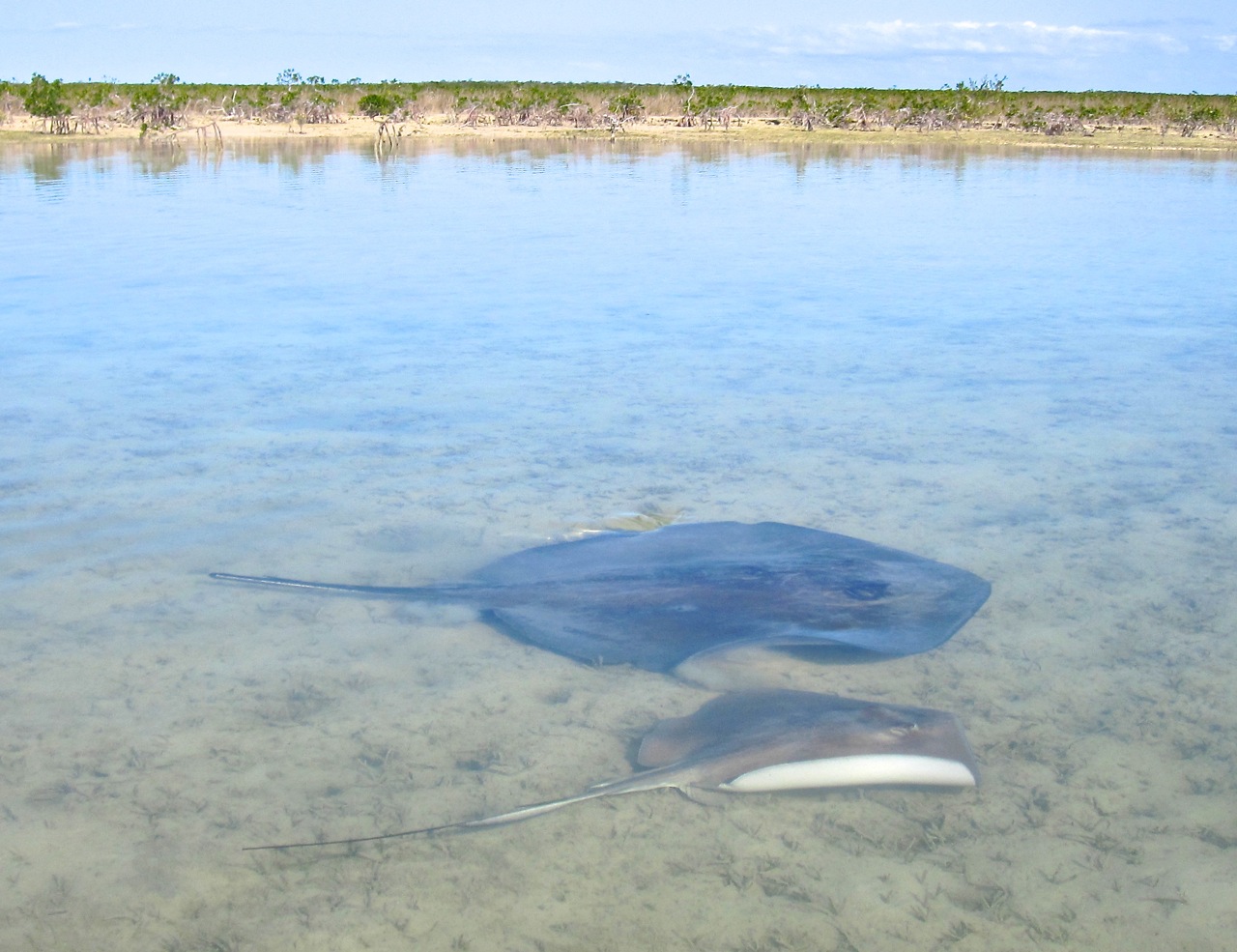
There are also rays. I have posted before about the SOUTHERN STINGRAYand theYELLOW STINGRAY. Out on the Marls I have mainly seen Southerns as they move serenely and unhurriedly through the warm shallow water. A couple of weeks ago, we were out with the rods when we had a completely new Ray experience. I’m not overly given to anthropomorphism and getting too emotional about encounters, but we all found this one quite moving – even our very experienced guide.
Gliding to our right side, a pair of stingrays slowed as they neared the skiff
The adult paused very close to us, allowing the little ray to catch up
Lifting a wing slightly the adult let the juvenile creep under, while keeping a beady eye on us
The large ray was missing the tip of its tail, presumably from some adverse encounter
The creatures examined us carefully for 2 or 3 minutes, before separating
Then they slowly drifted away across the sand…
According to our guide, this gently protective behaviour is not uncommon. They may well have been completely unrelated, the large ray tolerating the smaller one accompanying it through the waters and offering a kindly wing in the presence of danger or suspicious objects like us.
Photo Credits: Mrs RH (I was too entranced at the sharp end, with a bird’s eye view, to get a camera out)
When I get a better internet connection I have some great bird posts planned. Until then it has to be single images on my iph@ne. Here’s one from a couple of days back … NEW! Originally mis-ID – there was some general confusion about that. Thanks, Brigitte on Tilloo for ringing the alarm bell. My bad! Internet has temporarily improved, here’s the full-size rather than iph@ne image, with more to follow soon…
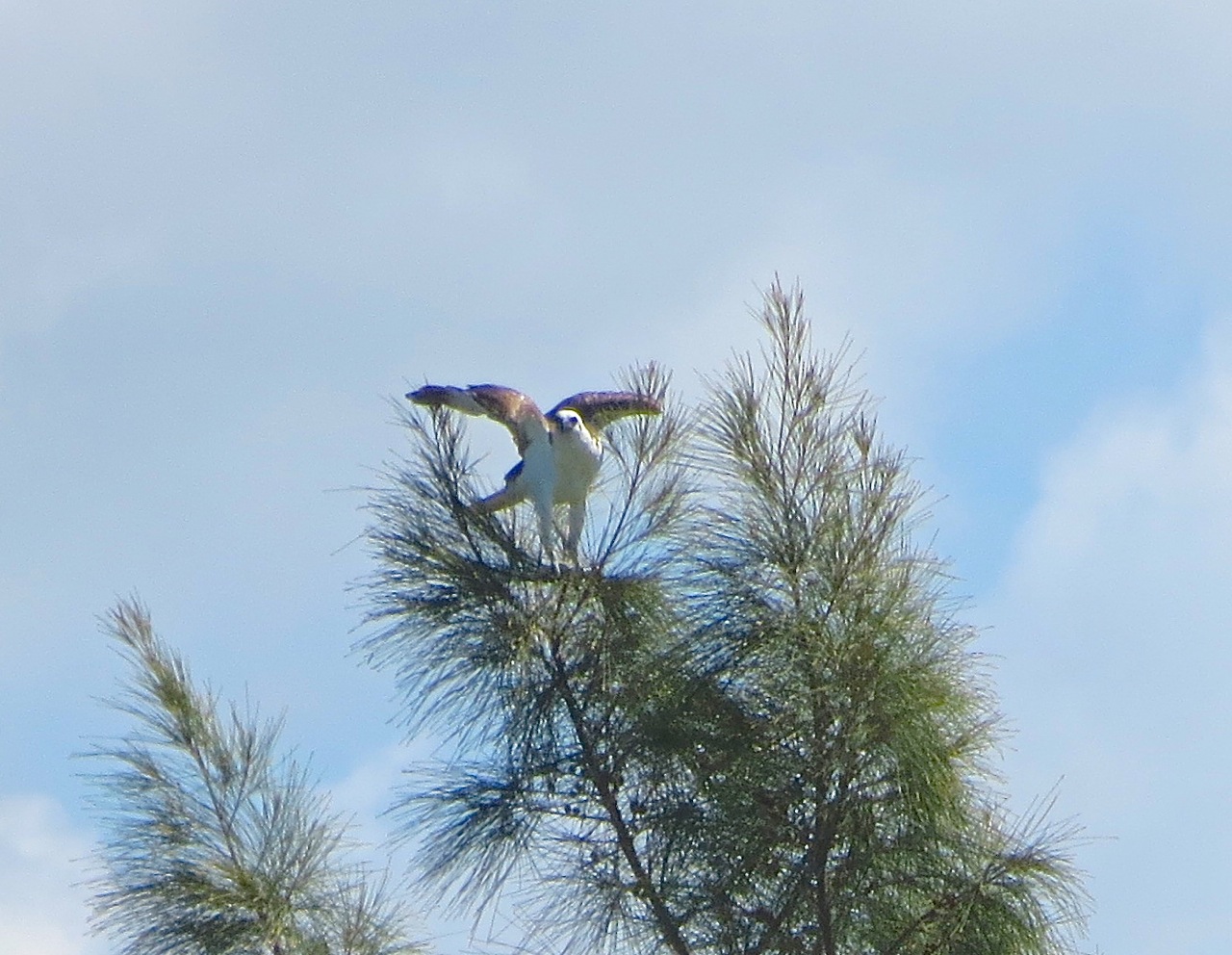
Anglers are not the only creatures out fishing on the Marls. Herons and egrets of several sorts live in the massive area of mangrove swamp, shallow sea and sandy spits that make up the prime bonefishing grounds of Abaco. Yesterday, we were lucky enough to be joined by an osprey. Hooking my ‘Delphi Daddy’ safely into a rod ring, I grabbed a camera and took some shots. These aren’t that great because (a) I normally only take a small cheap camera out fishing (b) the bird was some away off and (c ) my image qualities are variable… These aren’t really worth clicking to enlarge, but I’m pleased to have got some ‘action shots’ of this wonderful bird.
WHAT HAS THE GESTATION PERIOD OF A WALRUS (16 MONTHS) AND WEIGHS THE SAME AS A PAIR OF FULLY GROWN PINEAPPLES (2 KILOS)?
“THE DELPHI CLUB GUIDE TO THE BIRDS OF ABACO”
A unique bird book is been published and has arrived on Abaco today. Printed in Italy at the end of January, it has made its way from Florence via Bologna, Leipzig, Brussels, Cincinnati, Miami and Nassau. Having spent an unexpectedly long sojourn in Nassau, 2 pallets of books are now safely at the Delphi Club… at last!
The Guide showcases the rich and varied bird life of Abaco, Bahamas and features both resident and migratory species including rarities and unusual sightings. It is available for sale now from the Delphi Club in a limited edition of 500. The main features are as follows:
272 pages with more than 350 photographs
163 species shown in vivid colour – nearly two-thirds of all the bird species ever recorded for Abaco
Every single photograph was taken on Abaco or in Abaco waters
All birds are shown in their natural surroundings – no feeders or trails of seed were used
Several birds featured are the first ones ever recorded for Abaco or even for the entire Bahamas
A total of 30 photographers, both experienced and amateur, have contributed to the project
The book has had the generous support of many well-known names of Abaco and Bahamas birding
Complete checklist of every bird recorded for Abaco since 1950 up to the date of publication
Specially devised codes indicating when you may see a particular bird, and the likelihood of doing so
Specially commissioned cartographer’s Map of Abaco showing places named in the book
Informative captions intentionally depart from the standard field guide approach…
…as does the listing of the birds in alphabetical rather than scientific order
Say goodbye to ’37 warbler species on consecutive pages’ misery
Say hello to astonishing and unexpected juxtapositions of species
The book was printed in Florence, Italy by specialist printers on grade-1 quality paper
Printing took pairs of printers working in 6 hour shifts 33 hours over 3 days to complete
The project manager and the author personally oversaw the printing
The book is dedicated to the wildlife organisations of Abaco
A percentage of the proceeds of sale will be donated for the support of local wildlife organisations
A copy of the book will be presented to every school on Abaco
The book is published by the Delphi Club (contact details below). The project was managed by a publishing specialist in art books. The author is the wildlife blogger more widely known on Abaco and (possibly) beyond as ‘Rolling Harbour’. Oh! So that would in fact be Mrs Harbour and myself. Well well. What are the chances?
The Delphi Club at Rolling Harbour
PO Box AB-20006, Marsh Harbour, Abaco, Bahamas
Tel: +1-242-366-2222
‘OUTSTANDING BILLS’: THE WHITE IBIS ON ABACO AND BEYOND
The AMERICAN WHITE IBIS (Eudocimus albus) has a wide range in the Americas and is a familiar species in the southern United States, especially Florida. It is also found in the Caribbean. On Abaco they are quite rare, appearing sporadically as winter residents. Encountering one is definitely a ‘find’. I know of only one recent sighting when an ibis decided to spend some time on the lake at Treasure Cay Golf Course. Luckily Kasia was not concentrating too hard on her round of golf to the exclusion of all else – and had a camera with her.
The white ibis is more common on other Bahamas islands, for example New Providence (Nassau). Here are some photos taken there by Tony Hepburn and Woody Bracey. Others were taken in Florida.
This is the call of an Ibis in the Florida Wetlands (credit Xeno-Canto / Paul Marvin)
Juveniles have dark plumage that gradually grows out as they age and is replaced by white plumage
The ibis forages mainly by feel rather than sight, using the long curved beak to probe the bottom of shallow water for aquatic prey.
The white ibis is said to be a symbol for courage and optimism because they are supposedly the last birds to shelter from the onset of a hurricane, and the first to venture out as the storm passes. This is of course equally consistent with symbolising extreme foolhardiness… but let it pass.
FASCINATING FACTOIDS The white ibis / hurricane connection is nurtured by the University of Miami, of which the bird is the mascot. The sports teams are called the Hurricanes (or the ‘Canes for cheering purposes). Their endeavours are supported enthusiastically by none other than Sebastian the Ibis. “What does he look like?”, I hear you cry. This:
Sebastian makes a ‘U for University’ with his.. er… wingtips. He sports a natty Hurricanes hat and might easily be confused with Donald Duck’s less amiable-looking and more aggressive cousin
I had intended to digress further into the mysteries of the Sacred Ibis, symbol of the Ancient Egyptian God Thoth, the God of Learning and Wisdom who ranked with Isis and Osiris as A Top God. But in fact it’s quite a dull area, and 3 pictures and a nice bronze sculpture will give you the general idea.
The Sacred Ibis of Thoth, Met. Museum NYC
Credits: Kasia Reid, Woody Bracey, Tony Hepburn, Met, Wiki
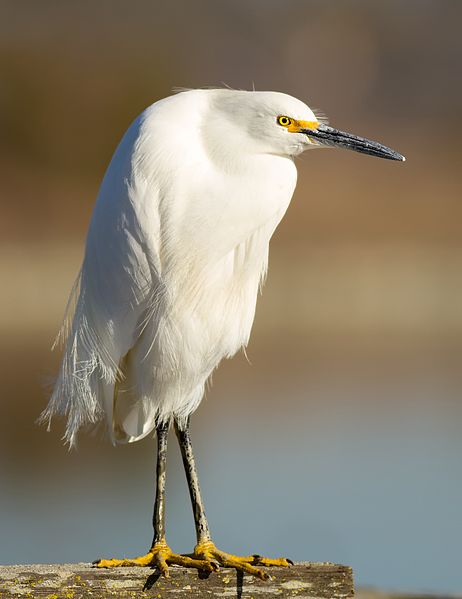
SNOWY EGRETS (Egretta thula) are small white herons of the Americas, similar to the European Little Egret. The first thing you may notice about them is that they have remarkable bright yellow feet. This distinguishes these birds from all other egret and heron species.
Young Snowy Egrets often have yellow markings higher up on their legs.
The feet are so bright that they are often visible underwater.
Snowy Egrets eat fish, crustaceans, insects and small reptiles. They have 3 main foraging tactics: (1) Standing still in or on the edge of water to ambush prey (2) Stalking prey in shallow water, often running or shuffling their feet to flush out prey (3) “Dip-fishing” by flying low over water.
In breeding season, Snowy Egrets grow beautiful plumes – “bridal plumage”. At one time these were in great demand as adornments for women’s hats (as with flamingos, parrots and many other decorative species). This reduced the population of the birds to dangerously low levels, from which they have now recovered. Their IUCN rating is now ‘Least Concern’.
Contemplating the next meal… one of Sandy Walker’s excellent Abaco photos taken this winterPhoto Credits: Sandy Walker, Woody Bracey, Tony Hepburn, Wiki
ALL THINGS BRIGHT… CHEERFUL GARDEN BIRDS AT DELPHI, ABACO
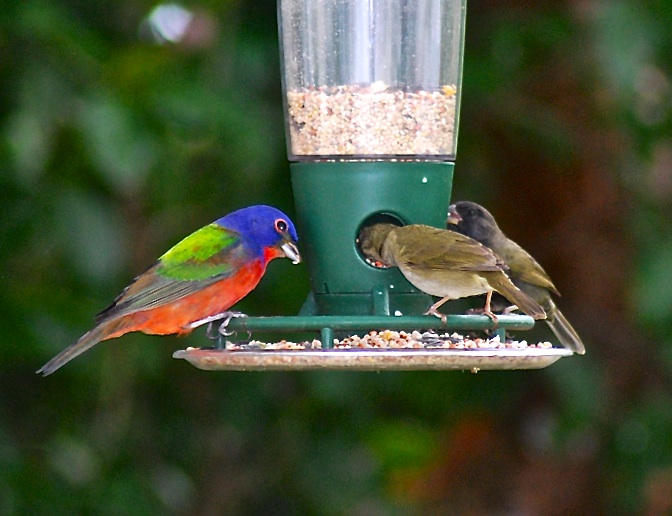
It’s not necessary to prowl around the coppice or lurk in the pine forest to see beautiful birds. They are on the doorstep, sometimes literally. Especially if there are full seed feeders and hummingbird feeders filled with sugar water for the Cuban Emeralds, Bahama Woodstars and other birds with pointy beaks (Bananaquits, for example). Here are are a few from the gardens immediately around the Delphi Club.
PAINTED BUNTINGS (f & m)
PAINTED BUNTING (m) WITH BLACK-FACED GRASSQUITS (m & f)
PAINTED BUNTING (f)
WESTERN SPINDALIS (m)
THICK-BILLED VIREO (m)
This is a TBV recording made with my iPhone.
For details how to record birds (or indeed animals. Or people) with a smart phone and embed the results as an mp3, CLICKHERE
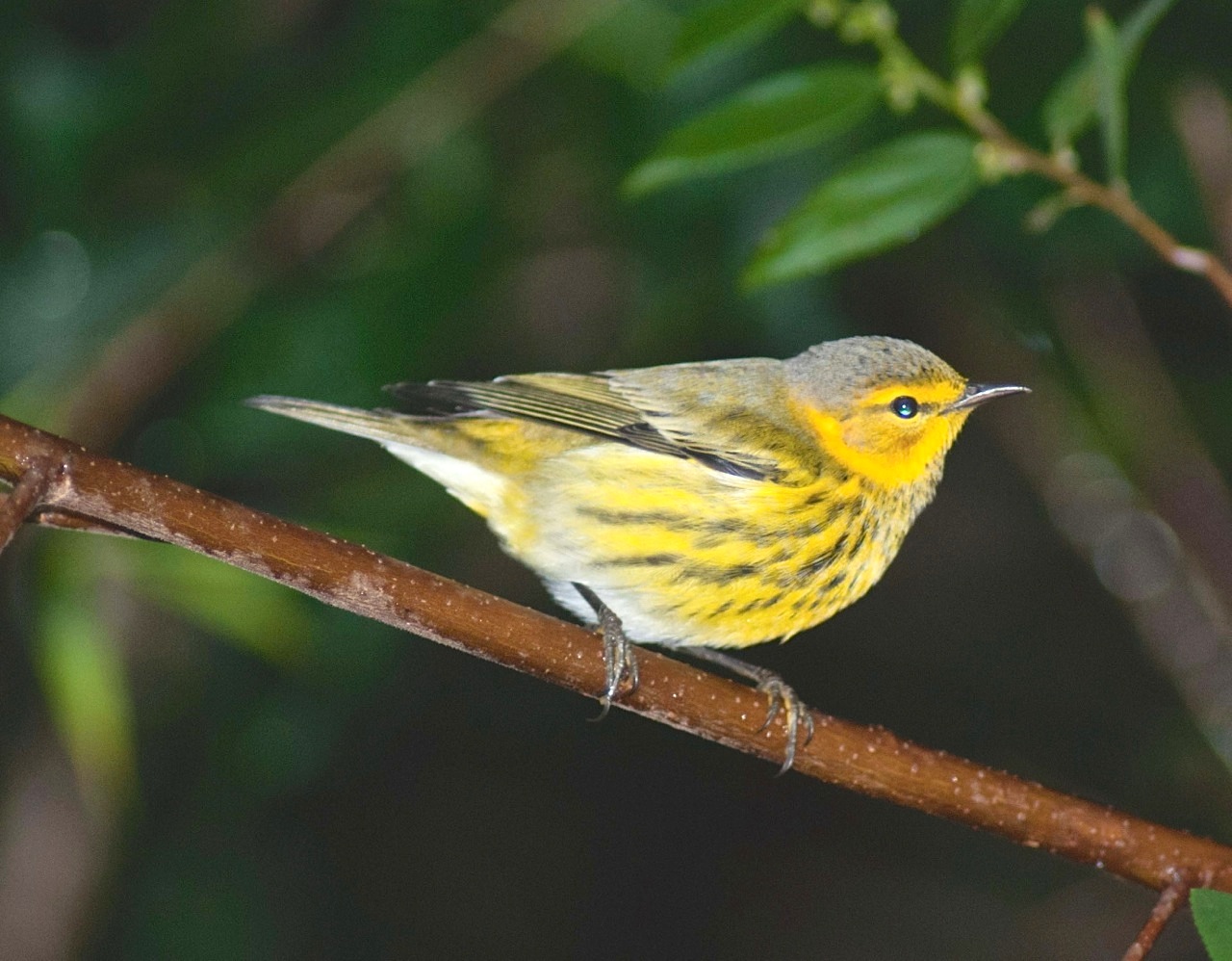
These little birds are autumn / winter visitors, though I have seen one at Delphi in June – it must have like it there and decided to stay on. Strangely, though originally named for one found on Cape May in the c19, there wasn’t another one recorded there for another 100 years…
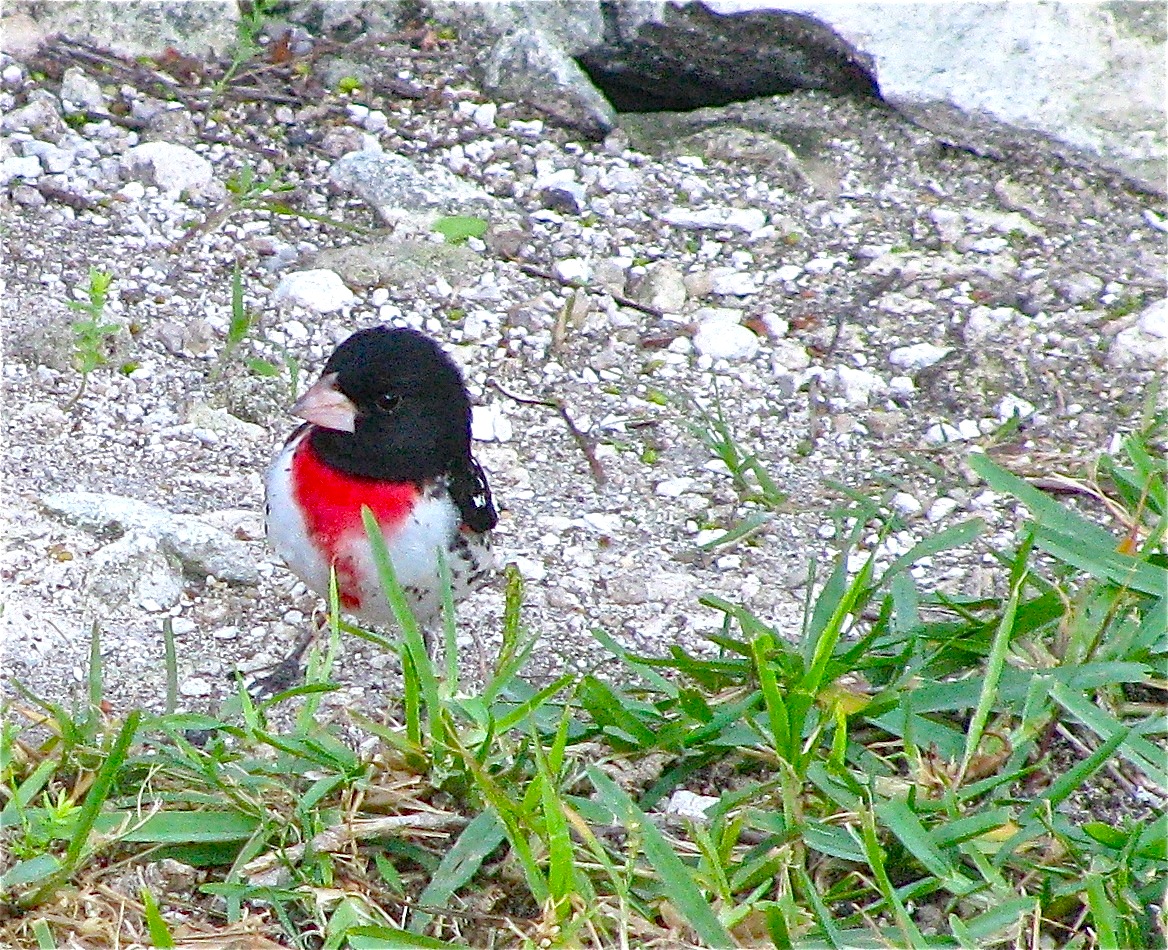
ROSE-BREASTED GROSBEAK (m)
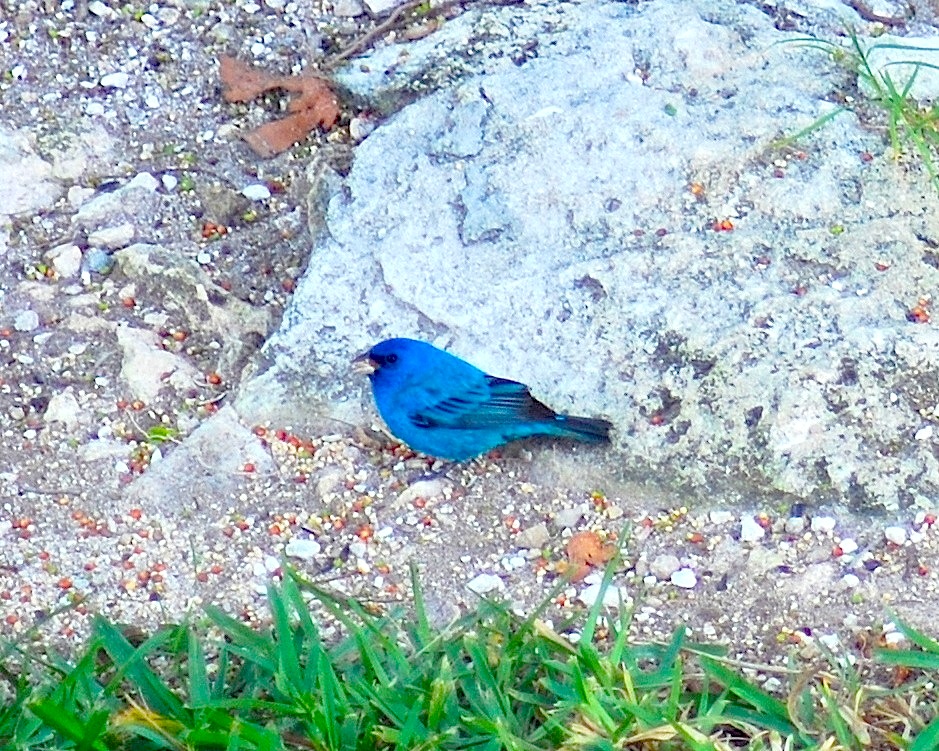
INDIGO BUNTING (m)
BANANAQUIT (m)
THE DELPHI CLUB, ABACOCredits: Mainly Sandy Walker; a couple from Peter Mantle; DCB by RH
ABACO: A SANDY ISLAND (SANDY BEACHES, A SANDY POINT AND A SANDY WALKER)
This post features some great Abaco bird photos taken by Sandy Walker, a man familiar to anyone connected with the Delphi Club in any capacity at all, and well-known far and wide from Marsh Harbour to Ireland. Possibly notorious in some places… Sandy doesn’t talk about his photography much, though he has plenty to say on most topics. Here are a few of his photos taken in the last 6 months or so, and deserving a wider audience. The header image, from the Delphi garden, shows a Bananaquit in characteristic feeding mode.
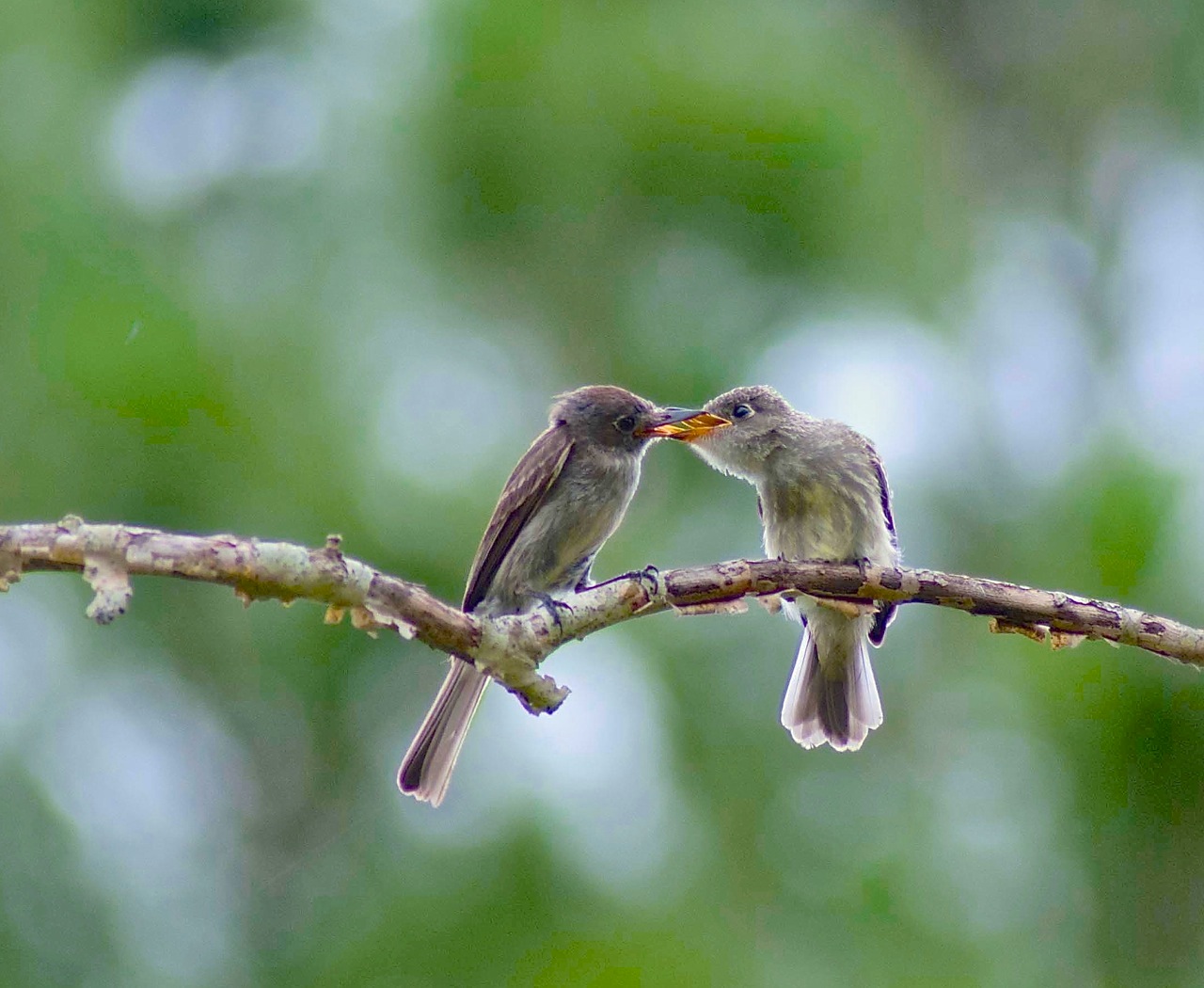
CUBAN PEWEES
A great picture of feeding time, with the huge chick already seeming to have outgrown the parent – apart from its rather stumpy tail
CLAPPER RAIL
These shy birds are reclusive by nature and relatively hard to photograph. They tend to lurk in the undergrowth or half-hidden on water margins. If they are caught in the open, they tend to run in a somewhat cartoonish sort of way. This one was having a good dig in the mud for food.
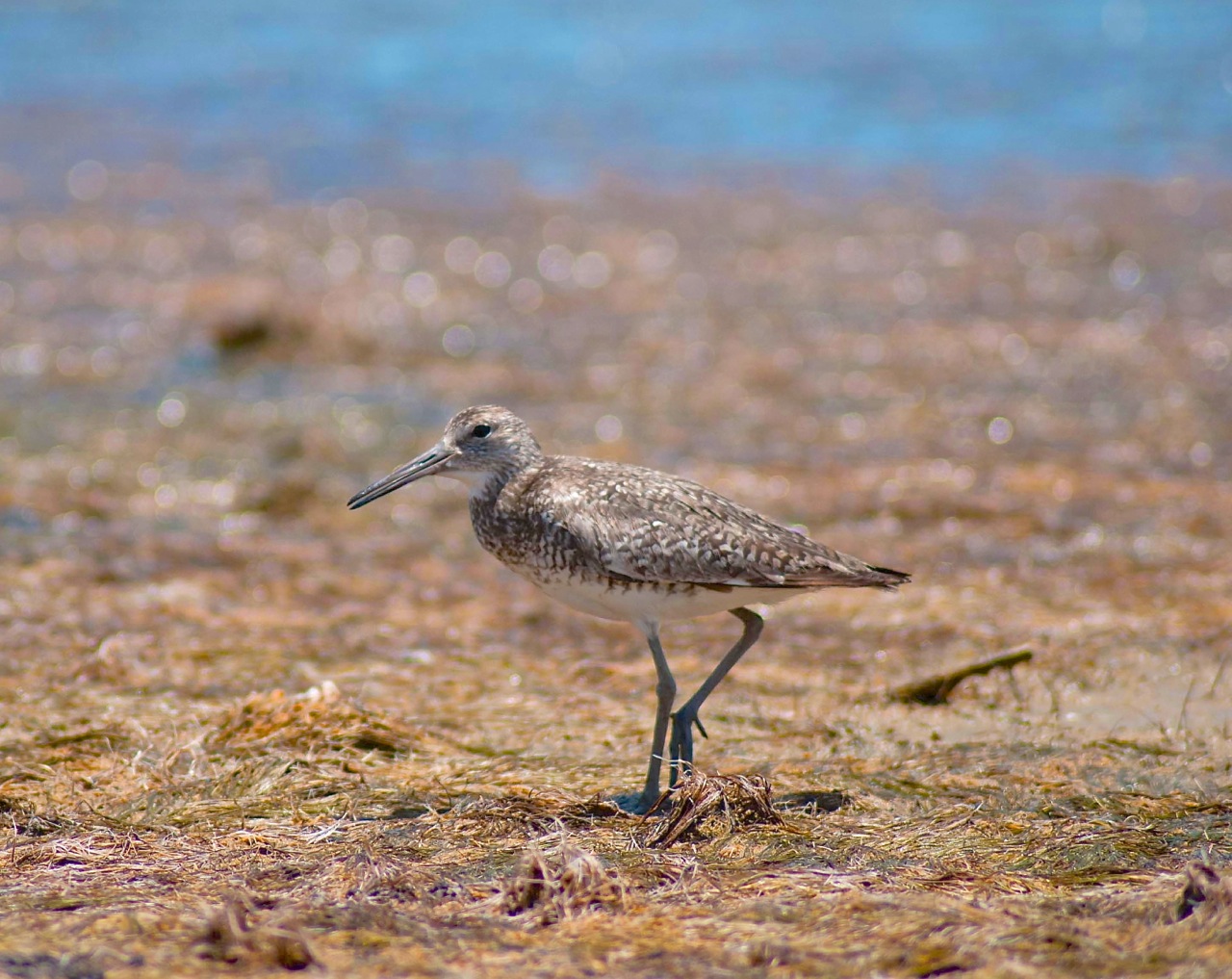
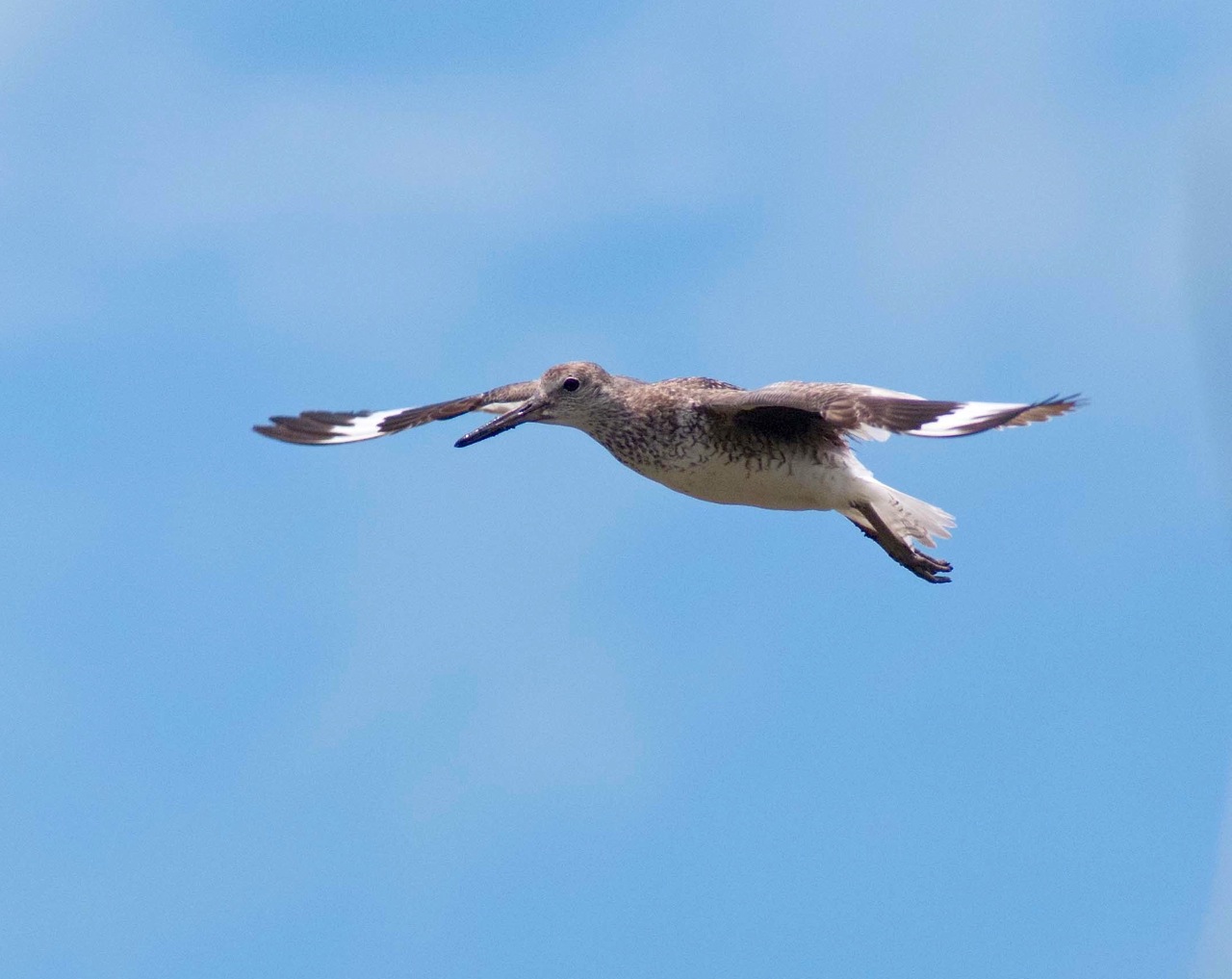
WILLET
Large birds of the shoreline and mangrove swamps, and classed with sandpipers. In flight, they have eye-catching wing stripes that Sandy has captured with a bit of camera sharp-shooting. You can see more Willets HERE
ANTILLEAN NIGHTHAWK
I was with Sandy when he took this photo during an amazing early evening feeding display of these birds. A hundred or more were swooping and jinking, making the most of an evening fly hatch. Sometimes they flew very close to our heads, make a whirring sound as they passed. Their speed and jagging flight made them very hard to take. I hardly got one in my viewfinder at all, but Sandy is an excellent shot of a different sort, so I guess aiming isn’t a problem for him…
SNOWY EGRET
I love these handsome birds, distinguishable from all other white herons and egrets (in some cases as white morphs) by their astonishing bright yellow feet. These are so vivid that they are often clearly visible when a snowy egret is standing in the water. This one was taken by the jetty at a local pond, a wonderful and secluded place to see water birds of many varieties, including rarities.
All images (except this one): Sandy Walker, with thanks
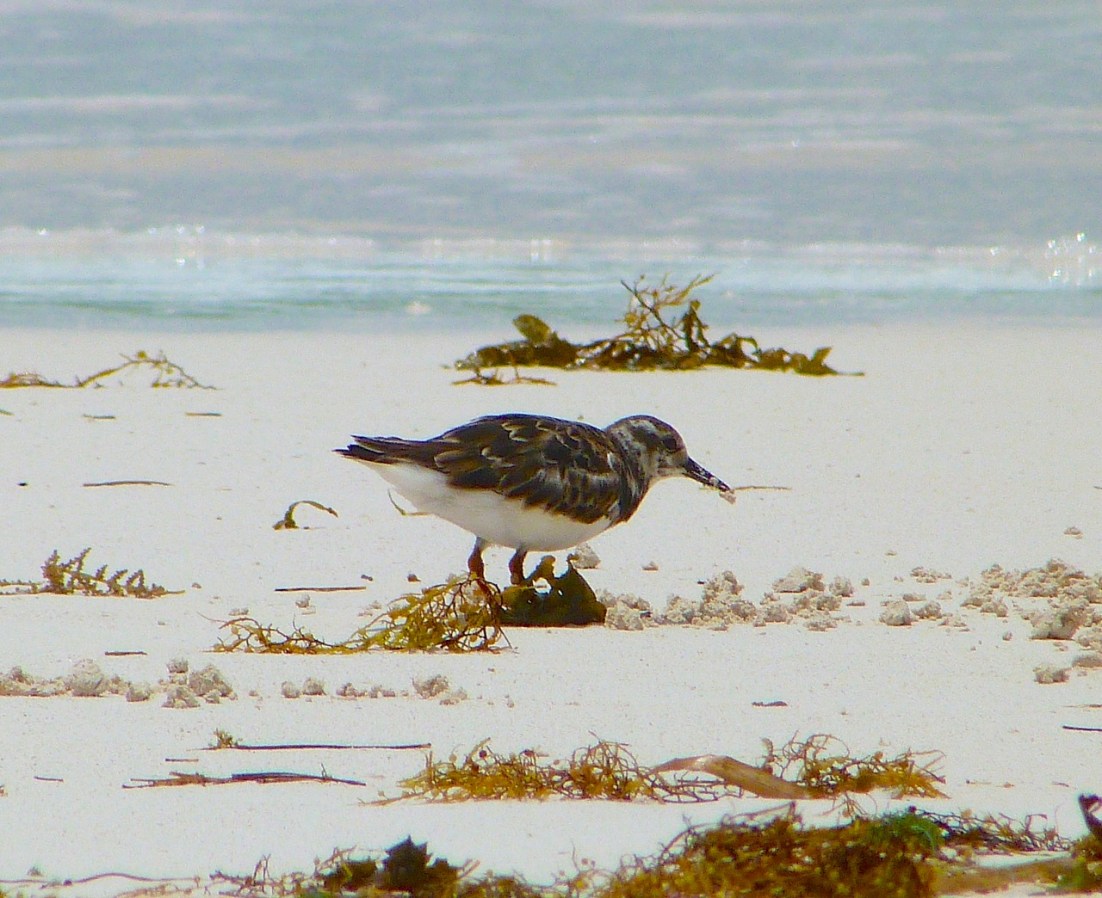
Ruddy Turnstones Arenaria interpres are well-known shore birds around the world. They used to be classified as plovers, but are now counted with sanderling. Fortunately they are distinctive enough not to be confusable with the many other species of shore bird with which they mix.
Their foraging methods are classified into 6 broad categories, though I imagine that if peckish, they may opt for all of these in the one feeding session.
Routing — rootling through piles of seaweed by flicking, ‘bulldozing’, and pecking it to expose small crustaceans or gastropod molluscs hidden underneath.
Turning stones — living up to its name name, flicking stones with its bill to uncover hidden snaily and shrimpy creatures.
Digging — using small flicks of the bill to make holes in sand or mud and then gobbling up the prey revealed.
Probing — inserting the bill right into the ground to get at concealed gastropods.
Hammering — cracking open shells using the bill as a hammer, then winkling out the occupant.
Surface pecking — short, shallow pecks to get at prey just below the surface of the sand.
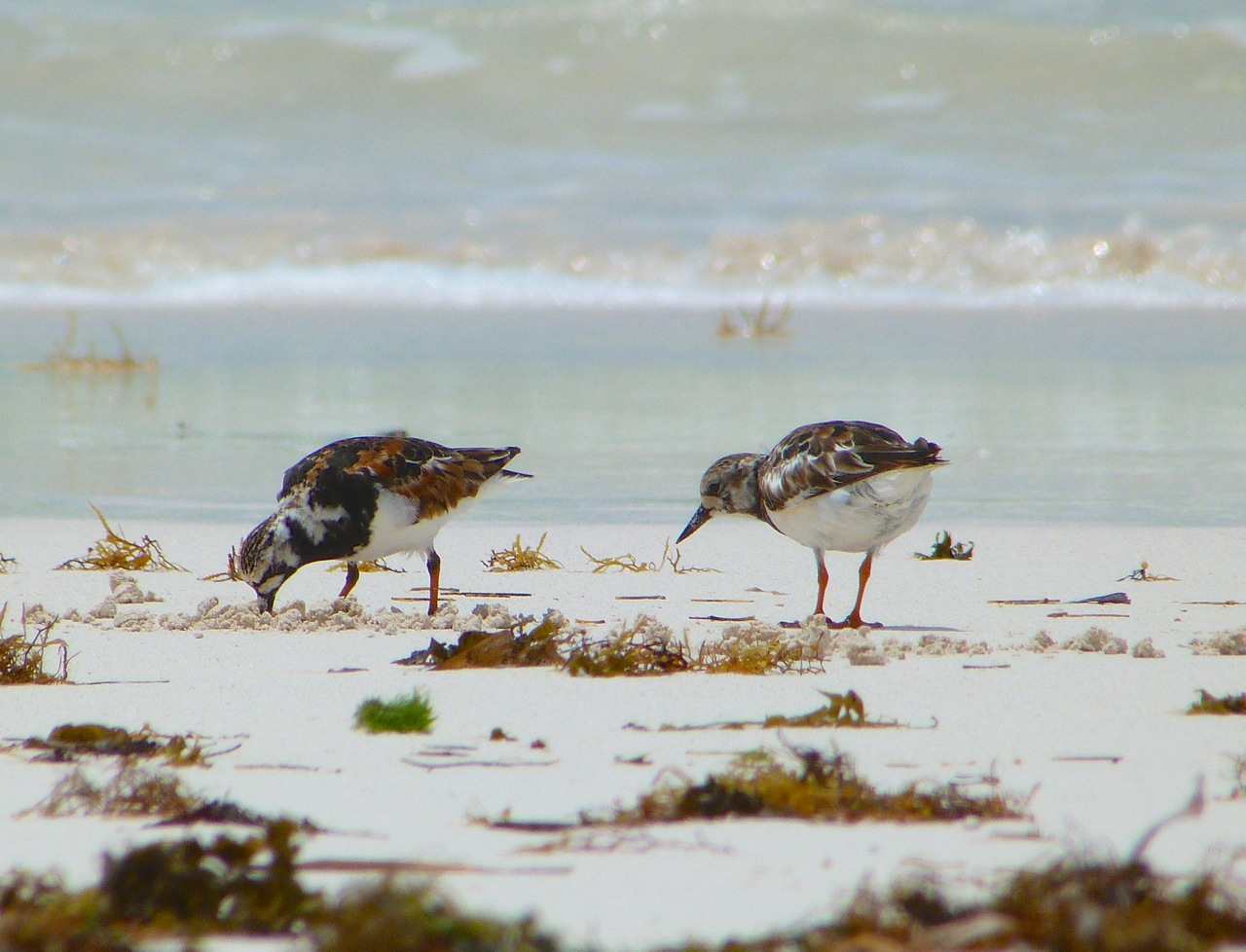
Between them, these turnstones seem to be using methods 1, 3, 4 and 6
This female bird has clearly dug down in the sand to the length of its bill
This male is digging deep…
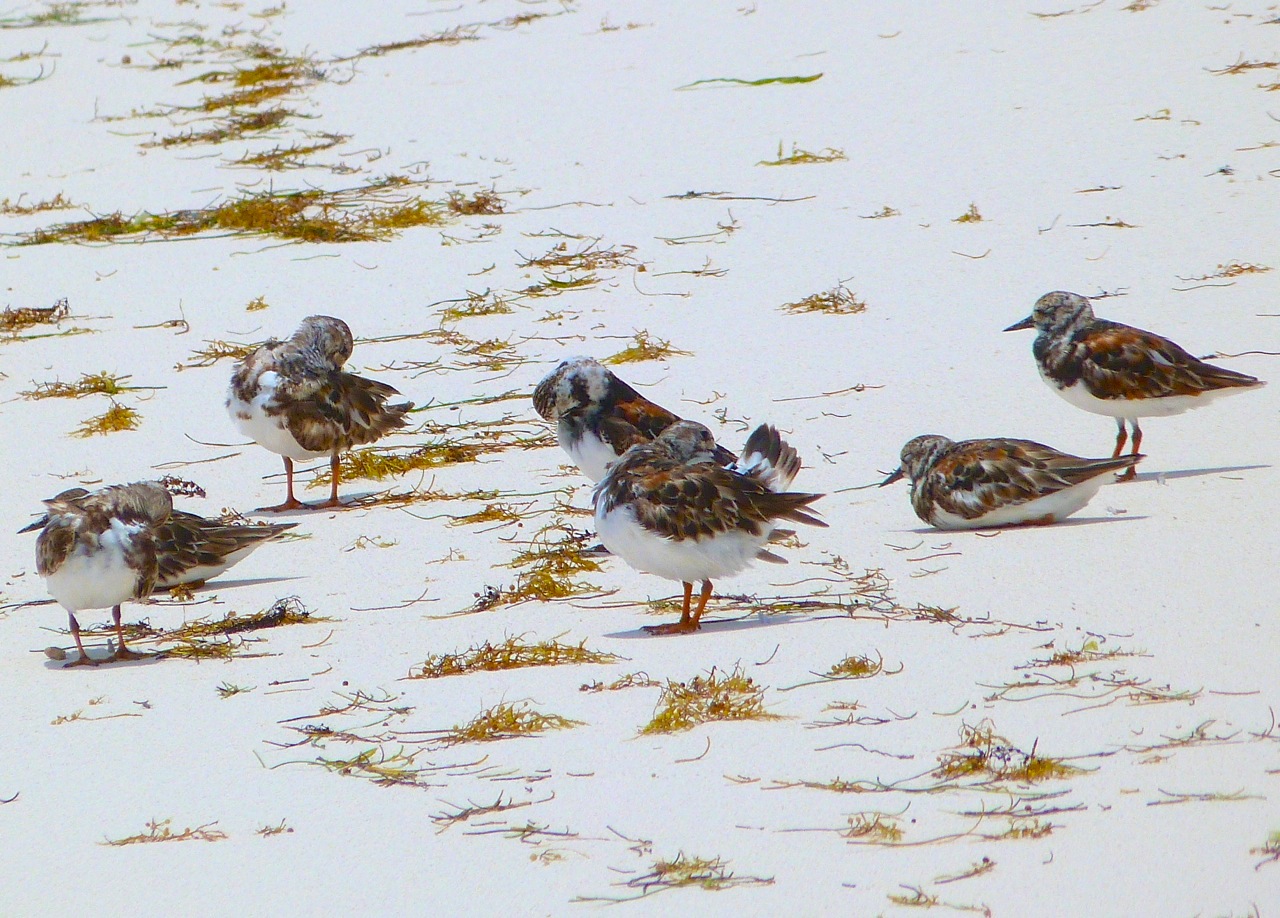
When they are not actively feeding, turnstones enjoy group preening sessions
They are also very good at just standing around having a companionable chat…
…or a post-prandial snooze…
…or just enjoying the scenery in groups…
…or simply having a peaceful paddleAll photos by RH on the Delphi Club beach (where I’ve never seen one actually turn a stone)
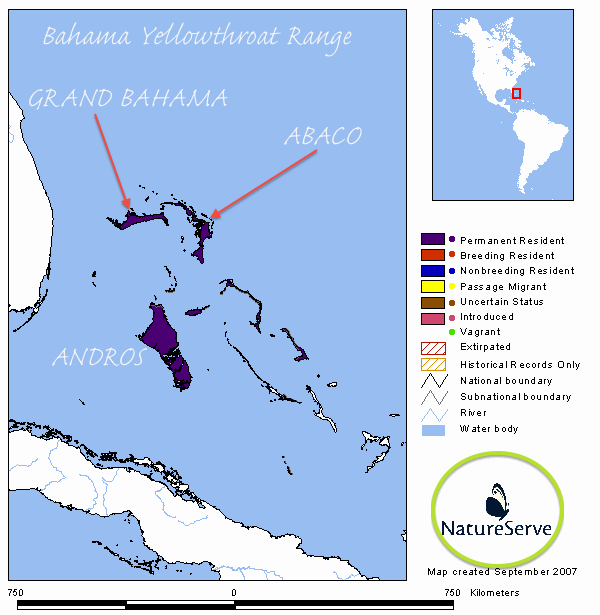
PHOTOGENIC ENDEMICS: BAHAMA YELLOWTHROATS ON ABACO
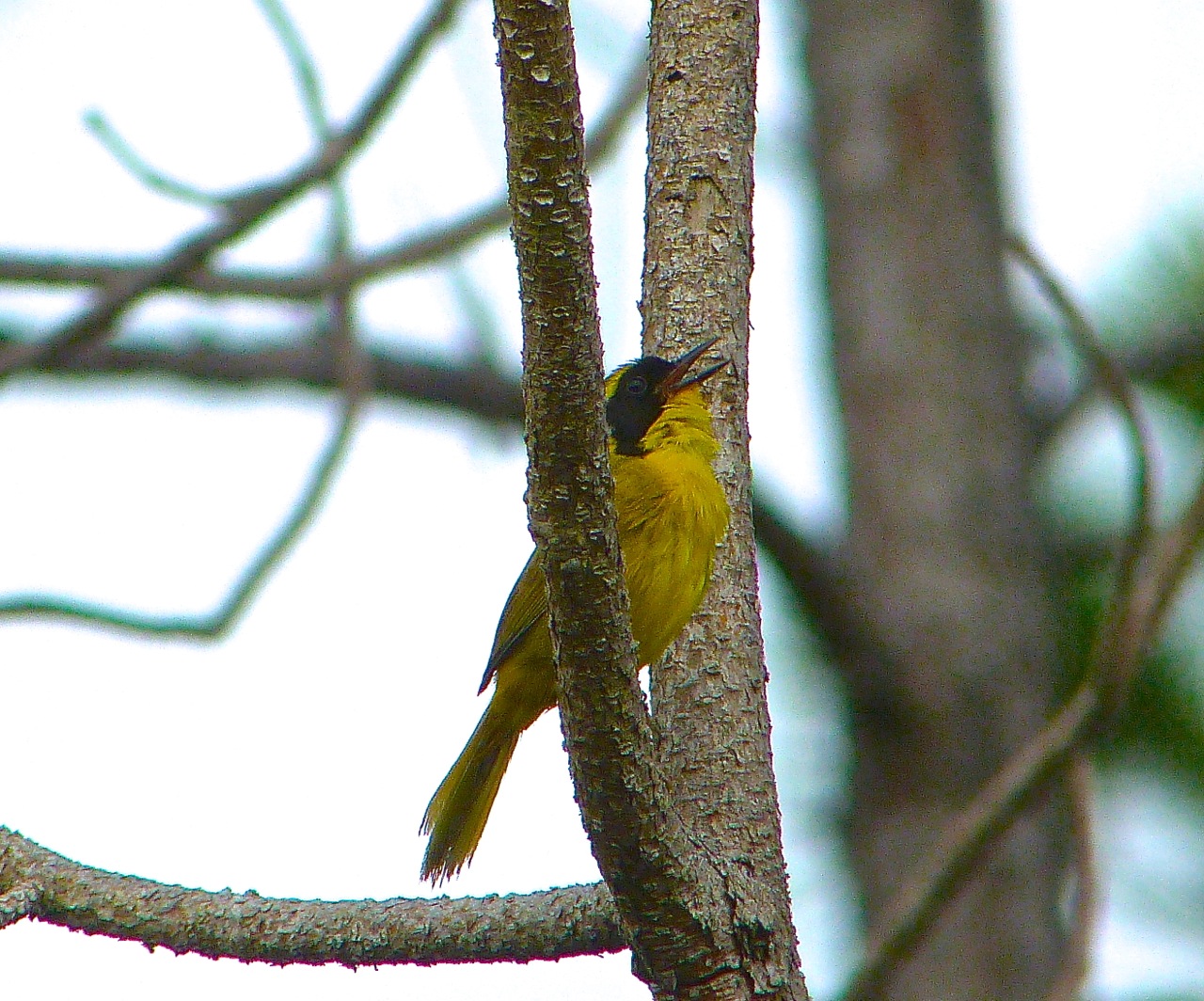
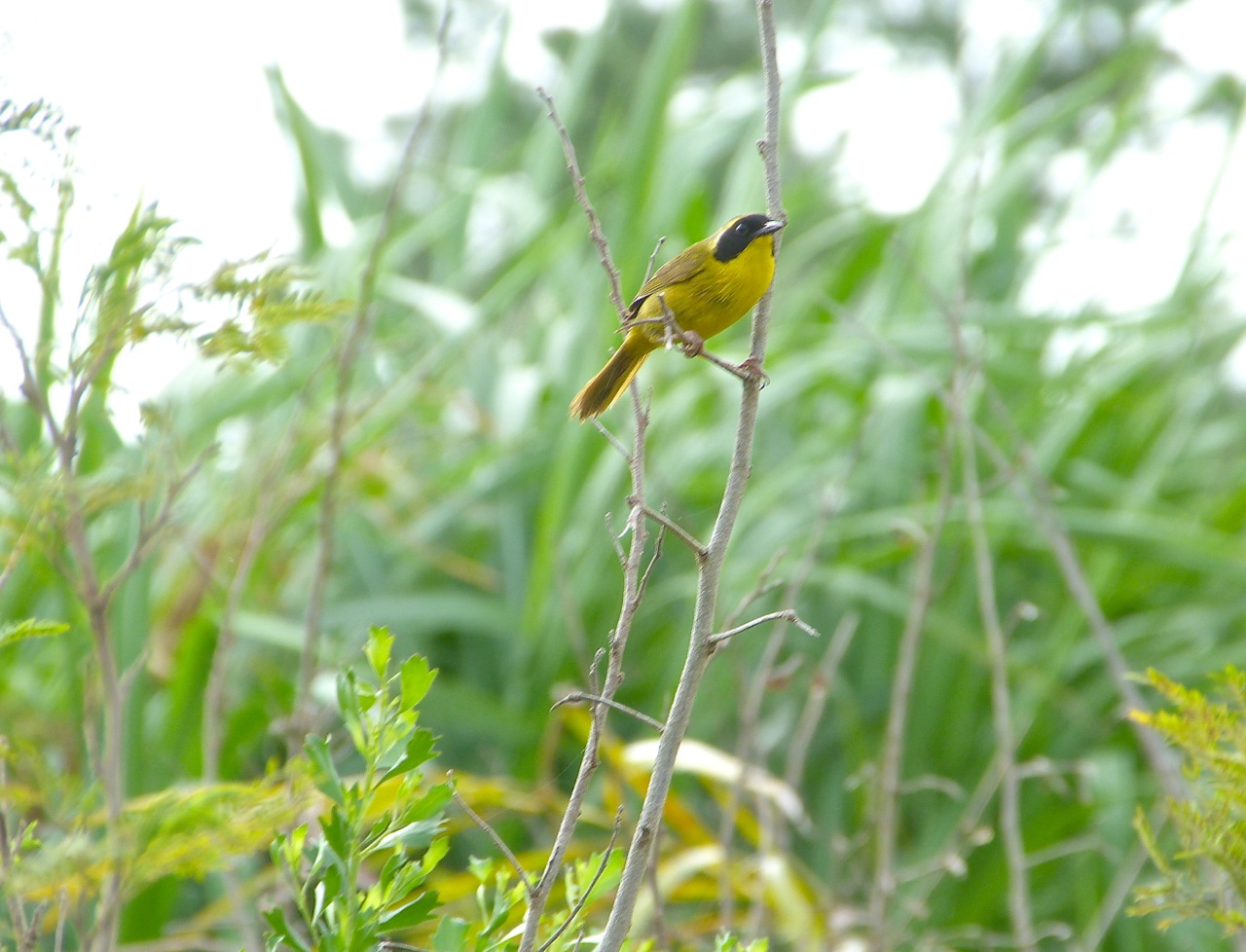
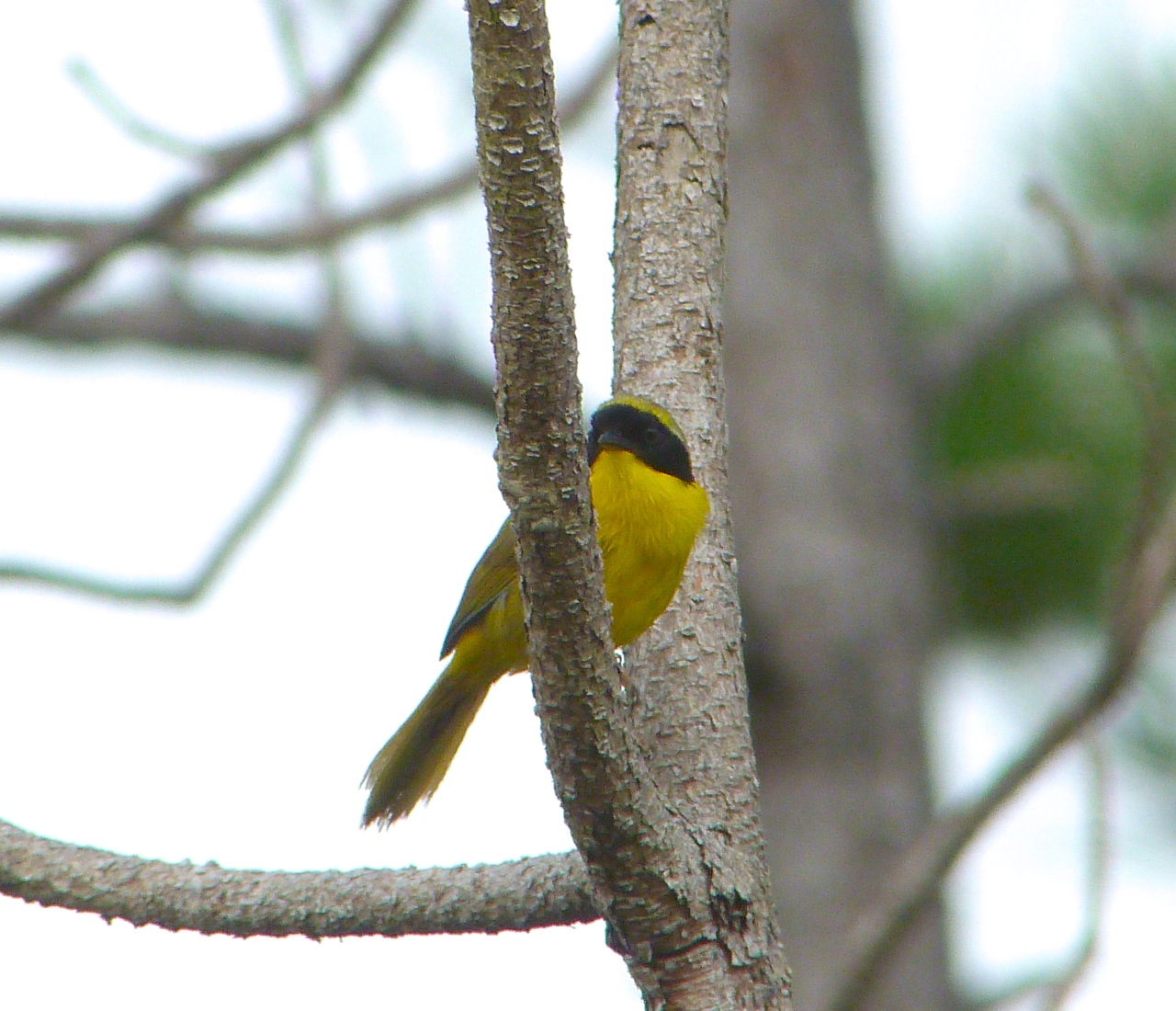
I’ve been keeping this little bird up my capacious avian-friendly sleeve for a while. In June we took a truck and headed for deep backcountry to the edge of the pine forests and beyond to see what we could find in the way of birdlife. Good choice – the answer was ‘plenty’.
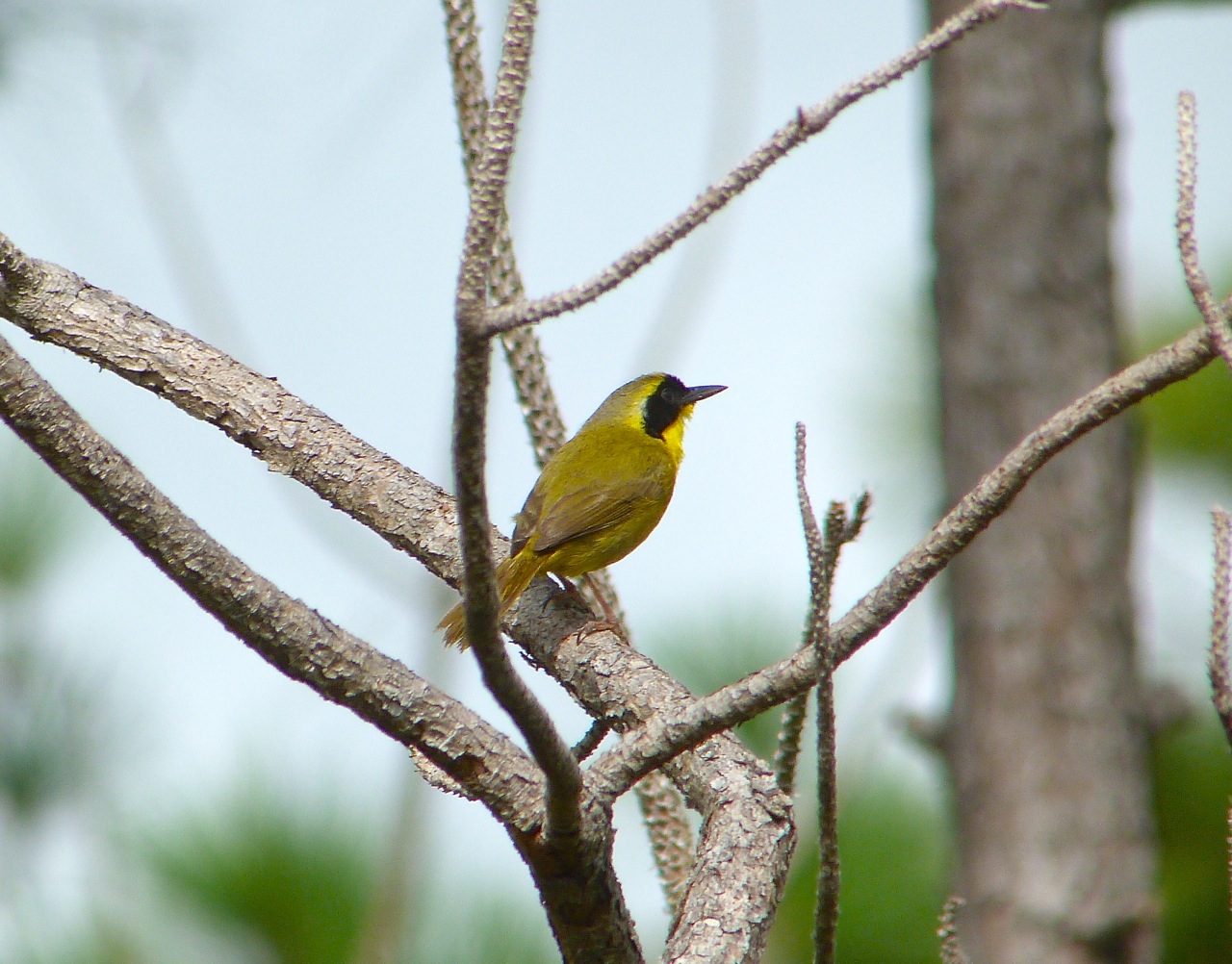
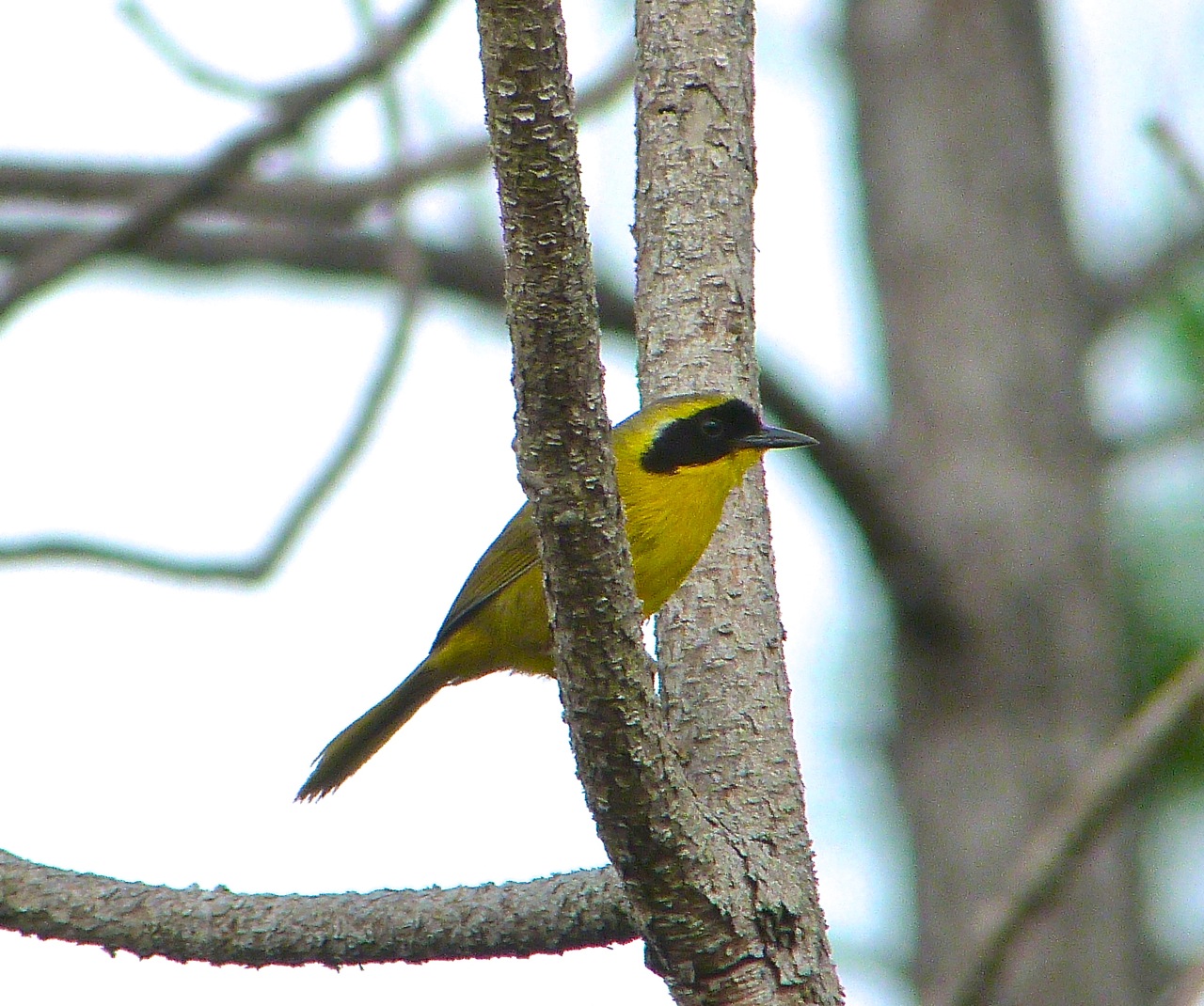
The illustrative photos are of poor quality, but rather than blame my camera (as I am only too ready to do), I plead ‘overexcitement’ in mitigation. Of the 4 endemic species on Abaco, this was the only one I’d never seen. There was a tweeting noise on the edge of an abandoned sugar cane field (above), followed by some rustling… and out fluttered this bird, crossing the track right by us and landing quite close to inspect us.
This striking bird, with its Zorro mask and bright yellow body, is an endearing mix of shy and inquisitive. Only the males have the mask – the females are less colourful, though naturally equally interesting…
Yellowthroats are responsive to pishing, and once lured from cover they may happily remain on low-to-medium height branches or on a shrub, watching you watching them.
Their song is quite easily imitated, and that may also bring them into the open – a source of immense satisfaction to the amateur (me) if it works. Here’s an example, courtesy of myiPH@NE METHOD for bird recording. It’s the call at the start and the end.
The one we watched had plenty to sing about – it’s just a shame that my images are so poor, because in some you can see its tiny tongue. A bit too blurry, though, even by my own moderate standards for inclusion.
At a formative stage of this blog, I did a short post about the endemic Bahama Yellowthroat and its comparisons with the similar and better-known Common Yellowthroat, which is also found in the Bahamas. You can read itHERE. There’s a female shown, a video, and an unacknowledged debt to Wiki or similar source, I can’t help but notice…
**ANTILLEAN NIGHTHAWKS AND THE ‘BOOMING DISPLAY’
“On summer evenings, keep an eye and an ear out for the male Nighthawk’s dramatic “booming” display flight. Flying at a height slightly above the treetops, he abruptly dives for the ground. As he peels out of his dive (sometimes just a few meters from the ground) he flexes his wings downward, and the air rushing across his wingtips makes a deep booming or whooshing sound, as if a racecar has just passed by. The dives may be directed at females, territorial intruders, and even people.” We found ourselves right in the middle of one of these astounding displays, with maybe 100 birds behaving exactly as described, often whooshing within inches of our heads. I’ll post some more about it in due course. Credits: Philip Simmons; All About Birds (Cornell Lab)
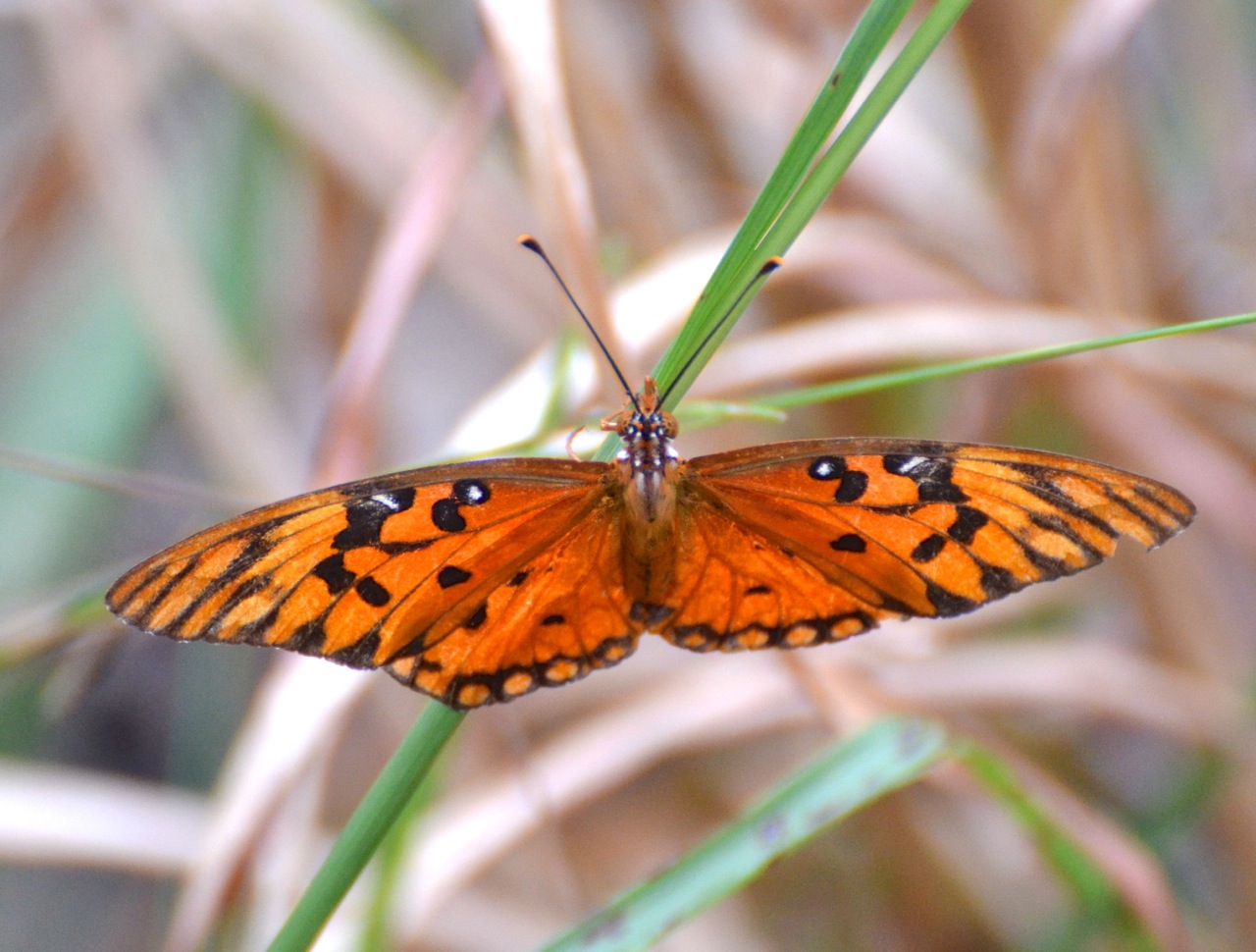
BUTTERFLIES ON ABACO, BAHAMAS (2) GULF FRITILLARIES
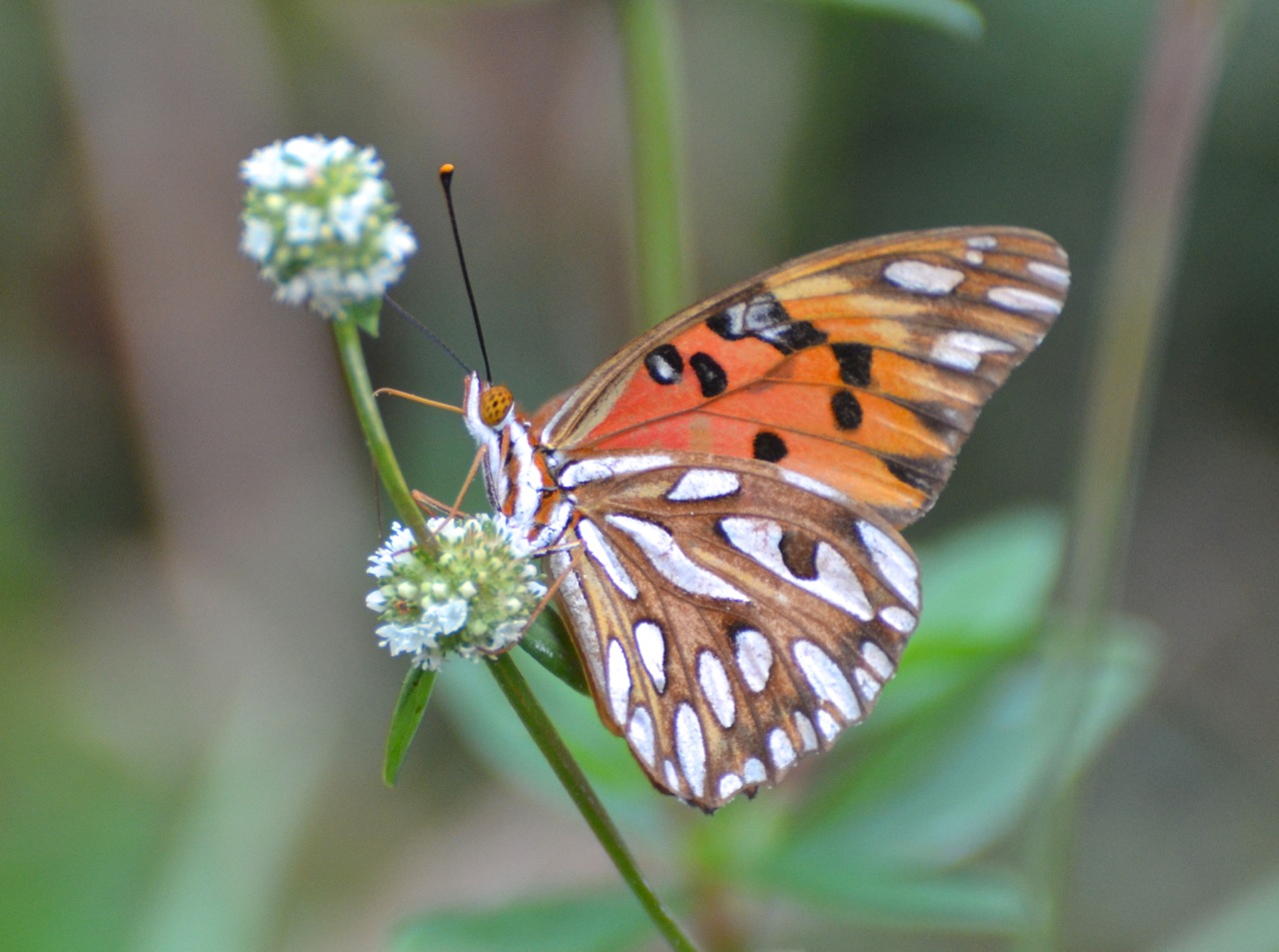
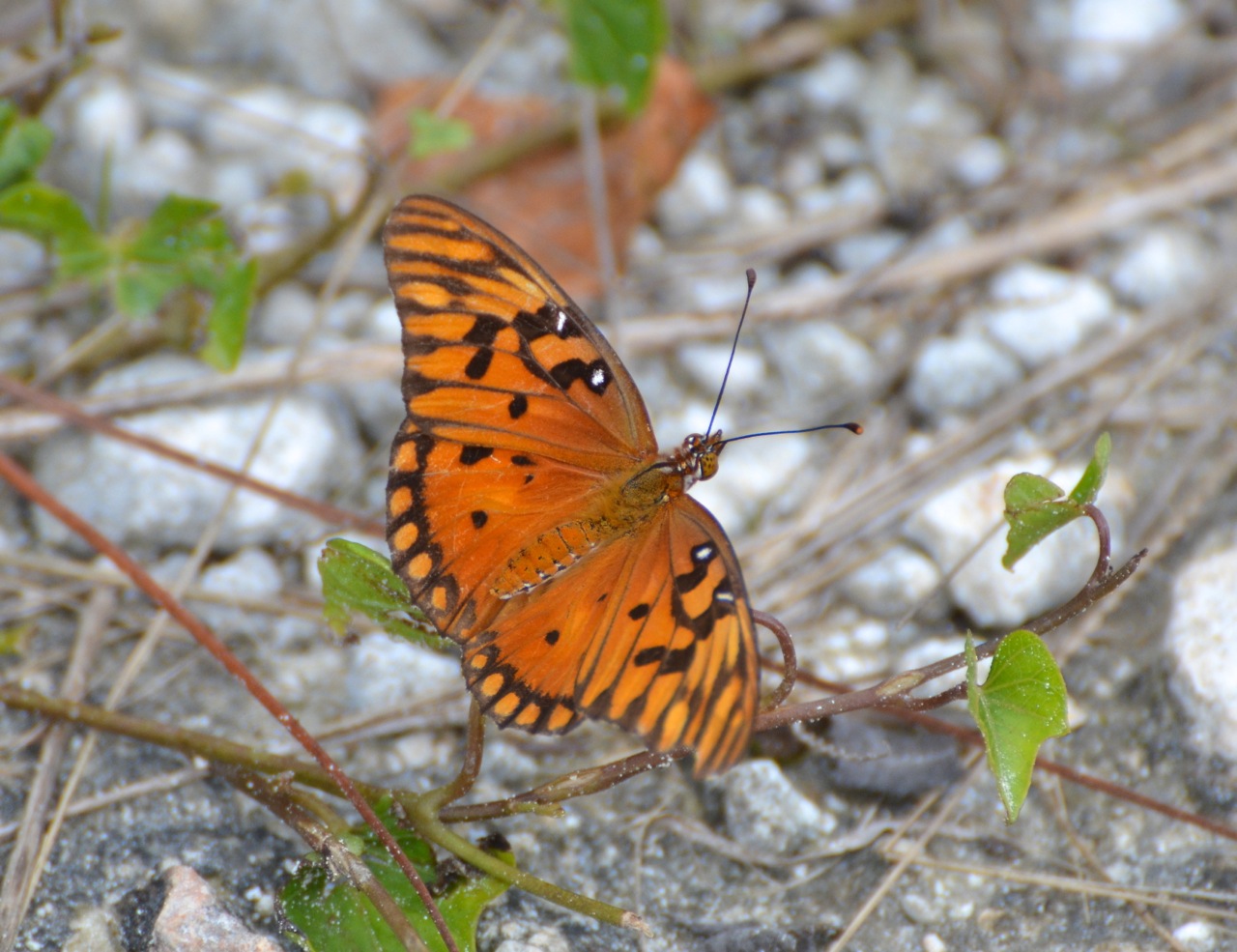
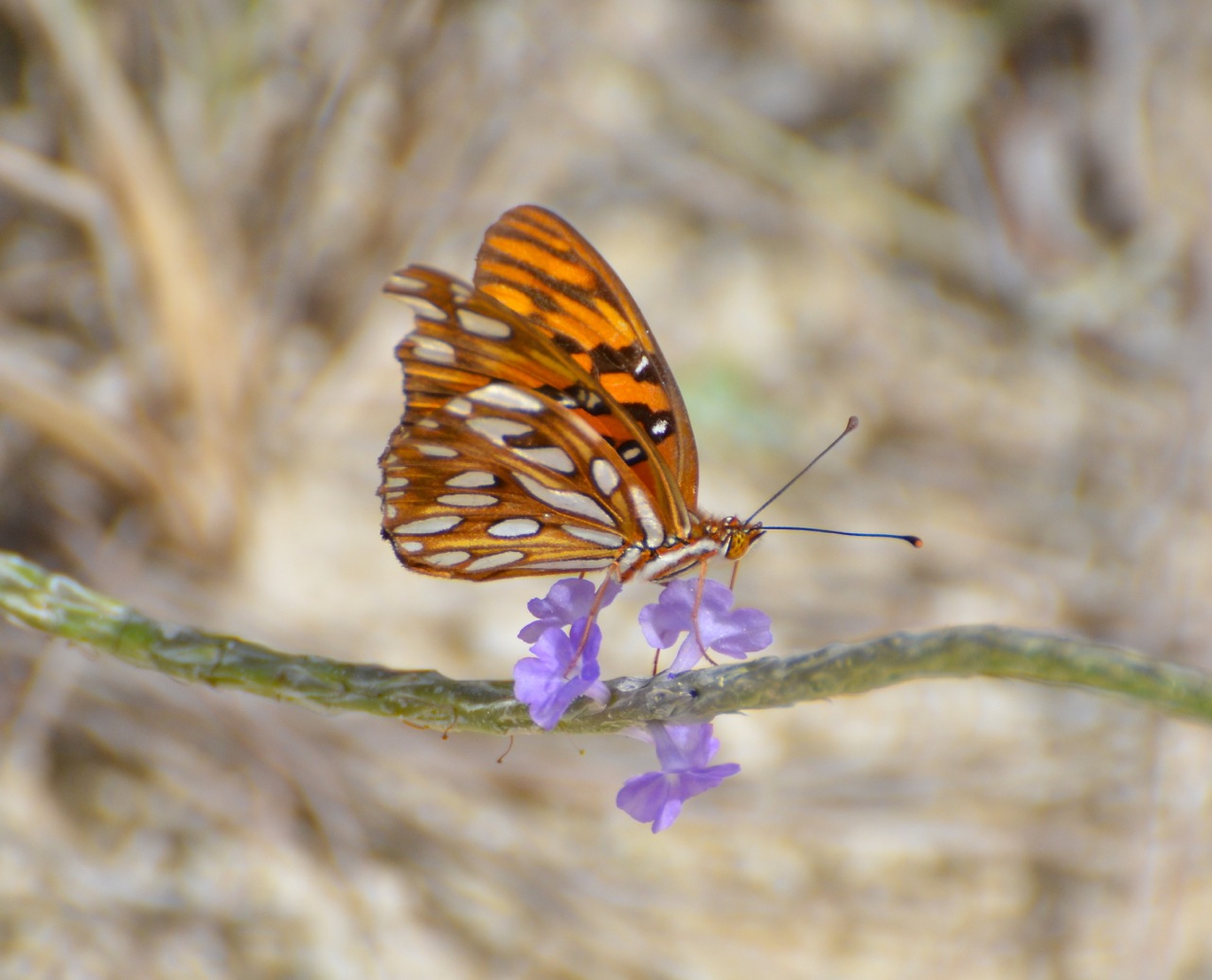
The GULF FRITILLARY Agraulis vanillae is a so-called ‘longwing’ butterfly species found from South America to central North America, named for its migration route over the Gulf of Mexico.
The black and orange patterns of this butterfly are a reminder to predators of the toxicidity of its stripy caterpillar and birds tend to leave them alone. Just in case. The markings are also similar to other butterflies that are poisonous – for example the Monarch. Tip of the hat to Wiki for the information that “this species belongs to the ‘orange’Batesian mimicrycomplex”. Me neither! It is where an innocuous species resembles a noxious one in order to discourage predators without going to the bother of actually developing its own ‘on-board’ toxins.
The gulf fritillary is common on Abaco, as elsewhere in the Bahamas. I particularly fond of the photo below, in which the whole feeding apparatus can be seen. I haven’t done my homework, I’m afraid. If anyone wants to provide the technical terms (mouth? proboscis? tongue-thing?), that would be welcome. Please use the comment box to spread enlightenment.
Credits: all amazing photos by Charlie Skinner, except header image Wiki – to which credit also for the graphic and some info in particular ‘Batesian Mimicry complex’, which is definitely one to drop lightly into conversation…
LAND CRABS: THE ILLUSTRATED ‘WHAT, WHERE, HOW, & WHY’
The Loxahatchee River District organisation produces excellent informative posters on wildlife and environmental themes. With their approval, I have a dedicated page for these: CLICKLOXAHATCHEE. You will find posters about Bonefish, Tarpon, Lionfish, Nassau Grouper, Spiny Lobster, Coral Reefs, Elkhorn Coral, and Seagrasses. I’d be surprised if each one didn’t contain at least one interesting factual nugget that you didn’t know before. The range of subjects is gradually being expanded and one of the latest concerns the Land Crab. Click the poster twice to enlarge it and make it legible.
My factoid nugget from this poster is that juvenile bonefish predate on larval crabs. I suppose it’s obvious, but I hadn’t thought about it. From the fisherman’s angle a very good reason to protect, and ensure the proliferation of, adult land crabs!
For photos of these crabs and a short video demo of how they use their claws, here are links to two previous posts about them
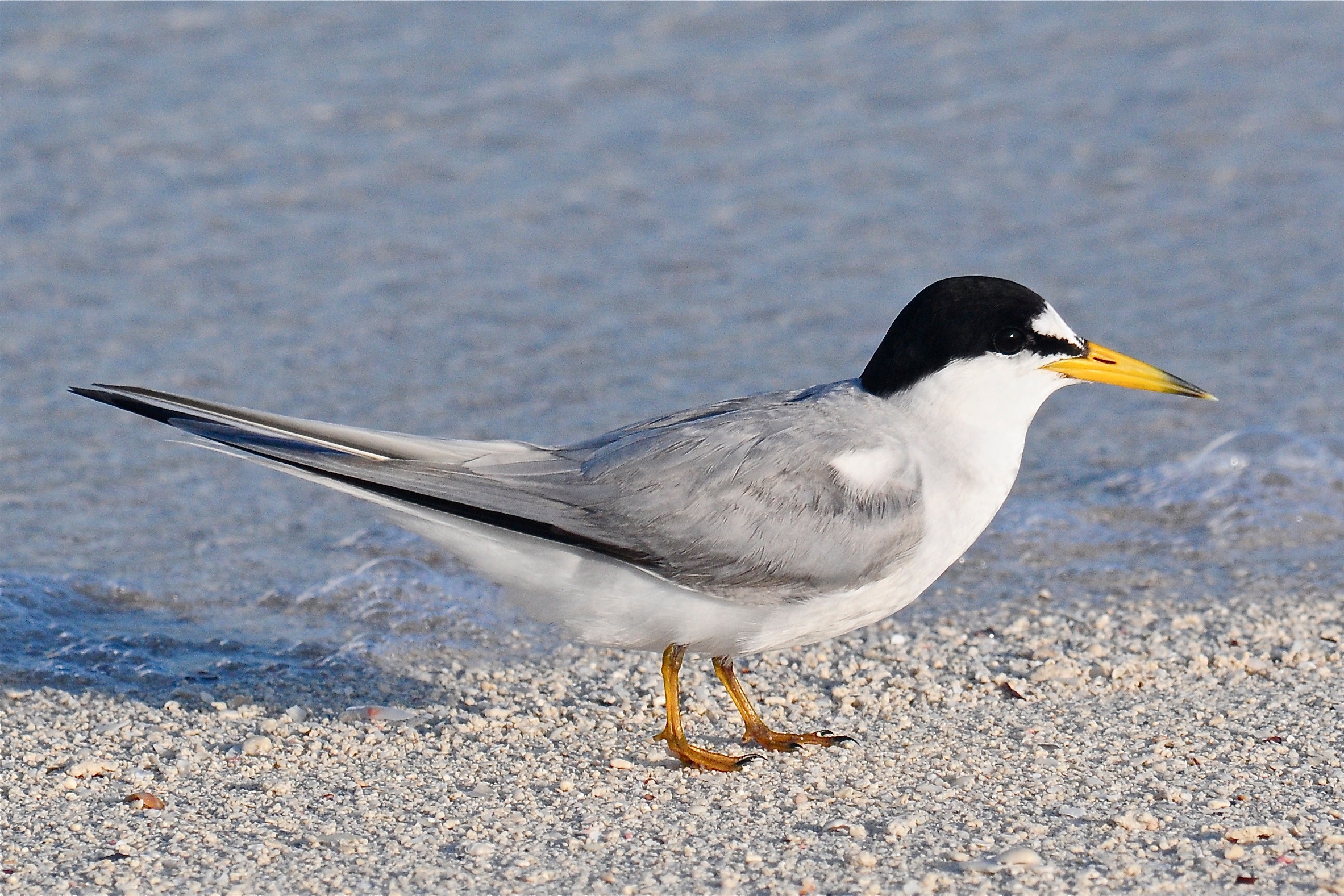
This is the second of three vaguely planned posts about these delightful shore birds. They aren’t rare but they are approachable and fun to watch. During the nesting and hatching season, there may even be some gorgeous chicks on a beach near you (a phrase I never thought I’d find myself using). PART ONE identified the typical male and female adults found on the Delphi beach almost any day.
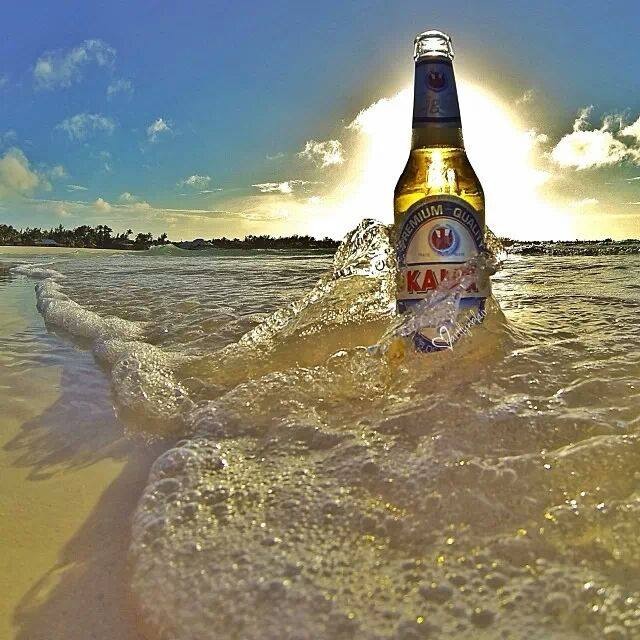
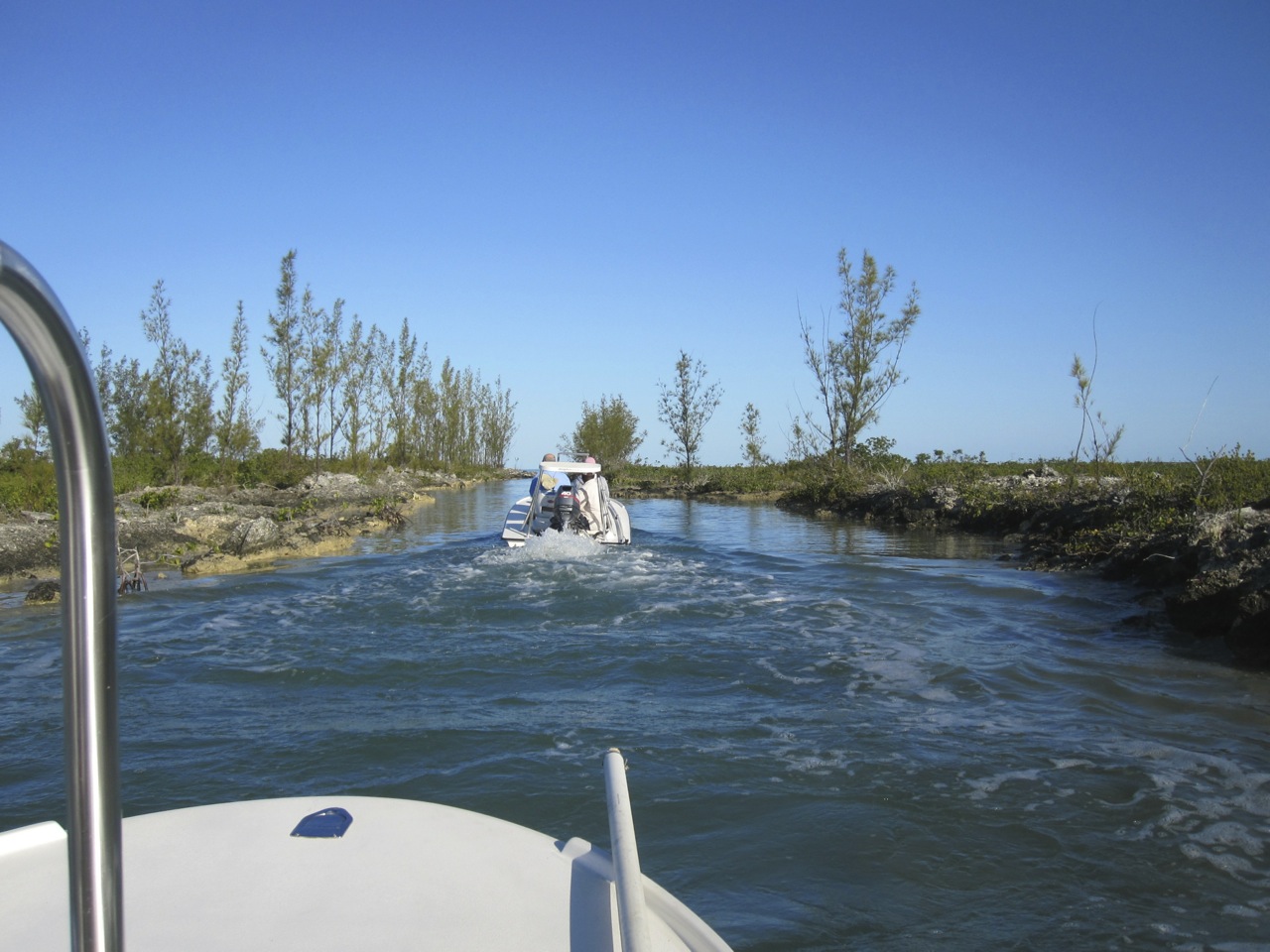
This post is about nest protection. Not the ingenious methods of the birds themselves, that will come next time. This is a story of protection by humans. The photograph above shows Nettie’s Point, one of the launching points for bonefishing skiffs being taken out to the Marls, a vast area of sea, low sand banks and mangroves where the fish are found. You hope. The skiffs gain access to open sea via an artificial channel carved out of rock. The early morning trip along it is one of the most exciting part of a fisherman’s day, as he or she sets out with a clean score sheet, a rod and a box of flies. And a cooler box with some food and maybe a Kalik beer or three.
This June, a pair of plovers decided to locate their nesting ‘scrape’ right in the middle of the cleared area where the trucks normally turn. This was by no means a wise home-planning decision, and they might well have found themselves being promptly relocated. Or (worst case scenario) ending up under a large Toyota. But not a bit of it. Instead, these small birds were looked after by the guides like this:
A makeshift castle was built all round the nest to protect it from any inadvertent truck-related tragedies. Meanwhile the male plover stood guard outside the castle, amiably watching the human activities.
I kept my distance but in fact he was quite unperturbed, perhaps sensing that we were not a threat. He still kept a beady eye on the proceedings, though.
Meanwhile, what of the wooden enclosure itself? At first glance, there didn’t look much to report. However, if you look in the centre of the picture, you’ll see the female peeping out from the nest.
I very slowly moved nearer, prepared to stop if the male became agitated, or if the female shifted her position. Both seemed quite relaxed, so I took a couple of shots and walked away to leave the birds in peace. Then I went fishing.
As a postscript, Nettie’s Point is the location of a remarkable geographical phenomenon, possibly the result of the cutting of the channel. Along one part of the cut, for about 30 feet, the water level sinks alarming in the middle, while remaining normal at each side. Then it levels out again. This remarkable mid-stream aquatic depression is quite disconcerting to motor through on a skiff, though eventually one gets used to it. (Note: not every fact in this post is 100% true. If you have some salt handy, take a pinch)




















































 ROLLING HARBOUR ABACO
You must be logged in to post a comment.