ABACO HUMMINGBIRDS: BAHAMA WOODSTAR & CUBAN EMERALD SIGHTINGS MAP
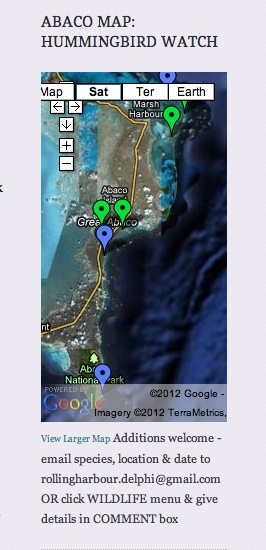
A while ago a new feature landed near the end of the right-hand sidebar. The idea was to put together an informal mapping of Woodstar and Emerald sightings on Abaco.
I put a few in as a start, hoping for more contributions, but so far it hasn’t been a popular item. Maybe it won’t work at all as a contributory feature, or maybe it just isn’t interesting if you live with the hummers. As an Abaco visitor (never having seen a hummingbird before. Except stuffed ones) they are a delight. A highlight.
It’s worth another try, and I have revised the map slightly to make the two contribution / contact methods clearer. It can’t be made more interactive than that I’m afraid. If you go to the sidebar and click on ‘View larger map’, you’ll see the data in more detail.
The map might even test the theory that Woodstars are scarce where Emeralds are numerous.
If you’d like to add to the mapping, I just need the type of hummer; the location in reasonable detail so I can stick a pin in the map; month / year (e.g. 03/12) and I will do the rest…
At an early stage of this blog I set out one of its aims – to help answer the question “What the heck is that small yellow bird over there…?” Since then, images have been posted. Lists and links have been given. Bird books have been reviewed. Every little prompt with ID helps the interested amateur (e.g. rh) and not just with the little yellow birds… I have seen all these birds at or very close to Delphi except the common yellowthroat (which I may well have seen but not “seen” as in recognised); and the red-tailed hawk, which we have spotted in the National Park (seeTO THE LIGHTHOUSE , a rugged (ha!) account of the frankly unnerving trip through the National Park to Hole-in-the-Wall Lighthouse)
This might be entertaining. Possibly. I’ve stumbled into a way to make and embed a customisable Abaco map. The bright idea is to record sightings of hummingbirds on the main island and the Cays – both Cuban Emeralds and especiallyBahama Woodstars. See SIDEBAR, right-hand side, down at the bottom for the map, which is enlargeable and moveable.
Data entry I am the only person who can do this, because I had to make the map using my own G**gle account. So if you’ve got sightings to add, that would be excellent. The most helpful thing would be to add a comment to this page or else to email me at rollingharbour.delphi@gmail.com and I’ll do the pin-sticking.
A useful format would be‘BW (or CE) – Location (as precisely as possible, for sticking in the pin) – Date (MM/YY) – Initials – Comment (if any)’
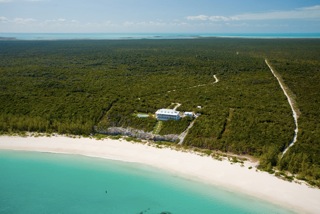
This very pleasant walk somehow seems more satisfactory taken clockwise, turning left at the front gateway and wandering along the guest drive. The straight service drive is less interesting and feels less ‘in the coppice’. The distance is about 2 miles. You can walk the circuit briskly in about half an hour. The birds will see you, but you won’t see them… So preferably take it easy. Here is a fantastic aerial view of the drives (courtesy of DCB)
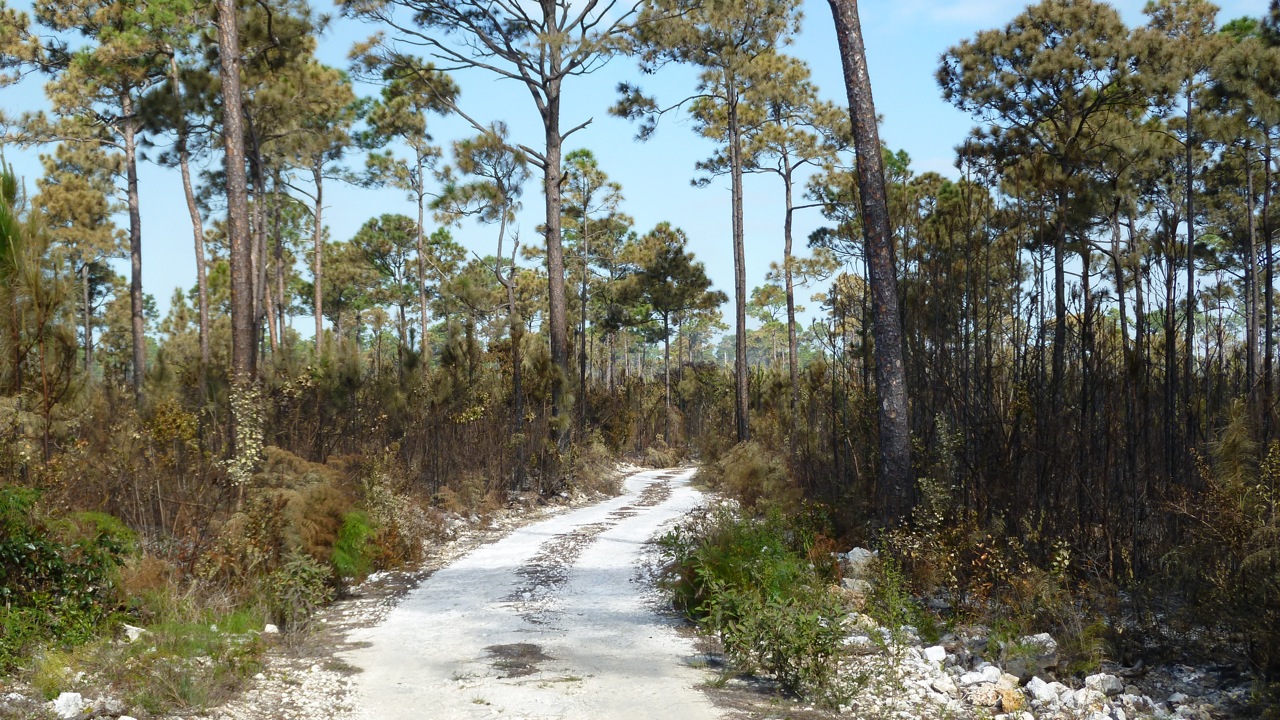
The start of the route – trees as far as the eye can see
From a birding point of view, as you walk down to the gateway, keep an eye out on both sides. There are plenty of birds in the bushes and trees, though they are not always easy to see. You might see a western spindalis, bananaquits, black-faced grassquits, warblers, northern parulas, loggerhead kingbirds, vireos, cuban emerald hummingbirds or a bahama woodstar if you are lucky, amongst many others. When you get to the main drives, have a look straight ahead into the coppice – in fact anywhere along the guest drive is worth pausing to investigate.
This cuban emerald was just opposite the drive gateway (credit Xeno-canto.org)
The gumbo limbo trees are very popular with many birds, including the Abaco Parrots, so it’s good to check them out as you pass by (and if you have unfortunately touched a poison-wood tree, they provide the antidote – conveniently the two trees tend to grow next to each other). Here are a couple of Thick-billed Vireos proving the point. And their song, which you will hear a lot around the Club itself.(credit Xeno-canto.org)
Hairy Woodpeckers seem to favour dead trees for drilling practice – and perhaps for feeding on the sort of bugs attracted to dead wood. Here’s what they sound like (a call and response with 2 birds) (credit Xeno-canto.org)
There are plenty of small birds all along the way, some more vivid than others…Black-faced grassquit (not a warbler, as earlier suggested. Thanks CN)
Prairie Warbler
Antillean Bullfinch(not, as previously alleged, an American Redstart. Thanks CN)
If you look at the base of the trees in certain places, especially on the the left hand side of the guest drive (facing the highway), there are some small but deep holes in the limestone. If you drop a stone in, you can hear it splash in water – and the ferns growing inside them suggest a continuously moist environment.
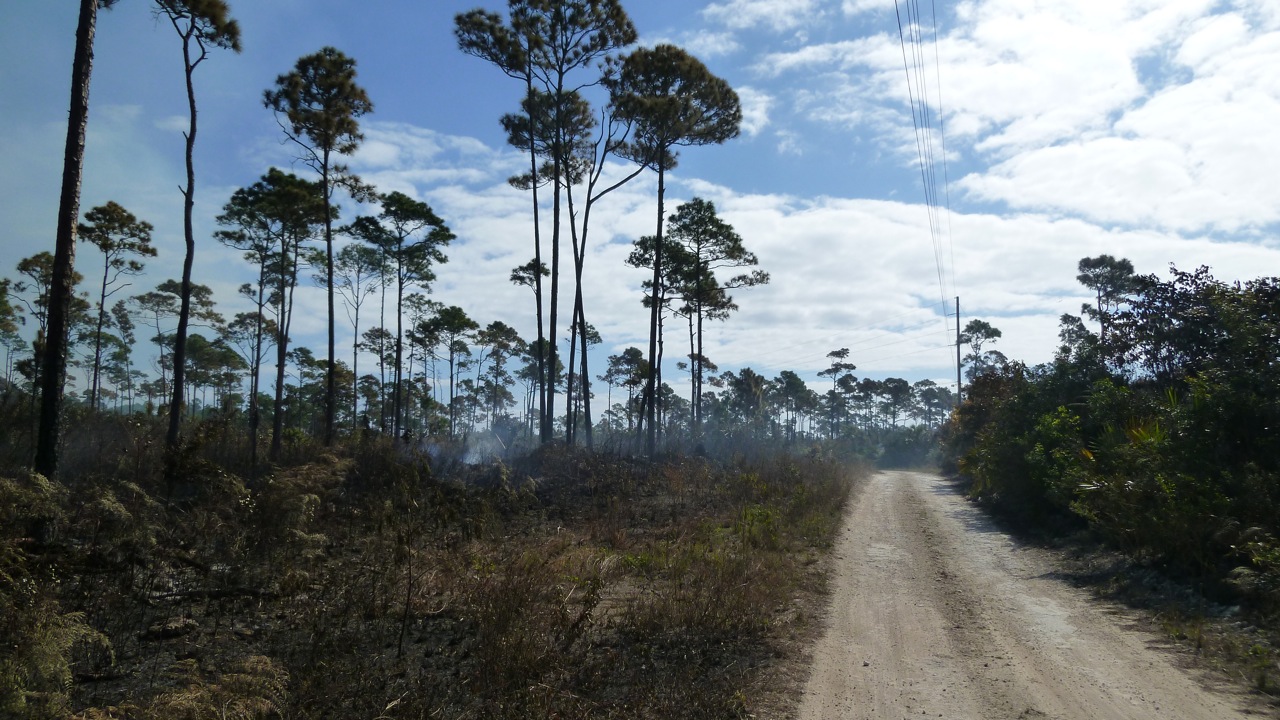
As you progress, you move from the hardwood coppice to the pine forest.This photograph was taken just as the forest fires in March were petering out. The theory was that the fires that raged through the pine forest would stop where the coppice began, and not sweep on to engulf Delphi… and so this photo shows. The thick pine forest with its flammable vegetation and undergrowth gives way here to damper and less combustible coppice-wood which has halted the progress of the flames. The pines you can see are the last few outliers of the pine forest.
Here is an example of the drive having acted as a partial firebreak.
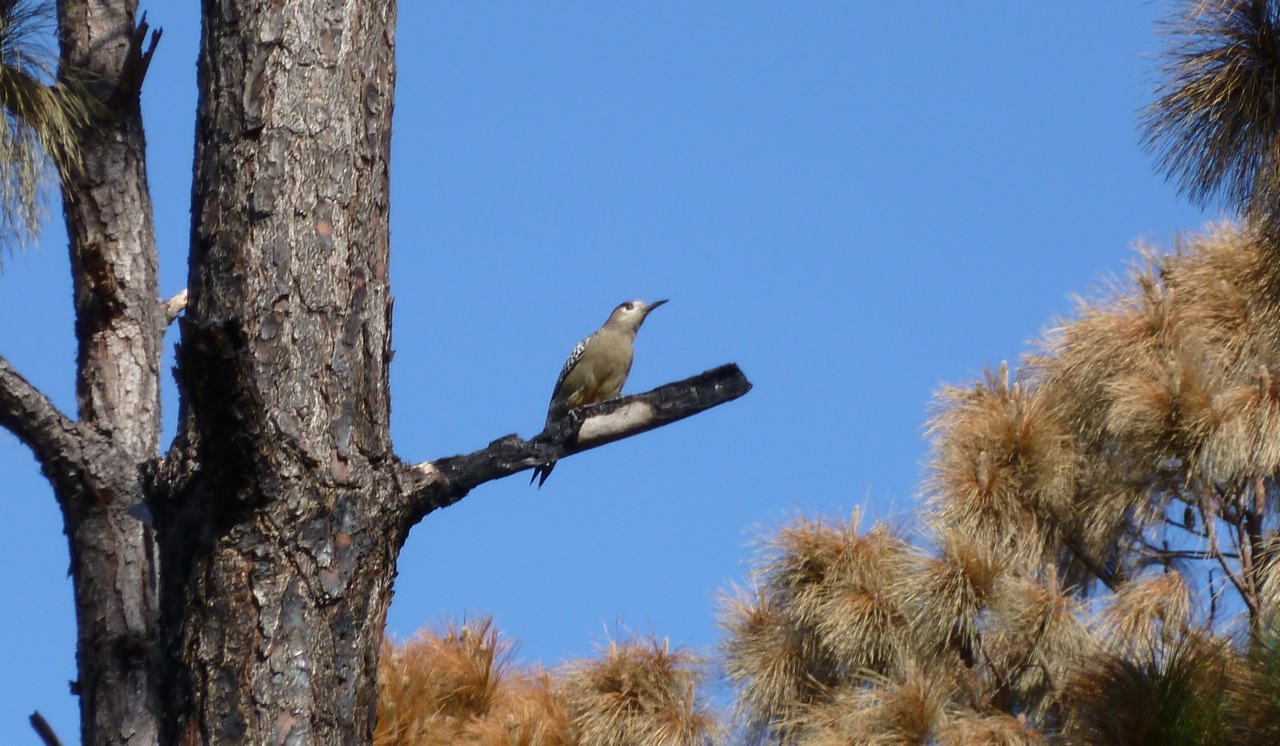
The pines, even burnt ones, are a good place to see West Indian Woodpeckers
When you reach the top of the guest drive it is worth carrying on to the highway. For a start you can admire Sandy’s gardening effort on the south side of the ‘white rock’, and maybe do some weeding. You are quite likely to see Turkey Vultures on the telegraph posts and wires, as here. You may also see Bahama Swallows on the wires, and perhaps an American Kestrel on a post.
Smooth-Billed Ani(wiki-ani)
I have seen a raucous flock of Smooth-billed Anis in this area, but it is hard to get close to them. Listen out for this unmistakable noise (credit Xeno-canto.org)
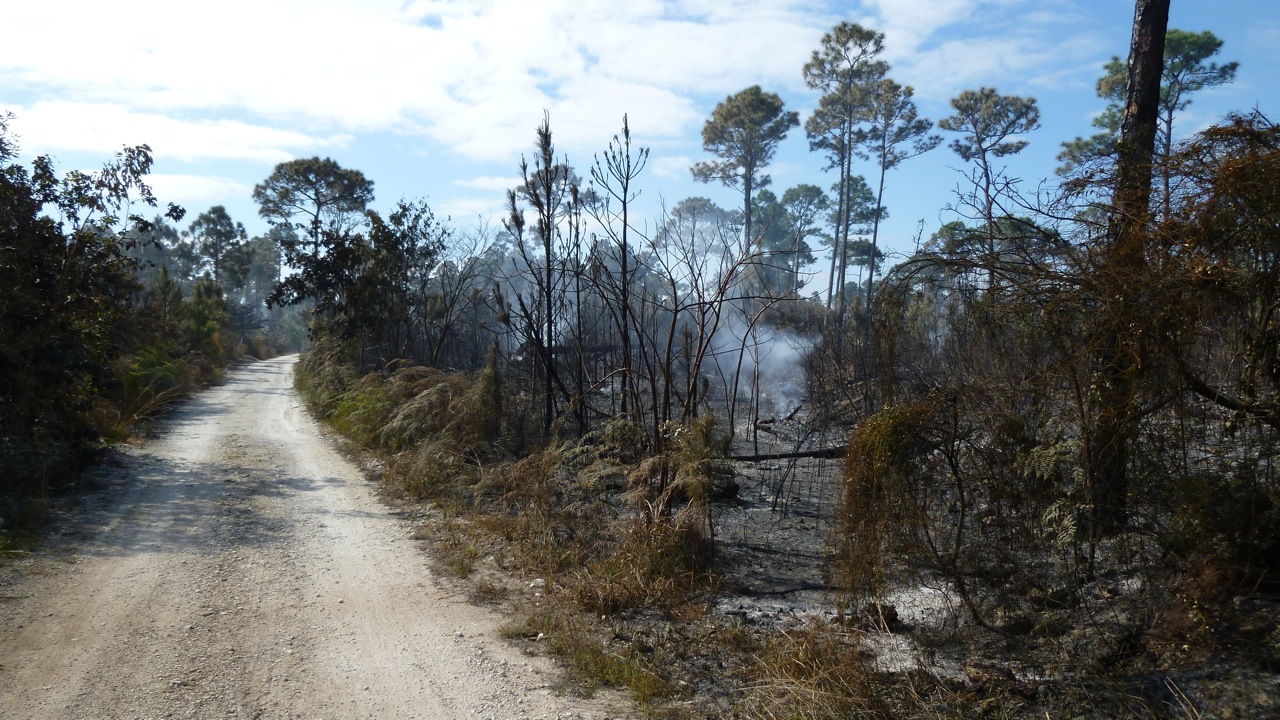
Returning from the road to the fork, to your right is the way you have come – seen here as the fires burnt out. There had been thick, indeed impenetrable, bright green undergrowth all along only 3 or 4 days earlier.
To the left is the service drive and your route home
Because this route is more open, there seem to be fewer birds. Again, you may see kestrels on the posts. Halfway along we heard the loud and very melodious singing of a Northern Mockingbird some distance away. CLICK on image (as you can with all, or most, of these photos) and you can see it singing!CLICK BUTTON to hear song of a Northern Mockingbird (credit http://www.bird-friends.com)
On either drive you will see butterflies. They seem to like the vegetation around the piles of stone and rubble. GULF FRITILLARYAgraulis vanillae
It is also worth looking out on either drive for epiphytes, or air-plants, growing on their host trees. They are so-called because unlike say, mistletoe, they are non-parasitic and do not feed off their hosts.
And so back to Delphi, a well-earned swim… and an ice-cold Kalik in the hammock…
For another angle on the circuit walk, have a look at a proper professional-looking blog by Craig Nash, already trailed in the BLOGROLL. This link will take you specifically to his fourth Delphi post, featuring this stroll. At the risk of stitching myself up here, I should say that you’ll get plenty of seriously good photos… PEREGRINE’S BLOG 4
At last I have got round to the hummingbirds. It’s quite simple. There are only two species of hummingbird on Abaco. The endemic variety is the Bahama Woodstar, one of only 3 endemic bird species on Abaco (the others are the Bahama Yellowthroat and the Bahama Swallow). The settled migrant is the Cuban Emerald.
BAHAMA WOODSTAR
Calliphlox evelynae
Male and female Bahama Woodstars (Photo Credit: Phil Brown – and VG too)
These hummingbirds are found throughout the Bahamas. They do not migrate, although are occasional vagrants in SE Florida. They breed all year round, the main season being in April. The female lays 2 elliptical white eggs, which she incubates for 15-18 days. As with humans, the female is mainly responsible for childcare while males go drinking at the nectar bar and hang out with their mates.
This BW was one of a small group at Hole-in-the-Wall. They were completely unconcerned by our presence, and we could get within arm’s length of them. Woodstars, though tame in human terms, can be aggressive and territorial. They are plentiful throughout the Bahamas except on Grand Bahama, Abaco and Andros. Significantly those are the only islands where the Cuban Emerald is found in any numbers. As with the native red and import grey squirrel problem in the UK, the migrant emerald is aggressive towards the woodstar, which is consequently rare where emeralds are abundant.
Here is their call (credit Jesse Fagan Xeno-canto)
Addition April 2012Here is a seriously cute female Woodstar photographed by Ann Capling at Bahama Palm Shores, close to Ocean Drive – a really pretty little bird
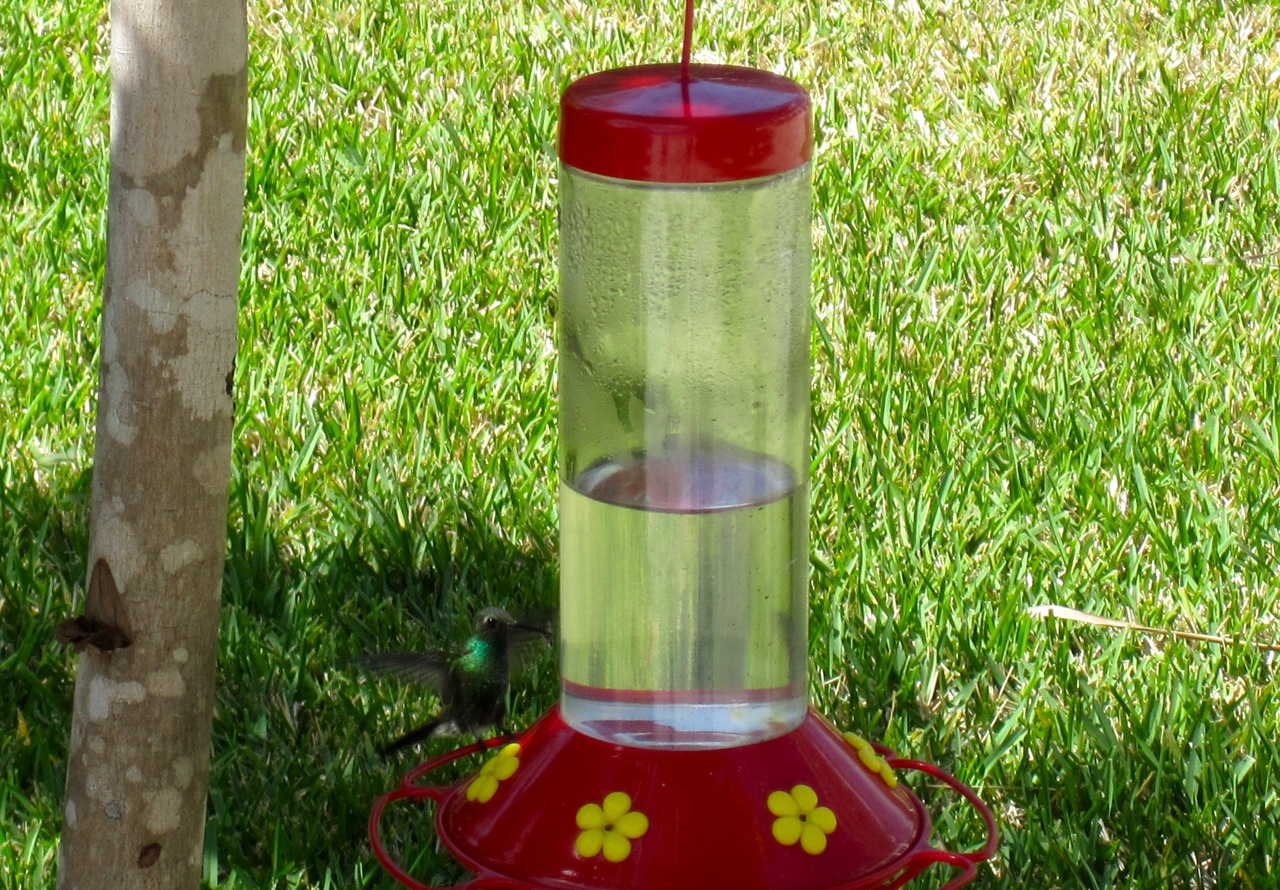
At Delphi, you’ll frequently see emeralds, especially now that feeders with sugar water have been hung up for them. The pool area is a very good place to watch them. But there are occasional woodstars to be seen as well – in the coppice on the drives for example, and even on the feeders. The vague blur to the left of the feeder below is a woodstar in the millisecond between me pointing the camera and it flying away… Don’t bother to click to enlarge it – it’s a useless photo, I know, but it is evidence even at the lowest level
CUBAN EMERALDChlorostilbon ricordii
There’s probably a great deal to be written about the emeralds, but not by me. Or not now, anyway. The little you need to know from me is already covered above, and I haven’t yet discovered whether their childcare arrangements differ significantly from the woodstars. Probably not. So I’ll put in a selection of photos, and remark that it is strange how quickly they can change from sleek and slender birds to small rather cold and dispirited looking bundles of feathers. Both states are depicted below. Here’s what to listen for (credit Xeno-canto.org)
Delphi – pool feeder
Delphi – pool feeder
Delphi – pool feeder
Delphi – far side of pool
Delphi – near pool
Delphi – front drive
Delphi – front drive
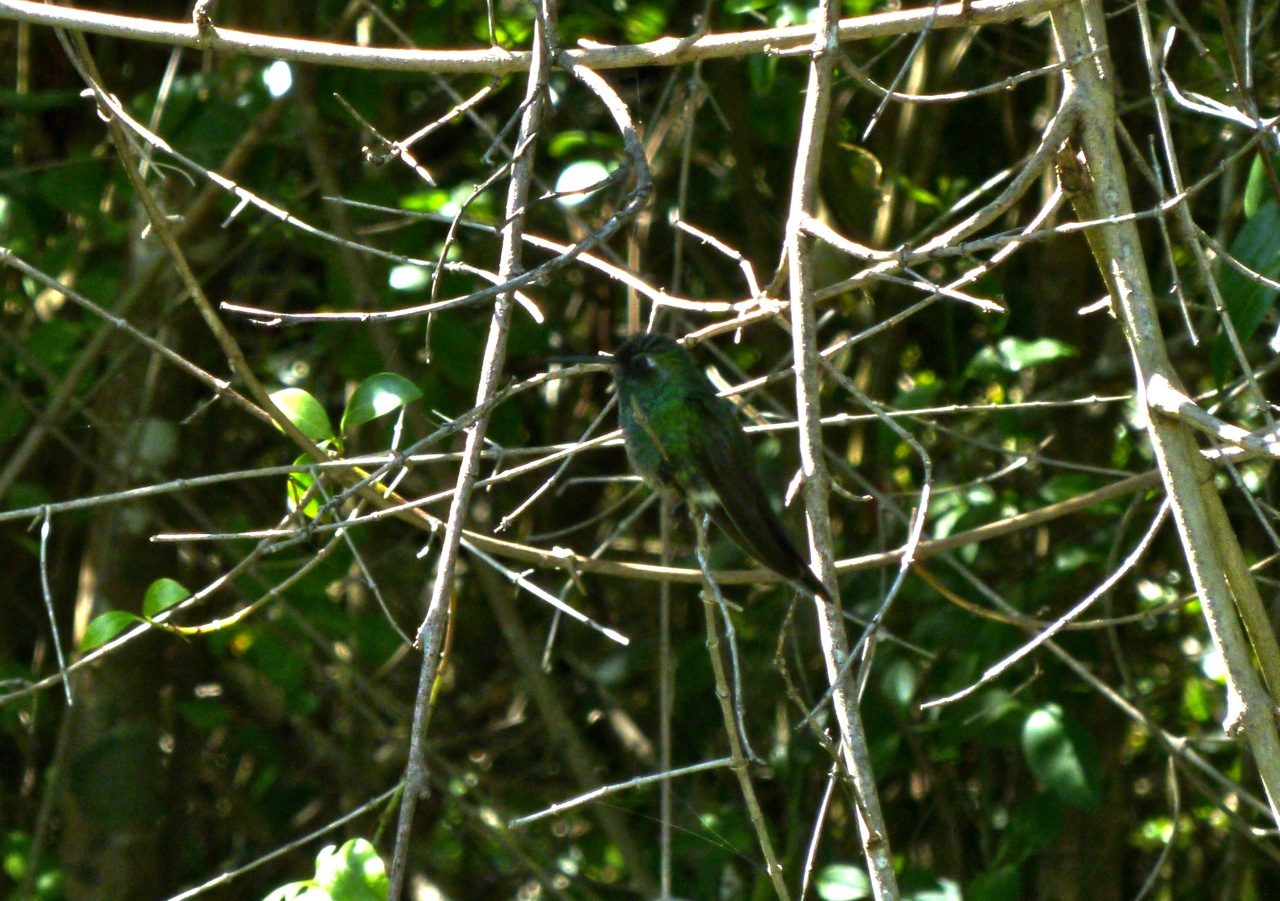
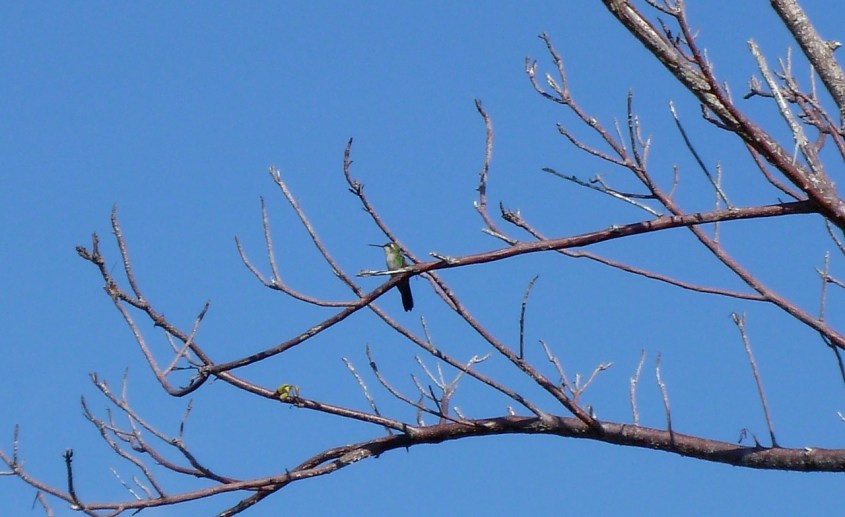
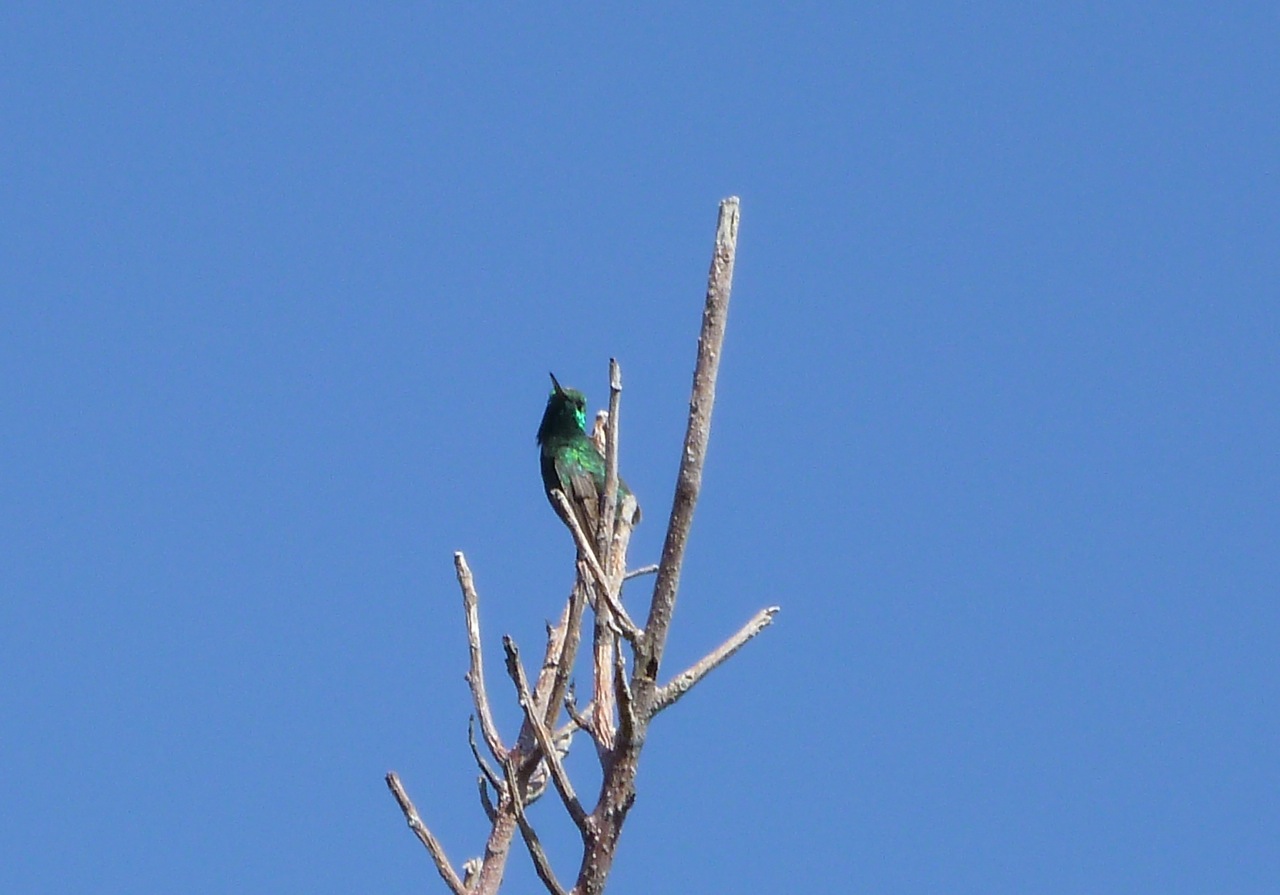
All the above birds were photographed at Delphi. We saw emeralds elsewhere, of course – in the pine forest, flicking across the logging tracks; on other Cays. The best sighting was during our day trip reef-snorkelling and island-hopping with Kay Politano, when we had an excellent lunch for 14 at Cracker P’s on Lubbers Cay (see future post about this and the island-hops). There was a bird feeder by our table, to which emeralds came and went throughout the meal. Here are some photos – I wanted to get them hovering, and kind of succeeded. More or less.






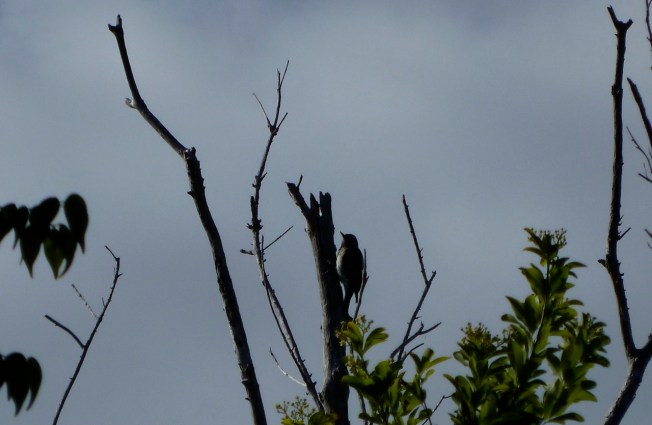




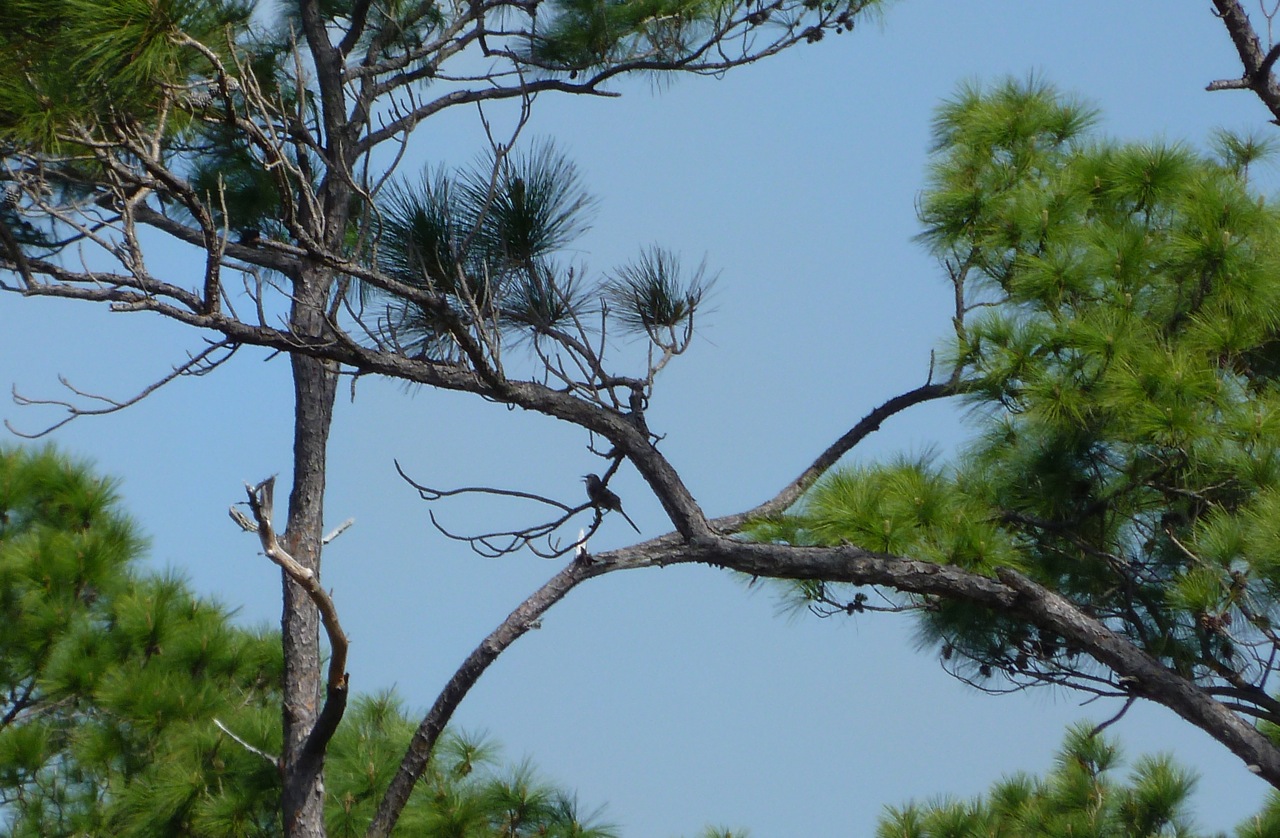





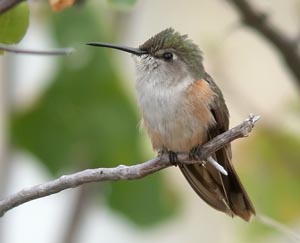
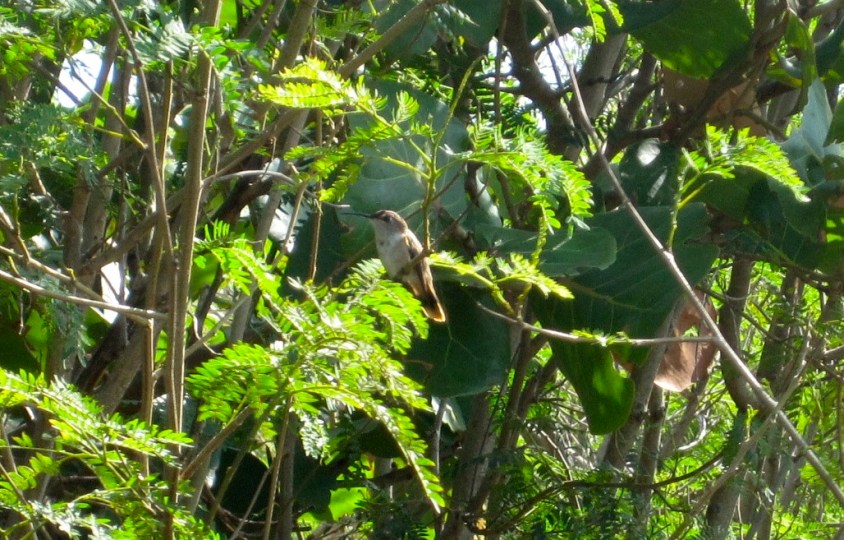
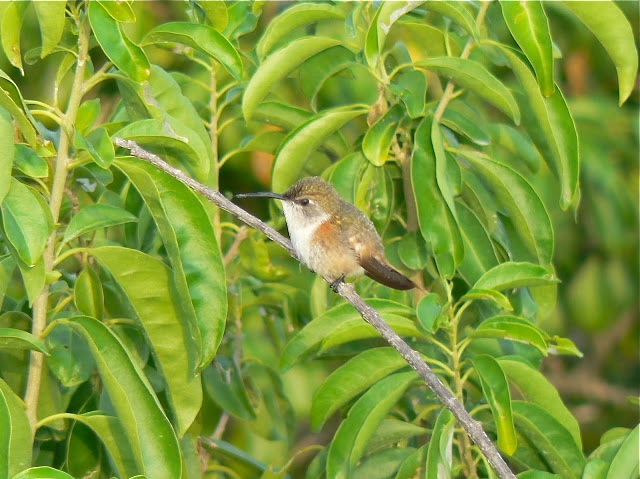

 CUBAN EMERALD







 ROLLING HARBOUR ABACO

You must be logged in to post a comment.