Unknown's avatar

“KNOCK ON WOOD”: HAIRY WOODPECKERS FOR GOOD LUCK


Bahamas-Great Abaco_6568_Hairy Woodpecker_Gerlinde Taurer copy

“KNOCK ON WOOD”: HAIRY WOODPECKERS FOR GOOD LUCK

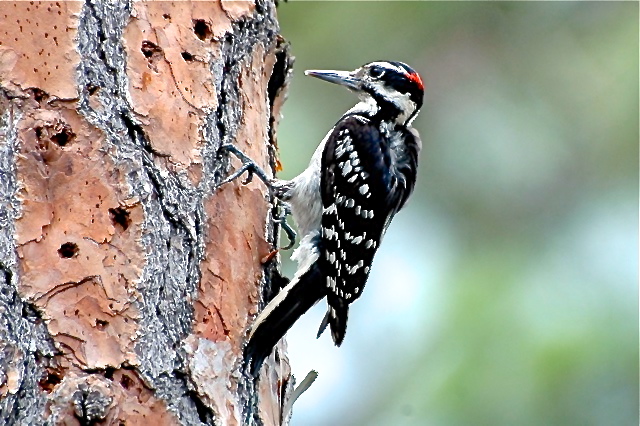
Delphi is an excellent place for woodpeckers. The Lodge itself has its own resident WEST INDIAN WOODPECKERS, who generally raise two broods a year in the nest boxes under the eaves. The coppice and pinewoods along the one-mile drives are home to the smaller Hairy Woodpeckers Picoides villosus, where they too nest annually. There’s a particular tall dead tree on the guest drive that is used every year, and from early March it is the first place I check for signs of occupation. If evident, I take it as a sign of good luck (and hope it extends to my fishing).

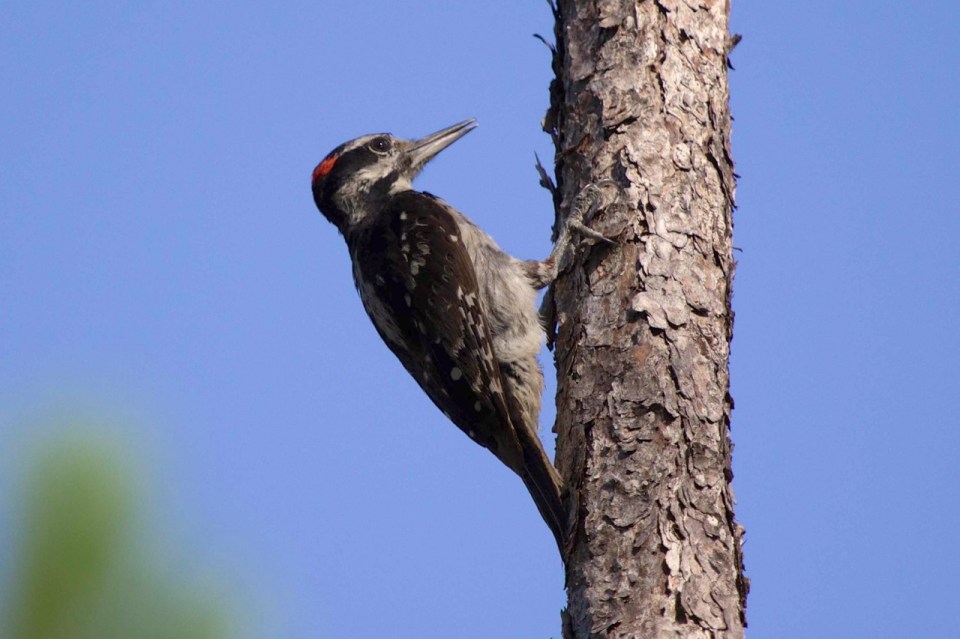
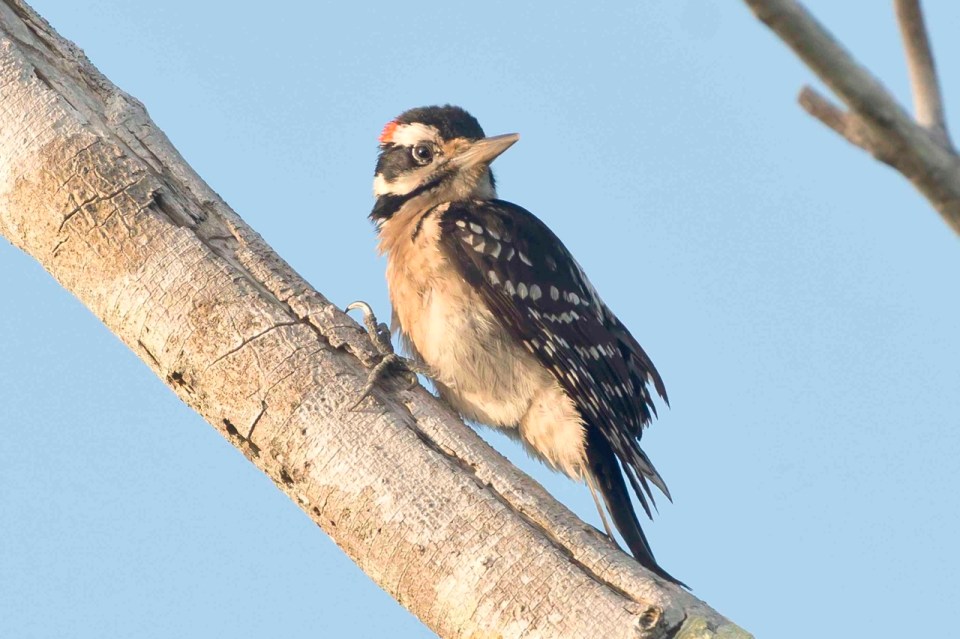
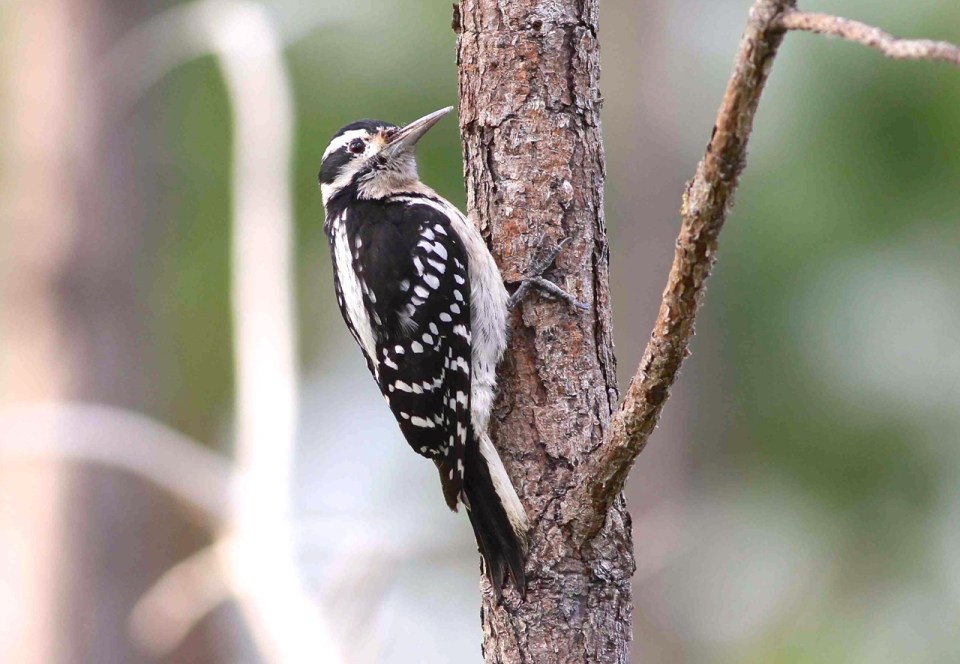
Hairy Woodpecker, Abaco (Alex Hughes) Hairy Woodpecker, Abaco (Bruce Hallett) Hairy Woodpecker, Delphi, Abaco (Peter Mantle)I can’t believe I haven’t featured a hairy woodpecker for more than 2 years. As we prepare for our forthcoming trip to Abaco HQ and the consequent plethora of photos (95% of which will be deleted), here is a small gallery of males (red caps) and females, some of them taken at Delphi. Check out those huge claws of the one below at her nest on the dead tree mentioned above.

Hairy Woodpecker female. Delphi Club.Abaco Bahamas.6.13.Tom Sheley copyHairy Woodpecker male. Delphi Club.Abaco Bahamas.6.13.Tom Sheley copyBahamas-Great Abaco_5247_Hairy Woodpecker_Gerlinde Taurer copyHairy Woodpecker, Abaco (Tony Hepburn)

I photographed this female last year in a tree near the swimming pool. I watched it for some time, but it must have been camera shy, because although quite unconcerned by my presence, it never came right out into the open. Hairy Woodpecker, Delphi, Abaco (Keith Salvesen)

MUSICAL DIGRESSION (OPTIONAL)
“Knock on Wood”, the 1966 hit for Eddie Floyd, was co-written with the amazing Steve Cropper (‘house guitarist’ for Stax). It has been much-covered over the years, none more unexpectedly than by David Bowie on his 1974 Live album (also released as a single). Here is the originator, in a live performance. 
Credits: Gerlinde Taurer (1, 7), Alex Hughes, Bruce Hallett, Peter Mantle, Tom Sheley (5, 6), Tony Hepburn, Keith Salvesen
Unknown's avatar

AMERICAN REDSTARTS ON ABACO: THE DISTAFF SIDE


American Redstart (f), Abaco 6 (Charles Skinner)

AMERICAN REDSTARTS ON ABACO: THE DISTAFF SIDE

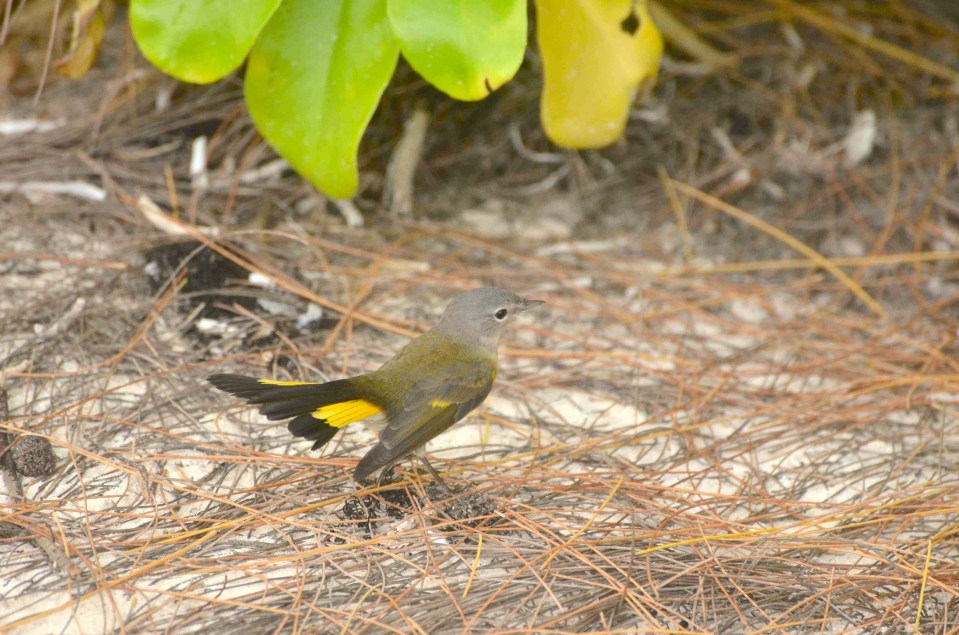
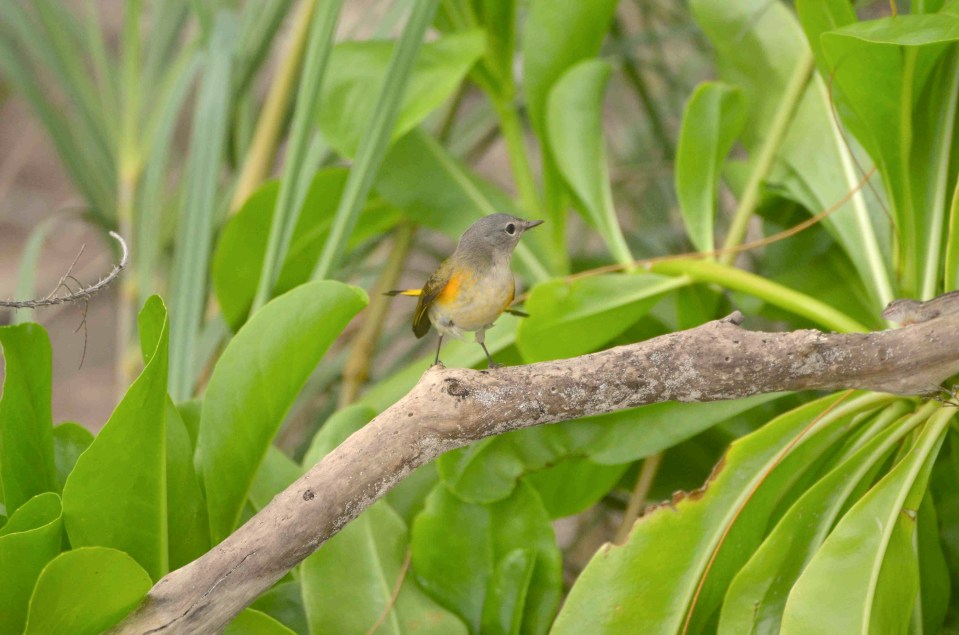
I have a feeling that people are more familiar with the male American redstart than the female. The male’s striking near-black and orange livery is memorable. The female’s equivalent brown and yellow colour scheme is a little more subtle (or ‘drab’, which is a go-to bird book description where the male of a species is flamboyant; I prefer ‘subtle’ as a politer description). Charlie Skinner managed to get some lovely shots of females in the pines and scrub at the back of the Delphi beach. 

American Redstart (f), Abaco 1 (Charles Skinner)American Redstart (f), Abaco 2 (Charles Skinner)

These birds are one of the 37 warbler species recorded for Abaco, where they are common winter residents. Generally they start to arrive in October, and some are usually still around in March. It is believed that the flashing tail-spreading of both sexes, shown in some of these images, acts either to attract insects; or to confuse them in some way. I can’t think how or why. I imagine the tail-fanning also forms part of the redstart courtship rituals. Incidentally (*fun fact alert*) male redstarts are known to raise two families simultaneously, the nests being a convenient distance apart so that his deceit remains his secret.

American Redstart (f), Abaco 5 (Charles Skinner)American Redstart (f), Abaco 3 (Charles Skinner)

This pretty juvenile is impossible to sex at this age. Could go either way. (Photo: Becky Marvil)American Redstart (juv), Abaco (Becky Marvil)

For comparison, the more familiar male (and more brash – typical). (Photo: Gerlinde Taurer)Bahamas-Great Abaco_6374a_American Redstart_Gerlinde Taurer copy

Photo credits: Charlie Skinner, Becky Marvil, Gerlinde Taurer 

Unknown's avatar

THE ‘THRUSH’ THAT ISN’T: NORTHERN WATERTHRUSH ON ABACO


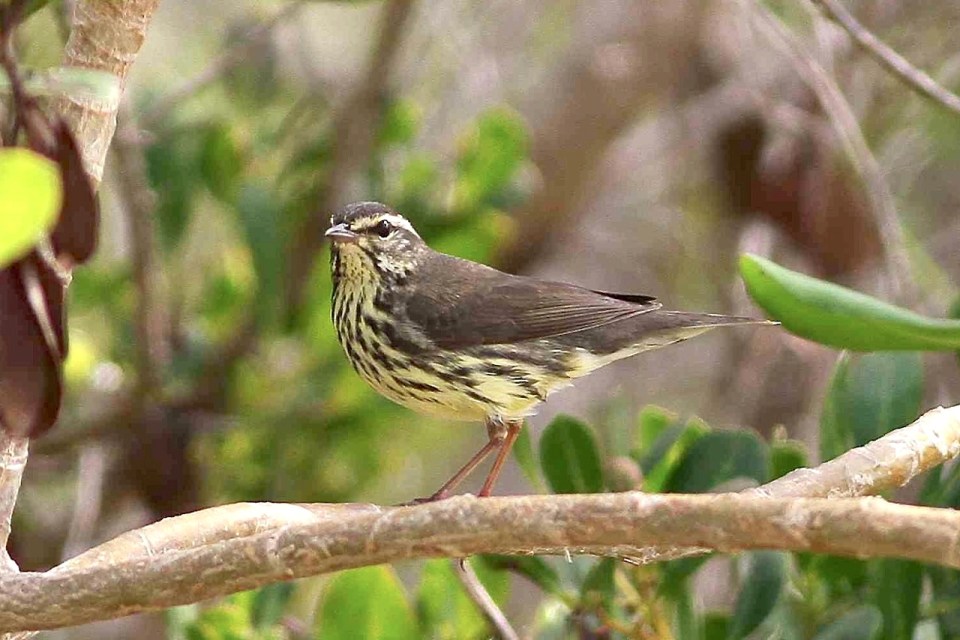
Northern Waterthrush.Bahama Palm Shores.Abaco.3.Tom Sheley

THE ‘THRUSH’ THAT ISN’T: NORTHERN WATERTHRUSH ON ABACO

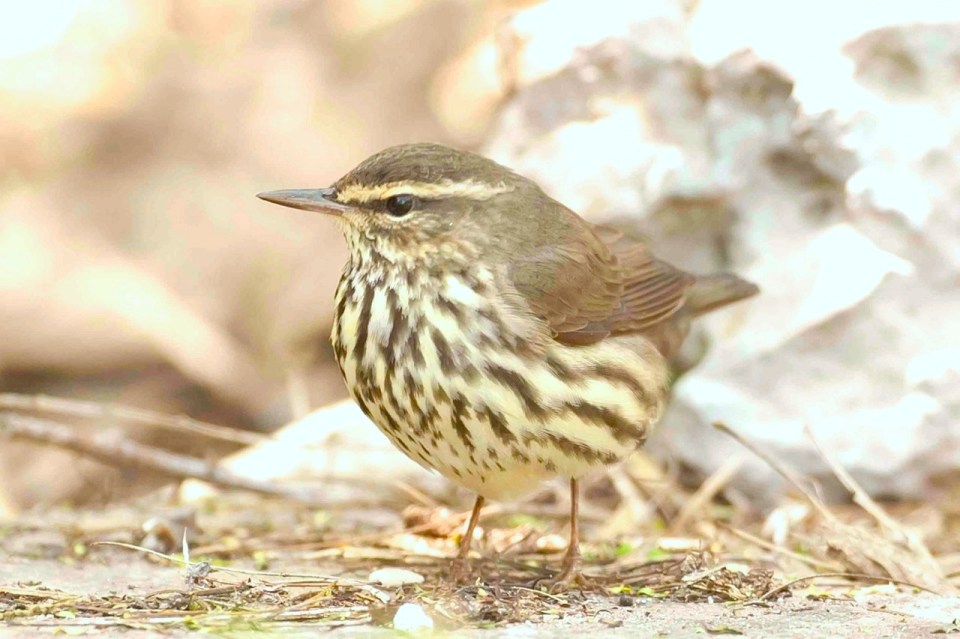
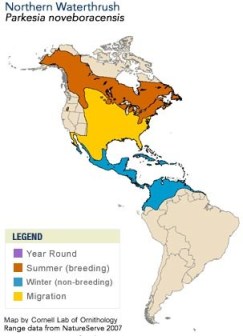
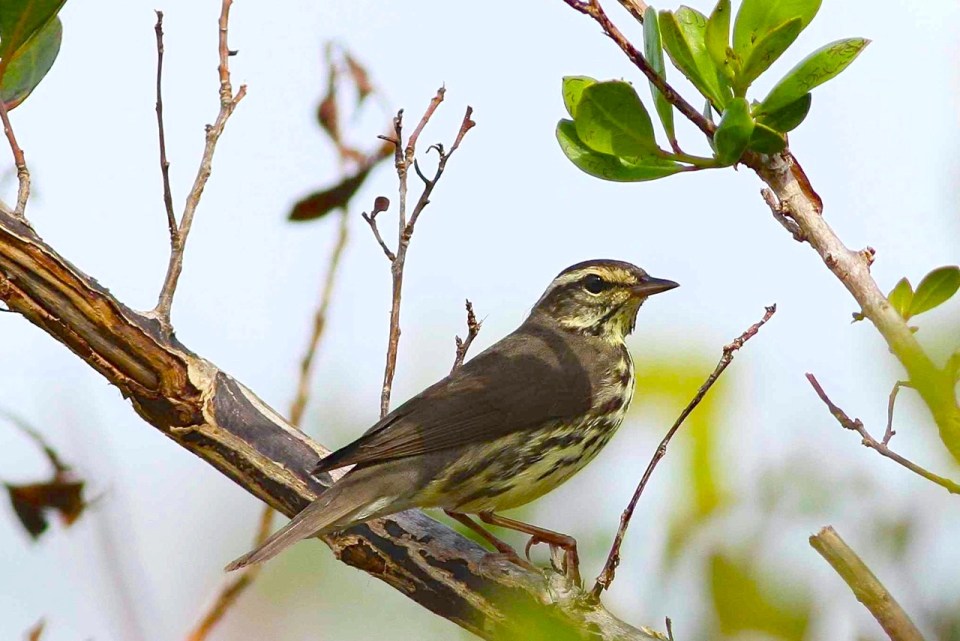
The pretty thrush-like warbler Northern Waterthrush Parkesia noveboracensis is a common winter resident on Abaco. Despite the name it’s not a real thrush, but it is larger than most of the compact winter warblers that heed the the migratory instinct that “It’s Better in the Bahamas” and make Abaco their overwintering habitat.

Northern Waterthrush.Bahama Palm Shores.Abaco.1.Tom Sheley

HOW CAN YOU TELL SIMILAR PLUMAGED THRUSHES FROM THESE GUYS?

The simplest rule of thumb is that true thrushes have spotted or speckled chests; whereas waterthrushes have streaked chests. That, and the fact that similar thrush species are generally larger. A number of true thrushes are recorded for Abaco, many quite similar to the waterthrush; but the speckled vs spotted distinction should be your guide. If a sighting is momentary or in bad light, it’s anyone’s guess…

Northern Waterthrush, Abaco (Becky Marvil)

northern_waterthrush_rangemap(1)

APART FROM THRUSHES, ANY OTHER BIRDS I MIGHT CONFUSE IT WITH?

There’s another far less commonly found waterthrush that also overwinters on Abaco – the closely-related Louisiana waterthrush Parkesia motacilla. I have no Abaco photos of one – it really is quite rare – so I’ve had to borrow an open source one. The Cornell Lab explains the differences between the two waterthrushes thus: “Northern usually has stripes on throat, a slightly smaller bill, a thinner and off-white or cream eyestripe that does not extend as far onto the nape, less pink legs, and a more yellowish wash on the underparts”. Maybe one can generalise that the northern is overall a yellower bird, and its legs are more brown than pink.

Lousiana waterthrush – rarer on Abaco than the northern but a potential source of confusionLouisiana_Waterthrush_(Parkesia_motacilla) Magnus Manske : Wiki

WHAT’S THAT POSH TAXONOMIC NAME ALL ABOUT, THEN?

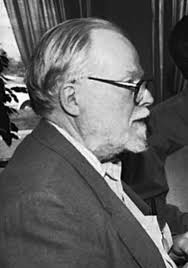
The Mr Parkes in question was Kenneth Carroll Parkes (1922 – 2007), an American ornithologist and Chief Curator at the Carnegie Museum of Natural History, Pittsburgh. The noveboracencis part simply means ‘from New York’ in Latin (novum – new; Eboracum – York); and the -ensis is a common suffix meaning ‘from’. Mr Parkes’s bird from New York.

Kenneth Carrol ParkesMr Parkes

Northern Waterthrush, Abaco (Bruce Hallett)
Both species have similar habits. For example, on the ground, they tend to walk rather than hop, ‘bobbing’ their butts (technical term) as they go. They forage on the ground for insects, snails and small mollusks etc.
  
Northern Waterthrush, Abaco 1 (Gerlinde Taurer)
I’m not a huge fan of attempts at phonetic renditions of bird calls – the ‘Did you have a nice day today dear?’ and the ‘I’d like a very big Kalik please’ and so on. But for what it is worth, the song of the northern waterthrush has been interpreted as “a loud swee swee chit chit weedleoo”.  This is what is sounds like in real life. Go figure.
Northern Waterthrush, Abaco 2 (Gerlinde Taurer).jpg

Credits: Tom Sheley (1, 2, 8); Becky Marvil (3); Magnus Manske (4); Bruce Hallett (5); Gerlinde Taurer (6, 7); Richard E Webster at Xeno-Canto for the song clip

Northern Waterthrush.Bahama Palm Shores.Abaco.2.Tom Sheley

Unknown's avatar

YELLOW BIRDS ON ABACO: A ‘TWIXTMAS’ COLOUR SCHEME


Bahamas-Great Abaco_4846_Bahama Yellowthroat_Gerlinde Taurer copy

YELLOW BIRDS ON ABACO: A ‘TWIXTMAS’ COLOUR SCHEME

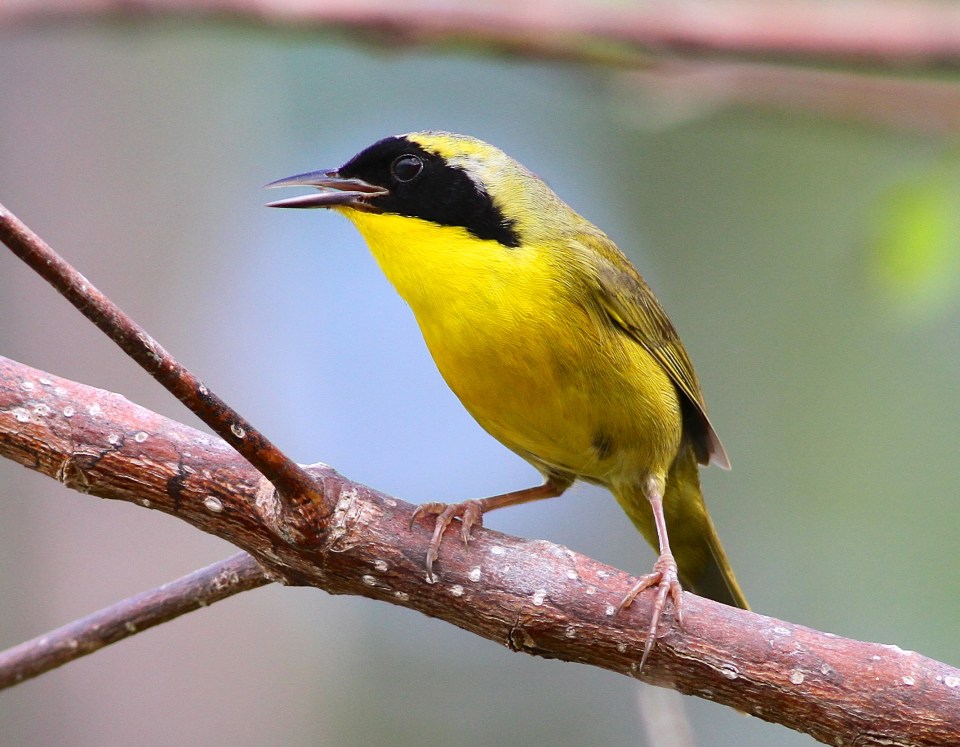
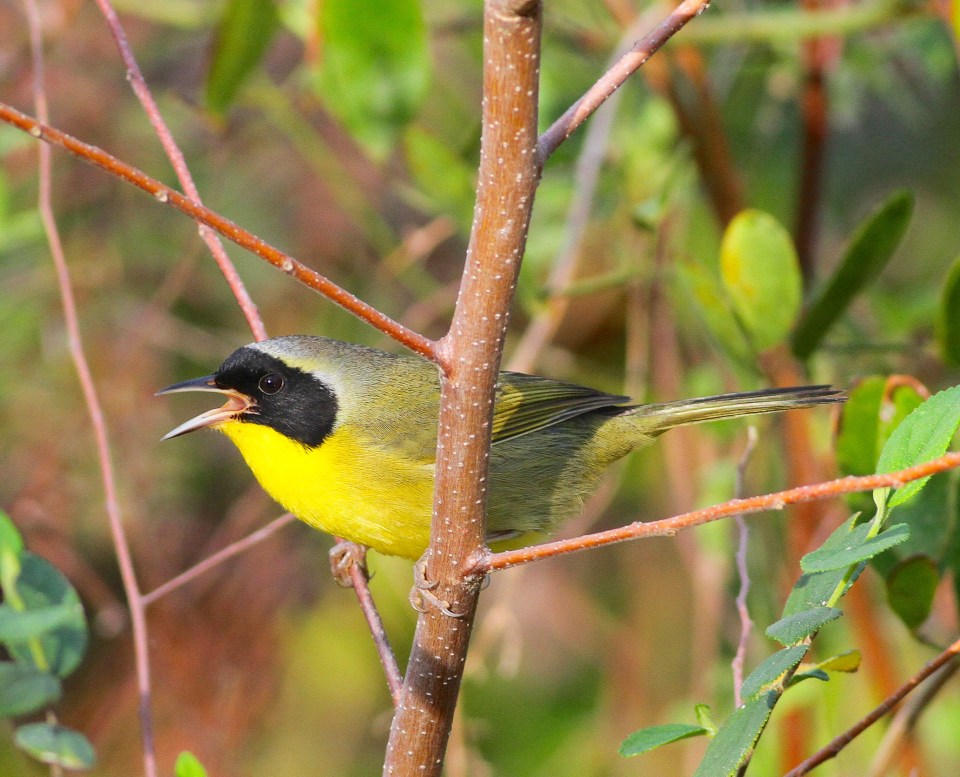
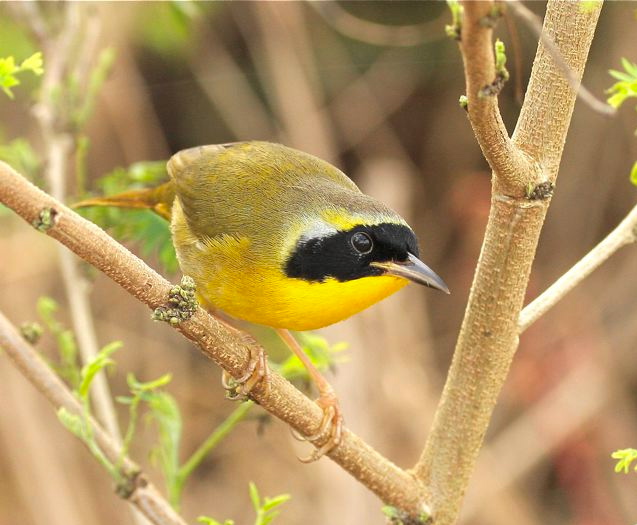
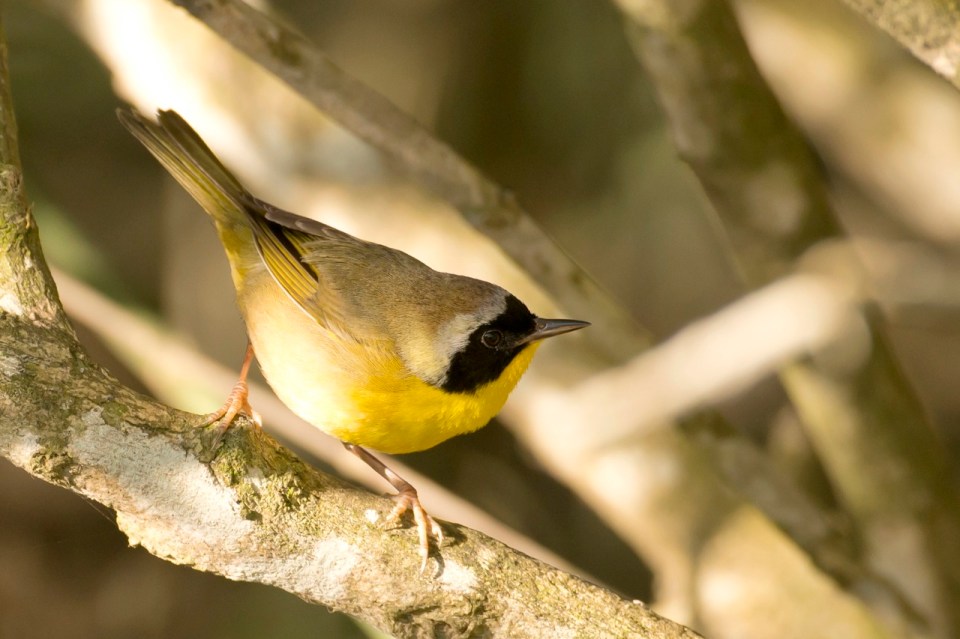
Red. Green. A splash of blue. The shimmer of gold and silver. Those Christmas colours are so passé. OVAH! So ‘last year’ (or very nearly). In the hope and expectation that people are not too bilious from Xmas Xcess, or too jaundiced by seasonal overload, I feel it’s time to change the colour scheme. Let’s go for bright yellow. Specifically, a mix of endemic Bahama Yellowthroats and Common Yellowthroats. I love these cheerful little birds, and the challenge of trying to lure them into the open with my rather unconvincing approximations of their ‘wichity’ call. Such sunny little creatures, and always such a joy to watch.

Bahamas-Great Abaco_5267_Bahama Yellowthroat_Gerlinde Taurer copyBahama Yellowthroat (M) Bruce Hallett Bahama Yellowthroat 3 Tom Reed

ALL ABOVE – BAHAMA YELLOWTHROATS; ALL BELOW – COMMON YELLOWTHROATS

Common Yellowthroat.Gilpin Pond.Abaco Bahamas.Tom Sheley copyCommon Yellowthroat (m) Bruce Hallett IMG_4232Common Yellowthroat, Gilpin Pond, Abaco Bahamas (Tom Sheley)Common-yellowthroat, Abaco (Erik Gauger)

Credits: Gerlinde Taurer (1,2); Bruce Hallett (3, 6); Tom Reed (4); Tom Sheley (5, 7); Erik Gauger (8)

Unknown's avatar

THREE “HALLOWEEN-COLOURED” BIRDS ON ABACO


6292695150_32bb41d043

THREE “HALLOWEEN-COLOURED” BIRDS ON ABACO

Black and orange seem to have become – perhaps always have been – the colours most associated with Halloween (“Holy Evening” at one time in its history). Black, I suppose, for witches and their cats; orange for pumpkins and fire. In nature, surprisingly few creatures and plants have an exclusively black and orange livery. Some birds. A salamander of two. A few fish and butterflies. The odd flower. 

I decided for no reason at all to spend (waste?) a small amount of time discovering which birds found on Abaco are true Halloween species. I had to allow for some white markings, on the spurious basis that white is not a colour but rather an absence of colour… That left 3 species (and even then some troublemakers might argue that the precise borderline between yellow and orange is debatable…). 

AMERICAN REDSTART

The Redstart Setophaga ruticilla is a species of warbler and a common winter resident on Abaco. They are mostly seen in the coppice and in gardens. The male is black with orange markings; the female has yellow markings instead of orange.

American Redstart (m) Abaco (Craig Nash) American Redstart (m) Abaco (Gerlinde Taurer) American Redstart (m) Abaco (Tom Sheley)

BALTIMORE ORIOLE

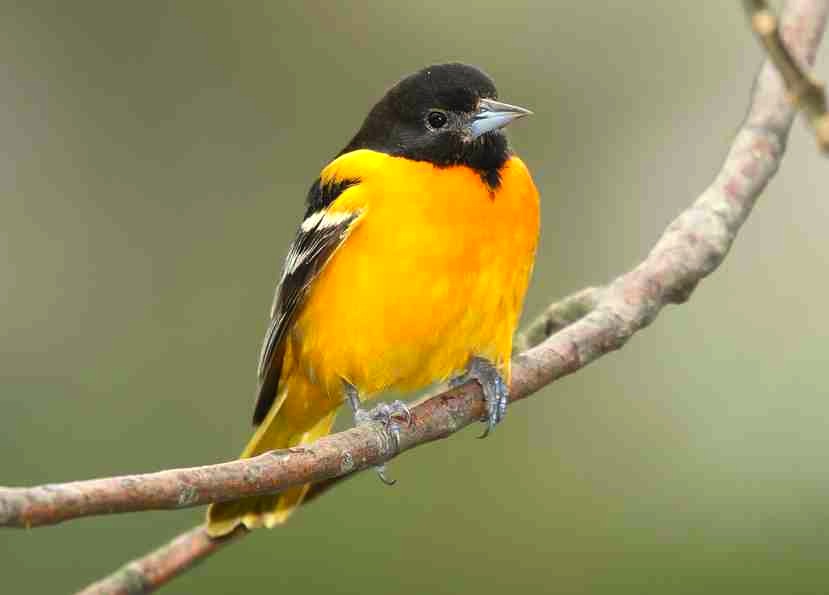
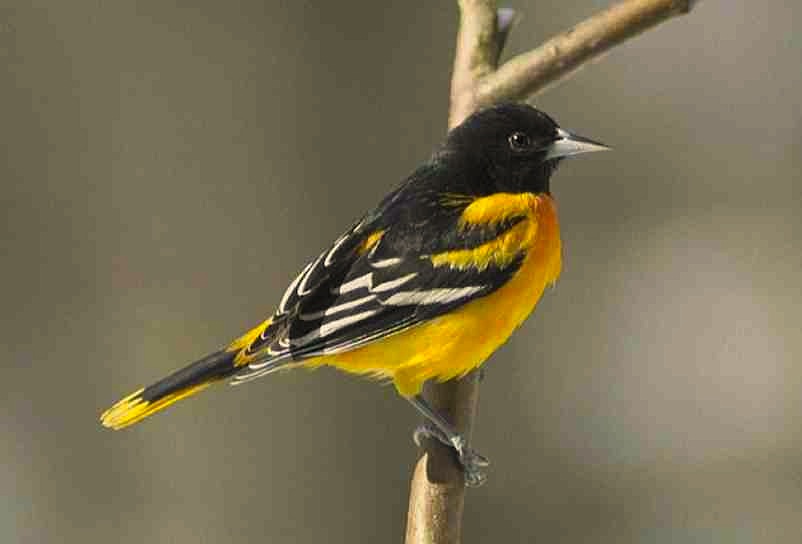
These Orioles Icterus galbula are rather less common winter visitors. Many are completely black and orange apart from white wing bars. However, there’s no doubt that others are more of a yellowy-orange.

Baltimore Oriole (pinterest) copyBaltimore Oriole (mdf-wiki)Baltimore Oriole (Brezinski-wiki)

WESTERN SPINDALIS

The handsome, colourful Spindalis zena is one of my favourite birds. The Spindalis is a common permanent resident, and I am determined to make it qualify as a Halloween bird even though (arguably) plenty of its surface area is neither black not orange. Apologies to purists.

Western Spindalis, Delphi, Abaco (Keith Salvesen)Western Spindalis (m) Abaco (Craig Nash) Western Spindalis (m) Abaco (Gerlinde Taurer)

Credits: Craig Nash, Gerlinde Taurer, Tom Sheley, Keith Salvesen, pinterest, wiki & an unknown Angry Bird pumpkin carver

Unknown's avatar

“THE DELPHI CLUB GUIDE TO THE BIRDS OF ABACO”


Abaco Parrot, Abaco Bahamas (Peter Mantle)

“THE DELPHI CLUB GUIDE TO THE BIRDS OF ABACO”

A new season – the seventh – of the Delphi Club is now underway. There are fish to be caught, poolside inactivities to relish, chef-prepared meals to eat and a capacious wine cellar to be explored. To which, add birds to be spotted. Delphi has turned out to be a superb place for birding – not a feature given prominence in the original prospectus… The Club’s remoteness and its rich mix of pine forest, coppice, gardens and a pristine one-mile beach ensure the prefect protected habitat for a vast number of bird species common, uncommon and rare.

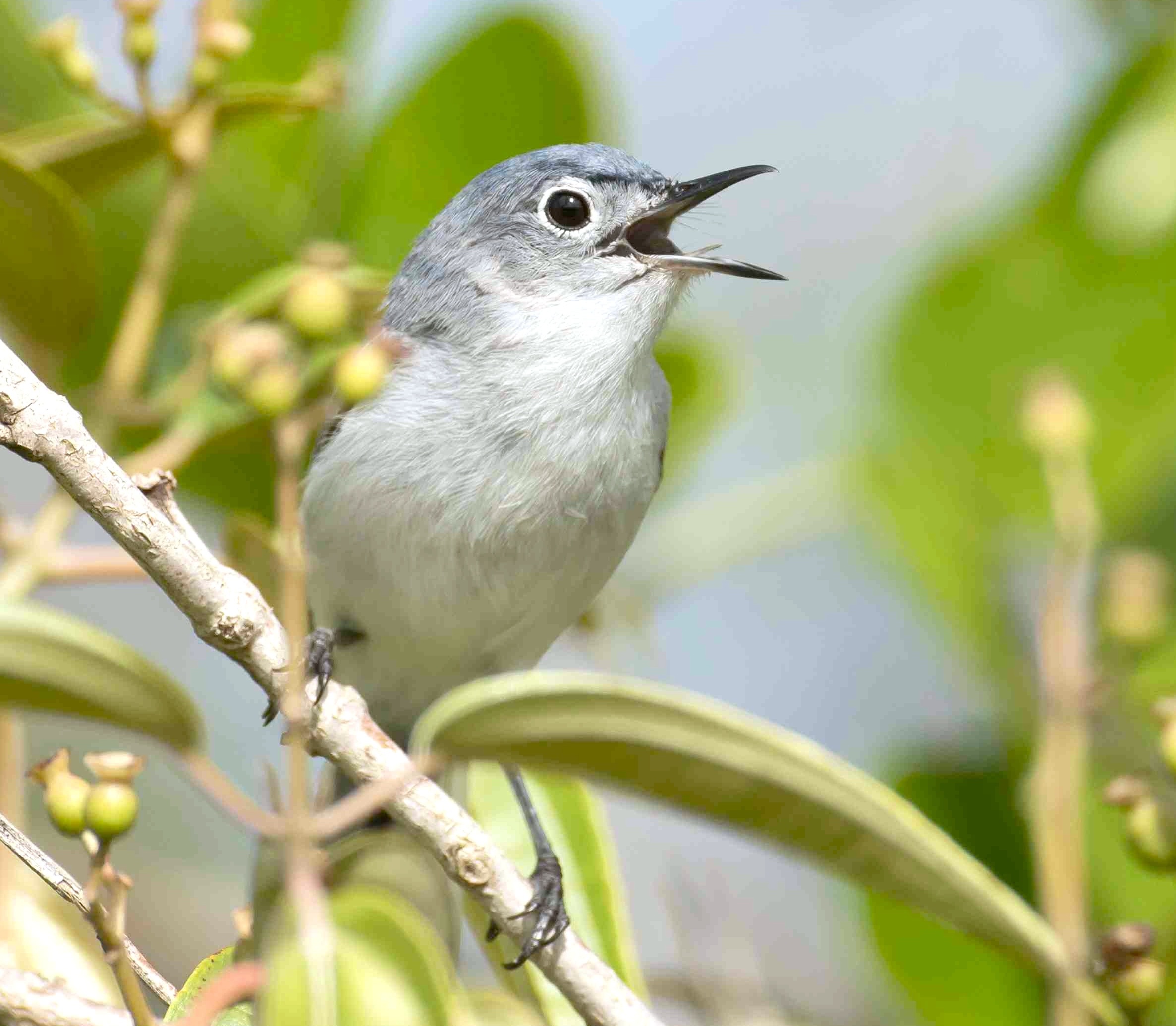
Blue-gray Gnatcatcher vocalizing.Abaco Bahamas.6.13.Tom Sheley a

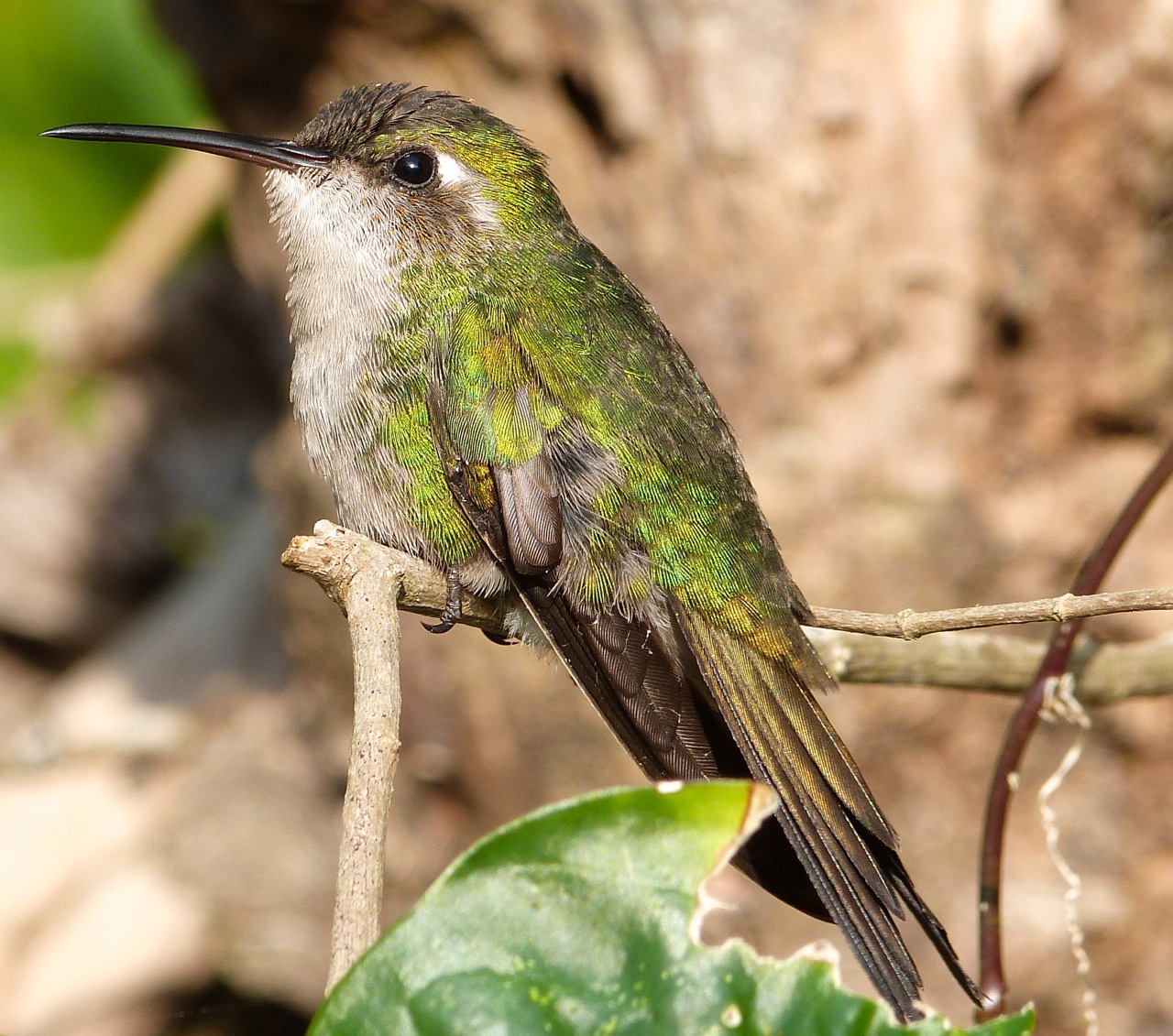
Eighteen months ago, “The Delphi Club Guide to THE BIRDS OF ABACOwas published. The originator of the idea – as with the entire Delphi project – was of course Peter Mantle, the publisher. The book took 16 months from conception to the arrival of three pallets of printed books on the dockside in Marsh Harbour, having travelled by a tortuous route from specialist printers in Italy. Cuban Emerald Hummingbird, Delphi, Abaco (Keith Salvesen)

The book was launched at the Delphi Club in March 2014, to generous enthusiasm and support both on Abaco and beyond. 75% of the edition has been sold already. In addition, Abaco schools, libraries and wildlife organisations have been given copies for educational purposes. A percentage of profits is to be given to local wildlife causes. We couldn’t be more pleased with the response to this lavish book, a unique publication in the Bahamas. 

Delphi Club Guide to the Birds of Abaco (Jacket)

The incremental growth of social media is rapid. Blogs gain readers. Facebook and Twitter pages gain new friends and followers. The start of this new Delphi season is therefore a good moment to post a reminder about the book, illustrated with a few of the wonderful bird species featured. And… ahem… there are only 57 more ‘sleeps’ until Christmas. 

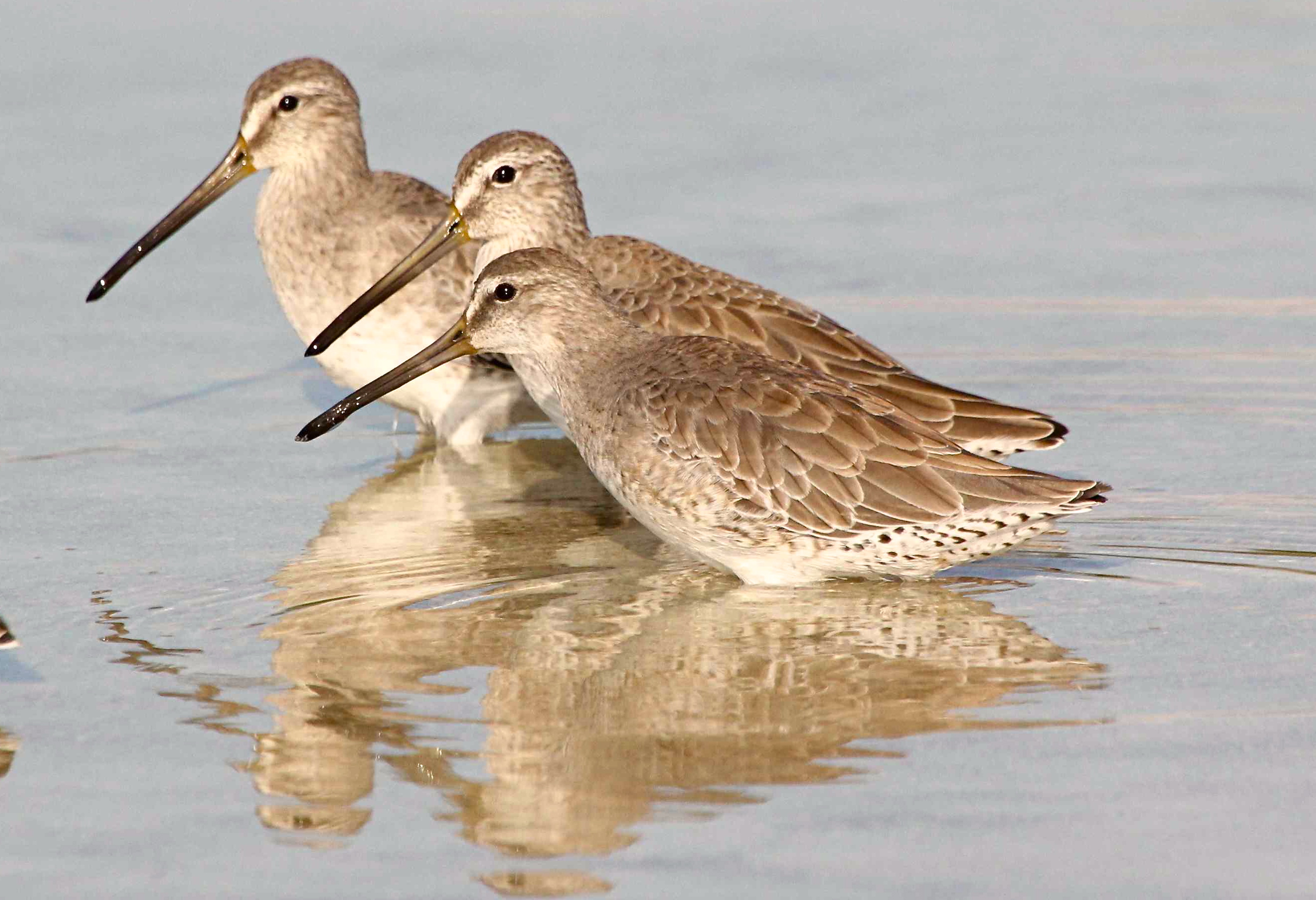
Short-billed Dowitcher, Abaco (Bruce Hallett)

The Guide showcases the rich and varied bird life of Abaco, Bahamas and features both resident and migratory species including rarities and unusual sightings. The main features are as follows:

  • 272 pages with more than 350 photographs
  • 163 species shown in vivid colour – nearly two-thirds of all the bird species ever recorded for Abaco
  • Every single photograph was taken on Abaco or in Abaco waters
  • All birds are shown in their natural surroundings – no feeders or trails of seed were used
  • Several birds featured are the first ones ever recorded for Abaco or even for the entire Bahamas

Clapper Rail Abaco Bahamas Tom Sheley

  • A total of 30 photographers, both experienced and amateur, contributed to the project
  • The book has had the generous support of many well-known names of Abaco and Bahamas birding
  • A complete checklist of every bird recorded for Abaco since 1950 up to the date of publication was compiled specially for the book.
  • A neat code was devised to show at a glance when you may see a particular bird, and the likelihood of doing so. Birds found at Delphi are also marked.
  • Specially commissioned cartographer’s Map of Abaco showing places named in the book

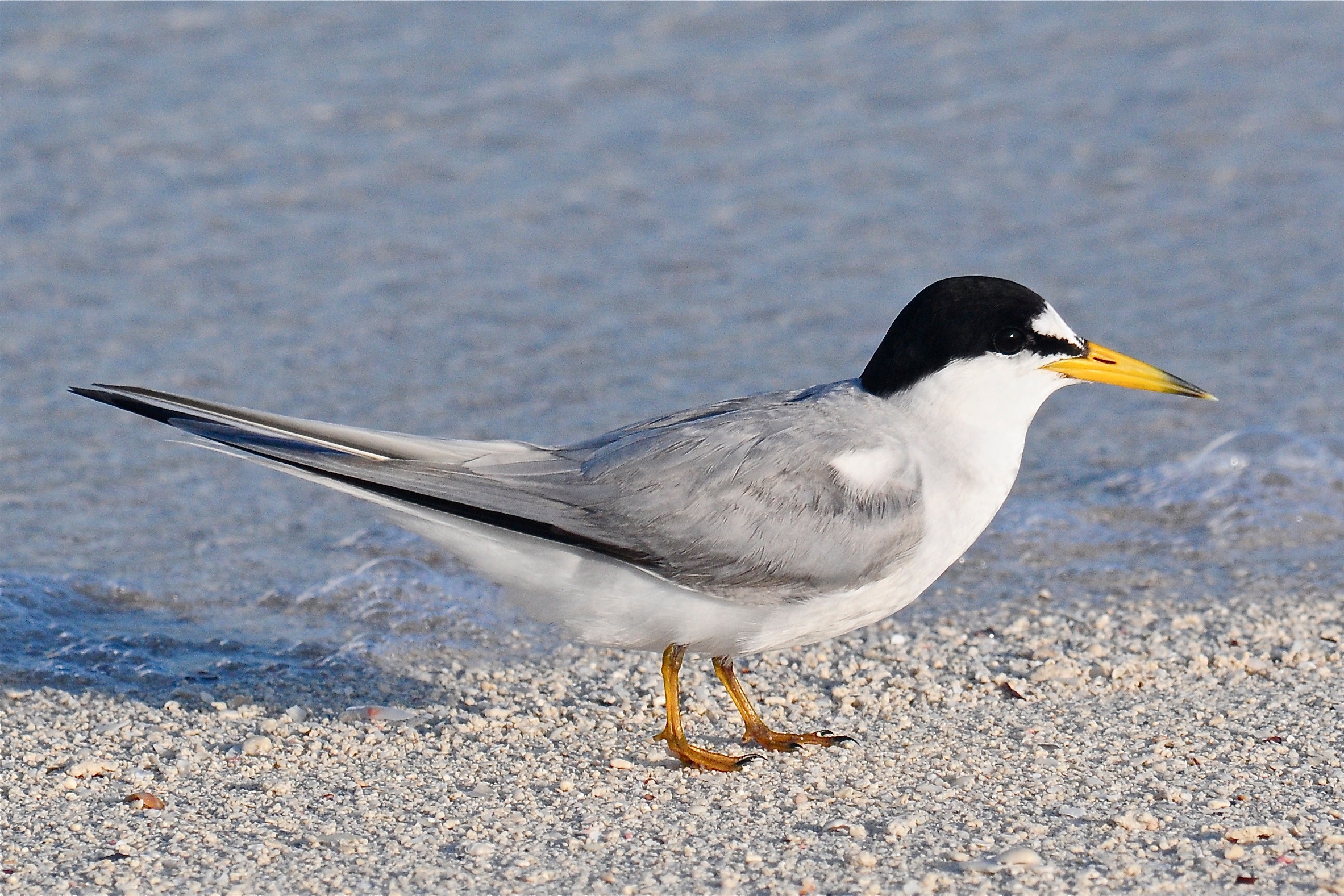
Least Tern_ACH3672 copy

  • Informative captions intentionally depart from the standard field guide approach…
  • …as does the listing of the birds in alphabetical rather than scientific order
  • Say goodbye to ’37 warbler species on consecutive pages’ misery
  • Say hello to astonishing and unexpected juxtapositions of species

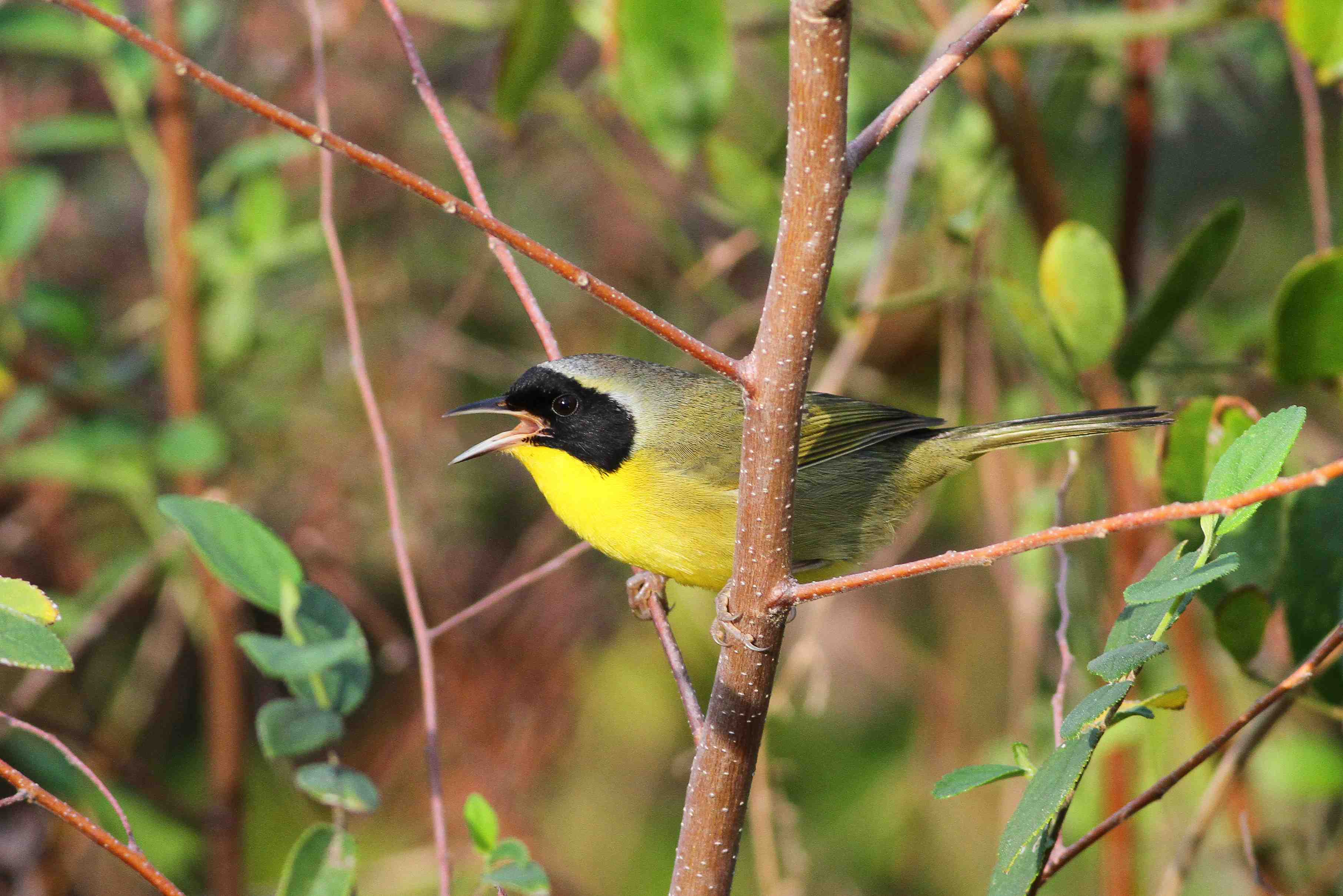
Abaco_Bahama Yellowthroat_Gerlinde Taurer copy

  • The book was printed in Florence, Italy by specialist printers on Grade-1 quality paper
  • Printing took pairs of printers working in 6 hour shifts 33 hours over 3 days to complete
  • The project manager and the author personally oversaw the printing

Smooth-billed Ani pair GT

  • The book is dedicated to the wildlife organisations of Abaco
  • A percentage of the proceeds of sale will be donated for the support of local wildlife organisations
  • A copy of the book has been presented to every school and library on Abaco

Piping Plover BH IMG_1919

The book is published by the Delphi Club (contact details below). The project was managed by a publishing specialist in art books. The author is the wildlife blogger more widely known on Abaco and (possibly) beyond as ‘Rolling Harbour’. Oh! So that would in fact be Mrs Harbour and myself. Well well! What are the chances? Painted Bunting male.Abaco Bahamas.Tom Sheley

The Delphi Club at Rolling Harbour
PO Box AB-20006, Marsh Harbour, Abaco, Bahamas
Tel: +1-242-366-2222
General Manager – Max Woolnough: +1-242-577-1698
delphi.bahamas@gmail.com

Or email rollingharbour.delphi@gmail.com with any queries or commentsAmerican Oystercatchers BH IMG_2000 copy 2

Images by Tom Sheley,  Bruce Hallett, Gerlinde Taurer, Tony Hepburn, Peter Mantle, RH

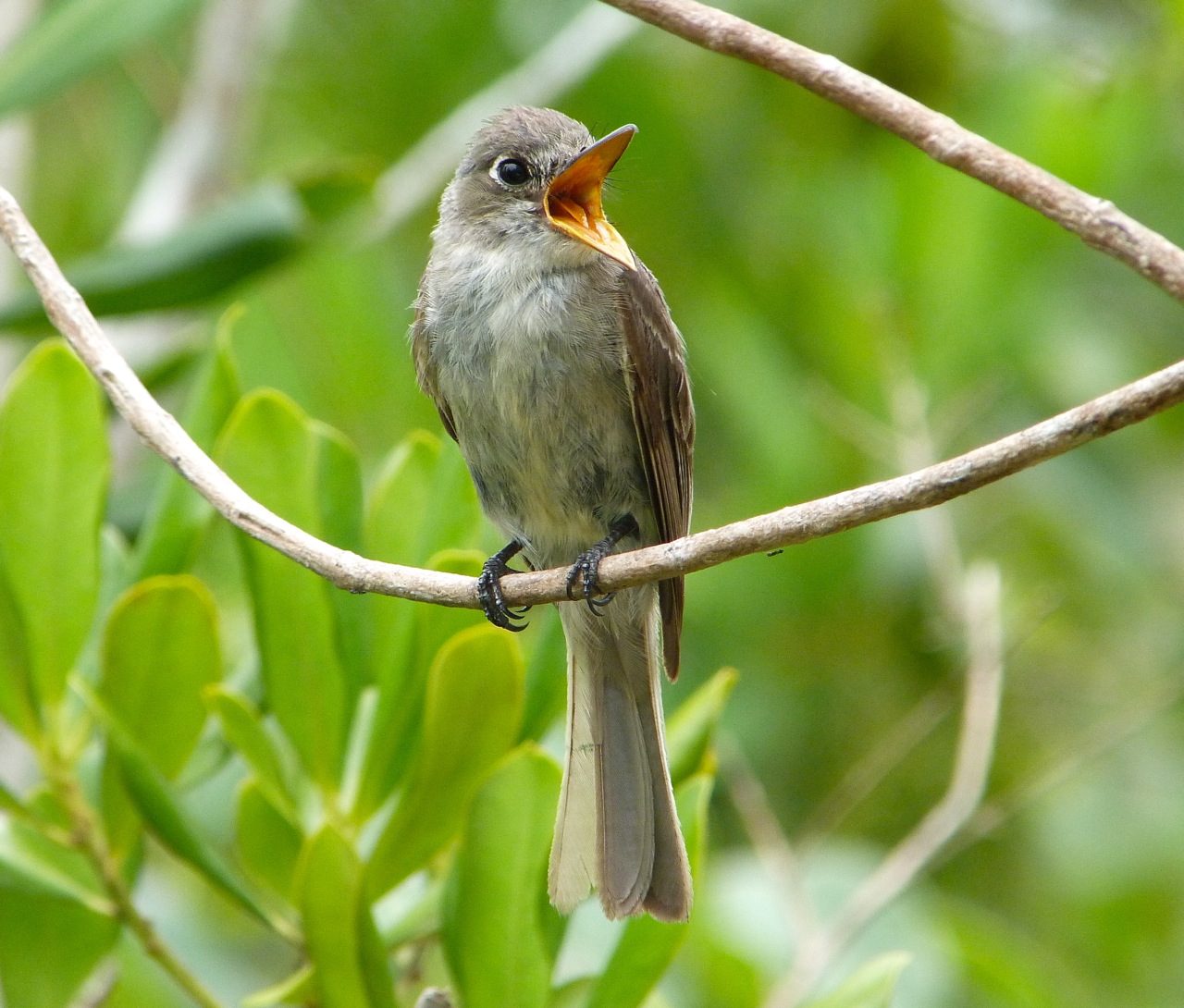
Cuban (Crescent-eyed) Pewee, Delphi, Abaco (Keith Salvesen)"Birds of Abaco" flyer

Unknown's avatar

GREATER ANTILLEAN BULLFINCH: ABACO’S “POLICE BIRD”


Greater Antillean Bullfinch, Abaco (Erik Gauger)

GREATER ANTILLEAN BULLFINCH: ABACO’S “POLICE BIRD”

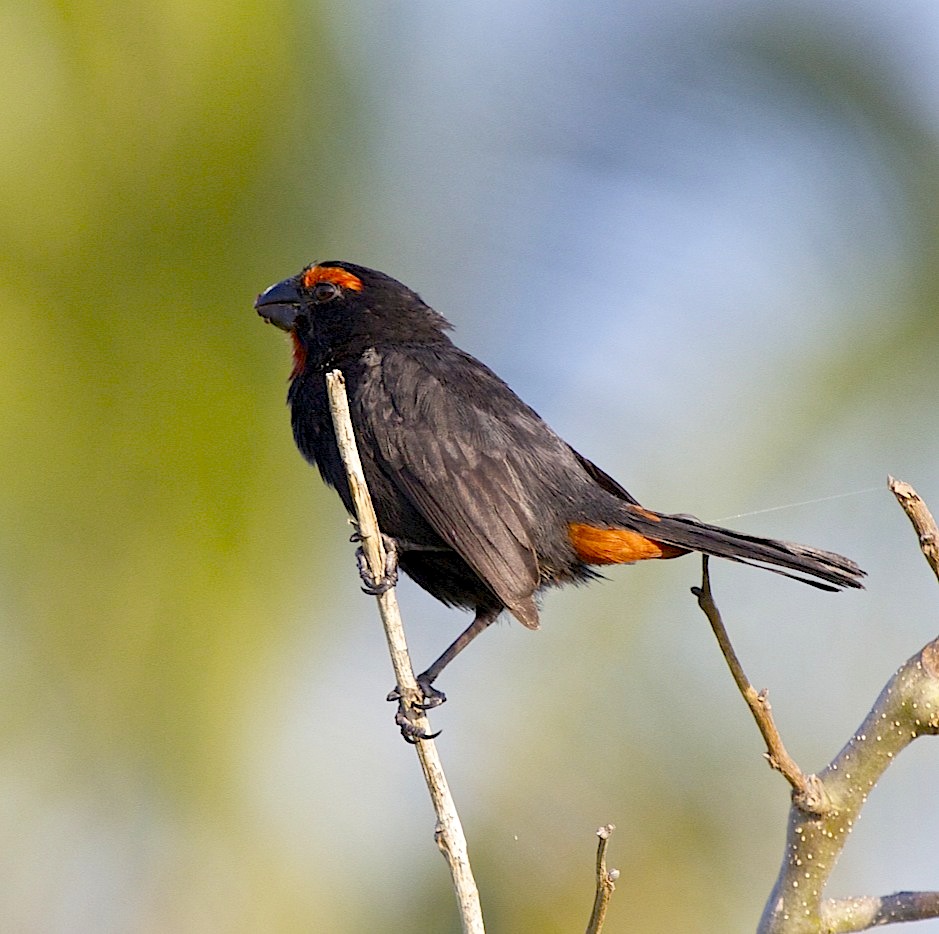
Following my last gloomy post about the widely-reported die-off of the poor, exhausted migratory great shearwaters, let’s turn with relief to a cheerful bird known to all and admired in coppice and garden: the Greater Antillean Bullfinch Loxigilla violacea. These pretty birds are easy to find and to identify. They love feeders, and they are responsive to ‘pishing’, that irritating (?) noise that birders make to unseen avians in the coppice to persuade them to reveal themselves. Adult males are black with bright red accessories (hence “police bird”); females are paler with orangey accessories; and juveniles look a bit scruffy and patchy. Here’s a GAB gallery to enjoy.

Greater Antillean Bullfinch, Abaco (Alex Hughes) 4 Greater Antillean Bullfinch, Abaco (Alex Hughes) 5Greater Antillean Bullfinch immature with snail 2.Delphi Club.Abaco (Tom Sheley)Greater Antillean Bullfinch, Abaco (Keith Salvesen)Great Antillean Bullfinch, Abaco  (Tom Sheley) 1Great Antillean Bullfinch, Abaco (Charles Skinner)Great Antillean Bullfinch, Abaco (Gerlinde Taurer)GAB BH IMG_9208 copy 2

Credits: Erik Gauger (1); Alex Hughes (2, 3); Tom Sheley (4, 6); Keith Salvesen (5); Charles Skinner (7); Gerlinde Taurer (8); Bruce Hallett (9)


Unknown's avatar

YELLOW WARBLERS ON ABACO


Yellow Warbler at sunrise. Abaco Bahamas.6.13.Tom Sheley copy

YELLOW WARBLERS ON ABACO

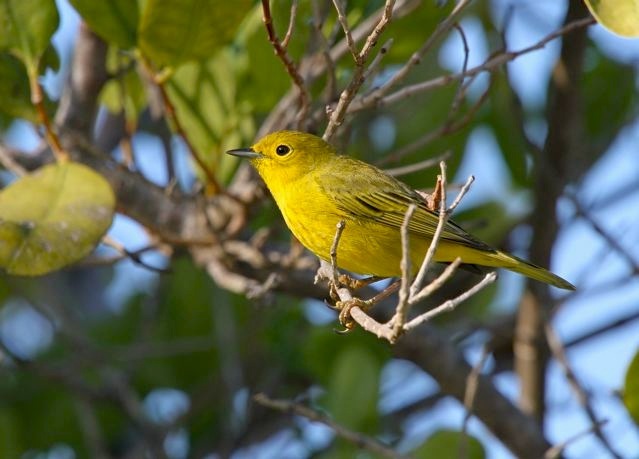
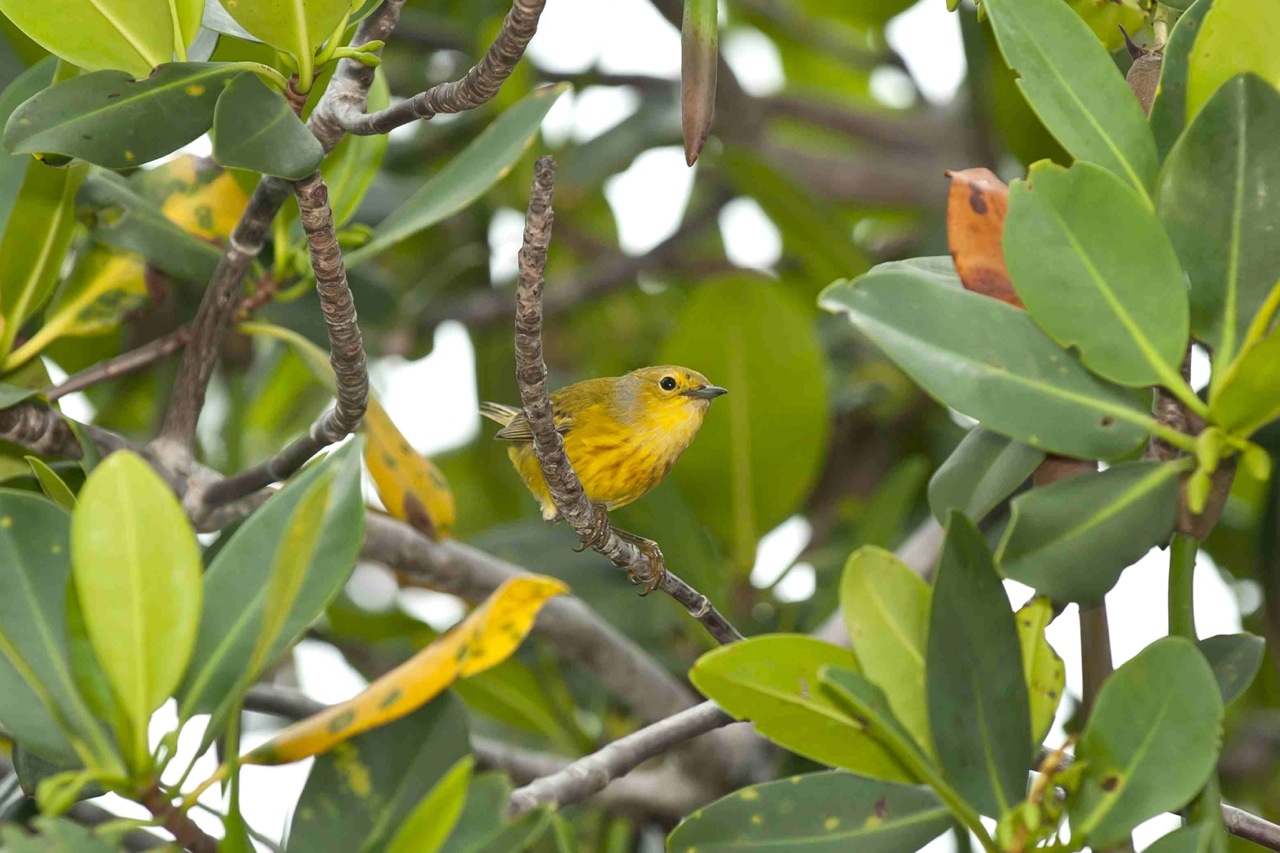
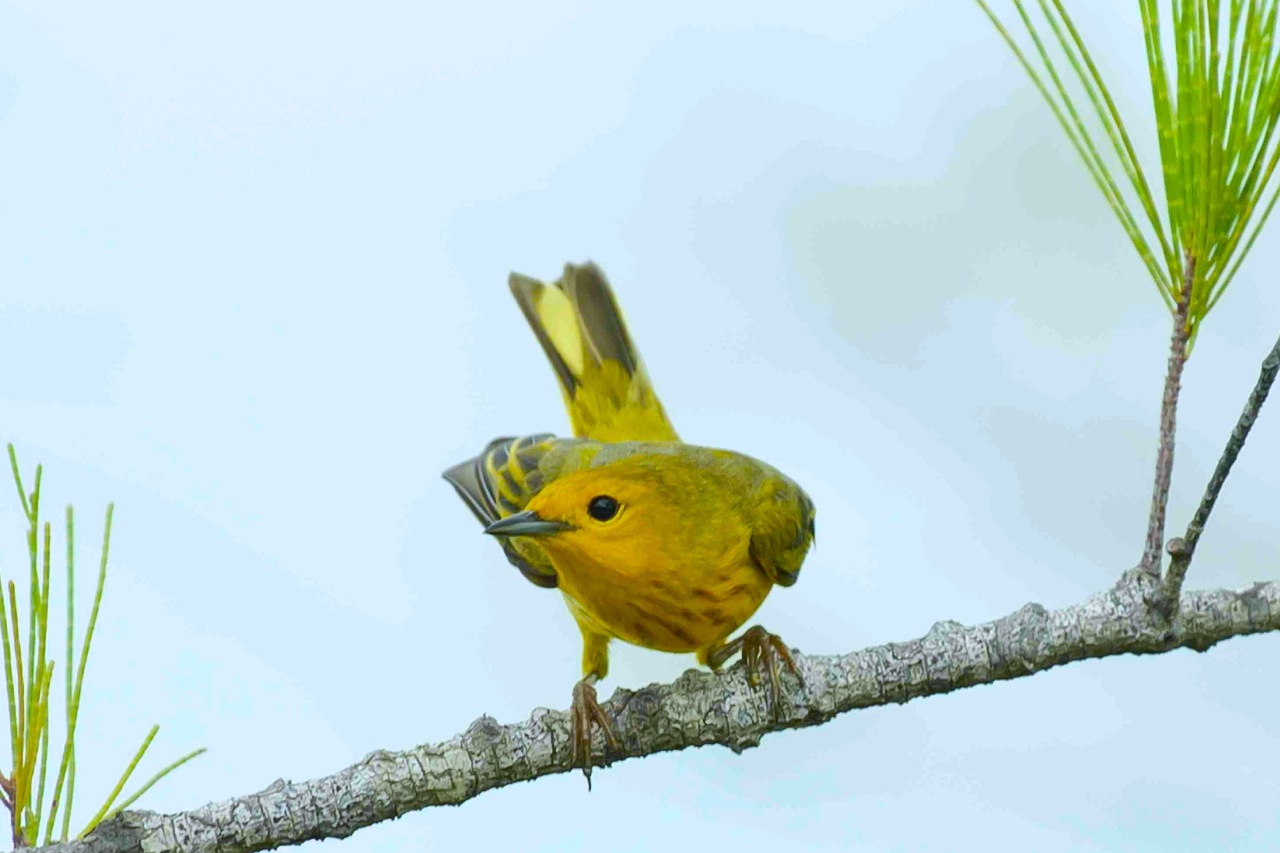
Of the 37 WARBLER SPECIES recorded for Abaco, 25 are mainly or partly yellow. So talk of a ‘yellow warbler’ can as easily be a general description matching any one of a number of species, as a particular description of the one and only Yellow Warbler Setophaga petechia. This small sunny bird is a common permanent resident on Abaco, one of only 5 resident warblers. The other 4 don’t help the situation much, by dint of all being yellow to a greater or lesser extent. 

Yellow Warbler male3.Abaco Bahamas.6.13.Tom SheleyDendroica-petechia-001 (MDF)

My general rule of thumb is that the Yellow Warbler out-yellows all the rest (though the winter-resident PROTHONOTARY gives it a run for its money), with the adult males bright and cheerful all over and the females rather less glaring but still demonstrably yellow from beak to tail tip.

Yellow Warbler (f) Bruce Hallett

Q. ARE THEY ALWAYS EASY TO SEE? A. SEE BELOW, GO FIGUREYellow Warbler male.Cherokee Sound.Abaco Bahamas.Tom Sheley

Q. CAN YOU SHOW MORE PRETTY FEMALES? A. BY ALL MEANSYEWA_Bahamas-Great Abaco_5204_Yellow Warbler_Gerlinde Taurer copyYEWA 2_Bahamas-Great Abaco_5165_Yellow Warbler_Gerlinde Taurer copy

Q. SO YEWAs ARE COMMON? HAVE YOU EVER PHOTOGRAPHED ONE? A. ONLY HOPELESSLYYellow Warbler, Abaco (Keith Salvesen)

Q. DO THEY HAVE AN ATTITUDE PROBLEM? A. ONLY VERY RARELYYellow Warbler male2.Abaco Bahamas.6.13.Tom Sheley

A THREAT TO THE SPECIES Shiny Cowbirds, luckily still rare on Abaco, favour yellow warbler nests for their parasitic egg-laying, with sadly predictable results. These cowbirds properly belong in South America, but they are gradually spreading north through the Caribbean, and have now reached Florida. I’m beginning to take a (purely personal) hard line on invasive species where they diminish and destroy indigenous species: eradication. The feral peacocks of Casuarina, now several generations down the line from their original introduction as exotic pets, do no harm and are undeniably decorative. But would you prefer the pretty yellow warbler and its fledglings in your garden, or the shiny cowbird that displaced them?

240px-Dendroica_petechia_map.svg

Credits: Tom Sheley (1,2,5,9); MDF (3)Bruce Hallett (4); Gerlinde Taurer (6,7); RH (8)

And finally… the song that out-yellows all other songs with the word ‘yellow’ in the title – it is the only song called just that one word! 

    Yellow Warbler at sunrise.Abaco Bahamas.6.13.Tom Sheley copy copy                Yellow Warbler at sunrise.Abaco Bahamas.6.13.Tom Sheley copy copy                Yellow Warbler at sunrise.Abaco Bahamas.6.13.Tom Sheley copy copy                Yellow Warbler at sunrise.Abaco Bahamas.6.13.Tom Sheley copy copy                Yellow Warbler at sunrise.Abaco Bahamas.6.13.Tom Sheley copy copy

Unknown's avatar

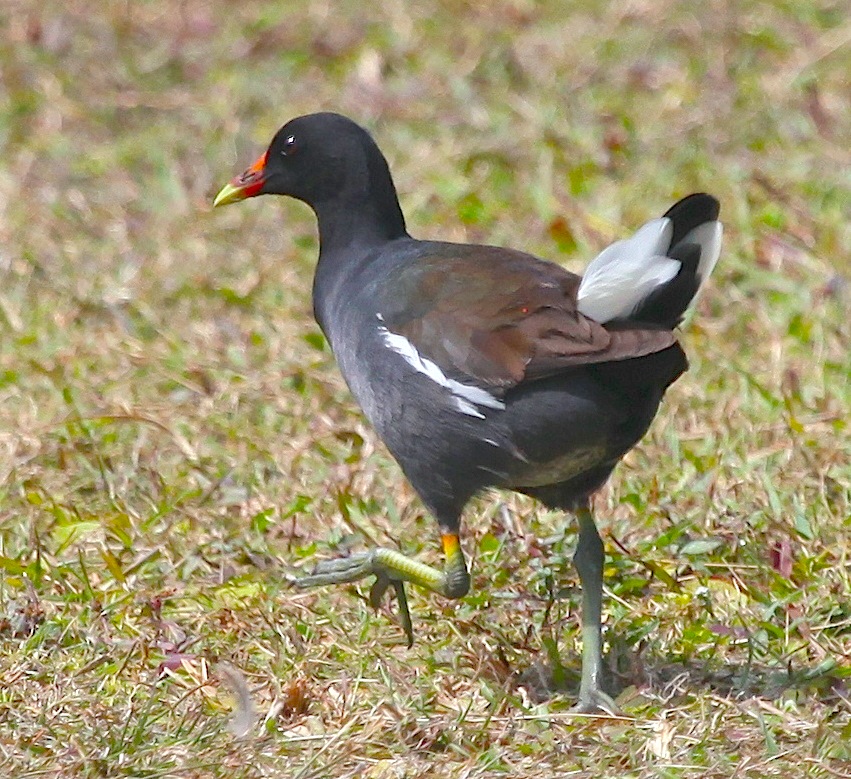
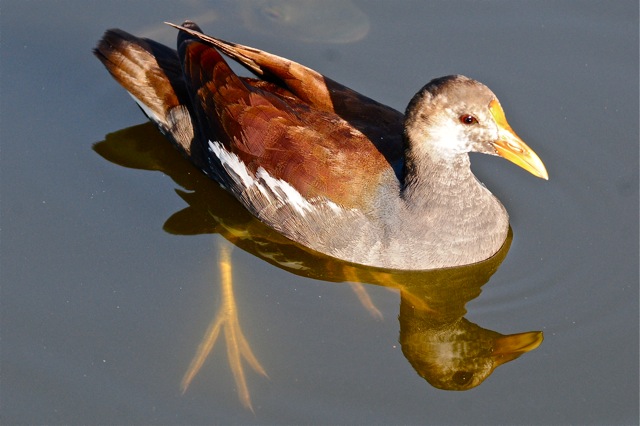
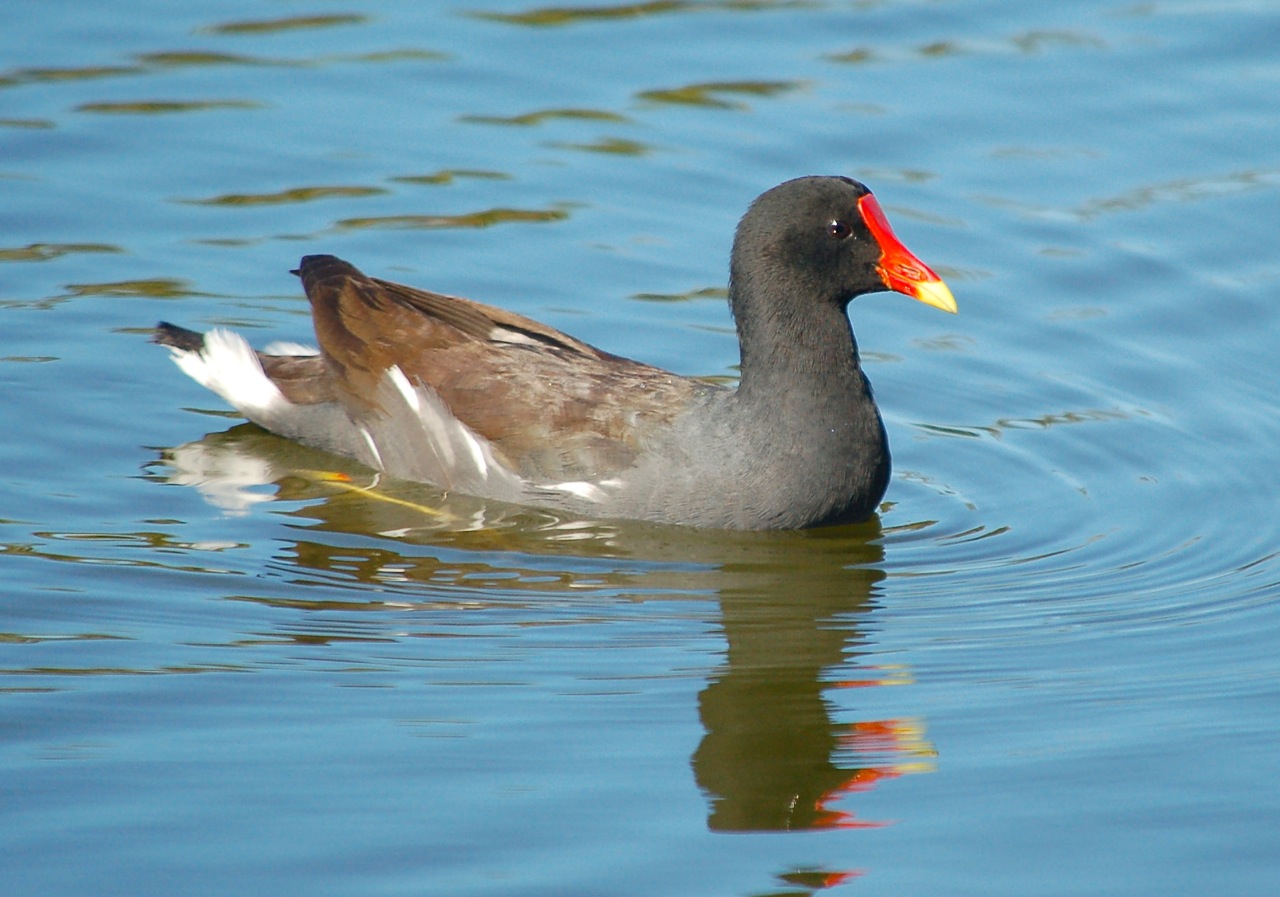
WHAT’S IN A NAME? COMMON GALLINULE aka MOORHEN


Common Gallinule.Abaco Bahamas.6.13.Tom Sheley

WHAT’S IN A NAME? COMMON GALLINULE aka MOORHEN

Names can be a hassle. My own, when not my alter ego Rolling Harbour (from a long line of Harbours), was a act of Baptismal Folly for which I cannot be held responsible. I could have changed it by Deed Poll were I seriously bothered, but I am aware that there are far worse names out there and at least mine reflects my scandi-scottish origins I suppose.

Common Gallinule, Abaco - Bruce Hallett

The Moorhen has had a far worse time of it. Over many decades its name has been changed, changed back and changed again. Partly it’s to do with a continuing debate over the New World and Old World subspecies – or as it now stands, separate species. Even that status has changed around over time. It’s enough to give the poor creature an ID crisis.

Bahamas-Great Abaco_7551_Common Gallinule_Gerlinde Taurer copy

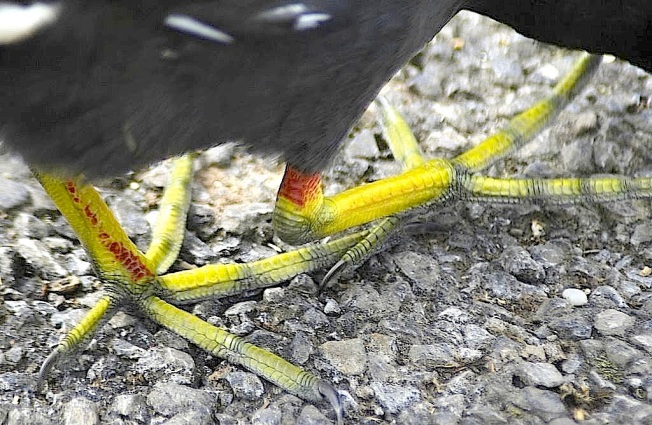
The Common Gallinule Gallinula galeata, as it has been known since 2011, is a bird of the rail family. The AOU decreed its divorce from the Common Moorhen after due consideration of the evidence and it is now lumbered with the less familiar and user-friendly Gallinule name.

Common Gallinule, Abaco - Peter Mantle

Note the yellow legs and large feet (unwebbed)

Moorhens (I’m using this as a comfortable nickname, aware that I am flying in the face of progress) are usually seen swimming serenely around ponds or picking their way through marshy ground as they forage. They have an aggressive side, hissing loudly if they feel threatened and fighting to preserve their territory or nest. Nestlings have been observed clinging to a parent as it flies to safety with its offspring as passengers.

Bahamas-Great Abaco_7536_Common Gallinule_Gerlinde Taurer copy

WHAT IS A ‘GALLINULE’ WHEN IT’S AT HOME

I wondered what the word ‘Gallinule’ actually means? What is the derivation? The BINOMIAL NOMENCLATURE (basically = scientific name in Latin) of most species is largely unintelligible unless you have some knowledge of Latin. But most birds end up with a useful, often descriptive, everyday name. Red-tailed Hawk. Least Tern. Yellow Warbler. Painted Bunting. You know what to expect with those. But a ‘Gallinule’ could as easily be a french cooking receptacle or delicious dish. Or a grim and slimy horror from Tolkien. Or maybe something / someone out of Harry Potter. Sleuthing online reveals that the word is a modern Latin construct of the c18, derived from the Latin diminutive word for a ‘hen’. So it’s simply a hen. As in Moorhen.

Common Gallinule, Abaco Woody Bracey

WHAT IS A ‘MOOR’ WHEN IT’S ATTACHED TO A HEN?

This does not refer to a wide swathe of open upland country, often covered in heather and gorse, where in the UK (especially in Scotland) every August 12 thousands of grouse are traditionally shot. It stems from an honest Old English word for a marshy or swampy area, Mor. It was used from early mediaeval times and itself comes from Saxon and Germanic roots. So perhaps calling the Common Gallinule a [Common] Marsh Hen would be more helpful… Or – hey! – why not have American Moorhen and Eurasian Moorhen, a perfectly valid differentiation used quite satisfactorily for other species…?

Common Gallinule (nonbreeding adult).Abaco Bahamas.2.12.Tom Sheley

Adult non-breeding plumage

There’s more on the naming of birds generally and Moorhens specifically in a couple of amusingly-written sources I came across. The first is from NEMESIS BIRD written by Alex Lamoreaux in 2011, called Goodbye Moorhen, Hello Gallinule. The second is from the excellent 10000BIRDS.COM entitled Moorhen Mania – the splitting and renaming of the Common Moorhen

Common Gallinule (Leucistic?) - Tony Hepburn

The bird above with a striking colouring and orange beak was photographed by the late Tony Hepburn. He believed it to be an unusual LEUCISTIC moorhen with reduced pigmentation, a condition that has similarities with ALBINISM

BAHAMAS - Common Gallinule, Abaco, TC GC Hole 11 - Becky Marvil

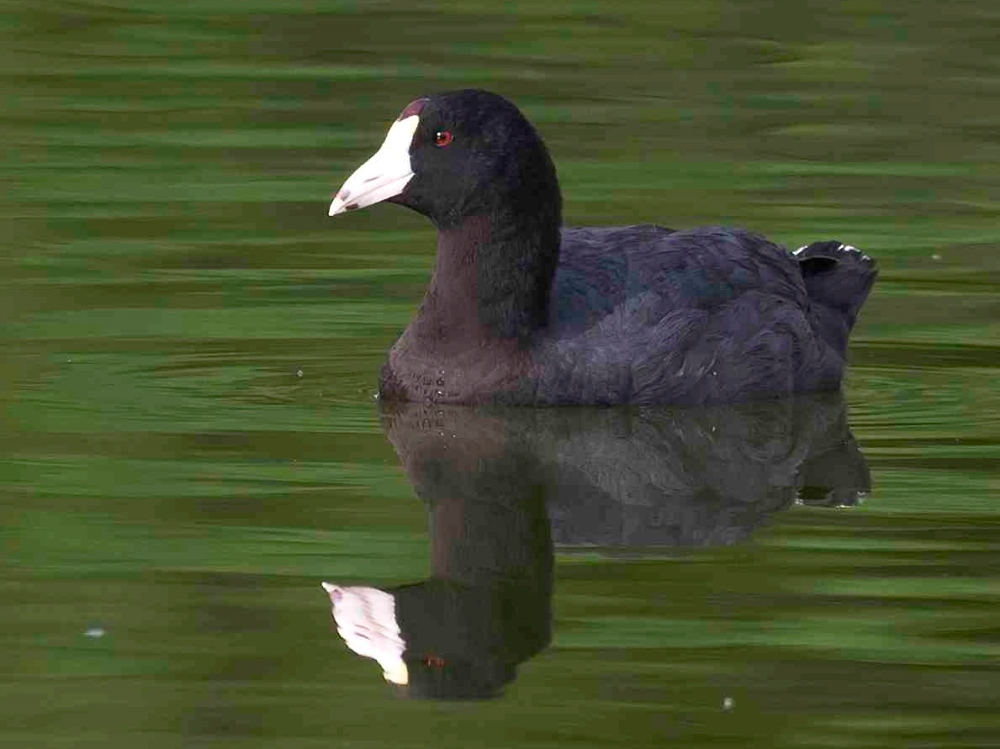
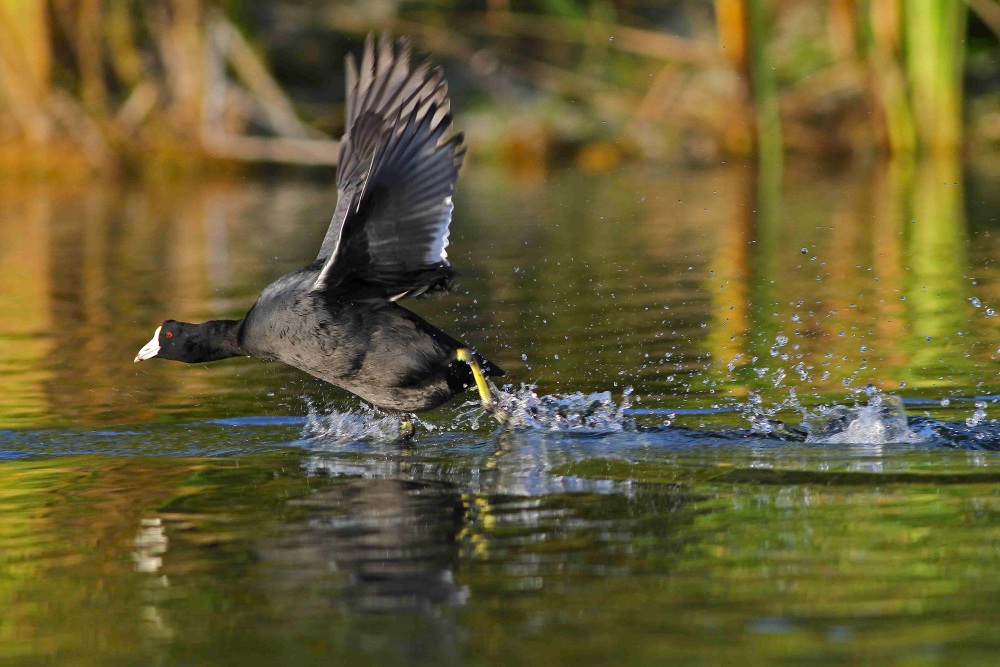
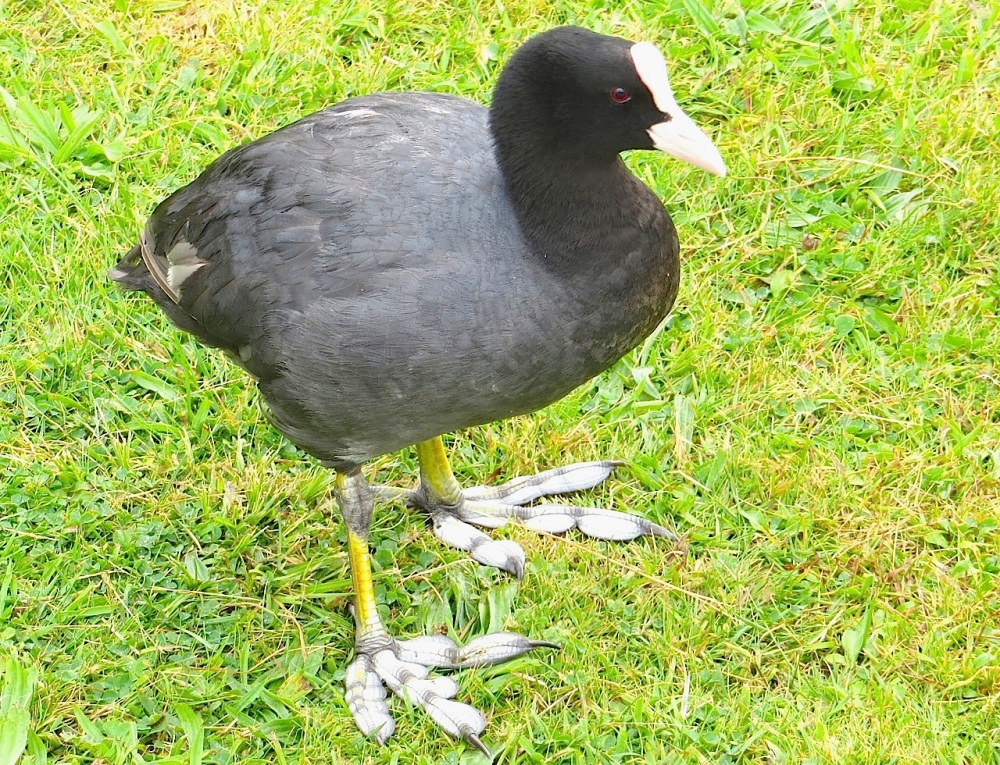
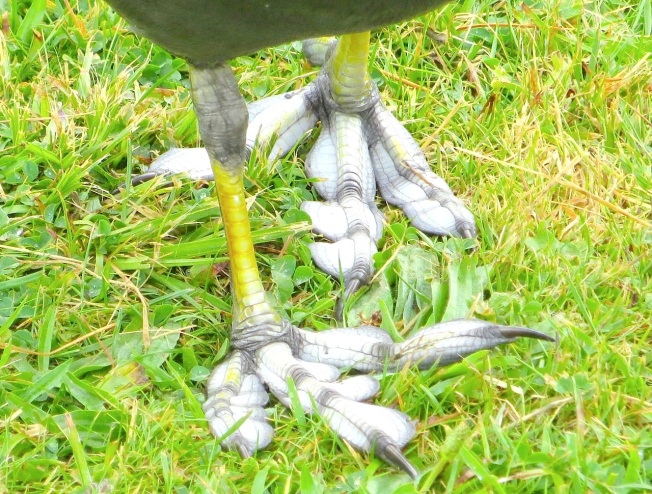
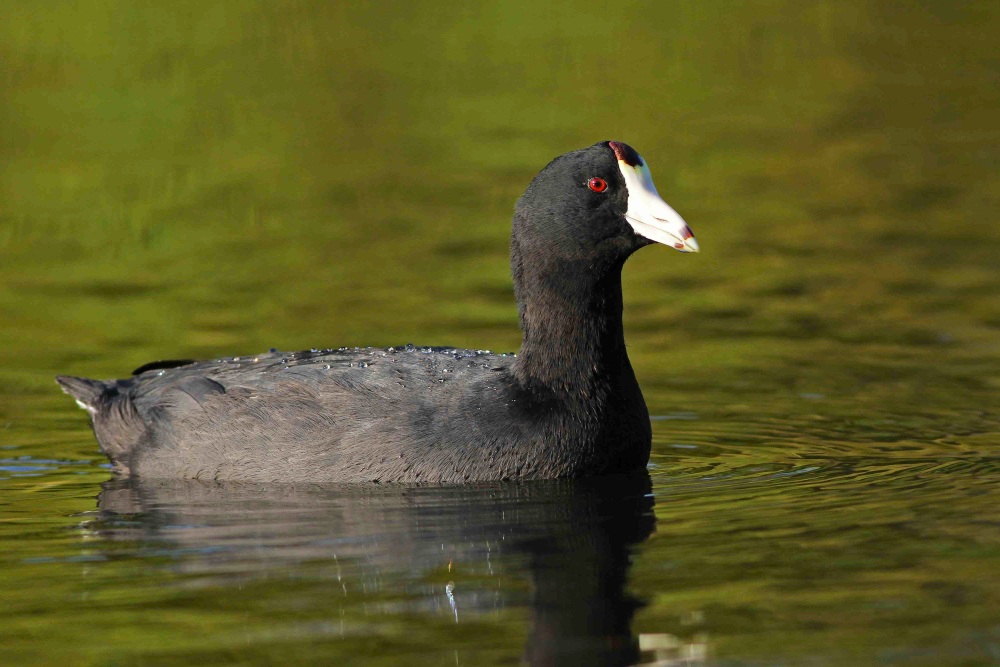
At some stage I am planning a companion Coot post. I won’t need to go on and on about that name. It may not be descriptive but it is short and simple, and everyone knows where they stand with it. Until they decide to rename it a Cotellinule…

Gallinule © Hans Hillewaert

Credits: Tom Sheley, Bruce Hallett, Peter Mantle, Gerlinde Taurer, Woody Bracey, Tony Hepburn, Becky Marvil, Hans Hillewaert, Nemesis Bird, 10000birds.com

     common-gallinule     common-gallinule     common-gallinule     common-gallinule     common-gallinule     common-gallinule

Unknown's avatar

FIERCE LITTLE FALCONS: MERLINS ON ABACO

Merlin, Abaco (Becky Marvil)FIERCE LITTLE FALCONS: MERLINS ON ABACO

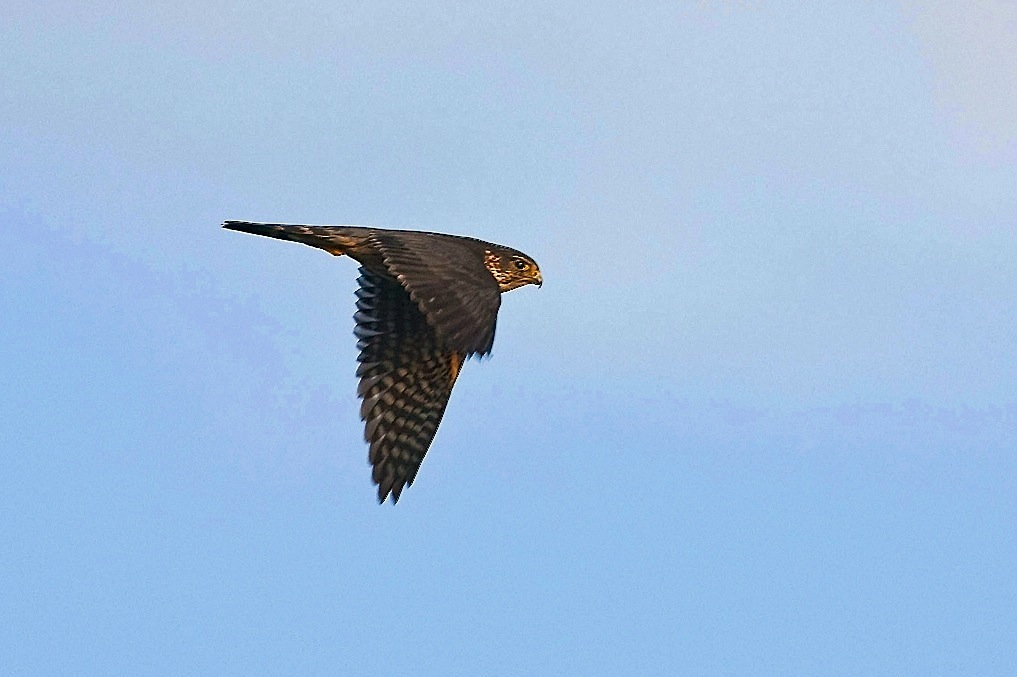
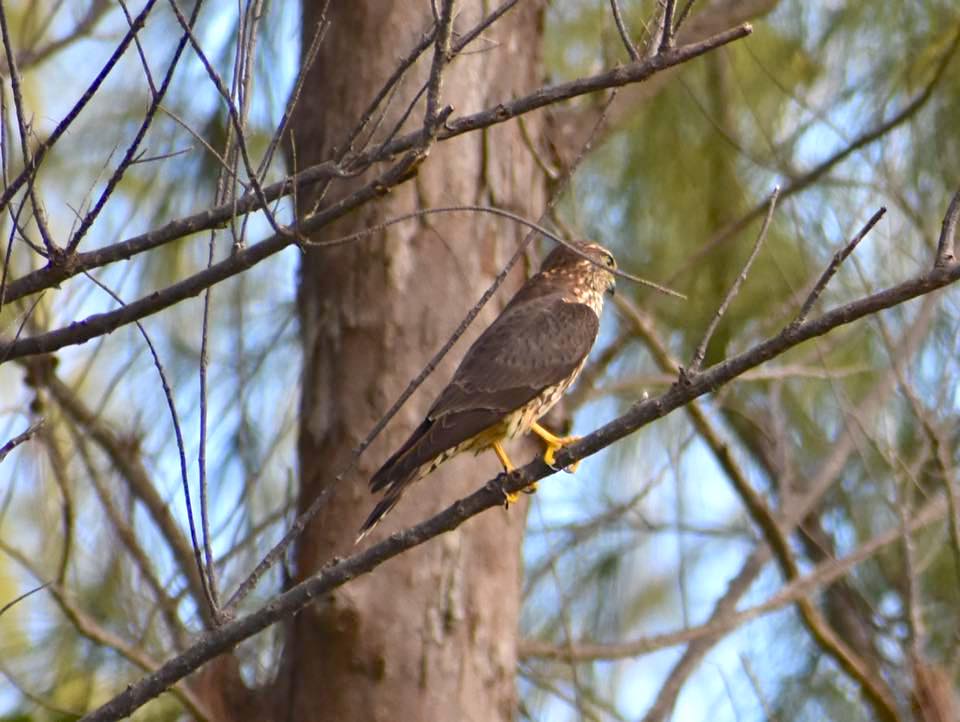
Merlins (Falco columbarius) are fierce small falcons that are fast and agile in flight. On Abaco, they are fairly common winter residents – though finding one and managing to photograph it may take a bit of doing. And maybe a dose of luck. The ‘columbarius‘ part of their taxonomy reflects their colloquial name ‘Pigeon Hawk’. Merlins are found throughout much of the northern hemisphere. They are classified as a New World species and an Old World / Eurasian subspecies, F c aesalon. Some argue for two distinct species, the gene pools of the two versions apparently having parted company ten of thousands of years ago. The birds aren’t overly bothered by the debate.

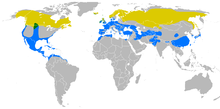
Merlin World Range Map: yellow = summer, blue = winter220px-Falco_columbarius_distribution_map

HOW DO MERLINS DIFFER FROM AMERICAN KESTRELS (AMKE)?

  • Slightly larger and notably heavier (thus having more speed and endurance in flight)
  • Different colouring, e.g. lacking the indicative reddish-browns of the AMKE
  • Distinctive tail-barring as against black ends to the tail feathers with a white fringe
  • Unlike the AMKE they don’t hover, but close in directly on the small birds that are the main prey, often flying very low to surprise the victim.

For comparison: Merlin in  South Abaco, American kestrel at Sandy PointMerlin, Abaco (Rhonda Pearce)American Kestrel, Abaco (Keith Salvesen)

 SO JUST HOW FIERCE ARE MERLINS?

Formidable! If you are a small or even medium-sized bird, you need to keep your wits about you. Merlins are largely ‘omni-habitat’ within their range, which includes open country, shrubland, light forest, and grasslands. They are fast, agile and strong. They can fly high, at medium height or at ground level, and are expert in surprise attack and rapid pursuit of prey. If you are a large bird of prey – a red-tailed hawk, perhaps – they may attack you with ferocity. They may not actually be trying to nail you, but to get you out of their territory and their catchment area.

Merlin in flight, Abaco (Craig Nash)

Most of a merlin’s prey is taken in flight, and their speciality is ‘tail-chasing’ terrified birds. Breeding pairs may hunt cooperatively, with one bird flushing prey from cover into the open for its mate to… well, you get the picture – they are clever too. They may even pursue birds that have been flushed out by another bird of prey in the vicinity.

Merlin in flight, Abaco (Craig Nash)

MERLINS AND PHOTOGRAPHERS

This is a slightly fraught relationship, because Merlins do not always pose as one might wish. Sometimes they are hard to see, being fairly well camouflaged unless they choose to ‘go out on a limb’. Merlin, Abaco (Gerlinde Taurer)

And sometimes they don’t play by the rules relating to light and focus, making a clear shot difficult

Merlin, Abaco (Becky Marvil)

This photo (2017) was taken on Elbow Cay (north end) by Jan Purdy Hulme Metcalf‎. It’s the first merlin photo from one of the Cays that I have come across.

merlin-elbow cay-north end jan purdy hulme metcalf

FALCONRY AND MEDIEVAL HISTORY

IMG_6313

Dame Juliana Berners

Merlins were popular birds in medieval English falconry, and according to the 1486 Boke of Seynt Albans, the ‘Marlyon’ was considered the appropriate hunting bird for a lady. This book contained an essay on hunting attributed to Dame Juliana Berners, the prioress of a Priory near St Albans, who, game lady that she must have been, also contributed to one of the earliest treatises on fishing, ‘Fysshynge wyth an Angle‘ (hence, angling).  

IMG_6316

The Dame’s Manuscript

FURTHER HISTORICAL DIGRESSION (feel free to skip to final para)

While reading up further about Dame Juliana, I came across (wiki-tnx) a wonderful ranking for birds of prey matched to status that I hadn’t encountered before. Here’s the list, from Emperor to Knave / Servant. A Tercel was / is a male falcon, especially a Peregrine or Gyrfalcon. A Musket is a sparrowhawk. 

Falconry Table

The Boke of Seynt Albans also contains list of collective nouns for animals and birds, many familiar today such as “gaggle of geese”. There are also humorous collective nouns for different professions, such as a “diligence of messengers”, a “melody of harpers”, a “blast of hunters”, “a subtlety of sergeants”, and a “superfluity of nuns”…

Merlins are still trained for hunting smaller birds; and because of their speed and agility they are used in falconry displays. Despite changing habitat, and a perceptible dip in population from the use of pesticides now banned (such as DDT), the Merlin seems to be holding its own very well 5 centuries after the Boke was written.

Merlin & Prey - Just a Prairie Boy, Calgary

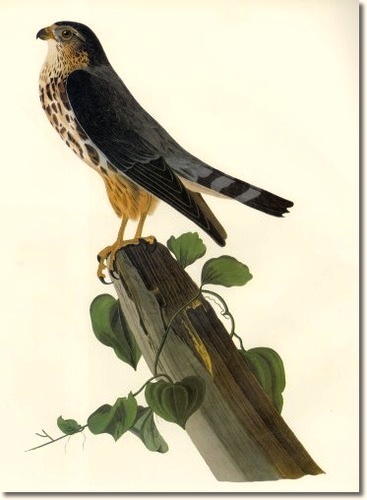
AND FINALLY… AUDUBON’S HANDSOME MERLINS

audubon-iii-scavengers-and-birds-of-prey-merlin-aka-le-petit-caporal audubon-iii-scavengers-and-birds-of-prey-merlin-aka-pigeon-hawk

Credits: Becky Marvil (1 & 7); RH (2); Rhonda Pearce (3); Craig Nash (4 & 5); Gerlinde Taurer (6); Prairie Boy; (8) Jan Purdy Hulme Metcalf (2017 photo); (9) wiki – not taken on Abaco, but I liked it; Dame Juliana Berners (1486); Magpie Pickings

Unknown's avatar

OVENBIRDS FOR CHRISTMAS ON ABACO (NB NOT ROAST TURKEY)


Ovenbird.Abaco Bahamas.Tom Sheley.2

OVENBIRDS FOR CHRISTMAS ON ABACO (NB NOT ROAST TURKEY)

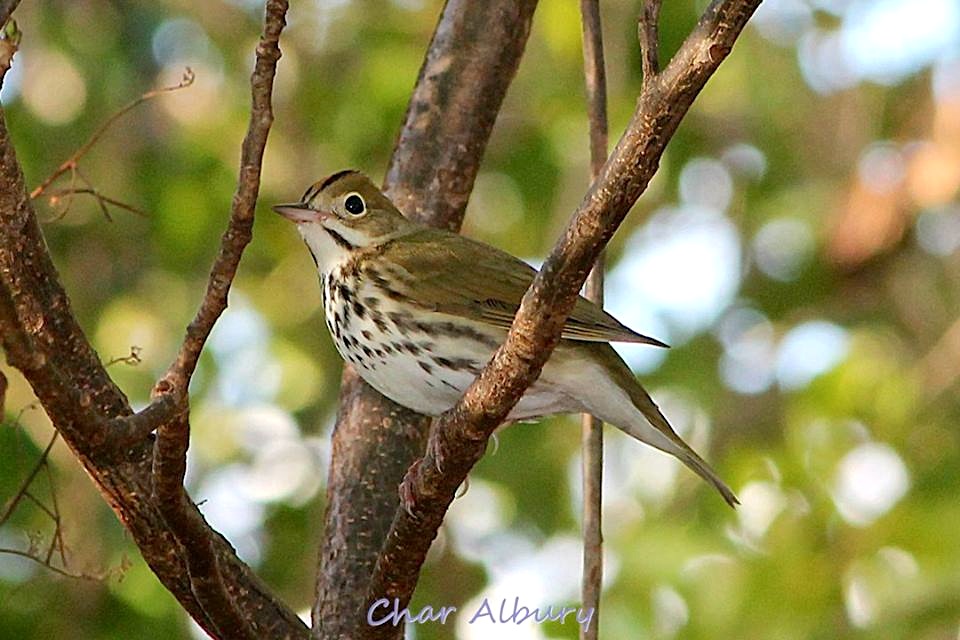
The Ovenbird (Seiurus aurocapilla) is a small winter-resident warbler with distinctive orange head feathers that can be raised into a crest.  I’m guessing this accomplishment is mainly used in the breeding season as a way to impress and attract a mate. Maybe when alarmed or excited at other times as well. Right now, with Christmas only ’12 sleeps’ away, they have become a visible presence on Abaco and the Cays despite their shyness and a general tendency to shuffle around in the undergrowth looking for insects and small snails. Ovenbird.Delphi Club.Abaco Bahamas.Tom Sheley.1

You may hardly be aware of these rather unassuming little birds, and as they rootle their way through the dead leaves under shrubs they can look quite dull. See one lit up by the morning sun, however, and you’ll see how pretty and richly marked they are.

Ovenbird, Abaco  Woody Bracey

The Ovenbird enjoys the taxonomic distinction of being the only bird of its genus in the warbler family Parulidae. It is a so-called ‘monotypic’ species. It was formerly lumped in with Waterthrushes, but was found to be genetically dissimilar so its new status was granted. 

Ovenbird.Bahama Palm Shores.Abaco Bahamas.Tom Sheley

The ovenbird is so named because it builds a domed nest (“oven”) with a side-entrance, constructed from foliage and vegetation. They tend to nest on the ground, making them vulnerable to predation. The species name for the ovenbird, Seiurus aurocapilla, has nothing to do with the nest shape, though. It derives from both Greek and Latin, and loosely means ‘shaking tail, golden haired’. No, nothing to do with Miley Cyrus either. Leave it.

Here are some recent shots taken by Charmaine Albury on Man-o-War Cay, showing the orange crest very clearly.

Ovenbird, M-o-W Abaco (Char Albury 3) Ovenbird, M-o-W Abaco (Char Albury 2) Ovenbird, M-o-W Abaco (Char Albury 1)

My plan to include audio of the ovenbird’s song and call has been temporarily thwarted by a glitch, but I’ll add them here when I have overcome the problem.Ovenbird, Abaco (Gerlinde Taurer)

Gauge the size of the bird against the pod it is standing on…Ovenbird, Abaco - Bruce Hallett

In this photo, you can see that the orange crest feathers are raisedOvenbird Seiurus aurocapilla (Cephas, wiki)

Credits: Tom Sheley, Woody Bracey, Charmaine Albury, Bruce Hallett, Gerlinde Taurer, Cephas / Wiki

Unknown's avatar

THICK-BILLED VIREOS: ABACO’S ONLY PERMANENT RESIDENT VIREO


Thick-billed Vireo, Abaco 2 Tom Reed

THICK-BILLED VIREOS: ABACO’S ONLY PERMANENT RESIDENT VIREO

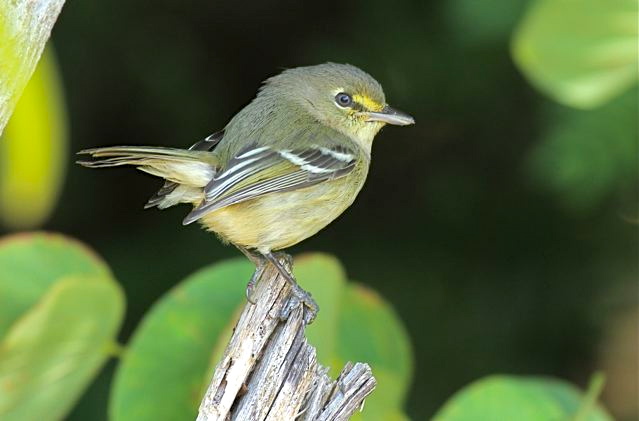
Hard to know why I haven’t got round to featuring these little vireos before. Unlike the other 7 vireo species found on Abaco seasonally or as transients, the Thick-billed Vireo Vireo crassirostris is an ever-present permanent resident of the coppice and scrub; and their unmistakeable repeating song can be heard almost everywhere. It was the first bird song I heard on Abaco, and therefore the TBV was the first bird I learned to ID. I’ve got quite a soft spot for them, really.Thick-billed Vireo, Abaco (Craig Nash)

Although TBVs are very easy to hear and track to a general area of coppice, I find actually seeing the bird creating the noise quite hard – let alone getting a clear camera shot. They always seem to be lurking several feet further away, deeper in the foliage, than the sound suggests. I’ve had some fun making TBV song iPhone recordings along the Delphi drive, practising the technique. If you want to know more about recording and converting to MP3 CLICK HERE.

One of my favourite images, from Gerlinde Taurer: a ‘shouty’ bird. We used it for ‘BIRDS OF ABACO‘.Thick-billed Vireo, Abaco  (Gerlinde Taurer 2)

I also love this perky little guy with a great beady-eyed pose taken by Bruce HallettThick-billed Vireo, Abaco (Bruce Hallett 2)

Here’s a clip of song, which I’m sure will be immediately familiar to Bahamians:

Paul Driver / Xeno Canto

Thick-billed Vireo, Abaco Bahamas.Tom Sheley

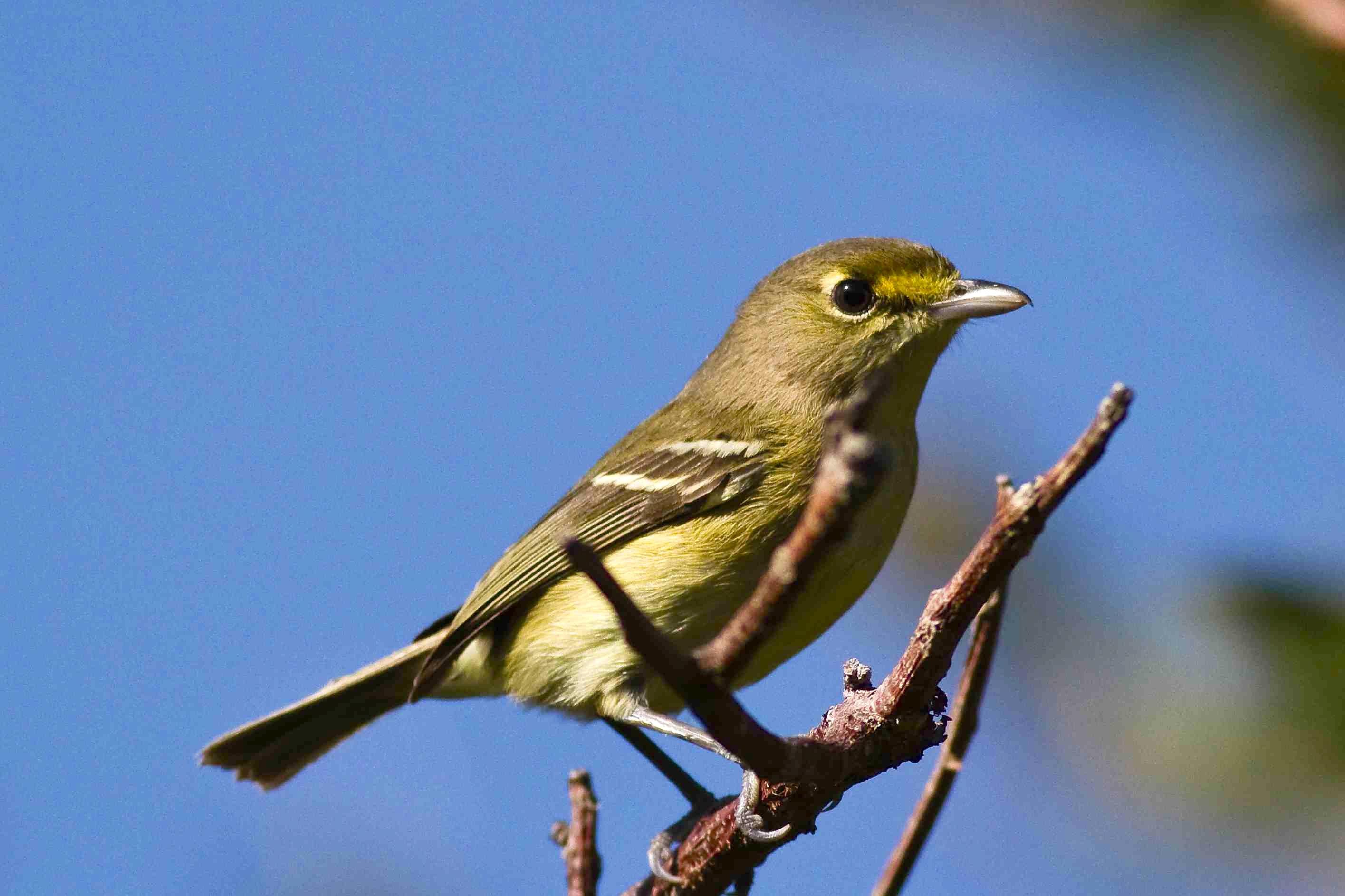
The main signifiers for this species, which in combination distinguish the TBV from the other vireo species on Abaco, are:

  • Two white wing bars
  • Yellow patch – usually quite prominent – between eye and beak
  • Thick bill – which immediately rules it out of being one of the 37 warbler species on Abaco…

Text book TBVThick-billed Vireo, Abaco (Becky Marvil 2).jpg

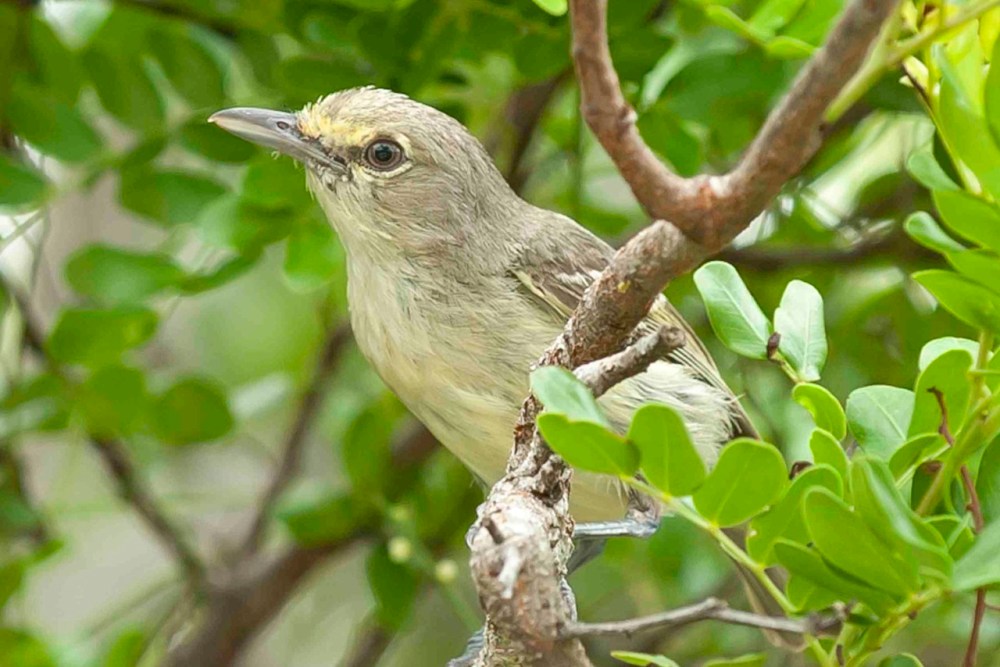
There are marked colour variations in the species according to maturity, season and to an extent gender (though m & f are quite similar). Here’s one that is causing wing-bar confusion by only showing traces. It also has quite dark upper parts.

Thick-billed Vireo, Abaco (Alex Hughes)

This is a very yellow TBVThick-billed Vireo, Abaco (Bruce Hallett 1)Whereas this one has rather anaemic colorationThick-billed Vireo, Abaco Bahamas .Tom SheleyFinally, this pretty TBV is very delicately markedThick-billed Vireo, Abaco (Tony Hepburn)

RELATED POSTS

BLACK-WHISKERED VIREO

PHILADELPHIA VIREO

Credits: Tom Reed (1), Craig Nash (2), Gerlinde Taurer (3), Bruce Hallett (4, 8), Tom Sheley (5, 9), Becky Marvil (6), Alex Hughes (7), Tony Hepburn (10); Paul Driver / Xeno Canto

Unknown's avatar

ABACO PARROTS: A GALLERY OF GORGEOUS


'Over the Moon'

‘Over the Moon’

ABACO PARROTS: A GALLERY OF GORGEOUS

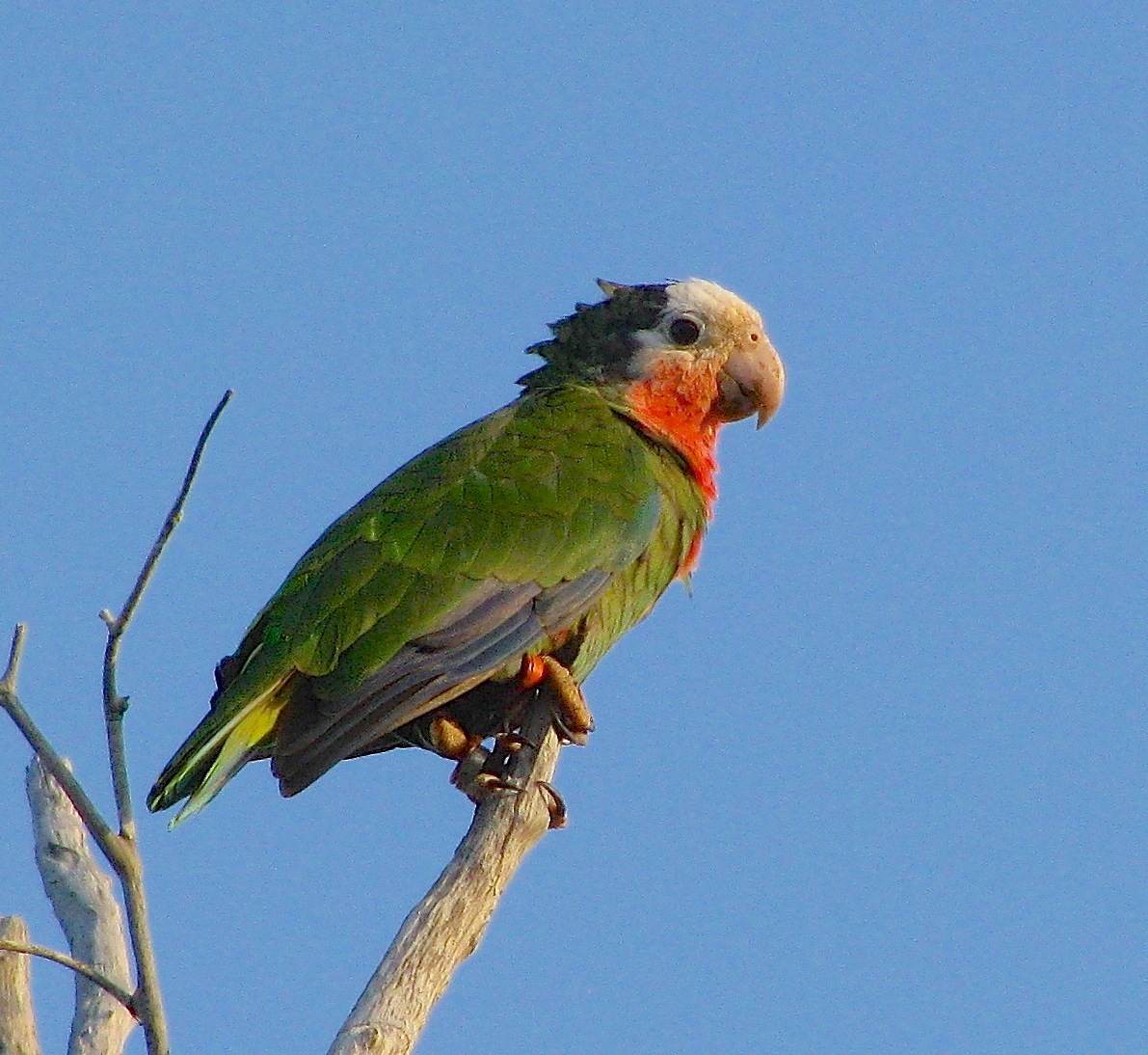
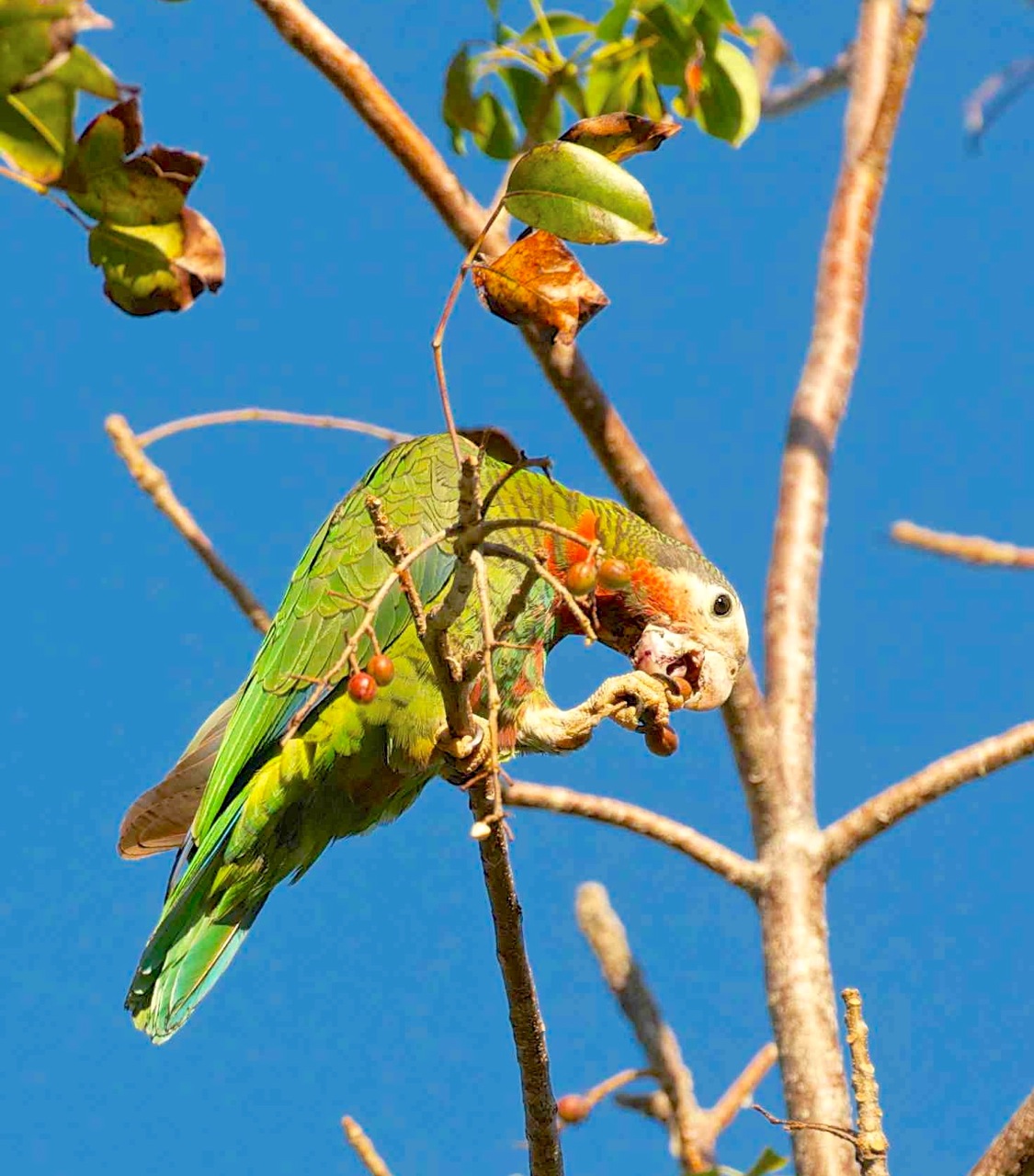
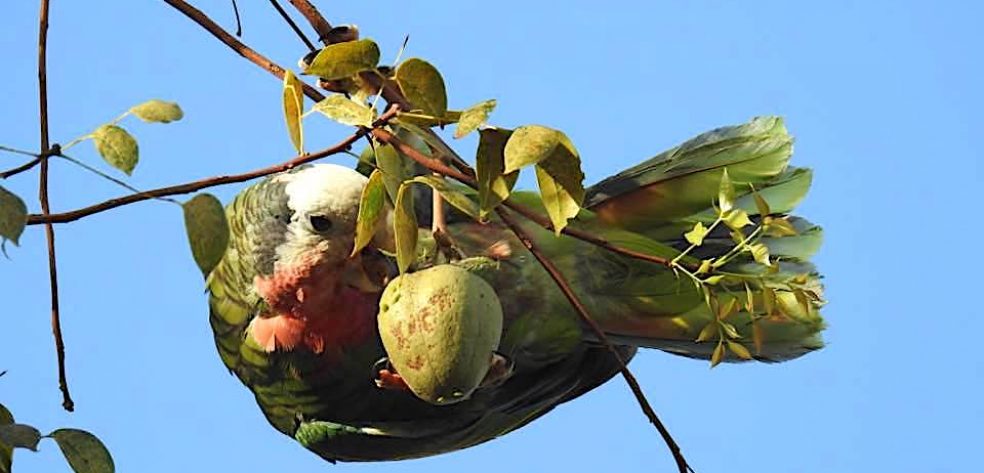
It’s been a while since the parrots of Abaco got a look-in hereabouts. Time to put that right. At the end of this gallery I will add some links to posts about the unique ground-nesting parrots of Abaco. Newcomers to this blog (I thank you both) may be interested to know that intensive conservation measures have brought this subspecies of the Cuban Parrot back from the brink of extinction – fewer than 1000 – to a sustainable and expanding population of around 4000.

For an overview of these lovely birds, I’ve made a slideshow presentation of a small booklet I put together in conjunction with scientist Caroline Stahala, who devoted several years to the research and protection of the parrots. Contents: parrots, nests, eggs, cute chicks, info, Sandy Walker with a fledgling on his lap.

Bahamas-Great Abaco_6419_Rose-throated Parrot_Cuban Parrot_Gerlinde Taurer Abaco Parrot Craig Nash.Cuban Parrot Abaco Abaco Parrot eating Gumbo Limbo fruit. Abaco Bahamas 2.12 copy

Here is the noise of a flock of parrots at Bahama Palm Shores, an excellent place to find them. It’s one of the less raucous recordings that I have made! We normally go to the main (north) turning, drive straight down to the end, cut the engine and listen. I’ve usually been lucky in that immediate area around 5.00 p.m., though others may have discovered other good times of day.

Abaco Parrot, Peter Mantle Abaco Parrot Keith Salvesen.Rolling Harbour Abaco
Bahama Parrot 1-Nina Henry sm Cuban Parrot Bruce Hallett IMG_7681ABACO (CUBAN) PARROT Abaco (Cuban) Parrot -  Charlie SkinnerAbaco (Cuban) Parrot -  Charlie SkinnerABACO PARROTS Unique parrots in pictures, video & sound

ABACO PARROTS Rare nesting footage

ABACO PARROTS Conservation & anti-predation programs 

Credits: Melissa Maura (brilliant header!), Gerlinde Taurer, Craig Nash, Tom Sheley, Peter Mantle, RH, Nina Henry, Bruce Hallett, Charlie Skinner, and Caroline Stahala