Unknown's avatar

SCALY TALES: CURLY-TAILED LIZARDS ON ABACO


Curly-tailed Lizard, Abaco Bahamas (Keith Salvesen)

SCALY TALES: CURLY-TAILED LIZARDS ON ABACO

The northern curly-tailed lizard Leiocephalus carinatus, to give it its full name, resembles a tiny dragon with a twist in its tail. These little critters bask in the sun, or scuttle away into holes and crevices as you approach them. I suspect that even a confirmed herpophobic would find some charm in them. They are, of course, completely harmless to humans. 

Curly-tailed Lizard, Abaco Bahamas (Charles Skinner)

Surprisingly, the Bahamas is home not just to one but five different curly-tail species, and nine sub-species. Broadly-speaking, the variants are found on different and specific islands and have discrete local markings. Mostly they are brownish, but they may also be grey or with a greenish tinge like this one I recently photographed.

Curly-tailed Lizard, Abaco Bahamas (Keith Salvesen) Curly-tailed Lizard, Abaco Bahamas (Keith Salvesen)

Curly-tail males, being very territorial, turn somewhat aggressive around breeding time, which is basically most the the year, from February to October. Behaviours indicative of their territorial claims include tail curling / uncurling (of course), head-bobbing, strutting about in an agitated way and inflating the sides of their necks in a threatening kind of way. The tiny-tails, 2″ long when born, are known as ‘hatchlings’.

An impressive ‘double curly’ by the pool at DelphiCurly-tailed Lizard, Abaco Bahamas (Keith Salvesen)

THREATS TO CURLY TAILS

According to the Bahamas National Trust BNT, the main dangers to the curly-tails of the Bahamas are:

  • Dogs, cats, rats and introduced predators such as raccoons
  • Collection for the pet trade – curly tails are unprotected by CITES listing (also cute)
  • Collection of the rarer endemics by reptile enthusiasts seeking ‘exotics’
  • Development and habitat destruction (though it is noted that curly tails seem to adjust well in developed areas)

A curly tails sloughs its skin as it grows, as with snakes and other reptilesCurly-tailed Lizard, Abaco Bahamas (Charles Skinner)

WHY THE CURLY TAIL?

  • As mentioned above, for use in territorial posturing
  • In courtship displays by males to attract females (luckily a method not available to humans)
  • As a response to predators, confusing an attacker with movement at both ends
  • As a last resort, to detach to aid escape (the tail re-grows)
  • For fun and just because they can grow one and you cannot

Curly-tailed Lizard, Abaco Bahamas (Keith Salvesen)

Credits: all photos, Keith Salvesen except #2 & #6, Charles Skinner; BNT
Unknown's avatar

LA SAGRA’S FLYCATCHERS REVISITED ON ABACO


LA SAGRA’S FLYCATCHERS REVISITED ON ABACO

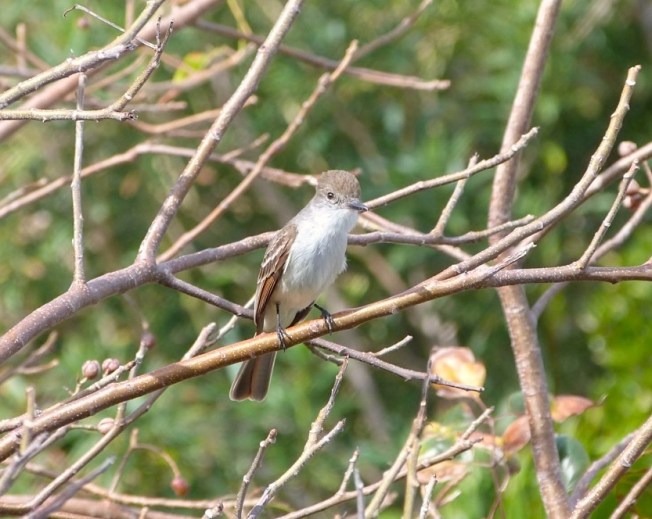
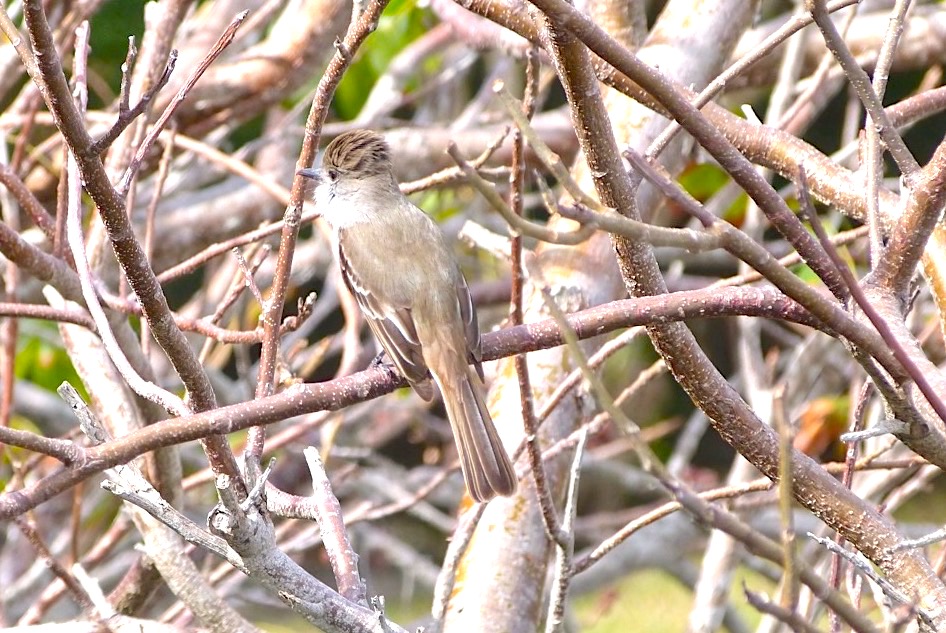
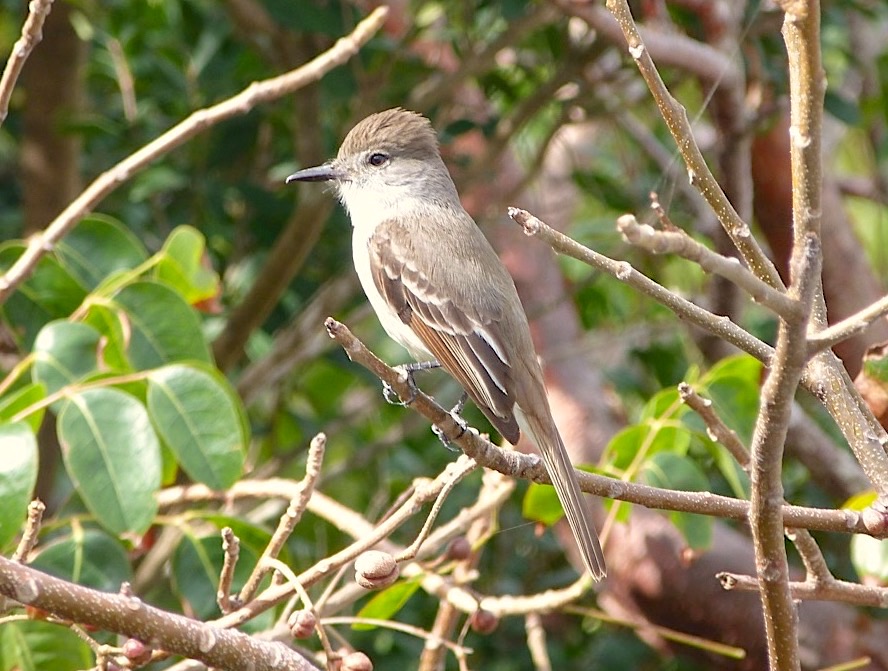
LA SAGRA’S FLYCATCHER Myiarchus sagrae is one of 3 permanent resident ‘tyrant’ flycatchers found on Abaco, the others being the CUBAN PEWEE and the LOGGERHEAD KINGBIRD. In the summer, they are joined by another commonly-found species, the GRAY KINGBIRD. There are other flycatchers, but they are seasonal, transient or vagrant, and far less common. 

Two classic LSF poses: ‘head-on-one-side’ & ‘watching-for-insects’

I have just been watching one of these frankly rather very cute little birds as it patiently watched me watching it. I wasn’t very close, and I kept my distance because it seemed a little wary and I didn’t want to blow the chance of a couple of photos – the familiar ‘bird-flies-off-just-as-shutter-pressed’ syndrome.

Sized between the little cuban pewee, with its diagnostic crescent eyes, and the larger loggerhead kingbird (see below), the LSF shares with them the ability to raise its crest. I was luckily able to catch this on camera – and also some singing.

As the name suggests, the species is primarily insectivore, fly-catching in the undergrowth and low scrub or ‘hawking’ from branches. However these birds also eat berries and seeds. Their call is a high pitched single or double noted sound described as ‘wink’. Here’s a Bahamian example.

Paul Driver / Xeno-Canto

The LSF’s natural habitat is coppice and rough scrubland. It builds its nest in a tree cavity or similar natural hole, and usually lays a clutch of two to four eggs. And this morning by coincidence, Abaco birder Rhonda Pearce posted a photo of a LSF nest with its eggs.

ID CONFUSION

Here are the two flycatcher species, mentioned above, that might cause confusion:

CUBAN PEWEE

LOGGERHEAD KINGBIRD

Ramón Dionisio José de la Sagra y Peris (1798–1871)

For those who may be wondering who – or what – a ‘La Sagra’ is, the answer is: a multi-talented Spanish botanist. He was also a writer, economist, sociologist, politician, anarchist, and founder of the world’s first anarchist journal El Porvenir (“The Future”). At one time he lived in Cuba and became director of Havana’s Botanical Garden. His name lives on arguably more significantly in ornithological than in anarchist circles (actually, an ‘anarchist circle’ must surely be an oxymoron…)

[I note in passing that La Sagra is a provincial area in Spain, an Italian festive celebration, a chocolatier, or a small comet – all of which meanings may have to be negotiated online before you get to the flycatcher…]

To continue with the occasional PHILATELIC theme of this blog, here are stamps from the Cayman Islands and Cuba featuring the La Sagra’s Flycatcher. The Cuban stamp commemorates the death of Juan Gundlach, the man who chose La Sagra’s name to bestow on the LSF. The colouring is… somewhat unrealistic!

Credits: All photos Keith Salvesen except nest (Rhonda Pearce) and loggerhead kingbird (Mrs RH); recording by Paul Driver / Xeno-Canto; stamps O/S

Unknown's avatar

AGGRO ON ABACO: ‘PARROTS OF THE CARIBBEAN’


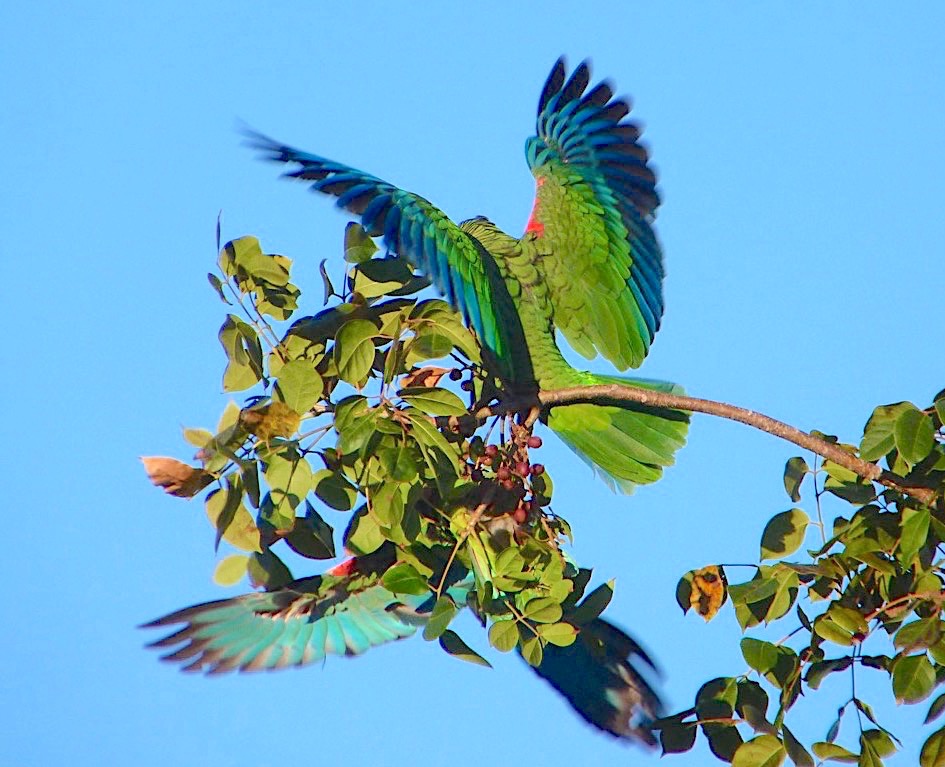
Abaco (Cuban) Parrots, Bahamas (©Keith Salvesen)

AGGRO ON ABACO: GOTCHA!

‘PARROTS OF THE CARIBBEAN’

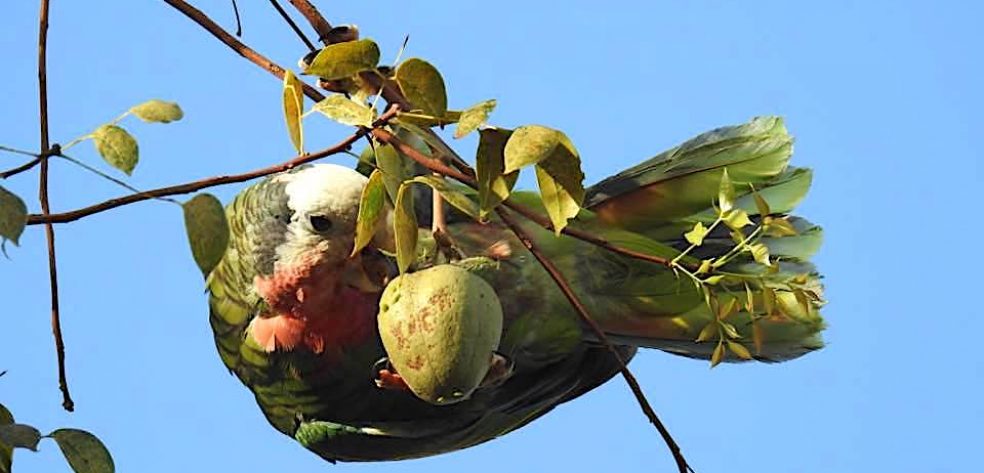
Mmmmm… gumbo limbo berries at Bahama Palm Shores. My favourite evening snack as we parrots head south to the National Park in the evening. 

Abaco (Cuban) Parrots, Bahamas (©Keith Salvesen)

There’s a flock of about 60 of us tonight. I hope I’m left alone to get stuck in – there are plenty of trees to choose from here…

Abaco (Cuban) Parrots, Bahamas (©Keith Salvesen)

Uh oh! That was never going to happen. We are a noisy rowdy gang, and no one gets to eat alone for long…

Abaco (Cuban) Parrots, Bahamas (©Keith Salvesen)

This is really bad news… this guy’s hungry, and he’s swooped in higher up the branch, so he’s got an advantage.

Abaco (Cuban) Parrots, Bahamas (©Keith Salvesen)

Time to take a stand. I’m getting on a level with him. I was here first – these are MY berries… But he’s getting shouty. And there’s aggro in the air…

Abaco (Cuban) Parrots, Bahamas (©Keith Salvesen)

Right, I’m backing off here. I never did much like gumbo limbo berries, now I come to think of it… And he looks mean as hell. But wait – I’m not just going to back down. Let’s give him a little surprise to remember me by.

Abaco (Cuban) Parrots, Bahamas (©Keith Salvesen)

GOTCHA!

Abaco (Cuban) Parrots, Bahamas (©Keith Salvesen)

Photo sequence taken at BPS (North) around 17.00, when often the parrots flock to the gardens and surrounding coppice on their way home in the south of the island; raucous recording also made at BPS on an earlier visit. All ©Keith Salvesen

Unknown's avatar

ABACO CHECKLIST: 40 BIRDS IN A DAY


Painted Bunting, Abaco Bahamas (Tom Sheley)

ABACO CHECKLIST: 40 BIRDS IN A DAY

South Abaco – the whole area south of Marsh Harbour – provides by far the best birding opportunities for a day of varied birding. A recent party led by birding guide Reginald Patterson included Charmaine Albury in the enthusiastic team. She sent me their checklist for the day – 40 species covering an impressive range of bird types. Here is the list, to which I have added some illustrative photographs.

Abaco (Cuban) Parrot (Keith Salvesen)

BAHAMA PALM SHORES

1. Blackfaced Grassquit
2. Greater Antillean Bullfinch
3. Red-winged Blackbird
4. Gray Catbird
5. Abaco (Cuban) Parrots
6. Painted Bunting
7. Northern Mockingbird
8. La Sagra’s Flycatcher
9. Cuban Pewee
10. Yellow-throated Warbler

Western Spindalis, Abaco (Craig Nash)

11. Western Spindalis
12. West Indian Woodpecker
13. Cape May Warbler
14. Ovenbird
15. Eurasian Collared Dove
16. Common Ground Dove
17. Bananaquit
18. Red-legged Thrush
19. Turkey Vulture
20. Cuban Emerald Hummingbird
21. Thick-billed Vireo

Thick-billed Vireo, Abaco (Gerlinde Taurer)

BPS Duck Pond

22. Blue-winged Teal
23. Green-winged Teal
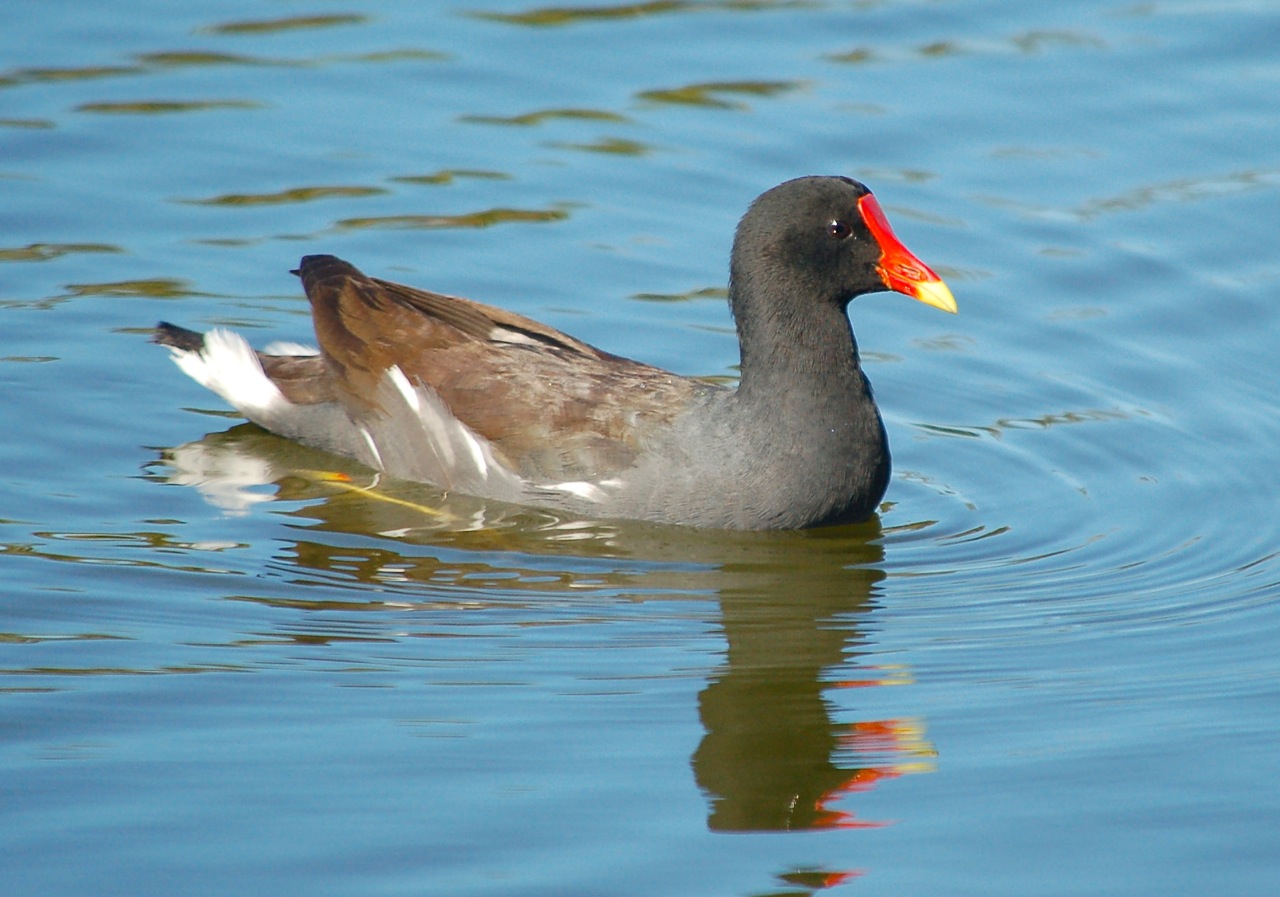
24. Common Gallinule

Common Gallinule, Abaco (Keith Salvesen)

SAWMILL SINK BLUE HOLE

25. Olive-capped Warbler
26. Yellow-rumped Warbler
27. Loggerhead Kingbird
28. Prairie Warbler

Prairie Warbler, Abaco (Gerlinde Taurer)

HIGHWAY ROADSIDE

29. Bahama Warbler
30. American Kestrel

American Kestrel, Abaco (Tom Reed)

GILPIN POND

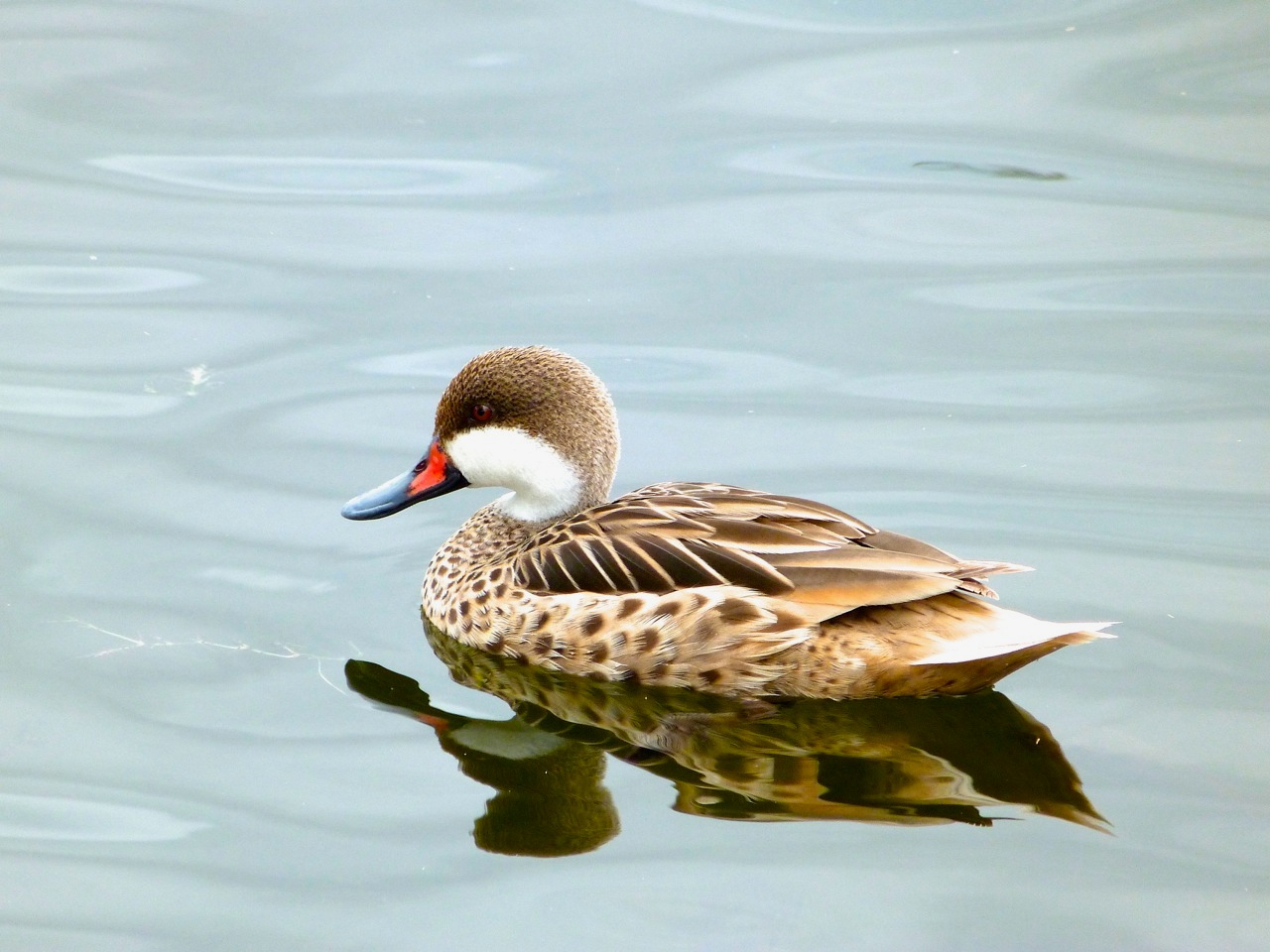
31. White-cheeked (Bahama) Pintail
32. Great Egret
33. Great Blue Heron
34. Tricolored Heron
35. Lesser Yellowlegs
36. Solitary Sandpiper

White-cheeked (Bahama) Pintail, Abaco (Keith Salvesen)

SANDY POINT

37. Laughing gulls
38. Ruddy turnstone
39. Sanderlings
40. Royal terns

Sanderlings, Abaco (Keith Salvesen)

The checklist covers a broad range of birds that you might expect to see in habitats ranging from coppice to pine forest to water to shoreline. Most are permanent residents, with some winter residents (eg the painted bunting, Cape May warbler). Abaco specialities include the parrots of course, the West-Indian woodpecker and the olive-capped warbler.

And birds that might, on another day, be seen? Maybe the endemic Bahama Woodstar hummingbird and the endemic Bahama Swallow. At Gilpin Pond, black-necked stilts and perhaps a belted kingfisher. And at Sandy Point, brown pelicans fishing off the dock and the chance of white-tailed tropicbirds off-shore. But overall a ’40 day’ is a great day!

Great Egret, Abaco Bahamas (Nina Henry)

We are just back on Abaco last night, and without actually trying – and just from the balcony in about 20 minutes – we have scooped:

Turkey Vulture, Black-faced Grassquit, Bananaquit, Bahama Swallows, Loggerhead Kingbird, La Sagra’s Flycatcher, and Thick-billed Vireo – also Oystercatchers heard from the beach. Time to investigate further…

Credits: Tom Sheley (1); Keith Salvesen (2, 5, 8, 9); Craig Nash (3); Gerlinde Taurer (4, 6); Tom Reed (7); Nina Henry (10)

Unknown's avatar

REDDISH EGRET HUNTING ON THE MARLS, ABACO


REDDISH EGRET HUNTING ON THE MARLS, ABACO

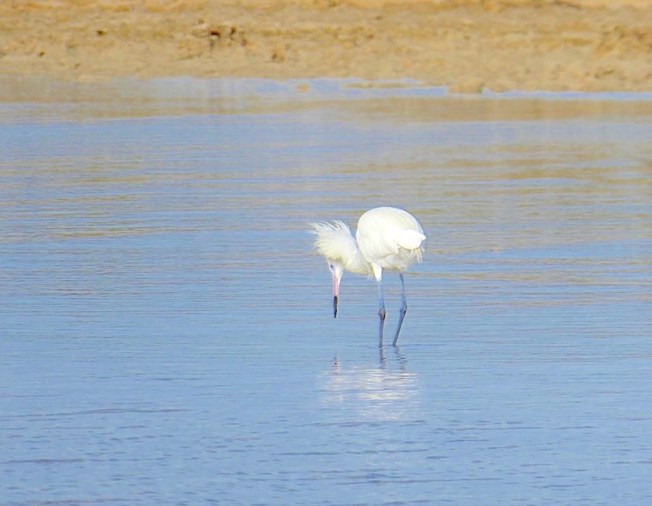
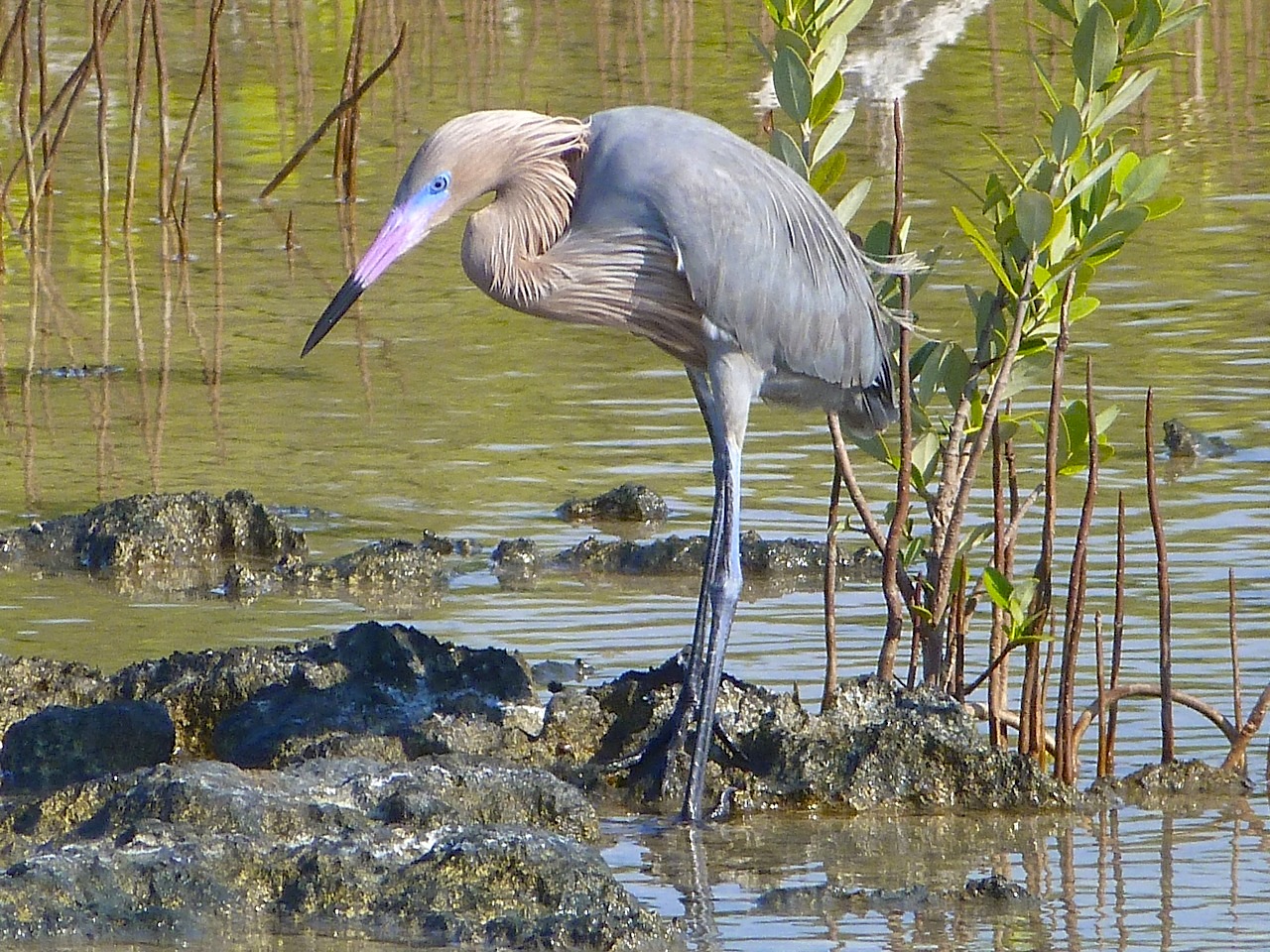
The trouble with reddish egrets is simple: they come in two colourways. There’s the conventional one which is indeed reddish, as one might hope and expect. Then there’s the snow white type (or ‘morph’). That’s the one featured here (with the other dark variety below, for comparison).

Both types are common breeding residents on Abaco. There are theories about which kind outnumbers the other; on balance I’m not sure the difference is very significant. Maybe reddish are a rather more frequently encountered than white, but there doesn’t seem to be much in it.

Looking back at photographs I took last spring, I found a sequence of a hunting white egret. Now these are not exhibition-quality photos. They were taken quite far out on the Marls, and a fair distance from the skiff I was standing on the front (prow?) of.

I had a smallish camera, and a fishing rod tucked under my arm rather hoping not to hear the usually welcome call “Hey RH**, bones at 10 o’clock moving left – 4 of them – give it 30 feet…” So this sequence is designed to give an idea of how the bird hunts the shallows. Rather than standing stock still and suddenly stabbing down to catch a fish, sometimes the egrets will stride purposefully though the shallow water, taking their chances as they move.

A small success at the start of the hunt (look carefully at the tip of the beak) A pause (and a slightly bad hair moment)

I always enjoy watching the actions of these birds make as they go about their work. But now the hunt is over; the egret has worked his way along the shoreline and he’s thinking out his next move… 

…which is to fly off and try his luck elsewhere

Your compensation for some mediocre – but hopefully illustrative – shots is a header image from the camera of the highly experienced birdman and photographer Danny Sauvageau. 

Finally, the way to tell that you are looking at a reddish egret, whichever version, rather than one of the other available egret / heron candidates is to look at the bill – pinkish, with a black tip. No other egreto-heronish species has this. 

A ‘proper’ reddish reddish egret taken in one of the brackish ponds at Crossing Rocks – always a good place to pull in and check for herons and egrets. This one, photographed in March, is in his handsome breeding plumage. Compare the bill with the white morph above – just the same.

** This not in fact how I am customarily addressed. I have a real name. Probably.

Credits: header image, Danny Sauvageau with thanks as always; all mediocre white morphs RH – also the rather better effort comparative photo of a ‘proper’ reddish one; cartoon by the inimitable Birdorable.

Unknown's avatar

ABACO PARROTS FOR THE NEW YEAR!


Abaco (Cuban) Parrot, Bahamas (Gerlinde Taurer)

ABACO PARROTS FOR THE NEW YEAR!

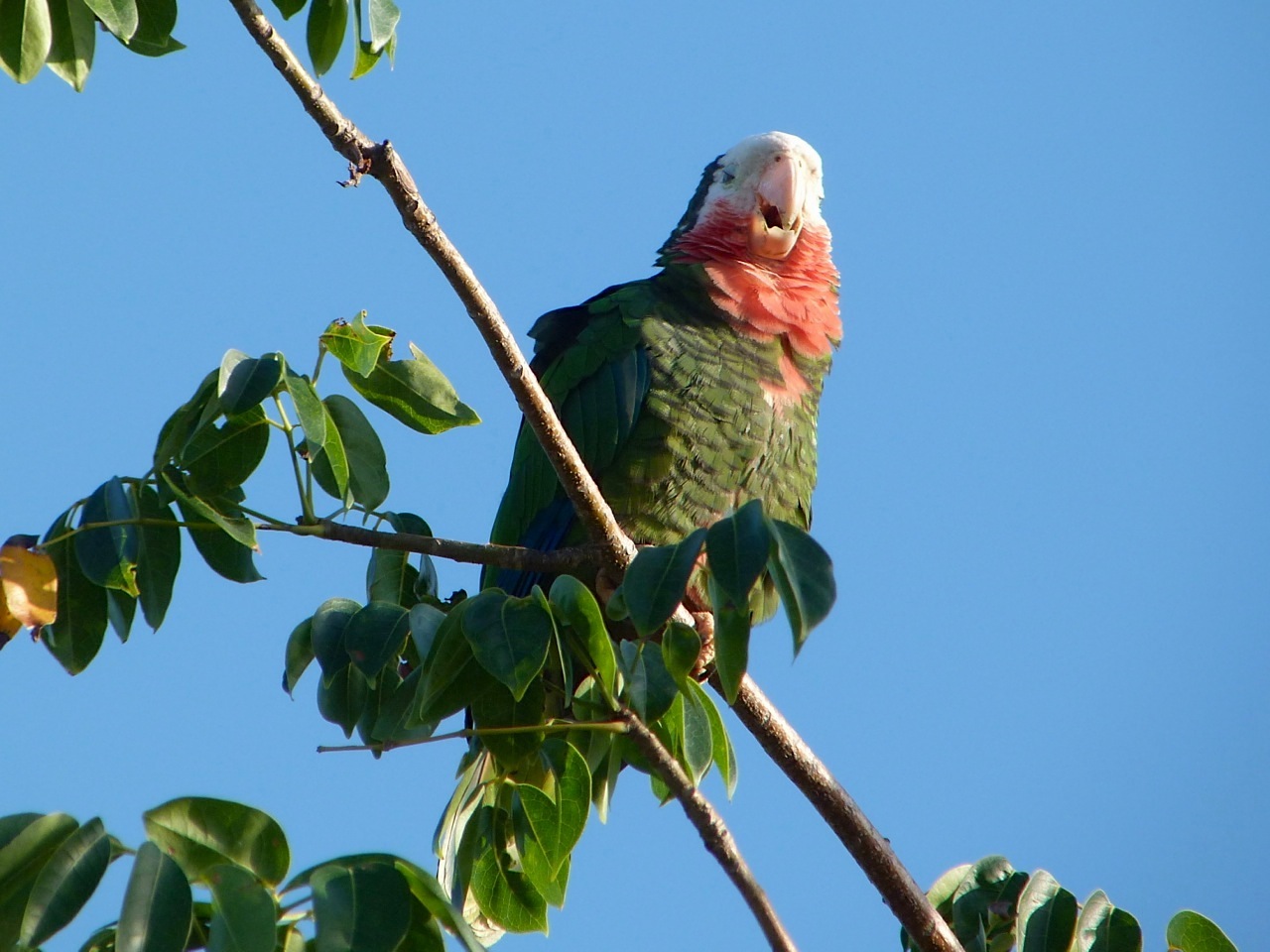
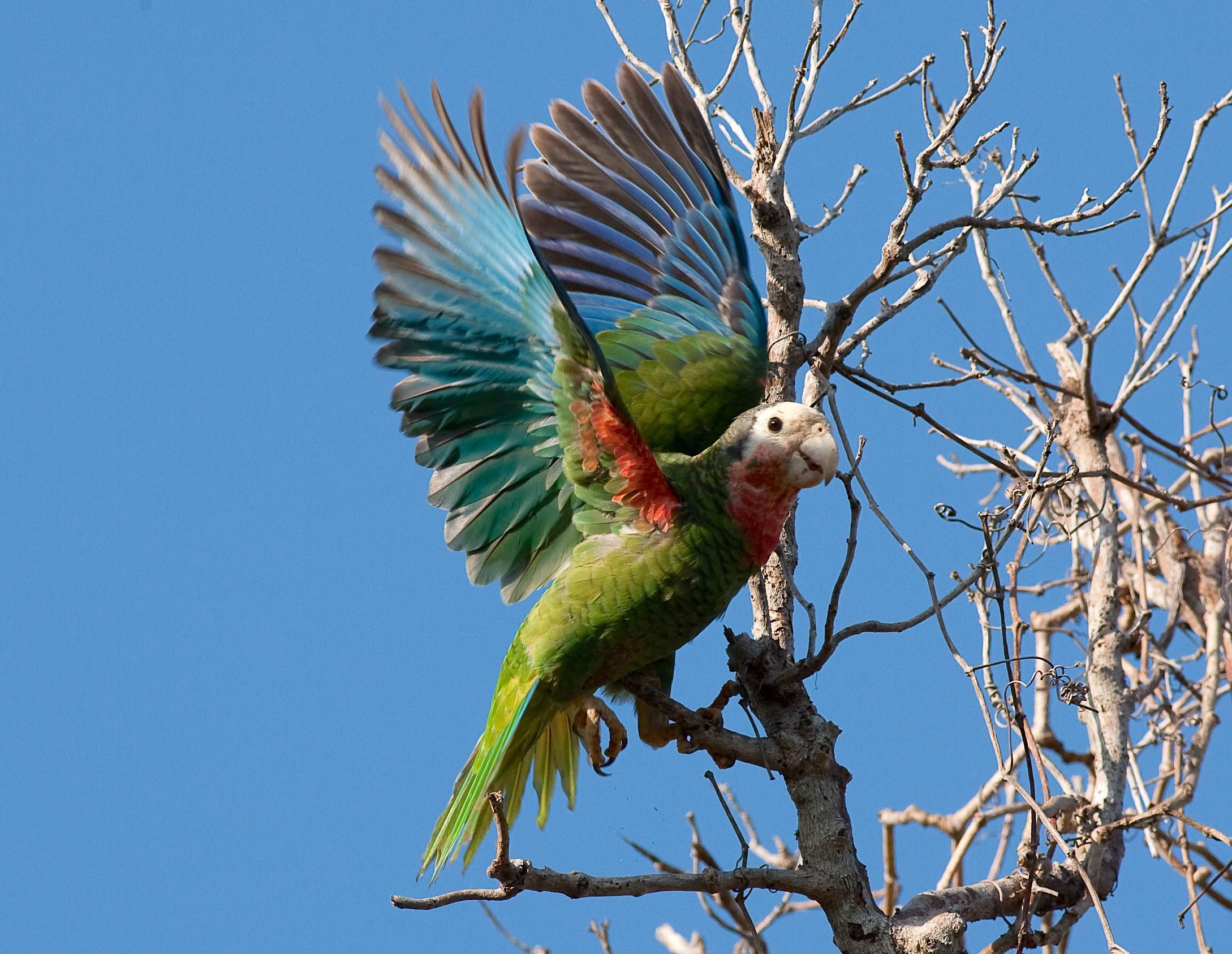
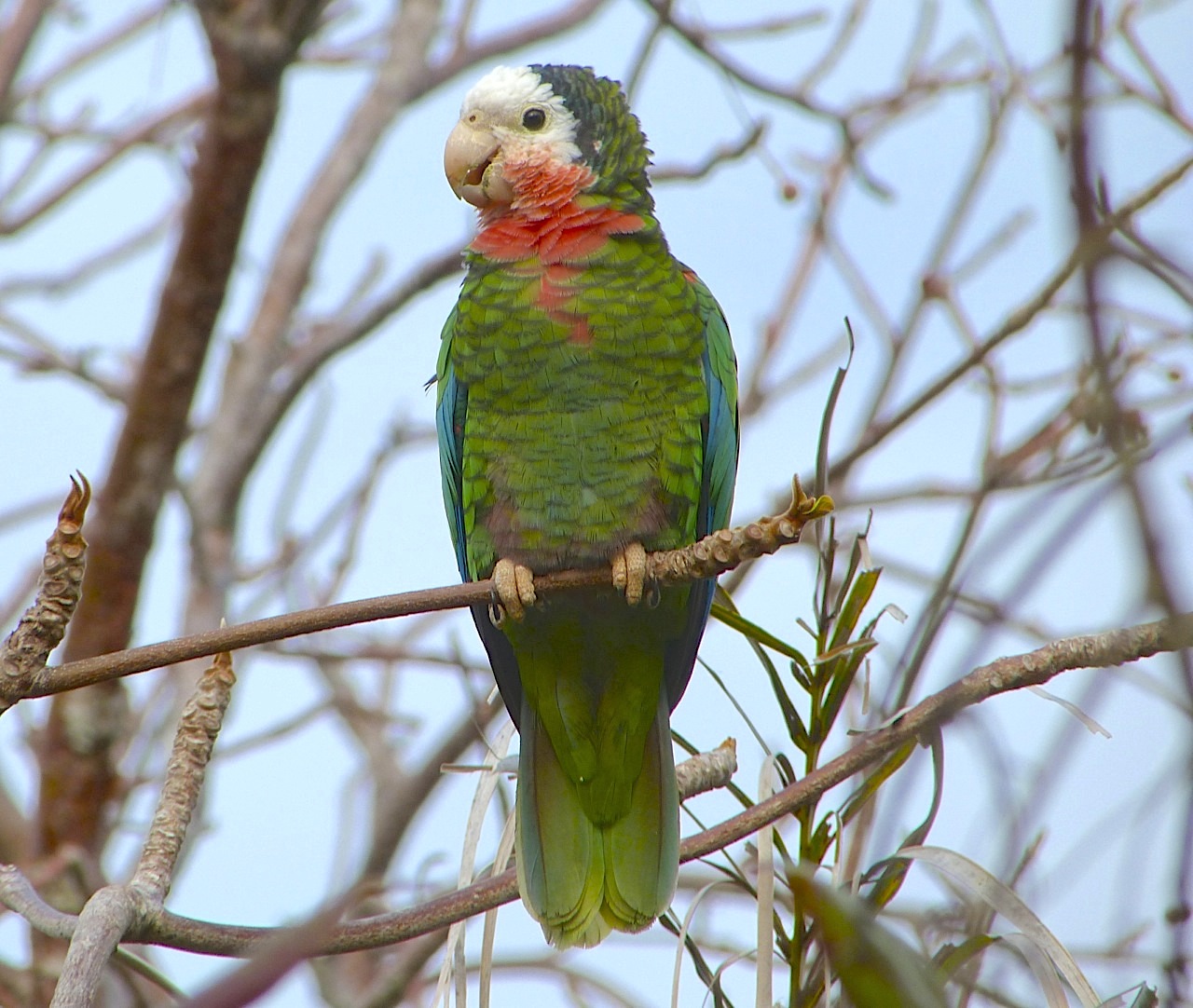
Red, green, blue, and a touch of snowy white. The colours of Christmas, sort of. We are past all that for another year, but for those on Abaco the unique, ground-nesting Abaco parrots Amazona leucocephala flash those same colours throughout the year.

Abaco (Cuban) Parrot, Bahamas (Craig Nash)

These birds have cousins on Inagua that nest conventionally; and there are now a handful of NASSAU PARROTS on New Providence, of uncertain origin (click link for more on these).

Abaco (Cuban) Parrot, Bahamas (Tom Sheley)

The parrots are only found in South Abaco, between Marsh Harbour and the National Park where they live and breed in limestone holes in the forest floor. 

Abaco (Cuban) Parrot, Bahamas (Caroline Stahala)

You are most likely to hear these birds before you see them, as they make their way daily north in the morning and back again in the evening.

Abaco (Cuban) Parrot, Bahamas (Keith Salvesen)

Despite the racket they make, finding the parrots in the National Park is a bit ‘needle-in-haystack’. Instead, try the Gilpin Point point area, and coppice areas to the north. They pass back and forth over Delphi, pausing to squabble noisily, almost daily. I have made several recordings of them – here’s one example.

Abaco (Cuban) Parrot, Bahamas (Peter Mantle)

Far and away the best location is Bahama Palm Shores, where the mix of dense coppice with their favourite gumbo limbo trees and the open gardens is much to their liking. And frankly, it’s a great place for birding anyway, even if you blank for the parrots. 

Abaco (Cuban) Parrot, Bahamas (Nina Henry)

Just think: a dozen years ago, these fine birds were sliding towards extinction, with an unsustainable population of fewer than 900. Conservation efforts and in particular attention to habitat protection and predator control have resulted in population increases year-on-year, and the total now stands at around 5000 adults.

Abaco (Cuban) Parrot, Bahamas (Keith Salvesen)

I’ve posted quite a lot about these parrots over the years, so if you are already familiar with them, I hoped you felt free to skip the text, and simply to admire these wonderful creatures. 

Credits: Gerlinde Taurer, Craig Nash, Tom Sheley, Caroline Stahala, Keith Salvesen, Peter Mantle, Nina Henry, Erik Gauger; audio recording Keith Salvesen

Abaco (Cuban) Parrot, Bahamas (Erik Gauger)

Unknown's avatar

BEHOLD! SOME BUNTING(S) FOR AN ABACO CHRISTMAS


Painted Bunting.Bahama Palm Shores.Abaco Bahamas.Tom Sheleyimagesimagesimagesimages

BEHOLD! SOME BUNTING(S) FOR AN ABACO CHRISTMAS

painted-bunting copy

BUNTING  /ˈbʌntɪŋ/  (Noun)

[A Christmas gift of a puntastic avian / festive double-meaning]
  1. A small New World songbird of the cardinal subfamily
  2. Flags and other colourful festive decorations

imagesimagesimages

PAINTED BUNTINGPainted Bunting, Abaco (Erik Gauger)
Painted Bunting, Abaco (Tara Lavallee)Painted Bunting, Abaco (Tara Lavallee)

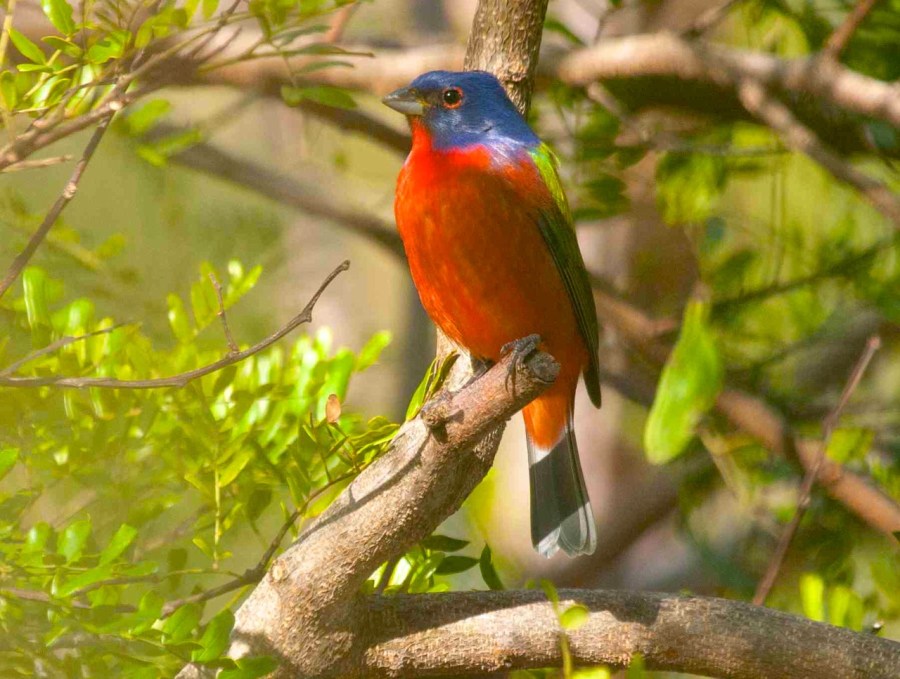
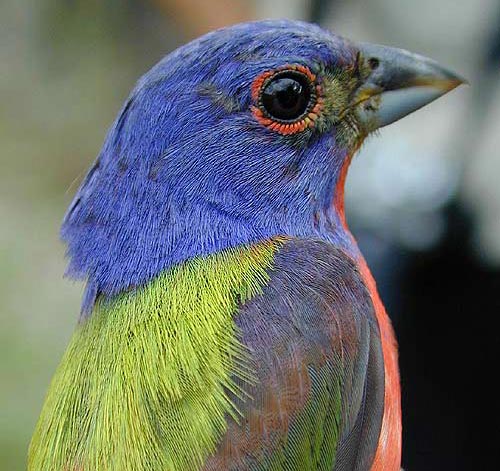
It’s hard to imagine a more Christmasy little bird than the Painted Bunting. Bright blue, red, green primary colours straight from a child’s paintbox make for a spectacular bird to grace the festive season. These are migratory winter residents, and the first reports of the bright and beautiful males on Abaco started to appear in November. Some will stay around until March.

                                                           painted-buntingimagespainted-bunting copy

Feeders at the Delphi Club. The first image shows a female & a male PABU feeding together. The second is a male with a pair of black-faced grassquitsPainted Buntings (M & F), Delphi, Abaco (Keith Salvesen)Painted Bunting, Delphi, Abaco (Sandy Walker)

                                                        painted-buntingimagespainted-bunting copy

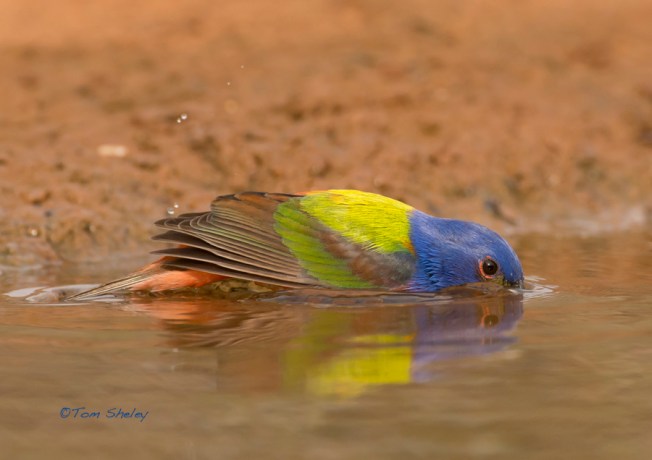
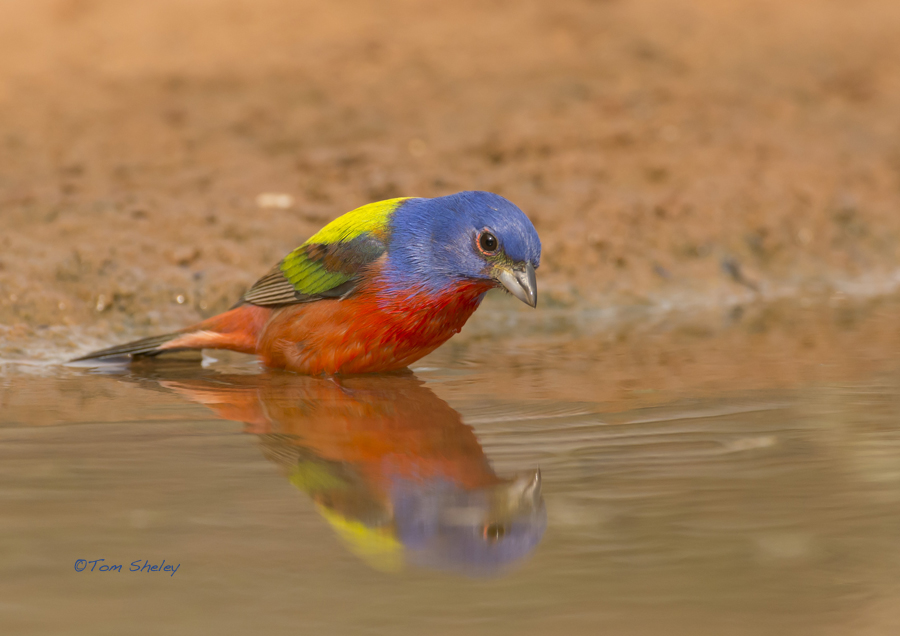
The two wonderful photos below are by Tom Sheley, a major photographic contributor to THE BIRDS OF ABACO. They were taken in Texas, not on Abaco, but I include them because of Tom’s strong connection with the birdlife of Abaco; and because on any view they are fantastic shots…
Painted Bunting reflection LR.Laguna Seca.South TX. 4.16.13.Tom SheleyPainted Bunting dip reflection LR.Laguna Seca.South TX. 4.16.13.Tom Sheley

painted-bunting copy

This is probably my last post until after Christmas, what with one thing and another, so it’s a good opportunity to wish a very Happy Christmas or [insert preferred seasonal appellation] to everyone who visits Rolling Harbour and especially those who, having done so, return for more!

Credits: Tom Sheley (1, 7, 8), Erik Gauger (2), Tara Lavallee (3, 4), Keith Salvesen (5) Sandy Walker (6); Birdorable Cartoons

imagesimagesimagesimagesPainted Bunting, Abaco Bahamas

Unknown's avatar

SANDERLINGS ON DELPHI BEACH, ABACO BAHAMAS


Sanderling, Delphi Beach Abaco Bahamas (Keith Salvesen)

SANDERLINGS ON DELPHI BEACH, ABACO BAHAMAS

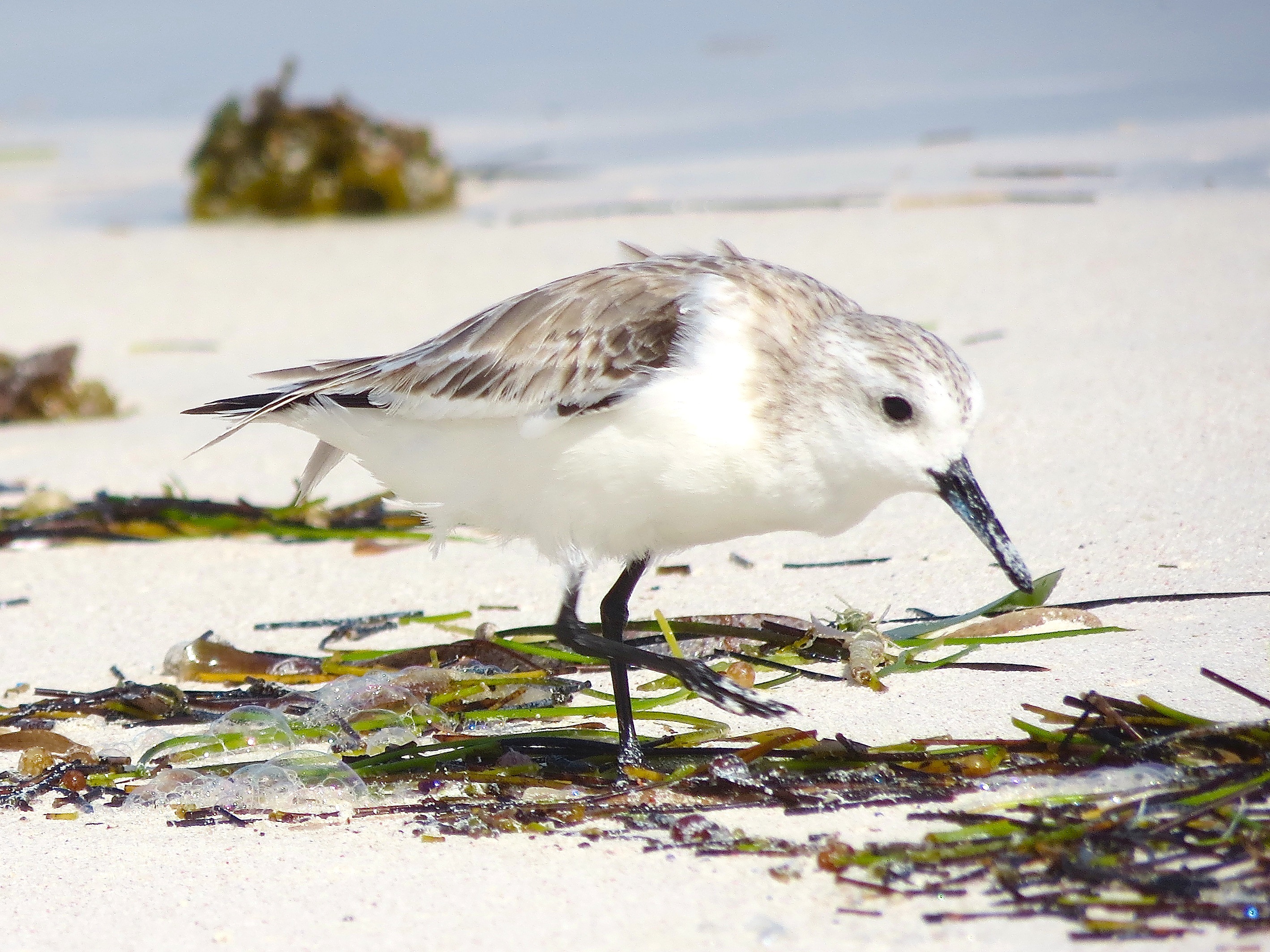
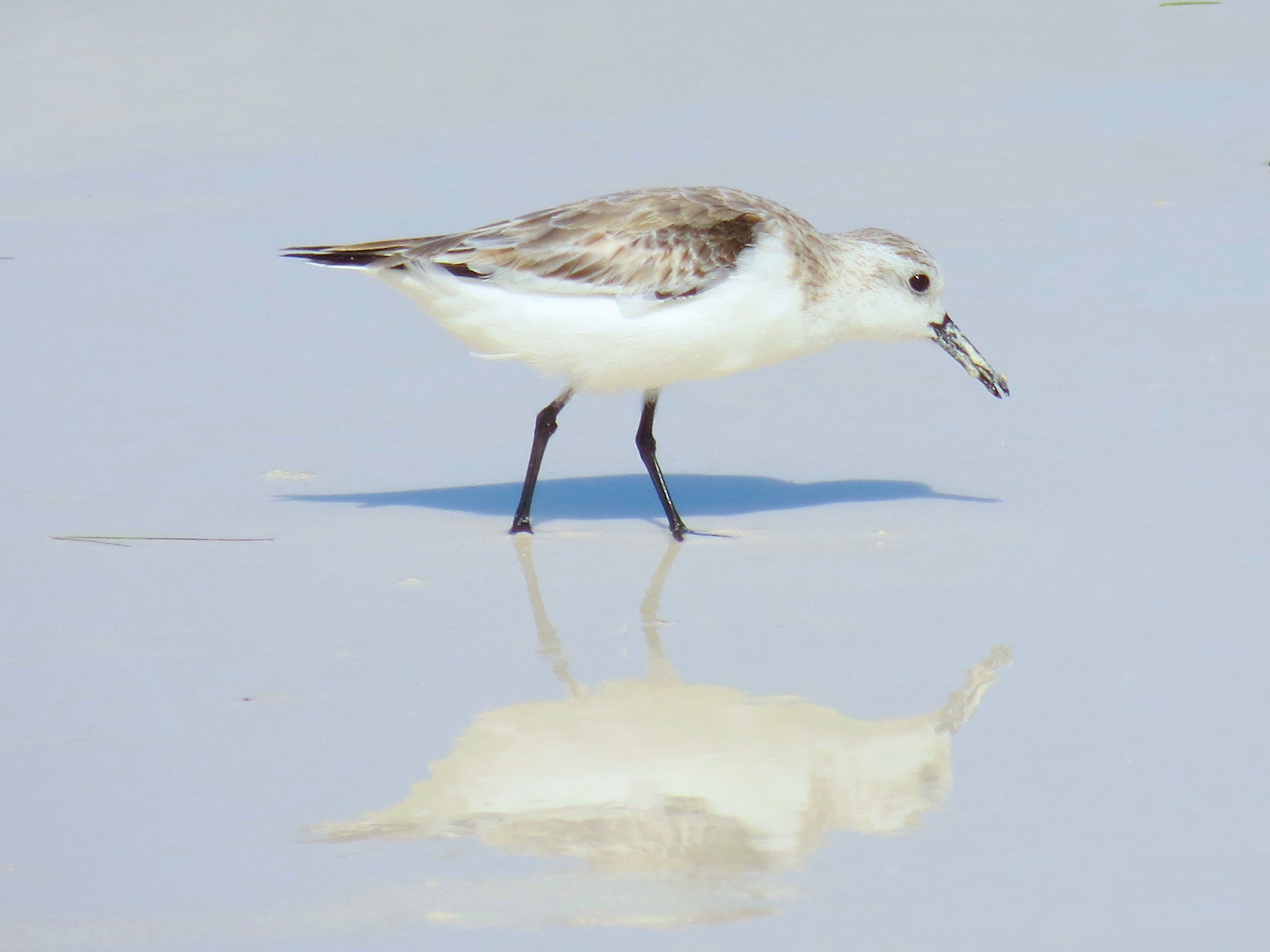
Looking back through some bird photo folders from last year, I came across these sanderlings that I photographed on the beach at Delphi. These little birds are far from rare, but watching a flock of them scuttling back and forth on the sand, in and out of the tide, is always a treat. And as you will notice, when they are foraging in earnest they not only stick their bills into the sand right up to the base… they go for total immersion of the head!

Sanderling, Delphi Beach Abaco Bahamas (Keith Salvesen)Sanderling, Delphi Beach Abaco Bahamas (Keith Salvesen)Sanderling, Delphi Beach Abaco Bahamas (Keith Salvesen)Sanderling, Delphi Beach Abaco Bahamas (Keith Salvesen) Sanderling, Delphi Beach Abaco Bahamas (Keith Salvesen)

All photos: Keith Salvesen, Rolling Harbour Abaco

Unknown's avatar

PIED-BILLED GREBES: LESS COMMON THAN THE LEAST


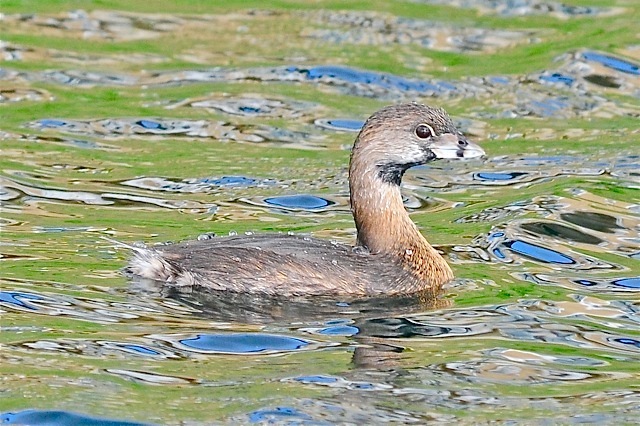
Pied-billed grebe, Abaco (Tom Sheley)

PIED-BILLED GREBES: LESS COMMON THAN THE LEAST

There are two grebe species recorded for Abaco. The LEAST GREBE is the most common; the pied-billed grebe (Podilymbus podiceps) is rarer. These small birds, often called dabchicks, are marsh and pond dwellers. They are sometimes found in brackish or even salt water.

Pied-billed grebe, Abaco (Tony Hepburn)

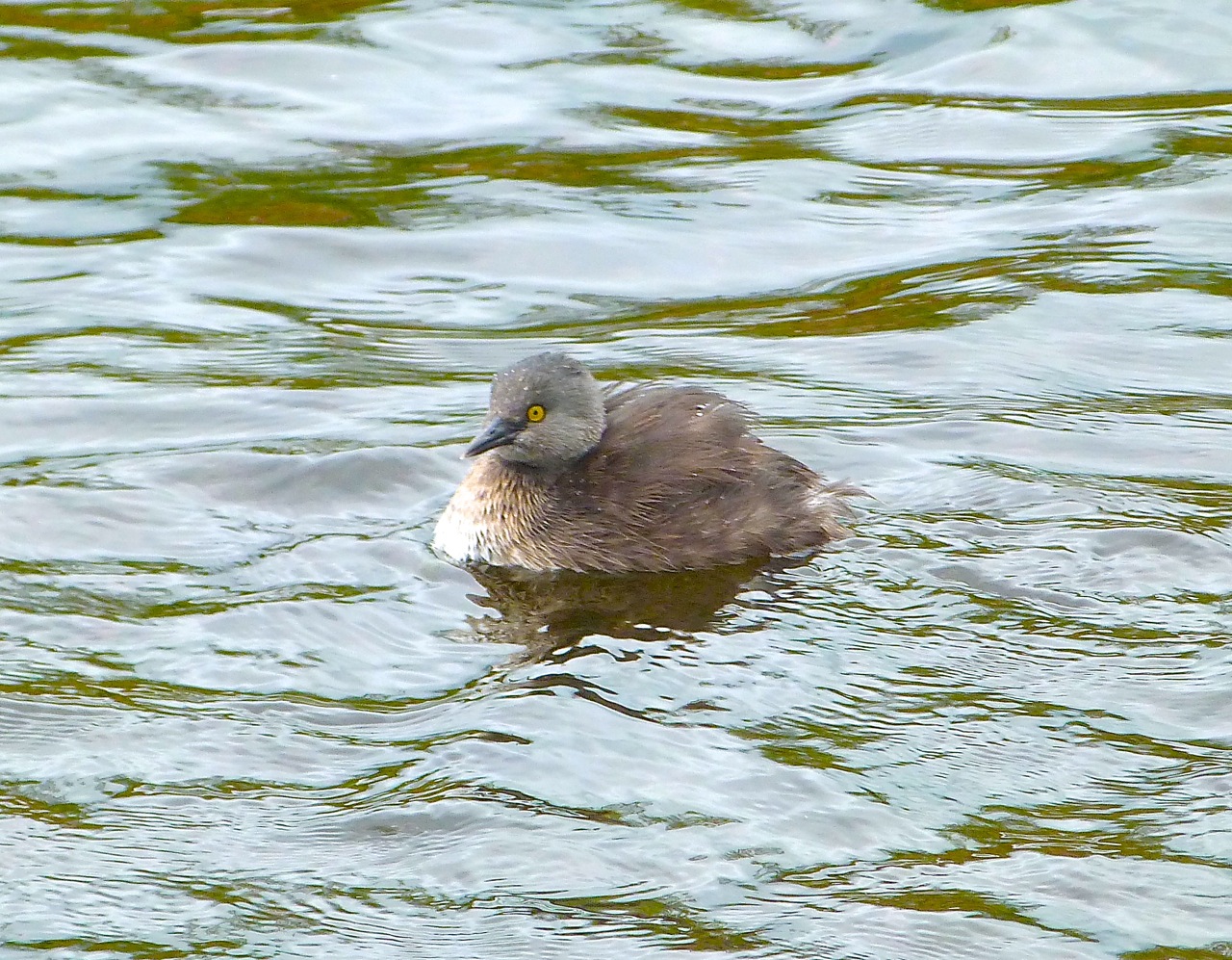
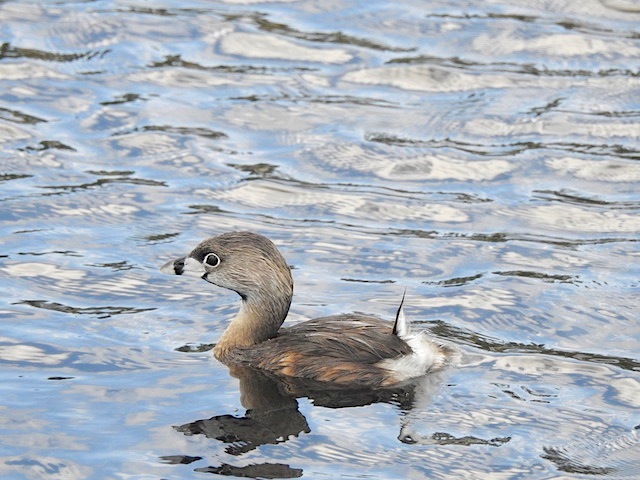
The pied-billed grebe is somewhat larger than the least grebe. In the breeding season, they have a distinctive black beak-ring. In the header image, the bird is just starting to acquire the ring. Their dark eyes also distinguish them from the golden-eyed least grebe; and their beaks are pale rather than dark.

Least grebe with golden eyes and dark beakLeast Grebe, Abaco (Keith Salvesen)

Pied-billed Grebe for comparisonPied-billed grebe, Abaco (Linda Barry Cooper)

These birds have lobes on each toe rather than webbed feet. This helps them to paddle and to dive – which is how they mainly forage. They can stay under water for up to half a minute, often surfacing some distance from the entry point. This is one method they use to avoid danger – especially as they don’t fly with much enthusiasm.

Pied-billed grebe, Abaco (MDF wiki)

Grebes rather endearingly carry their young on their backs until the chicks are old enough to fend for themselves. The main threat to the species is habitat loss, especially of wetlands. The decline in local populations of this once-prolific bird is such that in some places they classified as threatened or endangered.

Pied-billed grebe, Abaco (Dori / wiki)

The pied-billed grebes’ call has been rendered thus: a “whooping kuk-kuk-cow-cow-cow-cowp-cowp.” If that helps you at all. If not, try this clip:

Michel St Martin / Xeno-Canto

Credits: Tom Sheley, Tony Hepburn, Keith Salvesen (least grebe), Linda Barry-Cooper, MDF / wiki, Dori / wiki; Sound file, Xeno-Canto; Cartoon, Birdorable

Unknown's avatar

WORLD SHOREBIRDS DAY, PIPING PLOVERS & IRMA


Piping Plover (Danny Sauvageau)

WORLD SHOREBIRDS DAY, PIPING PLOVERS & IRMA

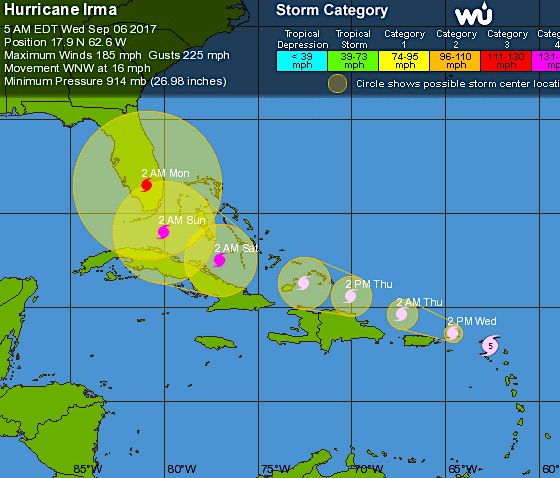
Sept 6 2017. World Shorebirds Day dawns, even as the huge Cat 5 Hurricane Irma makes landfall over the small islands of the eastern Caribbean. Irma’s path has been relentlessly westwards, for sure – but the path has been unnervingly variable. The tracking reports showed Abaco successively as being in line for a direct hit; then taking a sideswipe from the south; then completely clear of the cone prediction; then within the northern edge… and today, a right hook to the east suggests again that Abaco will take a hit from irma (though as a predicted Cat 4 or maybe 3).

Hurricane Irma Tracking Path Sept 6th 2017 Wunderground

Far down the list of concerns in such a situation come shorebirds. Most if not all the islands that Irma will affect have wonderful shorebirds, both permanent and migratory. On Abaco my personal preoccupation is for the tiny Piping Plovers and our citizen scientist annual 6-month WATCH. Generally, the birds manage to find some cover at the back of the beaches to hunker down until the worst is past. But generally the beach populations are rather different after the storm, as birds scatter and take cover. 

Well, except this little guy who decided to take a windy bath on the Long Dock at Cherokee during Hurricane Matthew as it passed over Abaco last October (and props to Keith Kemp for braving the elements to get this shot!)

Birds are resilient and resourceful. Humans too. But nature unleashed with full force is a terrifying prospect. From a safe distance of 4250 miles from Marsh Harbour, thoughts and best wishes from Rolling Harbour will be with all those in the path of Irma over the next few days. 

Piping plovers on the Delphi Beach, at a more peaceful timePiping Plover, Delphi, Abaco (Keith Salvesen)

Photos: Danny Sauvageau, Keith Kemp, Keith Salvesen / Rolling Harbour; Graphic by Wunderground

Unknown's avatar

CLAPPER RAILS ON ABACO: A SMALL SHOWCASE


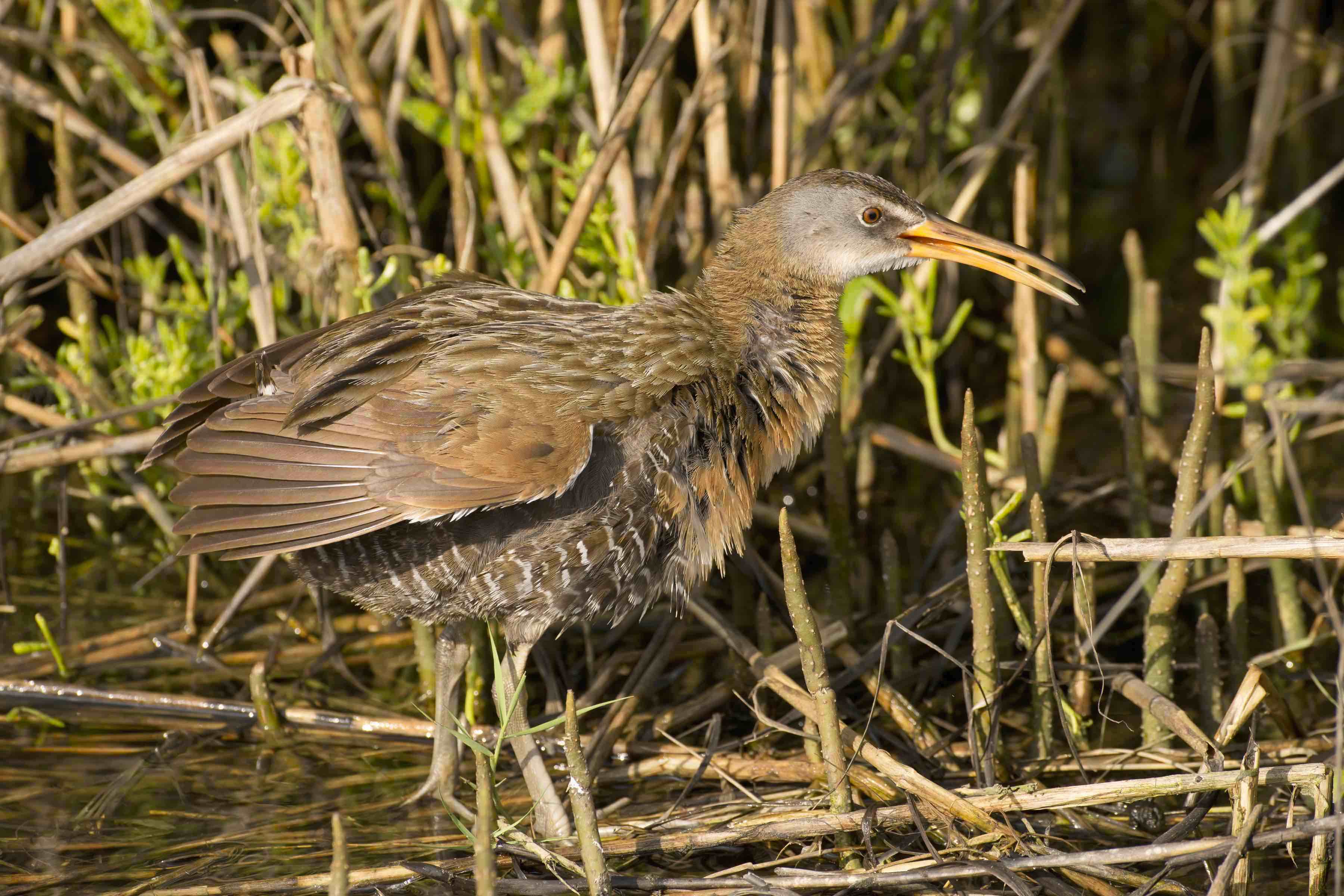
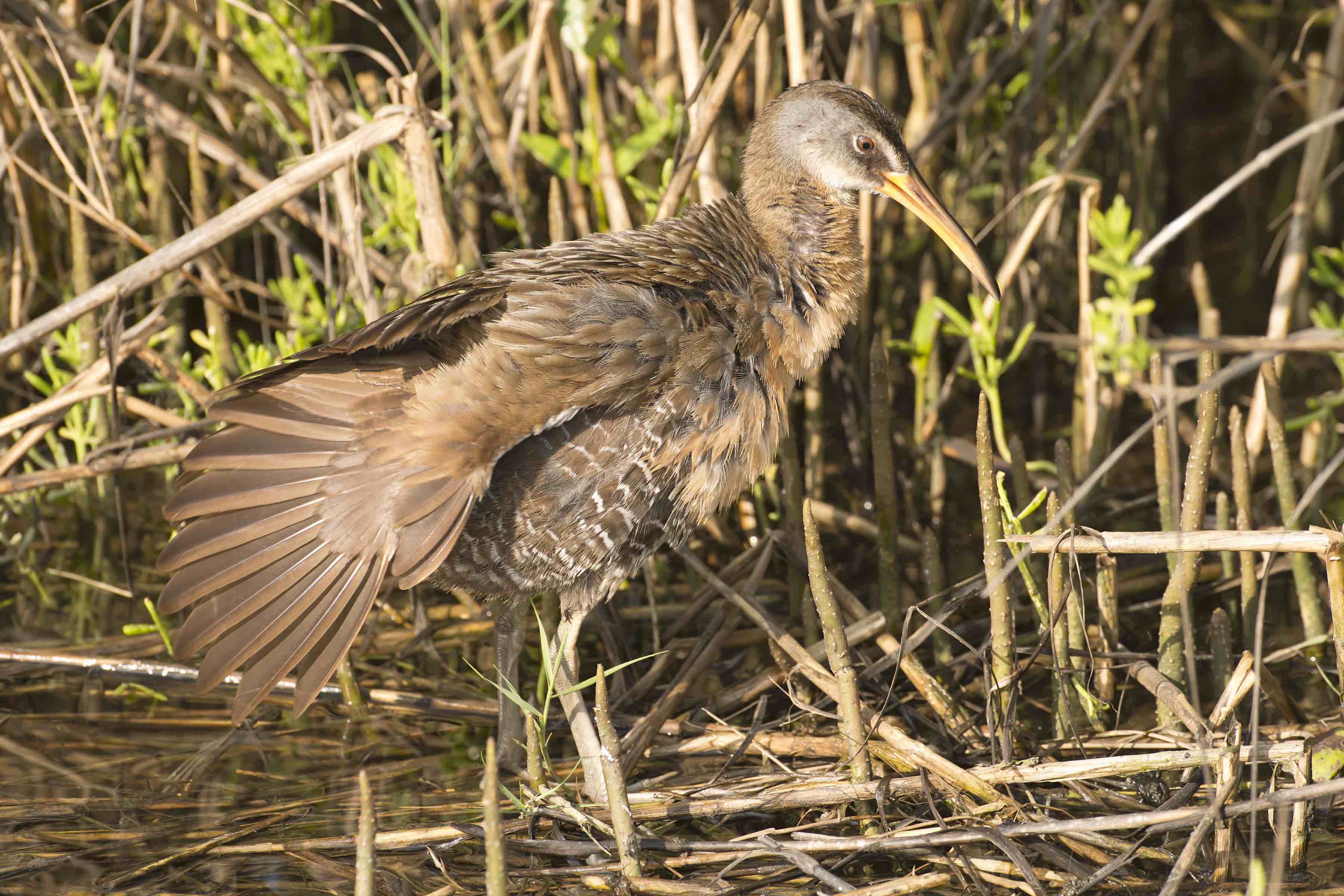
Clapper Rail, Abaco, Bahamas (Tom Sheley / Birds of Abaco)

CLAPPER RAILS ON ABACO: A SMALL SHOWCASE

Just over 3 years ago, THE BIRDS OF ABACO was published and launched at the Delphi Club. The book was intended to showcase the wonderful and varied bird life on Abaco – home to endemics, permanent residents, seasonal residents, and a wide variety of migrating transients. The book has been most generously received and supported – though I have to report that already its definitive checklist (dating from 1950) has become outdated with the recording of 6 additional species on Abaco, featured elsewhere in this blog.

Clapper Rail, Abaco, Bahamas (Tom Sheley / Birds of Abaco)

Tom Sheley was one of the main photographic contributors to the book, and I had the good fortune to coincide with one of his trips to Abaco, when he was armed with significant photographic weaponry; and to accompany him on some of his photographic day trips (not including the early morning ones, in my case). This clapper rail is one of my favourites of his photo sequences of a bird being a bird – preening, stretching, calling – in its own habitat.

Clapper Rail, Abaco, Bahamas (Tom Sheley / Birds of Abaco)

My one regret about my involvement  in producing the book (it took 16 months) and more generally in the wildlife of Abaco is that I have entirely failed to progress to sophisticated (expensive) photographic equipment capable of producing images the quality of Tom’s. Yes, I’ve moved on from compacts (ha!) to bridge cameras (Panasonic Lumix + lens extender), and some results ‘make the cut’. But my move up to a Canon SLR was mainly disastrous, and when eventually I inadvertently drowned it (I overbalanced while photographing shorebirds from breaking waves. Total immersion. Total stupidity.) I felt an unexpected sense of relief. A blessing really – I never understood it, nor in my heart of hearts (if I’m honest) really wanted to… But my feeble struggle made me realise and appreciate the enormous skill of those like Tom who take ‘National Geographic’ quality photographs. It’s not just the equipment – it’s knowing exactly how to use it, and often in a split second…

Clapper Rail, Abaco, Bahamas (Tom Sheley / Birds of Abaco)

Photos by Tom Sheley – with thanks for the adventures

Unknown's avatar

RUDDY TURNSTONES ON ABACO: BEACH NOSHING


Ruddy Turnstones, Delphi Beach Abaco Bahamas (Keith Salvesen)

RUDDY TURNSTONES ON ABACO: BEACH NOSHING

Some birds are named for the sounds they make (bobwhite, chuck-will’s-widow, pewee, killdeer). Some are named for their appearance (yellow-rumped warbler, painted bunting). And some are named for what they do (shearwater, sapsucker – but definitely NOT killdeer). The ruddy turnstone Arenaria interpres is in the last two of these categories: it looks ruddy and it literally turns stones to get at the goodies underneath.

Ruddy Turnstones, Delphi Beach Abaco Bahamas (Keith Salvesen)

And they don’t just turn stones to look for food. Someone with a lot of patience has defined 6 specific methods by which a turnstone forages for food:

  • Turning stones by flicking them with its beak
  • Digging using its beak to flick away sand or earth (see video below)
  • Routing around in piles of seaweed to expose food under it
  • Surface pecking with short, shallow pecks for food just below the surface
  • Probing by simply sticking its beak deep into soft sand or ground
  • Hammer-probing to crack open a shell and get at the occupant

Ruddy Turnstones, Delphi Beach Abaco Bahamas (Keith Salvesen)

In these photos taken on a rather gloomy day on the Delphi beach, a combination of mainly digging and routing is going on. Note the sandy beak of the RUTU below, right up to the hilt.

Ruddy Turnstones, Delphi Beach Abaco Bahamas (Keith Salvesen)Ruddy Turnstones, Delphi Beach Abaco Bahamas (Keith Salvesen)

This short video shows how effective the RUTU method is. It was fascinating to watch the team work their way through and around the piles of weed on the beach, flicking sand vigorously in their quest for sandflies or whatever. Watch the sand fly! Pity it wasn’t a sunny day – the photos might have looked a bit more cheerful… 


All photos Keith Salvesen

Unknown's avatar

CUBAN EMERALDS ON ABACO: JEWELS BEYOND PRICE


CUBAN EMERALDS ON ABACO: JEWELS BEYOND PRICE

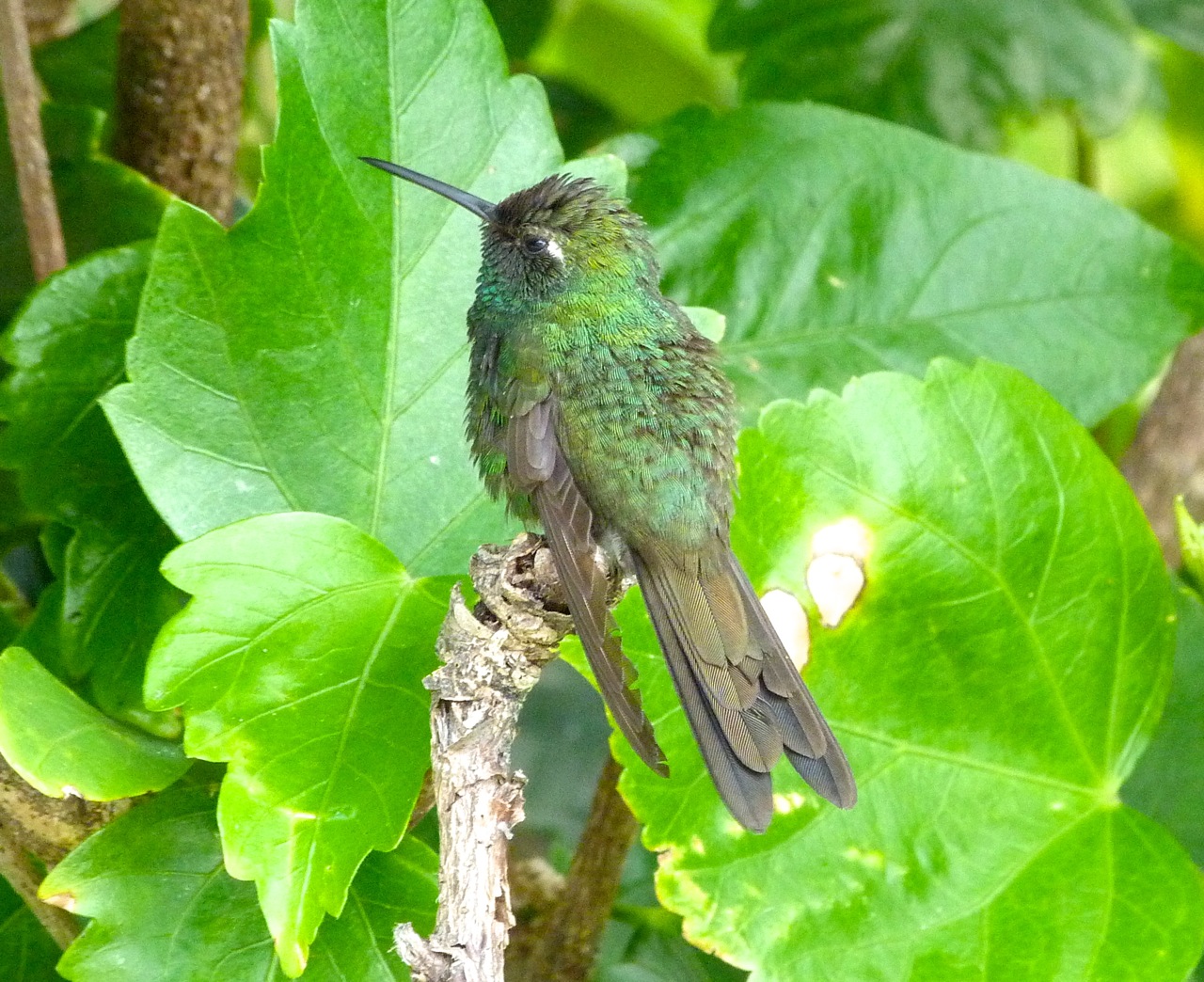
Well I don’t want to overstate it, but there cannot be anyone on the planet who has anything but love for hummingbirds. There’s no existing word for ‘fear of hummingbirds’ – ‘colibriphobia‘ is not a ‘thing’. There’s fear of almost everything else, from grass to clouds to plastic bags**… but, surely, not hummers. Here are a few to enjoy.

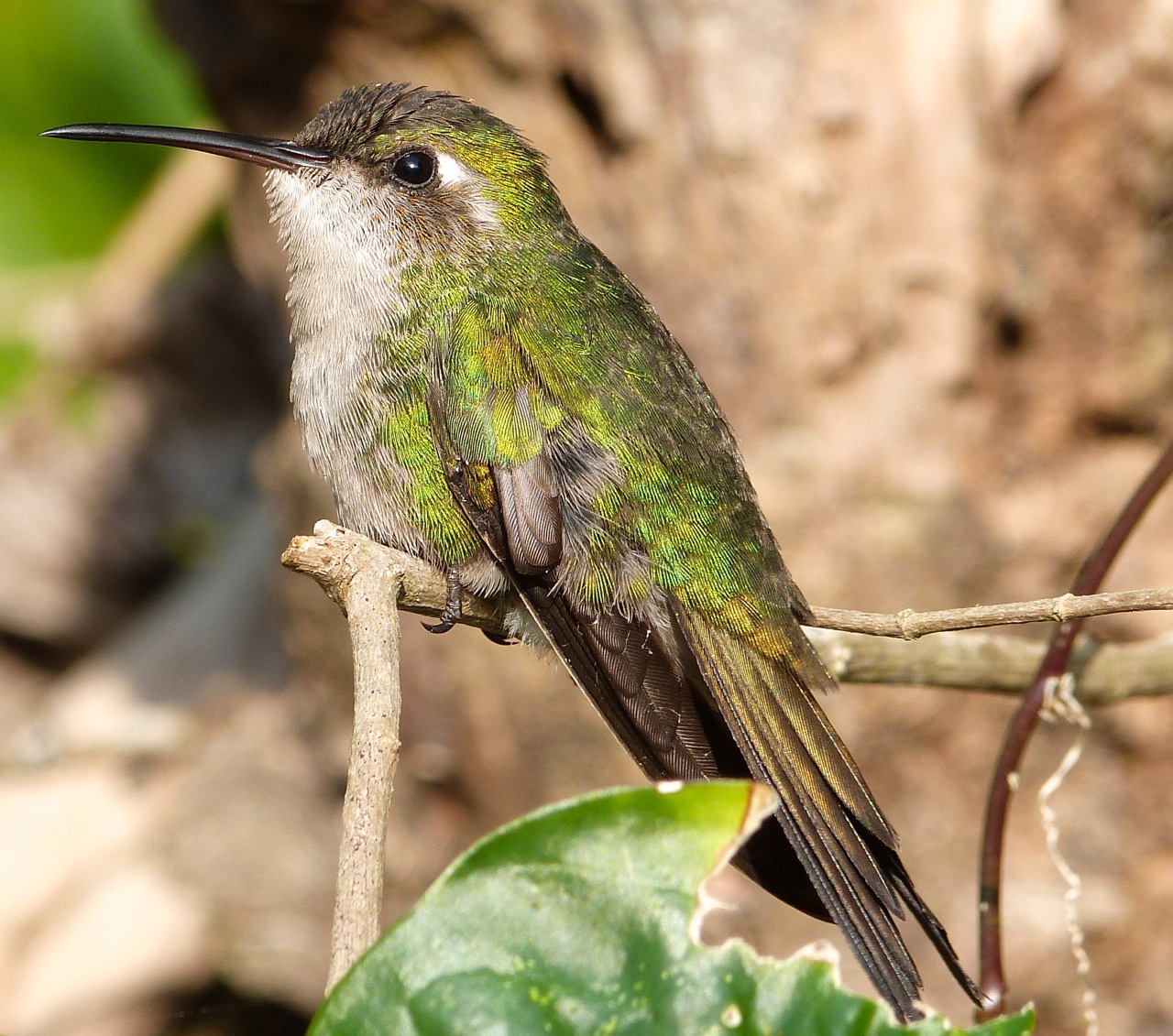
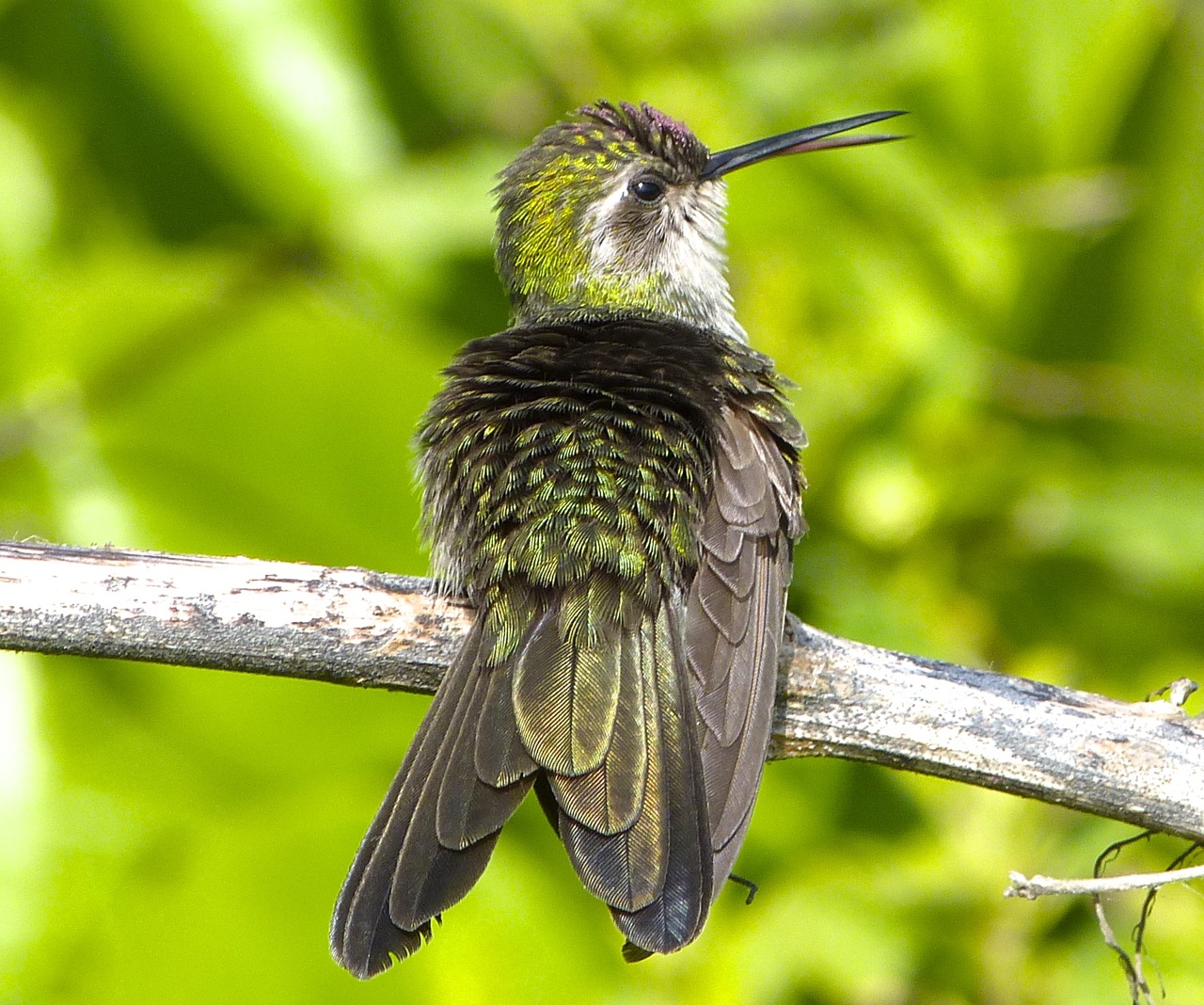
The females have a wonderful metallic sheen that makes them shimmer in the sunshine. Males are darker: a gorgeous, handsome green. The Emeralds are one of those bird species where it is hard to decide between the sexes which is the more beautiful…

All photos: Keith Salvesen / Rolling Harbour

** Plastybolsaphobia (nb despite the apparent Greek derivation of this word, the Ancient Greeks were strangers to the world of these handy carriers / vile polluters / dealing wildlife killers)


Unknown's avatar

RED-LEGGED THRUSHES: MAKING EYE-CONTACT ON ABACO


Red-legged Thrush, Abaco, Bahamas (Tom Sheley)

RED-LEGGED THRUSHES: MAKING EYE-CONTACT ON ABACO

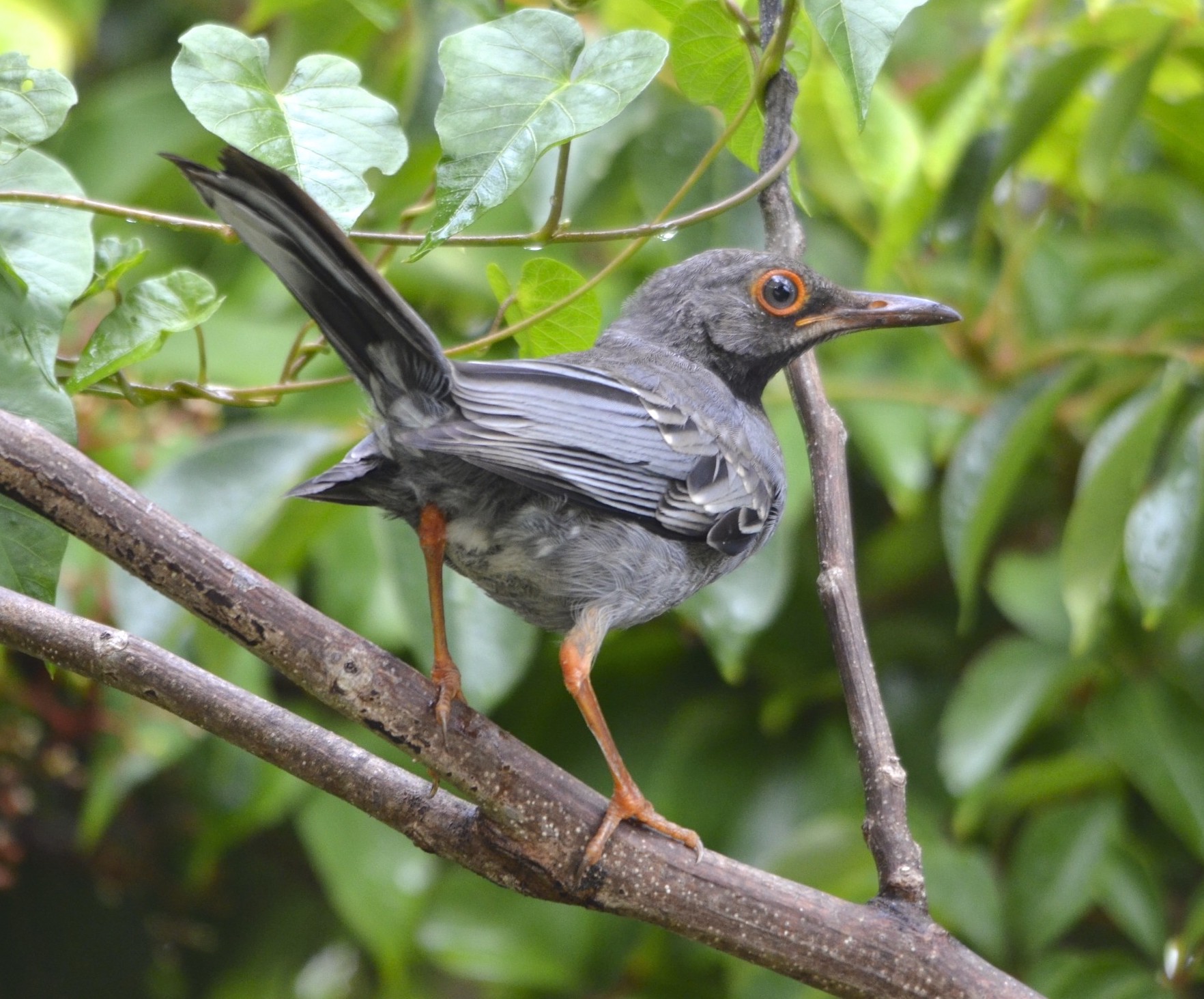
I see it is ‘literally’** years since I last wrote about these lovely, accessible birds, the only permanent resident breeding thrush species on Abaco (out of 8). The post – OL’ RED-EYES IS BACK – featured mainly my own photos, plus one by Mrs RH. With a whole lot of more recent photos, it’s time to revisit these cheery birds. I promised something brighter after two rather sombre shearwater die-off posts – (incidentally, a far wider problem than just in the Bahamas, including NC & Cape May). Here it is.

A RED-LEGGED, RED-EYED GALLERY

Red-legged Thrush, Abaco, Bahamas (Peter Mantle)

Red-legged Thrush, Abaco, Bahamas (Gerlinde Taurer)

Red-legged Thrush, Abaco, Bahamas (Peter Mantle)

Many of the birds shown here were photographed in or around the grounds of Delphi. More recently, they have to an extent been displaced by red-winged blackbirds which are of course very fine birds but in large numbers sound (may I say this? Is this just me?) quite irritating after a while. Whereas the thrush of course has a sweet and melodious song, like this (my own recording – turn up the vol):

Mr & Mrs Harbour’s Handiwork at DelphiRed-legged Thrush, Abaco, Bahamas (Keith Salvesen)

Red-legged Thrush, Abaco, Bahamas (Keith Salvesen)

Red-legged Thrush, Abaco, Bahamas (S Salvesen)

As I may have mentioned before (impatient reader: ‘yes, yes, you did’), the eyes of the RLT are at least as prominent a feature as their legs. Lots of birds have red legs. Very few have such remarkable bright, fiery eye-rings, even in a youngster.

Red-legged Thrush, Abaco, Bahamas (Charles Skinner)Red-legged Thrush, Abaco, Bahamas (Charles Skinner)

Red-legged Thrush, Abaco, Bahamas (Erik Gauger)

This photo from birdman Tom Sheley is my favourite – a perfect compositionRed-legged Thrush, Abaco, Bahamas (Tom Sheley)

** This means it really is literally years (4), not in the modern modified sense of ‘not actually literally’, as  in “I am literally dying of hunger”. Unless you are exceptionally unfortunate, while you have the breath to say you are, you are literally not doing so…

FUN FACT

There is quite literally no song since 1950 with the word ‘thrush’ in the title. Hard to fathom why… One or two songs have a thrush buried away in the lyrics somewhere. Blackbirds have done rather better in this respect… 

Photo Credits: Tom Sheley (1, 11); Peter Mantle (2, 4); Gerlinde Taurer (3); Mr & Mrs Harbour (5, 6, 7); Charles Skinner (8, 9); Erik Gauger (10). Lo-fi audio recording: RH

Unknown's avatar

WATCHFUL TYRANT: A LOGGERHEAD KINGBIRD ON ABACO


Loggerhead Kingbird, Delphi, Abaco, Bahamas (Keith Salvesen)

WATCHFUL TYRANT: A LOGGERHEAD KINGBIRD ON ABACO

The Delphi Club on Abaco has a number of permanent residents (or by now – let’s be realistic – maybe their descendants). There’s the huge curly tail lizard that lives under the large stones by the outside staircase. There are the West Indian Woodpeckers that noisily nest in a box under the eaves of the verandah and produce 2 batches of shouty chicks each summer. And there is the silent sentinel – a loggerhead kingbird that spends much of its time in the trees and bushes at the far side of the pool.

Loggerhead Kingbird, Delphi, Abaco, Bahamas (Keith Salvesen)

It’s a good place to chose. The bird uses the tree branches and shrubs to ‘hawk’ for passing insects, suddenly leaving its perch to pounce, before returning to just the same place to eat its snack – classic flycatcher behaviour. I call it the ‘watchful tyrant’ because the kingbird is nearly always there. Somewhere. If you look carefully and wait patiently. He stays in the shade, so he’s not bright with sunlight (or P/shop) in these photos. This is just the way he is.

Loggerhead Kingbird, Delphi, Abaco, Bahamas (Keith Salvesen)

Kingbirds are of the family Tyrannidae and the genus Tyrannus. The ‘tyrant’ group includes a number of flycatcher species commonly found on Abaco: the KINGBIRDS (loggerhead and gray), the CUBAN PEWEE and the LA SAGRA’S FLYCATCHER being the most familiar. Note the hook at the end of the beak; and the yellowish tinge to the undertail area.

Loggerhead Kingbird, Delphi, Abaco, Bahamas (Keith Salvesen)

With the exception of the gray kingbird, the flycatchers named above are very common permanent breeders on Abaco. There’s probably one of them within 20 feet of your house right now. The gray, however, is a summer breeding resident. This is most helpful of it: if you see a kingbird between October and April, it will be a loggerhead. This gives you a 6-month window for near-certain ID.

Loggerhead Kingbird, Delphi, Abaco, Bahamas (Keith Salvesen)

IT’S SUMMER – SO HOW DO I TELL A LOGGERHEAD FROM A GRAY?

EASY. CLICK HERE

All photos: Keith Salvesen; Cartoon by the legendary Birdorable

Unknown's avatar

BAHAMA MOCKINGBIRDS ON ABACO: GOOD IMPRESSIONS


Bahama Mockingbird, Abaco - Tom Sheley

BAHAMA MOCKINGBIRDS ON ABACO: GOOD IMPRESSIONS

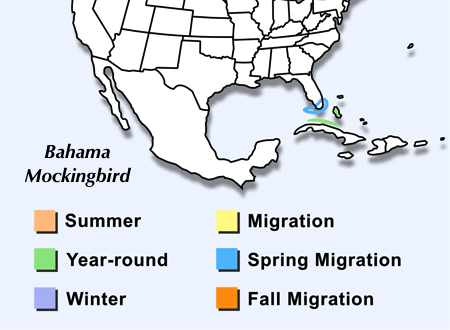
The Bahama Mockingbird Mimus gundlachii is similar to its slightly smaller cousin, the widespread Northern Mockingbird Mimus polyglottis. The range of Bahama Mockingbirds is not restricted to the Bahamas themselves, and includes areas of  Cuba, Jamaica and TCI, so despite the name they are not an endemic species to the Bahamas.  They are also occasional vagrants to the United States, especially – for reasons of proximity – southeastern Florida.

Bahama Mockingbird, Abaco - Peter Mantle

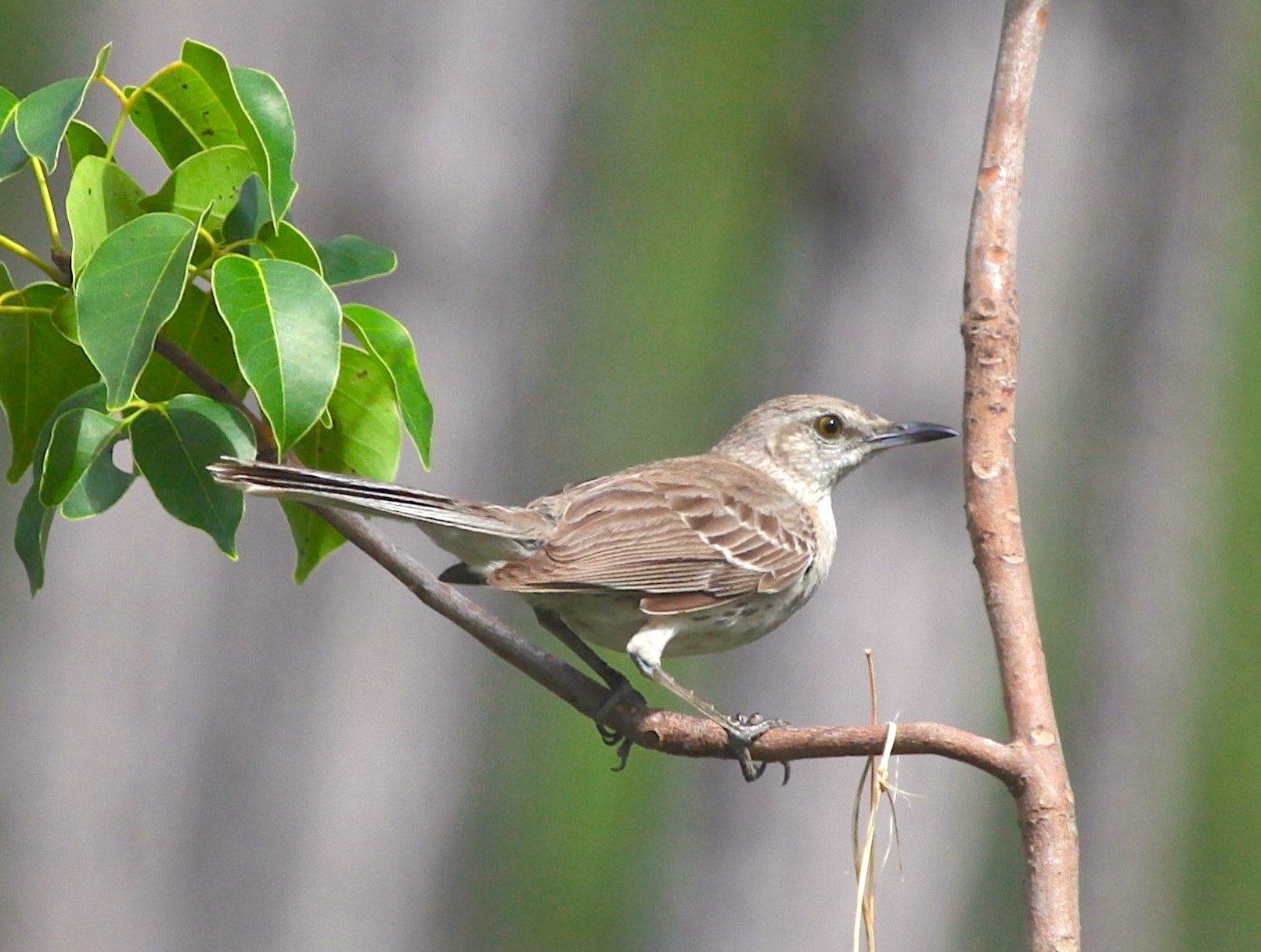
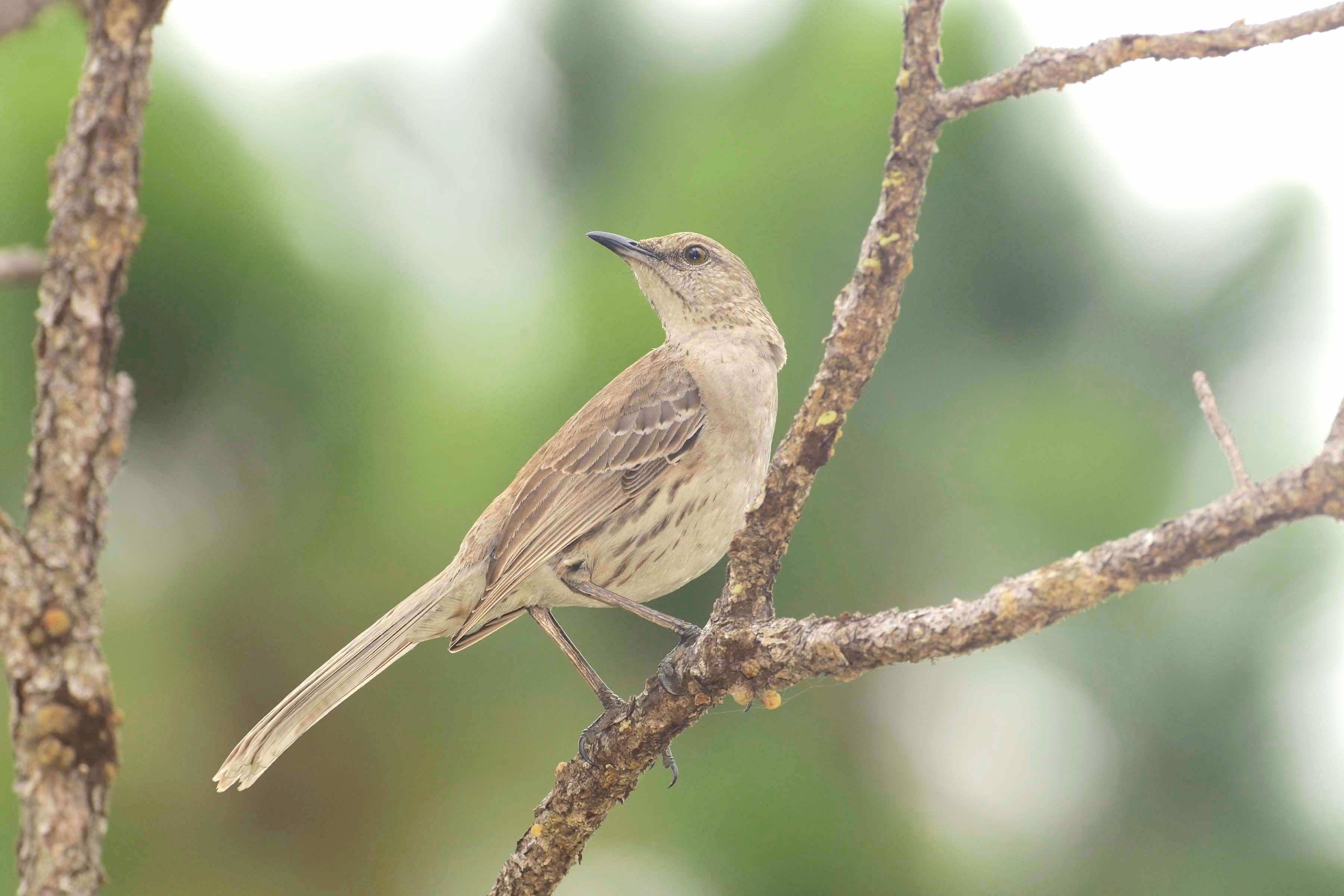
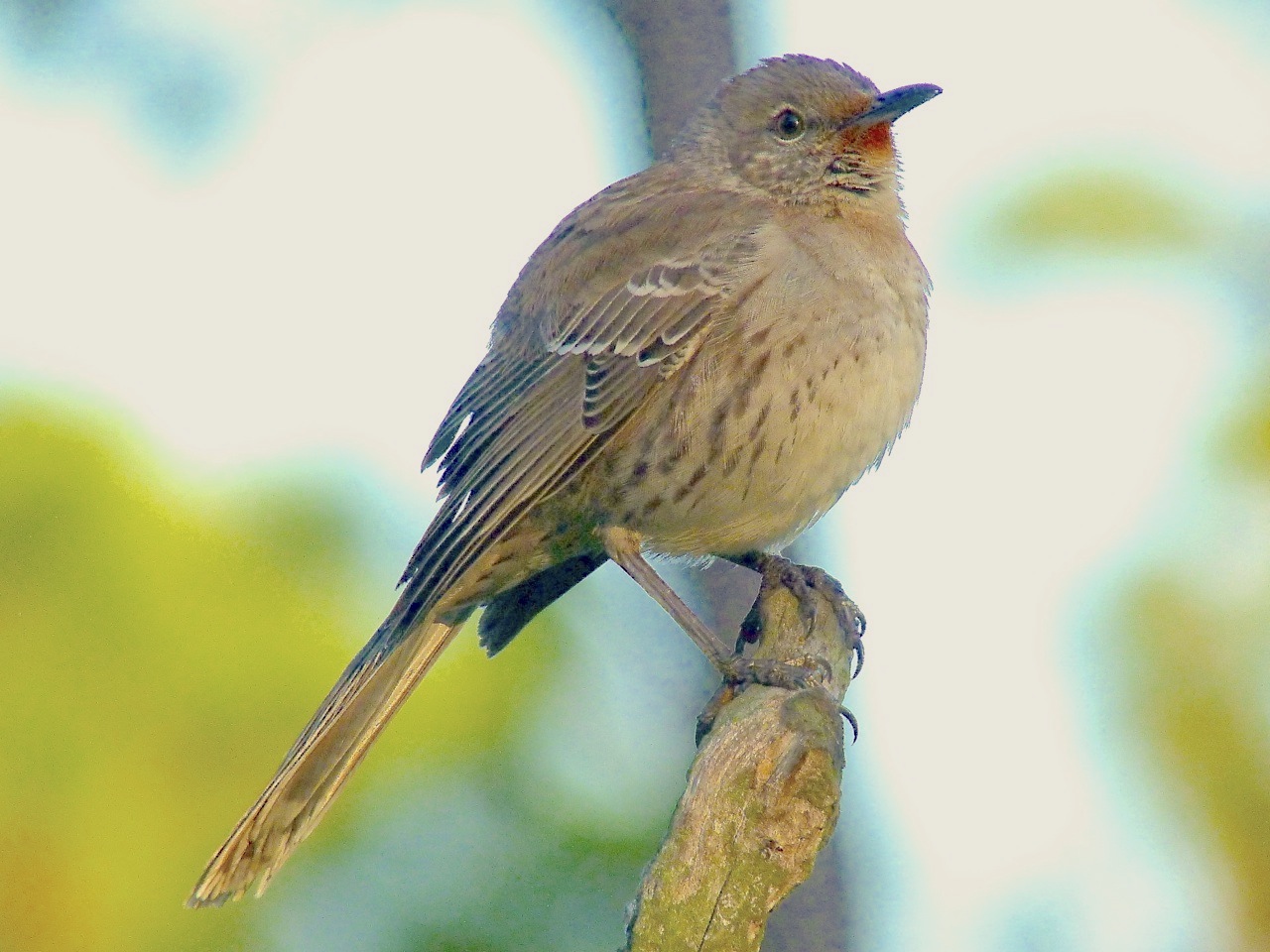
The Bahama Mockingbird is browner than the greyish Northern Mockingbird, and has distinctive streaking and spotting to its breast and undercarriage. This may extend to what you might describe as the bird’s ‘trouser legs’, though I’m sure there’s a more technically correct term.

Bahama Mockingbird, Abaco - Charlie Skinner

Both mockingbird species are found on Abaco. The NMs are ubiquitous in towns, settlements, gardens, coppice and pine forest, whereas BMs are shyer and tend to be found in the pine forest and well away from humans and their operations. When we were putting together The Birds of Abaco, I went on a birding trip with Abaco birding legend Woody Bracey and Ohio bird photographer Tom Sheley. We took a truck into the pine forest down a logging track south of Delphi, and they were quick to locate a bird, not least because one was sitting prettily on a branch singing lustily and unmistakably. It was well within range of Tom’s massive lens; more of a struggle for my modest camera (below). Caught the cobwebs, though…

Bahama Mockingbird, Abaco - Keith Salvesen

I was astounded by the beauty and variety of the song. It consisted of very varied notes and phrases, each repeated 3 or 4 times before moving on to the next sounds in the repertoire. Here is a short 18 second example I recorded, using my unpatented iPhone method, for which see HERE.

Bahama Mockingbird, Abaco - Alex Hughes

For those with interest in birdsong, here is a longer 1:13 minute song from the same bird, with largely different sounds from the first recording made minutes earlier. There’s even a decent stab at imitation of a 1960s Trimphone™. Had we not had to move on to Sandy Point for an appointment with some cattle egrets and American kestrels, I could have stayed listening for far longer.

Bahama Mockingbird, Abaco - Tom Sheley

THE ‘SUBSPECIES’ THAT WASN’T…

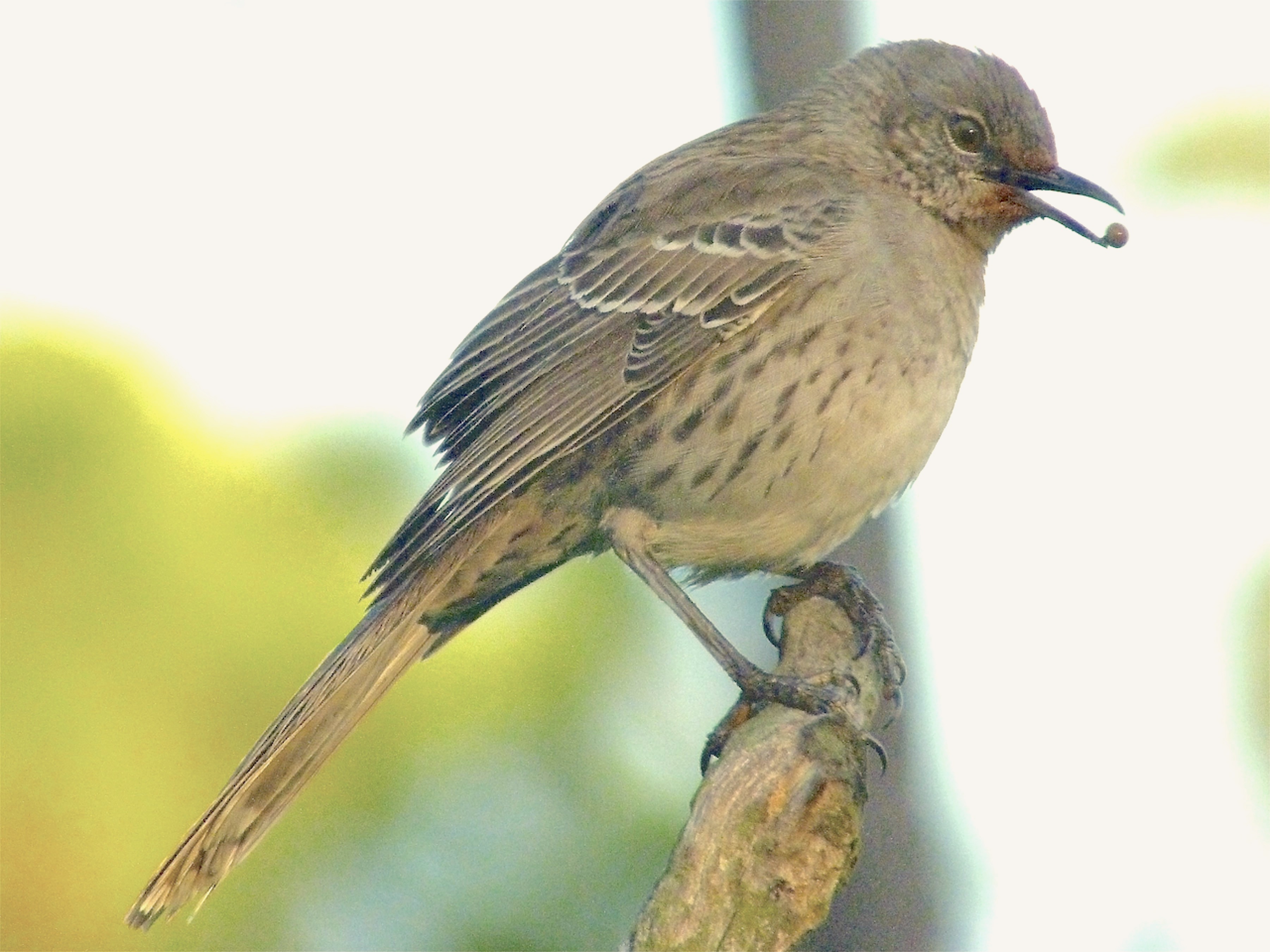
More recently, on a trip in backcountry to find Kirtland’s warblers – we saw 4 – the slow-moving truck jolted to halt in the middle of nowhere. This was because a Bahama Mockingbird was right by the track. I fired off some quick shots out of the window into a rather difficult light, to find that we appeared to have found a new subspecies, the scarlet-faced mockingbird.

Bahama Mockingbird, Abaco - Keith Salvesen

The reason was clear, however. The bird had been pigging out on some red berries, and had managed to collect plenty of the juice round the base of its beak. Bahama Mockingbird, Abaco - Keith Salvesen

SO WHAT DOES A NORTHERN MOCKINGBIRD LOOK LIKE, THEN?

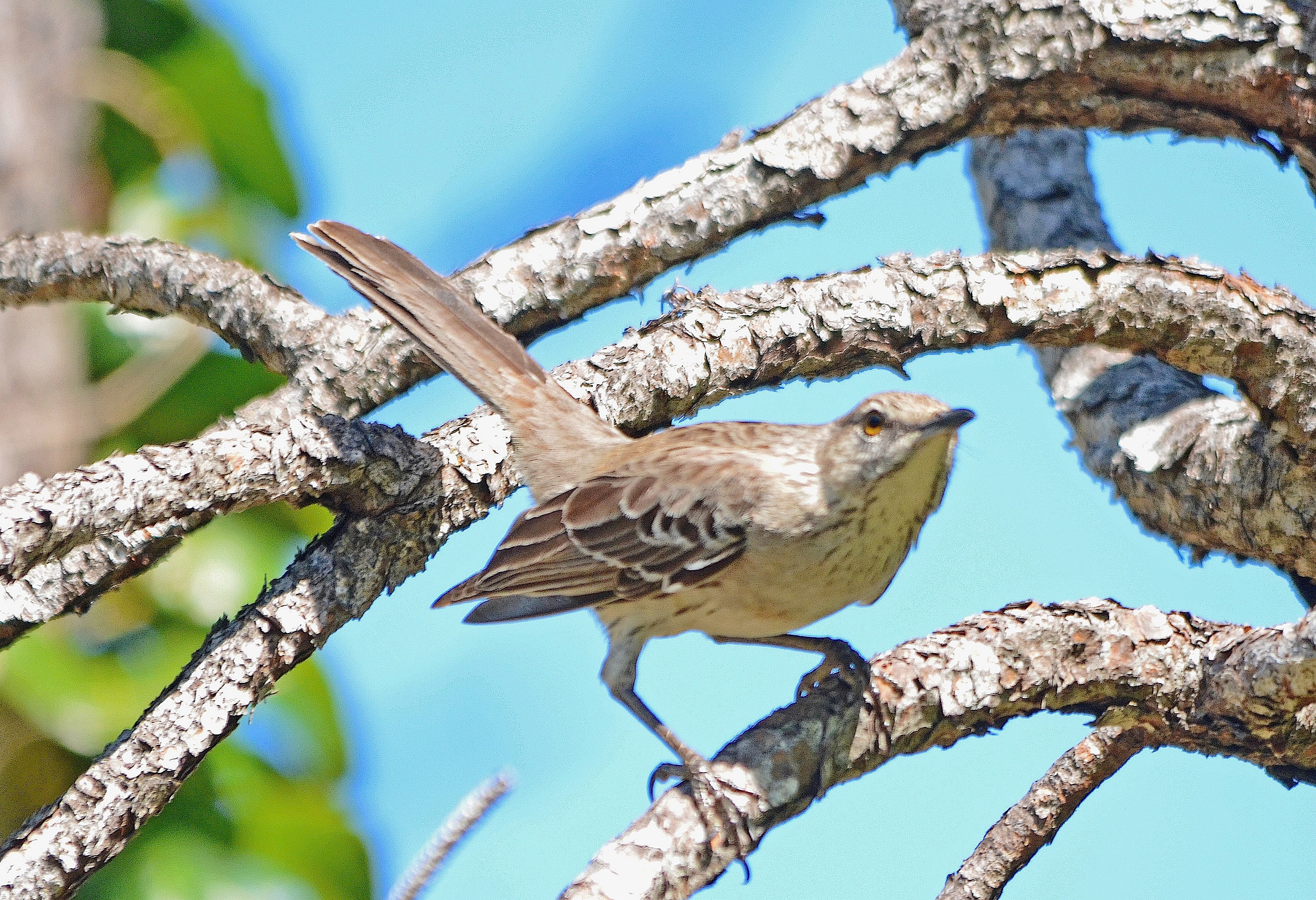
I photographed the Northern Mockingbird below in a garden at Casuarina. The species is far tamer than its cousin, and seen side-by-side they are clearly very different. The range maps show the stark contrast between the very limited range of the Bahama Mockingbird and the vast distribution of the Northern Mockingbird.

220px-Northern_Mockingbird-rangemap

Northern Mockingbird, Abaco 1

Photos Credits: Tom Sheley (1, 6); Peter Mantle (2); Charlie Skinner (3); Keith Salvesen (4, 7, 8, 9); Alex Hughes (5); Susan Daughtrey (10). Range maps eBird & wiki.

Bahama Mockingbird, Abaco - Susan Daughtry

Unknown's avatar

ATLANTIC SPOTTED DOLPHINS OFF ROCKY POINT, ABACO


Atlantic Spotted Dolphins off Rocky Point, Abaco

This pair was in a group of 8 Atlantic Spotted Dolphins that we encountered yesterday during a day’s expedition on the Bahamas Marine Mammal Research Organisation (BMMRO) research boat. We spent nearly an hour with them, and there will be a longer post about these magnificent creatures in due course. But right now, I’m still in single image posting mode while “on-island”…

Photo: Keith Salvesen / BMMRO

Unknown's avatar

BROWN PELICANS ON ABACO & BEYOND


Brown Pelican, Bahama Palm Shores, Abaco Bahamas (Tom Sheley)

BROWN PELICANS ON ABACO & BEYOND

Six more sleeps. That’s all. Suddenly, a trip that seemed ages away is rushing towards us. Or, to put it more plausibly science-wise, we are rushing towards it. Abaco beckons, with bonefish, rays, sharks, reef fishes, whales, dolphins, birds and butterflies to investigate. Plus Kaliks to consume. 

Brown Pelican, Abaco (Tony Hepburn)

Idly thinking along those lines and vaguely plotting the first few days, took me to Sandy Point, home of the BMMRO (Bahamas Marine Mammal Research Organisation) and of course the legendary Nancy’s, the restaurant at the end of the road. From where it is a short step to the dock on which the pelicans gather and use as a launch pad for their fishing dives.

I photographed this bird at the end of the SP dock, looking rather bedraggled after a diveBrown Pelican (m), Sandy Point, Abaco (Keith Salvesen)

Note the significant plumage differences between the male (above) & this femaleBrown Pelican (f), Sandy Point, Abaco (Keith Salvesen)

I recently read somewhere that the brown pelican is (or has become) quite uncommon in the Bahamas. On Abaco it is a permanent resident breeding species, so a drop in numbers equals fewer nests, fewer chicks and… fewer numbers. It’s a classic cycle towards serious population decline and all that is implied. Has anyone noticed an apparent reduction in numbers, I wonder? Comments welcome.

Brown Pelican, Abaco (Woody Bracey)

Brown Pelican, Sandy Point, Abaco (Keith Salvesen)

The pelicans above were all photographed on Abaco. The two below were not, but are both by exceptional photographers. One, Phil Lanoue, specialises in dramatic sequences, and his work features elsewhere in this blog. The final image was sportingly uploaded by Alan Schmierer from Flickr into the ‘public domain’.

Coming in to land…Brown Pelican coming in to land (Phil Lanoue)

While we are on Abaco, I plan to keep posting as and when, subject to connectivity (always a proviso in the Bahamas). My big hope is that the piping plovers that were on the beach last year and returned this season, will have resisted the increasingly insistent call to fly north to the breeding grounds. If they could just hang on for just a few more days… 

Brown Pelican preening (Alan Schmierer)

Credits: Tom Sheley (1); Tony Hepburn (2); Keith Salvesen (3, 4, 6); Woody Bracey (5); Phil Lanoue (7); Alan Schmierer (8); Birdorable (cartoon)

Unknown's avatar

SANDERLINGS: BATH TIME FUN AT DELPHI, ABACO


Sanderling Bath Time, Delphi Beach Abaco Bahamas - Keith Salvesen

SANDERLINGS: BATH TIME FUN AT DELPHI, ABACO

One of the pleasures of watching birds (as opposed to BIRDWATCHING, a more committed-sounding enterprise with its own Wiki entry, that may require equipment, books & mag subs…) is to spend some time observing them enjoying themselves. Perhaps you have a feeder, and like to watch the birds getting stuck into the seeds, carelessly flicking the husks around and throwing their ‘feeder shapes’ on the perches. Maybe you like to see the hummers, beaks deep into the little red plastic flowers on the rim of the sugar-water feeder, tiny bodies motionless and upright, wings a glistening blur of rapid movement in the sun. 

Sanderling Bath Time, Delphi Beach Abaco Bahamas - Keith Salvesen

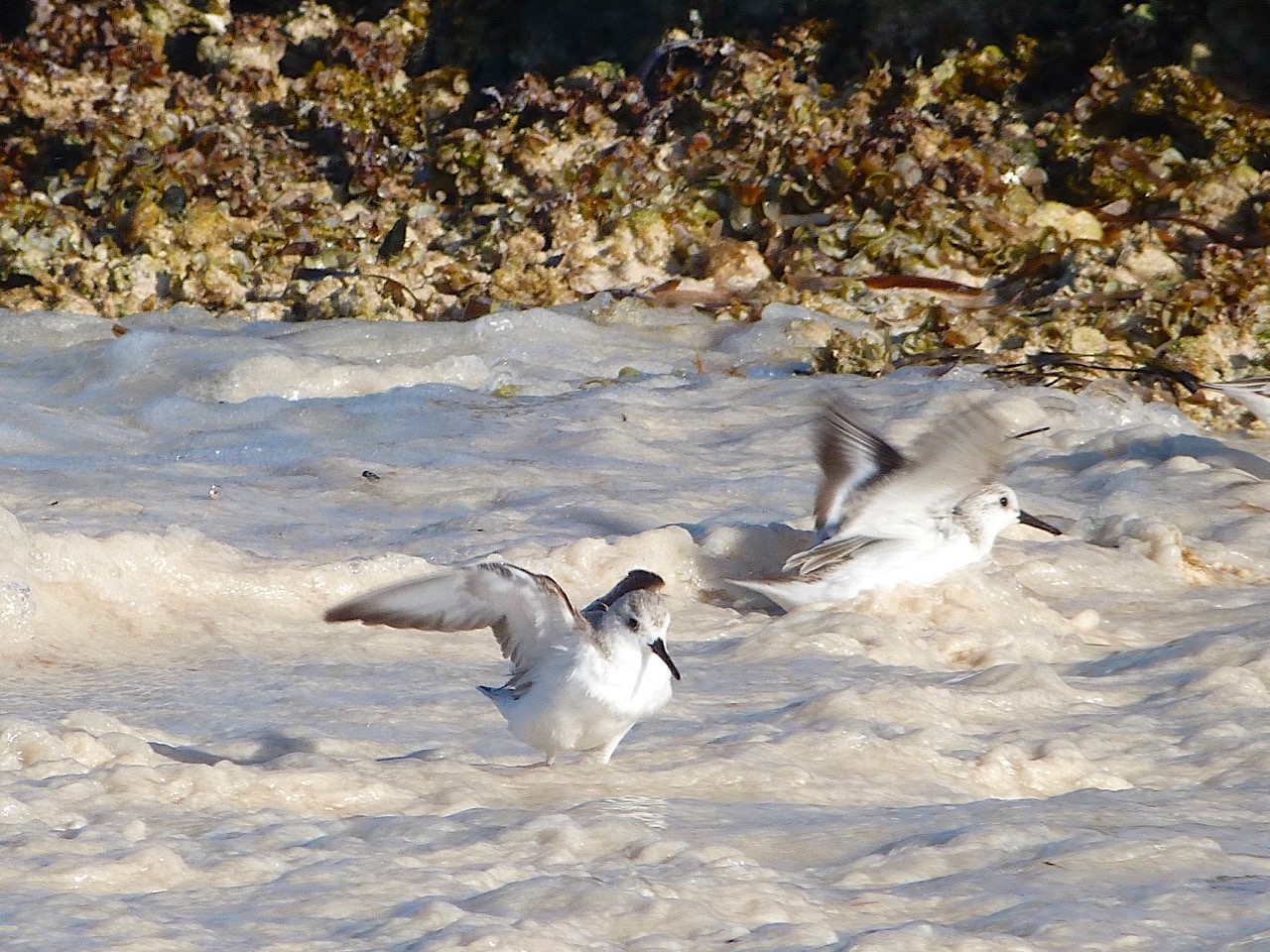
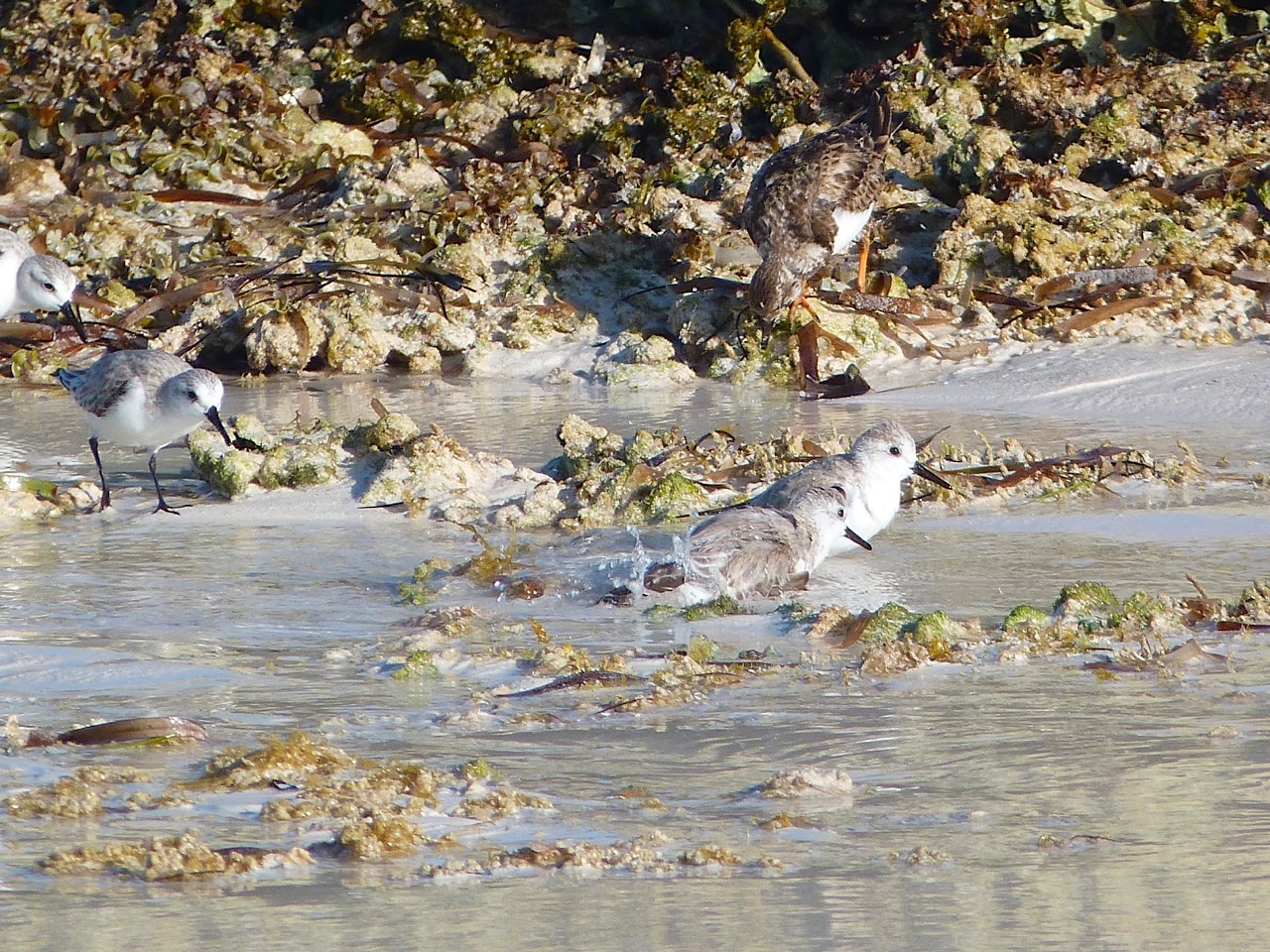
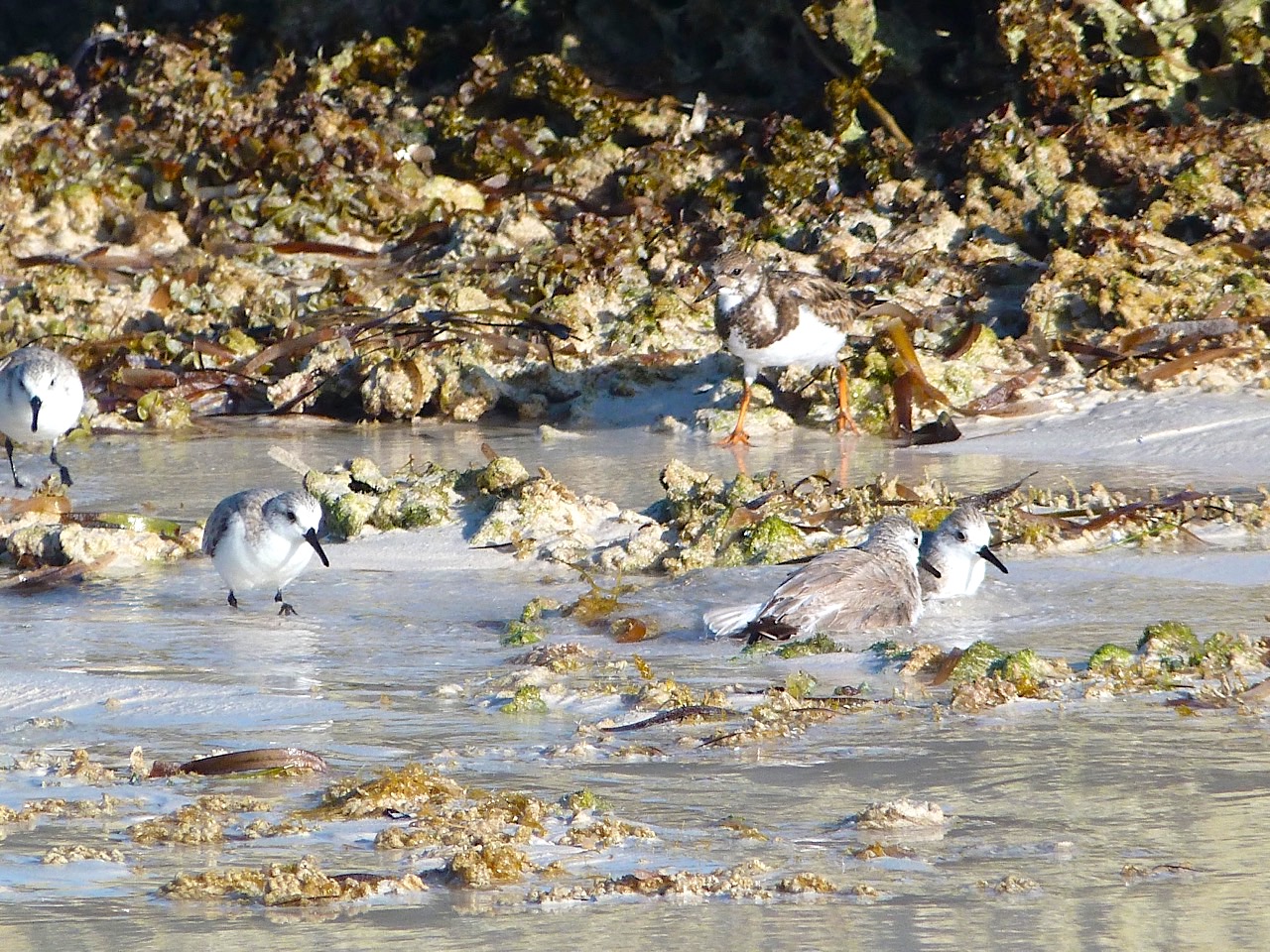
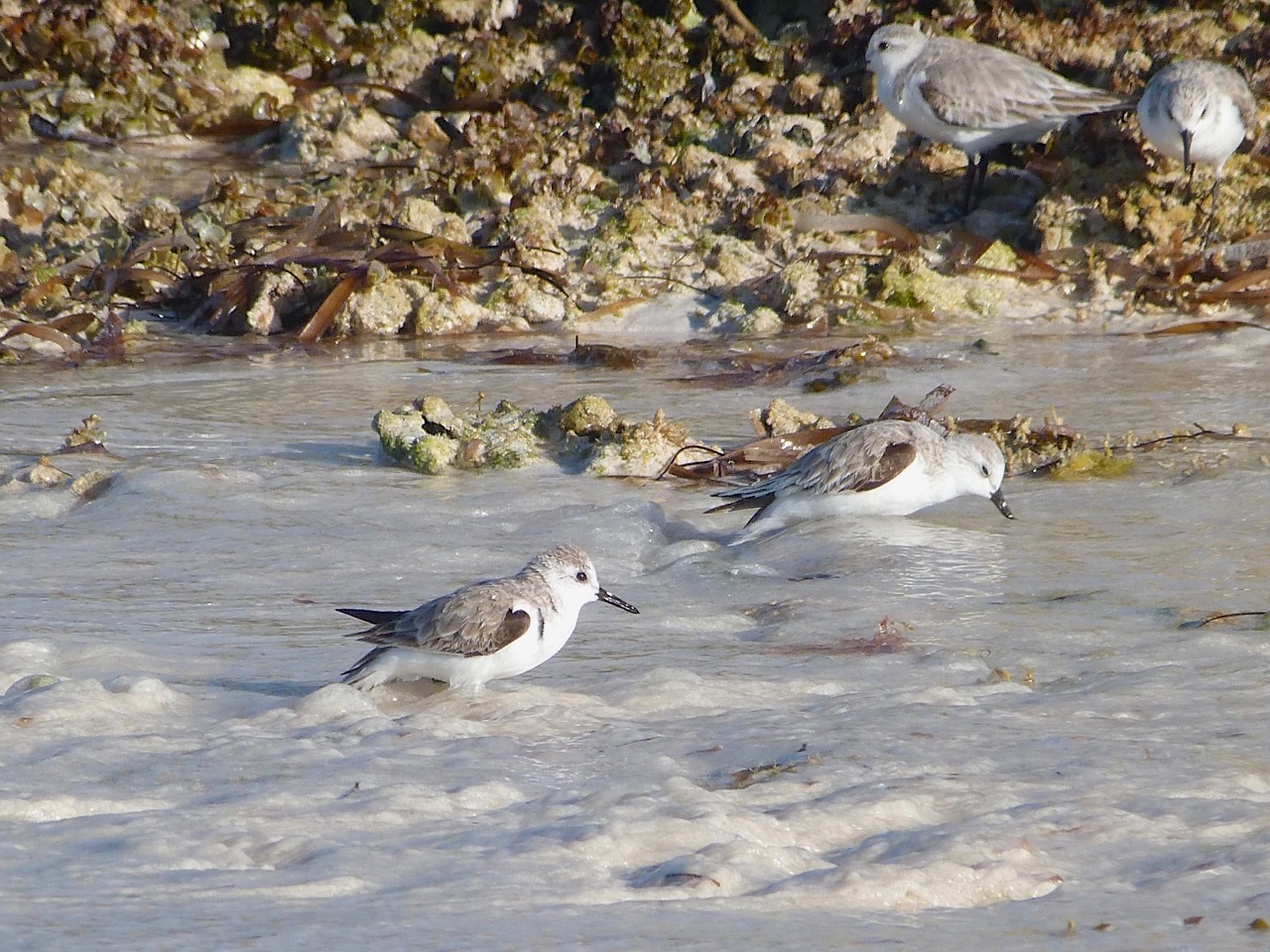
Well, join me at Sanderling Bath Time on the Delphi Beach. We are the north end, where the exposed rocks of the reef curve round towards the beach. At low tide, there’s a sandbar bridge from beach to rocks. It is a perfect feeding area for shore birds. Sanderlings, ruddy turnstones, least sandpipers, Wilson’s plovers and the prized piping plovers forage happily together here.

Sanderling Bath Time, Delphi Beach Abaco Bahamas - Keith Salvesen

Towards mid-tide on the rise, the water begins to creep round the rocks and encroach onto the sandbar. At high tide, it is well under water and fish are back in residence. Small sharks sometimes hang in the waves just behind their breaking point over the shallow sand.  And so the tidal process repeats. But ± mid-tide is the time for the shore birds to bathe in the tidal pools that form – and become frothier as the water pours in. And it’s an excellent time to sit peacefully on the beach and watch the entertainment…

Sanderling Bath Time, Delphi Beach Abaco Bahamas - Keith SalvesenSanderling Bath Time, Delphi Beach Abaco Bahamas - Keith Salvesen

Substantial immersion is not out of the question…Sanderling Bath Time, Delphi Beach Abaco Bahamas - Keith SalvesenSanderling Bath Time, Delphi Beach Abaco Bahamas - Keith SalvesenSanderling Bath Time, Delphi Beach Abaco Bahamas - Keith Salvesen

These moments don’t last long. Soon the increasing force and height of the water spoils the fun, and the flock will suddenly take flight and move south a little way along the beach, away from the rocks. There’s the incoming tideline to play with – and more importantly, food to be uncovered with each incoming and retreating wave…Sanderling Bath Time, Delphi Beach Abaco Bahamas - Keith Salvesen

All photos © Rolling Harbour

Unknown's avatar

THE COLOUR OF CHRISTMAS: PAINTED BUNTINGS ON ABACO


Painted Bunting male - Bahama Palm Shores, Abaco -Tom Sheley

THE COLOUR OF CHRISTMAS: PAINTED BUNTINGS ON ABACO painted-bunting

It’s a statistical fact that 99% of people “love” or “adore” painted buntings. The 1%  were rather standoffish “Don’t Nose”, preferring to keep their views to themselves. PABU are winter residents on Abaco, not especially common but drawn irresistibly to feeders. To me they are the colour of Christmas, magically decorated with the favourite pigments from a child’s paintbox. So before I get stuck into the imminent festivities, I’ll leave you with a few of these gorgeous creatures to enjoy…

Painted Bunting, Abaco - Erik Gauger

Painted Bunting, Abaco - Tara LavalleePainted Bunting , Abaco - Tara LavalleePainted Bunting reflection LR.Laguna Seca.South TX.Tom Sheley

A male and female painted bunting sharing on of the Delphi Club feeders
Painted Bunting, Delphi, Abaco (Keith Salvesen)

Wishing all friends and followers of Rolling Harbour a wonderful Christmas and a very happy New Year. See you when I have been safely discharged from the festive recovery ward… 

painted-bunting

Credits: Tom Sheley (1, 5), Erik Gauger (2), Tara Lavallee (3, 4), Keith Salvesen (6)