Unknown's avatar

LAUGHING GULLS ON THE ABACO MARLS


LAUGHING GULLS ON THE ABACO MARLS

Laughing gulls. Amusingly raucous and raucously amusing. Unless, maybe, you are living right next to a breeding colony during a collective fit of hysterics. These gulls, Leucophaeus atricilla, will be familiar to anyone on the Atlantic coast of North America; in the Caribbean; and further south to the northern coastal areas of South America. In winter, their migration pattern simply involves relocating to the southern parts of their range. They are easily recognisable in the breeding season by their smart black caps, though this fades in winter. And by their unmistakeable call, of course. Immature birds tend to be darker than adults. They breed in large colonies, each female laying 3 – 4 eggs. And like most (all?) gulls, they’ll eat pretty much anything.

Laughing Gull Conservation Status

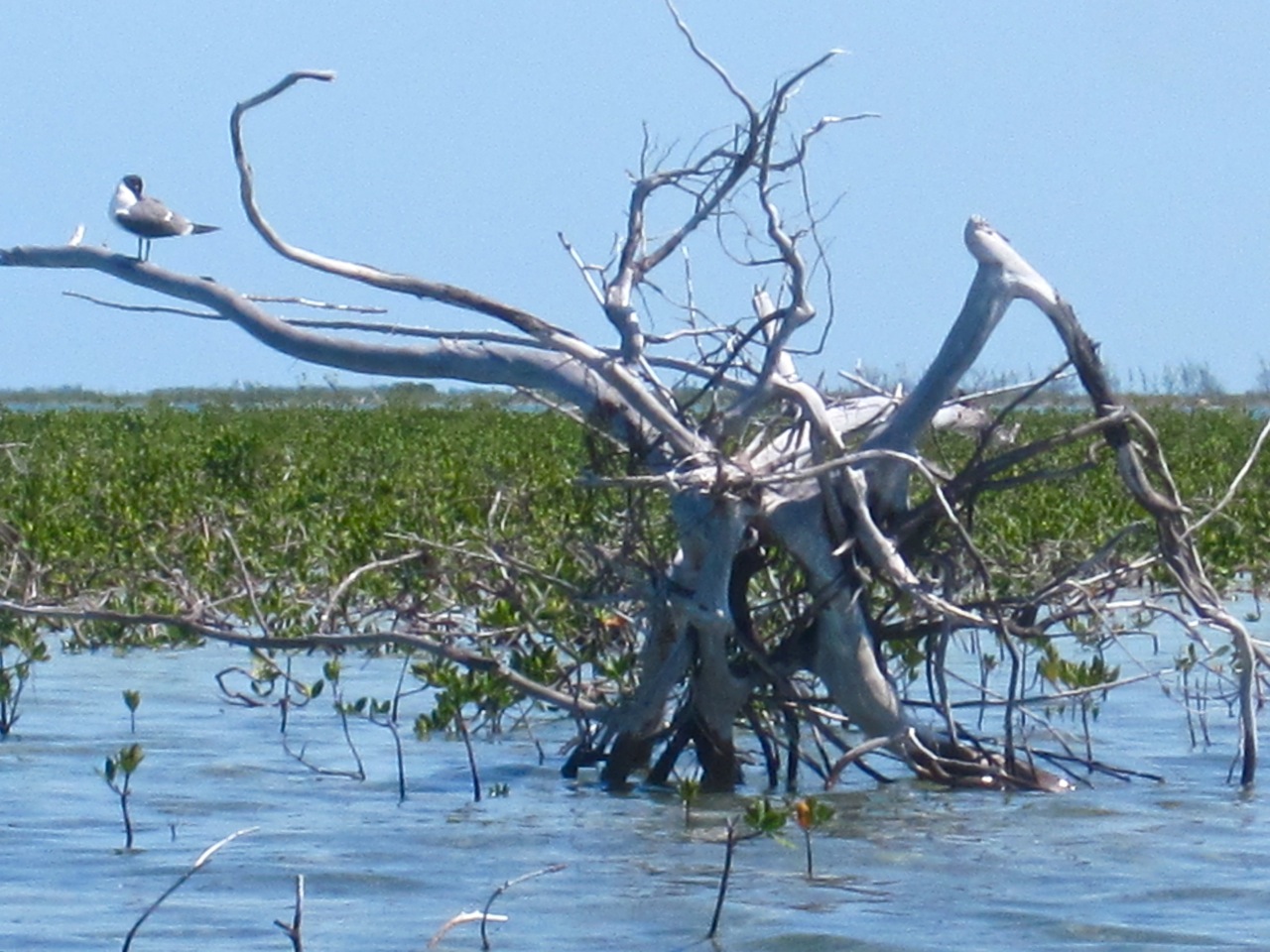
We saw – and heard – plenty while bonefishing on the Abaco Marls in June. I took some rather grainy distance shots, as they tended to fly off as the skiff was slowly poled towards them. This gull has found a good vantage point for some quality preening among the mangroves.

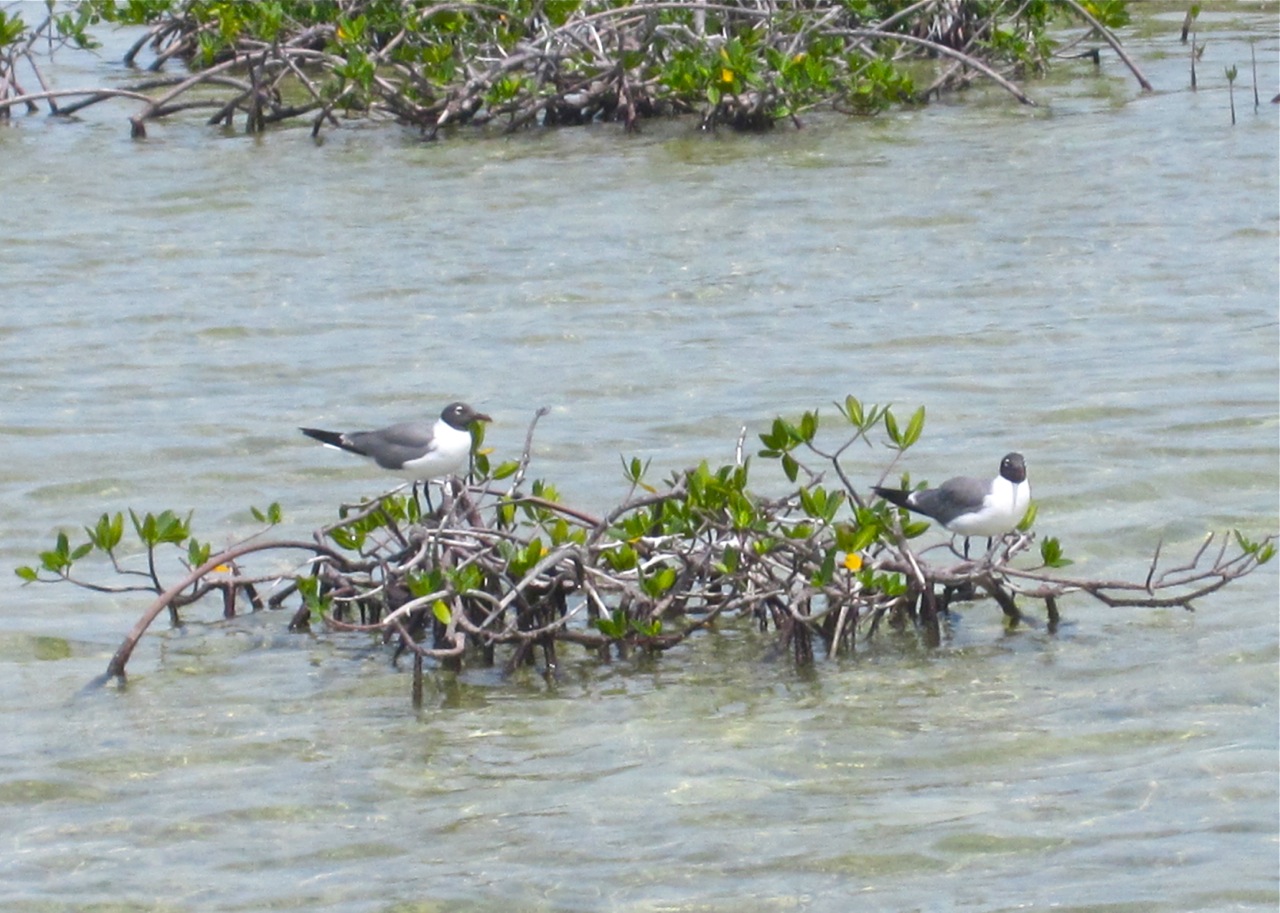
The pair below stayed put, and watched our gradual approach with suspicion that turned into noisy protest as we poled past them. I presume they were defending their territory – probably a nest site nearby.

I took a very short video just before they flew off as we drifted by. Apologies for the sound of the breeze – I’ve no idea if it’s possible to reduce the background noise while retaining the bird call. Listening to online bird sound clips (e.g. on the excellent Xeno-Canto) I think not. Or not without expensive editing equipment of a complexity I can’t face…

[vimeo https://vimeo.com/48076405]

And here (thanks, Don Jones @Xeno-Canto) is what laughing gulls sound like when one of them has told the one about the bonefish and the shrimp…

[audio http://www.xeno-canto.org/sounds/uploaded/BCWZQTGMSO/bird109.mp3]

Unknown's avatar

SEA URCHINS & SEA BISCUITS – BEACHCOMBING TREASURES ON ABACO


Sea Urchin Delphi Abaco 2

SEA URCHINS & SEA BISCUITS – BEACHCOMBING TREASURES ON ABACO 

It’s time we had some more shells and other beach treasures on these pages. In the absence of star Abaco beachcomber and blog-contributor KASIA I have taken a closer look at the Delphi Club collection. This has been casually accumulated by the Club, its members and guests during the past 3 years whenever a good specimen has been encountered, and is displayed in the Great Room. The first items to catch my eye were the ECHINODERMS, a family that includes sea urchins, sand dollars, sea biscuits and star fish. Their sun-bleached tests are often found, though in my limited experience the larger they are, the rarer.  The link above is to the Wiki-blurb, which has the unpromisingly daunting heading  “This article may be too technical for most readers to understand…”. Now there’s a challenge!

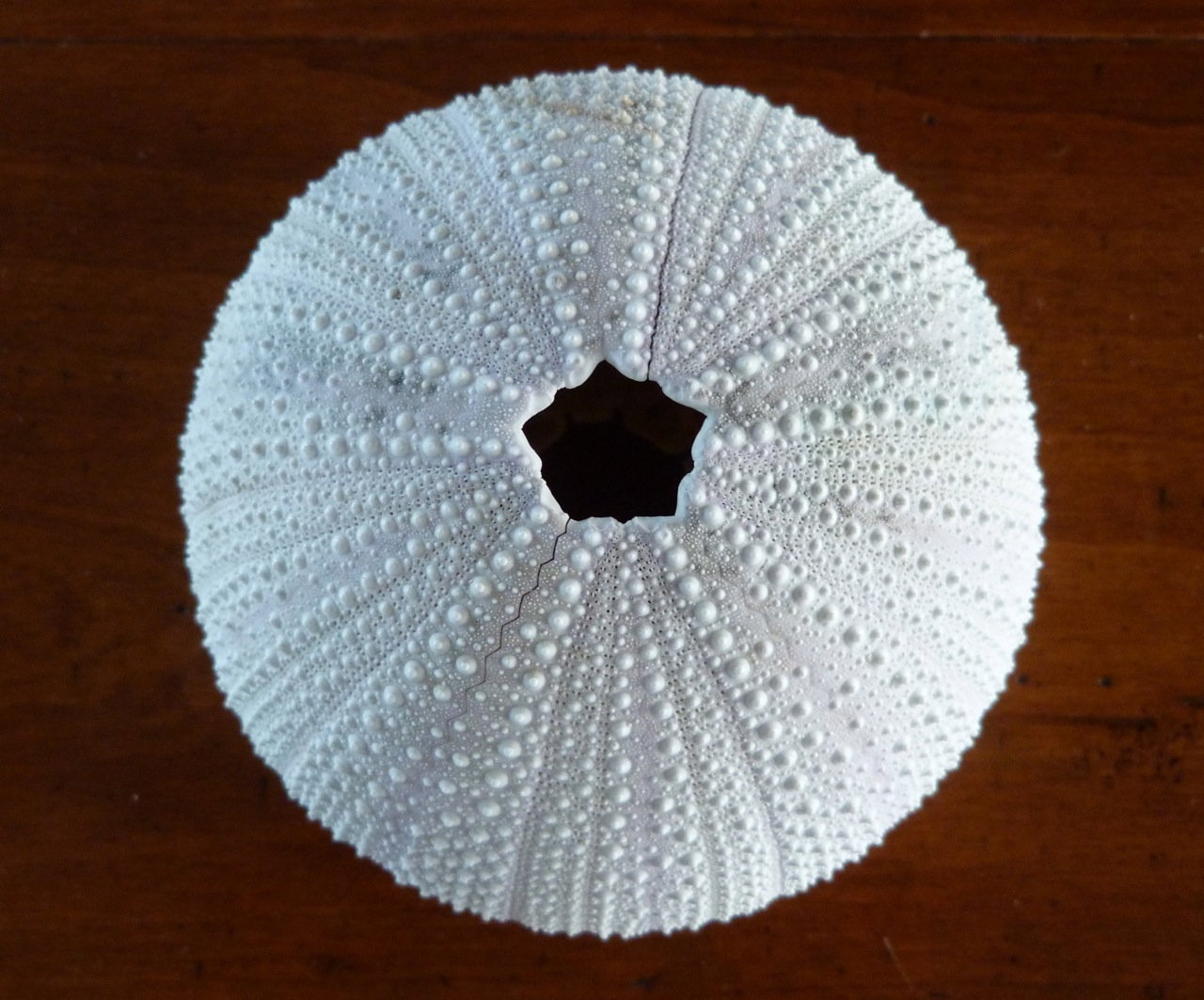
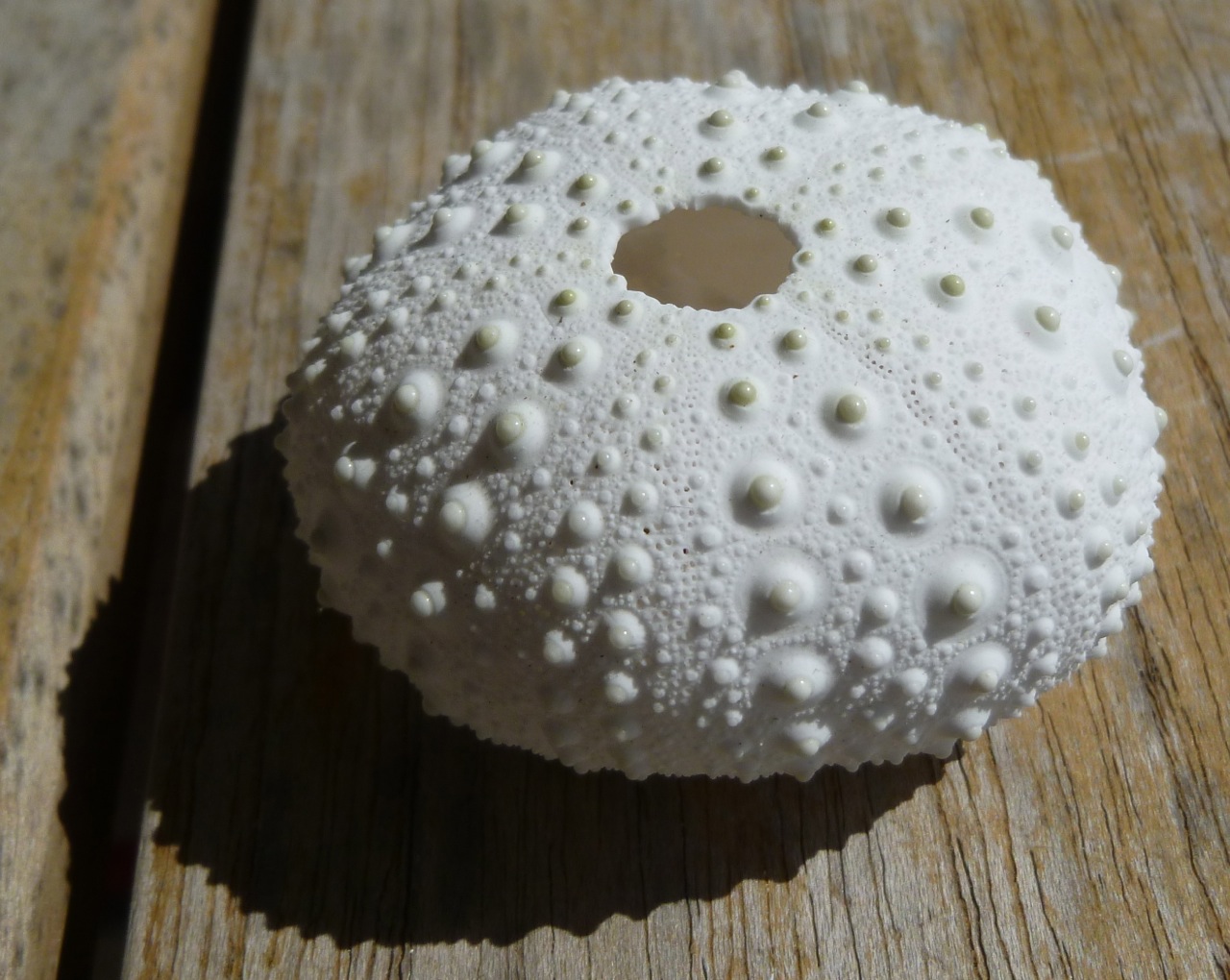
First up is a very large SEA URCHIN, a thing of great delicacy and fragility that weighs next to nothing. I have never seen a bigger one. Looking at the fine detail, it is hard to believe that such perfection of symmetry and intricacy can exist in a creature so very painful to tread on. 

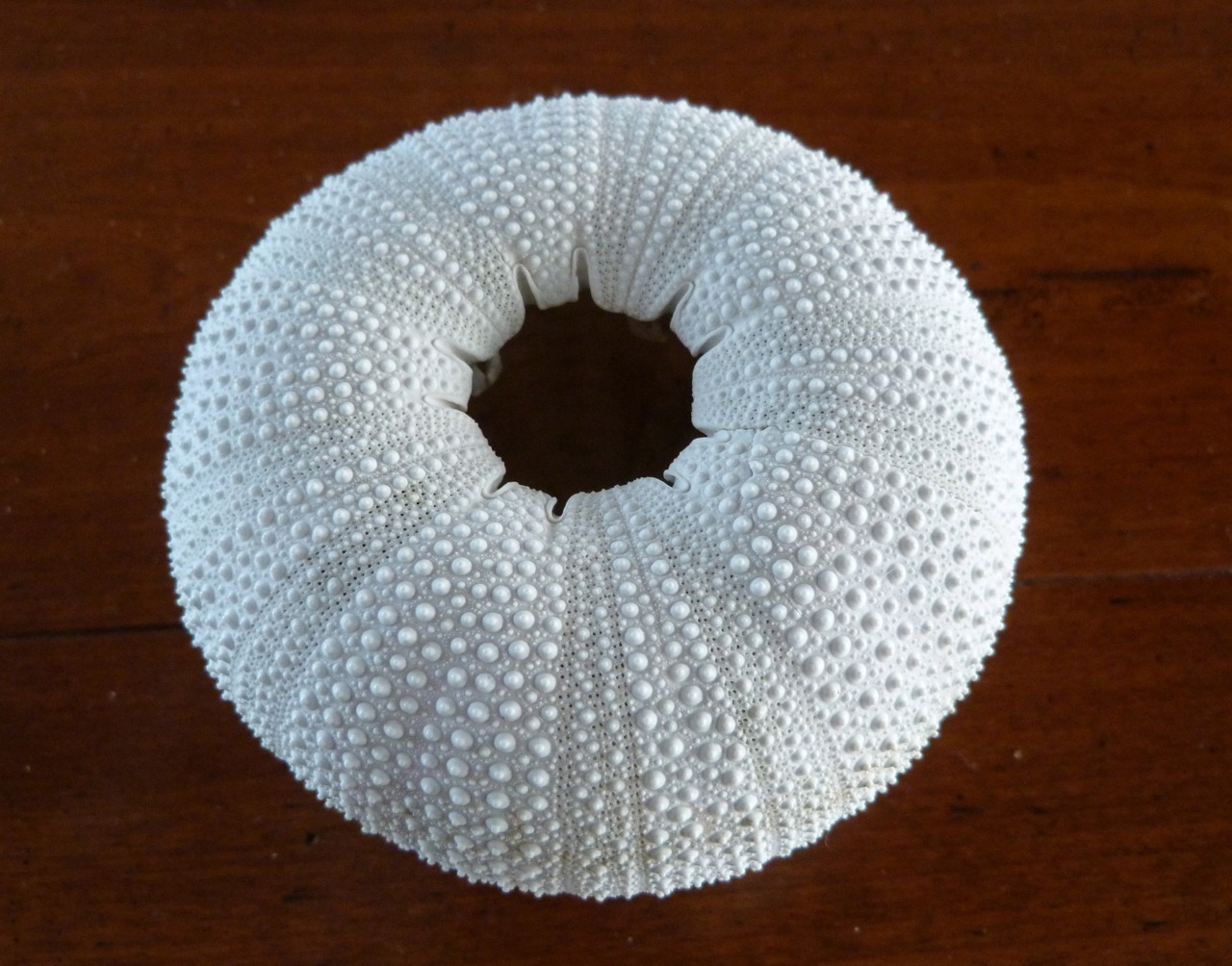
This SEA URCHIN is smaller, with more prominent nodules and a much more random pattern – reminiscent of a cartoon of some distant white planet. It has cast a fine knobbly shadow.

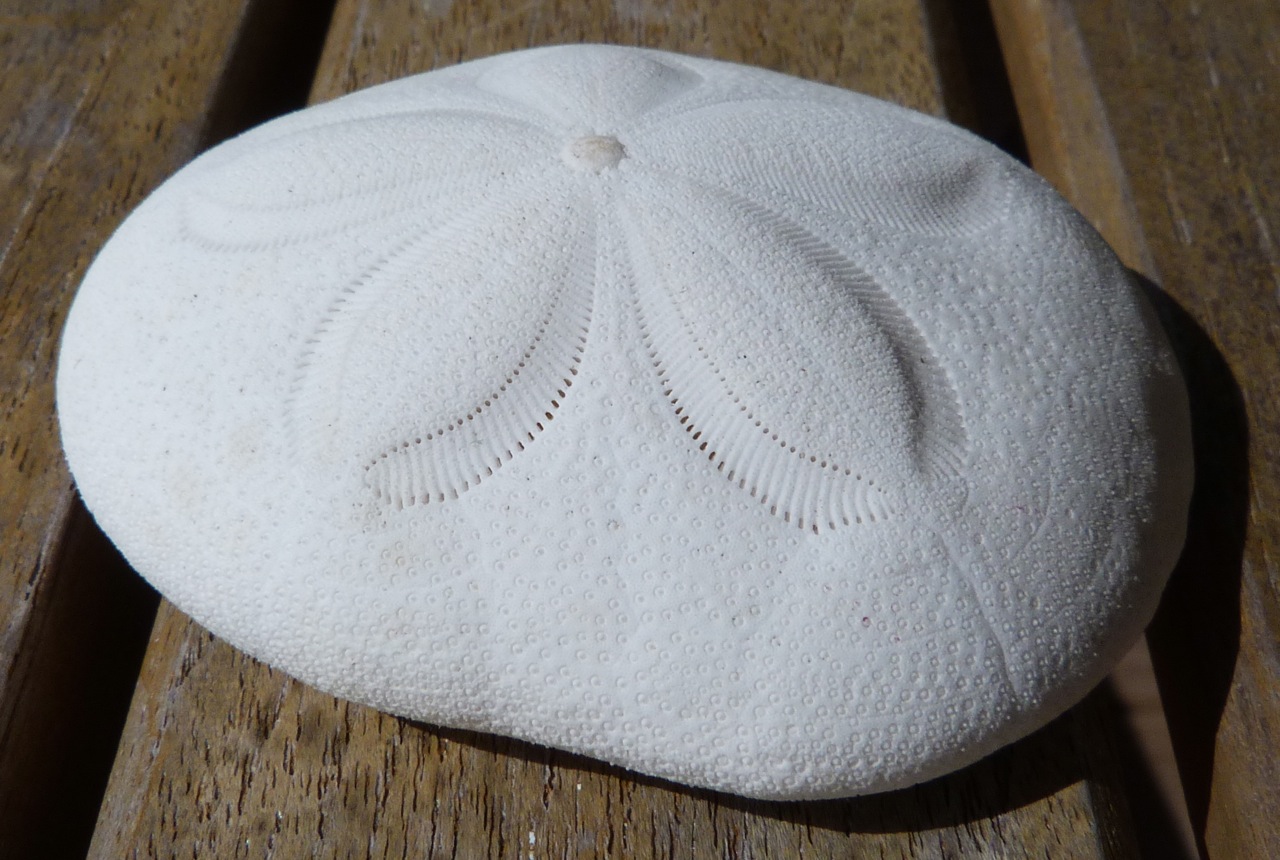
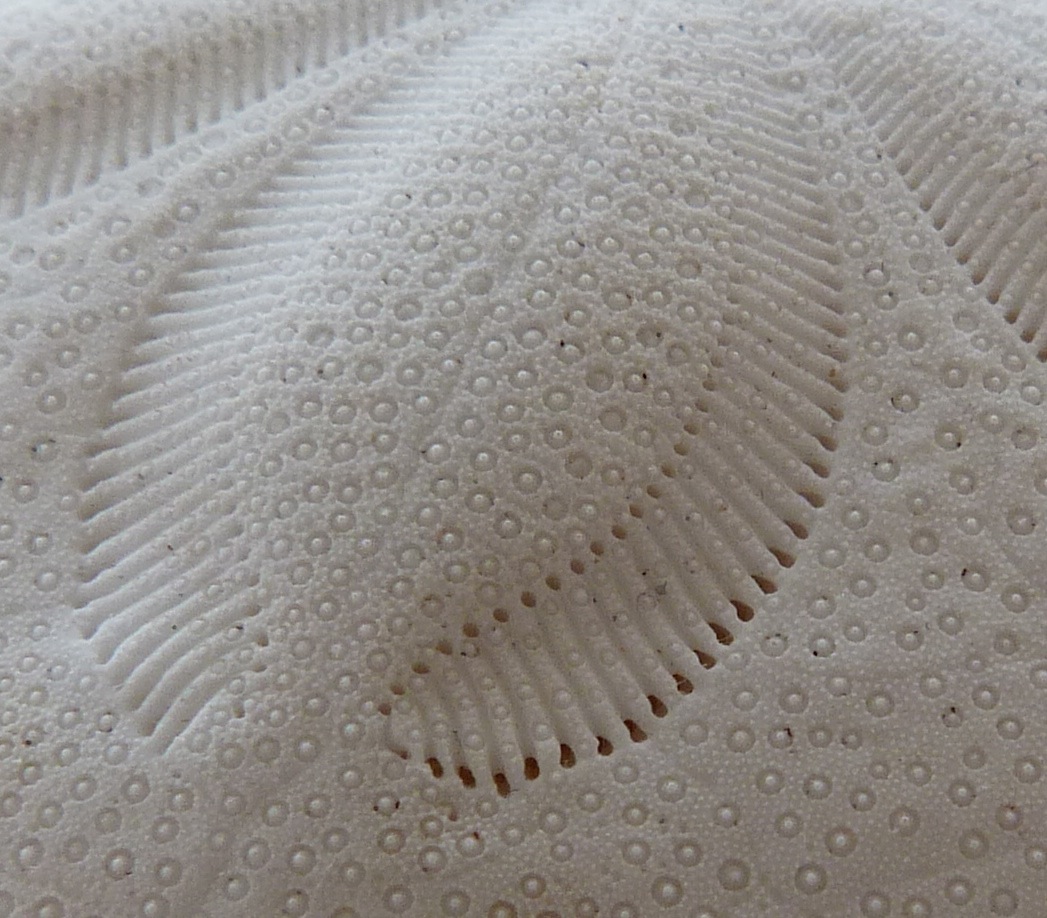
SEA BISCUITS have similar five-way symmetry to their first cousins SAND DOLLARS but are generally pebble-shaped rather than disc-shaped. I have included 2 close-ups to show the fine details of the pattern – almost like lace-work

This SEA BISCUIT is a different type, with the 5 radials reaching right round it. For some reason it only has 4 and not 5 small holes (as one might expect) at the centre. Unlike SAND DOLLARS they tend to be more oblong than round.

Unknown's avatar

FISH FRENZY AT FOWL CAY MARINE PRESERVE, ABACO, BAHAMAS


FISH FRENZY AT FOWL CAY MARINE PRESERVE, ABACO

This is the first short video from footage taken in June at Fowl Cay, 2000 acres of protected coral reef waters. This was the start of another great day out snorkelling and island-hopping with dive-diva Kay Politano of ABOVE & BELOW ABACO Marsh Harbour.  In due course there will be more videos of fish and coral. There is very slight evidence that lessons have been learned since last year’s erratic novice snorkeler / underwater photographer efforts. Still a way to go of course. The production process has been hampered by a major format problem between my camera chip thingy and the Mac I now use. It told me the data was unrecognisable / corrupted / damaged etc, which was massively disappointing. Then I thought of  <<techno-tip>> downloading to an old PC and transferring to the Mac on a memory stick. Problem solved.

This huge swirling mass of (tens of) thousands of small fish confronted me as I round one end of the reef. I’ve never seen anything like it before, except on TV. It was an astounding, dizzy-making spectacle. When I swam into the middle of the shoal, I expected to feel tickled all over – but despite the huge numbers of fish, their speed, and their sudden and apparently random direction changes, I wasn’t conscious of feeling them at all. I assume the commotion resulted from the presence of larger fish feeding on the small ones. Or possibly from my appearance…

Music credit: Gordon Giltrap (Hofner champion) ‘Fast Approaching’

Unknown's avatar

BAHAMAS CONCH QUEST – GASTROPODS, SHELLS & CONSERVATION


Conch ©Melinda Riger @G B Scuba

BAHAMAS CONCH QUEST – GASTROPODS, SHELLS & CONSERVATION

Conchs are among the most familiar of all shells. On Abaco they are everywhere: in the sea, on the beach, used ornamentally in gardens, piled up wherever conch is on the menu… (basically, anywhere serving food)

Conchs have other uses besides being a staple food. They provide sought-after pink pearls.  Only about 1 conch in 10,000 has a pearl, so bear in mind that if you miss one during your search, you may have another 10,000 to wade through… Conchs can produce music, of a sort (such as when used enthusiastically by the famous ‘conch-blower’ home-team supporter during cricket Test Matches in the West Indies). They are undeniably decorative on a porch or on a shelf.

Conchs have featured in literature and film. In William Golding’s Lord of the Flies the conch represents power and order. A conch is blown to call meetings of the marooned boys. Its power is symbolised by the rule that you have to be holding it to speak at the meeting (an idea that many – all? – Parliaments could benefit from…)

Ian Fleming mentions conchs in several of the Bond books, all such references being totally eclipsed by the memory of the appearance, in the film Dr No, of Honeychile Rider emerging from the sea, conch in hand. Oh, I see. That’s just men is it? Or (good grief) just me? Anyway, may we all agree amicably that Ursula Andress was a most decorative conch carrier?

CONCH CONSERVATION

The supply of conchs is not infinite. Overfish them, take them before maturity  or pollute their habitat and this valuable marine resource depletes – and conchs, as with so many marine species, will become threatened. Fortunately there is a Bahamas-wide conservation organisation with a website packed with interest. 

COMMUNITY CONCH is “a nonprofit organization that aims to protect queen conchs in the Bahamas, a species of mollusk threatened by aggressive over-fishing. We promote sustainable harvest of queen conch through research, education and community-based conservation”

community conch logo

“Helping to sustain a way of life in the Bahamas”

Much of the research has been carried out in Berry Is, Andros and Exuma Cays. However the team has recently been based at Sandy point, Abaco. To see some of their work on Abaco CLICK LINK===>> ABACO EXPEDITION   

In many past posts I have listed ’10 Essential Facts’ about the topic discussed. In that spirit I have borrowed and slightly edited CC’s conch facts; and added a CC video of a conch’s stately ‘full speed ahead’ progress. NB No zoom… 

12 CONCH FACTS

  • The queen conch is a large edible sea snail native to the coasts of the Caribbean, the Florida Keys, the Bahamas, and Bermuda. Conchs are herbivores – they eat algae and other tiny marine plants
  • Main predators include nurse sharks, loggerhead turtles, other snail species, blue crabs, eagle rays, spiny lobsters, and other crustaceans
  • Mating aggregations may contain hundreds or even thousands of individual male and female conchs
  • Female conchs lay hundreds of thousands of tiny eggs in a sandy egg mass. The larvae emerge after 5 days and may drift on ocean currents for a month before settling in suitable habitat on the sea floor
  • In their first year conchs live under the sand during the day & come out to feed on the surface at night
  • A queen conch may take 5 years to reach maturity and can reproduce
  • They live an average of 7 years, but are known to live as long as 20 – 30 years
  • Conchs produce natural pearls that come in a range of hues, including white, brown, orange & pink
  • The conch is listed by CITES as a species which may become threatened with extinction if trade is not tightly controlled
  • It is now illegal to take queen conchs in the state of Florida due to severe overfishing
  • 80% of legal internationally traded conch is consumed in the United States. The smuggling of conch meat into the U.S. is a significant challenge to conch management in The Bahamas
  • Queen conch are vulnerable to overfishing because they are (1) relatively slow to grow (2) late to mature (3) aggregate to mate (4) easily harvested in shallow waters

A SPEEDY CONCH

(Conch photos taken by RH / Mrs RH at Sandy Point, Abaco)
Unknown's avatar

INTERNATIONAL MARINE BIODIVERSITY DAY – MAY 22


INTERNATIONAL MARINE BIODIVERSITY DAY – MAY 22

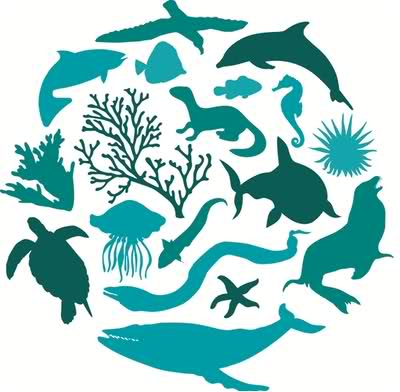
Yesterday was an important day in the marine conservation and research calendar. Me neither! I had a heads up from the redoubtable SEAMONSTER late last night. So at least I found out on the right day. I am posting the excellent logo to help to raise awareness retrospectively… I ‘get’ everything depicted in this clever sea creature globe – except for the tiny dinosaur… or is it a sea otter?

CLICK this large logo to link the the relevant website, where there are articles catering for every conceivable marine interest

Unknown's avatar

BONEFISH RESEARCH: THE IMPACT OF HOOK RETENTION


THE IMPACT OF HOOK RETENTION ON RELEASED BONEFISH

Anyone committed to catch and release for bonefish will have wondered about the hooks that from time to time are left in a fish. The issue has now been the subject of a detailed scientific report from ELSEVIER highlighted in the ever-useful THE ABACO SCIENTIST (thanks to Craig Layman). The report’s main conclusions can be summarised as follows:

  • Hooks, especially shallow ones, are expelled fairly quickly
  • For deep-hooked fish, barbless hooks are significantly easier for the fish to deal with
  • The presence of a hook does not appear to interfere with feeding
  • Hook size is not a material factor
  • All the test sample fish survived
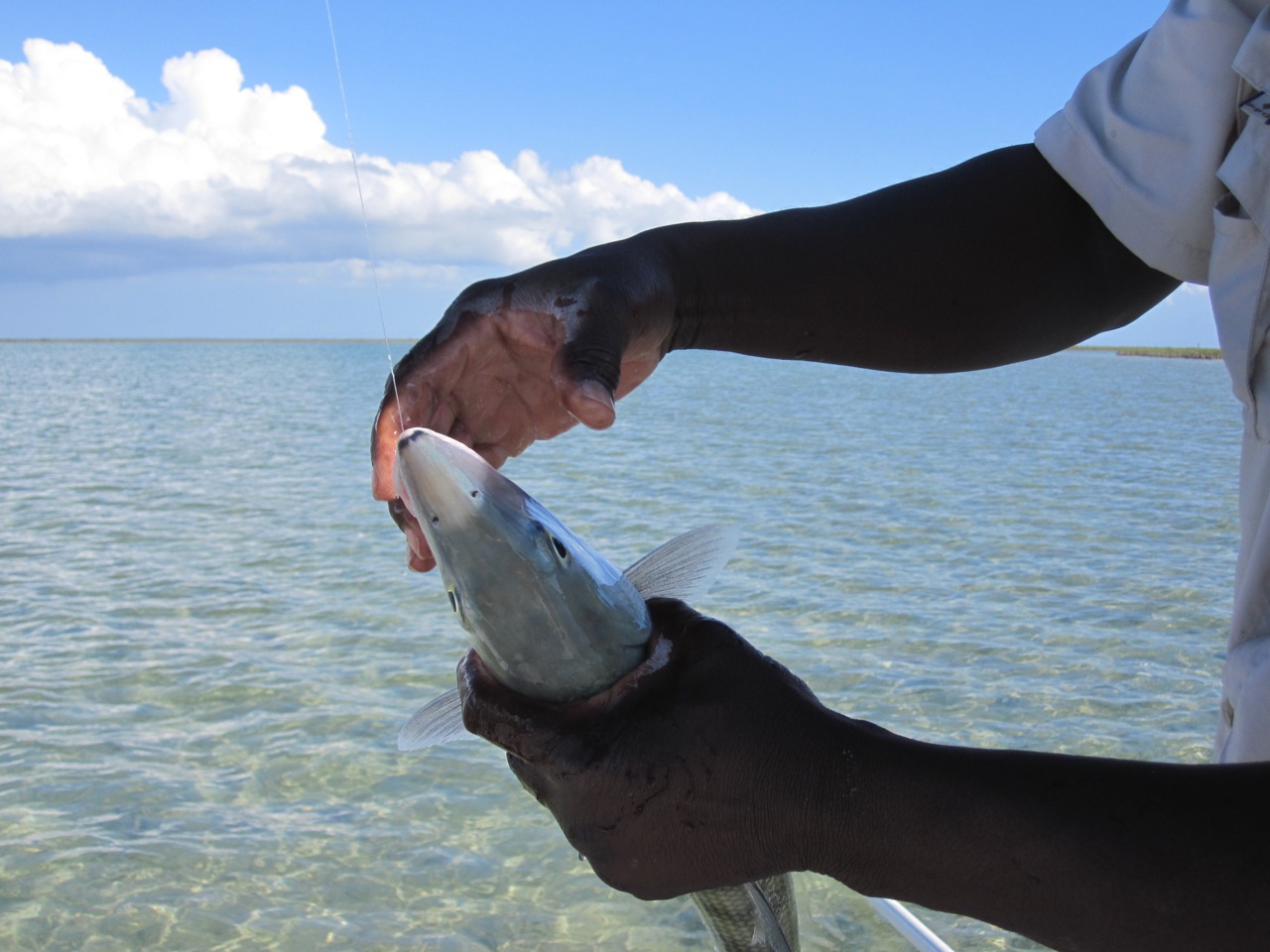
Overall, therefore, this is a vindication for the policy of barbless hook use for C&R. The report concludes that it’s best simply to leave a difficult-to-remove hook in the fish. Here, guide Ishi prepares to remove a barbless hook from one of my fish caught on the Abaco Marls.
I have included a clip of the report’s front page and Abstract; and the link to a PDF of the full report for those interested in checking out the detailed scientific aspects of this research. To go direct to the general Fisheries Research section click ELSEVIER. The astounding photo is courtesy of Abaco’s conservation organisation FRIENDS OF THE ENVIRONMENT

REPORT PDF

NEW in June 2012 see later post + video CATCH & RELEASE DEMO ON THE ABACO MARLS for a quick release method with a barbless hook involving minimal contact with the fish. It isn’t suitable for deep-hooked fish or large ones, but it shows how quick the operation can be

Unknown's avatar

BEACHCOMBING WITH KASIA: EXPLORING A ROCKY SHORE


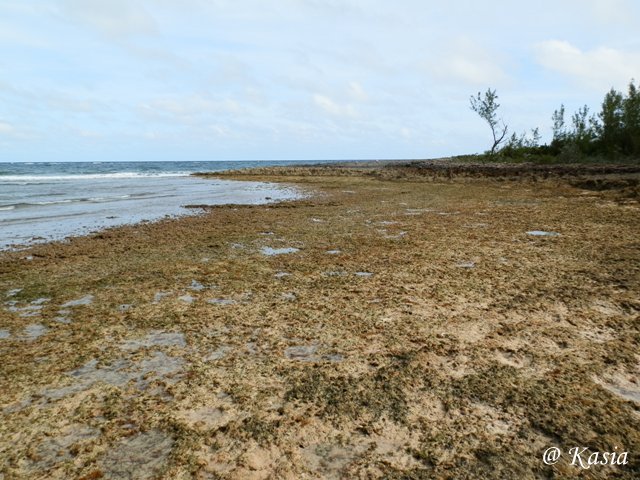
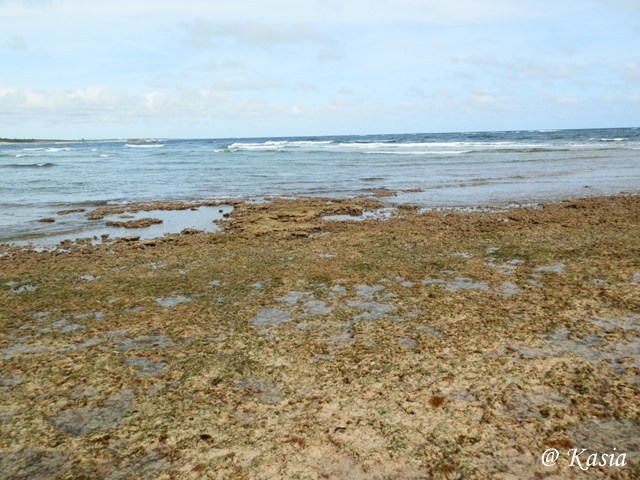
Kasia’s back! She recently explored a rather unpromising-looking stretch of Abaco coastline, and it proved to be anything but… Kasia writes: The story goes: one day I took myself for a walk and a bit of beachcombing. I usually don’t bring my camera with me but luckily this time I did. This particular beach looks very barren but on close inspection and a patient eye there are some lovely treasures to be found. Here are some of the treasures I captured!

A tangle of 3 bleached trees, with their roots apparently intertwined

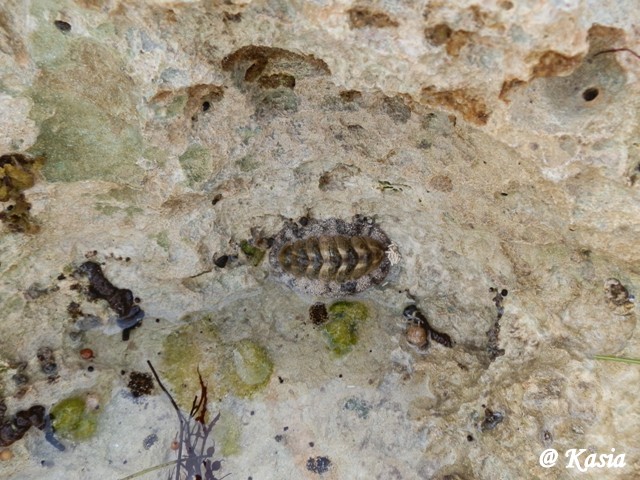
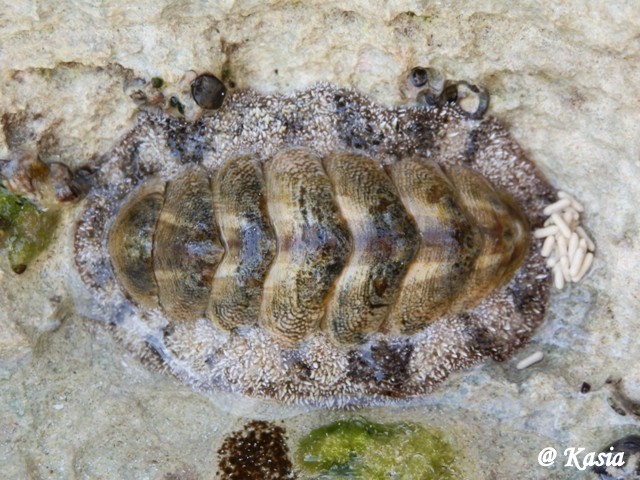
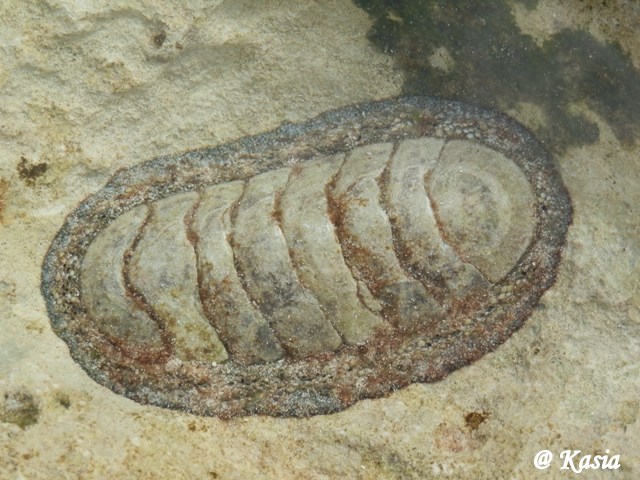
CHITONS

Great close-ups… are those eggs behind this first one? There’s a similar image in the Macmillan ‘Marine Life of the Caribbean’ but unfortunately neither the caption nor the text refers to them. ADDENDUM: Colin Redfern writes: The “eggs” behind the chiton are fecal pellets

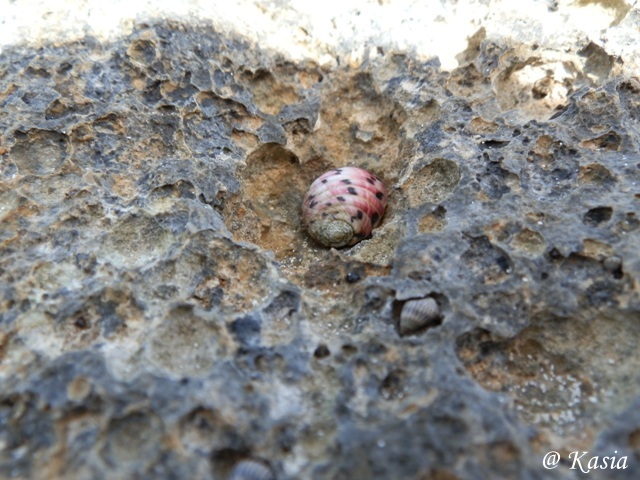
NERITES (Nerita)


WEST INDIAN TOP-SHELLS (Cittarium Pica) 

In this image, several very small chitons can also be seen on the rock

It looks as if someone… or something… has been having a Nerite feast on the shore. A bird maybe?  I had taken the shells above and below to be another variety of Nerite, but as so often scientist and shell expert Colin Redfern has kindly corrected the error. He writes: “Very nice photos. The “nerite feast” is actually a pile of broken West Indian Top-shells (Cittarium pica). The photo immediately above shows a live group of the same species. This is what Bahamians call a whelk (or wilk), and in the lower photo they have been harvested, probably for a stew.

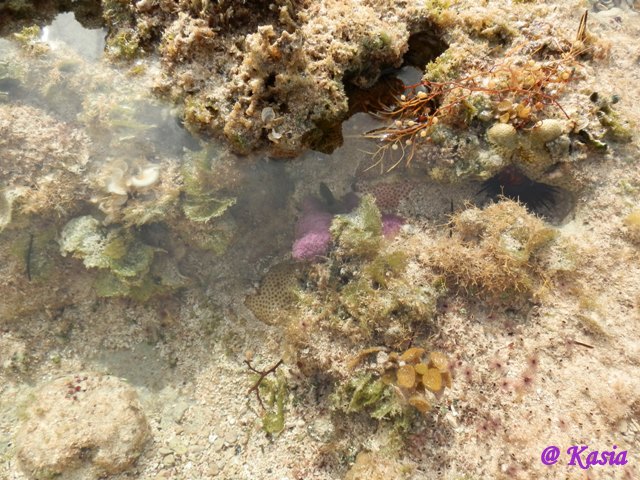
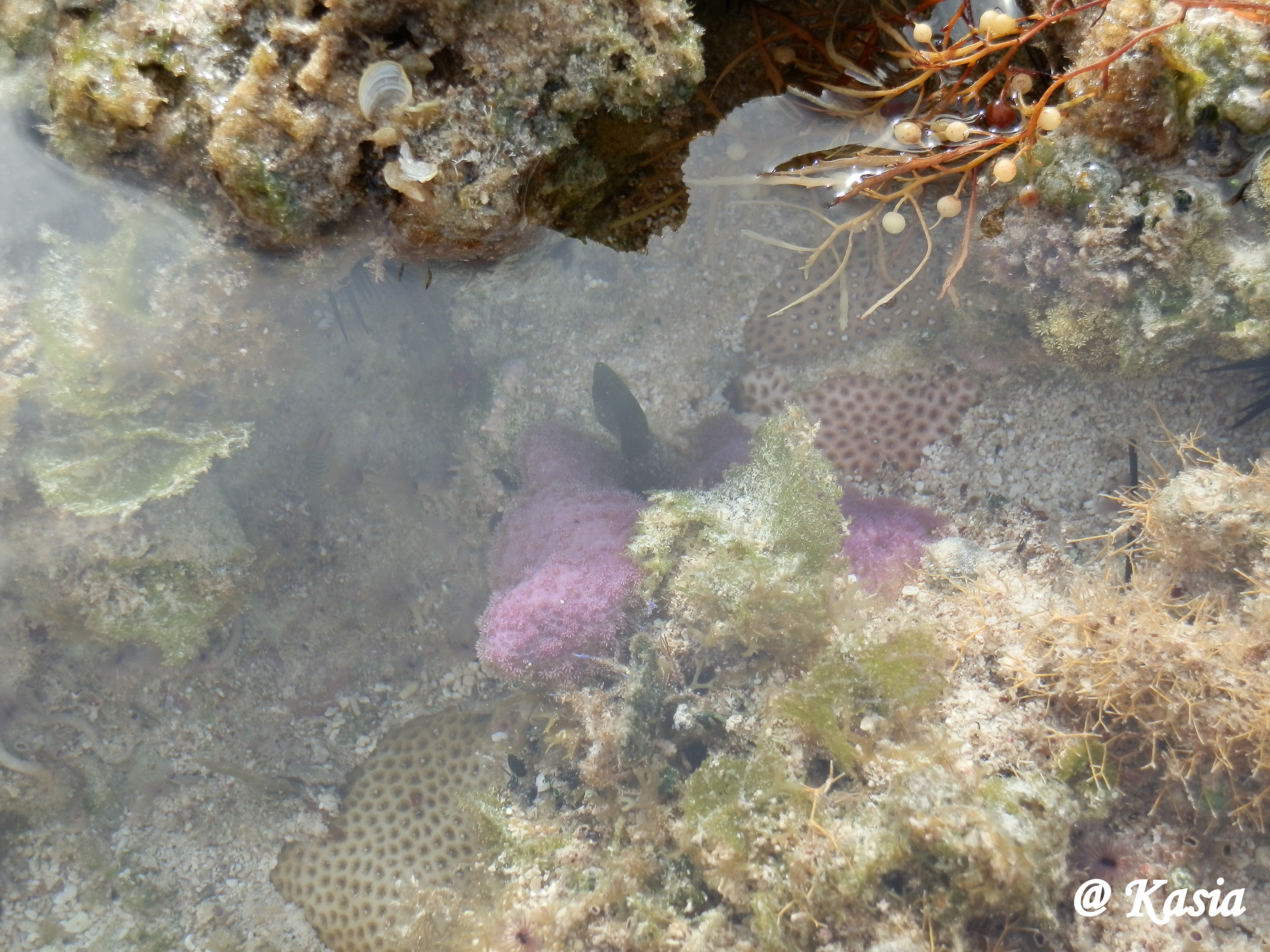
 ROCK POOL MISCELLANY

I am trying to ID a much as I can in this pool. All suggestions welcome via ‘Leave a Comment’. So far, the corals are Brain Coral and Pink Coral (I think) but I am going see what else can be given a name…

These are my favourite! 🙂 Kasia

COMET SEA STAR (possibly juvenile, with 3 such short stubs?)

A SPONGE (?) OF SOME SORT (any help with ID appreciated…)

                RED ROCK URCHINS

Unknown's avatar

BMMRO WHALE, DOLPHIN & MANATEE SIGHTINGS MARCH 2012


BMMRO WHALE, DOLPHIN &amp; MANATEE SIGHTINGS MARCH 2012

Hard on the heels of the BMMRO’s Fisheries Report for 2011 – see previous posts – comes the map of last month’s sightings. First, let’s hear it for the manatees, featuring for the 4th consecutive month off the Berry Is. The 2 reports of an ‘unknown large cetacean’ off Elbow Cay are the puzzles of the month. There was a sperm whale in that area in January, but presumably it would have moved away in the meantime…. I wonder what the likely candidates are for ‘large’ besides sperm and humpbacks?

Unknown's avatar

BMMRO BAHAMAS FISHERIES REPORT 2011 EXTRACTS & LINK


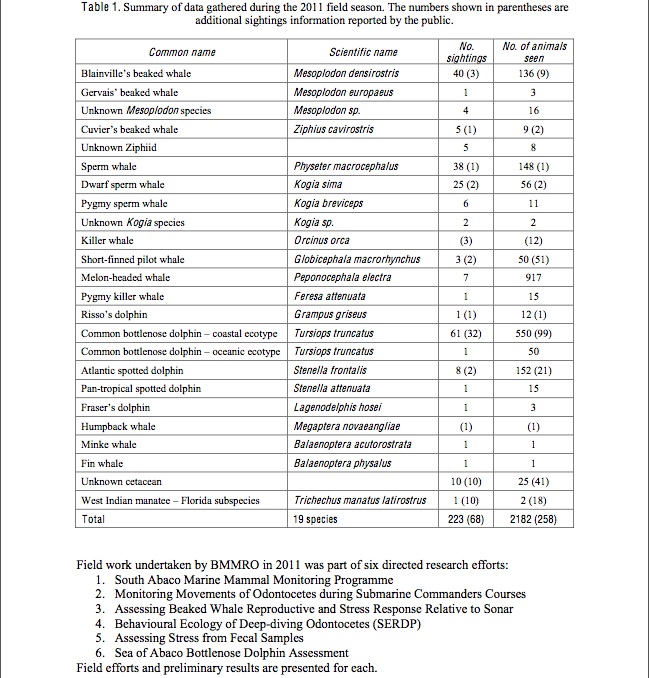
The BMMRO has recently published its Fisheries Report for 2011. The report is comprehensive and covers a far larger area than the waters around Abaco. Extracts are shown below (thanks as alway to Charlotte Dunn for use permission). The full report can be seen in pdf form at BMMRO FISHERIES REPORT

1. First, here is the table of all field data for the 2011 season, from which the incidence of the particular cetacean types can easily be seen. To a layman (me), the most significant reading on the previous year is the increase in sperm whale sightings and animal numbers, up from 14 / 69 in 2010 to 38 / 148 in 2011. I wonder why the difference?

2.  Here are results specifically relating to South Abaco, where the majority of cetacean activity is observed (see ‘green’ map). I have included a larger image of the cetacean species so that the key is easier to read

Unknown's avatar

SHELLS OF THE ATLANTIC COASTS & WEST INDIES: PETERSON FIELD GUIDE


SHELLS OF THE ATLANTIC COASTS & WEST INDIES 

PETERSON FIELD GUIDE    Abbott / Morris   350pp

An excellent and comprehensive field guide which covers the area as thoroughly as one could wish. It’s not exactly a pocket book, and at 350 pages it’s quite a chubby paperback – but the sort of size you’d happily throw into a day-bag or backpack. This authoritative shell guide dates from 1947, with frequent reprints. Mine is a fourth edition (1995) – there may be a 2002 one.

Currently £18 from Amazon UK,  or new / used for around £7 (a bargain); and a great deal cheaper on Amazon US. Overall 4* reviews

Rolling Harbour rating *****

THE BOOK IN A CONCH SHELL

  • Numerous clear illustrative line drawings throughout (115, in fact)
  • 74 colour plates grouped together at the heart of the book, showing living creatures and a huge variety of shells – 780 in all
  • Introductory articles on collecting, preparing, arranging and naming shells; also classifications and measurements
  • The text comprises 800 brief but helpful family / species descriptions, with notes on habitat and other remarks
  • Bi-valves cover 120 pages; Gastropods a stonking 150 pages
  • The substantial illustrated core of the book has shell groups on the right-hand page, with ID and text references on the left. The system works very well, especially with the many shell types that are very similar
  • At the back there’s a useful ‘Conchological Glossary’ to help sort out the crenulates from the reticulates
  • A huge 30-page index that is both thorough and user-friendly
I personally found the illustration section very helpful as a first stop; then a trip to the text to confirm the description. I had no idea what a shell we recently found in a drawer might be, but it didn’t take long to nail the ID as a STOCKY CERITH a shell I’d never even heard of. First I found a very clear illustration of it, then turned to the text description which matched what I had in my hand. Overall, as a complete amateur, I found this book the best practical guide I have yet tried for shell identification – and I suspect more sophisticated shell-seekers will get a great deal out of it too.
Unknown's avatar

BOOKCOMBING: AN OCCASIONAL THEMED SERIES (1) OCEAN DEBRIS


BOOKCOMBING

A MISCELLANY OF BOOKS MORE OR LESS RELEVANT TO ABACO LIFE

These are not books I have read myself. They are books that may be of interest to readers of this sort of blog. Islandy. Beachy. Mariney. A whiff of wildlife. They will be collected together under the BOOKS ETC menu as the series expands. If one of them catches your eye, then check online for reviews, reader ratings and prices. If I get round to one or more of them I will add my own views, but I am still gradually working through wildlife books that I have already paid for…

1. FLOTSAM, JETSAM & OCEAN DEBRIS

Flotsametrics and and the Floating World: How One Man’s Obsession With Runaway Sneakers and Rubber Ducks Revolutionized Ocean Science

by Curtis Ebbesmeyer & Eric Scigliano

“Curtis Ebbesmeyer has made important discoveries about everything from currents to the huge floating garbage patches in the ocean to how life was first spread on earth and how the Vikings settled Iceland. In the tradition of John McPhee’s bestselling books on scientists who both study and try to protect the natural world, The Floating World offers a fascinating look at the creativity and energy of a most unusual man—as well as offering an amazing look at what currents have meant for the world and especially mankind through the centuries.  Hardcover; PP: 288; Illustration: 10-15 images throughout” Smithsonian Store

Washed Up: The Curious Journeys of Flotsam and Jetsam

by Skye Moody

“The ocean gives up many prizes, just setting them on our beaches for us to find. From rubber ducks that started out somewhere in Indonesia to land Venice Beach, to an intact refrigerator makes it way to the Jersey Shore. Chunks of beeswax found on the Oregon coast are the packing remnants of 18th century Spanish gold. Author Skye Moody walks the coast, dons her wet suit, and heads out to sea to understand the excellent debris that accrues along the tideline. There she finds advanced military technology applied to locating buried Rolexes, hardcore competitive beachcombing conventions, and isolated beach communities whose residents are like flotsam congregated at the slightest obstacle on the coastline. This book confirms that the world is a mysterious place and that treasure is out there to be found” (Publisher’s Fluff)

Tracking Trash: Flotsam, Jetsam and the Science of Ocean Motion

by Lorree Griffen Burns

“Tracking Trash is the story of Dr. Curtis Ebbesmeyer, an oceanographer who studies the movement of ocean currents. Dr. Ebbesmeyer’s work has attracted attention because he has received much of his information from studying trash. It all began when his mother heard about sneakers that were washing up on a beach after a cargo ship lost one of its containers. Since then, he has tracked sneakers, Lego’s, and even rubber duckies that have been accidentally spilled at sea and made their way to shore. By understanding how ocean currents move, scientists hope to solve many problems such as fish shortages and animals being caught in fishing nets. This book was very enjoyable to read and easy to understand. The pictures were large and engaging. The author did a great job at making it feel like a story while at the same time giving a lot of scientific information” (Satisfied Amazon Punter)

Moby-Duck: The True Story of 28,800 Bath Toys Lost at Sea and of the Beachcombers, Oceanographers, Environmentalists, and Fools who wen in search of them…

Donovan Hohn

I have just spotted that this book is about to be reprinted and, I imagine, updated at the end of February, so I am adding it to the collection. I note in passing that it is published by Penguin…

One 5* review on Amazon UK sets the scene: “This is a book that follows the journey of plastic ducks, turtles, frogs and beavers after the container they are in falls overboard and breaks open on impact with the sea. Moby Duck is fact that reads as good as fiction. The Author doesn’t only traverse the world of escapee plastic toys but meanders his way through a factory in China that makes bath toys, gets on a ship that is on research mission even though he has a fear of open water and even ends in Alaska where the first plastic duck was found. This is a great read, for anyone who likes a quirky book that tells a true story with wit, charm and gentle humour. Moby Dick is never far away in this book, only he has been transformed into Moby Duck…”

Amazon.com has 42 reviews, averaging a disappoining 3.5*. Some are ecstatic, some lukewarm, few can resist the golden opportunity proffered by the author to be “puntastic”. I like the one titled “An Eclectic Tale, but Caught in Its Own Eddy in the End”. Maybe that is the most astute summary of all.
Unknown's avatar

EXPLORING CORAL REEFS: FOWL CAY MARINE PRESERVE, ABACO


EXPLORING THE CORAL REEF AT FOWL CAY MARINE PRESERVE, ABACO

First, a warning for anyone arriving new to this blog (hi! welcome) either on purpose or accidentally: I can’t swim very well, I hadn’t snorkelled for decades until last year, and I’d never before used a camera underwater.

That said, there is probably enough in this 2:40 min video  to warrant a quick view. As with other videos from this expedition to Fowl Cay Marine Preserve (STINGRAY / BLUE TANG), best viewed small to avoid queasiness and disorientation. You can always Pause for a breather. There are some nice fish obligingly in view from time to time, and the coral is very diverse. And I’ll know what to do this year to get better results, besides trying harder with the swimming… (Music: East Wes by Eric Johnson, off Ah Via Musicom)

Unknown's avatar

SOUTHEAST COAST & GULF OF MEXICO MARINE / COASTAL FIELD GUIDE: 5* YALE BOOK REVIEW


BOOK REVIEW

This is a superlative field guide: comprehensive, clear and approachable. The illustrations are excellent, and include helpful examples of birds in flight, different views of marine creatures (basking shark side view and head on), whale fluke comparisons and dolphin profiles. The 11 Chapters comprise marine and coastal plants and habitats; invertebrates; sharks; rays; fish; sea turtles; crocodiles and alligators; marine and coastal birds; baleen whales; toothed whales and dolphins; and finally seals and manatee

Yale University Press 386pp, £20 / $24  ISBN 978 0300 11328 0

rollingharbour rating: a rare and coveted 5*****

Obviously this isn’t the guide for land-based birds – you’ll still need Hallett  or Arlott to help with all those warblers, for example. But for all aspects of marine and coastal wildlife it is as thorough as you could ever wish for in a book that is readily portable. While slightly too large (8″ x 6″) and heavy for a pocket, it would be perfect for a day-bag. Convention dictates that the most enthusiastic reviews should include a couple of tiny niggles to prove a book has been read… so,  the shell section is very brief at 2 pages; and the coral section also, with some types (Mustard Hill, for example) omitted. But such an ambitious yet compact book couldn’t possibly be exhaustive. In practical terms, it has everything you could want from a Field Guide when exploring or researching this area.

Publisher’s Summary [added here to indicate the scope & depth of the book]

  • Entries on 619 coastal and ocean species including seabirds, cetaceans, fish, turtles, invertebrates, and plants
  • More than 1,100 color illustrations & 121 colour photographs
  • 452 up-to-date range maps
  • Overviews of key ecological communities, including mangroves, salt marshes, beaches, sand dunes, and coral reefs
  • Special attention to threatened and endangered species
  • Discussions of environmental issues, including such catastrophic events as Hurricane Katrina and the Deepwater Horizon blowout
  • Glossary
  • Excellent organizational aids for locating information quickly
To which I would add:
  • Clear text alerts for endangered / red list species
  • 12-page index (which works very well)
  • Handy front and back flaps place-markers
  • Colour-coded section divisions

To see the publisher’s UK or US webpages for the book CLICK LINK===>>>  YUP UK   or   YUP US – it can also be obtained from the other  conventional sources already mentioned in the book section of this site

Finally, a declaration of interest: Mrs rh works in the London office of YUP, so I have been consciously avoiding partiality. However this just happens to be an excellent book by any standards, so fortunately the frosty domestic fall-out from a bad crit has been easily avoided…
Unknown's avatar

MARINE LIFE OF THE CARIBBEAN – ABACO BOOK REVIEW


MARINE LIFE OF THE CARIBBEAN 

Macmillan Natural History Series Alick Jones & Nancy Sefton – 2nd Ed 2002 rollingharbour rating ****

Another excellent volume in this series of slim books – see other book reviews for Birds, Reef Fish etc. The book is carefully structured. Opening with an overview of the region, it moves gradually from shoreline to open sea via mangrove swamps, sandy areas, seagrass beds, rocky areas, and coral reefs. The sections are informative without being overwhelmed by detail, and the many illustrations are useful. It’s possible to skim-read and still feel you have learnt something worthwhile. It is definitely a help with identification queries.

The marine life covered includes plants, fish, starfish etc, shell-dwellers of all makes, crabs etc, and corals – all sufficiently to be educational without being dull. Towards the end there’s an equally handy chapter on turtles, birds and marine mammals. Finally, there’s a good section on ecology and conservation (depressingly, the problems are now worse 10 years later)

A 6-page glossary, a bibliography and index round off a very helpful tome. Definitely worth getting if you want a working grasp of the subject in an easily assimilable format.

I got my copy for £5 on Amazon, but check out ABE as well, which is also very good for this sort of book – but watch the postage rates there…

Unknown's avatar

STINGRAY AT FOWL CAY MARINE PRESERVE ABACO


A while ago, I posted stills from a reef-snorkelling video – my first ever underwater video attempt, and indeed my first snorkel for about 40 years CLICK===>>> REEF FISH   I started with a stingray, producing some rather… ok, very… modest results, but it was at least identifiable if you looked carefully and felt benign.

I’ve learned a few tricks since then. Here is the whole clip, still hopeless in most respects but there’s something quite cute about the creature. Mercifully it is only 37 seconds long. I reserve the right to delete this post when I realise no one has actually watched it! [LATER: Oh! I find a few hardy souls have done so. It’s a democratic vote for the ray to stay, as I see it]

[Belated credit to the fairly litigious Joe Satriani (see JS v Coldplay 2009) for borrowing the intro to one of his  songs. It’s a non-commercial tribute, Joe]

Unknown's avatar

REEF SNORKELLING AT FOWL CAY MARINE PRESERVE, ABACO


You will need: swimming kit; sweatshirt (it can be cold on the boat after snorkelling); stuff for Island Hopping later on, inc. camera, money etc; snorkel practice in the pool if you haven’t used one for (say) 20+ years – use the Club gear; Ian Took’s slim ‘Fishes of the Caribbean Reefs’. NB there is limited room on the boat, so you’ll need a bit of a nifty towel work to preserve modesty when changing…

Kay Politano of Abaco Above and Below in Marsh Harbour pencils in an unspecified number of places for a day’s island-hopping and reef-snorkelling while I find out how many non-fishing-that-day Delphi guests might be interested. Seven sign up, and one morning we all set off to Marsh Harbour. In Kay’s shop we try on our flippers, marvel at the scuba possibilities (a completely implausible proposition for most of us…), then we troop off to the marina and Kay’s reassuringly powerful and safe-looking catamaran. It takes 12 passengers; the other 5 are already aboard. We set off towards a threatening-looking weather front; rain later is a certainty…

Kay and rh at the controls

Passing by several Cays, we arrive at Fowl Cay Marine Preserve and drop anchor. We don our flippers, wrestle with our masks and snorkels, and in turn drop off the back of the boat (ok, stern, is it?) into warmish water, under thick grey cloud. My practice in the Delphi pool has paid off, and soon I am wheezing and gurgling my way towards the reef with my head (mostly) under water, a situation I generally avoid.

I am completely unprepared for what I find when I get to the reef. David Attenborough’s favourite production team has kindly arranged for a wide variety of bright fish, some electrically charged, to come up close and inspect me, an intruder in their world. I’ll spare you the colour-supp superlatives and graphic intensifiers – you’re probably blasé and have seen it all before – but I am totally gobsmacked, even with my mouthpiece in place. It’s all real! It’s even better than TV! And don’t get me started on the coral…

Sergeant Major

Parrot Fish

Blue Tang / Ocean Surgeonfish

Blue Chromis

Sting Ray

While I gasp and bubble my way around, I keep a small waterproof video camera running (see GADGETS review). My swimming is feeble at the best of times, but somehow it all seems to be coming together – my flailing limbs, the laboured breathing, the reef, the fish and the footage. We circle round the reef – occasional pale figures appear in my lateral vision – for about 25 minutes, then return to the boat and the struggle to remove our flippers…
 Everyone is excited about what they have seen (some saw barracudas). Who cares that it’s started drizzling… we are wet already and it’s off to Lubbers Cay for lunch; see forthcoming Island-Hopping Post. And see MARINE LIFE page for more reef fish photos taken on this expedition.

ADDITION April 2012 I notice there have been a few specific searches ‘what is the plural of Sergeant Major?’ Good question. The strict grammatically correct answer is, I suspect (as with the military rank), ‘sergeants major’ because it’s the sergeants who are plural and the ‘major’ is a qualifier to distinguish from other degrees of sergeant (were there sergeants minor, for example). It’s the same with courts martial – not ‘court martials’. BUT it sounds all wrong and pernickety. I reckon the whole fish is a sergeant major. If there are 2 or more, you’ve got some sergeant majors to play with.