“CLINGING TO THE WRECKAGE”: BAHAMAS CLINGING CRABS
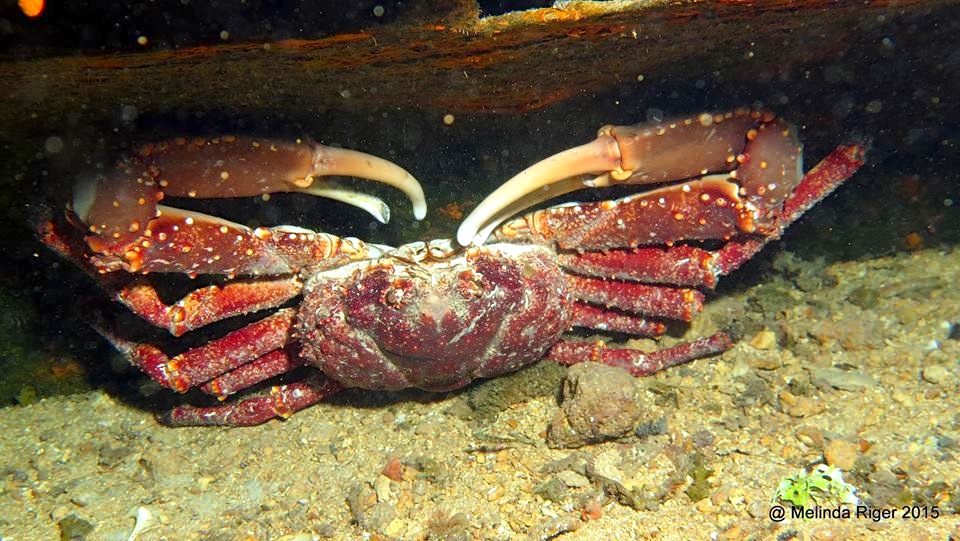
The Clinging Crab Mithrax spinosissimusanswers to a number of names: West Indian spider crab; channel clinging crab; reef or spiny spider crab; or coral crab. It is found throughout the waters of South Florida and the Caribbean.
These are crabs of the reefs, or indeed of the wrecks that may be found around reefs. Some of the crabs in this post have chosen wrecks as their home – in the header image the crab is living inside the smoke stack of ‘Theo’s Wreck’, Grand Bahama.
The clinging crab is believed to be omniverous, its main diet being algae and carrion. They can grow to 2 kg, and it is the largest species of reef crab found in the Caribbean.
LAID BACK
Credits: Melinda Riger of Grand Bahama Scuba (all photos), with thanks as always for use permission
LETTUCE SEA SLUGS: SOLAR POWERED ‘CRISPY BLISSFUL HEAVEN’
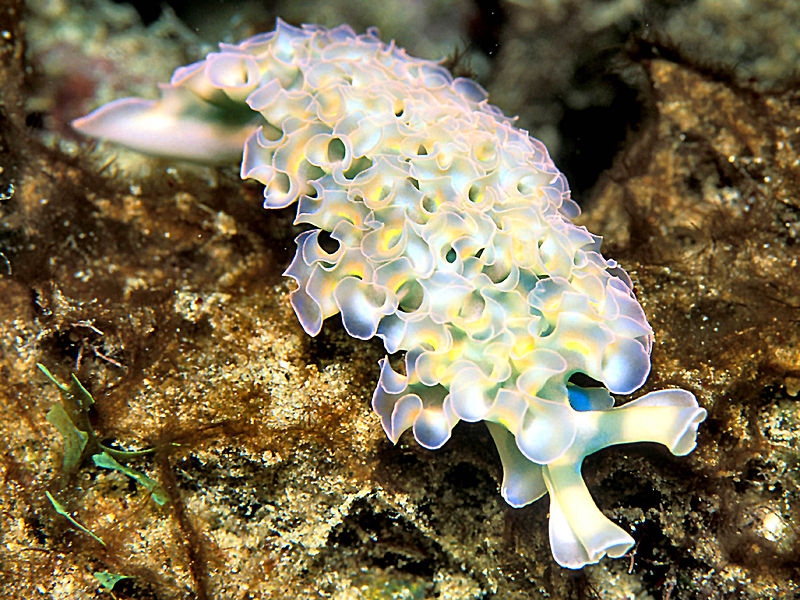
The Lettuce Sea Slug Elysia crispata (transl. ‘Crispy Blissful Heaven’) was No.3 in the‘WTF’‘What’s That Fish’ series (despite not actually being a fish at all). It is not by any means the weirdest creature featured so far but it is nonetheless an animal whose appearance excites curiosity. Unless you see one moving, it could easily be mistaken for a plant. Maybe even lettuce. It is in fact a SACOGLOSSAN.
The name ‘sacoglossan’ literally means ‘sap-sucker’. This group (or ‘clade’) comprises small gastropod mollusks that ingest the cellular content of algae (which isn’t really sap).
WHY WOULD THEY DO THAT?
Because they are… SOLAR POWEREDslugs
WHAAAAA…..?
As I mentioned when I last visited these remarkable creatures, this isn’t a technical forum and too much science hurts my head. This species primarily lives off algae. May I give you the word KLEPTOPLASTY to drop lightly into your conversation? In a couple of sentences, algae / algal content is eaten but only partially digested. Certain elements are stored to produce photosynthesis by which light is converted to energy (cf plants) and the slug can in effect live and move around without food. You could entertain your neighbour at dinner (or maybe on public transport, why not?) by summarising the process as “chloroplast symbiosis”. Meanwhile, I’m fetching a beer. Two beers.
HOW DO THEY REPRODUCE?
This topic doesn’t seem to have excited much investigative interest, and there’s not much specific information about it. What there is sounds unnecessarily complicated, so I am just going to say authoritatively ‘they do it like many other slug species’ and hope that covers it. The pair shown below may be exploring the possibilities, or at least trying to work out which end is which. Time to make our excuses and leave…
HOW FAST, EXACTLY, DOES A LETTUCE SEA SLUG MOVE?
This rather beautiful video from ‘CORAL MORPHOLOGIC STUDIO’ will reveal all. You’ll soon see that progress is very slow. I recommend watching the first 30 seconds and you’ll get the idea. If you choose to persist, you will see the slug sort of turn and move off to the left.
DO SAY: What an intriguing creature. It’s a true wonder of marine nature.
DON’T SAY: Any good in a mixed salad?
Credits: Melinda @ Grand Bahama Scuba, Nick Hobgood, Coral Morphologic Studio, Laszlo Ilyes wiki
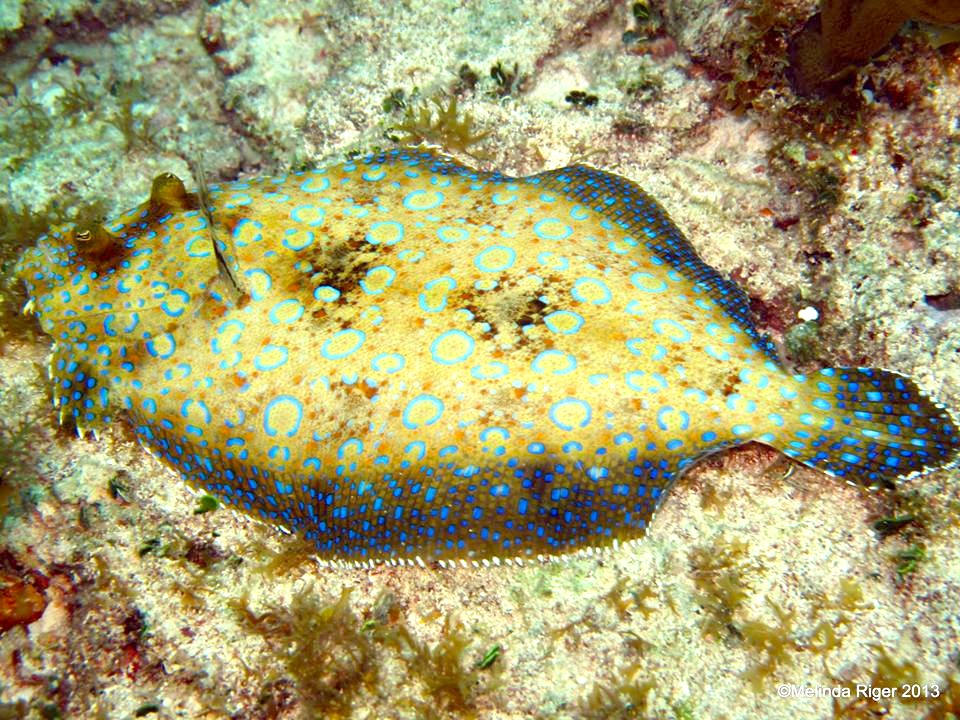
I featured the extraordinary, colour-transforming PEACOCK FLOUNDER Bothus lunatus a while back as part of a Bahamas Reef Fish series. These really are remarkable creatures, and I have decided to return to them mainly because of the wonderful illustrative photos I was able to incorporate. There are plenty of flounder facts too, but if you just enjoy the pictures and skip the blurb I’ll understand.
ROVING EYES
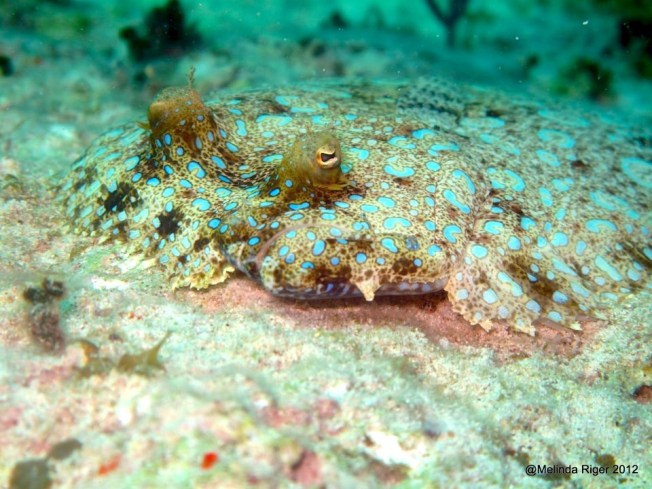
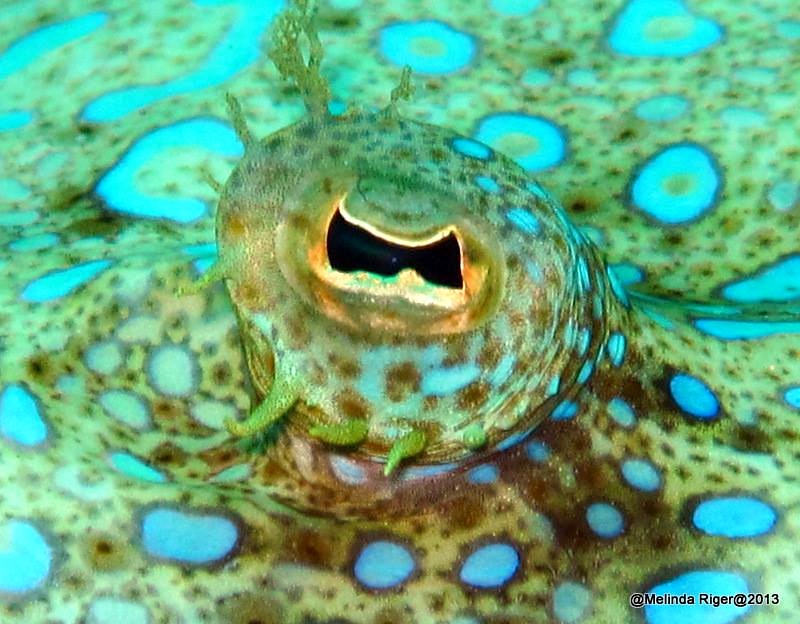
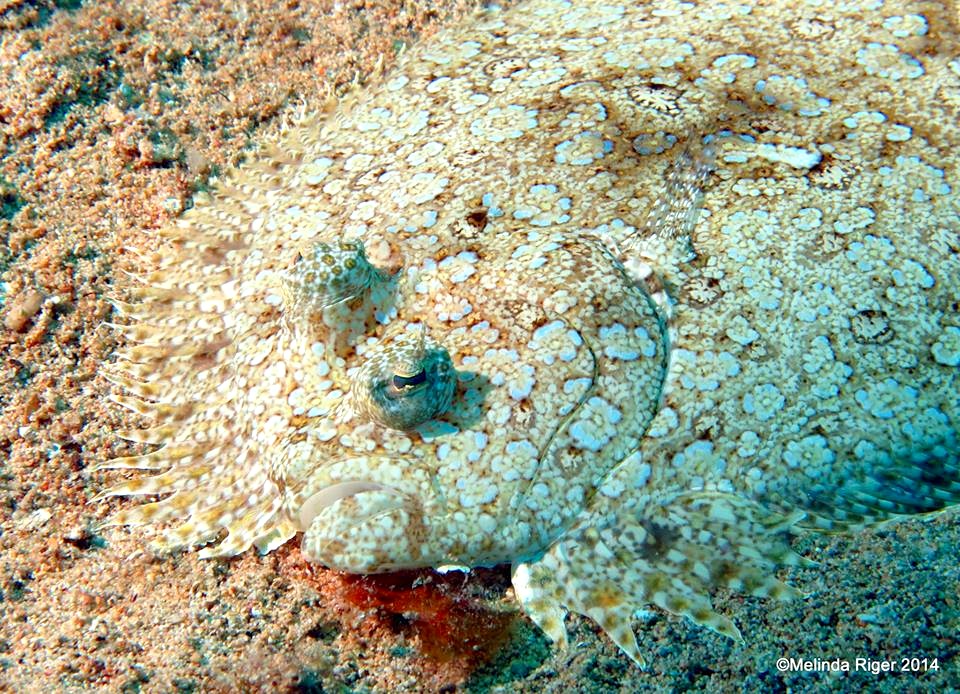
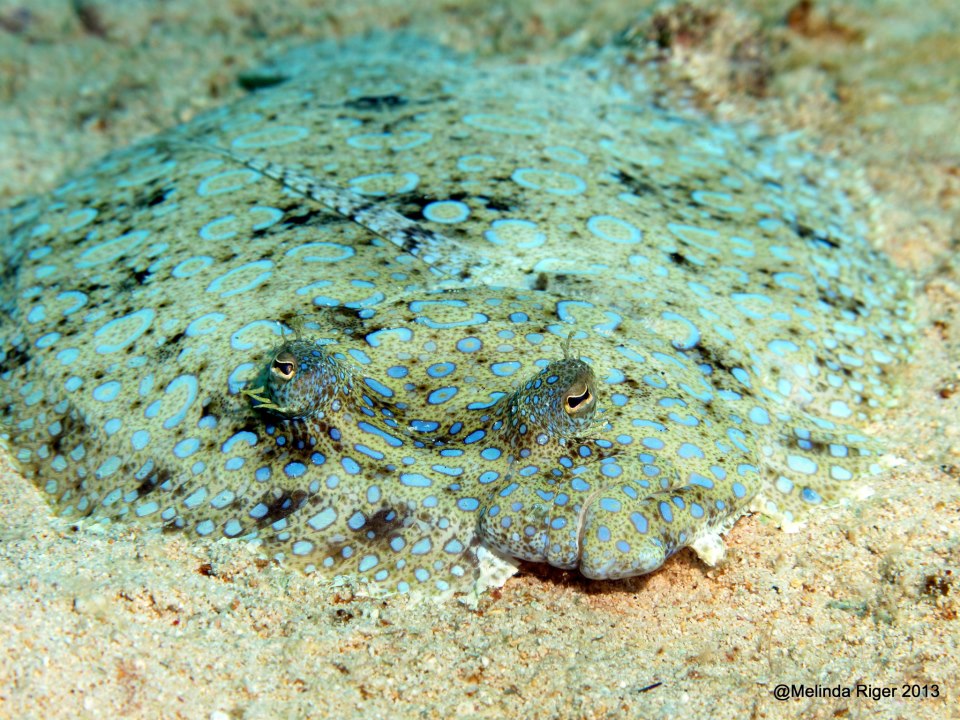
In the fish shown here, you’ll see that – surprisingly – both eyes are on the upper-side of the fish, above the rather grumpy mouth, whereas the head is horizontal to the ocean floor. Oddest of all, juveniles are constructed conventionally with bilateral eyes, and look like ‘normal’ fish rather than flatfish.
As the fish matures, in some magic way the mechanics of which I can only guess at**, the right eye grows round to the topside and the flounder transforms from a ‘vertical’ fish to a flatfish. For this reason, the PF is known as a ‘left-eye’ flounder. Maybe in other flounder species in the world – the southern hemisphere maybe? – the eye that moves round to the upper-side is the left eye.
The eyes of this fish have another special trick up their sleeves (so to speak). They operate completely independently. Thus the creature can look left and right, or forwards and backwards, simultaneously. It’s an excellent system for detecting predators coming from any angle. It’s a superpower we might all benefit from.
DO THEY HAVE ANY OTHER TRICKS WE SHOULD KNOW ABOUT?
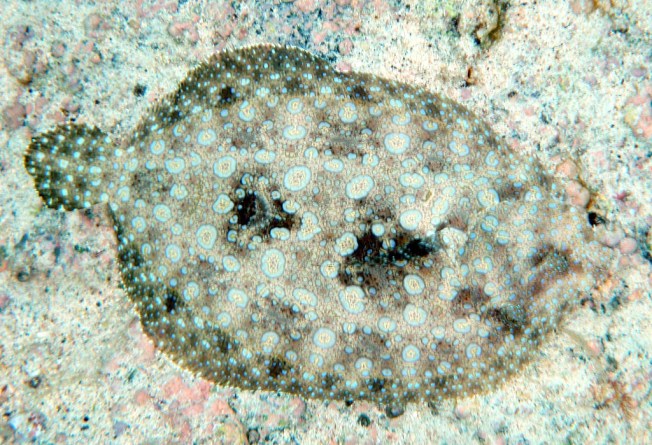
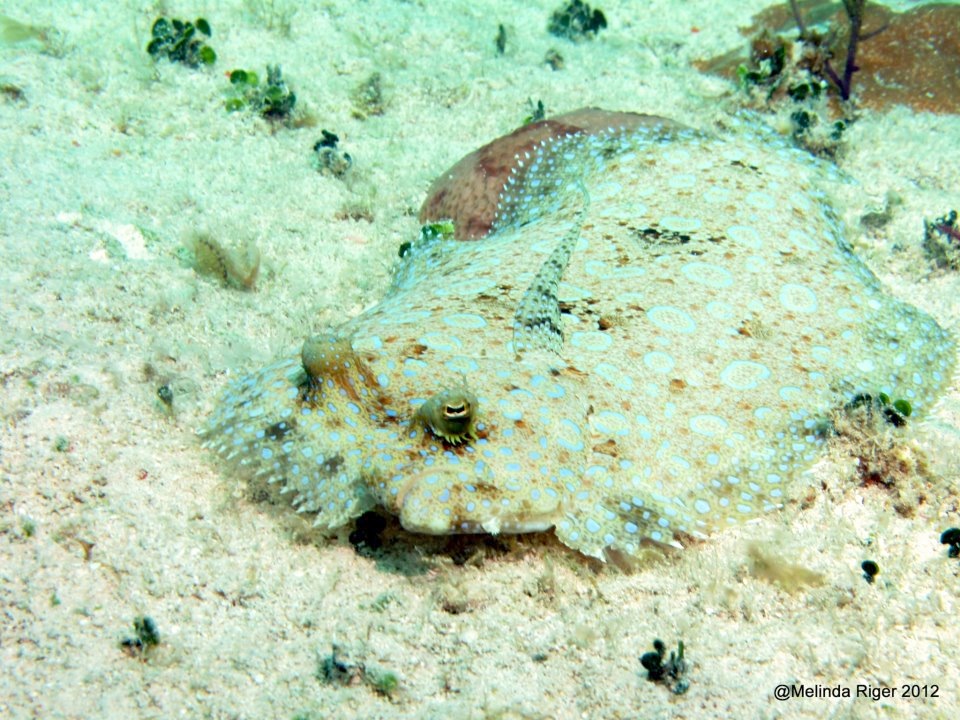
Yes they do indeed. If you have been admiring the fish shown so far, you’ll have noticed that the colour of each one differs from the others. In addition to the predator-protection that the eyes provide, the peacock flounder can make itself (near) invisible. They can rapidly change colour to match their surroundings. There are 3 reasons for this: to avoid / confuse predators; to conceal themselves on the sea-floor to catch passing prey; and, as dive expert Fred Riger has pointed out, “the male peacock flounder can, and does greatly intensify his colours to declare territory and attract females. When doing this the males will also signal with the left pectoral fin, sticking it straight up and waving it around.”
The same fish, photographed over several minutes as it moves over the ocean floor
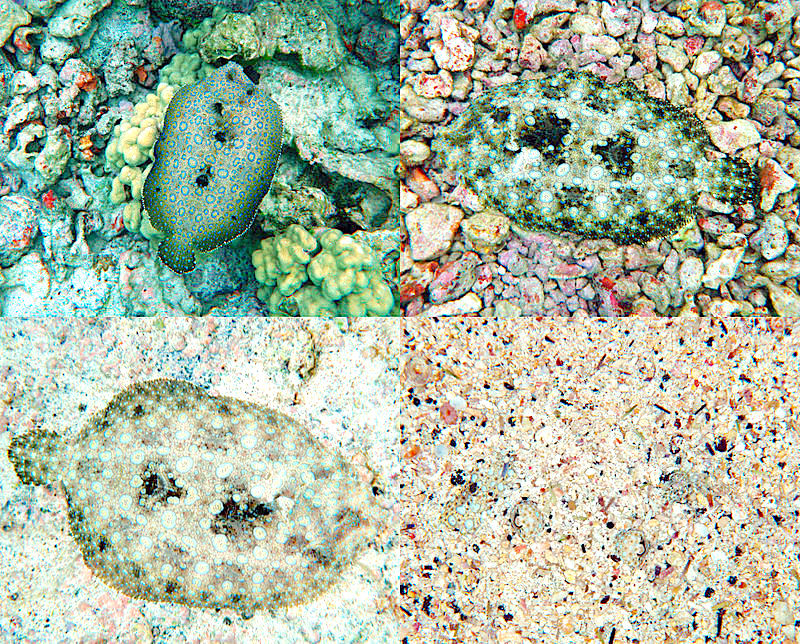
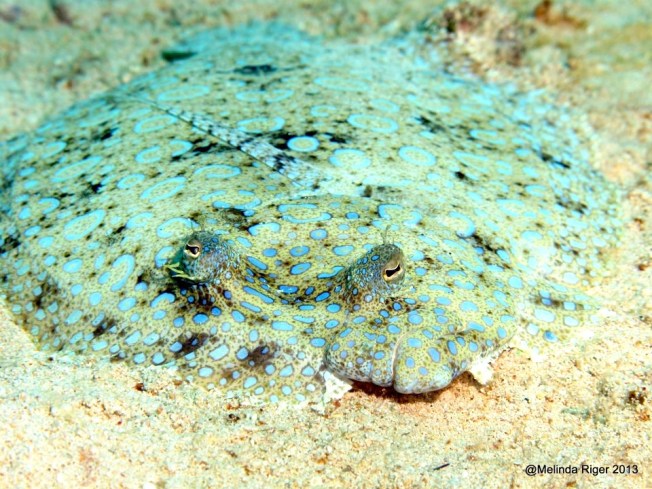
Matching the background happens as the fish swims, and in a few seconds. When they rest on the sea-floor, the camouflage may even become total. In #4 above you can just about make out the eyes. The whole effect is known as ‘cryptic coloration’ or CRYPSIS. In contrast, the image below shows just how adaptable the transformation can be. Note how the fish can even mimic the pinkish tinge of the sand perfectly. If threatened, the fish will bury itself in the sand, with just its eyes showing.
HOW DO THEY MANAGE TO CHANGE COLOUR IN SECONDS?
It’s complicated! A simple answer is: a mix of hormones, pigment-cells and vision, all coordinating rapidly. The colour change works in two ways: pigments are selectively released to the skin cells; and other pigments can be selectively suppressed. An analogy might be image manipulation using variations in brightness, saturation etc. Not convinced? Then watch this short video and prepare to be impressed. Astonished, even.
WHAT IF A FLOUNDER CAN’T SEE CLEARLY FOR SOME REASON?
As with many (all?) superpowers, there is usually some kryptonite-style flaw. A flounder with a damaged eye, or one temporarily covered (by sand, for example) will have difficulty in changing colour – possibly at all, or at any rate with the swiftness it needs to have.
THESE SIDEWAYS FISH – HOW DO THEY… YOU KNOW…?
Take a look at the fish above with its top fin raised. It’s a ‘ready’ signal in a harem. Male flounders have a defined and defended territory within which live up to 6 females – a so-called ‘harem.’ I can do no better than borrow the description of the rituals from an article derived from scientific papers byKonstantinou, 1994; Miller, et al., 1991in the websiteanimaldiversity.org/…ounts/Bothus_lunatusTo which I can only add, ’15 seconds, eh?’
“Mating activities usually begin just before dusk. At this time, a male and a female approach each other with the ocular pectoral fin erect. The two fish arch their backs and touch snouts. After this interaction the female swims away, and the male sometimes follows, approaching the female again from the left side. At this point the male pectoral fin is erect and the female pectoral fin moves up and down, possibly signalling willingness to mate. The male then positions himself underneath the female and mating begins. This process consists of a mating rise, during which the female and male rise in the water column together. On average, these rises last about 15 seconds. At the highest point of this rise, usually around 2 m above the substrate, gametes from both fish are simultaneously released, producing a cloud of sperm and eggs. Once the couple returns from the rise, the male “checks” to make sure mating was successful, and the pair separates quickly, swimming away from each other in opposite directions. Not all mating rises are successful, and the process of “checking” is thus important. The exact purpose of the mating rise in these flounders unknown; possible reasons for rising include better dispersal of gametes and predator avoidance.”
Peacock Flounder – Kim Rody Art
**This may in fact have been through sheer laziness
Credits: Melinda Riger & Virginia Cooper / Grand Bahama Scuba; Melinda Rogers / Dive Abaco; Adam Rees / Scuba Works; Kim Rody; animaldiversity.org; magpie pickings and other credits in the text
I featured the extraordinary, colour-transforming PEACOCK FLOUNDER Bothus lunatus about 3 years ago in the Bahamas Reef Fish series (No. 21 I think). These really are remarkable creatures, and I am pleased to be able to show some more wonderful illustrative photos.
ROVING EYES
In the fish shown here, you’ll see that – surprisingly – both eyes are on the upperside of the fish, above the rather grumpy mouth, whereas the head is horizontal to the ocean floor. Oddest of all, juveniles are constructed conventionally with bilateral eyes, and look like ‘normal’ fish rather than flatfish.
As the fish matures, in some magic way the mechanics of which I can only guess at**, the right eye grows round to the topside and the flounder transforms from a ‘vertical’ fish to a flatfish. For this reason, the PF is known as a ‘lefteye’ flounder. Maybe in other flounder species in the world – the southern hemisphere maybe? – the eye that moves round to the upperside is the left eye.
The eyes of this fish have another special trick up their sleeves (so to speak). They operate completely independently. Thus the creature can look left and right, or forwards and backwards, simultaneously. It’s an excellent system for detecting predators coming from any angle. It’s a superpower we might all benefit from.
DO THEY HAVE ANY OTHER TRICKS WE SHOULD KNOW ABOUT?
Yes they do indeed. If you have been admiring the fish shown so far, you’ll have noticed that the colour of each one differs from the others. In addition to the predator-protection that the eyes provide, the peacock flounder can make itself (near) invisible. They can rapidly change colour to match their surroundings. There are 3 reasons for this: to avoid / confuse predators; to conceal themselves on the sea-floor to catch passing prey; and, as dive expert Fred Riger has pointed out, “the male peacock flounder can, and does greatly intensify his colours to declare territory and attract females. When doing this the males will also signal with the left pectoral fin, sticking it straight up and waving it around.”
The same fish, photographed over several minutes as it moves over the ocean floor
Matching the background happens as the fish swims, and in a few seconds. When they rest on the sea-floor, the camouflage may even become total. In #4 above you can just about make out the eyes. The whole effect is known as ‘cryptic coloration’ or CRYPSIS. In contrast, the image below shows just how adaptable the transformation can be. Note how the fish can even mimic the pinkish tinge of the sand perfectly. If threatened, the fish will bury itself in the sand, with just its eyes showing.
HOW DO THEY MANAGE TO CHANGE COLOUR IN SECONDS?
It’s complicated! A simple answer is: a mix of hormones, pigment-cells and vision, all coordinating rapidly. The colour change works in two ways: pigments are selectively released to the skin cells; and other pignments can be selectively suppressed. An analogy might be image manipulation using variations in brightness, saturation etc. Not convinced? Then watch this short video and prepare to be impressed. Astonished, even.
WHAT IF A FLOUNDER CAN’T SEE CLEARLY FOR SOME REASON?
As with many (all?) superpowers, there is usually some kryptonite-style flaw. A flounder with a damaged eye, or one temporarily covered (by sand, for example) will have difficulty in changing colour – possibly at all, or at any rate with the swiftness it needs to have.
THESE SIDEWAYS FISH – HOW DO THEY… YOU KNOW…?
Take a look at the fish above with its top fin raised. It’s a ‘ready’ signal in a harem. Male flounders have a defined and defended territory within which live up to 6 females – a so-called ‘harem.’ I can do no better than borrow the description of the rituals from an article derived from scientific papers byKonstantinou, 1994; Miller, et al., 1991in the websiteanimaldiversity.org/…ounts/Bothus_lunatusTo which I can only add, ’15 seconds, eh?’
“Mating activities usually begin just before dusk. At this time, a male and a female approach each other with the ocular pectoral fin erect. The two fish arch their backs and touch snouts. After this interaction the female swims away, and the male sometimes follows, approaching the female again from the left side. At this point the male pectoral fin is erect and the female pectoral fin moves up and down, possibly signalling willingness to mate. The male then positions himself underneath the female and mating begins. This process consists of a mating rise, during which the female and male rise in the water column together. On average, these rises last about 15 seconds. At the highest point of this rise, usually around 2 m above the substrate, gametes from both fish are simultaneously released, producing a cloud of sperm and eggs. Once the couple returns from the rise, the male “checks” to make sure mating was successful, and the pair separates quickly, swimming away from each other in opposite directions. Not all mating rises are successful, and the process of “checking” is thus important. The exact purpose of the mating rise in these flounders unknown; possible reasons for rising include better dispersal of gametes and predator avoidance.”
Peacock Flounder – Kim Rody Art
**This may in fact be through sheer laziness
Credits: Melinda Riger & Virginia Cooper / Grand Bahama Scuba; Melinda Rogers / Dive Abaco; Adam Rees / Scuba Works; Kim Rody; animaldiversity.org; magpie pickings and other credits in the text
LETTUCE SEA SLUGS: SOLAR POWERED ‘CRISPY BLISSFUL HEAVEN’
The Lettuce Sea Slug Elysia crispata (transl. ‘Crispy Blissful Heaven’) was No.3 in the‘WTF’‘What’s That Fish’ series (despite not actually being a fish at all). It is not by any means the weirdest creature featured so far but it is nonetheless an animal whose appearance excites curiosity. Unless you see one moving, it could easily be mistaken for a plant. Maybe even lettuce. It is in fact a SACOGLOSSAN.
The name ‘sacoglossan’ literally means ‘sap-sucker’. This group (or ‘clade’) comprises small gastropod mollusks that ingest the cellular content of algae (which isn’t really sap).
WHY WOULD THEY DO THAT?
Because they are… SOLAR POWEREDslugs
WHAAAAA…..?
As I mentioned when I last visited these remarkable creatures, this isn’t a technical forum and too much science hurts my head. This species primarily lives off algae. May I give you the word KLEPTOPLASTY to drop lightly into your conversation? In a couple of sentences, algae / algal content is eaten but only partially digested. Certain elements are stored to produce photosynthesis by which light is converted to energy (cf plants) and the slug can in effect live and move around without food. You could entertain your neighbour at dinner (or maybe on public transport, why not?) by summarising the process as “chloroplast symbiosis”. Meanwhile, I’m fetching a beer. Two beers.
HOW DO THEY REPRODUCE?
This topic doesn’t seem to have excited much investigative interest, and there’s not much specific information about it. What there is sounds unnecessarily complicated, so I am just going to say authoritatively ‘they do it like many other slug species’ and hope that covers it. The pair shown below may be exploring the possibilities, or at least trying to work out which end is which. One is easy to tell, but the other? Time to make our excuses and leave…
HOW FAST, EXACTLY, DOES A LETTUCE SEA SLUG MOVE?
This rather beautiful video from ‘CORAL MORPHOLOGIC STUDIO’ will reveal all. You’ll soon see that progress is very slow. I recommend watching the first 30 seconds and you’ll get the idea. If you choose to persist, you will see the slug sort of turn and move off to the left.
DO SAY: What an intriguing creature. It’s a true wonder of marine nature.
DON’T SAY: Any good in a mixed salad?
Credits: Melinda @ Grand Bahama Scuba, Nick Hobgood, Coral Morphologic Studio, Laszlo Ilyes wiki
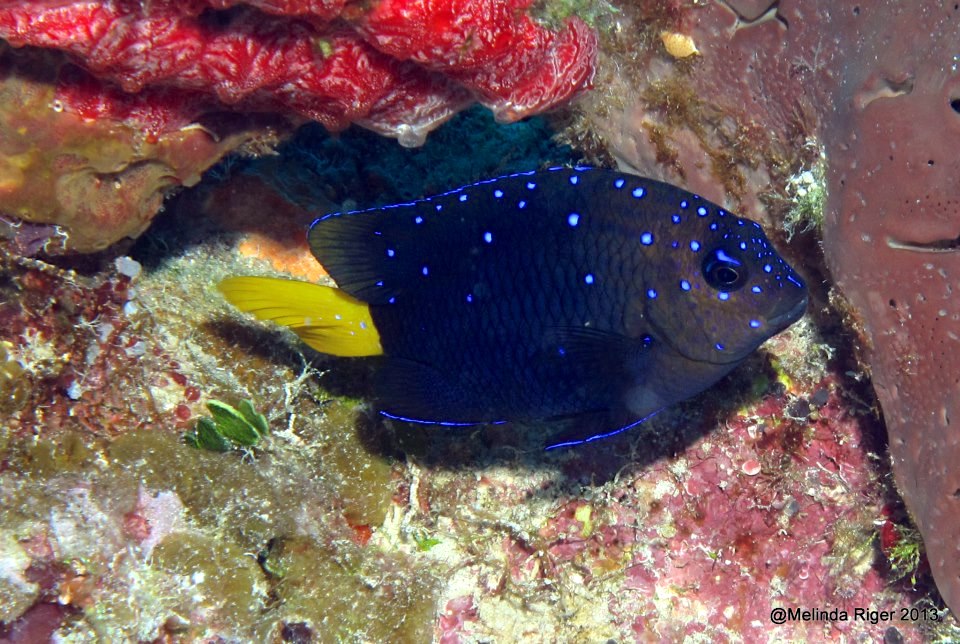
Yellowtails are just one of several damselfish species in Bahamas waters. These small fish are conspicuous not just for the bright tails that give them their name. More striking if anything – especially if seen underwater in sunlight against the coral – are the electric blue spots visible in both adults and juveniles.
The body of adults is dark blue to brownish to almost black
The body of juveniles is blue
Yellowtails are a common and widespread variety of damselfish. They have a limited ability to change colour according to their surroundings, but with their bright tails and luminous blue flecks, it’s hard to see how they can look, to a predator, anything other than a tasty snack.
I have enjoyed seeing these little fish at Fowl Cay Marine Preserve, Abaco. The reef there makes for easy and rewarding snorkelling, with a wide variety of small and medium-size reef fishes to be seen. It’s an expedition I would definitely recommend to anyone wanting to see a healthy and active reef in a completely natural protected area.
I found that a video I took with a tiny camera was sadly of use only to myself. No one else would be able to make anything out due to the marked camera shake. Novices, huh? You are spared that: here’s a brief example of yellowtails swimming instead, showing the difference between juveniles and adults.
Credits: all photos, Melinda Riger / Grand Bahama Scuba; video from Desert Diving
“CLINGING TO THE WRECKAGE”: BAHAMAS CLINGING CRABS
The Clinging Crab Mithrax spinosissimusanswers to a number of names: West Indian spider crab, channel clinging crab, reef or spiny spider crab, or coral crab. It is found throughout the waters of South Florida and the Caribbean.
These are crabs of the reef, or indeed of the wrecks that may be found around reefs. Some of the crabs in this post have chosen wrecks as their home – in the header image the crab is living inside the smoke stack of ‘Theo’s Wreck’, Grand Bahama.
The clinging crab is believed to be omniverous, its main diet being algae and carrion. They can grow to 2 kg, and it is the largest species of reef crab found in the Caribbean.
The clinging crab / West Indian spider crab is (apparently) not commercially harvested for its meat. Although I read somewhere that they are delicious, I would be very reluctant to test the theory.
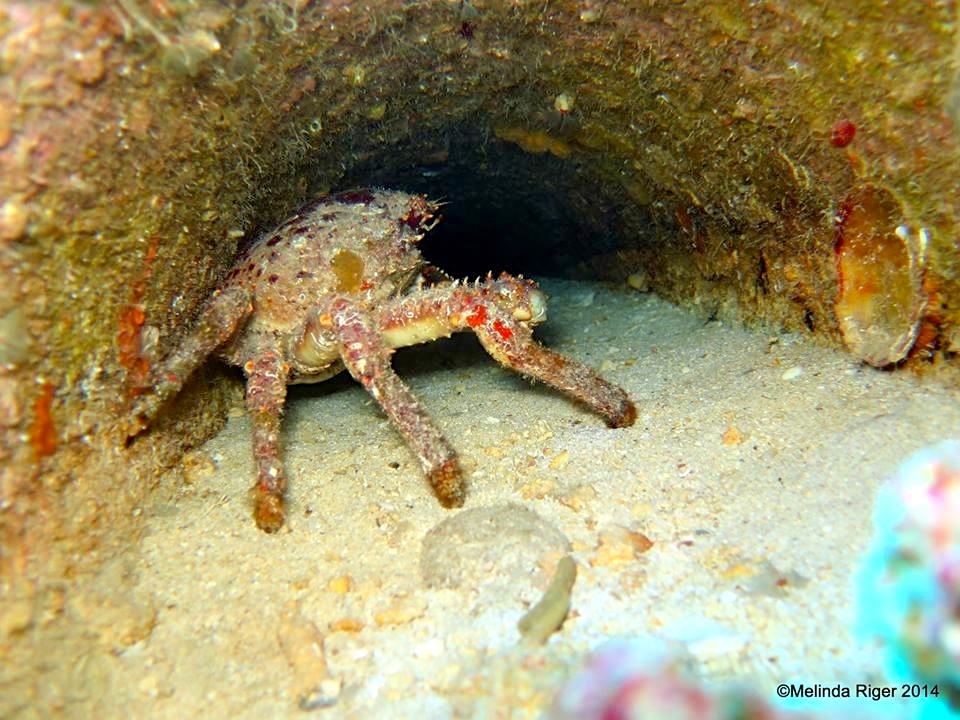
Life on the reef can be dangerous. This crab has lost some legs: its clinging powers are somewhat curtailed…
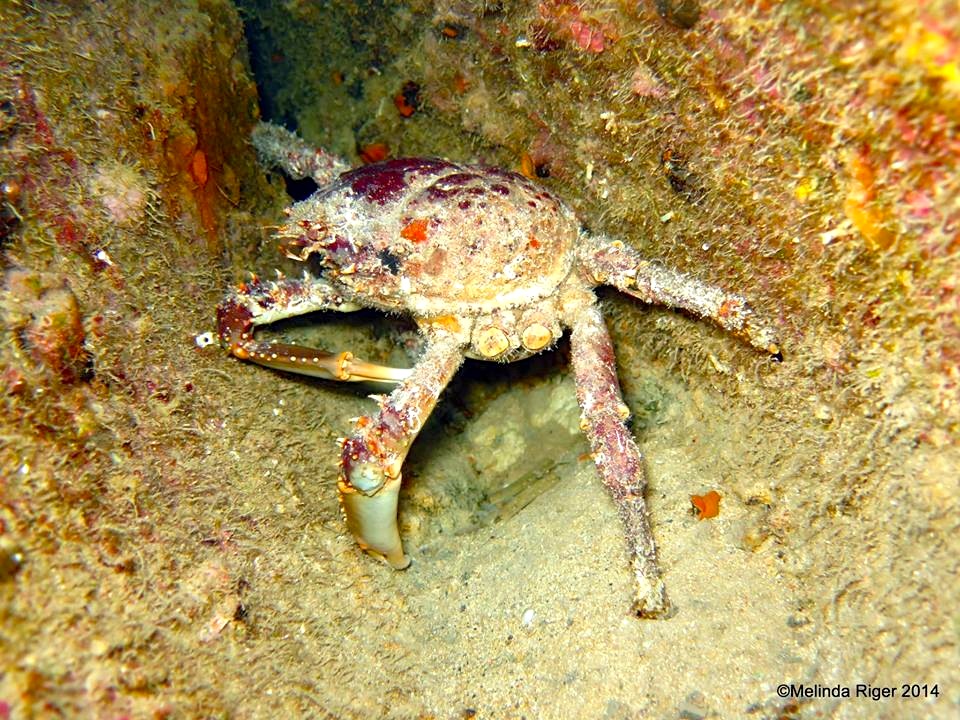
This guy has some missing parts, but seems quite laid back about it…
Credits: Melinda Riger of Grand Bahama Scuba (all photos), with thanks as always
I have briefly featured this fish before in the context of its extraordinary camouflage abilities; and also its interesting ocular arrangements. Time to give it another swim around, I think, with some additional photos that I have collected.
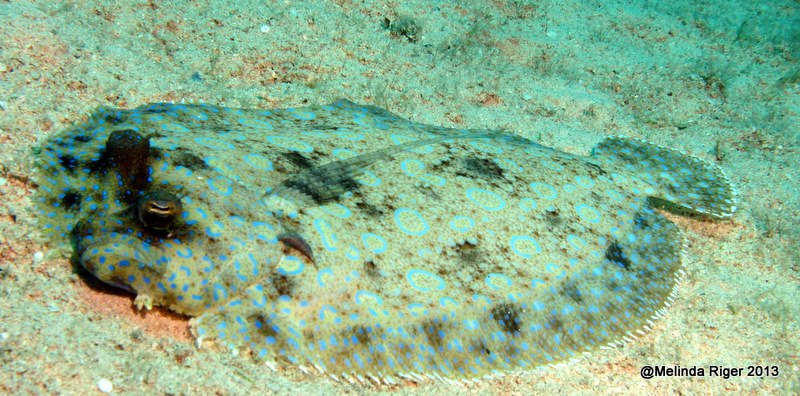
Bothus lunatus is the Atlantic / Caribbean version of a species also found in the Pacific and Indian oceans. Adults may grow up to 18 inches long. The species is a ‘lefteye’ flounder, with both eyes on its left (top) side & its right side underneath. However a baby flounder looks & swims like normal fish, with bilateral eyes. As it grows, the right eye gradually ‘moves’ round to the topside, and it becomes a flatfish.
A flounder’s eyes can move independently of each other. One may look forwards, the other backwards
‘NOW YOU SEE IT…’ CAMO-FISH
The Peacock Flounder has extraordinary colour-changing powers, and can rapidly vary its background colour to make it closely resemble that of its surroundings. This enables it camouflage itself as it lies on the seabed.It can change coloration completely in between two to eight seconds.
Four frames of the same fish taken a few minutes apart showing the ability of flounders to change colors to match the surroundings (Wiki)
Check out these imitative patterns in Bahamas waters…
There are two advantages to the ability to camouflage (‘cryptic coloration‘). One is obviously to avoid detection by predators. The other is to enable the flounder to ambush its meals. They feed primarily on small fishes, crabs and shrimps, lying concealed on the seabed and grabbing any unwary prey that ventures too close. They will even partially bury themselves in the sand, leaving just their eye-stalks keeping watch…
HOW CAN THEY POSSIBLY CHANGE COLOUR SO QUICKLY?
Scientists are still puzzling this out. In a conch shell, it seems the flounder can coordinate its amazing all-round vision with its hormones, instantly releasing certain pigments to its skin cells and suppressing other pigments to make the colour match. Not convinced? Then watch this short video and prepare to be impressed.
Fred Riger of Grand Bahama Scuba, who kindly keeps a benign eye on my reef fish posts (he’s the expert), adds a third excellent reason for coloration changes: sex… “the male peacock flounder can, and does greatly intensify his colors, presumably to declare territory and attract females to his person. When doing this the males will also signal with the left pectoral fin, sticking it straight up and waving it around.” Maybe that is what is going on in the photo below – intensified, non-camouflage colours, and a raised fin…
Peacock Flounder on a plate – Kim Rody Art
Credits: Melinda Riger of Grand Bahama Scuba for almost all photos; wiki for 2 illustrative images
The ‘WTF’ series so far has covered Bahamas reef fish on the bizarre end of the unusual-to-completely-weird appearance spectrum. And it has stood, of course, for ‘What’s That Fish?’. Today, it doesn’t. The feature creature isn’t a fish at all; it looks like a plant; it is in fact a SACOGLOSSAN – specifically the Lettuce Sea Slug Elysia crispata.
The head end is on the left…
The name ‘sacoglossan’ literally means ‘sap-sucker’ (the sapsucker bird has a different latin name, however). And the slug’s frilly edges supposedly resemble certain types of curly lettuce. I’ve no idea where the ‘crispata’ comes from, but I am sure it doesn’t relate to crisp lettuce. These are creatures of shallow, clear waters such as the sub-tropical reefs of the Bahamas.
‘SOLAR POWERED SLUGS’
This isn’t a technical forum and too much science hurts my head. This species primarily lives off algae. However I give you the word KLEPTOPLASTY to drop into your conversation. In a sentence, algae is eaten but only partially digested; certain elements are stored to produce photosynthesis by which light is converted to energy and the slug can live without food. But baffle your neighbour at dinner, why not, by summarising the process as “chloroplast symbiosis”. Meanwhile, I’m fetching a beer.
My research suggests that very little is known about the mating behaviour of these slugs. The pair shown below may be exploring the possibilities, or at least trying to work out which end is which. One is easy to tell, but the other? Time to make our excuses and leave…
HOW FAST, EXACTLY, DOES A LETTUCE SEA SLUG MOVE?
This rather beautiful video from ‘CORAL MORPHOLOGIC’ will reveal all. You’ll soon see that progress is very slow. I recommend watching the first 30 seconds and you’ll get the idea. If you choose to persist, you will see the slug sort of turn a corner to the left.
Credits: Melinda @ Grand Bahama Scuba, Laszlo Ilyes, Nick Hobgood, Coral Morphologic, Wiki
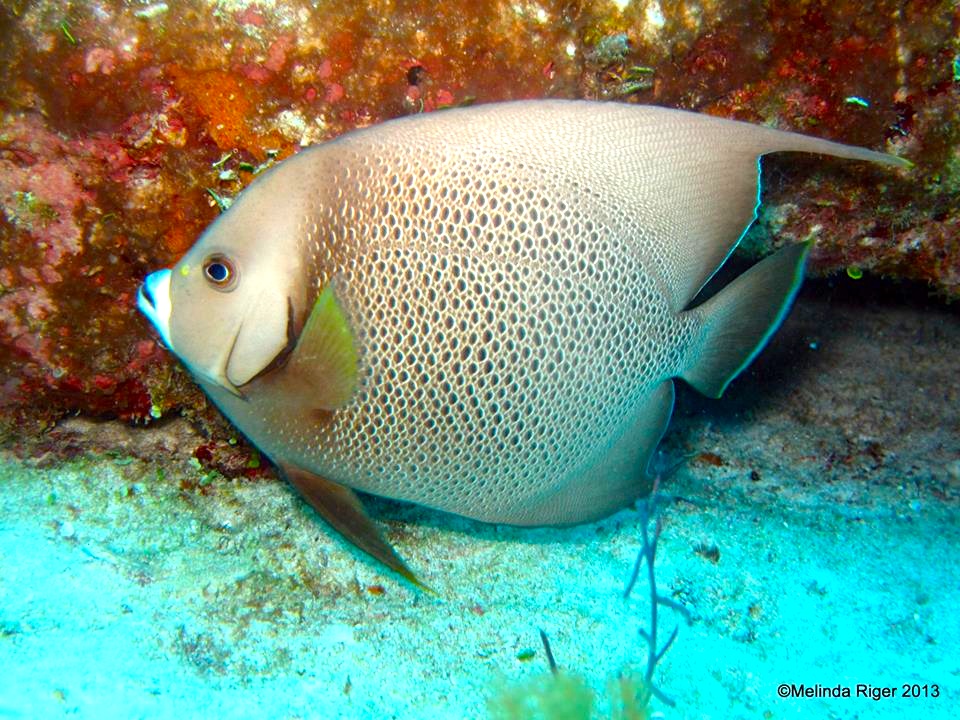
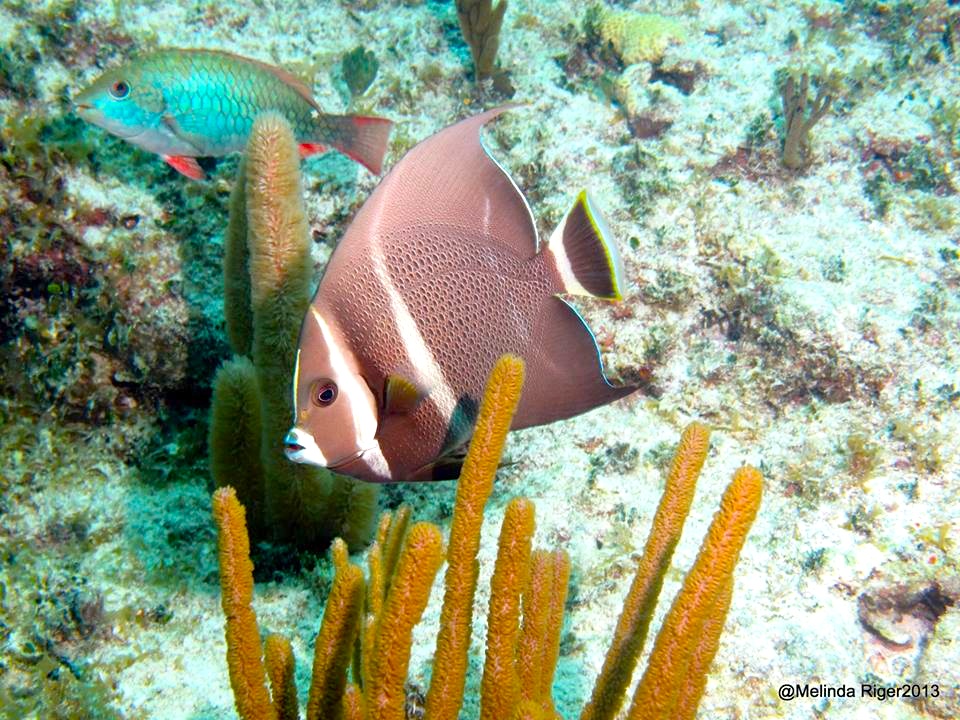
Some time ago I posted aboutGRAY ANGELFISHPomocanthus arcuatus. They are the more dowdy cousins of the flashy QUEEN ANGELFISH. They are not without their own beauty, though, and I have collected a few more photos of this species taken by Melinda Riger of Grand Bahama Scuba. I’m always pleased to feature her amazing reef photos, with their vivid colours and clear detail, so I hope you enjoy these. The last one – with the stripes – is a juvenile.
LAURA JESSON “Do you know, I believe we should all behave quite differently if we lived in a warm, sunny climate all the time. We shouldn’t be so withdrawn and shy and difficult…” (Brief Encounter 1945)
The quote is there both because it is particularly apposite for any withdrawn etc Brit with a toehold in Abaco, and because it explains or excuses the somewhat clumsy title pun… March has been dominated by (a) a trip to Abaco and (b) publication of “The Birds of Abaco”. Time for some cheerful finny fotos to end the month with, courtesy of diving belle Melinda Riger of Grand Bahama Scuba and her top-class camera work.
BAHAMAS REEF FISH (14): HAMLETS (NOT GLOOMY DANES)
“Oh, that this too too solid flesh would melt, thaw and…” Ah! Sorry. I’m soliloquising again. Must be Thursday. And the merest mention of Hamlet is enough to set anyone off. But I speak not of noble yet gloomy Danes of Elsinore and of discernibly introspective aspect. These ones are pretty reef fish of the Caribbean seas, mainly in the Bahamas and along the Florida coast. There are a number of different types of hamlet, of which the 4 featured below in Melinda’s amazing underwater images were were encountered in one dive.
SHY (OR GOLDEN) HAMLET
Hamlets have outstandingly interesting reproductive skills, being ‘synchronous hermaphrodites’. They have the unusual benefit of having both male and female sexual organs as adults, permitting imaginative combinations of pairings (though not including self-fertilization). When they find a mate, “the pair takes turns between which one acts as the male and which acts as the female through multiple matings, usually over the course of several nights”.I don’t dare check whether there are websites that cater for this sort of energetic coupling. The wonder is that Hamlets preferentially mate with individuals of their same colour pattern, and that they are not more wanton with their attentions and sexual flexibility.
INDIGO HAMLET
BARRED HAMLET
BUTTER HAMLET
OPTIONAL CULTURAL, HISTORICAL & MUSICAL DIVERSION INSPIRED BY HAMLET
The other notable Hamlet is, of course, the mild cigar equated in the famed commercials with happiness, accompanied by an excerpt from a jazzy version of Bach’s ‘Air on the G String’. Here is one of the best – and possibly the only advert to my knowledge to feature not one, but two excellent Sir Walter Raleigh jokes.
Bach’s well-known descending chord sequence of was of course shamelessly ripped off by ingeniously adapted by Procol Harum for ‘A Whiter Shade of Pale’, their first single in 1967. Relive the Summer of Love right here and now. Is this the music that might even put those versatile hamlets in the mood…
Any fret-tweakers might like to see the sheet music of the Air for guitar – you could even play it on air guitar – which is relatively easy, being in C major.Credits: All fish pics Melinda Riger of Grand Bahama Scuba, except wiki-header; open-source online material; my mp3, dammit – I can’t get the wretched tune out of my mind…
UNDERWATER REEF GARDENS IN THE BAHAMAS (2): CORALS
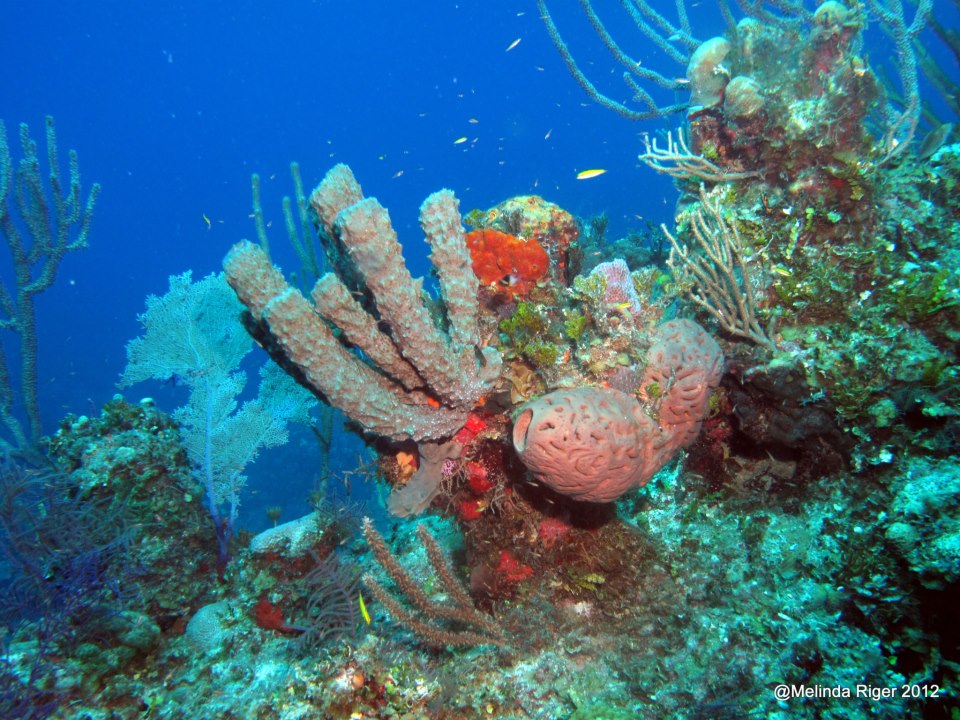
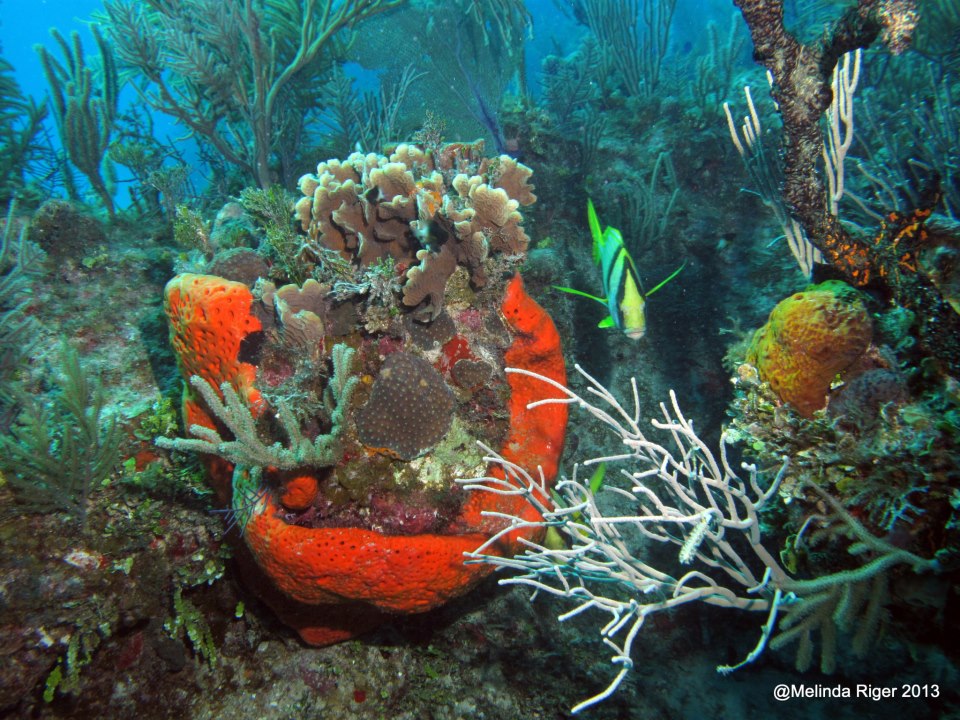
This is part 2 of a series that started out HEREwith a selection of anemones, basket stars and Christmas tree worms. The images below show a wide variety of corals. In among them are also sponges and anemones. These photos are evidence of a healthy reef environment in the waters of the northern Bahamas. Abaco’s coral reef is the third largest barrier reef in the world (yes, I hear you – the Great Barrier… And the second is???), providing wonderful and accessible diving / snorkelling opportunities. However, monitoring shows that the incidence of coral bleaching and disease is increasing in the Bahamas, as elsewhere in the world. It’s a sobering thought that your grandchildren may never swim in an environment with any of the living corals shown below…
Albert King, Lead Belly and Mike Bloomfield are prime examples of foremost bluesmen guitar-slingers who, in their own distinctive styles, favoured the key of… I’m sorry, what did you say? Oh yes, quite right. My misunderstanding. Apologies, I’ll take it from the top…
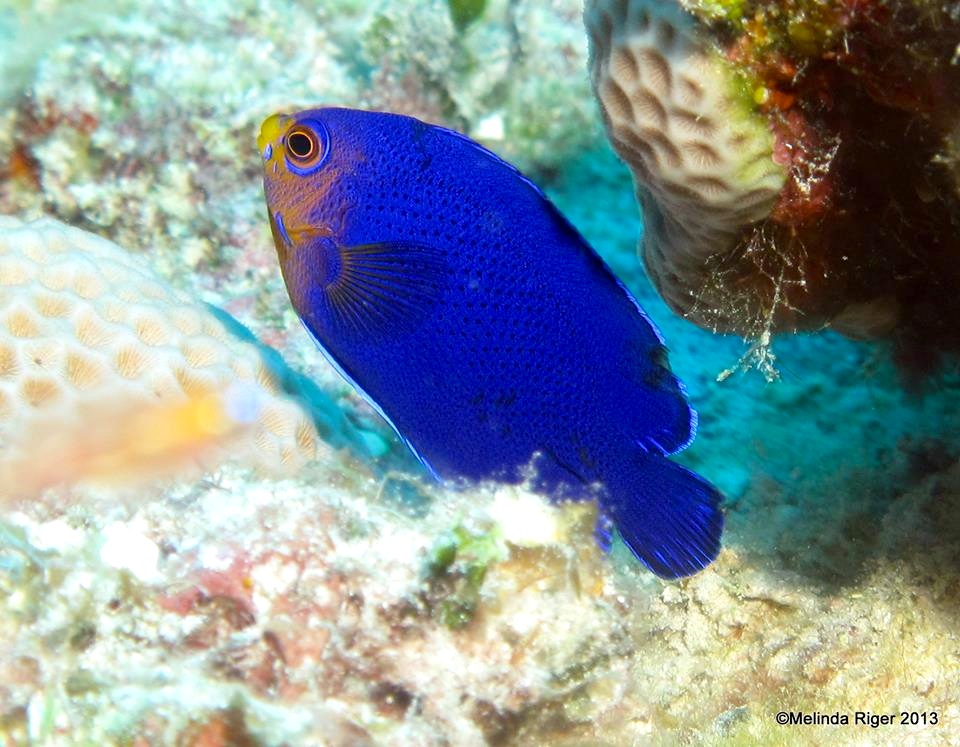
Deep blue sea. Deep blue fish. *Deep breath*. All better now. The fish below may all readily be found nosing around the coral reefs of the Bahamas in a leisurely manner. Mostly, they are feeding. Fowl Cay Marine Preserve, Abaco, is a great place for watching them. No need to have all the gear – a simple snorkel, mask and flippers, and an ability to float a bit, would be sufficient.
BLUE CHROMIS Chromis cyanea
These dazzling little blue fish will be one of the first you’ll meet (along with the omnipresent yellow and black striped sergeant majors, so friendly they will come right up to your mask). You can’t miss them. Though very small, their electric blue colouring cuts through the water even on the dullest of days up-top. They can reach 5 inches in length, but most that you see will be tiddlers. They are frequently seen in the company of larger fish.
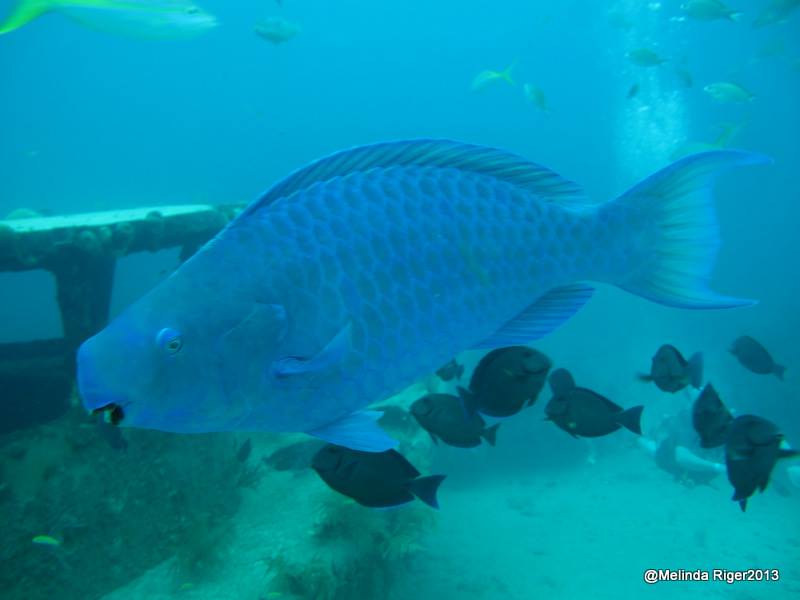
BLUE PARROTFISH Scarus coeruleus
Parrotfish play a vital part in the ecology and health of the coral reef. They graze on algae, cleaning the coral and grinding the surface with their teeth. They take the nutrients and excrete the rest as… sand. This helps to form your beach! To find out more about their uses and habits, click PARROTFISH. You’ll find a great deal of interesting info about the species, conveniently compressed into factual bullet points.
BLUE TANG Acanthurus coeruleus
The blue tang is a type of surgeonfish, all-blue except for a yellow spot near the tail. The blueness can vary considerably, from very pale to dark. They tend to swim elegantly around in large groups.
Here are some images of schools of blue tang that I took with a cheapo underwater camera at Fowl Cay. They are a lovely sight as they drift slowly past alongside the reef. The top one also has a sergeant major (see above).
CREOLE WRASSE Clepticus parrae
This wrasse can grow up to a foot long, and may be found at considerable depths on deep-water reefs – 300 feet or more. They are active by day, and hide in rock clefts at night. This species is sociable, moving around in shoals. They develop yellow markings with age.
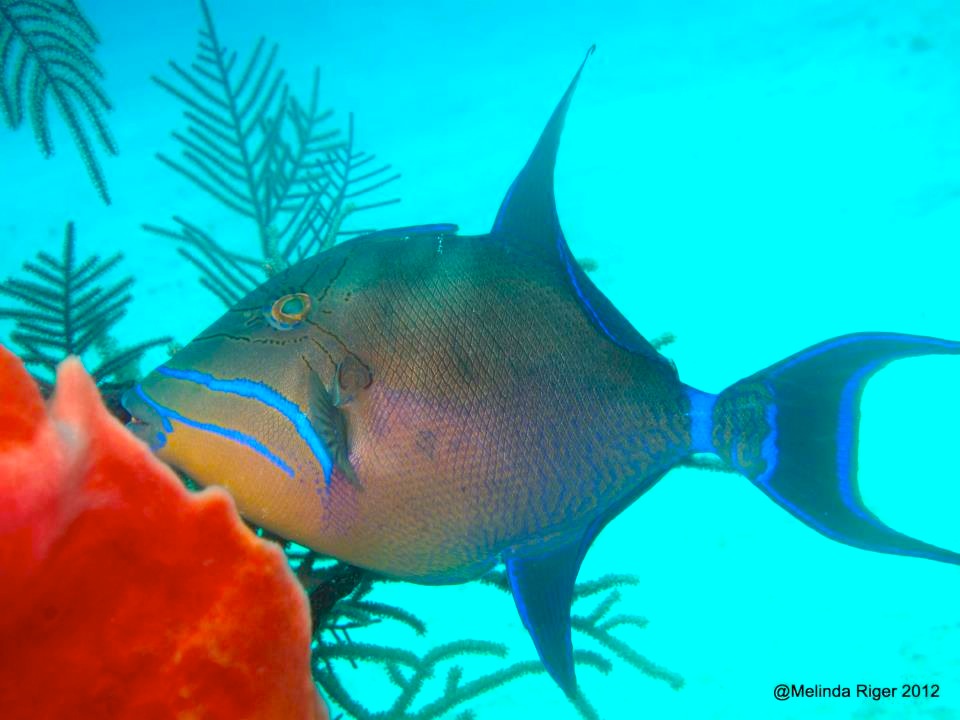
QUEEN TRIGGERFISH Balistes vetula
There are several species of triggerfish. The queen is capable of changing colour to match its surroundings, or (it is said) if subjected to stress. I think we have all been there. It is an aggressive and territorial fish, and its favourite prey is the sea urchin, a testament to its courage…
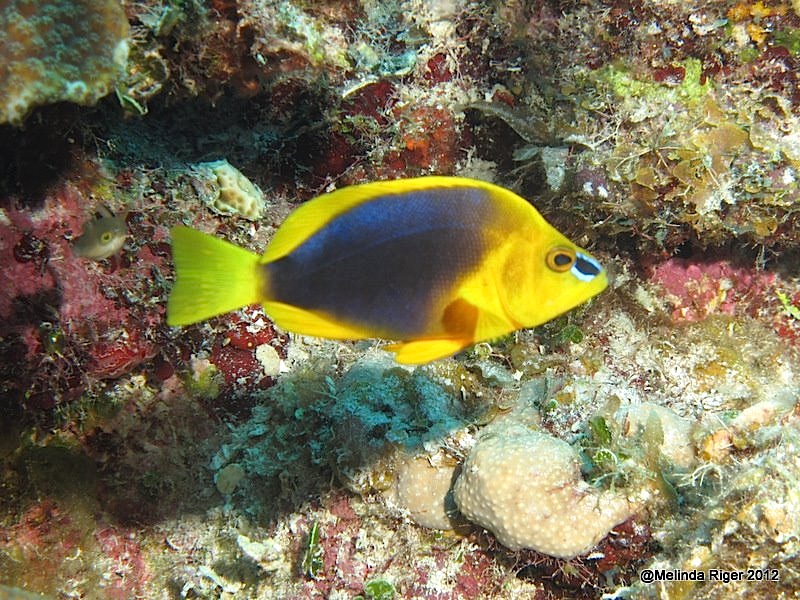
QUEEN ANGELFISH (JUVENILE)
I have featured this species before HERE, and strictly it as much yellow as blue. But the blue earns double points, surely, for its startling vividness. Anyway, I like the way it hangs casually upside down, and the bubbles in this photo.
Credits: Good photos – Melinda Riger of Grand Bahama Scuba; Poor photos – RH
From time to time I end a post with something musical. Just for fun (toxic concept). So here is a real “Slow Blues in C” from the fantastic guitarist Stefan Grossman off his eclectic ‘Yazoo Basin Boogie’ album. 22 quality tracks. Buy from Am*z*n – much cheaper than iT*nes.
GRAY ANGELFISH (Pomacanthus arcuatus) BAHAMAS REEF FISH (3)
I recently posted about the highly colouredQUEEN ANGELFISH, a striking coral reef resident glowing with fluorescent blues and yellows. It’s the Angelfish that went into showbiz and succeeded. Its close cousin the Gray Angelfish is a more sedate creature, with the appearance of a professional – law, possibly, or medicine. That thin blue fin-edging suggests a flamboyant streak. Slightly mean mouth? Lawyer.**
This species is found in the warm waters of Florida, and south through the Bahamas and Caribbean as far as Brazil. They are found at depths from 2 m. down to 30 m. You are most likely to encounter one on a coral reef feeding on sponges, its main diet. The fish below with the bluer face is a teenager, in transition between juvenile and adult.
SPOTTED DRUM FISH Equetus punctatusBAHAMAS REEF FISH(1)
This post is the first of a planned series on Bahamian reef fish. Those who follow this blog (I thank you both) may recall with horror (or worse, pity) my own efforts with reef fish, using a tiny cellphone-sized video camera. Misty stills culled from video footage. Enthusiastically wobbly movies as I struggle to swim and breathe simultaneously in an alien element. I am more underwater CLOUSEAU thanCOUSTEAU. However, thanks to Melinda Riger, who with husband Fred runsGRAND BAHAMA SCUBA, I have kind permission to borrow and display images from her stock of wonderful reef fish photographs.
The spotted drum fish (related to two other Caribbean drumfish, the High-Hat and the Jack-knife fish) belongs to a large worldwide family, the Sciaenidae. Besides other drum varieties, the family includes ‘croakers’. These species are all named for the repetitive throbbing or drumming sounds they make. This involves the fish beating its abdominal muscles against its swim bladder. If I find out the reason for this (Species communication? Food call? Alarm? Warning? A piscine ‘advance’? Happiness?) I will add it here in due course. Here an example of an atlantic croaker from the excellent DOSITS site (Discovery of Sounds in the Sea)
The spotted drum is one of the few fish of the species to inhabit coral reefs – most are bottom-dwellers (often in estuaries), avoiding clear water. These fish tend to be nocturnal feeders, feeding on small crabs, shrimp and small invertebrates. As far as I can make out they are solely (or primarily) carnivore, and do not graze on algae of other reef plant life.
The photos above are of adult spotted drums. The ones below are of juveniles, and show the remarkable growth-pattern of these fish, from the fragile slender creature in the top image, through the intermediate phase of the one below it (with the amazing brain coral), to the striking adult versions above. People like to keep these pretty fish in aquariums; fine, I’m sure there are plenty to go round, but these ones look pretty happy to me in their natural reef environment…
Juvenile Drum Fish (pre-school)
Juvenile drum fish (school-age)
(Header image credit: Wiki-Cheers)
Finally, I’ve just come across this short video from a “Florida Aquarium”, showing how these fish swim. It rather looks as though it has been fin-clipped for some reason… or just damaged, maybe
I usually have 3 or 4 planned posts on the go. Some are quick to compose, some are not. Especially those requiring technical input from the technically unsound – downloading a video, changing the file format, editing and polishing, uploading to a compatible ‘carrier’ etc. I’ve been meaning to get round to making some fish and reef videos from footage of a trip with Kay Politano of Abaco Above & Below. Now I have…
If you are tolerant enough to at least start this one, which focusses on coral, can I restate the excuses? I swim like a panicking cat. I hadn’t snorkelled for a great many decades years until 2011. I was a stranger to underwater scenery, let alone photography. I wave my tiny camera around too excitedly, though not deliberately to inflict seasickness on hapless viewers… It is a bit less bad this time round, however. Luckily I can tell from my stats if anyone has bothered to click on the video below, and you can rely on me to trash the thing if I find a paltry (or non-existent) response. Best just to watch on the small screen, though.
With those dire warnings, here is the video. I would be very interested to ID all the corals that can be seen. There are the easy ones like sea fan, elkhorn, mustard hill, brain… but what’s that one over there? No, behind the waving one…? Comments / suggestions welcome. And if you don’t much care for coral, there are some pretty fish to look at…
Music Credit: Adrian Legg’s ‘Old Friends’, from ‘Guitar Bones’
ADDENDUM JAN 13 I am really grateful to Capt Rick Guest for taking the time to view the video, and the trouble to analyse the contents. He has very helpfully highlighted many points of interest in the film, both as to coral and as to fish, so I’ll post his commentary in full, with my thanks. Of both interest and concern are Rick’s remarks about the Elkhorn Coral. I had wondered about its bleached look. It’s dying…
CORALS ETC
At 0:36 a lavender Sea Fan…(Gorgonia ventalina).
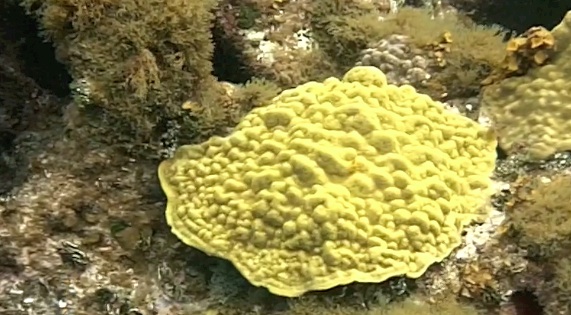
At 0:52 Yellow “Leaf”,or “Letuce Coral”. Agaricia species growing around a living soft coral called a “Sea Rod”. Soft Corals have living polyps which feed on plankton just like the hard corals.
At 1:02 More Agaricia, and a small Brain Coral at bottom. Either a Diploria, or Colpophylia species.
At 1:10 A Sergent Major fish, (Abedefduf saxatilus). One of my favorite Taxanomic names! Behind is mostly dead, Elkhorn Coral. The white areas being indicative of “White Plague”. A disease responsible for Coral Whiting…..Death!
At 1:37 A Blue Tang swims over some “Mustard Coral”… Porites porites.
At 1:55 A chubby “Chub” swims by. Likes caves and caverns and edible, but not palatable.
At 2:33-38 Much coral bleaching damage here on these Elkhorn Corals.
At 2:40-48 A Thalassoma bifaciatum,or “Blue Headed Wrasse” is swimmin’ about. This guy used to be a lady,but he’s a product of Protandric Hermaphrodism! When there’s a paucity of males in the area, a yellow female will step up and become a male for the school.
At 3:29 Lower right: a fine example of Millepora complanata,”Fire Coral”. Fire Coral is more related to Man-O-War, and jellyfish than Corals.
This is the first short video from footage taken in June at Fowl Cay, 2000 acres of protected coral reef waters. This was the start of another great day out snorkelling and island-hopping with dive-diva Kay Politano ofABOVE & BELOW ABACOMarsh Harbour. In due course there will be more videos of fish and coral. There is very slight evidence that lessons have been learned since last year’s erratic novice snorkeler / underwater photographer efforts. Still a way to go of course. The production process has been hampered by a major format problem between my camera chip thingy and the Mac I now use. It told me the data was unrecognisable / corrupted / damaged etc, which was massively disappointing. Then I thought of <<techno-tip>> downloading to an old PC and transferring to the Mac on a memory stick. Problem solved.
This huge swirling mass of (tens of) thousands of small fish confronted me as I round one end of the reef. I’ve never seen anything like it before, except on TV. It was an astounding, dizzy-making spectacle. When I swam into the middle of the shoal, I expected to feel tickled all over – but despite the huge numbers of fish, their speed, and their sudden and apparently random direction changes, I wasn’t conscious of feeling them at all. I assume the commotion resulted from the presence of larger fish feeding on the small ones. Or possibly from my appearance…
Music credit: Gordon Giltrap (Hofner champion) ‘Fast Approaching’
EXPLORING THE CORAL REEF AT FOWL CAY MARINE PRESERVE, ABACO
First, a warning for anyone arriving new to this blog (hi! welcome) either on purpose or accidentally: I can’t swim very well, I hadn’t snorkelled for decades until last year, and I’d never before used a camera underwater.
That said, there is probably enough in this 2:40 min video to warrant a quick view. As with other videos from this expedition to Fowl Cay Marine Preserve (STINGRAY / BLUE TANG), best viewed small to avoid queasiness and disorientation. You can always Pause for a breather. There are some nice fish obligingly in view from time to time, and the coral is very diverse. And I’ll know what to do this year to get better results, besides trying harder with the swimming… (Music: East Wes by Eric Johnson, off Ah Via Musicom)





































 ROLLING HARBOUR ABACO
You must be logged in to post a comment.