Unknown's avatar

WORLD SHOREBIRDS DAY – ABACO’S 33 SHORE SPECIES (3): PLOVERS


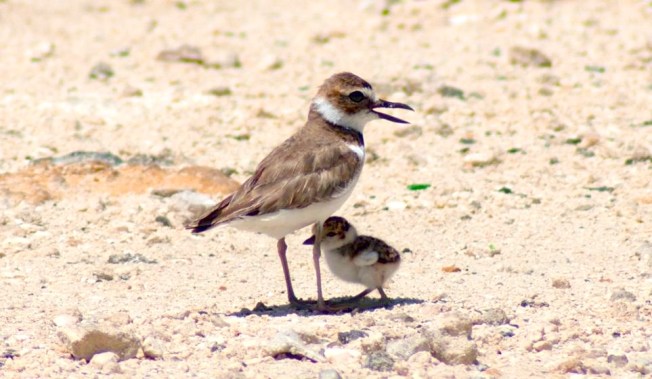
Wilson's Plover & Chick, Delphi Beach, Abaco - Sandy Walker

Wilson’s Plover & Chick, Delphi Club Beach, Abaco (Sandy Walker)

 WORLD SHOREBIRDS DAY – ABACO’S 33 SHORE SPECIES (3): PLOVERS

Over the last 2 days, 20 of Abaco’s 33 shorebird species have been featured, LARGER SHOREBIRDS followed by SANDPIPERS. The third part of the series concentrates on the 6 plover species found on Abaco. First, I’ve repeated the main Abaco shorebird checklist of 26 species (birds previously featured in bold), with each bird’s ‘availability’ code. I am disregarding the 7 species listed under the checklist because (1) they are transients or vagrants and your chances of encountering one are slim to remote; and (2) because in 16 months I was unable to obtain photos of any of them taken on Abaco, which can’t simply be because they are not photogenic. I still haven’t managed to deal with the shonky formatting, so I’ve given up on that…

The codes will tell you, for any particular bird, when you may see it (P = permanent, WR = winter resident, TR = transient, V = vagrant); whether it breeds (B) on Abaco; and your chance of seeing it, graded from easy (1) to vanishingly unlikely (5).

  • Black-necked Stilt                         Himantopus mexicanus              PR B 3
  • American Avocet                           Recurvirostra americana           WR 4
  • American Oystercatcher          Haematopus palliatus                 PR B 2
  • Black-bellied Plover                          Pluvialis squatarola                      WR 1
  • American Golden Plover                 Pluvialis dominica                         TR 4
  • Wilson’s Plover                                  Ochthodromus wilsonia              PR B 2
  • Semipalmated Plover                        Charadrius semipalmatus          WR 2
  • Piping Plover                                      Charadrius melodus                      WR 3
  • Killdeer                                                 Charadrius vociferus                    WR 2
  • Spotted Sandpiper                      Actitis macularius                         WR 1
  • Solitary Sandpiper                       Tringa solitaria                            WR 2
  • Greater Yellowlegs                       Tringa melanoleuca                      WR 2
  • Willet                                                   Tringa semipalmata                    PR B 2
  • Lesser Yellowlegs                          Tringa flavipes                              WR 3
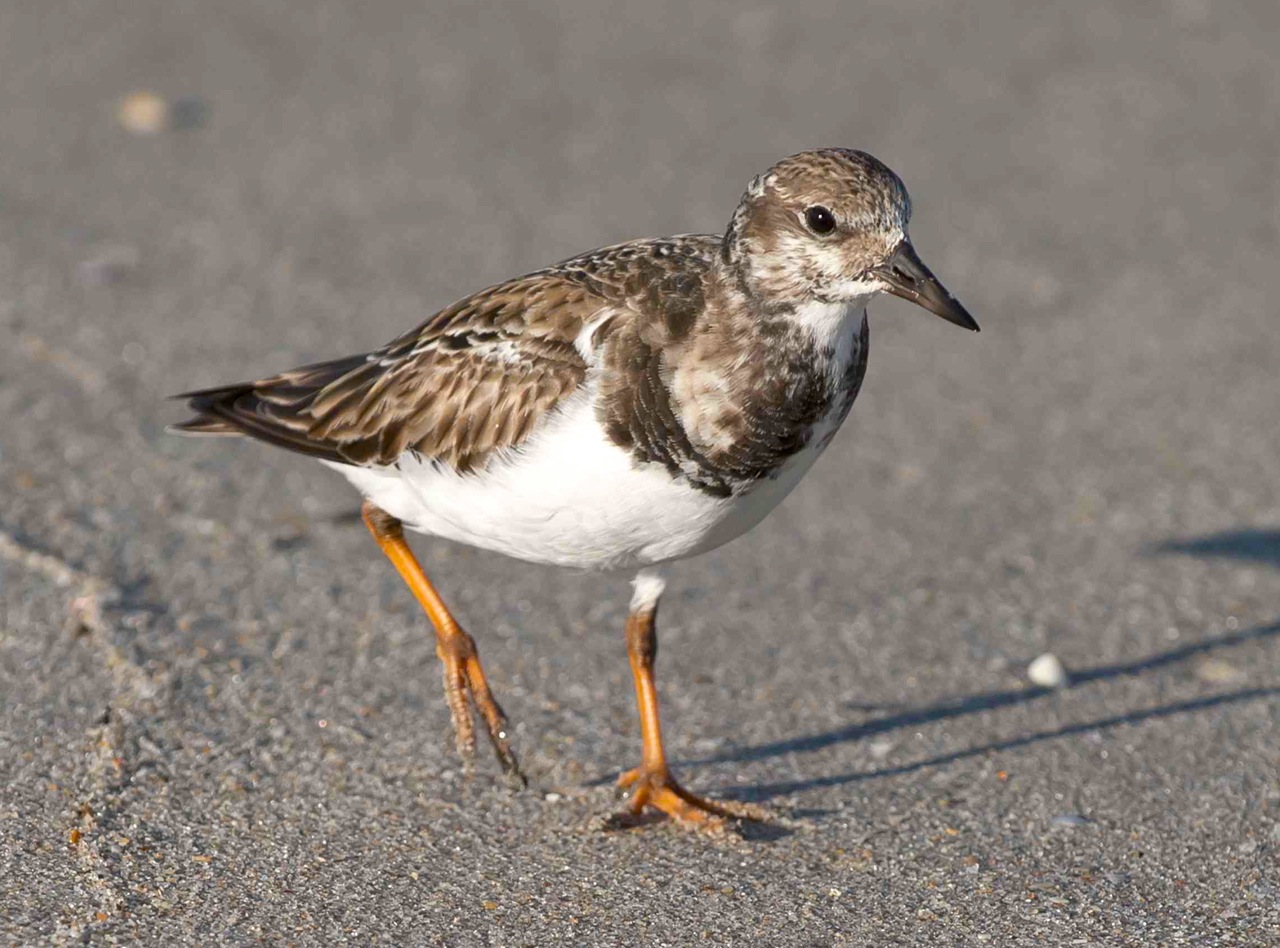
  • Ruddy Turnstone                          Arenaria interpres                      PR 2
  • Red Knot                                            Calidris canutus                           WR 3
  • Sanderling                                        Calidris alba                                  WR 1
  • Dunlin                                                 Calidris alpina                              WR 2
  • Least Sandpiper                            Calidris minutilla                         WR 2
  • White-rumped Sandpiper       Calidris fuscicollis                        TR 3
  • Semipalmated Sandpiper         Calidris pusilla                              TR 2
  • Western Sandpiper                      Calidris Mauri                                TR 2
  • Short-billed Dowitcher               Limnodromus griseus                  WR 1
  • Long-billed Dowitcher                Limnodromus scolopaceus         WR 4
  • Wilson’s Snipe                                 Gallinago delicata                         WR 3
  • Wilson’s Phalarope                      Phalaropus tricolor                        V 4

The other 7 species of shorebird recorded for Abaco – all transients or vagrants – are: Upland Sandpiper TR 4, Whimbrel  TR 4, Hudsonian Godwit V5, Marbled Godwit V5, Buff-breasted Sandpiper V5, Pectoral Sandpiper  TR 3, Stilt Sandpiper TR 3

PLOVERS ON ABACO

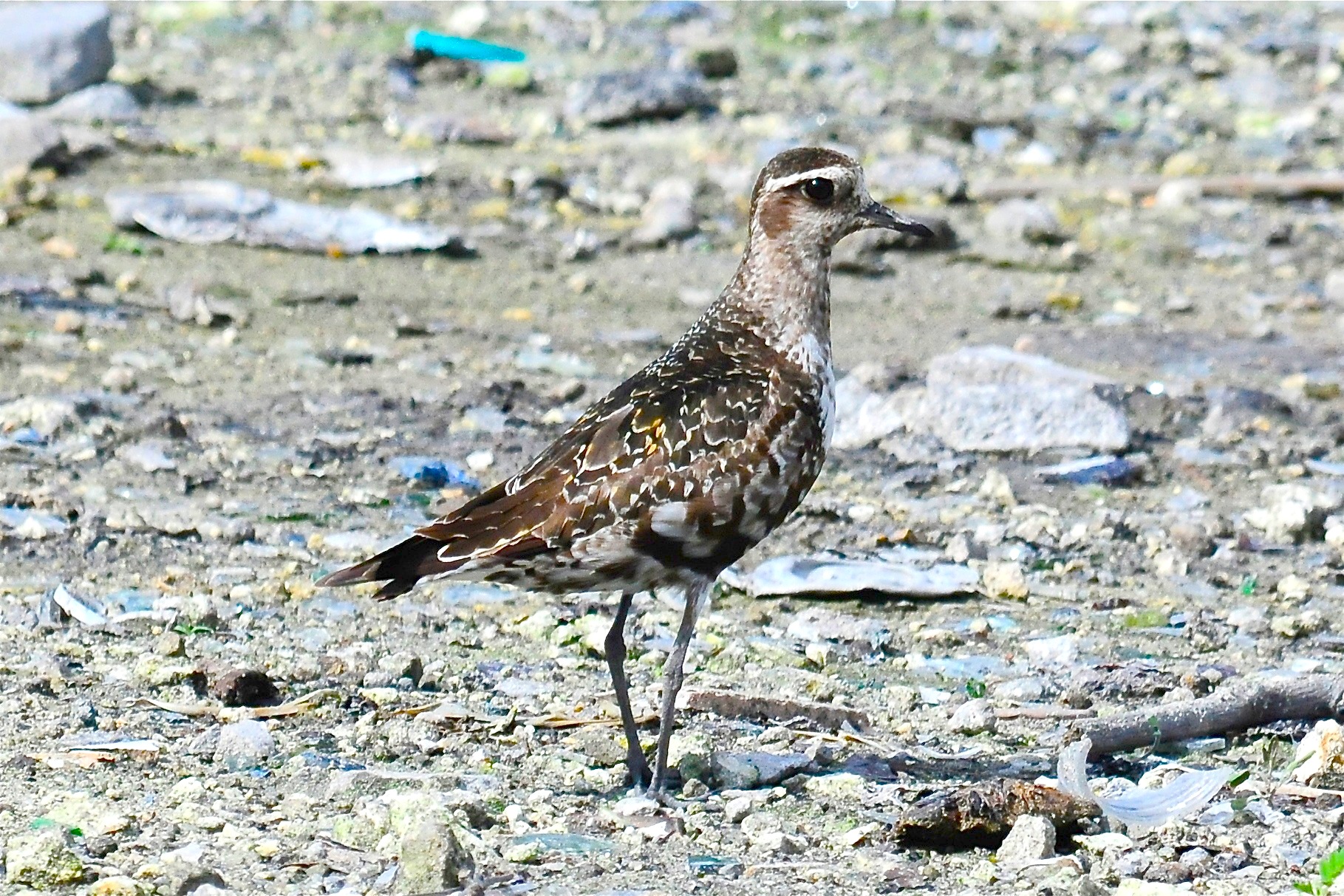
The best-known of the 6 Abaco plover species is the Wilson’s Plover, because it is the only permanent resident. The American Golden Plover is a rare transient, but we luckily have one taken on on Abaco. All the others are winter residents and easy to middling hard to find. All except the American Golden Plover may be found on the beach at Delphi or the rocks at either end. The Piping Plover is the most interesting species, with a mere 8000 left in the world and a vigorous conservation program to protect them and their habitat. Their summer breeding range is in Canada, central US and the eastern seaboard. In winter they migrate south, and Abaco is one of their homes. At Delphi we are very fortunate that every year some choose the beach for their winter retreat.

BLACK-BELLIED PLOVER  Pluvialis squatarola   WR 1Black-bellied Plover intermediate plumage.Marls.Abaco Bahamas.3.12.Tom Sheley edit
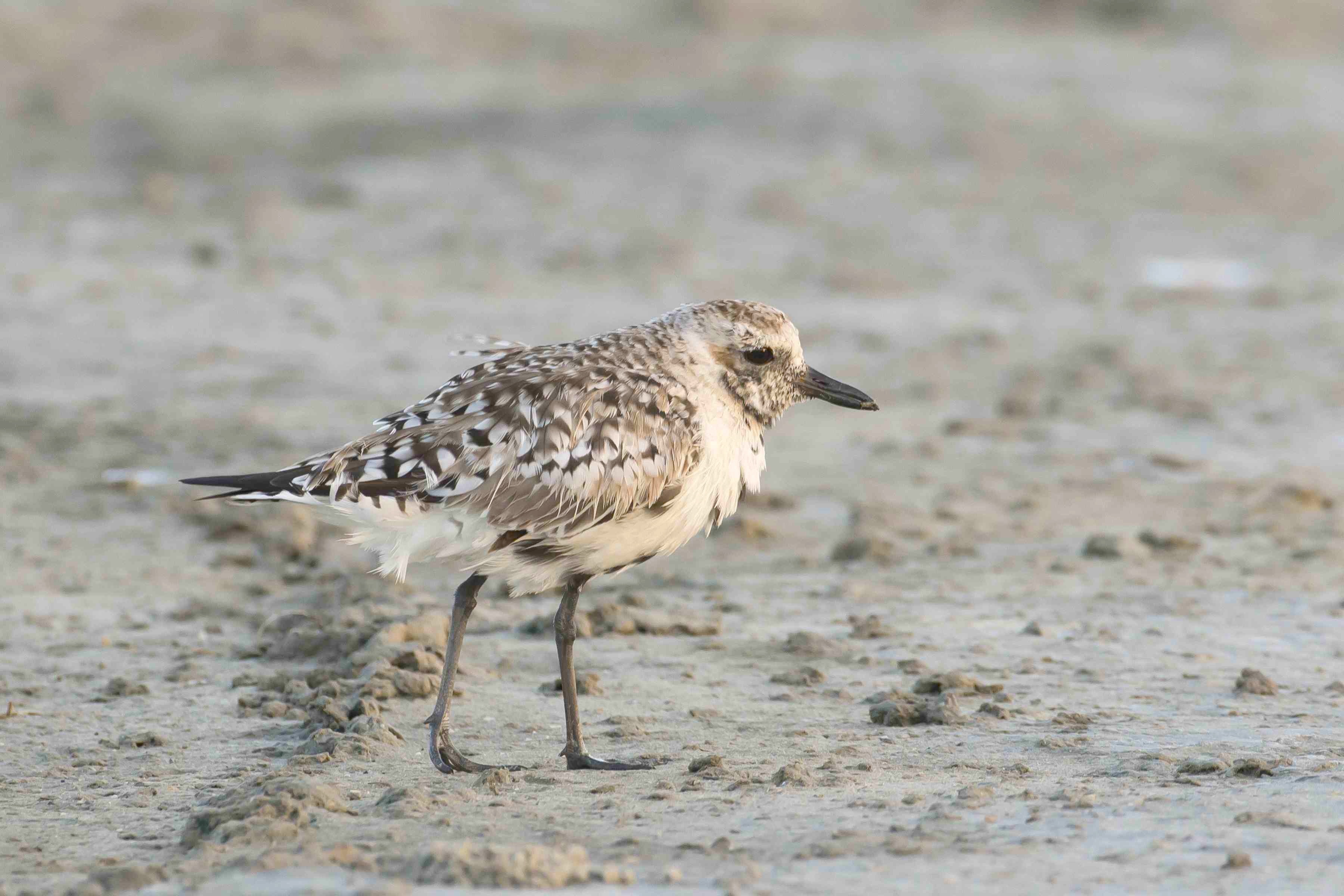
You  may well wonder why a bird with such a very specific belly-related colour designation has a white one in the photo. It’s because this is the non-breeding plumage (in fact, intermediate), so I have borrowed from Audubon Magazine (‘tip of the hat’) to show a non-Abaco bird in its breeding plumage. Black- Bellied Plover (Audubon Magazine)

AMERICAN GOLDEN PLOVER  Pluvialis dominica  TR 4American Golden Plover, Abaco - Tony Hepburn
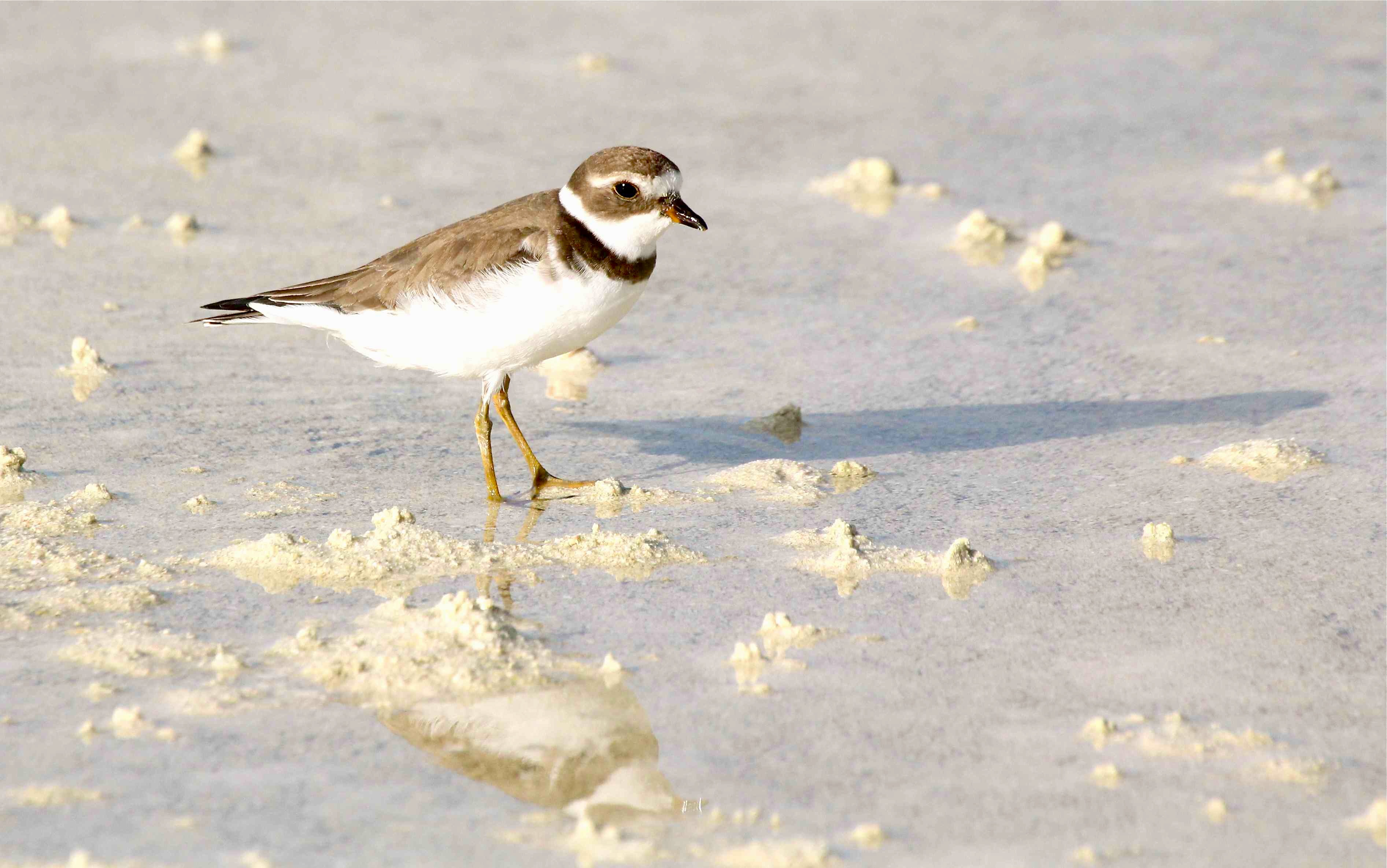
 SEMIPALMATED PLOVER Charadrius semipalmatus WR 2Semipalmated Plover (f nb), Abaco - Bruce Hallett
KILLDEER Charadrius vociferus WR 2Kildeer, Abaco - Bruce Hallett

PIPING PLOVER  Charadrius melodus WR 3Piping Plover, Abaco - Bruce HallettPiping Plover, Abaco - Tony HepburnPiping Plover, Abaco  - Tom Reed

WILSON’S PLOVER Ochthodromus wilsonia  PR B 2

This permanent resident plover is a year-round presence on the Delphi Club beach, where in summer they nest and raise their tiny fluffball chicks (see Sandy Walker’s wonderful header image). I’m posting in some detail about these because it’s a while since I featured them. Links to other relevant posts are given below. All the following photos bar 1 were taken on the beach at Delphi.Wilson's Plover, Delphi Club Beach, Abaco - Craig Nash

The photo below was taken by Tom Sheley at Nettie’s Point, the skiff launching point for the day’s bonefishing on the Marls. The plover pair had made a scrape and nested there. They chose a tricky place to do so –  it was just where the trucks are turned after off-loading the skiffs. So the guides built a protective driftwood enclosure to protect the nest and prevent tragedy. The plovers, unfazed by the human proximity and activity, raised their family safely. I mostly saw the female on the nest within the square wooden pen, with the male usually close by, standing guard protectively. 

Wilson's Plover, Abaco Bahamas - Tom Sheley

This plover, photographed on the Delphi beach, is performing a typical ‘broken wing’ display, a tactic used to draw predators away from a nest site. The bird makes itself appear to be wounded and vulnerable, and flaps pathetically about on the ground… gradually getting further from the nest. If the going gets tough and the predator gets too close for comfort,  the plover gets going by unexpectedly flying off. Wilson's Plover, Abaco (broken wing display) Clare Latimer - Version 2
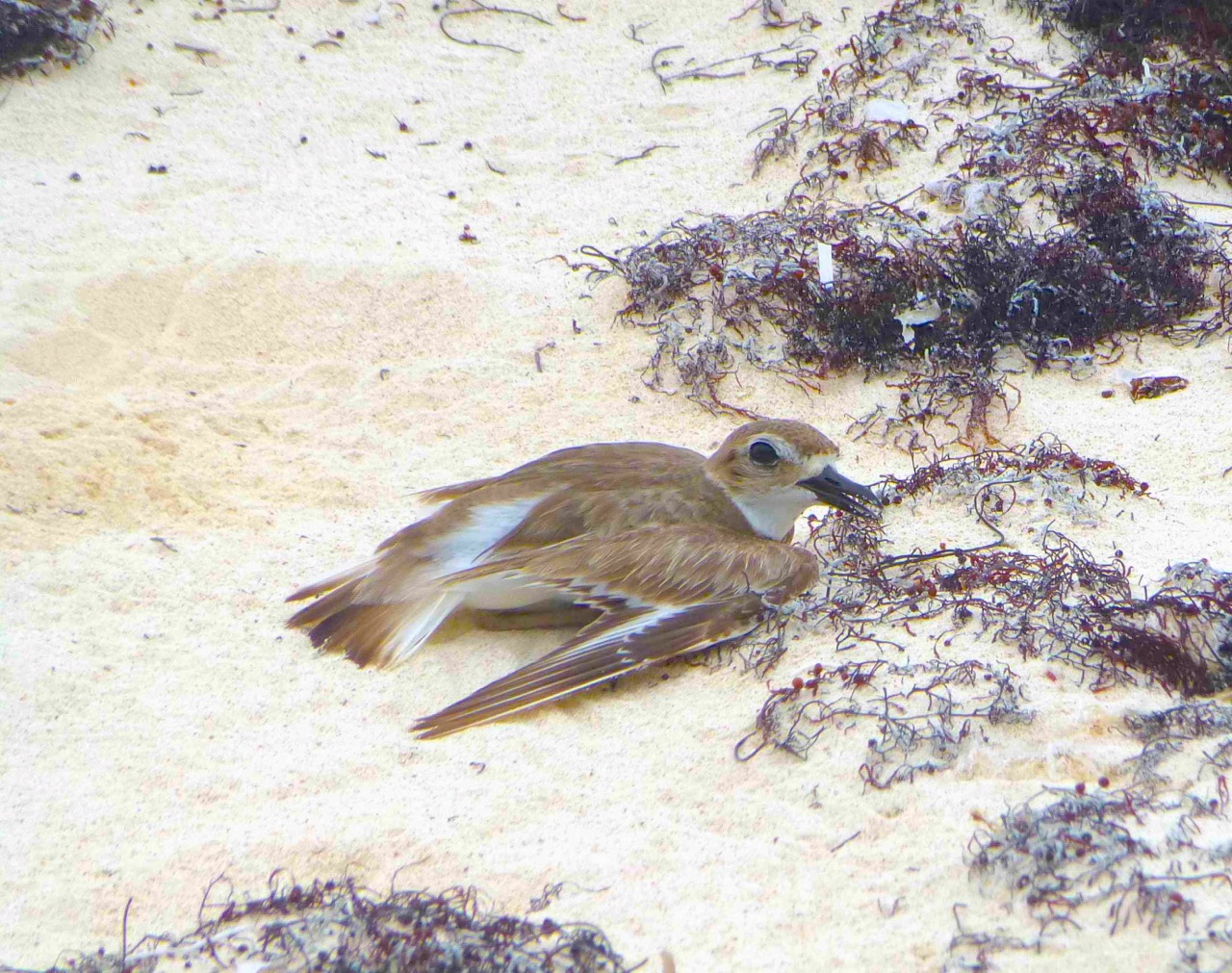
TWO MORE FROM THE DELPHI BEACHWilson's Plover, Abaco 12 Wilson's Plover, Abaco 11

RELATED POSTS

PIPING PLOVERS

WILSON’S PLOVERS (1) ‘Dream Plover’

 WILSON’S PLOVERS (2) Nest Protection

 WILSON’S PLOVERS (3) Scrapes, Chicks & Broken Wings

Photo credits: Sandy Walker, Tom Sheley, Audubon, Tony Hepburn, Bruce Hallett, Tom Reed, Craig Nash, Clare Latimer, RH
Unknown's avatar

WORLD SHOREBIRDS DAY – ABACO’S 33 SHOREBIRD SPECIES (2) – SANDPIPERS


Ruddy Turnstone winter plumage.Abaco Bahamas.2.13.Tom Sheley e

WORLD SHOREBIRDS DAY: ABACO’S 33 SHOREBIRD SPECIES (2)

Yesterday I featured 8 of the larger, longer-billed species among Abaco’s 33 shorebirds. Plus one cute Wilson’s Plover chick as page-bait! A number of those are classified as sandpipers. To see them, click HERE. Today it’s the turn of the smaller sandpiper species, little birds with long beaks for their size that in general help differentiate them from the stubby-beaked plover species. To recap, here is  the main Abaco shorebird checklist of 26 species (birds previously featured in bold):

The codes will tell you, for any particular bird, when you may see it (P = permanent, WR = winter resident, TR = transient, V = vagrant); whether it breeds (B) on Abaco; and your chance of seeing it, graded from easy (1) to vanishingly unlikely (5).

  • Black-necked Stilt                         Himantopus mexicanus              PR B 3
  • American Avocet                           Recurvirostra americana           WR 4
  • American Oystercatcher          Haematopus palliatus                 PR B 2
  • Black-bellied Plover                          Pluvialis squatarola                     WR 1
  • American Golden-Plover                 Pluvialis dominica                        TR 4
  • Wilson’s Plover                                  Ochthodromus wilsonia              PR B 2
  • Semipalmated Plover                        Charadrius semipalmatus         WR 2
  • Piping Plover                                      Charadrius melodus                      WR 3
  • Killdeer                                                 Charadrius vociferus                    WR 2
  • Spotted Sandpiper                              Actitis macularius                         WR 1
  • Solitary Sandpiper                             Tringa solitaria                              WR 2
  • Greater Yellowlegs                       Tringa melanoleuca                     WR 2
  • Willet                                                   Tringa semipalmata                     PR B 2
  • Lesser Yellowlegs                          Tringa flavipes                               WR 3
  • Ruddy Turnstone                                Arenaria interpres                        PR 2
  • Red Knot                                               Calidris canutus                              WR 3
  • Sanderling                                            Calidris alba                                     WR 1
  • Dunlin                                                 Calidris alpina                                 WR 2
  • Least Sandpiper                                  Calidris minutilla                           WR 2
  • White-rumped Sandpiper                 Calidris fuscicollis                          TR 3
  • Semipalmated Sandpiper                  Calidris pusilla                                TR 2
  • Western Sandpiper                             Calidris Mauri                                 TR 2
  • Short-billed Dowitcher               Limnodromus griseus                   WR 1
  • Long-billed Dowitcher                Limnodromus scolopaceus         WR 4
  • Wilson’s Snipe                                 Gallinago delicata                         WR 3
  • Wilson’s Phalarope                            Phalaropus tricolor                        V 4

The other 7 species of shorebird recorded for Abaco – all transients or vagrants – are: Upland Sandpiper TR 4, Whimbrel  TR 4, Hudsonian Godwit V5, Marbled Godwit V5, Buff-breasted Sandpiper V5, Pectoral Sandpiper  TR 3, Stilt Sandpiper TR 3

SANDPIPERS

Of the sandpiper species shown below, 9 of the 10 are ones that, at the right time and in the right place, you may see on Abaco. The tenth, the Wilson’s Phalarope, is the first specimen ever recorded for Abaco and as far as is known this is the only photo of it (props to Woody Bracey for this accomplished ‘get’). Again, some of the birds shown below were photographed on the Delphi Club beach.

SPOTTED SANDPIPER Actitis macularius   WR 1Spotted Sandpiper.Abaco Bahamas - Tom Sheley

SOLITARY SANDPIPER Tringa solitaria  WR 2Solitary Sandpiper, Petrie Island D G E Robertson Wiki

RUDDY TURNSTONE  Arenaria interpres  PR 2Ruddy Turnstone Abaco Bahamas. 2.12.Tom Sheley copy 2

RED KNOT Calidris canutus (non-breeding plumage)  WR 3Red Knot,  Green Turtle Cay, Abaco - Becky Marvil

SANDERLING  Calidris alba  WR 1Sanderling, Abaco -  Craig Nash

LEAST SANDPIPER  Calidris minutilla  WR 2Least Sandpiper, Delphi Club Beach, Abaco - Keith Salvesen

WHITE-RUMPED SANDPIPER  Calidris fuscicollis  TR 3White-rumped Sandpiper, Abaco - Tony Hepburn

SEMIPALMATED SANDPIPER   Calidris pusilla  TR 2Semipalmated Sandpiper, Abaco (juv) Bruce Hallett

WESTERN SANDPIPER  Calidris Mauri  TR 2Western Sandpiper, Abaco (Bruce Hallett)

WILSON’S PHALAROPE Phalaropus tricolor  V 4 Wilson's Phalarope, Abaco - Woody Bracey

RELATED POSTS

RUDDY TURNSTONES

LEAST SANDPIPERS

Photo Credits: Tom Sheley, D Robertson, Becky Marvil, Craig Nash, RH, Tony Hepburn, Bruce Hallett, Woody Bracey

Unknown's avatar

RARE GEMS: PIPING PLOVERS ON ABACO (1)


Piping Plover (non-breeding), Abaco (Bruce Hallett)

Piping-Plover Artmagenta  RARE GEMS: PIPING PLOVERS ON ABACO (1) Piping-Plover Artmagenta

8000 

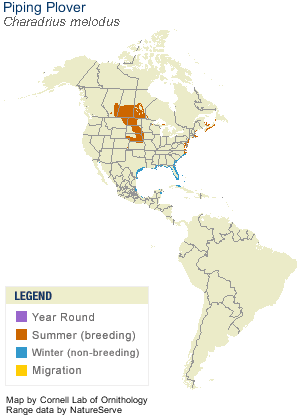
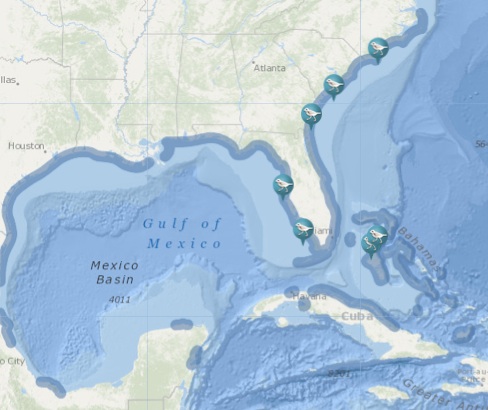
That’s the total number of all the piping plovers (Charadrius melodus) left in the world. Like many other rare and vulnerable species (e.g. the Kirtland’s Warbler), the habitat at both ends of their migration routes is under threat. And, as with the Kirtland’s, vigorous conservation campaigns are underway. Problems such as habitat loss at one end are bad enough – if at both ends, population decline is a certainty and extinction looms. The summer breeding range of PIPLs takes in Canada, central US and the eastern seaboard. In winter they join the mass migration of other birds south to warmer climes. Abaco is lucky enough to receive these little winter visitors; and at Delphi we are fortunate that every year some choose the beach for their winter retreat.

char_melo_AllAm_map

Piping Plover, Abaco (Tony Hepburn)

This is the first of a planned Piping Plover series that I have been working on. The reason for beginning now is because the autumn migrations are starting, and before long a few of this precious species will be on a beach near you on Abaco. Many of them will be ringed as part of the ongoing conservation projects. One of the best ways to monitor success is to follow the migratory lives of these birds; and this can very easily be done by taking photographs of a piping plover that show its rings. The number and colours of the rings on each leg tell the conservationists a great deal about an individual bird. Here is a photo by Don Freiday that shows what to look out for – these 4 items of plover-bling are an integral part of the preservation efforts for this species.

PIPLfledge_banded_Meb_DF

The Audubon Society has produced a wonderful interactive demonstration of the PIPL’s year-round life  that can be found at BEATING THE ODDS. For anyone interested in these fascinating little birds, I highly recommend a click on the link. Some clips are shown below.

A good example of one of the organisations involved in the conservation of PIPLs is CONSERVE WILDLIFE NEW JERSEY, of which Todd Pover and Stephanie Egger are also directly involved on both Abaco and with the CAPE ELEUTHERA INSTITUTE.

With due acknowledgement to Audubon, here are a couple of outstanding photos by Shawn Carey from the site; and below them, details of the range of the Piping Plovers and their 4000-odd mile two-way trip made in the course of each year.

TWO LEGS                                                                SIX LEGS

ShawnCarey[3] ShawnCarey.crop[1}

SUMMER                                                                      FALL

PIPL range Summer jpgPIPL range Fall jpg

WINTER                                                                         SPRING

PIPL range Winter jpgPIPL range Spring jpg

THE PIPING OF THE PLOVER Originator Lang Elliot, as featured by Audubon, eNature, Birdwatchers Digest etc

That’s enough to begin with. I will return to PIPLs soon, with more photos, information and links. Meanwhile, here is a great 4-minute video from Plymouth Beach MA. And if you see a Piping Plover on Abaco this autumn and are not part of the ‘bird count community’, please let me know the location; if you can, describe the rings – how many, which legs, what colour; if possible, photograph the bird (and – a big ask – try to include the legs). Whether ringed or not, all data is invaluable and I’ll pass it on.

 Migration ProductionsMigration Productions

Piping Plover Chick (Beaun -Wiki)

Credits with thanks: Bruce Hallett, Cornell Lab, Tony Hepburn, Don Freiday, Shawn Carey, Audubon, Beaun/wiki, Lang Elliott (audio) Migration Productions (video), Artmagenta (mini drawings)

Piping-Plover Artmagenta          Piping-Plover Artmagenta          Piping-Plover Artmagenta          Piping-Plover Artmagenta          Piping-Plover Artmagenta          Piping-Plover Artmagenta

Unknown's avatar

“FAIR GAME” ON ABACO: THE ATTRACTIVE BUT SADLY DELICIOUS WHITE-CROWNED PIGEON


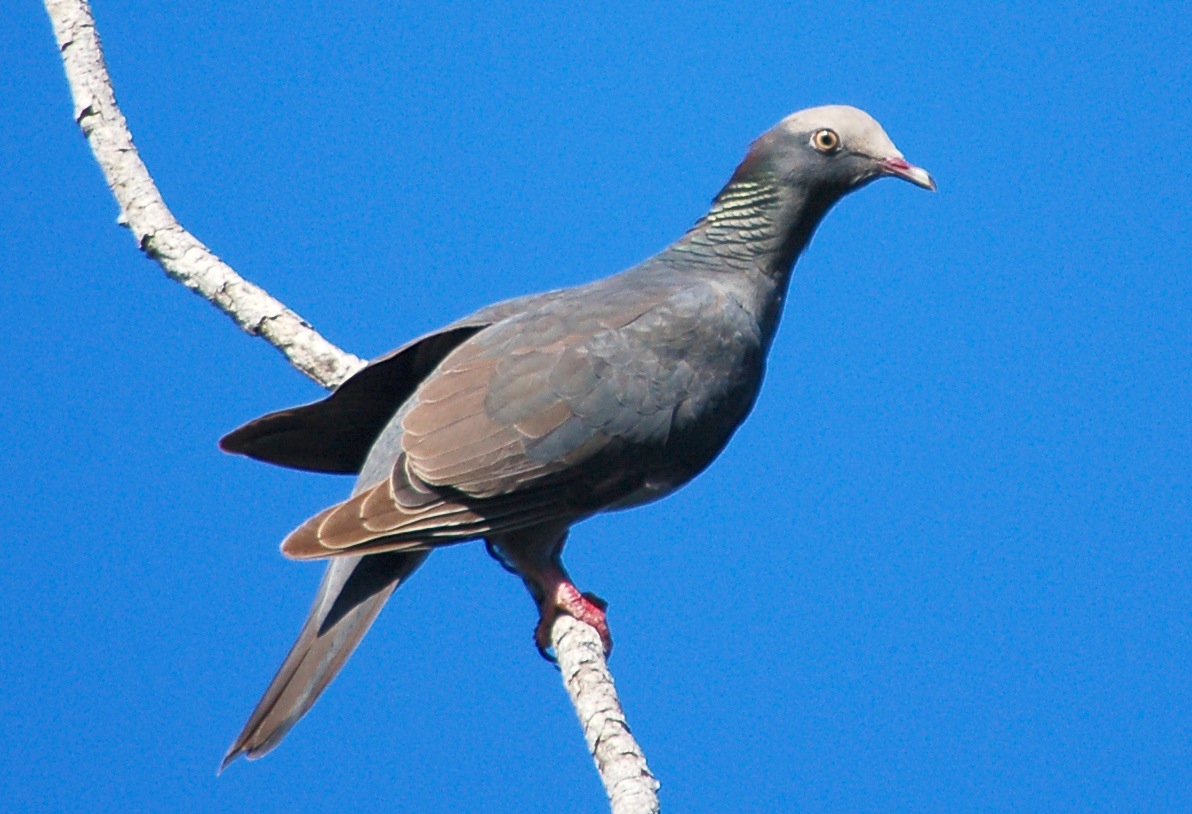
White-crowned Pigeon, Abaco, Bahamas (Tony Hepburn)

 “FAIR GAME” ON ABACO: THE ATTRACTIVE BUT SADLY DELICIOUS WHITE-CROWNED PIGEON

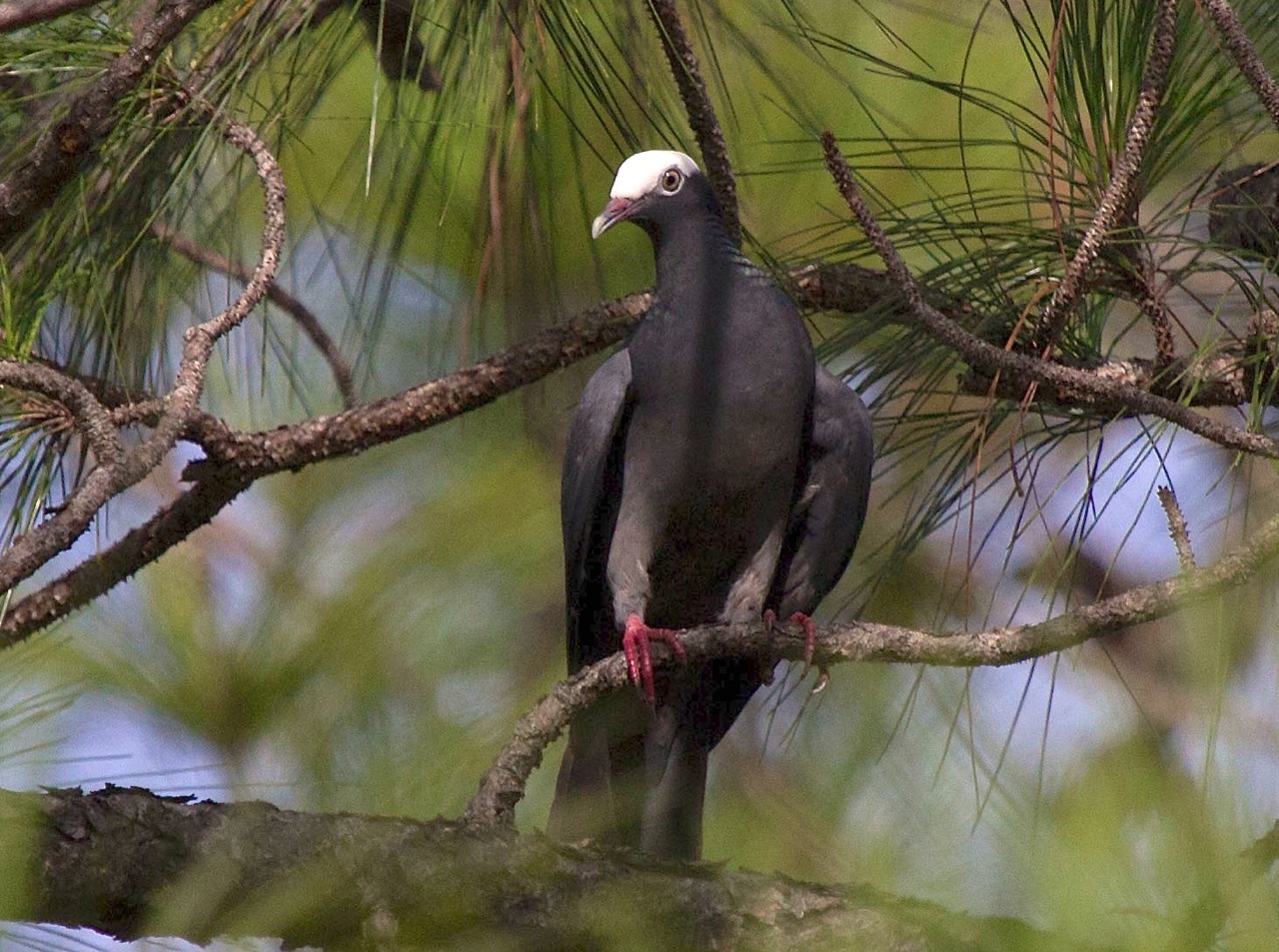
Fishing is the mainstay of Abaco’s sporting life, but hunting runs it a close second. Whether it’s the hog hunters plunging down remote backcountry tracks with their dogs or the shooters plying their trade, there is plenty on the hunter’s menu. The WHITE-CROWNED PIGEON Patagioenas leucocephala is one of the species that’s fair game in season. The bright white of its crown rather gives away its position. A permanent resident on Abaco, this pigeon is quite commonly found.

White-crowned Pigeon, Abaco, Bahamas (Gerlinde Taurer)

The Bahamas hunting season for this species is between the end of September and March. Here is the relevant extract from the excellent BNT HUNTERS GUIDE, a very useful publication packed with information that is well worth a look at. WCP BNT Hunters Guide

220px-Status_iucn3.1_NT.svg

Unfortunately, this pigeon is no longer as prolific as it once was, and is now IUCN-listed ‘near-threatened’. Hunting is one reason. Habitat loss is another. And apparently in Florida (the only US State that has these birds), car-strike is a major cause of population decline (with time, they may learn to fly higher. Unless it’s too late for the species by then…).

White-crowned Pigeon, Abaco (Alex Hughes)

The balance of species preservation and the perceived need of humans to encroach on habitat or their wish to shoot for the pot, is a always a hard one to judge. ‘Near-threatened’ sounds bad, but it’s probably not until the next stage is reached – ‘vulnerable’ or ‘endangered’ – that there is real cause for concern. But as the title says (props to Peter Mantle for this pithy observation, duly incorporated into the WCP entry in THE BIRDS OF ABACO) these inoffensive pigeons are indeed ‘sadly delicious…’

White-crowned Pigeon, Abaco, Bahamas (Gerlinde Taurer)Photo credits: Gerlinde Taurer, Alex Hughes, Tony Hepburn plus BNT for the hunters guide


Unknown's avatar

“SEVEN GOOD TERNS DESERVE AN AUTHOR”: BIRDS OF ABACO


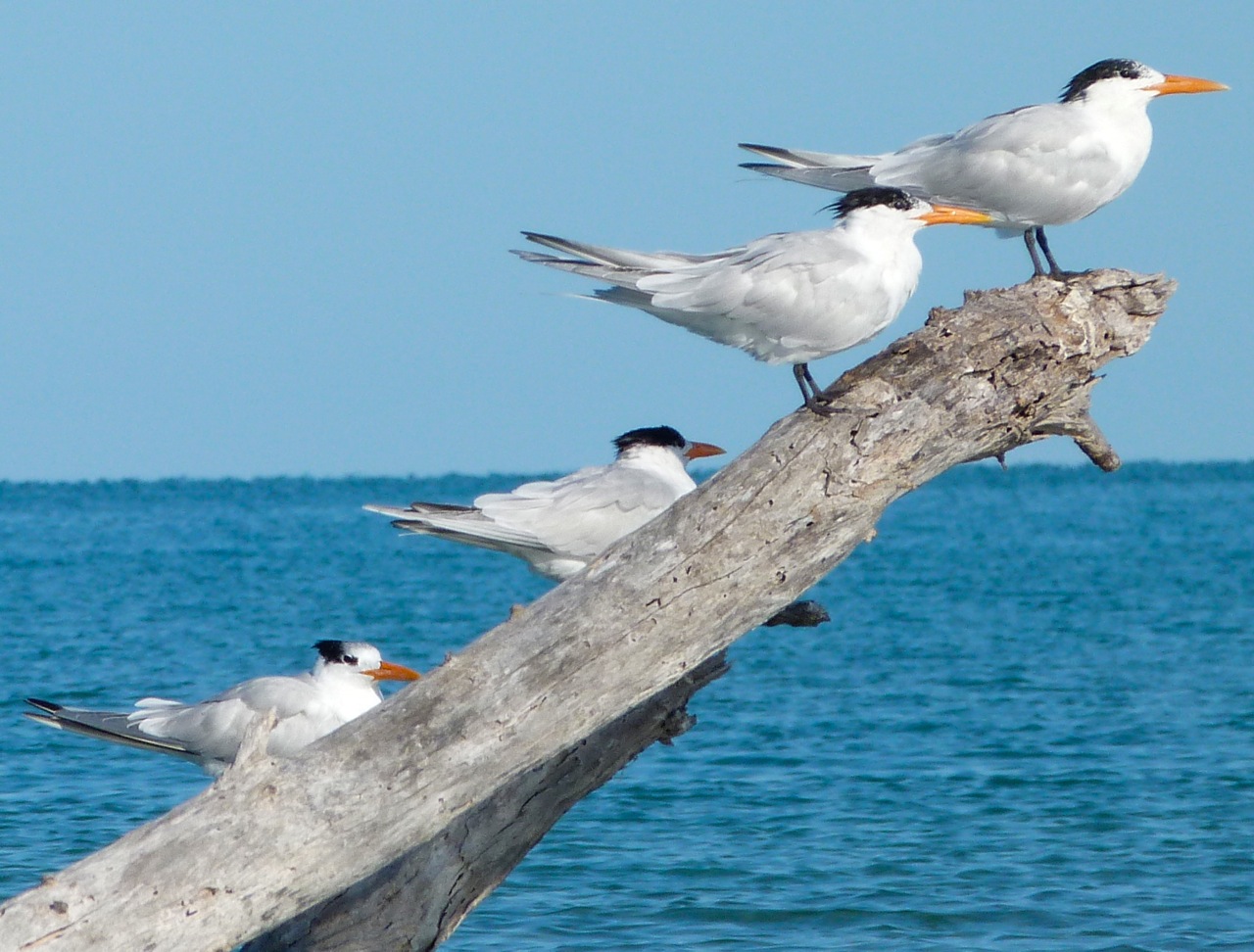
Royal Terns Abaco (2) 4

“SEVEN GOOD TERNS DESERVE AN AUTHOR”: BIRDS OF ABACO

A total of 12 tern species have been recorded on Abaco and in Abaco waters. Ever. Some are permanently resident, some are winter visitors, some arrive for the summer and one or two – for example the Arctic Tern – are one-off or vanishingly rare sightings. A few are commonplace, some you may see if you know where to look or are lucky, some would not be worth making a special trip to Abaco to find…

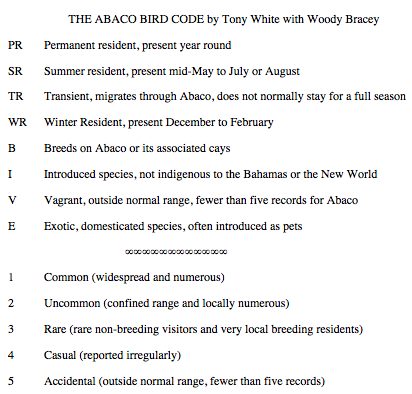
Here are 7 tern species that all feature in the newly published “Delphi Club Guide to the Birds of Abaco”. A cunning code devised by Bahamas ornithologist Tony White tells you when they are around (PR, WR, SR = permanent, winter, summer resident; TR means transient) and the likelihood of seeing one at the appropriate time (1 = very likely to 5 = next to no chance). B means ‘breeds on Abaco’.

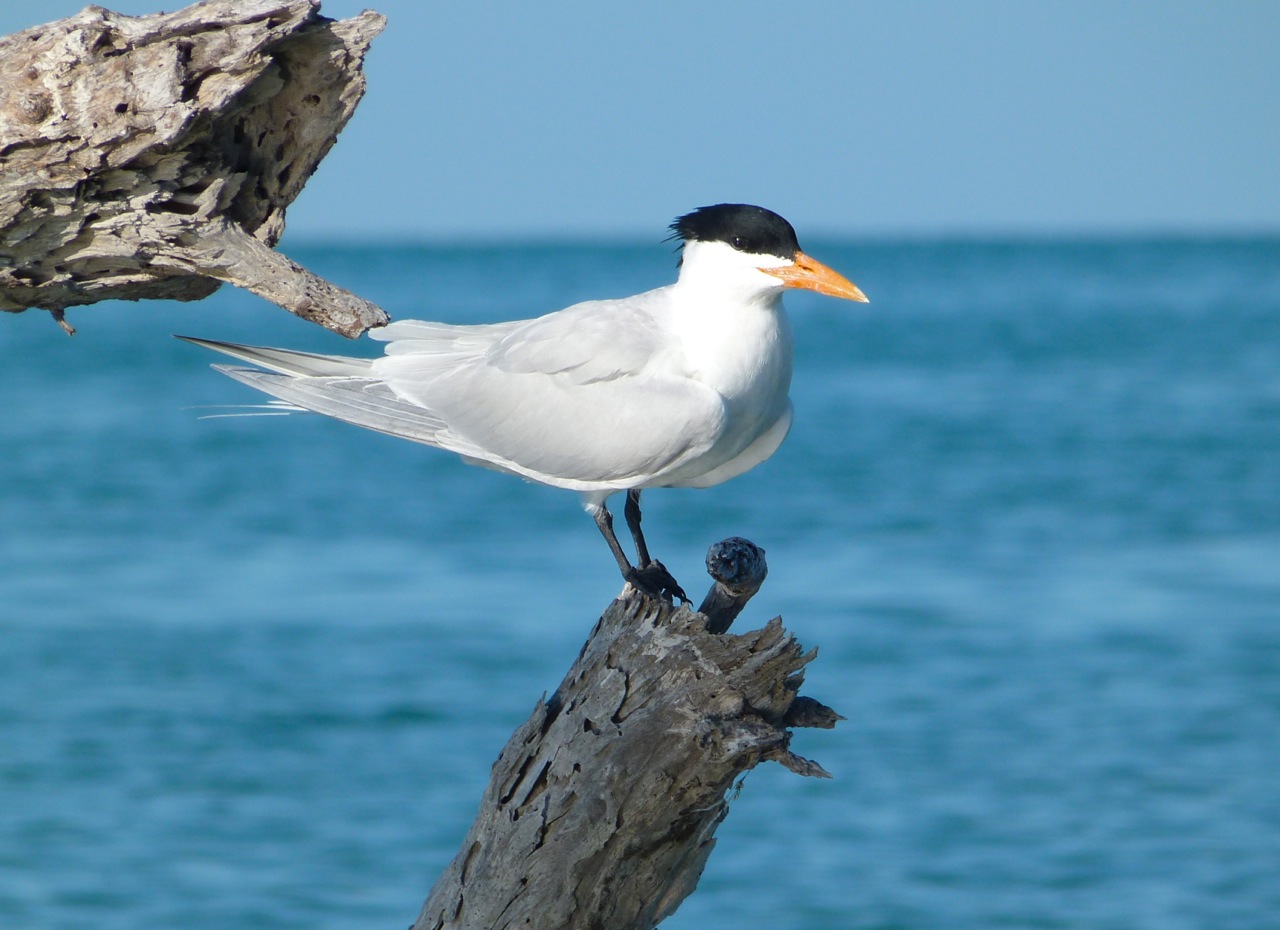
The header picture shows a line up of Royal Terns perched characteristically facing the breeze on a dead tree far out on the Marls. I took it while we were out bonefishing, and our guide Ishi very tolerantly poled nearer to the birds so I could get a better shot at them with the sun behind me. The ones shown are in an intermediate stage between non-breeding plumage and full breeding plumage, when the ‘caps’ are black. One (shown below) had the full black cap.

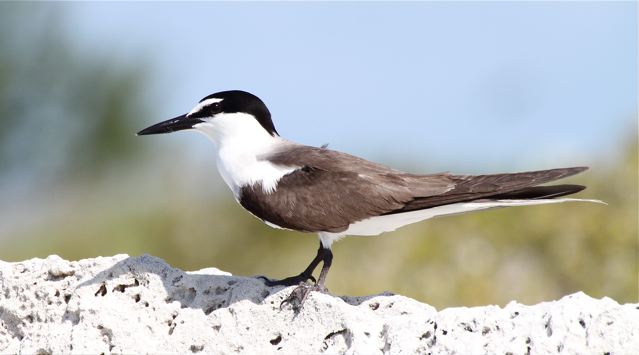
BRIDLED TERN (SR B 2)Bridled Tern, Bruce Hallett

CASPIAN TERN (TR 4)Caspian Tern Woody Bracey

GULL-BILLED TERN (SR 3)Gull-billed Tern Alex Hughes

ROSEATE TERN (SR B 2)Roseate Tern Woody Bracey

ROYAL TERN (PR 1)Royal Terns RH / KS

SANDWICH TERN (SR 4)Sandwich Tern Woody Bracey

LEAST TERN (SR B 1)Least Tern Tony Hepburn

The other 5 species recorded are: Sooty Tern, Black tern, Common Tern, Arctic Tern and Forster’s Tern

Photo Credits: Bruce Hallett, Woody Bracey, Alex Hughes, RH

Abaco Bird Code jpg

Unknown's avatar

‘OUTSTANDING BILLS’: THE WHITE IBIS ON ABACO AND BEYOND


White Ibis Eudocimus albus (Bill Majoros WMC)

‘OUTSTANDING BILLS’: THE WHITE IBIS ON ABACO AND BEYOND

The AMERICAN WHITE IBIS (Eudocimus albus) has a wide range in the Americas and is a familiar species  in the southern United States, especially Florida. It is also found in the Caribbean.  On Abaco they are quite rare, appearing sporadically as winter residents. Encountering one is definitely a ‘find’. I know of only one recent sighting when an ibis decided to spend some time on the lake at Treasure Cay Golf Course. Luckily Kasia was not concentrating too hard on her round of golf to the exclusion of all else – and had a camera with her. 

The white ibis is more common on other Bahamas islands, for example New Providence (Nassau). Here are some photos taken there by Tony Hepburn and Woody Bracey. Others were taken in Florida.

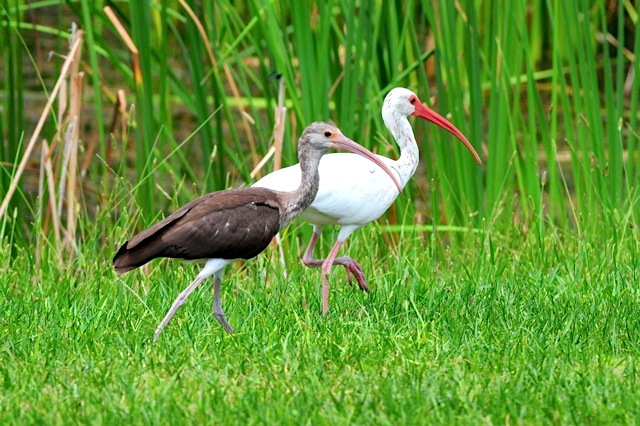
WIBACH_3748 copy 2White Ibises WB DSC_8628 copy 2WIB ACH_4239 copy 2

This is the call of an Ibis in the Florida Wetlands (credit Xeno-Canto / Paul Marvin) 

Juveniles have dark plumage that gradually grows out as they age and is replaced by white plumage WIB2 ACH_5964 copy 2White Ibis (juv) WB DSC_0529 copy 2

The ibis forages mainly by feel rather than sight, using the long curved beak to probe the bottom of shallow water for aquatic  prey. American_White_Ibis (Terry Foote WMC)

The white ibis is said to be a symbol for courage and optimism because they are supposedly the last birds to shelter from the onset of a hurricane, and the first to venture out as the storm passes. This is of course equally consistent with symbolising extreme foolhardiness… but let it pass.

White Ibis (Hans Stieglitz WMC)

FASCINATING FACTOIDS The white ibis / hurricane connection is nurtured by the University of Miami, of which the bird is the mascot. The sports teams are called the Hurricanes (or the ‘Canes for cheering purposes). Their endeavours are supported enthusiastically by none other than Sebastian the Ibis. “What does he look like?”, I hear you cry. This:

Sebastian makes a ‘U for University’ with his.. er… wingtips. He sports a natty Hurricanes hat and might easily be confused with Donald Duck’s less amiable-looking and more aggressive cousin220px-Sebastian_the_Ibis

I had intended to digress further into the mysteries of the Sacred Ibis, symbol of the Ancient Egyptian God Thoth, the God of Learning and Wisdom who ranked with Isis and Osiris as A Top God. But in fact it’s quite a dull area, and 3 pictures and a nice bronze sculpture will give you the general idea.

Thoth.svg    

The Sacred Ibis of Thoth, Met. Museum NYCIbis Met Museum 2

Credits: Kasia Reid, Woody Bracey, Tony Hepburn, Met, Wiki

Unknown's avatar

REMARKABLE FEET: SNOWY EGRETS ON ABACO


Snow Egret in Flight (Wiki)

REMARKABLE FEET: SNOWY EGRETS ON ABACO

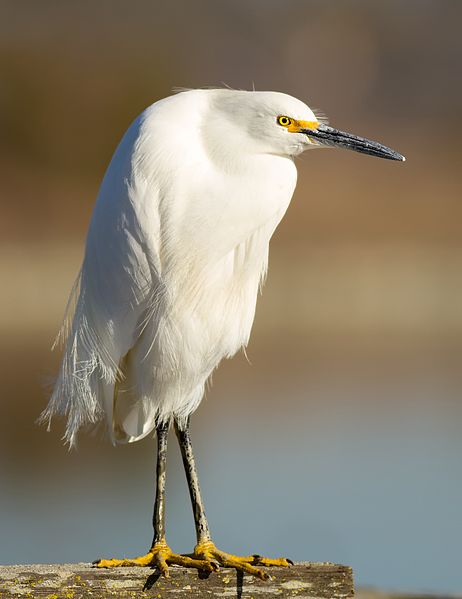
SNOWY EGRETS (Egretta thula) are small white herons of the Americas, similar to the European Little Egret. The first thing you may notice about them is that they have remarkable bright yellow feet. This distinguishes these birds from all other egret and heron species.Snowy Egret ACH1409

Young Snowy Egrets often have yellow markings higher up on their legs.Snowy 24 a - Version 2

The feet are so bright that they are often visible underwater.Snowy Egret WB P1001206 copy 2

Snowy Egrets eat fish, crustaceans, insects and small reptiles. They have 3 main foraging tactics: (1) Standing still in or on the edge of water to ambush prey (2) Stalking prey in shallow water, often running or shuffling their feet to flush out prey  (3) “Dip-fishing” by flying low over water.

Snowy Egret (Wiki)

In breeding season, Snowy Egrets grow beautiful plumes – “bridal plumage”. At one time these were in great demand as adornments for women’s hats (as with flamingos, parrots and many other decorative species). This reduced the population of the birds to dangerously low levels, from which they have now recovered. Their IUCN rating is now ‘Least Concern’.

Snowy_Egret_-_full_breeding_plumage-1

Contemplating the next meal… one of Sandy Walker’s excellent Abaco photos taken this winterSnowy Egret 1a copyPhoto Credits: Sandy Walker, Woody Bracey, Tony Hepburn, Wiki