Unknown's avatar

MARINE POSTER COMPETITION FOR ABACO KIDS


BMMRO children's poster competition winners

MARINE POSTER COMPETITION FOR ABACO KIDS

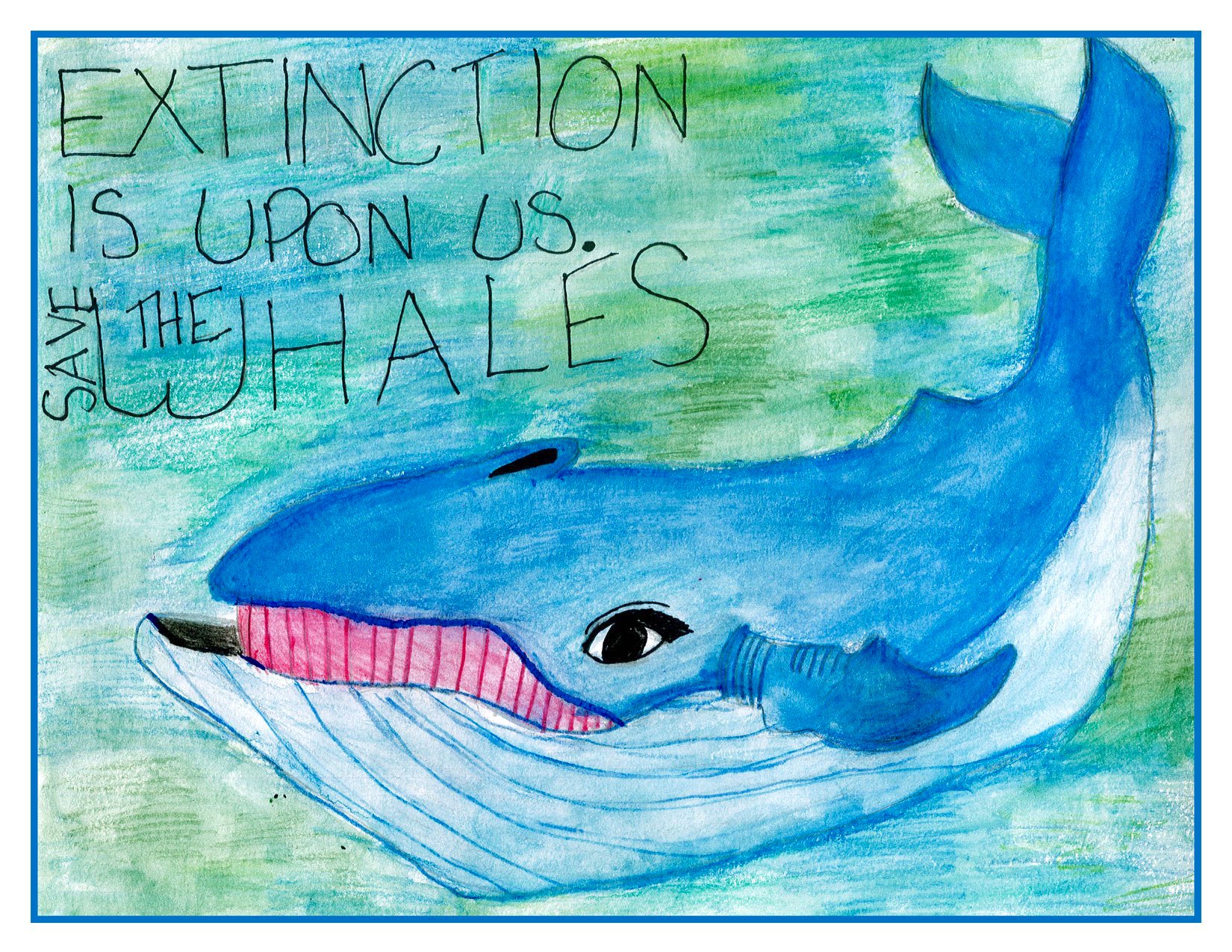
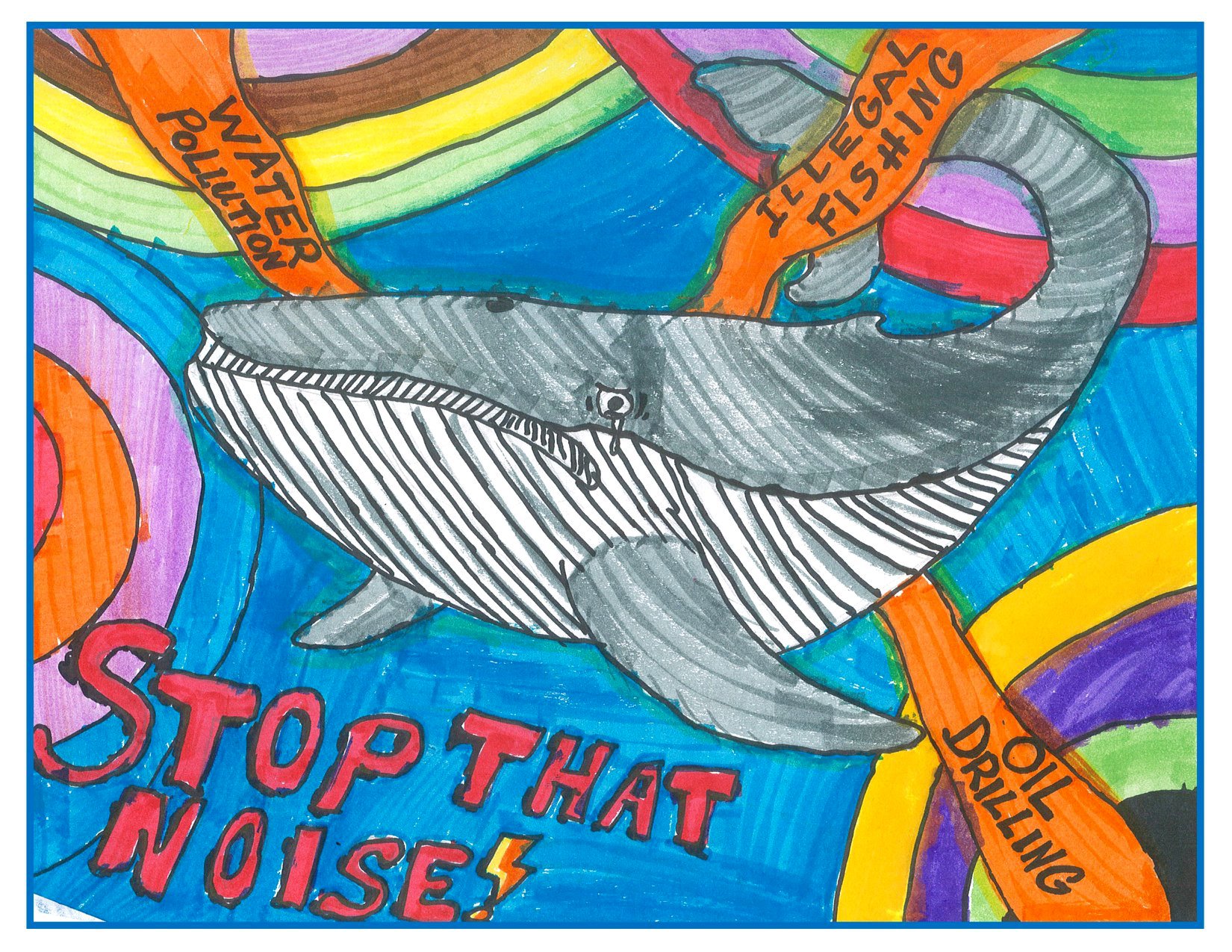
BMMRO recently collaborated with Dolphin Encounters Marine Education Poster Contest in a competition for schoolchildren on Abaco. There were 3 age groups, 3 -5, 6 – 8, and 9 – 12. The young participants received the excellent BMMRO marine educational poster as a prize, though I suspect they were motivated not so much by a prize but by the fun possibilities of the challenges set for them. 

BMMRO children's poster competition winners

And how well they met them. I am featuring a selection of the prizewinners as posted by BMMRO on FB and Insta. Bearing in mind the ages of the artists, the results are astounding. As someone for whom the task of drawing a stickman presents insurmountable difficulties of perspective, proportion, form and accuracy, I am in awe of the inventiveness of these young minds and their artistic skills. They’ve done a fantastic job in highlighting the critical conservation issues facing all marine creatures large and small, with an awareness that I hope will help stay with them into adulthood.

BMMRO children's poster competition winnersBMMRO children's poster competition winnersBMMRO children's poster competition winnersBMMRO children's poster competition winnersBMMRO children's poster competition winnersBMMRO children's poster competition winnersBMMRO children's poster competition winnersBMMRO children's poster competition winnersBMMRO children's poster competition winnersBMMRO children's poster competition winners

Do I have a favourite, I asked myself. Actually, no – I’d just be proud to have any of these on my wall. And I bet the teachers and the families involved all feel the same.

HUGE CONGRATULATIONS TO ALL THE WORTHY WINNERS

BMMRO children's poster competition winnersBMMRO children's poster competition winners


Unknown's avatar

“GIFTS FROM THE SEA”: THE CHEROKEE SHELL MUSEUM


Cherokee Shell Museum, Abaco Bahamas (Keith Salvesen)

“GIFTS FROM THE SEA”: THE CHEROKEE SHELL MUSEUM

In the shadow of a tall pylon in the secluded settlement of Cherokee stands Abaco’s smallest museum. Make that one of the world’s smallest museums. As I mentioned after it opened last year, other contenders for the title include the MmuseumM in New York, housed in an elevator shaft (look through glass window + audio guide); a converted red telephone kiosk in Warley, Yorkshire UK dedicated to local history (one visitor at a time); and a tiny shed of 134 sq ft in Arizona featuring what might broadly be called ‘ephemera’, including a Beatles poster…

Cherokee Shell Museum, Abaco Bahamas (Keith Salvesen)

This tiny museum is dedicated to the shells of Abaco. It is almost certainly the smallest shell museum anywhere in the world (except maybe the one you kept in a small box under your bed when you were 10). 

Cherokee Shell Museum, Abaco Bahamas / Gifts from the Sea / Cinder Pinder

“Gifts from the Sea” is housed in the former 1950s telegraph office that ceased to operate in 1987 and had fallen into disrepair. Leased from BTC for a nominal rent, the little building was restored, and given a smart new roof and a complete makeover. It’s the perfect space for displaying a selection of the wonderful shells and corals to be found in Abaco waters.

Cherokee Shell Museum, Abaco Bahamas / Gifts from the Sea / Cinder Pinder

This community project is the vision and creation of Curator Lee Pinder. Derek Weatherford fitted cabinets for the exhibits, and artist Jo-Ann Bradley painted a interior Cherokee-themed mural as a fitting backdrop to the displays.

Cherokee Shell Museum, Abaco Bahamas / Gifts from the Sea / Cinder Pinder

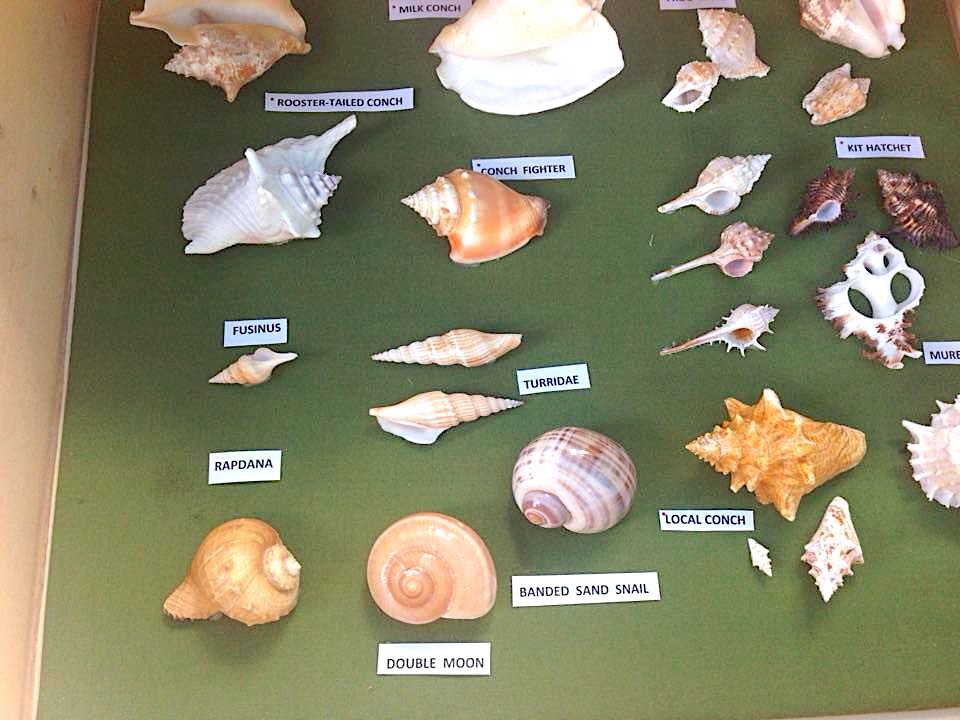
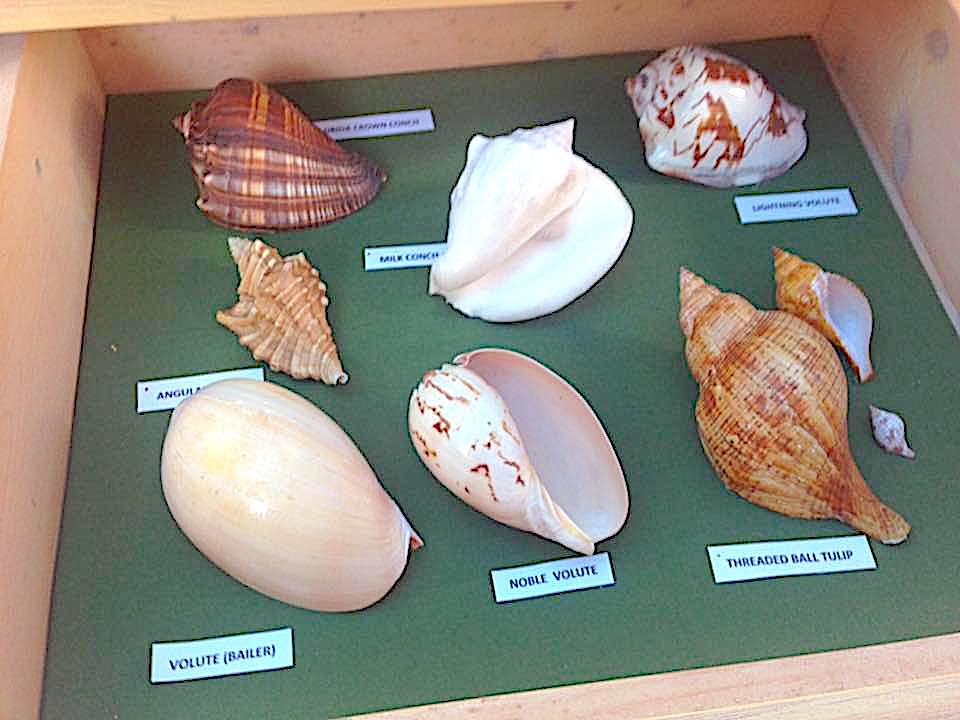
The exhibition shows more than 200 shells, each catalogued with its Latin and common name, and clearly labelled in the display. Most were found locally; a few are from further afield. Some specimens are very rare. The collection will expand as people make shell donations to the museum. 

Cherokee Shell Museum, Abaco Bahamas / Gifts from the Sea / Abaconian

The building has a door at each end to give natural light and provide a ‘walk-through’ arrangement, which makes viewing in the confined space easier. Entry is free but there’s a glass jar for donations towards the upkeep of the museum. I’m guessing here, but I reckon donations made ‘outside the jar’ (so to speak) are very welcome too…

Museum Curator Lee PinderCherokee Shell Museum, Abaco Bahamas / Gifts from the Sea / Cinder Pinder

The opening ceremony took place on Easter Saturday 2017, when Cherokee resident Rev. Bateman Sands performed the official ribbon cutting ceremony preceded by a prayer at precisely 12 noon. As Jennifer Hudson in an Abaconian article pointed out, he was the ideal person for the task, having been “the first telegraph operator in Cherokee Sound, working in the little building using Morse code and in charge of the one and only telephone in the settlement until 1987 when the new BTC building was opened”.

Cherokee Shell Museum, Abaco Bahamas / Gifts from the Sea / Cinder Pinder

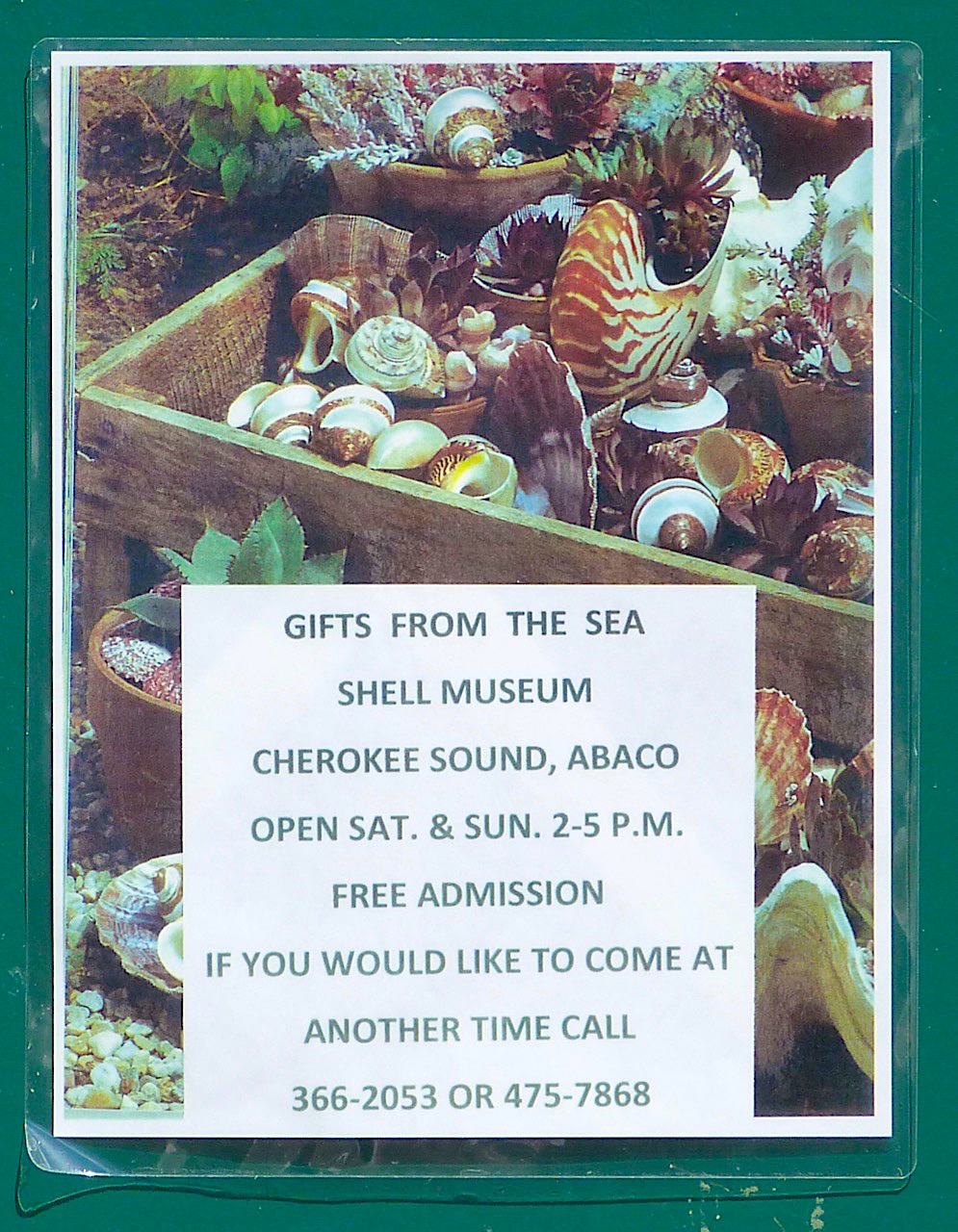
The shell museum is not left open all the time, but visitors are welcomed on weekend afternoons, and private tours can be arranged by calling either number shown below on the notice attached to the door.

Cherokee Shell Museum, Abaco Bahamas (Keith Salvesen)

To see a selection of the many types of Abaco shells, check out my shell page HERE

Sources and Photo Credits: Bradley Albury / Jennifer Hudson / Abaconian; Cindy James Pinder (shells, interior 2017); Keith Salvesen (exterior, 2018)

Cherokee Shell Museum, Abaco Bahamas (Keith Salvesen)

Unknown's avatar

SPERM WHALES GATHERING IN ABACO WATERS


Sperm Whales, Abaco Bahamas (BMMRO / Keith Salvesen)

SPERM WHALES GATHERING IN ABACO WATERS

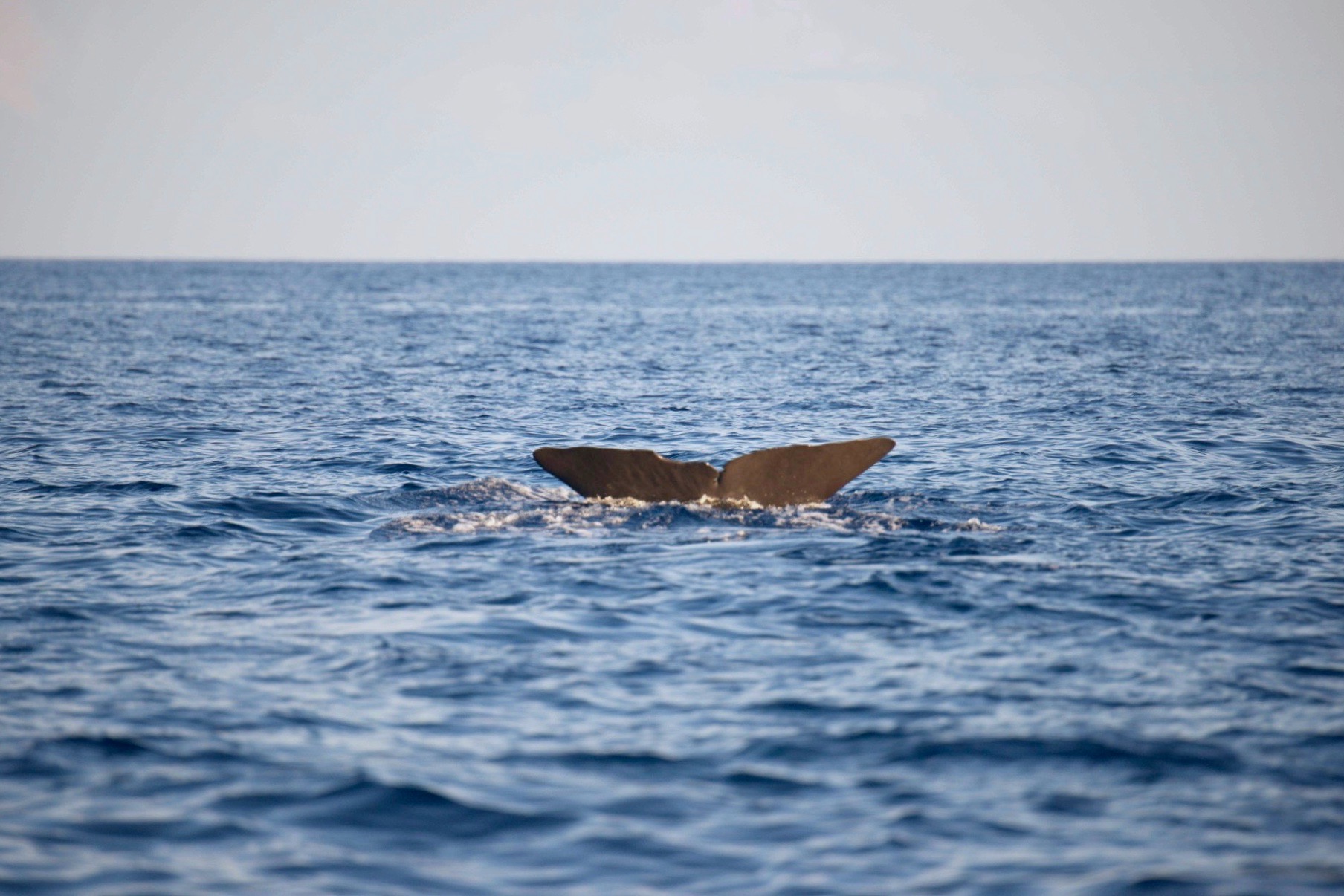
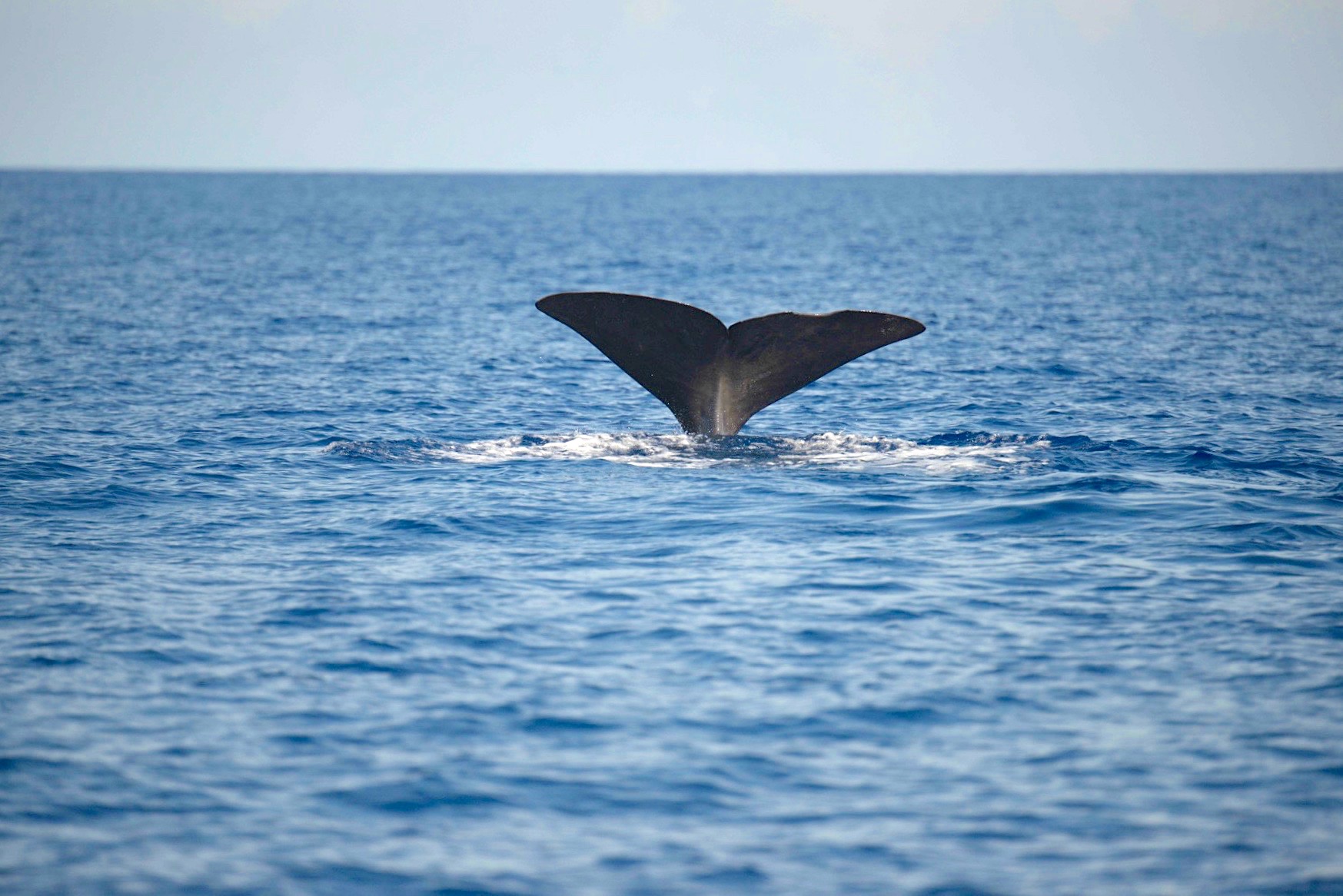
During the past week, the BMMRO research boat has been tracking sperm whales off the south coast of Abaco. These huge creatures are the largest marine mammals found in Bahamian waters, and the area between Rocky Point around the south coast to Hole-in-the Wall is a great place to find them. 

Sperm Whales, Abaco Bahamas (BMMRO / Keith Salvesen)Sperm Whales, Abaco Bahamas (BMMRO / Keith Salvesen)

One reason they are found in this particular area is the existence of the Great Bahama Canyon, one of the deepest submarine canyons in the world. The depth of the canyon ensures that the waters are nutrient-rich, with food being drawn up from the depths towards the surface. In season it’s the perfect place for female sperm whales and their calves.

Sperm Whales, Abaco Bahamas (BMMRO / Keith Salvesen)Sperm Whales, Abaco Bahamas (BMMRO / Keith Salvesen)

The BMMRO research trip encountered more than a dozen sperm whales, mostly females with their calves. And the amazing thing is that the sightings are often made within sight of land. In these photos, the are two landmarks visible. One is the huge Disney vessel parked at Gorda Cay aka Castaway Cay (header image); the other is HOLE-IN-THE-WALL LIGHTHOUSE (above)

Sperm Whales, Abaco Bahamas (BMMRO / Keith Salvesen) Sperm Whales, Abaco Bahamas (BMMRO / Keith Salvesen)

Credits: All photos BMMRO 2018, with thanks to Diane & Charlotte as ever

Sperm Whales, Abaco Bahamas (BMMRO / Keith Salvesen)

Unknown's avatar

BAHAMA MAMA: BIG NEWS ABOUT A TINY BIRD


Piping Plover Bahama Mama, Michigan / Abaco (Carol Cooper)

BAHAMA MAMA: BIG NEWS ABOUT A TINY BIRD

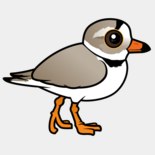
The bird in the header image is the presciently named Bahama Mama in Muskegon State Park, Michigan – so, one of the rare Great lakes piping plovers. She originally hatched and was banded as a chick in 2014 at Tawas MI, some distance away from Muskegon. When later named in 2015 by Muskegon monitor Carol Cooper, no one could possibly have known then where she would chose to overwinter. The Bahamas, as it turned out – the avian equivalent of nominative determinism.

Piping Plover Chick (MDF / Wiki)

This little bird is the perfect example to demonstrate the success of (a) an organised monitoring and recording system in the breeding grounds of these rare birds; (b) the use of easily identified coded banding and (c) the deployment of ‘citizen scientists’ to back up the professionals in the overwintering grounds such a Abaco.

A combination of the three factors leads over time to the compilation of a life story. Invariably there will be gaps, but let’s take a look at what we know about Bahama Mama, in her own dedicated timeline. Note two things: her beach fidelity; and the evidence of mate infidelity…

  • 2014 Born Muskegon State Park, MI
  • 2015 Nested with Little Guy and raised chicks. Winter location unknown
  • 2016 Returned to Muskegon and again successfully nested with a new male, Bear, from Sleeping Bear Dunes Park MI. (Little Guy went off with another female on the same beach…)
  • 2016 Resighted in October on Long Beach Abaco and stayed for several months
  • 2017 Back at Muskegon and raised chicks again with Little Guy
  • 2017 Again resighted  in October on Long Beach Abaco and overwintered
  • 2018 Back at Muskegon, initially back with Little Guy, eventually nested with Enforcer

The official record of the latest union – evidence of fickleness

This summer 4 chicks  were hatched. Sadly, one of them (Ringo, 2 pics below) was lost, presumed predated, leaving 3 to fledge.

Bahama Mama with one of her chicksBahama Mama & Chick, Muskegon MI (Carol Cooper)

Little Ringo RIPRingo Piping Plover, Muskegon MI (Carol Cooper)

Another of the chicks

These are rare and threatened birds, vulnerable at both ends of their migration for all the usual reasons. The studies undertaken at both ends of the migration have revealed astonishing beach loyalty in these little birds that travel up to 1500 miles (sometimes more) every Spring and every Fall to be somewhere safe to nest and breed; and then to overwinter. In Michigan, Carol Cooper is Bahama Mama’s mama, watching over her, recording the details, checking when she has left the beach, and anxiously watching each Spring for her arrival home.

On Abaco, these duties – pleasures, even – are undertaken by ABACO PIPING PLOVER WATCH and the team of citizen scientists who keep an eye on the beaches, count the birds, note the banded birds and photograph them for ID, and pass the info on to HQ (which happens to be me). The data from all sightings is collated and then the season’s stats are compiled and provided to the scientists involved. Here’s a summary of stats for last season: 

Abaco Piping Plover Watch Stats 2017-18 (Keith Salvesen)

Bahama Mama, first sighting on Long Beach Abaco Oct 2017Bahama Mama Piping Plover, Long Beach Abaco (Keith Kemp)

Photo Credits: Carol Cooper (1, 3, 4, 5, 6); MDF (2); Keith Kemp (7). Special thanks to Carol Cooper, monitor in Michigan; and to Keith Kemp, primary monitor on Abaco. Also to Todd Pover CWFNJ and all the other real scientists involved for the last 3 years

POLITE REQUEST

If you live on Abaco or its cays anytime between August and March and might be interested in helping with piping plover research by becoming a monitor, please get in touch with me. It’s very simple and undemanding. A beach stroll from time to time – even as little as once a month – with a notebook, pencil, binoculars, a chocolate bar and (preferably for accurate ID of banded birds) a camera. Not a dog, though. Not on this walk anyway! Every report, even of a single bird, adds to the picture. Last season there was more than one ‘citizen scientist’ sighting of a plover where none had been seen before. 

Unknown's avatar

CARIBBEAN REEF SQUID REVISITED: SUPERPOWERS & SQUID SEX


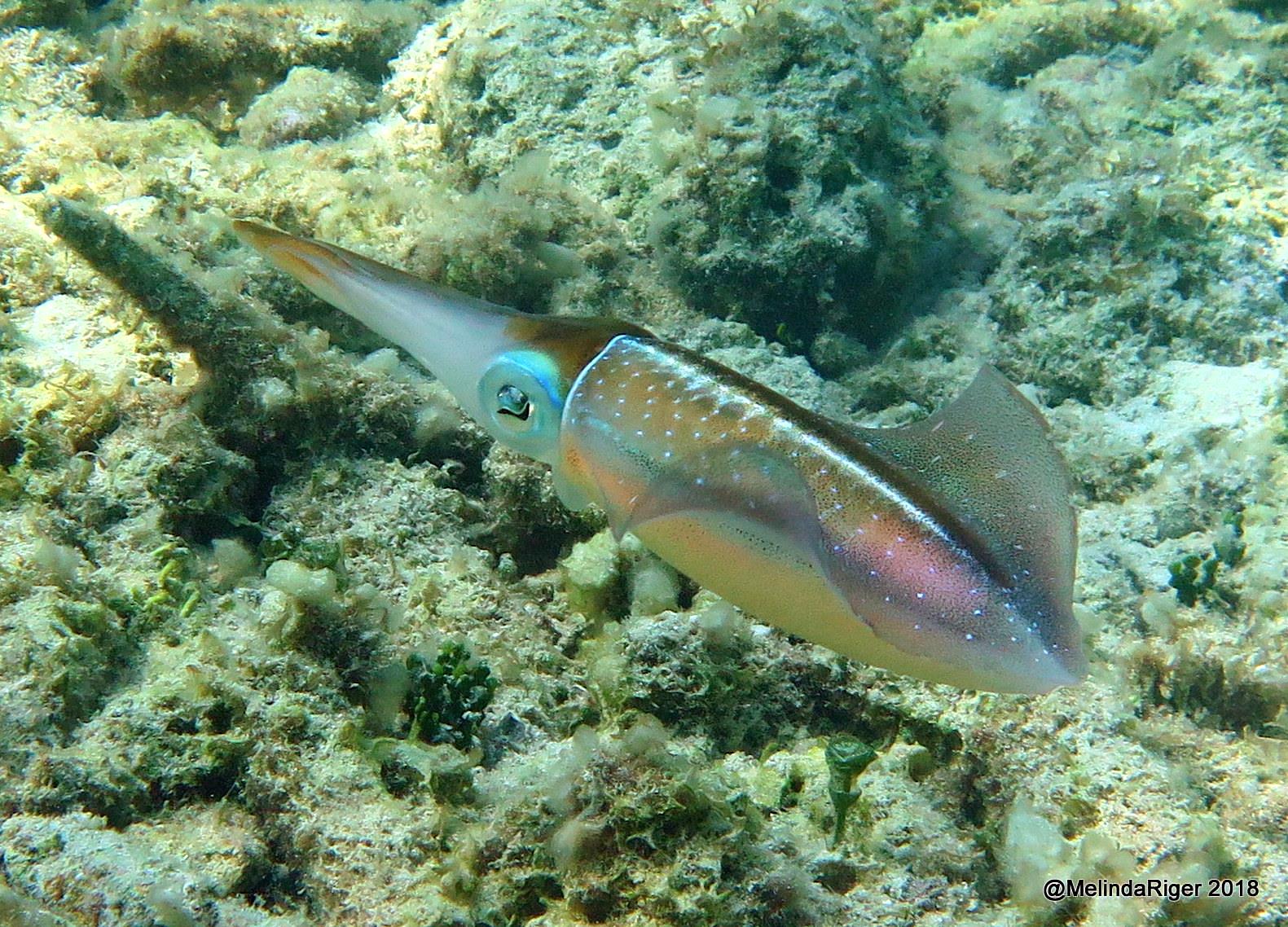
Caribbean Reef Squid, Bahamas (Melinda Riger / G B Scuba)

CARIBBEAN REEF SQUID REVISITED: SUPERPOWERS & SQUID SEX  

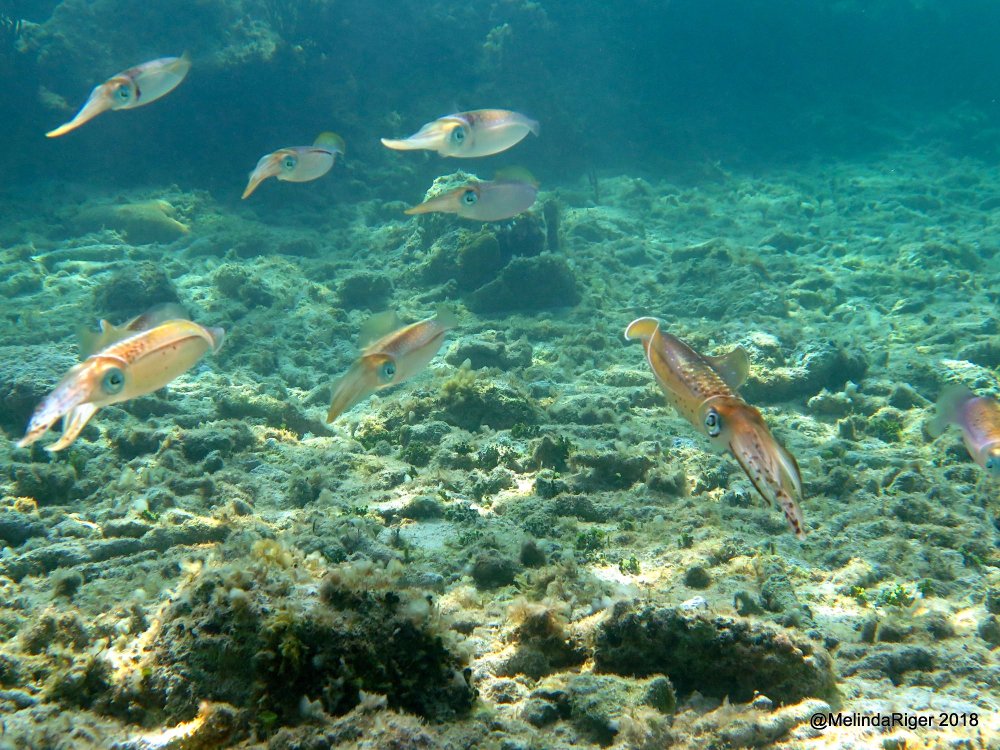
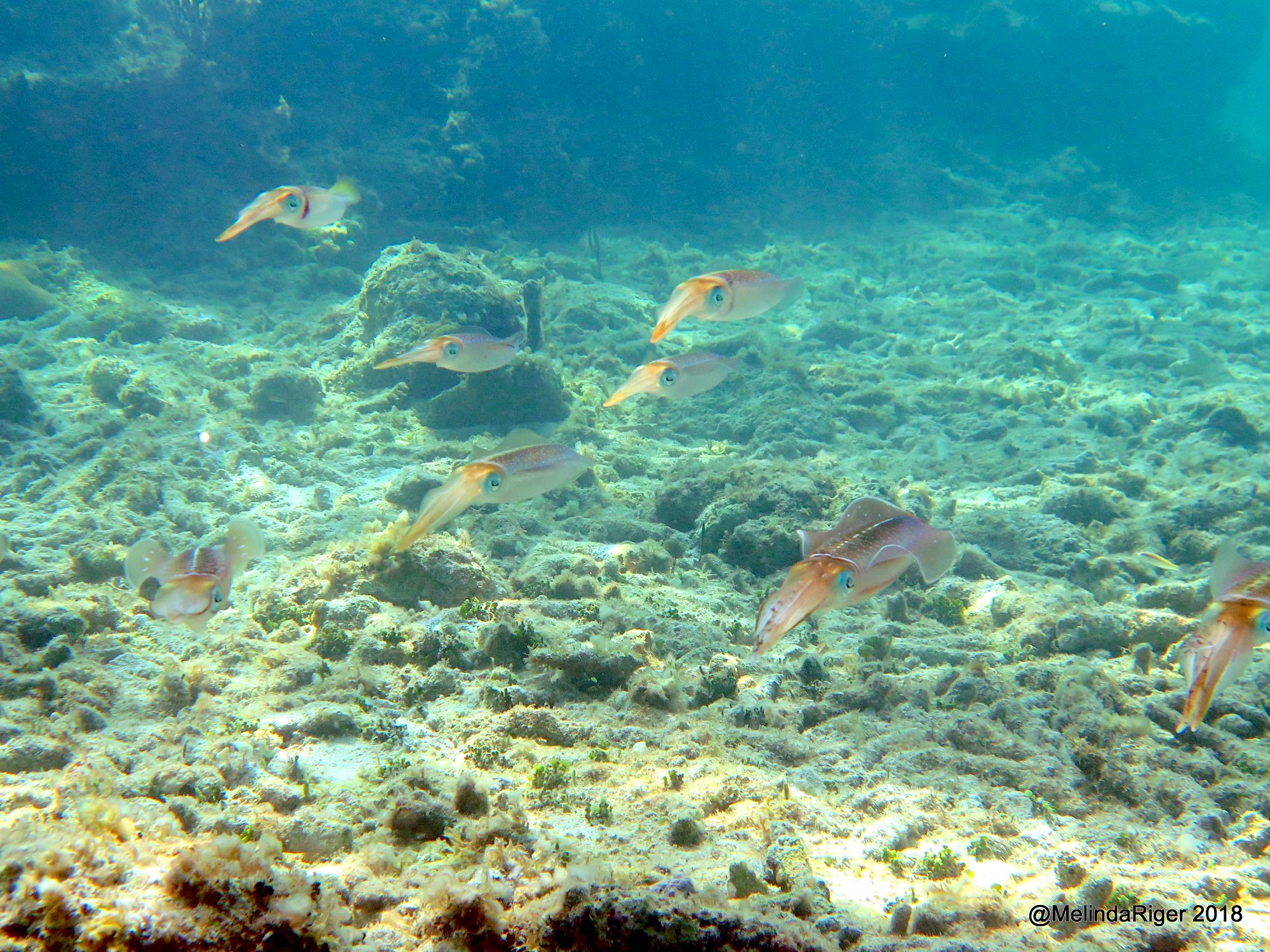
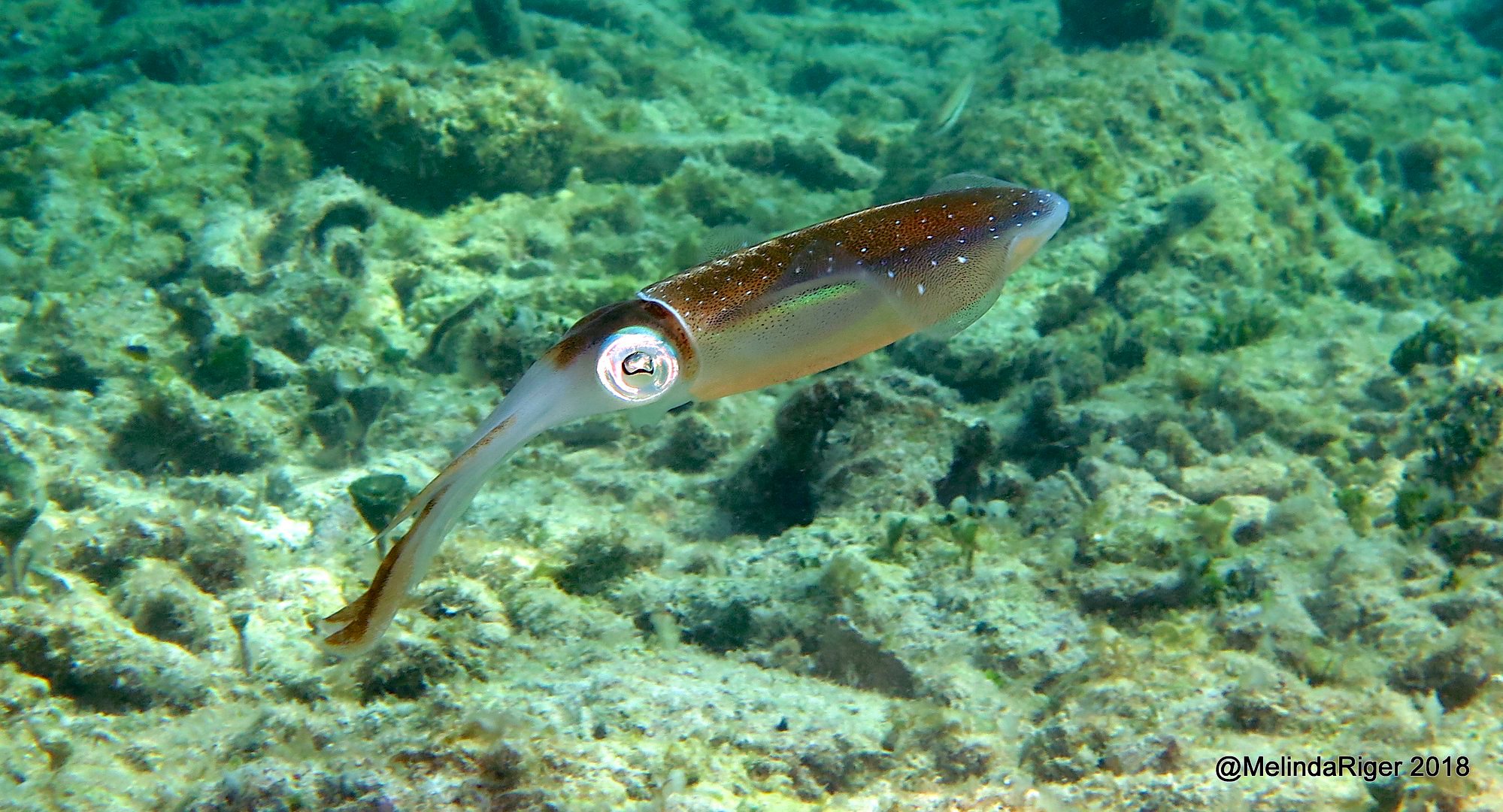
The Caribbean reef squid Sepioteuthis sepioidea is a small squid species of (mainly) the Caribbean Sea and the Floridian coast, and the most common in its range. These squid tend to form small shoals in and around reefs. Right now, in June, is a good time to find these creatures swimming in groups – all these photos were taken during the last fortnight. I wrote about squid a while back (3 years, maybe)? This post includes some parts of the earlier one, with all-new images. Squidmages, even.

Caribbean Reef Squid, Bahamas (Melinda Riger / G B Scuba)

Squid are voracious eaters, dragging their prey to their mouths with some or all of their 10 limbs and using their beak to cut it up. The target species are small fish, molluscs and crustaceans. The squid have a ‘raspy tongue’ known as a radula which further breaks up the food for easy consumption.

Caribbean Reef Squid, Bahamas (Melinda Riger / G B Scuba)

REEF SQUID SUPERPOWERS (SUPERCOOL)

  • Squid are capable of brief flight out of the water (a fairly recent discovery)
  • They can also hide from / confuse predators by ejecting a cloud of black ink
  • Squid can change colour, texture and shape, and can even match their surroundings
  • This enviable power is used defensively as camouflage or to appear larger if threatened
  • It is also used in courtship rituals (something that humans might find most disconcerting)
  • Colour patterns are also used for routine squid-to-squid communication AND GET THIS:
  • A squid can send a message to another on one side, and a different one to a squid on the other side

Caribbean Reef Squid, Bahamas (Melinda Riger / G B Scuba)

SQUID SEX (1) “ROMANCING THE SQUID”

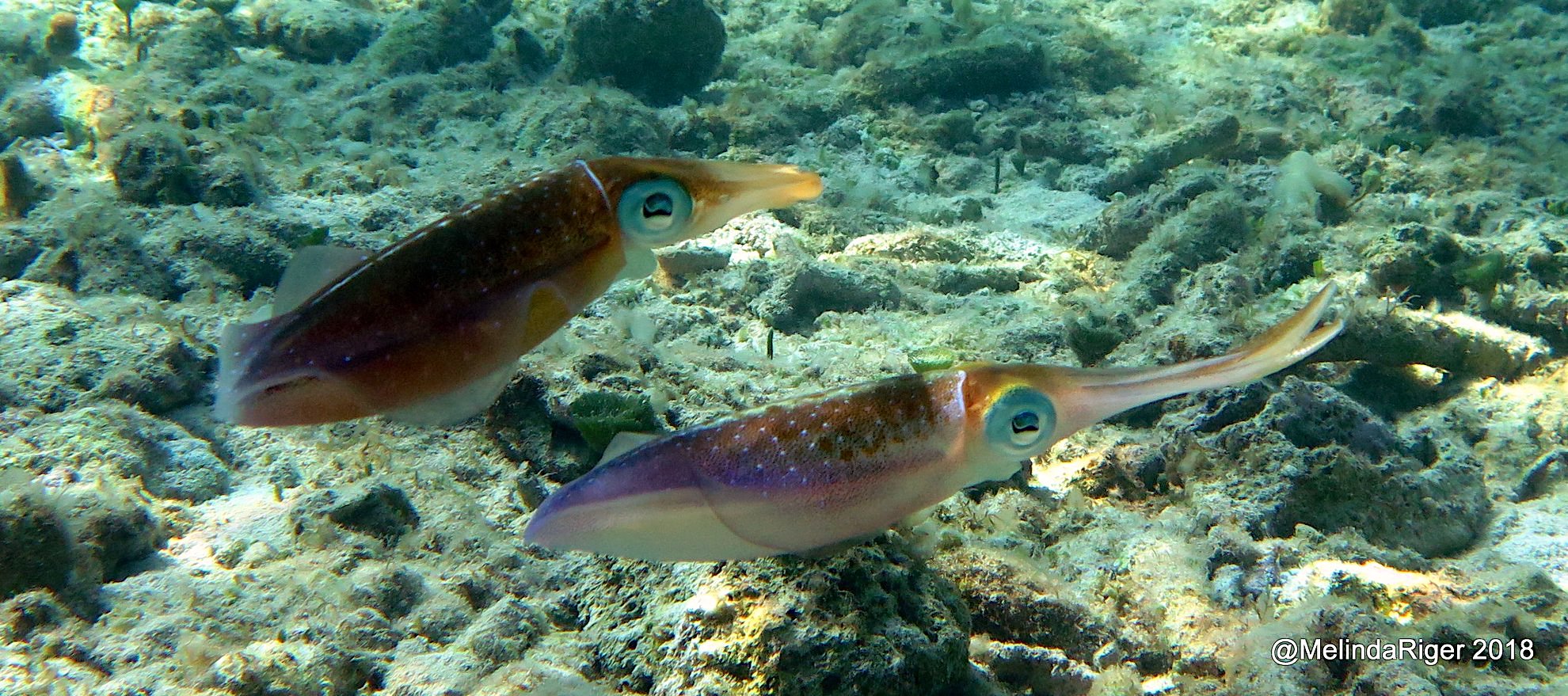
  • A male will gently stroke a female with his tentacles
  • The female will (most likely) flash an ‘alarm’ pattern. She’s hard to get.
  • The male soothes her (don’t try this at home, guys) by blowing and jetting water at her
  • If this doesn’t go well, he’ll move off, then repeat the routine until she sees his good points
  • However this on / off courtship can last for hours until at last he succeeds and then…
  • … he attaches a sticky packet of sperm onto the female’s body (romance is not dead on the reef)
  • She then reaches for it and moves it to her seminal receptacle
  • Meanwhile he stays close, emitting a pulsing pattern, as well he might after all that palaver
  • She then finds a safe place to lay her eggs. Job done.

Caribbean Reef Squid, Bahamas (Melinda Riger / G B Scuba)

SQUID SEX (2) IT ALL ENDS BADLY. VERY BADLY.

  • As soon the female squid has laid her eggs, she dies at once
  • The male squid lives a bit longer and… may have other packets to stick on other lady squid
  • But then in the end he dies too
  • It’s all horribly reminiscent of Romeo and Juliet. The lovers die. But no the balcony scene

Caribbean Reef Squid, Bahamas (Melinda Riger / G B Scuba)

THE CORRECT PLURAL OF SQUID

I had an unwise look online, always a hotbed of conflicting opinions. Inserting an algorithm into the interstices of the internet proves conclusively that the plural of squid is… squid. One squid, ten squid, a group of squid, a plate of squid. Unless, that is, you are talking about more than one of the many squid species, when you could also have ‘I collect both reef and giant squids’. “Squidses” sounds fun but is sadly not permitted.

Caribbean Reef Squid, Bahamas (Melinda Riger / G B Scuba)

RELATED POSTS

THE PLURAL OF OCTOPUS

Credits: As ever (for fabulous underwater pics) Melinda Riger of Grand Bahama Scuba; research sources include MarineBio; Animal Diversity Web (Michigan Uni)

Unknown's avatar

GREEN TURTLES & TURTLE AWARENESS ON ABACO


Green Turtle, Bahamas (Adam Rees)

GREEN TURTLES & TURTLE AWARENESS ON ABACO

There’s something slightly unsettling about the perspective of the header image, with foreshortening suggesting that the turtle is actually a gigantic creature with a tiny diver swimming close to it…

I don’t seem to have given green turtles much space in the past, the most frequently photographed (and therefore featured) species being the hawksbill. This post is both to right the wrong, and to provide some information about the species.

Green Turtle, Bahamas (Adam Rees)

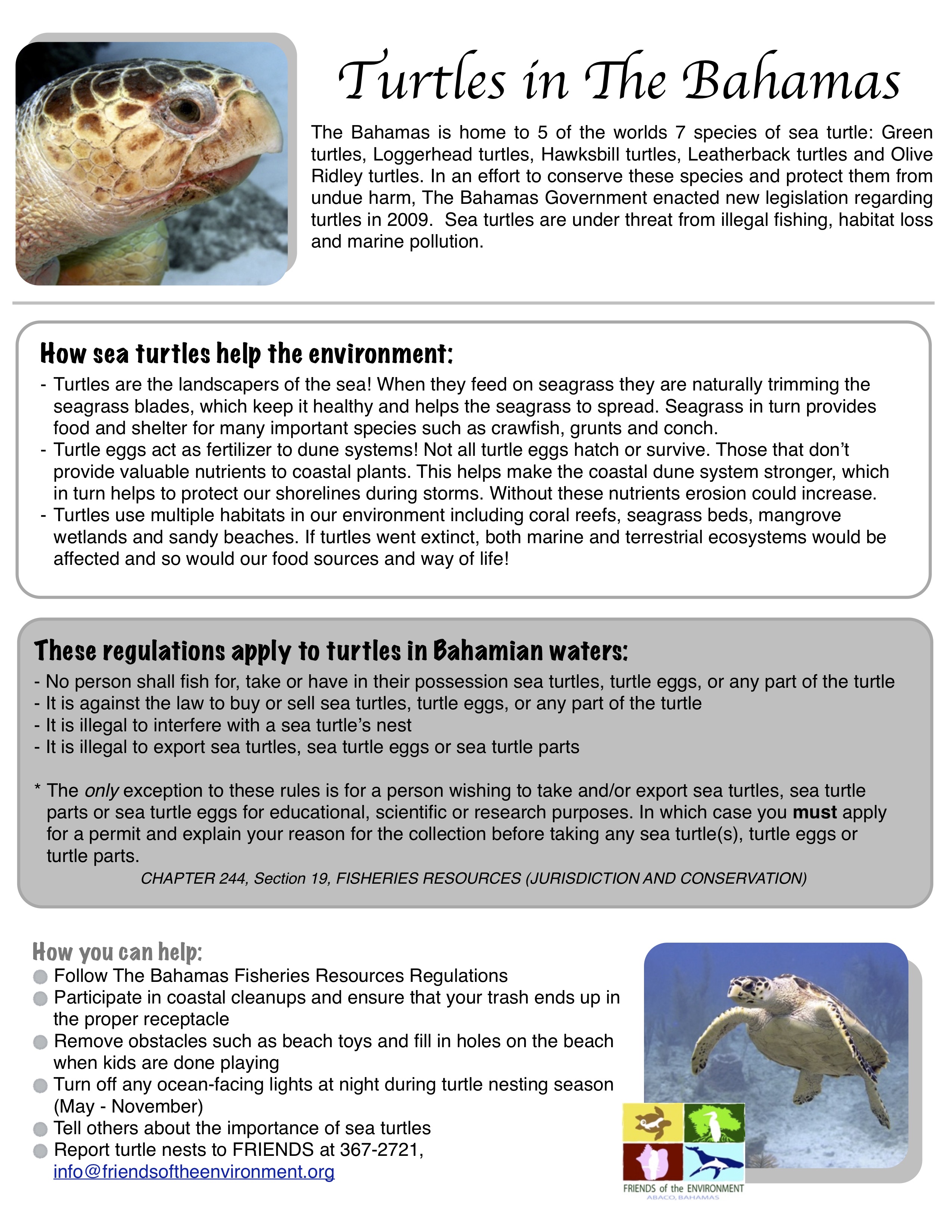
Friends of the Environment has produced an interesting short guide to the sea turtles of the Bahamas. One of the many facts included is that 5 of the 7 sea turtle species in the world can be found in Bahamian waters. The turtle protection law is also given – also the way to report turtle nests so they can be watched and protected.

Green Turtle, Bahamas (Adam Rees)

The 4 main species are the hawksbill, green, loggerhead and leatherback. The 5th and lesser known one is the Olive Ridley turtle. The differences between most of these is considerable, as can be seen from this IUCN-produced Identification Chart (credits as shown).

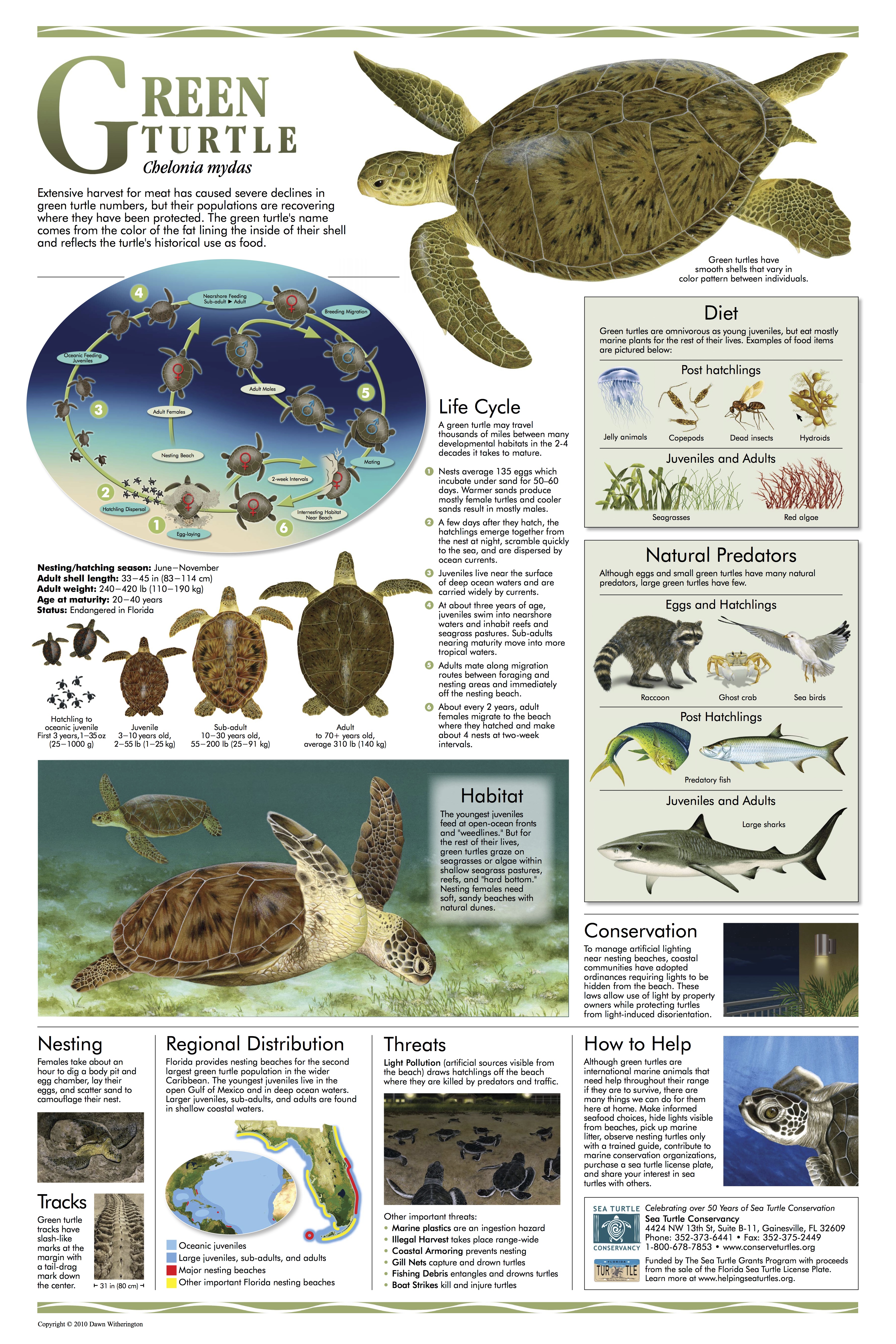
Another useful source of information for green turtles is this extremely well produced poster illustrated by the excellent Dawn Witherington, who has somewhat (and deservedly) cornered the market with this kind of large-scale infographic. The sea turtle series is so helpful that I have dedicated a whole page to them HERE. Dawn also created the LOXAHATCHEE poster series covering such topics as Lionfish, Sea Grasses, Land Crabs, Bonefish, Coral Reefs and more

Green Turtle, Bahamas (Adam Rees)

All photos: Adam Rees Photography, with thanks for use permission here and elsewhere

Unknown's avatar

SOCA: FISHING, BUT NOT AS WE KNOW IT…


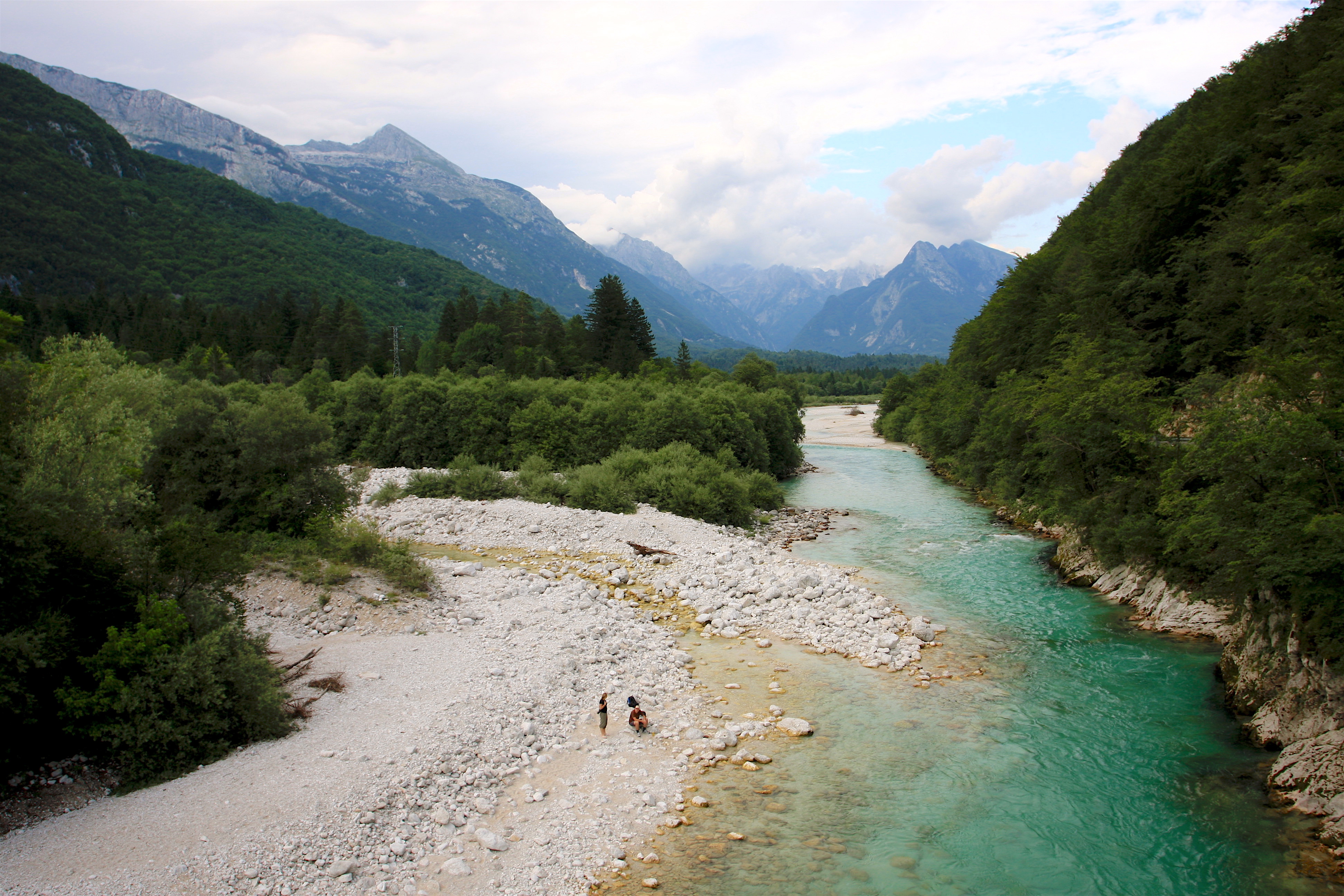
soca_river_-_slovenia_travellingotter-wiki

SOCA: FISHING, BUT NOT AS WE KNOW IT…

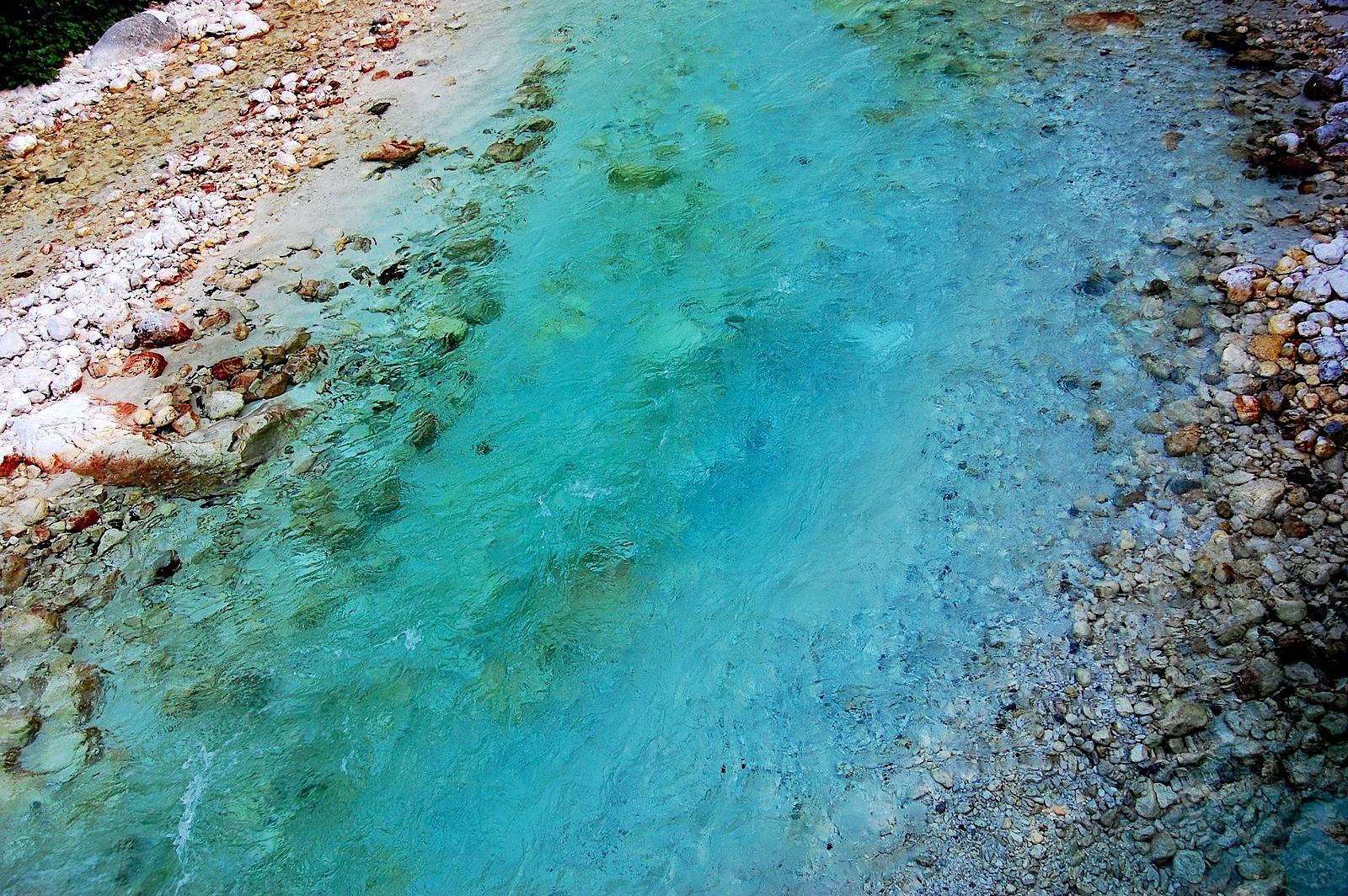
Things around Rolling Harbour are going to go a little quiet for a few days. This is one of the rare occasions when I am so excited by somewhere non-Bahamian that it has been dominating my thoughts for several days. So I am breaking my normal rule of posting (almost) entirely about matters Bahamian for a completely non-Bahamian rhapsody… We leave for the beautiful Soca River in Slovenia this evening. This is a special river for trout, and is one of the few places to find the marble trout Salmo marmorata. The mountains round here are more than 9000 feet ASL (in contrast the HIGHEST POINT ON ABACO is a towering 134 feet). The turquoise rivers have, over the ages, cut deep gorges into the rock. The waters are full of fish. Time to get me some.

marble_trout_from_zadlascc8cccc8cica-wiki

soca-reinhard-kuknat-wikisoca_river_sloveniecc88_karen-baijens-wikisoca_river_slovenia-lucash-wiki.soca-river-bojan-kolman / wiki

Okay, so it’s not bonefishing. And it’s very far removed from the small, spooky wild brown trout I chase, with varying degrees of failure, on the chalk streams of Dorset. But as we set up our rods tomorrow morning and set out for the crystal clear water, we know it will certainly be – to borrow from Monty Python – “something completely different…”.

Photo Credits (all via Wiki, for which much thanks): Travelling Otter, Unattributed, Reinhard Kuknat, Karen Baijens, Lucash, Bojan Kolman

Unknown's avatar

‘ON STILTS’: ELEGANCE ON TWO LEGS (OR JUST ONE)


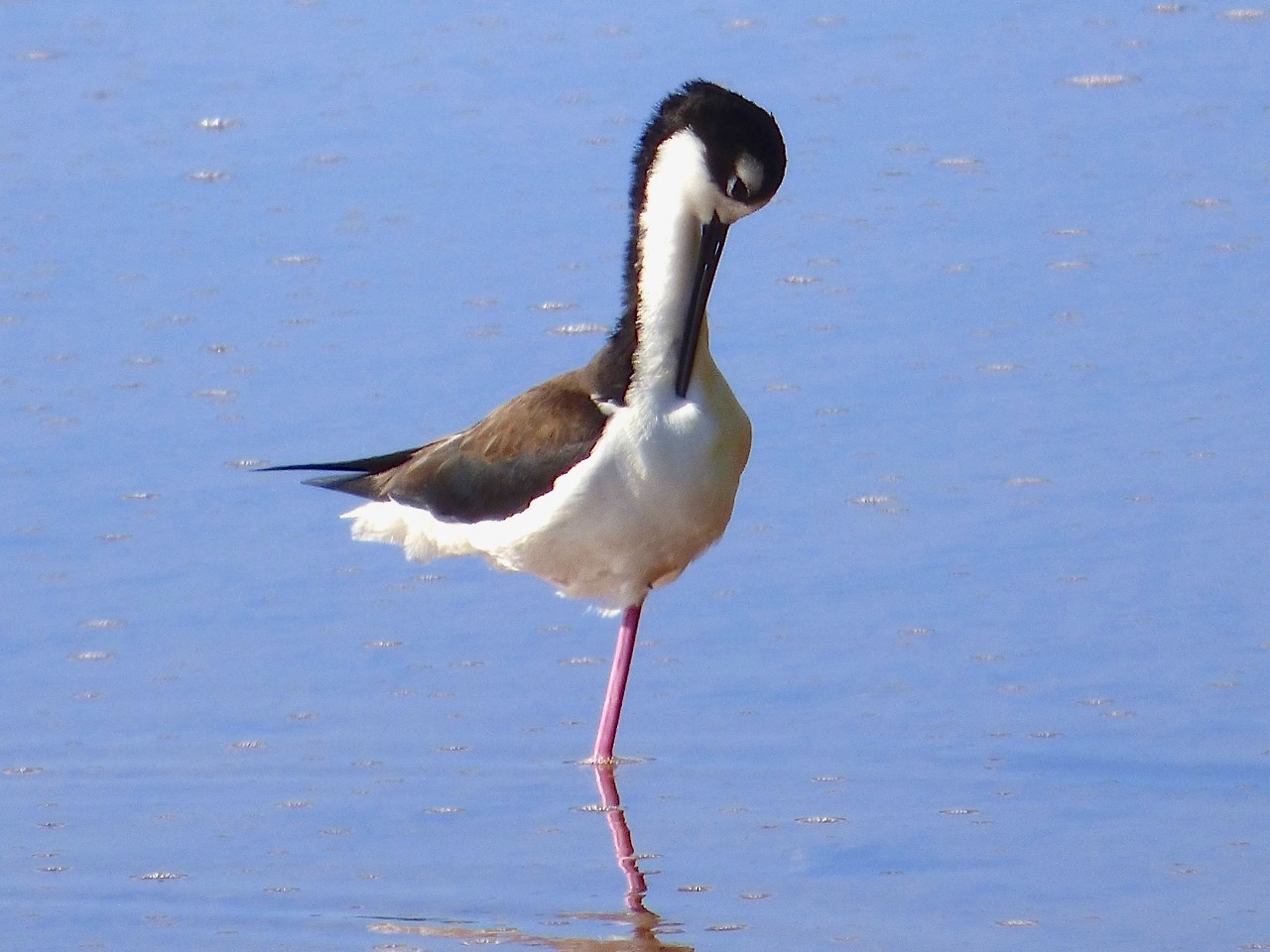
Black-necked Stilts, Abaco Bahamas (Keith Salvesen)‘ON STILTS’: ELEGANCE ON TWO LEGS (OR JUST ONE)

There’s something wrong in the picture above (no, I don’t mean about the photograph itself). Count up how many pink legs you can see. No, not including the reflections. Give up? It’s three. Between two birds. I assumed of course that  ‘Oner’ had a perfectly good serviceable leg tucked up into its undercarriage. I admired the balancing skills involved in resting one leg while nonchalantly standing on the other.

We were watching this pair of black-necked stilts Himantopus mexicanus at the pond at Gilpin Point, which at certain times can be ‘Stilt Central’. These birds are permanent breeders on Abaco and are without a doubt the most beautiful of all the waders (avocets, being extremely uncommon winter visitors, are disqualified from consideration for lack of presence). 

Black-necked Stilts, Abaco Bahamas (Keith Salvesen)
It gradually dawned on me that Oner really did only have one stilt to stand on. After 10 minutes observing them and the other birds around them, there was no question about it – the right leg was completely and utterly missing. This unipedal deficit had no obvious ill-effects on the bird – nor on its ability to throw a good pose (above). Or to preen (below).
Black-necked Stilts, Abaco Bahamas (Keith Salvesen)
I’m in danger of losing sight of Twoer here, a bipedal bird that deserves its own place in the story, not just a wade-on part in Oner’s story.
Twoer as Ringmaster…Black-necked Stilts, Abaco Bahamas (Keith Salvesen)
BNSs are territorial and in particular can become ‘proactive’ (ie aggressive) in protecting the area near a nest. I once mistakenly got close to a nest, not even knowing it was there. I soon learnt – a parent BNS came wading towards me, zigzagging in the water, shouting and carrying on in a way that immediately said ‘my nest is nearby’. And when I meanly stood my ground it suddenly took off and flew straight at my head…
A shouty stiltBlack-necked Stilts, Abaco Bahamas (Keith Salvesen)
On reflection…Black-necked Stilts, Abaco Bahamas (Keith Salvesen)
All photos: Keith Salvesen / Rolling Harbour Abaco (and, if anyone noticed, sorry about some formatting issues which I can’t get rid of…); Audio file Jim Holmes / Xeno Canto
Black-necked Stilts, Abaco Bahamas (Keith Salvesen)
Unknown's avatar

WHERE’S THE CATCH? A REDDISH EGRET FISHING


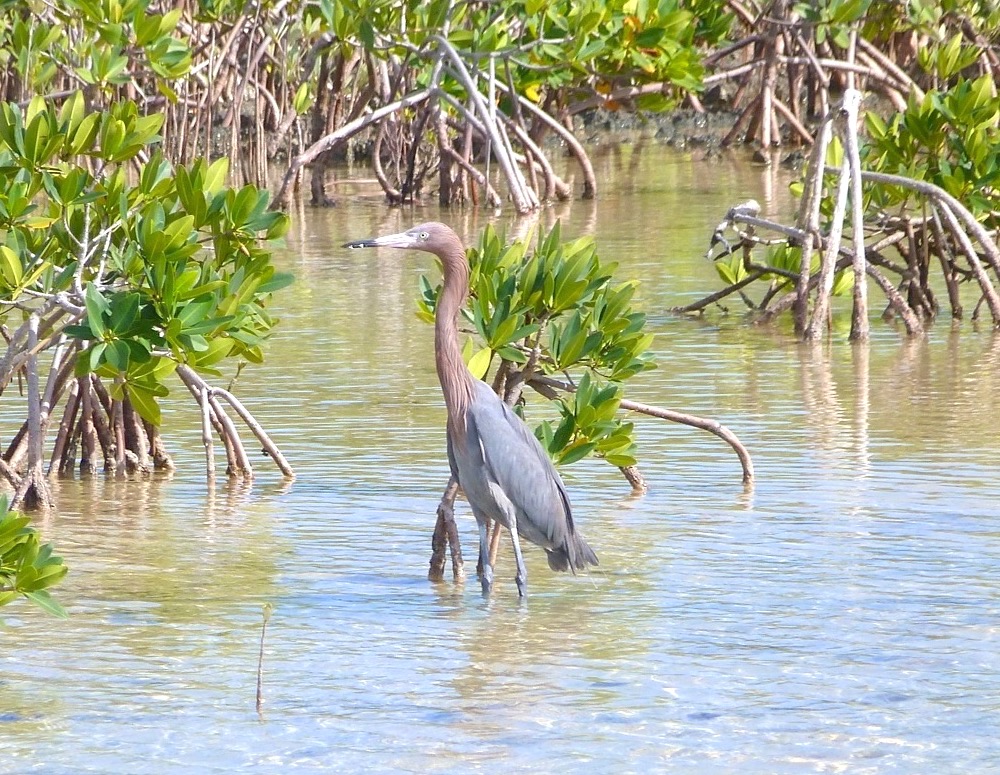
Reddish Egret Fishing, Crossing Rocks, Abaco (Keith Salvesen)

WHERE’S THE CATCH? A REDDISH EGRET FISHING

The narrowest point on Abaco is just north of Crossing Rocks. The 120-mile long highway that splits the Island down the middle passes over a narrow strip of land. On the west side, there are mangrove swamps, an inlet of sea, and a small jetty used by bonefishers to reach the productive waters further out. On the east side? Well, there’s more mangrove swamp, giving way to thick jungly coppice before reching the top end of Crossing Rocks beach – and not much else. Except for a long thin brackish pond by the road, that is. 

Reddish Egret Fishing, Crossing Rocks, Abaco (Keith Salvesen)

If you are interested in birds – maybe on your way to the pond at Gilpin Point for Bahama Duck and waders, or returning from a Bahama mockingbird hunt in the National Park – it’s worth pulling over at the pond. Or preferably on the other side of the road so you can approach it stealthily. There’s plenty of roadside cover for birder discretion. Chances are, you’ll encounter one or more of the several heron or egret species found on Abaco – and that they’ll be fishing.

Reddish Egret Fishing, Crossing Rocks, Abaco (Keith Salvesen)

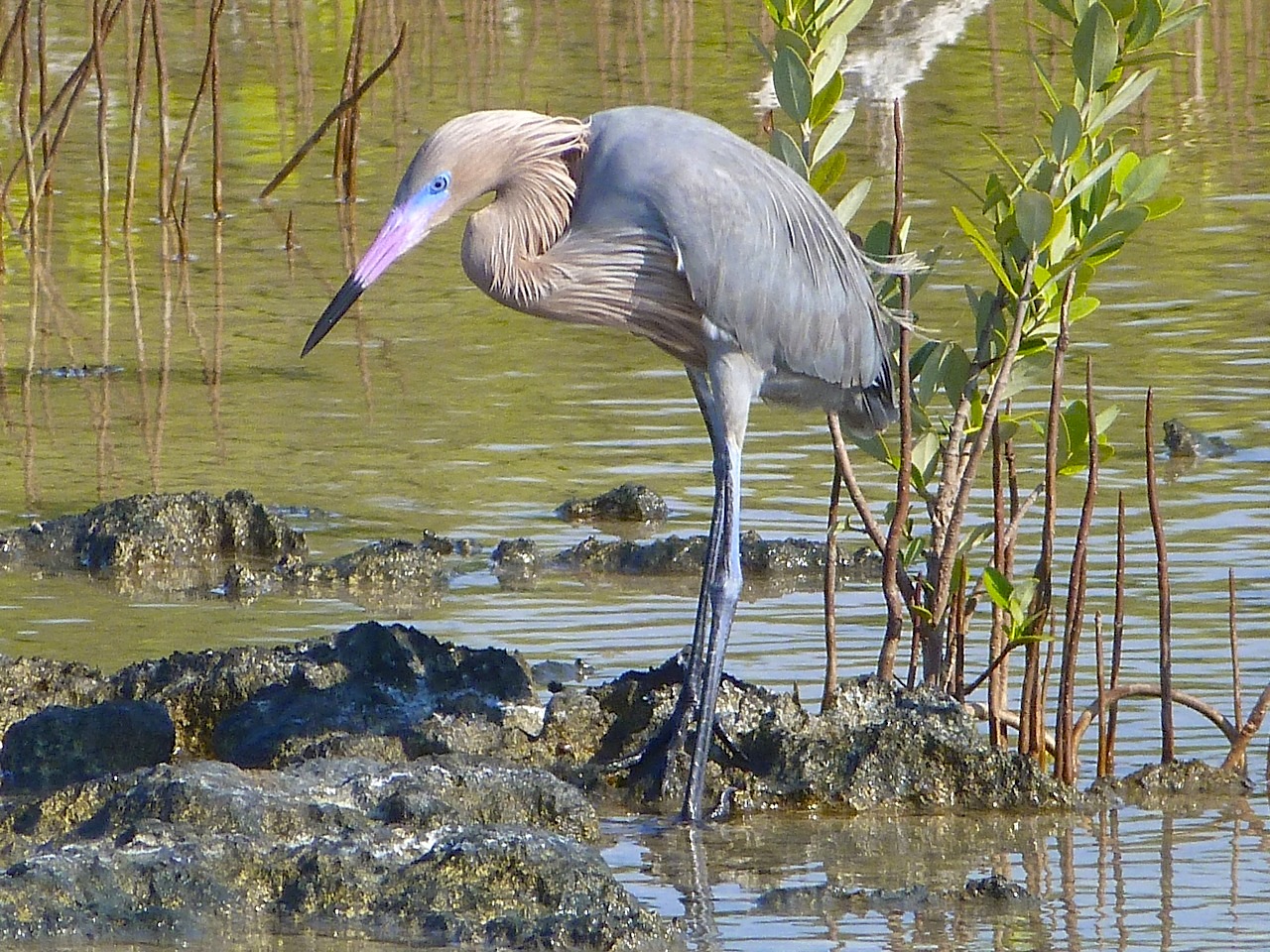
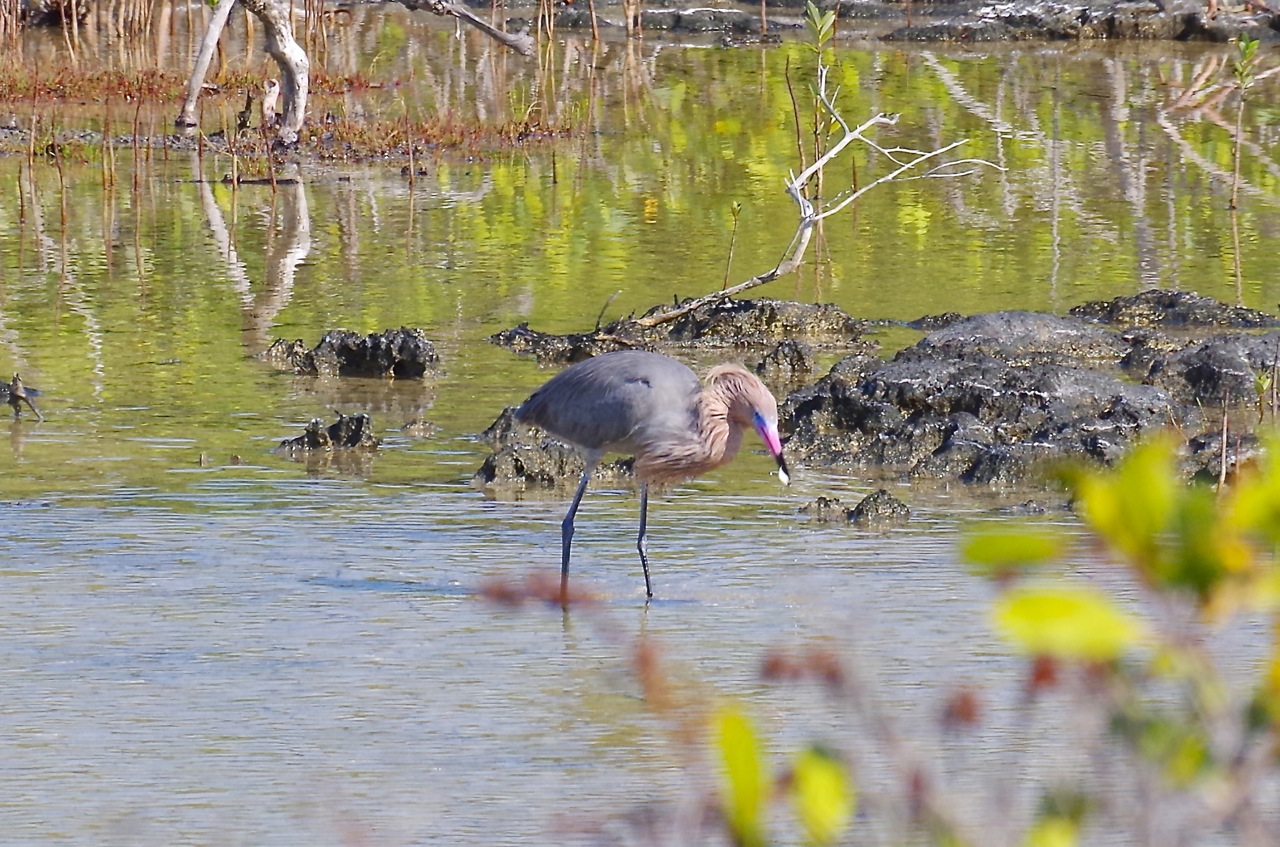
You can see how clear the water can be. It’s no wonder that this reddish egret has ‘hunched up’ to get that cruel beak closer to the surface to stab down on a small silver snack. In the short time we watched, he had no success (hence ‘Where’s the Catch?’ – there was none). But I’ve seen reddish egrets including the white morph successfully snacking at the pond; and a tricolored heron. A couple of years ago we had a great scoop in late March – a male reddish egret fishing in his wonderful breeding colours. Compare the ‘routine’ plumage of the bird above with this gorgeous creature.

Reddish Egret Fishing, Crossing Rocks, Abaco (Keith Salvesen)

And to show I am not making up the fishing part, a shot of this bird actually making a catch…Reddish Egret Fishing, Crossing Rocks, Abaco (Keith Salvesen)

All photos: Keith Salvesen

Unknown's avatar

HUTIAS: ABACO’S EXTINCT RODENTS LIVE ON… ELSEWHERE


Bahamian Hutia (Cole Fiechter)

HUTIAS: ABACO’S EXTINCT RODENTS LIVE ON… ELSEWHERE  

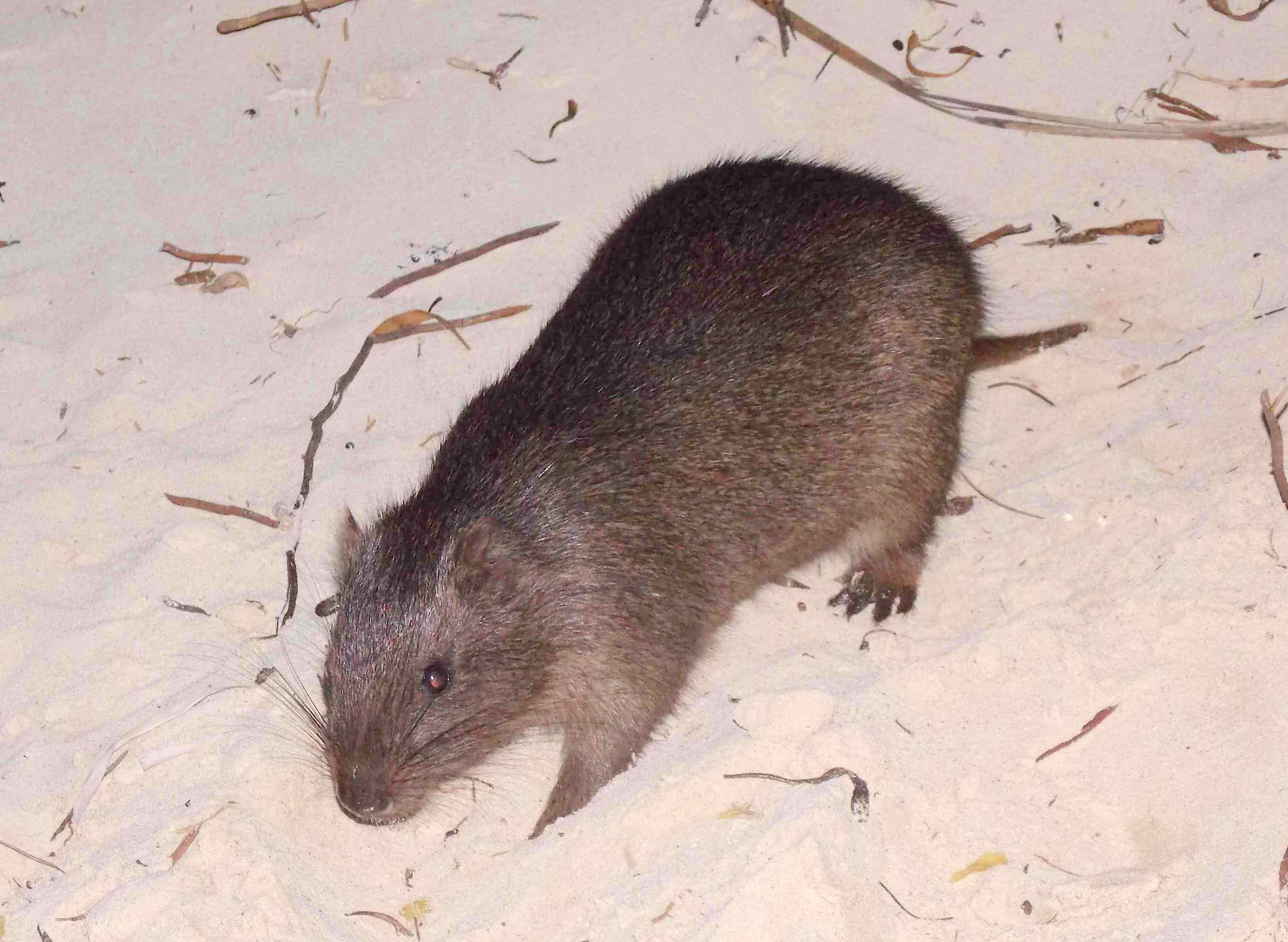
The Bahama hutia (Geocapromys ingrahami) has the distinction of being the only indigenous land mammal in the Bahamas. Historically found on a number of islands, the species is now confined to very limited locations. Abaco is, sadly, no longer one of them; they are officially shown as extirpated here from about 1600. Hutias had been recorded on Great Abaco by early explorers from Europe, but their survival was already threatened by hunting and land clearance as the human population expanded.

Bahamian Hutia (Cole Fiechter)

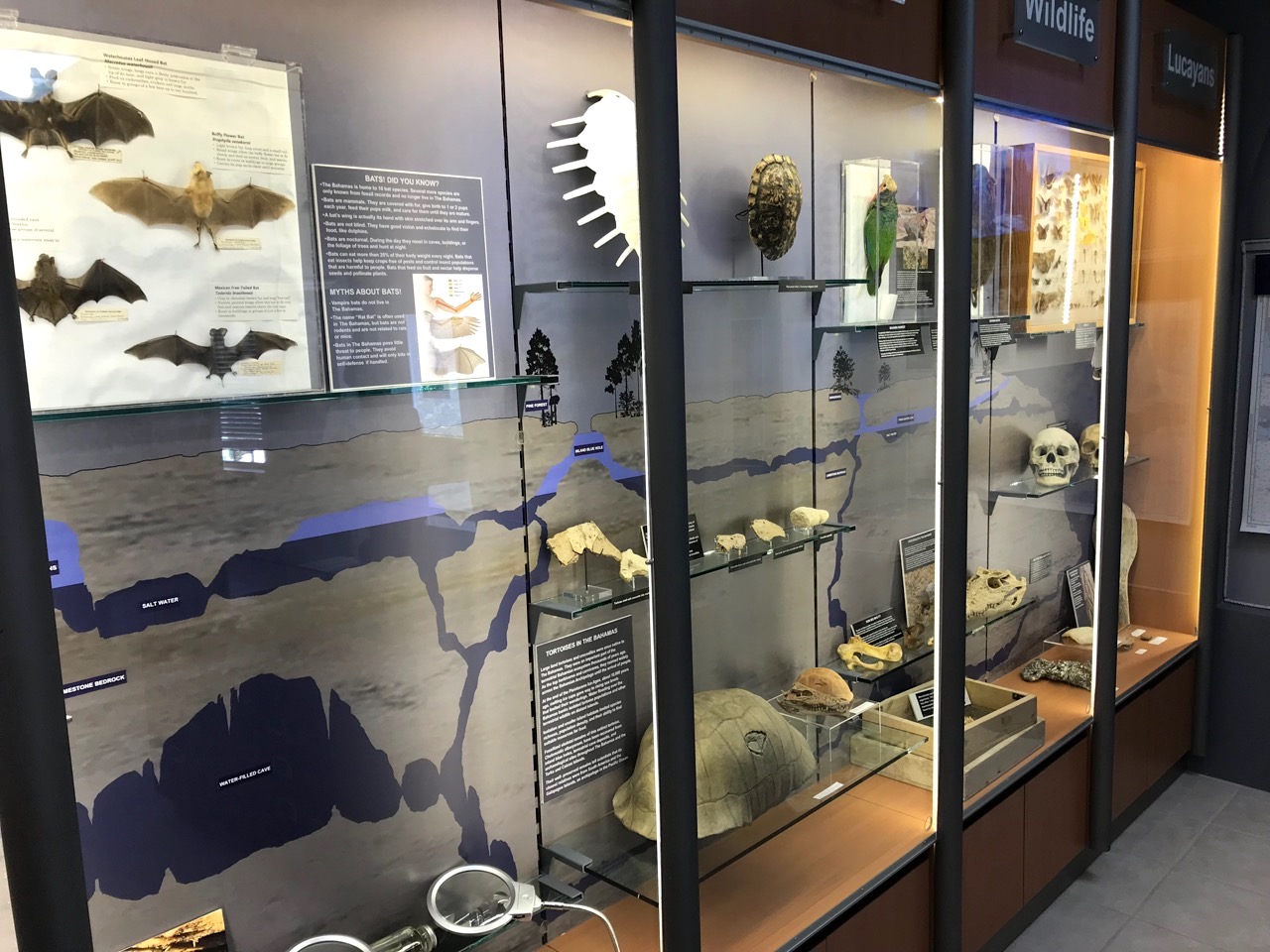
Further evidence of their long-term existence on Abaco – prehistoric, even – comes from research carried out by divers in the land-based Blues Holes. SAWMILL SINK has been a particularly rich source of the remnants of early creatures, including well-preserved skeletons, carapaces or other remains of crocodiles, turtles, birds, bats – and hutias. These date from the Pleistocene epoch of the Quartenary period, spanning roughly 2.5m years and ending some 12,000 years ago. You can see some of these treasures in the wonderful Natural History Museum at Friends of the Environment in Marsh Harbour.

A c20 hutia from the Exumas on display in the museumBahama Hutia Museum Exhibit (FOTE, Abaco)

Exhibits in the museum – there’s even a dead parrot for Monty Python fansMuseum of Natural History, Abaco Bahamas

The population of the extant Bahama hutia species Geocapromys ingrahami became so depleted that by the 1960s they were considered to be extinct. Then in 1966 a colony was discovered on East Plana Cay. Some have since been relocated (see below) and the overall population is now confined to a handful of locations, for which reason the Bahama hutia is IUCN listed as vulnerable. All the usual man-caused threats to their survival apply, as well as predation by dogs and feral cats. One place to find them is in the Exumas, but because they are mainly nocturnal creatures and there are few of them, a sighting is a rare event, let alone getting a decent photo op. 

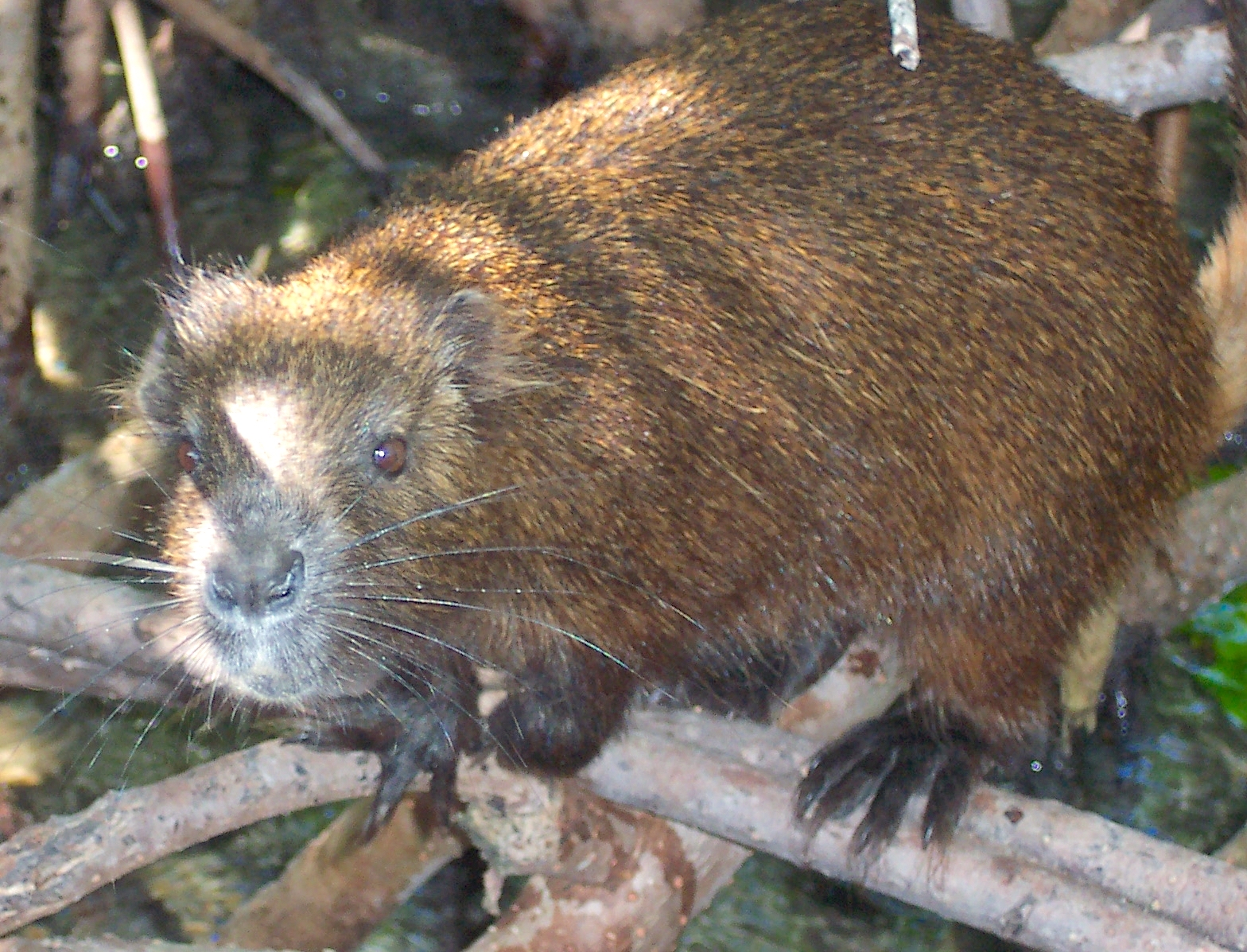
A ‘Demarest’s Hutia’ – not the Bahamian species, but very similarDemarest's Hutia (Yomangani, wiki)

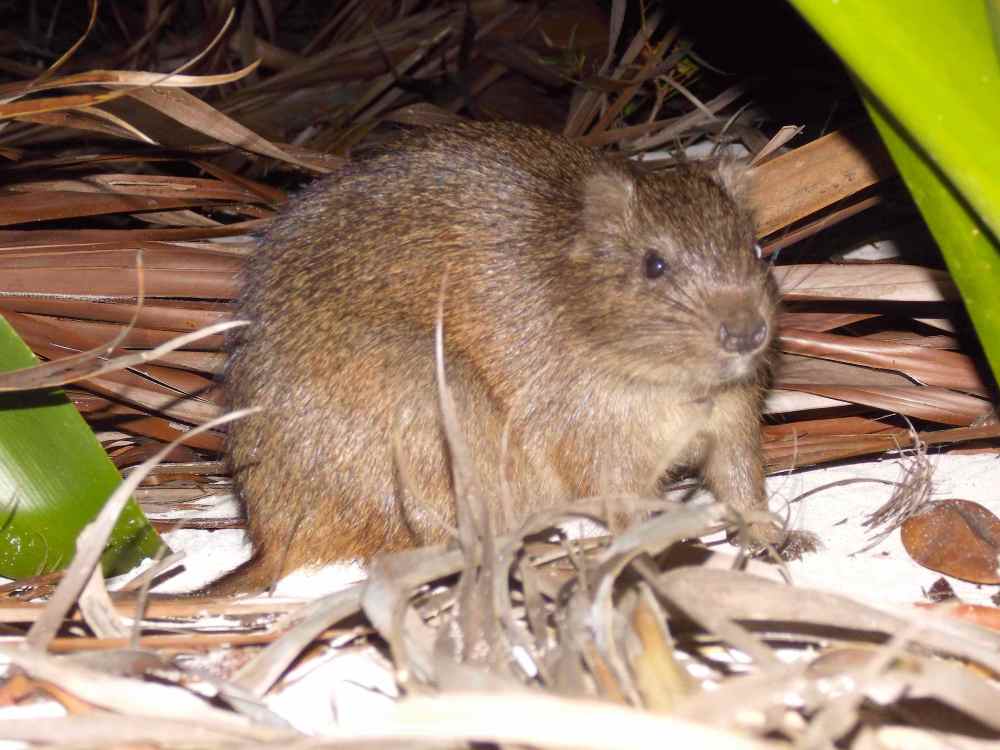
The terrific header image and the second image were taken by teenager Cole Fiechter while on a sailing trip with his parents and brother in the excellently named ‘Truansea’. On the beach of the Exumas Land and Sea Park at Warderick Wells, they encountered “a guinea pig with a rat’s tail”: a hutia. Cole’s photograph will hopefully grace the forthcoming Field Guide to the Natural History of the Bahamas, now in the late stages of production, and with which I am peripherally involved.

MARK CATESBY‘s take on the hutia in the c18, where he describes it as a rabbitHutia by Mark Catesby (c18)

The BAHAMAS NATIONAL TRUST notes that “Bahama hutias occur naturally only on East Plana Cay (located between Acklins and Mayaguana). Historically however, they were found on ten Bahamian islands. In a move to protect the species, a small Bahama hutia population was transplanted to two locations – Little Wax Cay and Warderick Wells (Exumas). These three locations now host the only known populations of this particular species in the whole world”

It looks as though Warderick Wells might be your best bet to see a Bahama hutia if you are visiting the Bahamas. Don’t be too confident of coming across one – but if you do see one, you will have had the pleasure of seeing a very rare creature.
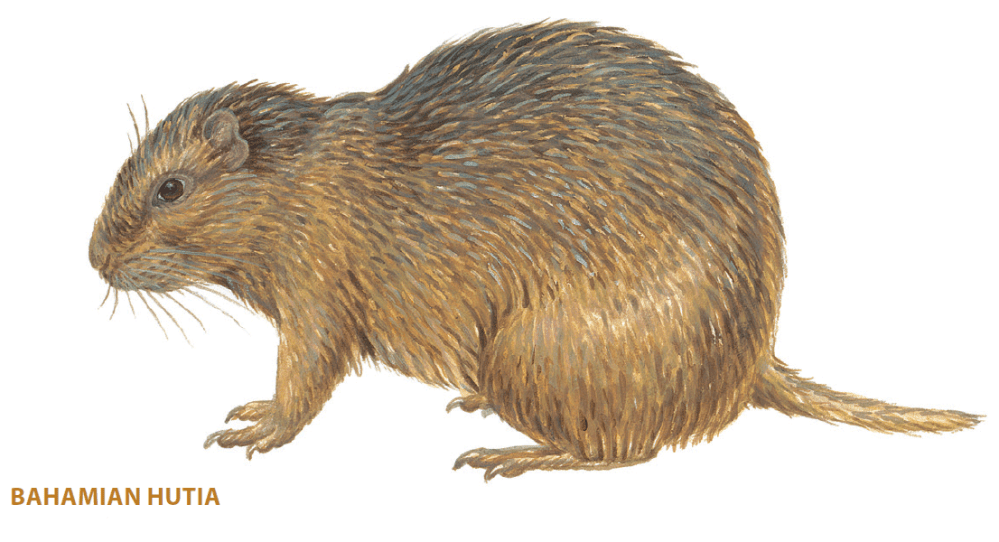
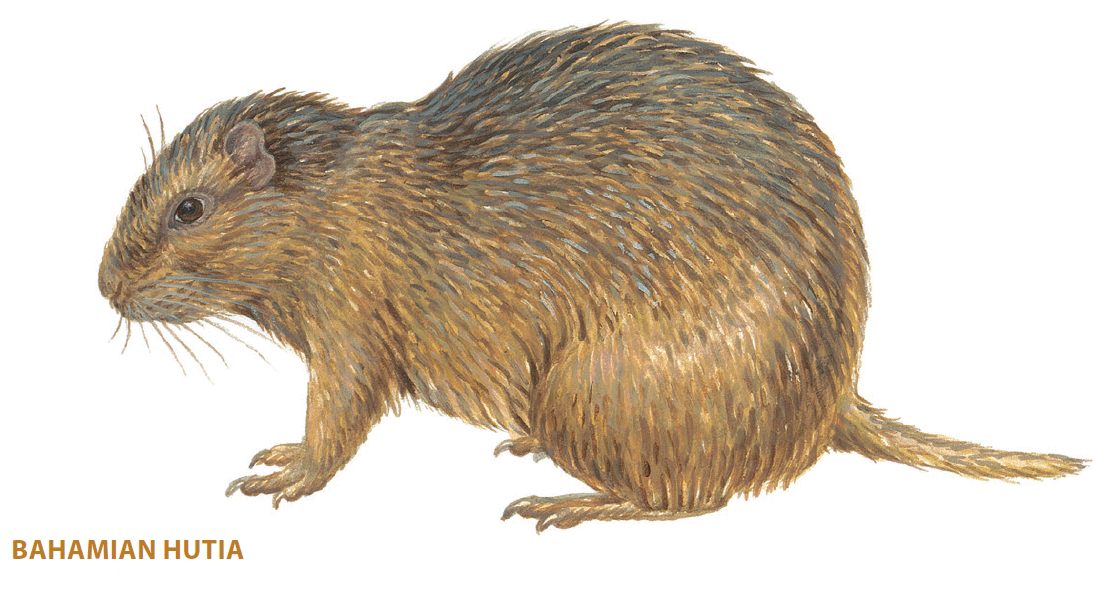
Bahamian Hutia Drawing (Princeton UP)

A HUTIA’S TAIL (very different from a rat…)

IMG_7500

Credits: Cole Fiechter (1, 2); Keith Salvesen / FOTE (3, 4); ‘Yomangani’ wiki (5); OS (6); Princeton UP (7). Research credits PNAS, BNT, FOTE