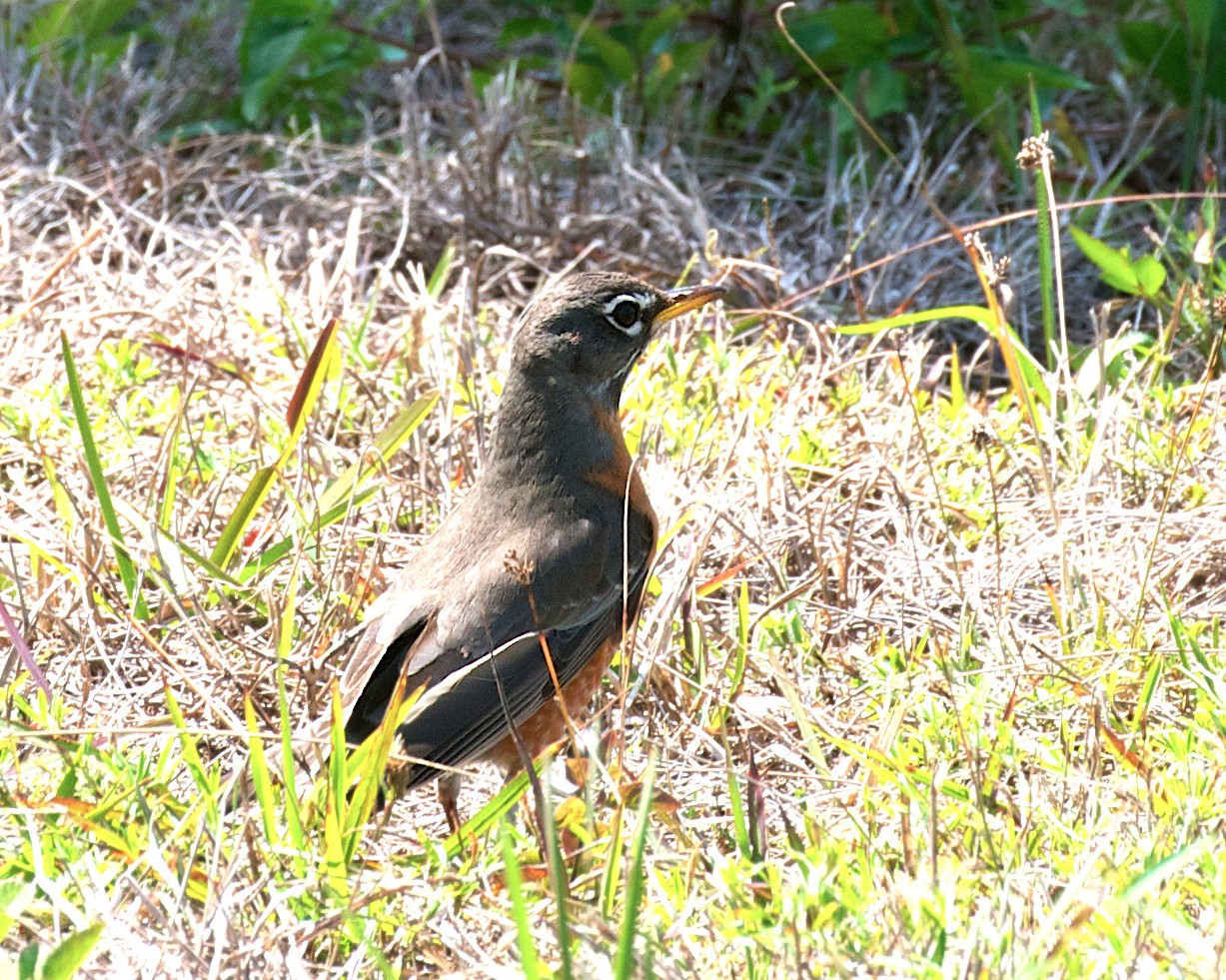
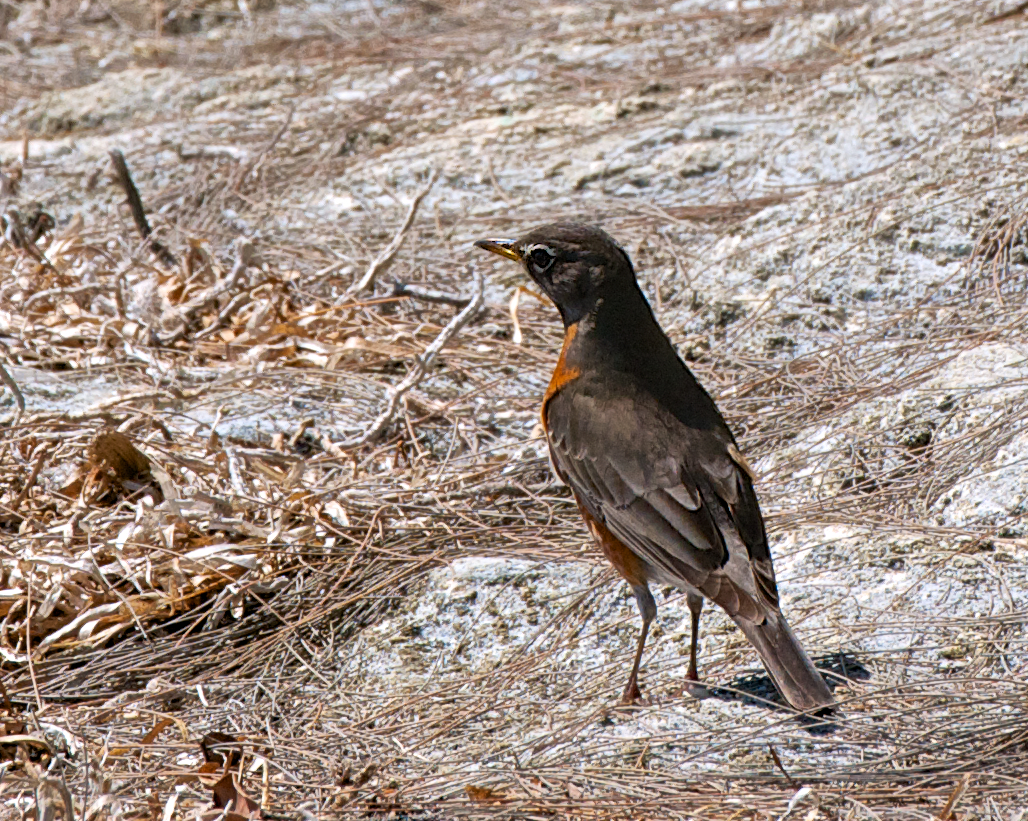
In 2012 I wrote a post about the comparative rarity of the American Robin on Abaco, which had surprised me. They overwinter in Florida, and they might conceivably range further more often than they do. It turned out that one or two may be reported one year, none the next. I listed a number of sightings and some comments by Woody Bracey, but I lacked any photos of these birds taken on Abaco. I had to make do with wiki and bad ones taken in the US by me (including stuffed ones in the Natural History Museum, NYC – an act of desperation!). You can see the post HERE
Nina Henry, a photographic contributor to BIRDS OF ABACO, had some good fortune last March 2014 when she found these 3 birds during her trip to Abaco. Maybe March is a good time for them – perhaps a few call in as they start to make their way north for the summer.
Many past sightings have been on the Cays rather than the main island. Here’s a recent photograph taken by Charmaine Albury on Man-o-Way Cay
Meanwhile I have been able to improve slightly on the tiny distant AMRO I posted before, with one taken more recently – still not on Abaco but in NYC. Closer, but definitely no cigar yet…
Credits: Bruce Hallett (header), Nina Henry x 3, Charmaine Albury, RH
‘SEXING THE HUMMER’: A GENDER GUIDE TO ABACO’S HUMMINGBIRDS
The subject matter of this post is not as indelicate as the title might imply; nor is it a ‘hands-on’ practical guide for intimate examinations of tiny birds. In particular it does not publicise some recently discovered louche activity involving unfeasibly large motor vehicles. It’s all about plumage. In my thin disguise as a person with apparent knowledge about the wildlife of a country that is not my own, I get frequent requests for bird ID. Some, I know at once. Some I have to think about, my memory not being quite as…
Where was I? Yes, bird ID. I use BRUCE HALLETT’Sbook of course, and online the CORNELL LAB andAUDUBONsites.OISEUX-BIRDS is also a good resource and has a large archive of images. And of course dear old Google – they may watch your every keystroke and know more about you than you do yourself, but put a bird’s name into Google Images and you’ll probably see your bird in every static pose or flight you need for ID. They’ll log that too for future use. I have had some queries about Bahama Woodstar gender ID, and more recently, Cuban Emeralds. So here are the adult males and females of each species in all their undoubted glory…
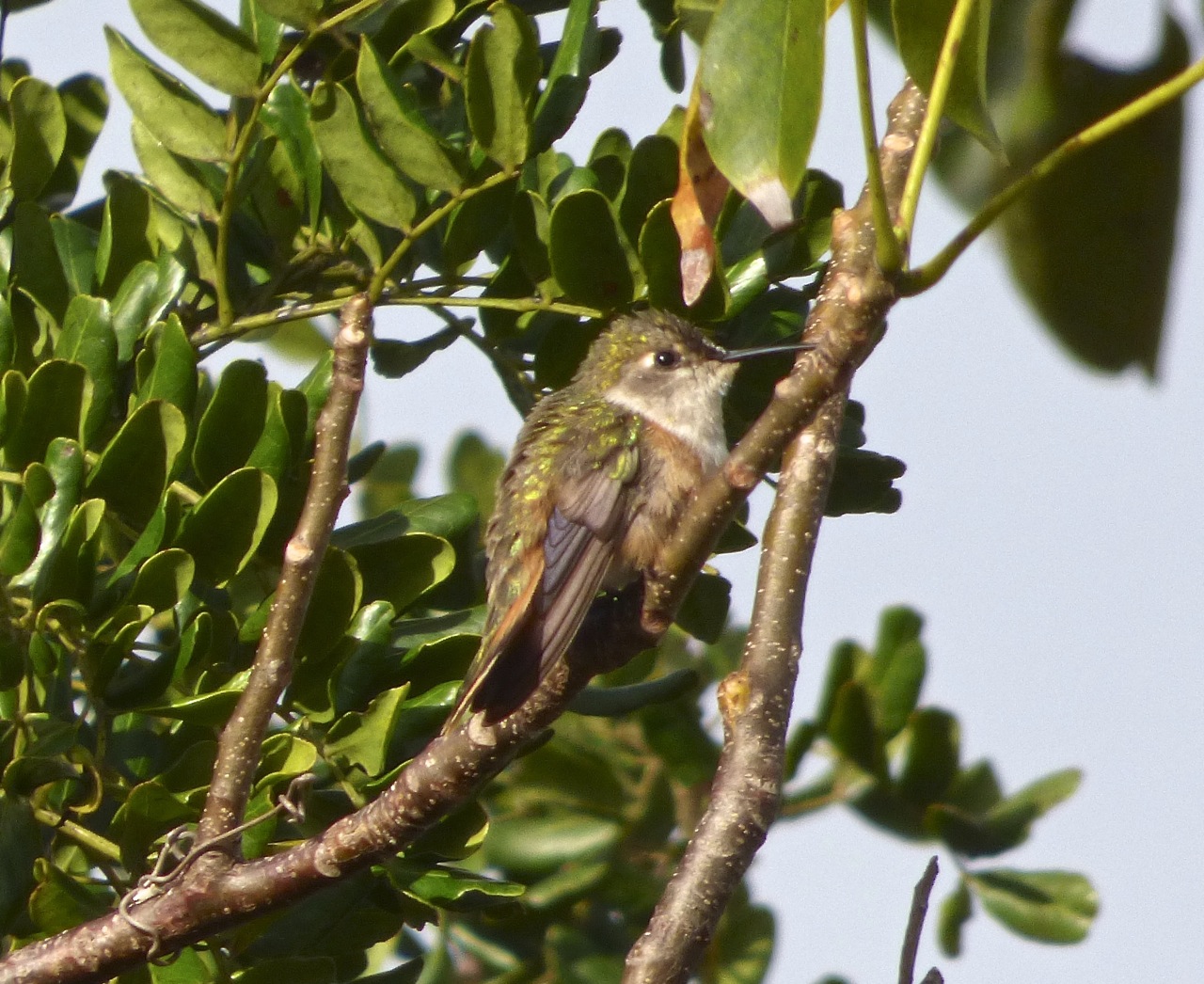
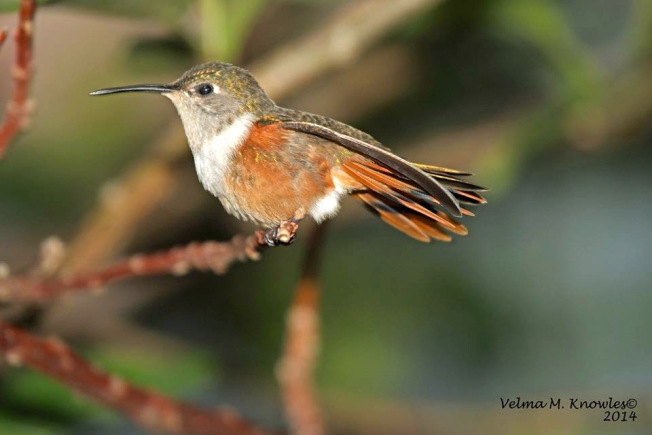
Males have a glorious purple, showy ‘gorget’. Females are less flamboyant, and have grey throats and fronts. Tara’s wonderful photo above vividly demonstrates their more delicate beauty. It’s one of my personal favourites from “BIRDS OF ABACO“, along with Tom Sheley’s above, the bird that graces the jacket.
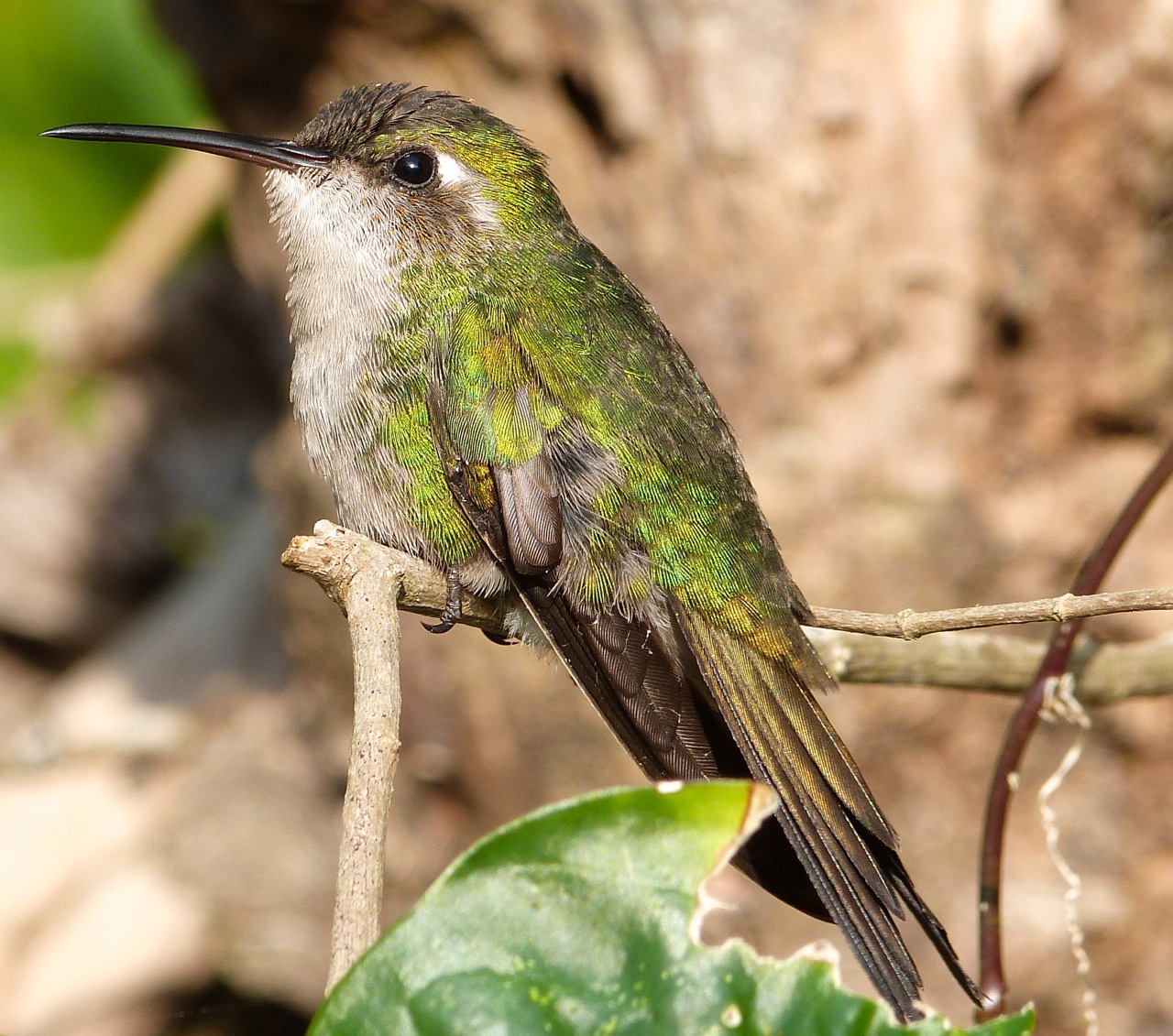
Cuban Emerald (female) Gilpin Point, Abaco (Keith Salvesen)
EMERALD ID MADE EASY
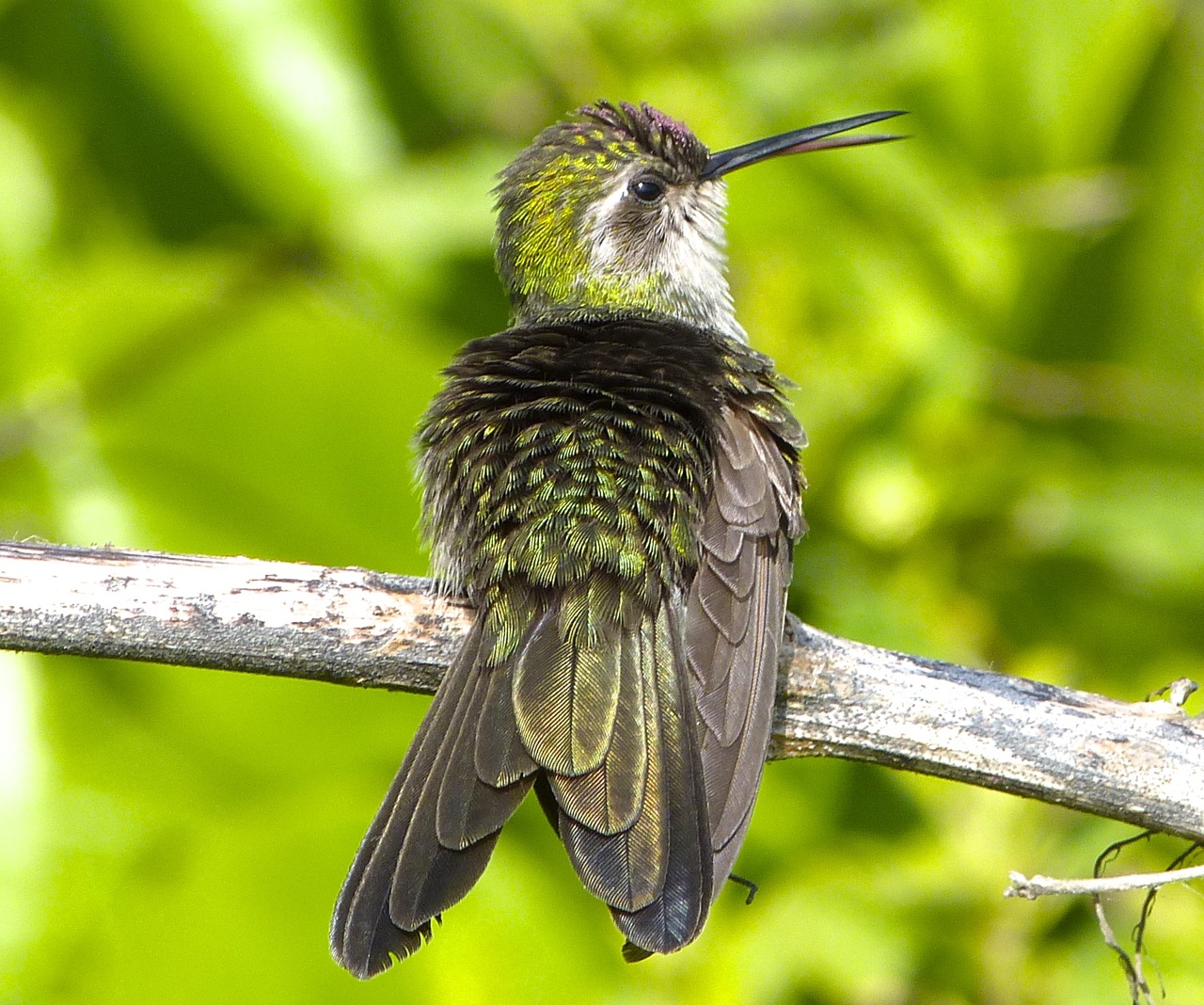
Male emeralds are basically… er… emerald green all over , apart from the wings. Females have grey throats and fronts, and lack the chestnut frontal band of the female woodstar. I’d say that their iridescent green is a different metallic shade from the male, but that may be just me. I don’t have the palette vocab to describe it, but advice welcome! Perhaps one can simply say it is more subtle.
SO IT’S JUST THE TWO HUMMERS ON ABACO, IS IT?
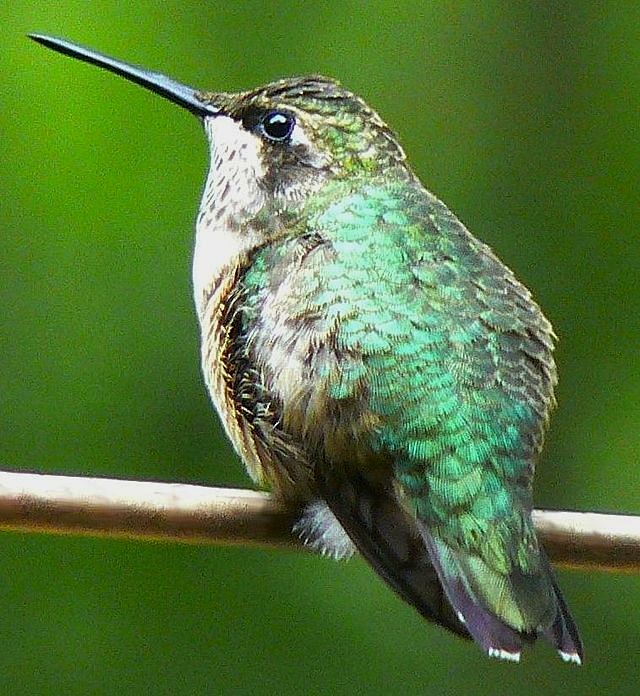
The answer is ‘No’. But don’t make a special trip to see the third species – they are casual / irregular vagrants only, and a definite sighting will be a rarity. But just in case, here are stock photos of a male and a female, and (taken on Abaco by Bruce Hallett) an immature male of the species…
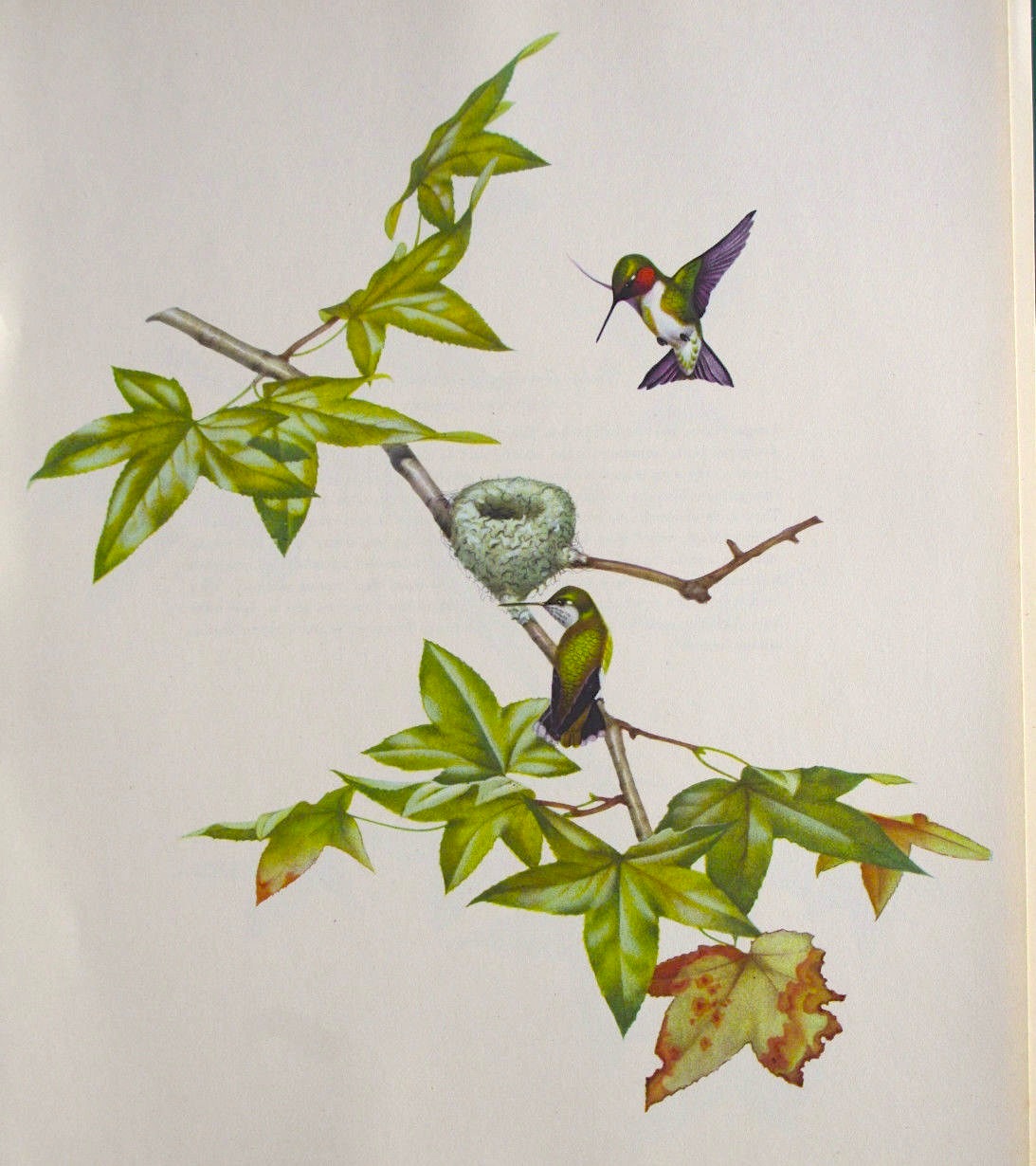
This is an attractive print of the R-tH by Menaboni
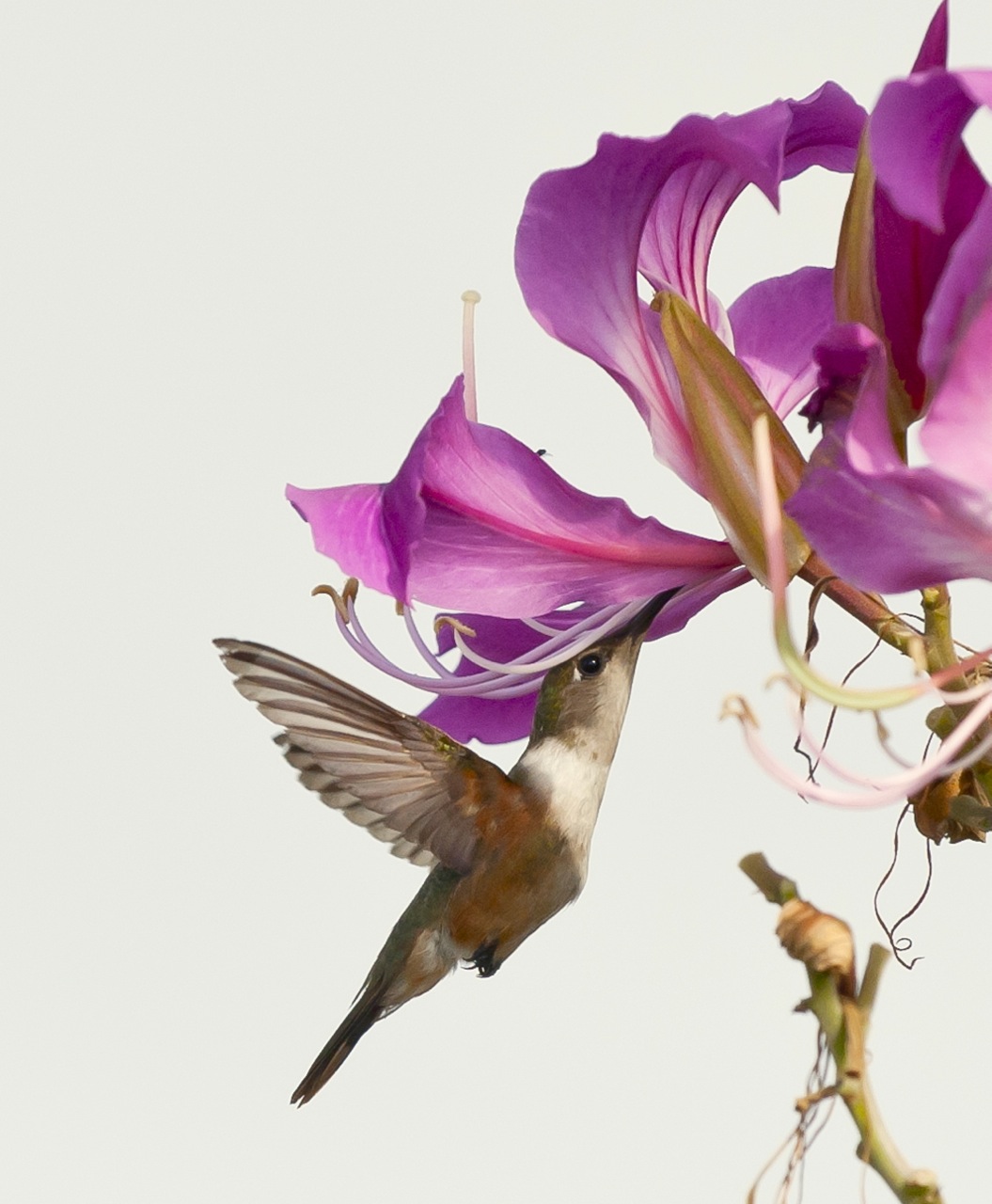
To complete this post, I’ll add a brilliant Woodstar photo taken by Tom Sheley, birdman and generous fishing partner, that I reckon spans the boundary between photography and art.
Bahama Woodstar female.Abaco Bahamas.Tom Sheley
Credits: In addition to those shown below images, Steve Maslowski and Tim Ross for the RTHs
EGRETS GREAT & SNOWY FOR SUNNY GREAT ABACO & SNOWY ELSEWHERE!
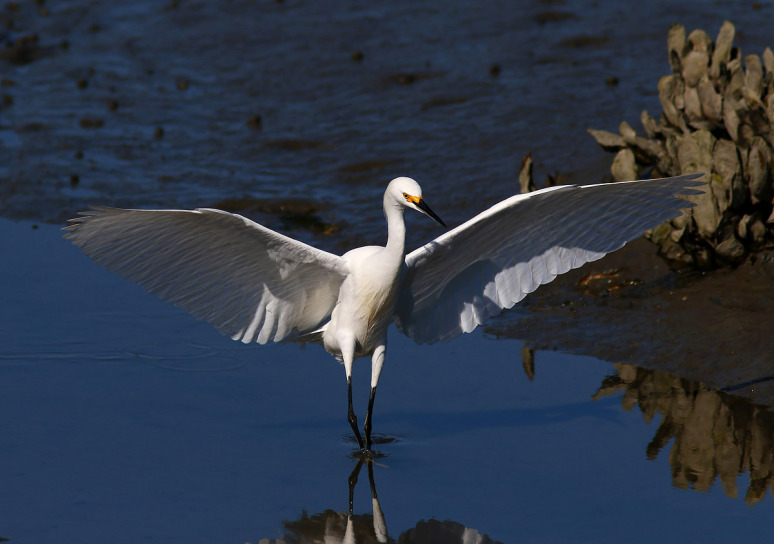
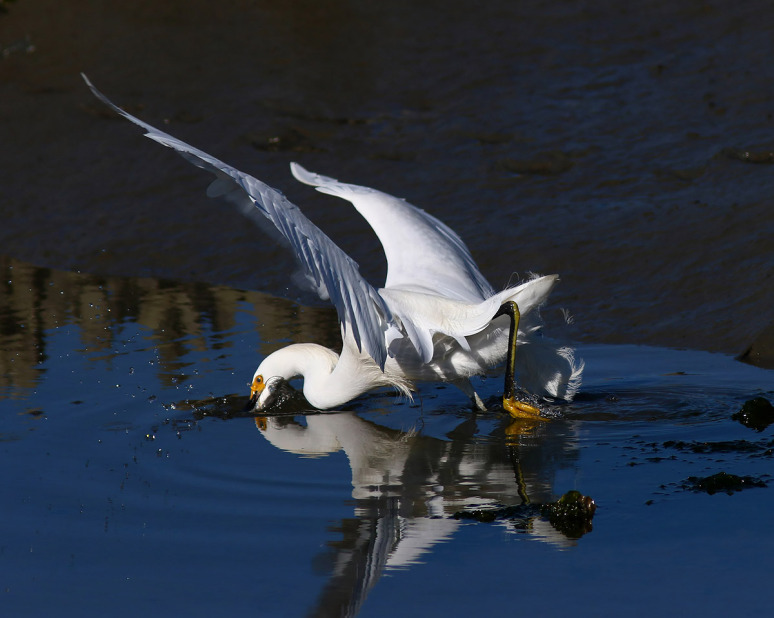
There’s nothing to beat a superlative sequence of narrative photos taken by someone with great skill, a very good eye and an excellent camera (that’s me out of it, on all 3 counts). The two sequences below are from PHIL LANOUE, a highly experienced wildlife photographer who specialises in birds and… alligators (I’ll do the ‘taking snaps’ joke, thank you). He posts almost daily, and it’s a morning treat to see what he has captured on his salt marshes. Very often it is a compelling wildlife action sequence showing the trials and tribulations of bird territory sharing; or the joys and disappointments of fishing… the ones that get away!
GREAT EGRETS
You’ll soon see why the egret is taking flight – a rival is fiercely seeing him off, including an attempted leg or foot grab. That may not have succeeded, but I think he made his point…
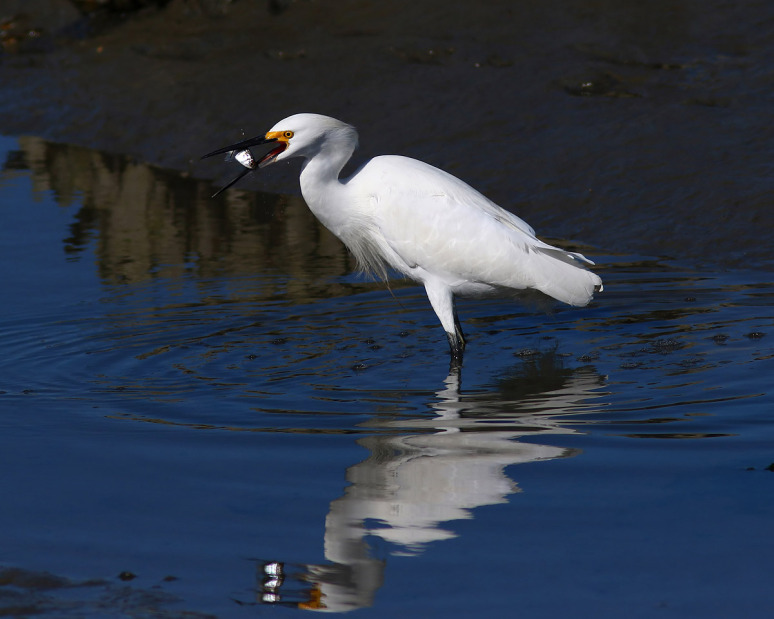
SNOWY EGRET FISHING
You can tell that this bird is motionless while hunting – there are no ripples at all round its legs. That sharp beak is poised for the sudden, rapid strike. As it stabs down, it shows its distinctive yellow feet and leg markings. The fish emerges firmly gripped sideways, and is effortlessly flipped round for immediate consumption,
These are the sorts of pictures I would love to be able to take. Anyone would. But I am going to have to graduate to something a great deal more sophisticated than my trusty Lumix bridge camera and its fixed zoom extension. It has a Leica lens, which counts for a lot, but an upgrade to SLR is on the horizon. First I need to get stuck into some serious work on manual settings. I have a mountain to climb – I’m still hanging around Base Camp!
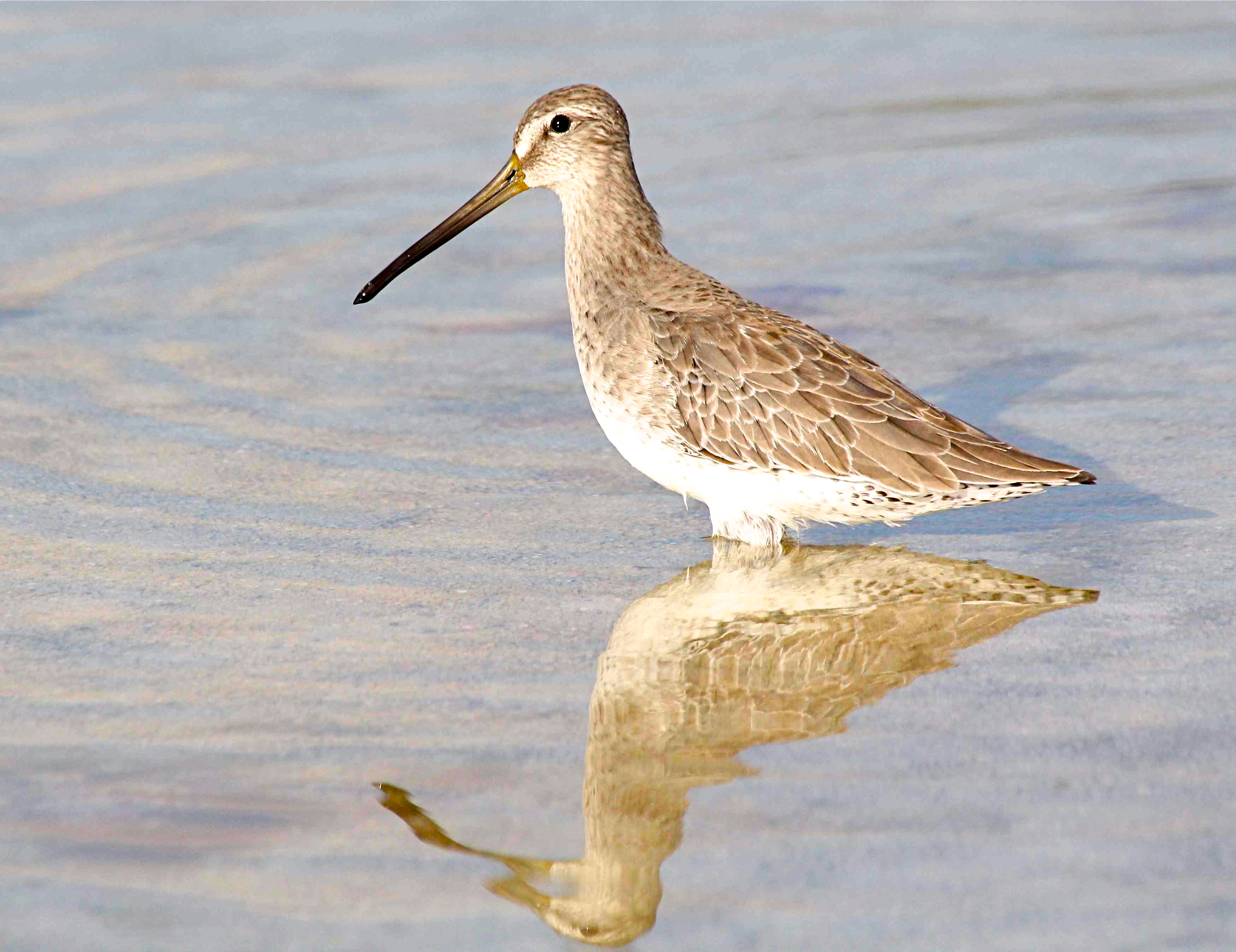
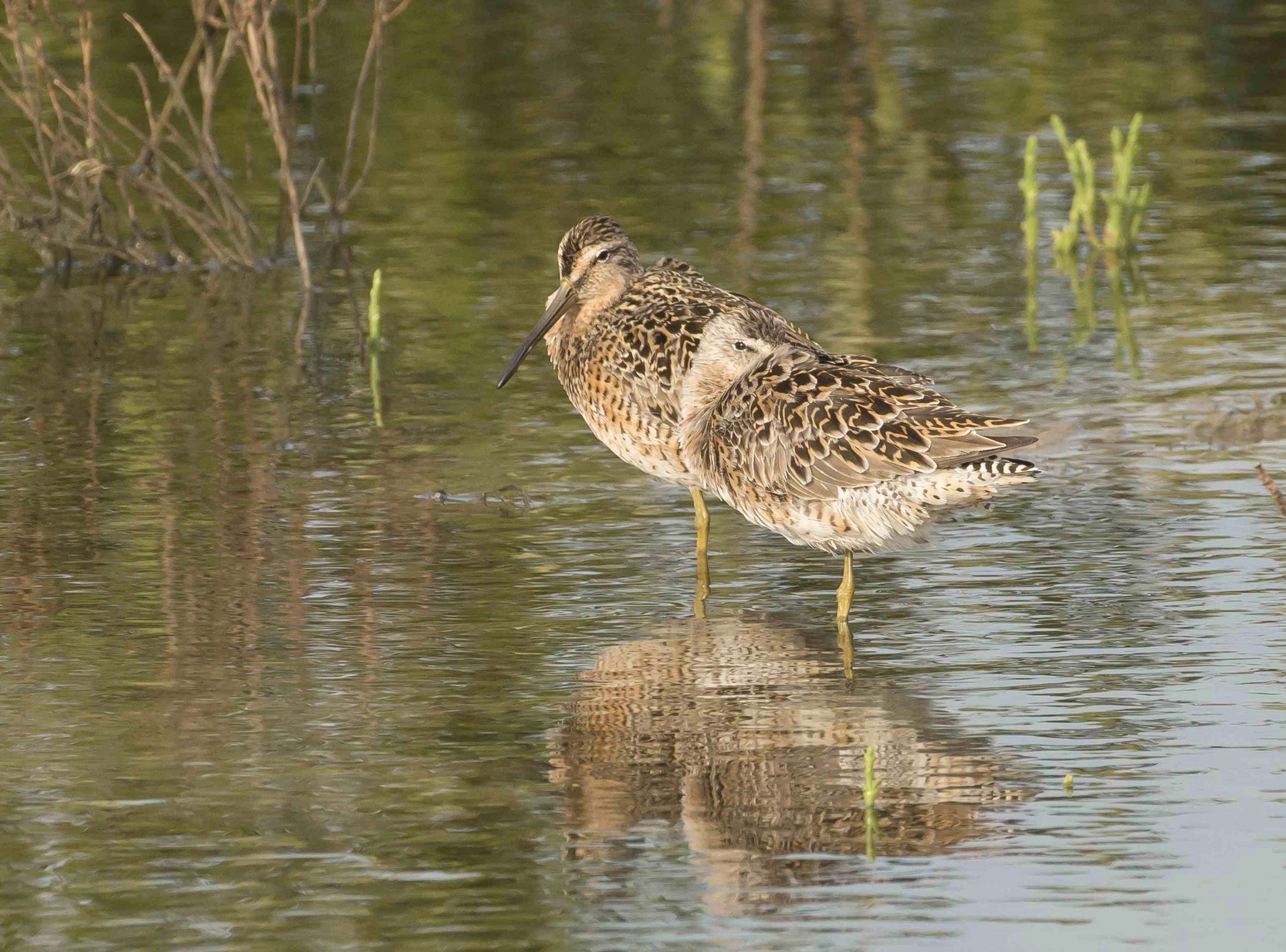
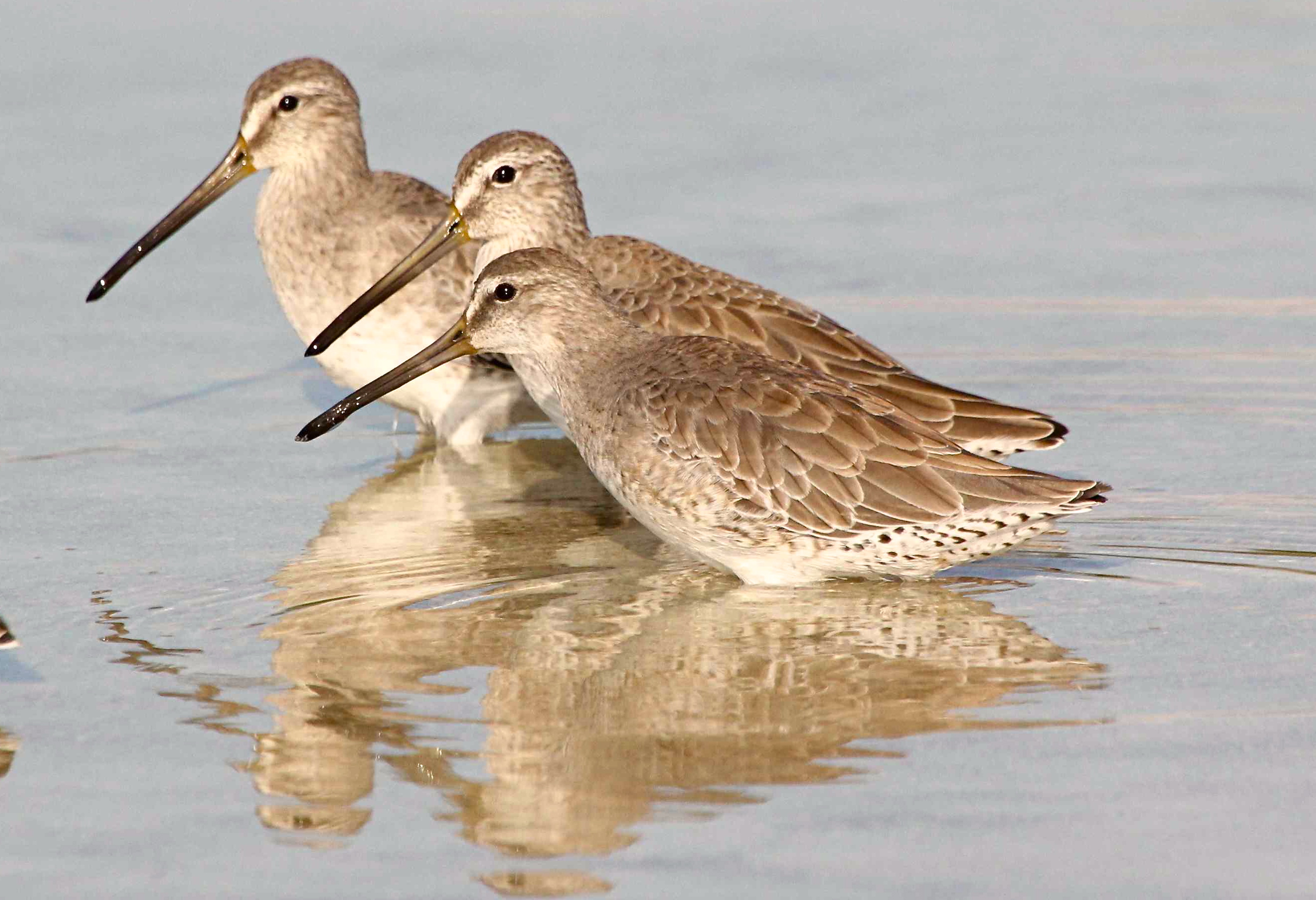
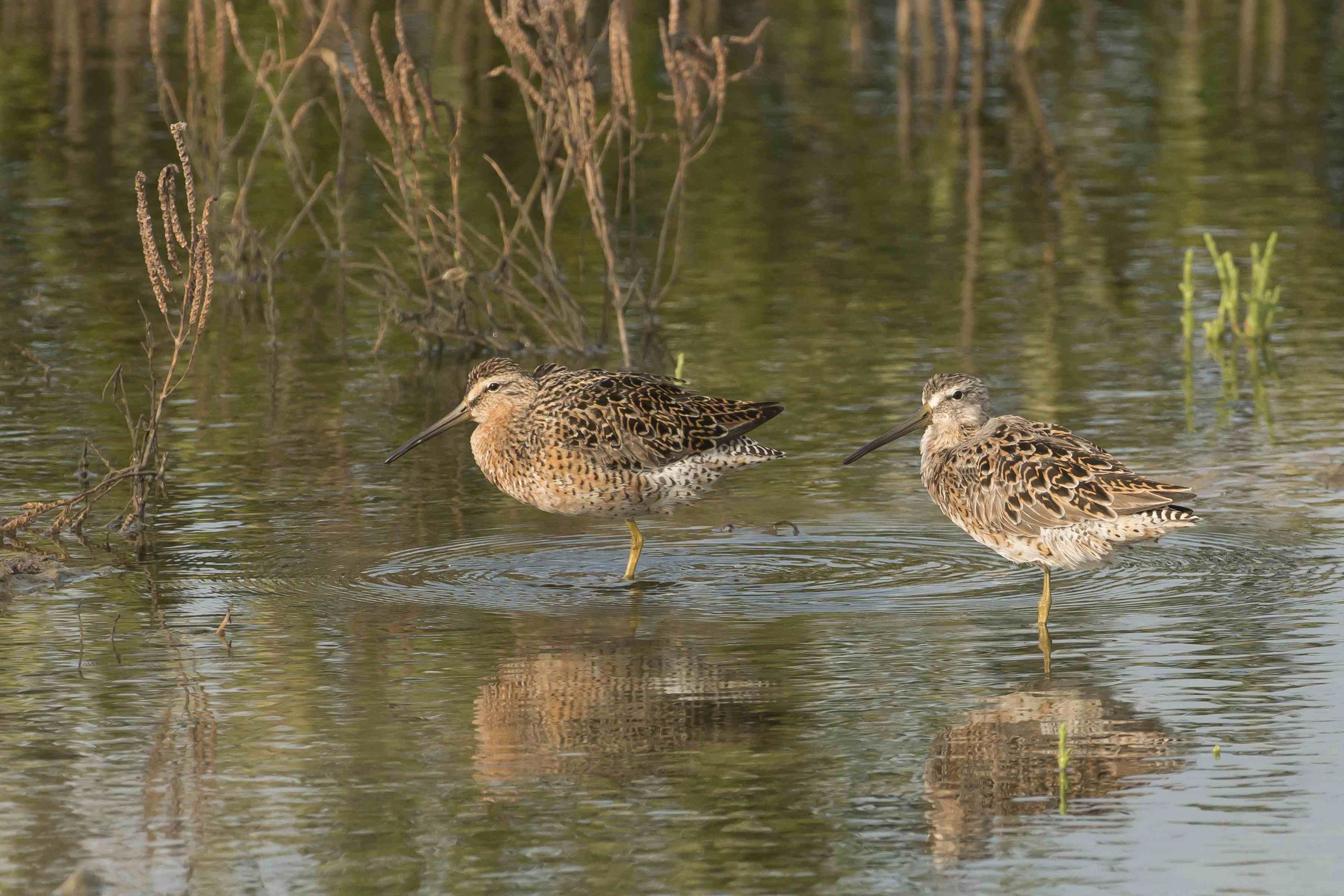
Long-billed (Limnodromus scolopaceus)? Or Short-billed (Limnodromus griseus)? Which one is that over there? No, not there. There! For Abaco, the answer is very easy. The SBD is a common winter resident, whereas the LBD is an occasional casual visitor, recorded rarely and irregularly in the Northern Bahamas.So if you are looking at a Dowitcher, it’s 98% certain that’s it’s an SBD. Which is lucky – they are so similar that telling them apart is a complex ID challenge, even if seen together! Until 60 years ago they happily existed as one species until the avian powers-that-be decided to prise them apart and award them separate species status. All the birds featured here are Abaco SDBs, with one exception… More on the comparisons and differences below.
The Dowitcher’s bill is an extremely effective instrument for probing deep into low water and mud. The rapid stabbing for concealed invertebrates has been vividly described as being ‘like a sewing-machine’. A ‘Dowitcher Stitcher’. So to speak.
HOW DID THE DOWITCHER GET ITS NAME?
I had assumed that the strange name for these birds was onomatopoeic, in the same way that a Killdeer is supposed to call “Kill…Deer”. And a Bobwhite, an interrogative “Bob…White?”. When I tried to check this online, I found that the usually valuable primary sources for bird info were silent on the topic. In the end, I tracked down a Merriam Webster entry that simply said “probably of Iroquoian origin; akin to Oneida tawístawis. First Known Use: 1841”. Which left me better informed, but no wiser…
THERE’S A BUNCH OF SHOREBIRDS OVER THERE – WHAT DO SBDs SOUND LIKE?
Phoenix Birder / Xeno Canto
In the header image, the bird is foraging in shallow water. In deeper water or with softer mud, SBDs will plunge their bills in to the hilt
SHORT OR LONG – HOW ON EARTH DO I TELL?
1. HELPFUL(ISH) WAYS
On Abaco, if you see a Dowitcher the overwhelming likelihood is that it’s a SBD
The species prefer different habitats, with the LBS preferring freshwater even in coastal regions
The SBD prefers coastal areas, shorelines and brackish / muddy ponds
The SBD’s call is said to be “mellower” than the LDB – though unless you have heard both for comparison, that’s not a very useful identifier.
The body shapes are apparently subtly different, in ways I personally can only begin to guess
In breeding plumage, the species have perceptible colour / pattern differences. (If you have binoculars?)
2. CONFUSING FACTORS
LBDs may occasionally join SBDs that are foraging on open tidal flats
Actual bill length may not help, there’s an overlap – some SBDs may have longer bills and vice versa.
There are theories about bill-length / head size comparison as a field ID method. Do they work? As if!
Winter plumage of both species is very similar (grey). Both are only on Abaco in winter. Go figure.
DOES THE DOWITCHER HAVE ANY PRACTICAL APPLICATION?
Yes! In Scrabble you can form a stonking 315 words from those 9 letters, all permitted under Scrabble rules (though not my own house rules, which forbid ridiculous 2 and 3 letter words that sound invented for the purpose of winning Scrabble). Apart from the full 9 letter original, there’s one 8 letter word – ‘witherod’, a type of viburnum plant; and 13 words of 7 letters, of which I’d say 8 are in common though not everyday usage. I’ll leave you to work out the remaining 301 words…
DO YOU HAVE ANY LBD PHOTOS TAKEN ON ABACO?
I surely do. Woody Bracey photographed a pair of dowitchers together on Abaco, one SBD and one LBD. But even though this looks a pretty straightforward comparison of bill length, colouring and marking, by now I’m now so confused that I’m beginning to wish the two species could be happily reunited into one…
Credits: Bruce Hallett, Tom Sheley, Woody Bracey, past researches, the usual bird info suspects
MASKED BOOBY: A SPECTACULAR NEW BIRD SPECIES FOR ABACO
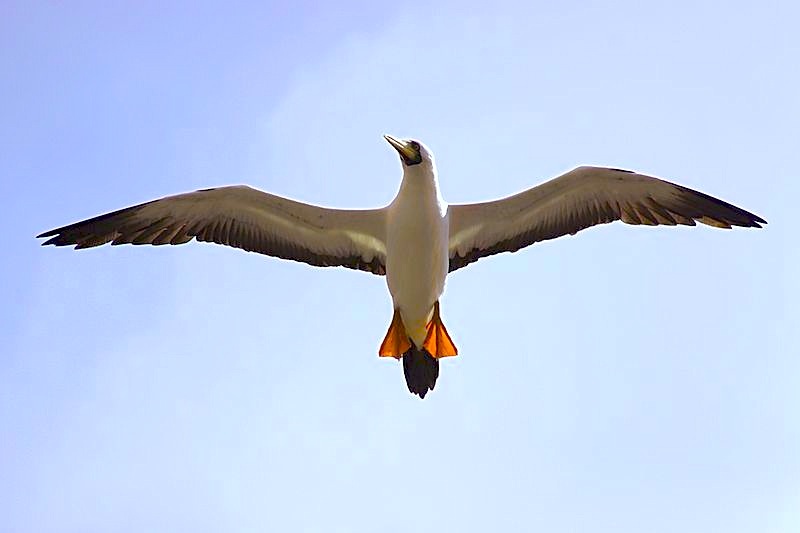
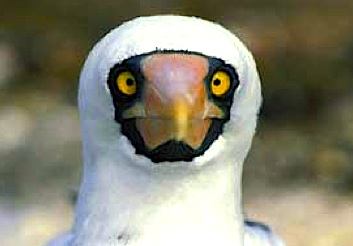
Hot avian news has arrived today from Woody Bracey: the 4th brand new species recorded for Abaco within the last 12 months has just been sighted in Abaco waters, north of Great Guana Cay. It was a single Masked Booby (Sula dactylatra), a large seabird also known as a Masked Gannet (and it certainly looks quite gannet-like). [NB the photos in this post are obviously not of the new bird, but are illustrative of the species]
THE LOGGED SIGHTING DETAILS
Date: Wed Jan 21, 2015 10:00 AM
Location: Deep Sea 2-15 miles off Great Guana Cay, Central Abaco, Hope Town and Green Turtle Cay, BS
Protocols: traveling – party size 2 – duration 6 hours – distance 30.0 miles
Observers: Karl Kleim and Kim Kuhnle; Reporter via Ebird, Elwood Bracey
Description: Single Masked Booby “Large white bird sitting on the sea with a yellow-greenish bill and no yellow on the head, then flew a few 100 yards showing the black trailing edge to the wings and wingtips and tail. Adult female.”
EIGHT ESSENTIAL MASKED BOOBY FACTS
First described by A French naturalist in 1831
One of six species of booby in the ‘Booby’ genus Sula
The largest Booby species
The only other Booby species recorded for Abaco is the Brown Booby
The closest breeding populations to Abaco are off Mexico and southern Caribbean
Silent at sea, whistling greeting call in nesting colonies plus a repertoire of ‘hissing and quacking’
Spectacular diving abilities
2 eggs are laid: very often the first chick to hatch kills the second (“Siblicide”)
The wingspan of an adult Masked Booby can exceed 5 feet
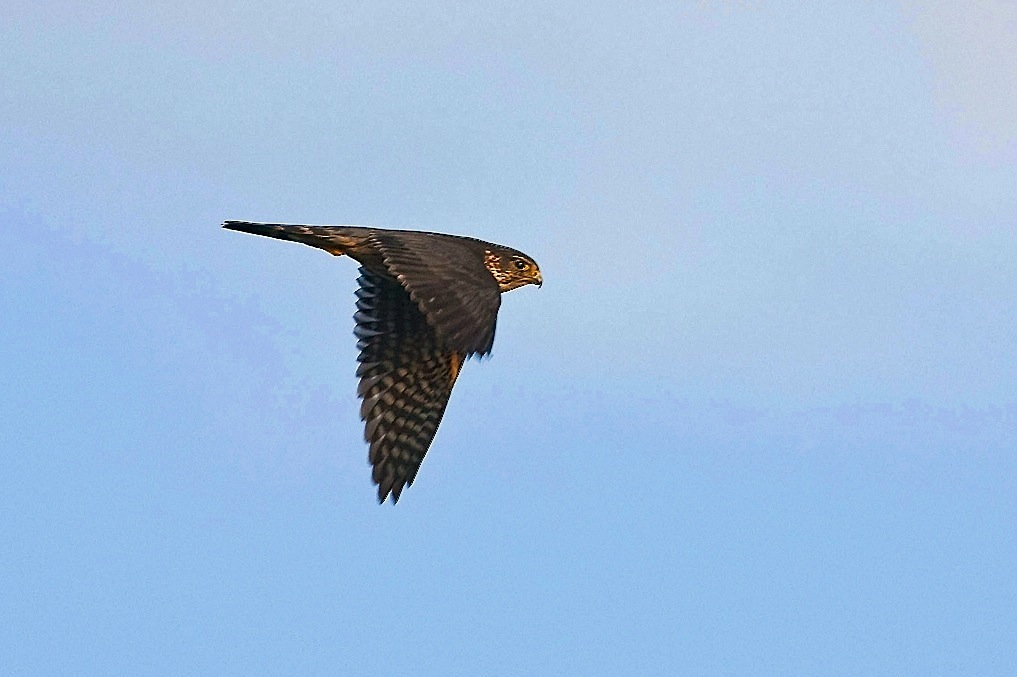
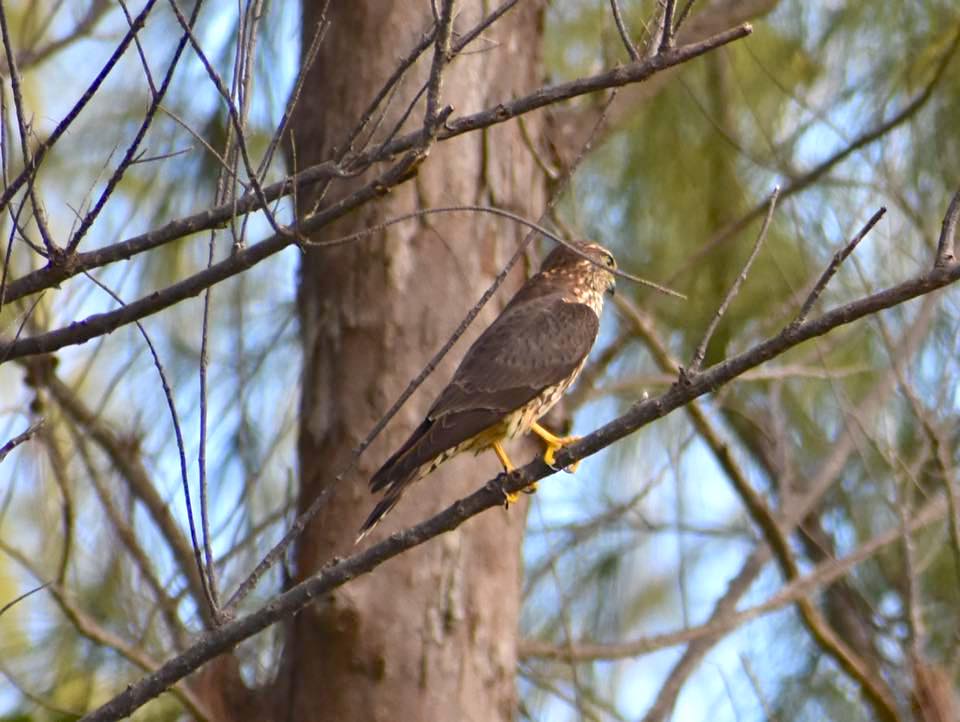
Merlins (Falco columbarius) are fierce small falcons that are fast and agile in flight. On Abaco, they are fairly common winter residents – though finding one and managing to photograph it may take a bit of doing. And maybe a dose of luck. The ‘columbarius‘ part of their taxonomy reflects their colloquial name ‘Pigeon Hawk’. Merlins are found throughout much of the northern hemisphere. They are classified as a New World species and an Old World / Eurasian subspecies, F c aesalon. Some argue for two distinct species, the gene pools of the two versions apparently having parted company ten of thousands of years ago. The birds aren’t overly bothered by the debate.
Merlin World Range Map: yellow = summer, blue = winter
HOW DO MERLINS DIFFER FROM AMERICAN KESTRELS (AMKE)?
Slightly larger and notably heavier (thus having more speed and endurance in flight)
Different colouring, e.g. lacking the indicative reddish-browns of the AMKE
Distinctive tail-barring as against black ends to the tail feathers with a white fringe
Unlike the AMKE they don’t hover, but close in directly on the small birds that are the main prey, often flying very low to surprise the victim.
For comparison: Merlin in South Abaco, American kestrel at Sandy Point
SO JUST HOW FIERCE ARE MERLINS?
Formidable! If you are a small or even medium-sized bird, you need to keep your wits about you. Merlins are largely ‘omni-habitat’ within their range, which includes open country, shrubland, light forest, and grasslands. They are fast, agile and strong. They can fly high, at medium height or at ground level, and are expert in surprise attack and rapid pursuit of prey. If you are a large bird of prey – a red-tailed hawk, perhaps – they may attack you with ferocity. They may not actually be trying to nail you, but to get you out of their territory and their catchment area.
Most of a merlin’s prey is taken in flight, and their speciality is ‘tail-chasing’ terrified birds. Breeding pairs may hunt cooperatively, with one bird flushing prey from cover into the open for its mate to… well, you get the picture – they are clever too. They may even pursue birds that have been flushed out by another bird of prey in the vicinity.
MERLINS AND PHOTOGRAPHERS
This is a slightly fraught relationship, because Merlins do not always pose as one might wish. Sometimes they are hard to see, being fairly well camouflaged unless they choose to ‘go out on a limb’.
And sometimes they don’t play by the rules relating to light and focus, making a clear shot difficult
This photo (2017) was taken on Elbow Cay (north end) by Jan Purdy Hulme Metcalf. It’s the first merlin photo from one of the Cays that I have come across.
FALCONRY AND MEDIEVAL HISTORY
Dame Juliana Berners
Merlins were popular birds in medieval English falconry, and according to the 1486 Boke of Seynt Albans, the ‘Marlyon’ was considered the appropriate hunting bird for a lady. This book contained an essay on hunting attributed to Dame Juliana Berners, the prioress of a Priory near St Albans, who, game lady that she must have been, also contributed to one of the earliest treatises on fishing, ‘Fysshynge wyth an Angle‘ (hence, angling).
The Dame’s Manuscript
FURTHER HISTORICAL DIGRESSION (feel free to skip to final para)
While reading up further about Dame Juliana, I came across (wiki-tnx) a wonderful ranking for birds of prey matched to status that I hadn’t encountered before. Here’s the list, from Emperor to Knave / Servant. A Tercel was / is a male falcon, especially a Peregrine or Gyrfalcon. A Musket is a sparrowhawk.
The Boke of Seynt Albans also contains list of collective nouns for animals and birds, many familiar today such as “gaggle of geese”. There are also humorous collective nouns for different professions, such as a “diligence of messengers”, a “melody of harpers”, a “blast of hunters”, “a subtlety of sergeants”, and a “superfluity of nuns”…
Merlins are still trained for hunting smaller birds; and because of their speed and agility they are used in falconry displays. Despite changing habitat, and a perceptible dip in population from the use of pesticides now banned (such as DDT), the Merlin seems to be holding its own very well 5 centuries after the Boke was written.
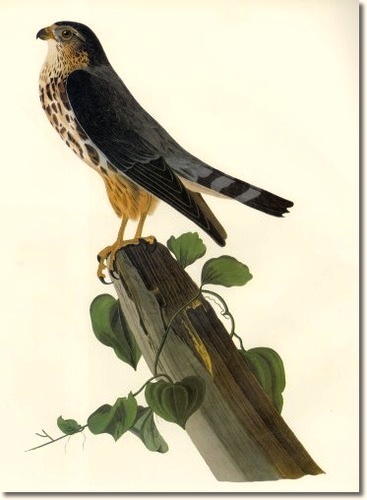
AND FINALLY… AUDUBON’S HANDSOME MERLINS
Credits: Becky Marvil (1 & 7); RH (2); Rhonda Pearce (3); Craig Nash (4 & 5); Gerlinde Taurer (6); Prairie Boy; (8) Jan Purdy Hulme Metcalf (2017 photo); (9) wiki – not taken on Abaco, but I liked it; Dame Juliana Berners (1486); Magpie Pickings
Velma Knowles is a resident of Nassau but originates from Abaco, where her grandparents lived. She is a keen photographer and birder, and recently spent a few days ‘back home’ on Abaco, staying on Man-o-War Cay during that strange ‘Christmas to New Year’ period that people have begun to refer to uncomfortably as ‘Twixmas’. Which I guess goes well with ‘Winterval’, if that neologism to describe the festive season rocks your sleigh.
Obviously, Velma had her camera with her; and a bit of quality birding was built into her schedule. Man-o-War has been having a prolific winter season, birdwise, with plenty of interesting migratory species passing through or settling there till Spring. But who would be content with a random warbler from the North, when there are Abaco’s specialist birds to encounter. Many of the birds featured – all are permanent residents – were seen on Man-o-War; others on the main island, though not actually at Delphi. Every bird shown can readily be found at Delphi, except perhaps for the Royal Tern, hence a few mentions. Let’s see how Velma did during her brief visit. (Spoiler Alert: very well indeed!).
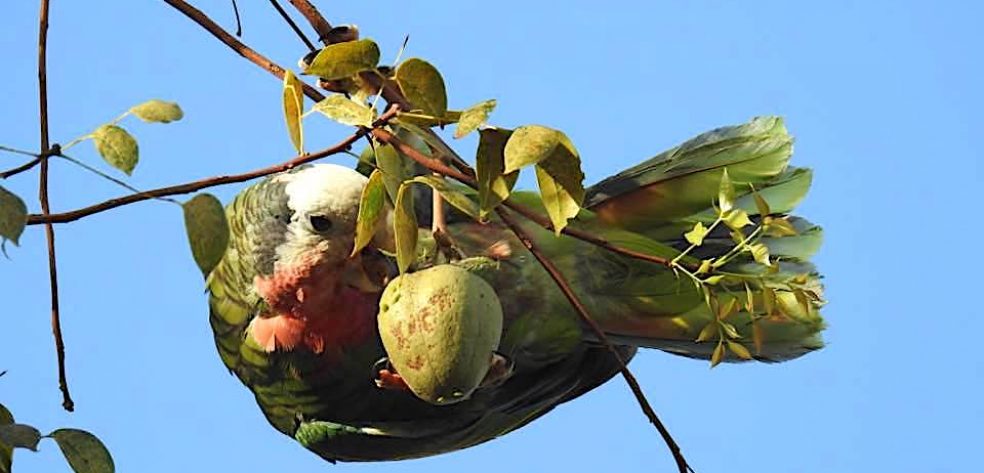
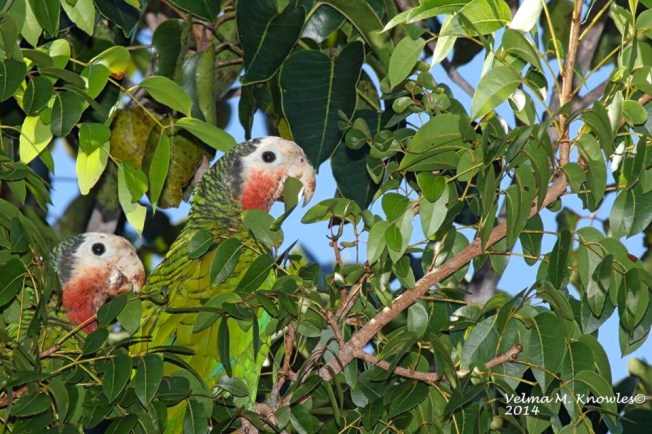
A first ‘get’ for anyone’s Abaco checklist, and hence the header image. Not available on the Cays, so a trip to the ‘mainland’ and the wild pine forest and coppice of South Abaco is called for (they don’t venture north of Marsh Harbour). Rescued from the brink of extinction by careful conservation measures, the newly regenerating population of these unique underground-nesting parrots is gradually spreading, making them easier to find. During the day, Bahamas Palm Shores is a likely spot, as are locations to the south, including Delphi and the area around Crossing Rocks down to Gilpin Point.
Abaco’s lovely endemic hummingbird, rather pushed around by the brash incomer Cuban Emerald and therefore tending to avoid them (though both can be found at Delphi). The MALE CUBAN EMERALD has a striking purple throat aka ‘gorget’; the female (below) encountered by Velma has a more delicate colouring.
Unlike the Woodstar, these pretty iridescent green hummers are not endemic yet are more frequently encountered. They fly and change direction with astonishing speed, and are feeder-keen! Your sugar-water feeder will also attract Bananquits (pointy curved beak for the little holes) and West Indian Woodpeckers (long tongue) – and possibly Woodstars.
Splendid and occasionally noisy birds that nest in boxes under the eaves at Delphi. They produce two families a year. Velma writes “It has been a long wait but I finally saw this lifer, the West Indian Woodpecker. This bird is only found in The Bahamas, Cuba and the Cayman Islands. Awesome call!”
Velma writes “One of my targeted birds, the Western Spindalis, formerly called the stripe-headed tanager. On the way from the airport we spotted him on the side-of-the-road. Now that’s island-birding!”
Velma writes“Such a beautiful call… the Thick-billed Vireo. We heard a number of these guys on our bird-walks. The Thick-billed Vireo is a Caribbean endemic, being restricted to The Bahamas, the Caymans, the Turks and Caicos, two islands off of Cuba and one off of Haiti (though it has been reported in Florida)”
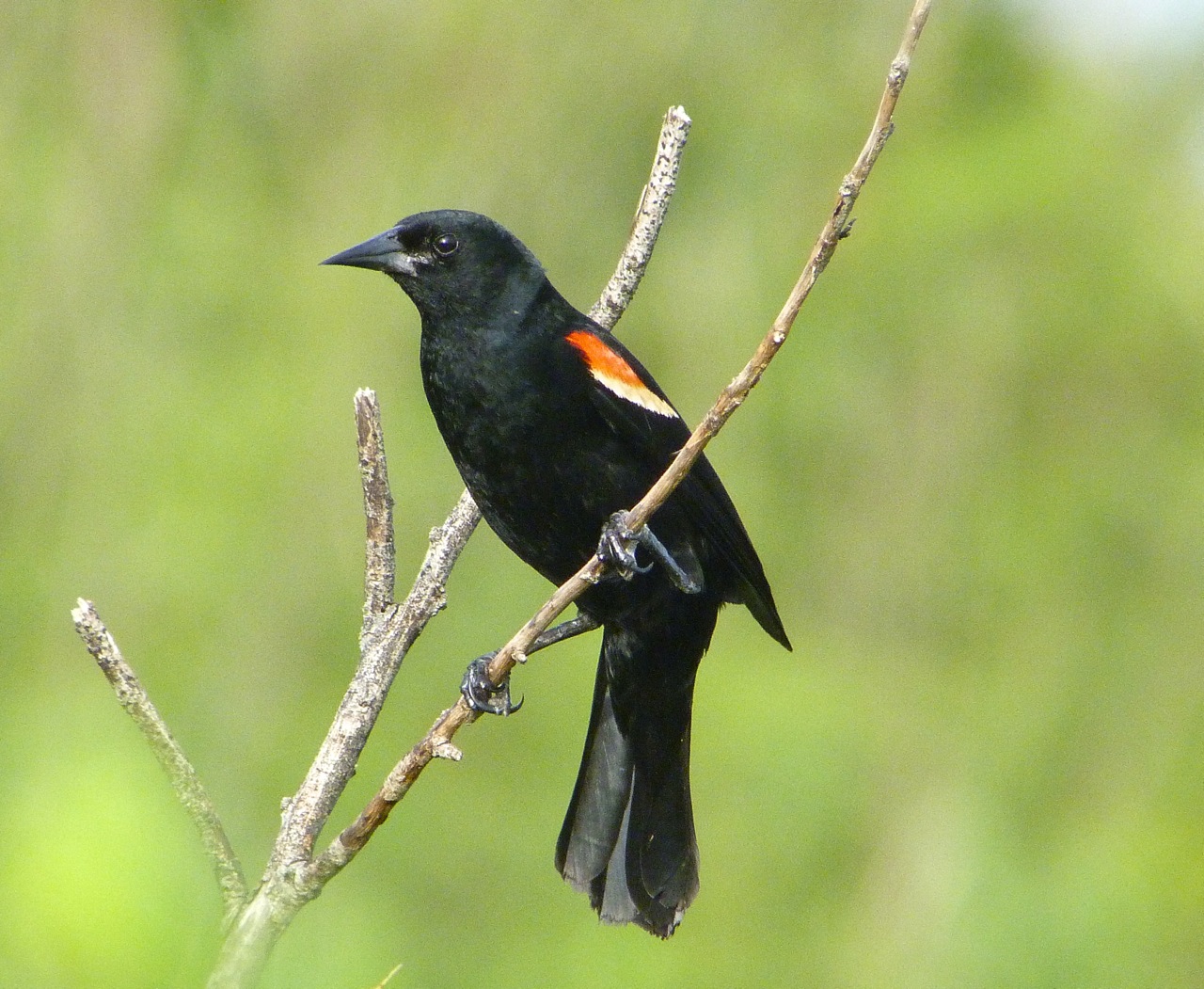
The adult male’s striking colour patches are orange-red; the female’s are more yellow. They are greedy at the feeder and rank high up in the pecking order, where smaller birds defer to them. One local name for them is ‘Police Bird’: the adult male’s colouring matches that of a Bahamian Police Officer’s uniform.
SANDERLING ON ABACO: A PERFECT PEEP FOR THE NEW YEAR
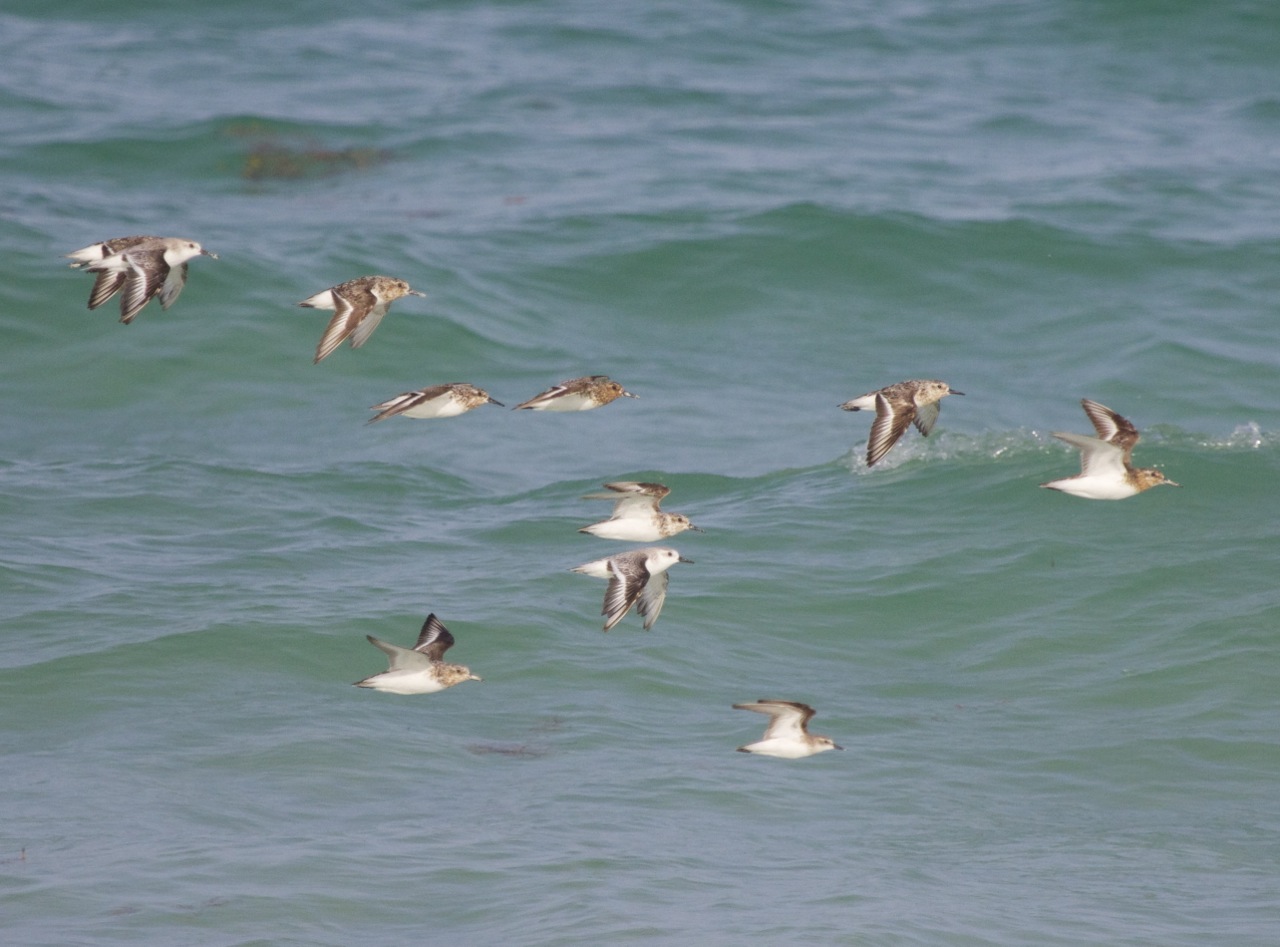
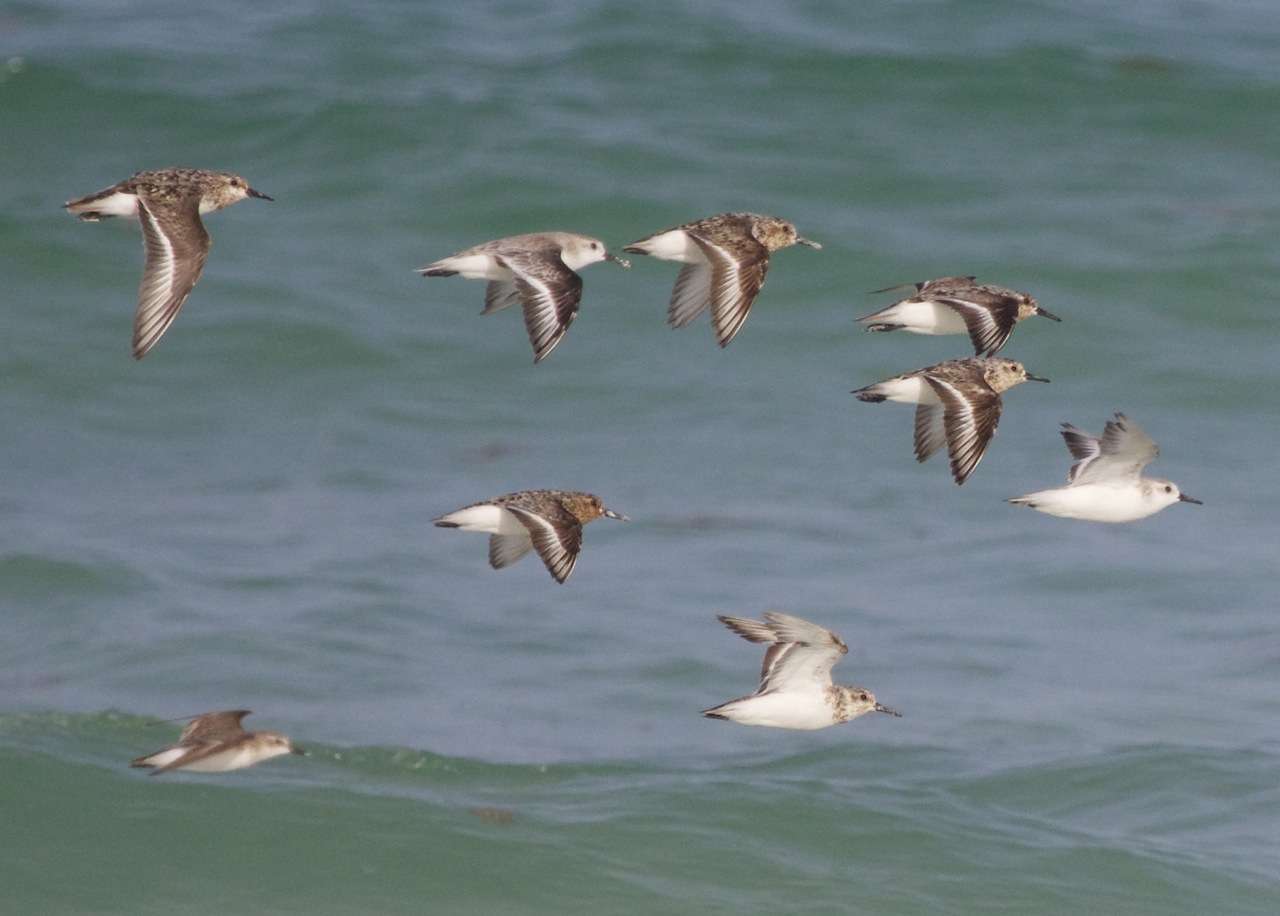
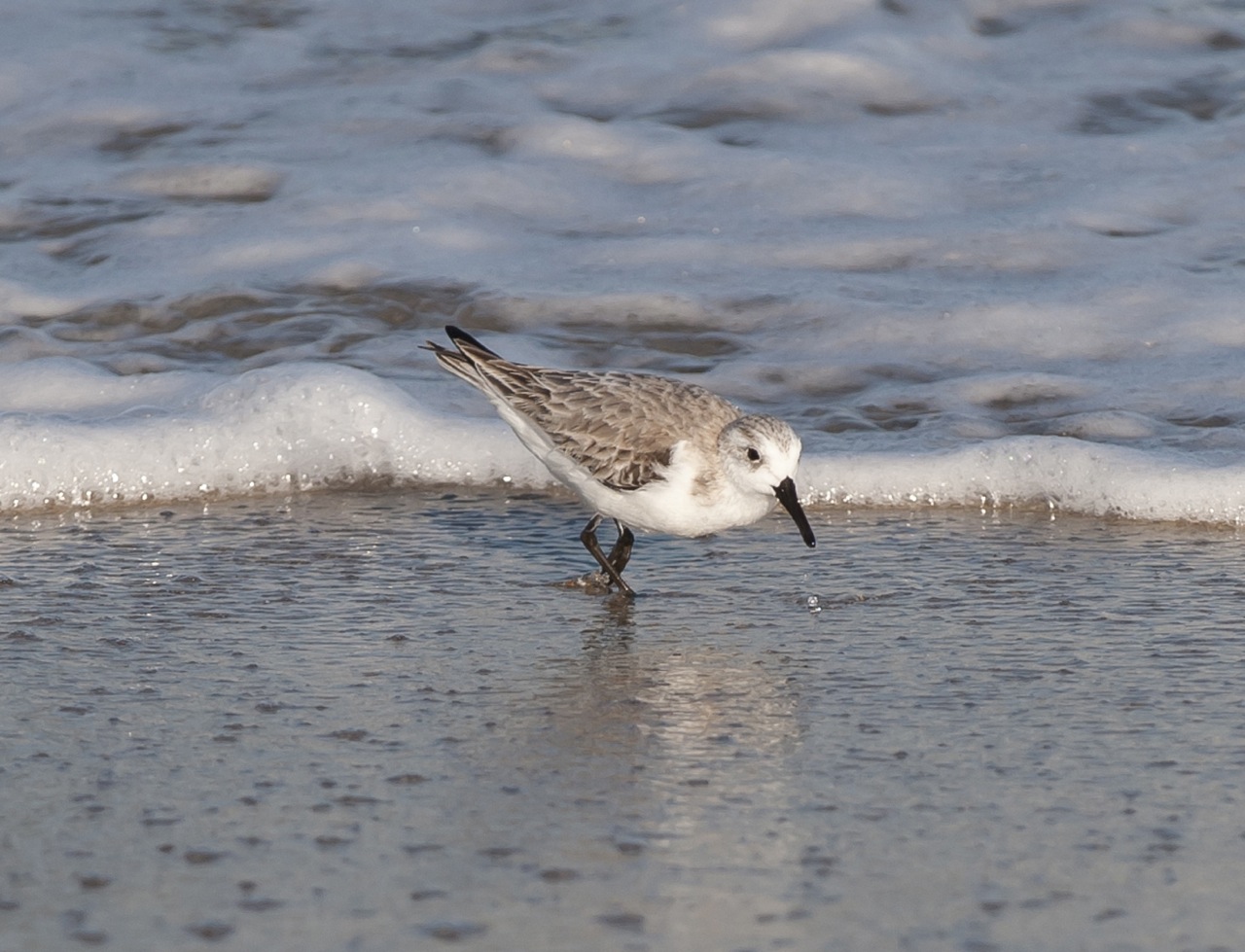
Various matters have kept me from the Blogosphere over the last week, so this is the first post for 2015. And what gorgeous little birds to have to hand for it – the Sanderling Calidris alba, a small sandpiper or ‘stint’ that is a common and welcome winter sight on the shorelines of Abaco, as in many other parts of the world. Who can resist these little guys, the ‘wave chasers’ that work along the shoreline, rapidly following the surf as food is exposed on the tide. Sometimes they will actually run into the ripples of an incoming wave to snap up a morsel of food, before scuttling back up the beach. They have been likened to clockwork toys. Amusing and cheering little birds to watch, so here is a gallery of them to enjoy and to welcome in the new year.
Classic Sanderling foraging area in the wet sand left by the retreating tideThe birds are small and fly fast: a clear ‘in-flight’ photo is a great achievement
This sandpiper was taken by the late Tony Hepburn on Abaco. It has been ringed in its summer breeding grounds, and feeds in wave-softened sand with the tidal foam still visible all around it.
This made me chortle… Sanderling Lonelyheart!
Credits: Craig Nash (1 – 3); Alex Hughes (4 – 7); Tom Sheley (8 – 9); Tony Hepburn (10)
Yay Mom! Apparently it’s something exciting called Christmas…
“ELEVENPIPERSPIPING“: CUTEPLOVERSFORCHRISTMAS…
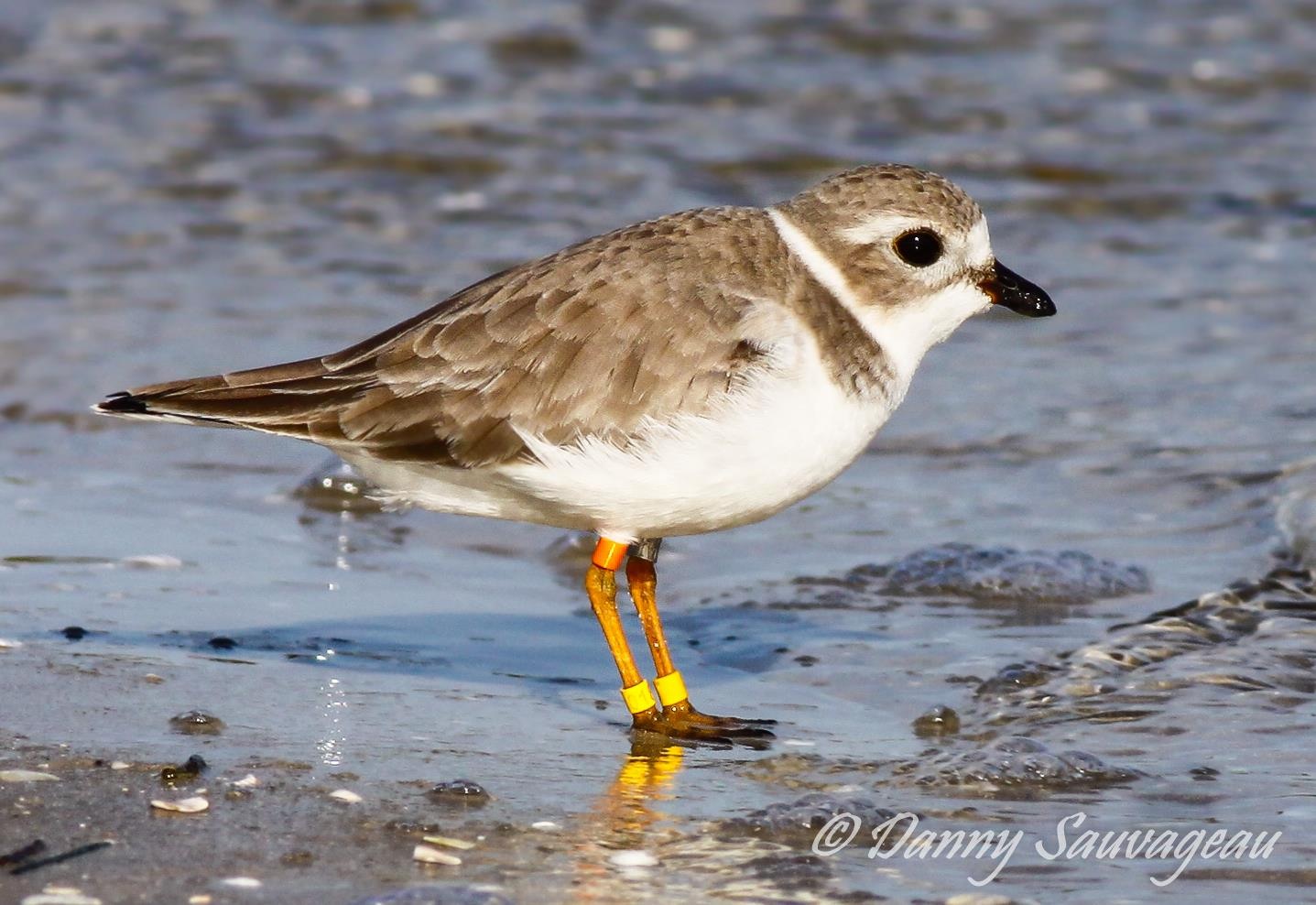
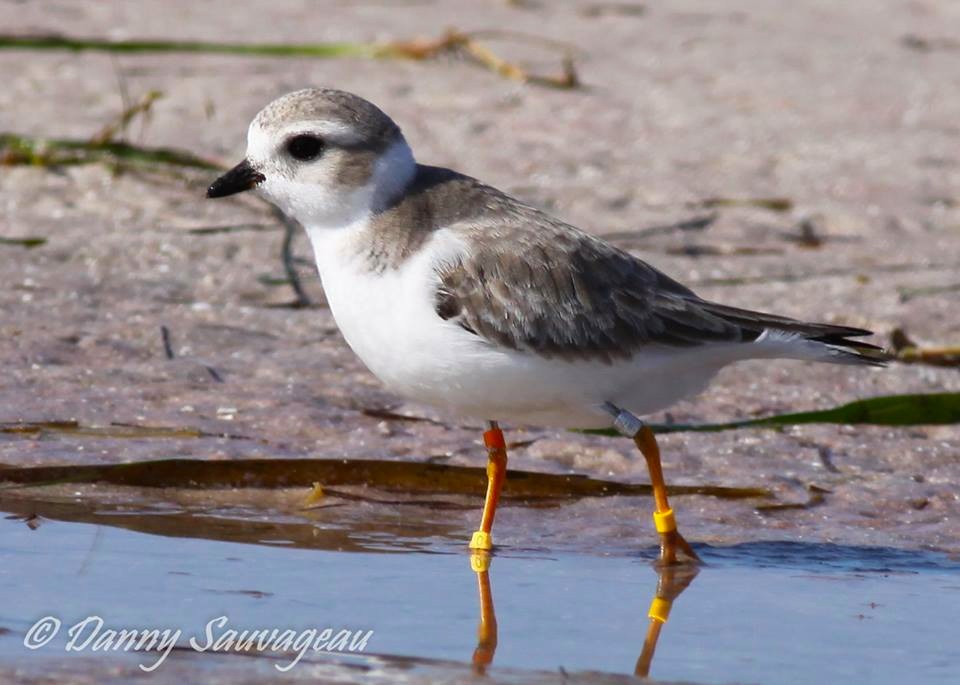
A Gorgeous Gallery of Ringed / Tagged PIPL by Danny Sauvageau
The numbers, positions, colours and numbering of the rings and tags pinpoints the precise origins of each bird. Note that some birds are ringed both above and below the ‘knee’. These markers have no effect on the daily lives of the birds, but are massively helpful in migration research. Danny’s photos are taken at ‘resting points’ in Florida where the birds pause as they migrate south for winter, many to Abaco and other Bahamas islands. Some birds shown below come from Canada, others from along the Eastern Seaboard of North America.
This New Jersey conservation organisation is very closely involved with research into PIPL migration to their winter grounds. Two scientists, Todd Pover and Stephanie Egger, recently made their annual visit to Abaco to count the plovers and check for ID markers. At one remote location they found an amazing 88 birds. However, by the time they got to Delphi, the four Pipers that had been playing on the beach for a couple of weeks had moved off, unsettled by windy conditions.
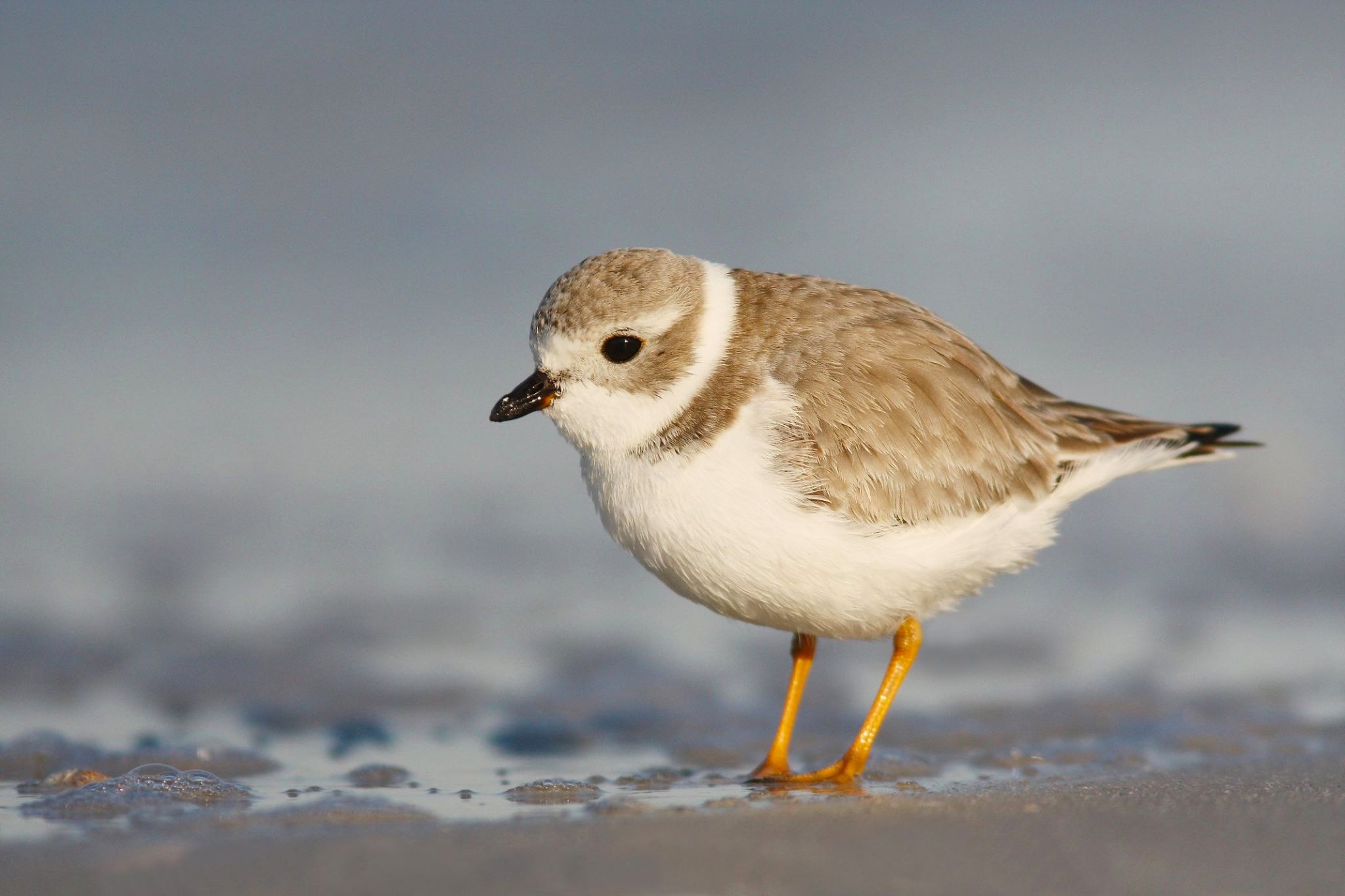
An unringed Piper taken recently by Charmaine Albury on Man-o-War Cay
The Epitome of Cute
AND ONE EXTRA FOR LUCK!
Eco-friendly PIPL plush ‘stuffies’ from the fabulousUNREAL BIRDS.Check out their other species – the American Oystercatcher is irresistible. NB 20% of every sale goes to the Conserve Wildlife Foundation of NJ (see link above).
Credits: Conserve Wildlife Foundation of NJ / ‘BirdsbyKim’; Danny Sauvageau; Char Albury; Unreal Birds; Cute chick from FB, unattributed – thanks, photographer!
[Yay! A Christmas gift of a puntastic avian / festive double-meaning]
A small New World songbird of the cardinal subfamily
Flags and other colourful festive decorations
PAINTED BUNTING
It’s hard to imagine a more Christmasy little bird than the Painted Bunting. Bright blue, red, green primary colours make for a spectacular small bird to grace any garden or feeder. The 2 birds above were featured in a detailed post on the species several months ago, with plenty of other great photos,HEREBut there are other bunting species and close relations on Abaco that haven’t yet had a look-in on these pages. A common factor is the little fat beak and a great liking for seeds…
INDIGO BUNTING
Indigo Bunting male with 2 females going for the seeds, Bahama Palm Shores
ROSE-BREASTED GROSBEAK
SUMMER TANAGER
SCARLET TANAGER
The birds above are all buntings or part of the wider bunting family. The definition is somewhat flexible and includes piranga and tanager species (and in the past the Western Spindalis, formerly the Stripe-headed Tanager). All were photographed on Abaco, mostly at the Delphi Club or Bahama Palm Shores. The photos below are a flagrant cheat. You’ll never see one of these on Abaco. They were taken by me a couple of years back in Central Park, NYC, made magic with snow and freezing air. Have a very happy and colourful Christmas!
NORTHERN CARDINAL
Credits: Erik Gauger, Tara Lavallee, Tom Sheley, Ann Capling, Caroline Stahala, Bruce Hallett, Woody Bracey, RH
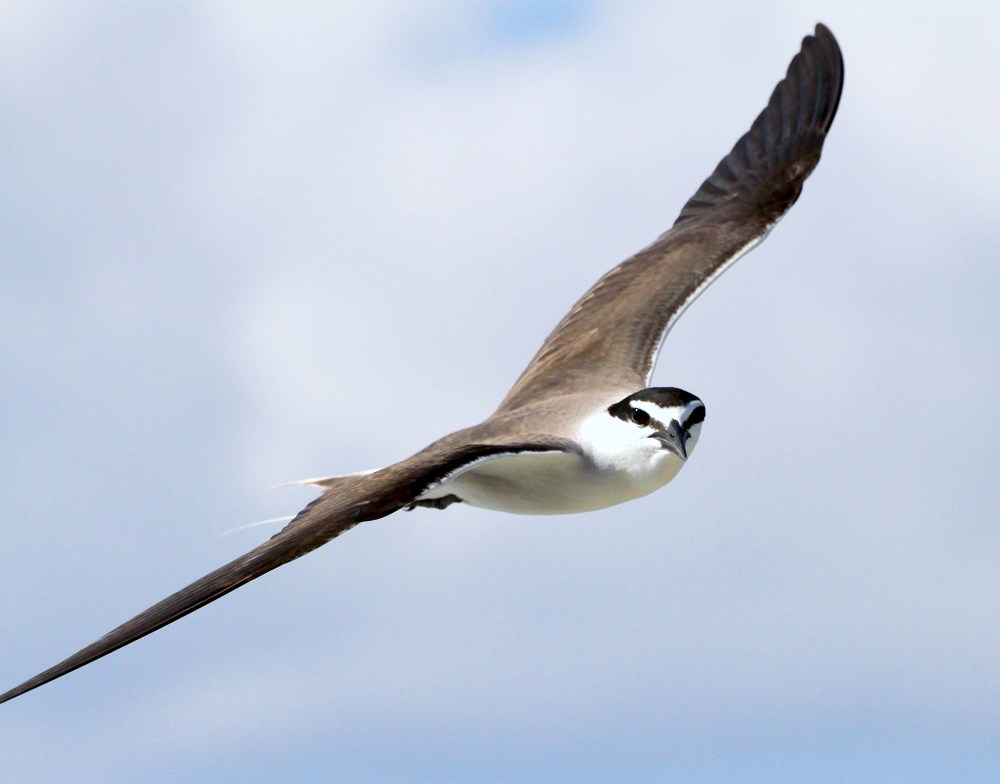
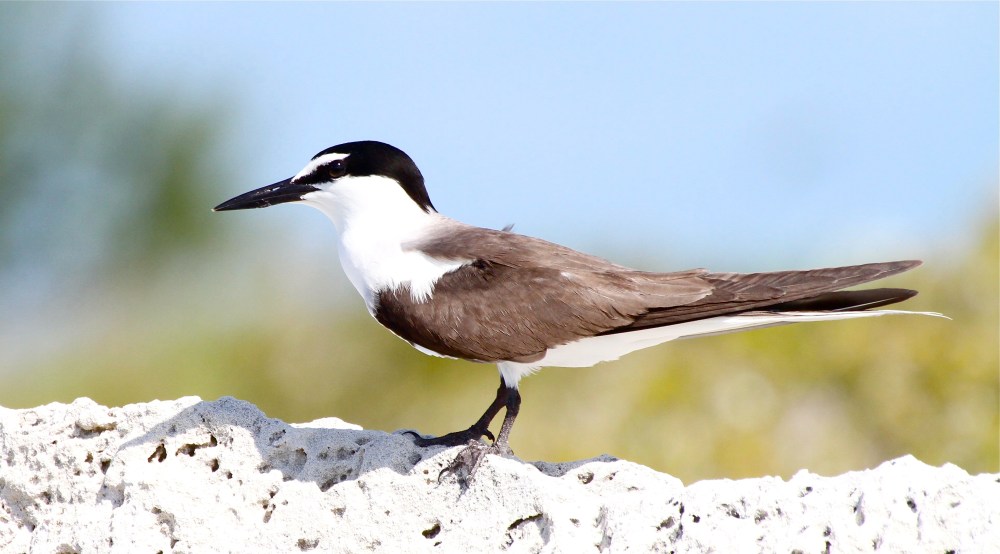
Well, with a bit of digging into the naming of this tern species, I have discovered that the ‘bridled’ part of it apparently refers to the white band / collar at the back of its neck. This is puzzling because one would expect a ‘bridle’ to start at the mouth / beak and angle backwards. Like a horse. Like the conspicuous black line from the base of this tern’s beak sweeping back past its eyes and joining its black cap at the back. How wrong that assumption would be…
Far more exciting than the ‘bridle’ question is the origin of the Bridled Tern’s species name, Onychoprion anaethetus. Wondering about the medical-sounding word, I discovered via the excellent ARKIVEthat the name derives from the Greek for ‘senseless’ or ‘stupid’, “a reference to the ease with which hungry sailors captured this bird“. So there you have it: not ‘aesthetically pleasing’ or similar compliment, but just plain dozy.
The Bridled Tern is a fairly common summer resident on Abaco, where it breeds. It is one of 12 tern species recorded on Abaco, the others being Sooty Tern, Least Tern, Gull-billed Tern, Caspian Tern, Black Tern, Roseate Tern, Common Tern, Arctic Tern, Forster’s Tern, Royal Ternand Sandwich Tern.
These terns plunge-dive for fish, but will also take them from the surface. Unlike other terns – for example the Least Tern – they usually dive directly and not from a hover. When courting, the male will rather charmingly woo the female by offering her fish.
OVENBIRDS FOR CHRISTMAS ON ABACO (NB NOT ROAST TURKEY)
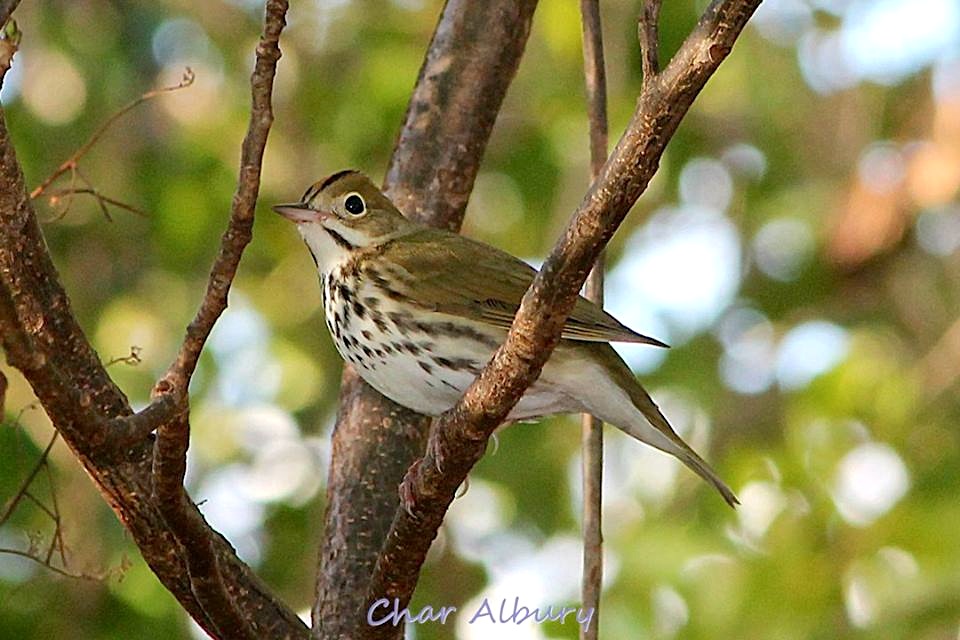
The Ovenbird (Seiurus aurocapilla) is a small winter-resident warbler with distinctive orange head feathers that can be raised into a crest. I’m guessing this accomplishment is mainly used in the breeding season as a way to impress and attract a mate. Maybe when alarmed or excited at other times as well. Right now, with Christmas only ’12 sleeps’ away, they have become a visible presence on Abaco and the Cays despite their shyness and a general tendency to shuffle around in the undergrowth looking for insects and small snails.
You may hardly be aware of these rather unassuming little birds, and as they rootle their way through the dead leaves under shrubs they can look quite dull. See one lit up by the morning sun, however, and you’ll see how pretty and richly marked they are.
The Ovenbird enjoys the taxonomic distinction of being the only bird of its genus in the warbler family Parulidae. It is a so-called ‘monotypic’ species. It was formerly lumped in with Waterthrushes, but was found to be genetically dissimilar so its new status was granted.
The ovenbird is so named because it builds a domed nest (“oven”) with a side-entrance, constructed from foliage and vegetation. They tend to nest on the ground, making them vulnerable to predation. The species name for the ovenbird, Seiurus aurocapilla, has nothing to do with the nest shape, though. It derives from both Greek and Latin, and loosely means ‘shaking tail, golden haired’. No, nothing to do with Miley Cyrus either. Leave it.
Here are some recent shots taken by Charmaine Albury on Man-o-War Cay, showing the orange crest very clearly.
My plan to include audio of the ovenbird’s song and call has been temporarily thwarted by a glitch, but I’ll add them here when I have overcome the problem.
Gauge the size of the bird against the pod it is standing on…
In this photo, you can see that the orange crest feathers are raised
Credits: Tom Sheley, Woody Bracey, Charmaine Albury, Bruce Hallett, Gerlinde Taurer, Cephas / Wiki
THICK-BILLED VIREOS: ABACO’S ONLY PERMANENT RESIDENT VIREO
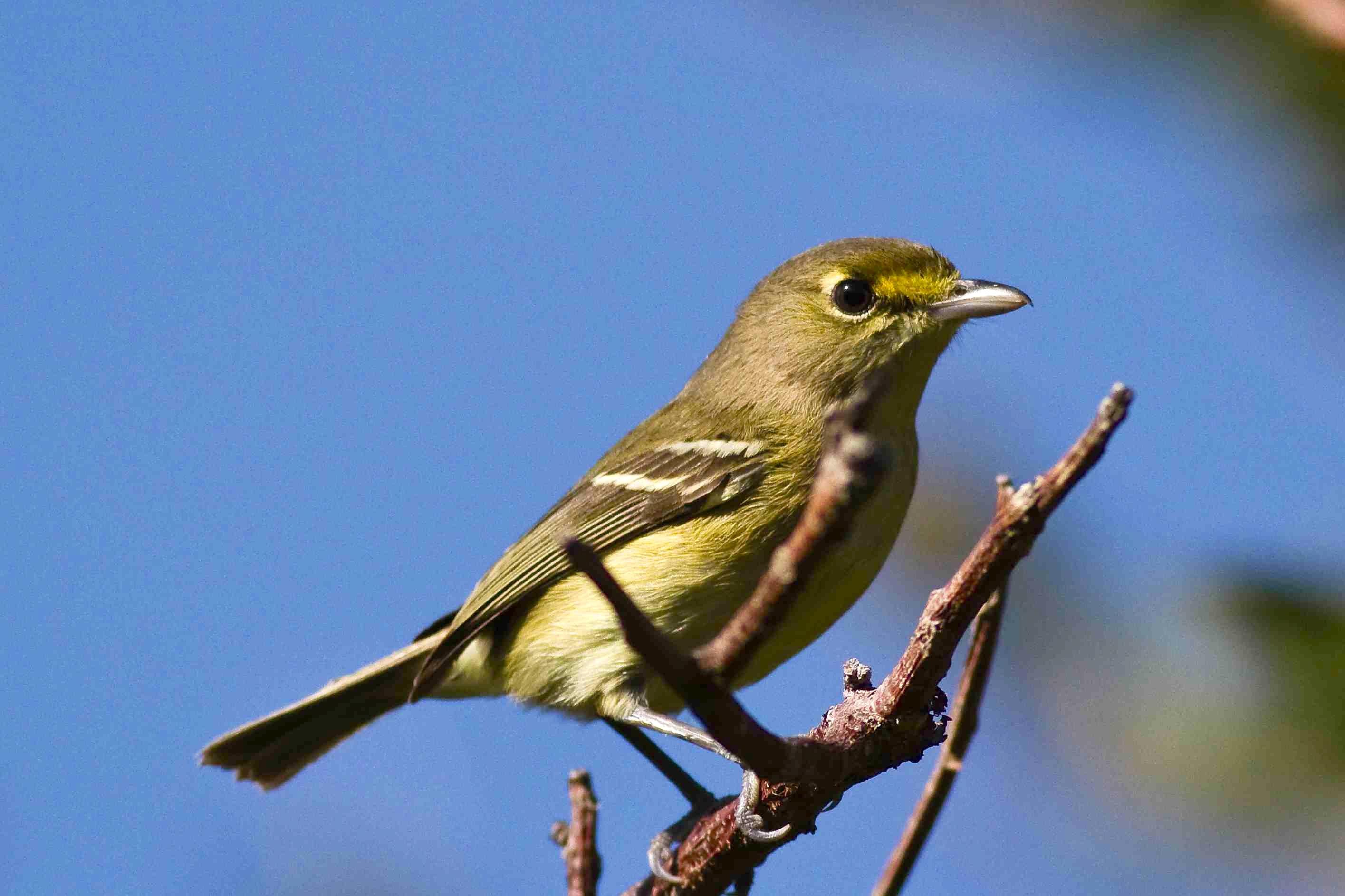
Hard to know why I haven’t got round to featuring these little vireos before. Unlike the other 7 vireo species found on Abaco seasonally or as transients, the Thick-billed Vireo Vireo crassirostris is an ever-present permanent resident of the coppice and scrub; and their unmistakeable repeating song can be heard almost everywhere. It was the first bird song I heard on Abaco, and therefore the TBV was the first bird I learned to ID. I’ve got quite a soft spot for them, really.
Although TBVs are very easy to hear and track to a general area of coppice, I find actually seeing the bird creating the noise quite hard – let alone getting a clear camera shot. They always seem to be lurking several feet further away, deeper in the foliage, than the sound suggests. I’ve had some fun making TBV song iPhone recordings along the Delphi drive, practising the technique. If you want to know more about recording and converting to MP3 CLICK HERE.
One of my favourite images, from Gerlinde Taurer: a ‘shouty’ bird. We used it for ‘BIRDS OF ABACO‘.
I also love this perky little guy with a great beady-eyed pose taken by Bruce Hallett
Here’s a clip of song, which I’m sure will be immediately familiar to Bahamians:
Paul Driver / Xeno Canto
The main signifiers for this species, which in combination distinguish the TBV from the other vireo species on Abaco, are:
Two white wing bars
Yellow patch – usually quite prominent – between eye and beak
Thick bill – which immediately rules it out of being one of the 37 warbler species on Abaco…
Text book TBV
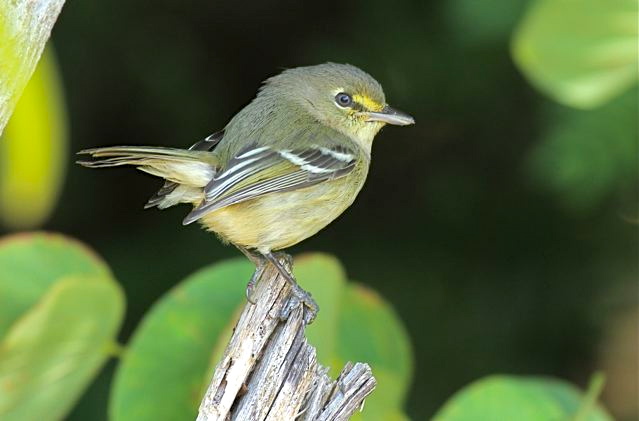
There are marked colour variations in the species according to maturity, season and to an extent gender (though m & f are quite similar). Here’s one that is causing wing-bar confusion by only showing traces. It also has quite dark upper parts.
This is a very yellow TBVWhereas this one has rather anaemic colorationFinally, this pretty TBV is very delicately marked
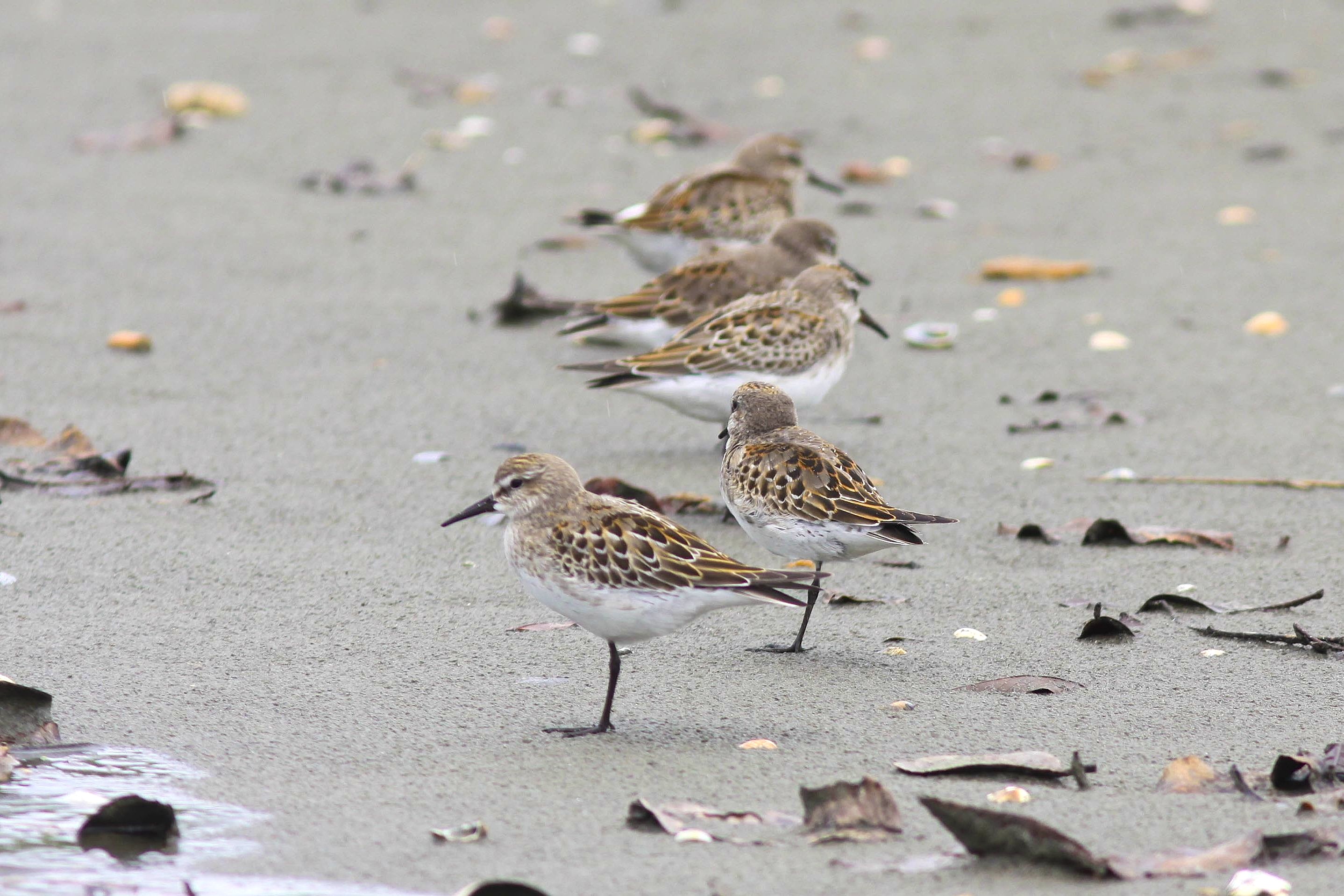
The White-rumped Sandpiper Calidris fuscicollisis one of a number of sandpiper species found on Abaco. You can see a gallery HERE. Many of them are confusingly similar, and it is with a sense of relief that one picks out some particular feature on a bird that marks it out from the other species.
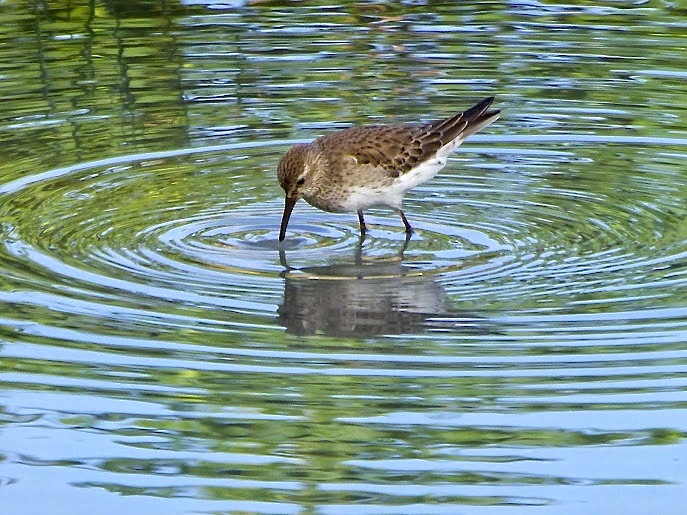
The white-rumped sandpiper has, for a start, a white patch that shows above the base of the tail, rather in the manner of theyellow-rumped warbler. It is the only sandpiper with such a feature, and it is conclusive of ID… if you actually see it. You’ll notice that in the header image and the one above, no such white patch is visible. So although it is undoubtedly there, the bird you happen to be looking at – perhaps at a distance – may not have arranged its position and feathers to assist you. Frankly, the birds in the WRS group below are not cooperating either, except the furthest (blurry) one.
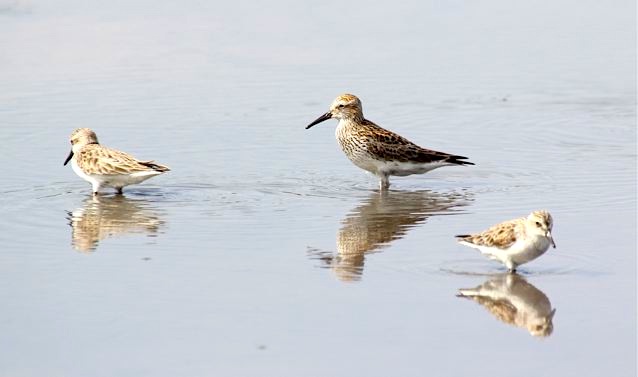
You can’t see it on this bird either, as it forages in a pond, spreading concentric circles across the water
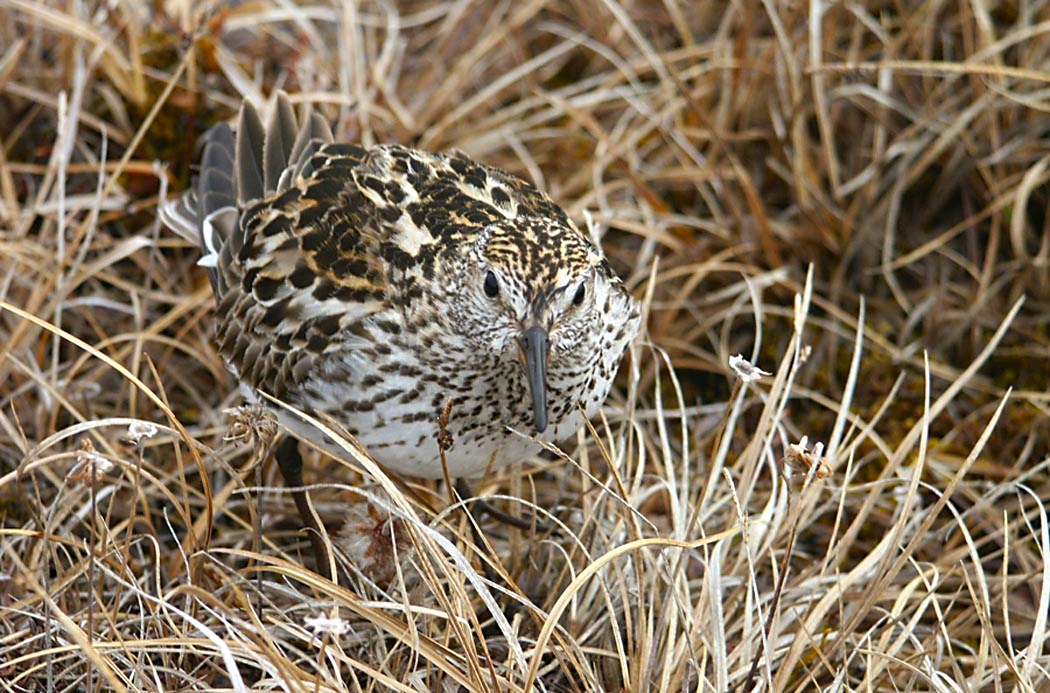
Nor with this one. In fact, I have looked at dozens of photos to find a clear shot of said white marking and found only one really good one… but hedged around by the thick thorny protection of copyright.
However all is not lost. There is another feature of this sandpiper species that is unique to it, at least on Abaco (it is found also in the Baird’s sandpiper, but you won’t see that bird on the island). The unusually long wings of the white-rumped sandpiper extend beyond its tail when it is on the ground. You can see this in the photos above. It is a feature that should be clearly visible as you watch a bird on the shore, even if it isn’t showing its white rump. Here’s a very helpful composite from the Crossley ID Guide (Eastern Birds). You can see the extended wing length in the birds in the foreground. And if you look at the birds in flight, you will see the white rump exposed.
Like all peeps, these birds make high-pitched weebling sounds, which I have seen described as ‘like a child’s squeaky toy’. Here’s a small flock make a characteristic noise.
Ian Cruickshank / Xeno Canto
You will often see a WRS mixed up in a group of other shorebirds, so the wing-length ID method will help pick it out. Also, it will be notably larger than some, for example semipalmated sandpipers.
NB They are not always found on the shore or in water
Watch white-rumped sandpipers foraging
Credits: Woody Bracey, Tony Hepburn, Rick Elis Simpson, Tim Bowman, Crossley Guides, Xeno Canto
FEWER THAN 300 LEFT IN THE WORLD – AND ALL ON ANDROS
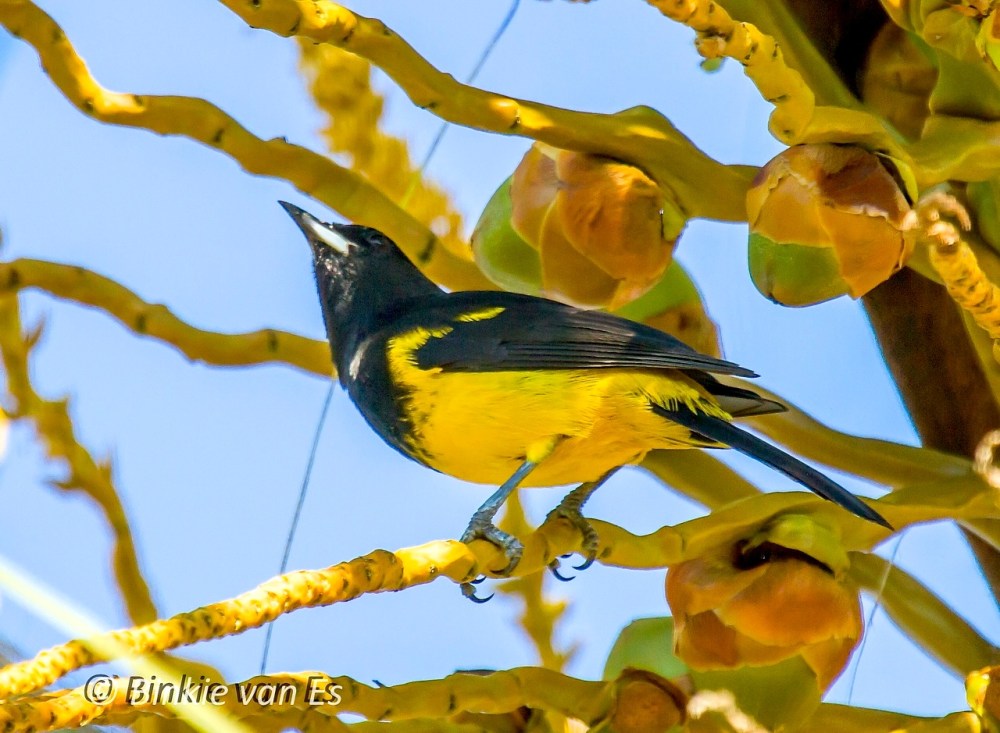
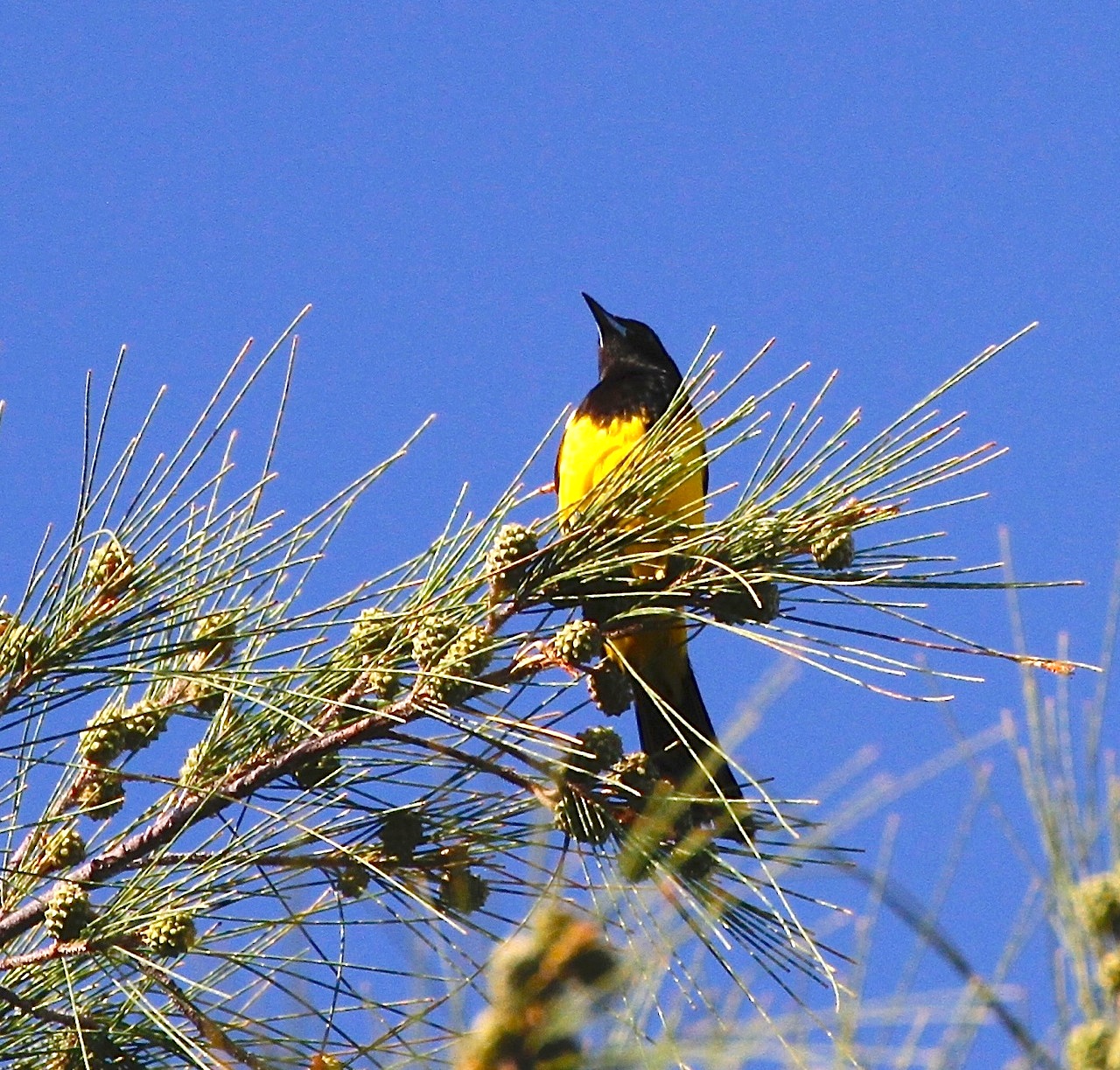
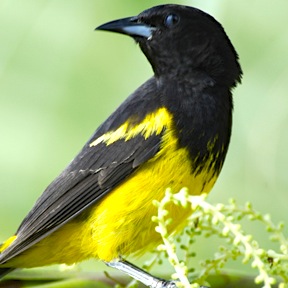
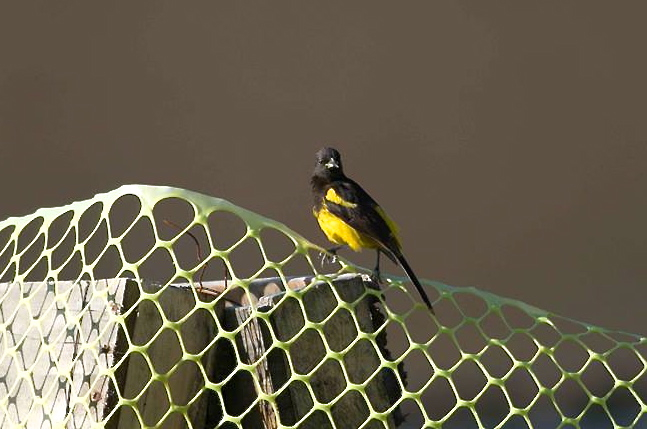
Having just posted about the endangered NASSAU GROUPER and its protection by the introduction of a 3-month closed season, it’s time to focus on a rare, beautiful and vulnerable bird, the Bahama Oriole (Icterus northropi). It is IUCN Red Listed as ‘Critically Endangered’. ENDEMIC to the Bahamas, this bird lived only on Abaco and Andros. Not any more. Now you’ll only find them on Andros, the species having been lost to Abaco in very recent memory. The 1990s, in fact. And on Andros, this lovely bird is now struggling against the threat of extinction and is found only in limited areas in very small numbers. The most optimistic population estimate I have found puts the total as fewer than 300 individuals… the consensus puts the likely total in the region of 250.
THE SPECIES
In 2010, the Greater Antillean Oriole Icterus dominicensis was separated by the AMERICAN ORNOTHOLOGISTS’ UNION into 4 species, one being the Bahama Oriole. As the BNT wryly put it, “New species are always a source of excitement… but in this case the intrigue is overshadowed by a sense of alarm and urgency”. For by then this new species ‘in its own right’ was limited to certain parts of Andros, in small and diminishing numbers. It had already vanished from some areas – especially in North Andros – were it had formerly been abundant. The best estimates suggested 250 individual birds.
WHEN & WHY DID THEY VANISH FROM ABACO?
This is a classic ‘riddle wrapped in a mystery inside an enigma’. Various sources I have looked at use a formula such as “…became extirpated from Abaco in the 1990s”, or “disappeared for unknown reasons in the 1990s”. I’ve found no clear clue as to the cause – nor even when the last sighting of an oriole on Abaco was made. I haven’t found a photo of one taken on Abaco, although to be fair the option of snapping everything with wings several times using a digital camera with a large chip didn’t exist then. In the next para a number of crucial factors in the more recent decline of the Andros population are given; but as far as I can determine, some at least did not apply in the 1990s, or certainly not to the same extent. Maybe it was a combination of a degree of habitat loss and the gradual decline of a small population that could not breed prolifically enough to sustain the future population **.
THE MAIN CAUSES OF THE CRITICAL DECLINE ON ANDROS
Lethal Yellowing Diseaseof the coconut palm, prime nesting habitat for the oriole. In some areas on Andros (e.g. Staniard Creek), the palm has been all but wiped out.
The arrival and spread of the Shiny CowbirdMolothrus bonariensis, abrood parasitethat lays its eggs in the nests of other bird species such as the yellow warbler, the black-whiskered vireo… and the oriole. The cowbird reached Andros in the mid-1990s. The first Abaco report that I have found is from 1999 (so presumably, as the oriole was already gone from the island by then, they were not a factor). The cowbird is a summer resident on Abaco, though still relatively uncommon; and its range continues to expand northwards. Some might argue that the cowbird should be discouraged from spreading on Abaco right now for the sake of the indigenous warbler and vireo populations – before it is too late.
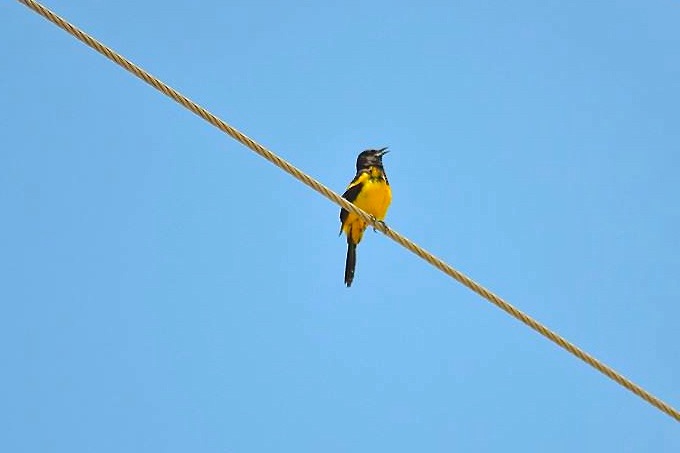
Habitat loss / island development (although Birdlife International notes “…the planting of coconut palms in residential areas has allowed the species to spread into human settlements”). Other factors put forward include forestry work, forest fires, diseases, rodents and feral cats – problems that affect many other birds such as the Abaco parrot.The photo below is a pleasure to include in this post. It was taken earlier this year on Andros by Christopher Johnson of Nassau. And here’s the thing. He is 13, and an avid birder. I’m sure he likes his X-Box time, but he certainly knows plenty about birds too. He’s quick off the mark with offering IDs – correct ones – for birds online, and when he saw this bird he knew the significance of it and managed to get some good shots too. This is my favourite, the oriole ‘vocalising’. See below for its song. Here is Christopher’s brief but enthusiastic field report: “Awesome trip to Andros this past weekend! Was amazed to see the Bahama Oriole and its nest — feeling great”.
Bahama Oriole taken during a BMMRO research trip on Andros
Paul Driver / Xeno Canto
A GLIMMER OF HOPE?
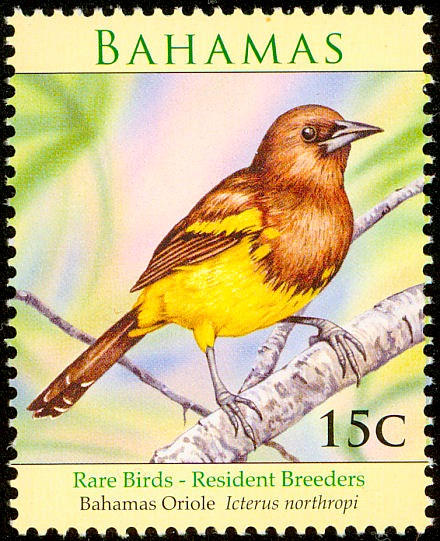
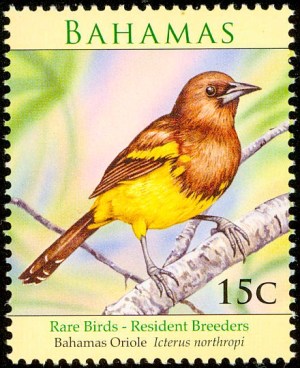
In the same way that urgent conservation measures were put in place to halt and then reverse the critical decline of the Abaco parrot population, similar projects are in place for the Bahama Oriole on Andros. One proposal is to establish a ‘captive breeding’ program leading to reintroduction and reinforcement of the wild population. According to the American Bird Conservancy, this could even include reintroduction on Abaco… So perhaps in a decade or two, this fine bird will once again become firmly established as one of the birds of Abaco.As I said in my Nassau Grouper post, a country’s attitude can to a degree be gauged by the pride with which it features its wildlife and natural resources in its stamps (I used North Korea for adverse comparison). In 2009 The Bahamas Postal Service even issued a ‘Rare Birds’ set featuring the Bahama Oriole.. I rest my case.
♦ ♦ ♦ ♦ ♦ ♦ ♦ ♦ ♦ ♦ ♦ ♦ ♦
WHO WAS THE EPONYMOUS MR NORTHROP?
The comprehensive answer is provided by the University of Glasgow Library Research Annexe in relation to a fine illustration from A Naturalist in the Bahamas (1910), reprinted in The Auk journal (below) at a time when Icterus northropi was still a mere subspecies:The yellow and black Bahama Oriole (Icterus Northropi) is a bird species unique to the Bahamas. The bird was named for American ornithologist and zoologist, John Isiah Northrop (1861–91); the illustration comes from an account of the trip Northrop and his botanist wife, Alice, took to the Bahamas in 1889 which was published in his memory: A Naturalist in the Bahamas: John I. Northrop, October 12 1861-June 25, 1891; a memorial volume (New York: Columbia University Press, 1910). It was edited and introduced by Henry Fairfield Osborn, professor of zoology at Columbia University where Northrop worked as a tutor and was killed in a laboratory explosion shortly (9 days) before the birth of his son John Howard Northrop (who became a Nobel prize-winning chemist).
RELATED MATERIAL
“Rediscovering the Bahama Oriole” Erik Gauger, author of the excellent Notes from the Road and photographic contributor to the Birds of Abaco has a good tale of the pursuit of the apparent sighting of a Bahama Oriole on Abaco 2o years after its (supposed?) extirpation. You can read it HEREThe Auk Read more about this journal and the birding history of the BahamasHEREThere is a Care2Action ‘Save the Bahama Oriole Before It Is Too Late’ petition HERE. It seems to have stalled somewhat, so it would be good to generate some more signatories.** Mathematically inclined? Find out about the application of thestochastic processto the oriole’s situation. In a nutshell, this concerns the combined effect of several random adverse factors on sustainability, given that the oriole’s already very small population, very limited range and particular habitat requirements militate against breeding expansion, and therefore increase the likelihood of extinction. We can only hope this is not an inevitability…
Image, audio and research credits: American Bird Conservancy, Binkie van Es, BNT / Carlton Ward, Birdlife International, Christopher Johnson, Cornell Neotropical, Harold Brewer, MxMerce, birdtheme.org, Wiki, Xeno Canto / Paul Driver; Uni of Glasgow / Roger Herriott
COMMON YELLOWTHROATS ON ABACO: CHEERFUL WINTER WARBLERS
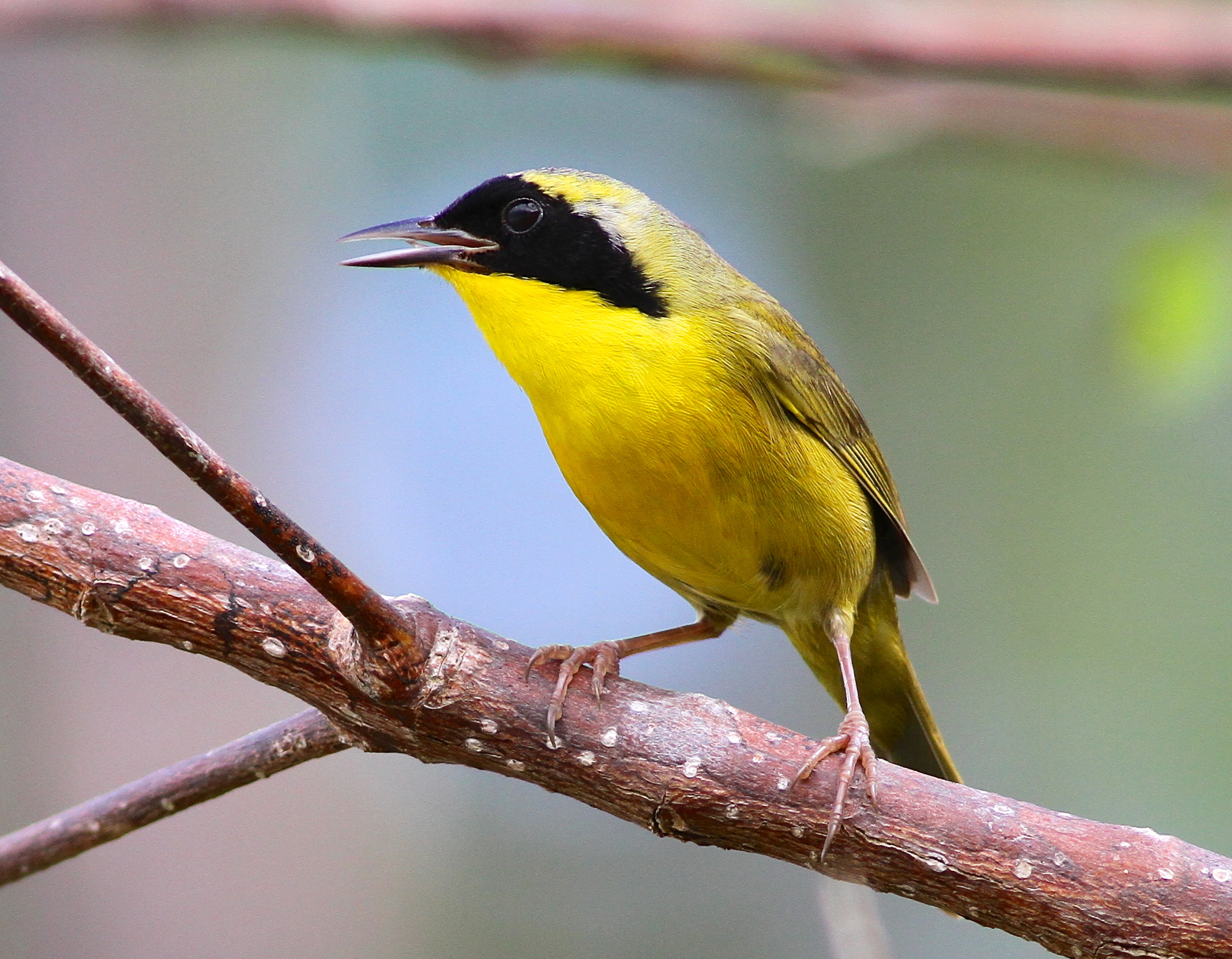
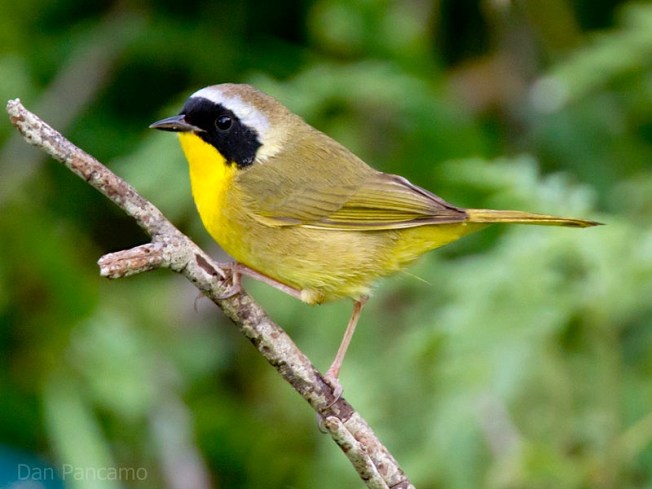
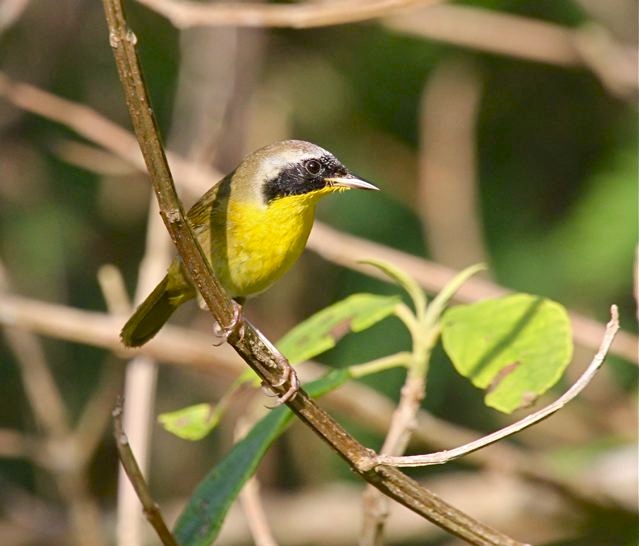
Abaco is fortunate to be home to the endemic BAHAMA YELLOWTHROAT Geothlypis rostrata, a striking bird with a dashing black mask and bright yellow body in the male. You can see it with its fellow endemics HERE. But there is similar winter resident species, the COMMON YELLOWTHROAT Geothlypis trichas, that can be seen on Abaco between October and March. Now is a very good time to look out for them. However, the two species are easy to confuse.
Common Yellowthroat (male)
Bahama Yellowthroat (male)
WHAT’S THE DIFFERENCE?
SIZE – the BW is slightly larger and sturdier than the CW
BEAK – larger in the BW, and some might say it tends to be decurved
COLOUR – the BW is more colourful, with more extensive yellow underparts and mask
FEMALES – both species lack the mask and are duller; the female BW has a greyer head
HABITAT – both are found in the same areas; the CW prefers denser vegetation near water
DEBATEABLE – it seems to me the pale stripe behind the mask is usually less prominent in the BW
Common Yellowthroat male with conspicuous pale head-stripe
Both yellowthroat species are an endearing mix of shy and inquisitive. These birds are responsive to ‘pishing’, and once lured from cover they may remain nearby on low branches or shrubs watching you with interest as you watch them. Their song – similar in both species – is fairly easily imitated (or at least approximated), which may also bring them into the open – a source of great satisfaction to the amateur birder when it works. Unless it’s just coincidence, of course… The songs of the two species recorded below sound almost indistinguishable (except that the first one is professional and the second notably amateur…).
COMMON YELLOWTHROAT
Todd Wilson / Xeno Canto
BAHAMA YELLOWTHROAT
RH own recording
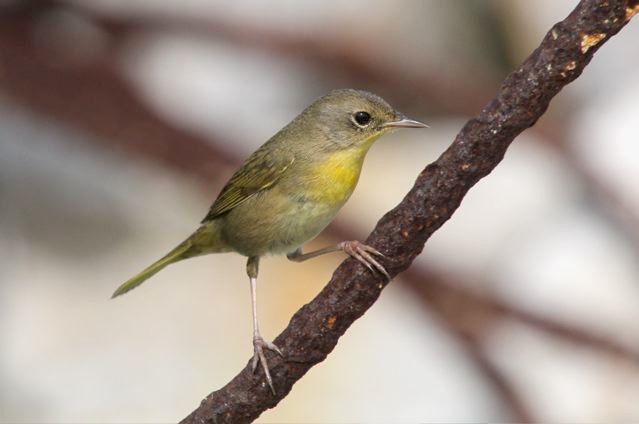
Female Common Yellowthroats are unassuming and quite delicate little birds. The first of these two images shows an immature bird, with its front beginning to become yellow. The second is a mature female.
Two more male Common Yellowthroats to admire…
Photo Credits: Erik Gauger (1); Tom Sheley (2); Bruce Hallett (3, 5, 6, 7); Dan Pancamo /Wiki (4); Becky Marvil (8) Audio: Xeno Canto; RH
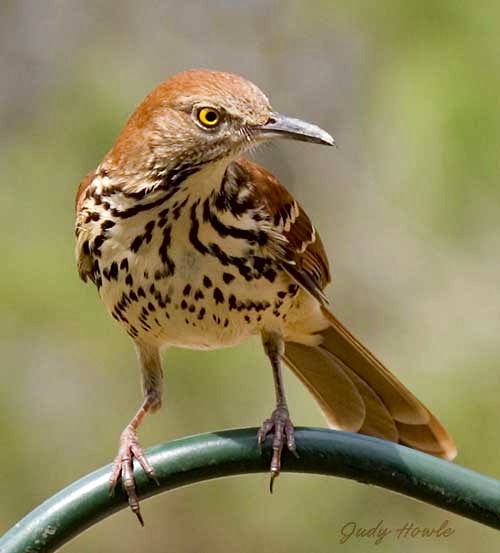
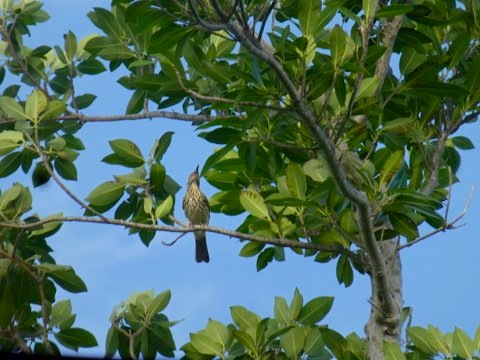
The third new bird species this year has been found on Abaco by bird authority Woody Bracey. After the excitement of 6BLACK-BELLIED WHISTLING DUCKSin June and aFORK-TAILED FLYCATCHER in October comes the very recent sighting (with photos) of a BROWN THRASHER, hitherto unrecorded for Abaco. It was seen near Treasure Cay, at the site of a derelict restaurant.
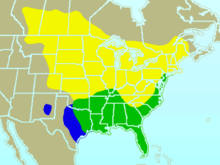
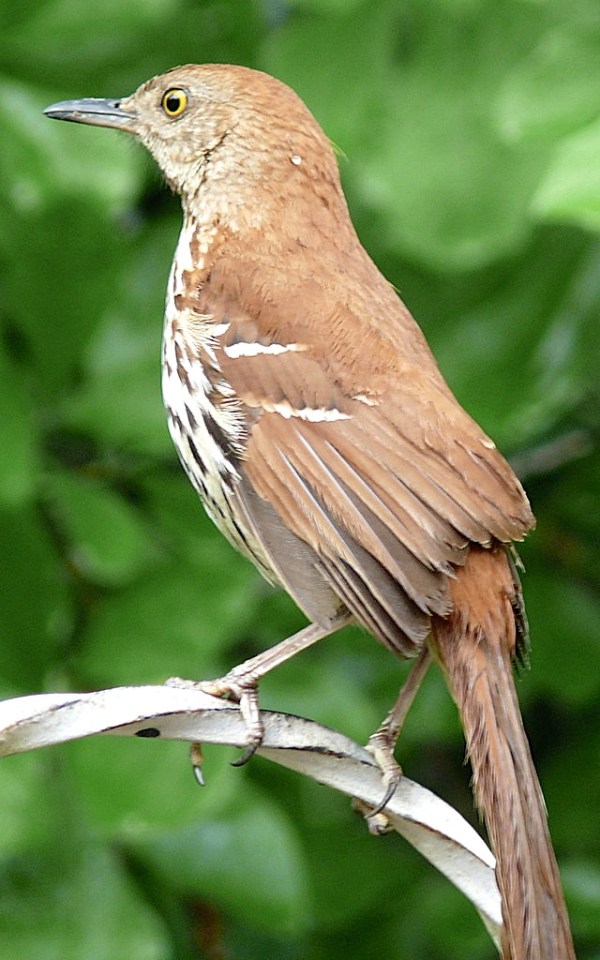
The Brown Thrasher (Toxostoma rufum) belongs to the same family that includes mockingbirds and the catbird – Mimidae. Its normal range includes Florida where it is resident, so there’s only 200 miles of ocean to cross to reach Abaco. Easier still with a stop-over on Grand Bahama. However I’ve checked for other Bahamas sightings, and so far I have found one recorded for Grand Bahama, and one for Eleuthera. So this first sighting on Abaco is possibly only the third for the Bahamas, suggesting that the Thrasher is generally not a great adventurer.
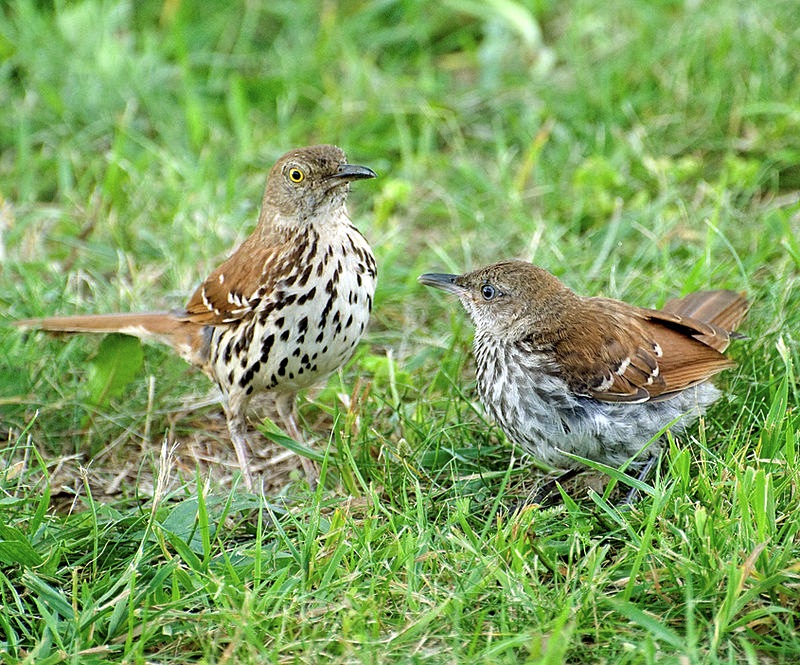
Here are some images in case you happen to see a strange brown speckled bird…
ADULT AND JUVENILE
And here are Woody’s evidential images of his sighting. They may not be such close shots as the others but they are conclusive for the record.
BESIDES ONE BIRD VISITING ABACO, WHAT’S INTERESTING ABOUT THE THRASHER?
They are known to have more than 1000 types of song, one of the largest bird repertoires
They repeat phrases 2 or 3 times before moving on to another (somewhat like Mockingbirds)
Rick Wigh / Xeno Canto
They are omnivorous, eating insects, snails, worms etc; and balancing that with fruit, seeds and nuts
They are shy birds, but can be very aggressive when defending territory or a nest site
They used their slightly decurved beaks to thrash around under leaves and ground debris as they forage – hence the name
YES INDEED, BUT IS THERE ONE REALLY MEMORABLE FACT ABOUT THEM?
OK. Their necks are extremely flexible and they have more vertebrae than camels or (get this!) giraffes.
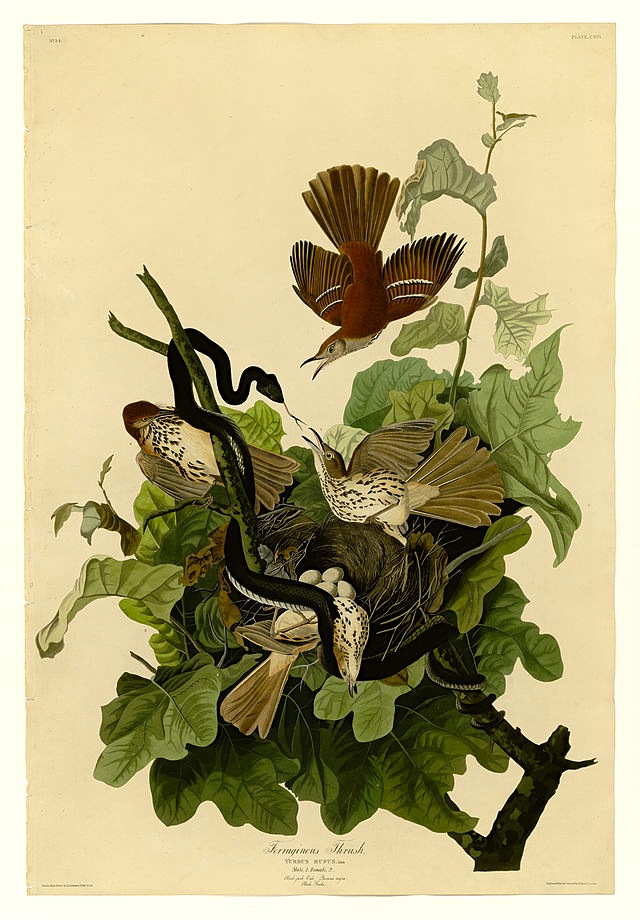
AUDUBON’S DEPICTION OF A ‘FERRUGINOUS THRUSH’, AS IT WAS THEN KNOWN
Published 2014 ~ 128pp ~ $20, available from the BNT
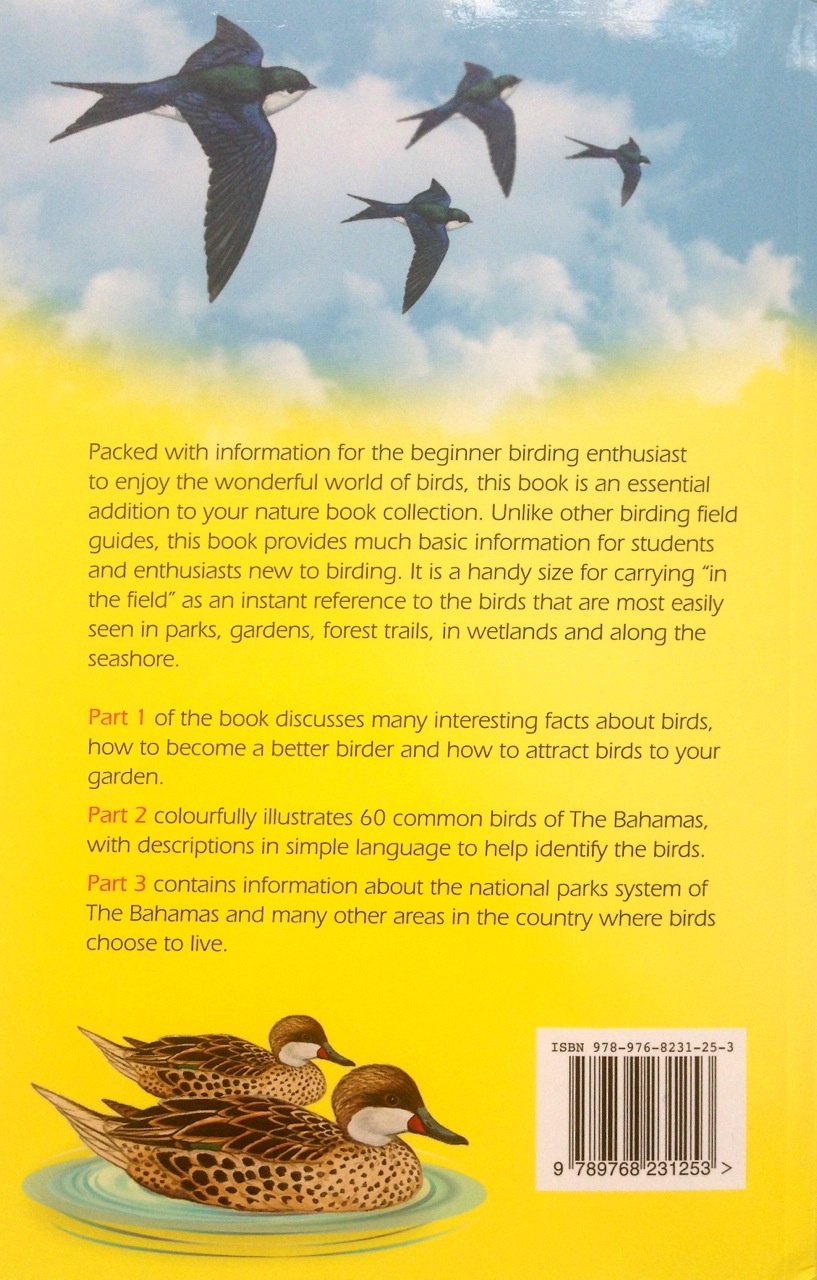
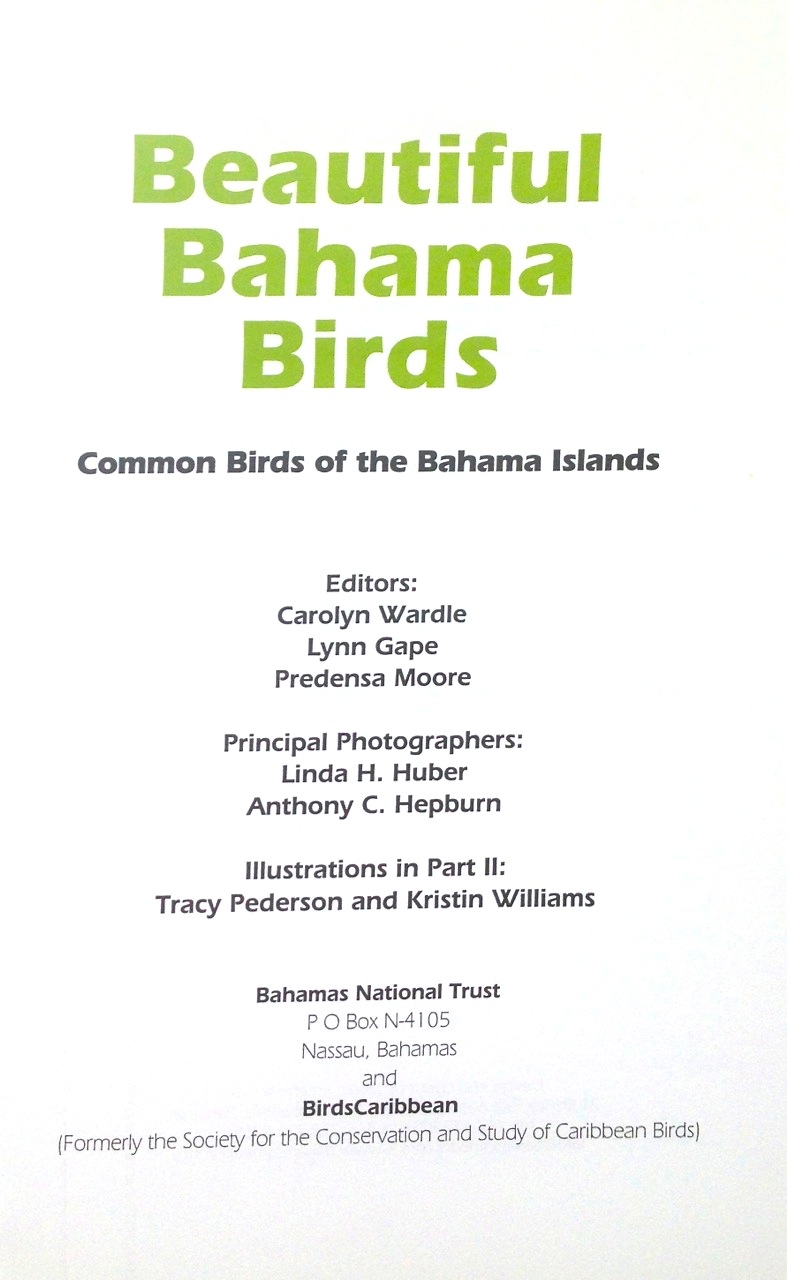
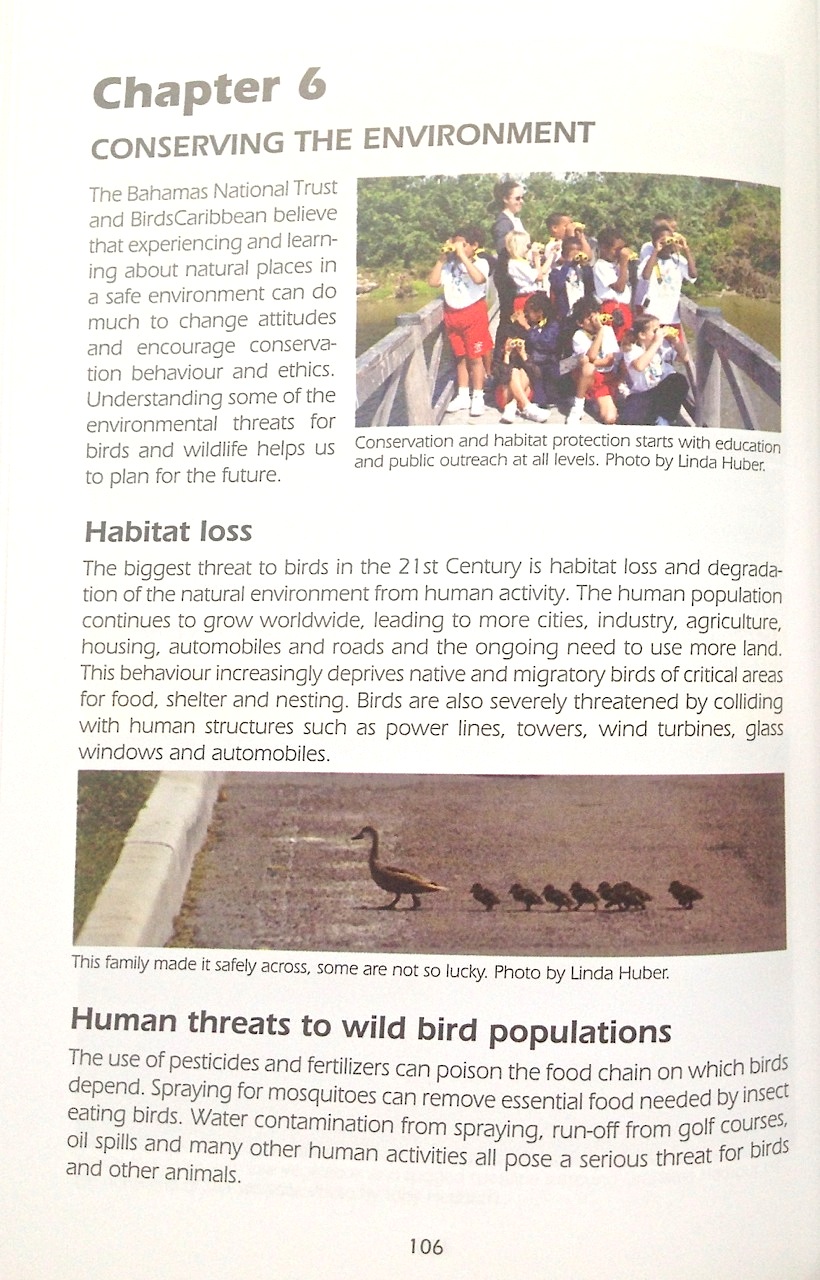
A fine new book on the birds of the Bahamas has recently been published by theBAHAMAS NATIONAL TRUSTandBIRDSCARIBBEAN. Compiled and edited by well-known Bahamas bird guideCAROLYN WARDLE with the BNT’s Lynn Gape and Predensa Moore, this slim book is packed with valuable information. It doesn’t set out to be an exhaustive field guide, a task already fully covered by Bruce Hallett’s indispensable Birds of the Bahamas and the TCI. Nor is it anything like my own photographic tome ‘Birds of Abaco’, differing in scope and intention, and weighing a mere 225 gms as opposed to 2 kilos! Beautiful Bahama Birds is eminently a book for the pocket, day bag or backback, to be carried along with your Hallett.
I have illustrated this review with photos of sample pages of the book, invariably the best way to give a clear impression of this kind of publication. Apologies that some of my images are a bit wonky, my copy being new and individual pages being hard to keep flat…
The photographs throughout the book are mainly the work of Linda Huber and the late Tony Hepburn. I was fortunate enough to be able to use some of Tony’s photographs for my own book, given with unreserved generosity; it is a fitting tribute to him that his images have now been published in Beautiful Bahama Birds, and that it is dedicated to him.
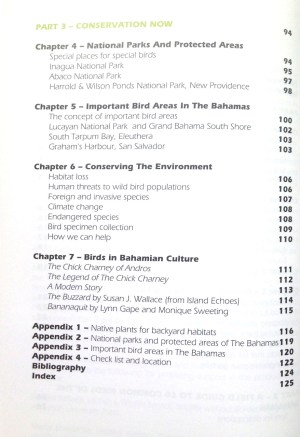
An idea of the broad scope and of the book and its usefulness to the birder can be gained from the contents pages, which I reproduce here. Click to enlarge them. The book is arranged in 3 parts: Let’s Go Birding; Field Guide to 60 Common Birds; and Conservation Now.
PART 1 offers plenty of useful information and practical advice about birding in general (I wish I could have read this before I started my own book!). Anyone who loves birds will benefit from this whole section, even if they would not call themselves a birder – especially Chapter 3 ‘Getting Closer to Bird Life’.
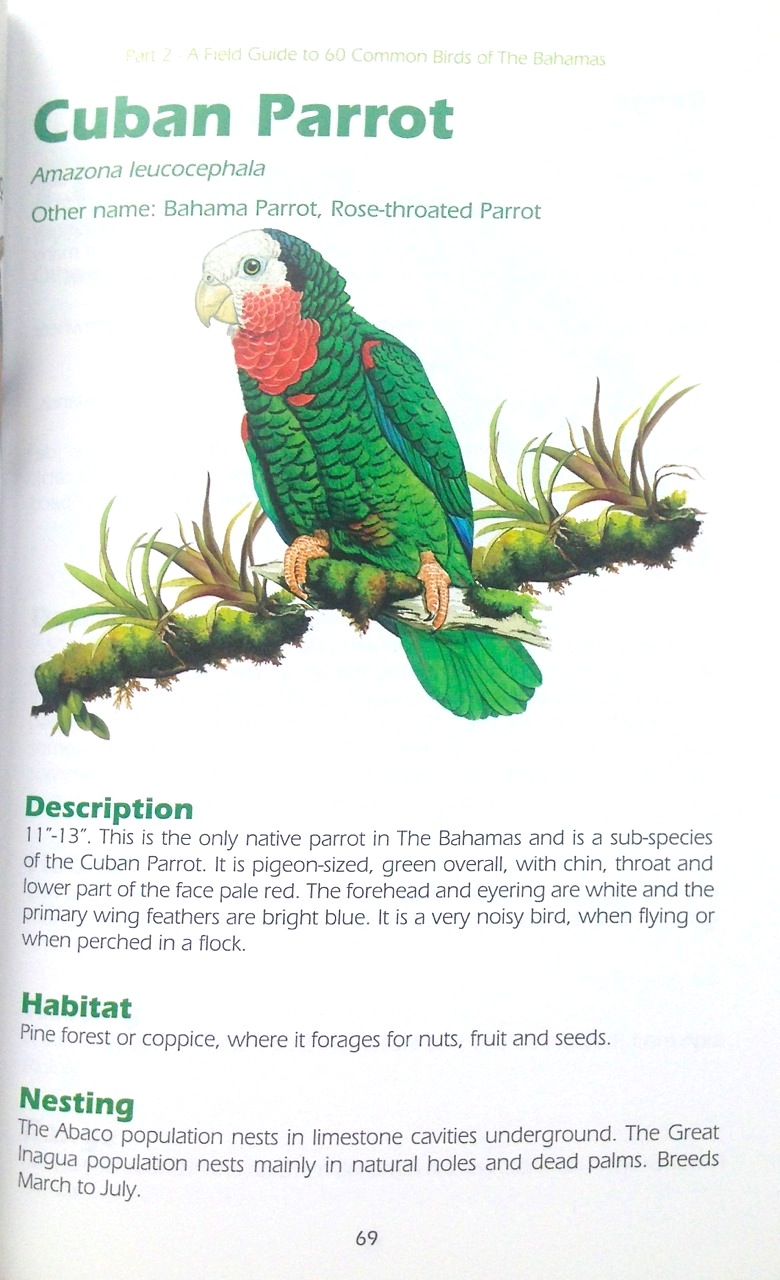
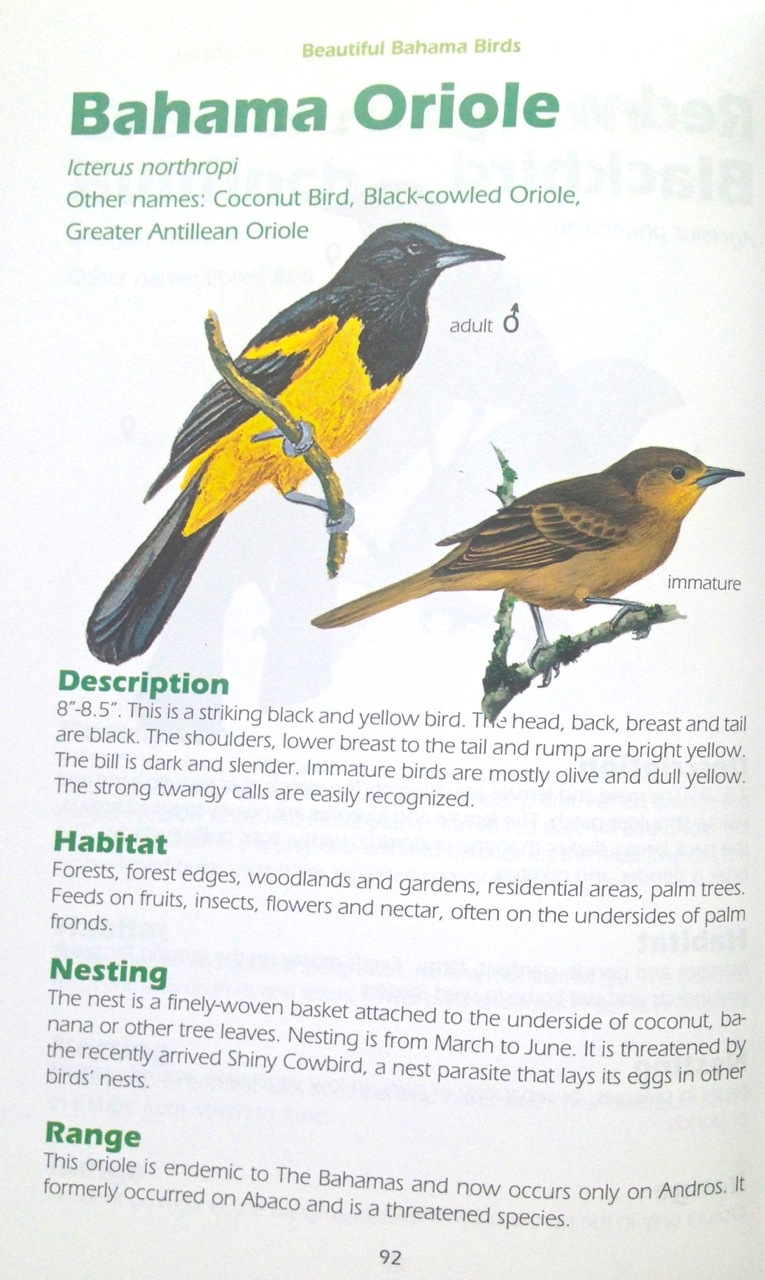
PART 2 All 5 Bahama endemics are featured in the main section, which is handily divided very broadly into ‘waterbirds’ and ‘land birds’. Some birds are commonly found on most islands; some have more limited range: for example the Bahama Oriole is now found only on Andros; and breeding populations of the Cuban Parrot are found only on Abaco and Inagua (the increasing number of sightings on New Providence give some hope for a breeding population there too). I’ve chosen the parrot because the underground-nesting subspecies on Abaco is so special; and the Flamingo and Bahama Oriole, both very sadly extirpated from Abaco in recent memory.
The illustrations by Tracy Pederson and Kristin Willams are clear and highlight well the identifiers for each species. Where necessary, species variations are shown, for example between sexes, breeding / non-breeding plumage and adult / immature. This can be a confusing and even fraught area (as I constantly find), which this book usefully addresses. Some birds in flight are also shown to aid ID.
PART 3 covers the National Parks, important birding areas of the Bahamas, conservation matters, and a charming section on birds in Bahamian culture. Appendices include lists of Bahamas native plants and their importance for wildlife; National Parks and Protected Areas; important birding areas of the Bahamas; a Checklist; a Bibliography; and a user-friendly Index (not all are…).
A good Checklist is a vital ingredient for any birder, whether visitor or local. Here, all the species occurring on the islands are shown on the left and their residential status and range throughout the islands across the top. Thus at a glance you can tell whether a given species is found on a particular island and when it may be found there. You would know not to look for Turkey Vultures on Eleuthera at any time; and that the black-bellied plover is a winter resident throughout the region and not to be seen during your trip in June… I also like the tick-boxes on the left for species collectors.
Overall I have thoroughly enjoyed this small book and unreservedly recommend it. It does not replace Hallett, but it complements it. Furthermore, I’m sure the straightforward style and presentation will appeal to bird-loving non-birders and also to younger birders – it may even encourage some out into the field! On p.20 the recommended reading list includes books that would appeal to young readers and links to appropriate websites, a thoughtful touch. I have learnt, or been reminded of, much from reading this book a couple of times. It is a welcome addition to the relatively sparse avian literature for the Bahamas, a prime birding region that is home to an astonishingly wide variety of birds including rare, threatened and vulnerable species like the Parrots, the Kirtland’s Warbler and the Piping Plover.
The Ring-billed Gull Larus delawarensis is a common winter gull, familiar to all in its adult form because of its… er… ringed bill that distinguishes it from all the other gull species found in the northern Bahamas. There are other differences, obviously, but this beak-related signifier provides the easiest method of ID. To be honest, you may find one anywhere – out to sea, on the shore, inland, or perhaps hanging out at one of the dumps that they are attracted to. This last preference is one shared with many species, but while the dumps may provide good birding venues, the photographic backgrounds and general ambience may be somewhat unattractive… Here are 3 great photos by Nina Henry of these gulls where they look best, near the shoreline.
STOP PRESSNov 18 Woody Bracey reports from Treasure Cay “I had my first for the fall here in Treasure cay yesterday – one adult and 1 immature. It’s nice to have them back”. So keep an eye out – the ring-billeds are back on Abaco…
The Latin name of these gulls refers to the Delaware River, Pennsylvania, which is on their migration route. But there must have been dozens of other towns along the route with equal claim to have a bird named after them. Why Delaware took the honours, I cannot explain… and thinking about it has inserted the old song in my brain “What did Delaware, boys? What did Delaware? She wore a brand New Jersey…” etc etc**. So I’ll get on and show some more RBGs to get it out of my head. Here are 3 stages of development from Bruce Hallett.
Juvenile
First winter
Adult
Laughing Gulls are gregarious creatures, and are quite often found in a group with some other seabird in the middle of the crowd – often a larger one. Here is a ring-billed gull standing proudly in the throng, while the laughing gulls snooze in the sun on the jetty.
Photo Credits: Tony Hepburn (1), Nina Henry (2,3,4), Bruce Hallett (5,6,7), Peter Mantle (8)
**If you want to remind yourself – or inflict on yourself for the first time – the entire US-State-related pun-encrusted jingle CLICK DELAWARE DITTY















 FIERCE LITTLE FALCONS: MERLINS ON ABACO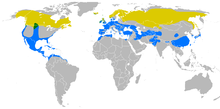














 Author signing copies, with Bahamas birding gurus Tony White, Bruce Hallett & Woody Bracey









 Eveny Louis / Xeno Canto







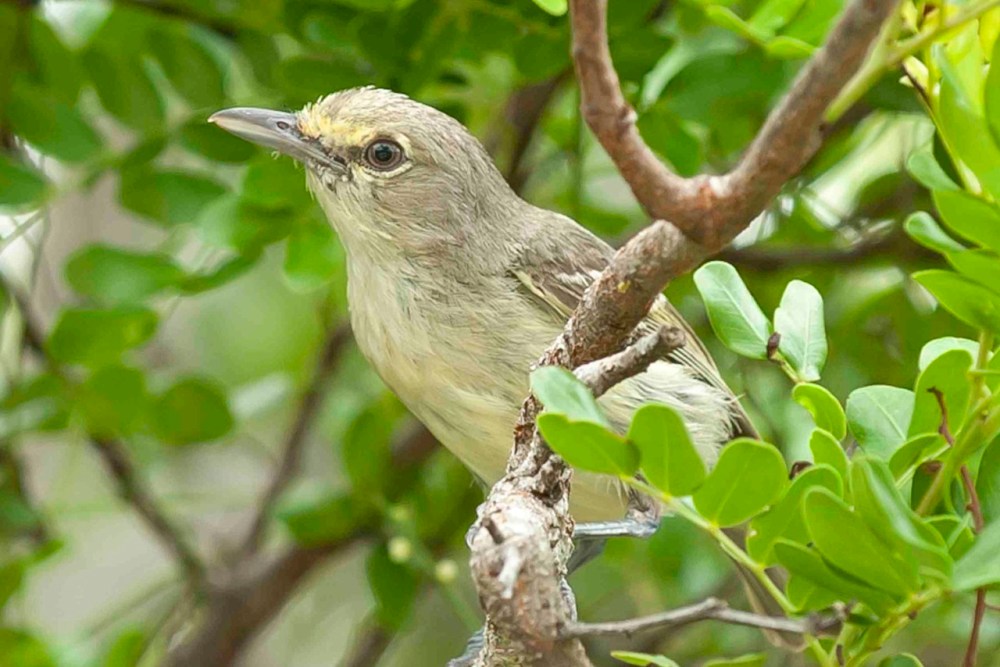 Finally, this pretty TBV is very delicately marked





















 ROLLING HARBOUR ABACO
You must be logged in to post a comment.