“CLINGING TO THE WRECKAGE”: BAHAMAS CLINGING CRABS
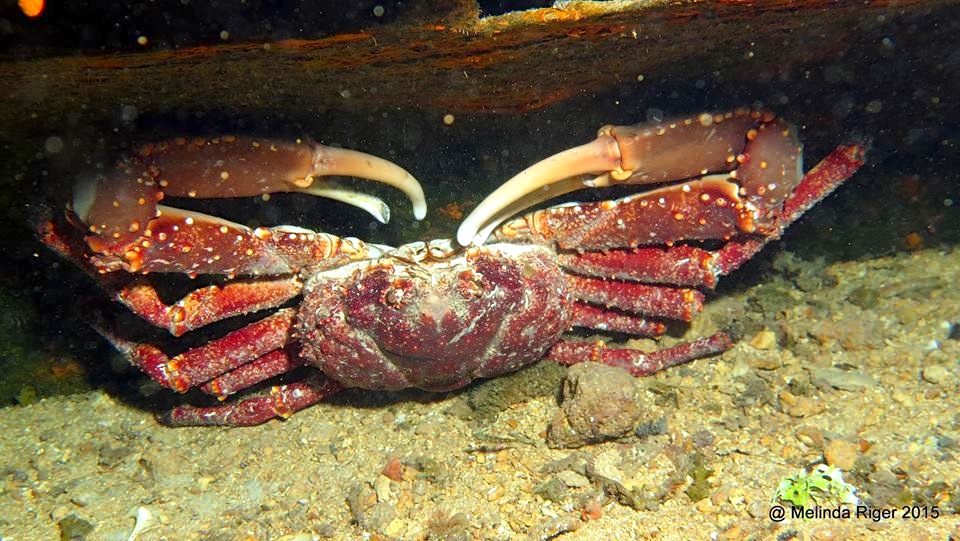
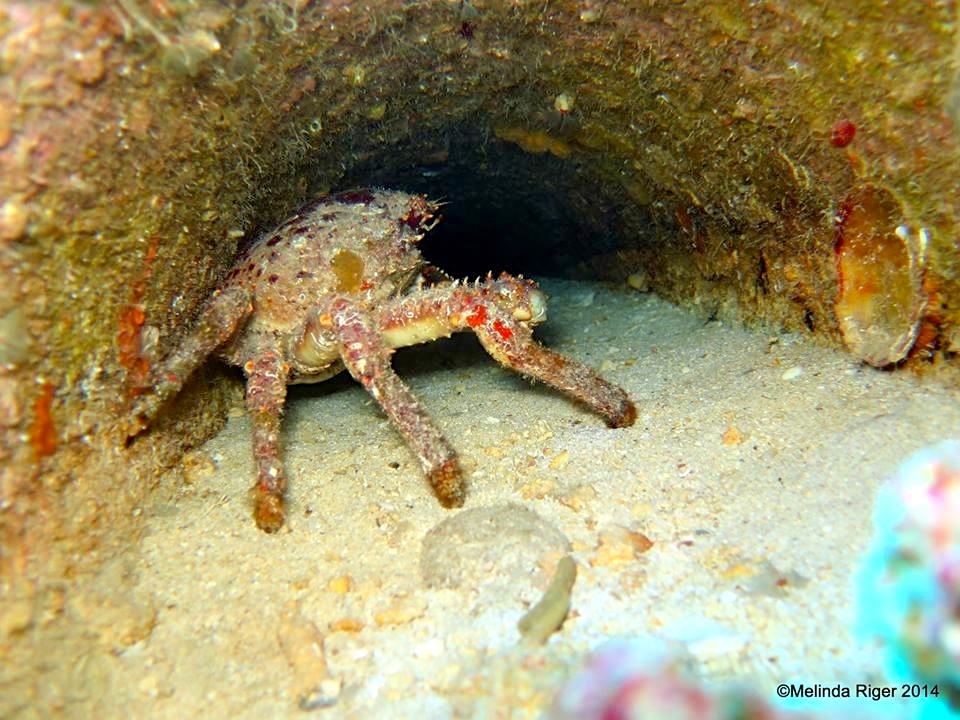
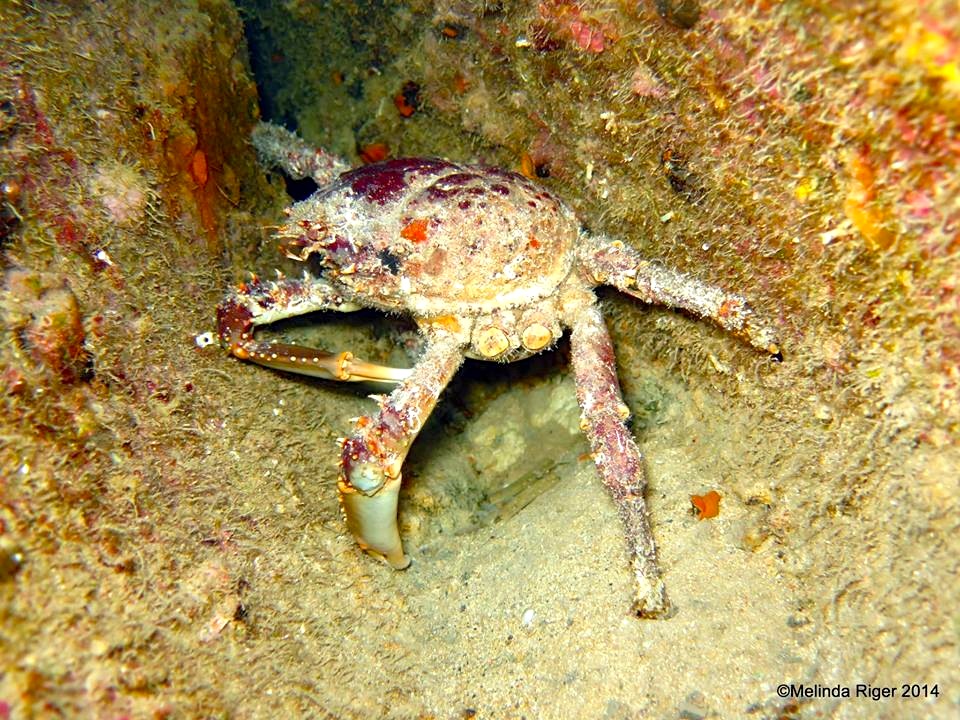
The Clinging Crab Mithrax spinosissimusanswers to a number of names: West Indian spider crab; channel clinging crab; reef or spiny spider crab; or coral crab. It is found throughout the waters of South Florida and the Caribbean.
These are crabs of the reefs, or indeed of the wrecks that may be found around reefs. Some of the crabs in this post have chosen wrecks as their home – in the header image the crab is living inside the smoke stack of ‘Theo’s Wreck’, Grand Bahama.
The clinging crab is believed to be omniverous, its main diet being algae and carrion. They can grow to 2 kg, and it is the largest species of reef crab found in the Caribbean.
LAID BACK
Credits: Melinda Riger of Grand Bahama Scuba (all photos), with thanks as always for use permission
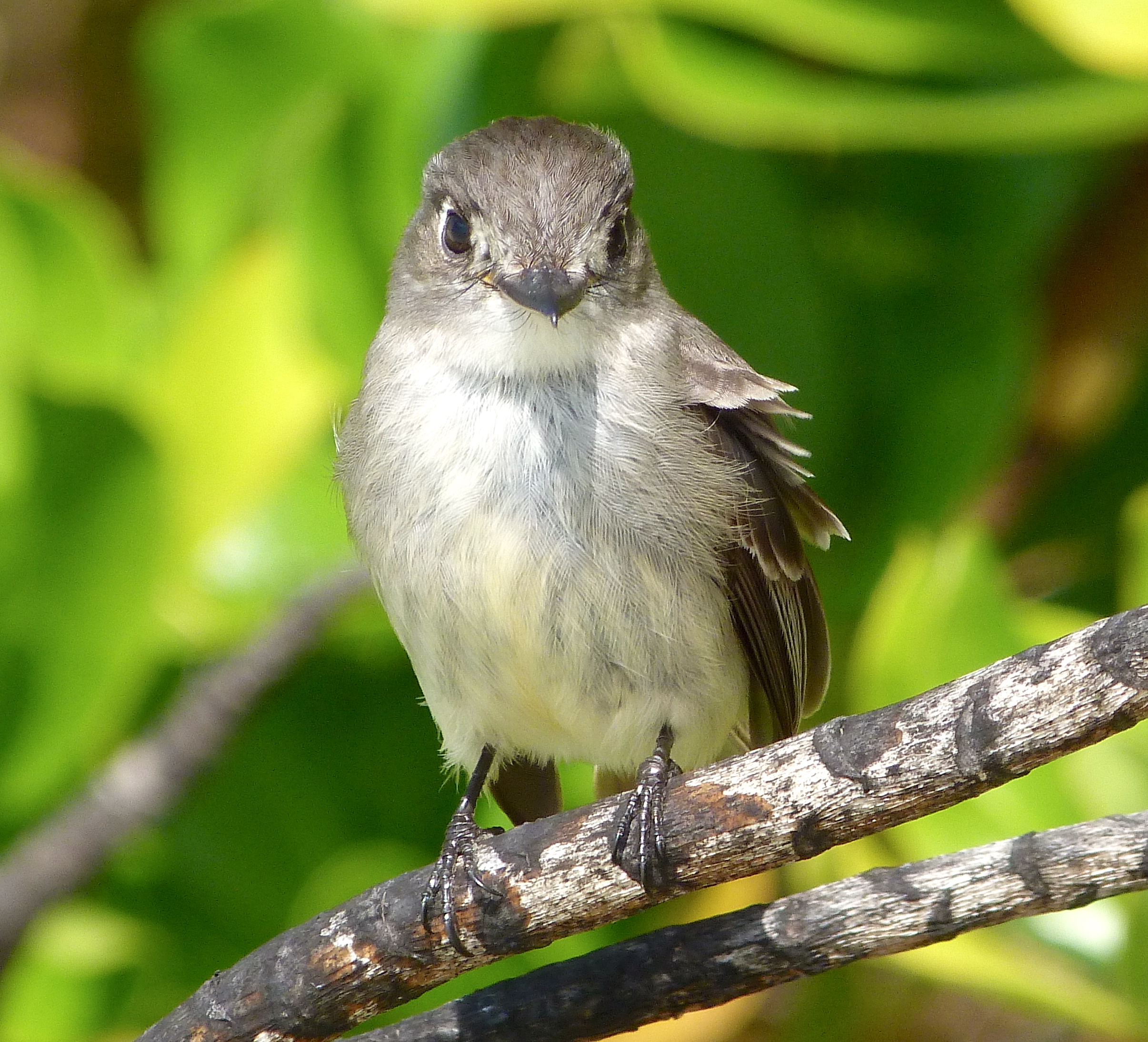
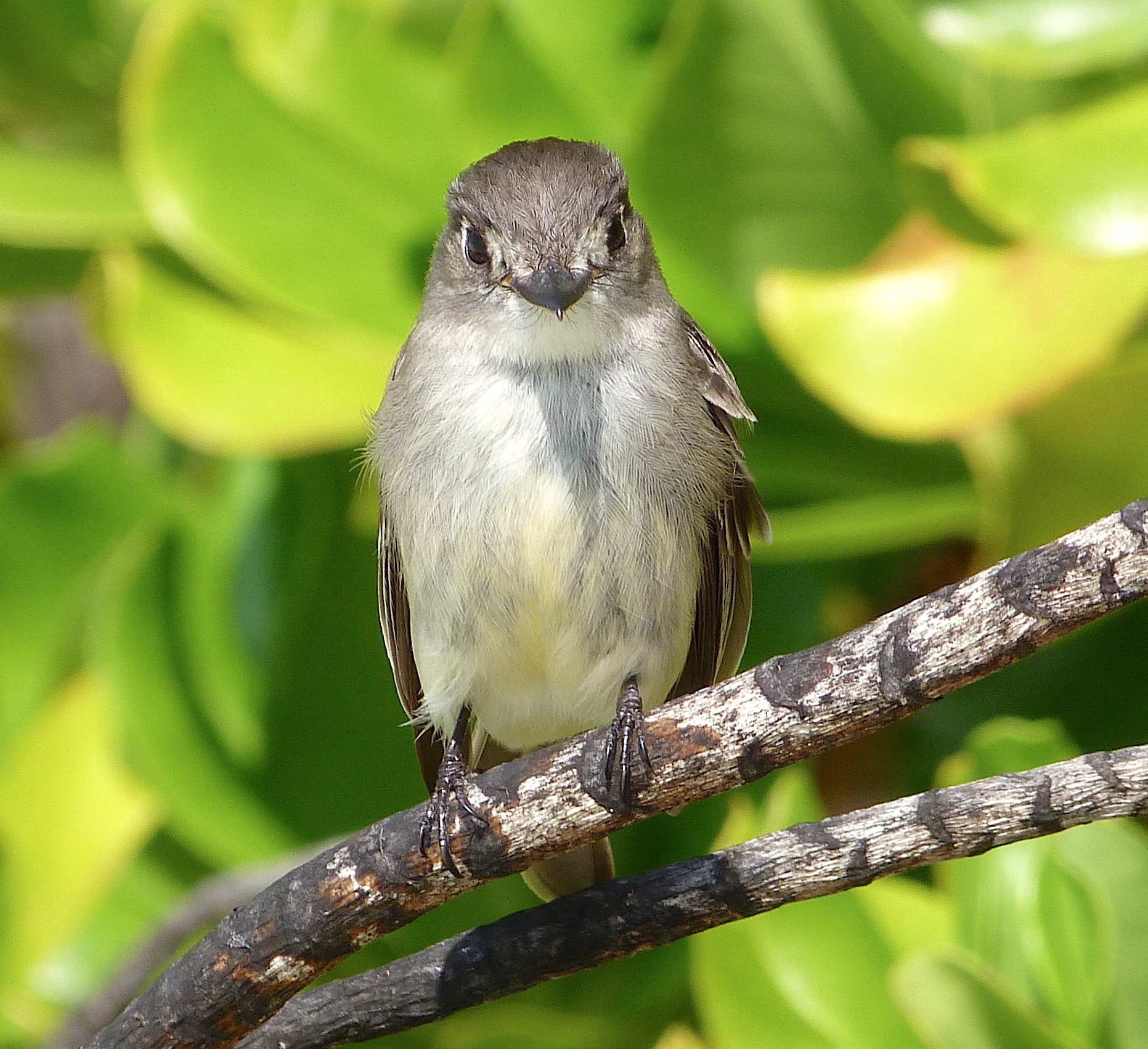
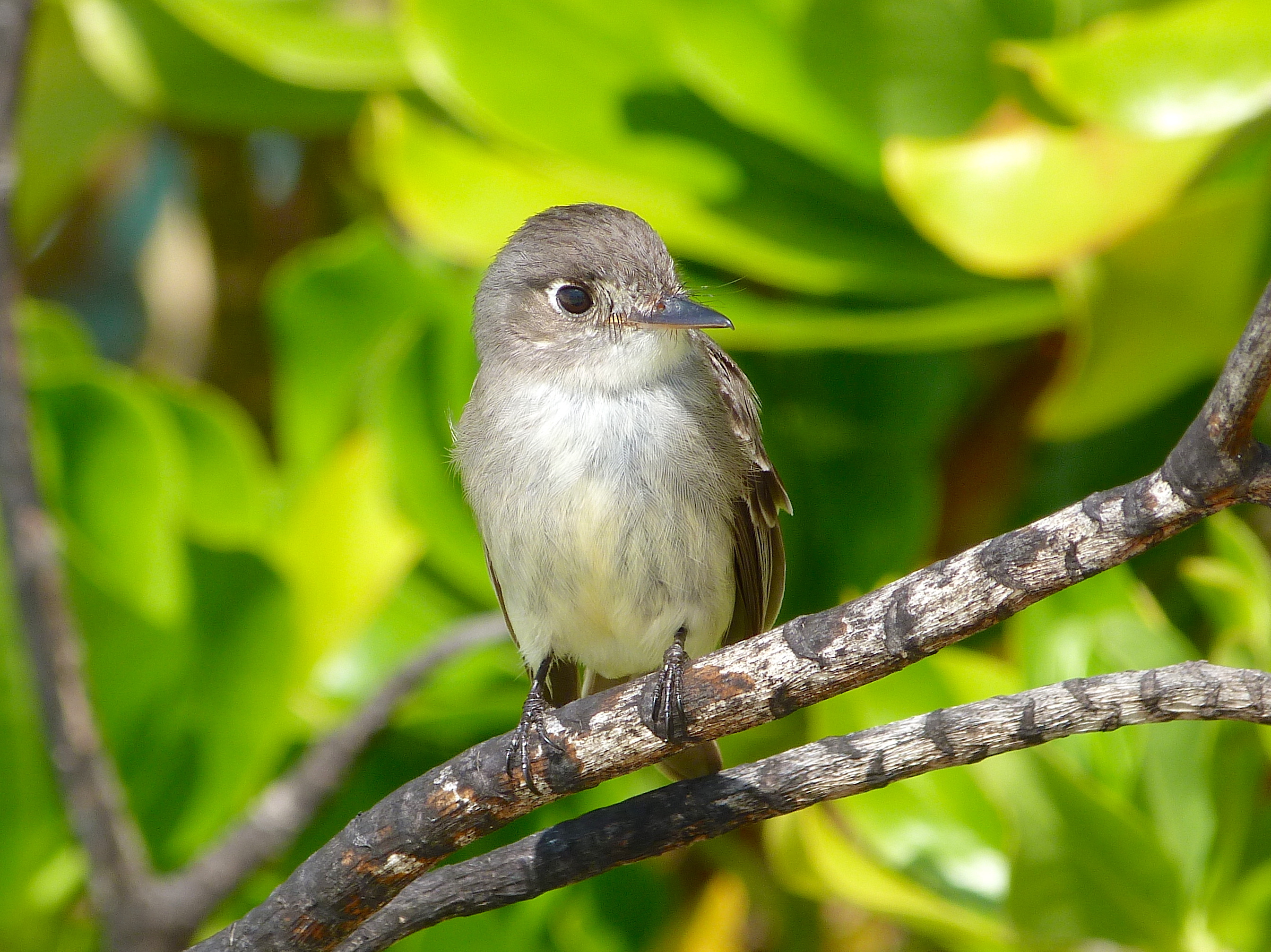
The small bird featured here is a CUBAN PEWEE Contopus caribaeus bahamensis (sometimes called the Crescent-eyed Pewee – see image for why this is so). It is without a doubt a tyrant. At barely 6″ long, it is the smallest tyrant you are likely to encounter in the Bahamas or indeed anywhere else. However it does happen to be a member of the family Tyranidae. These are the flycatchers, and on Abaco they include the larger LA SAGRA’S FLYCATCHER, the still largerLOGGERHEAD KINGBIRDand (a summer visitor only) the GRAY KINGBIRD(this last link explains the difference between the two kingbirds).
The Cuban Pewee is permanently resident on Abaco, and can be found in both pine woods and coppice. When returning to its perch after a fly-catching sortie – ‘hawking’ on the wing – this wee bird gives a characteristic flick of the tail. The bird featured here was in the rough scrub behind the beach of the beautiful bay at Casuarina. It became a favourite of mine simply by being completely unafraid of me, and accepting my extremely slow approach (3 inches at a time) with apparent interest mixed in with an endearing willingness to pose, even when I could almost have reached out and touched it.
Unlike many creatures, it did not seem concerned by eye-contact. It responded when I made a faint clicking sound by rather sweetly putting its head on one side. However, as I got as close to it as I dared, it began to fidget slightly (possibly feeling camera-shy). So I shuffled slowly back, so as not to disturb it in its own territory, where it was the resident and I was the intruder.
These close-ups clearly show the tiny hooked tip at the end of the upper beak, which (as in other tyrant species) relates to the business of catching flies. Also like other flycatchers, the Cuban Pewee has very distinctive whiskers around the base of the beak. In fact, these are not whiskers as such – not hairs so much as feathers that have modified into bristles. These act as ‘tactile sensors’ to assist the detection and targeting of aerial insects as the bird darts from a perch to intercept some passing tasty winged morsel.
The range of the Cuban Pewee is limited almost entirely to Cuba and the Bahamas, so it is very region specific. And how lucky we are to have these cute little specimens on Abaco. I note that the Audubon site calls them drab, which I think is a little unfair. Merely because a bird is not decked out like aPAINTED BUNTINGor startlingly marked like a male RED-WINGED BLACKBIRDdoes not make it drab. I prefer the word ‘subtle’. I like GRASSQUITS too, for the same reason: too often maligned as ‘dull’.
It is sometimes tempting to anthropomorphise such close encounters in terms of imputed human / creature empathy. It is probably best to try to resist that attitude (‘inter-species condescension’, as you might term it). But as I withdrew, leaving this little bird undisturbed on its branch, I did experience a strange feeling of mutual understanding and… [I must interrupt myself here. I’m a lawyer, so that’s quite enough of that sort of emotive nonsense]
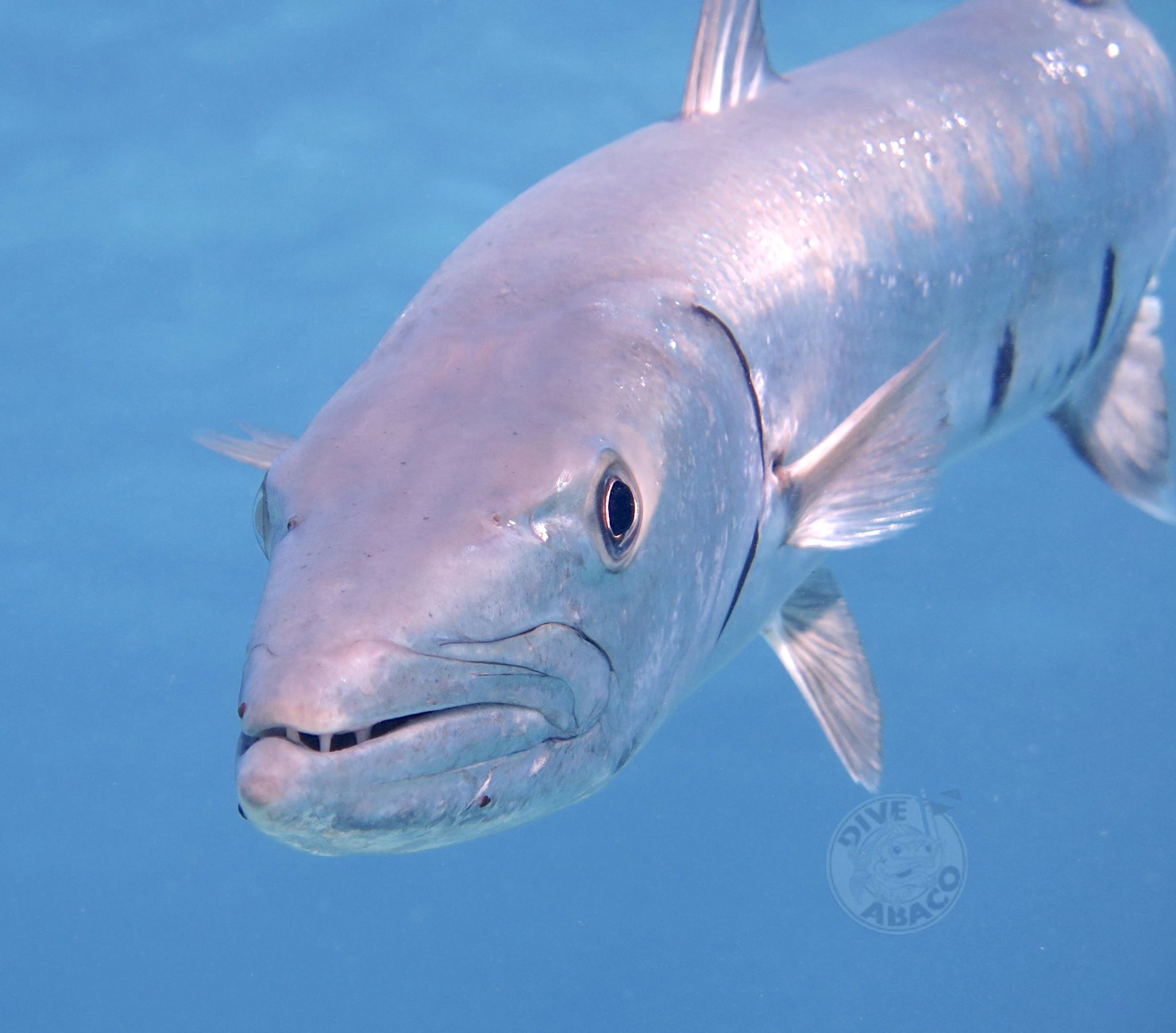
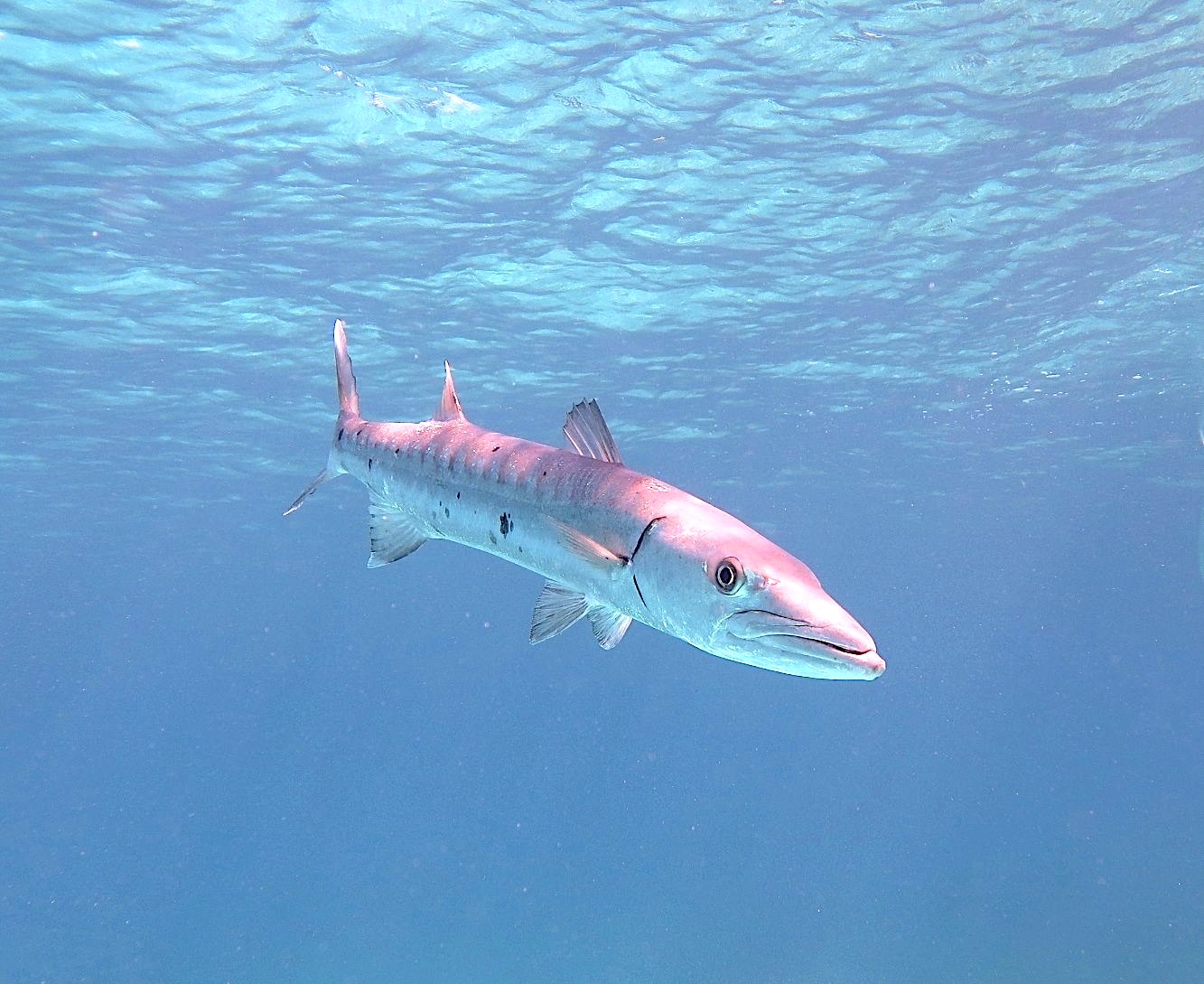
There’s no doubt about it, barracudas have a particularly unwelcoming look to them. They exude menace. There’s something about the torpedo shape, the primitive head, and the uncomfortably snaggle-toothed grin-with-underbite that suggests a creature not to be underestimated.
And that smiley mouth – rather scornful and derisive, is it not? A powerful creature in its element, where you are the intruder… and it sees it like that too. An adult barracuda may grow to nearly 6 foot long. You are only temporarily of its world, and (it observes) you are keeping your distance.
The dental arrangements of a ‘cuda are a wonder in themselves. The teeth are razor sharp; an orthodontist’s nightmare because they are all different sizes and grow at different angles. Some are conventionally set in the jaws, but some actually grow from the roof of the mouth. There are ‘normal’ sized teeth interspersed with wicked-looking fangs that randomly grow facing forwards, backwards and sideways.
WHY THE UNTIDY MOUTH FURNITURE?
The name Barracuda is thought to derive from the Spanish word barraco meaning (in one of its senses) “overlapping teeth”. The jaws that contain the teeth are strong, and the underbite adds to the effectiveness of ‘cuda predation. Prey is highly unlikely to escape once caught. When the jaws snap shut, the sharp angled teeth – particularly the back-facing ones (cf fishhook barbs) prevent the victim from pulling away. Then the munching and shredding can begin inside what is essentially a perfectly equipped multi-bladed mincing machine.
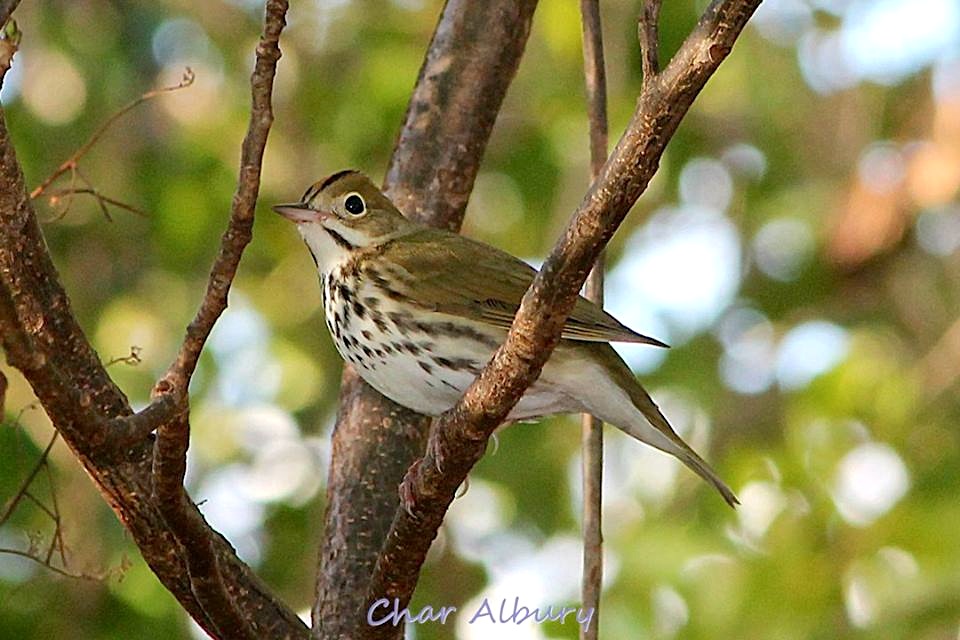
The Ovenbird Seiurus aurocapilla is a small winter-resident warbler with distinctive orange head feathers that can be raised into a crest. This accomplishment is mainly used in the breeding season as a way to impress and attract a mate, and maybe at other times if they are alarmed.
These are shy little birds and you may hardly be aware of them. They stay close to the ground and as they rootle their way through dead leaves and under shrubs, they look quite drab. See one lit up by the morning sun, however, and you’ll see how pretty and richly marked they are, with a smart orange head-stripe.
The Ovenbird – first classified by Linnaeus in 1766 – enjoys the taxonomic distinction of being the only bird of its genus in the warbler family Parulidae. It is a so-called ‘monotypic’ species. It was formerly lumped in with Waterthrushes and Parulas, but was fairly recently found to be genetically dissimilar and so the classifications were revised.
The ovenbird is so named because it builds a domed nest (‘oven’) with a side-entrance, constructed from foliage and vegetation. They tend to nest on the ground, making them vulnerable to predation. The species name for the ovenbird, Seiurus aurocapilla, has nothing to do with the nest shape, though. It derives from both Greek (Seiurus = wag-tail) and Latin aurocapilla = gold-capped). No, nothing to do with the lovely Taylor Swift either. Leave it.
Examples of the ‘chipping’ call and the song are below
Gauge the size of the bird against the pod it is standing on…
Orange crest feathers on show
Credits: Tom Sheley, Woody Bracey, Charmaine Albury, Bruce Hallett, Gerlinde Taurer, Cephas / Wiki
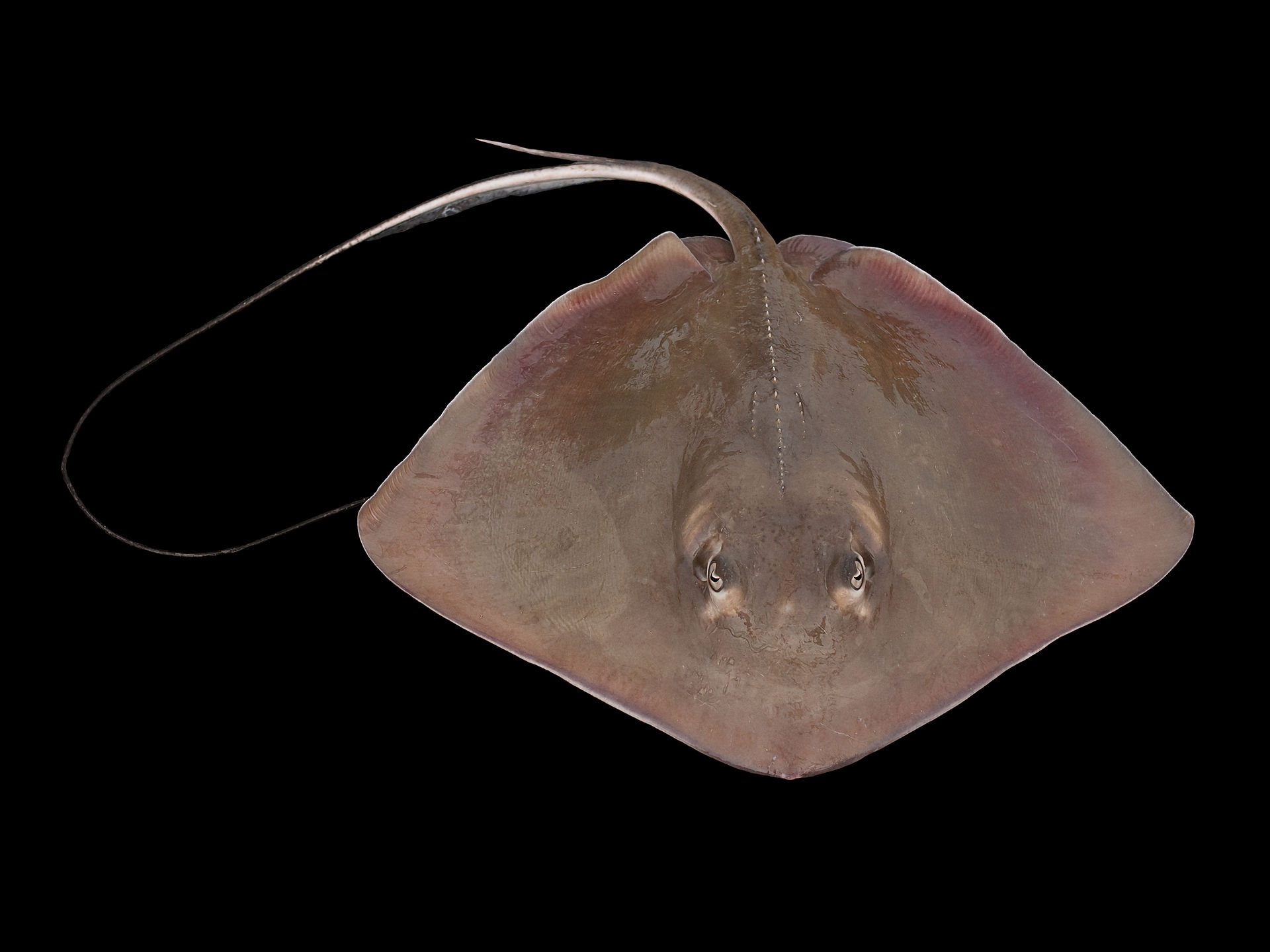
Anyone who has scuba-dived or snorkelled around the bright coral reefs of the Bahamas, or hunted bonefish out on the Abaco Marls will have come across Southern Stingrays Dasyatis americana. And there are certain places where you can actually feed them – and not come to any harm…
FEED THEM? AREN’T THESE GUYS LETHALLY DANGEROUS CREATURES?
The name that always comes to mind in connection with stingrays isSteve Irwin, the charismatic Australian wildlife expert who was tragically stung over his heart as he swam close above a ray while filming underwater. It was a dreadful example of expert scientific study with a terrible outcome.
The ray’s stinger is in fact an erectile venomous barbed spine near the base of the tail and not on the end of it (as one might expect). But these creatures are not out to harm you – though of course when you are in their environment you should accord them the respect that they merit.
If you are walking / wading in the water, avoid the risk of accidentally treading on a ray. Best to shuffle your feet forward in the sand; if there’s a half-concealed ray feeding or resting on the bottom nearby, it will swim away peacefully. I took these photos below while bonefishing on the Marls. 1. Ray directly ahead of the skiff slowly makes off as the skiff drifts closer. 2. Ray with its young – completely aware of us as we glide past to one side, but completely unbothered.
Nonetheless if you are swimming, snorkeling or diving, don’t get too close – especially by passing directly over a ray, obviously.
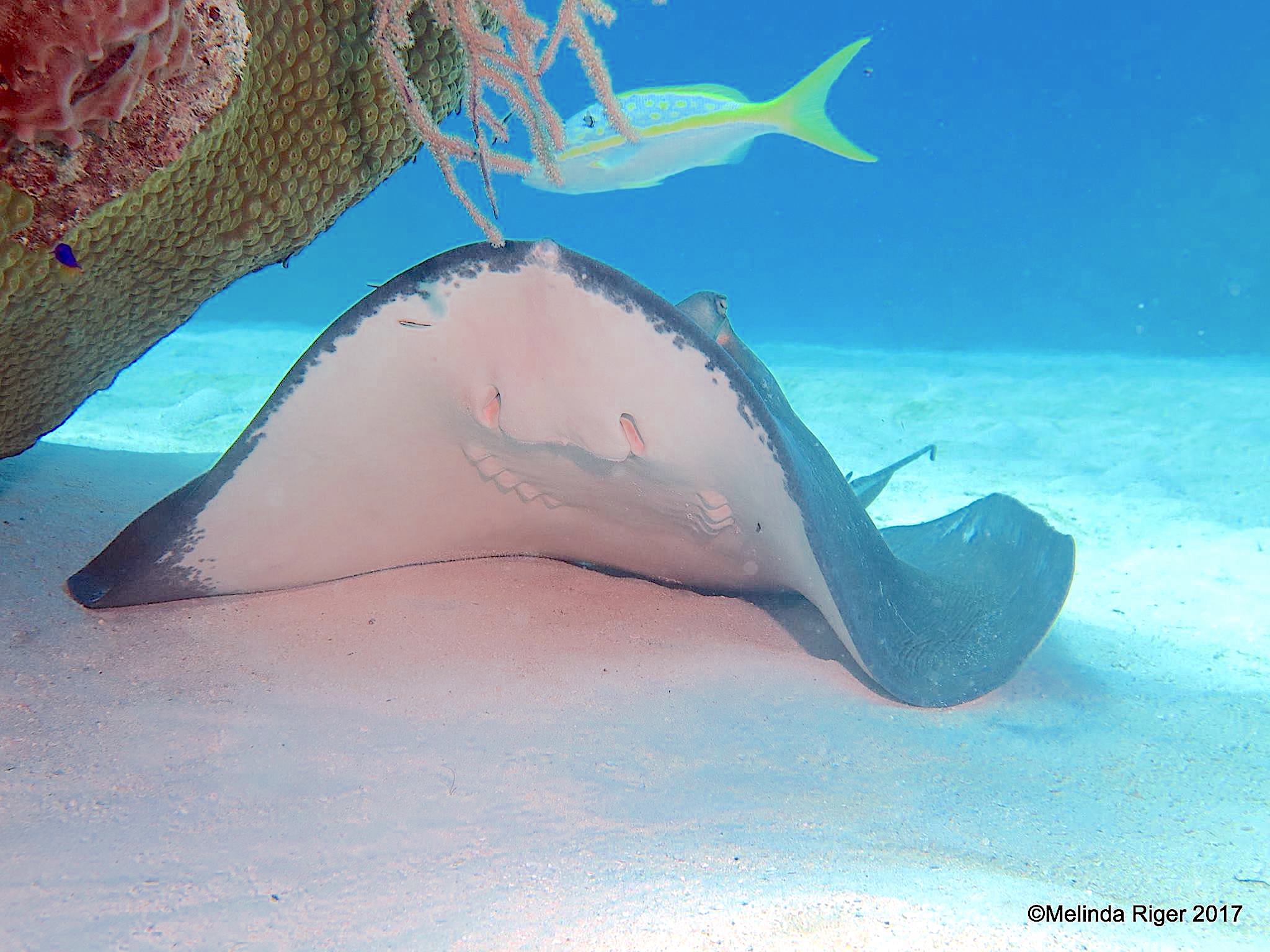
Enough of the potential dangers. The southern stingray is a magnificent creature, as Melinda’s wonderful photographs show. She spends half her life underwater – I’m not aware of any ray problems.
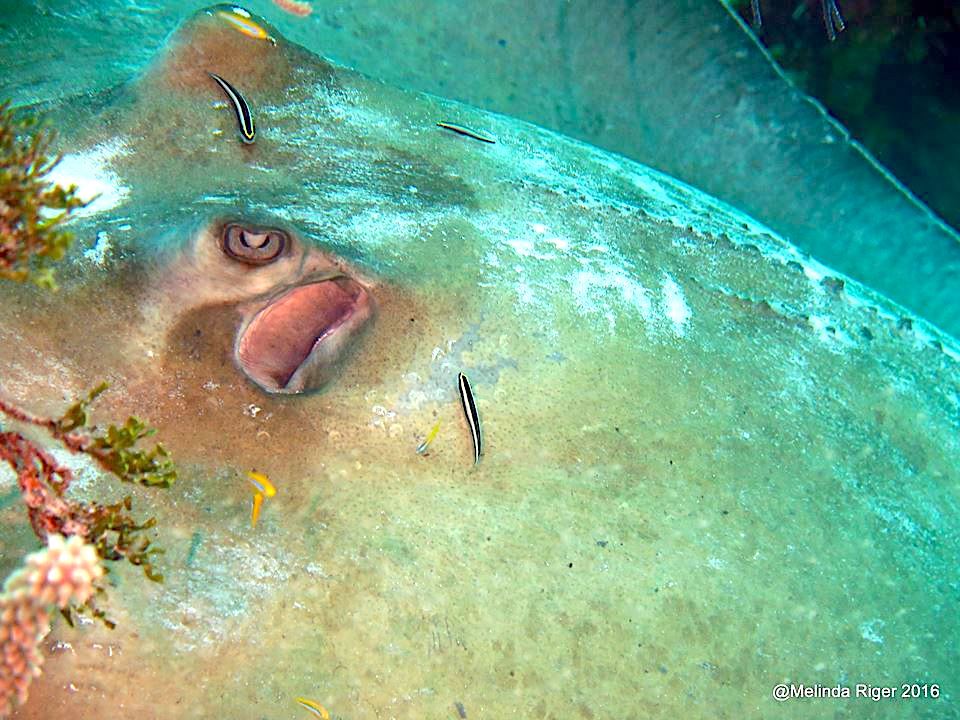
Like many larger sea creatures, stingrays need help with their personal care – the removal of parasites, dead skin and so forth. And so they make use of the services offered by small fish like gobies, wrasses and shrimps at a CLEANING STATION. Here are 2 photos of rays doing just that. You can see the tiny fish by the reef, going about their work. There’s a mutual benefit in this symbiotic relationship, in which it is understood that the cleaners are unharmed. Indeed, they will often enter the mouths and gills of a fish to clean… including the teeth. So there’s dental hygiene on offer too…
Photo Credits: Melinda Riger / Grand Bahama Scuba, except for the feeding photo (cheers, Samantha Regan), the ‘specimen’ from Tomas Willems (Wiki) and my two noted above
THE PLURAL OF ‘OCTOPUS’ & RELATED CEPHALOPOD MYSTERIES
The correct plural of ‘octopus’ is a singular mystery wrapped in tentacles and hidden beneath a rock. Shall we have the grammatical discourse first, or save it for later? Let’s have some octopi octopuses octopodes to look at first… [oh, and it’s definitely not ‘octopussies’, not even for 007]
12 TASTY OCTOPUS FACTS TO ASTOUND YOUR FAMILY & FRIENDS
Their 8 ‘arms’ come in pairs ( the back two act more like legs) and they are bilaterally symmetric
Their beak is hard, but they have no internal or external skeleton (so they can squeeze into tight crannies)
They paralyse their prospective meals with saliva from their beak; or drill holes in molluscs, stun them with venom and rip them out
They defend themselves with squirted ink, jet propulsion, camouflage or venom
All species are venomous; only one species is deadly to humans (not found in the Bahamas)
They are able to detach an arm (autotomy) to distract predators with the wriggling shed limb
The male’s 3rd right arm is the one used for reproduction… (stop giggling at the back)
Well, you asked: 1. special hidden extra arm 2. packets of sperm 3. into the female’s ‘mantle cavity’
No, I don’t know any more than that – ask your father.
Oh, and the males tend to die within months of mating, deftly using death to sidestep parenting 8-limbed offspring
They are unlikely to make a good pet for your family. Those who try, fail
They are eaten throughout the world, sometimes alive (e.g. Korea)
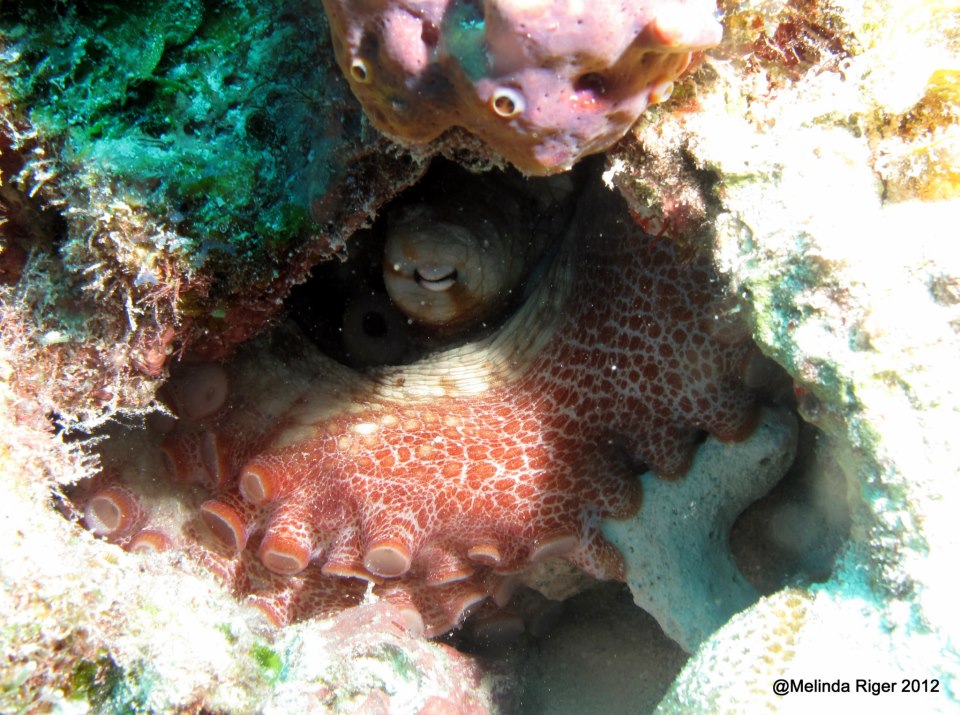
Another photo of Melinda’s, showing how an octopus can tuck itself away inside a small gap in the rocks. It can still keep an eye on you, though
THE CORRECT PLURAL OF ‘OCTOPUS’
There’s much debate about this comparatively unimportant question. Not even an octopus would care. The viable candidates are: octopuses; octopodes; and octopi. Since all are in common usage, none is ‘wrong’, though some are more correct than others…
1. OCTOPUSES An anglicised grammatical progression of a latin-sounding word to a logical plural, similar to ‘virus’ and viruses’. Only an extreme pedant would want to argue for ‘viri’ or ‘virii’. Similarly with bonus: “We all got boni for Christmas”. No, you didn’t. They were bonuses.
2. OCTOPODES the origin of ‘octopus’ is a Greek word ὀκτάπους, later latinised. The correct plural in Athens would have been ‘octopodes’. It is not derived from a 2nd declension latin noun, as often assumed, in which case the plural might indeed be ‘octopi’ (cf annus / anni; year / years). Using this etymologically accurate form in conversation might lead to a lonely life as people begin to move away from you. But you would still be in the right, if that matters to you so much…
3. OCTOPI see above. In a picky world, this is the least correct of the 3, being a pluralisation based on the wrong root origin (i.e. on latin, not greek), and therefore etymologically unsound. In practice, it’s quick and easy, and everyone knows what you mean, which is largely the point of language, I guess. Personally, I’d use octopuses if I ever used the word.
SUMMARY: 2 is the most technically correct, and also the most likely to get you chucked off the side of the boat. Fully clothed. 1 is a logically correct anglicisation. 3 is a technically incorrect form, but long usage has made it acceptable to all but verbal Luddites. Push them off the boat too.
ADDENDUM This was never going to be easy! What about ‘cactus / cacti’, do I hear? Yes, cactus was known to Greeks as κάκτος (kaktos); but it was equally known to the Romans as ‘cactus’, not as a word that had to be imported by them from the Greeks and adapted. So the word’s root is as much latin as greek. No doubt that explains similar latin-origin ‘i’ plurals such as alumnus / alumni and stimulus / stimuli.
Massive thanks as ever to Melinda and Fred Riger of GRAND BAHAMA SCUBA, who in 2011 got me started on the fish, rays, sharks etc to be found in northern Bahamas waters.This entire blog – 15 years-worth – is to a considerable extent shaped by their generosity with their knowledge and wonderful photos from those early days.
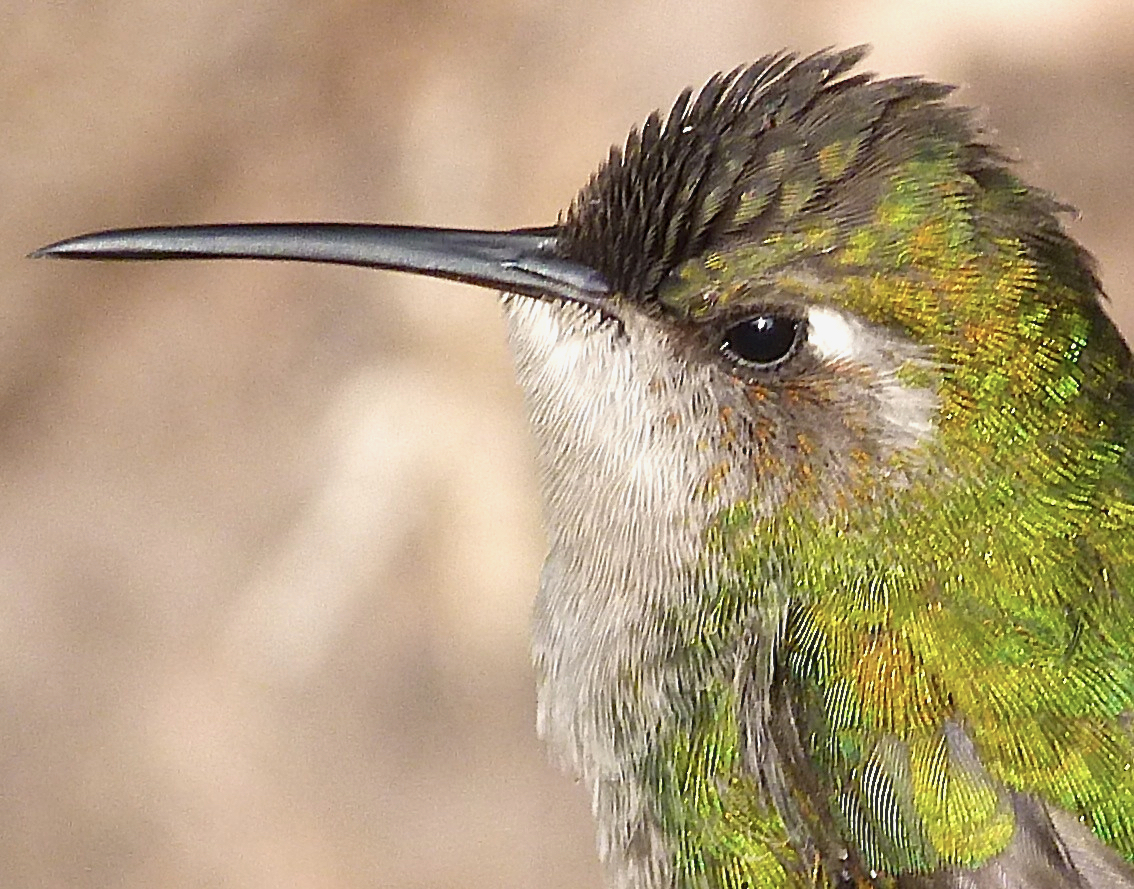
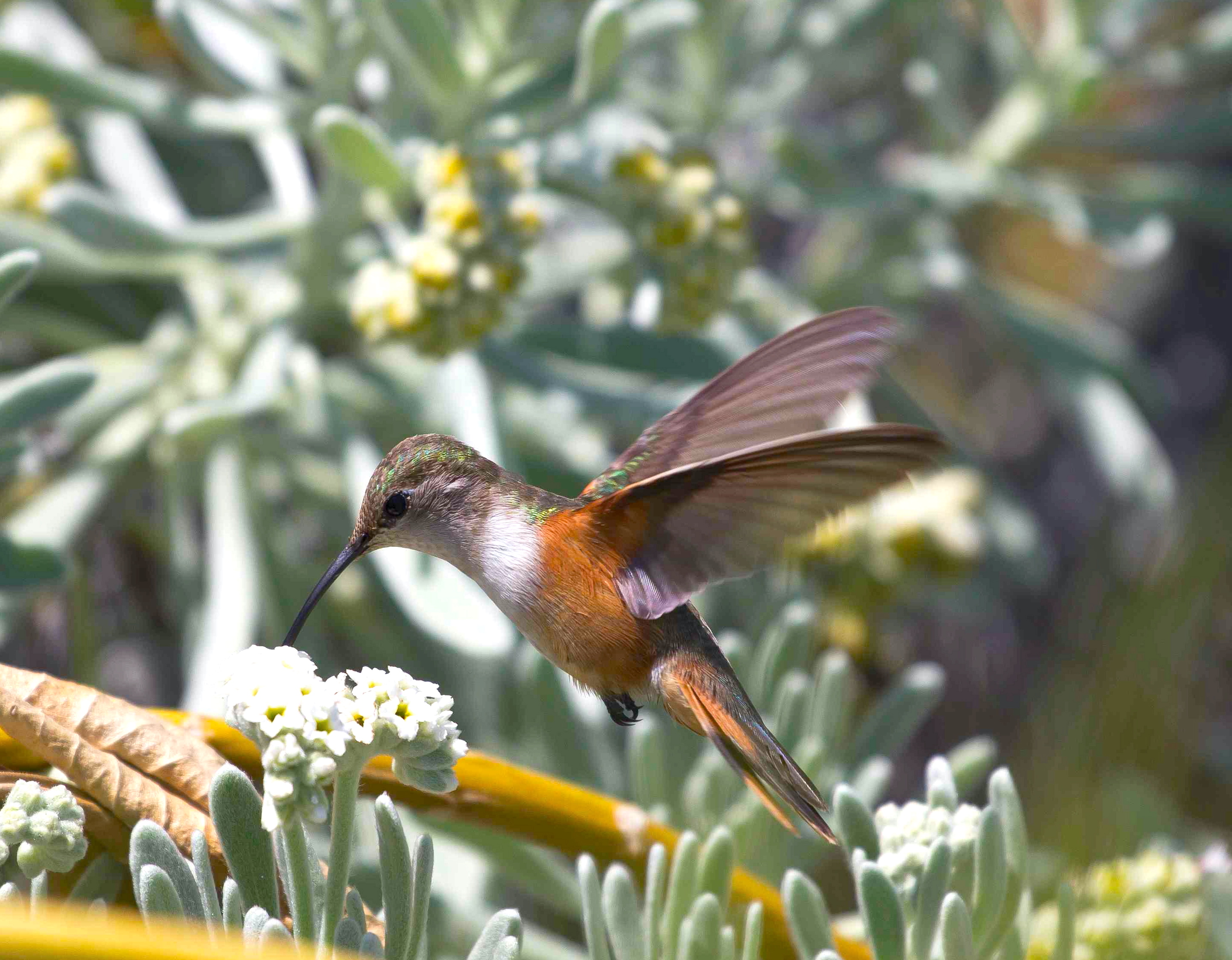
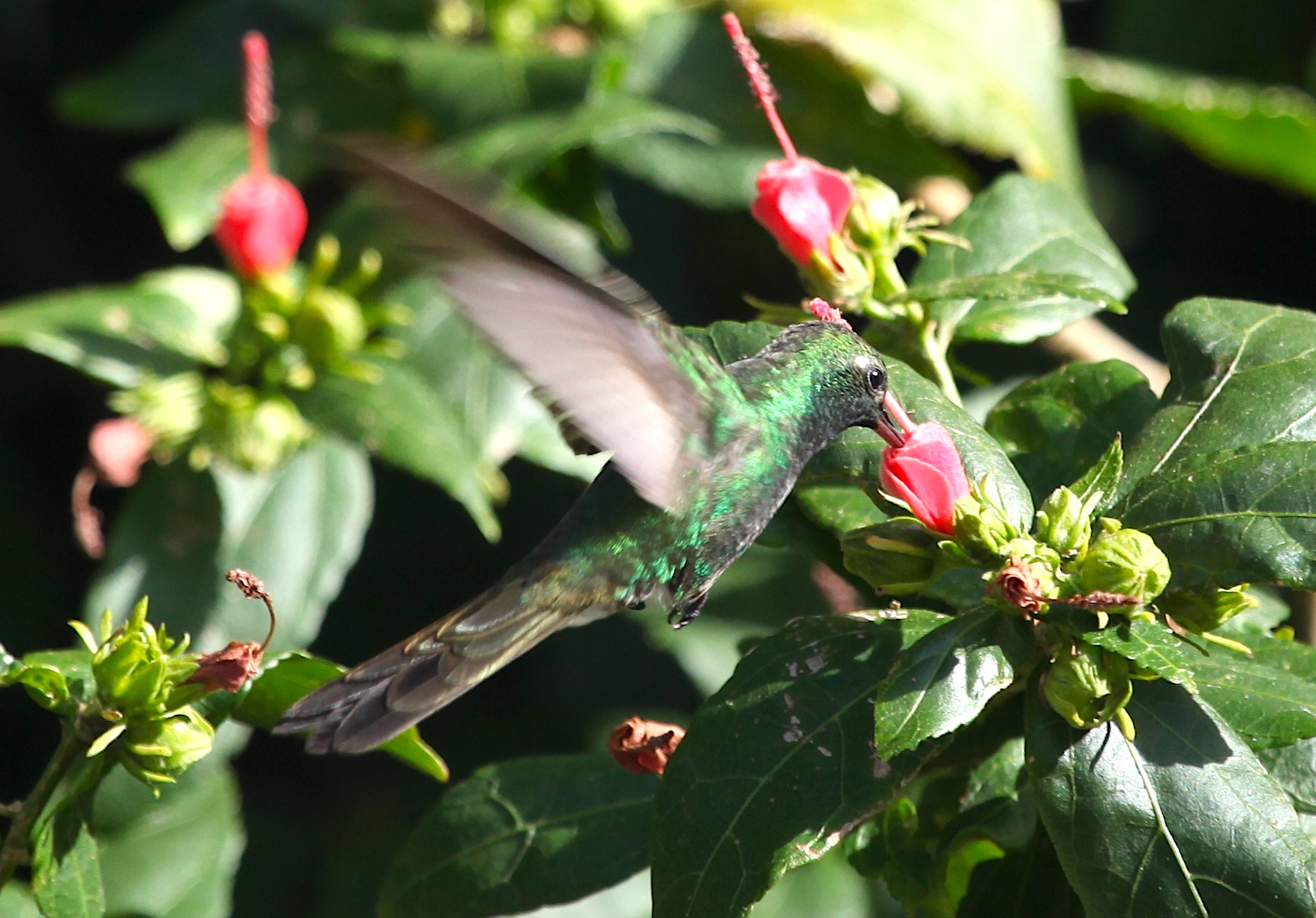
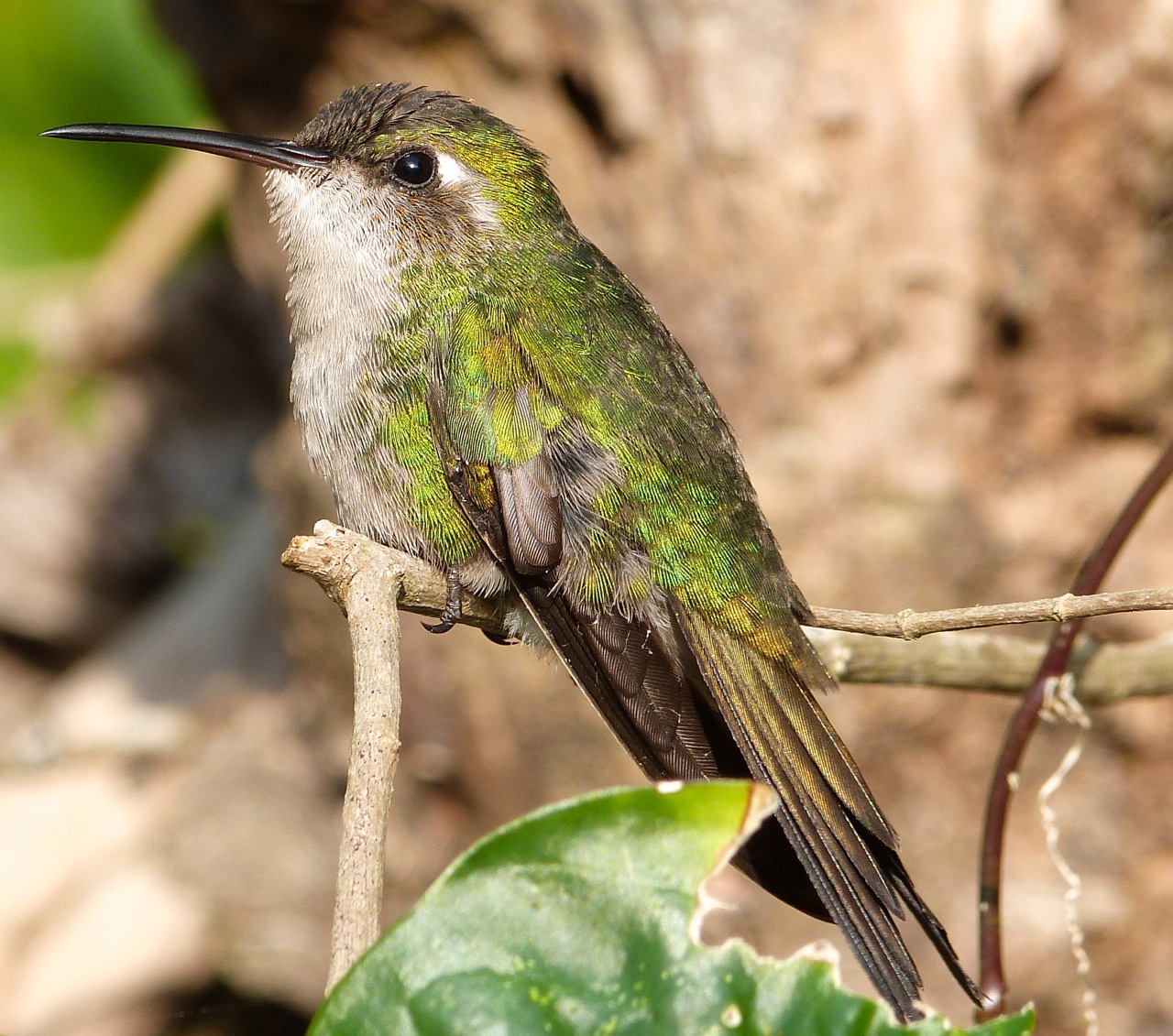
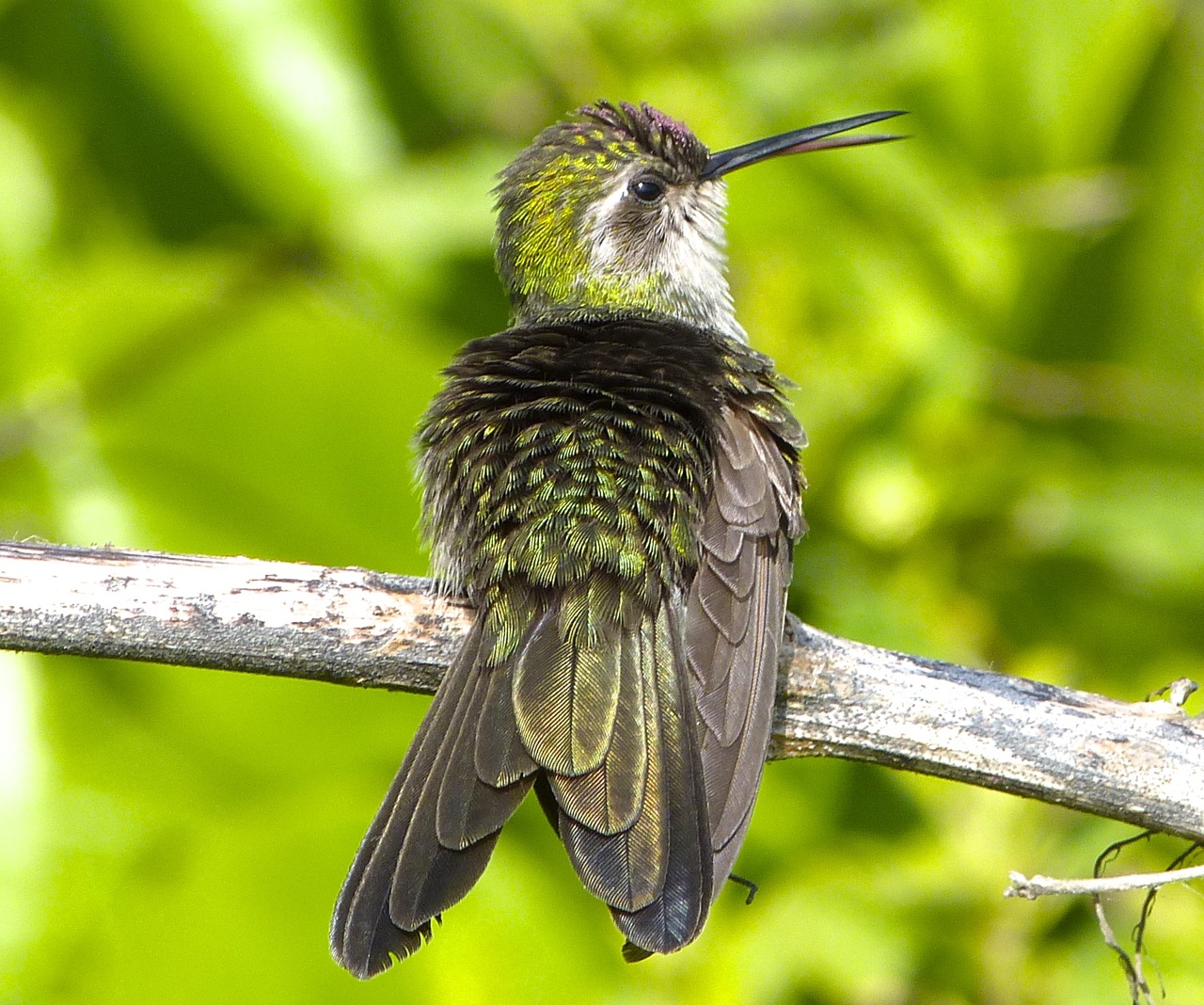
This post is not as indelicate as the title might imply. It is not a practical guide for intimate examinations of tiny birds. Nor does refer to some louche activity involving large motor vehicles. It’s all about plumage and recognition. And there are only two species – and two genders for each one – to wrestle with*.So here are the adult male and female Bahama Woodstars and Cuban Emeralds in all their glory…
Cuban Emerald (f) Gilpin Point, Abaco (Keith Salvesen)
And finally, a brilliant Woodstar photo taken by Tom Sheley, birdman and generous fishing partner, that spans the boundary between wildlife photography and art.
Bahama Woodstar female. Abaco Bahamas . Tom Sheley
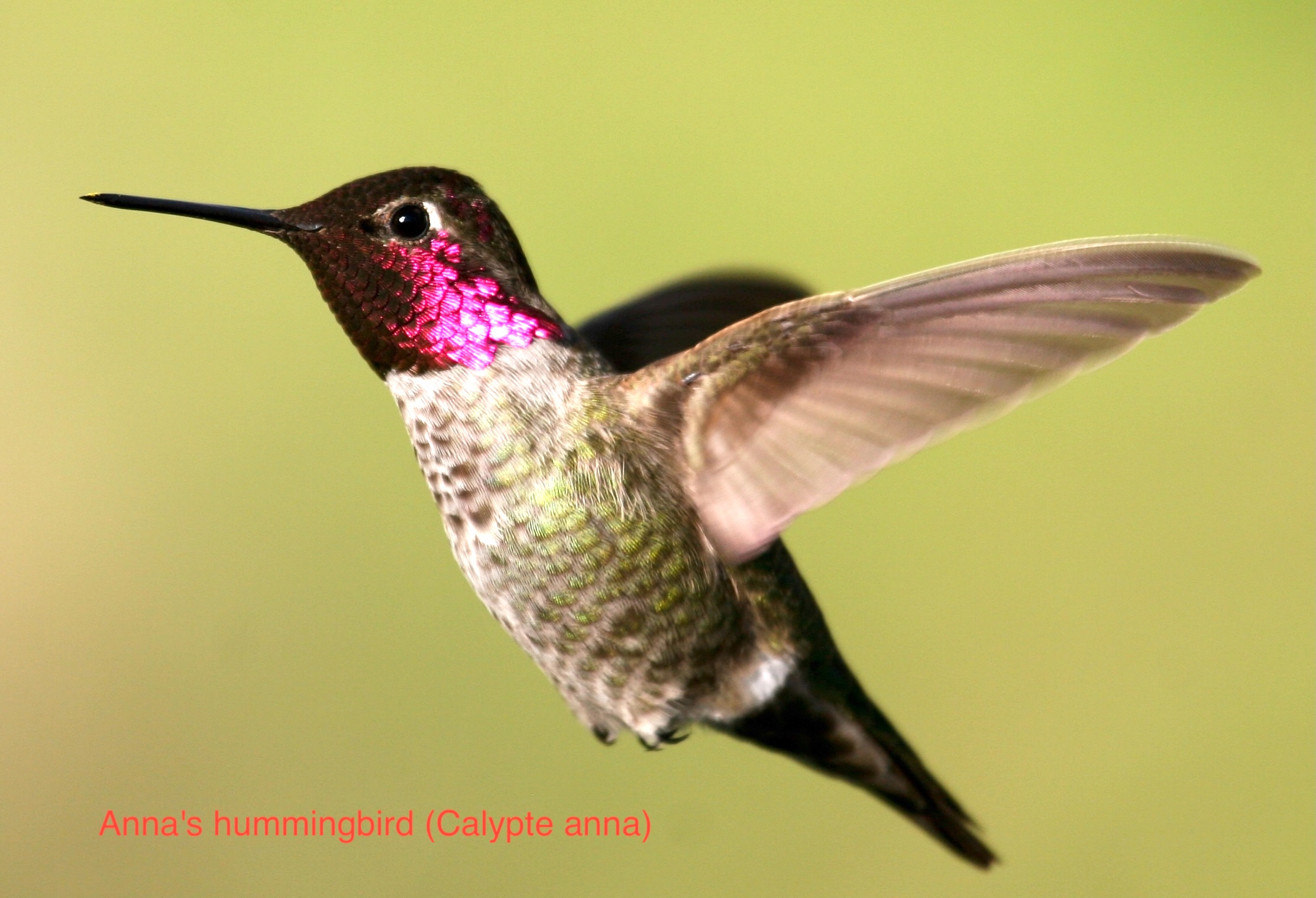
There have been very rare reports of vagrant sightings, in particular Anna’s Hummingbird
It’s often a hard decision whether to include a short piece of video footage in a post. By short, I mean less than a minute. On the one hand, there is usually a good reason for inclusion, even if only aesthetic. On the other, it simply takes up more time for busy people who may prefer to flick through an article and enjoy some nice images along the way. Today, you can have the best of both worlds.
Sanderlings are definitively ‘peeps’, a group name that embraces the smallest and squeakiest sandpiper species. They are the wave chasers, the tiny birds that scuttle along the beach, into the retreating tide for a snack from the sand, and back to the beach again as the waves creep in. Their little legs and feet move in a blur, and many people immediately think of wind-up clockwork toys as they watch the birds in action. But these charmers never wind down while there is shoreline foraging to be done.
One of the joys of being a sanderling is that rock pools fill and empty diurnally. At some time during daylight, there’s the certainty of a quick dip. I was lying on the beach when I took this short video, so that I didn’t spook the birds. I was equipped with a smallish camera (I drowned it the following day. By mistake I mean) so I kept my distance rather than try to get closer and spoil their joyful bathing.
I caught these little birds at a critical moment. You can tell that the tide is coming in fast. The peeps are becoming edgy, and weighing up the joys of immersion in a pool with the less enjoyable prospect of being washed out of the pool by the next wave. Within a minute or so, they had all flocked down the shoreline for a foraging session in new territory.
Waves and incoming tide getting a little too close for comfort on the edge of the pool…
Next to the migratory PIPING PLOVERS that favour Abaco as their winter home, the wave chasers are my favourite shorebirds. It was my keenness on them that killed my camera. I went out into the incoming waves to get shots back at the beach with the sun behind me. Great idea until I lost my balance with, as they say, hilarious consequences. Lesson learnt – never turn your back on waves.
“CATCHING THE EYE”: OYSTERCATCHERS (+ BONUS ID TIP)
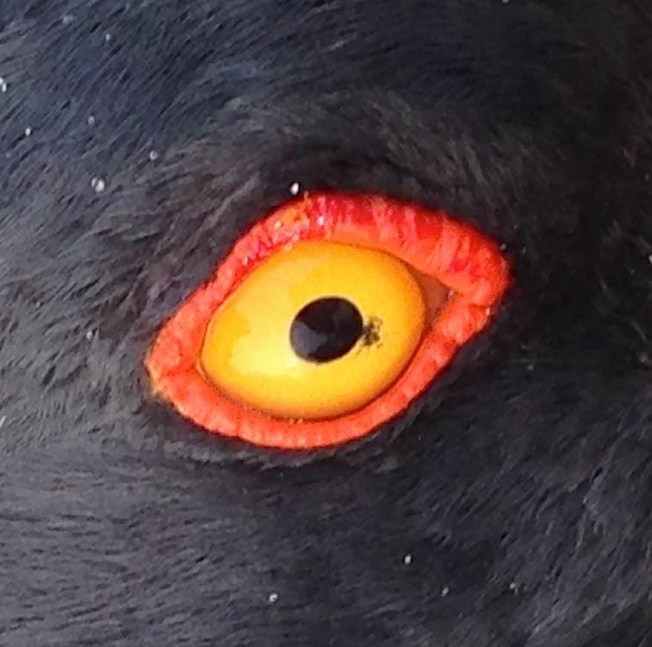
I’m focusing (ha!) on oystercatchers and their eyes. Like the extraordinary one in the header image. Notice the bright orangey-red ‘orbital ring’, the egg-yolk-reminiscent eye and the pitch black iris. An eye-catching and unmistakeable feature of this handsome black and white shorebird, the American Oystercatcher.
Here’s another AMOY eye, with a different smudge of black by the iris. I don’t know for sure, but I suspect that AMOY specialists are able to ID individual birds at least in part by their different eye markings. And you can see that the eye-ring smartly matches the beak into the bargain.
This wonderful photograph of a loving AMOY pair with their precious egg safely encircled by a rocky nest was taken on LBI, NJ by ‘Northside Jim’, whose amazing photos I sometimes include. See how brightly the eyes of each bird stand out, like tiny archery targets.
The World is Mine Oyster
This well-captioned AMOY shot was generously put on Wiki by photographer Dan Pancamo
OYSTERCATCHER ID TIPS
A while ago, when I was choosing AMOY photographs for publication, I idly wondered what was the difference between them and Eurasian Oystercatchers (yes, yes, I hear you – apart from geographical, I mean…). At a first comparative glance, to me they looked remarkably similar in coloration and size. Assuming both species were to be discovered on the same shoreline, how best might one distinguish them? The main differences seemed to be:
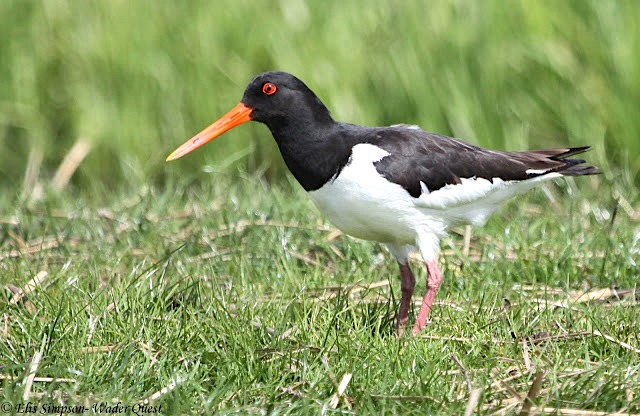
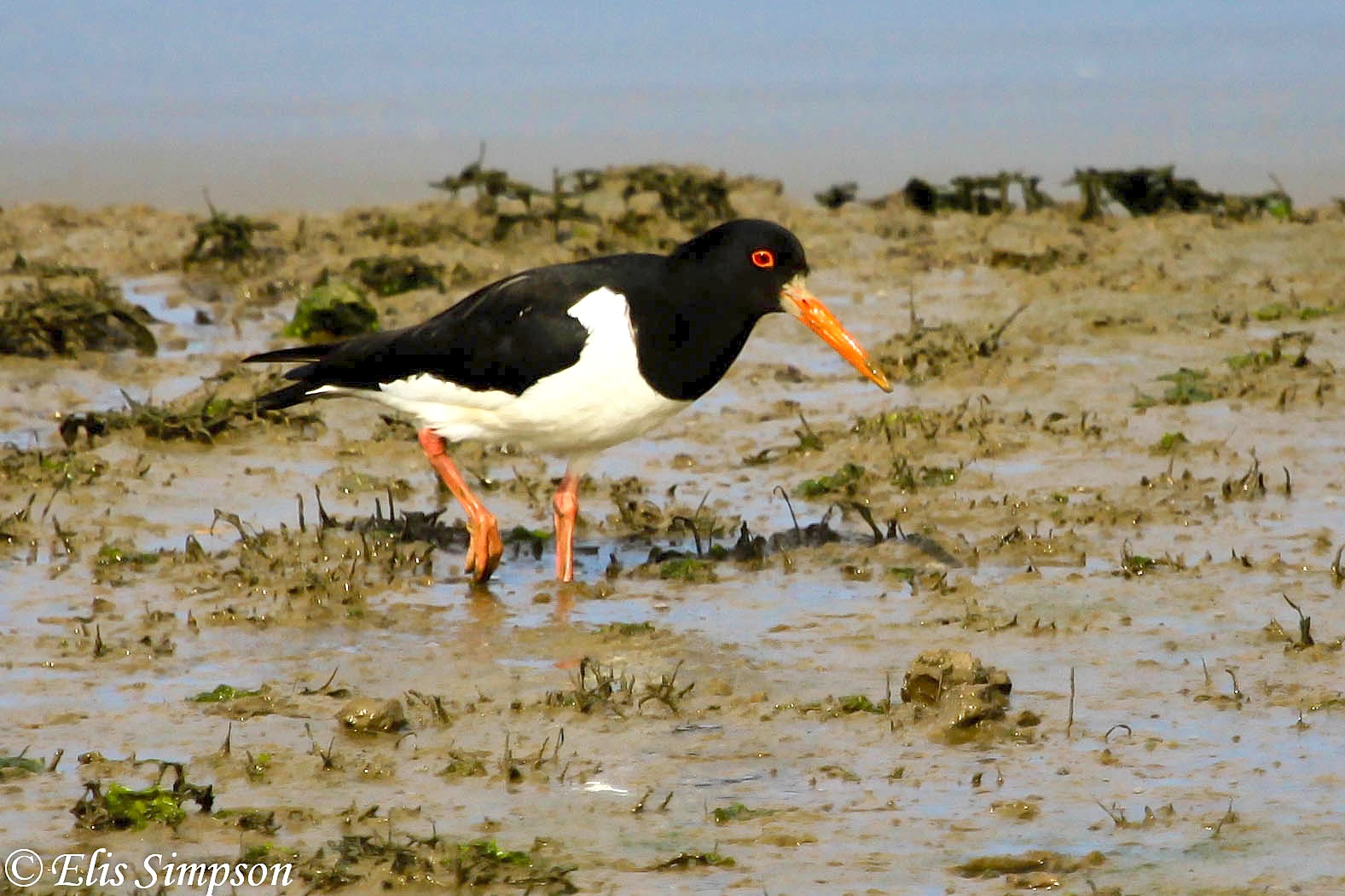
Leg colouring differs, AMOY legs being generally pale pink as opposed to the stronger coloured legs of the EUROY (if they can be called that). However there are considerable EUROY variations (see below), from pink to orange to reddish, that are presumably seasonal. The leg colour, assuming they are visible to the watcher, is not quite a definitive identifier.
Both species have black heads and necks, but the AMOY’s back plumage shades to dark brown. But how distinctive would that be in low light or indifferent weather?
Mrs RH, looking over my shoulder, saw it at once: the eyes. If you can see the eyes, you can tell instantly what make of OY you are looking at. Here are a some Eurasian Oystercatchers showing their own distinctively red eyes and orbital rings.
As so often, I have since found that the excellent Birdorable site has nailed the differences clearly and simply. Eye colour, leg colour and – less obviously – the AMOY’s brownish back as opposed to the EUROY’s entirely black and white body. Sorted.
BRITTLE STARS are closely related to starfish, and in particular to Basket Stars. They are commonly known as “serpent stars”, having 5 long, thin arms that may grow as long as 2 feet long. There are lots of different types of brittle star – at least 2000 – and they are found in every ocean on earth from the poles to the tropics. In Bahamian waters they a commonly found living on reefs.
Although these creatures look primitive, their structure, nervous systems, respiratory systems, digestive systems, sex lives and transportation methods are incredibly complex. Take it from me – I’ve just read about it all. So I’ve decided to pick a few aspects of these creatures to highlight rather than discuss the minutiae of their ossicles (tiny bones), madroporites (a sort of water filter / pressure balancer) and viscera.
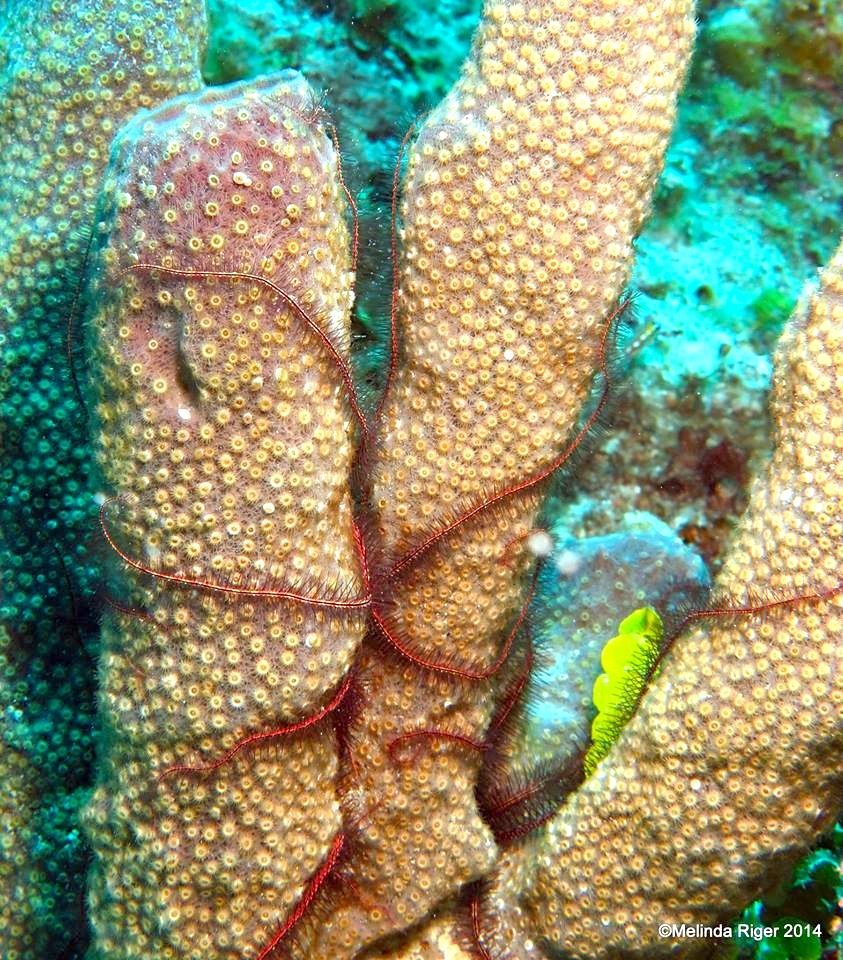
You are most likely to see Brittle Stars clinging to coral or sponges
A DOZEN BRITTLE STAR FACTS TO PLAY WITH
The star has no eyes and no sense organs as we know them, but can detect light chemically; and (why would they need this?) sense smell through their ‘feet’… [Not a superpower I would prize, but still]
The mouth is on the underside of the central disc (‘body’) of 5 segments, each with a toothed jaw
The mouth is used both for ingestion and, putting it delicately, egestion. [Nor that superpower]
Stars eat tiny organisms suspended in the water or mini-worms, gathering them with their arms
If I have understood this, they breathe through their armpits, and can excrete from here also
The arms fit the main part with ball and socket joints, and are flexible in all directions
The genitals seem to be located in or between the armpits (lucky we are not descended from stars)
Stars readily regenerate lost arms until they lose the 5th – then they are in real trouble
This enables them to shed an arm in a predator attack, like a lizard its tail
Trials indicate that a jettisoned arm cannot regenerate from itself
They use only 4 arms to move along, with the fifth ‘steering’ out in front or trailing behind
Brittle Stars are inedible but non-toxic
Often, brittle stars will cling on inside a sponge
Here is a great video from Neptune Canada of a brittle star fight on the ocean floor over the remains of a shrimp. If you watch the ones joining the fight, you will clearly see the locomotion method described above, with one limb pathfinding and the other four ‘walking’.
I’m not renowned for extreme sensitivity, so I feel no shame in showing mating brittle stars, courtesy of Channel Banks. It’s not exactly Lady Chatterley and Mellors, but the entwined arms are rather romantic, no?
Credits: all wonderful photos by Melinda Riger of Grand Bahama Scuba; BS infographic and viddys as credited
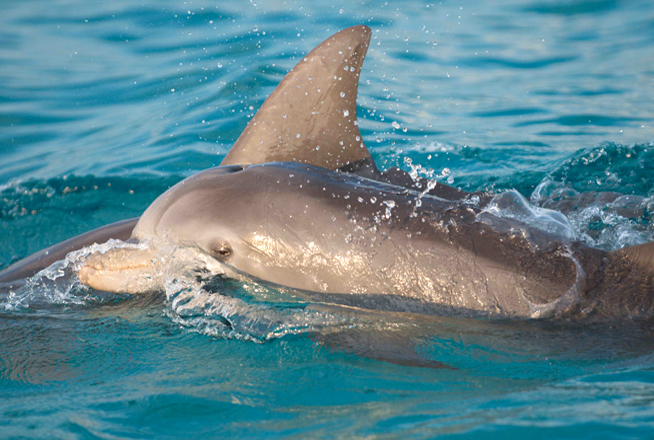
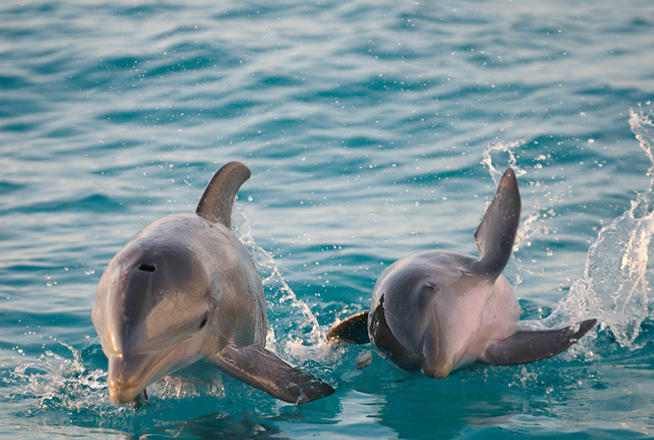
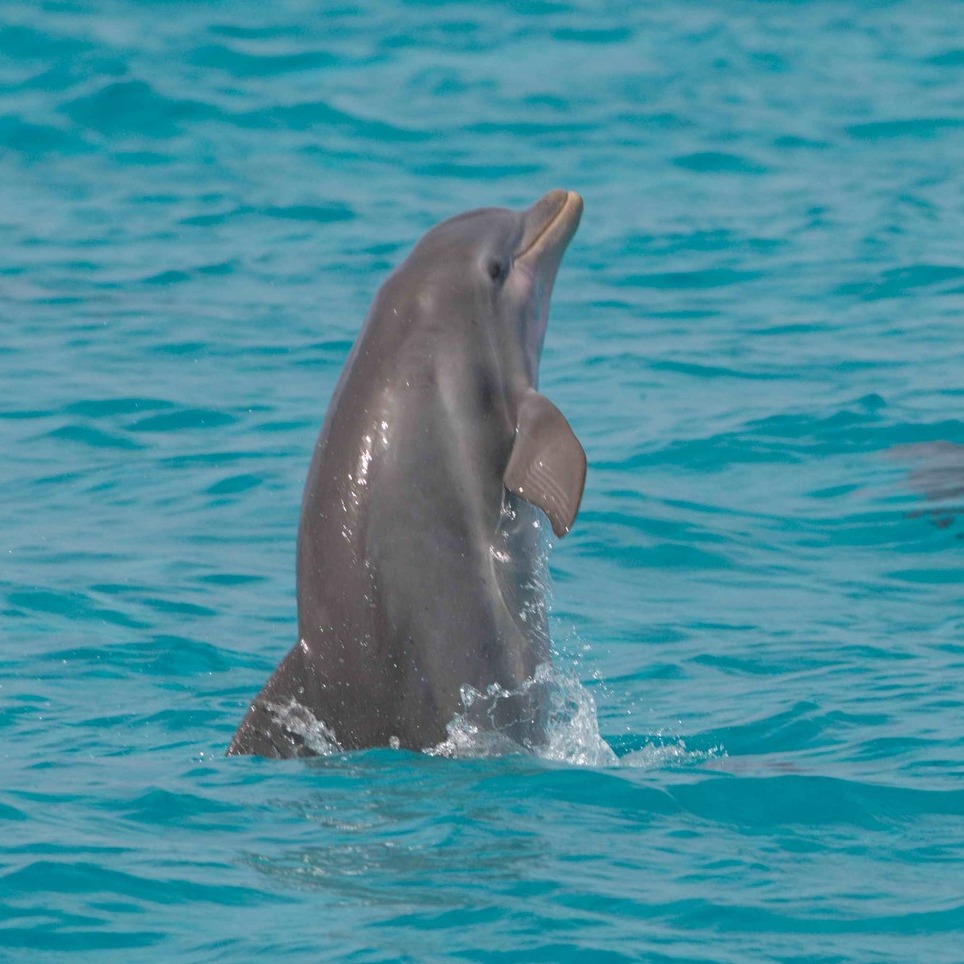
September 12th is the day chosen by Sea Shepherd to raise awareness and promote the conservation of dolphins. It was established on the one-year anniversary of the killing of 1,428 Atlantic white-sided dolphins in the Faroe Islands, which was the largest single slaughter of cetaceans in history.
As many will know, the marine mammals of the Bahamas – whales, dolphins and manatees – are researched and protected by the Bahamas Marine Mammal Research Organisation. It was established more than 20 years ago by Diane Claridge and Charlotte Dunn. Based for many years in Sandy Point, Abaco, the organisation has recently extended its operations to an office in Marsh Harbour.
BMMRO has a wide remit in marine mammal research and education. Young children are given an opportunity to learn what lies beyond the seashore. Older children have opportunities for combining learning with fun at the summer Whale Camps. There are learning groups and talks, and all schools are welcome to participate.
Plans in progress include establishing Whale Camps on other islands, such as Long Island and Eleuthera. There has also been outreach to Exuma and the Berry Islands.
At a more advanced level, BMMRO provides outstanding opportunities for older students to increase their knowledge and skills, to take these to higher education, and to prepare them for the life of a marine mammal researcher.
BMMRO has recently produced a comprehensive Field Guide featuring all 27 marine mammal species found in Bahamian waters. These give a great deal of information and are readily available.
You can find out more about the nature and scope of the work carried out by BMMRO HERE . The speed of the development of sundry critical threats to the world’s oceans and their denizens has been astonishing. It is now irreversible. Fortunately the number of ocean research and protection organisations has increased significantly as the situation worsens. Please consider making a donation to support the work of BMMRO, or (for those elsewhere in the world), to the marine mammal organisation in your area.
LEAD SCIENTISTS: Diane and Charlotte – pioneer researchers in the Bahamas over 4 decades
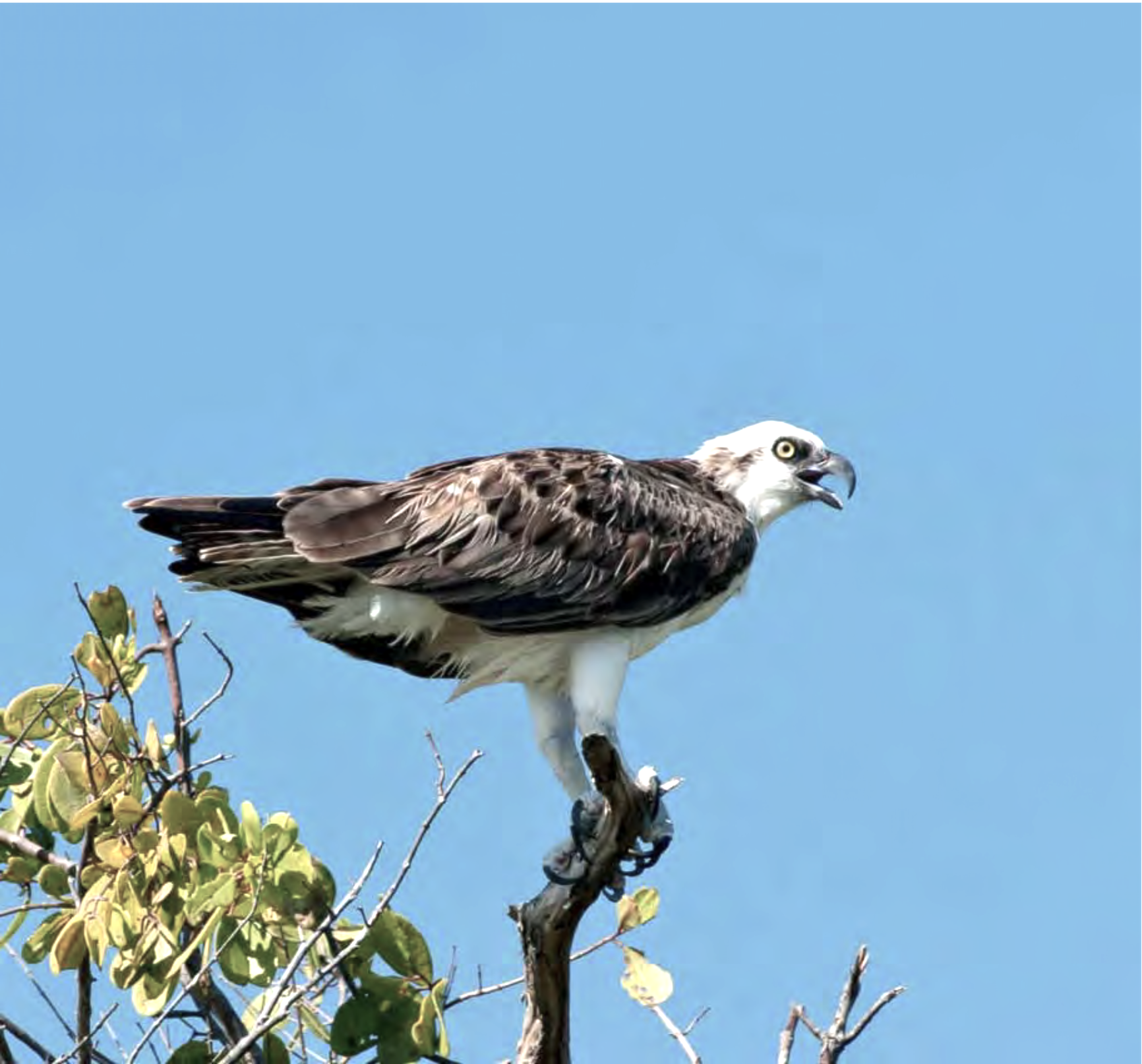
There are few more exhilarating sights in the world of birds than an osprey swooping from a great height down into the sea, emerging with a large fish held characteristically ‘fore and aft’ in its claws, and flying into the distance with heavy wing-beats.
The sounds are unmistakeable – a discordant chorus of soft chuckling noises like tongue-clicks as the RWTs flock into a bush, interrupted by harsh, metallic calls like rusty metal gate-hinges being forced open. Or maybe a lone bird mournfully repeating its eerie call from the mangroves far out on the Marls as the bonefishing skiffs slip silently along the shoreline. No other species sound quite like Agelaius phoeniceus.
The handsome males sport flashy epaulets, most clearly visible in flight or in display – for example to impress a prospective mate. Again, they are unlikely to be confused with another species.
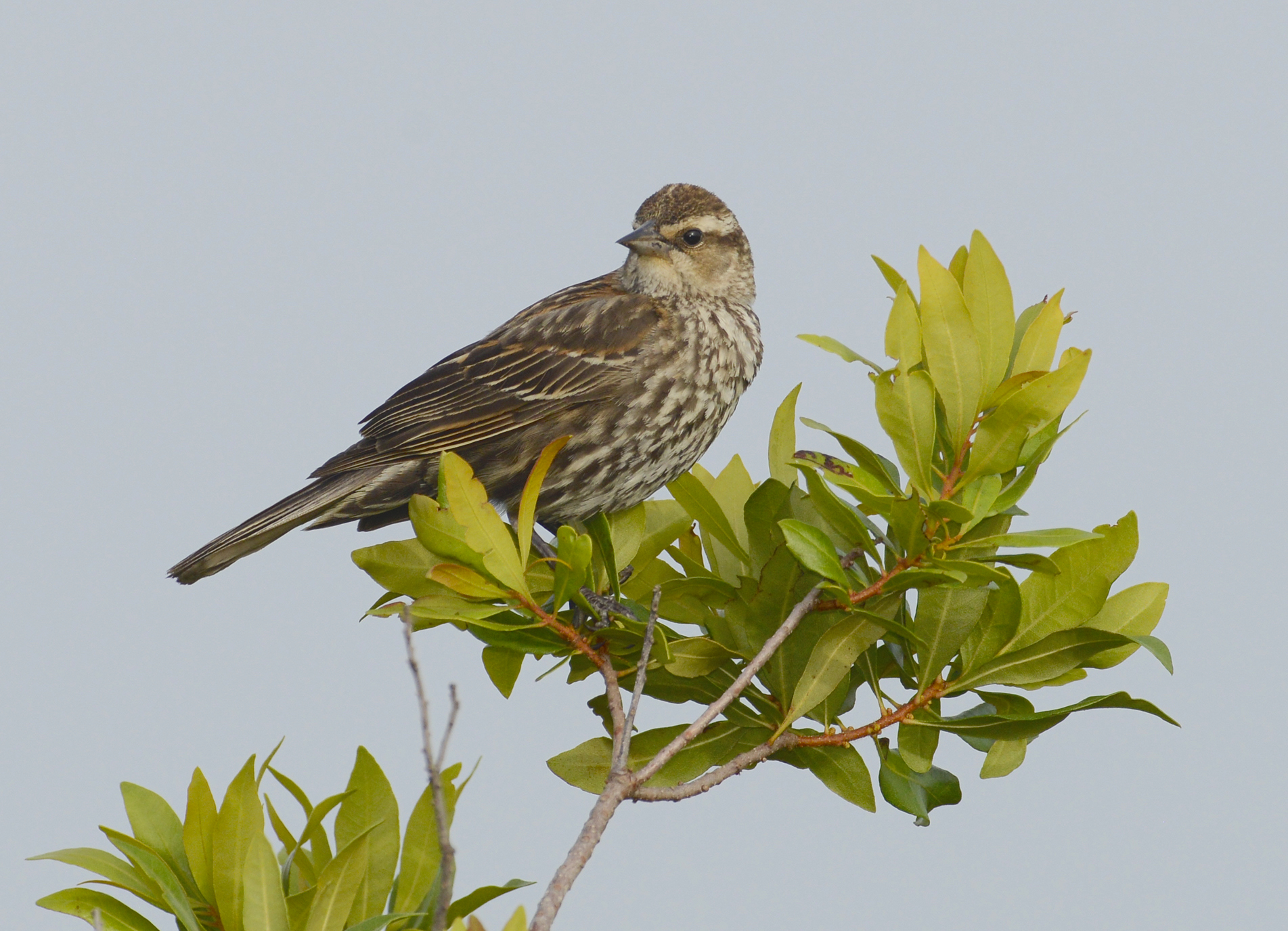
The females, as is often the way, are less showy. I have read that they are ‘nondescript’ or ‘dull’, which is unnecessarily harsh, I reckon. Here are a couple of examples.
And the darker brown ones that are clearly not handsome black males? These are young males in their first season, before they move on to the full adult male plumage. Originally I had designated them as females (as I had assumed). I was very gently corrected by the legendary bird expert Bruce Hallett. I took the first male juvenile at Casuarina, when I also made the sound recording (below). The second was at Delphi (with some ‘light’ issues, I notice…).
Fledglings are kind of cute…
SO WHAT DO THEY SOUND LIKE?
You may need to turn up the volume a bit. You will also here a lot of dove noise and, in the background, the sound of waves lapping onto the shore.
Photo Credits: Tom Sheley (1, 2, 4, 5, 8); Alex Hughes (3); Keith Salvesen (6, 7, 9 & audio)
FLAMINGO TONGUE SNAILS Cyphoma gibbous are small marine gastropod molluscs related to cowries. The living animal is brightly coloured and strikingly patterned, but that colour only exists in the ‘live’ parts – the so-called ‘mantle’. The shell itself is usually pale, and characterised by a thick ridge round the middle. Whether alive or as shells, they are gratifyingly easy to identify. These snails live in the tropical waters of the Caribbean and the wider western Atlantic.
THE IMPORTANCE OF CORAL
Flamingo tongue snails feed by browsing on soft corals. Often, they will leave tracks behind them on the coral stems as they forage (see image below). But corals are not only food – they provide the ideal sites for the creature’s breeding cycle.
Adult females attach eggs to coral which they have recently fed upon. About 10 days later, the larvae hatch. They eventually settle onto other gorgonian corals such as Sea Fans. Juveniles tend to live protectively on the underside of coral branches, while adults are far more visible and mobile. Where the snail leaves a feeding scar, the corals can regrow the polyps, and therefore the snail’s feeding preference is generally not harmful to the coral.
The principal purpose of the patterned mantle of tissue over the shell is to act as the creature’s breathing apparatus. The tissue absorbs oxygen and releases carbon dioxide. As it has been (unkindly?) described, the mantle is “basically their lungs, stretched out over their rather boring-looking shell”. There’s more to them than that!
THREATS AND DEFENCE
The species, once common, is becoming rarer. The natural predators include hogfish, pufferfish and spiny lobsters, though the spotted mantle provides some defence by being (a) startling in appearance and (b) on closer inspection by a predator, rather unpalatable. Gorgonian corals contain natural toxins, and instead of secreting these after feeding, the snail stores them. This supplements the defence provided by its APOSEMATIC COLORATION, the vivid colour and /or pattern warning sign to predators found in many animal species.
MANKIND’S CONTRIBUTION
It comes as little surprise to learn that man is considered to be the greatest menace to these little creatures, and the reason for their significant decline in numbers. The threat comes from snorkelers and divers who mistakenly / ignorantly think that the colour of the mantle is the actual shell of the animal, collect up a whole bunch from the reef, and in due course are left with… dead snails and their allegedly dull shells Don’t be a collector; be a protector…
The photos below are of nude flamingo tongue shells. Until I read the ‘boring-looking shell’ comment, I believed everyone thought they were rather lovely… I did, anyway. I still do. You decide!
Image Credits: Melinda Rogers / Dive Abaco; Keith Salvesen / Rolling Harbour; Wiki Leopard
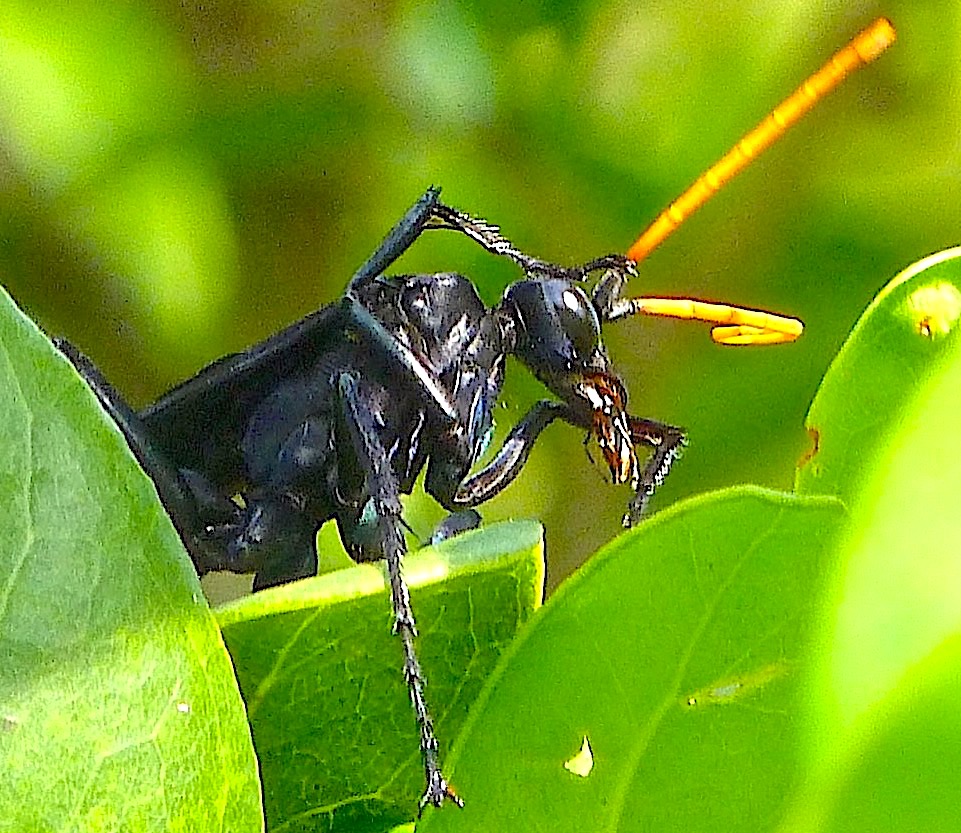
A few years ago I was wandering along a track in South Abaco looking for birds in the coppice, when I came across this aggressive-looking creature. I could only get a partial shot of the insect, and I wondered whether to try to reach towards it to get a more complete shot. Perhaps I could have, but extremely fortunately for me (as I later discovered) I didn’t touch it.
Afterwards, I read an article about these critters which prompted me to re-examine their status in nature’s ‘scary insect’ department. Q: how scary are they? A: of all the world’s most agonising stings, it is No. 3.
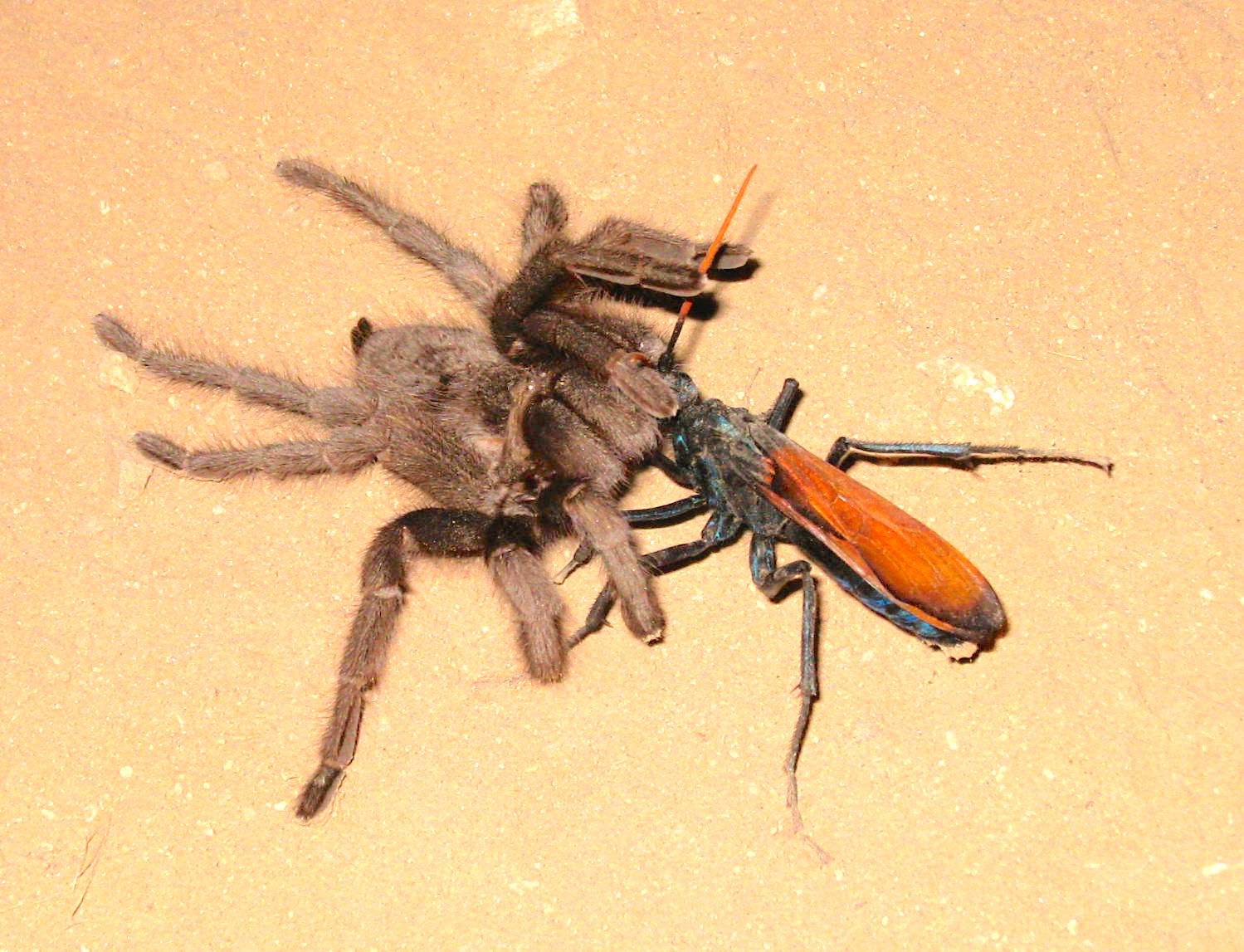
The creature turned out to be a Spider Wasp (aka Pepsis Wasp), of the Pompilidae family. The insect is familiarly known as a Tarantula Hawk, for reasons given in unsparing detail below. For it turns out that this creature would be the hardest bastard insect on Planet Bastard in the Galaxy Bastardion.
It’s lucky that I didn’t try to collect it to keep in a small box as a pet. Note, for start, the complex eating apparatus… and it’s not for nibbling leaves as I had thought, but chopping up small insects. The leg claws and barbs are for pinning down its prey. You would not believe how unpleasant these little buddies are – and that’s before we even mention the sting…
SPIDER WASPS IN ACTION
These wasps are known in some countries as “horse-killers”. The Pepsis wasp is a sub-species, and is called Tarantula Hawk because it hunts tarantulas and uses them in a most ingenious and cruel way… Some claim that these insects are unaggressive to humans – if you leave them alone, they will spare you. I’ve also read that“The tarantula hawk is relatively docile and rarely stings without provocation”Now read on to see if it might be sensible to provoke one or not.
SCARY CRITTERS & LIVING LARDERS
(Trigger Warning: this is really rather gross)
SPIDER WASPS are ‘solitary’ insects that feed on ground spiders / tarantulas by stinging them to paralyse them, then eating them. In the most sinister way, the females also make use of them for breeding purposes. Hear this! They build a nest in a burrow, find a spider (a tarantula for choice), paralyse it with their sting, drag it to the nest and lay a single egg on its abdomen. Then they seal up the burrow.
If of a nervous disposition, look away now
When the egg hatches, the larva chews a hole on the spider’s abdomen and enters a living larder. It gradually eat its host as it grows. The spider’s vital organs are left till last, so that the spider stays alive as long as possible until the larva has reached full-size. After several weeks, the larva spins a cocoon and pupates (often over winter). Finally, the wasp becomes an adult, bursts Alien-like from the spider’s abdomen (deftly evading Ripley), and tunnels out of the burrow…
Do NOT try this at home or more than 10 yards from a medical centre
SPIDER WASPS: MORE FEARFUL FACTS
Their hunting improves with experience – the more spiders they eat, the quicker they find, attack & kill them
Males use ‘perch territories’ to scan for receptive females from a tall plant or other vantage point, a behaviour known as HILL-TOPPING
Adult wasps also feed on a variety of plants for nectar & pollen. They may become intoxicated on fermented fruit, which affects their ability to get around (I think we’ve all been there at some time…)
The female Pepsis gets her spider in two main ways: approaching a tarantula causing it to rear up defensively on its legs, thus exposing its abdomen to the sting or
She locates a tarantula’s burrow, using her sense of smell. She tricks the spider into emerging by tweaking the web at the burrow’s entrance or ‘intruding’ (see video below)
The wasp uses her long stinger to stab her prey. The poison rapidly paralyses the spider. She then drags it to her burrow, lays her egg onto the tarantula’s abdomen, seals the burrow and leaves. Job done
The hooked claws and barbs on the wasps’ long legs are weapons for grappling with victims
The stinger of a female tarantula hawk can be up to 7 mm (1/3 inch) long – and the sting is among the most painful insect stings in the world (see below)
Only the females sting (males may pretend to) because the stinger is linked to the ovipositor (egg-laying organ)
You can distinguish females from males by the curled antennae of the female. Mine was therefore female
The Pepsis wasp has (unsurprisingly) very few predators, though apparently roadrunners and bullfrogs may tackle them
Here is a hypnotically fascinating 3-minute video of the life-or-death struggle
SPIDER WASP –v- TARANTULA
THE STING
The sting of these wasps is among the most painful of any insect, though the most intense pain lasts only a few minutes. Entomologist Justin Schmidt bravely submitted himself to the stings of various insects and described this pain as“…immediate, excruciating pain that simply shuts down one’s ability to do anything, except, perhaps, scream. Mental discipline simply does not work in these situations.”
Schmidt produced his SCHMIDT STING PAIN INDEXThe pain scale, based on 78 species, runs from 0 to 4, with 4 awarded for the most intense pain. Spider Wasps of the species Pepsis – i.e. Tarantula Hawks – have a sting rating of 4.0, described as“blinding, fierce, shockingly electric. A running hair drier has been dropped into your bubble bath”Only the bite of the Bullet Ant – and the sting of the Warrior Wasp – is ranked higher, with a 4.0+ rating, vividly described as“pure, intense, brilliant pain. Like fire-walking over flaming charcoal with a 3-inch rusty nail in your heel”
LIGHT RELIEF AFTER THE PAIN
1. In 1989, New Mexico chose the Tarantula hawk wasp as the official state insect. The choice seems to have been left to schoolchildren and I’m guessing here (or gender-stereotyping) but I suspect it was the boys’ choice that won…
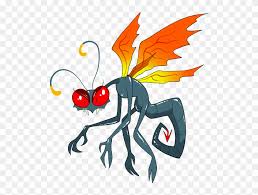
2. Tarantula Hawk is a “psychedelic progressive metal band” from San Diego, Ca. Their short discography includes their debut Tarantula Hawk (CD/LP, 1998); Burrow (Live CD, 2000, self-released); and Untitled. The cover of their debut provides the perfect ending for this post, vividly depicting the colour and texture of the swirling fiery pain you could experience (and I don’t really mean from listening to the music…)
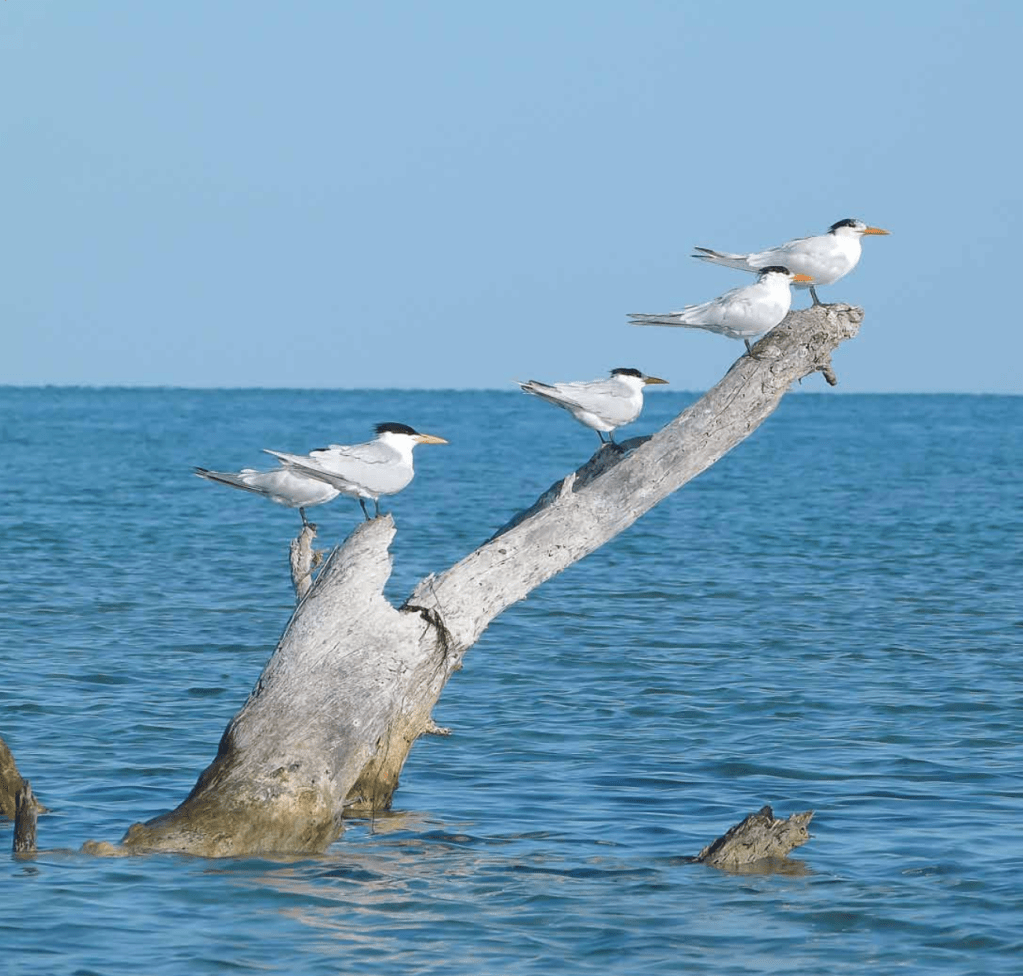
There are twelve species of tern – ‘swallows of the sea’ – that to a greater or lesser extent may be found on Abaco. Whether they will actually be visible at any given time is less certain, though. For a start, the only resident species is the lovely Royal Tern, available at many locations on Abaco and the cays throughout the year. Others are migratory, transitory or – rarest of all – vagrant birds blown off-course by wind or storm.
ROYAL TERNS Thalasseus maximus PR1
In the slightly less commonly-found category are the summer migrant terns that, by definition, are only in residence for around half the year. Four of these are fairly common in certain areas, and actually breed on Abaco; these include arguably the prettiest of all, the bridled tern. The other two tern species (gull-billed and sandwich) are more rare and do not generally breed locally.
LEAST TERN Sternula antillarum SR B 1
BRIDLED TERN Onychoprion anaethetus SR B 2
ROSEATE TERN Sterna Dougallii SR B 2
SOOTY TERN Onychoprion anaethetus SR B 2
GULL-BILLED TERN Gelochelidon nilotica SR 3
SANDWICH TERN Thalasseus sandvicensis SR 4
There is one rare winter resident migratory tern species. I had to check when the last one was recorded for Abaco. It was of course only in January this year, when ace birder-photographer Sally Chisholm saw one at Treasure Cay and managed to photograph it for posterity.
FORSTER’S TERN Sterna forsteri WR 4
The final four ‘Abaco’ terns are very much the occasional visitors. Three of them pass over the Bahamas on their longer migration, but may make a pit-stop around Abaco to take on fuel. Likelihood of sighting one? Slender but not impossible… The fourth, the Arctic Tern, is a very rare vagrant, a bird well away from its usual home or migration route as the result of storms or faulty satnav or sheer happenstance. Don’t travel to the Bahamas intent on seeing one.
CASPIAN TERN Hydroprogne caspia TR 4
As for the remaining three species, they are the transient black tern and common tern; and the vanishingly rare vagrant Arctic tern (the clue is in the name). No photos of any of these I’m afraid, so here’s a handy checklist instead.
ELECTIVE MUSICAL DIGRESSION
Written by Peter Seeger a few years earlier, Turn x 3 was released in 1965, the title track on the second album from the Byrds. At a rather febrile time in US history (Vietnam, draft riots, black civil rightists v cops and so on), this unusually palliative and thoughtful song with its religious connotations to some extent stood for peace and hope in a time of turmoil.
Photo credits: Keith Salvesen (1, 2, 3, 5, 18); Tony Hepburn (4); Alex Hughes (10, 11); Bruce Hallett (6, 7, 12); Woody Bracey (8, 13, 16); Duncan Wright (9); Dick Daniels (14); Sally Chisholm (15); Keith Kemp (17)
The WTF? series is dedicated to the wilder, less conventionally fish-shaped side of reef life – those creatures that you may come across, blink into your face-mask, and silently mouth the words ‘What’s That Fish?’ (that’s what it looks like you are saying, anyway).
Let’s meet some Arrow Crabs Stenorhynchus seticornis, one of the very few creatures surely to have a triangular body plus a huge pointy nose (rostrum), supported on long skinny legs. To which add, they wear tiny blue gloves on their two front claws.
These crabs are coral reef dwellers and mostly stay concealed during the day. Their body is protected by a carapace, and the rostrum has serrated edges like a tiny rasp or file. I haven’t found a definitive reason for this gadget, but I suspect it is more for probing than for piercing or fighting.
There’s a considerable colour variation among these crabs, as these images show. The body may even have blue iridescent lines (#2, above). And those claws may be any of 50 shades of blue…
Arrow crabs are most active at night. They eat feather-duster worms (illus.) and similar invertebrates such as bristle worms.
Like certain types of shrimp, they also have a symbiotic relationship with anemones, whereby they make use of an anemone to benefit from the food it captures – and possibly for cover too. They are protected from anemone stings, whereas some of their predators are not.
This was the place where I was going to tell you about the arrow crab’s private life, but, well… “it’s complicated”. Briefly it is: male passes sperm-filled capsule to female; she uses it in some way whereby it fertilises her eggs; she then ‘broods’ the eggs in one of her ‘swimming legs’; the eggs hatch into larvae and swim off to eat plankton; each one then grows & moults, repeating the process until it has reached adult form. On balance, humans have arguably perfected a preferable method.
Arrow Crabs are apparently popular aquarium creatures, although they sound to me rather a disagreeable challenge. They can move quickly on those long legs, and it seems as if they inclined to be aggressive to other inhabitants of the tank. As far as I can make out, it’s best not to put 2 of them together: they certainly won’t be doing the sperm capsule thing described earlier…
Master of Disguise
Photo credits: Melinda Riger / G B Scuba (1, 3, 4, 5, 6); Adam Rees / Scuba Works (2, 8, 9); Nick Hopgood,Wiki (7); Chuck Elliot – video
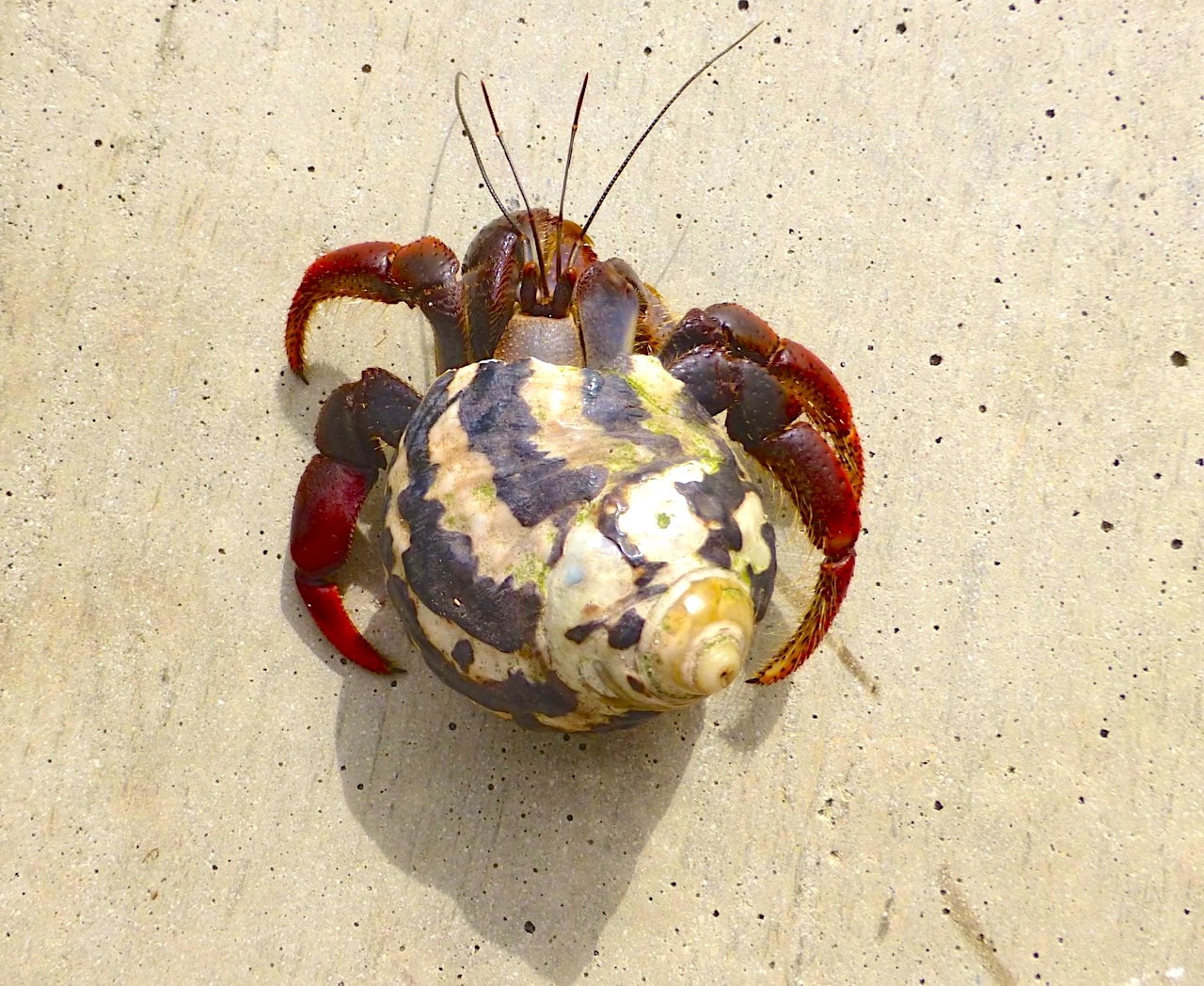
As everyone knows, Hermit Crabs get their name from the fact that from an early age they borrow empty seashells to live in. As they grow they trade up to a bigger one, leaving their previous home for a smaller crab to move into. It’s a benign* chain of recycling that the original gastropod occupant would no doubt approve of, were it still alive… The crabs are able to adapt their flexible bodies to their chosen shell. Mostly they are to be found in weathered (‘heritage’) shells rather than newly-empty shells. [*except for fighting over shells]
HERMIT CRAB FACTS TO ENLIVEN YOUR CONVERSATION
The crabs are mainly terrestrial, and make their homes in empty gastropod shells
Their bodies are soft, making them vulnerable to predation and heat.
They are basically naked – the shells protect their bodies & conceal them from predators
In that way they differ from other crab species that have hard ‘calcified’ shells / carapaces
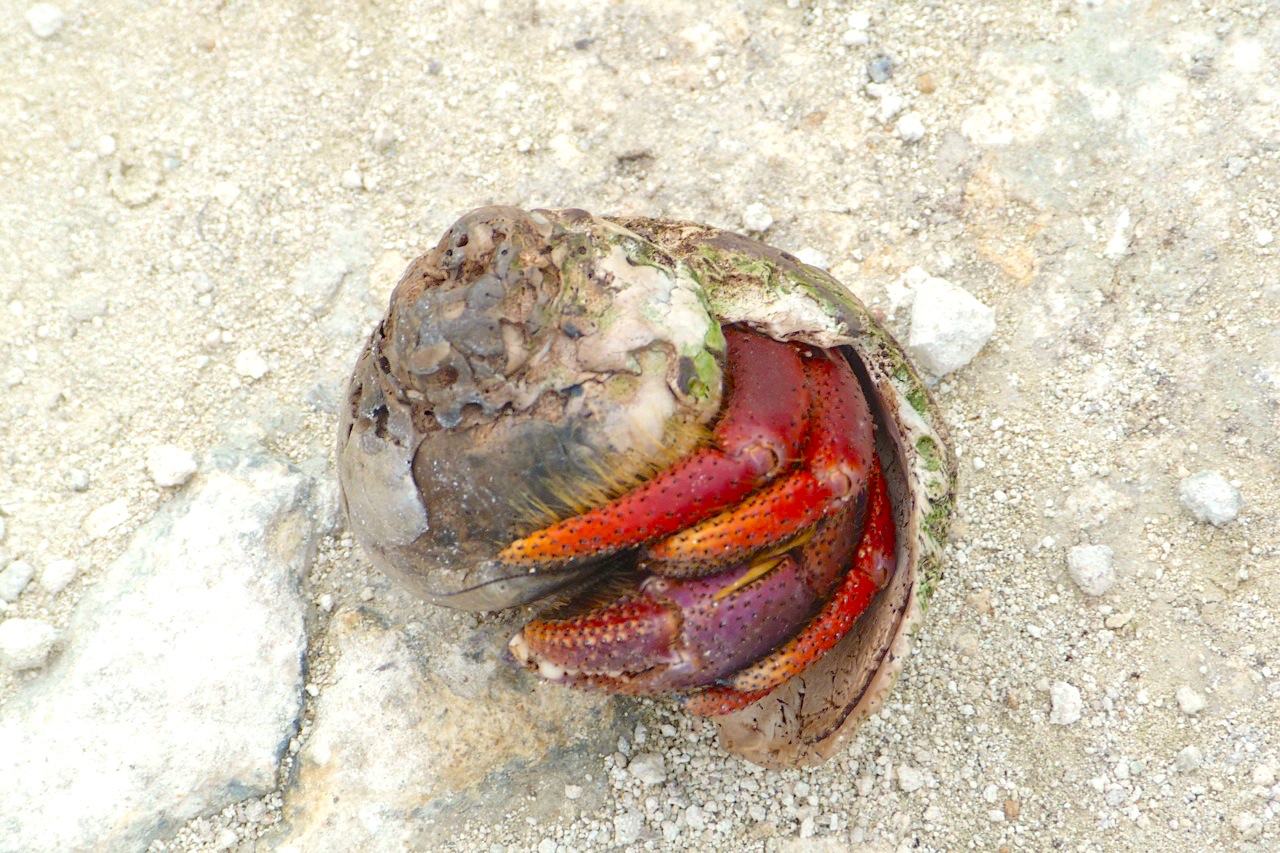
Ideally the shell should be the right size to retract into completely, with no bits on display
As they grow larger, they have to move into larger and larger shells to hide in
As the video below shows wonderfully, they may form queues and upsize in turns
Occasionally they make a housing mistake and chose a different home, eg a small tin
Keith Salvesen / Rolling Harbour
The crabs may congregate in large groups which scatter rapidly when they sense danger
The demand for suitable shells can be competitive and the cause of inter-crab battles
Sometimes two or more will gang up on a rival to prevent its move to a particular shell
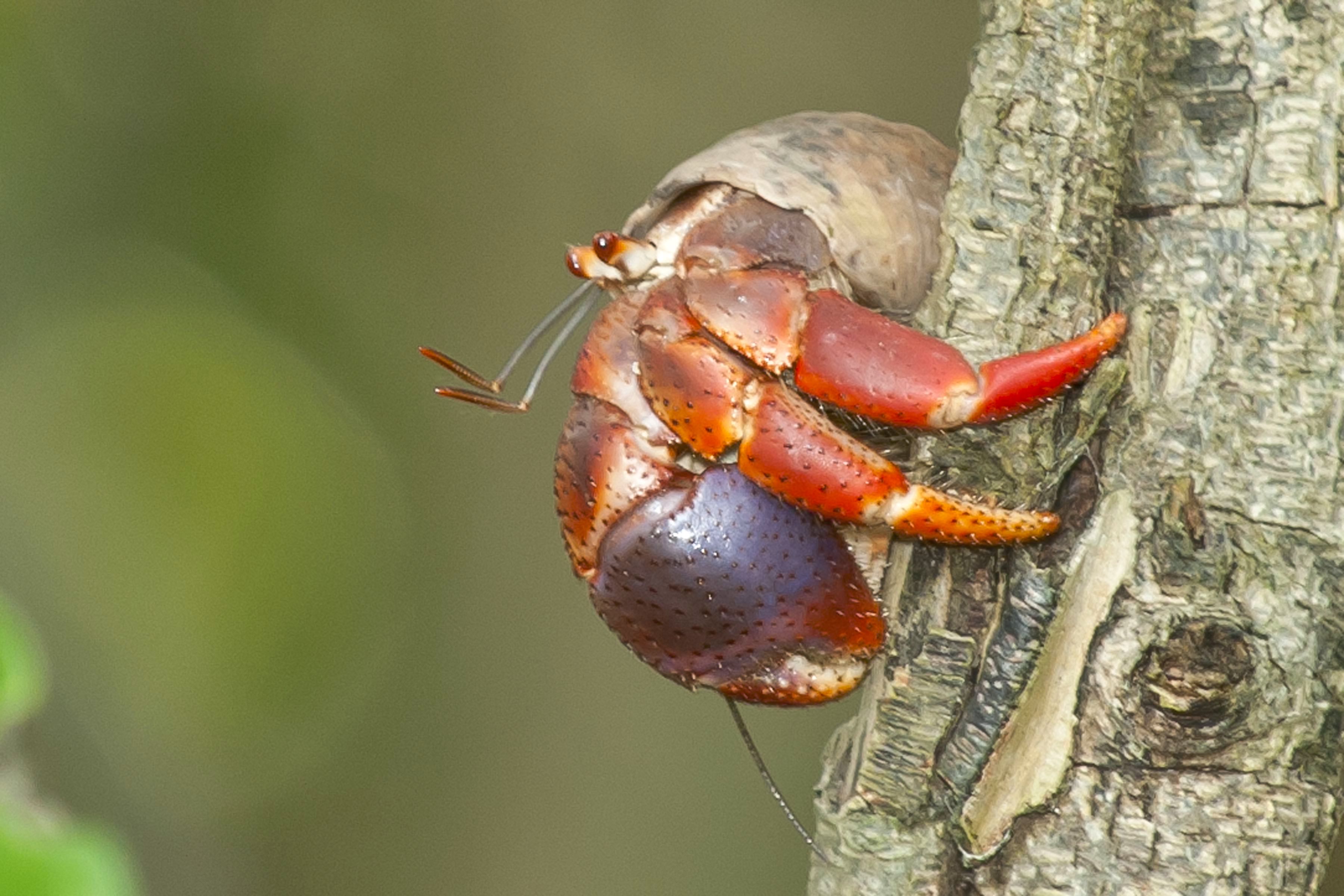
HERMIT CRABS CAN EVEN CLIMB TREES – WITH THEIR SHELLS ON TOO
Tom Sheley
HERMIT CRABS EXCHANGING HOMES with DAVID ATTENBOROUGH
This is a short (c 4 mins) extract from BBC Earth, with David Attenborough explaining about the lives and habits of these little crabs with his usual authoritative care and precision . If you have the time I highly recommend taking a look.
Credits: All photos taken on Abaco by Keith Salvesen except for the tree-climber crab photographed by Tom Sheley; video from BBC Earth
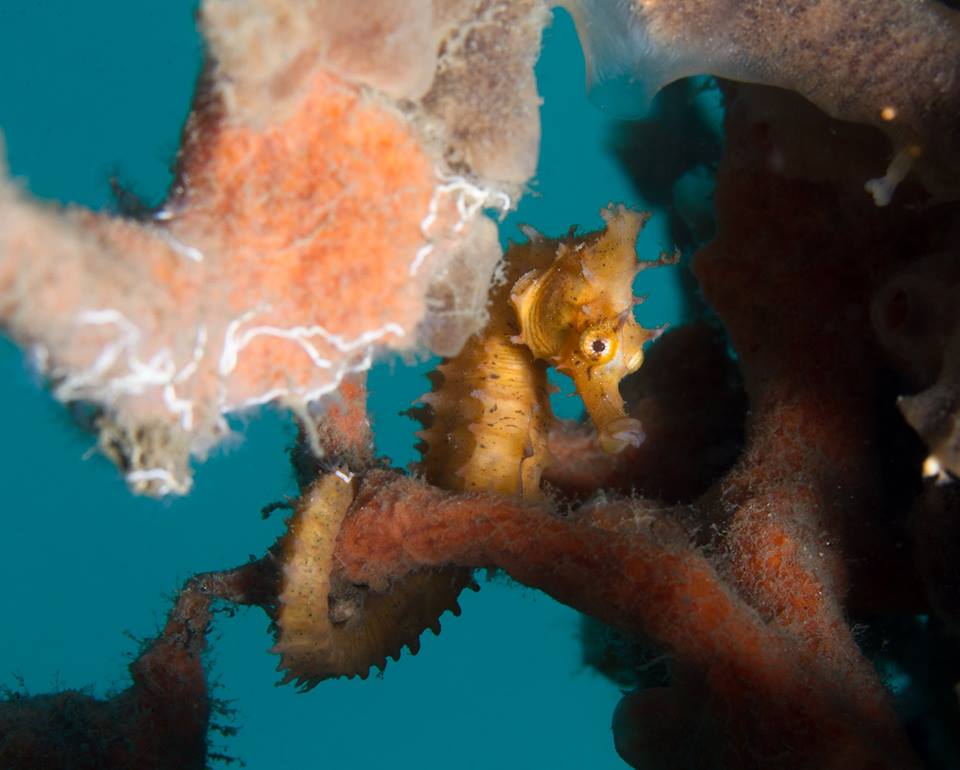
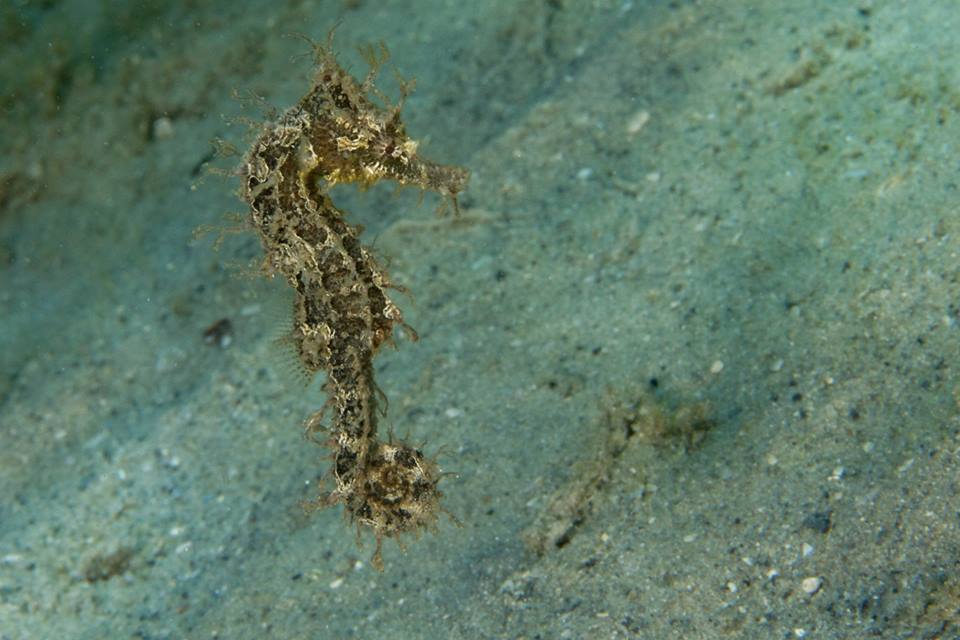
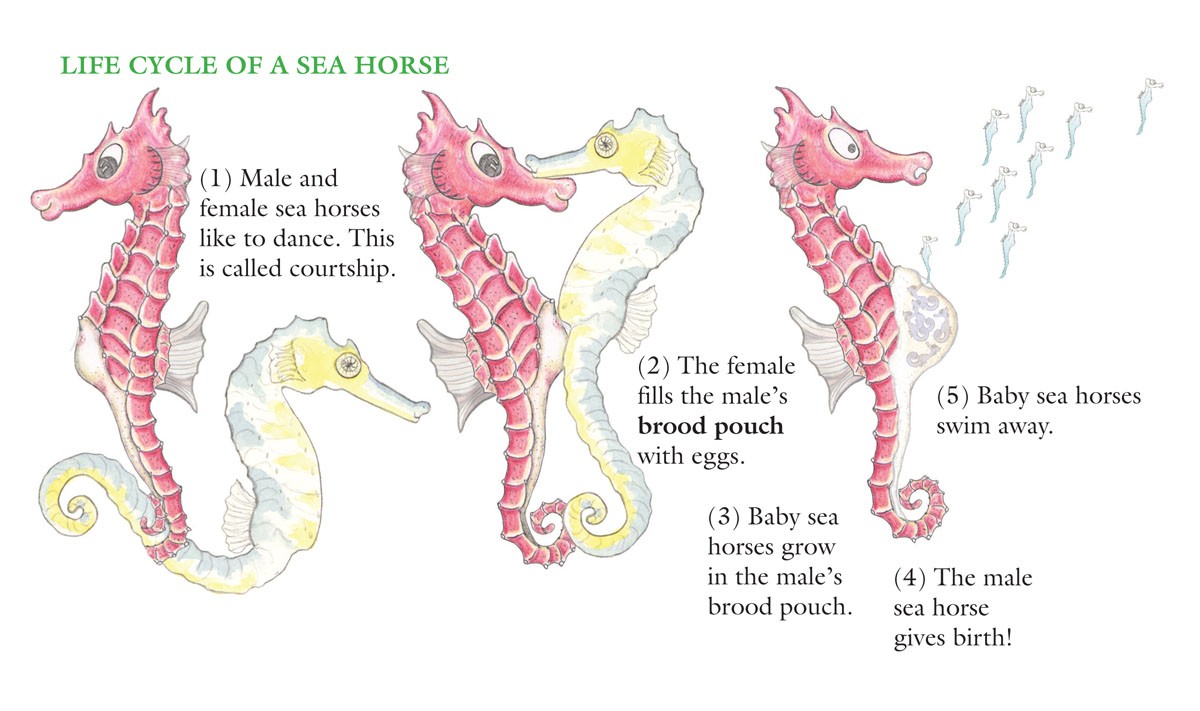
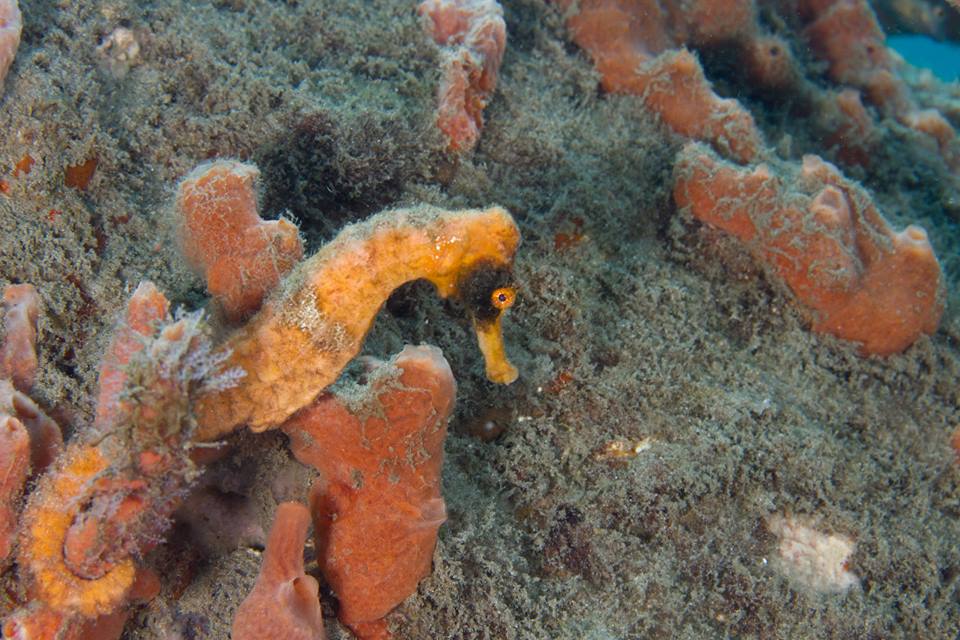
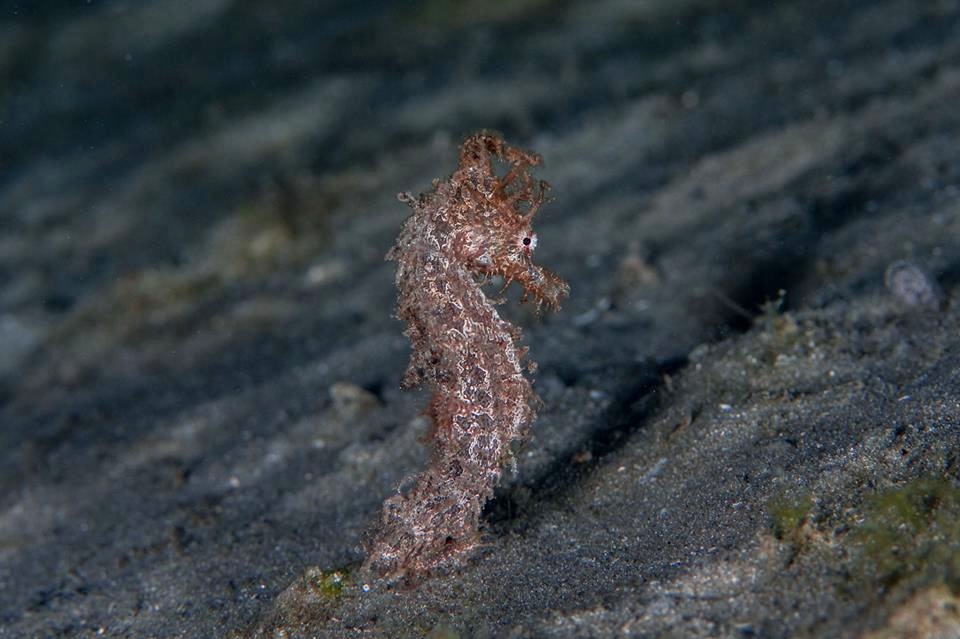
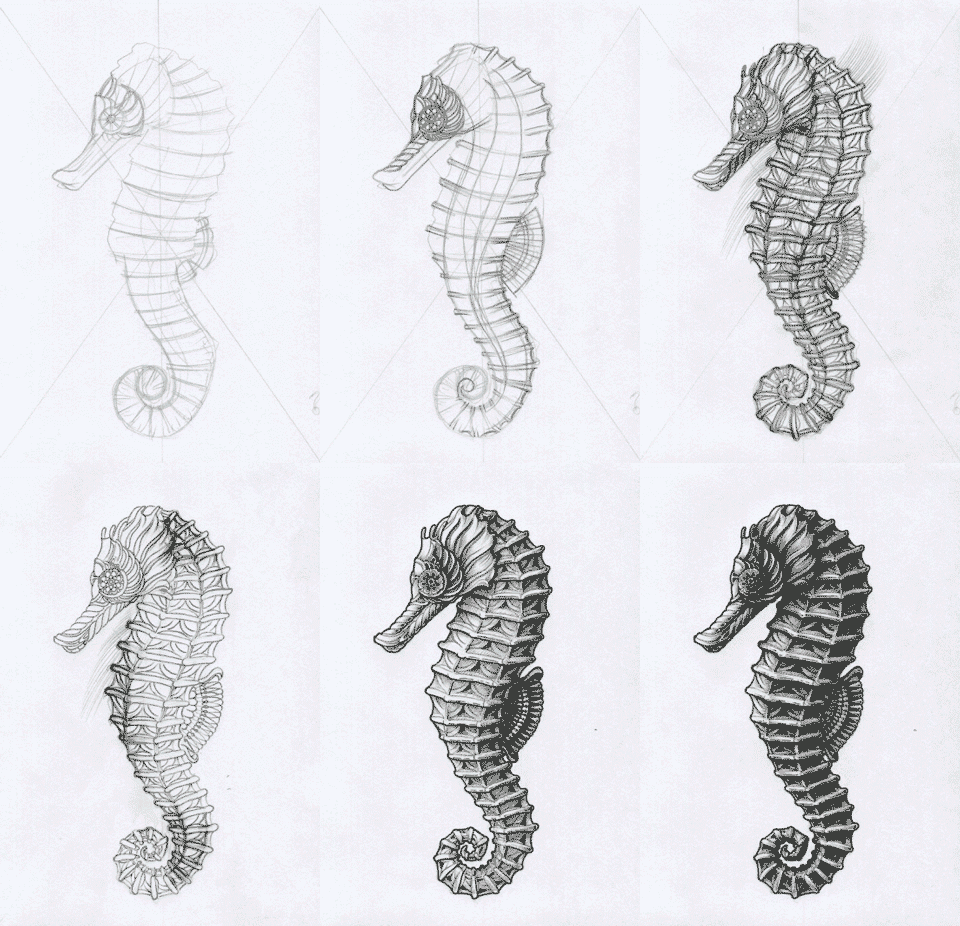
It’s been quite a while since I wrote about these astonishing little creatures. Adam Rees of SCUBA WORKS is a diver who combines great underwater experience with wonderful photographic skills. Here is a showcase for some of Adam’s seahorse photography and the amazing detail he captures. If these images don’t make you want to get your head underwater and explore the reefs, I can’t think what will…





















































 Keith Salvesen / Rolling Harbour





 ROLLING HARBOUR ABACO


You must be logged in to post a comment.