Unknown's avatar

WTF? (WHAT’S THAT FISH?) 14: ARROW CRABS


Arrow Crab (Melinda Riger / Grand Bahama Scuba)

WTF? (WHAT’S THAT FISH?) 14: ARROW CRABS

It’s been a while since the last in the WTF? series, which is dedicated to the wilder, less conventionally fish-shaped side of reef life – those creatures that you may come across, blink into your face-mask,  and silently mouth the words ‘What’s That Fish?’ (that’s what it looks like you are saying, anyway).

Arrow Crab (Adam Rees)

Let’s meet some Arrow Crabs Stenorhynchus seticornis, one of the very few creatures surely to have a triangular body plus a huge pointy nose (rostrum), supported on long skinny legs. To which add, they wear tiny blue gloves on their two front claws.

Arrow Crab (Melinda Riger / Grand Bahama Scuba)

These crabs are coral reef dwellers and mostly stay concealed during the day. Their body is protected by a carapace, and the rostrum has serrated edges like a tiny rasp or file. I haven’t found a definitive reason for this gadget, but I suspect it is more for probing than for piercing or fighting.

Arrow Crab (Melinda Riger / Grand Bahama Scuba)

There’s a considerable colour variation among these crabs, as these images show. The body may even have blue iridescent lines (#2, above). And those claws may be any of 50 shades of blue…

Arrow Crab (Melinda Riger / Grand Bahama Scuba)

Arrow crabs are most active at night. They eat feather-duster worms (illus.) and similar invertebrates such as bristle worms.

Feather-duster worm (Melinda Riger / G B Scuba)

Arrow Crab Meal

Like certain types of shrimp, they also have a symbiotic relationship with anemones, whereby they make use of an anemone to benefit from the food it captures – and possibly for cover too. They are protected from anemone stings, whereas some of their predators are not.

This was the place where I was going to tell you about the arrow crab’s private life, but, well… “it’s complicated”. Briefly it is: male passes sperm-filled capsule to female; she uses it in some way whereby it fertilises her eggs; she then ‘broods’ the eggs in one of her ‘swimming legs’; the eggs hatch into larvae and swim off to eat plankton; each one then grows & moults, repeating the process until it has reached adult form. On balance, humans have arguably perfected a preferable method.

Arrow Crab (Nick Hobgood / Wiki)

Arrow Crabs are apparently popular aquarium creatures, although they sound to me rather a disagreeable challenge. They can move quickly on those long legs, and it seems as if they inclined to be aggressive to other inhabitants of the tank. As far as I can make out, it’s best not to put 2 of them together: they certainly won’t be doing the sperm capsule thing described earlier… 

Arrow Crab (Adam Rees)

Master of Disguise

Photo credits: Melinda Riger / G B Scuba (1, 3, 4, 5, 6); Adam Rees / Scuba Works (2, 8, 9); Nick Hopgood,Wiki (7); Chuck Elliot – video

Arrow Crab (Adam Rees)

Unknown's avatar

LONG-BILLED DOWITCHER PICTURES FOR TWITCHERS


Short-billed Dowitcher Bahamas (Erika Gates)

LONG-BILLED DOWITCHER PICTURES FOR TWITCHERS

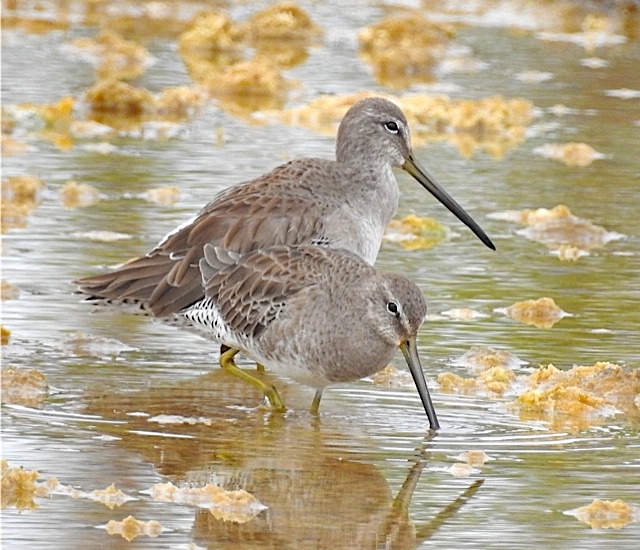
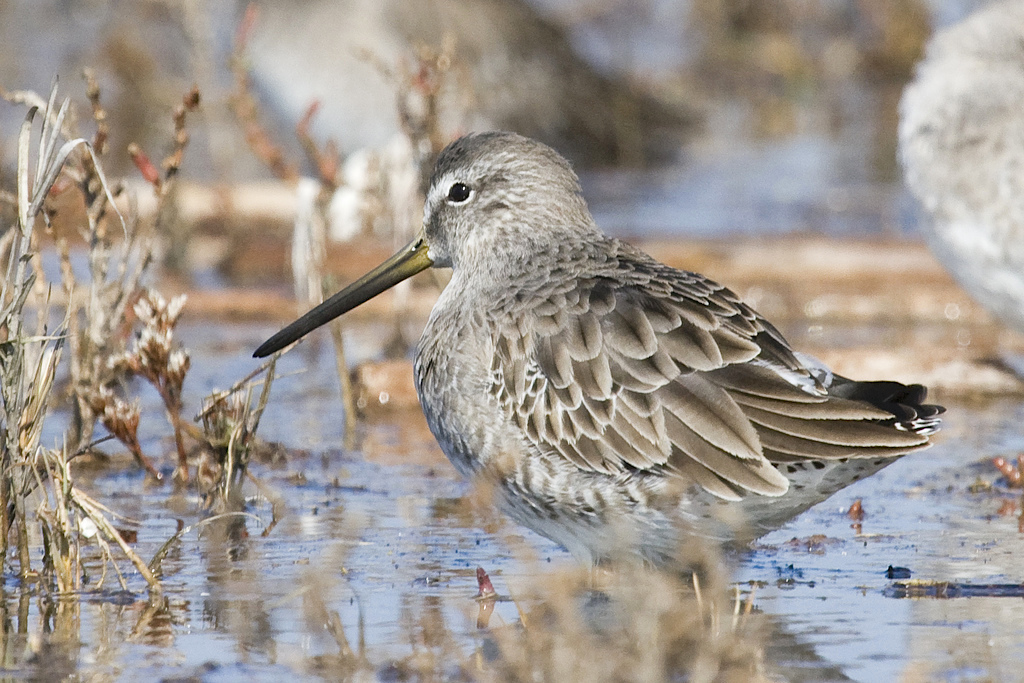
It’s about 3 years since I featured dowitchers. There are two types, short-billed and long-billed. They are disconcertingly similar, especially if you are only looking at one bird with no comparator. However, on Abaco a good rule of thumb is that if you see a dowitcher it will almost certainly be a SBD, a common winter resident. The LBD is a rare visitor to the Northern Bahamas. And if you just happen to be wrong? Well, so might anyone else be…

Short-billed Dowitcher Bahamas (Erika Gates)

I’m returning to the topic because recently Erika Gates, well-known bird authority and guide on Grand Bahama, took some excellent photos of some LBDs, and has kindly let me feature them. These birds are very unusual on Abaco, not least because they prefer fresh water rather than brackish, which is in short supply on the island and cays.

Short-billed Dowitcher Bahamas (Erika Gates)

 Phoenix Birder / Xeno Canto

Short-billed Dowitcher Bahamas (Erika Gates)

HOW DID THE DOWITCHER GET ITS NAME?

I had assumed that the strange name for these birds was onomatopoeic, in the same way that a Killdeer is supposed to call “Kill…Deer”; and a Bobwhite, an interrogative “Bob…White?”. When I tried to check this online, I found that the usually valuable primary sources for bird info were silent on the topic. In the end, I tracked down a Merriam Webster entry that simply said “probably of Iroquoian origin; akin to Oneida tawístawis. First Known Use: 1841”. Me neither!

Short-billed Dowitcher Bahamas (Erika Gates)

LONG OR SHORT – HOW ON EARTH DO I TELL? 

1. HELPFUL(ISH) WAYS

  • On Abaco, if you see a Dowitcher the overwhelming likelihood is that it’s a SBD
  • The species prefer different habitats, with the LBS preferring freshwater even in coastal regions
  • The SBD prefers coastal areas, shorelines and brackish / muddy ponds
  • The SBD’s call is said to be “mellower” than the LDB – though unless you have heard both for comparison, that’s not a very useful identifier
  • The body shapes are apparently subtly different, in ways I can only begin to guess
  • In breeding plumage, the species have perceptible colour / pattern differences (if you have binoculars?)

Short-billed Dowitcher Bahamas (Erika Gates)

 2. CONFUSING / UNHELPFUL FACTORS
  • LBDs may occasionally join SBDs that are foraging on open tidal flats
  • Bill length may not help, there’s an overlap – some SBDs may have longer bills and vice versa.
  • There are theories about bill-length / head size comparison as a field ID method. Do they work? Only if you get it right, I guess.
  • “Winter plumage of both species is very similar” (grey). Both are only in the Bahamas in winter. So, not a lot of help.

Short-billed Dowitcher Bahamas (Erika Gates)

DOES THE DOWITCHER HAVE ANY PRACTICAL APPLICATION?

Yes! In Scrabble you can form a stonking 315 words from just those 9 letters, all permitted under Scrabble rules (though not my own house rules, which forbid ridiculous 2 and 3 letter words that sound invented for the purpose of winning at Scrabble). Apart from the full 9 letter original, there’s one 8 letter word – ‘witherod’, a type of viburnum plant; and 13 words of 7 letters, of which I’d say 8 are in common though not everyday usage. I’ll leave you to work out the remaining 301 words…

Credits: Erika Gates, with many thanks for use permission; the excellent Xeno Canto / Phoenix Birder for the sound file

Unknown's avatar

SOUTHERN STINGRAYS: BAHAMAS REEF FISH (41)


Southern Stingrays, Bahamas (Melinda Riger / Grand Bahama Scuba)

SOUTHERN STINGRAYS: BAHAMAS REEF FISH (41)

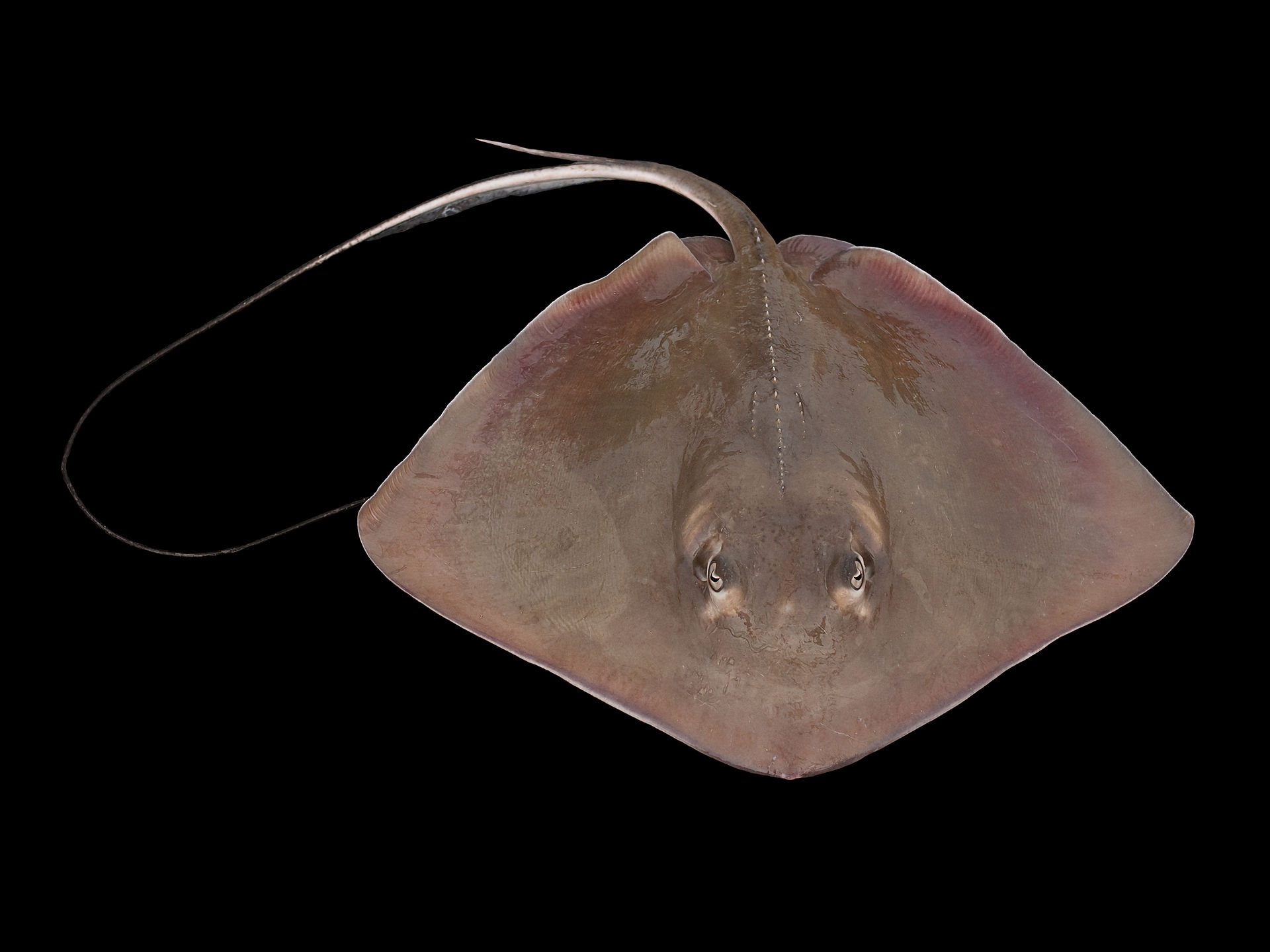
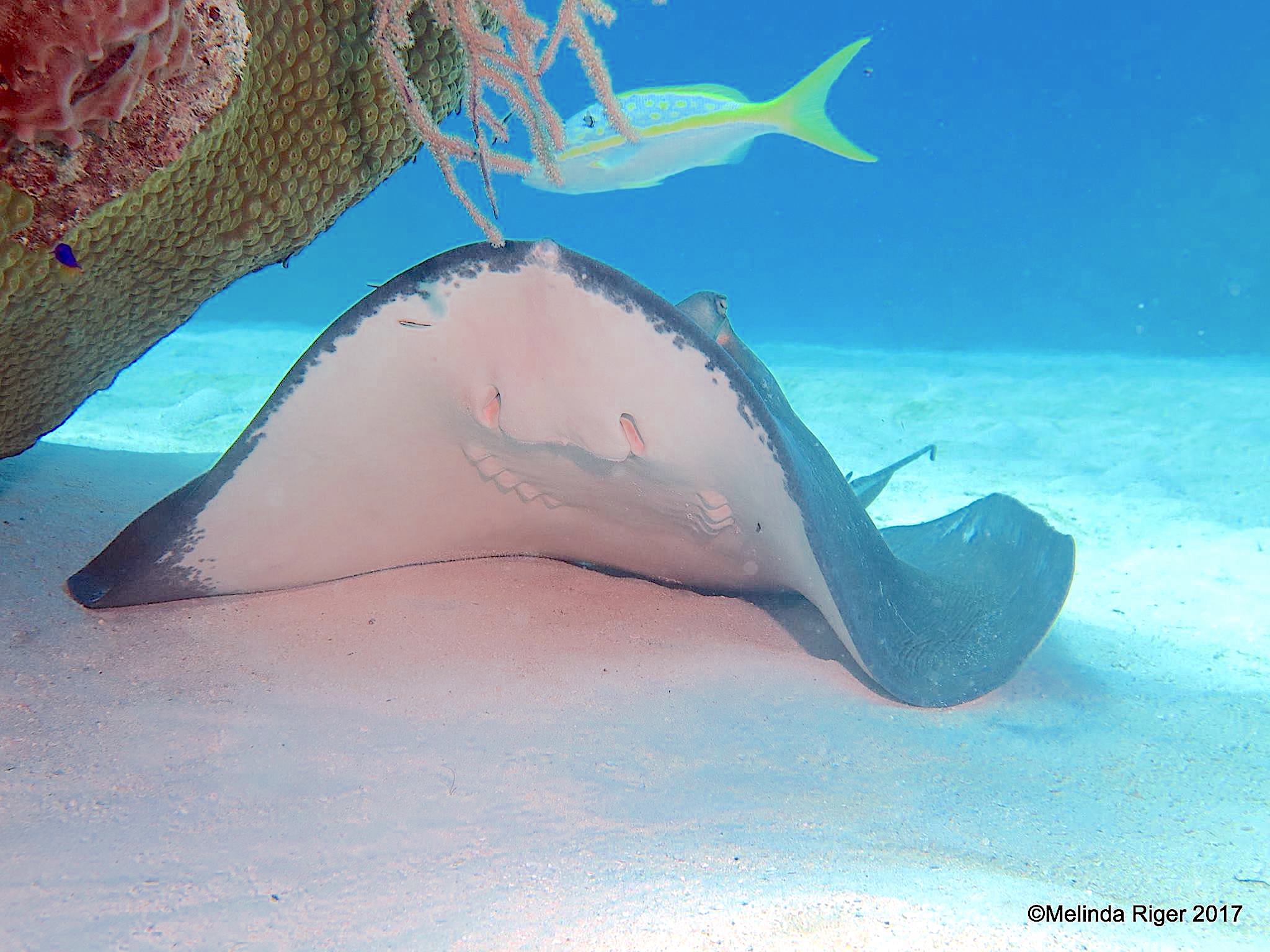
Anyone who has scuba-dived or snorkelled around the bright coral reefs of the Bahamas, or hunted bonefish out on the Abaco Marls will have come across Southern Stingrays Dasyatis americana. And there are certain places (eg Manjack Cay) where you can actually feed them – and not come to any harm

Southern Stingrays, Manjack Cay, Bahamas (Samantha Regan)

FEED THEM? AREN’T THESE GUYS LETHALLY DANGEROUS CREATURES?

Southern Stingrays, Bahamas (Melinda Riger / Grand Bahama Scuba)

The name that always comes to mind in connection with stingrays is poor Steve Irwin, the charismatic Australian wildlife expert who was tragically ‘stung’ over his heart as he swam close over a ray while filming underwater. But this was, it would appear, a dreadful combination of circumstances with a terrible outcome.

Southern Stingrays, Bahamas (Melinda Riger / Grand Bahama Scuba)

The ray’s stinger is in fact an erectile venomous barbed spine near the base of the tail and not on the end of it (as one might expect). But these creatures are not out to harm you – though of course when you are in their environment you should accord them the respect that they merit.

Southern Stingray (Tomas Willams, wiki)

If you are walking / wading in the water, avoid the risk of accidentally treading on a ray. Best to shuffle your feet forward in the sand; if there’s a half-concealed ray feeding or resting on the bottom nearby, it will swim away peacefully. I took the photo below while bonefishing on the Marls; the ray directly ahead slowly makes off as the skiff drifts closer. The next one is of a ray with its young – completely aware of us as we glide past to one side, but not especially bothered.

Southern Stingrays, Bahamas  (Keith Salvesen)Southern Stingray adult and young, Bahamas  (Keith Salvesen)

If you are swimming, snorkelling or diving, don’t get too close – especially by swimming directly over a ray (apparently Steve Irwin’s mistake, so that he was struck right in the chest by the stinger when the ray reacted).

Southern Stingrays, Bahamas (Melinda Riger / Grand Bahama Scuba)

Enough of the potential dangers. The southern stingray is a magnificent creature, as Melinda’s wonderful photographs show. She spends half her life underwater and I’m not aware that she has had a problem with a ray. 

Southern Stingrays, Bahamas (Melinda Riger / Grand Bahama Scuba)

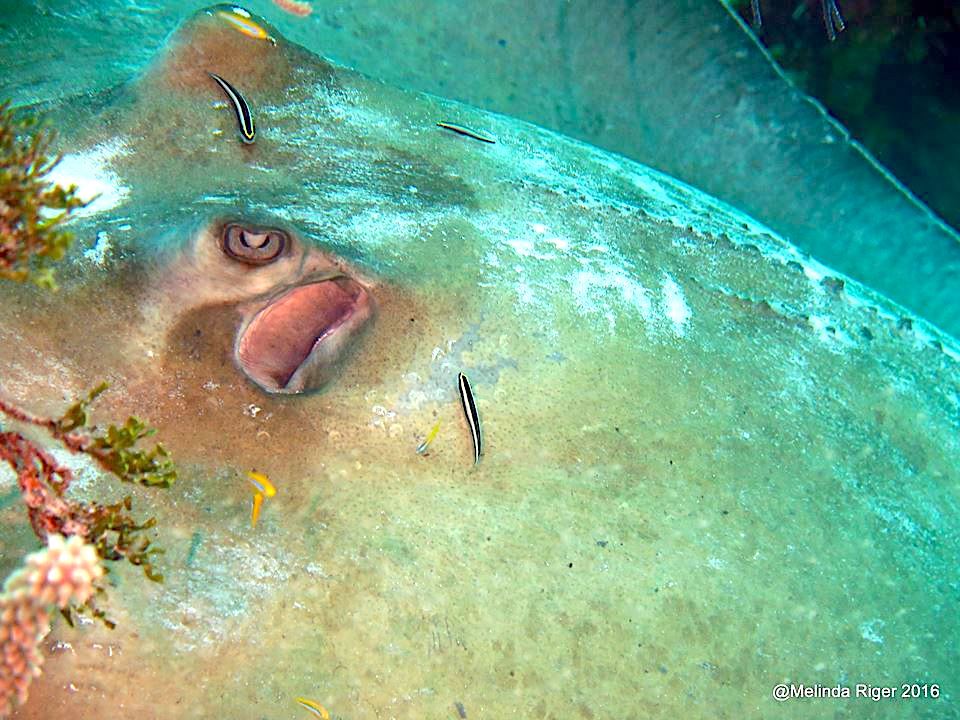
Like many larger sea creatures, stingrays need help with their personal care – the removal of parasites, dead skin and so forth. And so they make use of the services offered by small fish like gobies, wrasses and shrimps at a CLEANING STATION. Here are 2 photos of rays doing just that. You can see the tiny fish by the reef, going about their work. There’s a mutual benefit in this symbiotic relationship, in which it is understood that the cleaners are unharmed. Indeed, they will often enter the mouths and gills of a fish to clean… including the teeth. So there’s dental hygiene on offer too…

Southern Stingrays, Bahamas (Melinda Riger / Grand Bahama Scuba)

Southern Stingrays, Bahamas (Melinda Riger / Grand Bahama Scuba)

RELATED POSTS

YELLOW STINGRAY

GRACE WITH ATTITUDE

TAKEN TO THE CLEANERS

Photo Credits: Melinda Riger / Grand Bahama Scuba, except for the feeding photo (cheers, Samantha Regan), the ‘specimen’ from Tomas Willems (Wiki) and my two noted above

Unknown's avatar

PALM WARBLERS: ‘HEADS-UP FOR BUTTERBUTTS’


Palm Warbler, Abaco Bahamas (Bruce Hallett / Tom Sheley)

PALM WARBLERS: ‘HEADS-UP FOR BUTTERBUTTS’

I realise that the title of this post has its unattractive aspects. This is a family blog, and we try to keep references to ‘butts’ and so forth to a minimum. But like it or not, the Palm Warbler is one of two species** that have acquired the nickname ‘butterbutt’.  They weren’t even consulted; birders just went ahead with it without checking how they’d feel about it.

Palm Warbler, Abaco Bahamas (Gerlinde Taurer)

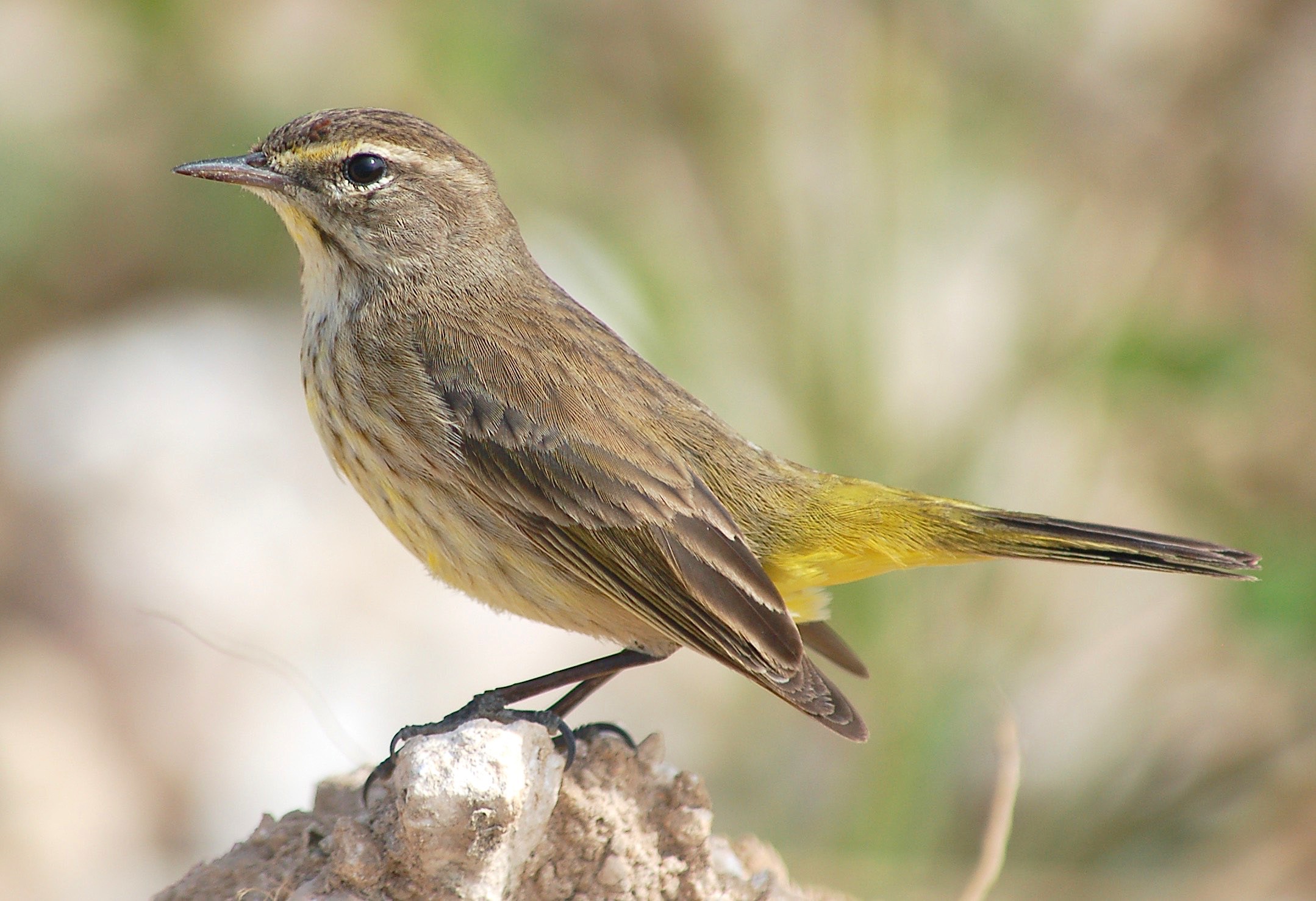
On the other hand, it’s easy to see how this minor linguistic outrage came about. It’s there for all to see, right under the bird’s… erm… stern. That flash of vivid yellow, together with the pale speckled front, a rusty brown cap and striking eye-stripe, is diagnostic for this Abaco winter resident species.

Palm Warbler, Abaco Bahamas (Nina Henry)

The ‘heads-up’ is because right now they are among you. In the gardens, on the grass, on the tracks, in the coppice, in the casuarinas. And they have an endearing habit of bobbing their… tails, let’s say, as they forage. Palm Warblers are inclined to be fairly inquisitive and tame, so if you are careful, they may stay around to let you watch them. 

Palm Warbler, Abaco Bahamas (Nina Henry)

The PW above must, I think, have been photographed at the very end of the winter season, just before it headed north from Abaco. The strong colours suggest this guy is getting into the breeding mood. Compare him with the picture below, taken by the same photographer during the same period, of a slightly less garish stage of breeding plumage. But it’s on its way…

Palm Warbler, Abaco Bahamas (Nina Henry)

As often as not, a palm warbler will be fairly easy to spot. Not always, though. You may have to work a bit to locate one half-hidden in foliage. Its posterior may not even be visible.

Palm Warbler, Abaco Bahamas (Peter Mantle)

Luckily, PWs are common enough in winter to give you a chance to shoot them in the open, as it were. Perched on a branch works just fine to capture the essential characteristics.

Palm Warbler, Abaco Bahamas (Gerlinde Taurer)

Keep an eye out for these pretty little warblers. They are enjoyable to watch, and relatively easy to get a photo of at close quarters. Just make sure you get the butterbutt into the picture.

** The other butterbutt bird is the descriptively-named YELLOW-RUMPED WARBLER, though its buttery bits are on the topside so there’s no risk of confusion (I photographed this one from a pool-side lounger, a distance shot at the top of a tree with a small camera – but it captures the essentials!)

Yellow-rumped Warbler, Abaco, Bahamas (Keith Salvesen)

Credits: Bruce Hallett (1)*; Gerlinde Taurer (2, 7); Nina Henry (3, 4, 5); Peter Mantle (6); Keith Salvesen (8, 9)

* Possibly Tom Sheley – all I have got on the filename is ‘Fruit Farm’ so I can’t be sure of the photographer’s ID – apologies

 Palm Warbler, Abaco Bahamas (Keith Salvesen)

Unknown's avatar

ABACO PARROTS FOR THE NEW YEAR!


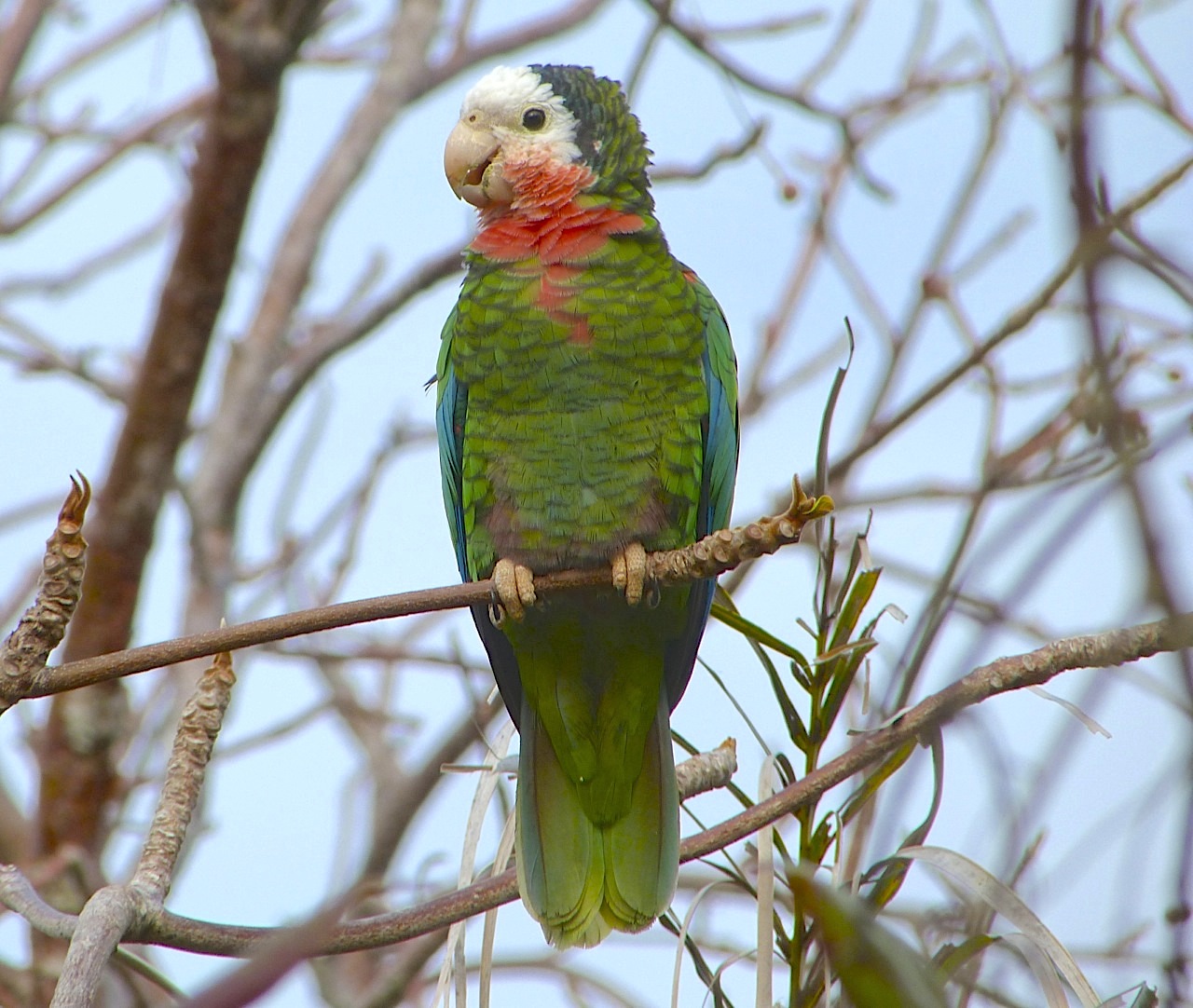
Abaco (Cuban) Parrot, Bahamas (Gerlinde Taurer)

ABACO PARROTS FOR THE NEW YEAR!

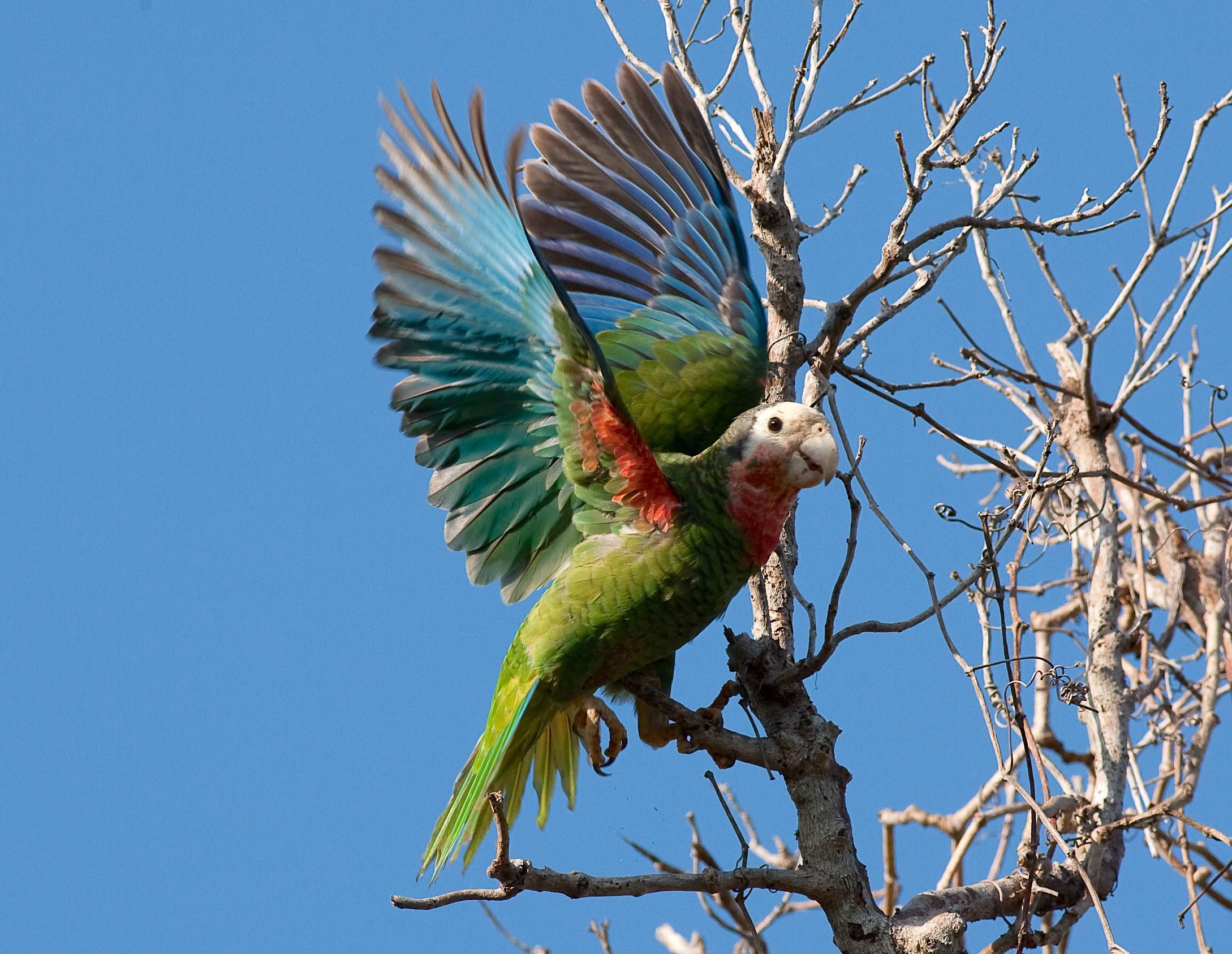
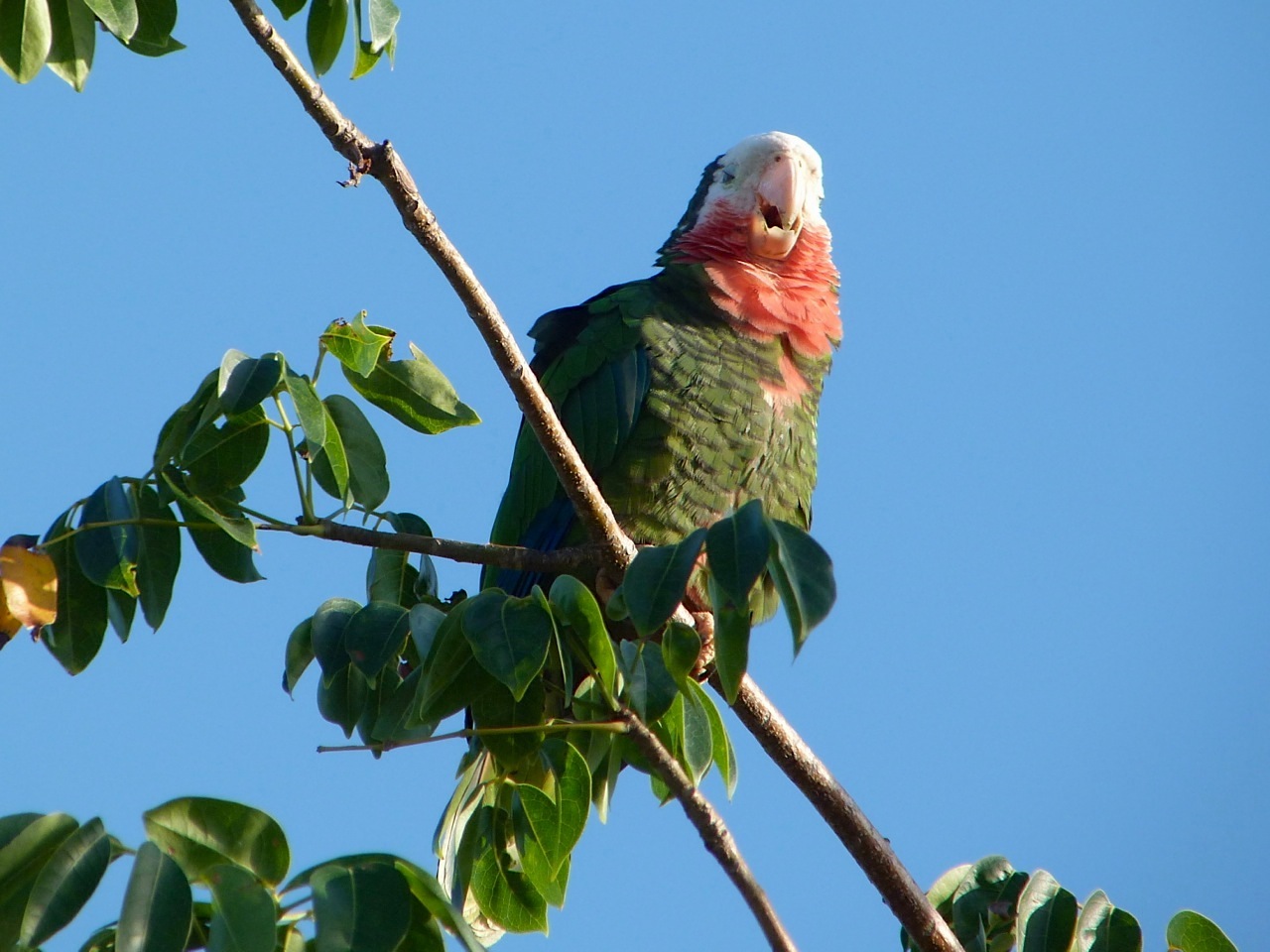
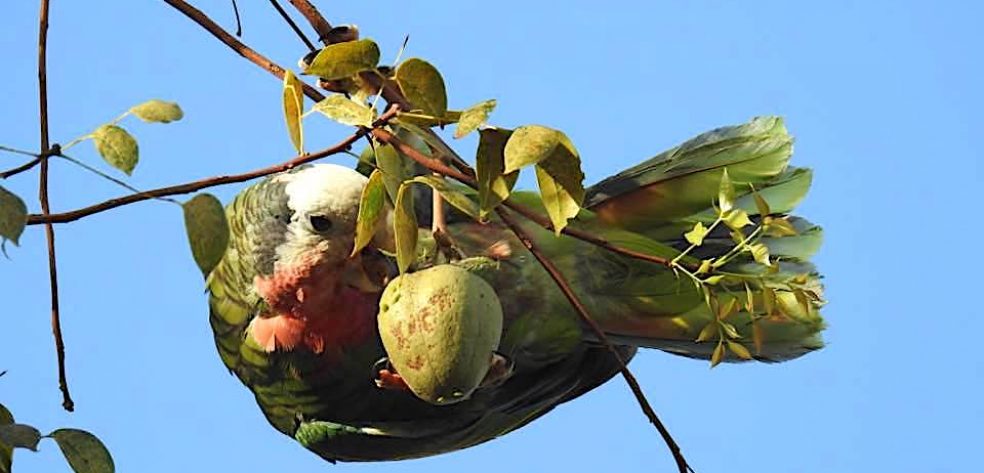
Red, green, blue, and a touch of snowy white. The colours of Christmas, sort of. We are past all that for another year, but for those on Abaco the unique, ground-nesting Abaco parrots Amazona leucocephala flash those same colours throughout the year.

Abaco (Cuban) Parrot, Bahamas (Craig Nash)

These birds have cousins on Inagua that nest conventionally; and there are now a handful of NASSAU PARROTS on New Providence, of uncertain origin (click link for more on these).

Abaco (Cuban) Parrot, Bahamas (Tom Sheley)

The parrots are only found in South Abaco, between Marsh Harbour and the National Park where they live and breed in limestone holes in the forest floor. 

Abaco (Cuban) Parrot, Bahamas (Caroline Stahala)

You are most likely to hear these birds before you see them, as they make their way daily north in the morning and back again in the evening.

Abaco (Cuban) Parrot, Bahamas (Keith Salvesen)

Despite the racket they make, finding the parrots in the National Park is a bit ‘needle-in-haystack’. Instead, try the Gilpin Point point area, and coppice areas to the north. They pass back and forth over Delphi, pausing to squabble noisily, almost daily. I have made several recordings of them – here’s one example.

Abaco (Cuban) Parrot, Bahamas (Peter Mantle)

Far and away the best location is Bahama Palm Shores, where the mix of dense coppice with their favourite gumbo limbo trees and the open gardens is much to their liking. And frankly, it’s a great place for birding anyway, even if you blank for the parrots. 

Abaco (Cuban) Parrot, Bahamas (Nina Henry)

Just think: a dozen years ago, these fine birds were sliding towards extinction, with an unsustainable population of fewer than 900. Conservation efforts and in particular attention to habitat protection and predator control have resulted in population increases year-on-year, and the total now stands at around 5000 adults.

Abaco (Cuban) Parrot, Bahamas (Keith Salvesen)

I’ve posted quite a lot about these parrots over the years, so if you are already familiar with them, I hoped you felt free to skip the text, and simply to admire these wonderful creatures. 

Credits: Gerlinde Taurer, Craig Nash, Tom Sheley, Caroline Stahala, Keith Salvesen, Peter Mantle, Nina Henry, Erik Gauger; audio recording Keith Salvesen

Abaco (Cuban) Parrot, Bahamas (Erik Gauger)

Unknown's avatar

BEHOLD! SOME BUNTING(S) FOR AN ABACO CHRISTMAS


Painted Bunting.Bahama Palm Shores.Abaco Bahamas.Tom Sheleyimagesimagesimagesimages

BEHOLD! SOME BUNTING(S) FOR AN ABACO CHRISTMAS

painted-bunting copy

BUNTING  /ˈbʌntɪŋ/  (Noun)

[A Christmas gift of a puntastic avian / festive double-meaning]
  1. A small New World songbird of the cardinal subfamily
  2. Flags and other colourful festive decorations

imagesimagesimages

PAINTED BUNTINGPainted Bunting, Abaco (Erik Gauger)
Painted Bunting, Abaco (Tara Lavallee)Painted Bunting, Abaco (Tara Lavallee)

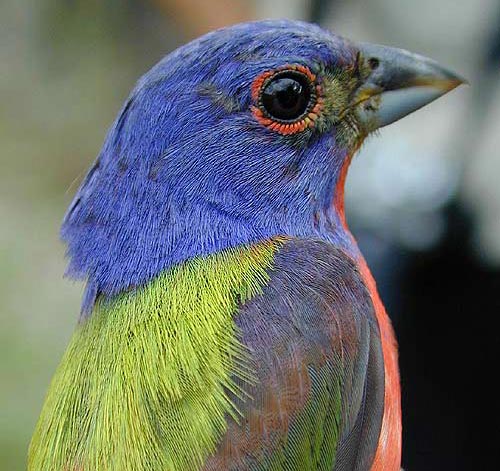
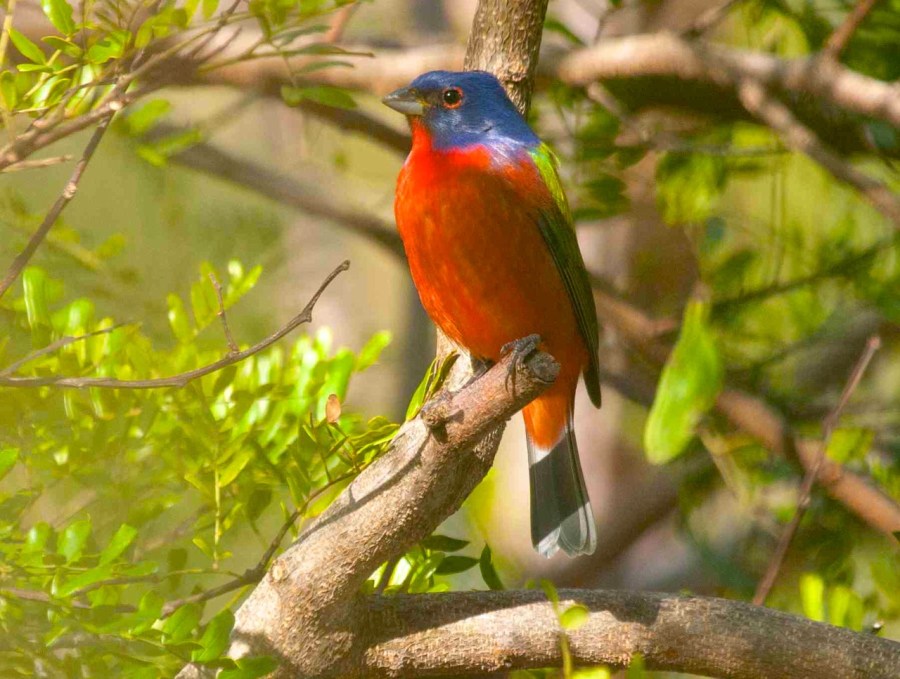
It’s hard to imagine a more Christmasy little bird than the Painted Bunting. Bright blue, red, green primary colours straight from a child’s paintbox make for a spectacular bird to grace the festive season. These are migratory winter residents, and the first reports of the bright and beautiful males on Abaco started to appear in November. Some will stay around until March.

                                                           painted-buntingimagespainted-bunting copy

Feeders at the Delphi Club. The first image shows a female & a male PABU feeding together. The second is a male with a pair of black-faced grassquitsPainted Buntings (M & F), Delphi, Abaco (Keith Salvesen)Painted Bunting, Delphi, Abaco (Sandy Walker)

                                                        painted-buntingimagespainted-bunting copy

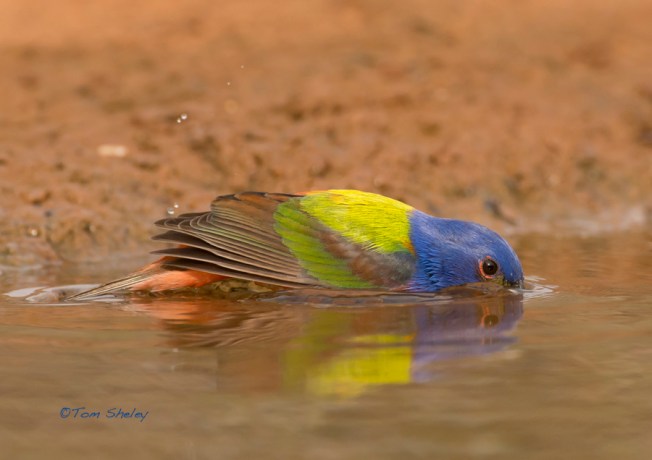
The two wonderful photos below are by Tom Sheley, a major photographic contributor to THE BIRDS OF ABACO. They were taken in Texas, not on Abaco, but I include them because of Tom’s strong connection with the birdlife of Abaco; and because on any view they are fantastic shots…
Painted Bunting reflection LR.Laguna Seca.South TX. 4.16.13.Tom SheleyPainted Bunting dip reflection LR.Laguna Seca.South TX. 4.16.13.Tom Sheley

painted-bunting copy

This is probably my last post until after Christmas, what with one thing and another, so it’s a good opportunity to wish a very Happy Christmas or [insert preferred seasonal appellation] to everyone who visits Rolling Harbour and especially those who, having done so, return for more!

Credits: Tom Sheley (1, 7, 8), Erik Gauger (2), Tara Lavallee (3, 4), Keith Salvesen (5) Sandy Walker (6); Birdorable Cartoons

imagesimagesimagesimagesPainted Bunting, Abaco Bahamas

Unknown's avatar

CINNAMON TEAL: ANOTHER NEW BIRD FOR ABACO


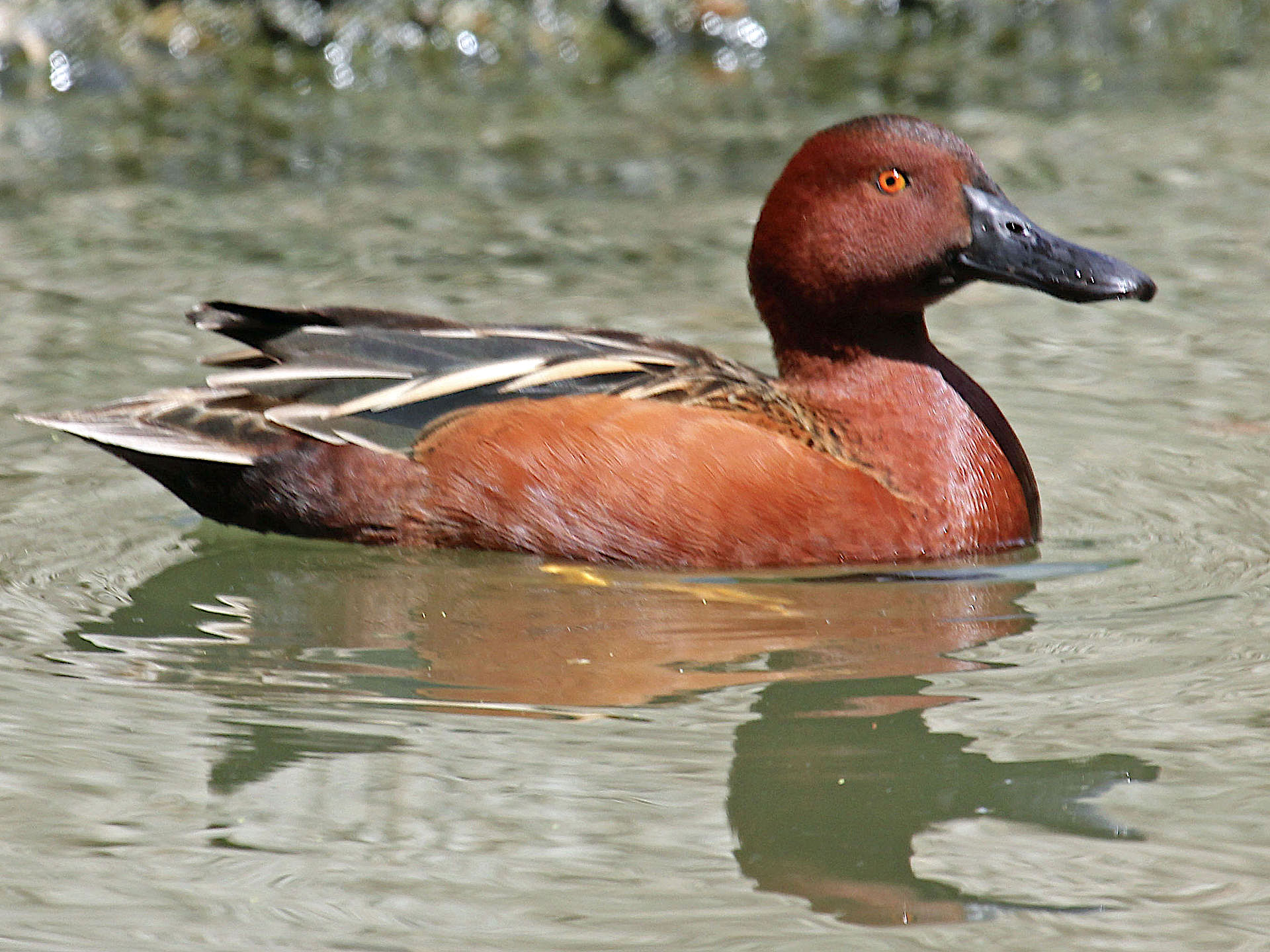
Cinnamon Teal (Michael L Baird, Wiki)

CINNAMON TEAL: ANOTHER NEW BIRD FOR ABACO

Picture the scene. You take a camera to photograph the winter ducks on a local pond on South Abaco. Suddenly you notice something strange and out of place out there. Something unfamiliar. It’s a duck for sure; but not one you’ve ever seen before in your life. Maybe it’s one you know about. Maybe you have no idea what it is at all, and have to identify it later on from a book or online. Anyway, you take some shots before it dabbles off into the overgrown margins of the pond, and leave with a modest air-punch: it’s a “lifer”. 

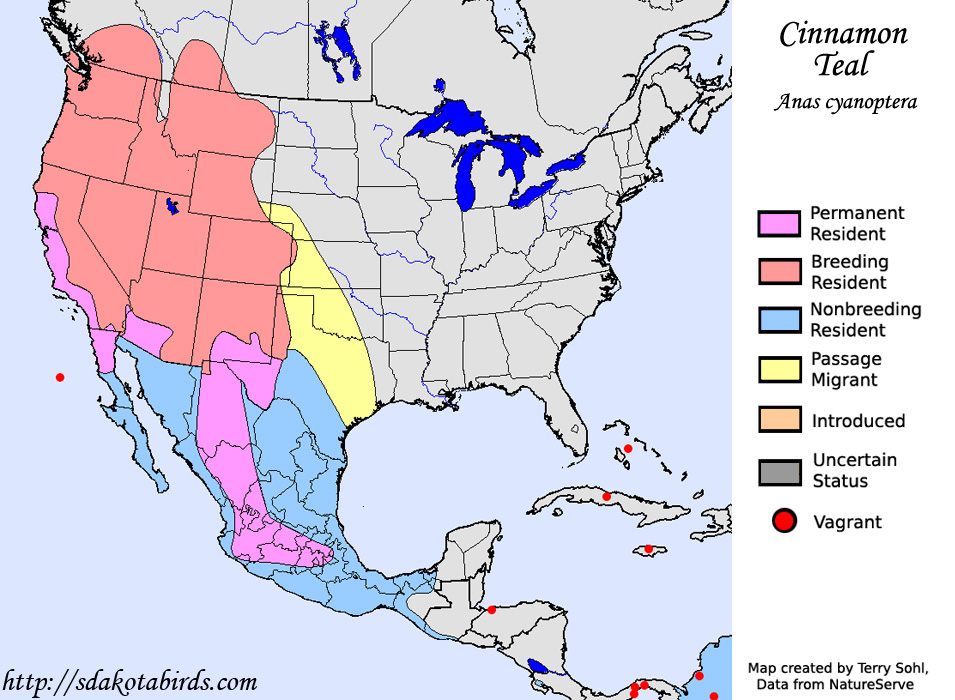
Keith Kemp, principal monitor for Abaco Piping Plover Watch, has just had this experience. There, on the local pond with the blue-winged teal, was a stranger. For him, a “lifer”. And as it turns out, for Abaco also a “lifer”. The only record of one I have found for the Bahamas is a single vagrant sighted on Andros (see range map below). Here are Keith’s unique photos of Abaco’s first Cinnamon Teal.

Cinnamon Teal, Abaco Bahamas (Keith Kemp)Cinnamon Teal, Abaco Bahamas (Keith Kemp)Cinnamon Teal, Abaco Bahamas (Keith Kemp)Cinnamon Teal, Abaco Bahamas (Keith Kemp)

The cinnamon teal (Spatula cyanoptera) is a dabbling duck species found in western North America, and in South America. They live in and around marshes and ponds, feeding mostly on pond-weed and plants, along with any attached aquatic insects. On the range map below, note the single red dot in the Bahamas denoting the single vagrant sighting on Andros.

The duck is named for the overall colouring of the adult male has a cinnamon-red head and body; and it has startlingly noticeable orange-red eyes . The adult female, as is so often the way, is rather less showy –  a mottled brown, with a pale brown head, brown eyes, and a grey bill.  For those who like comparisons, it resembles a female blue-winged teal, a few of which are shown above (not the ones with the white stripe on the face, which are male blues). 

Cinnamon Teal pair(andeansolitaire wiki)

Since the publication of BIRDS OF ABACO in 2014, with its comprehensive checklist of all recorded species since 1950, several new species have been sighted on Abaco. The latest was only last month – the SCALY-NAPED PIGEON. Now we have a new species of duck. Conveniently, there’s no other ‘regular’ duck species quite like it. So if you see a pretty cinnamon-coloured duck on a pond near you, you’ll be looking at the newest ‘Bird of Abaco’. And if you do see one, please share the news!

Cinnamon Teal (Dick Daniels, carolinabirds.org Wiki)

Credits: Michael L Baird (1); Keith Kemp (2, 3, 4, 5,); ‘andeansolitaire’ (6); Dick Daniels / carolinabirds.org (7); special thanks to Terry Sohl / sdakotabirds.com for use permission for his range map; cartoon by the inimitable Birdorable

Unknown's avatar

BAHAMA YELLOWTHROAT: A PHOTOGENIC ENDEMIC


Bahama Yellowthroat, Abaco Bahamas (Gerlinde Taurer)

BAHAMA YELLOWTHROAT: A PHOTOGENIC ENDEMIC

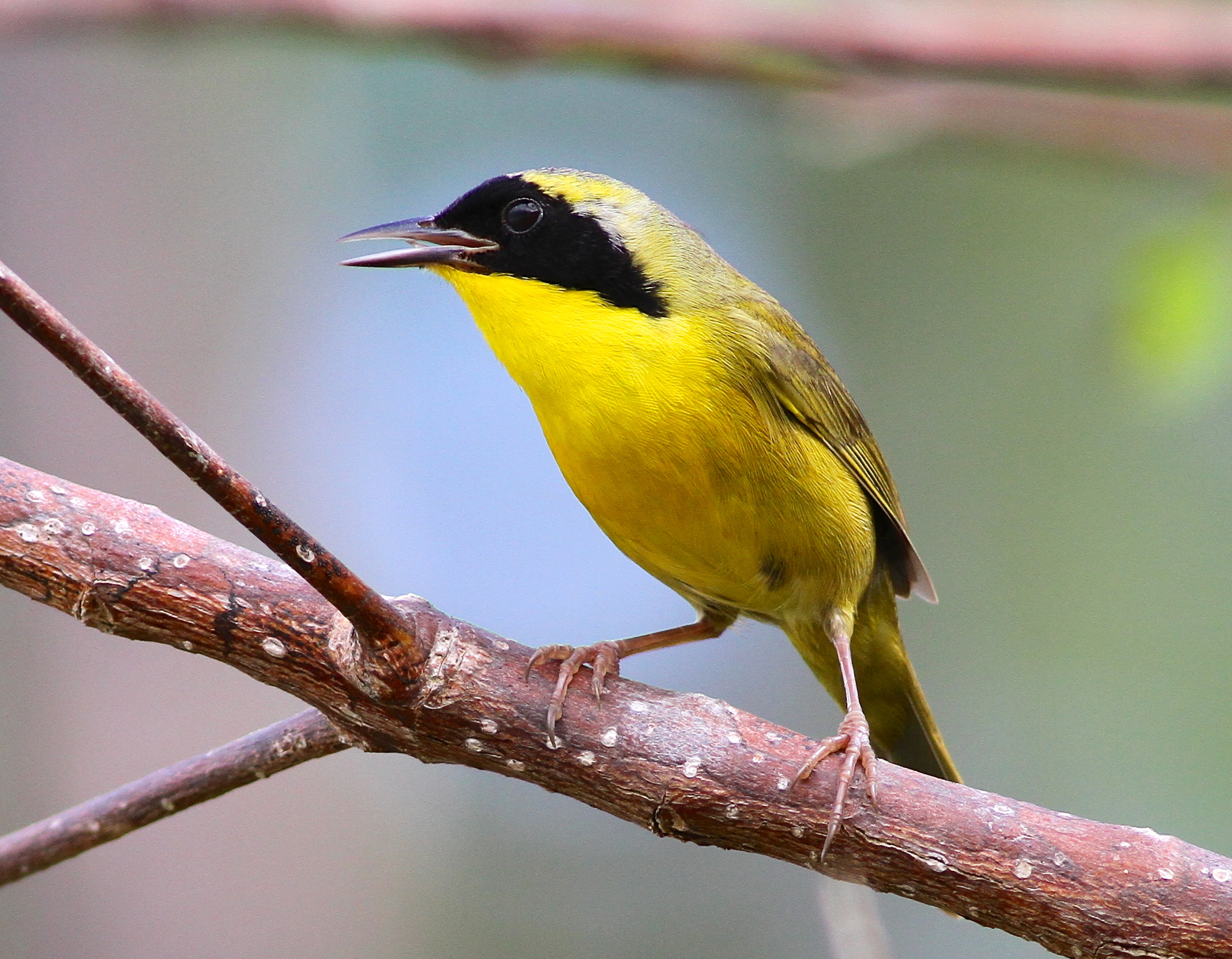
Yesterday an Abaco friend asked me to ID a striking-looking bird photographed in the coppice by their house. It was a Bahama Yellowthroat, one of the 5 bird species endemic to the Bahamas. The bird was not clear enough for use here, but I’ll take any reason to feature these lovely creatures, with their trademark Zorro masks.

Bahama Yellowthroat, Abaco Bahamas (Bruce Hallett)

The other endemics are the Bahama Woodstar, Bahama Warbler and Bahama Swallow – all found on Abaco. The fifth is the endangered Bahama Oriole. Sadly these fine birds are now only found in very small numbers on Andros. They once lived on Abaco too, but have not been recorded there since the 1990s, and are considered extirpated. You can find out more about all these endemic birds HERE.

Bahama Yellowthroat, Abaco Bahamas (Gerlinde Taurer)

The Bahama Yellowthroats have a cousin, the Common Yellowthroat, that is a winter visitor on Abaco. There is some scope for confusion between the two birds, although a close look will reveal several differences. But let’s not get into that kind of detail right now… it would slightly detract from this little ‘gallery of gorgeous’.

Bahama Yellowthroat, Abaco Bahamas (Tom Reed)

One reason for my fondness for the yellowthroats is that it is one of the few species that I am able to imitate with sufficient accuracy to draw one from the depths of the coppice to the front of stage. It’s usually described as a ‘wichety-wichety‘ call, and the talent to mimic it has no other uses in life. Here’s a short recording I made – the Yellowthroat is the first and last call of the sample, with other species in between.

These are curious birds, and are not afraid to pose for a while, watching the watcher. They are also very vocal birds. You’ll see that many of these photos show them singing (‘vocalising’). You can even see their tiny tongues!

Bahama Yellowthroat, Abaco Bahamas (Bruce Hallett)

A couple of these images feature in THE BIRDS OF ABACO. This is a good moment to mention that we still have some remaining books, and right now we have a seasonal offer on them of a festive $88 plus shipping. A drop in MH can be arranged. Interested? Let me know or email the Delphi Club direct at delphi.bahamas@gmail.com

Bahama Yellowthroat, Abaco Bahamas (Charles Skinner)

Photo Credits: Gerlinde Taurer (1, 3); Bruce Hallett (2, 5); Tom Reed (4); Charles Skinner (6); Tom Sheley (7); sound recording Keith Salvesen / Rolling Harbour

Bahama Yellowthroat, Abaco Bahamas (Tom Sheley)

Unknown's avatar

NASSAU GROUPER: ENDANGERED… AND PROTECTED


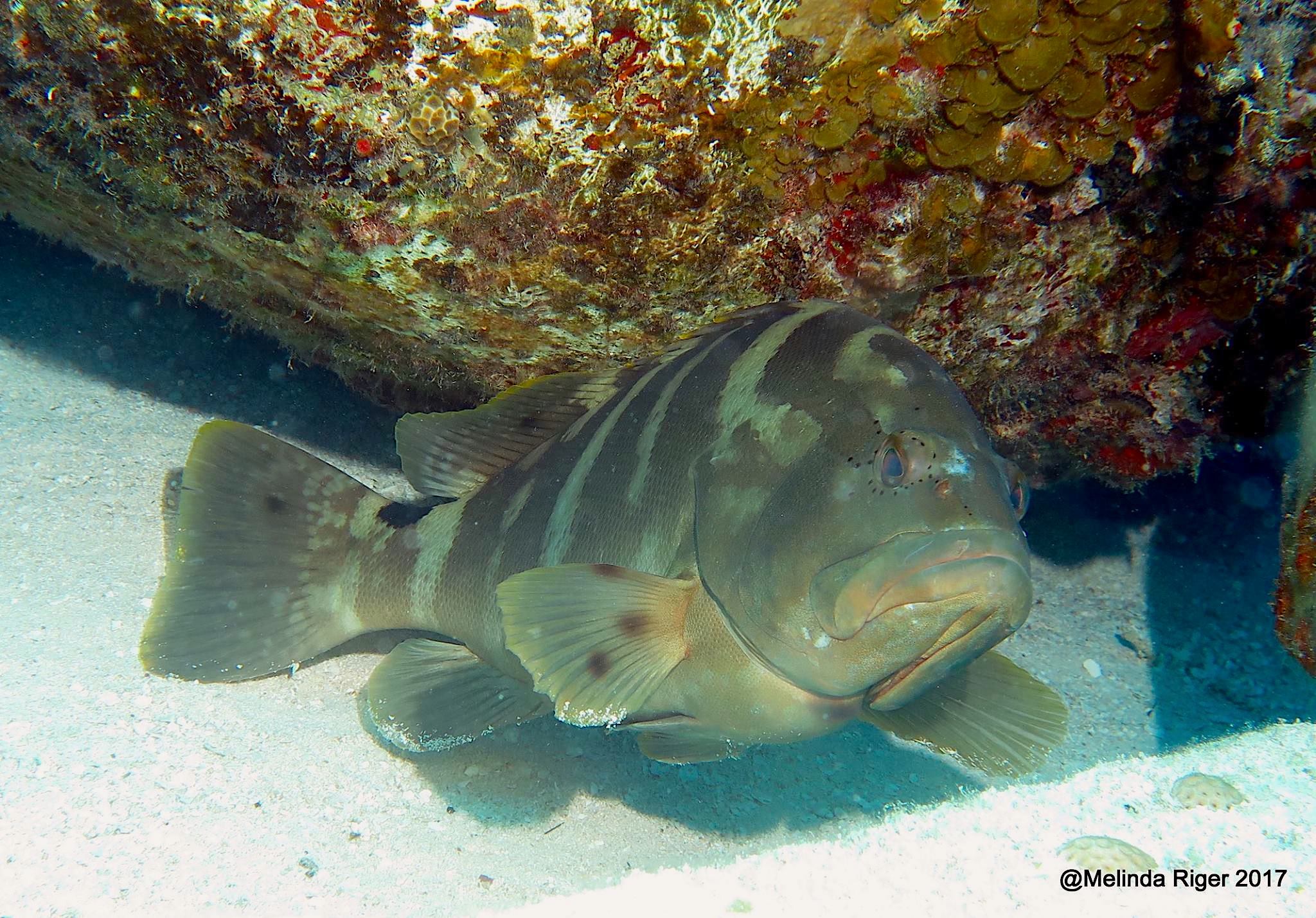
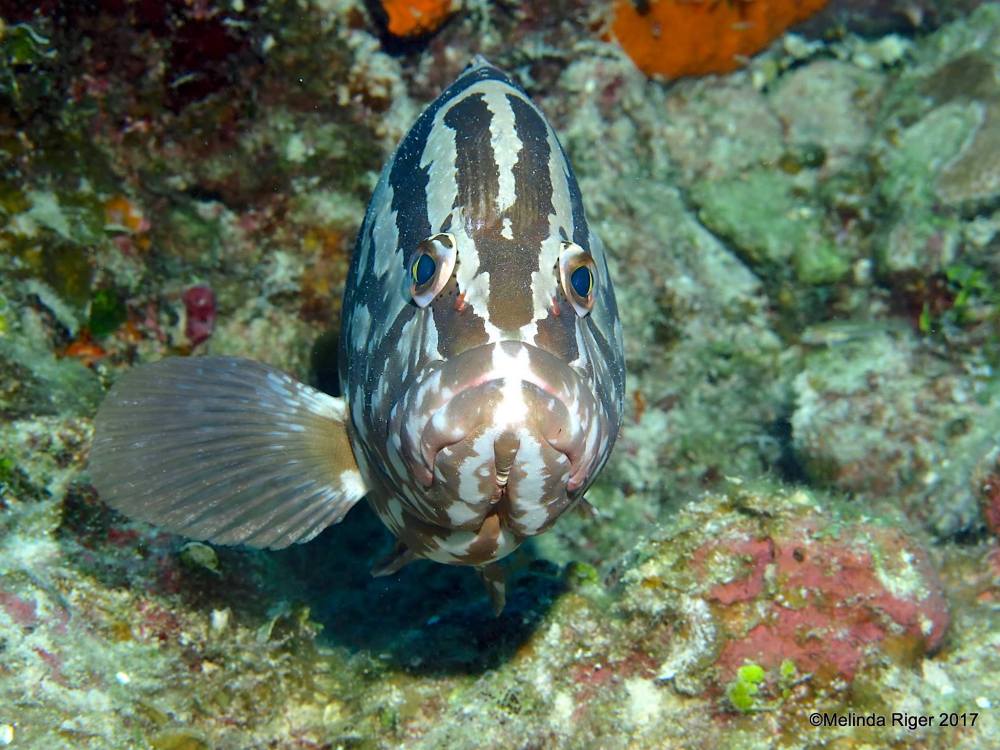
Nassau Grouper (Melinda Riger / Grand Bahamas Scuba)

NASSAU GROUPER: ENDANGERED… AND PROTECTED

Most creatures need some space for creative activity of one sort or another. Especially one particular sort, namely breeding. And for vulnerable and endangered species, this is especially important in order to maintain a sustainable population, and preferably to increase it year on year. Which is why there are closed seasons for certain fish, ensuring a time when they can be left alone to breed in peace and to perpetuate their species.

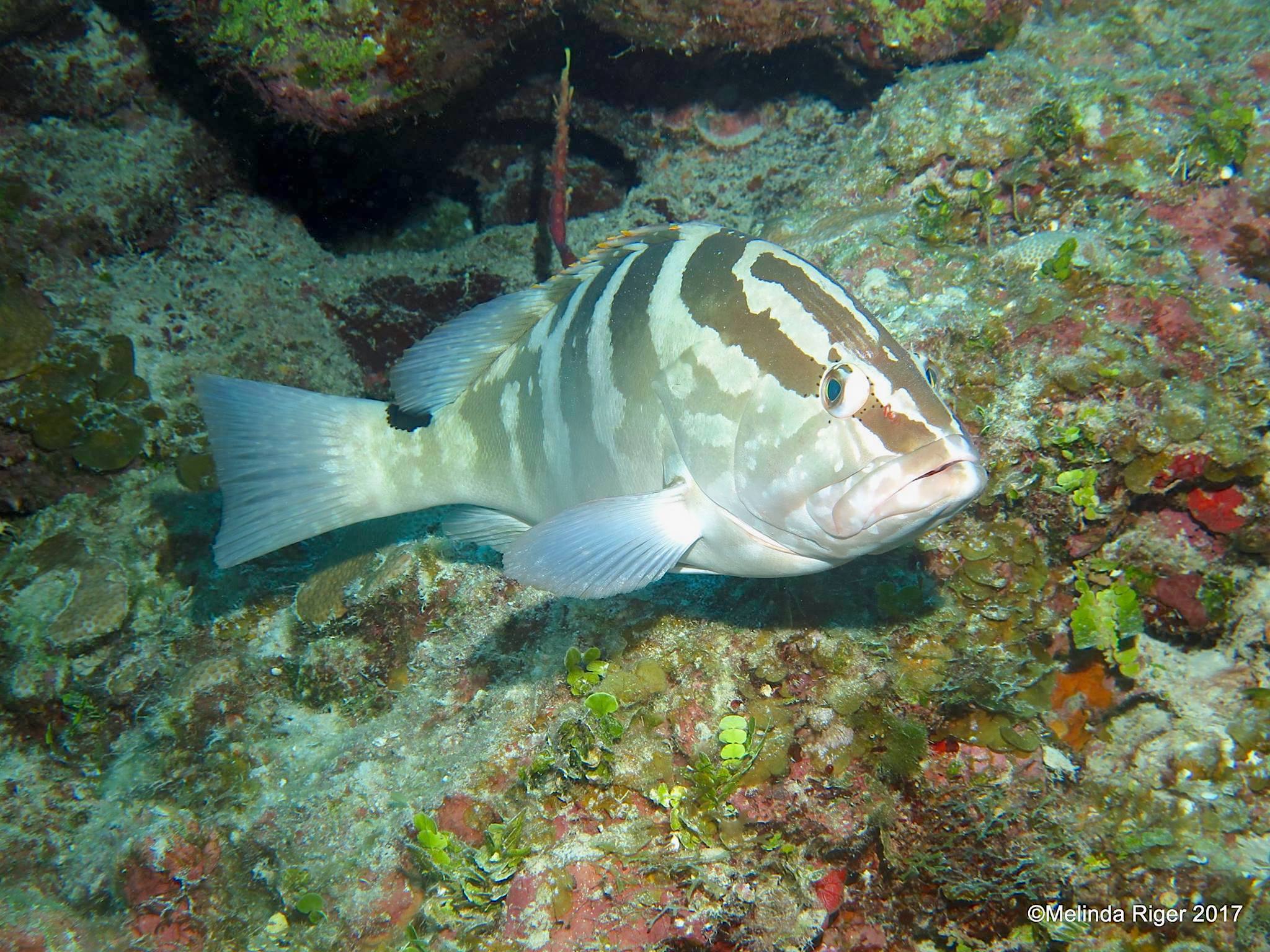
Nassau Grouper (Melinda Riger / Grand Bahamas Scuba)

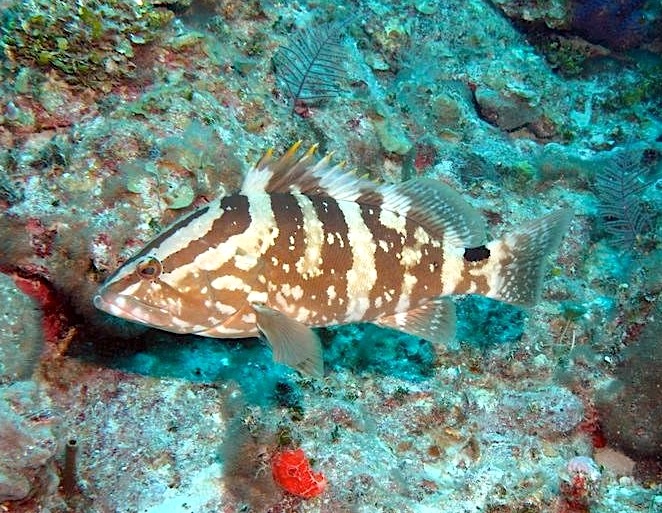
The Nassau grouper Epinephelus striatus is just one of a number of grouper species that inhabit Bahamian waters. They are mostly found in the Northern Bahamas but only the Nassau grouper is on the IUCN Red List as an Endangered Species in need of protection.

Nassau Grouper (Melinda Riger / Grand Bahamas Scuba)

WHY ARE THESE FINE FISH ENDANGERED?

Sad to say, mankind is the main cause of the population fragility that has led to the official listing, and the imposition of a strict closed season for 3 months between December 1st and February 28th. Scientific studies have shown that commercial overfishing has reduced a thriving population to fewer than 10,000 mature fish. That may sound plenty to be going on with… until you consider that a net annual loss of only 10% would lead to extinction in a decade.

Nassau Grouper Infographic (Royal Defence Force)

10 CONVENIENTLY COLLECTED NASSAU GROUPER FACTS TO PONDER

  • An adult can grow to more than a metre long, and weigh 25 kg
  • They tend to be solitary daytime feeders, eating small fish & crustaceans
  • Their large mouths are use to ‘inhale’ or suck in prey
  • The colouring of an individual can vary from red to brown
  • These fish have little black spots around the eyes (I’ve no idea why).
  • Their habitat is in the vicinity of coral reefs, from shallows to 100 m deep
  • Spawning occurs in Dec & Jan during a full moon
  • Large numbers gather in a single location to mate in a mass spawning
  • These groupers are slow breeders, which compounds the overfishing problem
  • They are easy mass targets at spawning time; hence the need for a closed season

Nassau Grouper (Melinda Riger / Grand Bahamas Scuba)

Department of Fisheries information sheet (interesting if you have the time)

A Nassau Grouper glumly contemplates the possibility of extinctionNassau Grouper (Melinda Riger / Grand Bahamas Scuba)

RELATED POSTS

BLACK GROUPER

TIGER GROUPER

RED HIND

NASSAU GROUPER 1

CLEANING STATIONS

Nassau Grouper (Melinda Riger / . Grand Bahama Scuba)

Credits: all photos, Melinda Riger; Infographic by Royal Defence Force (tip o’ the  hat to Char Albury); Info Sheet, Dept of Fisheries

Unknown's avatar

BARN OWLS ON ABACO, BAHAMAS


Barn Owl, Abaco Bahamas (Woody Bracey)

Barn Owl, Abaco, Bahamas (Woody Bracey)

BARN OWLS ON ABACO, BAHAMAS

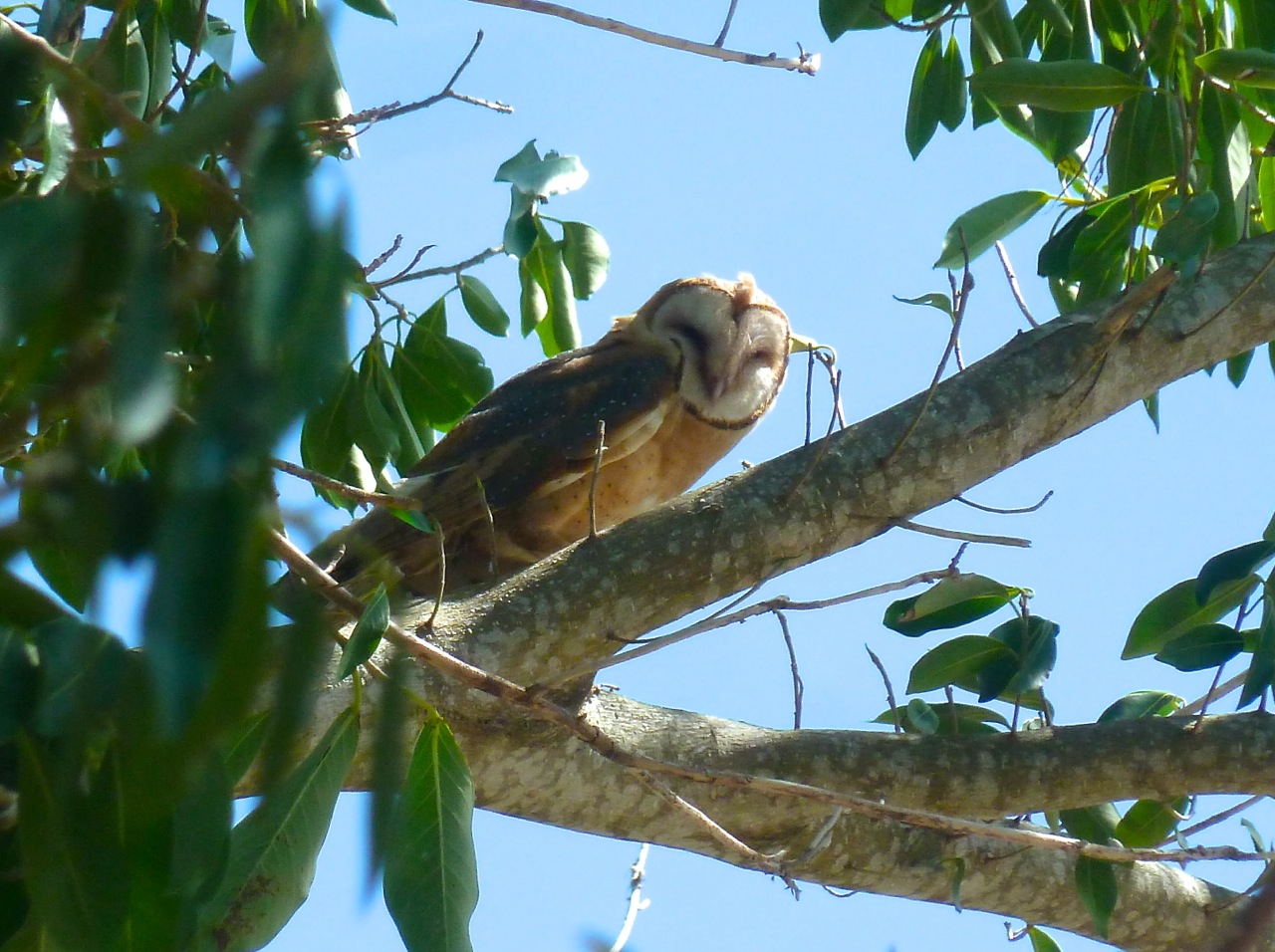
The Barn Owl (Tyto alba) is the only owl you are likely to see – and hear – on Abaco. The species is permanently resident, which is a good start in that sighting opportunities exist year-round. Although they are not at all common they can be found in particular locations, for example around Treasure Cay and Little Harbour; also on Elbow Cay, Lubbers Quarters (4 birds right now) and Man-o-War Cay (a while back). There are two other owl species recorded for Abaco: the rare Burrowing Owl (see link below for details); and the Northern Saw-whet Owl, a vanishingly rare vagrant recorded a handful of times that I don’t propose to feature unless and until it decides to visit Abaco more frequently…

Barn Owl (Birdorable)

I wrote about Barn Owls on Abaco many moons ago. I don’t usually rehash previous posts, but I am returning to the topic because of a recent barn owl sighting on Elbow Cay that caused interest, excitement and some speculation. 

Barn Owl, Treasure Cay, Abaco Bahamas (Becky Marvil)

Barn Owl, Treasure Cay, Abaco Bahamas (Becky Marvil)

The shrill wheezing cry of the Barn Owl – known in some places as the ‘screech owl’ (which, strictly, is a different owl species) – is unmistakeable. Barn owls also make an intimidating hissing noise. Mainly nocturnal, they fly noiselessly like white ghosts in the night. If you are lucky enough to see one in the daytime, you’ll be struck by the beautiful heart-shaped face and (if close enough) the delicate markings.

 Patrik Aberg Xeno-Canto

Both photos above were taken on Abaco. Woody Bracey’s header image is featured inTHE BIRDS OF ABACO“. Becky Marvil’s photo was taken near Treasure Cay. I’ve never seen a barn owl on Abaco, but  I’ve been lucky enough to get close to them in the UK. For those who have never seen one, here are a few of my own images that show what wonderful birds they are. They were photographed at a raptor rescue centre, so I am not going to pretend that these shots were taken in the wild. That would never do. 

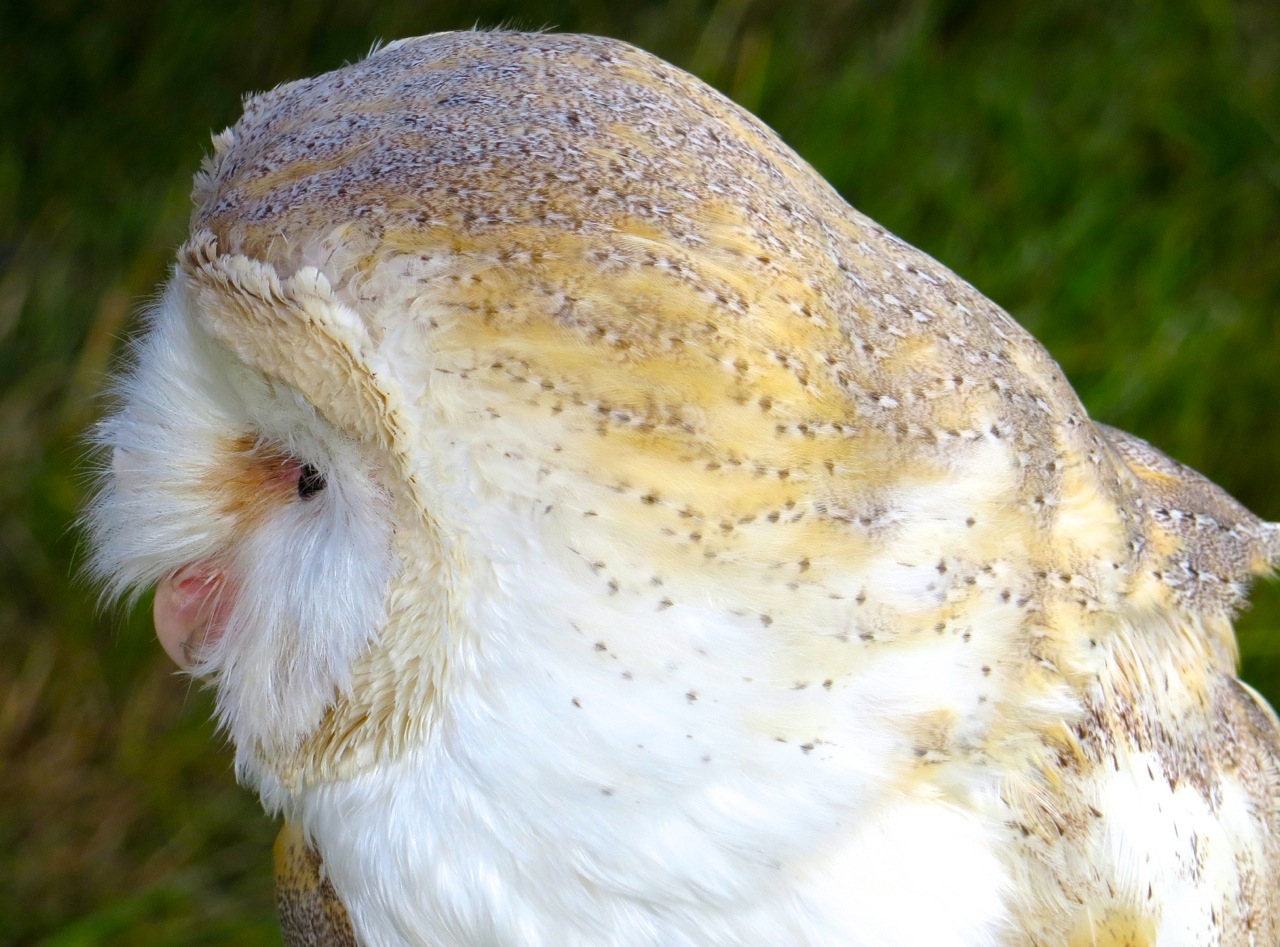
Barn Owl (Keith Salvesen)Barn Owl Dorset (Keith Salvesen) Barn Owl Dorset (Keith Salvesen)Barn Owl 4 (Keith Salvesen)

This close-up of the barn owl above shows the typical speckling on its pure white front, and the beautiful wing patterns. Amazingly for such a large bird, an adult weighs a mere 350g or so. As a comparison, The Birds of Abaco book weighs 2kg!

Barn Owl close-up (Keith Salvesen)

This fluffy baby barn owl had been rescued and was being cared for in a sanctuary before being returned to the wild. Whimsy is rarely permitted  in this blog, but seriously, folks – cuteness overload!Barn Owl 6 (Keith Salvesen)

RELATED POSTS

 OWLS OF ABACO (2) – BURROWING OWLS

BURROWING OWLS ON ELBOW CAY

Credits: Woody Bracey, Becky Marvil, Keith Salvesen, Patrik Aberg /  Xeno-Canto (audio), RSPB (video), Birdorable (Cartoon)

Unknown's avatar

LARK SPARROW: EXTREMELY RARE VISITOR TO ABACO


Lark Sparrow (Nature Pics Online / Wiki)

LARK SPARROW: EXTREMELY RARE VISITOR TO ABACO

There’s a category of bird in the Bahamas known as a ‘V5’. The V stands for vagrant: a ‘foreign’ bird that ends up on Abaco by pure mischance. Whether through meteorological mishap (a storm for example) or navigational error, a bird that ought by rights to be found elsewhere turns up. That’s the first part of the rarity. The second part is that someone actually sees it, knows what it is (or may be) and reports it.

Lark Sparrow (Francesco Veronesi / Wiki)

The 5 part of V5 means that historically there may have been one, perhaps two previous reports of that species. Ever. More than 5 separate sightings, and the bird slips into the far less exclusive V4 category. The only category rarer than a V5 is an H. This stands for hypothetical, a bird that has been ‘credibly reported’ but where further confirmation is needed. Often, that never comes.

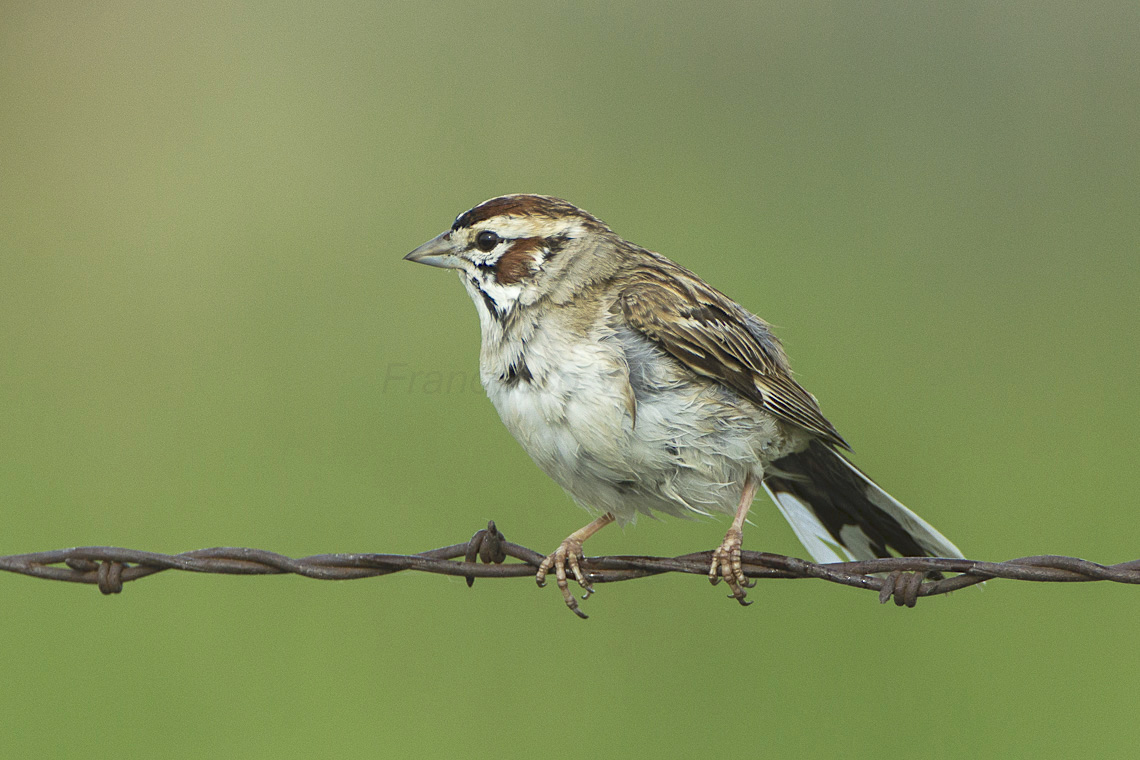
Lark Sparrow, Abaco Bahamas (Keith Kemp / Christopher Johnson)

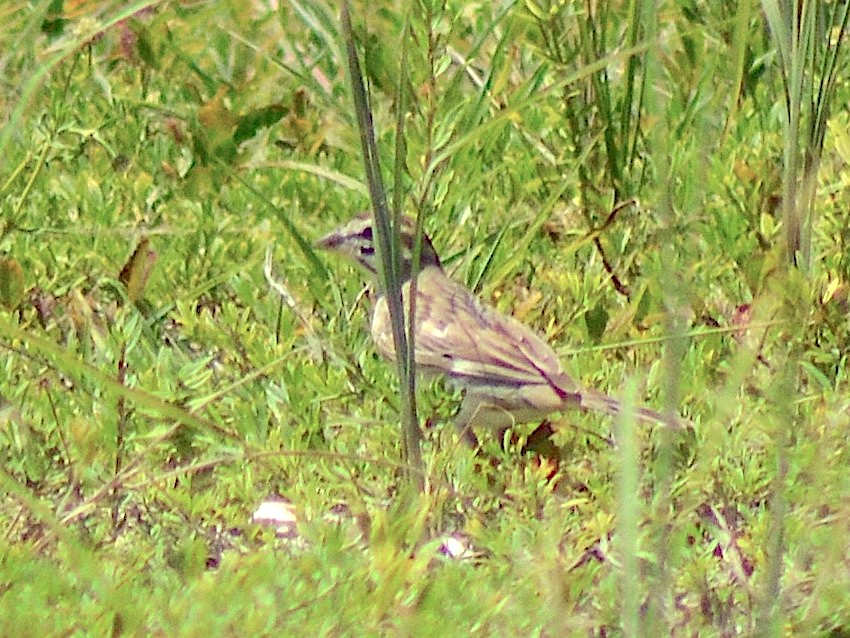
The lark sparrow (Chondestes grammacus) is a fairly large sparrow, familiar enough in parts of the US and Canada. Until this August, there had only been a couple of reports on Abaco since records began. I’m not aware of any photographs from those sightings. Then in August, birder Keith Kemp was at Bahama Palm Shores bird-spotting with his keen-eyed nephew Christopher, who saw a sparrow-like bird fly into low grass near the beach. Keith managed to take a couple of photos of it, and later on checked his bird guides for ID… and lo! a lark sparrow. These are most likely the first photos of the species ever taken on Abaco – and there’s nothing like a photo, however hard to take, to provide confirmation of a sighting.

Lark Sparrow, Abaco Bahamas (Keith Kemp / Christopher Johnson)

Photo Credits: NaturePicsOnline / Wiki (1); Francesco Veronesi / Wiki (2); Keith Kemp with Christopher Johnson, Abaco (3, 4)


Unknown's avatar

BELTED KINGFISHERS: PROFICIENT PISCATORS


Belted Kingfisher (Phil Lanoue)

BELTED KINGFISHERS: PROFICIENT PISCATORS

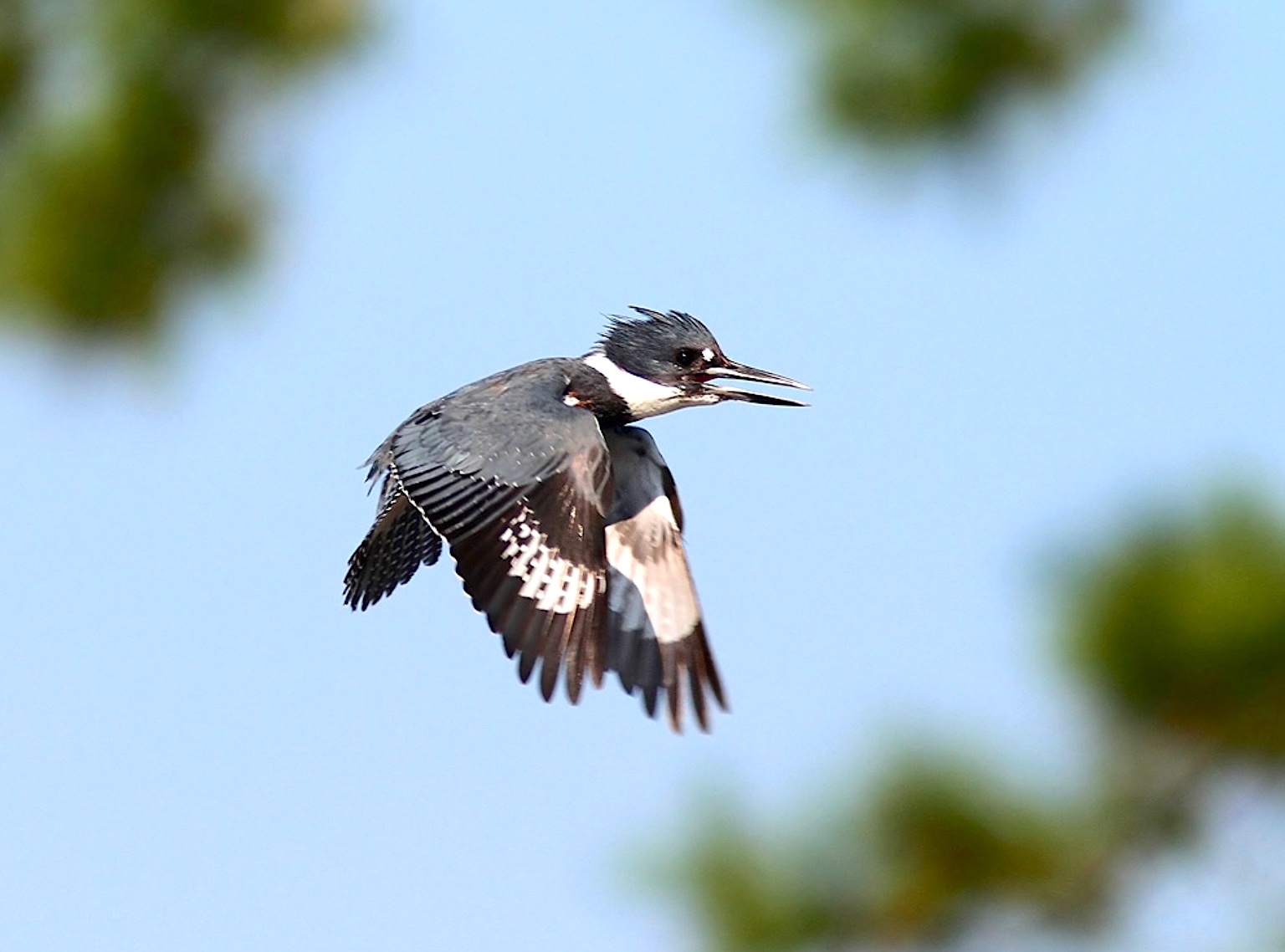
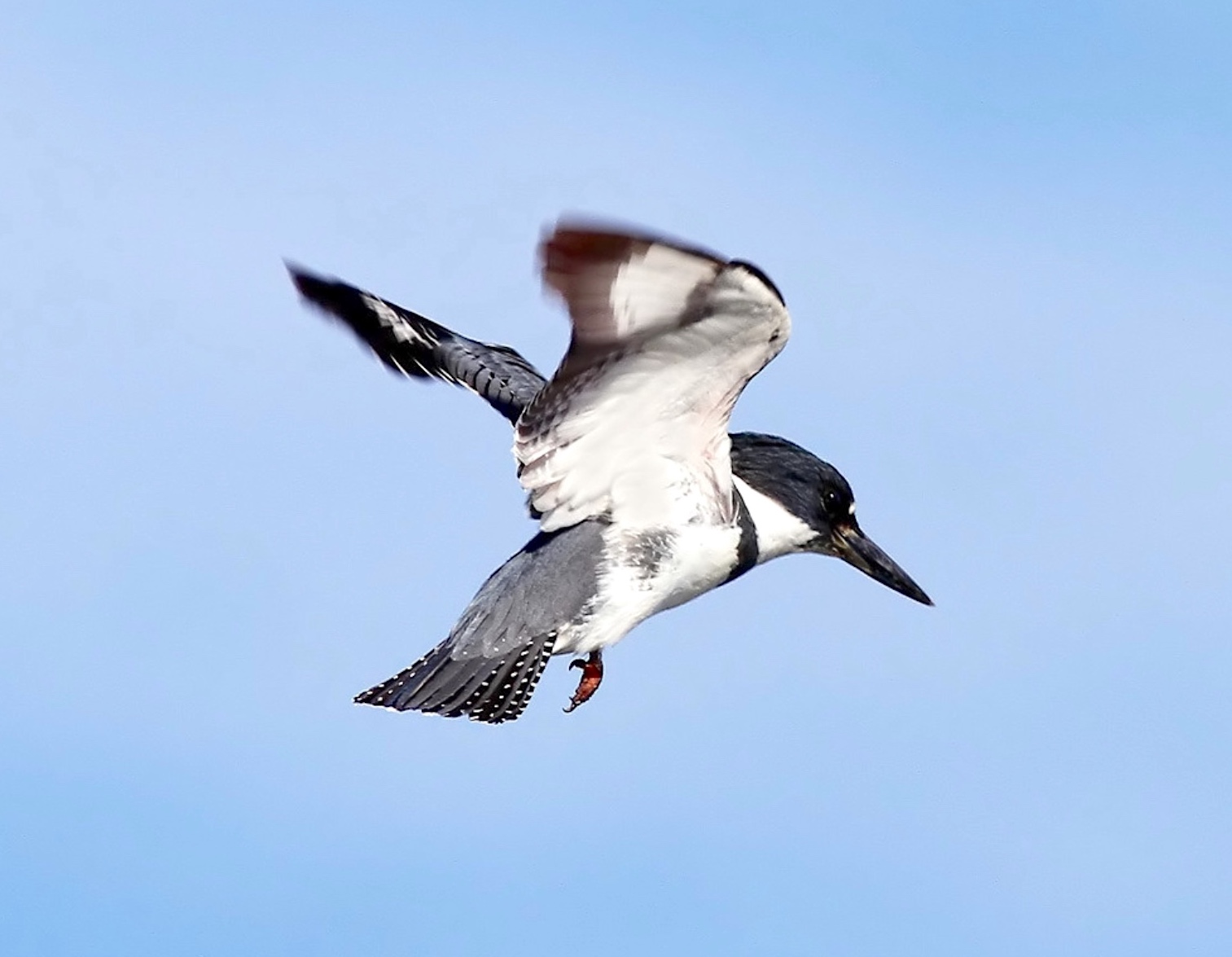
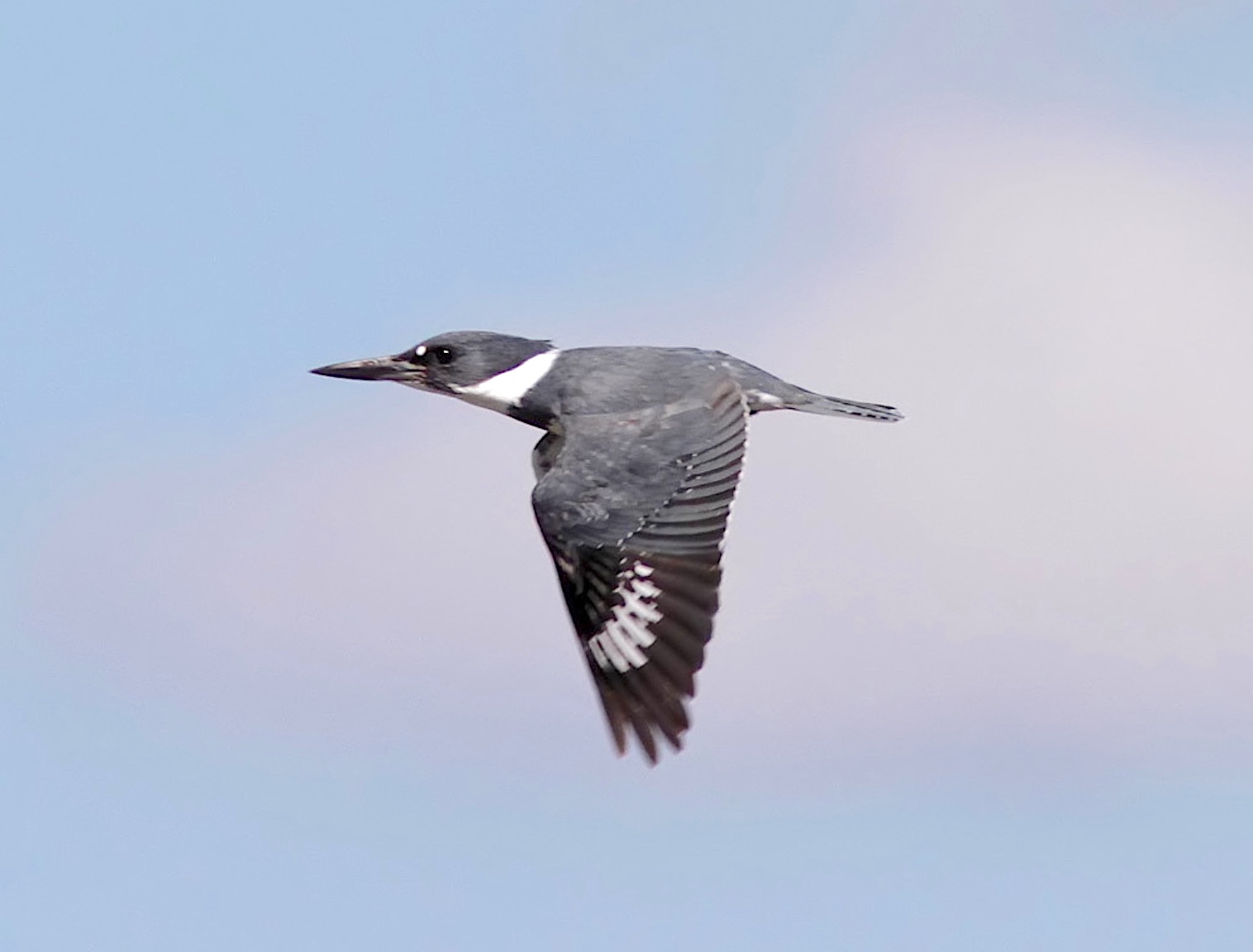
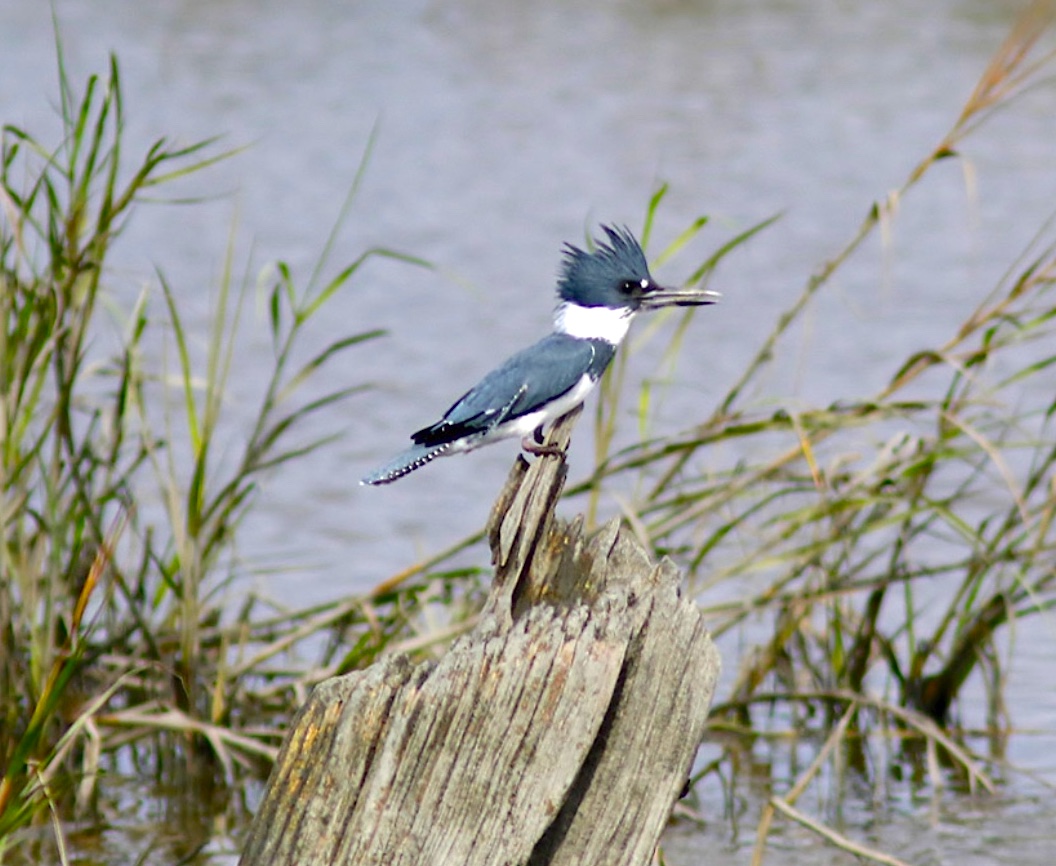
The belted kingfisher (Megaceryle alcyon) is an unmistakable winter visitor to Abaco. With its impressive crest and an adult wingspan approaching 2 ft, these fine birds are far larger than the irridescent kingfisher species found in Europe.

Belted Kingfisher (Phil Lanoue)

CARL LINNAEUS himself first documented the belted kingfisher in the mid c18, giving the specific name ‘alcyon’, a word of both Latin & Greek origin. The familiar phrase ‘Halcyon days‘, meaning a time of calm, is used more than once by Shakespeare; it references a calm period of weather supposedly occurring at kingfisher nesting time.

Belted Kingfisher (Phil Lanoue) Belted Kingfisher (Phil Lanoue)

The breeding grounds of the belted kingfisher are in Canada and the northern US, on coasts or near inland waters. They migrate further south in winter, to the southern US, Central America and West Indies. However vagrants have been found as far afield as the UK.

Belted Kingfisher (Phil Lanoue)

WHERE CAN I FIND THEM ON ABACO?

I have seen BKs when fishing out on the Marls, either perched on dead branches looking for fish, or in the mangroves, or in flight. There’s quite often one to be seen at Gilpin Pond, but always – for me, anyway – on the far side and out of practical range of my somewhat modest camera… Sandy Point is another place I have seen them. But these are common birds in winter, so anywhere near water where there are good perches to prospect for fish could be promising for a sighting. Sadly I’ve never actually seen a kingfisher on Abaco plunge-dive for fish, let alone eating a fish. And NB they are exceedingly hard to photograph at the best of times, especially in flight. Which is why I am very pleased to feature some more wonderful shots by photographer Phil Lanoue.

Belted Kingfisher (Phil Lanoue)

GENDER IDENTIFICATION

The kingfishers shown so far are all males, and basically blue and white. The (slightly) larger adult females can easily be identified by their very visible russet chest band. This colouring in fact extends under the wings, where it is harder to see in a perched bird.

Belted Kingfisher (Teddy Llovat) Belted Kingfisher (Michael L Baird)

AUDUBON:  A GUIDE TO THE BELTED KINGFISHER

Birding folk are familiar with the excellent presentations of individual bird species in the go-to guides such a Sibley and Peterson. However it always interests me that the images in my small and incredibly cheapo book of Audubon illustrations often give a very good depiction of a particular bird. He was the first naturalist to portray birds in action as opposed to rather stiff poses. Check out the plate below with the photos here.

Belted Kingfisher (Audubon)

BIRDORABLE’S TAKE*

Belted Kingfisher (Birdorable)

Belted Kingfisher (Bruce Miller)

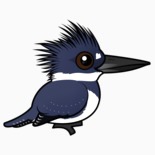
* BIRDORABLE cartoons are seriously good at reducing birds to their essentials. Try out their many warblers and you’ll see what I mean.

Photo Credits: Phil Lanoue (1 – 6), with thanks as ever for use permission; Teddy Lovatt (7); Michael L Baird (8); Audubon (9);  Bruce Miller (10); Birdorable – Cartoon

Unknown's avatar

ABACO BALD EAGLE(S): NEW SIGHTINGS


Bald Eagle - Poquoson, Virginia - Brian Lockwood

ABACO BALD EAGLE(S): NEW SIGHTINGS

In March, I posted about a bald eagle spotted by a Delphi fisherman out on the Marls near Big Pine Point HERE – a very rare sighting indeed. The only previous Abaco sightings were sporadic, of a single bird, and all since 2000 (see below). 

In May, there was another bald eagle sighting, also on the Marls, this time by Danny Sawyer while out fishing; in the Power Plant area; and ‘Kelly’s Mom’ reported one from the Lubbers Quarters / Tahiti Beach area.

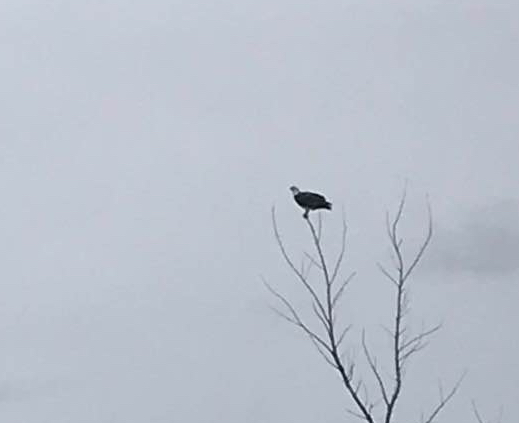
In September came the first photo ever of an Abaco bald eagle, taken by Carol Rivard Roberts in the Cross Harbour area from a considerable distance. 

And now, November, Delphi West & East fisherman, most entertaining boat partner, and friend Howard Pitts from Little Harbour has emailed to say that he saw a bald eagle “off the Cherokee Rd near the cell tower” in the last couple of days. 

BALD EAGLE SIGHTINGS REPORTED ON ABACO SINCE c1950 (= ‘ever’)

  • 2000 December, location unknown – info from Woody Bracey
  • 2001  December – Chicken Farm area – Betsy Bracey
  • 2002 December – over Marls opposite Treasure Cay – Woody Bracey
  • 2004 Autumn – south of Lynard Cay (after hurricane) – Cheryl Noice
  • 2014  Date unknown – circling the power plant – LC
  • ===================================
  • 2017  March – Big Pine Point, Marls – James Cheesewright
  • 2017  Early May – Power plant area – LC
  • 2017  May – Marls – Danny Sawyer
  • 2017  May  – Lubbers / Tahiti Beach area – ‘Kelly’s mom’
  • 2017  September – Cross Harbour – Carol Rivard Roberts (with photo)
  • 2017  November – Cherokee Road – Howard Pitts
  • STOP PRESS… NEW REPORTS 
  • 2017 November – Bahama Palm Shores / 8-mile beach – Steve Roessler
  • 2017 November – Tilloo Bank – Laurie Schreiner (with photo)

Italics = a report in comments on Danny’s FB page; Blue = added reports to me

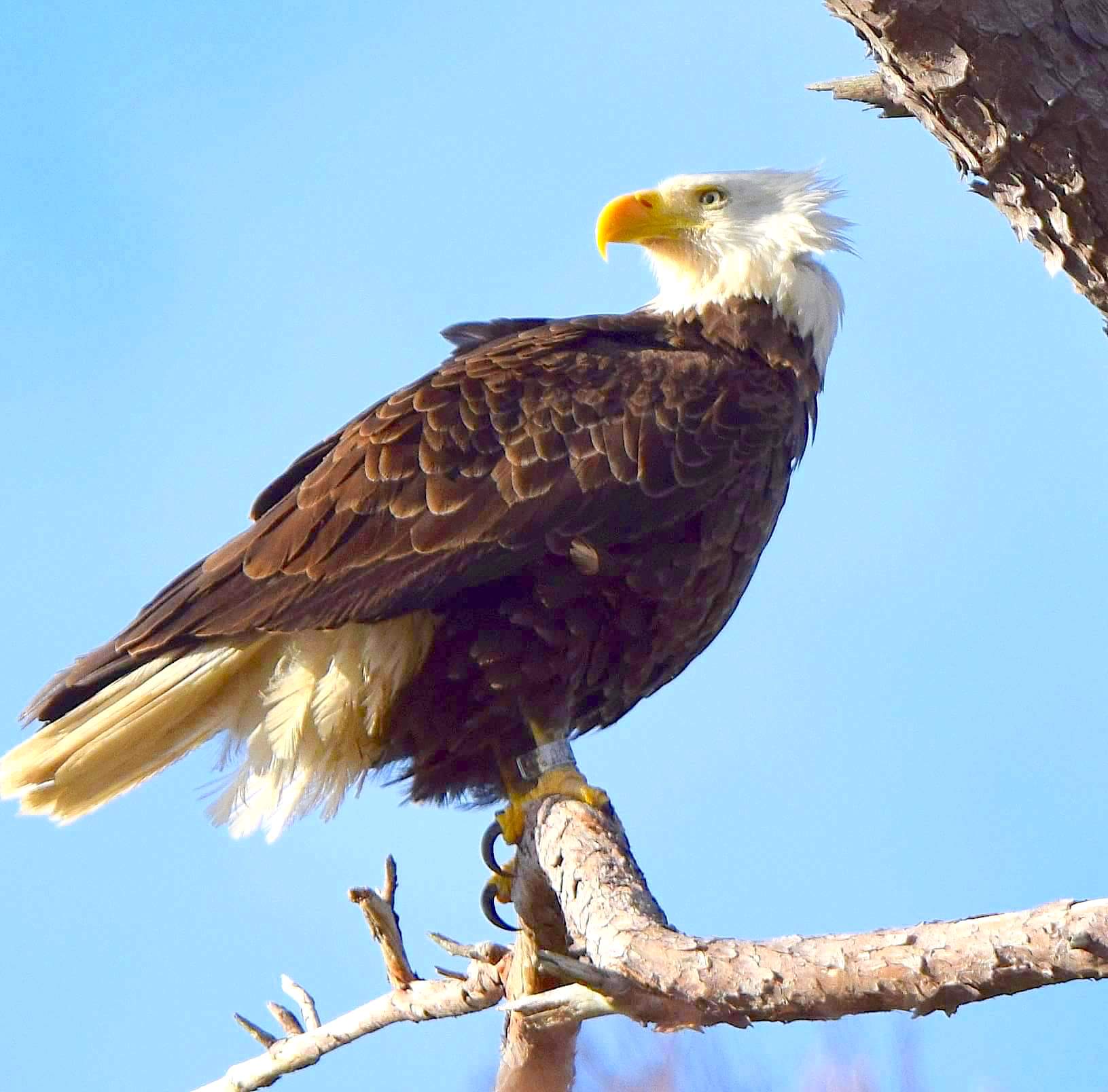
So now for 2017 we have 6 sightings, including the first sighting with verification by photo. As I said previously, “there really is no mistaking a bald eagle. For obvious reasons it is surely one of the most recognisable raptors of all. And the only Abaco candidates for confusion would be a turkey vulture or an osprey. There’s very little scope for confusion with either”.

A THEORY

I suspect that the 2017 sightings are all of the same lone bird that has somehow strayed over to Abaco and finds the available prey good, and the location congenial. Also, he is undisputed king of the skies. I imagine his daily hunting range is a wide one, which would explain the varied sighting locations. I’m sticking with this theory unless and until 2 eagles are seen together.

 ABACO BALD EAGLE CHALLENGE

Carol Rivard Roberts is the winner of the challenge I set – the first person to capture an Abaco bald eagle on camera. She carries off the traditional yet strangely theoretical and / or symbolic Rolling Harbour bottle of Kalik, and the Kudos that attaches to it.

Reports of any further sightings would be very welcome, with photographs a bonus…

Bald Eagle - Poquoson, Virginia - Brian Lockwood

Credits: all brilliant eagle photos by very kind permission of Brian Lockwood, taken in his backyard in Poquoson, Va. except tiny distant Abaco eagle by Carol Rivard Roberts; amusing cartoon, Birdorable

Unknown's avatar

SANDERLINGS ON DELPHI BEACH, ABACO BAHAMAS


Sanderling, Delphi Beach Abaco Bahamas (Keith Salvesen)

SANDERLINGS ON DELPHI BEACH, ABACO BAHAMAS

Looking back through some bird photo folders from last year, I came across these sanderlings that I photographed on the beach at Delphi. These little birds are far from rare, but watching a flock of them scuttling back and forth on the sand, in and out of the tide, is always a treat. And as you will notice, when they are foraging in earnest they not only stick their bills into the sand right up to the base… they go for total immersion of the head!

Sanderling, Delphi Beach Abaco Bahamas (Keith Salvesen)Sanderling, Delphi Beach Abaco Bahamas (Keith Salvesen)Sanderling, Delphi Beach Abaco Bahamas (Keith Salvesen)Sanderling, Delphi Beach Abaco Bahamas (Keith Salvesen) Sanderling, Delphi Beach Abaco Bahamas (Keith Salvesen)

All photos: Keith Salvesen, Rolling Harbour Abaco

Unknown's avatar

NEW BIRD FOR ABACO, BAHAMAS: SCALY-NAPED PIGEON


Scaly-naped Pigeon (Jean Lopez YT)

NEW BIRD FOR ABACO, BAHAMAS: SCALY-NAPED PIGEON

The scaly-naped pigeon (Patagioenas squamosa), also known as the red-necked pigeon, is found throughout most of the Caribbean. Except for the Bahama islands – if indeed they are considered Caribbean, which strictly and geographically they are not – even though for some purposes such as passport requirements they may be.

Scaly-naped Pigeon (Dick Daniels, Carolina Birds.org)

Until the last year or so, this pigeon species had not been recorded in the Bahamas. Then sightings began to be recorded on Inagua and TCI – not so very far north of their normal range – and mostly within the last 4 weeks. Since bird records began, they had never been reported further north in the Bahamas, until a few days ago on Abaco.Scaly-necked pigeon (postdlf wiki)

The scaly-naped pigeon is so called because the plumage on the back of its maroon-coloured neck looks somewhat… erm… scaly (hence the Latin squamosa in the binomial name): close-up below.  Notice also the bright, ringed eyes. 

 Scaly-necked pigeon's scaly neck, Abaco, Bahamas

These pigeons mainly feed on fruits and seeds, and usually hang out in small groups or mix in with other dove and pigeon species. They can be wary and flighty, like many of the family Columbidae. Here’s a short (30 secs) video of one preening.

IS THERE PHOTOGRAPHIC PROOF OF AN ABACO ONE?

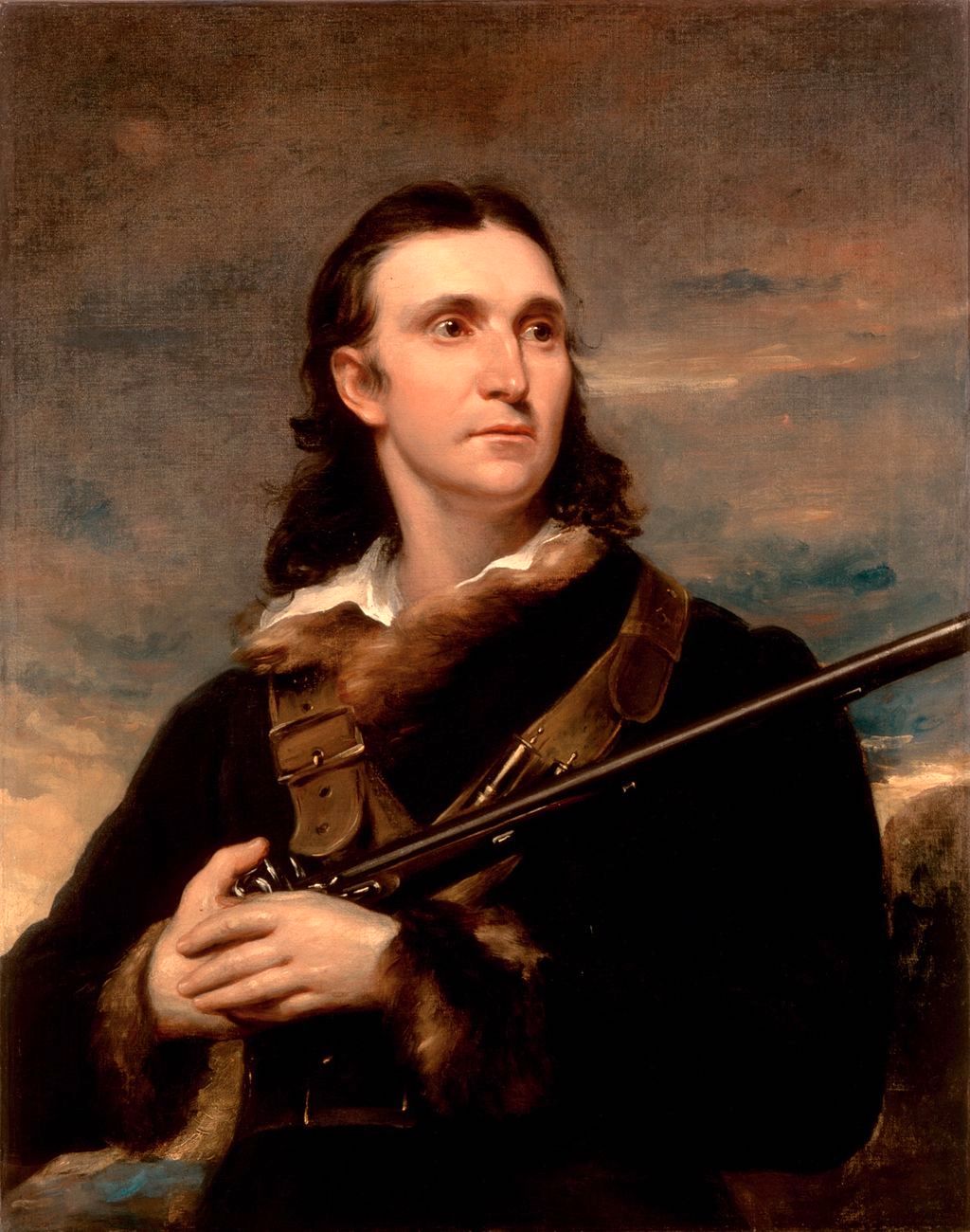
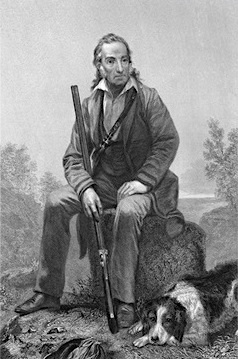
This is slightly tricky, I’m afraid. Right now, it is pigeon shooting season on Abaco. Several birds shot in South Abaco turned out not to be white-crowned pigeons or a WCP / dove cross,  and Woody Bracey was asked to ID photos taken of the deceased birds. The neck close-up above is from one of them… The full photos are a bit sad for a generally cheerful blog so I’ve not used them. At times like these, I have to remind myself that historically, natural historians obtained their specimens of our feathered friends by shooting them. Here are 3 portraits of John James Audubon as a young, middle-aged, and elderly man with his specimen-collecting equipment of choice.
 John James Audubon & gun John James Audubon & gun John James Audubon & gun

WHY HAVE THESE PIGEONS TURNED UP ON ABACO NOW?

The likeliest cause of the sightings this year on Inagua / TCI, and the current influx on South Abaco, is the recent extreme weather, especially Hurricanes Irma and Jose. It seems improbable that a mere whim to fly several hundred miles north from Hispaniola or Puerto Rico would account for the presence of these birds. One of the SNPs shot on Abaco has been retained as a specimen and preserved in a freezer. Woody is contemplating risking an expedition into the target area – a dangerous mission during the shooting season. He has invited any takers to join him, advising people to wear orange clothing to distinguish them from pigeons…

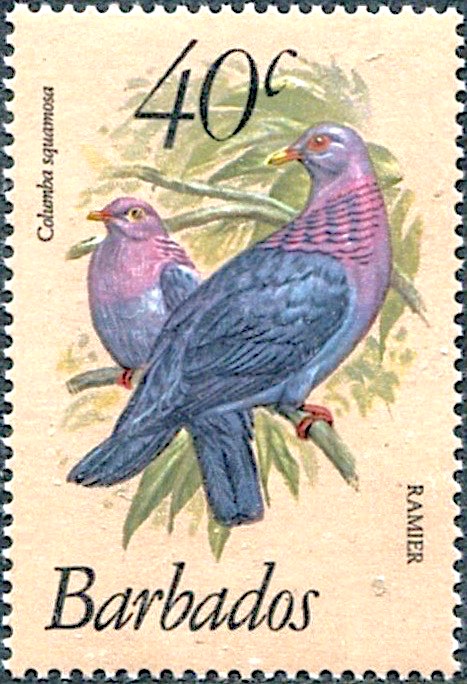
Scaly-naped Pigeon - Barbados

Scaly-naped pigeons are featured on stamps from Barbados (shown) and Barbuda. Like the Bahamas, the Caribbean countries have an excellent record for featuring their wildlife on stamps. You can read more about Bahamas wildlife stamps HERE

Scaly-naped Pigeon

Credits: Woody Bracey for the heads-up for the Abaco sightings; Jean Lopez (header still from a Youtube video); Dick Daniels / Carolinabirds.org; Cornell Lab / Neotropical Birds (range map); neck close-up from Abaco via Woody Bracey; ‘postdlf’ wiki; Felipe at Aves Puerto Rico; open source & wiki for all else 

Scaly-naped Pigeon (Jean Lopez)

Unknown's avatar

PIED-BILLED GREBES: LESS COMMON THAN THE LEAST


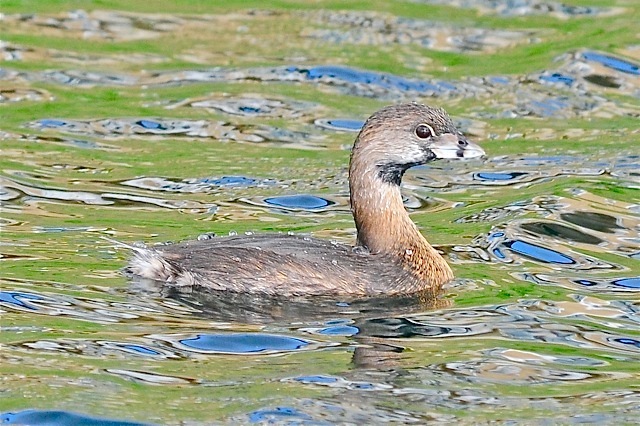
Pied-billed grebe, Abaco (Tom Sheley)

PIED-BILLED GREBES: LESS COMMON THAN THE LEAST

There are two grebe species recorded for Abaco. The LEAST GREBE is the most common; the pied-billed grebe (Podilymbus podiceps) is rarer. These small birds, often called dabchicks, are marsh and pond dwellers. They are sometimes found in brackish or even salt water.

Pied-billed grebe, Abaco (Tony Hepburn)

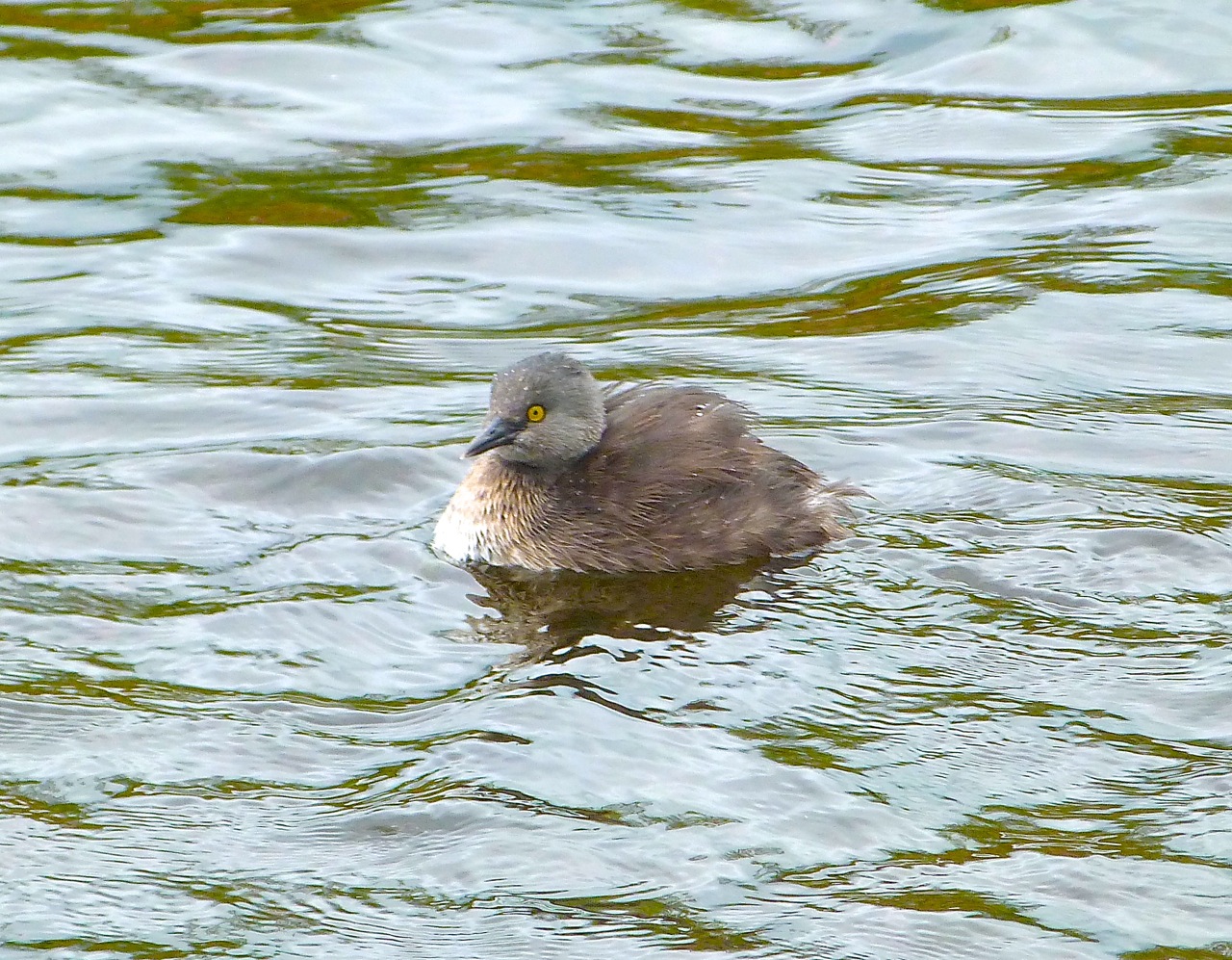
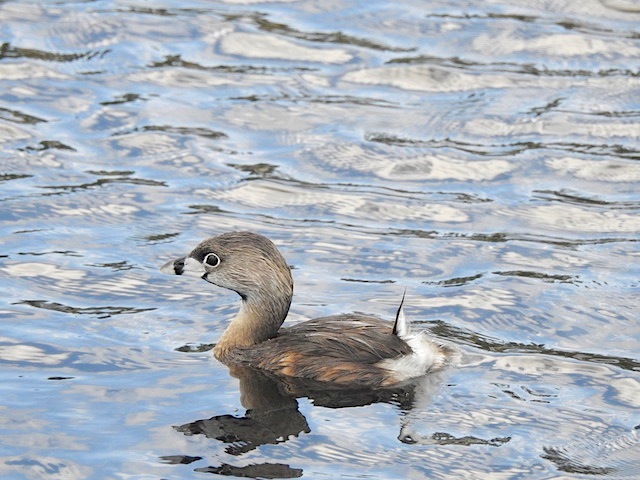
The pied-billed grebe is somewhat larger than the least grebe. In the breeding season, they have a distinctive black beak-ring. In the header image, the bird is just starting to acquire the ring. Their dark eyes also distinguish them from the golden-eyed least grebe; and their beaks are pale rather than dark.

Least grebe with golden eyes and dark beakLeast Grebe, Abaco (Keith Salvesen)

Pied-billed Grebe for comparisonPied-billed grebe, Abaco (Linda Barry Cooper)

These birds have lobes on each toe rather than webbed feet. This helps them to paddle and to dive – which is how they mainly forage. They can stay under water for up to half a minute, often surfacing some distance from the entry point. This is one method they use to avoid danger – especially as they don’t fly with much enthusiasm.

Pied-billed grebe, Abaco (MDF wiki)

Grebes rather endearingly carry their young on their backs until the chicks are old enough to fend for themselves. The main threat to the species is habitat loss, especially of wetlands. The decline in local populations of this once-prolific bird is such that in some places they classified as threatened or endangered.

Pied-billed grebe, Abaco (Dori / wiki)

The pied-billed grebes’ call has been rendered thus: a “whooping kuk-kuk-cow-cow-cow-cowp-cowp.” If that helps you at all. If not, try this clip:

Michel St Martin / Xeno-Canto

Credits: Tom Sheley, Tony Hepburn, Keith Salvesen (least grebe), Linda Barry-Cooper, MDF / wiki, Dori / wiki; Sound file, Xeno-Canto; Cartoon, Birdorable

Unknown's avatar

‘RAISE AWARENESS’: SPOTTED EAGLE RAYS


Spotted Eagle Rays, Abaco, Bahamas (Gabrielle Manni)

Spotted Eagle Rays – Abaco, Bahamas

‘RAISE AWARENESS’: SPOTTED EAGLE RAYS

Mention of rays may conjure up thoughts of the familiar southern stingrays that populate the bright shallows and colourful reefs of the Bahamas. But there are other ray species out there gracefully patrolling the coral reefs – and one of these species is the spotted eagle ray (Aetobatus narinari).

Spotted Eagle Rays, Abaco, Bahamas (Catherine / Tara Pyfrom)

These fish (for that is what they are) are not uncommon. In fact they are found in tropical oceans worldwide (though there is a taxonomic distinction between the Atlantic version and the Pacific / Indo-Pacific ones). Note the concentration in the Caribbean sea.

Spotted Eagle Rays, Grand Bahama, Bahamas (Melinda Riger / GB Scuba)

Spotted eagle rays obviously have spots, but they are not notably eagle-like to look at. In fact, their snouts resemble a duck’s bill, and in some place they are less glamorously known as the duckbill ray. The ‘eagle’ part relates to the way in which they use their wings and appear to be soaring as they glide effortlessly through the water (see videos below).

Spotted Eagle Rays (Lazlo-photos Wiki)

Despite their global presence, these rays are categorised as ‘near-threatened’ on the IUCN Red List. Aside from vulnerability to predators including many types of shark, the rays may be caught as bycatch. In some areas they suffer entanglement in shark nets. And unsurprisingly there is a trade for them for large commercial aquariums. For the Atlantic species, Florida has taken a lead by banning fishing for, landing, buying or trading in spotted eagle rays. 

Spotted Eagle Rays, Abaco, Bahamas (Gabrielle Manni)

10 ESSENTIAL FACTS ABOUT SPOTTED EAGLE RAYS

  • They have 2 – 6 venomous barbed spines at the base of the tail
  • Adults are among the largest rays, with a 10 ft wingspan
  • They can leap clear of the water, and may do this more than once at a time
  • Occasionally they land in boats, to the consternation of all concerned
  • Their main diet is small fish and crustaceans, & sometimes octopuses
  • Their broad snouts are used to dig food out of the seabed as they forage
  • The rays are basically shy but may be curious of divers & snorkellers
  • They suffer from parasites, both externally and in their gills
  • Ray sex is quite physical, yet actual mating is brief (up to 90 secs…)
  • The female hatches her eggs internally, then her ‘pups’ are born live a year later

SPOTTED EAGLE RAY PUP


Spotted Eagle Ray (John Norton Wiki)

 VIDEO SHOWCASE
These 3 short videos demonstrate the grace and beauty of spotted eagle rays as they glide elegantly around the reefs. The first (50s) was taken off Grand Bahama by Fred Riger (Melinda’s husband, for those who follow the underwater forays hereabouts); then one by Stephen Dickey (2:12) ; and finally one from Wildscreen Arkive (2:00).

WEIRD CREATURE CORNER

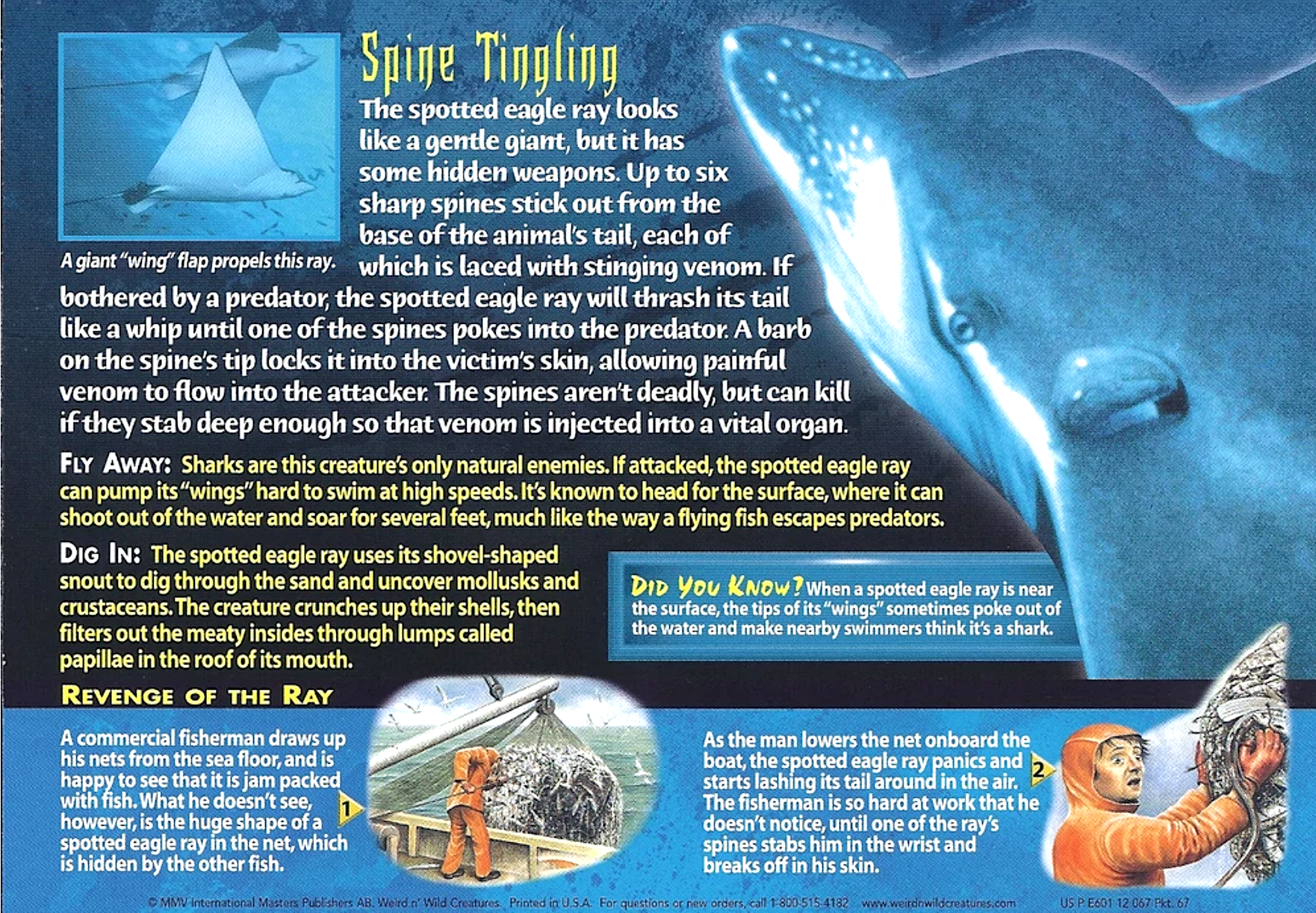
I have a lot of time for these cards produced by ‘Weird ‘n’ Wild Creatures’. In their unique style they are simple, educative and often give information nuggets not found elsewhere. The link is to their 4th series, Monsters of the Deep.


Photo credits: Gabrielle Manni (1), (5); Catherine & Tara Pyfrom (2); Melinda Riger / Grand Bahama Scuba (3); Lazlo-photos Wiki (4); Wiki (baby ray thumbnails); John Norton Wiki (6); Jacob Robertson Wiki (7); Weird ‘n’ Wild Creatures – card images. Videos as credited in text.

Spotted Eagle Ray, TCI (Jacob Robertson, Wiki)
Unknown's avatar

LEAST (BUT NOT LAST) SANDPIPERS ON ABACO


Least Sandpiper, Delphi Beach, Abaco (Charles Skinner)

LEAST (BUT NOT LAST) SANDPIPERS ON ABACO

There are 23 sandpiper species recorded for Abaco. Of those, 4 or 5 are vanishingly rare vagrants recorded once or twice in recent history (i.e. since about 1950).

Discounting those, the ones you are likely to encounter range from the large  (whimbrel, yellowlegs, dowitchers, stilts) to the small. Or, in the case of the least sandpiper, the least big of all. They are bigly little. Least Sandpiper, Delphi Beach, Abaco (Charles Skinner)

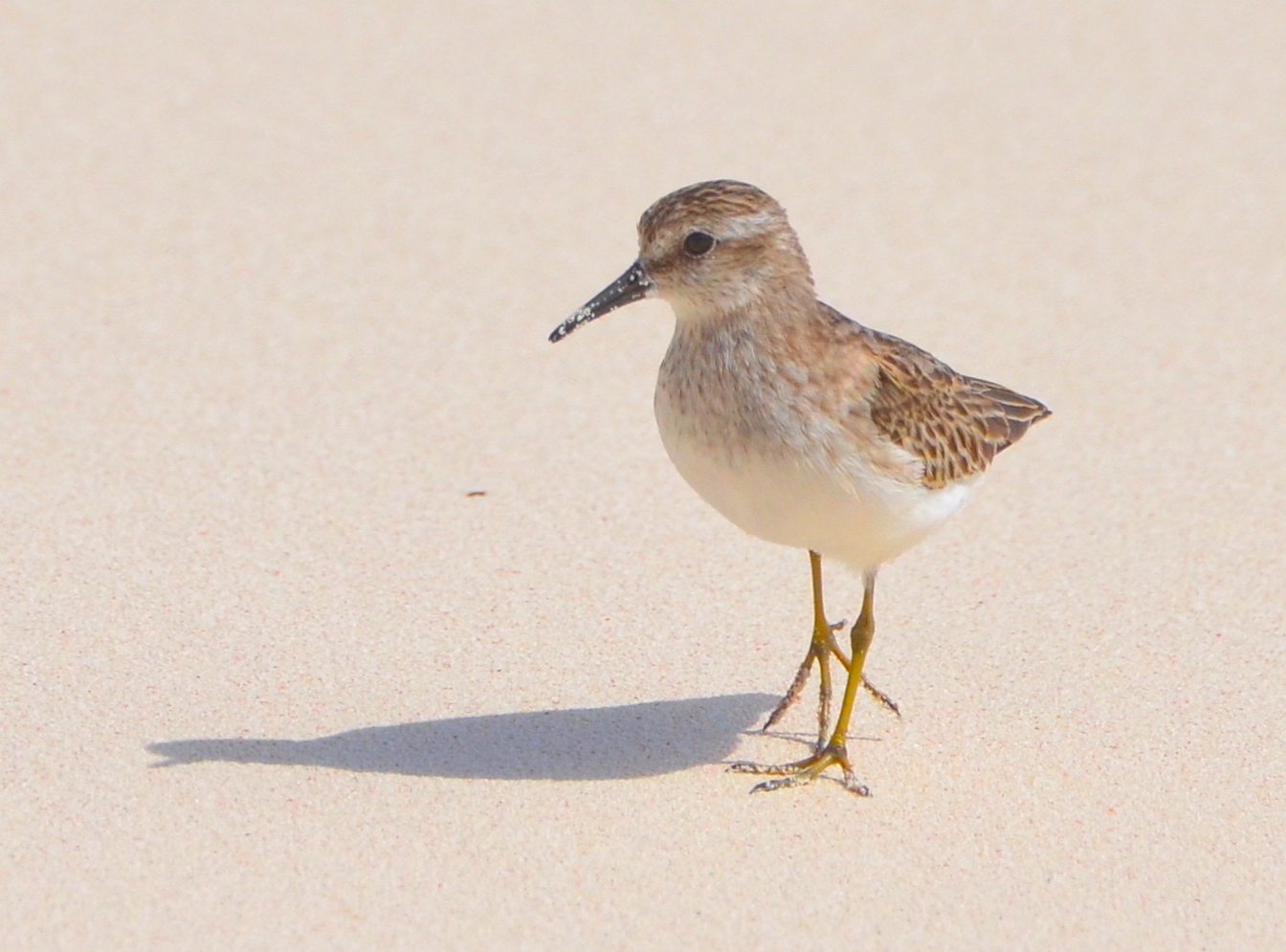
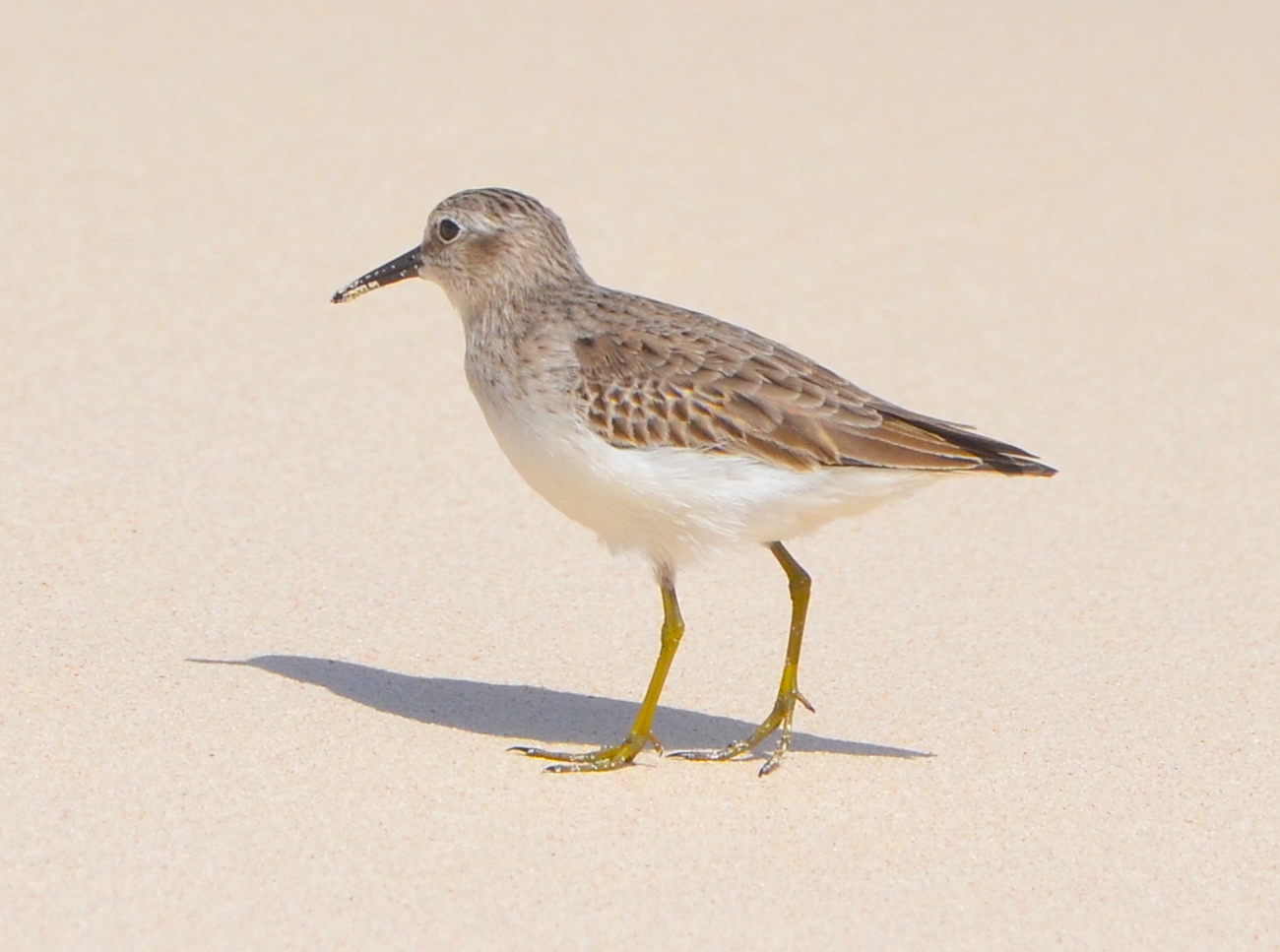
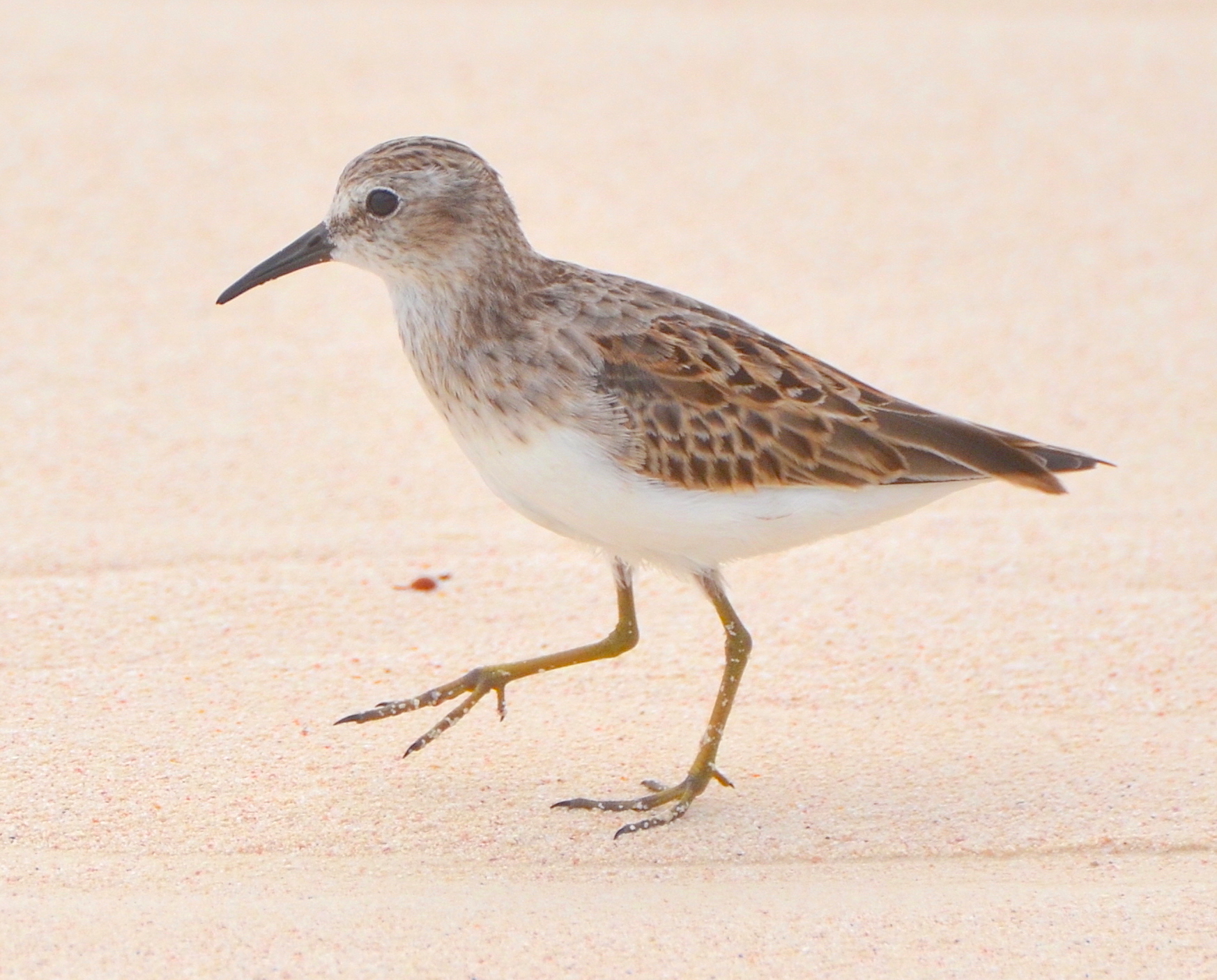
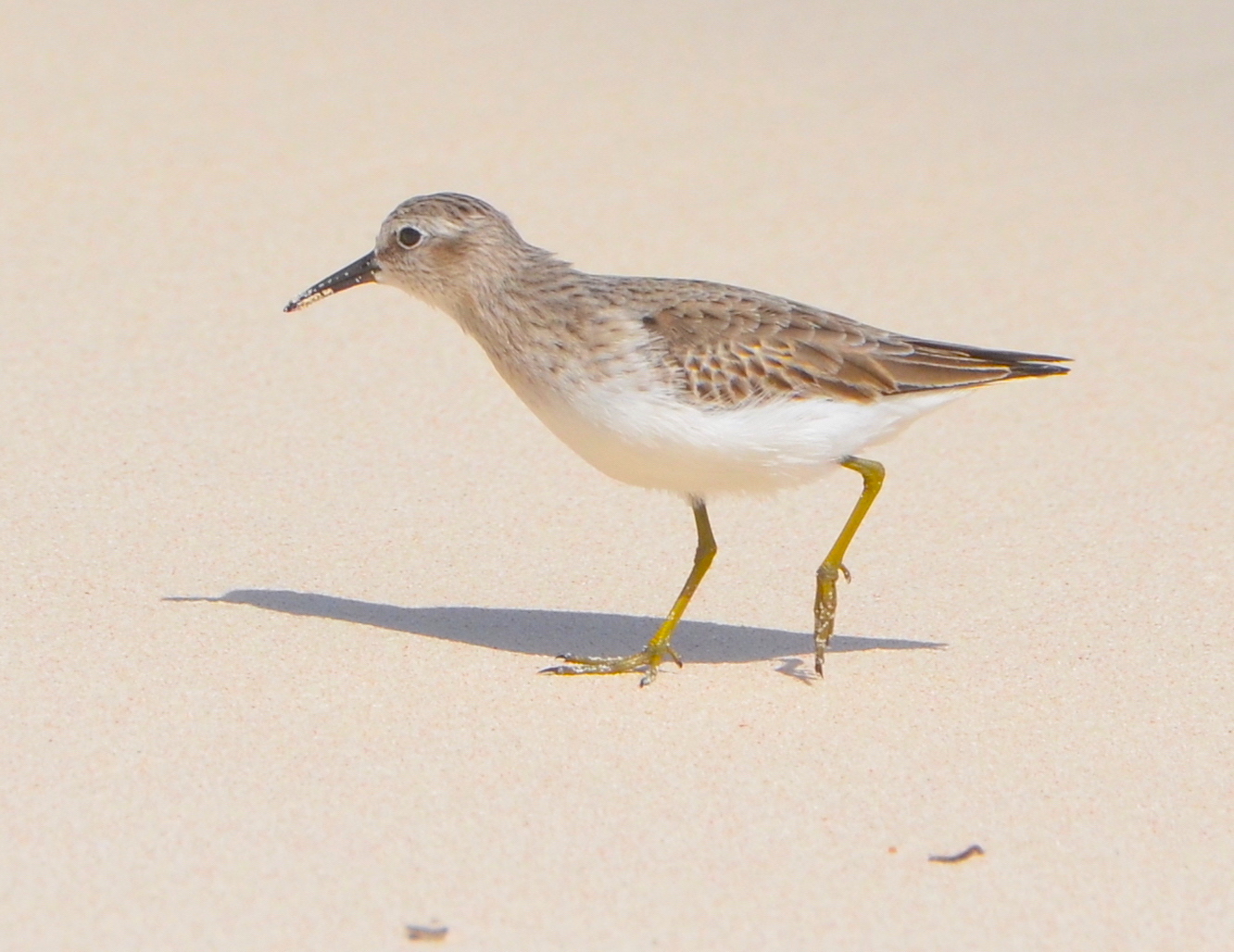
The binomial name of the least sandpiper – Calidris minutilla – is an apt clue to their size, the second part being Latin for “very small”. On Abaco, they are fairly common winter visitors, and each season a handful of them make their home on the beach at Delphi, where these photos were taken. Least Sandpiper, Delphi Beach, Abaco (Charles Skinner)

Along with their small sandpiper compadres such as SANDERLING, these busy, bustling birds of the shoreline are the ones known as “peeps” (also as stints). Least Sandpiper, Delphi Beach, Abaco (Charles Skinner)

Least Sandpipers breed in the northern tundra areas of North America. Like many or most shorebirds, newly hatched chicks are able to fend for themselves very quickly. It sounds unlikely I know, but within a couple of weeks or so they have fledged. Least Sandpiper, Delphi Beach, Abaco (Charles Skinner)

The birds forage on mudflats, in the tideline on beaches, and in wrack. They will probe into soft sand, sometimes the full length of their beak. They will even burrow right under weed to get at the concealed goodies. Their diet consists mainly of small crustaceans, insects, and snails.Least Sandpiper, Delphi Beach, Abaco (Keith Salvesen)

Credits: All photos by Charles Skinner (contributor to “The Birds of Abaco”) except the wrack-burrowers above, by Keith Salvesen (also on the Delphi Beach).

Least Sandpiper, Delphi Beach, Abaco (Charles Skinner)

Unknown's avatar

HAWKSBILL TURTLES: DIVERS VIEWS…


Hawksbill Turtle (Adam Rees / Scuba Works)

HAWKSBILL TURTLES: DIVERS VIEWS…

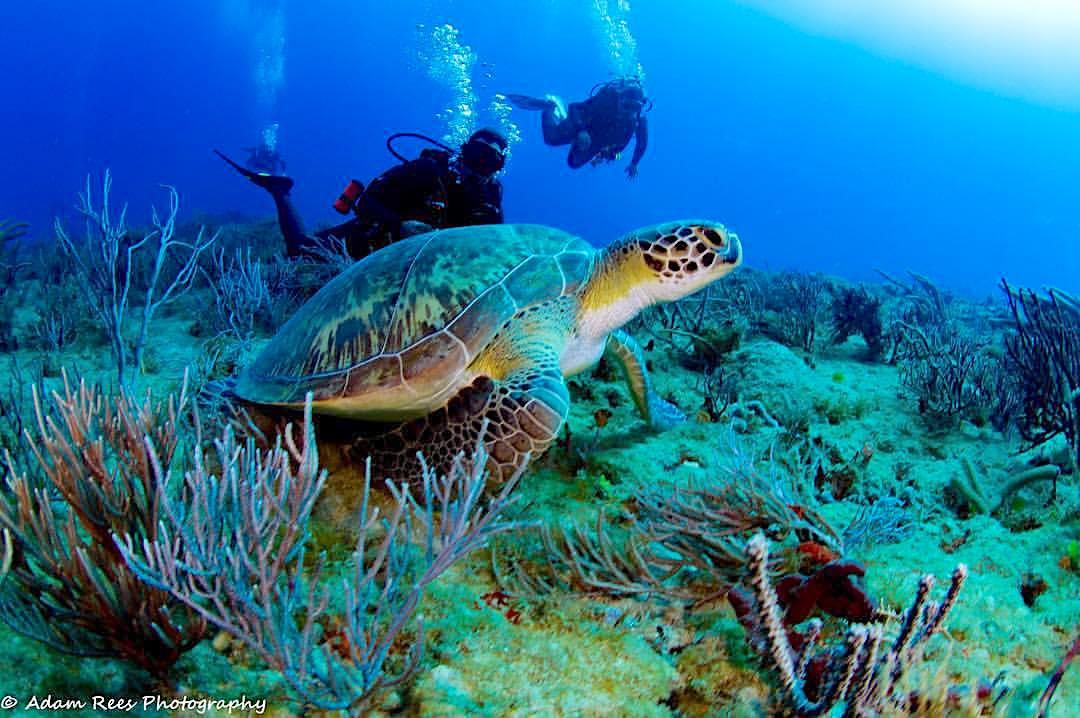
Daydream for a moment. Imagine that you had a different occupation. And your new one involved daily contact with spectacular wildlife underwater (this assumes you can swim – debatable in my case). And access to some upmarket camera equipment. And the ability to use it effectively. Oh, and use of a reliable boat. And some sea.

Hawksbill Turtle (Adam Rees / Scuba Works)

Say, for example, you joined a dive operation. Then the chances are very high that these wonderful creatures would be a part of your daily 9-to-5. 

Hawksbill Turtle (Adam Rees / Scuba Works)

You wake up with a start. Oh no! Half an hour gone, and that crucial email still half-written… Where did the time go?

Hawksbill Turtle (Adam Rees / Scuba Works)

All gorgeous turtles taken by Adam Rees of Scuba Works (slogan: “Land is so overrated”) in the course of his everyday working life. Some people, eh?

Hawksbill Turtle (Adam Rees / Scuba Works)

Unknown's avatar

AN ‘EXHILARATION’ OF ABACO DOLPHINS


Bottlenose Dolphins, Abaco Bahamas (BMMRO)

AN ‘EXHILARATION’ OF ABACO DOLPHINS

Bottlenose dolphins! Tursiops truncatus! These engagingly playful show-offs of the inshore waters round Abaco are 99.99% adorable**. It’s been a harrowing few weeks in the western Atlantic, and everyone is hoping that the 2017 hurricane season has had enough of causing death and destruction over vast swathes of vulnerable islands and on the US mainland. Some cheer is needed.

Bottlenose Dolphins, Abaco Bahamas (BMMRO)

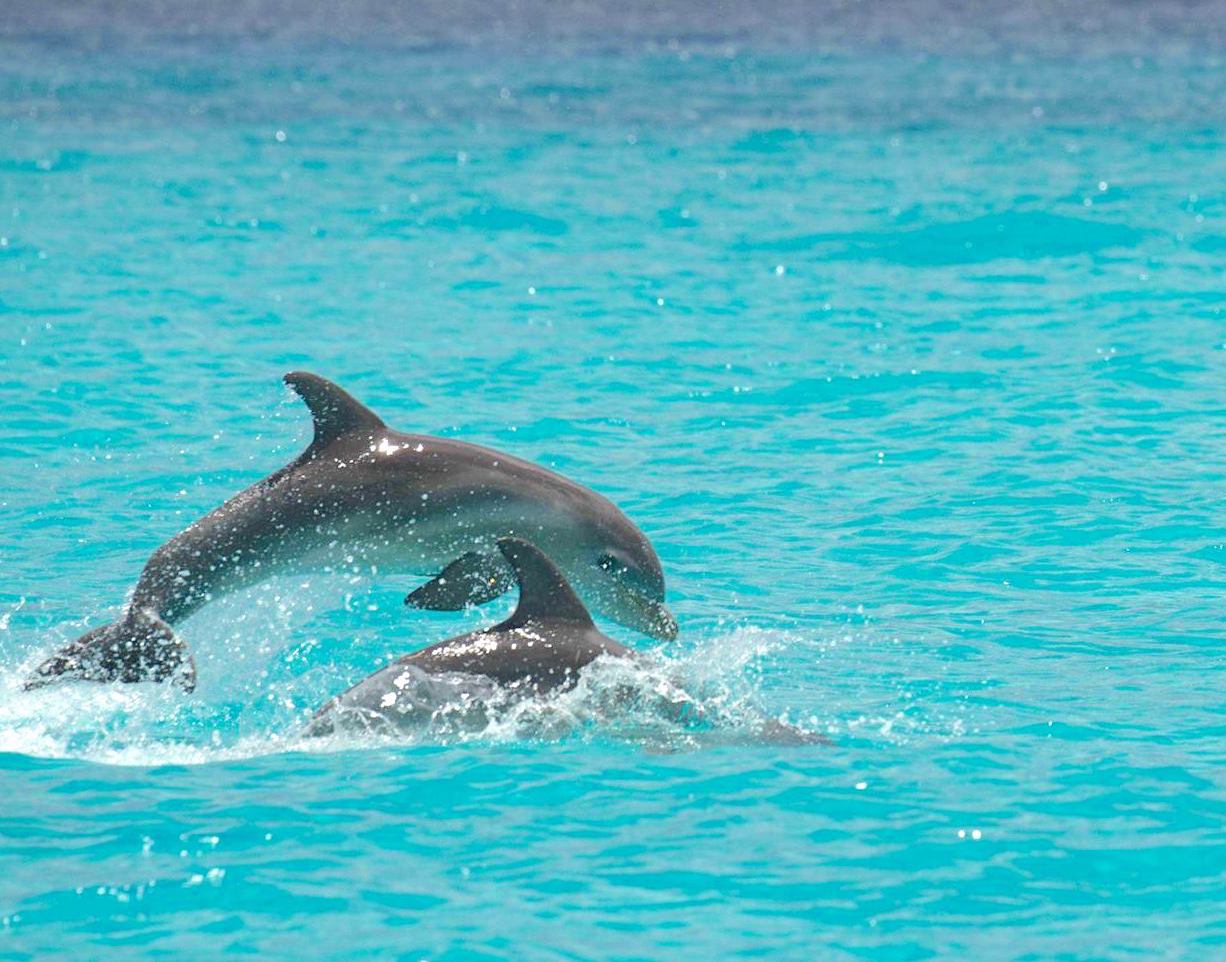
Dolphins are good for the soul. And if you are out on a boat watching them – and especially tracking them for a whole day – every encounter reinforces the impression that all the leaping, bow-wave riding, boat under-swimming, and general sociability and interaction is often as much for sheer enjoyment as anything else. 

Bottlenose Dolphins, Abaco Bahamas (BMMRO)

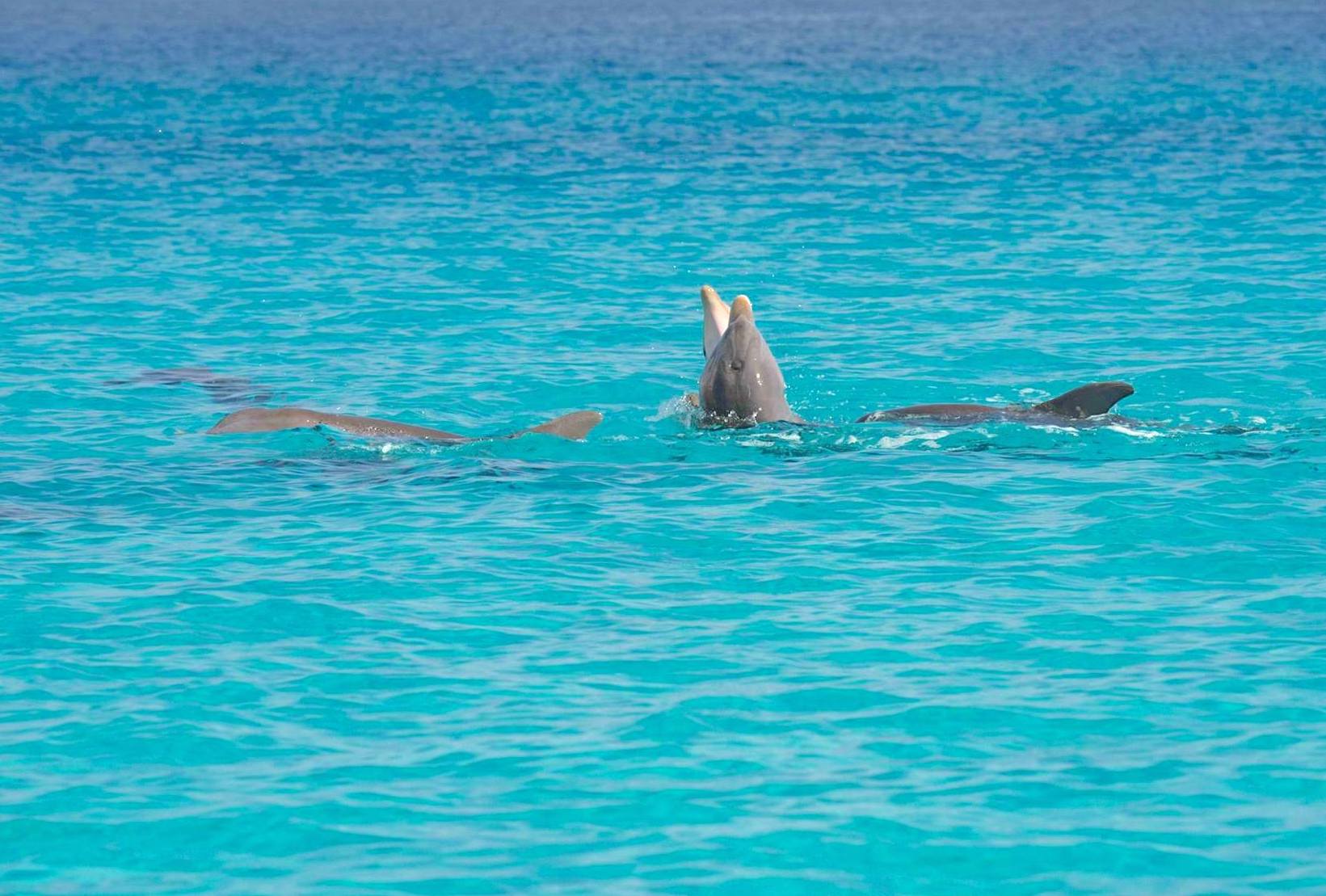
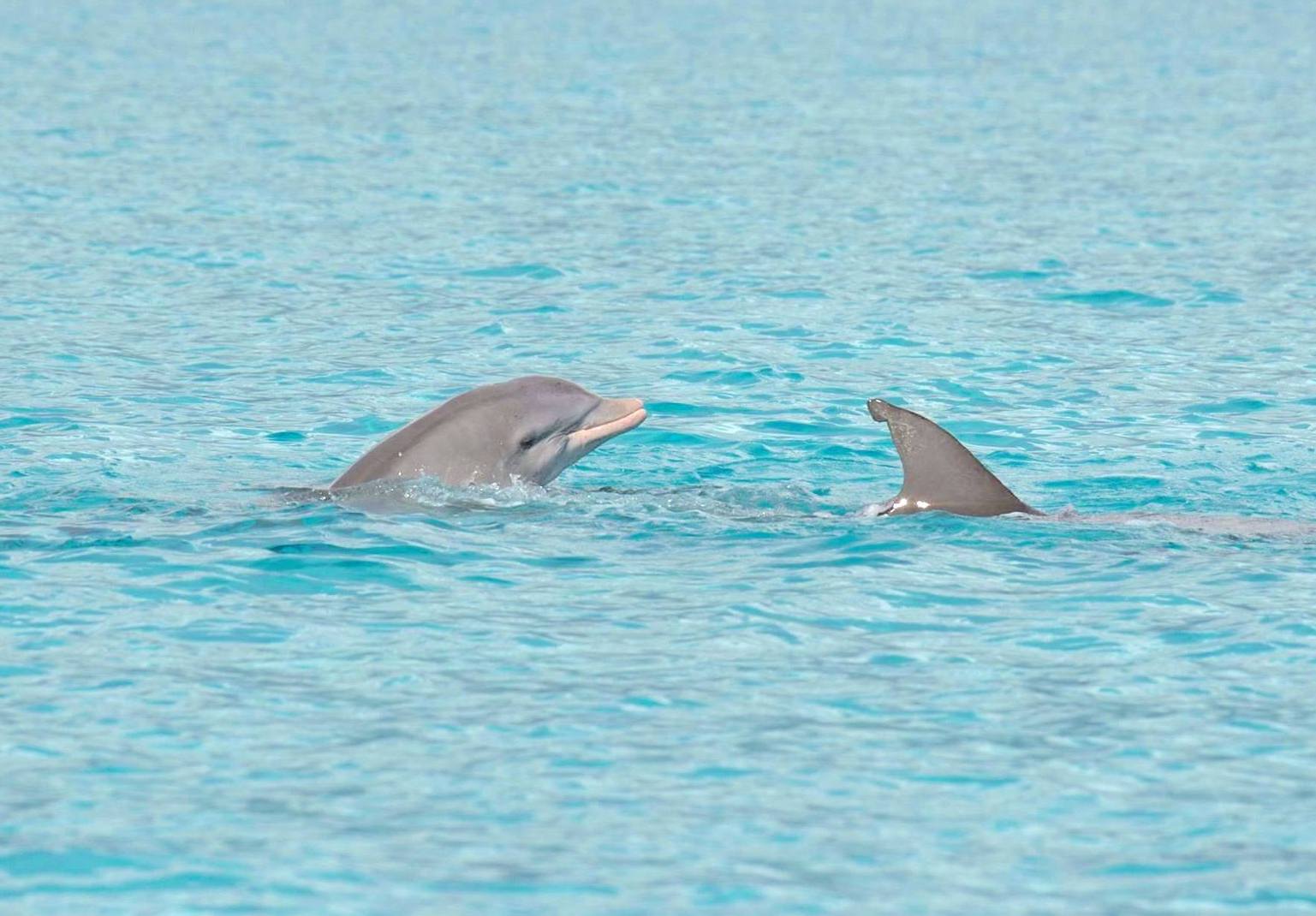
Abaco is fortunate in having the HQ of the Bahamas Mammals Research Organisation (BMMRO) based at Sandy Point. That just happens to be an excellent area for bottlenose dolphin spotting in the turquoise shallows. Many sightings are made within clear sight of land. Further south, where the bright blue gives way to darker and deeper water, live the equally frolicsome Atlantic spotted dolphins. The 3 photos above were all taken on the margins of where the colour of the sea changes from light to dark.

Bottlenose Dolphins, Abaco Bahamas (BMMRO)

I’m a bit of a collector of collective nouns. For dolphins, apart from the matter-of-fact ‘group’ or ‘pod’, there is no exotic word to describe a number of them when they are having fun. No equivalent of ‘exaltation’ (larks), ‘charm’ (goldfinches) or ‘parliament’ (owls). So I’m nominating an ‘exhilaration’ as a candidate to fill the gap…

The photo above shows clearly how individual dolphins can be identified by researchers. All tend to have scars or tears to their dorsal fins that enable them to be distinguished. The closest has distinctive scars near the tip. The furthest has a W-shaped nick at the back. In fact, it could even be Rocky, a well-known dolphin on Abaco that has been sighted over many years. There are regular reports annually. I saw him myself once, in 2012, playing about in Hopetown harbour. 

STOP PRESS To demonstrate how the ID methods work, I’ve now cross-checked with the BMMRO photo ID archive. Here is Rocky’s original dorsal fin ID image (“Tt15”) from October 2010. There’s a W-shaped nick, sure, but my speculation above was wrong because overall the two fins are clearly different…

Rocky the Dolphin Tt15, from BMMRO ID photo archive

** The 0.01%? Dolphins may, rarely, be alarming for divers in circumstances I won’t repeat here (hint: to do with over-friendliness, ok? Yes, the thing that dogs do)

Credits: all photos BMMRO – and taken in the last 2 months