Unknown's avatar

“PISHING IN THE WIND”: BIRDING IN A BREEZE AT DELPHI


Abaco Cloud Map 5:29

“PISHING IN THE WIND”: BIRDING IN A BREEZE AT DELPHI

The Bahamas weather has been uncharacteristically dire. Rain and cloud for the past week, and a poor forecast for the next week (see above). I arrived on Abaco yesterday, with the short internal flight from Nassau last night nearly cancelled due to a humungous downpour. Instead, people were boarded in bare feet, having had to wade through 3 inches of water to get to the small plane floating on the undrained concrete. Yet today, there was sunshine at Delphi this morning (though cloud to both north and south). A stiff breeze was keeping the clouds off-shore. The weather is fickle and very local.

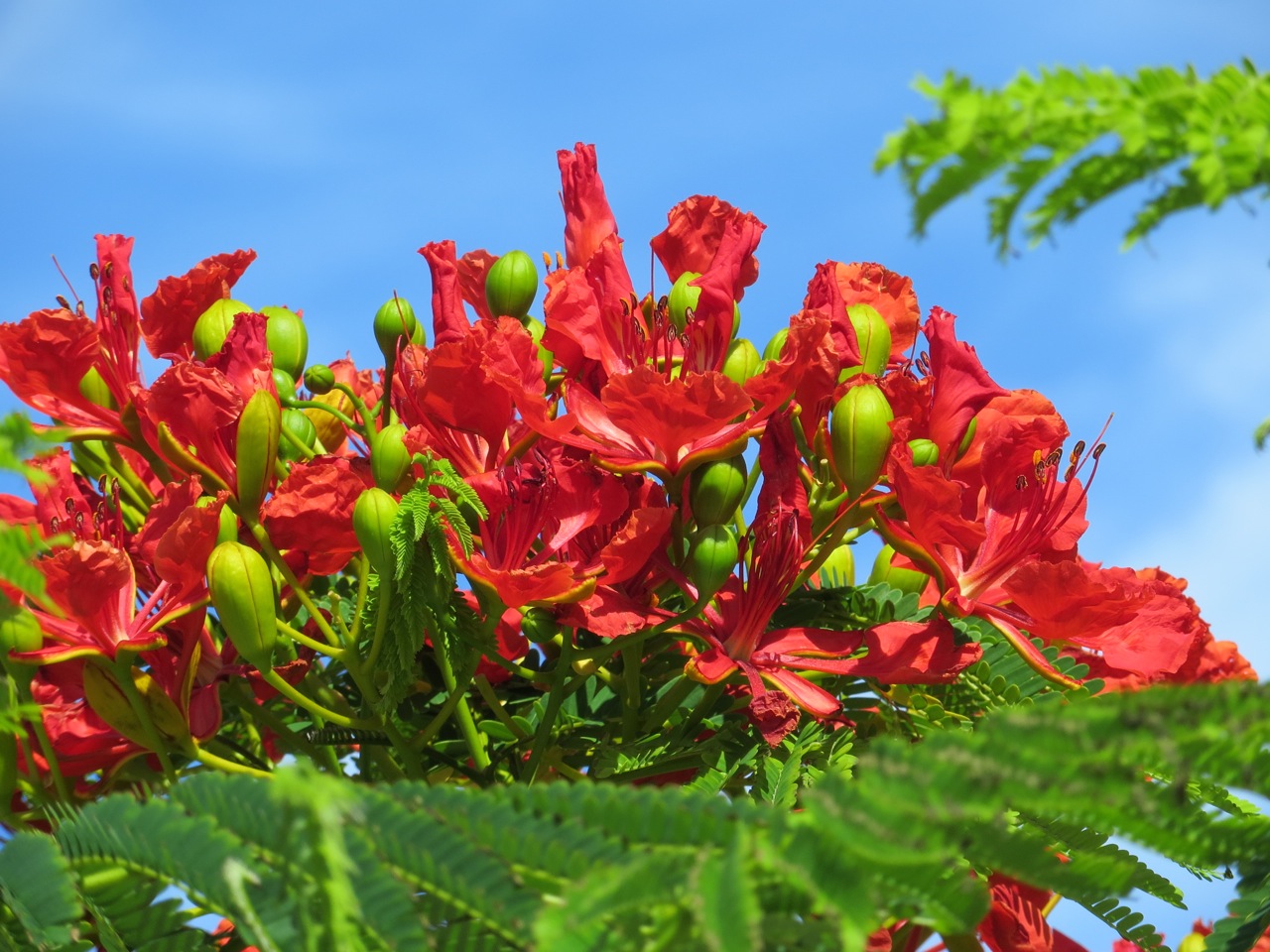
ROYAL POINCIANADCB 1.10

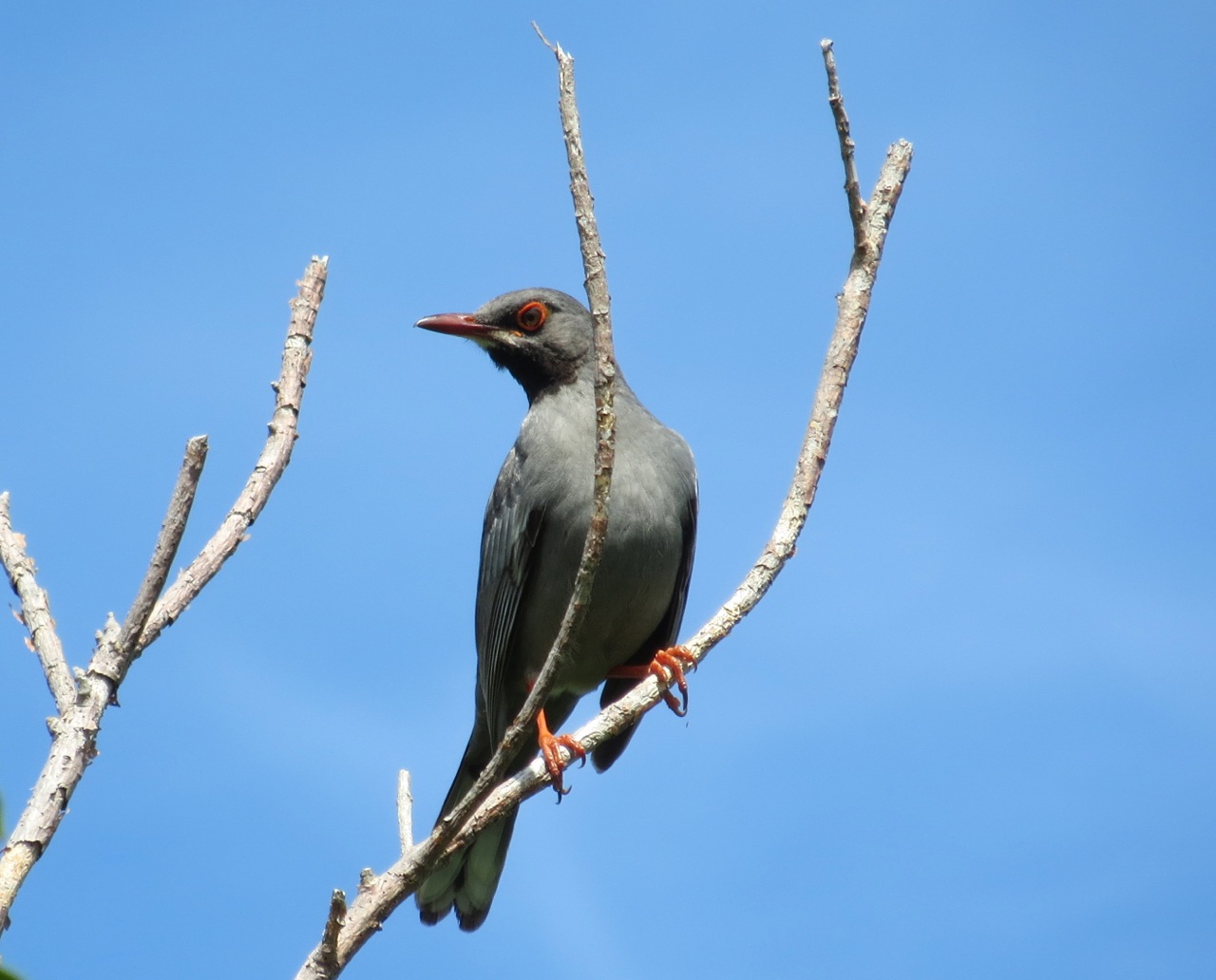
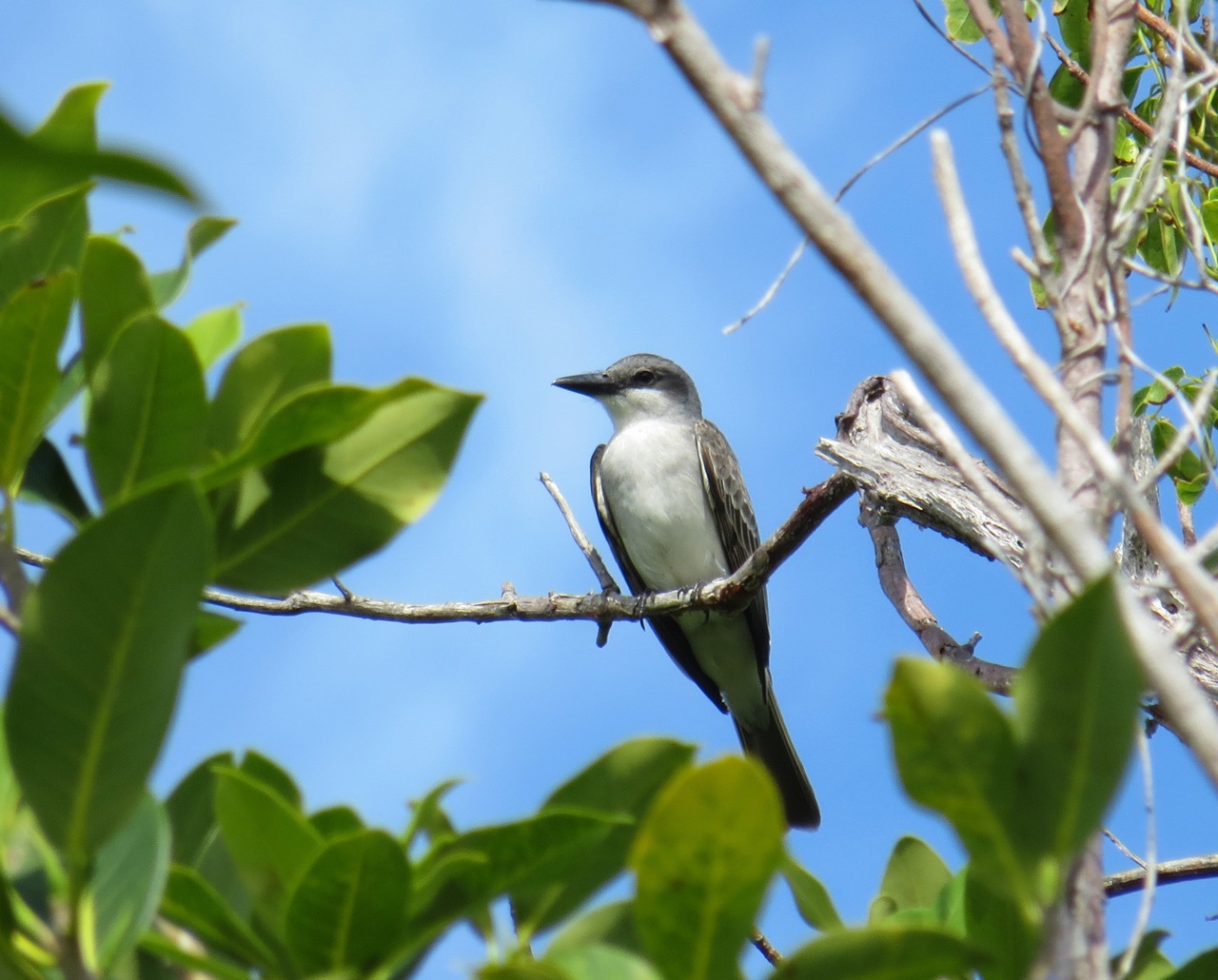
I took a small camera and strolled for half and hour for about 200 yards along the Delphi drive and back (for those that know it, to the first corner of the guest drive) to see what the first of June had to offer in the way of wildlife. The birds were clearly enjoying some unaccustomed sunshine, and I have listed those I saw below. Not all were photogenically posed, and many were flicking around the coppice too quickly to capture.

RED-LEGGED THRUSHDCB 1.2

GRAY KINGBIRDDCB 1 3

The smaller birds were unusually responsive to ‘pishing’, the unattractive but effective noise that can bring a bird to the front of woodland or scrub to investigate. A black-whiskered vireo was interested, but flew off just as I pressed the button. He was immediately replaced on the branch by a

BLUE-GRAY GNATCATCHERDCB 1 5

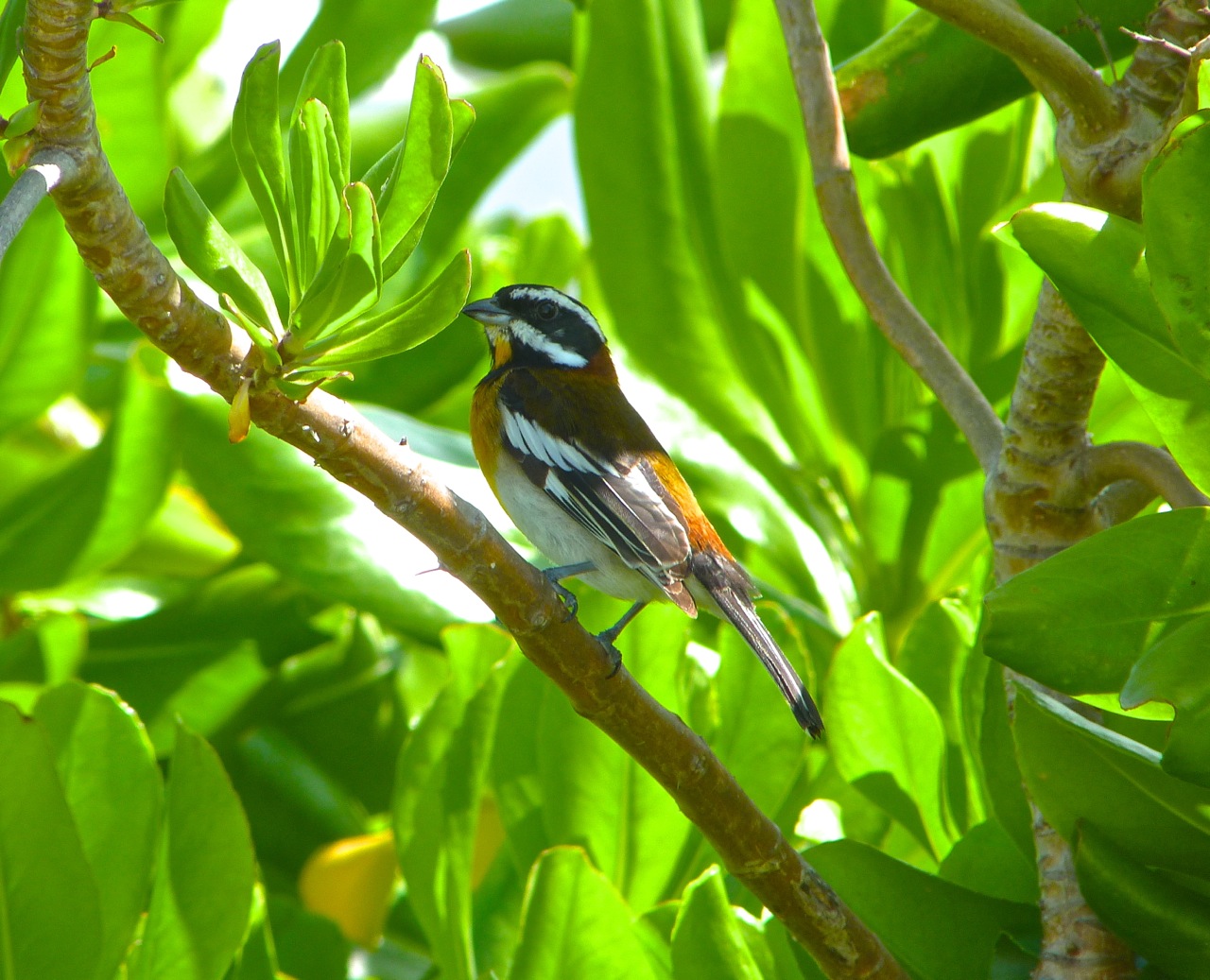
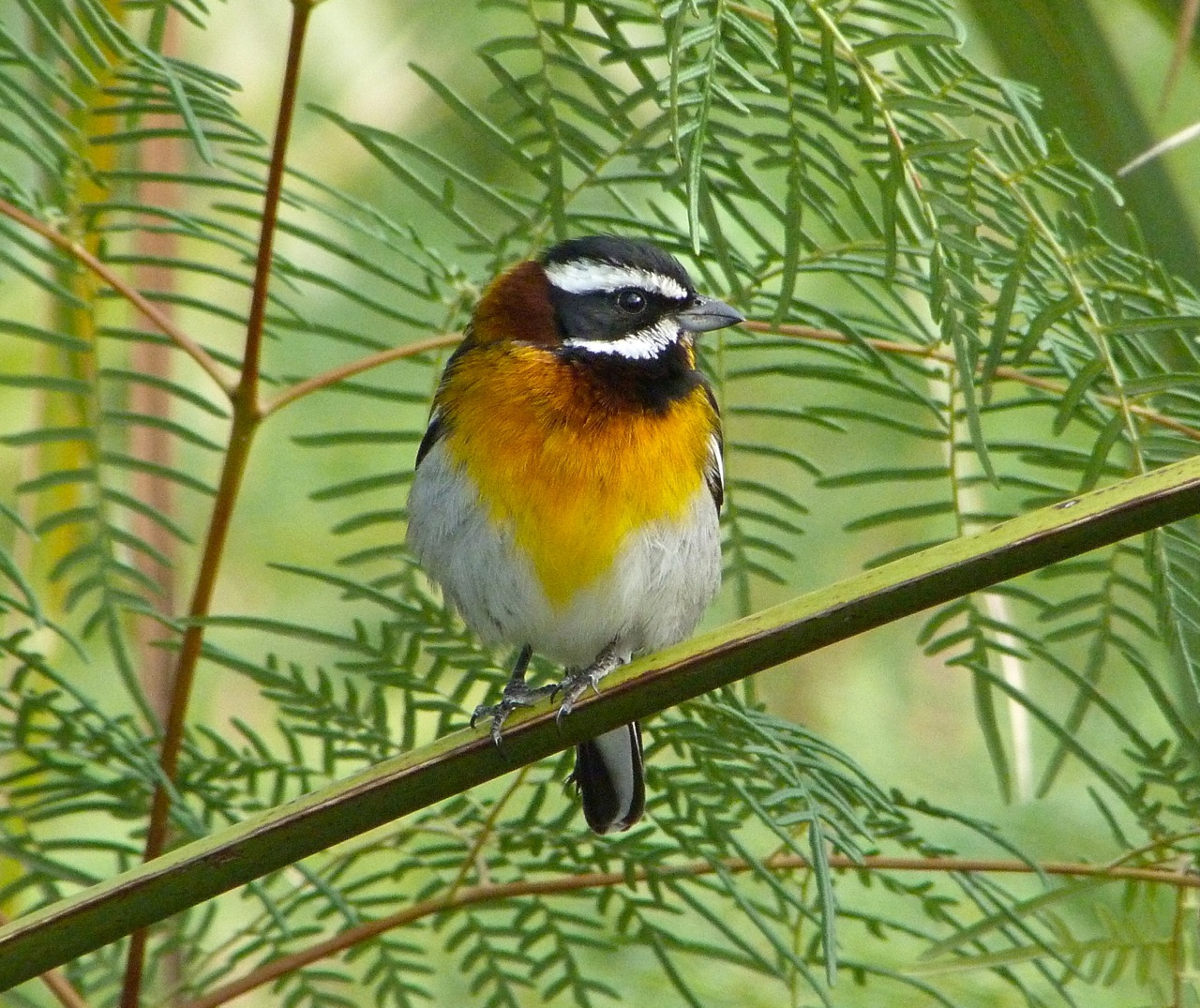
A pair of Western Spindalises (see recent post HERE) joined it in the adjacent treeDCB 1.4

DELPHI 30 MINUTE STROLL BIRD LIST 1.06.13

  • Red-legged Thrush 3
  • Western Spindalis  3
  • West Indian Woodpecker 2
  • Black-whiskered Vireo 2
  • Cuban Emerald 2
  • Turkey Vulture 2
  • Bahama Swallow 1
  • Gray Kingbird 1
  • Loggerhead Kingbird 1
  • Greater Antillean Bullfinch 1
  • Blue-gray Gnatcatcher 1
  • Bananaquit 1
  • {Heard only} Abaco Parrots 2

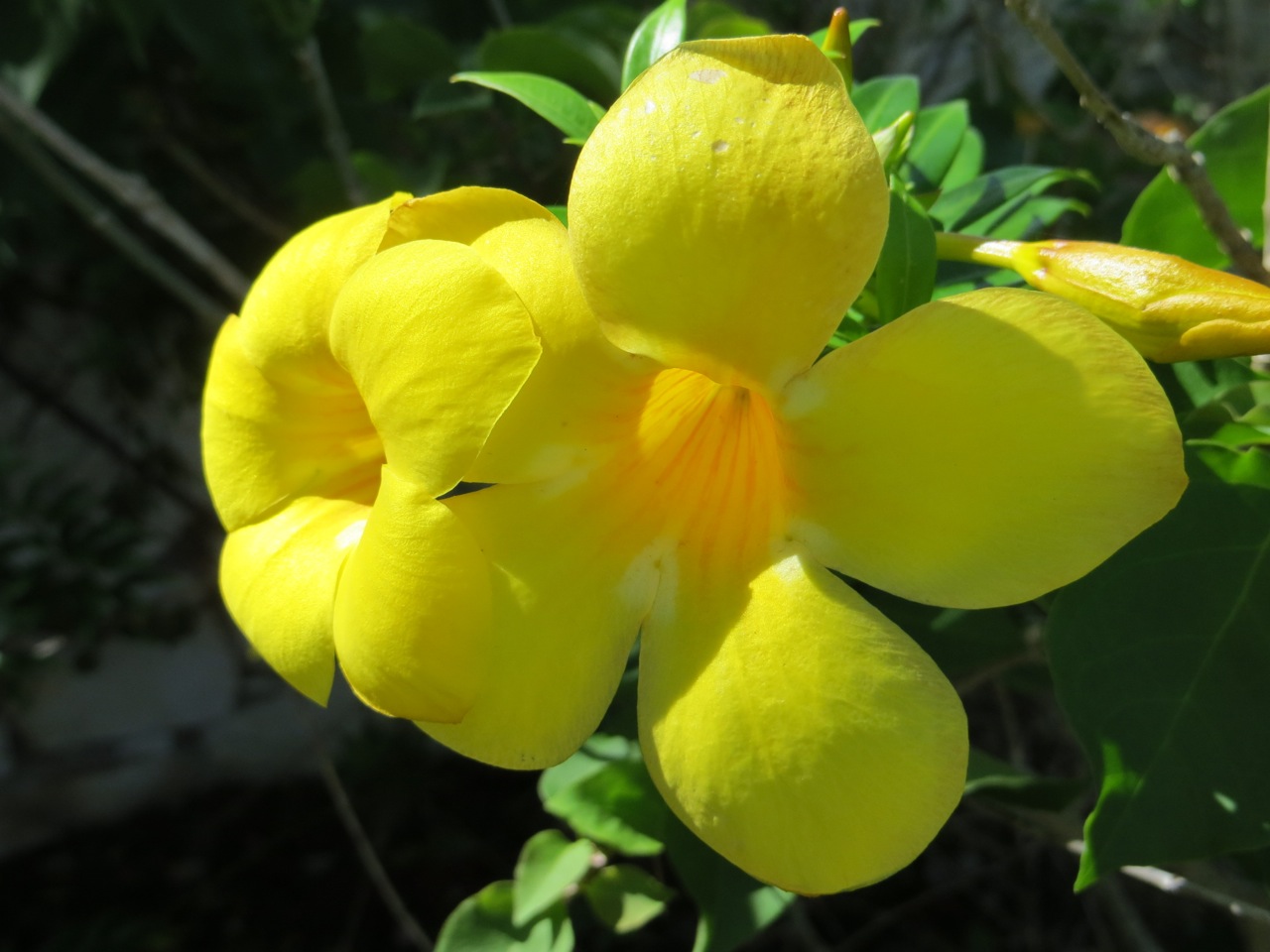
The flowers were also enjoying some sunshine after the rainDCB 1.8DCB 1.9DCB 1.12DCB 1.11A couple of other things caught my eye, including a cute baby lizard, before I headed for some restDCB 1.7DCB 1.6DCB 1.1

Unknown's avatar

HELLO, HANDSOME! WESTERN SPINDALIS IN THE MOOD FOR LURVE…


Western Spindalis Abaco 4

HELLO, HANDSOME! WESTERN SPINDALIS IN THE MOOD FOR LURVE…

Nearly two years ago, when this blog was still in its mewling infancy, I posted about one of my favourite small birds on Abaco, the WESTERN SPINDALIS (Spindalis zena, formerly known as the Stripe-headed Tanager). It is a strikingly handsome creature by any standards, often seen posing ‘tall’ on a branch looking splendid in its orange, black and white livery.

Perching proudly…Western Spindalis Abaco 1… or dining elegantly…Western Spindalis Abaco 2

The  spindalis is one of the birds to look out for if you are walking along one of the drives at Delphi, or (*recommended 1/2 hour stroll*) walking the drive circuit. You’ll see them in the coppice or in the undergrowth alongside the drives in the pine forest area, almost certainly a little way in from the front. We spotted one quite close to the Highway, looking most decorative in the greenery. This one had an uncharacteristic hunched look about him, and we soon discovered why – he was courting. Not the black-faced grassquit near the bottom of the photo, but a female spindalis well-hidden low down and further back in the undergrowth to the left. So we edged nearer to get a better look.Western Spindalis Abaco 7

You’ll see that this male bird’s hunched posture has produced a rather impressive neck ruff, an adornment presumably irresistible to female spindalises. Both birds were ‘chucking’ softly to each other, and the male turned his head regularly to show off his glories from all angles. Western Spindalis Abaco 6Western Spindalis Abaco 8I can’t unfortunately reveal the outcome of this encounter. We never saw the female, and we had probably got too close for her to feel comfortable about breaking cover. The male, however, was too absorbed refining his pulling techniques to be greatly bothered by our presence, though he did keep a beady black eye on us. Is this male preoccupation when courting found in other animal species, I wonder? Reader, we made our excuses and left…

Unknown's avatar

HOW TO RECORD BIRDS EASILY ON ABACO (OR ANYWHERE ELSE…)


Red-winged Blackbird Abaco 3

RECORDING BIRDS: A LAYMAN’S GUIDE

YOU WILL NEED: an iPh@ne or similar  smartphone with a voice memo facility; patience; minimal non-natural background noises (traffic, yelling people, barking dogs, heavy machinery); a steady-ish hand; one or more birds nearby

RECORDING

  • Use the Voice Memo app on an iPh@ne (I presume most other smart phones have a similar app).
  • Once you have it onscreen, turn the phone round 180 deg and the image will swivel round too. Now you can point the microphone at the sound and have the controls the right way up facing you.
  • Turn the volume up to max before you record.
  • Handle the phone carefully so it doesn’t record you touching it as well. It probably won’t pick up pressing ‘record’, but it may when you press ‘stop’. But you can trim the end of the saved file on the file very simply.
  • The recording saves in m4p format, and you can email it to your computer direct from the app (or to anywhere or anyone else).
  • Drag / save the file onto your desktop from the email. When you open it, it will (a) play and (b) appear in your iTunes library (or whatever music storage system you use).

CONVERTING RECORDINGS TO MP3

  • Having opened the recording, to convert the file to an mp3 (generally the preferred version for uploading elsewhere) in iTunes, go to Songs in your iTunes library and search for Memo. There it is!
  • You can rename it at this stage if you wish.
  • Then go to File on the top bar, and in the drop-down menu, near the bottom, go to Create new version. It will offer you mp3.
  • Click mp3 and a second recording file will appear in your library. That’s your mp3.
  • Drag it onto your desktop and do what you want with it.

Apologies if this is all blindingly obvious and written in the elementary computer language ‘eggy-peggy’. It took me a while to get it sorted out, and I hope the details above will help the lo-tek computer user to record birds and use the results painlessly.

FIELD NOTES

  • I recommend recording for about 20 – 30 seconds max. The iPh@ne  allows easy trimming at the start and end of the saved file, but there’s no easy way to edit the middle to take out the barking dog.
  • Several short recordings of each bird will give a better choice of results than one or 2 long recordings.
  • The iPh@ne mic is surprisingly sensitive. It will pick up all nearby sounds – someone whispering at you “is it recording yet?”, for example. So ideally this is best done in the pine forest or coppice, away from the Highway. And maybe the loud whisperer.
  • Wind can be a problem. Not just for humans. The mic will pick up gusts of wind, or wind blowing across it if you change the direction you are pointing the phone as you record. So this is best done on a calm day.

Red-winged Blackbird Abaco 1

Here are two practice recordings I made in March. The first is the female red-winged blackbird above (and header) at Casuarina beach. The distinctive call is rather like a rusty hinge on a swinging gate, often heard far out in the mangrove swamps of the Marls. You’ll hear background noises from collared doves and also the sea lapping on the shore.

The second is thick-billed vireo in the coppice at Delphi. You’ll hear an answering vireo – and also some wind noise. I find these little birds frustratingly hard to see – they always seem to be lurking further back in the bushes than I think. I’ve never managed to take a good photo of one, so I’ll upload an illustrative poor one to be going on with. I am back on Abaco in a week, and a better TBV photo is on my avian hit list.

Thick-billed Vireo, AbacoFinally, you’ll find a longer recording I made of Abaco parrots squabbling noisily at Bahama Palm Shores near the end of a recent post HERE. I made an mp3 using the method described above, and uploaded it to the excellent Xeno-Canto bird sounds website, which is well worth exploring. You can find my recordings of the parrots and the birds in this post, plus sonograms, on my XC page, such as it is, HERE 

But if you just want to hear the parrots, here they are. Like schoolkids, only louder.

Abaco (Cuban) Parrot 2013 13Why do I do that annoying ‘iPh@ne’ thing? It’s a statistical fact that I have just made up that 373,597 people a minute world-wide g@@gle the correct word. Imagine the meta-crawlers and spam-splurgers that lock onto that word. I don’t want to cyber-meet them. I also use the form Am@z@n but for different reasons relating to their ingenious tax arrangements (alleged, obviously). Thus  with G@@gle as well (again, merely alleged – as Dusty Springfield memorable sang, “Nothing is proved…)

Unknown's avatar

GREEN PREEN: CUBAN EMERALD HUMMINGBIRD, ABACO


Cuban Emerald Hummingbird preening, Abaco 8

GREEN PREEN: CUBAN EMERALD HUMMINGBIRD, ABACO 

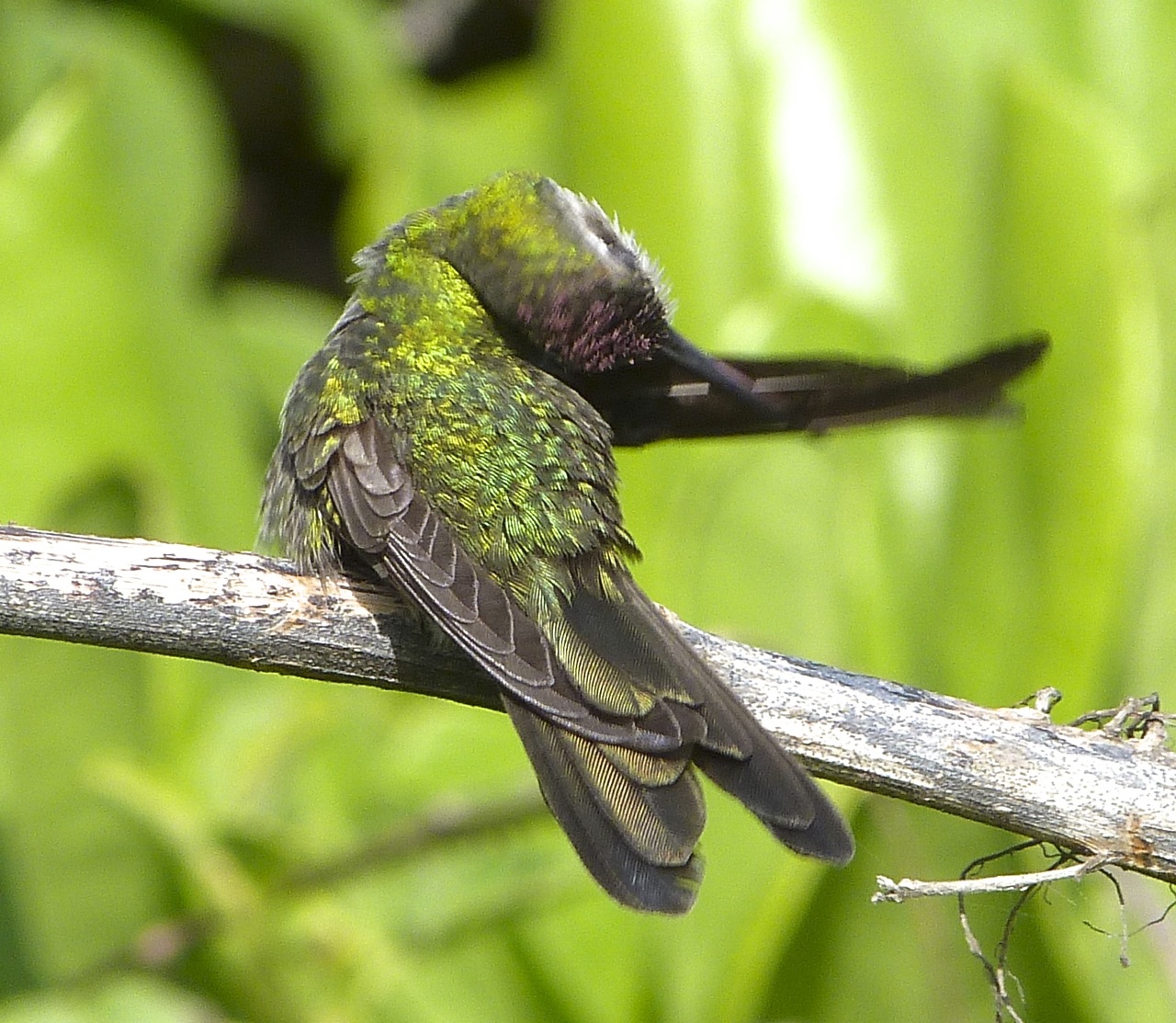
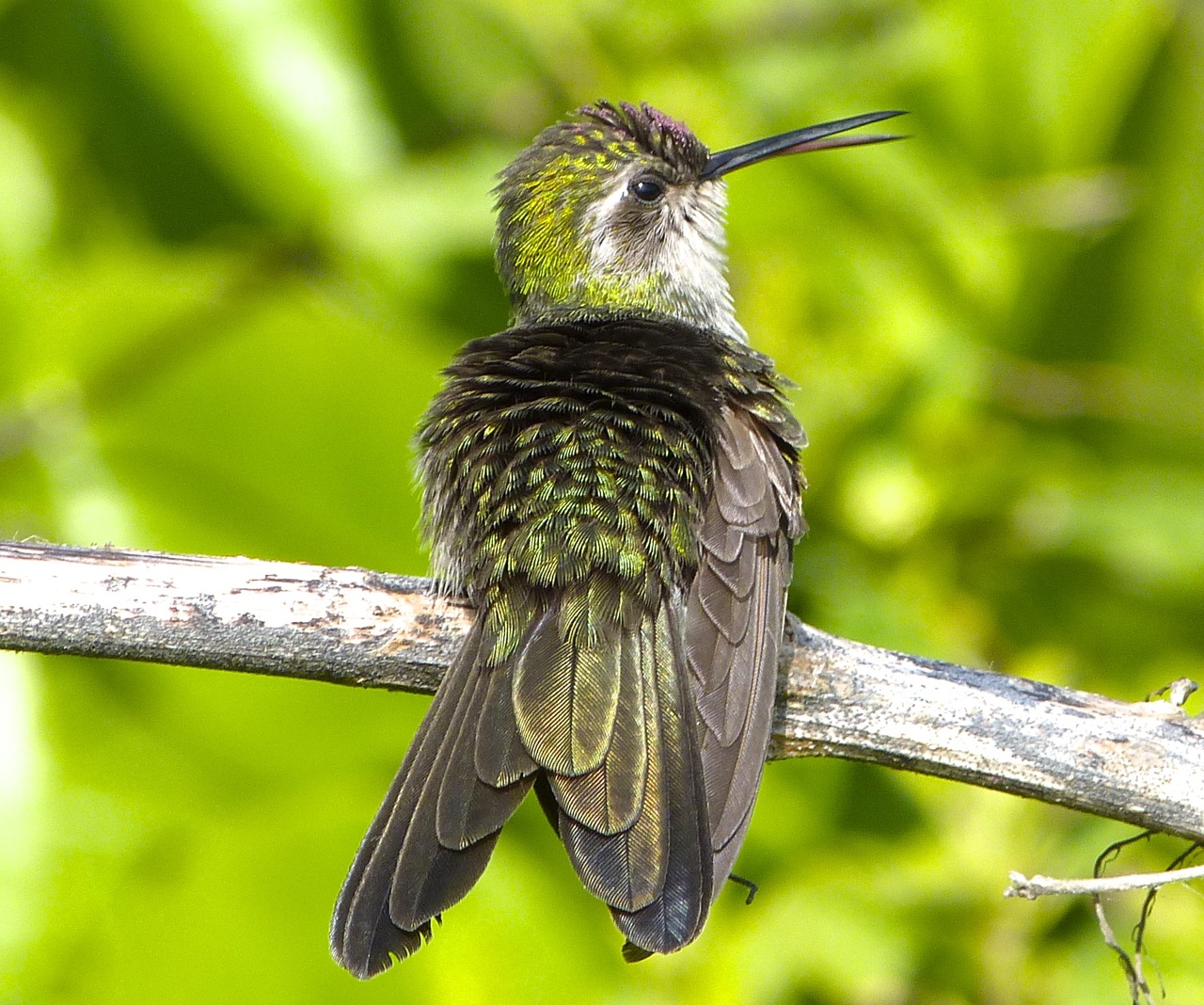
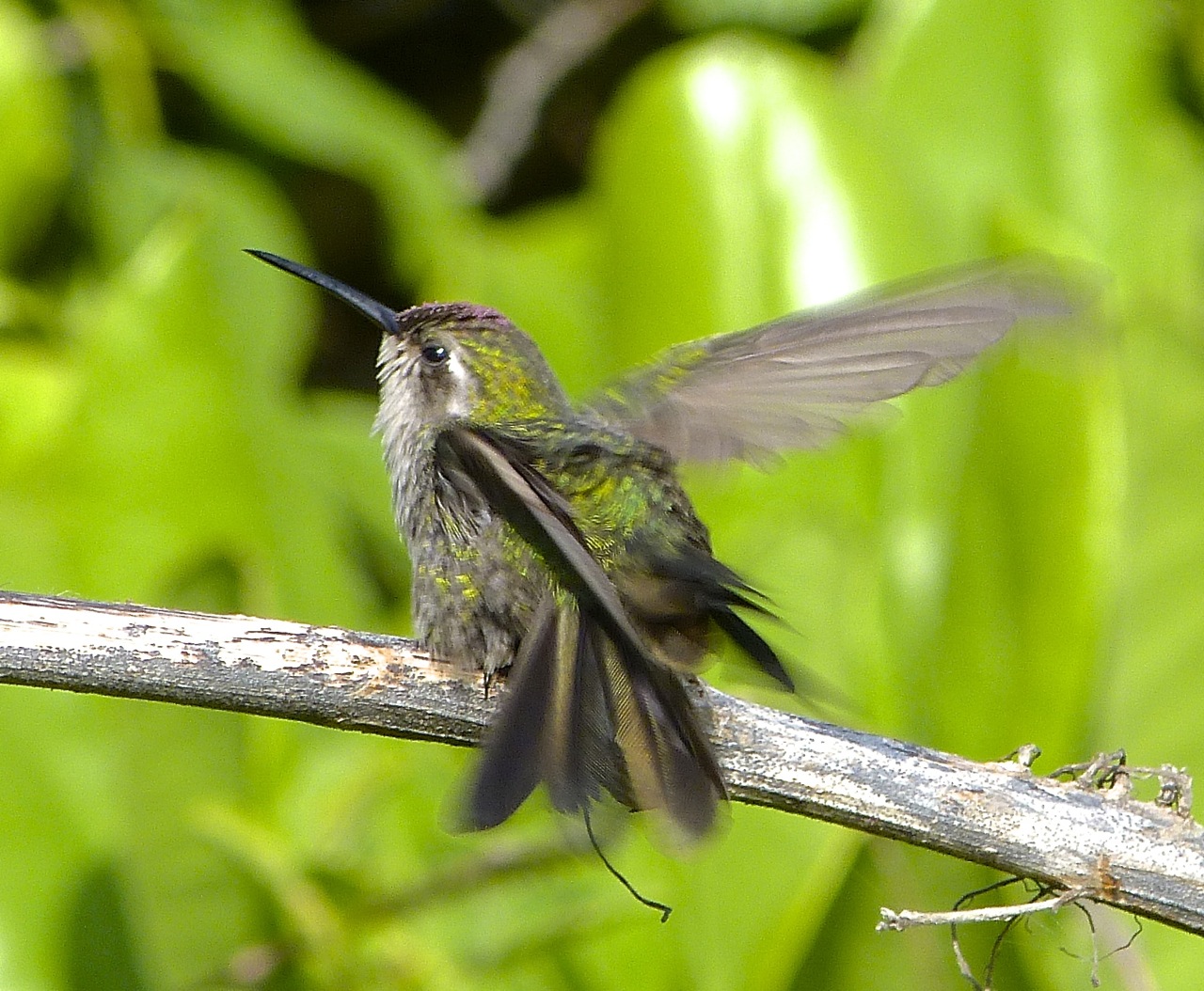
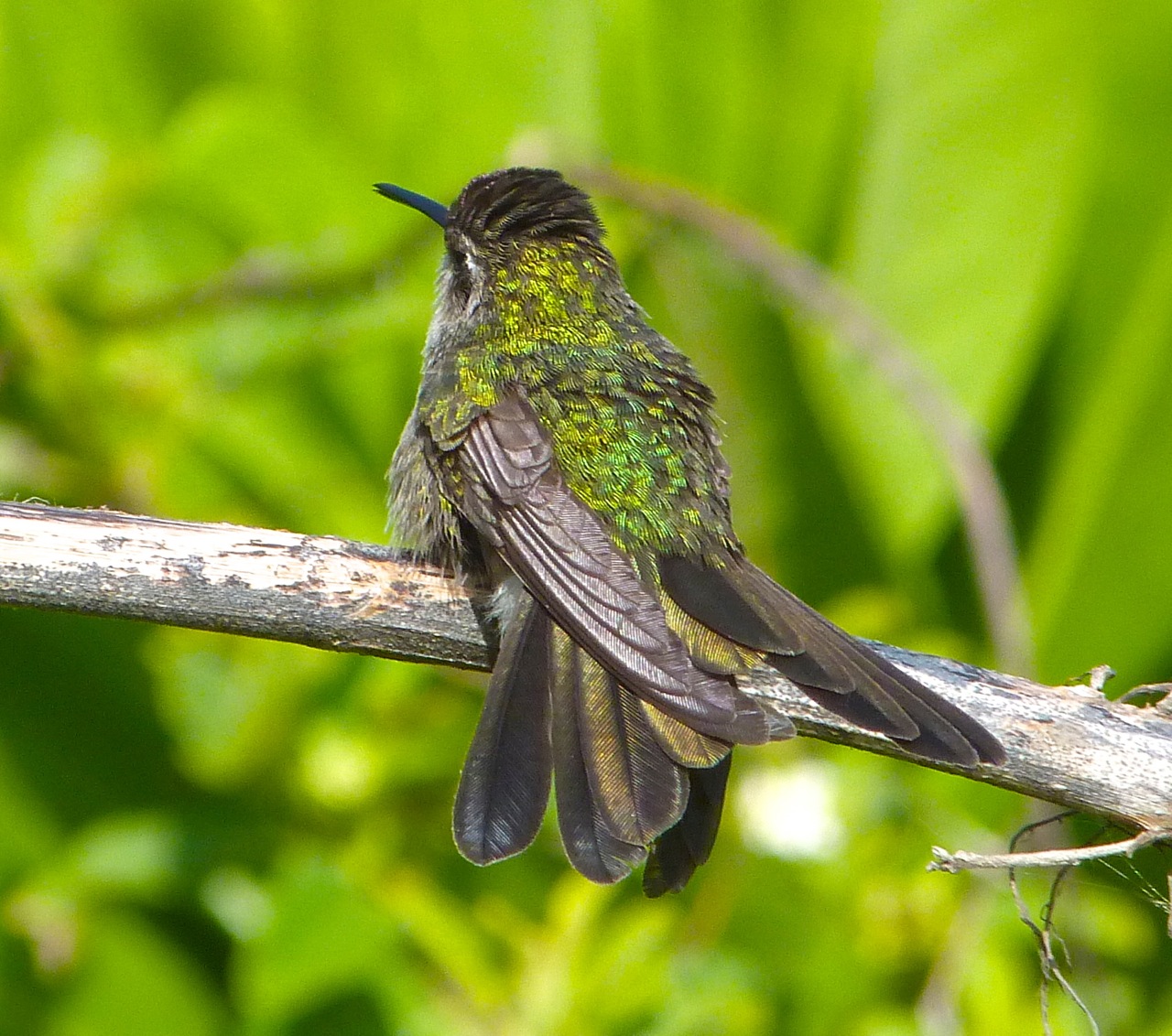
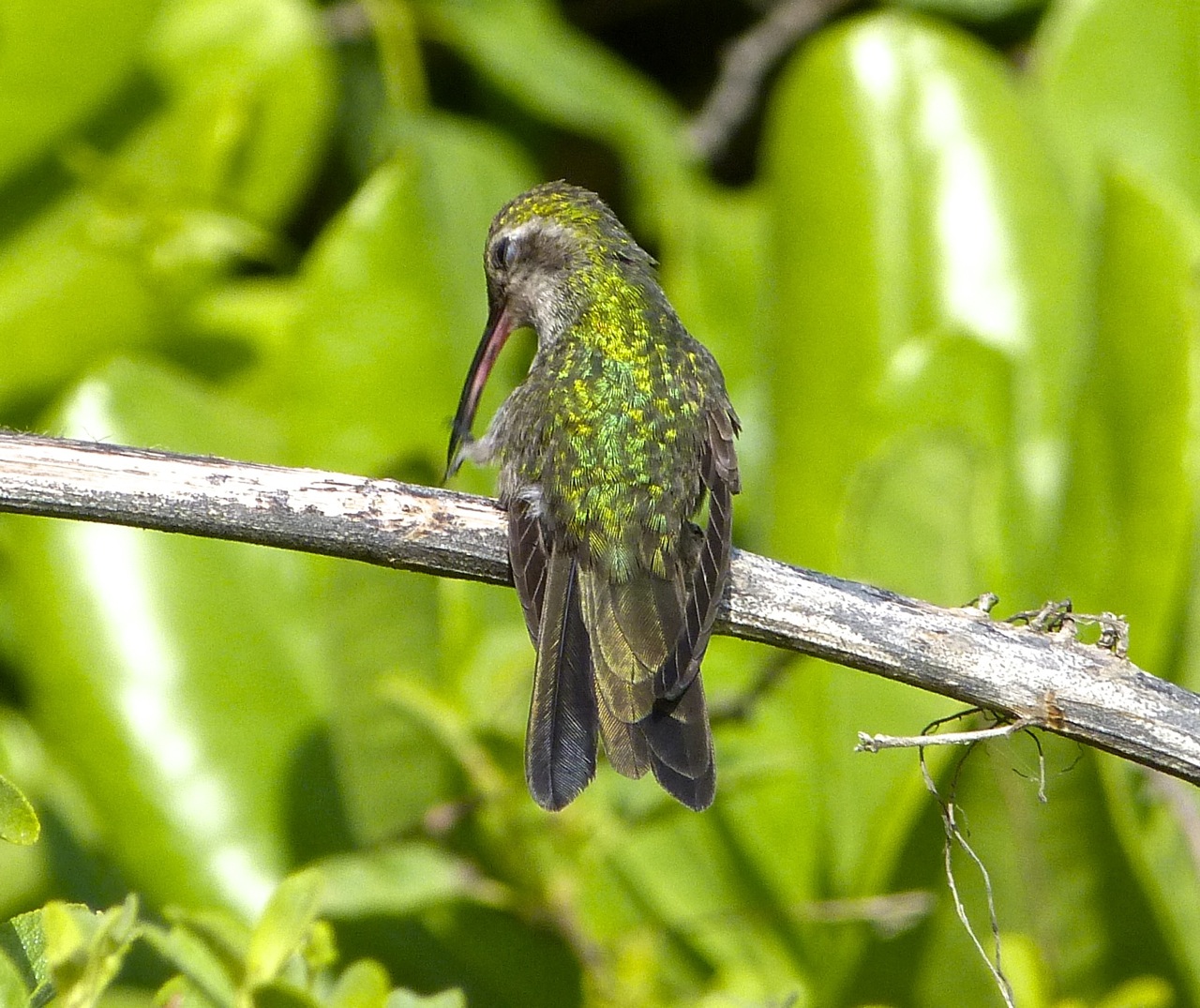
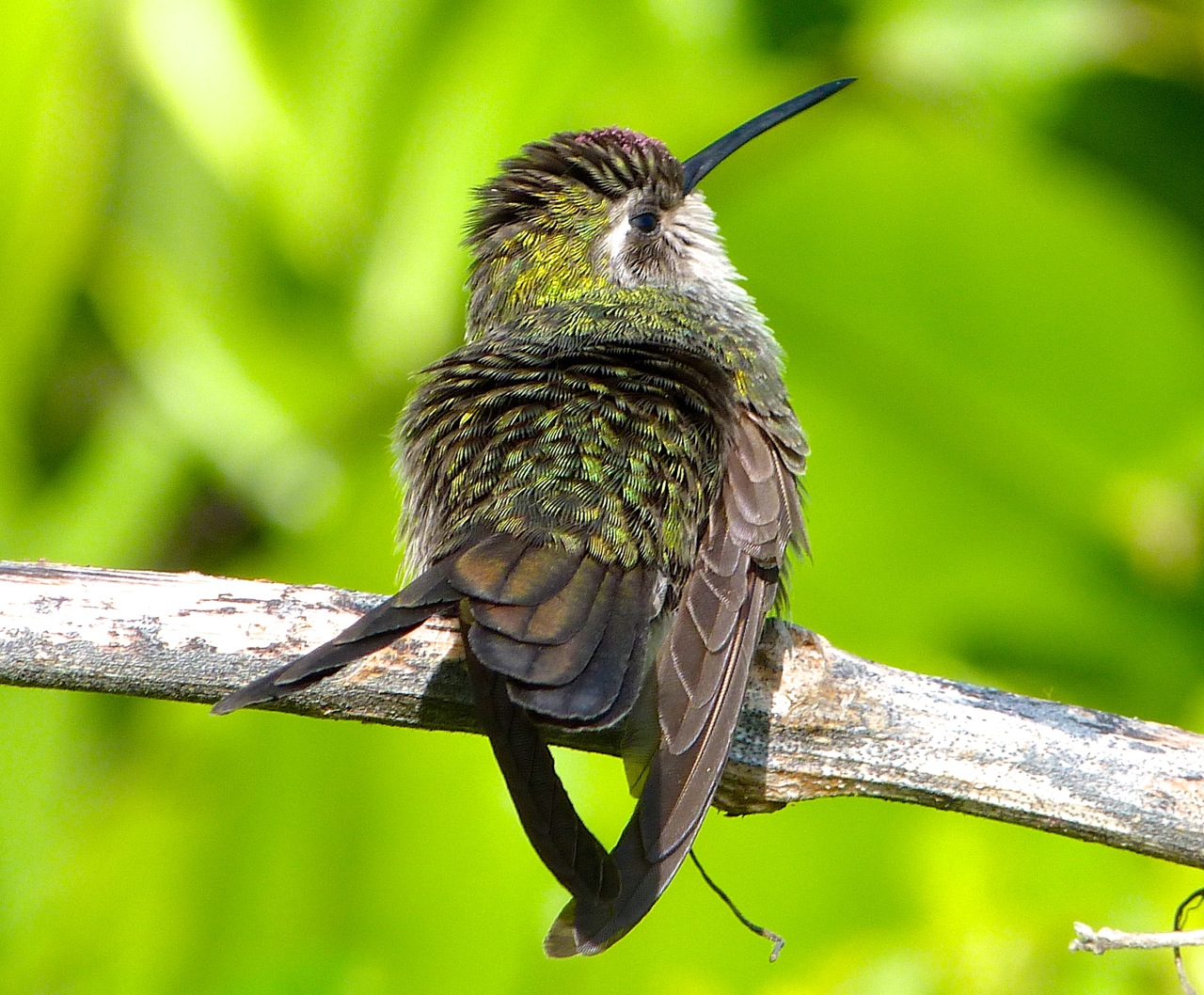
This tiny bird was in the Abaco coppice, well off the beaten track. Nearly two miles down a notably unbeaten track, in fact, that later was to lead to a puncture-and-@$%^&*-I-forgot-my-cellphone drama. Trauma, even. The hummer knew perfectly well that I had crept up behind it, but it had presumably seen few bipeds. It would not have known of their urge to bulldoze wild habitat and turn it into massive unsold developments, as has happened a short way up the coast… So it just carried on with what a bird has to do to keep itself looking presentable, while I, feeling rather rude and intrusive, took some quick pictures before leaving it in peace. Rather than sell these intimate studies to Hello!, OK!, Chirpy! or Tweet!, I am displaying them free for your enjoyment.Cuban Emerald Hummingbird preening, Abaco 1Cuban Emerald Hummingbird preening, Abaco 4Cuban Emerald Hummingbird preening, Abaco 6Cuban Emerald Hummingbird preening, AbacoCuban Emerald Hummingbird preening, Abaco 5Cuban Emerald Hummingbird preening, Abaco 2Cuban Emerald Hummingbird preening, Abaco 7a

In addition to the Cuban Emerald, the Bahamas has its own endemic hummingbird, the Bahama Woodstar. In the faltering early days of this blog, I posted about them both at BAHAMA WOODSTARS & CUBAN EMERALDS: THE HUMMINGBIRDS OF ABACO At that time, I was not really a ‘birder’ at all, and had only a very basic camera, so my own pictures were… very basic. But you may be interested in some of the info in the post about these two species, so I mention it in passing.

Unknown's avatar

ABACO WHALES & DOLPHINS, BMMRO SIGHTINGS & NEWSLETTER


Dolphin Leap copy

ABACO WHALES & DOLPHINS: BMMRO SIGHTINGS & NEWSLETTER

I haven’t posted Abaco whale, dolphin & manatee news for a while. Time for a catch-up. Georgie the young manatee that left her mother Rita and came to Abaco from the Berry Is. alone, is no longer here. She survived a very long journey, and investigated various coastal areas of Abaco – all the while being tracked. In the end she settled down in the Cherokee area. There were anxious times during Hurricane Sandy when she went missing (having by now shed her tracking device) but she eventually reappeared at Cherokee having found a safe haven from the storm. Sadly, however, her condition deteriorated and in the New Year she was relocated to Atlantis Dolphin Cay Marine Mammal Rescue Center. Some weeks ago a healthy Georgie was moved to a sea-pen to acclimatise her for release back into the wild.

Read more about Georgie the Manatee’s epic trip HERE and about the operation to relocate her HERE

ABACO DOLPHINS – A MOTHER & HER CALF 428475_595355517150345_807197303_n-1

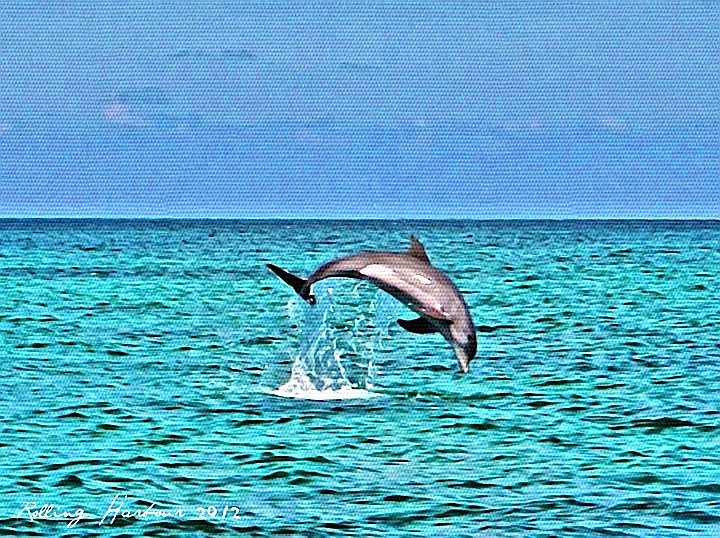
The Bahamas Marines Mammal Research Organisation (BMMRO) is based at Sandy Point, Abaco. A number of research projects are underway, and recently these have involved work on Andros. The team are now back, and encountering Abaco’s own dolphins and whales. The main photos on the page have all been taken in the last week or so. [The header is by Norwegian artist Roll Inge Haaver]

BOTTLENOSE DOLPHIN, ABACO971695_596998516986045_1649965583_n

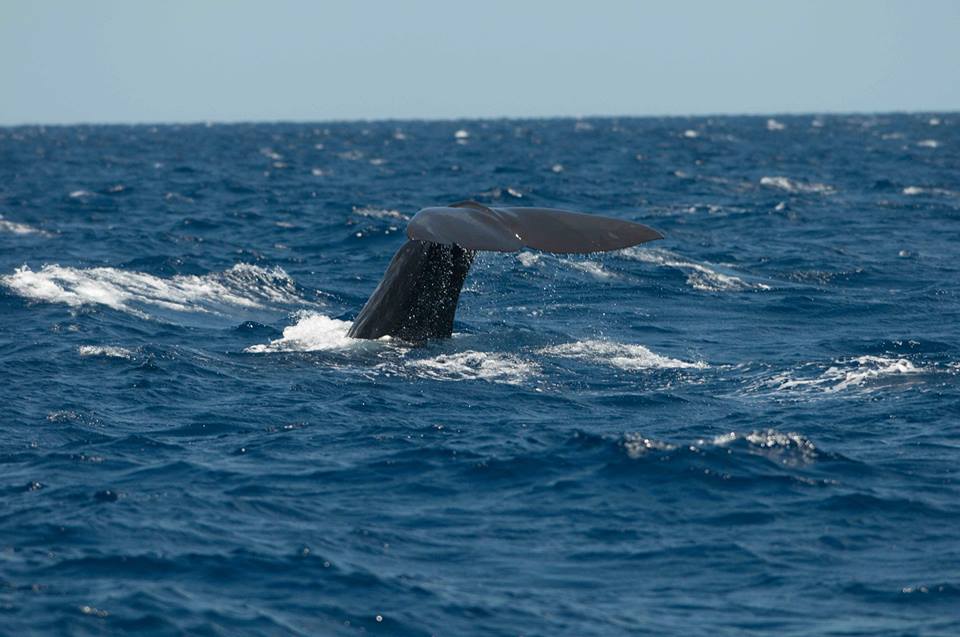
SPERM WHALE ‘TAILING’, ABACO (1 of 3 found yesterday using acoustic tracking)374338_596998896986007_1736456956_n

DCB GBG Cover Logo dolphin

BMMRO CHART OF CETACEAN SIGHTINGS FOR MARCH 2013

Of special note are the big whales – 3 sperm whales, and a humpback whale reported close to Cherokee.
BMMRO SIGHTINGS March 2013

Sperm whales. Humpbacks. How big are they? This useful chart shows the average lengths of various whales. I grabbed it off the internet a while ago, but regrettably forgot to mark the source. So, apologies to the originator for using it uncredited, a cyber-sin I try to avoid.what-largest-whale-cetacea-size-comparison-chart-590x338

Finally, the BMMRO’s latest 4-page Newsletter contains a wealth of information about their current activities, some great pictures, and even a quiz – check out BMMRO NEWSLETTER_Apr13

Click logo to linkbmmro_logo

Unknown's avatar

LEAST, BUT NOT LAST: THE SMALLEST SANDPIPER


Least Sandpiper Abaco 5

LEAST, BUT NOT LAST: THE SMALLEST SANDPIPER

220px-Status_iucn3.1_LC.svg

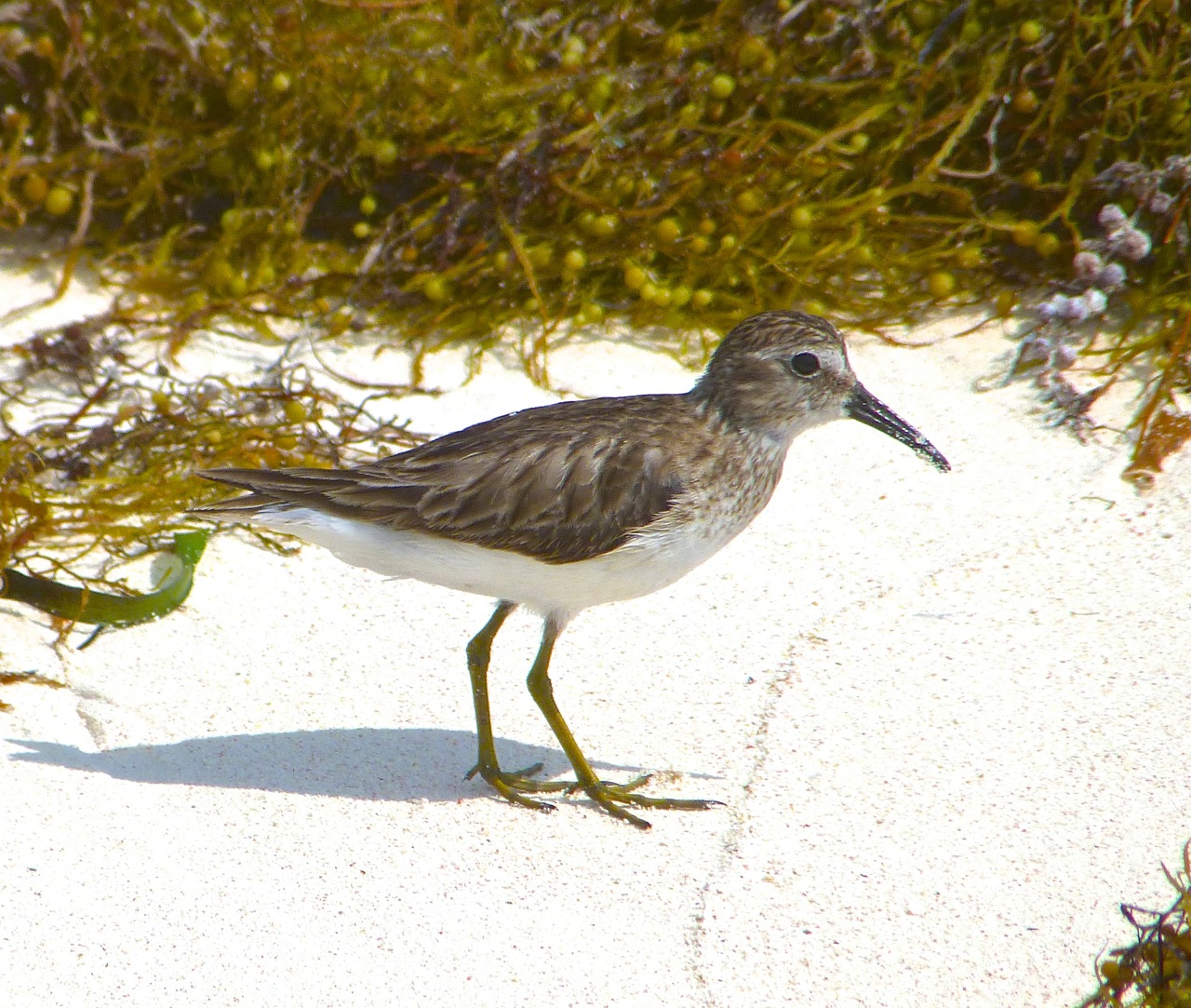
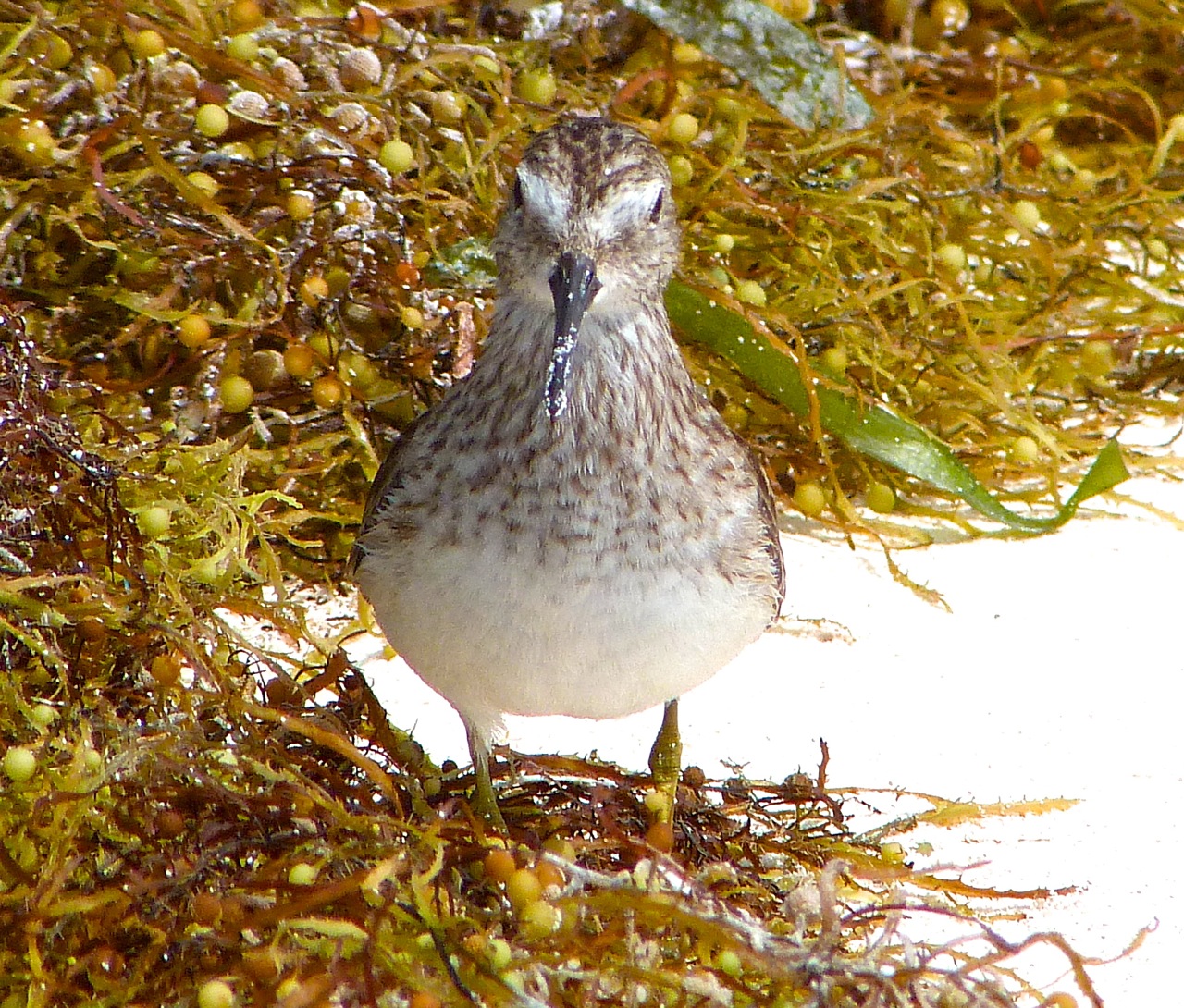
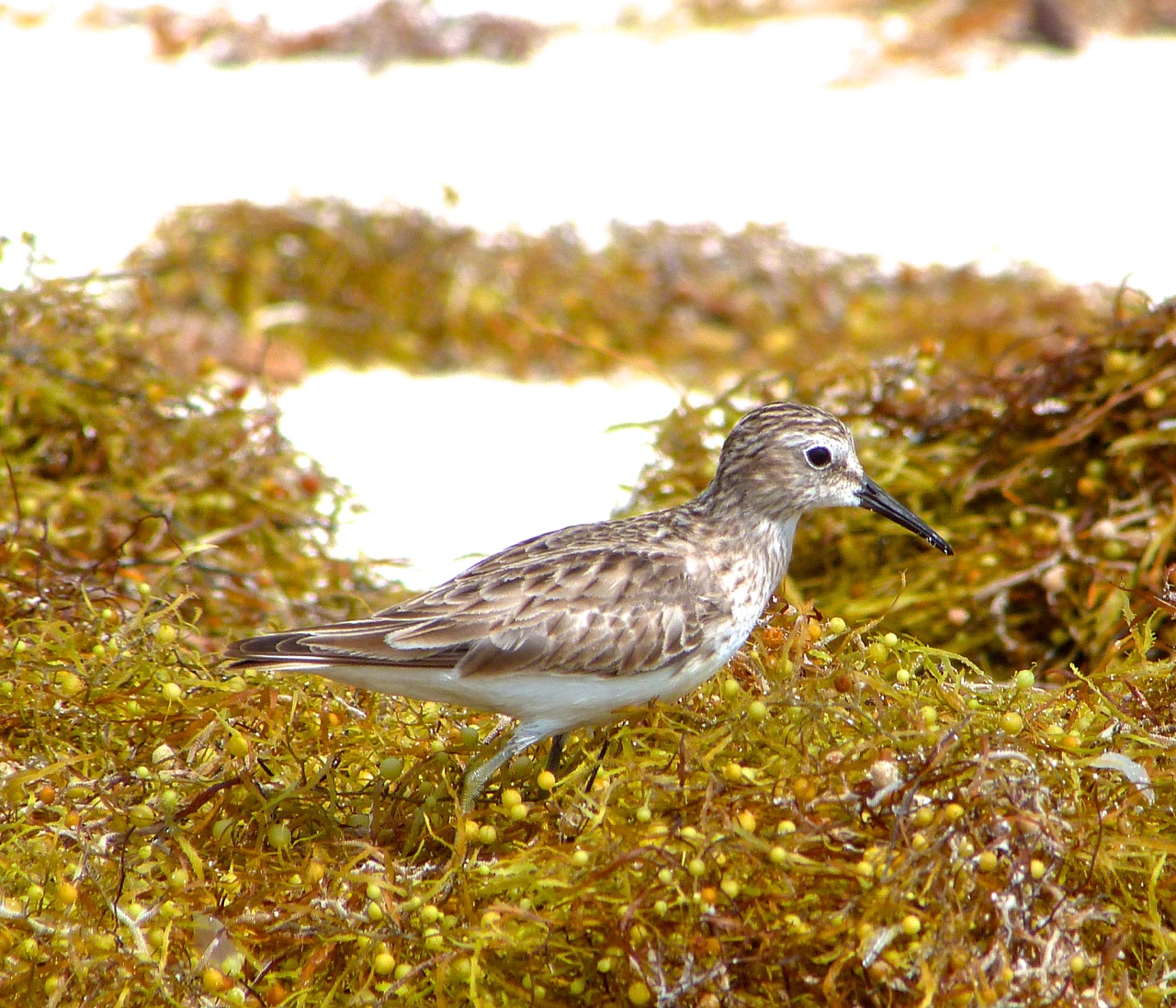
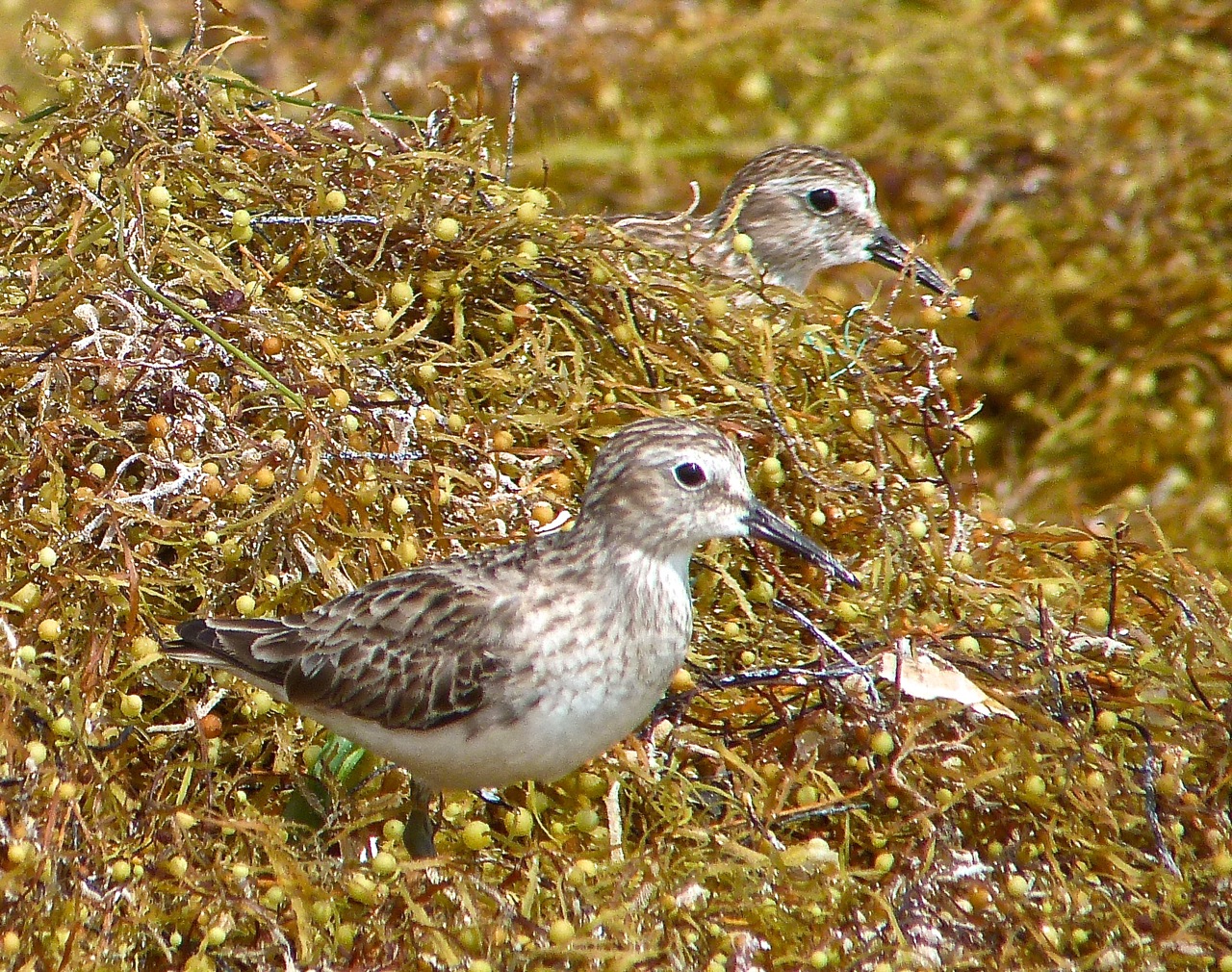
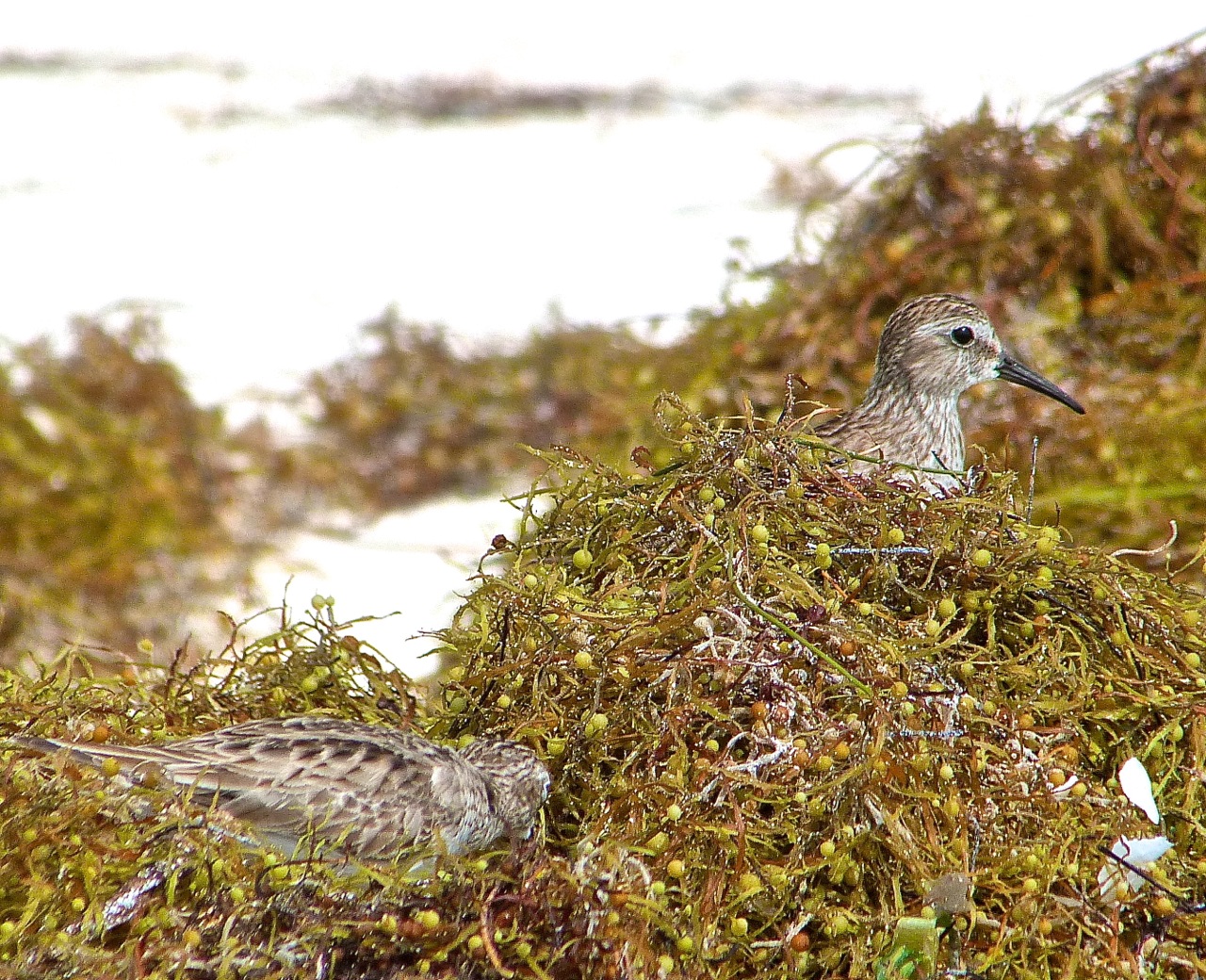
The LEAST SANDPIPER (Calidris minutilla) is the smallest shorebird, the definitive “peep”. An adult is only about 6″ long. They are to be found in pairs or groups, busily foraging in the sand and seaweed. Often they will mix in with other shorebirds. These birds nest in scrapes close to the water, with both parents involved in incubating the eggs. The female will usually leave the nest before the young birds fledge – perhaps (bizarrely?) sometimes even before the eggs hatch. Deal with it, male Least Sandpipers. Fortunately the hatchlings can feed themselves very soon, and are able to fly within two weeks of birth.

Least Sandpiper Abaco 10 Least Sandpiper Abaco 9 Least Sandpiper Abaco 8 Least Sandpiper Abaco 7The “peep” call will no doubt be instantly familiar, although how to differentiate between the various types of sandpiper may be more of a problem… Here’s a short recording via Xeno-Canto (credit: Mike Nelson) 

[audio http://www.xeno-canto.org/sounds/uploaded/PWDLINYMKL/LeastSandpiper7.mp3]


Least Sandpiper Abaco 6 Least Sandpiper Abaco 4

Least Sandpiper Abaco 3

They may burrow deep into the seaweed near the shoreline to reach an especially good feeding patchLeast Sandpiper Abaco 1Least Sandpiper Abaco 2

Photos: Keith Salvesen, Delphi Beach, Abaco

Unknown's avatar

CUBAN PEWEE: NATURE’S LEAST SCARY TYRANT


Cuban Pewee Abaco 8

CUBAN PEWEE: NATURE’S LEAST SCARY TYRANT

Pasted Graphic
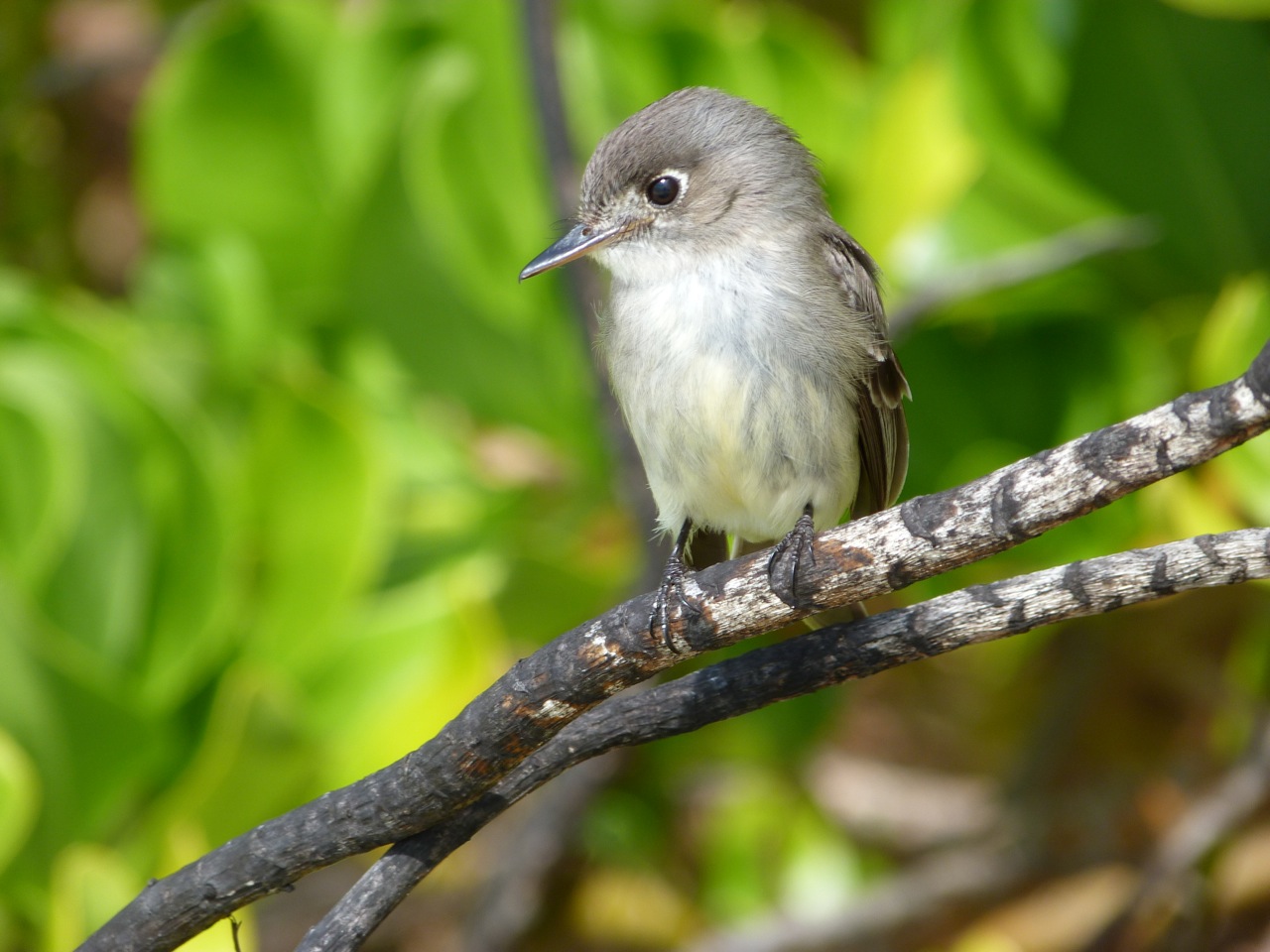
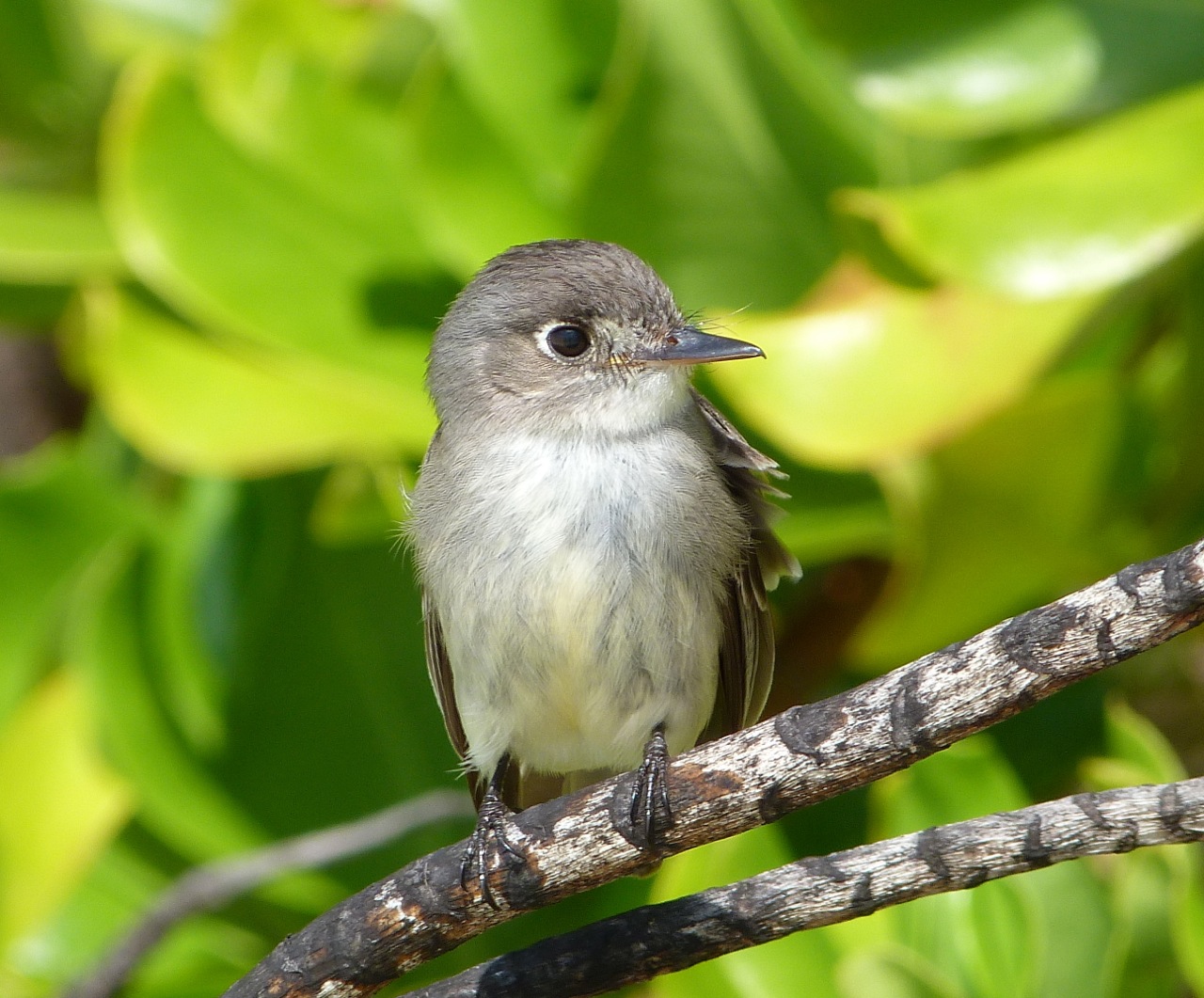
image.aspxThe CUBAN PEWEE Contopus caribaeus bahamensis, also known as the Crescent-eyed Pewee (see photos for details), is a tyrant. At 6″ long , the smallest tyrant you are likely to encounter in the Bahamas, but undoubtedly a member of the family Tyrranidae. These are the flycatchers, and include the larger LA SAGRA’S FLYCATCHER and the still larger Loggerhead and Gray Kingbirds. The Cuban Pewee is permanently resident on Abaco, and can be found in both pine woods and coppice. When returning to its perch after a flycatching sortie, this bird gives a characteristic flick of the tail.

The little bird below was in the edge of the coppice bordering the long sandy beach at Casuarina. Bruce Hallett, in his essential book  ‘Birds of the West Indies…’ notes that Cuban Pewees are ‘usually approachable’, so I decided to test this out. I was about 20 feet from the bird when I first saw it. By sliding one foot forward in the sand and pausing before moving the other foot, I got to within 5 feet of the bird, while it watched my approach with apparent indifference. Unlike some creatures, it did not seem discomfited by eye-contact. It responded when I made a faint clicking sound by rather sweetly putting its head on one side.  Then it began to fidget slightly – possibly feeling camera-shy. So I shuffled slowly back so as not to disturb it in its own territory.

The close-ups at the end clearly show the tiny hooked tip at the end of the upper beak – I imagine this somehow relates to the business of catching flies. Like other flycatchers, the Cuban Pewee has very distinctive whiskers around the base of the beak – again I presume this assists with feeding in some way, perhaps helping to sense the approach of an insect. Any expert views welcome via the comment box.

Cuban Pewee Abaco 1Cuban Pewee Abaco 7Cuban Pewee Abaco 6 Cuban Pewee Abaco 5 Cuban Pewee Abaco 4Cuban Pewee Abaco 9 Cuban Pewee Abaco 10It’s occasionally tempting to anthropomorphise such close encounters in terms of imputed human / creature empathy. Much best to resist that. But as I withdrew, leaving this little  bird undisturbed on its branch, I did experience a strange feeling of… [I must interrupt myself here. I’m a lawyer, so that’s quite enough of that sort of nonsense]

Unknown's avatar

ABACO’S UNIQUE PARROTS IN PICTURES, VIDEO & SOUND


Abaco (Cuban) Parrot 2013 4a

ABACO’S UNIQUE PARROTS IN PICTURES, VIDEO & SOUND

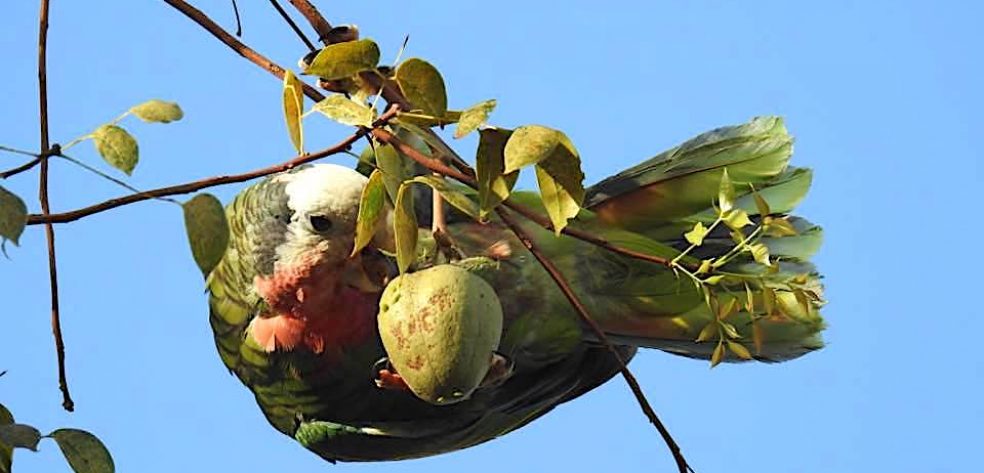
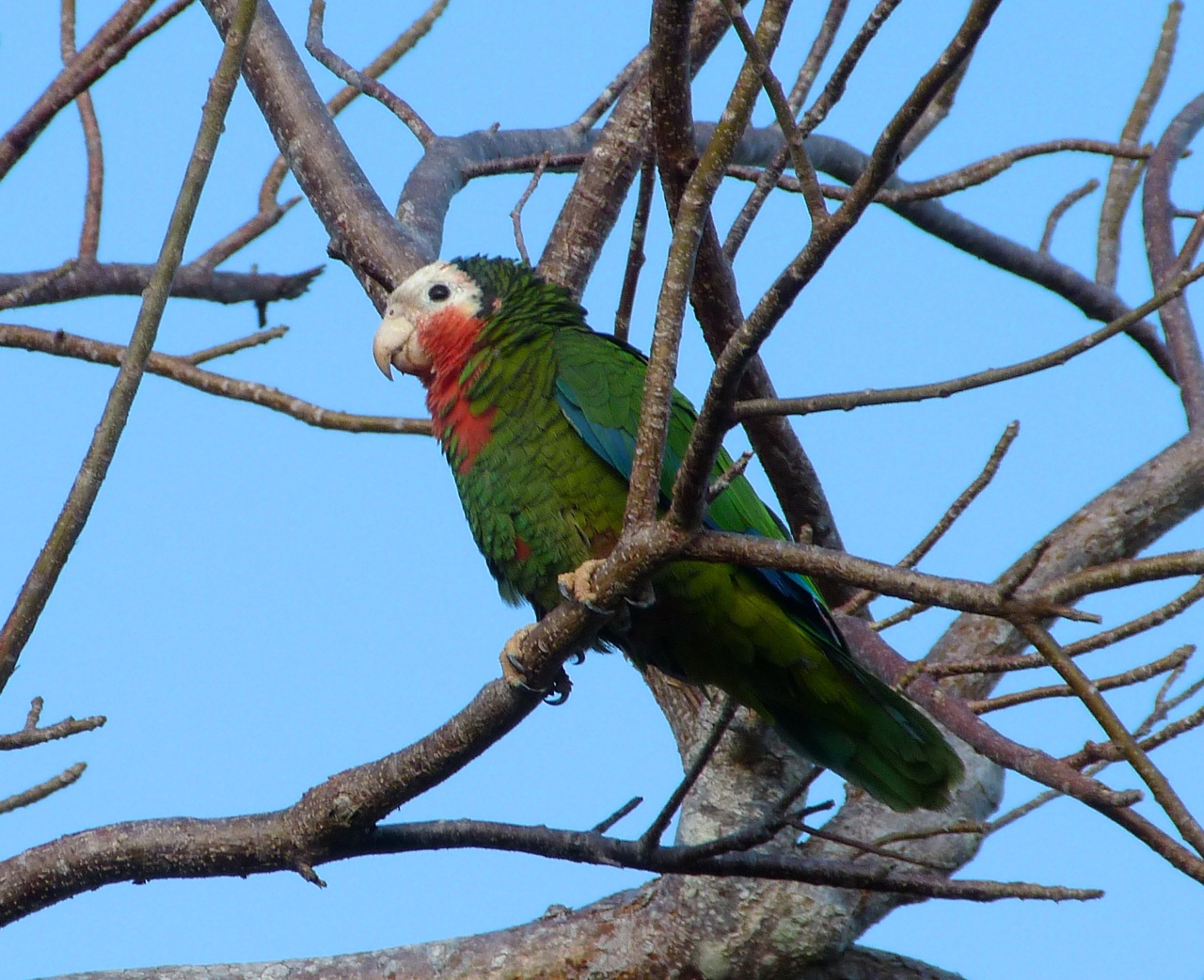
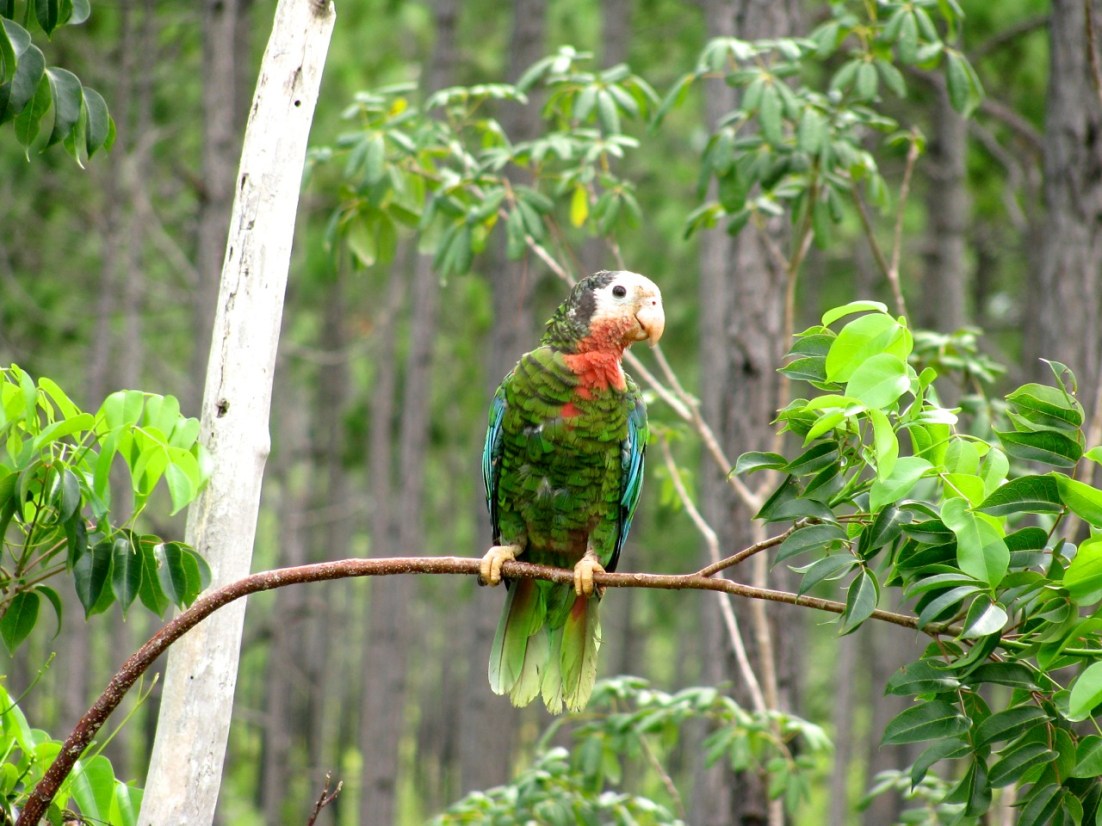
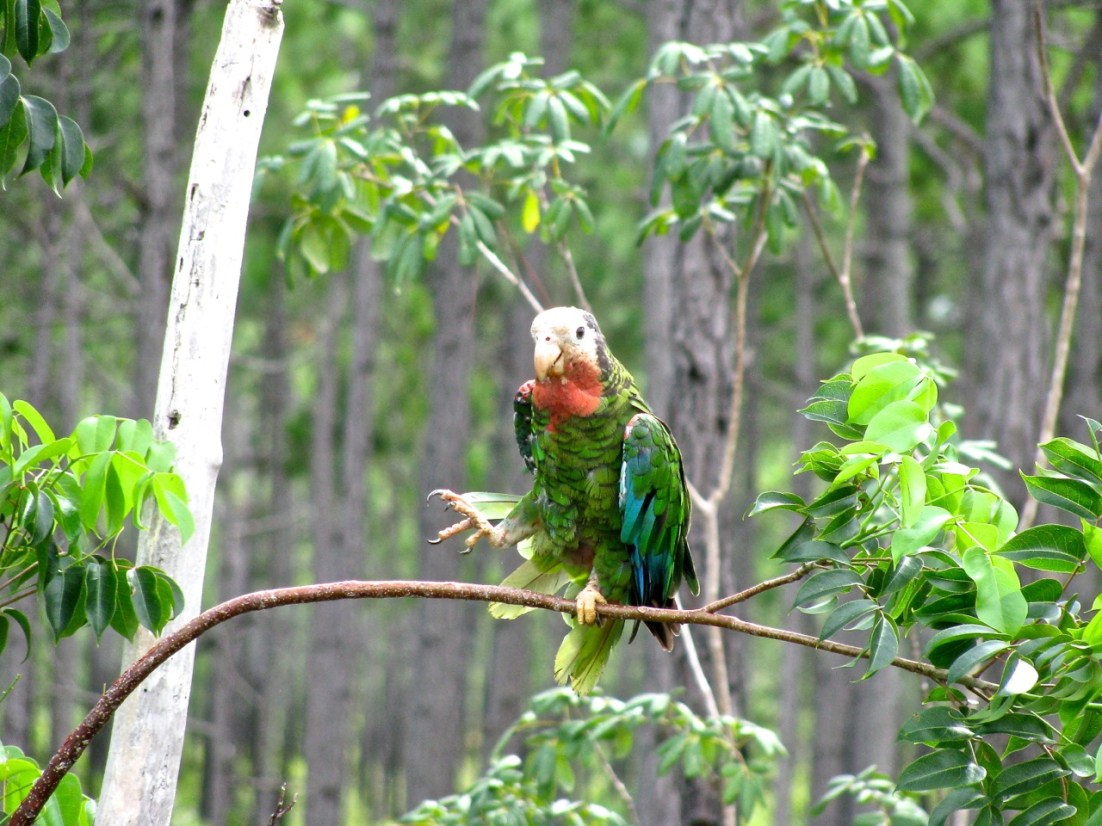
Abaco parrots. The only ground-nesting parrot species in the Bahamas. In the world, in fact. I’ve posted quite often about them – indeed they have their own page HERE – because, frankly, they are special and their story is one of encouraging success for intensive research and conservation programs. In 1492, Christopher Columbus was amazed by the vast number of parrots he saw in the Bahamas (not that the islands were called that then). In his journal he noted: “flocks of parrots darken the sun…”  Not many years ago, parrot numbers on Abaco had dwindled to fewer than 1000 – below the critical point for sustaining a viable population. Extinction of the Abaco parrot loomed, accelerated by increasing habitat change, predation, and (*euphemistically*) ‘human intervention’.  Thanks to the campaign of conservation, habitat preservation, anti-predation measures and vigilance, numbers have been restored to a sustainable level, perhaps as many as 4000. They are now a fairly common sight – and sound – in South Abaco. But not everyone who looks for them finds them, or even hears them. Especially not if they take pot luck in the vast areas of pine forest in the National Park, where they breed…

I’ve covered much of this ground before, but there is a slightly wider audience these days, so a few newcomers may be interested to learn about these lovely birds. The best thing is to have a look. All photos were taken by me during two early evenings in March.

Abaco (Cuban) Parrot 2013 1Abaco (Cuban) Parrot 2013 2 Abaco (Cuban) Parrot 2013 4aAbaco (Cuban) Parrot 2013 5

The parrots are extremely agile, and have very strong feet and claws that enable them to move around in the tree-tops – or to hang upside down if they choose to. The next photo is a close-up a foot; below that is short video showing a parrot manoeuvring itself in a tree. You’ll also see how the birds use their beaks as an extra limb, so to speak. The uninspiring title shown is only because I forgot to label it ‘Abaco Parrot’ in the first place, and can’t find how to edit it…Abaco (Cuban) Parrot 2013 6

In this image you can clearly see how their ‘opposable’ claws wrap round a branchAbaco (Cuban) Parrot 2013 8

If you suspect that this one has had some ‘work’ done, you’d be right. I normally leave my photos largely alone, apart from cropping and maybe basic light balancing where needed. Sometimes an image is nearly there, but needs a bit of extra cosmetic business – but one can usually tell. The left wing? Hmmmmm (users of ‘noise reduction’ will know what I am talking about!).Abaco (Cuban) Parrot 2013 9 Abaco (Cuban) Parrot 2013 10 Abaco (Cuban) Parrot 2013 11 Abaco (Cuban) Parrot 2013 12

The flocks of parrots are incredibly noisy. Sometimes they split into two or three groups, close together, and seem to compete in raucousness. Around 5.00 pm seemed to be the noisiest time. I took recordings of the racket, using the voice memo app on an iPh*ne, simply holding the phone with the speaker / mike end towards the parrots. Some come out pretty well – good enough to post on the excellent XENO-CANTO bird sound site. Here is a recording, with the first few seconds transcribed into a sonogram. I made a ring tone from this recording for Caroline Stahala, the scientist who, with her team, looks after the birds. She’s been too polite to say whether she uses it or (more likely) not!

Abaco (Cuban) Parrot 2013 13Abaco (Cuban) Parrot 2013 14Abaco (Cuban) Parrot 2013 15I find the parrots very hard to nail in flight (see above), possibly because of a shutter-speed issue (mine, not the camera’s). I nearly junked the picture below, but I liked the clash of the parrot colours with the purple bougainvillea, so I spared it.Abaco (Cuban) Parrot 2013 16B

If anyone is interested in making a small contribution towards the continuing research into and protection of these birds, please have a look at my ABACO WILDLIFE CHARITIES  page, where the relevant link to Parrots International can be found. Or visit doudoubirds, where you will find endearing Abaco Parrot prints by dou dou herself for sale in aid of the parrots. Or contact me at rollingharbour.delphi@gmail.comAbaco (Cuban) Parrot 2013 7

If anyone had a problem with the Xeno-Canto sound file above, here is a simplified version of the recording

Unknown's avatar

BLACK-FACED GRASSQUITS ON ABACO, BAHAMAS


Black-faced Grassquit Abaco 7

BLACK-FACED GRASSQUITS ON ABACO, BAHAMAS

BFGs. Birds of the coppice, garden, feeder… and beach (see below). I posted some images last year HERE and now I have a few more, taken recently. Although their name is promising at first glance, the Title pun-value of these little birds is low, so I’ve left it… While the males are indeed black-faced, and often -chested too, the females are a drab brown. Until you look closely. Then you’ll see the olive shades, and the pretty yellow streaks on the wings.

A YOUNG FEMALE BFG ENJOYING THE BEACH AT TREASURE CAYBlack-faced Grassquit Abaco 4Black-faced Grassquit Abaco 3

BFGs AT DELPHIBlack-faced Grassquit Abaco 1Black-faced Grassquit Abaco 2

A MALE BFG AT BAHAMA PALM SHORESBlack-faced Grassquit Abaco 6 Black-faced Grassquit Abaco 5

Unknown's avatar

A TASTE OF HONEY: SPRING BEES ON ABACO


Abaco bees 9

A TASTE OF HONEY: SPRING BEES ON ABACO

There are a number of insects on Abaco that demand human attention. The smallest and most persistent nuisances are the ‘no-see-ums’, tiny sandflies whose near-invisible size belies the effects of their bite. They seem impervious to many standard types of insect repellent. Different things work for different people. My method is to eat marmite (cf vegemite) on plain biscuits daily for 2 weeks before a visit to Abaco, and that does the trick. This year, I had a single bite (of course, if you hate marmite you’ll need another plan). See RECOMMENDED LINKS in the SIDEBAR under SAND FLY  for more on this topic.

There’s a form of yellowish horsefly that can give you a bit of a nip. At the top end of the pain and discomfort scale is the PEPSIS WASP (Tarantula Hawk). I’ve only ever seen one, and if you do come across one be sure not to disrespect it (click link to see why…). 

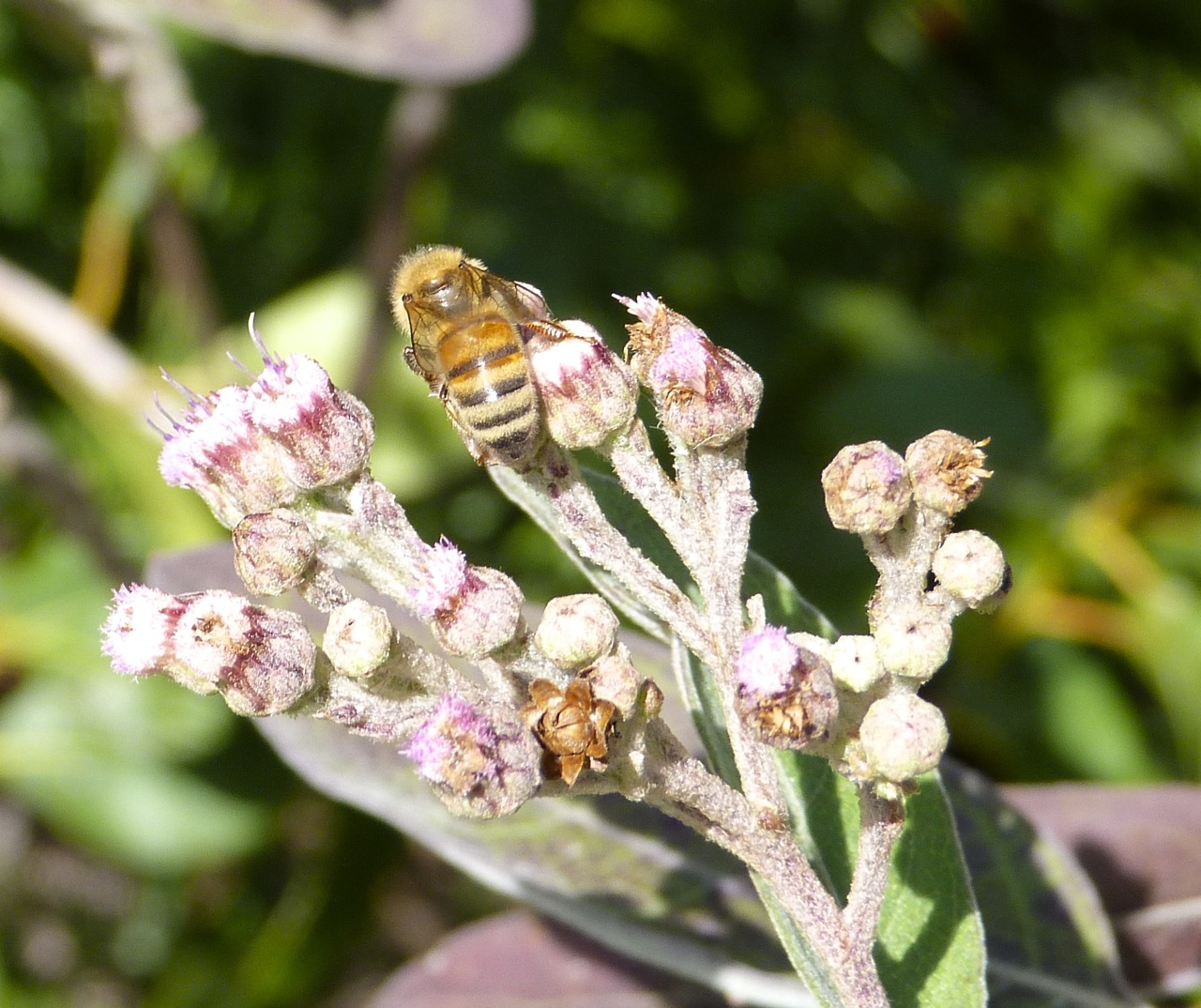
Until recently, I can’t say I’d ever noticed bees on Abaco. There are plenty of wonderful flowers that are visited for their nectar by the many species of butterfly and  various kinds of bird (hummingbirds, bananaquits). Then, last month, I heard a distinct buzzing in a bush. Bees. Lots of them. I took a few photos, some of which are shown below. Then I began to notice them elsewhere. Everywhere. Compared to the european bees that I am familiar with (check out my BEE GALLERY), Abaco bees are much smaller – see how they look on the individual flower heads in the first few photos. These little creatures were constantly on the move. No sooner had one settled on a flower, than it moved on to the next one…

I kept an eye out for bumble bees, but saw none – indeed, I’m not certain there are any bumble species in the (northern) Bahamas, and I have found no references to their existence. Enlightenment on this topic welcome via the comment box.

Abaco bees 1Abaco bees 2 Abaco bees 3There was plenty of pollen for the bees, though not all of it went into their what’s-the-correct-word-for-their-pouches (EST the Beekeper please can you help here?)Abaco bees 5However most were managing to harvest impressive quantities to take back to the hive. It’s worth saying that these are all wild bees. I know of only one honey-producer in South Abaco (south of Marsh Harbour).Abaco bees 6 Abaco bees 7A successful foraging expedition… somewhat surprisingly this bee was still able to take off…Abaco bees 8This is my favourite photo: there’s something about the expression on that little face that says “Ooooo. More good stuff in this one….”Abaco bees 9

Wild bees find a novel use for a woodpecker nesting box Bees in bird nest box 1

Unknown's avatar

A CUBAN EMERALD HUMMINGBIRD ON ABACO, BAHAMAS


DCB GBG Cover Logo

A CUBAN EMERALD HUMMINGBIRD ON ABACO, BAHAMAS

I took photos of this tiny bird at BPS last month. They were ‘chance’ pics taken when we were photographing parrots in the tree tops. The hummer suddenly appeared some way ahead of me, so I swivelled the camera at it without changing any settings. Frankly, I didn’t expect the results to show more than a small green blur, but they have turned out slightly better than anticipated. I put these images on my subsidiary ‘Gallery’ site and people seem to like them so I’ve decided to add them here too. After all, it’s their true home, I suppose, with the other Abaco wildlife. Apologies to those who have seen these already on the other site. The images are exactly as taken – no colour tweaking, no sharpening, no photoshop  – and may not stand enlargement or close scrutiny, because I was several yards away. On the other hand they give a good idea of how this bird feeds. The body postures are very characteristic, and besides, the plants are pretty… Cuban Emerald Hummingbird in flight, Abaco Bahamas 1Cuban Emerald Hummingbird in flight, Abaco Bahamas 2Cuban Emerald Hummingbird in flight, Abaco Bahamas 3Cuban Emerald Hummingbird in flight, Abaco Bahamas 4Cuban Emerald Hummingbird in flight, Abaco Bahamas 5

Unknown's avatar

CRAB RUN – THE MOVIE (LOCATION: DELPHI CLUB BEACH, ABACO)


Crab, Delphi Club Beach, Abaco

CRAB RUN – THE MOVIE (LOCATION: DELPHI CLUB BEACH, ABACO)

‘ROLLING HARBOUR MOVIES’ PROUDLY PRESENTS

(Music: Chet Atkins ‘Yakkety Axe’, aka The Benny Hill Show Theme)

Unknown's avatar

BOTTLENOSE DOPHINS (VIDEO) & BMMRO ABACO CETACEAN SIGHTINGS


safe_image.php

BOTTLENOSE DOPHINS (VIDEO) & BMMRO ABACO CETACEAN SIGHTINGS

The legendary CONCH SALAD TV is a great resource for Bahamas wildlife and way-of-life enlightenment. Their instructive videos are very well put together, and cover Nature, Marine, Art, Science, Music, Culture, Cooking, and broader Bahamas issues. The video below is 9 minutes of Bottlenose Dolphin action, and is recommended for relaxation, gentle instruction, and Kalik-swigging accompaniment…

BMMRO Whale Camp Dolphin Image FV

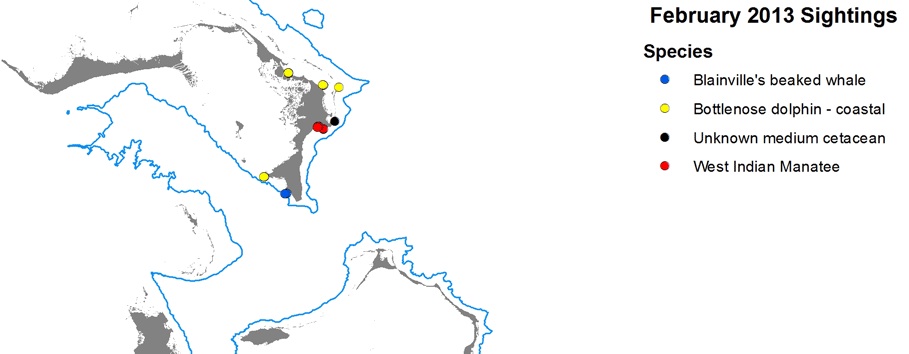
It time to catch up with last month’s Cetacean sightings around Abaco. The Manatee reports are of Georgie in the Cherokee area – alas no longer resident on Abaco but safely at Atlantis where she is being cared for. To know more about the Blainville’s beaked whale on Abaco, click HEREBMMRO sightings 2013

stop pres gif BMMRO’s executive director DIANE CLARIDGE has been awarded her PhD by St Andrews University for her research on beaked whales.  Dr Claridge’s new status is celebrated by humans and cetaceans alike (see image ©BMMRO below…)Bottlenose Dolphins Abaco ©BMMRO

mantsw~1

Unknown's avatar

BLACK & WHITE WARBLERS: WINTER VISITORS TO ABACO


Black & White Warbler (Wiki)

BLACK & WHITE WARBLERS (Mniotilta varia)

WINTER VISITORS TO ABACO

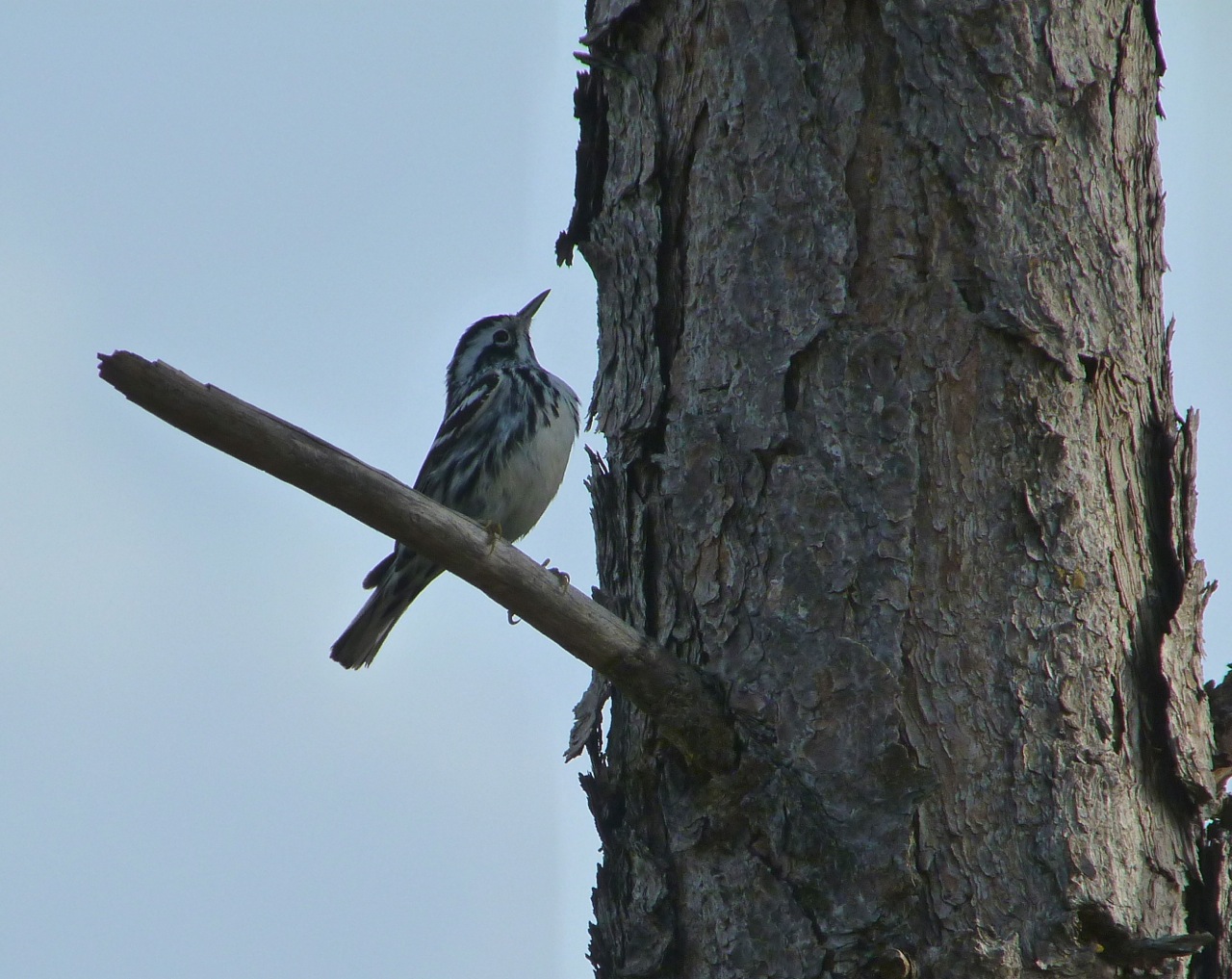
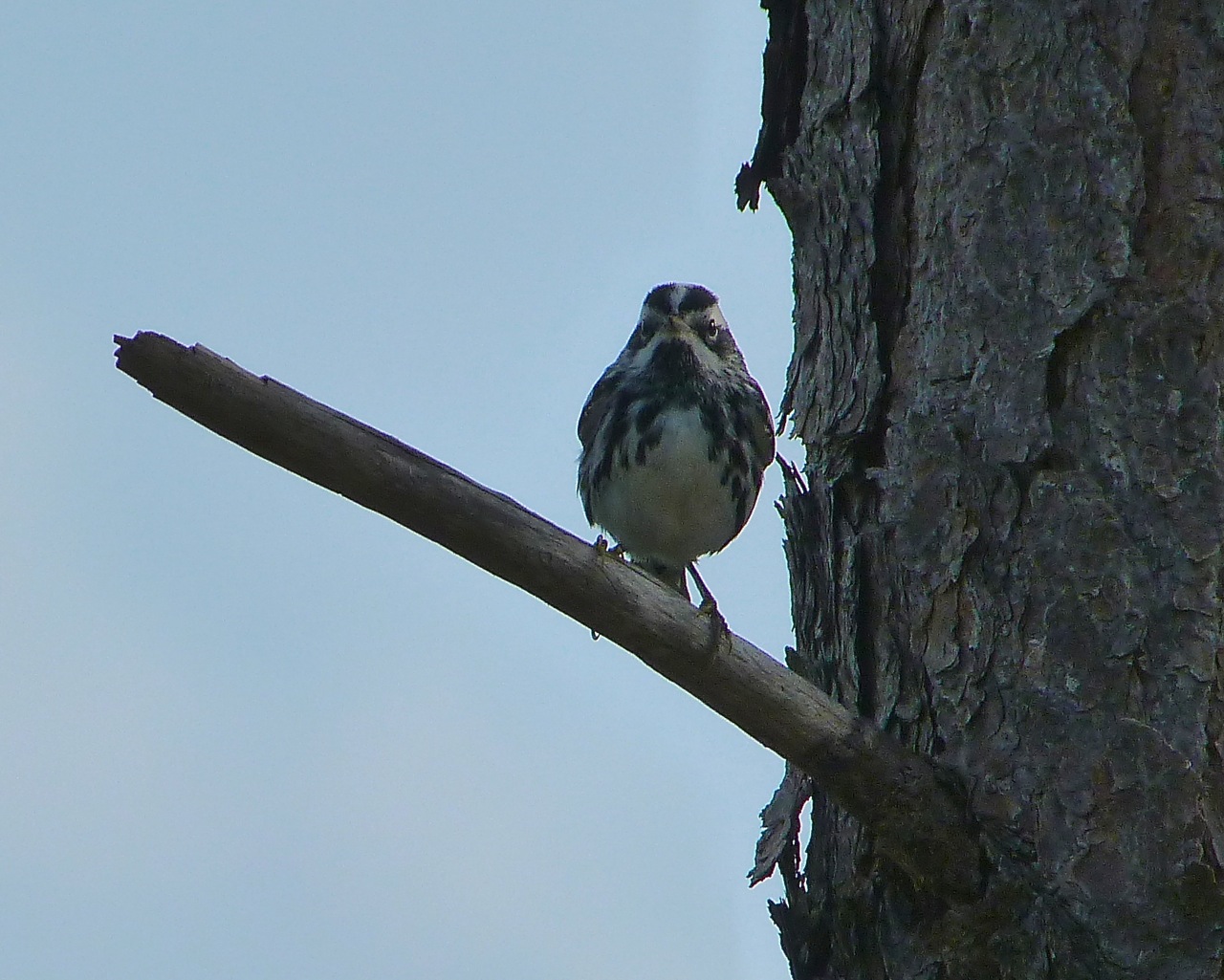
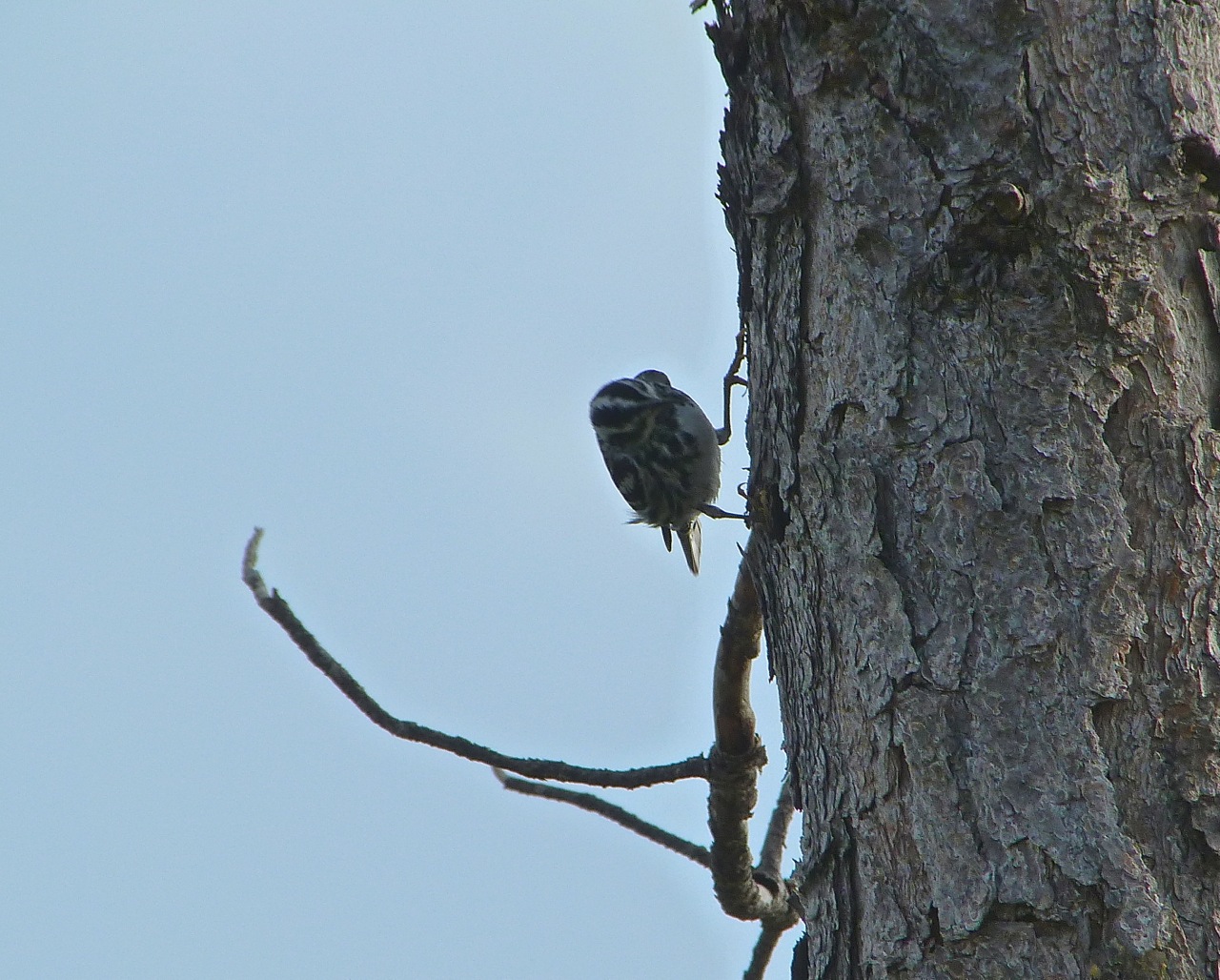
By no stretch of the imagination are the images below very impressive. Sorry about that. The wonder is that we noticed this little bird at all – also, that it stayed still for long enough for me to get a bead on it. I credit the sharp eyes of Mrs RH (from whom little is hid) for spotting a fleeting movement on a pine trunk along the Delphi drive. Unlike any other warbler, these small birds feed in the manner of nuthatches or tree / brown creepers. They run rapidly up and down tree trunks and branches foraging on insects in the bark with their sharp little beaks. 

Black & White Warbler, Abaco, Bahamas 1Summer & Winter Ranges

Black & White Warbler, Abaco, Bahamas 2

IUCN status

Black & White Warbler, Abaco, Bahamas 3

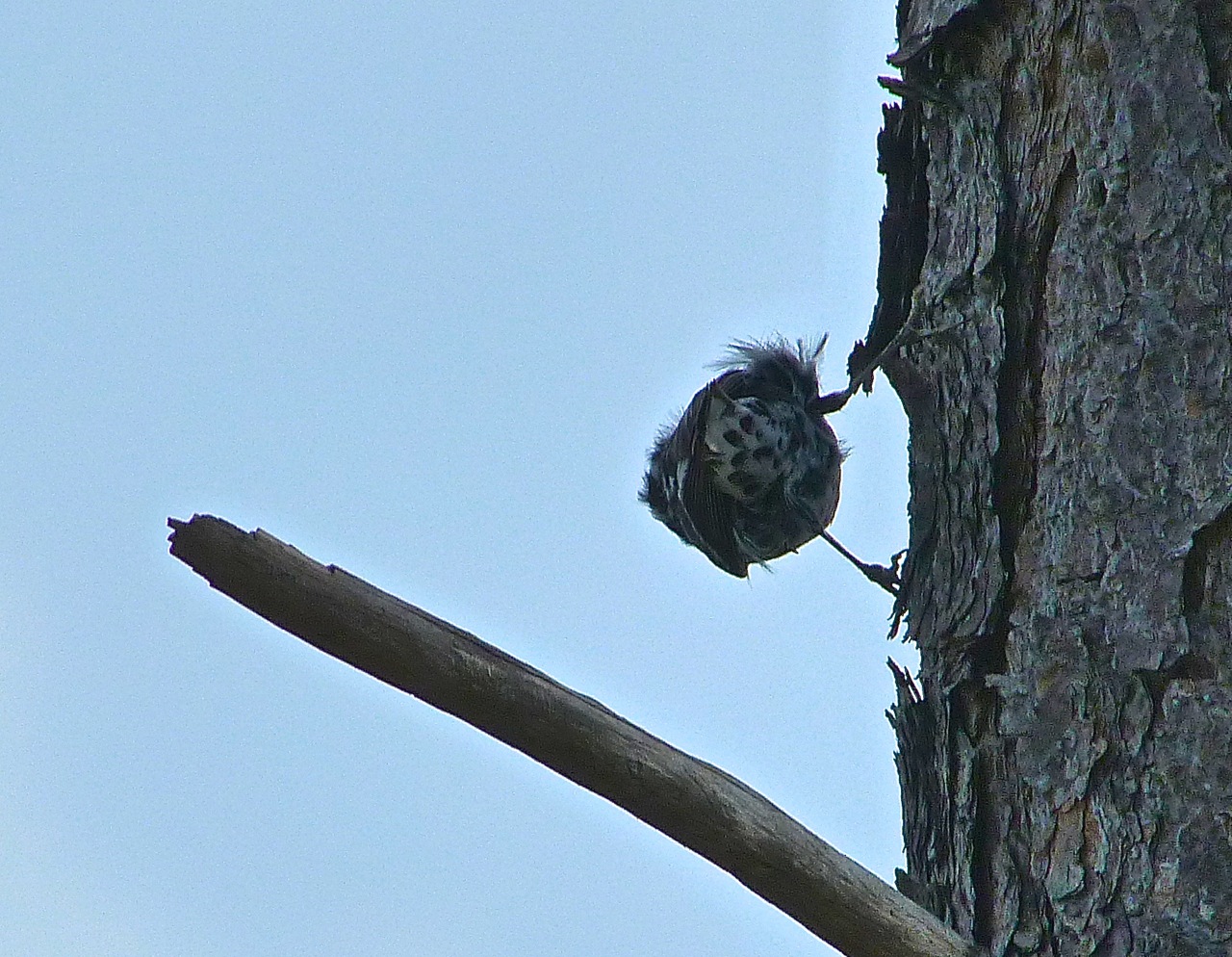
The next 2 photos (yes, I agree, they’re not very good, nor taken – the top one, anyway – from an elegant angle) are included to demonstrate the remarkable length and dexterity of the bird’s legs. During the minute we watched it before it flew off, we noted this characteristic legs-splayed ‘pausing pose’ several times.

Black & White Warbler, Abaco, Bahamas  4Black & White Warbler KS P1050385 - Version 2

Unknown's avatar

ONE GOOD (ROYAL) TERN ON THE ABACO MARLS…


ONE GOOD TERN ON THE ABACO MARLS…4

ONE GOOD (ROYAL) TERN ON THE ABACO MARLS…

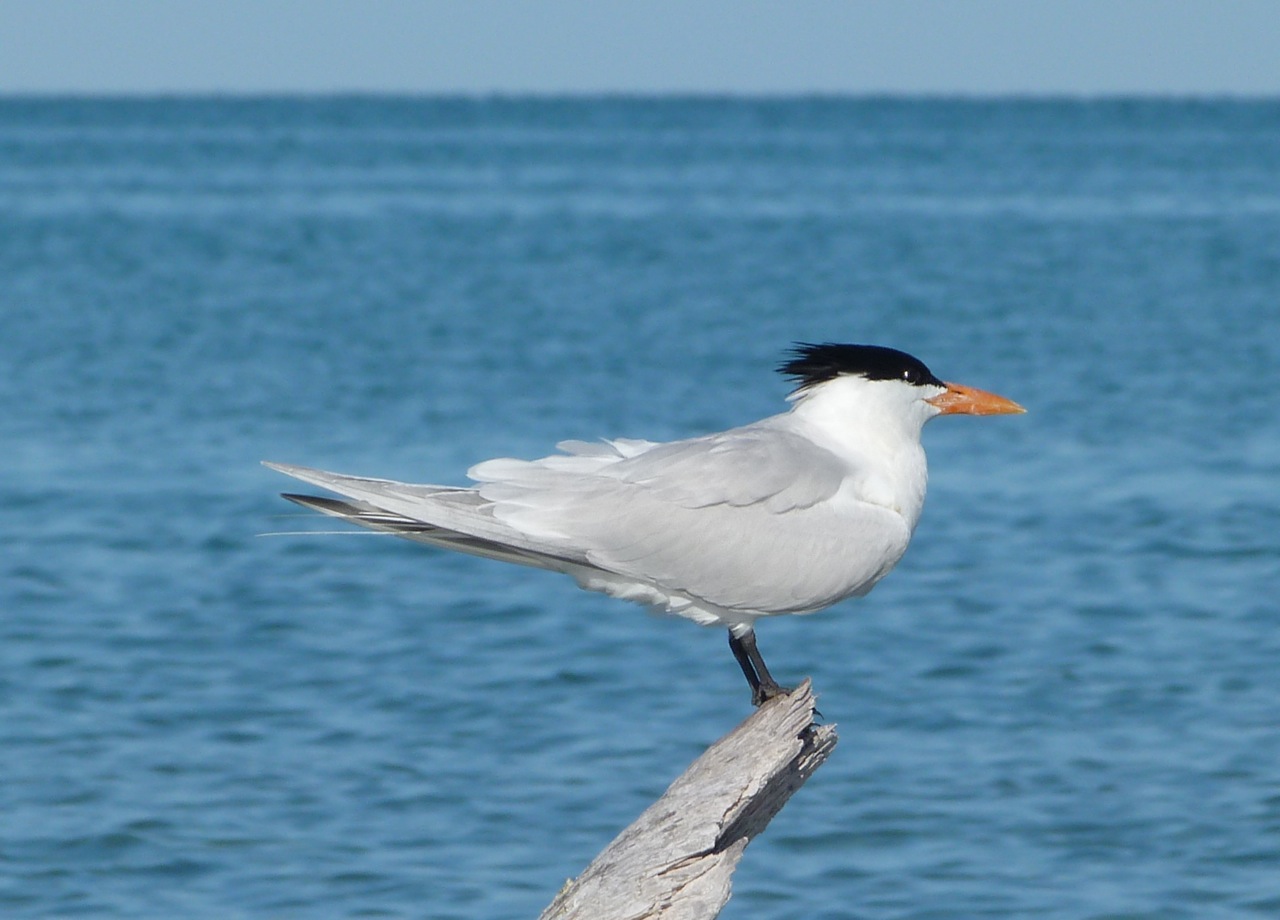
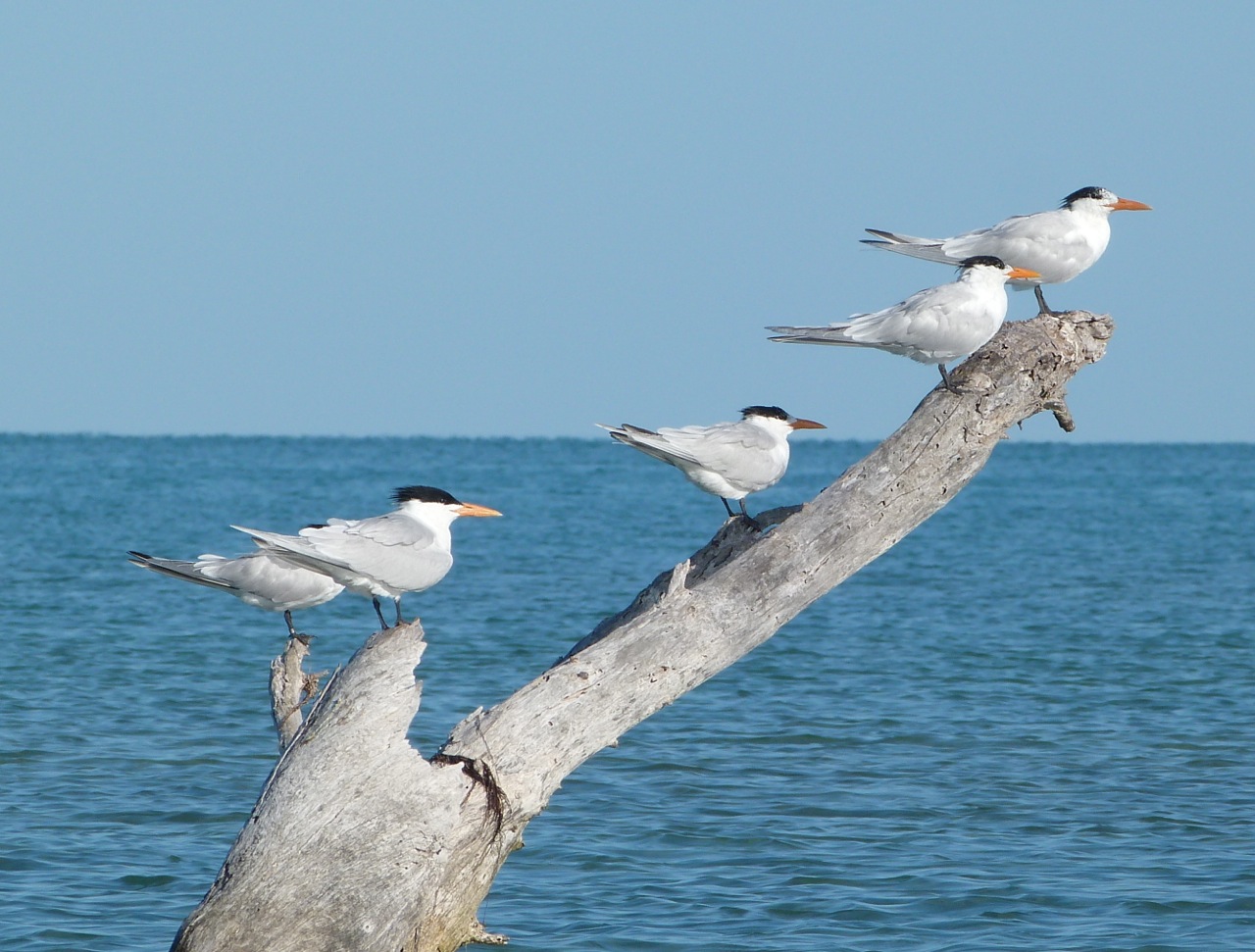
Royal Tern, Abaco, Bahamas (Marls) 1…deserves another…Royal Tern, Abaco, Bahamas (Marls) 2…and a few more besides…Royal Tern, Abaco, Bahamas (Marls) 3

We passed these fine Royal Terns during the boat ride ride out to the bonefishing grounds of the Abaco Marls. The single dead tree lay alone in a vast expanse of open water near the mangrove swamps, providing a perfect perch and vantage point for the birds. Their positioning on the tree suggested a distinct “pecking order”, which turned out to be literally true. The terns were unembarrassed by our presence, but at one stage they all took off and circled lazily round once before settling back on the tree. Those that tried to take a higher perch were aggressively treated by the original occupant. In the end, things settled down much as before. However, one disappointed claimant to promotion was dispossessed of the main trunk entirely. He ended up, uncomfortable and huffy, on a small stump facing the opposite way to the rest of the birds – perhaps from wounded dignity, or to make his feelings known through body language….Royal Tern (Sterna maxima), Abaco Marls, Bahamas 5

220px-Status_iucn3.1_LC.svg 

Unknown's avatar

MASTERS OF UNDERWATER CAMOUFLAGE: BAHAMAS REEF FISH (7)


BAHAMAS MASTERS OF UNDERWATER CAMOUFLAGE

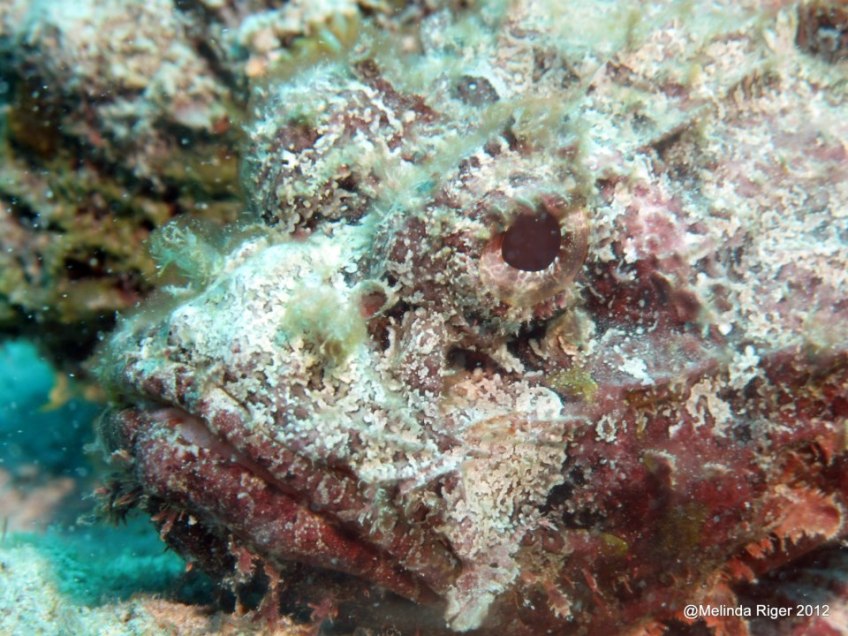
SCORPIONFISHScorpionfish camouflaged against coral ©Melinda RigerScorpionfish Close-up ©Melinda Riger @GBS

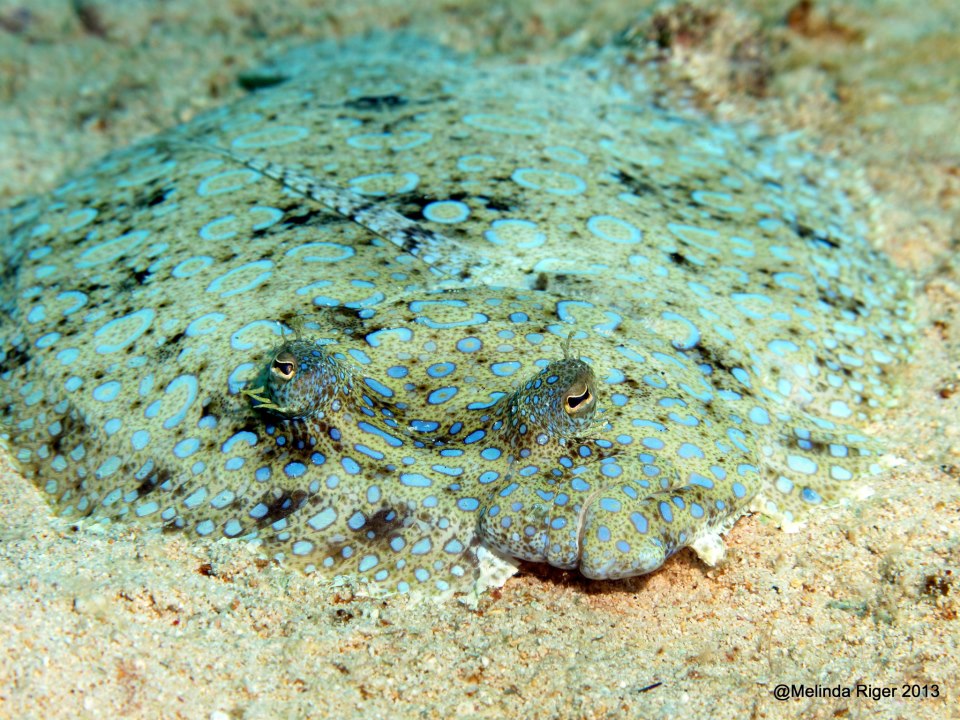
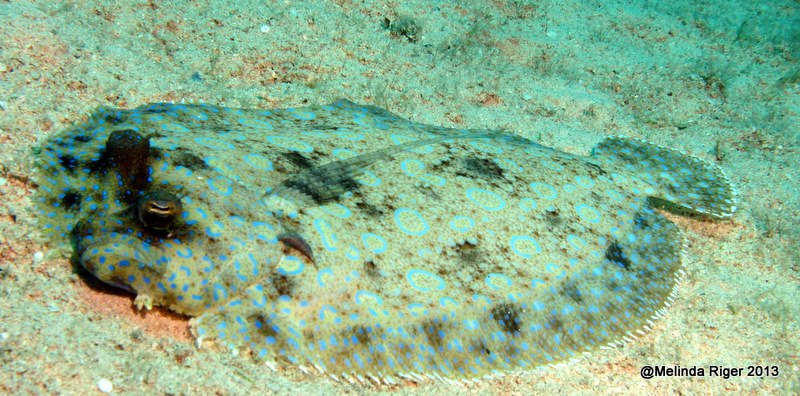
PEACOCK FLOUNDER or PLATE FISH Bothus lunatusPeacock Flounder Peacock FlounderPeacock Flounder ©Melinda Riger @ GB ScubaPhotos: Melinda at Grand Bahama Scuba

This is my last post until next week, when apparently we can expect a snowy welcome. Hmmmm. Plenty of new material for kind followers – both of you..

20130321-075611.jpg

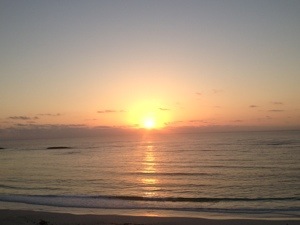
DELPHI DAWN

Unknown's avatar

MANGROVE JELLYFISH: AN UPSIDE-DOWN UNDERWATER LIFE


250px-Fkeysmacro

MANGROVE JELLYFISH: AN UPSIDE-DOWN UNDERWATER LIFE

220px-Status_iucn3.1_LC.svg

Production still from the television series BAHAMA BLUE © 2014 Parallax FIlm Productions Inc.

             Production still from the television series BAHAMA BLUE © 2014 Parallax FIlm Productions Inc.

The Mangrove Jellyfish Cassiopea, also called the ‘upside-down jellyfish’ for reasons I needn’t dwell on, is the only member of its particular jellyfish family. These creatures prefer warm waters, and typically live upside-down on the sea-bottom, which no doubt makes catching prey very simple. They can be found individually, though more likely in large groups, with individuals displaying different shades and colours.

NEW An excellent video by Melinda Riger of Grand Bahama Scuba

The Mangrove Jellyfish has one of the milder stings of the numerous species, though human reactions to the sting will vary with the individual. A greater problem may come from swimming around or over a mass of these creatures. Their stinging cells are excreted in a transparent mucus which may invisibly cover the unwary swimmer. Apart from skin-irritation and a rash, the stings are apparently very itchy. My guess is that scratching can only make things worse (cf No-see-ums…). The first of the two videos below was taken recently by Sarah Bedard (to whom thanks) who “found a great tidal pool full of them at the end of Rock Point Road, Treasure Cay (Abaco)”. The second is short, but with some amazing footage of the Jellyfish in action.

Unknown's avatar

A RARE ABACO PARROT DISPLAYS A RARE TALENT…


DCB GBG Cover Logo

A RARE ABACO PARROT DISPLAYS A RARE TALENT…

WOULD YOU LIKE TO SEE MY LITTLE TRICK?ABACO PARROT CS 13-3

I’M A BIT CAMERA-SHY – I’LL JUST TURN ROUNDABACO PARROT CS 13-4

THAT’S BETTER. ARE YOU SURE YOU ARE READY FOR THIS?ABACO PARROT CS 13-2

TA DAAAAAAAAAAAAAAAAAAAABACO PARROT CS 13-1

The Abaco Parrot is a unique subspecies of Cuban Parrot found on only Abaco. They are the only parrot to nest underground, in limestone caves in the pine forest. Their numbers have increased from near extinction to a sustainable population as the result of an intensive program of conservation and anti-predation. They get plenty of publicity hereabouts, and have their own page HERE. We normally avoid too much whimsy in these parts, but I am in parrot territory right now, so I have given myself permission to break my own rule. Photos: ©Caroline Stahala (who looks after them)

Unknown's avatar

PARROTFISH: COLOURFUL CORAL CHARACTERS BAHAMAS REEF FISH (6)


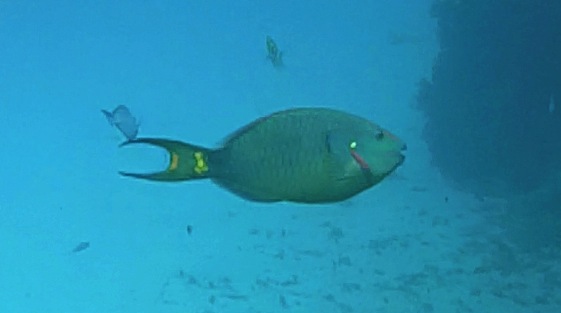
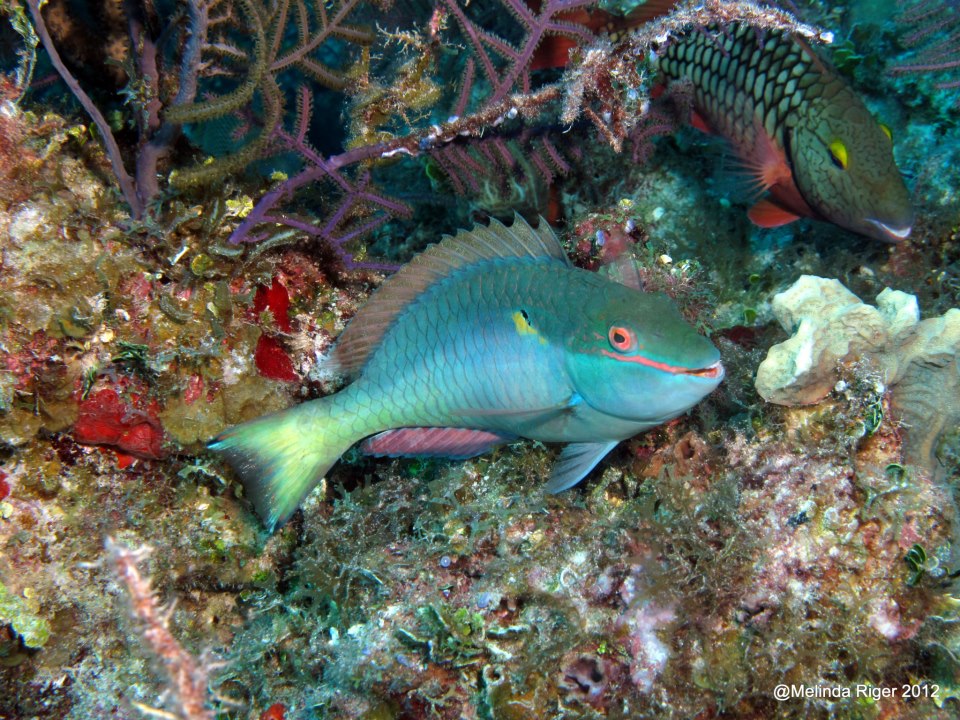
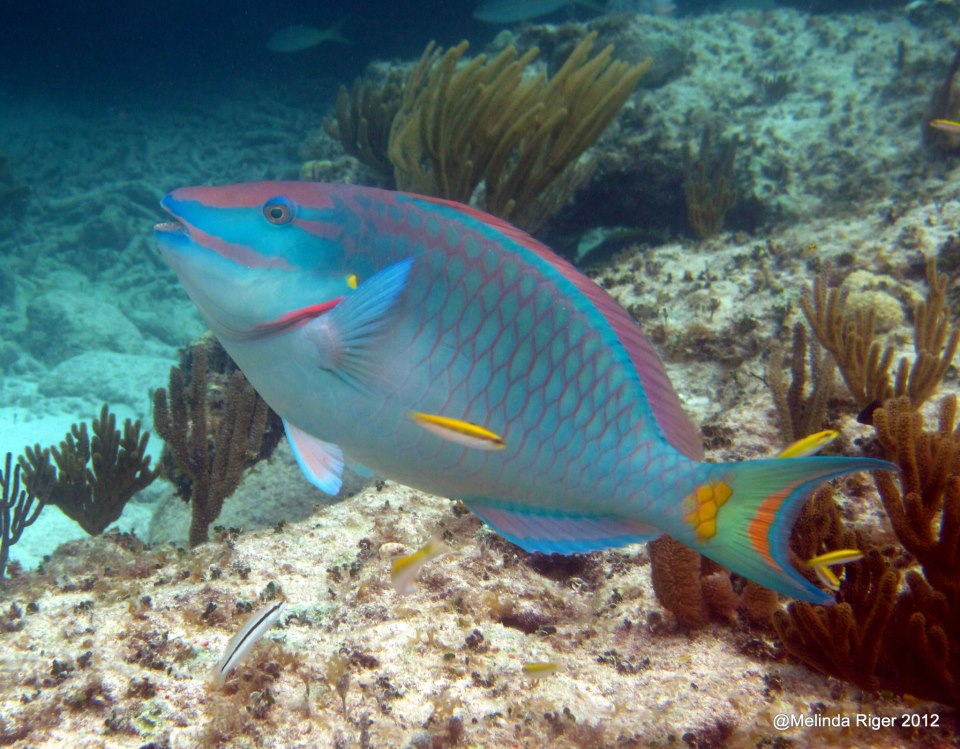
Stoplight Parrotfish ©RH

BAHAMAS REEF FISH (6) PARROTFISH: COLOURFUL CORAL CHARACTERS

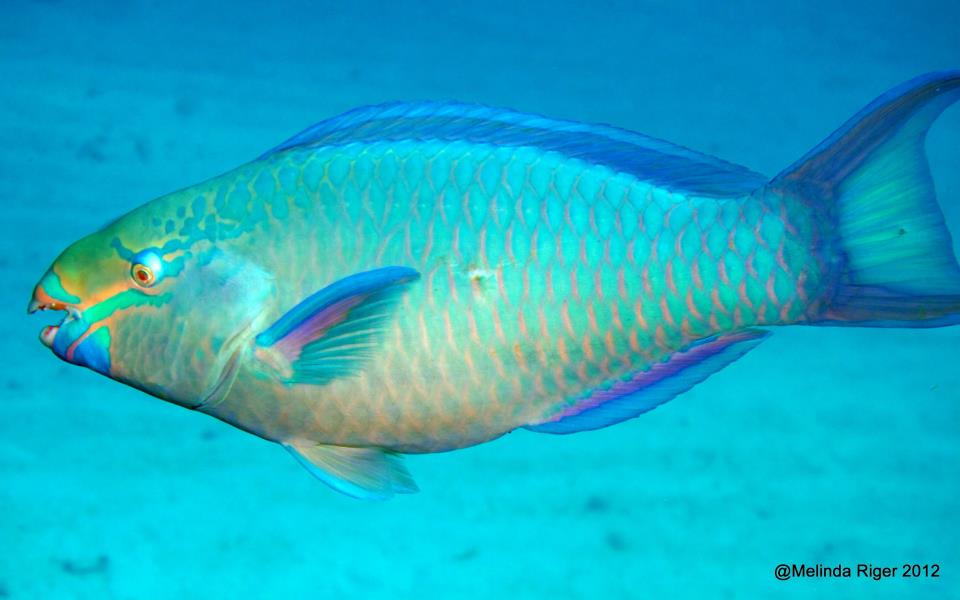
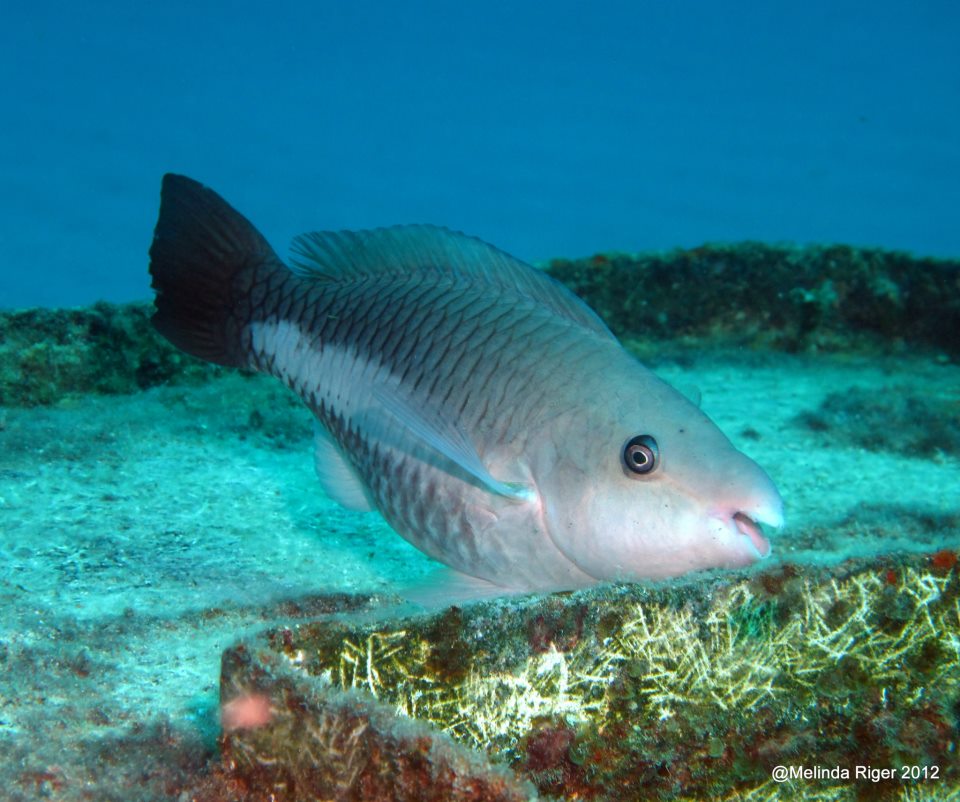
The term ‘PARROTFISH’ comprises many related species (80) around the world  inhabiting shallow tropical and subtropical waters.  They are commonly found in coral reefs and seagrass beds, and along rocky coasts. They play a significant role in BIOEROSION. Here are some examples of 5 of this species that inhabit the waters of the Northern Bahamas

BLUE PARROTFISHBlue Parrotfish copy 2
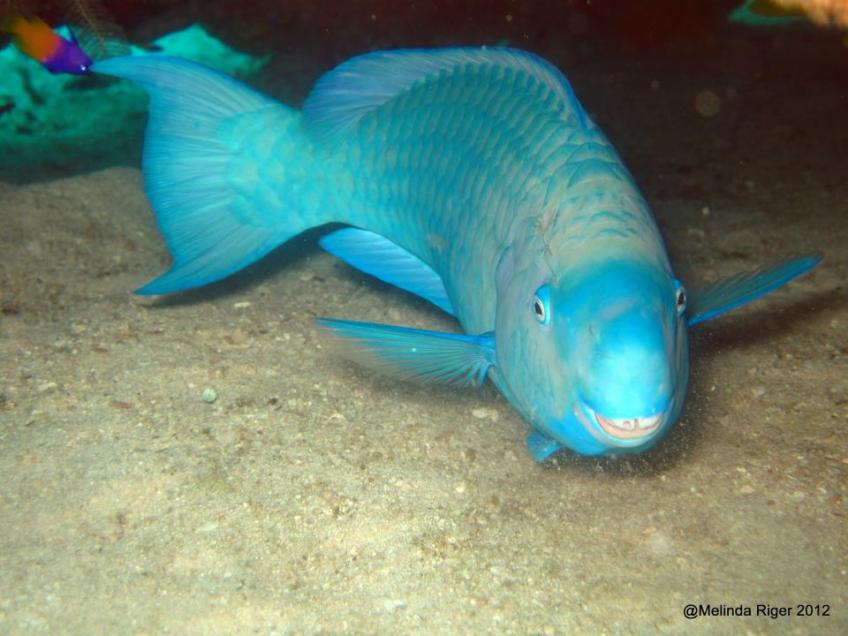
PARROTFISH FACTS TO ASTOUND AND IMPRESS YOUR FRIENDS WITH

A. FEEDING HABITS

1. Named for their dental arrangements – a mouthful of teeth, forming the characteristic ‘beak’

2. Primarily herbivore but not above snacking on small creatures / organisms or even molluscs

3. Their teeth grow continuously, replacing ones worn away by feeding on coral

4. As they feed on algae etc, their teeth grind up the coral, which they  ingest

5. Then (get this!) they digest it and excrete it as sand… it’s a component of your favourite beach!

6. “One parrotfish can produce 90 kilograms (200 lb) of sand each year”. Wiki says so – it must be true

7. They are a vital species in preventing algae from choking coral

PRINCESS PARROTFISHPrincess ParrotfishQUEEN PARROTFISH (initial phase)
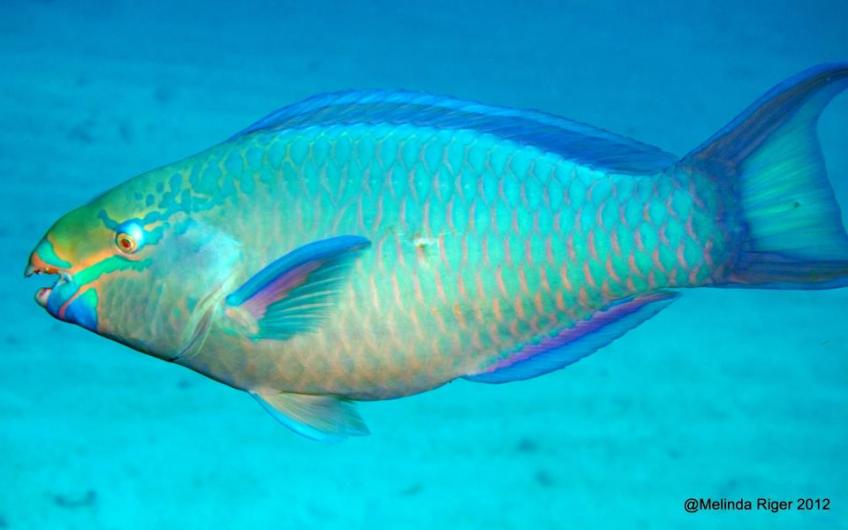
B. PERSONAL INFORMATION (theirs, I mean)

1. Some species secrete a protective mucous cocoon to sleep in or to conceal themselves from predators

2. A mucous substance also helps heal damage, repel parasites, & protect them from UV light

3. As they develop, most species change colour significantly to become vivid adults – “polychromatism”

4. Some juveniles can change colour temporarily to mimic other species as a protection

5. Most are “sequential hermaphrodites”, turning from female to male (a few change vice versa)

6. They tend to hang out in groups of similarly-sized / -developed fish

7. Single males tend to have several lady friends, and aggressively defend their love rights

8. Parrotfish are PELAGIC SPAWNERS. Females release many tiny buoyant eggs into the water, which float freely and settle into the coral until they hatch

9. Unlike other fishes, they use their pectoral fins to propel themselves

10. Their feeding behaviour makes them unsuitable for marine aquariums

RAINBOW PARROTFISH& Royal Grammas

Anyone interested in getting more information about Parrotfishes – maybe about that whole female / male transformation thing? – is recommended to look at an article by Tim Smith of Miami University, Ohio entitled THE BAHAMAS: A CLOSER LOOK AT THE COLORFUL AND UNIQUE PARROTFISH Click on the P-word to get to it directly.

If you are pressed for time, here is the article conveniently digested into bullet points:

  • a superior competitor among herbivorous reef fishes
  • large, heavy scales in regular rows on head and body, with teeth fused together to form a beak-like jaw
  • unique pharyngeal dentition: upper interlocking pharyngeal bones located above the gills rest plush against the lower pharyngeal bone to form the pharyngeal mill (molar-like teeth in their throats) used to grind up the hard coral skeleton that contains microscopic algae
  • the crushed calcareous material travels through the fish’s digestive system and is voided on the reef as white coral sand
  • some fish will return to the same location to deposit this calcareous powder resulting in the formation of small hills over time
  • most parrotfish live on reefs from which they rarely wander far
  • rainbow parrotfish are thought to use the sun for navigation to travel from its nocturnal cave in deeper water to the shore to feed
  • all parrotfish uniquely use the pectoral fins located behind the gills for propulsion (not their caudal or tail fins)
  • in addition to scraping algae from substrate, some parrotfish browse on sea grasses
  • at night, each fish separates to search for a suitable place within the reef to sleep.
  • the large, thick scales of the parrotfish are strong enough to stop a spear in some species
  • the flesh is soft and spoils quickly, the parrotfish is not known as a food fish in the Bahamas
  • in Hawaii they are eaten raw and at one time were reserved for royalty
  • the blue parrotfish may carry ciguatera-producing toxins that result in illness when consumed
  • it’s high time for another picture or two

REDBAND PARROTFISH

Some more bullet points from Tim Smith’s article:

  • at night some species simply burrow into the sand
  • others secrete a filmy mucus cocoon in 30 minutes which masks its scent, affording the parrotfish protection from coral reef night predators such as sharks and moray eels.
  • the parrotfish has the ability to undergo sex reversal in which female fish become males
  • parrotfish born male remain male throughout their lives and are called primary males.
  • female born fish may change sex & color to become male – secondary males or referred to as supermales or terminal males.
  • some parrotfish are chameleon-like, changing their colors to match their surroundings.
  • parrotfish spawn throughout the year
  • there are 80 species of parrotfish
  • the vibrantly colored parrotfish plays a major role in maintaining the cycle of reef growth and erosion
  • “Do not be alarmed if you experience a sudden drift of sediment or hear the crunching sound of coral the next time you are snorkeling or diving along a coral reef in the Bahamas. It is just a parrotfish doing its job.”
  • I sense a stoplight is about to interrupt the proceedings… and here it is

STOPLIGHT PARROTFISH (adult and, below, juvenile form)Thanks to Melinda of Grand Bahama Scuba for her fantastic illustrative pics; the header is mine own

It’s possible that I won’t be quite as attentive with posts / replies to comments etc over the next couple of weeks or so. I’ve a few things in the pipeline, but it may depend on wifi access… I’m giving up trying to use an iPhone to post while on the move – fine for snaps, but not for anything more complicated. So apologies in advance, and like Arnie, I’m afraid I’ll be back…


Gone Fishin'Relax... at Lubbers Quarters
Unknown's avatar

HERRING GULLS (Larus smithsonianus) CLOSE ENCOUNTERS OF A PREFERRED KIND


Herring Gull Header

HERRING GULL Larus smithsonianus

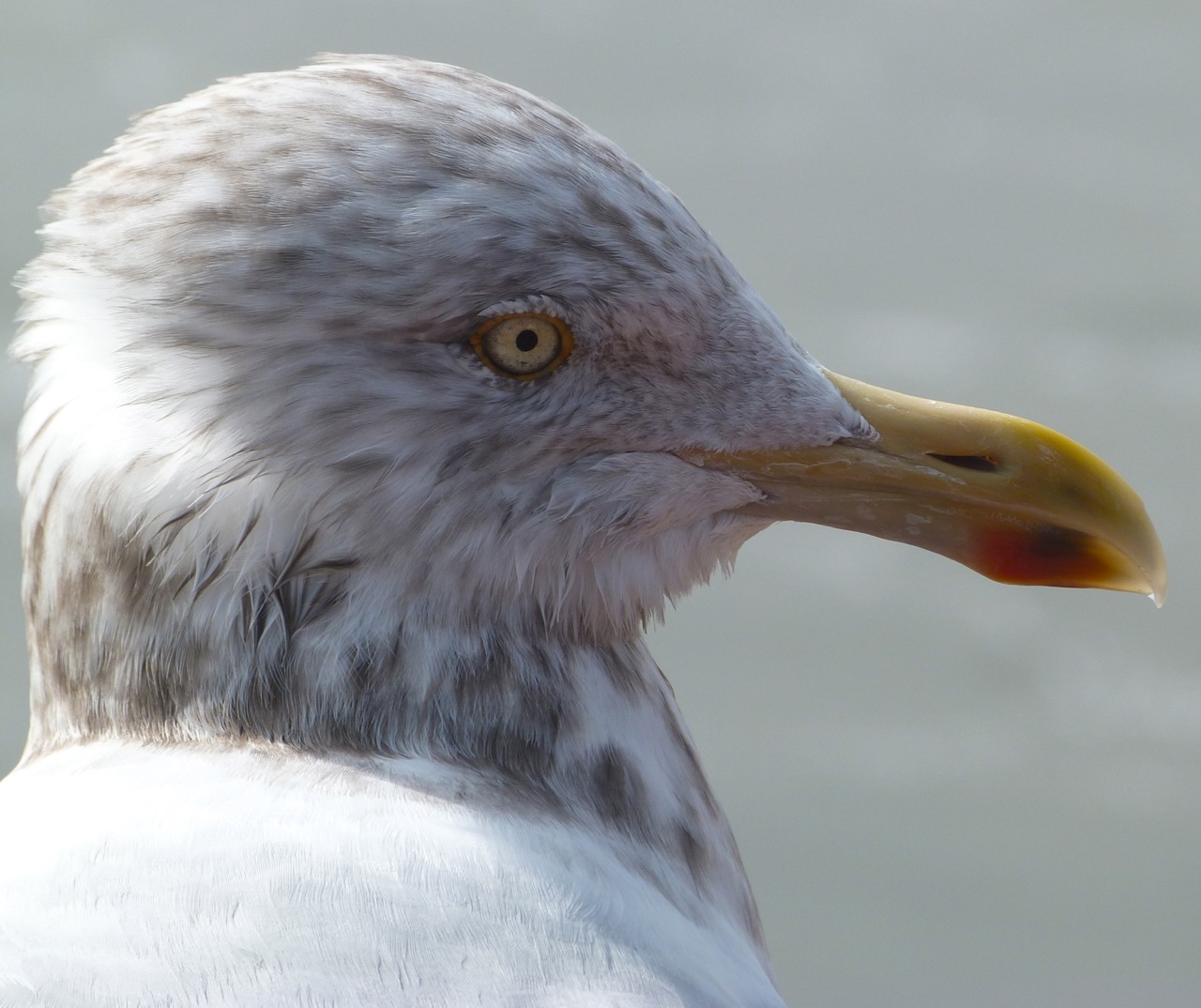
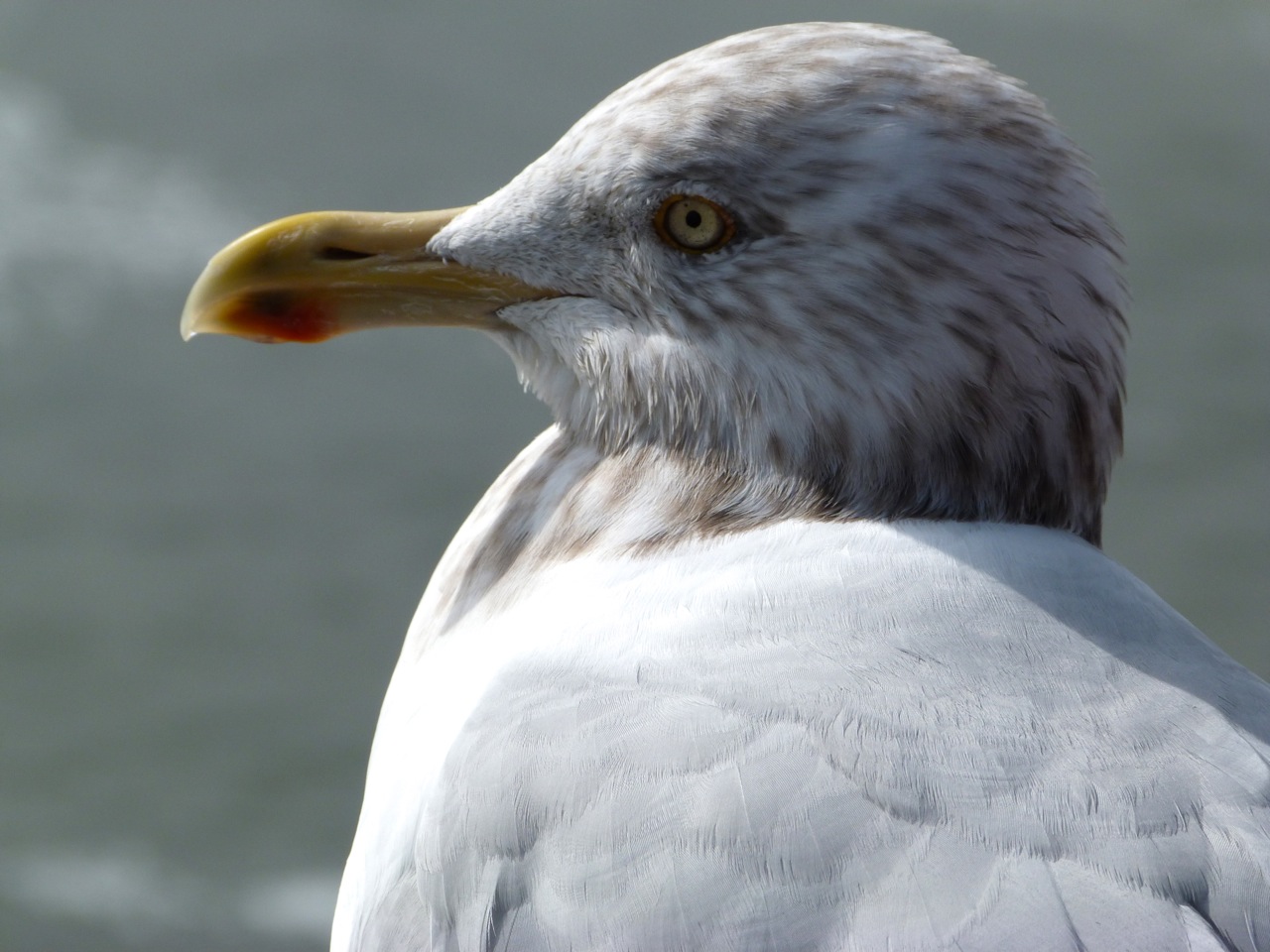
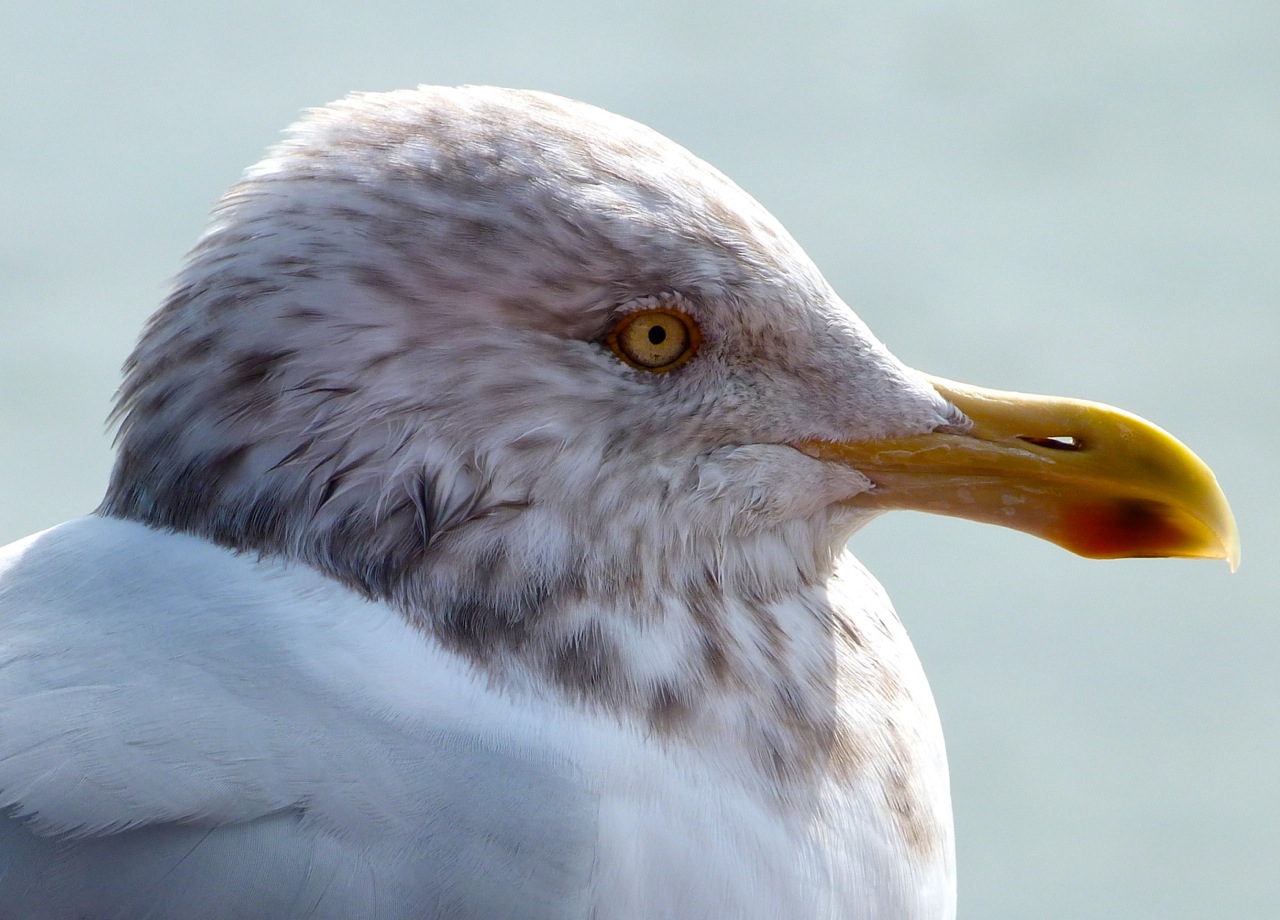
The Herring Gull needs no introduction. So I won’t give it one. Instead, here are some close-ups of one that obligingly stayed still long enough, and at close enough range, to enable me to focus. The final two are possibly worth single- or double-clicking on to see the finer details. I prefer cooperative birds like this…
HERRING GULL IN FAMILIAR ‘BOAT POSE’Herring Gull 2Herring Gull 4Herring Gull 3Note the characteristic crossing of the black-and-white wing-tip feathers

HERRING GULL HEAD SHOTSHerring Gull 1Herring Gull 5All images ©RH; audio clip from the wonderful Xeno-canto archives