Unknown's avatar

BONEFISH RESEARCH: THE IMPACT OF HOOK RETENTION


THE IMPACT OF HOOK RETENTION ON RELEASED BONEFISH

Anyone committed to catch and release for bonefish will have wondered about the hooks that from time to time are left in a fish. The issue has now been the subject of a detailed scientific report from ELSEVIER highlighted in the ever-useful THE ABACO SCIENTIST (thanks to Craig Layman). The report’s main conclusions can be summarised as follows:

  • Hooks, especially shallow ones, are expelled fairly quickly
  • For deep-hooked fish, barbless hooks are significantly easier for the fish to deal with
  • The presence of a hook does not appear to interfere with feeding
  • Hook size is not a material factor
  • All the test sample fish survived
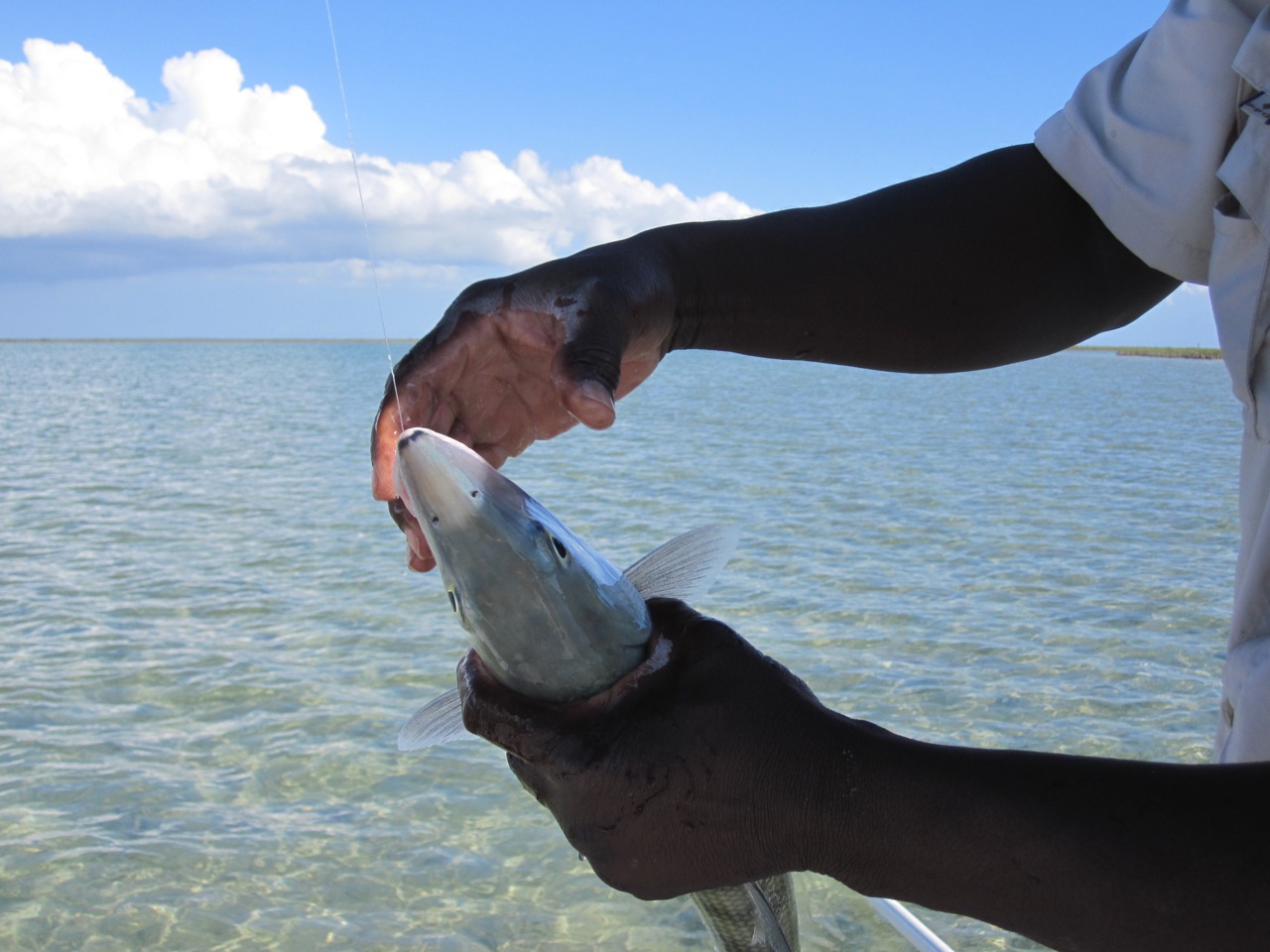
Overall, therefore, this is a vindication for the policy of barbless hook use for C&R. The report concludes that it’s best simply to leave a difficult-to-remove hook in the fish. Here, guide Ishi prepares to remove a barbless hook from one of my fish caught on the Abaco Marls.
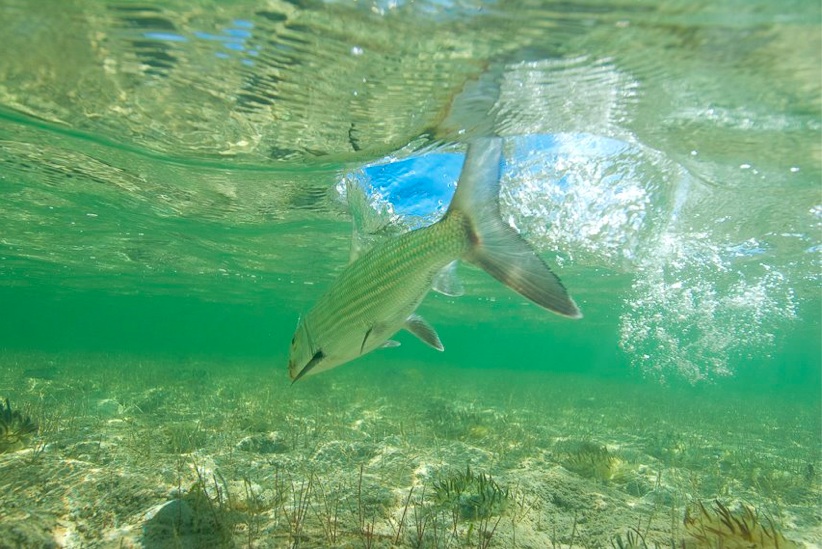
I have included a clip of the report’s front page and Abstract; and the link to a PDF of the full report for those interested in checking out the detailed scientific aspects of this research. To go direct to the general Fisheries Research section click ELSEVIER. The astounding photo is courtesy of Abaco’s conservation organisation FRIENDS OF THE ENVIRONMENT

REPORT PDF

NEW in June 2012 see later post + video CATCH & RELEASE DEMO ON THE ABACO MARLS for a quick release method with a barbless hook involving minimal contact with the fish. It isn’t suitable for deep-hooked fish or large ones, but it shows how quick the operation can be

Unknown's avatar

BAHAMAS MANATEES: INTRODUCING RITA & GEORGIE – FOLLOW THEIR BLOG


BMMRO MANATEE BLOG

A couple of weeks ago I posted about the Manatees of the Bahamas, including the news that a female manatee and her calf had recently been reintroduced into the wild. To see that post CLICK===>>> RITA & GEORGIE

The BMMRO have now set up a Rita and Georgie blog so that the news of their progress and tracking reports can be seen by all. This will be a regular feature on the BMMRO site, and I reproduce with permission the first report below so that you can see what is involved. 

To follow the tale of Rita and Georgie CLICK LOGO===>>>     I will repeat this logo link in future monthly cetacean sighting reports, with a short summary, so you can get the latest on the sirenian situation. At the end of this page is a map showing their movements for the last week. Here also is a clip of the blog headings so you can see what is covered. Hint-laden note: there is a way to help this valuable research by means of adoption. You don’t get to keep one (or both) in the bath, of course, but you get a certificate and you will know you are helping to protect a species that is all too rare in the Bahamas

_____________________________________

RITA AND GEORGIE ARE RELEASED!

This blog was created to allow the public to follow two manatees, Rita and her calf Georgie, as scientists track them after their release back into the wild. Please return for weekly updates

NOTES FROM THE FIELD – WEEK 1
19-April-2012
At 10:30 am, Rita and Georgie arrived at the Great Harbour Cay Marina in Bullock’s Harbour on the Atlantis vessel Sea Keeper. High school students and interested locals had gathered at the marina for this exciting event. At 11:00 am, Dolphin Cay-Atlantis Animal Rescue Team carefully lowered Georgie into the water, and then Rita followed as quickly as possible. Both animals immediately paired up underwater and surfaced swimming towards the mangroves at the east end of the marina.
During the time of the release, two male manatees were observed in the marina and later paired up with the tagged animals. All four manatees were observed socialising as they slowly travelled out of the marina. Jim Reid (USGS) set up the VHF tracking gear and the tracking team started to track Rita and Georgie from land.
After a few detours through the bush, we found all four animals at the northern end of the T-canal; which is a ‘T’ shape cut in the harbour. We observed both males interacting with Rita while Georgie milled nearby. All four were seen feeding on algae on the canal wall. We left them at 4:30 PM.
20-April-2012
In the early morning, the juvenile male was seen in the marina and came very close to one of our vessels. The single animal remained in the harbor for more than 3 hours. This was a great opportunity for Matt McCoy (Loggerhead Productions) to get underwater footage of the juvenile male, which will be used in an educational film about ‘Manatees in The Bahamas.’
Rita and Georgie were later found in the marina but Rita’s tag was missing! Jim successfully placed a temporary tag on Rita and the original tag was found and later reattached. Kendria Ferguson (BMMRO) made acoustic recordings of both animals, which will be used to identify individuals from their vocalisations.
Later Jim collected genetic samples from both the adult and juvenile males. These samples will be used to determine if these individuals are both offspring of Gina and help to develop a family tree of Great Harbour Cay manatees.
21-April-2012
At 8:30 am GPS locations from the tags showed that Rita and Georgie were in Shark Creek along the west side of Great Harbour Cay, about 2 miles south of the harbour. When the tracking team arrived they found mother and calf both in good health and feeding on seagrass beds in the creek system.
22-April-2012  
With winds up to 20 knots the weather was not favorable for the tracking team to hit the open waters in search of Rita and Georgie so we decided to put up manatee warning signs. These signs were provided by Florida’s Save the Manatee Club, along with other educational material that will distribute throughout the island to raise awareness of the local population of manatees.
The tracking team was able to track them by land and both animals were found on the east side of the island swimming along the beach. The tracking team stayed with them for over 3 hours and monitored their breathing and movement patterns. We also got some underwater photos!!
23-April-2012
At 10:40 am local residents of Great Harbour Cay notified the “manatee lady” (Kendria) that four manatees were in front of the marina office. Gina and her calf JJ were both observed feeding on algae on the pilings and JJ was seen nursing occasionally. Both the adult male and juvenile male were there and remained close to Gina and JJ during their stay in the marina.
Jim was able to collect a genetic sample from JJ and also confirm that she is in fact a female calf. Both males continued to remain close and watched Jim constantly!
GPS locations from Rita and Georgie tags showed that they traveled as far south as Ambergris Cays. During the night, the tracking team closely monitored their movements as they were received via satellite. They entered Shark Creek shortly after 6pm from the west side of the island and remained there for approximately 5 hours. During this time, scientists believe that they were feeding and resting, as this area has extensive seagrass bed coverage. The tracking team continued to monitor their movements throughout the night and hoped that they turned to head back north very soon!
24-April-2012
At 4:30am, GPS locations showed that Rita and Georgie took ‘the channel’ cut and headed back north into the harbour of Great Harbour Cay.
At 8am we located both mother and calf under Al’s dock (our local fish provider). Both animals were resting and Georgie was observed nursing. The tracking team obtained photos, videos and acoustic recordings of both animals during this 3.5 hour encounter.
From their departure from the harbour early Sunday morning to their return Monday morning, they managed to complete a 50 mile trip around Great Harbour. A very happy ending to a very long journey!
25-April-2012
Rita and Georgie remained in the marina overnight and at 7:15am were found just a few houses down from the tag team’s home. Both animals swam towards our tracking vessel, “Feresa” and remained in the area for 15 minutes. Georgie has quite the personality! She began sucking on Feresa’s inflatable tubes and eating the algae off another inflatable boat a few feet away.
Both animals remained very close and traveled under the docks towards the end of the marina towards the mangroves. The local residents occasionally report seeing Gina and the other manatees at these mangroves and believe there is a fresh water discharge. This is also very close to the area of Rita and Georgie’s initial release back into the wild.
WEEK 1
‘An Awfully Big Adventure’ (© P.Pan)
Unknown's avatar

BAHAMAS MANATEE & BMMRO SPRING 2012 CETACEAN REPORTS


The BMMRO has just published two online reports that will interest anyone who follows the news about Whales, Dolphins and Manatees in the Bahamas.

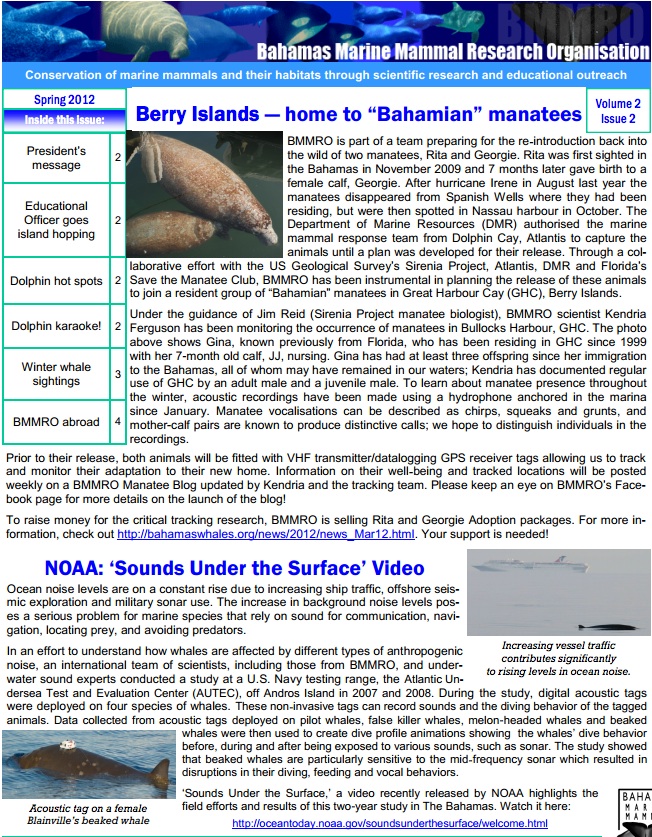
The first concerns the reintroduction of manatees to the wild – and offers the opportunity to adopt one of them in order to support the continuing work of the conservation of the small manatee population of the Bahamas. You could have a guess now at the number of recently recorded manatees: the answer is right at the bottom of the page. If you have followed this blog’s cetacean posts, you will have noticed my own interest in the continuing monthly sightings (mainly off the Berry Is.) I have had to reduce the size of the article, but if you click on it once – or twice – it enlarges to make it more legible.

To see the article on the BMMRO website CLICK==>> BMMRO MANATEES

To go directly to my manatee page CLICK==>> ROLLING HARBOUR MANATEES

Click article to enlarge it

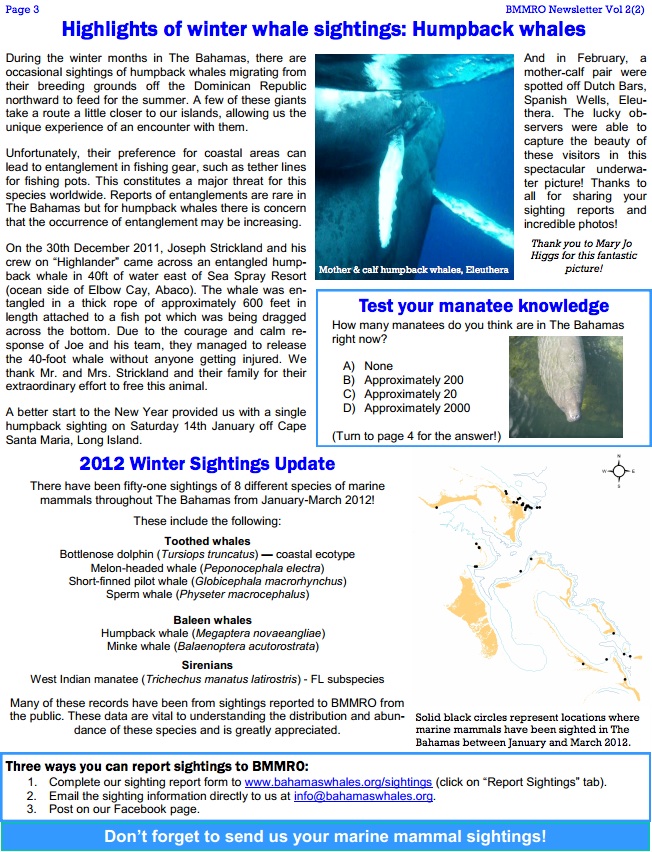
BMMRO REPORT SPRING 2012

I have summarised past BMMRO quarterly reports, highlighting particular features and photos. This time I’ve put in the whole report in (I hope) legible format. To see it on the BMMRO site CLICK===>>> BMMRO SPRING 2012

Approximately 20

Unknown's avatar

BEACHCOMBING WITH KASIA: EXPLORING A ROCKY SHORE


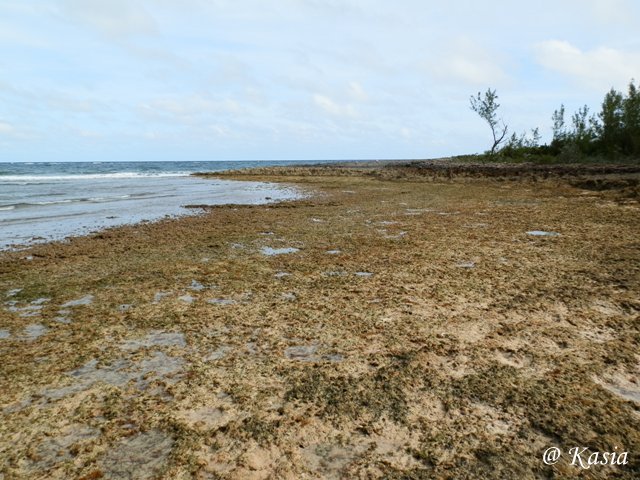
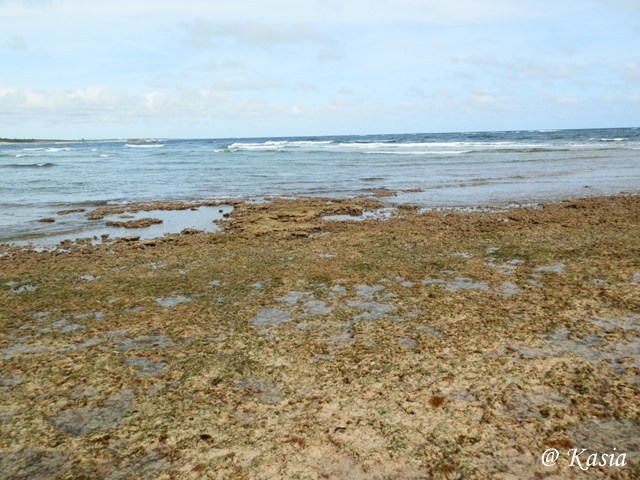
Kasia’s back! She recently explored a rather unpromising-looking stretch of Abaco coastline, and it proved to be anything but… Kasia writes: The story goes: one day I took myself for a walk and a bit of beachcombing. I usually don’t bring my camera with me but luckily this time I did. This particular beach looks very barren but on close inspection and a patient eye there are some lovely treasures to be found. Here are some of the treasures I captured!

A tangle of 3 bleached trees, with their roots apparently intertwined

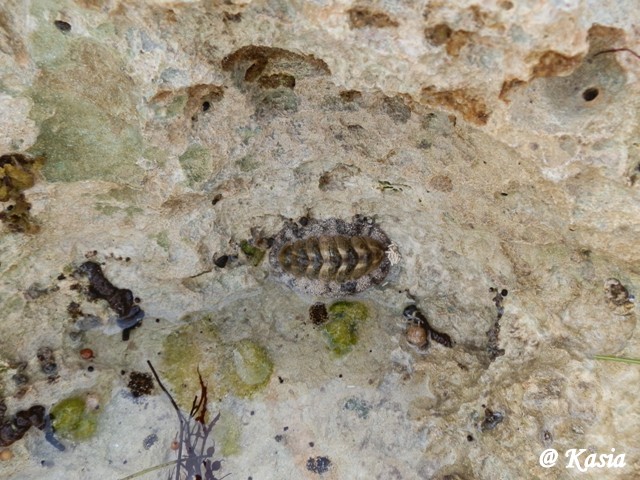
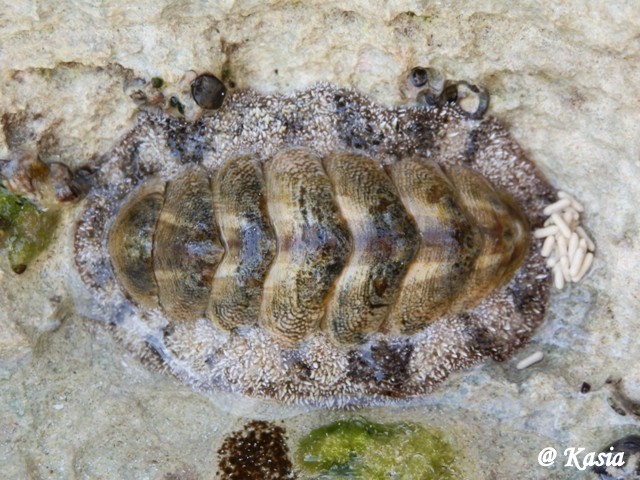
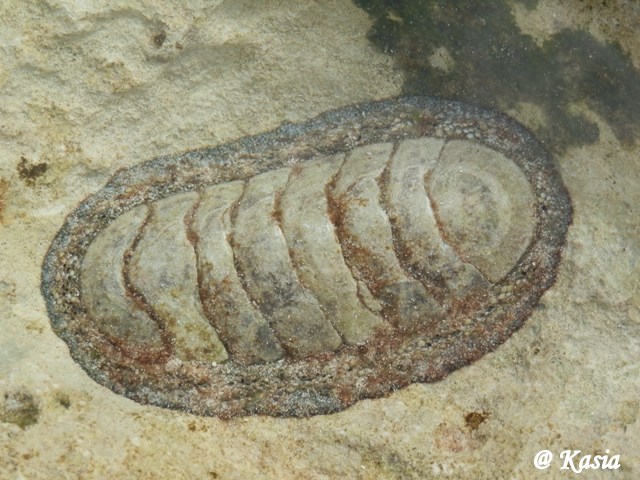
CHITONS

Great close-ups… are those eggs behind this first one? There’s a similar image in the Macmillan ‘Marine Life of the Caribbean’ but unfortunately neither the caption nor the text refers to them. ADDENDUM: Colin Redfern writes: The “eggs” behind the chiton are fecal pellets

NERITES (Nerita)


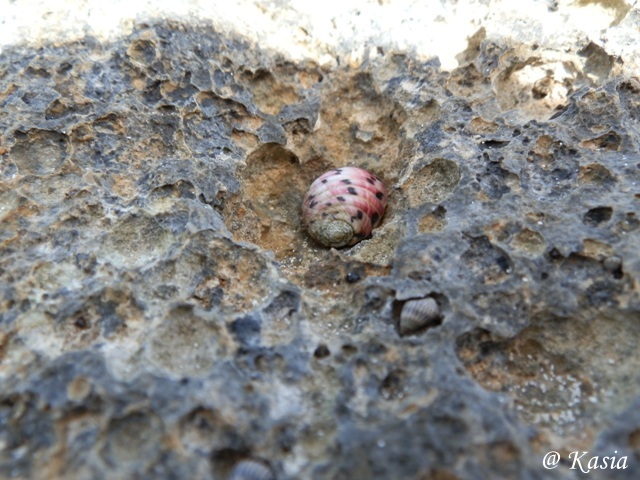
WEST INDIAN TOP-SHELLS (Cittarium Pica) 

In this image, several very small chitons can also be seen on the rock

It looks as if someone… or something… has been having a Nerite feast on the shore. A bird maybe?  I had taken the shells above and below to be another variety of Nerite, but as so often scientist and shell expert Colin Redfern has kindly corrected the error. He writes: “Very nice photos. The “nerite feast” is actually a pile of broken West Indian Top-shells (Cittarium pica). The photo immediately above shows a live group of the same species. This is what Bahamians call a whelk (or wilk), and in the lower photo they have been harvested, probably for a stew.

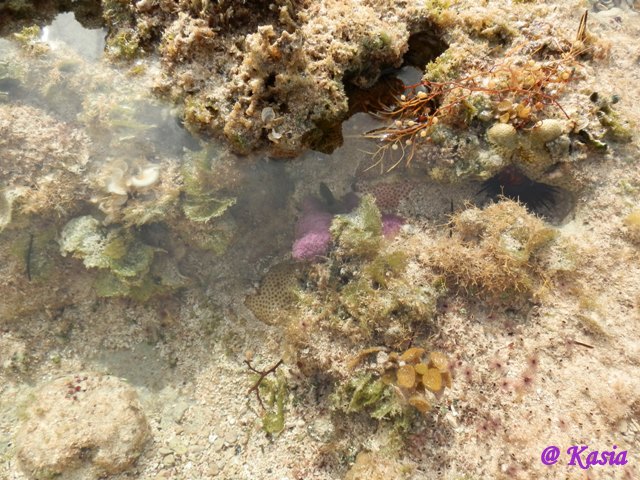
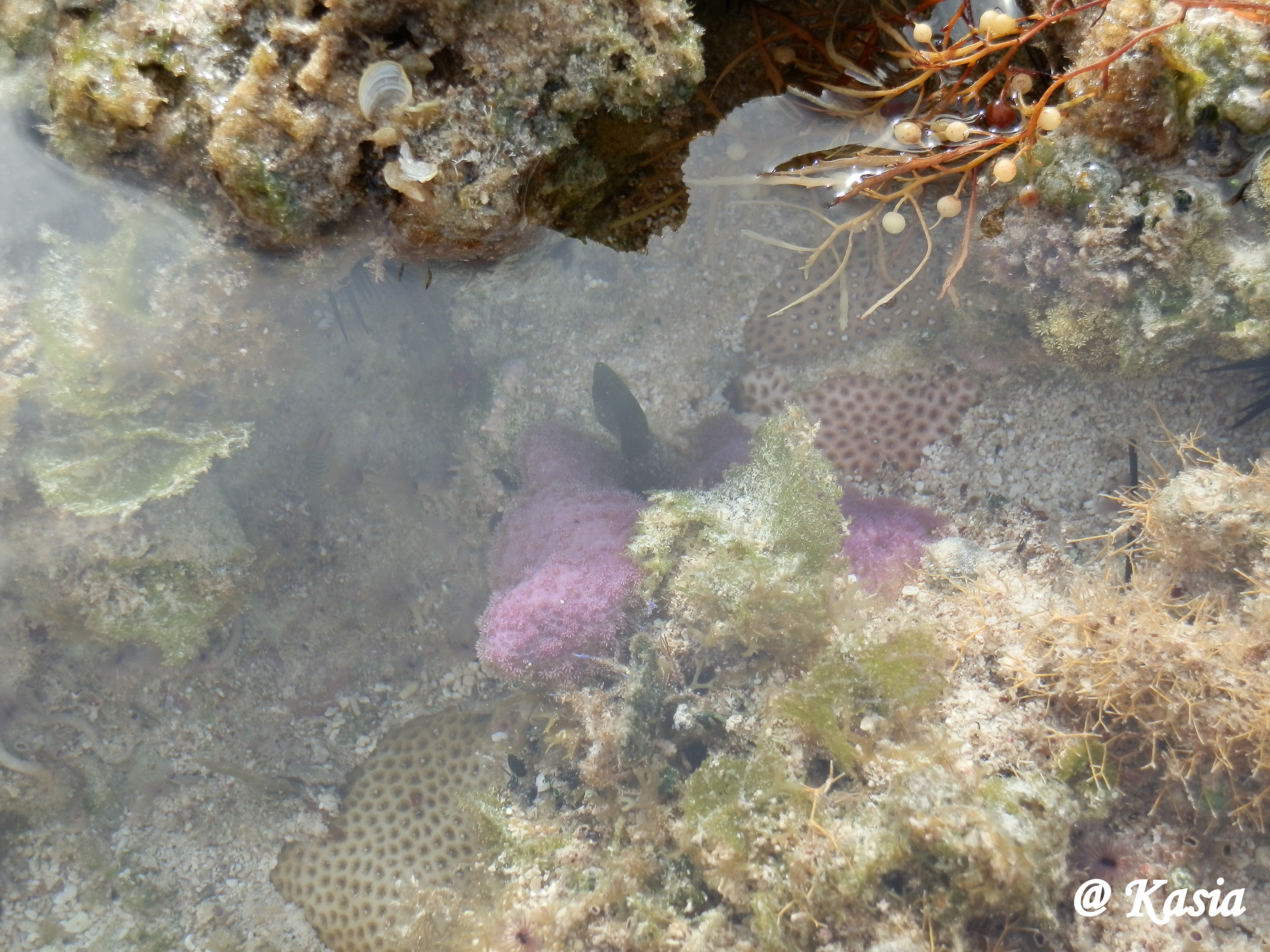
 ROCK POOL MISCELLANY

I am trying to ID a much as I can in this pool. All suggestions welcome via ‘Leave a Comment’. So far, the corals are Brain Coral and Pink Coral (I think) but I am going see what else can be given a name…

These are my favourite! 🙂 Kasia

COMET SEA STAR (possibly juvenile, with 3 such short stubs?)

A SPONGE (?) OF SOME SORT (any help with ID appreciated…)

                RED ROCK URCHINS

Unknown's avatar

BMMRO WHALE, DOLPHIN & MANATEE SIGHTINGS MARCH 2012


BMMRO WHALE, DOLPHIN & MANATEE SIGHTINGS MARCH 2012

Hard on the heels of the BMMRO’s Fisheries Report for 2011 – see previous posts – comes the map of last month’s sightings. First, let’s hear it for the manatees, featuring for the 4th consecutive month off the Berry Is. The 2 reports of an ‘unknown large cetacean’ off Elbow Cay are the puzzles of the month. There was a sperm whale in that area in January, but presumably it would have moved away in the meantime…. I wonder what the likely candidates are for ‘large’ besides sperm and humpbacks?

Unknown's avatar

BMMRO BAHAMAS FISHERIES REPORT 2011 EXTRACTS & LINK


The BMMRO has recently published its Fisheries Report for 2011. The report is comprehensive and covers a far larger area than the waters around Abaco. Extracts are shown below (thanks as alway to Charlotte Dunn for use permission). The full report can be seen in pdf form at BMMRO FISHERIES REPORT

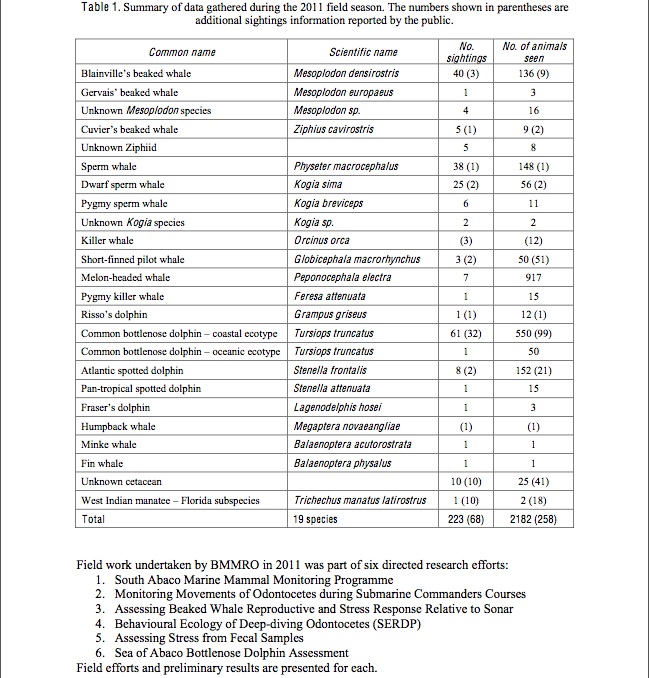
1. First, here is the table of all field data for the 2011 season, from which the incidence of the particular cetacean types can easily be seen. To a layman (me), the most significant reading on the previous year is the increase in sperm whale sightings and animal numbers, up from 14 / 69 in 2010 to 38 / 148 in 2011. I wonder why the difference?

2.  Here are results specifically relating to South Abaco, where the majority of cetacean activity is observed (see ‘green’ map). I have included a larger image of the cetacean species so that the key is easier to read

Unknown's avatar

SHELLS OF THE ATLANTIC COASTS & WEST INDIES: PETERSON FIELD GUIDE


SHELLS OF THE ATLANTIC COASTS & WEST INDIES 

PETERSON FIELD GUIDE    Abbott / Morris   350pp

An excellent and comprehensive field guide which covers the area as thoroughly as one could wish. It’s not exactly a pocket book, and at 350 pages it’s quite a chubby paperback – but the sort of size you’d happily throw into a day-bag or backpack. This authoritative shell guide dates from 1947, with frequent reprints. Mine is a fourth edition (1995) – there may be a 2002 one.

Currently £18 from Amazon UK,  or new / used for around £7 (a bargain); and a great deal cheaper on Amazon US. Overall 4* reviews

Rolling Harbour rating *****

THE BOOK IN A CONCH SHELL

  • Numerous clear illustrative line drawings throughout (115, in fact)
  • 74 colour plates grouped together at the heart of the book, showing living creatures and a huge variety of shells – 780 in all
  • Introductory articles on collecting, preparing, arranging and naming shells; also classifications and measurements
  • The text comprises 800 brief but helpful family / species descriptions, with notes on habitat and other remarks
  • Bi-valves cover 120 pages; Gastropods a stonking 150 pages
  • The substantial illustrated core of the book has shell groups on the right-hand page, with ID and text references on the left. The system works very well, especially with the many shell types that are very similar
  • At the back there’s a useful ‘Conchological Glossary’ to help sort out the crenulates from the reticulates
  • A huge 30-page index that is both thorough and user-friendly
I personally found the illustration section very helpful as a first stop; then a trip to the text to confirm the description. I had no idea what a shell we recently found in a drawer might be, but it didn’t take long to nail the ID as a STOCKY CERITH a shell I’d never even heard of. First I found a very clear illustration of it, then turned to the text description which matched what I had in my hand. Overall, as a complete amateur, I found this book the best practical guide I have yet tried for shell identification – and I suspect more sophisticated shell-seekers will get a great deal out of it too.
Unknown's avatar

STOCKY CERITH – A RANDOM ABACO SHELL FROM THE BACK OF A DRAWER


A RANDOM ABACO SHELL FROM THE BACK OF A DRAWER 

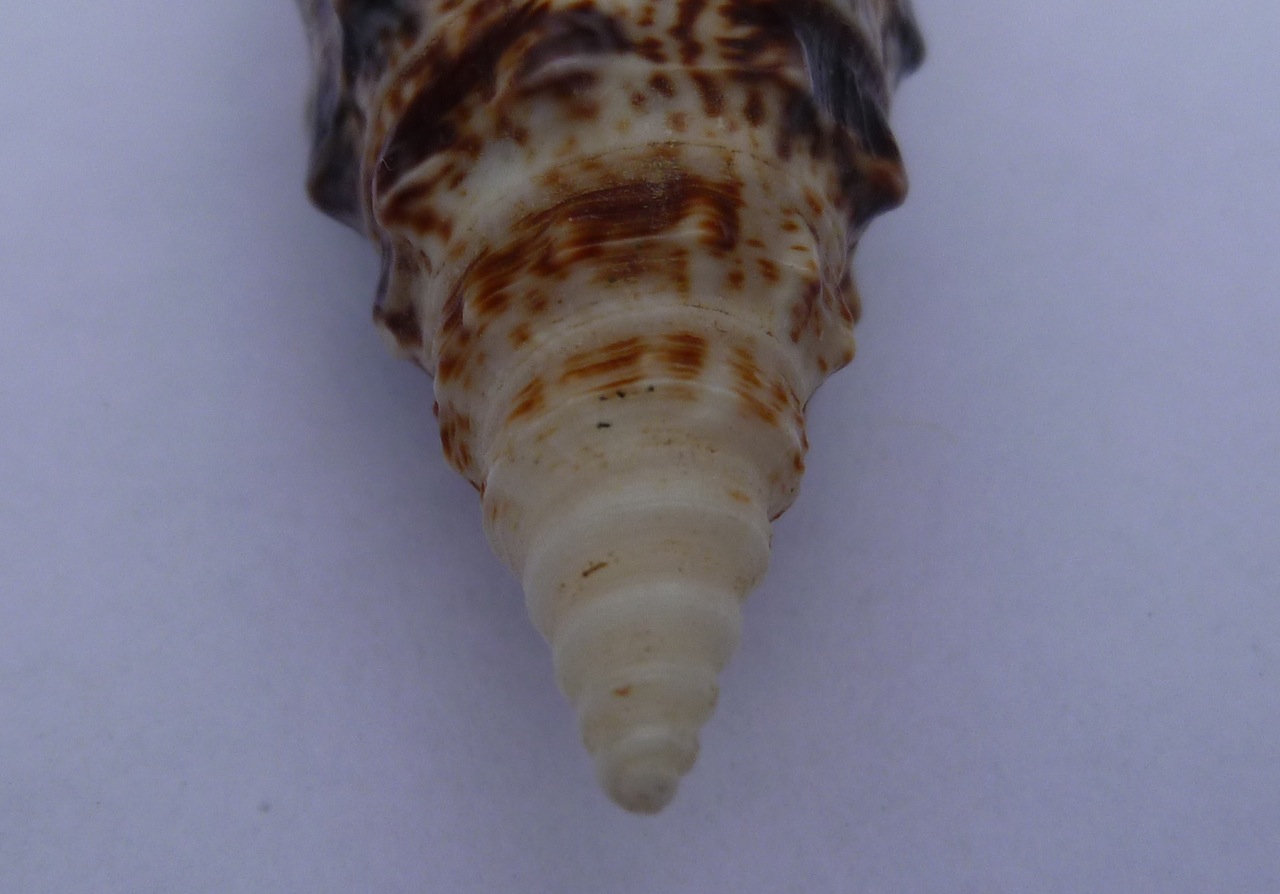
We recently discovered this shell loitering at the back of a drawer. It may well have been there for a couple of years… I had no idea what species of gastropod it might be, so I turned to a book I recently bought (and am about to review), the Peterson Field Guide on Shells. It is extremely thorough and well-illustrated, and almost at once I was able to pick the shell out as a STOCKY CERITH Cerithium Litteratum (Colin – are you still keeping an eye on the shell ID errors in this blog, I wonder? Later: yes… and he confirms the ID. Many thanks). It’s a couple of inches long and has 7 spirals before the tip part, with pronounced nobbles on the lowest 4. There’s a neat hole in it, but I don’t know whether caused by sea / beach damage or a predator. These creatures live in shallow water and are common throughout the Caribbean. So this one is nothing unusual, but I am pleased that it has eventually turned up…

STOCKY CERITH Cerithium Litteratum

Unknown's avatar

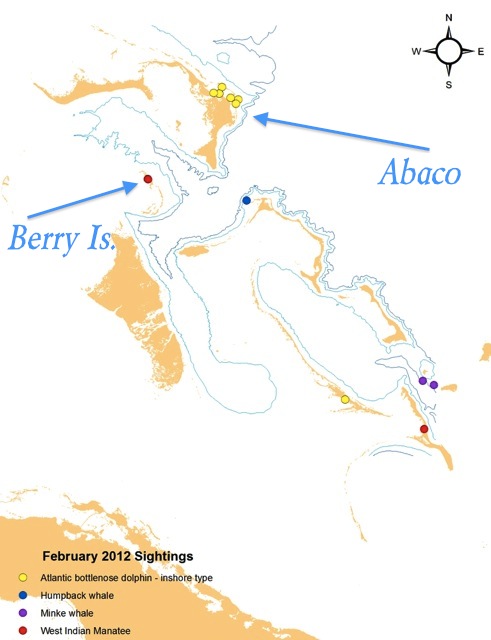
BMMRO WHALE, DOLPHIN & MANATEE SIGHTINGS FEB 2012


BMMRO WHALE, DOLPHIN & MANATEE SIGHTINGS ABACO / BAHAMAS FEBRUARY 2012

From an Abaconian point of view, the news is of Dolphin activity in the Marsh Harbour area / nearby Cays and northwards from there. No whale reports last month, though. Further afield, another manatee report from the Berry Is makes three consecutive monthly reports of sirenians. There was a humpback to the south but other reports are concentrated further away

Unknown's avatar

HUMPBACK WHALES IN THE BAHAMAS: TWO SIGHTINGS & AN ENTANGLEMENT


HUMPBACK WHALES – BMMRO REPORT JANUARY 2012

The BMMRO has posted recent whale news on its site – an entanglement off Elbow Cay with a happy ending, a sighting off Long Island in January, and another in February with images    (CLICK LOGO for BMMRO website)

1. An Entanglement 30.12.11  During the winter months the Bahamas occasionally get a sighting of a humpback whale migrating northward. For some reason a few of the migrating whales take a route a little closer to our islands and allow us the wonderful experience of seeing them.

On the 30th December 2011 Joseph Strickland and his crew who had been staying on the Highlander in Hope Town harbour, came across an entangled humpback whale. Due to the courage and calm response of Joe and his team, they managed to release the 40′ humpback. The whale had been entangled in a thick rope of approximately 600′ in length attached to a fishtrap. The animal was found off  Sea Spray marina in 40 feet of water off Elbow Cay, Abaco. They managed to free the animal of the fishpot which it had been dragging… as well as freeing the animal of the majority of rope, with only 20′ of line remaining on the whale. We would sincerely like to thank Mr & Mrs Strickland and their family for their extrodinary effort to free this animal, and also to report the encounter in detail.

Unfortunately as humpbacks are one of the more coastal whales, they often end up entangled in fishing gear, and come into contact with fishing pots, as well as being susceptible to vessel strikes. However, this species have made a remarkable recovery since the whaling era and in the North Atlantic abundance estimates are now approximately 12,000 humpback whales.

2. A sighting on 14.01.12  A better start to the New Year provided us with a single humpback sighting on Saturday 14th January off of Cape Santa Maria, Long Island. 

3. A sighting on 8.02.12 Finally, on Wednesday 8th February, a mother-calf humpback pair were spotted off of Dutch Bar, Spanish Wells, providing us with these beautiful pictures! Report and Image Credits BMMRO 2012


Unknown's avatar

‘CONCH CENTRAL’ AT SANDY POINT, ABACO, BAHAMAS


‘CONCH CENTRAL’ AT SANDY POINT, ABACO

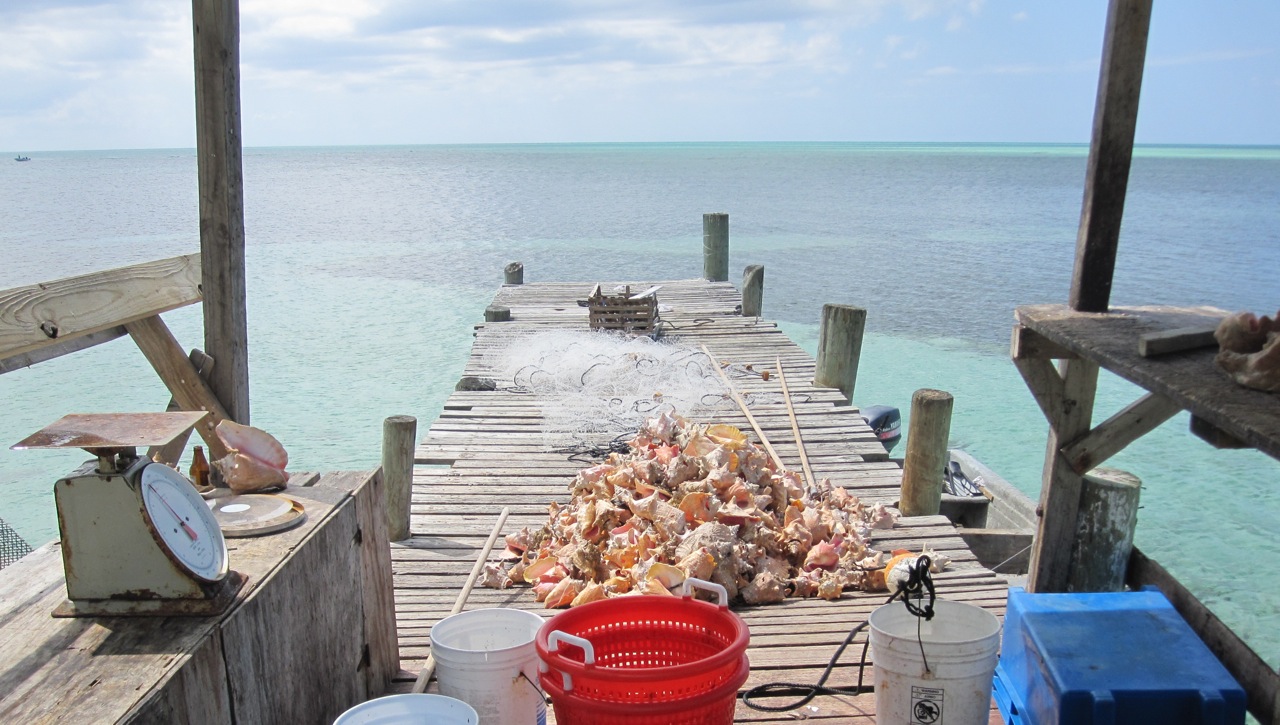
The serious conch action in Sandy Point is to be found at the jetty. I learned a simple beginner’s lesson on our first visit to Abaco. If you choose a large gorgeous-hued conch from the huge pile in the 4th photo to take back home, it will quickly start to smell dodgy, followed by evil… until you clean it properly!

Unknown's avatar

ABACO WHALE, DOLPHIN & MANATEE SIGHTINGS JANUARY 2012


ABACO CETACEANS AND SIRENIANS                                        BMMRO SIGHTING REPORTS JANUARY 2012

For the second month in succession MANATEES have been seen in the area: again in the Berry Is region, and additionally off Grand Bahama. With luck they will now be a fixture on the BMMRO monthly sightings map. The main reported Abaco activity, including a sperm whale, was on the ocean side of Elbow Cay. Thanks to Charlotte Dunn / BMMRO for permission to use their material

Unknown's avatar

BOOKCOMBING: AN OCCASIONAL THEMED SERIES (1) OCEAN DEBRIS


BOOKCOMBING

A MISCELLANY OF BOOKS MORE OR LESS RELEVANT TO ABACO LIFE

These are not books I have read myself. They are books that may be of interest to readers of this sort of blog. Islandy. Beachy. Mariney. A whiff of wildlife. They will be collected together under the BOOKS ETC menu as the series expands. If one of them catches your eye, then check online for reviews, reader ratings and prices. If I get round to one or more of them I will add my own views, but I am still gradually working through wildlife books that I have already paid for…

1. FLOTSAM, JETSAM & OCEAN DEBRIS

Flotsametrics and and the Floating World: How One Man’s Obsession With Runaway Sneakers and Rubber Ducks Revolutionized Ocean Science

by Curtis Ebbesmeyer & Eric Scigliano

“Curtis Ebbesmeyer has made important discoveries about everything from currents to the huge floating garbage patches in the ocean to how life was first spread on earth and how the Vikings settled Iceland. In the tradition of John McPhee’s bestselling books on scientists who both study and try to protect the natural world, The Floating World offers a fascinating look at the creativity and energy of a most unusual man—as well as offering an amazing look at what currents have meant for the world and especially mankind through the centuries.  Hardcover; PP: 288; Illustration: 10-15 images throughout” Smithsonian Store

Washed Up: The Curious Journeys of Flotsam and Jetsam

by Skye Moody

“The ocean gives up many prizes, just setting them on our beaches for us to find. From rubber ducks that started out somewhere in Indonesia to land Venice Beach, to an intact refrigerator makes it way to the Jersey Shore. Chunks of beeswax found on the Oregon coast are the packing remnants of 18th century Spanish gold. Author Skye Moody walks the coast, dons her wet suit, and heads out to sea to understand the excellent debris that accrues along the tideline. There she finds advanced military technology applied to locating buried Rolexes, hardcore competitive beachcombing conventions, and isolated beach communities whose residents are like flotsam congregated at the slightest obstacle on the coastline. This book confirms that the world is a mysterious place and that treasure is out there to be found” (Publisher’s Fluff)

Tracking Trash: Flotsam, Jetsam and the Science of Ocean Motion

by Lorree Griffen Burns

“Tracking Trash is the story of Dr. Curtis Ebbesmeyer, an oceanographer who studies the movement of ocean currents. Dr. Ebbesmeyer’s work has attracted attention because he has received much of his information from studying trash. It all began when his mother heard about sneakers that were washing up on a beach after a cargo ship lost one of its containers. Since then, he has tracked sneakers, Lego’s, and even rubber duckies that have been accidentally spilled at sea and made their way to shore. By understanding how ocean currents move, scientists hope to solve many problems such as fish shortages and animals being caught in fishing nets. This book was very enjoyable to read and easy to understand. The pictures were large and engaging. The author did a great job at making it feel like a story while at the same time giving a lot of scientific information” (Satisfied Amazon Punter)

Moby-Duck: The True Story of 28,800 Bath Toys Lost at Sea and of the Beachcombers, Oceanographers, Environmentalists, and Fools who wen in search of them…

Donovan Hohn

I have just spotted that this book is about to be reprinted and, I imagine, updated at the end of February, so I am adding it to the collection. I note in passing that it is published by Penguin…

One 5* review on Amazon UK sets the scene: “This is a book that follows the journey of plastic ducks, turtles, frogs and beavers after the container they are in falls overboard and breaks open on impact with the sea. Moby Duck is fact that reads as good as fiction. The Author doesn’t only traverse the world of escapee plastic toys but meanders his way through a factory in China that makes bath toys, gets on a ship that is on research mission even though he has a fear of open water and even ends in Alaska where the first plastic duck was found. This is a great read, for anyone who likes a quirky book that tells a true story with wit, charm and gentle humour. Moby Dick is never far away in this book, only he has been transformed into Moby Duck…”

Amazon.com has 42 reviews, averaging a disappoining 3.5*. Some are ecstatic, some lukewarm, few can resist the golden opportunity proffered by the author to be “puntastic”. I like the one titled “An Eclectic Tale, but Caught in Its Own Eddy in the End”. Maybe that is the most astute summary of all.

Unknown's avatar

KING VENUS CLAMS & CRAB SHELLS (NO SPACE DEBRIS): ABACO BEACHCOMBING WITH KASIA


ANOTHER STROLL ALONG THE SHORE WITH KASIA

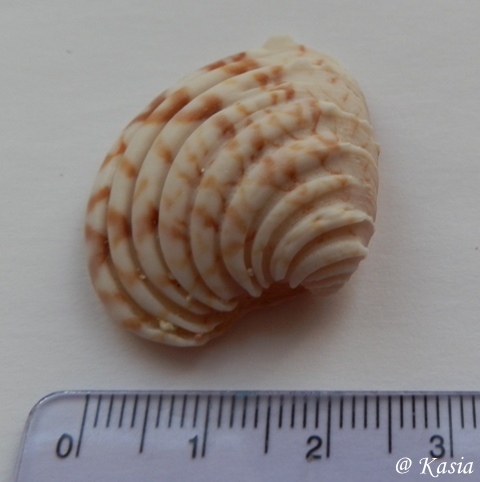
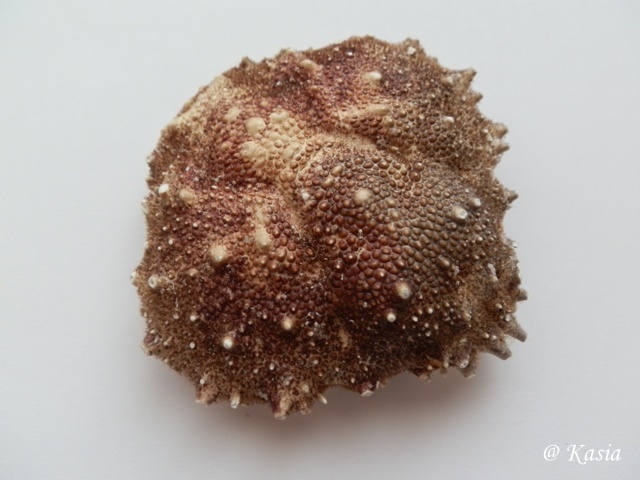
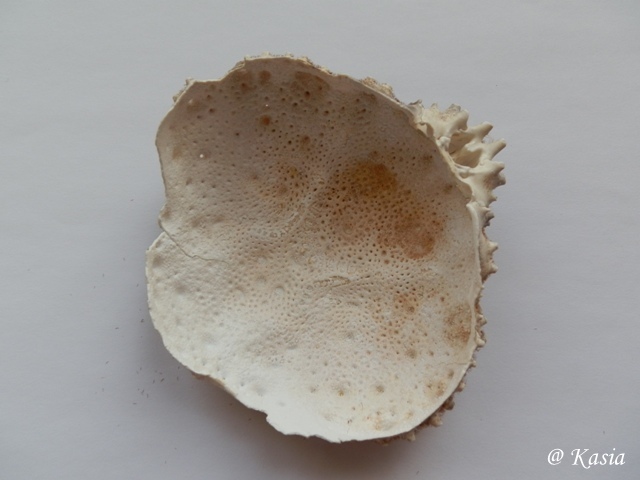
After all the recent excitement – well I was excited, anyway – involving Mars Mission space rocket debris washed up on the Delphi Club Beach CLICK MARS ROVER it’s a gentle touchdown back onto a sandy beach for some more of Kasia’s finds. First, a shell which I believe (tempting fate) I have correctly ID’d for once. Then a half crab shell, at a guess a spider crab’s roof. 

KING VENUS CLAM Verenidae – Chione Paphia

These bivalve molluscs seem to be inoffensive, and to lead rather dull lives: so far all I have discovered is that “they live buried in sand at depths of 1 – 20 fathoms” I shall investigate further & report back – there must be some small creature they molest or upset in some way…

CRAB SHELL, FORMER HOME TO A SPIDER CRAB
Unknown's avatar

HUMANS’ TASTE FOR DOLPHINS & MANATEES ON RISE


 HUMANS’ TASTE FOR DOLPHINS & MANATEES ON RISE

I am reblogging (thanks to Ann Novek at http://havehest.wordpress.com/the above link to an article by Jennifer Welch of LiveScience, published in Biological Conservation. It’s of particular relevance on these pages, since I have just posted about manatees and the threats to their survival; and also because dolphins are a regular feature of this blog. A quick G**gle search reveals a number of sites with recipes for marine mammals (including manatees), many species of which are protected by law… I suspect that the slow and inquisitive manatee will always be easy meat, as one might say. NB ‘Dolphin’ here does not include the dolphinfish (dorado) commonly found on menus as ‘dolphin’, for which there are no current conservation concerns (although there are officially preferred methods of catch)

Unknown's avatar

WEST INDIAN MANATEES AND THE BAHAMAS: THE FACTS


Bahamas Manatee Gina (BMMRO)

WEST INDIAN MANATEES IN THE BAHAMAS

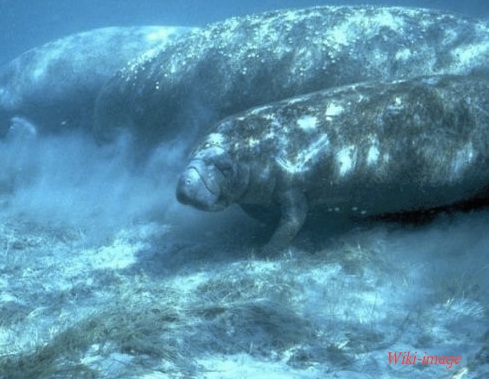
The appearance of a mother and calf manatee off the Berry Islands in December 2011 – see BMMRO SIGHTINGS post – led me to investigate these creatures a bit more. I added some more info and a couple of photos to that post, but really they deserve a post in their own right. So, with a wave of a flipper in the direction of Wiki and other open sources,  here’s some more about these most strange-looking mammals, just in case you ever happen to come across one…
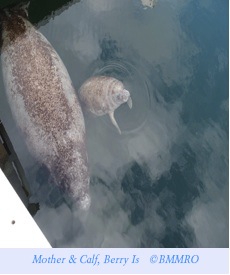
I will expand the post when I have read the latest “What Manatee?”, “Total Manatee” and “Manatee Monthly” magazines 

MANATEES Trichechidae “Large, fully aquatic, mostly herbivorous marine mammals. There are three accepted living species of Trichechidae, representing three of the four living species in the order Sirenia. The name manatí comes from the Taíno, a pre-Columbian people of the Caribbean, meaning breast” 

10 MEMORABLE MORSELS OF MANATEE MINUTIAE

The 4 species of Sirenia are the West Indian, Amazonian and West African manatee; and the Asian / Pacific dugong. Fossil remains of Florida manatees date back 45 million years; their closest living relative is the elephant

Manatees are also known as Sea Cows. Some say sailors who’d been at sea for too long took them to be mermaids, a mistake I doubt they made twice…

They can weigh up to 1,300 lb and measure up to 13 feet. Females are larger than males. Baby manatees may weigh 65 lb. Adult intestines can reach 45 meters which would take Usain Bolt 4.31 seconds to run past (if straightened out, obviously)

Accurate population estimates seem to be impossible to obtain, varying by season and by year for no apparent reason. Overall,  the picture is of a declining population, with extinction likely without further protection (see below for the THREATS to the species)

West Indian Manatees can move freely between extremes of salinity, and may be found in warm shallow coastal waters, in estuaries, or migrated into rivers to freshwater springs (as in Florida). They cannot survive below 15°C (60°F). They have a propensity to hang around the warm-water outflows of power stations

Manatees have some intelligence and demonstrate discrimination and task-learning similar to dolphins.Their eyelids close “in a circular manner”, though I can’t quite picture this. They have only 6 teeth in each jaw, which are replaced throughout their lives

They breed every other year. Gestation lasts 12 months, and it takes a further 12 to 18 months to wean the calf. A single calf is born. Apart from mothers with a calf or males showing off to females, manatees tend to be solitary creatures

They are herbivores, eating many plant species, such as mangrove leaves, turtle grass, and types of algae. An adult manatee can eat up to 10% of its body weight per day. They have been known to eat small amounts of fish from nets

Half a manatee’s day is spent sleeping in the water. The rest of the time they graze in shallow waters. They swim at 3 to 5 mph, faster in short bursts. They may live up to 60 years (surprisingly, given their punishing daily schedule)

The oldest manatee in captivity is Snooty, at the South Florida Museum. He was born at the Miami Seaquarium on July 21, 1948 and came to the South Florida Museum in Bradenton, Florida in 1949

   PREDATION, THREATS AND CONSERVATION – A SUMMARY       The manatee is yet another creature whose worst enemy is mankind. The generalisations below apply to the West Indian manatee – elsewhere there may be different problems

Natural predators Manatees have few natural predators except, occasionally, sharks and crocodiles. Predation is not a significant survival threat. The main causes of death are human-related, such as habitat destruction and human marine objects; and natural causes such as low water temperature and disease

Hunting Historically, manatees were hunted for meat. They were easy to tempt to a canoe and then stun with a pole. Manatee hides were used – and traded – for canoes and shoes; their bones were used for ‘medicine’. Museums used to pay for hides or bones. Hunting was banned in 1893, though some poaching still occurs

                    Manatee Group                                                        Young Manatee                            

 Ship-strike Manatees move slowly and are curious… Coastal development has led to many violent collisions with propeller-driven boats and ships, causing maiming, disfigurement, and death. Manatees are cut in half by large vessels like ships and tugs. Many others have propeller scars and they can often be identified by their scar patterns –  some bear 50 scars and disfigurements from vessel strikes. Breeding ability may be affected. Infected injuries can prove fatal. Internal injuries also come from being trapped between hulls and docks. Studies of the attrition rate from “boat mortality” alone is causing much concern for the survival of the species. In 2009, of 429 Florida manatees recorded dead, 97 (23%) were killed by commercial and recreational vessels

Red tide Another cause of manatee deaths is “red tide”, blooms of the microscopic marine algae Karenia Brevis.  This produces toxins that affect the central nervous systems of sea creatures. In 1996 an outbreak off the Florida coast killed 151 manatees

Other threats (1) Fishing gear: hooks, metal weights, and especially  mono-filament line clogging a manatee’s digestive system; entanglement in fishing lines (2) water-control structures such as navigation locks and floodgates (3) drowning in pipes and culverts (4) bizarrely, there have been numerous reports people, when allowed to swim with manatees in Florida, harassing them

CONSERVATION All three species of manatee are listed by the World Conservation Union as vulnerable to extinction. It is illegal under US federal and Florida law to injure or harm a manatee. They are classified as endangered by both the US state and the federal governments. Some vessels are now adapted to help prevent harm to manatees where they operate

Florida Sea Park Manatee
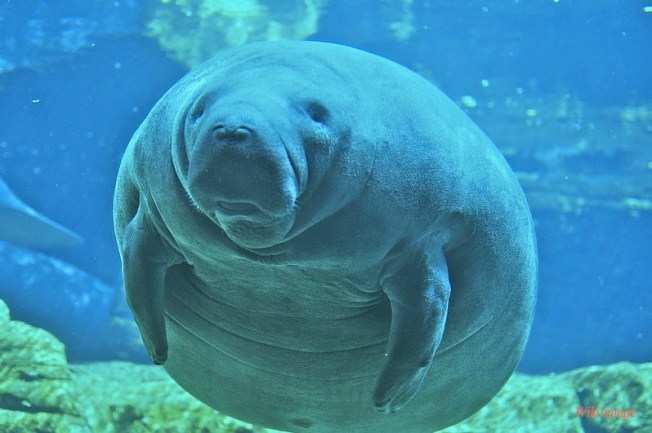
For news of forthcoming BMMRO research into the apparent recovery in the population of manatees in the Bahamas CLICK HERE

Finally, here’s the link to a website that contains more manatee information and images. You can join, adopt a manatee, donate or buy stuff. Who wouldn’t want a T-shirt – or a ‘ManaT-shirt’, even – adorned with a picture of the lady above? CLICK LINK===>>> SAVE THE MANATEE CLUB
Unknown's avatar

ABACO BEACHCOMBING: KASIA IS BACK… WITH ANOTHER MYSTERY OBJECT


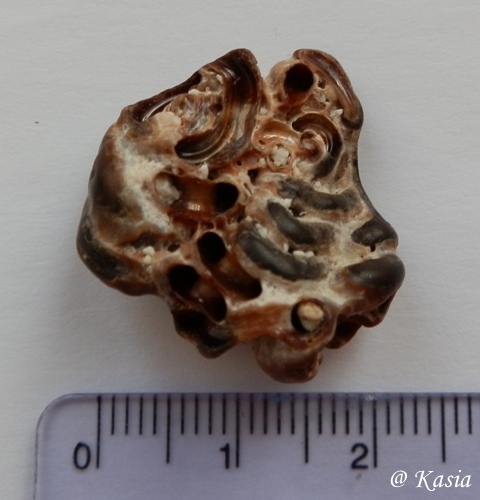
Kasia has returned to grace the blog with treasures from her Abaco beach-combing from the Delphi Club and further afield. Expect more shells, more sea glass… and more mystery objects. We have already had part of a RAY’S PALATE and a PACIFIC ANGARIA SHELL  that had somehow arrived on the shores of Abaco. There’s a long thin WHITE BONE, as yet unidentified (no suggestions yet). And now this extraordinary item… 

To which my answer is “not the faintest idea”. My guesses are (1) a fossilised vertebra of some medium-sized creature (2) a fossilised ‘soft’ rock that worms have been at (but why only on one side?) (3) a bread roll that went disastrously wrong in the baking…

All suggestions welcome, preferably via the COMMENT box (so others can view them); or to rollingharbour.delphiATgmail.com (spam guard: convert AT to @)

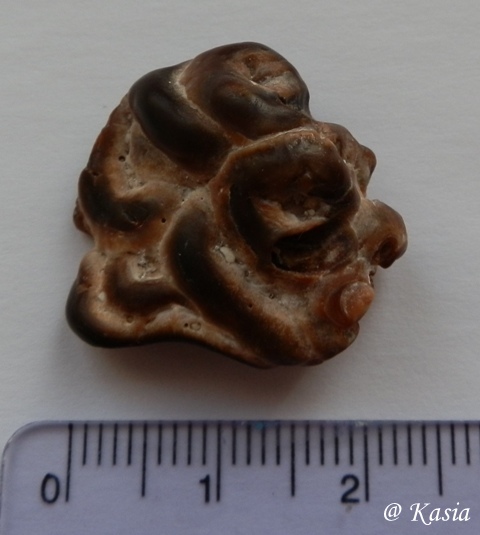
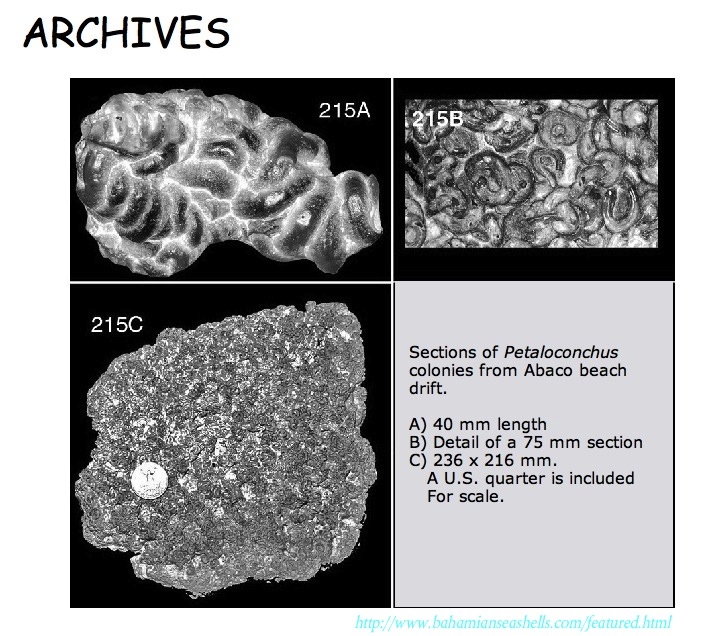
STOP PRESS Mystery quickly solved, thanks to Colin Redfern who says “This is part of the remains of a colony of Petaloconchus worm-shells (molluscs). They attach to rock or coral, and the colonies can be quite large.”  Colin’s website includes some examples from his archive, one chunk being very similar to Kasia’s 

And here’s another chunk, top and bottom view Photos courtesy of James St. John (Geology, Ohio State University at Newark)
…and here is the worm that makes the vermi-accretion or whatever the term is
Unknown's avatar

SOUNDS UNDER THE SURFACE: NOISE EFFECTS ON WHALES


The NOAA (National Oceanic & Atmospheric Administration) has produced a short video with the conclusions from recent research into the effects of extraneous (i.e. non-natural) noise on the habits of whales. The cooperative project involved a number of organisations including the BMMRO and Florida State University and lasted two years.

The study concentrated on beaked whales, pilot whales, and melon headed whales. Using readings from tagged whales, the scientists created animations showing the whales behavior before, during, and after being exposed to low levels of a variety of sounds; including sonar. The results showed that beaked whales, known for diving to extreme depths, were much more sensitive to sonar than other species.  Even low levels of these sounds disrupted their diving, vocal, and likely feeding behaviors.

The complete report including a VIDEO and a transcript can be found by clicking LINK==> Sounds Under the Surface | Science and Technology | Ocean Today   (I haven’t been able to embed the Video, so you’ll get the whole page)

Unknown's avatar

EXPLORING CORAL REEFS: FOWL CAY MARINE PRESERVE, ABACO


EXPLORING THE CORAL REEF AT FOWL CAY MARINE PRESERVE, ABACO

First, a warning for anyone arriving new to this blog (hi! welcome) either on purpose or accidentally: I can’t swim very well, I hadn’t snorkelled for decades until last year, and I’d never before used a camera underwater.

That said, there is probably enough in this 2:40 min video  to warrant a quick view. As with other videos from this expedition to Fowl Cay Marine Preserve (STINGRAY / BLUE TANG), best viewed small to avoid queasiness and disorientation. You can always Pause for a breather. There are some nice fish obligingly in view from time to time, and the coral is very diverse. And I’ll know what to do this year to get better results, besides trying harder with the swimming… (Music: East Wes by Eric Johnson, off Ah Via Musicom)

Unknown's avatar

AUDUBON CARIBBEAN FISHES APP £0.69 / $0.99 PROMOTION: GET IT NOW!


AUDUBON FISHES OF THE CARIBBEAN & GULF OF MEXICO APP

iphone, ipad (172mb)    £0.69 / $0.99 offer until 31 Jan, then reverts to $9.99          rollingharbour rating *****

This is app is so good, and such an utter bargain until 31 Jan 2012, that I have awarded it the rh logo position at the top of the page. Praise indeed. Audubon guides are legendary, of course. The excellent Audubon bird app has already been reviewed and also given a rare 5*- see BIRD APP on the BOOKS ETC drop-down menu. Now here are the Caribbean Fishes, in all their glory. First, a clip shot of the download page – click on it to enlarge and avoid eye-strain

This is a very well designed app, a comprehensive search and identification tool with a myriad of features. It’s fine for an iPhone, but I guess it would really come into its own on an iPad. Whatever that is. Here’s a brief overview of the contents

SEARCH OPTIONS:  by shape (dividing size into 5 categories, from giant to tiny); family (alphabetical list of species); name (alphabetical list with useful thumbnails to assist – and cleverly, the ability to search by first name ‘Sergeant’ or last name ‘Major’), or advanced search (size / shape; habitat; regions; colour)

REFERENCE sections on biology; fish-watching tips; marine habitats; biogeography; conservation; fish taxonomy; dangerous fishes; large glossary

OTHER FEATURES include the facility for having a (free) account, enabling a ‘My Content’ facility; Journal; and GPS

Crits? Very few at first glance. The odd typo. My inital search for bonefish by size (over-optimistic, of course) led me to the larger ladyfish, but a search by name took me straight to it. The most significant confusions may arise from the present ‘single image’ ID format. For example, if you look for the uncomely  greeny-blue adult male stoplight parrotfish, you may be surprised to find the prettier black, white & red female pictured. Similarly, you won’t find juveniles, such as the small blue-with-yellow-spots yellowtail damselfish. But these are small points in an app with such a large scope. Anyway, who knows what upgrades will follow?

Overall for £0.69 / $0.99 a complete steal for New Year