Unknown's avatar

ABACO BEACHCOMBING WITH KASIA: MYSTERY OBJECT


MYSTERY OBJECT FROM AN ABACO BEACH


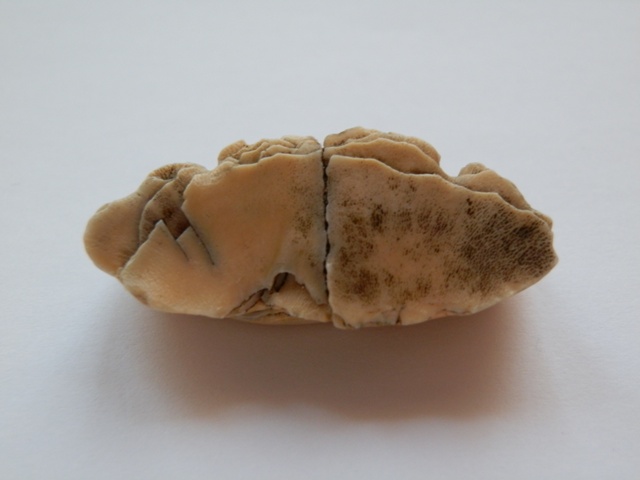
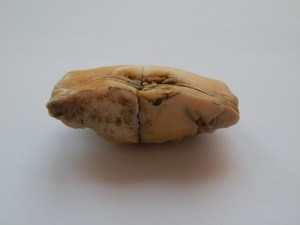
Here’s a strange item found by Kasia when she was beachcombing with Caroline Stahala

Their preliminary thought was that it formed some part of a turtle’s shell or skeletal anatomy

It is quite small (the coin above is 1 Euro) but amazingly intricate – developed in 2 symmetrical halves, with both delicate ridged surfaces and also distinctively layered bone plates 


I sent the images to Charlotte Dunn and Diane Claridge of the BMMRO in case the object might have something to do with a dolphin or even a whale. In their opinion it is very probably part of a ray’s mouth plate. It would be very interesting to know if anyone else has found an object like this. If so please respond in the comment box. Many thanks to Charlotte and Diane for sparing the time to help with ID
STOP PRESS I have some done further investigations into the dental arrangements of rays. I turned to the really excellent website of the Florida Museum of Natural History. On the FLMNH page for SPOTTED EAGLE RAYS is a very interesting photo by Cathy Bester which she has kindly given me permission to use. It is captioned Spotted eagle ray dentition: open mouth showing tooth bands and floor and roof of mouth  This photo seems to go a good way to confirming the ID of Kasia’s object, although obviously it might be a fragment from a different type of ray 

For the FLMNH site CLICK LOGO 

GO PRESS (or whatever an extra stop press may be): see comments  from Black River Fossils for further confirmation as a ray palate


Unknown's avatar

ABACO BEACHCOMBING FOR SEA GLASS WITH KASIA


BEACHCOMBING FOR SEA GLASS 

IMG_1426

Kasia is an avid beachcomber on the sandy beaches of Abaco. Her collections include not only shells but also other marine debris such as sea glass. She has sent me some images with the comment You can find a lot of sea glass in many different colours and shapes, from the most common green, brown and white through fairly hard to find colours like jadeite (one of the 2 forms of jade), citron, light blue, light green, honey and amber colored browns, to quite rare colors like cobalt, teal, periwinkle, aqua, amethyst & black” Here are some examples of Abaco sea glass from her collection. Shells and other items will follow as and when… 

SEA GLASS COLOURS: THE VITREOUS STATISTICS

Sea glass sources are many and varied. In general, these include old clear plates, glasses, windows etc; coloured drinks bottles – wine, spirits, beer, fruit, cola etc; soda bottles; medicine bottles (e.g. milk of magnesia / Vick’s blue); fruit jars; ink bottles; household goods (bleach, soda). The rarest colours (see below) come from very specific origins: teal / Mateus Rose bottles; red /  car or nautical lights or Schlitz bottles; black / c18 gin, beer and wine bottles

GENERAL CLASSIFICATION OF SEA GLASS COLOUR OCCURRENCE

Most common (1 in every 1 – 25 pieces found): clear, Kelly (‘Irish’) green, brown, blue, purple

Less common (1 in every 25 – 100 pieces found): jade, amber, lime green, forest green, ice / soft blue

Uncommon (1 in every 50 – 100 pieces found): other green shades

Very uncommon 1 in every 200 – 1000 pieces found): citron, opaque white, cobalt, cornflower blue and aqua

Extremely rare (1 in every 1000 – 10,000 pieces found): grey, pink, teal, black, yellow, turquoise, red

Rarest of all (1 in every 10,000+ pieces found): orange

Info credit: Magpies, for collection of bright shiny glass data. Omni-thanks

This is a helpful chart for the main colours, courtesy and © of  West Coast Sea Glass starting top left with orange as the rarest. The direct link is www.westcoastseaglass.com/rarity_chart_poster.html

You’ll find a great deal of other useful info on sea glass on Mary Beth’s  linked blog at http:// seaglassblog.blogspot.com/

There’s also a worthwhile Abaco Life article (2006) on sea glass at http://www.abacolife.com/2008/07/14/sea-gass-reveals-muted-tales-in-red-green-blue-white/ 

JAN 2012 I’ve noticed that there are several easily obtainable (eg from *M*Z*N) books on sea glass. I won’t be buying any to test-drive for you (as with birds, shells etc) – sorry – but they seem to be divided into the ‘pretty but uninformative and fairly cheap’ to the more instructive, more detailed and therefore more expensive books. It’s worth browsing online to find one that meets your interest level, whether passing or something more serious. The reviews are very useful here. The best – and it’s quite pricey – seems to be 

Unknown's avatar

ABACO BEACHCOMBING: TWO CONCH SHELL SKELETONS


ABACO SHELL SKELETONS

Besides ‘living shells’ with occupants in residence and shiny recently-vacated shells, there is a third category of shell: the skeleton. I am sure there’s a better or more technical word for these. They aren’t fossils in the strict sense of remnants from a past geological age, but merely worn by the waves and bleached by the sun over time. Here are two examples (from different beaches) which show the intricacy of the part of the shell you don’t normally see: the interior

A shell skeleton from Little Harbour, in situ on the beach on a cloudy day

The same shell washed, with a wonderful pink tinge in sunlight

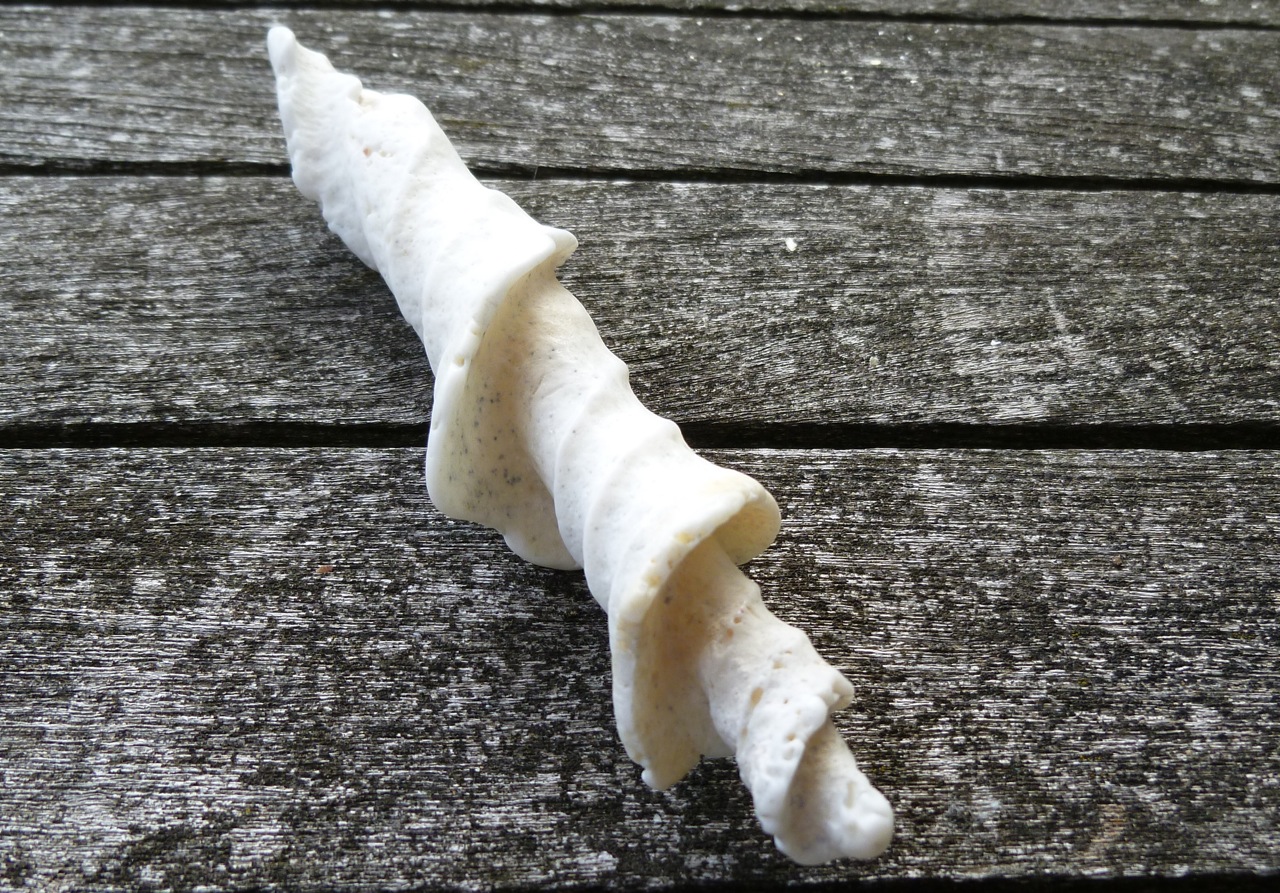
A strange corkscrew skeleton shell from Sandy Point. I’ve no idea what it is, nor how any creature can have lived in or around it, nor what it must have looked like when complete. Any ideas? Please use the comment box… Thanks, Kasia, for your ID of both as conch skeletons. The first obviously is, but the second puzzled me… until she pointed out that conchs build their own shells round themselves to their own designs rather than go to the one-stop conch shell shop. So if a conch starts wrapping itself comfortably round its own corkscrew, this is what you get

(Mrs rh quite rightly points out that my shell photos are unhelpful without a ruler to give an idea of size. Point taken. Too late. These are medium size…)

Unknown's avatar

A FEW SAND DOLLARS MORE (images and videos)


LIVING SAND DOLLAR ON ITS BACK – VIDEO

This video shows how the sand dollar is able to get around and to bury itself in the sand by using the hairs on its underside:

SAND DOLLAR IN A SPIN – TIME-LAPSE VIDEO

Another short time-lapse video of Sand Dollar manoeuvres lasting 15 – 25 minutes in real time, this time moving in circles before suddenly ‘zooming off’ into the distance…

SAND DOLLARS FROM THE RH COLLECTION

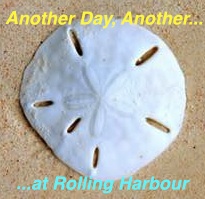
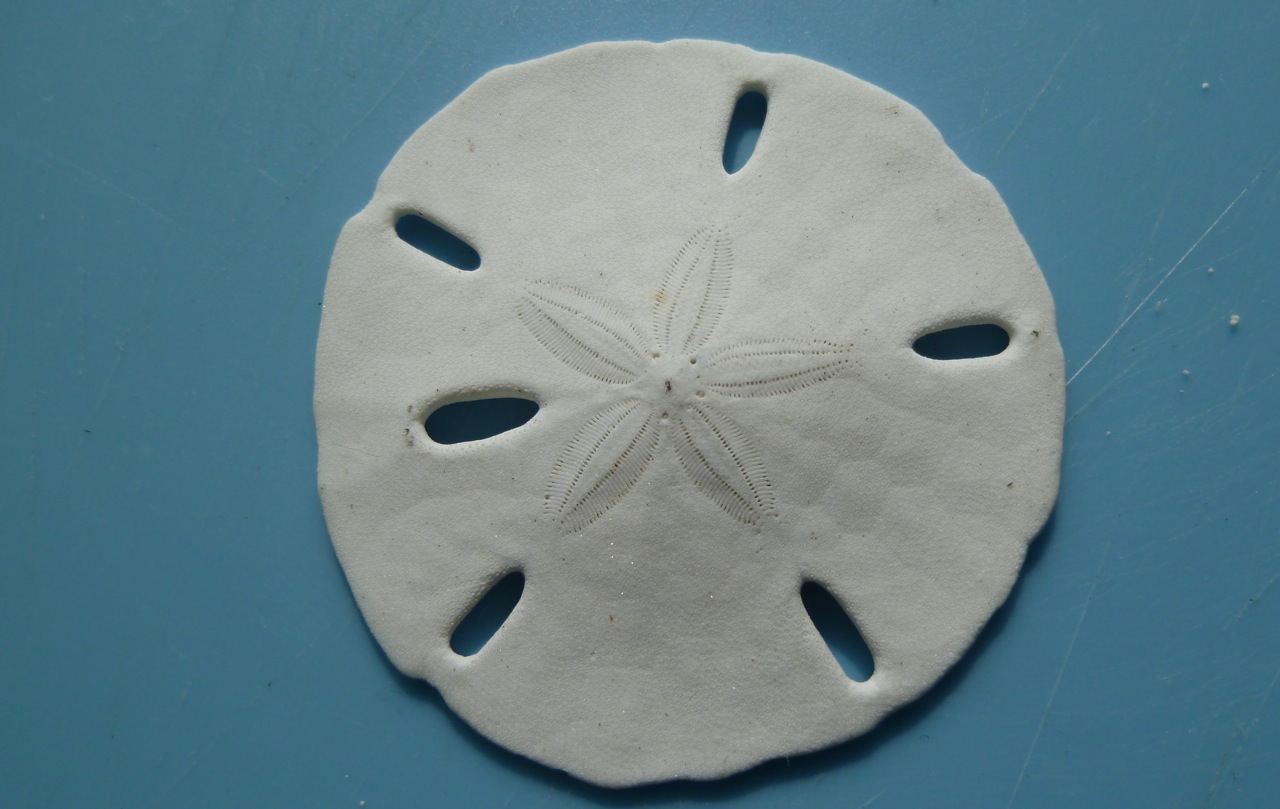
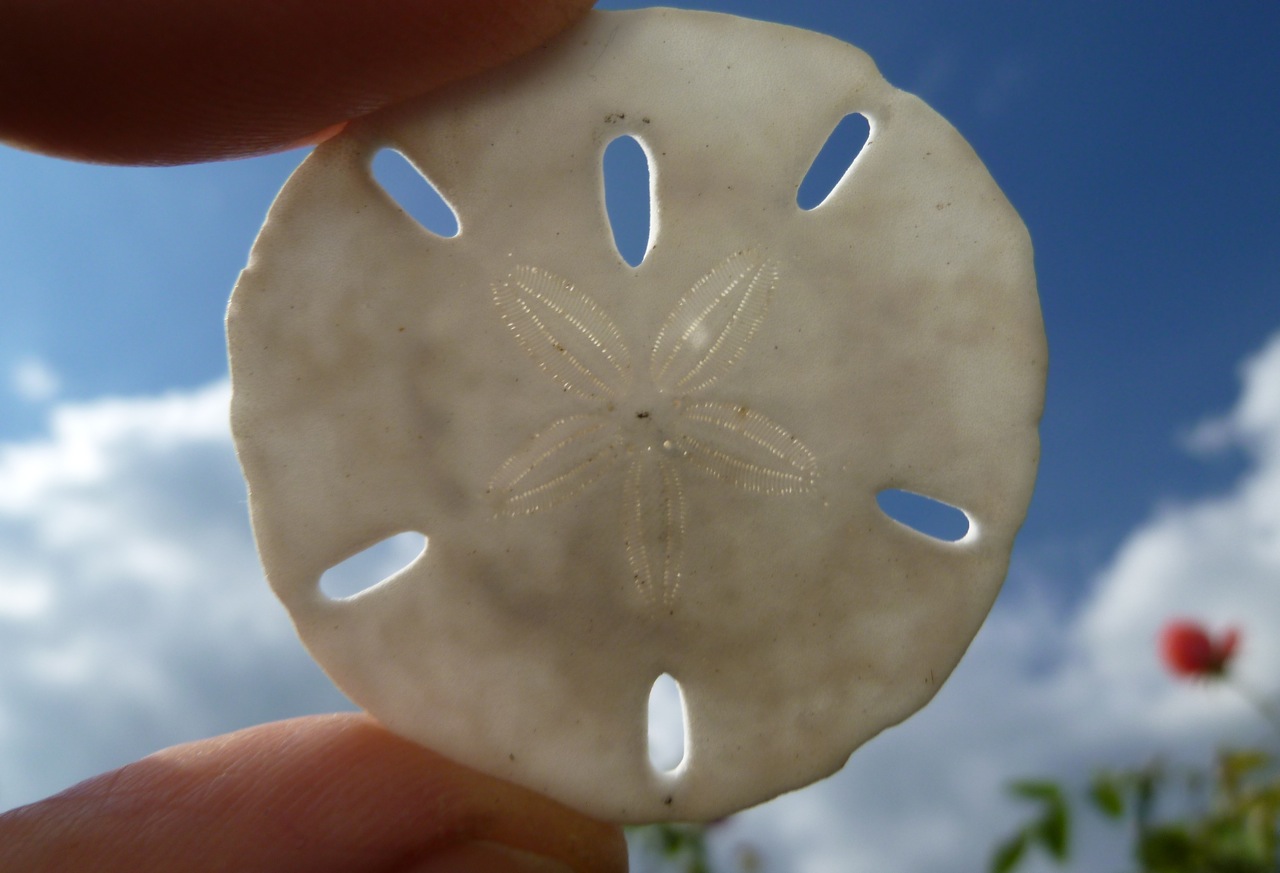
              A small Sand Dollar test from Rocky Point beach near Sandy Point                           (top side, underside and see-through)

Large Sand Dollar tests from a sand bar in Cherokee Sound

Unknown's avatar

BEACHCOMBING AT THE DELPHI CLUB, ABACO – CORAL & NERITES


CONTRASTING CORAL SKELETONS

These two different types of coral skeleton are from the northern end (and just beyond) of the Delphi beach. The red marking on the second coral is some kind of natural accretion, I think – I have temporarily lost the exact details somewhere on my hard drive, but doubtless they will turn up sooner or later… You will find these red patches on shells as well as coral

COMMON ROSE CORAL

ANY IDEAS  – OR IS THIS WORM-RELATED?

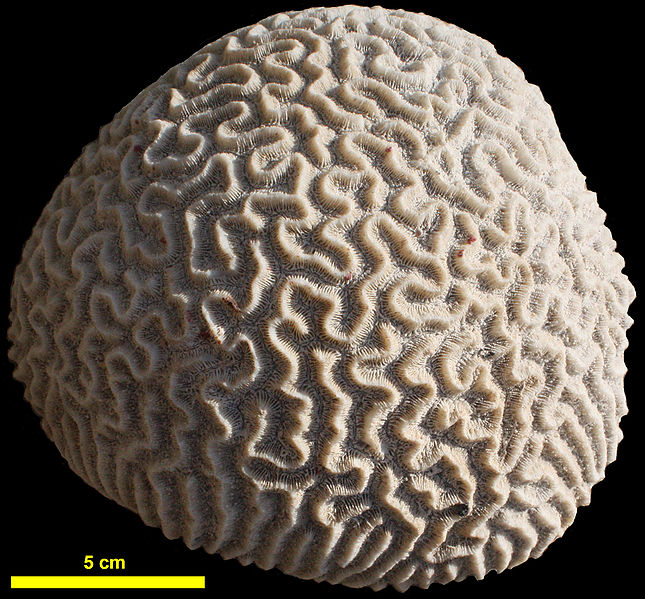
Another dramatic coral you may come across – not least because there are usually one or two in the beach-harvested collection on the steps down to the beach – is Brain Coral (Diploria). Here is an example (Photo credit J. Stuby)

NERITES (Nerita)

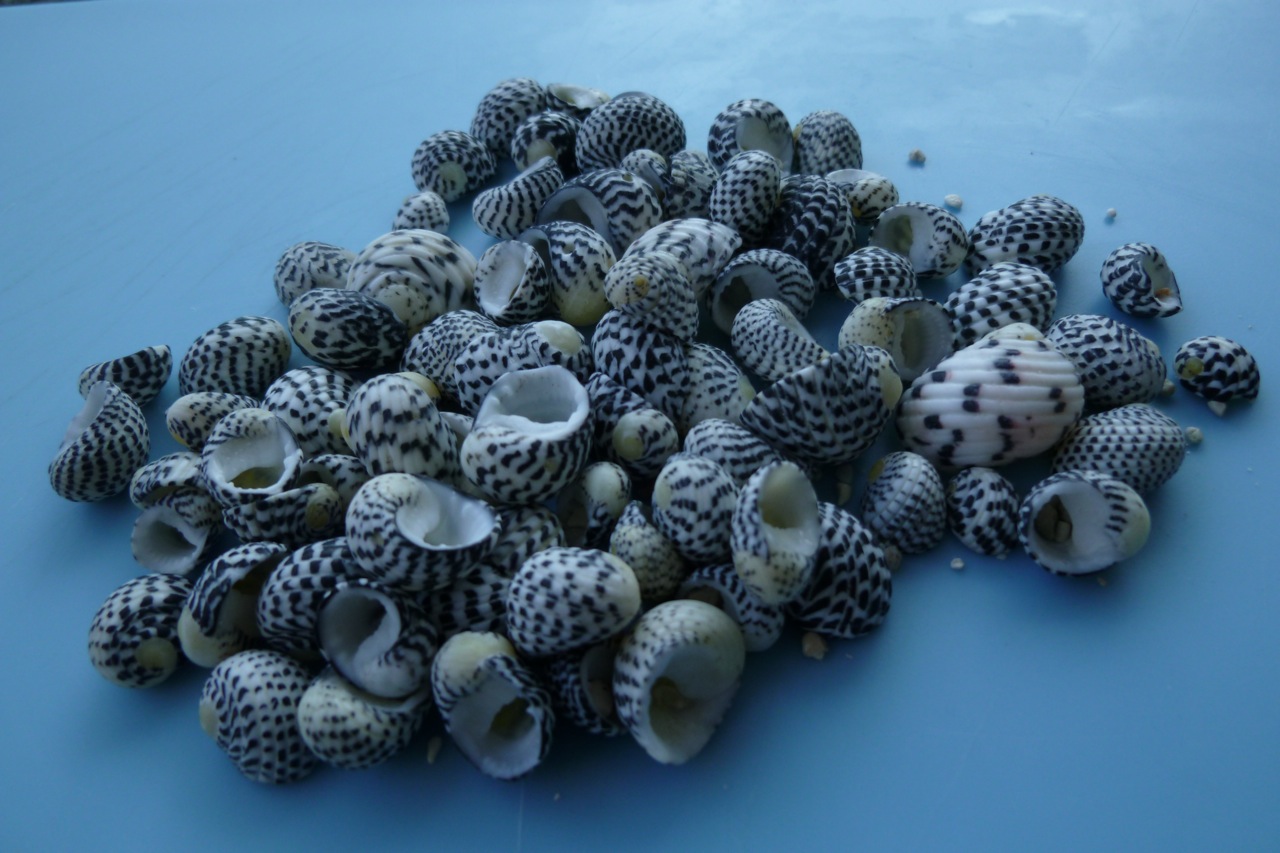
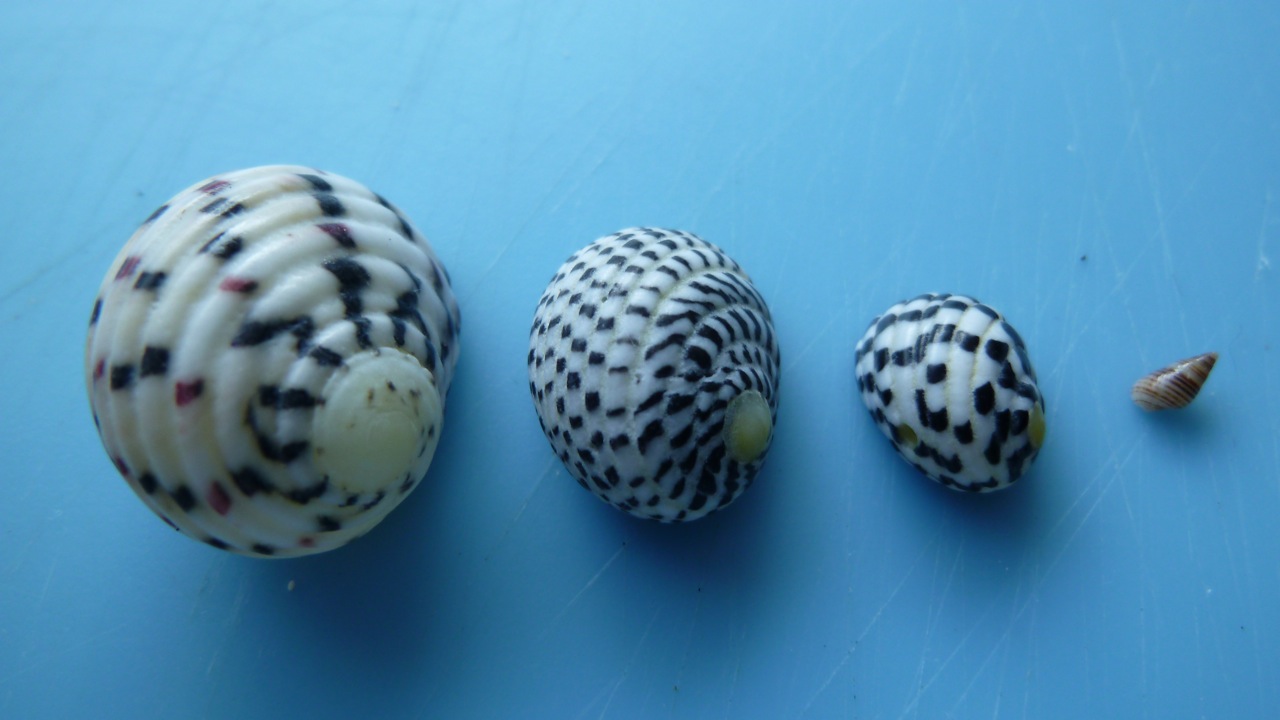
Nerites are small sea-snails (gastropod molluscs) found in tropical waters around the world. Precise ID of the many types is confused by the different names used for many of them, both taxonomic and local. The majority of the black and white nerites in the pile below, all collected from the Delphi beach, are Checkered Nerites (Nerita Tessellata). In the heap there are a few larger whiter shells with red markings, which are the Four-Toothed Nerite (Nerita Versicolor).

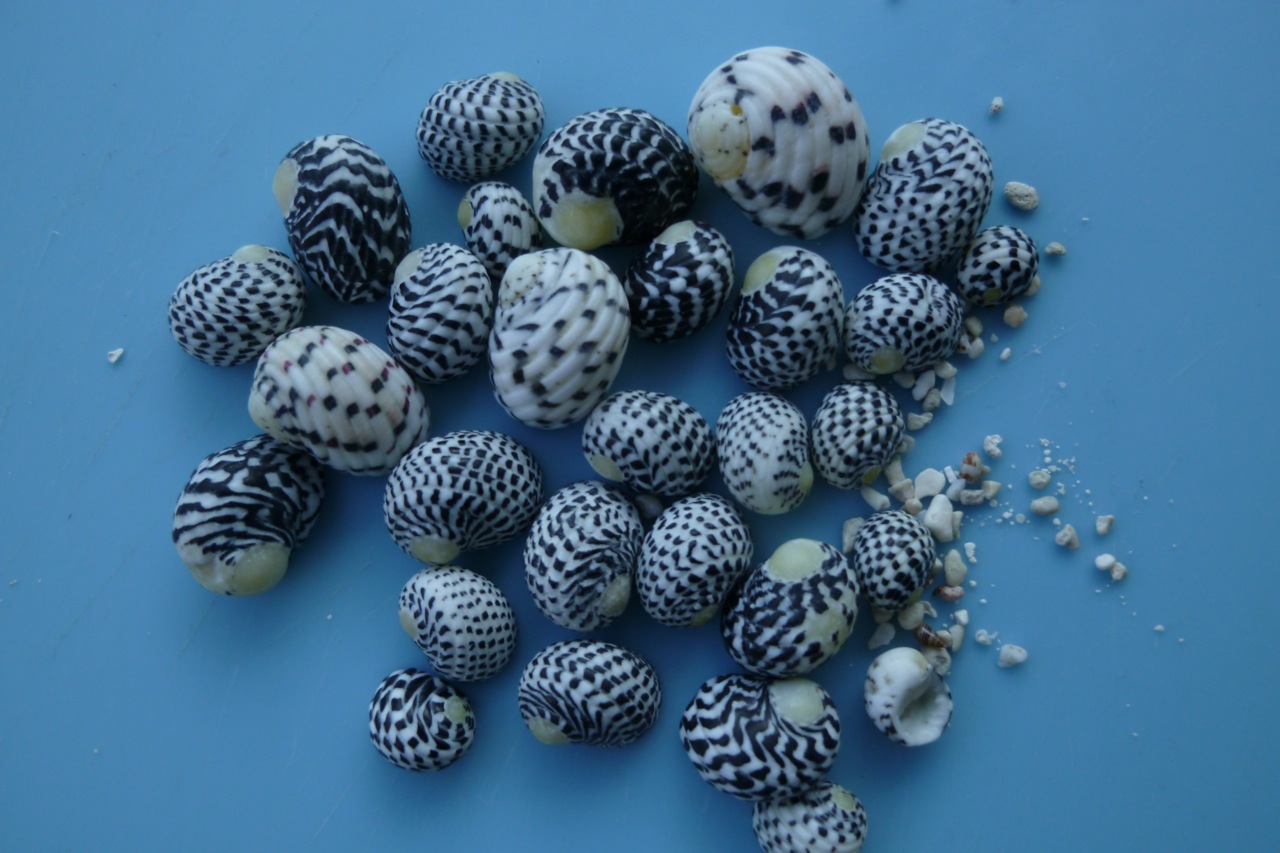
Here are some of the above shells showing their varying patterns and sizes, seen with a few grains of sand for comparison. The 3 larger whiter ones with the flecks of red on them are the Four-Toothed Nerites.

Here are 3 example shells in close-up, together with a tiny, perfect Dwarf Atlantic Planaxis (Hinea lineata) at the end (previously misidentified as a Littorine). I didn’t notice it until I was sorting through the shells – in fact you can just see it towards the bottom right of the previous photo, above the small nerite that’s on its back. It may even have fallen out of a nerite, as did many of the sand grains.

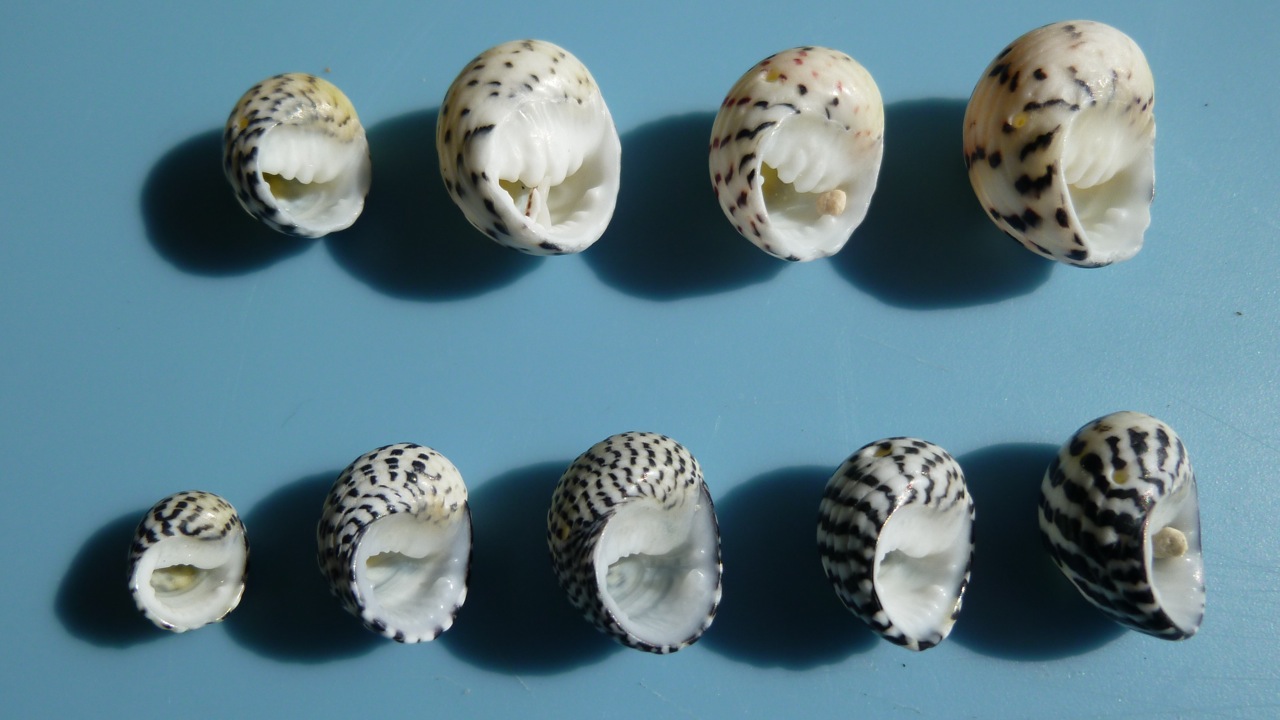
These four upturned nerites show the dentate entrance, common (to a greater or lesser extent) to most nerites – maybe all. The top row are Four-toothed Nerites; the bottom row are Checkered Nerites. Another Nerite type found in the Bahamas is the Bleeding-tooth nerite (Nerita Peloronta). These are similar to the top ones, but have vivid orangey-red markings on the ‘teeth’ – hence their name.
Nerites, sand grains and the Planaxis: size comparison

A close up of the Planaxis, showing how amazingly detailed the pattern of such a tiny shell can be

All this may sound a bit learned and somewhat solemn. Dull even. In fact I had absolutely no idea about any of the above details until I got these shells out of their glass jar last week to photograph (apologies for using a chopping board) and did some digging… So if any shellologists or neritophiles read this and have corrections to suggest, be my guest… Use the comment box or the email address on the CONTACT page. ADDENDUM: many thanks to Colin Redfern for confirming the small nerites as Checkered, as opposed to Zebra; and the ‘littorine’ as a Dwarf Atlantic Planaxis Hinea lineata

Unknown's avatar

A TRIP TO CHEROKEE & LITTLE HARBOUR, ABACO


A TRIP TO CHEROKEE & LITTLE HARBOUR (revised Oct 2012)

YOU WILL NEED camera; binoculars; possibly swimming kit; a car with (if you are going to get seriously stuck in at Pete’s Pub) a non-drinking driver; good appetite; and if you get weather like we did, something waterproof to wear…

ROUTE  Turn right at the end of the drive, head north past Bahama Palm Shores until you get to the right-hand turn to Cherokee / Little Harbour / Winding Bay. Take the made-up road to the end, following the right-hand bend that will bring you to Cherokee. You will pass the Abaco Club, Winding Bay, a Ritz-Carlton enterprise. It doesn’t need any meagre publicity from this quarter – just ask Sandy what you have to do to play golf there, eat there, use the spa, buy a cabana and so forth. 

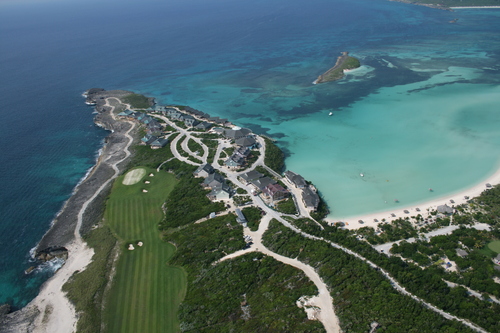
ABACO CLUB, WINDING BAY

Photo Credit: Simon Rodehn

Continue to CHEROKEE, park and have a wander round this charming settlement. It poured when we went and we were barely able to leave the car… so any description I could give is obscured by extreme wet, low cloud and yes, a touch of gloom. Not even any birds to report. Explore for yourself, why not. Thanks to Simon Rodehn for his fine aerial views of the Abaco Club Cherokee (and see his aerial view of LITTLE HARBOUR at the end of this post).

CHEROKEEPhoto Credit: Simon Rodehn

After you have had a look round Cherokee, drive back the way you came, past the Abaco Club, until you get to a right-hand junction with a sign to Pete’s Pub and Little Harbour. This is described on the map as ‘dirt road’, which doesn’t do justice to some of the impressive rocks en route. However, with care it is easily negotiable by car. Carry on until you get to Pete’s, which is a good place to leave the car and explore from.

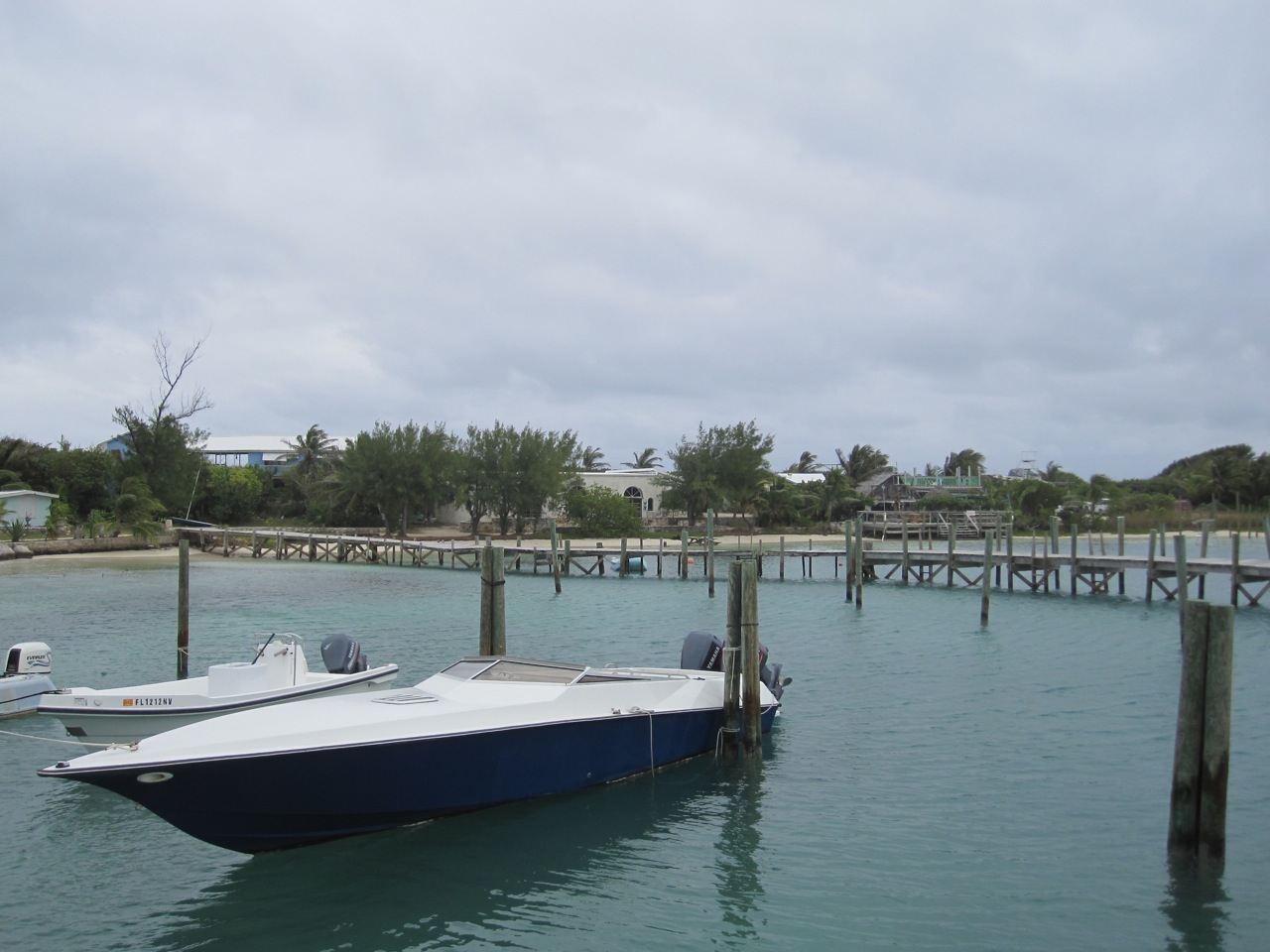
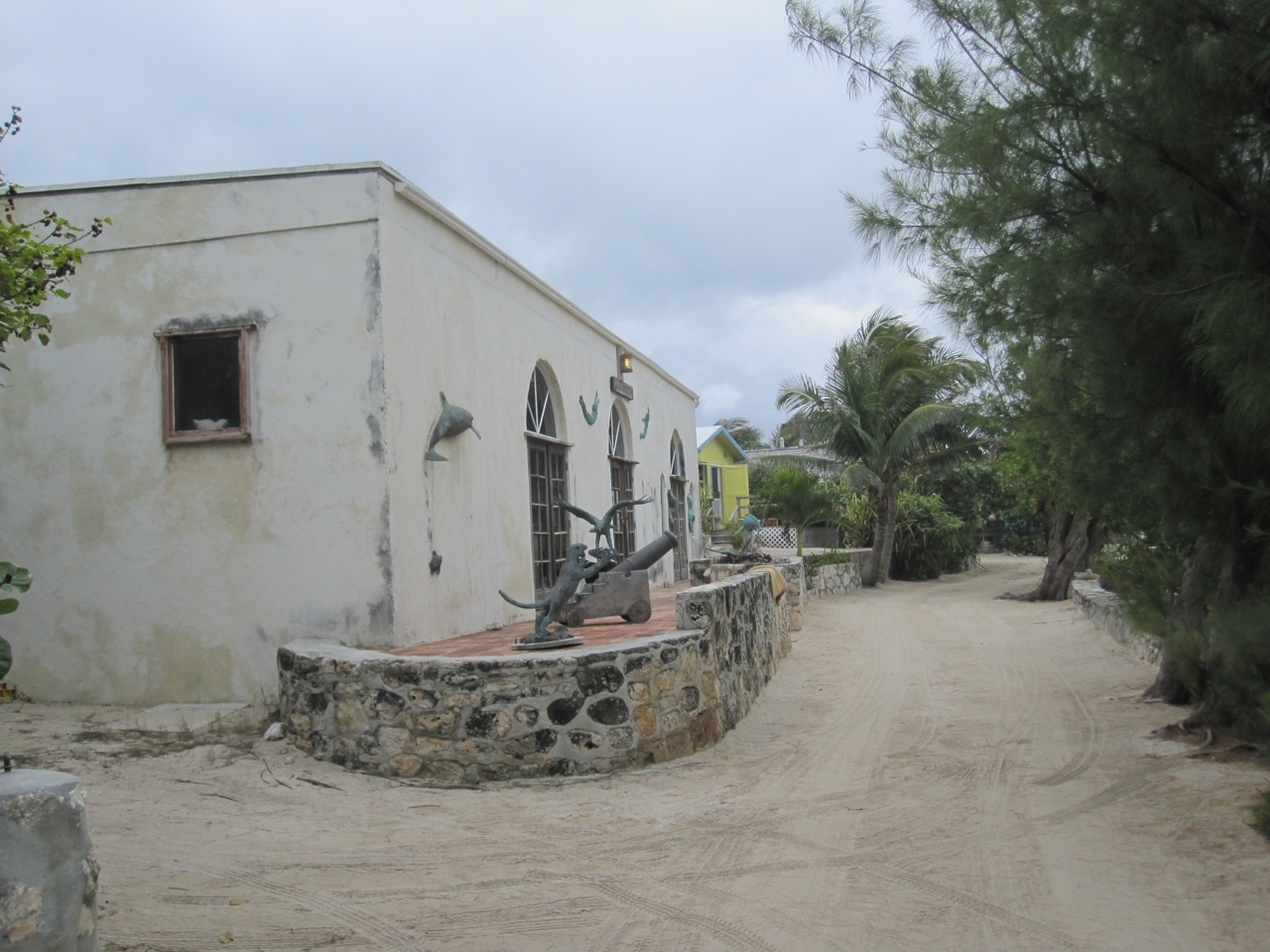
LITTLE HARBOUR is a good place to wander round. Nice boats for a start; the renowned Johnston’s Foundry, with examples of its work scattered round; the Gallery, which is well worth investigating; a shell-strewn beach on the back-side (as it were). And Pete’s Pub for excellent sustenance at the end of it all… fresh fish of many kinds, and a lot more besides. Here are some pictures – I haven’t attempted to photoshop them to disguise the fact that the weather that day was… inclement. Bleak, even. On a sunny day, when you go, it will surely look better…

MAIN STREET, LITTLE HARBOUR

PETE’S PUB

PETE’S PUB – BRING YOU OWN TEE

THE GALLERY, LITTLE HARBOUR

THE BEACH Shells, but no idea about the swimming: thwarted by drizzle!

PETE’S PUB & GALLERY Here is the direct link to Pete’s, where you will find all the info you could wish for about the Pub, the Foundry, the Johnston family, cottage rental, fishing and the locality generally. There are also plenty of excellent pictures, so check it out for a far sunnier view than I have provided here.

CLICK LINK====> PETE’S PUB & GALLERY, LITTLE HARBOUR

NOV 2012 Addition

DOLPHINS AT LITTLE HARBOUR

AND FINALLY… a great aerial view of Little Harbour, looking roughly north. Click or double click image to enlarge

Photo credit Simon Rodehn (CHEROKEE COTTAGES)

Unknown's avatar

A MILDLY BIRD-BASED EXPEDITION FROM DELPHI TO SANDY POINT, ABACO


Sandy Point Abaco 30

You will need: binoculars; camera; picnic lunch OR willingness to eat ‘local’ (see below); swimming kit – and a car, of course, e.g. the club Toyota

Map extract courtesy of ‘Abaco Life’ (the best, indeed the only, road map of the Island I have come across…)

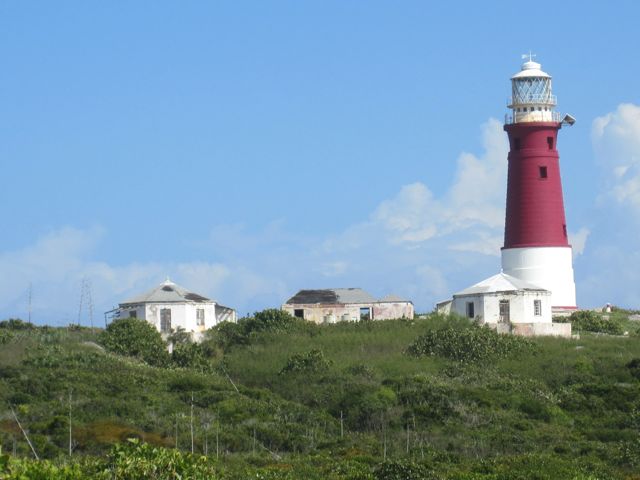
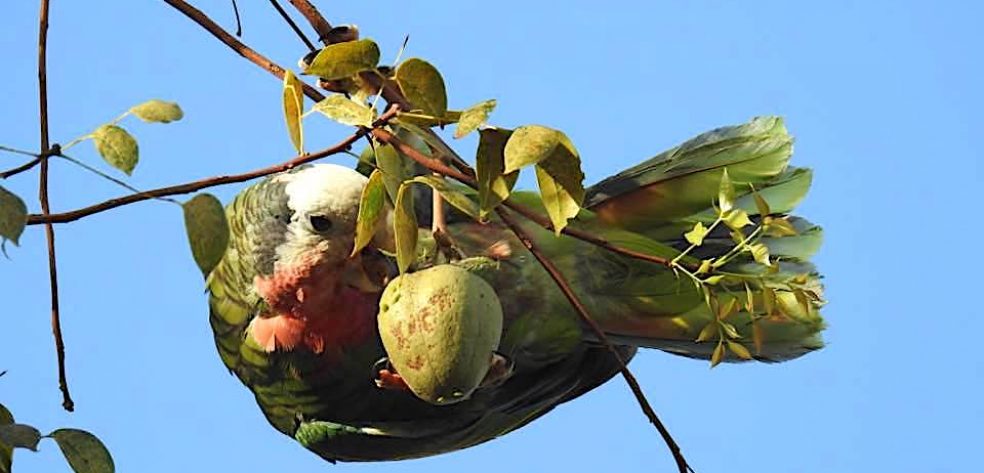
SANDY POINT is a small settlement about 30 miles / 1/2 hr drive south west of Delphi. There’s only one choice of route: turn left at the end of the drive, and keep right on to the end of the road. Having commandeered the club car from Sandy, you drive due south until you get to a long right-hand bend. There is an important junction here: if you drive straight on, you enter the National Park nature reserve proper – breeding ground for the Abaco parrots – and are on the track to Hole in the Wall and its lighthouse…


Do not be tempted to try this – it is 15 miles each way on a deteriorating track, and the club car will soon be a wreck. Rental cars are forbidden. I will post separately about this adventure, which we have done in a truck. We may not repeat the experience.

Bird Alert 1 During the journey, look out for birds on the telegraph posts / wires. You may see American kestrels, turkey vultures and Bahama swallows. Small birds will flick across the road, and you may find yourself readily placing them in the ‘unidentifiable’ category. If in doubt, best settle for ‘warbler’ and there’s a fair chance you will be right. Alongside the road, look out for groups of smooth-billed Anis aka cemetery birds. These largish black birds are noisy and sociable, nest communally and look after each other’s nestlings. Continue reading