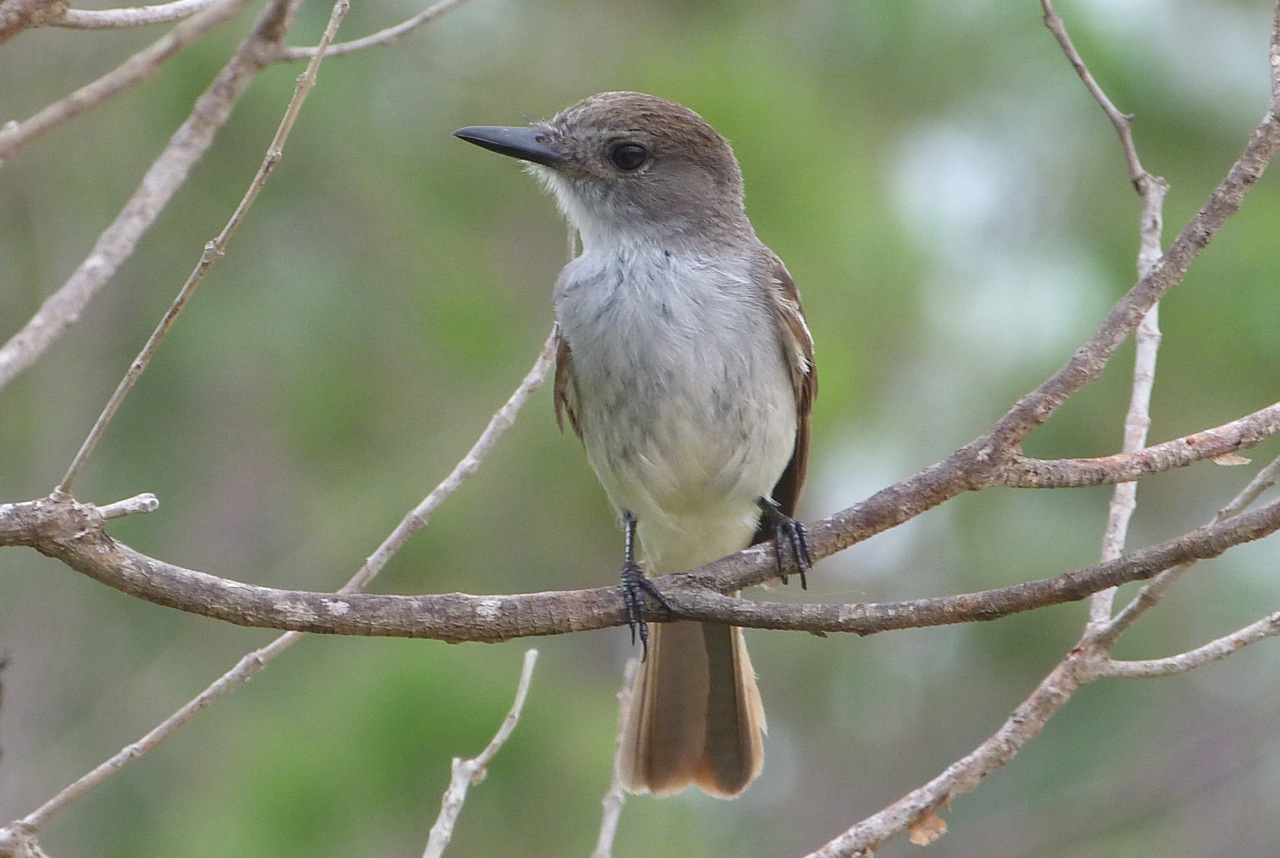
LA SAGRA’S FLYCATCHERMyiarchus sagrae is anon-migratory bird quite frequently seen in the Abaco pine forest and scrubland. It is resident throughout the year on Abaco, as elsewhere within its distribution range (see map below) – also occasionally found as a vagrant in southern Florida. It is a ‘tyrant flycatcher’, a passerine species found throughout the Americas that includes kingbirds, pewees and phoebes.
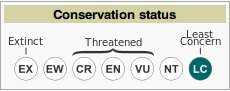
The conservation status of this flycatcher is ‘Least Concern’
The LSF’s natural habitat is subtropical forest and rough scrubland. It builds its nest in a tree cavity or similar natural hole, and usually lays a clutch of two to four eggs.
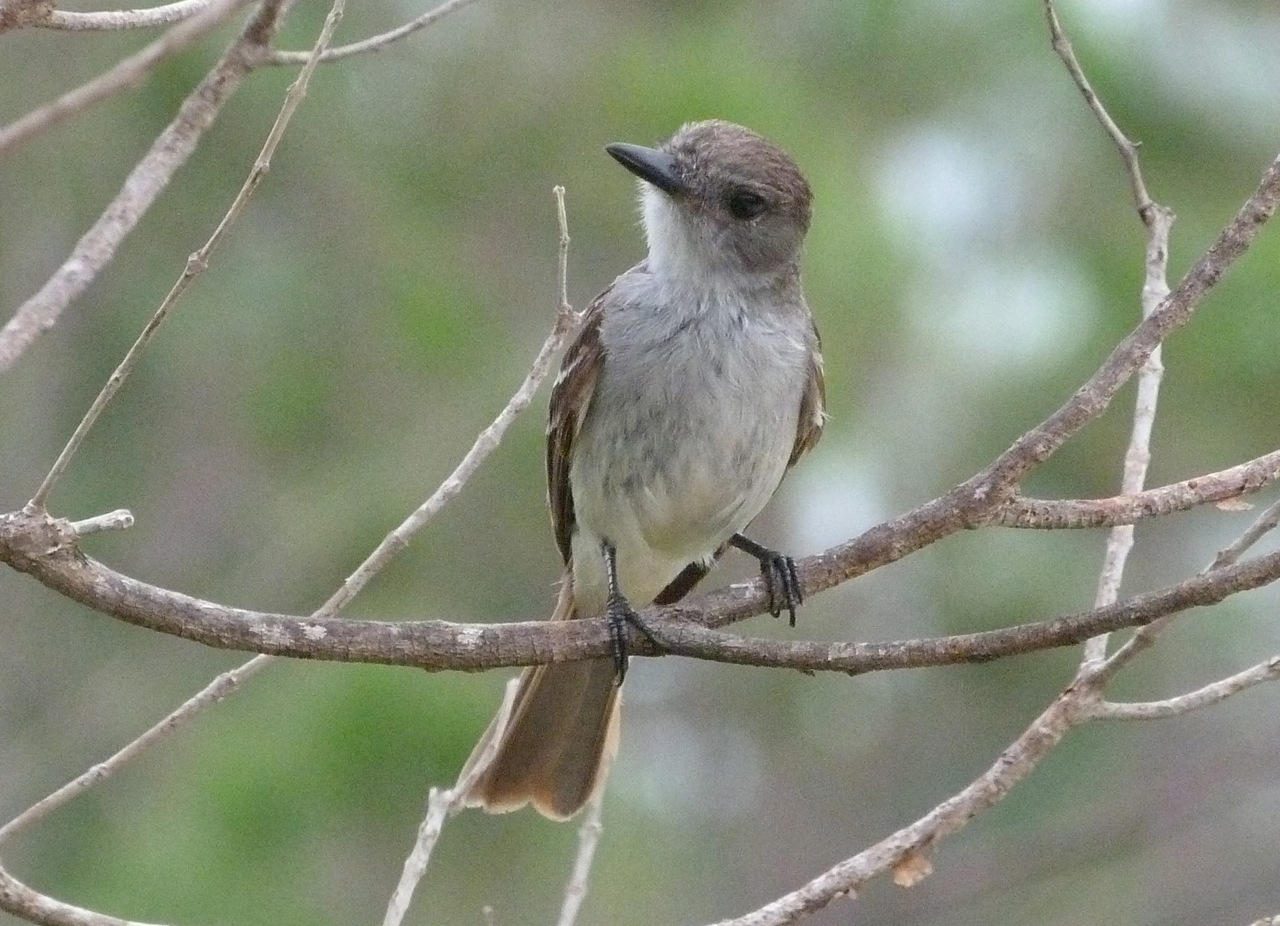
Adult La Sagra’s Flycatchers, unlike many avians, are very similar in appearance in both sexes.
As the name suggests, the species is primarily insectivore, fly-catching in the undergrowth and low scrub. However these birds also eat berries and seeds. Their call is a high pitched single or double noted sound described as ‘wink’. Here’s an example from the Bahamas by Paul Driver @ Xeno-Canto
And who or what the heck was La Sagra? The answer is: multi-talented Spanish botanist Ramón Dionisio José de la Sagra y Peris(1798–1871), who was also a writer, economist, sociologist, politician, anarchist, and founder of the world’s first anarchist journal El Porvenir (“The Future”). At one time he lived in Cuba and became director of Havana’s Botanical Garden; his name lives on arguably more significantly in ornithological than in anarchist circles (actually, an ‘anarchist circle’ must surely be a contradiction in terms…)
I note in passing that La Sagra is a provincial area in Spain, an Italian festive celebration, a chocolatier, or a small comet – all of which meanings may have to be negotiated online before you get to the flycatcher…
Ramón Dionisio José de la Sagra y PerisFinally, to continue with the recently introduced avian philatelic theme, here are stamps from the Cayman Islands and Cuba featuring the La Sagra’s Flycatcher. The Cuban stamp commemorates the death of Juan Gundlach, the man who chose La Sagra’s name to bestow on this bird
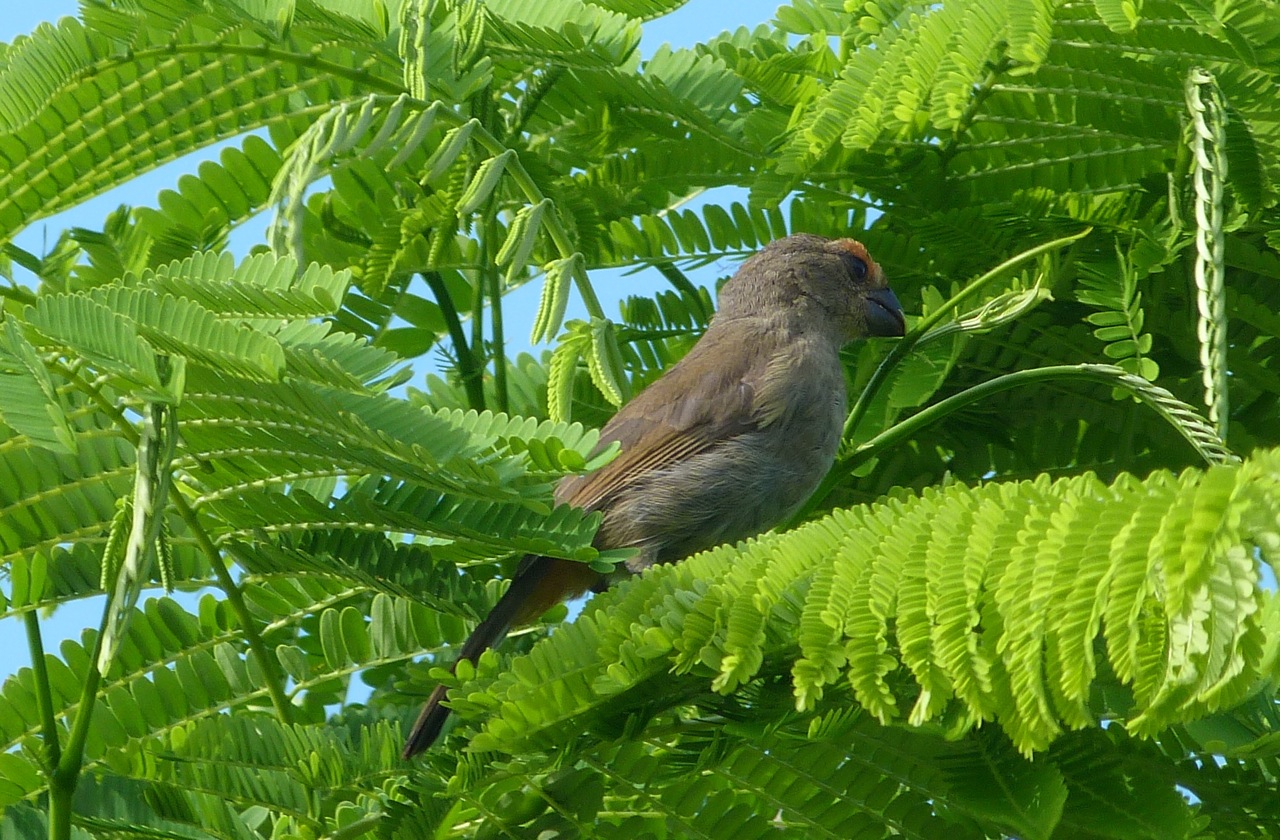
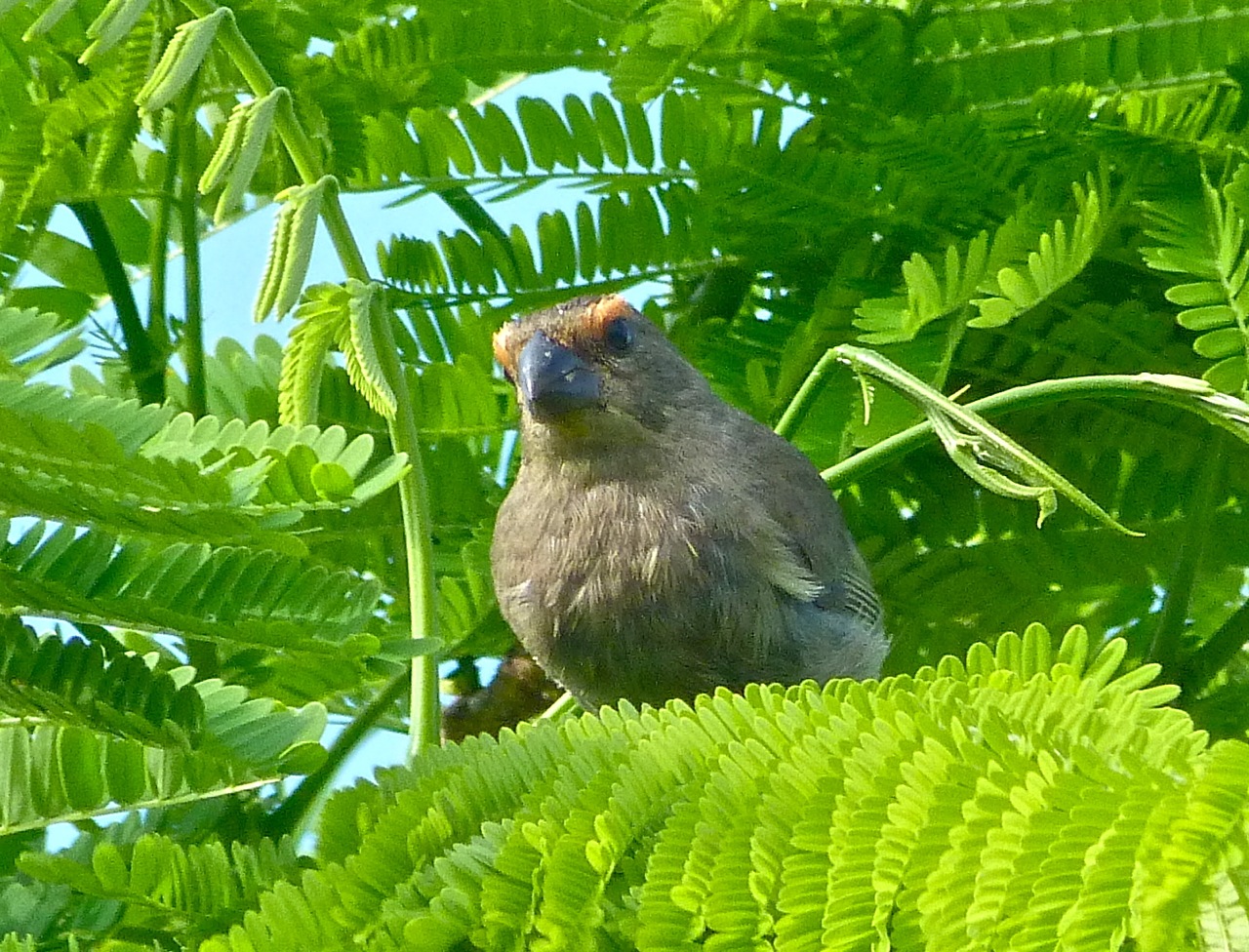
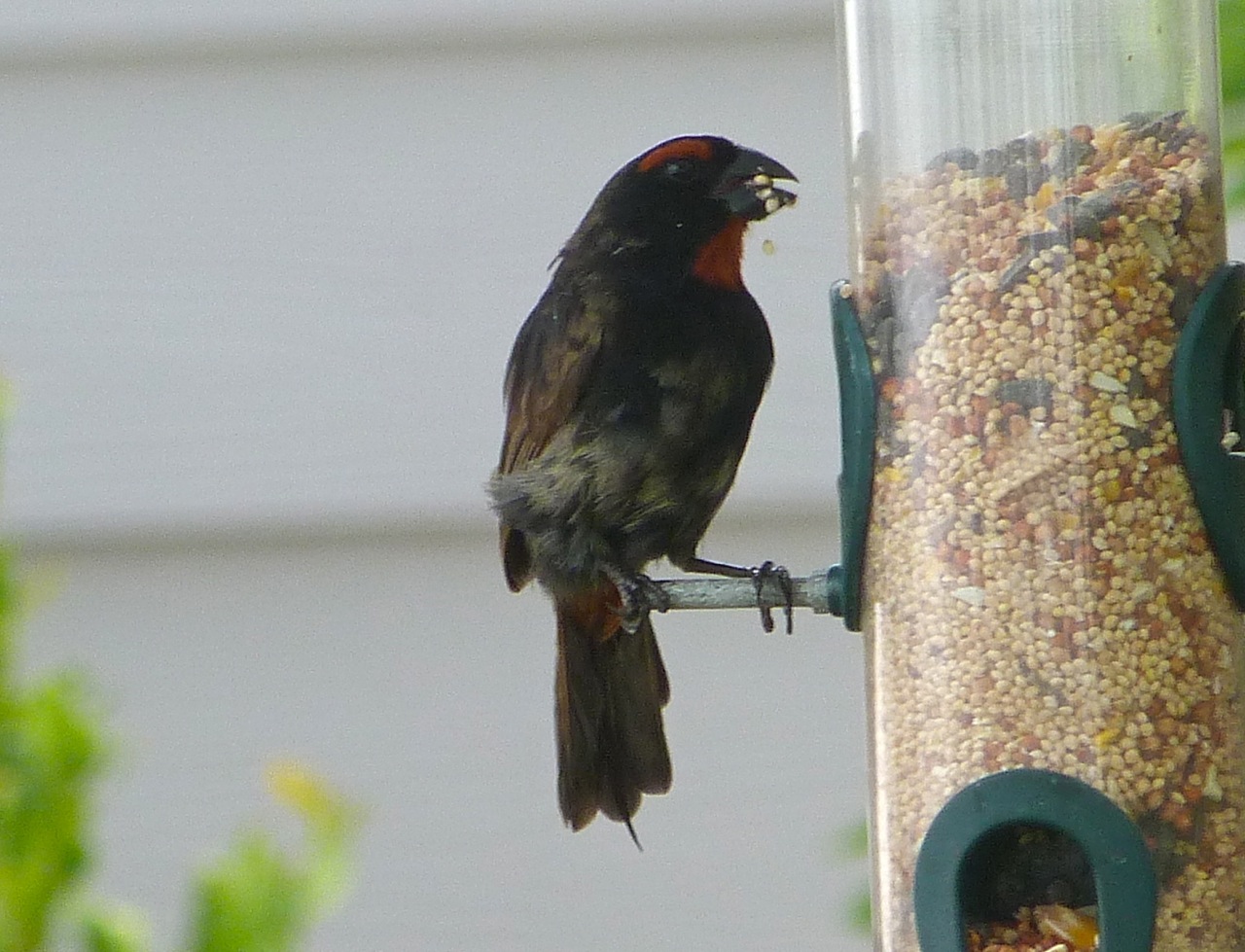
This is a well-know bird (Loxigilla violacea) that can be seen on Abaco all year round. With their scarlet bibs and eyebrows, the males are a cheerful sight in coppice or garden. The females are paler brown, with orange accessories.
While still officially rated as a species of ‘Least Concern’, a measurable fall in population in recent years has seen them nudging towards ‘Vulnerable’.
Greater Antillean Bullfinch song from Paul Driver at Xeno-Canto
Antillean Bullfinches enjoy garden feeders – and their larger size means that they are higher up in the pecking order than the black-faced grassquits and other small birds
They are one of the many popular Bahamian bird species to have featured on postage stamps – in fact they scooped the high-value $10 stamp in 1991 and the $5 stamp in 2001
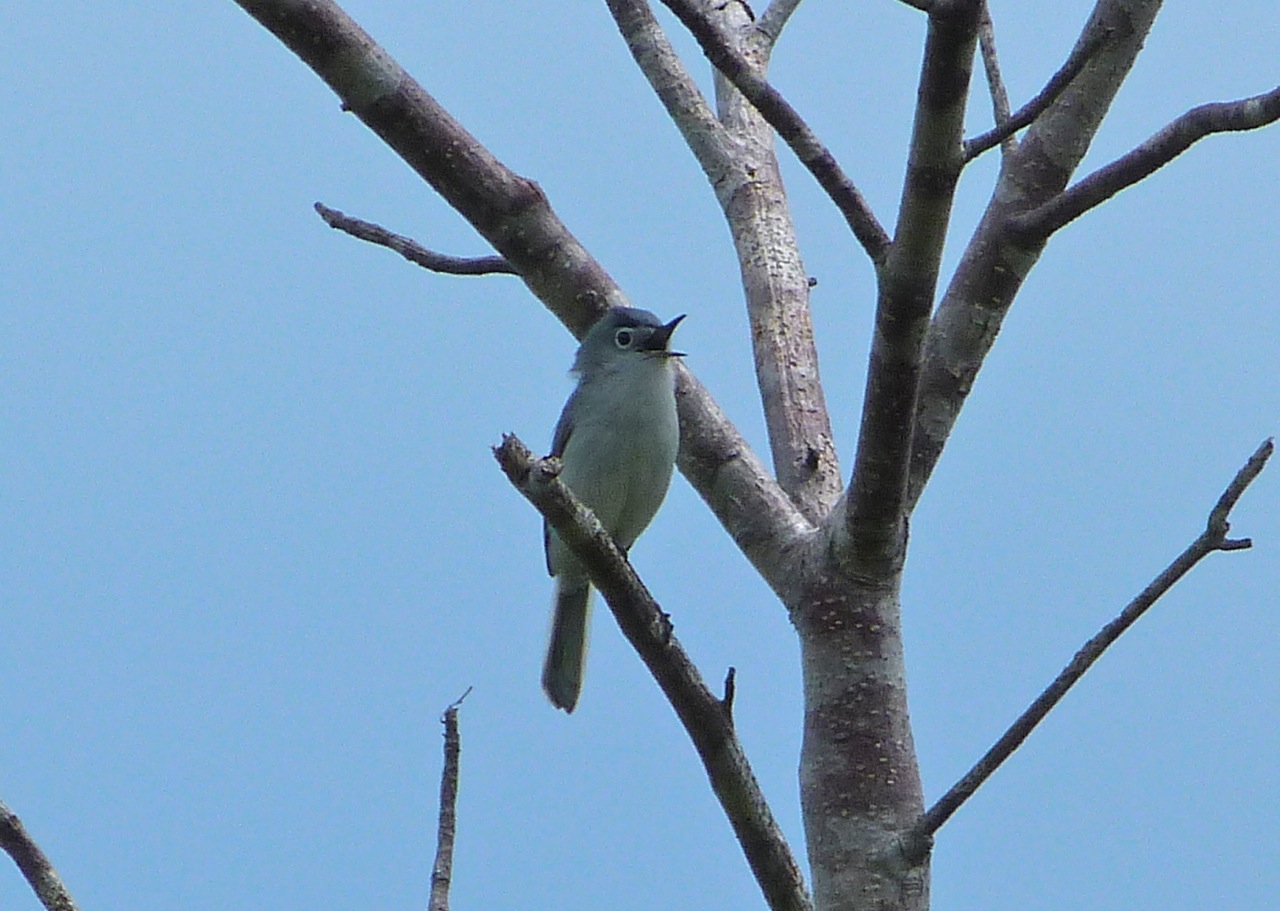
This small bird was quite far back – and high up – in the coppice on the Delphi guest drive. The photos were distance shots, so not the best quality, but they do capture the little bird in full song. BGGs have complete white eye rings; males have a dark ‘monobrow’ which can just about be seen in the photo above. In a word, ‘cute’. They sound like this (you may need to wait for the clip (credit: Cornell Lab / RH) to load – or hurry it along by clicking ‘Play’ as it loads):
They build a cup nest on a horizontal tree branch. It’s a modern family unit – both parents make the nest, tend the eggs, feed the young, and teach them manners. They may raise two broods in a season.
BGGs eat insects and spiders, feeding in trees and shrubs. They can hover very briefly, but mainly they catch insects on the wing (‘hawking’). The tail is often held upright while defending territory. Or sometimes just because they can.
All the information you could want on this species can be found at the excellent OISEAUX-BIRDS.COM
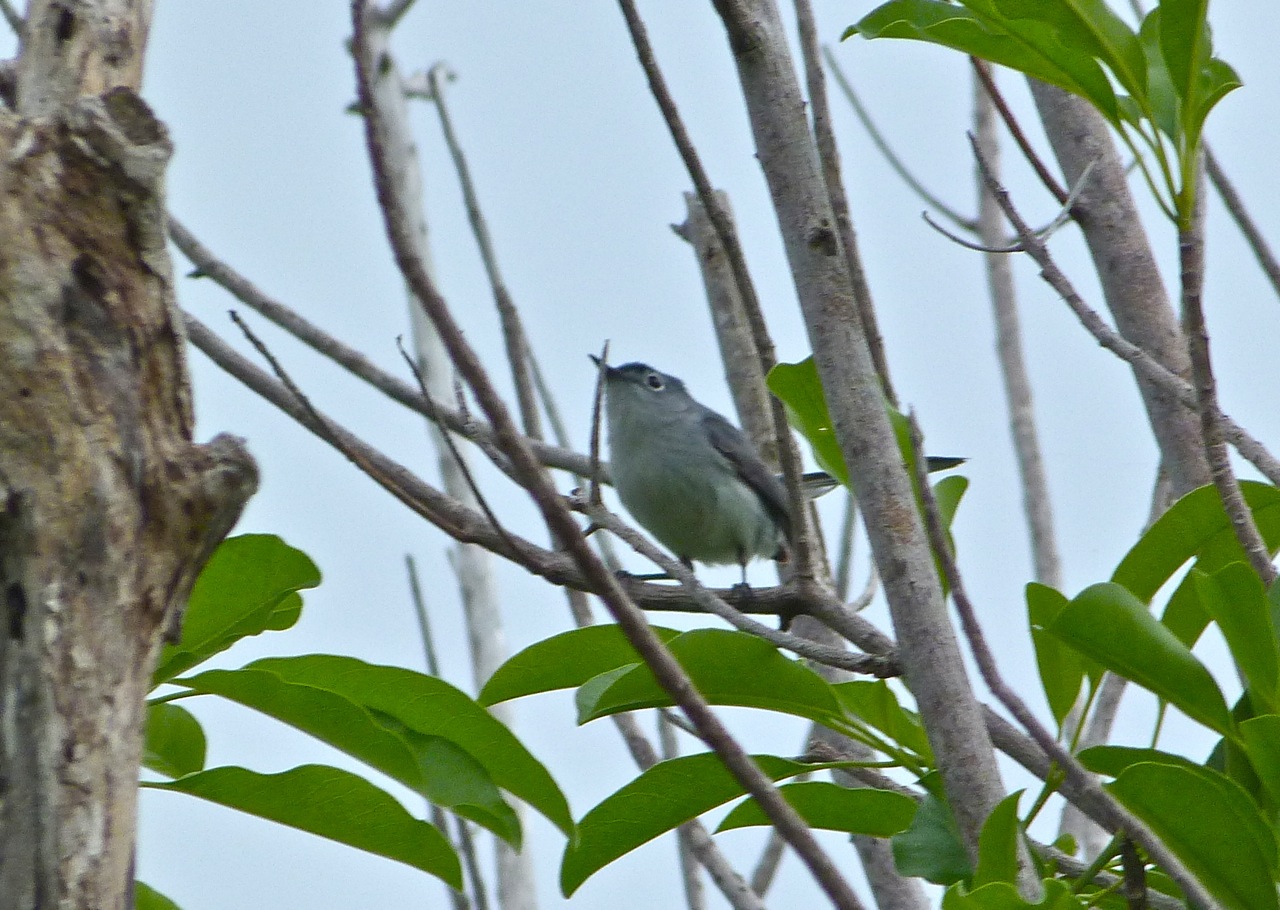
STOP PRESSchecking back through my photos, I’ve found a (slightly blurry) distance shot of a BGG. I am adding it because it shows the bird with its characteristically cocked tail, often seen when perching (the bird, I mean)
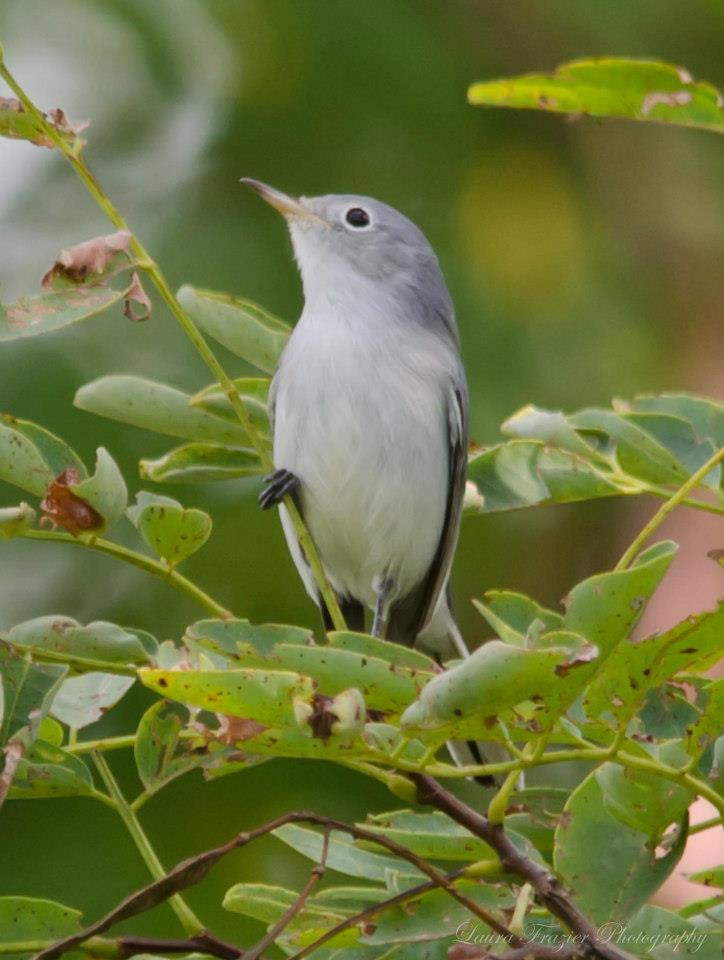
A very pretty BGG has recently been published on the superb Cornell Lab website, credited to Laura Frazier. It’s so cute – and such a clear image – that it deserves inclusion here
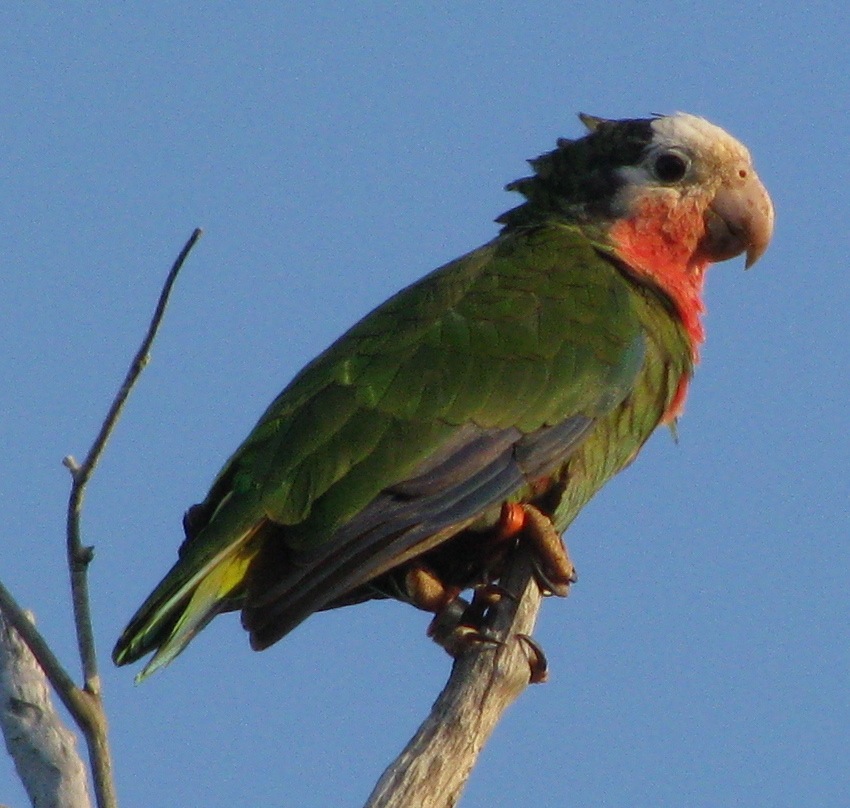
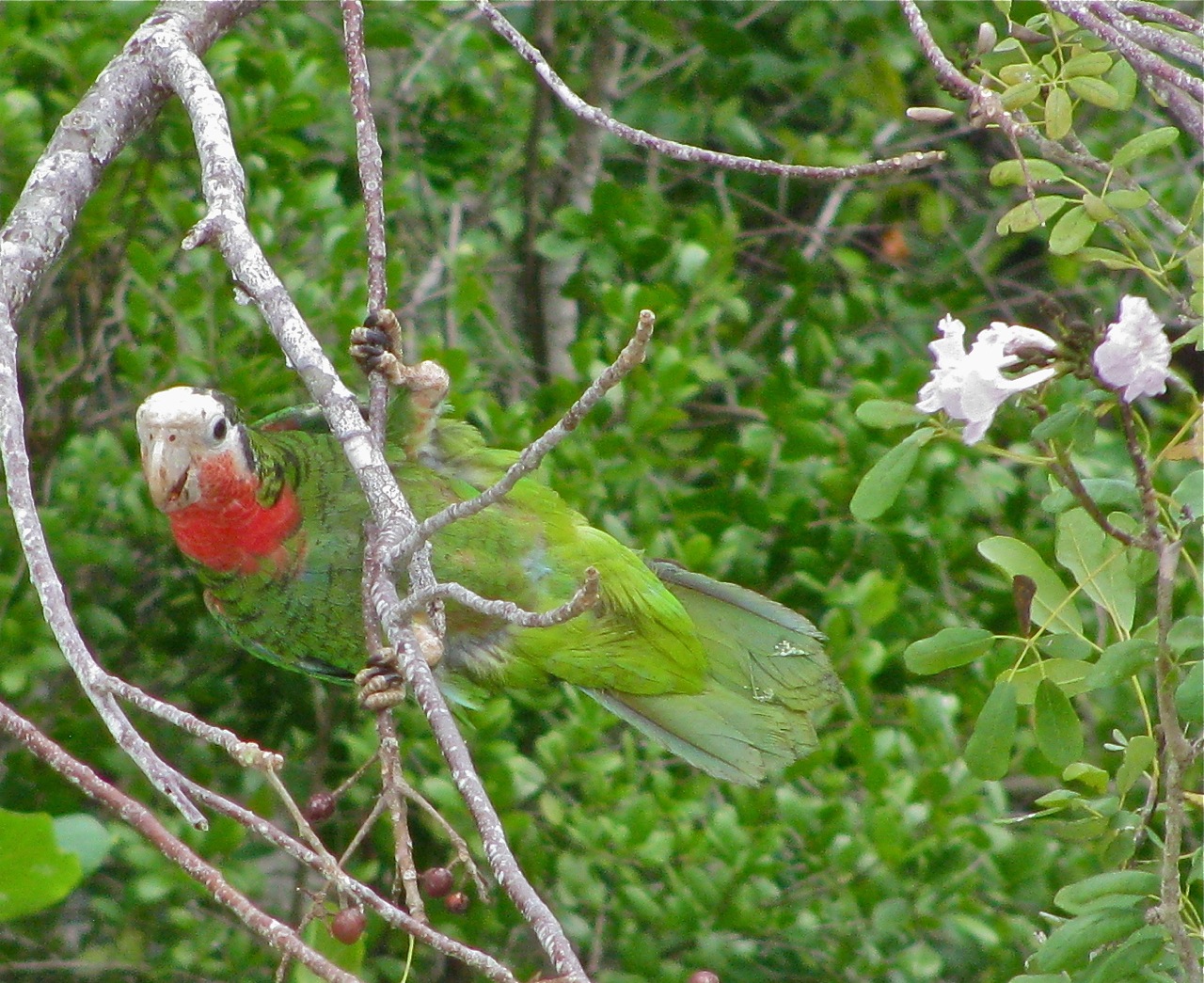
The wild parrots of Abaco are very special birds. Uniquely they nest underground in limestone holes which provides protection, not least from forest fires. Thanks to a program of intensive research over the last few years, far more is now known about these birds and their breeding habits. Investigations into predation have led to effective predator controls. The evidence this year is that the population numbers, having stabilised, are gradually rising to a sustainable level of some 4000 birds. The parrot below has been ringed as a chick as part of the continuing monitoring program.
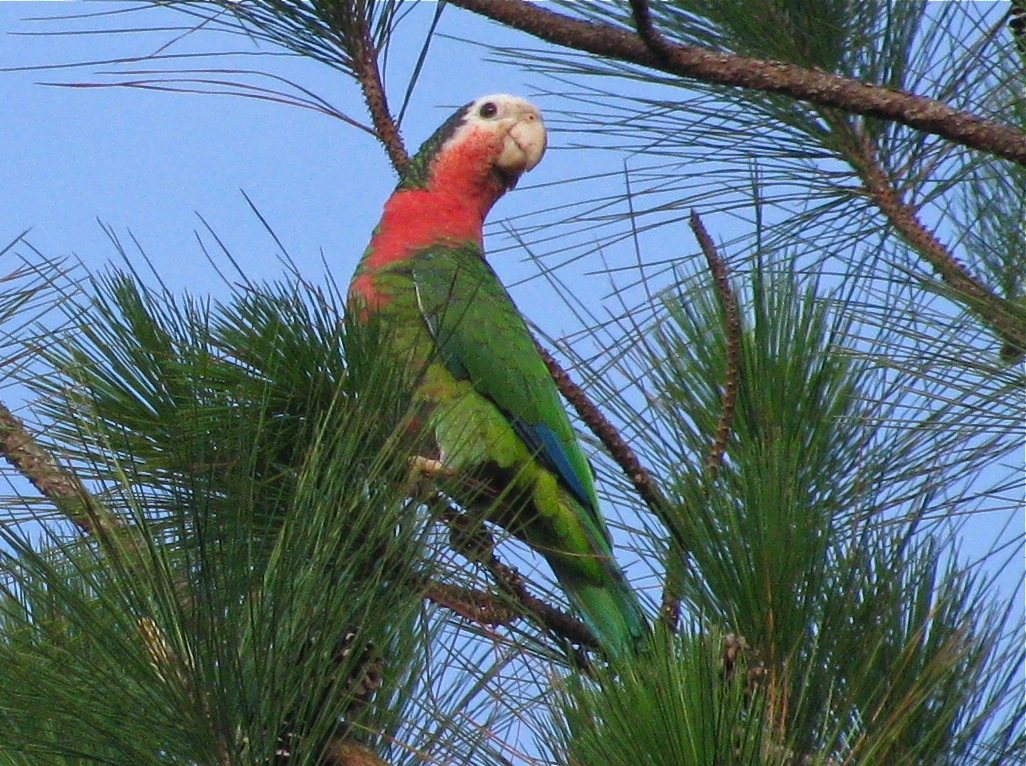
I will soon be posting about the current breeding season – the parrots are in their limestone cavity nests now, the eggs are laid, the chicks will soon be hatching. Caroline Stahala, the Abaco parrot expert familiar to those who follow this blog (seeABACOPARROTS), will soon be reporting on this years breeding and chick-ringing program. In the meantime, here are some of Caroline’s pictures taken during the past season of the parrots in all their glory…
The parrots mainly live and breed in the pine forest of the Abaco National Park
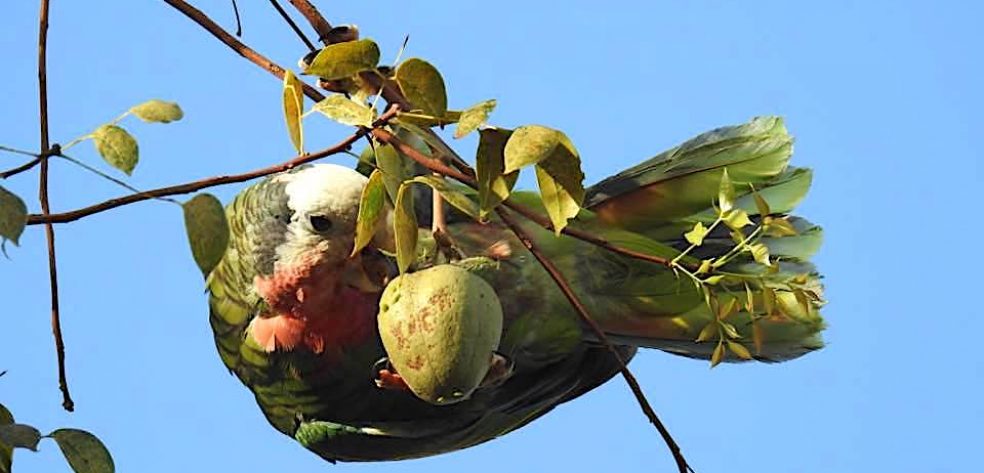
During the day they fly northwards, often in large noisy groups, where they feed. One of their favourite treats is the fruit of the Gumbo Limbo tree. This sometimes requires acrobatic skill
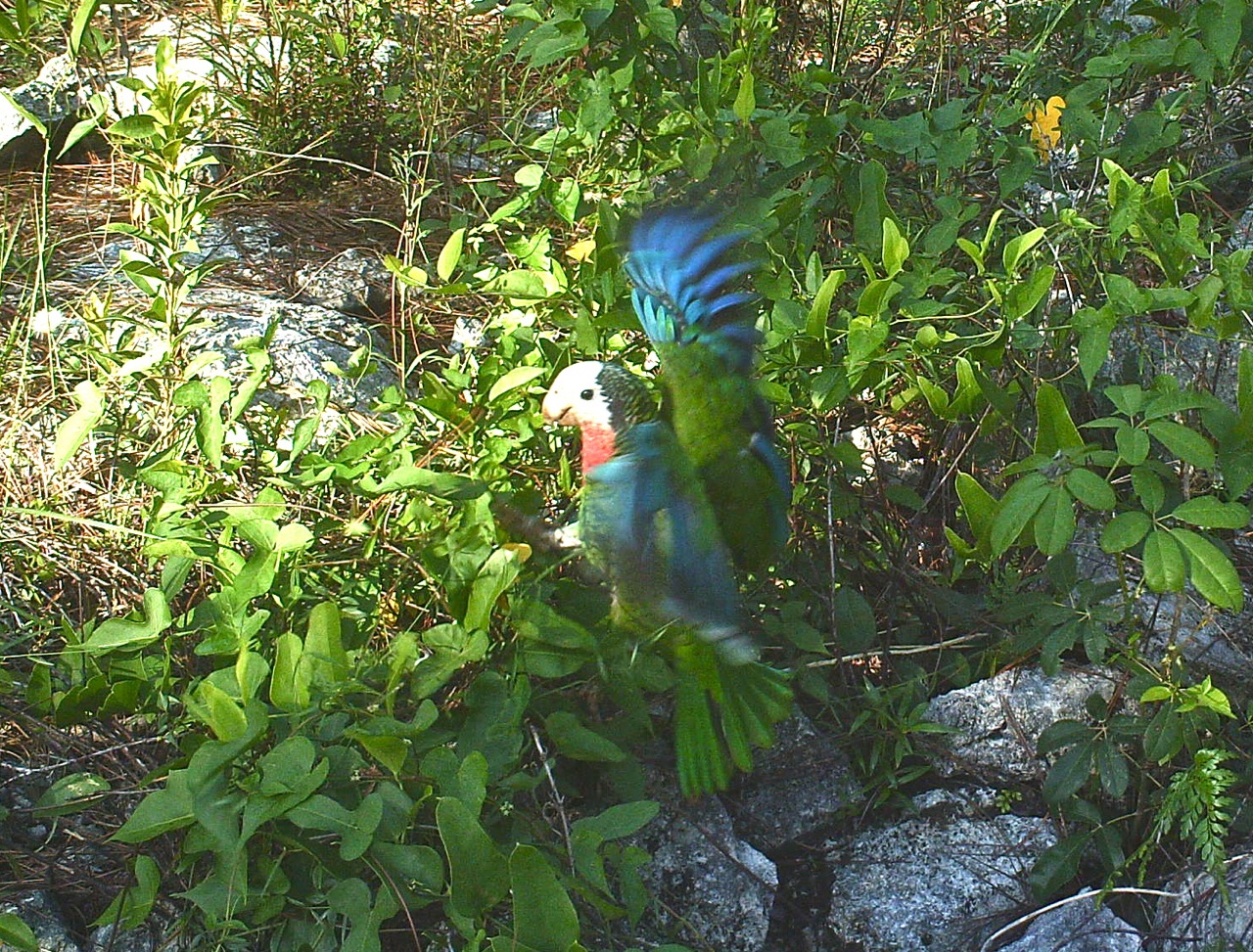
The sunshine brings out their bright colouring. When they fly, the blue on their wings is wonderful
Besides Gumbo Limbo berries, the parrots enjoy feeding on seeds
A parrot takes flight near a nest cavity. There’ll be more photos of parrot nests later this month
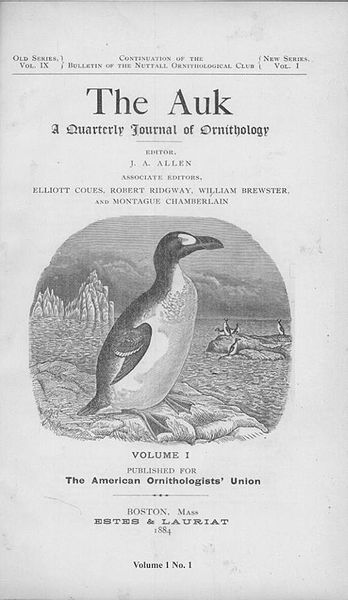
THE AUK is a quarterly journal published by the AOU specialising in promoting the scientific study of birds by means of original peer-reviewed reports. It has been in continuous publication since 1884, and can lay claim to be a (the?) foremost journal in its field. Here is the front page of the first volume of the journal
The 1905 Vol 22 No. 2 contains a 22 page study by Glover M Allen entitled SUMMER BIRDS IN THE BAHAMAS. If you aren’t a particularly dedicated birder, my advice is ‘look away now’ and move on to a page, post or other occupation that interests you more. For the remaining 2 of you, stay tuned in. I thank you both. It will be worth it…
The article was published at a time when ornithological survey of the Bahamas was in its infancy. Cory’s famous list of birds collected from the islands had been published a mere 15 years earlier. Allen details his time spent with 2 companions – much of it on Abaco – as they investigated birdlife and recorded their findings. That aspect comprises the first part of the article. The second part is equally fascinating: their list of bird species, with commentary, remarks and comparisons thrown in, together with some of the local names for the birds. Some of these are still in use, others perhaps long-forgotten. Is a Least Tern still known as a ‘Kill-’em-Polly’? Here are some highlights for busy people:
FLAMINGO / SPOONBILL Of particular interest is the recording of the apparently imminent loss of the flamingo (“fillymingo”) from the Northern Bahamas – a single colony only still surviving on the Abaco Marls by 1905. Allen and his group found only one roseate spoonbill, also on the Marls (we were also lucky enough to see a single spoonbill on the Marls in June)
BAHAMA PARROT Those who follow the fortunes of these fine birds on this blog or elsewhere will be especially interested in the following extract, which suggest that at the start of the c20, the species had all but died out on Abaco:“Amazona bahamensis (Bryant). We were interested to learn through the captain of our schooner, that a few parrots still exist on Great Abaco. He told us of having seen a flock near Marsh Harbor the year before (1903) and in previous years had some- times observed a flock in late summer at that part of the island. We learned that at Acklin’s Island about 14o miles south of Nassau, parrots still nest in numbers and the young birds are regularly taken from the nest when fledged,and bronght to Nassau to be sold as pets” I will be posting about the parrots later this month, but suffice to say here that the current estimate for Abaco parrots is now around 4000 birds, a significant increase since conservation measures and a predator control program were started some years ago.
BAHAMA WOODSTAR These endemic hummingbirds, now taking second place to the in-comer Cuban Emerald, were plainly everywhere then: “On all the islands and cays, wherever there was bush or tree growth, this humming- bird occurred”
“PARAKEETS” There seems to have been a significant population of these, known then as ‘Bahama Grassquits’. What species were – or are -these? The description doesn’t quite match the ‘quit family candidates we are familiar with today.
OTHER SPECIES Avian taxononomy, with its frequent official changes of classification, is a confusing area… but it seems that in 1905 there were then 2 distinct species of Spindalis (now, one); and 3 Mockingbird varieties (now, two). But of course there may simply have been a naming adjustment since the article was published…
For those who have stayed awake till now, your prize is the following link to the whole 22-page (small pages!) article
NO SALMON FISHING IN THE YEMEN? GO BIRDWATCHING INSTEAD…
AN ABACO / YEMEN BIRD POPULATION COMPARISON
All anglers have done it. Gone somewhere to fish on a hunch, a whim or a tentative recommendation, only to find no fish. What if you decided to take a break from Abaco bonefishing on the strength of the film title Salmon Fishing in the Yemen, only to find that there is, in fact, no migratory salmonid species in the republic. Despite the film’s dreamily optimistic outcome, it’s a piscatorial impossibility. You should have read the book first, of course – or seen the film, if only for Emily Blunt. Ok, and Ewan McGregor, if you must. Yes yes, and the fabulously over-the-top foul-mouthed cameo that is Kristin Scott-Thomas.
Set aside your disappointment. The only sensible thing is to put the fishing tackle away and check out the other Yemeni wildlife, specifically the birds. But you haven’t come prepared for this. You have no bird guide. So what species might you find in the Yemen that would be familiar to a Bahamian, specifically a South Abaconian?
South Abaco has 126 of the 196 birds species found more widely on Abaco, according to Avibase. I wondered how many of these one might find in the Yemen. And the answer is 33 (or 26%)
When I started checking this, I thought there would be very few – maybe a dozen or so – ‘mutual’ birds. As I worked my way through the seabirds, shore birds, birds of prey etc, the total slowly rose. Then I came to a sudden halt. Apart from the near-ubiquitous, adaptable rock dove, starling and sparrow, there are NO small birds in common at all. The obvious reasons are distance, habitat and climate, of course, but nevertheless I found it a slightly surprising finding.
So the lesson is, don’t be tempted to go warbler-watching in the Yemen either…
These small birds are a favourite of mine. They flicker around, cheeping cheerfully, yet are often quite hard to see in the coppice even if you think you are looking exactly where the sound is coming from.
Bananaquits are passerines, with an uncertain species designation. Over the years they have been officially reclassified three times. Some include them loosely with tanagers; others put them in their own family group; others argue that there are 3 distinct species. Basically, there is no universal consensus. There is some satisfaction, in a vastly over-classified world, in one small bird resisting man’s pigeon-holing (so to speak). It’s a tiny taxonomic enigma.
Among the islands of the West Indies there are several subspecies of bananaquit, with marked variations of appearance and size too tedious to relate. The best news is that “…the Bahamas Bananaquit with a whitish throat and upper chest may be a separate species…”.
The Bananaquit’s slender, curved bill is designed for taking nectar from flowers. It can pierce flowers from the side to reach the nectar, or use its bill to puncture fruit. It also eats small insects. The birds are tame, and love feeders, especially hummingbird feeders filled with sugar-water – hence their nickname “sugar bird”. They breed all year round. This is the characteristic chirrup of the Bahamas Bananaquit (credit: Xeno-Canto)
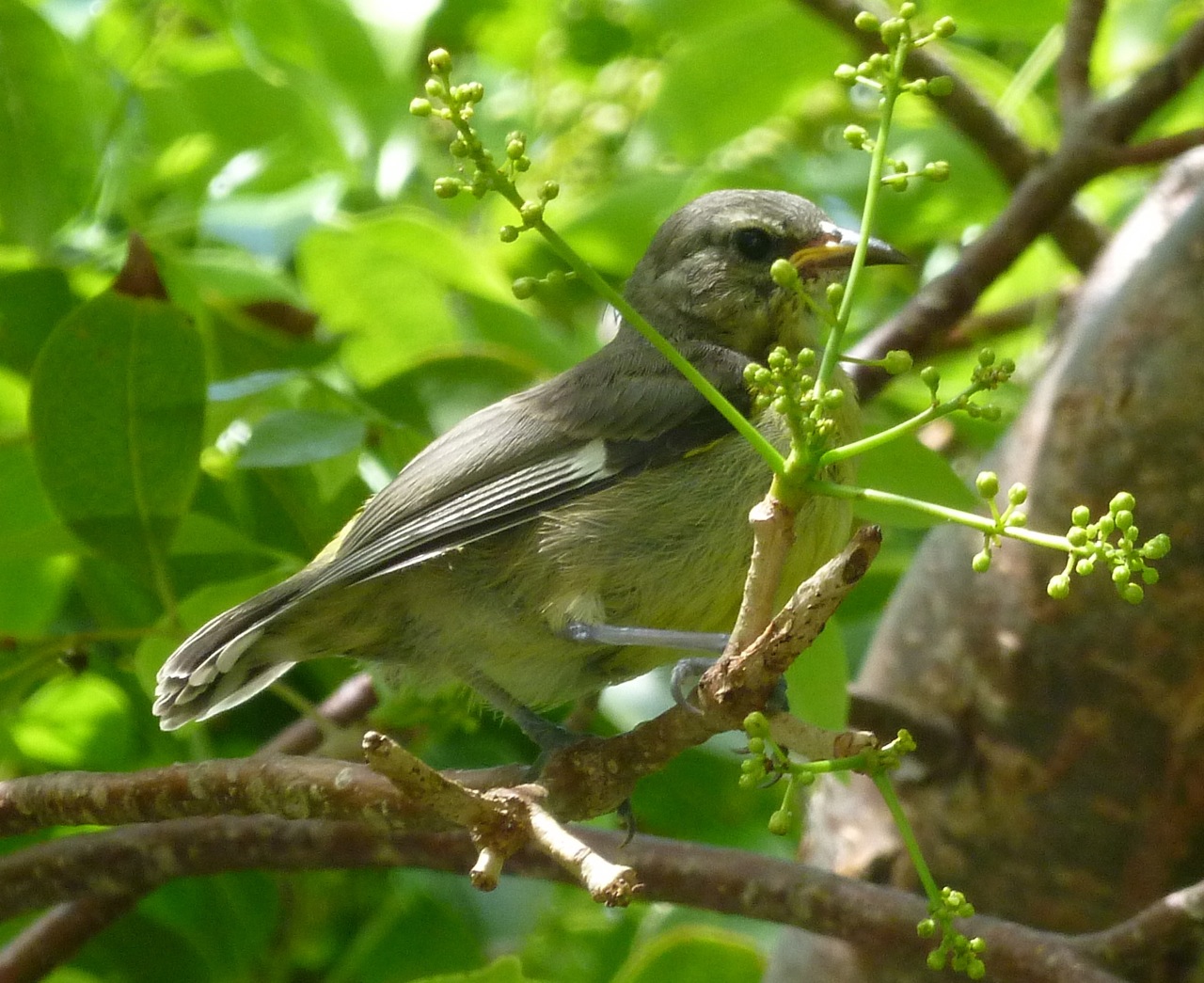
This small juvenile was happily feeding by itself near the Delphi Club, Abaco. Its mother then flew onto a nearby branch, and I’m afraid to say that the child indulged in a shameful charade of “Hungry! Feed Me! Now!”
WARBLER IDENTIFICATION – A LIGHT-HEARTED CHALLENGE
SPECIES ID NOW SOLVED! CUT TO THE CHASE BENEATH THE PHOTOS FOR DETAILS. A LATE ENTRY NOW DISPUTES THE GENDER ID, SO THE SEX CHALLENGE IS REOPENED, SO TO SPEAK
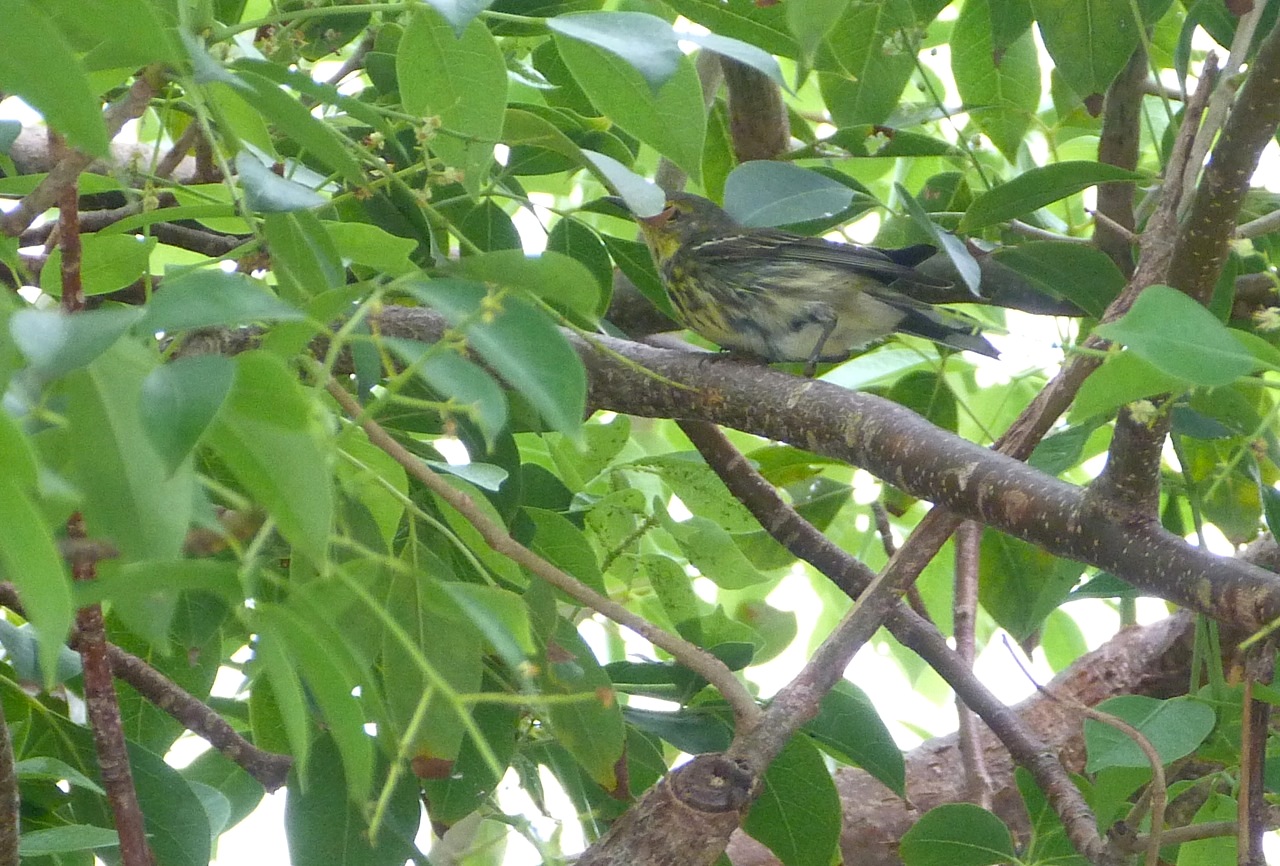
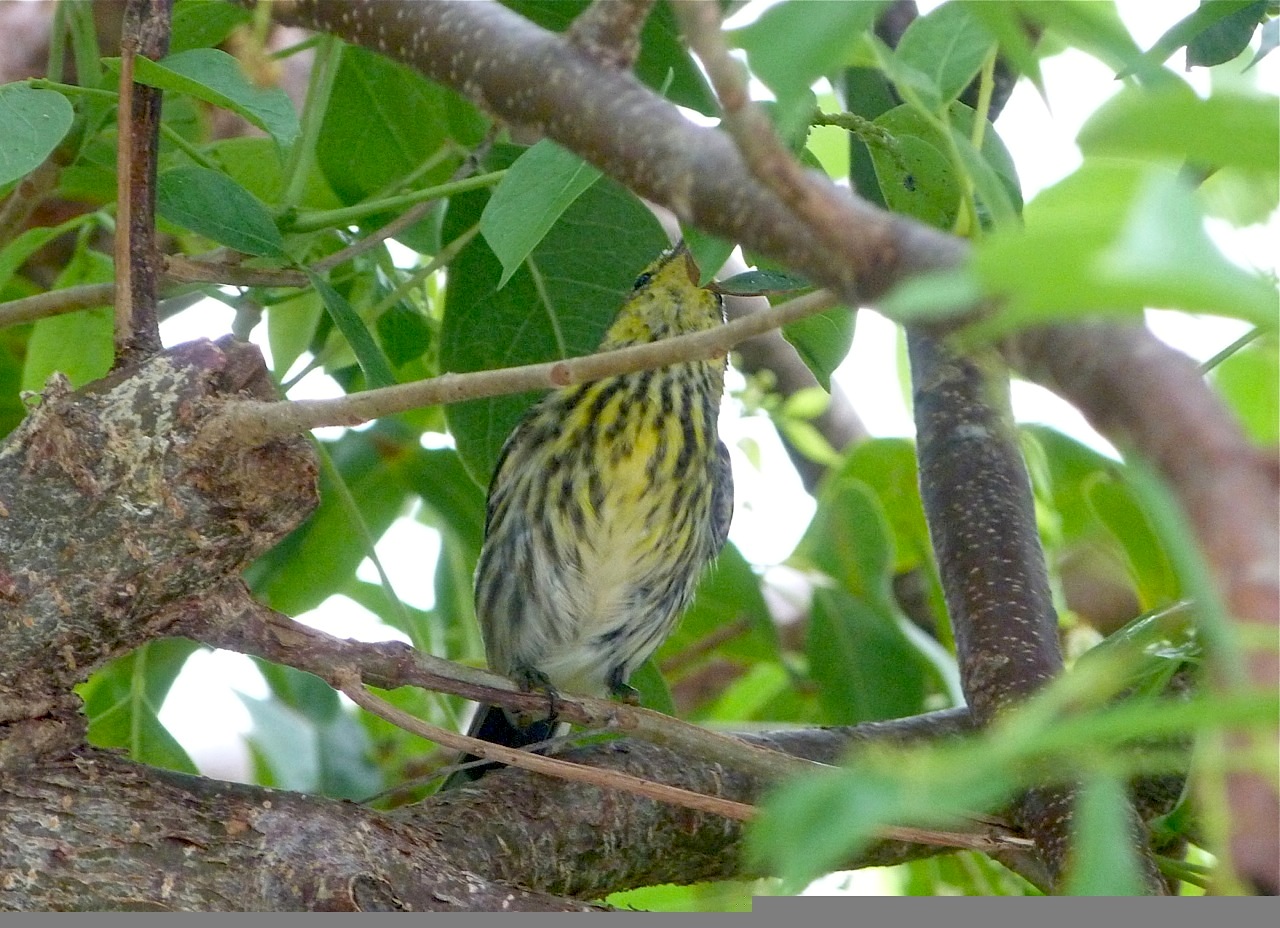
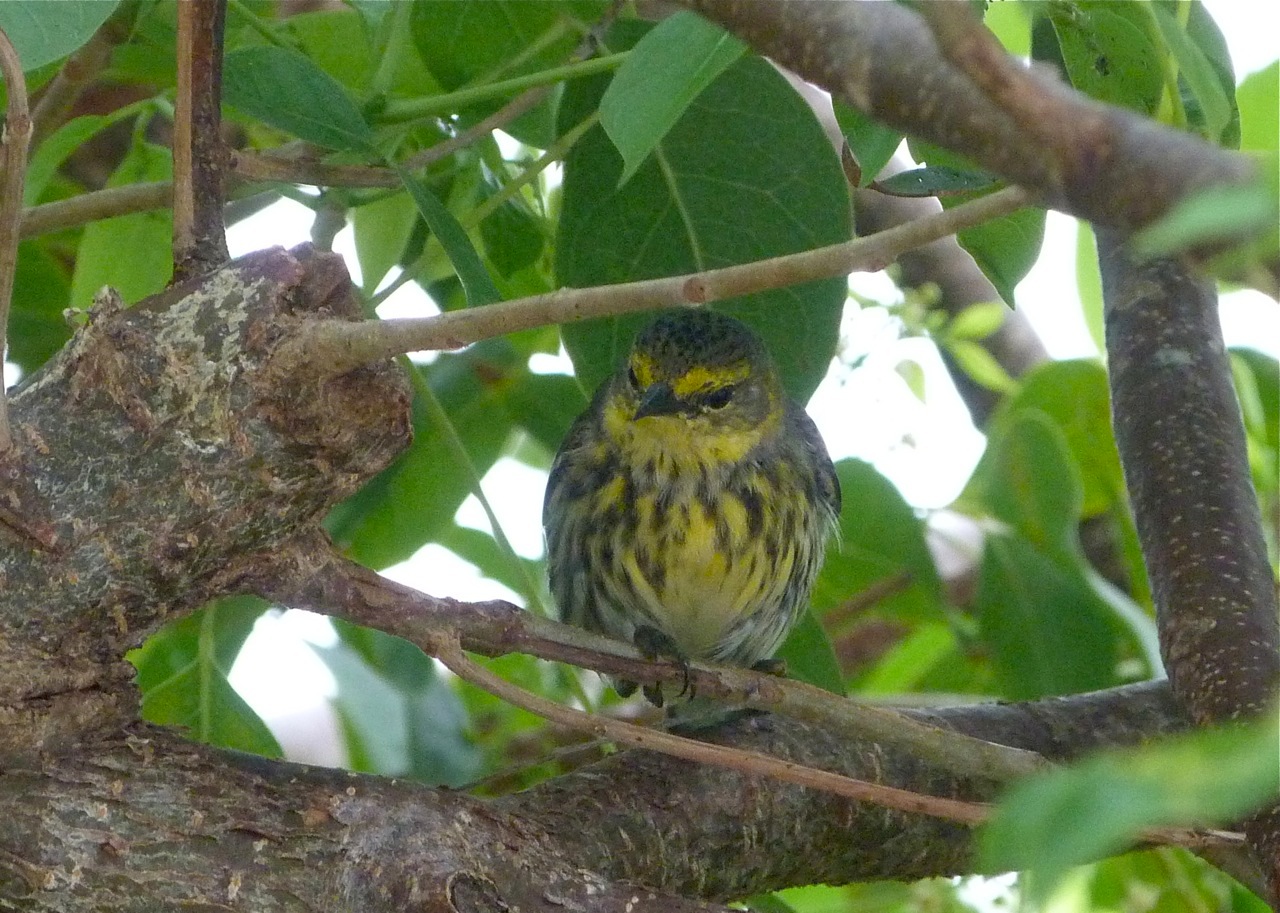
I have previously posted aids to WARBLER ID (1); WARBLER ID (2), a pitfall-fraught area that continues to baffle me despite books, online resources, futile stabs in the dark etc. For each species the male differs from the female, and both differ from juvenile / maturing birds. And this all depends to some extent on the season. Here’s a speckled warbler photographed recently at the Delphi Club, Abaco, for which there are various candidates ranging from the distinctly possible to the frankly completely-unlikely-but-astounding-if-it-turned-out-to-be-true Kirtland’s Warbler. These are seen and positively identified vanishingly rarely on Abaco – maybe one or two a year, and invariably in winter. But what if one decided to stay behind for the summer… And to those who say “Prairie, dimwit”, I reply “…but their speckles don’t cover their entire fronts”.
I’m throwing this open, because although I have a view I’d like to see what others come up with. Craig? Avian101? Avian3? Margaret H? Other birding followers? Are you out there? Leave a comment (see small-print blurb at the bottom of the post) or email me at rollingharbour.delphi@gmail.com The bird was a bit reluctant to be photographed, but I managed to get a side view, a ‘full-frontal’ and a head shot. Any ideas?
UPDATEThanks to all who came up with suggestions – it’s interesting how opinion on warbler species varies, even with quite clear close-ups to judge from. The first past the post is… Dr Elwood D Bracey (Fl), to whom many thanks. It’s a female CAPE MAY WARBLERDendroica tigrina. The runner-up is (amazingly) myself – I had it down for a Cape May juvenile, because I thought it looked a bit on the fluffy side… Also, its eye-patches (photo 3) are grey rather than brown, and I took their colouring to be a work in progress. There’ll be some more ID queries from our recent batch of Abaco photos – not just birds, but flowers & shells as well. All contributions will be welcome…
Oh no! What’s happening here? A late challenge has come in from Margaret H (see comments), who contends that the clearly shown patch on the bird’s cheek indicates that it is a male, not a female, Cape May. So the challenge was ended and the award given prematurely… The species is now definite, but the gender ID remains unresolved…
I’ve now heard from Alex Hughes, who writes “[I am] one of Caroline Stahala’s field techs on the parrot project this summer. She forwarded me the photos of the warbler taken recently on Abaco. The photos I saw are of a female Cape May Warbler, which is a great find in June! She is certainly not going to make it to her breeding grounds, unfortunately, but still fascinating to see a boreal forest bird in the Bahamas during summer.
In a follow-up, Alex adds “I’d be very surprised if this was a male bird, due to the plumage lined up with the time of year. This year’s juvenile birds are not big enough to make the flight south from breeding grounds yet, and wouldn’t anyways if they could. Therefore, it would have to be adult non-breeding plumage if it were a male, also meaning this bird already molted from alternate plumage from spring, and flew south. This seems far more unlikely to me than a female who simply didn’t make the flight, probably due to some handicap. Either way, very cool!”
So I think that wraps it up. A female Cape May, in the right place at the wrong time. How lucky to have got close to one in the off-season. It just goes to show, eager Kirtland hunters, that any of the migratory warbler species might choose to stay behind for the summer…
CORNELL LAB OF ORNITHOLOGY IMAGE & BLURB
“The Cape May Warbler breeds across the boreal forest of Canada and the northern United States, where the fortunes of its populations are largely tied to the availability of spruce budworms, its preferred food. Striking in appearance but poorly understood, the species spends its winters in the West Indies, collecting nectar with its unique curled, semitubular tongue”.
It is presumably using its ‘unique… tongue’ in Photo 2, inconveniently concealed by foliage so we will never know
(RH COMMENT My one obviously liked the Delphi Club – and its feeders – so much that it decided to stay for the summer…)
(Credit: Steve Pelikan for Xeno-Canto)
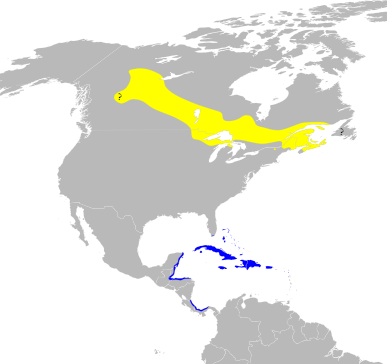
CAPE MAY WARBLER RANGE MAP (Wiki) (left)
As a warbler-muddler, I am interested to see how extremely selective this species is in its preferred summer and winter latitudes. The banding is very distinct. Are they never tempted by New York? Have they never tried Disneyland?
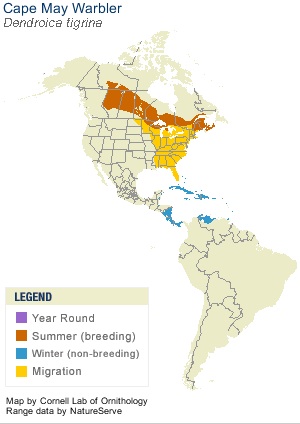
CORNELL LAB OF ORNITHOLOGY RANGE MAP(below)
The more sophisticated range map below shows the migration areas between the summer breeding and winter non-breeding areas. It looks as though a Cape May warbler on Abaco in June is an unexpected sighting.
JAMES BOND – THE ORNITHOLOGIST WHO LENT HIS NAME TO A FICTION LEGEND
Jamaica, 1952. The night was hot, too hot. Fleming cursed as he made his way up the steps to his neighbour’s verandah. He heard the clink of ice from within the house, and guessed that the rum punch was being mixed just the way he liked it. Stirred, not shaken. As he passed a low table on the verandah his eyes were drawn to a small book lying on it. Fleming paused, taking in the information, his senses suddenly alive. Bond. James Bond. A bird book about the avian species of the West Indies. Suddenly, it all made sense. Fleming knew now the direction he had to take, and with a thin smile he flicked back the insolent comma of dark hair that had fallen across his face and strode into the house towards the sound of the ice…
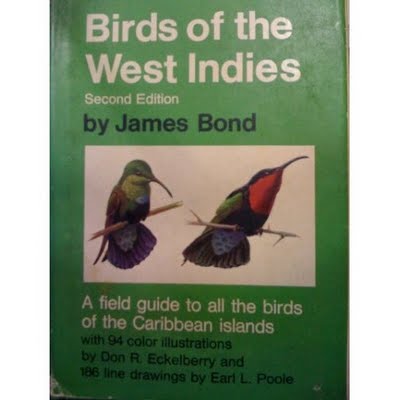
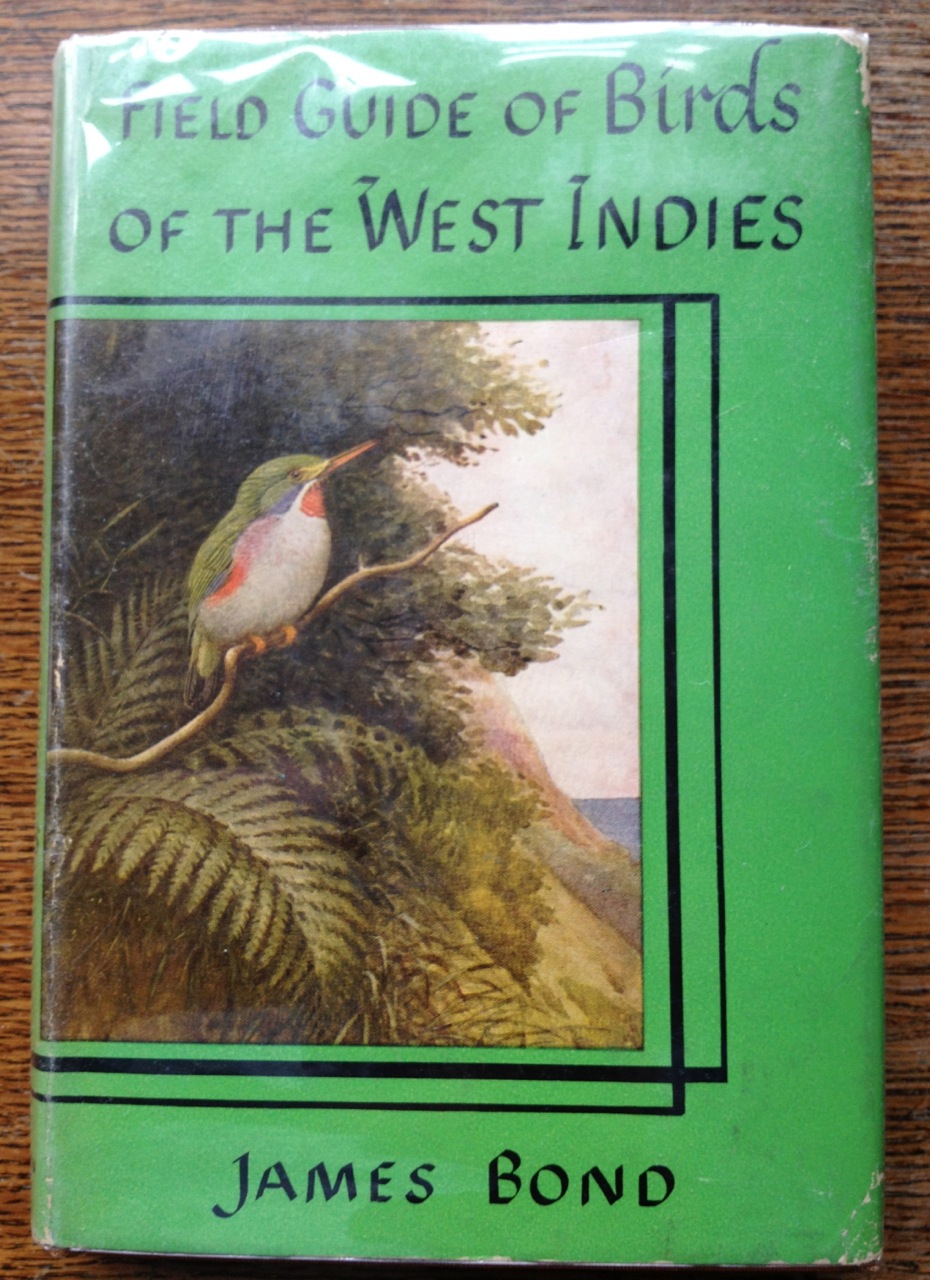
James Bond, ornithologist (1900 – 1989) was an expert on the birdlife of the Caribbean and wrote the seminal Birds of the West Indies, first published in 1936 and republished in varying formats ever since.
Ian Fleming lived in Jamaica and was a keen birdwatcher. The story goes that one evening, visiting friends, he saw ornithologist James Bond’s Birds of the West Indies on a table, and borrowed that short, punchy name for his fictional hero 007 for Casino Royale, published in 1953. He later said he wanted a name that sounded ‘as ordinary as possible’. In an interview, Fleming said “I wanted the simplest, dullest, plainest-sounding name I could find, and ‘James Bond’ was much better than something more interesting, like ‘Peregrine Carruthers.’ Exotic things would happen to and around him, but he would be a neutral figure — an anonymous, blunt instrument wielded by a government department.” Fleming wrote to the real James Bond’s wife “It struck me that this brief, unromantic, Anglo-Saxon and yet very masculine name was just what I needed, and so a second James Bond was born.” He also contacted the real James Bond about using his name in the books and Bond replied that he was “fine with it.” At some point during one of Fleming’s visits to Jamaica he met the real Bond and his wife. The meeting was recorded for a documentary.
FACT, FICTION & IN-JOKES
In Dr No Fleming referenced Bond’s work by basing a large Ornithological Sanctuary on Dr No’s island in the Bahamas. In 1964, Fleming gave Bond a first edition copy of You Only Live Twice signed “To the real James Bond, from the thief of his identity”. In the 2002 Bond film Die Another Day the fictional Bond can be seen examining Birds of the West Indies in an early scene that takes place in Havana. However the author’s name (James Bond) on the front cover is obscured. In the same film, when Bond first meets Jinx, he introduces himself as an ornithologist.
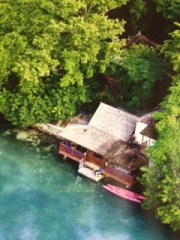
Ian Fleming Lived Here in Jamaica **
I had been planning to research the history of the various editions of Birds of the West Indies, the locus classicus for Caribbean species. Then I started to look into it and found that someone – Jack Holloway – had already done it so thoroughly that I would be wasting my time. So I contacted Jack for use permission, and I am very grateful to him for granting it by return. This next part is all thanks to him. I recommend a visit to his very good online bird resource website at AVIAN3
♠ ♣ ♥ ♦ ♠ ♣ ♥ ♦ ♠ ♣ ♥ ♦ ♠ ♣ ♥ ♦ ♠ ♣ ♥ ♦
THE HISTORY OF BIRDS OF THE WEST INDIES BY JAMES BOND
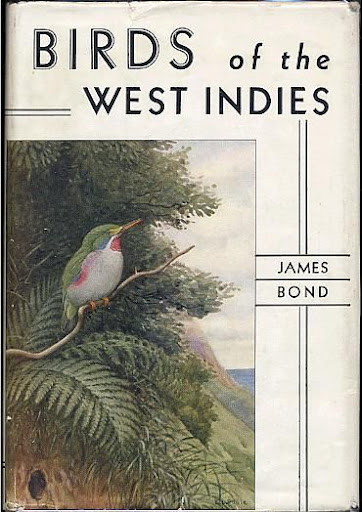
1936 (The Original)
This is the alpha of the “Birds of the West Indies” books by James Bond. Its longer subtitle is “An Account with full descriptions of all the birds known to occur or to have occurred on the West Indian Islands“. Published just shy of two years after Peterson’s A Field Guide to the Birds of the West Indies, this book was the first field guide to cover all the birds of the West Indies (outside of Cory’s annotated book of 1889).
Somewhat in contrast to what is stated in the later 1961 version as the “First American Edition”, this 1936 book was published by The Academy of Natural Sciences of Philadelphia (at which Bond worked) and was printed by Waverly Press, Inc. in Baltimore, Maryland.
This book is certainly quite scarce and typically commands a price ranging from $500 – $1,500 depending on its condition and the presence of a dustjacket.
Ultimately, one may ask, “What’s the difference between this first book and the subsequent versions?” Here is the answer in the form of a table (see below)
1947 (The Next Version)
This 1947 version is often advertised or assumed to be the first edition. This may be due in part to the rarity of the original 1936 edition and/or to the presence of “First Printing” printed on the backside of the Title Page in the 1947 book (see image below). This “first printing” refers only to the second book. For the true, original book, you must go back another 11 years to 1936.
Despite the notation of “First American Edition” in the 1961 version, this 1947 book was published by the MacMillan Company of New York and was printed in the United States. The 1936 edition was also US published and printed.
As an obscure note, the title of the book printed on the dustjacket does not match the title printed on the book itself. The cover reads, “Field Guide of Birds…” while the book reads, “Field Guide to Birds…”. Also, it is likely this is the version owned by Ian Fleming which inspired the naming of his charismatic spy (see below)
Depending on the condition of this book and the presence of a dustjacket, this 1947 version ranges in price between $30 and $100.
STOP PRESS As a guideline, I’ve now bought a copy of this edition on eBay for $80, in very good condition with good dust jacket. On a first edition, I beat the seller down from $2250 to $1600, but it was in poor condition and I left it at that…
1961 (“1st American Edition“)
Just as a note of interest — or irony — this 1961 version is labeled as the “First America Edition”. Keep in mind the 1936 and 1947 books were both published and printed in the US. Additionally, just beneath the statement of “First American Edition”, you will see “Printed in Great Britain”. Completing the picture, this book was published by the Houghton Mifflin Company of Boston; thus, the American connection (I guess).
1970s
1971 1971 1974
1980s
1980 1980 1985 1986 (?)
1990s (the adoption by the Peterson series)
1993 1995 1999
2000s
2002 (?)
OTHER COVERS
1960s?
ADDENDUM
1966
Needless to say, the name James Bond has a familiarity beyond just the birding world. Several myths and slight distortions have grown related to how this name has been transmogrified from ornithologist to international spy.
In 1966, Mrs. James (Mary Wickham) Bond wrote a 62-page book How 007 Got His Name that outlined the circumstances which led to the use of Mr. Bond’s name in the series of books written by Ian Fleming.
As noted on pp. 16-17, Dr. Bond first became aware of his new recognition in 1961. This was after seven spy thrillers had already been published and were just becoming popular in the US.
Mrs. Bond wrote a light-hearted letter to Mr. Fleming on February 01, 1961 to make note that he had “…brazenly taken the name of a real human being for your rascal!” (p.18). A return letter by Mr. Fleming was most gracious and apologetic.
In this reply, (contained in full in Mrs., Bond’s book), Mr. Fleming wrote, “I will confess at once that your husband has every reason to sue me in every possible position and for practically every kind of libel in the book, for I will now confess the damnable truth.” (p.21).
He then provided an explanation of how he selected his character’s name for the first book in 1953: “…I was determined that my secret agent should be as anonymous a personality as possible…At this time one of my bibles was, and still is, Birds of the West Indies by James Bond, and it struck me that this name, brief, unromantic and yet very masculine, was just what I needed and so James Bond II was born…”
Mimicking Mrs. Bond’s light-hearted approach, Mr. Fleming continued his reply with this unique offer: “In return I can only offer your James Bond unlimited use of the name Ian Fleming for any purpose he may think fit. Perhaps one day he will discover some particularly horrible species of bird which he would like to christen in an insulting fashion.” (p.22).
Mr. Fleming also offered the Bonds an open invitation to visit his residence in Jamaica and to visit the birthplace of the second James Bond.
Iam Fleming and the real James Bond met only once, which was February 5th, 1964. This was in Jamaica, six months before the death of Mr. Fleming.
This short book by Mrs. Bond is a nice, quick read. I appreciate it for the first-hand accounts of the historical beginnings of Bond vs. Bond as opposed to the hearsay and myths created over time. The book also offers entertaining stories of how James Bond dealt with his new popularity and the avid “fans” upon their discovery of his name.
Comparison Table of the Books’ Contents over theYears
**“THE FLEMING VILLA” (SHOWN ABOVE) – THE FACTS
Once rented by Noel Coward
Sting wrote “Every Breath you Take” here
Princess Margaret, while a guest, broke a toe on one of the beds (rum punch alert!)
Ian Fleming himself designed the house, and wrote all the Bond books here
It has 5 bedrooms, and was built by a former donkey track bought by Fleming in 1946
You can rent it (and its full-time staff) for £3500 (including breakfast). Per night…
It is part of the ‘Goldeneye’ Estate (and no, there isn’t a ‘Thunderball’ Estate)
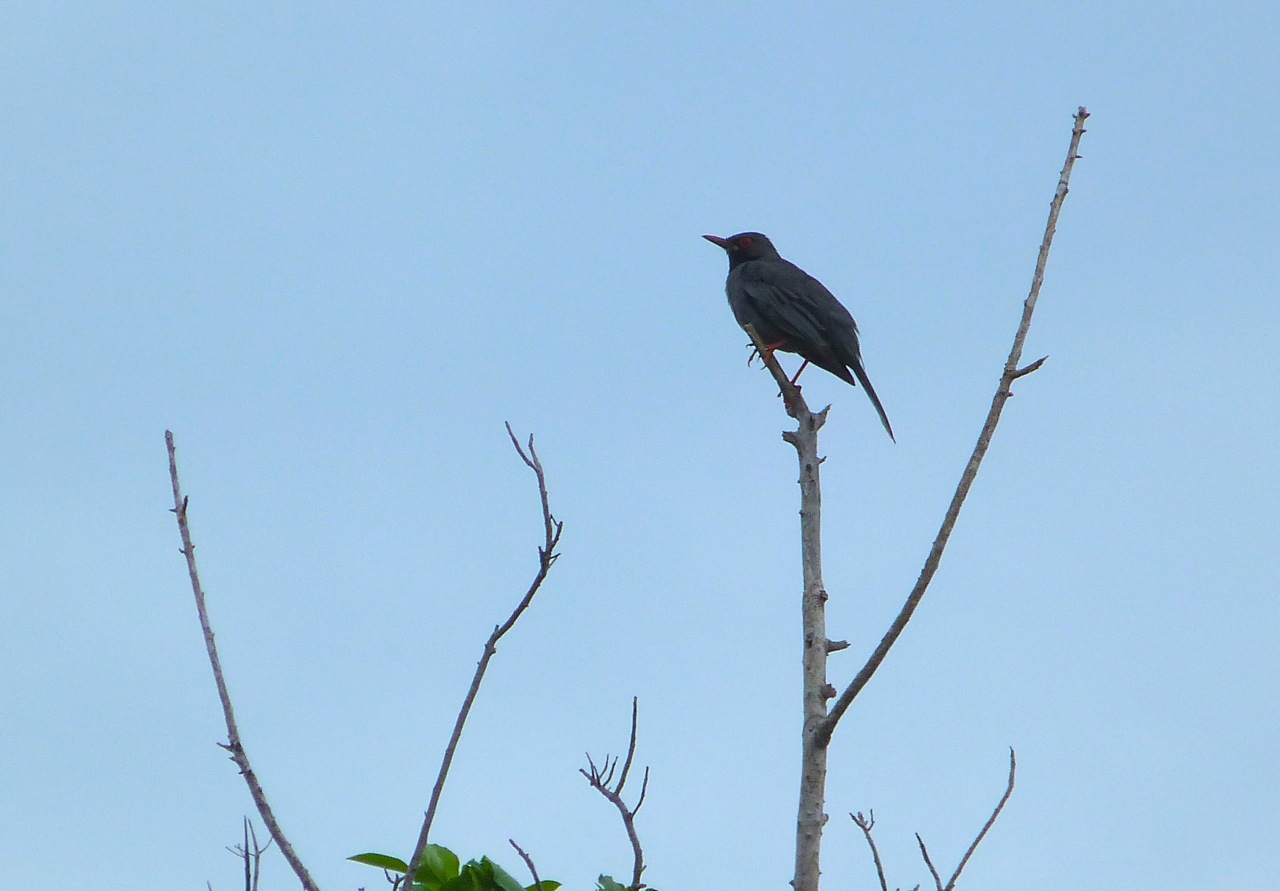
THE RED-LEGGED THRUSH–A WELCOME GUEST AT THE DELPHI CLUB, ABACO
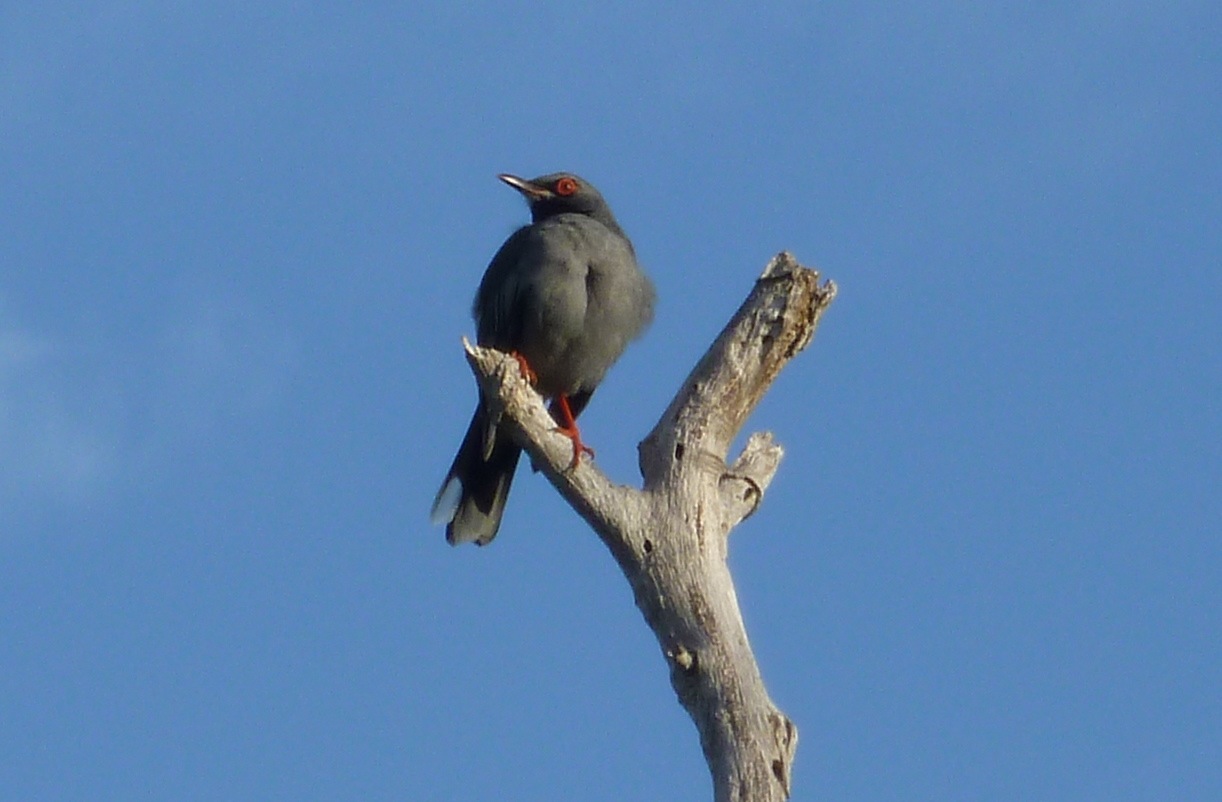
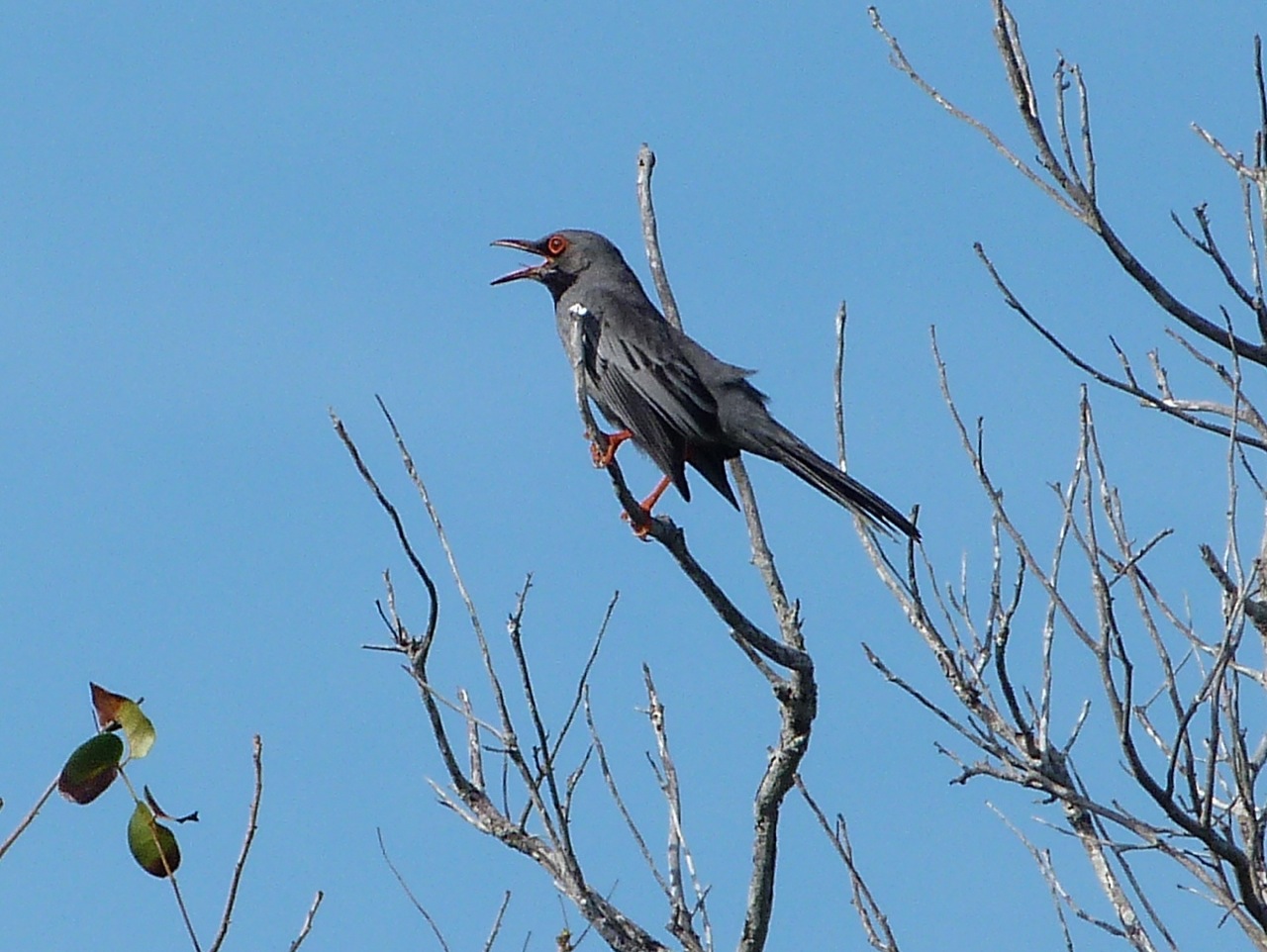
They are everywhere in May and June, with their eponymous limbs and their remarkable red eyes. In fact, ‘red-eyed thrush’ would be as apt a name, if somewhat lachrymose-sounding. This was our first Summer visit to Abaco and the difference in sightings was marked. Now, the thrushes tended to choose a high tree-perch to sing from, when not hopping around feeding on the ground. In March they seem more furtive, lurking in the coppice – presumably eyeing up the talent (or sizing up the opposition) with mating in mind.
There are 6 distinct regional variations on the species, which are found in the Bahamas, Caymans, Cuba, Dominica, Haiti and Puerto Rico. TURDUS PLUMBEUS is the subspecies specific to the Bahamas. Some view them as the Caribbean counterpart to theAMERICAN ROBIN. They eat fruit, insects and small creatures such as snails, lizards and caterpillars. Their song sounds like this (courtesy of Paul Driver at Xeno-Canto)
In a departure from the normal use of an ‘in-house’ logo, I’ve posted a silhouette of a Delphi RLT in the coppice close to the Club. The photo itself was dull, but I liked the pose and decided to turn it into logo-thrush
BIRDS IN THE DELPHI GOUNDS OR IN THE COPPICE NEARBY
1. This bird was at the top of a tree on the Delphi front drive close to the Club. It is singing cheerfully, and you can clearly see its tongue
2. This bird also chose a high vantage point near the front entrance gate. I managed to get gradually closer to it. Its feathers are quite fluffy and I wonder if it a juvenile / late teen?
3. Strike the pose! Two very characteristic poses by a bird on the guest drive. In the first image, you can also (just) see its tongue as it sings
4. Another high perch above the coppice alongside the drive
GROUND-FEEDING IN THE GARDEN ROUND THE POOL
Two very productive areas for thrush-fodder. The newly cut grass exposes insects, in particular ants. And the border beside the lawn has plenty of insect-life to feed on (Photo quality suspect – half-asleep by pool, grabbed camera)
A PRETTY EXAMPLE OF THE THRUSH TAKEN AT BAHAMA PALM SHORES
Checking out the precarious electricity infrastructure, Marsh Harbour, dusk
Here is an excellent resource from the laid-back BEACH CHAIR SCIENTIST with extremely useful comparisons between sea birds, shore birds and wading birds. The ‘top tens’ format is always a helpful way to get factual info across without blocks of text. Say goodbye to ‘Is that a stilt or a rail?’ misery now.
Here is a general overview of 10 characteristics of seabirds (birds that spend most of their life out at sea), shorebirds (migratory birds that scurry along the shore looking for food), and wading birds (taller birds that wade in wetlands for their food).
10 characteristics of seabirds (Examples include albatross, auk, booby, frigatebird, fulmar, gannet, murre, penguin, petrel, puffin, shearwater, and tropicbirds)
1. Seabirds are pelagic, spending most of their lives far out at sea.
2. Seabirds move toward to coastal areas to breed or raise young for a minimal amount of time.
3. Seabirds are light on their undersides and dark on top (an adaptation known as countershading).
4. Seabirds have more feathers than other types of birds for more insulation and waterproofing.
5. Seabirds have flexible webbed feet to help gain traction as they take off for flight from the sea. 6. Some seabirds have unusually…
BRIGHT & BEAUTIFUL: SUMMER BIRDS AT THE DELPHI CLUB, ABACO
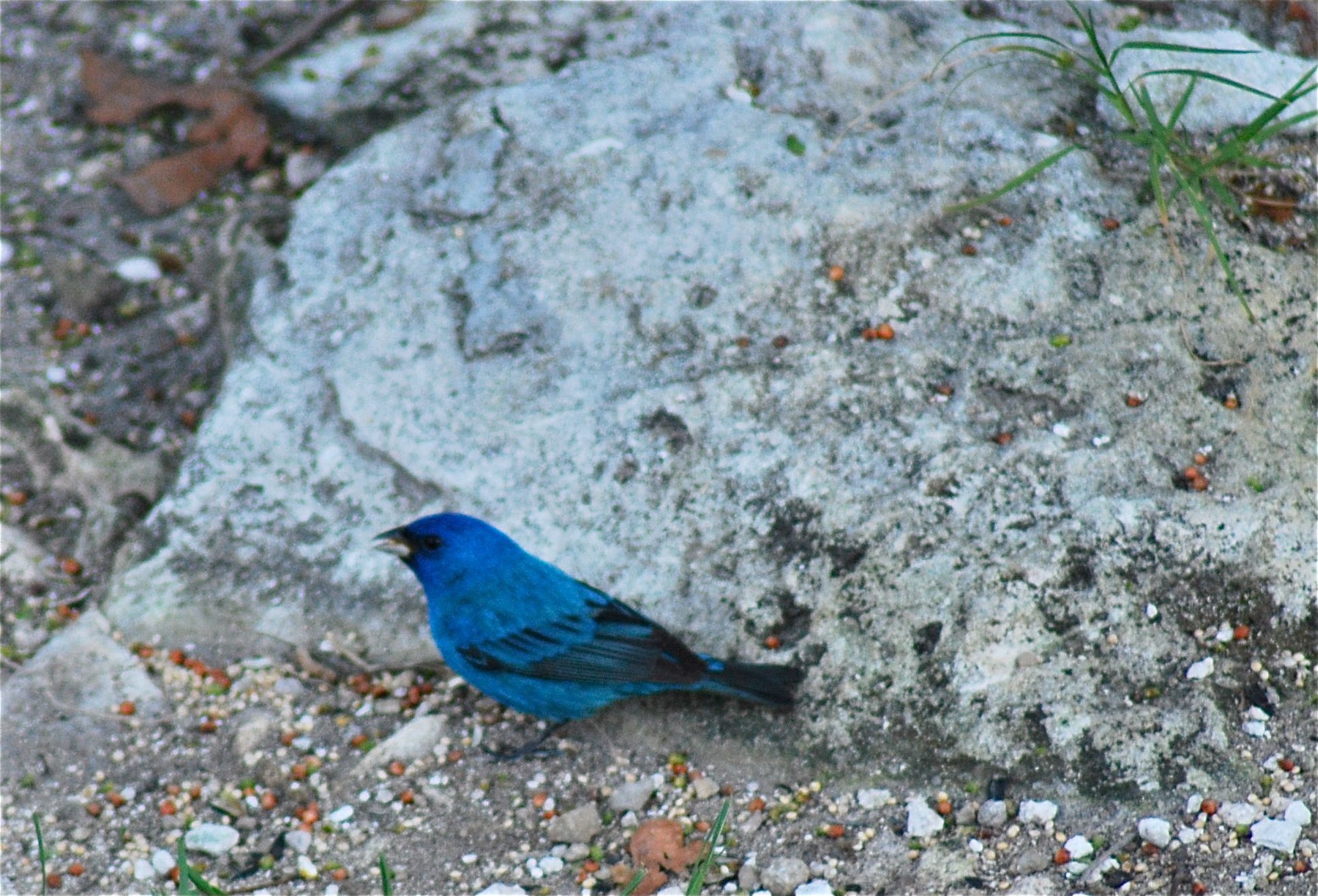
Peter Mantle reports that some colourful birds have arrived at Delphi to take advantage of the feeders and fresh water provided. Indigo Buntings have been around for a while, as they have been a little further north atBAHAMA PALM SHORES;and Rose-fronted / Red-breasted Grosbeaks (I’m not sure which is correct – the terms seem to be used interchangeably) have been seen all round the Club grounds for a week or more. They haven’t been recorded at Delphi before, so they have now been added to the ever-growing official list of the ‘Birds of Delphi’. How long before an elusive Kirtland’s Warbler puts in an appearance? And will anyone recognise it if it does..?
BANISH “WHAT WARBLER???” MISERY NOW WITH CORNELL LAB
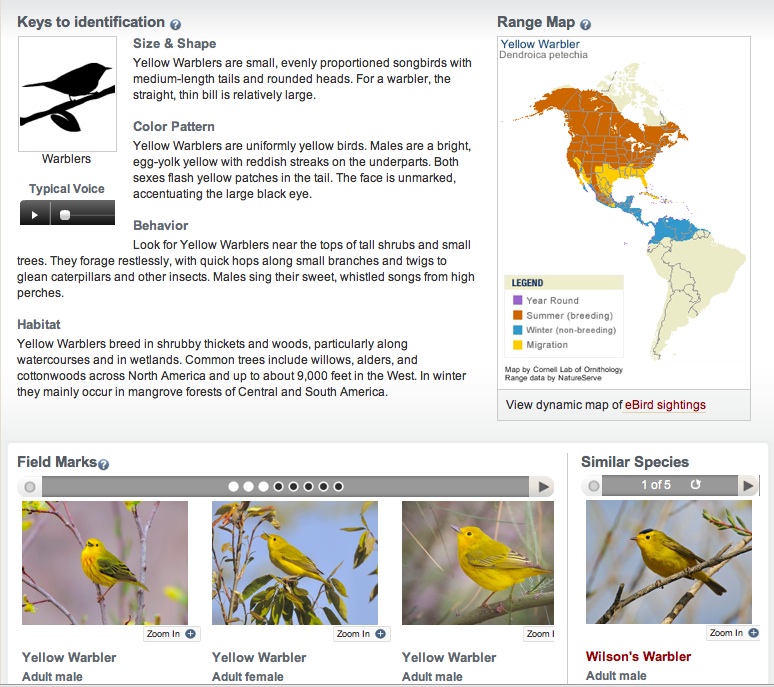
I’ve written before about the problems of ID of the multitude of small yellow birds on Abaco. They are mostly (but not all) warblers. The issue is further confused by the differences in each species between males, females and juveniles; and also, I expect, by colour variations during the season.YW song courtesy of Xeno-Canto
The CORNELL LAB OF ORNITHOLOGY has again come to the rescue with a helpful article. The link below takes as the starting point Yellow Warblers. Here is a grab of the page so you can see the well-thought-out format. You get
Keys to ID – size, shape, colour pattern, behaviour and habitat
Range Map
Audio clip of Call
Field marks (zoomable) including M & F
Similar species for comparison
Further down the page, other similar species and their details (e.g. American Goldfinch, Yellowthroats)
In a departure from the usual strictly Abaco-centric blog principles that apply around here, and because a number of birding folk are tolerant enough to follow this blog regularly, I am migrating a euro-bird post from my side-project non-Abaco blog at ROLLING HARBOUR LIFE (check out the bees there!). I think this photo sequence of the evening ablutions of a small bird may be of wider interest, or amusement at the least. Also, it’s a cute little creature – some of its pale grey downy feathers are incredible soft and delicate. And anyway, what the heck – we’re in England (flood alerts!), we’ll be on Abaco in less than 4 weeks, and tomorrow is May 1st.
This preening is a complicated routine involving a great deal of busy activity, from 180° head rotation to elaborate fluffing up to pauses for admiration. I watched this bird, one of a pair, for several minutes. The photos (taken in Dorset) have been cropped but not in any way photoshopped or adapted… I’m pleased at how well they turned out, considering that I was filming from the ground 20 feet below, and the bird was moving most of the time. I’ve put a few individual pictures up first, then a slideshow of some highlights of the performance
This was a serious feat of balance, with a very vigorous shake-down with only one foot on the wire
I posted a while ago about a wonderful afternoon spent at BPS with nature guide and all-round Abaco knowledge mine Ricky Johnson. Three posts (Abaco Parrots; other birds; flower and plants) were later combined into the pageABACO ECO-TOUR(if you visit, apologies that the formatting is still out of whack after a blog format change)
Resident ANN CAPLING has kindly sent some photos of birds on her feeder, prompted by my post of her recent sighting of a PROTHONOTARY WARBLER, a bird not often encountered at BPS. The feeder photos were taken from indoors through glass, considering which they have come out very well. She also sent a brilliant photo of a tiny female Bahama Woodstar looking totally cute (not a word I normally use, but completely apt here, I think); and of 2 American Oystercatchers strutting along the BPS shoreline
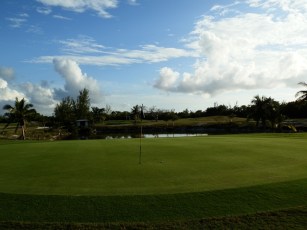
GARETH & KASIA’S GUIDE TO THE BIRDIES OF TREASURE CAY GOLF COURSE
Gareth Reid, master chef of the Delphi Club and Kasia ofABACO BEACHCOMBINGfame have put together some excellent material about the bird-life to be found on Treasure Cay golf course. I’ve never been there myself, but I already knew from a recent comment from Dr Elwood Bracey of TC that the birdlife on the golf course is very varied and exciting.
Gareth writes:I am a keen golfer and my girlfriend loves nature and wildlife so sometimes to cover both bases we spend our day off at Treasure Cay Golf Club. Whilst I play, Kasia twitches!
Treasure Cay golf course is 20 odd miles north of Marsh Harbour a challenging little track with a lovely mixture of short Par 4s interesting par 5s and a couple of really testing Par 3s. It was designed by Dick Wilson of Doral fame and has matured into today’s layout of tight fairways framed by dense island vegetation.
Birdlife on the course is supported by the three lakes, beside the fourth and fifteenth greens and to the right of the eleventh fairway. Species include North American Coots, Moorhens, Canada Geese, Snow Geese, Mallard Ducks, White Cheeked Pintails, Anis, Northern Mocking Birds, Ibis and Palm Warblers. We have also spotted a Belted Kingfisher and an Osprey both enjoying a light lunch of fresh fish.
So next time you come visit Abaco why not take the trip to Treasure Cay with a bag full of sticks a few balls and tees, hopes of birdies and dreams of eagles and if your swing lets you down at least you got those cute coots. The Delphi Club can provide packed lunches, or you can eat at TC – try Coco Bar (fish and chips, burgers etc) or Treasure Sands (upmarket bar restaurant with pool)
BAHAMA (WHITE-CHEEKED) PINTAILS AT TC GC & OTHER SPECIES
(The slideshow was meant to showcase just Pintails but apparently has to include all the other images)
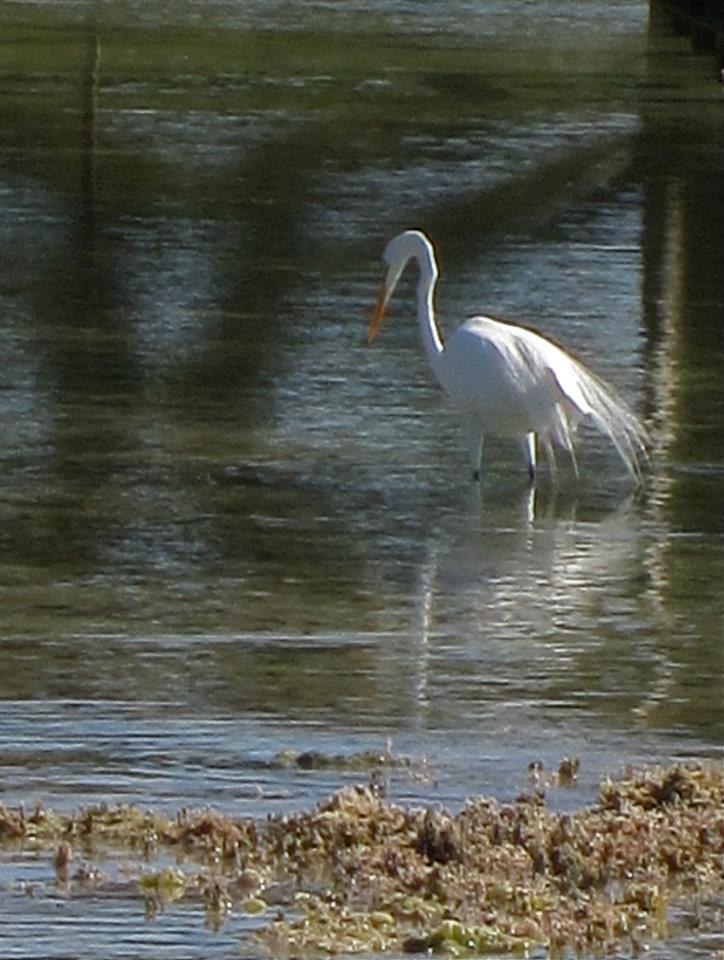
Artist BRIGITTE BOWYER CAREYof Tilloo Cay naturally has a keen eye for a photograph. I was very taken with her images of egrets posted on her Facebook page, and she has kindly said I can encourage a migration to Rolling Harbour. So here they are. The first photo is my favourite, the very epitome of elegance and grace.
To the amateur (me) there is plenty of scope for confusion between the great egret and the great blue heron (white phase) – unless you can see the bird’s legs. The great egret’s are dark; the GBH’s are yellow. There are probably plenty of other distinctions that are completely obvious to a practised birder, but I think the legs are the easiest answer for the untutored enthusiast.
And where, I hear no one ask, are RH’s own stunning egret photos? A quick check reveals that the one taken from a skiff last year perched on a black mangrove out on the Marls is really a distant white speck, as is his cousin pootling around way out on a far shoreline; and the one up a tree at Sandy Point – a small white blur of what could easily be fur. I’ll get another chance next month…
NEW DEC. 2012 A fine egret photo from H J Ruiz from his birding site AVIAN 101
As it happens, a fine CORNELL LAB video of great blue herons returning to their nest has appeared in my inbox, and the fact that I have mentioned them above is a good excuse to include this short nest-cam movie
Janene Roessler has kindly sent news of a sighting yesterday of a prothonotary warbler on a feeder at Bahama Palm Shores, Abaco [Later addition]Now, with thanks to Ann Capling, here is that very warbler on the feeder – a fine photo considering it was taken indoors through glass.Apparently there hasn’t been one recorded there since 2007. I know of one seen further south on the island near the Delphi Club in April 2010 (see photo and caption below). I’ve never seen one myself. It seems fitting to celebrate the news with a post about these little birds…
This very pretty species of warbler Protonotaria citrea is the only member of its genus. The male birds are very colourful, with the females and juveniles being a bit duller. In flight, the underside of their tails are white at the base, and dark at the tipPhoto Credit Craig Nash (Peregrine’s Blog) This fantastic photo was taken on the main drive of the Delphi Club, Abaco
STOP PRESS JULY 2018 this rather basic post was written in April 2012, in the earliest days of this blog when mistakes were (and undoubtedly still are) made. Tim Kalbach has just contacted me with the helpful observation “the Craig Nash photo is a Yellow Warbler, not a Prothonotary. Yellow – green tones in rump and tail don’t occur in Prothonotary; those areas would be blue-gray in color”. Which goes to show, I think, that after 6+ years I need to revisit this species in more detail and accuracy! Thanks for the comment, Tim.
These warblers are native to the eastern US where they breed, wintering further south in the West Indies and Central & South America. Their nesting arrangements are unusual:“It is the only eastern warbler that nests in natural or artificial cavities, sometimes using old downy woodpecker holes. The male often builds several incomplete, unused nests in his territory; the female builds the real nest”where she lays 3 – 7 eggs. So either the male is cleverly creating decoy nests away from the real nest; or maybe he is showing typically male behaviour in starting several home DIY projects at once and not getting round to finishing any of them…
Female Prothonotary Warbler(wiki)
I can never cope with those phonetic descriptions of bird calls… So many small birds are described as going ‘tseep’ or ‘tweep’ or ‘seeep’, yet in practice sound different from each other. So here, courtesy of the admirable Xeno-Canto and recordist Don Jones, is how they sound in real life
Listed as of ‘Least Concern’ (except in Canada, where they are ‘endangered’), the sad fact is that like so many species PNs are declining in numbers due to habitat loss. They are also bullied by other birds, in particular the brown-headed cowbird; and the house wren with which they compete for nest sites.
And the cumbersome name? Although at one time known by the helpful name ‘Golden Swamp Warbler’, the bird was renamed after senior Roman Catholic church officials calledPROTONOTARII whose robes were (are?) supposedly golden. For full but quite dull details click on the green word back there. Bizarrely, the wiki-link doesn’t seem to confirm the goldenness of the robes at all. I think I’ll vote for a return to the simpler description…
Male Prothonotary Warbler (wiki)
POST SCRIPT: By complete coincidence, the National Audubon Society posted this lovely PN picture on its Facebook page this very day, with the caption “Start your Monday morning off right with this cute Prothonotary Warbler peeking out of a heart shaped tree hole! Have you seen any of these birds yet? Photo by Mark Musselman”
WEST INDIAN WOODPECKERS: EXPERT ADVICE & DELPHI CLUB NEWS
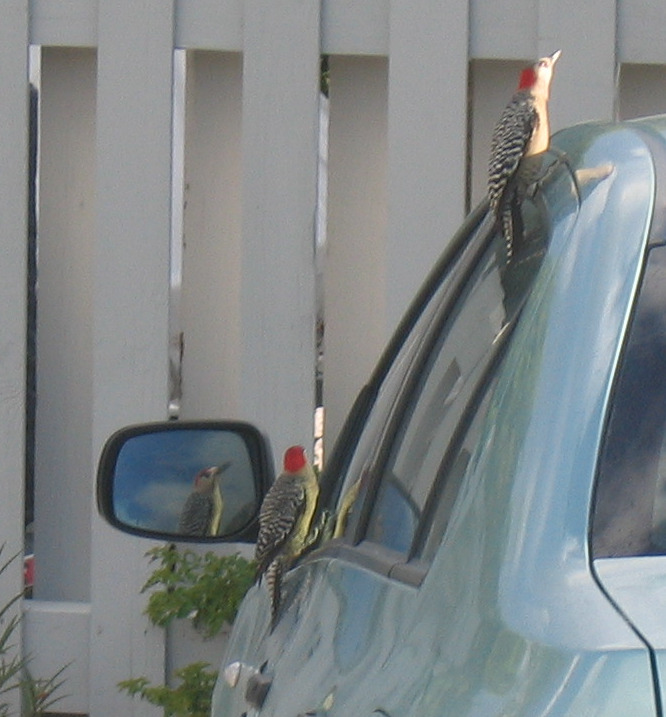
Here’s an article by Abaco Parrot expert Caroline Stahala. She also has in-depth knowledge of the habits of West Indian Woodpeckers, not least because her observations of the nesting in boxes provided for them last year at theDELPHI CLUB ABACOto discourage them from drilling into the building itself… See THE RELUCTANT WOODPECKER. Caroline’s article suggests helpful ways to co-exist with the ‘peckers. They are unlikely to change their endearing little, er, ‘pecker-dillos’, but there are ways and means to prevent them driving you crazy when they take a noisy liking to your eaves and guttering…
PETER MANTLE has just posted some news – including woodpecker and general wildlife news – from the DELPHI CLUB. After a detailed bonefishing report , he writes:
The best bonefish of recent weeks remains an 8-or-so-pounder. In a rare encounter with tarpon, 2 guests from England had several shots at a group of four fish in the twenty-to-thirty pound range, but had no time to switch over to proper tarpon flies and therefore, to use a cricketing expression, failed to trouble the scorer.
The gorgeous weather seems to have ennervated all the local wildlife, not just the parrots. Sightings of dolphins, turtles, eagle rays and ospreys in the Marls are now almost commonplace. Countless butterflies of different hues flit through the Club gardens. The woodpeckers are nesting again in the box just outside the office and the hummingbirds are constantly feeding just feet from my desk. It’s the time of year that dreams are made of.
The week was rounded off by your blogger-in-chief setting a new Club record – for the smallest ever bonefish, a brute of half a pound, taken off the Club beach on a Delphi Daddy after a titanic struggle lasting all of 30 seconds, with lemon shark looking on in expectation.
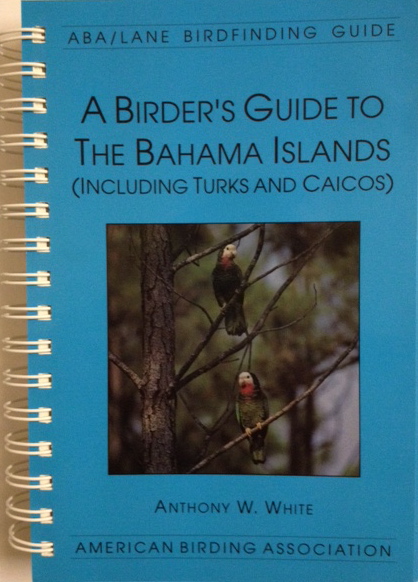
A BIRDER’S GUIDE TO THE BAHAMA ISLANDS (INCLUDING TURKS & CAICOS)
ABA BIRDFINDING GUIDES (American Birding Association)
Anthony W. White
Published 1998
302 pages
Wire-O binding
ISBN 1-878788-16-7
QUICK REVIEW In a rush? Scroll down for a 30-second bullet-point review. If not, hang in here for fuller details…
PUBLISHER’S BLURB (précis)The first comprehensive guide to finding birds on the islands of The Bahamas and TCI. The islands host an unusual mix of Caribbean and North American species, with over 300 bird species recorded. There are 3 endemic species: Bahama Woodstar, Bahama Swallow, and Bahama Yellowthroat, and a host of other specialties, including such birds as West Indian Whistling-Duck, White-cheeked Pintail, Key West Quail-Dove, Great Lizard-Cuckoo, Cuban Emerald, West Indian Woodpecker, Bahama Mockingbird, Olive-capped Warbler, Stripe-headed Tanager, Greater Antillean Bullfinch, and Black-cowled Oriole. Seabird nesting colonies [include] Audubon’s Shearwaters, White-tailed Tropicbirds, and 8 tern species. The parks and refuges of The Bahamas and TCI protect a great diversity of subtropical birds, among them the Bahama Parrot (an endemic subspecies of Cuban Parrot), and many North American wintering birds, including the endangered Kirtland’s Warbler. The New World’s largest flamingo colony nests on Great Inagua, protected by the country’s largest national park. The Guide [includes] complete descriptions by Tony White of more than 150 birding sites on the major islands and smaller cays. It also features a beautiful eight-page Photo Gallery of many of the Bahamian specialty birds, several of which show up regularly in Florida
RH VIEW This book obviously covers a far greater area than Abaco / Northern Bahamas – indeed, it is about as comprehensive of the whole Bahamas region as it could get. Where it scores highly is in taking the area island by island, cay by cay, and identifying the prime birding areas on each. I have to say that, being a 1998 book, some of the descriptions of places on Abaco that I am familiar with are not as you will find them now; and doubtless this applies across the whole region. As the Table of Contents shows, the book is split into ‘places’ chapters, with additional and useful general information chapters. Abaco is covered in just 20 pages. It’s not a lot, but the birding hotspots are well covered, and expected / hoped for bird species are given for each.
Despite the relatively little page space given to each region, there is much else to be got from this book. The final third of the book includes a detailed annotated list of the speciality bird species (also shown in photo gallery format earlier in the book). This is followed by a huge 20-page bird checklist, with every species given a numbered code for each region, ranging from 1 (easily found) to 6 (cannot be found – extinct or extirpated). So you will find, for example, that a Forster’s Tern is rated ‘4’ for Abaco – ‘extremely difficult to find’. There are short notes on other Bahamas wildlife, divided into mammals, reptiles, amphibians and insects – followed by helpful appendices (a glossary; a list of common name alternatives); a massive 22-page bibliography; and a serviceable index
The chart inside the front cover shows where the specialty Bahamas birds are to be found . At the back is a large area map showing the total coverage
——————————————-
BULLET POINT REVIEW FOR THOSE WHO ARE PRESSED FOR TIME
Fairly weighty 300 pages covering the entire Bahamas region
Short but helpful descriptions of birding hotspots on the islands and cays, with the species you may encounter
Excellent ancillary species and distribution checklists
Focus on specialty birds of the Bahamas
Particularly useful for anyone investigating different regions of the Bahamas, or wishing to compare them
14 years since publication is a long time in the islands’ development; expect some irrelevant references for 2012
Overall a useful, interesting bird location book, but NB not intended as species identification field guide


 And who or what the heck was La Sagra? The answer is: multi-talented Spanish botanist Ramón Dionisio José de la Sagra y Peris (1798–1871), who was also a writer, economist, sociologist, politician, anarchist, and founder of the world’s first anarchist journal El Porvenir (“The Future”). At one time he lived in Cuba and became director of Havana’s Botanical Garden; his name lives on arguably more significantly in ornithological than in anarchist circles (actually, an ‘anarchist circle’ must surely be a contradiction in terms…)
 Finally, to continue with the recently introduced avian philatelic theme, here are stamps from the Cayman Islands and Cuba featuring the La Sagra’s Flycatcher. The Cuban stamp commemorates the death of Juan Gundlach, the man who chose La Sagra’s name to bestow on this bird













































 ROLLING HARBOUR ABACO
You must be logged in to post a comment.