AUDUBON FISHES OF THE CARIBBEAN & GULF OF MEXICO APP
iphone, ipad (172mb) £0.69 / $0.99 offer until 31 Jan, then reverts to $9.99 rollingharbour rating *****
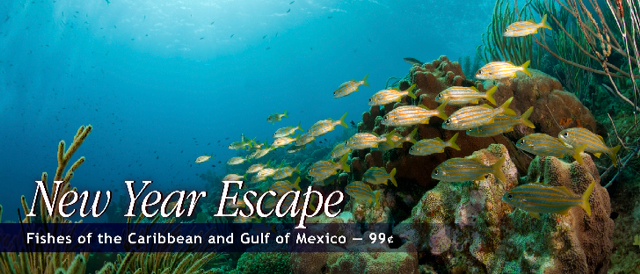
This is app is so good, and such an utter bargainuntil 31 Jan 2012, that I have awarded it the rh logo position at the top of the page. Praise indeed. Audubon guides are legendary, of course. The excellent Audubon bird app has already been reviewed and also given a rare 5*- see BIRD APP on the BOOKS ETC drop-down menu. Now here are the Caribbean Fishes, in all their glory. First, a clip shot of the download page – click on it to enlarge and avoid eye-strain
This is a very well designed app, a comprehensive search and identification tool with a myriad of features. It’s fine for an iPhone, but I guess it would really come into its own on an iPad. Whatever that is. Here’s a brief overview of the contents
SEARCH OPTIONS: by shape (dividing size into 5 categories, from giant to tiny); family (alphabetical list of species); name (alphabetical list with useful thumbnails to assist – and cleverly, the ability to search by first name ‘Sergeant’ or last name ‘Major’), or advanced search (size / shape; habitat; regions; colour)
REFERENCE sections on biology; fish-watching tips; marine habitats; biogeography; conservation; fish taxonomy; dangerous fishes; large glossary
OTHER FEATURES include the facility for having a (free) account, enabling a ‘My Content’ facility; Journal; and GPS
Crits? Very few at first glance. The odd typo. My inital search for bonefish by size (over-optimistic, of course) led me to the larger ladyfish, but a search by name took me straight to it. The most significant confusions may arise from the present ‘single image’ ID format. For example, if you look for the uncomely greeny-blue adult male stoplight parrotfish, you may be surprised to find the prettier black, white & red female pictured. Similarly, you won’t find juveniles, such as the small blue-with-yellow-spots yellowtail damselfish. But these are small points in an app with such a large scope. Anyway, who knows what upgrades will follow?
Overall for £0.69 / $0.99 a complete steal for New Year
A 5 minute PODCAST from ABC Radio’s ‘The Science Show’ featuring Caroline Stahala, research scientist and Abaco Parrot expert, and David Knowles of the Bahamas National Trust, Chief Park Warden for Abaco
The online report is headed by this: “Holiday homes and resorts are replacing the forests in which the Bahamian parrot of Great Abaco Island breeds. When Christopher Columbus discovered the beautiful Bahamian islands in 1492, he wrote in his journal ‘the flocks of parrots obscure the sun’. Now the Bahamian parrot is confined to just two islands and they’re a protected species. On Great Abaco Island Bahamian parrots breed in the pine forests of the south and, as Pauline Newman discovered, their nesting behaviour is quite extraordinary”
The superb AVIBASE is a massive world-wide bird database – an essential reference point for birders, even the occasional enthusiast. Checklists, range maps, bird links, photos, bird sounds, and even the facility to make your own contribution, all in one place. AVIBASE has been a work in progress for 20 years and now contains over 5 million records of about 10,000 species and 22,000 subspecies of birds, including distribution information, taxonomy, synonyms in several languages, and much more
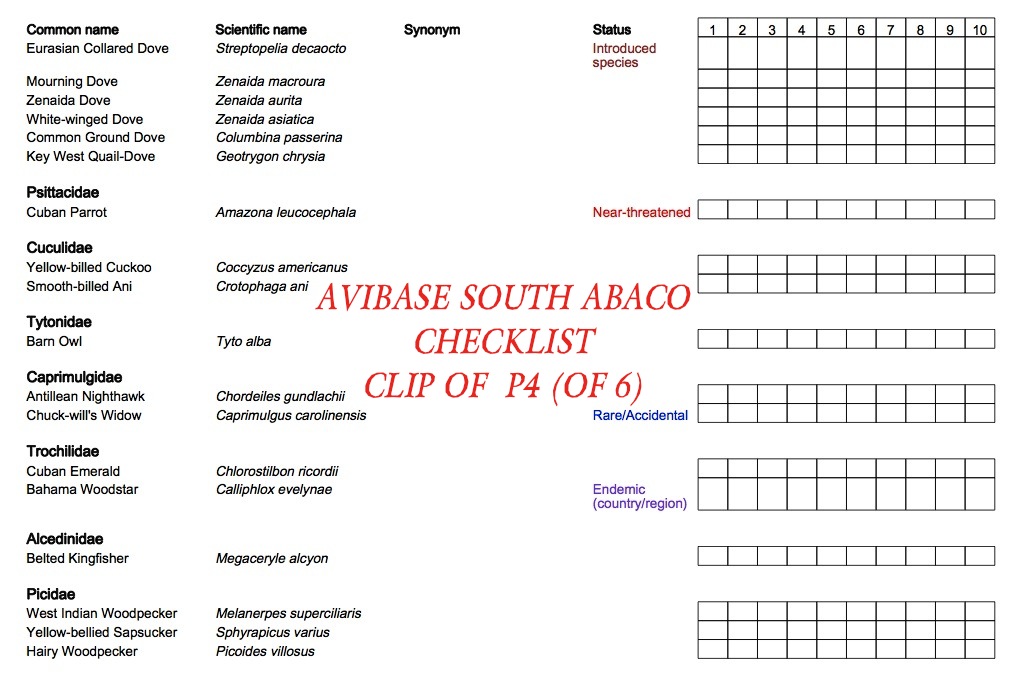
Here is the CHECKLIST FOR SOUTH ABACO, the area that I am most familiar with. It probably holds good for the whole of Abaco and the Cays. If you are staying at the Delphi Club, Rolling Harbour, you need this – and especially if you are planning a birding adventure with Ricky Johnson… Be prepared! The plan is that you can download it or print it out from here
Here is an illustrative clip of one of the 6 pages
If you have a problem printing it from here – or for access to photos of a great many of the birds listed, with clips of their calls and songs – use this direct link CLICK LOGO===>>>
CREDITS: The Avibase website is managed by Denis Lepage and hosted by Bird Studies Canada, Canadian copartner of Birdlife International
Here is a clip taken from the excellent websiteTHE ABACO SCIENTIST, with the kind permission of Dr Craig Layman of FIU. The brief summary of the South Abaco Bird Count 2011 by Elwood D. Bracey is of great interest, not least for the Delphi Club, from where guided Nature Tours take place and where there is a lot of enthusiasm for the birdlife of the island. 75 separate species were recorded this year, including all the known Abaconian endemics.
It is also a very fine photo of a male Bahama Woodstar courtesy ofBIRD FORUM
RECIPE: Take one incompetent swimmer who hasn’t snorkelled in, oh, nearly 40 years. Place him over a coral reef for his first time ever. Add a small underwater camera totally alien to him. Immerse for 30 minutes in warm briny water.
Lessons have been learnt for next time. Mainly, don’t keep waving the camera about; let the fish move round you rather than vice versa; and most important of all, remember to keep breathing or else…
Here for the first time on public release is BLUE TANG: THE MOVIE (music by Adrian Legg), 45 secs of advanced camera-shake with some beautiful fish more or less in shot for most of the time. If you are prone to sea-sickness, do not enlarge the video. If you are allergic to poor photography… well, thanks for visiting.
Reluctant as I am to give Ricky even more publicity that he gets already – including passim in this blog – his Nature Tours are seriously good, and his knowledge and enthusiasm for the flora, fauna, geology and history of Abaco are unrivalled. If you want to see a parrot close-up, understand a blue hole or learn which trees and shrubs are poisonous (and which are the antidotes) he is undoubtedly your man. He will even show you birds where you have completely failed to see any & believe there are none
Here is a clip from a report taken from the Guardian (UK) website, which lists threatened species world-wide. These include rhinos, various types of tuna, and (of particular interest to Abaco and the Bahamas generally) Manta Rays. Click on the image to enlarge it and make the caption legible… You’ll find the full article and species slideshow at
Here is an excellent short video showing a large Bahamas manta making its majestic way through the ocean
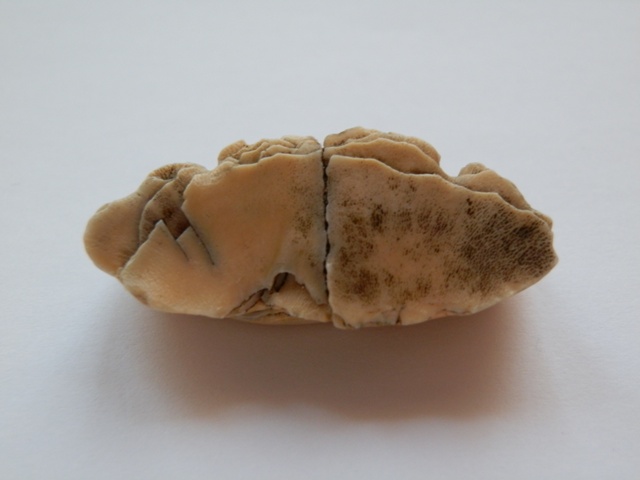
Here’s a strange item found by Kasia when she was beachcombing with Caroline Stahala
Their preliminary thought was that it formed some part of a turtle’s shell or skeletal anatomy
It is quite small (the coin above is 1 Euro) but amazingly intricate – developed in 2 symmetrical halves, with both delicate ridged surfaces and also distinctively layered bone plates
I sent the images to Charlotte Dunn and Diane Claridge of the BMMRO in case the object might have something to do with a dolphin or even a whale. In their opinion it is very probably part of a ray’s mouth plate. It would be very interesting to know if anyone else has found an object like this. If so please respond in the comment box. Many thanks to Charlotte and Diane for sparing the time to help with ID
STOP PRESSI have some done further investigations into the dental arrangements of rays. I turned to the really excellent website of the Florida Museum of Natural History. On the FLMNH page for SPOTTED EAGLE RAYS is a very interesting photo by Cathy Bester which she has kindly given me permission to use. It is captioned Spotted eagle ray dentition: open mouth showing tooth bands and floor and roof of mouth This photo seems to go a good way to confirming the ID of Kasia’s object, although obviously it might be a fragment from a different type of ray
For the FLMNH site CLICK LOGO
GO PRESS (or whatever an extra stop press may be): see comments from Black River Fossils for further confirmation as a ray palate
It’s 7.15 and breakfast time at Delphi. At 8.00 the trucks, skiffs, guides and fishers will set off to the fishing grounds for the day, leaving you with an empty beach, shells, warm sea, the pool, the hammock and your book. For the moment, the talk is of the excellent ‘Full Abaco’ breakfast, the weather, ‘Delphi daddies’ & ‘crazy charlies’ and someone’s mislaid reel. Sandy enters to announce that there’s a place free on your partner’s skiff… and offers it to you. So what should you, a non-angler, expect of a day out on the flats?
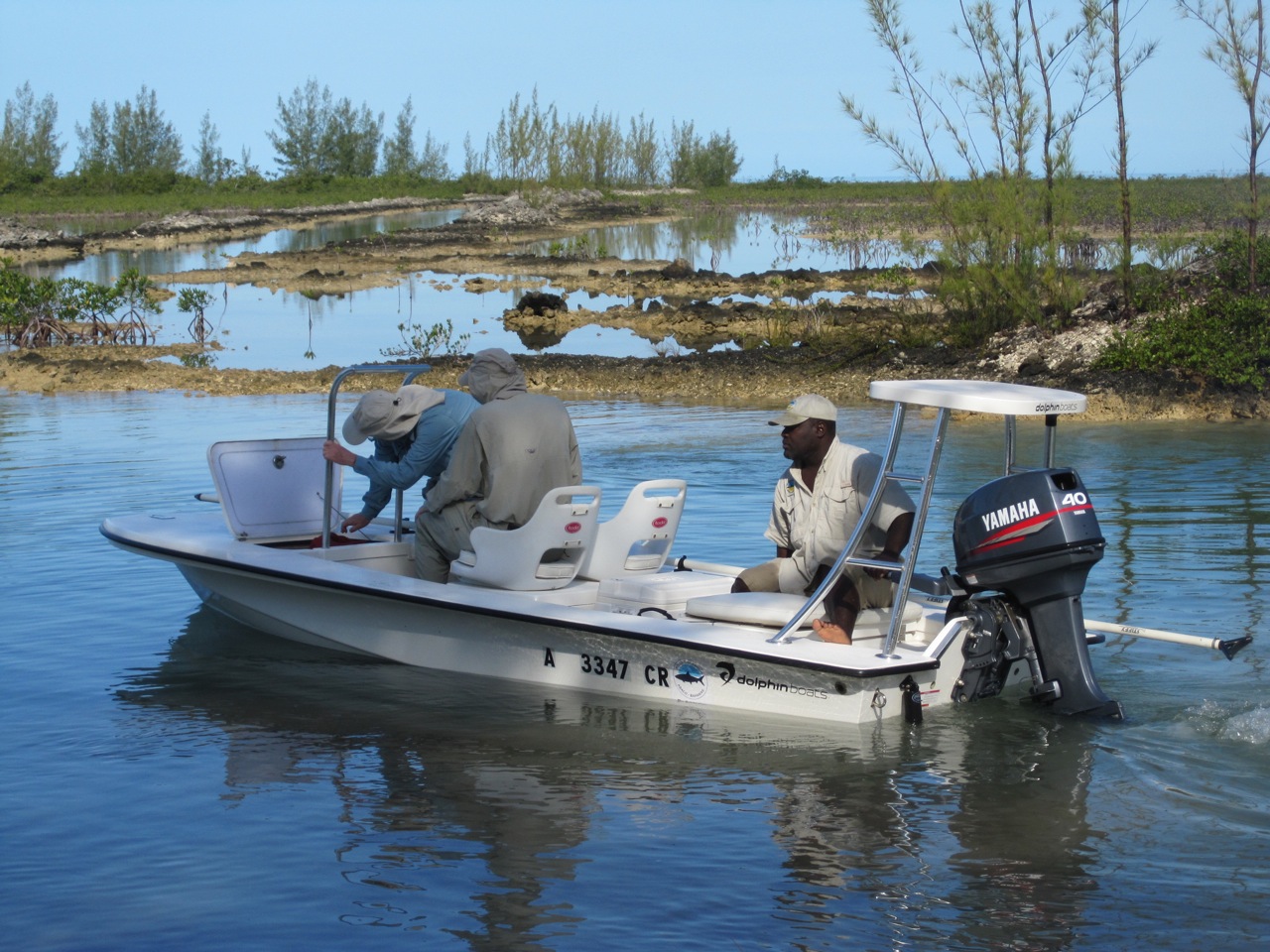
THE SKIFFS These are top-of-the range boats, capable of considerable speed getting out to the fishing grounds. The ride can be bumpy, splashy and even chilly in the early morning, so bring a fleece and a waterproof top. Camera? Essential. Here is a Delphi skiff on a sand bar in Cherokee Sound, parked for lunch and some quality conch and sand-dollar hunting. So for a start, the day isn’t ALL about fishing…
THE FISHING GROUNDS You will leave from one of three launch points and speed across the water to the bonefishing areas. The main one is “Nettie’s”, with access via a narrow man-made channel to the Marls…
… more than two hundred square miles of mangrove swamp, islets, channels and fish. The journey to Nettie’s may seem quite a long way as you bump along through the pine forest on a network of logging tracks. Watch out for small birds flickering all around as you pass.
———————————
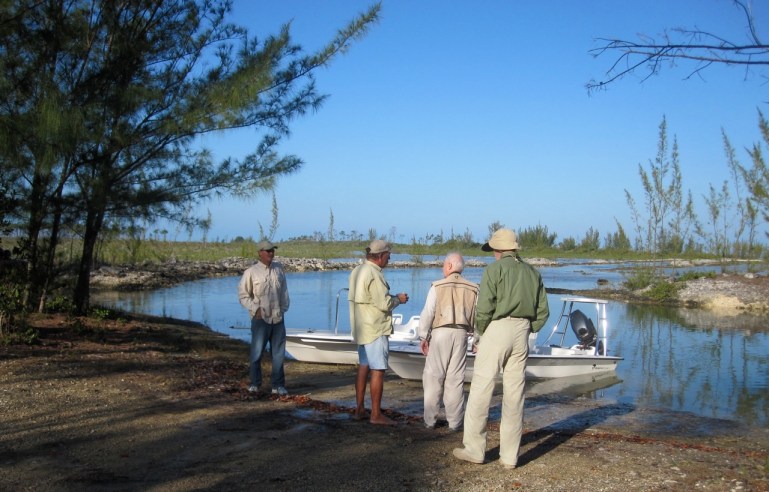
Launching a skiff at Nettie’s
Plans are hatchedGood to go…
Stowing gear in the front (forrard?) locker. There’s also one behind the seats for the lunch cool boxes. And the fuel…
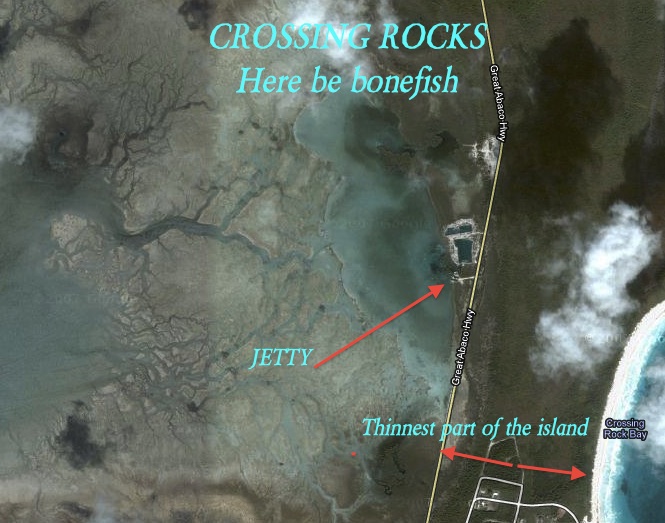
The other two launch areas are Crossing Rocks (a short drive south of DCB) or Casuarina Point for Cherokee Sound (a slightly longer drive north of DCB)
The jetty at Crossing Rocks – skiffs being prepared
The launch point at Casuarina. A channel leads out to Cherokee Sound
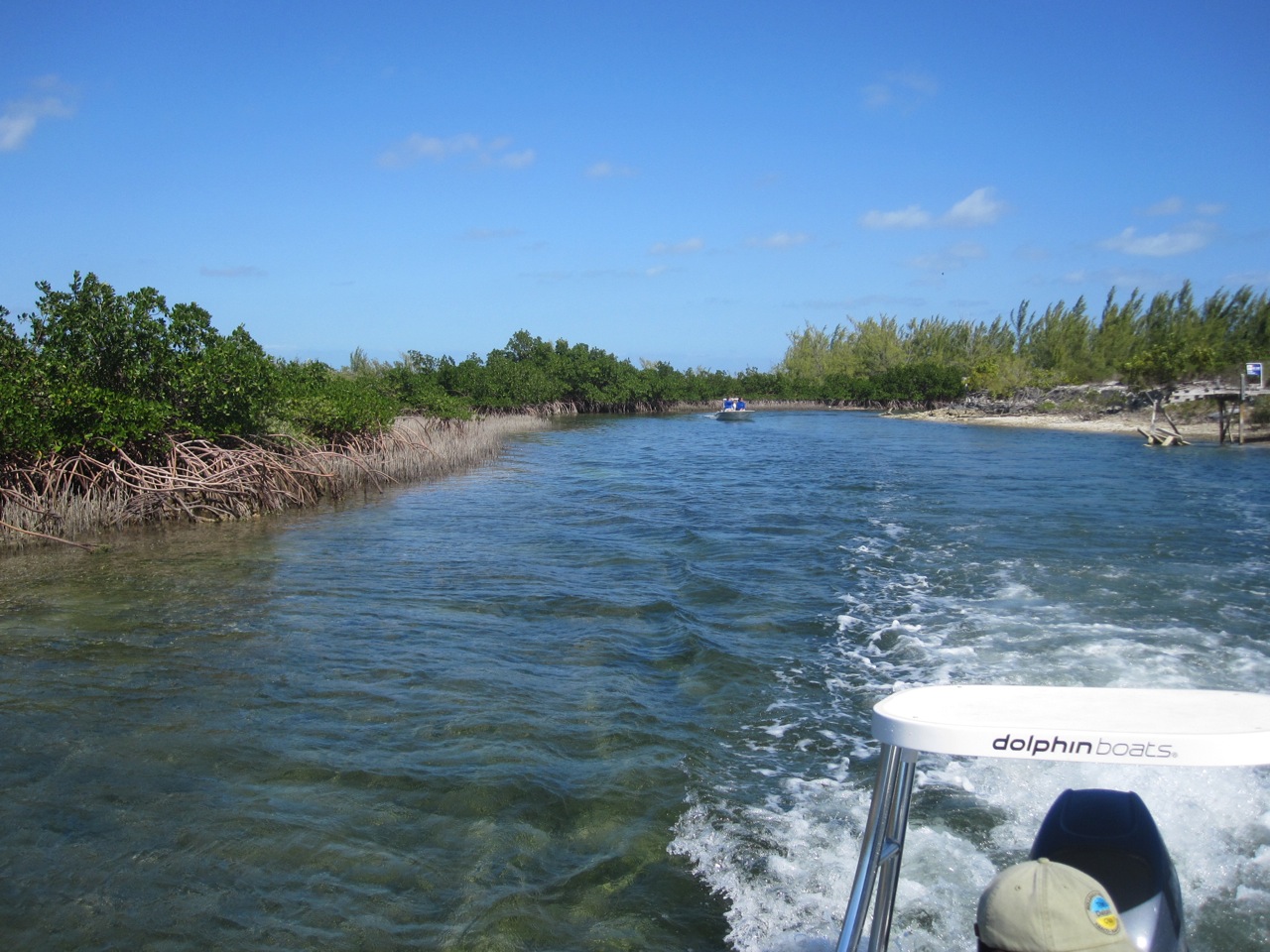
Two boats in the channel – the authentic James Bond chase experience
WHAT’S THE POINT? Bonefishing! You’ve heard all the Club talk, you’ve seen your partner fussing over all those bits and pieces in your room: now see it in action. Once you get out to a fishing area, the guide cuts the engine… and suddenly you are being poled very slowly and almost noiselessly across the shallow flats
The guide stands on the platform at the back of the skiff, using the advantage of height to scan the shallow water; the fisher stands at the front looking tensely for grey shadows underwater, waiting for the magic words…
“…hey, bonefish, 10 o’clock, 4 of them moving right, 30 feet… see them?”
And it’s ‘game on’. This isn’t the place for a discourse about casting technique and style – I have neither (Sandy, of me: “Muppet”) – but I promise that you will get completely caught up in the excitement when a fish takes the fly and takes off towards the horizon, stripping the line and backing from the reel… (I realise the image above may suggest… well he’s just fishing, OK?)
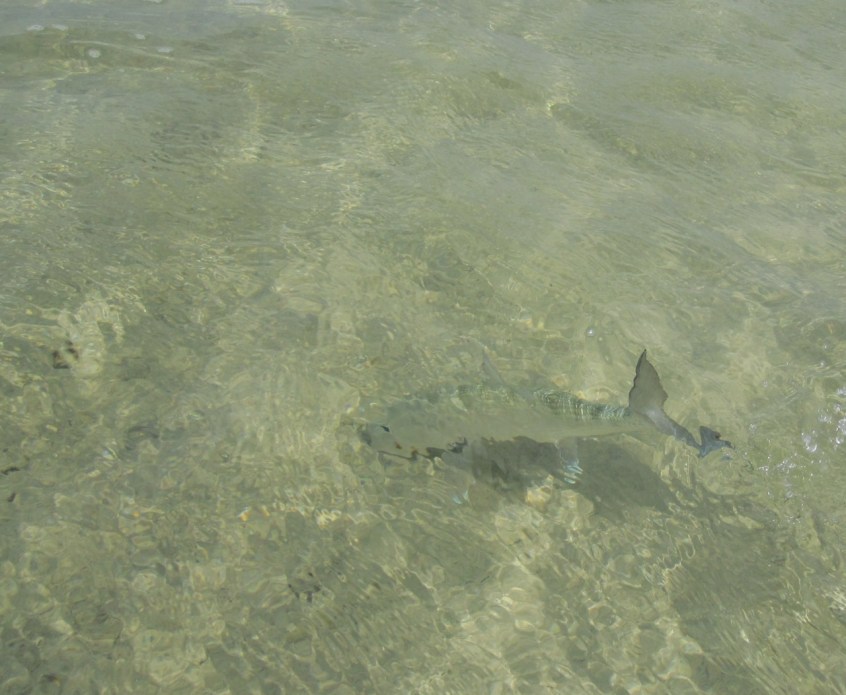
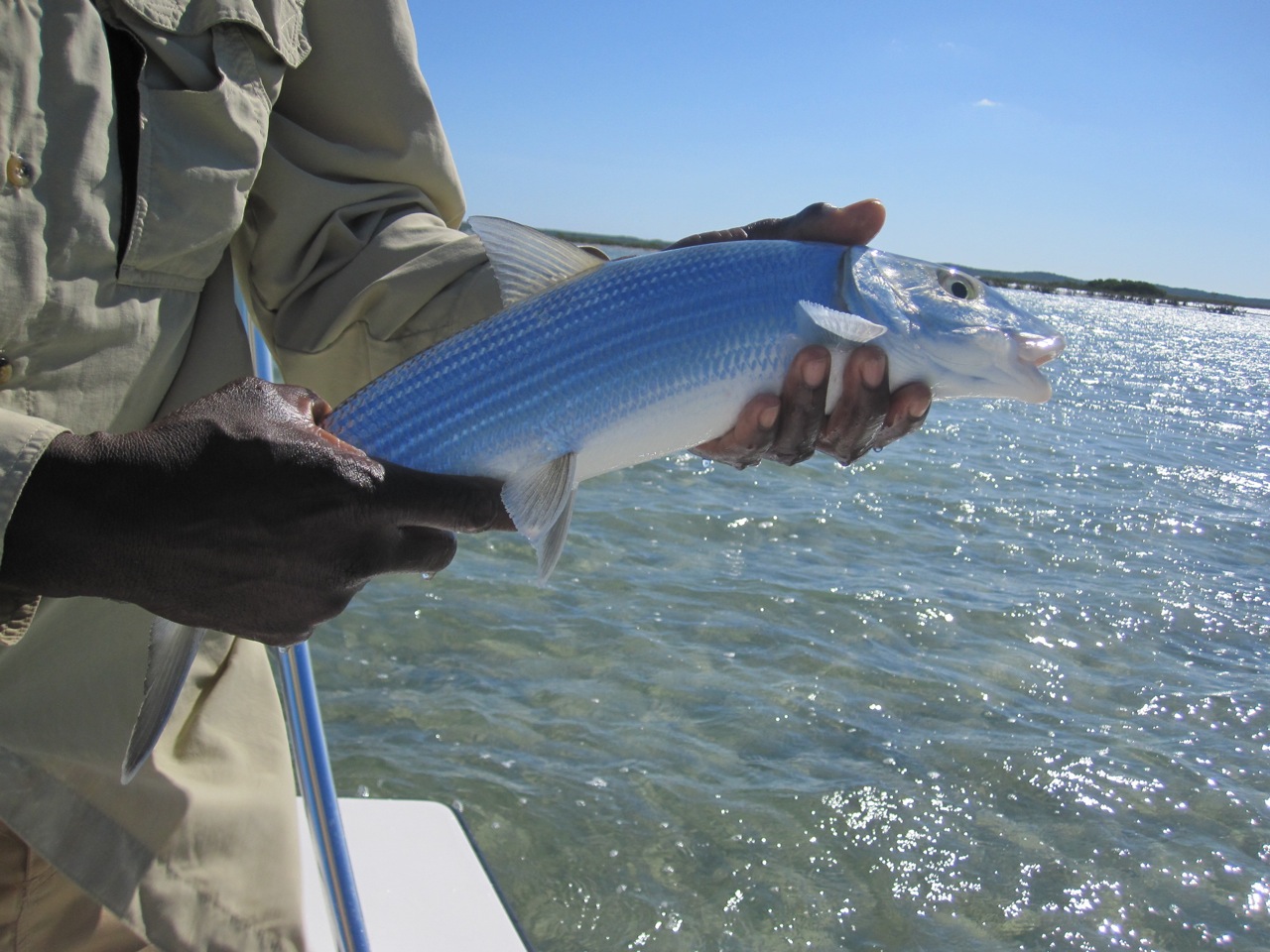
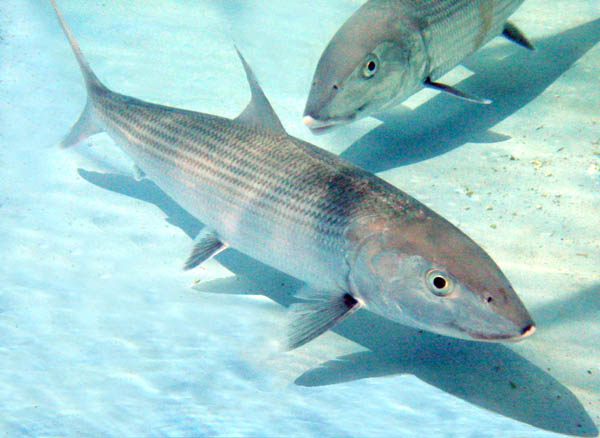
THE QUARRY – grey ghosts below water, bars of silver above. Caught on the ‘fly’ which are in fact shrimp or crab imitations, with barbless hooks to make the chance of losing a fish that much greater… This ensures that a boated fish can be returned to the water as easily and quickly as possible. It’s all ‘catch and release’, though some (me) find that mostly the fish very sensibly self-release long before they ever reach the boat…
Abaco bonefish off Crossing Rocks (just caught and released)Guide Ishi with Abaco bonefish caught on the MarlsGuide Robin Albury removes the barbless hook before returning the fishA good specimen‘Ishi’s Fishy’, as he would say
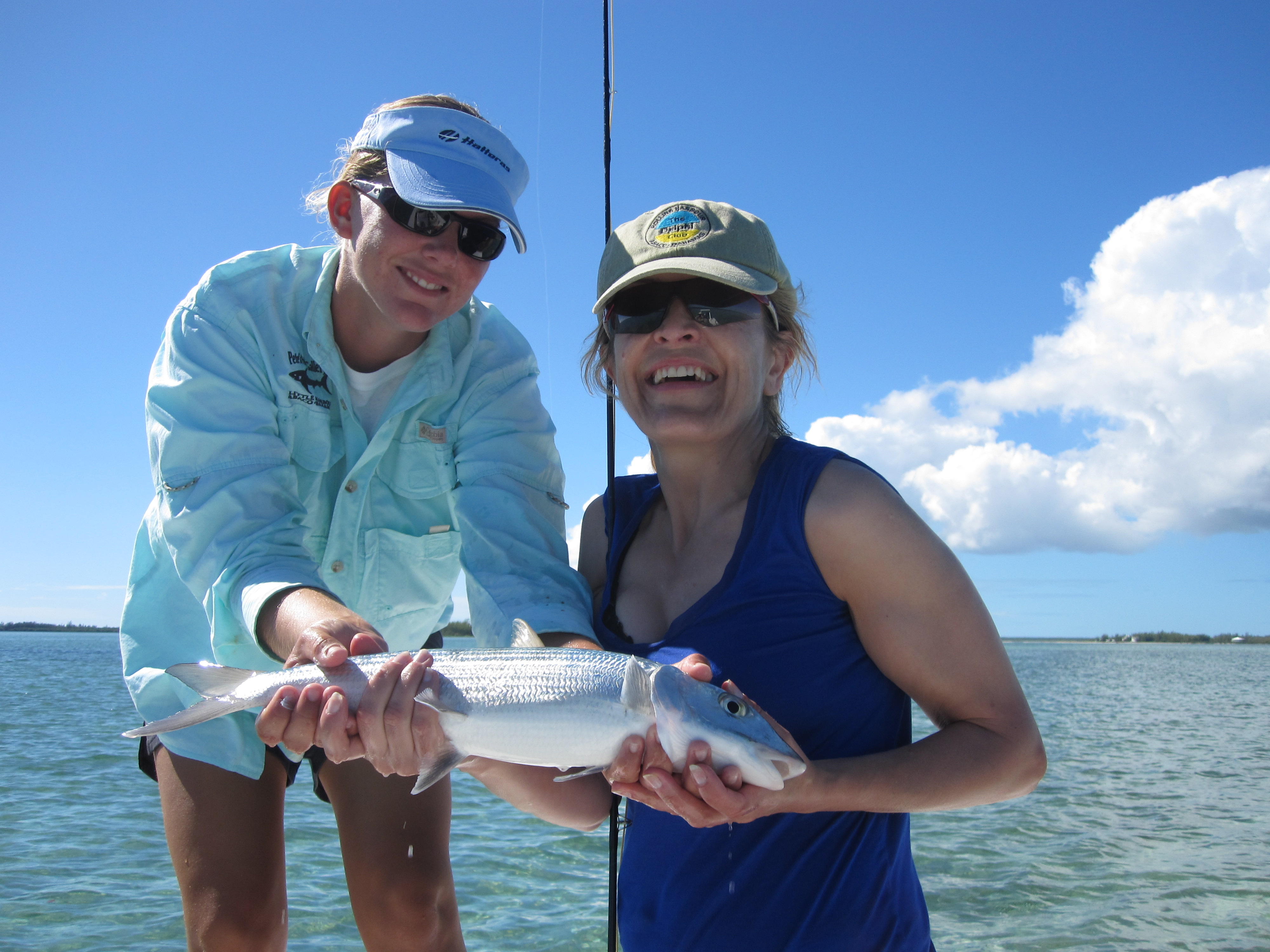
There is even the possibility that at some stage you may unexpectedly be handed a rod (even if you have never held one before, or wanted to) with ‘fish on’… Here, Robin has hooked a 2.5 lb fish and handed the rod to Mrs RH (then engrossed in eating a cheese roll) who successfully played and brought in her first ever fish…
PART 2 will deal with what else goes on during the day: the scenery, birdlife, sharks, turtles, blue holes and so forth. For now, here is a short clip of the skiff ride out to the Marls, to give you an idea. NB this was a very calm day – things can get a little bumpier and wetter at times. The seats are padded, but not very…
[Ultra-cautious music credit to Joe Satriani who sued Coldplay for alleged tune ‘borrowing’ saying “I felt like a dagger went right through my heart. It hurt so much”. Case dismissed + unspecified settlement… Way to go, Joe! Want to check? Cut ‘n’ paste this: http://www.youtube.com/watch?v=zjB024bZoB4&feature=fvwrel Then by way of counterbalance try John Lennon’s Imagine vs Coldplay’s ‘Fix you’ at (cut ‘n’ paste) http://www.youtube.com/watch?v=DksjpsAe3vk&feature=endscreen&NR=1]
[Note: this post replaces the preliminary, typo-ridden and imageless draft that subscribers may have received, for which I stupidly pressed the ‘publish’ button rather than ‘save draft’… Not the 1st time, either… Sorry]
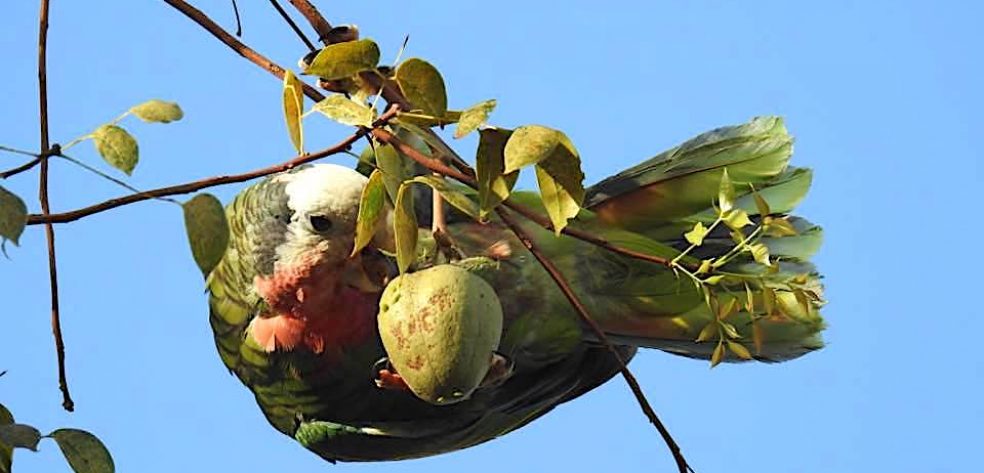
Scientist Caroline Stahala has spent 10 years researching the Abaco population of the Bahama parrot. Her aim is to develop understanding of their behaviour so that conservation and management strategies for this rare sub-species can be optimised. Particular protection problems arise because Abaco parrots, uniquely, nest underground. Their main vulnerability is to predation by feral cats, racoons and rodents which kill adults, chicks and fledglings in the nest
Predator monitoring and control programs have been in place for several years, removing surprising numbers of feral cats prior to and during the breeding season. Prevention techniques have been refined as predation data has accumulated. In 2011 for the first time motion-sensitive cameras were used, positioned near the openings of vulnerable active nests (shallow or with large openings), monitored 24/7 with infra-red night-time flash. Constant technical adjustments were needed to determine optimum filming distance and memory card size, and to avoid ‘false triggers’ (eg wind)
A great deal of vital data was collected, particularly at night when predation can’t otherwise be effectively monitored. Feral cats were the most frequent visitors, followed by rodents. No racoons were recorded, so these may be less of a threat than expected. One northern mockingbird (above) was caught on film up to no good. It it seems that the camera flash itself may act as a deterrent, something that bears further study. There is also new evidence that some predators approach a nest and ‘case the joint’ for later use. All this data will make it possible to target predator control preventatively, rather than in the sad aftermath of predation – a great step forward.
Overall, during the 2011 breeding season none of 55 nests monitored was lost due to predation. In previous years, the attrition rates have been around 25%. The use of cameras avoids any disturbance of the parrots and chicks and provides round-the-clock monitoring. If the cameras / flash are in themselves deterrents, that is a simple method of predation control. The new banding project means that it is now possible to be certain whether same parrot (or pair) is using the same nest cavity each year – and of course individuals can more readily be identified
Finally, Caroline confirms that the parrots weathered Hurricane Irene well. She was still monitoring the breeding territory then, and when she returned to check active nests after the storm, she found the chicks and fledglings safe in their nest cavities
Abaco Parrot chick safe and sound - the first post-Irene image
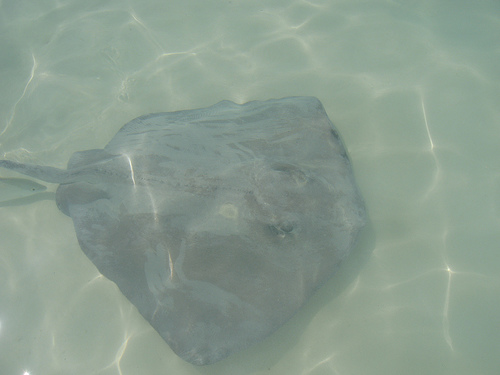
A while ago, I posted stills from a reef-snorkelling video – my first ever underwater video attempt, and indeed my first snorkel for about 40 yearsCLICK===>>>REEF FISH I started with a stingray, producing some rather… ok, very… modest results, but it was at least identifiable if you looked carefully and felt benign.
I’ve learned a few tricks since then. Here is the whole clip, still hopeless in most respects but there’s something quite cute about the creature. Mercifully it is only 37 seconds long. I reserve the right to delete this post when I realise no one has actually watched it! [LATER: Oh! I find a few hardy souls have done so. It’s a democratic vote for the ray to stay, as I see it]
[Belated credit to the fairly litigious Joe Satriani (see JS v Coldplay 2009) for borrowing the intro to one of his songs. It’s a non-commercial tribute, Joe]
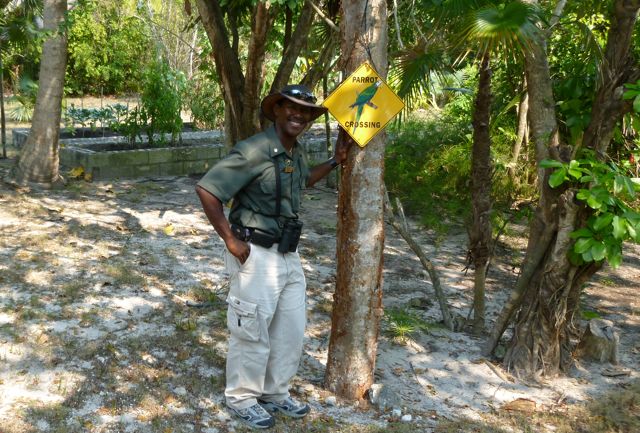
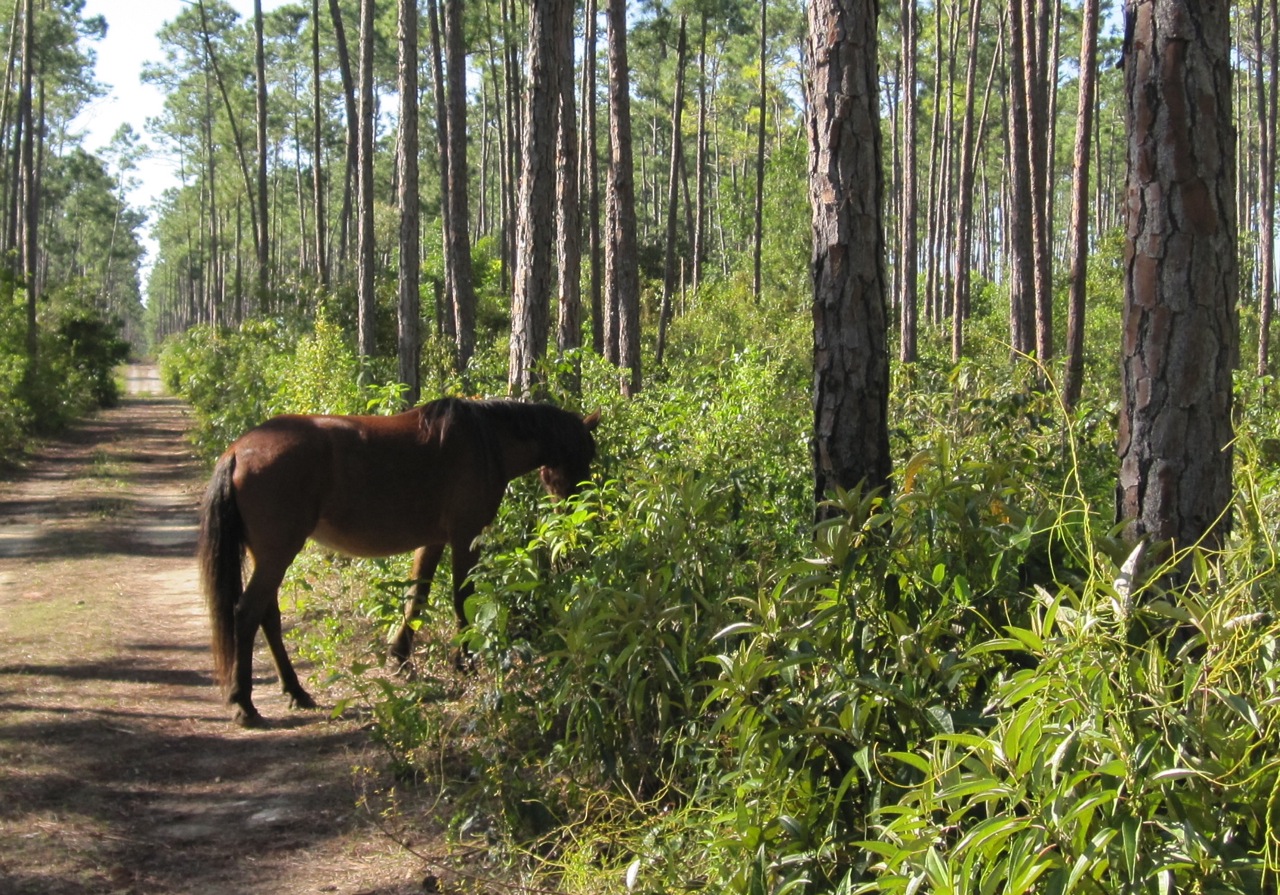
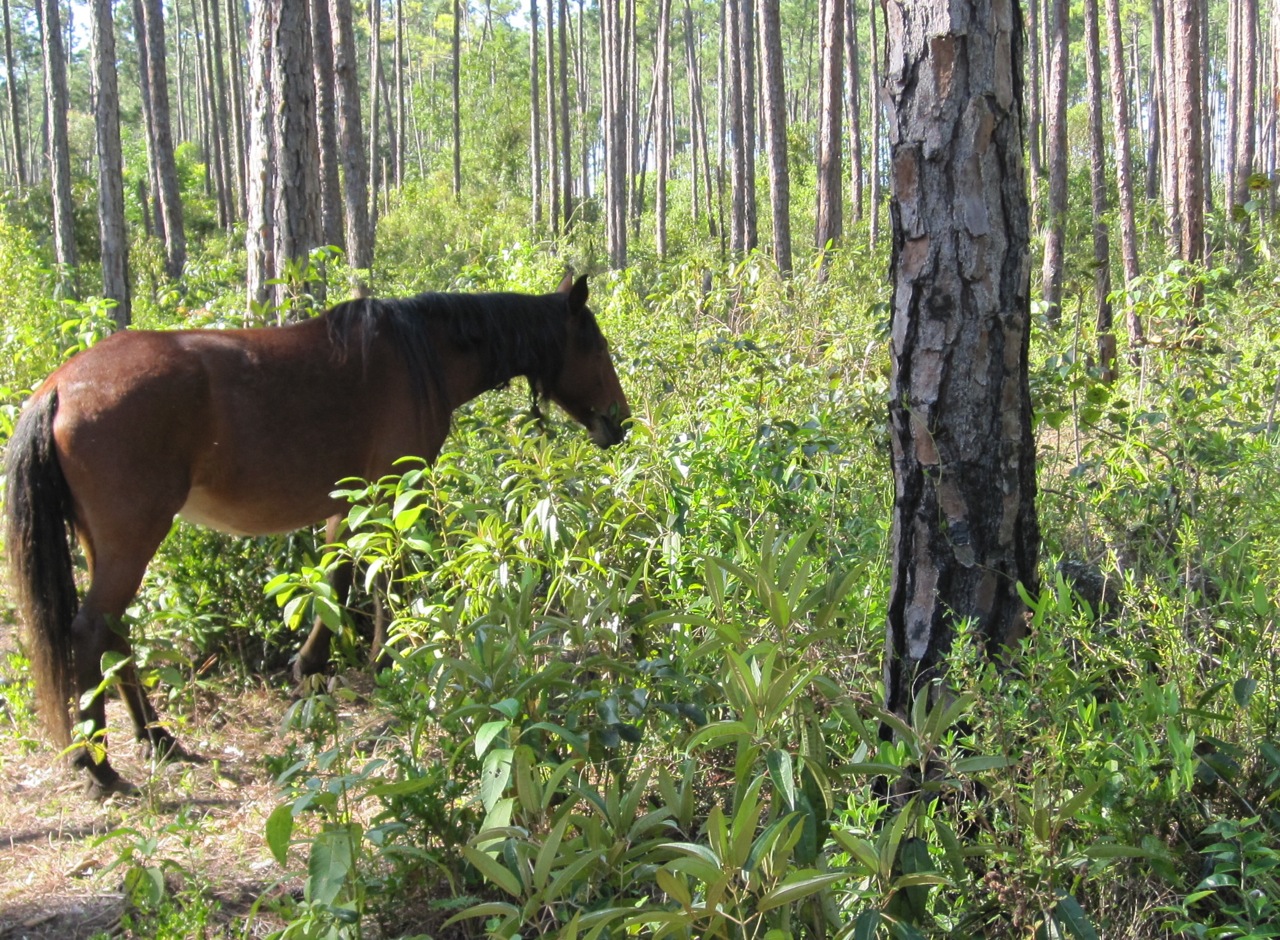
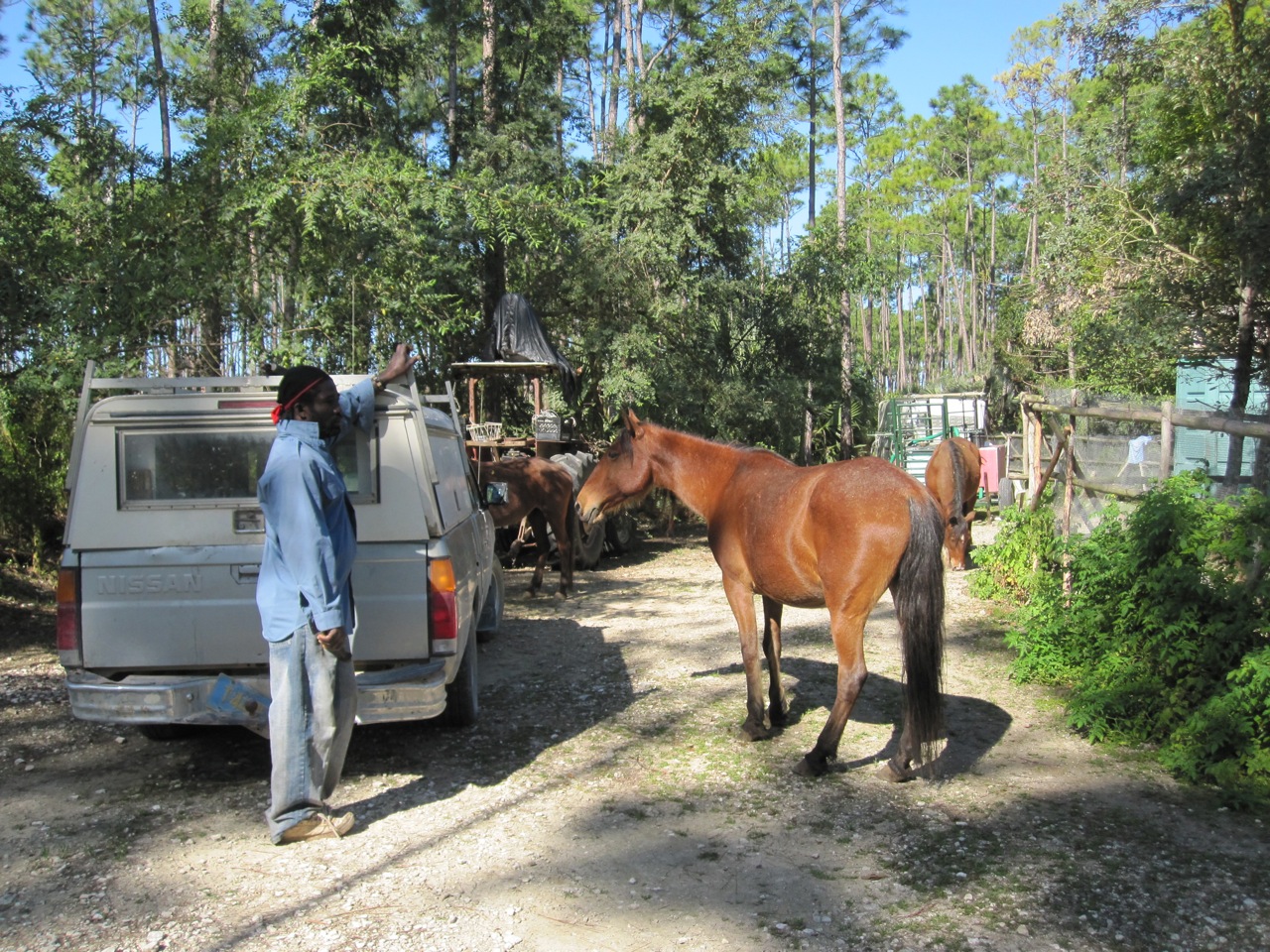
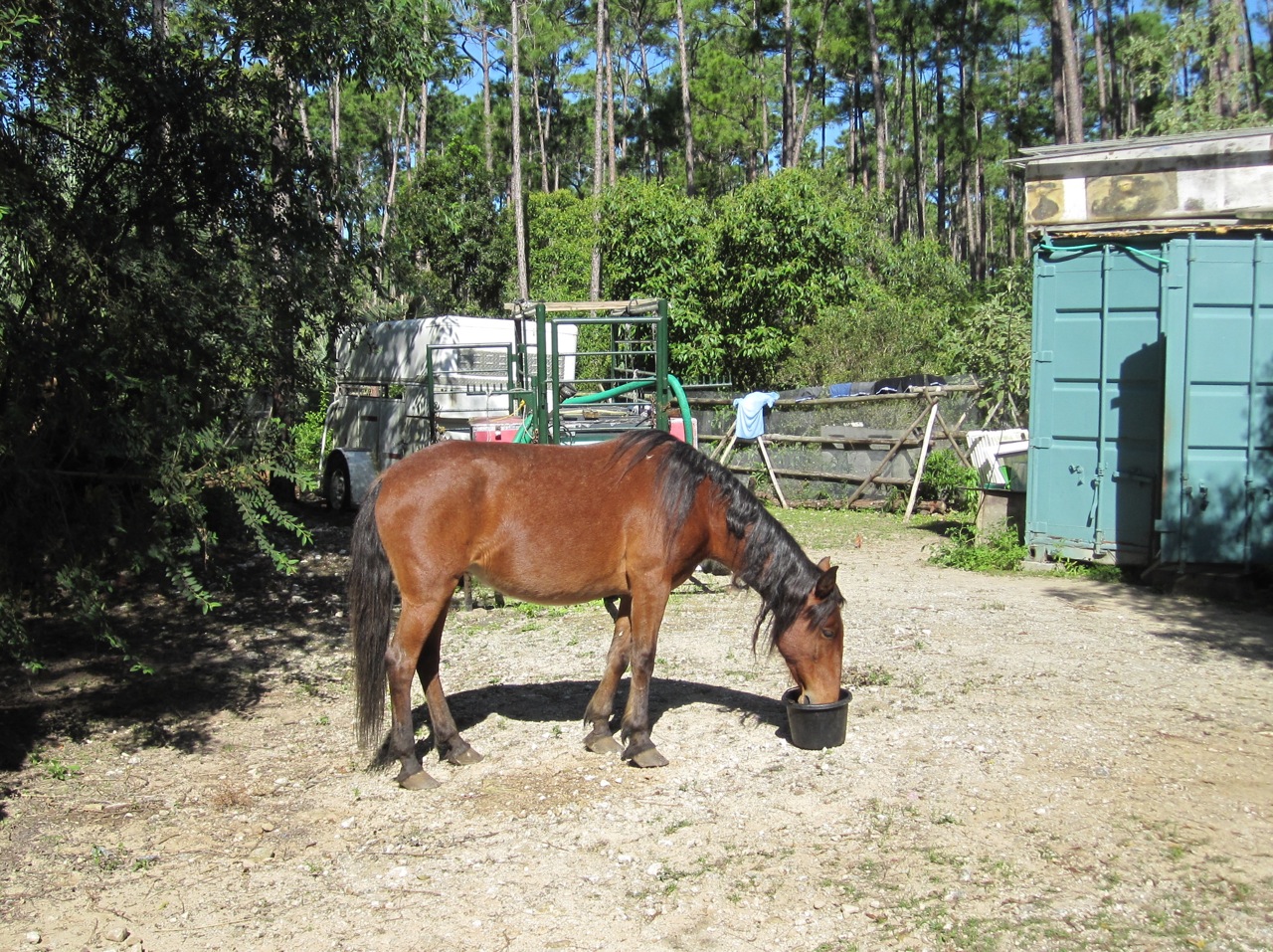
RICKY JOHNSON leads wonderful birding and natural history outings, taking small parties to the prime hotspots for Abaco Parrots and much else besides – seeRICKY JOHNSON’S ECO-TOUR for a detailed account. He also takes small groups to see the Abaco Barbs in their protected forest surroundings near Treasure Cay. These photos were taken there in March 2011. The horses are free to roam in the pine forest, but the compound is their HQ, where they can be sure of a feed. There are 4 mares and 1 stallion remaining: even with the best efforts of those concerned, the preservation of this unique breed seems sadly doomed.
ARKWILD is the website to go to for information. There’s a link to the website in the Sidebar Blogroll and also a Twitter link in the Sidebar. Here is the direct link to the latest summary (dated July 2010, but in sequence it should be 2011, I think) and donation page – it is also the portal to the rest of the site with information, photographs and videos CLICK LOGO ===>>>
In the rollingharbour tradition of encouraging easy access to online material, here is a selection of 8 videos about Abaco Barbs, the near-extinct wild horses of Abaco. In due course I’ll add some links to the most informative websites and also some photos. The first 3 videos derive from the origins and subsequent conservation work by the charity Arkwild. There’s a link to the Arkwild site in the sidebar Blogroll. The struggle to try to preserve the breed is extremely well documented on the internet, and needs no repetition from me. It’s worth saying, however, that the situation is now worse than ever: in March 2011, there were only 5 horses left, of which only one is a stallion…
The remaining videos are mostly collections of stills, some accompanied by music that you may want to turn down. Or off, in one case. There’s a degree of repetition, but I have left them there in case there is an image that strikes you as special or a nugget of information that is of interest…
This compelling video is an introduction to the story of the Wild Horses Of Abaco. Only a few are left now, we’re fighting hard to save them from … by arkwild | 2 years ago |
Because the forest is in a dry cycle, new grasses are not growing fast enough we decided to supplement each mare with a measure of mixed grain and … by arkwild | 1 year ago
The Abaco Barb is one of the purest breeds left in the world. They live on an island in the Bahamas where they ship wrecked around the same time … by TheFluffyFan53 | 2 years ago |
Once, they were a mighty herd, perhaps 200 strong: pinto, bay and roan horses rippling through thousands of acres of pine forest. They were as … by SabinoPaintMare369 | 2 years ago |
The abaco barb is so pretty! why would u want them 2 die out? Help them out and try 2 keep them on this planet! subscribe 2 me if you care … by EnglishCowgirl121 | 2 years ago |
This is a short clip of the beloved Abaco Barb Horse, I know that my name says puppylove, but i am making horse, videos. For more info go to this … by puppylove825 | 2 weeks ago |
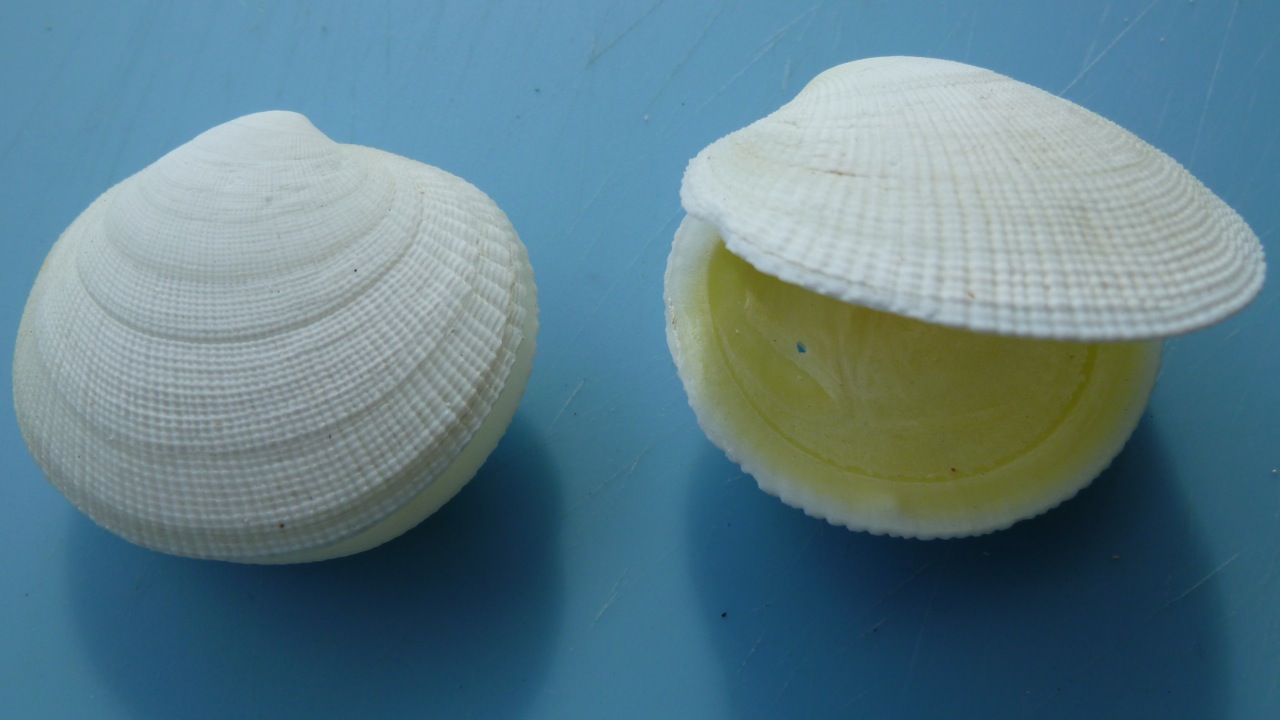
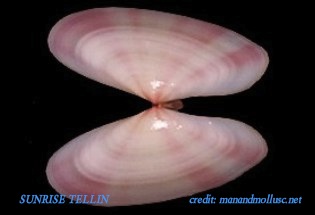
This is Part 2 of the ‘Delphi Beachcombing’ feature. The first dealt mainly with gastropods, and now I have got round to some bivalves. All the shells illustrated come from somewhere within half a mile of the Delphi Club beach steps, except for the sunrise tellin. We gave ours to our granddaughter (5) [she likes pink, but also mud] and it has… somehow come apart.
EGG COCKLES Unlike the vast majority of cockle types which have the familiar radial ribs, egg cockles are smooth and non-ribbed. They are apparently able to jump by flexing what passes for their leg – a feat I would enjoy seeing…
GAUDY ASAPHIS Asaphis Deflorata (formerly ID’d as COQUINA Donax)
SCALLOP / PECTEN This is not a ravenelli, as previously suggested by me – they are deep water molluscs. It’s hard to be sure exactly what species it is, in such a bleached state.The tiny shell half is surely the basis for the symbol of a petro-chemical giant that I decline to identify further. I thought this one was broken but a check shows that the asymmetry of the hinge is very common. Encrustation by worms, as here, is often found as well, but I wisely draw no parallel with the litigious petrochemical industry…
SUNRISE TELLIN (Tellina Radiata)Tellins are a genus with masses of variants worldwide. This species is common in the Caribbean. It is a really pretty shell, glossy with pink radials. They grow up to 7cms. As hinted above, if you find a complete one, the hinge is delicate. The most interesting fact I have discovered is that “in most countries it is illegal to bring back these shells from holidays” Whoops!
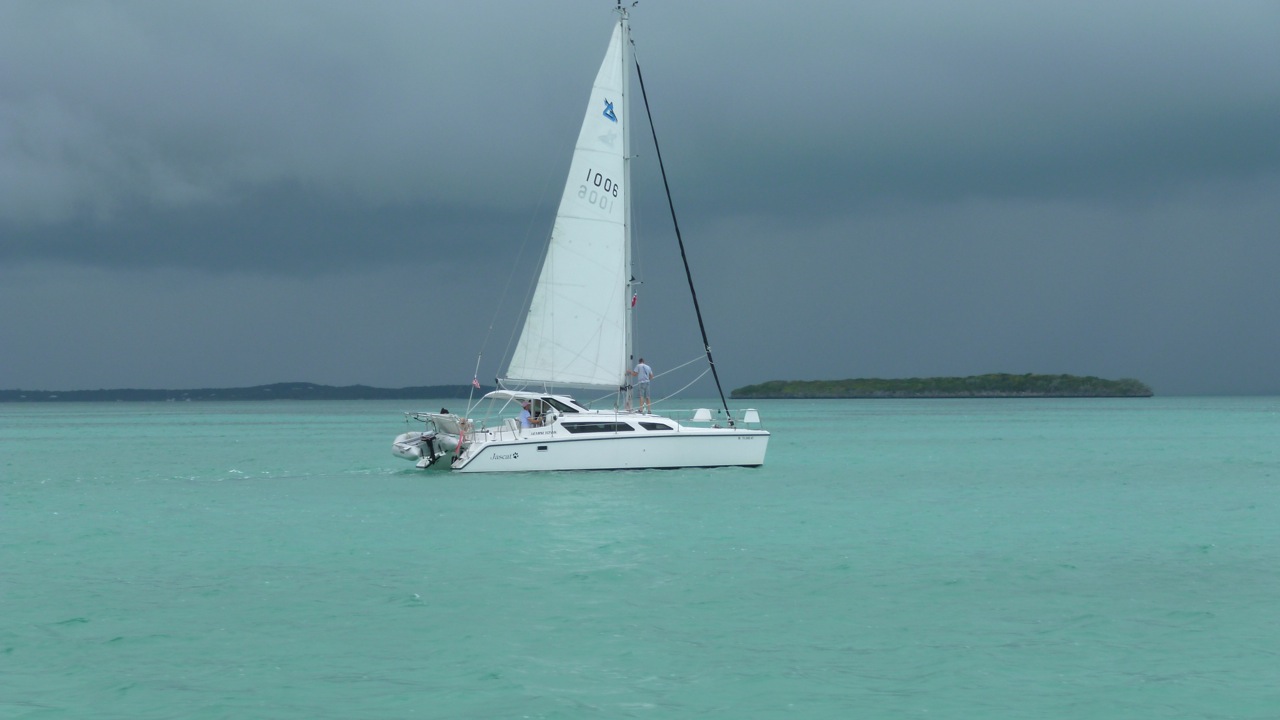
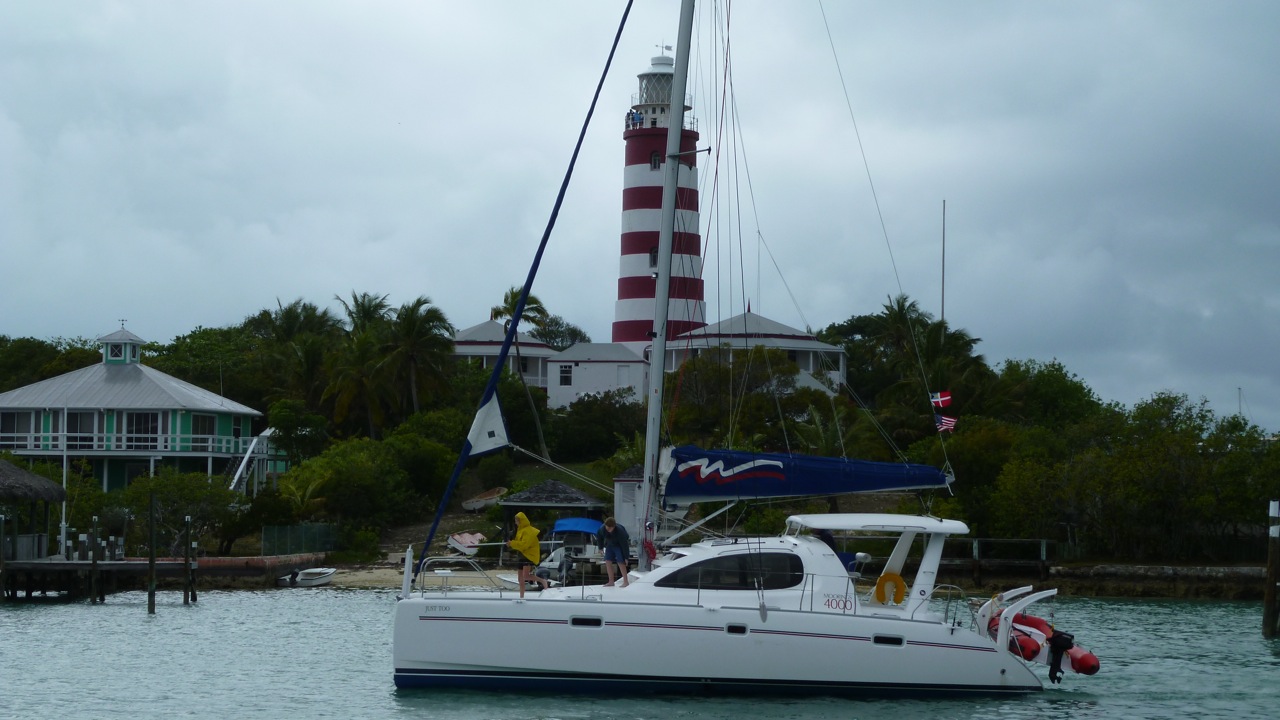
Time for the Island-hopping part of our day with Abaco Above and Below. There’ll be some links to other aspects of the day as we go along. Apologies for the gloomy photos – the weather was distinctly adverse for much of the day, as this photo taken from Kay’s catamaran shows.
Straight boat, squint horizon
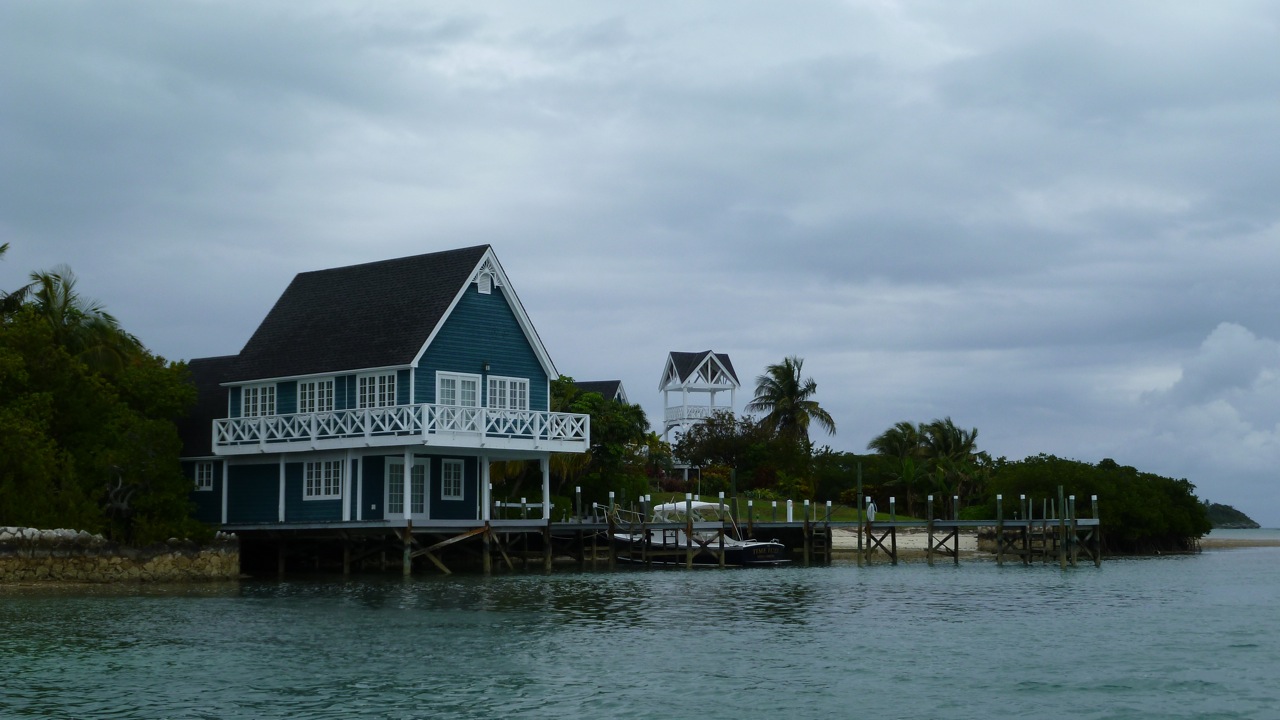
SCOTLAND CAY We saw this cay in passing but didn’t land here. We wouldn’t have been welcome on this rather stern-sounding island. It’s private. And exclusive. In case are you are making plans to drop by, this is how private and exclusive according to the island’s website: “Only property owners and their guests are allowed on the island. This exclusively private island is accessible by private aircraft, private vessel, or ferry service from nearby Marsh Harbour, Abaco. Please be advised that there are no commercial services on the island. No restaurants, bars, stores, public marinas, etc. Do not travel to the island unless you are a guest of a current property owner. You will be asked to leave immediately.” (S C website) To which one can only say “Fair Play”, and pass on by. But you are allowed to take photos from afar. Even gloomy ones. And non-exclusively.
LUBBERS CAY Our first stop was at Lubbers Cay and lunch for 14 at Cracker P’s after our snorkelling excitements at FOWL CAY.
The landing-stage looked promisingly welcoming…
…as did Cracker P’s itself
Lunch for 14 passengers and crew: excellent local food, cheerfully provided
Cuban Emeralds feeding on sugar water by our table
RH waits anxiously as his dollar bills are scrutinised for authenticity
HOPE TOWN:After lunch our next stop was Hope Town. Here are a couple of direct links to other Hope Town posts / pages from this and previous trips: HOPE TOWN ART;THE LIGHTHOUSEThe plan is to add some more Hope Town photos in due courseof an earlier trip when it was sunny…
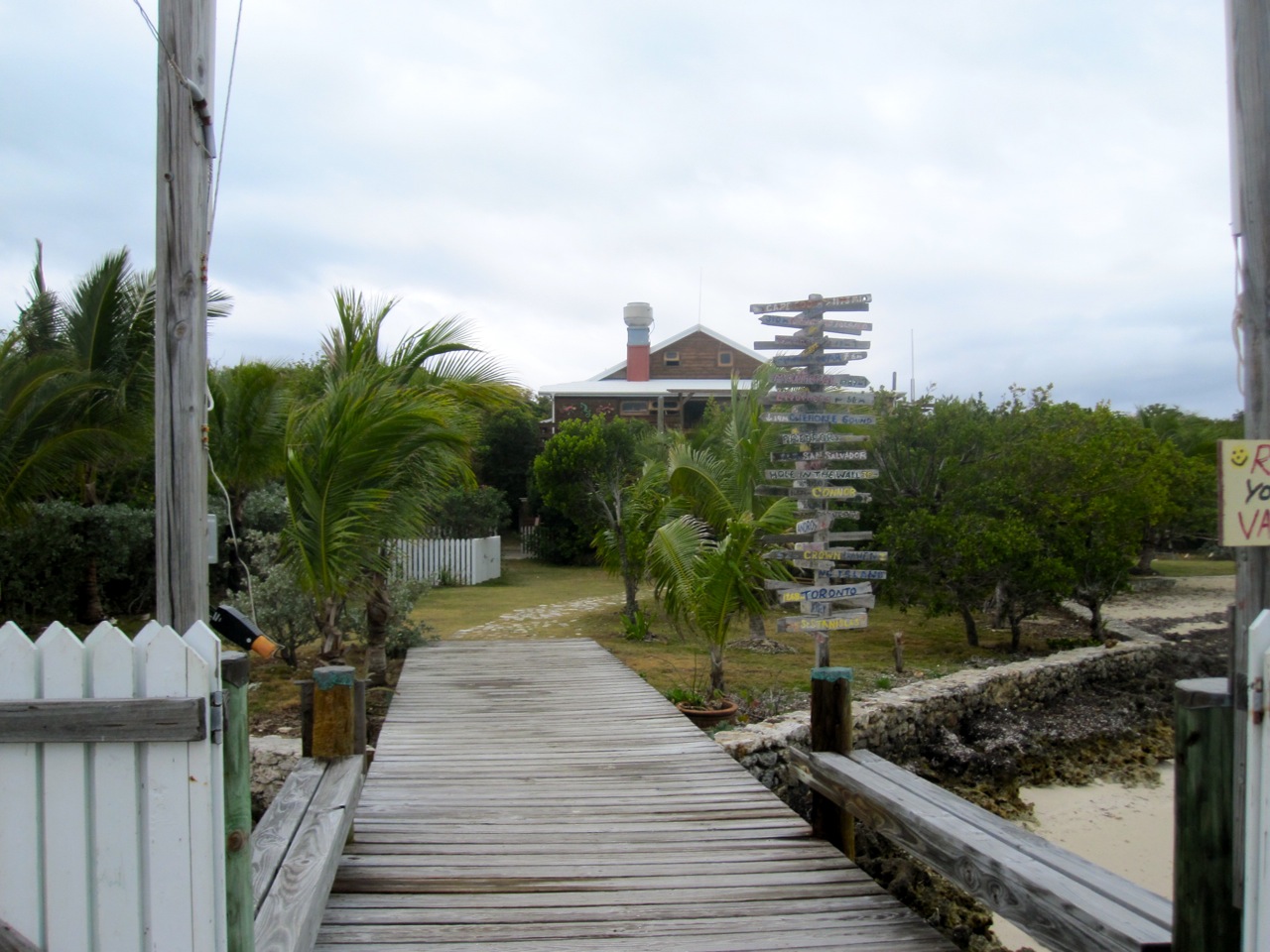
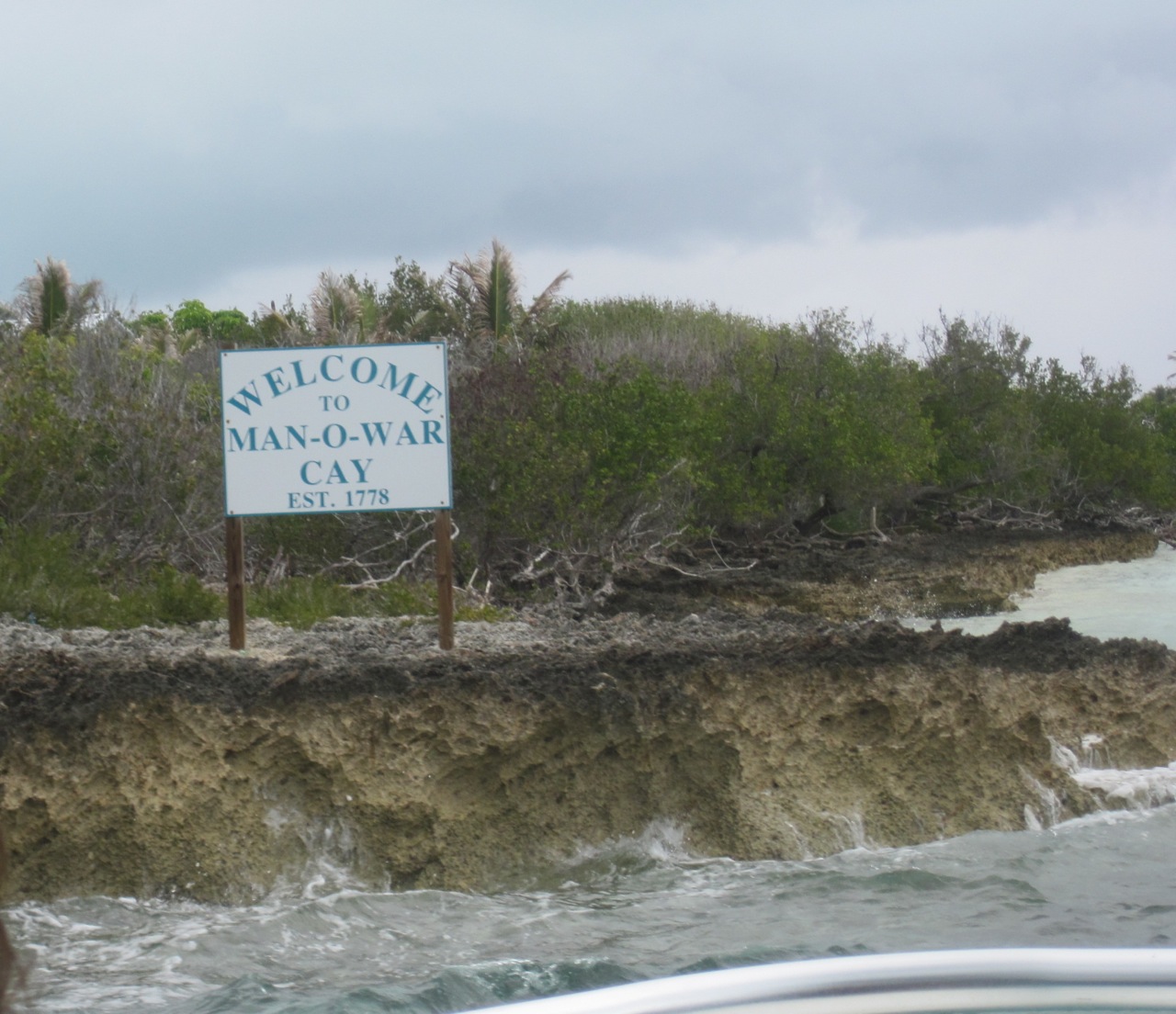
MAN-O-WAR: We had quite a brief stop here, a quick wander round and a look at the boat yards. There was a Bahama Woodstar feeding on flowers near the jetty. The weather was still pretty vile, not conducive to photography. A place to return to on a sunny day…
AND FINALLY to some dolphins, the cetacean finale to the day, which appeared as we approached Marsh Harbour and made a very good day excellent:DOLPHINS
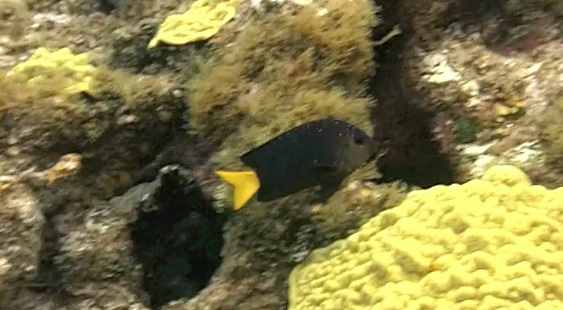
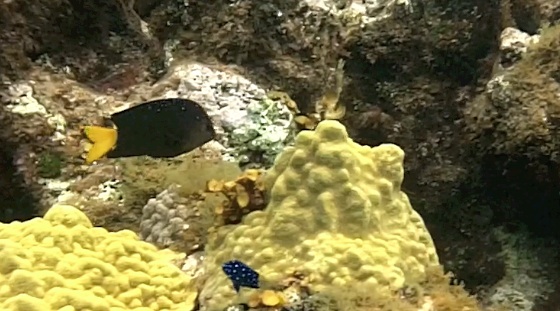
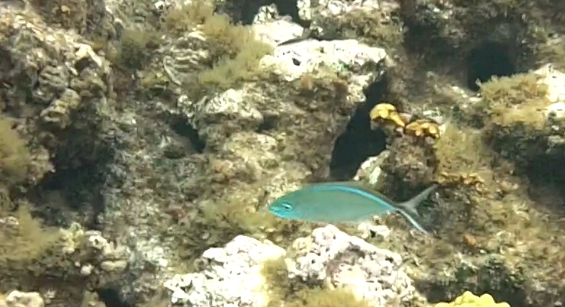
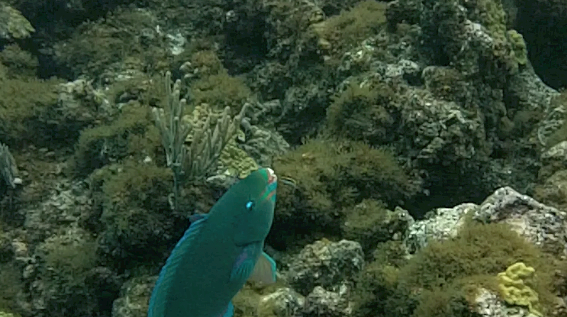
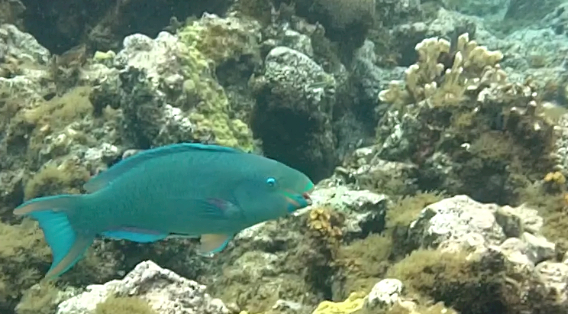
Here are some more stills of reef fish taken from the video of our reef-snorkelling trip to Fowl Key with Abaco Above and Below. I’ll add the fish IDs gradually. The first batch are images of individual fish; the second batch is a sequence showing a queen parrot fish feeding on small fish (?gobies) – images that I’d expect David Attenborough to describe in his quiet and breathy way as “really quite extraordinary”, especially if he has seen the general standard of pics in this blog…
BLUEHEAD WRASSE (Thalassoma bifasciatum)
YELLOWTAIL DAMSELFISH (Microspathodon chrysurus)
YELLOWTAIL DAMSELFISH & Juvenile (I hadn’t noticed the baby yellowtail until I examined the video)
First I thought it best to look up in the dictionary the meaning of the word ‘Sound’ in relation to ‘Cherokee Sound’ – it has such a poetic name. Sound: a long arm of the sea forming a channel between the mainland and an island or islands; or connecting two larger bodies of water.
“No one knows for sure where ‘the place’ got its name but one theory is that it was named after a local wild cherry tree and according to some old-English sailing charts was identified as ‘Cherry Cay’ (cay pronounced ‘key’ locally). Another story about the first settler being an old Indian woman who was supposed to have come from the Cherokee Nation in North Carolina during the American Revolution, and she named the settlement after her ancestors.” By Lee Pinder, Cherokee Sound, Abaco.
About 40 kilometres or 25 miles south of Marsh Harbour, capital of Abaco, is the seaside settlement of Cherokee Sound. It is only fifteen minutes from the superb Delphi Fishing Club at Rolling Harbour where we were based. We set off for a day’s fishing at Cherokee, the home to fewer than 150 families, where most make their living fishing for crawfish, bonefish guiding and taking parties out deep sea fishing. Some of the finest bonefish guides live at Cherokee and none better than young Dana Lowe, daughter of Delphi’s senior guide Donnie Lowe. She has learnt since childhood from her experienced father and knows every inch of the complex waters, and where best to fish under various tide and cloud conditions (perish the thought, it is almost always gloriously sunny).
Dana has developed her own relaxed approach to guiding, and takes a missed opportunity in her stride, seldom getting upset by a client’s failure to engage with the incredibly spooky fish in the Sound. She calls clearly to the fisherman on the bow from her poling platform high above the 40 horse-power Yamaha at the stern of the 14 ft skiff:Fish 40 yards off, prepare to cast(and a minute later) give me 40 (feet) at 11 (o’clock, the bow is always 12). The angler has sufficient line stripped from the reel and with one false cast and a slight single haul lands the fly in the fish’s path.
After a momentary pause she quietly asks (with reference to the line): ‘strip, strip, stop, strip, raise the tip, GOT IT’ as the fish yields to the temptation of the inviting fly – and in a moment, like a bat-out-of-hell is 100/120 yards off, heading for the horizon! Then it pauses and turns which is the start of a real good angling experience until it gives up and is released from the barbless hook to rejoin its pals and recount the experience, often being honoured with leadership of the shoal. Such is the order of nature!
Dana is at one with her surroundings and encourages her guests to take in all that Cherokee has to offer. At low tide she loves to have her guests wade in bare feet on the silvery golden flats, sand as far as the eye can see, and cast to the occasional meandering fish or even a shoal of them. Easy to visualise the silvery sand, the blue green of the water, and the royal blue sky off set by soft fluffiness of the pure white clouds and almost uninterrupted sunshine. I love the lunch stops on a little mangrove island under the limited shade of a coconut tree, and the opportunity to collect a few shells for my nieces. I particularly like the sand dollars that have the appearance of engraved roman coinage, but are transparent porcelain white. And the various shades of pink of the conch shells are much liked by our local jeweller for engraving most appealing cameos. From the boat again she can show you, in season, the Ospreys nesting in their very square constructions of straw and wattle, green turtles snorting, and a plentiful number of ray, shark and barracuda cruising sinisterly around and with no evil intent to the peaceful anglers! As the evening draws in we call it a day and say our goodbyes to Cherokee Sound. Dana brings us back to the little jetty where our jeep from Delphi is awaiting us and we wave our fond farewell for another year and watch as Dana punts quietly out into the bay to her lovely home further along the shore line. The slow-paced tranquil daily life here feels as if it has not changed for many years and we hope, if that is fair to the residents, that it remains so for years to come.
Trish Findlater June 2011
AND FINALLY…unknown to Trish, rh was on the other skiff with a camera. For an independent view of what was going on in this idyllic placeCLICK HERE
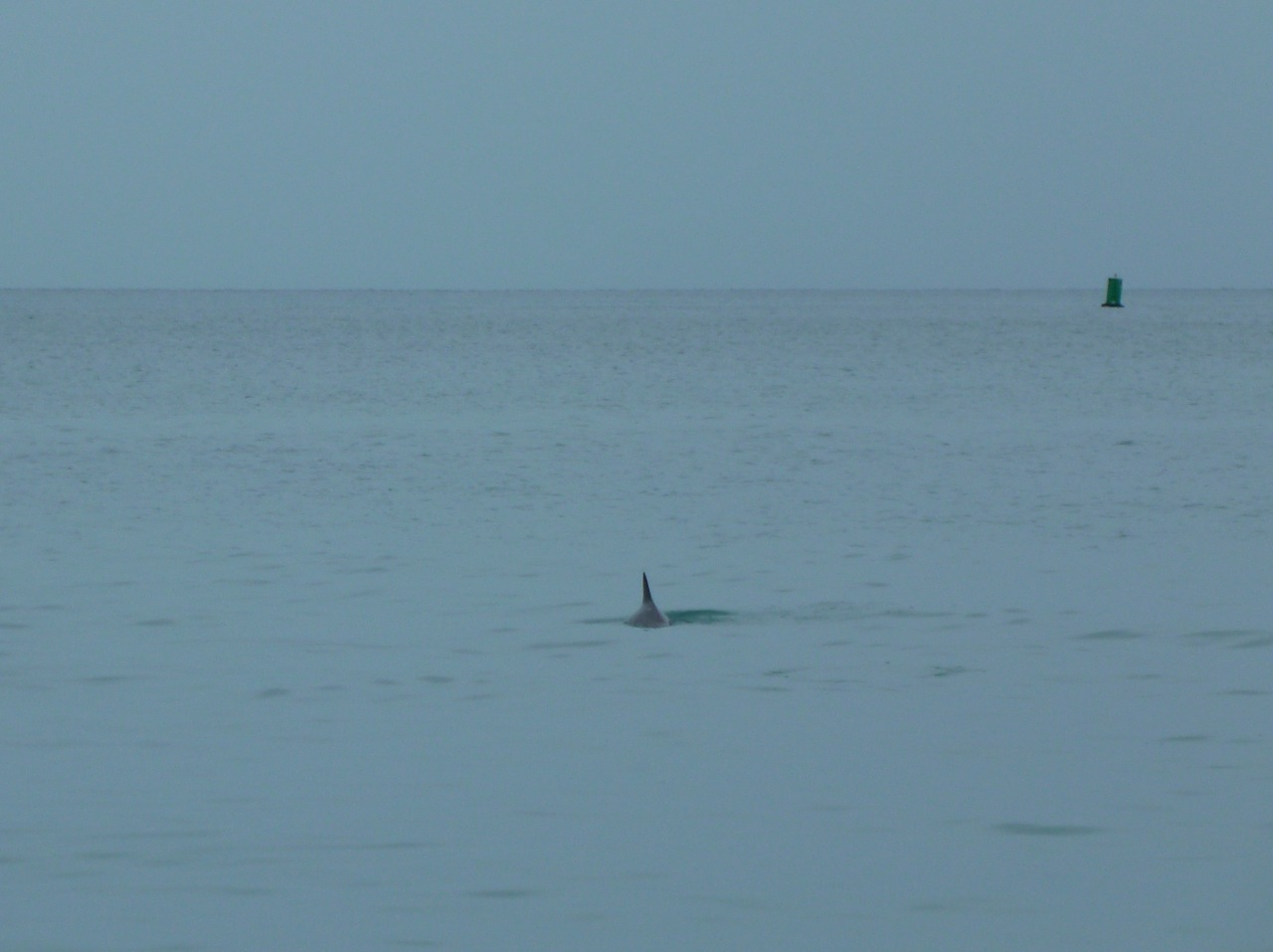
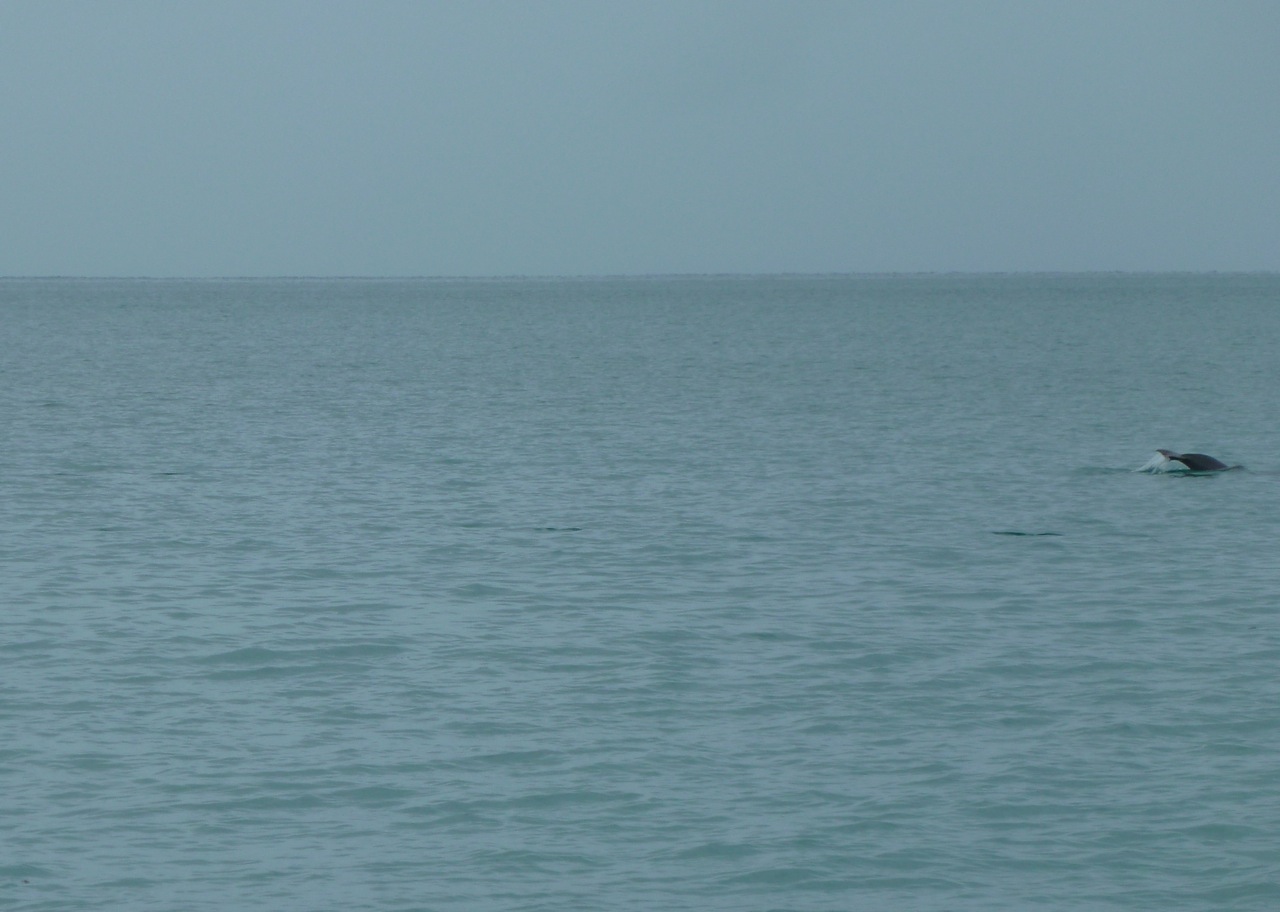
Our Island-hopping trip with Kay – see previous posts [links later] – held the chance of an encounter with dolphins. The frankly dodgy weather – rain, cloud etc – seemed to have dashed that hope. As we entered the approaches to Marsh Harbour, we (I) had given up all thought of seeing any dolphins when suddenly… dolphins to starboard. A small pod, not very close, of 3 or 4 adults and at least one calf. They did what dolphins do for a short time, while gradually moving away from us into the murk. There was naturally huge excitement on board at this unexpected sighting.
So as Marsh Harbour came into view, we had ticked off the full day’s list: reef-snorkelling at Fowl Cay; island-hops to Lubbers (with lunch), Elbow and Man o’ War Cays; and rounded off with the dolphins. Without going overboard in any sense, this was 6 hours of wonderful adventure, and highly recommended as a top quality day’s outing. And you can even get an Abaco Above and Below t-shirt at the end of it all to prove you have done it.
* * *
I have been uncharacteristically reticent, I notice, about showing the proof of the dolphin encounter. And for a very good reason. These may be the worst quality images of dolphins you will EVER see. You may in fact be better off looking at a cartoon… For what they are worth, here are two photos (of several worse ones…)
A DOLPHIN
ANOTHER DOLPHIN
A MORE CONVINCING DOLPHIN
DELPHI DOLPHINS You don’t have to go out in a boat to see dolphins. They have been seen from the verandah at Delphi, quite close to the beach – as have turtles and large rays. It’s worth having an occasional scan with the amazing autofocus binoculars that are kept in the Great Room
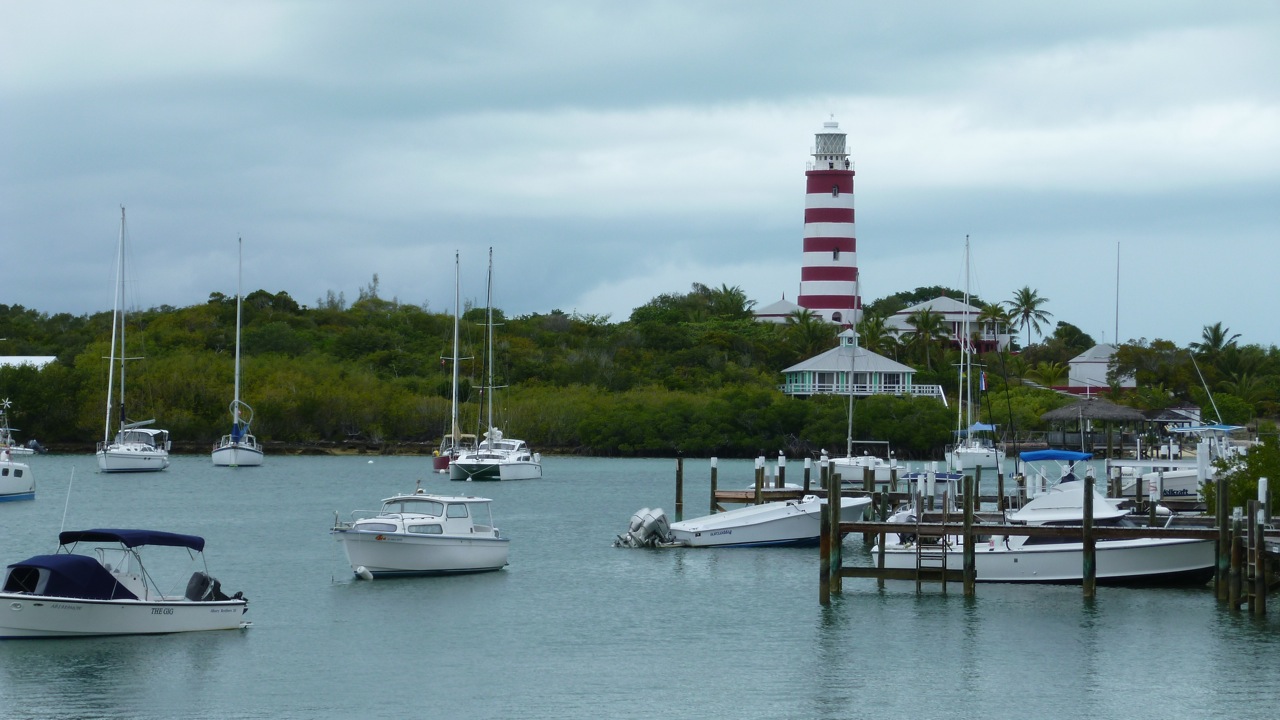
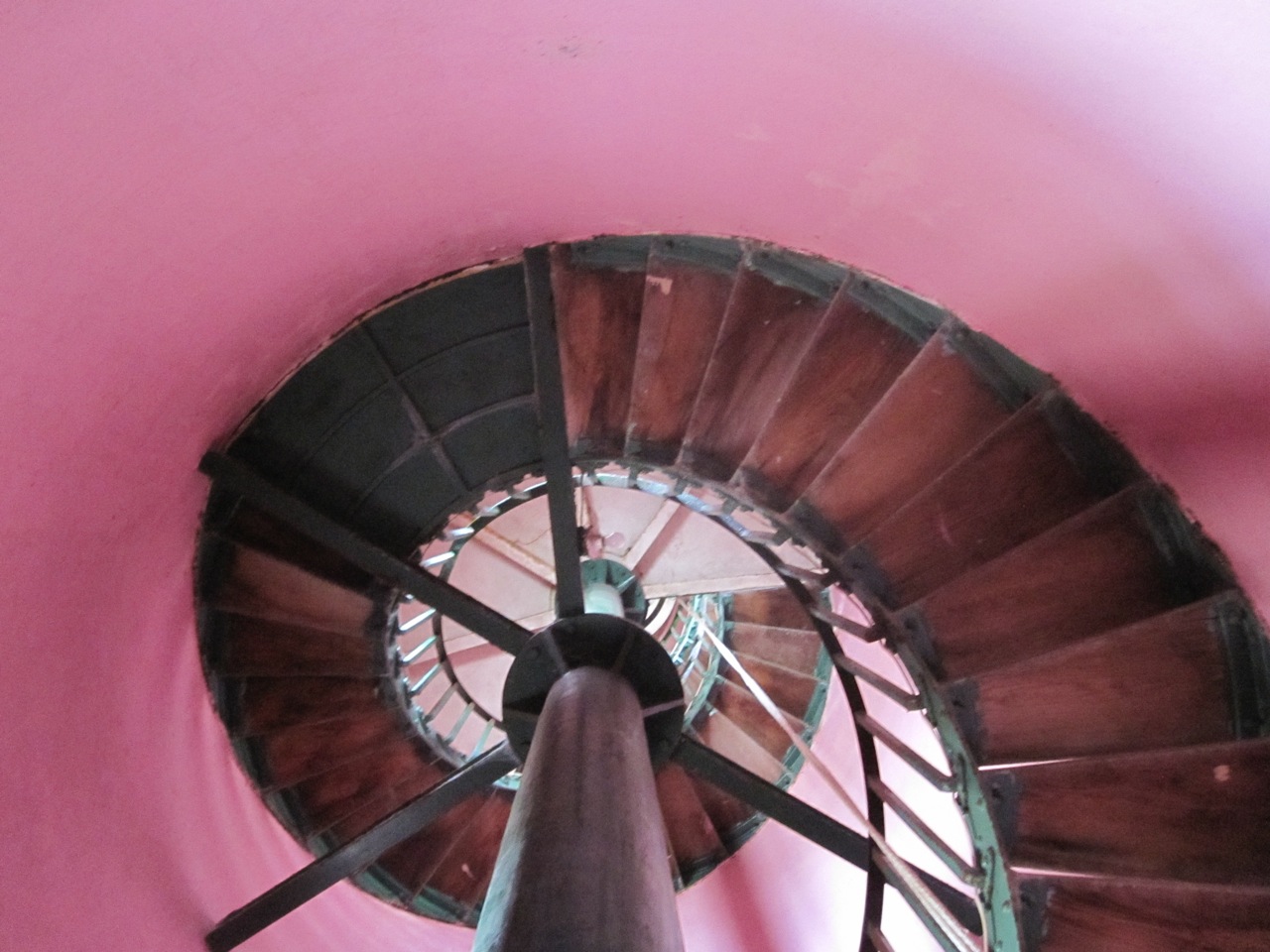
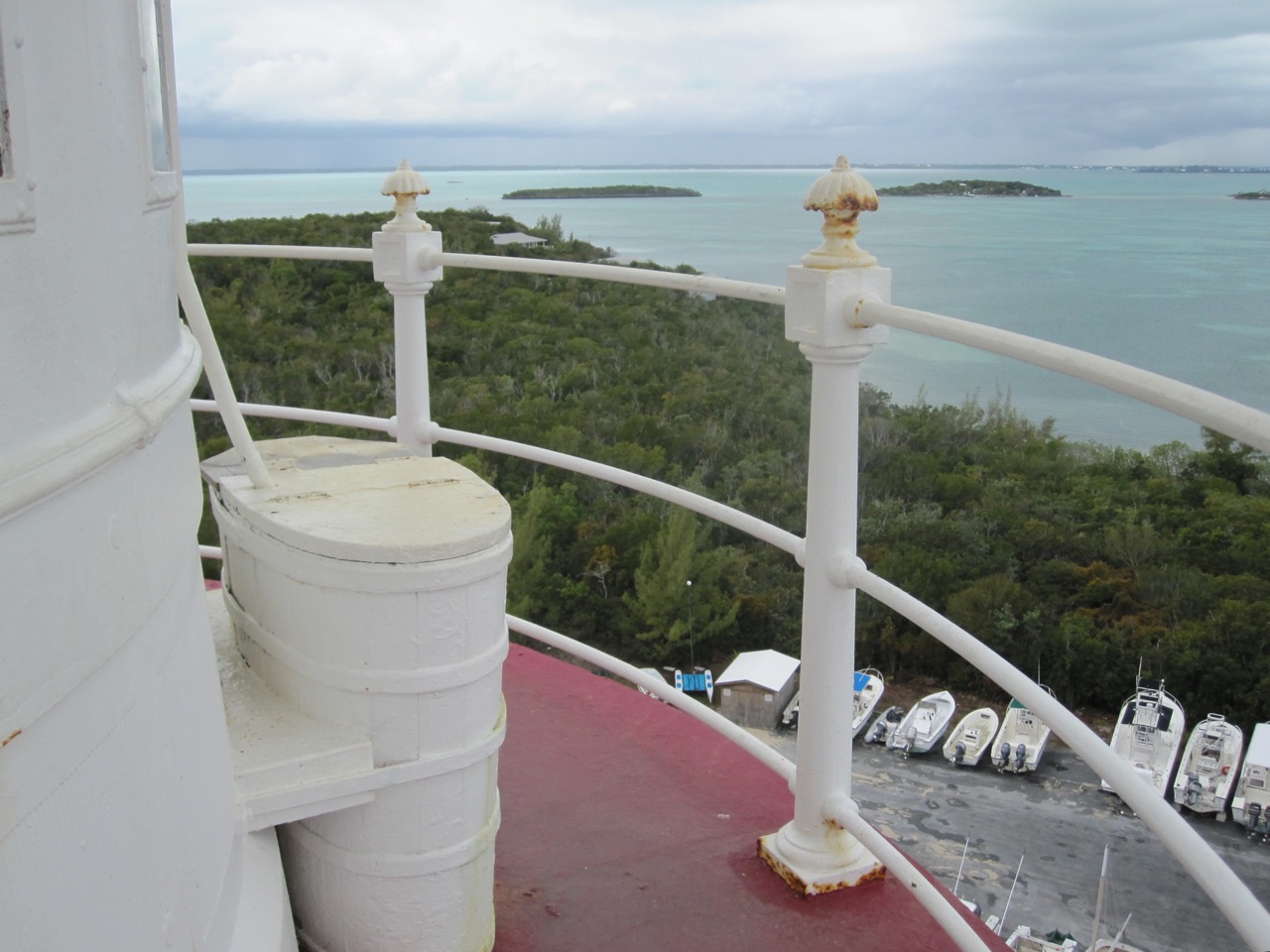
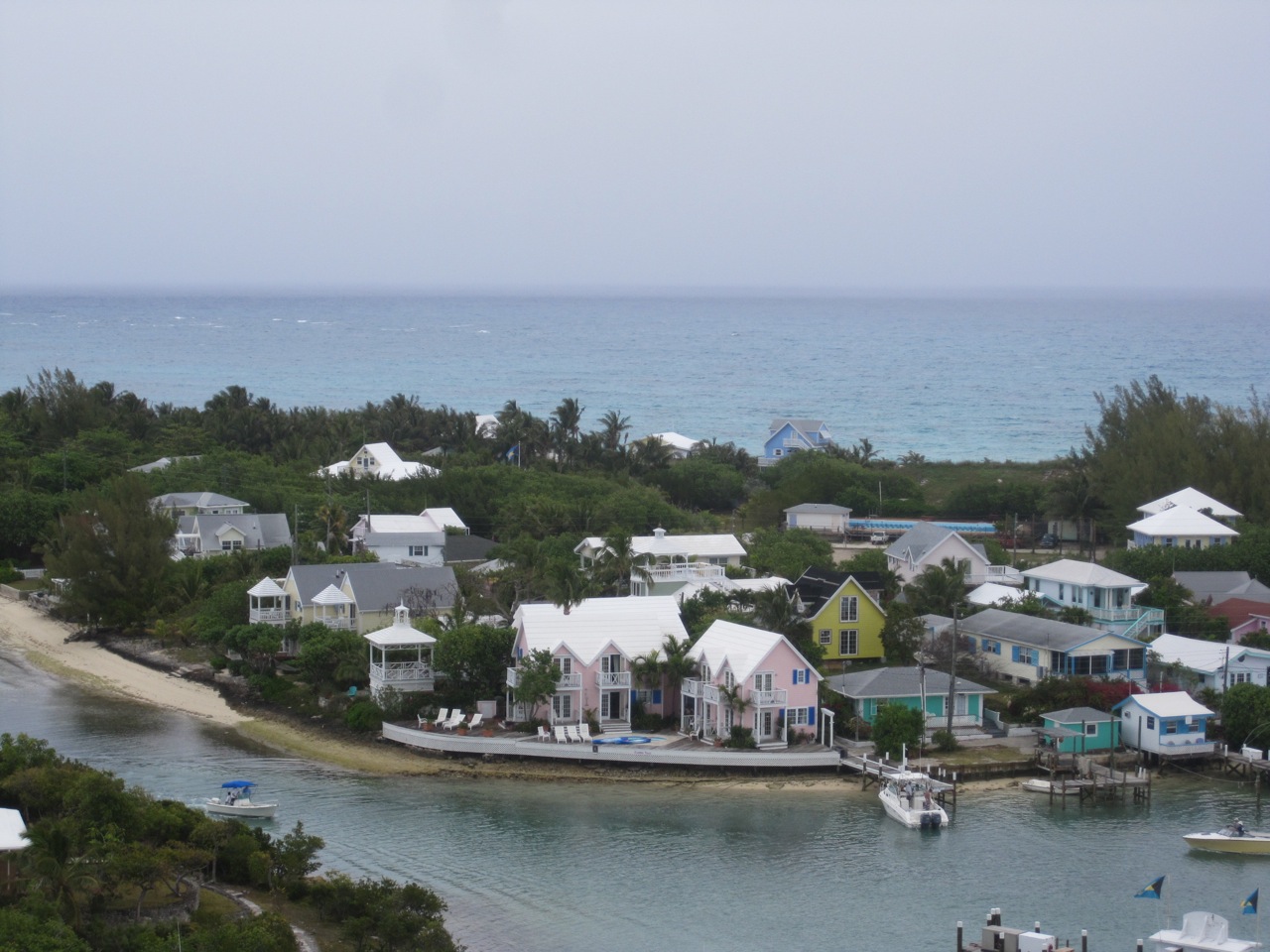
Our visit to Elbow Cay was one part of our day’s Island Hopping / Reef Snorkelling expedition with Kay Politano. In Hope Town, while most of the party wandered round the streets (and shops…)Mrs Rolling Harbour took the boat across the harbour to the Hope Town Lighthouse. This must be the best known landmark of Abaco – ‘iconic’, perhaps, in the modern sense of the word. The weather on the day was pretty poor, with thick cloud and intermittent rain and drizzle. Which is a pity, because the photos would have looked even better with sunshine and blue sky…
All Photos: Mrs Rolling Harbour
HOPE TOWN LIGHTHOUSE FACTS
(click on Coordinates below for position and Hope Town info)
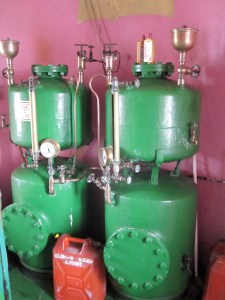
The Hope Town Lighthouseis one of only three Manual Lighthouses left in the World. It has a spring mechanism that has to be hand cranked every few hours to maintain the sequence of five white flashes every 15 seconds. The lamp burns kerosene with a wick and mantle. The light is then focused as it passes through the optics of a first order (largest size) Fresnel lens which floats on a bed of mercury.
A Fresnel lens(pron. ‘Fray-nel’) is a type of lens originally developed by a French physicist Augustin-Jean Fresnel specifically for lighthouses.Compared to conventional bulky lenses, the Fresnel lens is much thinner, larger, and flatter, and captures more oblique light from a light source, thus allowing lighthouses to be visible over much greater distances. Fresnel’s lighthouse lenses ordinarily fell into six orders based on their focal length, first order being the largest (wiki-assist)
You will need: swimming kit; sweatshirt (it can be cold on the boat after snorkelling); stuff for Island Hopping later on, inc. camera, money etc; snorkel practice in the pool if you haven’t used one for (say) 20+ years – use the Club gear; Ian Took’s slim ‘Fishes of the Caribbean Reefs’. NB there is limited room on the boat, so you’ll need a bit of a nifty towel work to preserve modesty when changing…
Kay Politano of Abaco Above and Below in Marsh Harbour pencils in an unspecified number of places for a day’s island-hopping and reef-snorkelling while I find out how many non-fishing-that-day Delphi guests might be interested. Seven sign up, and one morning we all set off to Marsh Harbour. In Kay’s shop we try on our flippers, marvel at the scuba possibilities (a completely implausible proposition for most of us…), then we troop off to the marina and Kay’s reassuringly powerful and safe-looking catamaran. It takes 12 passengers; the other 5 are already aboard. We set off towards a threatening-looking weather front; rain later is a certainty…
Kay and rh at the controls
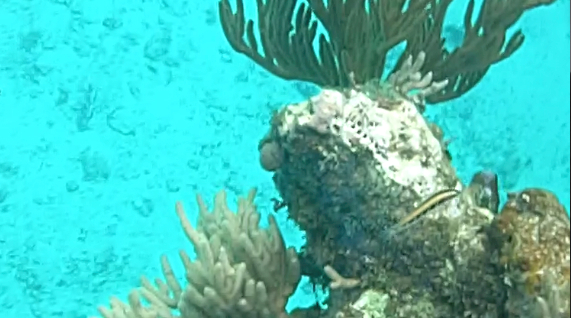
Passing by several Cays, we arrive at Fowl Cay Marine Preserve and drop anchor. We don our flippers, wrestle with our masks and snorkels, and in turn drop off the back of the boat (ok, stern, is it?) into warmish water, under thick grey cloud. My practice in the Delphi pool has paid off, and soon I am wheezing and gurgling my way towards the reef with my head (mostly) under water, a situation I generally avoid.
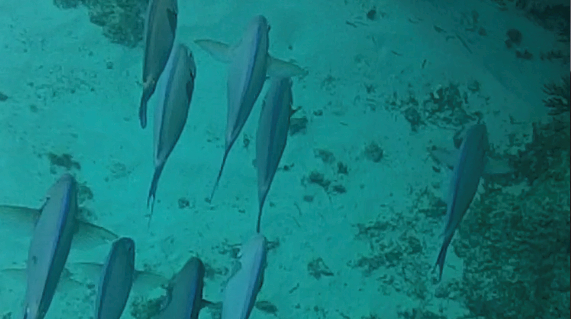
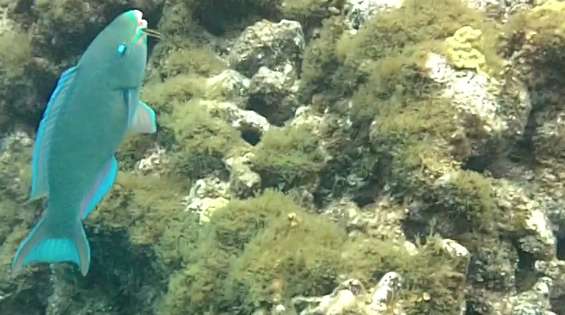
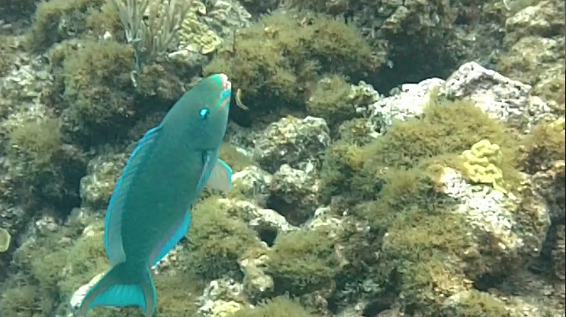
I am completely unprepared for what I find when I get to the reef. David Attenborough’s favourite production team has kindly arranged for a wide variety of bright fish, some electrically charged, to come up close and inspect me, an intruder in their world. I’ll spare you the colour-supp superlatives and graphic intensifiers – you’re probably blasé and have seen it all before – but I am totally gobsmacked, even with my mouthpiece in place. It’s all real! It’s even better than TV! And don’t get me started on the coral…
Sergeant Major
Parrot Fish
Blue Tang / Ocean Surgeonfish
Blue Chromis
Sting Ray
While I gasp and bubble my way around, I keep a small waterproof video camera running (see GADGETS review). My swimming is feeble at the best of times, but somehow it all seems to be coming together – my flailing limbs, the laboured breathing, the reef, the fish and the footage. We circle round the reef – occasional pale figures appear in my lateral vision – for about 25 minutes, then return to the boat and the struggle to remove our flippers… Everyone is excited about what they have seen (some saw barracudas).Who cares that it’s started drizzling… we are wet already and it’s off to Lubbers Cay for lunch; see forthcoming Island-Hopping Post. And see MARINE LIFEpage for more reef fish photos taken on this expedition.
ADDITION April 2012 I notice there have been a few specific searches ‘what is the plural of Sergeant Major?’ Good question. The strict grammatically correct answer is, I suspect (as with the military rank), ‘sergeants major’ because it’s the sergeants who are plural and the ‘major’ is a qualifier to distinguish from other degrees of sergeant (were there sergeants minor, for example). It’s the same with courts martial – not ‘court martials’. BUT it sounds all wrong and pernickety. I reckon the whole fish is a sergeant major. If there are 2 or more, you’ve got some sergeant majors to play with.












 Good to go…








 1:49
1:49
 9:47
9:47 2:17
2:17 2:35
2:35 1:26
1:26 1:40
1:40 0:29
0:29 1:15
1:15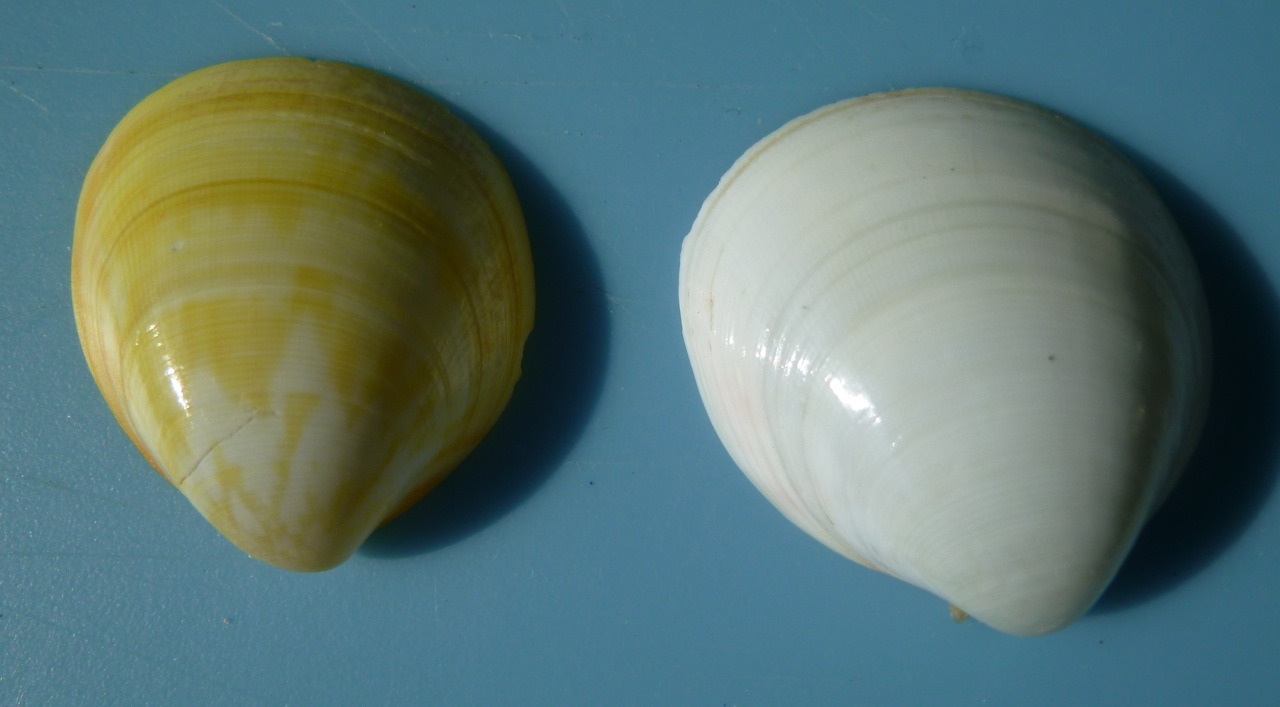





























 ROLLING HARBOUR ABACO

You must be logged in to post a comment.