Unknown's avatar

SEA URCHINS & SEA BISCUITS – BEACHCOMBING TREASURES ON ABACO


Sea Urchin Delphi Abaco 2

SEA URCHINS & SEA BISCUITS – BEACHCOMBING TREASURES ON ABACO 

It’s time we had some more shells and other beach treasures on these pages. In the absence of star Abaco beachcomber and blog-contributor KASIA I have taken a closer look at the Delphi Club collection. This has been casually accumulated by the Club, its members and guests during the past 3 years whenever a good specimen has been encountered, and is displayed in the Great Room. The first items to catch my eye were the ECHINODERMS, a family that includes sea urchins, sand dollars, sea biscuits and star fish. Their sun-bleached tests are often found, though in my limited experience the larger they are, the rarer.  The link above is to the Wiki-blurb, which has the unpromisingly daunting heading  “This article may be too technical for most readers to understand…”. Now there’s a challenge!

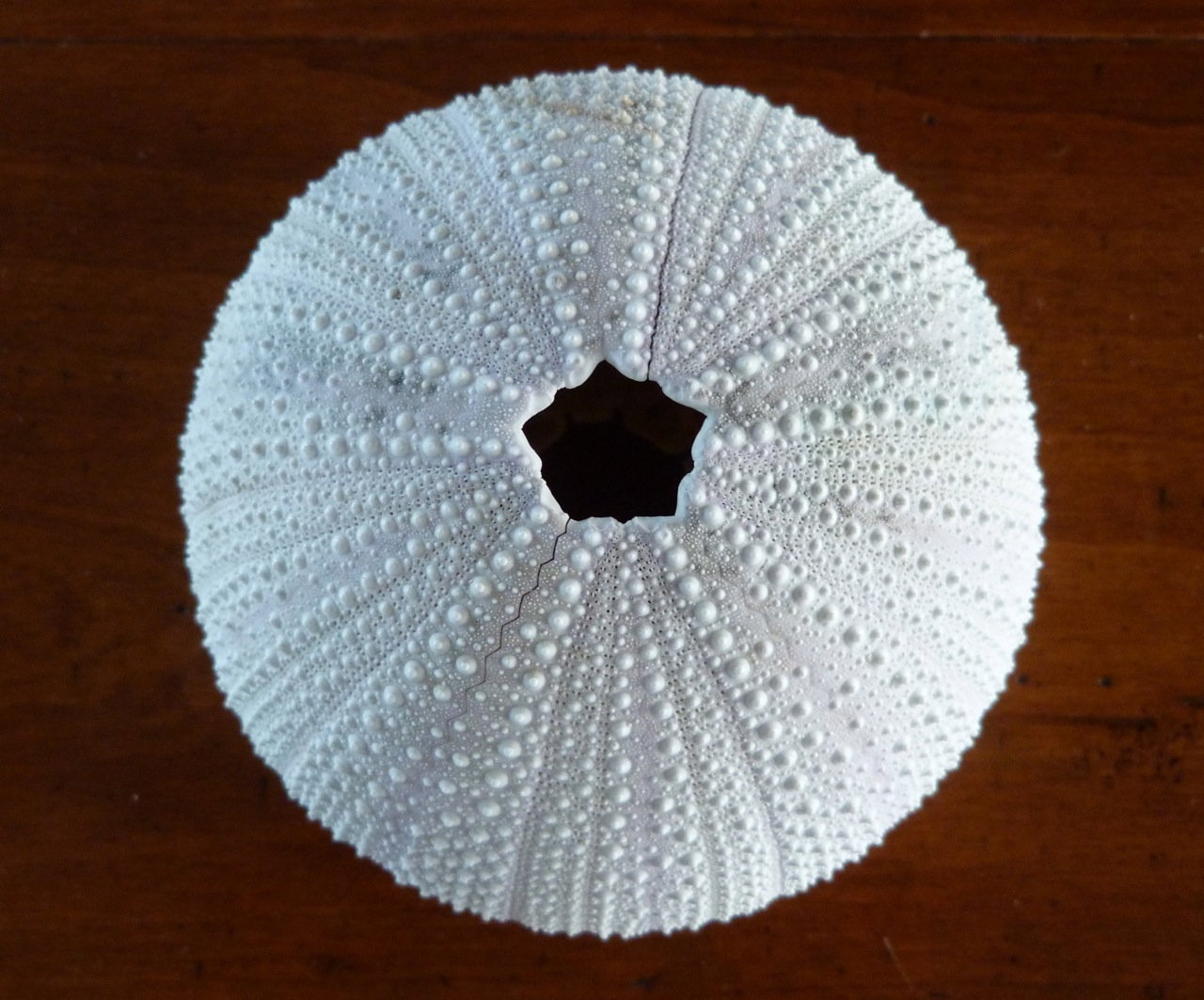
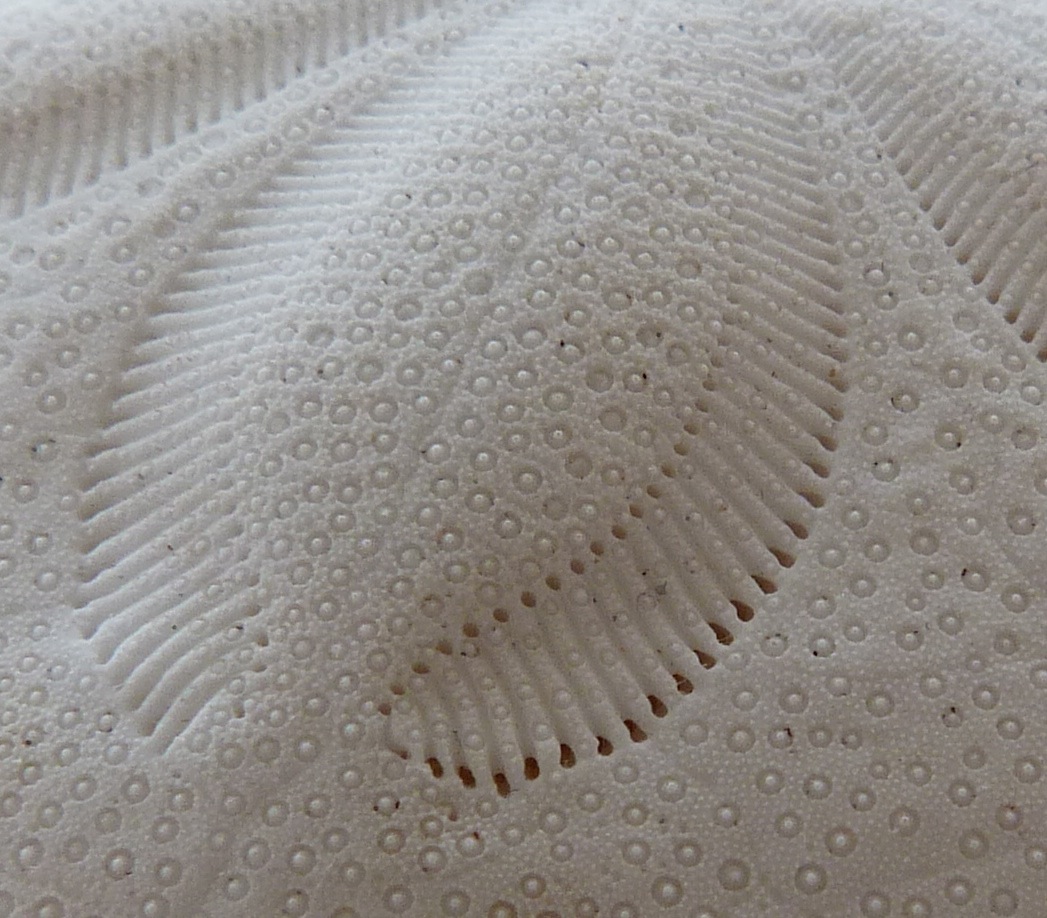
First up is a very large SEA URCHIN, a thing of great delicacy and fragility that weighs next to nothing. I have never seen a bigger one. Looking at the fine detail, it is hard to believe that such perfection of symmetry and intricacy can exist in a creature so very painful to tread on. 

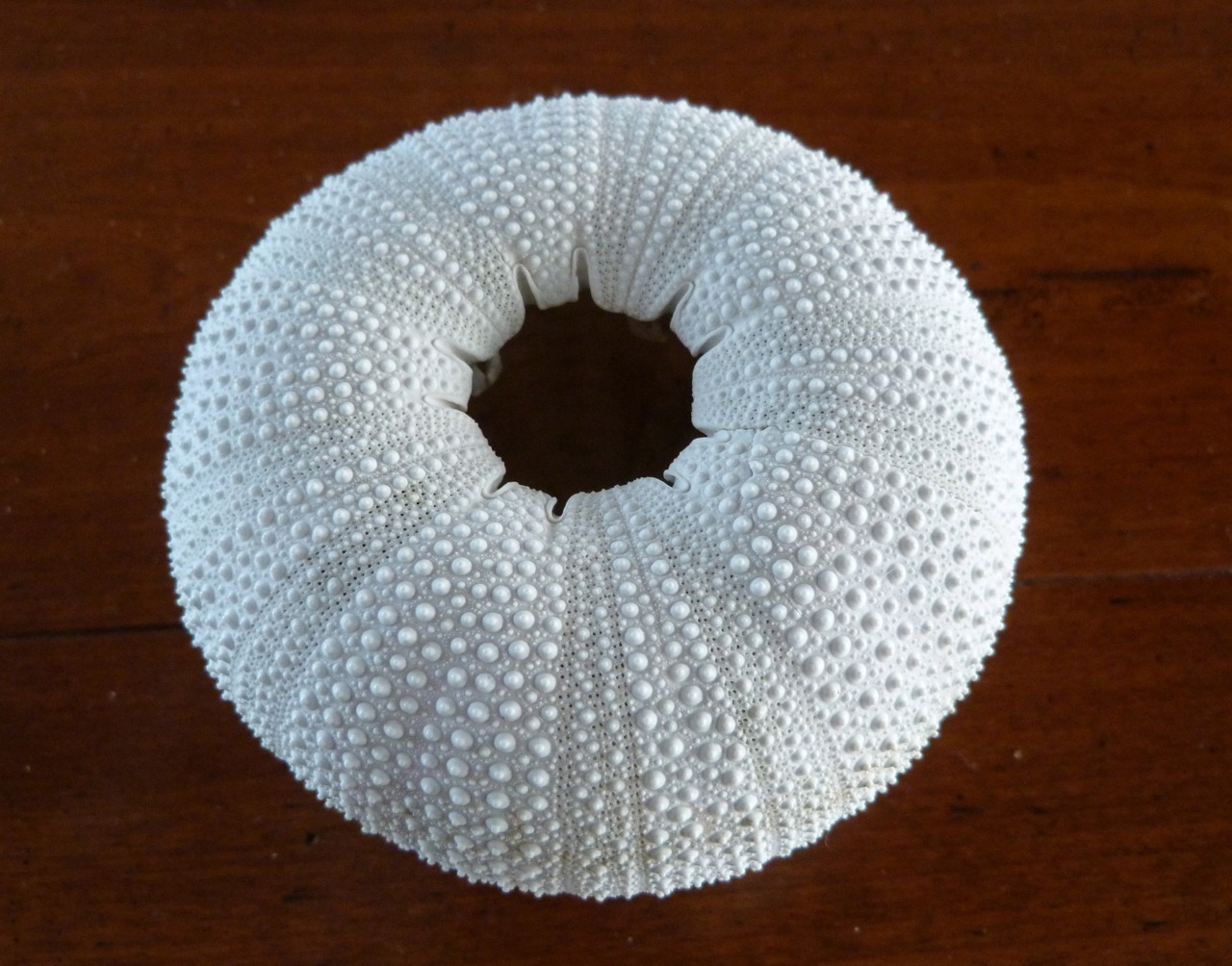
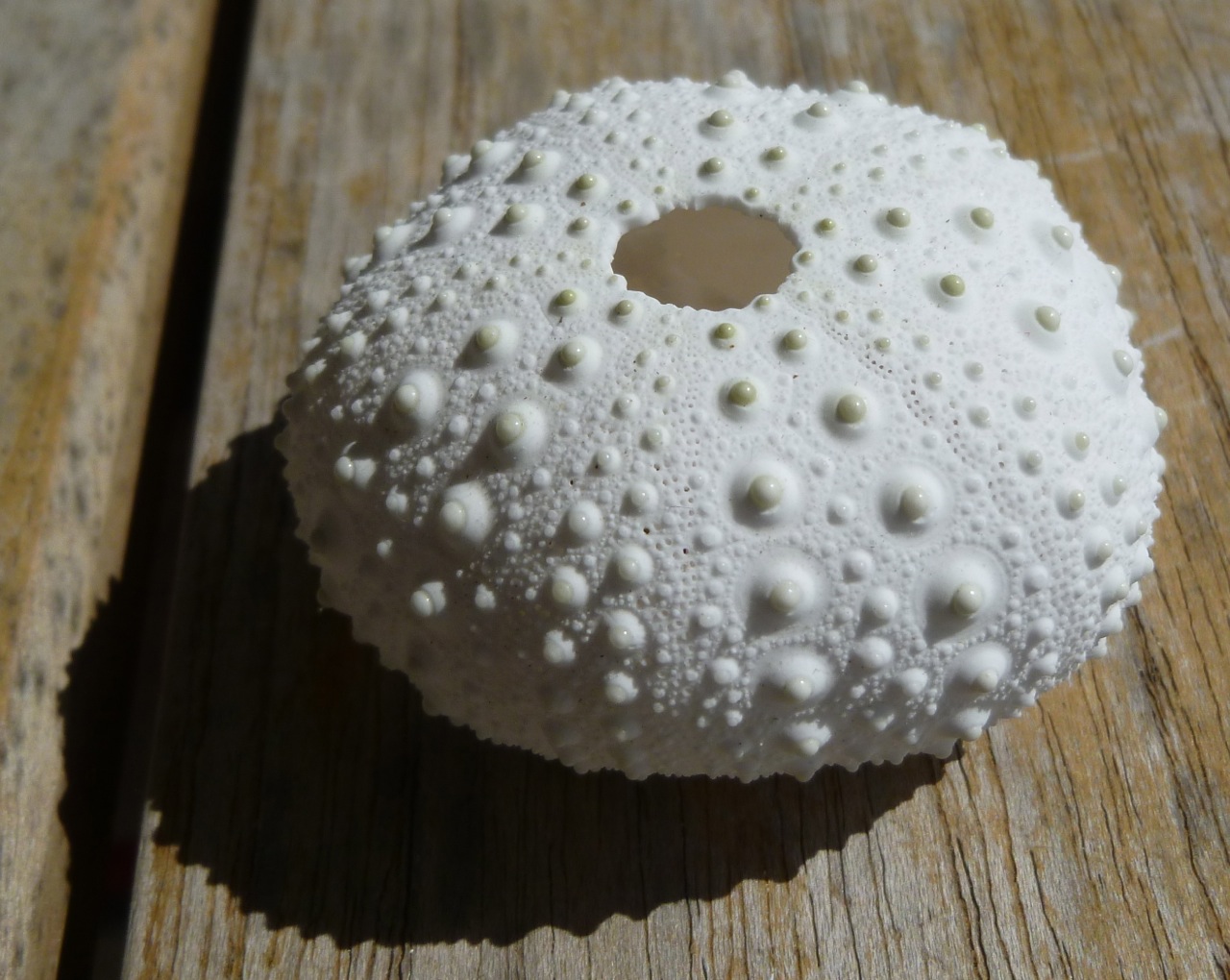
This SEA URCHIN is smaller, with more prominent nodules and a much more random pattern – reminiscent of a cartoon of some distant white planet. It has cast a fine knobbly shadow.

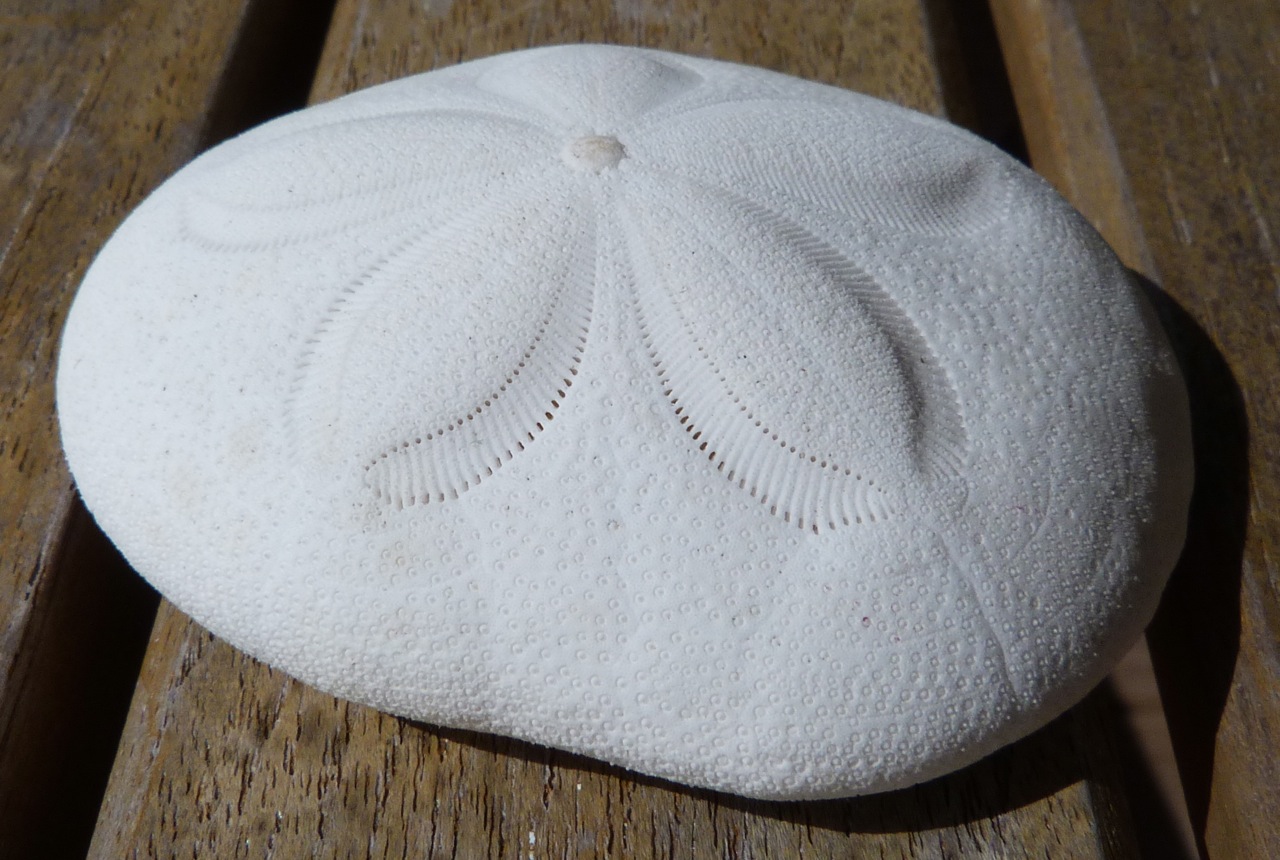
SEA BISCUITS have similar five-way symmetry to their first cousins SAND DOLLARS but are generally pebble-shaped rather than disc-shaped. I have included 2 close-ups to show the fine details of the pattern – almost like lace-work

This SEA BISCUIT is a different type, with the 5 radials reaching right round it. For some reason it only has 4 and not 5 small holes (as one might expect) at the centre. Unlike SAND DOLLARS they tend to be more oblong than round.

Unknown's avatar

BAHAMAS CONCH QUEST – GASTROPODS, SHELLS & CONSERVATION


Conch ©Melinda Riger @G B Scuba

BAHAMAS CONCH QUEST – GASTROPODS, SHELLS & CONSERVATION

Conchs are among the most familiar of all shells. On Abaco they are everywhere: in the sea, on the beach, used ornamentally in gardens, piled up wherever conch is on the menu… (basically, anywhere serving food)

Conchs have other uses besides being a staple food. They provide sought-after pink pearls.  Only about 1 conch in 10,000 has a pearl, so bear in mind that if you miss one during your search, you may have another 10,000 to wade through… Conchs can produce music, of a sort (such as when used enthusiastically by the famous ‘conch-blower’ home-team supporter during cricket Test Matches in the West Indies). They are undeniably decorative on a porch or on a shelf.

Conchs have featured in literature and film. In William Golding’s Lord of the Flies the conch represents power and order. A conch is blown to call meetings of the marooned boys. Its power is symbolised by the rule that you have to be holding it to speak at the meeting (an idea that many – all? – Parliaments could benefit from…)

Ian Fleming mentions conchs in several of the Bond books, all such references being totally eclipsed by the memory of the appearance, in the film Dr No, of Honeychile Rider emerging from the sea, conch in hand. Oh, I see. That’s just men is it? Or (good grief) just me? Anyway, may we all agree amicably that Ursula Andress was a most decorative conch carrier?

CONCH CONSERVATION

The supply of conchs is not infinite. Overfish them, take them before maturity  or pollute their habitat and this valuable marine resource depletes – and conchs, as with so many marine species, will become threatened. Fortunately there is a Bahamas-wide conservation organisation with a website packed with interest. 

COMMUNITY CONCH is “a nonprofit organization that aims to protect queen conchs in the Bahamas, a species of mollusk threatened by aggressive over-fishing. We promote sustainable harvest of queen conch through research, education and community-based conservation”

community conch logo

“Helping to sustain a way of life in the Bahamas”

Much of the research has been carried out in Berry Is, Andros and Exuma Cays. However the team has recently been based at Sandy point, Abaco. To see some of their work on Abaco CLICK LINK===>> ABACO EXPEDITION   

In many past posts I have listed ’10 Essential Facts’ about the topic discussed. In that spirit I have borrowed and slightly edited CC’s conch facts; and added a CC video of a conch’s stately ‘full speed ahead’ progress. NB No zoom… 

12 CONCH FACTS

  • The queen conch is a large edible sea snail native to the coasts of the Caribbean, the Florida Keys, the Bahamas, and Bermuda. Conchs are herbivores – they eat algae and other tiny marine plants
  • Main predators include nurse sharks, loggerhead turtles, other snail species, blue crabs, eagle rays, spiny lobsters, and other crustaceans
  • Mating aggregations may contain hundreds or even thousands of individual male and female conchs
  • Female conchs lay hundreds of thousands of tiny eggs in a sandy egg mass. The larvae emerge after 5 days and may drift on ocean currents for a month before settling in suitable habitat on the sea floor
  • In their first year conchs live under the sand during the day & come out to feed on the surface at night
  • A queen conch may take 5 years to reach maturity and can reproduce
  • They live an average of 7 years, but are known to live as long as 20 – 30 years
  • Conchs produce natural pearls that come in a range of hues, including white, brown, orange & pink
  • The conch is listed by CITES as a species which may become threatened with extinction if trade is not tightly controlled
  • It is now illegal to take queen conchs in the state of Florida due to severe overfishing
  • 80% of legal internationally traded conch is consumed in the United States. The smuggling of conch meat into the U.S. is a significant challenge to conch management in The Bahamas
  • Queen conch are vulnerable to overfishing because they are (1) relatively slow to grow (2) late to mature (3) aggregate to mate (4) easily harvested in shallow waters

A SPEEDY CONCH

(Conch photos taken by RH / Mrs RH at Sandy Point, Abaco)
Unknown's avatar

HERMIT CRABS: SHELL-DWELLERS & CONTESTANTS FOR WACKY RACES


HERMIT CRABS: SHELL-DWELLERS & CONTESTANTS FOR WACKY RACES

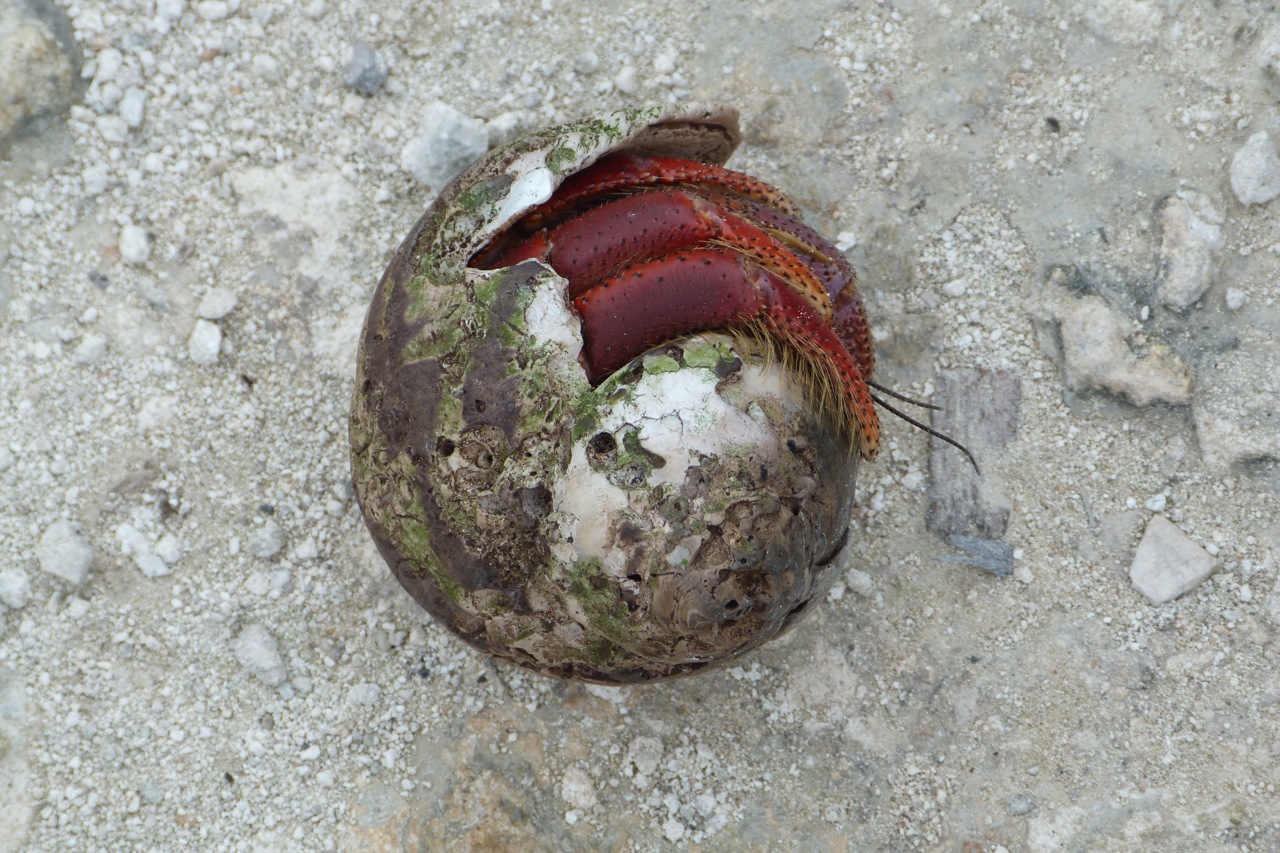
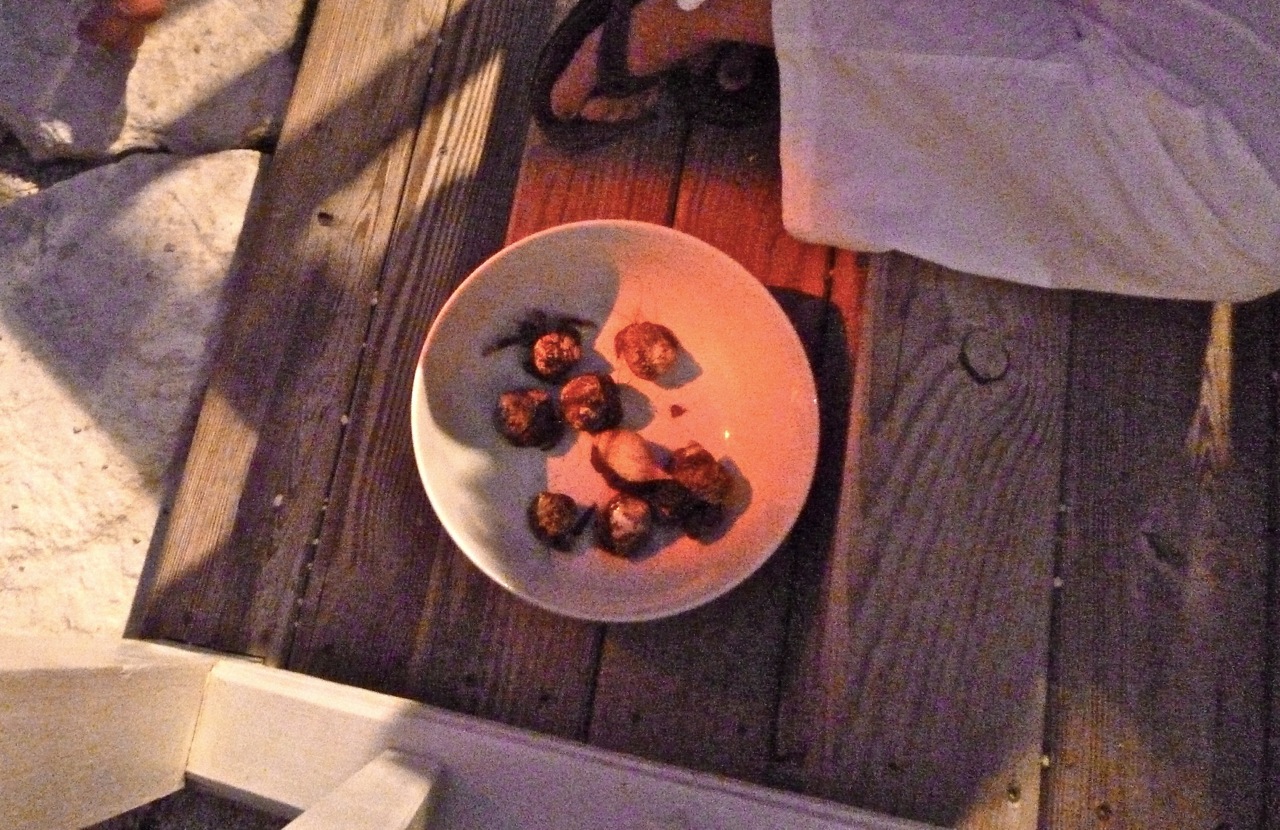
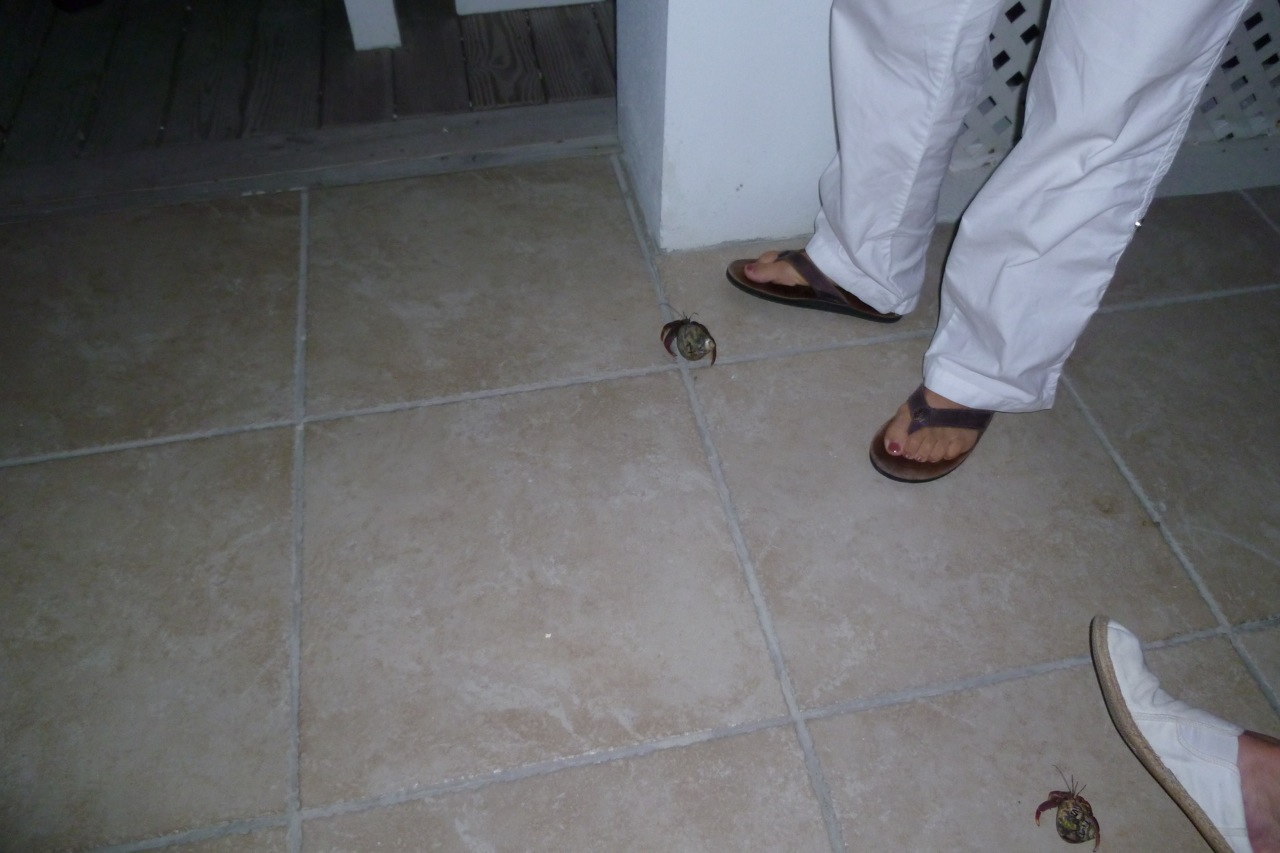
Hermit Crabs are all around – occasionally (sadly and unavoidably) underfoot. They borrow an empty shell, and as they grow they trade up to a bigger one, leaving their previous home for a smaller crab to move into. It’s a benign chain of recycling that the original gastropod occupant would no doubt approve of… The crabs are able to adapt their flexible bodies to their chosen shell. In the 1st 2 images the crab has chosen a somewhat weathered shell, into which he fits snugly

This small crab has gone for something more modern – possibly quite an awkward shape to lug about…

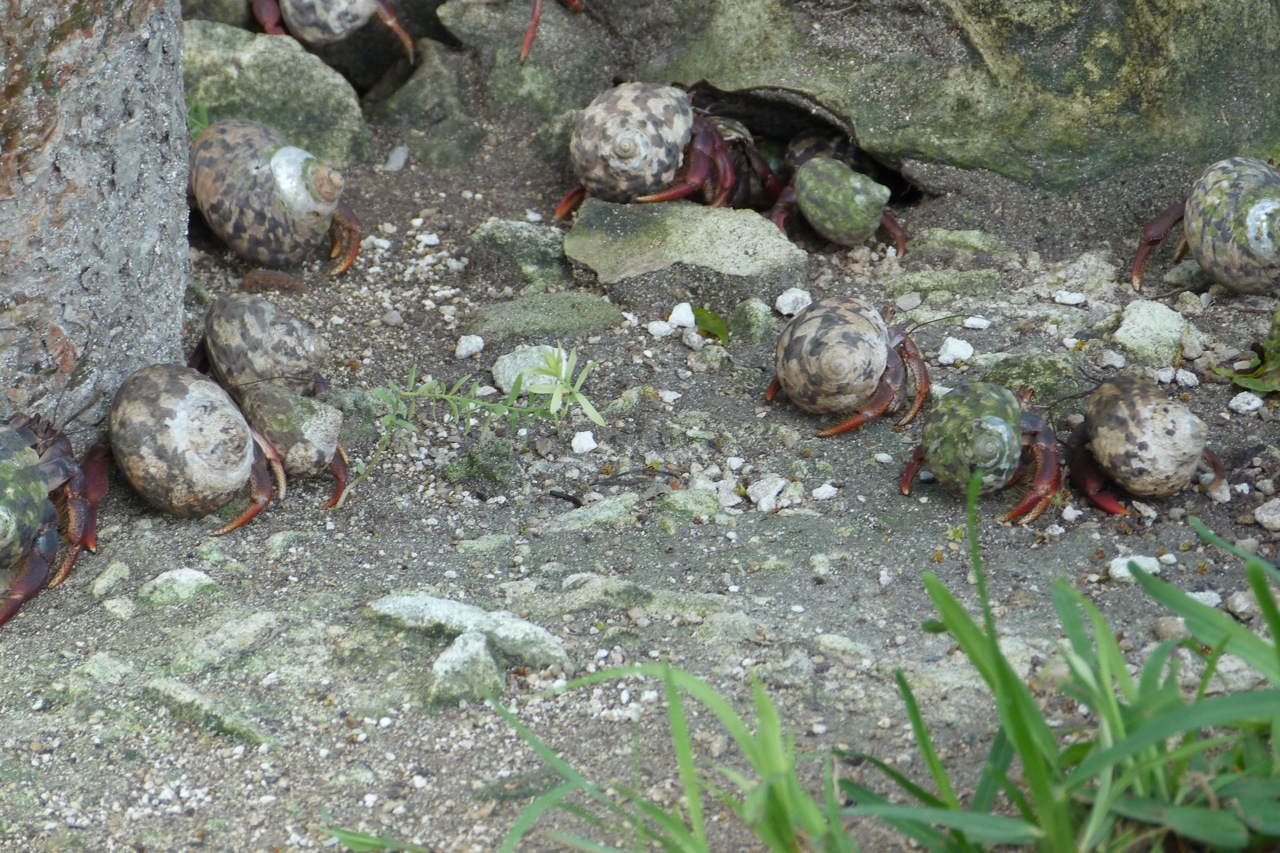
These crabs have found the Delphi Club bird feeders and taken up residence close by. They forage in the grass, many wearing West Indian top shells. One seems to want to climb the tree to get at the feeder…

They are sensitive to sound: approaching footfalls send them scurrying for shelter into the undergrowth or to holes in the limestone rock. They don’t all manage to fit into a hole so the ‘outsiders’ try to look inconspicuous by withdrawing into their shells, though from a predator’s point of view there are usually a couple of telltale legs sticking out…

Quick, everyone – hide! A human just trod on Derek…An entertaining after-dinner game (and I blame Caroline Stahala for starting this one) is hermit crab racing. Please note that no crabs are harmed in the course of these sporting proceedings, though some crabs may feel a little humiliated. The races can be played for money, of course, but the complete unpredictability and lack of any information about a crab’s previous racing form make that unwise. Far better to have a few drinks first. Then some more afterwards. 

HERMIT CRAB RACING: THE OFFICIAL RULES

  • Dinner is to be completed and drink taken by all participants before racing can commence
  • Each contestant chooses a crab from the group under the bird feeders
  • All chosen crabs are placed in a dish

  • Caroline (or whomsoever shall be designated) paints the shells with each contestant’s name

  • The crabs are lined up by hand on the verandah as straight as they will permit (so, not very)
  • The starter will say “Ready, Steady, GO”, and the crabs are released over a 3 meter course
  • The winner shall be the first crab over the finishing line. In the event of a dead-heat, the crab requiring the least foot-impetus and direction correction is declared winner
  • The crabs shall be returned to the collection site (those that can still be found) and all humans shall return to the Clubhouse for celebrations…

DELPHI HCR RACE REPORT 2012

This crab (the largest) was chosen by Sandy Walker, and regrettably was the only one that started by going backwards. It was never in serious contention

Caroline becomes very overexcited by her crab’s progress

Others resort to unorthodox methods like ‘foot-persuasion’ to keep their crab on course. RH didn’t realise this was allowed at all, and watched his crab dive pathetically off the edge of the verandah into the flowerbed – an irrecoverable drop of 6 inches

Most of the crabs went forwards as intended, though with a certain amount of lateral movement. 2 or 3 seemed to have got the general idea of the race and proceeded more or less according to plan

The impressive winner, by nearly half a minute, was the crab named ‘Emma’. A well-deserved victory, especially as the owner / trainer’s foot-directing was minimal (bare feet!)…

The one thing I would like to know about these little creatures is how they – and their shells – are to be found in large numbers 50 foot above sea-level at the top of a cliff…

Unknown's avatar

BEACHCOMBING WITH KASIA: EXPLORING A ROCKY SHORE


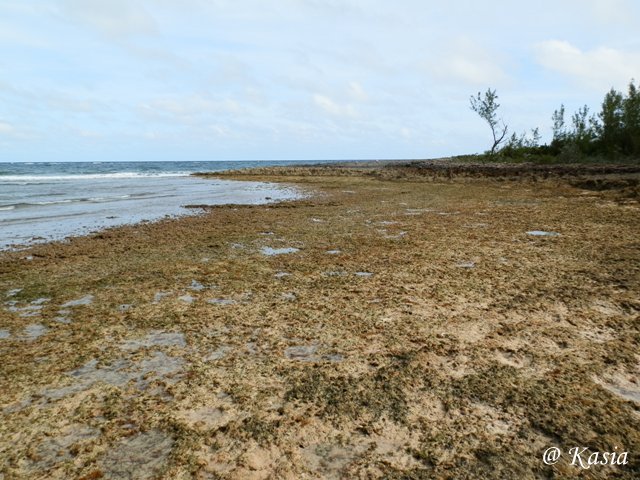
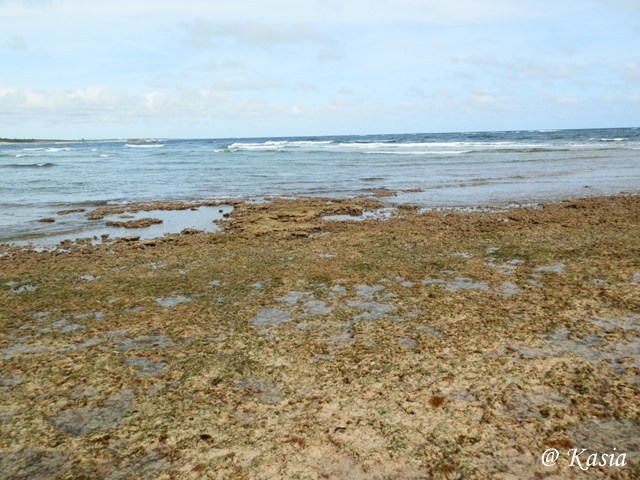
Kasia’s back! She recently explored a rather unpromising-looking stretch of Abaco coastline, and it proved to be anything but… Kasia writes: The story goes: one day I took myself for a walk and a bit of beachcombing. I usually don’t bring my camera with me but luckily this time I did. This particular beach looks very barren but on close inspection and a patient eye there are some lovely treasures to be found. Here are some of the treasures I captured!

A tangle of 3 bleached trees, with their roots apparently intertwined

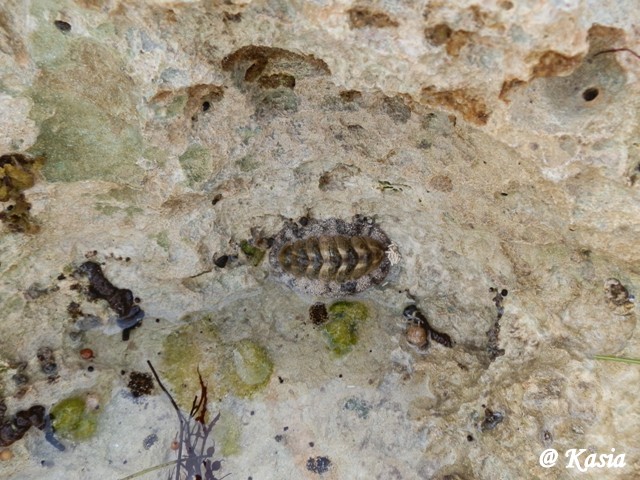
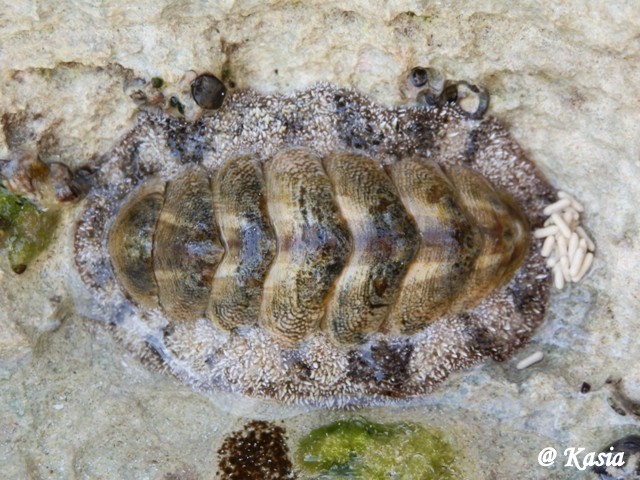
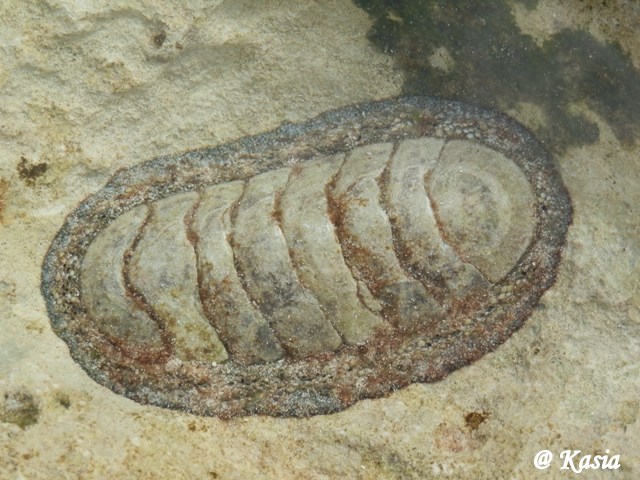
CHITONS

Great close-ups… are those eggs behind this first one? There’s a similar image in the Macmillan ‘Marine Life of the Caribbean’ but unfortunately neither the caption nor the text refers to them. ADDENDUM: Colin Redfern writes: The “eggs” behind the chiton are fecal pellets

NERITES (Nerita)


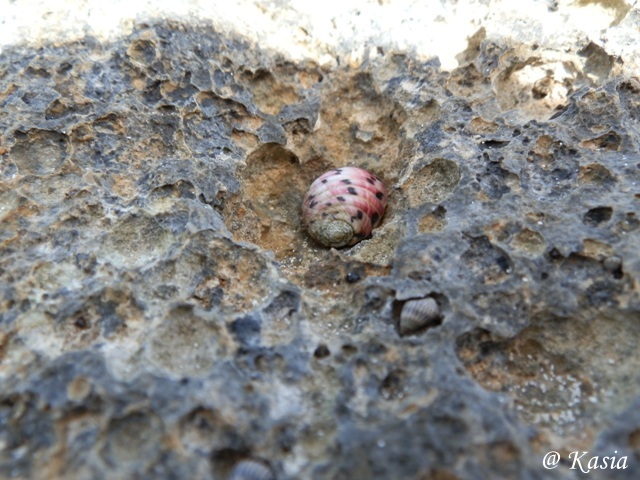
WEST INDIAN TOP-SHELLS (Cittarium Pica) 

In this image, several very small chitons can also be seen on the rock

It looks as if someone… or something… has been having a Nerite feast on the shore. A bird maybe?  I had taken the shells above and below to be another variety of Nerite, but as so often scientist and shell expert Colin Redfern has kindly corrected the error. He writes: “Very nice photos. The “nerite feast” is actually a pile of broken West Indian Top-shells (Cittarium pica). The photo immediately above shows a live group of the same species. This is what Bahamians call a whelk (or wilk), and in the lower photo they have been harvested, probably for a stew.

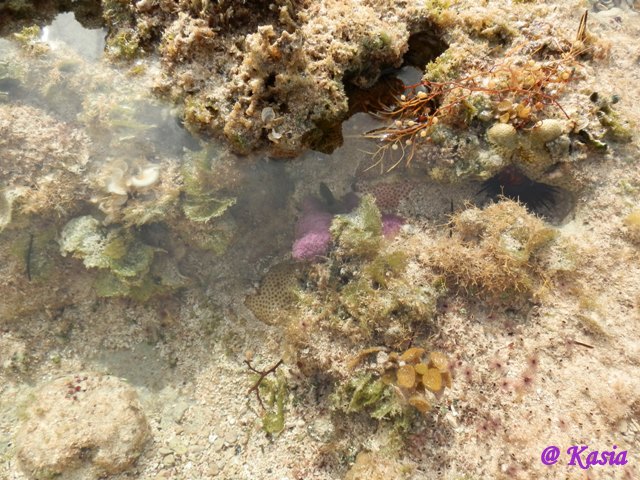
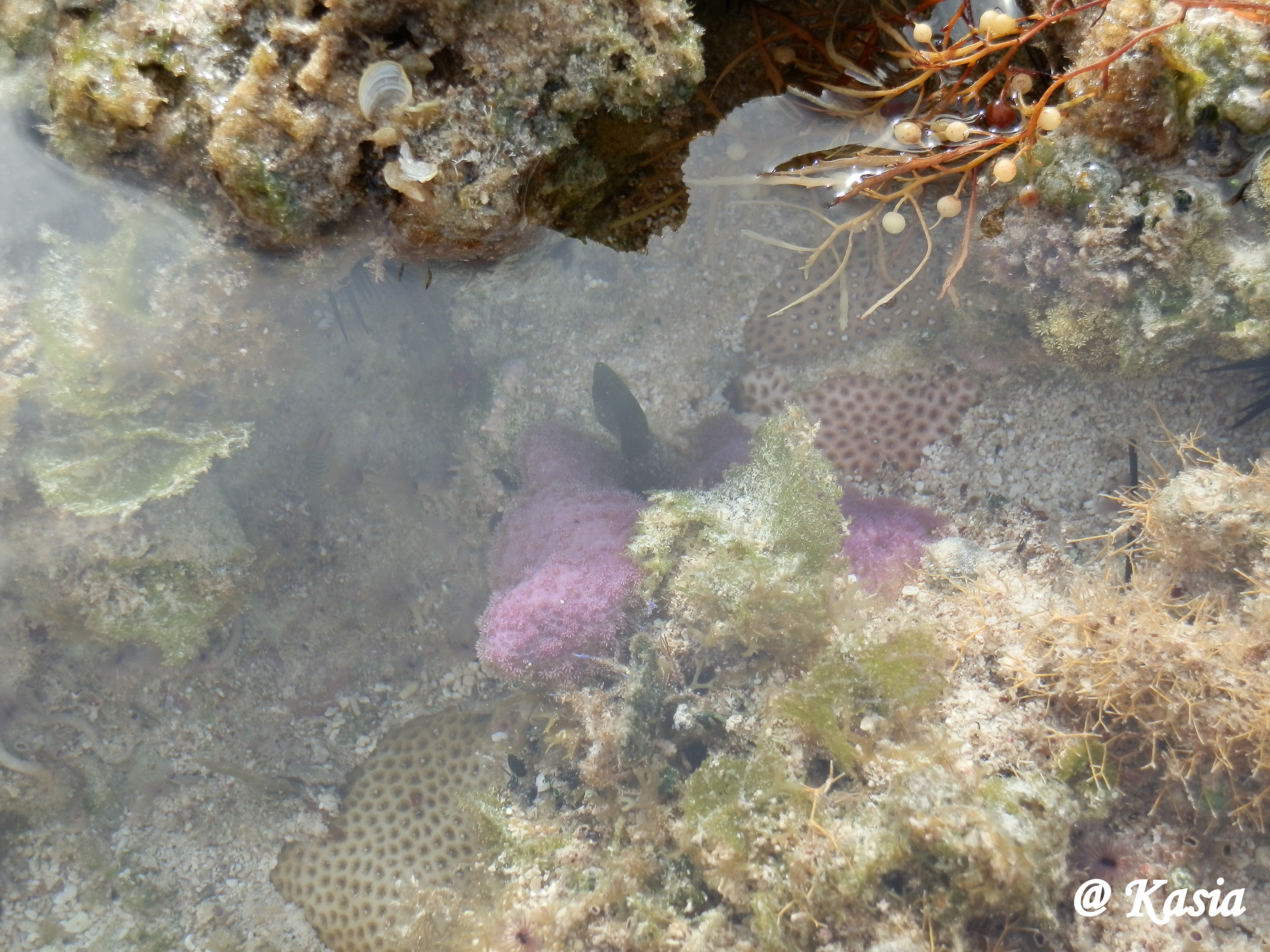
 ROCK POOL MISCELLANY

I am trying to ID a much as I can in this pool. All suggestions welcome via ‘Leave a Comment’. So far, the corals are Brain Coral and Pink Coral (I think) but I am going see what else can be given a name…

These are my favourite! 🙂 Kasia

COMET SEA STAR (possibly juvenile, with 3 such short stubs?)

A SPONGE (?) OF SOME SORT (any help with ID appreciated…)

                RED ROCK URCHINS

Unknown's avatar

SHELLS OF THE ATLANTIC COASTS & WEST INDIES: PETERSON FIELD GUIDE


SHELLS OF THE ATLANTIC COASTS & WEST INDIES 

PETERSON FIELD GUIDE    Abbott / Morris   350pp

An excellent and comprehensive field guide which covers the area as thoroughly as one could wish. It’s not exactly a pocket book, and at 350 pages it’s quite a chubby paperback – but the sort of size you’d happily throw into a day-bag or backpack. This authoritative shell guide dates from 1947, with frequent reprints. Mine is a fourth edition (1995) – there may be a 2002 one.

Currently £18 from Amazon UK,  or new / used for around £7 (a bargain); and a great deal cheaper on Amazon US. Overall 4* reviews

Rolling Harbour rating *****

THE BOOK IN A CONCH SHELL

  • Numerous clear illustrative line drawings throughout (115, in fact)
  • 74 colour plates grouped together at the heart of the book, showing living creatures and a huge variety of shells – 780 in all
  • Introductory articles on collecting, preparing, arranging and naming shells; also classifications and measurements
  • The text comprises 800 brief but helpful family / species descriptions, with notes on habitat and other remarks
  • Bi-valves cover 120 pages; Gastropods a stonking 150 pages
  • The substantial illustrated core of the book has shell groups on the right-hand page, with ID and text references on the left. The system works very well, especially with the many shell types that are very similar
  • At the back there’s a useful ‘Conchological Glossary’ to help sort out the crenulates from the reticulates
  • A huge 30-page index that is both thorough and user-friendly
I personally found the illustration section very helpful as a first stop; then a trip to the text to confirm the description. I had no idea what a shell we recently found in a drawer might be, but it didn’t take long to nail the ID as a STOCKY CERITH a shell I’d never even heard of. First I found a very clear illustration of it, then turned to the text description which matched what I had in my hand. Overall, as a complete amateur, I found this book the best practical guide I have yet tried for shell identification – and I suspect more sophisticated shell-seekers will get a great deal out of it too.
Unknown's avatar

STOCKY CERITH – A RANDOM ABACO SHELL FROM THE BACK OF A DRAWER


A RANDOM ABACO SHELL FROM THE BACK OF A DRAWER 

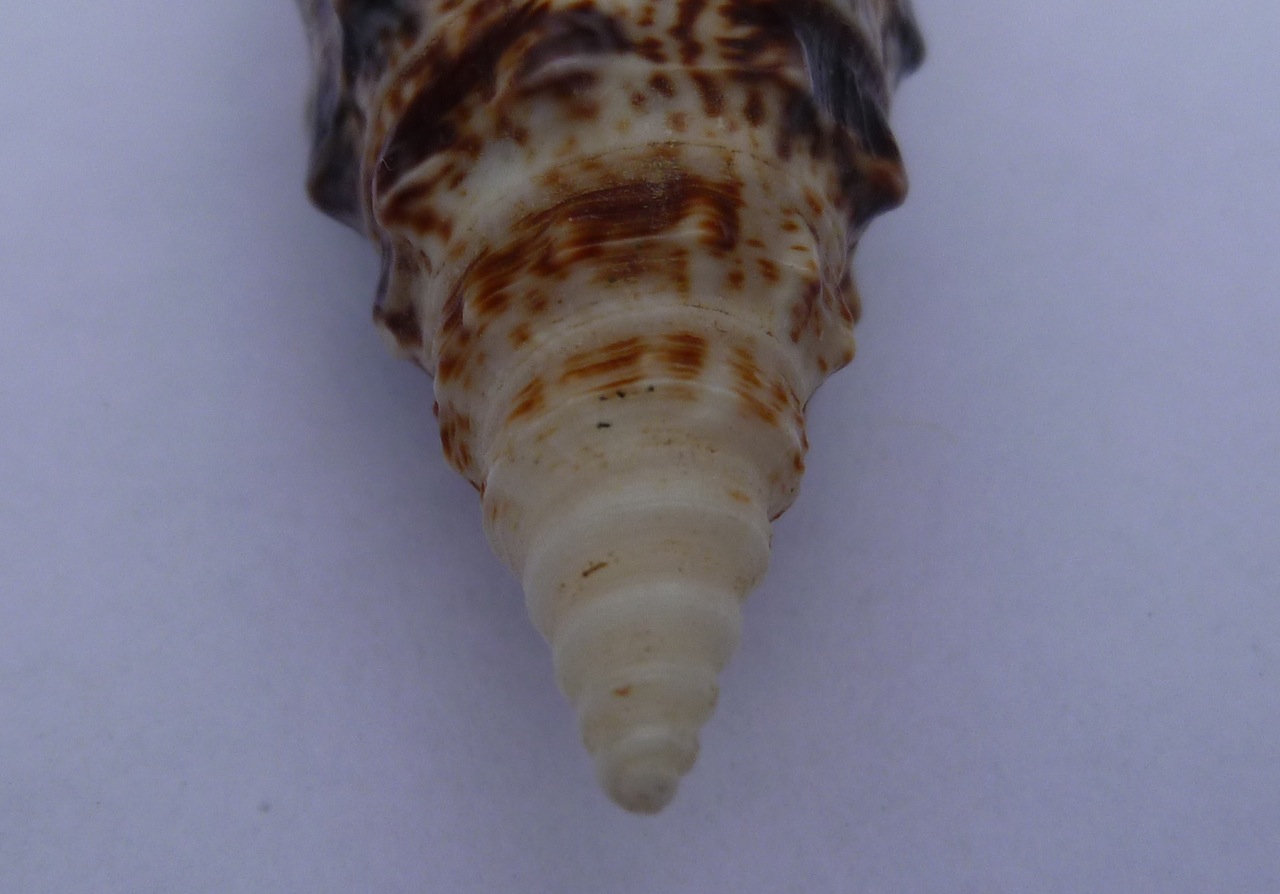
We recently discovered this shell loitering at the back of a drawer. It may well have been there for a couple of years… I had no idea what species of gastropod it might be, so I turned to a book I recently bought (and am about to review), the Peterson Field Guide on Shells. It is extremely thorough and well-illustrated, and almost at once I was able to pick the shell out as a STOCKY CERITH Cerithium Litteratum (Colin – are you still keeping an eye on the shell ID errors in this blog, I wonder? Later: yes… and he confirms the ID. Many thanks). It’s a couple of inches long and has 7 spirals before the tip part, with pronounced nobbles on the lowest 4. There’s a neat hole in it, but I don’t know whether caused by sea / beach damage or a predator. These creatures live in shallow water and are common throughout the Caribbean. So this one is nothing unusual, but I am pleased that it has eventually turned up…

STOCKY CERITH Cerithium Litteratum

Unknown's avatar

‘CONCH CENTRAL’ AT SANDY POINT, ABACO, BAHAMAS


‘CONCH CENTRAL’ AT SANDY POINT, ABACO

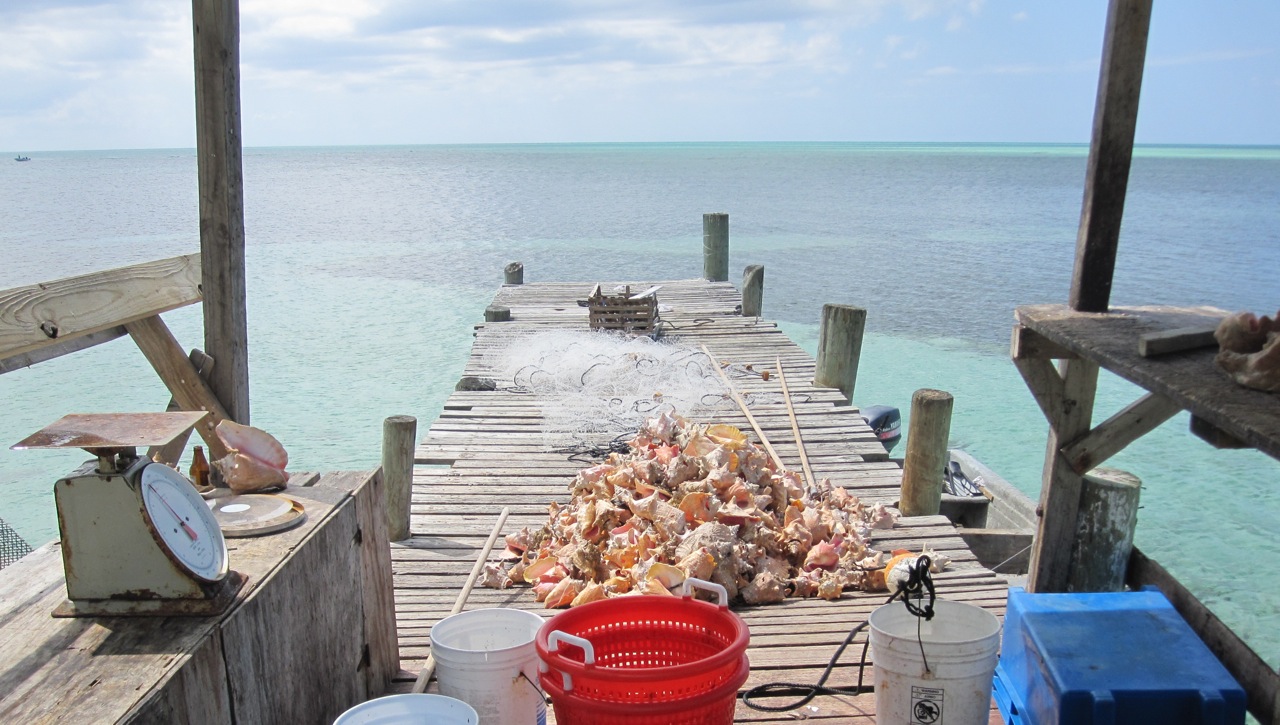
The serious conch action in Sandy Point is to be found at the jetty. I learned a simple beginner’s lesson on our first visit to Abaco. If you choose a large gorgeous-hued conch from the huge pile in the 4th photo to take back home, it will quickly start to smell dodgy, followed by evil… until you clean it properly!

Unknown's avatar

BOOKCOMBING: AN OCCASIONAL THEMED SERIES (1) OCEAN DEBRIS


BOOKCOMBING

A MISCELLANY OF BOOKS MORE OR LESS RELEVANT TO ABACO LIFE

These are not books I have read myself. They are books that may be of interest to readers of this sort of blog. Islandy. Beachy. Mariney. A whiff of wildlife. They will be collected together under the BOOKS ETC menu as the series expands. If one of them catches your eye, then check online for reviews, reader ratings and prices. If I get round to one or more of them I will add my own views, but I am still gradually working through wildlife books that I have already paid for…

1. FLOTSAM, JETSAM & OCEAN DEBRIS

Flotsametrics and and the Floating World: How One Man’s Obsession With Runaway Sneakers and Rubber Ducks Revolutionized Ocean Science

by Curtis Ebbesmeyer & Eric Scigliano

“Curtis Ebbesmeyer has made important discoveries about everything from currents to the huge floating garbage patches in the ocean to how life was first spread on earth and how the Vikings settled Iceland. In the tradition of John McPhee’s bestselling books on scientists who both study and try to protect the natural world, The Floating World offers a fascinating look at the creativity and energy of a most unusual man—as well as offering an amazing look at what currents have meant for the world and especially mankind through the centuries.  Hardcover; PP: 288; Illustration: 10-15 images throughout” Smithsonian Store

Washed Up: The Curious Journeys of Flotsam and Jetsam

by Skye Moody

“The ocean gives up many prizes, just setting them on our beaches for us to find. From rubber ducks that started out somewhere in Indonesia to land Venice Beach, to an intact refrigerator makes it way to the Jersey Shore. Chunks of beeswax found on the Oregon coast are the packing remnants of 18th century Spanish gold. Author Skye Moody walks the coast, dons her wet suit, and heads out to sea to understand the excellent debris that accrues along the tideline. There she finds advanced military technology applied to locating buried Rolexes, hardcore competitive beachcombing conventions, and isolated beach communities whose residents are like flotsam congregated at the slightest obstacle on the coastline. This book confirms that the world is a mysterious place and that treasure is out there to be found” (Publisher’s Fluff)

Tracking Trash: Flotsam, Jetsam and the Science of Ocean Motion

by Lorree Griffen Burns

“Tracking Trash is the story of Dr. Curtis Ebbesmeyer, an oceanographer who studies the movement of ocean currents. Dr. Ebbesmeyer’s work has attracted attention because he has received much of his information from studying trash. It all began when his mother heard about sneakers that were washing up on a beach after a cargo ship lost one of its containers. Since then, he has tracked sneakers, Lego’s, and even rubber duckies that have been accidentally spilled at sea and made their way to shore. By understanding how ocean currents move, scientists hope to solve many problems such as fish shortages and animals being caught in fishing nets. This book was very enjoyable to read and easy to understand. The pictures were large and engaging. The author did a great job at making it feel like a story while at the same time giving a lot of scientific information” (Satisfied Amazon Punter)

Moby-Duck: The True Story of 28,800 Bath Toys Lost at Sea and of the Beachcombers, Oceanographers, Environmentalists, and Fools who wen in search of them…

Donovan Hohn

I have just spotted that this book is about to be reprinted and, I imagine, updated at the end of February, so I am adding it to the collection. I note in passing that it is published by Penguin…

One 5* review on Amazon UK sets the scene: “This is a book that follows the journey of plastic ducks, turtles, frogs and beavers after the container they are in falls overboard and breaks open on impact with the sea. Moby Duck is fact that reads as good as fiction. The Author doesn’t only traverse the world of escapee plastic toys but meanders his way through a factory in China that makes bath toys, gets on a ship that is on research mission even though he has a fear of open water and even ends in Alaska where the first plastic duck was found. This is a great read, for anyone who likes a quirky book that tells a true story with wit, charm and gentle humour. Moby Dick is never far away in this book, only he has been transformed into Moby Duck…”

Amazon.com has 42 reviews, averaging a disappoining 3.5*. Some are ecstatic, some lukewarm, few can resist the golden opportunity proffered by the author to be “puntastic”. I like the one titled “An Eclectic Tale, but Caught in Its Own Eddy in the End”. Maybe that is the most astute summary of all.
Unknown's avatar

KING VENUS CLAMS & CRAB SHELLS (NO SPACE DEBRIS): ABACO BEACHCOMBING WITH KASIA


ANOTHER STROLL ALONG THE SHORE WITH KASIA

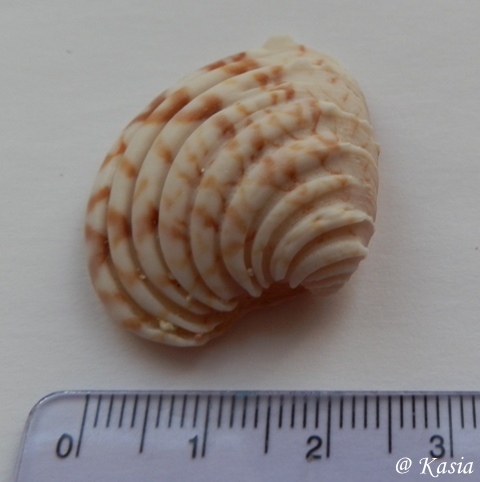
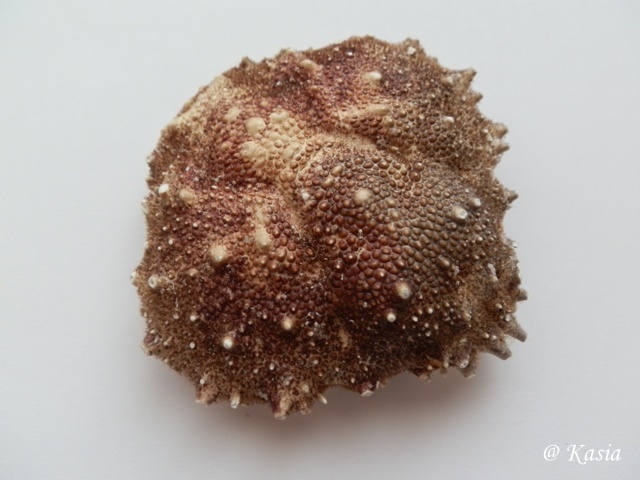
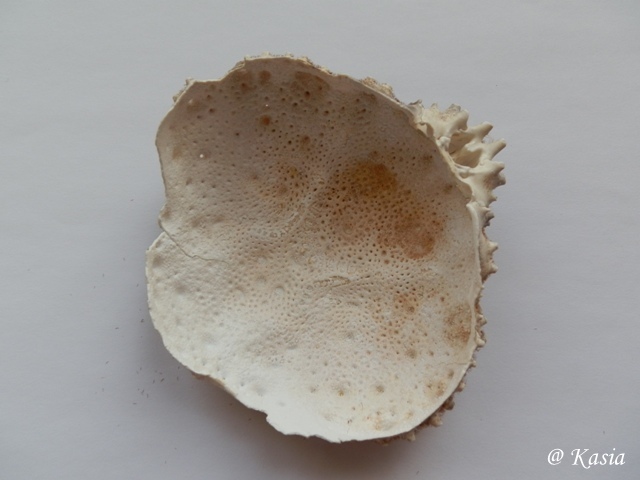
After all the recent excitement – well I was excited, anyway – involving Mars Mission space rocket debris washed up on the Delphi Club Beach CLICK MARS ROVER it’s a gentle touchdown back onto a sandy beach for some more of Kasia’s finds. First, a shell which I believe (tempting fate) I have correctly ID’d for once. Then a half crab shell, at a guess a spider crab’s roof. 

KING VENUS CLAM Verenidae – Chione Paphia

These bivalve molluscs seem to be inoffensive, and to lead rather dull lives: so far all I have discovered is that “they live buried in sand at depths of 1 – 20 fathoms” I shall investigate further & report back – there must be some small creature they molest or upset in some way…

CRAB SHELL, FORMER HOME TO A SPIDER CRAB
Unknown's avatar

ABACO BEACHCOMBING: KASIA IS BACK… WITH ANOTHER MYSTERY OBJECT


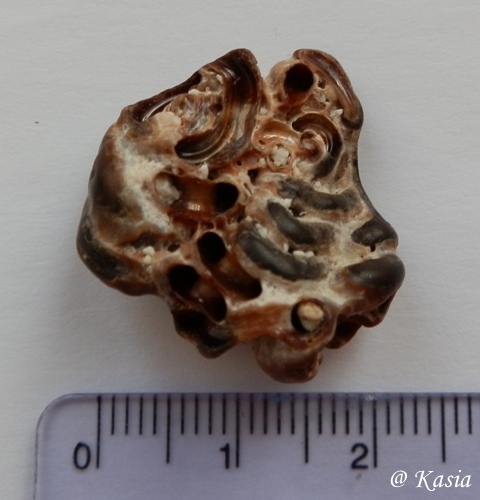
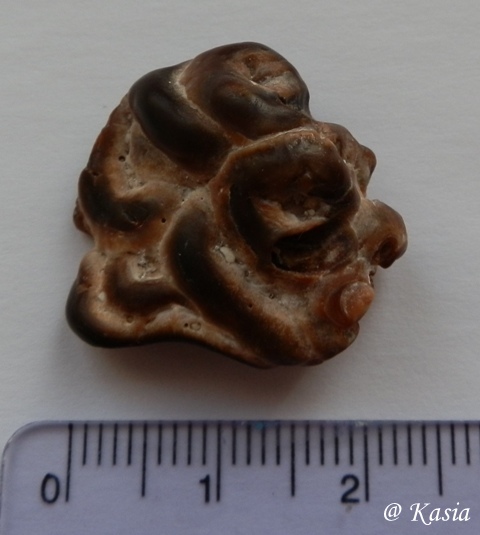
Kasia has returned to grace the blog with treasures from her Abaco beach-combing from the Delphi Club and further afield. Expect more shells, more sea glass… and more mystery objects. We have already had part of a RAY’S PALATE and a PACIFIC ANGARIA SHELL  that had somehow arrived on the shores of Abaco. There’s a long thin WHITE BONE, as yet unidentified (no suggestions yet). And now this extraordinary item… 

To which my answer is “not the faintest idea”. My guesses are (1) a fossilised vertebra of some medium-sized creature (2) a fossilised ‘soft’ rock that worms have been at (but why only on one side?) (3) a bread roll that went disastrously wrong in the baking…

All suggestions welcome, preferably via the COMMENT box (so others can view them); or to rollingharbour.delphiATgmail.com (spam guard: convert AT to @)

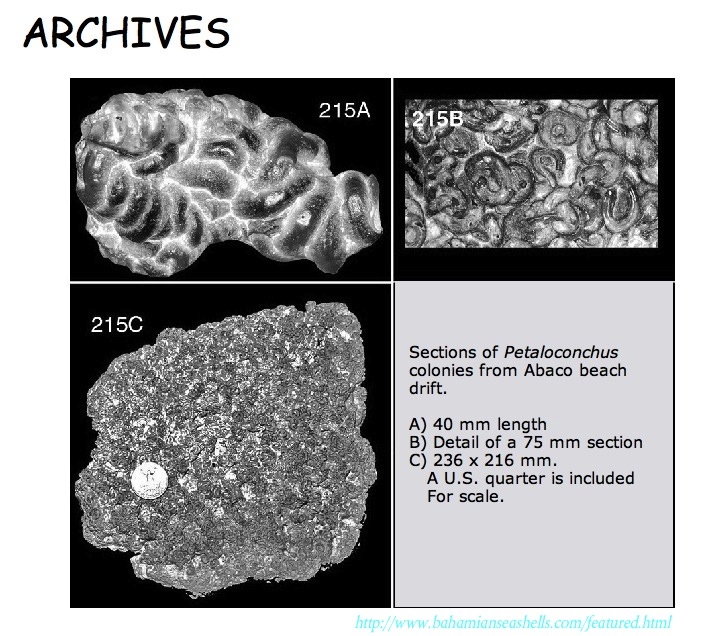
STOP PRESS Mystery quickly solved, thanks to Colin Redfern who says “This is part of the remains of a colony of Petaloconchus worm-shells (molluscs). They attach to rock or coral, and the colonies can be quite large.”  Colin’s website includes some examples from his archive, one chunk being very similar to Kasia’s 

And here’s another chunk, top and bottom view Photos courtesy of James St. John (Geology, Ohio State University at Newark)
…and here is the worm that makes the vermi-accretion or whatever the term is
Unknown's avatar

KASIA’S MYSTERY ABACO SHELL: A PUZZLE FOR XMAS


KASIA’S MYSTERY ABACO SHELL: A PUZZLE FOR XMAS

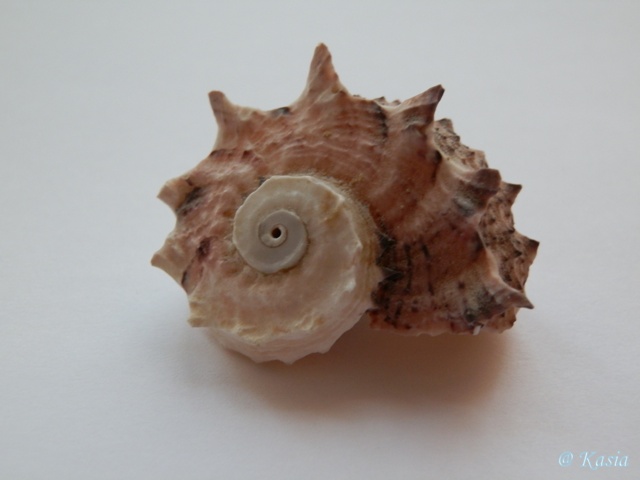
Kasia’s beachcombing exploits have produced some lovely seashells that have already featured here. Precise identification has sometimes been difficult for an amateur, because of the many varieties of a particular type of shell or close resemblance to other shell families. This one has got me stumped. I have trawled the  internet. I have studied field guides. I’m still baffled. It hasn’t quite matched any other shell…

XMAS PRIZE the first person to ID this shell correctly will enjoy a bottle of ice-cold Kalik being drunk on the Delphi balcony swing in February 2012. By me. Suggestions to rollingharbour.delphi@gmail.com welcome

STOP PRESS: NOW SOLVED – SEE UNDER IMAGES

Helpful thoughts: I’ve considered a  form of King’s Crown (but I’ve not found a close enough match) or a Ram’s Horn Snail (but they don’t seem to have spines)

First entry by Kasia (potentially disqualified as the shell’s owner): Angaria, a form of Turban shell. However these seem to be confined to Pacific areas…

The Solution:  And the winner (within 24 hours) is… Kasia!

I sent the link to the post to Bahamian seashell expert Colin Redfern at http://www.bahamianseashells.com, author of ‘Bahamian Seashells: 1000 Species from Abaco, Bahamas’. He confirms Kasia’s ID as an ANGARIA SHELL , one of a large number of species of turban shells TURBINIDAE found throughout the world. It is indeed a Pacific shell, probably from the Philippines. So what on earth was it doing on a beach on the east coast of Abaco? Colin has encountered this sort of anomaly before, and gives various possible explanations:

1. Homeowners’ shell collections come from areas other than the Bahamas & are sometimes thrown out onto a beach. They may be washed up along the coast

2. Shops sell packets of shells, including Pacific shells, which may become dispersed

3. In Fl. it is not unknown for resorts to “seed the beach” with Pacific shells, which are cheaper & more easily bulk-bought than Atlantic shells

4. Rare Pacific & Indian Ocean shells washed up on a beach were once traced to the owner, whose beach house had been lost in a hurricane some years before

Many thanks, Colin, for your help with this puzzle; and congratulations Kasia – I’ll claim my Kalik in February please. Oh I see, I’ve got to buy you one, have I?

Unknown's avatar

PETERSON CONCISE GUIDE TO SHELLS OF NORTH AMERICA: REVIEW


PETERSON CONCISE GUIDE TO THE SHELLS OF NORTH AMERICA

This pocket guide is part of the well-known Peterson series of natural history guides. It’s called a ‘First Guide’ to denote its ‘beginner’ / condensed status, and to distinguish it from the serious business of the excellent and comprehensive Peterson Field Guides (I shall review 2 of these in due course. When I have read them. In 2012).                                  rh rating **

SUMMARY: this 128pp ‘concise field guide to 224 common shells of North America’ is a simple pocket guide, with quite basic descriptions, and colour drawings rather than photos. All the main gastropod and bivalve species are represented, each with a few variants. The vast majority of these will be found on Abaco and more generally in the northern Bahamas. For the used price I paid for a 1989 edition with a creased front cover (1 pence + P&P on Amazon UK!) I have actually found it quite useful for comparing or confirming IDs, or for snippets of additional information. However, it’s not the one to rely on entirely to identify your beachcombing finds or to get species details. Apart from anything else the illustration colouring is often somewhat approximate. At best, I’d say it’s a useful preliminary tool for ID on the beach if you don’t want to lug a much larger field guide around with you. Don’t use it for your doctoral thesis. Overall, some use, but not a great deal. There are better books: see FISH & SHELL BOOKS

Unknown's avatar

MUREX & TRITON SHELL COLLECTING ON ABACO WITH KASIA


PAGE REWRITE IN PROGRESS

MUREX (MURICIDAE) & TRITONS (RANELLIDAE) 

1. MUREX SHELLS (Muricidae)

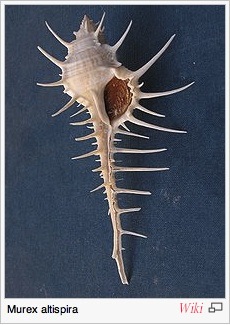
This is a vast family of shells worldwide, with many subspecies, each of which has many regional variations. Or even variations of the same subspecies on the same beach. Many have beautiful delicate spines or intricate shapes and elaborate patterns, like the pacific one shown

These molluscs are described as ‘voracious rock scavengers’ and exhibit uninhibited psychopathic tendencies. If you have a nervous disposition, stop reading here; Sam Peckinpah missed a great film collaboration with Jacques Cousteau with these vicious little creatures

10 ESSENTIAL YET GRISLY MUREX FACTS

  • Murex are highly carnivorous with rasping teeth, and drilling equipment for boring into the shells of their prey
  • A determined Murex may take up to 5 days to drill into its prey
  • Murex also use their foot to smother prey, or to crush it by using suction power
  • They eat clams by hoovering them up with their foot and smashing them on rocks to get at the occupant
  • They happily eat sea-floor carrion and sea-kill
  • Murex act in packs to carry out raids on unsuspecting beds of clams, which they feast on avidly
  • They are sexually wanton. Females store sperm from different males for many months, eventually producing embryos with different dads (I’m not making this up. I would like to have done so)
  • Cannibalism occurs. The kids are equally prone to extreme delinquency and are happy to eat each other when peckish
  • Some species of murex secrete a fluid that is believed to be used to drug their prey into paralysis
  • That same fluid (Murex / Mucus) is also used as a dye, ‘Tyrian’ or ‘Royal’ Purple, which can be ‘milked’ from a living murex (the Aztecs & Phoenicians did this). I’ll pass on that

NEW: VIDEO of how to obtain dye from a Murex

 KASIA’S BEACHCOMBED ABACO MUREX SKELETON

TWO MUREX SHELLS OF MINE (NOT FROM ABACO) FOR COMPARISON  DETAIL OF COLOUR & SHINE

2. TRITON SHELLS (RANELLIDAE)

KASIA’S TRITON TROPHY FROM CASUARINA, ABACO

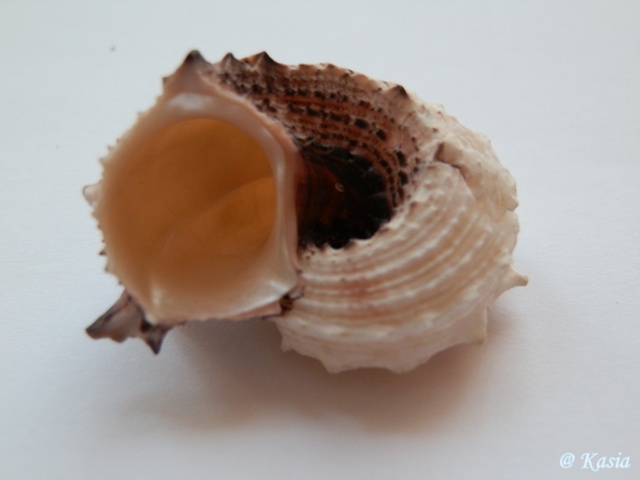
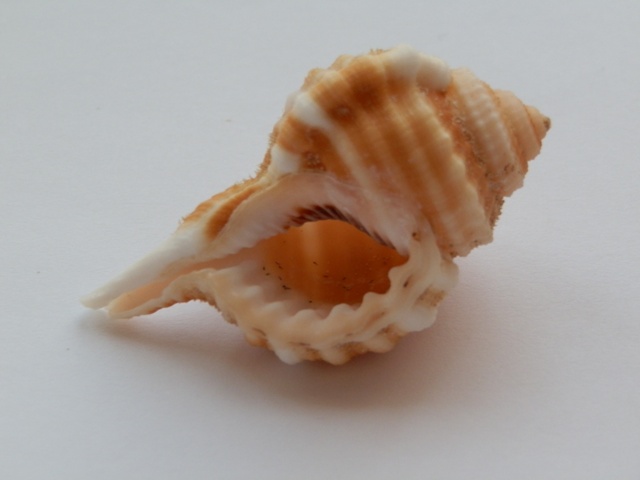
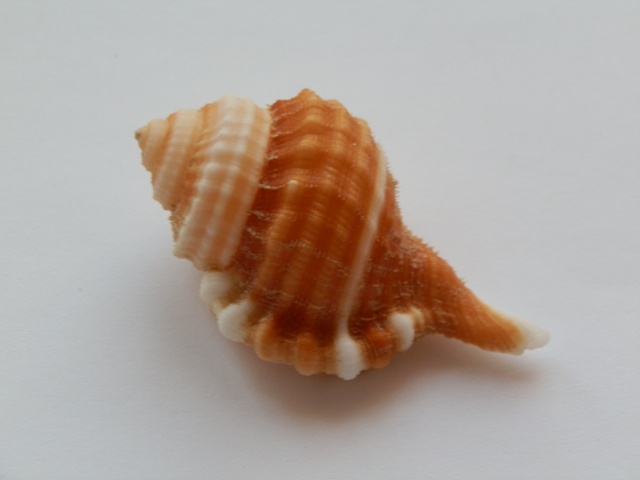
Here is another shell from Kasia’s beachcombing in the Casuarina Point area on Abaco. I’ve never seen one like this. I thought it was a TROPHON, a variety of the huge MUREX family. As I wrote, there are more than 30 types of trophon world-wide, many with a similar configuration, though I hadn’t managed to find one with a similar colouring and shell growth-pattern yet. I invited  confirmation or correction, which Colin Redfern kindly provided. It is in fact a fine example of a…


DOG-HEAD TRITON Cymatium cynocephalum

ANGULAR TRITON Cymatium femorale                                                                                A different sort of triton found by Kasia


Unknown's avatar

BEACHCOMBING AT CASUARINA, ABACO, WITH KASIA – COWRIE / PHALIUM / CONCH


 BEACHCOMBING AT CASUARINA WITH KASIA                    COWRIE / PHALIUM & CONCH

I recently posted some photos of starfish taken by Kasia at low tide near Casuarina point – see KASIAS’S STARFISH. Now it’s time for some beachcombing news from there. The sandbanks and bars in the Casuarina / Cherokee Sound area are a rich source of conchs, sand dollar tests and shells of many varieties when the tide is out. The sandy areas revealed as the water slowly recedes are extensive, and it is a great place to hunt for specimens (and for a lunchtime break from bonefishing…)

COWRIES / PHALIUM

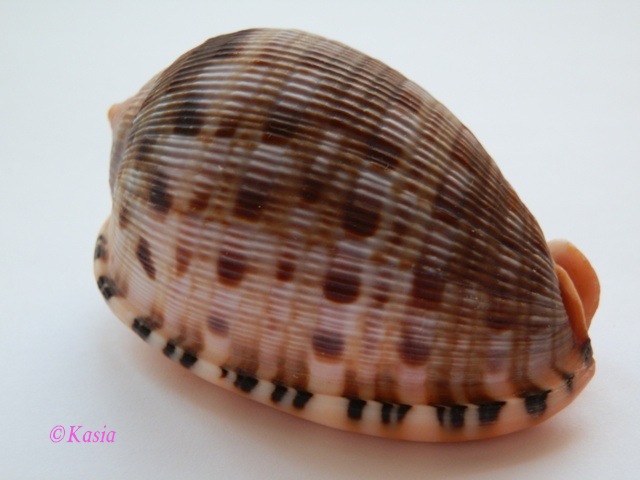
1. RETICULATED COWRIE-HELMET Cypraecassis testiculus Here is a pretty example of this shell, a relative of the large phalium family and originally misidentified by me as a Phalium granulatum

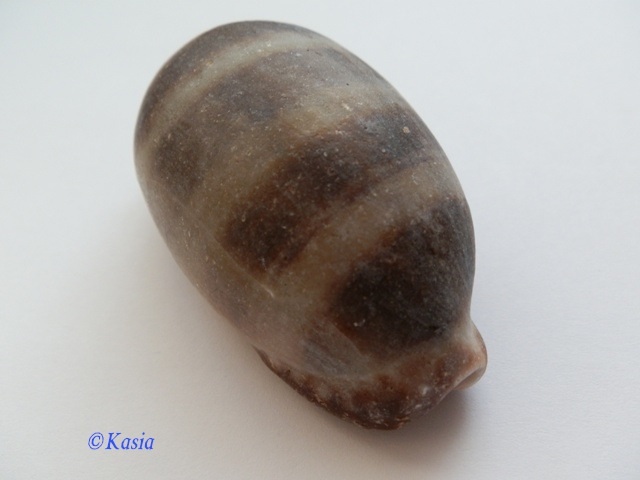
2. MEASLED COWRIE  Macrocypraea zebra / Cypraea zebra Colin Redfern says of this example “Immature shells have transverse stripes that are later covered by a spotted layer (hence “measled”). It looks as if it’s beachworn rather than immature, so the outer layer has probably been worn away. You can see remnants of the spotted layer adjacent to the aperture.” 

STOP PRESS: by coincidence, while looking for a completely different type of shell online I have just happened upon this early 1800s engraving of a Cypraea Vespa, which is very similar to Kasia’s one

CONCH I’m trying not to overdo Conchs, which are probably everyone’s favourite shell to collect. But this one is a wonderful pink, and came with a surprise inhabitant… Is anyone at home?

Oh! A hermit crab seems to have moved in…

It’s shyer than this one (from an unnamed online source)

Finally, a useful method to transport one’s shell collection, maybe?

Unknown's avatar

ABACO BEACHCOMBING FOR SEA GLASS WITH KASIA


BEACHCOMBING FOR SEA GLASS 

IMG_1426

Kasia is an avid beachcomber on the sandy beaches of Abaco. Her collections include not only shells but also other marine debris such as sea glass. She has sent me some images with the comment You can find a lot of sea glass in many different colours and shapes, from the most common green, brown and white through fairly hard to find colours like jadeite (one of the 2 forms of jade), citron, light blue, light green, honey and amber colored browns, to quite rare colors like cobalt, teal, periwinkle, aqua, amethyst & black” Here are some examples of Abaco sea glass from her collection. Shells and other items will follow as and when… 

SEA GLASS COLOURS: THE VITREOUS STATISTICS

Sea glass sources are many and varied. In general, these include old clear plates, glasses, windows etc; coloured drinks bottles – wine, spirits, beer, fruit, cola etc; soda bottles; medicine bottles (e.g. milk of magnesia / Vick’s blue); fruit jars; ink bottles; household goods (bleach, soda). The rarest colours (see below) come from very specific origins: teal / Mateus Rose bottles; red /  car or nautical lights or Schlitz bottles; black / c18 gin, beer and wine bottles

GENERAL CLASSIFICATION OF SEA GLASS COLOUR OCCURRENCE

Most common (1 in every 1 – 25 pieces found): clear, Kelly (‘Irish’) green, brown, blue, purple

Less common (1 in every 25 – 100 pieces found): jade, amber, lime green, forest green, ice / soft blue

Uncommon (1 in every 50 – 100 pieces found): other green shades

Very uncommon 1 in every 200 – 1000 pieces found): citron, opaque white, cobalt, cornflower blue and aqua

Extremely rare (1 in every 1000 – 10,000 pieces found): grey, pink, teal, black, yellow, turquoise, red

Rarest of all (1 in every 10,000+ pieces found): orange

Info credit: Magpies, for collection of bright shiny glass data. Omni-thanks

This is a helpful chart for the main colours, courtesy and © of  West Coast Sea Glass starting top left with orange as the rarest. The direct link is www.westcoastseaglass.com/rarity_chart_poster.html

You’ll find a great deal of other useful info on sea glass on Mary Beth’s  linked blog at http:// seaglassblog.blogspot.com/

There’s also a worthwhile Abaco Life article (2006) on sea glass at http://www.abacolife.com/2008/07/14/sea-gass-reveals-muted-tales-in-red-green-blue-white/ 

JAN 2012 I’ve noticed that there are several easily obtainable (eg from *M*Z*N) books on sea glass. I won’t be buying any to test-drive for you (as with birds, shells etc) – sorry – but they seem to be divided into the ‘pretty but uninformative and fairly cheap’ to the more instructive, more detailed and therefore more expensive books. It’s worth browsing online to find one that meets your interest level, whether passing or something more serious. The reviews are very useful here. The best – and it’s quite pricey – seems to be 

Unknown's avatar

ABACO BEACHCOMBING: TWO CONCH SHELL SKELETONS


ABACO SHELL SKELETONS

Besides ‘living shells’ with occupants in residence and shiny recently-vacated shells, there is a third category of shell: the skeleton. I am sure there’s a better or more technical word for these. They aren’t fossils in the strict sense of remnants from a past geological age, but merely worn by the waves and bleached by the sun over time. Here are two examples (from different beaches) which show the intricacy of the part of the shell you don’t normally see: the interior

A shell skeleton from Little Harbour, in situ on the beach on a cloudy day

The same shell washed, with a wonderful pink tinge in sunlight

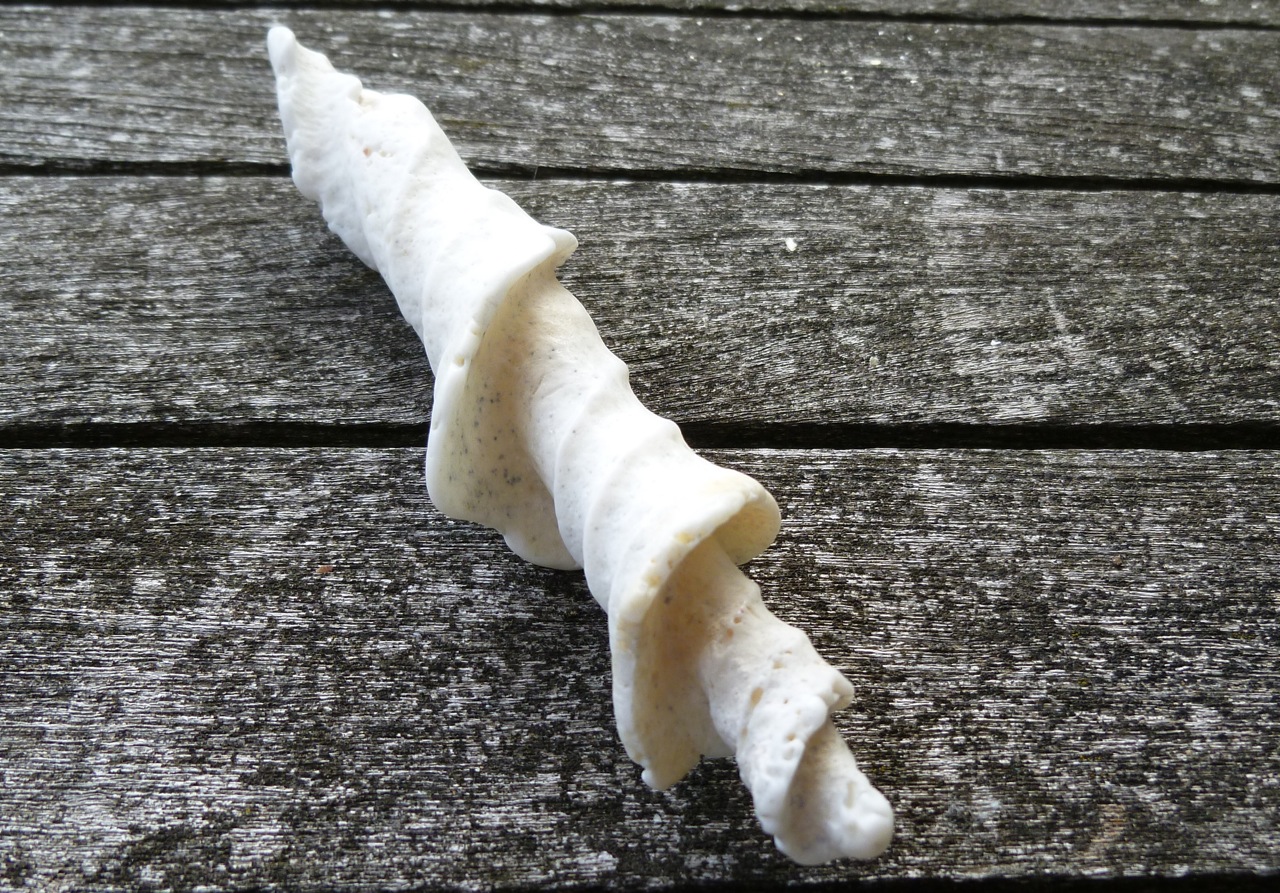
A strange corkscrew skeleton shell from Sandy Point. I’ve no idea what it is, nor how any creature can have lived in or around it, nor what it must have looked like when complete. Any ideas? Please use the comment box… Thanks, Kasia, for your ID of both as conch skeletons. The first obviously is, but the second puzzled me… until she pointed out that conchs build their own shells round themselves to their own designs rather than go to the one-stop conch shell shop. So if a conch starts wrapping itself comfortably round its own corkscrew, this is what you get

(Mrs rh quite rightly points out that my shell photos are unhelpful without a ruler to give an idea of size. Point taken. Too late. These are medium size…)

Unknown's avatar

SCOTCH BONNET SHELLS (Phalium / Semicassis) ON ABACO


Scotch bonnets (or ‘ridged bonnets’) Semicassis granulata or Phalium granulatum are a medium-sized species of sea snail found in the tropical and subtropical western Atlantic from North Carolina to Uruguay. They are predators, foraging on sandy stretches of the ocean floor for echinoderms such as sand dollars, sea biscuits, and other sea urchins (Caution: ‘Oxford comma’)

 SCOTCH BONNET FACTS
  • It takes approximately six years for a Scotch bonnet to mature
  • The shells grows 2 – 4 ins long (5 – 10 cm), showing distinct growth stages
  • Scotch bonnets live on sand, usually in fairly shallow water (but see below)
  • The more a Scotch bonnet eats the more elaborate its shell, the glossier its sheen & the brighter its colours (research suggests this doesn’t work for humans)
  • Divers frequently find Scotch bonnets at depths of 50 – 150 feet (15 to 46 m). Specimens have been found in depths up to 308 ft (94 m)
  • Shipwrecks provide a good habitat for this species
  • Crabs are its main predators, crushing the shell to get at the occupant. Since the snails’ main defence mechanism is to withdraw into their shells, they urgently need to evolve a new tactic
  • The empty shell of this sea species is often used by hermit crabs
  • In 1965 the state of North Carolina made the Scotch bonnet its official state shell, in honor of the Scottish settlers who founded the state

The ridge on my shell, below, may be somewhat unusual. I haven’t found any images showing such a very distinct dorsal growth, though many show a sort of fault line there. STOP PRESS shell expert Colin Redfern explains: The dorsal ridge on your shell is a varix, indicating a previous position of the outer lip during the growth process. Varices on Scotch Bonnets are usually thicker (as in the image above).”

dear wiki: how kind to help

CASSIS RUFA (Cypraecassis rufa)

There are many different sorts of Phalium worldwide. By way of comparison, here is another type, Cassis Rufa, from the Pacific (commonly, east Africa to New Guinea). It’s colloquially known as a Bullmouth, Red Mouth or Grinning Mouth Helmet –  and also as a ‘Cameo Shell’, because it is often used for making cameos (see eBay for examples)

        [rh provenance / historical note: it’s not an area I’ve ever been to, nor am I likely to go. This shell was collected by my late father-in-law when he oversaw the building of the original Gan airstrip on Addu Atoll (Maldives) in… in…. many years ago, as a naval project. It is now ‘Gan International Airport’ and sells giant Toblerone & ‘Parfum de Jordan’ from the Katie Price ‘Scentsless’ range]
Unknown's avatar

BEACHCOMBING ON THE DELPHI BEACH, ABACO (PT 2): BIVALVES


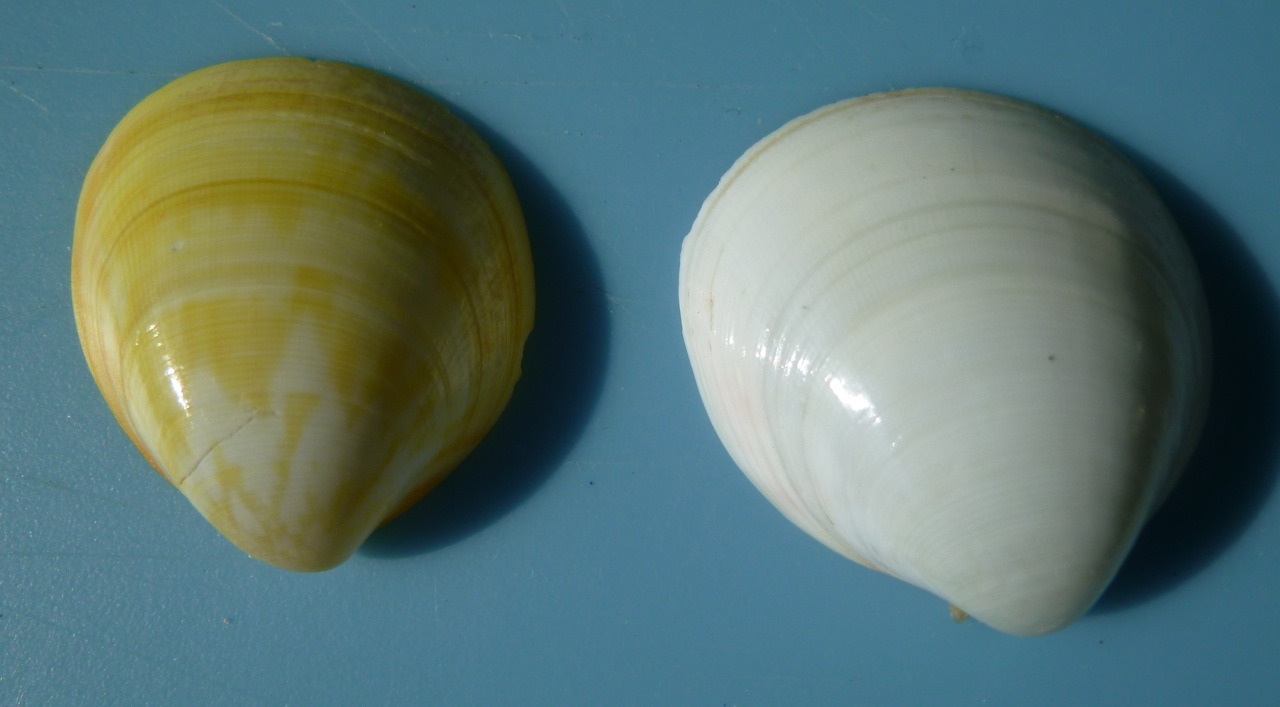
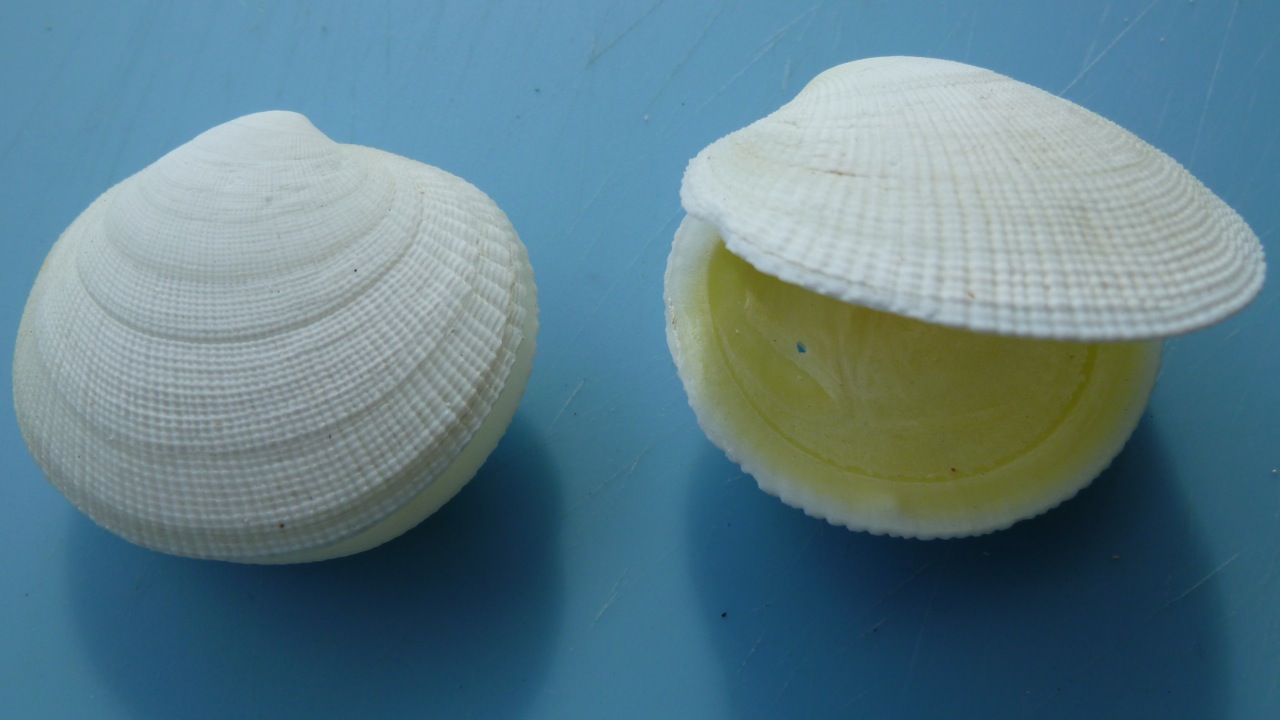
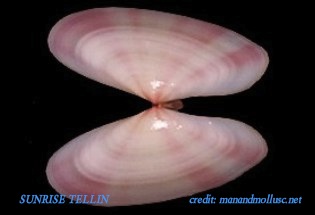
This is Part 2 of the ‘Delphi Beachcombing’ feature. The first dealt mainly with gastropods, and now I have got round to some bivalves. All the shells illustrated come from somewhere within half a mile of the Delphi Club beach steps, except for the sunrise tellin. We gave ours to our granddaughter (5) [she likes pink, but also mud] and it has… somehow come apart. 

EGG COCKLES Unlike the vast majority of cockle types which have the familiar radial ribs, egg cockles are smooth and non-ribbed. They are apparently able to jump by flexing what passes for their leg – a feat I would enjoy seeing…

GAUDY ASAPHIS Asaphis Deflorata (formerly ID’d as COQUINA Donax)

TIGER LUCINE Codakia orbicularis (formerly ID’d as ELEGANT DOSINIA Dosinia Elegans)

SCALLOP / PECTEN This is not a ravenelli, as previously suggested by me –  they are deep water molluscs.  It’s hard to be sure exactly what species it is, in such a bleached state.The tiny shell half is surely the basis for the symbol of a petro-chemical giant that I decline to identify further. I thought this one was broken but a check shows that the asymmetry of the hinge is very common. Encrustation by worms, as here, is often found as well, but I wisely draw no parallel with the litigious petrochemical industry…

SUNRISE TELLIN (Tellina Radiata) Tellins are a genus with masses of variants worldwide. This species is common in the Caribbean. It is a really pretty shell, glossy with pink radials. They grow up to 7cms. As hinted above, if you find a complete one, the hinge is delicate. The most interesting fact I have discovered is that “in most countries it is illegal to bring back these shells from holidays” Whoops!

Unknown's avatar

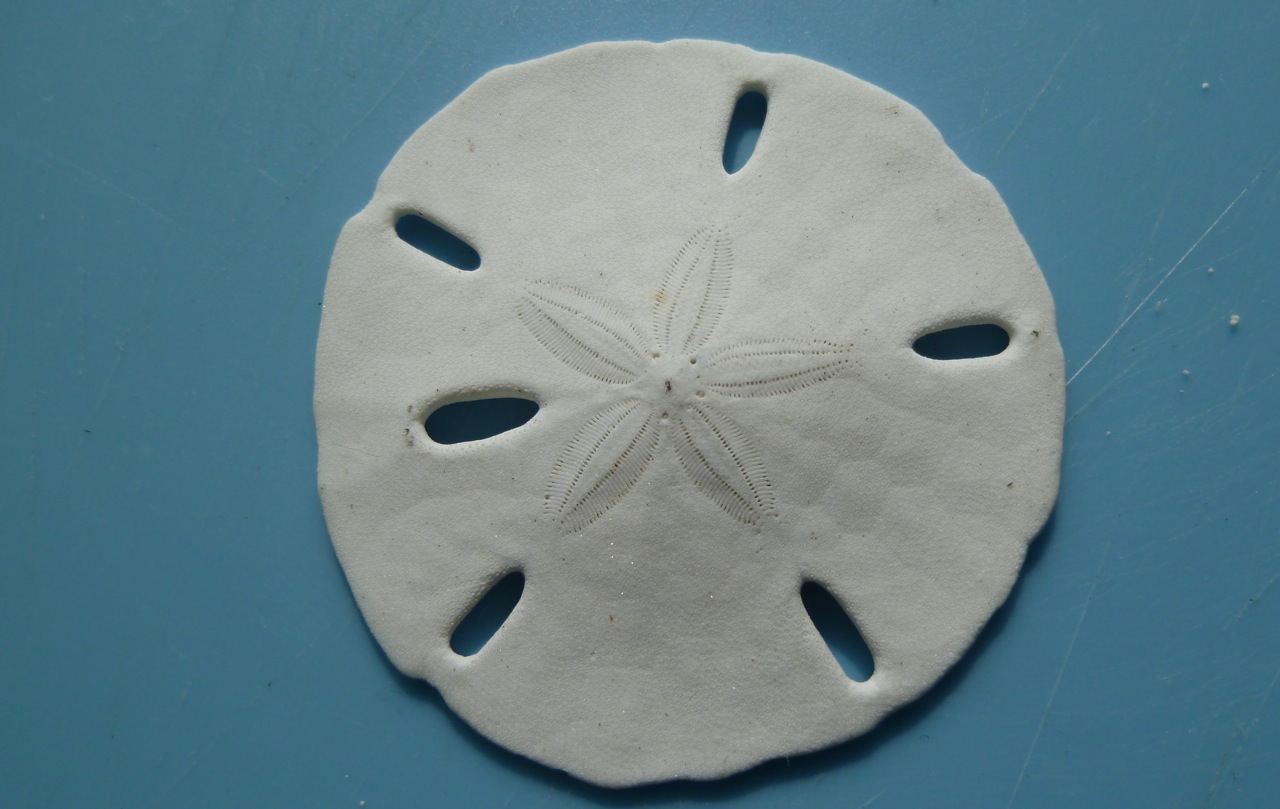
A FEW SAND DOLLARS MORE (images and videos)


LIVING SAND DOLLAR ON ITS BACK – VIDEO

This video shows how the sand dollar is able to get around and to bury itself in the sand by using the hairs on its underside:

SAND DOLLAR IN A SPIN – TIME-LAPSE VIDEO

Another short time-lapse video of Sand Dollar manoeuvres lasting 15 – 25 minutes in real time, this time moving in circles before suddenly ‘zooming off’ into the distance…

SAND DOLLARS FROM THE RH COLLECTION

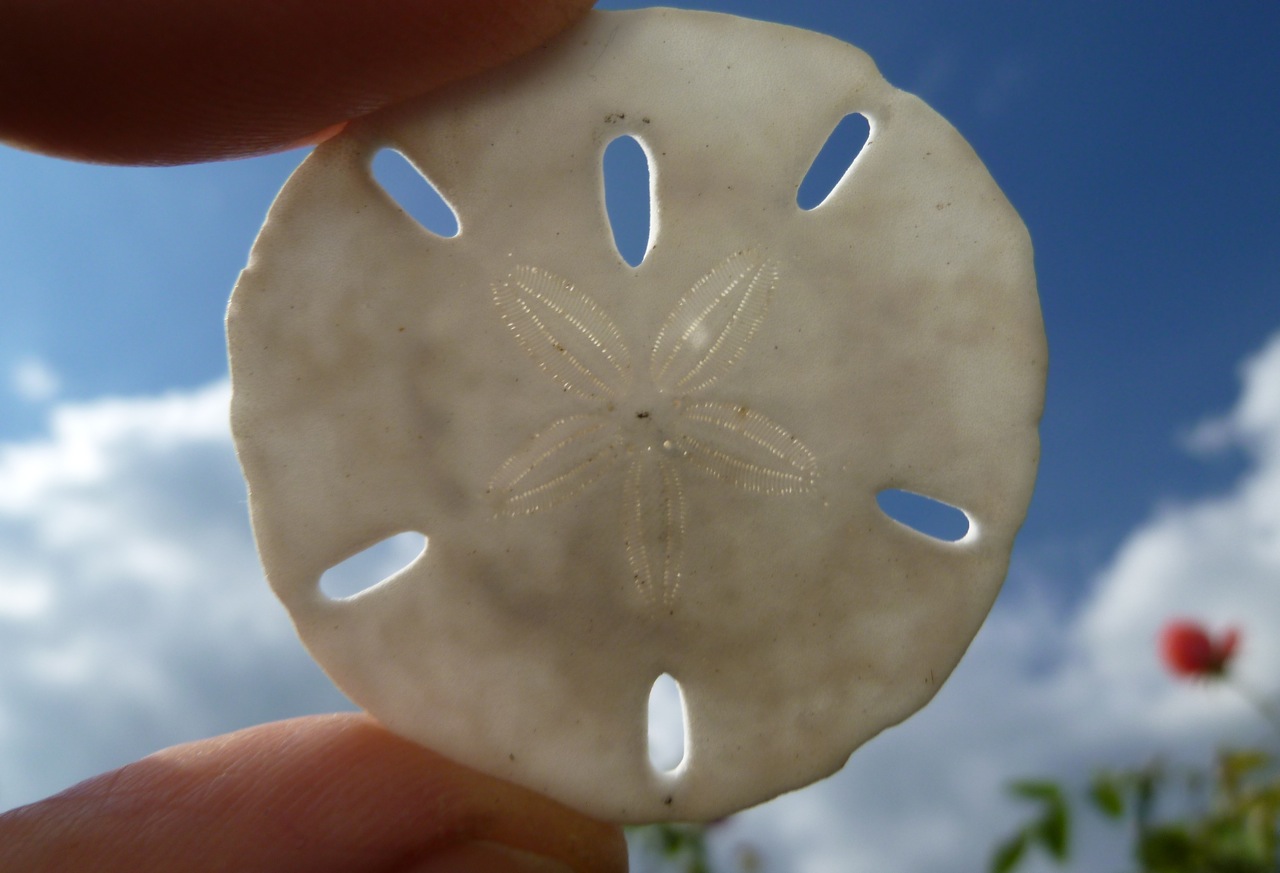
              A small Sand Dollar test from Rocky Point beach near Sandy Point                           (top side, underside and see-through)

Large Sand Dollar tests from a sand bar in Cherokee Sound

Unknown's avatar

BEACHCOMBING AT THE DELPHI CLUB, ABACO – CORAL & NERITES


CONTRASTING CORAL SKELETONS

These two different types of coral skeleton are from the northern end (and just beyond) of the Delphi beach. The red marking on the second coral is some kind of natural accretion, I think – I have temporarily lost the exact details somewhere on my hard drive, but doubtless they will turn up sooner or later… You will find these red patches on shells as well as coral

COMMON ROSE CORAL

ANY IDEAS  – OR IS THIS WORM-RELATED?

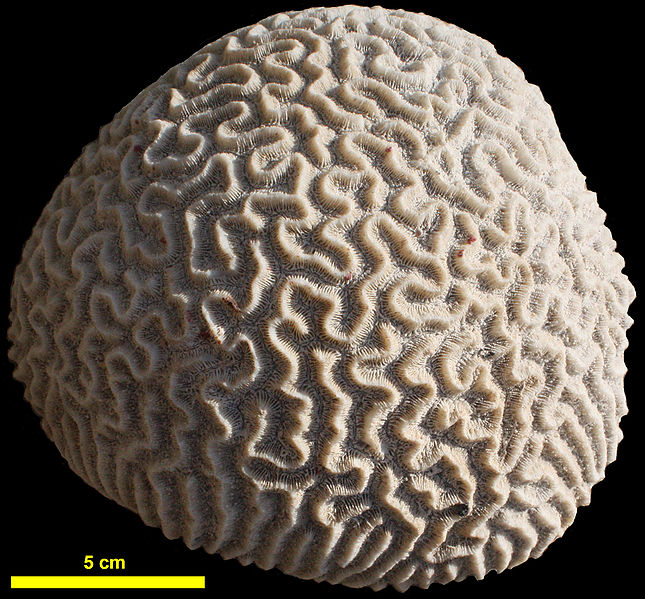
Another dramatic coral you may come across – not least because there are usually one or two in the beach-harvested collection on the steps down to the beach – is Brain Coral (Diploria). Here is an example (Photo credit J. Stuby)

NERITES (Nerita)

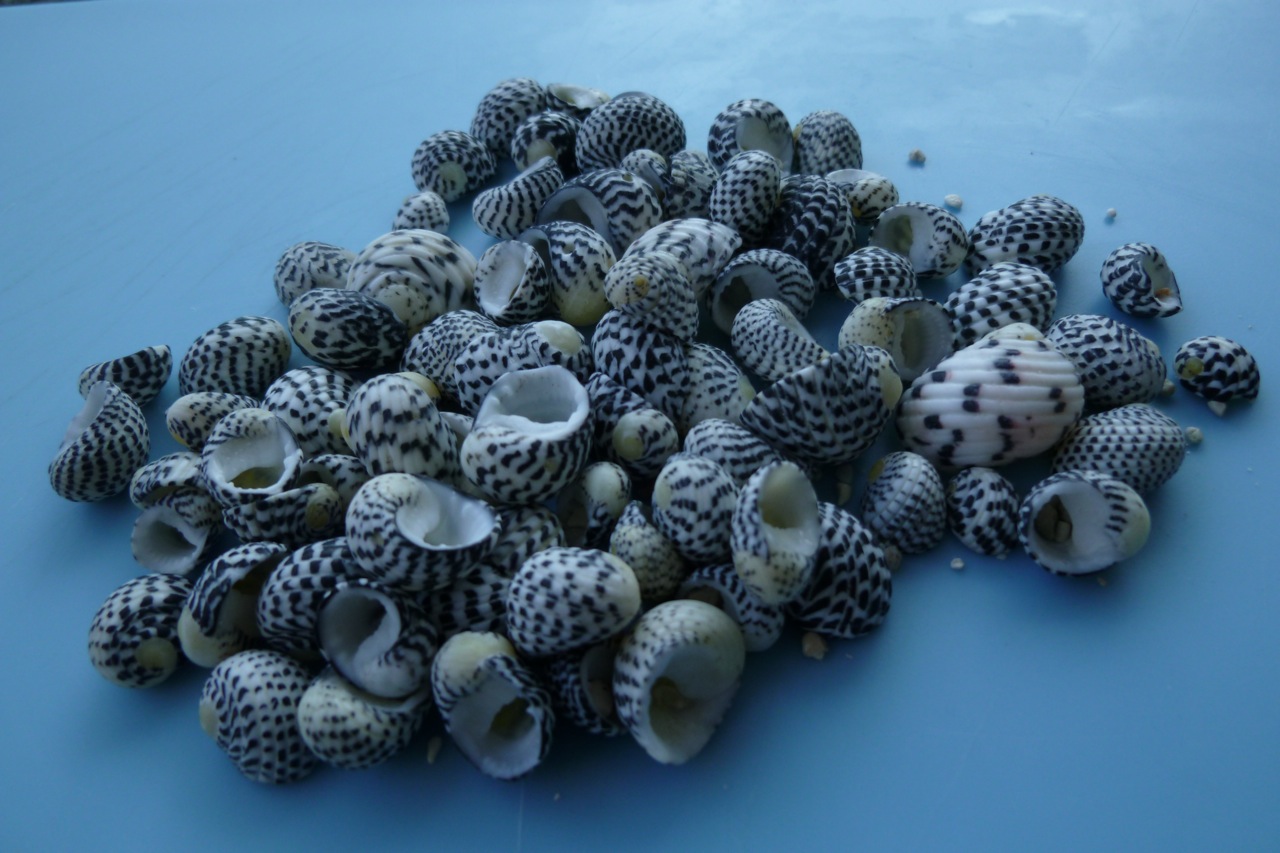
Nerites are small sea-snails (gastropod molluscs) found in tropical waters around the world. Precise ID of the many types is confused by the different names used for many of them, both taxonomic and local. The majority of the black and white nerites in the pile below, all collected from the Delphi beach, are Checkered Nerites (Nerita Tessellata). In the heap there are a few larger whiter shells with red markings, which are the Four-Toothed Nerite (Nerita Versicolor).

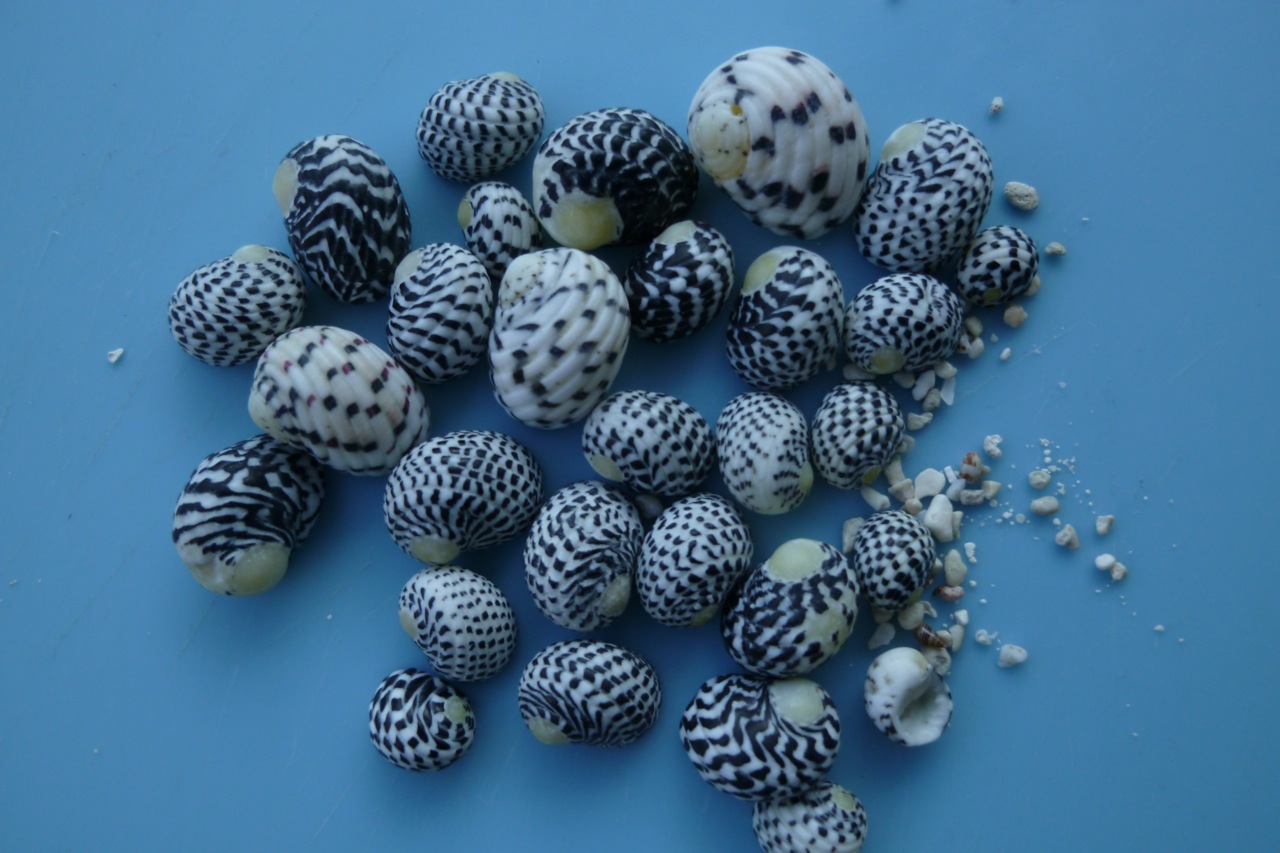
Here are some of the above shells showing their varying patterns and sizes, seen with a few grains of sand for comparison. The 3 larger whiter ones with the flecks of red on them are the Four-Toothed Nerites.

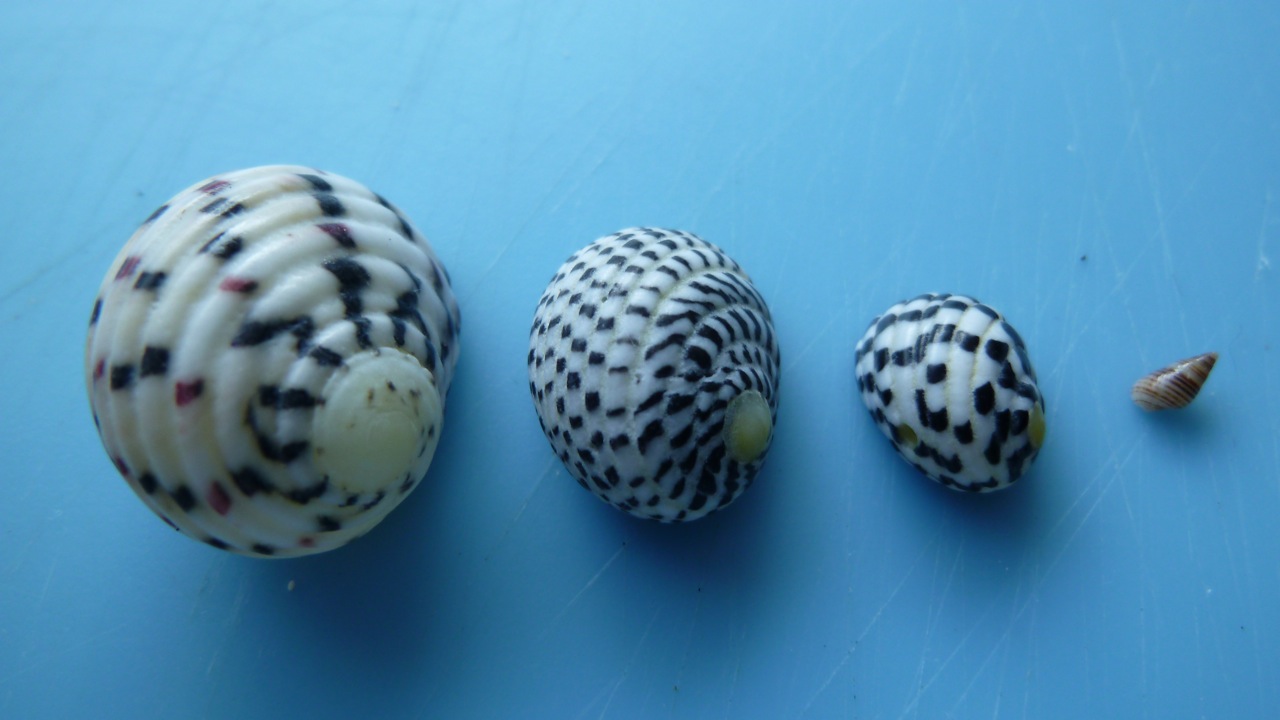
Here are 3 example shells in close-up, together with a tiny, perfect Dwarf Atlantic Planaxis (Hinea lineata) at the end (previously misidentified as a Littorine). I didn’t notice it until I was sorting through the shells – in fact you can just see it towards the bottom right of the previous photo, above the small nerite that’s on its back. It may even have fallen out of a nerite, as did many of the sand grains.

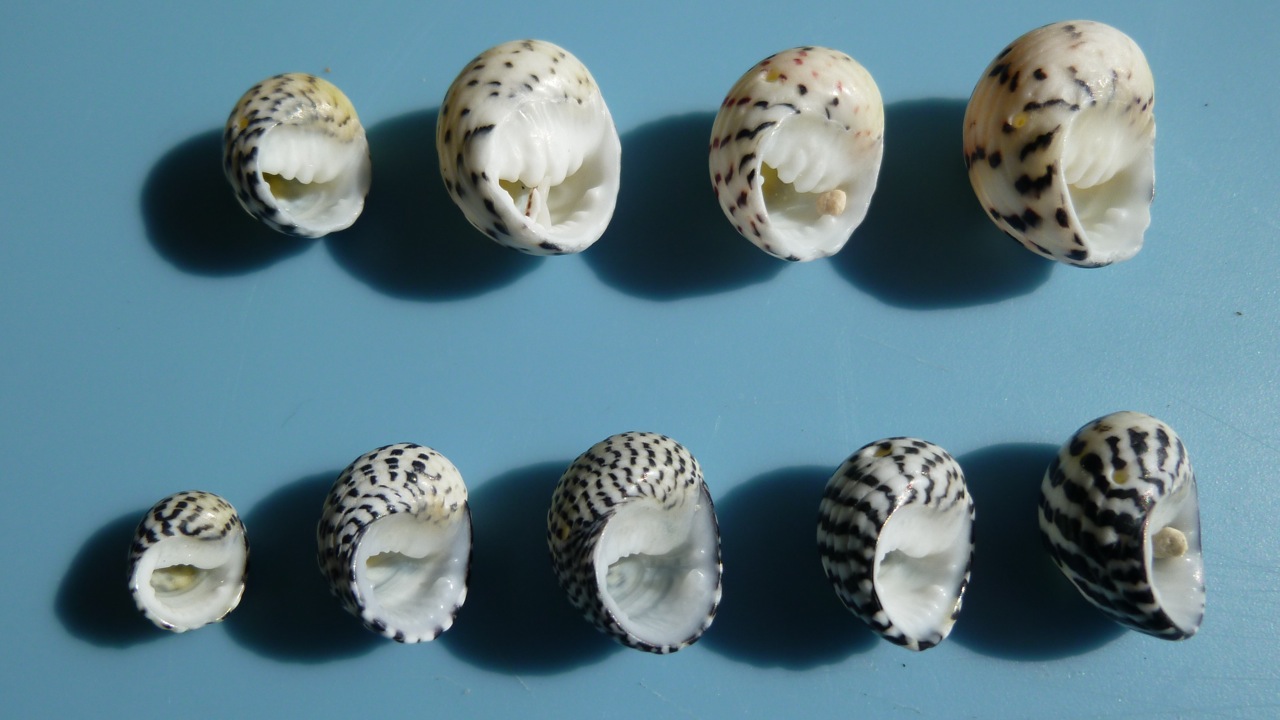
These four upturned nerites show the dentate entrance, common (to a greater or lesser extent) to most nerites – maybe all. The top row are Four-toothed Nerites; the bottom row are Checkered Nerites. Another Nerite type found in the Bahamas is the Bleeding-tooth nerite (Nerita Peloronta). These are similar to the top ones, but have vivid orangey-red markings on the ‘teeth’ – hence their name.

Nerites, sand grains and the Planaxis: size comparison

A close up of the Planaxis, showing how amazingly detailed the pattern of such a tiny shell can be

All this may sound a bit learned and somewhat solemn. Dull even. In fact I had absolutely no idea about any of the above details until I got these shells out of their glass jar last week to photograph (apologies for using a chopping board) and did some digging… So if any shellologists or neritophiles read this and have corrections to suggest, be my guest… Use the comment box or the email address on the CONTACT page. ADDENDUM: many thanks to Colin Redfern for confirming the small nerites as Checkered, as opposed to Zebra; and the ‘littorine’ as a Dwarf Atlantic Planaxis Hinea lineata