Unknown's avatar

BROWN PELICANS: CLEARED FOR TAKE-OFF & LANDING


Brown Pelican (Phil Lanoue)

BROWN PELICANS: CLEARED FOR TAKE-OFF & LANDING

Brown Pelicans are permanent breeding residents on Abaco, and not uncommon in certain areas though not be any means throughout the island and the cays. If you come across a pair of them – or preferably a group – it’s well worth spending some time watching them in action. These are magnificent birds, unafraid of humans and happy to carry on fishing / plunge diving with an audience. 

Brown Pelican (Phil Lanoue)

The most reliable place I know of to watch the pelicans on Abaco is Sandy Point. You may find them on the dock, drying their wings on the pilings or diving off it for fish. At other times, they will be further out to sea where the sandbars stretch out into the ocean, taking off and gaining height before smashing straight down into the water.

Brown Pelican (Phil Lanoue)Brown Pelican (Phil Lanoue)

These wonderful images of pelicans taking off and landing are the work of professional photographer Phil Lanoue, whose work I am always excited to feature. He has the skills, the equipment and the eye to produce outstanding photographs, freezing birds in motion with complete clarity.

Brown Pelican (Phil Lanoue)

If anyone reading this knows of other locations on Abaco where pelicans can reliably be found, I’d be very pleased to hear more!

All great photos: © Phil Lanoue, with thanks as ever for use permission

Brown Pelican (Phil Lanoue)

Unknown's avatar

BLACK-THROATED BLUE WARBLERS ON ABACO


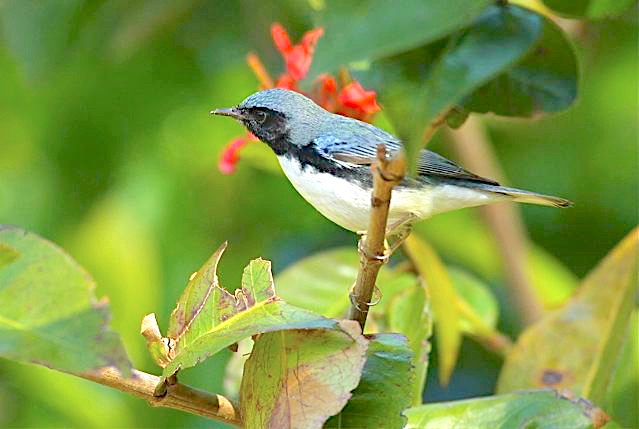
Black-throated Blue Warbler (m), Abaco (Gerlinde Taurer)

BLACK-THROATED BLUE WARBLERS ON ABACO

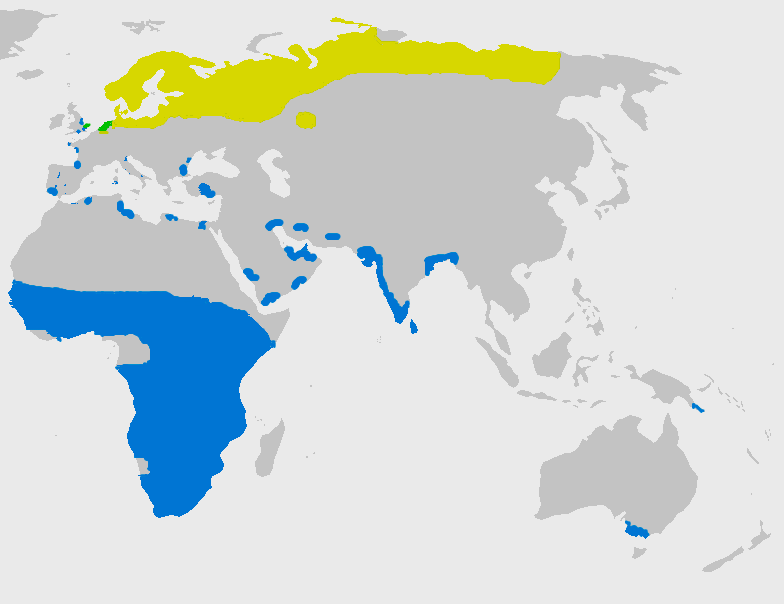
It’s warbler time of year on Abaco, and a good time to take a look at the Black-throated blue warbler Setophaga caerulescens. This small warbler has very particular breeding and overwintering ranges. In the summer they are found in the forests and woods of eastern North America. As the Fall approaches, they start to migrate south to the Caribbean and Central America. Abaco is one of their winter homes, as well as a likely transit stop on their way further south. Right now sightings are being reported on the mainland and the Cays.

Black-throated Blue Warbler (m), Abaco (Gerlinde Taurer)

WHAT DO I LOOK OUT FOR?

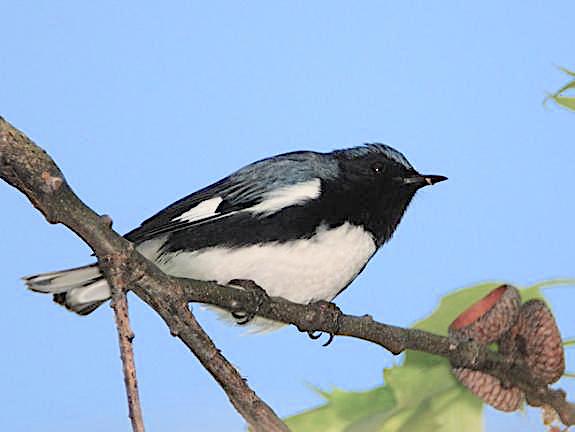
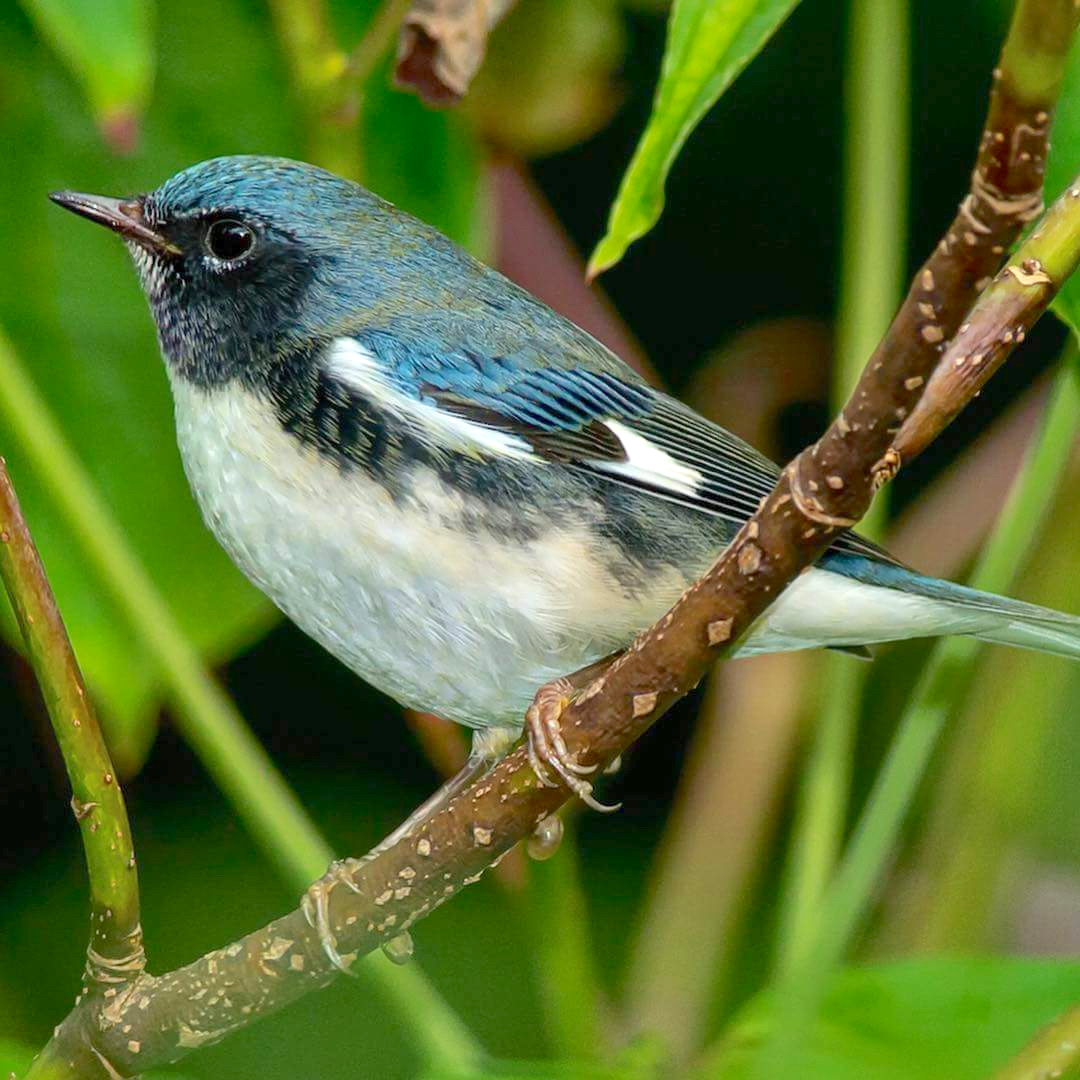
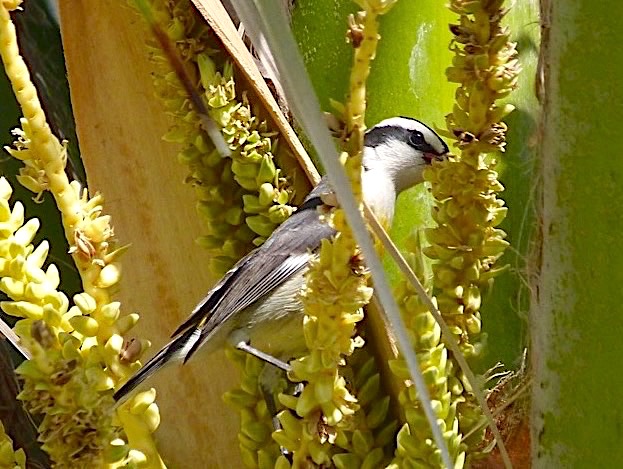
Males and females are quite different in appearance (‘sexually dimorphic’), and could even be mistaken for distinct species. Males are a deep slate-blue above (hence caerulescens) with a striking black face and throat, and white underparts. They are unmistakeable, and unlikely to be confused with any other warbler. Females are basically grayish-olive above and pale yellow underneath. For ID, look for a white stripe above the eye, a pale arc below it. In addition, both sexes have a diagnostic white patch on the the wing, that I have seen referred to as a ‘handkerchief‘.**

Black-throated Blue Warbler (f), Abaco (Becky Marvil)

The legendary bird cartoon website Birdorable, featured often in these pages, as usual has a spot-on comparison of the sexes. TBH, this is a great resource for nailing a bird’s essential characteristics. You should check out its warblers in particular! Here’s their inimitably charming take on the BTBW gender comparison.

Black-throated Blue Warbler (m & f comparison) (Birdorable)

These pretty warblers can be seen in gardens, coppice, and woodland. Although mainly insect-eaters, sometimes catching them in flight, they also eat fruit and seeds especially in winter. BTBWs are territorial, and will defend their chosen space against all-comers, including their own species.

Black-throated Blue Warbler (m), Abaco (Bruce Hallett)

WHAT DO I LISTEN OUT FOR?

As I have mentioned before, I tend to find phonetic transcriptions of bird sounds rather baffling – and often not really how I hear them myself. This is especially with the ‘Oh-dear-oh-dear-I’ve-run-out-of-beer’ and ‘Have-a-little-Kalik-at-Pete’s’ kind. One source asserts: “The bird’s song can be described  as a buzzed zee-zee-zeeee with an upward inflection. Its call is a flat ctuk”. You be the judge…

SONG Etienne Leroy / Xeno-Canto

CALL Paul Marvin / Xeno-Canto


Black-throated Blue Warbler (m) (Blaine Rothauser CWFNJ)

BTBW SEX LIFE – ANY GOOD GOSS?

Black-throated blue warblers are – and I say this with considerable reservations – mainly a monogamous species. However it turns out that they have complex patterns of vocalisations and behaviours at breeding time, including very promising-sounding ‘extra-pair copulation’ involving ‘heterospecific cuckoldry’. However, despite all my efforts in researching this phenomenon more thoroughly, merely reading the intricacies quickly crossed my boredom threshold, and my own ‘call’ soon became a ‘sonorous saw-like Zzzzzzzzzzzzzzz‘.  Anyway these birds don’t breed on Abaco so I’ll spare you the details and move on.

Black-throated Blue Warbler (f) (Dax Roman / Birds Caribbean)

 IS MANKIND MASHING UP THEIR HABITAT?

BTBWs are fairly common birds within their range, with a large population. The usual stuff is happening with them in terms of habitat destruction & co at both ends of their migration. For some already threatened species (e.g. Kirtland’s Warblers), habitat degradation at either end of the migration (let alone both) presages a downward spiral in population. With BTBWs, I have read both that the population is decreasing; and in another source, slightly increasing. For now, let’s regard the welfare of the species as being stable. However, the current causes of species decline will doubtless continue, and many regard increasingly evident climate change as being a determining factor for the well-being of migratory species. The birds are not yet out of the woods, so to speak… and maybe never will be.

** anyone remember those?

CREDITS Photos: Gerlinde Taurer (1, 2); Becky Marvil (3); Bruce Hallett (4); Blaine Rothauser / CWFNJ (5); @daxroman / Birds Caribbean (7); Paul Reeves / Birds Caribbean (8).  Range Map, Wiki; Cartoons,  Birdorable; Video, Cornell Lab for Ornithology

Black-throated Blue Warbler (m) (Paul Reeves / Birds Caribbean)

Unknown's avatar

ABACO PARROT ACROBATICS


Abaco (Cuban) Parrot Acrobatics (Melissa Maura)

ABACO PARROT ACROBATICS

Melissa Maura is well-known to many in the Bahamas, not least because of the wonderful work she does with injured or orphaned creatures. Thanks to the skills and compassion of Melissa and those who work with her, animals and birds of all kinds are saved from death or incapacitating injury. In the saddest cases, they are gently cared for until the inevitable occurs.

Abaco (Cuban) Parrot Acrobatics (Melissa Maura)

Melissa also takes terrific bird photographs, some of which I have featured in the past. Indeed my blog headline photograph is one of her parrots. I used to change the header from time to time, but this one is so cheerful that I decided to keep it in place. It always makes me smile.

Abaco (Cuban) Parrot Acrobatics (Melissa Maura)

Parrots are acrobatic creatures, happy to eat at all angles including completely upside down. Not just eat, though. Also bicker, flirt, play-fight, and see off rivals via inverted aggression. With the Abaco parrots, one of the benefits for the bystander is that the balancing act and consequent fluttering often reveals the spectacular blue of the birds’ wings. 

Abaco (Cuban) Parrot Acrobatics (Melissa Maura)

In a row, it’s not unusual to see a parrot taking up a dominant position on a branch, leaving its opponent hanging on in an uncomfortably precarious position…

Abaco (Cuban) Parrot Acrobatics (Keith Salvesen))

People often ask where on Abaco they are most likely to see the parrots. First, there are no parrots north of Marsh Harbour – they are all in South Abaco. Secondly, although they live and nest in the National Park at the southern end of the island, in practice it covers a very large area, much of it inaccessible and with the only ‘road’ something of a challenge for an ordinary vehicle (described HERE). I’d say that the single most reliable place to see the parrots is at Bahama Palm Shores. Simple turn into the north entrance, drive straight down to the end with the windows down, park up – and listen. If they are there, you’ll hear them for sure!

Abaco (Cuban) Parrot Acrobatics (Melissa Maura)

All photos Melissa Maura except #5, Keith Salvesen (also the sound file of parrots at BPS)

Unknown's avatar

RUFF & READY: YET ANOTHER BIRD FIRST FOR ABACO


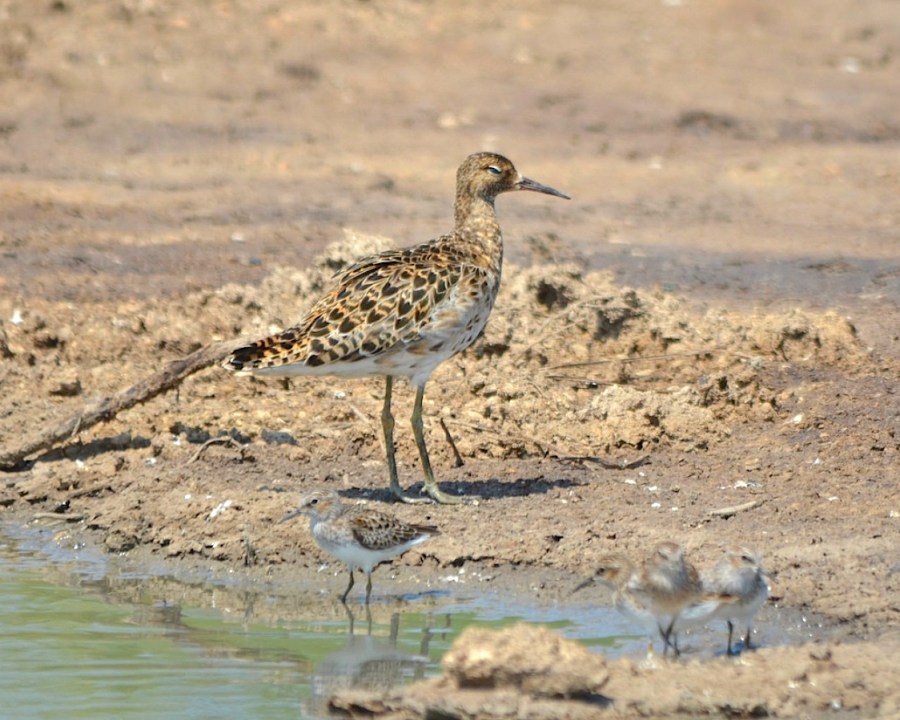
Ruff, Grand Bahama, Bahamas (2015) Duncan Mullis

THE FIRST RUFF IN THE BAHAMAS

RUFF & READY: YET ANOTHER BIRD FIRST FOR ABACO

The list of new bird species recorded for the Bahamas in general and Abaco in particular continues to grow longer. At the end of August it was a CANADA WARBLER (now also recently seen on Grand Bahama and possibly New Providence). Now, a mere 4 weeks later, it’s a Ruff (Calidris pugnax), a mid-sized Eurasian shorebird that, it seems, has a tendency to ‘vagrate’ across the Atlantic from time to time.

Ruffs: the normal range

Ruff, (N. America) Dick Daniels

You have to take new birds as you find them, of course. First, you may not have a camera with you to record the sighting for posterity. Secondly, the bird may not be perched prettily on a twig or a small rock. In this instance the legendary Woody Bracey found his Ruff in the prosaic and arguably unattractive setting of the Treasure Cay dump. He didn’t have a camera, and when he next went back with a camera to check for the bird the ruff had gone…

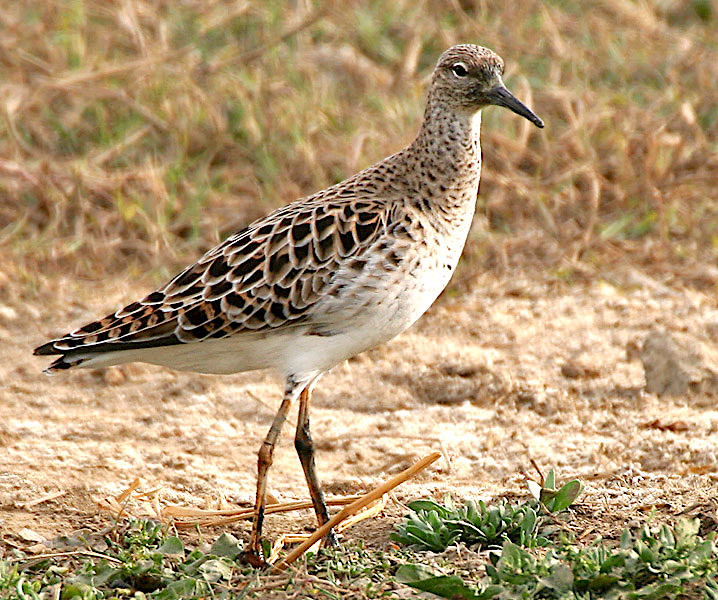
Ruff (m, non-breeding) J.M.Garg

Woody’s bird, a female (known as a Reeve), was standing next to a Lesser Yellowlegs. They are much the same height, but there the similarity ends – Ruffs are unmistakably plumper and with a shorter bill. Woody has good reason to recognise these rare and occasional transatlantic visitors, having often seen Ruffs both during his time living in the UK, and also in Africa. I’ve seen the appearance described as “like a gravy-boat”, which is well up there with the least useful descriptions of a bird’s appearance I have come across. Looked at another way, we have a couple of gravy boats that have an occasional outing. Neither looks remotely like a ruff.

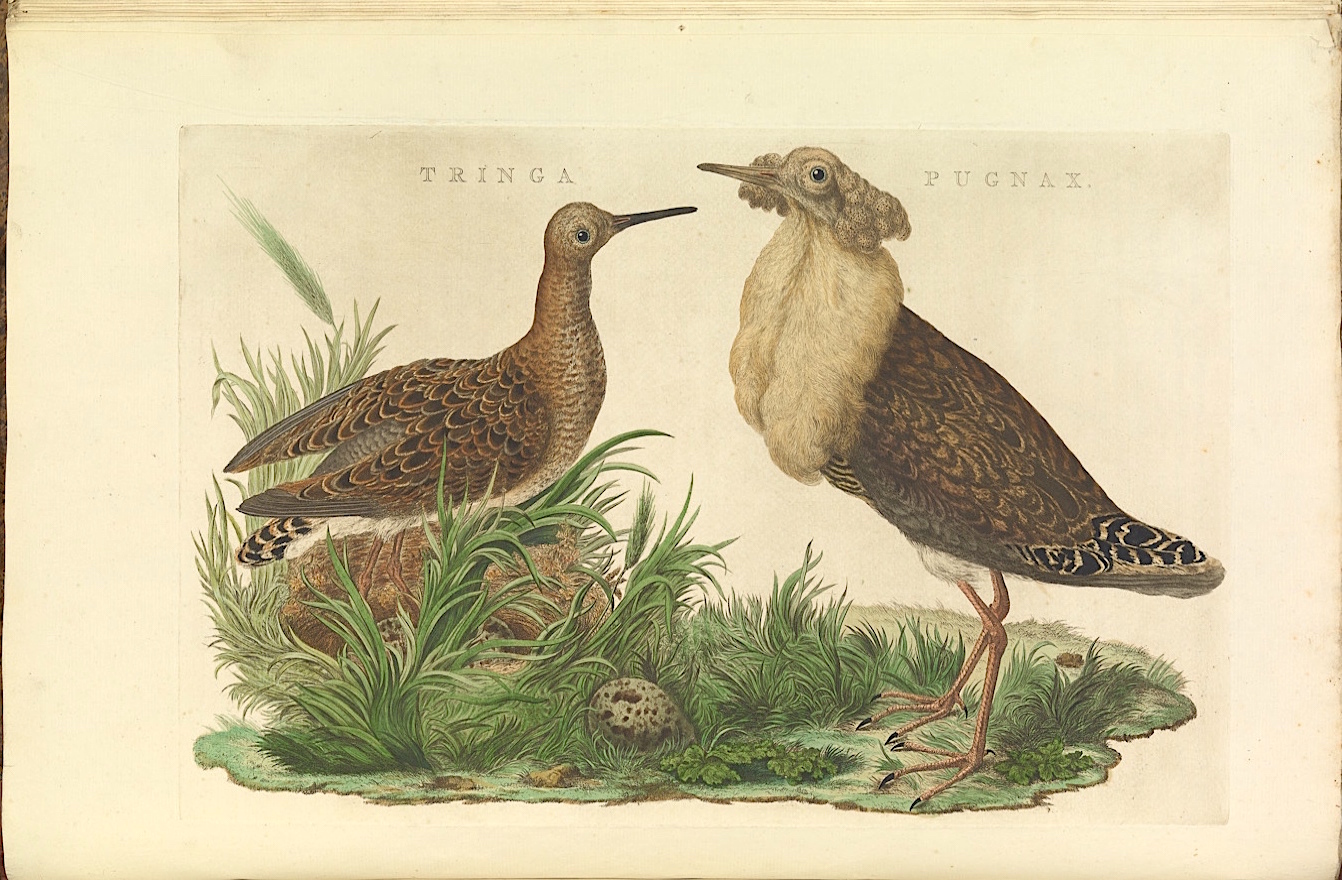
Ruff (Old Print) nederlandsche_vogelen wiki

IS THE ABACO RUFF A NEW SPECIES FOR THE WHOLE BAHAMAS?

Very nearly… but not quite. Only two previous Ruff sightings are recorded, in 2015 and 2018, and both in the same area on Grand Bahama, towards West End. And the only photo is from birder Duncan Mullis, who in 2015 took the first and maybe only one of a Reeve with a bunch of much smaller sanderlings (see also header image close-up).

The first ruff in the BahamasRuff - Grand Bahama, Bahamas (Duncan Mullis 2015)

WHAT SHOULD WE KNOW ABOUT RUFFS?

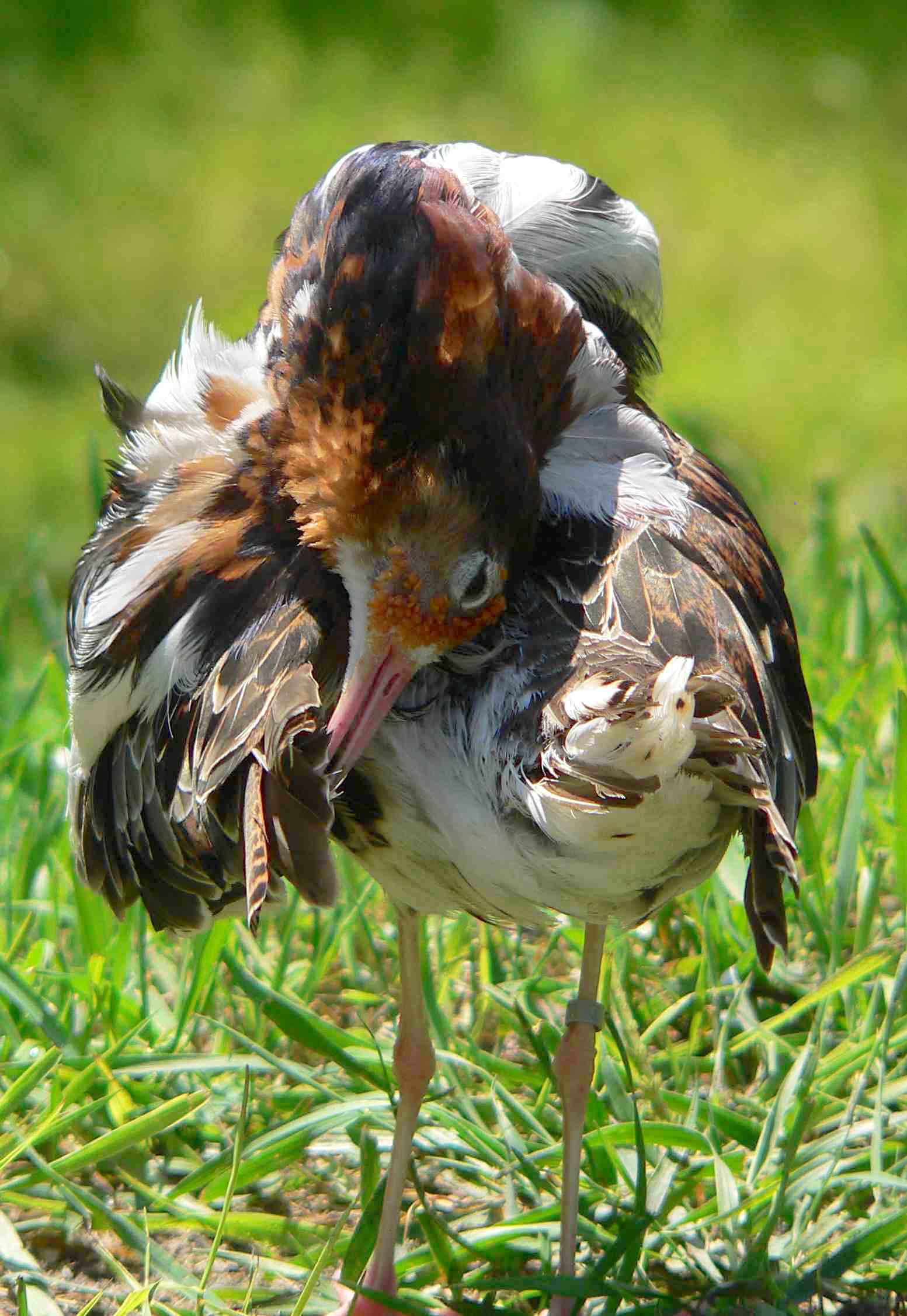
In the breeding season in particular, male ruffs are very different from the smaller reeves. They acquire a spectacular colourful plumage that includes a sort of ornamental collar (hence the name). They enhance their courtship rituals with elaborate displays designed to impress the reeves. These occur in chosen areas known as leks, places where strutting, preening and general competitive showing off occur to attract a mate. Such arenas are also created by a few other bird species – grouse, blackcock and peafowl, for example. The ruff’s lekking behaviour has some complex variations – including same-sex ‘copulation’ and polyandry – but sadly this isn’t the place to explore them in detail.

WHAT DOES A LEK LOOK LIKE?

Here are two males with very different breeding plumages, giving it their all at the lek… When Carl Linnaeus described the ruff in his Systema Naturae, he gave it the binomial name Tringa pugnax, the latter word meaning  ‘aggressive’ – the lek can also become a combat zone between competing males.
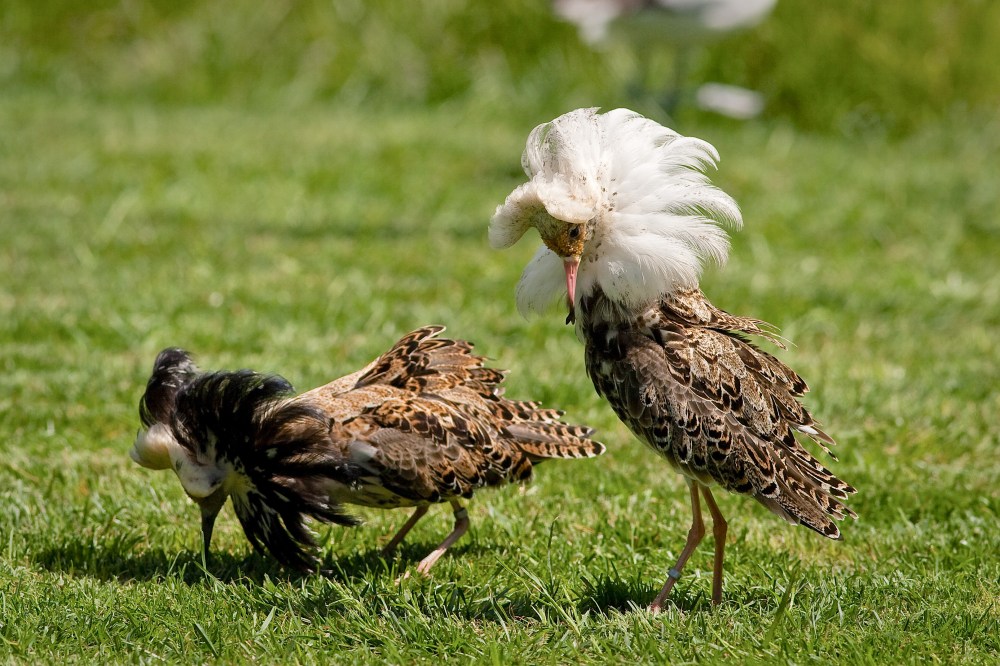
Ruff Lek (Arjan Haverkamp) wiki

This male has decided to vogue it and ‘strike the pose’ as it preensRuff - male preening (B.S.Thurner-hof, wiki)

Writing in The Spruce, a new multi-interest resource I discovered in researching this article, Melissa Mayntz describes succinctly some of the common behaviour seen at leks. This includes some (or all) of the following (baby-boomers and dad-dancers may recognise some of these moves):

  • Bowing, dipping, or bending
  • Head bobbing or quick turns and nods
  • Strutting, stomping, kicks, or similar footwork
  • Exaggerated wing postures, such as fluttering, drooping, or spreading wings
  • Tails fanned, flared, cocked, or spread
  • Chests puffed out, often to reveal air sacs or distinct plumage
  • Calling, songs, drumming, or booming sounds
  • Dance-like sequences with multiple movements, possibly coordinated between partners after a female shows an interest in a specific mate

To which I’d add aggressive male territorial rivalry within the lek, leading to physical attacks with beak, claws and wings. Meanwhile the females watch from the edge to assess their chosen mates. The illustration below shows this rather charmingly.

Illustration of a lek by Johann Friedrich Naumann (1780–1857)Ruff Lek - Johannes Naumann

There’s a lot to be described about how ruff’s moult, but it’s not especially interesting for anyone but a moult specialist, so instead you can have a reminder of Ogden Nash’s last word on the topic: ‘The song of canaries / Never varies / And when they are moulting / They are pretty revolting…’ And we’ll leave migration as well, since basically that factor is N/A for our particular part of the world.
♦ ♦ ♦ ♦ ♦
JUST OUT OF CURIOSITY, CAN YOU EAT RUFFS / REEVES?
In former times ruffs were considered a delicacy and were eaten in large numbers. Often they would be fattened in pens in preparation for the table. I’ll finish with an old description: 
…if expedition is required, sugar is added, which will make them in a fortnight’s time a lump of fat: they then sell for two shillings or half-a-crown a piece… The method of killing them is by cutting off their head with a pair of ‘scissars’, the quantity of blood that issues is very great, considering the size of the bird. They are dressed like the Woodcock, with their intestines; and, when killed at the critical time, say the Epicures, are reckoned the most delicious of all morsels. Not a 21st century culinary trend I hope…

Ruffs in India (J. M. Garg)

Credits: Woody Bracey (sighting smarts); Duncan Mullis (1, 5); Dick Daniels (2); J.M.Garg (3, 9); Open Source / Wiki, prints (4, 8);  Arjan Haverkamp (6); B.S.Thurner-hof (7); Melissa Mayntz / The Spruce re Leks; debt to Wiki (and other O/S) for source material, photos, range map etc
Unknown's avatar

GREAT EGRETS: NOBLE (YET MISNAMED) HERONS


Great Egret, Bahamas (Nina Henry)

GREAT EGRETS: NOBLE (YET MISNAMED) HERONS

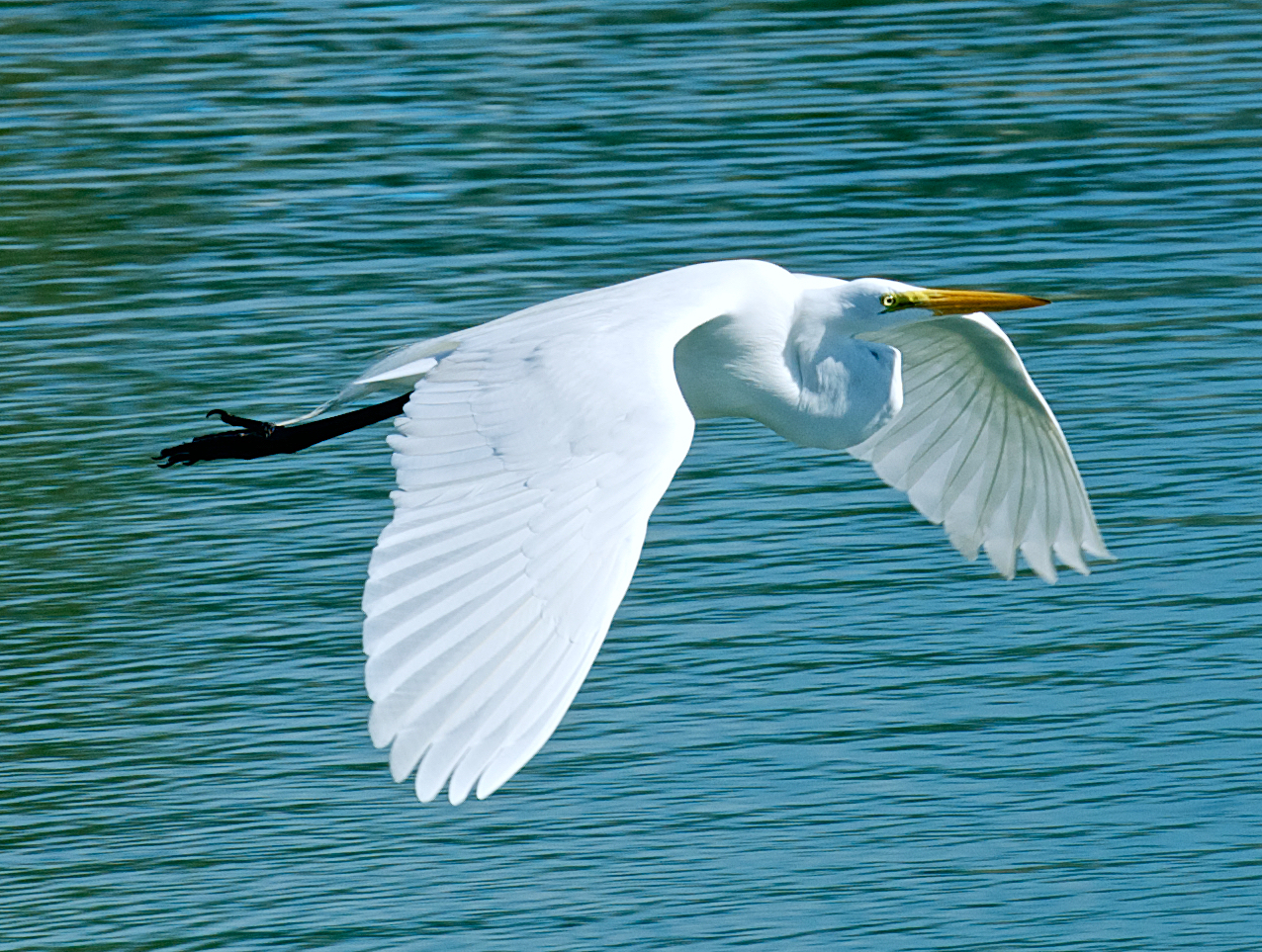
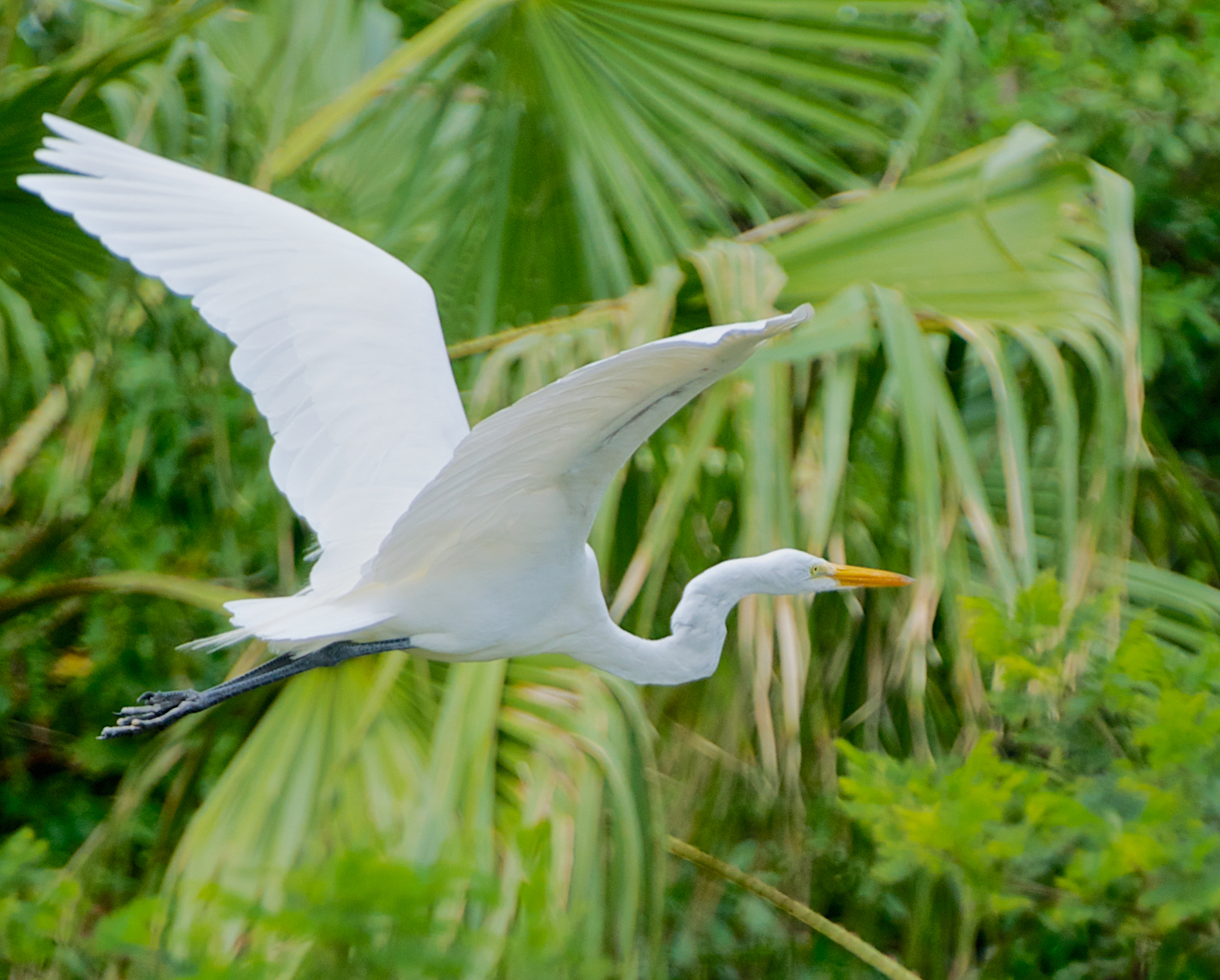
The Great Egret is actually a heron rather than an egret. It’s a Great Heron. All egrets are members of the heron family Ardeidae, but the converse is not true. As long ago as 1758, Linnaeus awarded the bird the binomial name Ardea alba i.e. ‘Heron white‘. Why it should have been so hard to stick to that authoritative nomenclature, I can’t imagine. Perhaps in time all heron and egret species became so hopelessly confusing for people that it ceased to matter much what they were called.

Great Egret, Bahamas (Nina Henry)

Maybe it was that type of carelessness that led to people from the mid-c19 onwards eyeing up GREGs as a source of hat feathers and other decorative necessities. As with flamingos and many other beautiful avian species, mankind’s millinery and other fashion needs were satisfied at the expense of gorgeous plumage. Actually, at the cost of the birds’ lives: they were simply shot in huge numbers. 

Great Egret, Bahamas (Nina Henry)

Healthy populations were decimated; for some species they never recovered. For others, the great egret among them, the passage of time and the passing of fashions – backed in many cases with conservation programs – have successfully restored the populations. In 1953 the National Audubon Society, which was formed at least in part to discourage the killing of birds for their feathers, took a decisive step in the cause of the great egret by making the bird the emblem of the organisation.

Great Egret, Bahamas (Nina Henry)

Photo Credit: Nina Henry photographed all the egrets in this post. Her wonderful images made a significant contribution to the “BIRDS OF ABACO” project.

Great Egret, Bahamas (Nina Henry)

Unknown's avatar

PLOVER APPRECIATION DAY 2018: ABACO’S 6 TREASURES


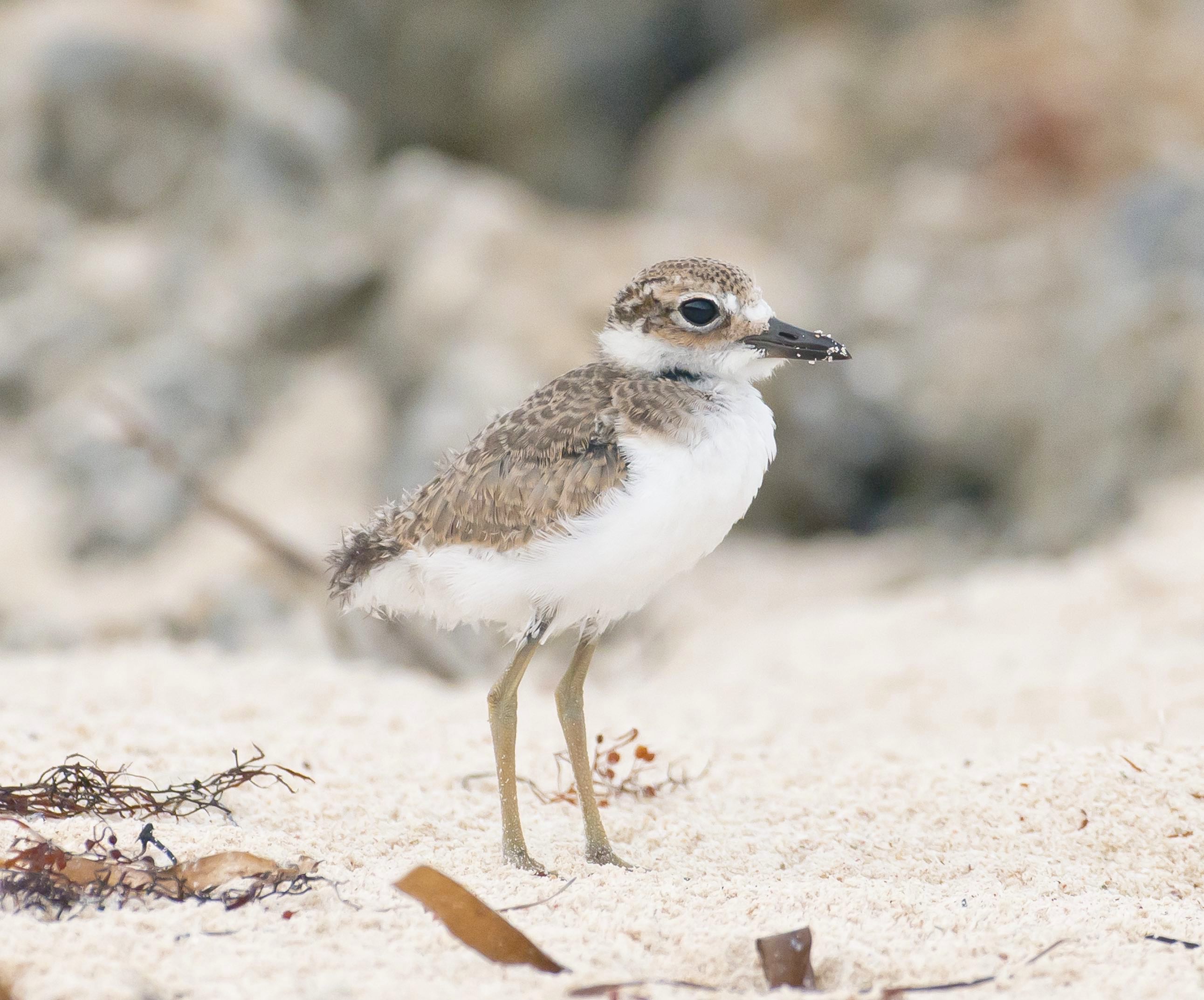
Wilson's Plover Chick, Abaco, Bahamas (Tom Sheley)

PLOVER APPRECIATION DAY 2018: ABACO’S 6 TREASURES

Every day of the year, or so it seems, at least one worthy creature has been awarded an ‘Appreciation Day’, a special day when a particular species has its profile raised and awareness spread around. It certainly seems to be the case with birds; I’m going to assume that it applies to all the other classes of animal – mammals, fish, reptiles, amphibians and invertebrates, each with their own worthy candidates for recognition. Except for no-see-ums, obviously. And fire ants, I hope. You’d think standing on a nest while taking photos just once in a lifetime would be a lesson. I’ve done it twice… Anyway, yesterday was Plover Appreciation Day 2018.

PLOVERS ON ABACO

Until recently Abaco had 33 recorded shorebird species but since the first-ever sightings of a BUFF-BREASTED SANDPIPER in 2016, the number has risen to 34. Of these, a mere 6 are plovers: 

  • Black-bellied Plover                        Pluvialis squatarola                      WR 1
  • American Golden Plover                 Pluvialis dominica                         TR 4
  • Wilson’s Plover                                Ochthodromus wilsonia             PR B 2
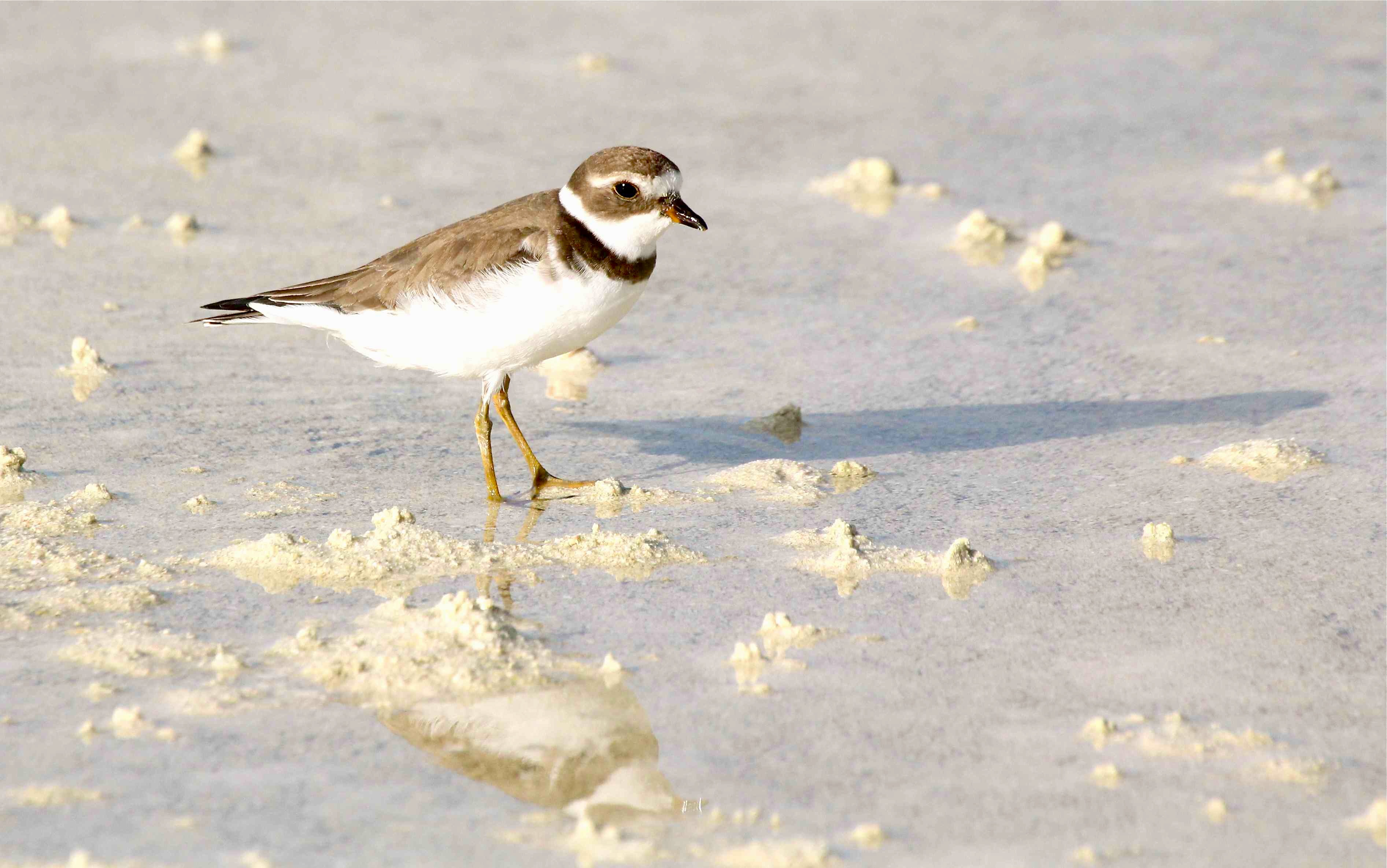
  • Semipalmated Plover                     Charadrius semipalmatus            WR 2
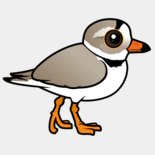
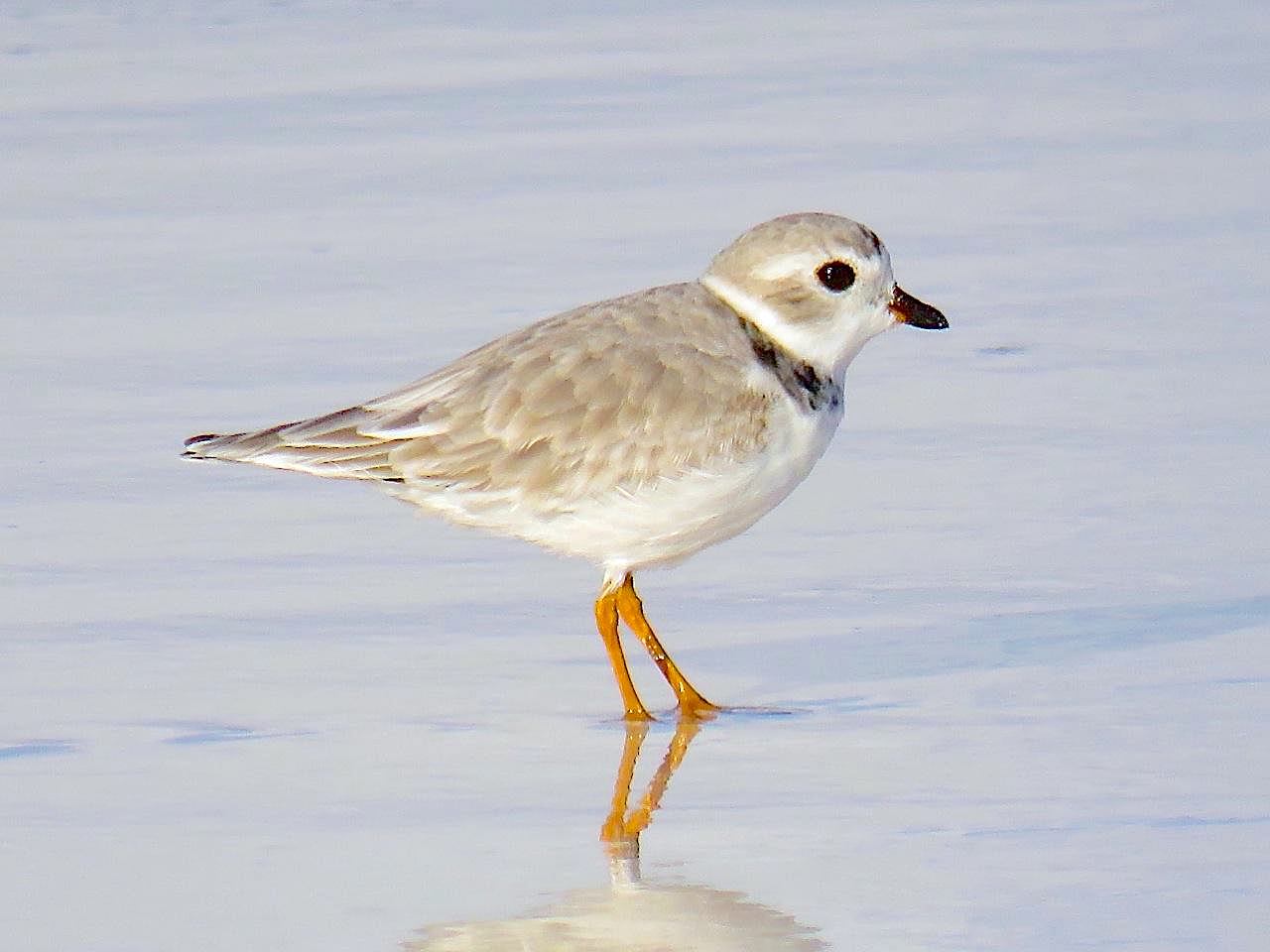
  • Piping Plover                                    Charadrius melodus                     WR 3
  • Killdeer                                              Charadrius vociferus                    WR 2

The codes tell you, for any particular bird, when you may see it (P = permanent, WR = winter resident, TR = transient); whether it breeds (B) on Abaco; and your chance of seeing it, graded from easy (1) to vanishingly unlikely (5)

The best-known of the 6 Abaco plover species is the Wilson’s Plover, because it is the only permanent resident. The American Golden Plover is a rare transient, but we luckily have a photo of one (below) taken on Abaco. All the others are winter residents and easy to middling hard to find.

The Piping Plover is the most interesting species, with a mere 8000 left in the world. There is a vigorous conservation program to protect them and their habitat, both in their breeding grounds in the North and their southern overwintering grounds. Their summer breeding range is in Canada and the Great Lakes, north-central US, and the eastern seaboard. In winter they migrate south, many to the Bahamas – and Abaco is one of their preferred homes. We count as many as we can between August and February, report the banded ones, and find out their origins and histories

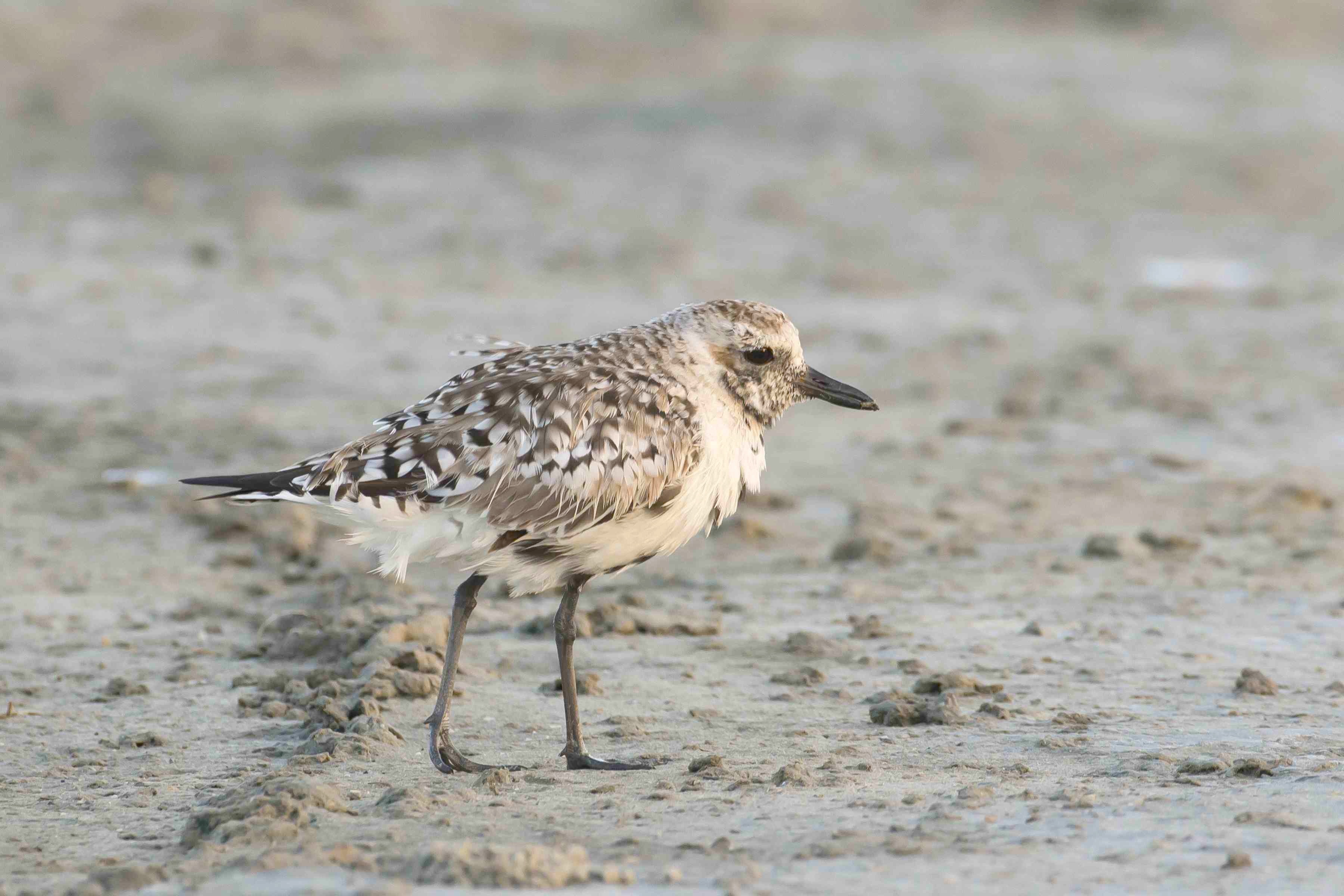
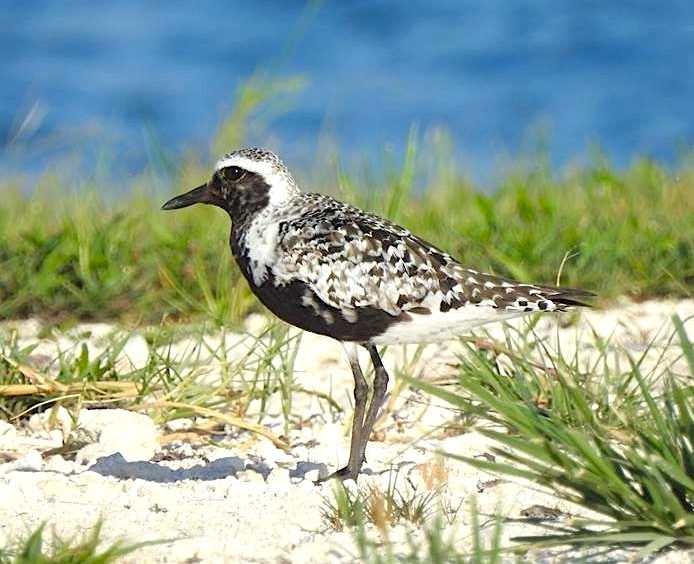
BLACK-BELLIED PLOVER  Pluvialis squatarola   WR 1

Non-breeding plumage (as you would see normally it on Abaco, without the black belly)Black-bellied Plover intermediate plumage. Marls. Abaco Bahamas. Tom Sheley

 Breeding plumage – and the reason for the nameBlack-bellied Plover (breeding plumage), Bahamas (Linda Barry-Cooper)

AMERICAN GOLDEN PLOVER  Pluvialis dominica  TR 4

American Golden Plover, Bahamas (Tony Hepburn)

 SEMIPALMATED PLOVER Charadrius semipalmatus WR 2

Semi-palmated Plover, Bahamas (Tony Hepburn)Semipalmated Plover (f nb), Abaco - Bruce Hallett

KILLDEER Charadrius vociferus WR 2

Kildeer, Abaco - Bruce Hallett

PIPING PLOVER  Charadrius melodus WR 3

Piping Plover, Bahamas (Tony Hepburn)Piping Plover, Abaco Bahamas (Peter Mantle)Piping Plover, Abaco Bahamas (Keith Salvesen)

WILSON’S PLOVER Ochthodromus wilsonia  PR B 2

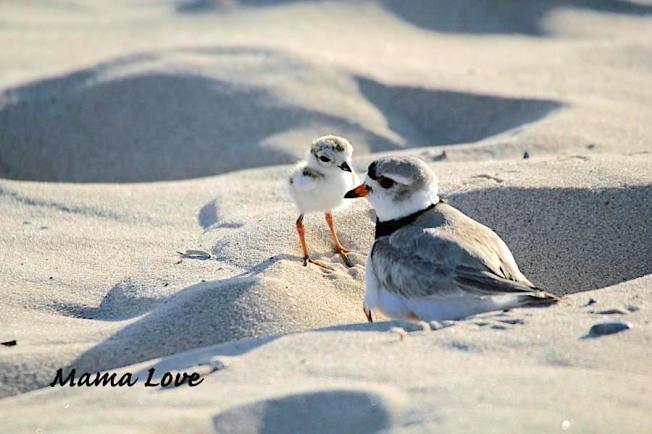
This permanent resident plover is a year-round presence on the Delphi Club beach, where in summer they nest and raise their tiny fluffball chicks. They are especially significant on Abaco as the only breeding plover species – it’s the only chance we get to see plover nests and chicks… (see header image and below).

Wilson's Plover, Delphi Club Beach, Abaco - Craig NashWilson's Plover, Abaco 12

RELATED POSTS

PIPING PLOVERS

50 WAYS TO PLEASE YOUR PLOVER

WILSON’S PLOVERS (1) ‘Dream Plover’

 WILSON’S PLOVERS (2) Nest Protection

 WILSON’S PLOVERS (3) Scrapes, Chicks & Broken Wings

SEMI-PALMATED PLOVERS

Photo credits: Tom Sheley (1, 2); Linda Barry-Cooper (3); Tony Hepburn (4, 5, 8); Bruce Hallett (6, 7); Peter Mantle (9); Keith Salvesen (10, 13); Sandy Walker (11); Craig Nash (12); Charmaine Albury (14)

Piping Plover, Abaco Bahamas (Charmaine Albury)

Unknown's avatar

COOTS FIGHTING & THE CARIBBEAN COOT DEFEATED


Coots Fighting (Phil Lanoue)

COOTS FIGHTING & THE CARIBBEAN COOT DEFEATED

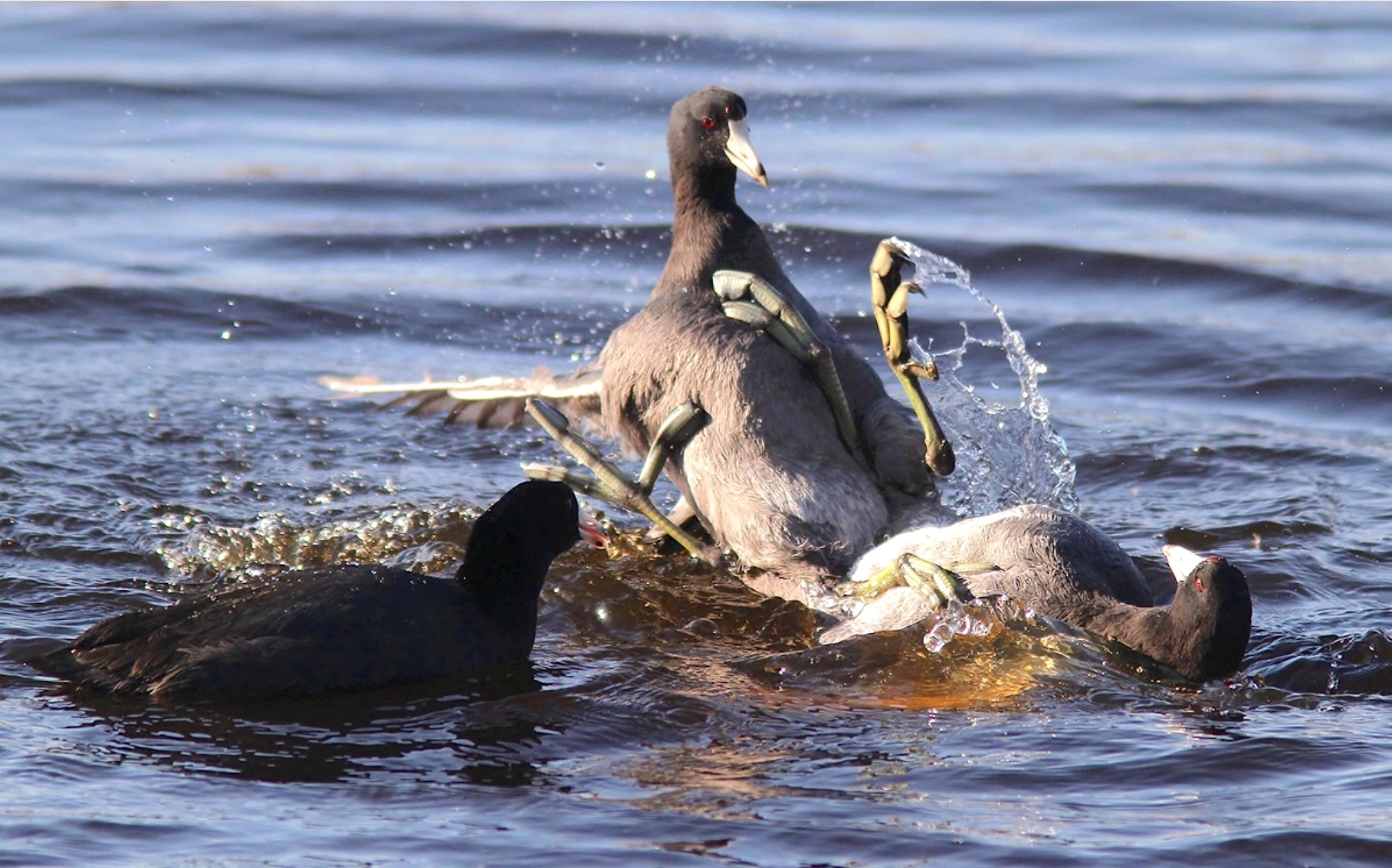
These coot fight images are from Phil Lanoue, whom I have featured before. He is a master of bird sequences, magicking a whole avian story or drama in a few clear, sharp photos. These types of image are well beyond my skills and my camera limitations. Here are 2 males battling over a female which, by the final aggressive image in which dominance is asserted, has disappeared for the picture…

Coots Fighting (Phil Lanoue)Coots Fighting (Phil Lanoue)Coots Fighting (Phil Lanoue)

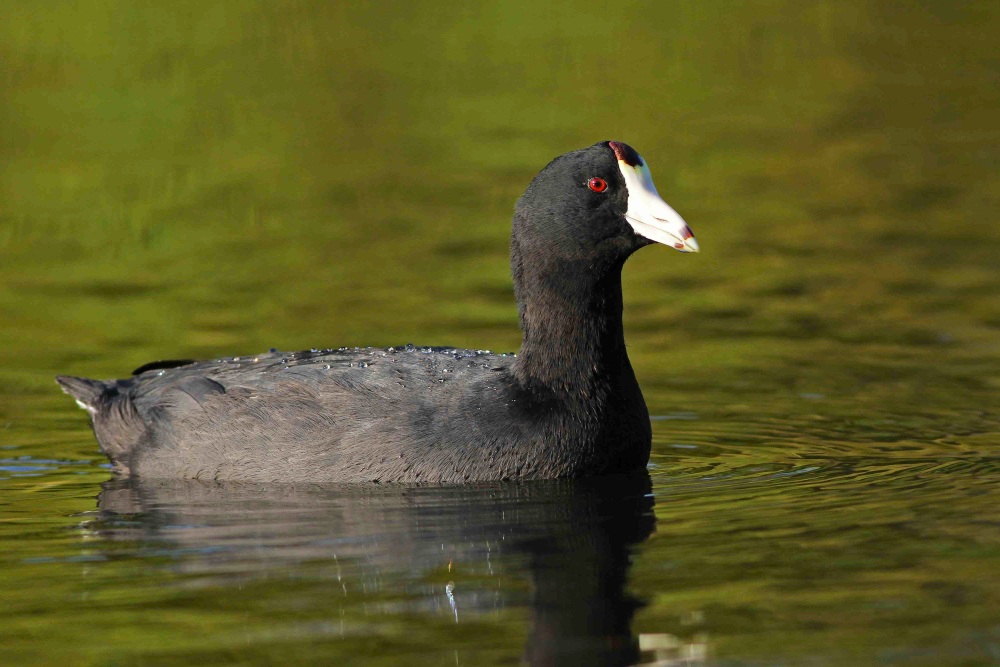
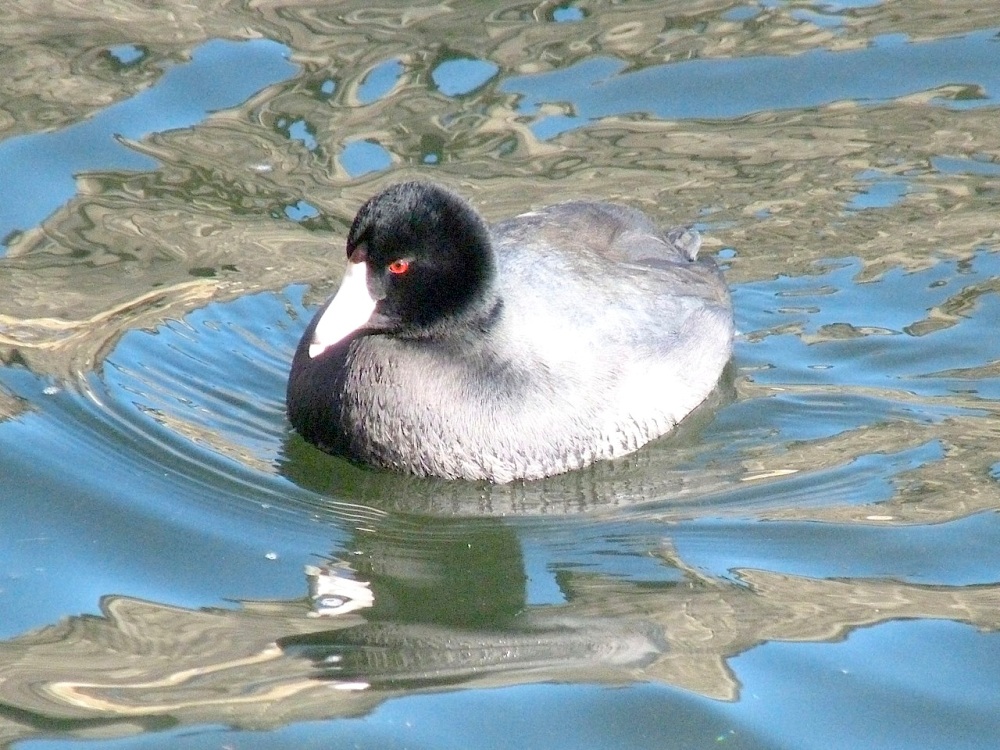
The other battle in Coot World occurred in 2016 when the endemic Caribbean Coot (formerly Fulica caribaea) was defeated by the combined forces of the American Coot (Fulica americana) and the all-powerful AOU, official arbiter of bird categorisation. They are now joined as a single species, the differences between the two types being considered insufficient to warrant separate species status. The familiar American version looks like this (note the red area on the shield above the beak):
American Coot - Bahamas - Great Abaco - Gerlinde Taurer

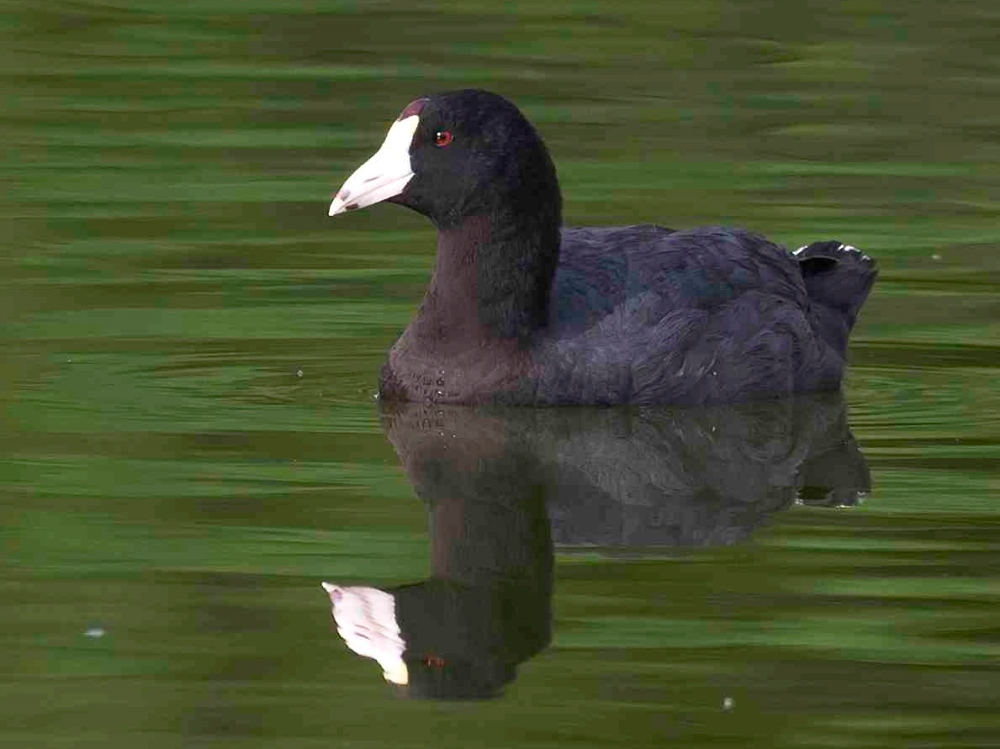
The ex-Caribbean Coot, has white frontal shield that extends to the top of the head. When I was compiling ‘Birds of Abaco‘ in 2013, there was already a question mark over the separate species status, with many regarding it as a sub-species of the American Coot. I wrote: There is an intriguing debate, a small book in itself, about the existence as a distinct species of the Caribbean Coot, with its white frontal shield. Many field guides include it separately, some with the rider that it is ‘unrecorded in the Bahamas’. The Bahamas Bird Records Committee does not recognise it, and Hallett, among other experts, views it simply as an American Coot variant. The image below of the two coots together is included to illustrate the visible difference between the birds. The genetic debate is fortunately outside the scope of this book”. That said, I pigheadedly went ahead and included it as a separate species anyway… 

An ex-Caribbean coot, with its white frontal shield.  Since 2016, just another coot'Caribbean' (now American' Coot - white frontal shield - Abaco, Bahamas. Woody Bracey

The research that led to the reclassification was based on the fact that breeding biology suggests that different species favour their own species for breeding. Research by Douglas McNair and Carol Cramer-Burke indicated that there is little or no ‘reproductive isolation’ of the sort to be expected in different species. The coots had no particular preference in their choice of mate. Also, they sound alike.

American Coot (Keith Salvesen)

RELATED POSTS

COOT AND GALLINULE  FEET: THE (BIG) DIFFERENCES

HOW THE MOORHEN (= GALLINULE) GOT ITS NAME

American Coot.Treasure Cay, Abaco Bahamas.Tom Sheley

Credits: Phil Lanoue (1 – 4); Gerlinde Taurer (5); Woody Bracey (6); Keith Salvesen (7); Tom Sheley (8). Research inc. eBird Caribbean – an excellent resource to check out

Unknown's avatar

WORLD SHOREBIRDS DAY – ABACO’S 33 SPECIES (1): LARGER BIRDS


Whimbrel numenius phaeopus (Andreas Trepte / wiki)

WORLD SHOREBIRDS DAY – ABACO’S 33 SPECIES (1)

LARGER BIRDS

Today, September 6th, is World Shorebirds Day. Every year, a Shorebird of the Year is selected by the organisers of this global event, and this year they have gone ‘large’. Perhaps in response to the declining populations of curlew species, they have chosen a fine representative – the whimbrel. Inconveniently – and although the whimbrel is a worldwide species – it is extremely rare on Abaco. In the definitive Abaco Checklist (see below), it is coded a TR4, i.e. a very uncommon transient with a handful of sporadic reports. Until last year, sightings were very few and far between. Then suddenly last autumn, they made a small migratory comeback. You can read about it HERE.

BLACK-NECKED STILT  Himantopus mexicanus  PR B 3Black-necked Stilt, Abaco - Tom Sheley Black-necked stilt, Abaco - Alex Hughes

Abaco is home to 33 shorebird species. Like the human residents of the main island and cays, some are permanent; some are winter residents arriving from the north to enjoy a warmer climate; and some are transients – visitors that pass through a couple of times a year on their way from and to their nesting habitats. 

CHECKLIST OF ALL 33 SHOREBIRDS

The definitive checklist of Abaco’s birds was compiled especially for the BIRDS OF ABACO by Bahamas Birding author and authority, the late and much missed Tony White, with Abaco’s bird expert Elwood Bracey. Below is the shorebird list, with a photographic selection of the larger and/or longer-billed shorebirds in checklist order. Yes, including an Abaco whimbrel.

The codes will tell you, for any particular bird, when you may see it (P = permanent, WR = winter resident, TR = transient, V = vagrant); whether it breeds (B) on Abaco; and your chance of seeing it, graded from easy (1) to vanishingly unlikely (5).

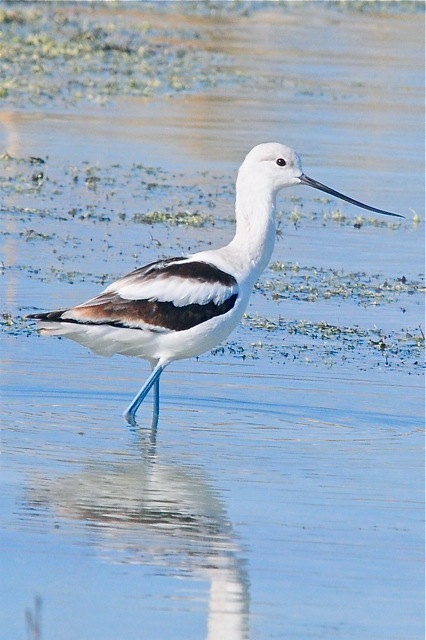
AMERICAN AVOCET Recurvirostra americana   WR 4
American Avocet, New Providence - Tony Hepburn

AMERICAN OYSTERCATCHER  Haematopus palliatus PR B 2American Oystercatcher, Abaco 5.1 Tom Sheley

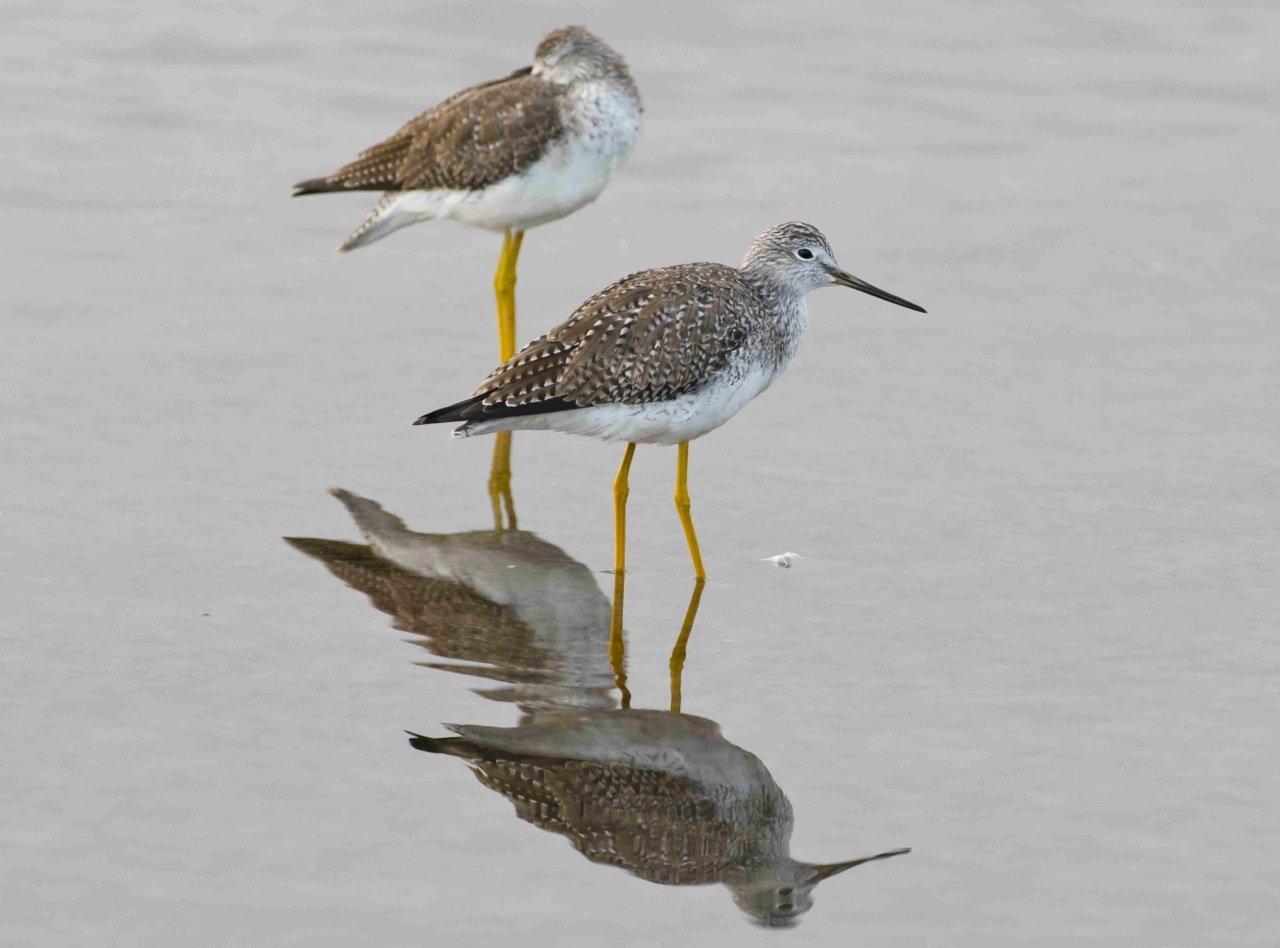
GREATER YELLOWLEGS  Tringa melanoleuca   WR 2Greater Yellowlegs LR. Abaco Bahamas.Tom Sheley.2.12 copy 2

LESSER YELLOWLEGS  Tringa flavipes  WR 3Lesser Yellowlegs.Evening on the Marls.Abaco Bahamas.2.13.Tom Sheley small2

WHIMBREL Numenius phaeopus TR4 (an Abaco one)

HUDSONIAN GODWIT Limosa haemastica [V5]

Like the whimbrel, this bird is another special bird to be able to include. Until last October, it was categorised as a V5, meaning that one or perhaps 2 vagrants had ever been seen on Abaco. Then one appeared on a pond and was spotted by Woody Bracey and, a few days later, by Keith Kemp – who even took confirmatory photos. You can read the story HERE.
Hudsonian Godwit, Abaco (Stewart Neilson)

SHORT-BILLED DOWITCHER  Limnodromus griseus  WR 1Short-billed Dowitcher (NB), Abaco - Bruce Hallett 

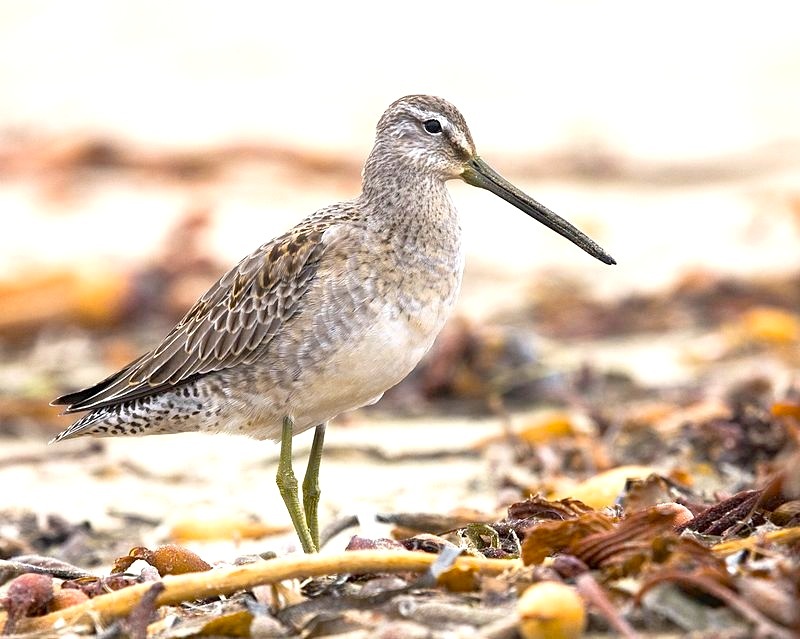
LONG-BILLED DOWITCHER  Limnodromus scolopaceus   WR 4Long-billed Dowitcher Mike Baird Wiki

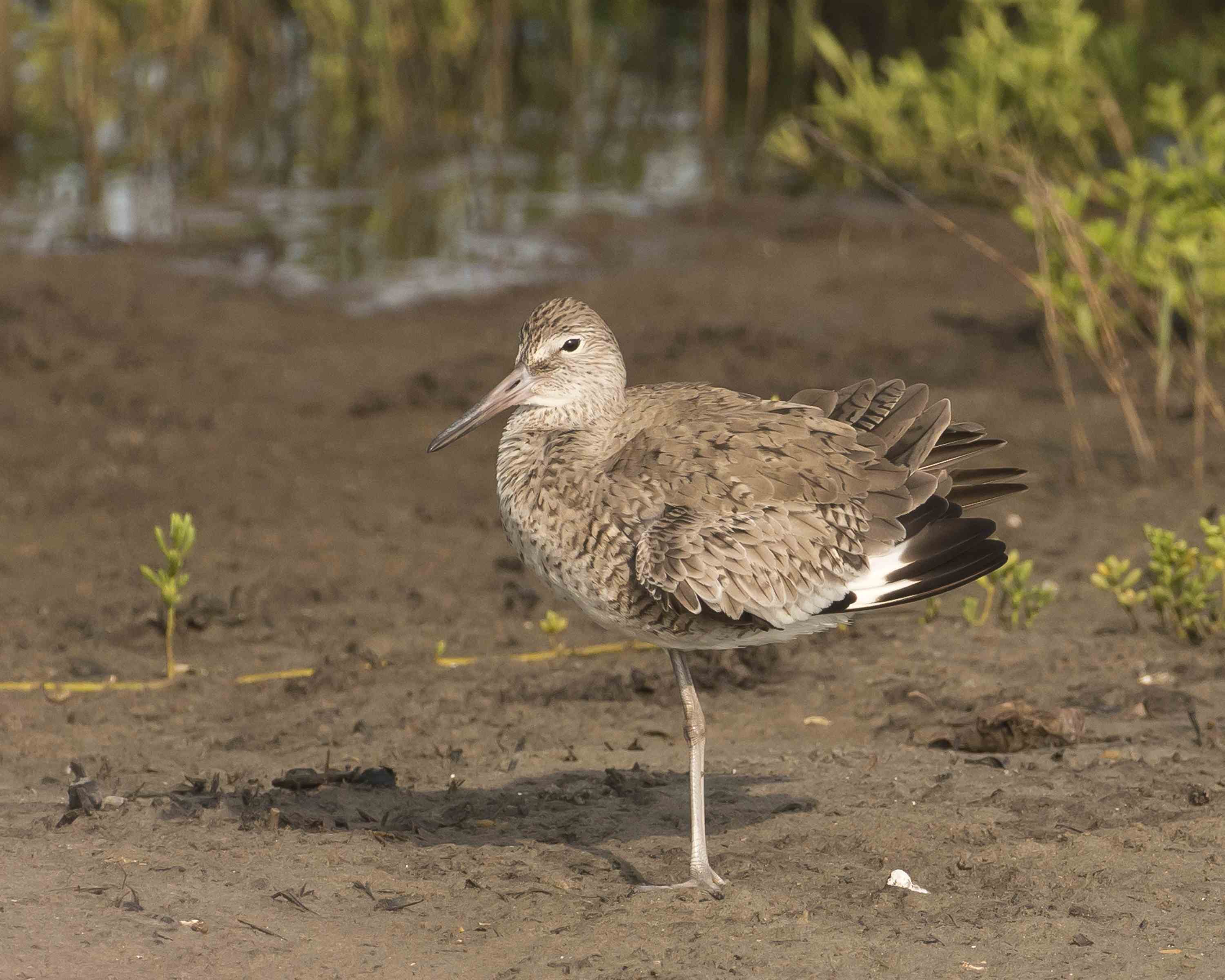
WILLETT  Tringa semipalmata  PR B 2Willet.Abaco Bahamas.2.13.Tom Sheley small

WILSON’S SNIPE  Gallinago delicata   WR 3Wilson's Snipe, Abaco - Woody Bracey

RELATED POSTS

WHIMBREL

WILLET

BLACK-NECKED STILT

AMERICAN OYSTERCATCHER

HUDSONIAN GODWIT

YELLOWLEGS

DOWITCHERS

Photo Credits: Andreas Trepte / Wiki (1);Tom Sheley (2, 5, 6, 7, 13); Alex Hughes (3);Tony Hepburn (4); Charmaine Albury (8, 9); Stewart Neilson / Wiki (10); Bruce Hallett (11); Mike Baird / Wiki (12); Woody Bracey (14)

Unknown's avatar

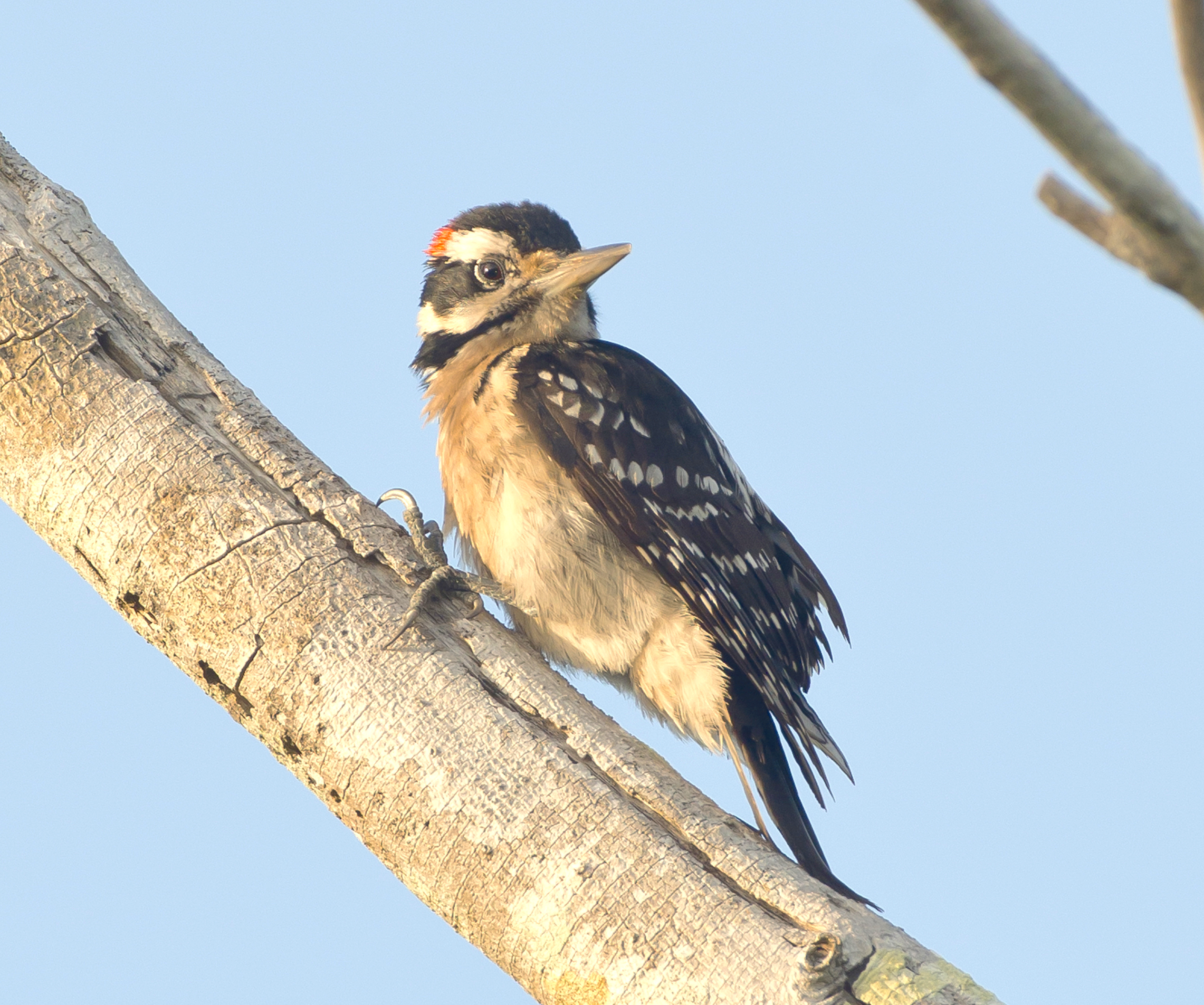
A HAIRY WOODPECKER ON ABACO, BAHAMAS


Hairy Woodpecker, Abaco Bahamas (Tom Sheley)

It’s Friday. I’ve just nixed for wild brown trout on the River Frome in the rain. I need a beer and I’ve run out of week. You can read more about the attractive little Hairy Woodpecker – Abaco’s small counterpart to the larger and noisier West-Indian Woodpecker – HERE. Have a good weekend!

Photo Credit: Tom Sheley

Unknown's avatar

PRESENTING A LARGE BILL… ANIS ON ABACO


Smooth-billed Ani, TCGC Hole 11 - Becky Marvil

PRESENTING A LARGE BILL… ANIS ON ABACO

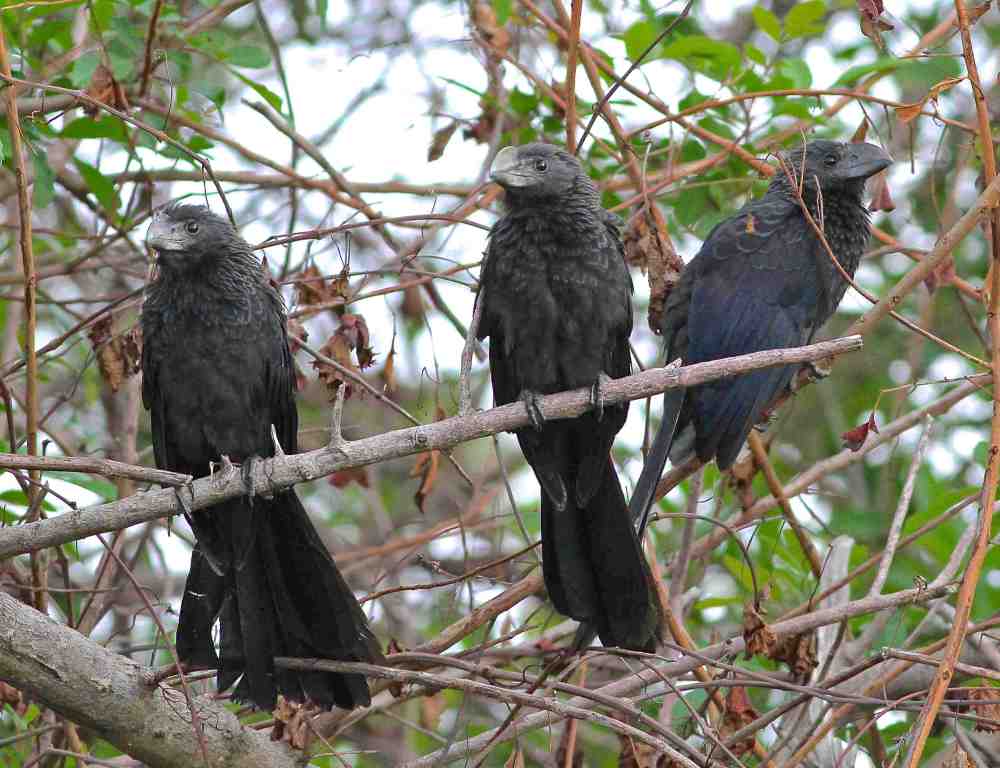
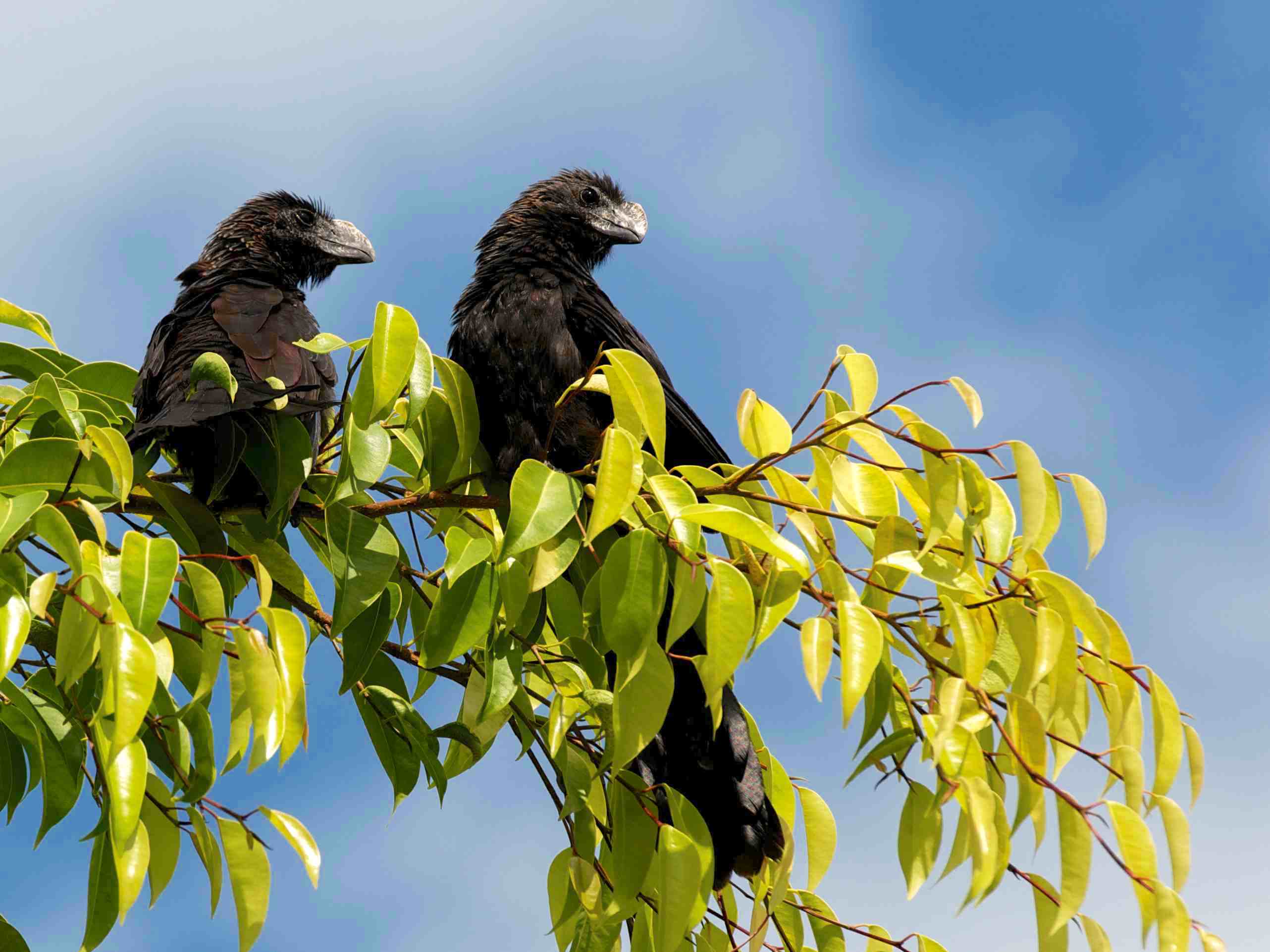
The Smooth-billed Ani (Crotophaga ani) is the third member of the cuckoo family found on Abaco, the others being the MANGROVE CUCKOOand the YELLOW-BILLED CUCKOO. Anis range from Florida and the Bahamas in the north, down through the Caribbean to South America, where they are widespread.

Smooth Billed Ani, Abaco - Nina Henry 2a

Unlike their shy and retiring cuckoo cousins, anis are extrovert shouty birds that like to hang out in noisy gangs and family groups. They can often be found in low scrub, bickering and squawking, and fluttering around. You’ll probably hear them from some way off, sounding like this:

Smooth-billed Anis_Abaco - Tony Hepburn

Anis have advanced social, parenting and chick-rearing skills. They build a communal nest for the group, and all share in egg incubation and chick-feeding duties They may raise up to three broods in a season, which keeps the numbers up. Rather touchingly, the young of earlier broods help to feed more recent chicks.

It follows from this that unlike many other cuckoo species, the ani is not a brood parasite. So the species does not lay its eggs in the nests of other, smaller birds which then unwittingly rear the interloper(s), who in turn push the legitimate hatchlings out of the nest and get all the food and attention.

Smooth-billed Anis Abaco - Gerlinde Taurer d

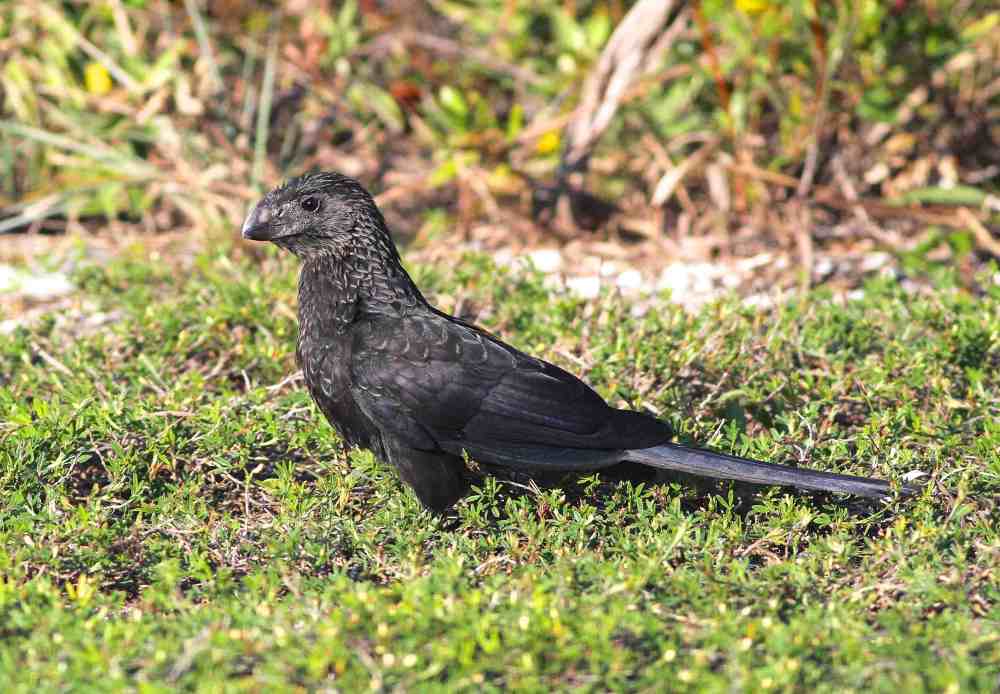
I have tried to discover why an ani’s beak is as it is, without much success. Very often beak shape relates directly to the feeding habits and preferences of a species, but it is hard to see how a diet consisting mainly of insects and small reptiles such as lizards would account for such a prominently protuberant proboscis. Here is a close-up of the item in question.
On Abaco (and indeed elsewhere) Anis are sometimes known as ‘Cemetery Birds’, no doubt because of their all-black appearance (though their raucous tendencies would be quite inappropriate for a graveyard). However although at a distance these birds may look completely black, catch one in the sun at the right angle, and you’ll find that the plumage is far more varied, and with some intricate patterning.

Smooth-billed Ani. Abaco Bahamas Tom Sheley

Look for Anis in low scrubland and coppice, cultivated areas, perched in unsteady noisy rows on utility lines, or foraging on the ground.

Smooth-billed Ani, Abaco. Gerlinde Taurer c

The appearance and flying abilities of Anis are wonders to behold. As I wrote in The Birds of Abaco, “Their curious heavy beaks, their clumsy flight and their untidy take-off and landing routines suggest a design fault”.

Smooth Billed Ani, Abaco - Nina Henry 1a

“One… is the loneliest number…” Oh, hang on a moment…Smooth-billed Ani Abaco - Gerlinde Taurer a

…”two of us…standing solo in the sun…”Smooth-billed Ani, Abaco (Gerlinde Taurer) b

The Philatelic Bureau of the Bahamas Postal Service is commendably committed to featuring the natural history of the Bahamas. Although probably not in the top-ten of anyone’s bird list, the ani nevertheless got its own stamp in a 1991 bird issue.

As far as I know, there is not yet a collective noun for a group of anis. There should be. Any suggestions welcome. Meanwhile I put forward A Commotion of Anis”

Smooth-biled Ani, Abaco - Bruce Hallett

Credits (all photos taken on Abaco): Becky Marvil, Nina Henry, Tony Hepburn, Gerlinde Taurer, Roselyn Pierce, Tom Sheley, Bruce Hallett, Keith Salvesen; sound files from Xeno Canto and FMNH; range map from IUCN; hat tip to the always excellent Aimee Mann.

This post is a revised, corrected and expanded version of one I wrote nearly 4 years ago.

Smooth-biled Ani, Abaco (Keith Salvesen)

Unknown's avatar

NORTHERN PARULAS: ON THEIR WAY TO ABACO


The Northern Parula is one of 37 warbler species recorded for Abaco. The vast majority of these species are migratory, arriving in the Fall and leaving in the Spring to fly north to the breeding grounds. When I’m back at HQ from my computer-free break, I’ll be writing more about these little birds. Meanwhile, this post is a reminder that the influx will begin very soon. The Northern Parula, with the distinctive green patch on its back, is sure to be among them.

Unknown's avatar

RED-WINGED BLACKBIRD, ABACO, BAHAMAS


red-winged-blackbird-male-abaco-bahamas-tom-sheley.jpg

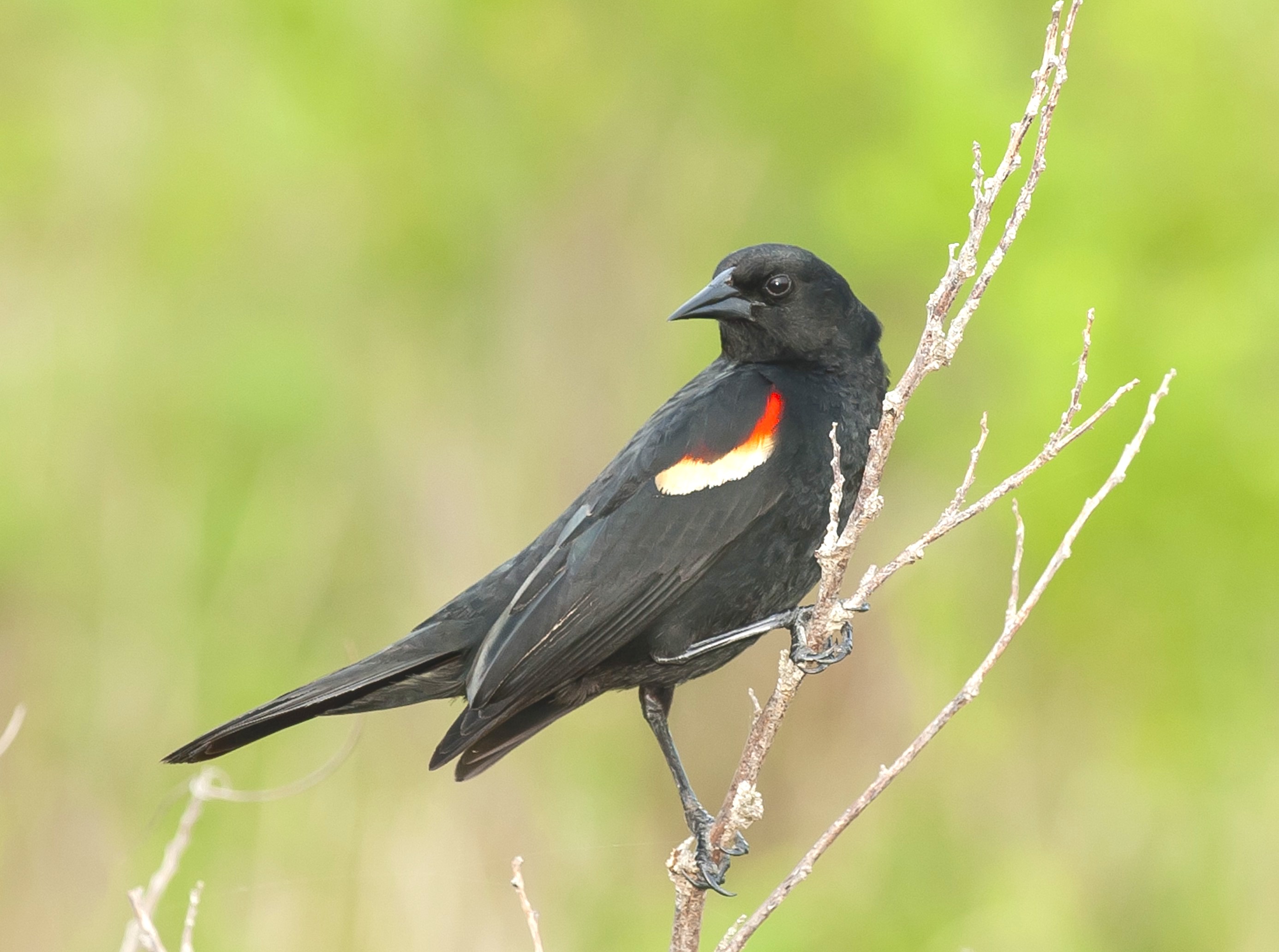
I’m away for a few days on the Emerald Isle, leaving my trusty computer many miles away (on purpose, I mean). I’ve just got my iPhone, but writing posts and inserting images on such a small screen / keyboard is a fool’s errand. So I’ve pre-loaded a couple of beautiful bird images to post this week. Here is a wonderful red-winged blackbird male taken by photographer Tom Sheley while we were getting together some images for The Birds of Abaco deep in Abaco backcountry.

Photo credit: Tom Sheley

Unknown's avatar

‘CASTING ABOUT’: A TRICOLORED HERON HUNTING


Tri-colored heron fishing (Phil Lanoue)

‘CASTING ABOUT’: A TRICOLORED HERON HUNTING

‘Casting’ is one of those words with multiple meanings, some archaic but most in use today. You can probably think of half-a-dozen straight off *. ‘Casting about’ is one of the specific usages and derives from hunting, eg hounds casting about for a scent. By extension, it has come to mean something like searching intently or thoroughly for something you need, or want, or are having difficulty in finding. Which is where this tricolored heron comes into the picture.

Tri-colored heron fishing (Phil Lanoue)

It’s always entertaining to watch a heron or egret fishing. Their methods range from standing stock still and suddenly stabbing downwards to slowly wading to the crazy dash that reddish egrets sometimes do on the edge of the mangroves. This one is hooding its wings, sometimes called ‘canopy feeding’. The theory is that this attracts small fish by providing shade. I also wonder if this method is used to reduce glare from the surface of the water.

Tri-colored heron fishing (Phil Lanoue)

The bird in this sequence is a juvenile, and not yet the  lethal hunter that it will soon become. It has seen a fish moving but has temporarily lost it (fishermen will be familiar with the mild feeling of annoyance when this happens). So it is casting about, slowly zig-zagging through the water, looking from a height, crouching down, trying to get a good view of its elusive snack. I can’t say that this little episode ended in success. Sometimes, the fish you sight and then lose has gone for good. But as fishermen often say when they lose one (and by extension the phrase is now applied to other areas of human life), there are always plenty more fish in the sea.

Tri-colored heron fishing (Phil Lanoue)

* Even without considering Mr Weinstein and his allegedly unusual casting methods

Photo credit: Phil Lanoue, a photographer who specialises in patiently taking sequences of bird activity

Unknown's avatar

BANANAQUITS: SMART BIRDS ON ABACO


 Bananaquits, Abaco Bahamas (Craig Nash)

BANANAQUITS: SMART BIRDS ON ABACO

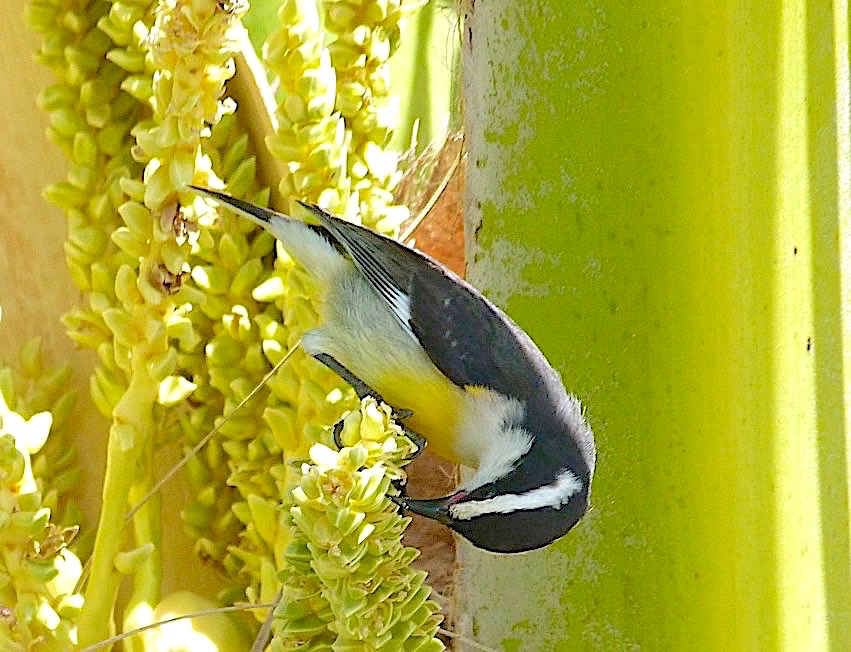
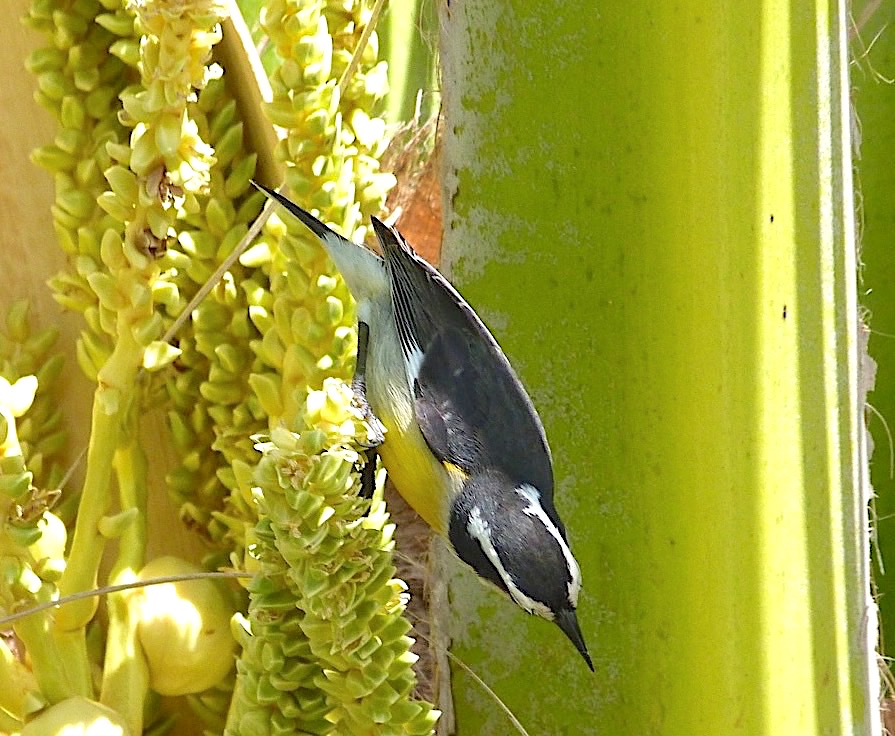
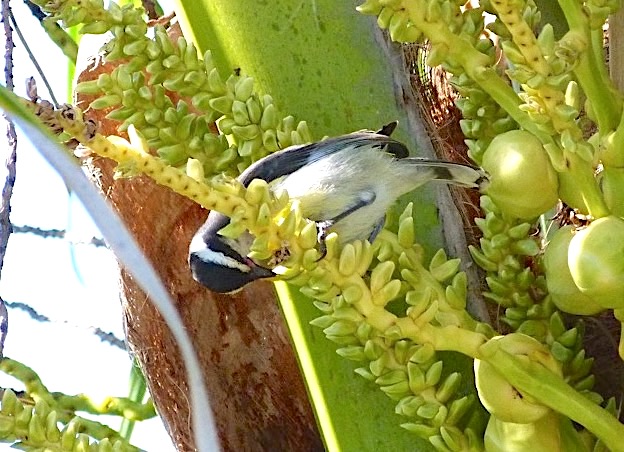
Bananaquits are smart. They look smart, of course, and they act smart too. Their diet consists  mainly of nectar and fruit, so you’ll find them where there are flowering or fruiting trees and shrubs. Their sharp little beak curves slightly, enabling them to get right into where the good things are, as shown in this sequence of not-especially-good-so-I’ll-call-them-illustrative photos. And that beak gives then another method of reaching nectar – they can pierce the base of a flower and use the beak as a sort of probe to get at the nectar that way. And soft fruit? Easy!

Bananaquits, Abaco Bahamas (Keith Salvesen)

Bananaquits, Abaco Bahamas (Keith Salvesen)

Bananaquits, Abaco Bahamas (Keith Salvesen) Bananaquits, Abaco Bahamas (Keith Salvesen) Bananaquits, Abaco Bahamas (Keith Salvesen) Bananaquits, Abaco Bahamas (Keith Salvesen)

All photos: Header, Craig Nash; the rest, Keith Salvesen – all at Delphi, Abaco Bahamas

Unknown's avatar

BAHAMA MAMA: BIG NEWS ABOUT A TINY BIRD


Piping Plover Bahama Mama, Michigan / Abaco (Carol Cooper)

BAHAMA MAMA: BIG NEWS ABOUT A TINY BIRD

The bird in the header image is the presciently named Bahama Mama in Muskegon State Park, Michigan – so, one of the rare Great lakes piping plovers. She originally hatched and was banded as a chick in 2014 at Tawas MI, some distance away from Muskegon. When later named in 2015 by Muskegon monitor Carol Cooper, no one could possibly have known then where she would chose to overwinter. The Bahamas, as it turned out – the avian equivalent of nominative determinism.

Piping Plover Chick (MDF / Wiki)

This little bird is the perfect example to demonstrate the success of (a) an organised monitoring and recording system in the breeding grounds of these rare birds; (b) the use of easily identified coded banding and (c) the deployment of ‘citizen scientists’ to back up the professionals in the overwintering grounds such a Abaco.

A combination of the three factors leads over time to the compilation of a life story. Invariably there will be gaps, but let’s take a look at what we know about Bahama Mama, in her own dedicated timeline. Note two things: her beach fidelity; and the evidence of mate infidelity…

  • 2014 Born Muskegon State Park, MI
  • 2015 Nested with Little Guy and raised chicks. Winter location unknown
  • 2016 Returned to Muskegon and again successfully nested with a new male, Bear, from Sleeping Bear Dunes Park MI. (Little Guy went off with another female on the same beach…)
  • 2016 Resighted in October on Long Beach Abaco and stayed for several months
  • 2017 Back at Muskegon and raised chicks again with Little Guy
  • 2017 Again resighted  in October on Long Beach Abaco and overwintered
  • 2018 Back at Muskegon, initially back with Little Guy, eventually nested with Enforcer

The official record of the latest union – evidence of fickleness

This summer 4 chicks  were hatched. Sadly, one of them (Ringo, 2 pics below) was lost, presumed predated, leaving 3 to fledge.

Bahama Mama with one of her chicksBahama Mama & Chick, Muskegon MI (Carol Cooper)

Little Ringo RIPRingo Piping Plover, Muskegon MI (Carol Cooper)

Another of the chicks

These are rare and threatened birds, vulnerable at both ends of their migration for all the usual reasons. The studies undertaken at both ends of the migration have revealed astonishing beach loyalty in these little birds that travel up to 1500 miles (sometimes more) every Spring and every Fall to be somewhere safe to nest and breed; and then to overwinter. In Michigan, Carol Cooper is Bahama Mama’s mama, watching over her, recording the details, checking when she has left the beach, and anxiously watching each Spring for her arrival home.

On Abaco, these duties – pleasures, even – are undertaken by ABACO PIPING PLOVER WATCH and the team of citizen scientists who keep an eye on the beaches, count the birds, note the banded birds and photograph them for ID, and pass the info on to HQ (which happens to be me). The data from all sightings is collated and then the season’s stats are compiled and provided to the scientists involved. Here’s a summary of stats for last season: 

Abaco Piping Plover Watch Stats 2017-18 (Keith Salvesen)

Bahama Mama, first sighting on Long Beach Abaco Oct 2017Bahama Mama Piping Plover, Long Beach Abaco (Keith Kemp)

Photo Credits: Carol Cooper (1, 3, 4, 5, 6); MDF (2); Keith Kemp (7). Special thanks to Carol Cooper, monitor in Michigan; and to Keith Kemp, primary monitor on Abaco. Also to Todd Pover CWFNJ and all the other real scientists involved for the last 3 years

POLITE REQUEST

If you live on Abaco or its cays anytime between August and March and might be interested in helping with piping plover research by becoming a monitor, please get in touch with me. It’s very simple and undemanding. A beach stroll from time to time – even as little as once a month – with a notebook, pencil, binoculars, a chocolate bar and (preferably for accurate ID of banded birds) a camera. Not a dog, though. Not on this walk anyway! Every report, even of a single bird, adds to the picture. Last season there was more than one ‘citizen scientist’ sighting of a plover where none had been seen before. 

Unknown's avatar

‘ON STILTS’: ELEGANCE ON TWO LEGS (OR JUST ONE)


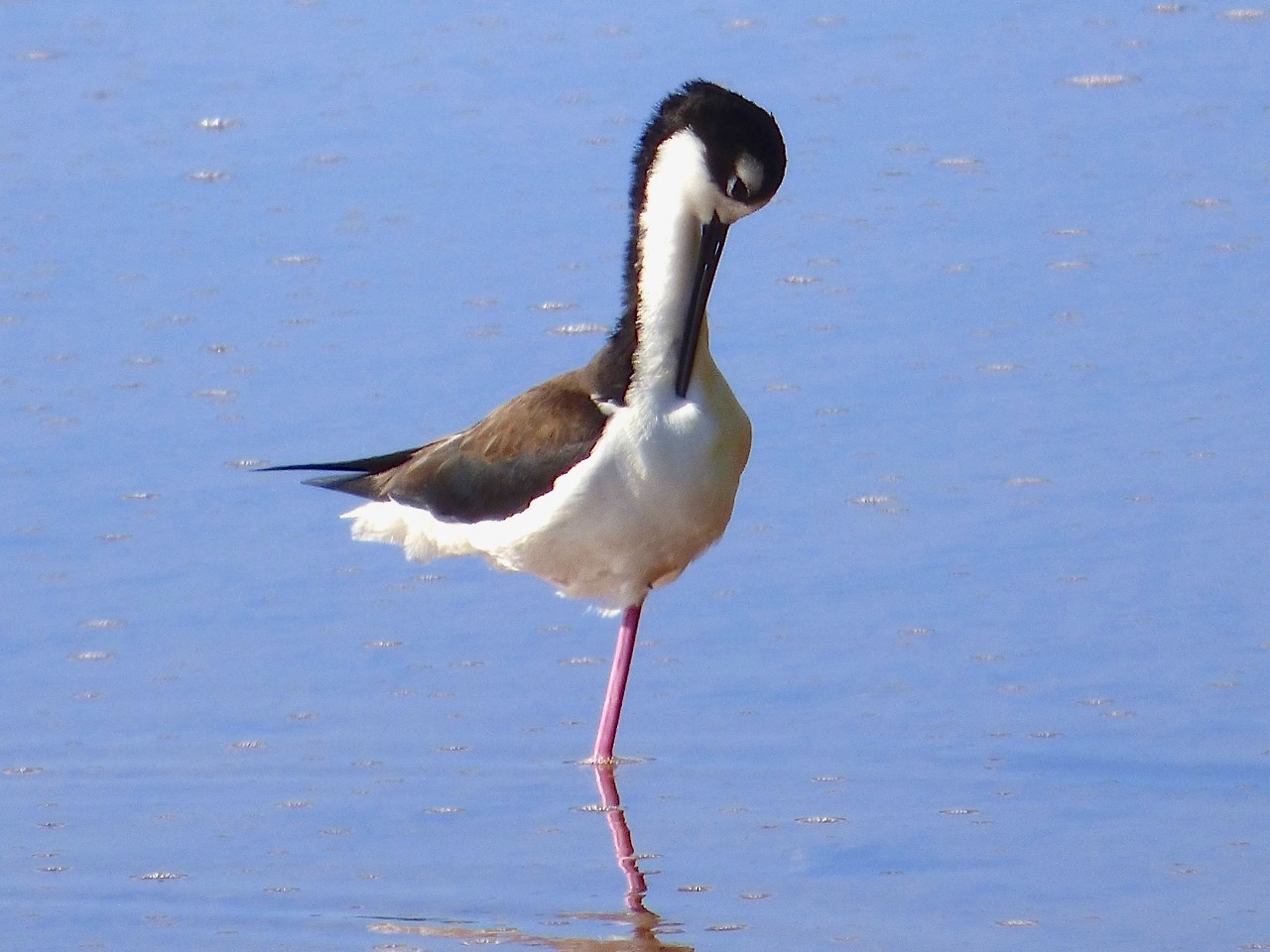
Black-necked Stilts, Abaco Bahamas (Keith Salvesen)‘ON STILTS’: ELEGANCE ON TWO LEGS (OR JUST ONE)

There’s something wrong in the picture above (no, I don’t mean about the photograph itself). Count up how many pink legs you can see. No, not including the reflections. Give up? It’s three. Between two birds. I assumed of course that  ‘Oner’ had a perfectly good serviceable leg tucked up into its undercarriage. I admired the balancing skills involved in resting one leg while nonchalantly standing on the other.

We were watching this pair of black-necked stilts Himantopus mexicanus at the pond at Gilpin Point, which at certain times can be ‘Stilt Central’. These birds are permanent breeders on Abaco and are without a doubt the most beautiful of all the waders (avocets, being extremely uncommon winter visitors, are disqualified from consideration for lack of presence). 

Black-necked Stilts, Abaco Bahamas (Keith Salvesen)
It gradually dawned on me that Oner really did only have one stilt to stand on. After 10 minutes observing them and the other birds around them, there was no question about it – the right leg was completely and utterly missing. This unipedal deficit had no obvious ill-effects on the bird – nor on its ability to throw a good pose (above). Or to preen (below).
Black-necked Stilts, Abaco Bahamas (Keith Salvesen)
I’m in danger of losing sight of Twoer here, a bipedal bird that deserves its own place in the story, not just a wade-on part in Oner’s story.
Twoer as Ringmaster…Black-necked Stilts, Abaco Bahamas (Keith Salvesen)
BNSs are territorial and in particular can become ‘proactive’ (ie aggressive) in protecting the area near a nest. I once mistakenly got close to a nest, not even knowing it was there. I soon learnt – a parent BNS came wading towards me, zigzagging in the water, shouting and carrying on in a way that immediately said ‘my nest is nearby’. And when I meanly stood my ground it suddenly took off and flew straight at my head…
A shouty stiltBlack-necked Stilts, Abaco Bahamas (Keith Salvesen)
On reflection…Black-necked Stilts, Abaco Bahamas (Keith Salvesen)
All photos: Keith Salvesen / Rolling Harbour Abaco (and, if anyone noticed, sorry about some formatting issues which I can’t get rid of…); Audio file Jim Holmes / Xeno Canto
Black-necked Stilts, Abaco Bahamas (Keith Salvesen)
Unknown's avatar

WHERE’S THE CATCH? A REDDISH EGRET FISHING


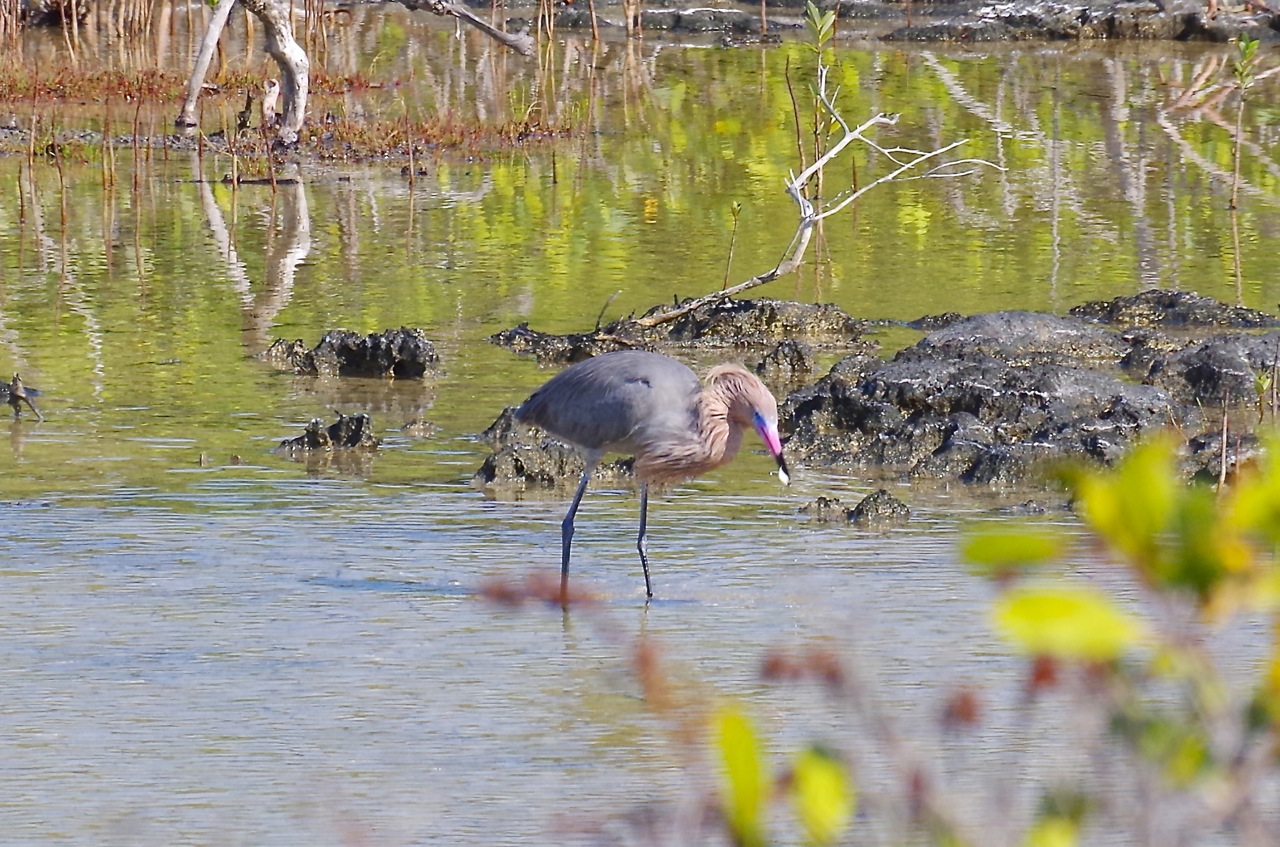
Reddish Egret Fishing, Crossing Rocks, Abaco (Keith Salvesen)

WHERE’S THE CATCH? A REDDISH EGRET FISHING

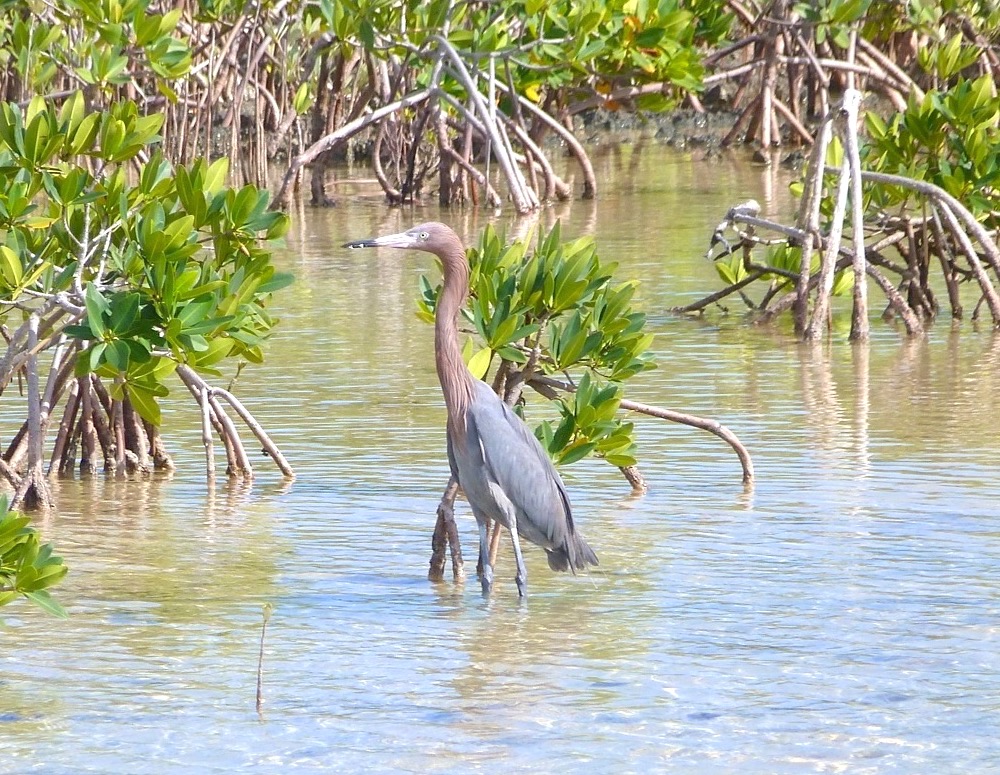
The narrowest point on Abaco is just north of Crossing Rocks. The 120-mile long highway that splits the Island down the middle passes over a narrow strip of land. On the west side, there are mangrove swamps, an inlet of sea, and a small jetty used by bonefishers to reach the productive waters further out. On the east side? Well, there’s more mangrove swamp, giving way to thick jungly coppice before reching the top end of Crossing Rocks beach – and not much else. Except for a long thin brackish pond by the road, that is. 

Reddish Egret Fishing, Crossing Rocks, Abaco (Keith Salvesen)

If you are interested in birds – maybe on your way to the pond at Gilpin Point for Bahama Duck and waders, or returning from a Bahama mockingbird hunt in the National Park – it’s worth pulling over at the pond. Or preferably on the other side of the road so you can approach it stealthily. There’s plenty of roadside cover for birder discretion. Chances are, you’ll encounter one or more of the several heron or egret species found on Abaco – and that they’ll be fishing.

Reddish Egret Fishing, Crossing Rocks, Abaco (Keith Salvesen)

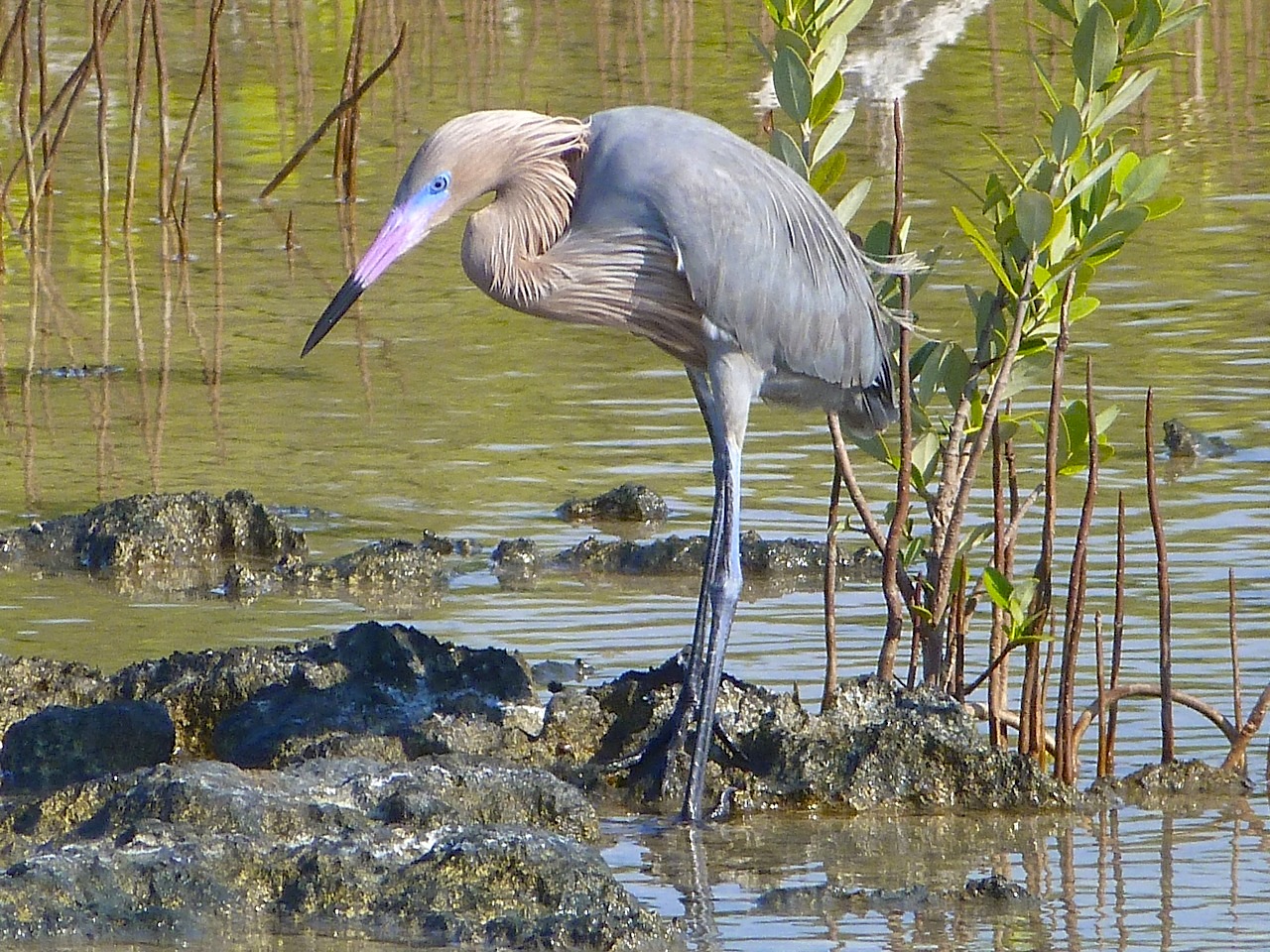
You can see how clear the water can be. It’s no wonder that this reddish egret has ‘hunched up’ to get that cruel beak closer to the surface to stab down on a small silver snack. In the short time we watched, he had no success (hence ‘Where’s the Catch?’ – there was none). But I’ve seen reddish egrets including the white morph successfully snacking at the pond; and a tricolored heron. A couple of years ago we had a great scoop in late March – a male reddish egret fishing in his wonderful breeding colours. Compare the ‘routine’ plumage of the bird above with this gorgeous creature.

Reddish Egret Fishing, Crossing Rocks, Abaco (Keith Salvesen)

And to show I am not making up the fishing part, a shot of this bird actually making a catch…Reddish Egret Fishing, Crossing Rocks, Abaco (Keith Salvesen)

All photos: Keith Salvesen

Unknown's avatar

ABACO’S THREE CUCKOO SPECIES


Yellow billed cuckoo, Abaco Bahamas (Tom Sheley)

ABACO’S THREE CUCKOO SPECIES

Goodness, is it the end of the month already? So much going on, 3 half-written posts but running short of time. So here’s something (even) more interesting than the stuff I write – actual photos of actual birds with no words. Great photos (not mine) of Abaco’s 3 cuckoo species to compare and contrast. Until next month… when there’ll be stilts, hutias and a whole lot more.

YELLOW-BILLED CUCKOO (and header image)

Yellow billed cuckoo, Abaco Bahamas (Tom Sheley)

MANGROVE CUCKOO

Mangrove cuckoo, Abaco Bahamas (Tony Hepburn)Mangrove cuckoo, Abaco Bahamas (Alex Hughes)

SMOOTH-BILLED ANI

Smooth-billed Ani, Abaco Bahamas (Gerlinde Taurer)Smooth-billed Ani, Abaco Bahamas (Nina Henry)

Photo Credits: Tom Sheley, Tony Hepburn, Alex Hughes, Gerlinde Taurer, Nina Henry

Unknown's avatar

LOGGERHEAD KINGBIRD: BENIGN ‘TYRANT’ OF ABACO


Loggerhead Kingbird, Abaco Bahamas (Keith Salvesen)

LOGGERHEAD KINGBIRD: BENIGN ‘TYRANT’ OF ABACO

Abaco is home to 4 main so-called tyrant flycatchers (Tyrannidae): the loggerhead kingbird, the gray kingbird, the La Sagra’s flycatcher and the Cuban pewee. All are common permanent residents except the gray kingbird, which is a summer resident only. Several other flycatcher species are found on Abaco, but they are very uncommon winter residents, rare transients, or vagrants.

Loggerhead Kingbird, Abaco Bahamas (Keith Salvesen)

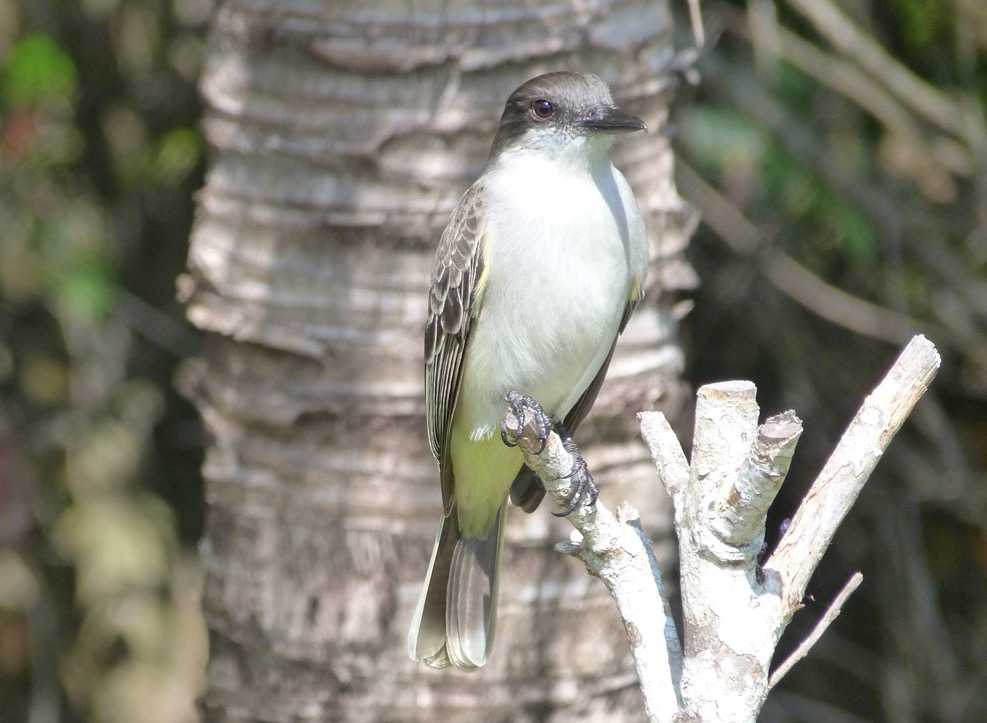
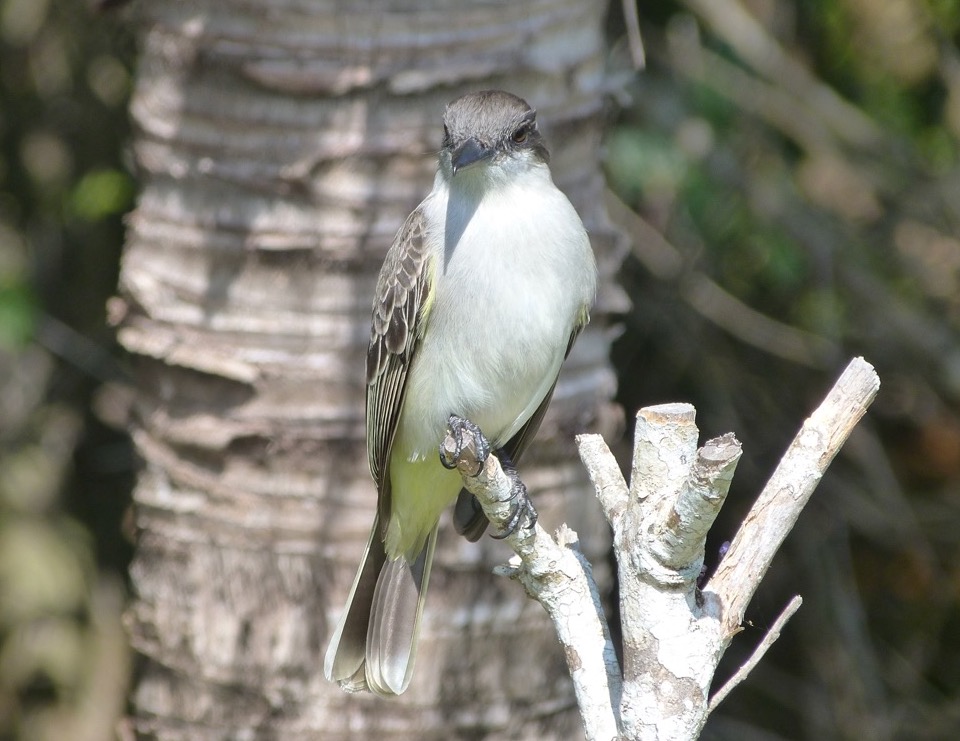
The loggerhead featured here in several poses is a watchful sentinel at Delphi. His preferred perches are in the edge of the coppice round the pool or at the edge of the main drive. From time to time he will leave his perch to catch a passing insect by ‘hawking’, returning to the same place to eat it.

Loggerhead Kingbird, Abaco Bahamas (Keith Salvesen)

Loggerhead and gray kingbirds can be quite easy to confuse. A couple of years ago I wrote about how to distinguish them, and with gray kingbirds in residence now this is probably a good time to set out the distinctions again.

Loggerhead Kingbird, Abaco Bahamas (Keith Salvesen)

LOGGERHEAD Tyrannus caudifasciatus vs GRAY Tyrannus dominicensis 

DIFFERENCES and SIMILARITIES

TOP TIP ANY KINGBIRD SEEN IN WINTER WILL BE A LOGGERHEAD

  • Kingbirds seen between (say) October & March are Loggerheads. Grays are strictly summer visitors
  • Both are medium size birds and roughly the same size as adults (around 23 cms)
  • Loggerheads have dark brown to near-black heads, grays have lighter, slate-coloured heads
  • Loggerheads have a ‘squared’ tip to the tail; grays have a notched tip
  • Loggerheads may have a whitish fringe at the tip of the tail; grays not so
  • Loggerheads have yellowish tinges to their white undersides & forewings; grays less so or not at all
  • Grays have a dark or black ‘mask’ through the eyes, often clear but not always easy to see
  • Loggerheads allegedly have inconspicuous orange head crests; grays are red. I’ve never seen either!
  • [*RH personal opinion alert*] Grays have larger, heavier beaks than loggerheads
  • Grays are territorially aggressive; when they turn up, the loggerheads tend to retreat to the forest

Loggerhead Kingbird, Abaco Bahamas (Keith Salvesen)

Here is how David Sibley shows the differences

 6323_Sibl_9780307957900_art_r1 3069_Sibl_9780307957900_art_r1-1

Illustrations: David Allen Sibley

GRAY KINGBIRD FOR COMPARISONGray_Kingbird (Dick Daniels Wiki)

MEMORABLE FACT TO DEPLOY IN CONVERSATION

The collective names for a group of kingbirds are: a Court, a Coronation, or a Tyranny

Loggerhead Kingbird, Abaco Bahamas (Keith Salvesen)

Photo Credits: All loggerheads, Keith Salvesen at Delphi;  gray kingbird by Dick Daniels; Illustrations David Sibley

Unknown's avatar

THICK-BILLED VIREOS ON ABACO: “NIDIFICATION”


Thick-billed Vireo nesting - Delphi, Abaco (Keith Salvesen)

THICK-BILLED VIREOS ON ABACO: “NIDIFICATION”

“Nidification” was one of the new words I learned from the wonderful book Birds of the West Indies by James Bond (a different one – for the full story behind the name click HERE). It means, essentially, the nesting process of a bird. It sounds pleasingly technical for a straightforward concept: nest-building.

Soft furnishings being addedThick-billed Vireo nesting - Delphi, Abaco (Keith Salvesen)

I spotted this TBV making its nest on the edge of the drive at Delphi. I usually think of these cheerful chirpy birds as ‘lurkers’, hanging back in the coppice and not making themselves easily visible. But this nest was right out in the open – possibly not the wisest place for nidification.

Thick-billed Vireo nesting - Delphi, Abaco (Keith Salvesen)

If you look up TBV’s in bird books, you may find a reference to nest building in the fork of shrubs or bushes – exactly what was going on here. It quite a messy nest, but then again it looks comfortable and firmly wedged in.

Thick-billed Vireo nesting - Delphi, Abaco (Keith Salvesen)

Although I only saw one of the pair actively engaged in the building, another TBV was ‘vocalising’ (there’s another technical term, = singing) nearby, presumably the mate. In a way that humans have been slow to adopt, both birds will be actively involved in raising their family, from incubating the eggs to chick care – feeding, cleaning out the nest and so on. 

WHAT DO THEY SOUND LIKE WHEN THEY VOCALISE?

Let’s hope for a successful outcome to the nidification…

Thick-billed Vireo nesting - Delphi, Abaco (Keith Salvesen)

All photos Keith Salvesen, also the sound recording (made at Delphi)