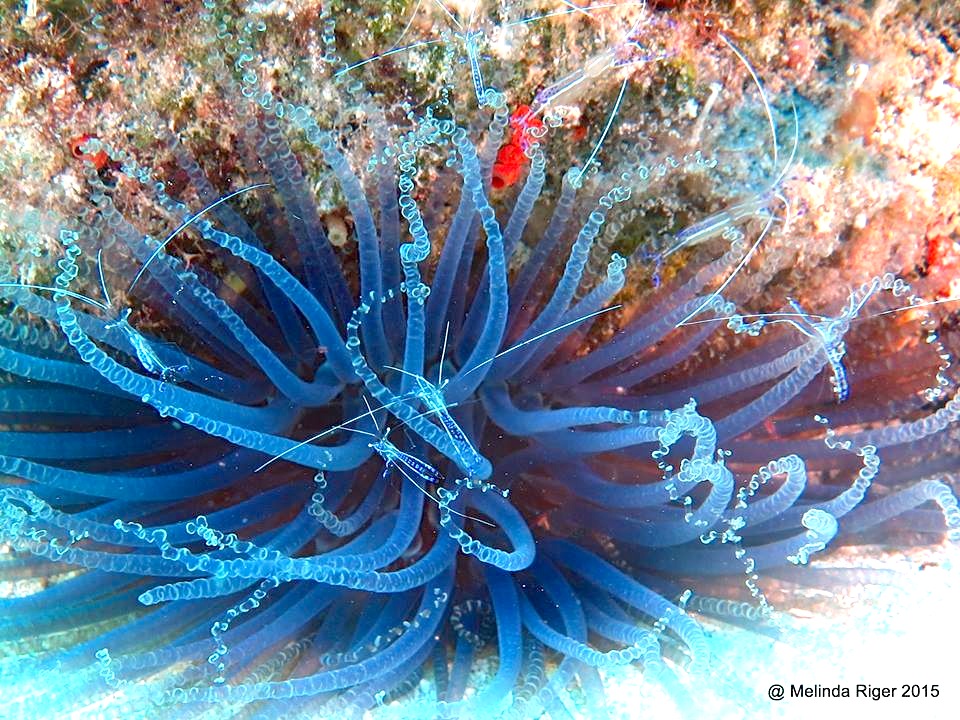
Going snorkelling? Planning a scuba day on the reef? You’ll see wonderful fish and amazing coral for sure. But sometimes the beauty of other life on the reef can be overlooked. Check out the anemone in the header image, with the camouflaged cleaner shrimps playing around it. You wouldn’t want to miss a sight like that. The many and varied forms and colours of anemone on the reefs of the Bahamas make up a vital component of a spectacular underwater world and its astonishing variety.
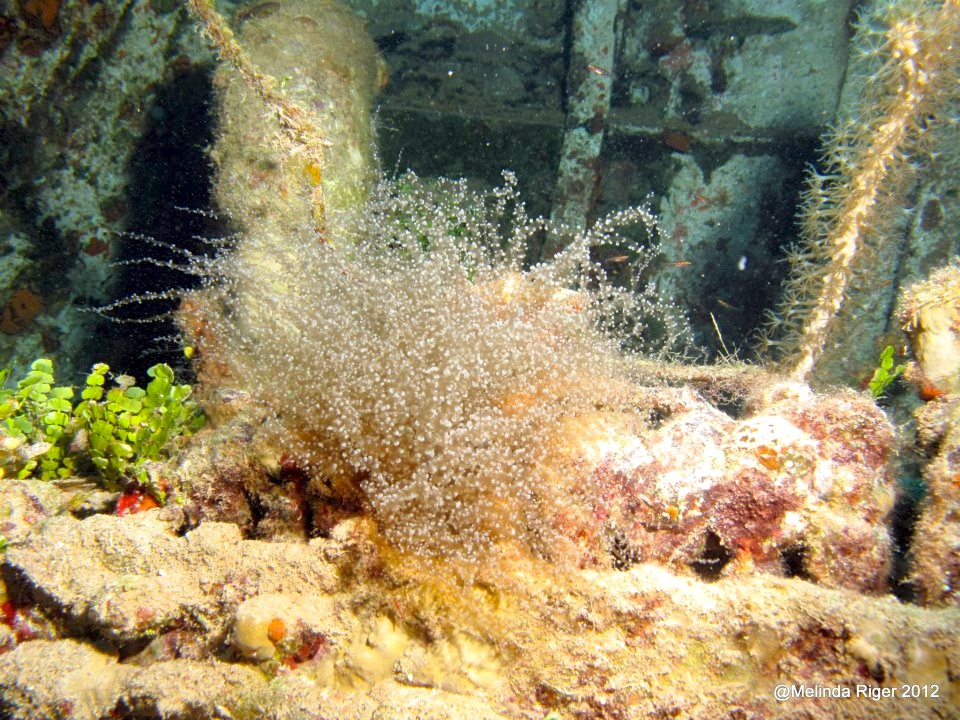
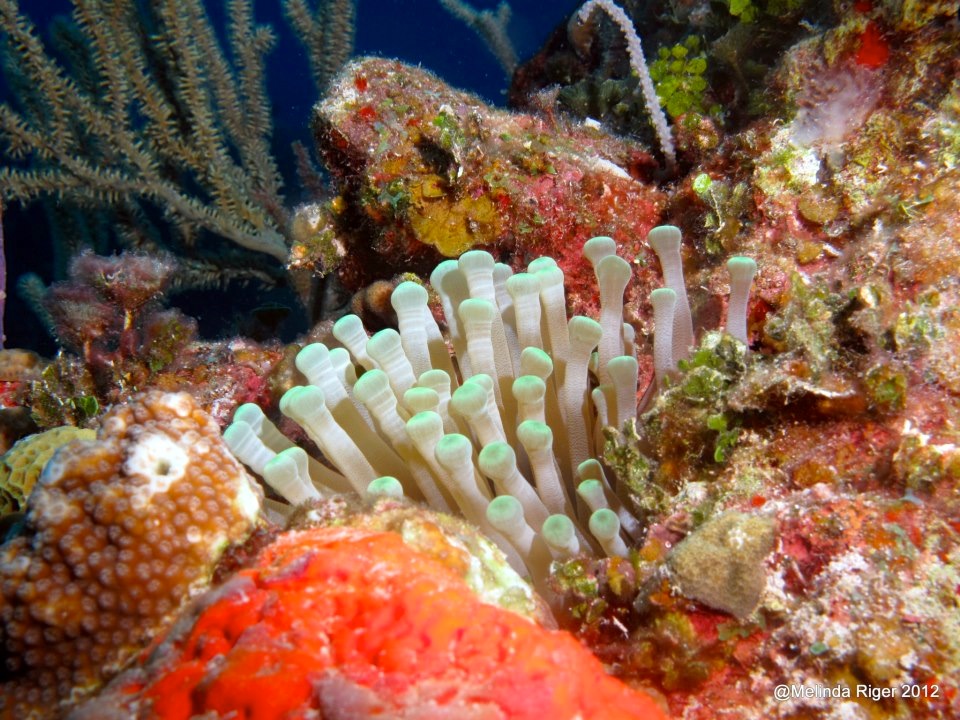
Anemones are living animals of the invertebrate type. Basically living corals without skeletons. All have stinging cells of several varieties to sting or entangle their prey such as small fish, or other invertebrate species.
Most anemones host varieties of cleaner shrimps. They also provide a base for the snapping shrimps that can stun their own prey. Some of these can (painfully) penetrate human skin.
Some crabs pull particular species of anemone off the reef and attach them to their carapace. This is thought to have a double purpose of providing both camouflage and protection.
All great archive photos: Melinda Riger of Grand Bahama Scuba, with thanks; also Rick Guest for info
I featured the extraordinary, colour-transforming PEACOCK FLOUNDER Bothus lunatus a while back as part of a Bahamas Reef Fish series. These really are remarkable creatures, and I have decided to return to them mainly because of the wonderful illustrative photos I was able to incorporate. There are plenty of flounder facts too, but if you just enjoy the pictures and skip the blurb I’ll understand.
ROVING EYES
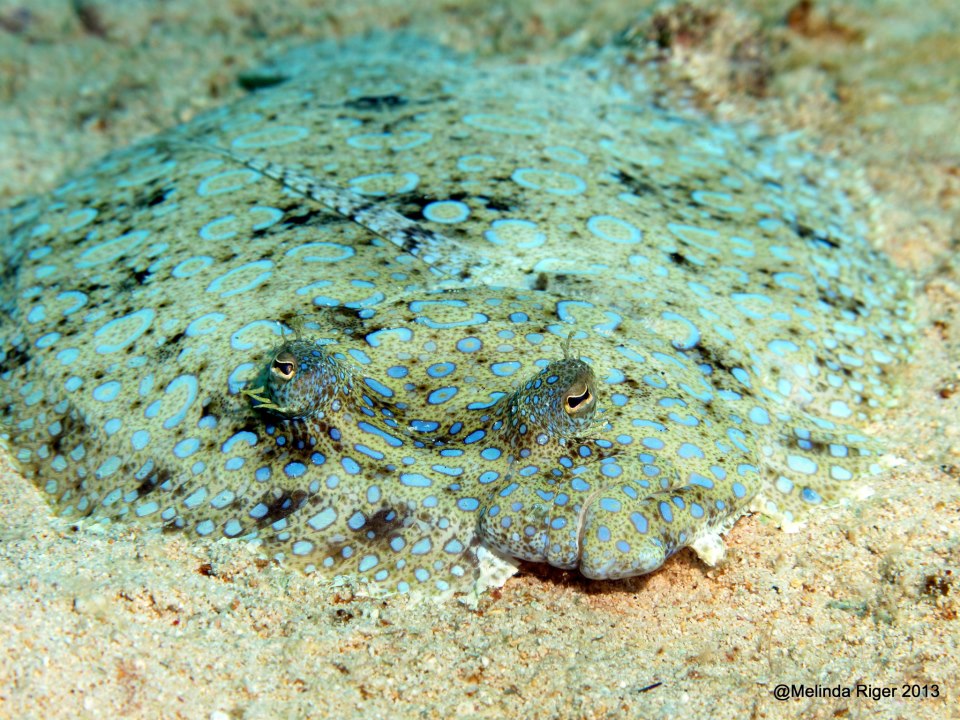
In the fish shown here, you’ll see that – surprisingly – both eyes are on the upper-side of the fish, above the rather grumpy mouth, whereas the head is horizontal to the ocean floor. Oddest of all, juveniles are constructed conventionally with bilateral eyes, and look like ‘normal’ fish rather than flatfish.
As the fish matures, in some magic way the mechanics of which I can only guess at**, the right eye grows round to the topside and the flounder transforms from a ‘vertical’ fish to a flatfish. For this reason, the PF is known as a ‘left-eye’ flounder. Maybe in other flounder species in the world – the southern hemisphere maybe? – the eye that moves round to the upper-side is the left eye.
The eyes of this fish have another special trick up their sleeves (so to speak). They operate completely independently. Thus the creature can look left and right, or forwards and backwards, simultaneously. It’s an excellent system for detecting predators coming from any angle. It’s a superpower we might all benefit from.
DO THEY HAVE ANY OTHER TRICKS WE SHOULD KNOW ABOUT?
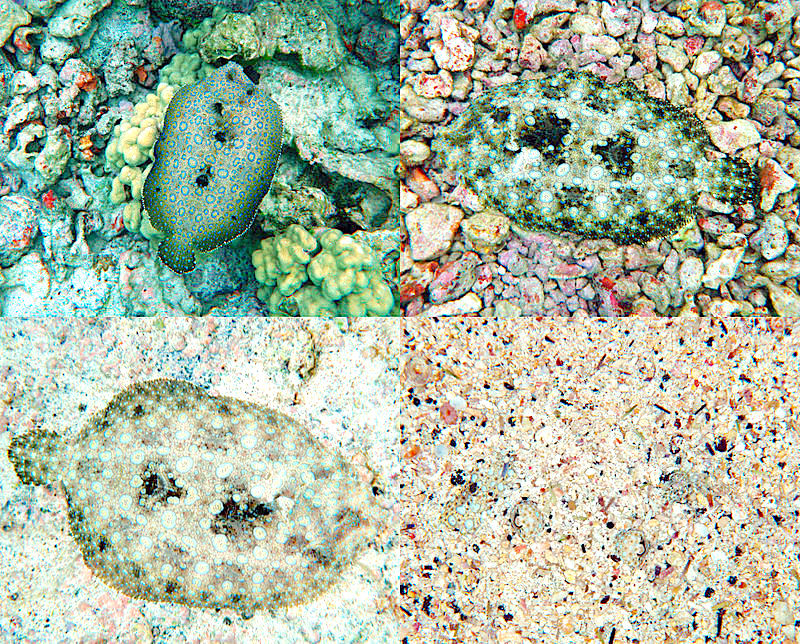
Yes they do indeed. If you have been admiring the fish shown so far, you’ll have noticed that the colour of each one differs from the others. In addition to the predator-protection that the eyes provide, the peacock flounder can make itself (near) invisible. They can rapidly change colour to match their surroundings. There are 3 reasons for this: to avoid / confuse predators; to conceal themselves on the sea-floor to catch passing prey; and, as dive expert Fred Riger has pointed out, “the male peacock flounder can, and does greatly intensify his colours to declare territory and attract females. When doing this the males will also signal with the left pectoral fin, sticking it straight up and waving it around.”
The same fish, photographed over several minutes as it moves over the ocean floor
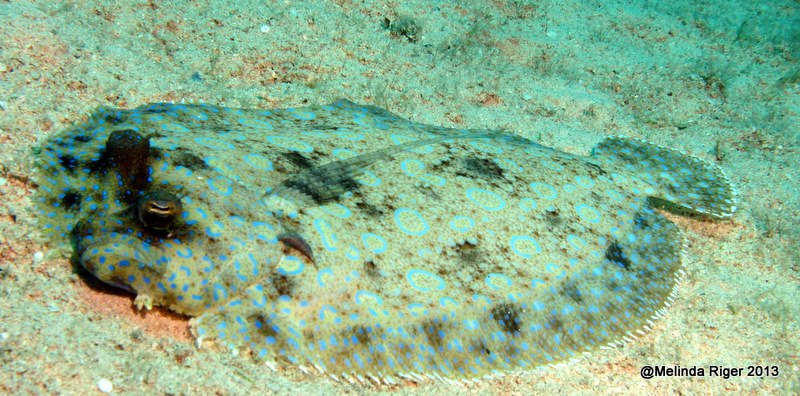
Matching the background happens as the fish swims, and in a few seconds. When they rest on the sea-floor, the camouflage may even become total. In #4 above you can just about make out the eyes. The whole effect is known as ‘cryptic coloration’ or CRYPSIS. In contrast, the image below shows just how adaptable the transformation can be. Note how the fish can even mimic the pinkish tinge of the sand perfectly. If threatened, the fish will bury itself in the sand, with just its eyes showing.
HOW DO THEY MANAGE TO CHANGE COLOUR IN SECONDS?
It’s complicated! A simple answer is: a mix of hormones, pigment-cells and vision, all coordinating rapidly. The colour change works in two ways: pigments are selectively released to the skin cells; and other pigments can be selectively suppressed. An analogy might be image manipulation using variations in brightness, saturation etc. Not convinced? Then watch this short video and prepare to be impressed. Astonished, even.
WHAT IF A FLOUNDER CAN’T SEE CLEARLY FOR SOME REASON?
As with many (all?) superpowers, there is usually some kryptonite-style flaw. A flounder with a damaged eye, or one temporarily covered (by sand, for example) will have difficulty in changing colour – possibly at all, or at any rate with the swiftness it needs to have.
THESE SIDEWAYS FISH – HOW DO THEY… YOU KNOW…?
Take a look at the fish above with its top fin raised. It’s a ‘ready’ signal in a harem. Male flounders have a defined and defended territory within which live up to 6 females – a so-called ‘harem.’ I can do no better than borrow the description of the rituals from an article derived from scientific papers byKonstantinou, 1994; Miller, et al., 1991in the websiteanimaldiversity.org/…ounts/Bothus_lunatusTo which I can only add, ’15 seconds, eh?’
“Mating activities usually begin just before dusk. At this time, a male and a female approach each other with the ocular pectoral fin erect. The two fish arch their backs and touch snouts. After this interaction the female swims away, and the male sometimes follows, approaching the female again from the left side. At this point the male pectoral fin is erect and the female pectoral fin moves up and down, possibly signalling willingness to mate. The male then positions himself underneath the female and mating begins. This process consists of a mating rise, during which the female and male rise in the water column together. On average, these rises last about 15 seconds. At the highest point of this rise, usually around 2 m above the substrate, gametes from both fish are simultaneously released, producing a cloud of sperm and eggs. Once the couple returns from the rise, the male “checks” to make sure mating was successful, and the pair separates quickly, swimming away from each other in opposite directions. Not all mating rises are successful, and the process of “checking” is thus important. The exact purpose of the mating rise in these flounders unknown; possible reasons for rising include better dispersal of gametes and predator avoidance.”
Peacock Flounder – Kim Rody Art
**This may in fact have been through sheer laziness
Credits: Melinda Riger & Virginia Cooper / Grand Bahama Scuba; Melinda Rogers / Dive Abaco; Adam Rees / Scuba Works; Kim Rody; animaldiversity.org; magpie pickings and other credits in the text
I featured the extraordinary, colour-transforming PEACOCK FLOUNDER Bothus lunatus about 3 years ago in the Bahamas Reef Fish series (No. 21 I think). These really are remarkable creatures, and I am pleased to be able to show some more wonderful illustrative photos.
ROVING EYES
In the fish shown here, you’ll see that – surprisingly – both eyes are on the upperside of the fish, above the rather grumpy mouth, whereas the head is horizontal to the ocean floor. Oddest of all, juveniles are constructed conventionally with bilateral eyes, and look like ‘normal’ fish rather than flatfish.
As the fish matures, in some magic way the mechanics of which I can only guess at**, the right eye grows round to the topside and the flounder transforms from a ‘vertical’ fish to a flatfish. For this reason, the PF is known as a ‘lefteye’ flounder. Maybe in other flounder species in the world – the southern hemisphere maybe? – the eye that moves round to the upperside is the left eye.
The eyes of this fish have another special trick up their sleeves (so to speak). They operate completely independently. Thus the creature can look left and right, or forwards and backwards, simultaneously. It’s an excellent system for detecting predators coming from any angle. It’s a superpower we might all benefit from.
DO THEY HAVE ANY OTHER TRICKS WE SHOULD KNOW ABOUT?
Yes they do indeed. If you have been admiring the fish shown so far, you’ll have noticed that the colour of each one differs from the others. In addition to the predator-protection that the eyes provide, the peacock flounder can make itself (near) invisible. They can rapidly change colour to match their surroundings. There are 3 reasons for this: to avoid / confuse predators; to conceal themselves on the sea-floor to catch passing prey; and, as dive expert Fred Riger has pointed out, “the male peacock flounder can, and does greatly intensify his colours to declare territory and attract females. When doing this the males will also signal with the left pectoral fin, sticking it straight up and waving it around.”
The same fish, photographed over several minutes as it moves over the ocean floor
Matching the background happens as the fish swims, and in a few seconds. When they rest on the sea-floor, the camouflage may even become total. In #4 above you can just about make out the eyes. The whole effect is known as ‘cryptic coloration’ or CRYPSIS. In contrast, the image below shows just how adaptable the transformation can be. Note how the fish can even mimic the pinkish tinge of the sand perfectly. If threatened, the fish will bury itself in the sand, with just its eyes showing.
HOW DO THEY MANAGE TO CHANGE COLOUR IN SECONDS?
It’s complicated! A simple answer is: a mix of hormones, pigment-cells and vision, all coordinating rapidly. The colour change works in two ways: pigments are selectively released to the skin cells; and other pignments can be selectively suppressed. An analogy might be image manipulation using variations in brightness, saturation etc. Not convinced? Then watch this short video and prepare to be impressed. Astonished, even.
WHAT IF A FLOUNDER CAN’T SEE CLEARLY FOR SOME REASON?
As with many (all?) superpowers, there is usually some kryptonite-style flaw. A flounder with a damaged eye, or one temporarily covered (by sand, for example) will have difficulty in changing colour – possibly at all, or at any rate with the swiftness it needs to have.
THESE SIDEWAYS FISH – HOW DO THEY… YOU KNOW…?
Take a look at the fish above with its top fin raised. It’s a ‘ready’ signal in a harem. Male flounders have a defined and defended territory within which live up to 6 females – a so-called ‘harem.’ I can do no better than borrow the description of the rituals from an article derived from scientific papers byKonstantinou, 1994; Miller, et al., 1991in the websiteanimaldiversity.org/…ounts/Bothus_lunatusTo which I can only add, ’15 seconds, eh?’
“Mating activities usually begin just before dusk. At this time, a male and a female approach each other with the ocular pectoral fin erect. The two fish arch their backs and touch snouts. After this interaction the female swims away, and the male sometimes follows, approaching the female again from the left side. At this point the male pectoral fin is erect and the female pectoral fin moves up and down, possibly signalling willingness to mate. The male then positions himself underneath the female and mating begins. This process consists of a mating rise, during which the female and male rise in the water column together. On average, these rises last about 15 seconds. At the highest point of this rise, usually around 2 m above the substrate, gametes from both fish are simultaneously released, producing a cloud of sperm and eggs. Once the couple returns from the rise, the male “checks” to make sure mating was successful, and the pair separates quickly, swimming away from each other in opposite directions. Not all mating rises are successful, and the process of “checking” is thus important. The exact purpose of the mating rise in these flounders unknown; possible reasons for rising include better dispersal of gametes and predator avoidance.”
Peacock Flounder – Kim Rody Art
**This may in fact be through sheer laziness
Credits: Melinda Riger & Virginia Cooper / Grand Bahama Scuba; Melinda Rogers / Dive Abaco; Adam Rees / Scuba Works; Kim Rody; animaldiversity.org; magpie pickings and other credits in the text
MAKE FRIENDS WITH ANEMONE (2): SPECTACULAR REEF LIFE
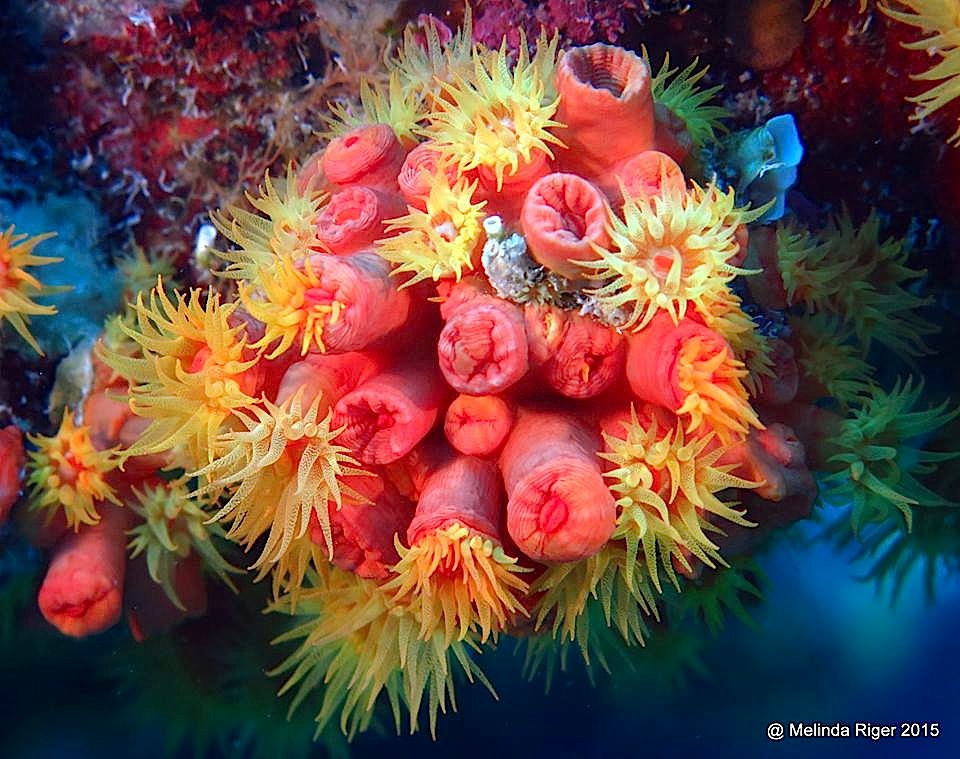
Going snorkelling? Planning a scuba day on the reef? You’ll see wonderful fish and amazing coral for sure. But sometimes the beauty of other life on the reef can be overlooked. Check out the anemone in the header image, with the camouflaged cleaner shrimps playing around it. You wouldn’t want to miss a sight like that. The many and varied forms and colours of anemone on the reefs of the Bahamas make up a vital component of a spectacular underwater world.
ADDED NOV 2016 Capt. Rick Guest adds this interesting material (& thanks for correcting my erroneous reference to anemones as ‘plants’. My bad. They are of course animals!):
“Anemones are living animals of the invertebrate type. Basically living corals without skeletons. All have stinging cells of several varieties to sting or entangle their prey such as small fish, or various invertebrates. A few can even, painfully, penetrate human dermal layers. Most host varieties of cleaner shrimps,and snapping shrimps that can stun their own prey. Some Dromidia crabs even pull some species of anemone off the reef, and attach them to their carapace (their back) apparently for camouflage, and perhaps protection”.
All photos: Melinda Riger of Grand Bahama Scuba, with thanks
The reefs of the northern Bahamas, as elsewhere in the world, are affected by two significant factors: climate change and pollution. Stepping carefully over the sharp pointy rocks of controversy, I’ve avoided the term ‘global warming’ and any associated implication that humans (oh, and methane from cows) are largely to blame for the first factor; but on any view, ocean pollution is the responsibility of mankind (and not even the cows).
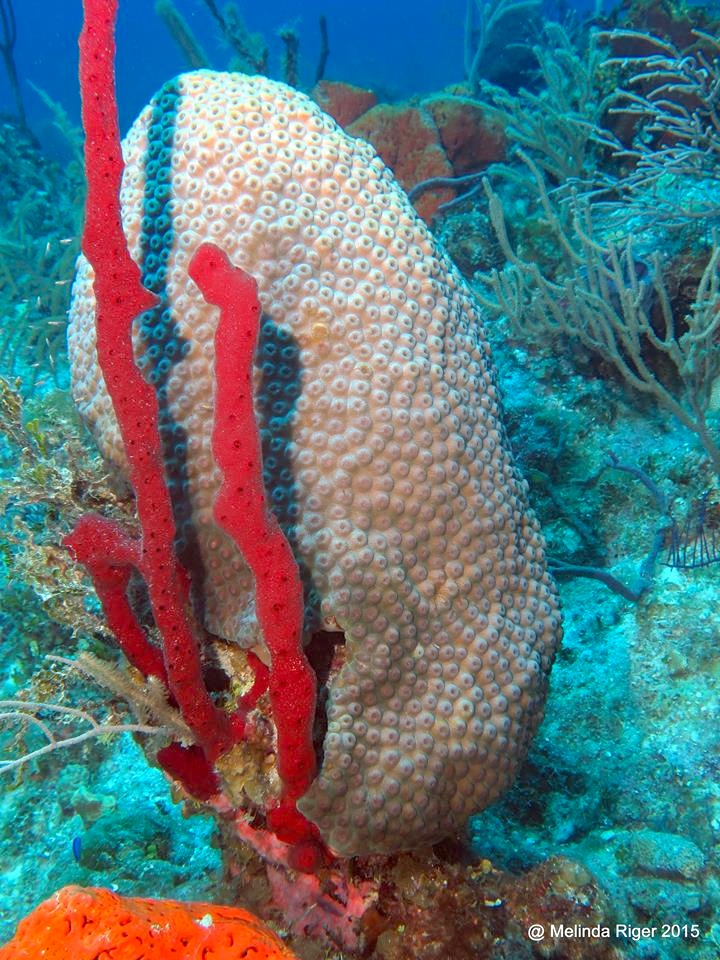
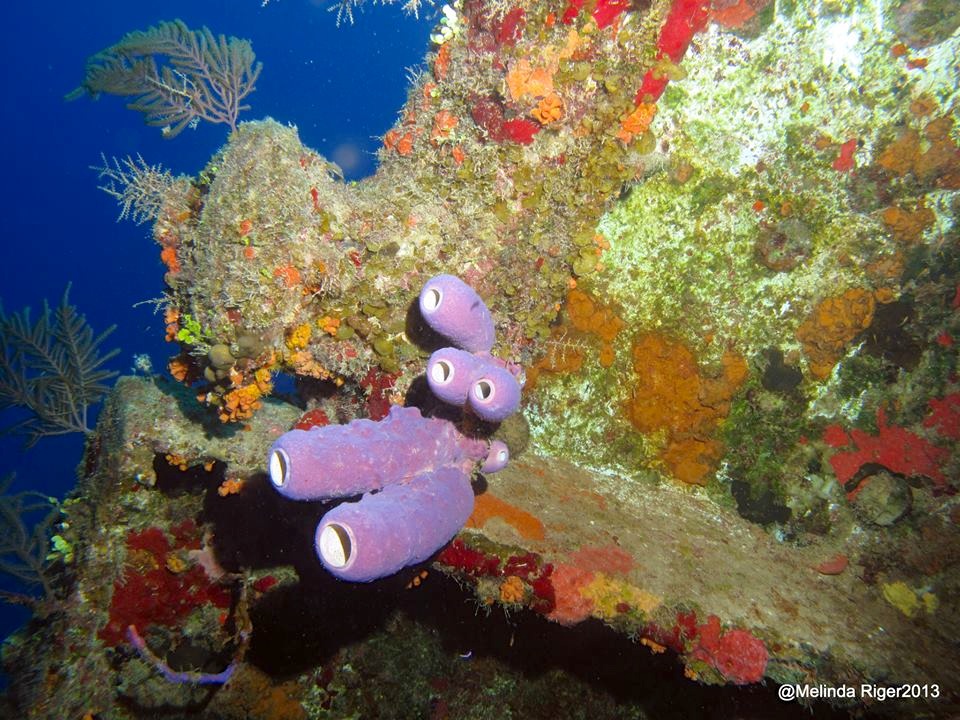
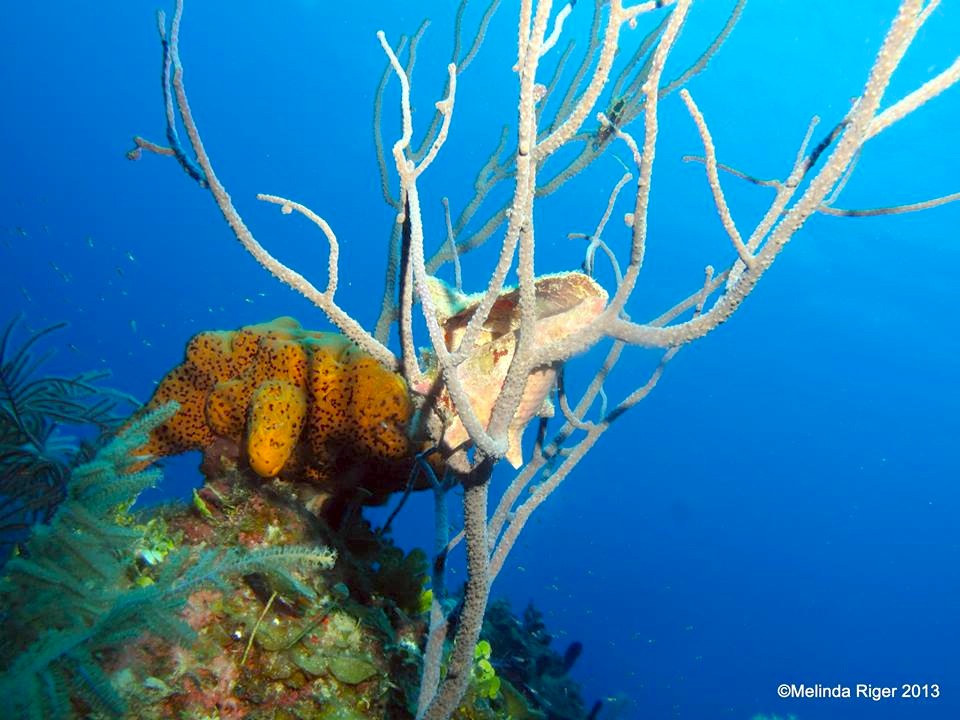
That said, an exploration of the reefs of Abaco or Grand Bahama will reveal not just the astounding variety of mobile marine life but also the plentiful and colourful static marine life – for example the beautiful and Christmassy orange cup coral in the header image. Here are some more corals from the reefs, with a mix of sponges added in.
This rather intriguing photo shows a hermit crab’s conch home that presumably the occupant grew out of and left behind in the delicate coral branches as it went search of a more spacious shell dwelling.
Credits: All these wonderful photos are by Melinda Riger of Grand Bahama Scuba; tendentious reef health observations are mine own…
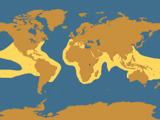
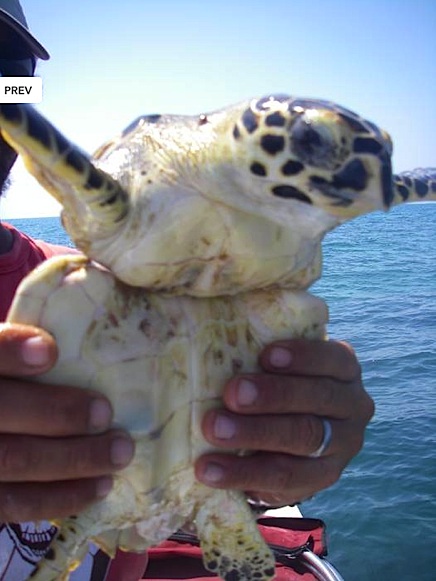
Hawksbill turtles are found throughout the tropical waters of the Atlantic, Pacific, and Indian Oceans. They avoid deep waters, preferring coastlines where sponges are abundant and sandy nesting sites are within reach. They are normally found near reefs rich in the sponges they like to feed on. Hawksbills are omnivorous and will also eat molluscs, marine algae, crustaceans, sea urchins, fish, and jellyfish.
Hawksbill Turtle Range (Nat Geo)
WHY ARE HAWKSBILLS CRITICALLY ENDANGERED?
Despite the protection of their shells, turtles are predated on by large fish, sharks, octopuses, and (unlawfully) humans.
Hawksbills are slow breeders, mating only every 2 or 3 years, which is the first drawback to species survival.
Having laid the resulting eggs on a beach, the female returns to the sea. The eggs hatch after a couple of months. Unless, of course, some creature – and that includes humans – has got to them first…
Hatchlings are hugely vulnerable as they make their way from the nest site to the sea. However fast they scurry along, crabs and in particular flocks of gulls are faster. Also, they may have to negotiate impossible obstacles washed up onto the beach (see below). The attrition rate of tiny turtles at this stage is very considerable.
SO, HUMANS ARE BASICALLY IN THE CLEAR, RIGHT?
Humans can take most of the credit for the turtles plight leading to their IUCN ‘critically endangered’ listing, in these mostly illegal ways:
Killing adult turtles for food or…
…for their beautiful shells
Digging up turtle nesting sites to take the eggs as food
Catching turtles in fishing nets as unintended but often inevitableBYCATCH
Providing a rich stew of plastic, styrofoam & other dietary or physical hazards in the ocean
Degrading or destroying the nesting sites, & indeed the reefs on which turtles depend
A hatchling tries to clamber over beach rubbish to get to the sea
A straw is extracted from a turtle’s nostril (small pics on purpose – I spared you the long video)
This poor creature was found just in time
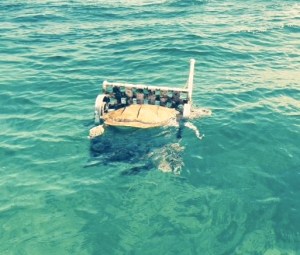
Assorted plastic effects (the turtle trapped in the beach chair was off Man-o-War Cay)
PLEASE CAN WE GO BACK TO HAPPY PICTURES?
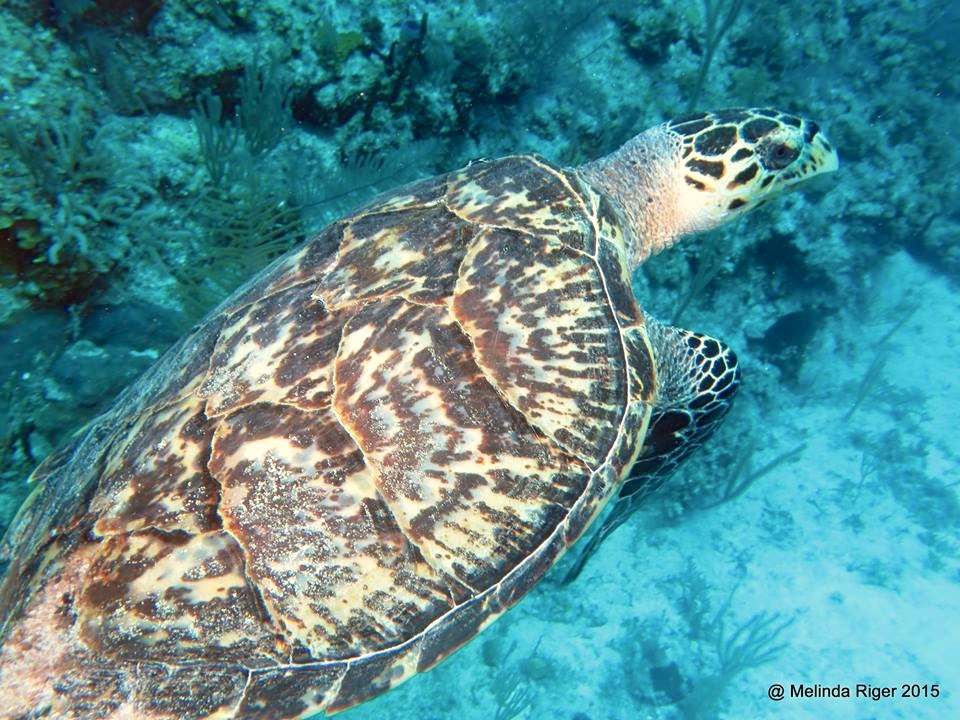
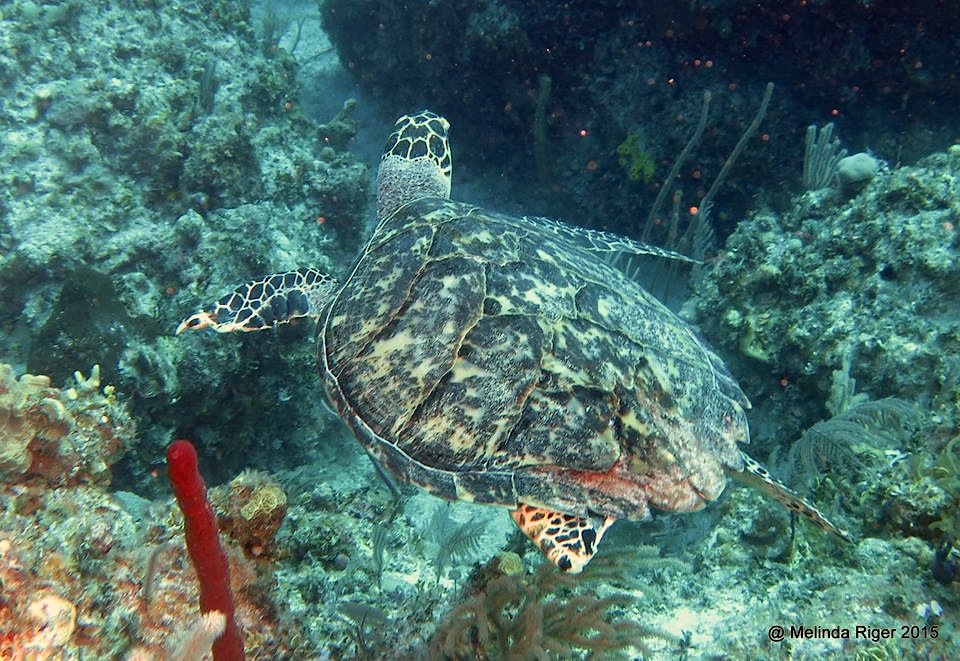
Healthy hawksbills happily living the northern Bahamas reef life
Credits: Melinda Riger & Virginia Cooper of Grand Bahama Scuba for the main photos; Melissa Maura, Nathan Robinson, Friends of the Environment and other FB sharers for the small images; National Geographic for range chart and information
Albert King, Lead Belly and Mike Bloomfield are prime examples of foremost bluesmen guitar-slingers who, in their own distinctive styles, favoured the key of… I’m sorry, what did you say? Oh yes, quite right. My misunderstanding. Apologies, I’ll take it from the top…
Deep blue sea. Deep blue fish. *Deep breath*. All better now. The fish below may all readily be found nosing around the coral reefs of the Bahamas in a leisurely manner. Mostly, they are feeding. Fowl Cay Marine Preserve, Abaco, is a great place for watching them. No need to have all the gear – a simple snorkel, mask and flippers, and an ability to float a bit, would be sufficient.
BLUE CHROMIS Chromis cyanea
These dazzling little blue fish will be one of the first you’ll meet (along with the omnipresent yellow and black striped sergeant majors, so friendly they will come right up to your mask). You can’t miss them. Though very small, their electric blue colouring cuts through the water even on the dullest of days up-top. They can reach 5 inches in length, but most that you see will be tiddlers. They are frequently seen in the company of larger fish.
BLUE PARROTFISH Scarus coeruleus
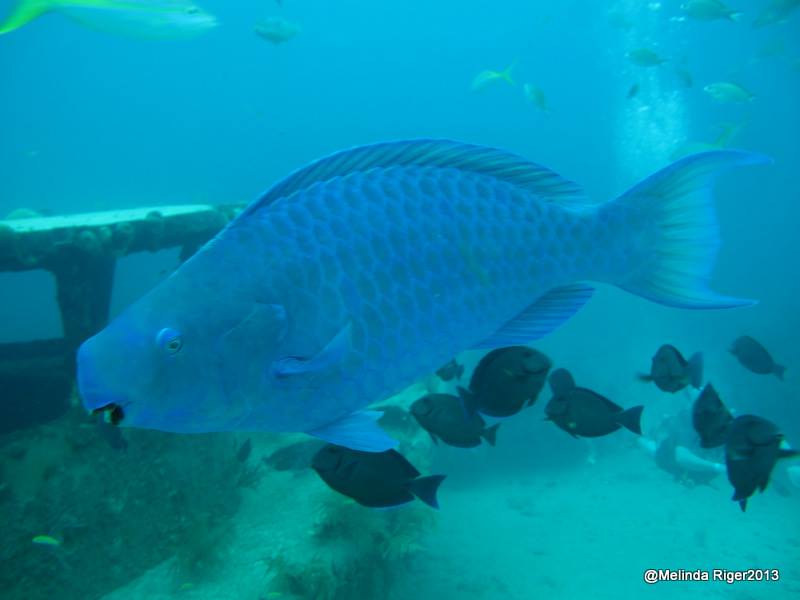
Parrotfish play a vital part in the ecology and health of the coral reef. They graze on algae, cleaning the coral and grinding the surface with their teeth. They take the nutrients and excrete the rest as… sand. This helps to form your beach! To find out more about their uses and habits, click PARROTFISH. You’ll find a great deal of interesting info about the species, conveniently compressed into factual bullet points.
BLUE TANG Acanthurus coeruleus
The blue tang is a type of surgeonfish, all-blue except for a yellow spot near the tail. The blueness can vary considerably, from very pale to dark. They tend to swim elegantly around in large groups.
Here are some images of schools of blue tang that I took with a cheapo underwater camera at Fowl Cay. They are a lovely sight as they drift slowly past alongside the reef. The top one also has a sergeant major (see above).
CREOLE WRASSE Clepticus parrae
This wrasse can grow up to a foot long, and may be found at considerable depths on deep-water reefs – 300 feet or more. They are active by day, and hide in rock clefts at night. This species is sociable, moving around in shoals. They develop yellow markings with age.
QUEEN TRIGGERFISH Balistes vetula
There are several species of triggerfish. The queen is capable of changing colour to match its surroundings, or (it is said) if subjected to stress. I think we have all been there. It is an aggressive and territorial fish, and its favourite prey is the sea urchin, a testament to its courage…
QUEEN ANGELFISH (JUVENILE)
I have featured this species before HERE, and strictly it as much yellow as blue. But the blue earns double points, surely, for its startling vividness. Anyway, I like the way it hangs casually upside down, and the bubbles in this photo.
Credits: Good photos – Melinda Riger of Grand Bahama Scuba; Poor photos – RH
From time to time I end a post with something musical. Just for fun (toxic concept). So here is a real “Slow Blues in C” from the fantastic guitarist Stefan Grossman off his eclectic ‘Yazoo Basin Boogie’ album. 22 quality tracks. Buy from Am*z*n – much cheaper than iT*nes.
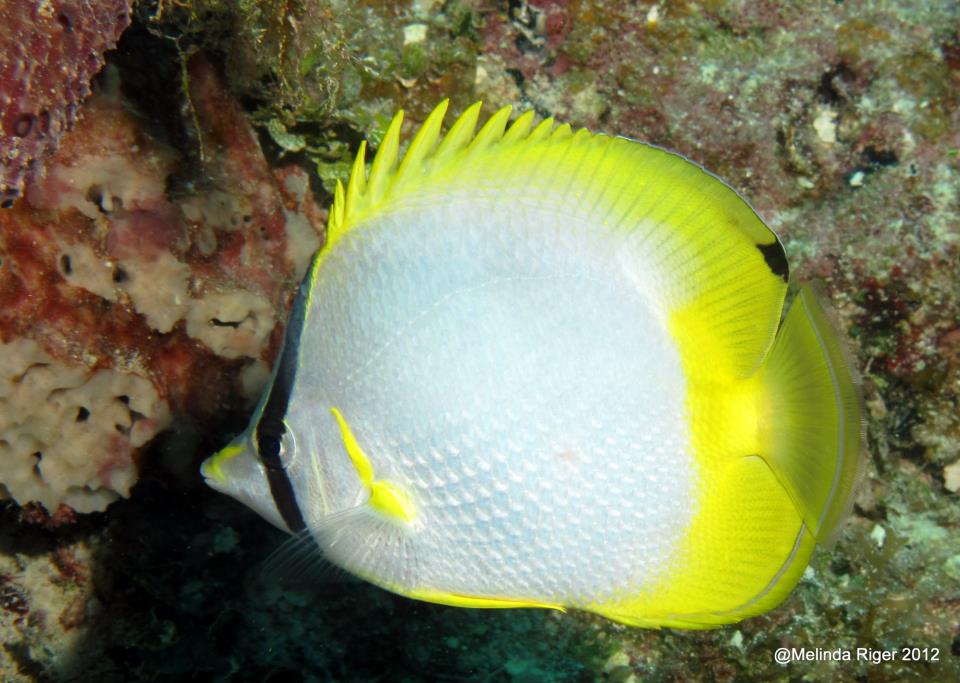
Butterflyfishes (Chaetodontidae) belong to a large worldwide family of small, colourful reef fishes. There are several sorts to be found in the Bahamas, of which 4 are shown below. These creatures resemble small angel fishes, and are invariably vividly coloured, strikingly patterned, or in many cases, both. Apart from that, the most interesting fact about them is that their species name Chaetodontidae derives from a Greek compound noun meaning ‘hair tooth’. This unsettling description relates to the rows of tiny, fine filament-like teeth inside their protuberant mouths. If I ever get a photo of a butterflyfish showing its teeth while feeding or yawning, I will add it here…
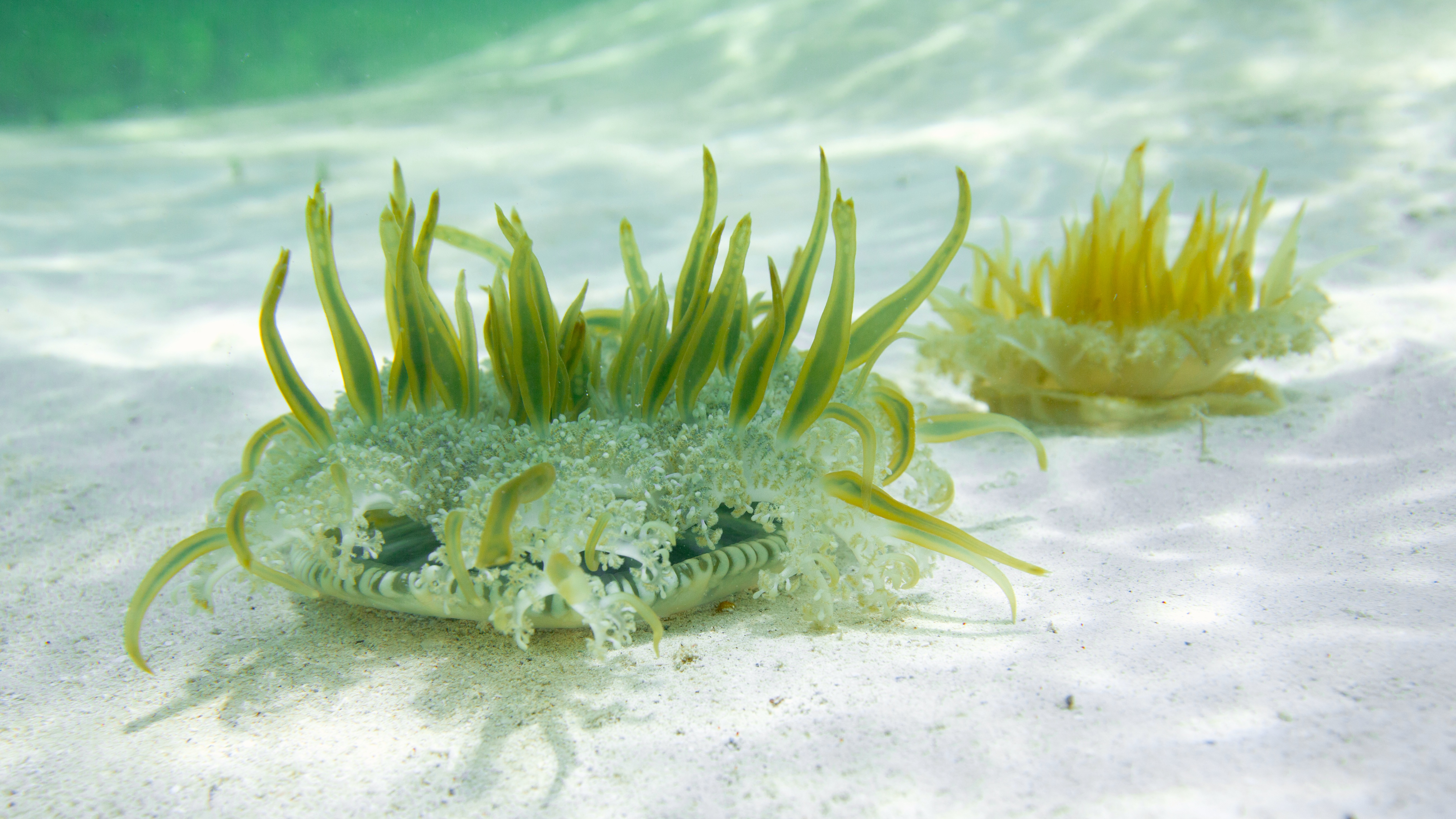
The Mangrove Jellyfish Cassiopea, also called the ‘upside-down jellyfish’ for reasons I needn’t dwell on, is the only member of its particular jellyfish family. These creatures prefer warm waters, and typically live upside-down on the sea-bottom, which no doubt makes catching prey very simple. They can be found individually, though more likely in large groups, with individuals displaying different shades and colours.
NEWAn excellent video by Melinda Riger of Grand Bahama Scuba
The Mangrove Jellyfish has one of the milder stings of the numerous species, though human reactions to the sting will vary with the individual. A greater problem may come from swimming around or over a mass of these creatures. Their stinging cells are excreted in a transparent mucus which may invisibly cover the unwary swimmer. Apart from skin-irritation and a rash, the stings are apparently very itchy. My guess is that scratching can only make things worse (cf No-see-ums…). The first of the two videos below was taken recently by Sarah Bedard (to whom thanks) who “found a great tidal pool full of them at the end of Rock Point Road, Treasure Cay (Abaco)”. The second is short, but with some amazing footage of the Jellyfish in action.
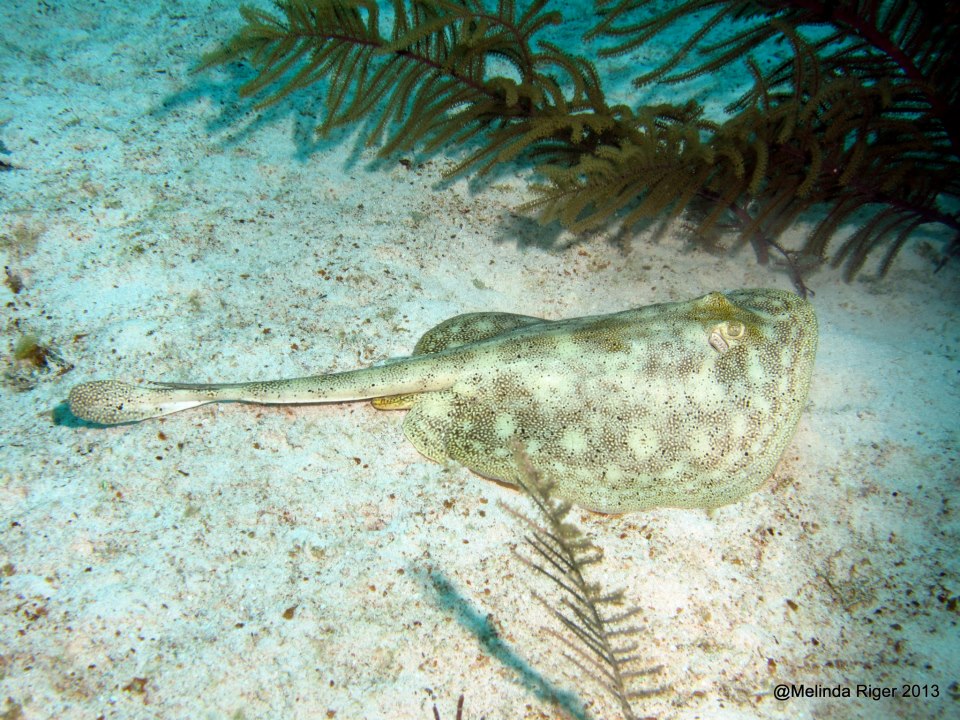
BAHAMAS REEF FISH (4) – YELLOW STINGRAY Uboritas jamaicensis
The YELLOW STINGRAY (Uboratis jamaicensis) is one of several ray species found in the tropical western Atlantic ocean. They live in shallow water on sandy or seagrass bottoms, and are commonly found near coral reefs. Their light and dark splotchy colouring can rapidly change according to the surroundings and the need for camouflage. Look at the photos below with half-closed eyes and (apart from knowing perfectly well that there’s a ray there), the blending in is remarkable.
The yellow stingray feeds on small invertebrates and fishes. It can use its ‘wings’ to uncover buried / hiding prey by disturbing the sand. It also has a subtle ‘passive’ method of hunting by using its mantle to form a lethal ‘cave’ that attracts shelter- or shade-seeking prey.
Yellow stingrays breed in seagrass. They are quite prolific, breeding year round and usually having two litters a year of up to 7 young. This species is ‘aplacental viviparous’: the developing embryos are sustained initially by yolk and later by uterine milk. To find out more about viviparity, you’ll find a section at the bottom of this post where the inquiring may opt in… Not everyone’s sac of yolk, I quite understand.
The yellow stingray is innocuous towards humans, but can inflict a painful injury with its venomous tail spine. The threats to the species are (1) taking as bycatch by commercial fisheries; (2) collection for the aquarium trade; (3) negative impact from habitat degradation, both of reef areas and seagrass breeding grounds. For now, it remains common and widespread and retains itsIUCN LISTING of ‘Least Concern’.
As with all elasmobranchs, skate and rays are internal fertilizers. Internal fertilization is beneficial because it increases the likelihood and efficiency of fertilization by reducing sperm wastage. In addition, it ensures that the energy-rich eggs produced by the female are not consumed by predators, and that all the energy allocated to reproduction is passed to the embryos and not lost to the environment. This is especially the case for species that retain their embryos until the embryos have completely developed, a reproductive mode termed viviparity. Elasmobranches that practice viviparity are called viviparous (or live-bearing). There are many types of viviparity, which can be divided into two broad categories: aplacental and placental viviparity. Placental viviparity is the most advanced mode of reproduction, during which the embryos are initially dependent on stored yolk but are later nourished directly by the mother through a placental connection. This type of reproduction is not exhibited by any type of batoid. Ovoviviparity (or aplacental viviparity), on the other hand, is the only mode of reproduction employed by rays. In rays, the embryos rely on the substantial yolk within the ovulated egg only during the initial stages of development. After the nutrients stored in the egg have been consumed, the embryo ingests or absorbs an organically rich histotroph (or “uterine milk”) produced by the mother and secreted into uterus. The most highly developed of these strategies occurs in some rays in which the lining of the uterus forms tiny, finger-like projections (termed trophonemata) that increase the surface area for histotroph secretion. This form of nutrient supply (or maternal investment) results in very large offspring, which is characteristic of most species of ray.
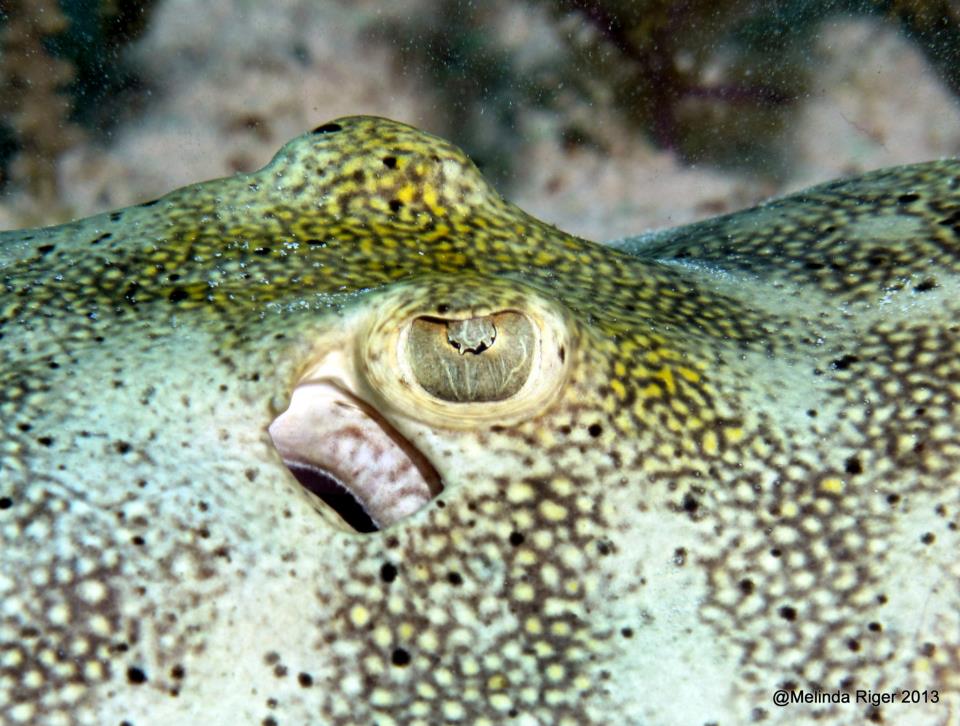
For those now fluent in viviparity, the treat of one of Melinda Riger’s fabulous aquatic close-up photos – keeping a close eye on you…Credits: Melinda Riger of Grand Bahama Scuba, with thanks; Wiki for other images / source material; selected online pickings
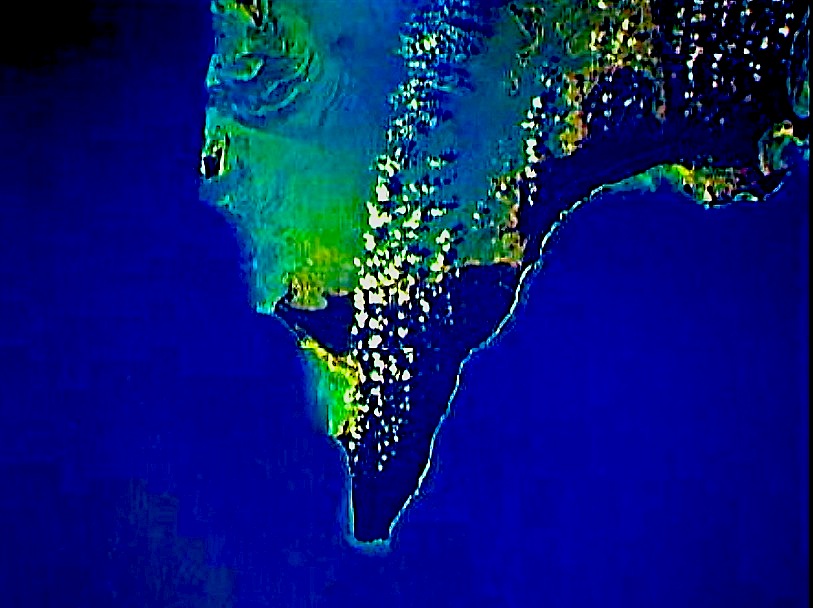
ABACO FROM SPACE: NASA / ISS VIEWS 225 MILES ABOVE THE BLUE PLANET
I have had another look throughNASA‘s stock of Bahamas images taken from theINTERNATIONAL SPACE STATION. They come in differing formats. Over time the Station’s orbit takes it directly over or close to Abaco. In the past I have posted images of Hurricane Irene and Hurricane Sandy taken from space; and one of the astonishing Bahama variations of the colour BLUE. Here is a further selection.
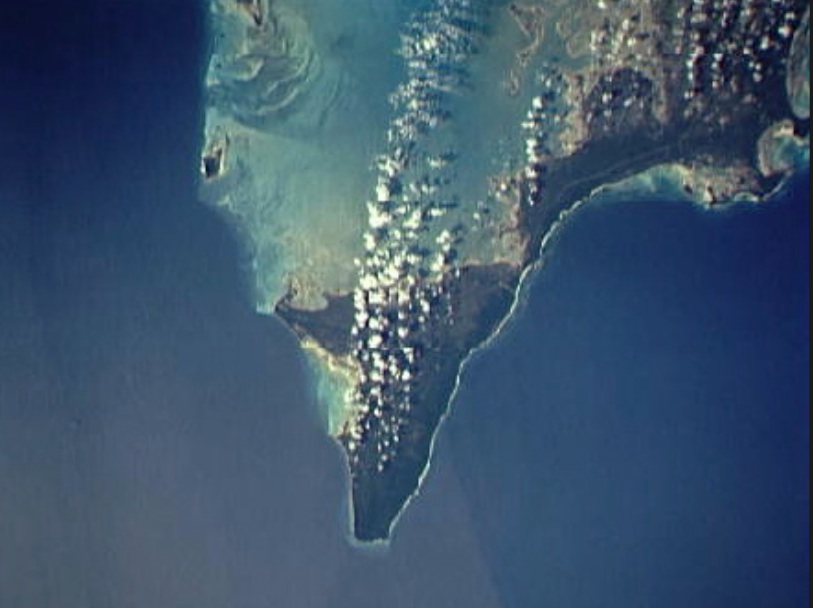
The first two images show an orbit from north to south. I have annotated the first for those unfamiliar with the geography of Abaco. I assume the next was taken only a second or two later, with the whole of the southern tip / National Park / Hole-in-the-Wall area of Abaco now shown.
This image gives an idea of the underwater connection between the island land masses. Here, a corrugated underwater sequence of ridges and troughs can be seen linking the southern end of Abaco with the south western end of Grand Bahama. Moore’s Island and, barely visible below it, Gorda (‘Castaway’) Cay rise above sea level between the two larger islands. The Berry Is. and Great Harbour Cay can be seen bottom left; Eleuthera snakes downwards bottom right.[At Rick Guest’s suggestion, I have rotated the image 90˚ from the original to make sense of a view distorted by angle (the space station’s), earth curvature and my own misinterpretation… It makes far more sense now, and I have corrected geographic errors accordingly… I’ve also added an annotated aeroplane’s-eye view below it, taken from much closer to the earth and therefore less subject to distortion. Many thanks, Rick]
Abaco seen from the southeast. Little Abaco and Grand Bahama are at the top, and all are shown inter-connected underwater. The reef chain of the Abaco Cays – the world’s third longest barrier reef – can clearly be seen on the right
This image appears to be a blow-up of the sharper ‘filmic’ second one above. The detail has become hazy and indistinct, though part of the island-long ribbon of highway remains clearly visible. Time for a photo-enhancing experiment…
I played around with the contrast and colour settings of the photo above, to see what effect it produced (below). The most marked result is that areas of low water – the coastline, the underwater high ground, the Marls and mangrove swamps, the low water of Cherokee Sound – became vividly highlighted. I don’t know what the small russet patches are, particularly visible in the Marls. My (ill-)educated guess is that they represent mangrove / mud islands that are underwater at high tide only, and that were in tidal transition as the Space Station passed overhead. Any ideas welcomed via the comment box.


































 Credits: Melinda Riger of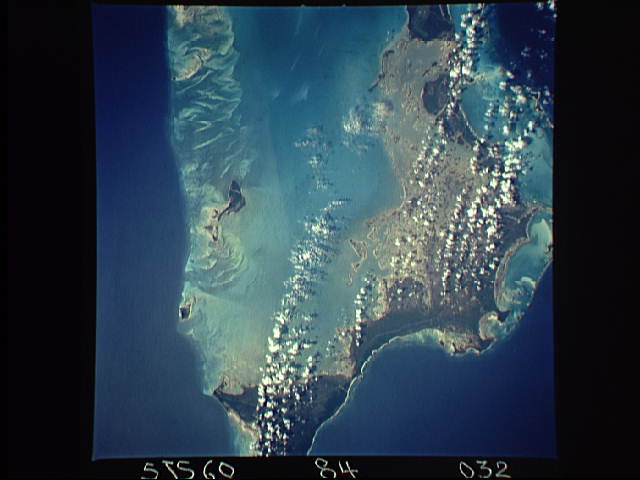


 ROLLING HARBOUR ABACO
You must be logged in to post a comment.