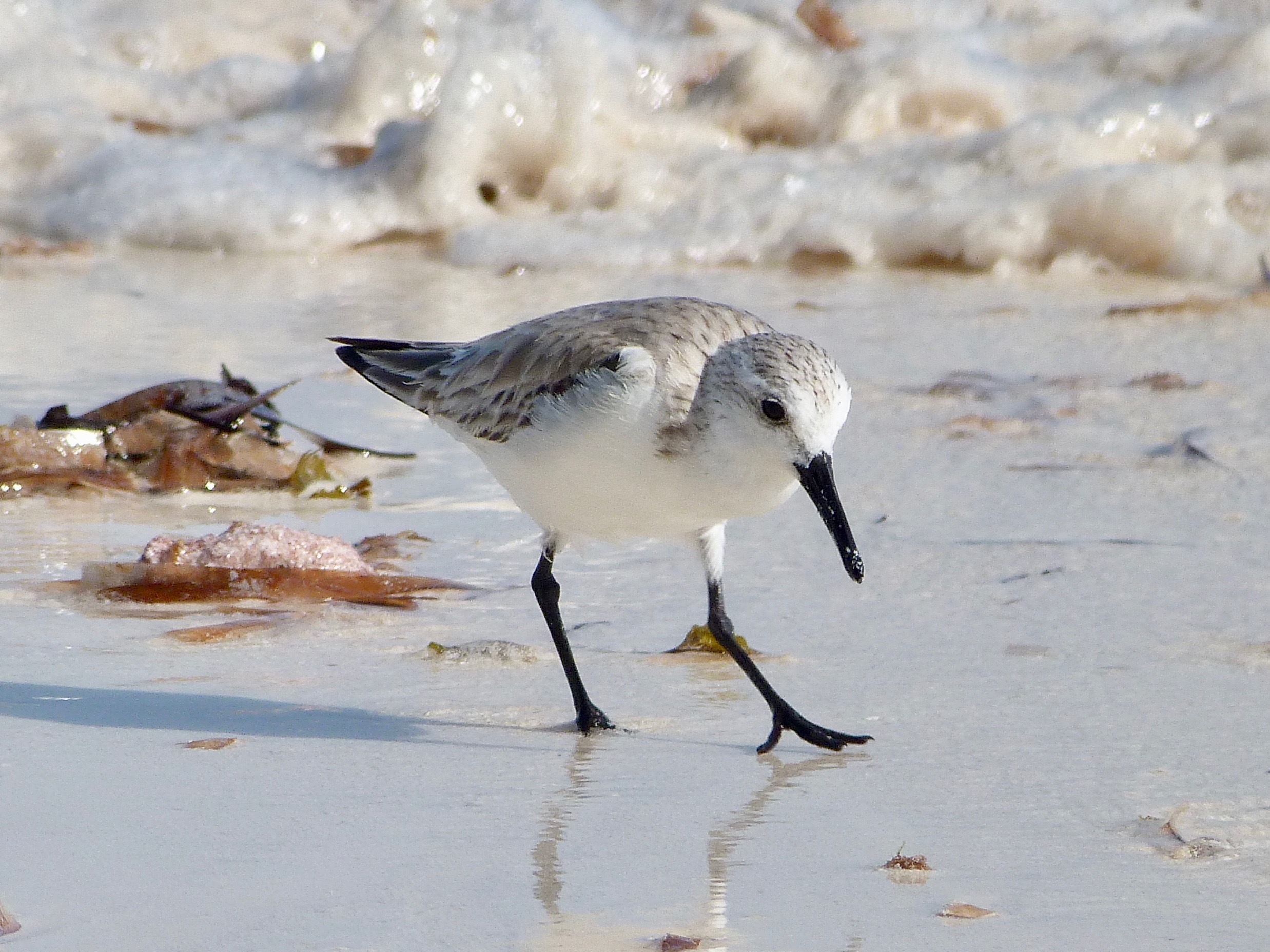
Unknown's avatar

WAVE CHASERS: SANDERLING POOL TIME ON ABACO


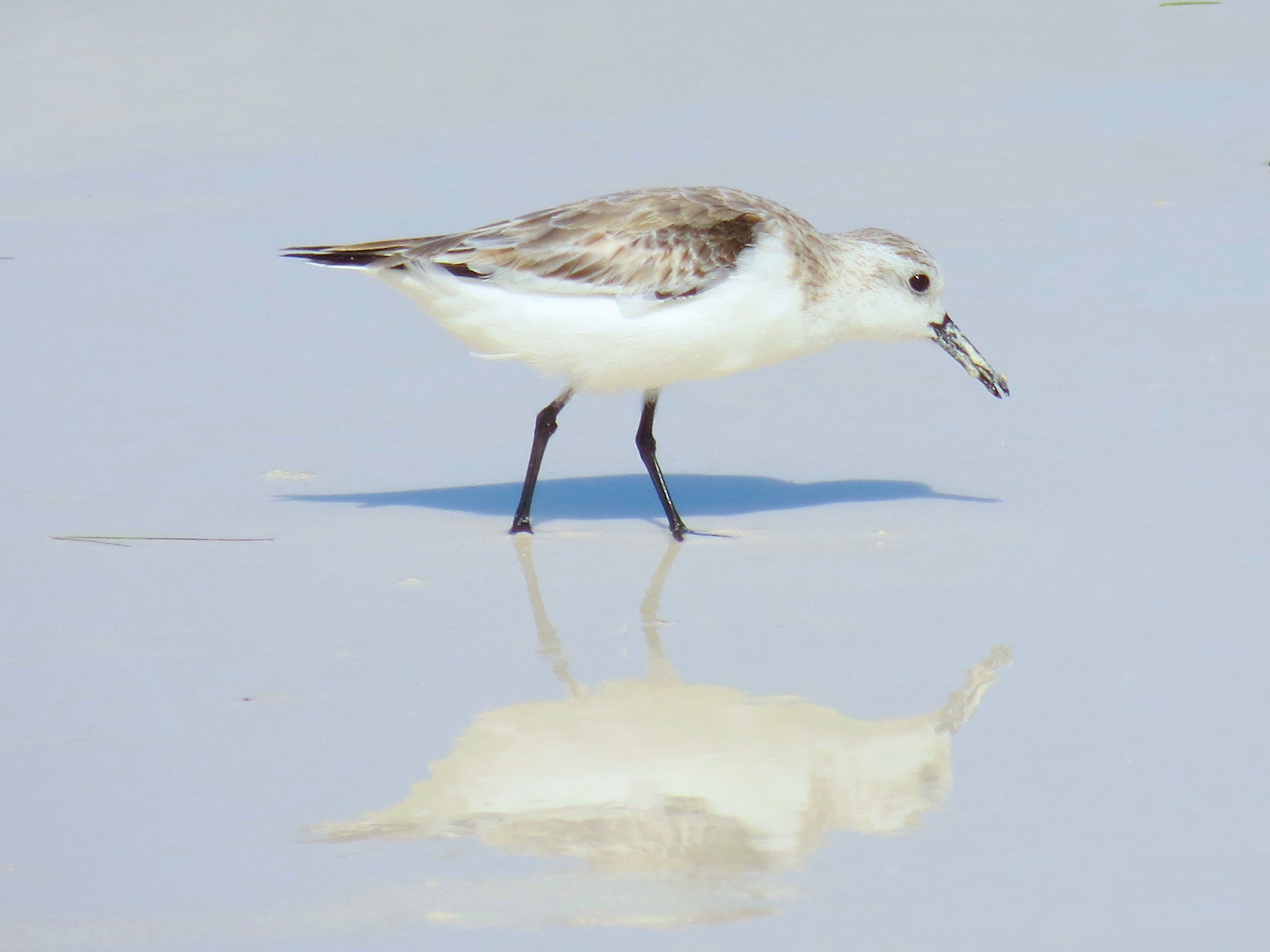
Sanderling, Delphi Beach Abaco Bahamas (Keith Salvesen / Rolling Harbour)

WAVE CHASERS: SANDERLING POOL TIME ON ABACO

It’s often a hard decision whether to include a short piece of video footage in a post. By short, I mean less than a minute. On the one hand, there is usually a good reason for inclusion, even if only aesthetic. On the other, it simply takes up more time for busy people who may prefer to flick through an article and enjoy some nice images along the way. Today, you can have the best of both worlds.

Sanderling, Delphi Beach Abaco Bahamas (Keith Salvesen / Rolling Harbour)

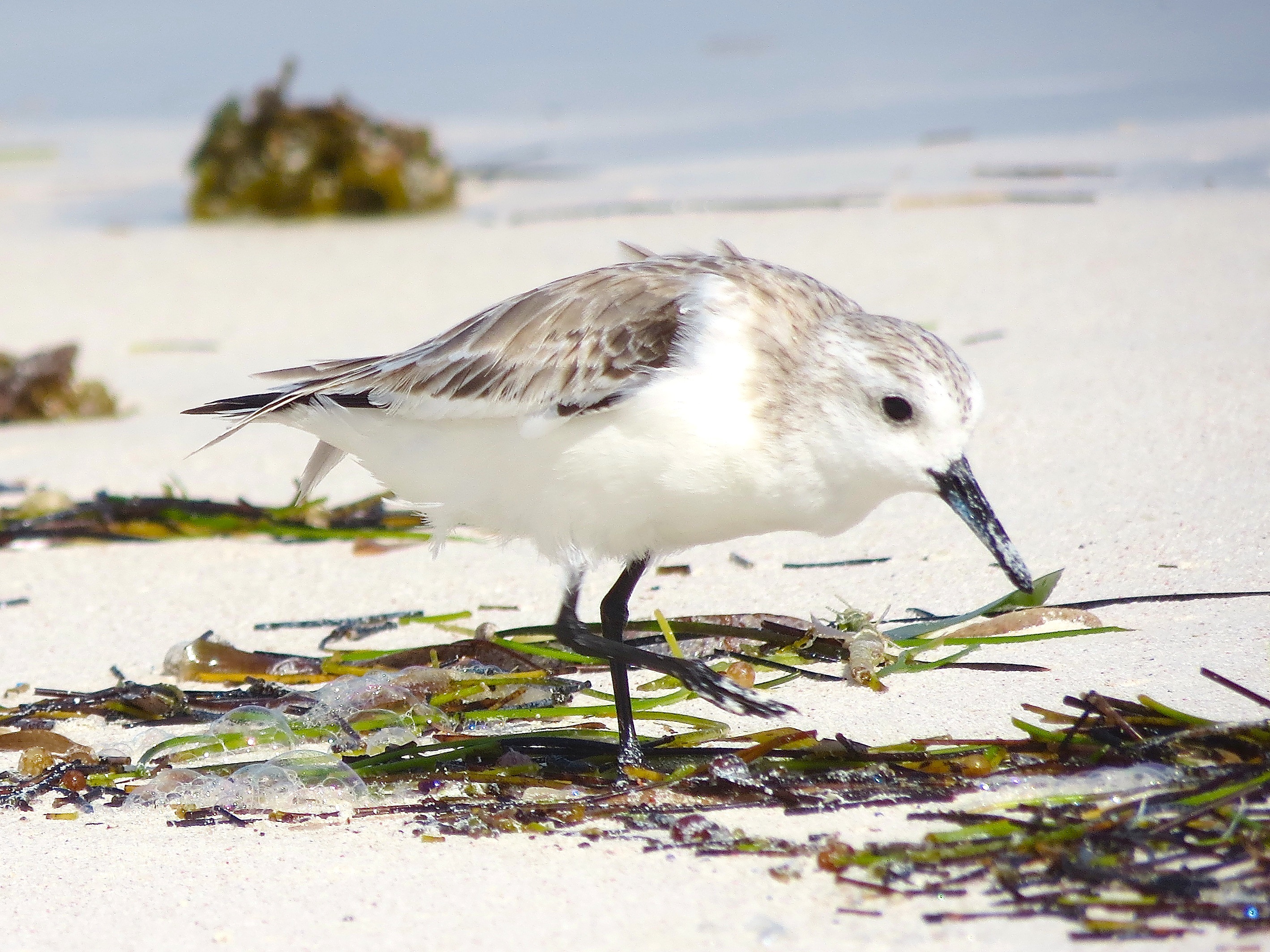
Sanderlings are definitively ‘peeps’, a group name that embraces the smallest and squeakiest sandpiper species. They are the wave chasers, the tiny birds that scuttle along the beach, into the retreating tide for a snack from the sand, and back to the beach again as the waves creep in. Their little legs and feet move in a blur, and many people immediately think of wind-up clockwork toys as they watch the birds in action. But these charmers never wind down while there is shoreline foraging to be done.

Sanderling, Delphi Beach Abaco Bahamas (Keith Salvesen / Rolling Harbour)

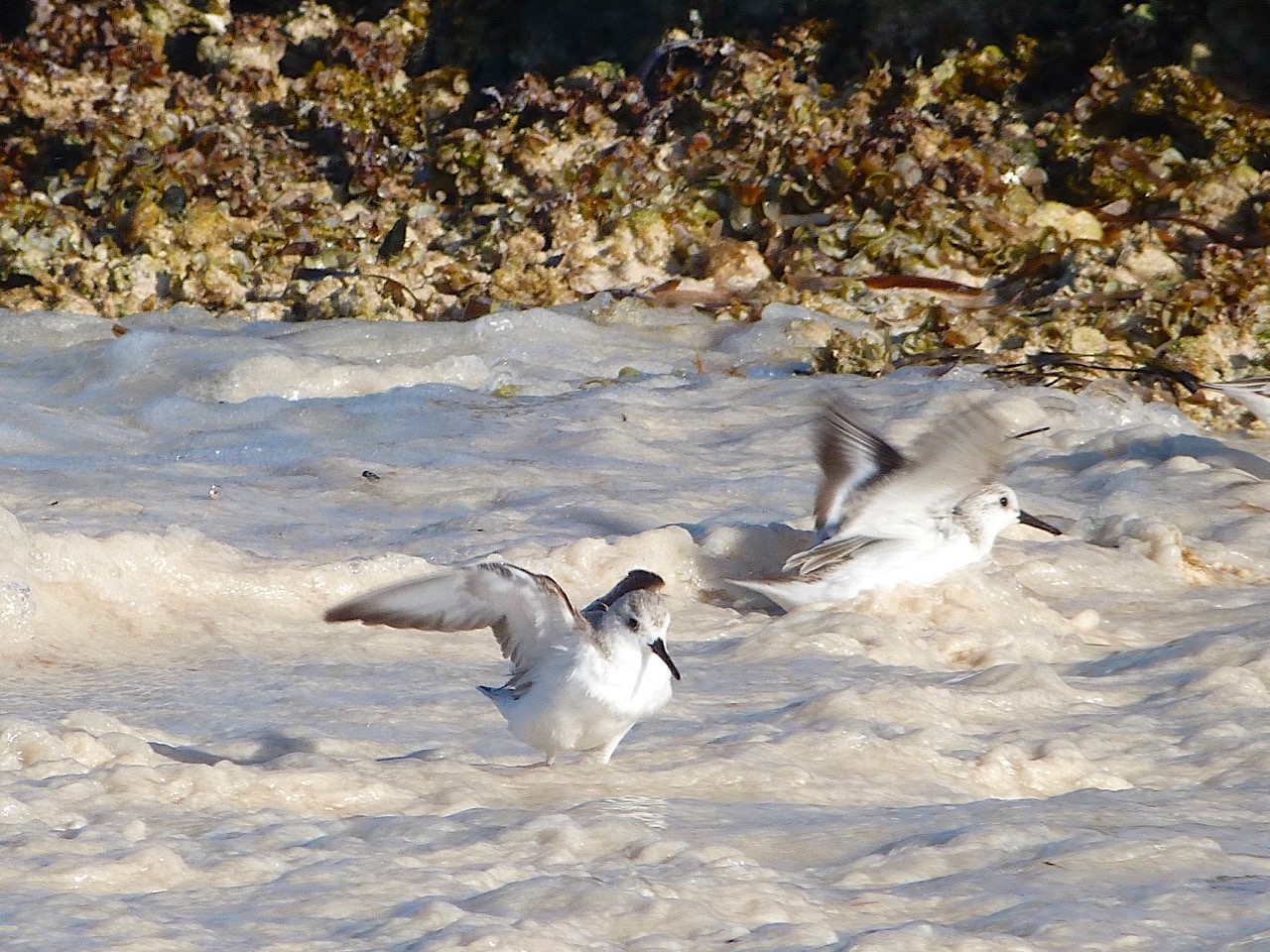
One of the joys of being a sanderling is that rock pools fill and empty diurnally. At some time during daylight, there’s the certainty of a quick dip. I was lying on the beach when I took this short video, so that I didn’t spook the birds. I was equipped with a smallish camera (I drowned it the following day. By mistake I mean) so I kept my distance rather than try to get closer and spoil their joyful bathing.

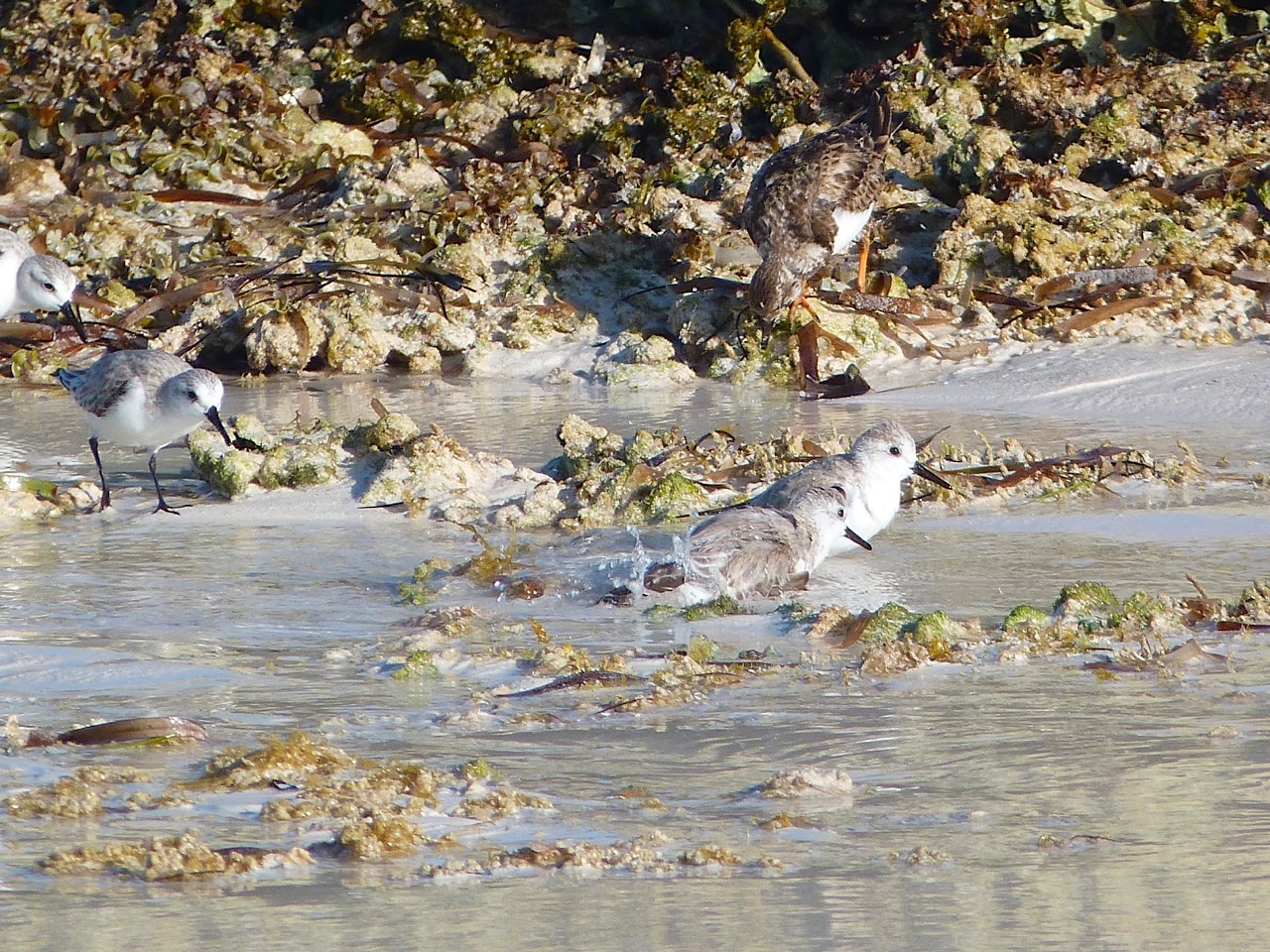
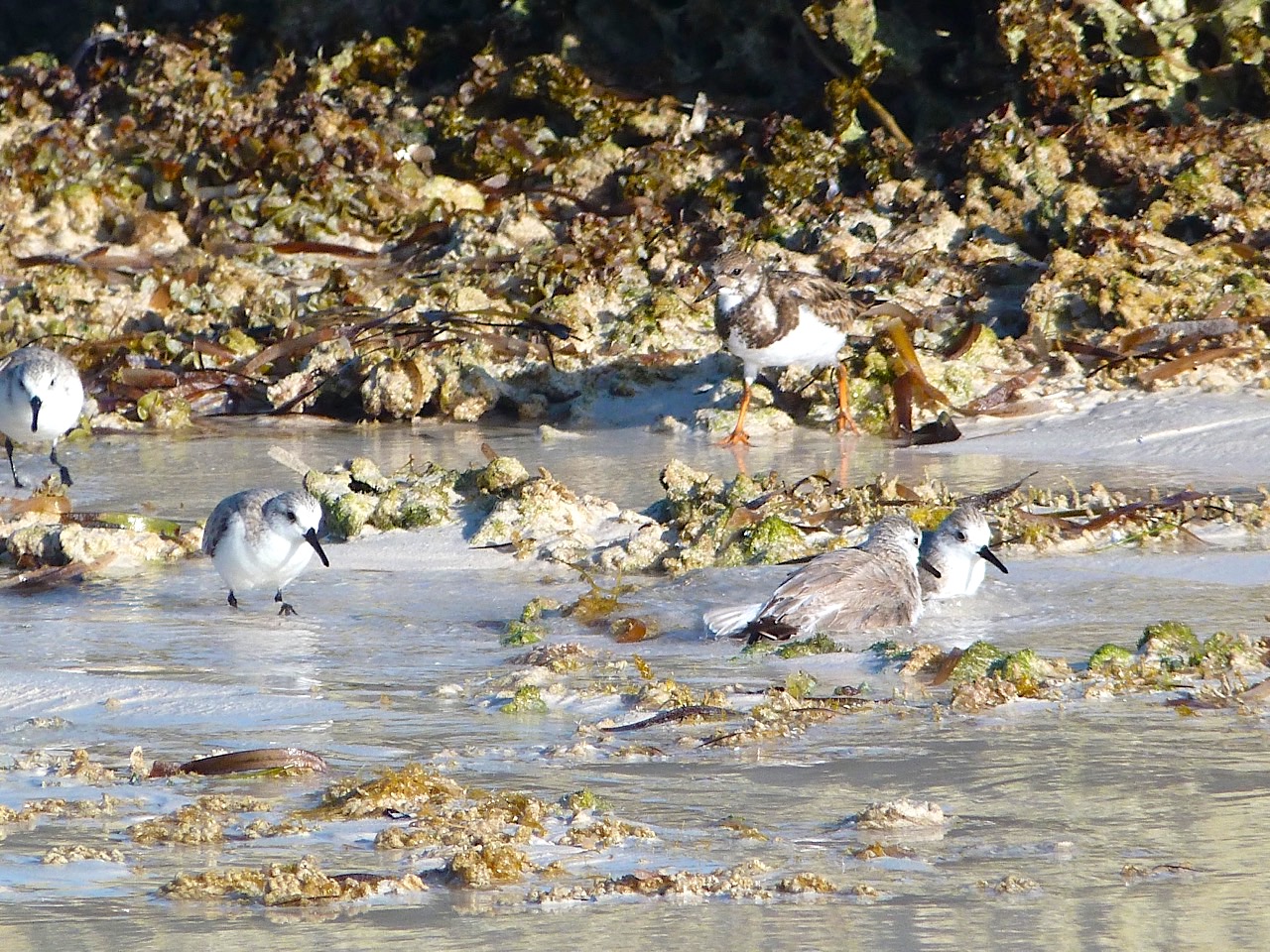
I caught these little birds at a critical moment. You can tell that the tide is coming in fast. The peeps are becoming edgy, and weighing up the joys of immersion in a pool with the less enjoyable prospect of being washed out of the pool by the next wave. Within a minute or so, they had all flocked down the shoreline for a foraging session in new territory.

Waves and incoming tide getting a little too close for comfort on the edge of the pool…Sanderling, Delphi Beach Abaco Bahamas (Keith Salvesen / Rolling Harbour)

Next to the migratory PIPING PLOVERS that favour Abaco as their winter home, the wave chasers are my favourite shorebirds. It was my keenness on them that killed my camera. I went out into the incoming waves to get shots back at the beach with the sun behind me. Great idea until I lost my balance with, as they say, hilarious consequences. Lesson learnt – never turn your back on waves.

Sanderling, Delphi Beach Abaco Bahamas (Keith Salvesen / Rolling Harbour)

All photos © Keith Salvesen / Rolling Harbour taken on the beach at Delphi, Abaco, Bahamas

Sanderling, Delphi Beach Abaco Bahamas (Keith Salvesen / Rolling Harbour)

Unknown's avatar

SHOREBIRDS, WADERS & SEABIRDS: 30 WAYS TO DISTINGUISH THEM


Sanderling Trio, Delphi Beach, Abaco (Keith Salvesen) 5


SHOREBIRDS WADERS & SEABIRDS: 30 WAYS TO DISTINGUISH THEM 

Today, September 6th, is World Shorebirds Day. Every year I look forward to scrolling back through the archives of ‘Birds of Abaco‘ for the occasion. It reminds me of the wonderful and plentiful varieties of birds that lead semi-aquatic or aquatic lives on and around the shores of Abaco. Some are permanent, others are migratory visitors.

.They can be broadly categorised as shorebirds, wading birds, and seabirds. With some bird species there may be doubt as to which category applies. In different parts of the world, the categories themselves may be named differently. 

There is the strict Linnaean ordering of course, but in practice there is a degree of informal category overlap and some variation in the various bird guides. This is especially so between shorebirds and the smaller wading birds. Shorebirds may wade, and wading birds may be found on shores.  Even if you have no problem distinguishing birds in the 3 categories, there are avian characteristics within each list that are interesting observations in themselves. 


10 CHARACTERISTICS OF SHOREBIRDS 

American Oystercatcher, Delphi, Abaco (Tom Sheley)

(Examples include avocet, black skimmer, oystercatcher, plover, sandpiper, and stilt)

1. Shorebirds have long legs, pointed beaks, and long pointed wings.

2. Most are migratory. Some shorebirds fly non-stop for 3-4 days to reach base.

3. Shorebirds are small to medium size birds. The shoreline is their main foraging ground.

4. They often feed close to the waterline and poke their bills into the ground in search of food.

5. Shorebirds also frequent wetlands and marshes and are biological indicators of these environmentally sensitive lands.

6. They are of the order Charadriiformes.

7. Shorebirds are very well camouflaged for their environment and their appearance may vary from place to place as plumage (feather colors) are gained or lost during breeding.

8. Shorebirds typically range in weight from 0.06 to 4.4 pounds.

9. Oystercatchers have a unique triangular bill that is a cross between a knife and a chisel.

10. The black skimmer is the only native bird in North America with its lower mandible larger than the upper mandible, which helps the bird gather fish as it skims the ocean surface.


10 CHARACTERISTICS OF WADING BIRDS 

Great Egret, Abaco - Tom Sheley

(Examples include crane, egret, flamingo, herons, ibis, rail, spoonbill, and stork)

1. Wading birds are found in freshwater or saltwater on every continent except Antarctica.

2. They have long, skinny legs and toes which help them keep their balance in wet areas where water currents may be present or muddy ground is unstable. Also, longer legs make it easier for them to search for food (forage) in deeper waters.

3. Wading birds have long bills with pointed or rounded tips (depending on what is more efficient for the types of food the bird consumes).

4. Wading birds have long, flexible necks that can change shape drastically in seconds, an adaptation for proficient hunting.

5. Herons have sophisticated and beautiful plumes during the breeding season, while smaller waders such as rails are much more camouflaged.

6. Wading birds may stand motionless for long periods of time waiting for prey to come within reach.

7. When moving, their steps may be slow and deliberate to not scare prey, and freeze postures are common when these birds feel threatened.

8. Adult wading birds are quiet as an essential tool for hunting. Wading birds may be vocal while nestling or while in flocks together.

9. Many wading birds form communal roosts and breeding rookeries, even mixing flocks of different species of wading birds or waterfowl.

10. Wading birds fully extend their legs to the rear when flying. The neck may be extended or not while in flight, depending on the species.


10 CHARACTERISTICS OF SEABIRDS 
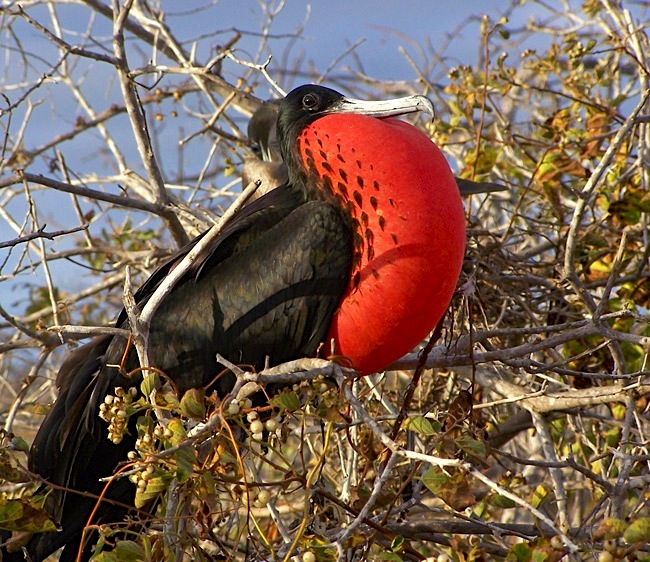
Magnificent Frigatebird (inflated-throat) (Michael Vaughan)

(Examples include albatross, auk, booby, frigatebird, fulmar, gannet, petrel, shearwater, and tropicbirds)

1. Seabirds are pelagic, spending most of their lives far out at sea.

2. Seabirds move toward to coastal areas to breed or raise young for a minimal amount of time.

3. Seabirds are light on their undersides and dark on top (an adaptation known as countershading).

4. Seabirds have more feathers than other types of birds for more insulation and waterproofing.

5. Seabirds have flexible webbed feet to help gain traction as they take off for flight from the sea.

6. Some seabirds have unusually sharp claws used to help grasp fish under the water.

7. Some larger seabirds (e.g. albatross) have long, slim wings allowing them to soar for long distances without getting tired.

8. Some smaller seabirds have short wings for maneuvering at the surface of the water.

9. Seabirds have specialised glands to be able to drink the saltwater and excrete salts.

10. Some seabirds (e.g. gannets) have a head shape that is usually tapered for more efficiency in plunge diving.

These lists were put together in useful chart form by the excellent Beach Chair Scientist
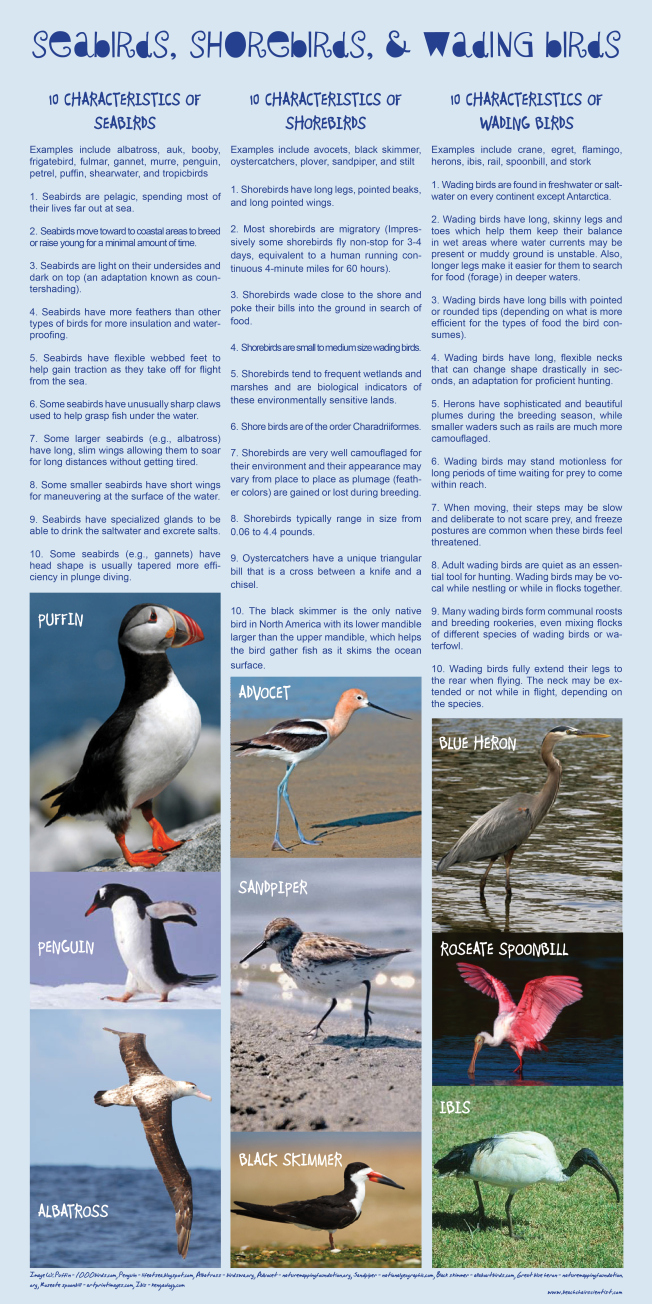
seabird shorebird wading bird chart ©beachchairscientistTable ©Beach Chair Scientist, with thanks for use permission;

Image Credits: Keith Salvesen, Michael Vaughn, Tom Sheley
Unknown's avatar

OUT STANDING IN THE WATER: YELLOWLEGS (LESSER) ON ABACO


Lesser Yellowlegs Tringa flavipes, Abaco Bahamas (Tom Sheley)


YELLOWLEGS (LESSER) ON ABACO: OUT STANDING IN THE WATER

It’s always helpful when a bird ends up with a descriptive name (after translation from the Latin binomial) that actually matches the creature. Burrowing owl, Roseate Spoonbill, White-crowned pigeon, Red-legged Thrush, Black-and-white Warbler – you know where you are at once. So it is with the Yellowlegs.

Lesser Yellowlegs Tringa flavipes, Abaco Bahamas (Tom Sheley)


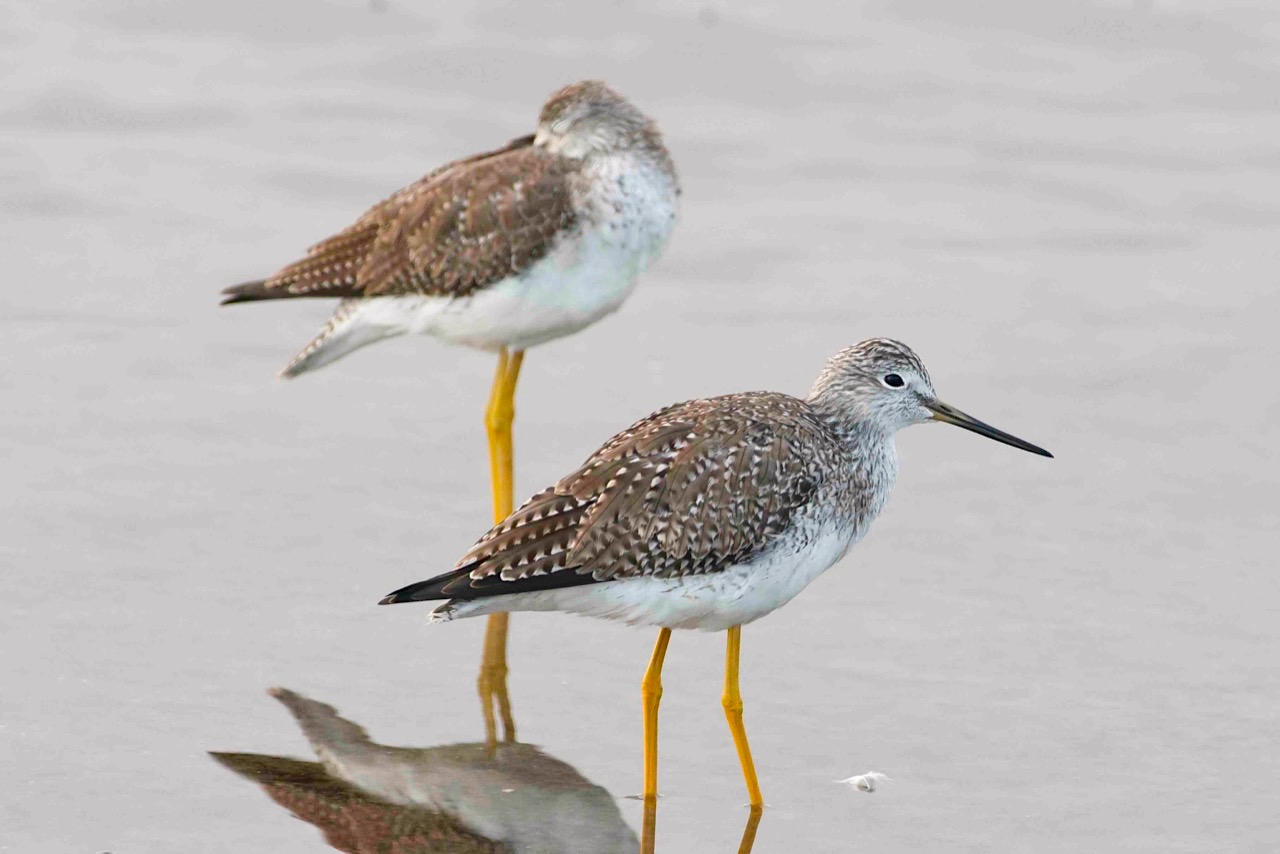
The only question is whether the Yellowlegs  you are looking at is ‘greater’ (Tringa melanoleuca) or ‘lesser’ (Tringa flavipes). Both are winter visitors on Abaco, and a single bird on its own – with no size comparison – can be a potential source of confusion.  

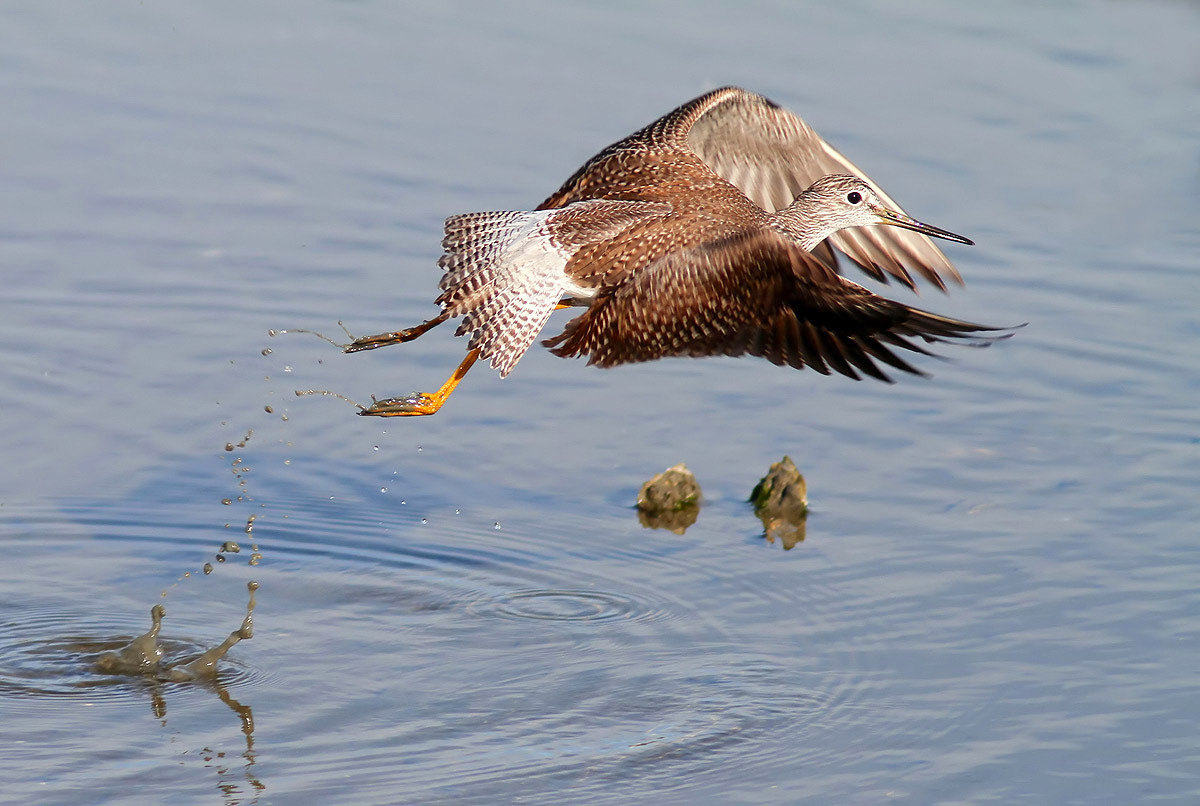
Taking flight… we have lift-offLesser Yellowlegs Tringa flavipes (Phil Lanoue)

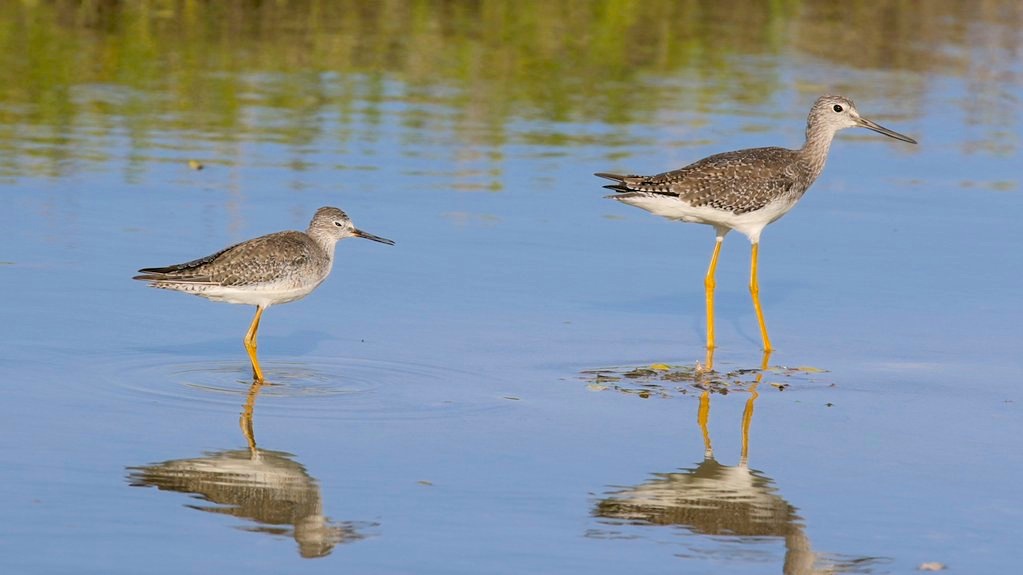
Apart from size, the greater and lesser yellowlegs have some not-necessarily-very-noticeable differences in bill length (in comparison with head-size), plumage and vocalisation. Here is an excellent example of the yellowlegs cousins together, to give you a comparison.

Little and LargeGreater & Lesser Yellowlegs Comparison (Matt Scott)

DO THESE SHOREBIRDS EVER GO ON LAND?

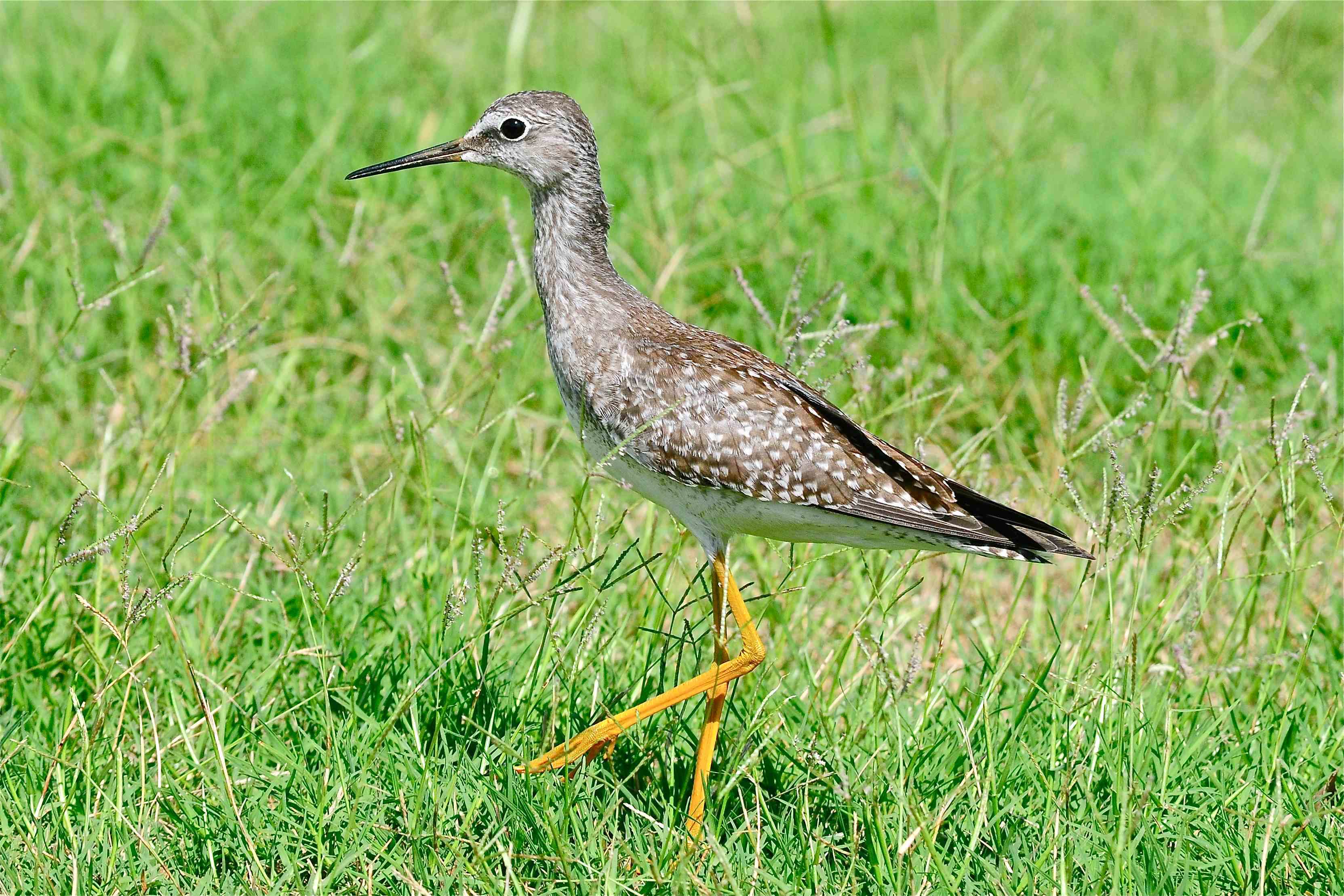
A: YESLesser Yellowlegs Tringa flavipes, Abaco Bahamas (Tony Hepburn)


*ALERT* AMATEUR PHOTOGRAPHY CORNER *ALERT*

DO YOU HAPPEN TO HAVE A PHOTO OF THE LEYE WING UNDERSIDES?

Yup. This bird was at Gilpin Pond. There aren’t many ‘wing underside’ photos out there. They are delicately complex and very pretty. (Will this do?)Lesser Yellowlegs Tringa flavipes, Abaco Bahamas (Keith Salvesen)


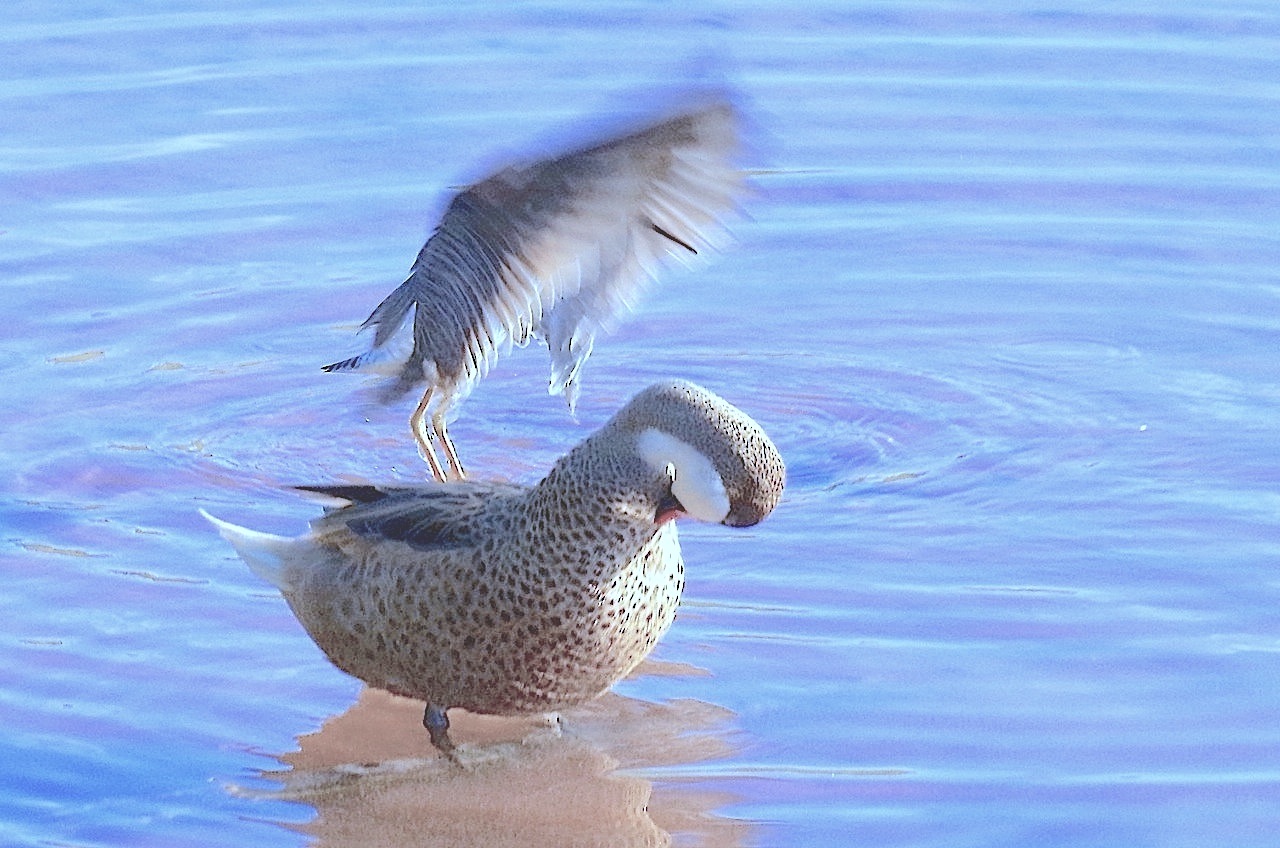
Q: DO THEY EVER DO PHOTOBOMBS?

A: INDEED! (BOMBING A BAHAMA DUCK)Lesser Yellowlegs Tringa flavipes, Abaco Bahamas (Keith Salvesen)Weird blue tint due to radical colour correction for the bad red algal bloom on the pond
Credits: Tom Sheley (1, 2, 9); Phil Lanoue (3); Matt Scott (4); Tony Hepburn (6); ID concealed to protect me the bad photographer (7, 8)

Lesser Yellowlegs Tringa flavipes, Abaco Bahamas (Tom Sheley)

Unknown's avatar

WORLD SHOREBIRDS DAY . COMPLETE CHECKLIST FOR ABACO BAHAMAS


WORLD SHOREBIRDS DAY: ABACO’S COMPLETE CHECKLIST

Abaco’s birding records compiled for over 20 years include 33 shorebird species. For a few, the islands and cays are a permanent residence; for many others they are winter quarters; some species are visitors transient in their migrations; a few are rare vagrants. The complete checklist of Abaco’s shorebirds is below, along with 3 links to specific posts. 


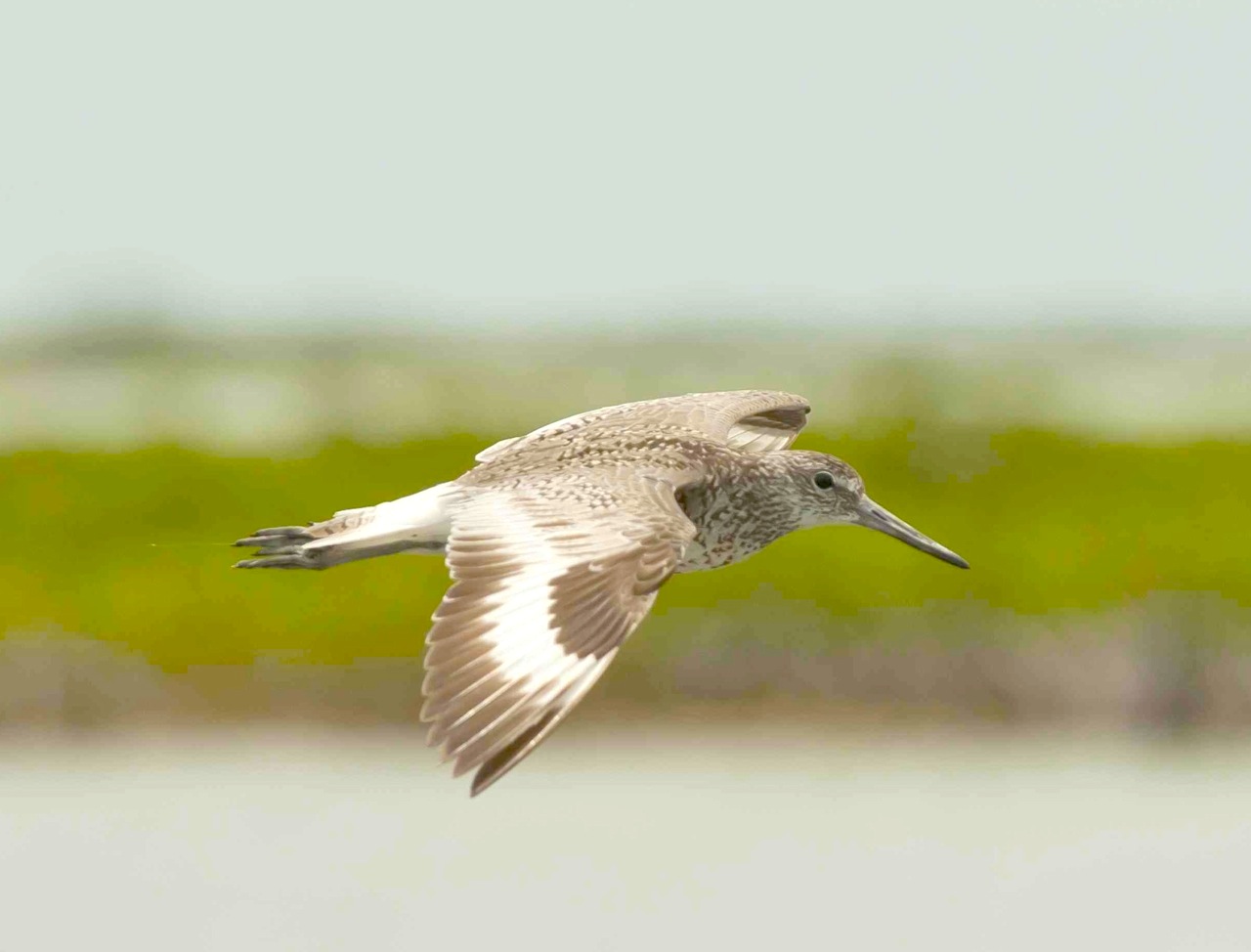
Willet in flight.Abaco Bahamas.6.13.Tom Sheley small2

I have divided the species into 3 categories: sandpipers & kin; plovers; and a catch-all ‘large shorebird’ group that includes one or two sandpipers. Of the 26 birds featured and shown in the main checklist below, 23 are ones you might reasonably hope or expect to encounter on Abaco, though some only if you are lucky or your field-craft is excellent. The others are the long-billed dowitcher, American avocet and Wilson’s phalarope (of which only one has ever been seen on Abaco, with a photo to prove it). Many of these are showcased in my book The Birds of Abaco

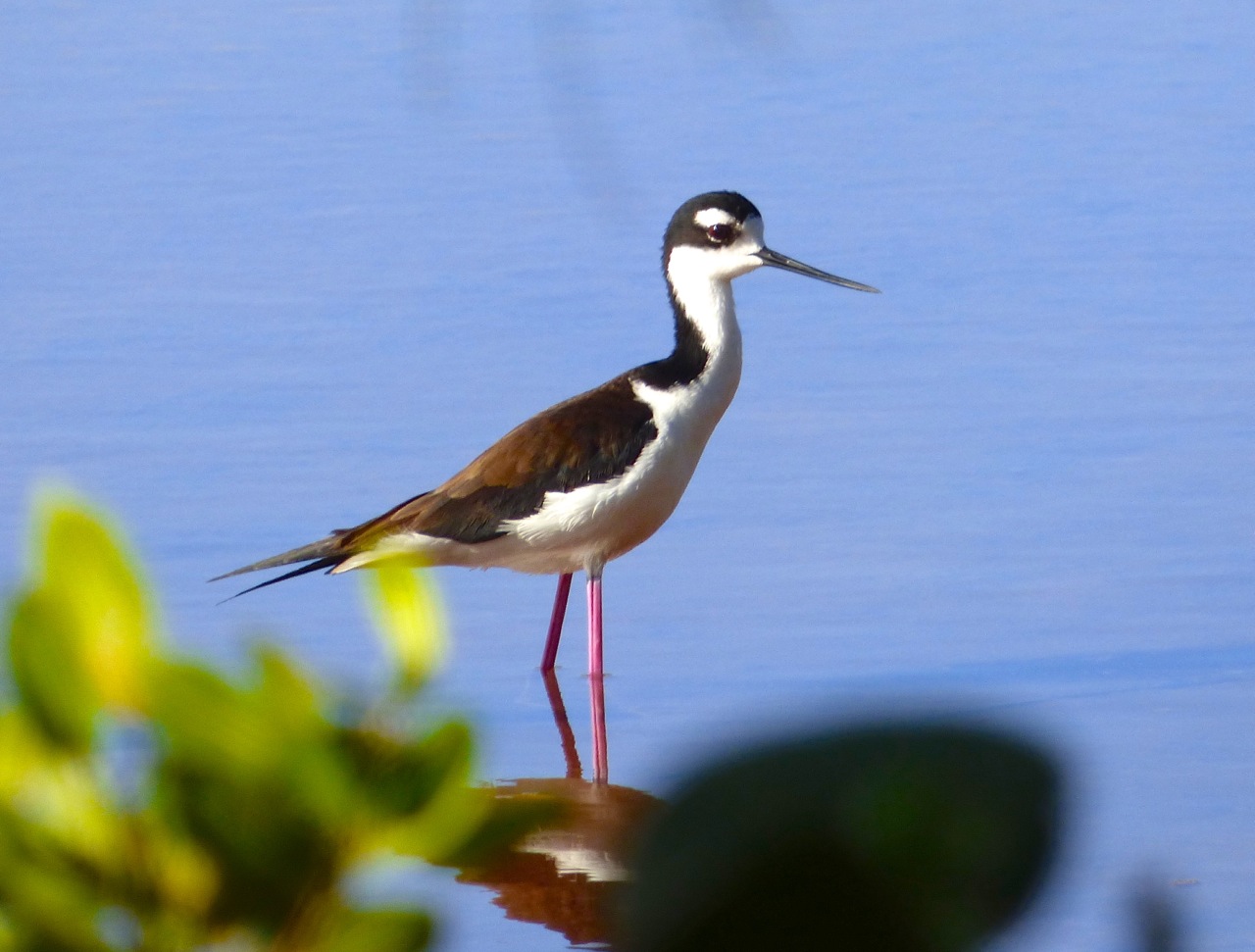
Black-necked Stilt, Gilpin Point, Abaco (Keith Salvesen)

CLICK A LINK TO INVESTIGATE

LARGE SHOREBIRDS

SANDPIPERS

PLOVERS

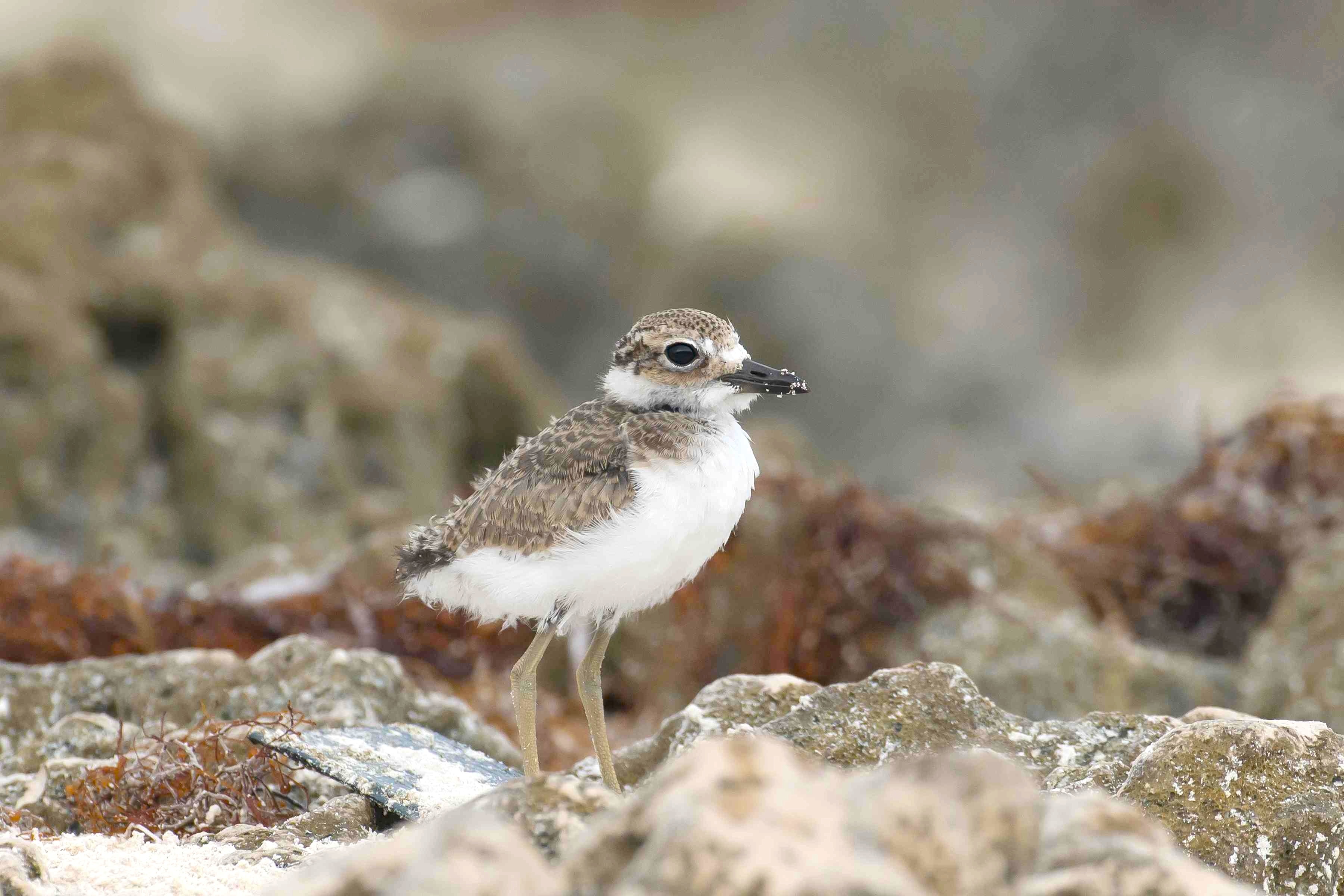
Wilson's Plover chick.Delphi Club.Abaco Bahamas.Tom Sheley JPG copy

THE COMPLETE CHECKLIST

The codes tell you, for any particular bird, when you may see it (P = permanent, WR = winter resident, TR = transient, V = vagrant); whether it breeds (B) on Abaco; and your chance of seeing it, graded from easy (1) to vanishingly unlikely (5). 

  • Black-necked Stilt                             Himantopus mexicanus               PR B 3
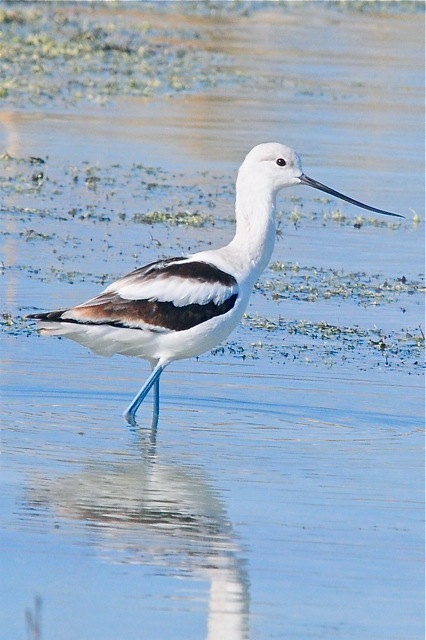
  • American Avocet                               Recurvirostra americana             WR 4
  • American Oystercatcher                  Haematopus palliatus                  PR B 2
  • Black-bellied Plover                         Pluvialis squatarola                       WR 1
  • American Golden-Plover                Pluvialis dominica                          TR 4
  • Wilson’s Plover                                 Ochthodromus wilsonia                PR B 2
  • Semipalmated Plover                      Charadrius semipalmatus             WR 2
  • Piping Plover                                     Charadrius melodus                      WR 3
  • Killdeer                                               Charadrius vociferus                     WR 2
  • Spotted Sandpiper                            Actitis macularius                         WR 1
  • Solitary Sandpiper                            Tringa solitaria                               WR 2
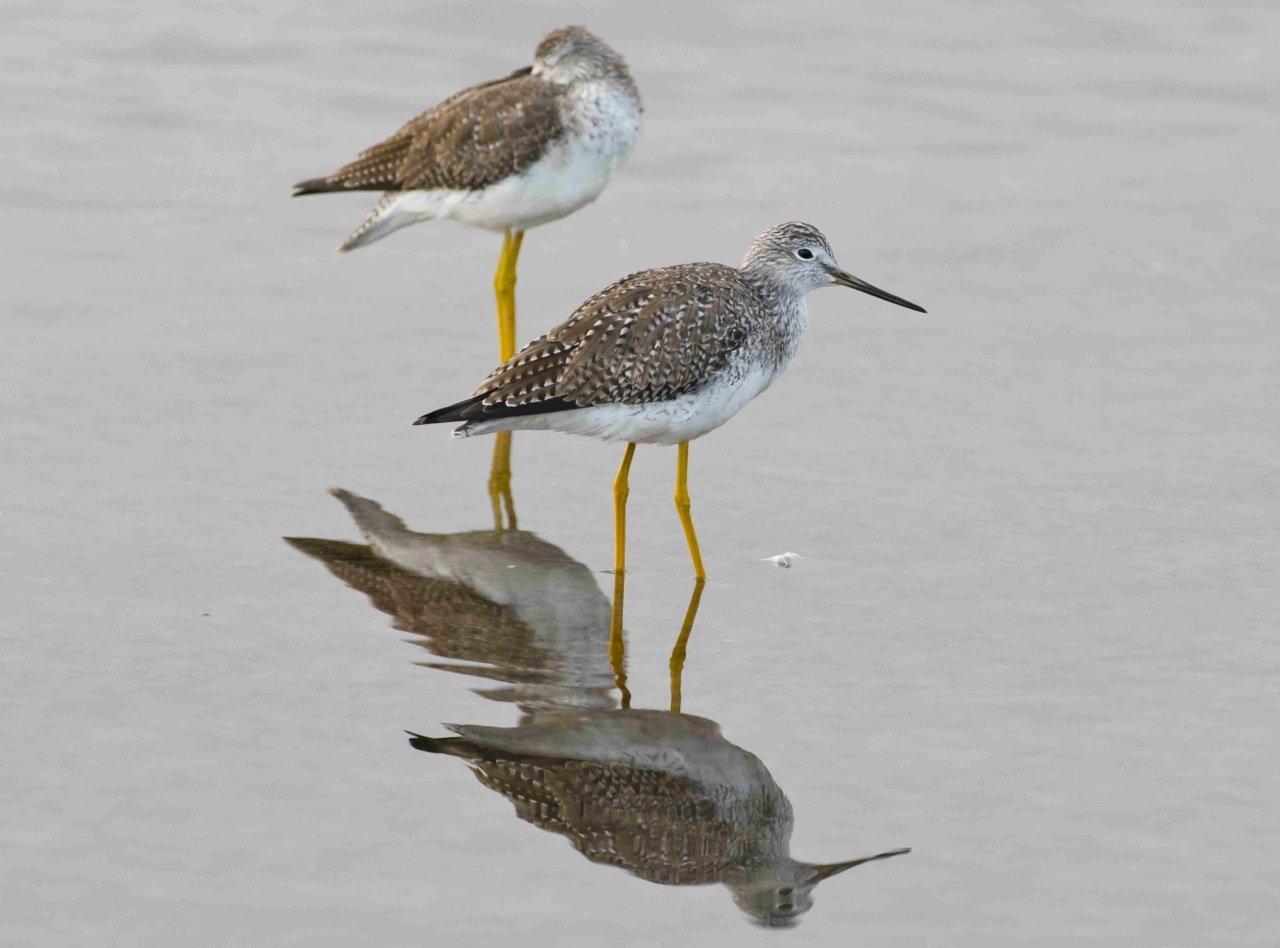
  • Greater Yellowlegs                            Tringa melanoleuca                      WR 2
  • Willet                                                   Tringa semipalmata                      PR B 2
  • Lesser Yellowlegs                              Tringa flavipes                               WR 3
  • Ruddy Turnstone                              Arenaria interpres                          PR 2
  • Red Knot                                             Calidris canutus                            WR 3
  • Sanderling                                          Calidris alba                                   WR 1
  • Dunlin                                                 Calidris alpina                                WR 2
  • Least Sandpiper                                Calidris minutilla                           WR 2
  • White-rumped Sandpiper               Calidris fuscicollis                          TR 3
  • Semipalmated Sandpiper                Calidris pusilla                               TR 2
  • Western Sandpiper                           Calidris Mauri                                TR 2
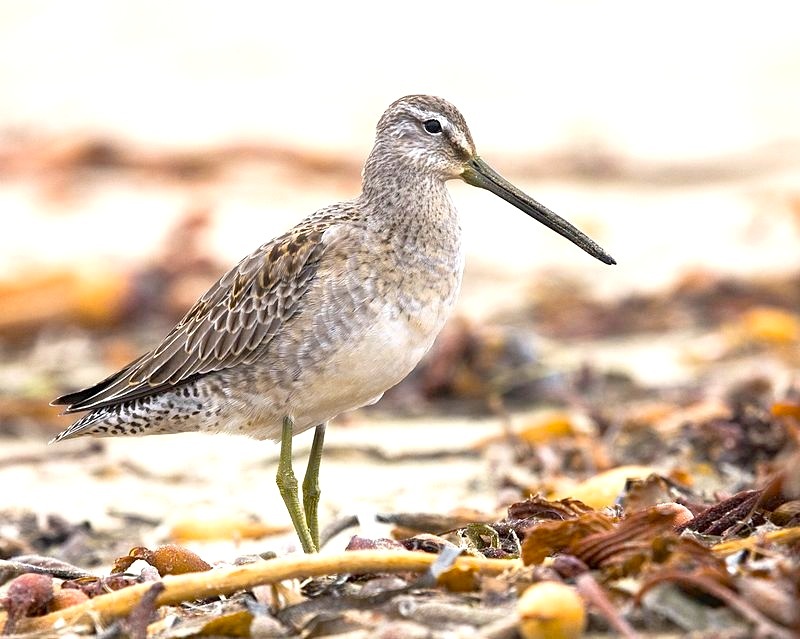
  • Short-billed Dowitcher                    Limnodromus griseus                    WR 1
  • Long-billed Dowitcher                     Limnodromus scolopaceus          WR 4
  • Wilson’s Snipe                                   Gallinago delicata                          WR 3
  • Wilson’s Phalarope                           Phalaropus tricolor                        V 4

Semipalmated Sandpiper (juv), Abaco (Bruce Hallett)

For the sake of completeness, the other 7 species of shorebird recorded for Abaco – all transients or vagrants – are:

  • Upland Sandpiper                     Bartramia longicauda             TR 4
  • Whimbrel                                    Numenius phaeopus               TR 4
  • Hudsonian Godwit                   Limosa haemastica                    V5
  • Marbled Godwit                         Limosa fedoa                             V5
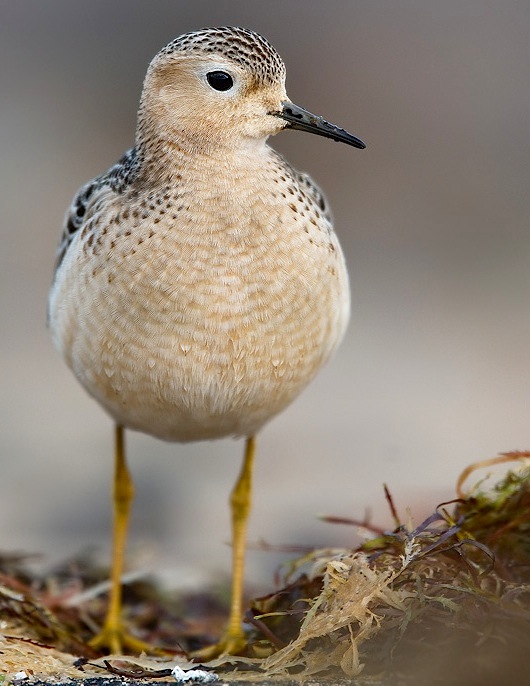
  • Buff-breasted Sandpiper          Tryngites subruficollis             V5
  • Pectoral Sandpiper                   Calidris melanotos                    TR 3
  • Stilt Sandpiper                           Calidris himantopus                 TR 3

Ruddy Turnstone Abaco Bahamas. 2.12.Tom Sheley copy 2

Photo Credits: Tom Sheley, Bruce Hallett, Keith Salvesen

Unknown's avatar

CATCHING THE EYE: OYSTERCATCHERS (+ BONUS ID TIPS)


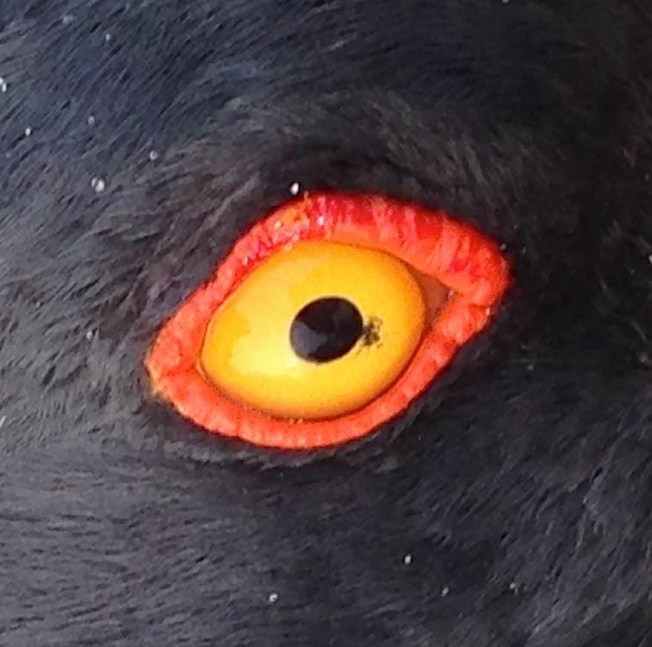
American Oystercatcher AMOY eye close-up (Todd Pover / CWFNJ)


“CATCHING THE EYE”: OYSTERCATCHERS (+ BONUS ID TIP)

I’m focusing (ha!) on oystercatchers and their eyes. Like the extraordinary one in the header image. Notice the bright orangey-red ‘orbital ring’, the egg-yolk-reminiscent eye and the pitch black iris. An eye-catching and unmistakeable feature of this handsome black and white shorebird, the American Oystercatcher.

Here’s another AMOY eye, with a different smudge of black by the iris. I don’t know for sure, but I suspect that AMOY specialists are able to ID individual birds at least in part by their different eye markings. And you can see that the eye-ring smartly matches the beak into the bargain.

American Oystercatcher AMOY eye close-up (Todd Pover / CWFNJ)

This wonderful photograph of a loving AMOY pair with their precious egg safely encircled by a rocky nest was taken on LBI, NJ by ‘Northside Jim’, whose amazing photos I sometimes include. See how brightly the eyes of each bird stand out, like tiny archery targets.

american-oystercatcher-t2-eggs (Northside Jim : Exit 63)

The World is Mine Oyster

The world's mine oyster - American Oystercatcher AMOY (Dan Pancamo Wiki)This well-captioned AMOY shot was generously put on Wiki by photographer Dan Pancamo

OYSTERCATCHER ID TIPS

A while ago, when I was choosing AMOY photographs for publication, I idly wondered what was the difference between them and Eurasian Oystercatchers (yes, yes, I hear you – apart from geographical, I mean…). At a first comparative glance, to me they looked remarkably similar in coloration and size. Assuming both species were to be discovered on the same shoreline, how best might one distinguish them? The main differences seemed to be:

  • Leg colouring differs, AMOY legs being generally pale pink as opposed to the stronger coloured legs of the EUROY (if they can be called that). However there are considerable EUROY variations (see below), from pink to orange to reddish, that are presumably seasonal. The leg colour, assuming they are visible to the watcher, is not quite a definitive identifier.
  • Both species have black heads and necks, but the AMOY’s back plumage shades to dark brown. But how distinctive would that be in low light or indifferent weather?
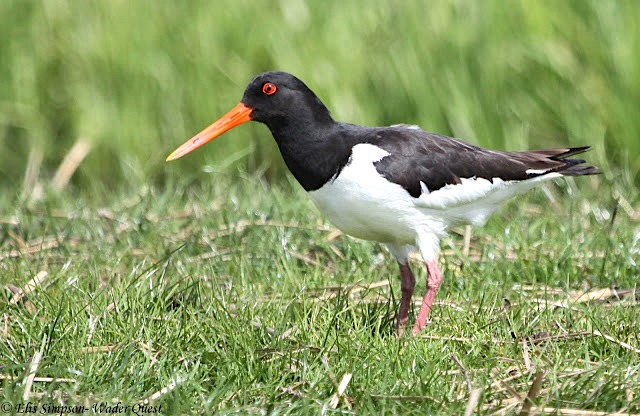
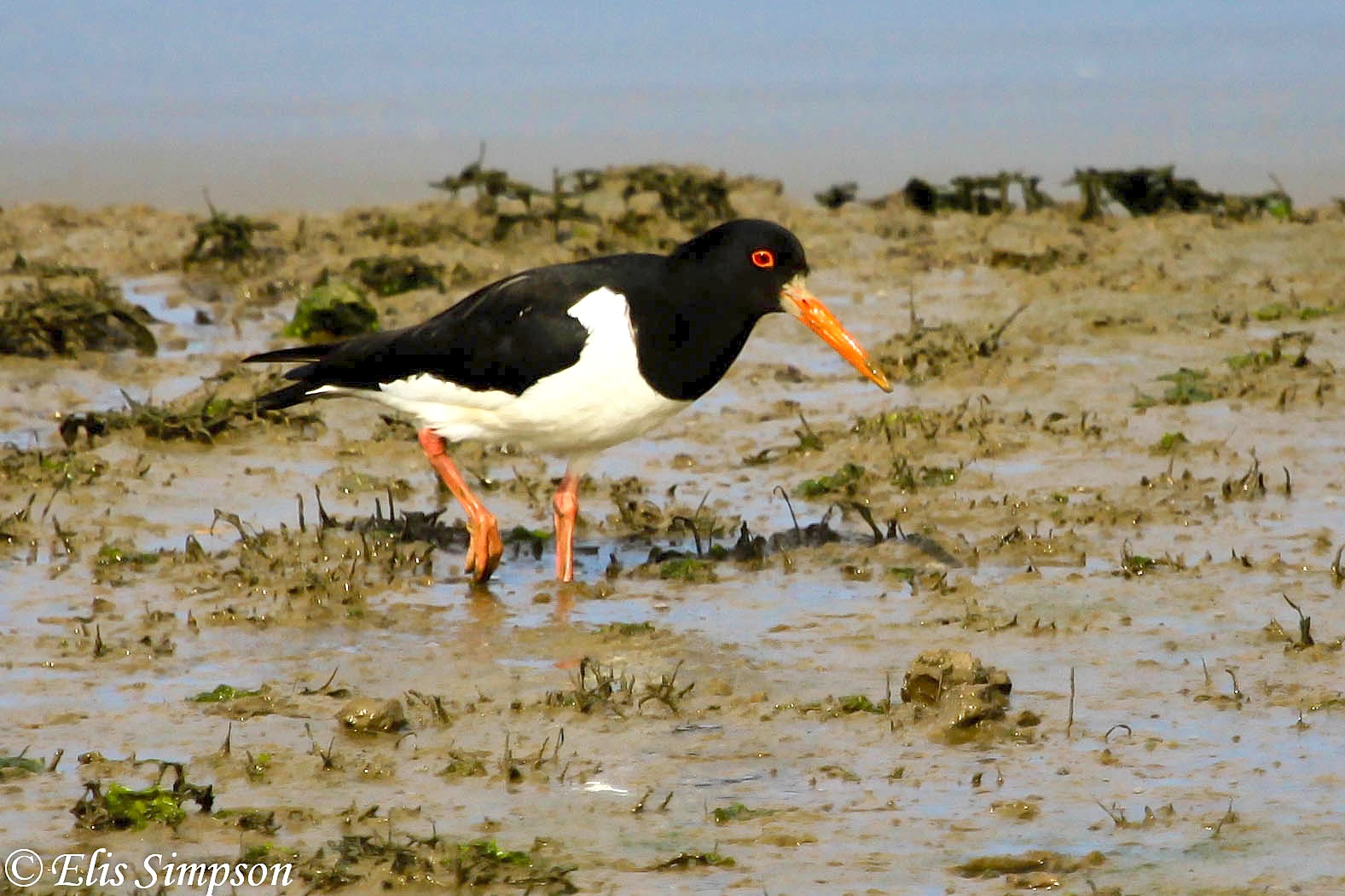
  • Mrs RH, looking over my shoulder, saw it at once: the eyes. If you can see the eyes, you can tell instantly what make of OY you are looking at. Here are a some Eurasian Oystercatchers showing their own distinctively red eyes and orbital rings.

Eurasian Oystercatcher (Elis Simpson)

Eurasian Oystercatcher - Haematopus ostralegus (Elis Simpson)

Haematopus_ostralegus_-Scotland_(Snowmanradio / wiki)

As so often, I have since found that the excellent Birdorable site has nailed the differences clearly and simply. Eye colour, leg colour and – less obviously – the AMOY’s brownish back as opposed to the EUROY’s entirely black and white body. Sorted.

american-oystercatcher (Birdorable)    eurasian-oystercatcher (Birdorable)

RECOMMENDED SHOREBIRD SITE WADER QUEST

Credits: Todd Pover / CWFNJ (1, 2); Northside Jim EXIT63 (3); Dan Pancamo (4); Elis Simpson / Wader Quest (5, 6); snowmanradio / wiki (7); Wader Quest, Birdorable, magpie pickings; Mrs RH for sharp… er… eyes

Unknown's avatar

WORLD SHOREBIRDS DAY . COMPLETE CHECKLIST FOR ABACO, BAHAMAS


American Oystercatcher, Abaco (Tom Sheley)

WORLD SHOREBIRDS DAY: ABACO’S COMPLETE CHECKLIST

Abaco’s birding records compiled for over 20 years include 33 shorebird species. For a few, the islands and cays are a permanent residence; for many others they are winter quarters; some species are visitors transient in their migrations; a few are rare vagrants. The complete checklist of Abaco’s shorebirds is below, along with 3 links to specific posts. 


Willet in flight.Abaco Bahamas.6.13.Tom Sheley small2


I have divided the species into 3 categories: sandpipers & kin; plovers; and a catch-all ‘large shorebird’ group that includes one or two sandpipers. Of the 26 birds featured and shown in the main checklist below, 23 are ones you might reasonably hope or expect to encounter on Abaco, though some only if you are lucky or your field-craft is excellent. The others are the long-billed dowitcher, American avocet and Wilson’s phalarope (of which only one has ever been seen on Abaco, with a photo to prove it). Many of these are showcased in my book The Birds of Abaco


Black-necked Stilt, Gilpin Point, Abaco (Keith Salvesen)

CLICK A LINK TO INVESTIGATE

LARGE SHOREBIRDS

SANDPIPERS

PLOVERS

Wilson's Plover chick.Delphi Club.Abaco Bahamas.Tom Sheley JPG copy

THE COMPLETE CHECKLIST

The codes tell you, for any particular bird, when you may see it (P = permanent, WR = winter resident, TR = transient, V = vagrant); whether it breeds (B) on Abaco; and your chance of seeing it, graded from easy (1) to vanishingly unlikely (5). 

  • Black-necked Stilt                             Himantopus mexicanus               PR B 3
  • American Avocet                               Recurvirostra americana             WR 4
  • American Oystercatcher                  Haematopus palliatus                  PR B 2
  • Black-bellied Plover                         Pluvialis squatarola                       WR 1
  • American Golden-Plover                Pluvialis dominica                          TR 4
  • Wilson’s Plover                                 Ochthodromus wilsonia                PR B 2
  • Semipalmated Plover                      Charadrius semipalmatus             WR 2
  • Piping Plover                                     Charadrius melodus                      WR 3
  • Killdeer                                               Charadrius vociferus                     WR 2
  • Spotted Sandpiper                            Actitis macularius                         WR 1
  • Solitary Sandpiper                            Tringa solitaria                               WR 2
  • Greater Yellowlegs                            Tringa melanoleuca                      WR 2
  • Willet                                                   Tringa semipalmata                      PR B 2
  • Lesser Yellowlegs                              Tringa flavipes                               WR 3
  • Ruddy Turnstone                              Arenaria interpres                          PR 2
  • Red Knot                                             Calidris canutus                            WR 3
  • Sanderling                                          Calidris alba                                   WR 1
  • Dunlin                                                 Calidris alpina                                WR 2
  • Least Sandpiper                                Calidris minutilla                           WR 2
  • White-rumped Sandpiper               Calidris fuscicollis                          TR 3
  • Semipalmated Sandpiper                Calidris pusilla                               TR 2
  • Western Sandpiper                           Calidris Mauri                                TR 2
  • Short-billed Dowitcher                    Limnodromus griseus                    WR 1
  • Long-billed Dowitcher                     Limnodromus scolopaceus          WR 4
  • Wilson’s Snipe                                   Gallinago delicata                          WR 3
  • Wilson’s Phalarope                           Phalaropus tricolor                        V 4

Semipalmated Sandpiper (juv), Abaco (Bruce Hallett)

For the sake of completeness, the other 7 species of shorebird recorded for Abaco – all transients or vagrants – are:

  • Upland Sandpiper                     Bartramia longicauda             TR 4
  • Whimbrel                                    Numenius phaeopus               TR 4
  • Hudsonian Godwit                   Limosa haemastica                    V5
  • Marbled Godwit                         Limosa fedoa                             V5
  • Buff-breasted Sandpiper          Tryngites subruficollis             V5
  • Pectoral Sandpiper                   Calidris melanotos                    TR 3
  • Stilt Sandpiper                           Calidris himantopus                 TR 3

Ruddy Turnstone Abaco Bahamas. 2.12.Tom Sheley copy 2

Photo Credits: Tom Sheley, Bruce Hallett, Keith Salvesen

Unknown's avatar

SANDERLINGS ON THE BEACH . ABACO . BAHAMAS


Sanderling, Delphi Beach Abaco Bahamas (Keith Salvesen)

SANDERLINGS ON THE BEACH . ABACO . BAHAMAS

These little birds are far from rare, but watching a flock of them scuttling back and forth on the sand, in and out of the tide, is always a treat. And as you will notice, when they are foraging in earnest they not only stick their bills into the sand right up to the base… they go for total immersion of the head!

Sanderling, Delphi Beach Abaco Bahamas (Keith Salvesen)Sanderling, Delphi Beach Abaco Bahamas (Keith Salvesen)Sanderling, Delphi Beach Abaco Bahamas (Keith Salvesen)Sanderling, Delphi Beach Abaco Bahamas (Keith Salvesen) Sanderling, Delphi Beach Abaco Bahamas (Keith Salvesen)

All photos: Keith Salvesen, Rolling Harbour Abaco

Unknown's avatar

RUDDY TURNSTONES: PICTURE PERFECT ON ABACO (1)


RUDDY TURNSTONES: PICTURE PERFECT ON ABACO (1)

Ruddy Turnstone, the Marls, Abaco, Bahamas (Tom Sheley)

I very rarely – almost never –  publish single or pairs of images, not least because I enjoy the bits of research and writing that cover a topic more thoroughly. However, today I was going through the photographic archive from my book BIRDS OF ABACO and came across these RUTUs photographed on the Marls by contributor Tom Sheley.

TBH turnstones are among the easiest shorebirds to photograph. They are pleasingly tame, so you can get quite close to them without ruffling their feathers. They aren’t tiny and they are pretty and quite colourful. And they are fairly abundant and so not hard to locate… but they make it hard to get a really good bright, clear photo. Or is that just me…? Anyway, Tom definitely has the camera skills required.

Ruddy Turnstone, Abaco, Bahamas (Tom Sheley)

Unknown's avatar

ON THE WING: BLACK-NECKED STILTS, ABACO, BAHAMAS


Black-necked Stilt in flight, Abaco Bahamas (Alex Hughes)

ON THE WING: BLACK-NECKED STILTS, ABACO, BAHAMAS

Black-necked stilts Himantopus mexicanus may be the most elegant shorebirds you will ever see. They are permanent residents on Abaco and not uncommon where they are found. It could be on a beach; more likely it will be in or around brackish ponds. It won’t be in the pine forest or coppice.

Black-necked Stilt in flight, Abaco Bahamas (Alex Hughes)

The rather disorganised stilt flying in the header image rather undercuts my claim for elegance, I realise. The image above of the bird at full stretch against a background of waves gives a much better idea of the beauty of this species. 

Black-necked Stilt in flight, Abaco Bahamas (Alex Hughes)

Gilpin Pond is a good place to see stilts, and in summer they nest around the perimeter. A word of warning: they may be aggressive in the breeding season. I got too near a nest once and the female shouted at me then flew straight at my head. I hadn’t even realised there was a nest there until this happened, so her actions rather give the game away.

Black-necked Stilt in flight, Abaco Bahamas (Alex Hughes)

In common with some smaller shorebird species – for example, plovers and killdeer – the stilts have another defensive method to protect their young, a so-called ‘distraction display’. When their nest is under threat,  one of the adults will pretend to have a damaged or broken wing and so be unable to fly. It will flutter feebly along the ground, moving further and further away from the nest, diverting attention from it. It’s an amazing sight to watch the tactic in action. Check out this video to see examples of this behaviour.

Credits: all photos by Alex Hughes, one of the photographic contributors to The Birds of Abaco; video Nat Bel

Unknown's avatar

WAVE CHASERS: SANDERLING POOL TIME ON ABACO


Sanderling, Delphi Beach Abaco Bahamas (Keith Salvesen / Rolling Harbour)

WAVE CHASERS: SANDERLING POOL TIME ON ABACO

It’s often a hard decision whether to include a short piece of video footage in a post. By short, I mean less than a minute. On the one hand, there is usually a good reason for inclusion, even if only aesthetic. On the other, it simply takes up more time for busy people who may prefer to flick through an article and enjoy some nice images along the way. Today, you can have the best of both worlds.

Sanderling, Delphi Beach Abaco Bahamas (Keith Salvesen / Rolling Harbour)

Sanderlings are definitively ‘peeps’, a group name that embraces the smallest and squeakiest sandpiper species. They are the wave chasers, the tiny birds that scuttle along the beach, into the retreating tide for a snack from the sand, and back to the beach again as the waves creep in. Their little legs and feet move in a blur, and many people immediately think of wind-up clockwork toys as they watch the birds in action.

Sanderling, Delphi Beach Abaco Bahamas (Keith Salvesen / Rolling Harbour)

One of the joys of being a sanderling is that rock pools fill and empty diurnally. At some time during daylight, there’s the certainty of a quick dip. I was lying on the beach when I took this short video, so that I didn’t spook the birds. I was equipped with a smallish camera (I drowned it the following day. By mistake I mean) but I kept my distance rather than try to get closer and spoil their joyful bathing.

I caught these little birds at a critical moment. You can tell that the tide is coming in fast. The peeps are becoming edgy, and weighing up the joys of immersion in a pool with the less enjoyable prospect of being washed out of the pool by the next wave. Within a minute or so, they had all flocked down the shoreline for a foraging session.

Waves and incoming tide getting a little too close for comfort on the edge of the pool…Sanderling, Delphi Beach Abaco Bahamas (Keith Salvesen / Rolling Harbour)

Next to the migratory PIPING PLOVERS that favour Abaco as their winter home, the wave chasers are my favourite shorebirds. My keenness on them killed my camera. I went out into the incoming waves to get shots back at the beach with the sun behind me. Great idea until I lost my balance with, as they say, hilarious consequences. Lesson learnt – never turn your back on waves.

Sanderling, Delphi Beach Abaco Bahamas (Keith Salvesen / Rolling Harbour)

All photos © Keith Salvesen / Rolling Harbour taken on the beach at Delphi, Abaco, Bahamas

Sanderling, Delphi Beach Abaco Bahamas (Keith Salvesen / Rolling Harbour)

Unknown's avatar

SANDERLINGS: A POOL PARTY ON ABACO


Sanderling Bath Time, Delphi Beach Abaco Bahamas - Keith Salvesen

SANDERLINGS: A POOL PARTY ON ABACO

One of the pleasures of watching birds (as opposed to BIRDWATCHING, a more committed-sounding enterprise with its own Wiki entry, that may require equipment, books & mag subs…) is to spend some time observing them enjoying themselves. Perhaps you have a feeder, and like to watch the birds getting stuck into the seeds, carelessly flicking the husks around and throwing their ‘feeder shapes’ on the perches. Maybe you like to see the hummers, beaks deep into the little red plastic flowers on the rim of the sugar-water feeder, tiny bodies motionless and upright, wings a glistening blur of rapid movement in the sun. 

Sanderling Bath Time, Delphi Beach Abaco Bahamas - Keith Salvesen

It is 5.30 pm. The sun is sinking in the early evening sky. The tide is on the rise at the north end of the Delphi beach where the reef joins the land. There is a small spit of sand that will be covered quite soon, but meanwhile two dozen sanderlings mixed in with assorted ruddy turnstones are doing their idiot feeding thing, rushing around on their tiny legs, stabbing in the sand, and generally behaving like clockwork toys on speed. Meanwhile a handful have found the fun to be had in the swirling tide as it pours round the head of the reef onto the sand spit. Yes, it’s sandpiper bath-time!

Sanderling Bath Time, Delphi Beach Abaco Bahamas - Keith Salvesen

Towards mid-tide on the rise, the water begins to creep round the rocks and encroach onto the sandbar. At high tide, it is well under water and fish are back in residence. Small sharks sometimes hang in the waves just behind their breaking point over the shallow sand.  And so the tidal process repeats.

Sanderling Bath Time, Delphi Beach Abaco Bahamas - Keith Salvesen

For the sanderlings, the best part of the day is when the tide is rising. At ± mid-tide is the time for the shore birds to bathe in the tidal pools that form – and as the water pours in around the end of the rocks, it froths like an overenthusiastic bubblebath. Right then is an excellent time to sit peacefully on the beach and watch the entertainment…

Sanderling Bath Time, Delphi Beach Abaco Bahamas - Keith Salvesen

Substantial immersion is not out of the question…Sanderling Bath Time, Delphi Beach Abaco Bahamas - Keith SalvesenSanderling Bath Time, Delphi Beach Abaco Bahamas - Keith SalvesenSanderling Bath Time, Delphi Beach Abaco Bahamas - Keith Salvesen

These moments don’t last long. Soon the increasing force and height of the water spoils the fun, and the flock will suddenly take flight and move south a little way along the beach, away from the rocks. There’s the incoming tideline to play with – and more importantly, food to be uncovered with each incoming and retreating wave…

Sanderling Bath Time, Delphi Beach Abaco Bahamas - Keith Salvesen

All photos © Keith Salvesen / Rolling Harbour

Unknown's avatar

YELLOWLEGS (LESSER) ON ABACO: OUT STANDING IN THE WATER


Lesser Yellowlegs Tringa flavipes, Abaco Bahamas (Tom Sheley)

YELLOWLEGS (LESSER) ON ABACO: OUT STANDING IN THE WATER

It’s always helpful when a bird ends up with a descriptive name (after translation from the Latin binomial) that actually matches the creature. Burrowing owl, Roseate Spoonbill, White-crowned pigeon, Red-legged Thrush, Black-and-white Warbler – you know where you are at once. So it is with the Yellowlegs, the only question being whether the one you are looking at is ‘greater’ (Tringa melanoleuca) or ‘lesser’ (Tringa flavipes). Both are found on Abaco, and a single bird on its own – with no size comparison – can be a potential source of confusion.  

Lesser Yellowlegs Tringa flavipes, Abaco Bahamas (Tom Sheley)

This last post for 2018 features the lesser yellowlegs, a winter resident, a rather off-beat choice you may think. The reason is that in clearing out some archive folders, I found some LEYE images in the wrong album. They reminded me what lovely birds they are when photographed well (so, not by me), with the subtle sheen of their plumage contrasting with their Malvolio-yellow legs.

Taking flight… we have lift-offLesser Yellowlegs Tringa flavipes (Phil Lanoue)

Apart from size, the greater and lesser yellowlegs have some not-necessarily-very-noticeable differences in bill length (in comparison with head-size), plumage and vocalisation. Here is an excellent example of the yellowlegs cousins together, to give you a comparison.

Little and LargeGreater & Lesser Yellowlegs Comparison (Matt Scott)

DO THESE SHOREBIRDS EVER GO ON LAND?

A: YESLesser Yellowlegs Tringa flavipes, Abaco Bahamas (Tony Hepburn)

*ALERT* AMATEUR PHOTOGRAPHY CORNER *ALERT*

DO YOU HAPPEN TO HAVE A PHOTO OF THE LEYE WING UNDERSIDES?

Yup. This bird was at Gilpin Pond. There aren’t many ‘underside’ photos out there. Will this do?Lesser Yellowlegs Tringa flavipes, Abaco Bahamas (Keith Salvesen)

Q: DO THEY EVER DO PHOTOBOMBS?

A: INDEED! (BOMBING A BAHAMA DUCK)Lesser Yellowlegs Tringa flavipes, Abaco Bahamas (Keith Salvesen)Weird blue tint due to radical colour correction for bad red algal bloom on the pond

Credits: Tom Sheley (1, 2, 9); Phil Lanoue (3); Matt Scott (4); Tony Hepburn (6); ID concealed to protect the guilty (7, 8)

Lesser Yellowlegs Tringa flavipes, Abaco Bahamas (Tom Sheley)

Unknown's avatar

RUFF & READY: YET ANOTHER BIRD FIRST FOR ABACO


Ruff, Grand Bahama, Bahamas (2015) Duncan Mullis

THE FIRST RUFF IN THE BAHAMAS

RUFF & READY: YET ANOTHER BIRD FIRST FOR ABACO

The list of new bird species recorded for the Bahamas in general and Abaco in particular continues to grow longer. At the end of August it was a CANADA WARBLER (now also recently seen on Grand Bahama and possibly New Providence). Now, a mere 4 weeks later, it’s a Ruff (Calidris pugnax), a mid-sized Eurasian shorebird that, it seems, has a tendency to ‘vagrate’ across the Atlantic from time to time.

Ruffs: the normal range

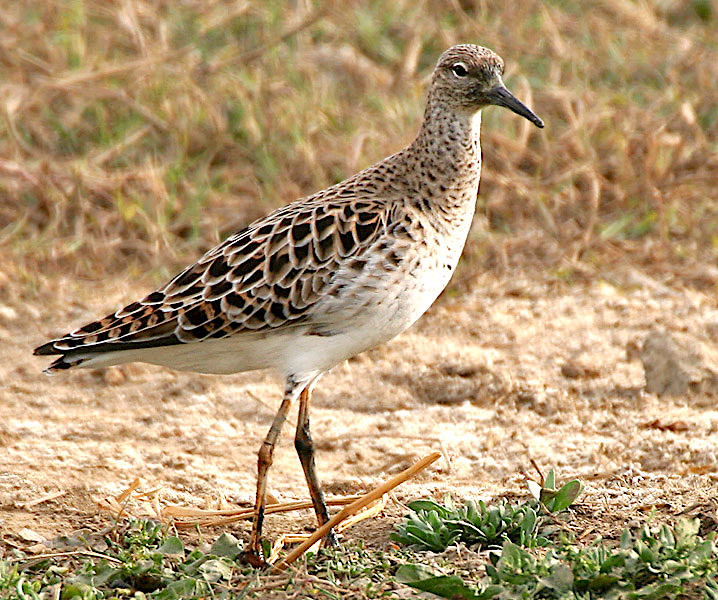
Ruff, (N. America) Dick Daniels

You have to take new birds as you find them, of course. First, you may not have a camera with you to record the sighting for posterity. Secondly, the bird may not be perched prettily on a twig or a small rock. In this instance the legendary Woody Bracey found his Ruff in the prosaic and arguably unattractive setting of the Treasure Cay dump. He didn’t have a camera, and when he next went back with a camera to check for the bird the ruff had gone…

Ruff (m, non-breeding) J.M.Garg

Woody’s bird, a female (known as a Reeve), was standing next to a Lesser Yellowlegs. They are much the same height, but there the similarity ends – Ruffs are unmistakably plumper and with a shorter bill. Woody has good reason to recognise these rare and occasional transatlantic visitors, having often seen Ruffs both during his time living in the UK, and also in Africa. I’ve seen the appearance described as “like a gravy-boat”, which is well up there with the least useful descriptions of a bird’s appearance I have come across. Looked at another way, we have a couple of gravy boats that have an occasional outing. Neither looks remotely like a ruff.

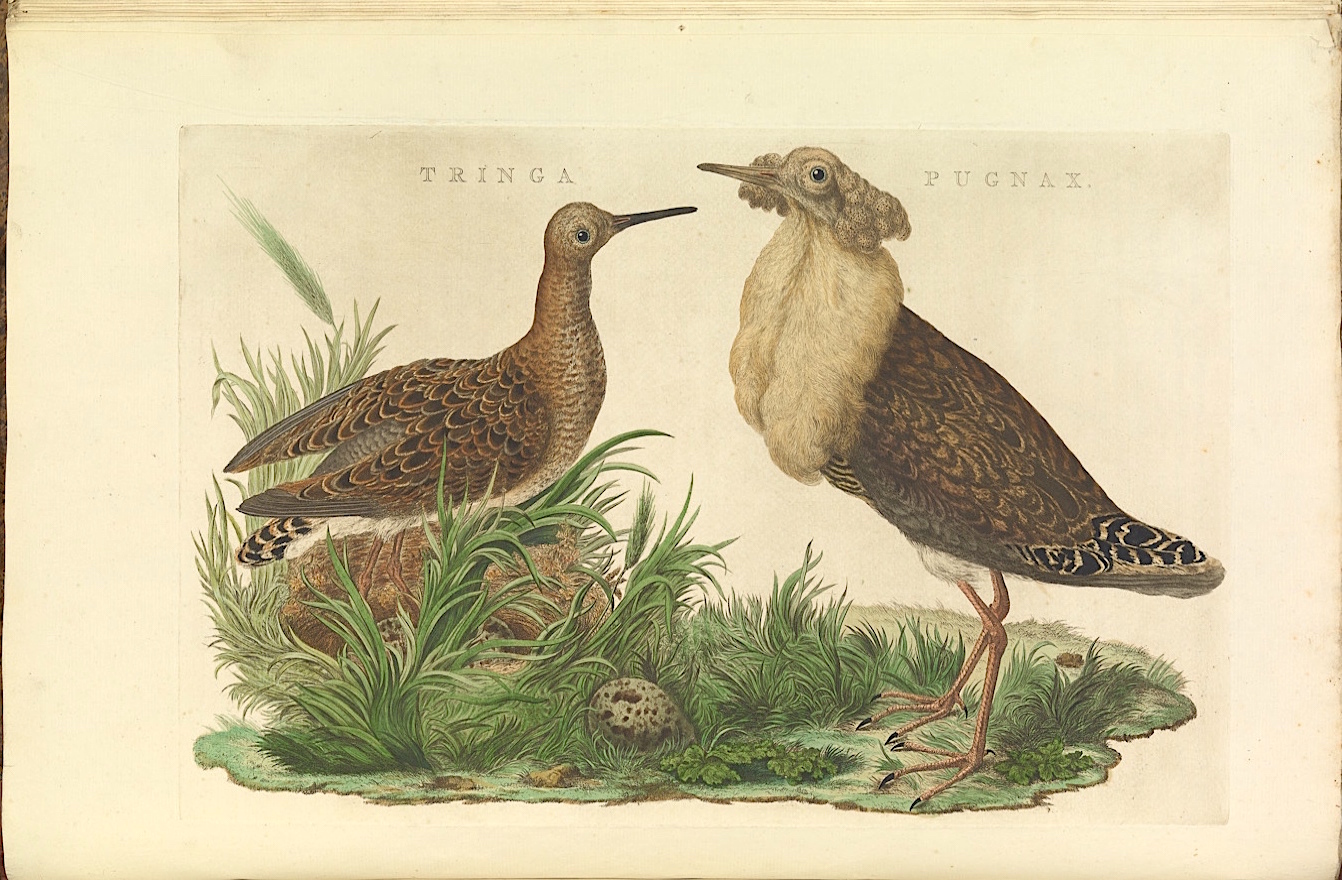
Ruff (Old Print) nederlandsche_vogelen wiki

IS THE ABACO RUFF A NEW SPECIES FOR THE WHOLE BAHAMAS?

Very nearly… but not quite. Only two previous Ruff sightings are recorded, in 2015 and 2018, and both in the same area on Grand Bahama, towards West End. And the only photo is from birder Duncan Mullis, who in 2015 took the first and maybe only one of a Reeve with a bunch of much smaller sanderlings (see also header image close-up).

The first ruff in the BahamasRuff - Grand Bahama, Bahamas (Duncan Mullis 2015)

WHAT SHOULD WE KNOW ABOUT RUFFS?

In the breeding season in particular, male ruffs are very different from the smaller reeves. They acquire a spectacular colourful plumage that includes a sort of ornamental collar (hence the name). They enhance their courtship rituals with elaborate displays designed to impress the reeves. These occur in chosen areas known as leks, places where strutting, preening and general competitive showing off occur to attract a mate. Such arenas are also created by a few other bird species – grouse, blackcock and peafowl, for example. The ruff’s lekking behaviour has some complex variations – including same-sex ‘copulation’ and polyandry – but sadly this isn’t the place to explore them in detail.

WHAT DOES A LEK LOOK LIKE?

Here are two males with very different breeding plumages, giving it their all at the lek… When Carl Linnaeus described the ruff in his Systema Naturae, he gave it the binomial name Tringa pugnax, the latter word meaning  ‘aggressive’ – the lek can also become a combat zone between competing males.

Ruff Lek (Arjan Haverkamp) wiki

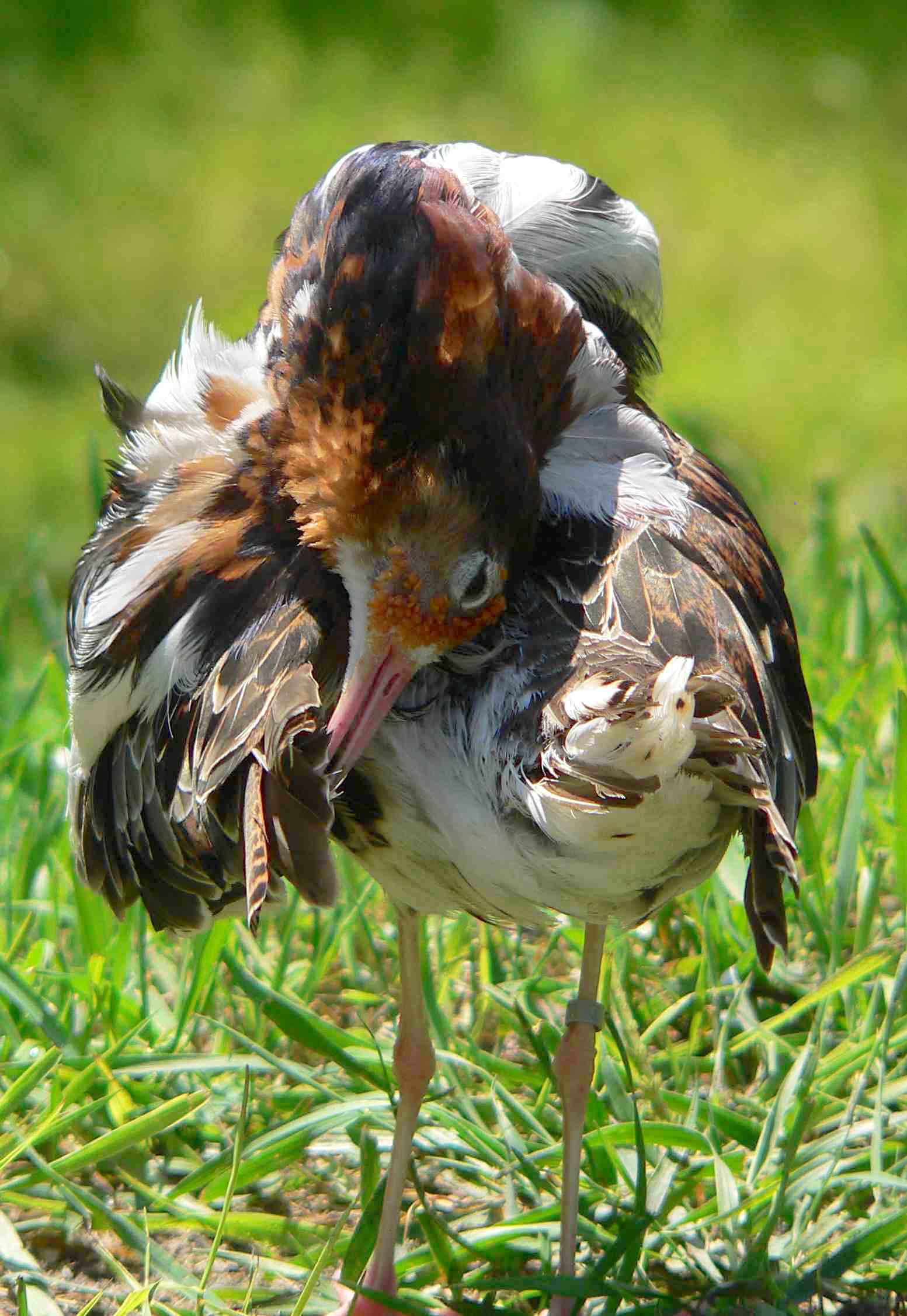
This male has decided to vogue it and ‘strike the pose’ as it preensRuff - male preening (B.S.Thurner-hof, wiki)

Writing in The Spruce, a new multi-interest resource I discovered in researching this article, Melissa Mayntz describes succinctly some of the common behaviour seen at leks. This includes some (or all) of the following (baby-boomers and dad-dancers may recognise some of these moves):

  • Bowing, dipping, or bending
  • Head bobbing or quick turns and nods
  • Strutting, stomping, kicks, or similar footwork
  • Exaggerated wing postures, such as fluttering, drooping, or spreading wings
  • Tails fanned, flared, cocked, or spread
  • Chests puffed out, often to reveal air sacs or distinct plumage
  • Calling, songs, drumming, or booming sounds
  • Dance-like sequences with multiple movements, possibly coordinated between partners after a female shows an interest in a specific mate

To which I’d add aggressive male territorial rivalry within the lek, leading to physical attacks with beak, claws and wings. Meanwhile the females watch from the edge to assess their chosen mates. The illustration below shows this rather charmingly.

Illustration of a lek by Johann Friedrich Naumann (1780–1857)Ruff Lek - Johannes Naumann

There’s a lot to be described about how ruff’s moult, but it’s not especially interesting for anyone but a moult specialist, so instead you can have a reminder of Ogden Nash’s last word on the topic: ‘The song of canaries / Never varies / And when they are moulting / They are pretty revolting…’ And we’ll leave migration as well, since basically that factor is N/A for our particular part of the world.
♦ ♦ ♦ ♦ ♦
JUST OUT OF CURIOSITY, CAN YOU EAT RUFFS / REEVES?
In former times ruffs were considered a delicacy and were eaten in large numbers. Often they would be fattened in pens in preparation for the table. I’ll finish with an old description: 
…if expedition is required, sugar is added, which will make them in a fortnight’s time a lump of fat: they then sell for two shillings or half-a-crown a piece… The method of killing them is by cutting off their head with a pair of ‘scissars’, the quantity of blood that issues is very great, considering the size of the bird. They are dressed like the Woodcock, with their intestines; and, when killed at the critical time, say the Epicures, are reckoned the most delicious of all morsels. Not a 21st century culinary trend I hope…

Ruffs in India (J. M. Garg)

Credits: Woody Bracey (sighting smarts); Duncan Mullis (1, 5); Dick Daniels (2); J.M.Garg (3, 9); Open Source / Wiki, prints (4, 8);  Arjan Haverkamp (6); B.S.Thurner-hof (7); Melissa Mayntz / The Spruce re Leks; debt to Wiki (and other O/S) for source material, photos, range map etc

Unknown's avatar

PLOVER SKILLS: A GOOD ‘SPOT’ BY MRS RH


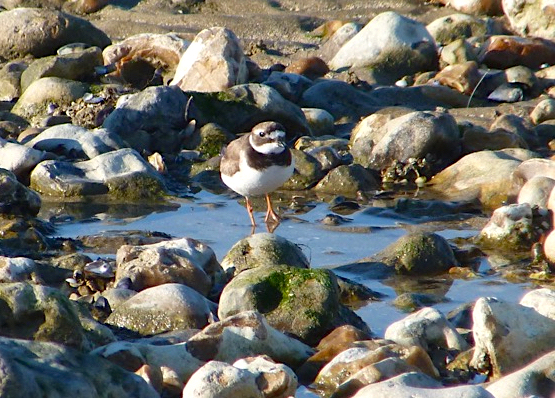
Little Ringer Plover, Normandy France (Keith Salvesen - crop)

PLOVER SKILLS: A GOOD ‘SPOT’ BY MRS RH

Still in France, il still fait beau etc, “le wee-fee” still a crockful of merde so picture posts not really possible. But there is a good ‘spot’ to report. Annoyingly (only slightly), not my own sighting but thanks to Mrs RH’s increasingly astute bird smarts on a stretch of the Seine estuary. Somewhere amidst the stones, sand, and puddles she noticed a tiny movement. And then expertly pointed out the mover by reference to a small pool and a larger pale rock. It was at least 100 feet away, a distance that I’d normally need an energetic egret to get my attention. But through the viewfinder I could just make out a tiny bird of ploverish appearance. Having downloaded my speculative distance shots taken for ID purposes, the bird turns out to be a Little Ringed Plover. Here is my sighting ID photo of the header crop showing more of the available view. Good ‘spot’ indeed!

Little Ringer Plover, Normandy France (Keith Salvesen)

Normal service resumes next week – unless we decide to stay here, which would be delightful though not exactly convenient or practical…

Photo credit: a joint effort I think…

Unknown's avatar

WORLD SHOREBIRDS DAY – ABACO’S 33 SPECIES (1): LARGER BIRDS


Whimbrel numenius phaeopus (Andreas Trepte / wiki)

WORLD SHOREBIRDS DAY – ABACO’S 33 SPECIES (1)

LARGER BIRDS

Today, September 6th, is World Shorebirds Day. Every year, a Shorebird of the Year is selected by the organisers of this global event, and this year they have gone ‘large’. Perhaps in response to the declining populations of curlew species, they have chosen a fine representative – the whimbrel. Inconveniently – and although the whimbrel is a worldwide species – it is extremely rare on Abaco. In the definitive Abaco Checklist (see below), it is coded a TR4, i.e. a very uncommon transient with a handful of sporadic reports. Until last year, sightings were very few and far between. Then suddenly last autumn, they made a small migratory comeback. You can read about it HERE.

BLACK-NECKED STILT  Himantopus mexicanus  PR B 3Black-necked Stilt, Abaco - Tom Sheley Black-necked stilt, Abaco - Alex Hughes

Abaco is home to 33 shorebird species. Like the human residents of the main island and cays, some are permanent; some are winter residents arriving from the north to enjoy a warmer climate; and some are transients – visitors that pass through a couple of times a year on their way from and to their nesting habitats. 

CHECKLIST OF ALL 33 SHOREBIRDS

The definitive checklist of Abaco’s birds was compiled especially for the BIRDS OF ABACO by Bahamas Birding author and authority, the late and much missed Tony White, with Abaco’s bird expert Elwood Bracey. Below is the shorebird list, with a photographic selection of the larger and/or longer-billed shorebirds in checklist order. Yes, including an Abaco whimbrel.

The codes will tell you, for any particular bird, when you may see it (P = permanent, WR = winter resident, TR = transient, V = vagrant); whether it breeds (B) on Abaco; and your chance of seeing it, graded from easy (1) to vanishingly unlikely (5).

AMERICAN AVOCET Recurvirostra americana   WR 4
American Avocet, New Providence - Tony Hepburn

AMERICAN OYSTERCATCHER  Haematopus palliatus PR B 2American Oystercatcher, Abaco 5.1 Tom Sheley

GREATER YELLOWLEGS  Tringa melanoleuca   WR 2Greater Yellowlegs LR. Abaco Bahamas.Tom Sheley.2.12 copy 2

LESSER YELLOWLEGS  Tringa flavipes  WR 3Lesser Yellowlegs.Evening on the Marls.Abaco Bahamas.2.13.Tom Sheley small2

WHIMBREL Numenius phaeopus TR4 (an Abaco one)

HUDSONIAN GODWIT Limosa haemastica [V5]

Like the whimbrel, this bird is another special bird to be able to include. Until last October, it was categorised as a V5, meaning that one or perhaps 2 vagrants had ever been seen on Abaco. Then one appeared on a pond and was spotted by Woody Bracey and, a few days later, by Keith Kemp – who even took confirmatory photos. You can read the story HERE.
Hudsonian Godwit, Abaco (Stewart Neilson)

SHORT-BILLED DOWITCHER  Limnodromus griseus  WR 1Short-billed Dowitcher (NB), Abaco - Bruce Hallett 

LONG-BILLED DOWITCHER  Limnodromus scolopaceus   WR 4Long-billed Dowitcher Mike Baird Wiki

WILLETT  Tringa semipalmata  PR B 2Willet.Abaco Bahamas.2.13.Tom Sheley small

WILSON’S SNIPE  Gallinago delicata   WR 3Wilson's Snipe, Abaco - Woody Bracey

RELATED POSTS

WHIMBREL

WILLET

BLACK-NECKED STILT

AMERICAN OYSTERCATCHER

HUDSONIAN GODWIT

YELLOWLEGS

DOWITCHERS

Photo Credits: Andreas Trepte / Wiki (1);Tom Sheley (2, 5, 6, 7, 13); Alex Hughes (3);Tony Hepburn (4); Charmaine Albury (8, 9); Stewart Neilson / Wiki (10); Bruce Hallett (11); Mike Baird / Wiki (12); Woody Bracey (14)

Unknown's avatar

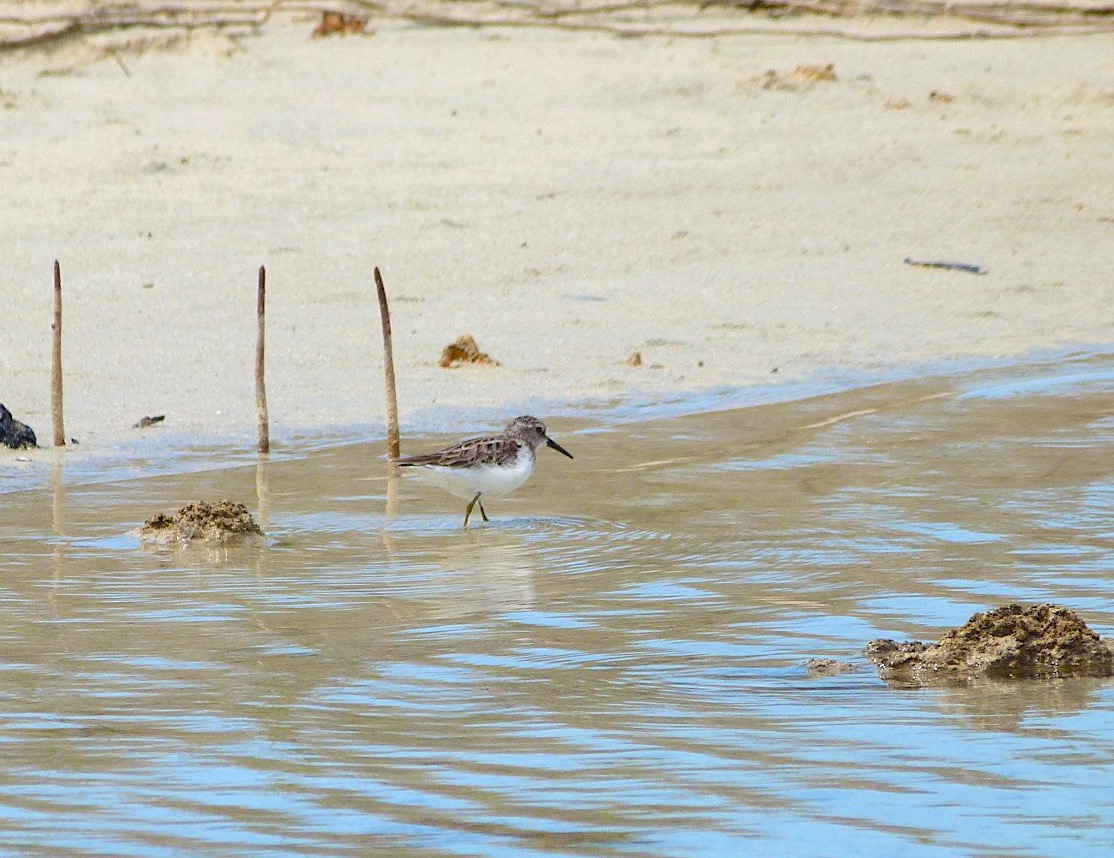
LEAST BUT NOT LAST: TINY SANDPIPERS ON ABACO


Least Sandpipers Calidris minutilla, Abaco Bahamas (©Keith Salvesen)

LEAST BUT NOT LAST: TINY SANDPIPERS ON ABACO

Least Sandpipers Calidris minutilla, Abaco Bahamas (©Keith Salvesen)

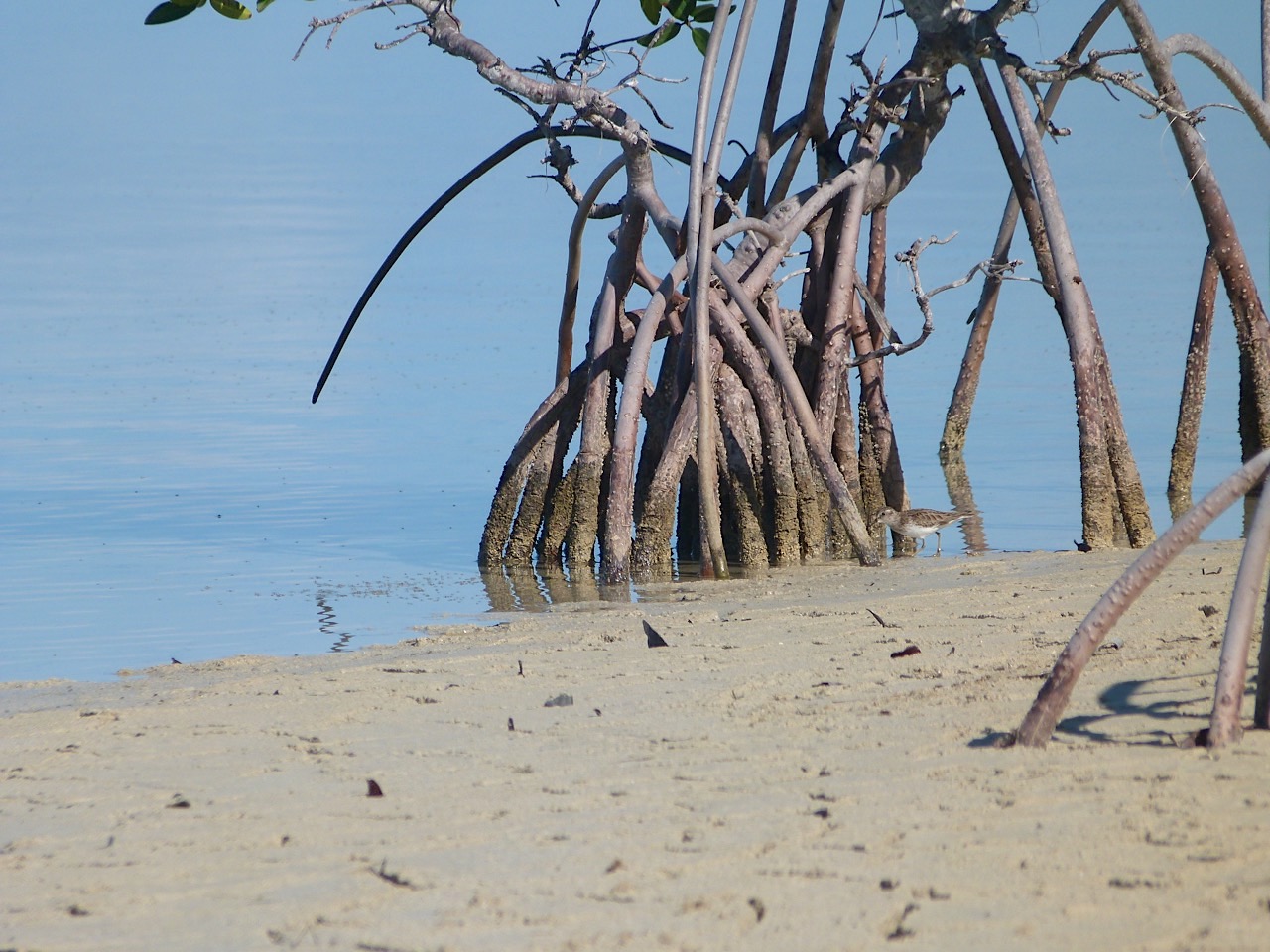
Least Sandpipers Calidris Minutilla are the smallest ‘peeps’ to be found on Abaco. There are plenty of other sandpiper species, but none so tiny as these. Take a look at the image above. See them? All 3 of them? Just look at their size in comparison with the mangrove stems.

Least Sandpipers Calidris minutilla, Abaco Bahamas (©Keith Salvesen)

I took these photos from the sharp end of a skiff a few days ago, way out on the Marls and with a fishing rod tucked under one arm. We were on a drift along the shoreline, and these little guys were foraging on the water’s edge as we silently floated past.

Least Sandpipers Calidris minutilla, Abaco Bahamas (©Keith Salvesen)

They were quite unperturbed by our presence, being far too busy feeding to be bothered with us. I have usually seen these little birds on the beach, busy in the wrack-line rootling out goodies. There, they look very small – but not nearly as tiny as when foraging among the mangrove stems.

Least Sandpipers Calidris minutilla, Abaco Bahamas (©Keith Salvesen)

I debated whether to do some cropping to magnify the details on the page, so to speak, but then I decided that these very sweet creatures deserved their own space without the indignity of close inspection. Context is all.

Least Sandpipers Calidris minutilla, Abaco Bahamas (©Keith Salvesen)

These mini-sandpipers may be Least by name, but they are very far from last in my personal list of favourite peeps. There are some down on the beach right now, but there’s some cloud cover today… I’ll wait for the sun to catch them in the best light.

Least Sandpipers Calidris minutilla, Abaco Bahamas (©Keith Salvesen)

SPOT THE LEAST SANDPIPER

Least Sandpipers Calidris minutilla, Abaco Bahamas (©Keith Salvesen)

All photos: Keith Salvesen

Unknown's avatar

SANDERLINGS ON DELPHI BEACH, ABACO BAHAMAS


Sanderling, Delphi Beach Abaco Bahamas (Keith Salvesen)

SANDERLINGS ON DELPHI BEACH, ABACO BAHAMAS

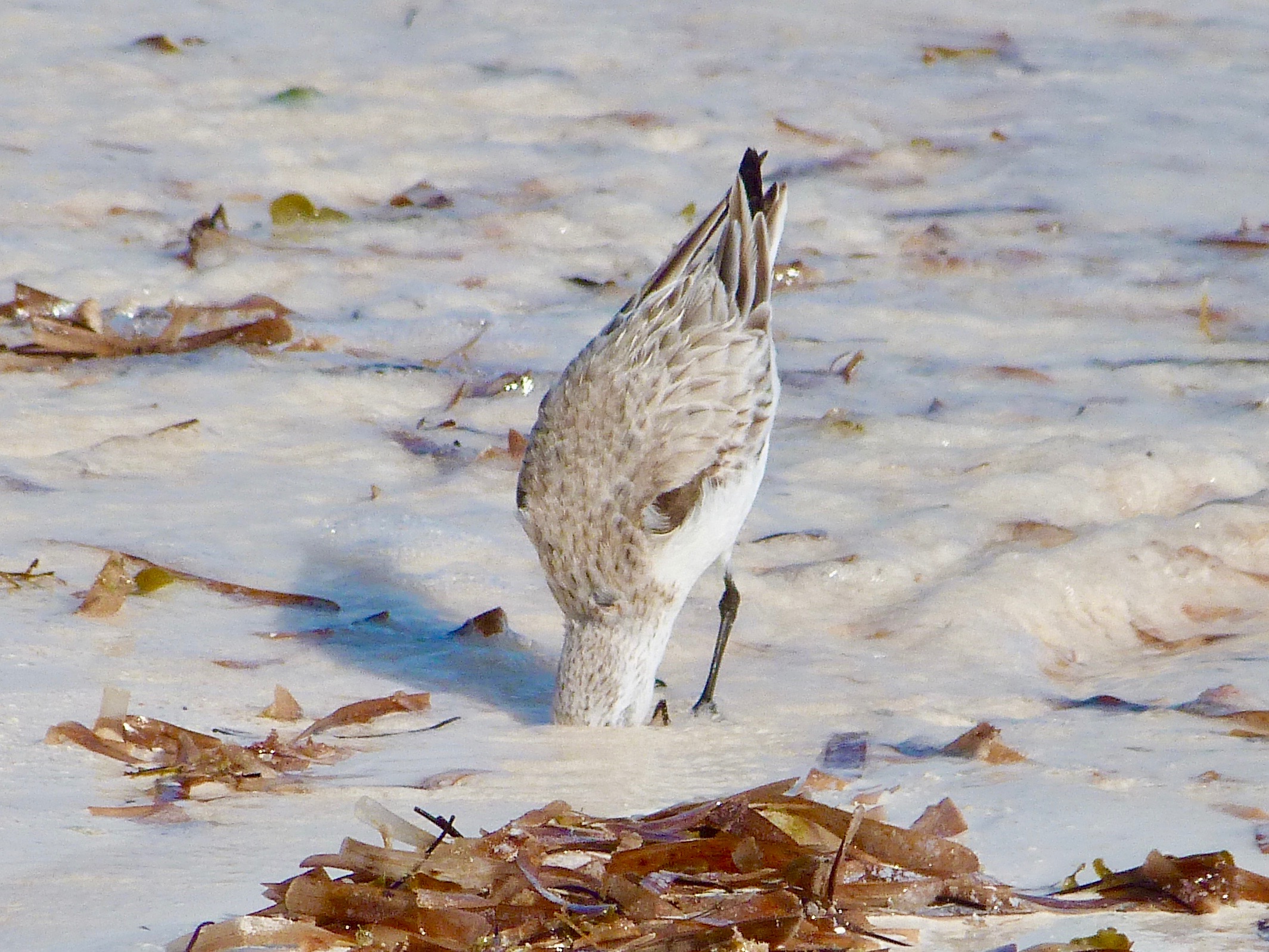
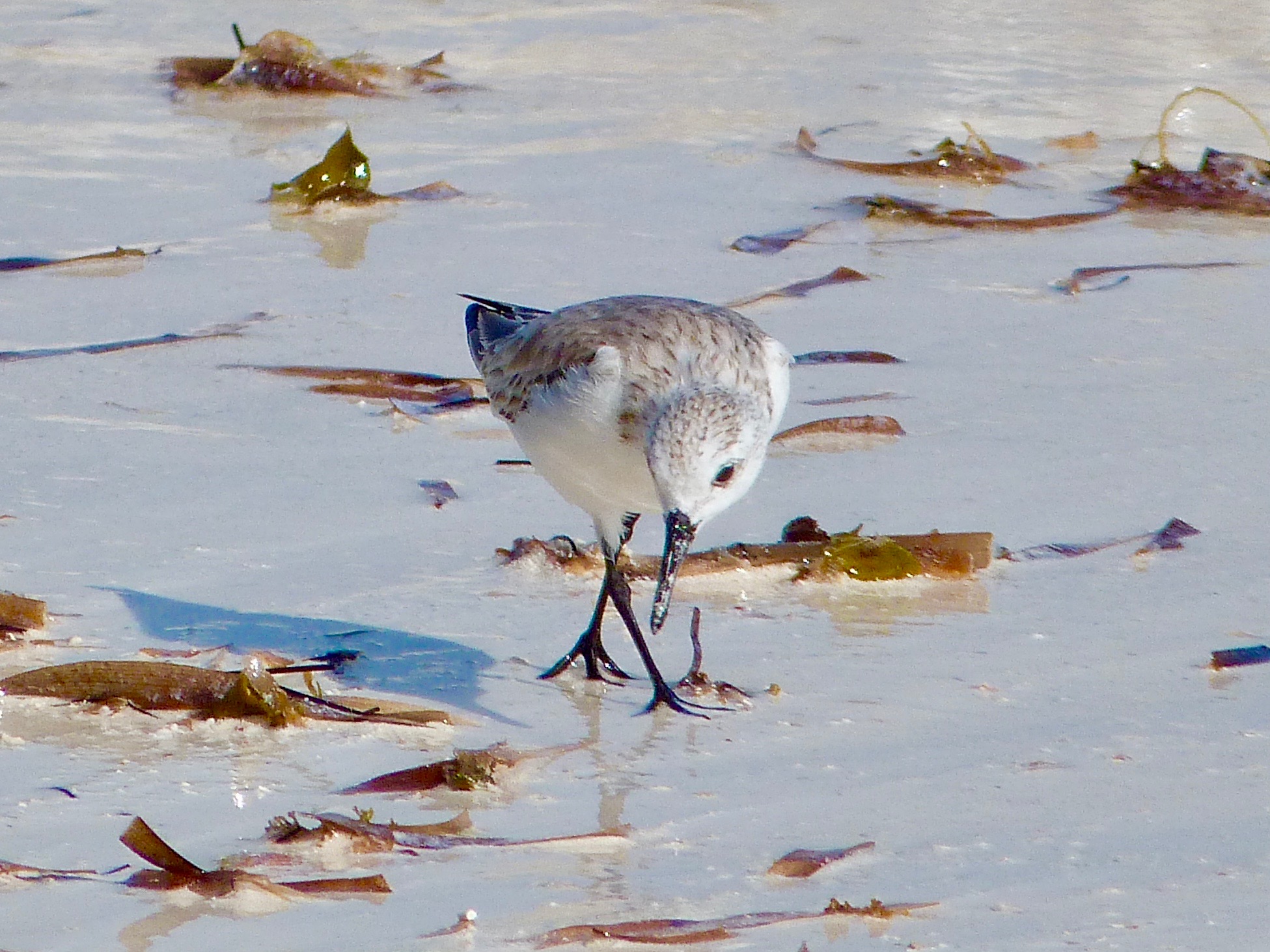
Looking back through some bird photo folders from last year, I came across these sanderlings that I photographed on the beach at Delphi. These little birds are far from rare, but watching a flock of them scuttling back and forth on the sand, in and out of the tide, is always a treat. And as you will notice, when they are foraging in earnest they not only stick their bills into the sand right up to the base… they go for total immersion of the head!

Sanderling, Delphi Beach Abaco Bahamas (Keith Salvesen)Sanderling, Delphi Beach Abaco Bahamas (Keith Salvesen)Sanderling, Delphi Beach Abaco Bahamas (Keith Salvesen)Sanderling, Delphi Beach Abaco Bahamas (Keith Salvesen) Sanderling, Delphi Beach Abaco Bahamas (Keith Salvesen)

All photos: Keith Salvesen, Rolling Harbour Abaco

Unknown's avatar

SANDERLINGS ON ABACO: GOTTA LOVE ‘EM


sanderling-on-delphi-beach-abaco-keith-salvesen-7

SANDERLINGS ON ABACO: GOTTA LOVE ‘EM

Sanderlings. Wind them up with the concealed key under their left wing, and they will charge up and down the beach for an hour or two, pausing only to rip some small unsuspecting mollusk or crustacean from its sandy bed. These birds are tiny. And smart. They know all about how a retreating tide will expose the goodies. They are even happy to plunge their heads right under water (#2). They’re not really jumpy, if you don’t push your luck or have a dog with you. The best ploy of all is to find a flock near the tideline, choose a place to lie comfortably in dry sand (with a camera, I mean, otherwise you may look look a bit strange), and wait for them to come into range. Usually they are so busy, what with all that rushing around and feeding, that they will ignore you. So the hard part, after you have taken some photos, is catching the little so-and-sos to wind them up again…

sanderling-on-delphi-beach-abaco-keith-salvesen-1sanderling-on-delphi-beach-abaco-keith-salvesen-3sanderling-on-delphi-beach-abaco-keith-salvesen-2

VIDEO 1 In which we notice the scuttling and scooting around of sanderlings on a mission

sanderling-on-delphi-beach-abaco-keith-salvesen-4sanderling-on-delphi-beach-abaco-keith-salvesen-5sanderling-on-delphi-beach-abaco-keith-salvesen-6

VIDEO 2 In which we admire bathtime in a tide-pool and assorted comings & goings…

All photos and movies RH

Unknown's avatar

A NEW BIRD FOR ABACO: BUFF-BREASTED SANDPIPER


tryngites_subruficollis_-tim-lenz-wiki-sm

A NEW BIRD FOR ABACO: BUFF-BREASTED SANDPIPER

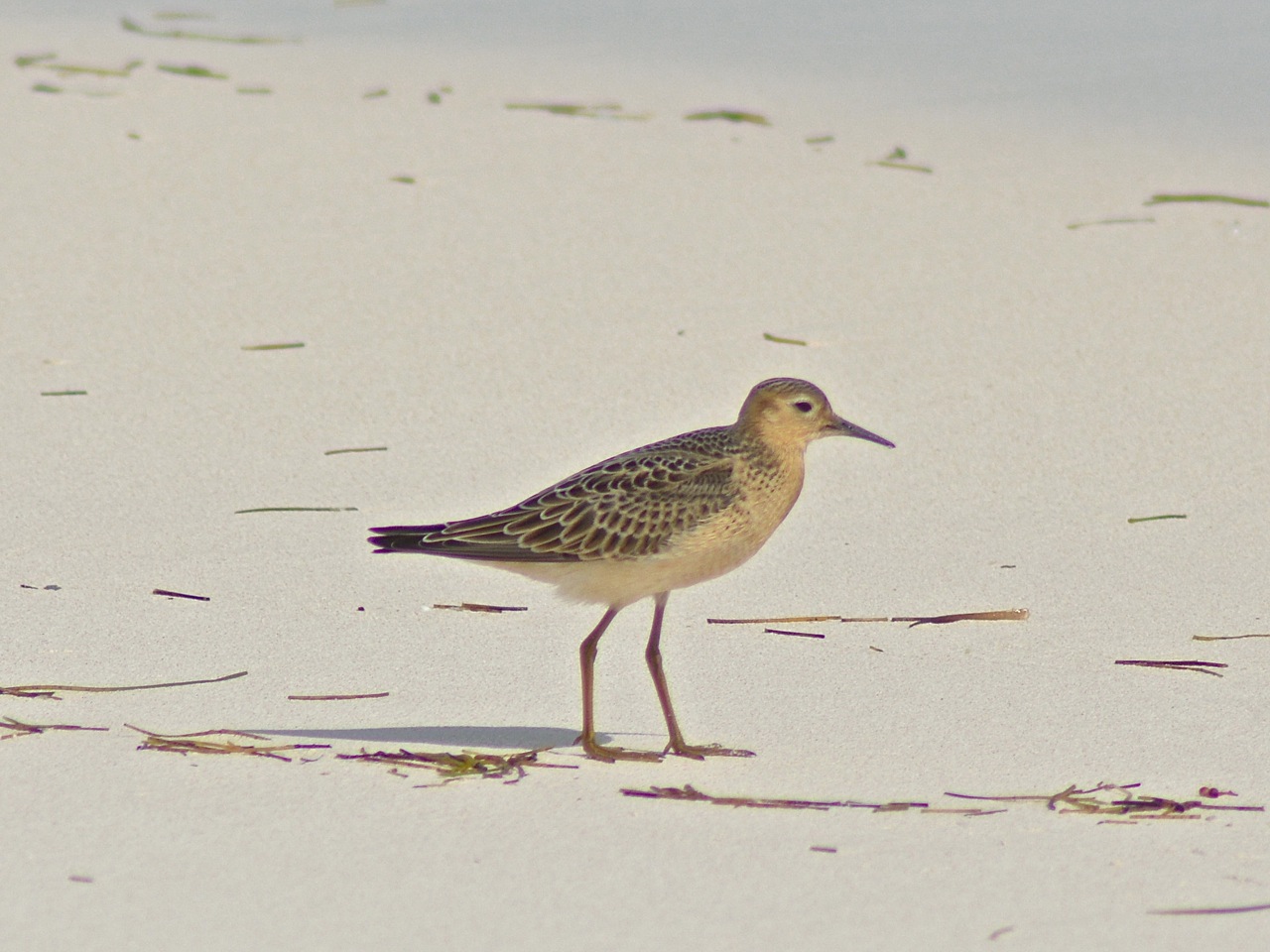
I’d best make it clear at the outset that, in the very narrowest sense, the buff-breasted sandpiper (Calidris subruficollis) is not strictly a new bird on Abaco. Tony White’s authoritative official checklist for Abaco, valid back to 1950 or so, does actually include the species. It is classified as a ‘V5’, which is to say a vagrant that is vanishingly rare – indeed may only have been sighted on Abaco once or perhaps twice before. Ever. The only category rarer than V5 is H for hypothetical, which essentially means that there is some unconfirmed report of a bird that it might not be outrageous to suppose might be blown onto Abaco. A penguin, therefore, would not qualify even for an H. 

buff-breasted-sandpiper-abaco-keith-kemp-1

A few days ago, beyond a shadow of a doubt this small shorebird was seen on Abaco by Keith Kemp, and photographed by him too. He is having an excellent year with his birding: this may well be the jewel in the crown for him. So even if one of these little guys was once spotted on an Abaco twig in 1961, Keith is definitely the first person to get a photo!
UPDATE (next day!) Abaco birder-in-Chief Woody Bracey has solved the mystery of the previous sighting – it was he himself who saw a BBSP “years ago” at the less-than-glamorous yet excellent-for-birding Marsh Harbour ‘Dump’.

buff-breasted-sandpiper-abaco-keith-kemp-2

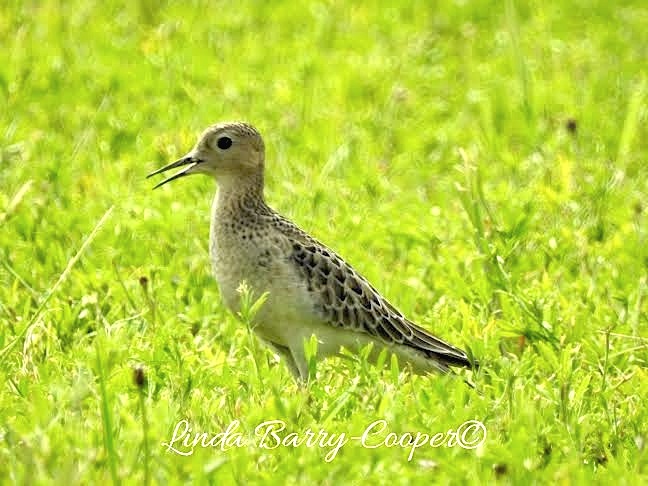
As it happens, some weeks ago a BBSP was also spotted at West End, Grand Bahama by Linda Barry-Cooper. I featured a guest post from her about the fall birds in that region HERE. Woody Bracey also says that he and Bruce Hallett saw 2 BBSPs at West End early this season. Erika Gates and Martha Cartwright saw one on the GB Reef golf course at the end of August. So these birds are around in the northern Bahamas, and perhaps it’s not such a surprise after all that one should have gone on a little expedition to Abaco to check out the undeniable joys of Winding Bay.

Buff-breasted Sandpiper, West End Grand Bahama (Linda Barry-Cooper)

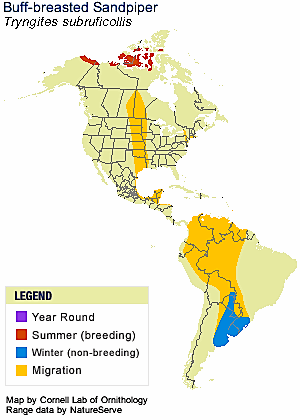
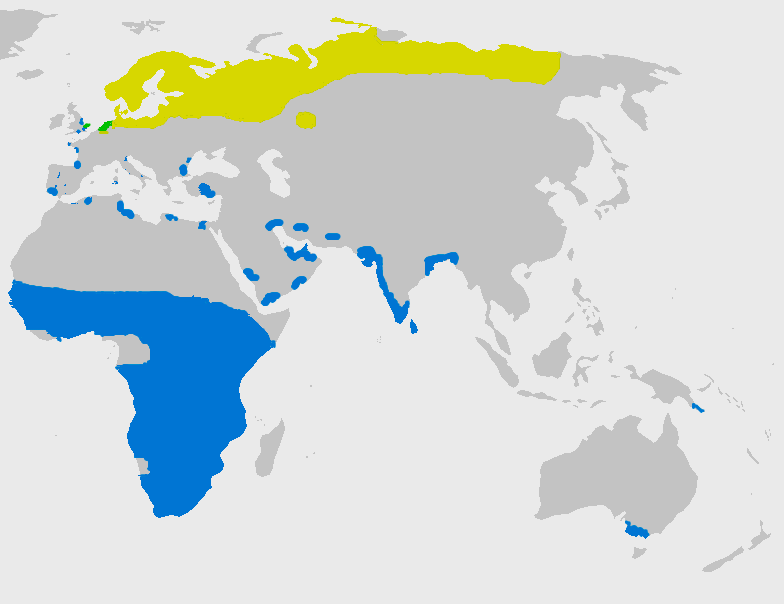
The buff-breasted sandpiper is a long-distance migrant, breeding mainly in the open arctic tundra of North America, and overwintering mostly in South America, especially Argentina. Its route takes it overland – the central flyway – rather than over coasts, but as it happens, as a species it is a bit of a wanderer. These birds a regularly found in Europe – including the UK – and although I am sure a sighting there must generate a great deal of excitement, they are not considered extremely rare. They have even been found, very occasionally, in South Asia and Australasia. 

tryn_subr_allam_map

So maybe it’s no surprise that the odd one turns up on Abaco. Maybe they do so every year, but only the keenest eye will spot one. And after all, there are many remote beaches on Abaco that are only very occasionally – if ever – visited by humans. Perhaps that’s where the BBSPs congregate…

buff-breasted_sandpiper_tryngites_subruficollis_magnus-manski-wiki-sm

In the breeding season, males collect on display grounds, or “leks,” to attract females. This helpful description comes from Audubon: “The leks are spread out, each male defending an area of up to several acres. The male displays by raising one wing, showing off the white underside. If females approach, the male spreads both wings wide, points its bill up, and shakes its body. One male may mate with several females; the male takes no part in caring for the eggs or young.” Typical, huh?

buff-breasted-sandpiper-mario-suarez-porras-wiki-sm

CONSERVATION STATUS

The BBSP is another bird that has been hit badly by the passage of time. By which I mean, of course, by mankind. At one time they were deemed ‘abundant’. Around 100 years ago a serious decline set in, not least because people were shooting them during their migration. Nonetheless, in 1988 the IUCN assessment was ‘lower Risk/least concern’. Then another slide began. By 2000 it was  ‘lower Risk/near threatened’. Since 2004 it has been ‘near threatened’. Why? Largely because the habitat for migrating and wintering birds has been destroyed or degraded. 

WHAT DO I LISTEN OUT FOR?

Xeno-Canto / Bernabe Lopez-Lanus

The BBSP page from the excellent Crossley ID guides (available via WikiMedia Commons)618px-buff_breasted_sandpiper_from_the_crossley_id_guide_eastern_birds

Credits: Tim Lenz, Keith Kemp, Magnus Manski, Linda Barry-Cooper, Cornell Lab (range map), Mario Porras, Crossley Guides, Bernabe Lopez-Lanus @ Xeno-Canto, Audubon, Wiki.

Unknown's avatar

SEABIRDS, SHOREBIRDS & WADERS: 30 WAYS TO DISTINGUISH THEM


Sanderling Trio, Delphi Beach, Abaco (Keith Salvesen) 5

SEABIRDS, SHOREBIRDS & WADERS: 30 WAYS TO DISTINGUISH THEM 

While putting together “The Birds of Abaco” I looked at and archived hundreds of photos of birds, many with aquatic or semi-aquatic lives. These can be broadly categorised as seabirds, shorebirds or wading birds. But with some bird breeds, there can be doubt as to which category applies (and in different parts of the world the categories themselves may be named differently). There is the strict Linnaean ordering of course, but in practice there is a degree of informal category overlap and some variation in the various bird guides. This is especially so between shorebirds and the smaller wading birds. Shorebirds may wade, and wading birds may be found on shores. Then I remembered a past blog post by the estimable BEACH CHAIR SCIENTIST that I thought deserved another outing here. Even if you have no problem distinguishing birds in the 3 categories, there are avian characteristics within each list that are interesting observations in themselves. 

10 CHARACTERISTICS OF SEABIRDS 

Magnificent Frigatebird (inflated-throat) (Michael Vaughan)

(Examples include albatross, auk, booby, frigatebird, fulmar, gannet, penguin, petrel, puffin, shearwater, and tropicbirds)

1. Seabirds are pelagic, spending most of their lives far out at sea.
2. Seabirds move toward to coastal areas to breed or raise young for a minimal amount of time.
3. Seabirds are light on their undersides and dark on top (an adaptation known as countershading).
4. Seabirds have more feathers than other types of birds for more insulation and waterproofing.
5. Seabirds have flexible webbed feet to help gain traction as they take off for flight from the sea.
6. Some seabirds have unusually sharp claws used to help grasp fish under the water.
7. Some larger seabirds (e.g. albatross) have long, slim wings allowing them to soar for long distances without getting tired.
8. Some smaller seabirds have short wings for maneuvering at the surface of the water.
9. Seabirds have specialized glands to be able to drink the saltwater and excrete salts.
10. Some seabirds (e.g. gannets) have a head shape that is usually tapered for more efficiency in plunge diving.

10 CHARACTERISTICS OF SHOREBIRDS 

American Oystercatcher, Delphi, Abaco (Tom Sheley)

(Examples include avocet, black skimmer, oystercatcher, plover, sandpiper, and stilt)

1. Shorebirds have long legs, pointed beaks, and long pointed wings.
2. Most shorebirds are migratory (impressively, some shorebirds fly non-stop for 3-4 days, equivalent to a human running continuous 4-minute miles for 60 hours).
3. Shorebirds wade close to the shore and poke their bills into the ground in search of food.
4. Shorebirds are small to medium size wading birds.
5. Shorebirds tend to frequent wetlands and marshes and are biological indicators of these environmentally sensitive lands.
6. Shore birds are of the order Charadriiformes.
7. Shorebirds are very well camouflaged for their environment and their appearance may vary from place to place as plumage (feather colors) are gained or lost during breeding.
8. Shorebirds typically range in size from 0.06 to 4.4 pounds.
9. Oystercatchers have a unique triangular bill that is a cross between a knife and a chisel.
10. The black skimmer is the only native bird in North America with its lower mandible larger than the upper mandible, which helps the bird gather fish as it skims the ocean surface.

10 CHARACTERISTICS OF WADING BIRDS 

Great Egret, Abaco - Tom Sheley

(Examples include crane, egret, flamingo, herons, ibis, rail, spoonbill, and stork)

1. Wading birds are found in freshwater or saltwater on every continent except Antarctica.
2. Wading birds have long, skinny legs and toes which help them keep their balance in wet areas where water currents may be present or muddy ground is unstable. Also, longer legs make it easier for them to search for food (forage) in deeper waters.
3. Wading birds have long bills with pointed or rounded tips (depending on what is more efficient for the types of food the bird consumes).
4. Wading birds have long, flexible necks that can change shape drastically in seconds, an adaptation for proficient hunting.
5. Herons have sophisticated and beautiful plumes during the breeding season, while smaller waders such as rails are much more camouflaged.
6. Wading birds may stand motionless for long periods of time waiting for prey to come within reach.
7. When moving, their steps may be slow and deliberate to not scare prey, and freeze postures are common when these birds feel threatened.
8. Adult wading birds are quiet as an essential tool for hunting. Wading birds may be vocal while nestling or while in flocks together.
9. Many wading birds form communal roosts and breeding rookeries, even mixing flocks of different species of wading birds or waterfowl.
10. Wading birds fully extend their legs to the rear when flying. The neck may be extended or not while in flight, depending on the species.

These lists were put together in useful chart form. Please check with BCS (link above) if you want to ‘borrow’ itseabird shorebird wading bird chart ©beachchairscientistImage Credits: Table – ©Beach Chair Scientist; Pics – Keith Salvesen, Michael Vaughn, Tom Sheley