Unknown's avatar

‘SEXING THE HUMMER’: A GENDER GUIDE TO ABACO’S HUMMINGBIRDS


Keith Salvesen / Rolling Harbour / Abaco Bahamas

‘SEXING THE HUMMER’

A GENDER GUIDE TO ABACO’S HUMMINGBIRDS

Cuban Emerald (m) Abaco (Charlie Skinner)

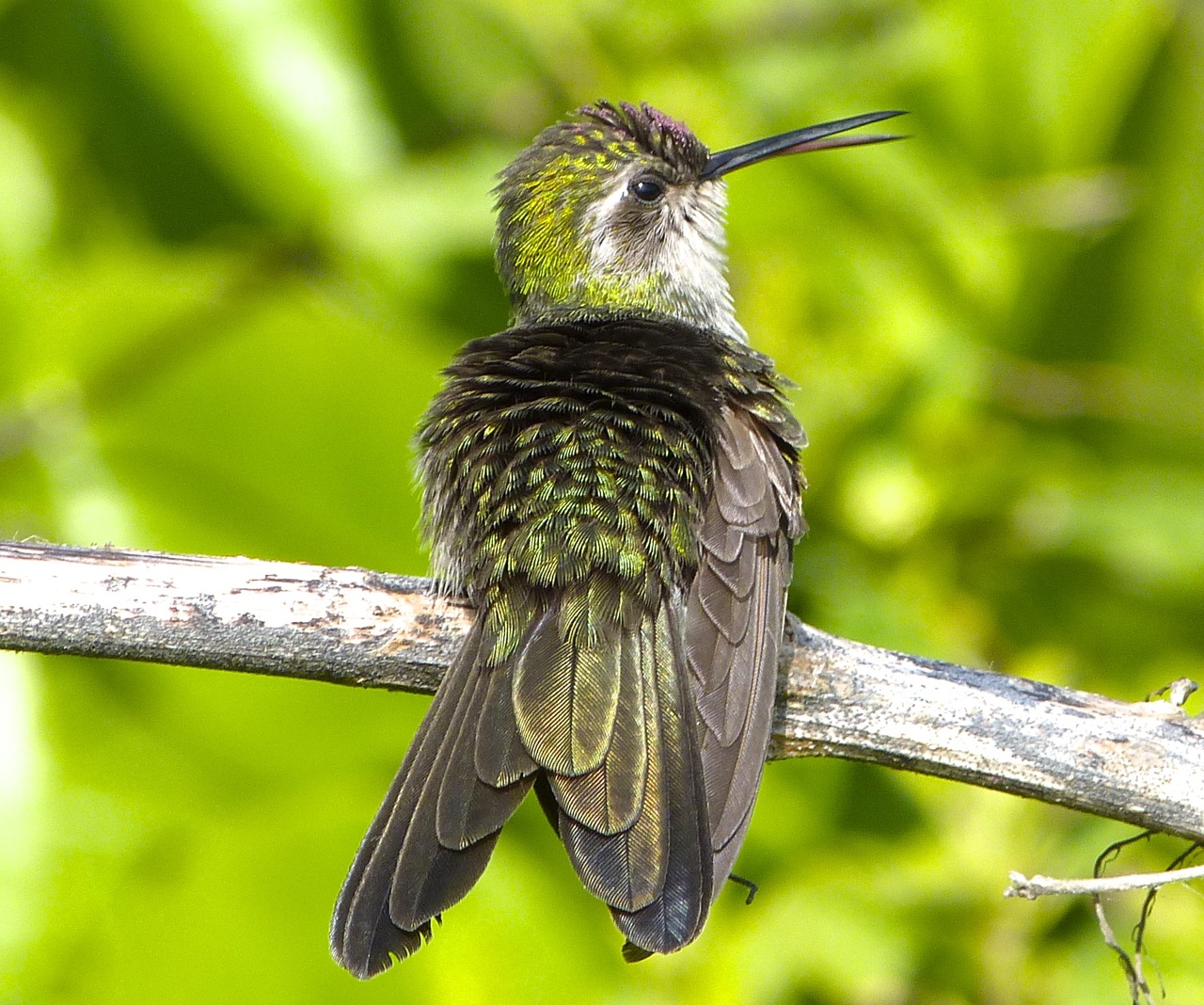
This post is not as indelicate as the title might imply. It is not a practical guide for intimate examinations of tiny birds. Nor does refer to some louche activity involving large motor vehicles. It’s all about plumage and recognition. And there are only two species – and two genders for each one – to wrestle with*. So here are the adult male and female Bahama Woodstars and Cuban Emeralds in all their glory…

BAHAMA WOODSTAR (Calliphlox evelynae)

Bahama Woodstar (m), Abaco (Bruce Hallett)
Bahama Woodstar (m), Abaco Bahamas (Tom Sheley)

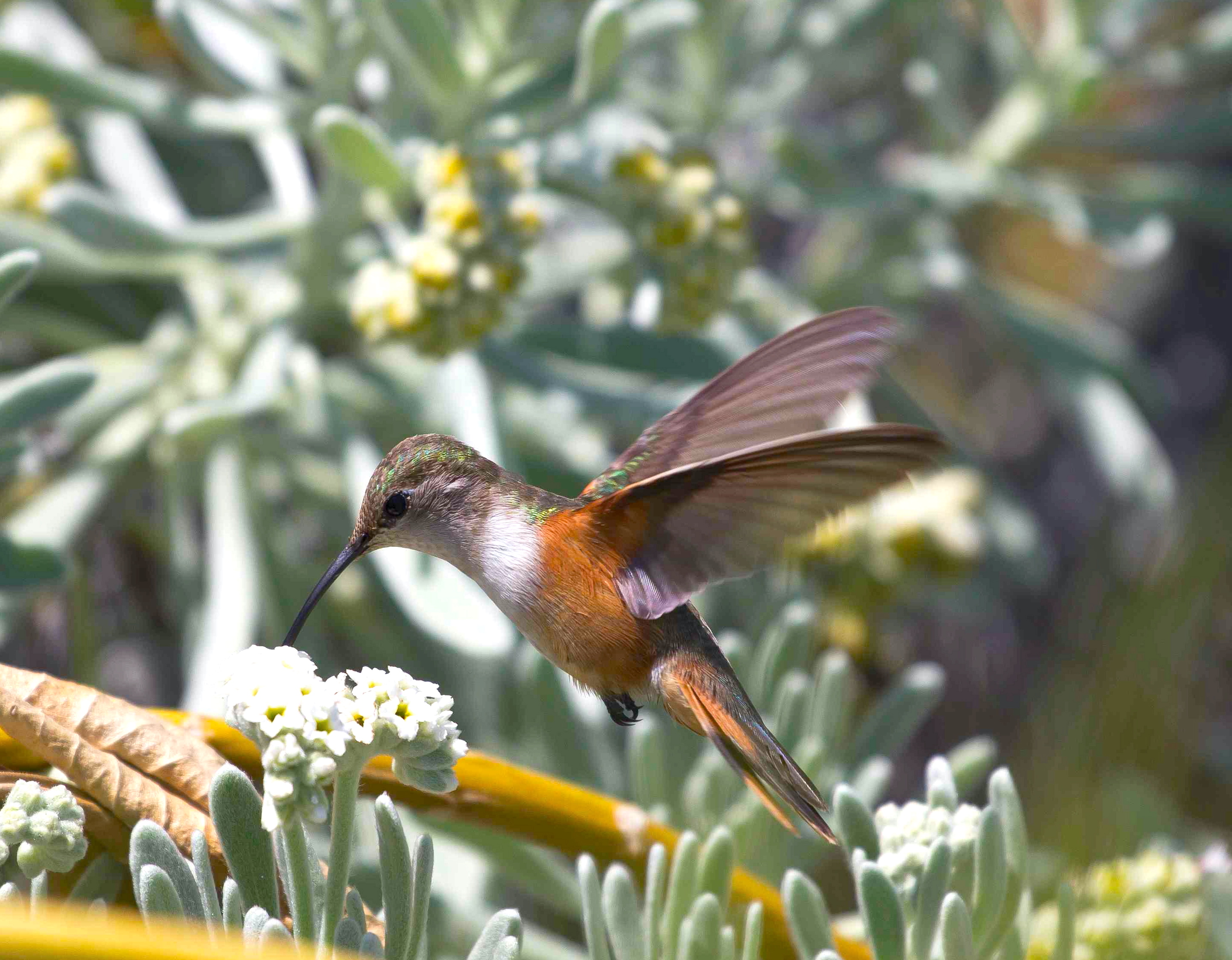
Bahama Woodstar (f), Bahama Palm Shores, Abaco (Tara Lavallee)
Bahama Woodstar (f), Abaco (Tom Sheley)


CUBAN EMERALD (Chlorostilbon ricordii)

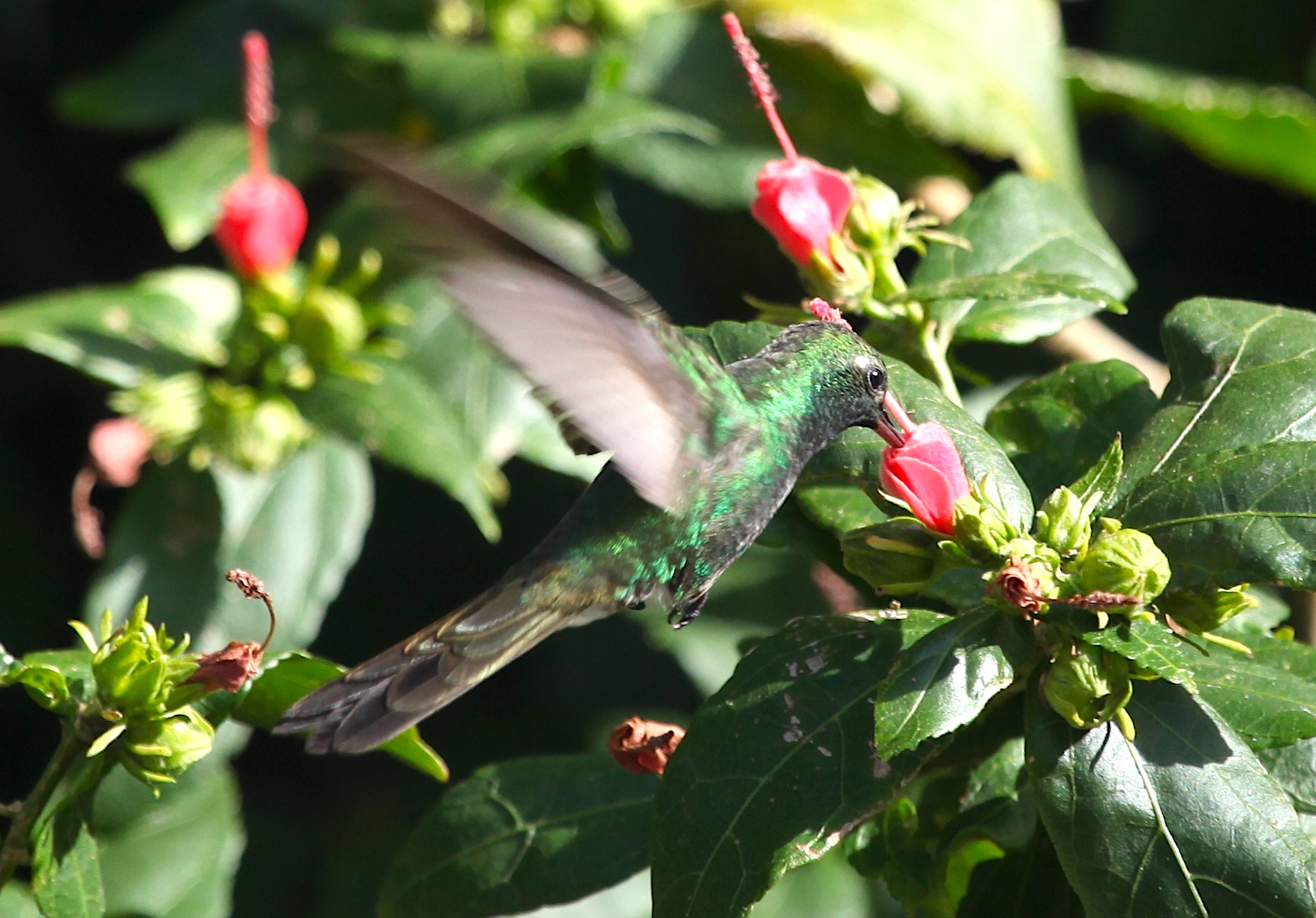
Cuban Emerald (male), Delphi Club, Abaco (Keith Salvesen)
Cuban Emerald (m) Delphi, Abaco (Keith Salvesen)
Cuban Emerald (m), Delphi, Abaco (Peter Mantle)

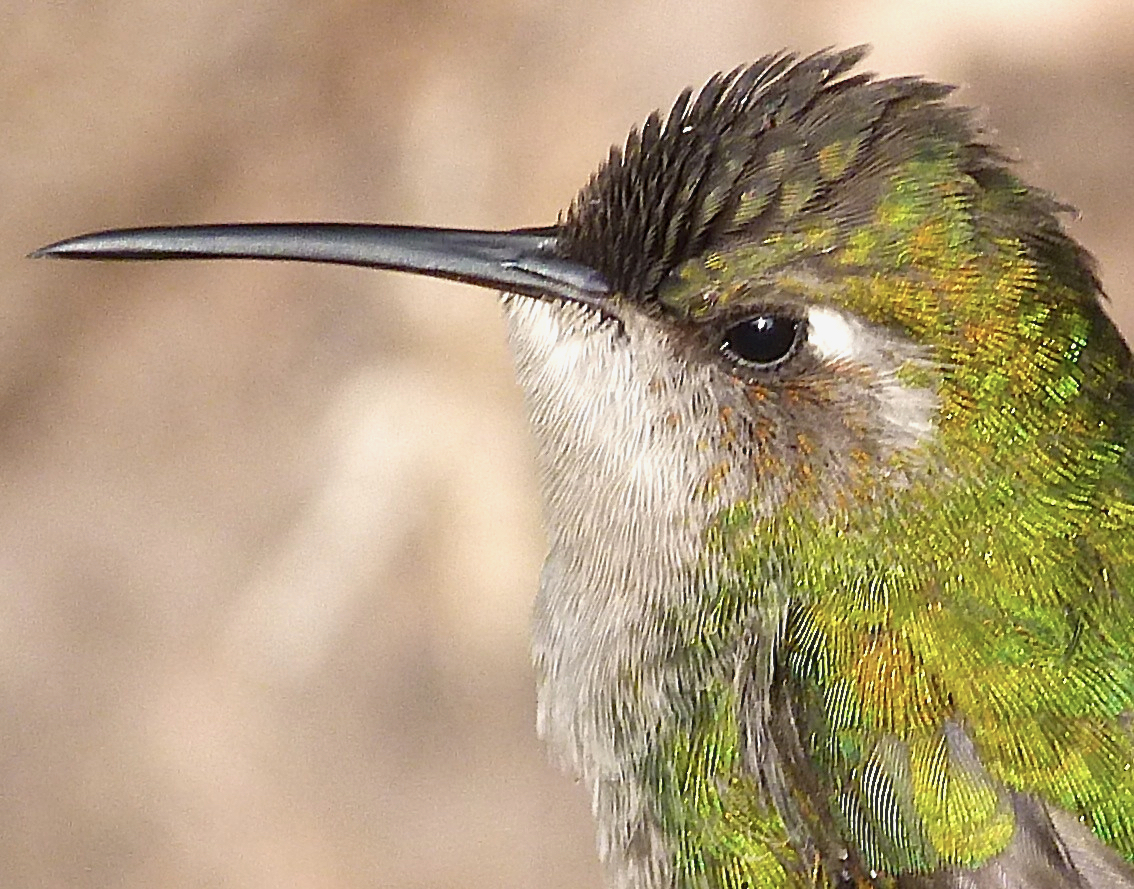
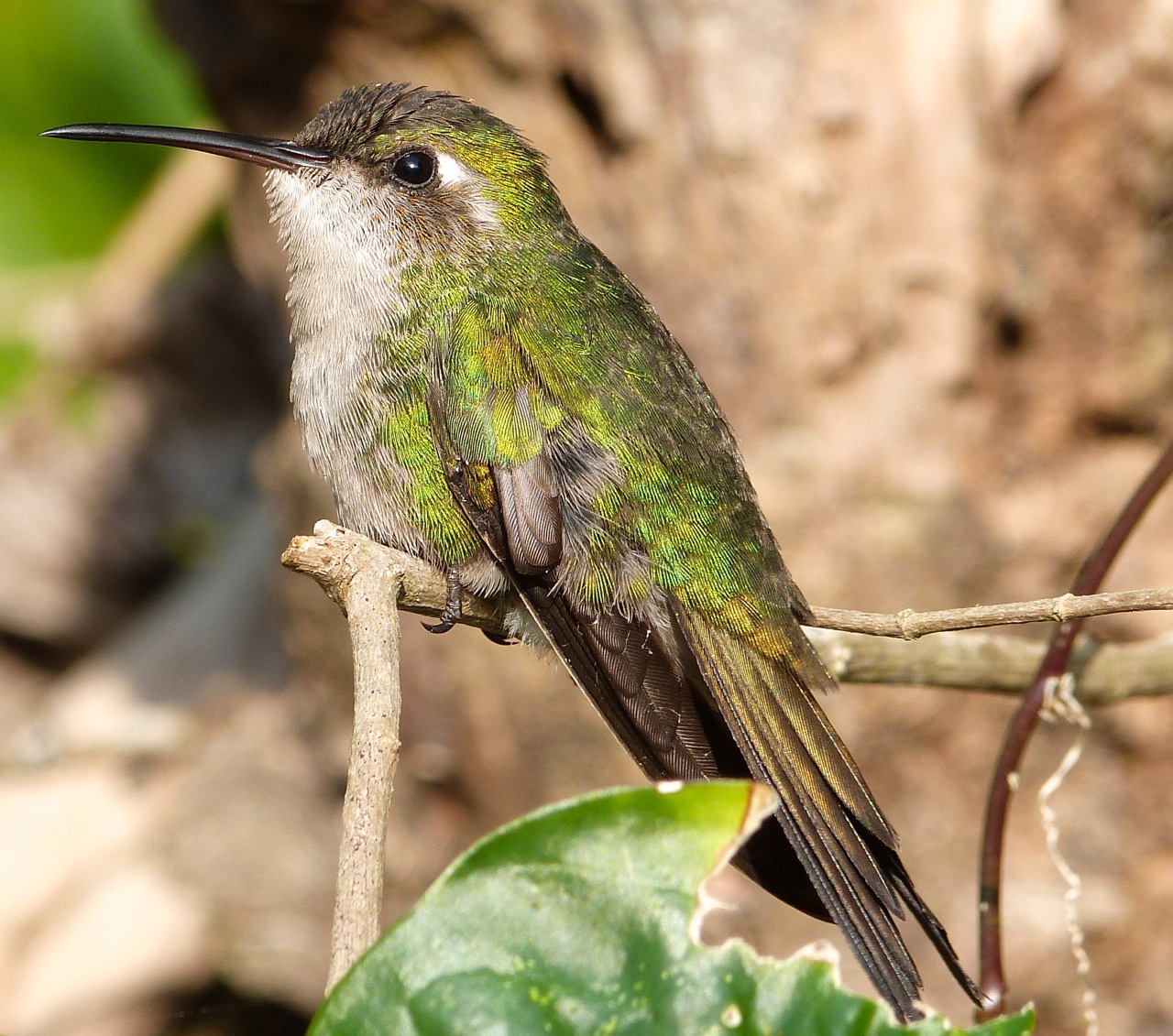
Cuban Emerald (female), Delphi Club, Abaco (Keith Salvesen)
Cuban Emerald (f), Delphi, Abaco (Keith Salvesen)
Cuban Emerald (female) Gilpin Point, Abaco (Keith Salvesen)
Cuban Emerald (f) Gilpin Point, Abaco (Keith Salvesen)

And finally, a brilliant Woodstar photo taken by Tom Sheley, birdman and generous fishing partner, that spans the boundary between wildlife photography and art. 

Bahama Woodstar female. Abaco Bahamas . Tom Sheley

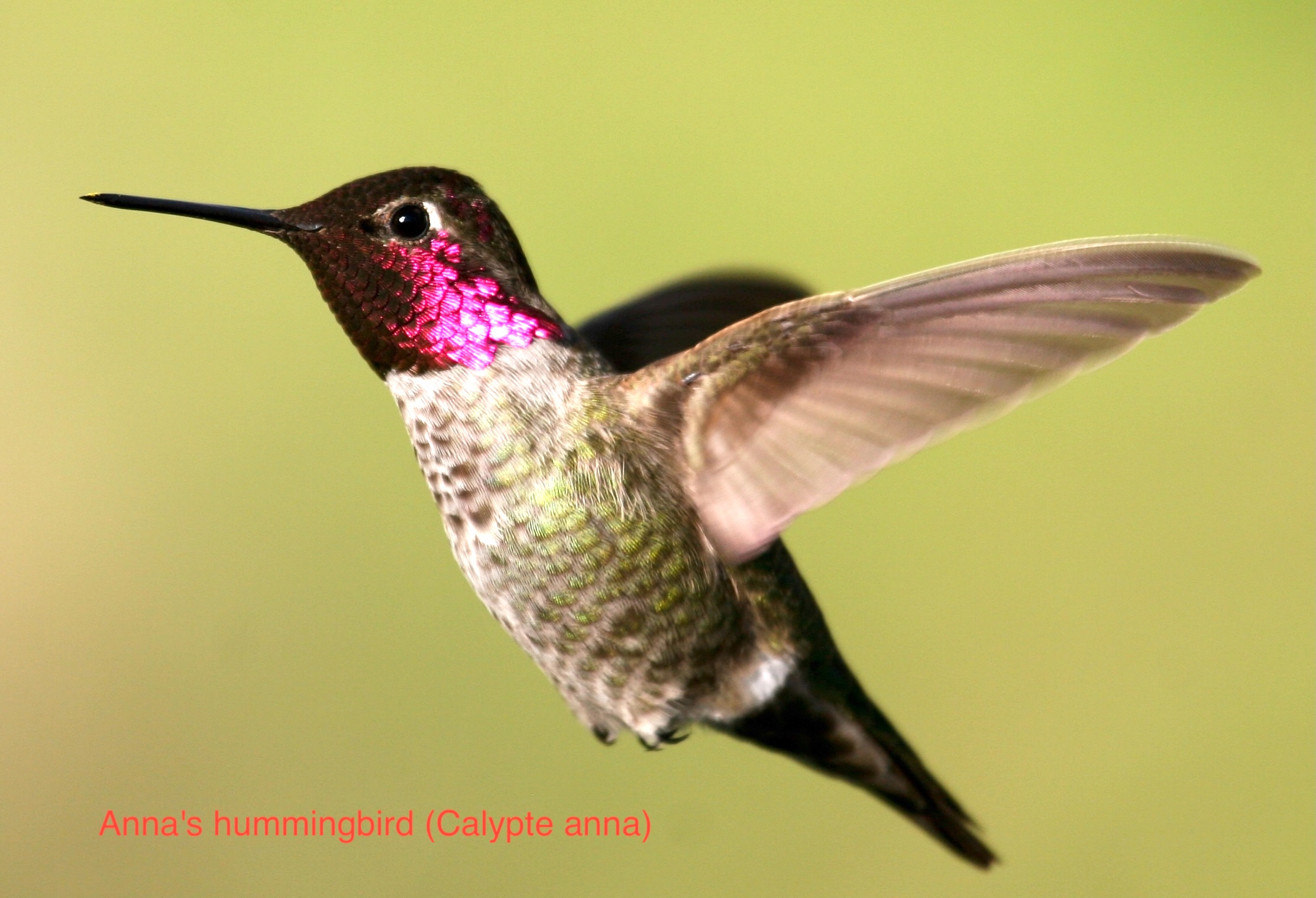
There have been very rare reports of vagrant sightings, in particular Anna’s Hummingbird

Unknown's avatar

WAVE CHASERS: SANDERLING POOL TIME ON ABACO


Sanderling, Delphi Beach Abaco Bahamas (Keith Salvesen / Rolling Harbour)

WAVE CHASERS: SANDERLING POOL TIME ON ABACO

It’s often a hard decision whether to include a short piece of video footage in a post. By short, I mean less than a minute. On the one hand, there is usually a good reason for inclusion, even if only aesthetic. On the other, it simply takes up more time for busy people who may prefer to flick through an article and enjoy some nice images along the way. Today, you can have the best of both worlds.

Sanderling, Delphi Beach Abaco Bahamas (Keith Salvesen / Rolling Harbour)

Sanderlings are definitively ‘peeps’, a group name that embraces the smallest and squeakiest sandpiper species. They are the wave chasers, the tiny birds that scuttle along the beach, into the retreating tide for a snack from the sand, and back to the beach again as the waves creep in. Their little legs and feet move in a blur, and many people immediately think of wind-up clockwork toys as they watch the birds in action. But these charmers never wind down while there is shoreline foraging to be done.

Sanderling, Delphi Beach Abaco Bahamas (Keith Salvesen / Rolling Harbour)

One of the joys of being a sanderling is that rock pools fill and empty diurnally. At some time during daylight, there’s the certainty of a quick dip. I was lying on the beach when I took this short video, so that I didn’t spook the birds. I was equipped with a smallish camera (I drowned it the following day. By mistake I mean) so I kept my distance rather than try to get closer and spoil their joyful bathing.

I caught these little birds at a critical moment. You can tell that the tide is coming in fast. The peeps are becoming edgy, and weighing up the joys of immersion in a pool with the less enjoyable prospect of being washed out of the pool by the next wave. Within a minute or so, they had all flocked down the shoreline for a foraging session in new territory.

Waves and incoming tide getting a little too close for comfort on the edge of the pool…Sanderling, Delphi Beach Abaco Bahamas (Keith Salvesen / Rolling Harbour)

Next to the migratory PIPING PLOVERS that favour Abaco as their winter home, the wave chasers are my favourite shorebirds. It was my keenness on them that killed my camera. I went out into the incoming waves to get shots back at the beach with the sun behind me. Great idea until I lost my balance with, as they say, hilarious consequences. Lesson learnt – never turn your back on waves.

Sanderling, Delphi Beach Abaco Bahamas (Keith Salvesen / Rolling Harbour)

All photos © Keith Salvesen / Rolling Harbour taken on the beach at Delphi, Abaco, Bahamas

Sanderling, Delphi Beach Abaco Bahamas (Keith Salvesen / Rolling Harbour)

Unknown's avatar

GREAT EGRETS: NOBLE (YET MISNAMED) HERONS


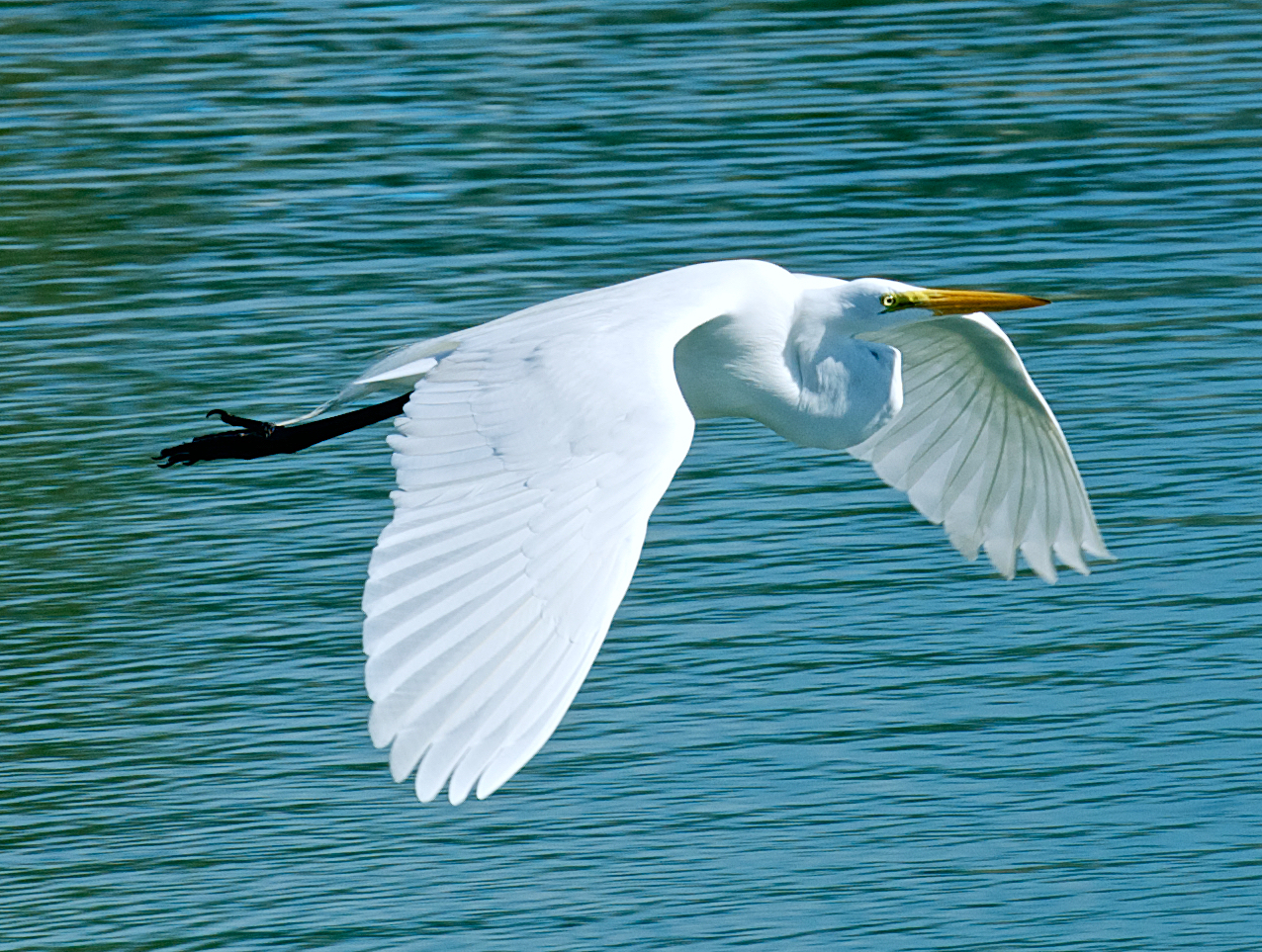
Great Egret, Bahamas (Nina Henry)


GREAT EGRETS: NOBLE (YET MISNAMED) HERONS

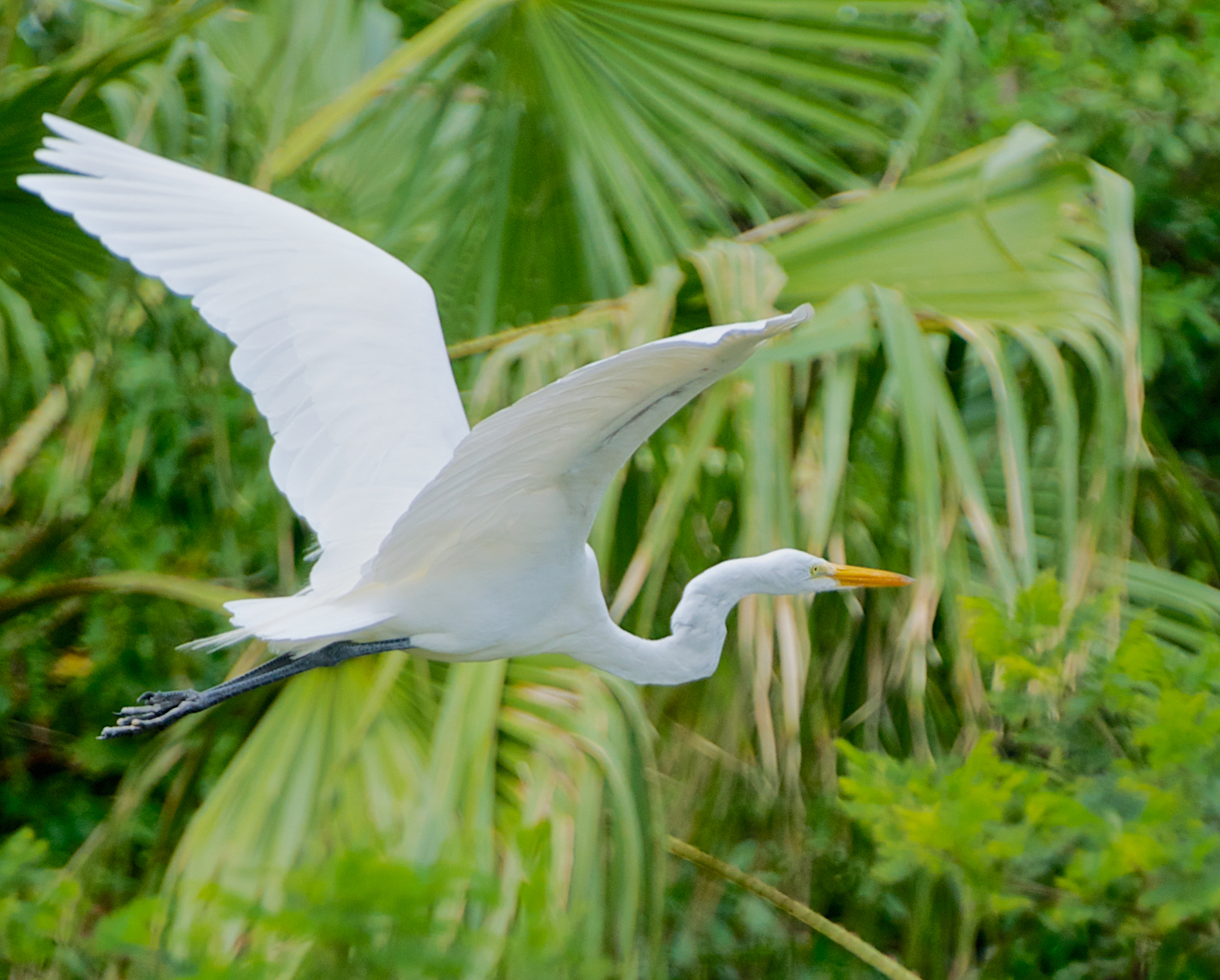
The Great Egret is actually a heron rather than an egret. It’s a Great Heron. All egrets are members of the heron family Ardeidae, but the converse is not true. As long ago as 1758, Linnaeus awarded the bird the binomial name Ardea alba i.e. ‘Heron white‘. Why it should later have been so hard to stick to that authoritative nomenclature, I can’t imagine. Perhaps in time all heron and egret species became so hopelessly confusing for people that it ceased to matter much what they were called.

Great Egret, Bahamas (Nina Henry)

Maybe it was that type of carelessness that led to people from the mid-c19 onwards eyeing up GREGs as a source of hat feathers and other decorative necessities. As with flamingos and many other beautiful avian species, mankind’s millinery and other fashion needs were satisfied at the expense of gorgeous plumage. Actually, at the cost of the birds’ lives: they were simply shot in huge numbers. 

Great Egret, Bahamas (Nina Henry)

Healthy populations were decimated; for some species they never recovered. For others, the great egret among them, the passage of time and the passing of fashions – backed in many cases with conservation programs – have successfully restored the populations. In 1953 the National Audubon Society, which was formed at least in part to discourage the killing of birds for their feathers, took a decisive step in the cause of the great egret by making the bird the emblem of the organisation.

Great Egret, Bahamas (Nina Henry)

Photo Credit: Nina Henry photographed all the egrets in this post. Her wonderful images of this magnificent egret heron made a significant contribution to the original “BIRDS OF ABACO” project.

Great Egret, Bahamas (Nina Henry)

Unknown's avatar

ABACO [CUBAN] PARROT. Amazona leucocephala bahamensis


This fantastic photograph of one of Abaco’s unique ground-nesting parrots was taken by ace photographer Nina Henry during the preparation and compilation of BIRDS OF ABACO. It’s the most special of the many we studied. The bird clearly displays the full fanning of its tail; and the image captures the bright colours perfectly. NH/RH/KS

Unknown's avatar

RED-WINGED BLACKBIRDS . ABACO . BAHAMAS


Red-winged Blackbird, Abaco (Tom Sheley)


RED-WINGED BLACKBIRDS ON ABACO

The sounds are unmistakeable – a discordant chorus of soft chuckling noises like tongue-clicks as the RWTs flock into a bush, interrupted by harsh, metallic calls like rusty metal gate-hinges being forced open. Or maybe a lone bird mournfully repeating its eerie call from the mangroves far out on the Marls as the bonefishing skiffs slip silently along the shoreline. No other species sound quite like Agelaius phoeniceus.

Red-winged Blackbird, Abaco (Tom Sheley)


The handsome males sport flashy epaulets, most clearly visible in flight or in display – for example to impress a prospective mate. Again, they are unlikely to be confused with another species.

Red-winged Blackbird, Abaco Bahamas (Alex Hughes)


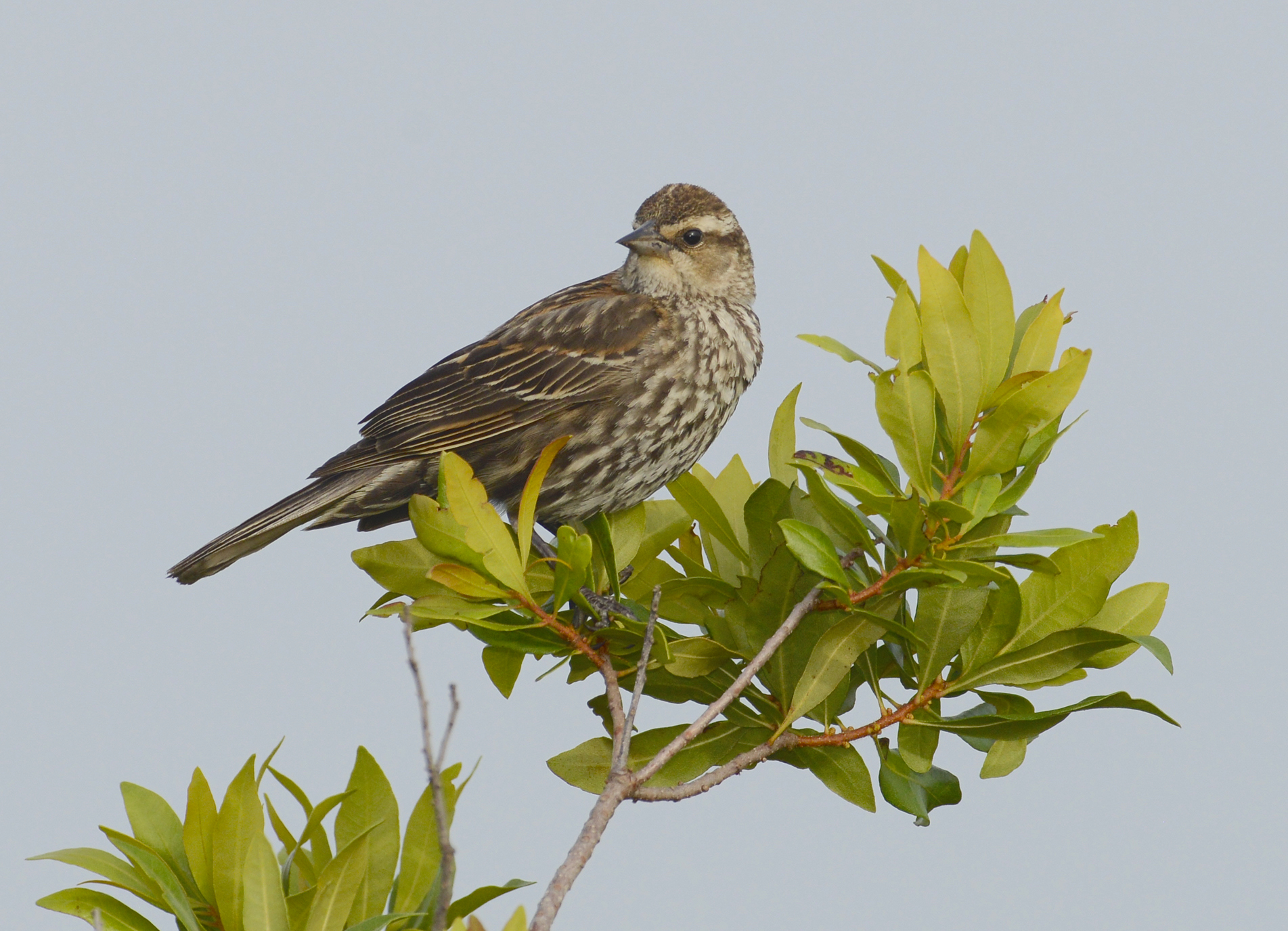
The females, as is often the way, are less showy. I have read that they are ‘nondescript’ or ‘dull’, which is unnecessarily harsh, I reckon. Here are a couple of examples.


And the darker brown ones that are clearly not handsome black males? These are young males in their first season, before they move on to the full adult male plumage. Originally I had designated them as females (as I had assumed). I was very gently corrected by the legendary bird expert Bruce Hallett. I took the first male juvenile at Casuarina, when I also made the sound recording (below). The second was at Delphi (with some ‘light’ issues, I notice…).

Red-winged Blackbird, Abaco (Keith Salvesen / Rolling Harbour)

Red-winged Blackbird, Abaco (Keith Salvesen / Rolling Harbour)

Fledglings are kind of cute…Red-winged Blackbird, Abaco (Tom Sheley))


SO WHAT DO THEY SOUND LIKE?

You may need to turn up the volume a bit. You will also here a lot of dove noise and, in the background, the sound of waves lapping onto the shore.

Red-winged Blackbird, Abaco (Keith Salvesen / Rolling Harbour)

Photo Credits: Tom Sheley (1, 2, 4, 5, 8); Alex Hughes (3); Keith Salvesen (6, 7, 9 & audio)

Unknown's avatar

TERN TERN TERN: THE 12 SPECIES RECORDED FOR ABACO, BAHAMAS


Royal Terns on the Marls, Abaco

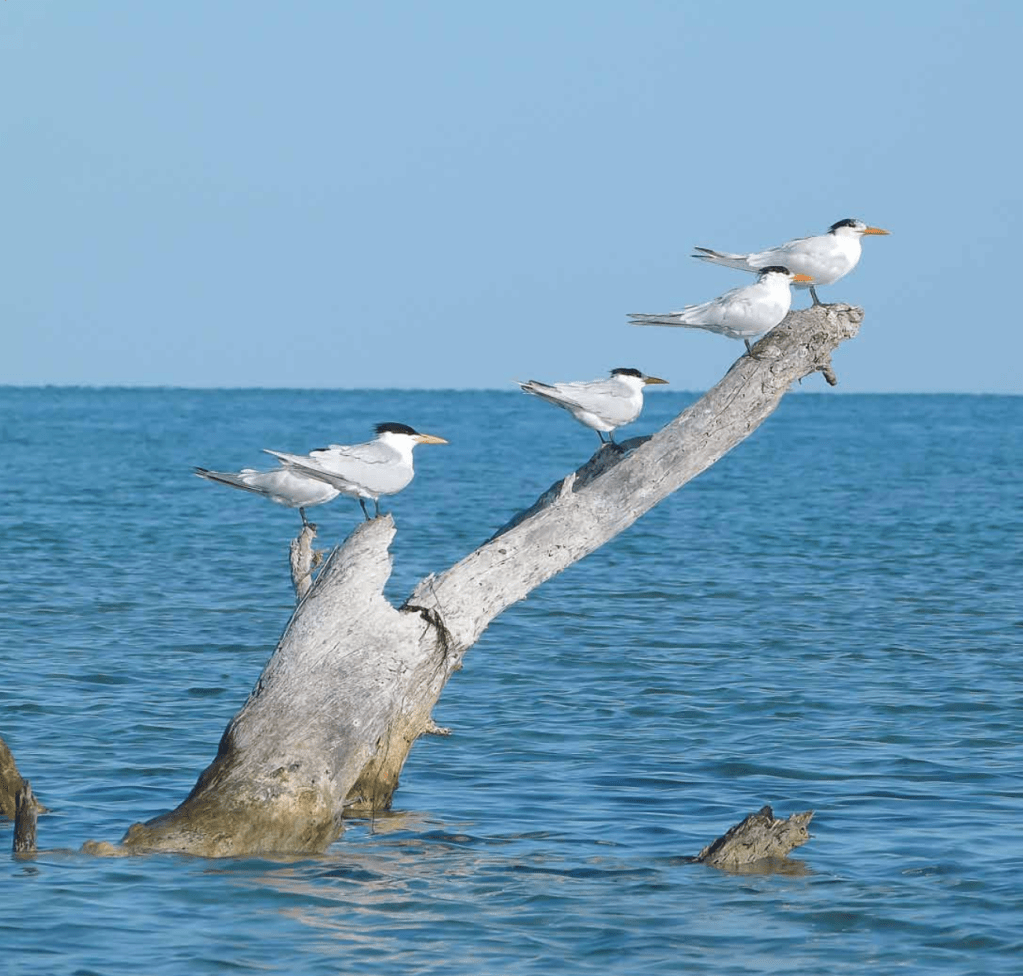
There are twelve species of tern – ‘swallows of the sea’ – that to a greater or lesser extent may be found on Abaco. Whether they will actually  be visible at any given time is less certain, though. For a start, the only resident species is the lovely Royal Tern, available at many locations on Abaco and the cays throughout the year. Others are migratory, transitory or – rarest of all – vagrant birds blown off-course by wind or storm.

ROYAL TERNS Thalasseus maximus PR1

Royal Tern, Abaco Bahamas (Keith Salvesen)

In the slightly less commonly-found category are the summer migrant terns that, by definition, are only in residence for around half the year. Four of these are fairly common in certain areas, and actually breed on Abaco; these include arguably the prettiest of all, the bridled tern. The other two tern species (gull-billed and sandwich) are more rare and do not generally breed locally.

LEAST TERN Sternula antillarum SR B 1

LeastTern, Abaco Bahamas (Tony Hepburn)

BRIDLED TERN Onychoprion anaethetus SR B 2

BridledTern, Abaco Bahamas (Bruce Hallett)

ROSEATE TERN Sterna Dougallii SR B 2

Roseate Tern, Abaco Bahamas (Woody Bracey)

SOOTY TERN Onychoprion anaethetus SR B 2

Sooty Tern, Duncan Wright wiki

GULL-BILLED TERN Gelochelidon nilotica SR 3 

Gull-billed Tern, Abaco Bahamas (Alex Hughes)

SANDWICH TERN Thalasseus sandvicensis SR 4

Sandwich Tern, Abaco Bahamas (Bruce Hallett)
Sandwich Tern, Abaco Bahamas (Woody Bracey)

There is one rare winter resident migratory tern species. I had to check when the last one was recorded for Abaco. It was of course only in January this year, when ace birder-photographer Sally Chisholm saw one at Treasure Cay and managed to photograph it for posterity.

FORSTER’S TERN Sterna forsteri  WR 4

Forster's Tern (Dick Daniels)
Forster's Tern, Abaco Bahamas (Sally Chisholm)

The final four ‘Abaco’ terns are very much the occasional visitors. Three of them pass over the Bahamas on their longer migration, but may make a pit-stop around Abaco to take on fuel. Likelihood of sighting one? Slender but not impossible… The fourth, the Arctic Tern, is a very rare vagrant, a bird well away from its usual home or migration route as the result of storms or faulty satnav or sheer happenstance. Don’t travel to the Bahamas intent on seeing one.

CASPIAN TERN Hydroprogne caspia TR 4

Caspian Tern Abaco Bahamas (Woody Bracey)
Caspian Tern Abaco Bahamas (Keith Kemp)

As for the remaining three species, they are the transient black tern and common tern; and the vanishingly rare vagrant  Arctic tern (the clue is in the name). No photos of any of these I’m afraid, so here’s a handy checklist instead. 


ELECTIVE MUSICAL DIGRESSION

Written by Peter Seeger a few years earlier, Turn x 3 was released in 1965, the title track on the second album from the Byrds. At a rather febrile time in US history (Vietnam, draft riots, black civil rightists v cops and so on), this unusually palliative and thoughtful song with its religious connotations to some extent stood for peace and hope in a time of turmoil.

Photo credits: Keith Salvesen (1, 2, 3, 5, 18); Tony Hepburn (4); Alex Hughes (10, 11); Bruce Hallett (6, 7, 12); Woody Bracey (8, 13, 16); Duncan Wright (9); Dick Daniels (14); Sally Chisholm (15); Keith Kemp (17)

Unknown's avatar

BUTTERFLIES ON ABACO (8): WHITE PEACOCK


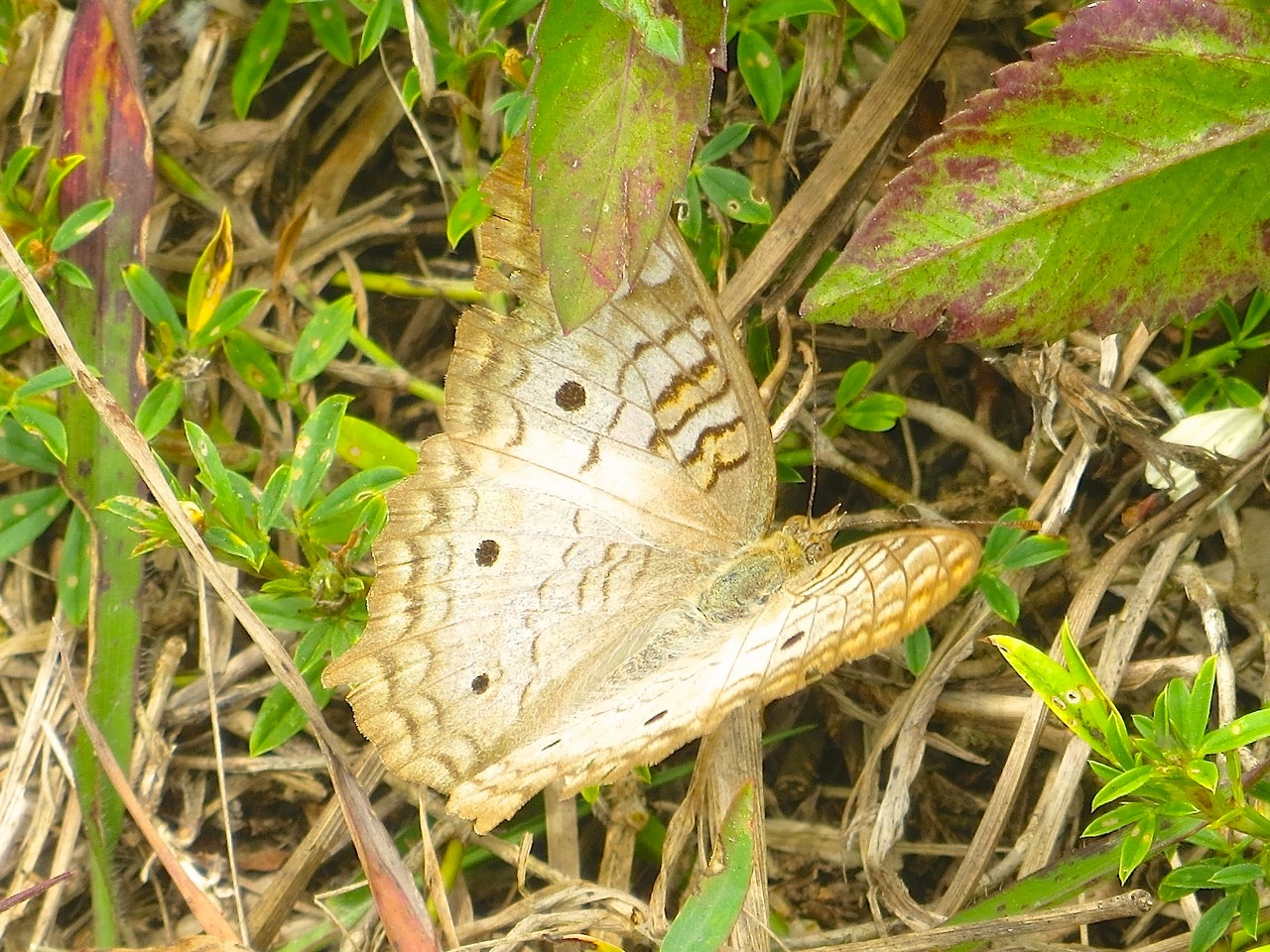
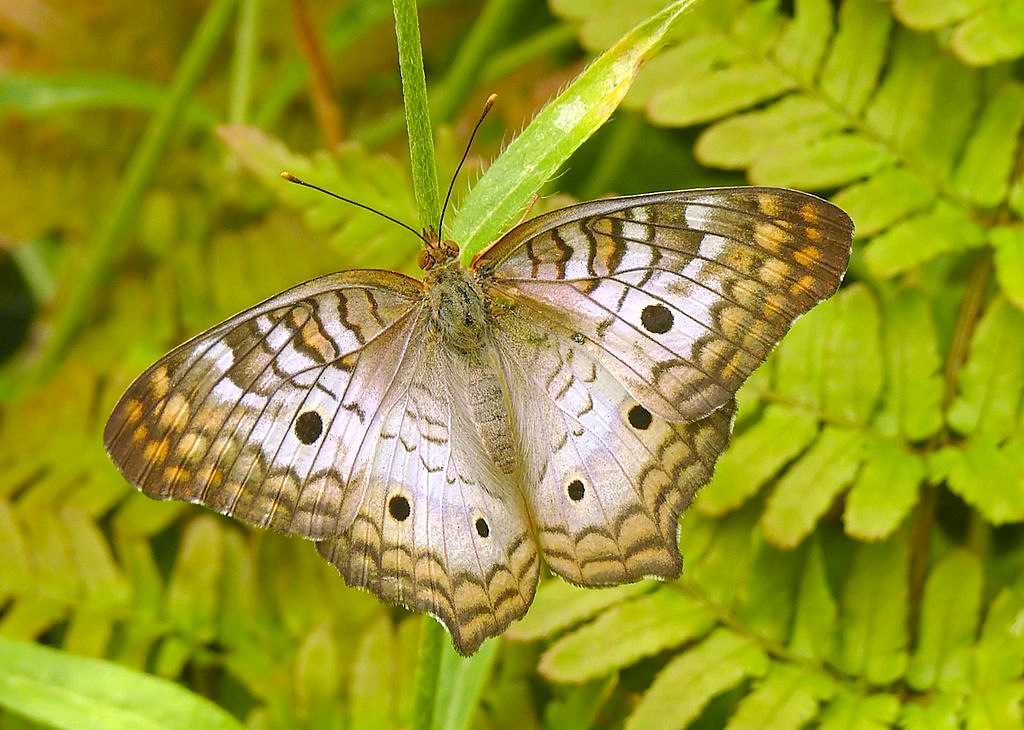
White Peacock Butterfly, Abaco (Keith Salvesen) 1

BUTTERFLIES ON ABACO (8): WHITE PEACOCK

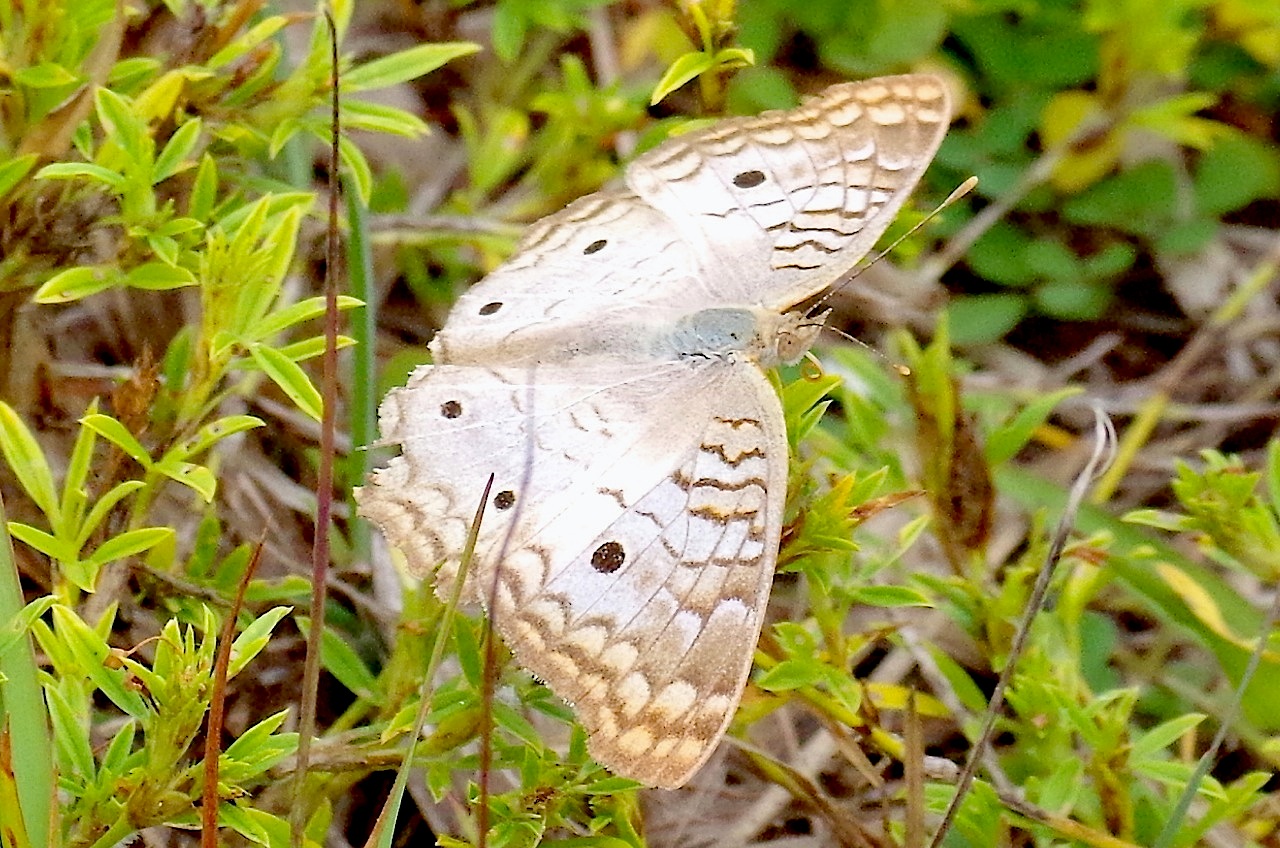
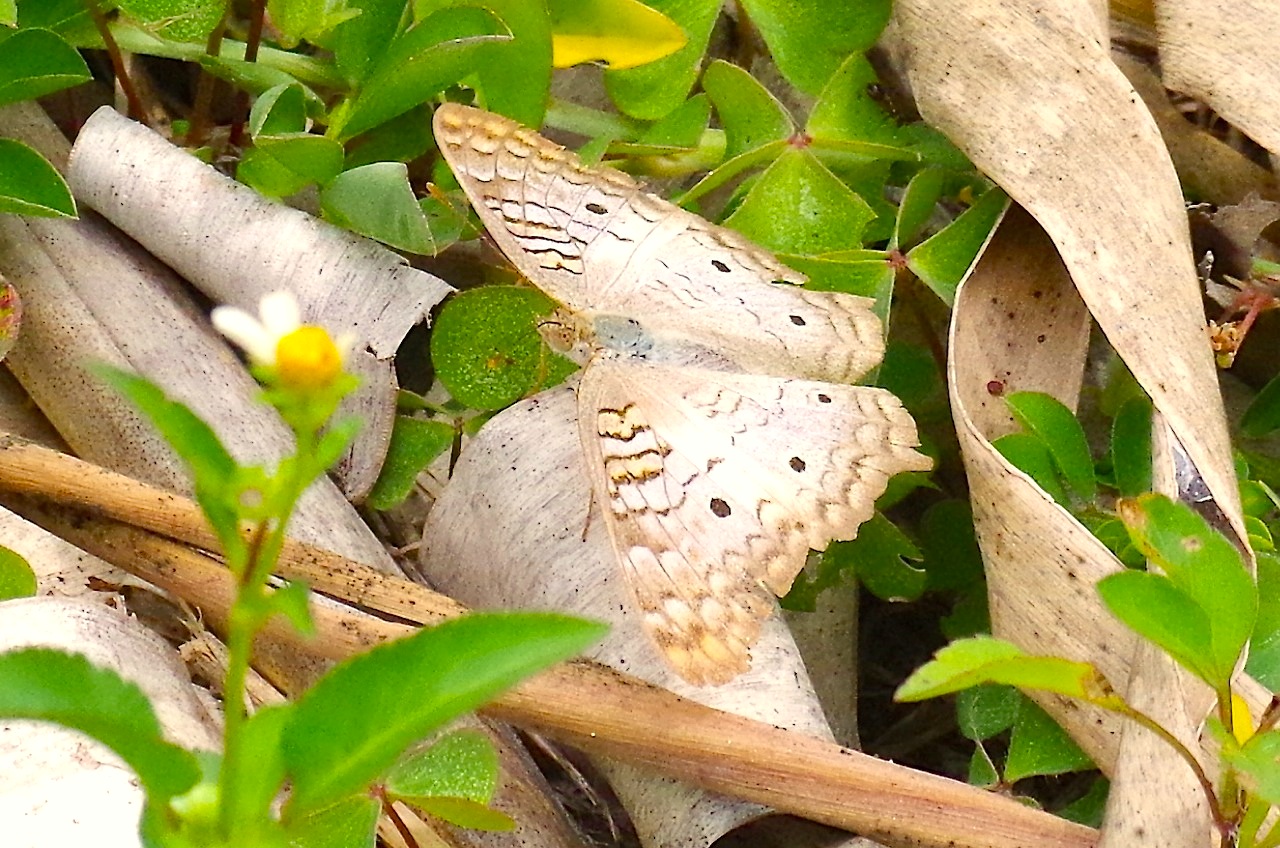
The white peacock (Anartia jatrophae) is not a rare butterfly in the northern Bahamas. However, until recently I had never – or never consciously – seen one before. Then we came across a few, all very frisky and mostly refusing to settle for more than 1/100 second. By the time I have remembered to remove my lens cap, they are 50 yards away.

White Peacock Butterfly, Abaco (Keith Salvesen) 2White Peacock Butterfly, Abaco (Keith Salvesen) 3White Peacock Butterfly, Abaco (Keith Salvesen) 4

I checked out these pretty but unassuming butterflies online because they seemed rather pale and anaemic. As far as I can make out this is because they were still in winter colouring; in summer they are more brightly marked. Here’s a photo of a dishevelled white peacock taken in June at Delphi by Charlie Skinner, which shows stronger colours.

White Peacock, Abaco DSC_4786 (Charlie Skinner)

ARE THEY EVER FOUND LOOKING BRIGHT AND NOT FALLING APART?

Yes, of course, but interestingly, never ever in the field. The one below, non-anaemic and intact, was thoughtfully uploaded to Wiki by Greg Hume. He took it at a butterfly show, where presumably tatty butterflies are excluded…

WhitePeacock (Greg Hume)

Photos: Keith Salvesen 1 – 4; Charlie Skinner 5; Greg Hume 6

Unknown's avatar

LIKE THE CLAPPERS: LEARN THE RAILS ON ABACO


Clapper Rail preening, Abaco Bahamas (Tom Sheley)


LIKE THE CLAPPERS: LEARN THE RAILS ON ABACO

Note: You may find ads in this post. This is because WordPress / AI has now decided that you (dear reader) and I (angry author) are presumed to be up for car insurance deals, slimming advice, and incontinence apparatus. I’m probably going to have to buy my way into a new contract, as they presumably intend.

CLAPPER RAILS Rallus crepitans are elusive birds of mangrove swamp and marsh, more frequently heard than seen. They tend to lurk around in foliage and are easy to overlook – creatures of the margins rather than of open ground. If lucky, you may come across one foraging secretively, beak-deep in the mud.

Clapper Rail stretching.Abaco Bahamas - Tom Sheley ("The Birds of Abaco" by Keith Salvesen, p80)

Tom Sheley’s wonderful photos featured here of a preening clapper rail were taken during backcountry explorations to locate and photograph species for BIRDS OF ABACO.  By being an early riser and a patient cameraman, Tom managed to capture this fine bird engaging in some quality grooming. The one below is also ‘vocalising’ – also known in rails as ‘rousing’.

Clapper Rail rousing.Abaco Bahamas.Tom Sheley

CALL

AGGRESSIVE CALL

Clapper rails are capable of swimming and even of flying if they choose to (which isn’t often). However the most likely activity you will observe is skulking, picking their way quite delicately through marginal  vegetation, or (if you are lucky) doing some serious beak-deep foraging in the mud. Their foraging is made easier by the fact that they are omniverous.

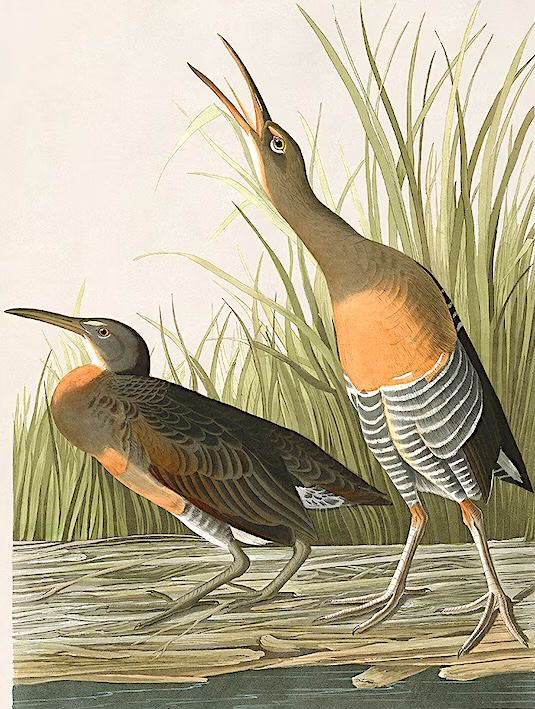
Clapper Rail (Audubon)

Occasionally they run, a process that looks endearingly comical and which possibly gives rise to their name (see below).

Clapper Rail running, Abaco Bahamas (Erik Gauger))

Clapper Rail running, Abaco Bahamas (Sandy Walker)

It almost goes without saying nowadays, but the biggest threat to these rather charming inoffensive birds is habitat loss. Which is to say, mankind either directly or indirectly. Drive bulldozers through the mangroves and marshland of sub-tropical coastal areas, chuck down a few acres of concrete and tarmac… and the clappers will very soon be clapped out. As they will if the climate we have unarguably changed irrevocably ruins their unobtrusive lives.

ADVISORY LINGUISTIC STUDY

When I first wrote about this species, its binomial name was Rallus longirostris ie simply ‘long-beaked rail‘. Which it is. Then came an annual official AOU shuffling of species and revision of names. The clapper rail was re-designated Rallus crepitans or ‘rattling / rustling rail‘. Which it does, but it also has other vocalisations (try the sound-files above). So maybe less clear-cut for ID purposes (there were other rail name innovations that, reading about them, made me crack open a beer instead of wanting to tell you about them. I’m old-school. 

OPTIONAL LINGUISTIC DIVERSION

TO RUN LIKE THE CLAPPERS“. This phrase seems to be fairly recent, most likely originating as military (?Air Force) slang early in WW2 or possibly from earlier conflicts. Some suggest it is a rhyming slang bowdlerisation of ‘run like hell’ with ‘clapper(s)’ standing for ‘bell’, along the lines of the Cockney “I’ve bought a new whistle” (whistle and flute = suit). Almost all plausible explanations relate to bells: the speed of the clapper of a vigorously rung handbell. One stand-out meaning relates to the historical era of City prostitution and the high risk of syphilis (‘pox’) or gonnorrhea (‘clap’). You can probably make the link.

Photo credits:Tom Sheley, Sandy Walker, Erik Gauger, University of Amsterdam (print), OS / CC

Clapper Rail preening.Abaco Bahamas.3.12.Tom Sheley copy

Unknown's avatar

WEST INDIAN WOODPECKER (Melanerpes supercilliaris)


TREE HUGGER

West Indian Woodpecker Melanerpes supercilliaris

Delphi . Abaco . Bahamas – Keith Salvesen

In January I will be returning to Abaco for a few happy days, for the BMMRO biennial Retreat. I haven’t been back since before Dorian and Covid. I am pretty excited by the prospect, having really missed the island, the friendships, the birdlife, and a whole lot more. During the long interval I have kept in close touch – most days, it seems – and continued with this blog.

Birds and marine mammals have always been the main theme, but there’s a great deal more to investigate in the MENUS. Between now and my visit, I plan to post some wonderful bird photos from my book BIRDS OF ABACO. Mostly they will by contributors; a few may by me.

BIRDS OF ABACO: THE DOWNLOAD

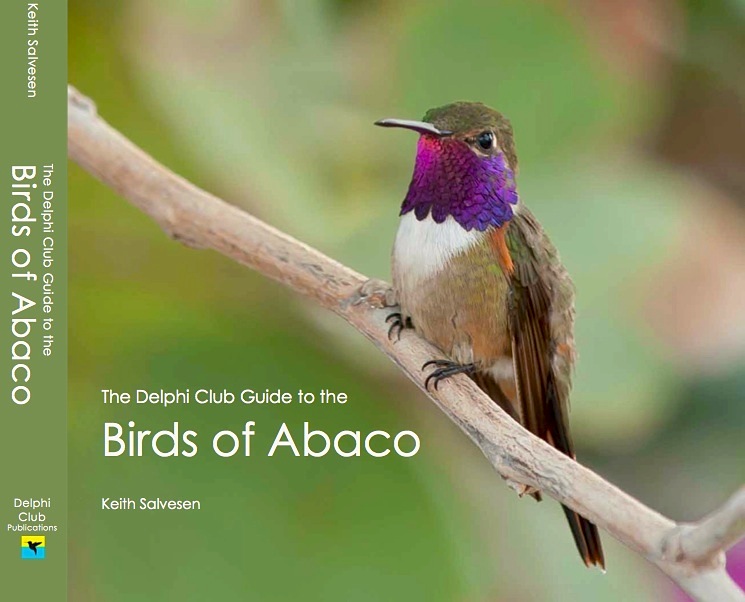
The whole edition was sold out ages ago, so unfortunately I wasn’t even able to replace lost / damaged copies. However I recently compressed the entire book into an 18mb file. Do pass it round; please don’t monetize it!

1

Unknown's avatar

CURLY-TAILED LIZARDS ON ABACO, BAHAMAS


Curly-tailed Lizard, Abaco Bahamas (Keith Salvesen)

CURLY-TAILED LIZARDS ON ABACO, BAHAMAS

WORLD REPTILE AWARENESS DAY Oct 21

These days few creatures go without an Annual Day: Awareness / Appreciation / Protection / Support / and so on. These are obviously important and to be encouraged. In human terms the creatures tend to have a positive image. There’s little call for a Fire Ant Welfare Day.  I am slightly concerned about World Earthworm day, also on Oct 21. Aren’t they food for some of the reptiles that share the day?

The northern curly-tailed lizard Leiocephalus carinatus, to give it its full name, resembles a tiny dragon with a twist in the tail. These little critters bask in the sun, or scuttle away into holes and crevices as you approach them. I suspect that even a confirmed herpophobic would find some charm in them. They are, of course, completely harmless to humans. 

Curly-tailed Lizard, Abaco Bahamas (Charles Skinner)

Surprisingly, the Bahamas is home not just to one but five different curly-tail species, and nine sub-species. Broadly-speaking, the variants are found on different and specific islands and have discrete local markings. Mostly they are brownish, but they may also be grey or with a greenish tinge like this one I recently photographed.

Curly-tailed Lizard, Abaco Bahamas (Keith Salvesen) Curly-tailed Lizard, Abaco Bahamas (Keith Salvesen)

Curly-tail males, being territorial, turn somewhat aggressive around breeding time, which is basically most the the year, from February to October. Behaviours indicative of their territorial claims include tail curling / uncurling (of course), head-bobbing, strutting about in an agitated way and inflating the sides of their necks in a threatening kind of way. The tiny-tails, 2″ long when born, are known as ‘hatchlings’.

An impressive poolside ‘double curly’Curly-tailed Lizard, Abaco Bahamas (Keith Salvesen)

THREATS TO CURLY TAILS

According to the Bahamas National Trust BNT, the main dangers to the curly-tails of the Bahamas are:

  • Dogs, cats, rats and introduced predators such as raccoons
  • Collection for the pet trade – curly tails are unprotected by CITES listing (also cute)
  • Collection of the rarer endemics by reptile enthusiasts seeking ‘exotics’
  • Development and habitat destruction (though it is noted that curly tails seem to adjust quite well in developed areas)

A curly tails sloughs its skin as it grows, as with snakes and other reptilesCurly-tailed Lizard, Abaco Bahamas (Charles Skinner)

WHY THE CURLY TAIL?

  • As mentioned above, for use in territorial posturing
  • In courtship displays by males to attract females (luckily a method not available to humans)
  • As a response to predators, confusing an attacker with movement at both ends
  • As a last resort, to detach to aid escape (the tail re-grows)
  • For fun and just because they can grow one and you cannot

Curly-tailed Lizard, Abaco Bahamas (Keith Salvesen)

Credits: all photos, Keith Salvesen except #2 & #6, Charles Skinner; BNT

Unknown's avatar

BUTTERFLIES ON ABACO (3): COMMON BUCKEYE


DSC_7830

BUTTERFLIES ON ABACO : COMMON BUCKEYE

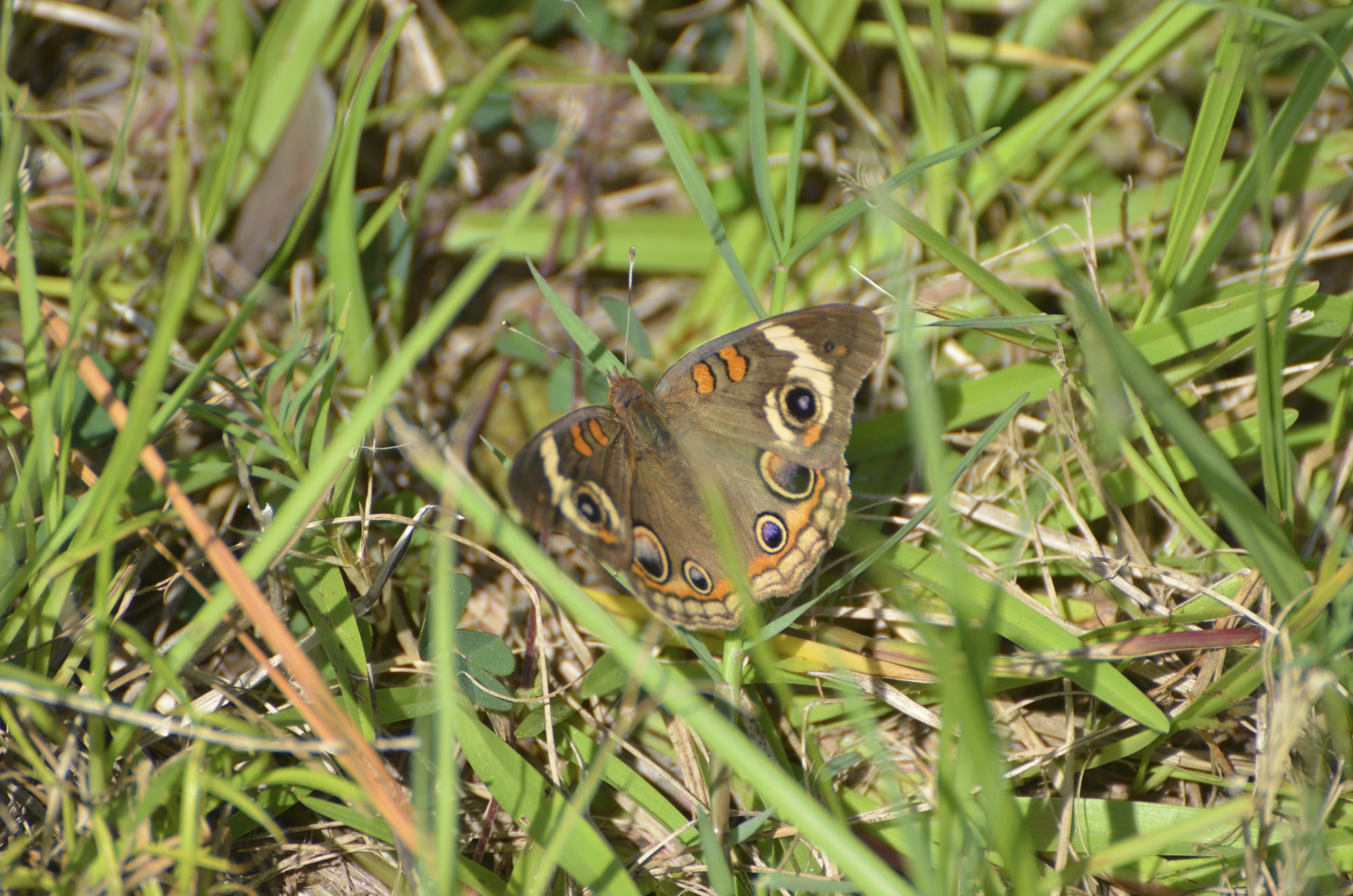
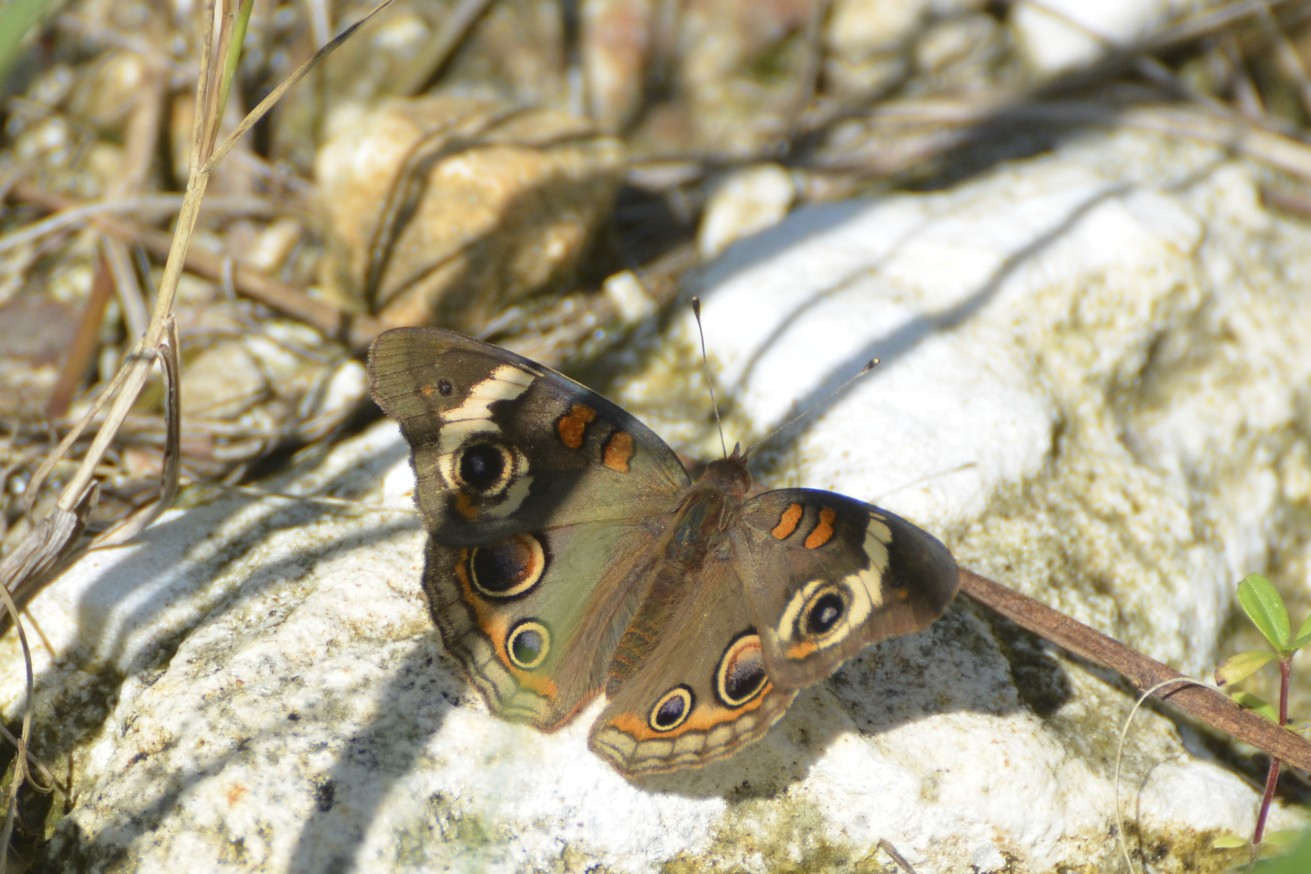
At first glance the Common Buckeye Butterfly Junonia coenia looks unpromisingly drab. However, like many butterfly species, the outside appearance is only one side of the story, a facade to enable it to blend in with the scenery. As the header image suggests, this creature has a more more flamboyant and colourful side to it – a feature not confined to butterflies, and extending even to humans…

SEQUENCE OF SLOWLY OPENING WINGS

Charlie Skinner DSC_7818

As it feeds, or as the sun warms its wings, the buckeye will start to reveal itself DSC_7831DSC_7825DSC_7817 DSC_7823

The bright eye-spots of the buckeye, for which it is named, are designed to deter predators, as much as for decorative purposes. Birds, in particular, will be put off by a creature apparently possessing 3 pairs of eyes. This feature is known as aposematism: coloration or prominent markings that signal a warning to potential predators.

DSC_7829DSC_7822DSC_7832

The caterpillars and chrysalis of this species look like thisCommon_Buckeye_larva_variation,_Megan_McCarty42Common_Buckeye_chrysalis,_Megan_McCarty43

This rather charming illustration of the buckeye species is by Jacob Hübner from his Sammlung exotischer Schmetterlinge Vol. 2 ([1819] – [1827] (Plate32)442px-Hubner1821SammlExotSchmett2Plate32

Photo Credits: Butterflies by Charlie Skinner (except header, Wiki); Caterpillars & Chrysalis by Megan McCarty via Common Licence

Unknown's avatar

CREOLE WRASSE: SHADES OF DEEP PURPLE


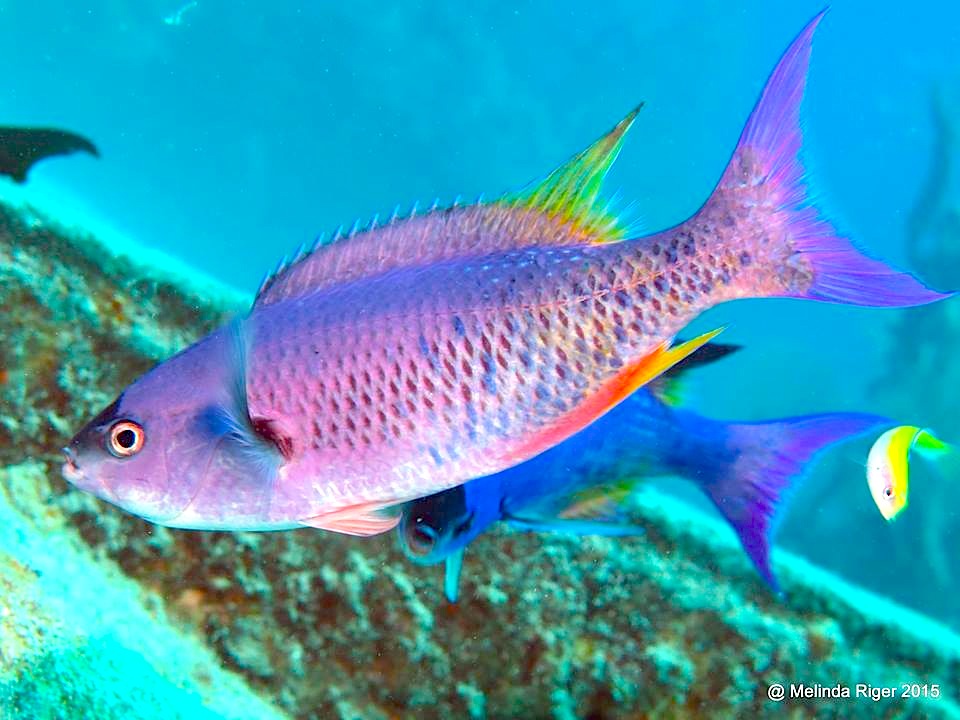
Creole Wrasse ©Melinda Riger @ G B Scuba copy 4

CREOLE WRASSE: SHADES OF DEEP PURPLE

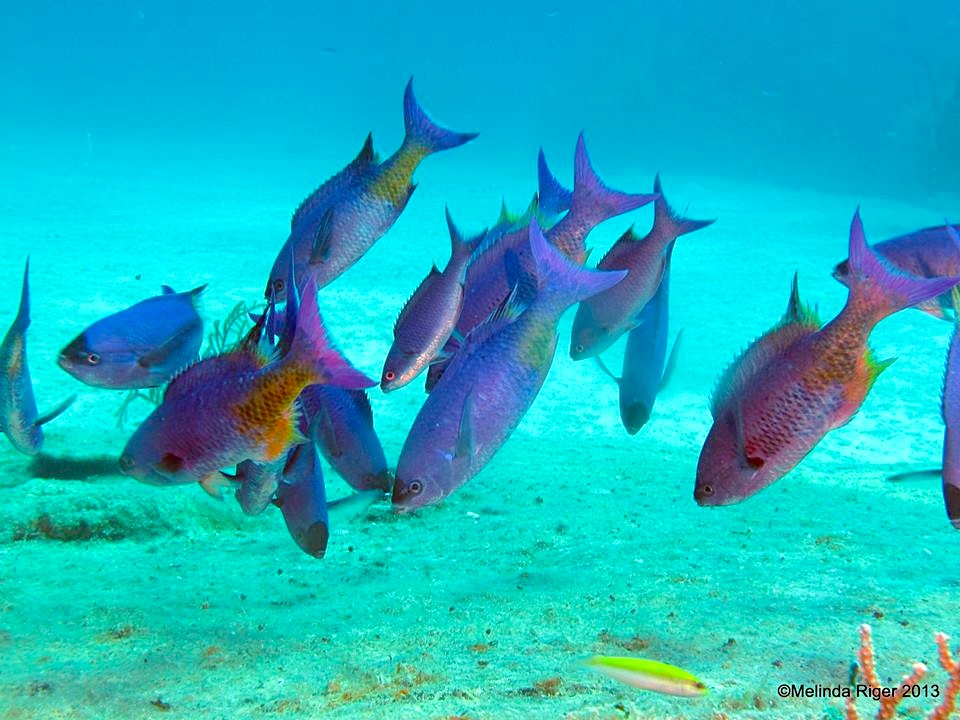
The creole wrasse Clepticus parrae is a small wrasse species, with adult males reaching about 12 inches long. During its life, the fish will change colour significantly.  A juvenile is almost completely violet-purple. As it matures, it becomes paler and develops patches of yellow on the rear part of its body.

Creole Wrasse ©Melinda Riger @ G B Scuba copy 7

Creole wrasse are found throughout the tropical and subtropical waters of the western Atlantic, from Florida south to Brazil. The habitat includes Bermuda, the Caribbean Sea, and the Gulf of Mexico. Their conservation status is LC Least Concern.

Creole Wrasse ©Melinda Riger @ G B Scuba copy 5Creole Wrasse ©Melinda Riger @ G B Scuba copy 6

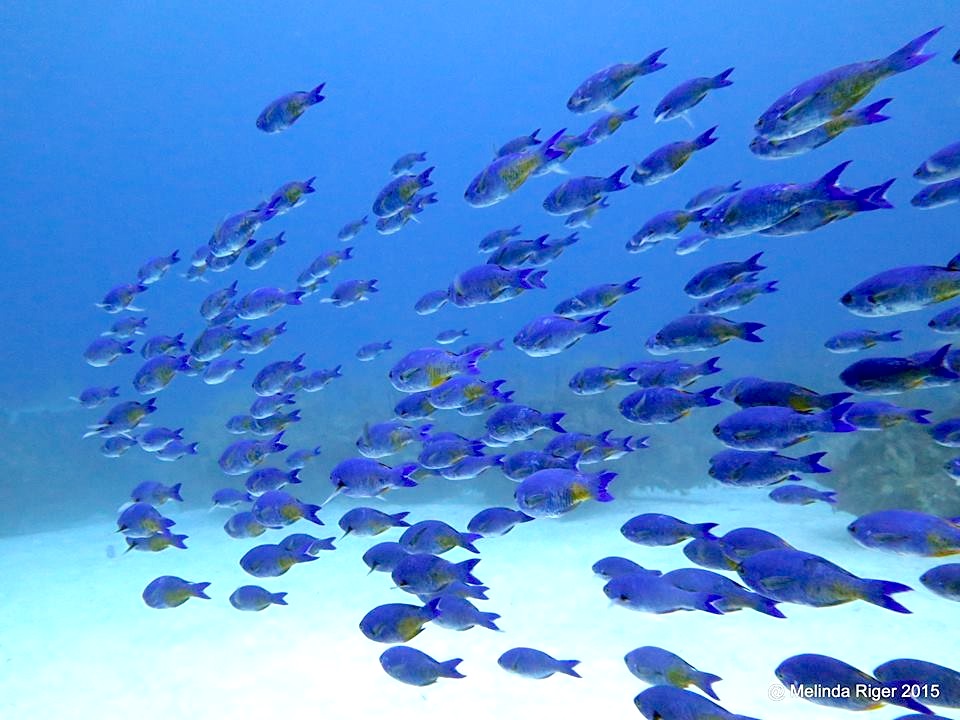
These are social fish that live in groups around coral reefs. They are usually found in shallow water, but – perhaps surprisingly for such small creatures – they have also been found as deep as 100m. 

Creole Wrasse at a cleaning station ©Melinda Riger @ G B Scuba copy

The groups of wrasse feed on plankton, small jellyfish, pelagic TUNICATES, and invertebrate larvae. They are active in groups by day, but at night they separate and each fish finds its own safe crevice in the reef to sleep.

Creole Wrasse School ©Melinda Riger @G B Scuba copy

ANYTHING ELSE WE NEED TO KNOW?

Yes indeed. Their intriguing breeding regime – how unlike our own dear species. The creole wrasse is a protogynous hermaphrodite.  The largest fish in a group is a dominant breeding male, while smaller fish remain female. If the dominant male dies, the largest female changes sex. Mature males congregate at leks to breed, at which they display and are approached by females before mating with them. These leks are reminiscent of certain clubs and bars in the less reputable parts of some towns and cities. Or so I am told.

Creole Wrasse Melinda Riger @ G B Scuba copy

It’s been a while since I included a Rolling Harbour musical diversion. However, the colour of this small fish nudged my memory back to 1968 and DP’s debut album (line-up Mk 1 of several hundred, or so it seems now). Hence the post title. Anyone who remembers this ‘wasn’t there’. Anyone who doesn’t remember it obviously wasn’t there either…

818A6udpP9L._SL1500_

FUN FACT: an early appraisal of the Purp’s music includes the description “a slow and pompous din, somewhere between bad Tchaikovsky and a B-52 taking off on a bombing run”

I don’t think this guy thinks much of that. And quite right tooCreole Wrasse ©Melinda Riger @GBS copy

All wrasse photos from Melinda’s archive; DP cover borrowed from Am@z@n; MP3 moi

Unknown's avatar

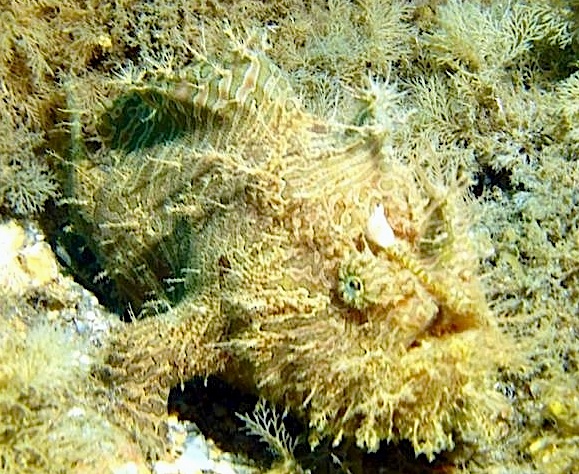
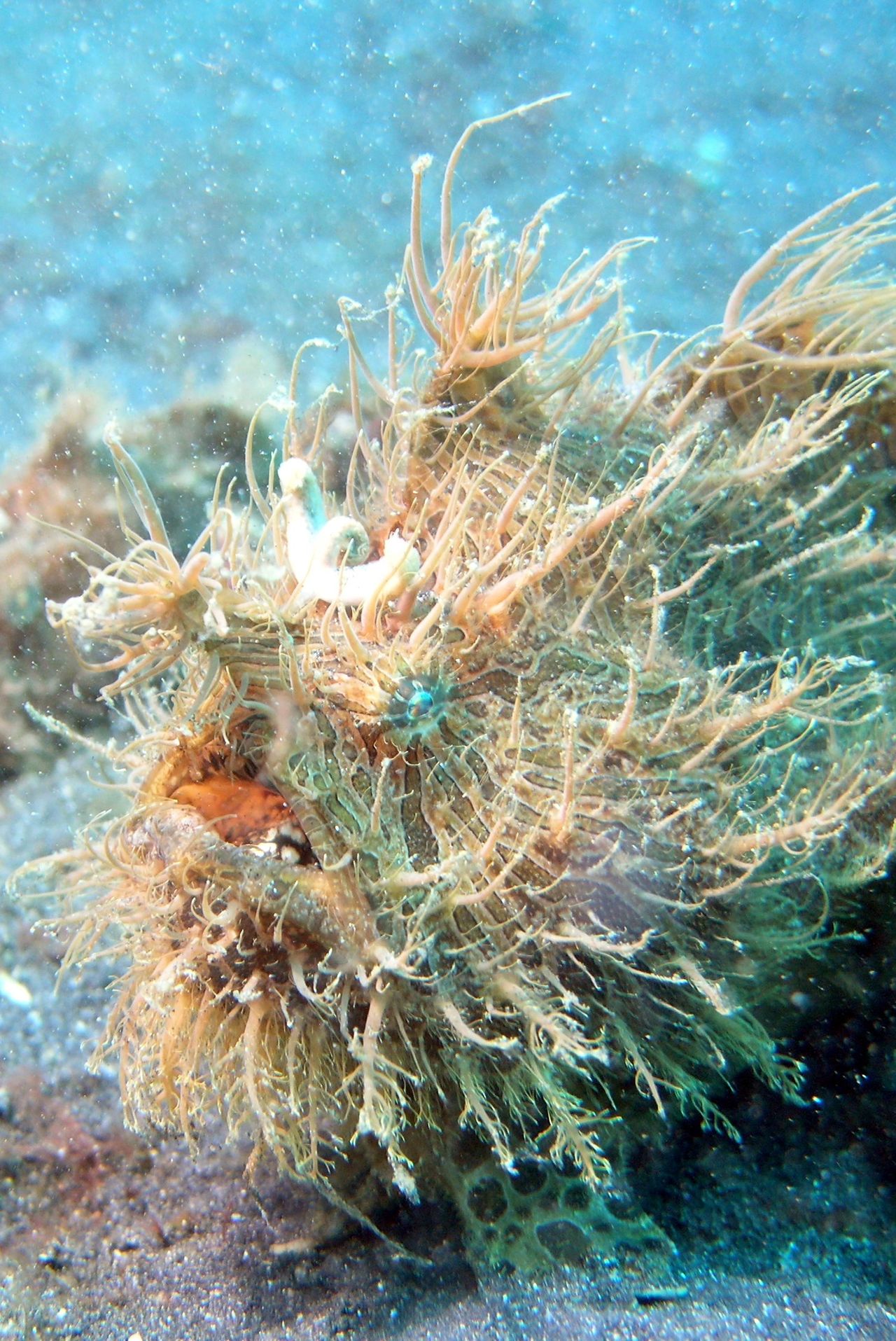
WTF? (WHAT’S THAT FISH?): THE FROGFISH


Frogfish (Adam Rees, Scuba Works)


WTF? (WHAT’S THAT FISH?): THE FROGFISH

frogfish-anglerfisch

The ‘WTF?’ series started with relatively conventional species eg REMORAS and became progressively more bizarre. In due course, having covered the excellently strange BATFISH it was time to ramp up the stakes: with many thanks to scuba expert Adam Rees for use permission for his terrific photos, I present… the FROGFISH.

Frogfish (Adam Rees, Scuba Works)

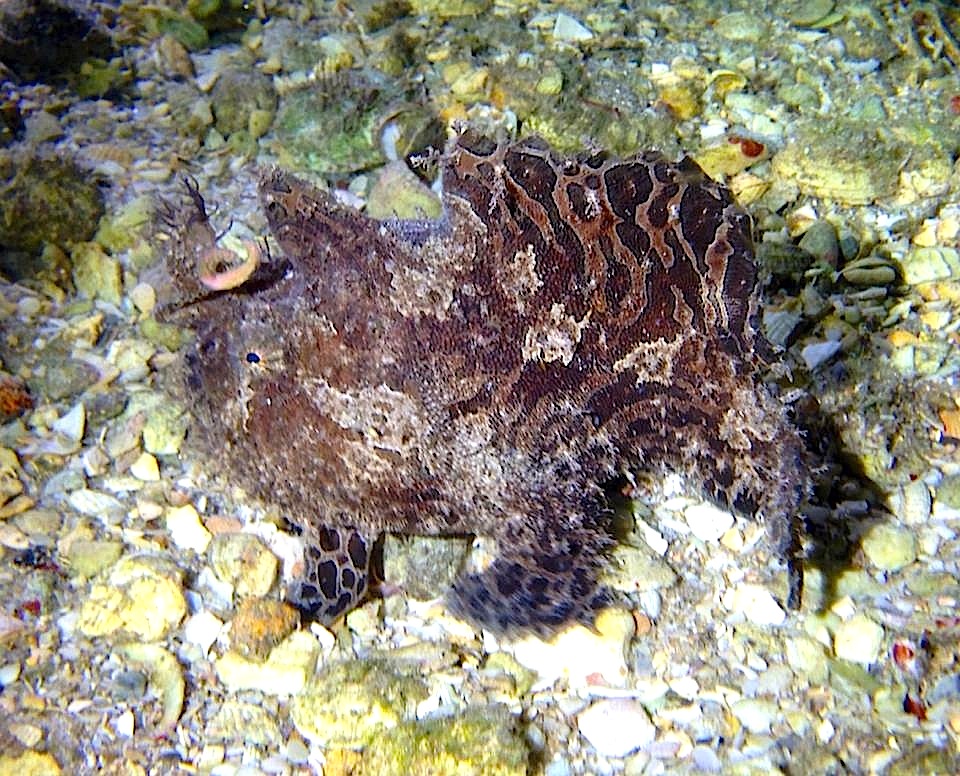
The frogfish is a kind of anglerfish found in almost all tropical and subtropical oceans and seas. There are about 50 different species worldwide, covering an astonishing range of strange appearances. They generally live on the sea floor around coral or rock reefs. In size they vary from tiny to about 15 inches long – although ‘long’ is a flexible concept because they are to an extent shape-changers in height and width.

Frogfish (Adam Rees Scuba Works)

FROGFISH SUPERPOWERS YOU MAY WISH TO HAVE

  • INVISIBILITY CLOAK . Frogfish are masters of disguise and camouflage. This enables them to catch their prey with minimal effort and also to avoid predators. Their camouflage methods – broadly known as ‘aggressive mimicry’ – include
    • Ability to change colour for days or even weeks to mimic their surroundings
    • Getting covered in algae and other organic matter that matches their habitat or
    • Looking inherently like a plump rock or in some cases, plant

Fear for the life of the spider crabFrogfish (Adam Rees, Scuba Works)

  • IRRESISTIBLE ATTRACTION
    • A sort of frontal dorsal fin called an illicium to which is attached a
    • Lure called an esca which may mimic a worm, shrimp or small fish etc and which is
    • Retractable in many species and
    • Regenerates if it gets mislaid

The ‘dollop of cream’ thing is the esca. Note the characteristic large mouthFrogfish (Adam Rees, Scuba Works)


  • BUOYANCY CONTROL & SHAPE-SHIFTING
    • Most frogfish have a ‘gas bladder’ to control their buoyancy.
    • Some species can change shape or even inflate themselves by sucking in quantities of water in a so-called defensive ‘threat display’.

frogfish-black

Frogfish (Adam Rees Scuba Works) Frogfish (Adam Rees Scuba Works)

HOW DO FROGFISH REPRODUCE? 

Although not conventionally attractive creatures, frogfish clearly manage to reproduce. Little is known about the techniques in the wild, but one is probably ‘with care’, especially for a male frogfish who may not survive for long if he hangs around after fertilisation has taken place. It has been noted that females tend to select far smaller males to fertilise their huge numbers of eggs, perhaps for that very reason.


Spot the esca1280px-Antennarius_striatus2


FROGFISH FEEDING SKILLS – GOOD OR BAD?

When deploying the lure, potential prey that comes too close to that wide mouth stands no chance. A frogfish will strike in a fraction of a second. Frogfishes have voracious appetites for crustaceans, other fish, and even each other. I can do no better than borrow this vivid description of a feeding frogfish:

“When potential prey is first spotted, the frogfish follows it with its eyes. Then, when it approaches within roughly seven body-lengths, the frogfish begins to move its illicium in such a way that the esca mimics the motions of the animal it resembles. As the prey approaches, the frogfish slowly moves to prepare for its attack; sometimes this involves approaching the prey or “stalking” while sometimes it is simply adjusting its mouth angle. The catch itself is made by the sudden opening of the jaws, which enlarges the volume of the mouth cavity up to twelve-fold, pulling the prey into the mouth along with water. The attack can be as fast as 6 milliseconds. The water flows out through the gills, while the prey is swallowed and the oesophagus closed with a special muscle to keep the victim from escaping. In addition to expanding their mouths, frogfish can also expand their stomachs to swallow animals up to twice their size.

images

HOW DO FROGFISHES GET AROUND? SWIM? WALK? CRAWL?

Frogfishes do not in fact move around a great deal. Using their camo advantages, they prefer to lie on the sea floor and wait for prey to come to them. As mentioned in the quote above, they may slowly approach prey using their pectoral and pelvic fins to “walk” along the sea bottom. They can swim using their tail fin (or in some species by simple ‘jet propulsion’ by forcing water out of their gills) but rarely do so – they don’t feed on the move, and they are adapted to the sea floor environment where they food is readily available. However their “walking” ability is limited to short distances.

frogfish-anglerfisch

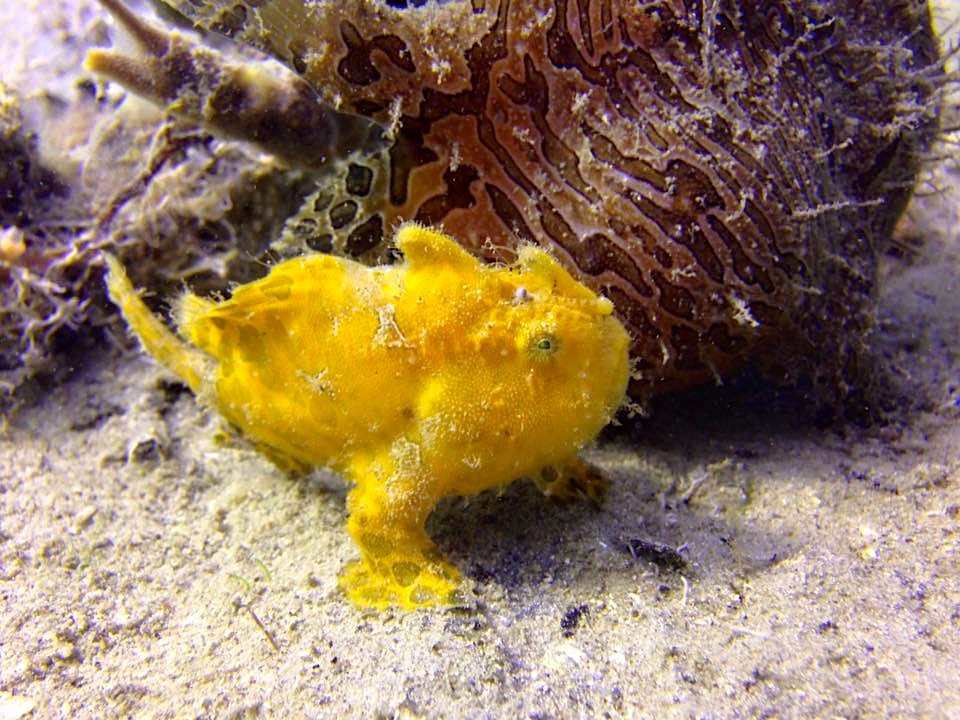
DO FROGFISH HAVE OTHER COLOUR SCHEMES?

Indeed they do. In stark contrast to the camo species, some frogfishes are hi-lighter bright. Here are two of my favourite photos by Adam that show this clearly. I’ve no idea if these are a male and female. I suspect they are different species. I think the brown one is a striated frogfish and the other is… a yellow frogfish. Some people keep these creatures in  aquaria, but apparently it is impossible to sex them, and they have to be kept on their own for everyone’s peace of mind…

Frogfish (Adam Rees Scuba Works) Frogfish (Adam Rees Scuba Works)

FROGFISH INFOGRAPHICS

frogfishFrogfish Infographic 'Monsters of the Deep'

FROGFISH VIDEOS

These two videos, from Lester Knutsen and Daan Van Wijk respectively, show some of the characteristics I have written about above. Both are short and both are fascinating.

Credits: All main photos, Adam Rees  of Scuba Works with many thanks; wiki for ‘spot the esca’, red quote & basic info; videos Lester Knutsen & Daan Van Wijk; Jens Petersen /wiki; Teresa Zubi for website & gifs; infographics, authors u/k  

Frogfish Tee Shirt

Unknown's avatar

BLACK WITCH MOTHS: HARBINGERS OF DEATH OR LOTTERY BANKERS?


Black Witch moths Ascalapha odorata (Charles J Sharp)

BLACK WITCH MOTHS

HARBINGERS OF DEATH OR LOTTERY BANKERS?

Black Witch moths Ascalapha odorata are seriously bad news. Or wonderfully good news, depending where you are and who you talk to. First, let’s look at some of the local names for the creature, from which you will get a pretty clear idea of its somewhat negative folklore status, as well as its area of distribution. I do this not to demonstrate how effortlessly I can ‘borrow’ from Wiki, but rather to show how a simple moth can give rise to widespread superstition and even fear. 

12 SCARY NAMES FOR ONE MOTH

  • Mariposa de la muerte (butterfly of death) – Mexico / Costa Rica
  • Pirpinto de la Yeta (something like ‘jinxing butterfly’) – Argentina
  • Tara Bruja (witch moth) – Venezuela)
  • Miquipapalotl (black death moth) – Mexico
  • Taparaco (something like ‘messenger in black’) – Peru
  • X-mahan-nah (‘invades your house’) – Mayan
  • Duppy Bat (lost soul / ghost /malevolent spirit) – Jamaica, Caribbean
  • Money Moth, Money Bat – Jamaica, Caribbean (including Bahamas)
  • Other names include Papillion-devil, La Sorcière Noire, Mourning moth, Sorrow moth.

WHICH MOTH? 

These very large moths (wingspan up to 7″) are nocturnal, with females larger than males. The diagnostic markings are a spot on each forewing shaped like a number nine or a comma. This spot is often green with orange highlights (seen in the header image). The hind wings are decorated with distinctive ‘eyes’. The overall effect is an example of aposematism – coloration or markings that act as signals to warn or repel predators. The link above will take you to an excellent Wiki article on the topic, including the debate on the topic between Alfred Russel Wallace and  Charles Darwin 

The stripy larval caterpillar can grow up to 7 cm in length.

Black Witch moth larva - Ascalapha odorata - wiki

‘BAD LUCK & TROUBLE’

The moth is a migratory species, flying from (roughly speaking) South America as far north as Florida and Texas. The worst luck is believed to come from having one flutter into your house. Once inside, it will either bring bad luck to the house – or if there is already misfortune there, it will make it even worse. There are variations on this belief – e.g. that the more corners of a room the moth visits, the more doomed the household.

Black Witch moths Ascalapha odorata (Julia Gotz)

ANY GOOD NEWS ABOUT THIS CREATURE, OR ALL GLOOM & DOOM?

Fortunately yes, and it’s high time to dispel the gloom hereabouts. In some places (e.g. Hawaii), it is believed that when a loved one has died and an Ascalapha odorata is seen soon after, it is the person’s soul returning to say farewell. 

More promisingly still, in the Bahamas and wider Caribbean a far more positive and practical attitude is shown. If a Money Moth (or Money Bat) lands on you, you will receive some money. Or so it is said. This at least is an optimistic approach to these moths. And Texas, thinking big, takes this several steps further to the prediction that you will win big in the Lottery (I have a feeling this is a very modern theory).

WHY ARE YOU SCARING US WITH THIS THING?

Because at one time I had never heard of these moths, let alone seen one. Then one balmy Bahamian evening, at dusk, someone pointed out a large dark smudge on a door-frame at Delphi. I only had a phone, and I had to use the flash. Here is the moth, with its evil little eyes shining in the bright light. Luckily, it was outside and not inside the building, which I hope diluted the malevolence radiation level. I didn’t realise the significance of the moth and the implications at the time of course, until I’d looked it up in Sibley’s indispensable ‘Compendium of Evil Moths‘**). It’s a poor photo, but it was useful for ID and I feel that taking a quick shot helped to ward off the worst of any unpleasantness. Though I remember that I fished very badly (even by my low standards and expectations) the following day…


CULTURAL SIGNIFICANCE IN LITERATURE

Remember Silence of the Lambs? Well in the book, pupae of the Black Witch moth were placed in the mouths of victims by serial killer ‘Buffalo Bill’ as his calling card – though for the film, the moth species was changed to a scarier Death’s-head Hawkmoth, as featured on the poster.

 For the film, the pupae were made from sweets (Gummi Bears ™) so as to be harmless if swallowed.

SO – BE HONEST – ARE THEY HARMFUL IN ANY WAY AND / OR WILL ONE MAKE ME RICH?

No. Honestly not.

Taking one’s life in one’s hands…? Black Witch moths Ascalapha odorata (Charles J Sharp)

Photo credits: Charles J Sharp (1, 5) OS; Wiki (2); Julia Gotz (‘juliatrees’) (3)*; Keith Salvesen (4)   Sources: Julia Gotz (‘juliatrees’), Terry Sovil, , Texasbutterflyranch.com, Wiki, Sibley’s ‘Compendium of Evil Moths‘**

*Julie closed her blog, from which photo 3 comes, in 2010. I’m hoping she won’t mind my resurrection of her image to illustrate the species… Black Witch moth photos are quite rare online

**Out of print. Actually, never in print. In fact, fictitious

Unknown's avatar

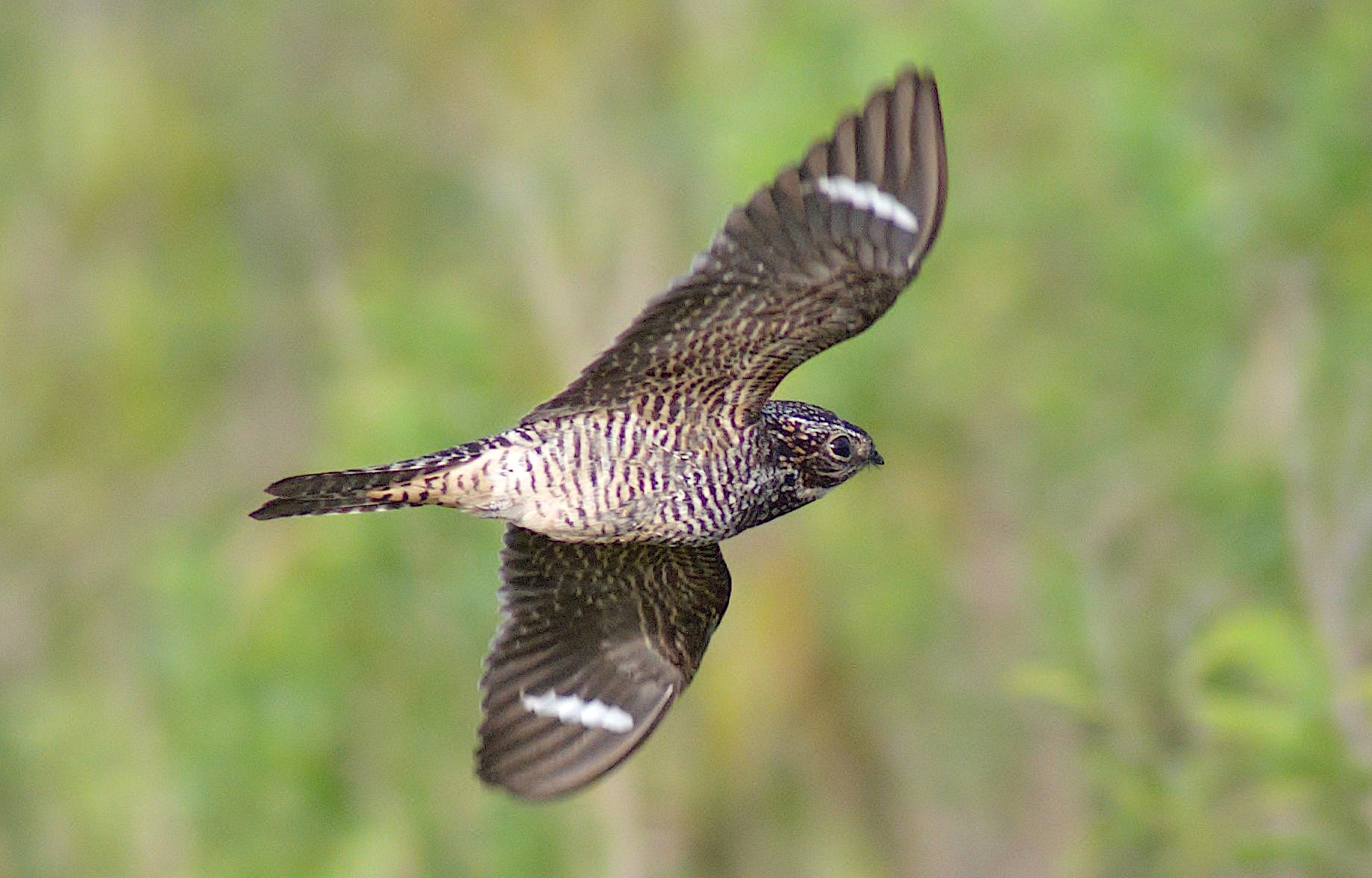
FAST FOOD ON THE WING . ANTILLEAN NIGHTHAWKS


Antillean Nighthawk, Abaco (Sandy Walker)

ANTILLEAN NIGHTHAWKS

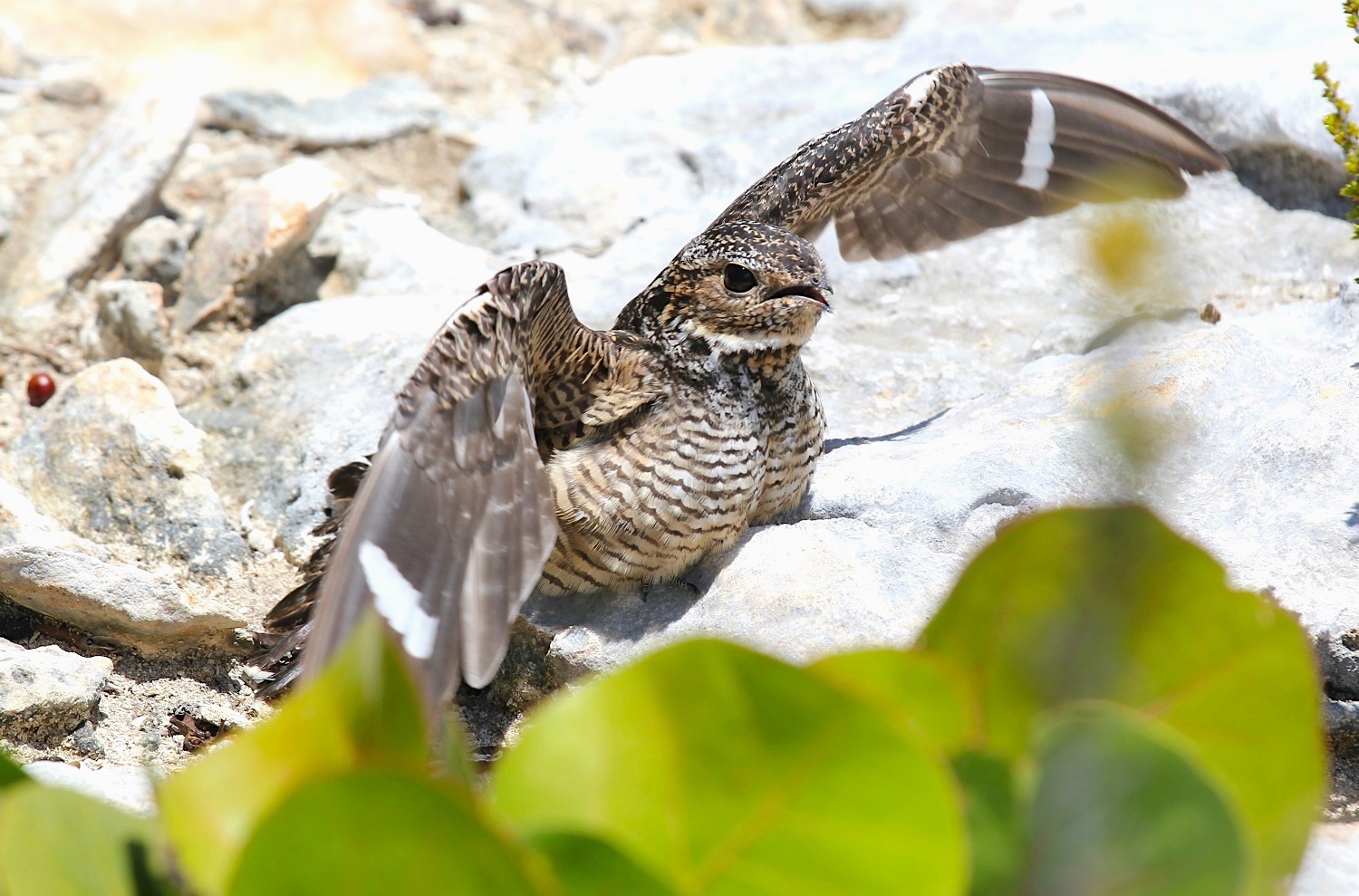
Some years ago we went ‘backcountry birding’ for Birds of Abaco with photographer Tom Sheley. We drove the truck through forest, then into (former) sugar cane territory, then into scrubland. Red-winged blackbirds were enthusiastic with their rusty gate-hinge calling. Soon after Tom had set up his tripod with its baffling and weighty apparatus, we were in the midst of dozens of nighthawks as they swooped and dived (dove?) while hawking for flies. “The birds were completely unperturbed by our presence, and from time to time would zoom past within inches of our heads, making a swooshing noise as they did so”. Thanks to Robin Helweg-Larsen for the  reminder that males may also make a distinctive ‘booming’ noise as they dive.  Antillean Nighthawk, Abaco (Stephen Connett) Nighthawks catch flying insects on the wing, and are capable of great speed and manoeuvrabilty in flight. They generally forage at dawn and dusk – or (more romantically) at night in a full moon.  Antillean Nighthawk (Stephen Connett) Besides aerial feeding displays, nighthawks may also be seen on the ground, where they nest. I say ‘nest’, but actually they hardy bother to make an actual nest, but just lay their eggs on bare ground. And, more riskily, this may well be out in the open rather than concealed. The eggs – usually 2 – hatch after 3 weeks or so, and after another 3 weeks the chicks fledge.   Antillean Nighthawk Egg (Stephen Connett)Antillean Nighthawk Egg (Stephen Connett) Fortunately their colouring enables them to blend in with the landscape – a good example of bird camouflage in natural surroundings. Antillean Nighthawk, Abaco (Bruce Hallett) Antillean Nighthawk Chordeiles gundlachii, is a species of nightjar. These birds have local names such as ‘killa-ka-dick’, ‘pi-di-mi-dix’, ‘pity-pat-pit’, or variations on the theme, presumably onomatopoeic. Pikadik-(dik) will do for me. See what you reckon from these recordings (excuse the thick-billed vireo – I think – in the background): Andrew Spencer / Xeno-Canto

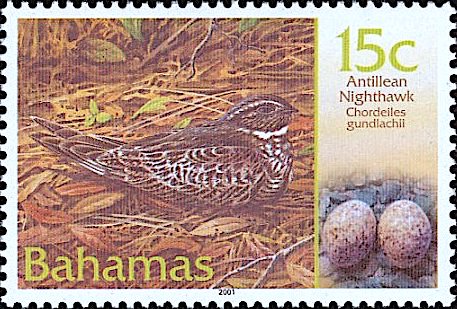
As so often, the Bahamas Philatelic Bureau leads the way with natural history stamps. The 15c Antillean Nighthawk above featured in a 2001 bird set. You can see dozens more very excellent Bahamas bird, butterfly, fish, flower and other wildlife stamps HERE.

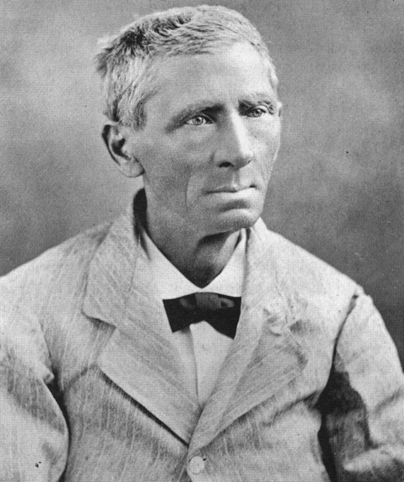
Find out about Juan Gundlach, Cuban Natural Historian (he of the Antillean Nighthawk and the Bahama Mockingbird for example) HERE Credits: Sandy Walker (1);  Stephen Connett (2, 3, 4, 5); Bruce Hallett (6); Andrew Spencer / Xeno-Canto (audio files); Audubon (7); Sibley / Audubon (8)
Unknown's avatar

BELLA MOTHS: COLOURFUL, POISONOUS & PROMISCUOUS


Day-flying_Bella_Moth_(Utetheisa_ornatrix) on Rattlebox Blossom (Bob Peterson, Florida)


BELLA MOTHS: COLOURFUL, POISONOUS & PROMISCUOUS

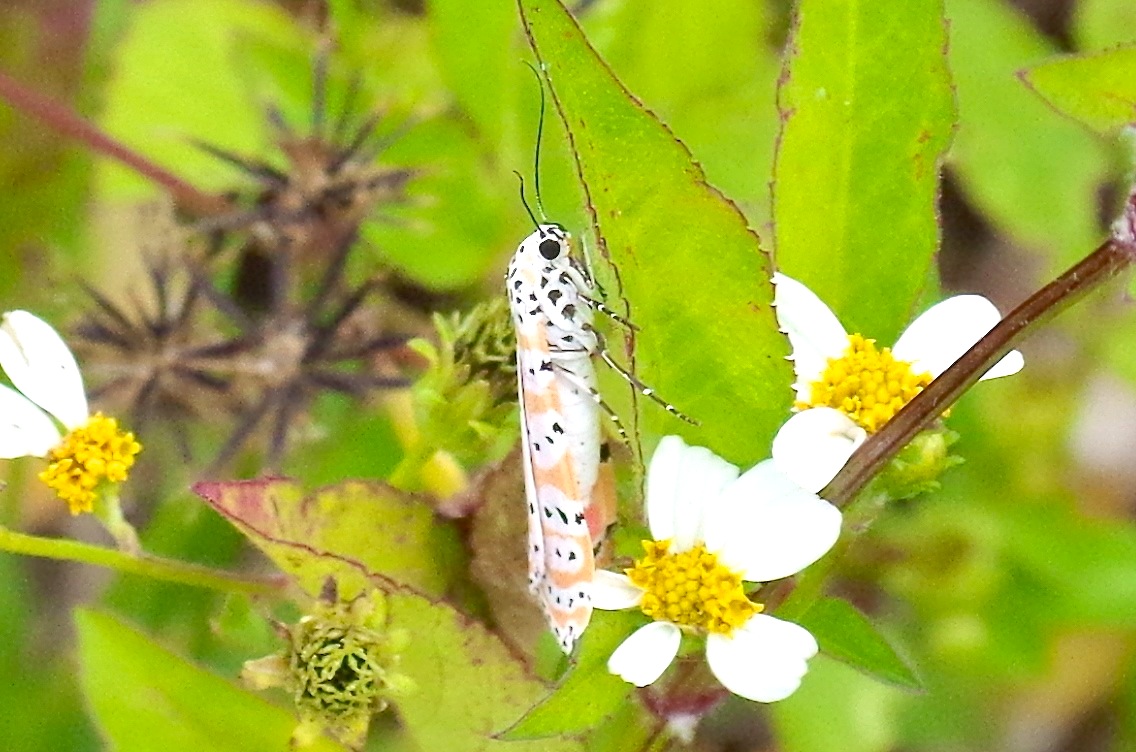
The BELLA MOTH Utetheisa ornatrix is also known as the ‘ornate moth’ or ‘rattlebox moth’ (a tall spiky plant of the species Crotalaria). The italianate ‘bella’ signifies beauty and all the many synonyms for it. These moths come in colours ranging from pink to red or orange, and yellow to white. Some have vivid coloration, others are less bright. Their black dot markings are broadly similar. Moths are often thought of as creatures of the night, so daytime would not be an auspicious time for moth-hunting, you might think. In fact there are many moth species that are active during the day (‘diurnal’), and the Bella Moth is one of them. 

Bella Moth, Neem Farm, Abaco (Keith Salvesen) 1

Bella Moth, Neem Farm, Abaco (Keith Salvesen) 2

DEFENSIVE WARNINGS

The bright coloration is (as in many species) nature’s way of saying ‘leave me alone’ and in particular, ‘I am very unpleasant to eat’. It is called APOSEMATISM.  The unpleasantness derives from toxins of the plants they feed on. This starts at the larval stage. The larvae feed on plants that contain poisonous alkaloids – in particular the yellow rattlebox plant. This renders them extremely unpalatable, both as larvae and as adults. Bella adults in need of an alkaloid boost may cannibalise moth eggs, pupae or larvae to counter a deficiency. 
Ornate_moth_(Utetheisa_ornatrix) Charles J Sharp wiki

BELLA MOTH SEX LIVES: ‘IT’S COMPLICATED’

  • Sexual encounters are dictated by females, who compete with other females for males
  • Females seeking to mate always outnumber available males
  • A female bella will release powerful pheromones at dusk to lure males
  • Related females uniquely engage in collective pheromone release
  • This is termed “female pheromonal chorusing”, an irresistible draw for the males
  • Several males will give the female chemical ‘nuptial gifts’ of both poison and sperm
  • The female chooses the best of her various suitors and copulates with 4 or 5 of them
  • The whole process of multiple copulation may take up to 12 hours
  • In some way I don’t understand, madam is able to select her preferred sperm provider
  • The sperm of the other males is rejected, and they go away dejectedly to the pollen pub
  • Humans: do not try any of this, whether at home, in the office, in public, or when driving

Utetheisa_ornatrix (Dumi, Jamaica)

Credits: Bob Peterson (1, 6); Keith Salvesen (2, 3); Charles J Sharp (4); open wings by Dumi (5)

Bella Moth (π Bob Peterson)
Unknown's avatar

“THE DIET OF WORMS”: WORM-EATING WARBLERS ON ABACO


worm-eating-warbler-bahama-palm-shores-abaco-bahamas-3-12-tom-sheley-small-copy

“THE DIET OF WORMS”: WORM-EATING WARBLERS ON ABACO

The little worm-eating warbler (Helmitheros vermivorum) is unique. Not because of its worm-eating propensities or its warbler-ishness (or the combination), but because it is the only species currently classified in the genus Helmitheros. The Swainson’s warbler was once in the same genus, but the WEWA saw off the competition.

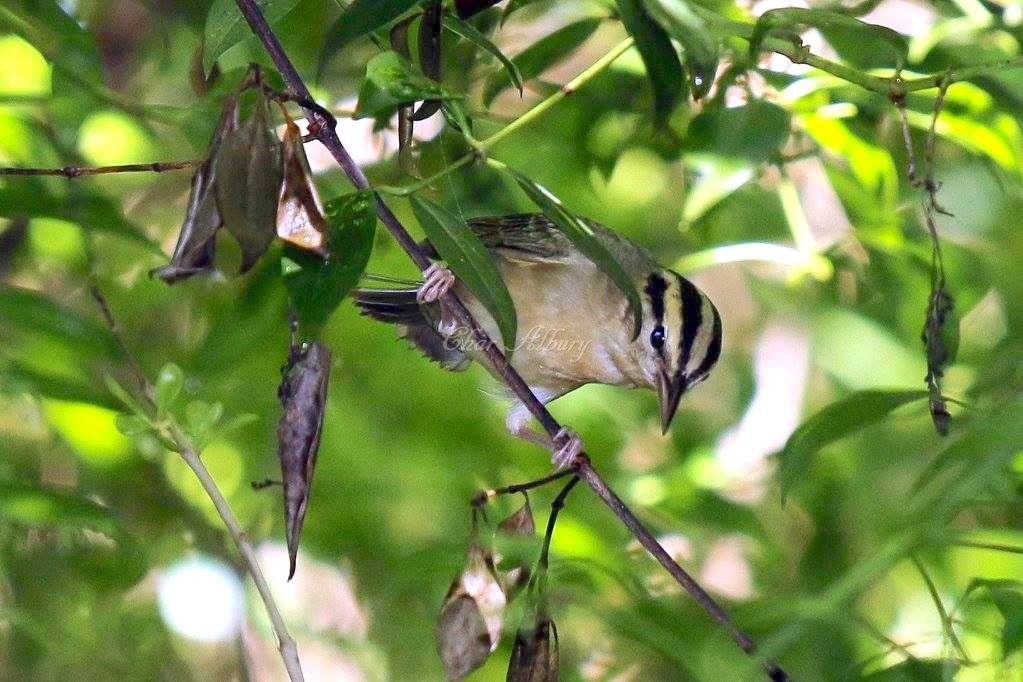
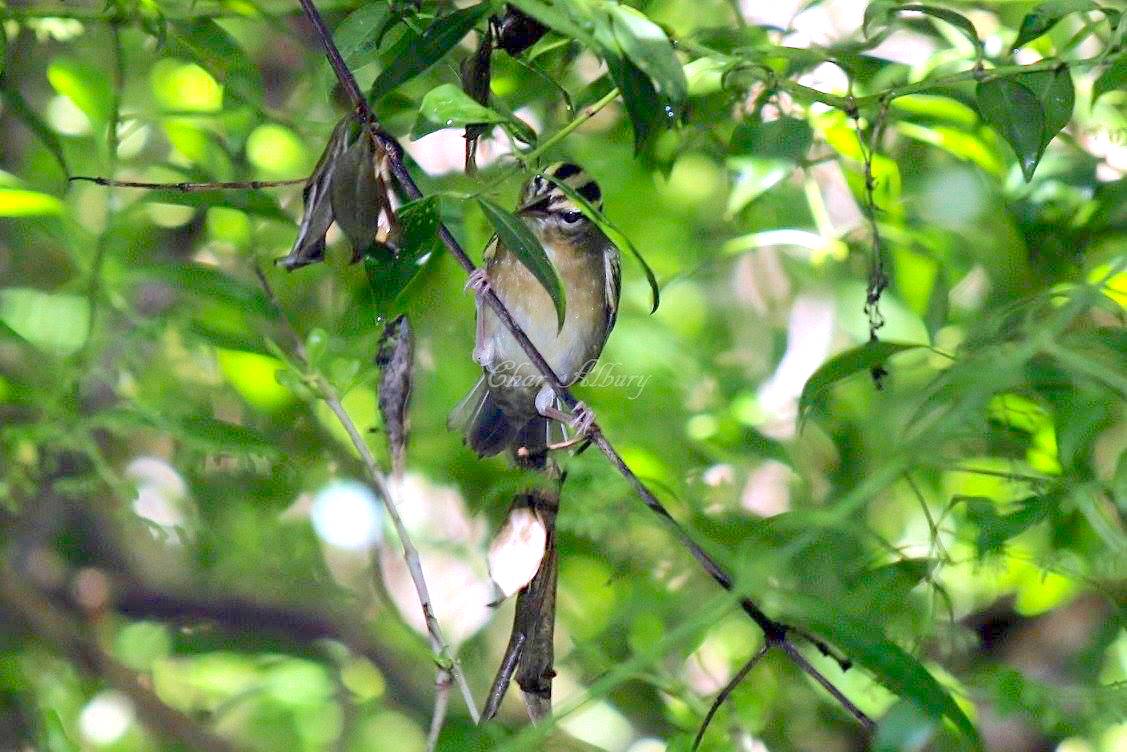
Worm-eating Warbler, Man-o-War Cay Abaco (Charmaine Albury)

SO WHAT IS A HELMITHEROS THEN, IF IT’S SO SPECIAL?

The word is Greek, meaning something like ‘grub-hunter’. And the Latin-derived vermivorum reflects the diet of a VERMIVORE – an eater of worms. But this description is, like a worm, somewhat elastic. It includes caterpillars, larvae, grubs, spiders and similar creatures. But whereas there are other warbler vermivores there is only one Helmitheros.

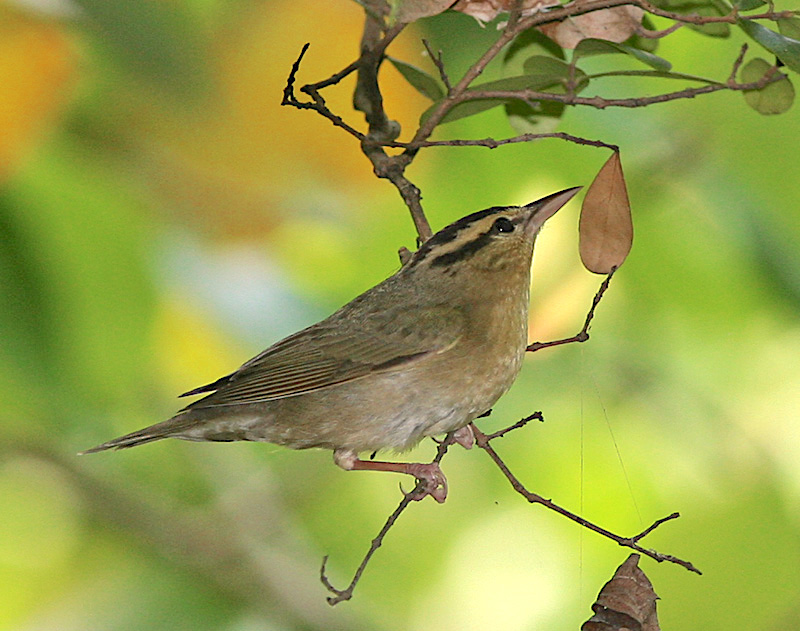
worm-eating_warbler_Andy Reago & Chrissy McClarren wiki

SOME WORM-EATING FACTS TO DIGEST

  • WEWAs are sexually monomorphic. Males & females are indistinguishable for most of the year
  • They can only be reliably sexed at the height of the breeding season…
  • …don’t ask. OK, a magnifying glass may be needed
  • They are believed to eat actual earthworms quite rarely. Moth larvae are their best treat
  • They are ground-nesting birds, one of only 5 new-world warblers to do this
  • Like some shore-birds, adults may feign injury to lure predators away from the nest
  • They are vulnerable to nest parasitism by brown-headed cowbirds & feral cats
  • Fires, deforestation, habitat change & diminished food resources are all threats to the species
  • As are pesticides, which destroy the primary food source and are in any case potentially toxic

Worm-eating Warbler, Man-o-War Cay Abaco (Charmaine Albury)

DISTRIBUTION & CONSERVATION STATUS

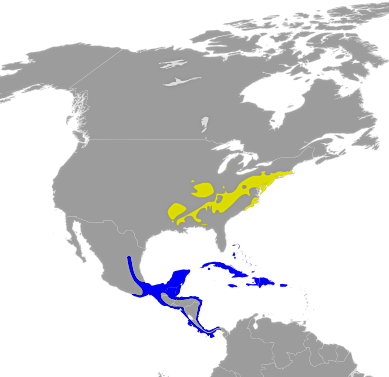
The breeding range of the worm-eating warbler covers much of the eastern half of the US as far south as the Gulf Coast. It winters in the West Indies, Central America and southeastern Mexico. There is no overlap between summer and winter habitat. Because of the vulnerability of this ground-nesting species to a number of threats (see FACTS above), they are now IUCN listed as ‘Special Concern’ in New Jersey.389px-helmitheros_vermivorum_map-svg

worm-eating_warbler-tom-friedel-birdphotos-com-wiki

WHAT DO THEY SOUND LIKE?

In this case the song and call, as transposed into human, really does sound like the bird itself. The song is a rapid squeaky trill; and the calls for once do actually sound like ‘chip’ or ‘tseet’. See what you think (turn up the volume a bit).

Paul Marvin / Xeno-Canto

14352552_10209292869212511_2005172973387868491_o

THE (ORIGINAL) DIET OF WORMS – A DIGRESSION

Studied European history? Had a laugh over The Diet of Worms in 1521? This was an assembly (or ‘Diet’) of the Holy Roman Empire that took place in the City of Worms in Germany. There had already been several of them. This one resulted in an edict concerning Martin Luther and protestant reformation, with the consequence that… [sorry, I’ll spare you the details. I’ve started yawning already, just as I did at school I expect] 

worm-eating_warbler

It is always instructive to look at Audubon’s fine depictions from the early c19. Here is his WEWA. Notice that it is here called Sylvia vermivora. So he had the worm-eating part, but the first part of the name – referencing woods –  rather strangely relates to a group of old-world warblers. No, I’ve no idea why.

worm_eating_warbler_audubon-copy

Credits: Photos – Tom Sheley (1); Charmaine Albury (2, 4, 6); Andy Reago & Chrissy McClarren (3, 7); Tom Friedel (5). Research material – CWFNJ / Michael J Davenport; Tom Fegely / The Morning Call; assorted magpie pickings & open source

Unknown's avatar

LOGGERHEAD KINGBIRD: LORD OF THE FLIES


Loggerhead Kingbird, Sandy Point, Abaco Bahamas (Keith Salvesen)

LOGGERHEAD KINGBIRD: LORD OF THE FLIES

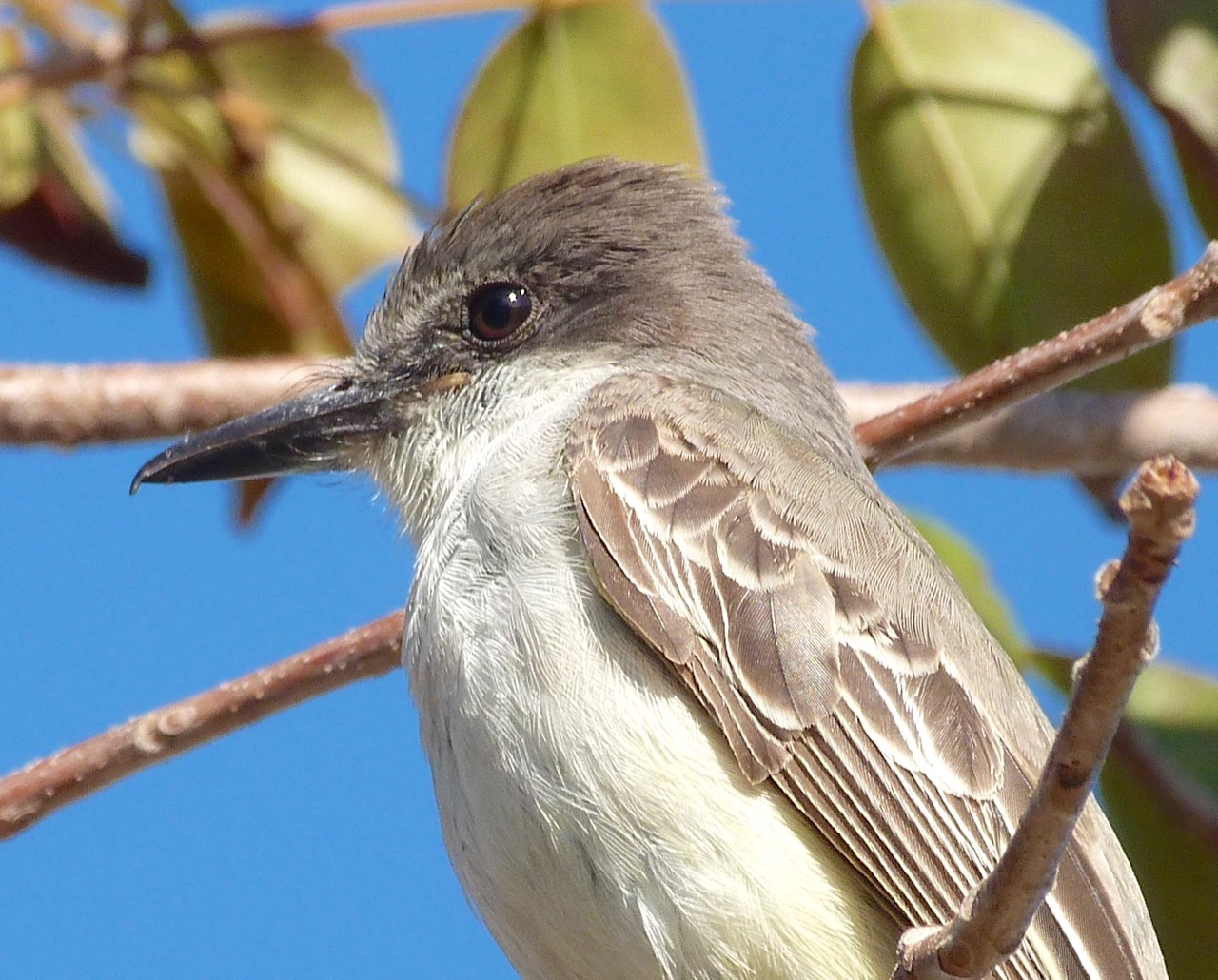
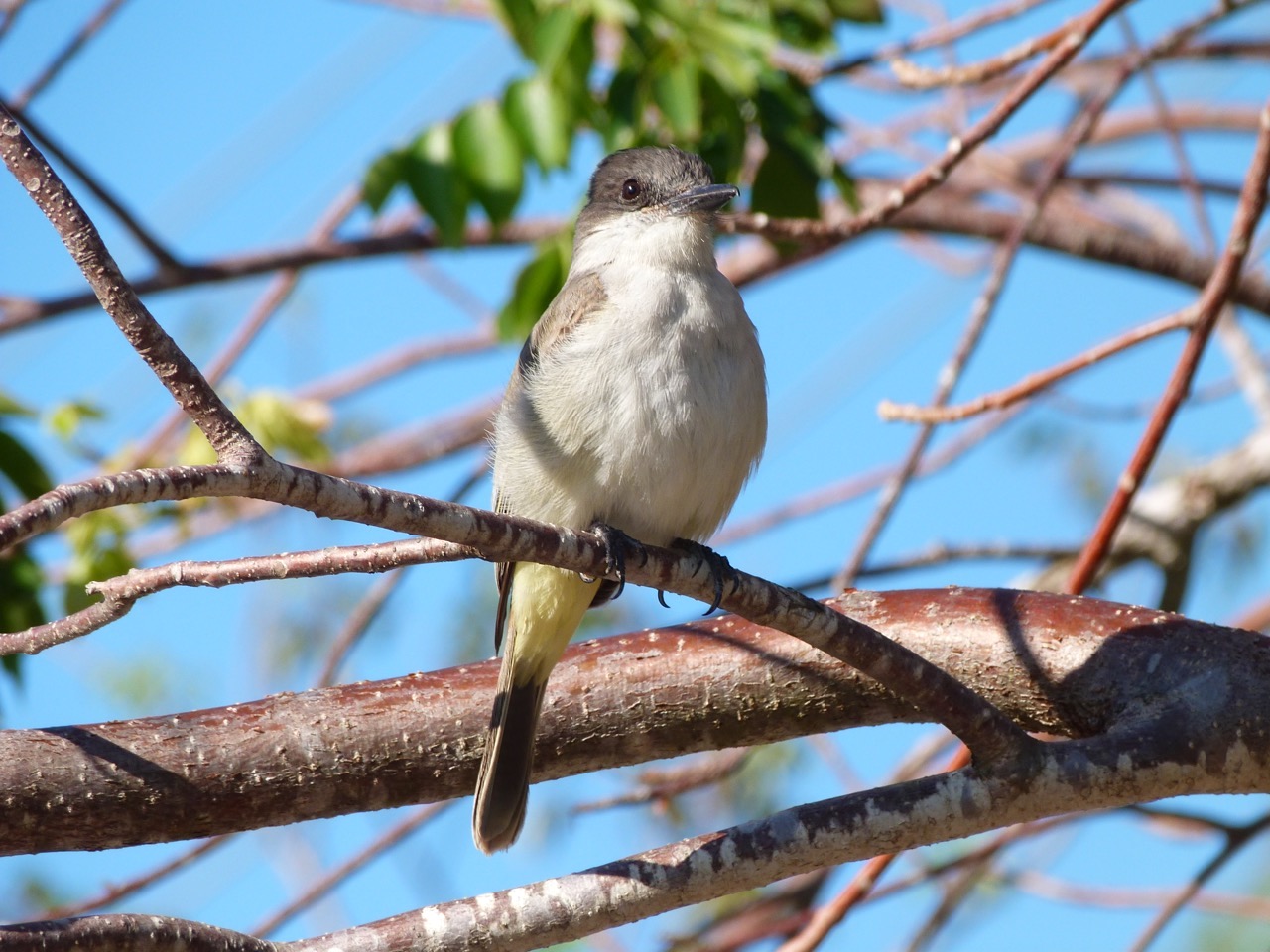
There are four main species of so-called ‘tyrant flycatchers’ (Tyrannidae) found on Abaco: the loggerhead kingbird, the gray kingbird, the La Sagra’s flycatcher and the Cuban pewee. Three are common permanent residents; the gray kingbird is a summer resident only. Several other flycatcher species are found on Abaco, but they are very uncommon winter residents, rare transients, or vagrants. 

Loggerhead Kingbird, Sandy Point, Abaco Bahamas (Keith Salvesen)

The loggerhead featured here became quite a good companion. Like other flycatchers – and indeed the cute little blue-gray gnatcatchers – loggerheads are curious and inquisitive birds, and relatively tame. One can get quite close without ruffling their feathers. 

Loggerhead Kingbird, Sandy Point, Abaco Bahamas (Keith Salvesen)

Loggerheads seem to have two methods of observing humans and their mysteries. One is by perching on a branch or in a shrub, watching intently. They stay quite still… until suddenly launching into the air to intercept some passing insect with their hooked beaks (so-called ‘hawking’), before returning to their perch. And staring at you again. The other method is to follow you round, either flying slightly ahead as you progress; or fluttering in the coppice alongside you; or playing catch-up from behind. 

Loggerhead Kingbird, Sandy Point, Abaco Bahamas (Keith Salvesen)

A typical quizzical loggerhead sideways look… all flycatchers do this

Loggerhead and gray kingbirds are similar in size, and can be quite easy to confuse. Top seasonal tip: because the grays are summer visitors only, it’s a fairly safe bet that any kingbirds seen between, say, October and April will be the resident loggerheads.

Loggerhead Kingbird, Sandy Point, Abaco Bahamas (Keith Salvesen)

MEMORABLE FACT TO DEPLOY IN CONVERSATION

The collective names for a group of kingbirds are: a Court, a Coronation, or (of course) a Tyranny

Loggerhead Kingbird, Sandy Point, Abaco Bahamas (Keith Salvesen)

Photo Credits: Keith Salvesen Abaco Bahamas; ‘Lordy’ the Loggerhead 

Unknown's avatar

ABACO PARROTS: THEIR STORY


Abaco Parrot Amazona lecocephala bahamensis

I put together this little booklet ages ago, a composition of photos, science-based material, and amateur text. We used to give them to interested guests at Delphi in exchange for a small wildlife-based contribution. In due course I put together this short video. Tech was quite limited then so the quality isn’t great. If you have 2 -3 minutes to spare, I hope it won’t seem to be time wasted.

Almost all the contents are as relevant now as then. Changes in the parrot population have been affected regularly by various weather events, from storms to Dorian. The numbers seemed to be on the up after the hurricane, with increasing sighting reports, I notice, but at the moment I don’t have the latest information on population recovery.

Booklet and Video: Keith Salvesen aka Rolling Harbour. Fine to share this if you like, maybe a credit if you feel like it.

Thanks in particular to Caroline Stahala and her dedicated parrot research project; Sandy Waker; all photographers; the parrots.

Abaco Parrot Amazona lecocephala bahamensis – Keith Salvesen

Unknown's avatar

FIERCE LITTLE FALCONS: MERLINS ON ABACO


Merlin, Abaco (Becky Marvil)FIERCE LITTLE FALCONS: MERLINS ON ABACO

Merlins (Falco columbarius) are fierce small falcons that are fast and agile in flight. On Abaco, they are fairly common winter residents – though finding one and managing to photograph it may take a bit of doing. And maybe a dose of luck. The ‘columbarius‘ part of their taxonomy reflects their colloquial name ‘Pigeon Hawk’. Merlins are found throughout much of the northern hemisphere. They are classified as a New World species and an Old World / Eurasian subspecies, F c aesalon. Some argue for two distinct species, the gene pools of the two versions apparently having parted company ten of thousands of years ago. The birds aren’t overly bothered by the debate.

Merlin World Range Map: yellow = summer, blue = winter220px-Falco_columbarius_distribution_map

HOW DO MERLINS DIFFER FROM AMERICAN KESTRELS (AMKE)?

  • Slightly larger and notably heavier (thus having more speed and endurance in flight)
  • Different colouring, e.g. lacking the indicative reddish-browns of the AMKE
  • Distinctive tail-barring as against black ends to the tail feathers with a white fringe
  • Unlike the AMKE they don’t hover, but close in directly on the small birds that are the main prey, often flying very low to surprise the victim.

For comparison: Merlin in  South Abaco, American kestrel at Sandy PointMerlin, Abaco (Rhonda Pearce)American Kestrel, Abaco (Keith Salvesen)

 SO JUST HOW FIERCE ARE MERLINS?

Formidable! If you are a small or even medium-sized bird, you need to keep your wits about you. Merlins are largely ‘omni-habitat’ within their range, which includes open country, shrubland, light forest, and grasslands. They are fast, agile and strong. They can fly high, at medium height or at ground level, and are expert in surprise attack and rapid pursuit of prey. If you are a large bird of prey – a red-tailed hawk, perhaps – they may attack you with ferocity. They may not actually be trying to nail you, but to get you out of their territory and their catchment area.

Merlin in flight, Abaco (Craig Nash)

Most of a merlin’s prey is taken in flight, and their speciality is ‘tail-chasing’ terrified birds. Breeding pairs may hunt cooperatively, with one bird flushing prey from cover into the open for its mate to… well, you get the picture – they are clever too. They may even pursue birds that have been flushed out by another bird of prey in the vicinity.

Merlin in flight, Abaco (Craig Nash)

MERLINS AND PHOTOGRAPHERS

This is a slightly fraught relationship, because Merlins do not always pose as one might wish. Sometimes they are hard to see, being fairly well camouflaged unless they choose to ‘go out on a limb’. Merlin, Abaco (Gerlinde Taurer)

And sometimes they don’t play by the rules relating to light and focus, making a clear shot difficult

Merlin, Abaco (Becky Marvil)

This photo (2017) was taken on Elbow Cay (north end) by Jan Purdy Hulme Metcalf‎. It’s the first merlin photo from one of the Cays that I have come across.

merlin-elbow cay-north end jan purdy hulme metcalf

FALCONRY AND MEDIEVAL HISTORY

IMG_6313

Merlins were popular birds in medieval English falconry, and according to the 1486 Boke of Seynt Albans, the ‘Marlyon’ was considered the appropriate hunting bird for a lady. This book contained an essay on hunting attributed to Dame Juliana Berners, the prioress of a Priory near St Albans, who, game lady that she must have been, also contributed to one of the earliest treatises on fishing, ‘Fysshynge wyth an Angle‘ (hence, angling).  

image

FURTHER HISTORICAL DIGRESSION (feel free to skip to final para)

While reading up further about Dame Juliana, I came across (wiki-tnx) a wonderful ranking for birds of prey matched to status that I hadn’t encountered before. Here’s the list, from Emperor to Knave / Servant. A Tercel was / is a male falcon, especially a Peregrine or Gyrfalcon. A Musket is a sparrowhawk. 

Falconry Table

The Boke of Seynt Albans also contains list of collective nouns for animals and birds, many familiar today such as “gaggle of geese”. There are also humorous collective nouns for different professions, such as a “diligence of messengers”, a “melody of harpers”, a “blast of hunters”, “a subtlety of sergeants”, and a “superfluity of nuns”…

Merlins are still trained for hunting smaller birds; and because of their speed and agility they are used in falconry displays. Despite changing habitat, and a perceptible dip in population from the use of pesticides now banned (such as DDT), the Merlin seems to be holding its own very well 5 centuries after the Boke was written.

Merlin & Prey - Just a Prairie Boy, Calgary

AND FINALLY… AUDUBON’S HANDSOME MERLINS

audubon-iii-scavengers-and-birds-of-prey-merlin-aka-le-petit-caporalaudubon-iii-scavengers-and-birds-of-prey-merlin-aka-pigeon-hawk

Credits: Becky Marvil (1 & 7); RH (2); Rhonda Pearce (3); Craig Nash (4 & 5); Gerlinde Taurer (6); Prairie Boy; (8) Jan Purdy Hulme Metcalf (2017 photo); (9) wiki – not taken on Abaco, but I liked it; Dame Juliana Berners (1486); Magpie Pickings