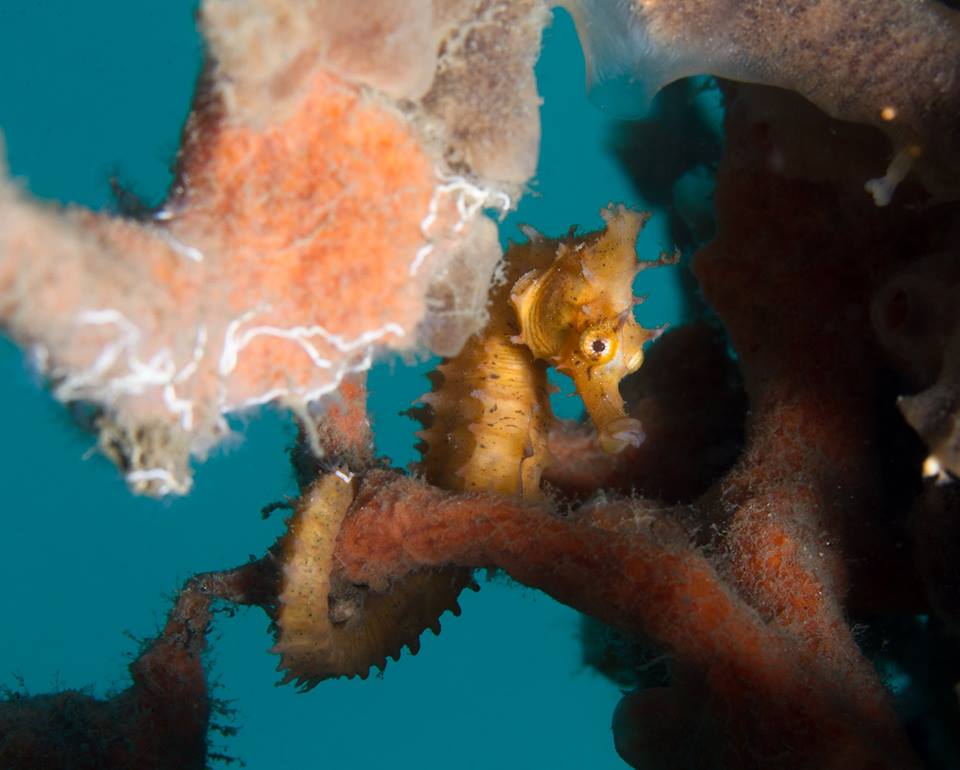
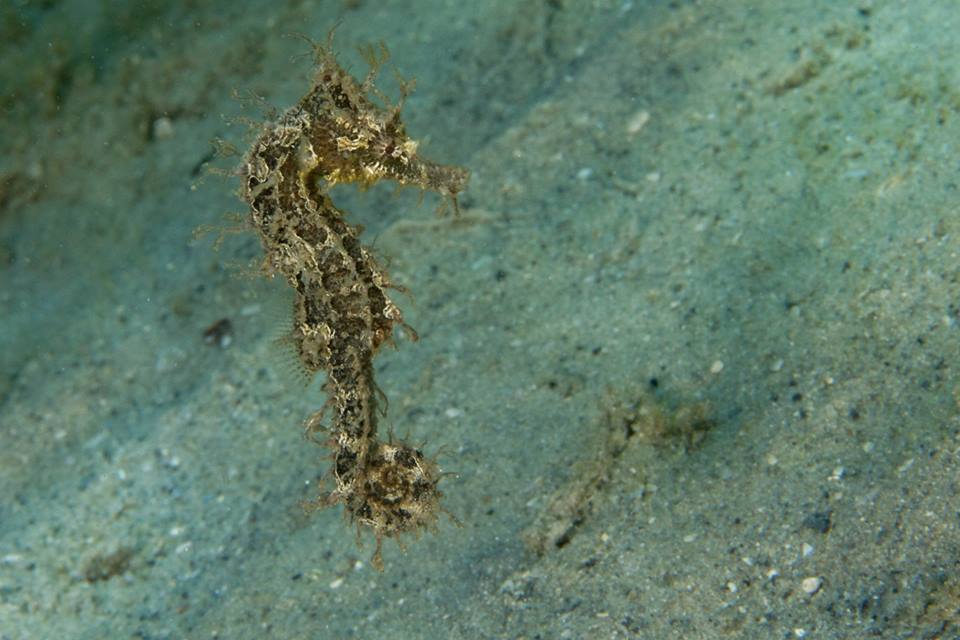
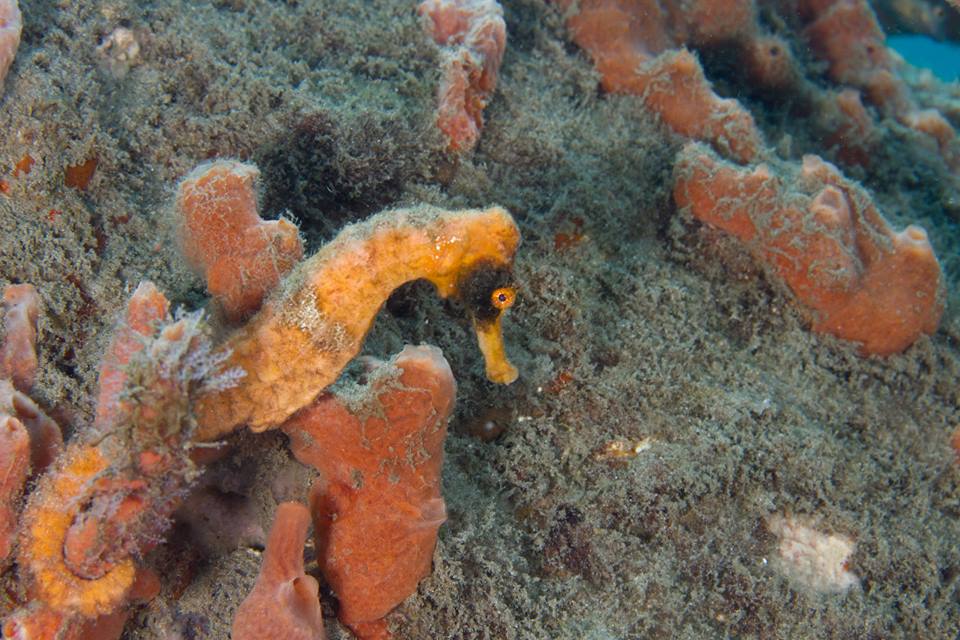
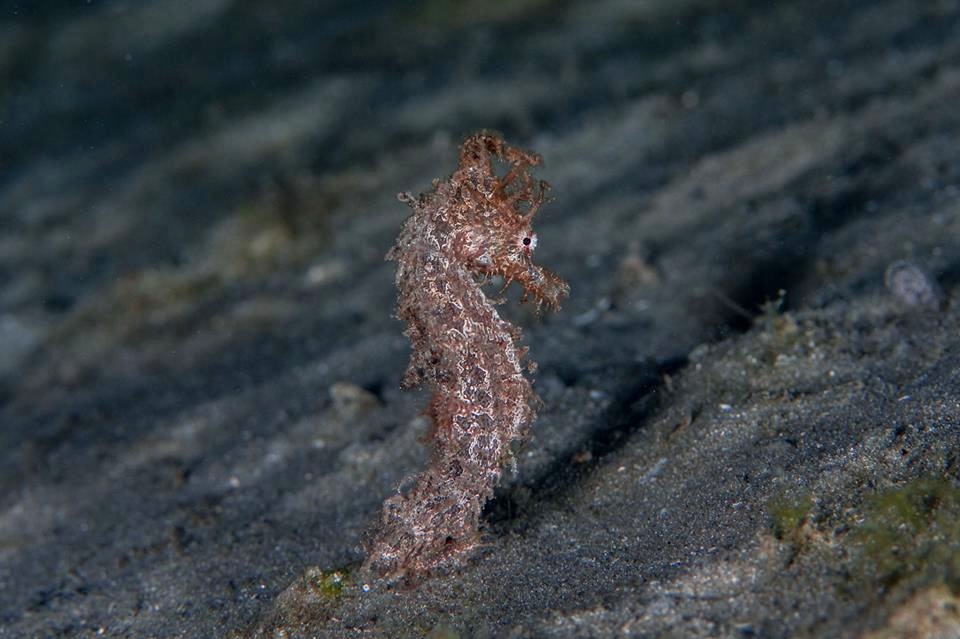
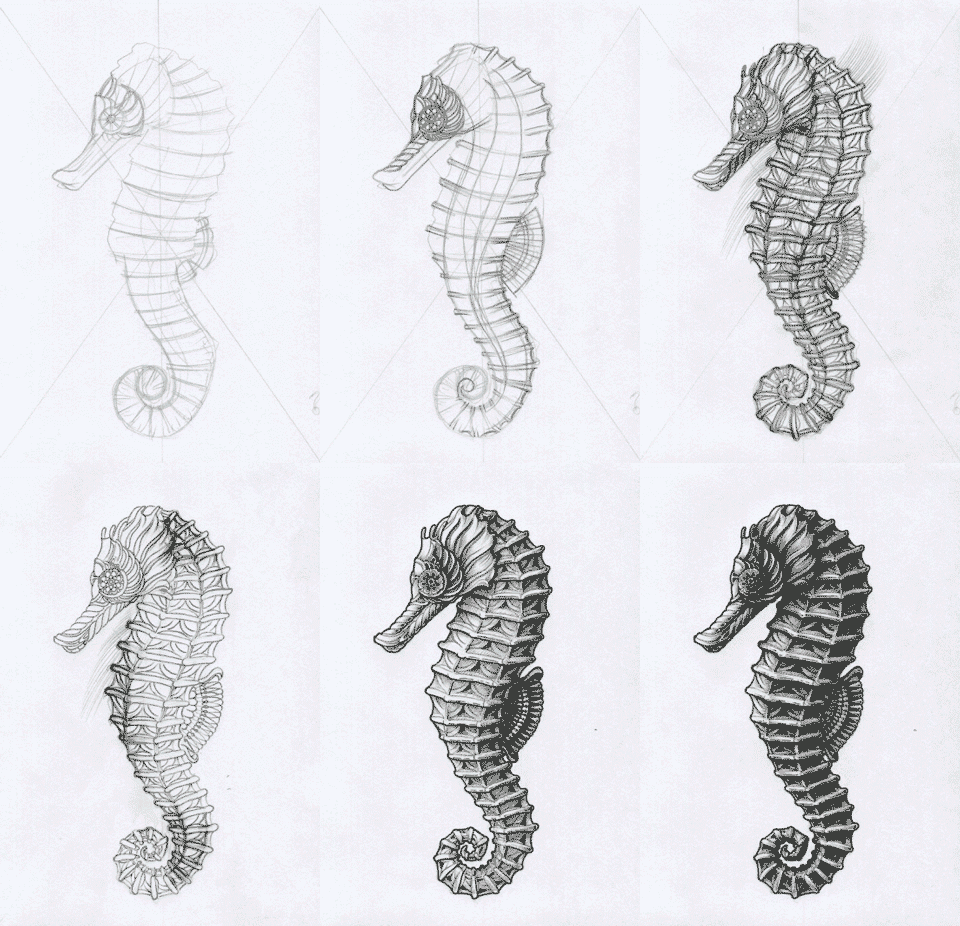
It’s been quite a while since I wrote about these astonishing little creatures. Adam Rees of SCUBA WORKS is a diver who combines great underwater experience with wonderful photographic skills. Here is a showcase for some of Adam’s seahorse photography and the amazing detail he captures. If these images don’t make you want to get your head underwater and explore the reefs, I can’t think what will…
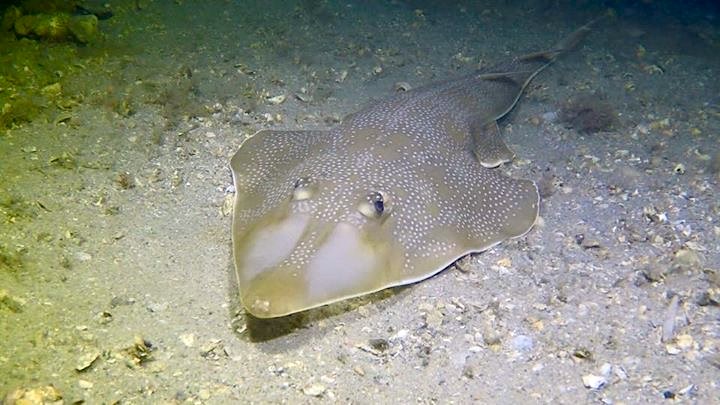
A spectacular entry in my WTF? series came courtesy of Adam Rees and a night dive in Florida waters: the guitarfish, (Gr: rhinos – nose; batis – ray) . Until I saw Adam’s photos, this creature was unknown to me. It sounded so improbable, and conjured up some nightmare piscine-based modification of a Stratocaster, an instrument whose classic looks should not be meddled with without consequent loss of liberty.
The guitarfish belongs to a family of rays, Rhinobatidae, of which there are many species worldwide. In some ways the fish looks like a crossover with a shark. Although they have a ‘ray face’ and small wings, there is also a sharklike appearance with its fins and a sharklike swimming action (see video, below). If you think there is a primitive or prehistoric look to the guitarfish, you’d be right. According to the temporal range chart they date from the late Jurassic era.
I have been trying to nail the exact model of Adam’s finny Strat-ray. I am putting my money on the Atlantic guitarfish Rhinobatos lentiginosus, which may (or may not) be the same as the spotted or freckled; and is similar to the more widely photographed shovelnose guitarfish with its cute face. Not that I am very bothered: it’s the overall unusualness of Adam’s creature that really counts.
The strange thing is that although the guitarfish is a denizen of, for example, floridian, caribbean and mexican gulf waters, it is said to be unrecorded for the Bahamas. These bottom-feeding creatures inhabit shallower waters near coastlines and estuaries. They eat crabs, shellfish and worms – all in plentiful supply in Bahamas waters – so I can’t see a reason why they should not be found there. Perhaps they are seen but unreported. I have in mind the recent reports of SAWFISH and BATFISH. So kudos awaits the person who reports – with photo – the ‘first’ Bahamas guitarfish. Maybe there’s scope for a song about it!
GUITARFISH ‘LIVE’
Usually caught by mistake by anglers, or as bycatch by fishing vessels
Inedible (unless someone knows better…)
Non-aggressive and harmless to humans despite having a mouthful of small teeth
Swims like a shark – the tail has no spinal structure
Has a cute face (unlike a a shark)
Adults are about 30 inches long
They may bury themselves in sand or mud to ambush prey
They are viviparous, giving birth to live young that are born fully developed
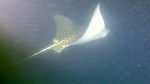
As a postscript, it’s worth mentioning that on the same night dive, Adam also came across the uncommon batfish, a seriously prickly-looking starfish, and a spotted eagle ray. Worth losing sleep for.
..
A similar kind of guitarfish, showing the very sharklike movements in the water
Credits: Adam Rees, with many thanks; Greg Hume; Johan Fredriksson wiki; magpie pickings, in particular Florida Museum of Natural History / Taylor Sullivan and the truthful parts of various Wiki articles
A spectacular entry in my WTF? series came courtesy of Adam Rees and a night dive in Florida waters: the guitarfish, (Gr: rhinos – nose; batis – ray) . Until I saw Adam’s photos, this creature was unknown to me. It sounded so improbable, and conjured up some nightmare piscine-based modification of a Strat, an instrument whose classic looks should not be meddled with without consequent loss of liberty.
The guitarfish belongs to a family of rays, Rhinobatidae, of which there are many species worldwide. In some ways the fish looks like a crossover with a shark. Although they have a ‘ray face’ and small wings, there is also a sharklike appearance with its fins and a sharklike swimming action (see video, below). If you think there is a primitive or prehistoric look to the guitarfish, you’d be right. According to the temporal range chart they date from the late Jurassic era.
I have been trying to nail the exact model of Adam’s finny Strat-ray. I am putting my money on the Atlantic guitarfish Rhinobatos lentiginosus, which may (or may not) be the same as the spotted or freckled; and is similar to the more widely photographed shovelnose guitarfish with its cute face. Not that I am very bothered: it’s the overall unusualness of Adam’s creature that really counts.
The strange thing is that although the guitarfish is a denizen of, for example, floridian, caribbean and mexican gulf waters, it is said to be unrecorded for the Bahamas. These bottom-feeding creatures inhabit shallower waters near coastlines and estuaries. They eat crabs, shellfish and worms – all in plentiful supply in Bahamas waters – so I can’t see a reason why they should not be found there. Perhaps they are seen but unreported. I have in mind the recent reports of SAWFISH and BATFISH. So kudos awaits the person who reports – with photo – the ‘first’ Bahamas guitarfish. Maybe there’s scope for a song about it!
GUITARFISH ‘LIVE’
Usually caught by mistake by anglers, or as bycatch by fishing vessels
Inedible (unless someone knows better…)
Non-aggressive and harmless to humans despite having a mouthful of small teeth
Swims like a shark – the tail has no spinal structure
Has a cute face (unlike a a shark)
Adults are about 30 inches long
They may bury themselves in sand or mud to ambush prey
They are viviparous, giving birth to live young that are born fully developed
As a postscript, it’s worth mentioning that on the same night dive, Adam also came across the uncommon batfish, a seriously prickly-looking starfish, and a spotted eagle ray. Worth losing sleep for.
. .
A similar kind of guitarfish, showing the very sharklike movements in the water
Credits: Adam Rees, with many thanks; Greg Hume; Johan Fredriksson wiki; magpie pickings, in particular Florida Museum of Natural History / Taylor Sullivan and the truthful parts of various Wiki articles
It’s a while since I showcased these astonishing little creatures. Adam Rees of SCUBA WORKS is a diver who combines great underwater experience with wonderful photographic skills. Here is a showcase for some of Adam’s seahorse photography and the amazing detail he captures. If these images don’t make you want to get your head underwater and explore the reefs, I can’t think what will…
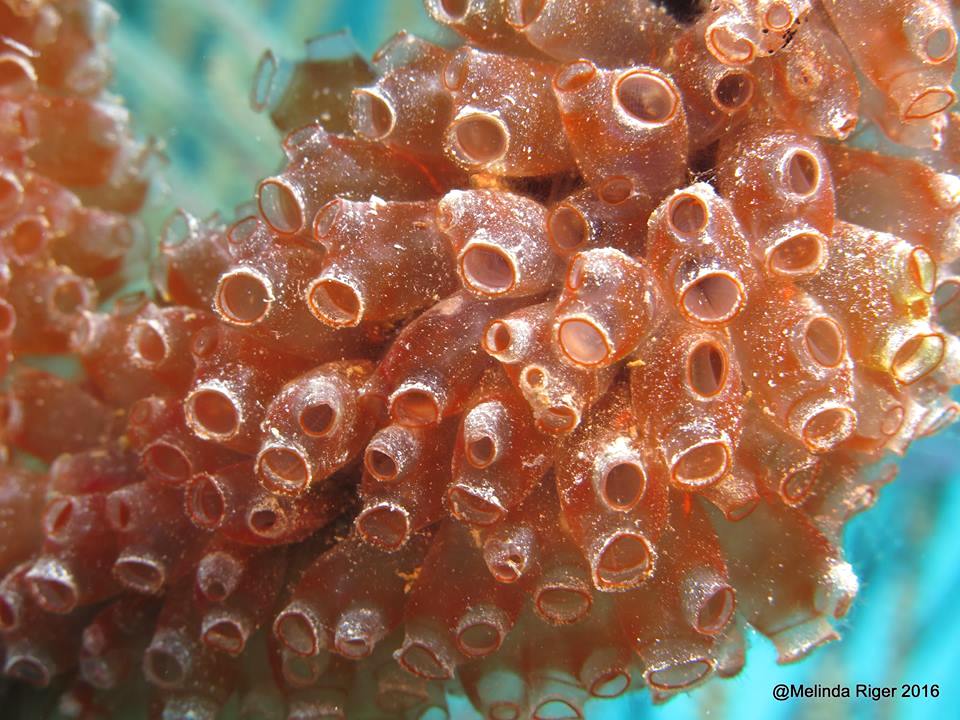
Painted Tunicates Clavina picta are one of several species of tunicate ‘sea-squirts’ found in Bahamas and Caribbean waters. These creatures with their translucent bodies are usually found clustered together, sometimes in very large groups. One reason for this is that they are ‘sessile’, unable to move from where they have taken root on the coral.
HOW DO THEY FEED?
Like most if not all sea squirts, tunicates are filter feeders. Their structure is simple, and enables them to draw water into their body cavity. In fact they have 2 openings, an ‘oral siphon’ to suck in water; and an exit called the ‘atrial siphon’. Tiny particles of food (e.g. plankton) are separated internally from the water by means of a tiny organ (‘branchial basket’) like a sieve. The water is then expelled.
WHAT DOES ‘TUNICATE’ MEAN?
The creatures have a flexible protective covering referred to as a ‘tunic’. ‘Coveringcates’ didn’t really work as a name, so the tunic aspect became the name.
IF THEY CAN’T MOVE, HOW DO THEY… (erm…) REPRODUCE?
Tunicates are broadly speaking asexual. Once a colony has become attached to corals or sponges, they are able to ‘bud’, ie to produce clones to join the colony. These are like tiny tadpoles and their first task is to settle and attach themselves to something suitable – for life – using a sticky secretion. Apparently they do this head first, then in effect turn themselves upside down as they develop the internal bits and pieces they need for adult life. The colony grows because (*speculation alert*) the most obvious place for the ‘tadpoles’ to take root is presumably in the immediate area they were formed.
APART FROM BEING STATIONARY & ASEXUAL, ANY OTHER ATTRIBUTES?
Some types of tunicate contain particular chemicals that are related to those used to combat some forms of cancer and a number of viruses. So they have a potential use in medical treatments, in particular in helping to repair tissue damage.
Credits: all fabulous close-up shots by Melinda Riger / Grand Bahama Scuba; diagram from depts.washington.edu; magpie pickings with a particular mention of an article by Sara MacSorley
Painted Tunicates Clavina picta are one of several species of tunicate ‘sea-squirts’ found in Bahamas and Caribbean waters. These creatures with their translucent bodies are usually found clustered together, sometimes in very large groups. One reason for this is that they are ‘sessile’, unable to move from where they have taken root on the coral.
HOW DO THEY FEED?
Like most if not all sea squirts, tunicates are filter feeders. Their structure is simple, and enables them to draw water into their body cavity. In fact they have 2 openings, an ‘oral siphon’ to suck in water; and an exit called the ‘atrial siphon’. Tiny particles of food (e.g. plankton) are separated internally from the water by means of a tiny organ (‘branchial basket’) like a sieve. The water is then expelled.
WHAT DOES ‘TUNICATE’ MEAN?
The creatures have a flexible protective covering referred to as a ‘tunic’. ‘Coveringcates’ didn’t really work as a name, so the tunic aspect became the name.
IF THEY CAN’T MOVE, HOW DO THEY… (erm…) REPRODUCE?
Tunicates are broadly speaking asexual. Once a colony has become attached to corals or sponges, they are able to ‘bud’, ie to produce clones to join the colony. These are like tiny tadpoles and their first task is to settle and attach themselves to something suitable – for life – using a sticky secretion. Apparently they do this head first, then in effect turn themselves upside down as they develop the internal bits and pieces they need for adult life. The colony grows because (*speculation alert*) the most obvious place for the ‘tadpoles’ to take root is presumably in the immediate area they were formed.
APART FROM BEING STATIONARY & ASEXUAL, ANY OTHER ATTRIBUTES?
Some types of tunicate contain particular chemicals that are related to those used to combat some forms of cancer and a number of viruses. So they have a potential use in medical treatments, in particular in helping to repair tissue damage.
Credits: all fabulous close-up shots by Melinda Riger / Grand Bahama Scuba; diagram from depts.washington.edu; magpie pickings with a particular mention of an article by Sara MacSorley
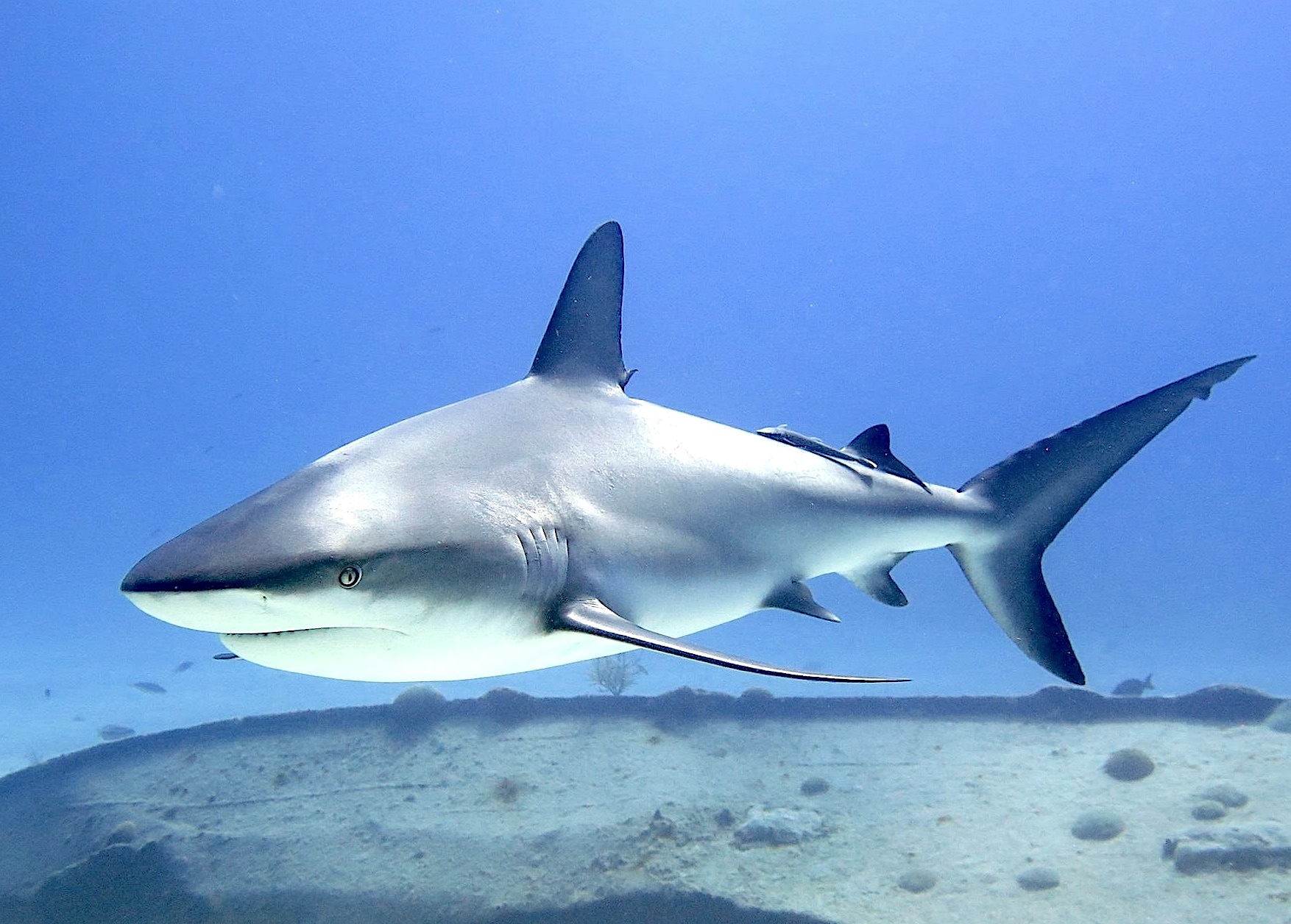
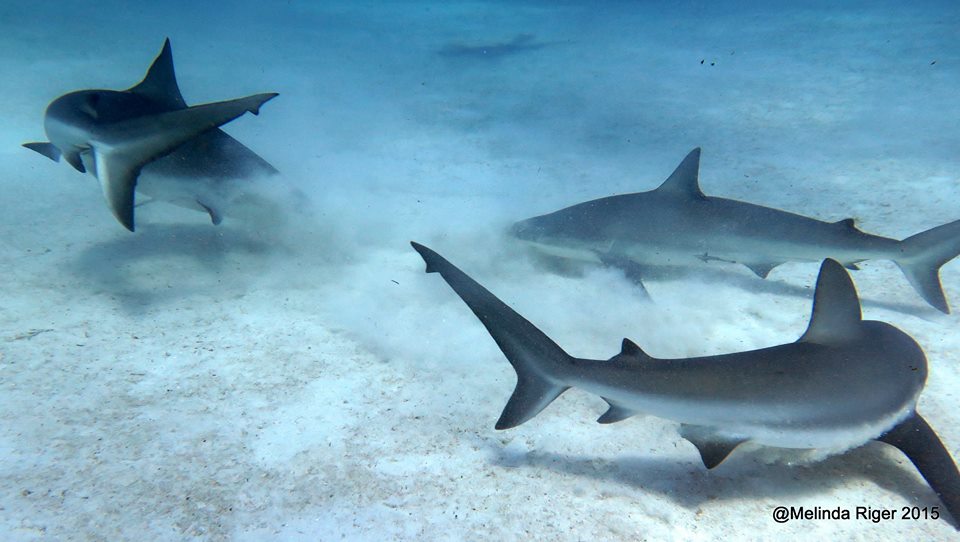
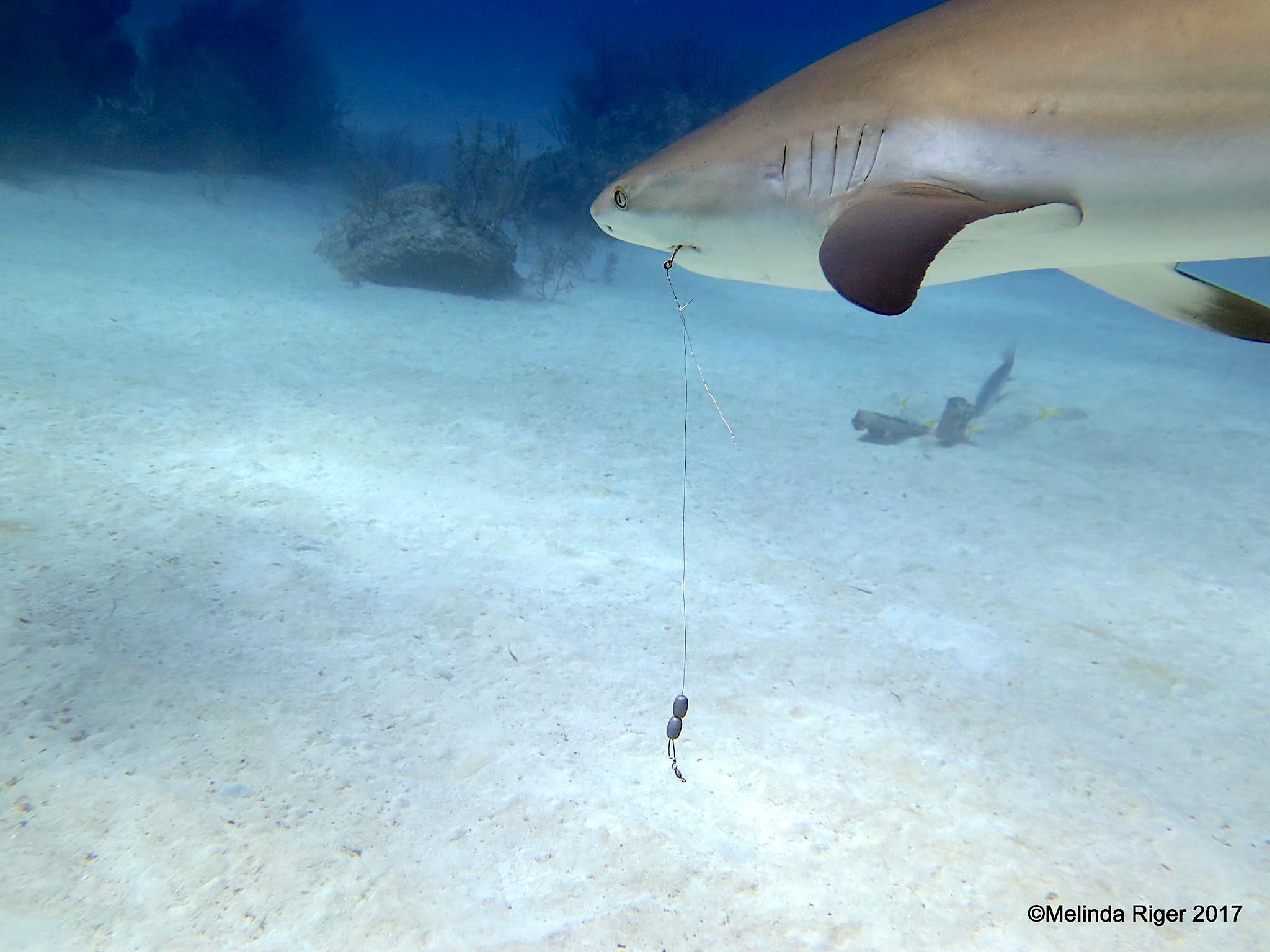
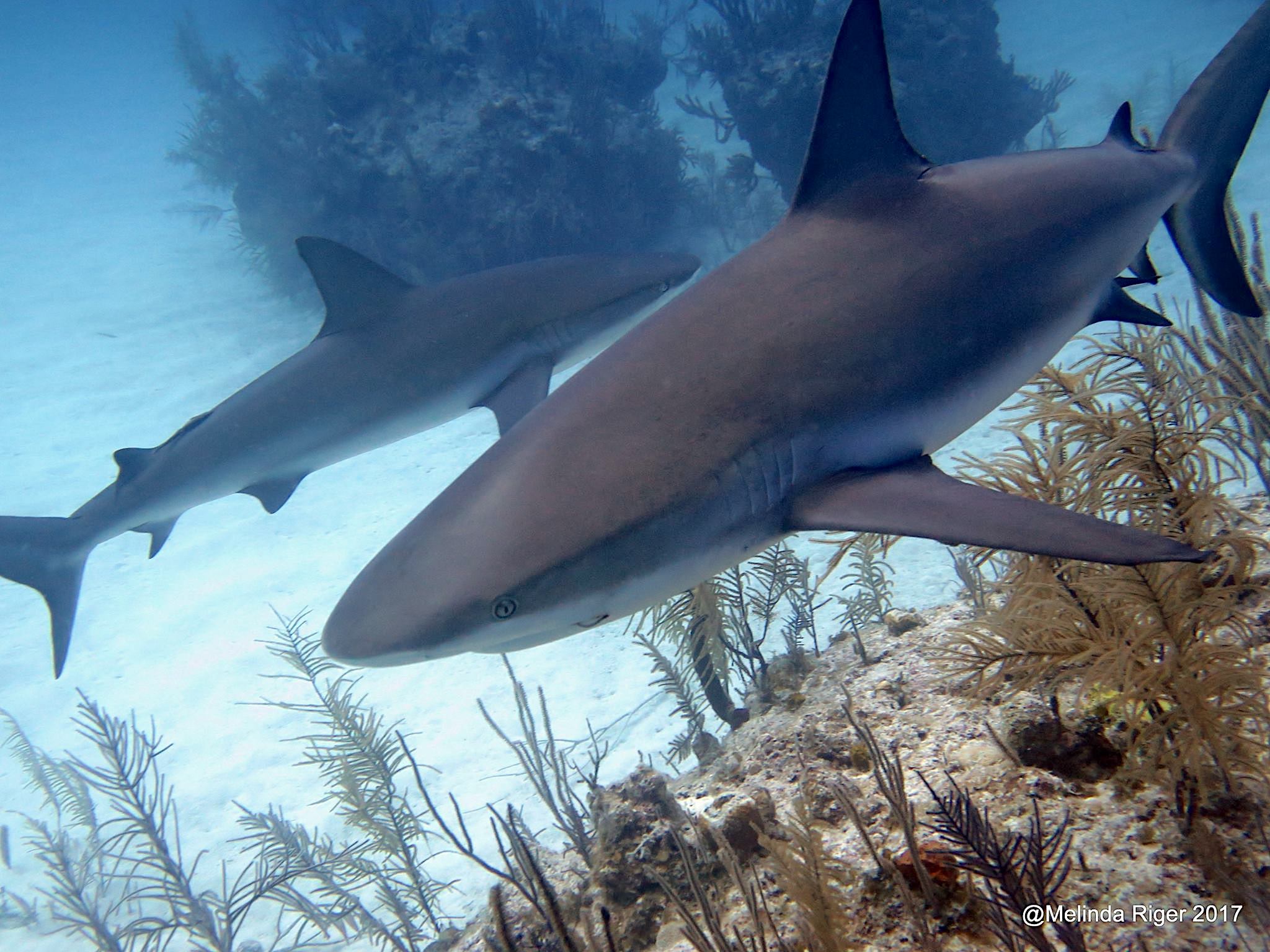
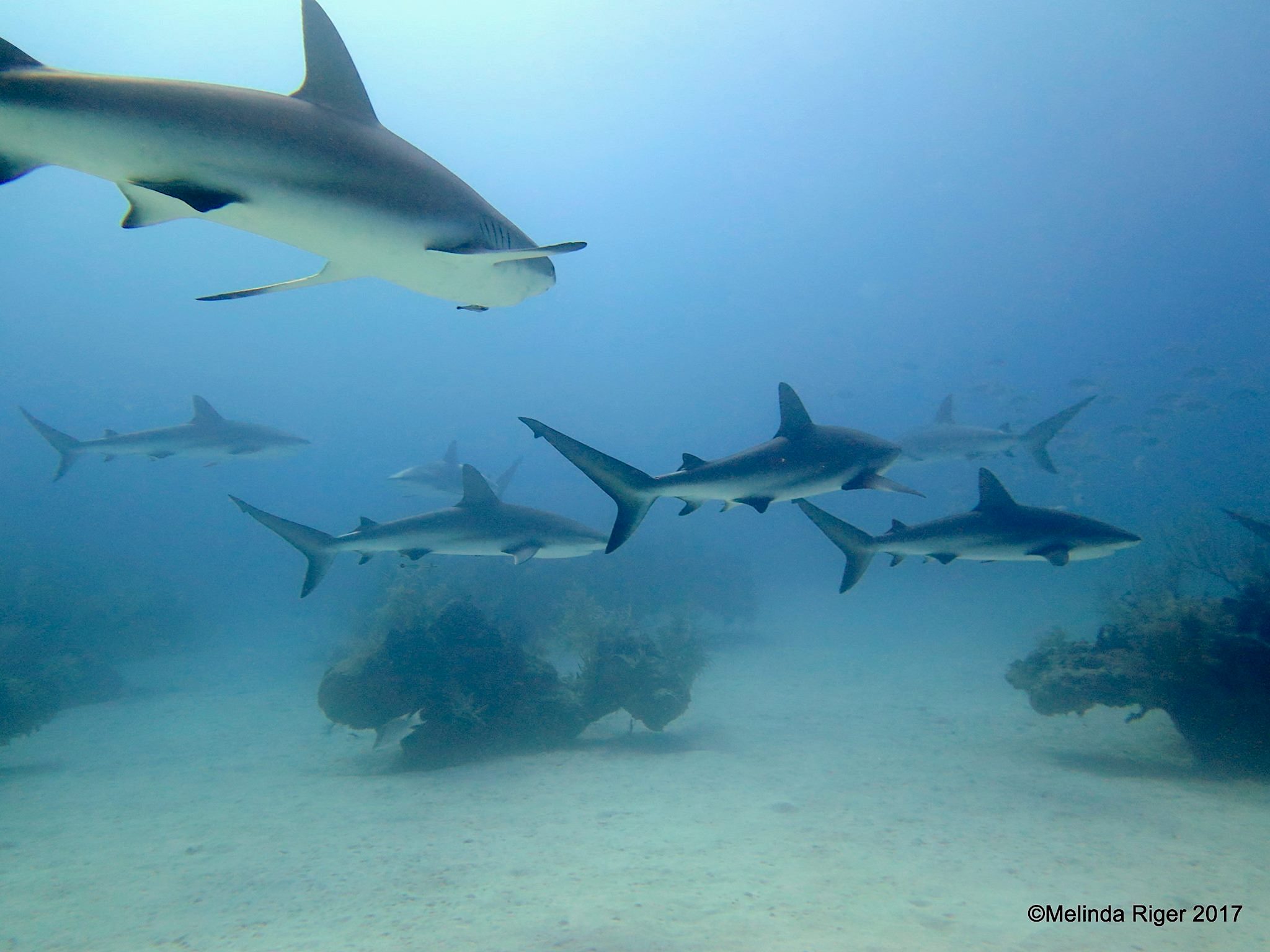
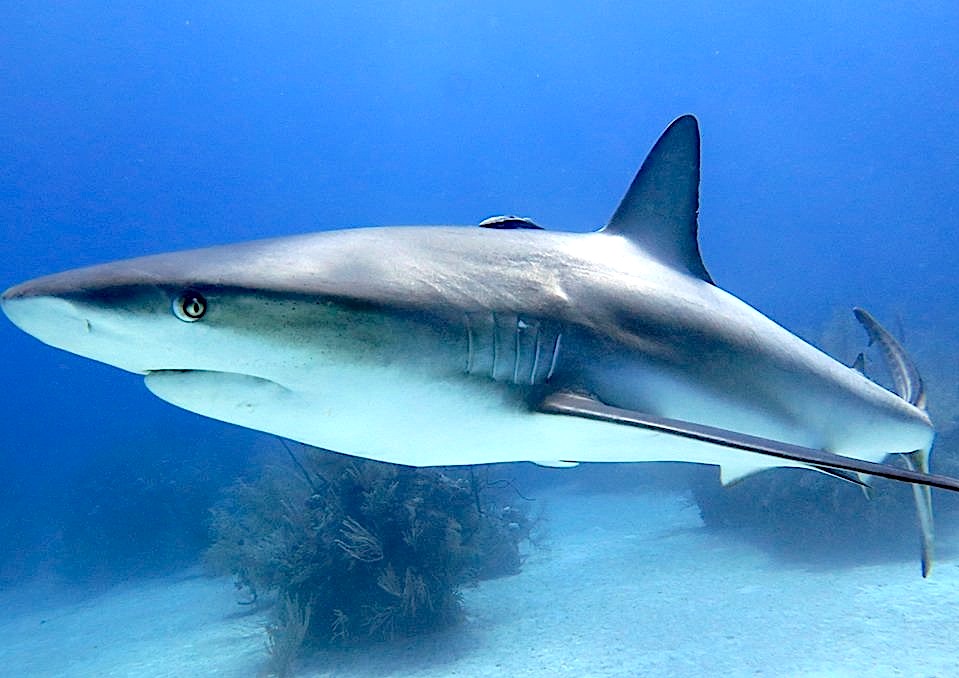
Immersion in current affairs these days brings inevitable acquaintance with sharks of various kinds, and all best avoided. Let’s have a look the real thing, the apex marine predators that in the Bahamas are all around you once you leave the safety of the shore. I haven’t featured them for ages, and it’s always a pleasure – a slight thrill, even.
I don’t do scuba, indeed my swimming would easily be outclassed by a competent four-year old. But I see these creatures when I’m out fishing; or as they hang in the breaking waves off the Delphi beach, watching intently for a meal.
We watch them (and stingrays) from the balcony as they lazily make their way round the margins of the wide bay, from little ‘uns to (recently) a huge bull shark. We watch as, when someone is in the water, they change course slightly to pass by them. So far, anyway…
Feeding sharks
The one that got away… (a sad sight)
I once took a rather primitive underwater camera with me while snorkelling in Fowl Cays National Park. This was several years ago, when I believed a cheap 2mb camera might turn me into one of the Blue Planet team. I was wrong. The shark I saw, apparently some 20 miles away (when I examined the image) – well, that’s its tail, top left…
Just to look at these images is to understand that when you are in the sea, you are in the sharks’ environment. They are the masters of it. They have their rules, and they are not much interested in you… unless you break them. Or so the theory goes.
This fine shark below exemplifies the power and the menace of the shark. A creature to be admired, but also to be respected.
All fantastic photos: Melinda Riger / Grand Bahama Scuba
This pair was in a group of 8 Atlantic Spotted Dolphins that we encountered yesterday during a day’s expedition on the Bahamas Marine Mammal Research Organisation (BMMRO) research boat. We spent nearly an hour with them, and there will be a longer post about these magnificent creatures in due course. But right now, I’m still in single image posting mode while “on-island”…
It’s a year since I last posted about these amazing little creatures, seahorses. I featured a number of photos by Melinda Riger, a couple of videos, some useful facts about them, and for some reason some useless facts that I came across in researching the post. You can chase it down here: SEAHORSES 1
Adam Rees of SCUBA WORKS is another diver, like Melinda, who combines great underwater experience with wonderful photographic skills. This posts showcases some of Adam’s seahorse photography, and if it doesn’t want to make you explore the reefs, I can’t think what will…
Seahorse Range Map
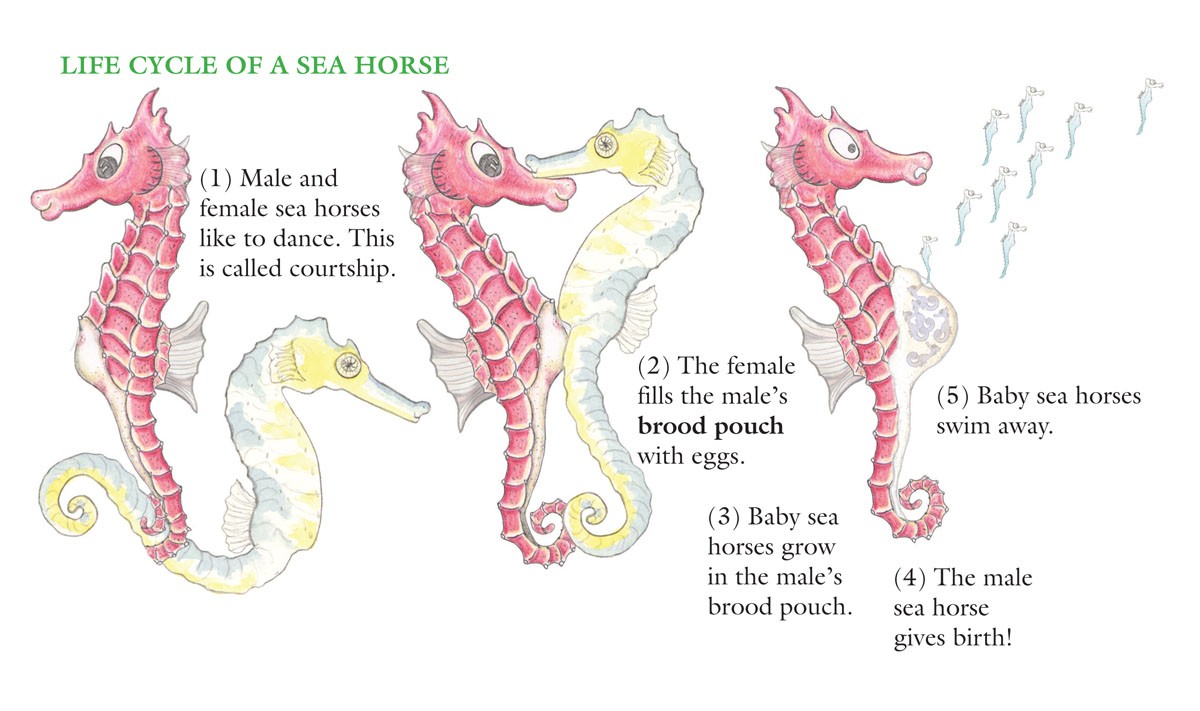
All phantastic photos: Adam Rees / Scuba Works; Range Map, Nat Geo; Lifecycle diagram, Seahorserun; Seahorse GIF, Alex Konahin
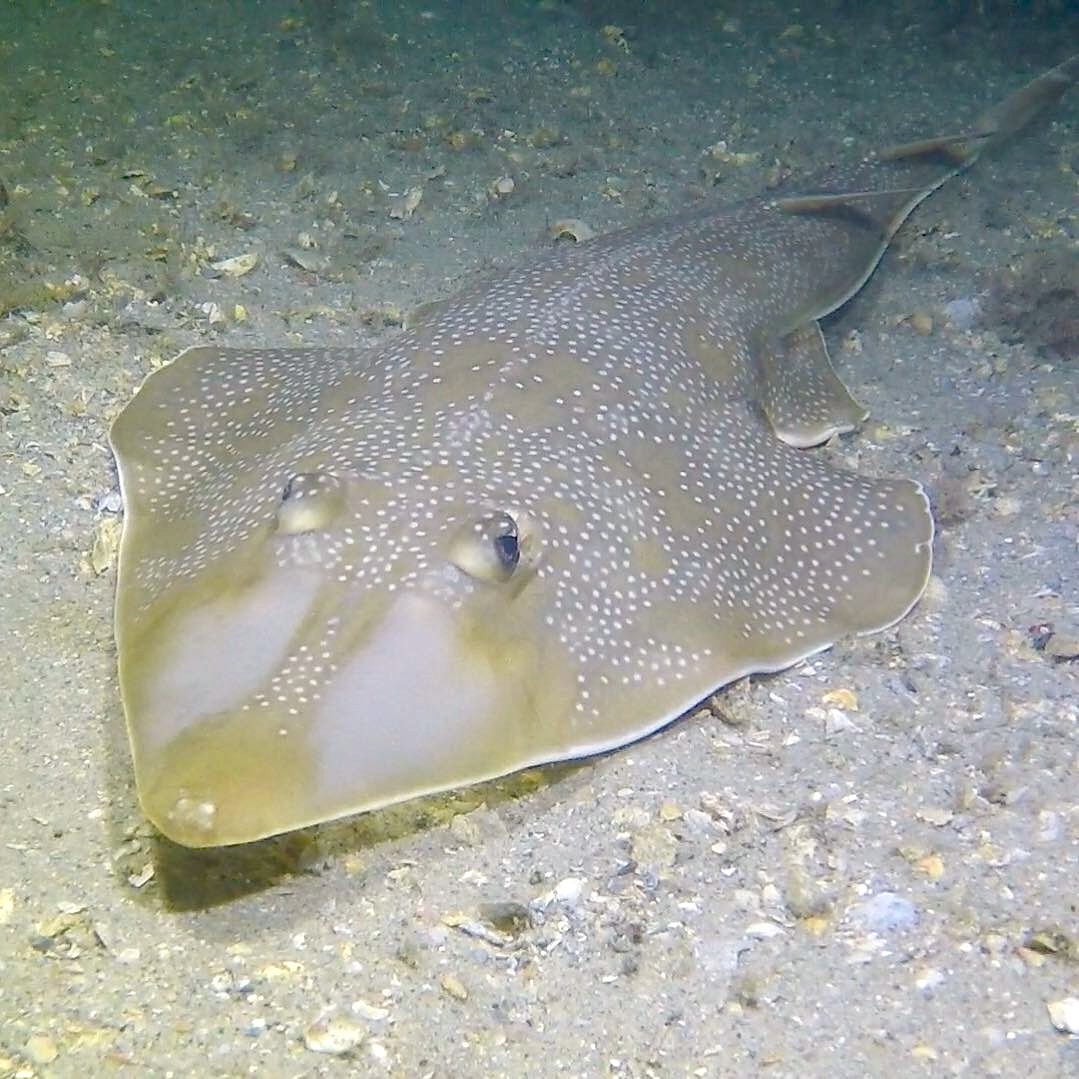
Another spectacular WTF? entry comes courtesy of Adam Rees and his recent night dive in Florida waters: the guitarfish, (Gr: rhinos – nose; batis – ray) . Until a few days ago this creature was unknown to me. It sounds so improbable, and conjures up (for me, anyway) some nightmare piscine-based modification of a Strat, an instrument whose looks should not be meddled with without consequent loss of liberty.
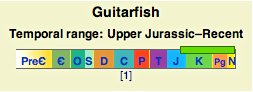
The guitarfish belongs to a family of rays, Rhinobatidae, of which there are many species worldwide. In many ways the fish looks like a crossover with a shark. They have a ‘ray face’, small wings, yet a sharklike appearance with fins and a sharklike swimming action (see video, below). If you think there is a primitive or prehistoric look to the guitarfish, you’d be right. According to the temporal range chart they date from the late Jurassic era (and looking at the chart brings those exotic names right back – Ordovician, Silurian, and so forth. Straight out of Tolkien. Or Hogwarts).
I have been trying to nail the exact model of Adam’s finny ray-Strat, not an easy task. I am putting my money on the Atlantic guitarfish Rhinobatos lentiginosus, which may (or may not) be the same as the spotted or freckled; and is similar to the more widely photographed shovelnose guitarfish. Not that I am very bothered: it’s the unusualness of Adam’s creature that really counts.
The strange thing is that although the guitarfish is a denizen of, for example, floridian, caribbean and mexican gulf waters, it is said to be unrecorded for the Bahamas. These bottom-feeding creatures inhabit shallower waters near coastlines and estuaries. They eat crabs, shellfish and worms – all in plentiful supply in Bahamas waters – so I can’t see a reason why they should not be found there. Perhaps they are seen but unreported. I have in mind the recent reports of SAWFISH and BATFISH. So kudos awaits the person who reports – with photo – the ‘first’ Bahamas guitarfish. Maybe I’ll write a song about it!
EIGHT QUICK GUITARFISH FACTS
Usually caught by mistake by anglers, or as bycatch by fishing vessels
Inedible (unless someone knows better…)
Non-aggressive and harmless to humans despite having a mouthful of small teeth
Swims like a shark – the tail has no spinal structure
Has a cute face unlike a a shark
Adults are about 30 inches long
They may bury themselves in sand or mud to ambush prey
They are viviparous, giving birth to live young, which are born fully developed
As a postscript, it’s worth mentioning that on the same night dive, Adam also came across the uncommon batfish, a seriously prickly-looking starfish, and a spotted eagle ray. Worth losing sleep for.
A similar kind of guitarfish, showing the very sharklike movements in the water
Credits: Adam Rees, with many thanks; Greg Hume; magpie pickings, in particular Florida Museum of Natural History / Taylor Sullivan and the truthful parts of various Wiki articles (Her Majesty the Queen does not, for example, keep one at Windsor Castle to play with in her bath)










 .
. .
. 










 ROLLING HARBOUR ABACO
You must be logged in to post a comment.